Get new episodes in your feed. Follow us on:ThreadsBluesky
Uta-napishti, the man who cannot die, tells young King Gilgamesh a secret of the gods. Warned that his town will drown, he alone builds a great boat while his cheerful neighbors help, unable to tell them the truth, and then he shuts the door. When nothing is left of the world but mud, the regretful gods grant him a single, once-only gift of eternal life.
Story summary
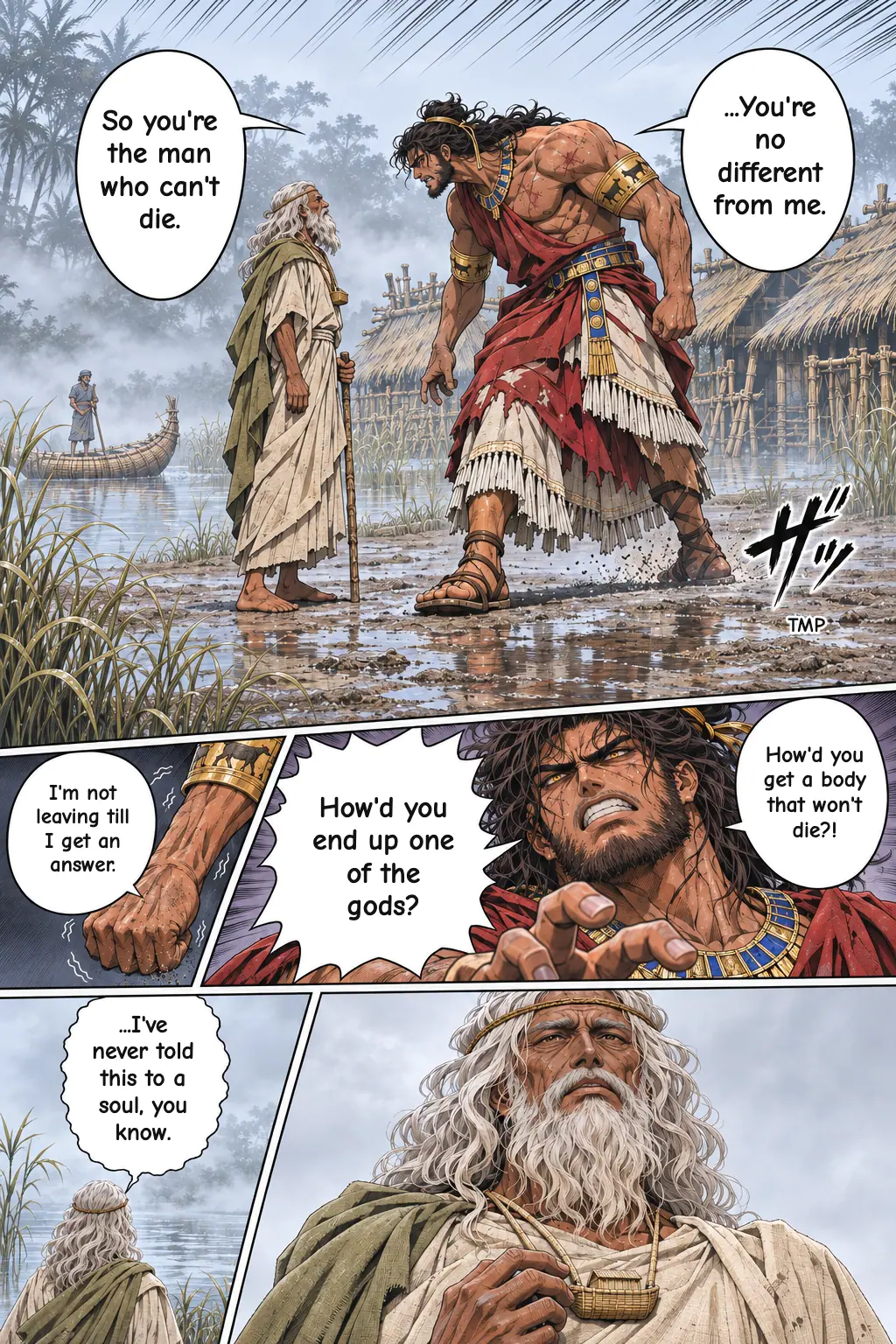
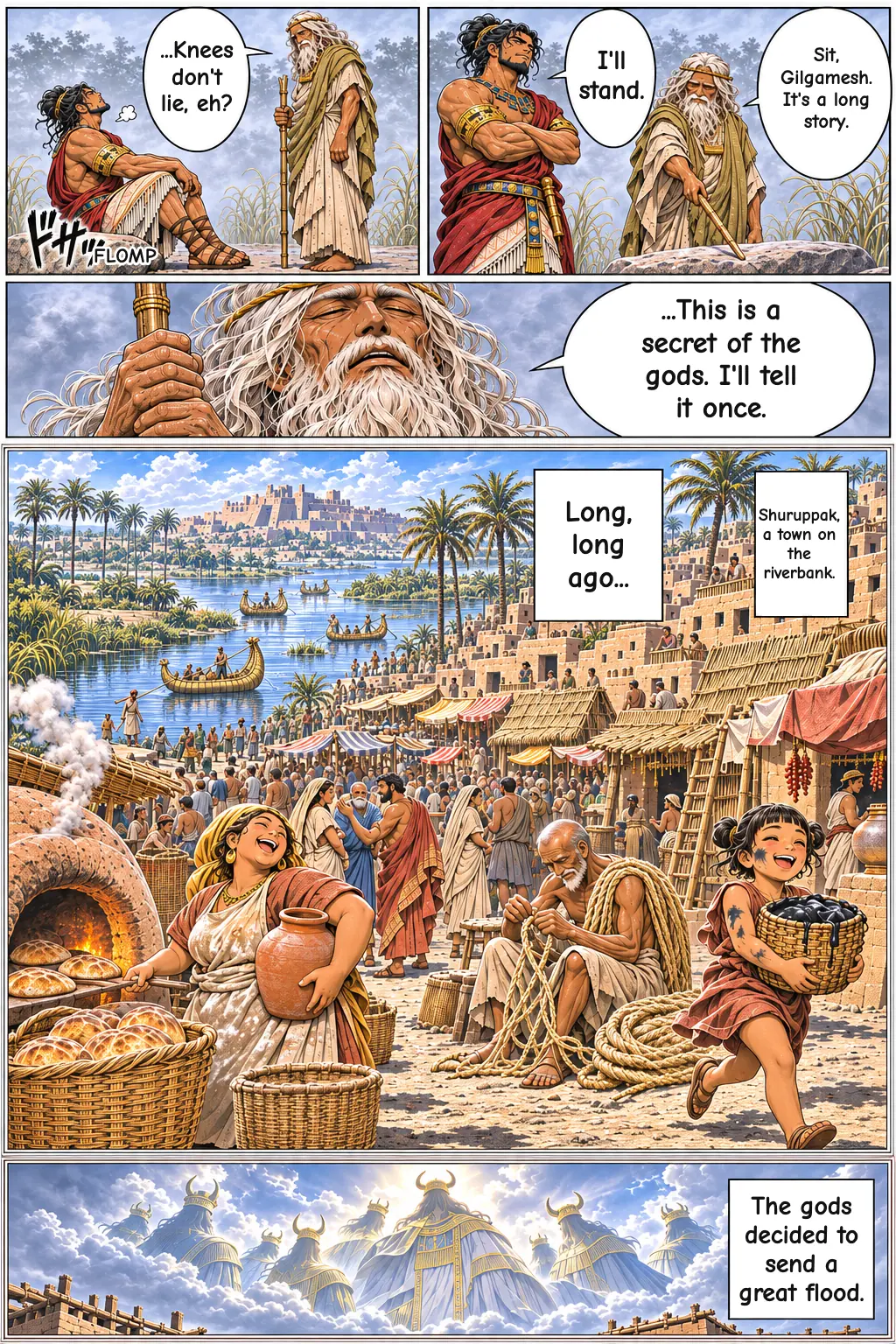
Near the end of the Epic of Gilgamesh, Gilgamesh, the king of Uruk, has traveled to the edge of the world looking for a way to escape death. There he finally meets Utnapishtim, the one human who is said to live forever. Gilgamesh is surprised that this legendary figure looks like an ordinary man, and asks how he joined the gods and won eternal life. Utnapishtim answers by revealing what he calls a secret of the gods. Long ago, he says, in the old city of Shuruppak on the Euphrates River, the great gods decided to send a flood.
Utnapishtim and the Flood in the Epic of Gilgamesh: Summary and Meaning
In short: The flood story of Utnapishtim (Uta-napishti) is a tale told inside the Epic of Gilgamesh, Tablet XI of the Standard Babylonian version. The great gods decide to drown humanity, but the wise god Ea secretly warns Utnapishtim of Shuruppak, who builds a huge boat, rides out a seven-day storm, and is then granted eternal life by the gods. It is one of the oldest flood stories in the world, written down long before the biblical account of Noah.
The Original Myth: A Summary of the Flood Story in Tablet XI
Near the end of the Epic of Gilgamesh, Gilgamesh, the king of Uruk, has traveled to the edge of the world looking for a way to escape death. There he finally meets Utnapishtim, the one human who is said to live forever. Gilgamesh is surprised that this legendary figure looks like an ordinary man, and asks how he joined the gods and won eternal life. Utnapishtim answers by revealing what he calls a secret of the gods.
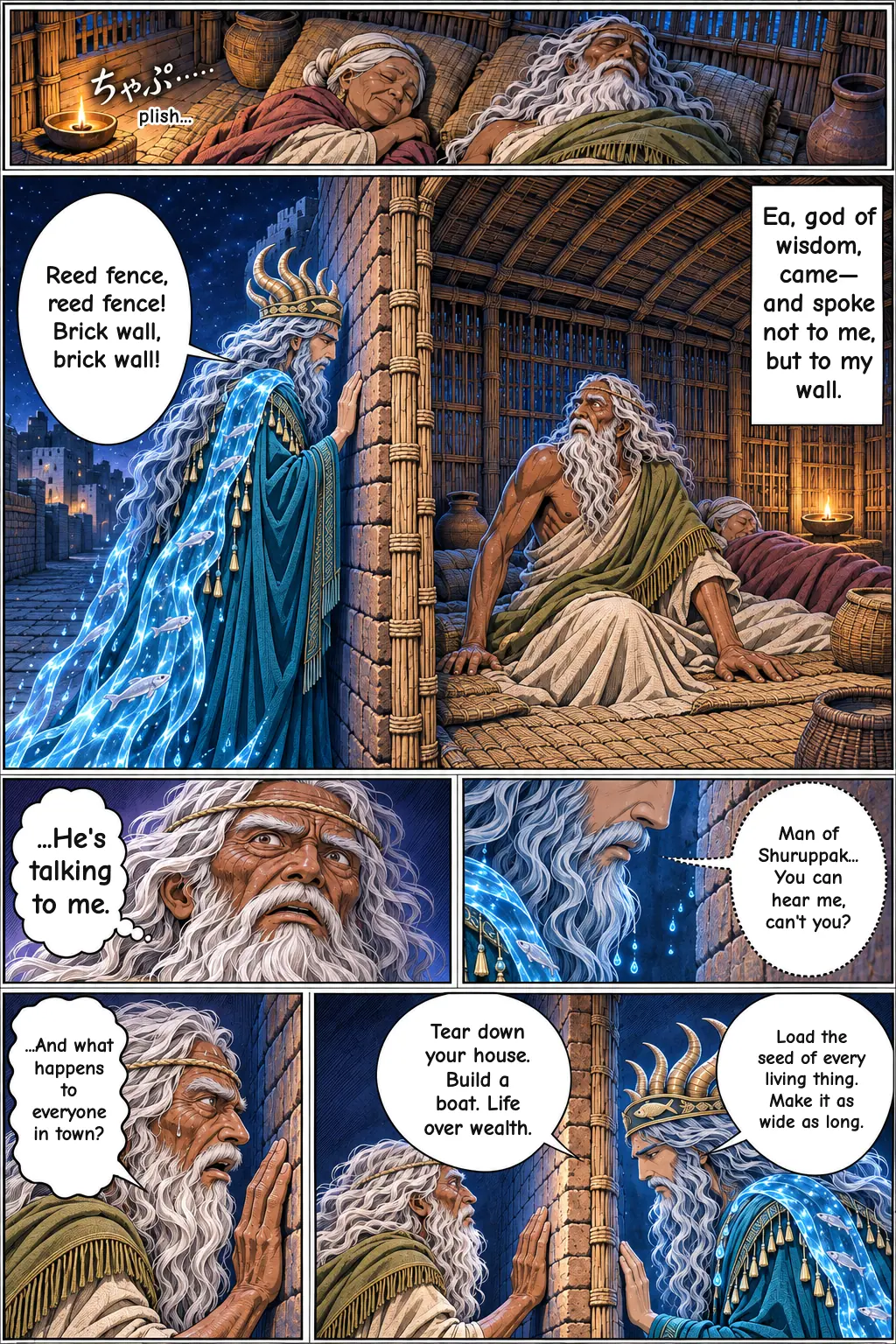
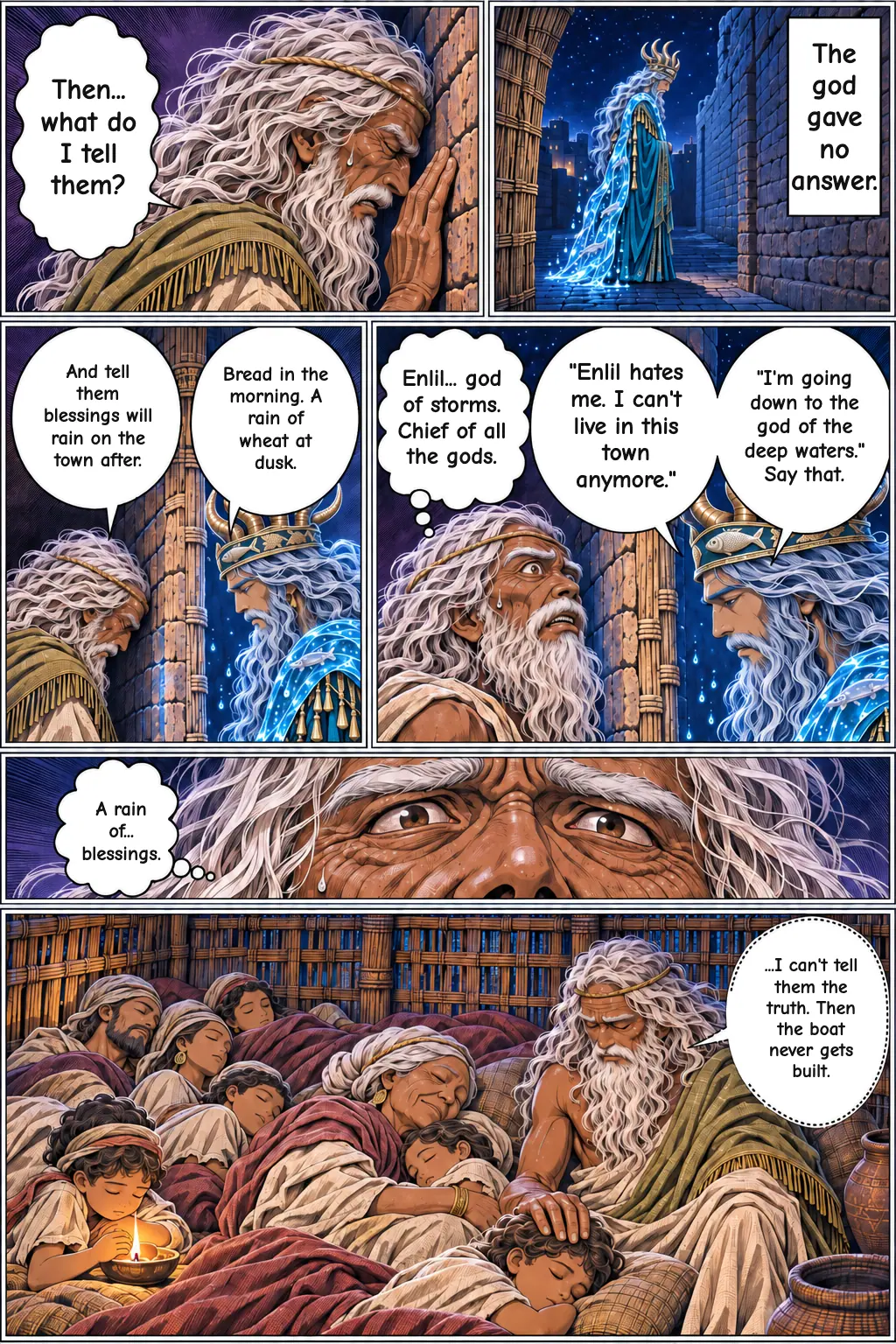
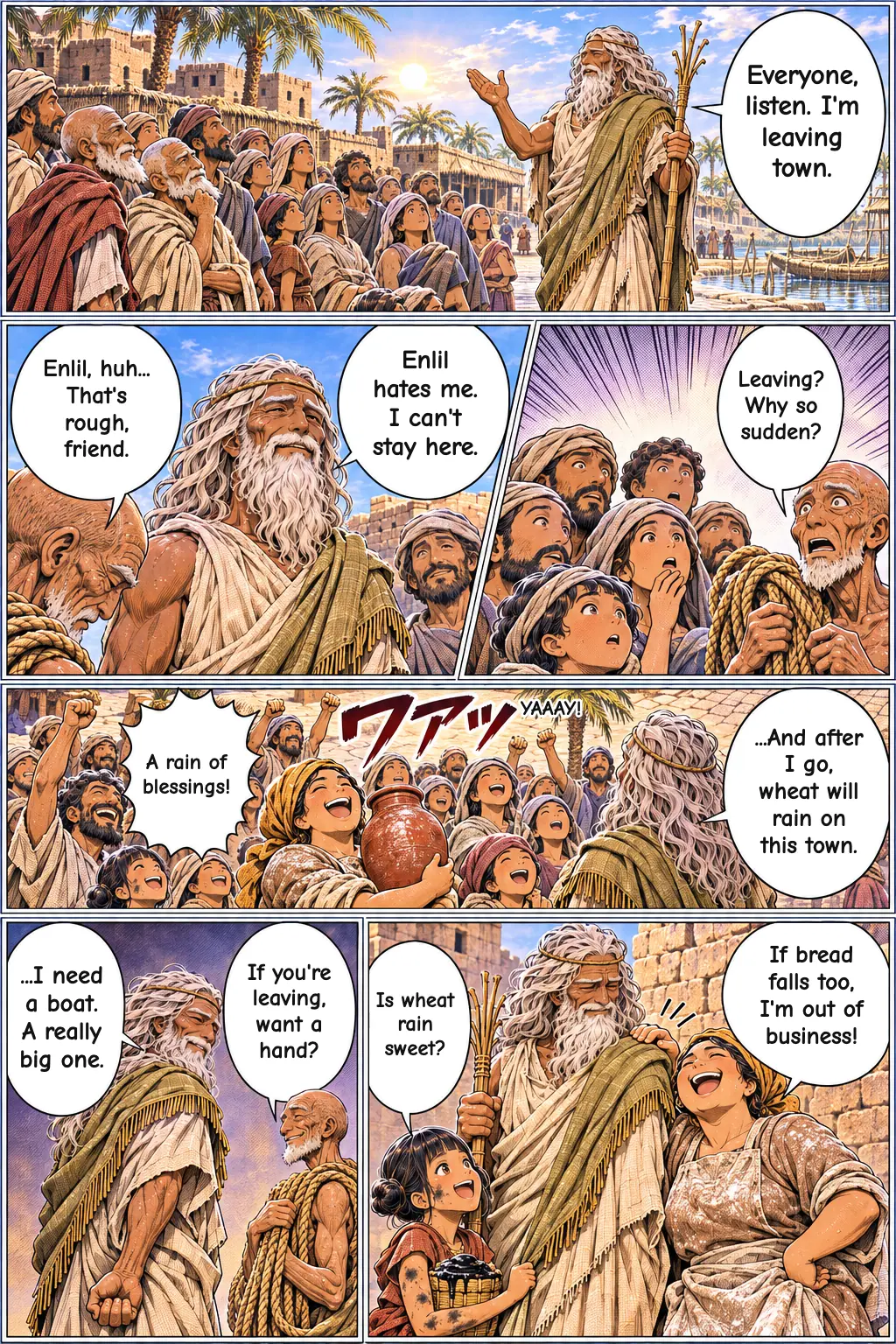
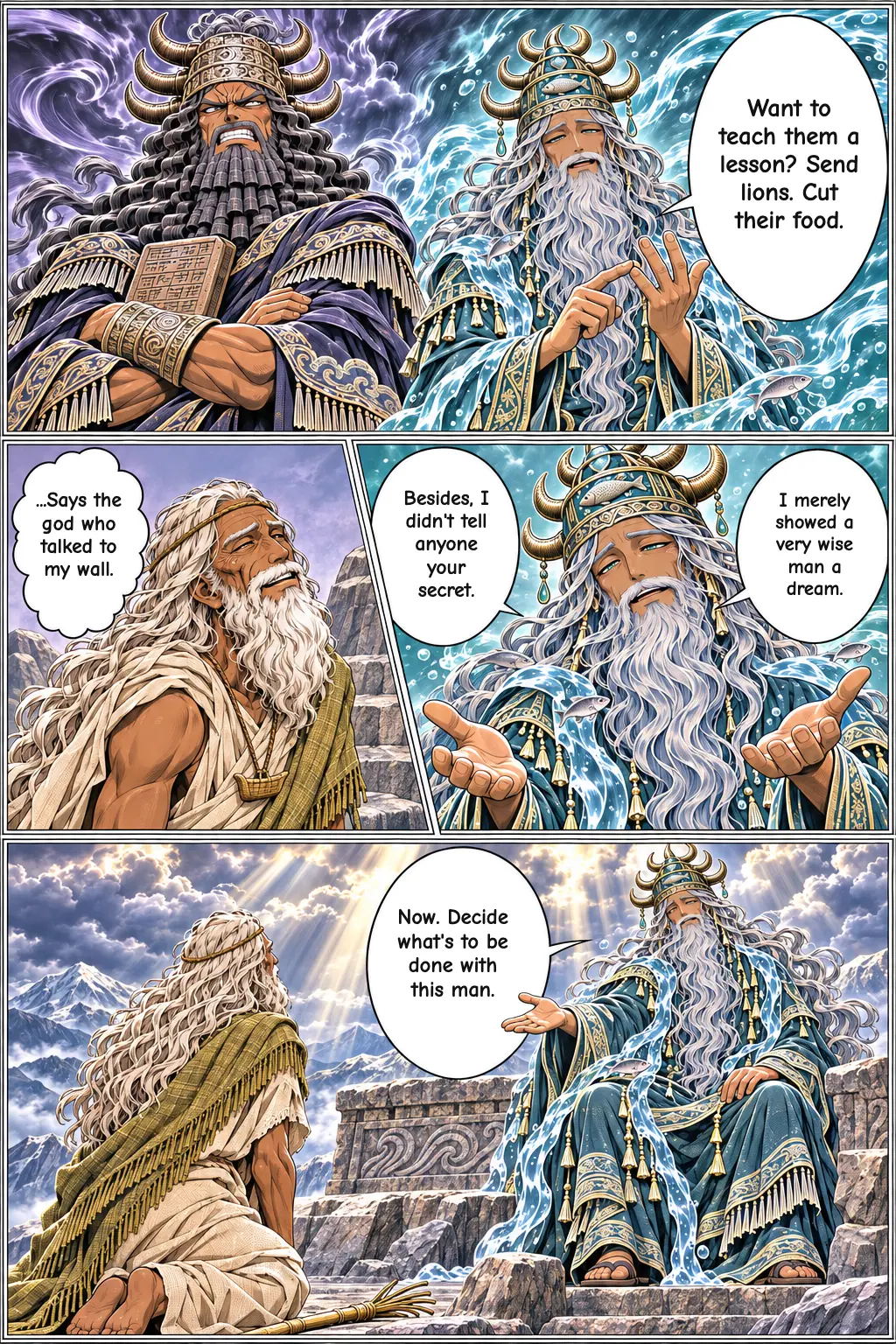
Long ago, he says, in the old city of Shuruppak on the Euphrates River, the great gods decided to send a flood. Ea, the god of wisdom, had sworn an oath with the others and could not tell any human directly. So he spoke to the reed fence and the wall of Utnapishtim's house, telling him to pull down his house, build a boat, give up his wealth, and save living things. Ea even gave him a cover story: tell the townspeople that the god Enlil is angry with him, so he must leave, and that afterwards good things will rain down on the city. The words sound comforting, but they also hint at the coming disaster.
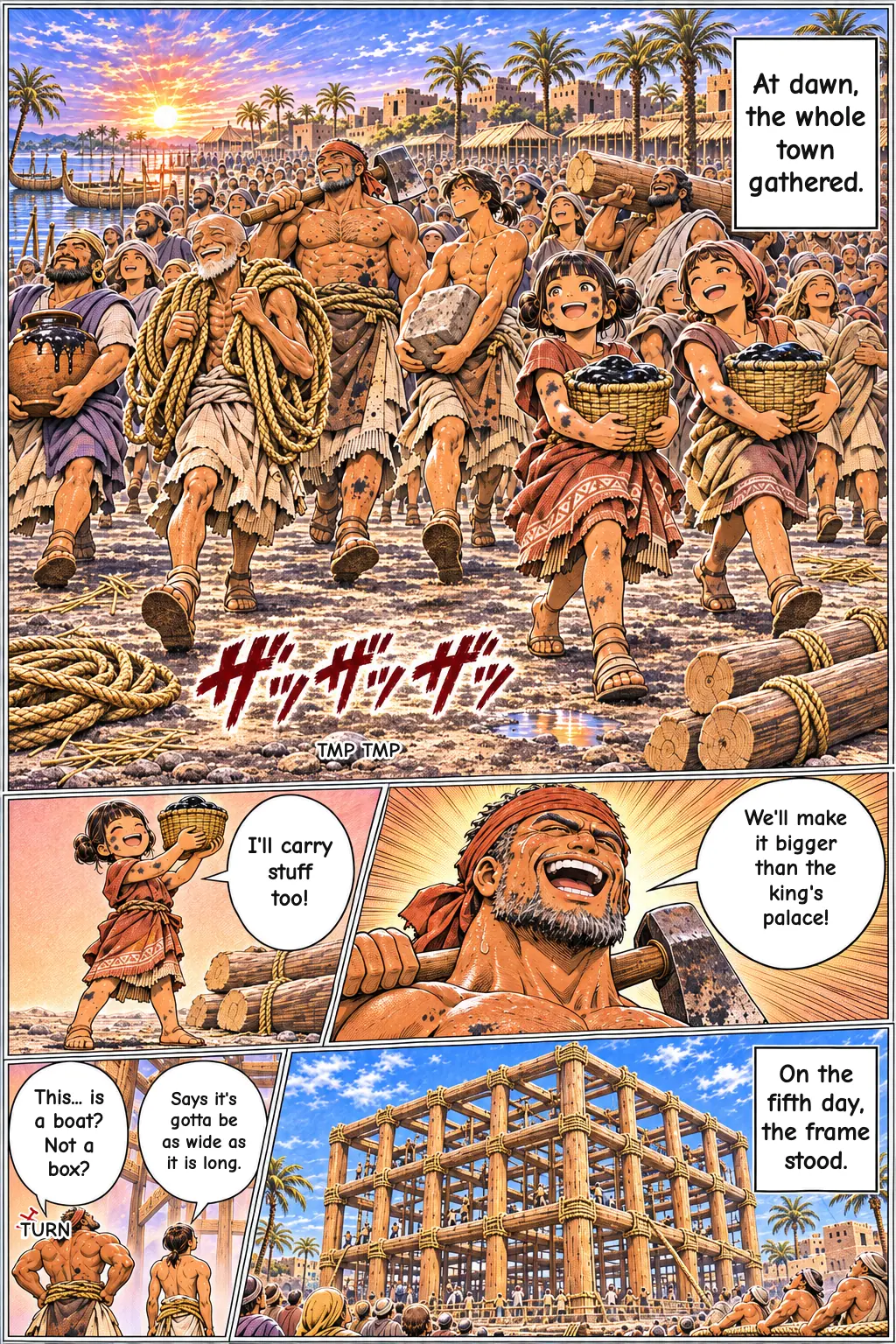
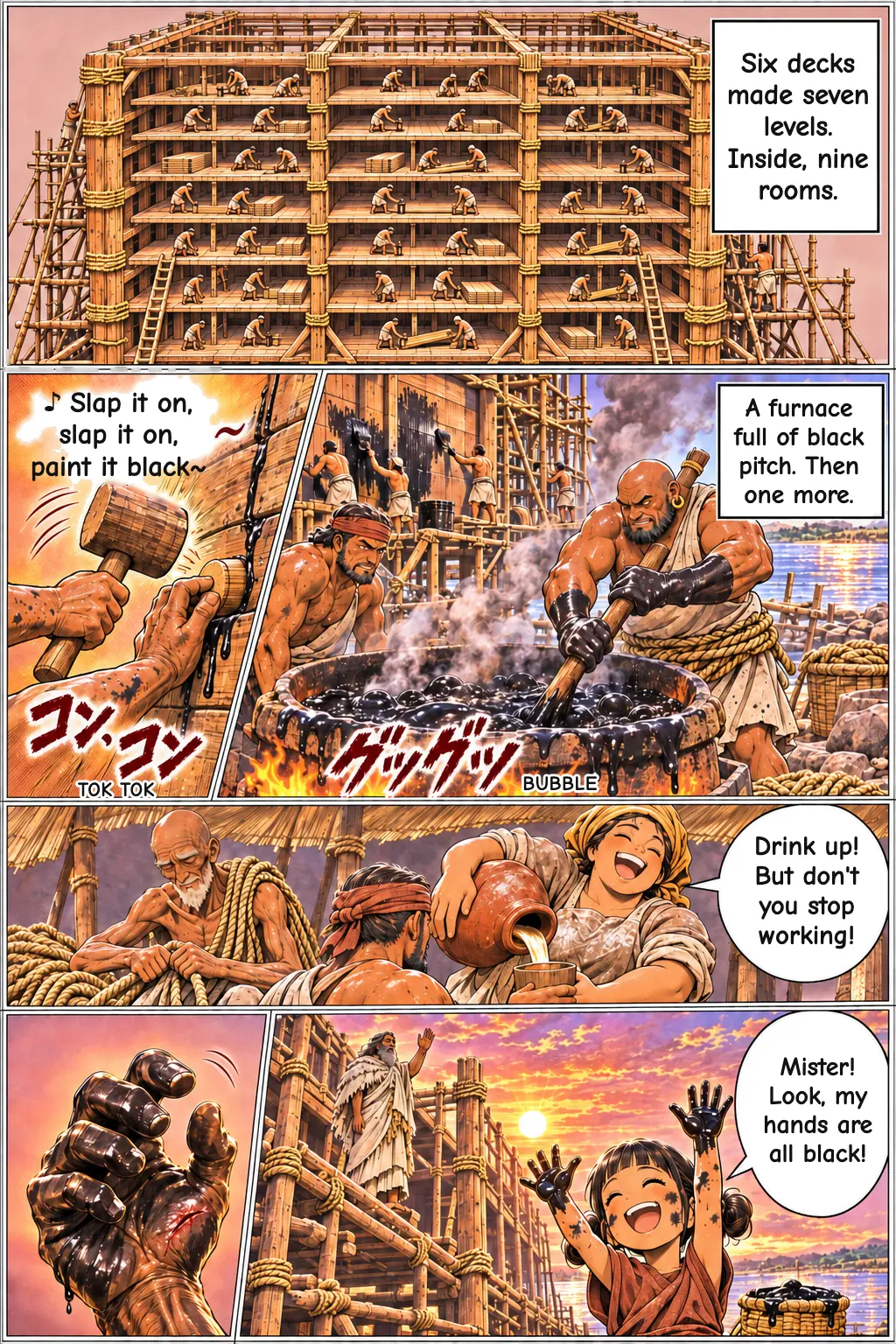
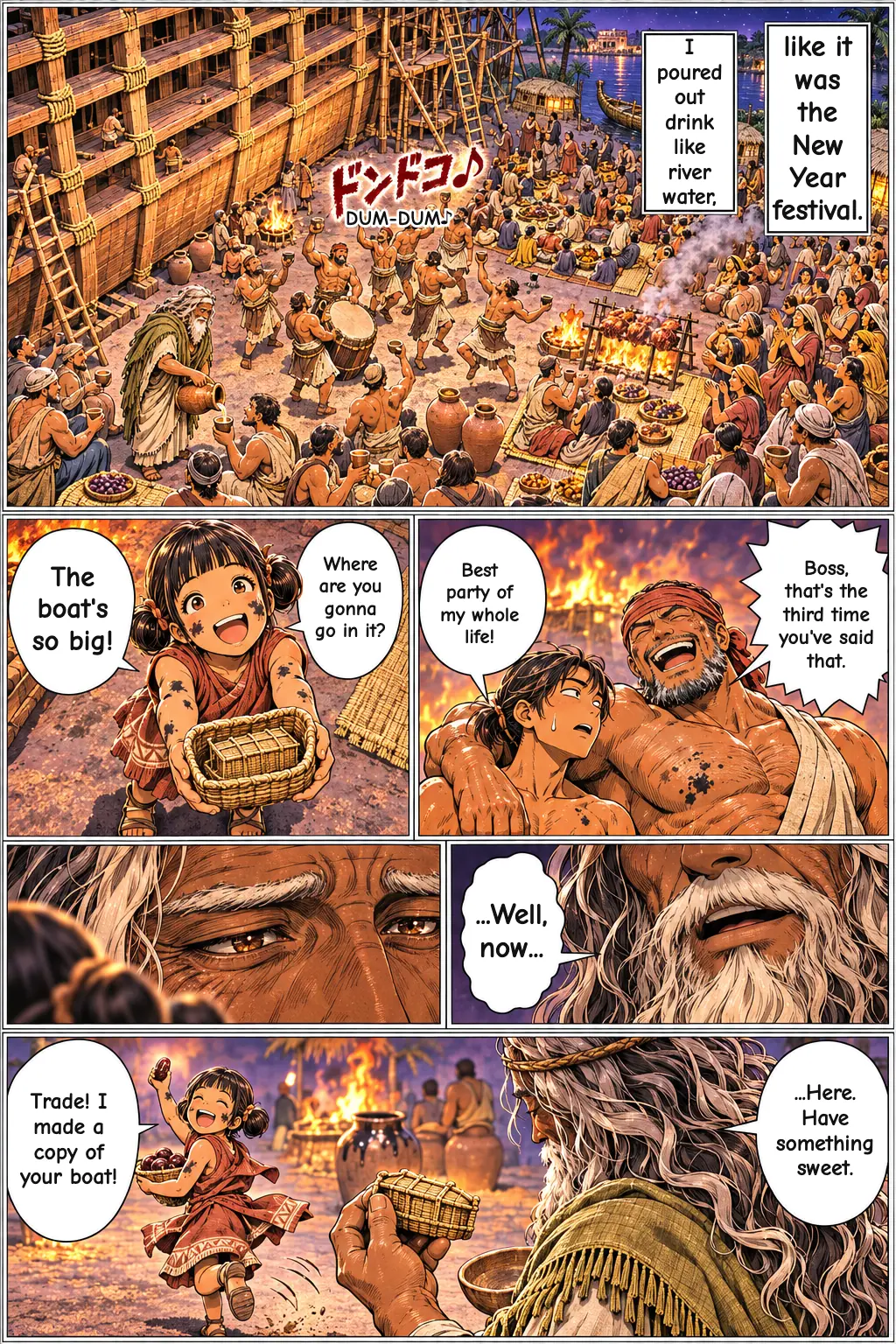
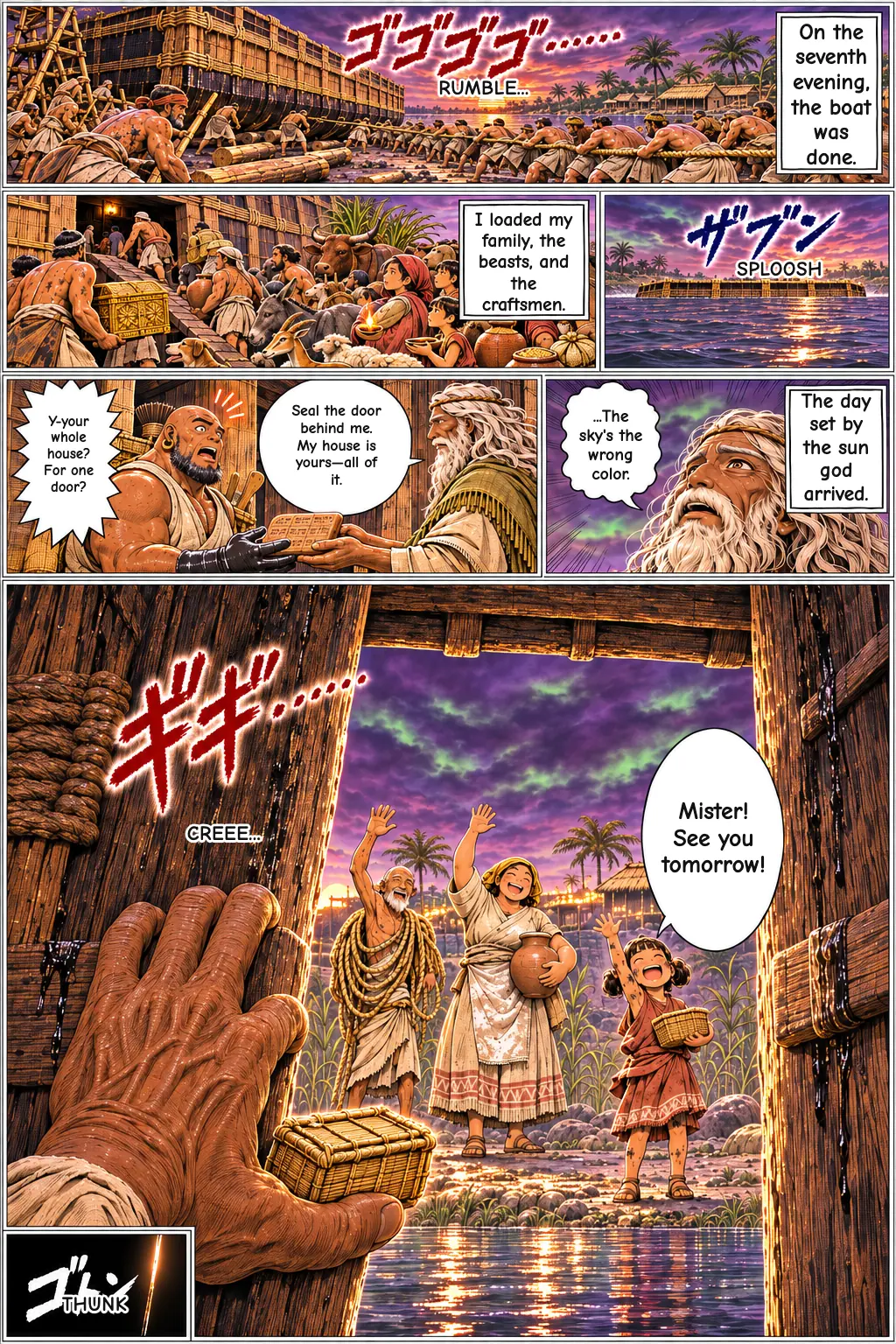
The townspeople gathered to help. Carpenters and reed-workers came with their tools, children carried bitumen to seal the hull, and Utnapishtim fed the workers meat, beer, and wine as if it were a festival. In seven days the boat was finished. The text describes it as a huge square vessel, with seven decks and nine sections inside. He loaded silver, gold, his family and relatives, animals, and the craftsmen, and when the sign set by Shamash, the sun god, arrived, he went in and shut the door.
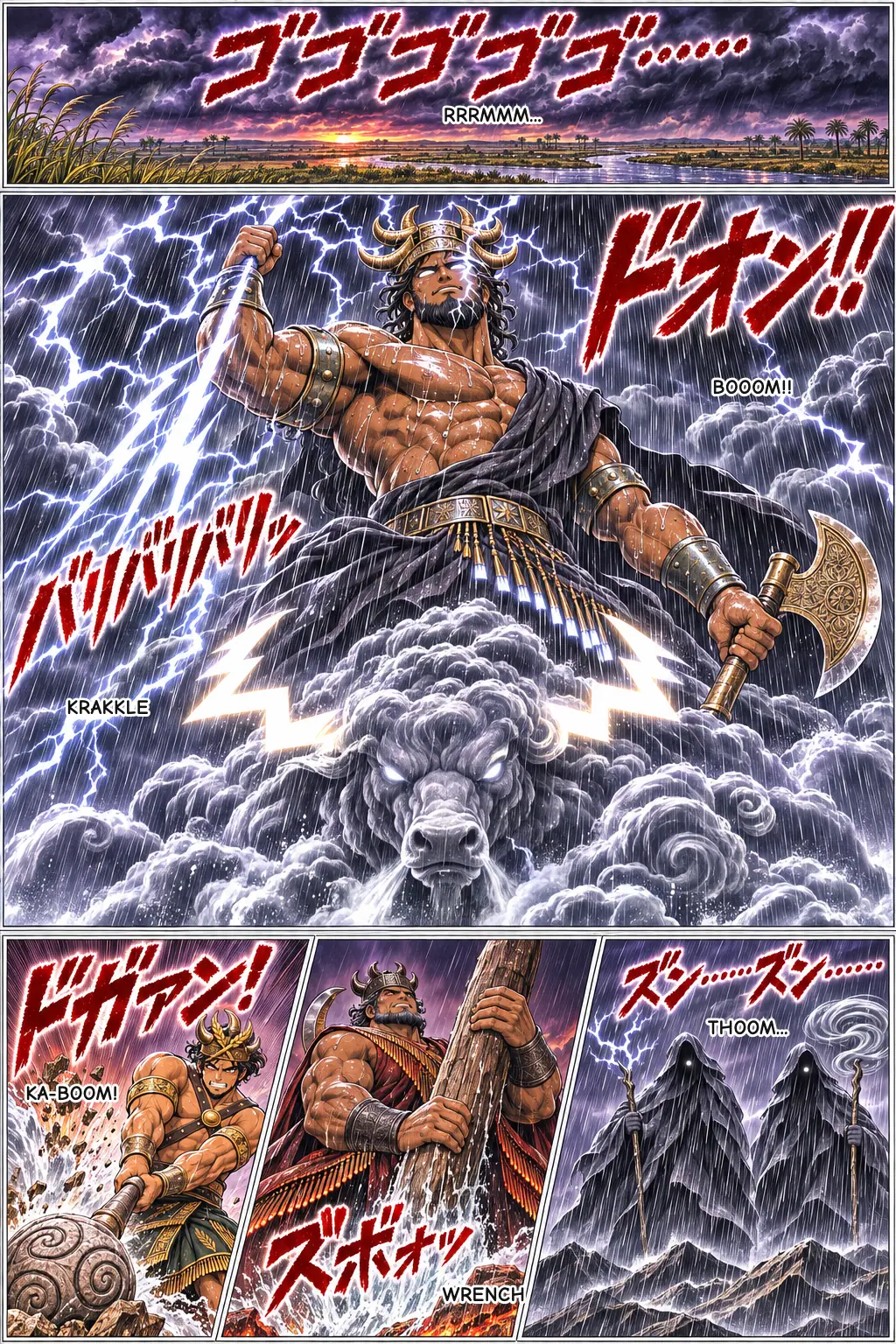
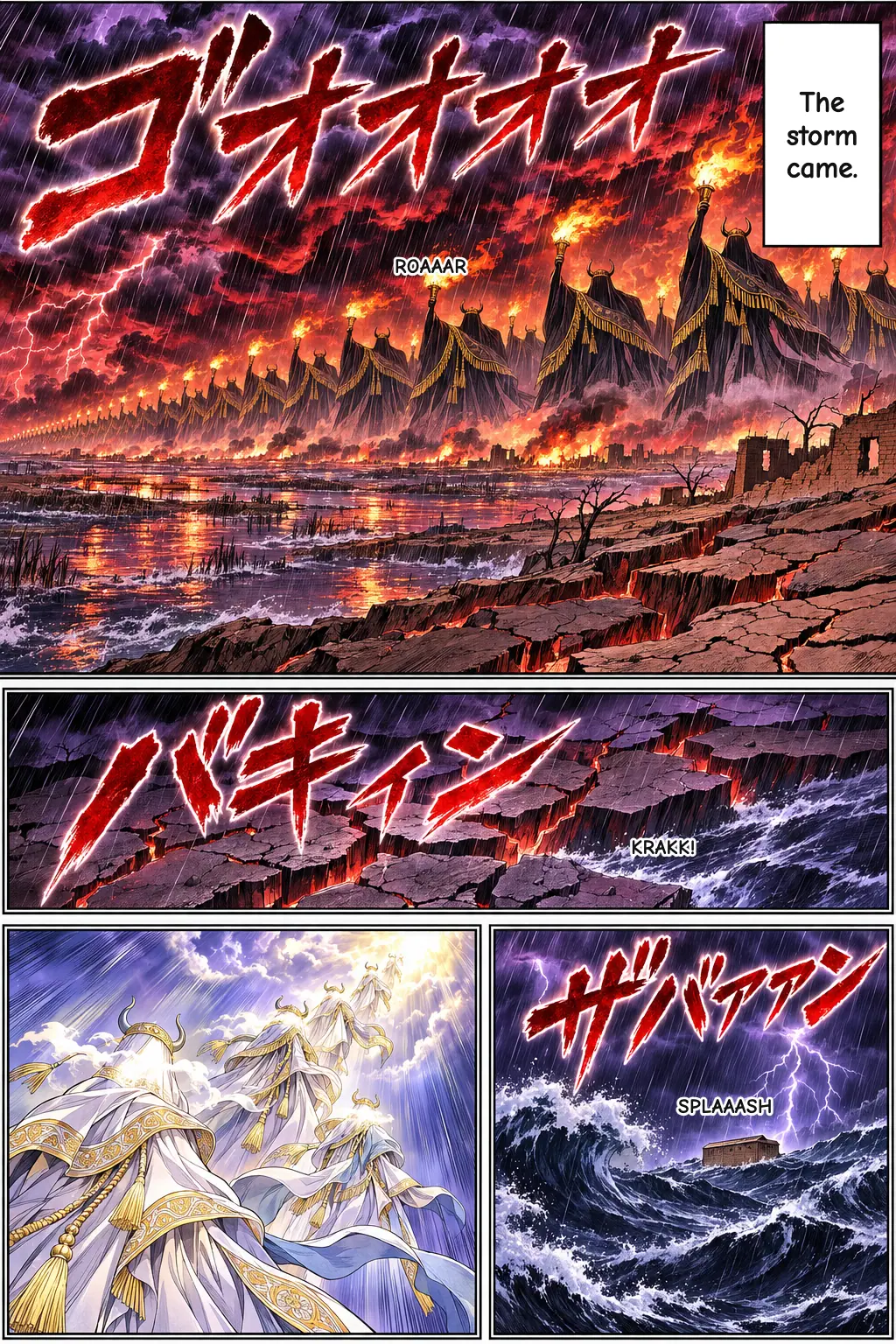
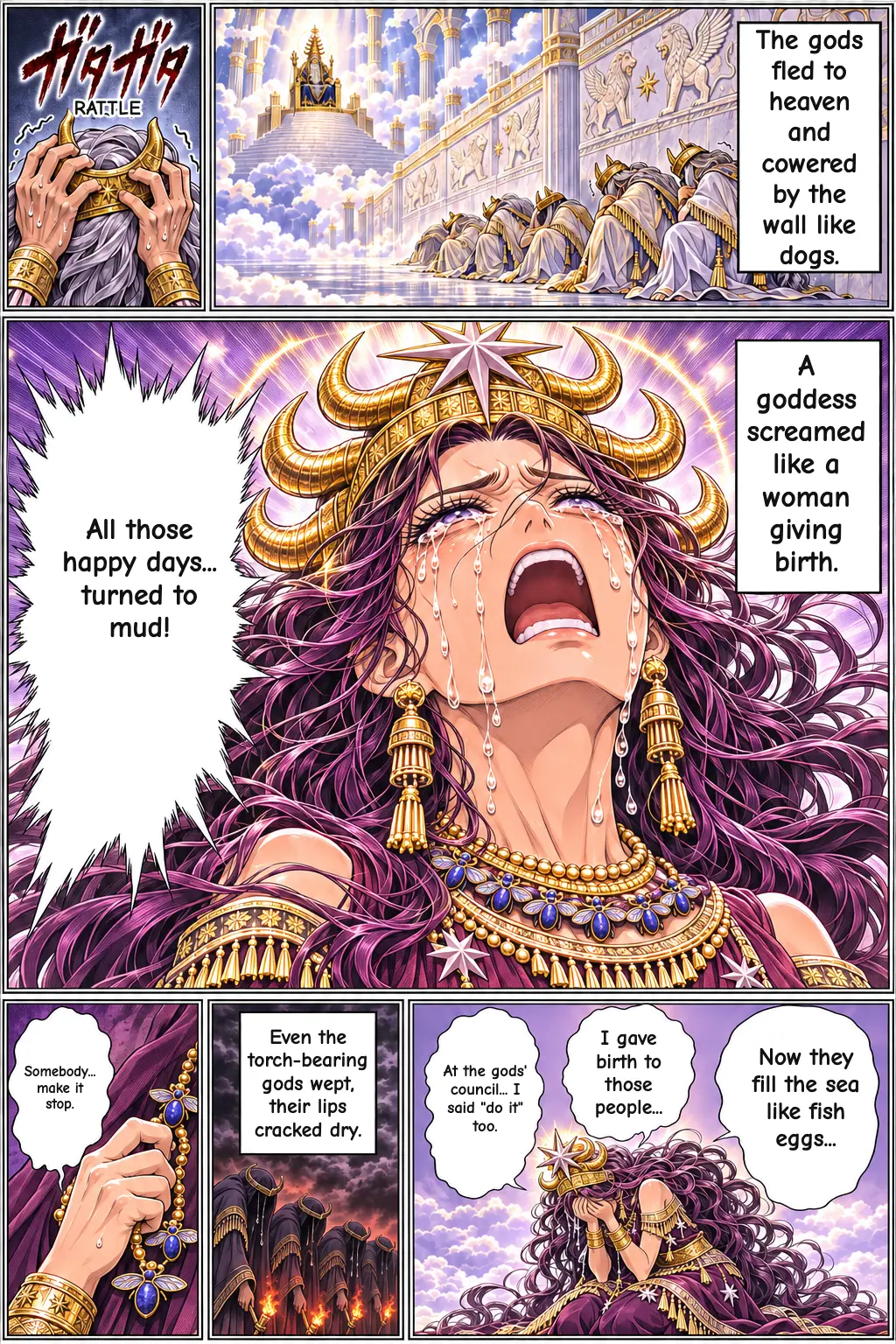
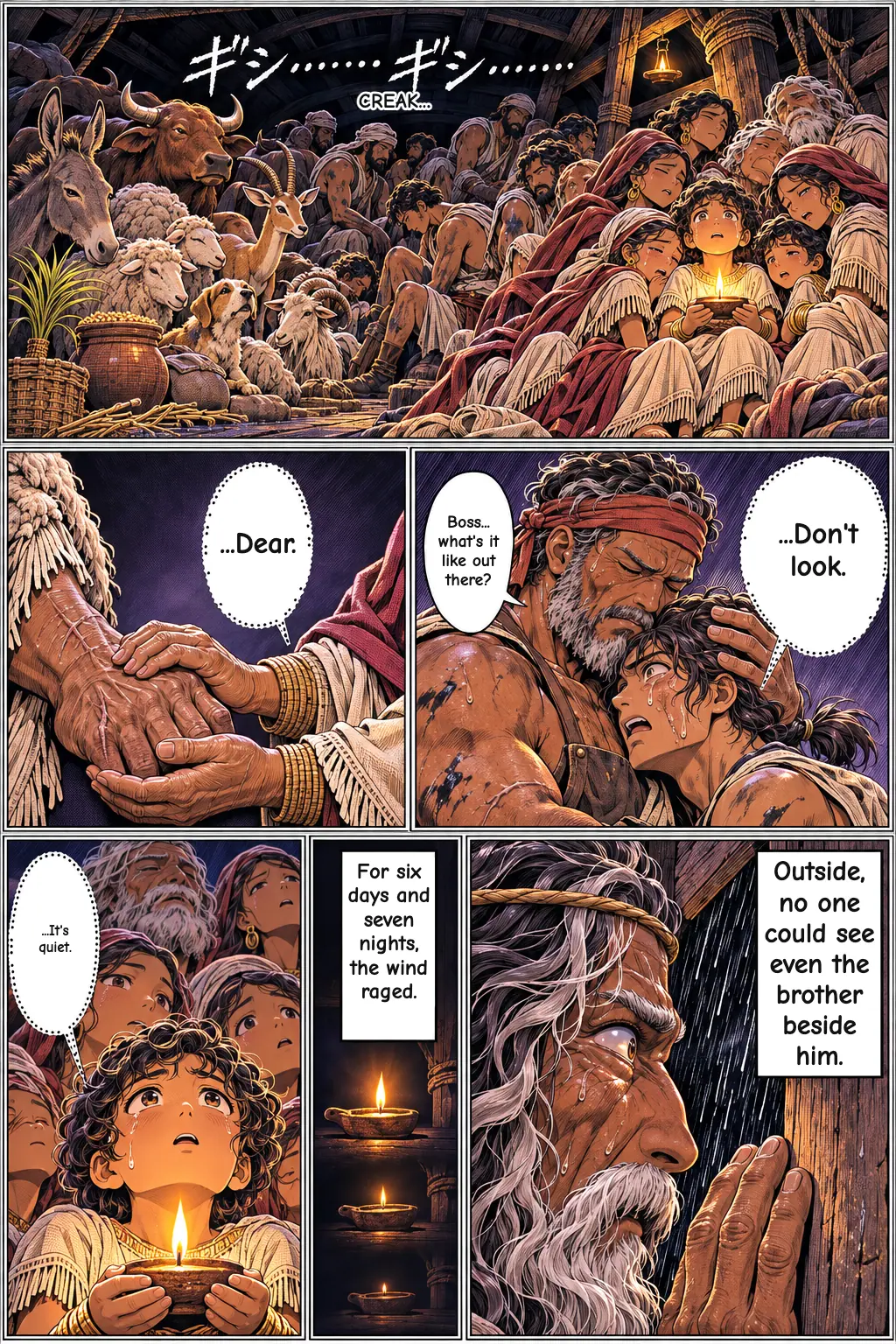
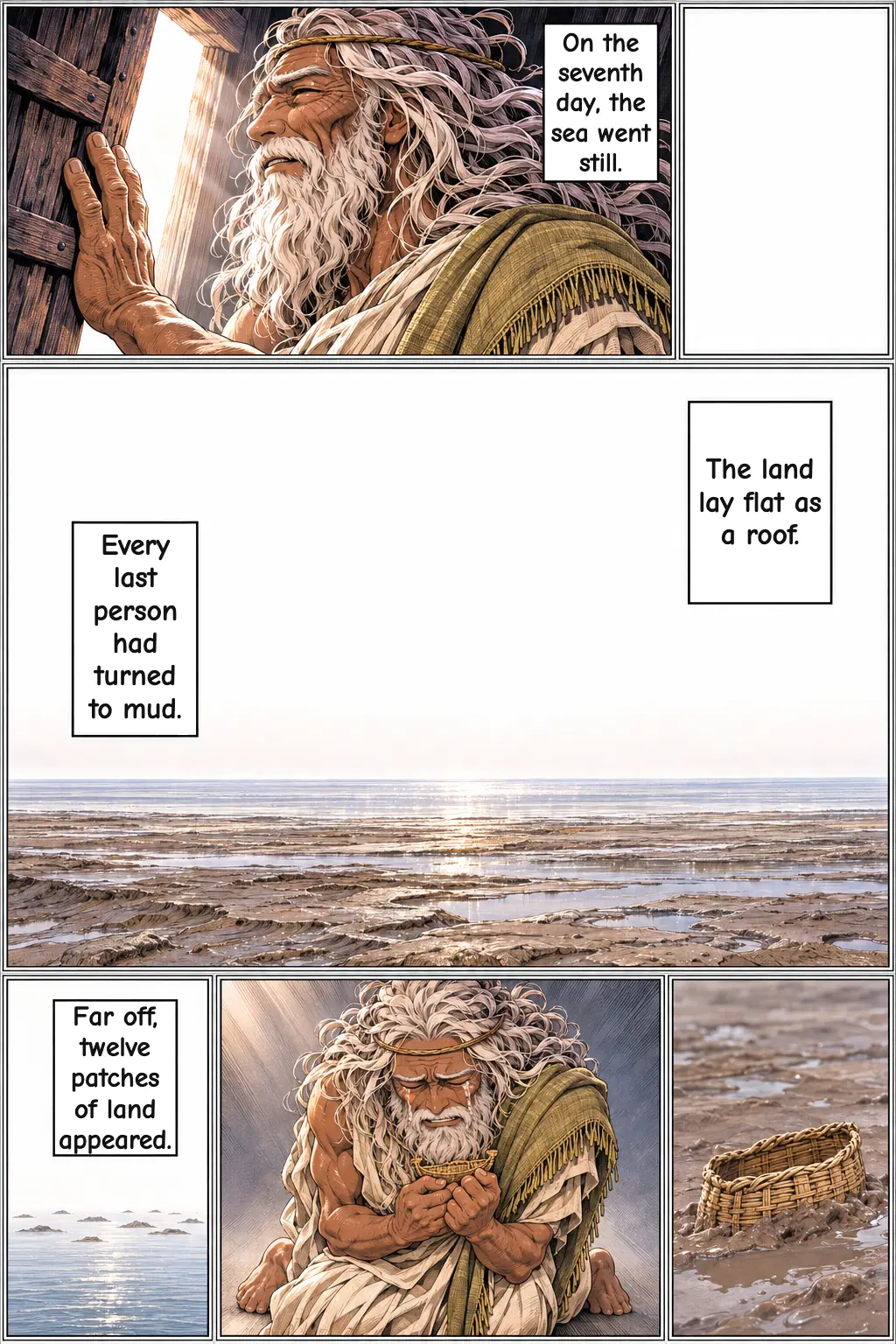
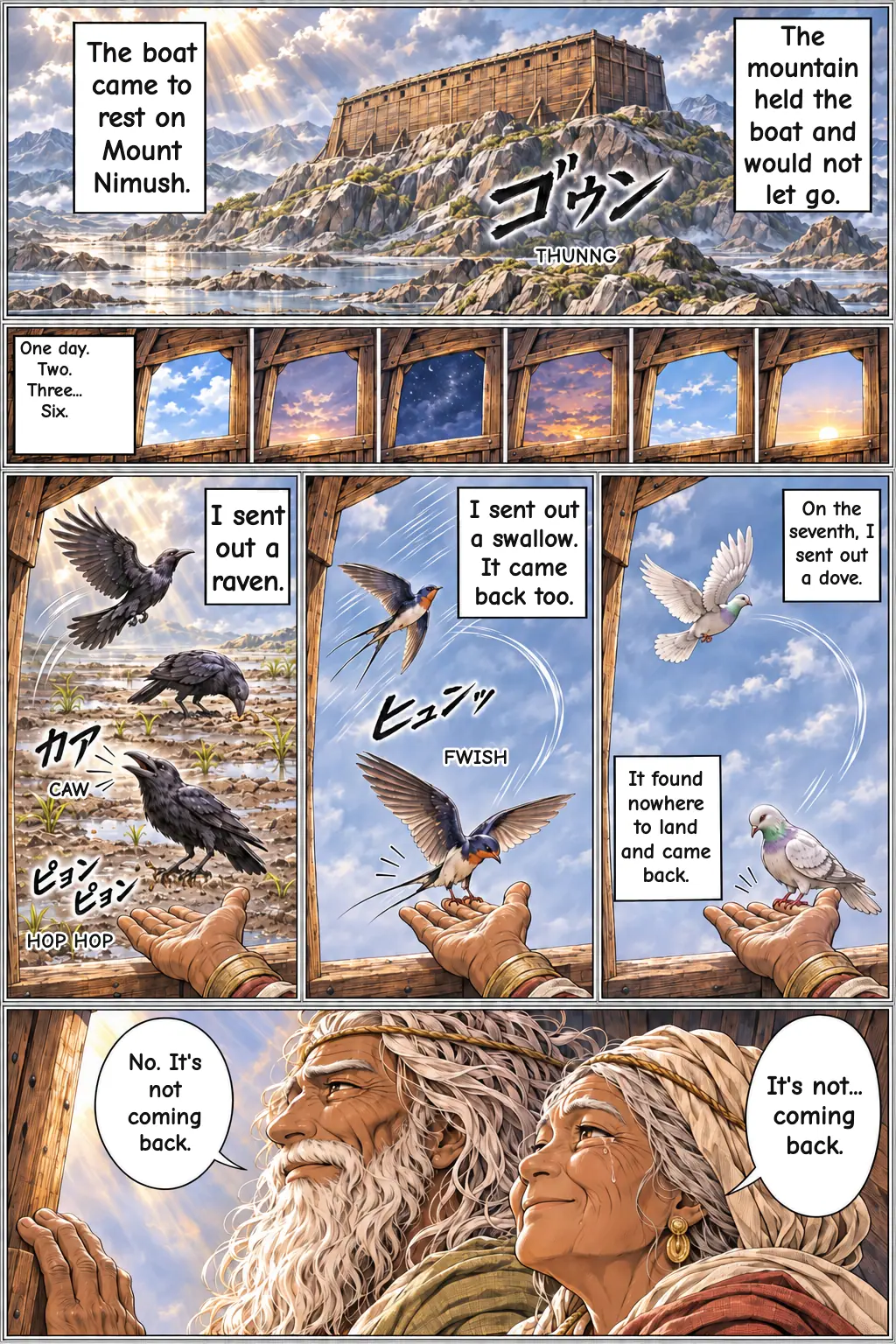
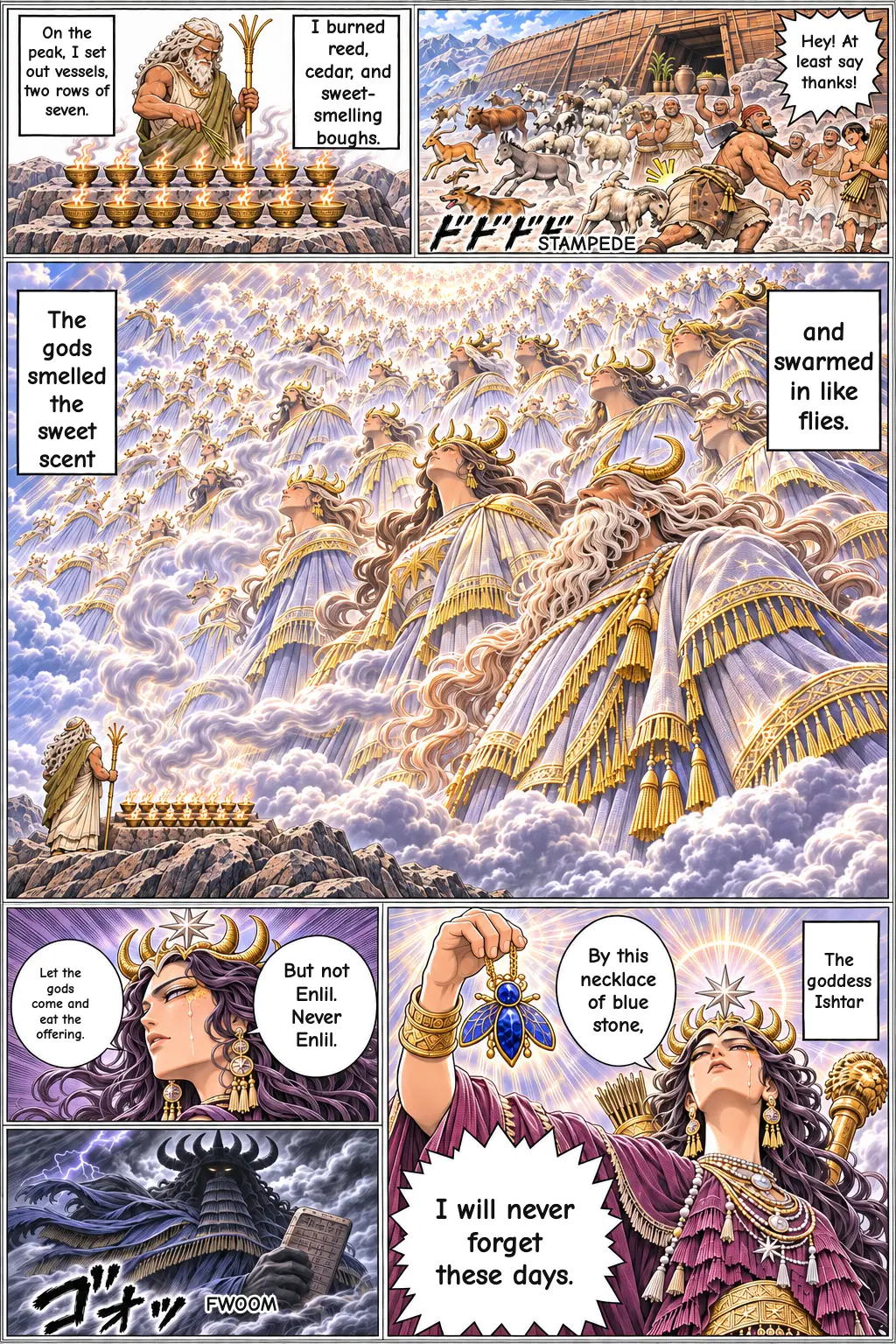
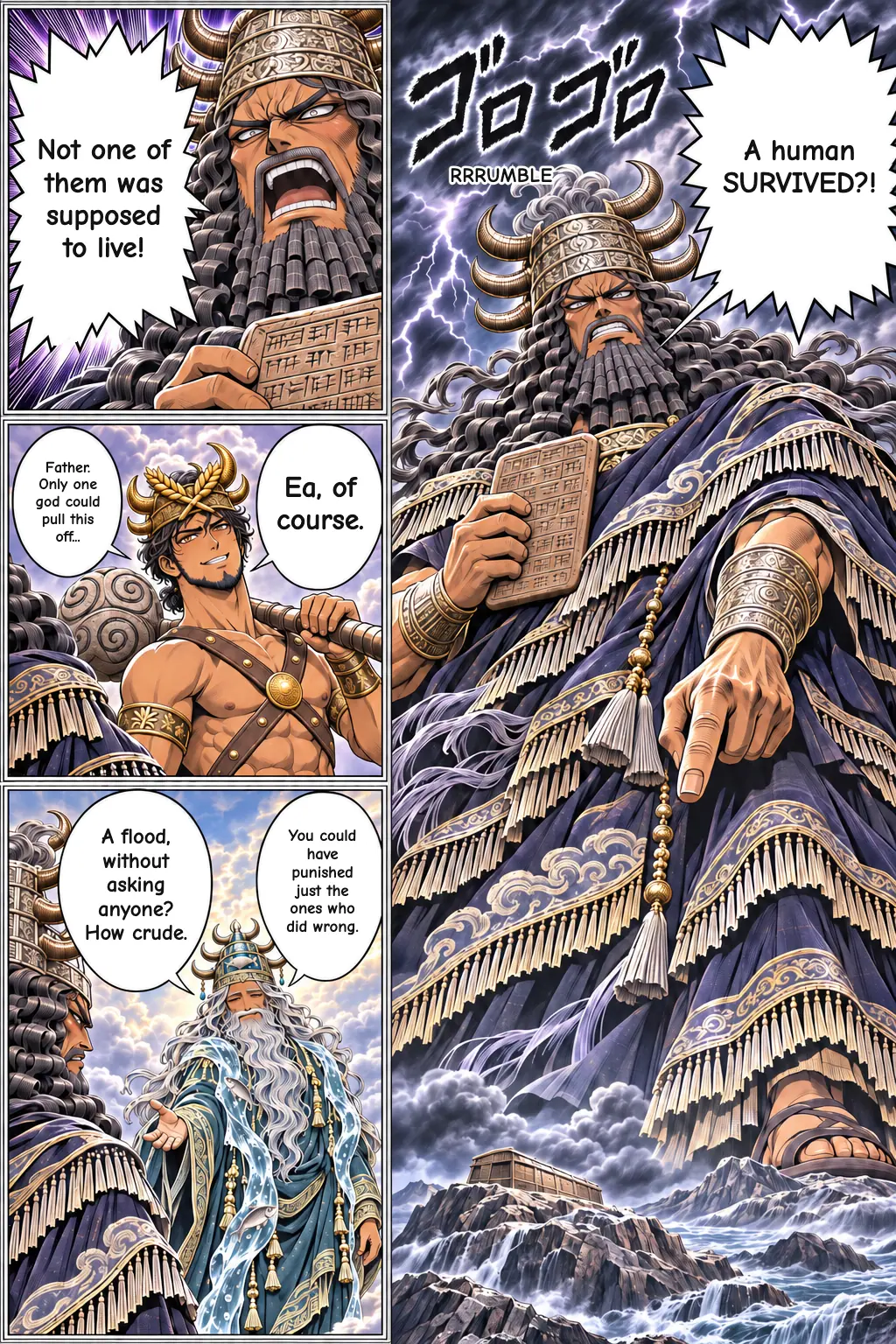
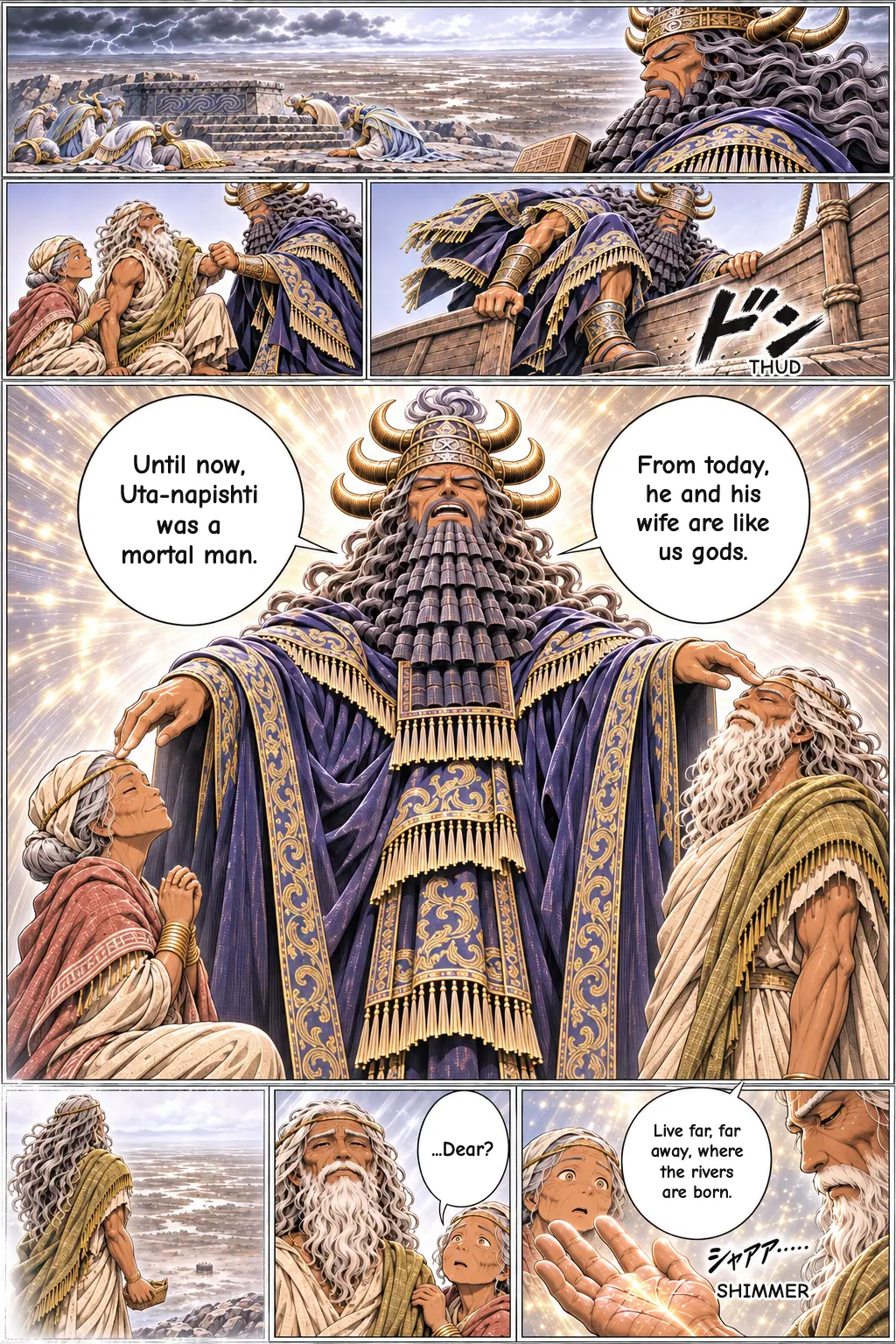
A black cloud rose at dawn, and the storm raged for six days and seven nights. Even the gods were frightened and fled up to the heaven of Anu, the father of the gods. On the seventh day the sea grew calm. When Utnapishtim opened a window, he saw that all of humanity had turned back into clay, and he sat down and wept. The boat came to rest on Mount Nimush. He sent out a dove and then a swallow, and both came back; then he sent a raven, which found dry land and did not return. He offered a sacrifice, and the gods gathered around it like flies. Enlil was furious that anyone had survived, but Ea scolded him for punishing everyone instead of only the guilty. In the end, Enlil touched the foreheads of Utnapishtim and his wife and made them like gods, sending them to live far away at the mouth of the rivers.
Main Characters
Utnapishtim is a man of Shuruppak, son of Ubar-Tutu, and Ea calls him Atrahasis, meaning "exceedingly wise." His wife has no name or lines in the text, yet she receives eternal life alongside him. On the side of the gods, Enlil leads the decision to flood the world, while Ea quietly works against it. Ishtar, together with the Mistress of the Gods (Belet-ili), weeps for the people she gave birth to and regrets agreeing to their destruction. Storm gods such as Adad, the thunder god, and Ninurta bring the flood itself. In the frame story, Gilgamesh simply listens.
What This Myth Tells Us: Cultural and Historical Background
Mesopotamia, the land between the Tigris and Euphrates rivers in modern Iraq, lived with the constant risk of river floods, so a flood that wipes out the world was a powerful image there. The Standard Babylonian version of the epic was put together in the late second millennium BCE; tradition names a scholar called Sin-leqi-unninni as its editor. The flood story itself is older and also appears in a separate poem, the Epic of Atrahasis.
When the English scholar George Smith read this tablet in 1872, it caused a sensation, because the parallels with Noah's Ark in the Book of Genesis are striking: a divine warning, a great boat, animals on board, a mountain landing, birds sent out, and a sacrifice afterwards. Many scholars think the Mesopotamian tradition influenced the biblical one, though how that happened is still debated. The tone is also very different. Here the gods argue, panic, and regret, and the flood is shown as a terrible mistake.
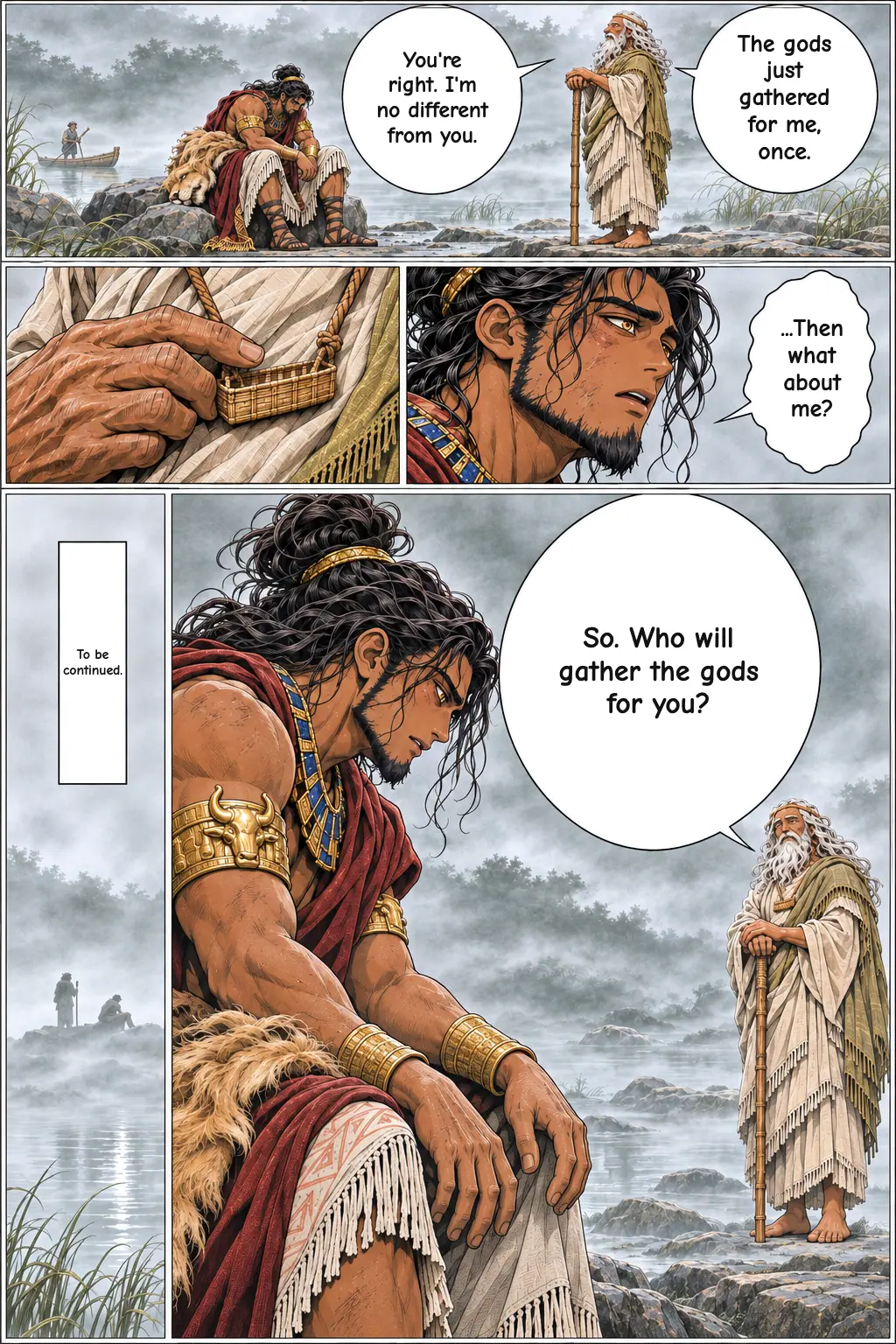
Within the epic, the story has a sharp point. Gilgamesh hoped to learn a method for living forever, but Utnapishtim's immortality was a one-time gift given after a unique disaster. It cannot simply be repeated, and Utnapishtim goes on to test Gilgamesh to show him this.
What the Manga Changes
The manga follows the main events of Tablet XI: Ea's warning through the wall, the double-meaning excuse, the seven-day build, the square boat with seven decks and nine sections, the storm, the birds, and the gift of eternal life. Some parts are newly imagined, because the original text says very little about them.
Gilgamesh appears only on the first and last pages as the listener. The daily life of Shuruppak, its market, and the faces and reactions of the cheerful neighbors are added, as are the scenes of people being swept away, life inside the boat, the animals, and the words and personality of Utnapishtim's wife. The look of the gods, inspired by horned crowns on ancient cylinder seals, and the detailed design of the boat are new artwork. Ea's warning is staged in its own way, since the text describes it both as speaking to a wall and as sending a dream.
Where to Read It
If you want to see this story come alive, Episode 10 of MESOPOTAMIAN MYTH: THE EPIC OF GILGAMESH — No One Lives Forever shows the quiet sadness of a man who cannot tell his neighbors the truth, and the moment he finally shuts the door. Every episode is free to read on Manga Portal, with no sign-up needed, so you can start from the beginning or jump right into the flood.
Characters in this episode
Utnapishtim (Uta-napishti, also called Atrahasis)
The man from Shuruppak who builds the boat on Ea's advice, survives the flood, and is granted eternal life.
Utnapishtim's wife
Unnamed in the original text, she is made immortal together with her husband after the flood.
Gilgamesh
The king of Uruk who seeks to escape death and listens to Utnapishtim's story.
Ea
The god of wisdom who secretly warns Utnapishtim and later scolds Enlil for punishing everyone.
Enlil
The powerful god who leads the decision to send the flood and finally grants the survivors eternal life.
Ishtar / Mistress of the Gods (Belet-ili)
The goddess who weeps for the humans she gave birth to and regrets agreeing to the flood.
FAQ
Who is Utnapishtim in the Epic of Gilgamesh?
Utnapishtim is the survivor of the great flood in Mesopotamian myth. Warned by the god Ea, he built a boat, saved his family and animals, and was granted eternal life by the gods. Gilgamesh visits him to learn the secret of immortality.
Is the Gilgamesh flood story older than Noah's Ark?
Yes. Mesopotamian flood stories were written down in cuneiform long before the Book of Genesis took its final form. Many scholars think the Mesopotamian tradition influenced the biblical story, though the details of that link are still debated.
Why did the gods send the flood in the Epic of Gilgamesh?
Tablet XI says the great gods decided to send the flood but does not clearly explain why. The older Epic of Atrahasis suggests that humans had become too noisy and numerous, which disturbed the gods.
What birds did Utnapishtim send out after the flood?
He sent a dove and then a swallow, and both came back because they found nowhere to land. Then he sent a raven, which found dry land and did not return.
Where did Utnapishtim's boat land?
The boat came to rest on Mount Nimush, sometimes written Mount Nisir in older translations. It stayed there for days before Utnapishtim released the birds.
More episodes of MESOPOTAMIAN MYTH: THE EPIC OF GILGAMESH