Get new episodes in your feed. Follow us on:ThreadsBluesky
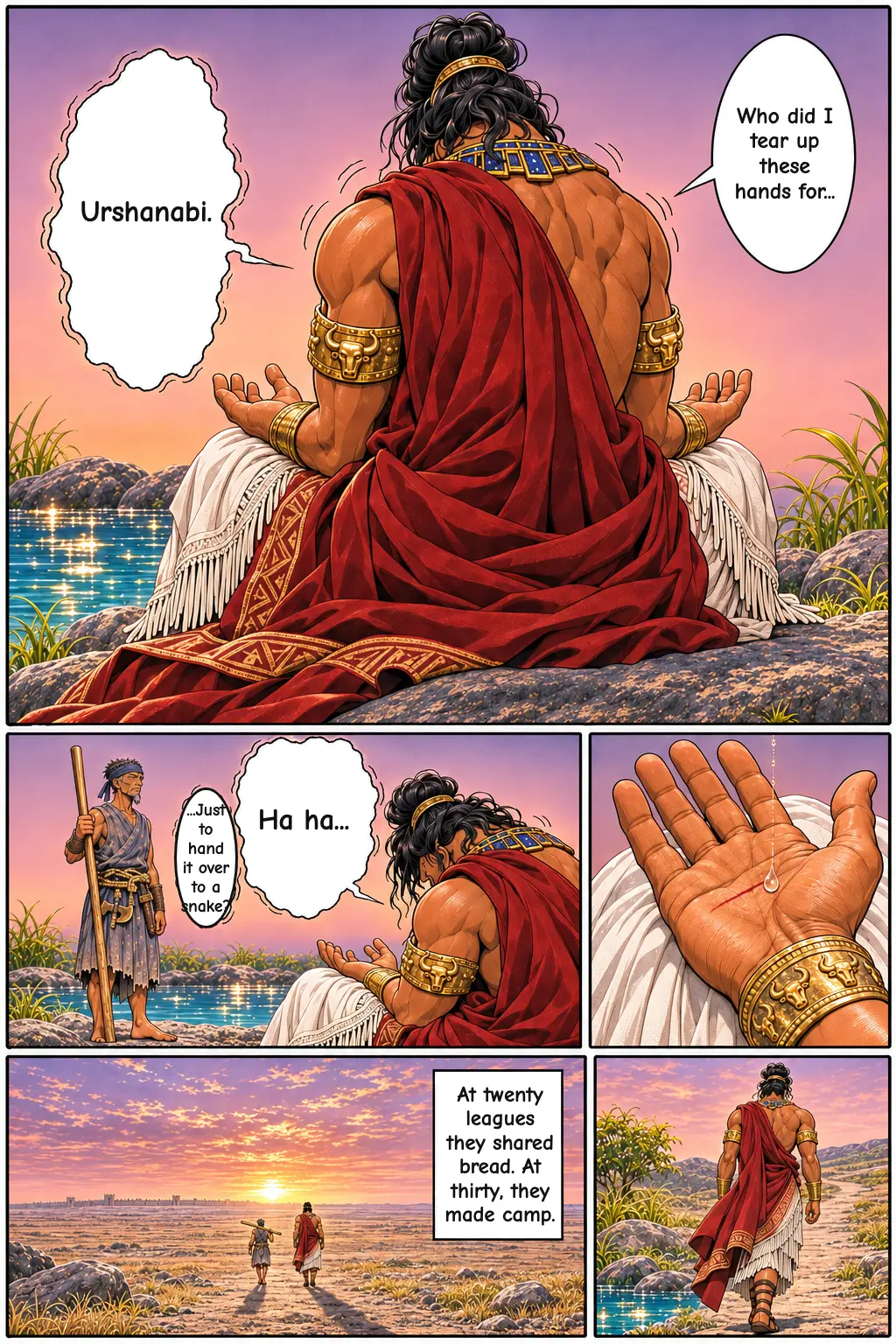
King Gilgamesh wants to live forever, so he's given a test: stay awake for six days and seven nights. Sleep wins, and seven loaves of bread prove how long he was out. As a parting gift, he learns of a plant at the bottom of the water. He brings it up even though its thorns tear his hands. But while he bathes, a serpent carries it off. He returns to Uruk empty-handed and shows its great walls to the ferryman who no longer has anywhere to go.
Story summary
This episode comes from the end of Tablet XI of the Standard Babylonian Epic of Gilgamesh, the version traditionally credited to a scholar-scribe named Sin-leqi-unninni. Gilgamesh, king of the city of Uruk, has crossed the Waters of Death to reach Utnapishtim, the one man who survived the Great Flood and was given eternal life by the gods. Gilgamesh has just heard the flood story, and he still wants to know how to escape death. Utnapishtim answers with a challenge.
Gilgamesh and the Plant of Youth: The Sleep Test and the Serpent Explained
In short: In Tablet XI of the Epic of Gilgamesh, King Gilgamesh asks the flood survivor Utnapishtim for eternal life, but he can't stay awake for even one week. Seven loaves of bread prove how long he slept. As a parting gift he pulls a thorny plant of youth from the deep waters, but a serpent steals it while he bathes. He returns home to Uruk with nothing, and the story ends at the city's great walls.
The Original Myth: What Happens in Tablet XI
This episode comes from the end of Tablet XI of the Standard Babylonian Epic of Gilgamesh, the version traditionally credited to a scholar-scribe named Sin-leqi-unninni. Gilgamesh, king of the city of Uruk, has crossed the Waters of Death to reach Utnapishtim, the one man who survived the Great Flood and was given eternal life by the gods. Gilgamesh has just heard the flood story, and he still wants to know how to escape death.
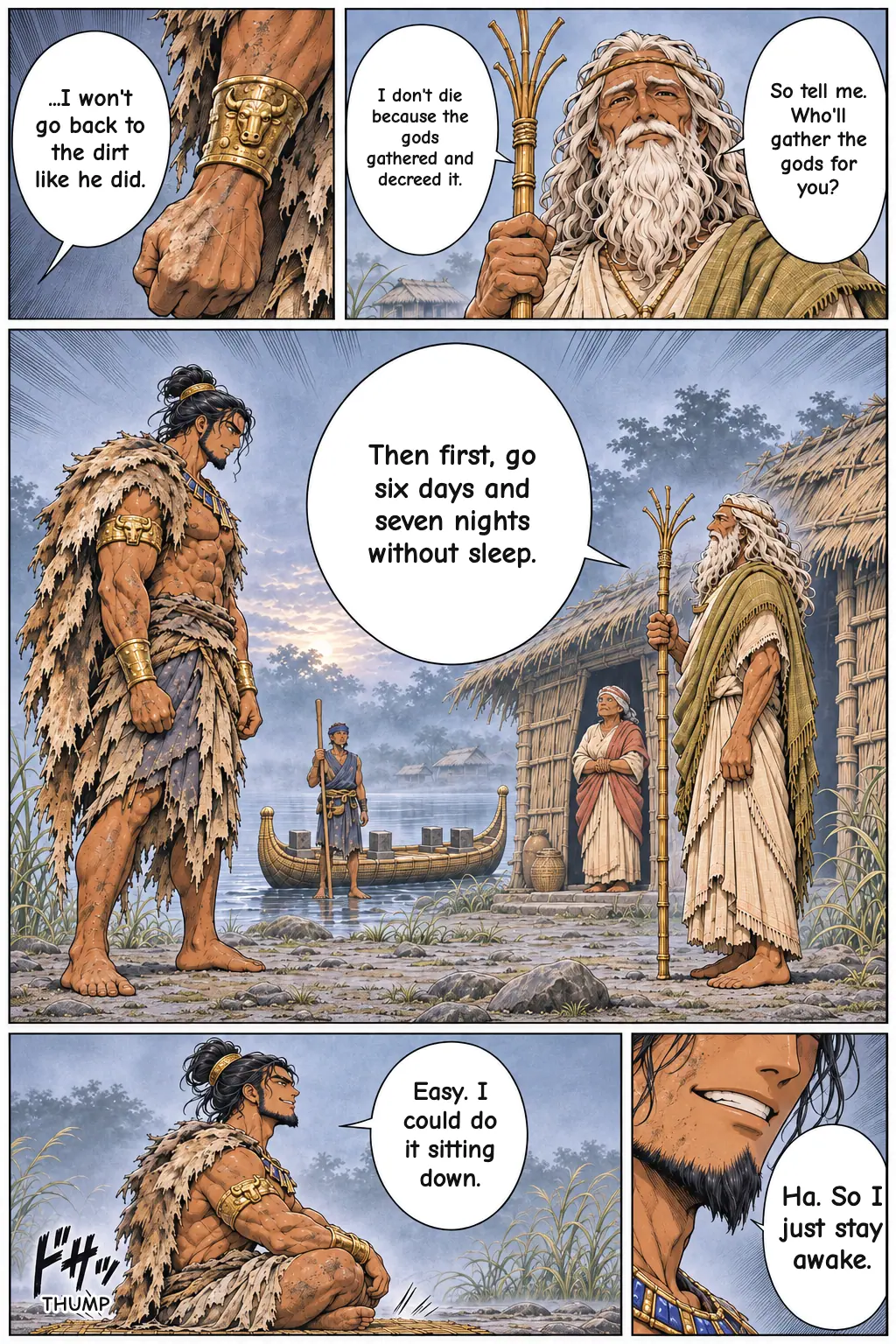
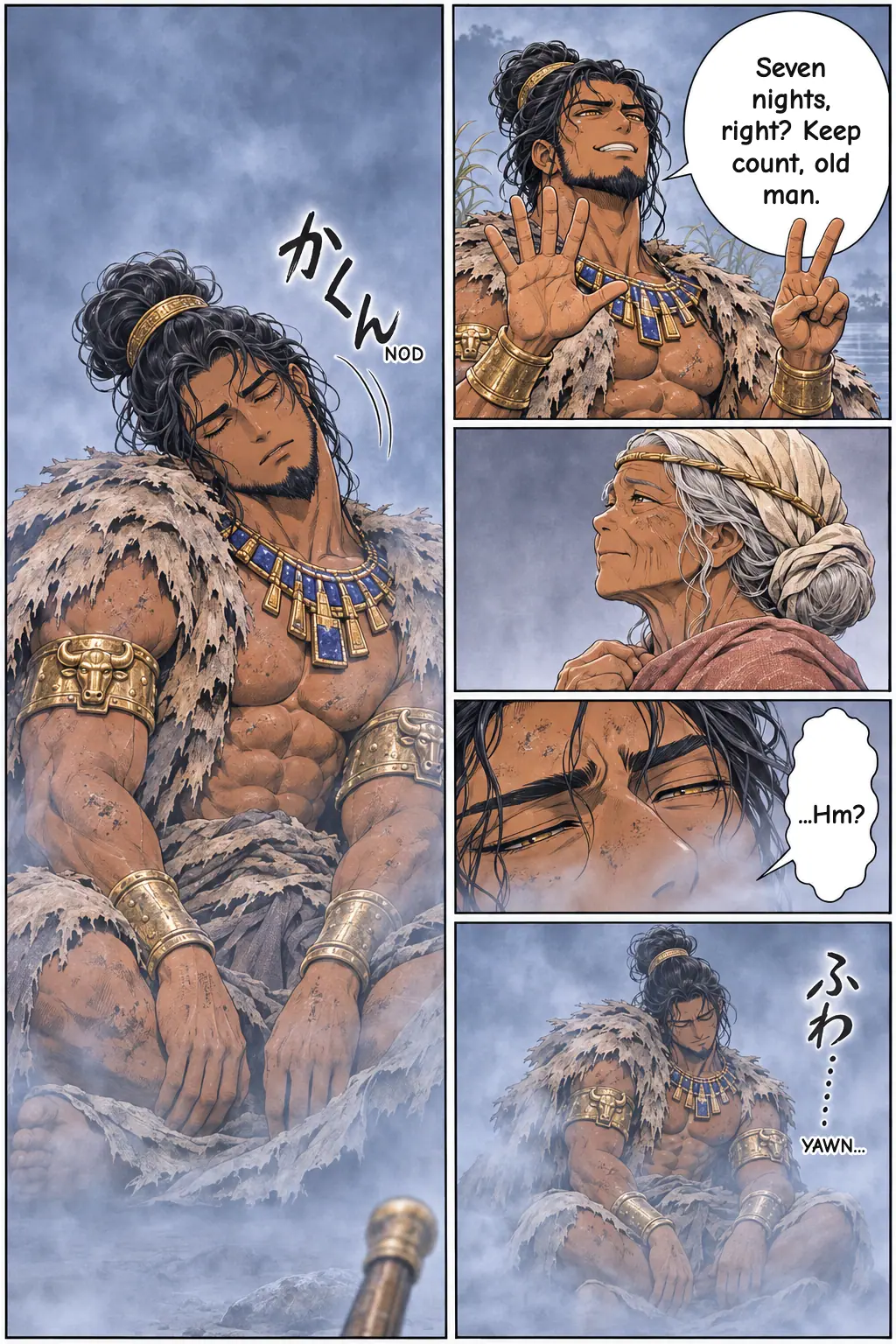
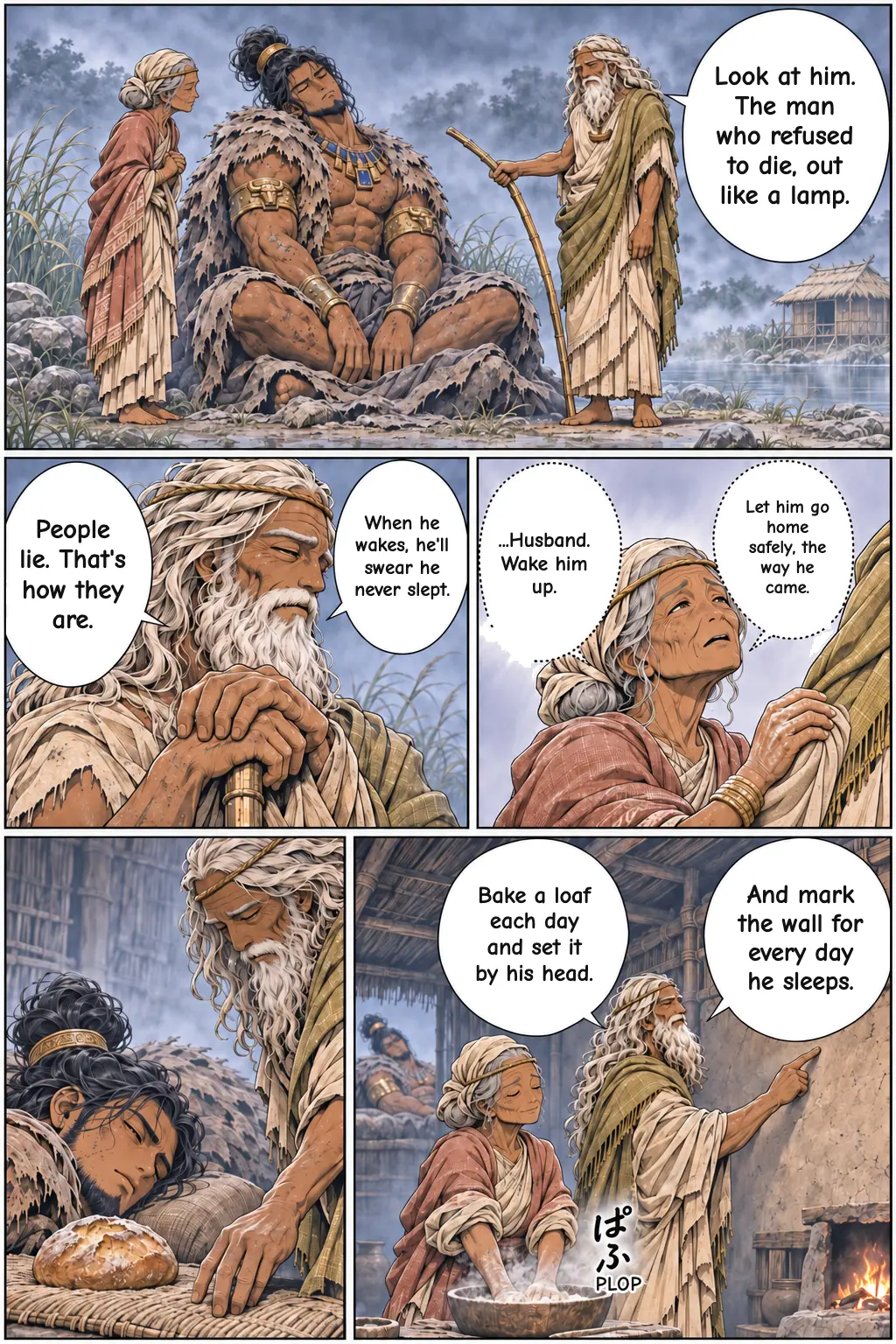
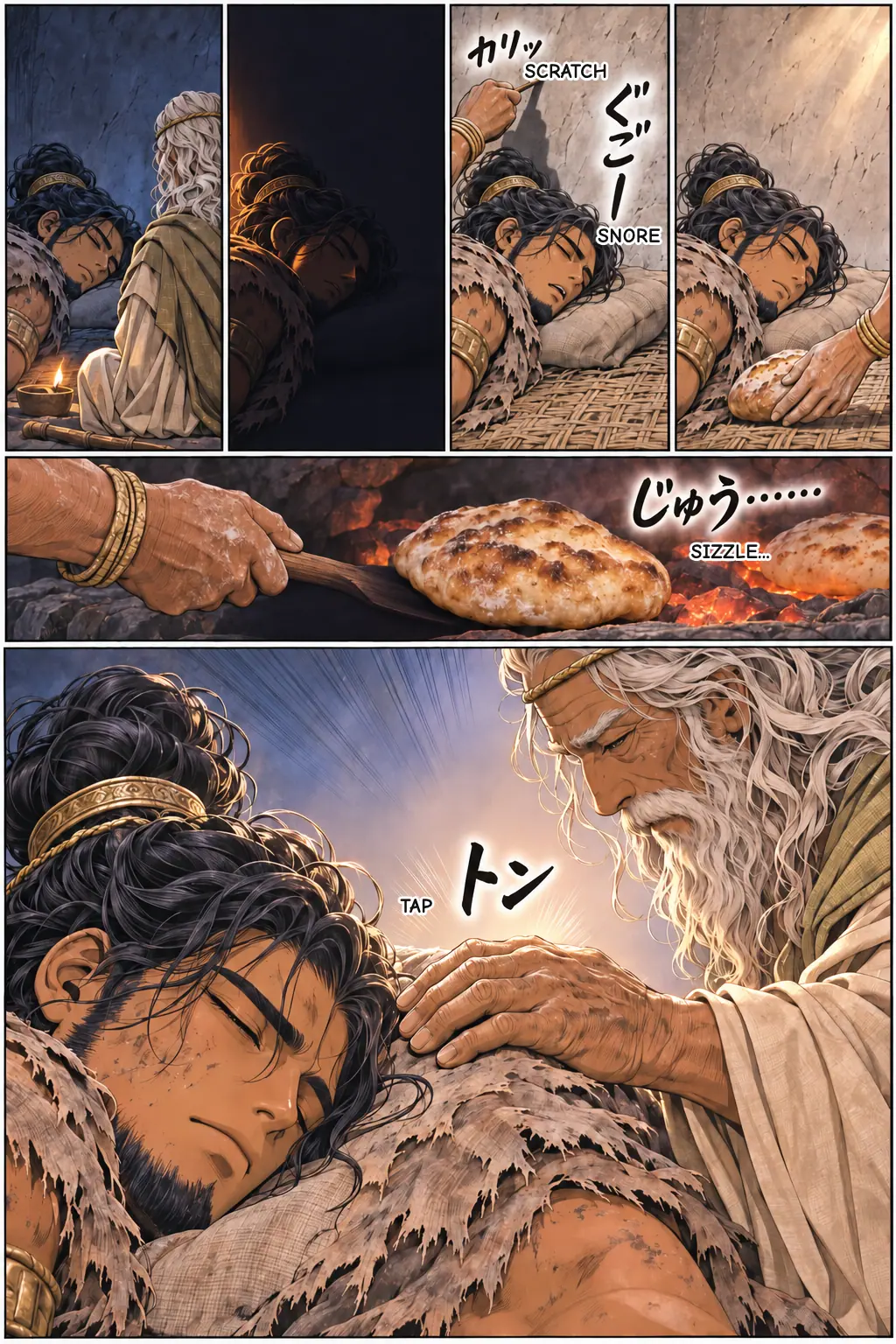
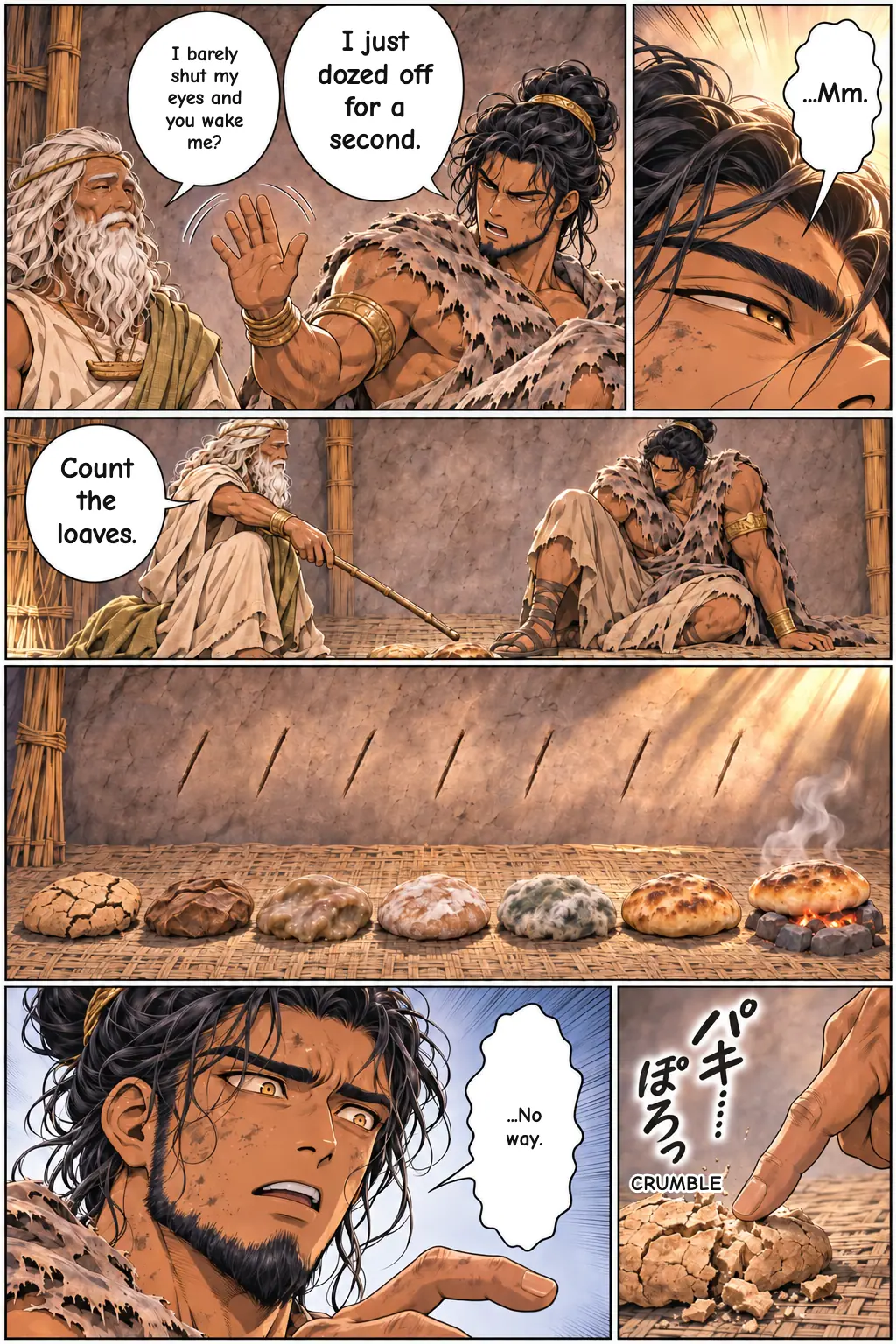
Utnapishtim answers with a challenge. The gods will never gather again just for Gilgamesh, so if he wants to beat death, let him first beat sleep: stay awake for six days and seven nights. Gilgamesh sits down, and sleep drifts over him like a mist almost at once. Utnapishtim's wife feels sorry for him and asks her husband to wake him and send him home safely. Utnapishtim doesn't trust him. People lie, he says, so the young man will claim he never slept. He has his wife bake a loaf of bread each day, set it by the sleeper's head, and mark the days on the wall.
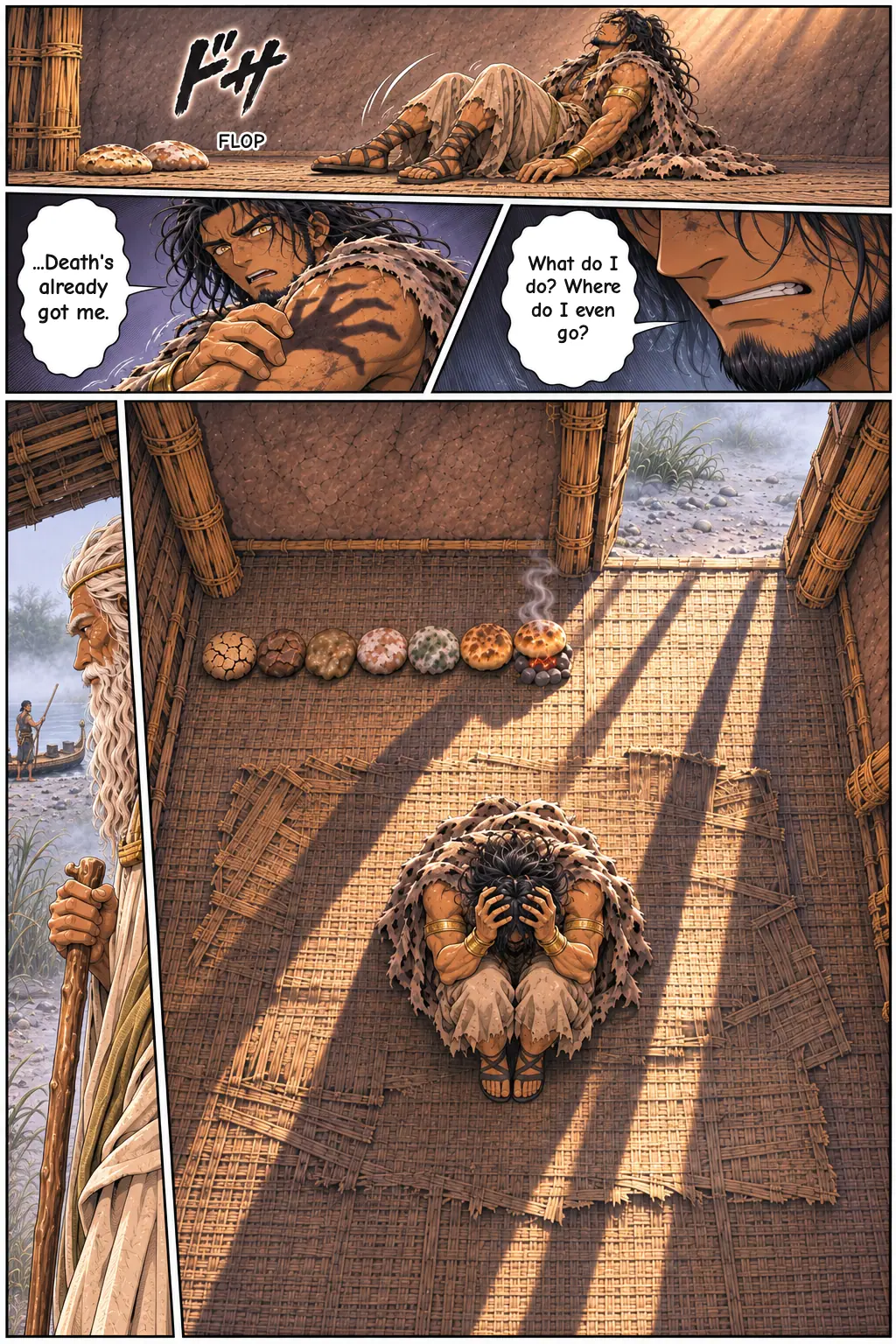
When Gilgamesh finally wakes, he insists he only dozed for a moment. Utnapishtim points to the row of loaves, each one more stale and spoiled than the last, with the newest still on the coals. (Scholars read and restore the exact words for each loaf's condition in different ways.) Gilgamesh breaks down. Death, he says, has crept into his very bedroom. Everywhere he turns, death is there.
The Plant of Youth and the Serpent
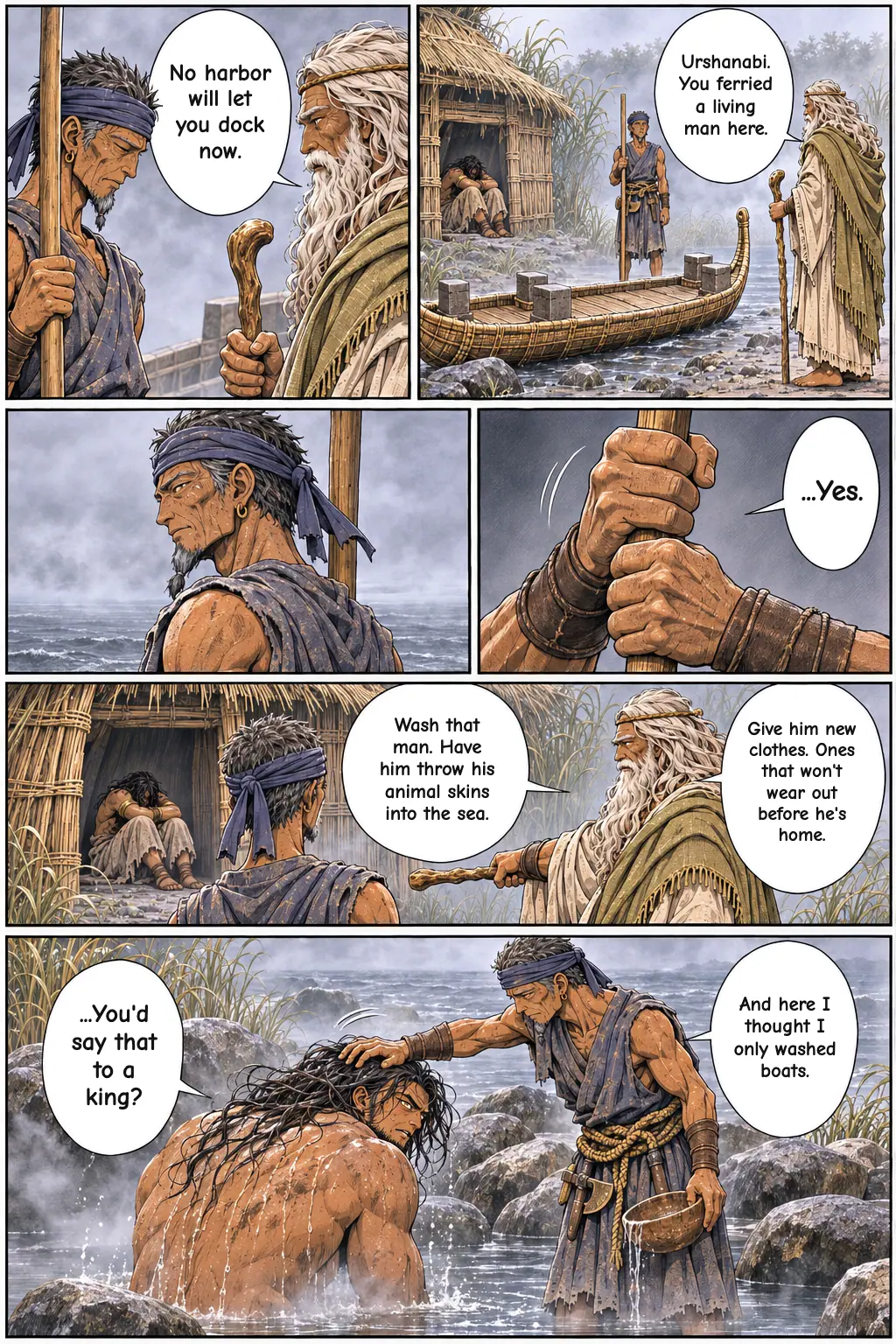
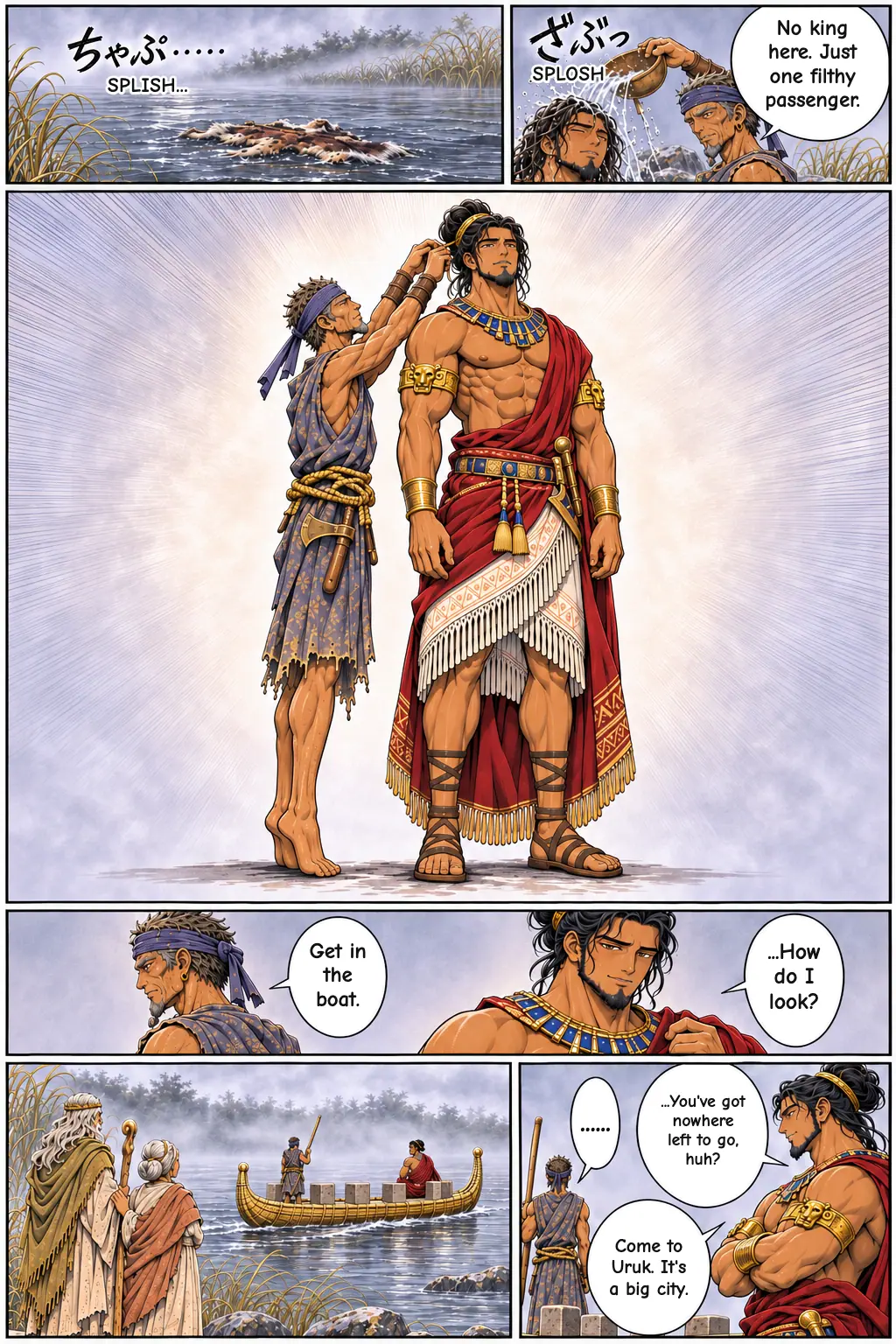
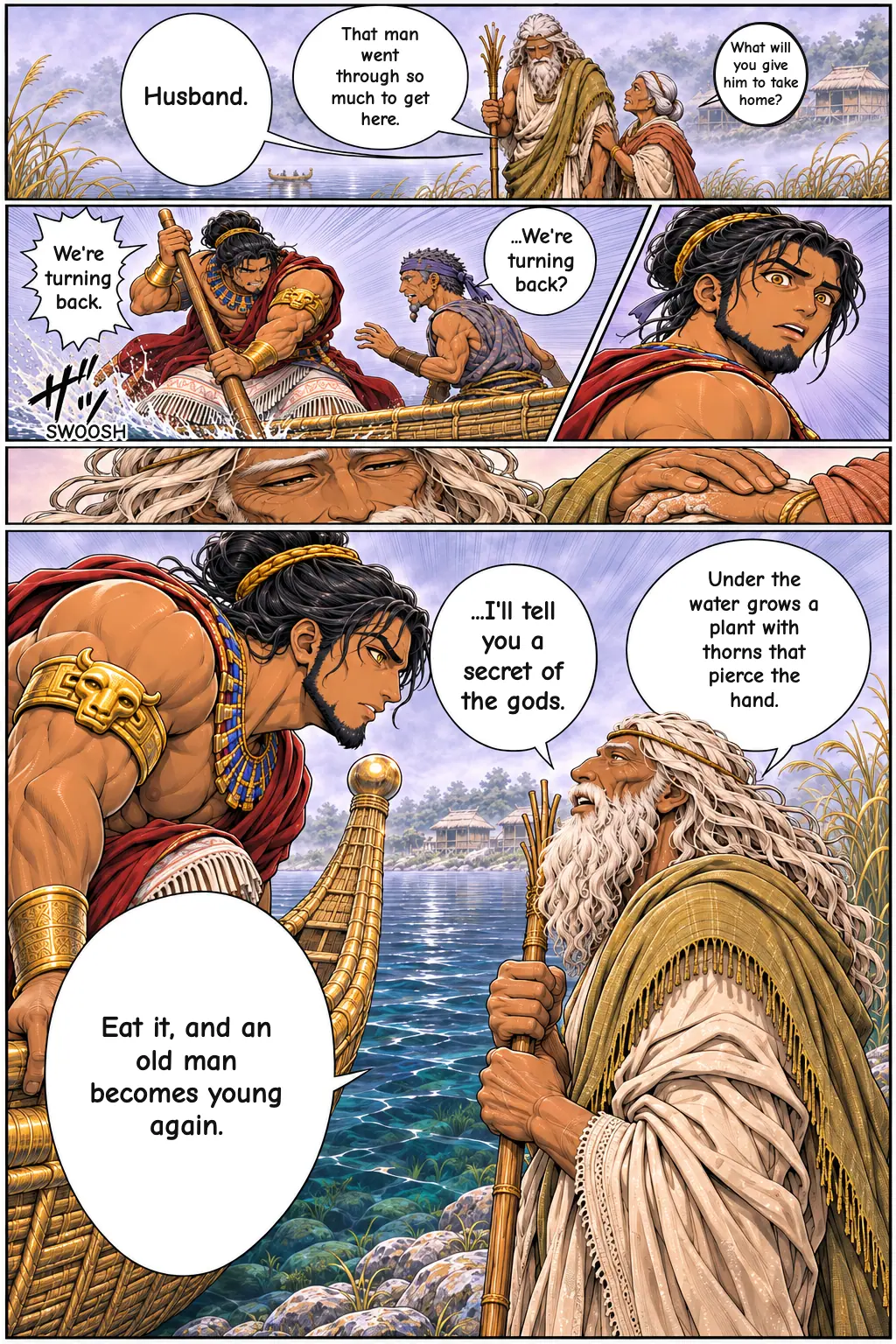
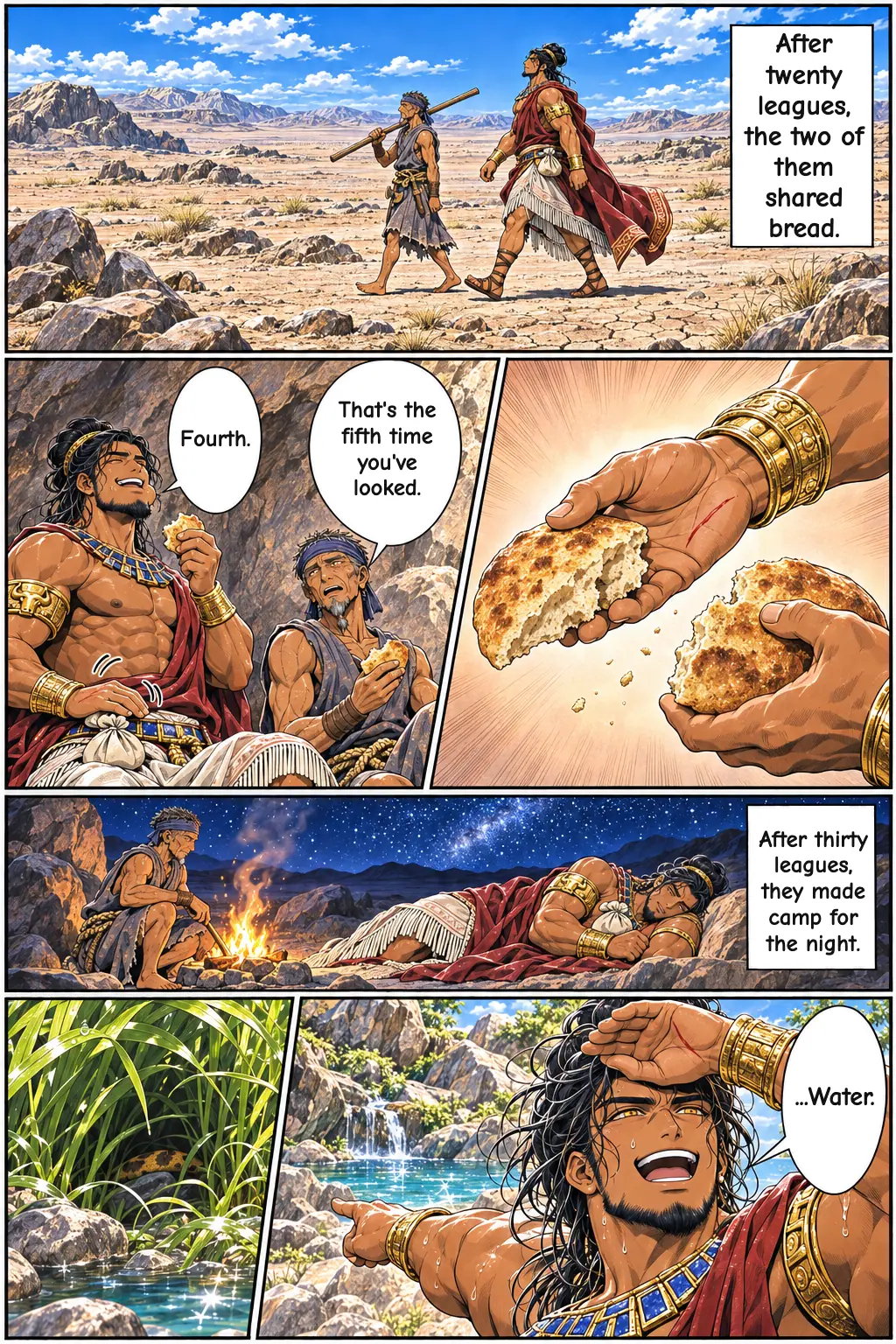
Utnapishtim then curses his ferryman, Urshanabi, so that he can never again come to the shore or the crossing. He has Urshanabi bathe the travel-worn king, throw away his ragged animal skins, and dress him in fresh royal clothes that will stay new until he gets home. As the two men push off in the boat, Utnapishtim's wife speaks up again. Gilgamesh worked so hard to get here. Shouldn't he take something home?
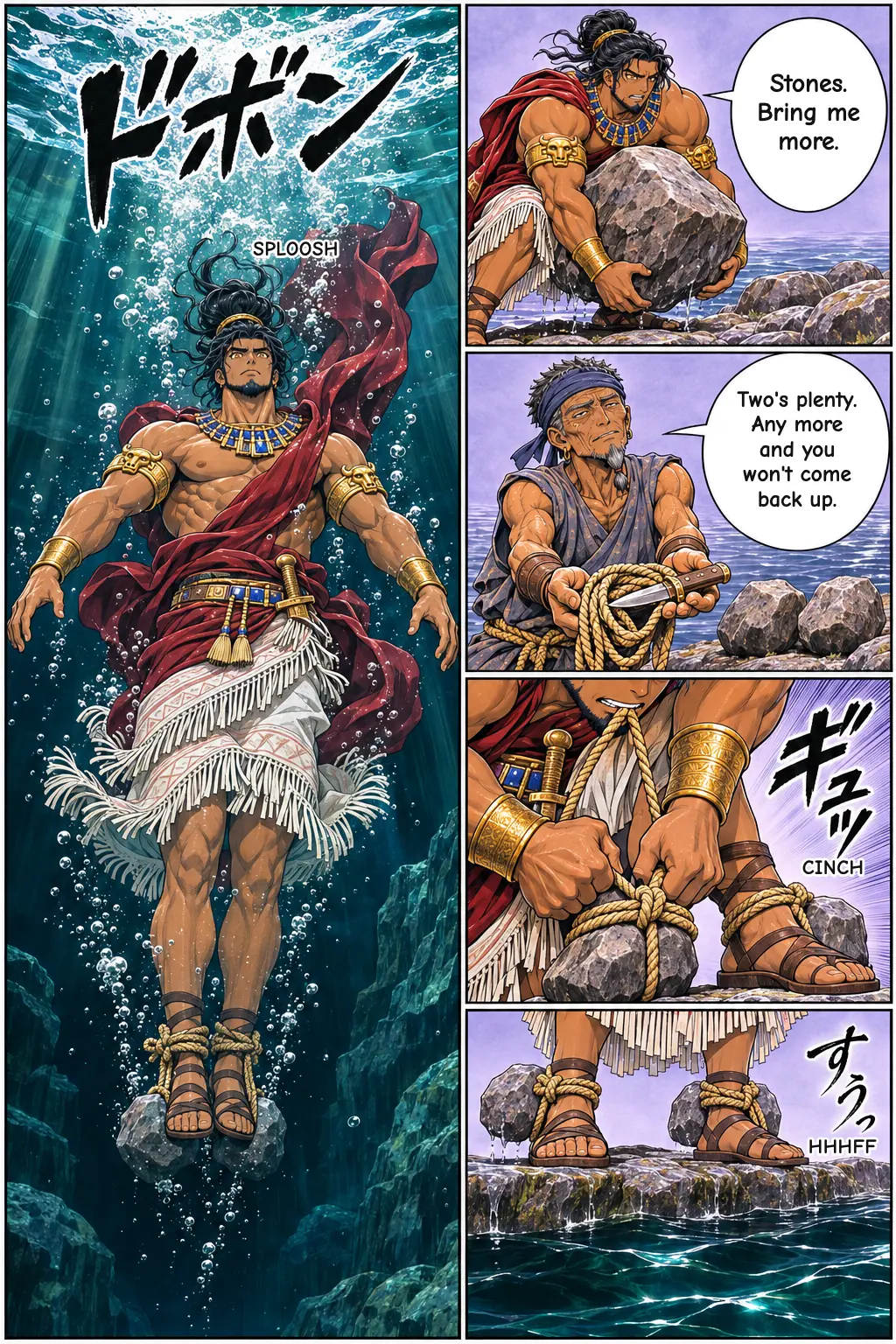
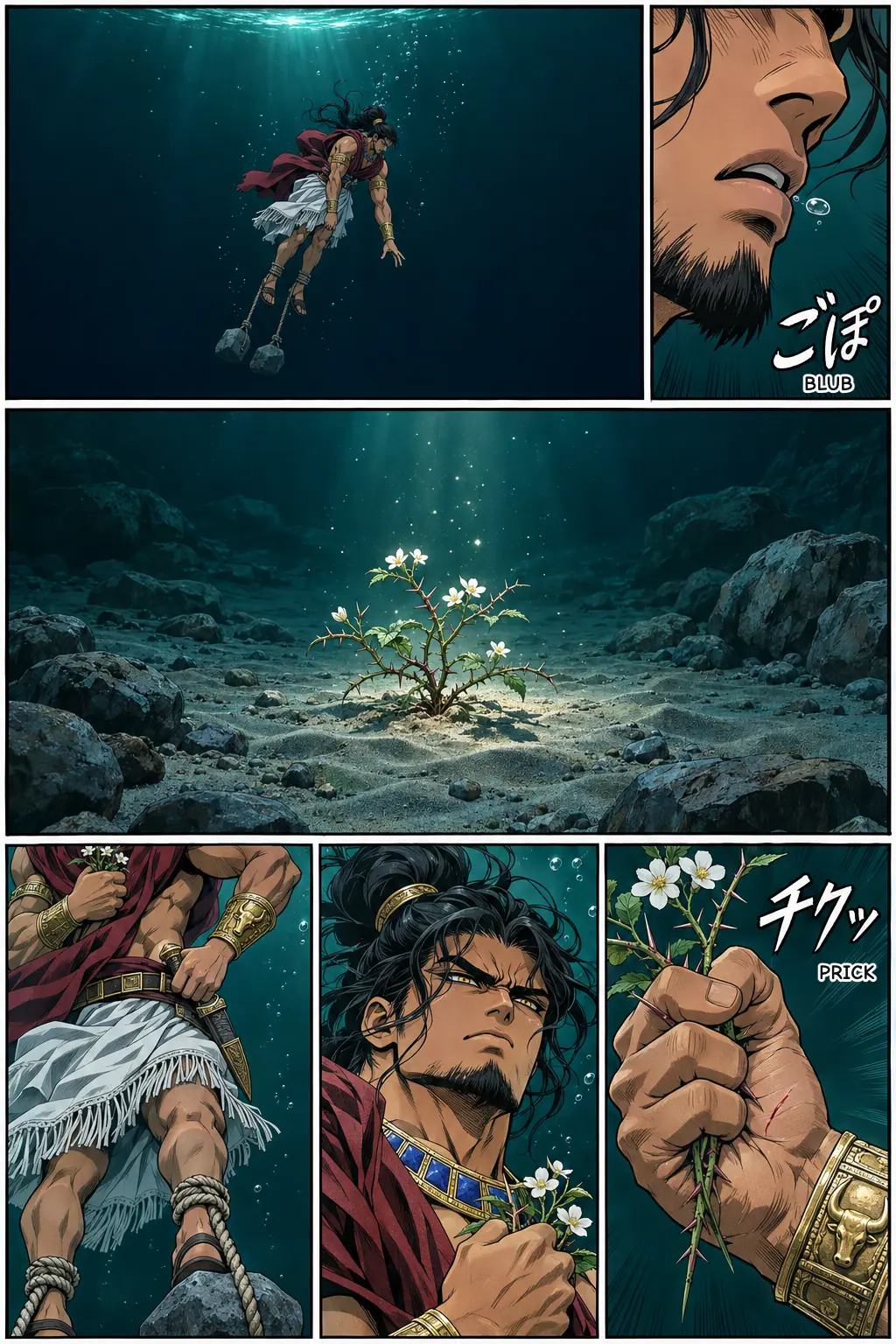
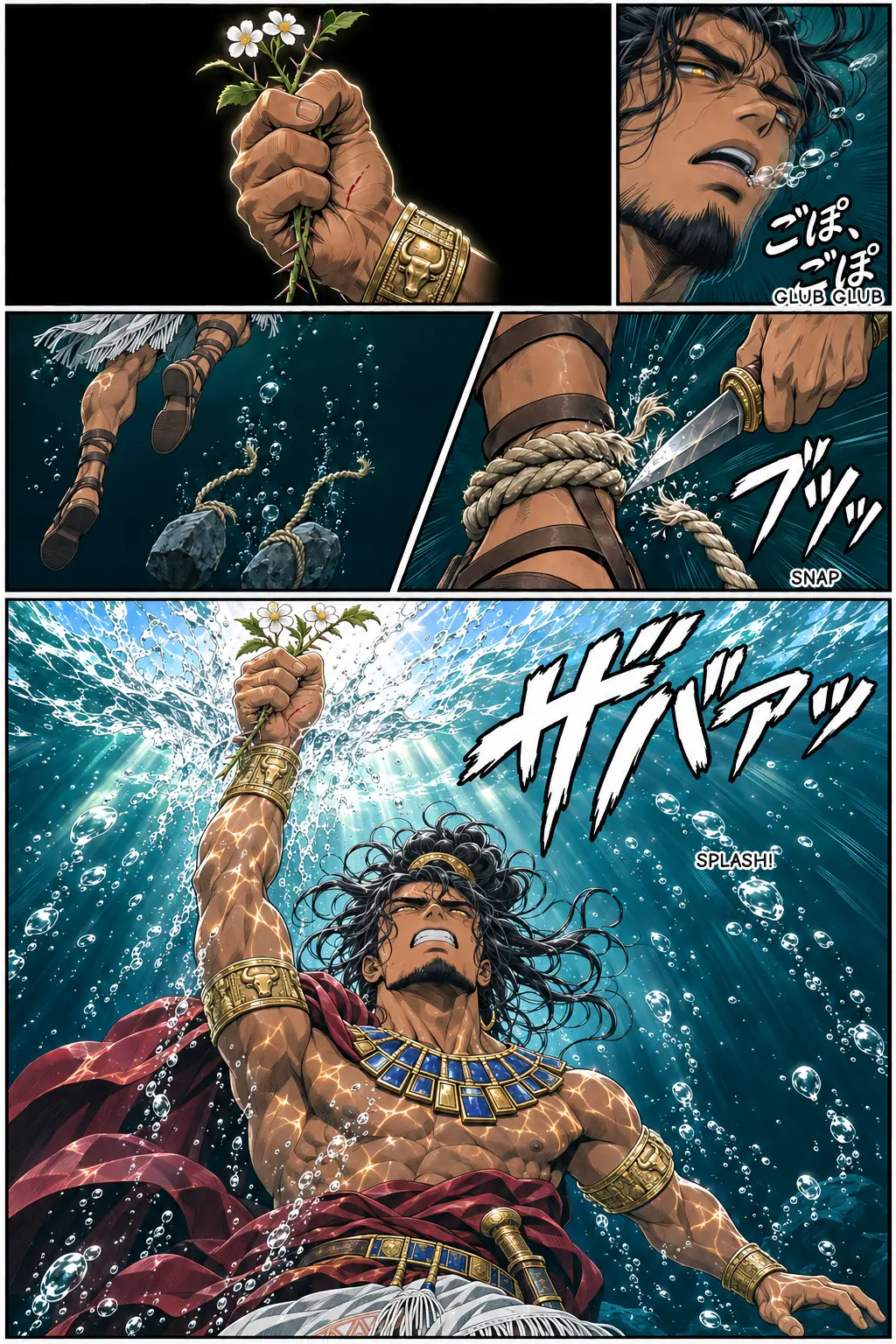
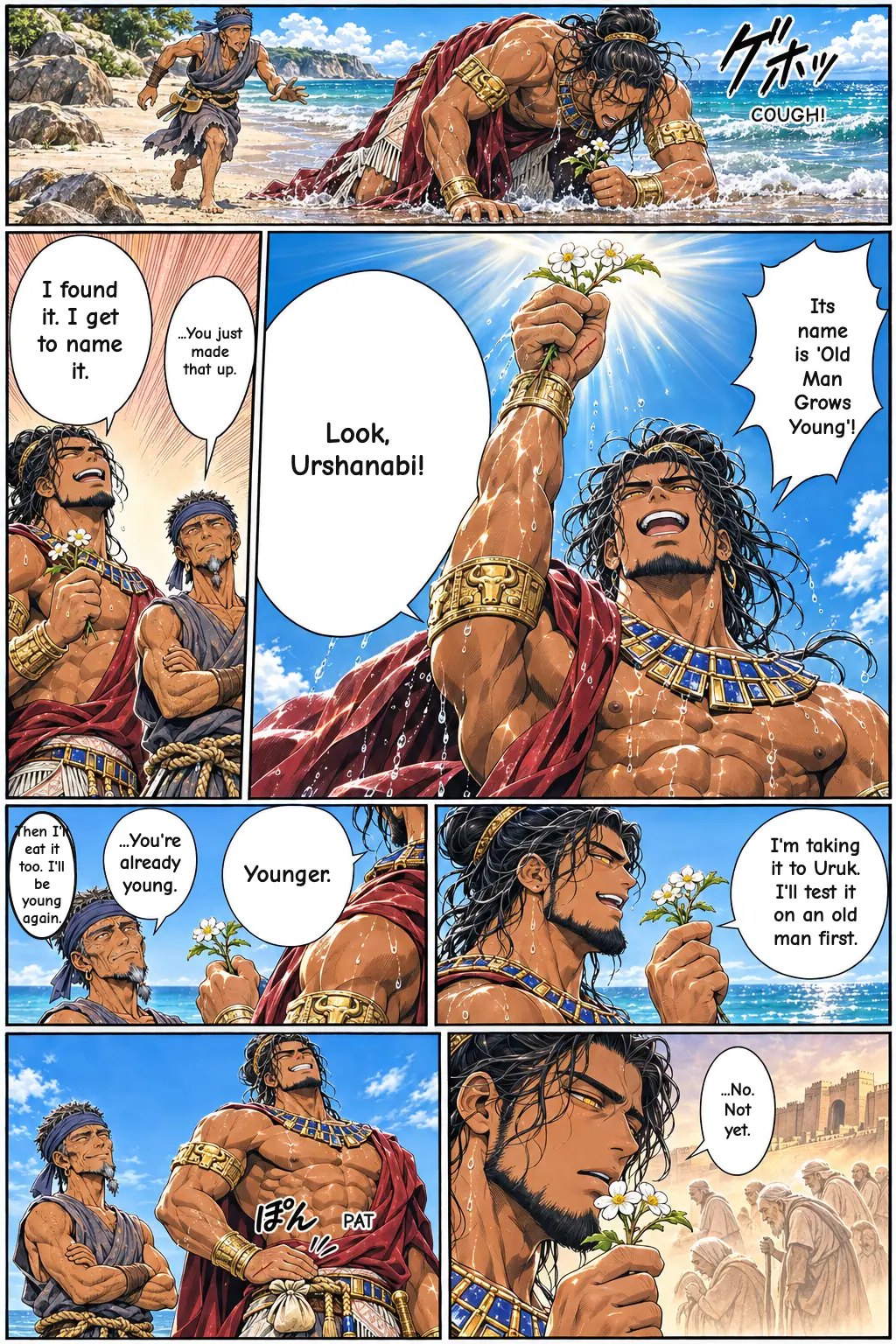
So Utnapishtim tells him a secret of the gods. Deep in the Apsu, the freshwater abyss, there grows a plant with thorns that will prick his hands, but whoever gets it can renew his life. Nobody is sure what real plant the text has in mind. Gilgamesh ties heavy stones to his feet, sinks to the bottom, and grabs the plant even though it cuts his hands. Then he cuts the stones loose and the water throws him back onto the shore. He doesn't eat the plant right away. He plans to test it on an old man in Uruk first, and he names it "The Old Man Becomes Young."
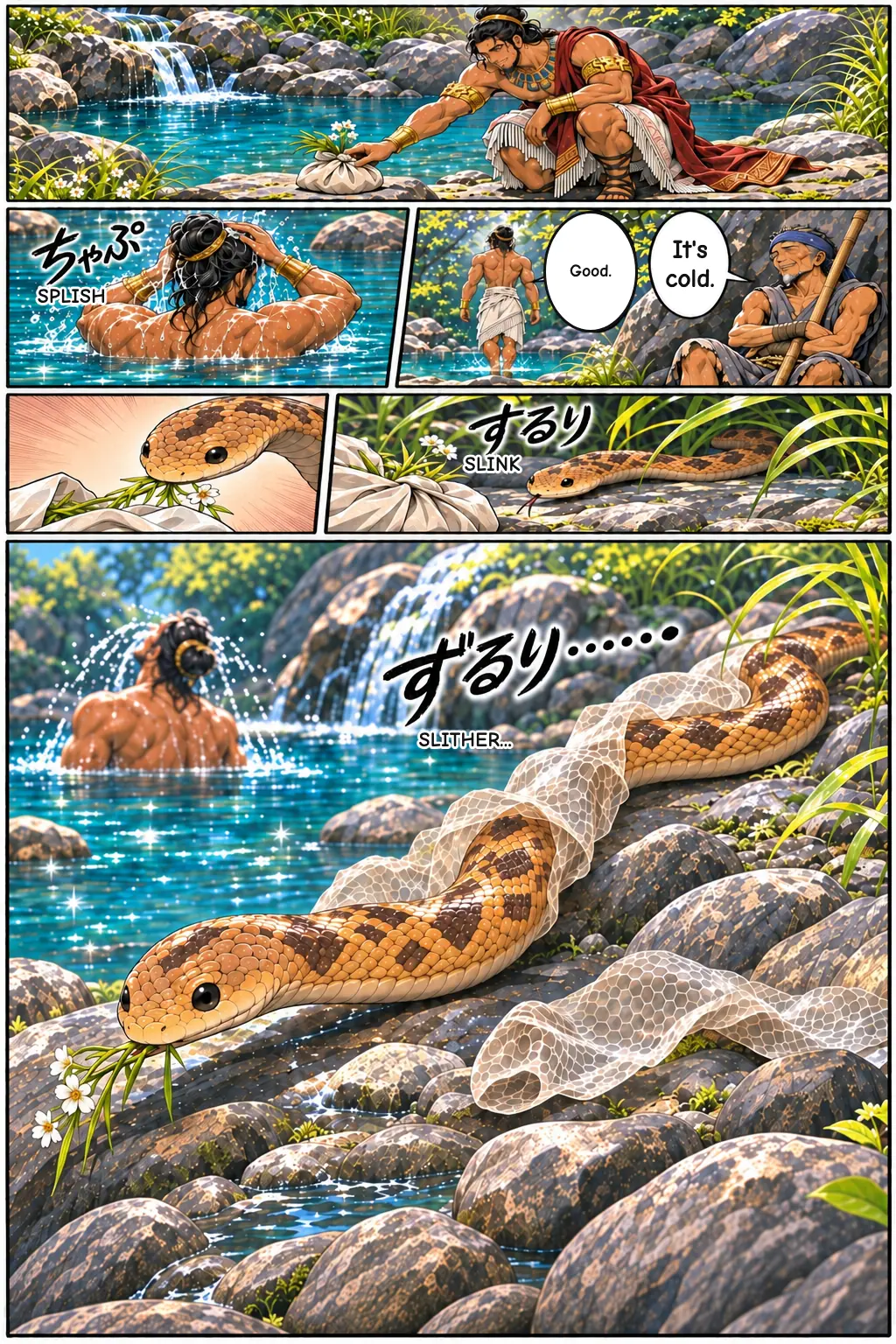
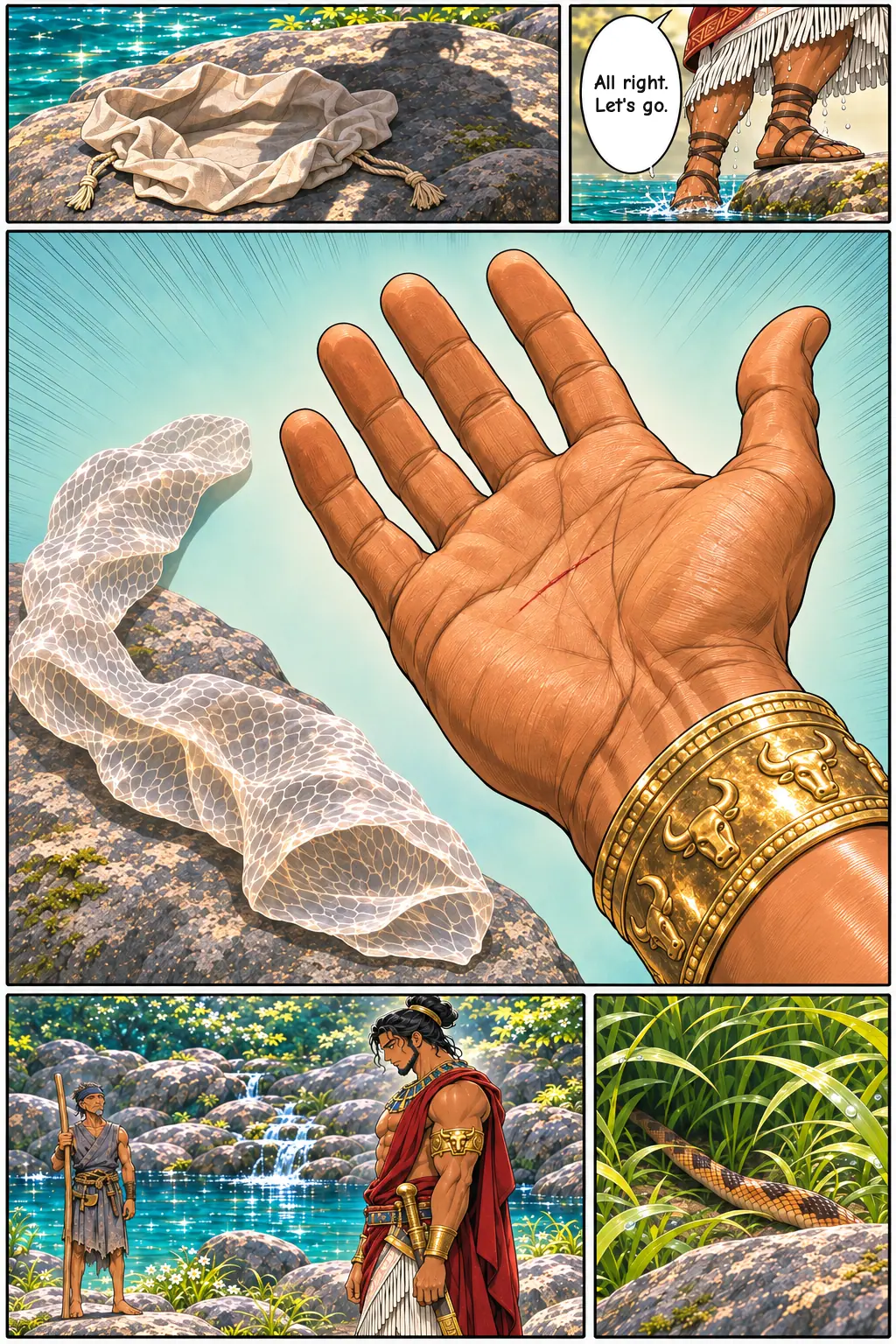
On the way home they stop at a pool of cool water, and Gilgamesh goes in to bathe. A serpent smells the plant, slips up quietly, carries it off, and sheds its skin as it goes. Many readers take this as an explanation of why snakes renew themselves, but the text never actually says so. Gilgamesh sits down and weeps. He asks Urshanabi who all his effort was for, since he has gained nothing for himself and done a favor only for a creature of the earth.
Return to Uruk: Why the Walls Matter
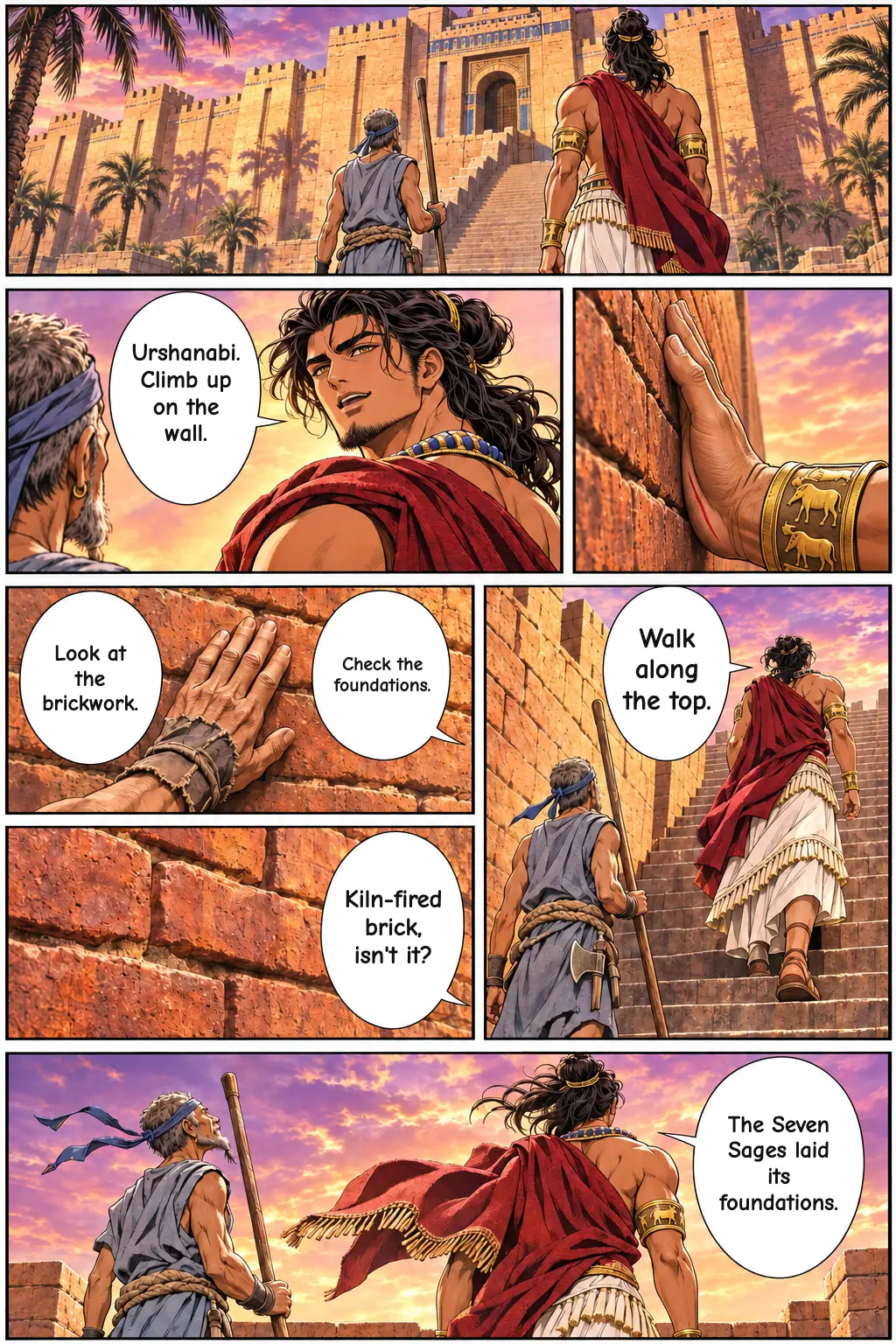
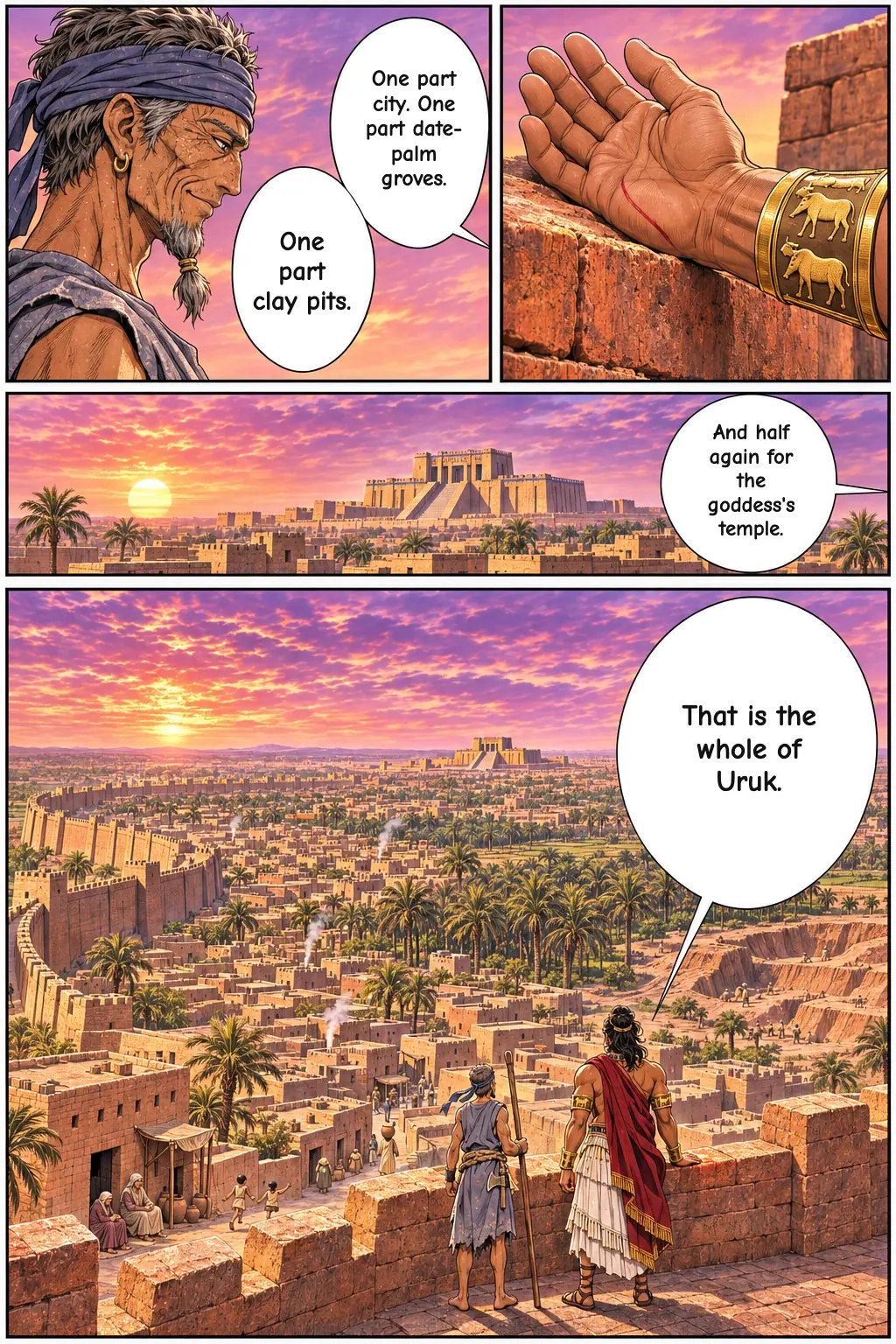
The two men travel on and finally reach Uruk. Gilgamesh doesn't talk about what he lost. He tells Urshanabi to climb the city wall and walk along it, to look at its foundations and its fired bricks, said to have been laid by the Seven Sages, and to take in the city, the date-palm gardens, the clay pits, and the temple of Ishtar.
These lines echo the opening of Tablet I almost word for word, so the epic ends right where it began. Gilgamesh couldn't win personal immortality, but the city he built and the work of human hands will outlast him. Many scholars read this return as the real ending of the story. Tablet XII, which follows it in the standard version, is widely seen as a separate text that was attached later.
What This Myth Tells Us
The Epic of Gilgamesh comes from ancient Mesopotamia, modern-day Iraq, and is one of the oldest surviving works of literature. This episode is where the story's central question about death gets its answer. The sleep test turns that answer into a lesson: a man who can't conquer a single week of sleep can't hope to conquer death, which is sleep's older sibling. Utnapishtim isn't a god. He is a human who received a one-time gift, and that gift can't be repeated.
The lost plant adds a second, sadder layer. Gilgamesh gets real hope, earns it with real pain, and loses it in an ordinary moment of rest. People still feel the weight of that today: effort doesn't guarantee a reward, and what lasts may be what we leave behind for others.
What the Manga Changes
The manga follows the order of events in Tablet XI, but the ancient text gives very little visual detail, so many visual choices are the artist's own. These include the look of Utnapishtim's distant island and home, the bread oven, how old the immortal couple appear, and how the misty sleep is drawn. The days passing are shown as a panel-by-panel time-lapse of loaves and wall marks. The bathing scene is drawn modestly, and the new royal clothes, the method of tying the stones, the look of the abyss, the shape of the plant (apart from its thorns), and the serpent's size and color are all invented.
The ending scene at the walls uses the same composition as the opening of Episode 1. That is the manga's way of matching the original's repeated words with a repeated image. Gilgamesh's emotions show only in his face. No inner monologue has been added that the original doesn't contain.
Where to Read It
If you want to see the sleep test, the dive into the abyss, and that quiet final look at Uruk's walls, Episode 11 of MESOPOTAMIAN MYTH: THE EPIC OF GILGAMESH — No One Lives Forever is on Manga Portal. Every episode is free to read, with no sign-up needed, so you can also go back to Episode 1 and compare the two wall scenes yourself.
Characters in this episode
Gilgamesh
The king of Uruk who seeks eternal life, fails the sleep test, wins the plant of youth through pain, and loses it to a serpent.
Utnapishtim
The human survivor of the Great Flood who was granted immortality by the gods and sets Gilgamesh the test of staying awake.
Utnapishtim's wife
An unnamed immortal woman who bakes the loaves that prove how long Gilgamesh slept and persuades her husband to give him a parting gift.
Urshanabi
Utnapishtim's ferryman, who is banished from the island and goes with Gilgamesh back to Uruk.
The serpent
A snake drawn by the plant's scent that steals it while Gilgamesh bathes and sheds its skin as it leaves.
FAQ
Why did Gilgamesh fail to become immortal?
Utnapishtim challenged him to stay awake for six days and seven nights, and he fell asleep almost right away. Later he found a plant that could restore youth, but a serpent stole it while he was bathing. He went home to Uruk without either prize.
What is the plant of youth in the Epic of Gilgamesh?
It is a thorny plant growing in the Apsu, the deep freshwater abyss, that can renew a person's life. Gilgamesh names it "The Old Man Becomes Young" and plans to test it on an old man in Uruk. Its real-world identity is unknown.
Why does the snake shed its skin in Gilgamesh?
After stealing the plant, the serpent sheds its skin as it leaves. Many readers see this as an ancient explanation for why snakes seem to renew themselves, but the text itself doesn't spell that out.
What do the seven loaves of bread mean in Gilgamesh?
Utnapishtim's wife baked one loaf for each day Gilgamesh slept, so the loaves at different stages of staleness proved he had slept for days, not just a moment. Utnapishtim set this up because he expected Gilgamesh to deny he had slept.
How does the Epic of Gilgamesh end?
In Tablet XI, Gilgamesh returns to Uruk and shows the ferryman Urshanabi the city's great walls, repeating the words that open the epic. Tablet XII follows in the standard version, but many scholars consider it a separate text attached later.
More episodes of MESOPOTAMIAN MYTH: THE EPIC OF GILGAMESH