Get new episodes in your feed. Follow us on:ThreadsBluesky
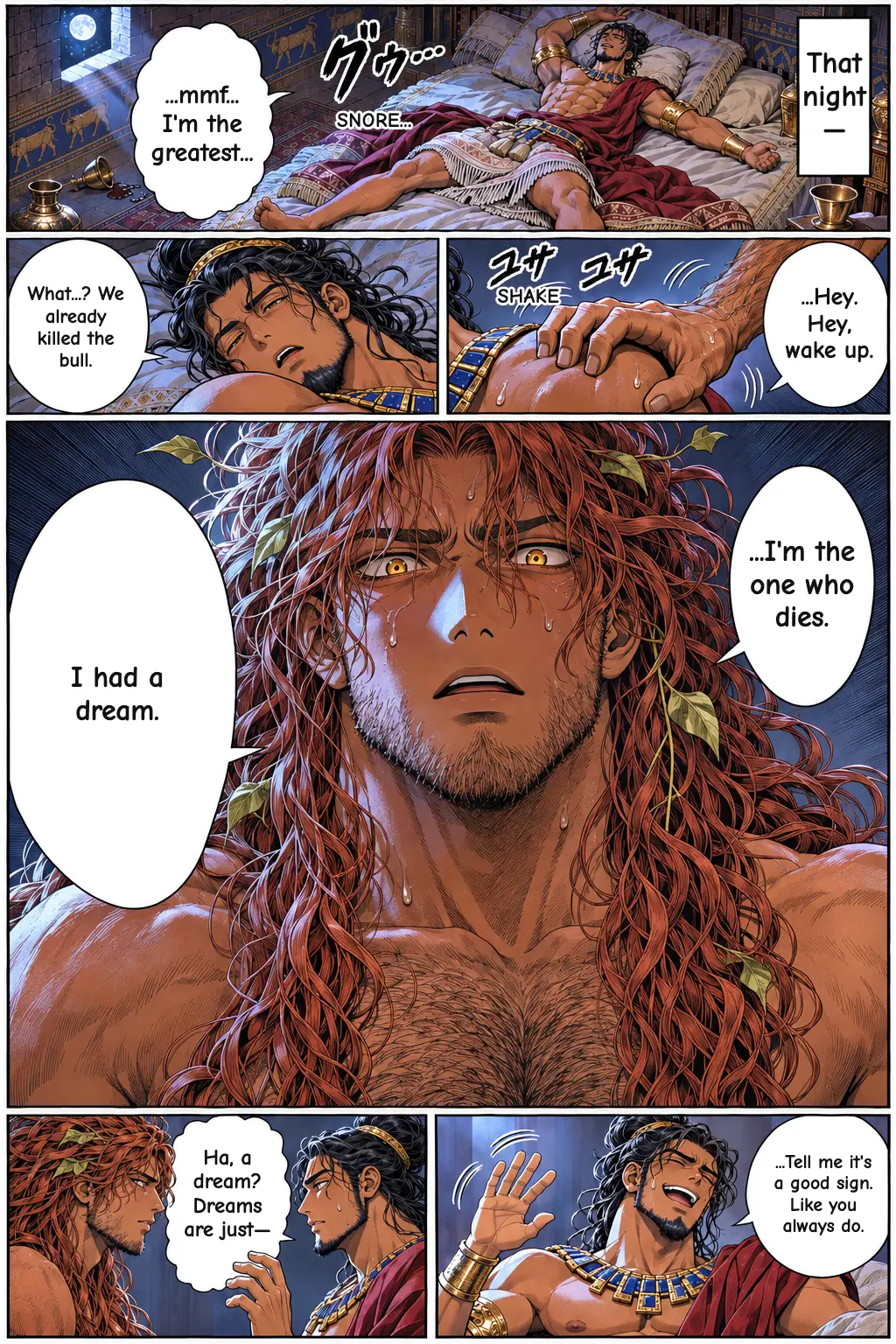
The night after they slay the Bull of Heaven, Enkidu dreams that the gods have sentenced him to death. He curses those who brought him out of the wild, takes it back, and after twelve days of sickness, Gilgamesh's friend breathes his last. King Gilgamesh refuses to let him be buried—until one morning he realizes that he, too, will someday die.
Story summary
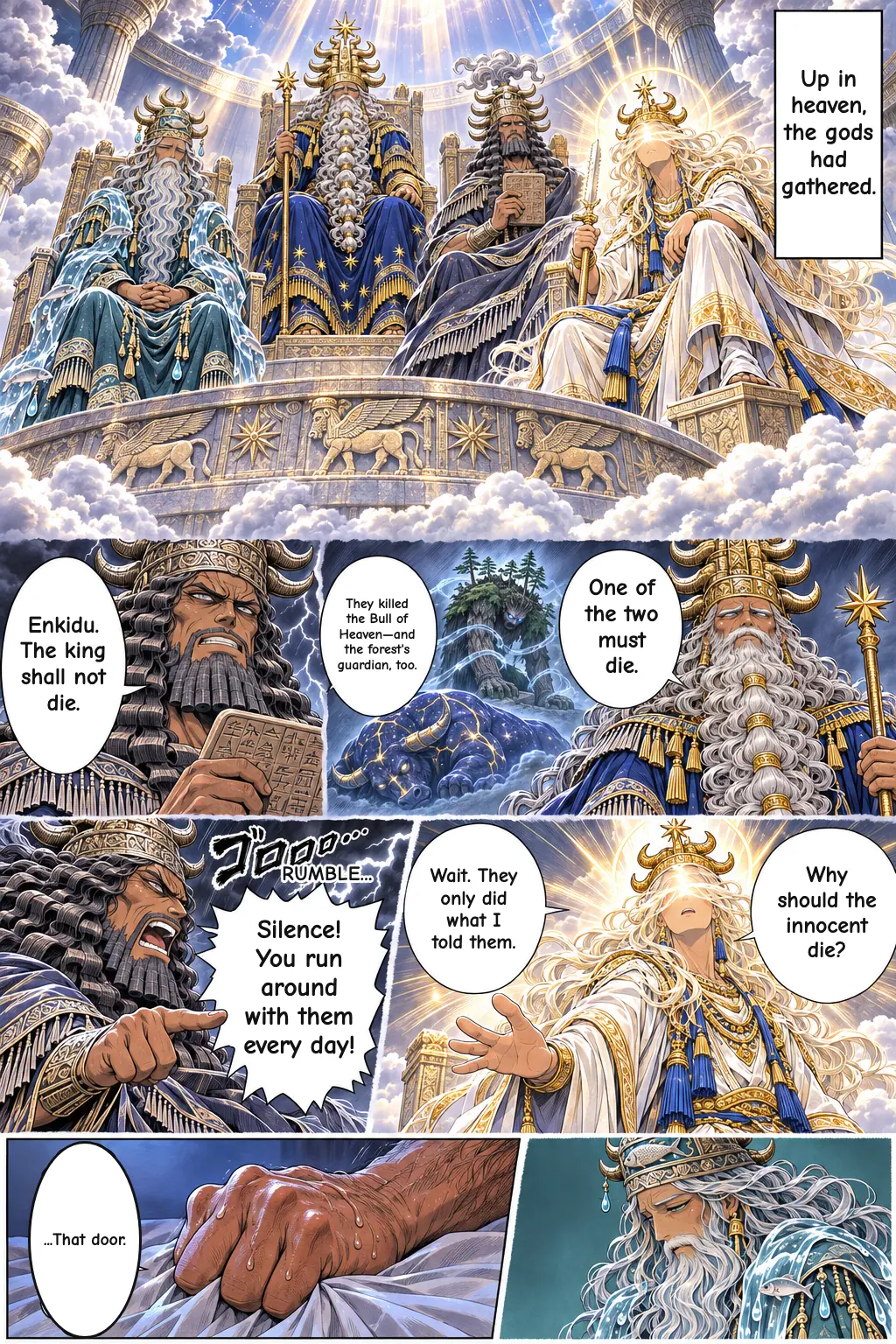
The night after he and Gilgamesh kill the Bull of Heaven, Enkidu, Gilgamesh's closest friend, has a dream and tells it to the king. The great gods have met in council. The opening lines of this tablet are missing from the Standard Babylonian text, so scholars fill the gap from a Hittite-language version. In that version, Anu, the sky god, says that the two heroes have killed both Humbaba and the Bull, and one of them has to pay with his life. Enlil, the powerful lord of the gods, names Enkidu.
The Death of Enkidu: Epic of Gilgamesh Tablets VII–VIII Explained
In short: The death of Enkidu is the turning point of the Epic of Gilgamesh, told in Tablets VII and VIII of the Standard Babylonian version. After Enkidu and King Gilgamesh kill the guardian Humbaba and the Bull of Heaven, the gods decide one of them must die. They choose Enkidu, who falls sick and dies after twelve days. His death leaves Gilgamesh grieving, and it makes the king afraid of his own death.
The Original Story: What Happens in Tablets VII and VIII
The night after he and Gilgamesh kill the Bull of Heaven, Enkidu, Gilgamesh's closest friend, has a dream and tells it to the king. The great gods have met in council. The opening lines of this tablet are missing from the Standard Babylonian text, so scholars fill the gap from a Hittite-language version. In that version, Anu, the sky god, says that the two heroes have killed both Humbaba and the Bull, and one of them has to pay with his life. Enlil, the powerful lord of the gods, names Enkidu. Shamash, the sun god, protests that the two friends acted on his orders, and Enlil turns on him in anger.
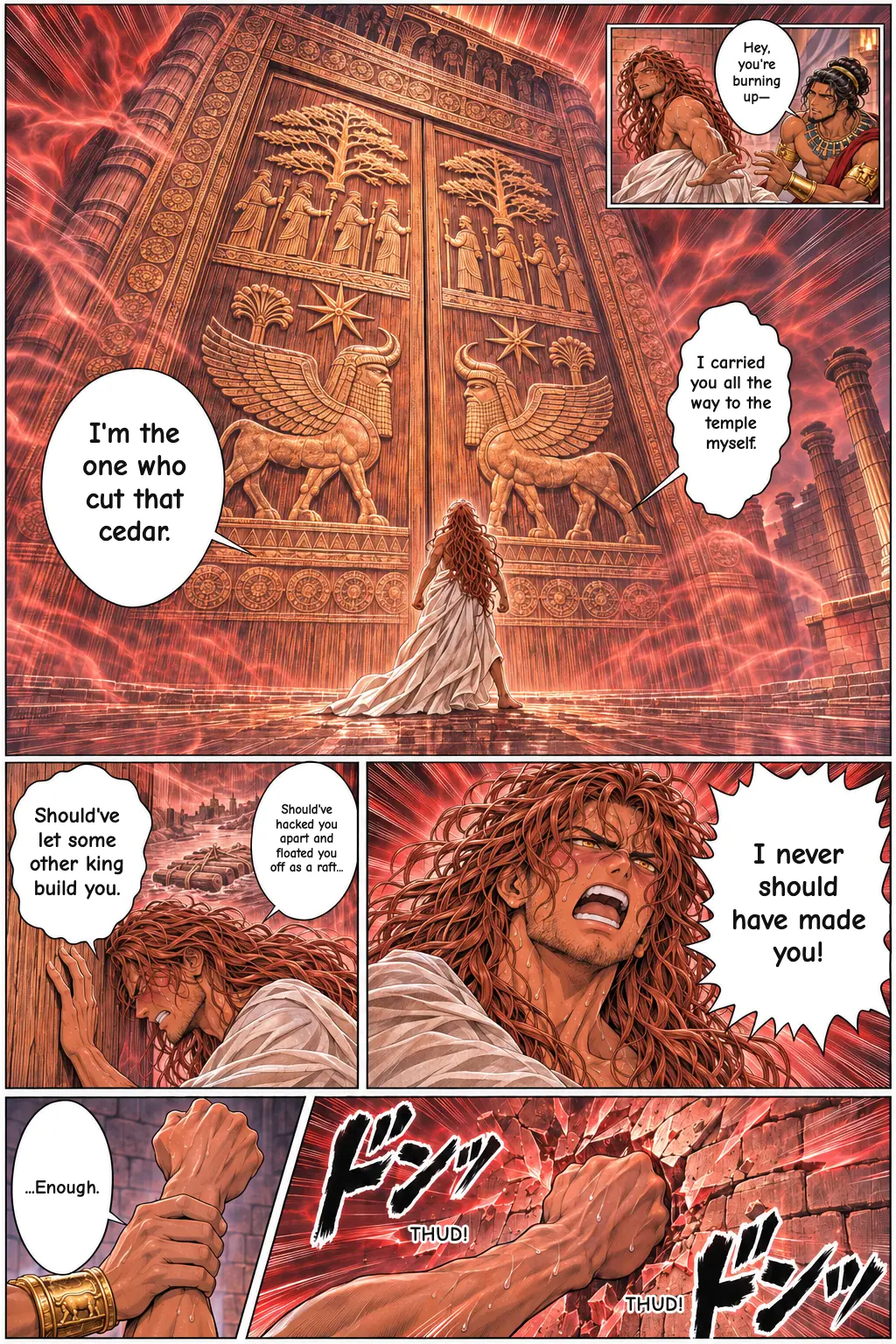
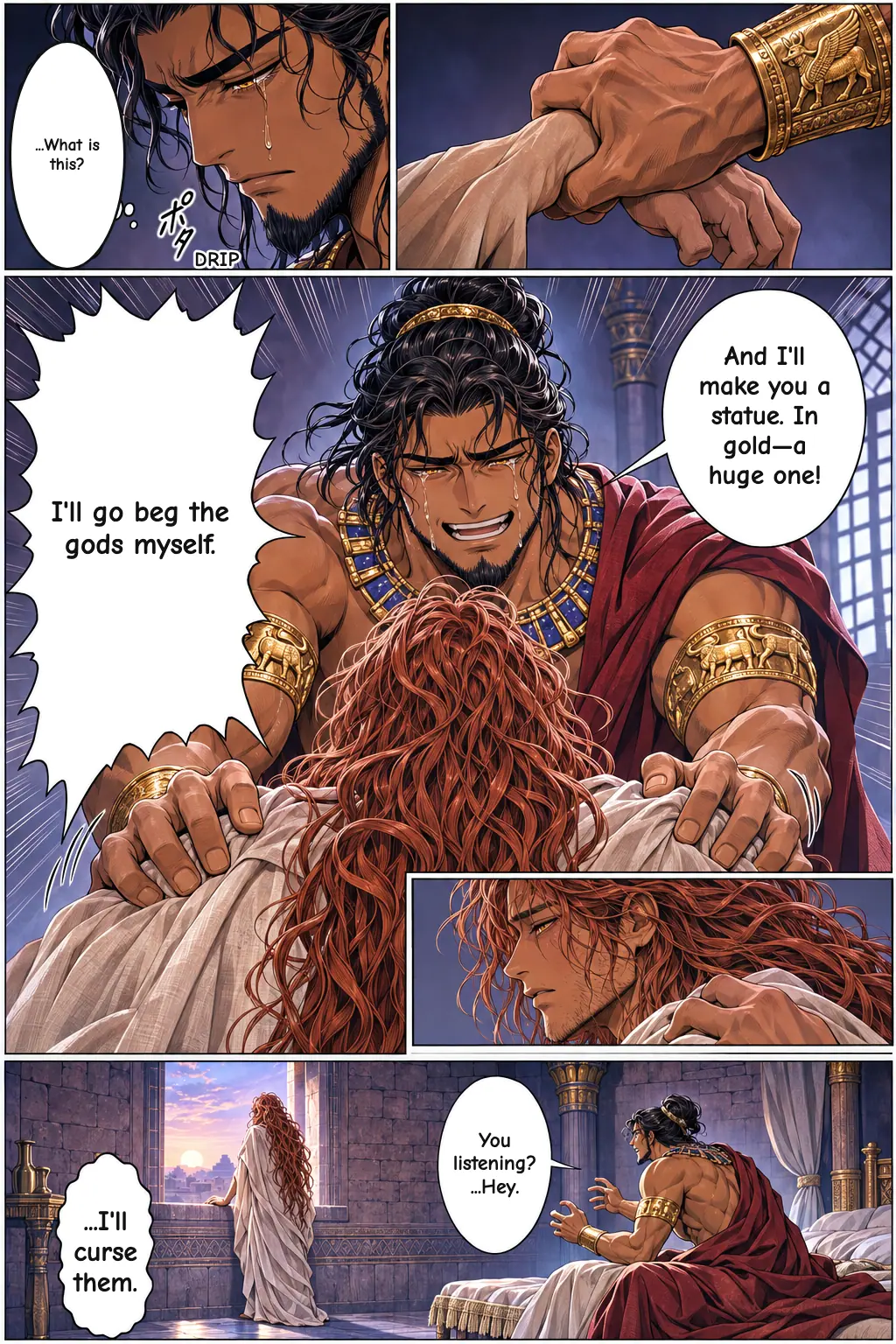
Enkidu takes the news badly. First he speaks to a great cedar door that he made from the forest's timber and gave to Enlil's temple in the city of Nippur. Had he known how he would be repaid, he says, he would have chopped it apart and floated it away. Gilgamesh weeps, promises to pray to the gods, and vows to make a golden statue of his friend.
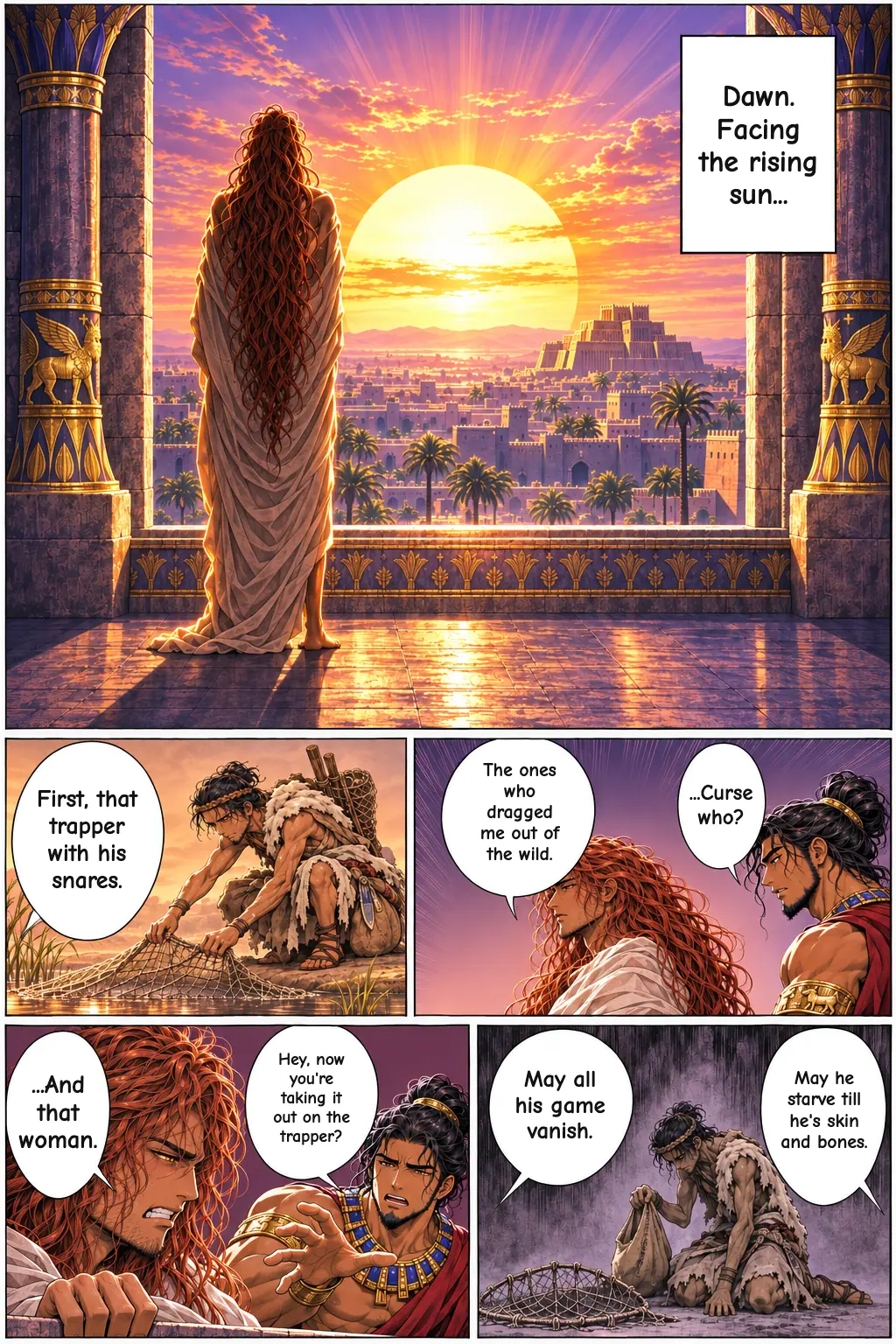
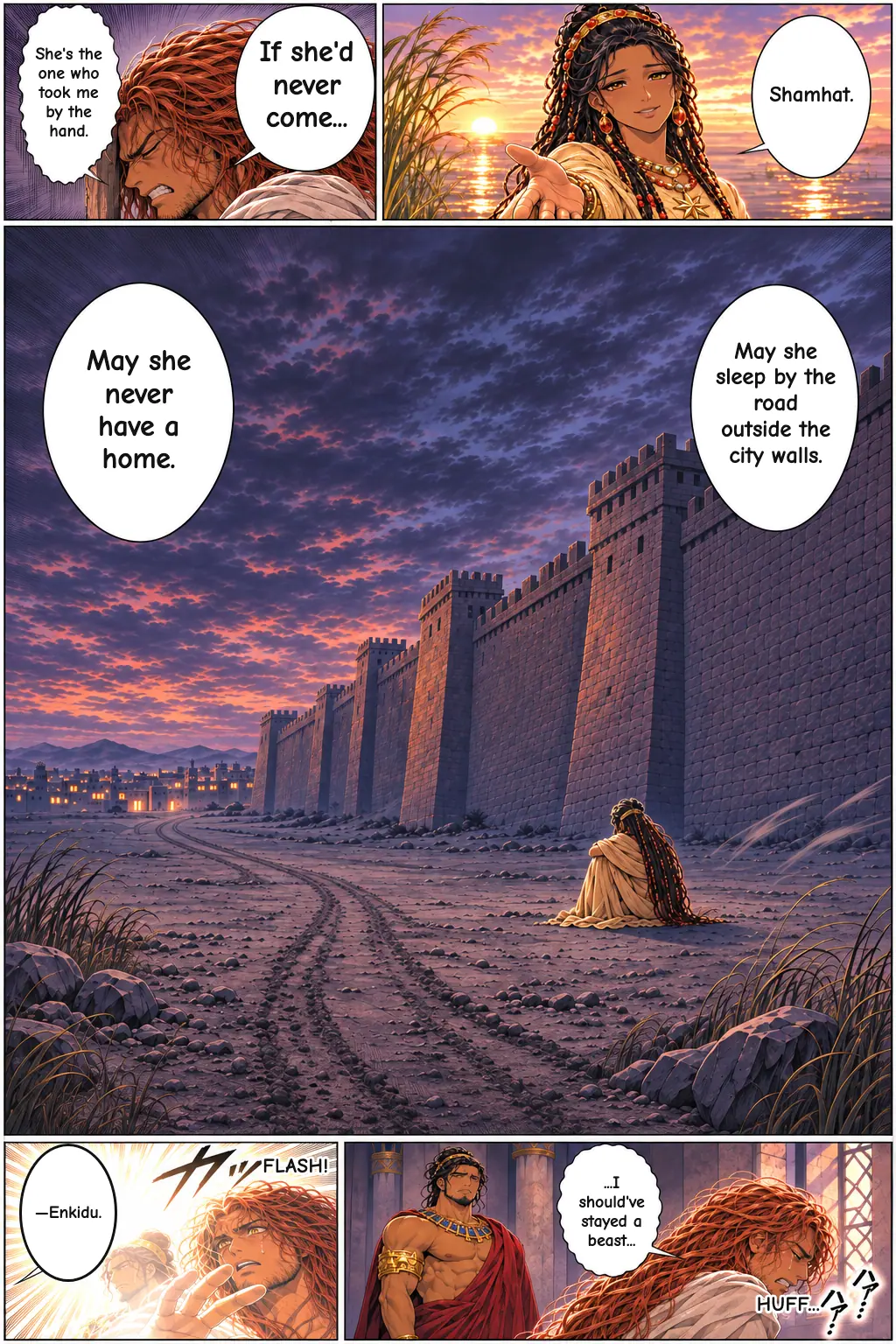
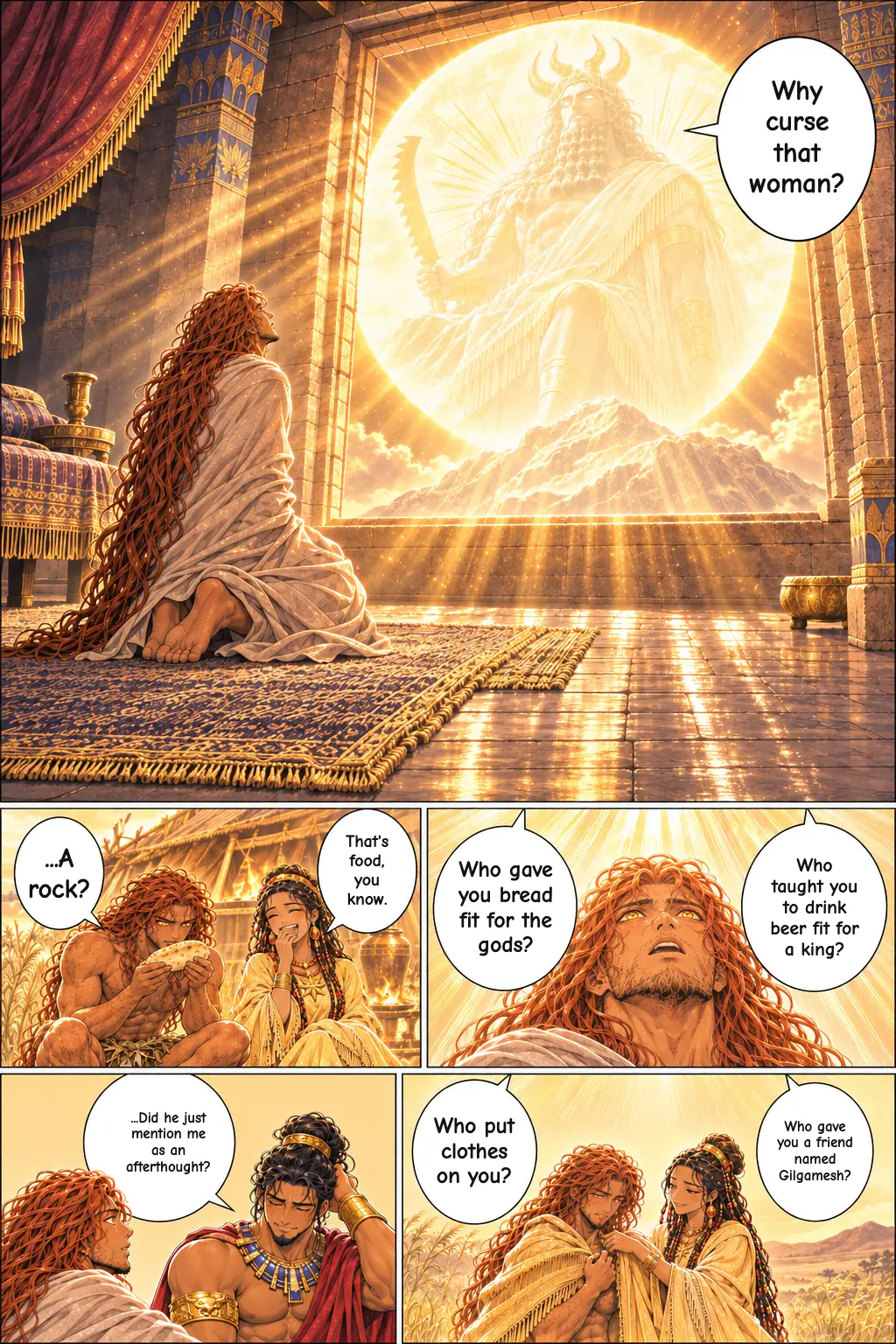
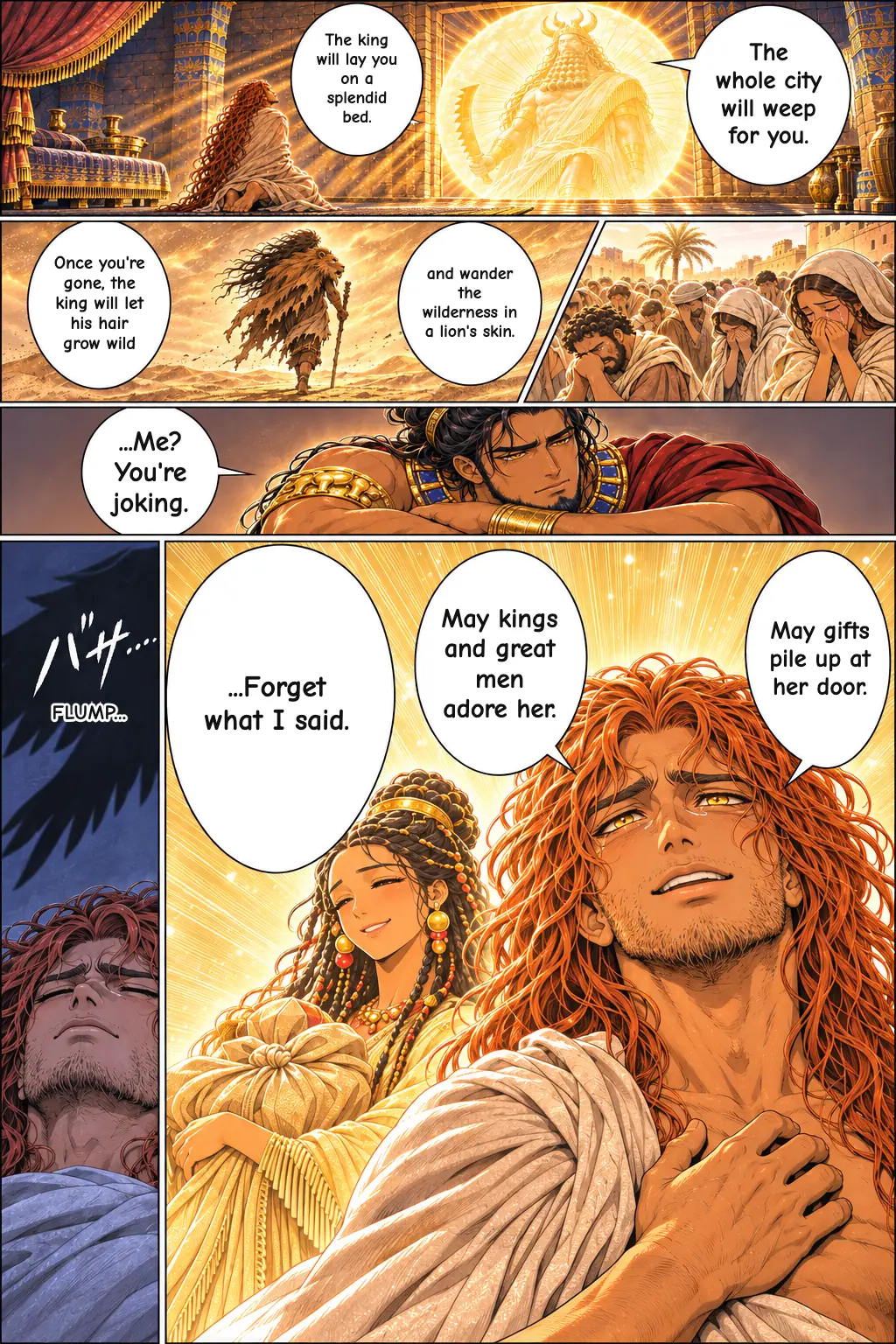
At dawn Enkidu curses the trapper who first spotted him in the wild, and then Shamhat, the woman who brought him into human society. He wishes her a life without a home, sitting by the roadside outside the city. Shamash then speaks to him from the sky. He reminds Enkidu that Shamhat gave him bread fit for gods, wine fit for kings, fine clothing, and above all a friend named Gilgamesh. Shamash also says Gilgamesh will honor him with a grand funeral and then wander the wild in a lion skin. Enkidu calms down and turns his curse into a blessing: may kings and nobles love Shamhat and shower her with gifts.
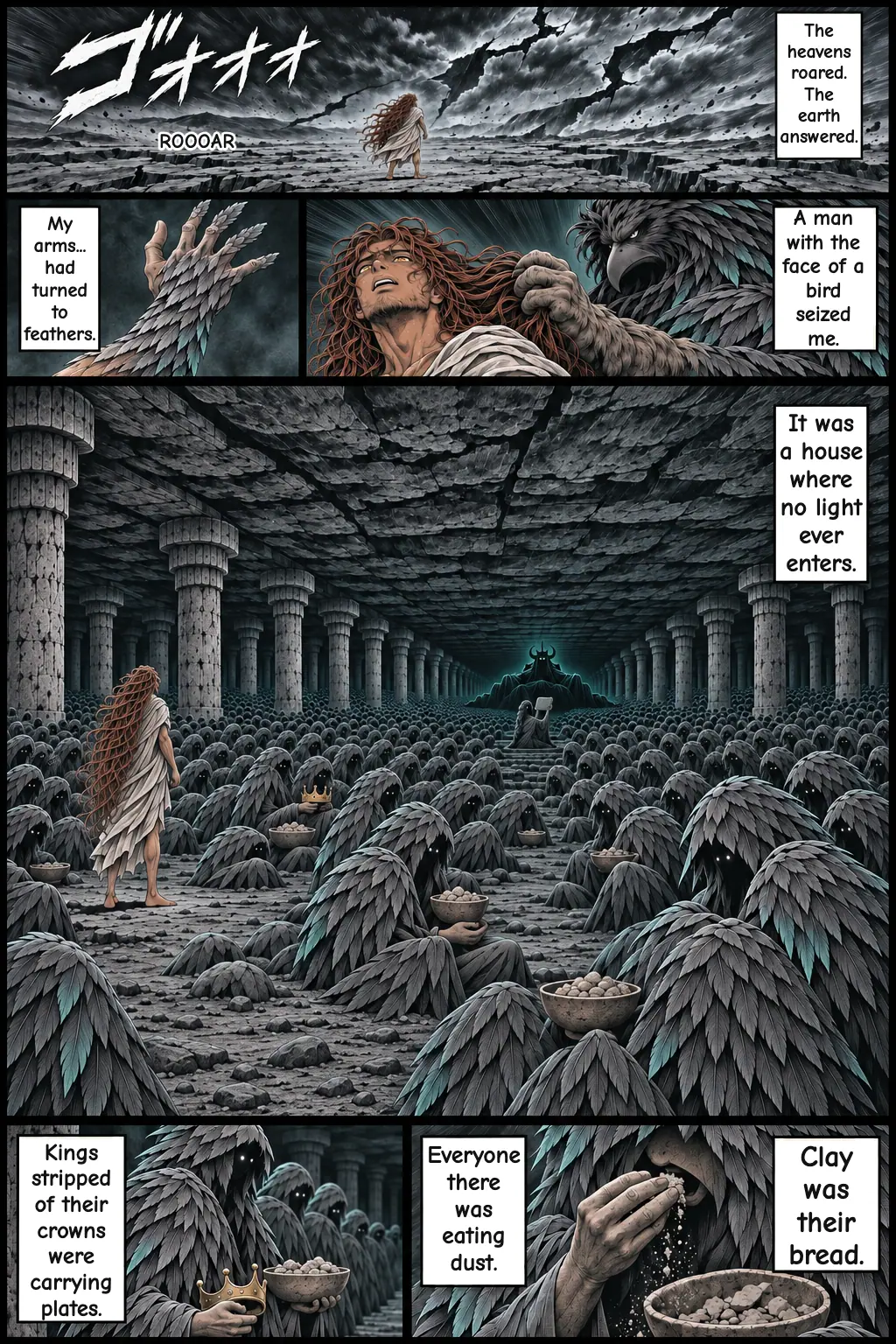
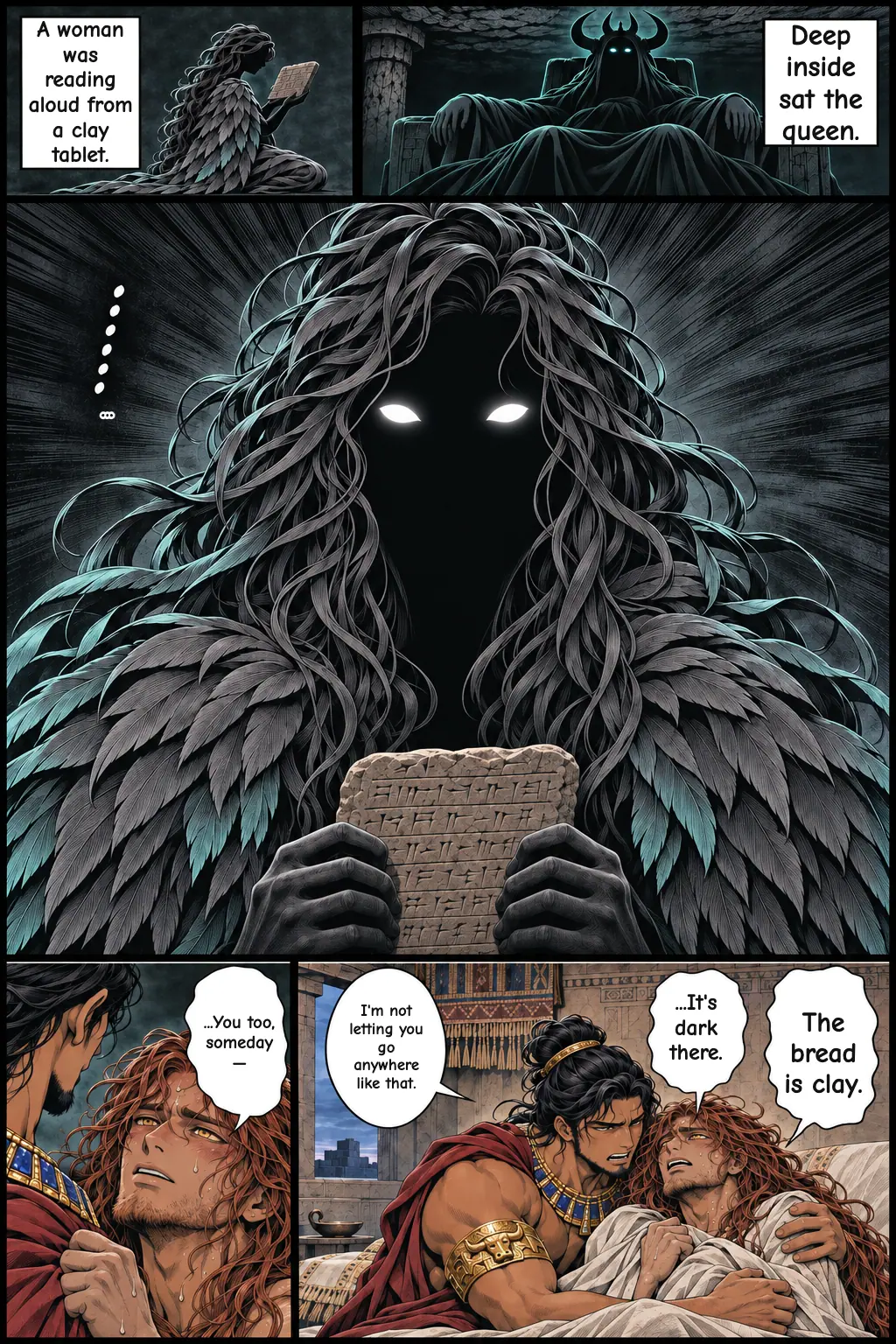
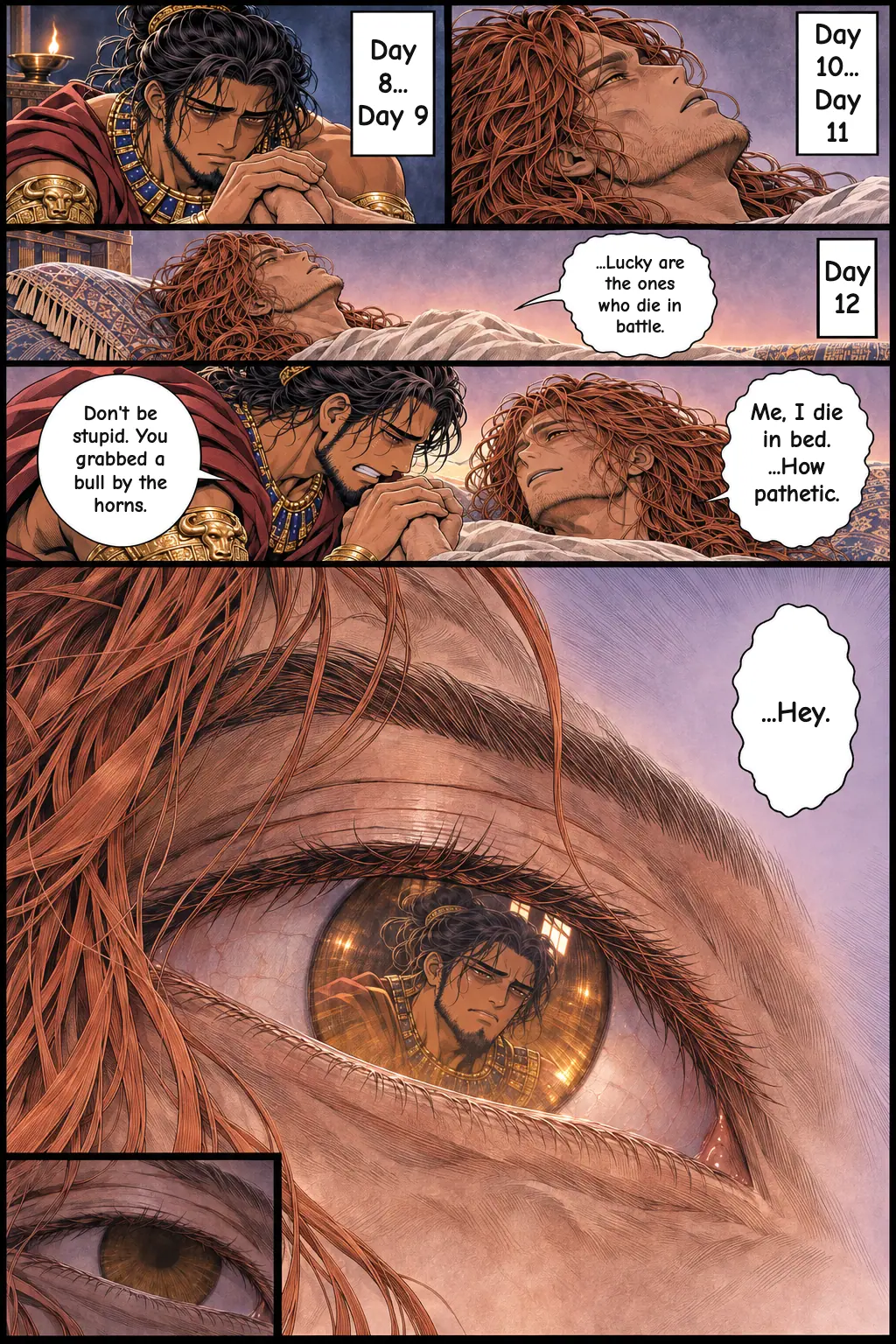
Next Enkidu dreams of the underworld. A dark figure with a lion's face and an eagle's talons seizes him, turns his arms into something like a bird's feathers, and leads him to the dark house of Irkalla. There the dead wear feathered garments, eat dust, and live with no light. Former kings sit there without their crowns. Ereshkigal, queen of the underworld, sits on her throne while Belet-seri, the underworld's scribe, reads to her from a tablet. Enkidu's illness then grows worse day by day until the twelfth day. He grieves that he did not die in battle, the death a hero hopes for. Many lines here are broken, and the moment of death itself does not survive.
Gilgamesh's Grief and the Funeral
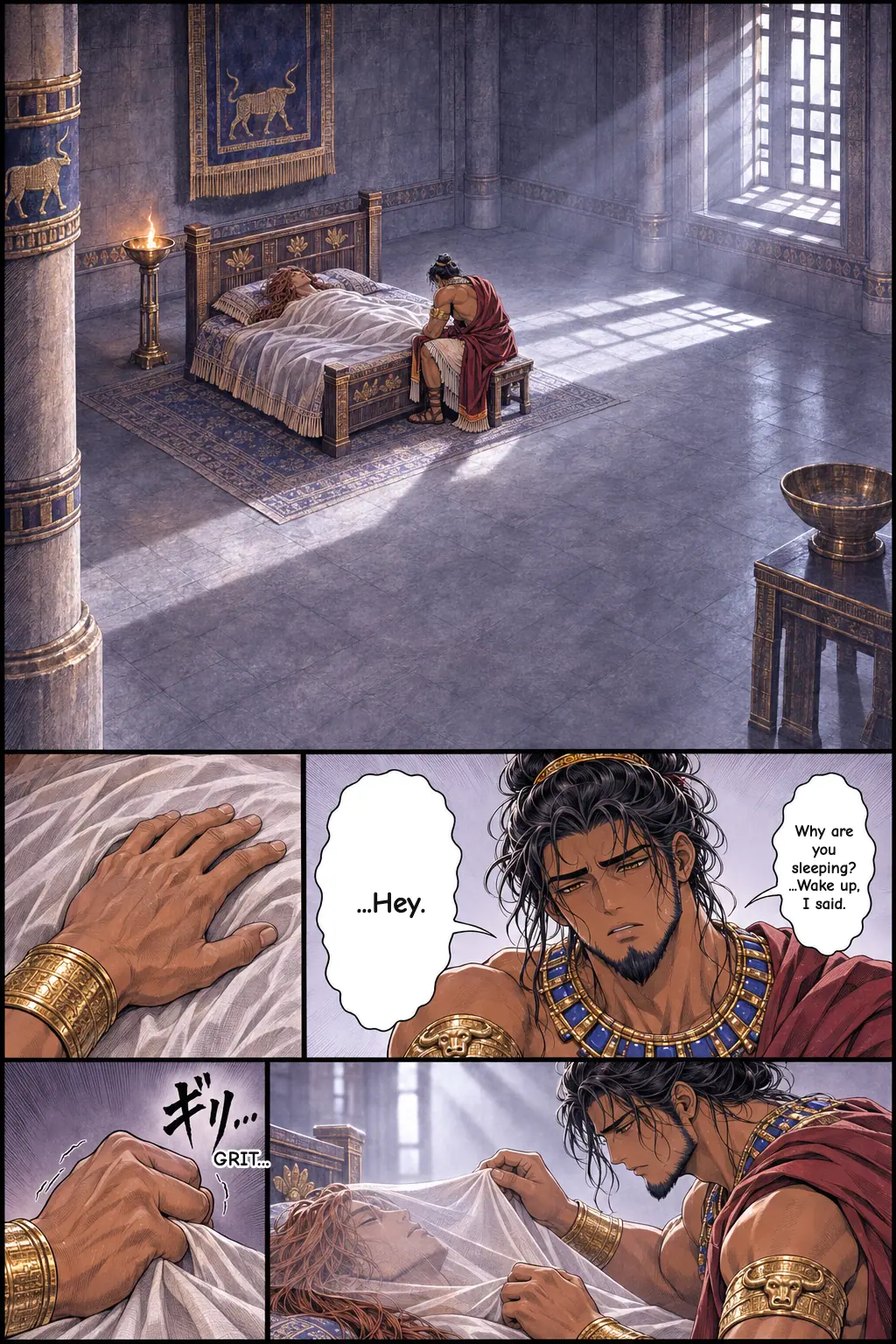
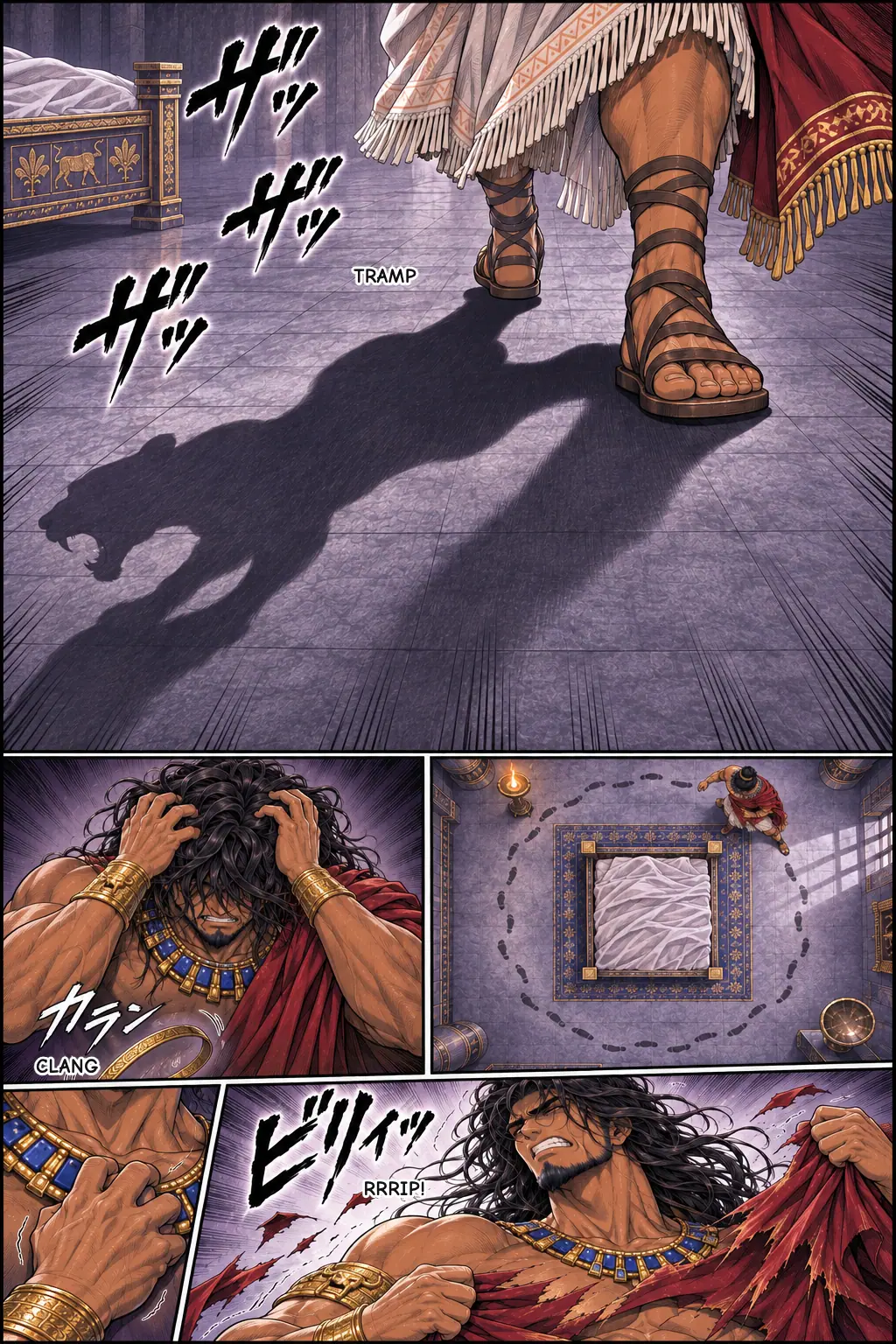
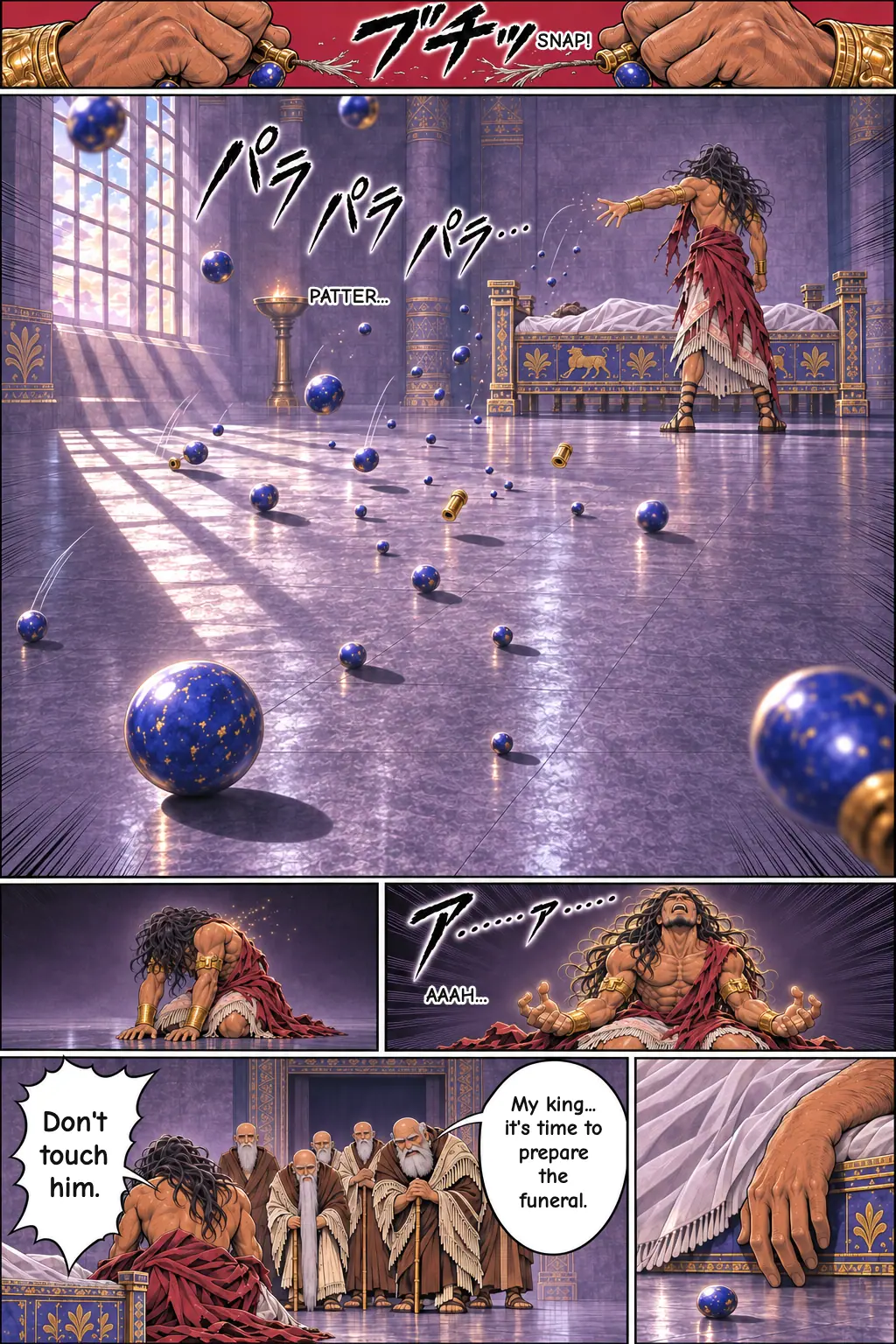
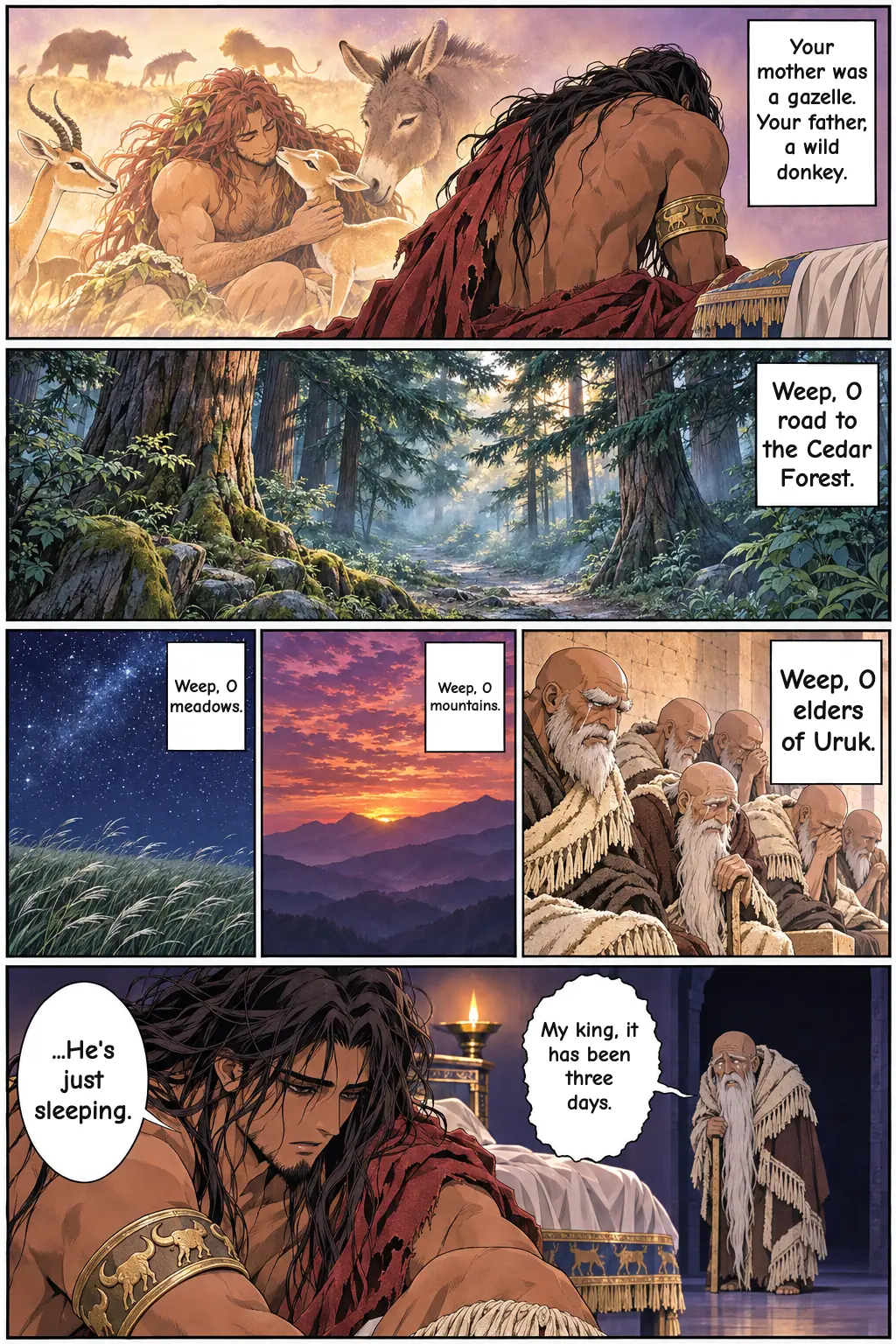
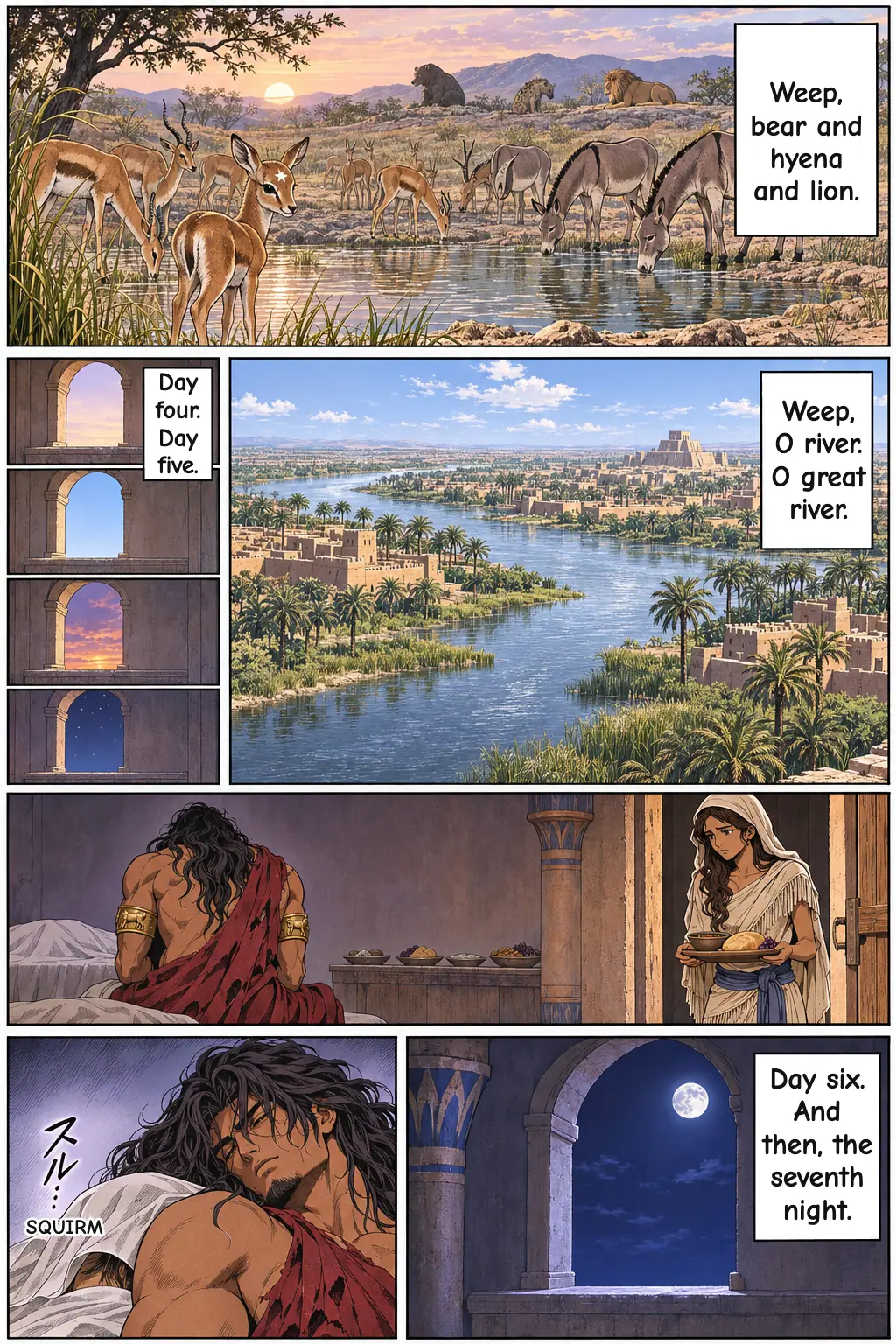
Tablet VIII opens at dawn with Gilgamesh's long lament. He recalls Enkidu's wild origins, a gazelle for a mother and a wild donkey for a father. He calls on the cedar forest paths, the elders of Uruk, the mountains, the pastures, the Euphrates, and the beasts of the wild to mourn. He touches his friend's chest and finds no heartbeat. He veils Enkidu's face like a bride's, paces like a lioness robbed of her cubs, tears out his hair, and rips off his fine robes.
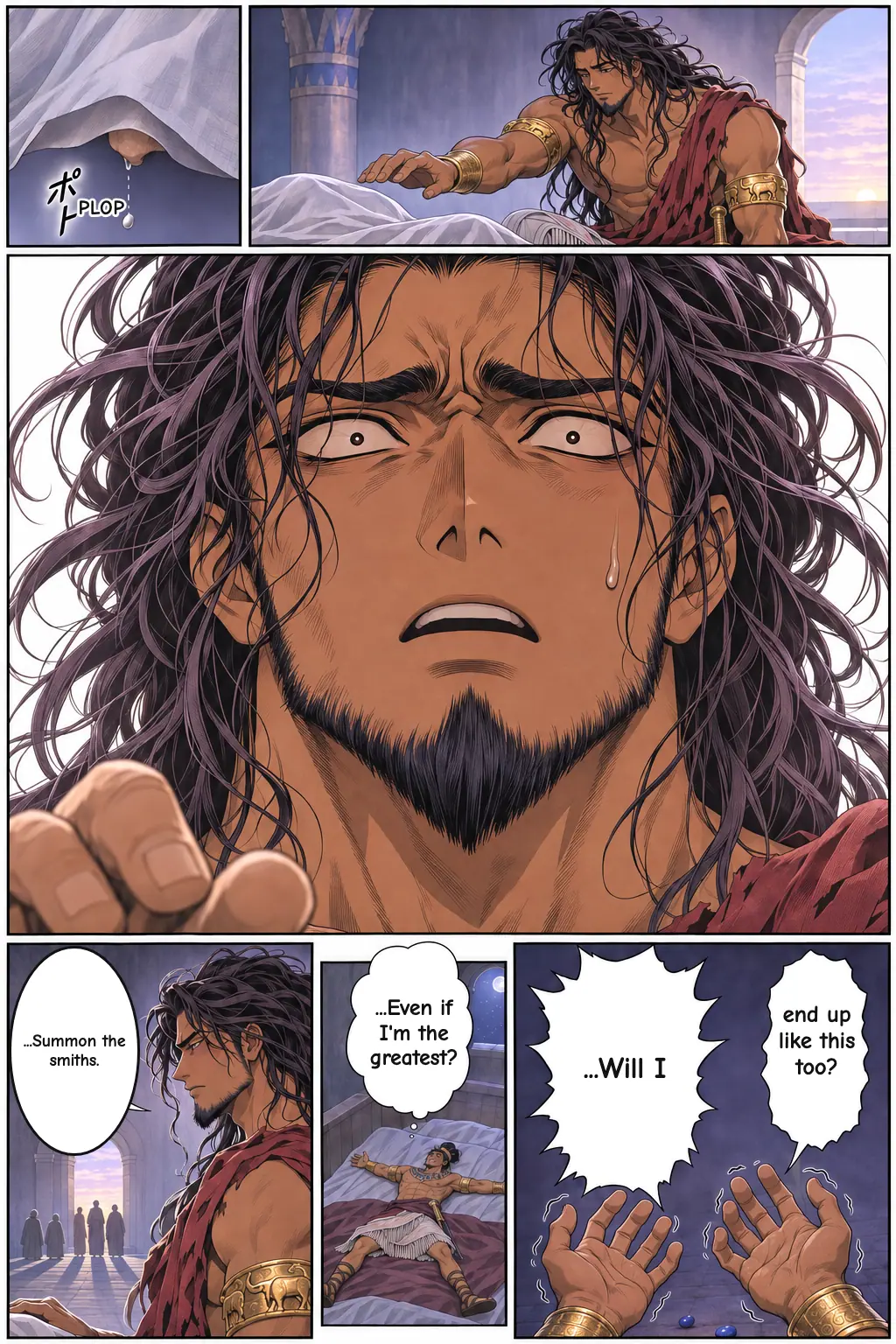
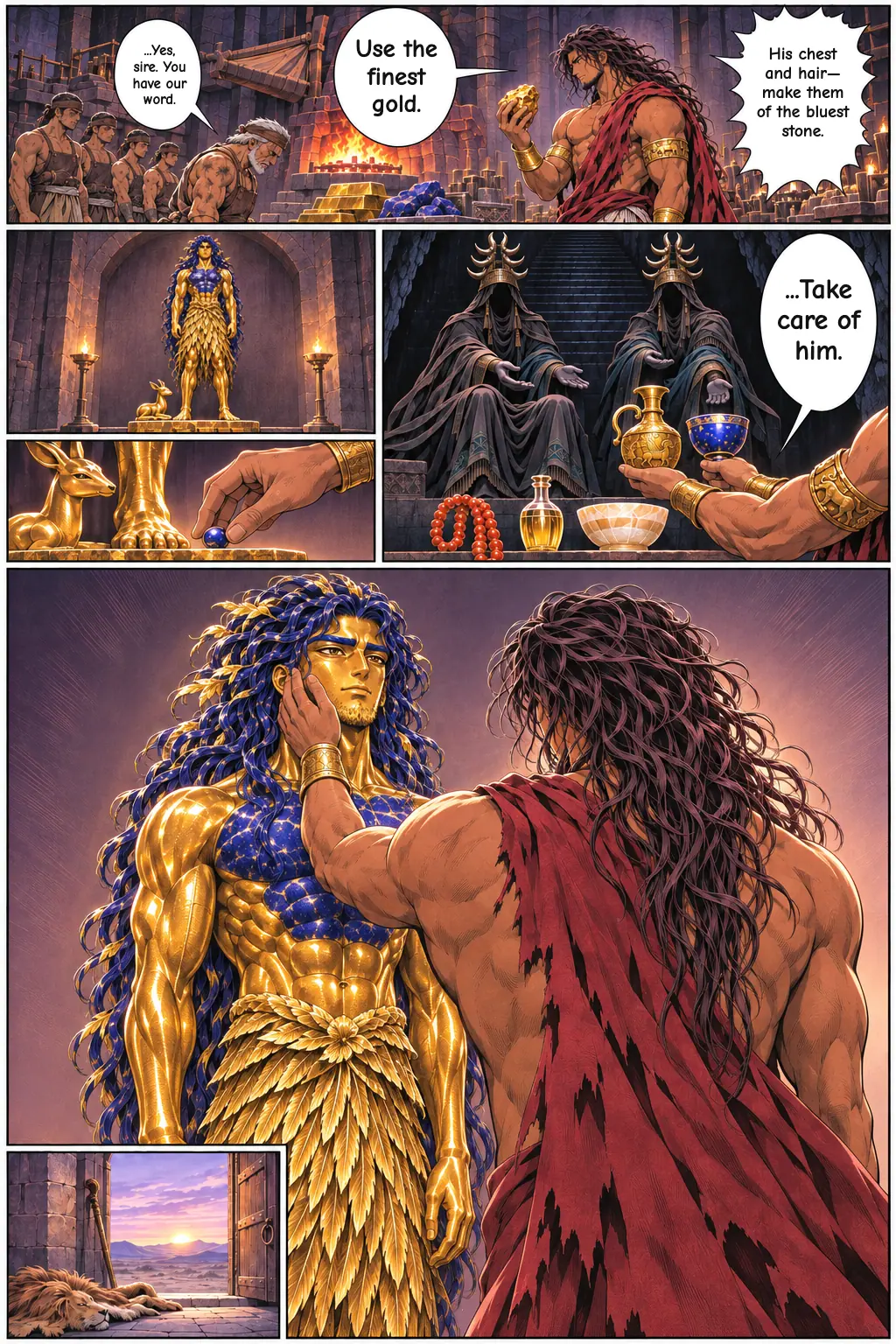
Later, in Tablet X, Gilgamesh looks back and says he would not let his friend be buried until a maggot fell from Enkidu's nose. In the Standard version this lasts six days and seven nights. Only then did he begin to fear death himself. Back in Tablet VIII, he calls in craftsmen to make a statue of Enkidu with a body of gold and a chest of lapis lazuli. He opens his treasury and gives gifts to the underworld gods and their officials, including Ishtar, Ereshkigal, Dumuzi, and Namtar, so they will welcome his friend. The end of the tablet is damaged. Some scholars think Gilgamesh dammed a river to build the tomb, but that reading is not certain.
What This Myth Is About
This episode is where the epic changes direction. Until now it is an adventure about fame and great deeds. From here on it becomes a story about mortality. Gilgamesh is two-thirds divine, yet watching his friend rot teaches him that a king cannot escape death either. That fear drives the rest of the epic, his journey to Utnapishtim, the survivor of the great flood, in search of eternal life.
The underworld dream shows how ancient Mesopotamians imagined the afterlife: a dim, dusty place that is the same for kings and commoners, with no reward for the good. Shamash's reply to Enkidu's curses carries another idea. Civilization brings bread, clothing, and friendship, and those gifts are worth being grateful for, even when they end in death.
How the Manga Adapts the Story
Because the council scene is missing from the Standard text, the manga stages it freely while following the Hittite version's plot. The settings, the gods' appearance, and how they speak are invented. The gods' horned crowns are inspired by Mesopotamian cylinder seals. The carvings on the cedar door, the gloom of the underworld, and the exact wording of the curses and blessings are also the artists' own, though the meaning follows the source.
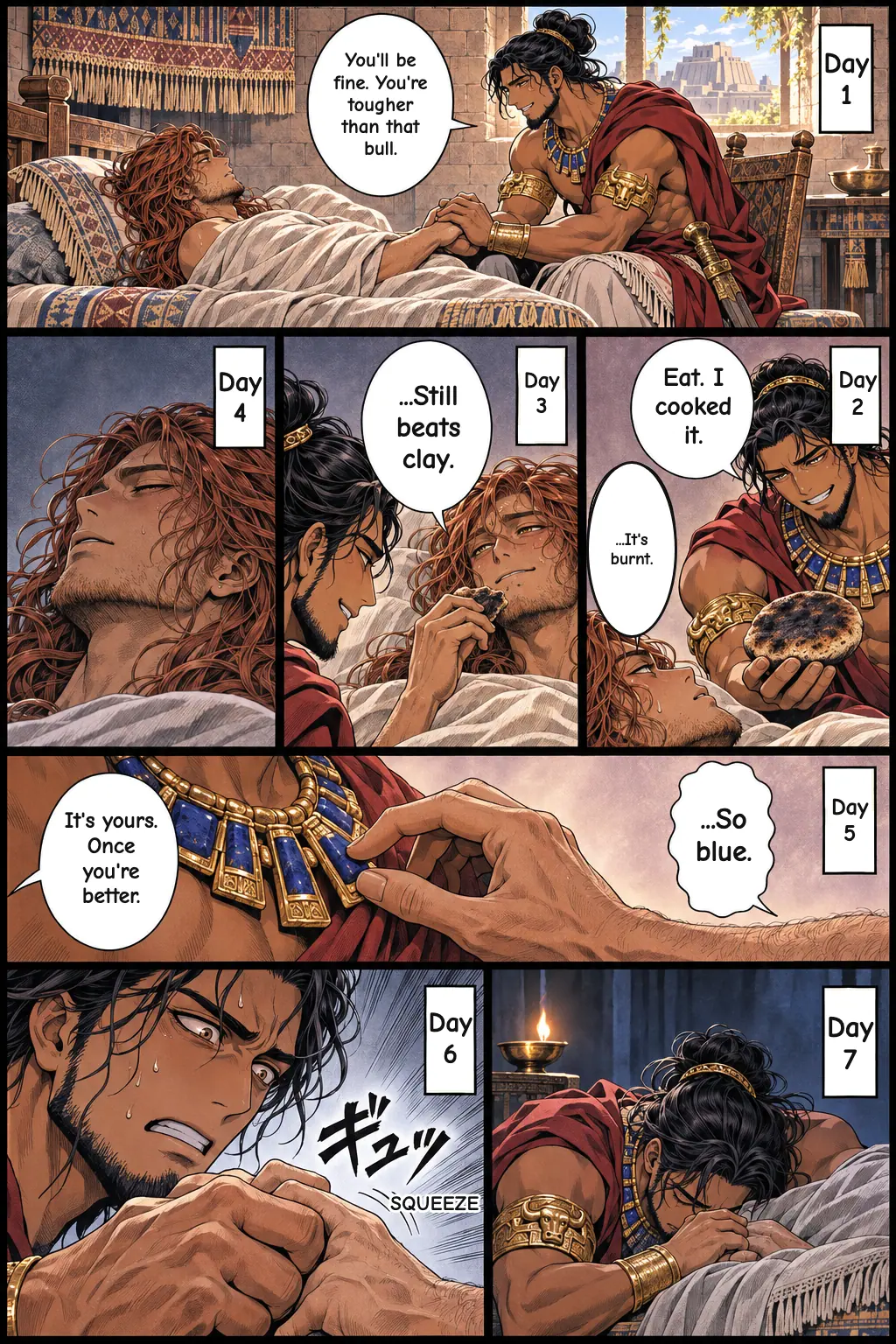
The daily scenes of Enkidu's twelve-day illness and the moment he dies are imagined, since those lines are broken or lost. The biggest change is the order of events. The maggot scene, which Gilgamesh only recalls in Tablet X, is shown as it happens inside the Tablet VIII funeral story, so readers watch the moment Gilgamesh realizes he will die too. The craftsmen's workshop, the shorter list of gods receiving offerings, and the close of the funeral are also the manga's interpretation.
Where to Read It
You can read Episode 7, "The Gods Decided One of Them Must Die — The Death of Enkidu," and the full series MESOPOTAMIAN MYTH: THE EPIC OF GILGAMESH — No One Lives Forever free on Manga Portal. You don't need an account. If you want to see how Enkidu went from a wild man to a king's best friend, or follow Gilgamesh on his search for immortality, start at Episode 1 or continue to the next chapter.
Characters in this episode
Enkidu
A wild man who became Gilgamesh's closest friend, now sentenced to death by the gods for killing Humbaba and the Bull of Heaven.
Gilgamesh
The king of Uruk, whose grief over Enkidu turns into fear of his own death.
Shamash
The sun god and the heroes' protector, who defends Enkidu in council and calms his anger.
Enlil
The powerful lord of the gods, who chooses Enkidu as the one who must die.
Shamhat
The woman who brought Enkidu into human life; he curses her and then blesses her instead.
Ereshkigal
The queen of the underworld, seen in Enkidu's dream of the house of dust.
FAQ
Why did the gods kill Enkidu?
Enkidu and Gilgamesh killed Humbaba, the guardian of the Cedar Forest, and the Bull of Heaven. In the Hittite version of the council, Anu says one of them must die for this, and Enlil picks Enkidu. Shamash objects, but he is overruled.
How did Enkidu die in the Epic of Gilgamesh?
He did not die in battle. He fell ill after his dreams and grew weaker for twelve days. The lines describing the moment of his death are lost, but he grieves that he is dying of sickness and not as a warrior.
What did Enkidu see in his dream of the underworld?
A creature with a lion's face and eagle's talons led him to the dark house of Irkalla. The dead there wore feathers, ate dust and clay, and lived without light, while Ereshkigal ruled and her scribe Belet-seri read from a tablet.
Why does Enkidu's death matter so much to Gilgamesh?
Losing his friend showed Gilgamesh that he, too, would die. That fear sends him on his quest for immortality in the second half of the epic.
Which tablets tell the death of Enkidu?
Tablet VII covers the dreams, the curses, and the illness, and Tablet VIII covers Gilgamesh's lament and the funeral. Gilgamesh's memory of refusing to bury his friend appears later, in Tablet X.
More episodes of MESOPOTAMIAN MYTH: THE EPIC OF GILGAMESH