Episode 1His Dying Brother Left One Way to WinEmperor Jimmu's Eastern Expedition
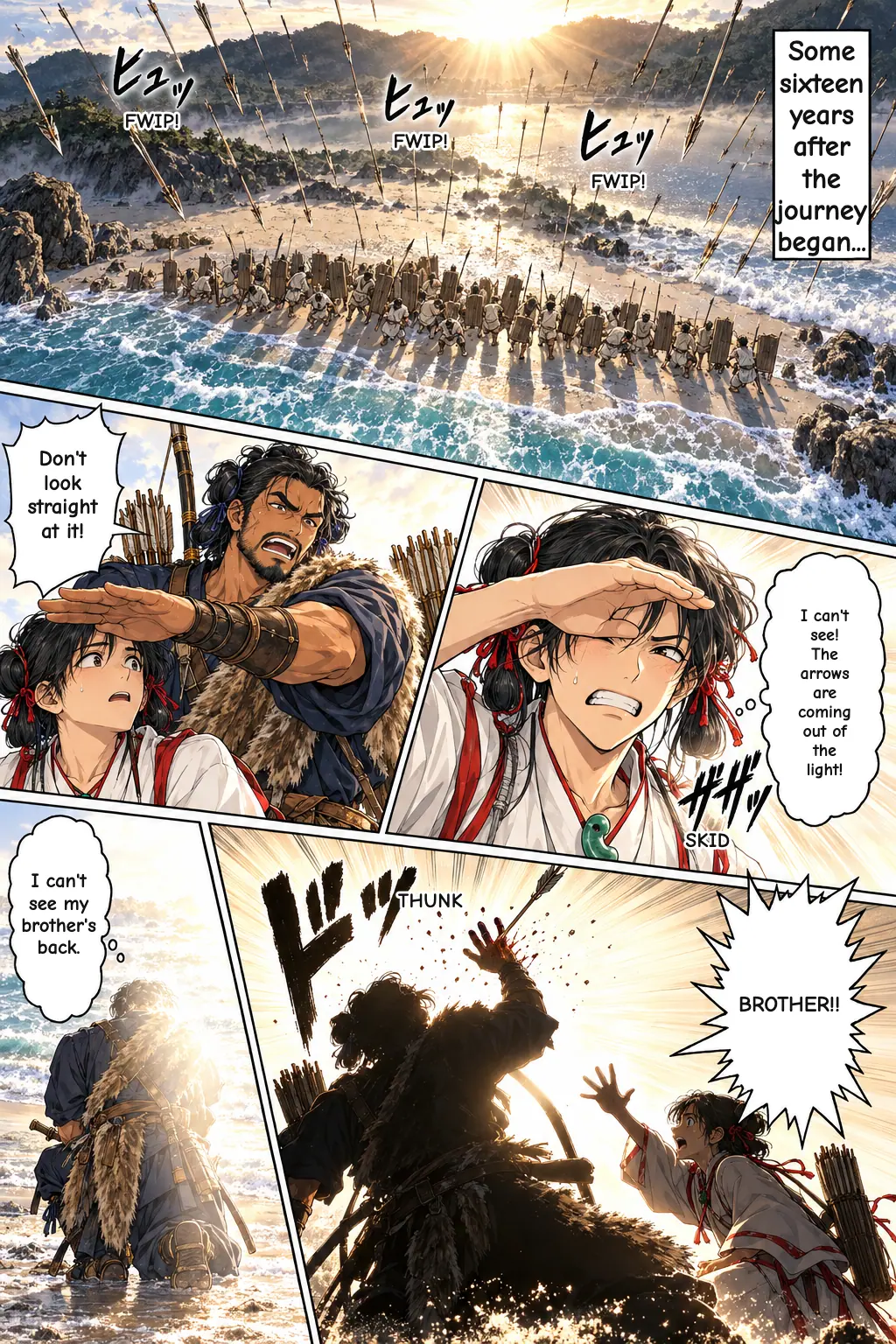
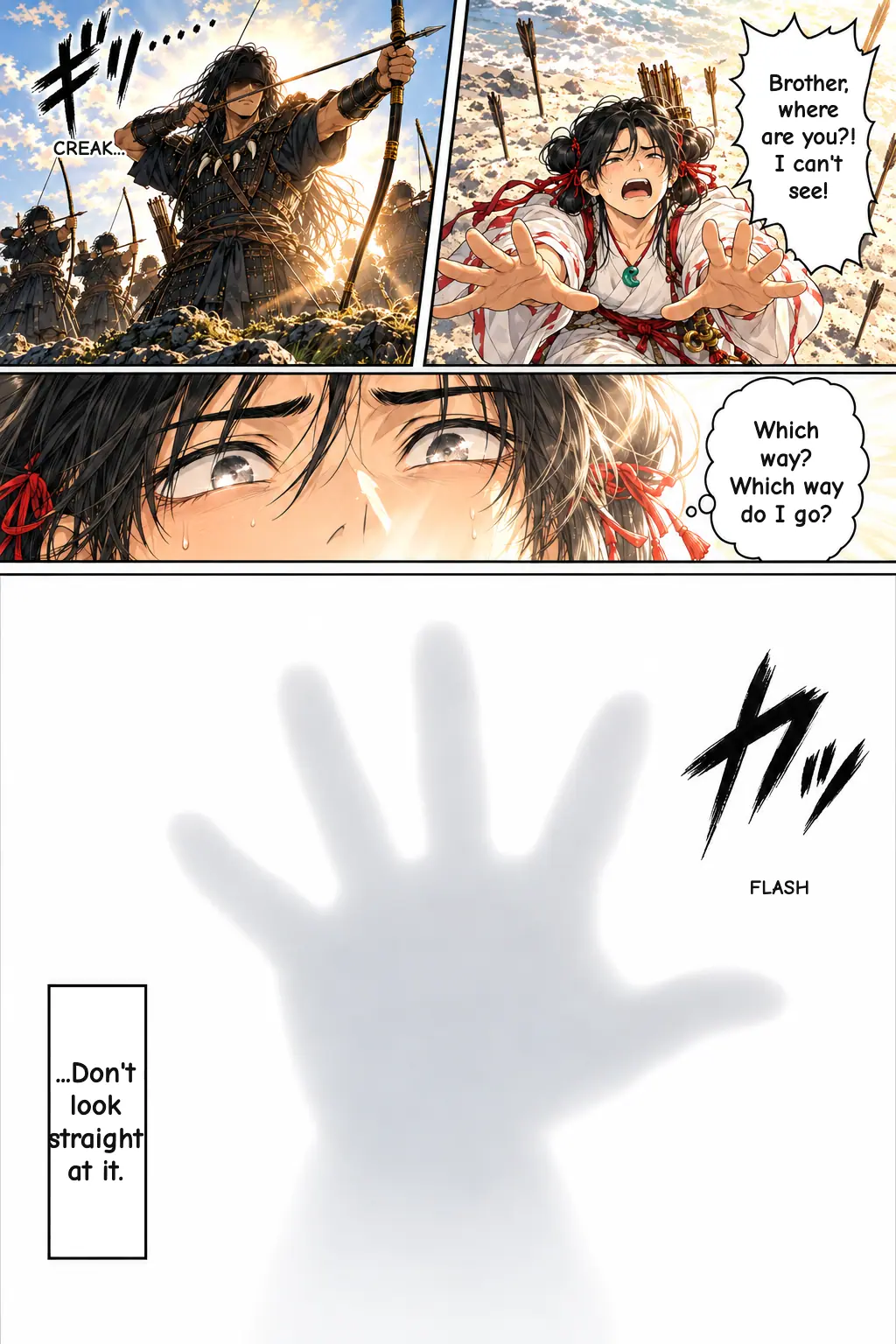
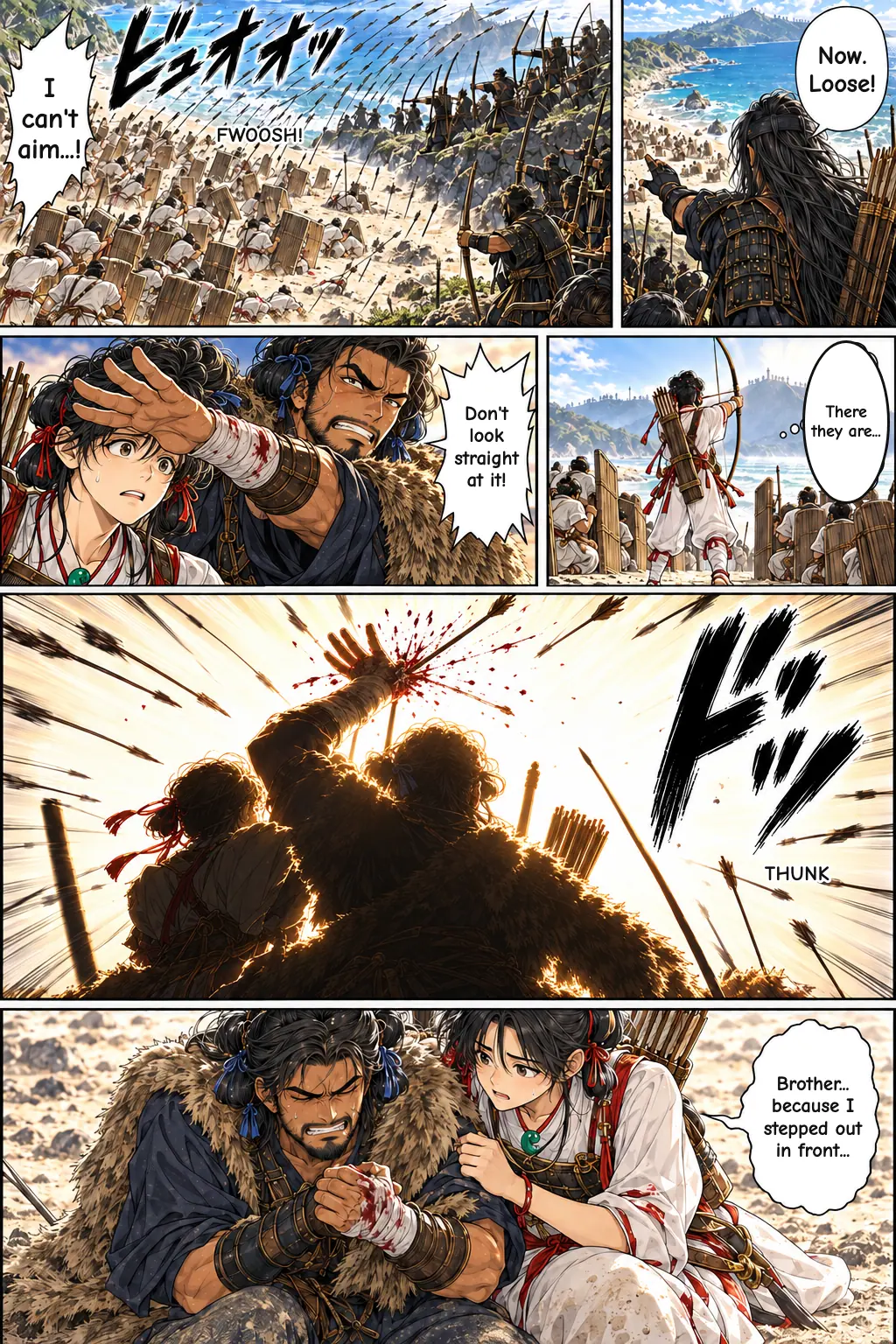
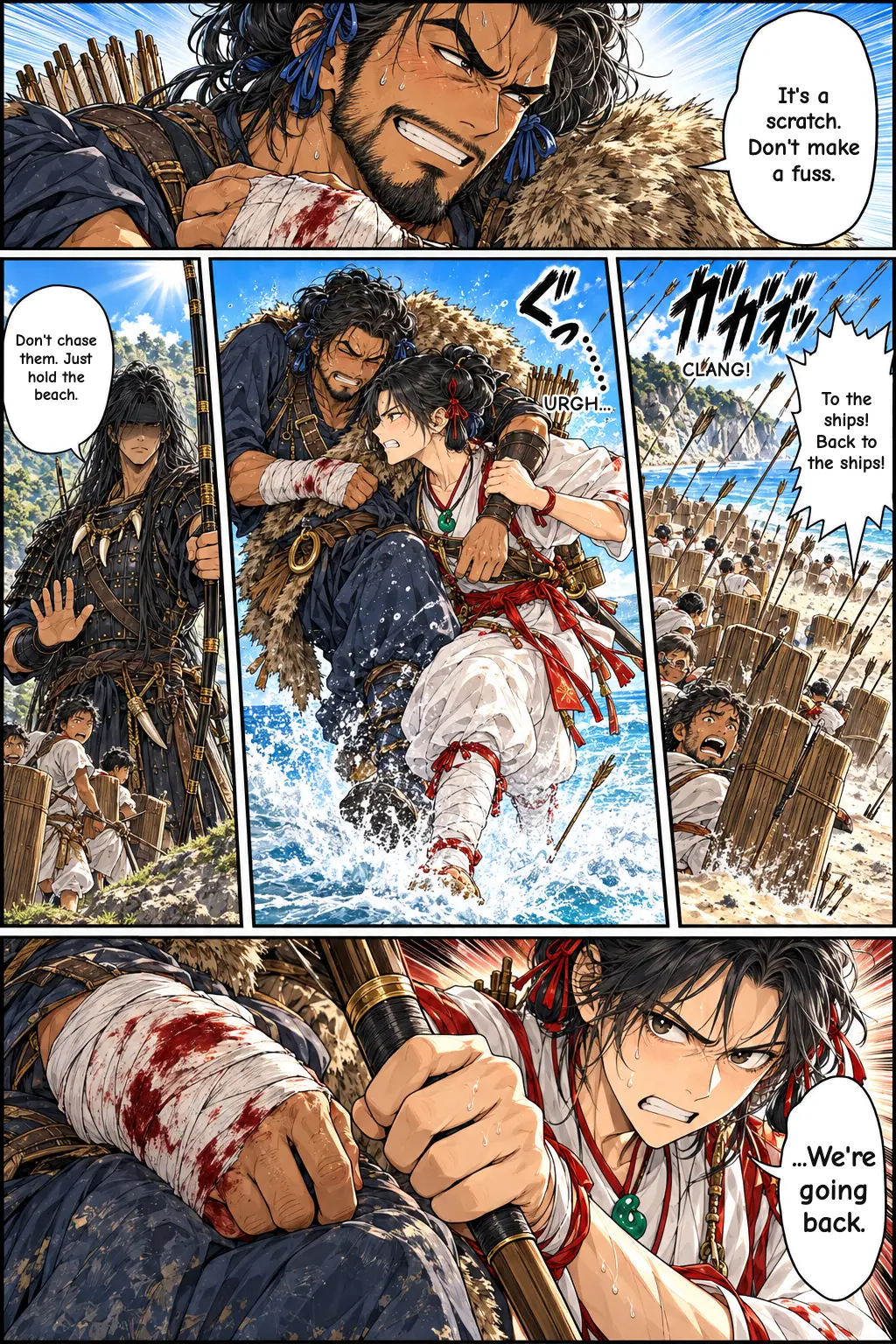
Iwarebiko has always walked half a step behind his older brother Itsuse. When Itsuse falls to an arrow while fighting straight into the rising sun, he leaves his younger brother one last battle plan: "Put the sun at your back." For the first time, Iwarebiko must choose his own path.
Get new episodes in your feed. Follow us on:ThreadsBluesky
Story summary
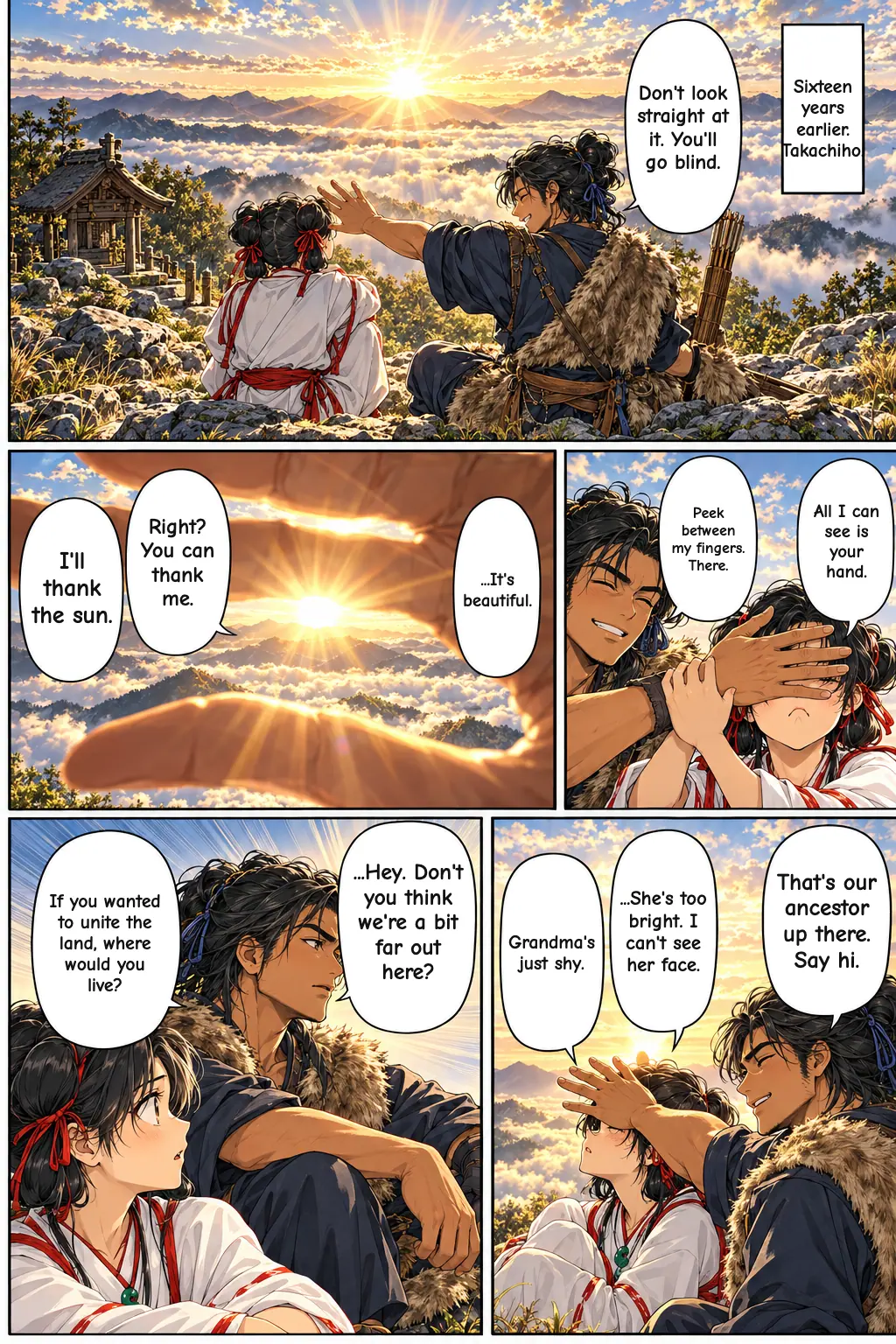
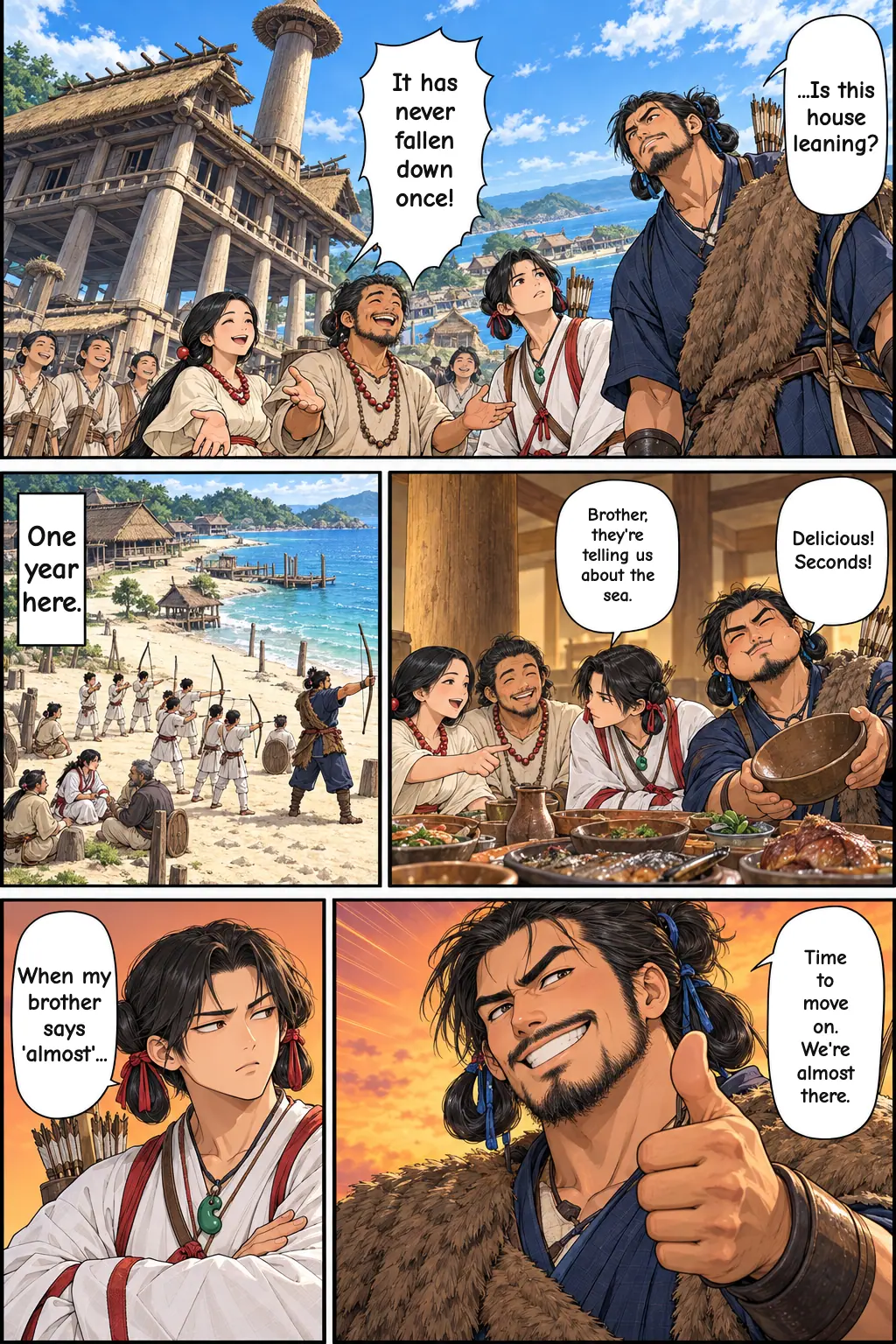
The Kojiki ("Record of Ancient Matters"), Japan's oldest surviving book, was compiled in 712. Its first book tells of the gods. Its second book opens with the age of heroes and the first human emperor. That emperor is Kamu-Yamato-Iwarebiko, known to later generations as Emperor Jimmu. In the palace of Takachiho in Hyuga (southern Kyushu), he and his older brother Itsuse ask themselves where they could best govern the land. They decide to head east. Their journey is slow. In Usa, local rulers build them a palace and hold a feast.
Emperor Jimmu's Eastern Expedition Explained: Kojiki Story of Iwarebiko and Itsuse
In short: Emperor Jimmu's Eastern Expedition is the Kojiki story of Kamu-Yamato-Iwarebiko, a descendant of the sun goddess Amaterasu, who sets out from Hyuga in Kyushu with his older brother Itsuse to find a new place to rule. At Kusaka, Itsuse is hit by an enemy arrow while they are attacking toward the rising sun. He realizes children of the sun should fight with the sun behind them, and dies of the wound as the brothers sail around to the south. The story comes from Book II (the middle volume) of the Kojiki, compiled in 712.
The Original Myth: A Summary
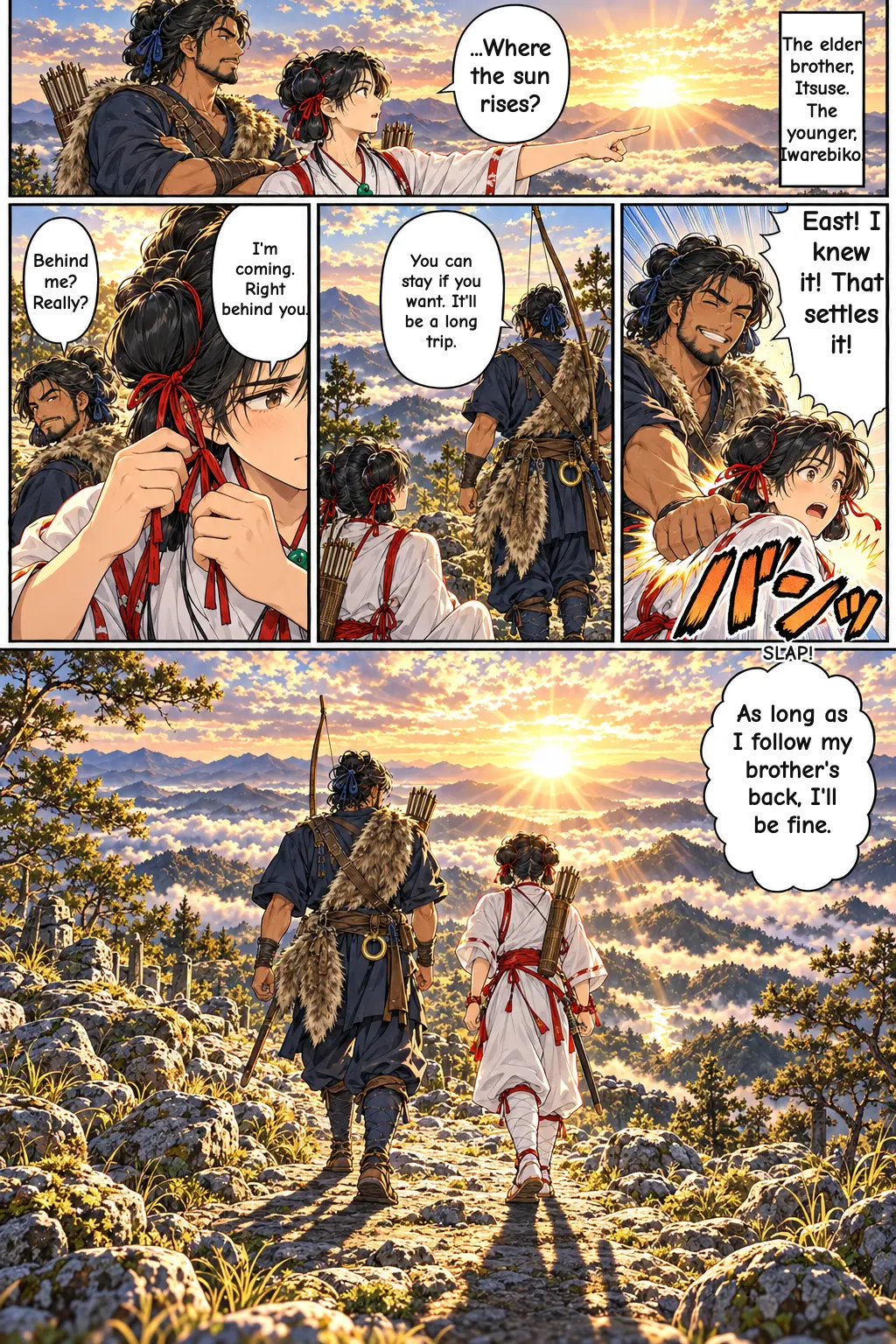
The Kojiki ("Record of Ancient Matters"), Japan's oldest surviving book, was compiled in 712. Its first book tells of the gods. Its second book opens with the age of heroes and the first human emperor. That emperor is Kamu-Yamato-Iwarebiko, known to later generations as Emperor Jimmu. In the palace of Takachiho in Hyuga (southern Kyushu), he and his older brother Itsuse ask themselves where they could best govern the land. They decide to head east.
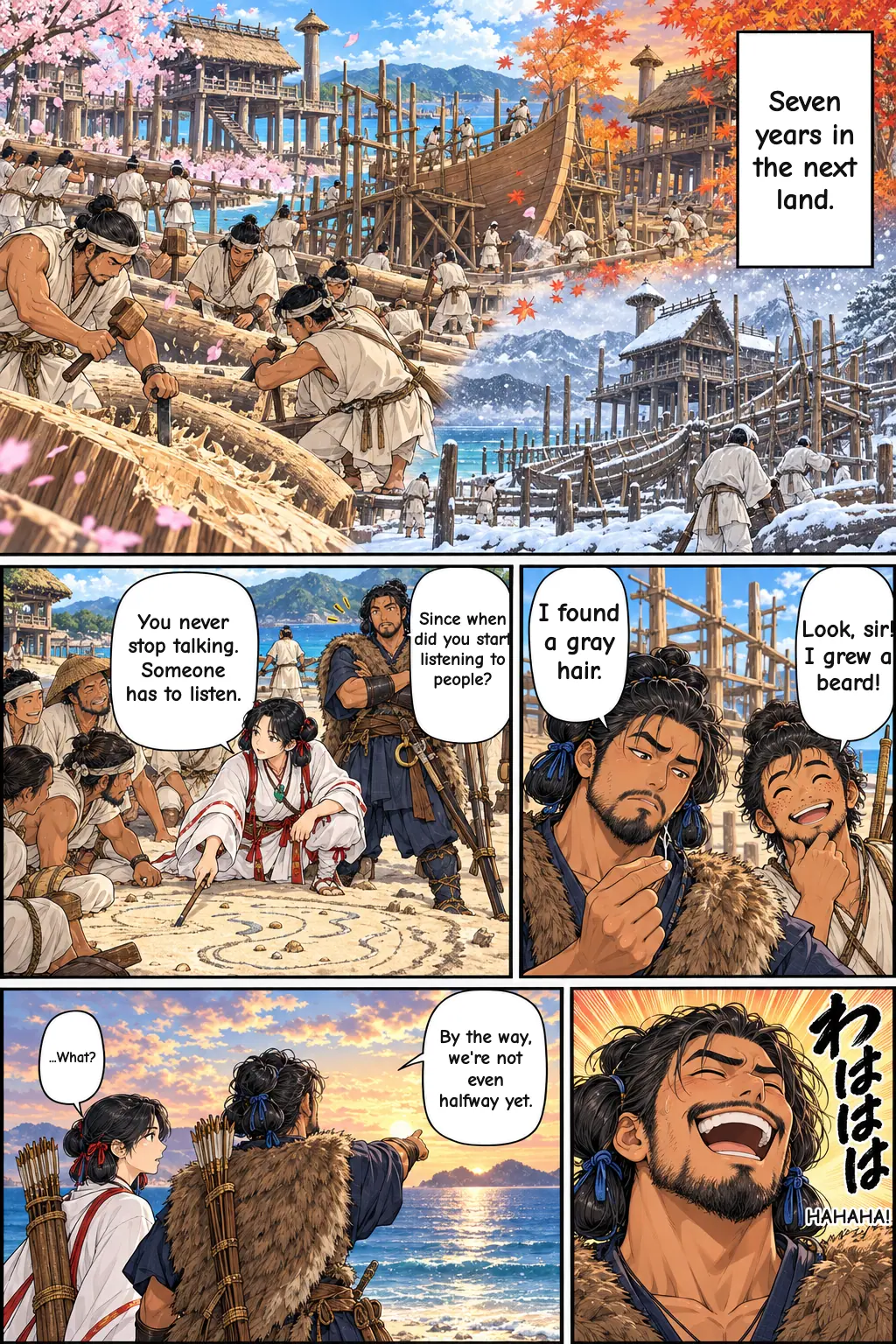
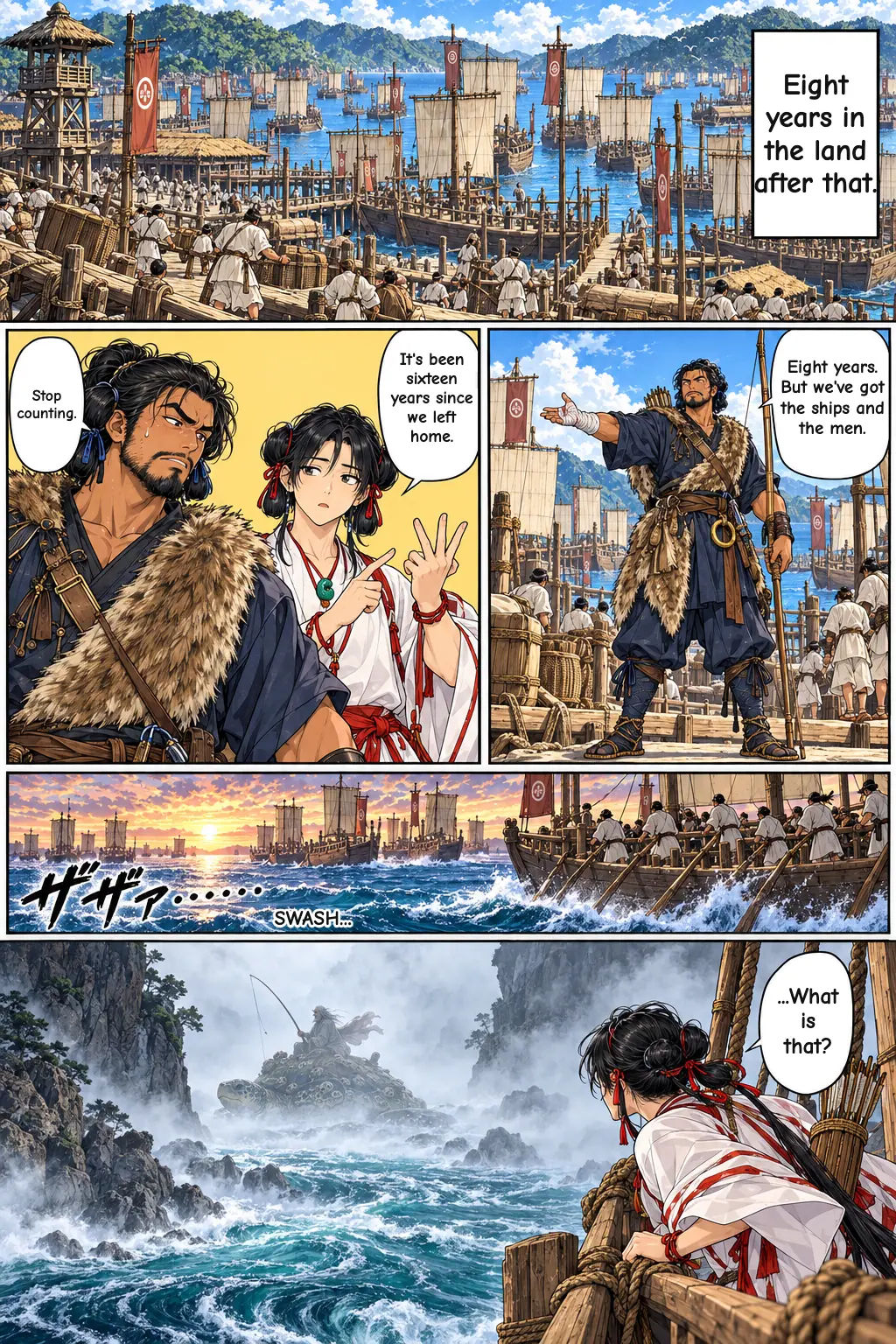
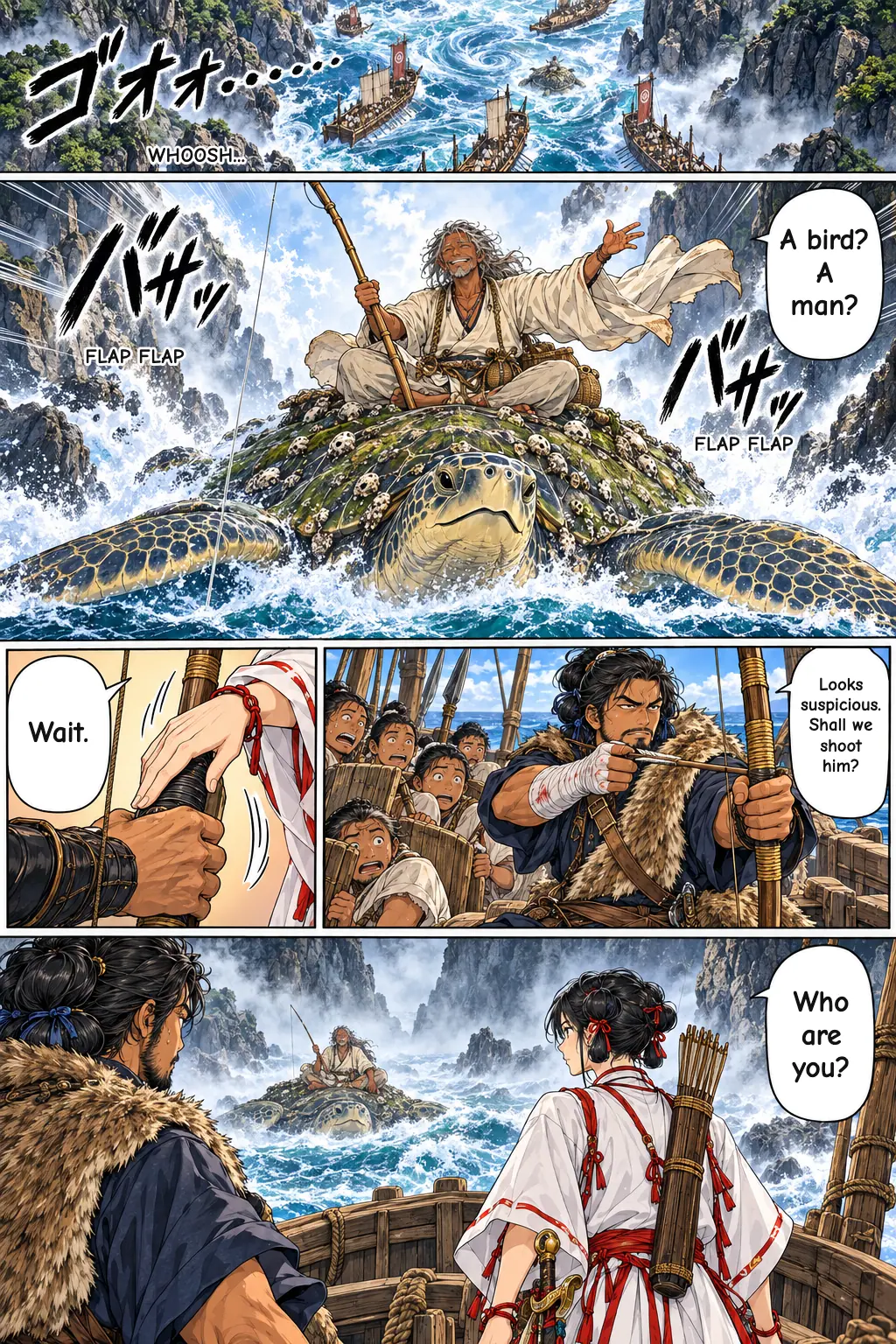
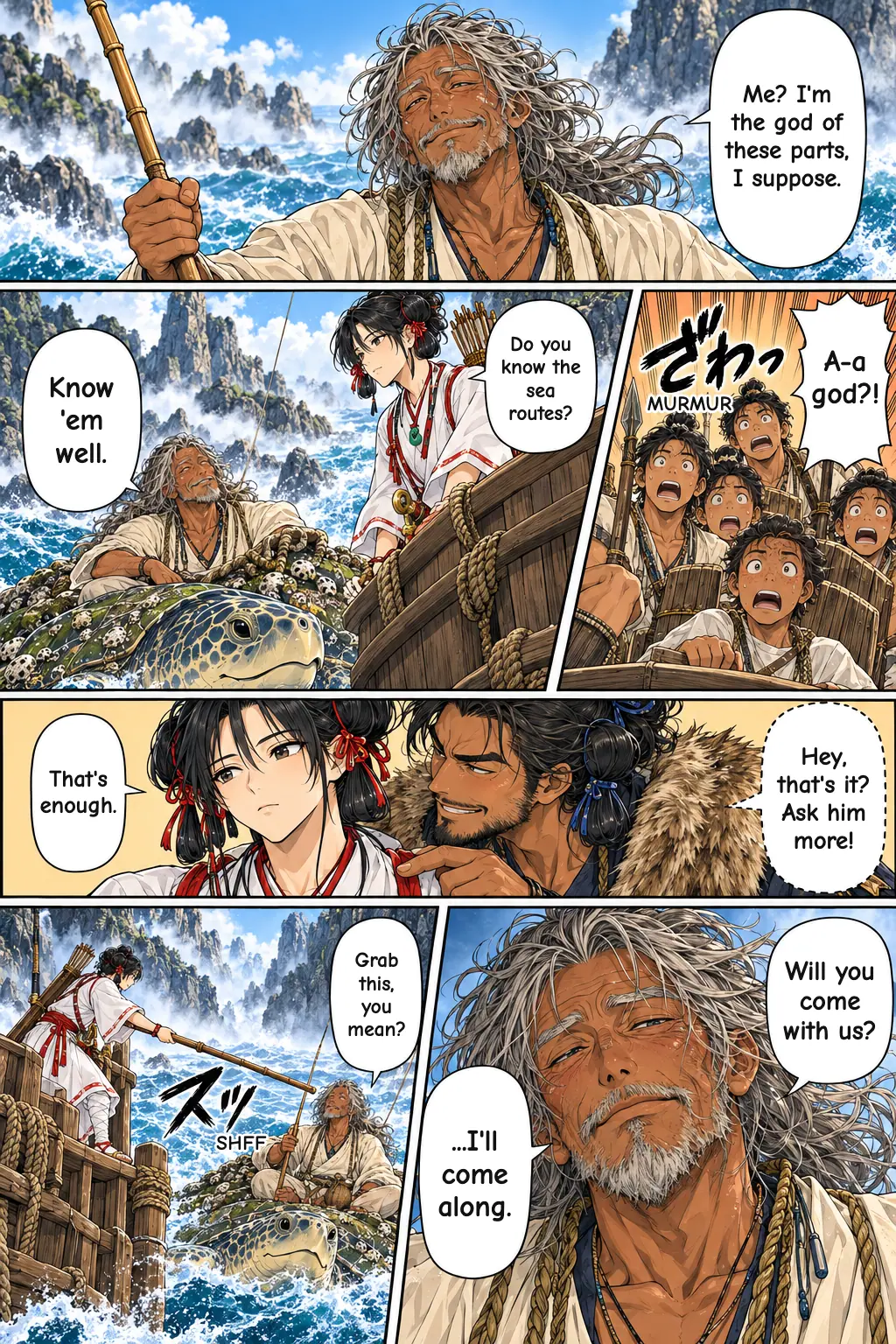
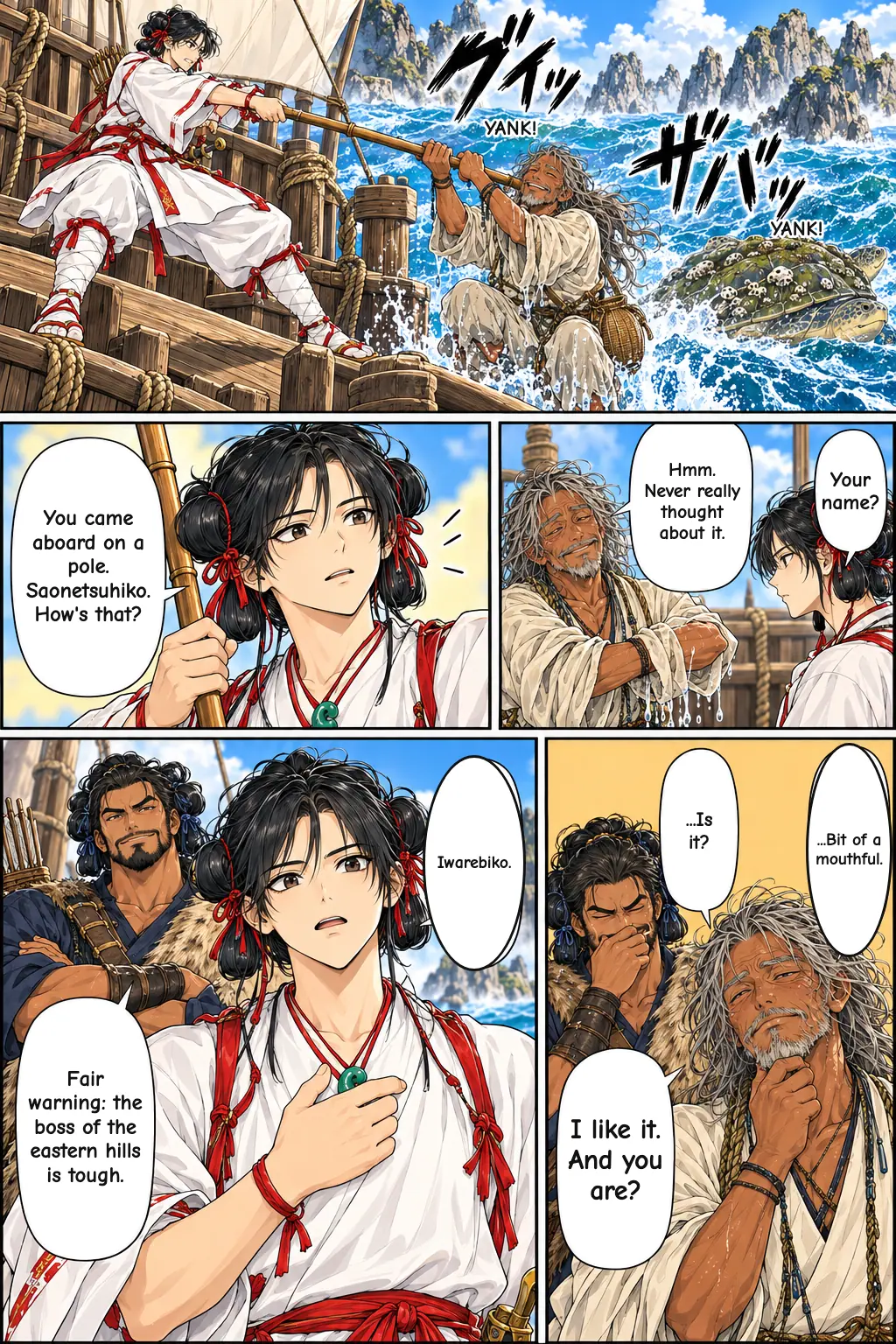
Their journey is slow. In Usa, local rulers build them a palace and hold a feast. They then spend a year at Okada in Tsukushi, seven years in Aki, and eight years in Kibi. At a narrow strait, they meet a man fishing on the back of a turtle. He agrees to guide them by sea and is given the name Sao-netsuhiko.
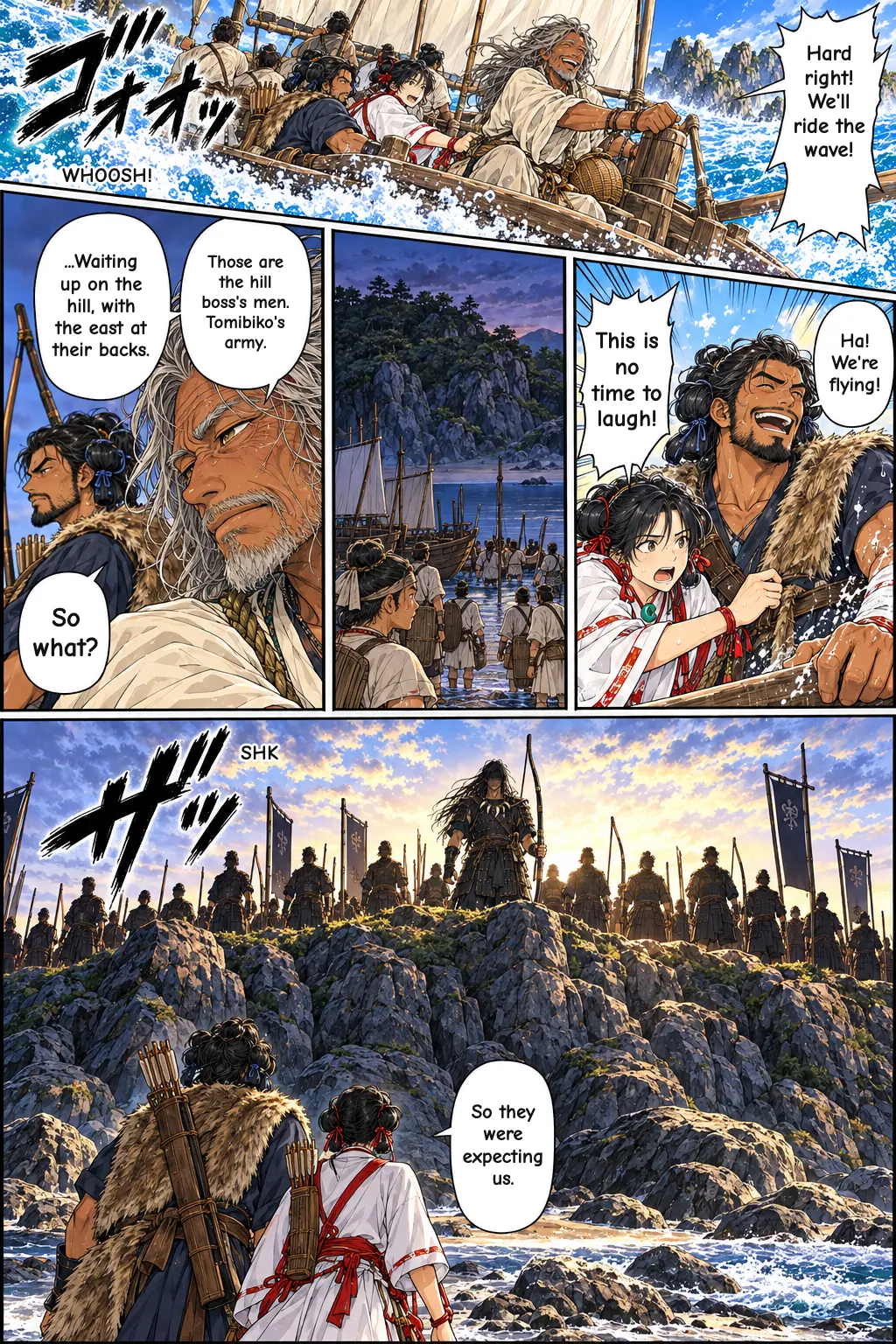
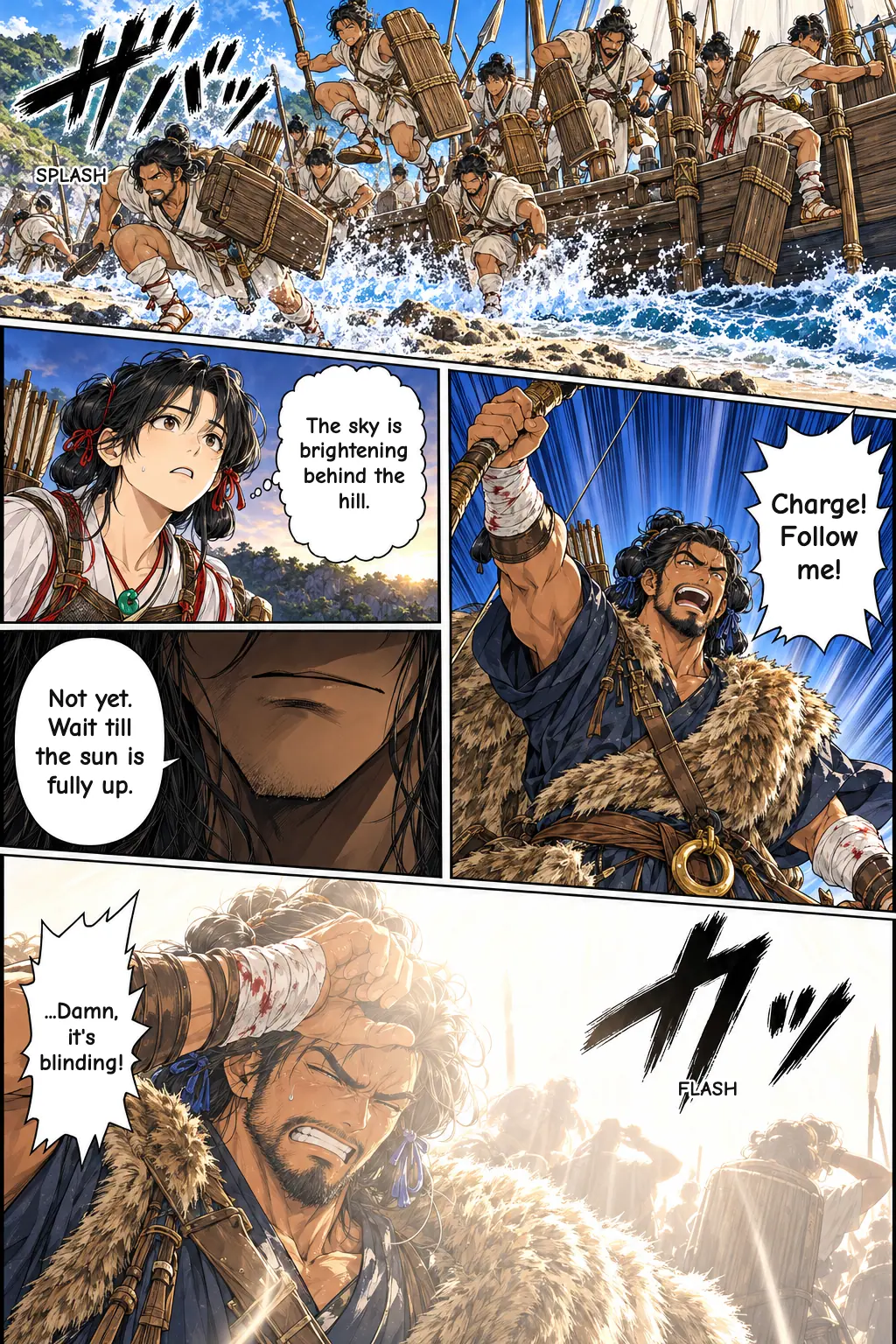
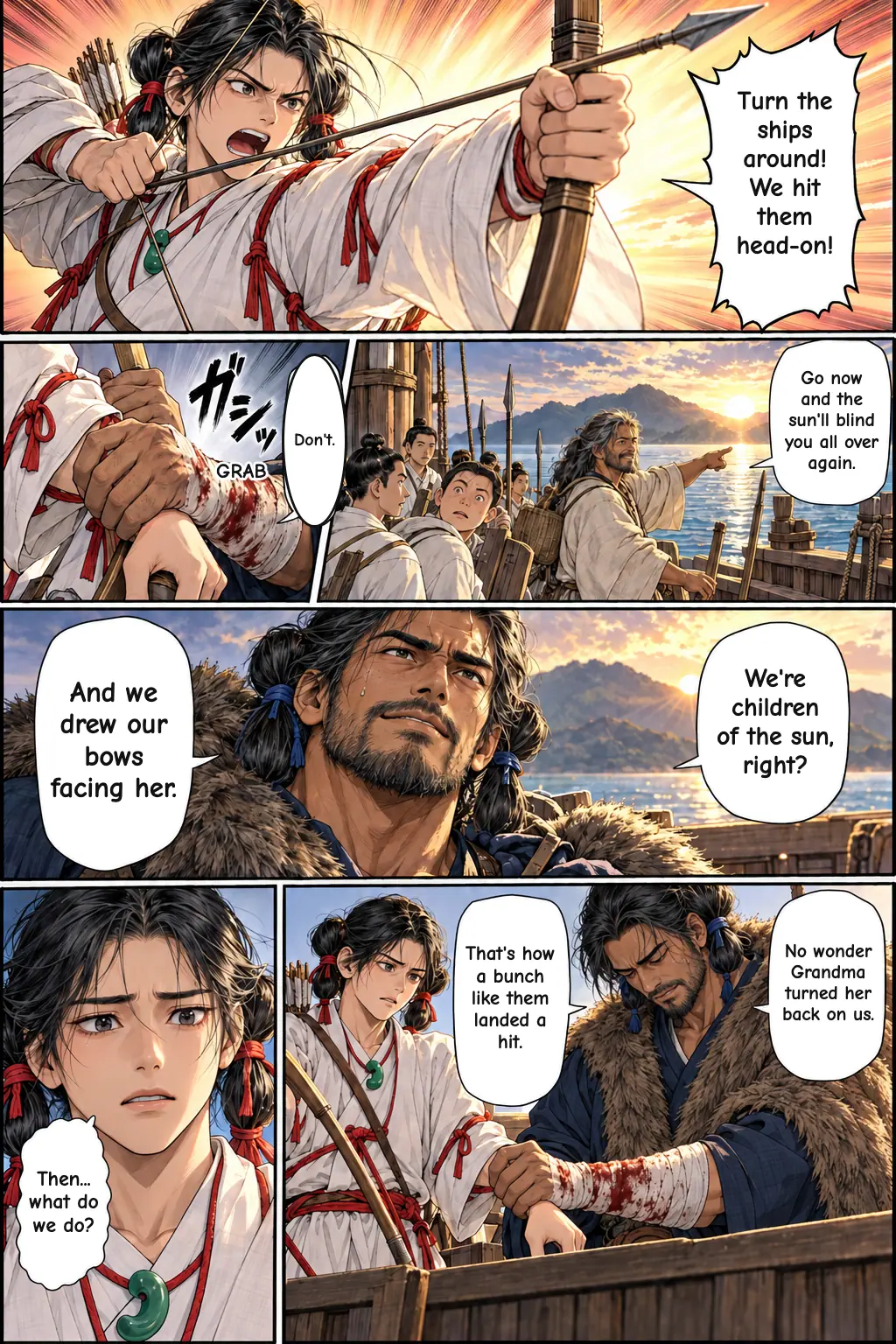
At last they land at Shirakata port near Kusaka, on the edge of the Yamato region. There a local chief, Nagasunebiko of Tomi, gathers an army and attacks. In the battle, an arrow strikes Itsuse in the hand. Itsuse sees why they lost. As descendants of the sun deity, it was wrong for them to fight facing the sun. From now on, he says, they should sail around and attack with the sun behind them.
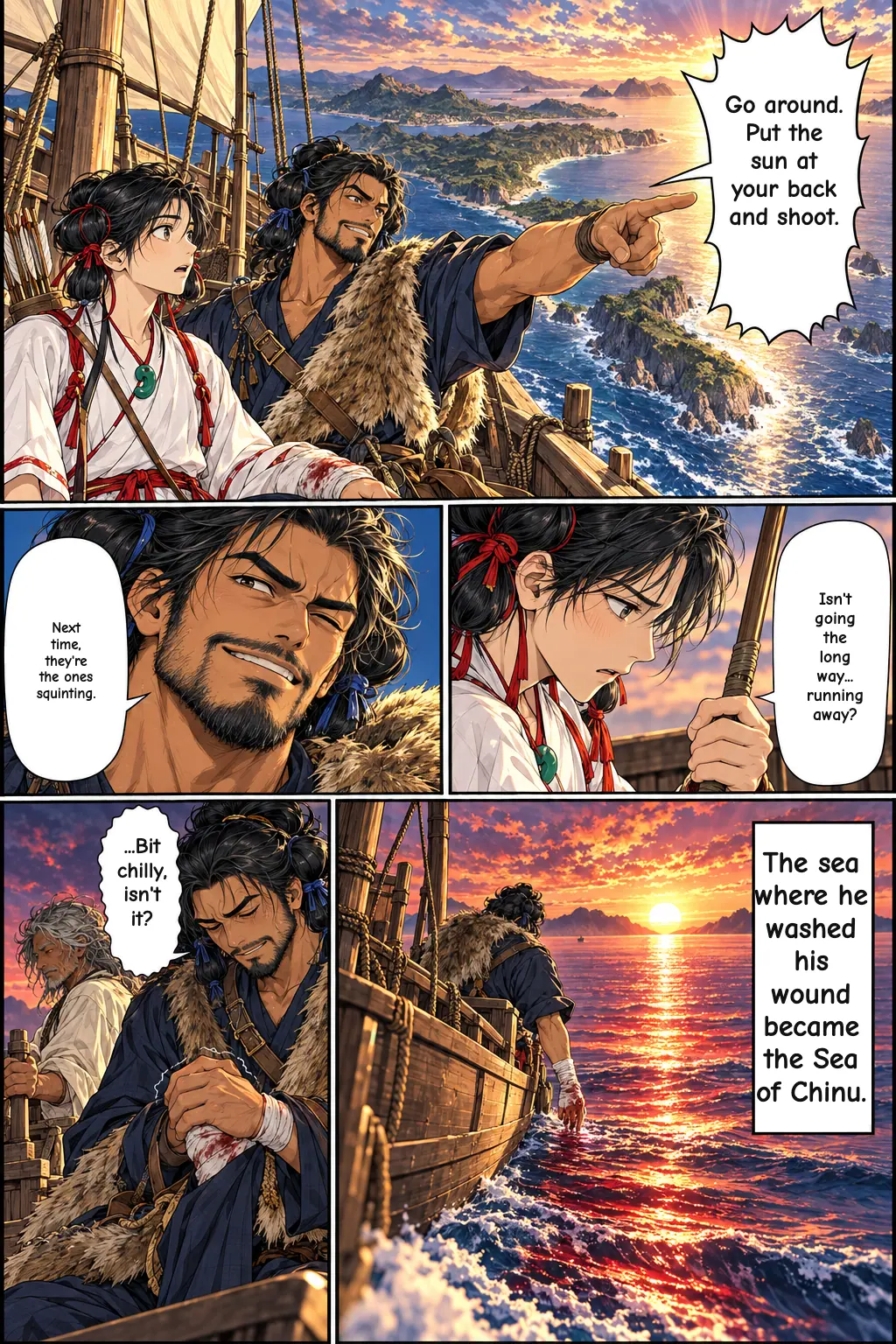
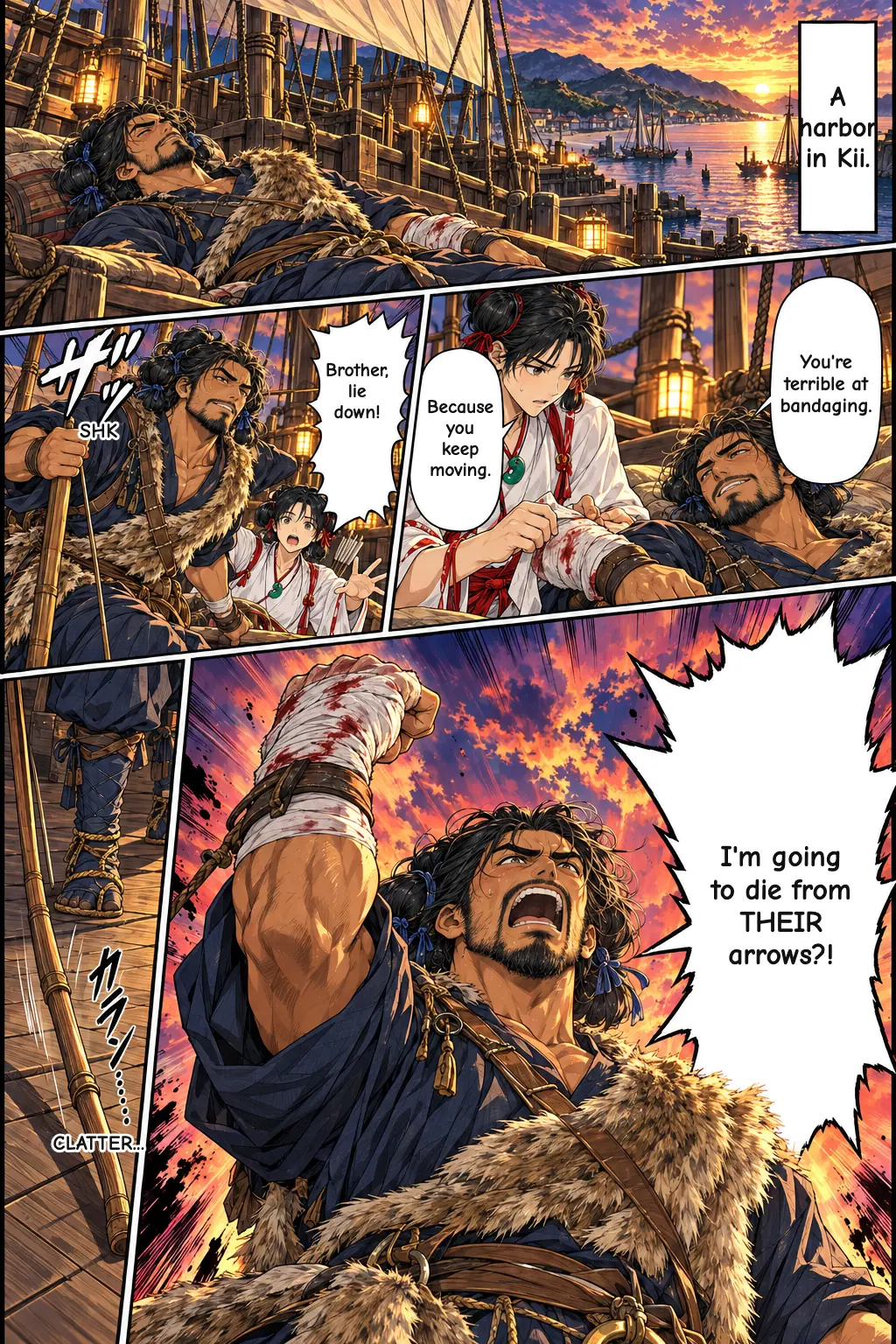
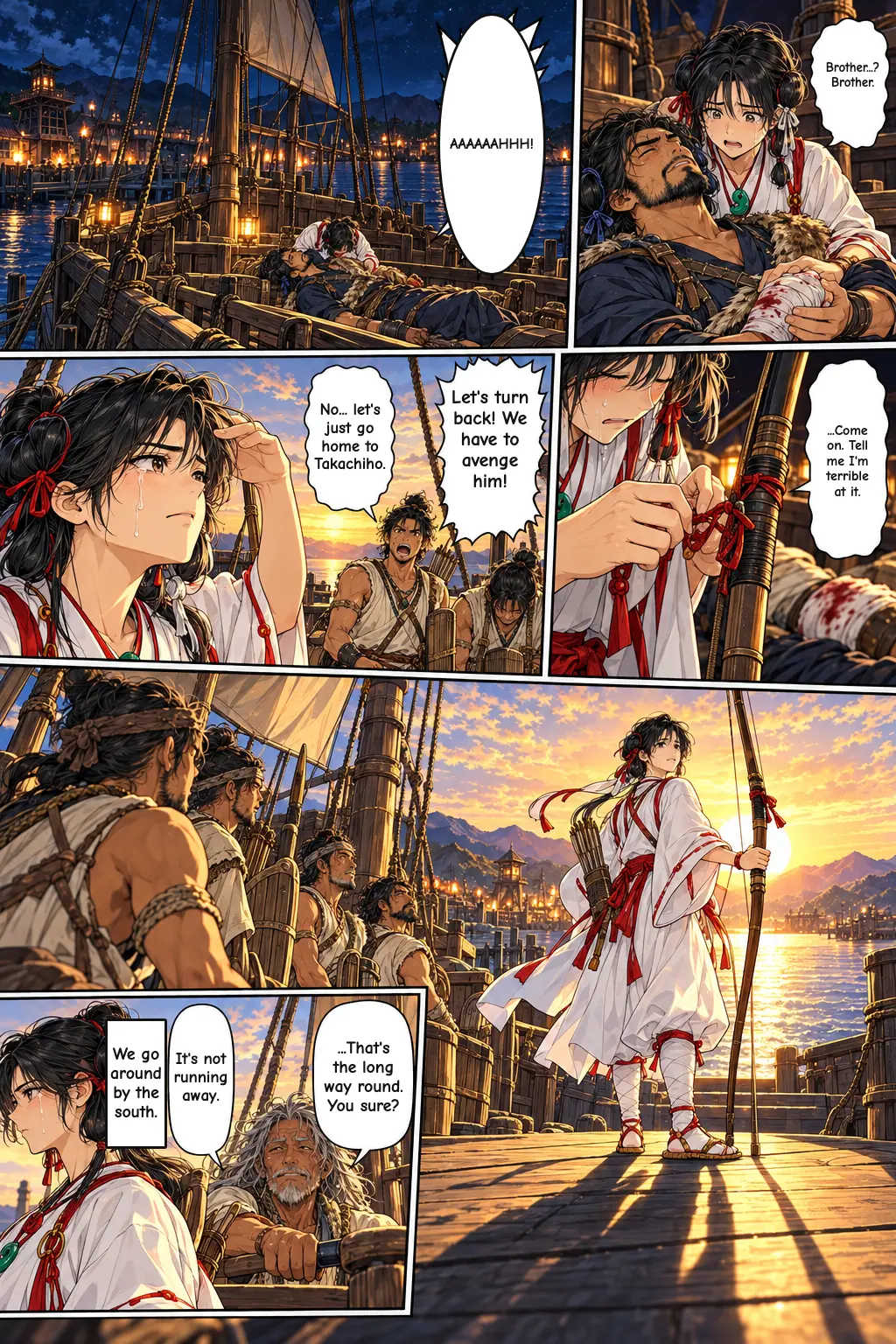
The brothers sail south. Itsuse washes the blood from his hands in the sea, and the Kojiki says this is why it came to be called the Chinu Sea. At the harbor of Wo in Kii Province, Itsuse cries out in anger at dying from a wound dealt by a lowly enemy, and then he dies. His tomb is said to be at Kamayama in Kii. From here, Iwarebiko must carry on without his brother.
Main Characters
Kamu-Yamato-Iwarebiko (later Emperor Jimmu) is the youngest of four brothers, the great-grandson of Ninigi, the heavenly grandson who came down from the sky. Itsuse, the eldest brother, is the leader of the early expedition, and his words after the defeat change its course. Their enemy, Nagasunebiko of Tomi, is a powerful local chief who will not let the newcomers enter his land. Sao-netsuhiko, the turtle-riding fisherman, becomes their guide across the sea.
What This Myth Tells Us
The core of the episode is the sun. The imperial line traces itself back to Amaterasu, the sun goddess. So the lesson Itsuse learns is not just tactics. It says the family's strength comes from being on the right side of their divine ancestor. Turning the sun from an obstacle into an ally is what makes the later victory possible.
The story also explains place names, which the Kojiki often does. Chinu and Wo-no-minato are each tied to a moment in Itsuse's last days. Ancient listeners could connect real places they knew to the founding story of their rulers.
It is important to read this as myth and political history, not as a record of events. The traditional date for Jimmu's accession, 660 BCE, comes from the Nihon Shoki, a chronicle compiled in 720. Modern historians generally regard Jimmu as a legendary figure. The Nihon Shoki tells the same expedition with differences in detail, so the Kojiki is one telling among others.
What the Manga Changes
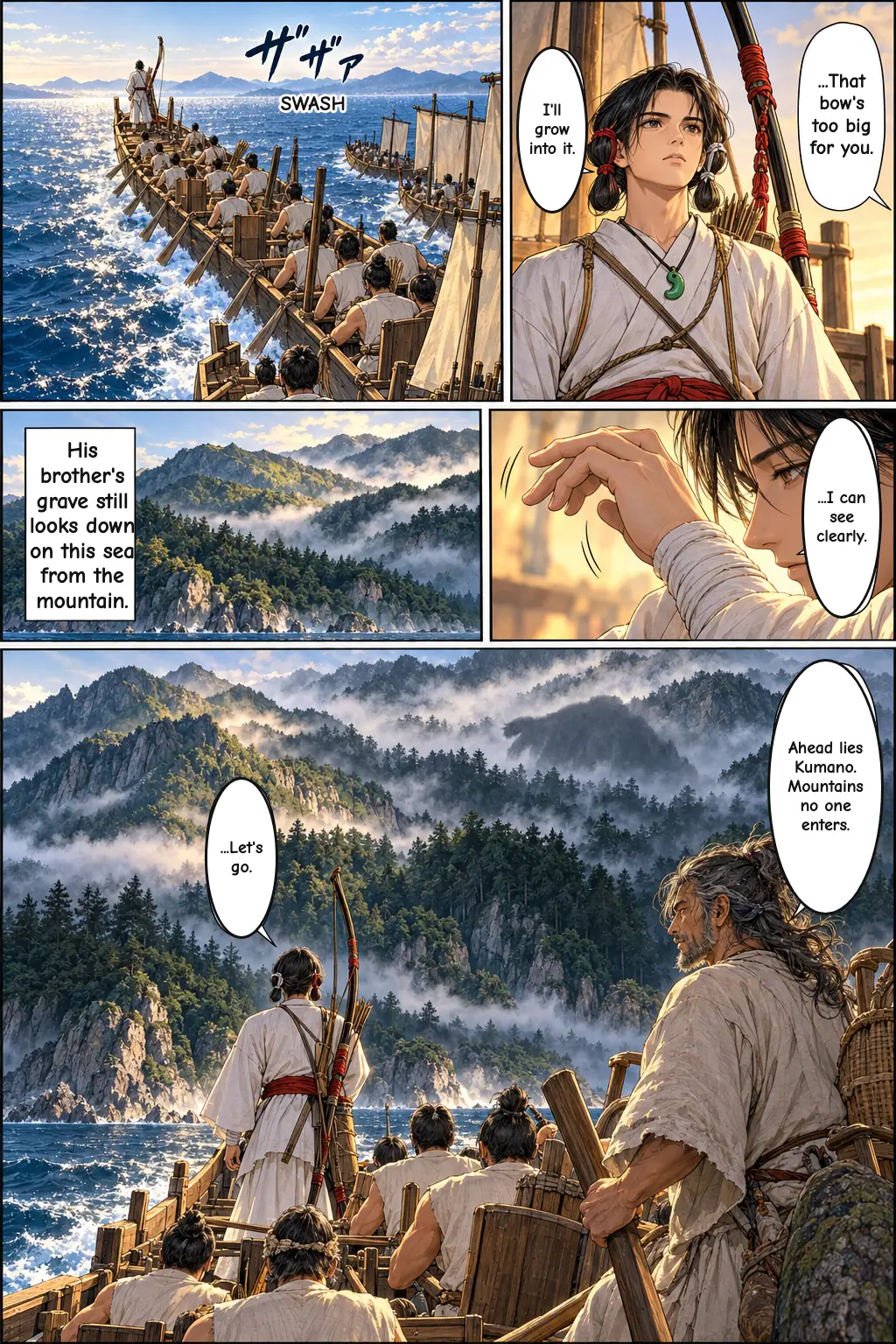
The Kojiki gives the events in a few spare lines and says almost nothing about feelings. The manga keeps the main events: the departure east, the arrow at Kusaka, Itsuse's realization about the sun, and his death. But it adds a personal story around them.
These parts are the manga's own invention. Iwarebiko always walking half a step behind his brother, the bond and tension between them, and the scenes of conversation are not in the original. The original also never says Itsuse handed his plan to Iwarebiko as a final gift. In the Kojiki, Itsuse says "we" will circle around, which suggests he meant to lead the attack himself. Turning those words into a dying brother's last battle plan, and making this the moment Iwarebiko first chooses his own path, is a dramatic reading. It fits the source, but it is not written there.
Where to Read It
If you want to see this story told in pictures, Episode 1 of KOJIKI Book II: The Age of Heroes on Manga Portal begins with the brothers' journey and Itsuse's last words. Every episode is free to read, with no sign-up needed. The series follows Iwarebiko onward through the rest of the Kojiki's age of heroes, so it is an easy way to follow the founding legends of Japan one chapter at a time.
Characters in this episode
Kamu-Yamato-Iwarebiko (Emperor Jimmu)
The youngest of four brothers and a descendant of the sun goddess Amaterasu, who later becomes the legendary first emperor of Japan.
Itsuse
Iwarebiko's eldest brother, who is wounded by an arrow at Kusaka and realizes they must fight with the sun at their back before he dies.
Nagasunebiko of Tomi
A powerful local chief who raises an army and drives the brothers back when they land near Kusaka.
Sao-netsuhiko
A fisherman found riding on a turtle's back, who becomes the brothers' guide across the sea.
Amaterasu
The sun goddess and ancestor of the imperial line, whose sun is the key to the brothers' strategy.
FAQ
Who was Emperor Jimmu?
Emperor Jimmu is the legendary first emperor of Japan, called Kamu-Yamato-Iwarebiko in the Kojiki. In the myth, he is a descendant of the sun goddess Amaterasu who travels east from Kyushu to Yamato. Most modern historians regard him as a legendary rather than historical figure.
What is Jimmu's Eastern Expedition?
It is the Kojiki story of Iwarebiko and his brother Itsuse leaving Hyuga in Kyushu to find a better place to rule. Over many years they travel east by land and sea and finally reach the Yamato region. In Japanese it is often called Jimmu Tosei.
How did Itsuse die in the Kojiki?
Itsuse was struck in the hand by an arrow from Nagasunebiko's army at Kusaka. As the brothers sailed south to attack from another direction, he died of the wound at the harbor of Wo in Kii Province, angry that a lowly enemy had killed him.
Why did they need to put the sun at their back?
Itsuse decided they lost because, as children of the sun deity, they had been fighting toward the rising sun. Attacking from the other side, with the sun behind them, meant fighting on the side of their divine ancestor instead of against her light.
Is the Kojiki the only source for this story?
No. The Nihon Shoki, compiled in 720, also tells of Jimmu's expedition, with differences in detail. It is also the source of the traditional founding date of 660 BCE.