Episode 2Japan's Soccer Crow Once Led a Lost KingYatagarasu, the Divine Crow
After losing his brother Itsuse, Iwarebiko lands at Kumano, where a mysterious great bear appears and every last one of his warriors falls asleep. A sword sent down from heaven and Yatagarasu, the Great Crow, show him the way forward. Along the road he meets tailed earthly gods, and in Uda a man who set a deadly trap ends up caught in it himself.
Yatagarasu and Emperor Jimmu at Kumano: Kojiki Myth Explained
The Original Myth: From Kumano to Uda
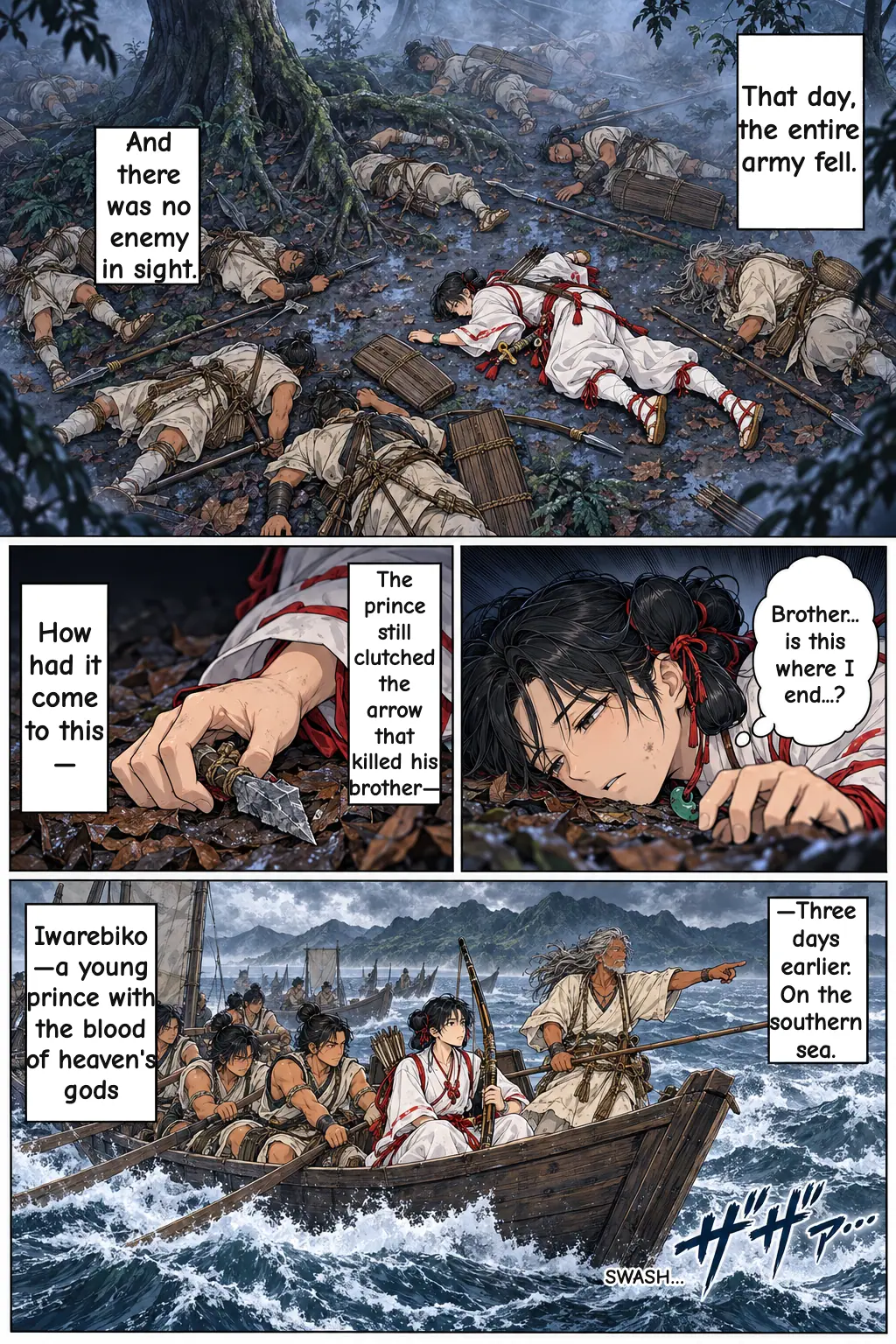
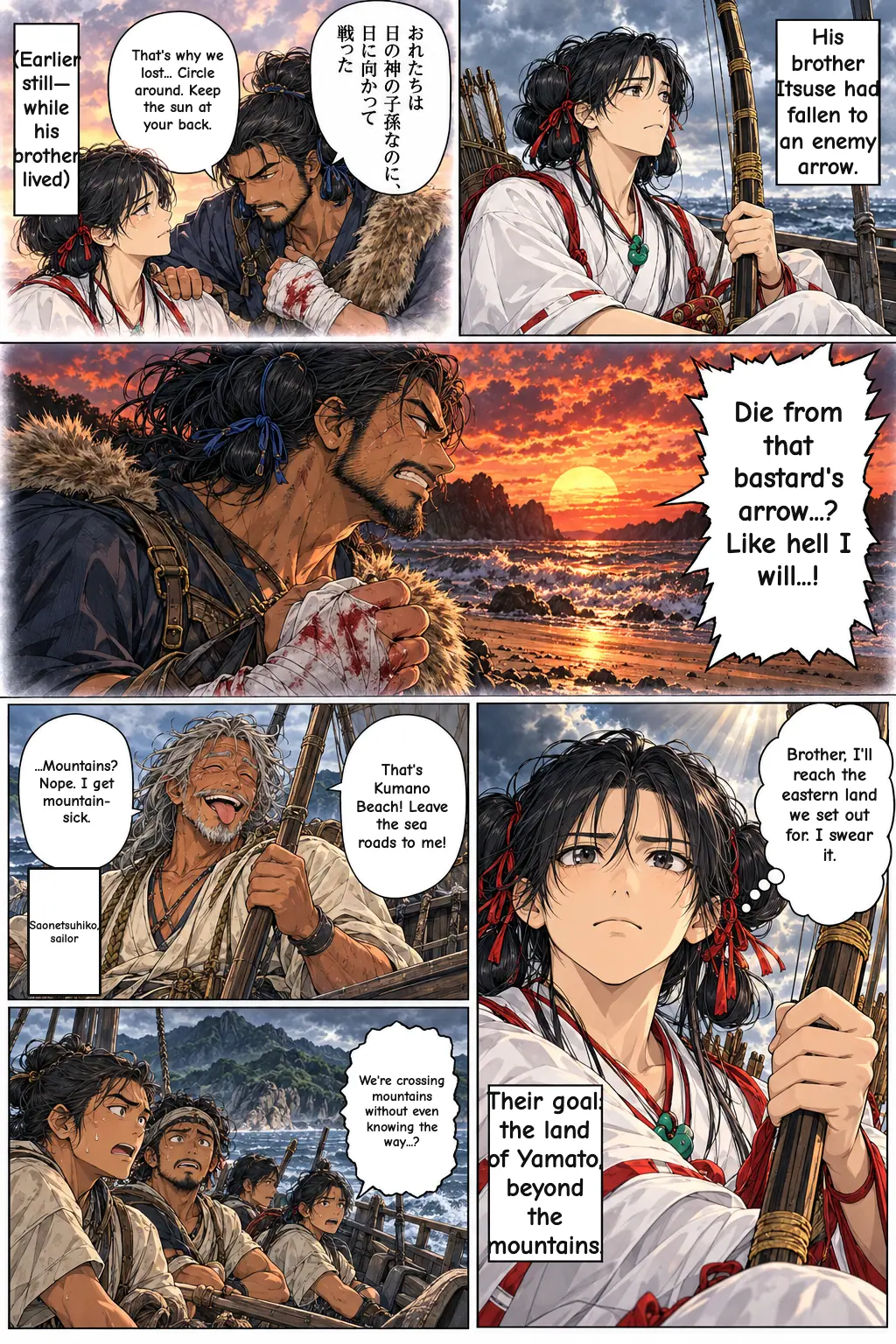
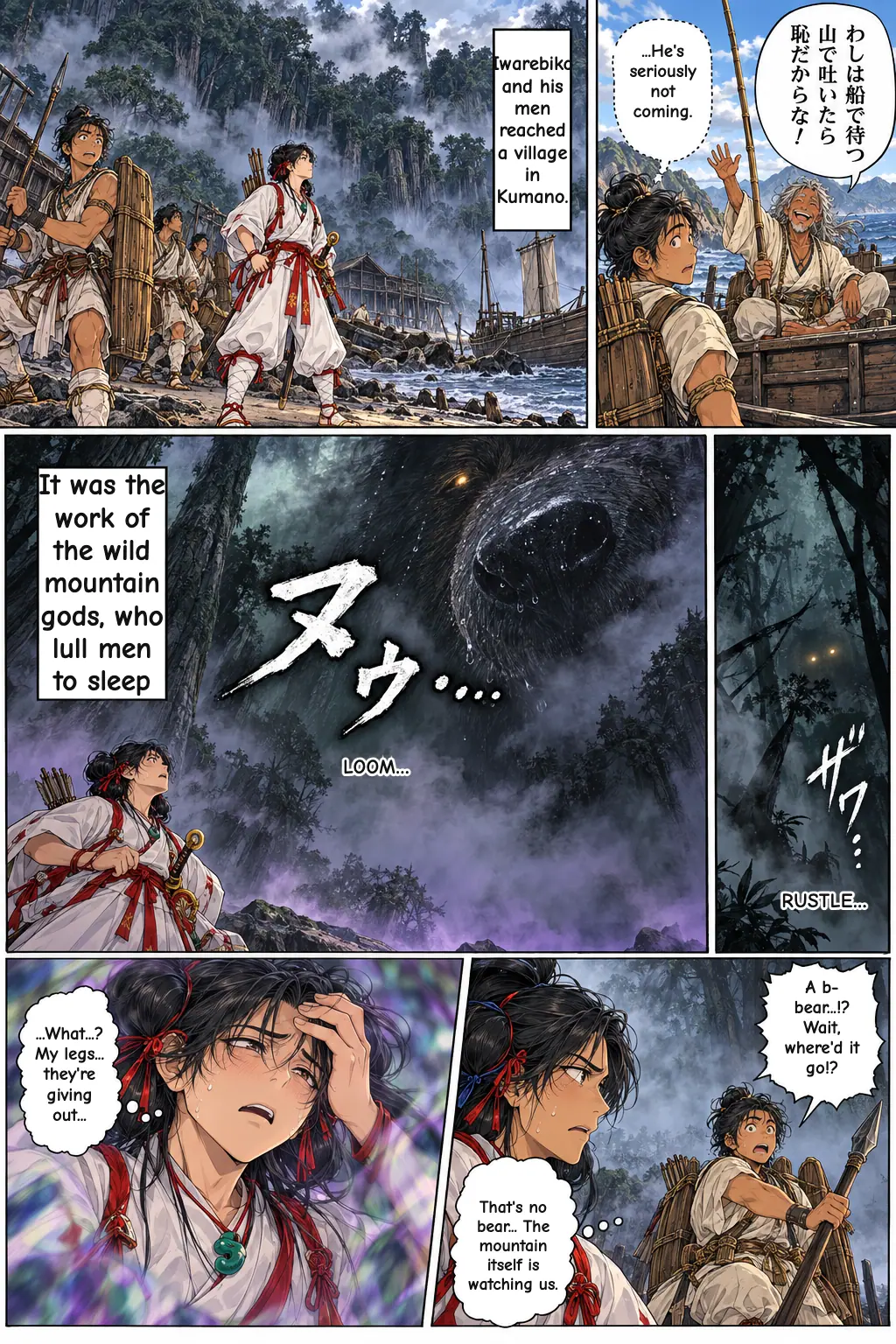
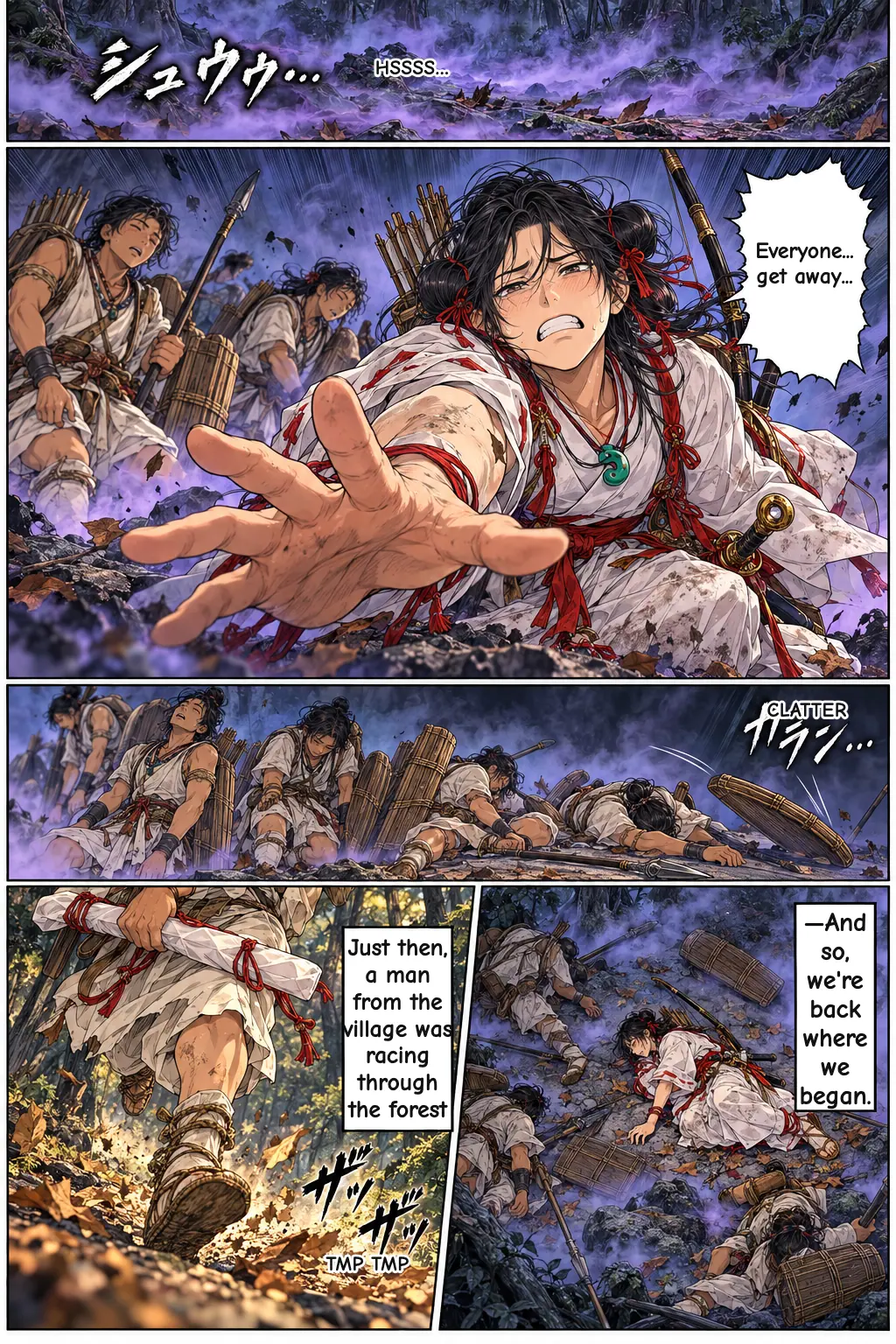
This episode comes from the Kojiki ("Record of Ancient Matters"), Japan's oldest surviving chronicle, which O no Yasumaro presented to the court in 712. Its second book follows Iwarebiko, the leader of a campaign heading east, who is later remembered as Emperor Jimmu, traditionally counted as Japan's first emperor. His elder brother Itsuse has just died. Iwarebiko sails around the coast and lands at the village of Kumano. A great bear appears for a moment and then vanishes. (Old manuscripts differ slightly on how this line should be read.) Right away Iwarebiko faints, and his whole army collapses with him.
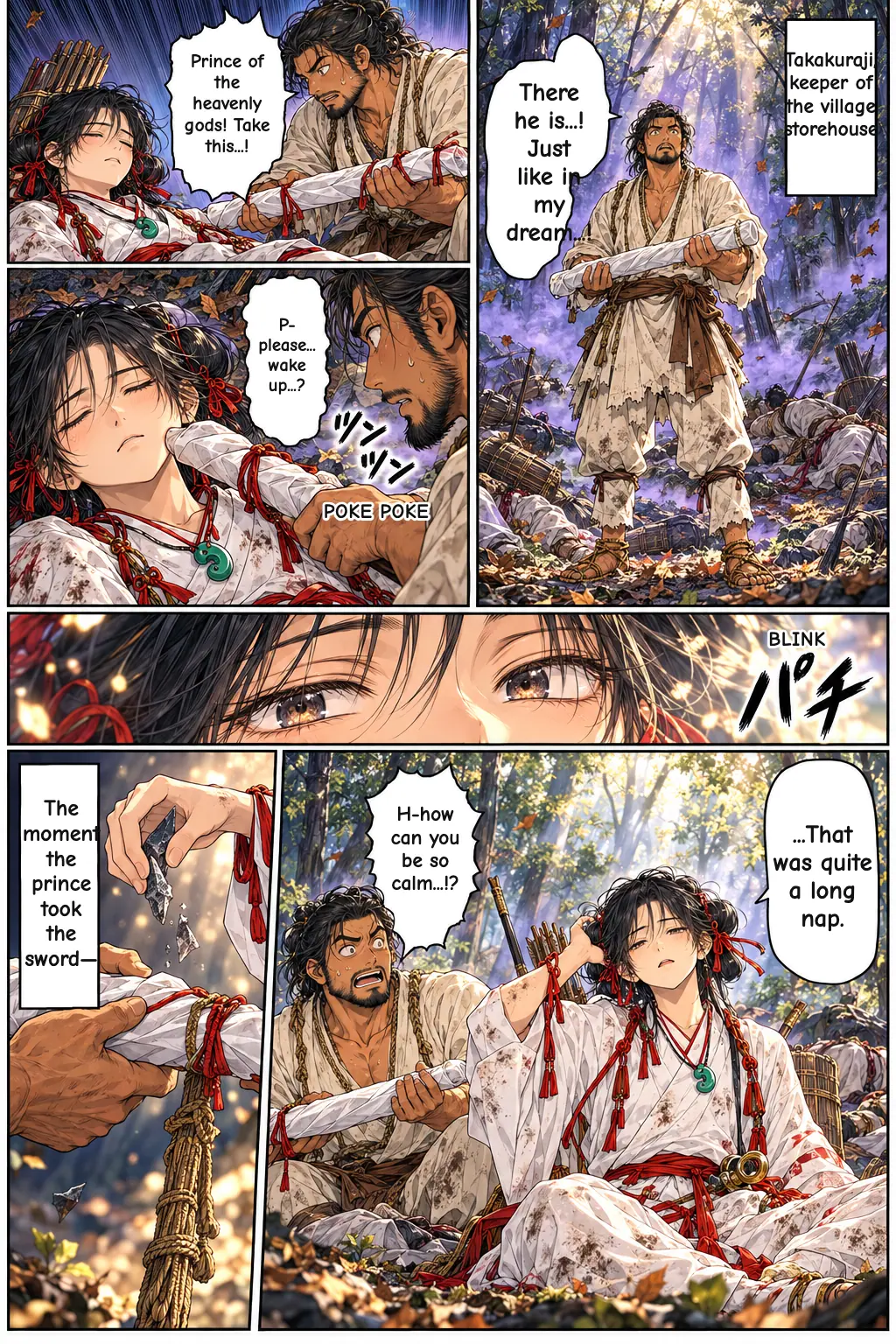
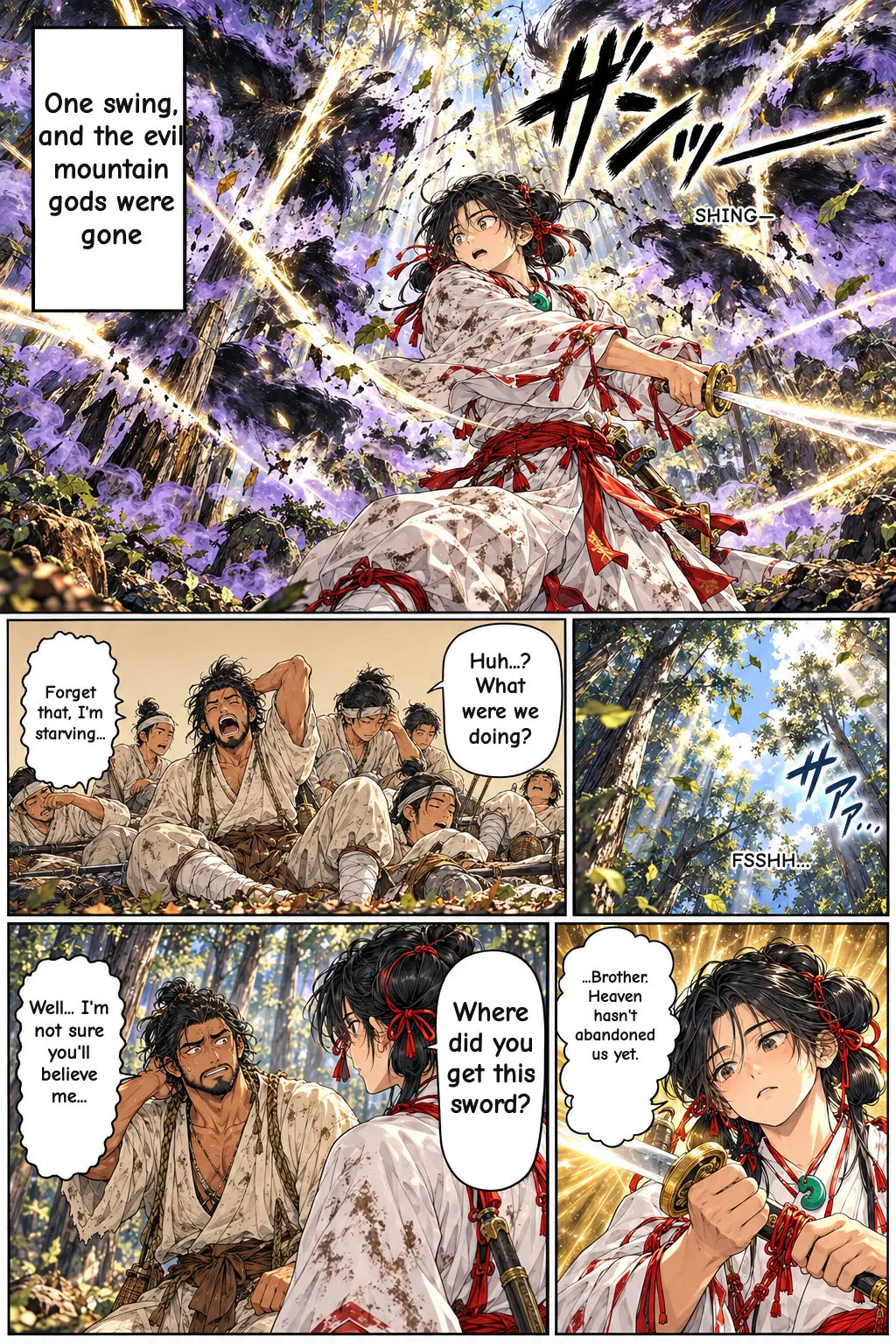
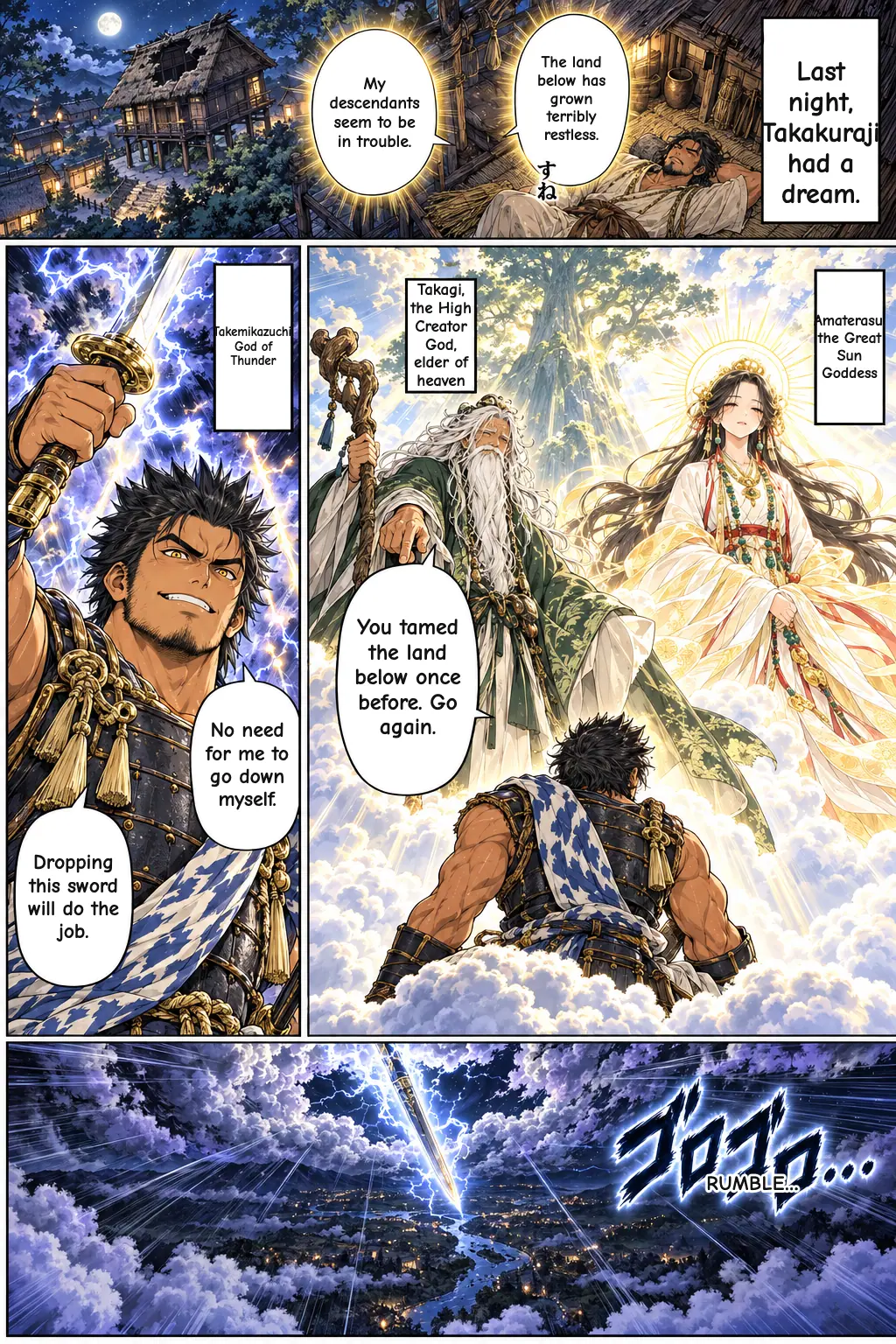
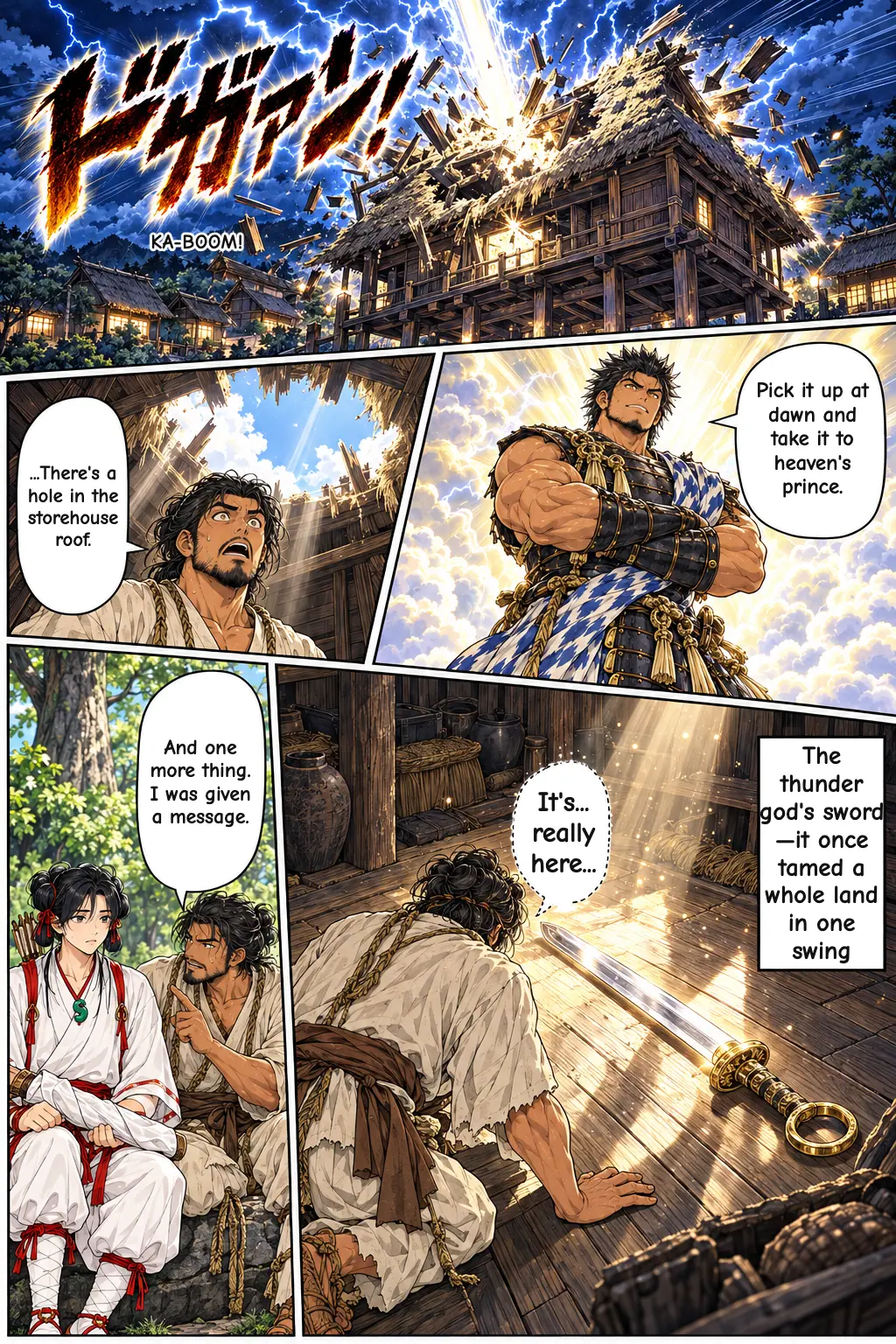
Then a local man, Takakuraji of Kumano, arrives carrying a sword. Iwarebiko wakes at once and remarks that he has been asleep for a long time. As soon as he takes hold of the sword, the violent gods of the Kumano mountains are cut down on their own. The text never says he swings the blade. His soldiers wake up too. Takakuraji then tells him about a dream. In it, Amaterasu, the sun goddess, and Takagi, a senior heavenly god, ordered Takemikazuchi, the thunder god who had once subdued the land, to go down and help. Takemikazuchi answered that there was no need for him to go himself. He could send down the sword he had used to pacify the country. He cut a hole in the roof of Takakuraji's storehouse and dropped the sword inside. When Takakuraji looked the next morning, it was really there.
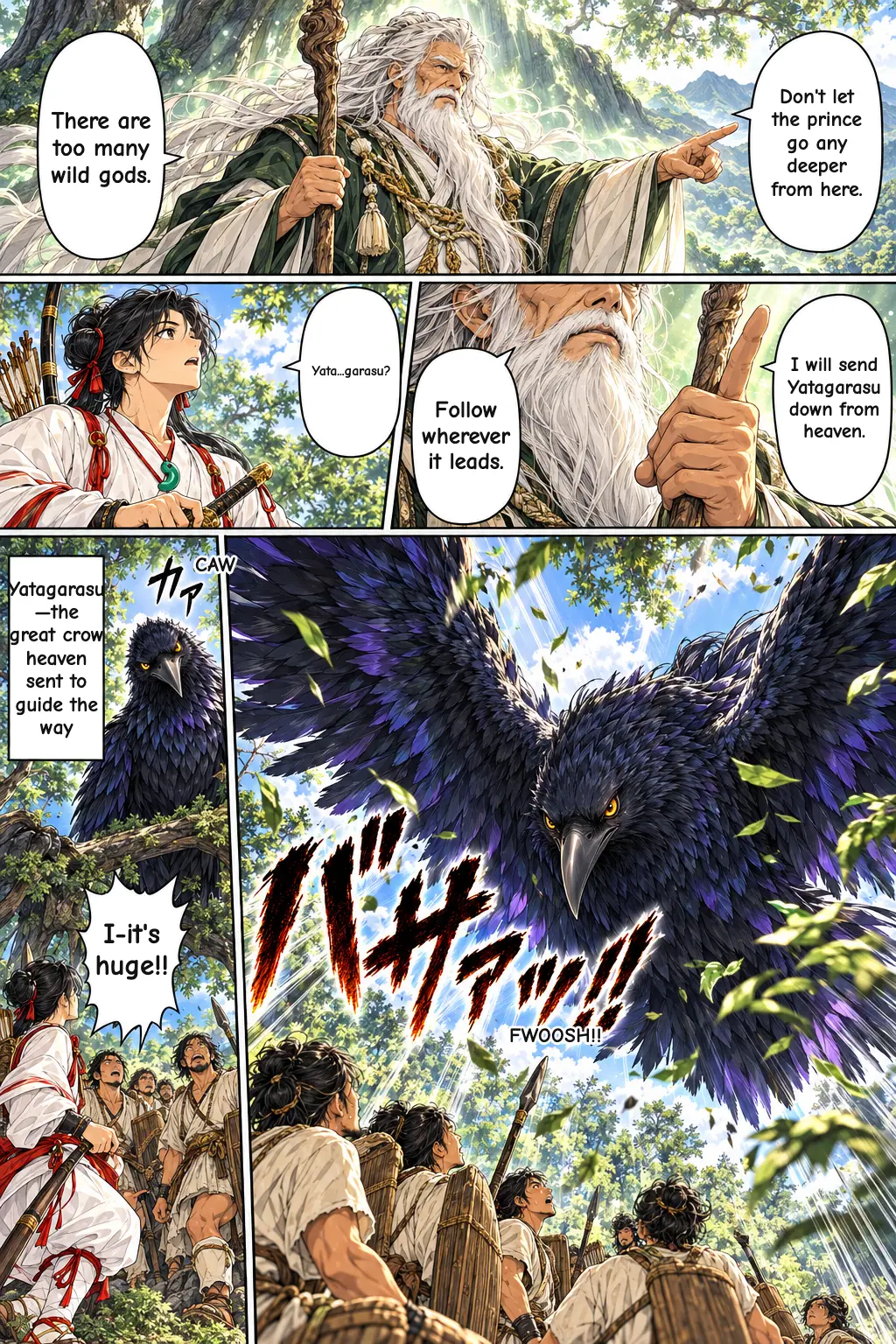
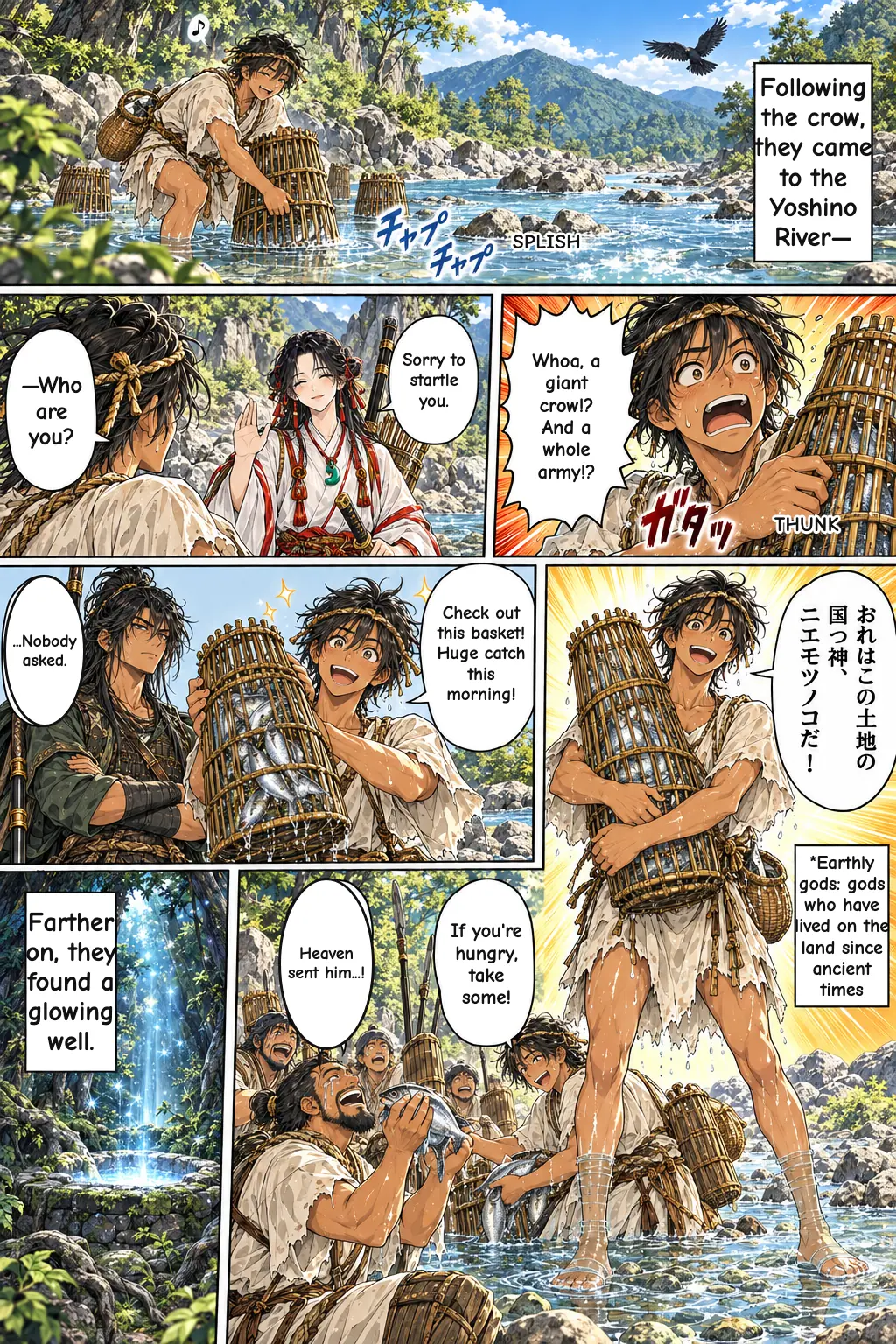
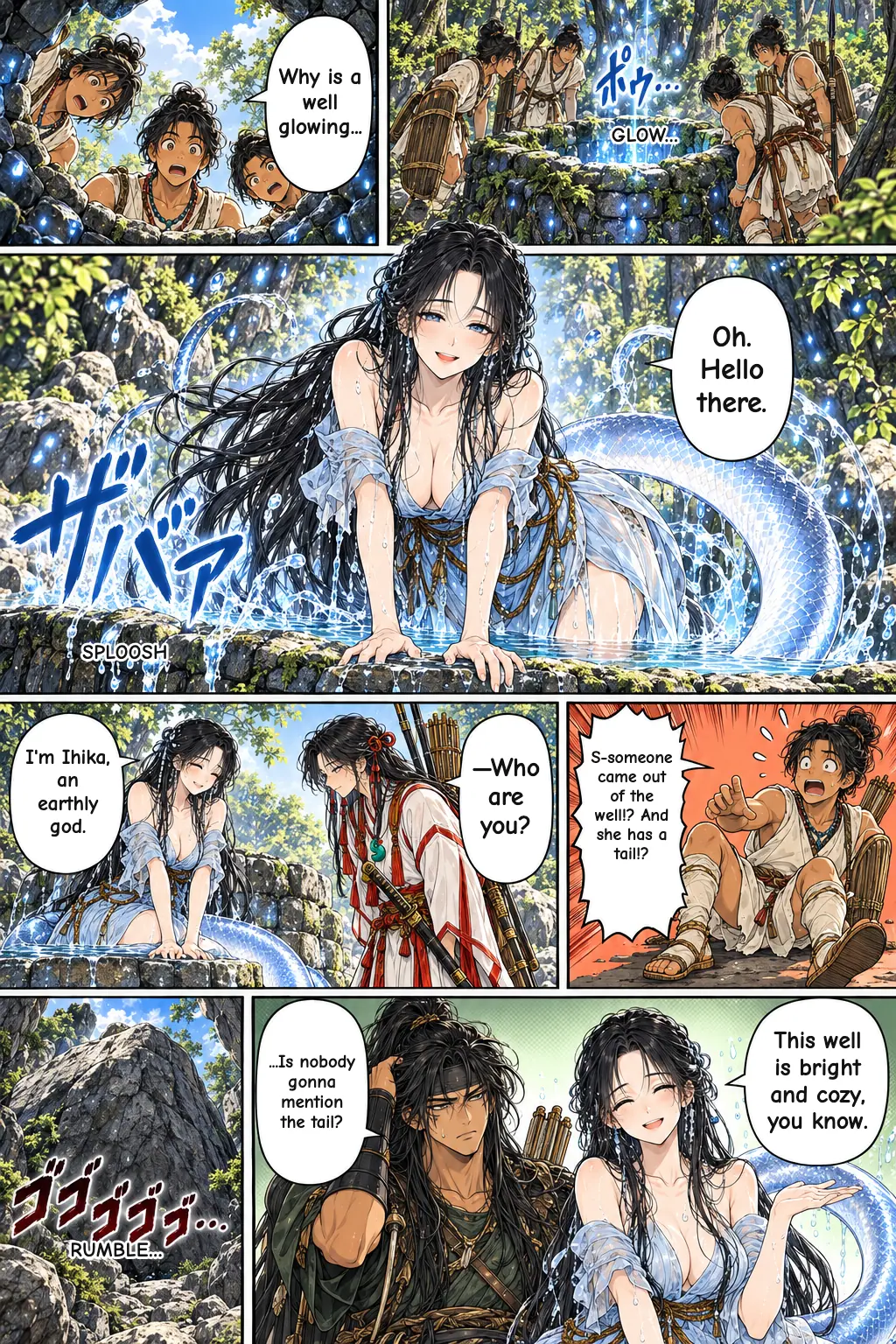
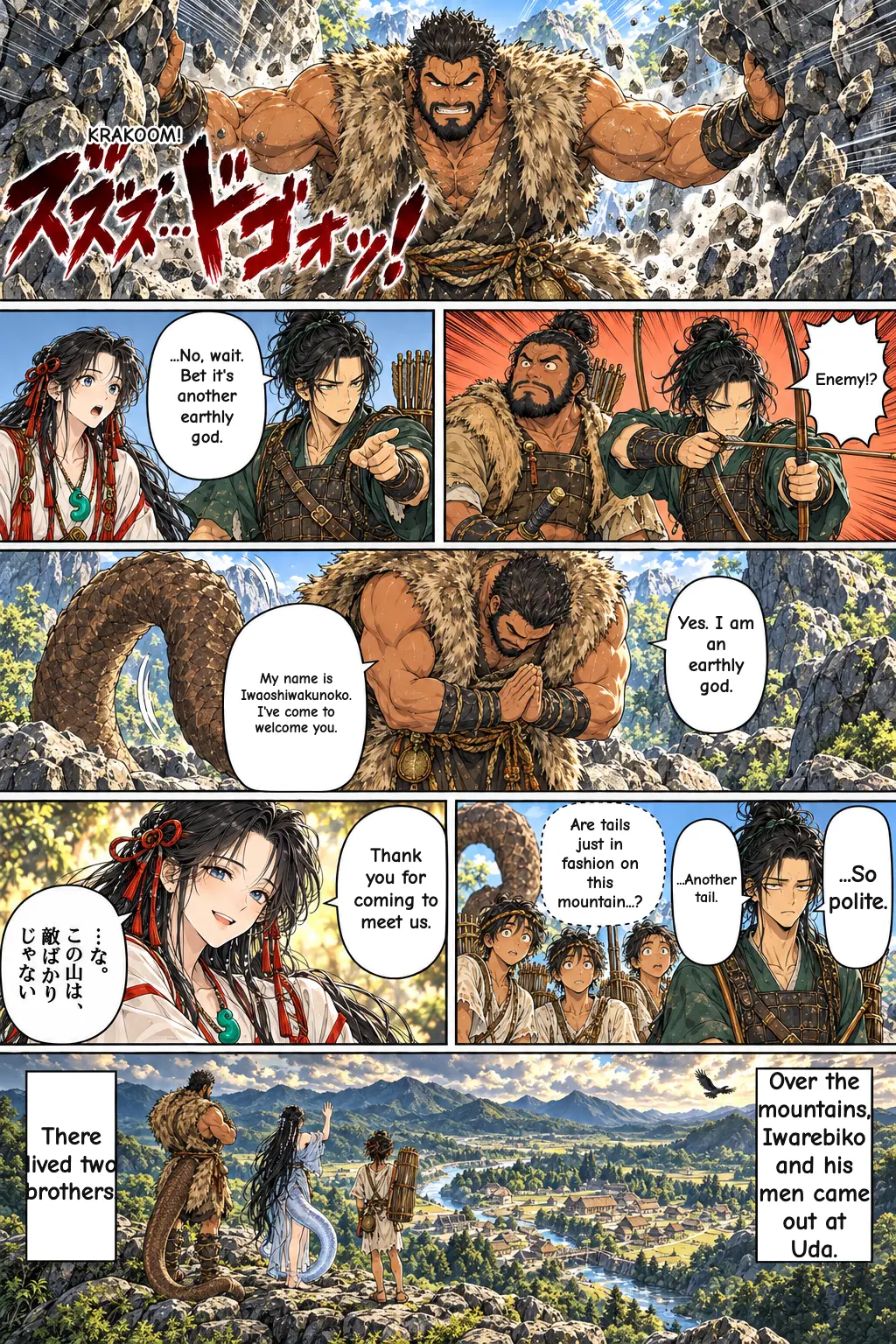
Takagi also warned that Iwarebiko must not push deeper inland, because the interior was full of hostile gods. Instead, heaven would send Yatagarasu, a great crow, and Iwarebiko should follow it. Behind the crow, the army meets three local beings. Niemotsunoko is catching fish with a bamboo trap at the mouth of the Yoshino River. Ihika, who has a tail, comes up out of a shining well. Iwaoshiwakunoko, who also has a tail, pushes his way out through the rocks and says he came to welcome the heavenly gods' child. All three introduce themselves as kunitsukami, gods of the land.
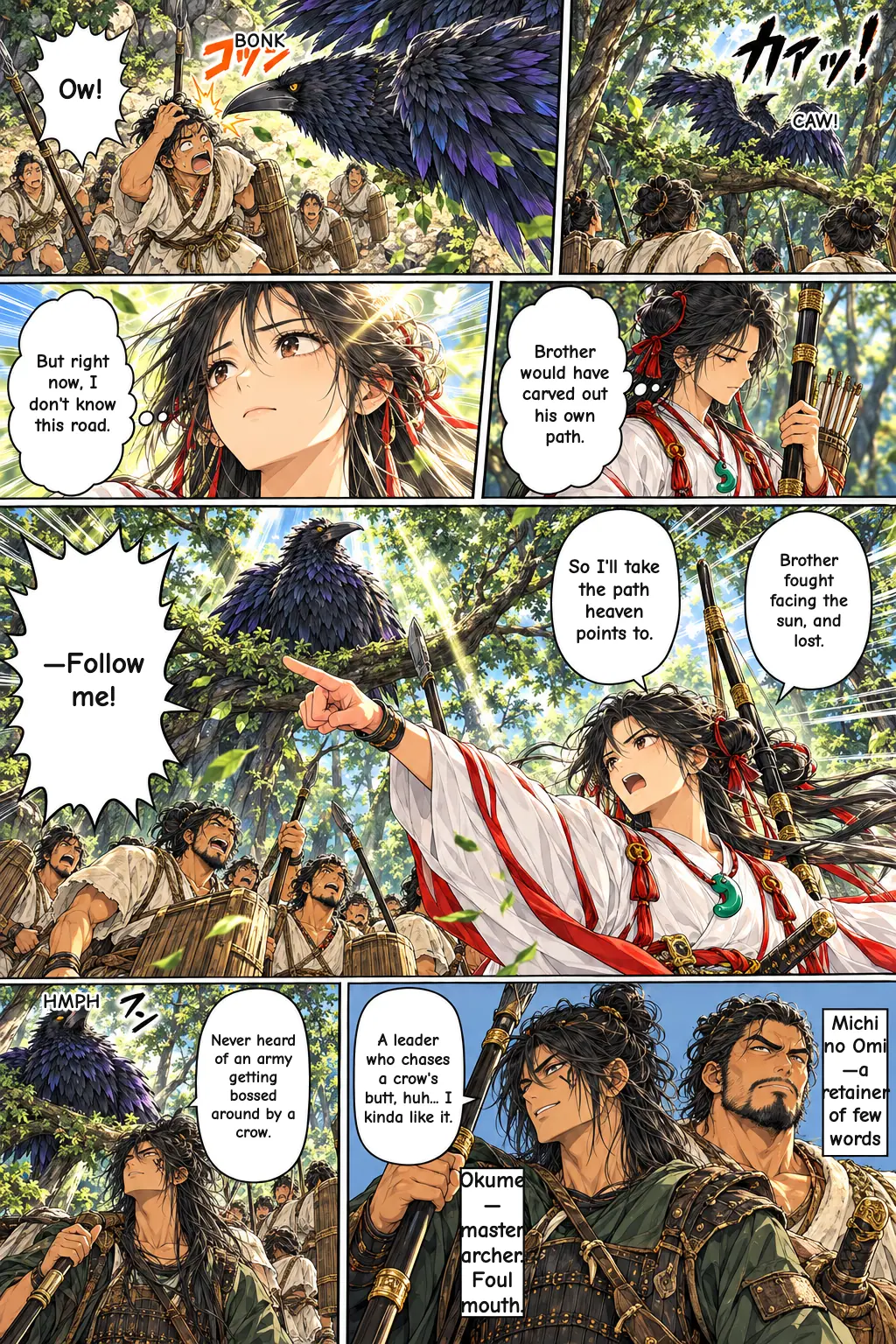
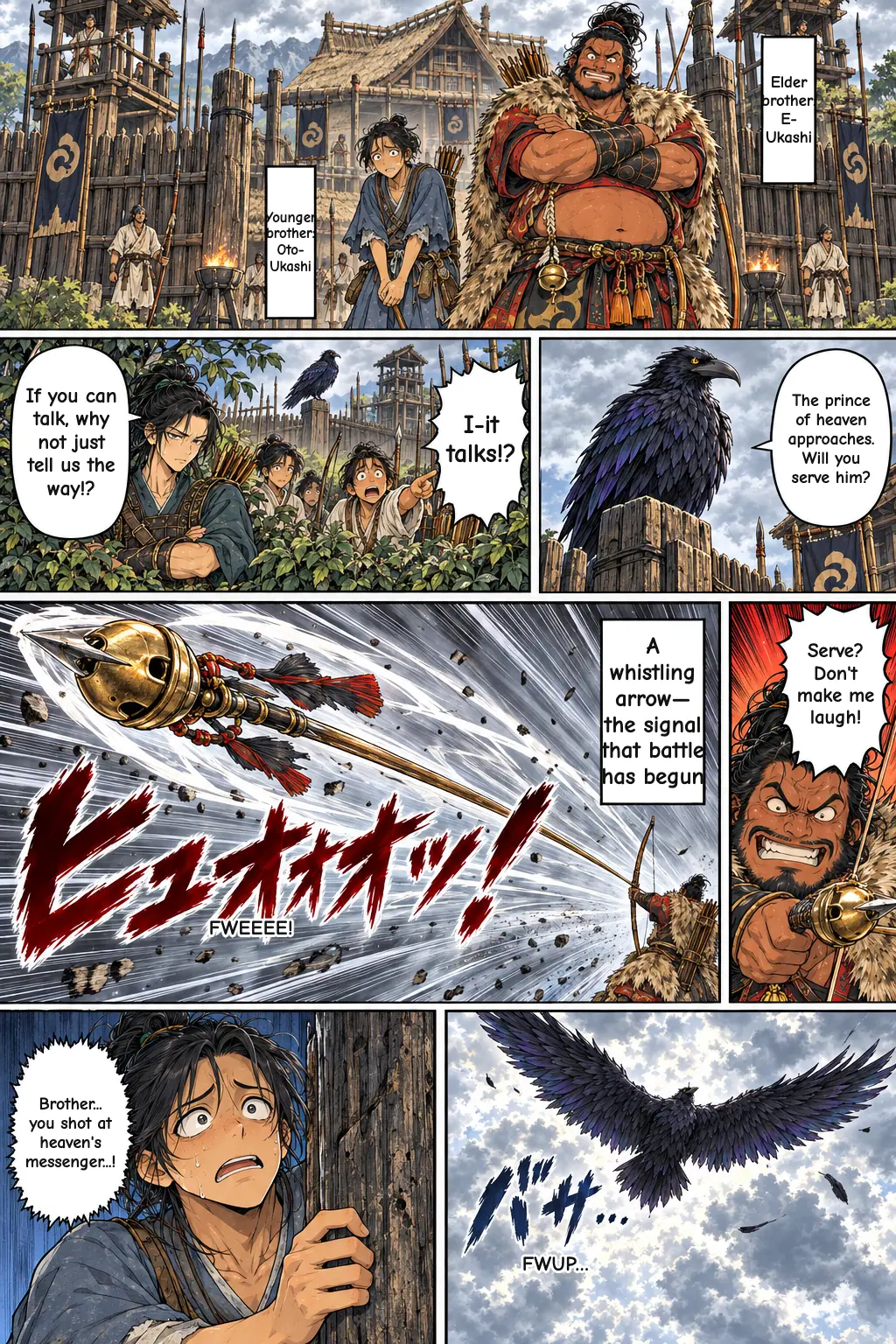
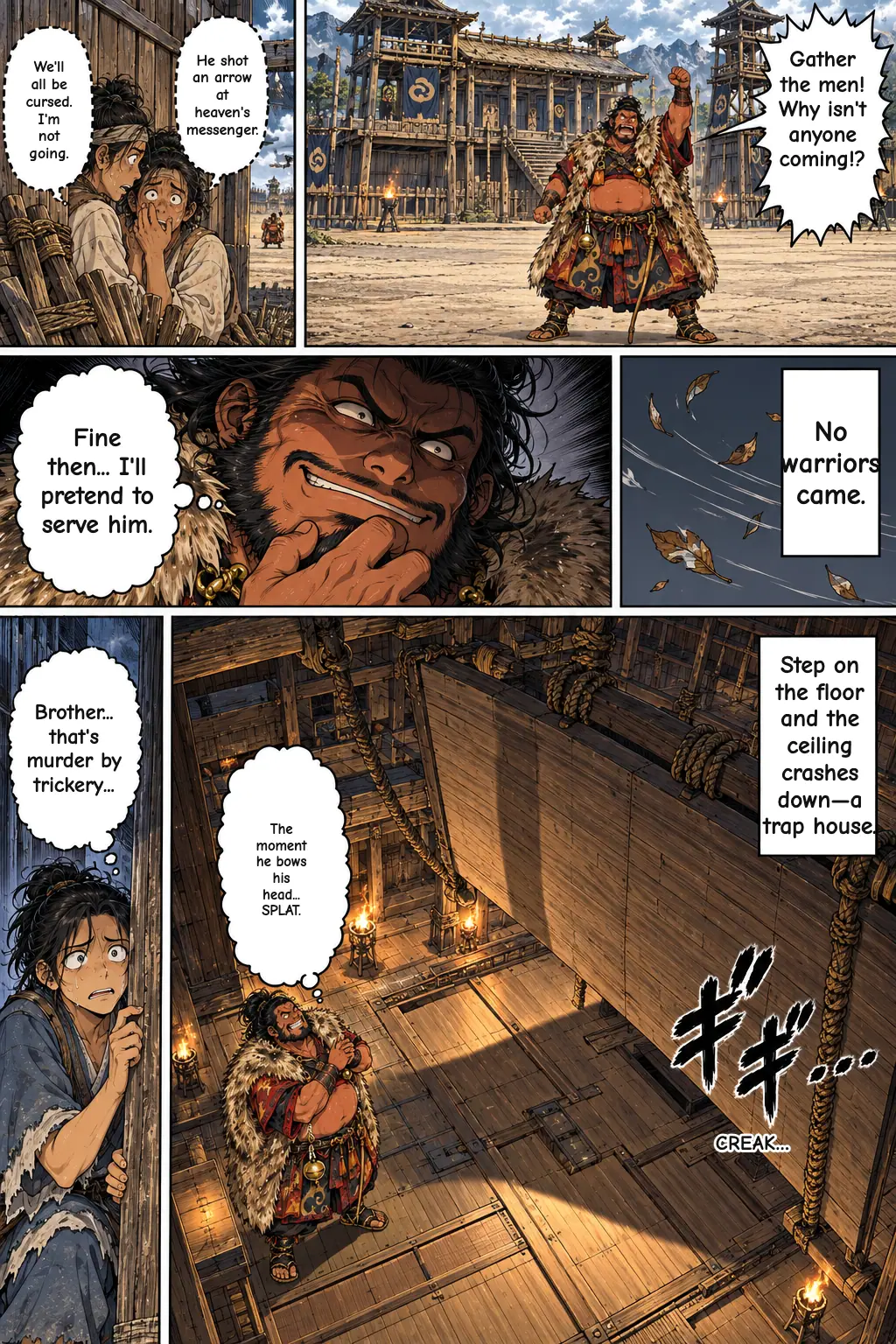
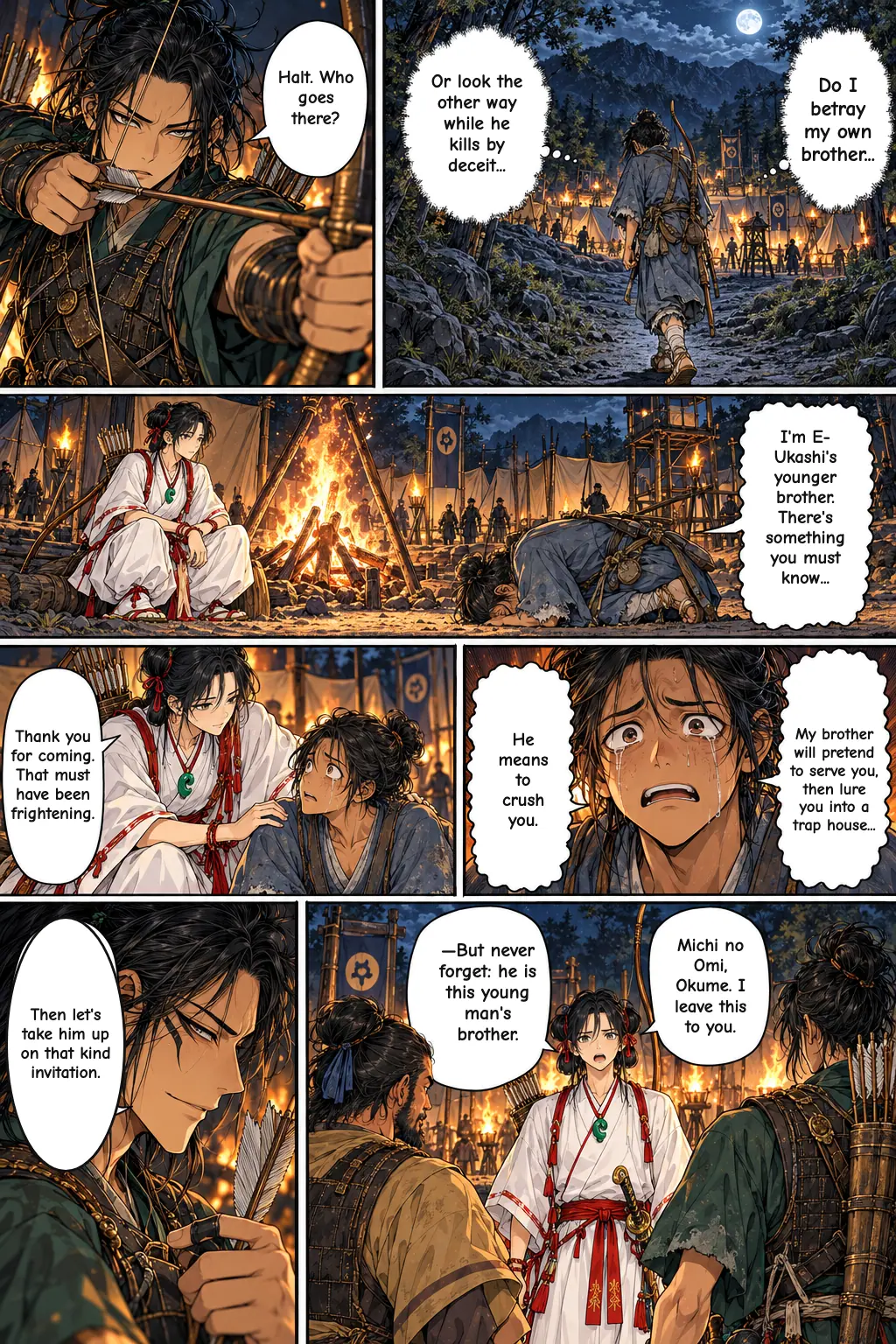
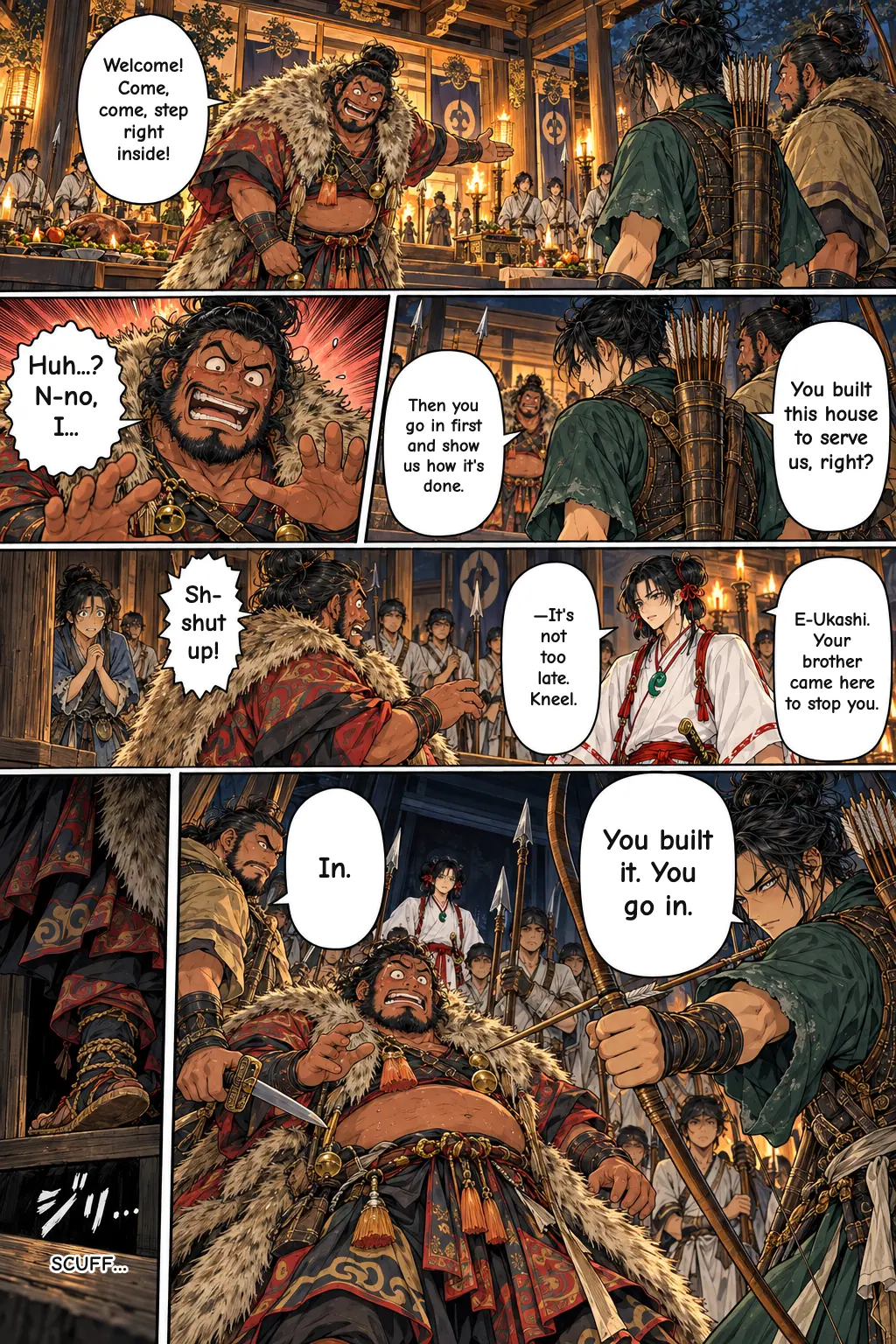
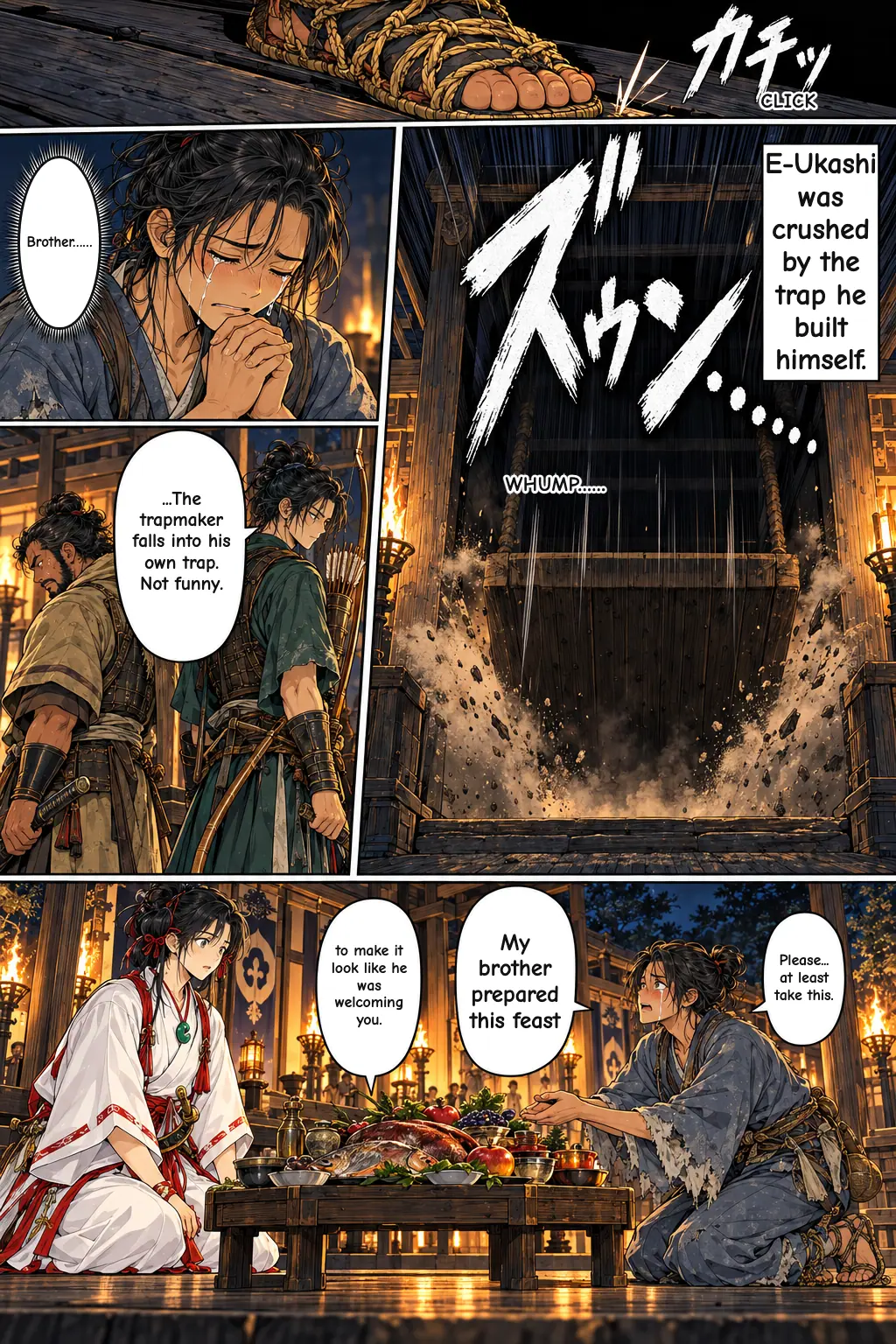
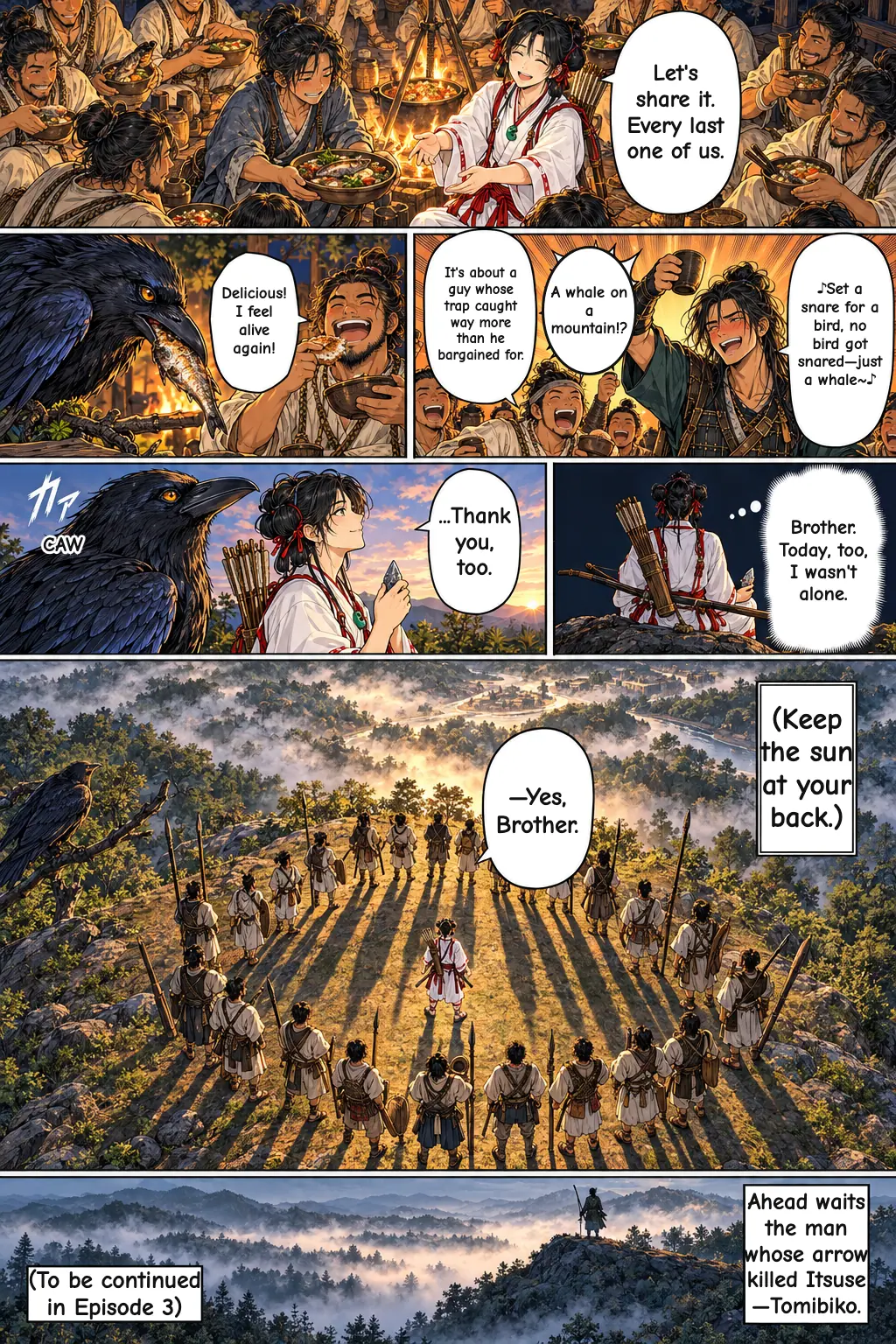
In Uda live two brothers, Eukashi (the elder) and Otoukashi (the younger). Yatagarasu is sent to ask whether they will serve. Eukashi answers by shooting a whistling arrow at the messenger. He tries to raise an army and fails, so he pretends to submit. He builds a great hall with a crushing trap hidden inside. Otoukashi comes forward first and reveals the plot. Two of Iwarebiko's commanders, Michi-no-omi and Okume, taunt Eukashi to go in first and show how he plans to serve. With sword, spear and drawn arrows they drive him into the hall, and his own trap kills him. His body is dragged out and cut to pieces. Iwarebiko shares the younger brother's feast among all his troops, and a song is sung.
Main Characters
Iwarebiko is called the child of the heavenly gods throughout this section. Notably, he hardly fights himself. Divine help, local guides and loyal commanders do most of the work. Takakuraji is described only as a man of Kumano who owns a storehouse. His age and rank are never given. Yatagarasu gets no physical description at all. It guides, carries messages and is shot at, but it has no lines and no stated personality.
What the Myth Tells Us
The story contrasts heavenly gods (amatsukami) with the gods of the land (kunitsukami). In this episode the land gods either welcome the newcomer, like the three Yoshino figures and Otoukashi, or resist him and are destroyed, like the Kumano gods and Eukashi. Many characters come with short notes naming the later clans who claimed them as ancestors. Michi-no-omi, for example, is listed as an ancestor of the Otomo clan, and Okume of the Kume. Several events also explain place names around Uda. The Kojiki also notes that the sword, known by the names Futsunomitama, Sajifutsu and Mikafutsu, is enshrined at Isonokami Shrine.
Two popular details are not actually in the Kojiki. First, the idea that the bear's poisonous breath knocked the army out comes from a parallel account in the Nihon Shoki, Japan's other early chronicle. Second, the image of Yatagarasu with three legs is a later tradition. The Kojiki never gives the crow's number of legs. That three-legged crow is what appears on the emblem of the Japan Football Association today. The Kojiki also leaves it unclear whether the bear and the violent mountain gods are the same being. Readings of that point vary.
What the Manga Changes
Because the original is so brief, the manga fills in a lot. Yatagarasu's gestures, expressions, cries and mascot-like personality are all invented. Where the crow is drawn with three legs, that follows later tradition, not the Kojiki text. The comic conversations with the tailed earthly gods are expanded from what is, in the source, little more than a question and a name. The same goes for their looks, the fish being caught and the glow of the well. Takakuraji's appearance and character, the dream scene in heaven, the size of the bear and the way the army faints are visual choices. The workings of Eukashi's trap, the banter between Michi-no-omi and Okume, the size of the army and the scenery along the road are creative additions as well.
Where to Read It
If you want to see a sword drop through a storehouse roof, a crow lead an army through the mountains and a schemer walk into his own trap, read Episode 2 of KOJIKI Book II: The Age of Heroes here on Manga Portal. Every episode is free, and you don't need to sign up. Start from the beginning of Book II, or keep going to see where Yatagarasu leads Iwarebiko next.
Characters in this episode
Iwarebiko (Emperor Jimmu)
Leader of the eastward campaign and child of the heavenly gods, later remembered as Japan's legendary first emperor.
Yatagarasu
A great crow sent from heaven by the god Takagi to lead Iwarebiko safely through the mountains and carry his messages.
Takakuraji
A man of Kumano who finds a heavenly sword in his storehouse after a dream and brings it to the fallen Iwarebiko.
Takemikazuchi
The thunder god who once subdued the land and sends his sword down from heaven instead of coming himself.
Eukashi and Otoukashi
Brothers of Uda: the elder plots a deadly trap and dies in it, while the younger reveals the plot and submits.
Michi-no-omi and Okume
Iwarebiko's commanders, who confront Eukashi and drive him into his own trap.
FAQ
Who is Yatagarasu in Japanese mythology?
Yatagarasu is a great crow that the god Takagi sends from heaven in the Kojiki. It guides Iwarebiko, the future Emperor Jimmu, through the dangerous mountains from Kumano and also serves as his messenger.
Does Yatagarasu have three legs?
Not in the Kojiki, which never describes the crow's body. The three-legged image comes from later tradition, and it is the version you see on the Japan Football Association's emblem.
Why did Emperor Jimmu's army faint at Kumano?
The Kojiki says only that a great bear appeared briefly and vanished, and then Iwarebiko and his troops collapsed. The idea that a god's poisonous breath caused it comes from the Nihon Shoki, not the Kojiki.
What is Futsunomitama?
It is the sword that the thunder god Takemikazuchi sent down from heaven through Takakuraji's storehouse roof. The Kojiki gives it several names and notes that it is enshrined at Isonokami Shrine.
Who are the tailed gods in the Kojiki?
Ihika, who comes out of a shining well, and Iwaoshiwakunoko, who pushes through rocks, are local gods of Yoshino described as having tails. Both welcome Iwarebiko, and the Kojiki names them as ancestors of later Yoshino groups.