Episode 12The Invincible Boy Who Angered a MountainYamato Takeru and Mount Ibuki
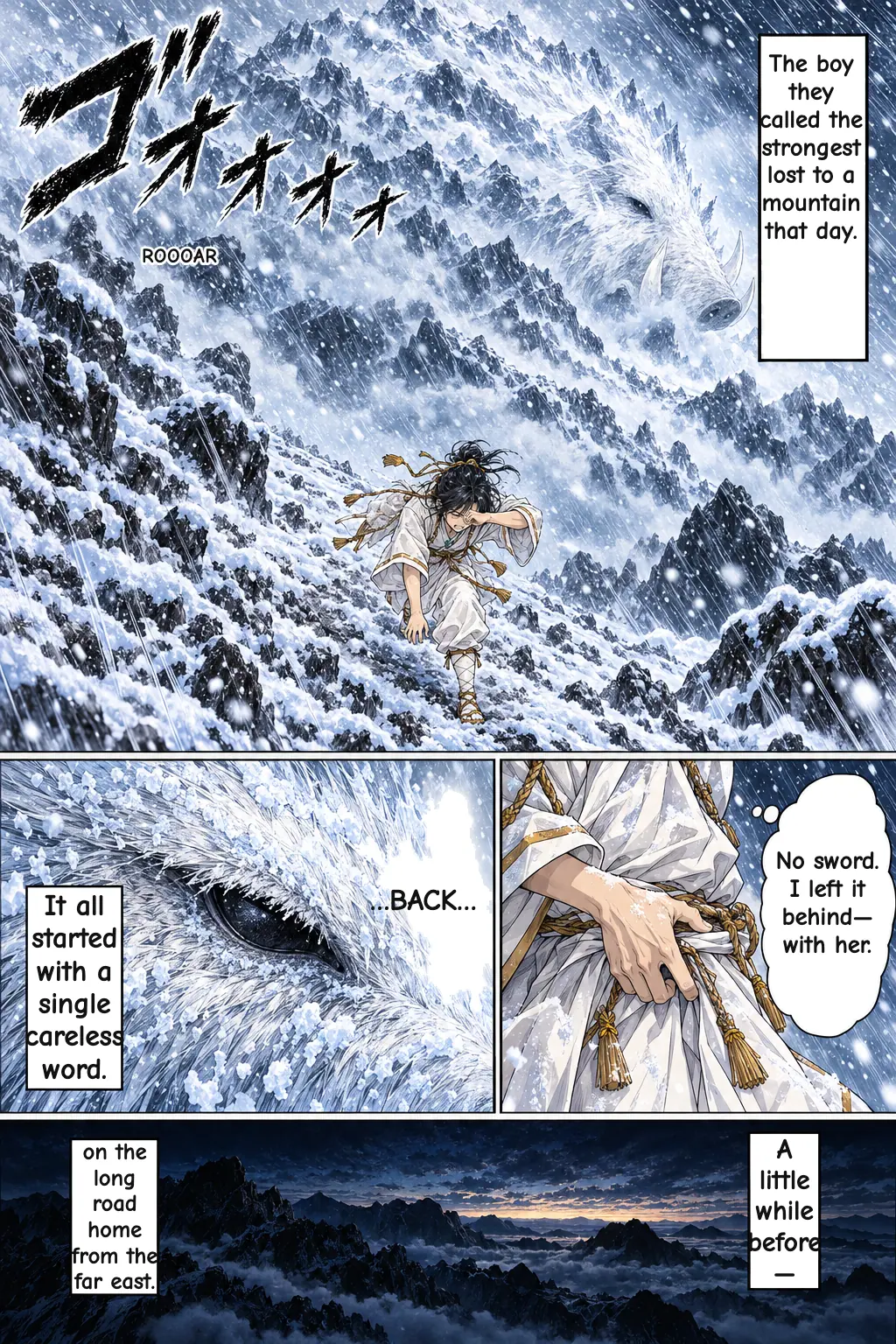
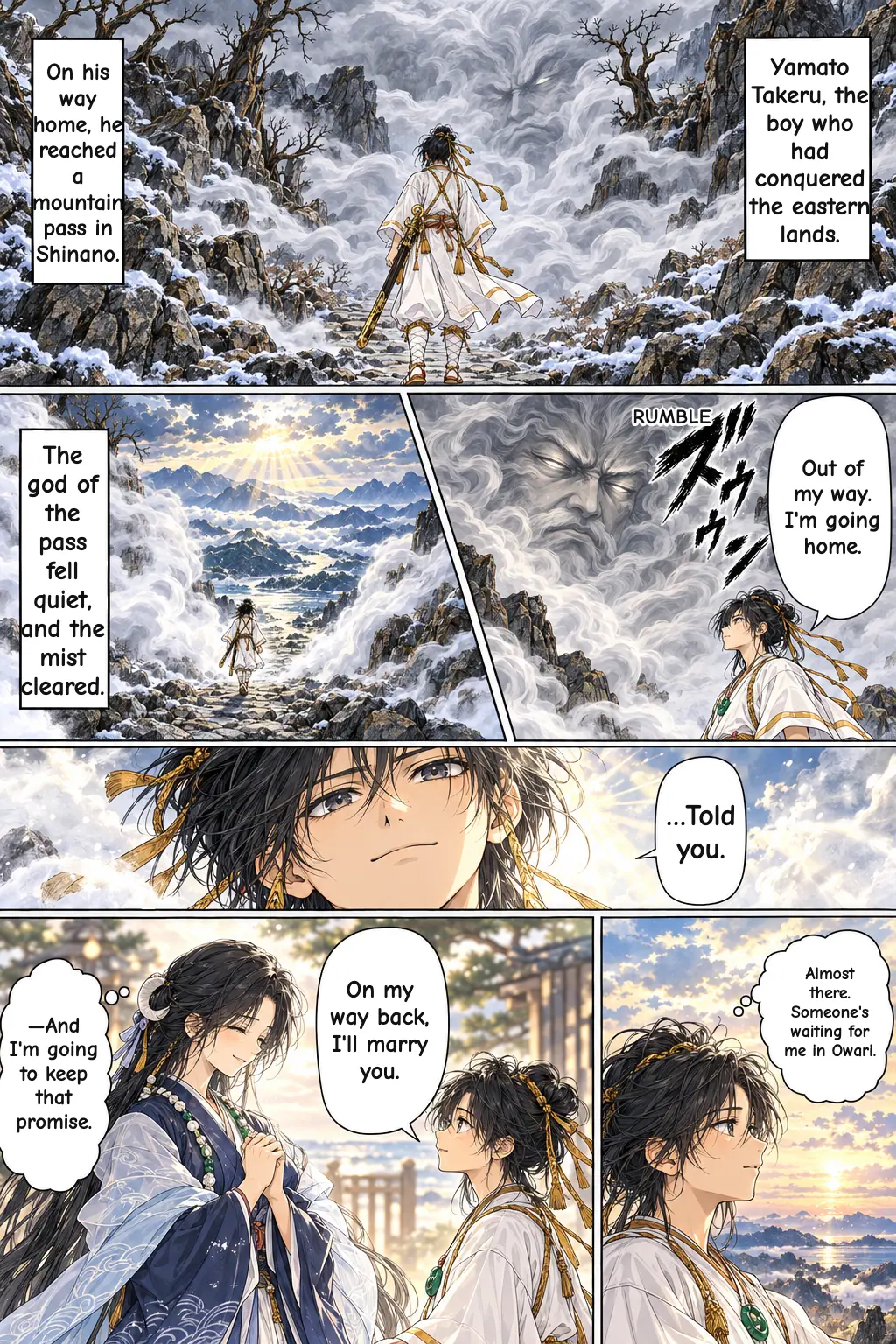
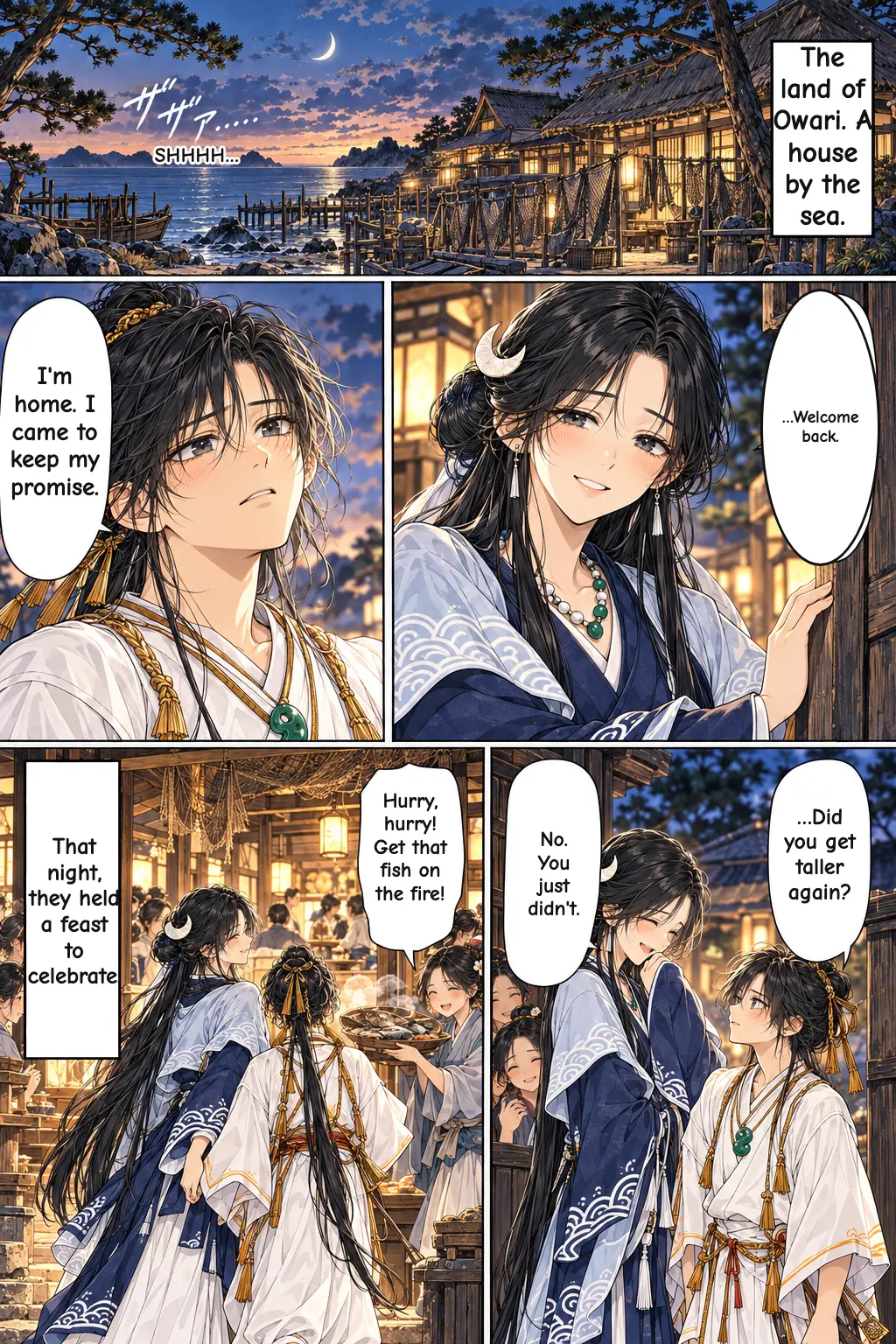
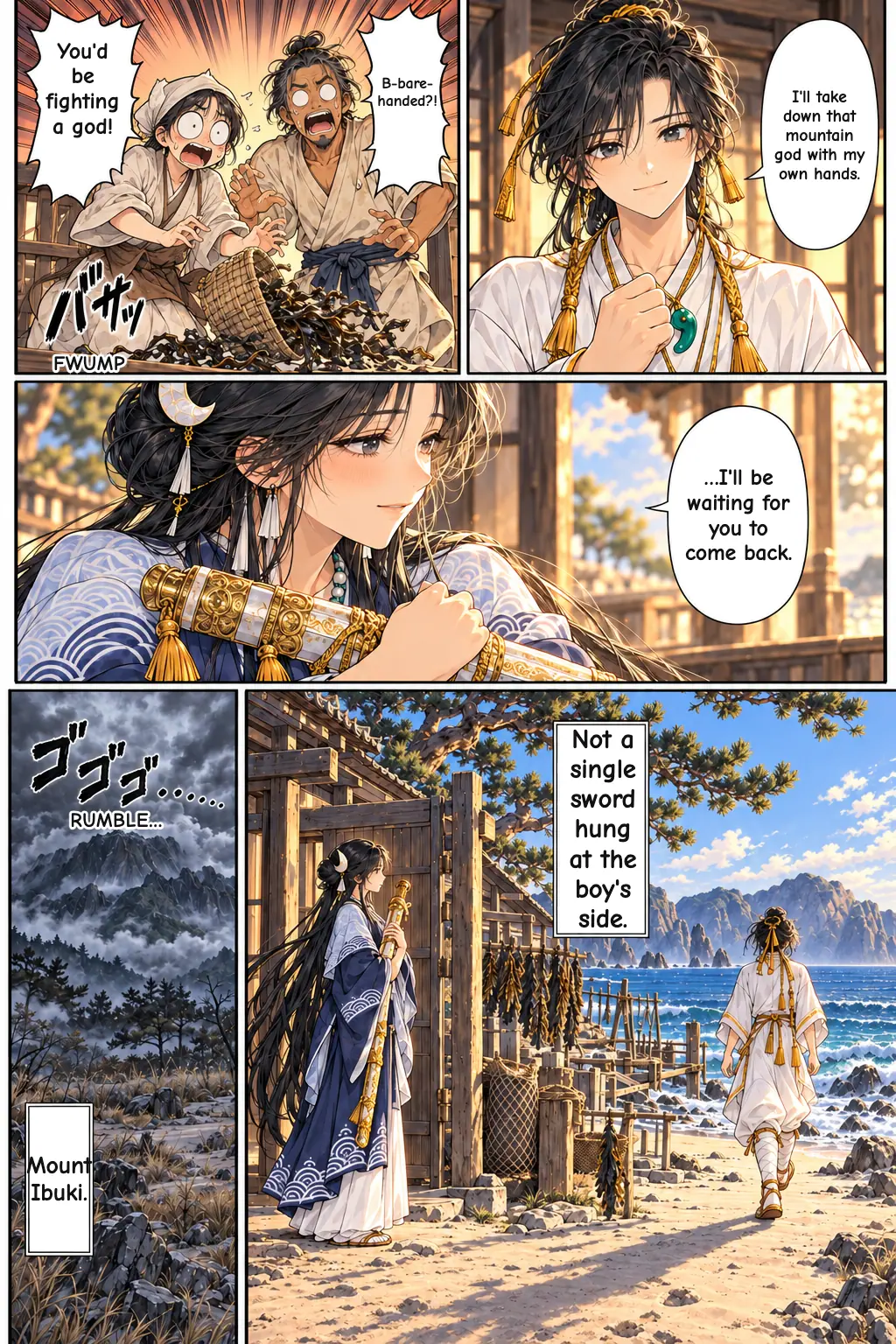
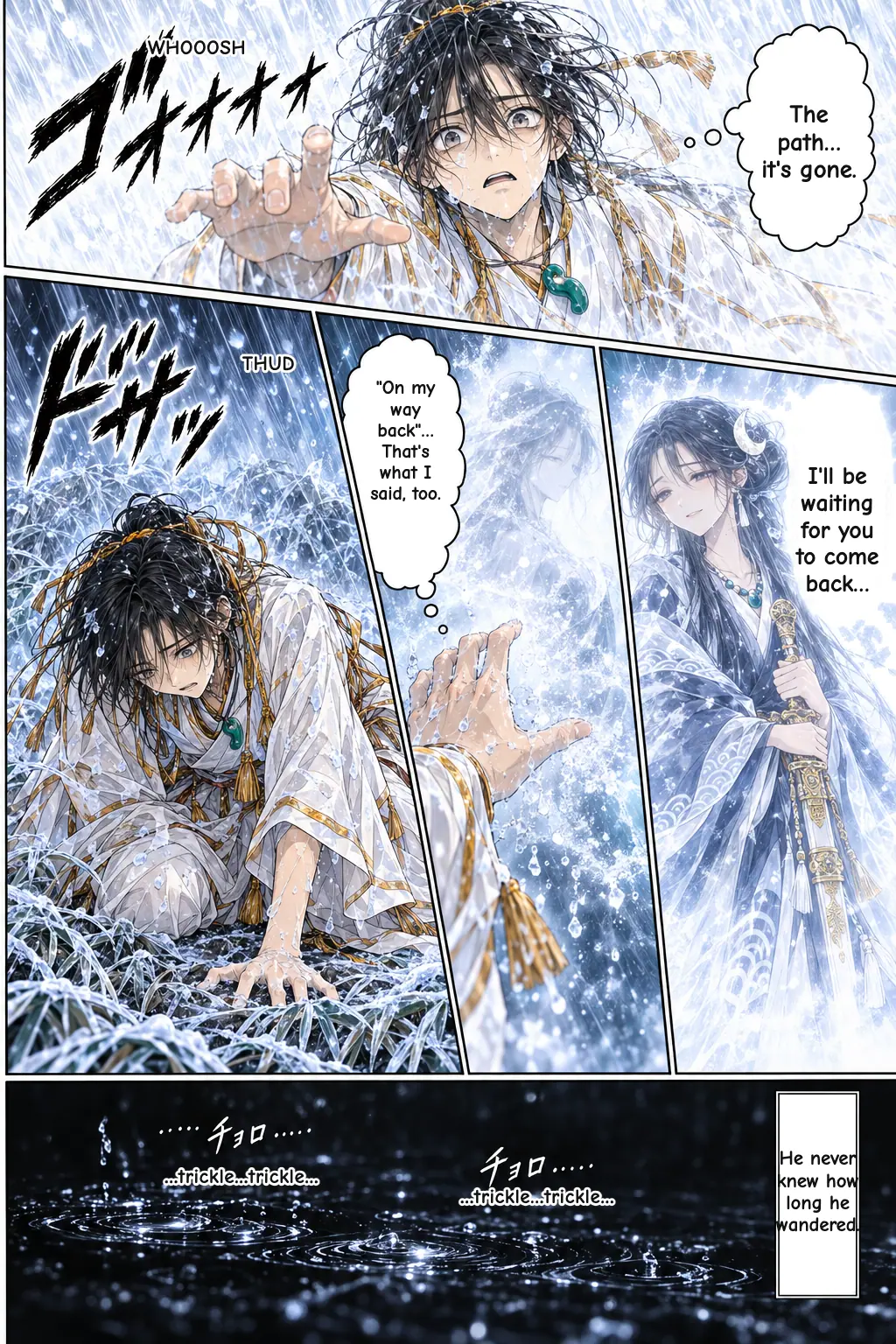
His eastern campaign over, Yamato Takeru returns to Owari and, as promised, exchanges songs with Miyazuhime and marries her. Leaving his sword in her keeping, he heads for Mount Ibuki barehanded—but one careless boast to a white boar, "I'll kill you on my way back," brings the fury of the mountain itself down on him. Weakened and stumbling, he sets out for home.
Yamato Takeru and Mount Ibuki: The Kojiki Myth Explained
The Original Myth: What Happens in the Kojiki
This story comes from the middle volume of the Kojiki, Japan's oldest surviving chronicle (compiled in 712), in the chapter on Emperor Keikō. His son Yamato Takeru, the warrior prince, is on his way home after subduing the eastern lands. He brings the god of the Shinano pass to submission (the text gives this just one sentence) and returns to Owari, in present-day Aichi, where Miyazuhime is waiting. Before heading east, he had promised to marry her on his way back.
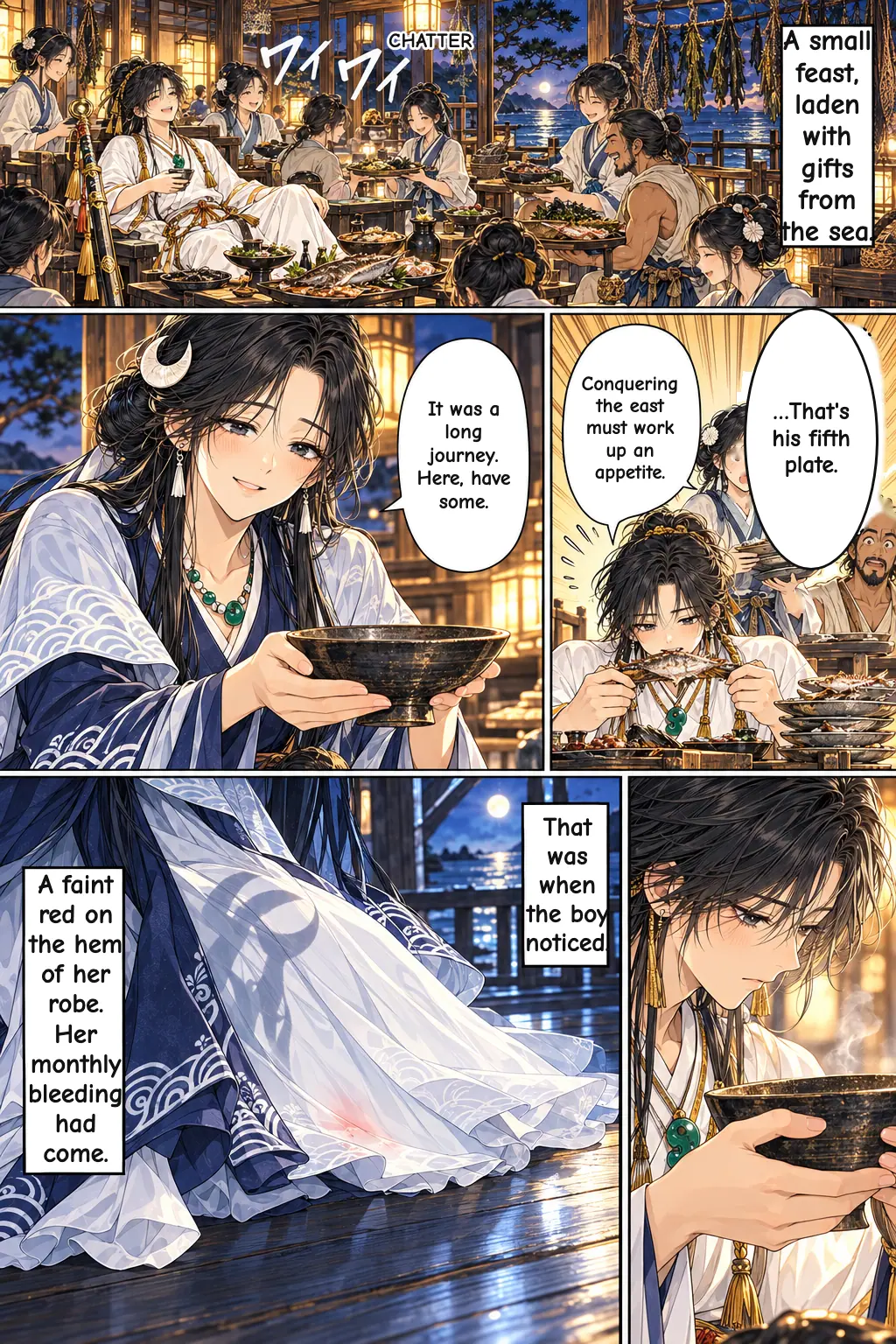
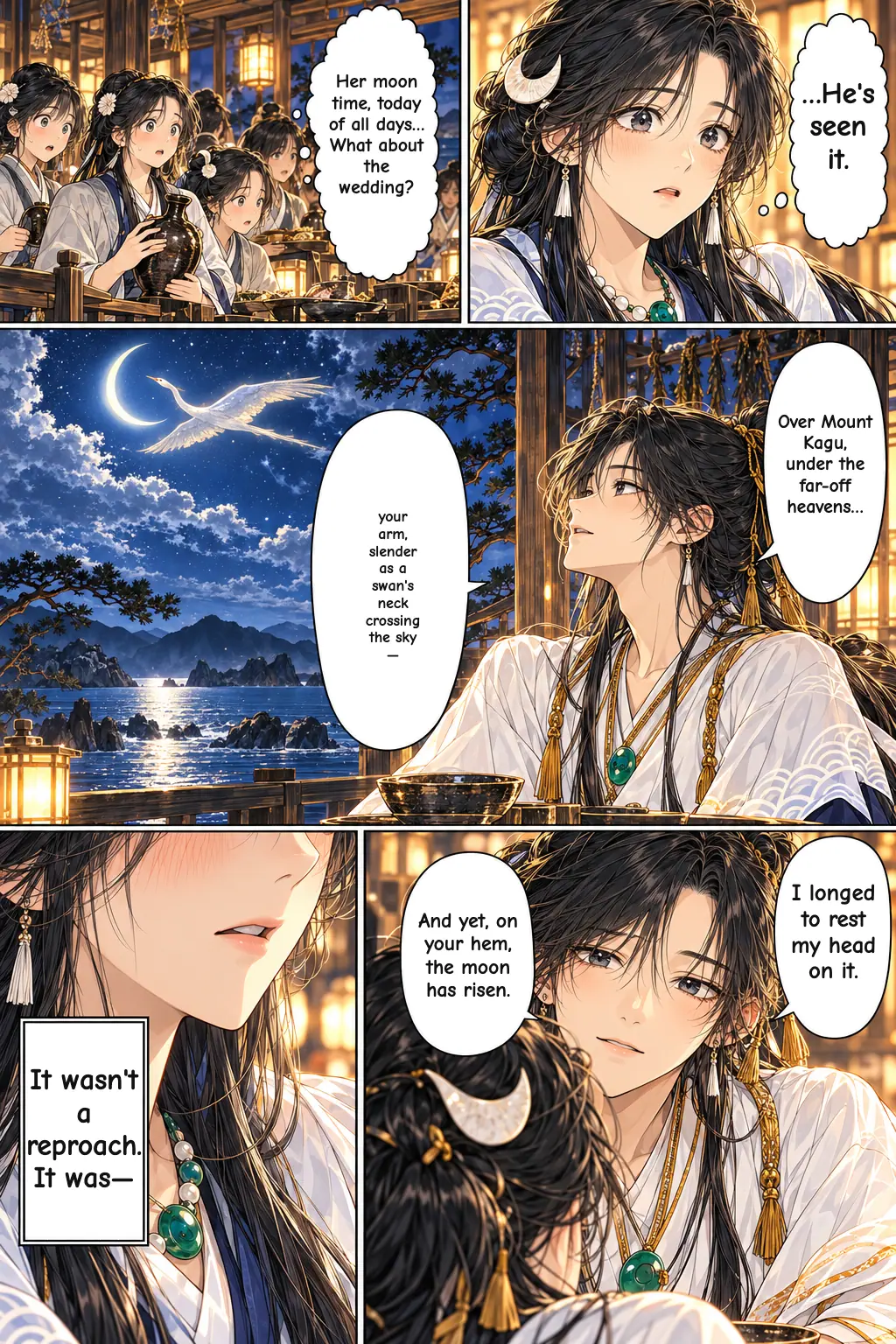
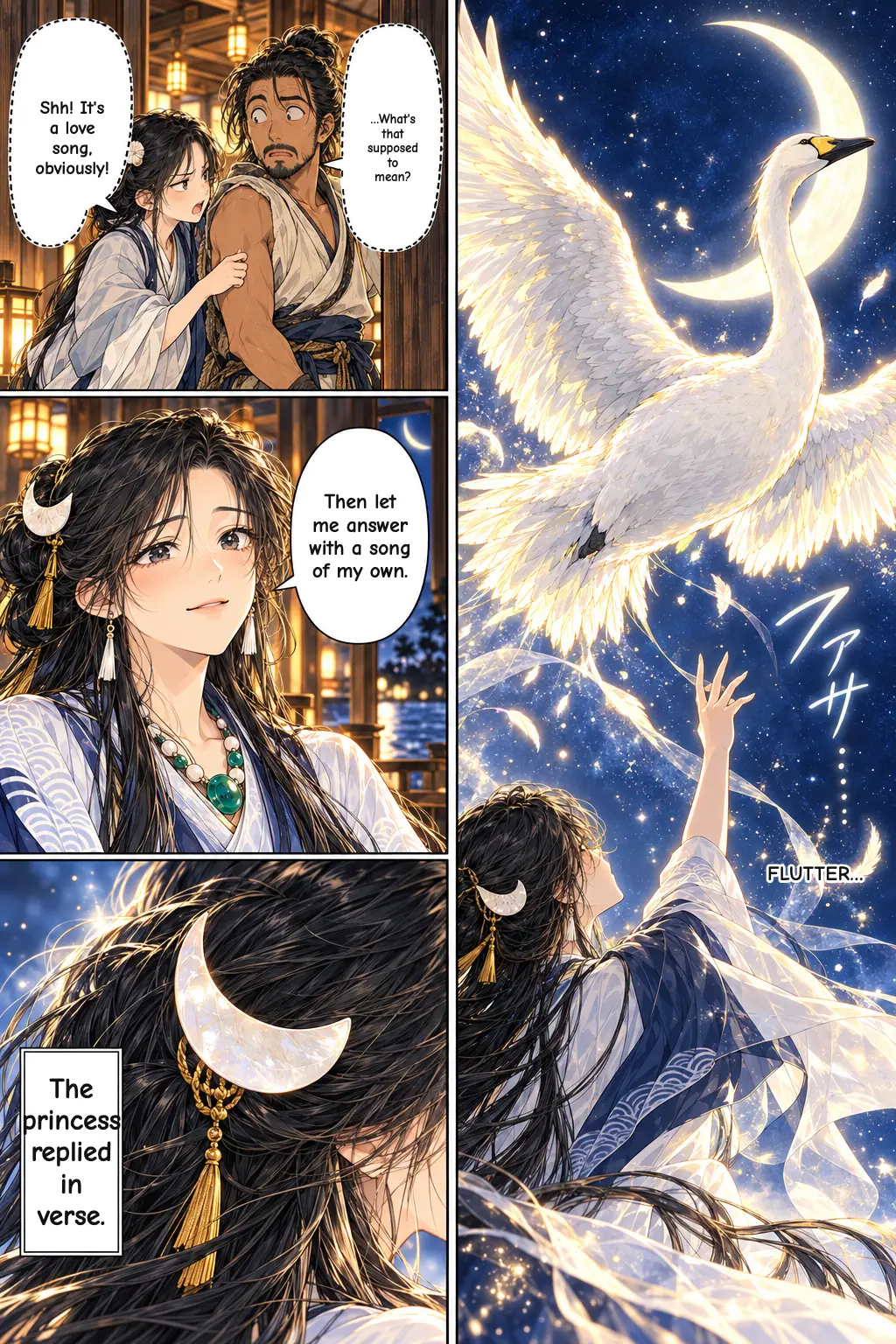
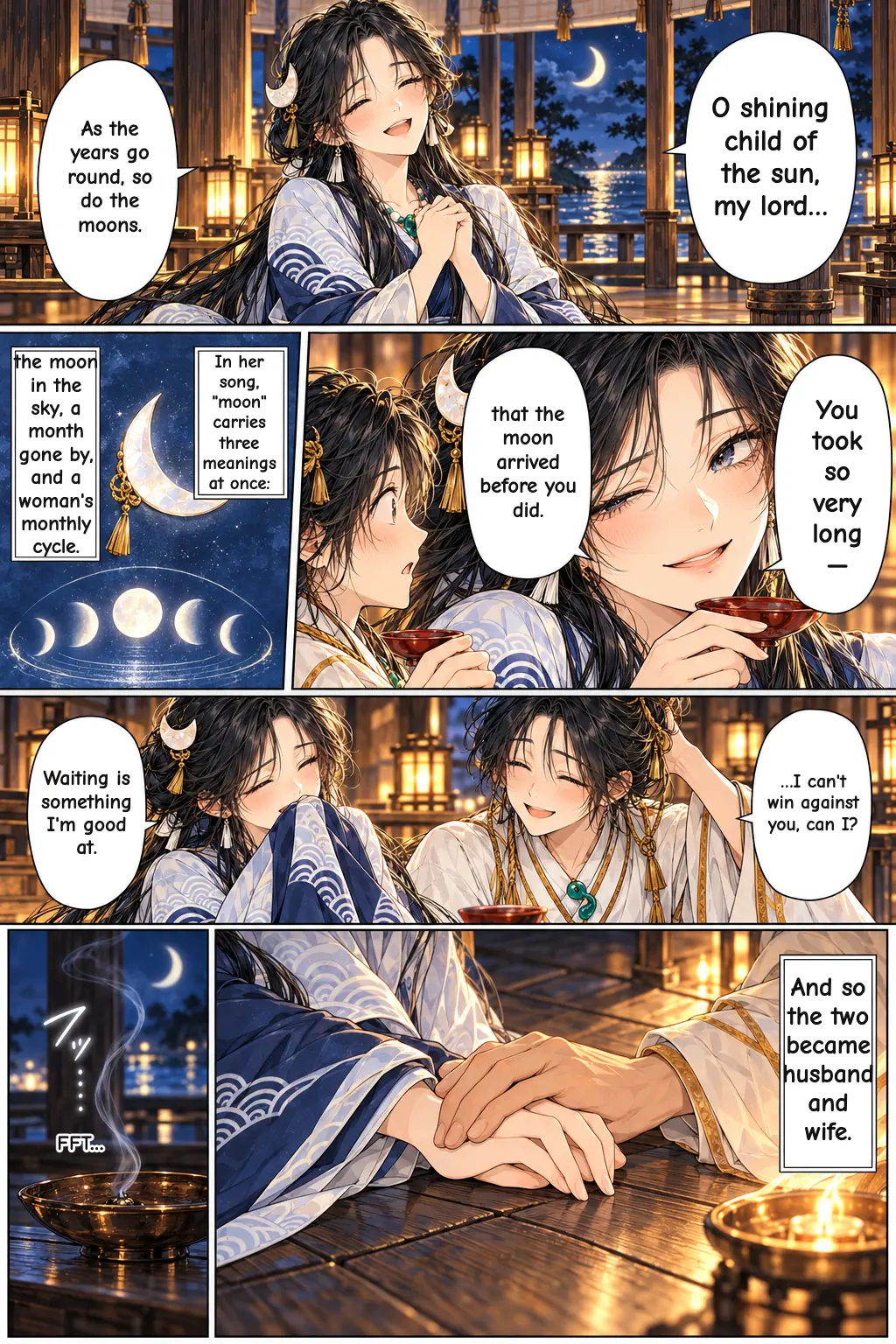
At the welcome meal, Miyazuhime offers him a cup of sake, and he notices menstrual blood on the hem of her overgarment. Rather than keeping quiet, he sings to her. He says he longs to rest his head on her slender arms, as slender as a swan flying over the sacred Mount Kagu, but the 'moon' has risen on her hem. She answers with a song of her own. She praises him as the shining child of the sun and points out that as the years come and go, the months come and go too. She has waited so long for him that of course the moon has risen. Then the two are married.
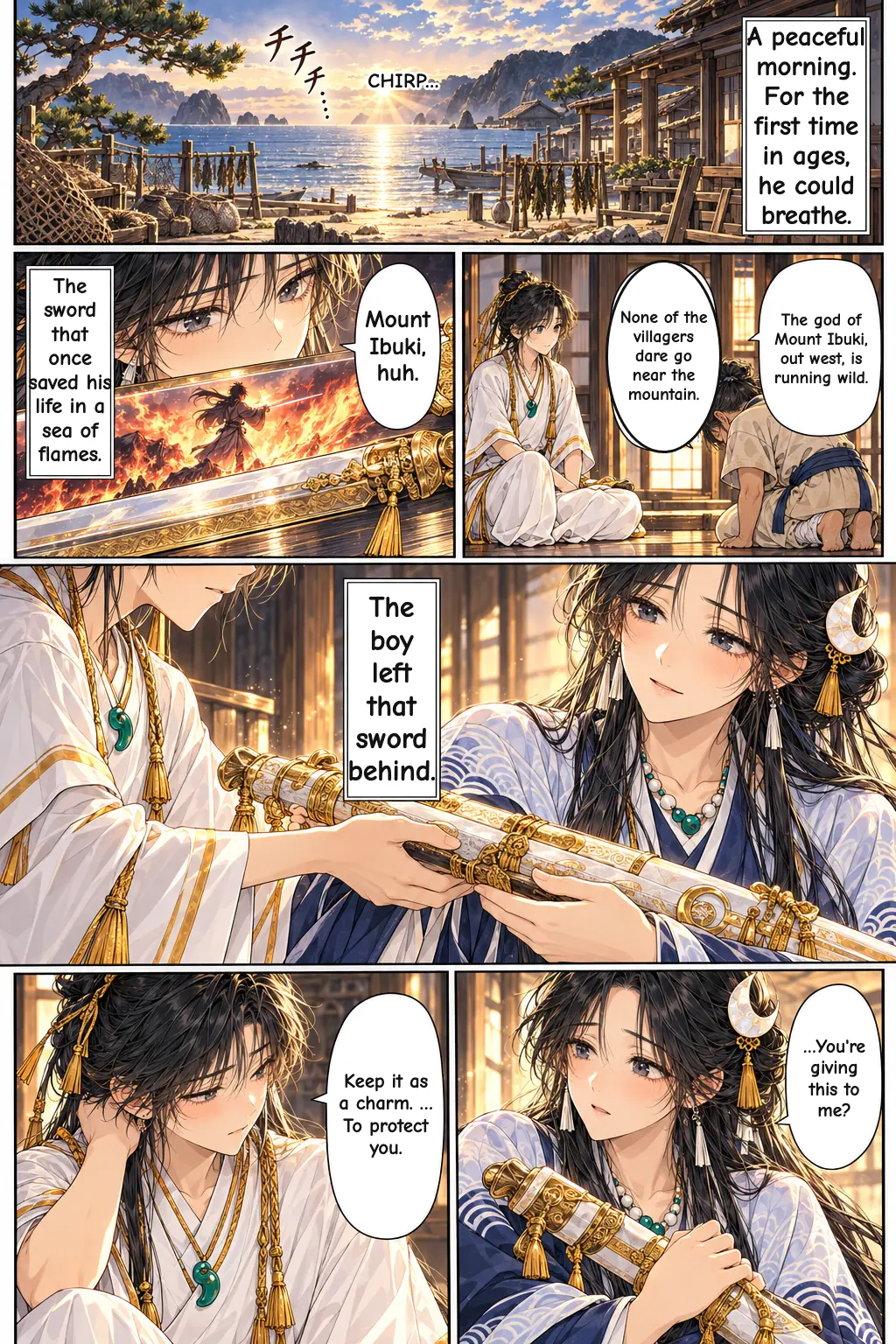
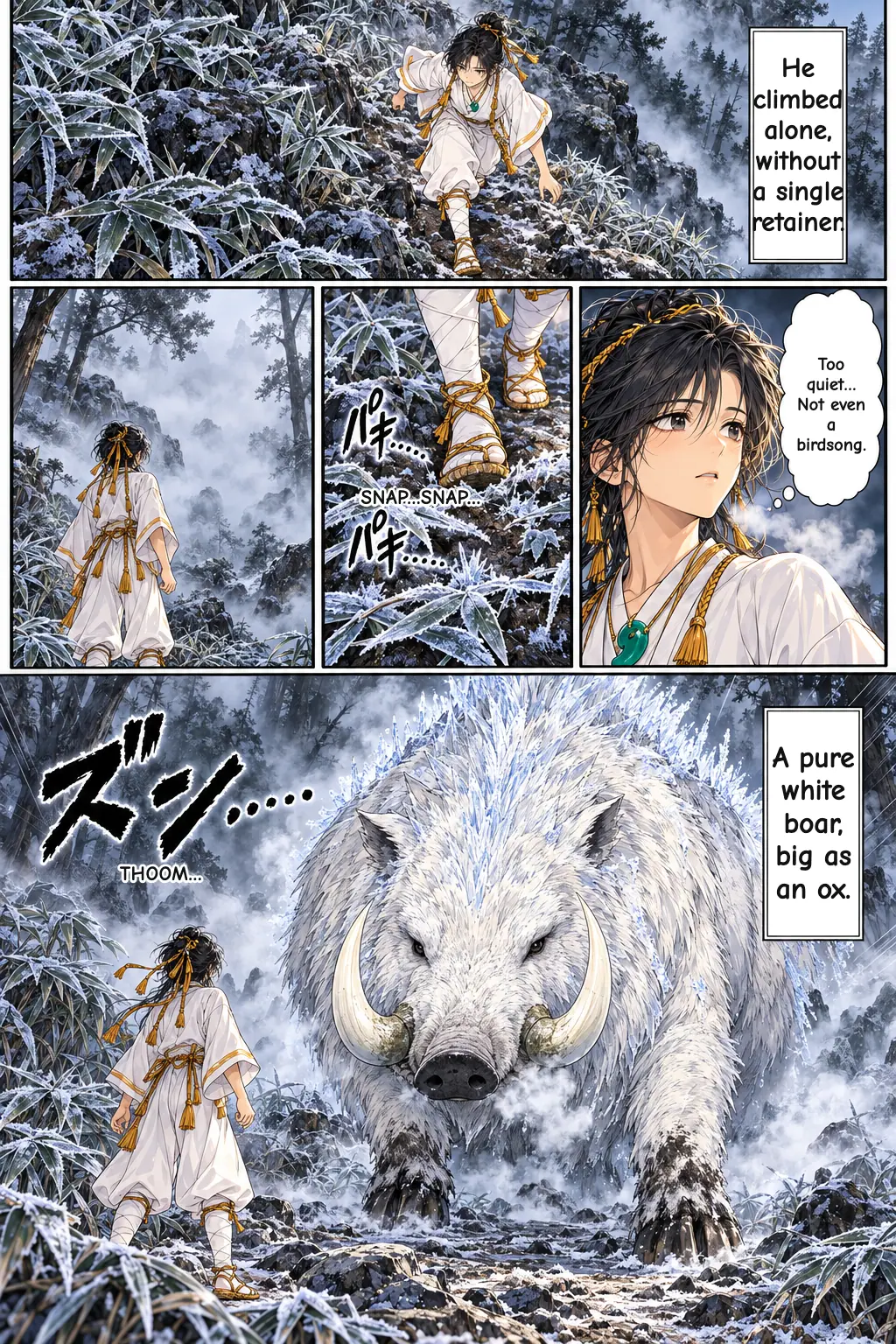
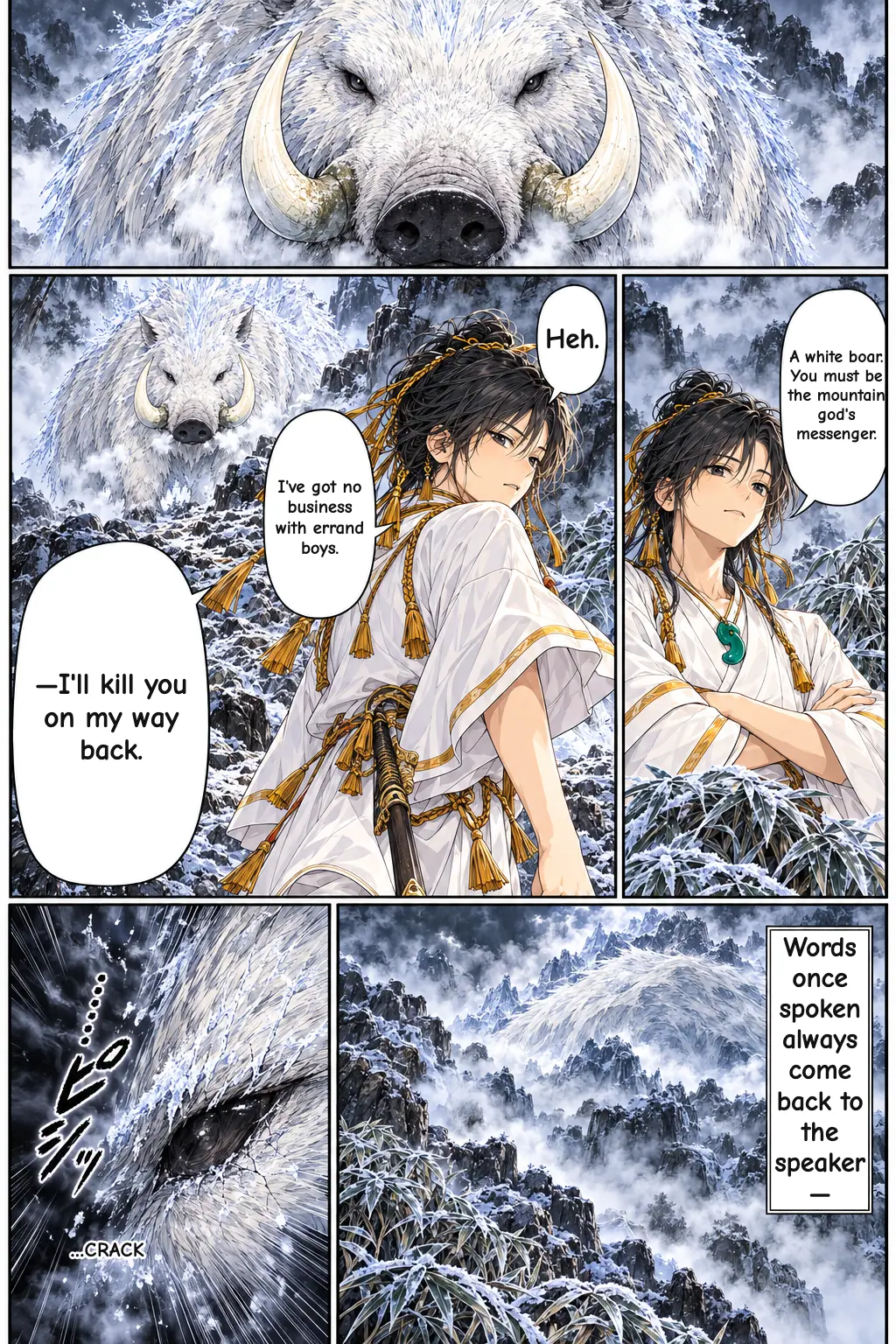
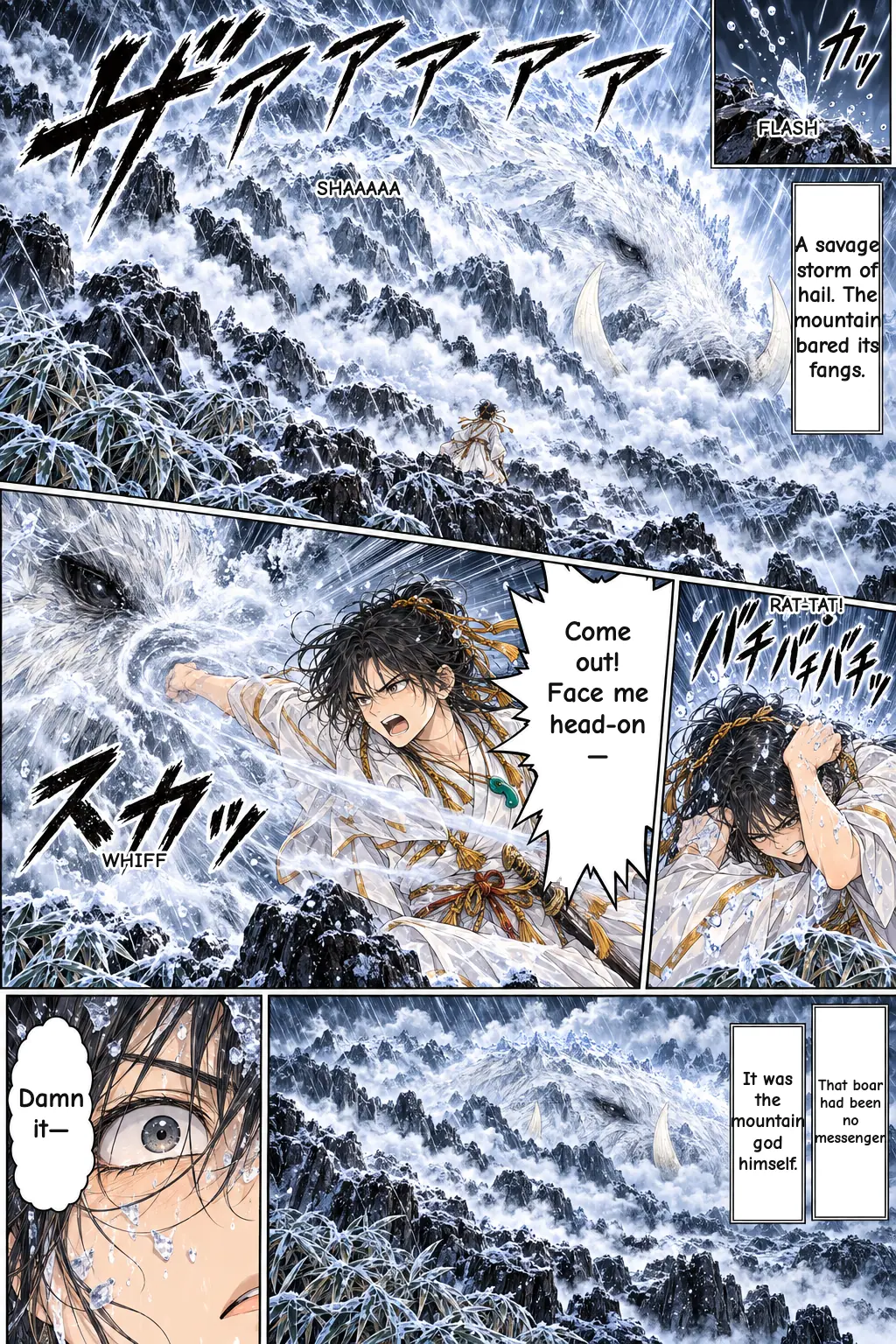
Next he leaves his sword, Kusanagi, with her and goes off to defeat the god of Mount Ibuki, saying he will take this god with his bare hands. On the mountain he meets a white boar as big as an ox. He declares out loud that it must be the god's messenger and that he will kill it on the way back instead of now. Then a heavy storm of icy rain strikes him and leaves him dazed. A note in the original text explains his mistake: the boar was not a messenger but the god itself, and his boastful declaration is the reason he was led astray.
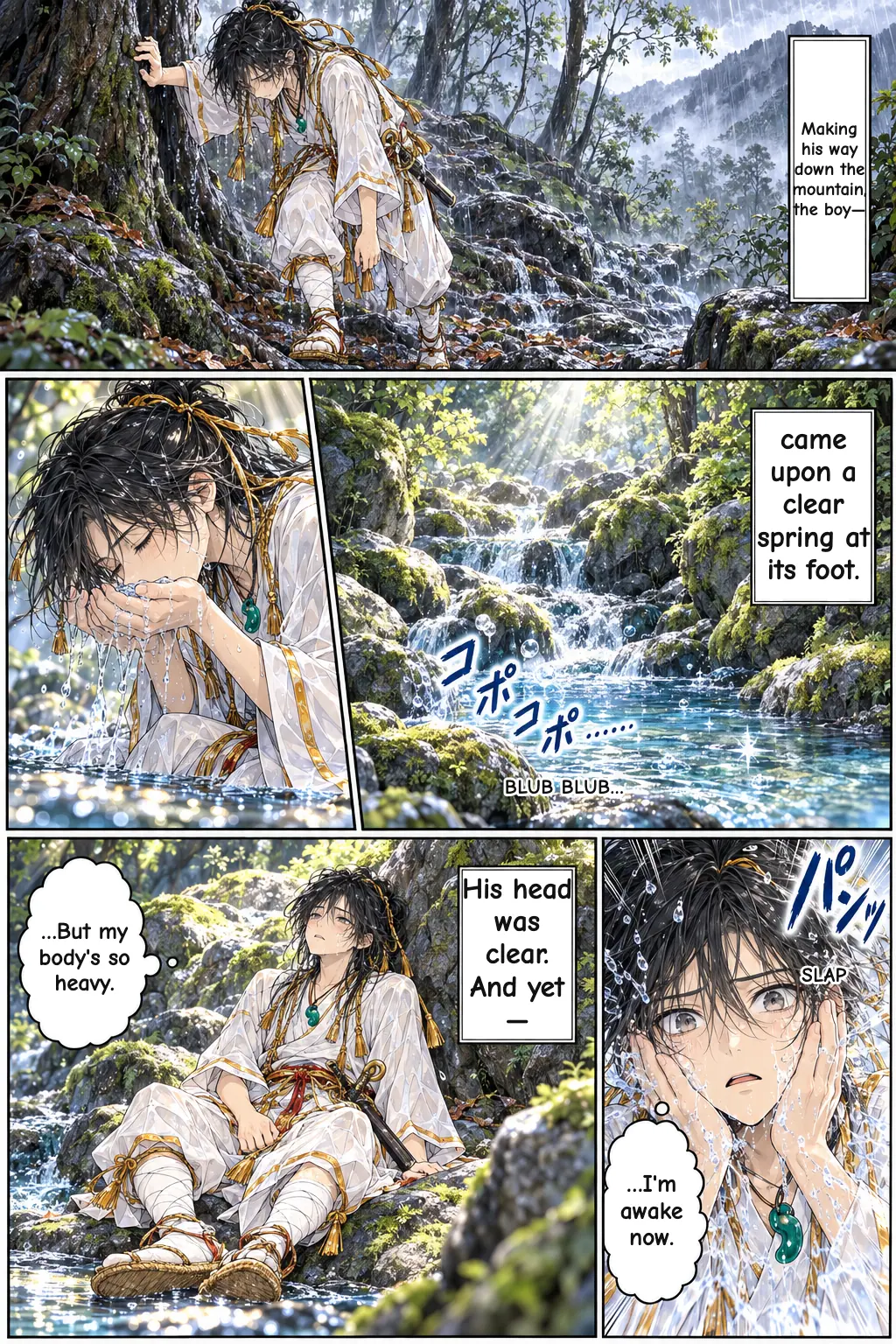
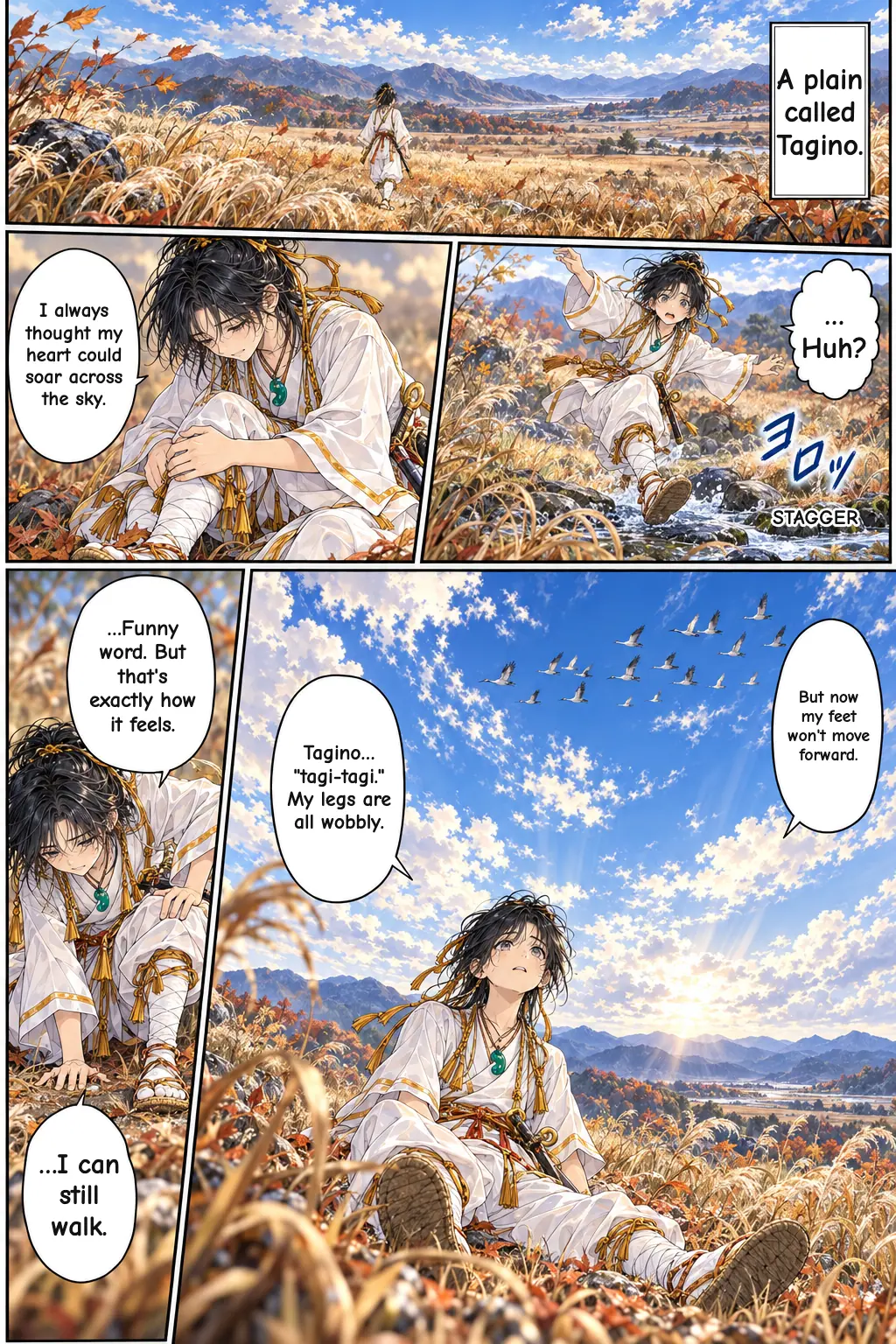
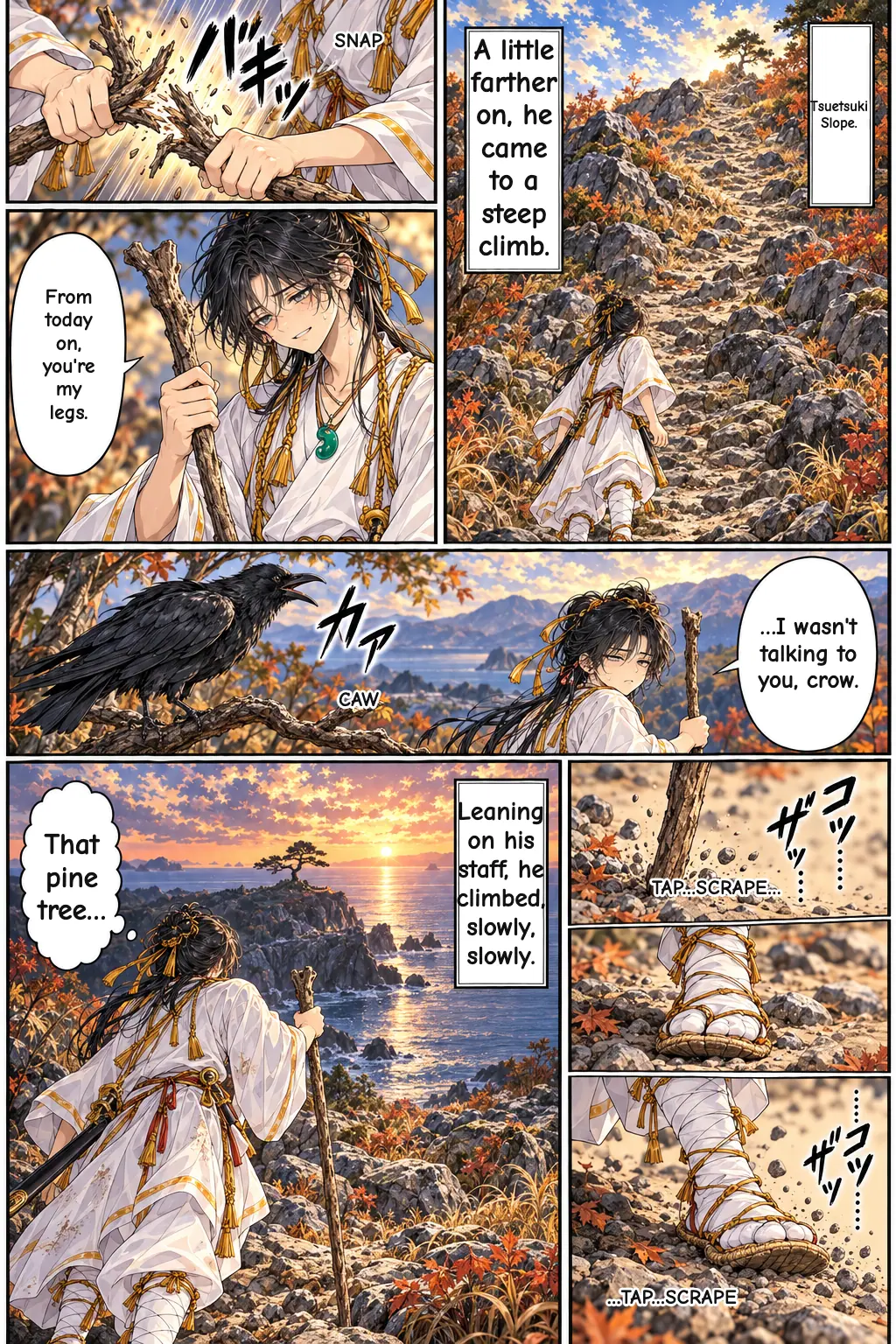
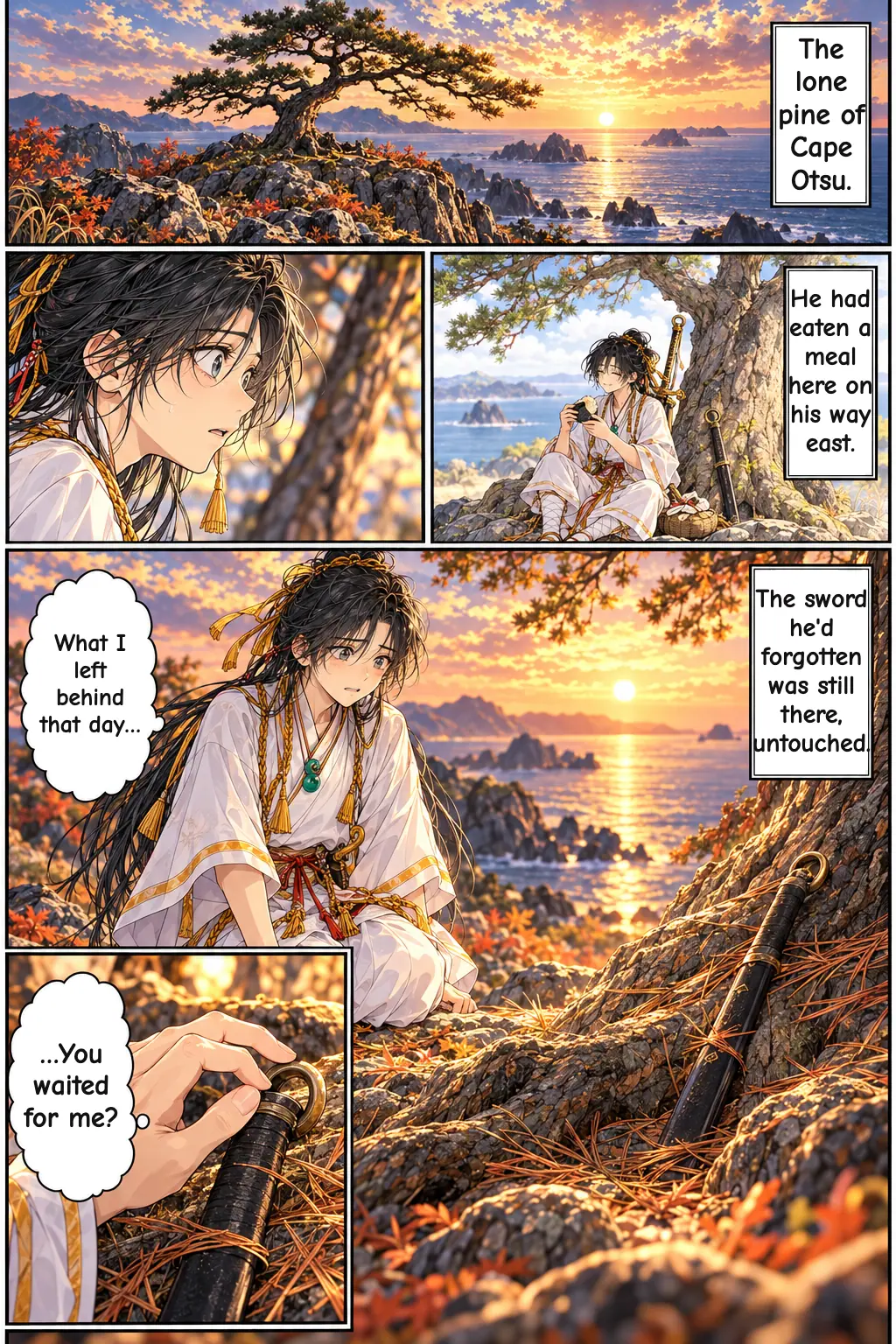
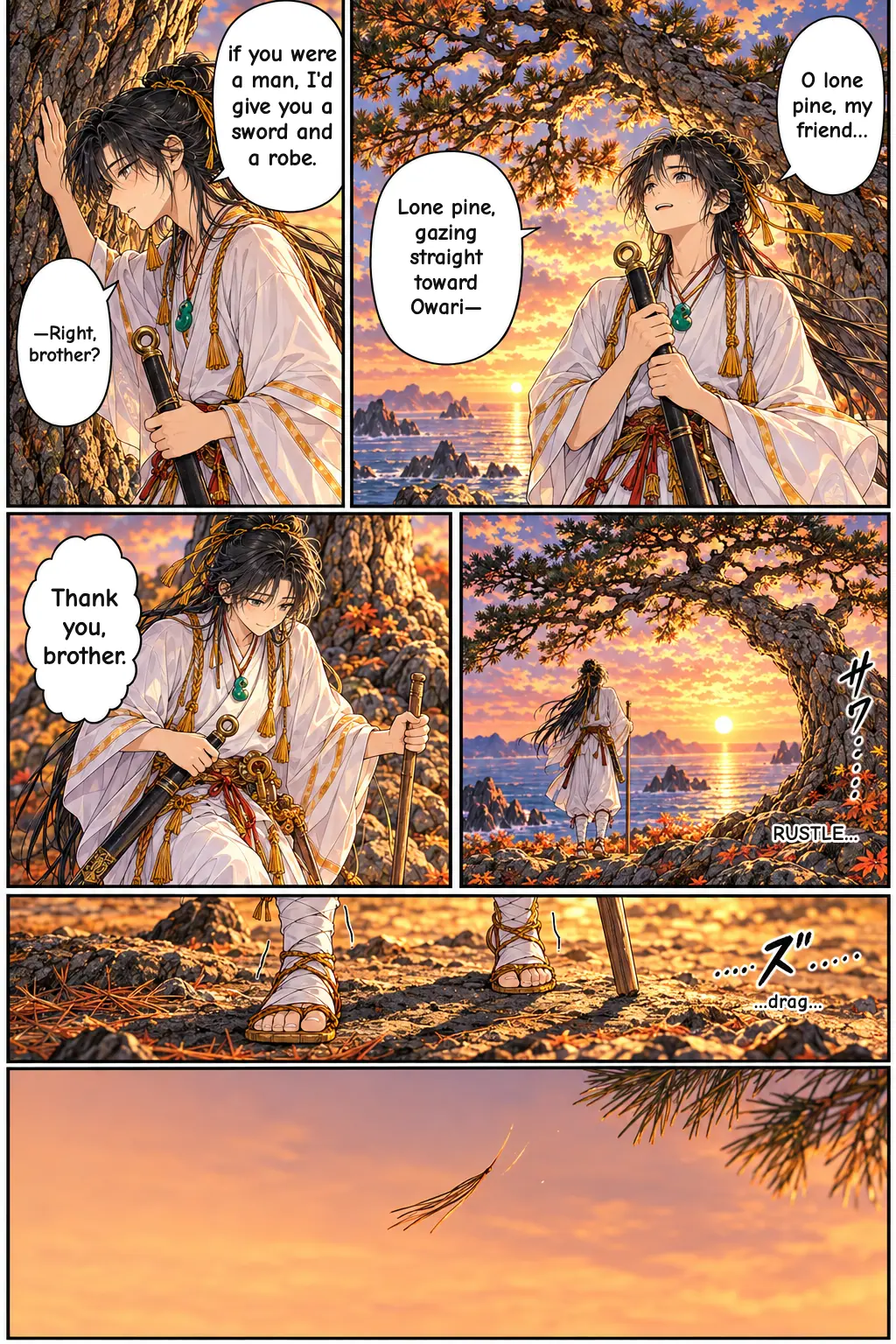
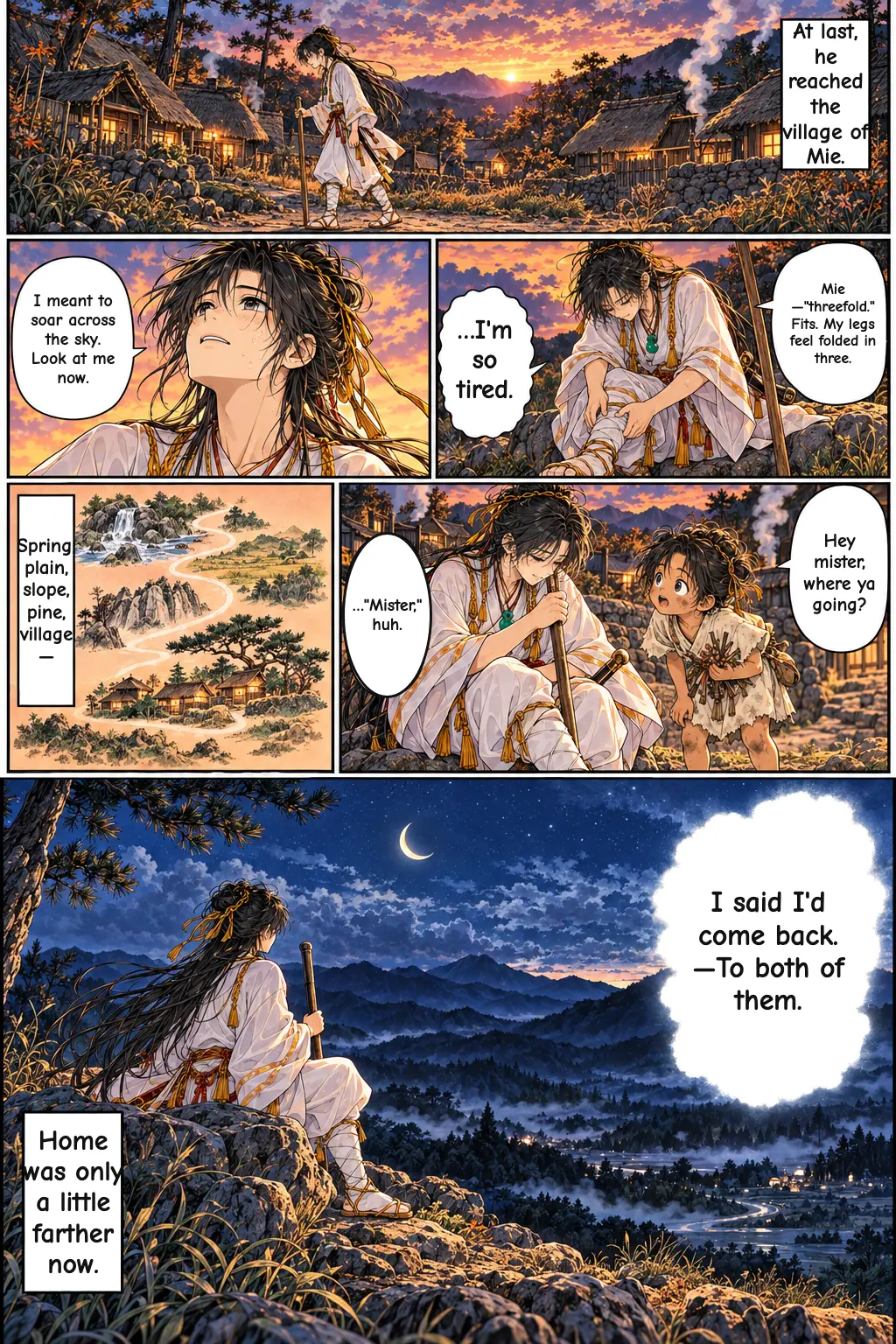
He comes down the mountain and rests at a spring at Tamakurabe, where his mind clears a little. That is why the spring is called Isame no Shimizu, roughly 'the Spring of Waking.' But his body keeps failing. At Tagi plain he says his heart had always meant to soar across the sky, yet now his legs can only stagger. Farther on he has to lean on a staff (Tsuetsuki slope, 'Staff Slope'). Under the lone pine at Otsu cape he finds a sword he had forgotten there at an earlier meal, still where he left it. He sings to the pine and calls it 'my brother': if it were a man, he would give it a sword to wear and clothes to put on. At Mie village he says his legs feel folded three times over, and that he is exhausted. Each of these remarks becomes the origin of a place name.
Main Characters
Yamato Takeru is the Kojiki's great conquering hero. In this episode he shows his best side and his worst side. He keeps his promise to Miyazuhime and woos her with poetry, but he also underestimates a god and talks too much. Miyazuhime, ancestor of the governors of Owari, is no passive bride. When his song points out her awkward moment, she answers with a quick, clever verse that turns it into a compliment.
The god of Mount Ibuki is never named in the Kojiki. It appears only as a huge white boar and in the icy storm it sends down. The sword Kusanagi is not a character, but it matters a great deal. The text never explains why Yamato Takeru leaves it behind.
What the Story Means: Words, Songs, and Place Names
The key idea is kotoage, a bold declaration made out loud. In ancient Japan, spoken words were believed to have real power, a belief often linked to the idea of kotodama, the 'spirit of words.' Announcing your plans carelessly, especially in front of a god, could bring disaster. The Kojiki is unusually direct here: its own note blames the boast. Many readers also see the left-behind sword as a sign of overconfidence. That is a reasonable reading, but it is an interpretation, because the original text gives no reason.
The exchange of songs reflects a world where courtship and wit were expressed in poetry. The wordplay depends on the Japanese word tsuki, which can mean both 'moon' and 'month,' and here also hints at a menstrual cycle. Miyazuhime's reply shows that a quick, graceful answer was something people admired.
The last part of the story works like a map. Each step of the hero's decline explains the name of a real place, a pattern the Kojiki uses often. The name Mie survives today as Mie Prefecture. The original text only says his legs became like a 'threefold bend.' Some later commentators read this as a twisted rice cake, but that is an interpretation added afterwards. In the Kojiki, Yamato Takeru goes on from here to Nobono, where he dies longing for home. Traditions outside the Kojiki say that Kusanagi was later enshrined in Owari, but the Kojiki itself does not say so.
What the Manga Changes or Adds
The manga follows the Kojiki's order of events, but it has to fill in many things the text leaves out. In this episode, the following are the artists' own choices, not details from the original myth: the reason Yamato Takeru leaves his sword (kept open, so it could be pride or love); how he subdues the Shinano pass god; the setting, food, and costumes of the feast; Miyazuhime's appearance and age; and the couple's expressions and conversation around their songs.
On Mount Ibuki, the landscape, the boar's details beyond 'white and as big as an ox,' and the look of the icy storm are imagined too. So are the visions he sees while dazed, whether any companions travel with him, the scene at the spring, and how he slowly recovers. The weather and seasons on the road to Mie, how his weakening body is drawn, his feelings when he finds the sword under the pine, and the visual hint about the 'threefold bend' are also creative additions.
Where to Read It
If you want to see the white boar, the icy storm, and the hero's slow walk home, Episode 12 of KOJIKI Book II: The Age of Heroes tells this story in full on Manga Portal. Every episode is free to read, with no sign-up needed, so you can start here or go back to the beginning of Yamato Takeru's journey.
Characters in this episode
Yamato Takeru
Son of Emperor Keikō and the Kojiki's greatest warrior, whose boast on Mount Ibuki begins his downfall.
Miyazuhime
An Owari noblewoman and Yamato Takeru's promised bride, who answers his teasing song with a clever one of her own.
God of Mount Ibuki
The unnamed mountain god who appears as a giant white boar and strikes the hero with icy rain.
God of the Shinano Pass
A god of the mountain pass in Shinano whom Yamato Takeru subdues on his way back to Owari.
Kusanagi
Yamato Takeru's sacred sword, which he leaves with Miyazuhime before climbing Mount Ibuki.
FAQ
Why did Yamato Takeru leave the Kusanagi sword behind?
The Kojiki never says why. Many readers see overconfidence in it, since he plans to fight the mountain god barehanded, but that is an interpretation and not something stated in the text.
What was the white boar on Mount Ibuki?
Yamato Takeru assumed the ox-sized white boar was only the god's messenger. A note in the Kojiki says it was actually the god of Mount Ibuki itself, and his boast that he would kill it later is why he was struck down.
What is kotoage in Japanese mythology?
Kotoage means making a bold declaration out loud. Spoken words were believed to have power, so careless or arrogant statements, especially toward the gods, could bring misfortune, as happens to Yamato Takeru here.
How did Yamato Takeru die?
After Mount Ibuki he grows steadily weaker as he travels toward home. In the Kojiki he reaches Nobono, sings songs of longing for his homeland, and dies there.
How did Mie Prefecture get its name?
According to the Kojiki, an exhausted Yamato Takeru said his legs felt folded in three ('mie') when he reached a village there. The story presents this as the origin of the name Mie.