Episode 1The Boy Whose Arrow Was Too StrongRamayana: Bala Kanda (The Book of Youth)
A poet's grief over a slain bird becomes a song, and that song becomes the story of a prince. In Episode 1, young Rama leaves his father's side to travel with a stern sage, and learns for the first time how great his own power is, and how frightening.
Ramayana Bala Kanda Summary: Young Rama, Vishvamitra and Tataka
The Original Story: How the Ramayana Begins
The Ramayana, the great Sanskrit epic credited to the sage Valmiki, opens with a story about how the poem itself came to exist. Valmiki asks the heavenly sage Narada whether any person alive combines perfect virtue with true courage. Narada names Rama, a prince of the Ikshvaku dynasty, and tells his life story in brief.
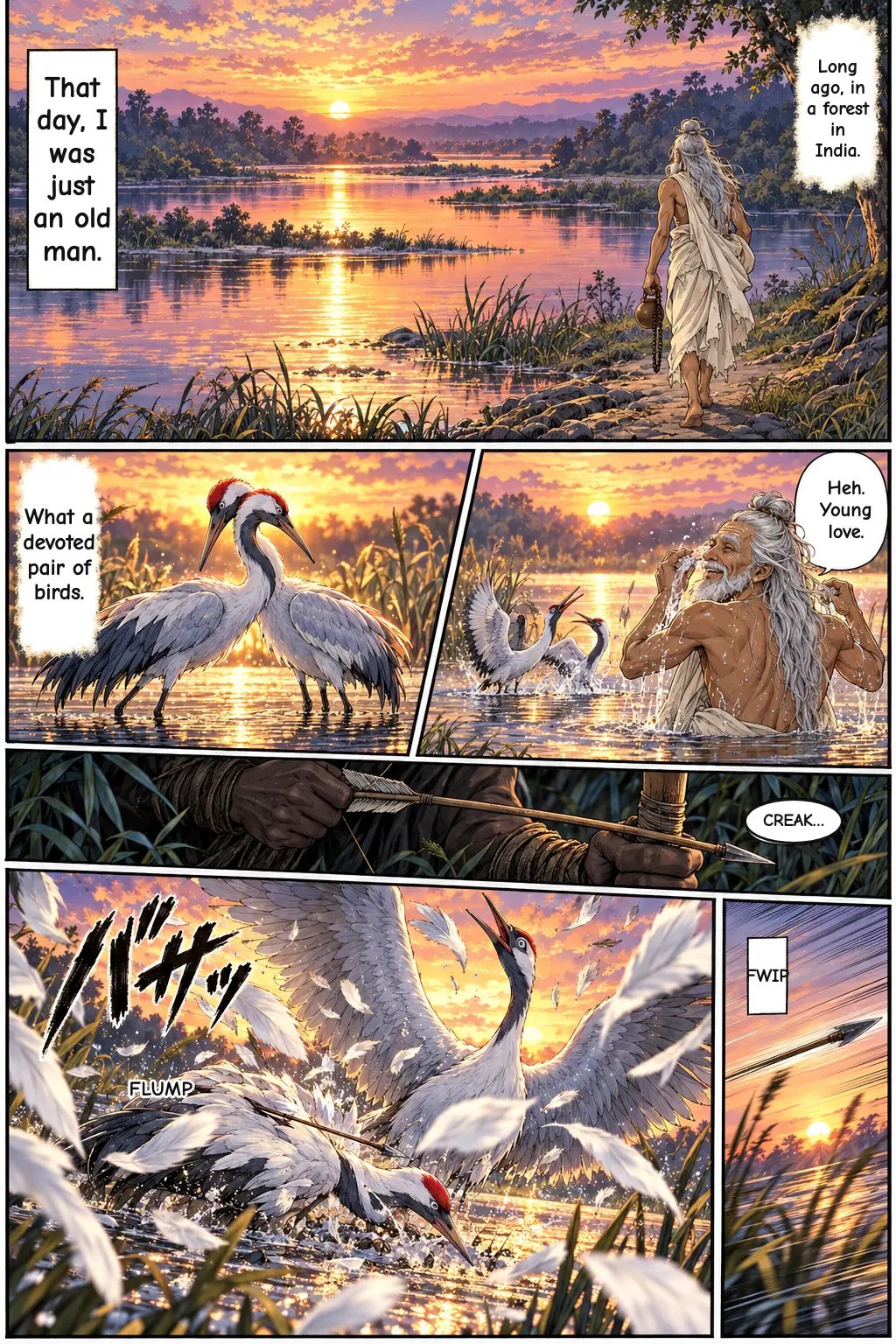
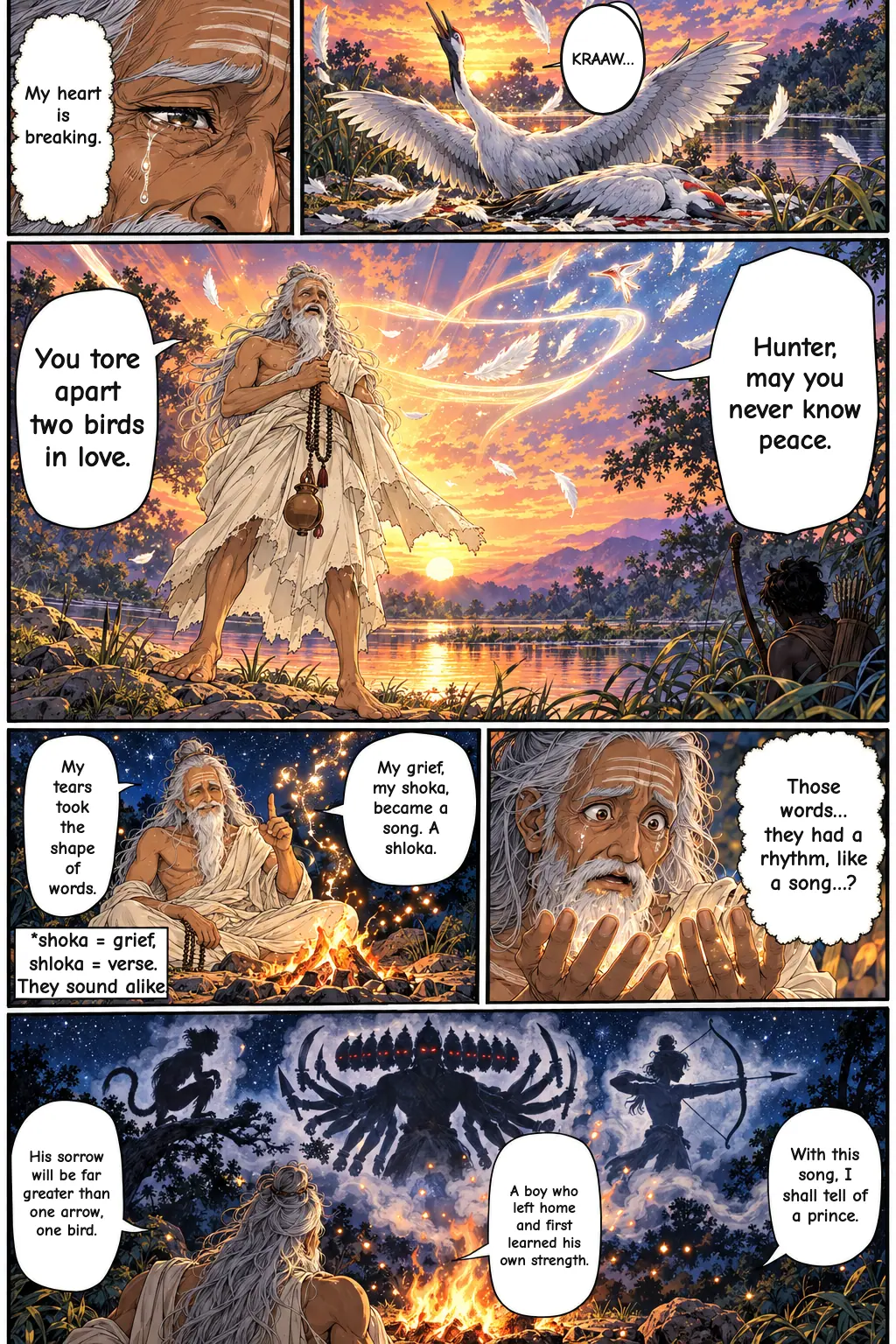
Later, while bathing at the Tamasa River with his disciple Bharadvaja, Valmiki sees a hunter shoot the male of a loving pair of krauncha birds. The female cries over her blood-covered mate. Overcome with pity, Valmiki curses the hunter, and he is startled to find that his words came out in a perfect poetic meter. Because the verse was born from grief (shoka), he calls it a shloka. The creator god Brahma then appears and tells Valmiki to use this meter to tell Rama's story, promising that it will be told for as long as mountains and rivers last. Valmiki finishes the poem and teaches it to the twins Lava and Kusha, who later sing it before Rama himself.
Rama's Birth and the Sage Who Came for Him
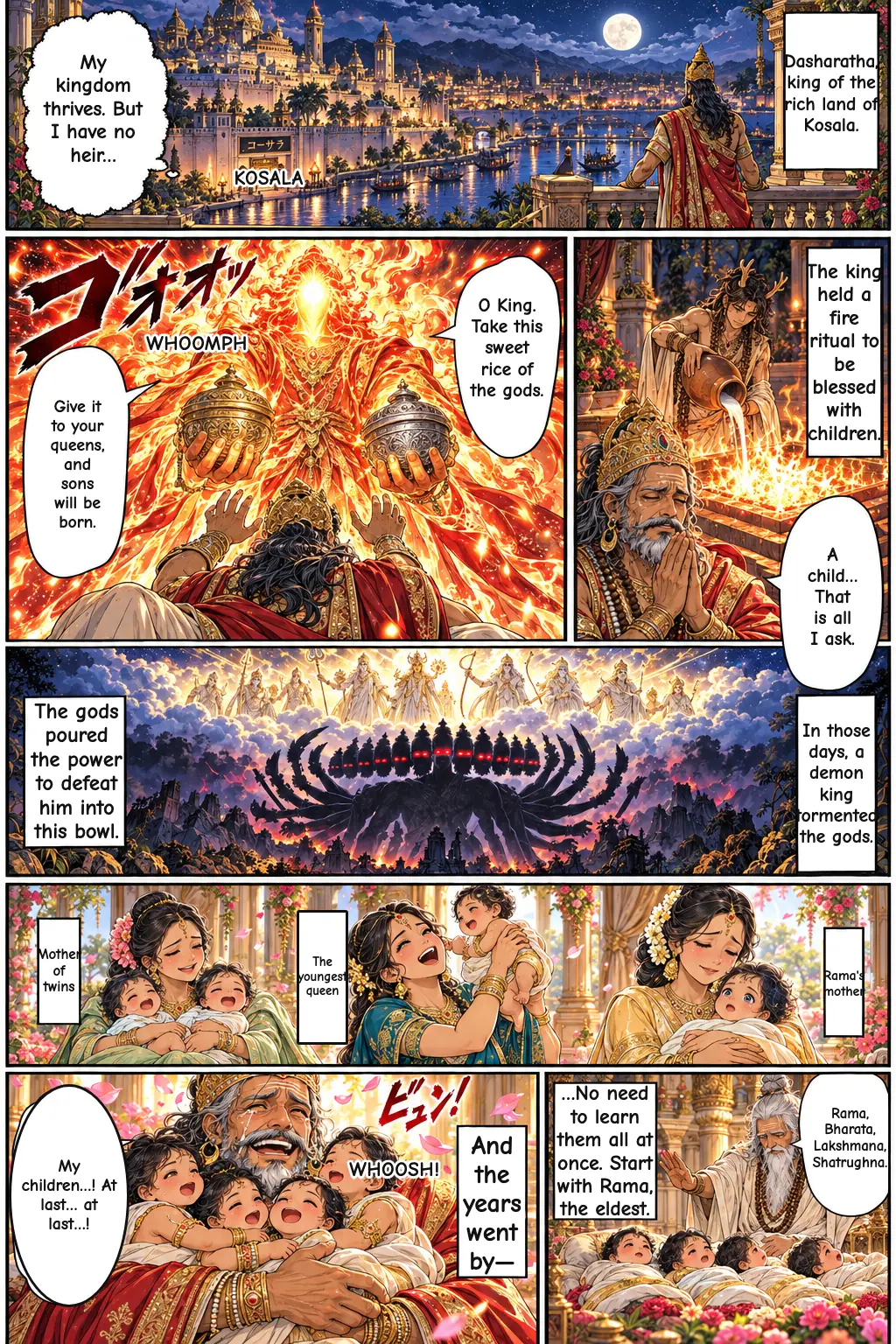
The main story begins in Ayodhya, capital of the kingdom of Kosala. King Dasharatha has no children, so he holds a sacrifice to obtain sons, led by the sage Rishyashringa. Meanwhile, the gods complain to Brahma about Ravana, the demon king. Ravana has been granted protection from gods and other powerful beings, but he looked down on humans and never asked to be safe from them. The god Vishnu agrees to be born as a man to defeat him.
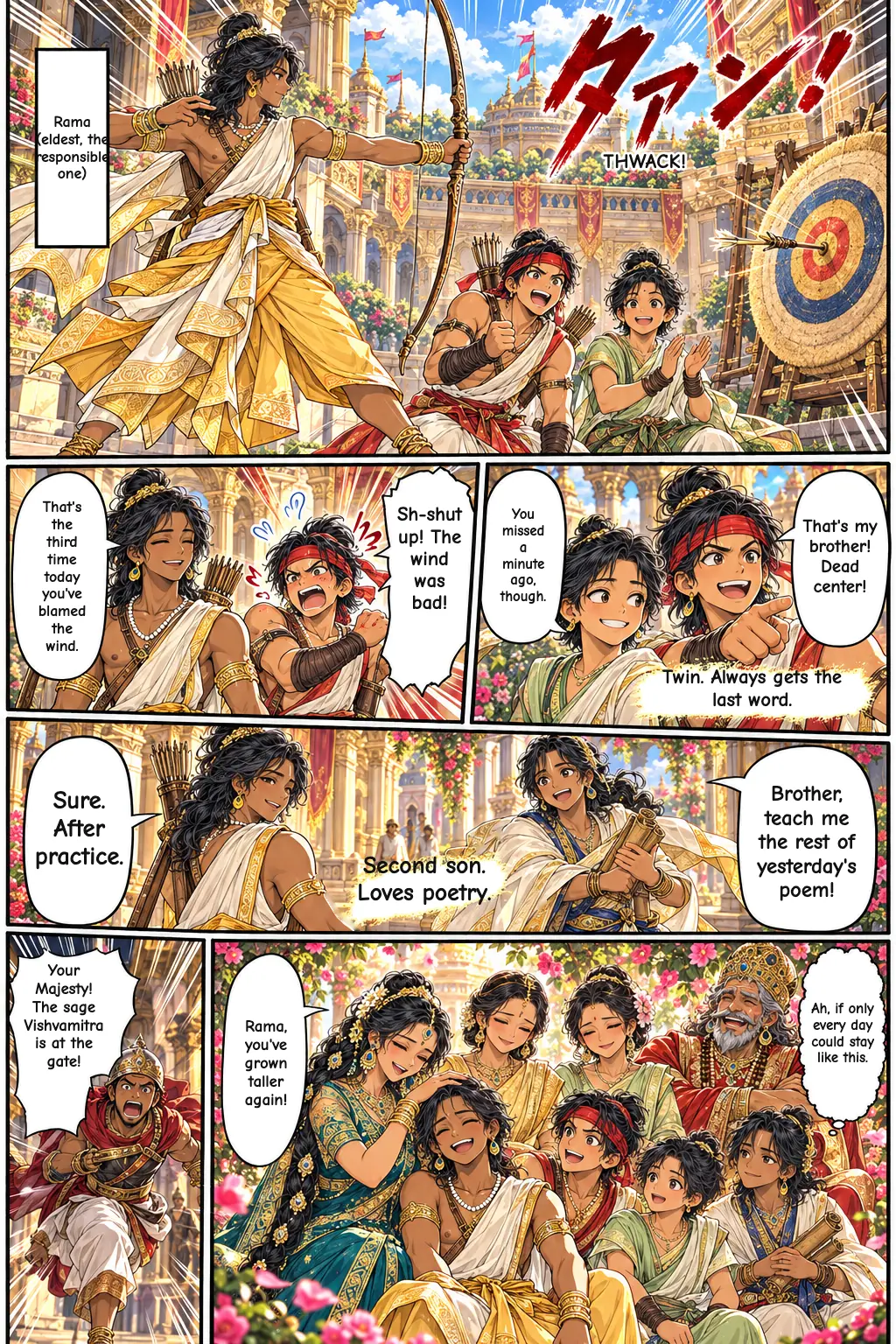
A great being rises from the sacrificial fire and gives the king a golden bowl of divine rice pudding. Dasharatha divides it among his three queens. Kausalya gives birth to Rama, Kaikeyi to Bharata, and Sumitra to the twins Lakshmana and Shatrughna. (In the widely read version, Sumitra receives two portions; other manuscript traditions describe the division differently.) All four boys grow up skilled in learning and arms, and Lakshmana never leaves Rama's side.
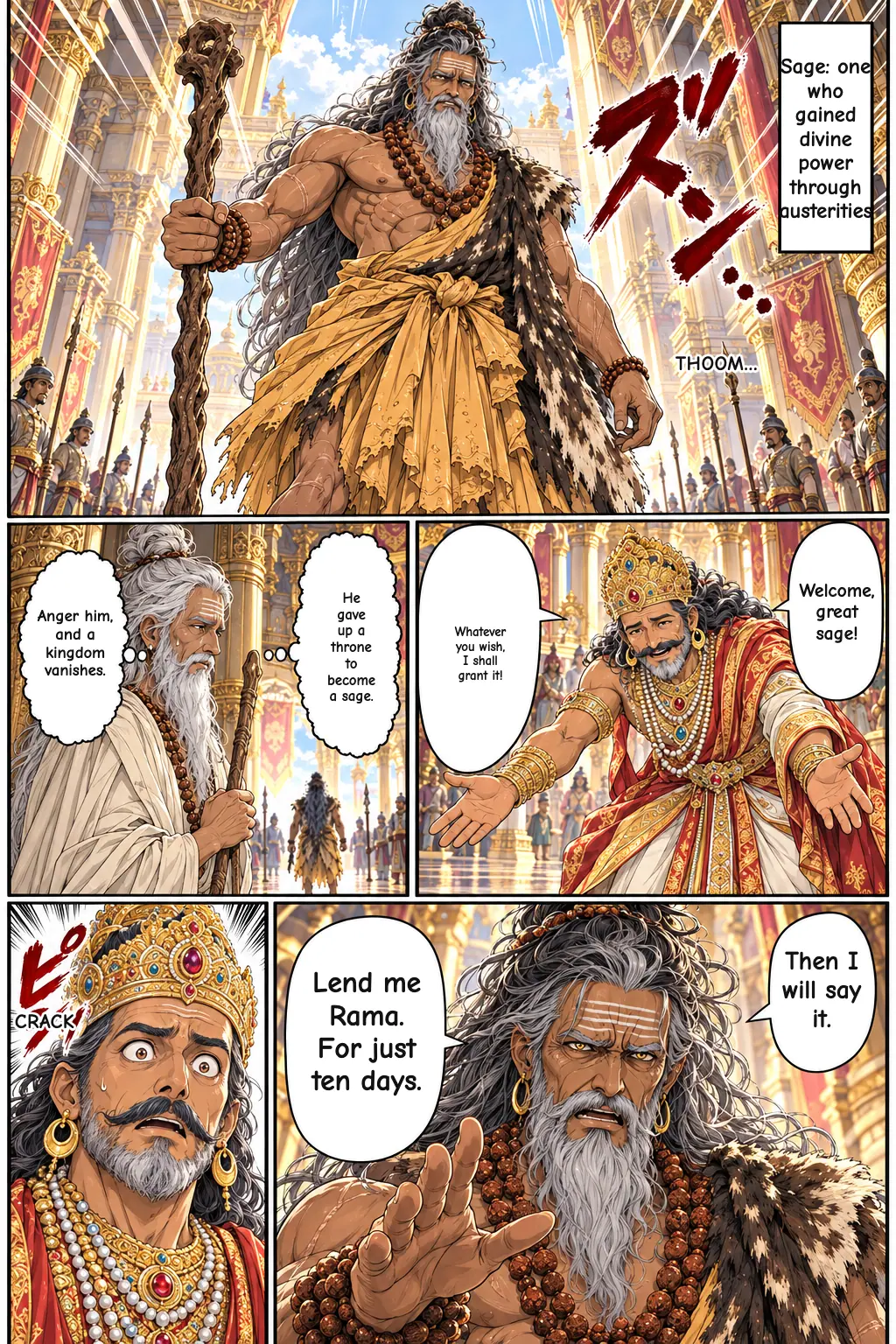
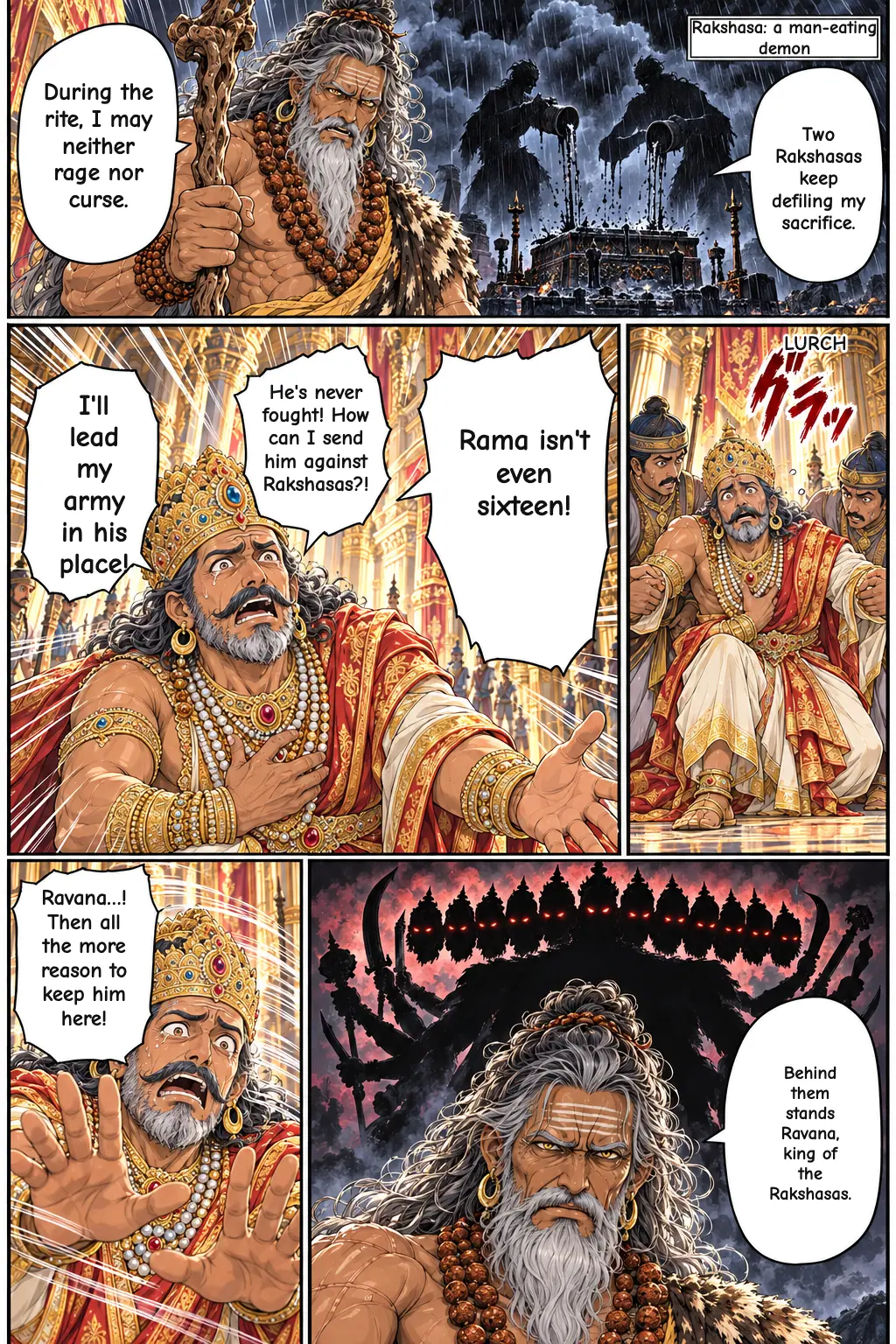
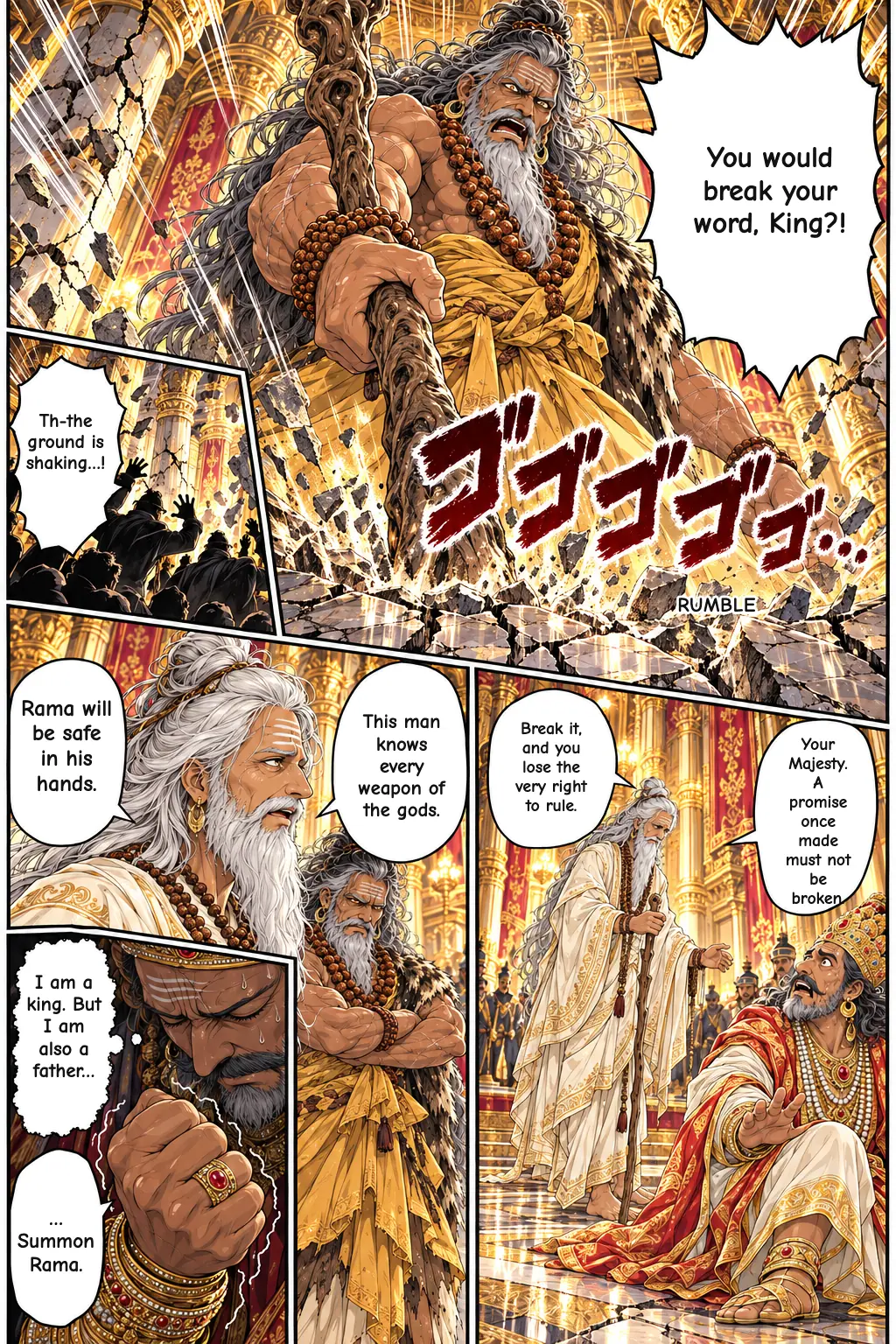
Then the fierce sage Vishvamitra arrives. Two demons, Maricha and Subahu, keep ruining his rituals with blood and flesh, and he cannot curse them while he is under ritual vows. He asks to take Rama for ten days. Dasharatha nearly faints. He protests that Rama is not yet sixteen and has never fought, and offers to go himself with his army. Only when the royal priest Vashishtha reminds him that a king must keep his word does he let Rama go.
The Journey: Tataka, Divine Weapons and Ahalya
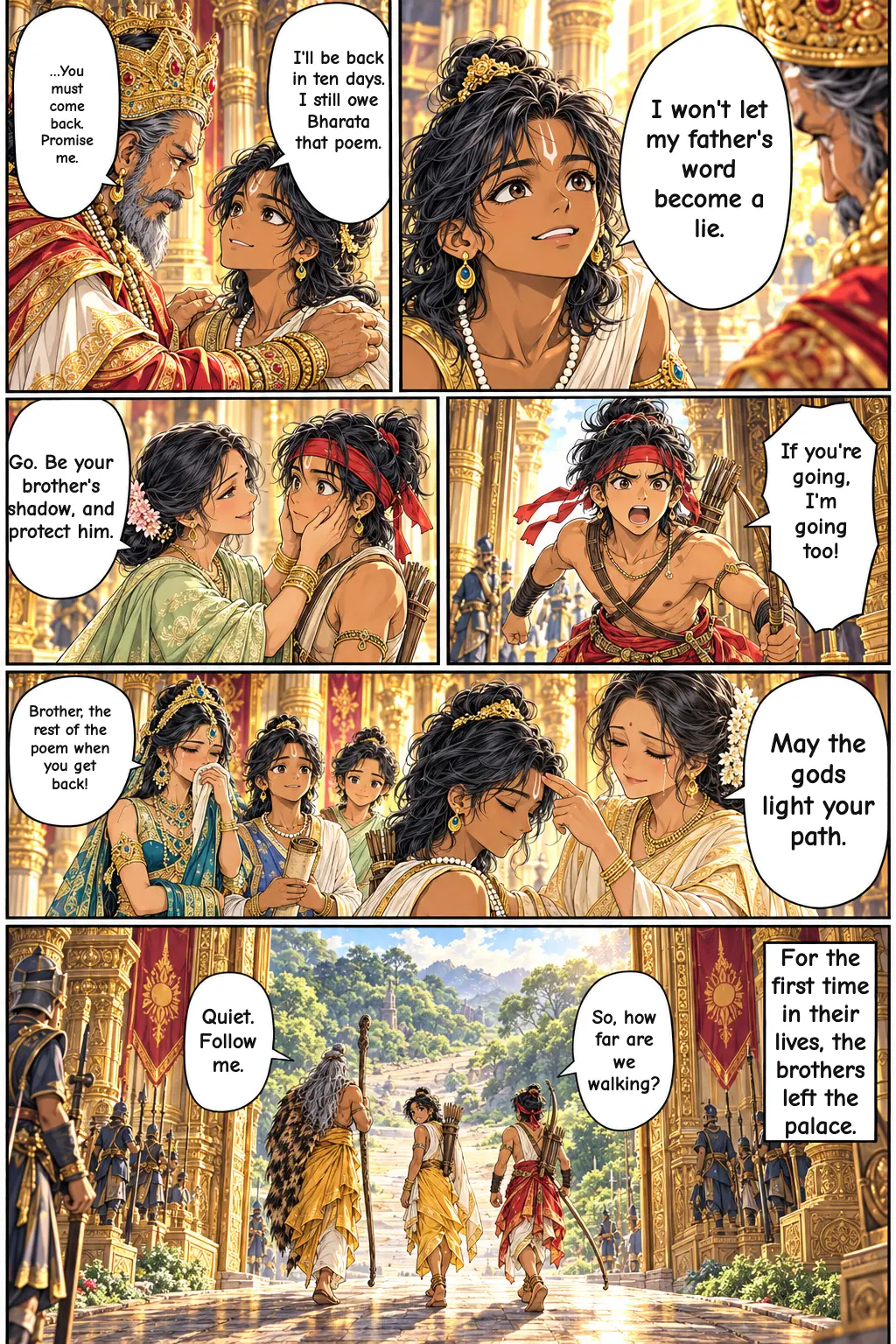
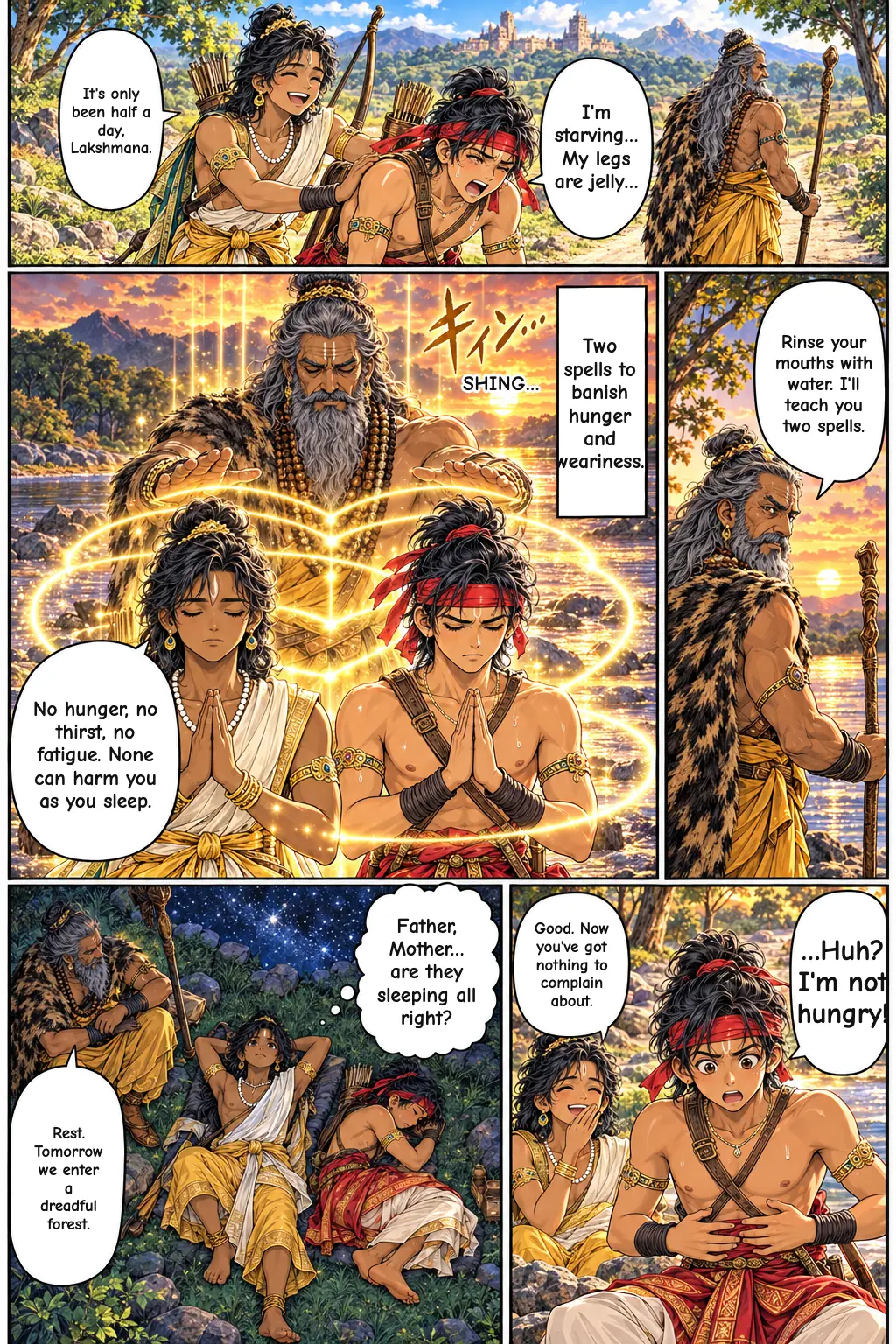
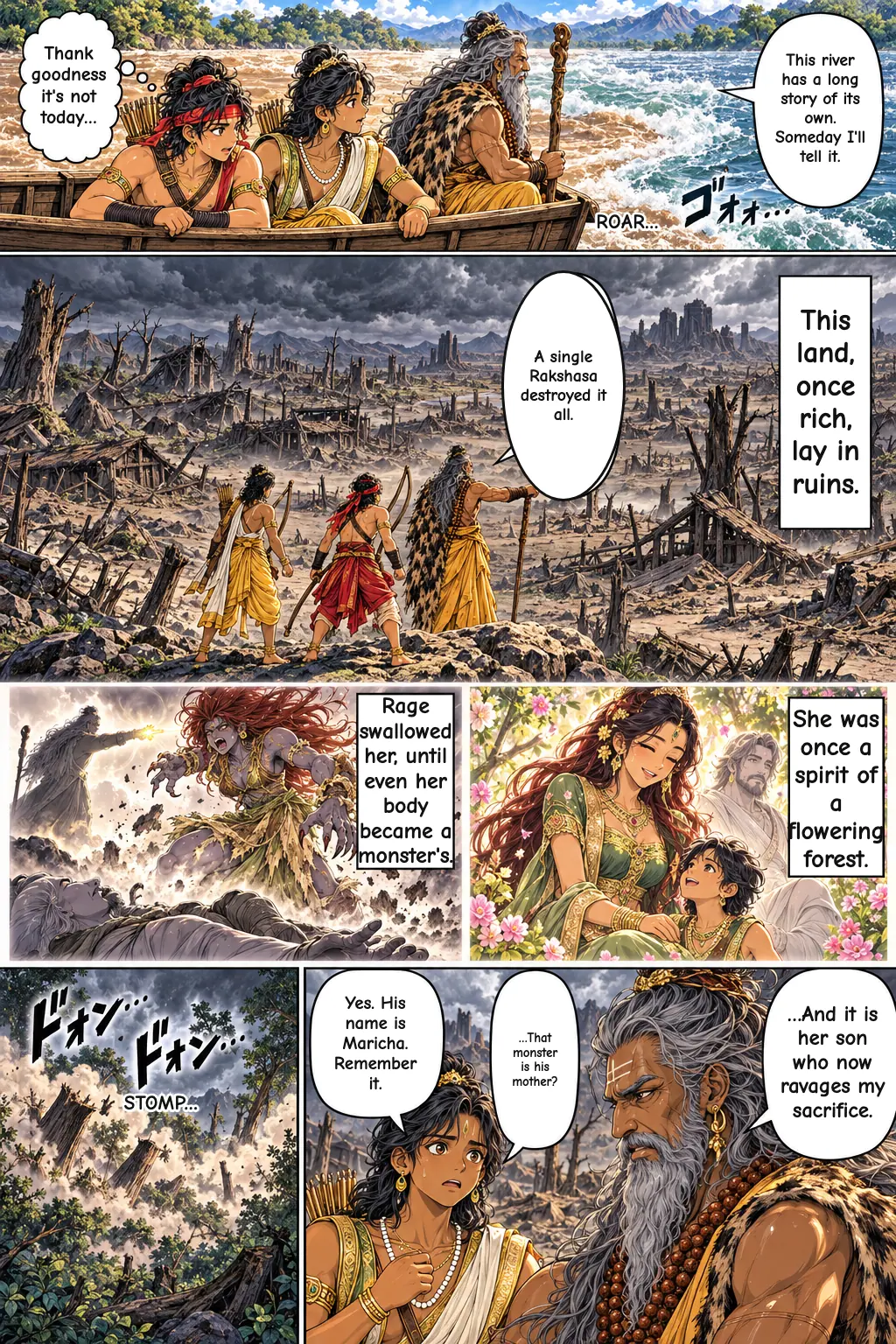
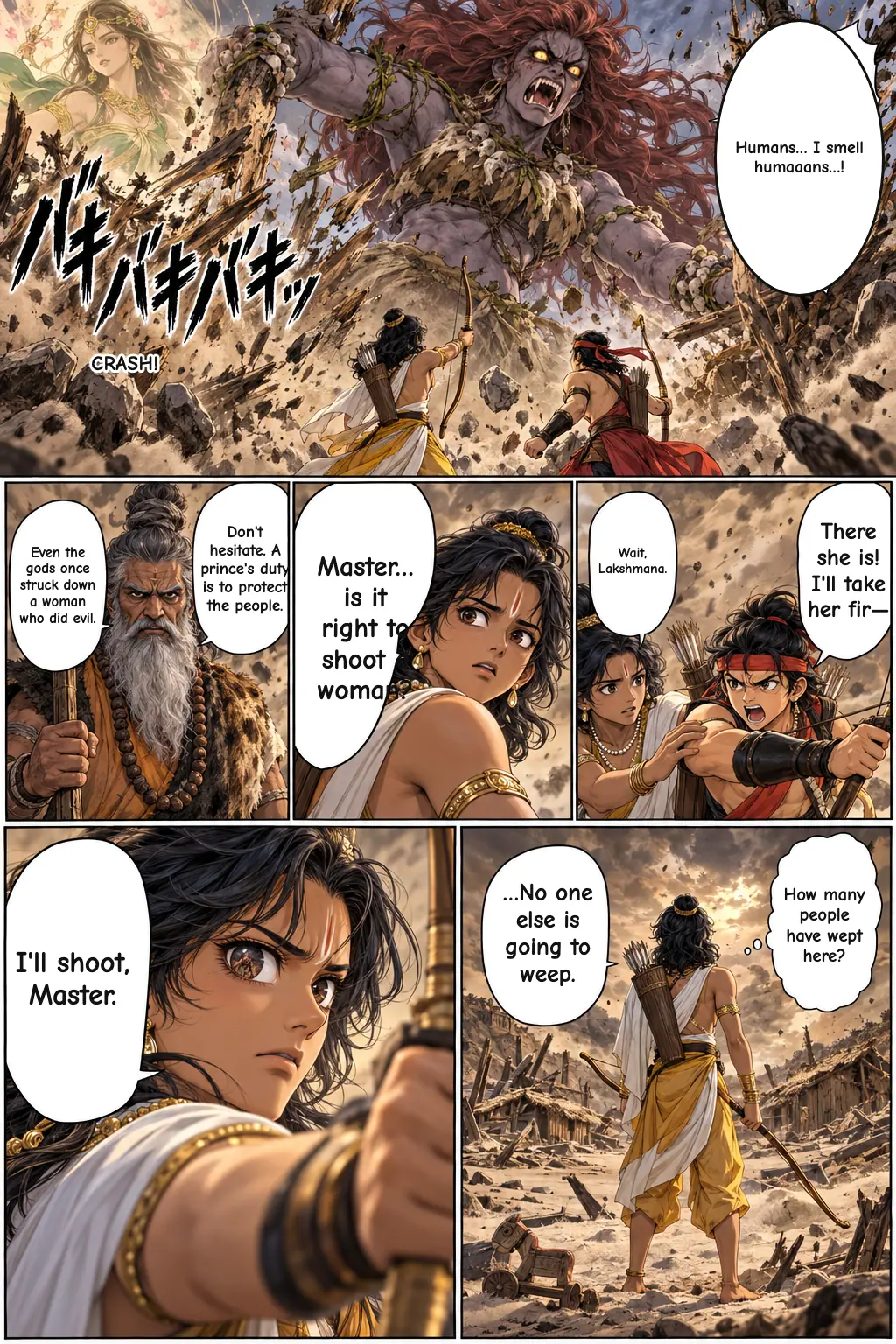
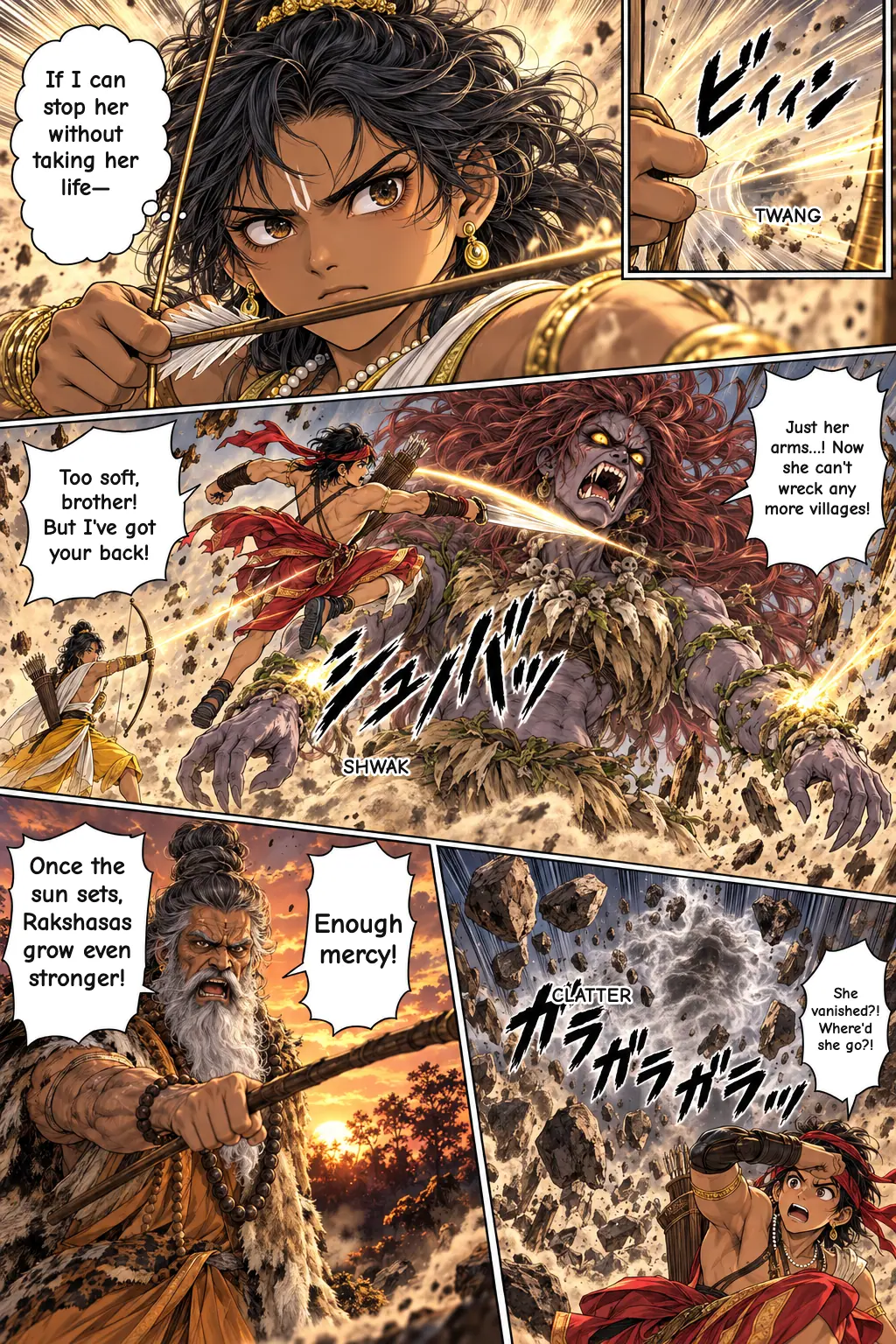
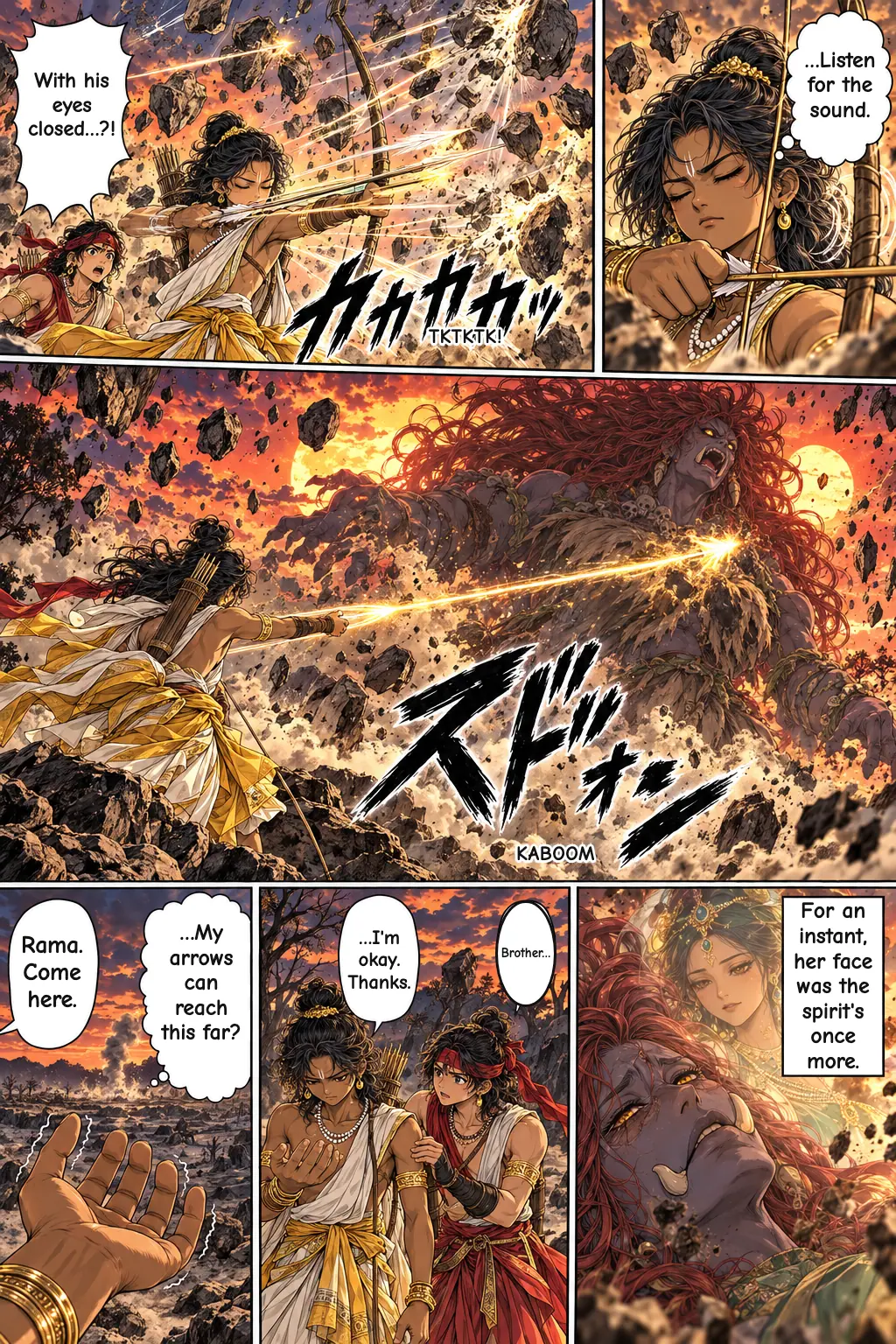
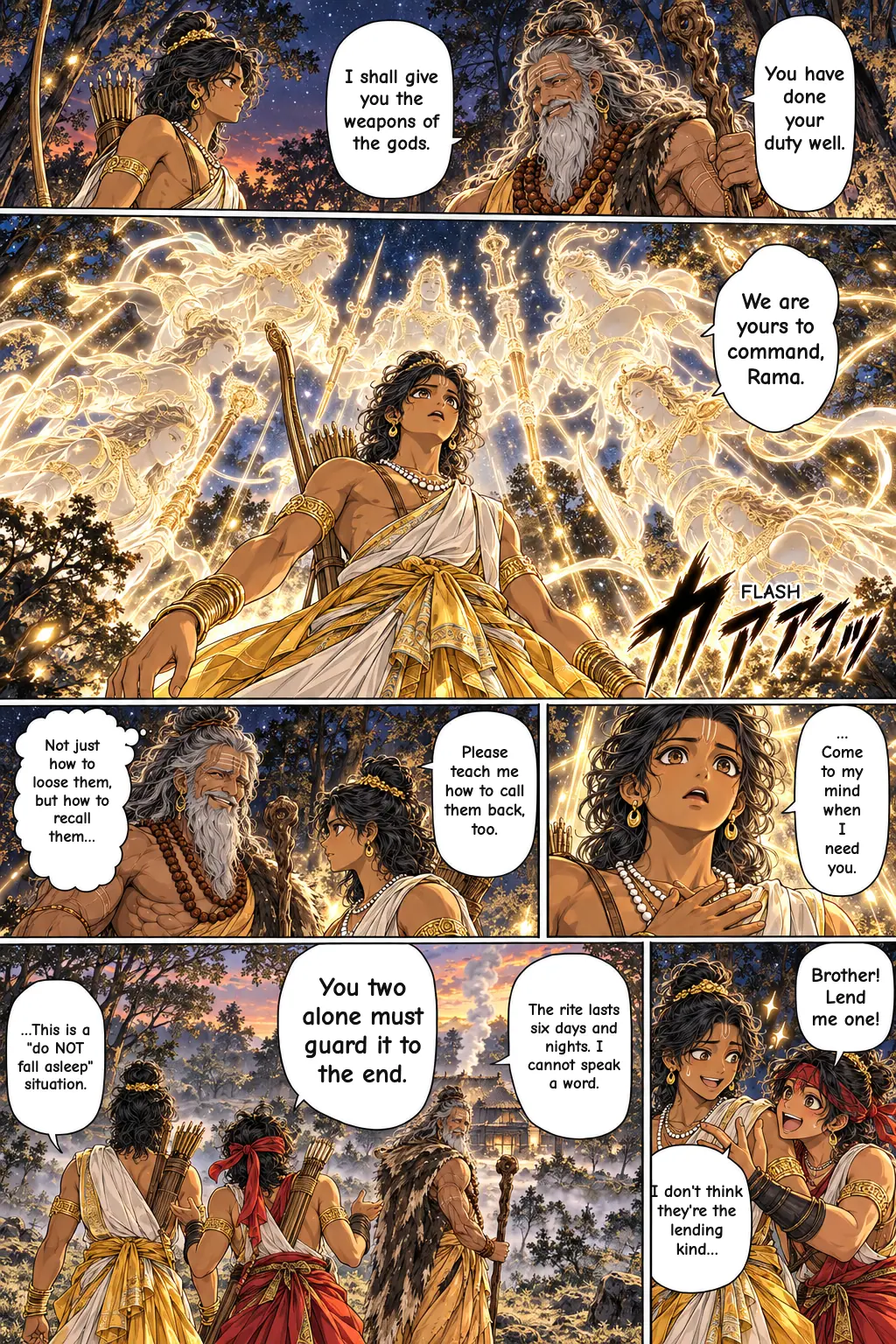
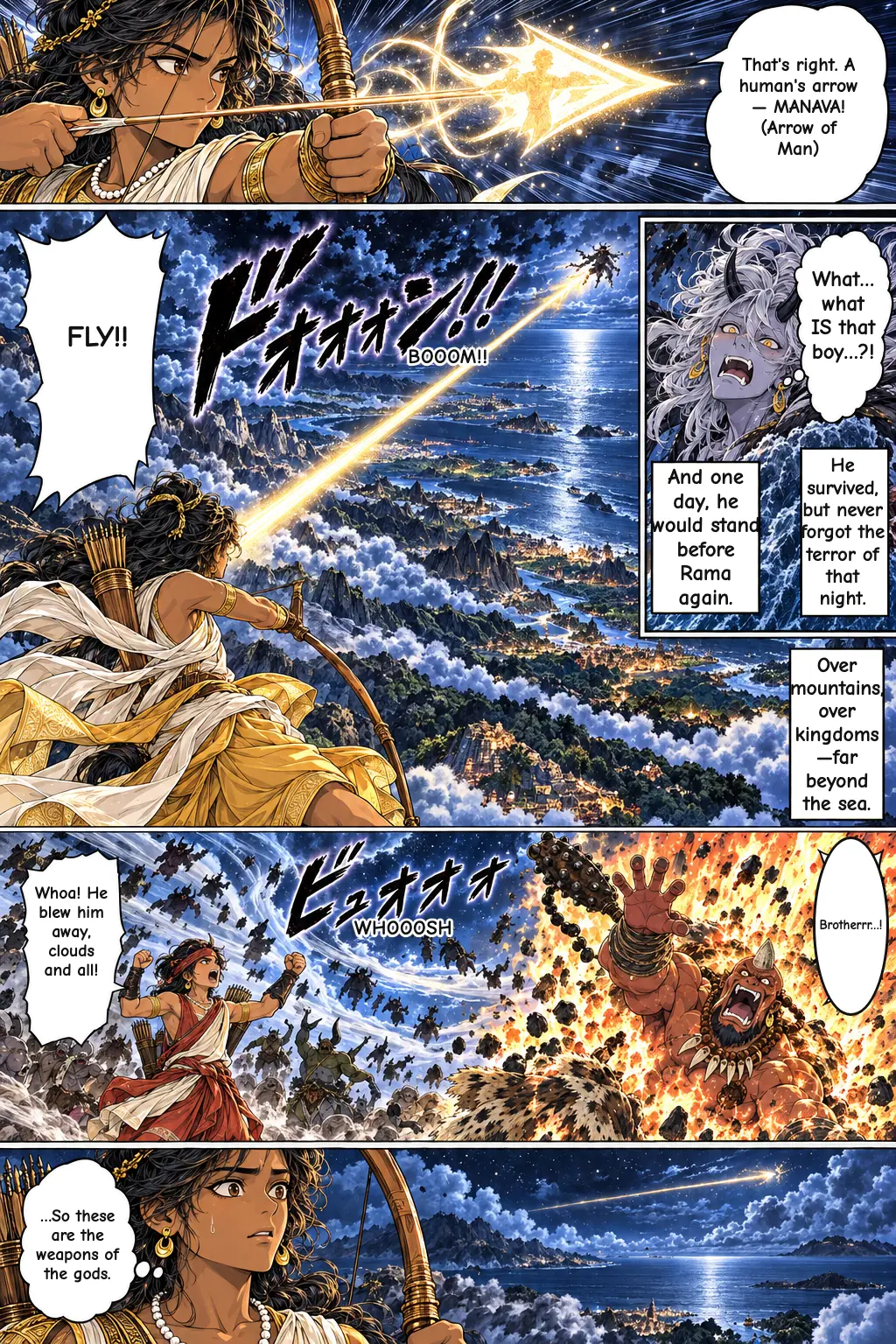
Rama sets out with Lakshmana, who brings his own bow. On the bank of the Sarayu River, Vishvamitra teaches the brothers two spells, Bala and Atibala, which protect them from fatigue, fever, hunger and attack while they sleep. In a ruined forest they meet Tataka, a powerful demoness. Rama hesitates because she is a woman and at first tries to stop her without killing her. Vishvamitra urges him to act, and in the end Rama kills her. Pleased, the sage gives him a whole set of divine weapons. Rama, being careful, also asks how to call them back.
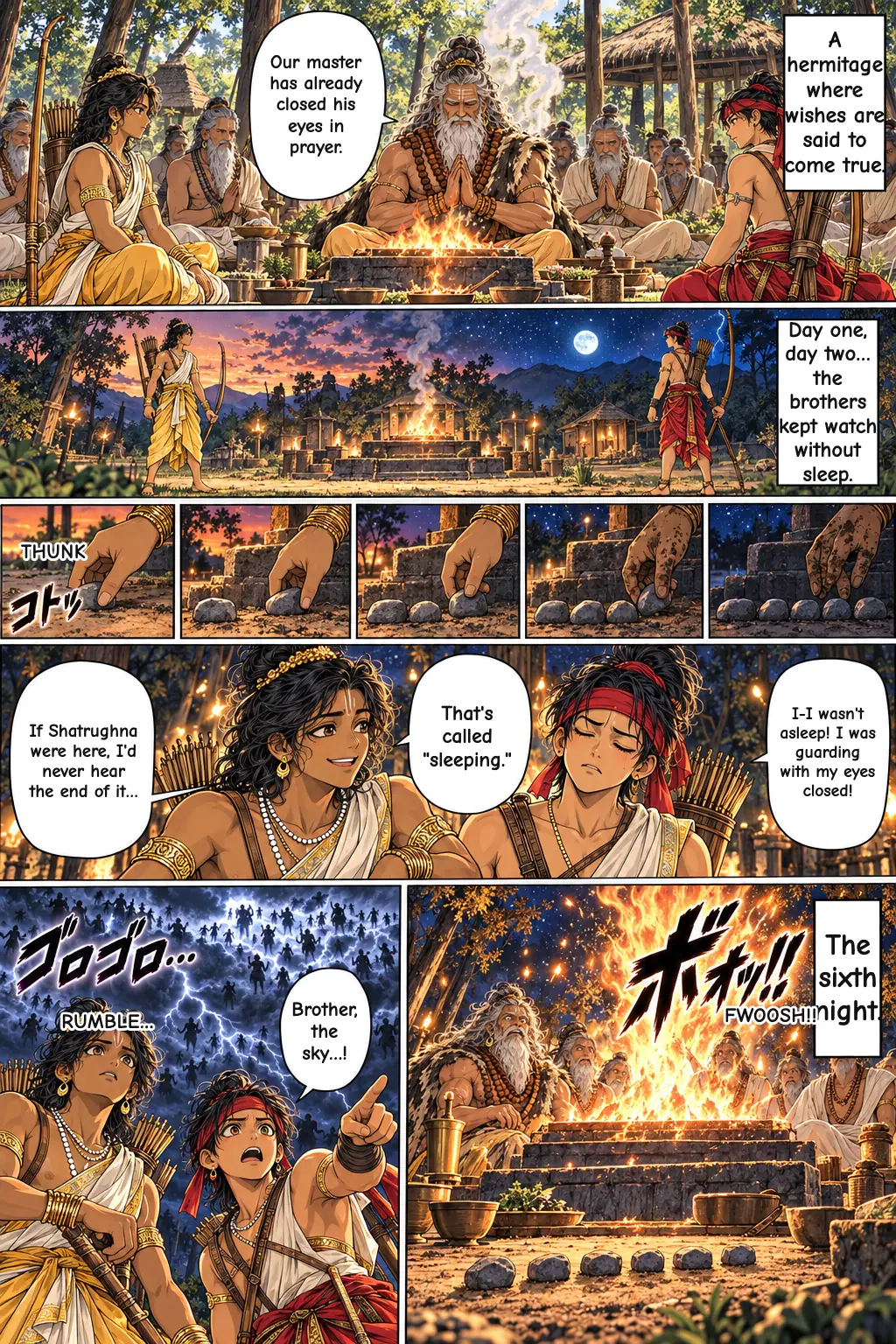
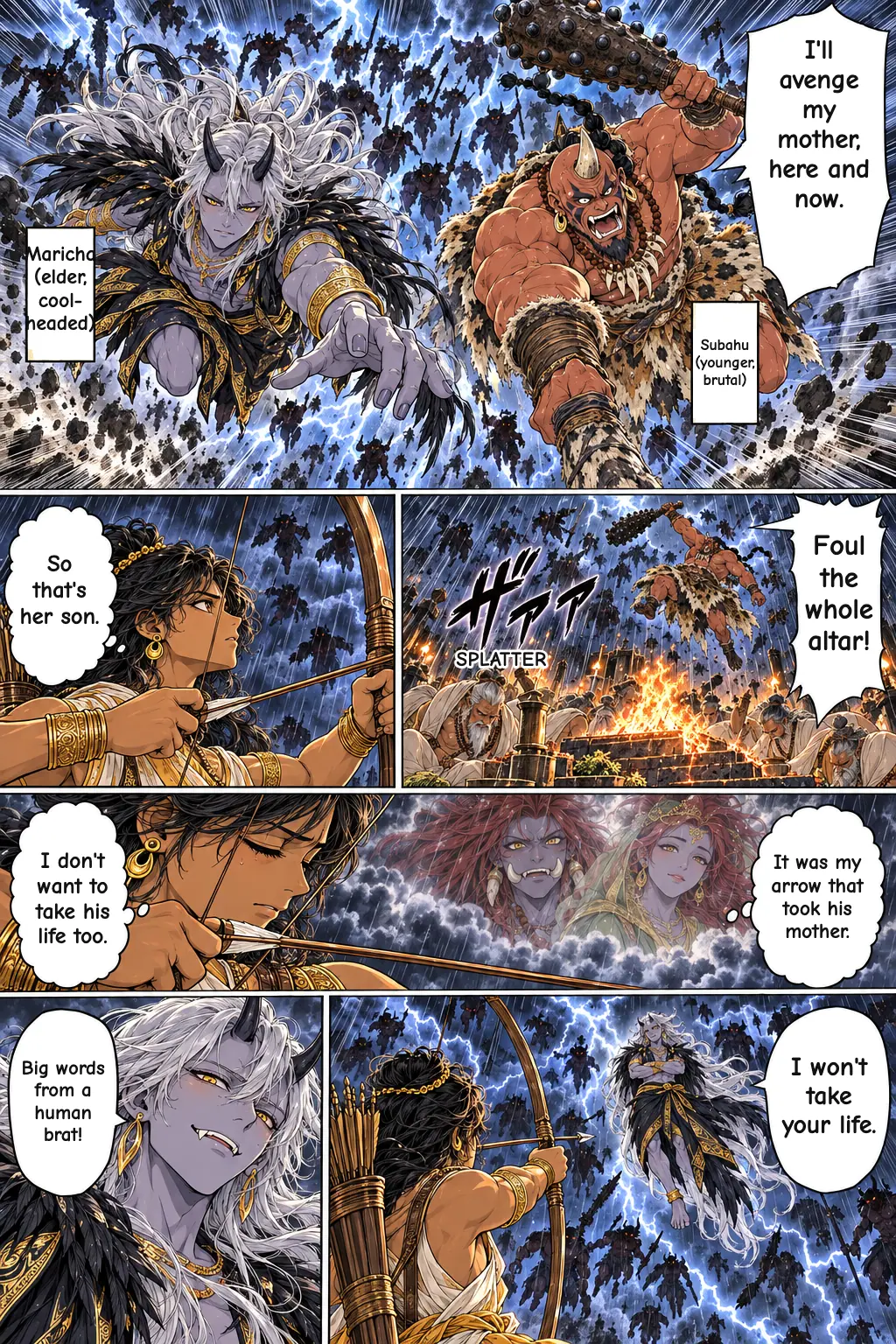
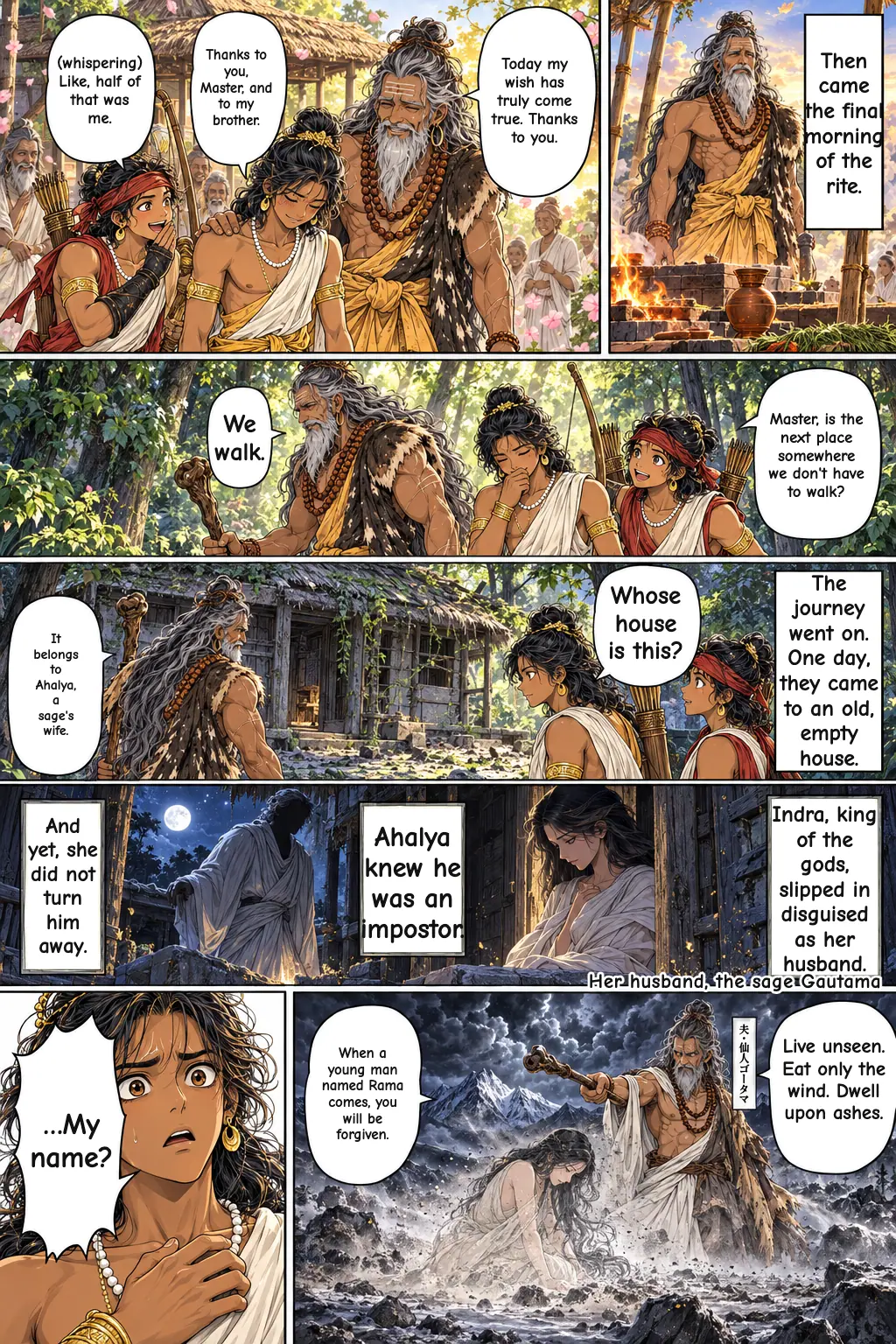
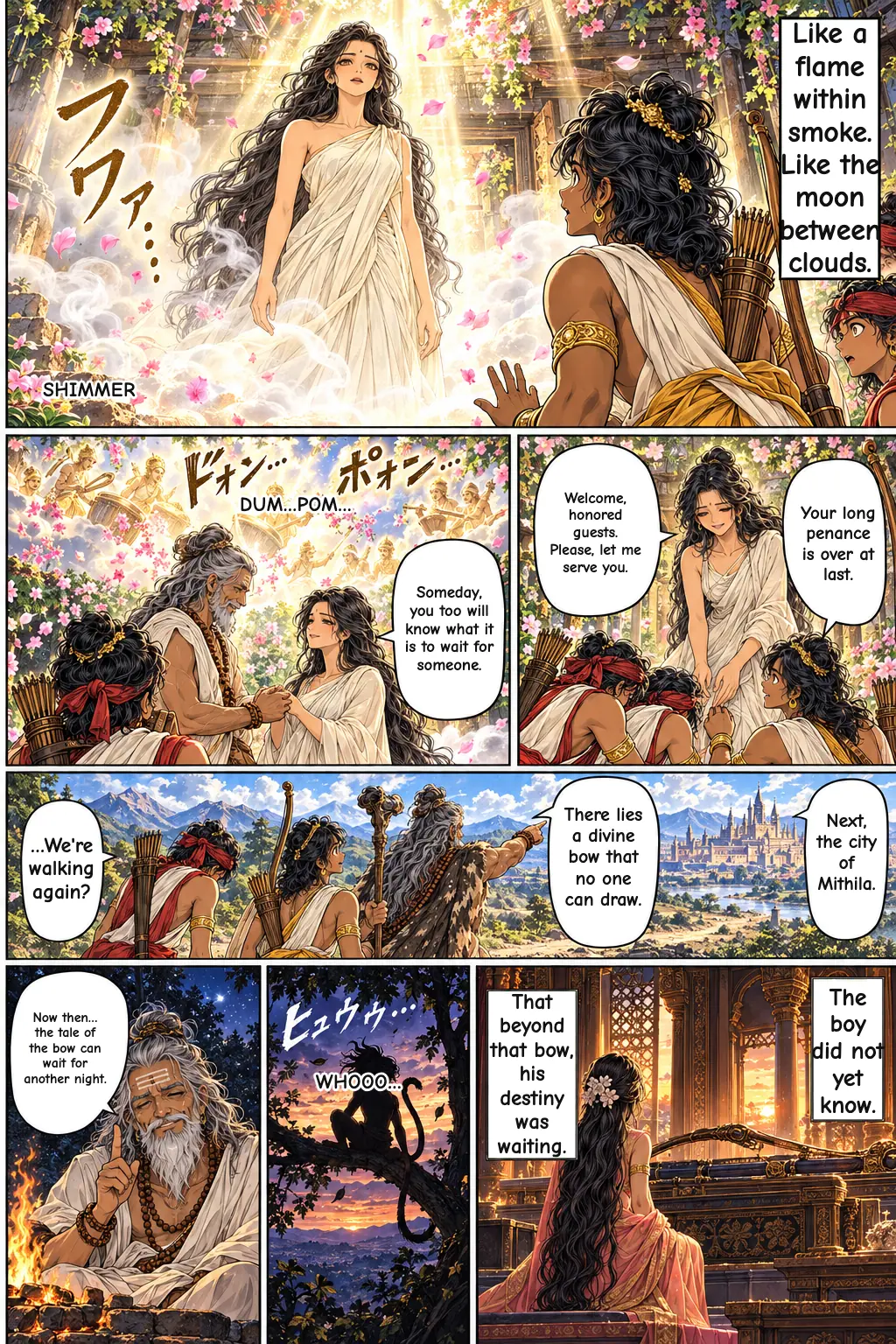
At Vishvamitra's hermitage, the brothers guard the sacrifice without sleep. When the demons attack, Rama blasts Maricha far away into the ocean without killing him, and he kills Subahu. Later, at the hermitage of the sage Gautama, Rama's arrival frees Ahalya, Gautama's wife. Her husband had cursed her to do penance, unseen by anyone, and when Rama comes she regains her true form.
What the Story Says: Background and Meaning
Valmiki's Ramayana is usually dated to the last centuries BCE, though scholars disagree on the details, and some think the first book was added later than the core of the epic. Its opening is important in Indian tradition: Valmiki is often called the first poet (adikavi), and the bird scene is told as the moment poetry was born from compassion.
The first book also sets up themes that run through the whole epic: duty (dharma), keeping one's word, and obedience to parents and teachers. Dasharatha's choice between love for his son and his promise to a sage hints at the much harder choices that come later. Rama is shown as gifted but restrained. He hesitates before killing, and he spares Maricha, a choice that matters later in the story.
What the Manga Changes
The manga follows the main events of the original but adds scenes where the text gives few details. Valmiki's book only says the princes excelled at study and arms, so the scenes of palace life, play and conversations between the brothers are invented for the manga. The characters' faces, clothing and settings, the glowing look of the spells and weapons, and the demons' appearance are the artists' designs. The original describes the demons only as hideous and terrifying.
The episode opens with the bird scene and skips Narada's conversation with Valmiki. It also leaves out the many old legends Vishvamitra tells along the road, and fills those moments with talk between Rama and Lakshmana. Rama openly asking whether it is right to shoot a woman is a line written for the manga. In the original, his doubt shows through his actions and through the sage's warning. Valmiki's inner thoughts, the tearful farewell at Ayodhya and the staging of Ahalya's return to her true form are also adaptations.
Where to Read It
If you want to see this story come alive, Episode 1 of RAMAYANA: The Exiled Prince and the Son of the Wind, "The Boy Whose Arrow Was Too Strong," covers the Bala Kanda from the hunter's arrow to Rama's first battles. Every episode is free to read on Manga Portal, with no sign-up required. It's a good place to start before the story moves on to exile, Sita and Hanuman.
Characters in this episode
Rama
The eldest son of King Dasharatha and a human birth of the god Vishnu, a young archer who learns both the strength and the weight of his power.
Lakshmana
Rama's devoted younger half-brother, who picks up his bow and follows Rama on the journey without being asked.
Vishvamitra
A powerful, quick-tempered sage who takes Rama away to protect his sacrifice and gives him divine weapons.
Dasharatha
The king of Ayodhya, who longs for sons and is torn between his love for Rama and his promise to the sage.
Valmiki
The sage credited with composing the Ramayana, whose grief over a slain bird produced the first shloka verse.
Tataka
A powerful demoness who has laid waste to a forest region and becomes the first enemy Rama faces.
FAQ
What is the Bala Kanda of the Ramayana?
The Bala Kanda, or Book of Youth, is the first of the seven books of Valmiki's Ramayana. It tells how the poem was composed, how Rama and his brothers were born, and how young Rama traveled with the sage Vishvamitra and fought demons for the first time.
Why did Vishvamitra take Rama away from his father?
Two demons, Maricha and Subahu, kept defiling Vishvamitra's sacrifice, and his ritual vows prevented him from cursing them himself. He asked King Dasharatha to lend him Rama, and the king reluctantly agreed after the priest Vashishtha reminded him to keep his promise.
Who was Tataka in the Ramayana?
Tataka was a powerful demoness who terrorized a forest region near the Ganges. Rama hesitated to kill her because she was a woman, but he did so at Vishvamitra's urging and received divine weapons as a reward.
How was the first shloka created?
Valmiki saw a hunter kill one bird of a loving krauncha pair, and in his grief he cursed the hunter. His words came out in perfect meter, and he named the verse form shloka after shoka, meaning grief. Brahma then told him to tell Rama's story in this meter.
Was Ahalya turned to stone in the Ramayana?
In Valmiki's Sanskrit text, Ahalya is cursed to do penance unseen by all beings, not turned into stone. The well-known image of Ahalya as a stone comes from later retellings.