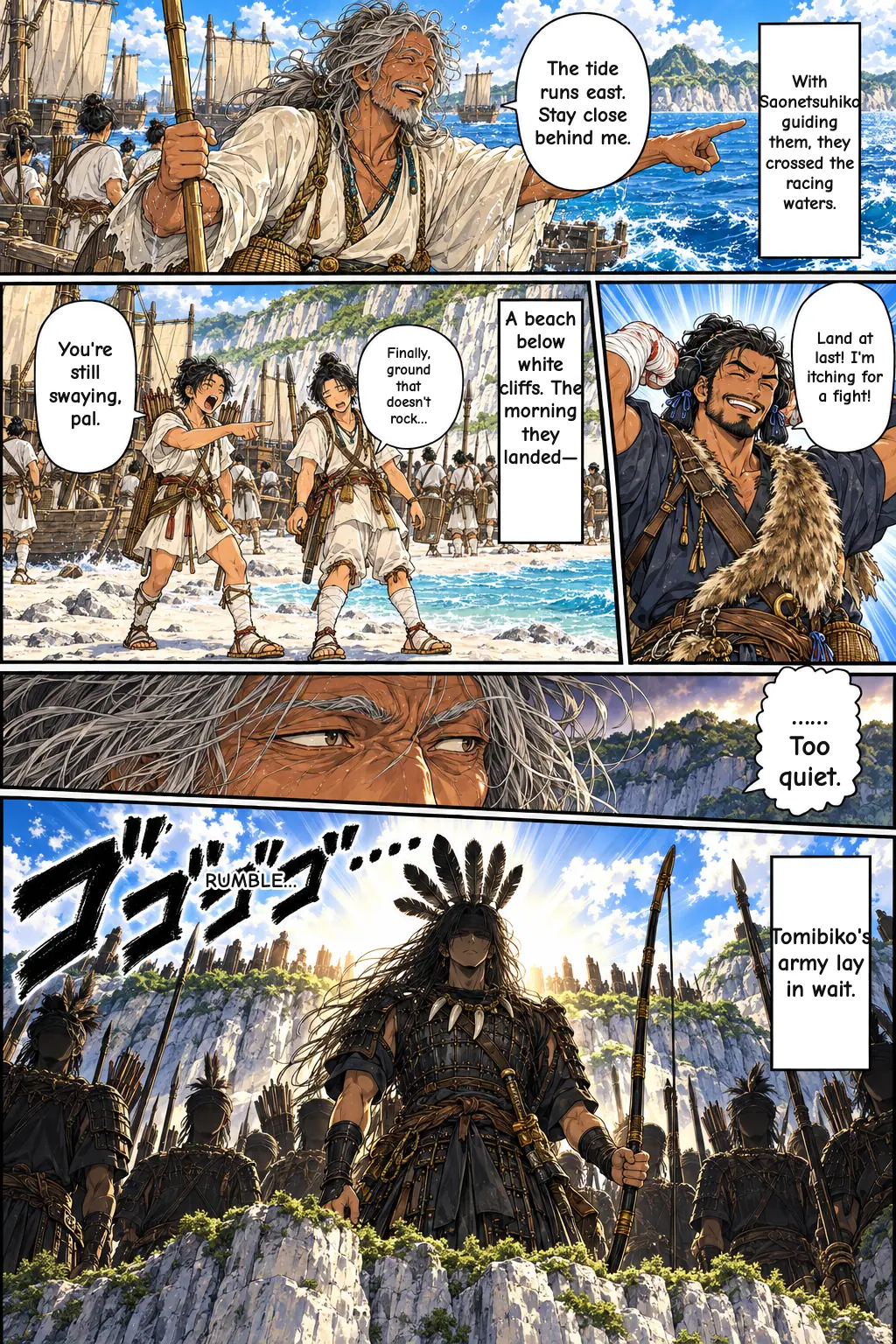
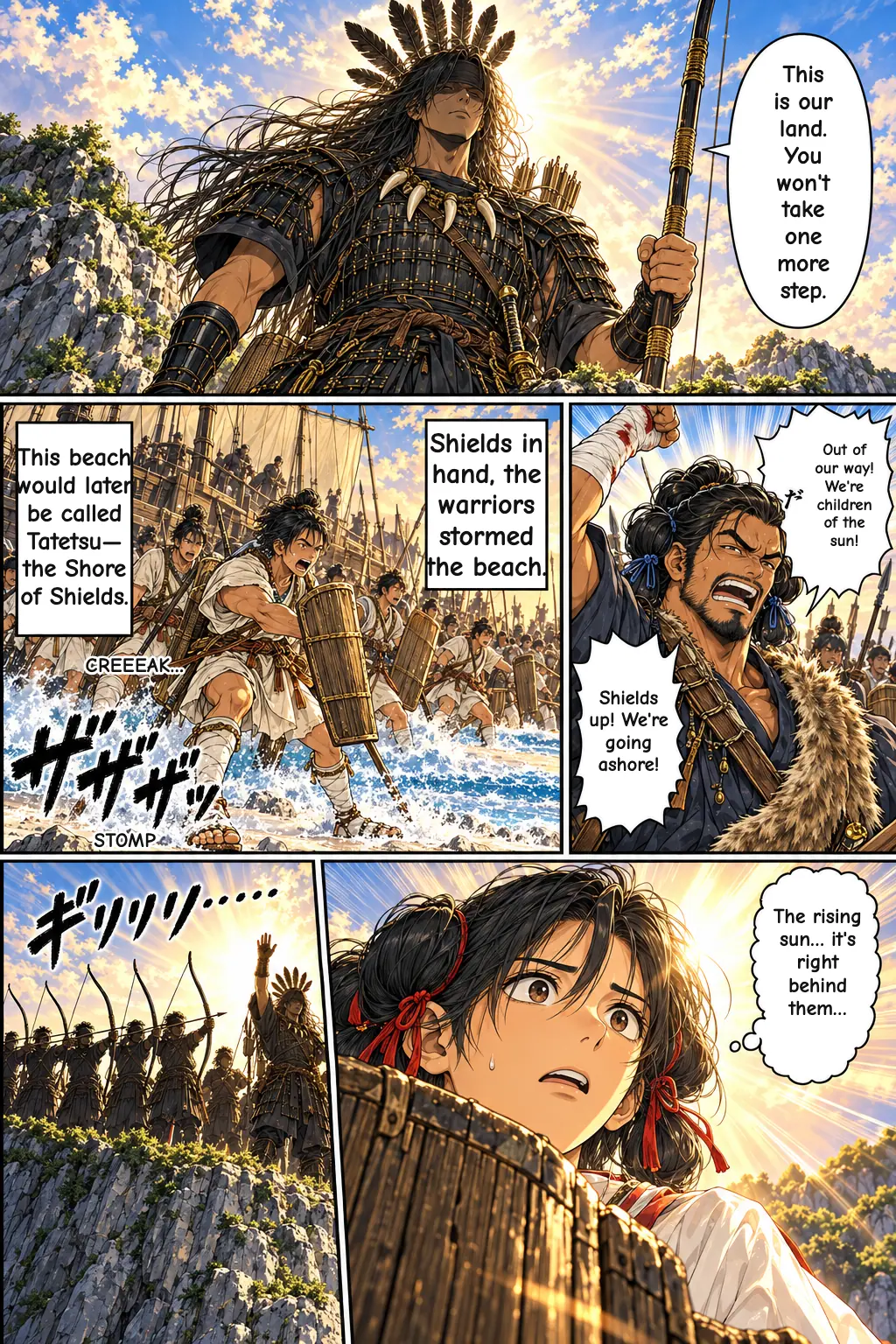
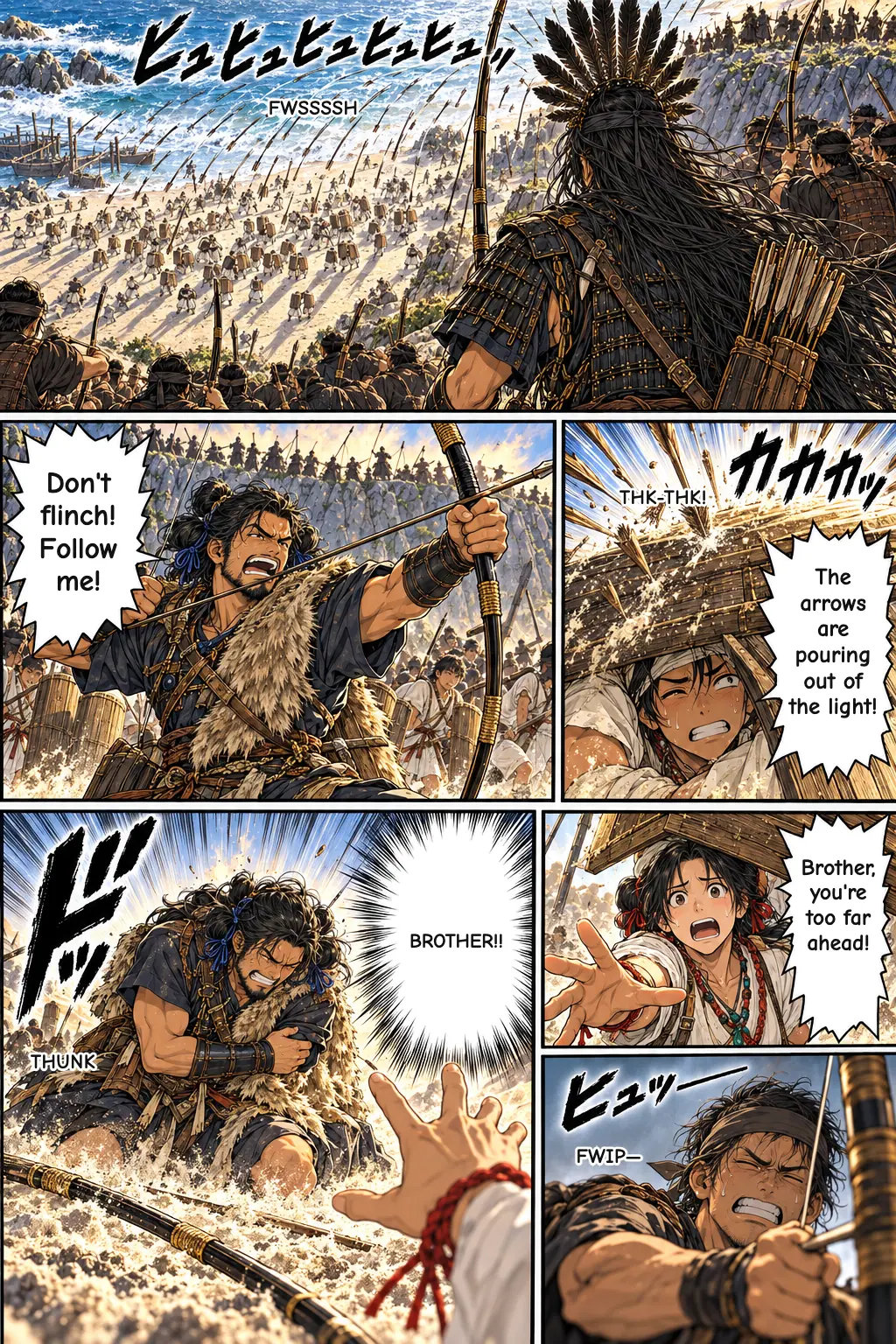
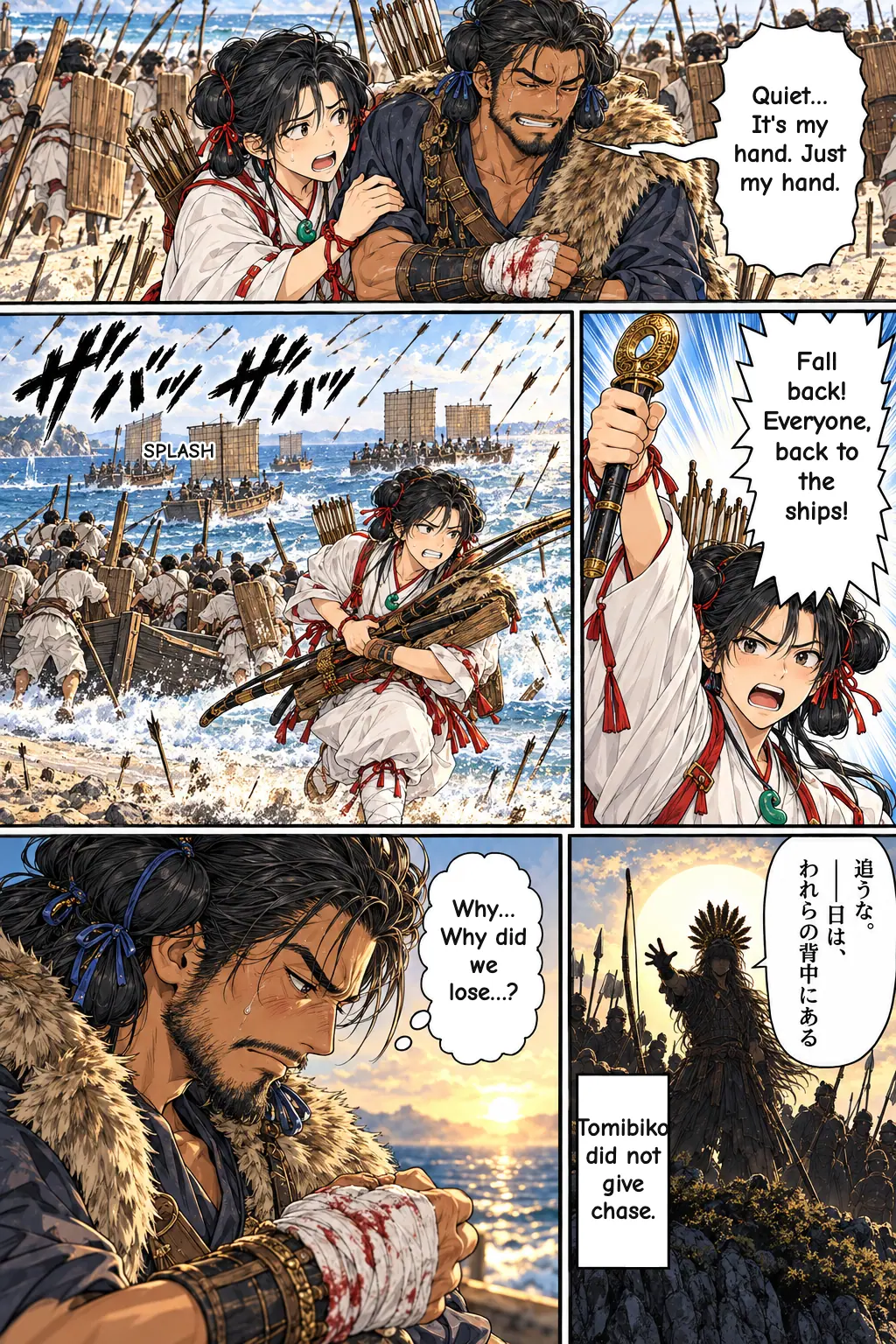
Episode 1Beaten by the Sun in Their EyesEmperor Jimmu's Eastern Expedition
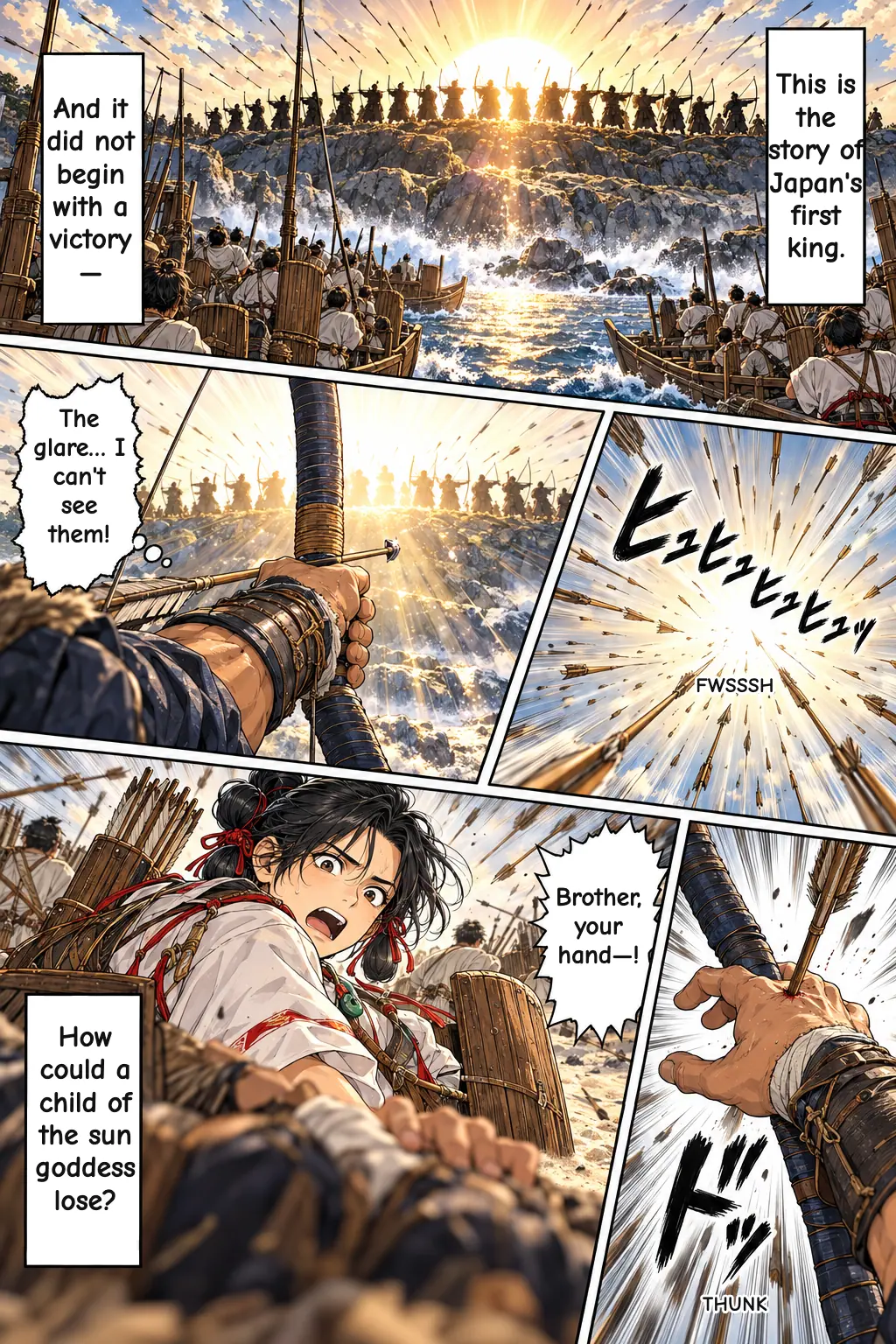
Brothers Iwarebiko and Itsuse set out east to find a land they can rule in peace. After a journey of many years, they lose their first great battle, and Itsuse is struck in the hand by an arrow. His final plan is simple: fight with the sun at your back. This is the story of how the younger brother carries it on.
Emperor Jimmu's Eastern Expedition: The Kojiki Myth Explained
The Original Myth: The Journey East
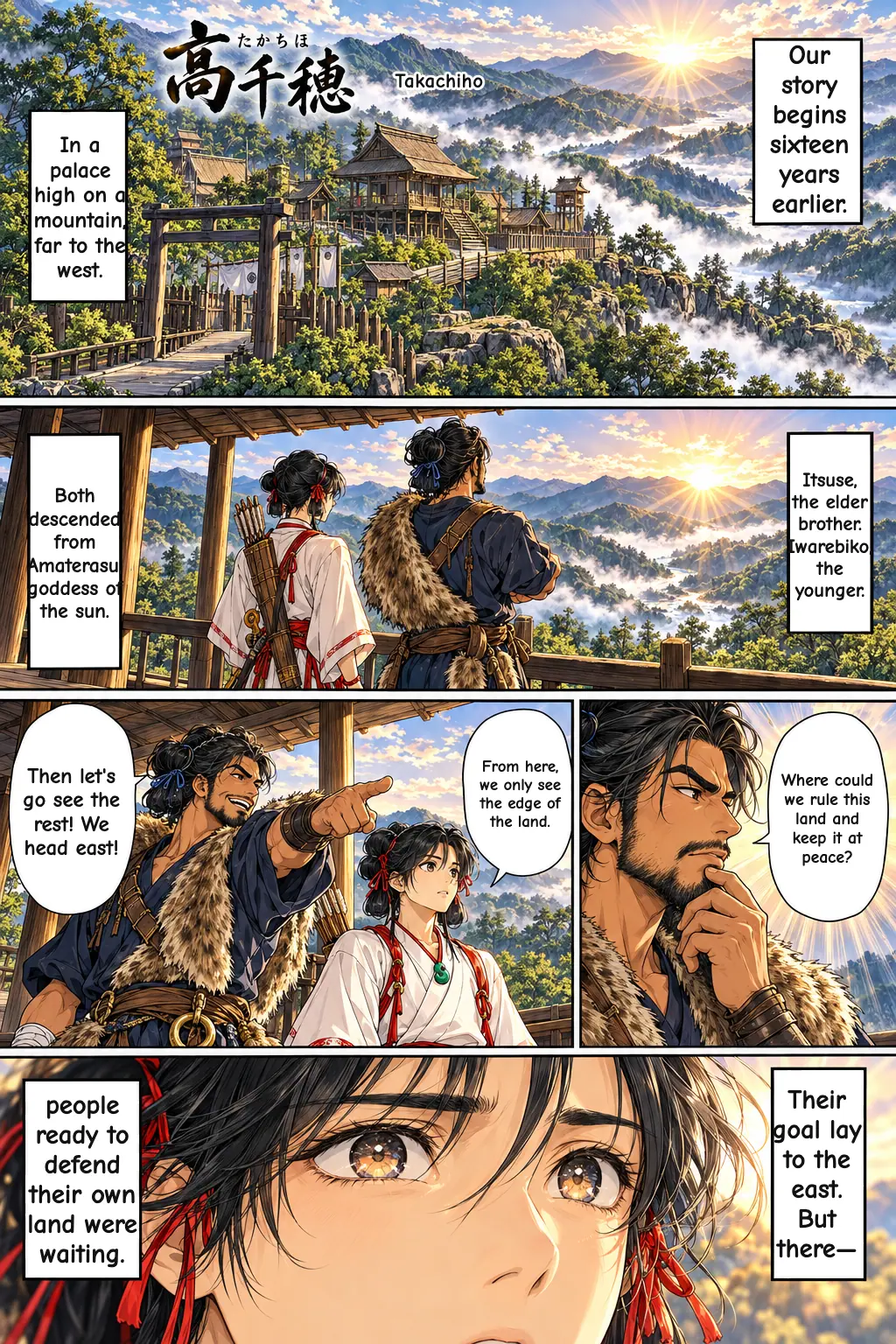
The Kojiki (Records of Ancient Matters), compiled by Ō no Yasumaro and presented in 712, is Japan's oldest surviving book. Its first volume tells of the age of the gods. The second volume opens with the man later remembered as Emperor Jimmu, the legendary first emperor of Japan. At this point, though, he is not yet an emperor. He is Kamu-Yamato-Iwarebiko, a descendant of the sun goddess Amaterasu, living at the Takachiho Palace in Himuka in southern Kyushu.
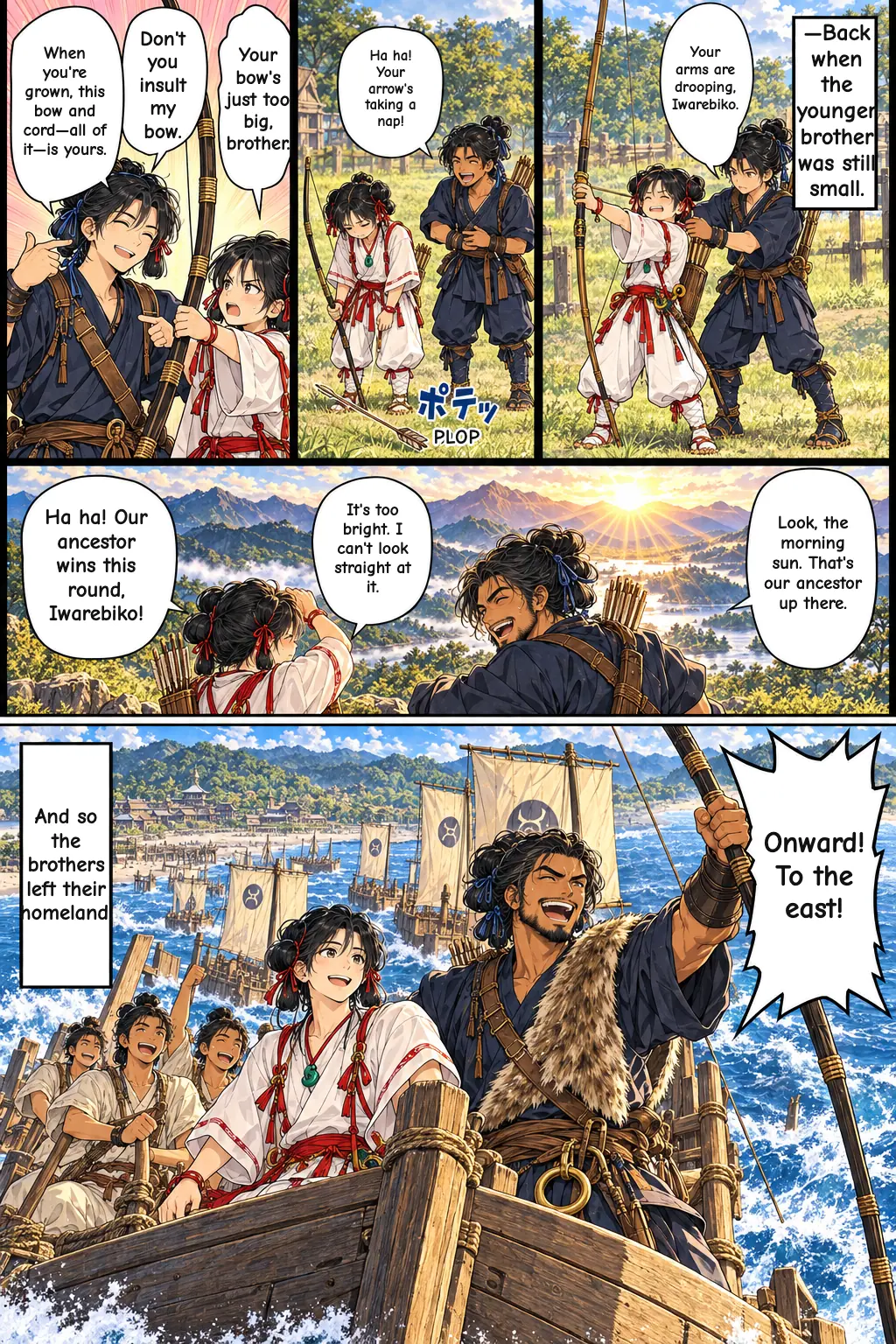
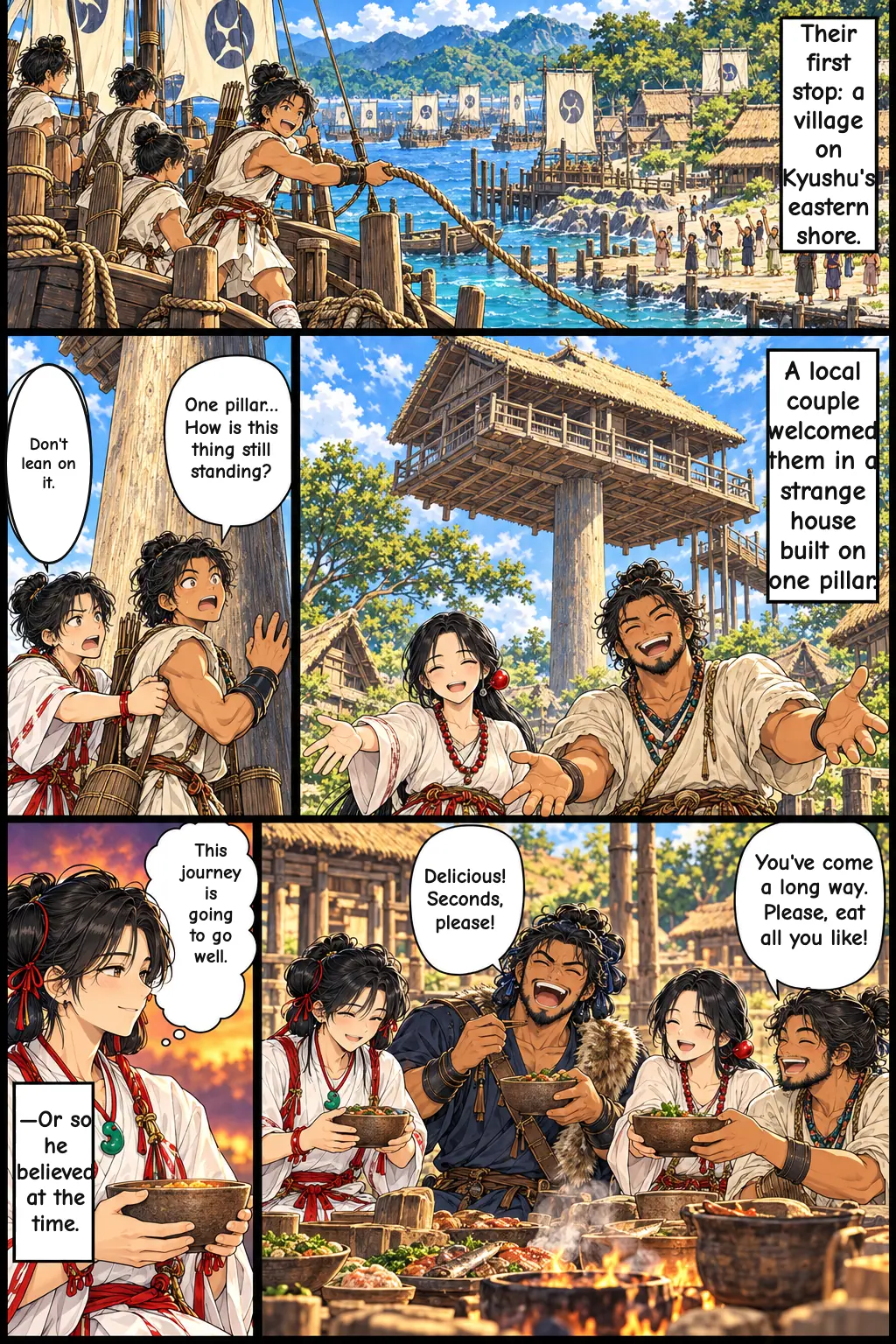
Iwarebiko and his elder brother Itsuse, sons of the same mother, discuss one question: where should they live so that they can govern the whole land in peace? Their answer is to go east. They leave Himuka for Tsukushi in northern Kyushu. At Usa, in the land of Toyo, a local man and woman named Usatsuhiko and Usatsuhime build them a palace called Ashi-hitotsu-agari and serve them a great feast.
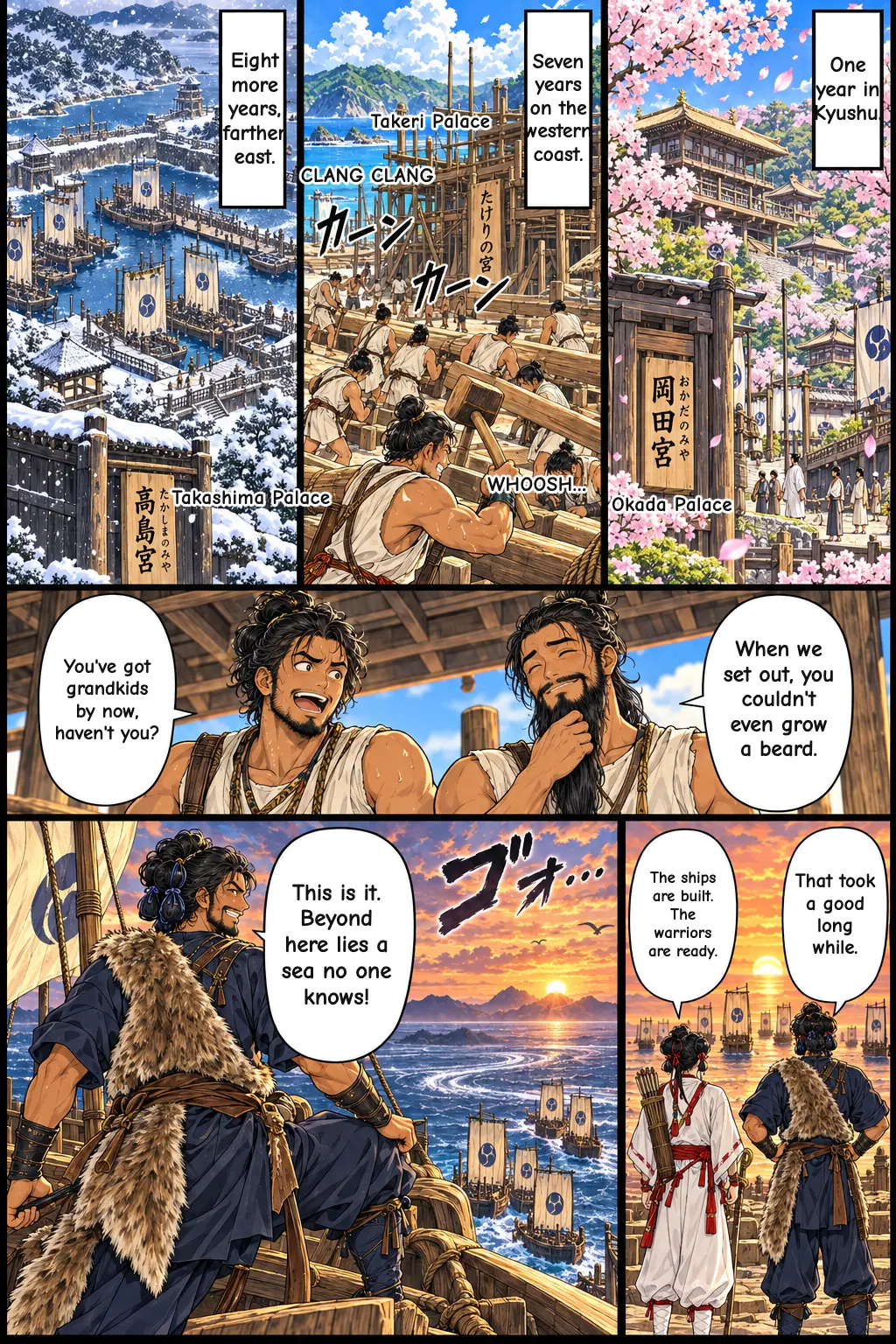
The journey is slow, and the Kojiki gives only the stops: one year at the Okada Palace in Tsukushi, seven years at the Takeri Palace in Aki, and eight years at the Takashima Palace in Kibi. It says nothing about what happened in those sixteen years.
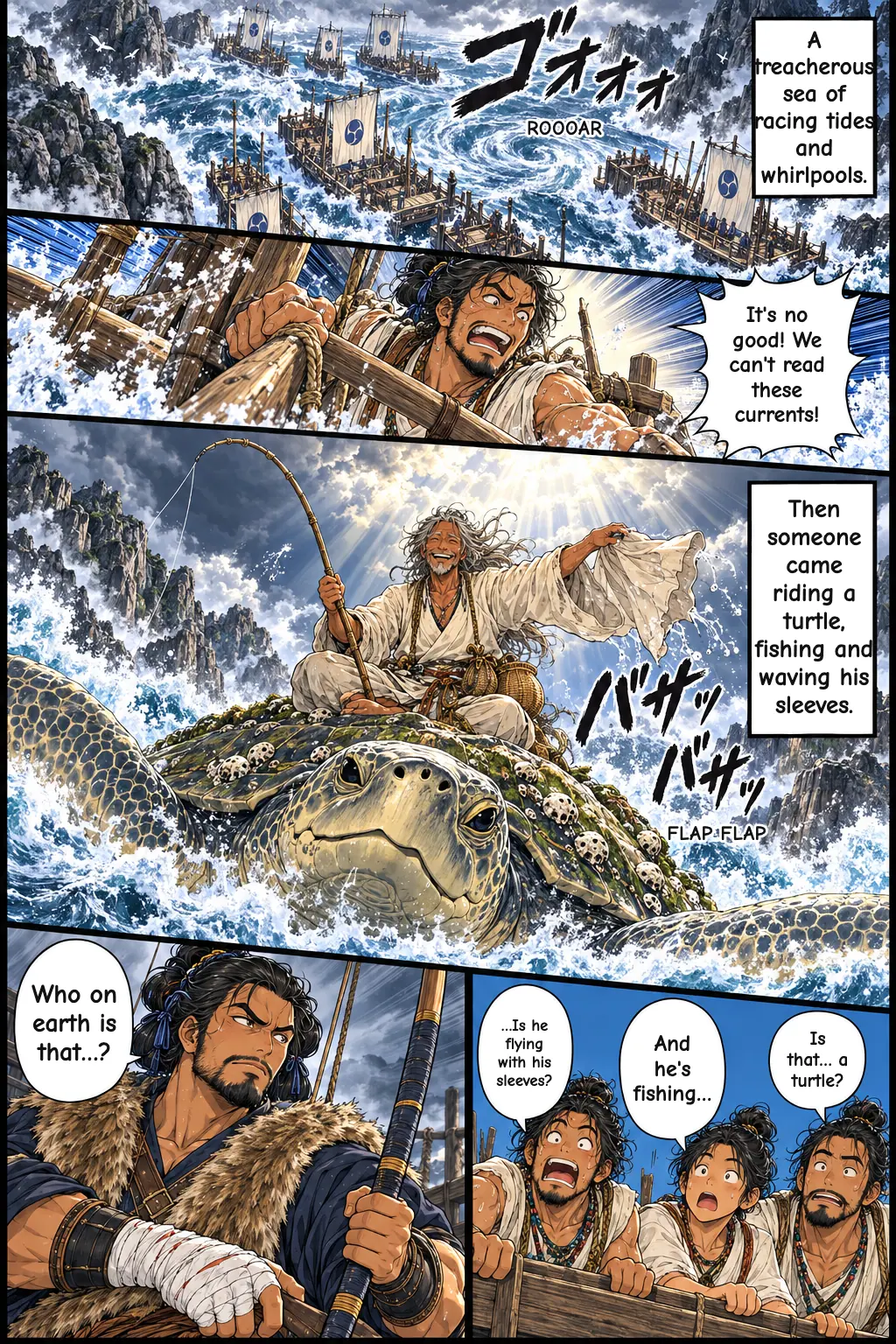
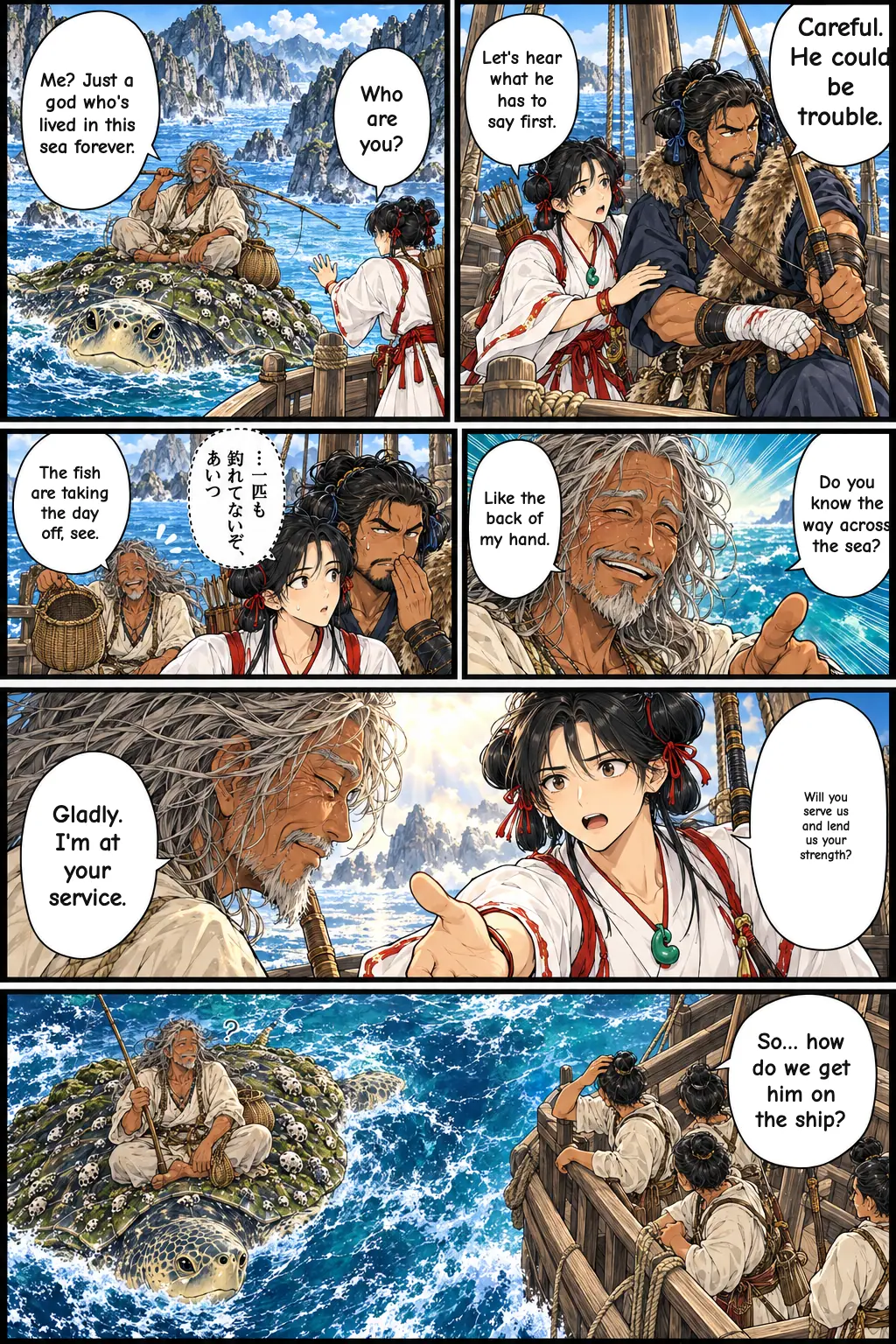
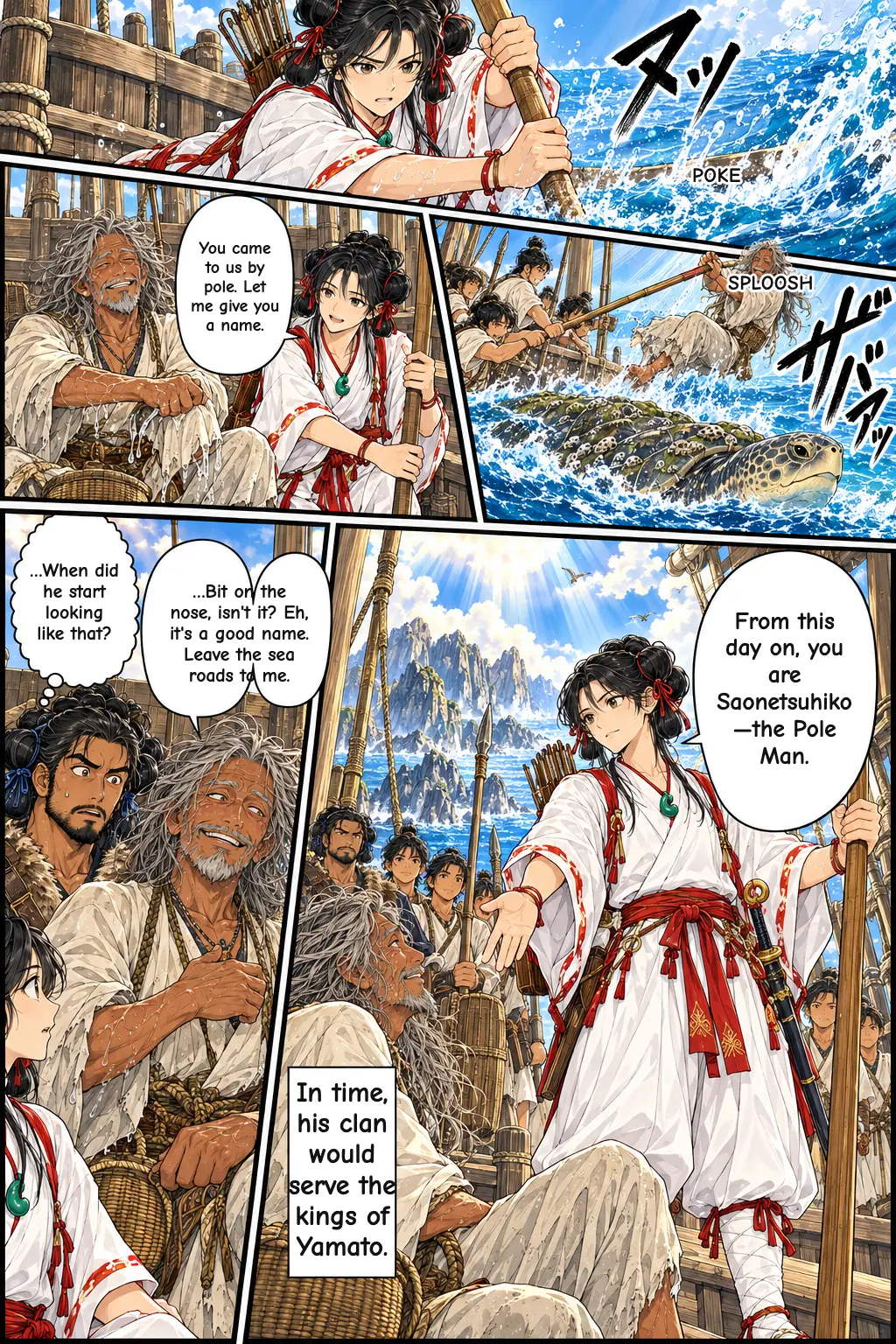
Sailing on from Kibi, they meet a strange figure at the strait of Hayasui: a man riding on a turtle's shell, fishing and flapping his sleeves like wings. Iwarebiko calls him over and asks who he is. He answers that he is a kunitsukami, a god of the land. Asked whether he knows the sea routes, he says he knows them well, and he agrees to serve. Iwarebiko holds out a pole, pulls him aboard, and names him Saonetsuhiko. The Kojiki adds that he was the ancestor of the governors of Yamato.
The Turning Point: Defeat at Shirakata and Itsuse's Last Plan
After the Naniwa crossing, the fleet anchors at Shirakata-no-tsu, a harbor the text describes as lying under blue clouds. There Tominonagasunebiko, also called Tomibiko, has gathered an army and is waiting. The brothers' men take the shields stored on their ships and land to fight. According to the Kojiki, this is why the place was called Tatetsu, or Shield Harbor.
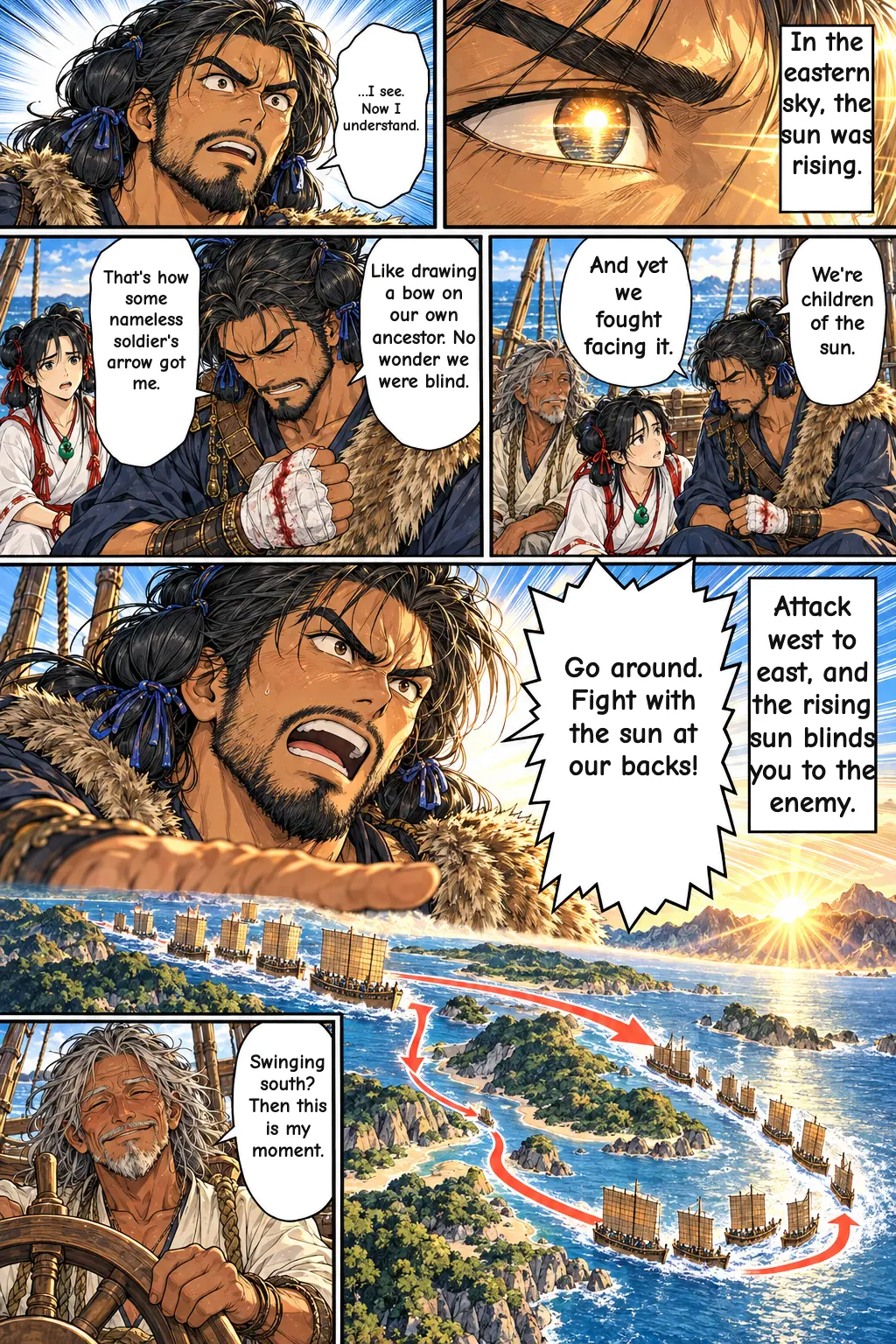
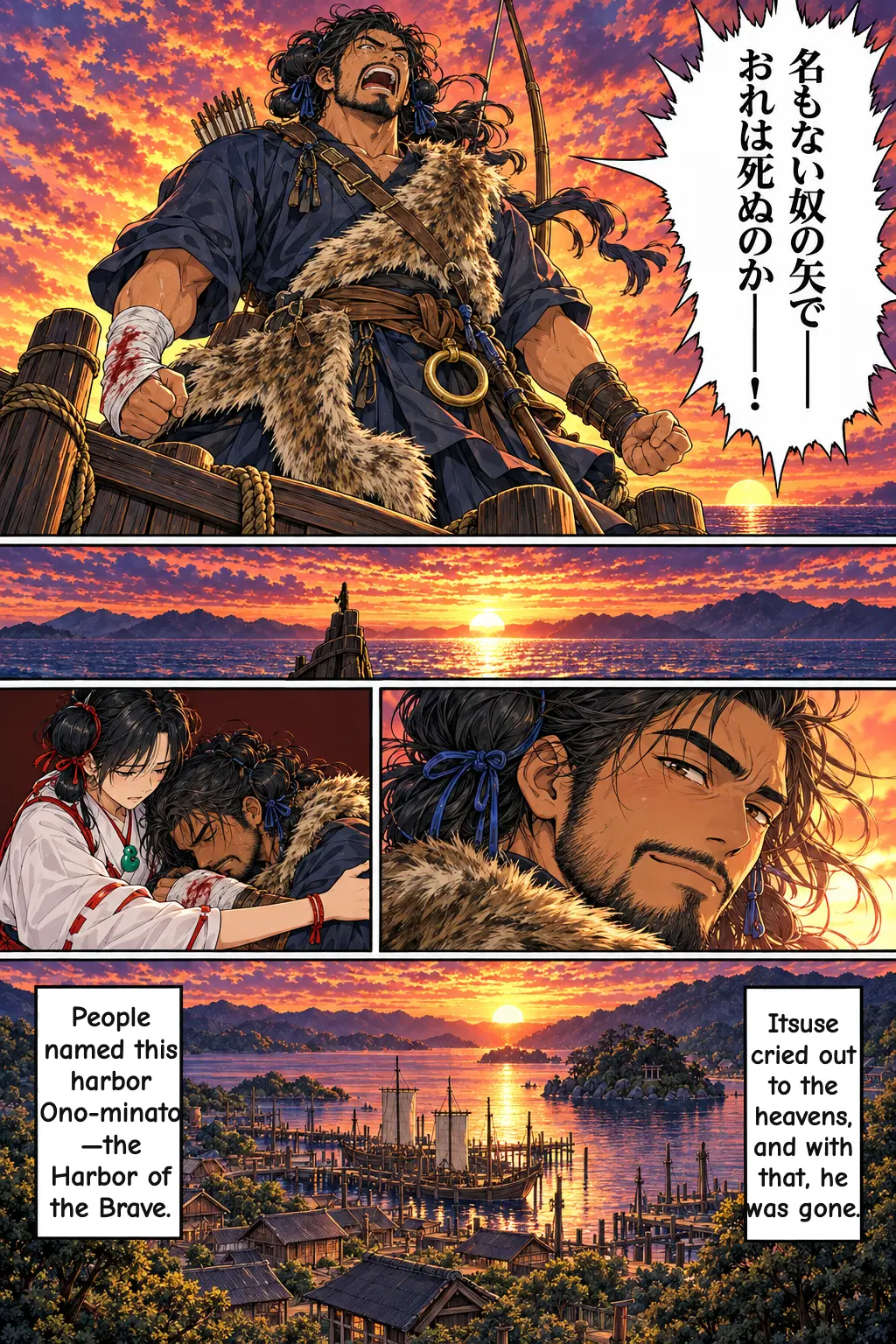
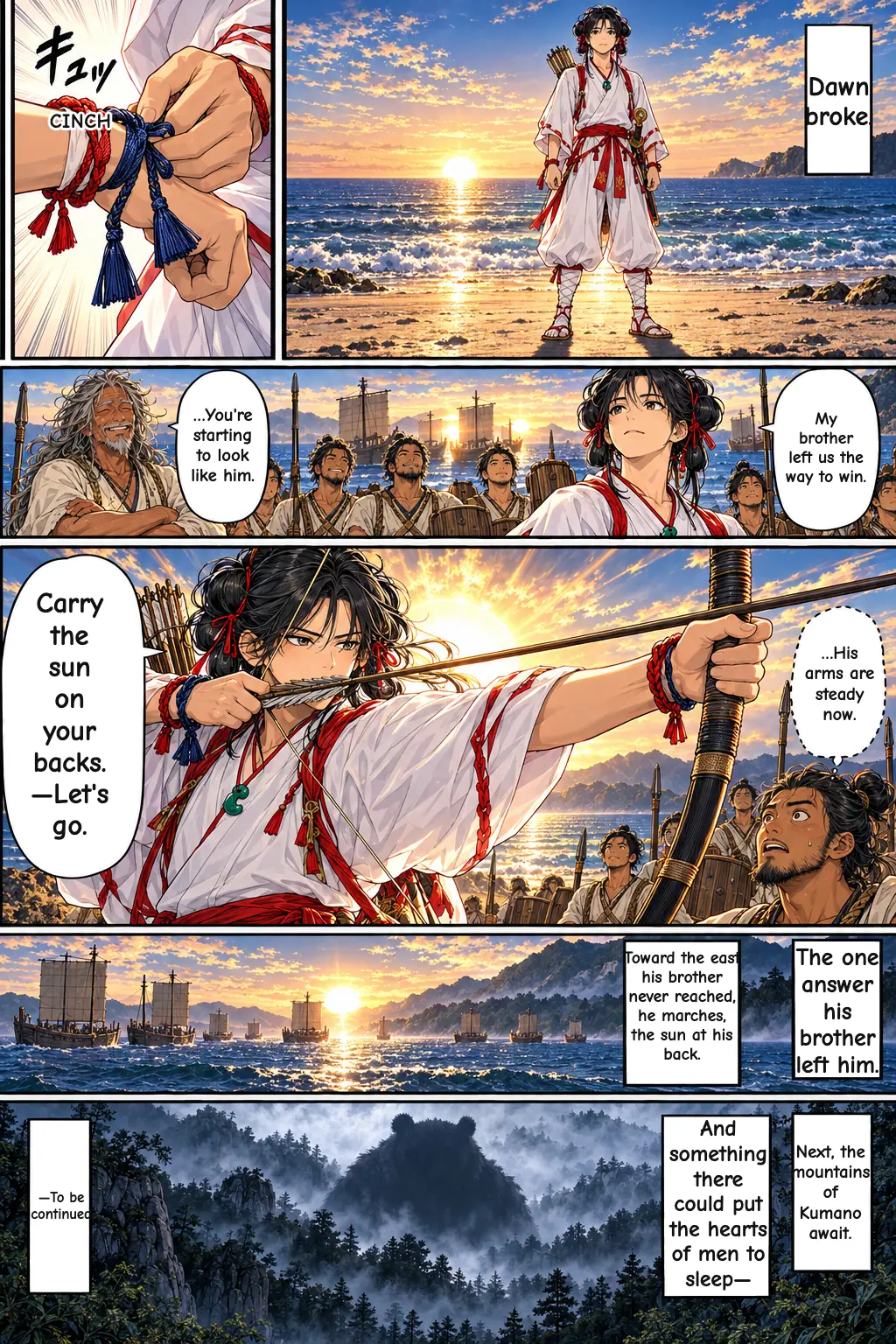
In the battle, Itsuse is struck in the hand by one of Tomibiko's arrows. He then explains the defeat: as children of the sun goddess, they were wrong to fight facing the sun, and that is why a lowly enemy could wound him. From now on, he says, they must go around and attack with the sun at their backs.
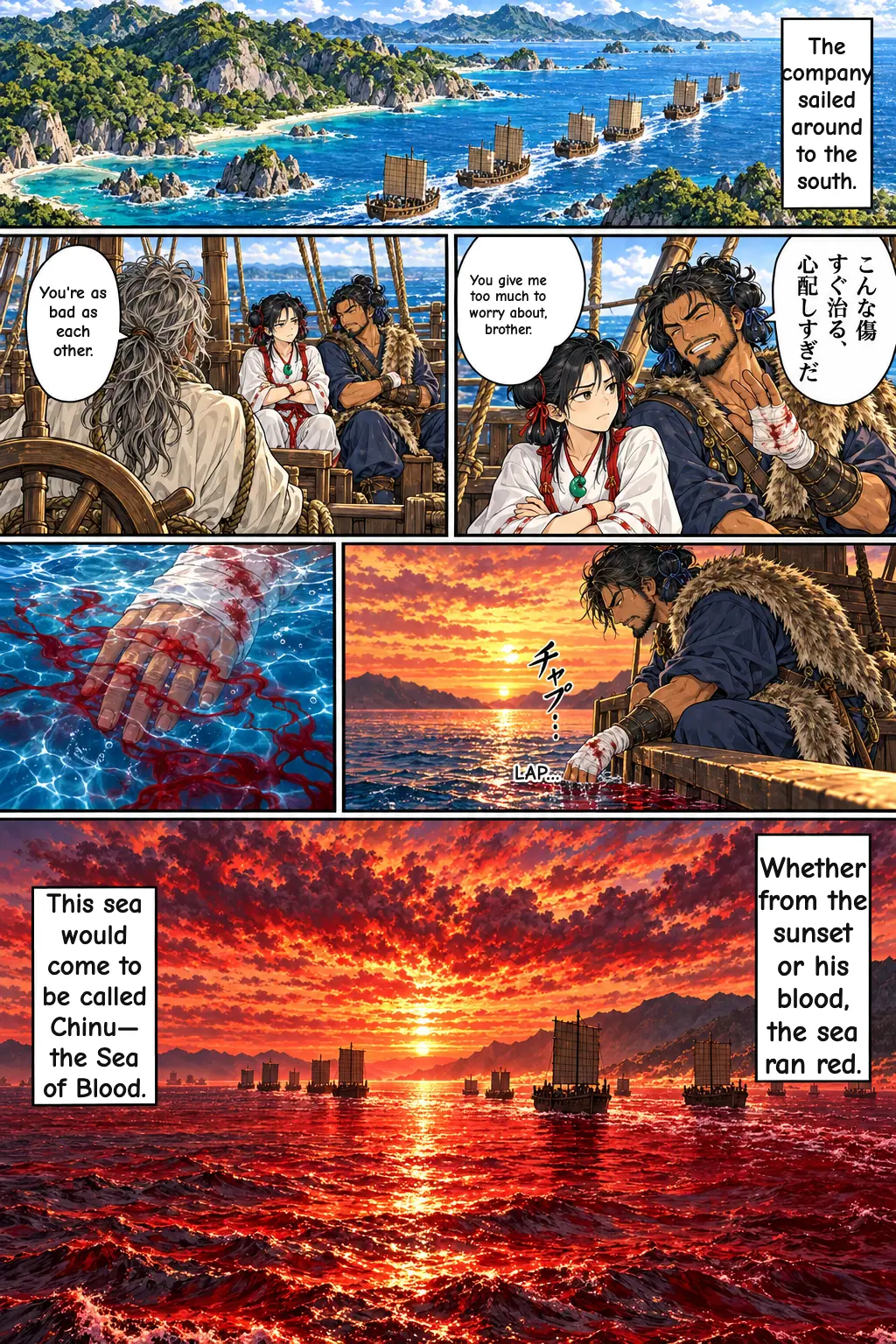
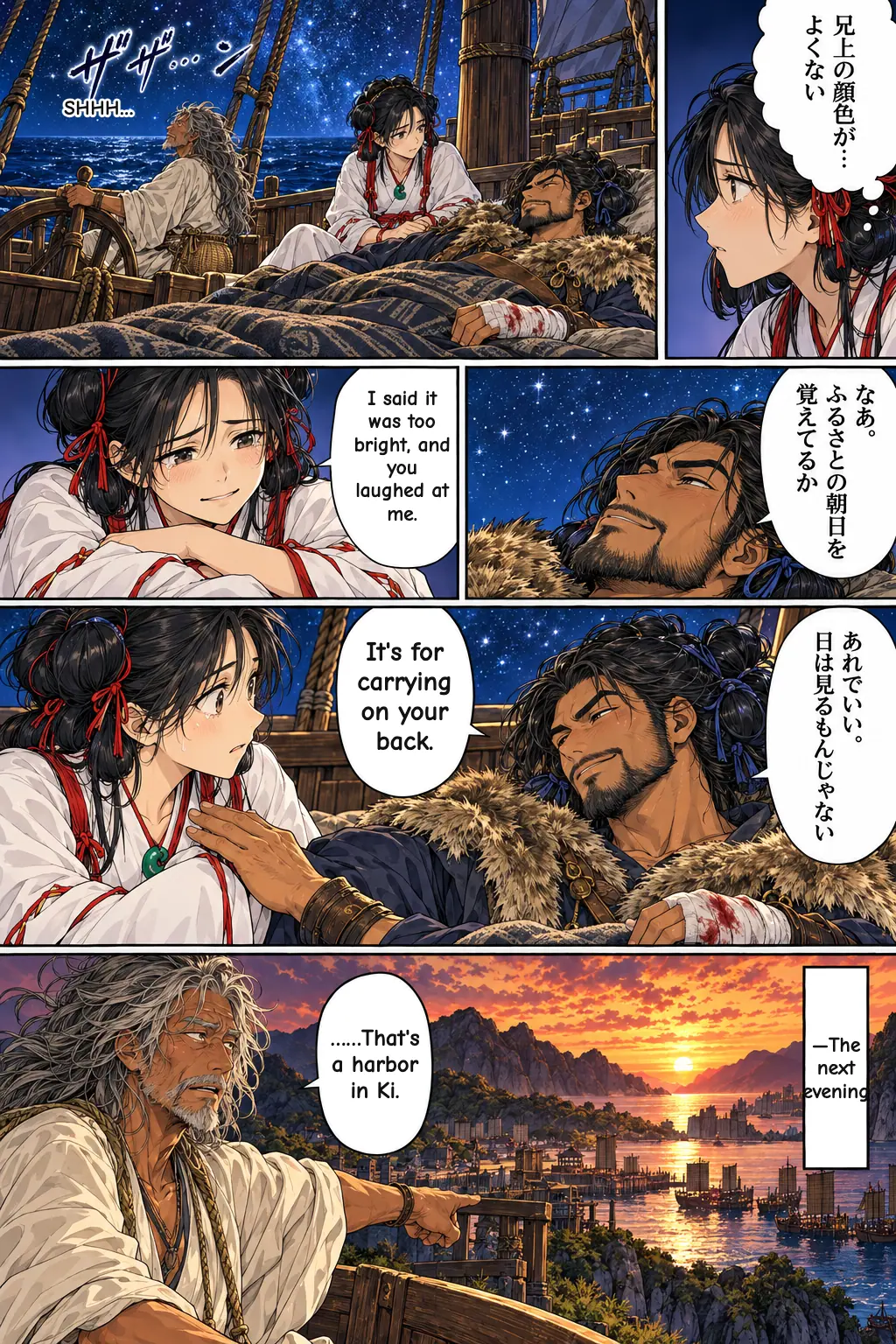
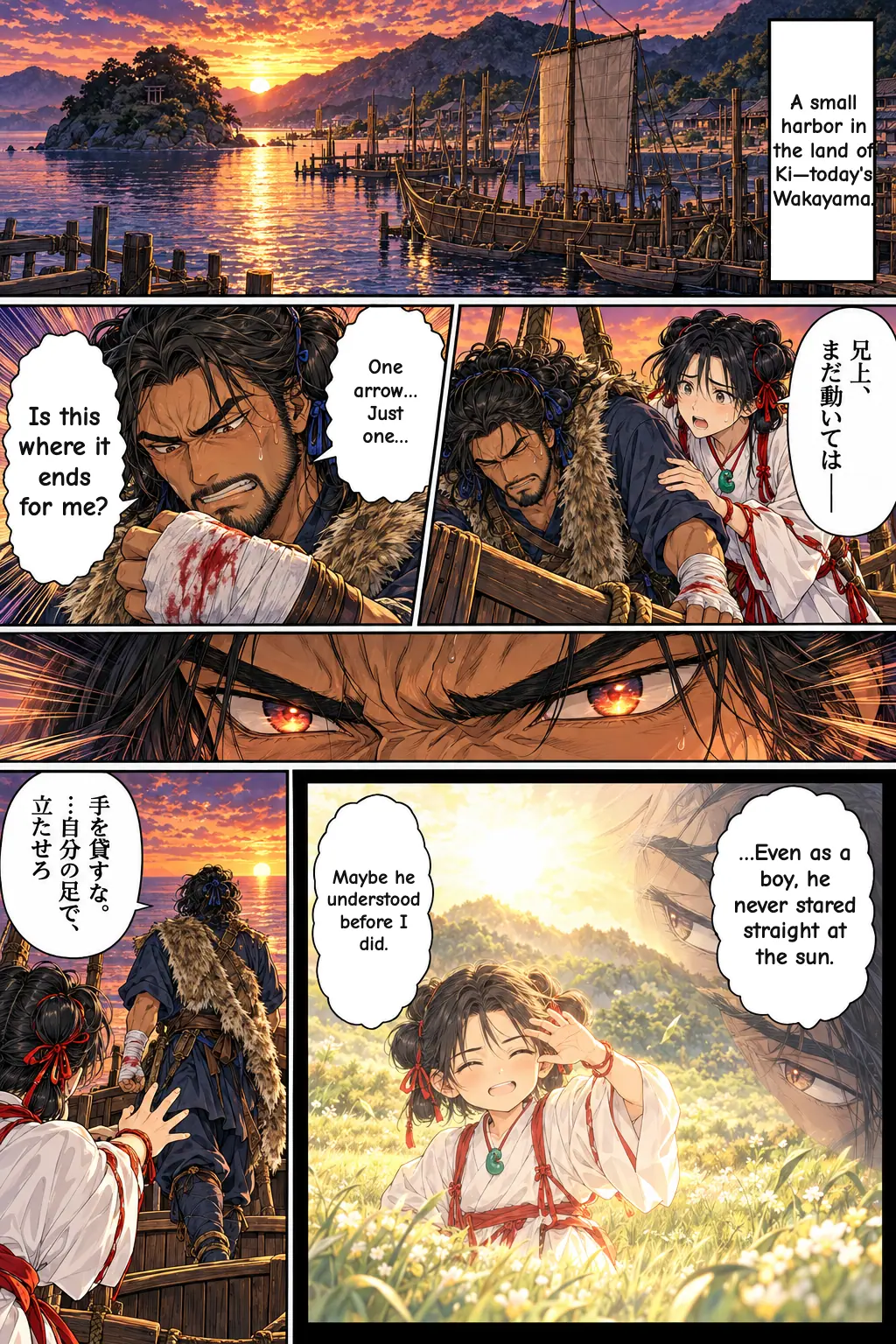
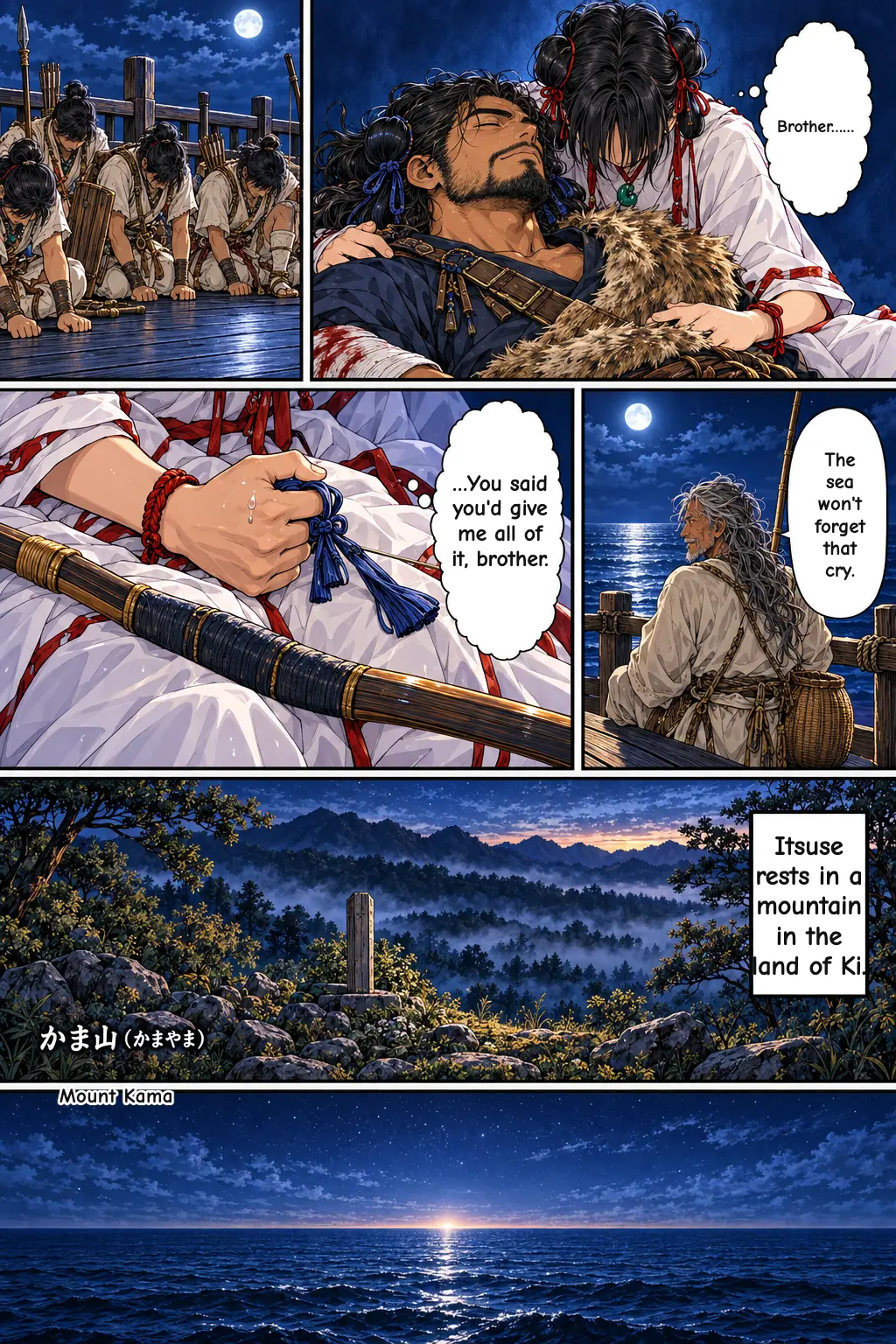
The army sails around to the south. At the Chinu Sea, Itsuse washes the blood from his hand, which the Kojiki gives as the origin of the name Chinu. But the wound proves fatal. At a harbor in the land of Ki, Itsuse cries out in fury that he must die from a wound dealt by a lowly foe, and dies. The harbor was named Wo-no-minato after that warrior's cry, and the Kojiki places his tomb at Kamayama in Ki.
Main Characters
Iwarebiko is the hero of Book II, but in this episode the strongest voice belongs to his brother. Itsuse joins the decision to go east, takes the arrow, works out why they lost, and dies angry at his fate. The Kojiki describes neither brother's appearance or personality. What we have are their words and actions.
The supporting cast is small: the hosts at Usa, the turtle-riding guide Saonetsuhiko, and the enemy leader Tomibiko. The text never explains who Tomibiko was or why he fought.
What This Myth Tells Us
The sun is at the heart of this episode. The royal line traces its descent from Amaterasu, so in Itsuse's reading the direction of the sun is a question of divine favor, not just tactics. Marching east meant fighting toward the rising sun. Turning south to strike from another side sets up the rest of Iwarebiko's campaign in Book II.
The episode also shows the Kojiki's habit of explaining place names. Tatetsu, Chinu and Wo-no-minato are each tied to a moment in the story, linking myth to places that eighth-century readers knew. Modern identifications vary: some place Hayasui at the Hōyo Strait between Kyushu and Shikoku, others at the Akashi Strait, and one theory puts Shirakata near Kusaka in present-day Higashiosaka.
The meeting with Saonetsuhiko shows a local god freely joining the heavenly line, a pattern that appears again and again in the Kojiki. Note that Japan's other early chronicle, the Nihon Shoki, tells this expedition differently. This article follows the Kojiki only. Most historians regard Jimmu as a legendary figure, not a documented ruler.
What the Manga Adds or Changes
The Kojiki tells this story in a few short lines, so the manga fills in a great deal. Everything visual is invented: faces, ages, clothing, weapons and ships. The flashback of the brothers at Takachiho, the montage covering the sixteen years of waiting, the feast at Usa and the look of the Ashi-hitotsu-agari palace are all creative choices.
Saonetsuhiko's personality, the size of his turtle and the timing of the meeting are imagined, but the question-and-answer exchange follows the original. The layout of the battle, the size of the armies, who fired the arrow, and Tomibiko's looks and motives are also the manga's own. So are the days between Itsuse's wound and his death, the brothers' conversations along the way, and how Iwarebiko grieves. The Kojiki records only Itsuse's two speeches and gives no reaction from his brother.
Where to Read It
If you want to see this story told in pictures, KOJIKI Book II: The Age of Heroes, Episode 1, "Beaten by the Sun in Their Eyes," is available here on Manga Portal. Every episode is free to read and needs no sign-up, so you can start with the brothers' departure from Takachiho and follow Iwarebiko as he carries on his brother's last plan.
Characters in this episode
Kamu-Yamato-Iwarebiko (later Emperor Jimmu)
A descendant of the sun goddess who sets out east to find a place to rule in peace, and the legendary first emperor of Japan.
Itsuse
Iwarebiko's elder brother by the same mother, who is wounded by an arrow and devises the plan to fight with the sun at their backs before he dies.
Saonetsuhiko
A local god who rides a turtle at the strait of Hayasui and agrees to guide the brothers' ships by sea.
Usatsuhiko and Usatsuhime
A man and woman of Usa who build a palace for the brothers and serve them a great feast.
Tominonagasunebiko (Tomibiko)
The leader who gathers an army at Shirakata and defeats the brothers in their first great battle.
FAQ
Who was Emperor Jimmu in Japanese mythology?
Emperor Jimmu is the legendary first emperor of Japan, known in the Kojiki as Kamu-Yamato-Iwarebiko. He is said to descend from the sun goddess Amaterasu and to have led an expedition east from Kyushu. Most historians regard him as a legendary rather than a historical figure.
Why did Itsuse die in the Kojiki?
Itsuse was hit in the hand by an arrow during the battle against Tomibiko at Shirakata. The wound proved fatal, and he died at a harbor in the land of Ki, crying out in anger that a lowly enemy had killed him.
Why did Jimmu's brothers lose the first battle?
According to Itsuse, they lost because, as children of the sun goddess, they fought facing the sun. He decided they should go around and attack with the sun at their backs, which shaped the rest of the campaign.
What is the Kojiki?
The Kojiki, or Records of Ancient Matters, is Japan's oldest surviving book, compiled by Ō no Yasumaro and presented in 712. It covers the age of the gods and the early emperors in three volumes.
Who is the man riding a turtle in the Jimmu story?
He is Saonetsuhiko, a local god the brothers meet at the strait of Hayasui. He says he knows the sea routes, agrees to serve, and is pulled aboard with a pole and given his name.