Episode 1Why the Temple Boy Sneaks Out at NightUshiwakamaru at Mount Kurama
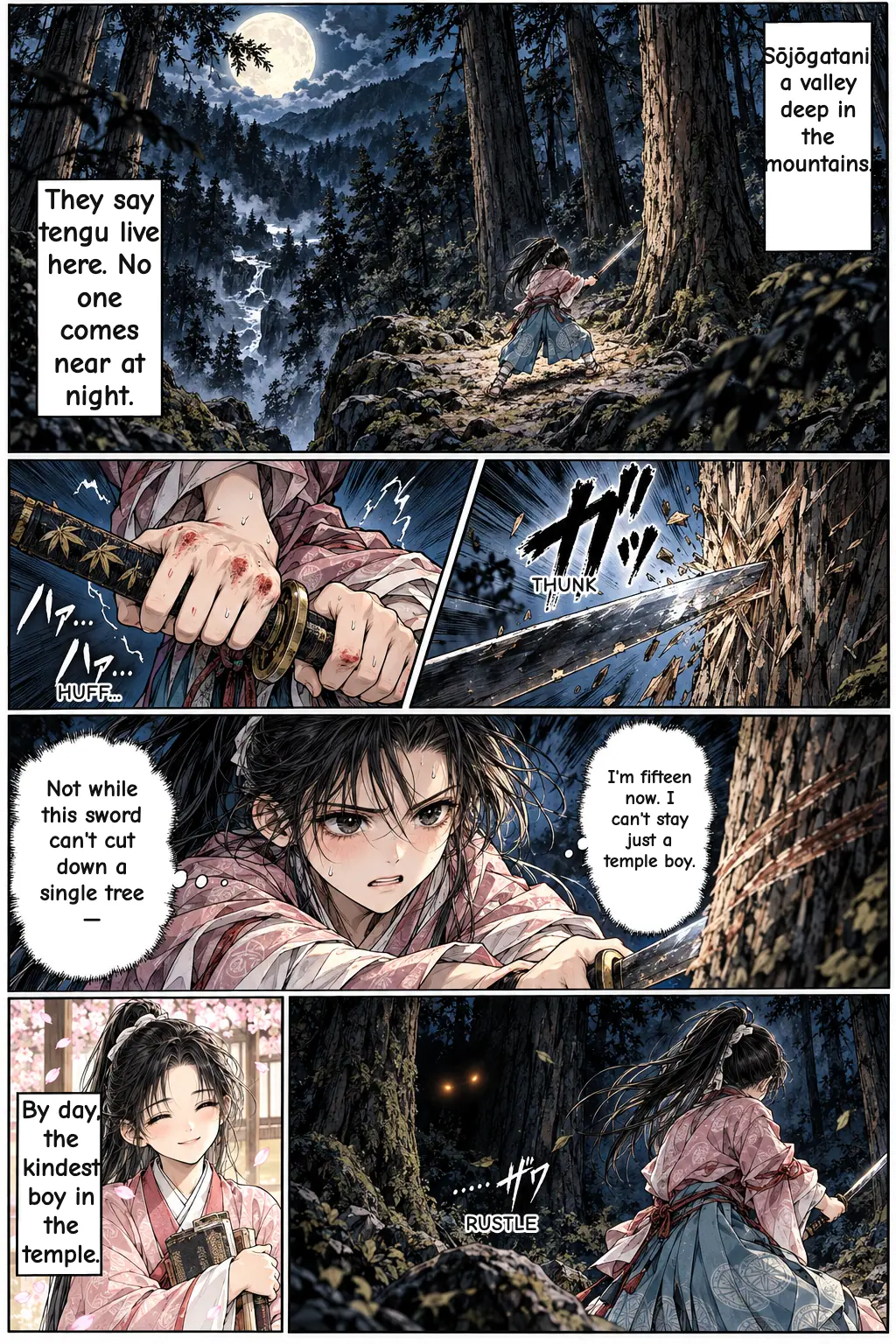
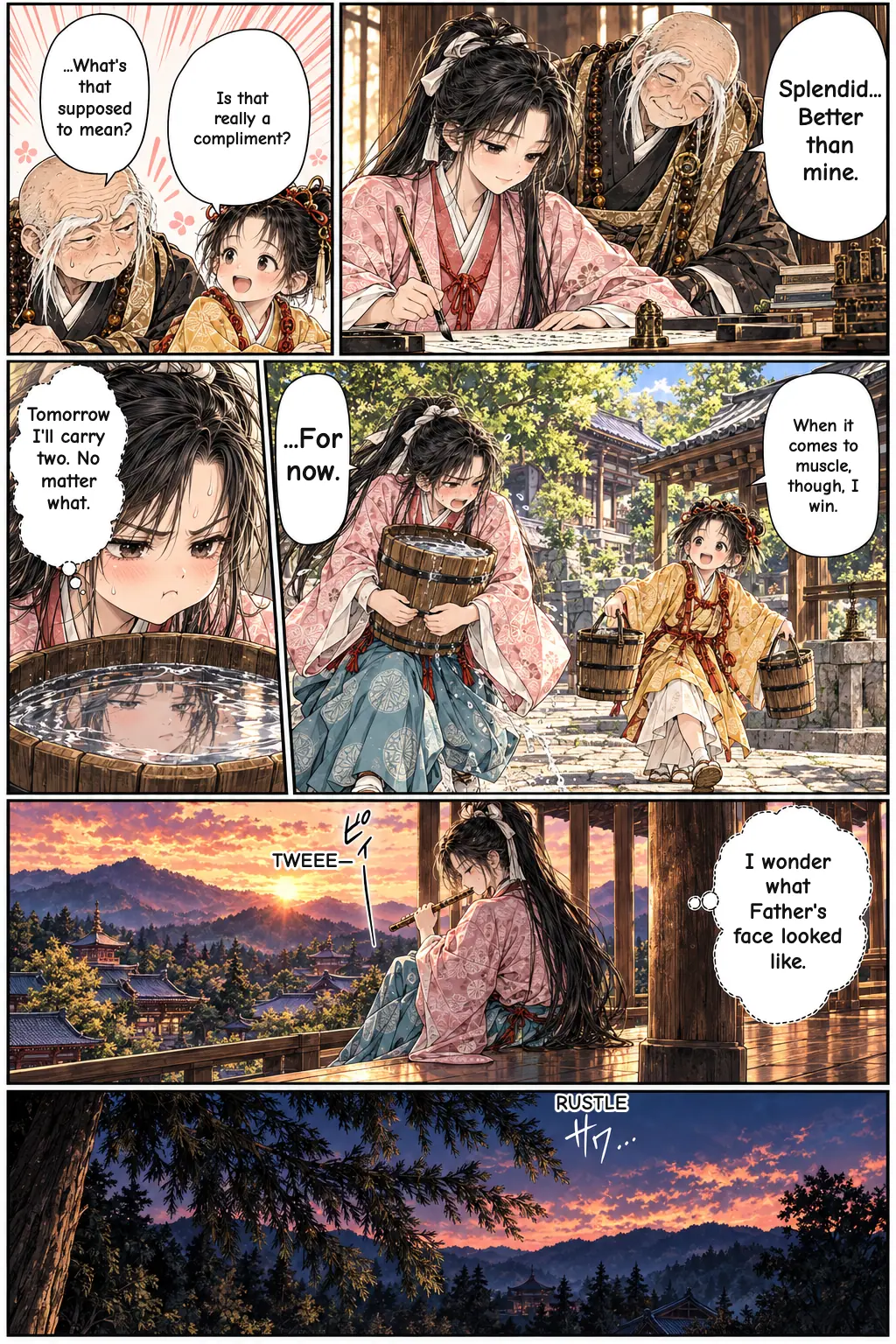
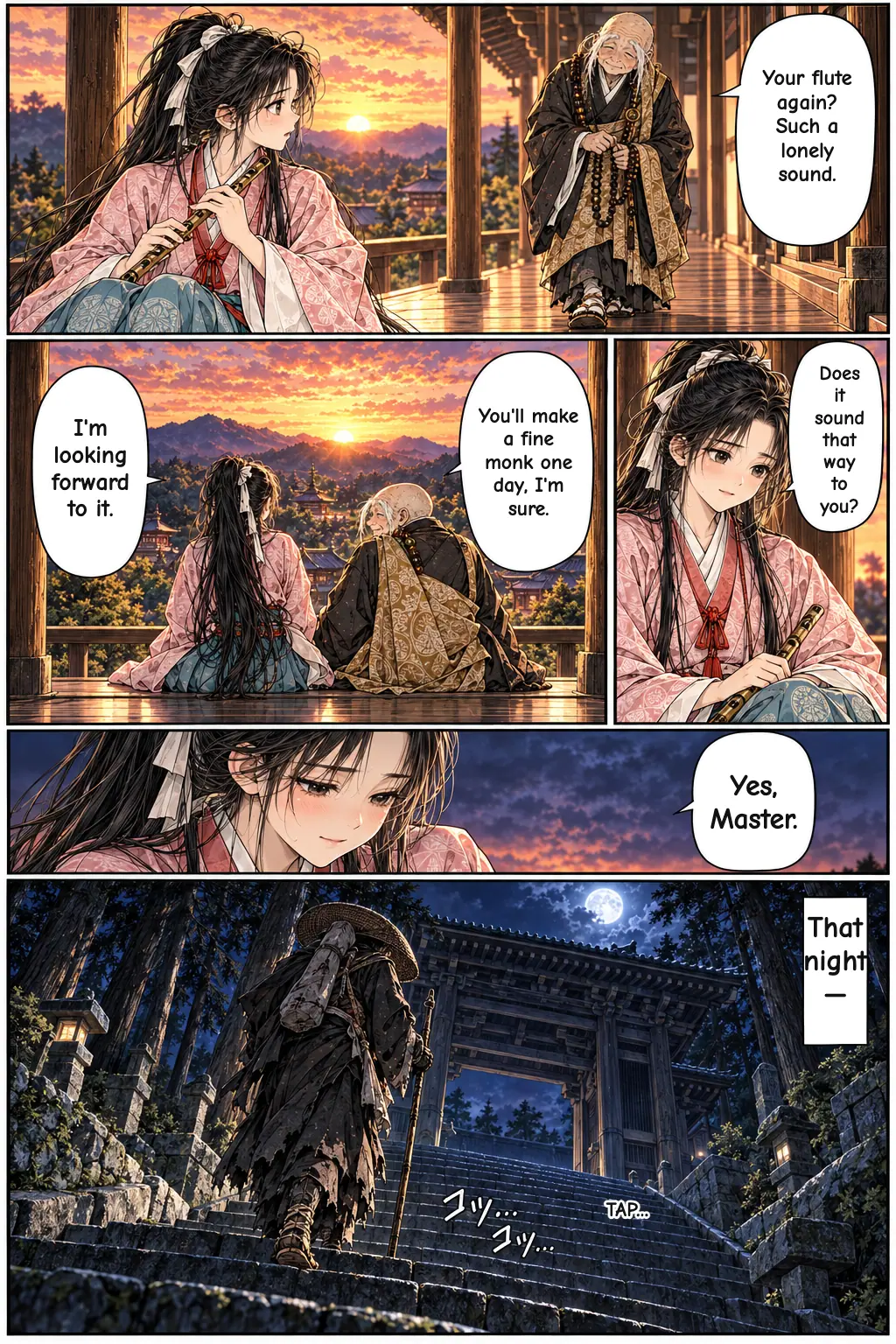
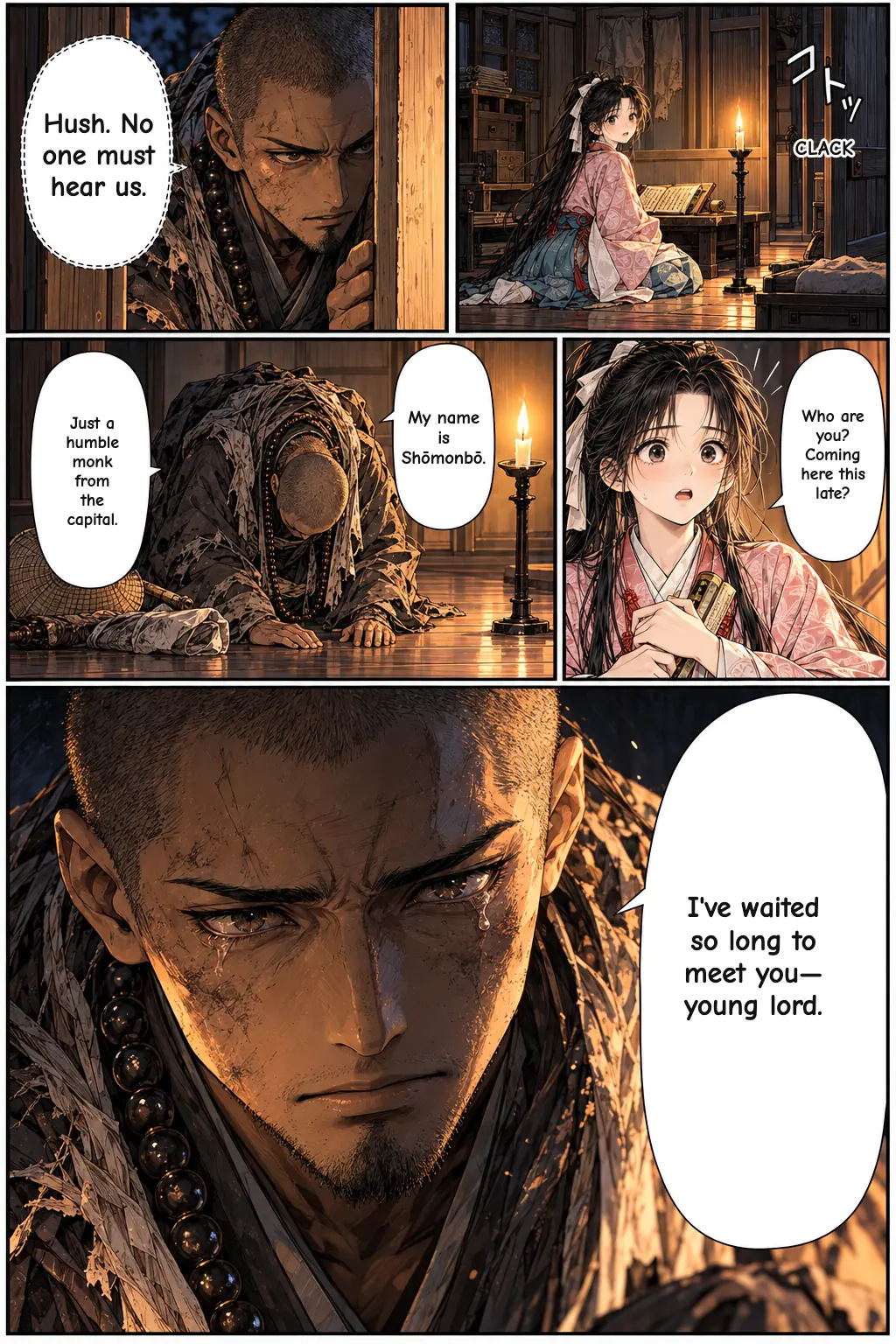
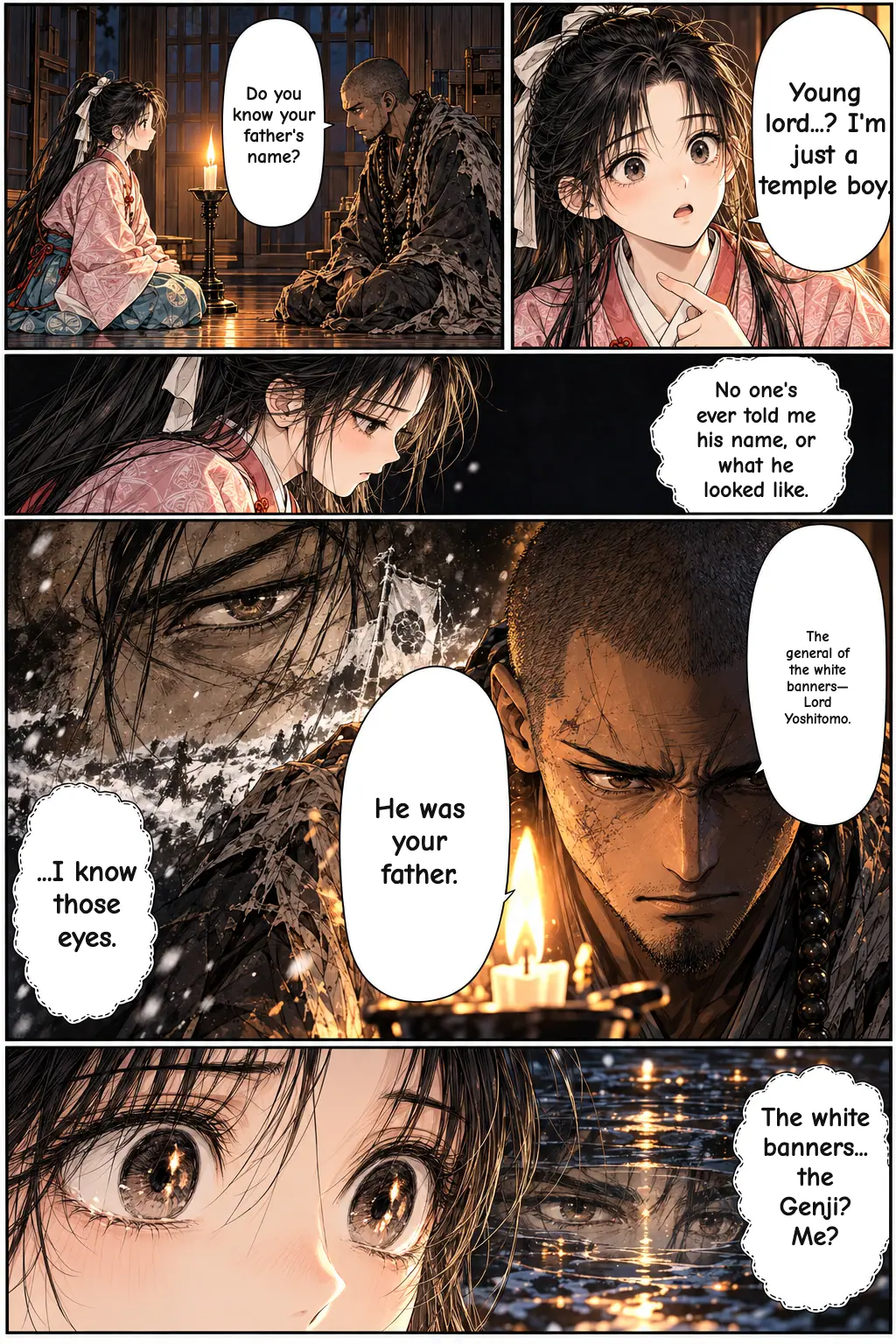
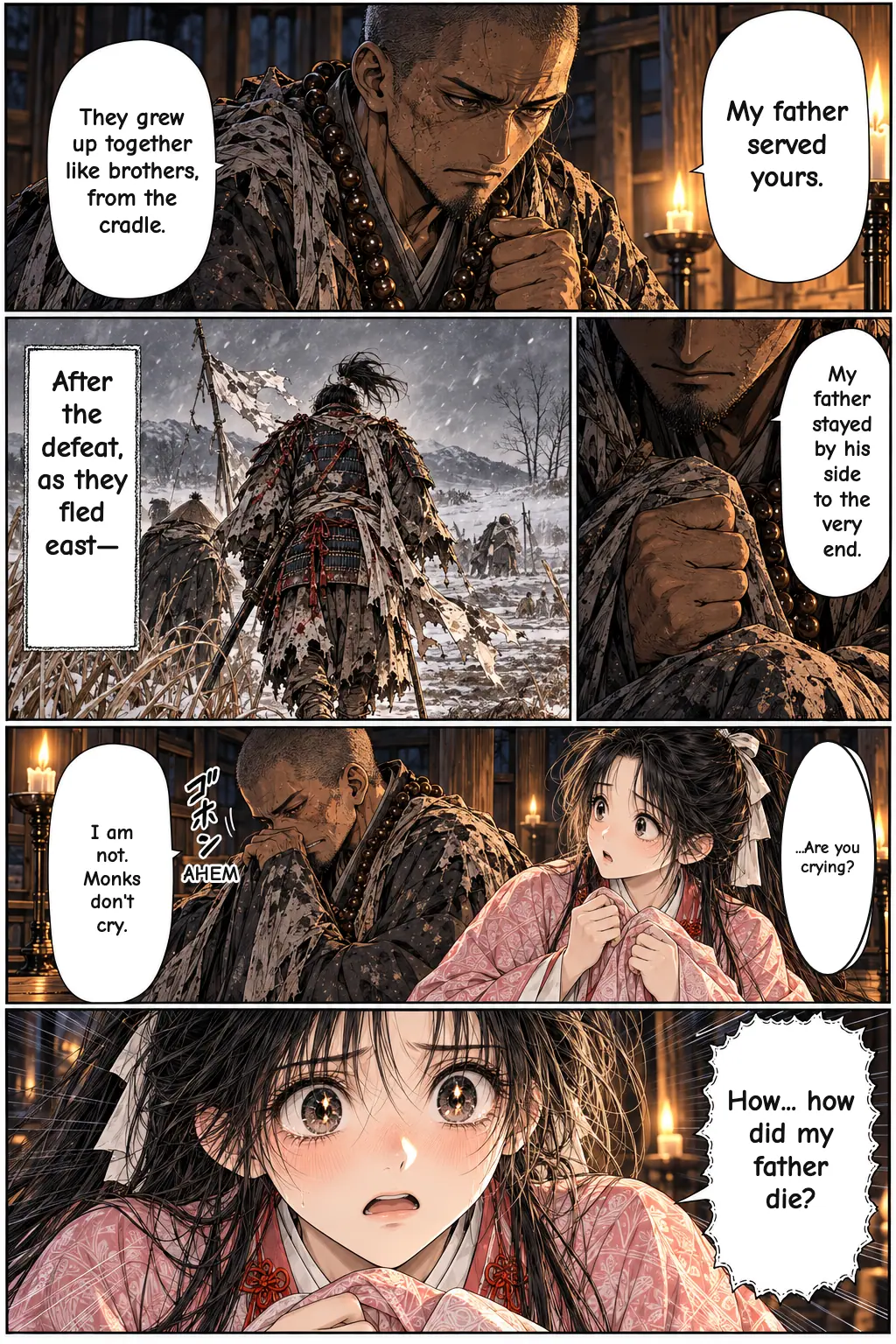
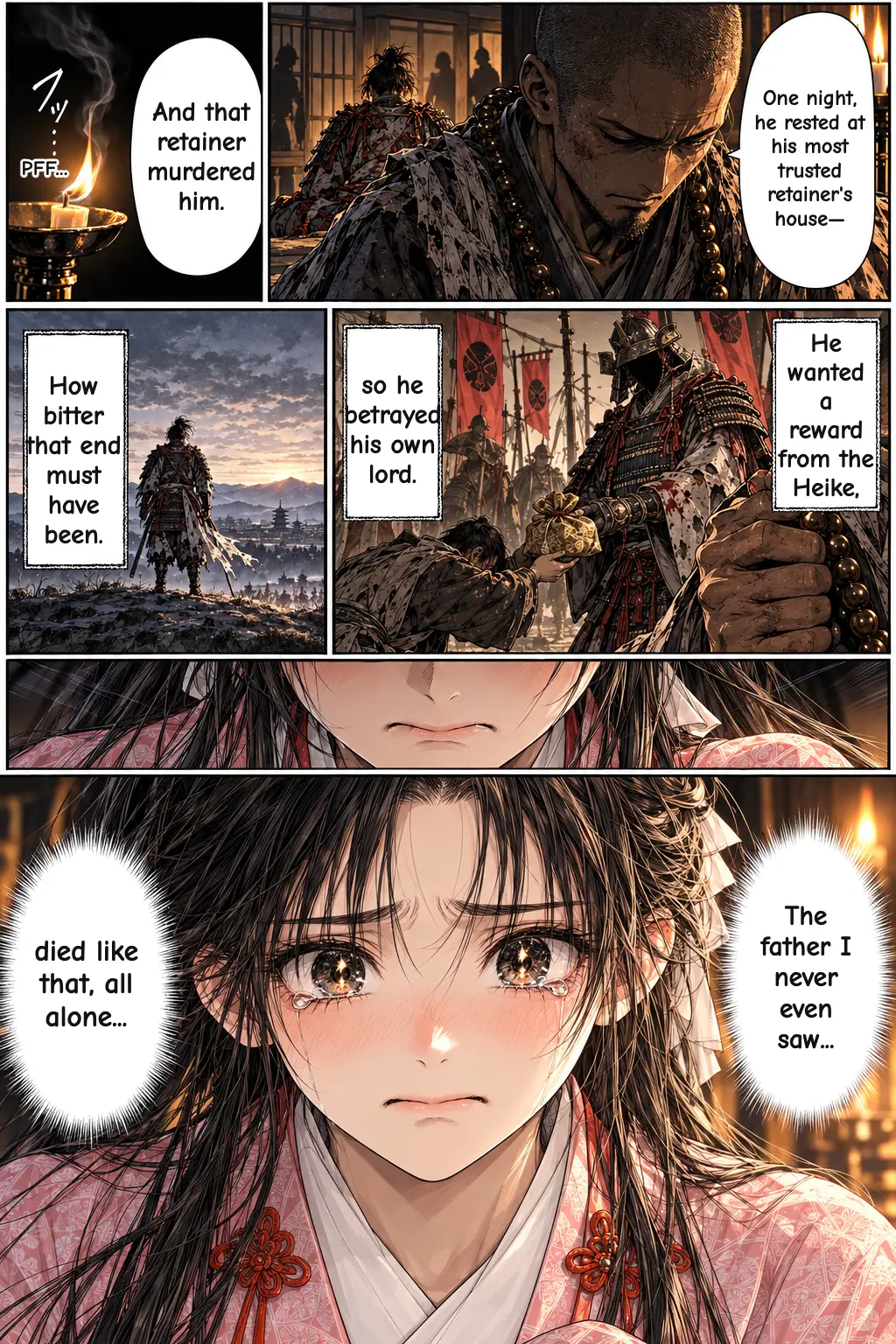
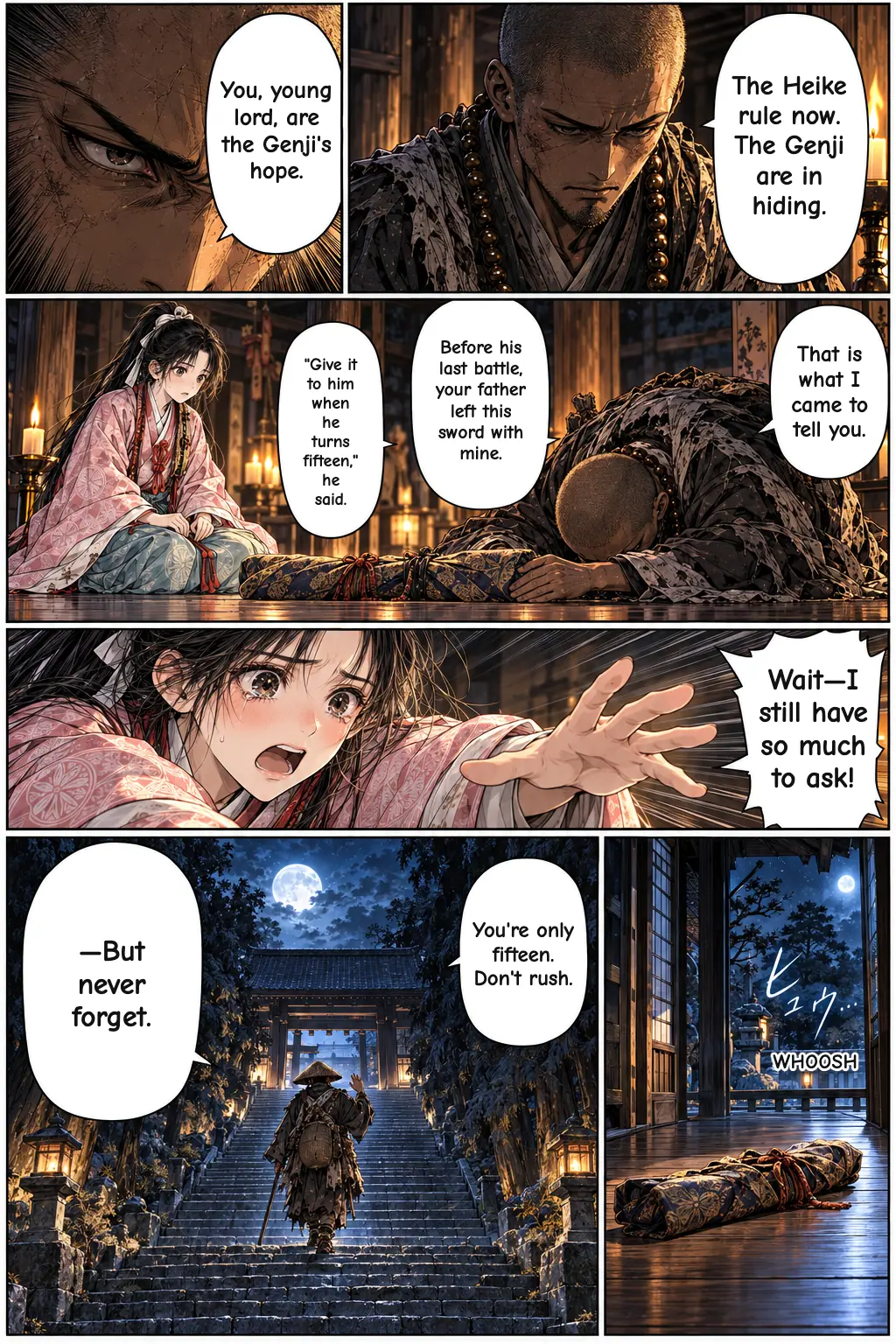
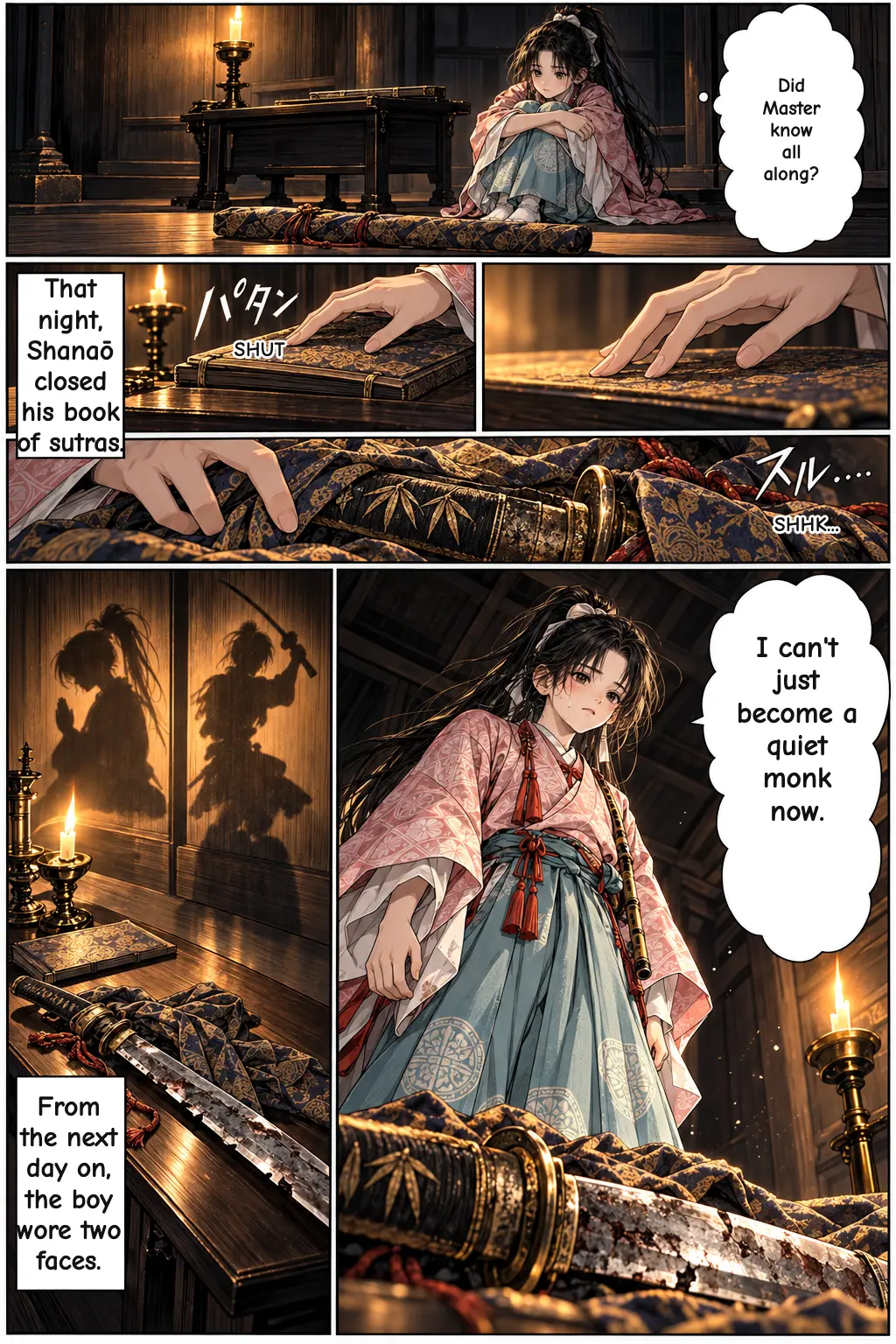
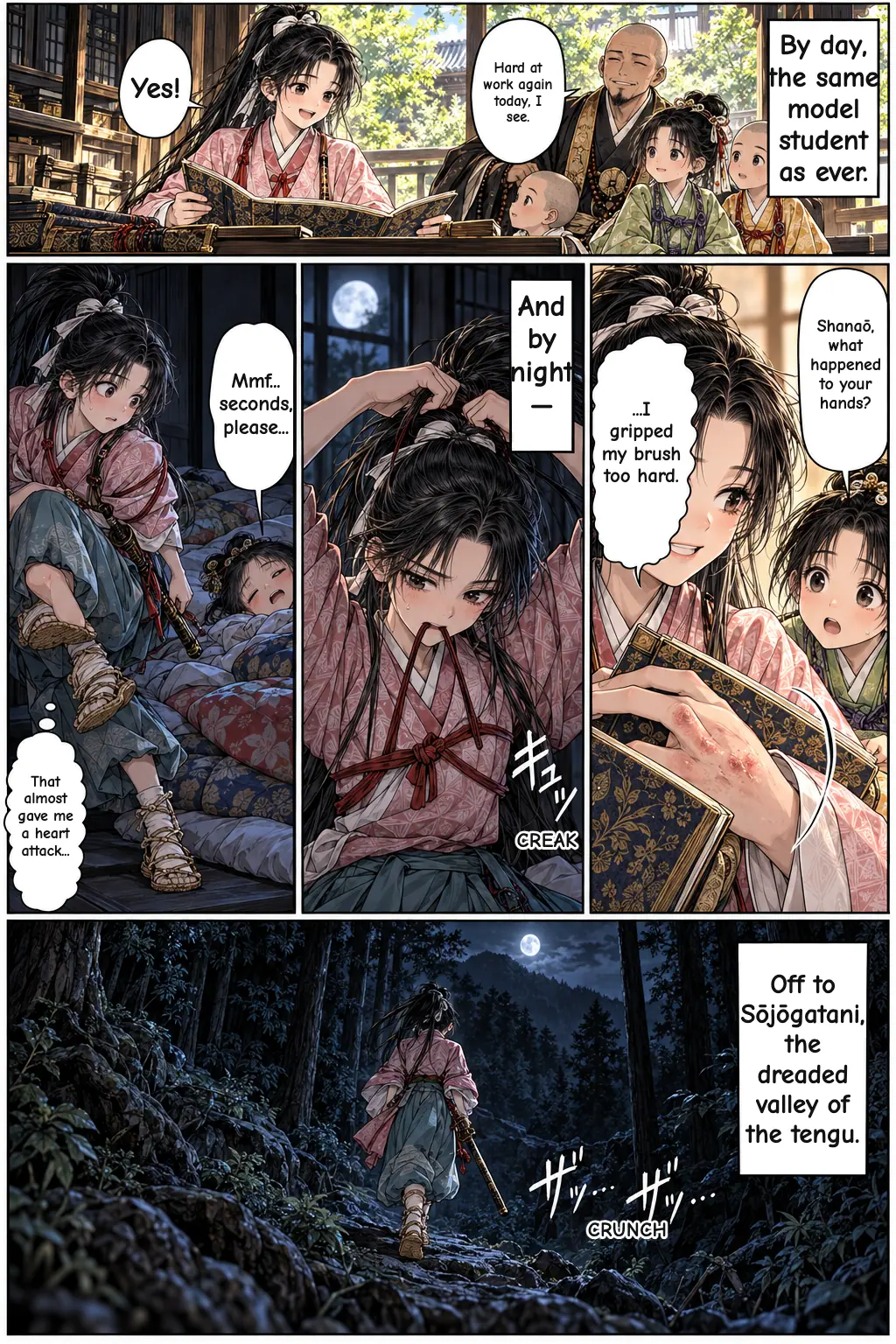
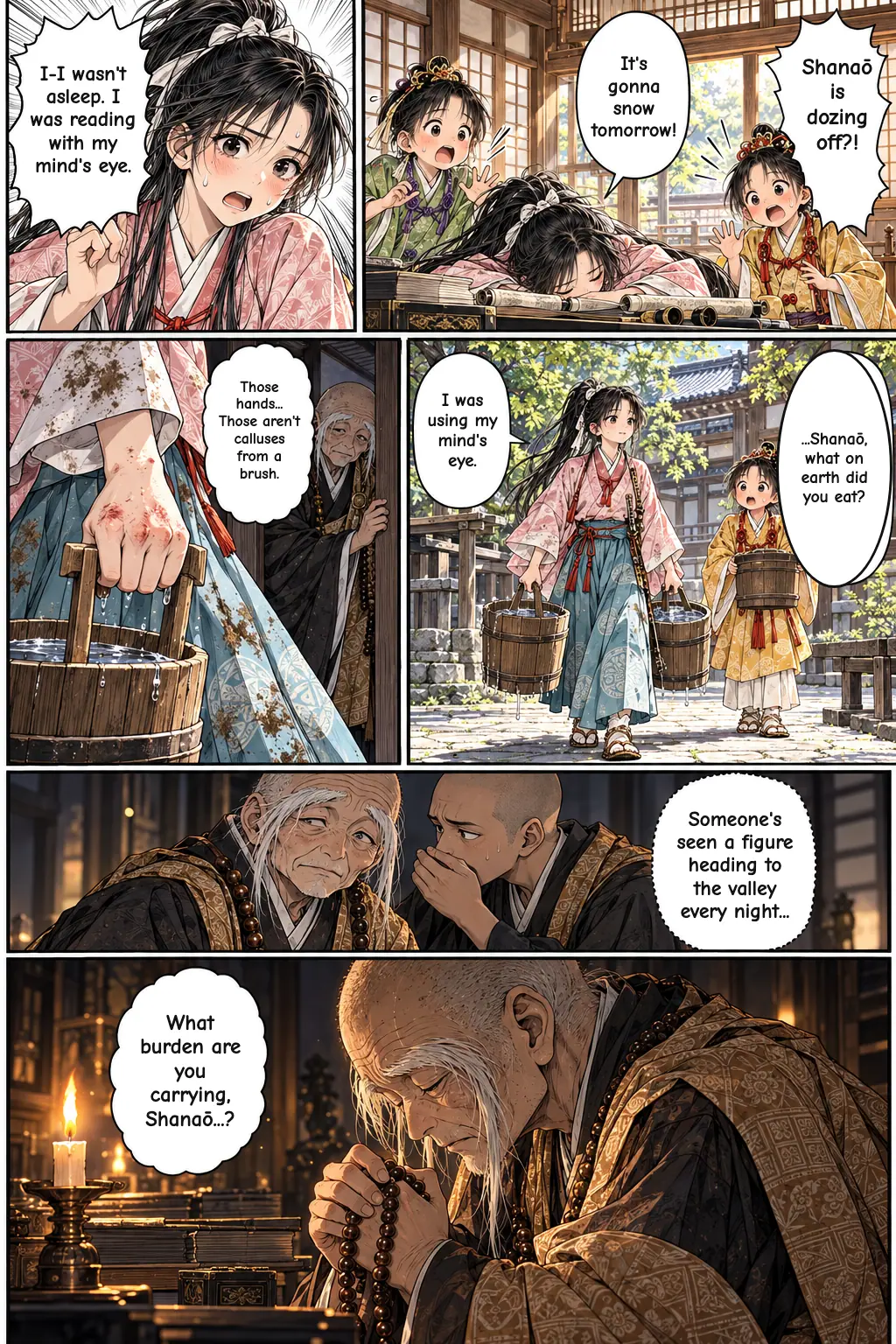
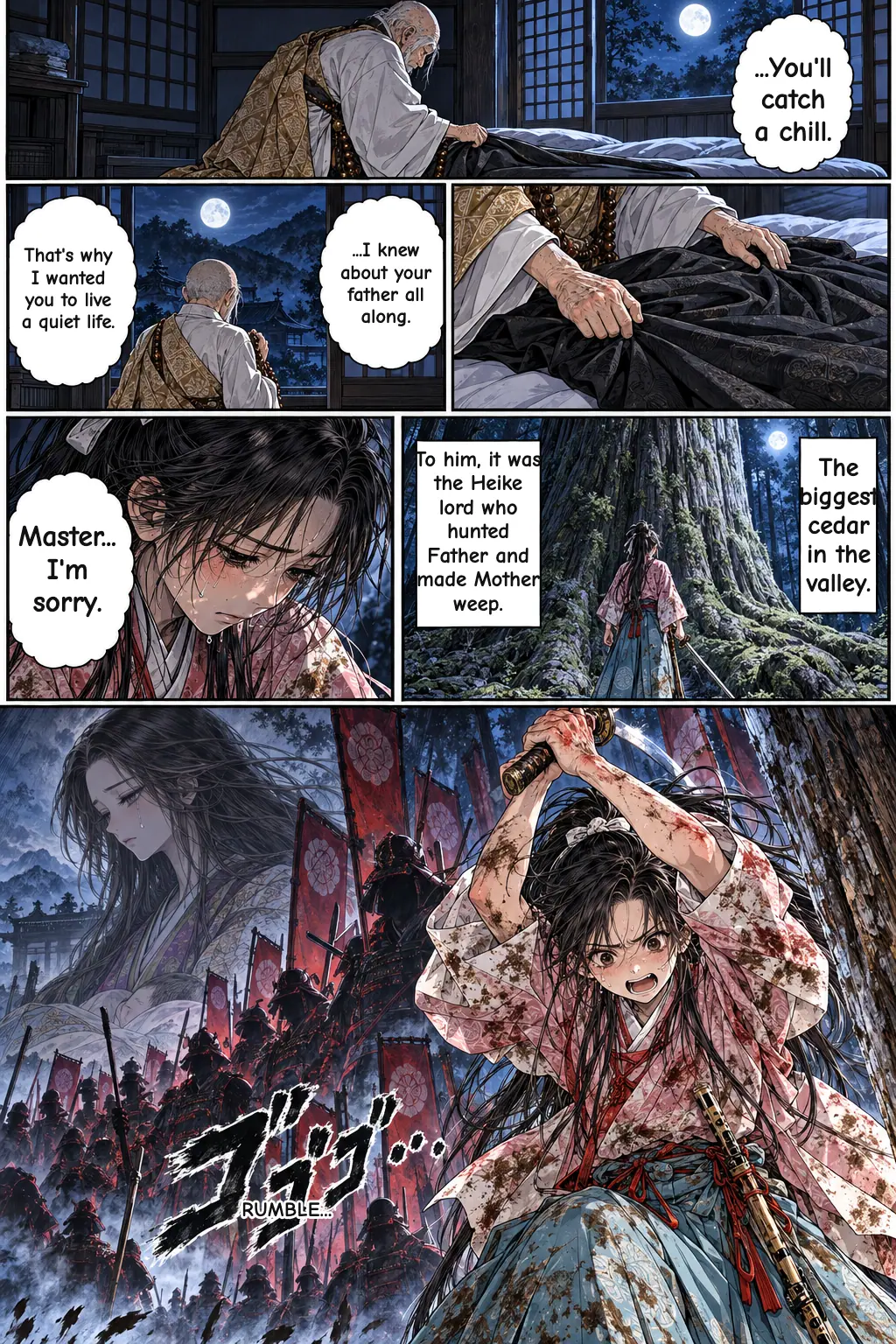
The Legend of Yoshitsune, Episode 1. At a mountain temple, a boy named Shanaō is loved by everyone. One night a traveling monk visits him and reveals the truth: Shanaō is the son of the great Genji general Minamoto no Yoshitomo, who was murdered by a retainer hungry for a Heike reward. The monk hands him his father's sword. From that day on, Shanaō lives a double life: a model student by day, and by night a lone swordsman training in Sōjōgatani, the valley of the tengu.
Ushiwakamaru at Mount Kurama: Young Yoshitsune's Story Explained
The Original Story: Book One of the Gikeiki
The Gikeiki ("Chronicle of Yoshitsune") is a Japanese war tale by an unknown author, put together in the Muromachi period (roughly the 14th–15th centuries). Unlike tales of great battles, it is mostly interested in the hero's childhood and his later years as a fugitive. Episode 1 of the manga follows the opening part of Book One.
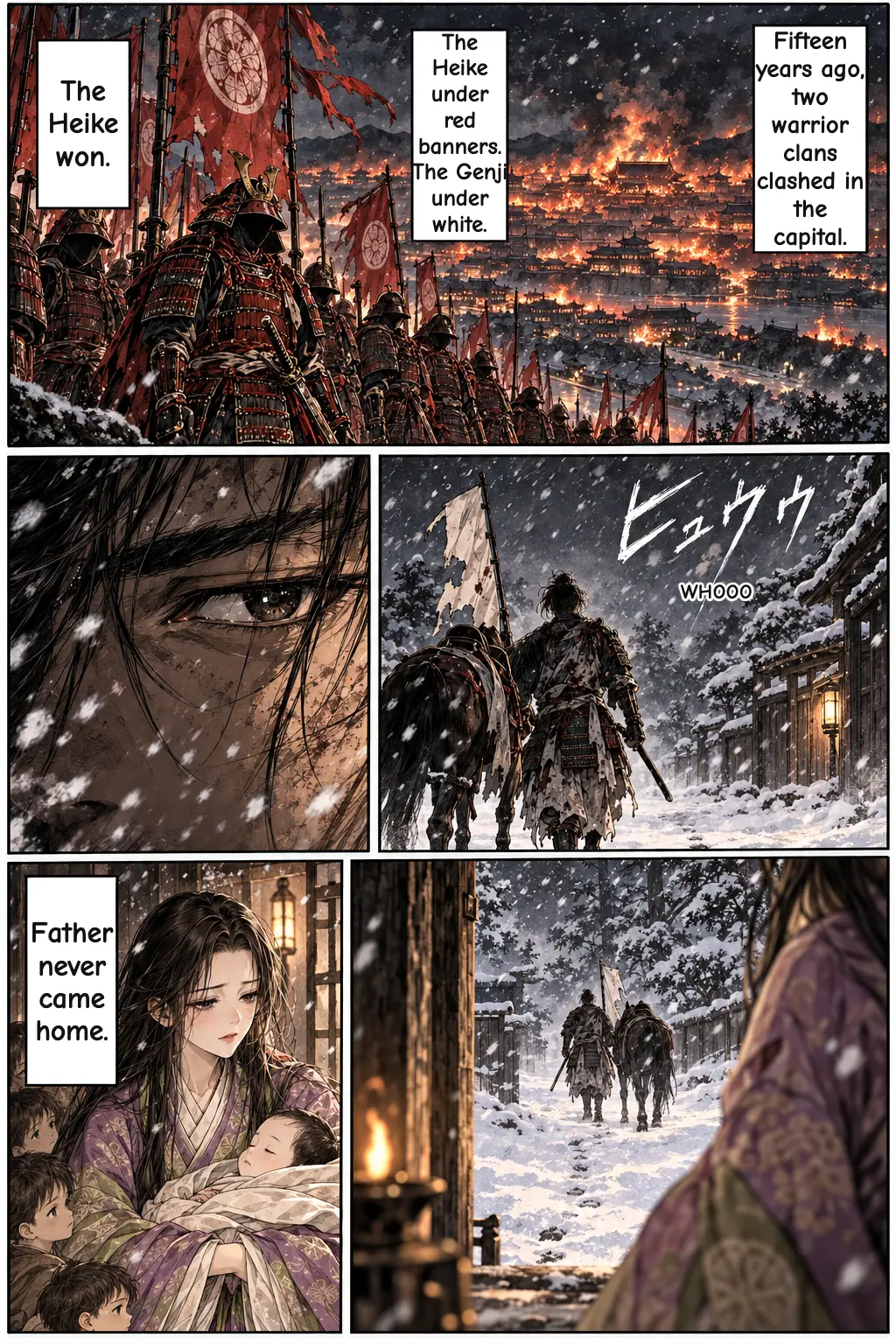
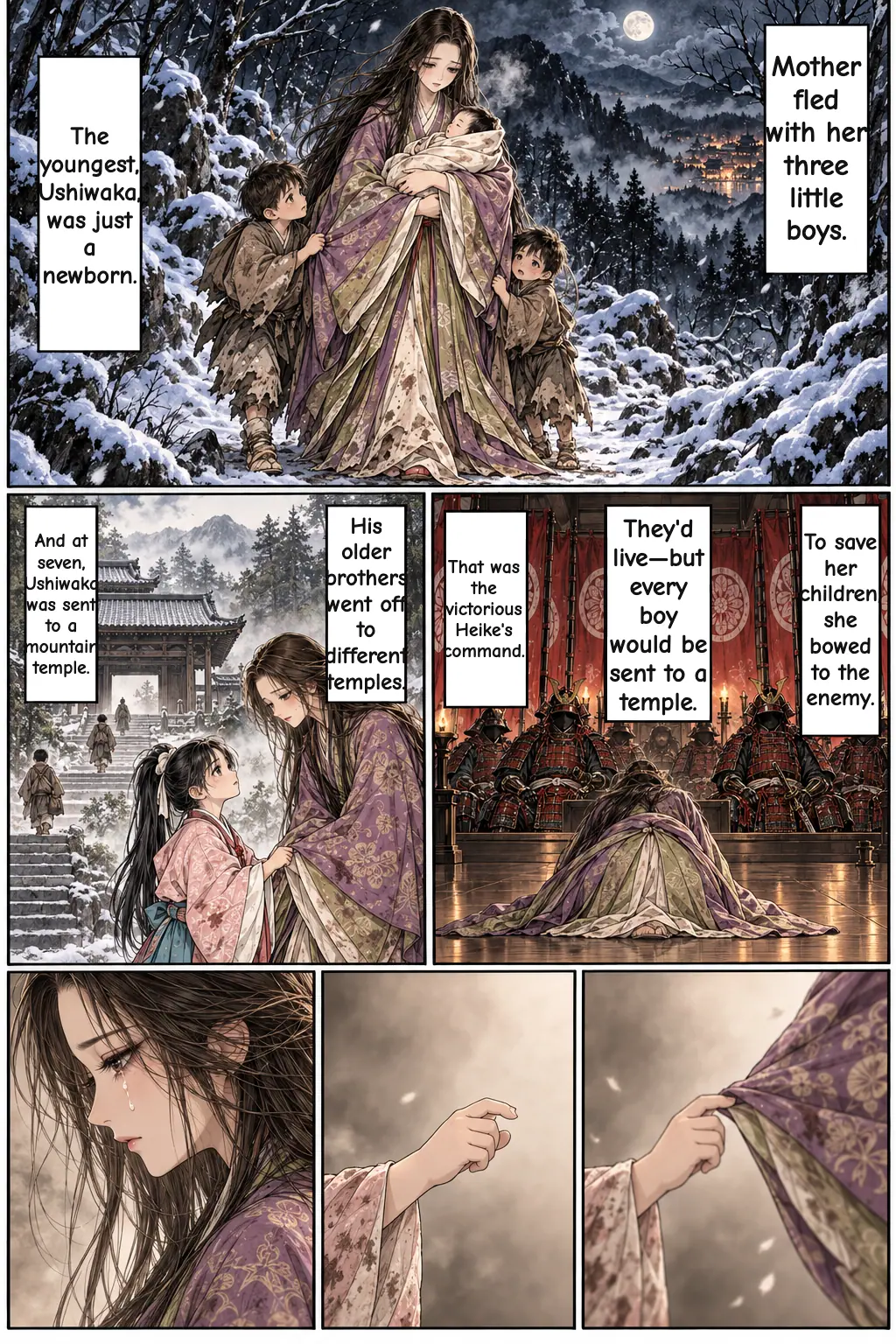
The story begins in the twelfth month of 1159. The Minamoto (also called the Genji) clan has just lost the Heiji Rebellion to the rival Taira (the Heike). Their leader, Minamoto no Yoshitomo, flees east toward his home territories. On the way, at Utsumi in Owari Province, he is killed by Osada Tadamune, a retainer whose family had served the Minamoto for generations. The tale treats this as a deep betrayal of a lord by his own man. Yoshitomo leaves behind Tokiwa, a young woman serving in the household of the empress Kujō-in, and their three small sons: Imawaka, Otowaka, and the baby Ushiwaka, born that same year. Tokiwa escapes with the children into Yamato Province. Later she comes to the capital and places herself under the protection of Taira no Kiyomori, the victorious Heike leader, and the boys' lives are spared. Tokiwa afterward becomes the wife of a court noble, Ichijō Naganari, and the two older brothers are sent to temples to become monks.
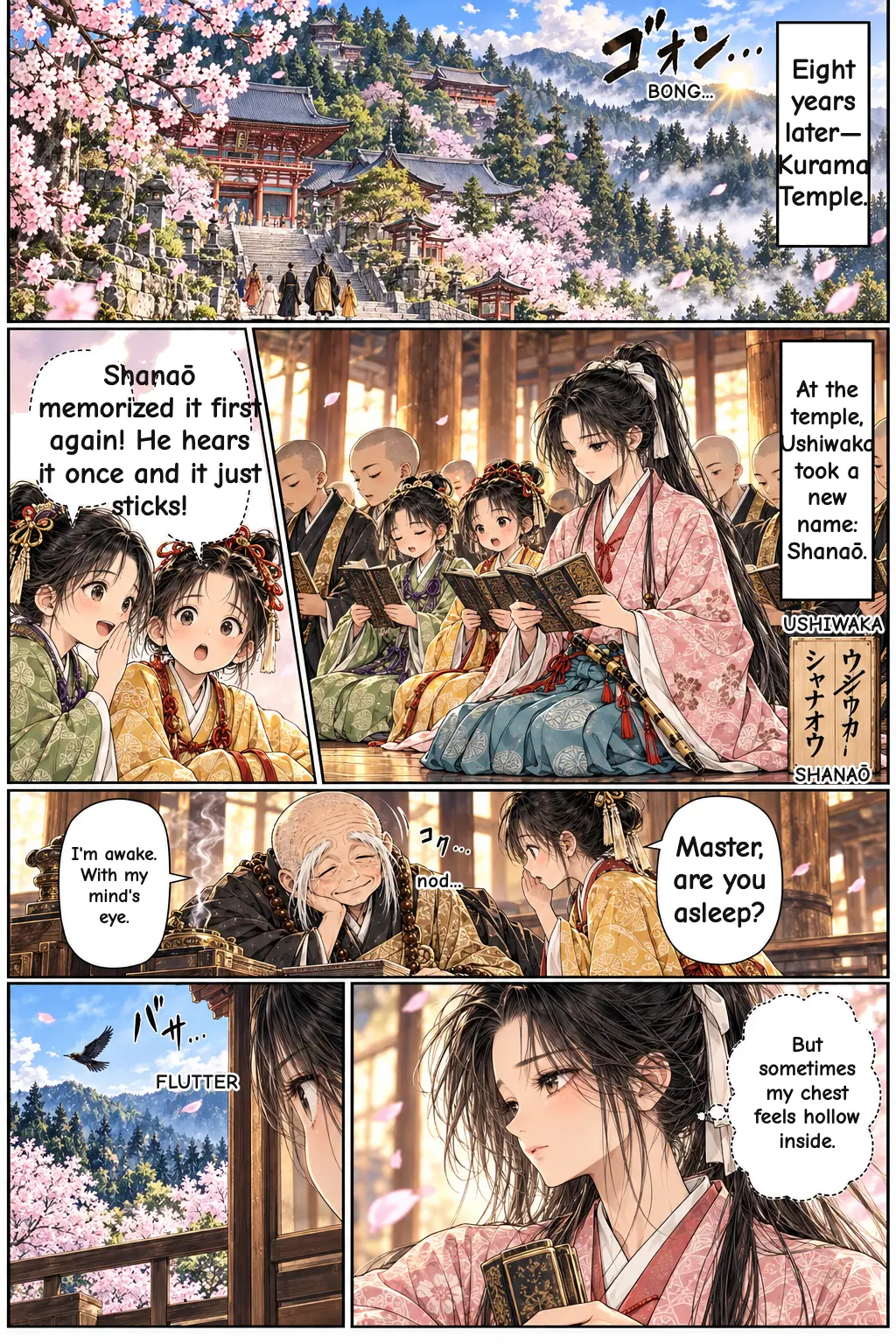
At the age of seven, Ushiwaka is entrusted to Tōkōbō Ajari (also known as Renjin), a priest at Kurama Temple in the mountains north of Kyoto. Taking the name Shanaō, he studies hard and wins praise from his teachers. Then, at around fifteen, a holy man named Shōmonbō comes to him secretly at night. Shōmonbō is the son of Kamata Masakiyo, Yoshitomo's foster-brother and loyal companion. He tells the boy who he really is—the heir of the main Minamoto line—and how his father died.
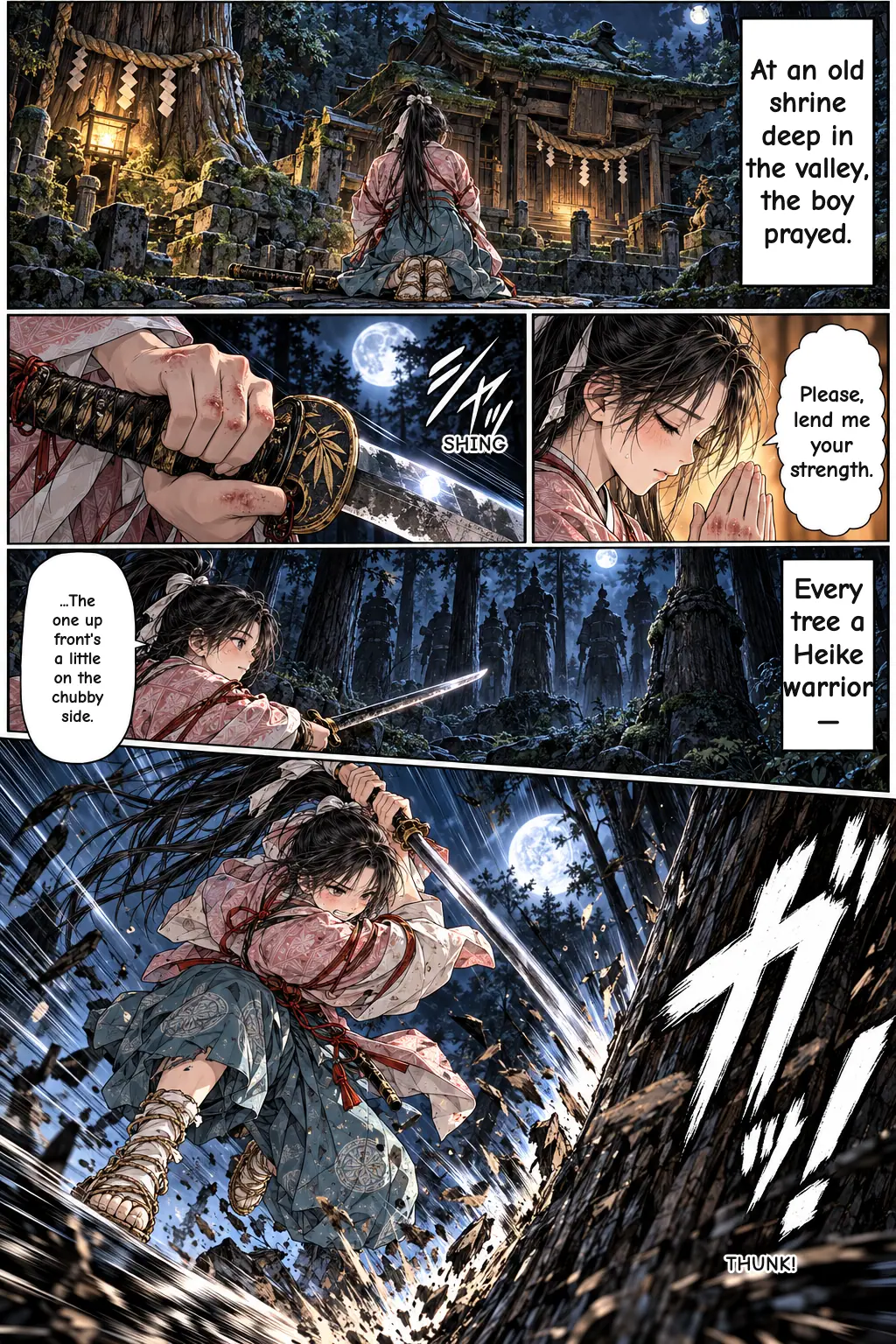
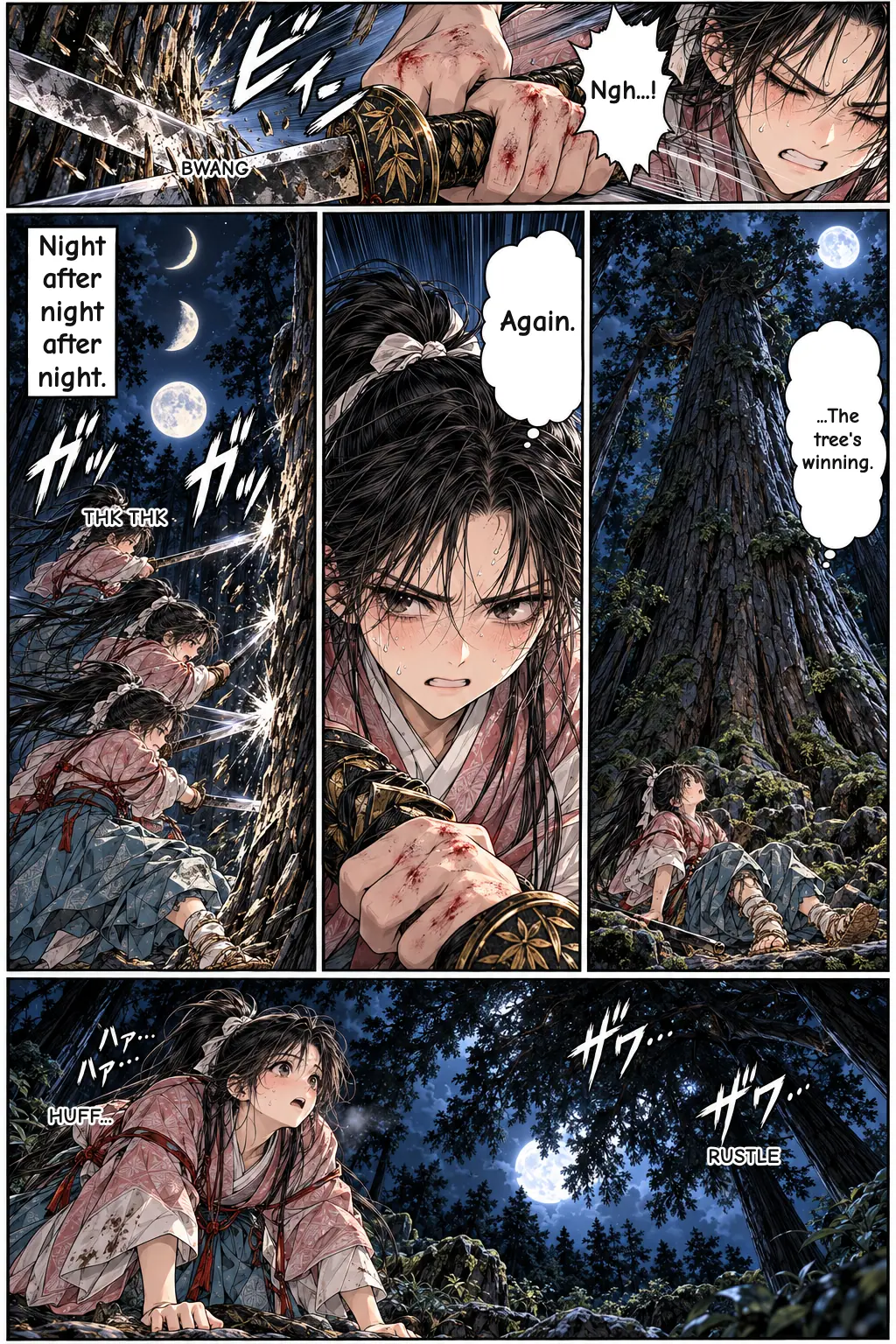
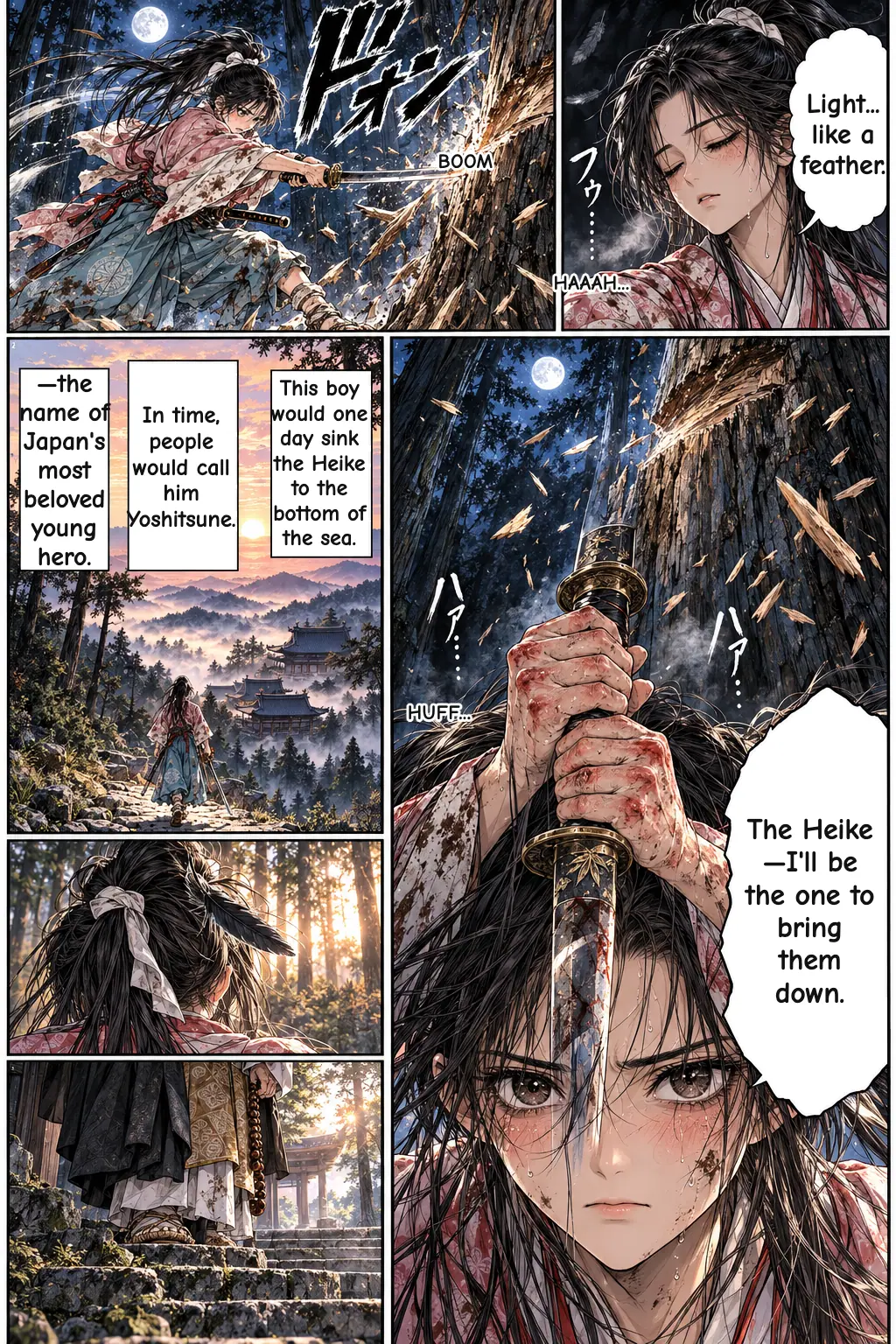
The news changes everything. Shanaō gives up his studies in his heart and resolves to overthrow the Heike. By day he pretends to be a diligent student. By night he slips away alone to Sōjōgatani, a valley people feared as a home of tengu (mountain goblins). Praying to the god of Kibune Shrine, he strikes the trees with his sword, imagining each one as a member of the Taira clan—with the largest standing for Kiyomori himself. When Tōkōbō hears of this, he worries and urges the boy to shave his head and become a monk, but Shanaō fiercely refuses.
Main Characters
Ushiwaka / Shanaō is the future Minamoto no Yoshitsune, one of the most famous warriors in Japanese history. Around him are his mother Tokiwa, whose beauty is said to have moved Kiyomori to mercy; his dead father Yoshitomo, present only through memory; Shōmonbō, the messenger of the past; his teacher Tōkōbō; and Kiyomori, the enemy who is also, uncomfortably, the man who let him live.
Background: Loyalty, Betrayal, and the Genji–Heike Rivalry
This episode sits just before the Genpei War (1180–1185), the great conflict between the Minamoto and the Taira. In history, the adult Yoshitsune became a brilliant commander in that war, then fell out with his elder half-brother Yoritomo and died as a hunted man. Because his life ended in tragedy, later generations loved to imagine his hidden, hopeful boyhood—and the Gikeiki is one of the main sources of that image.
The opening shows themes that run through samurai stories: the shame of a lord betrayed by a retainer, and the opposite ideal of a retainer's family (the Kamata line, through Shōmonbō) staying loyal across generations. Mount Kurama itself matters too. It was a place of mountain worship, and its deep valleys were linked with tengu, supernatural beings tied to martial skill and wild mountain power.
What Is Original, What Is Later Legend
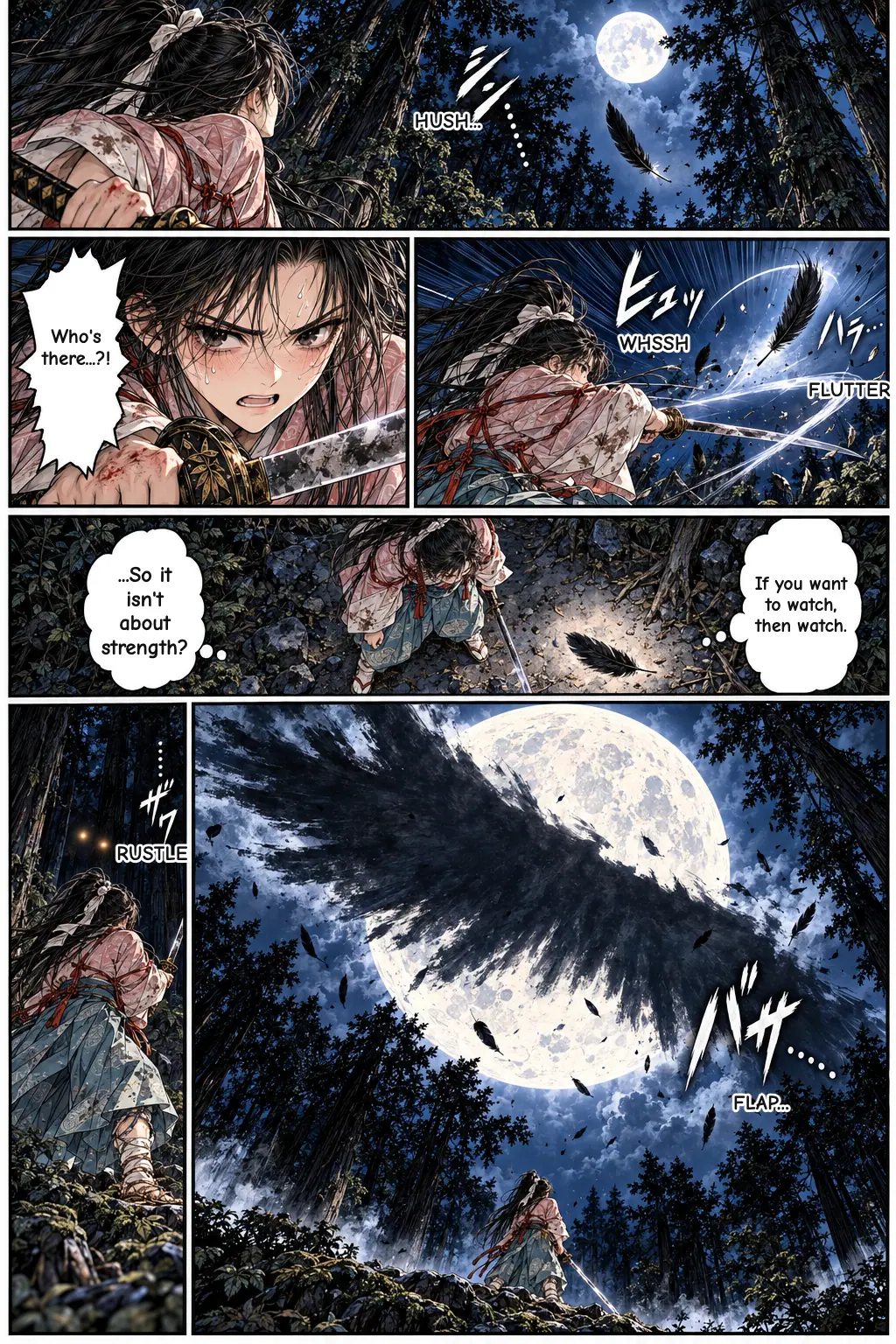
Many popular retellings say a great tengu of Kurama taught Ushiwaka swordsmanship. This comes from later traditions, such as the Noh play Kurama Tengu. The Gikeiki only says the valley was feared as the tengu's dwelling; the boy trains alone.
Some well-known details also come mainly from a different war tale, the Heiji Monogatari. These include Yoshitomo being killed while bathing, and Tokiwa turning herself in to Kiyomori to save her captured mother. How much of this the Gikeiki itself includes varies between tellings, so readers should treat these scenes as part of the wider legend.
What the Manga Changes
The manga keeps the main course of the original story but fills in what the old text leaves bare. The classical text barely describes daily life or appearance, so the manga invents Shanaō's routine at the temple: prayers, calligraphy practice, seasonal events, and his friendships with other boys and monks. It also designs how every character looks.
The night of Shōmonbō's visit—the weather, the lamplight, the care taken to avoid being seen—and the exact dialogue are the manga's own. So are Shanaō's inner thoughts as he hears the truth. In the original, Shōmonbō's role is to tell him his lineage and his father's fate; the manga makes the moment more visual, including the handing over of his father's sword. The manga also gives the retainer's betrayal a clear motive, a hope of reward from the Heike.
The flashback to the Heiji Rebellion is compressed into a few pages, with Yoshitomo's death shown in symbolic panels. The night training in Sōjōgatani gains concrete sword movements, wounds, and fatigue, and the valley is filled with shadows and a sense of being watched. Since the original never shows a tengu, the manga only hints at one and never reveals it. Finally, how Tōkōbō notices the change—sounds in the night, dirty clothes, rumors—and the boy's spoken vow to defeat the Heike are dramatized scenes built on the resolve the original describes.
Where to Read It
If you want to see Shanaō's double life unfold, The Legend of Yoshitsune: Ushiwaka and Benkei is available on Manga Portal. Every episode is free to read, with no sign-up required. Episode 1 sets up the secret that drives the whole series, and the story continues toward the boy's departure from Kurama and his famous meeting with the warrior monk Benkei.
Characters in this episode
Ushiwaka / Shanaō (later Minamoto no Yoshitsune)
Yoshitomo's youngest son, raised at Kurama Temple, who learns his true origins and secretly trains at night to take revenge on the Heike.
Tokiwa
Ushiwaka's mother, a palace attendant who fled with her three small sons and whose beauty is said to have led Kiyomori to spare them.
Minamoto no Yoshitomo
The defeated Genji leader and Ushiwaka's father, betrayed and killed by his own retainer while fleeing east in 1159.
Shōmonbō
A holy man of Shijō in Kyoto and son of Yoshitomo's loyal companion Kamata Masakiyo, who visits the boy at night to reveal his lineage.
Tōkōbō Ajari (Renjin)
Ushiwaka's teacher at Kurama, proud of the boy's learning but alarmed by his night outings.
Taira no Kiyomori
Leader of the victorious Heike, who spares Yoshitomo's sons and becomes the main target of Shanaō's vow.
FAQ
Who was Ushiwakamaru?
Ushiwakamaru (Ushiwaka) was the childhood name of Minamoto no Yoshitsune, a famous 12th-century samurai commander. In the Gikeiki he is raised at Kurama Temple under the name Shanaō after his father's death.
Did a tengu really train Yoshitsune on Mount Kurama?
Not in the Gikeiki. The tale says only that the valley of Sōjōgatani was feared as a tengu dwelling, and that the boy trained there alone. The story of a great tengu teaching him comes from later works, such as the Noh play Kurama Tengu.
How did Minamoto no Yoshitomo die?
After losing the Heiji Rebellion in 1159, he fled east and was killed at Utsumi in Owari Province by Osada Tadamune, a retainer whose family had long served him. The well-known detail that he was killed in a bath is told mainly in the Heiji Monogatari.
What is the Gikeiki?
The Gikeiki is an anonymous Japanese war tale from the Muromachi period about the life of Minamoto no Yoshitsune. It focuses on his youth and his later life as a fugitive, and it shaped many later legends about him and Benkei.
Why did Taira no Kiyomori spare Yoshitsune's life?
According to the tale, Yoshitomo's widow Tokiwa came under Kiyomori's protection, and he was moved by her beauty, so her three sons were spared. The boys were then sent to temples, which is how Ushiwaka ended up at Kurama.