Episode 6Each Win Pushed His Brother Further AwayThe Reunion at Kisegawa and the Koshigoe Letter
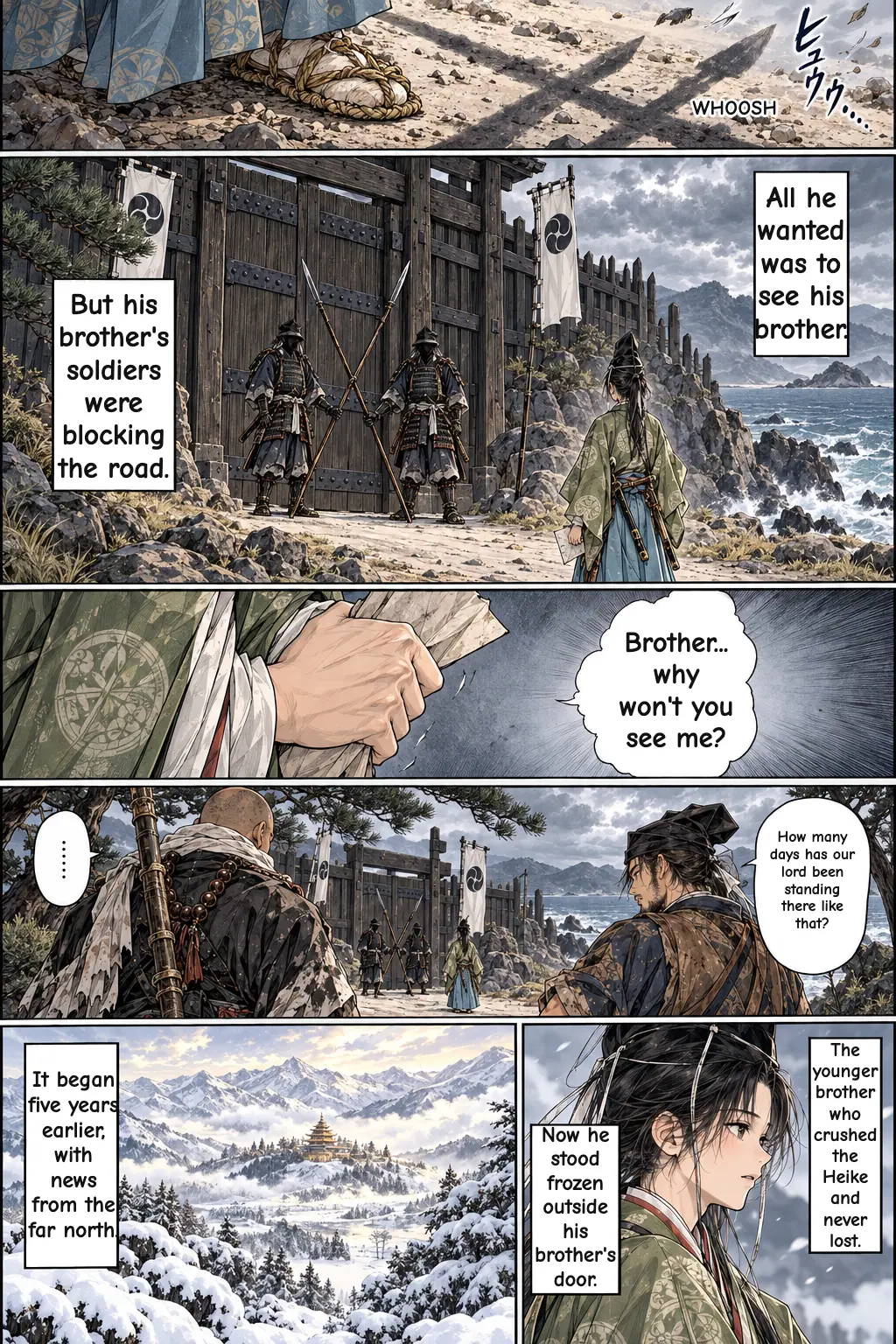
When Yoshitsune hears his brother Yoritomo has risen against the Heike, he rushes to join him, and the two brothers, meeting for the first time, weep together. But after winning battle after battle and wiping out the Heike, Yoshitsune finds the road to his brother barred.
Yoshitsune and Yoritomo: The Kisegawa Reunion and Koshigoe Letter
The Story in the Gikeiki: From Tears to a Closed Road
In 1180, Minamoto no Yoritomo, the eldest surviving son of a defeated warrior clan, had spent about twenty years in exile in Izu. That year he finally raised an army against the Taira (also called the Heike), the clan that had crushed his father. With help from local allies such as Hojo Tokimasa, his father-in-law, he survived an early defeat, gathered the warriors of eastern Japan, and made Kamakura his base. The Gikeiki covers these hard early months in only a few lines.
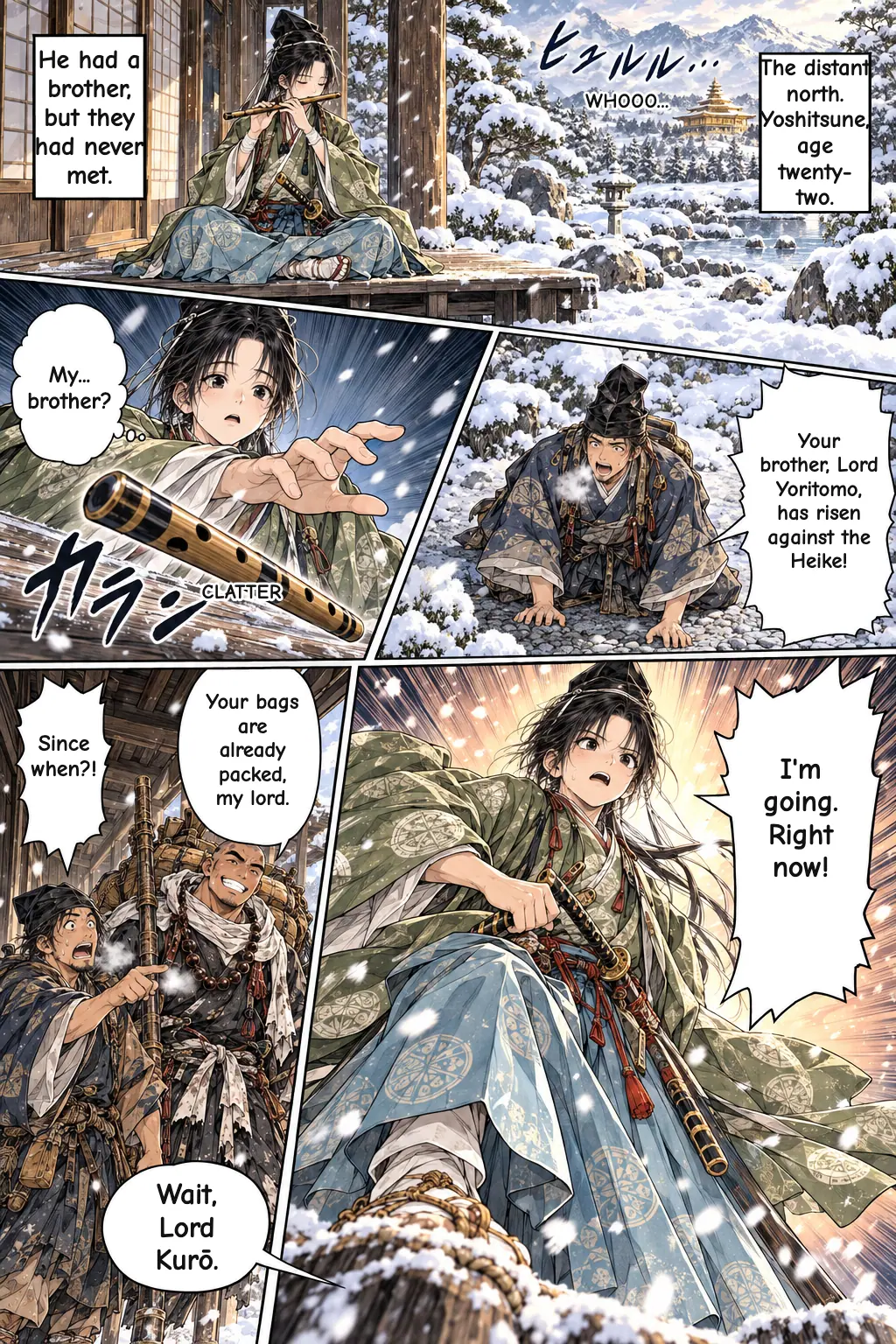
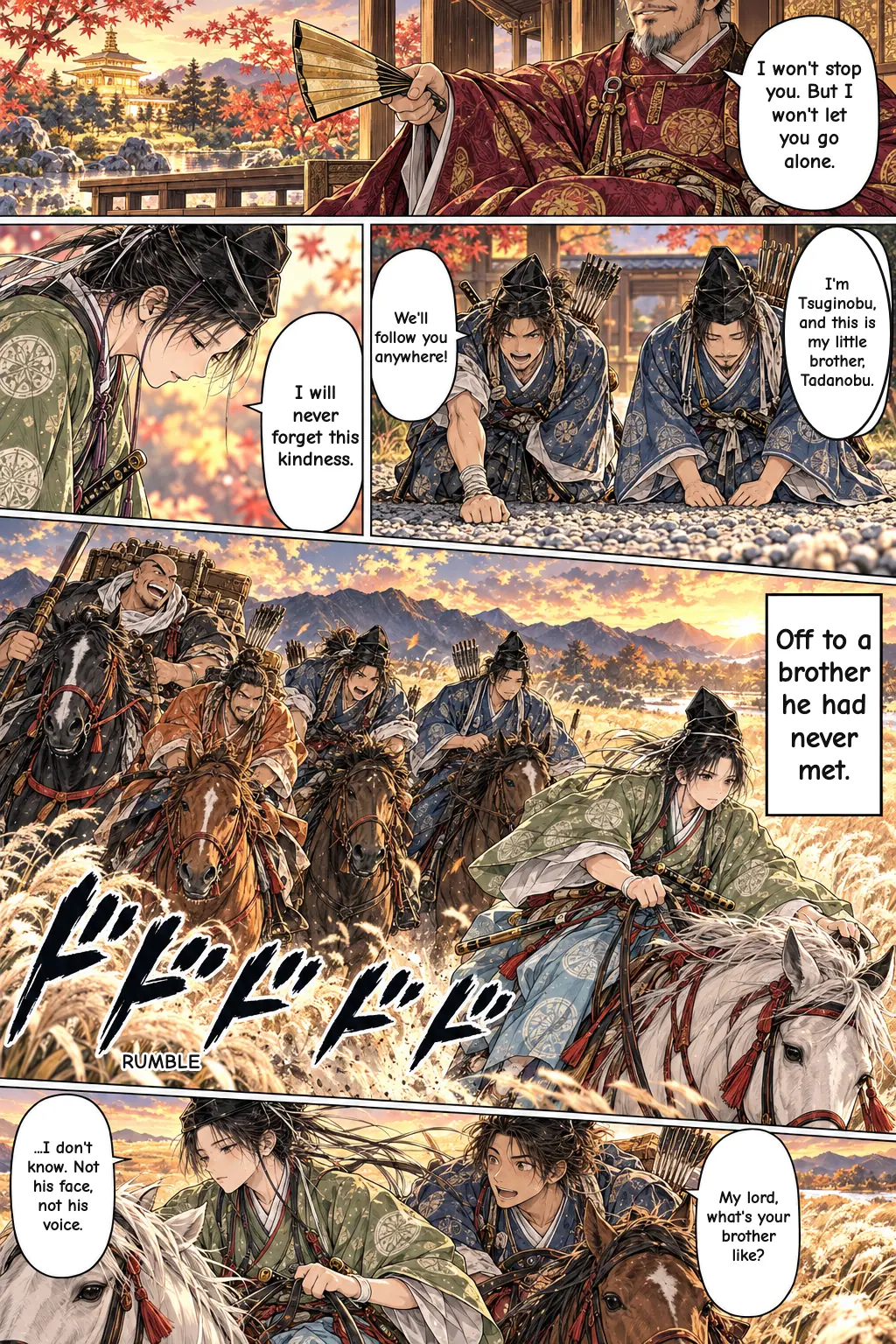
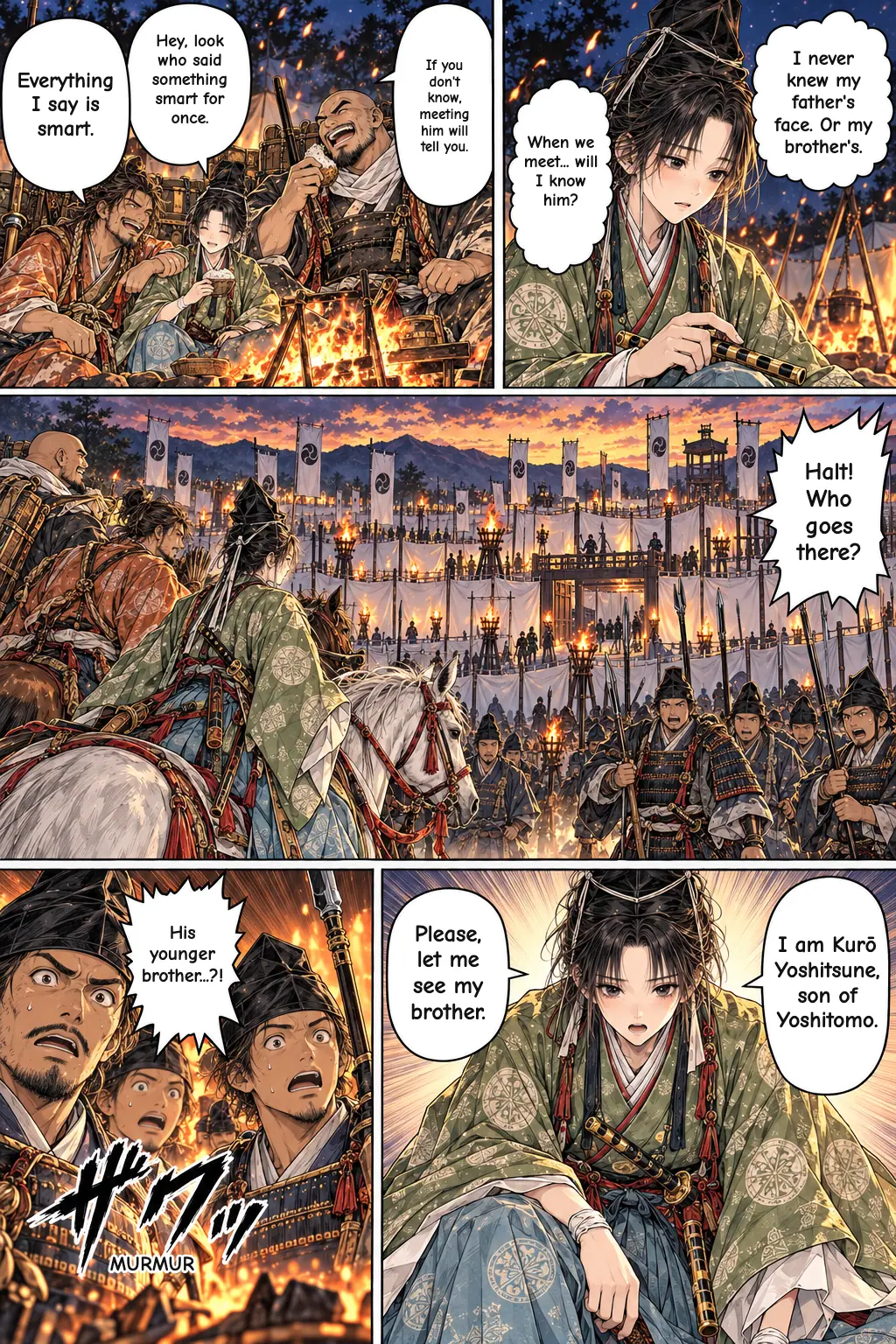
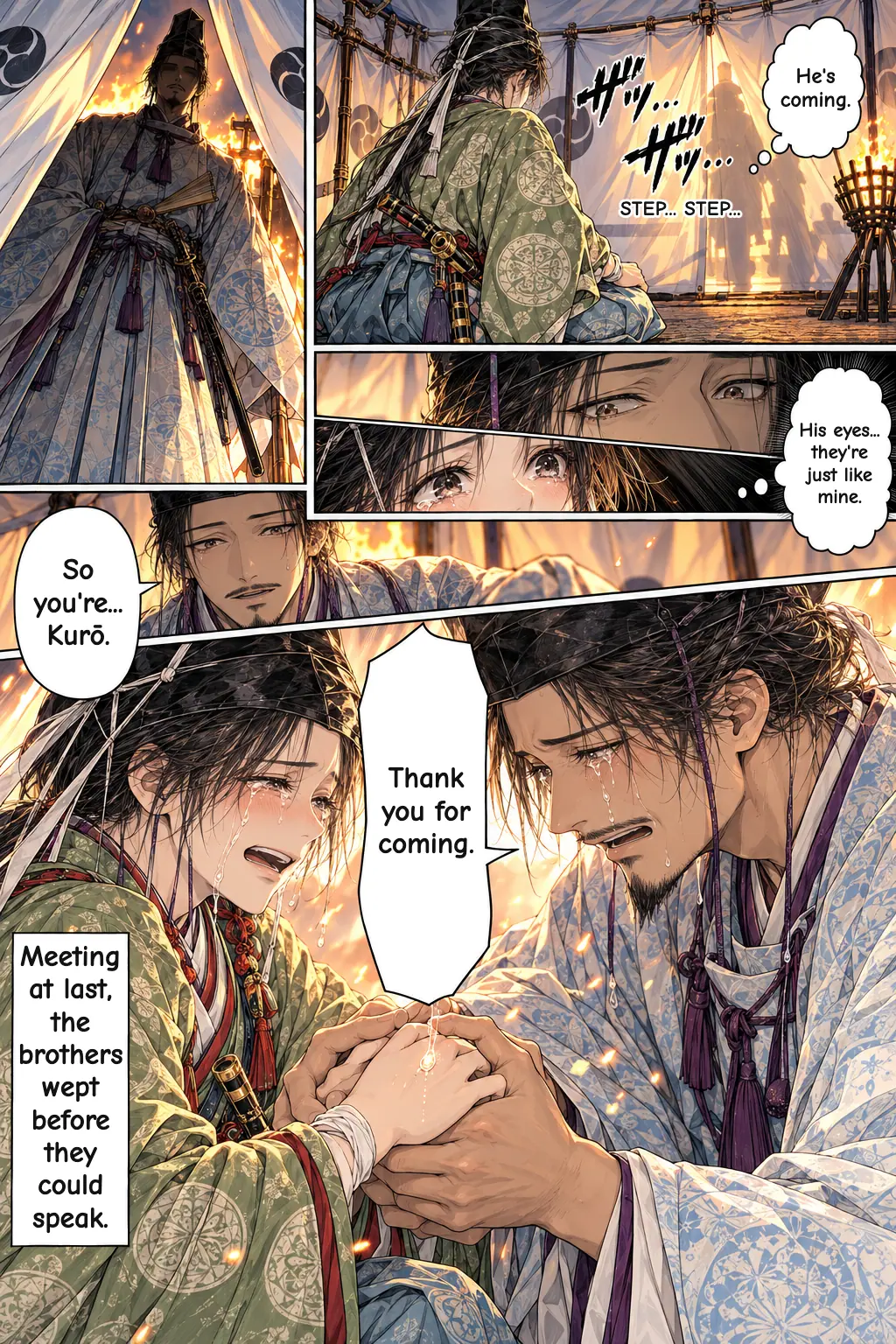
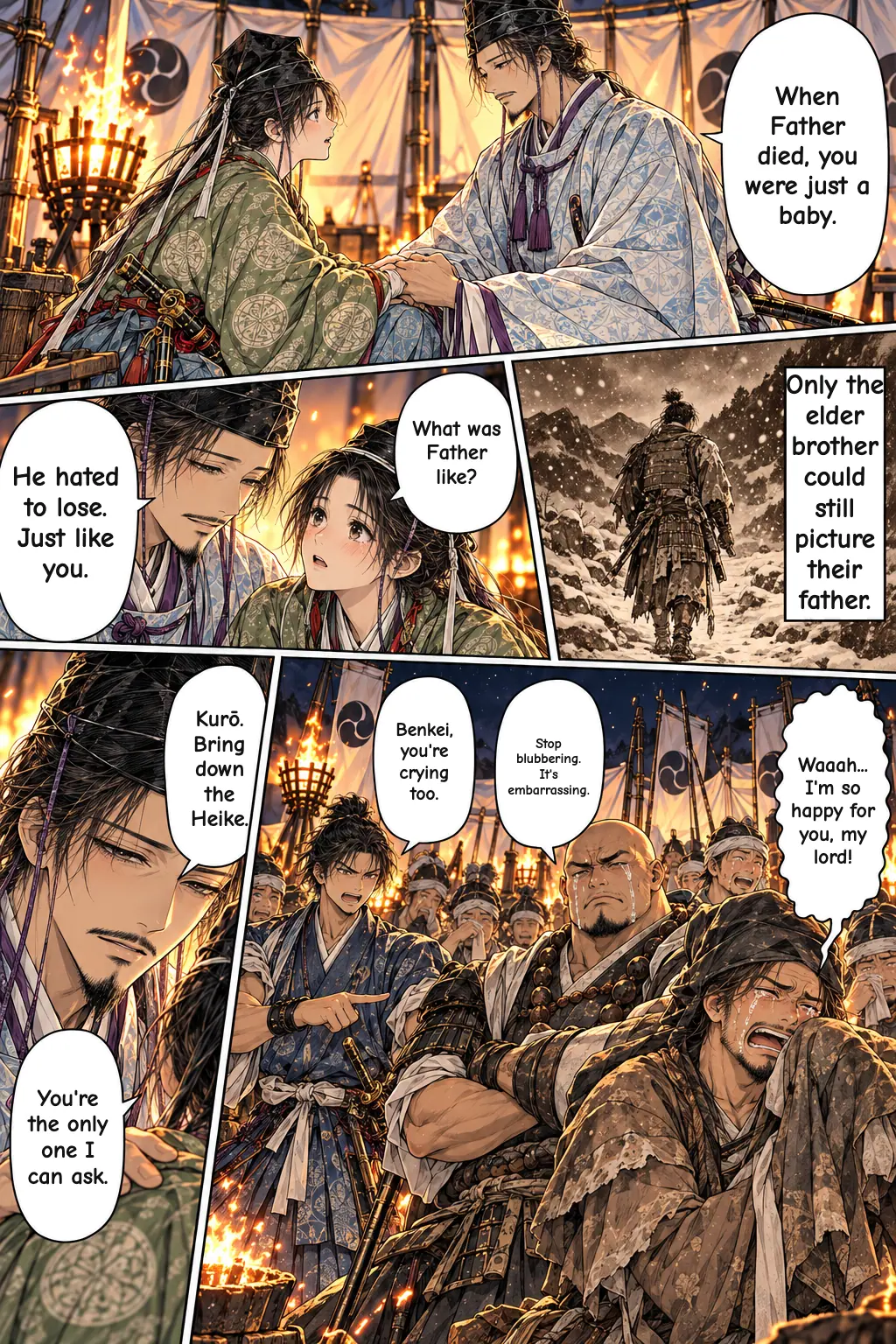
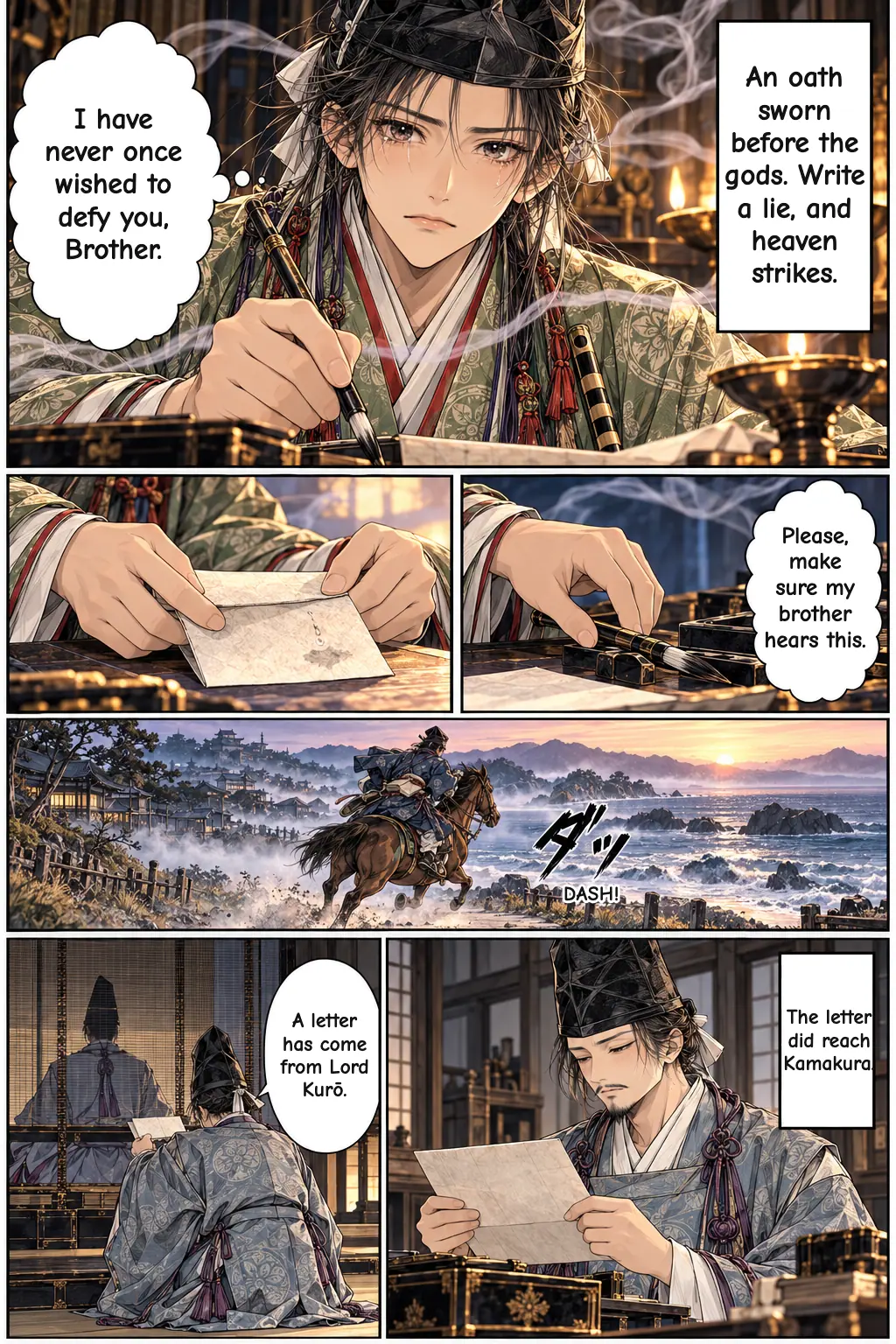
Far to the north, in Hiraizumi, his younger half-brother Minamoto no Yoshitsune (known as a boy as Ushiwaka) was living under the protection of Fujiwara no Hidehira, the lord of the region. As soon as Yoshitsune heard that his brother had taken up arms, he set out to join him. Hidehira sent two brothers, Sato Tsuginobu and Sato Tadanobu, along as his retainers. Yoshitsune reached Yoritomo's camp in Suruga Province, and the two sons of the same father met face to face for the first time. Both of them wept.
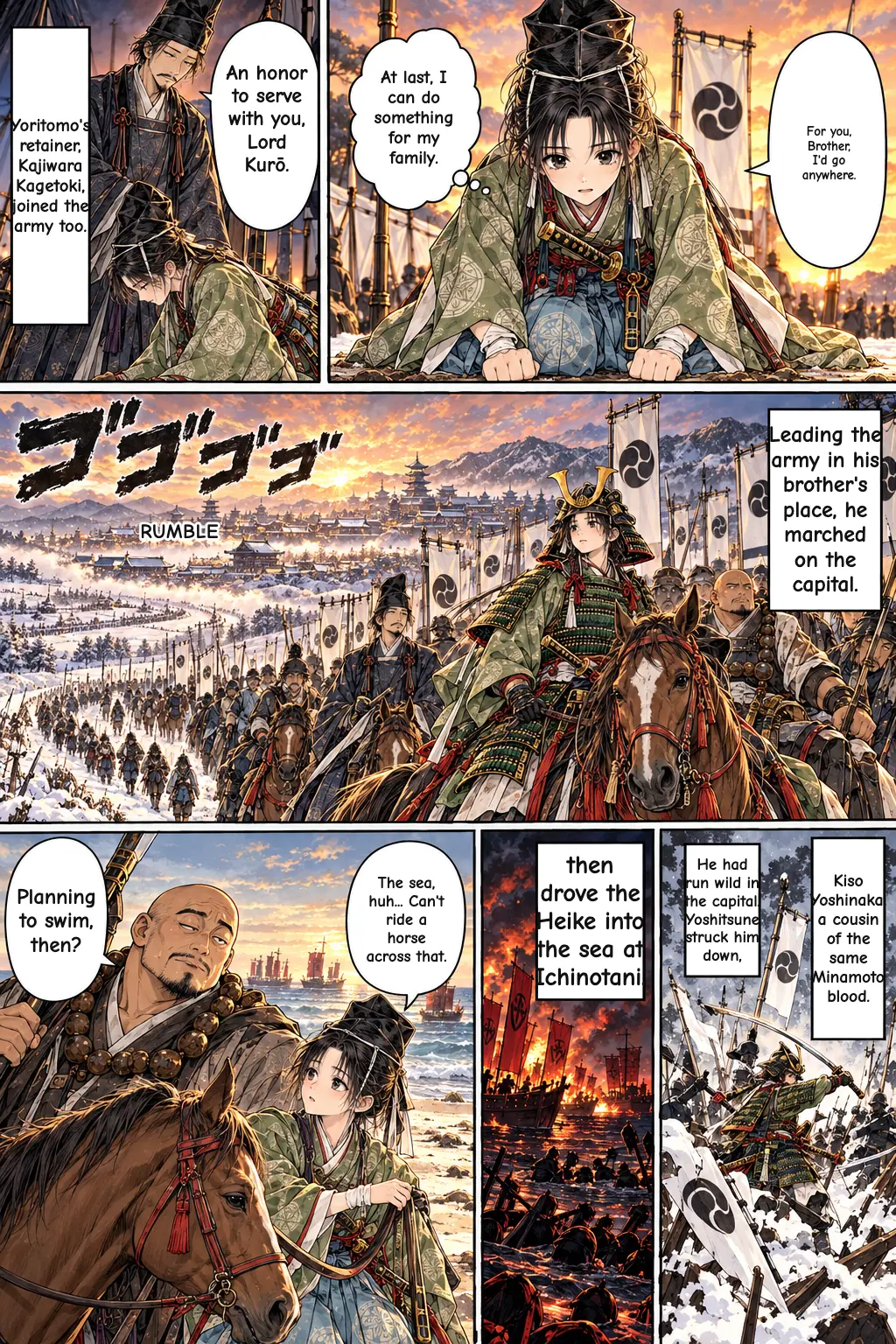
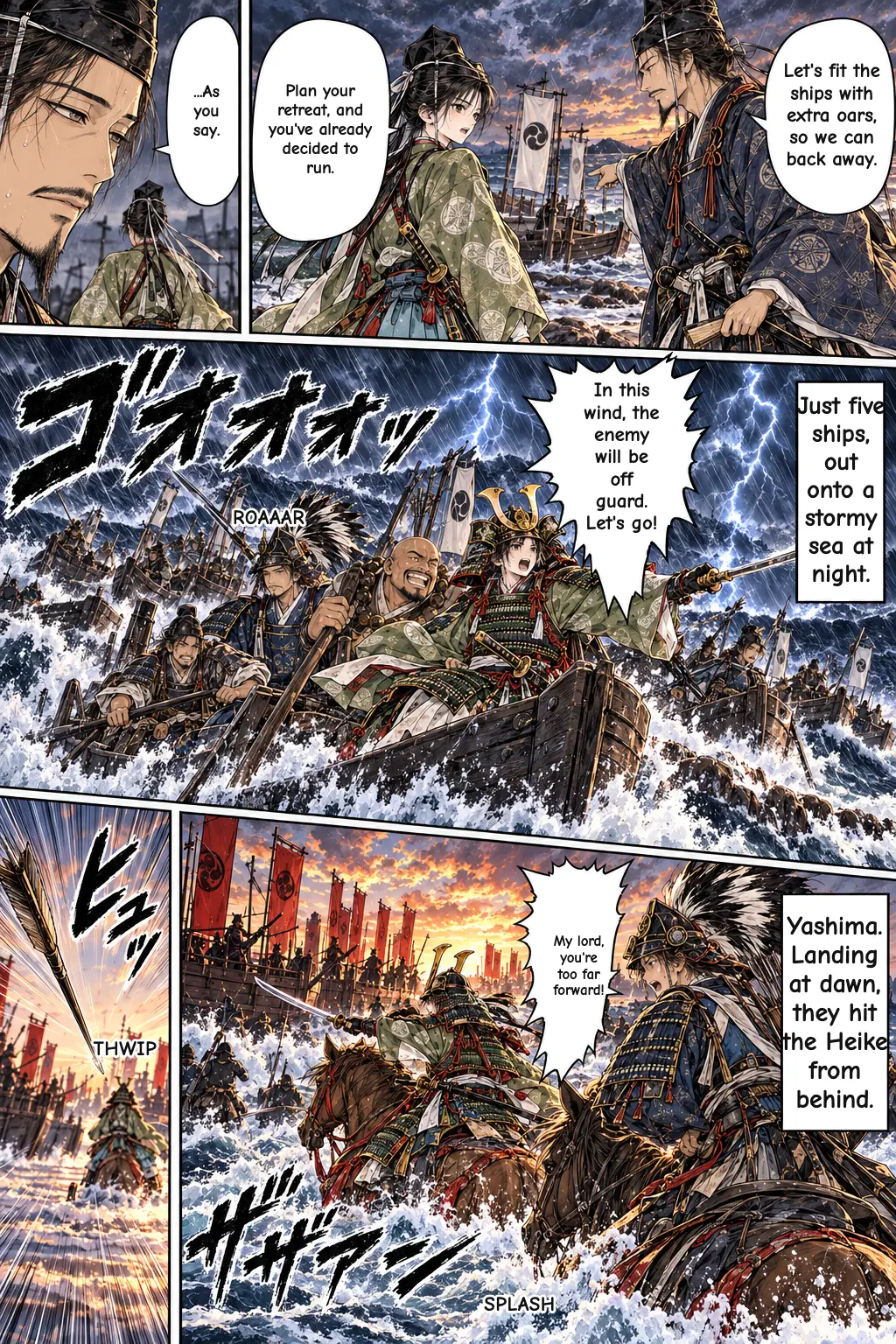
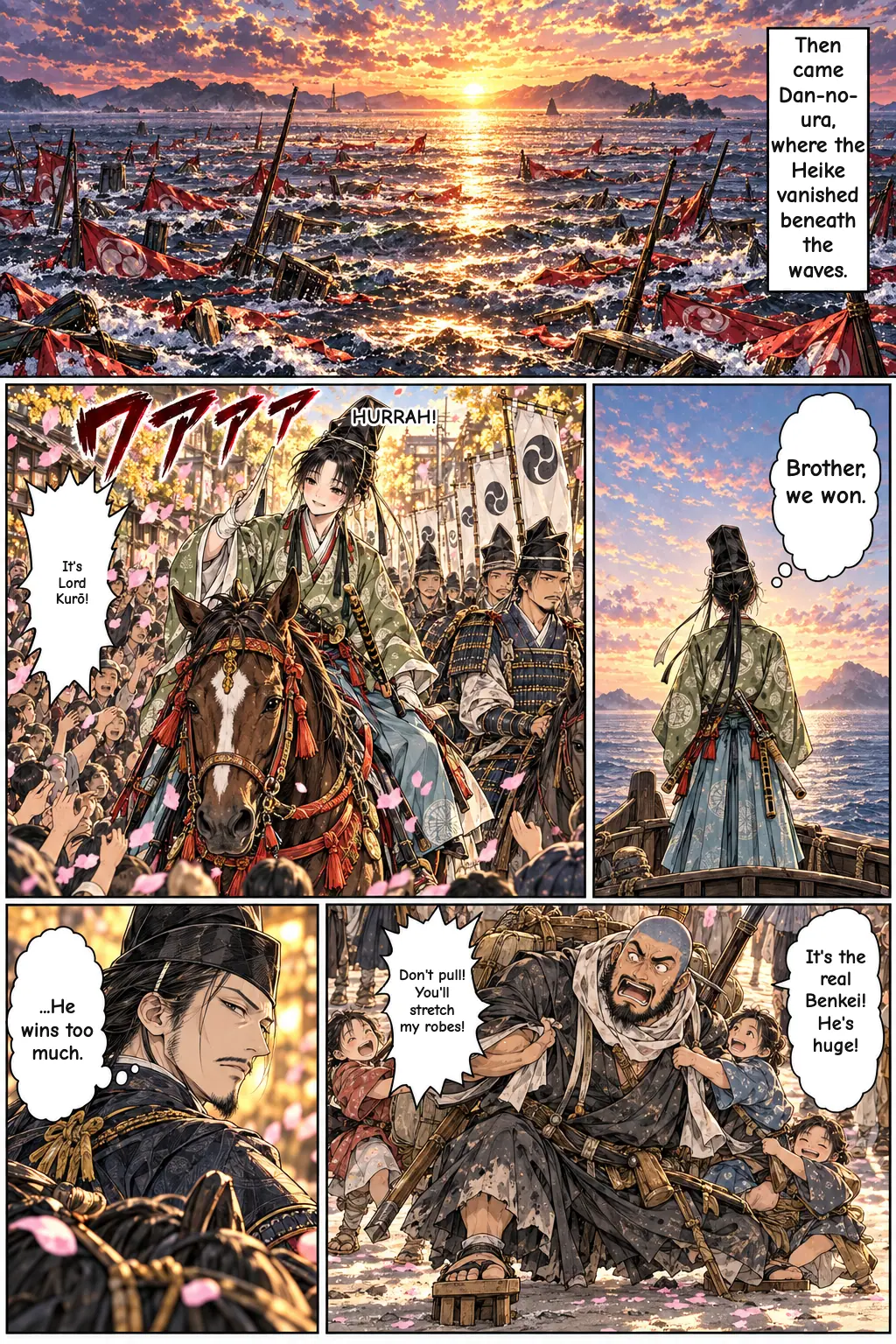
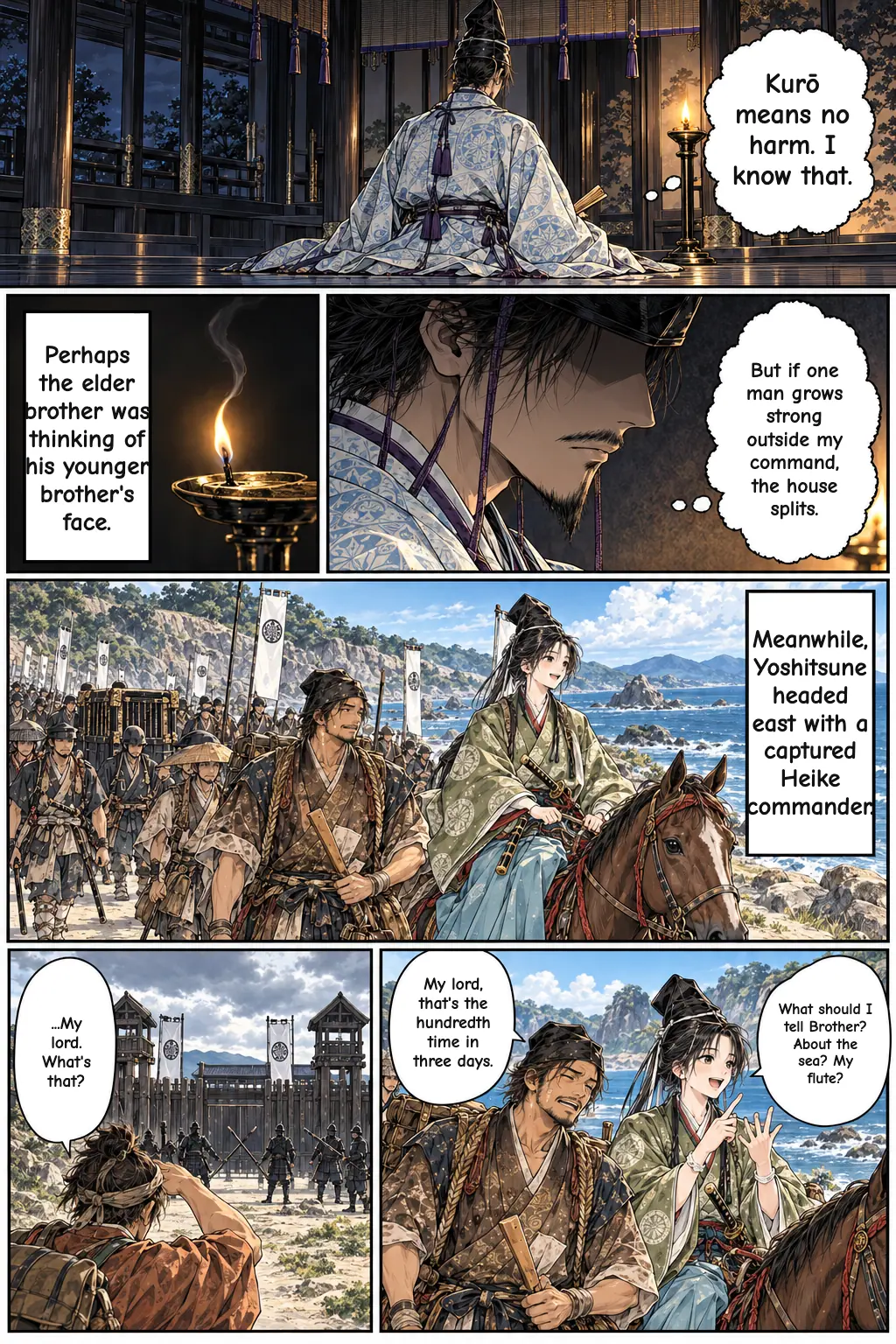
Yoshitsune was then sent west as a commander against the Taira. He defeated his cousin Kiso Yoshinaka, then won at Ichinotani, Yashima and Dan-no-ura, and the Taira clan was destroyed in 1185. Surprisingly, the Gikeiki tells these famous battles in a short summary. It is far more interested in what came next.
The Koshigoe Letter: A Plea That Failed
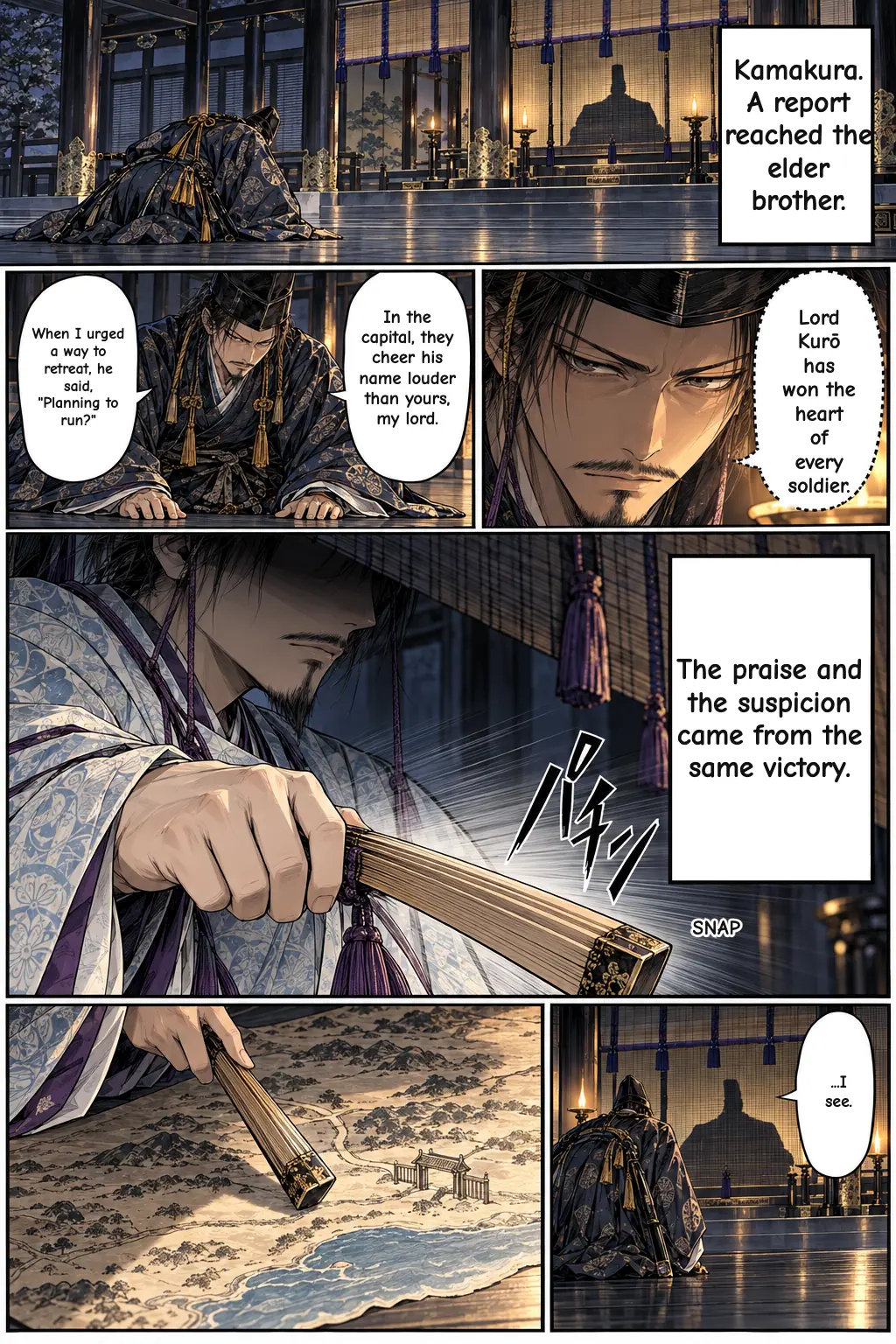
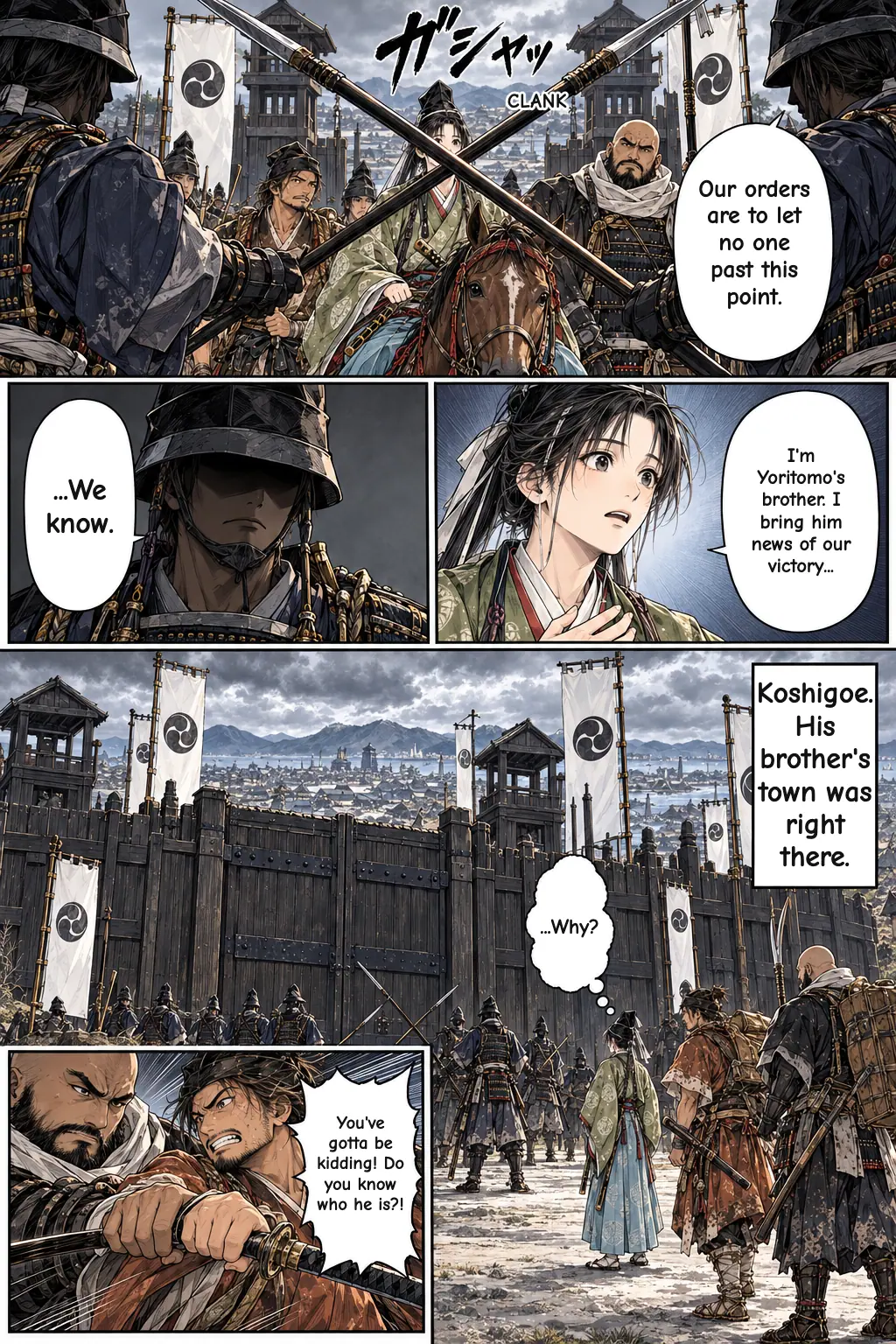
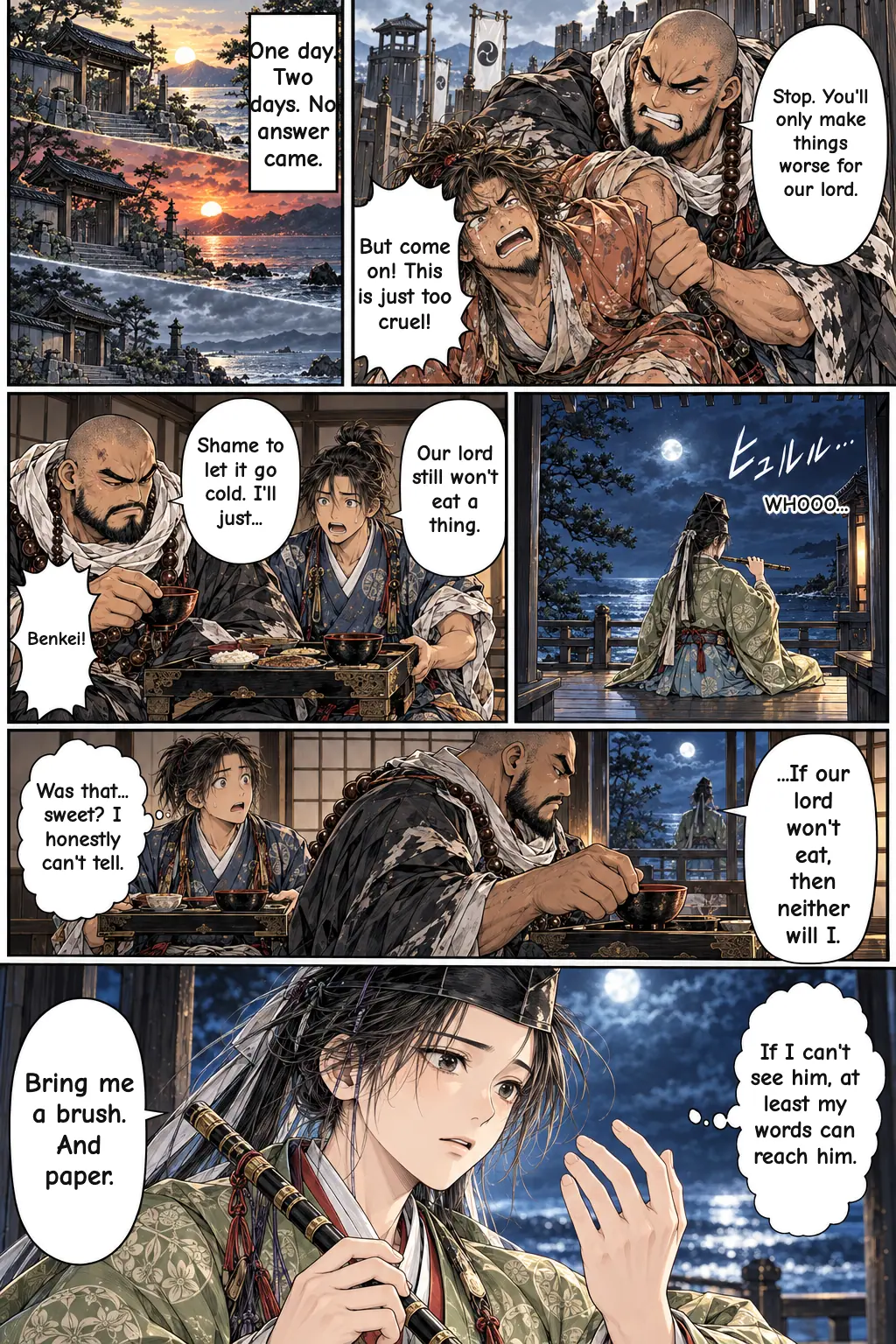
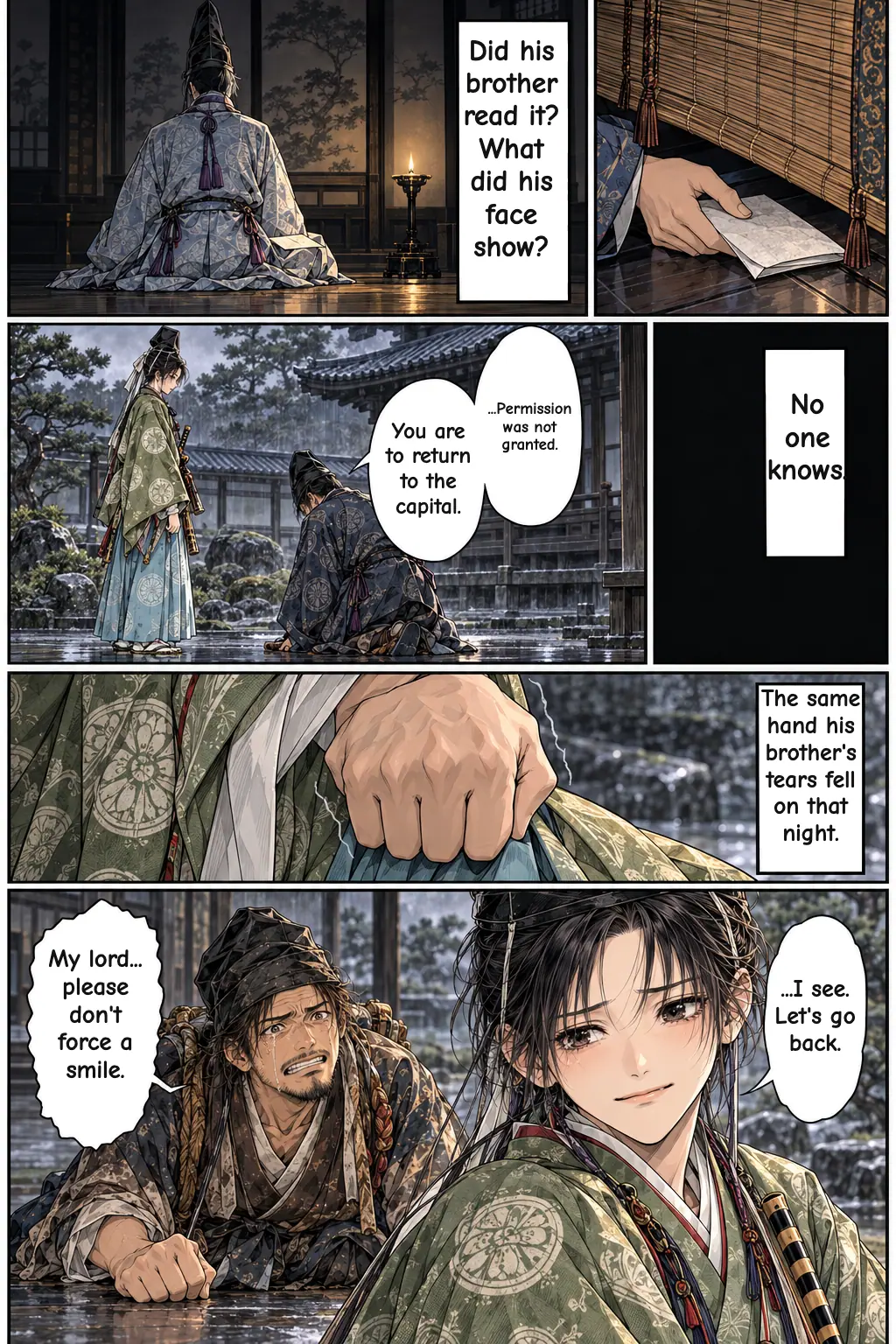
As Yoshitsune's fame grew in the capital, Kajiwara Kagetoki, one of Yoritomo's retainers, spoke against him to Yoritomo, and Yoritomo began to distrust his brother. When Yoshitsune travelled east with his most important prisoners, the Taira leader Taira no Munemori and his son, he was stopped at Koshigoe, just outside Kamakura, and was not allowed to enter.
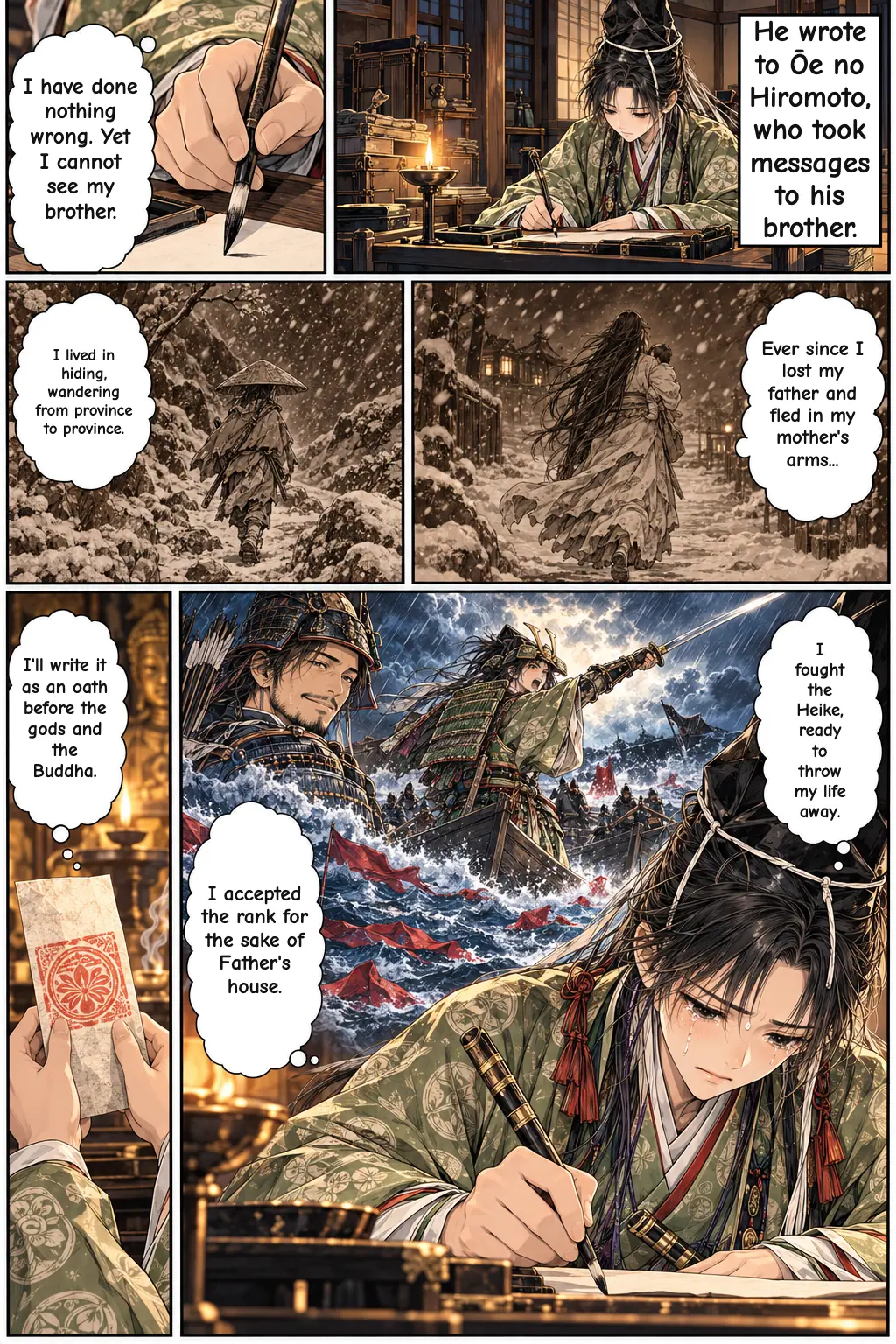
From there Yoshitsune wrote a petition to Oe no Hiromoto, a senior adviser to Yoritomo, asking him to pass it on. The Gikeiki gives the full text of this famous document, now called the Koshigoe Letter (Koshigoe-jo). In it Yoshitsune says he has done nothing wrong but is kept from his brother because of slander. He recalls losing his father as a baby, being carried to safety in his mother's arms, and growing up as a wanderer. He describes risking his life in every battle, says the court rank he received was an honor for the whole family, not a betrayal, and notes that he has written oaths of loyalty on sacred shrine paper.
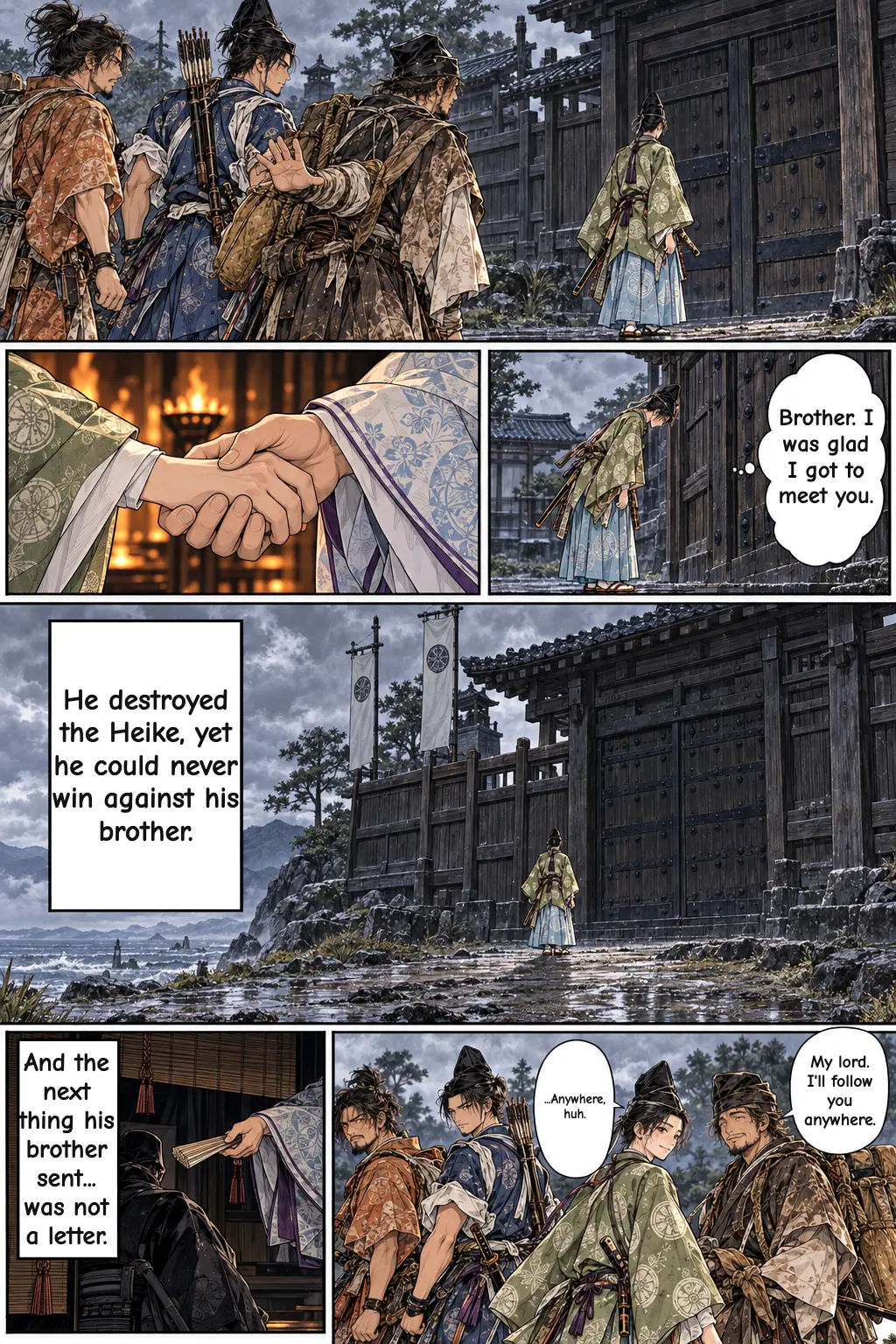
The letter did not work. Yoritomo's anger did not soften, and Yoshitsune went back to the capital without ever seeing him. The break between the brothers was now final, and from this point the Gikeiki follows Yoshitsune's decline. In the next part of the story, Yoritomo sends a warrior to kill him.
What the Story Tells Us: Glory, Suspicion and Sympathy
The Gikeiki is a war tale by an unknown author, put together in the Muromachi period, probably in the 14th or 15th century, long after the events. Unlike the Tale of the Heike, which follows the whole Genpei War, the Gikeiki focuses on Yoshitsune's hidden youth and his tragic fall. That is why the battles get a few lines while the Koshigoe Letter is given in full.
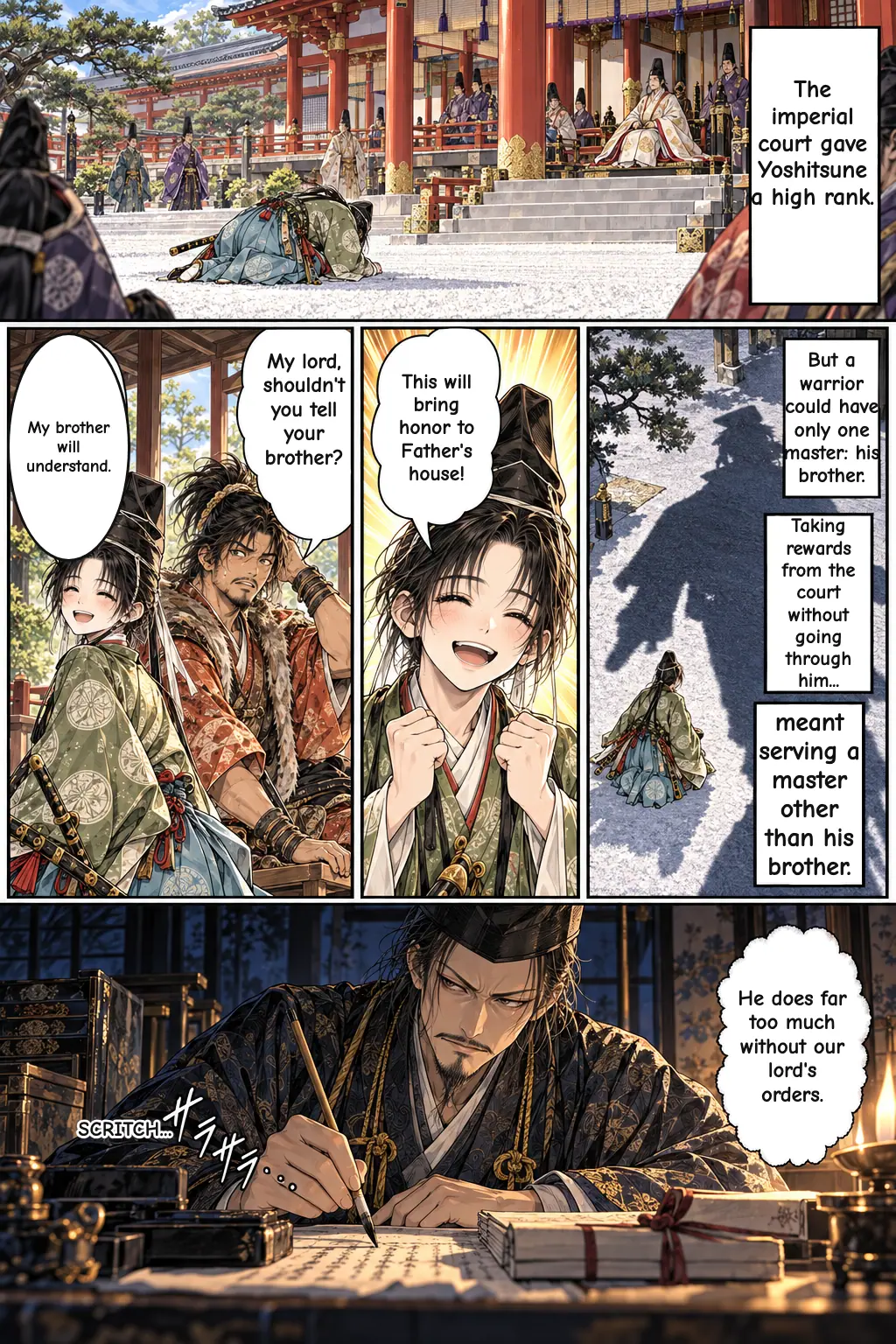
The episode shows a tension at the heart of the new warrior government. Yoritomo was building a system where all loyalty ran to Kamakura. A brother who won glory on his own and accepted honors from the imperial court could look like a rival, however loyal he felt. Japanese readers have long sided with Yoshitsune. The phrase hogan-biiki, meaning 'sympathy for the lieutenant' (Yoshitsune's title), still describes rooting for the underdog. The historical Koshigoe Letter is also recorded, dated 1185, in the Azuma Kagami, a Kamakura government chronicle. Some historians have questioned whether the text as we have it was really written by Yoshitsune.
What the Manga Changes or Adds
The source says that the brothers wept when they met. Everything else in that scene is the manga's own staging, including the camp setting, the season, their expressions, and the first words they speak. The meeting place is traditionally given as Kisegawa (the Kise River) in Suruga, but accounts of the exact spot differ. The journey from Hiraizumi, which the Gikeiki barely describes, is also drawn freely.
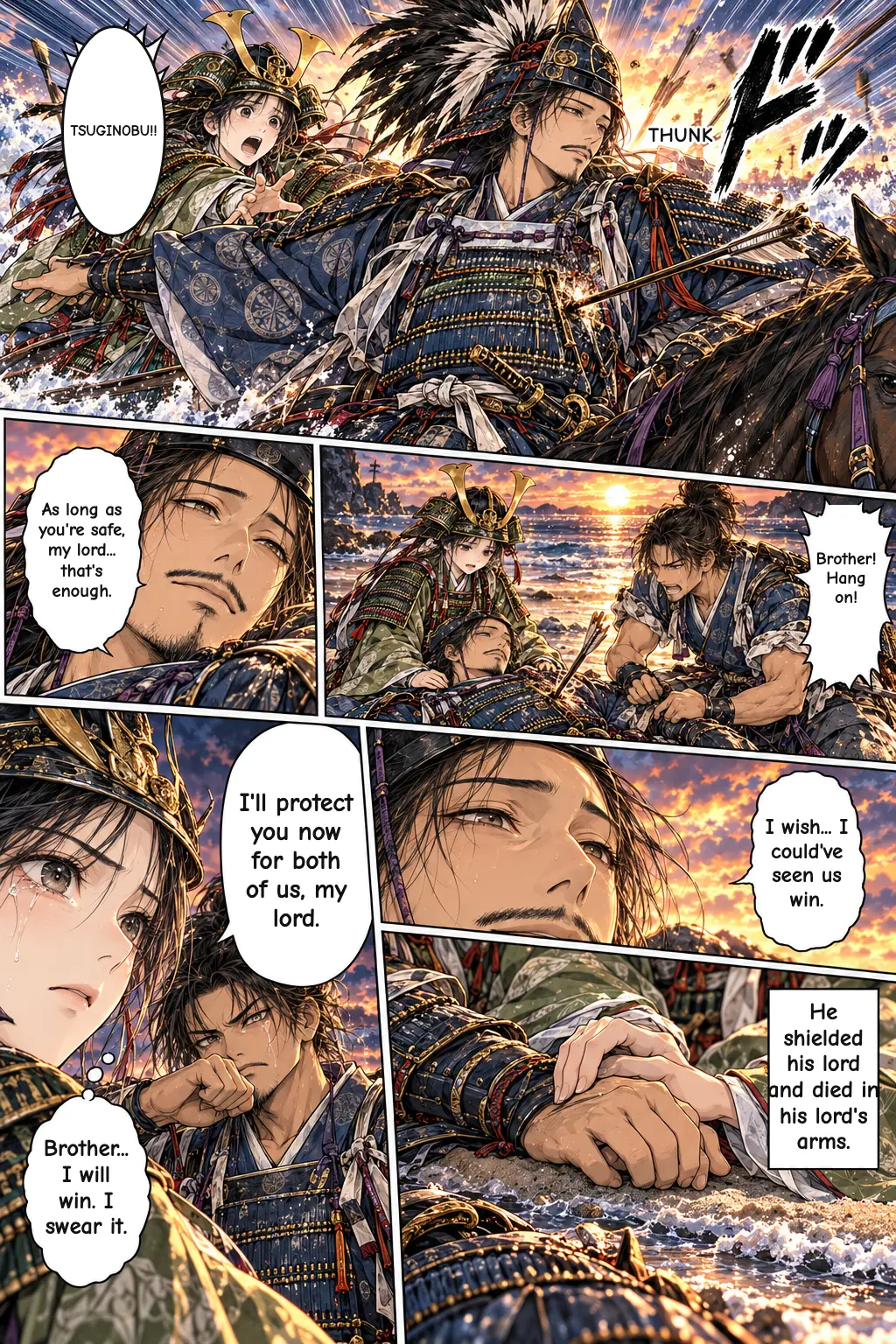
The battle flashbacks at Ichinotani, Yashima and Dan-no-ura use original compositions. Famous moments such as Yoshitsune leaping across eight boats come from the Tale of the Heike and later legend, not the Gikeiki. The same goes for the detailed death of Tsuginobu, who is shot while shielding his lord at Yashima, and for the quarrel at Yashima between Kajiwara and Yoshitsune over 'reverse oars'. The Gikeiki only mentions Tsuginobu's death briefly. It also states that Kajiwara slandered Yoshitsune, but the manga writes his actual words. Yoshitsune waiting at Koshigoe and writing at Manpuku-ji temple follows later local tradition. The 'closed gates of Kamakura' is a visual metaphor, not a scene in the source. Benkei, Yoshitsune's famous warrior monk, stays at his lord's side in this episode, as in the original, where he plays no major role here.
Where to Read It
If you want the original in English, Helen Craig McCullough's translation of the Gikeiki, published as 'Yoshitsune: A Fifteenth-Century Japanese Chronicle', is the standard version. For a visual way into the story, Episode 6 of THE LEGEND OF YOSHITSUNE: Ushiwaka and Benkei here on Manga Portal shows the reunion, the victories and the letter at Koshigoe. Every episode is free to read, with no sign-up needed, so you can start from Ushiwaka's childhood or continue straight on to Yoshitsune's flight.
Characters in this episode
Minamoto no Yoshitsune
The young general and hero of the Gikeiki, who rushes to join his half-brother, destroys the Taira, and is then shut out by the brother he served.
Minamoto no Yoritomo
Yoshitsune's elder half-brother and leader of the Minamoto in Kamakura, who welcomes Yoshitsune with tears but later refuses to see him.
Musashibo Benkei
Yoshitsune's loyal warrior monk, who stays quietly at his lord's side during these events.
Kajiwara Kagetoki
A retainer of Yoritomo whose slander turns Yoritomo against his brother.
Oe no Hiromoto
Yoritomo's senior adviser, to whom Yoshitsune addresses the Koshigoe Letter.
Sato Tsuginobu
A retainer sent with Yoshitsune by Fujiwara no Hidehira, who follows him into battle and dies at Yashima.
FAQ
Why did Yoritomo turn against Yoshitsune?
In the Gikeiki, Yoritomo's retainer Kajiwara Kagetoki slanders Yoshitsune, and Yoritomo comes to suspect him. Historians also point to politics. Yoshitsune's fame and the court honors he accepted without Yoritomo's approval made him look like a threat to Kamakura's authority.
What is the Koshigoe Letter?
It is a petition Yoshitsune wrote at Koshigoe, just outside Kamakura, in 1185 after he was refused entry. It was addressed to Yoritomo's adviser Oe no Hiromoto. In it he declares his innocence, recalls his hard childhood, and swears his loyalty, but it failed to change Yoritomo's mind.
Where did Yoshitsune and Yoritomo meet for the first time?
They met at Yoritomo's camp in Suruga Province in 1180, soon after Yoritomo raised his army. The place is usually given as Kisegawa (the Kise River), though accounts differ on the exact location. Both brothers wept at the meeting.
Did Yoshitsune ever see Yoritomo again after Koshigoe?
No. He went back to the capital without meeting his brother, and soon Yoritomo sent forces to kill him. Yoshitsune eventually fled north to Hiraizumi, where he died in 1189.
Is the Gikeiki the same as the Tale of the Heike?
No. The Tale of the Heike tells the whole Genpei War in detail, while the Gikeiki is a later work centered on Yoshitsune's youth and downfall. Many famous battle scenes, like the eight-boat leap, come from the Heike tradition rather than the Gikeiki.