Episode 5The Flute Boy His Blade Couldn't TouchBenkei's Thousand Swords: Meeting Ushiwakamaru
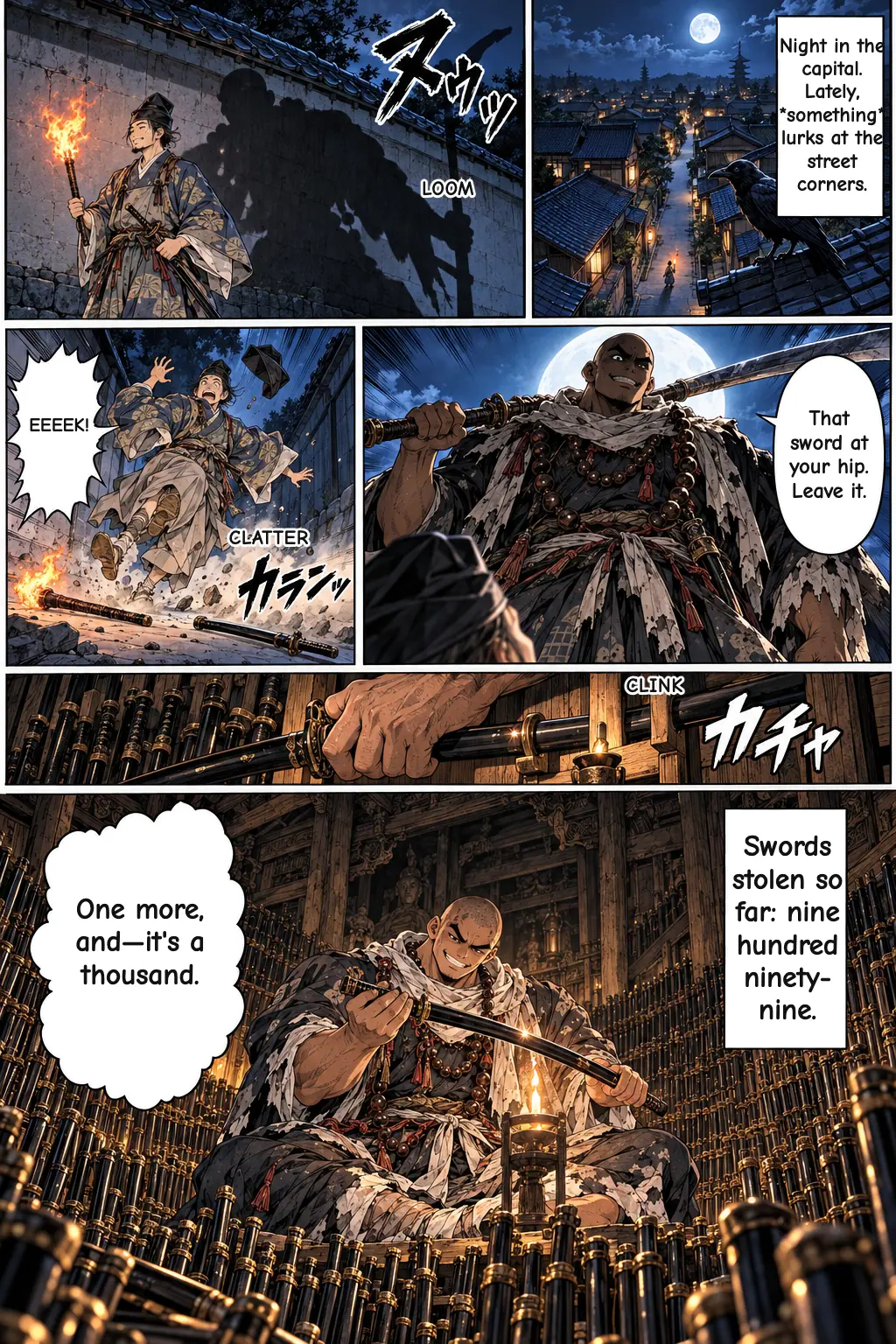
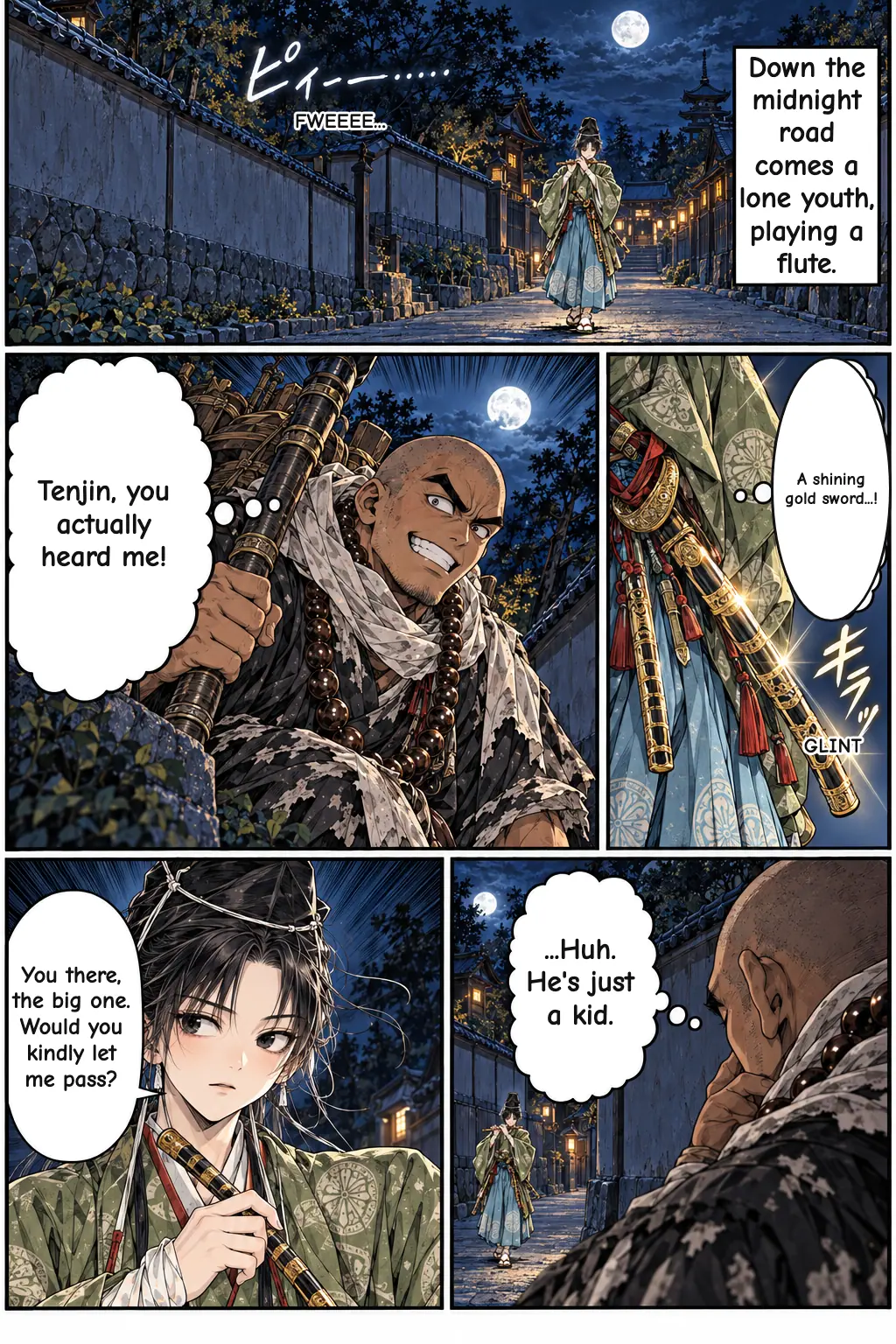
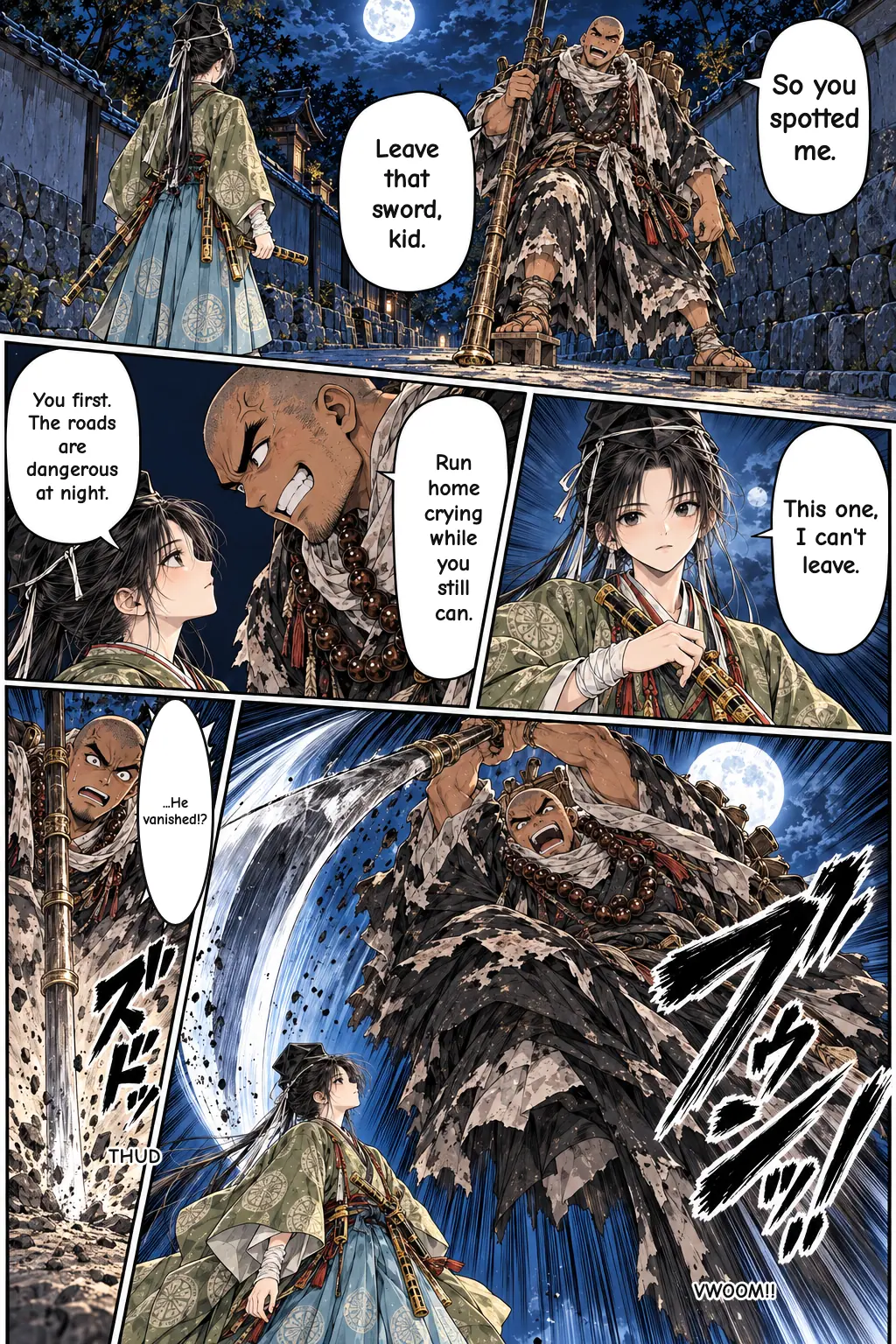
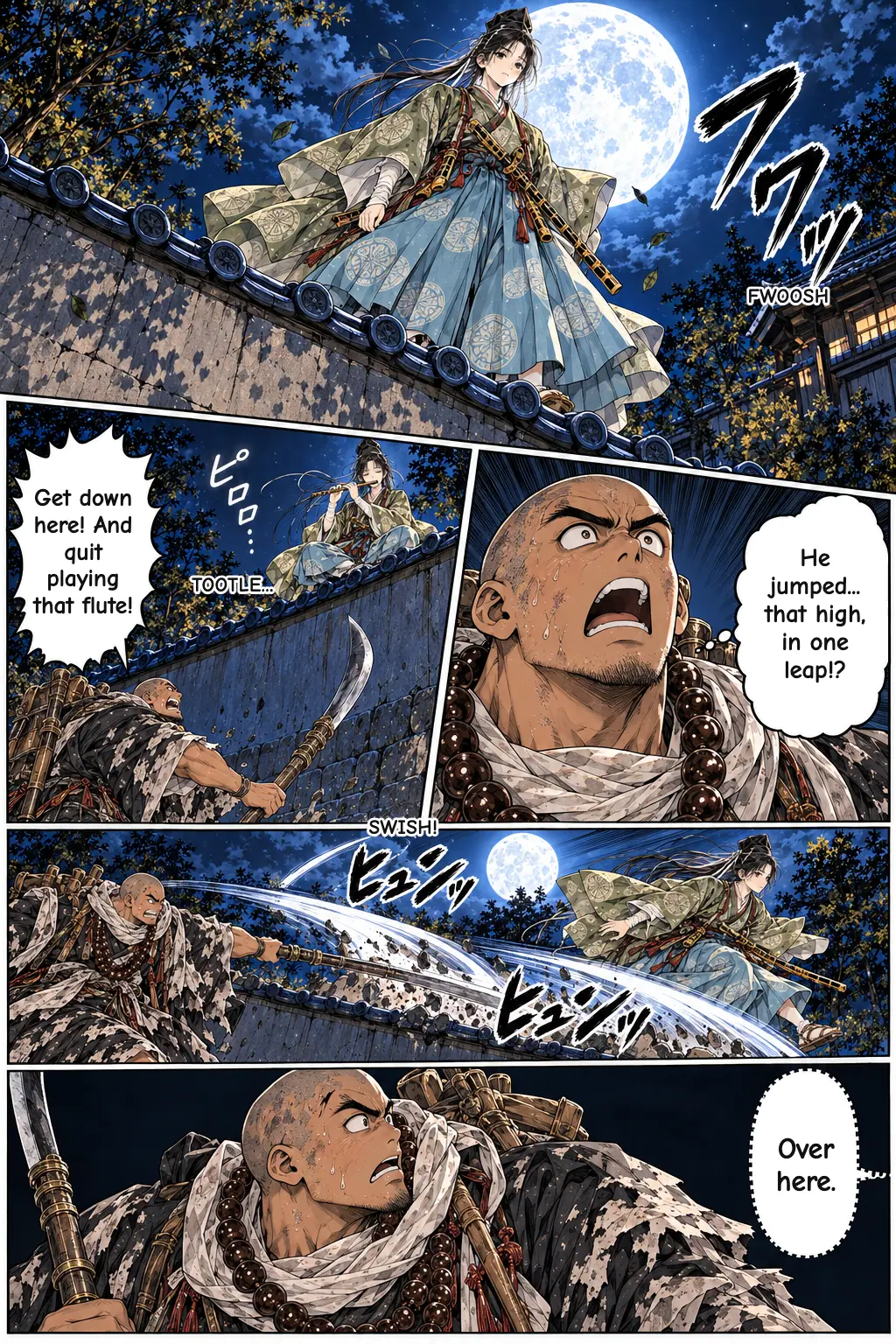
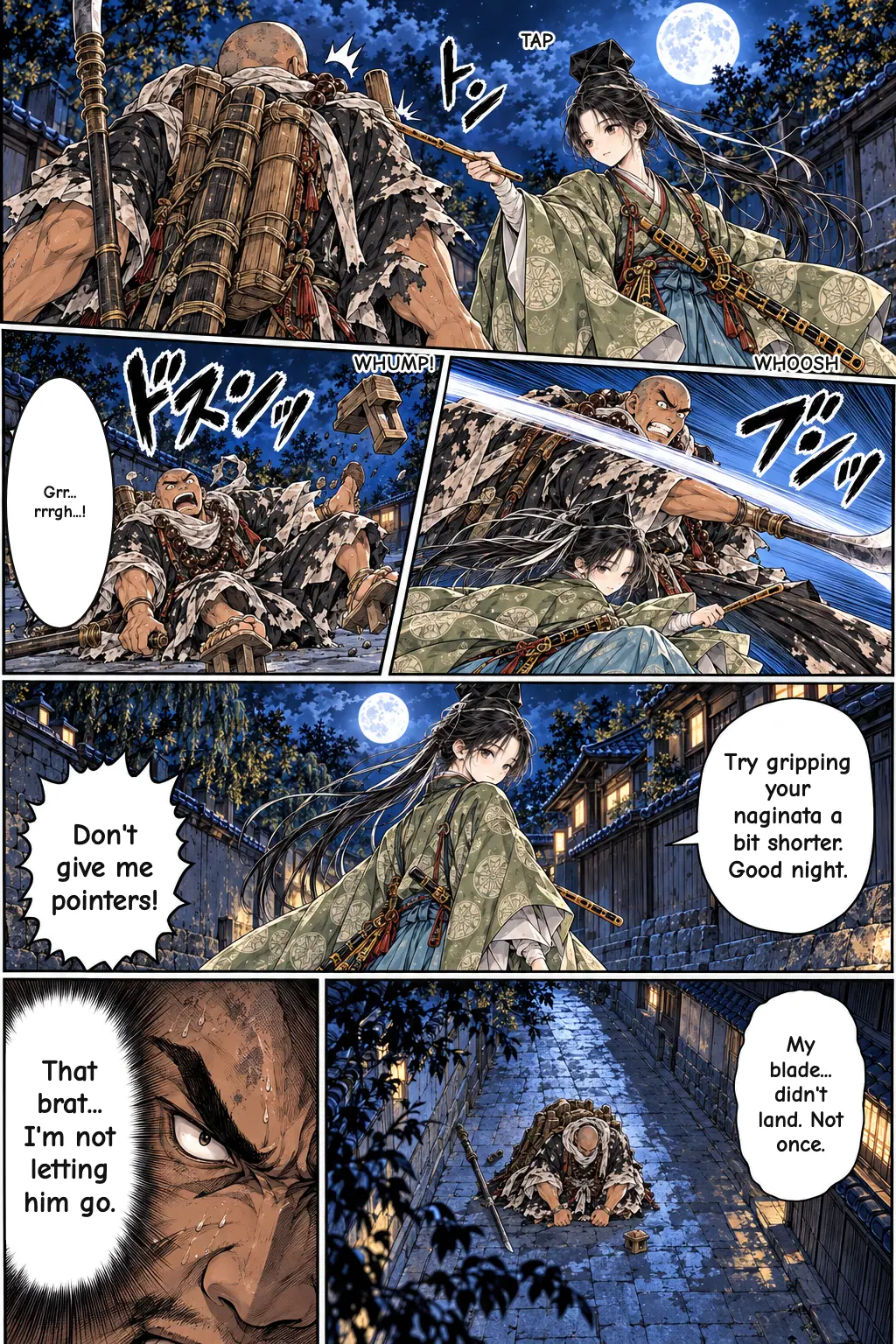
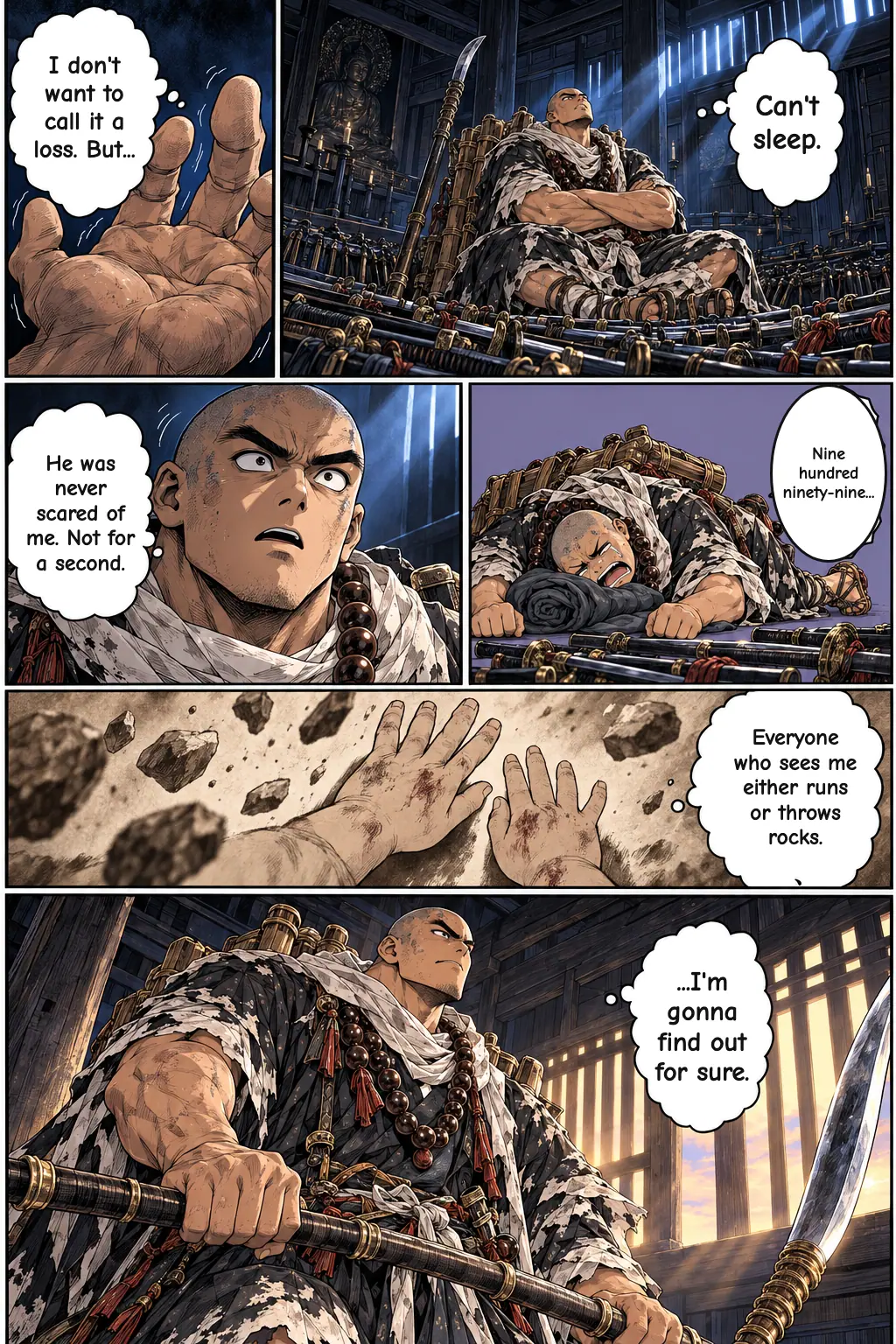
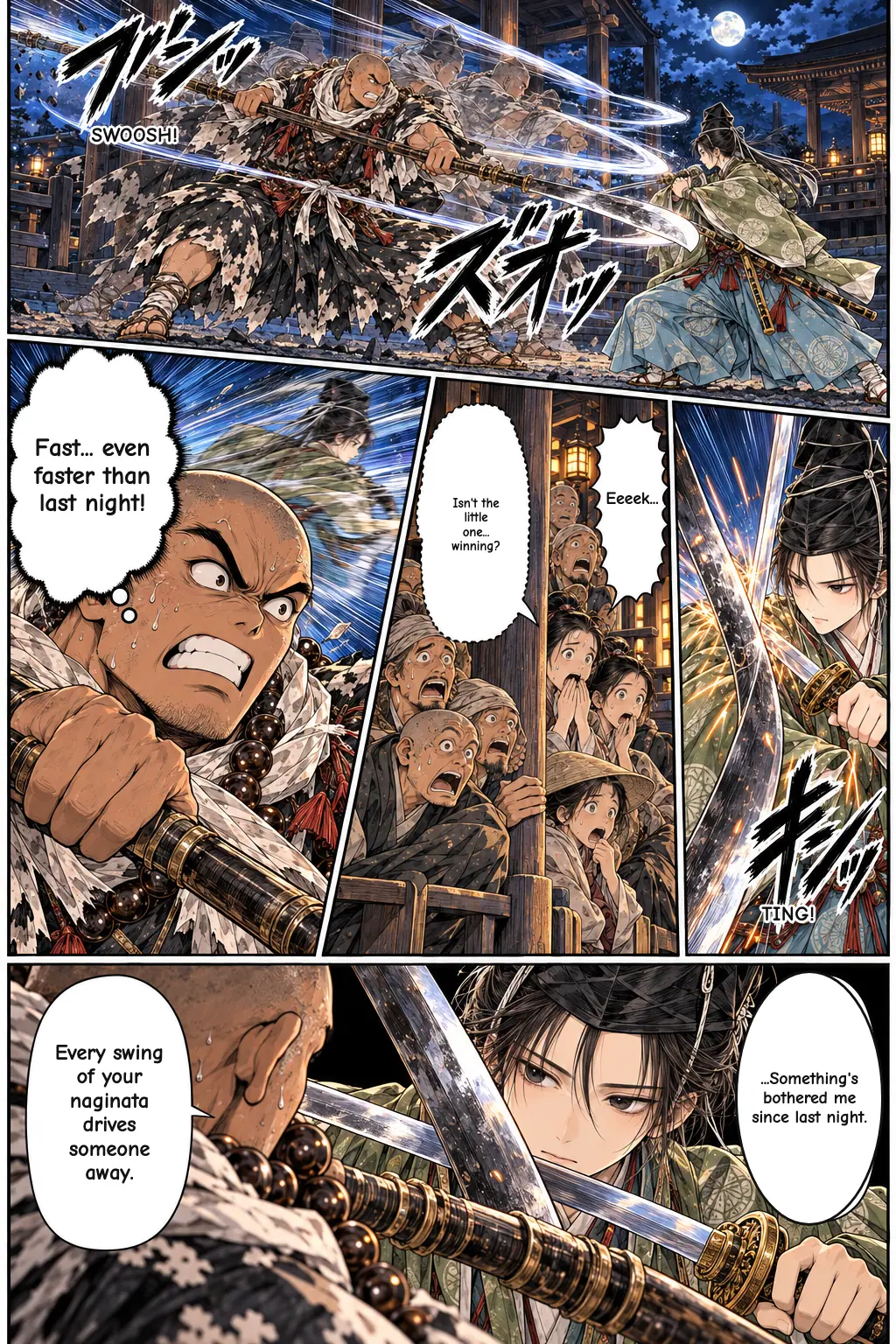
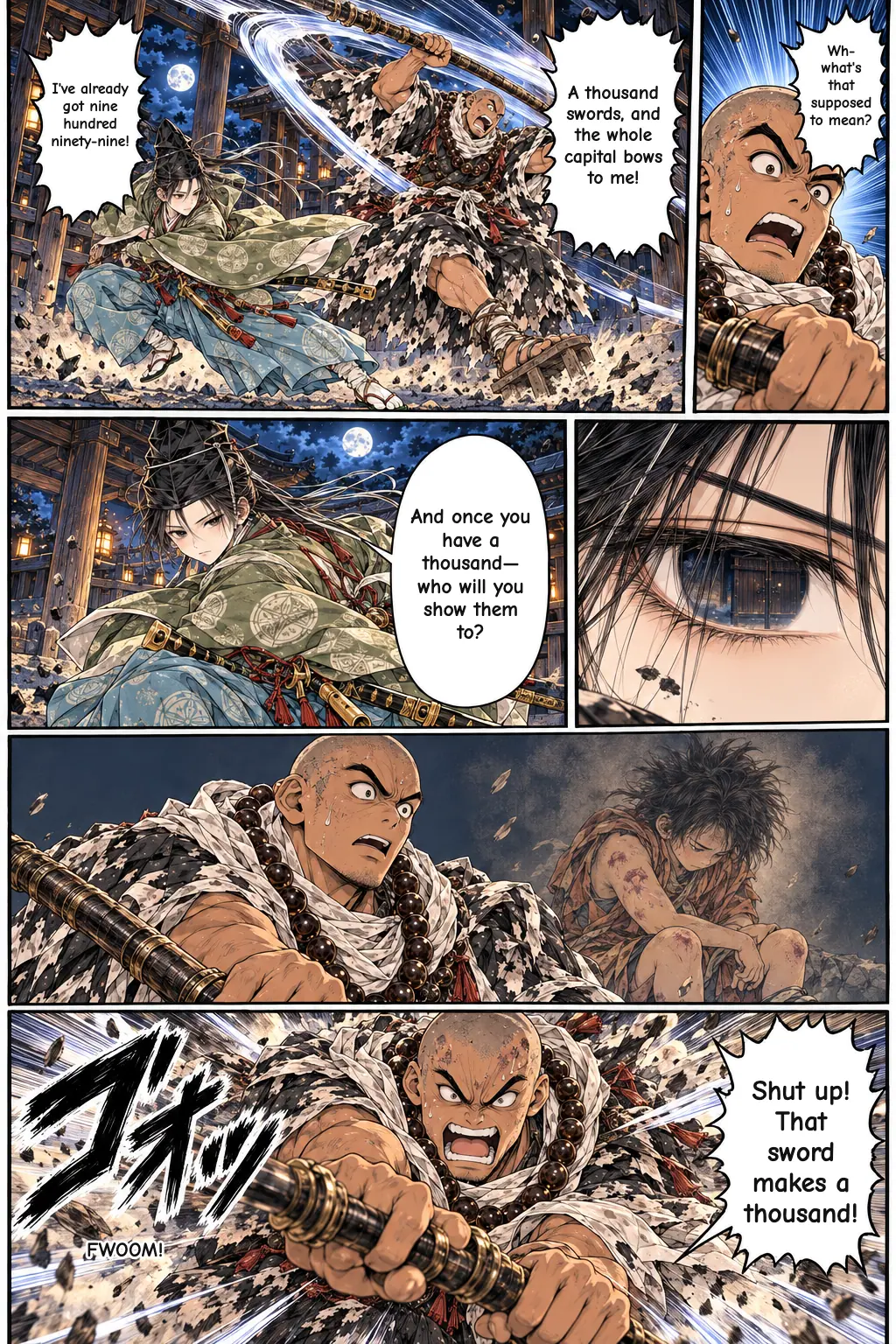
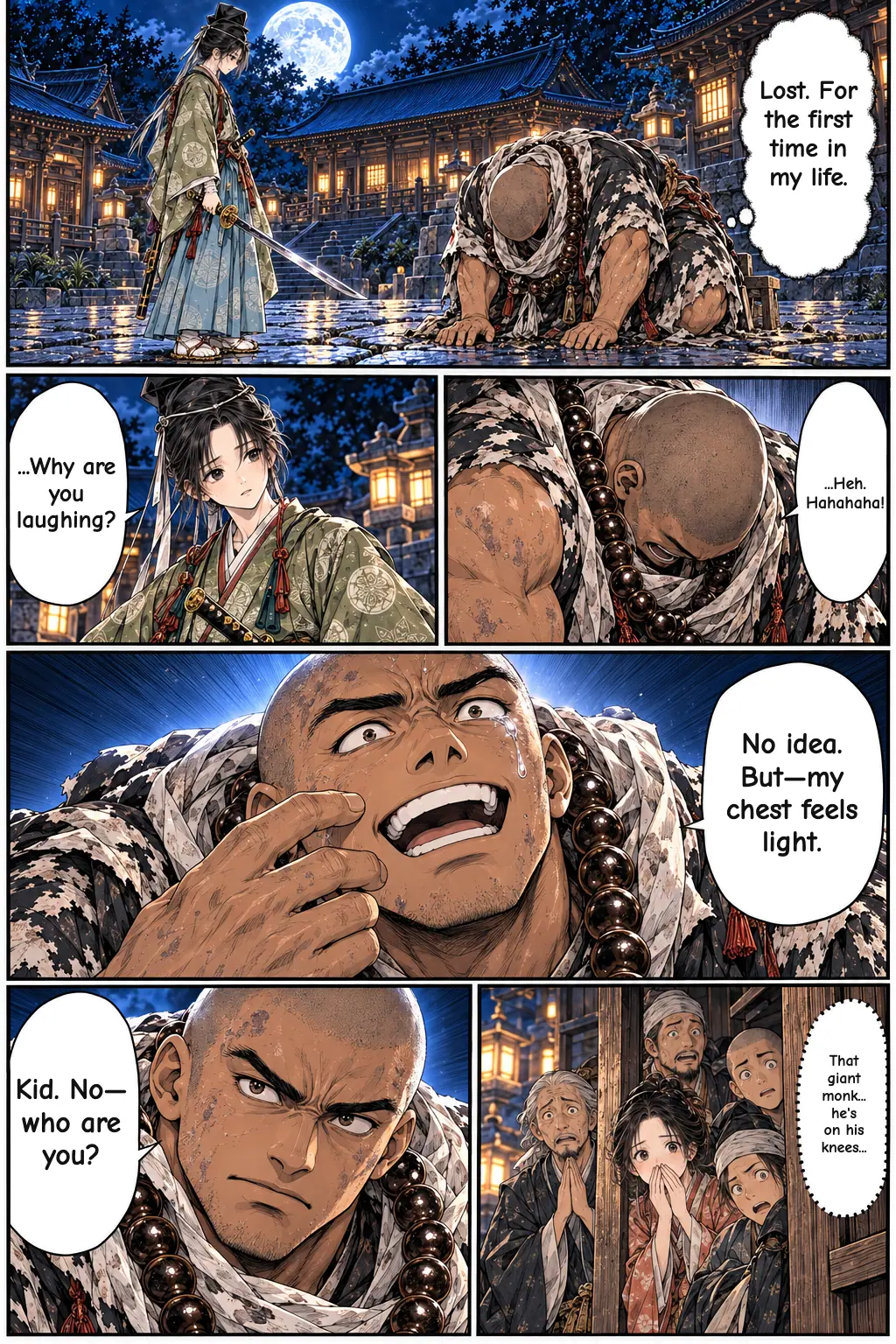
Benkei, a hot-tempered monk who has stolen 999 swords, sets out one night to claim his thousandth—only to find he can't land a single blow on a flute-playing boy. The next night he tries again at the temple on the cliff. What will he find in defeat?
Benkei and Ushiwakamaru: The Gikeiki Tale of the 1,000 Swords
The Original Story: Benkei's Thousand Swords
The meeting of Benkei and Yoshitsune is one of the best-known scenes in Japanese legend. Its main literary source is the Gikeiki ("The Chronicle of Yoshitsune"), a war tale by an unknown author. It is usually thought to have taken shape in the early Muromachi period, around the fourteenth or fifteenth century. The Gikeiki follows the life of Minamoto no Yoshitsune, a famous samurai commander, and this episode comes from its third book.
In the Gikeiki, Musashibō Benkei, a wild warrior-monk, has been thrown out of Mount Hiei, the great temple complex near Kyoto. He then burns down the temple on Mount Shosha in Harima Province and makes his way to the capital. There he decides that a person's treasures should be collected in sets of a thousand, so he vows to gather one thousand swords (tachi, long swords worn by warriors). Night after night he walks the streets of Kyoto and takes swords from anyone he meets, until he has 999.
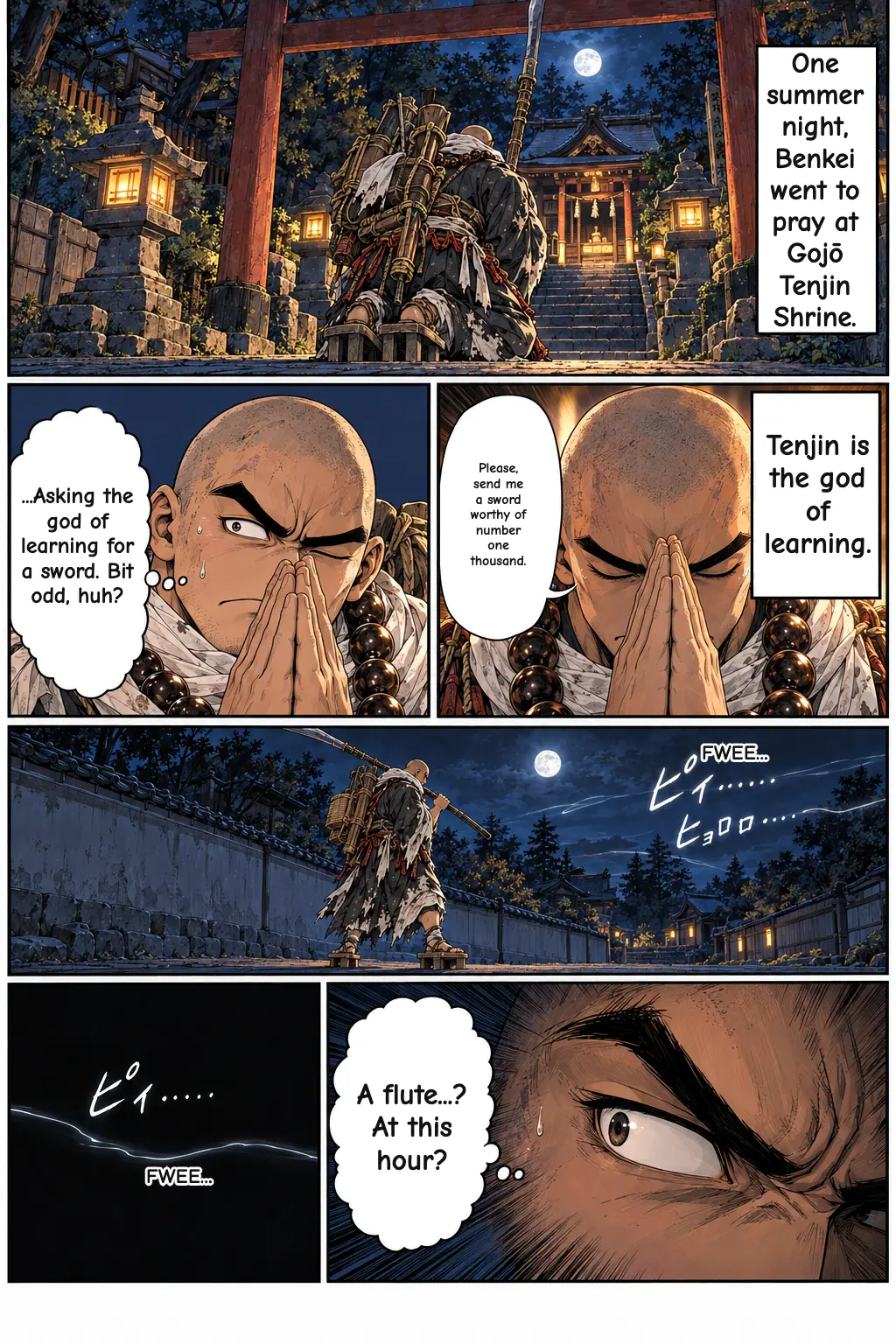
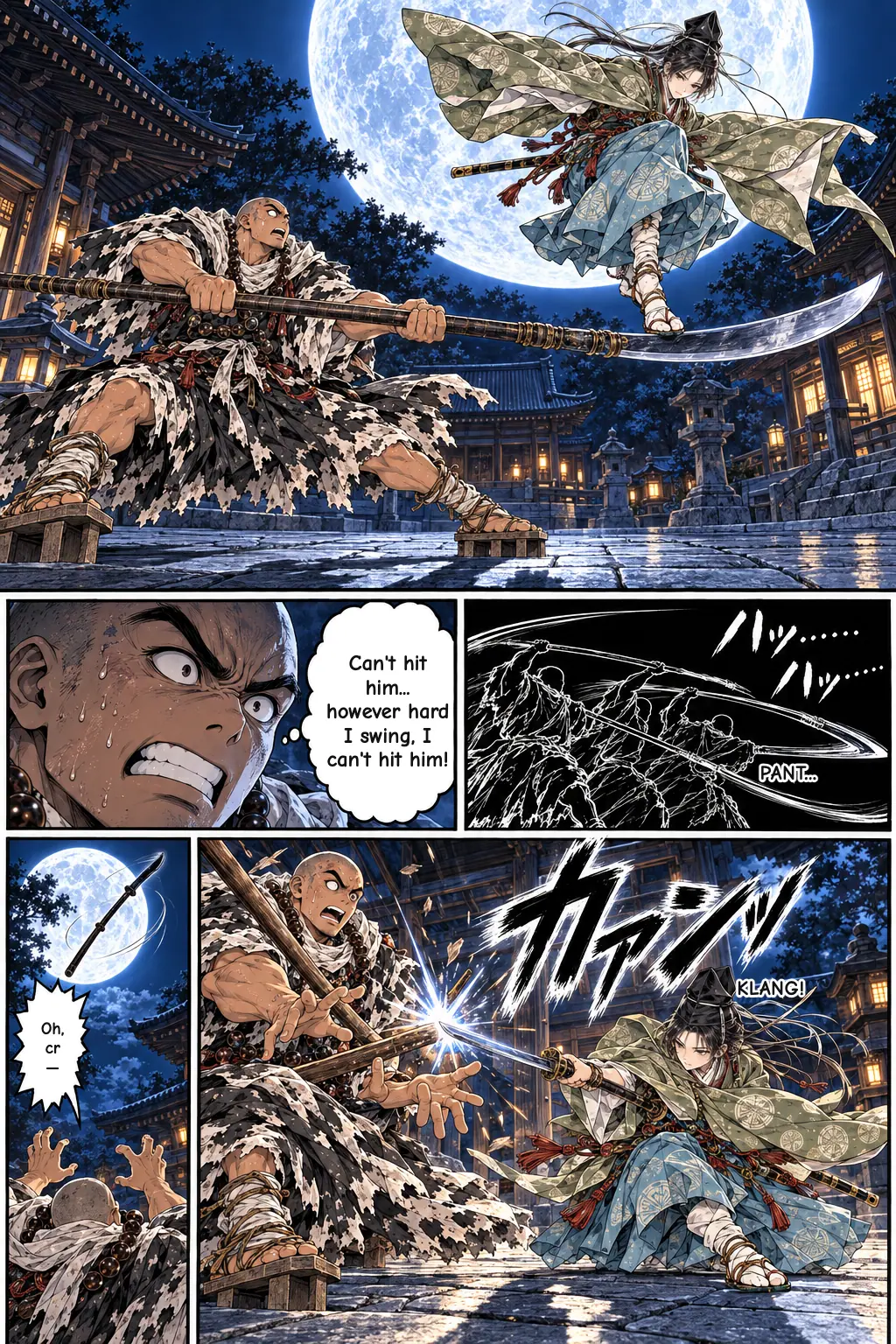
To find the last one, Benkei prays at the Gojō Tenjin shrine on the night of the seventeenth day of the sixth month. He asks to meet someone carrying a fine sword. Late that night, a young man comes down the road playing a flute, with a splendid gold-fitted sword at his side. This is the young lord (onzōshi) of the Minamoto clan: Yoshitsune. Benkei attacks, but the youth leaps up onto an earthen wall, slips past every blow, toys with the huge monk, and walks away.
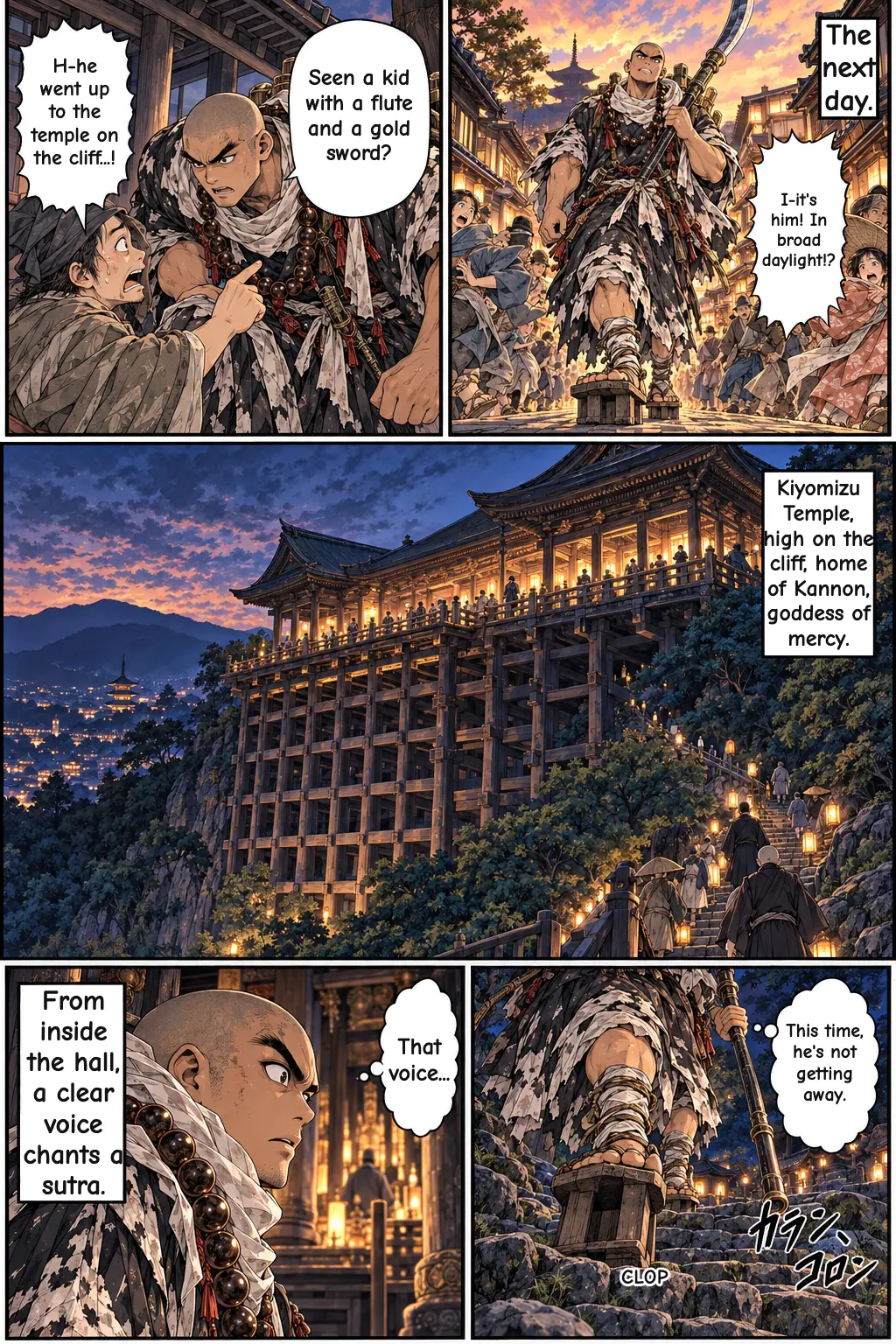
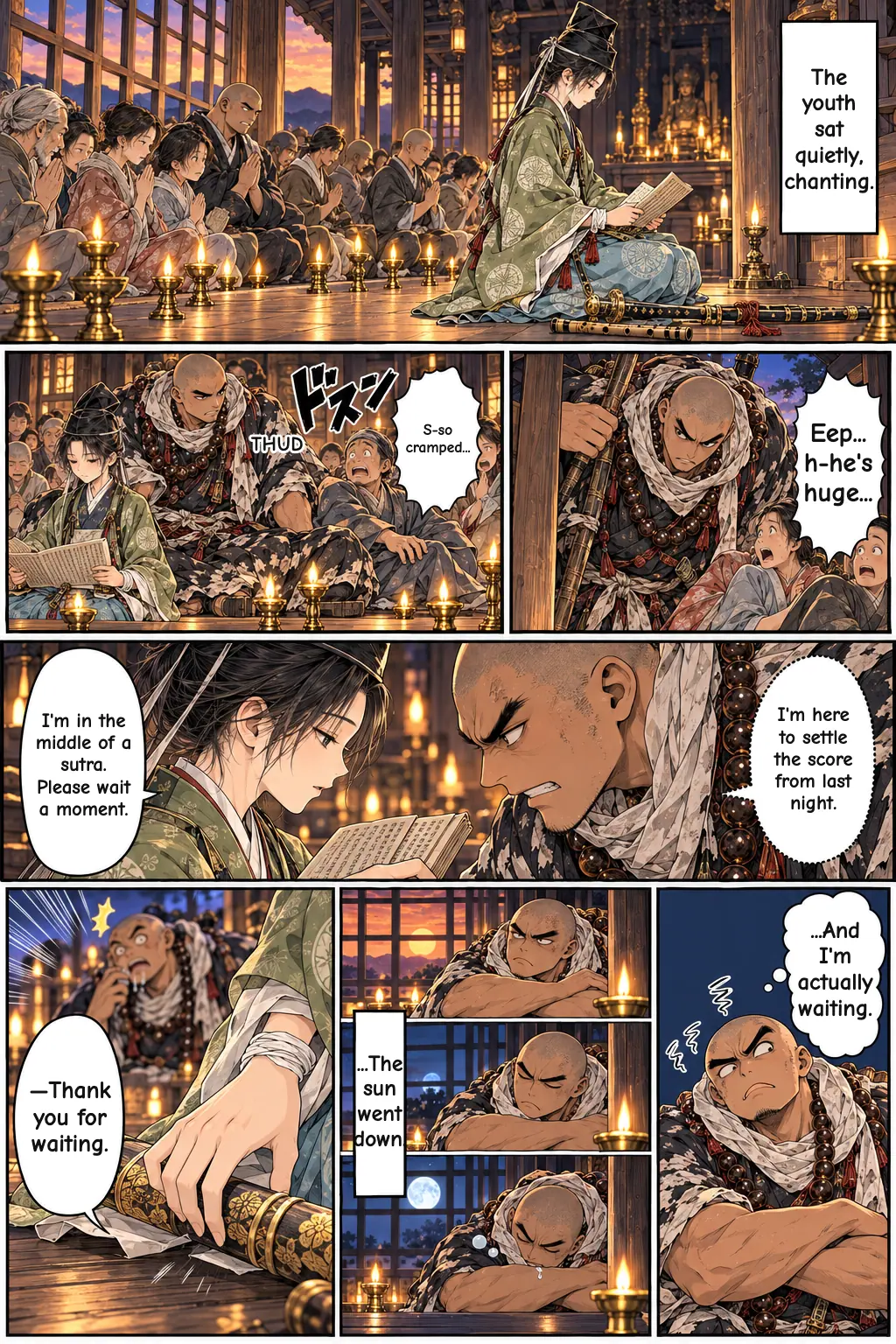
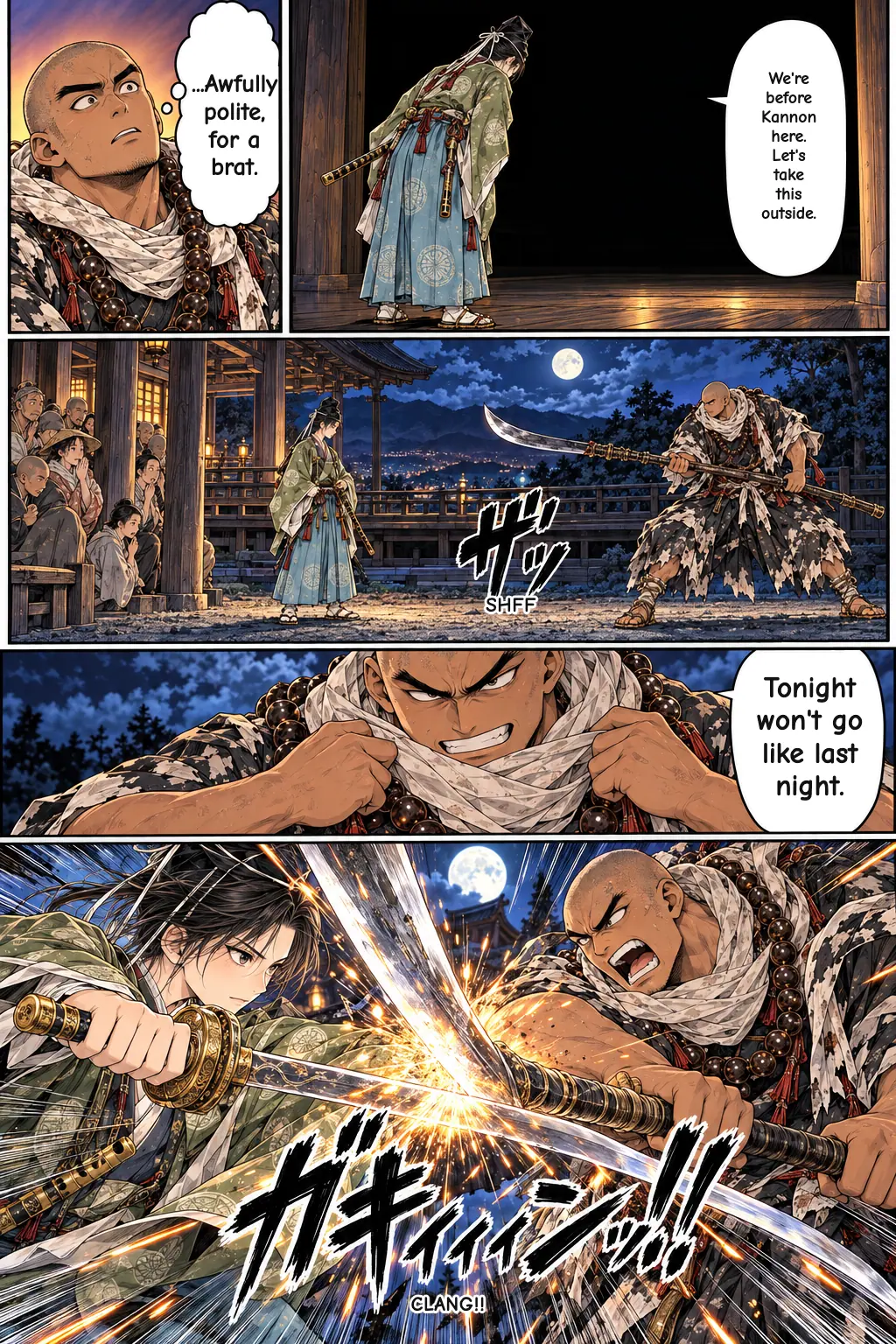
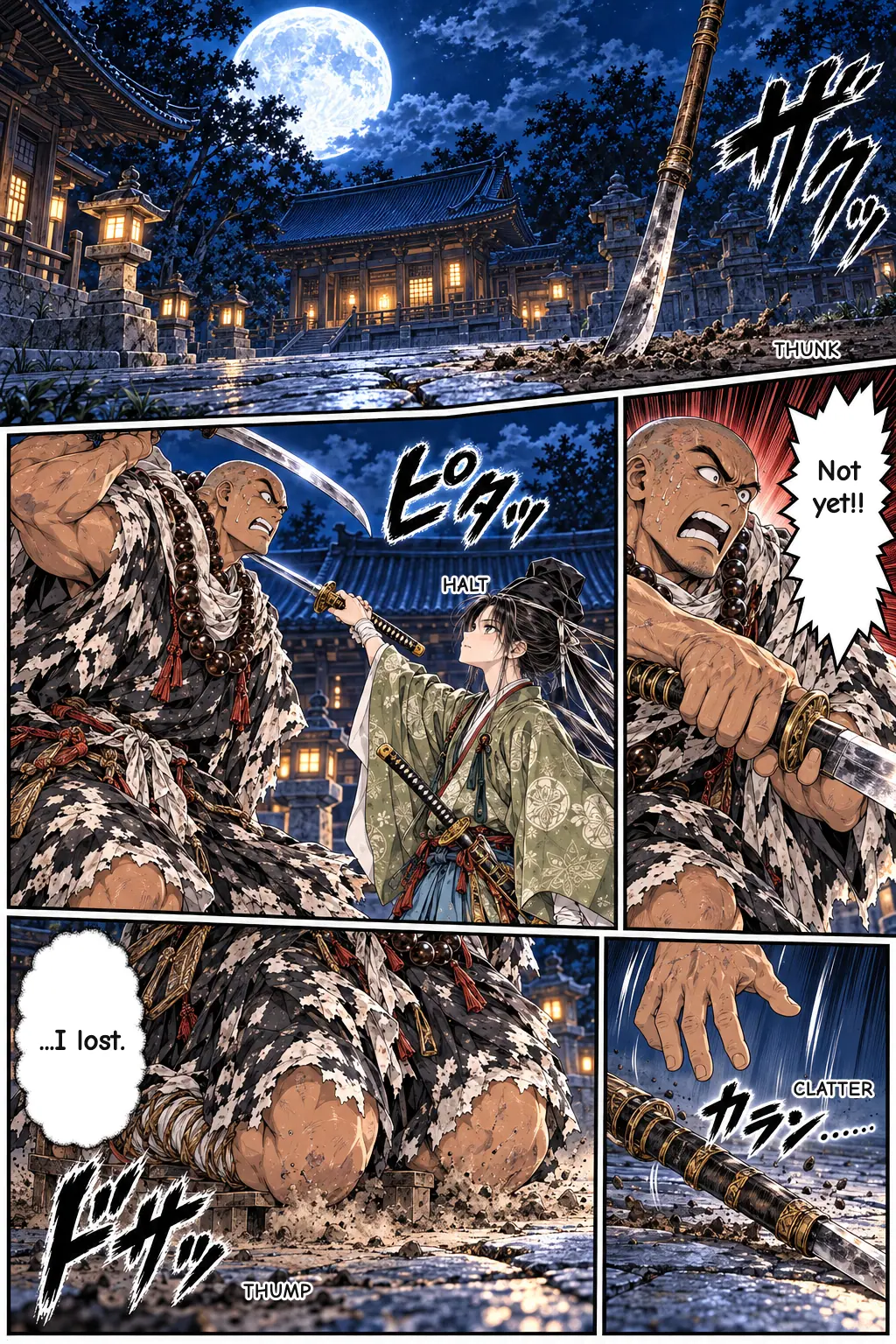
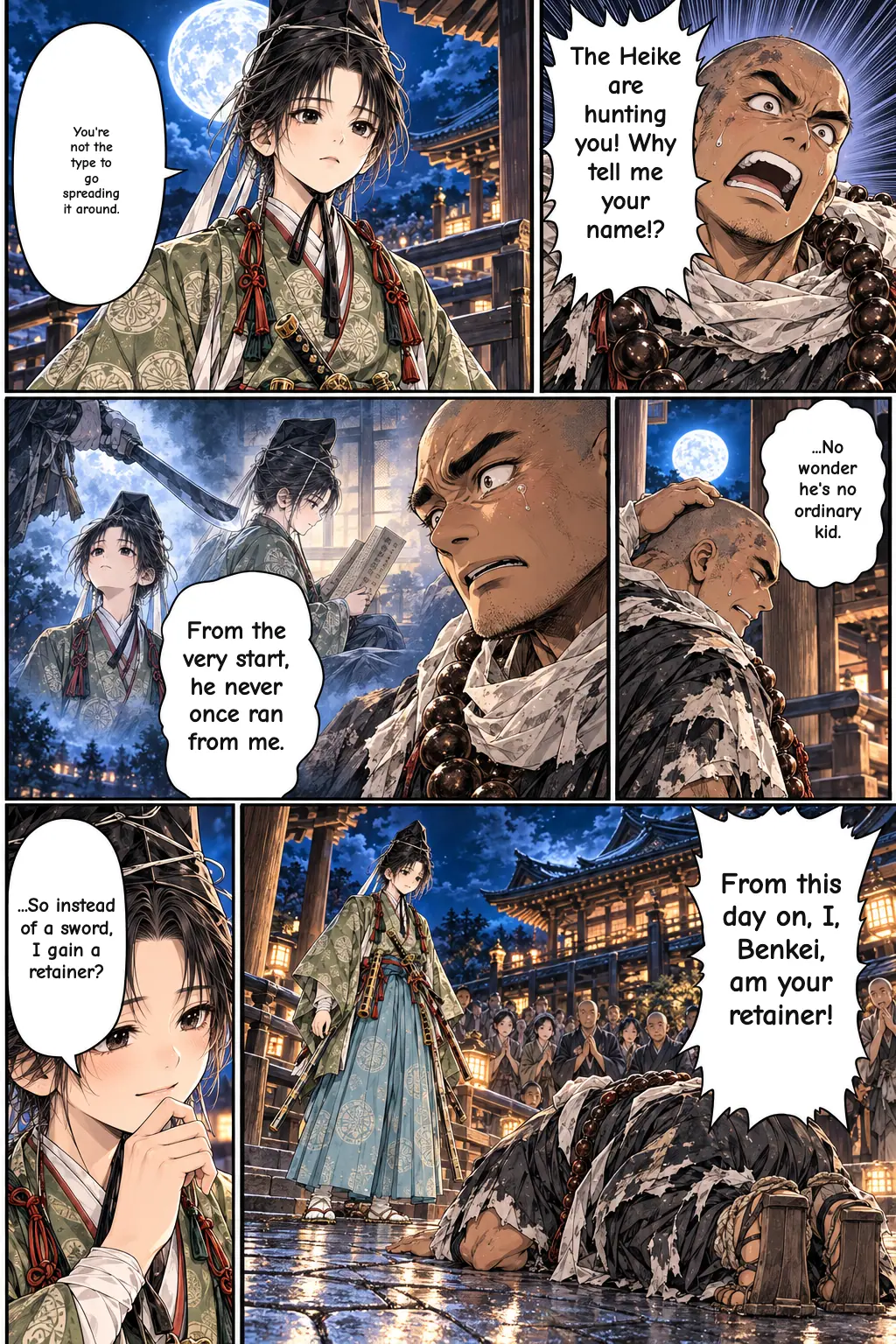
The next day, the eighteenth, Benkei follows the young lord to Kiyomizu Temple, where Yoshitsune has come to worship Kannon, the bodhisattva of mercy. Benkei pushes close to him while he reads the Lotus Sutra in the temple hall. The two fight again, hard, and this time Benkei is beaten. He surrenders and swears to serve Yoshitsune as his retainer. That promise between lord and follower is the heart of the story.
Main Characters
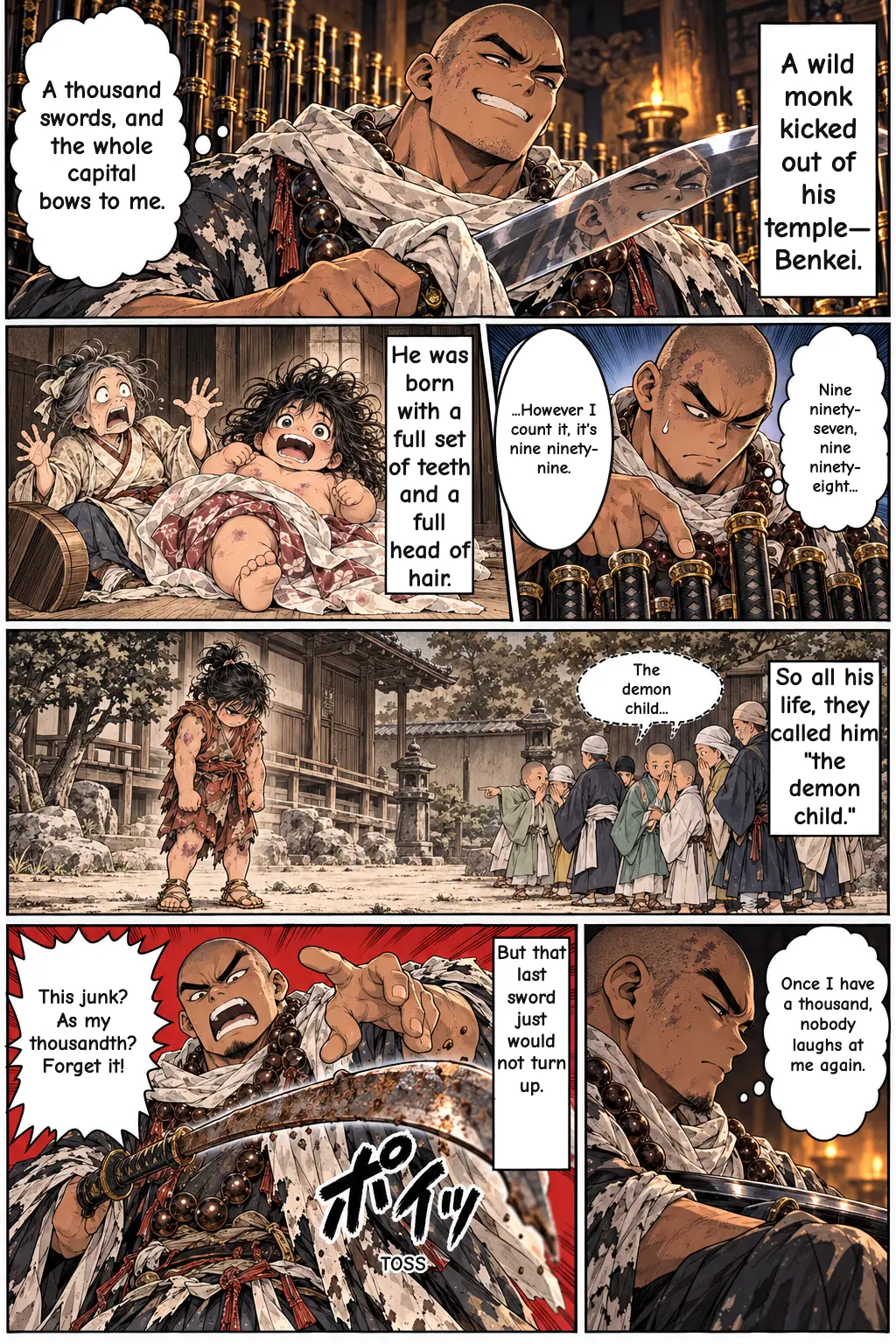
Benkei is a giant of a man, enormously strong and skilled with the sword and the naginata (a long-bladed polearm). Earlier in the Gikeiki he is described as the son of a high priest of the Kumano shrines who stayed unusually long in his mother's womb, and his childhood name was Oniwaka ("young demon"). What makes him memorable is the mix of traits: he robs strangers at night, yet he also prays sincerely at shrines and temples, and when he is beaten he gives in honestly instead of holding a grudge.
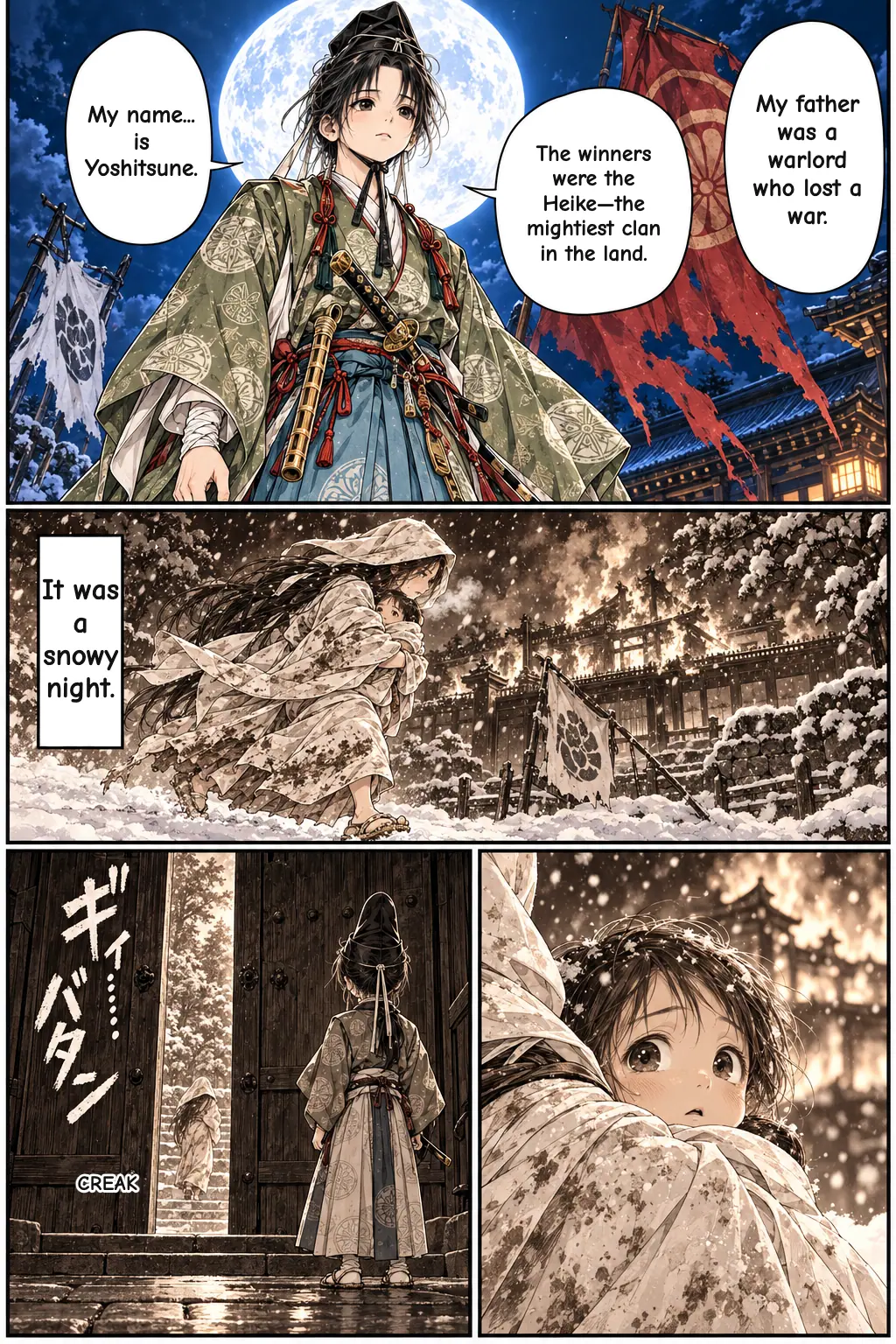
Yoshitsune is a son of Minamoto no Yoshitomo, the clan leader defeated in an earlier war. In the Gikeiki he has already come of age and taken the name Yoshitsune by this point, after returning from the far north of Japan. Many later retellings, and this manga, call him Ushiwakamaru, his boyhood name. He is light on his feet, plays the flute while walking the night streets, and is devoted to Kannon at Kiyomizu.
What the Story Means: Culture and Background
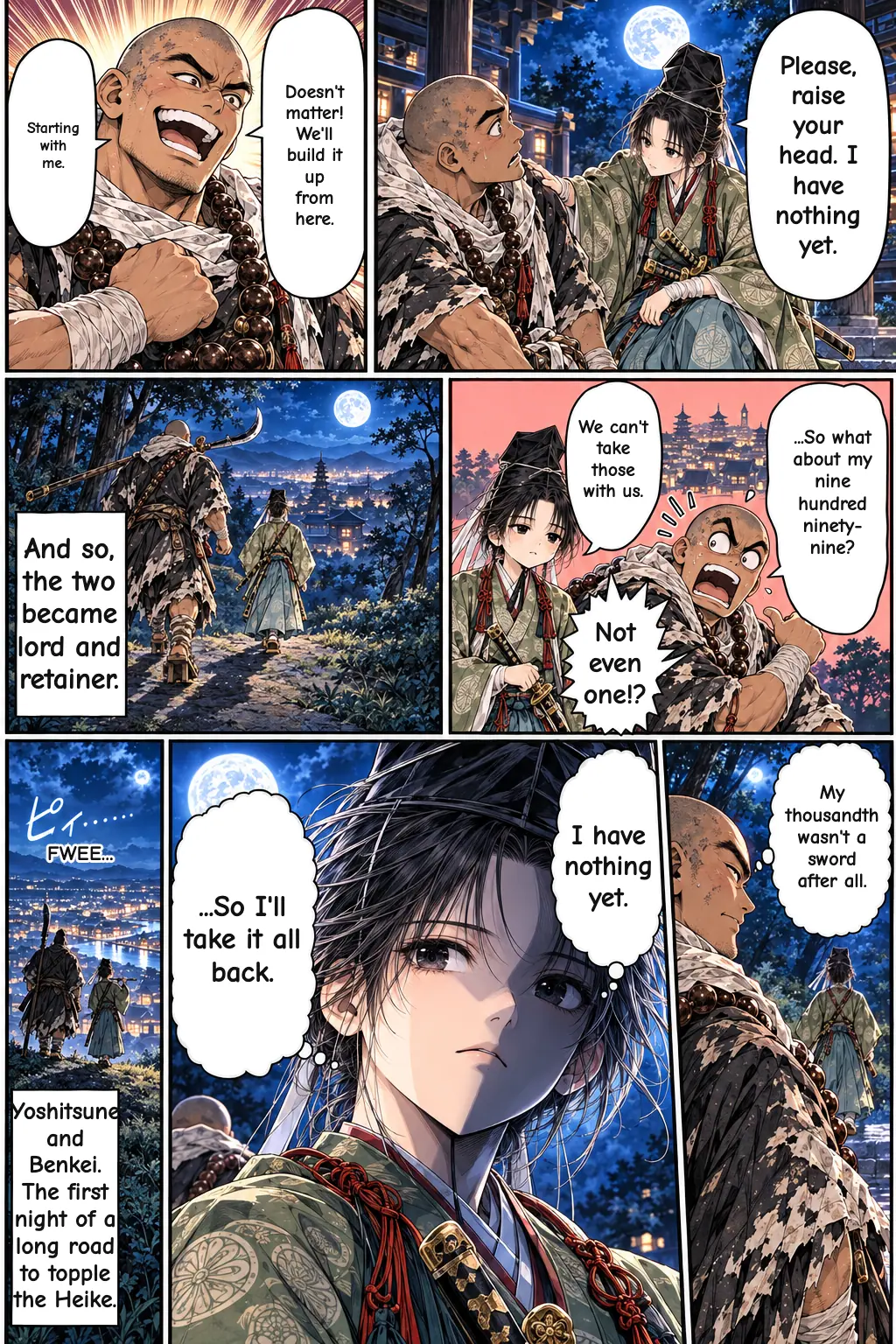
The tale tells how Yoshitsune got his most loyal follower. In the Gikeiki and later legend, Benkei stays at his lord's side through victory, exile, and death. Their first meeting sets the pattern: the strongest man in Kyoto is defeated not by greater force but by speed and grace, and he answers defeat with loyalty. For medieval audiences, this was a model of the bond between lord and retainer.
Religion runs through the episode too. Both fights follow visits to holy places, Benkei's prayer at a shrine and Yoshitsune's devotion at Kiyomizu. Readers could see the meeting as something the gods and Buddhas arranged.
Many people know this story as a duel on Gojō Bridge, in which the thousandth sword was meant to be Yoshitsune's. That version comes from later works, such as Noh plays, popular illustrated tales (otogizōshi), and a well-known children's song from the modern era. In the Gikeiki itself, the first clash happens on a road near the Gojō Tenjin shrine and the decisive fight takes place at Kiyomizu Temple.
What the Manga Changes
The manga keeps the main line of the Gikeiki: the vow of a thousand swords, the 999 stolen blades, the flute-playing youth with the golden sword, the escape onto the wall, the second fight at Kiyomizu, and Benkei's surrender and oath. Some parts are the artists' own additions.
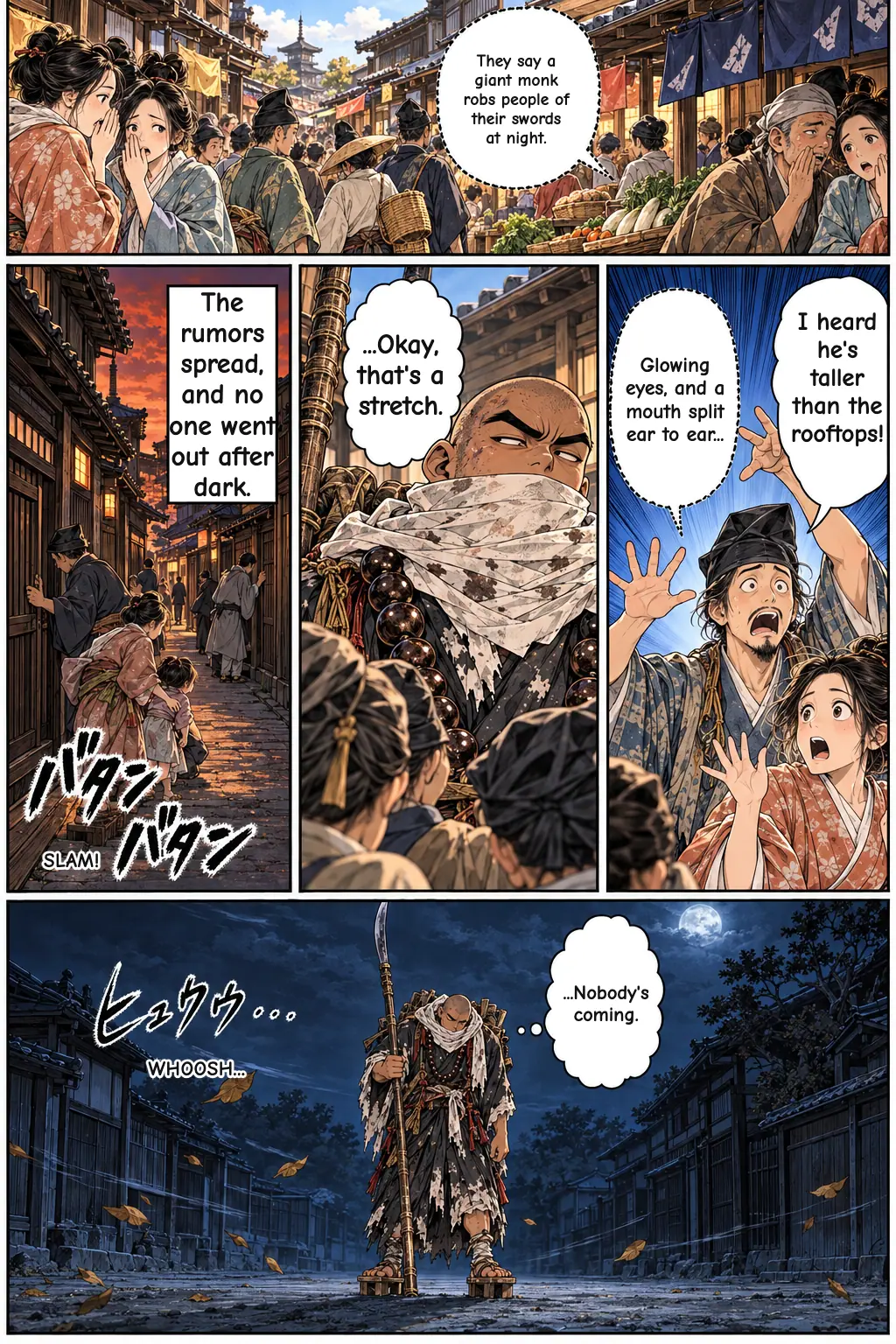
The two nights are combined into a single episode. Benkei's first-person narration, his inner thoughts, and his flashbacks are invented. The original only says he took swords night after night, so the named warriors he robs, how many there are, and the scenes of each robbery are made up for the manga. The same goes for the townspeople's frightened gossip.
The flute melody, the moonlight and weather, the moves and distances in the sword fights, and exactly where at Kiyomizu the duel takes place are also invented, though they stay within the original story. Costume colors and armor details fill in what the text doesn't describe, and the wording and gestures of the surrender scene are the manga's own.
Where to Read It
If you want to see the night chase and the duel at Kiyomizu play out panel by panel, Episode 5 of THE LEGEND OF YOSHITSUNE: Ushiwaka and Benkei is right above this article. Every episode on Manga Portal is free to read, with no sign-up needed, so you can follow Benkei and Yoshitsune from this first meeting through the rest of their story.
Characters in this episode
Musashibō Benkei
A huge, hot-tempered warrior-monk who steals 999 swords in Kyoto and, after losing to Yoshitsune, becomes his loyal retainer.
Minamoto no Yoshitsune (Ushiwakamaru)
The young lord of the Minamoto clan, a nimble flute-playing swordsman who defeats Benkei and takes him into his service.
FAQ
How did Benkei meet Yoshitsune?
According to the Gikeiki, Benkei had stolen 999 swords and attacked a young flute player at night to take his golden sword. The youth was Yoshitsune, who dodged him easily. The next day they fought again at Kiyomizu Temple, Benkei lost, and he swore to serve Yoshitsune.
Did Benkei and Ushiwakamaru really fight on Gojō Bridge?
The famous bridge duel comes from later Noh plays, popular tales, and a modern children's song. In the Gikeiki, the first encounter takes place on a road near the Gojō Tenjin shrine, and the deciding fight is at Kiyomizu Temple.
Why did Benkei collect 1,000 swords?
In the Gikeiki, Benkei believes that treasures should be owned in sets of a thousand, so he vows to gather a thousand swords. He takes them from people he meets on Kyoto's streets at night.
What is the Gikeiki?
The Gikeiki is a Japanese war tale by an unknown author about the life of Minamoto no Yoshitsune. It is generally thought to date from the early Muromachi period. Many later plays and stories about Yoshitsune and Benkei draw on it.
Were Benkei and Yoshitsune real people?
Yoshitsune was a real twelfth-century samurai commander, and a follower named Benkei appears in historical records. However, the story of the thousand swords and their dramatic meeting comes from legend, not documented history.