Episode 1When the Lights Go Out, Kill HimThe Bells of Gion Shoja / The Night Attack at Court
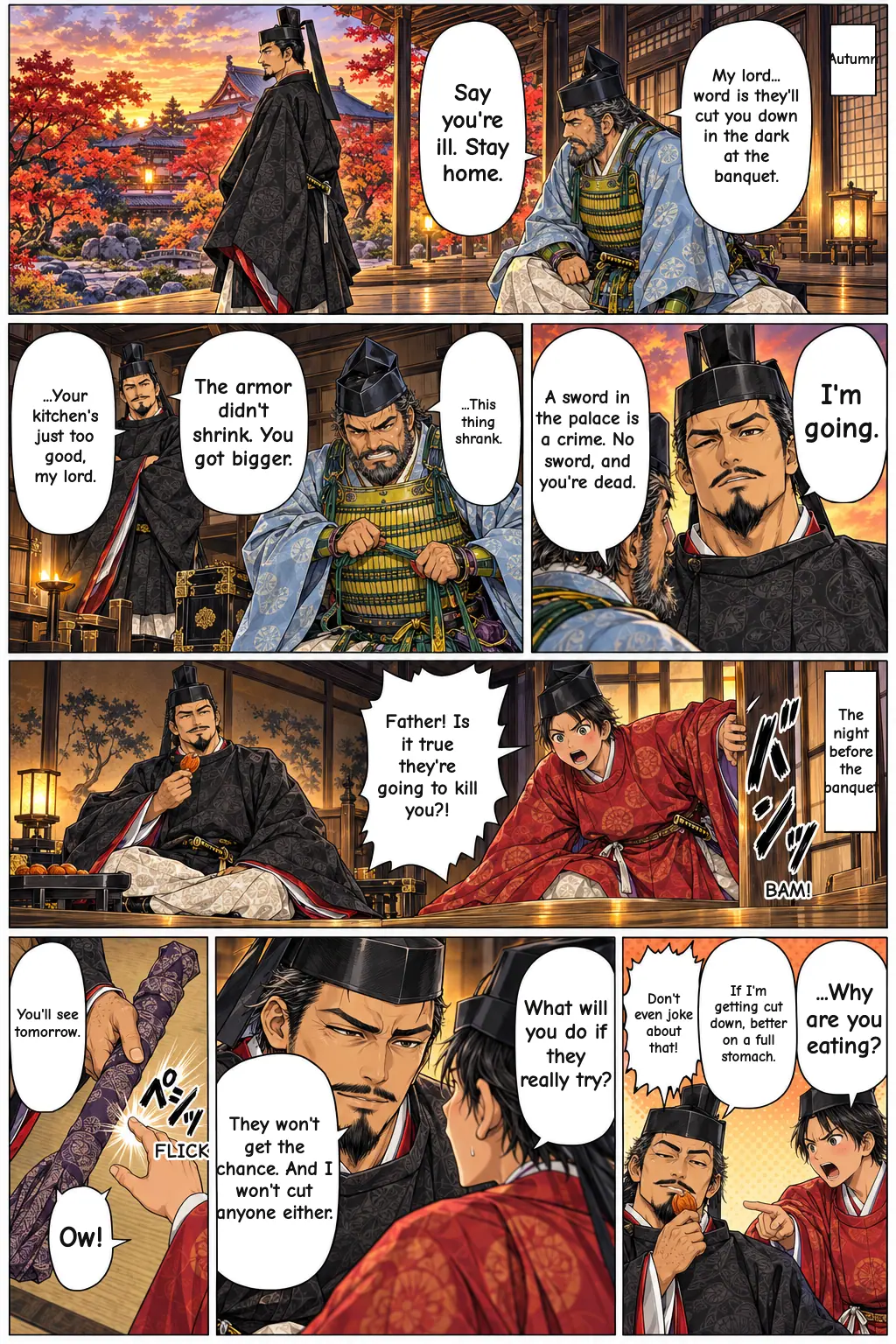
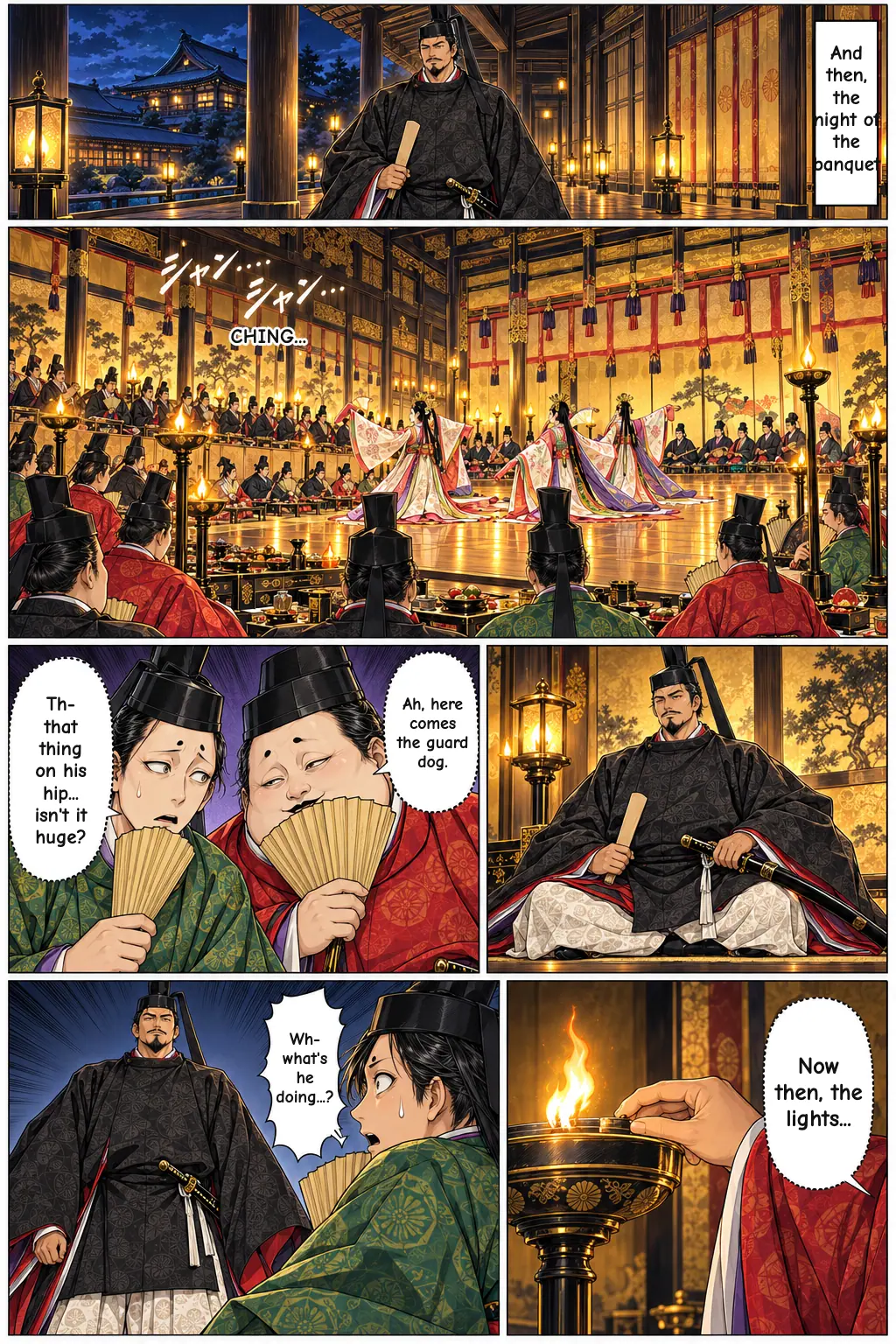
Taira no Tadamori is the first samurai ever allowed into the Courtiers' Hall, and the jealous court nobles plan to kill him in the dark on banquet night. He doesn't fight and he doesn't run. With a blade that glints in the lamplight, a loyal retainer waiting in the garden and one clever trick, he silences the most powerful men in the capital without swinging his sword once.
Get new episodes in your feed. Follow us on:ThreadsBluesky
Story summary
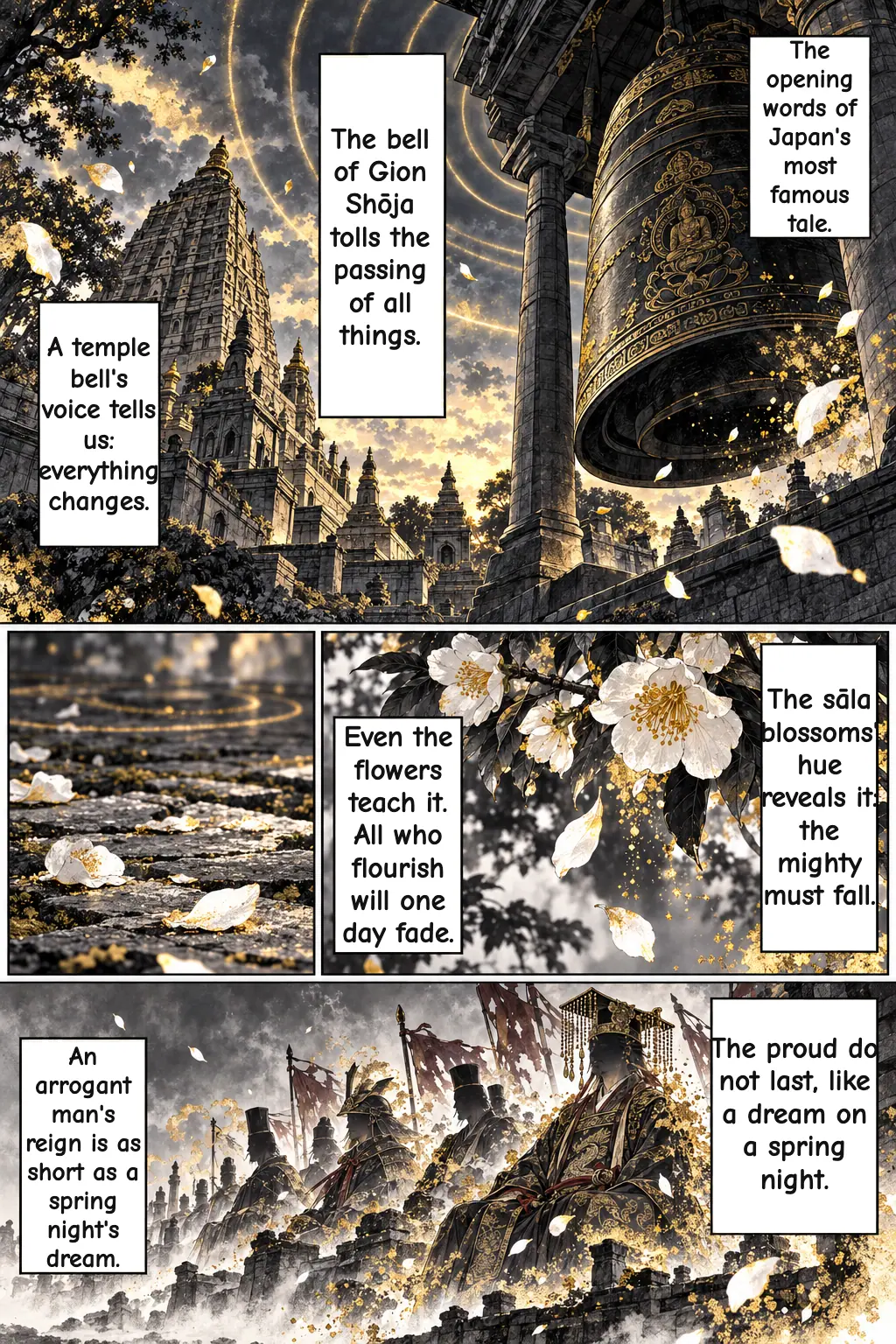
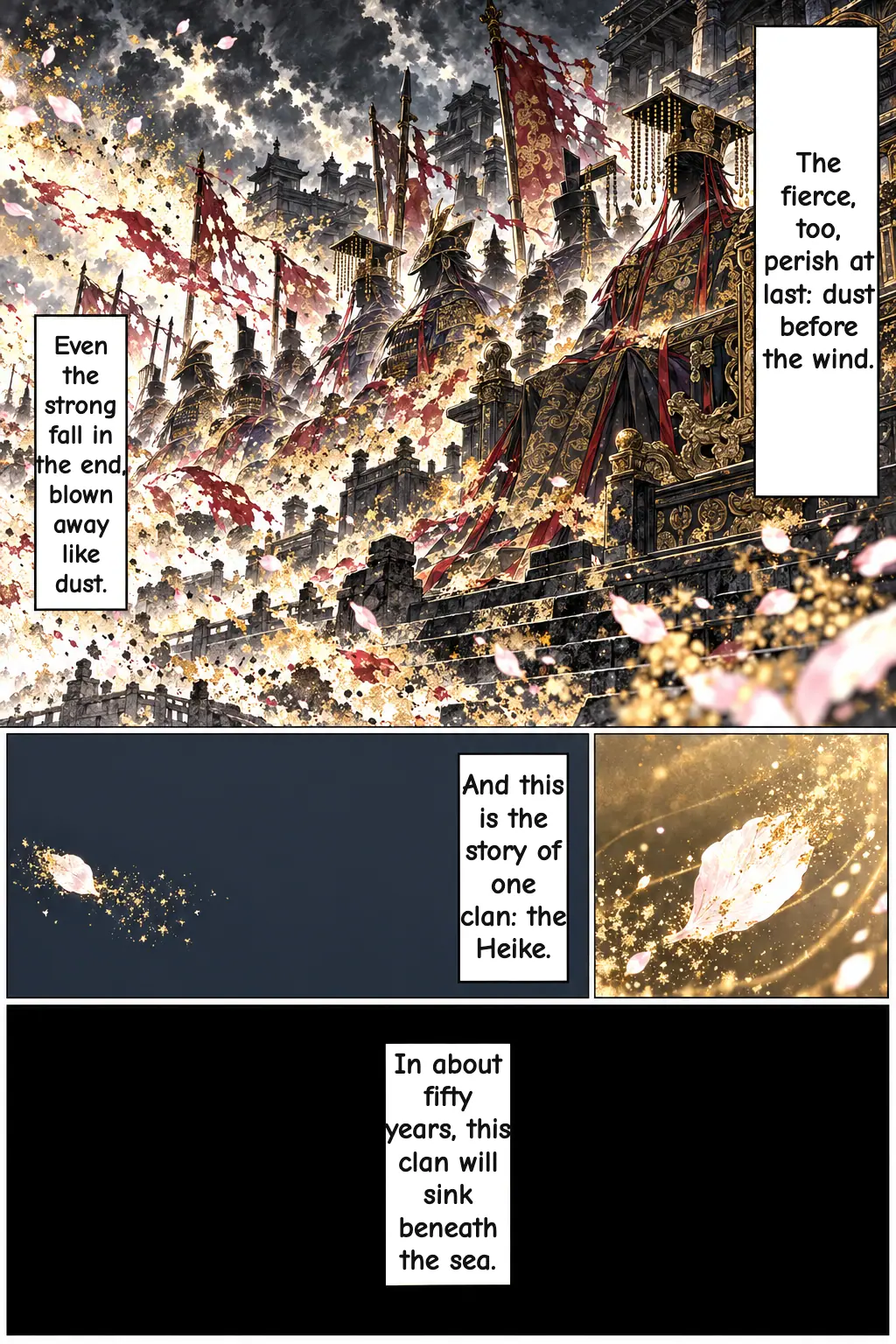
The Tale of the Heike (Heike Monogatari) is a medieval Japanese war epic about the rise and fall of the Taira clan, also called the Heike. Blind monk-storytellers chanted it to the sound of the biwa, a Japanese lute. It opens with one of the best-known passages in Japanese literature, "Gion Shoja." The bells of Gion Shoja, a monastery in India linked to the Buddha, ring out that nothing lasts. The fading blossoms of the sala trees show that whoever prospers will decline. The proud and the mighty are compared to a short dream on a spring night and to dust blown away by the wind.
The Tale of the Heike Episode 1: Bells of Gion Shoja & Tadamori's Night Attack Explained
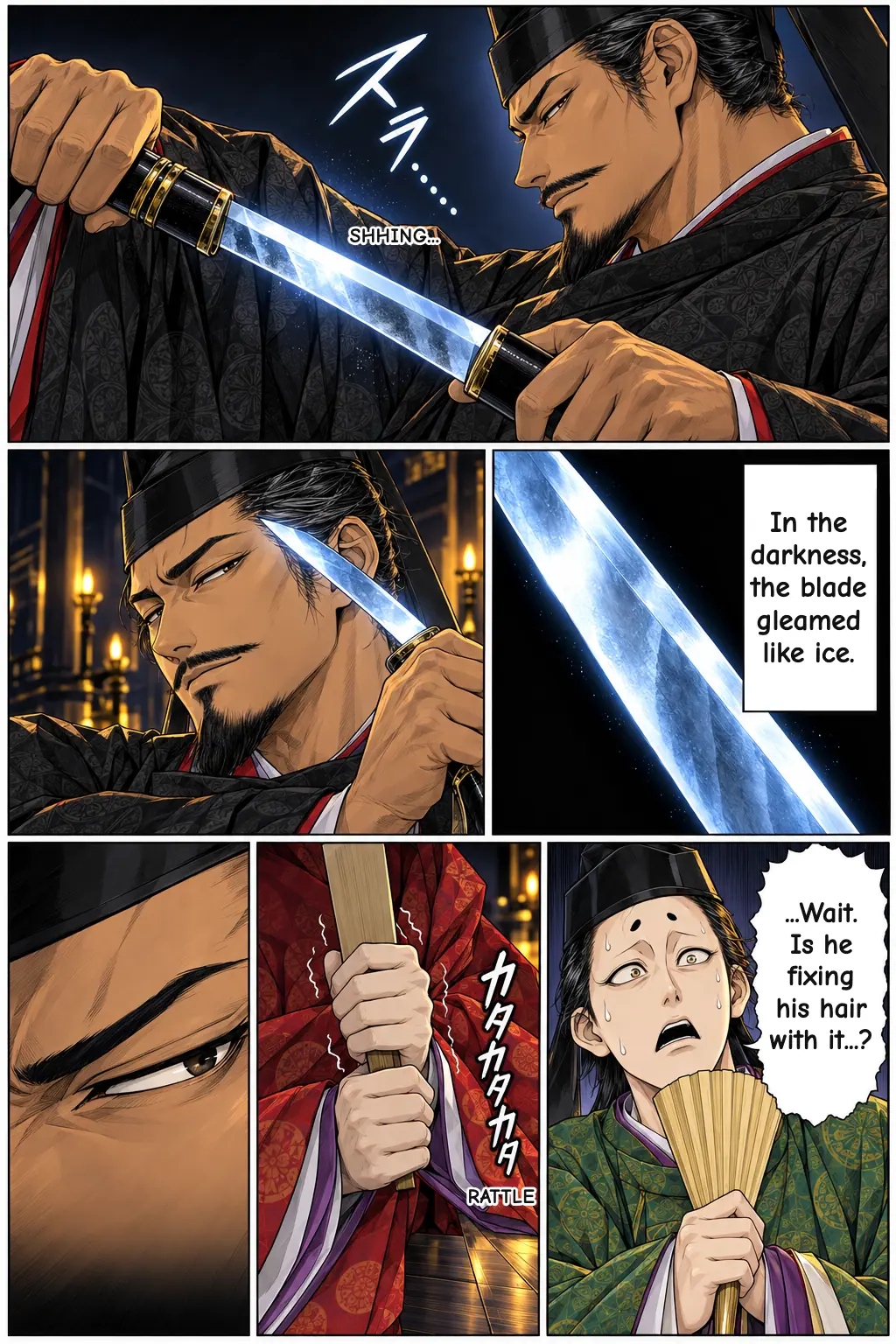
In short: The opening of The Tale of the Heike pairs the famous "Bells of Gion Shoja" passage, which says that every proud and powerful person must one day fall, with the story of Taira no Tadamori, the first warrior allowed into the emperor's Courtiers' Hall. Jealous nobles plot to attack him in the dark at a palace banquet. Tadamori stops them without a fight: he flashes a blade that looks real, keeps a loyal retainer posted in the garden, and later shows that the "sword" was only wood covered in silver foil.
The Original Story: How The Tale of the Heike Begins
The Tale of the Heike (Heike Monogatari) is a medieval Japanese war epic about the rise and fall of the Taira clan, also called the Heike. Blind monk-storytellers chanted it to the sound of the biwa, a Japanese lute. It opens with one of the best-known passages in Japanese literature, "Gion Shoja." The bells of Gion Shoja, a monastery in India linked to the Buddha, ring out that nothing lasts. The fading blossoms of the sala trees show that whoever prospers will decline. The proud and the mighty are compared to a short dream on a spring night and to dust blown away by the wind.
The narrator then lists famous rebels and tyrants from China and Japan who fell in the end, and finally names the man the tale is really about: Taira no Kiyomori, the most powerful man of his age. To explain how his family rose so high, the story goes back to Kiyomori's father, Taira no Tadamori.
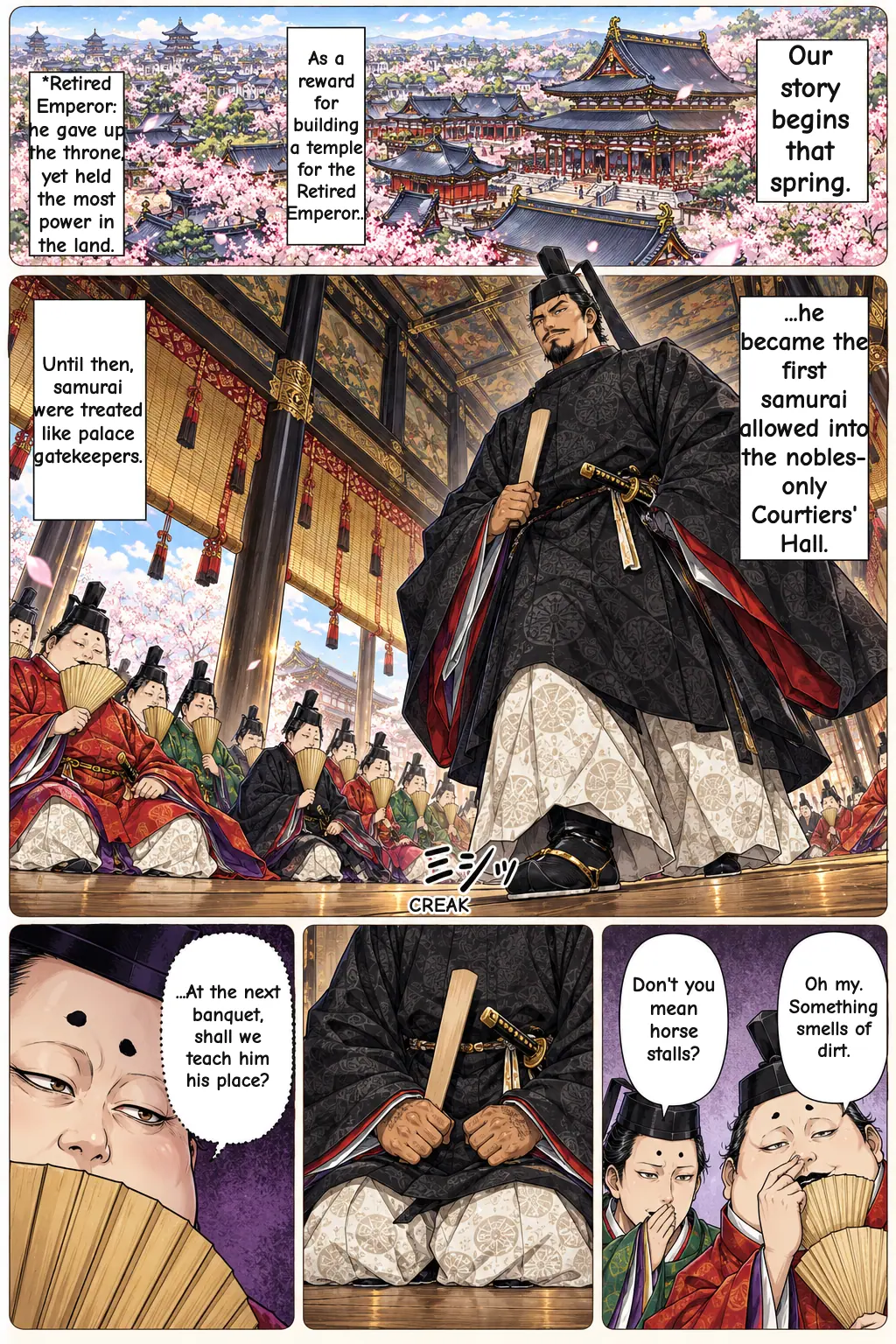
For Emperor Toba, then a retired emperor, Tadamori built a temple hall called Tokuchoju-in, filled with a thousand and one Buddhist statues. As a reward he was given a province and something much rarer: permission to enter the Courtiers' Hall (tenjo), the inner circle of the imperial palace. Until then, warrior families had served the court but had never been treated as part of it.
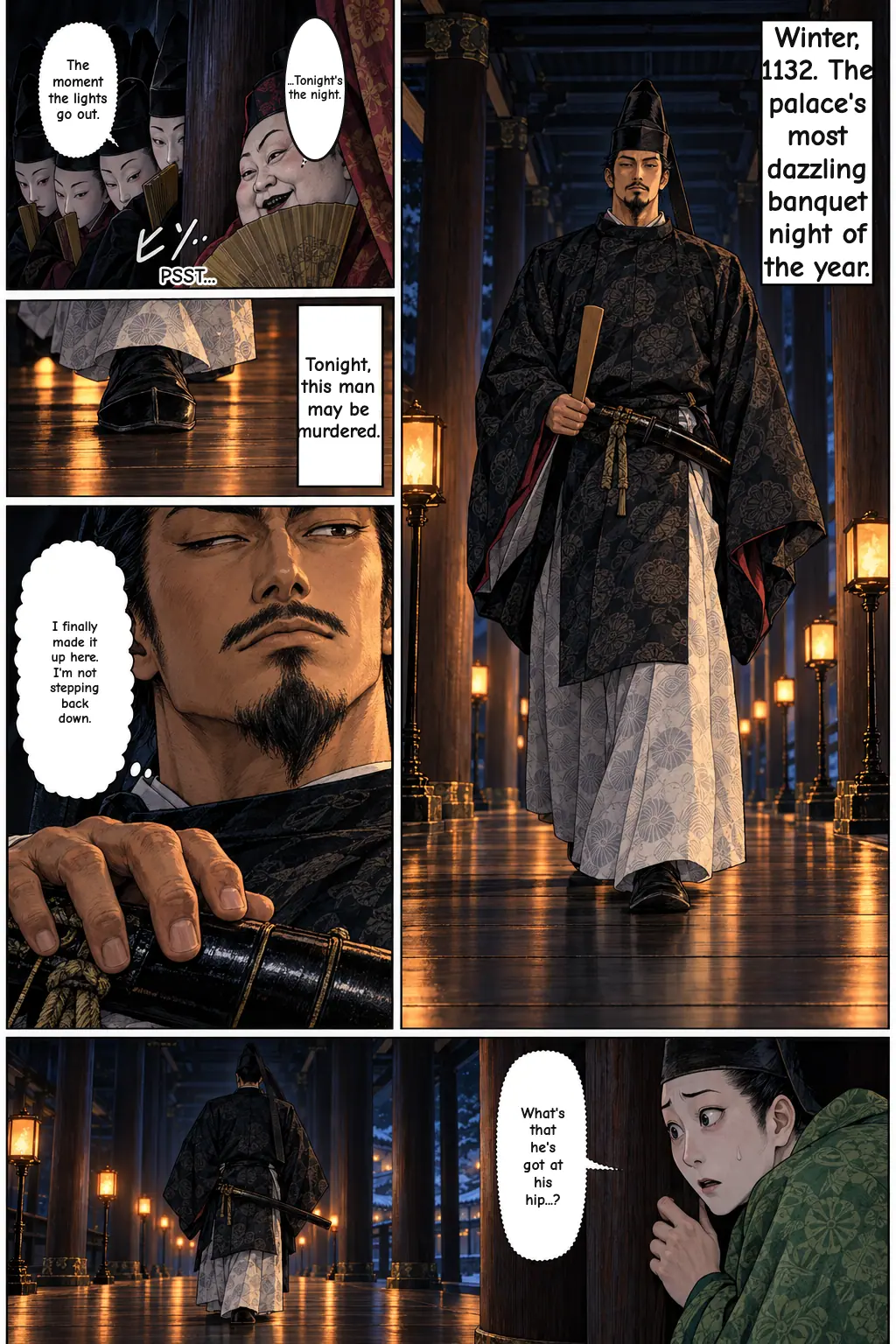
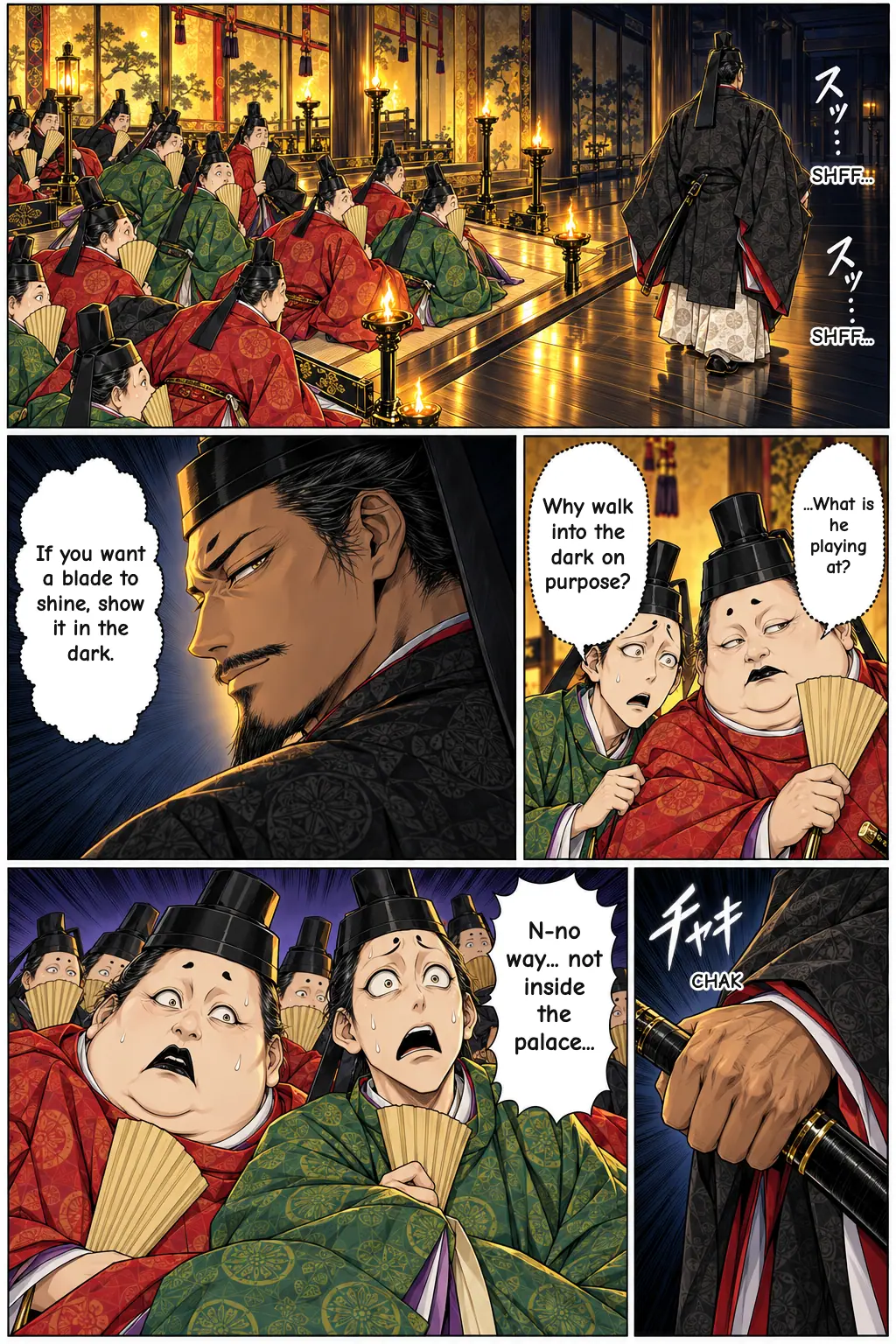
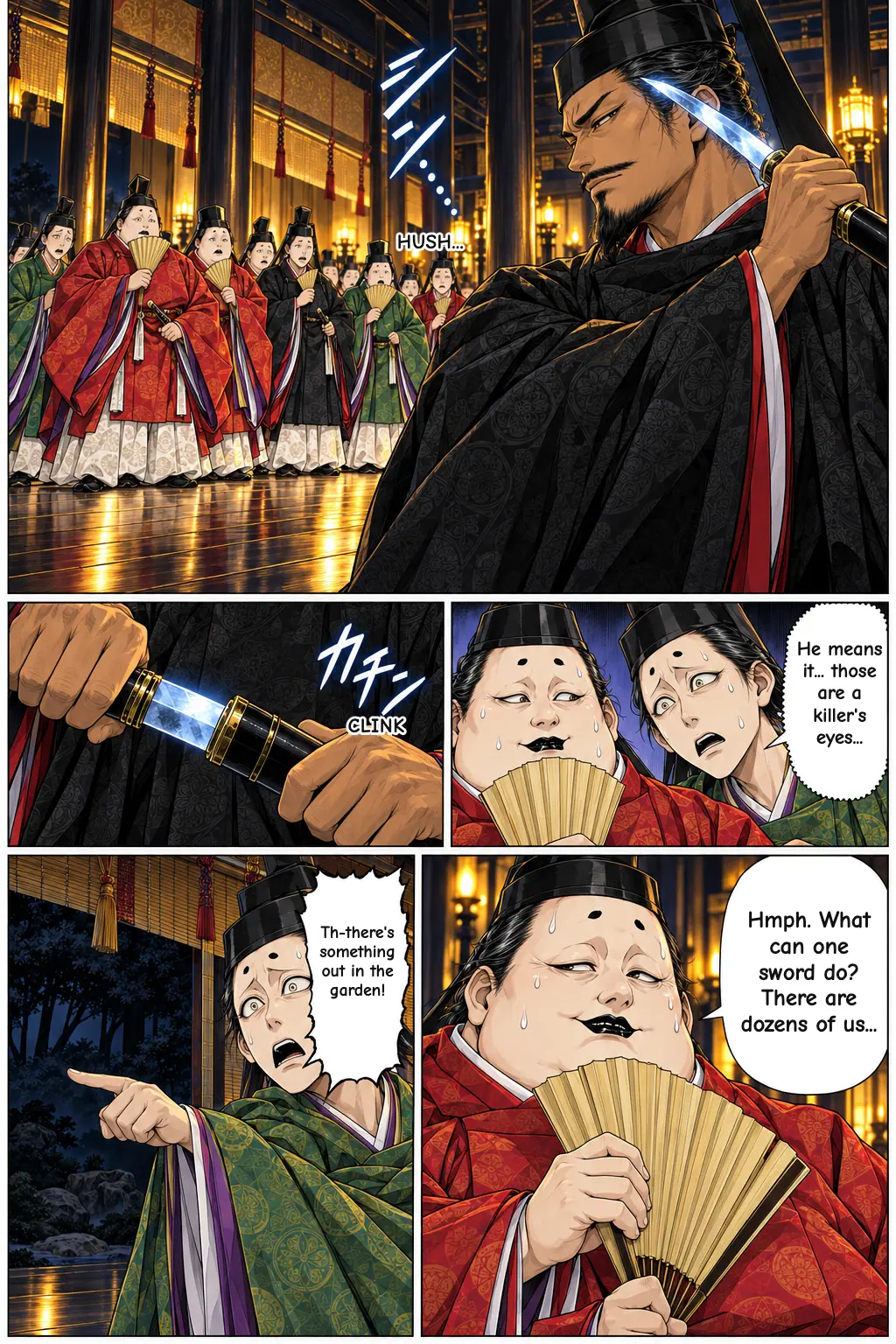
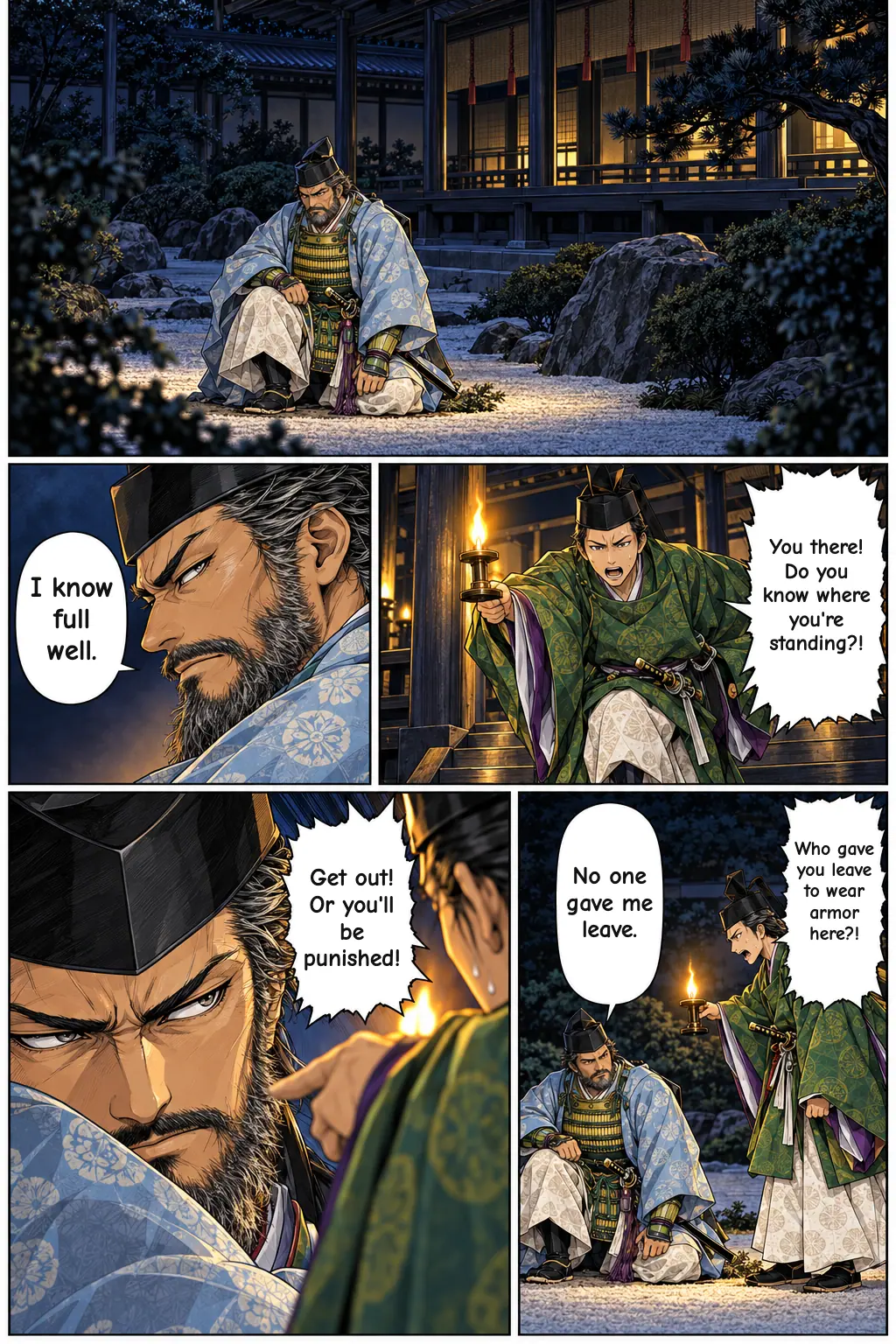
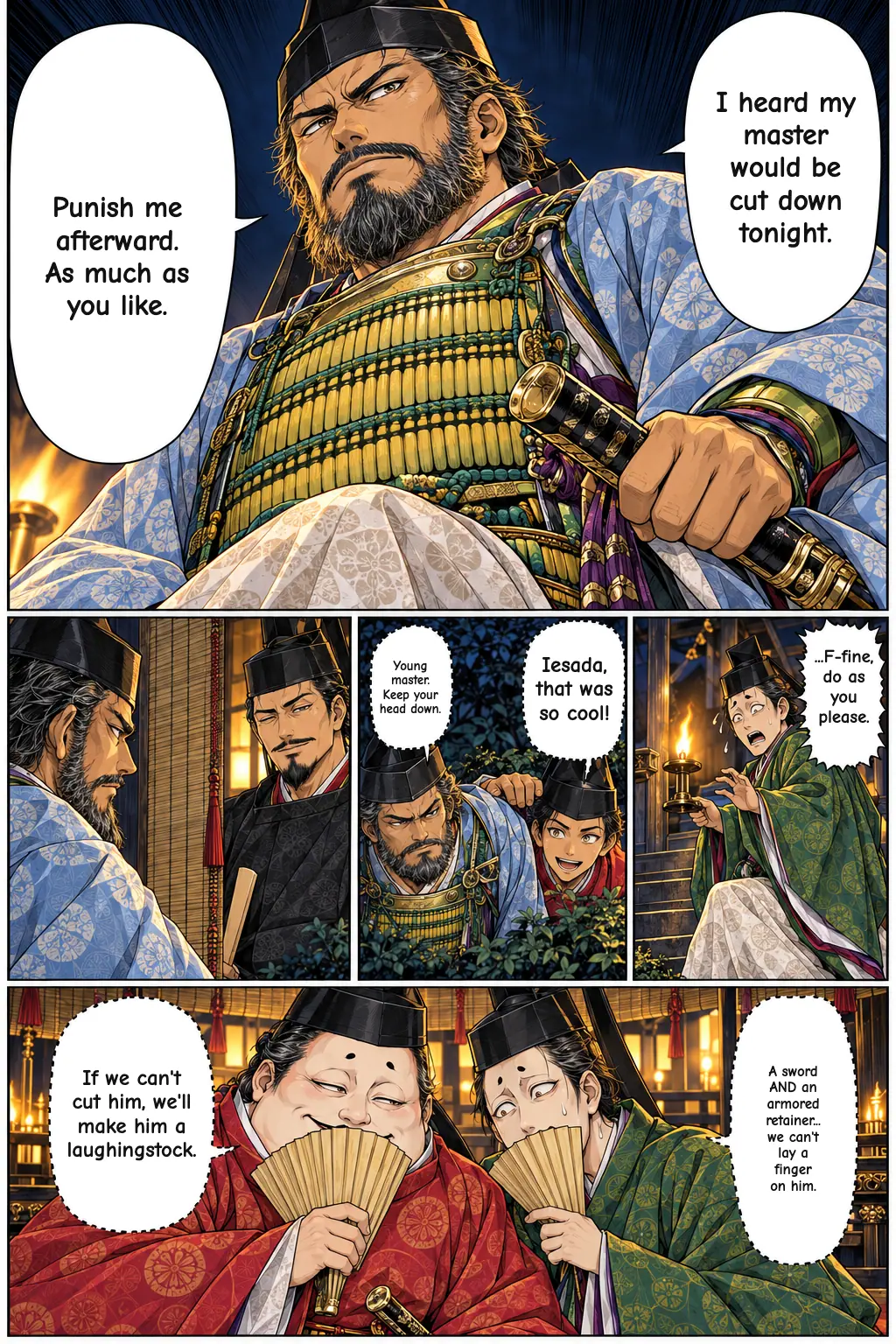
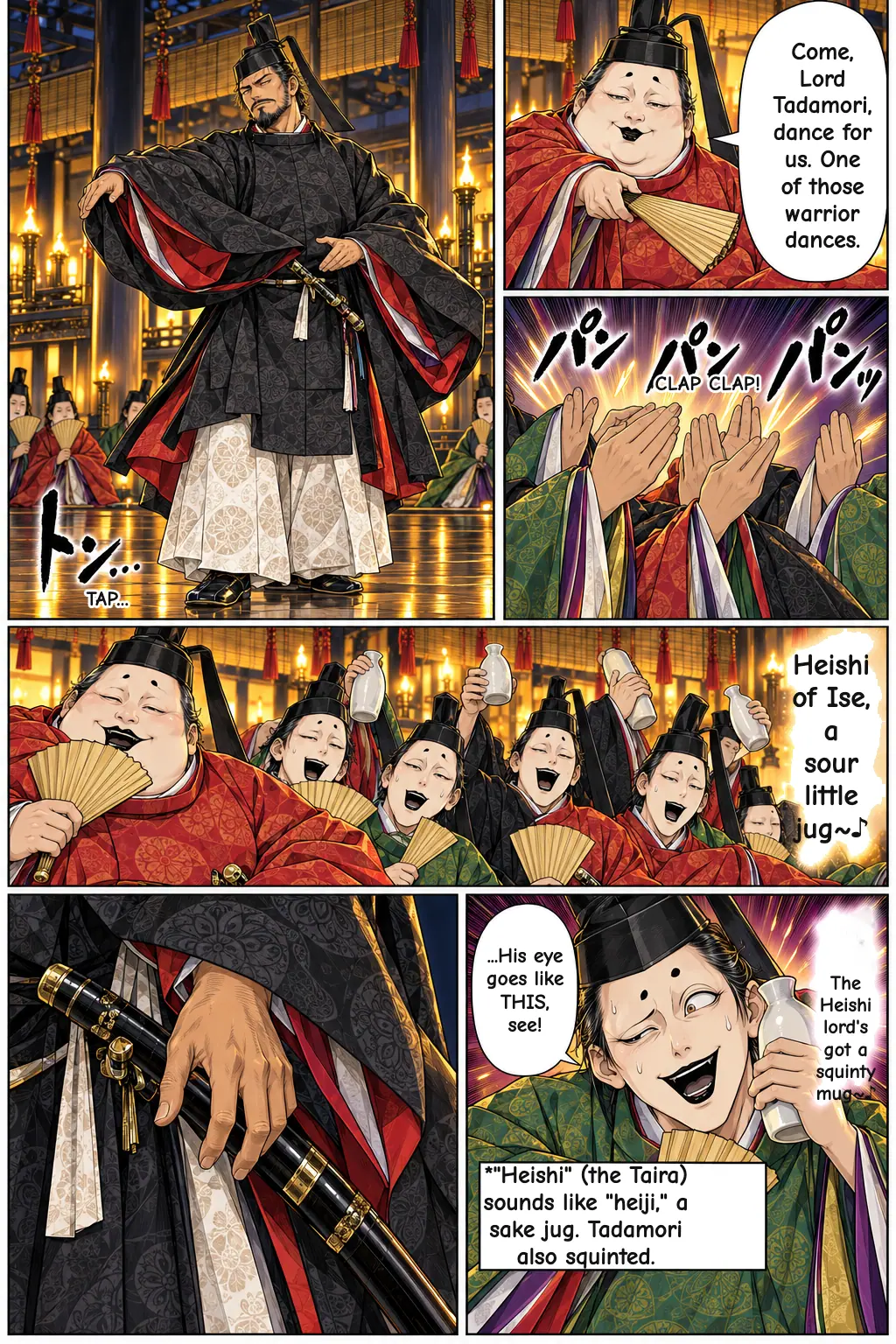
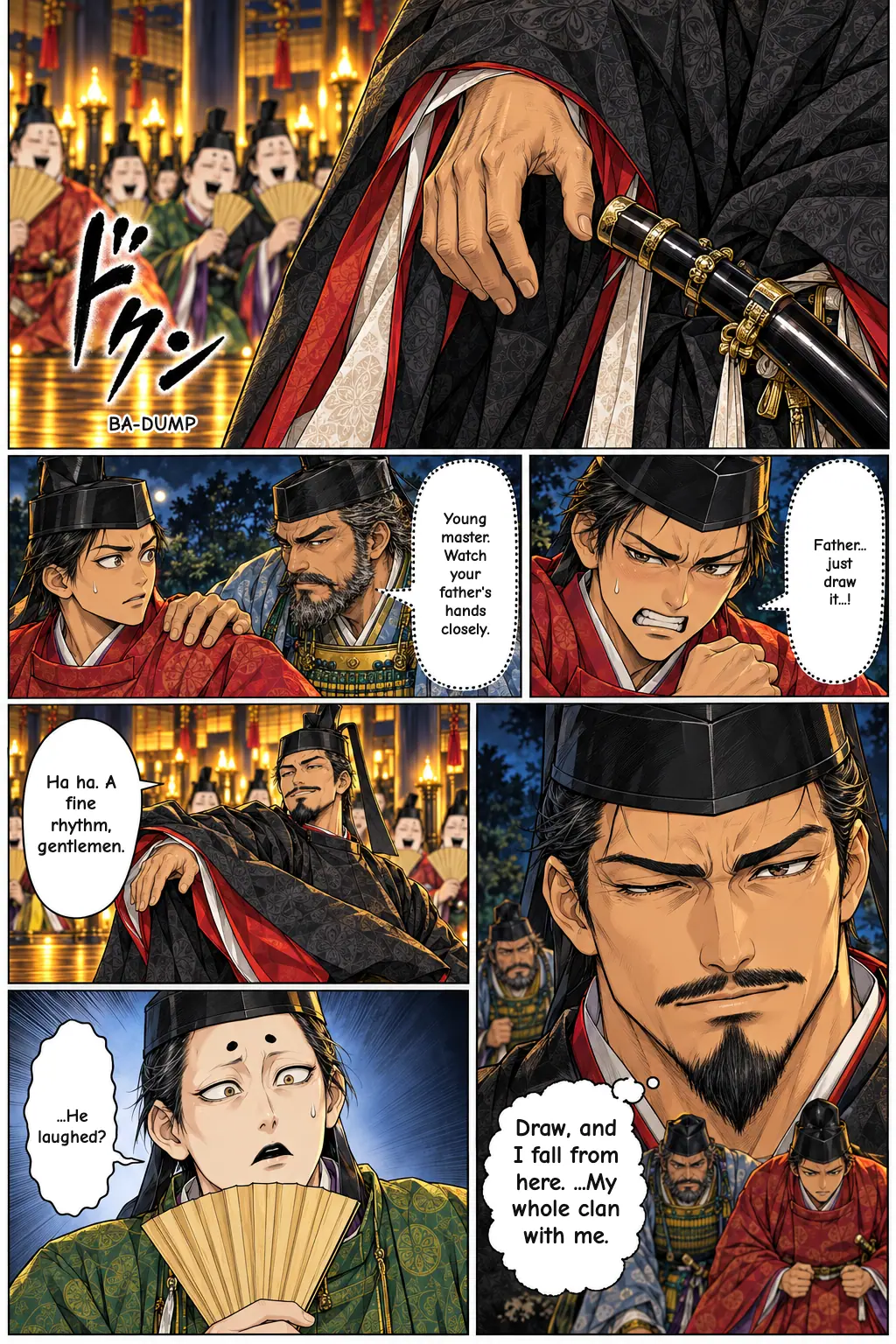
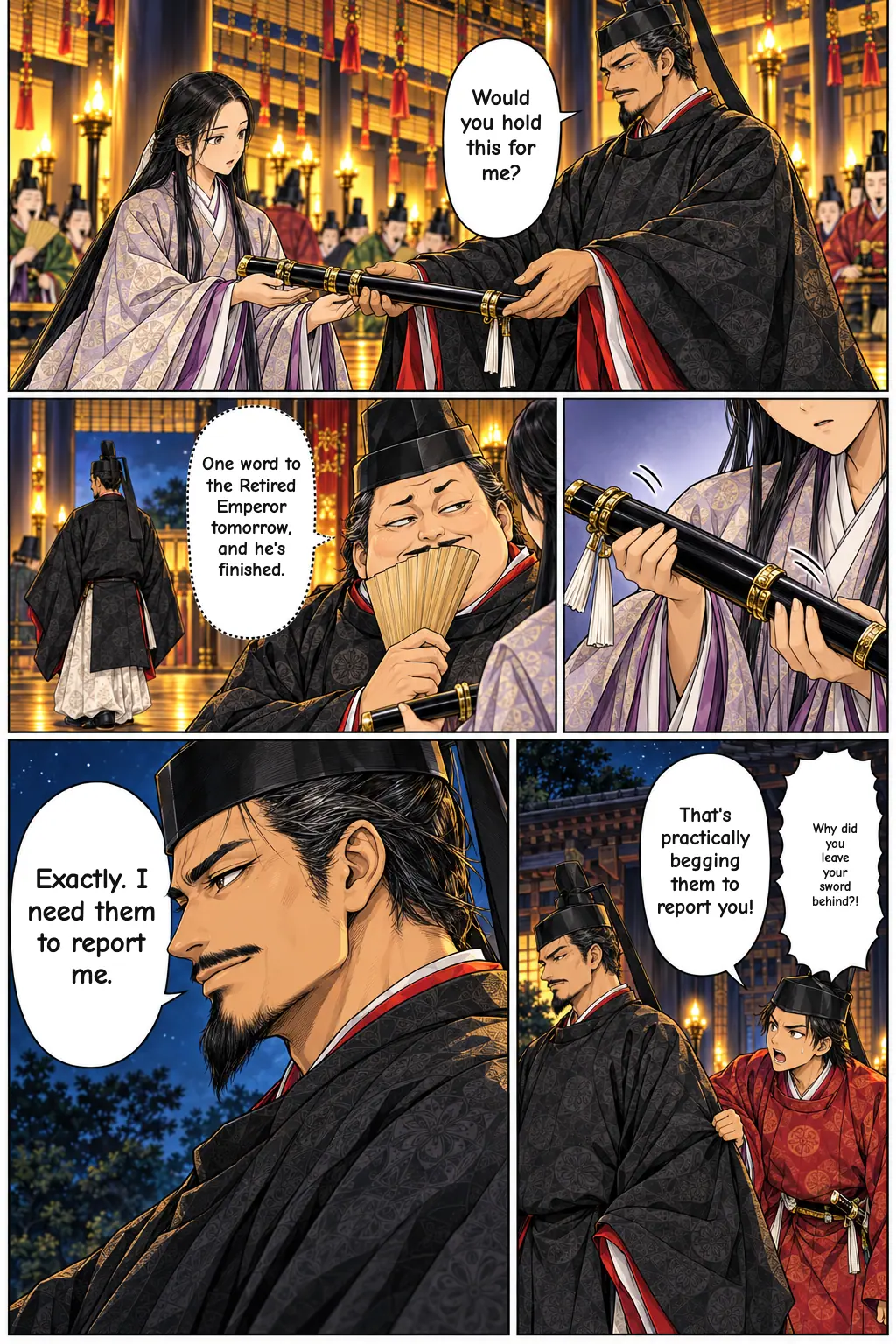
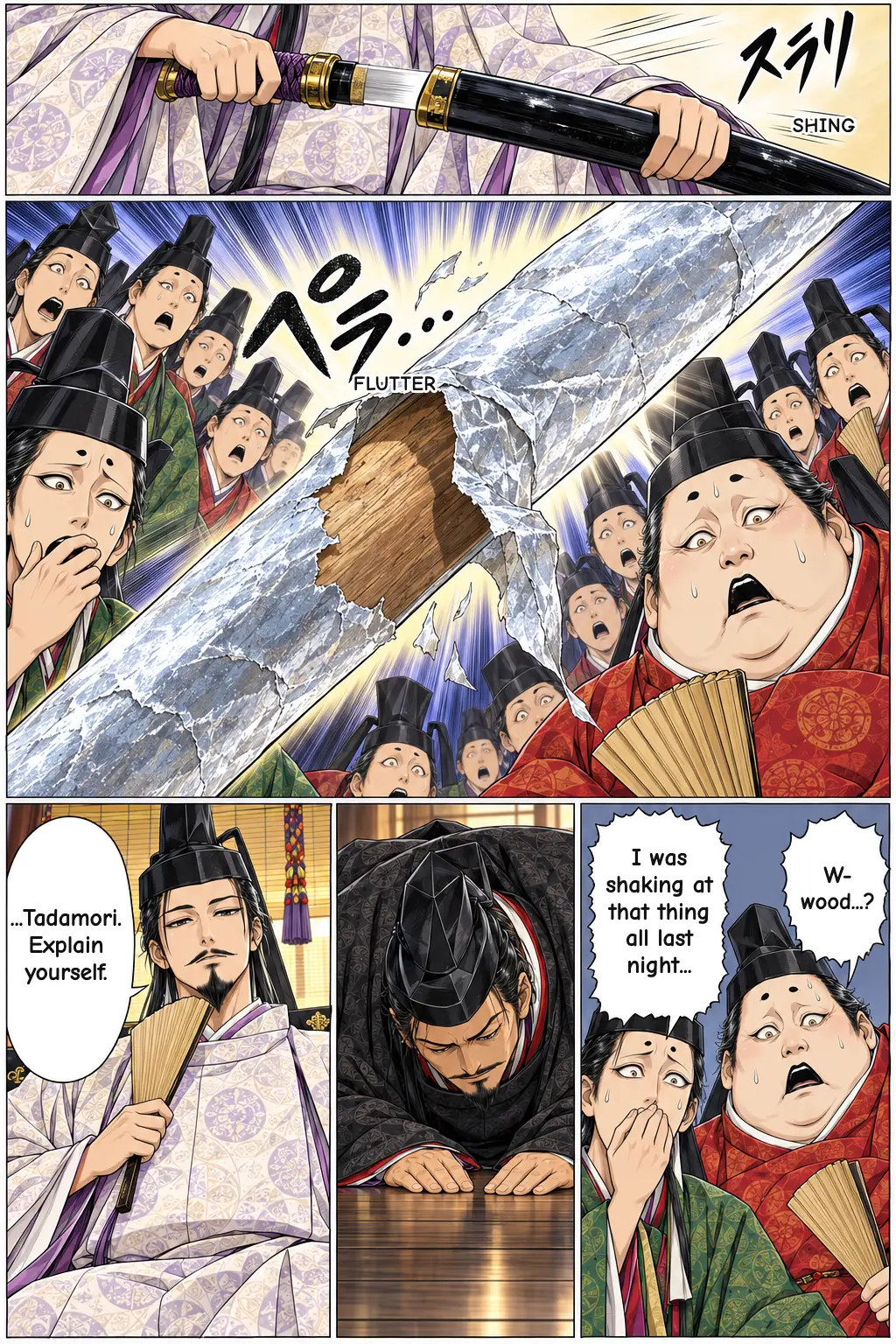
The nobles were furious that a warrior had joined them. They decided to attack Tadamori in the dark during a palace banquet held as part of a court festival in the eleventh month. Tadamori heard about the plan. He came to the banquet with a short sword hidden under his formal robes, and at one point drew it and held it close to his face so that it gleamed coldly in the lamplight where everyone could see it. Meanwhile his retainer, Taira no Iesada, waited in the small palace garden with armor under his hunting clothes and a sword at his side. When a palace officer told Iesada to leave, he refused and said he had heard his lord might be attacked that night. The nobles did not dare to act. Instead they mocked Tadamori in a dance song with a pun that teased his family's home province, Ise, and his squint. Tadamori left before the banquet ended and handed his sword to a palace attendant on the way out.
The Clever Trick: The Silver-Foil Sword
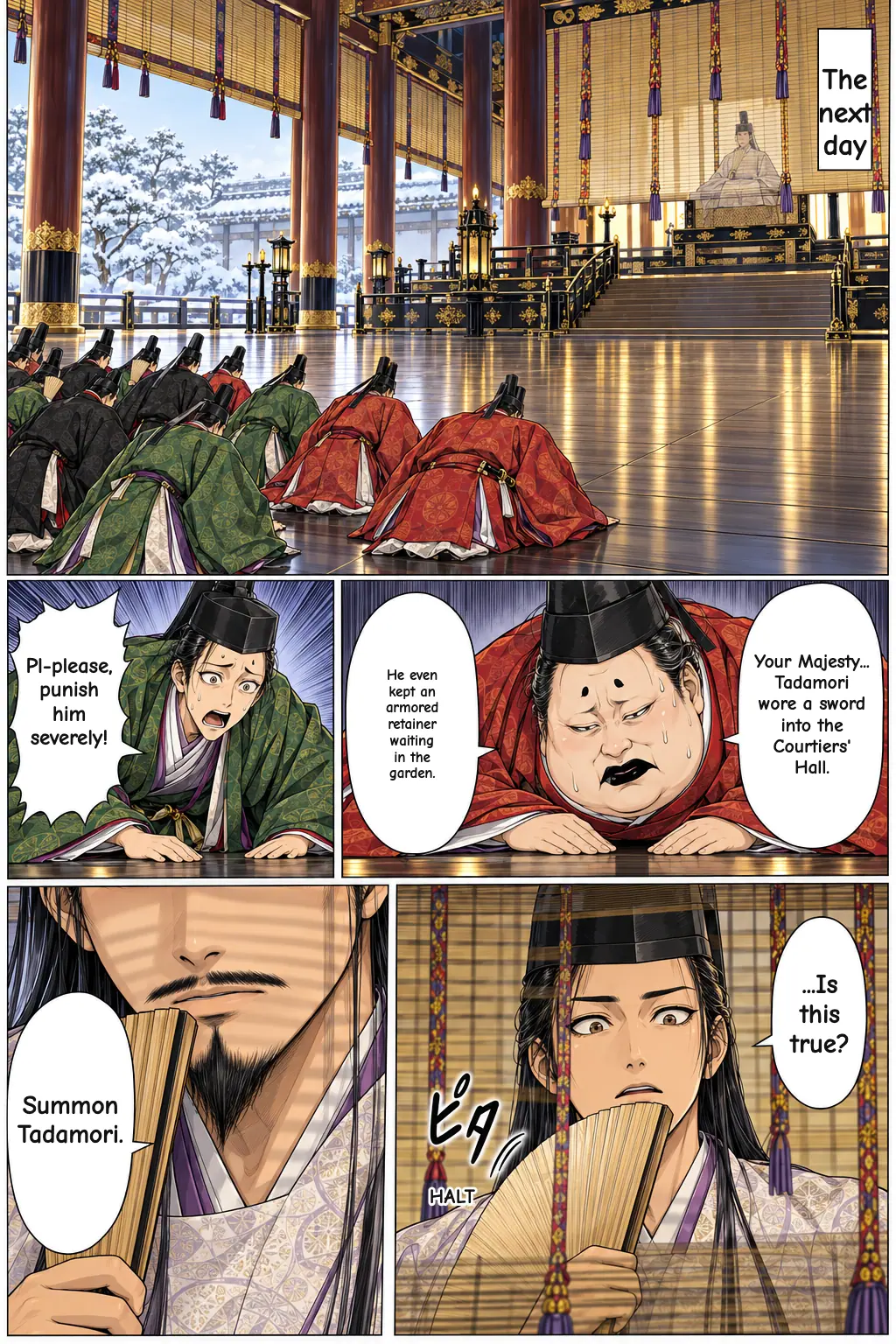
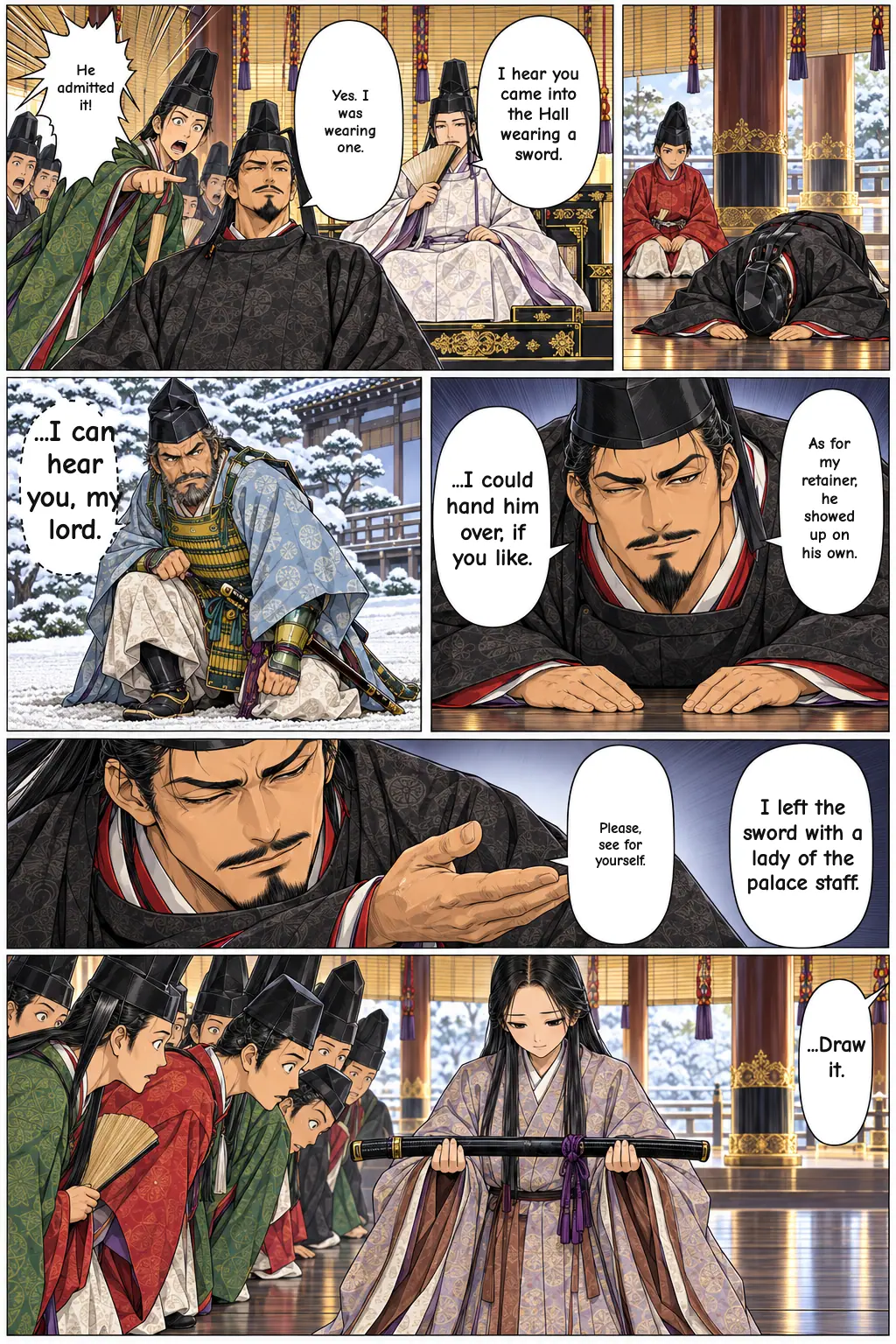
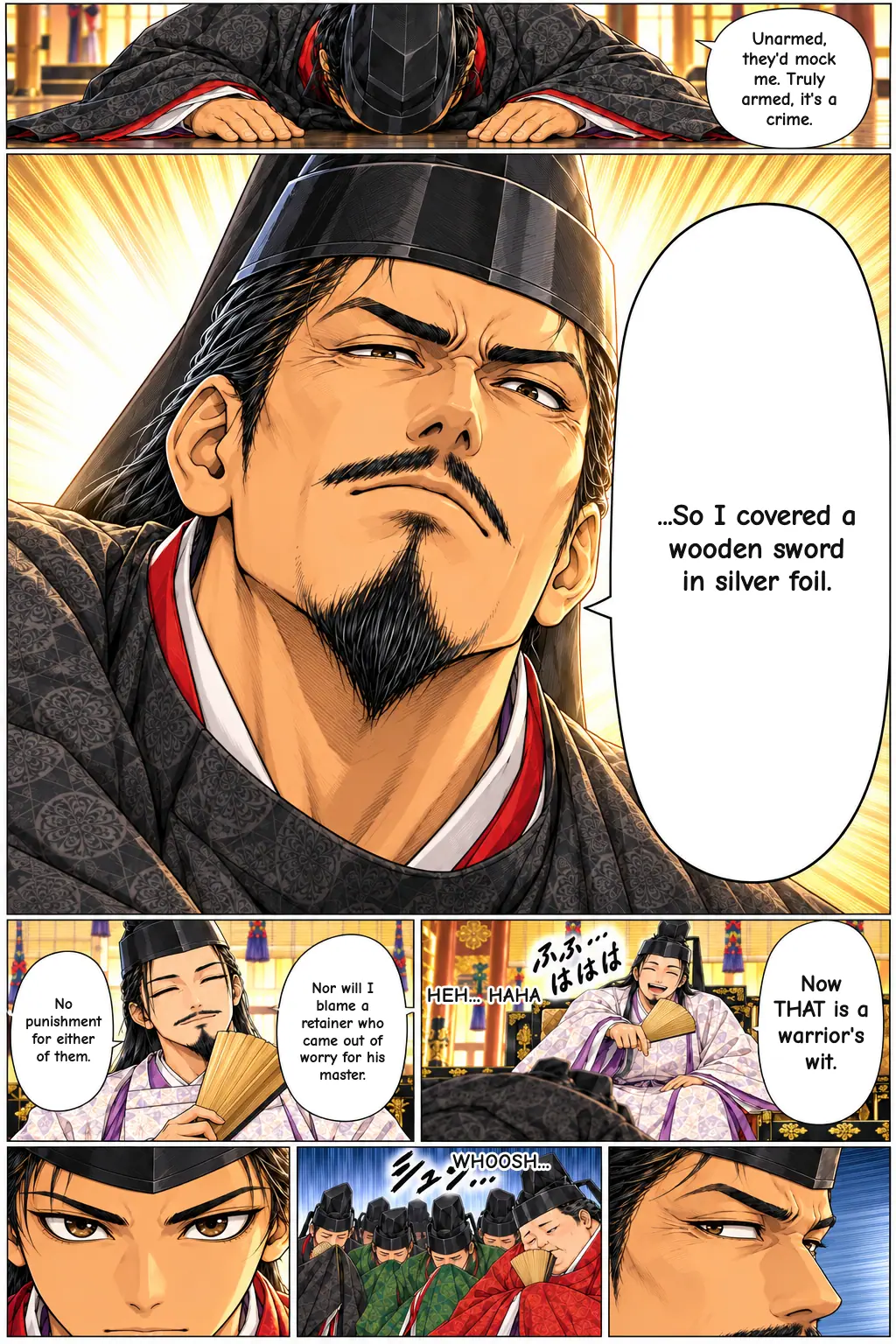
Once the banquet was over, the nobles went on the attack in a different way. They complained to the retired emperor that Tadamori had broken palace rules by carrying a weapon into a ceremony and bringing an armed man into the grounds, and they asked for him to be punished. The retired emperor summoned Tadamori, and the sword was brought out to be examined. It turned out to be a wooden blade covered in silver foil.
The retired emperor praised him instead of punishing him. Tadamori had looked dangerous enough to stop the plot, but he had never actually brought a real blade into the palace. As for the retainer in the garden, keeping a guard close was simply the custom of warrior families. The nobles were left with nothing to say. This is the "one clever trick" at the heart of Episode 1: Tadamori wins without fighting and without running away.
What This Opening Is Telling Us
The two parts of the opening work together. The "Gion Shoja" passage gives the Buddhist idea of impermanence (mujo), the belief that all things change and every rise is followed by a fall. The night-attack story then shows the very first step of that rise. It is the moment when a warrior family starts to get inside a world that had belonged only to aristocrats.
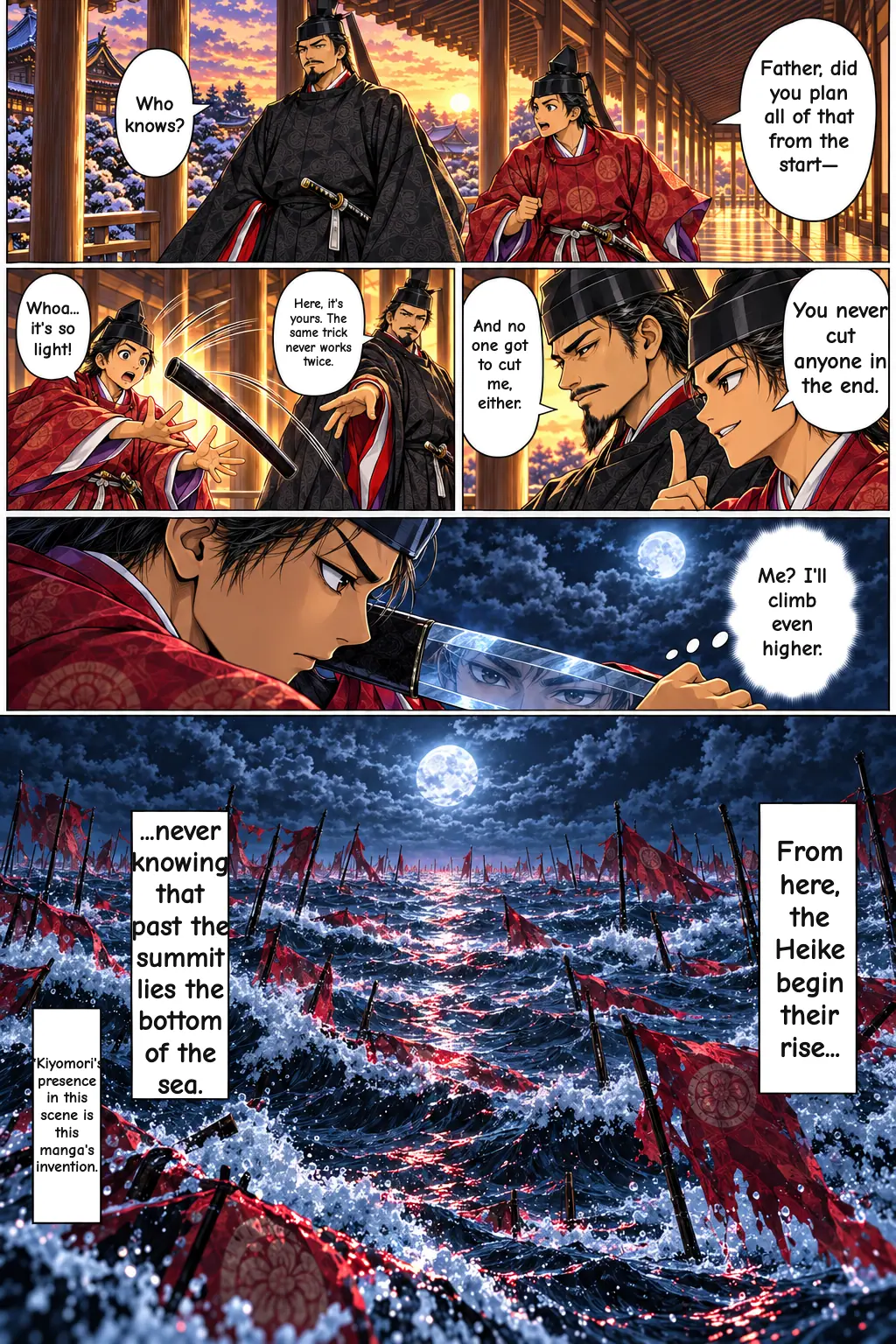
Readers who know where the tale ends can feel the irony. The courtiers sneer at Tadamori as an outsider, yet within a generation his son Kiyomori would hold more power than any of them, and the Taira would later be destroyed in the Genpei War (1180–1185). The story also shows a theme that runs through the whole epic: the clash between the refined court nobility and the rising samurai class, who win by being resourceful and keeping the loyalty of their own men.
A note on history: Tokuchoju-in was a real temple, and Tadamori was a real and important figure. The night-attack episode, however, is best read as a famous anecdote from the tale. It is not something that can be easily confirmed in other records.
What the Manga Changes
The original tells the night attack briefly, in a few short scenes of narration. The manga keeps the main events the same: the jealous nobles, the blade gleaming in the lamplight, Iesada waiting in the garden, and the wooden sword covered in silver foil that ends the affair. What the manga adds is visual drama. It plans out the panels and the tension of the dark banquet hall, gives the characters facial expressions, and writes dialogue and inner thoughts that the original mostly leaves out. These scenes are artistic choices made to tell the story clearly in comics form. They are not quotations from the original text.
Where to Read It
If you want to see how a single clever bluff sets the stage for the whole Genpei War, Episode 1 of THE TALE OF THE HEIKE: The Samurai War of Genpei on Manga Portal is a good place to start. Every episode is free to read, and you don't need to sign up. From here the series follows the Taira clan through its rise and its fall, just as the bells of Gion Shoja foretold.
Characters in this episode
Taira no Tadamori
A warrior and the father of Kiyomori, and the first of his kind admitted to the Courtiers' Hall, who stops a plot against his life with nerve and a clever trick instead of violence.
Taira no Iesada
Tadamori's loyal retainer, who waits armed in the palace garden and refuses to leave, saying openly that he is there to protect his lord.
Retired Emperor Toba
The retired emperor who rewards Tadamori for building Tokuchoju-in and later praises him for his foresight instead of punishing him.
The court nobles
Aristocrats of the Courtiers' Hall who resent a warrior joining their ranks and plot to attack him in the dark, then try to have him punished.
Taira no Kiyomori
Tadamori's son, named in the opening as the proud and powerful man whose story, and whose clan's downfall, the whole tale will tell.
FAQ
What does "the bells of Gion Shoja" mean?
It is the opening line of The Tale of the Heike. The bells of Gion Shoja, a monastery linked to the Buddha, are said to ring out that nothing lasts forever. The passage sets the theme of the whole epic: even the proudest and most powerful people will eventually fall.
What is the night attack at court (Tenjo no Yamiuchi) in The Tale of the Heike?
It is an early episode in which jealous court nobles plot to attack Taira no Tadamori in the dark at a palace banquet, because he is the first warrior admitted to the Courtiers' Hall. Tadamori shows off a gleaming blade and keeps an armed retainer nearby, so the attack never happens.
Why was Tadamori's sword made of wood?
Carrying a real weapon into a palace ceremony would have broken court rules. By bringing a wooden blade covered in silver foil, Tadamori looked dangerous enough to scare off his enemies, and he could not be punished when they accused him.
Who was Taira no Tadamori?
Tadamori was a warrior of the Taira clan and the father of Taira no Kiyomori. In The Tale of the Heike, he is the man whose admission to the imperial court begins his family's rise to power.
Is the night attack story historically true?
Tadamori and the temple hall he built were real. The night-attack episode itself is best read as a well-known anecdote from the tale, and it is not easy to confirm in other historical records.