Episode 2She Saved the New Girland Lost Her Stage — Giō (The Tale of the Heike)
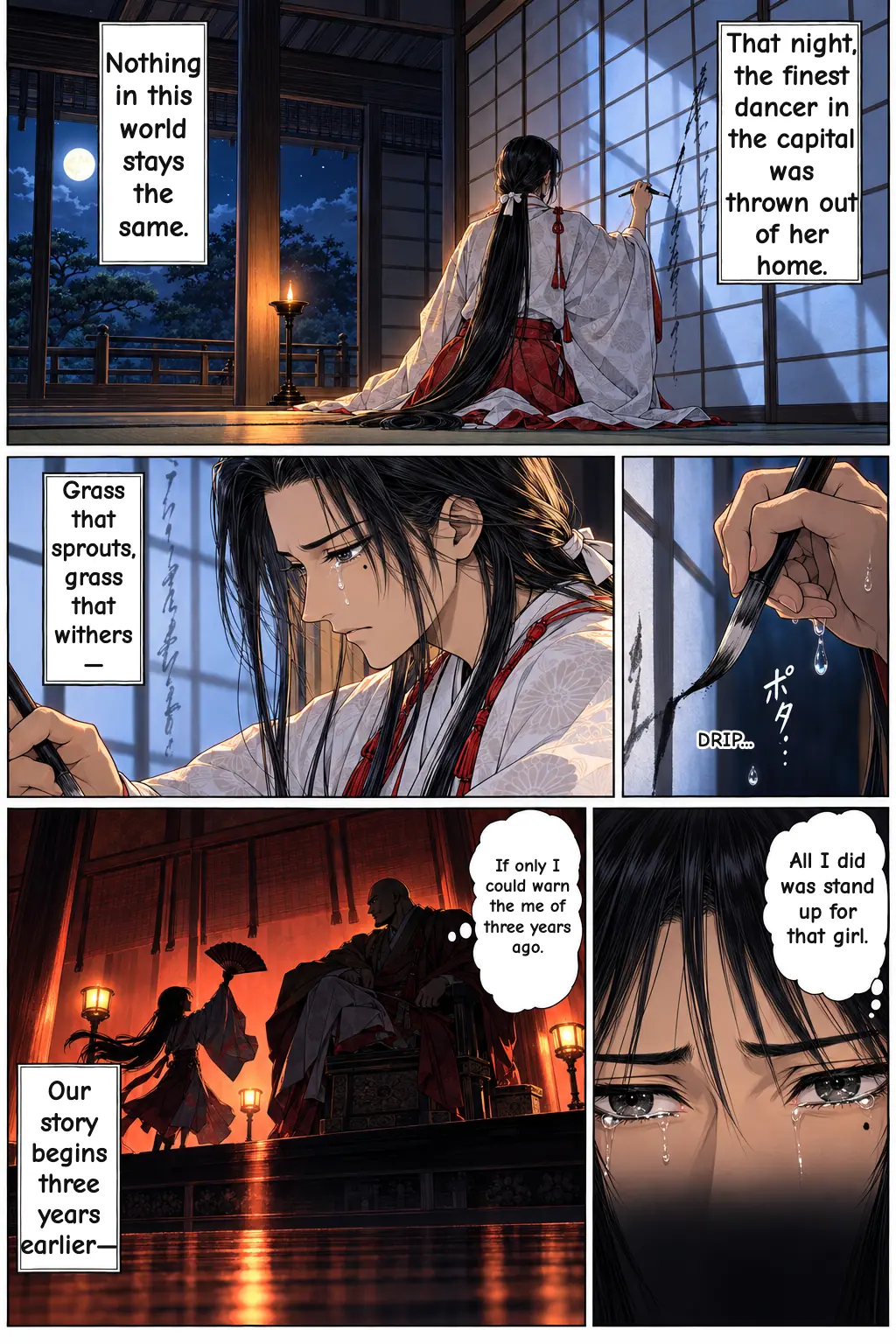
Giō, a dancer adored by Kiyomori, the most powerful man in the capital, stands up for Hotoke, a bold young girl who shows up uninvited. Overnight, Giō is thrown out of the mansion. Humiliated and in despair, she becomes a nun. Then one autumn night, Hotoke comes knocking, having given up everything.
Giō and Hotoke: The Tale of the Heike's Dancer Story Explained
The Original Story: Giō, Hotoke, and Kiyomori
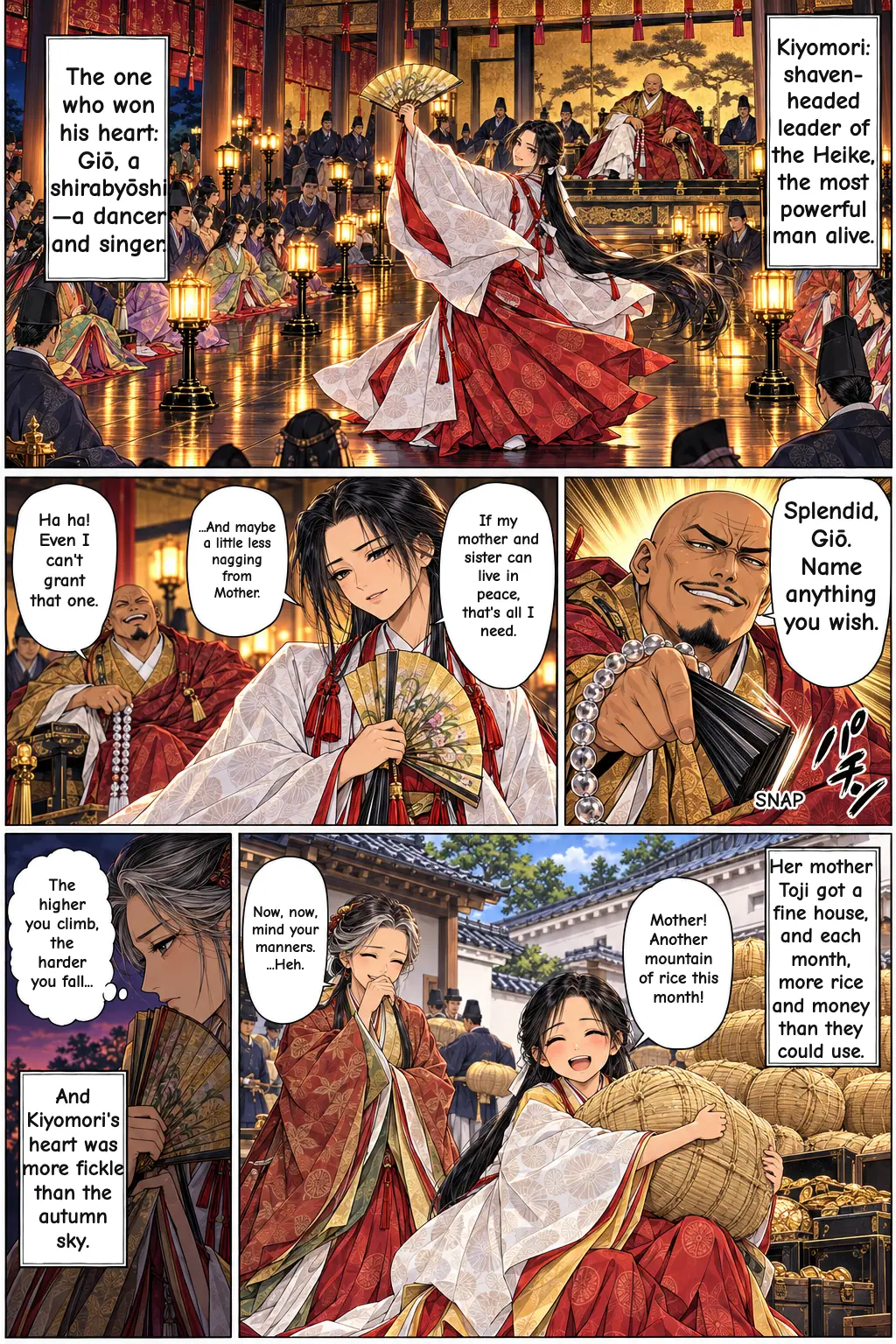
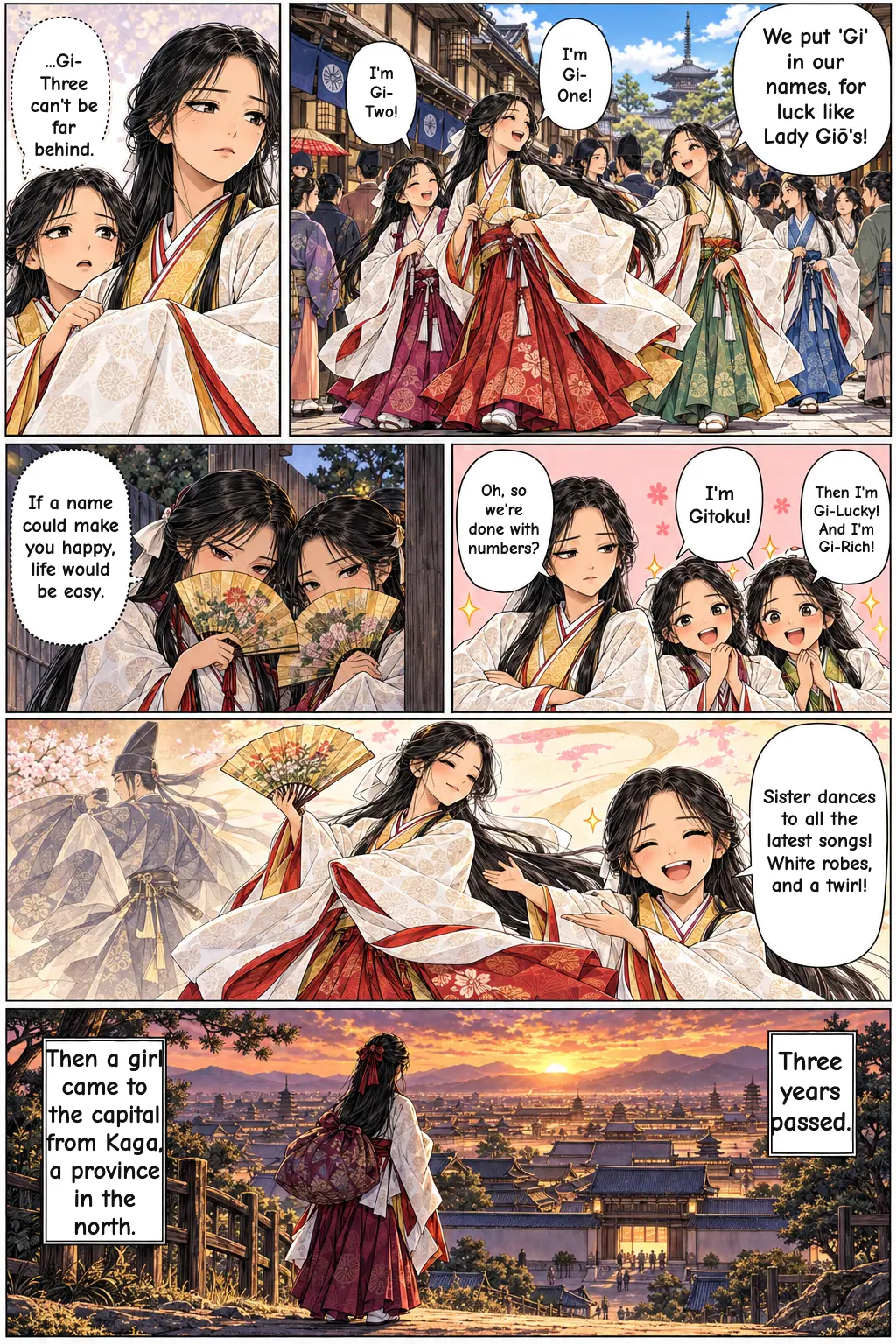
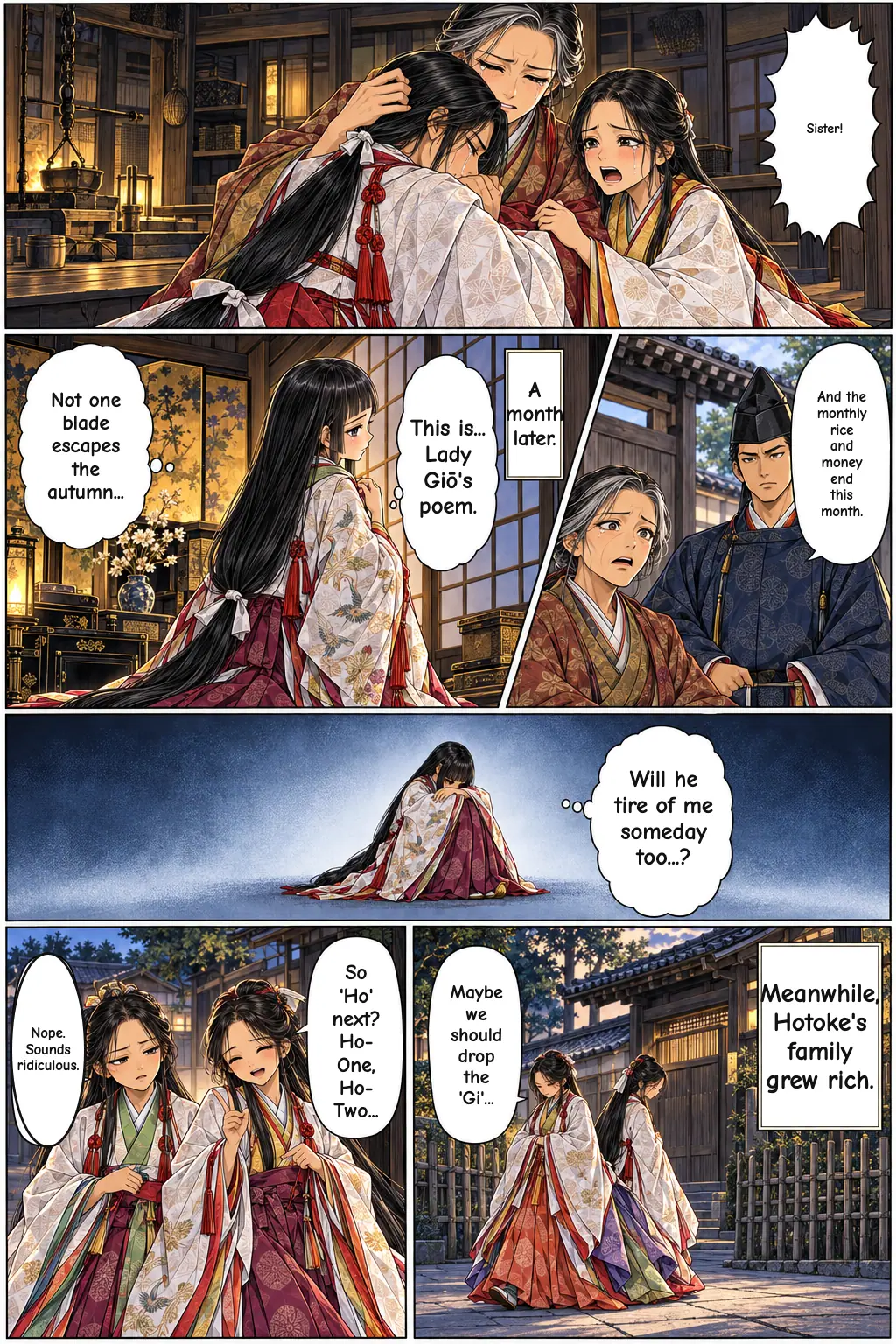
The Tale of the Heike is a medieval Japanese war epic about the rise and fall of the Taira (Heike) clan in the 12th century. Early in the first book, before the battles begin, it stops to tell a quiet story about women. At its center is Giō, a shirabyōshi (a professional dancer-singer) loved by Taira no Kiyomori, the retired-priest chancellor who ruled the capital in all but name. Thanks to his favor, Giō's mother Toji received a fine house and a monthly gift of a hundred koku of rice and a hundred strings of coins. The family grew rich, and other dancers in Kyoto even added the character "Gi" to their stage names, hoping for the same luck.
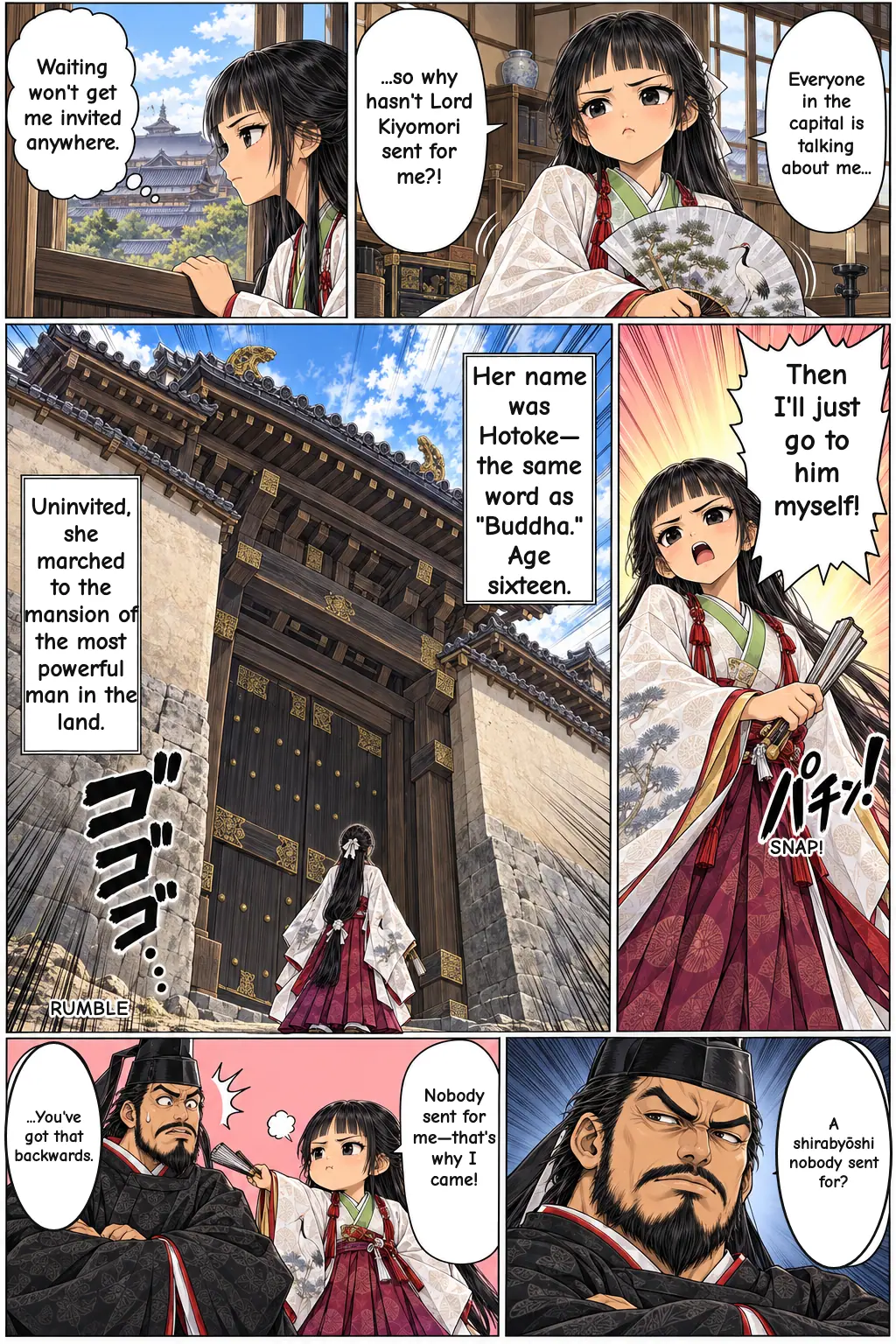
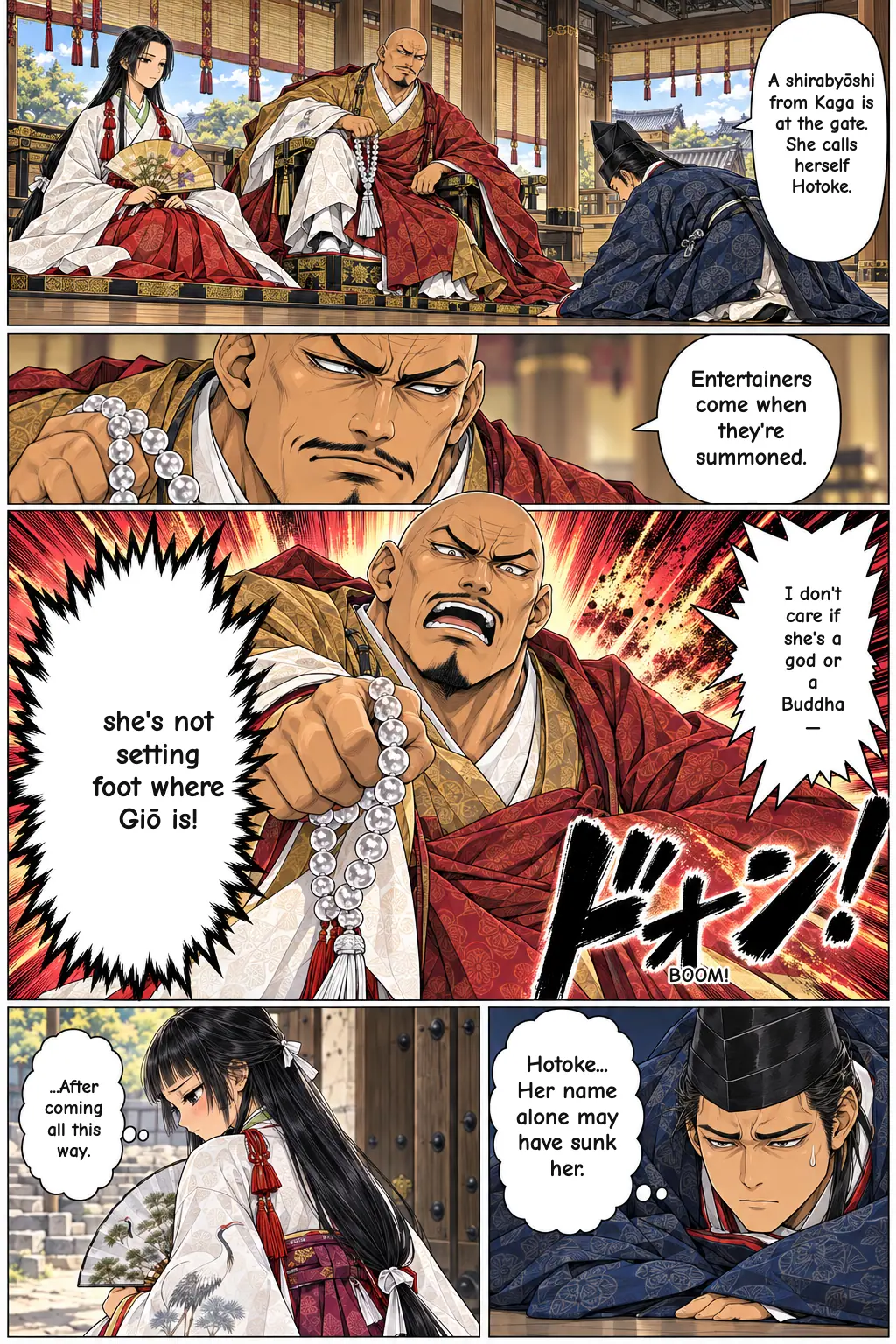
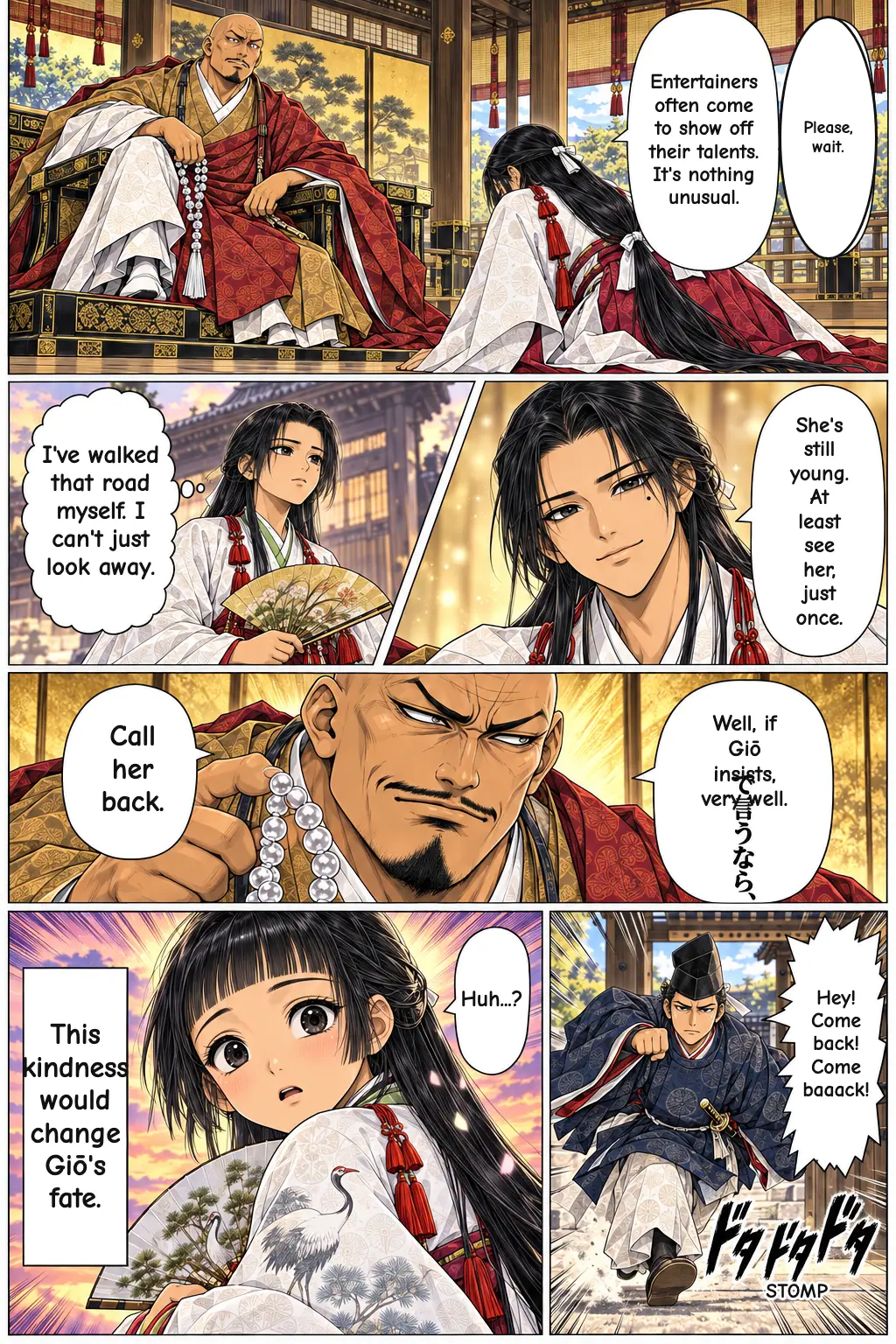
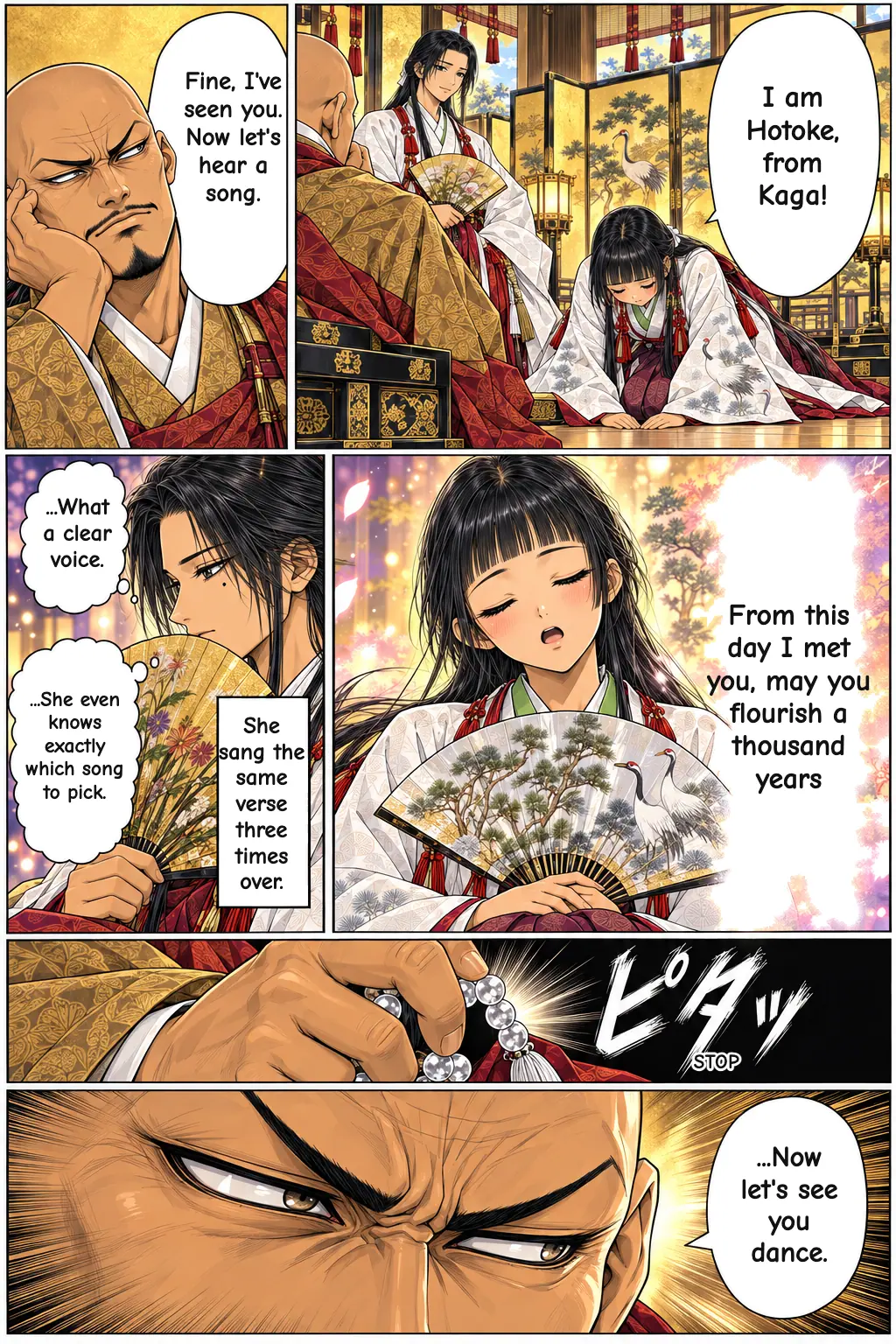
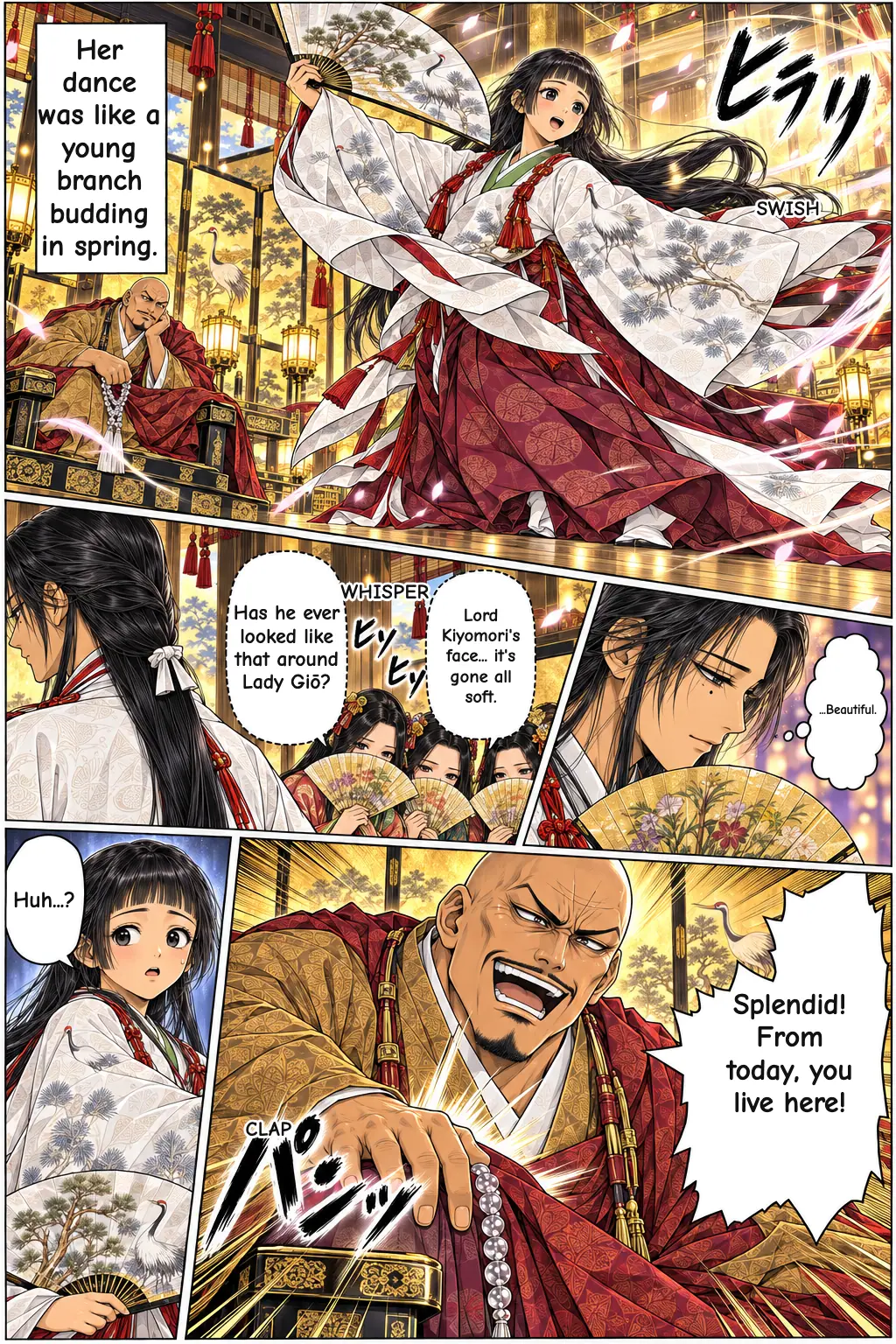
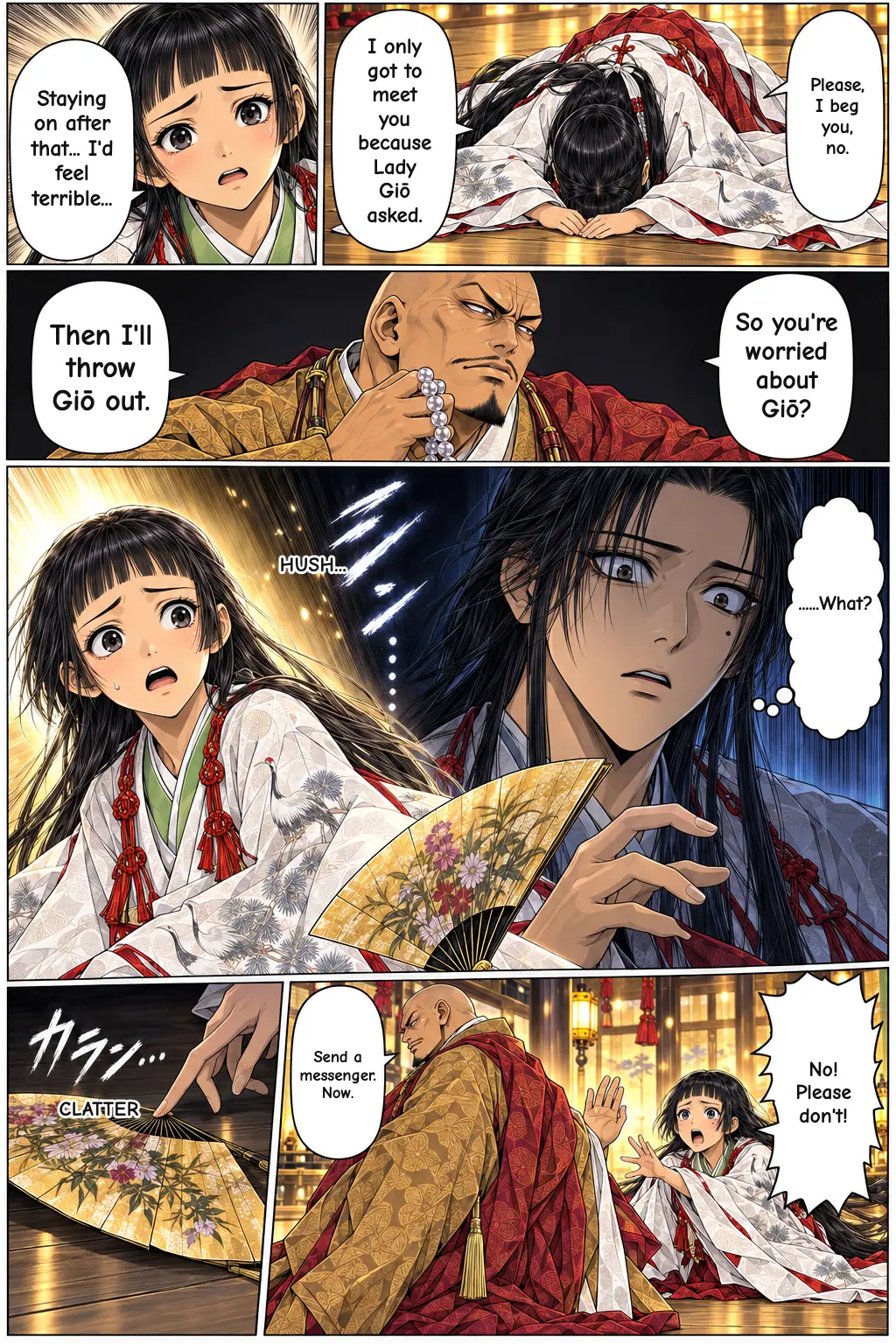
Three years later, a sixteen-year-old dancer named Hotoke, from Kaga Province, appeared uninvited at Kiyomori's mansion in Nishihachijō. Kiyomori ordered her sent away: entertainers come when they are called, he said, and no one, not even a god or a buddha, should come where Giō is. Giō spoke up for the girl, saying she was young and deserved at least a meeting. Kiyomori called Hotoke back. She sang an imayō (a popular song of the day) three times and then danced, and Kiyomori's heart turned to her on the spot.
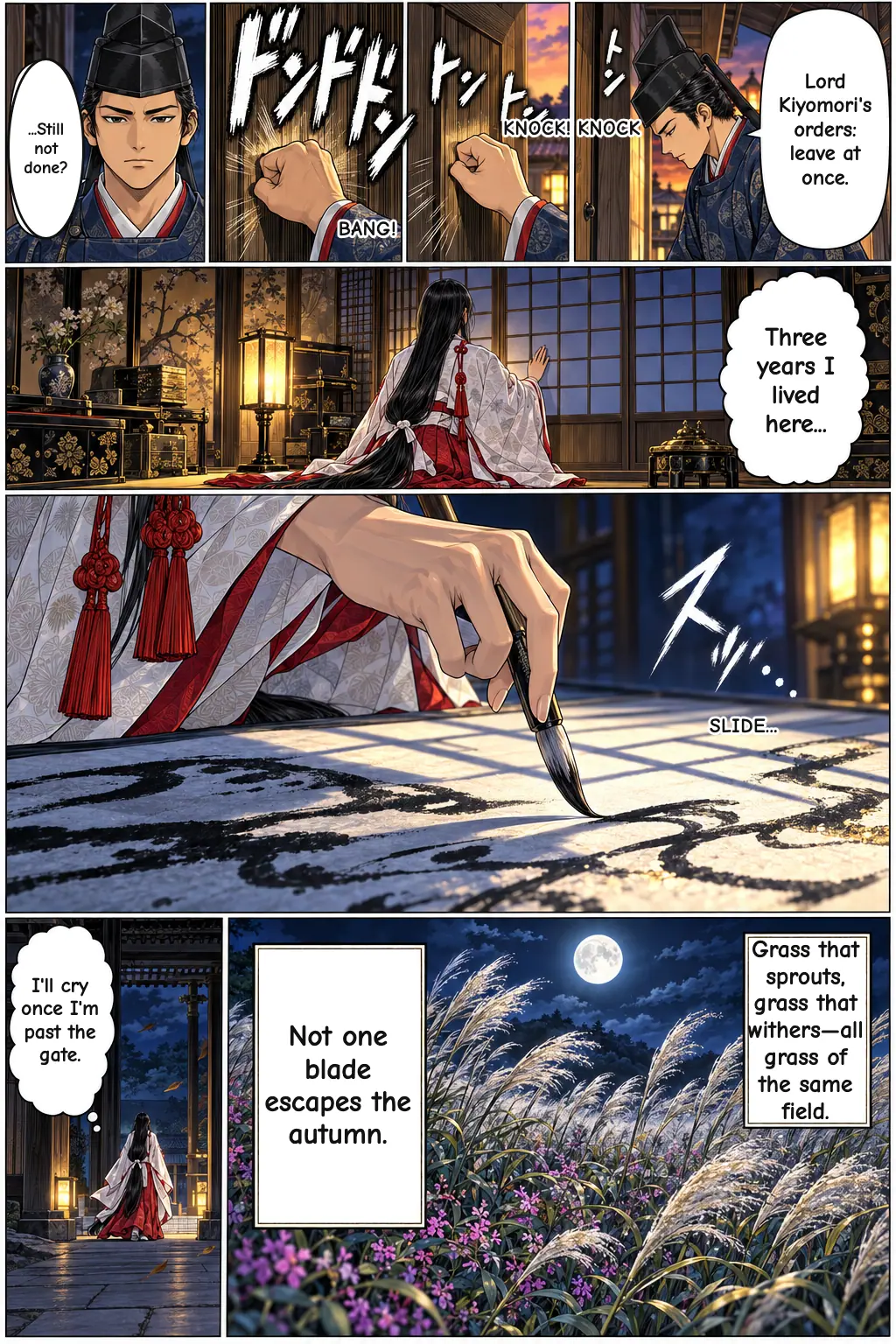
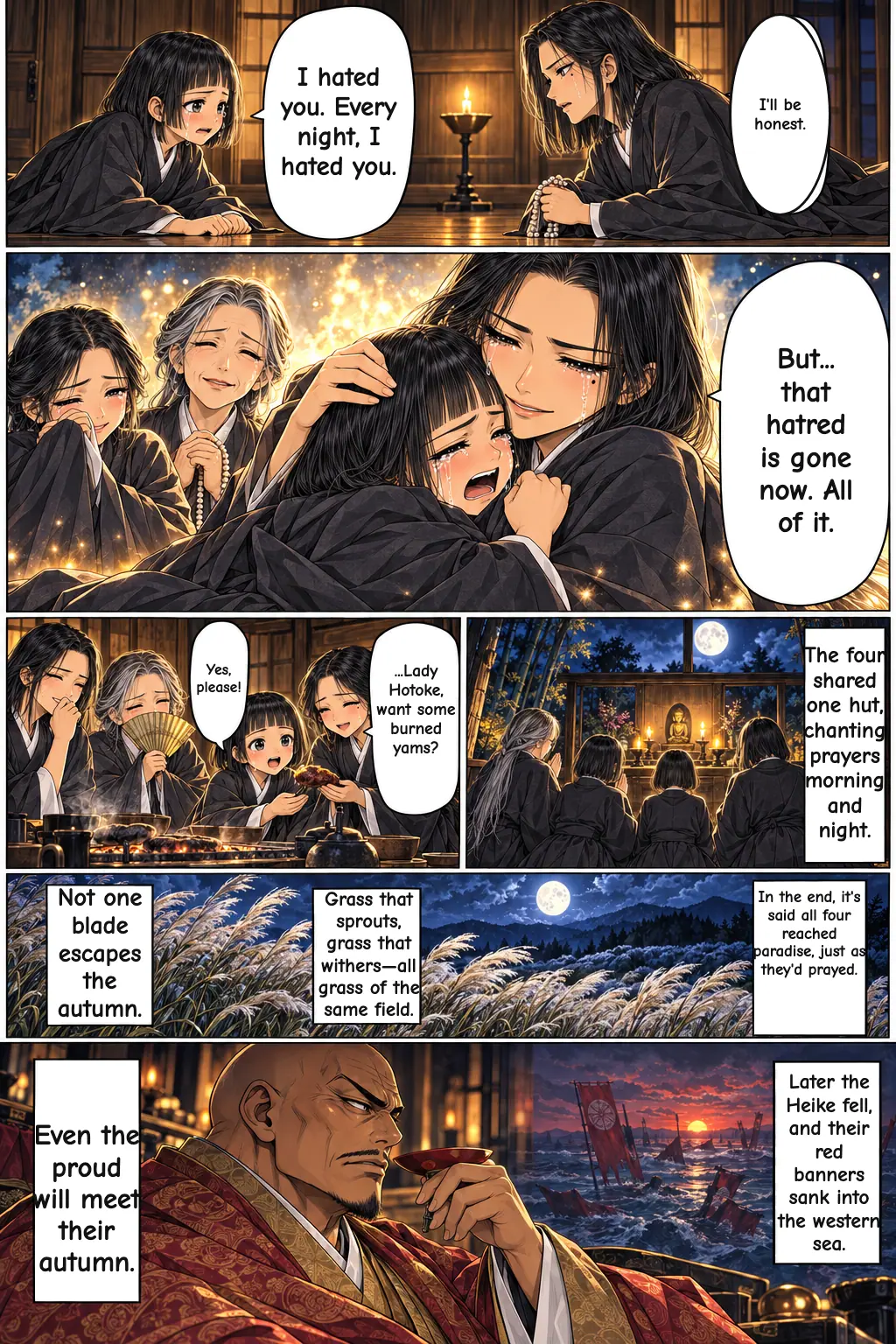
Hotoke tried to decline, since she owed her chance to Giō. Kiyomori's answer was to throw Giō out. Weeping, Giō wrote a poem on the sliding paper door of her room before she left. Its sense is roughly this: the grass that sprouts and the grass that withers grow in the same field, and none of it can escape the coming of autumn. Her monthly allowance stopped, and Hotoke's relatives began to prosper instead.
Humiliation, Renunciation, and the Autumn Visitor
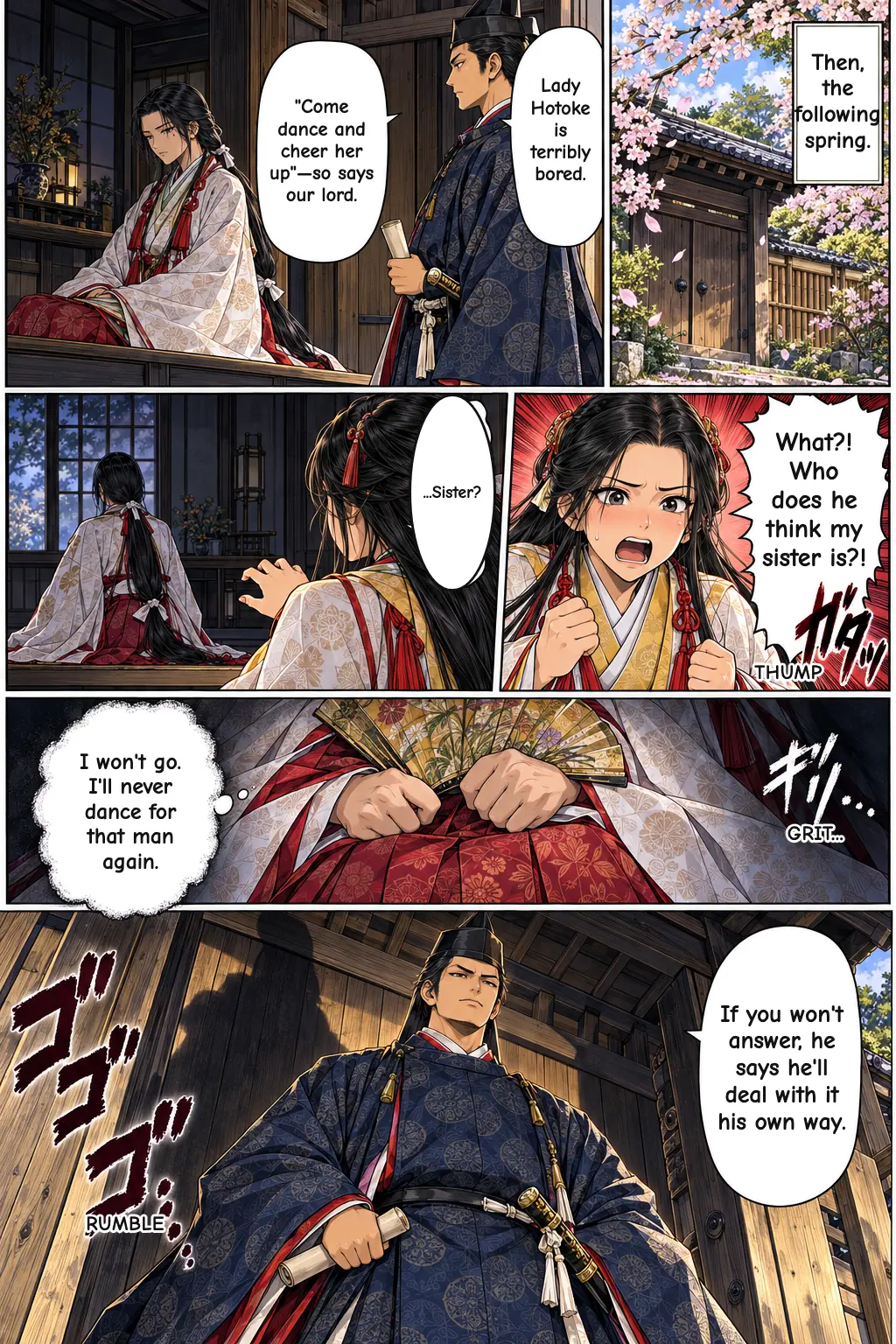
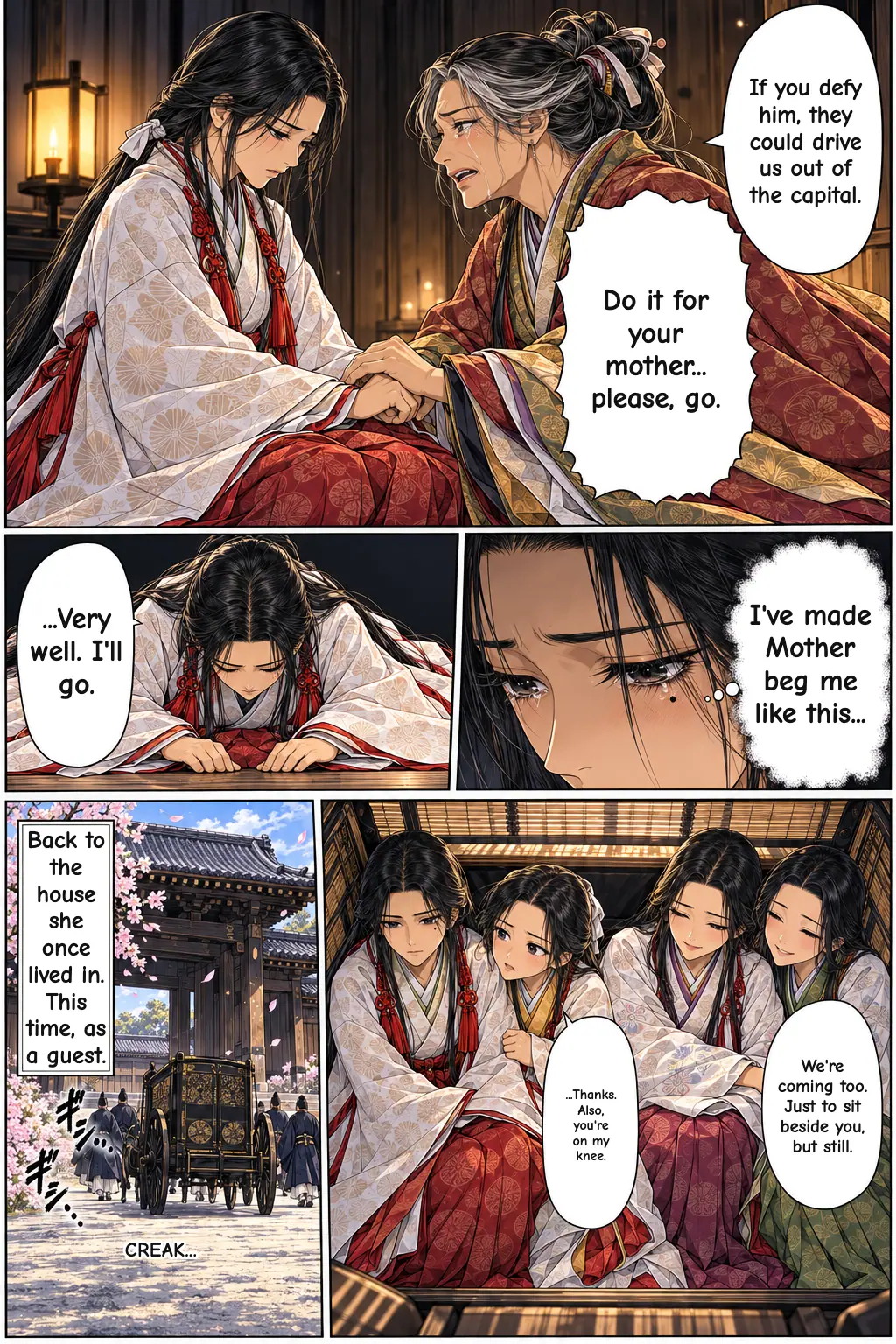
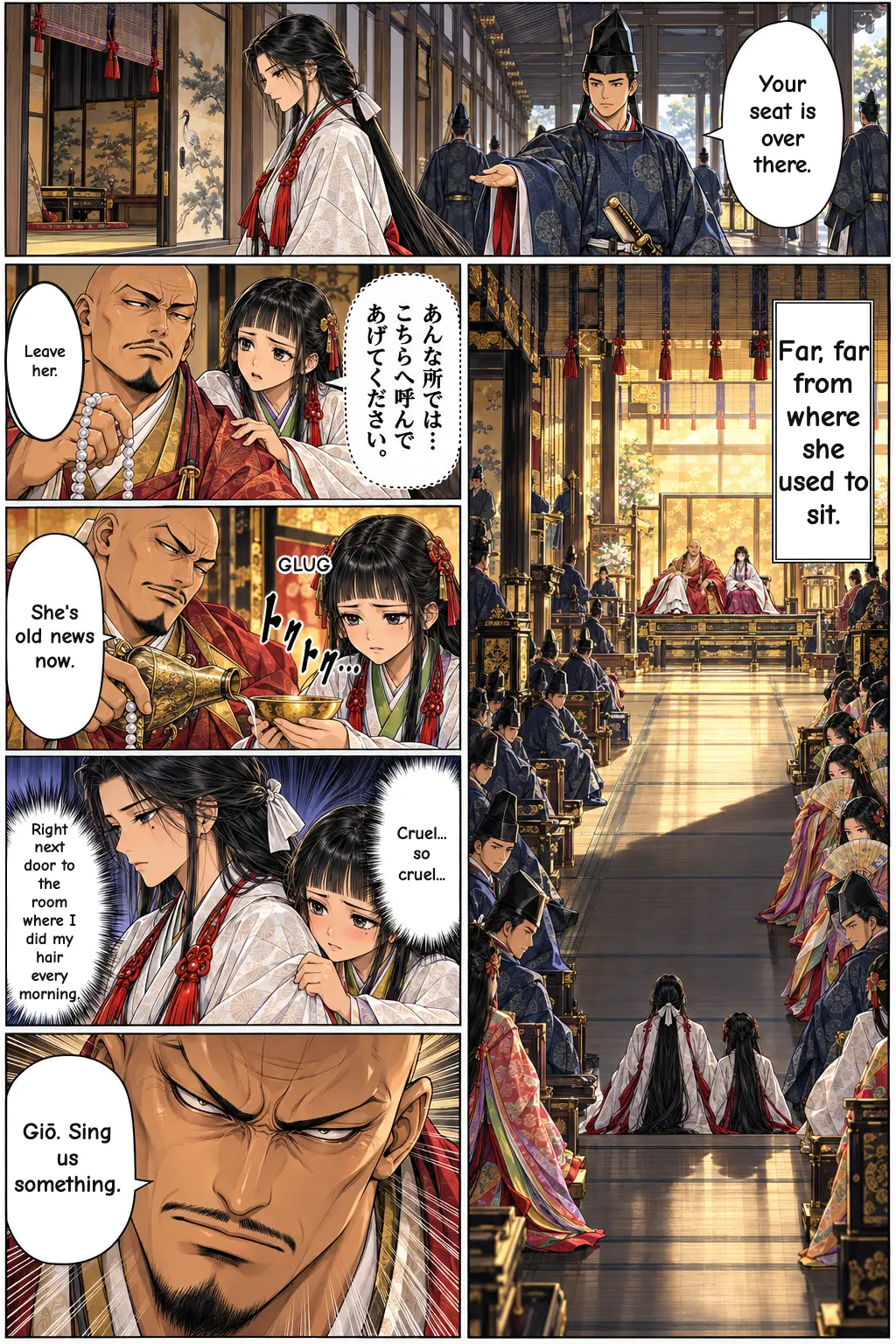
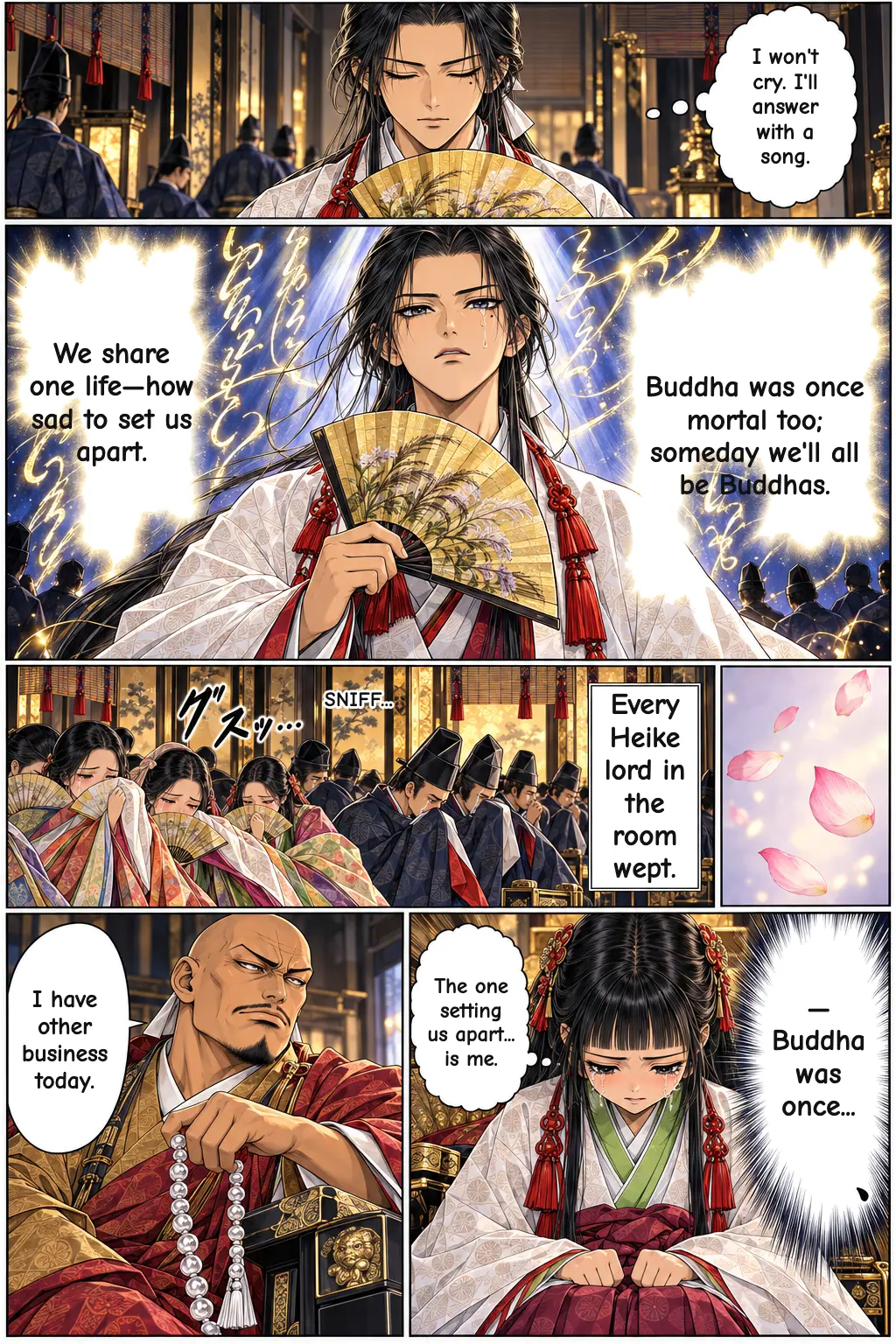
The next spring, Kiyomori sent for Giō again. Hotoke seemed bored, he said, so Giō should come and entertain her. Giō refused to answer until her mother begged her, in tears, to go out of duty to her parent, fearing the family might be driven from the capital. Giō went with her sister Giō-jo and two other dancers. She was seated far below her old place. Hotoke pitied her and asked Kiyomori to bring her closer, but he refused. Ordered to sing, Giō performed a song about how the Buddha was once an ordinary person, how all beings carry the Buddha-nature, and how sad it is that people are divided from one another. The Taira lords in the hall wept. Kiyomori simply told her to keep coming, invited or not.
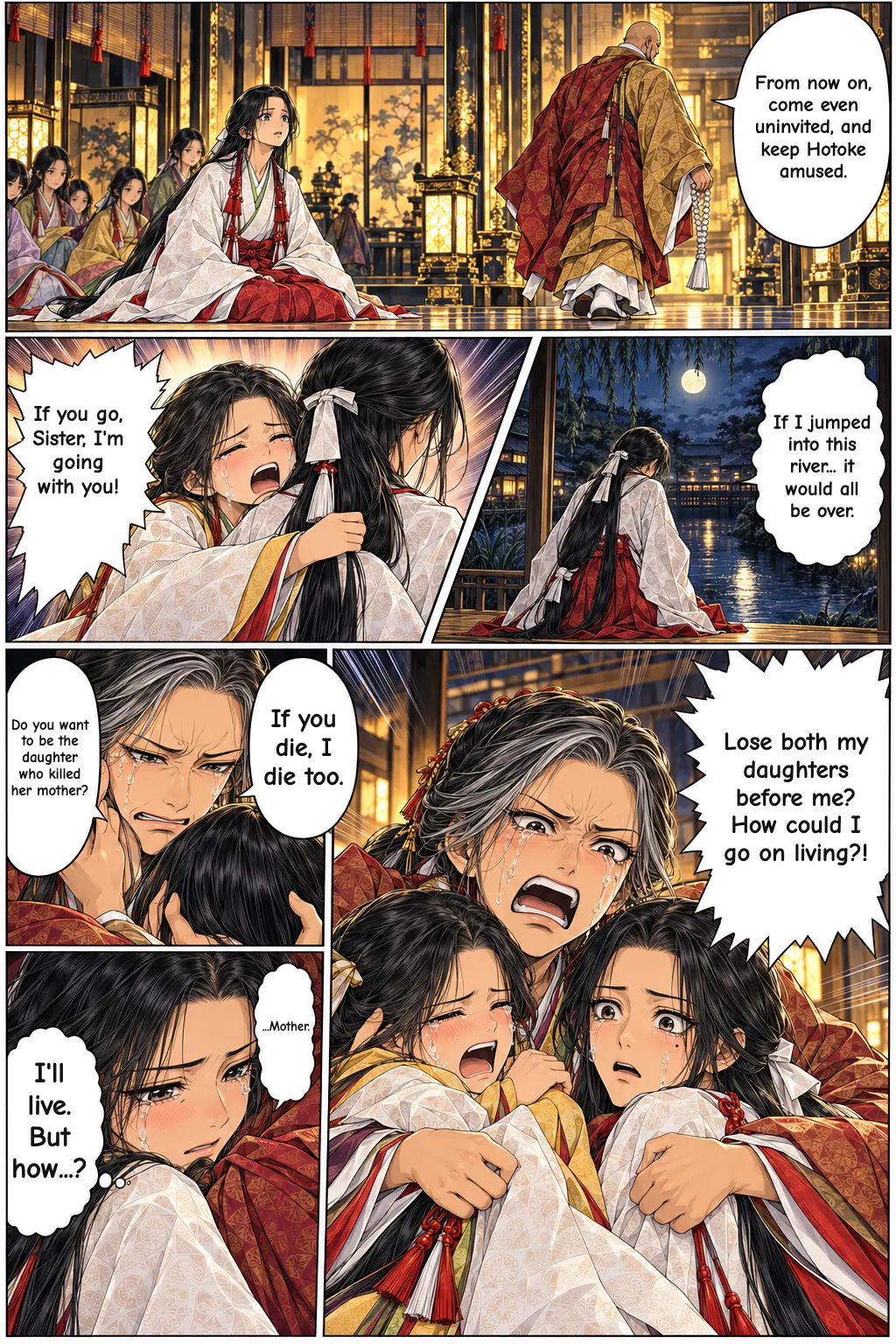
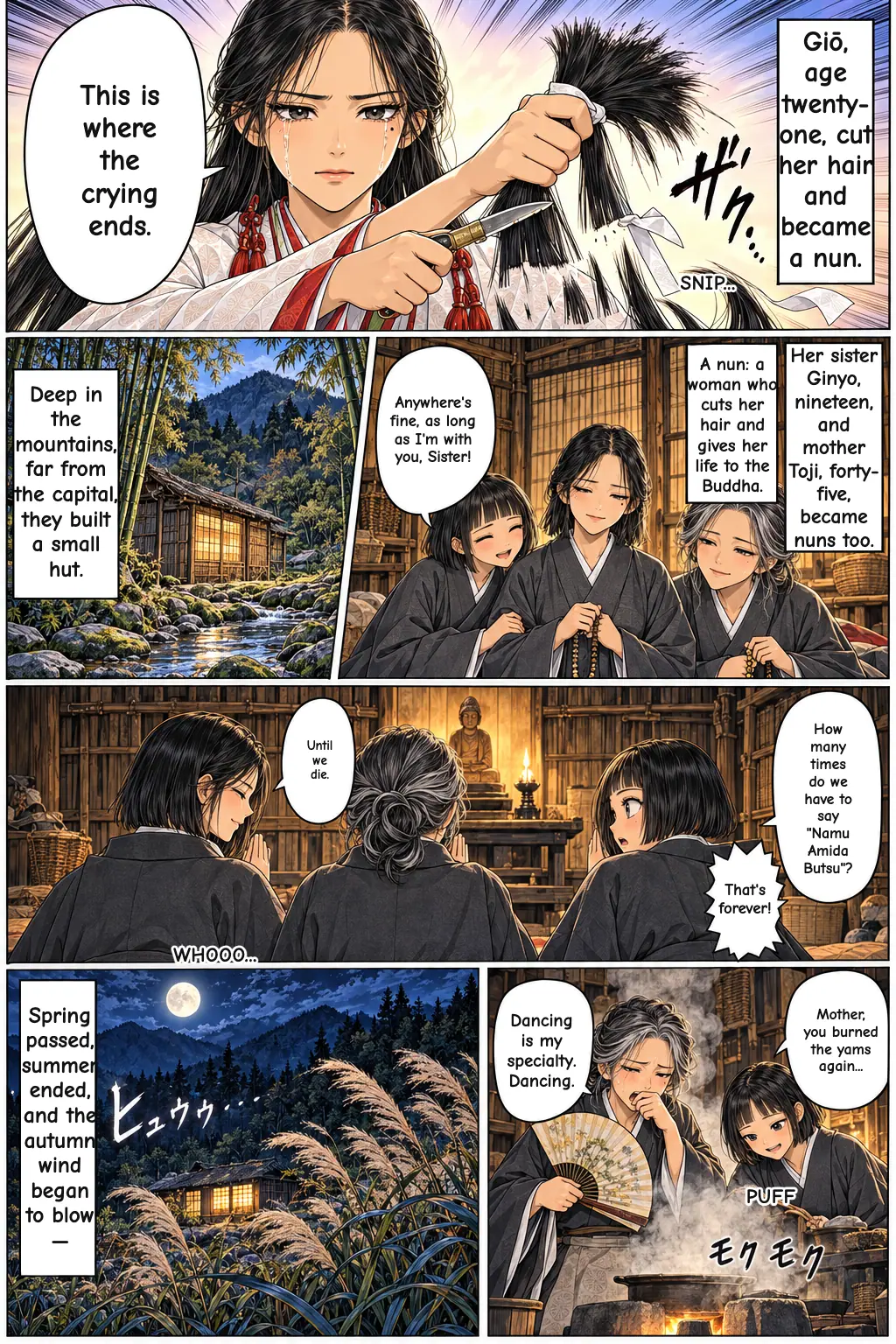
Giō wanted to drown herself, and Giō-jo said she would die with her. Their mother stopped them: if both daughters died, she would not survive, and causing a parent's death was one of the five gravest sins in Buddhism. Instead, Giō became a nun at twenty-one in a mountain village deep in Saga, west of Kyoto. Giō-jo followed at nineteen, and Toji at forty-five. They lived in a brushwood hut and chanted the nembutsu, the prayer to Amida Buddha.
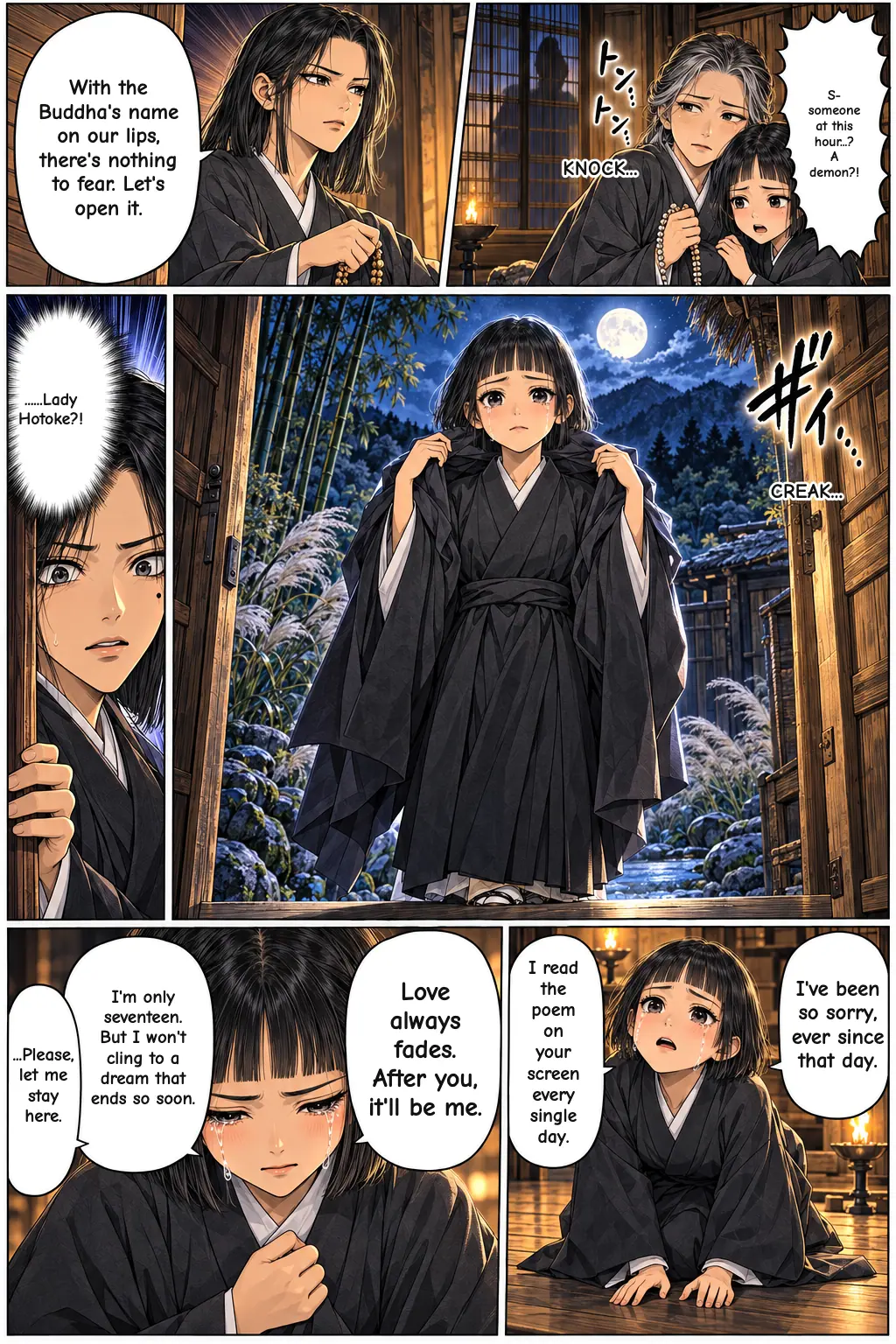
One autumn night, someone knocked at their bamboo door. Afraid it was a demon, they opened it and found Hotoke, now seventeen, dressed as a nun. She explained that she had felt guilty ever since Giō was driven out, and that the poem on the door had shown her that her own autumn would come too. She had slipped away from the mansion and shaved her head. Giō welcomed her, saying her old resentment was gone. The four women prayed together, and the text reports that all of them, sooner or later, were reborn in the Pure Land. Their names were later recorded together in the memorial register of Retired Emperor Go-Shirakawa's Chōkōdō temple.
What the Story Means: Impermanence and the Pure Land
The Tale of the Heike opens with the idea that nothing lasts and the proud will fall. The Giō episode shows this on a small, personal scale. Giō rises and falls, and Hotoke sees that she will follow the same path, just as Giō's poem says. Many readers also see the episode as an early portrait of Kiyomori's arrogance, a man who treats people as playthings, which hints at the fall of his whole clan later in the story.
The ending reflects Pure Land Buddhism, which was spreading widely in this period. Its message was that anyone, whatever their rank or past, could be saved by sincerely calling on Amida Buddha. Giō's song about the shared Buddha-nature, and the four women, rivals once, praying side by side, put that hope into story form. The narrator also stops to explain where the shirabyōshi came from: in the age of Retired Emperor Toba, two women named Shima no Senzai and Waka no Mae danced dressed in men's court clothing with a sword and tall hat. That is why it was first called the "men's dance." Later the hat and sword were dropped, and only the robe remained.
What the Manga Changes and Adds
The original text is brief, so the manga fills in many details. The layout of Kiyomori's mansion, including the gates, the hall, Giō's room, and where the fateful paper door stands, is the artists' invention. The source says little more than "Nishihachijō" and "the door of the room she had lived in." The manga also shows Hotoke's inner life: why she decided to show up uninvited, and how her doubts grew until she chose to become a nun. The original gives only her short confession at the hut.
Other added material includes Giō's daily life at home between her expulsion and the next spring, the look of the hut in Saga and the seasons around it, characters' appearance and costume details, extra lines and personalities for Giō-jo, Toji, and the two unnamed dancers, and Kiyomori's facial expressions. The manga also depicts the women's later years and deaths, which the original only reports secondhand. The main events and what Kiyomori says and does follow the original. The popular belief that today's Giōji temple in Saga stands on the site of their hut, and a legend linking Giō to Yasu in Ōmi Province, come from later tradition, not the Heike text.
Where to Read It
If this story moved you, Episode 2 of THE TALE OF THE HEIKE: The Samurai War of Genpei on Manga Portal tells it in full, from Hotoke's bold arrival to that knock on the bamboo door on an autumn night. Every episode is free to read, and you don't need to create an account. Start here and keep going into the war that brought down the Heike.
Characters in this episode
Giō
A celebrated shirabyōshi dancer and Kiyomori's favorite, who speaks up for a rival, is cast out, and becomes a nun at twenty-one.
Hotoke (Hotoke Gozen)
A bold sixteen-year-old dancer from Kaga who wins Kiyomori's favor, then gives it all up to join Giō as a nun at seventeen.
Taira no Kiyomori
The retired-priest chancellor who rules the capital and casts Giō aside on a whim, then humiliates her the next spring.
Giō-jo
Giō's younger sister, also a dancer, who stands by her and becomes a nun at nineteen.
Toji
Giō's mother, a former dancer, who talks her daughter out of suicide and takes vows at forty-five.
FAQ
Who is Giō in The Tale of the Heike?
Giō is a shirabyōshi dancer in Book One of The Tale of the Heike who was loved by Taira no Kiyomori. When he turned his affection to a younger dancer, Hotoke, he threw Giō out, and she later became a Buddhist nun in Saga.
Why did Hotoke become a nun?
Hotoke felt guilty that Giō had been expelled because of her. She also read Giō's poem on the sliding door and realized that Kiyomori's favor would someday end for her too. At seventeen, she secretly left the mansion, shaved her head, and joined Giō's hut.
What is a shirabyōshi?
A shirabyōshi was a professional female dancer and singer in late Heian Japan. According to the Heike, the art began in Retired Emperor Toba's time with dancers wearing men's court robes, a tall hat, and a sword. Later they performed in the robe alone.
What does Giō's poem mean?
Giō compares herself and Hotoke to grass in the same field. Whether new or fading, all of it withers when autumn comes. It means that every person's good fortune will end, and that idea of impermanence runs through the whole Tale of the Heike.
Is Giōji temple the real site of Giō's hut?
Giōji in Saga, Kyoto, is traditionally said to stand where Giō and the others lived. However, this connection comes from later tradition, not from the text of The Tale of the Heike.