Episode 9He Sent Away His Best Samuraia Woman — The Death of Kiso Yoshinaka
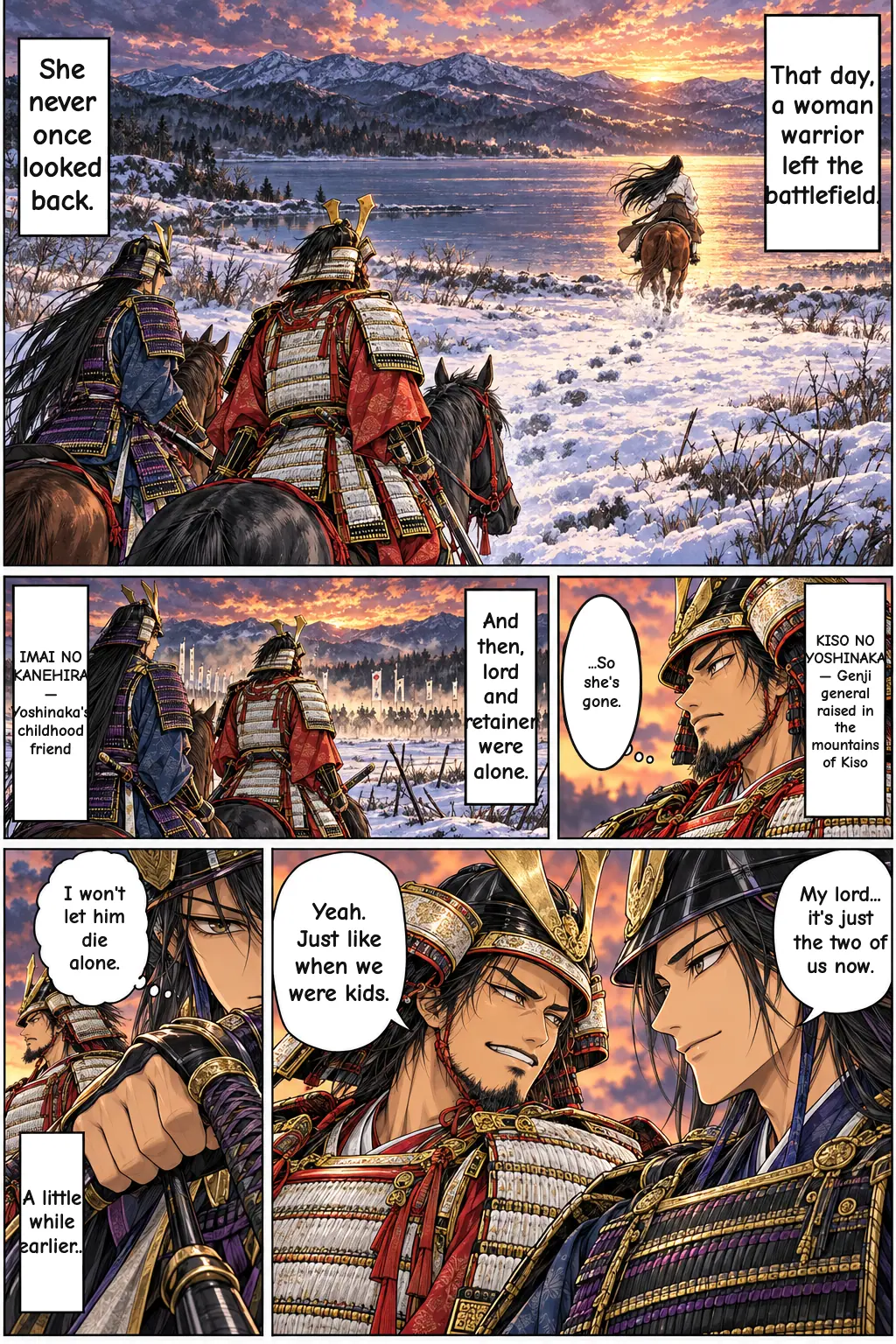
Driven from the capital, Kiso no Yoshinaka flees to a lakeshore with only a handful of riders. He orders Tomoe, the fiercest woman warrior of all, to leave him, and resolves to die beside his childhood friend Imai no Kanehira. A lord and two loyal followers each choose their own path in this tale of a lakeside in the season of melting snow.
The Death of Kiso Yoshinaka and Tomoe: Tale of the Heike Explained
The Original Story, Part 1: The Race Across the Uji River
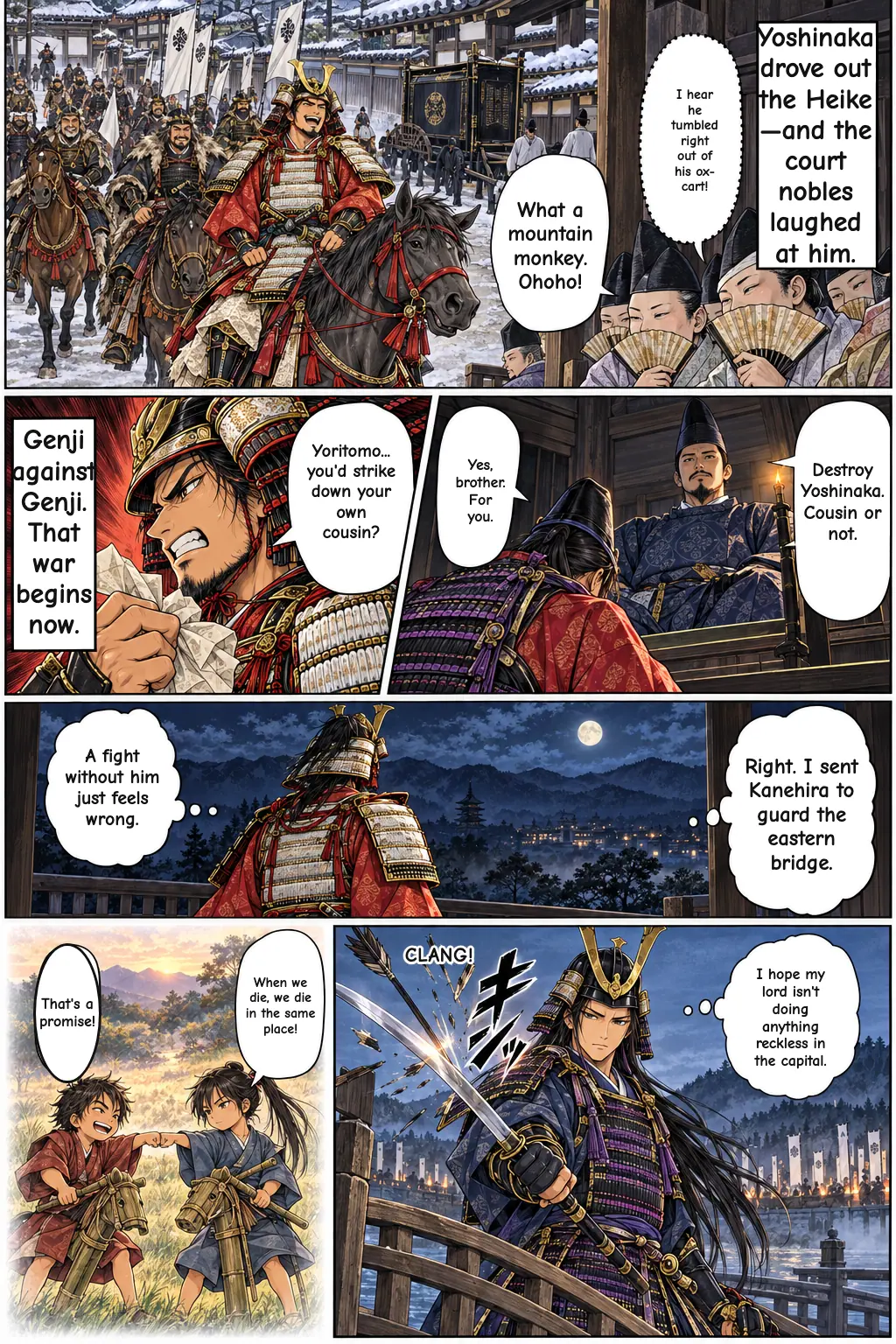
Early in 1184, Kiso no Yoshinaka, a Minamoto general who had taken over Kyoto, the capital, has become hated for the violence of his troops. Minamoto no Yoritomo, the Minamoto leader based in Kamakura in eastern Japan, sends his younger brothers to remove him: Noriyori leads the main army toward Seta, and Yoshitsune leads a second force toward Uji. Yoshinaka has the planks pulled up from the bridges at both places and splits his army. His closest companion, Imai no Kanehira, defends Seta with about eight hundred riders.
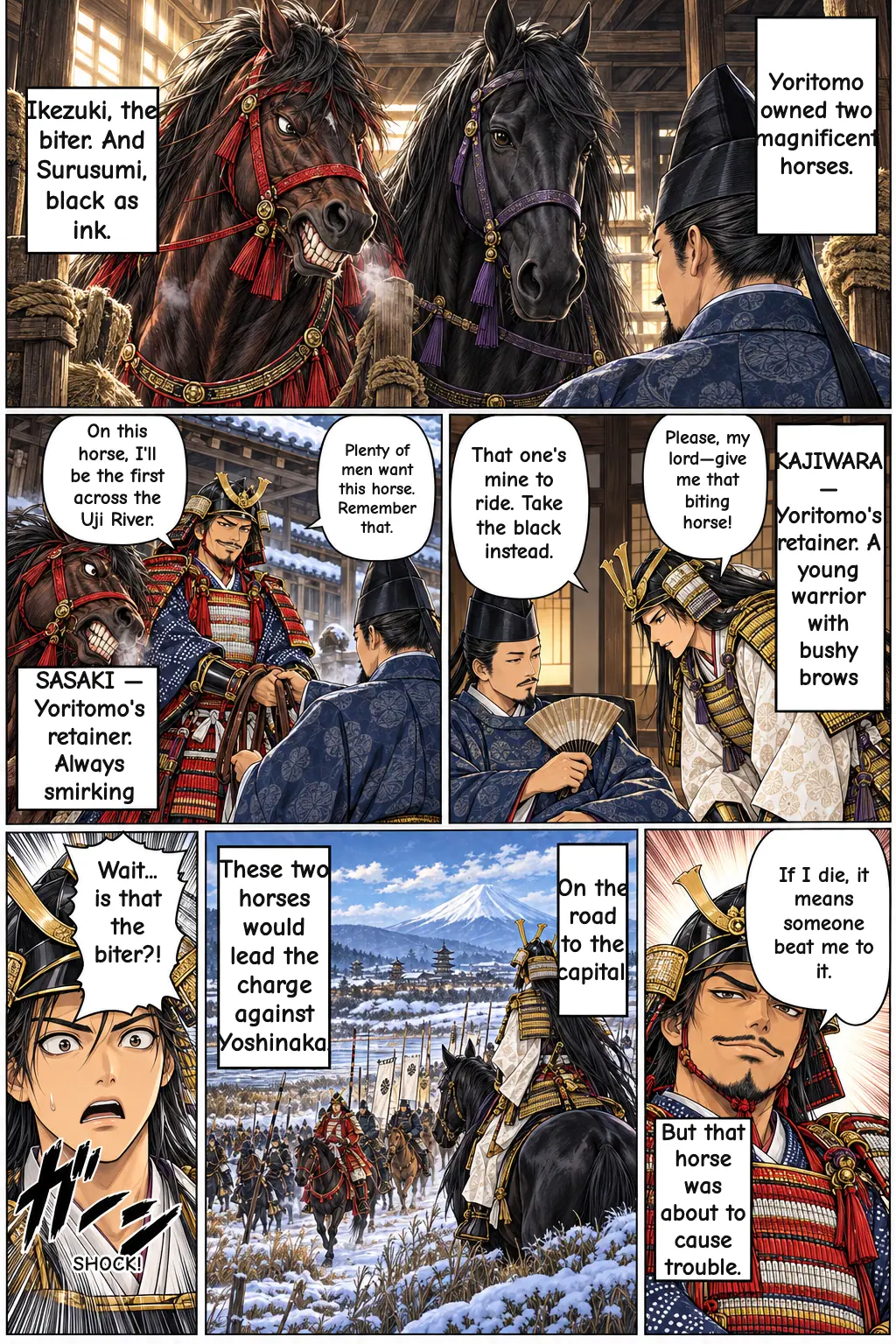
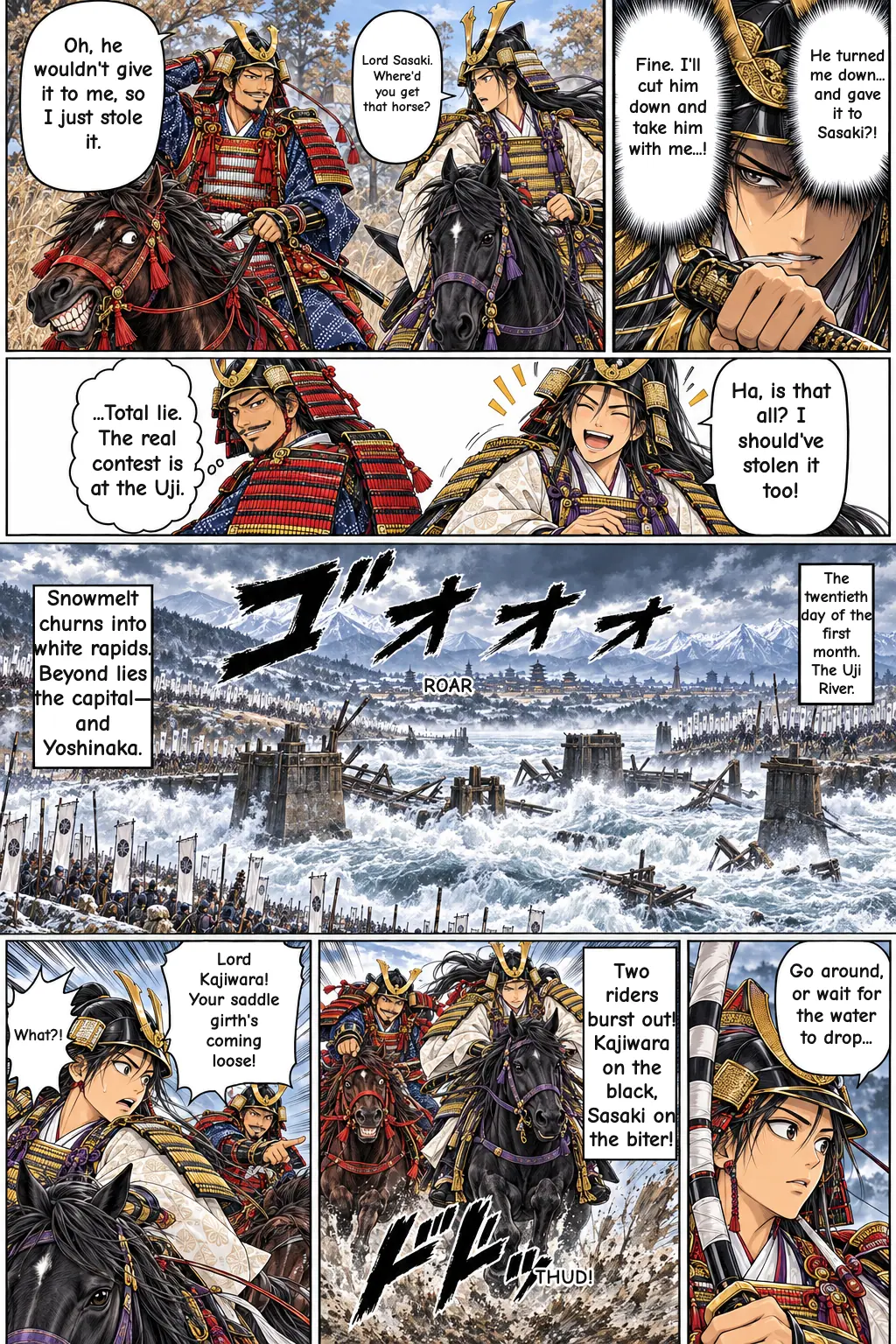
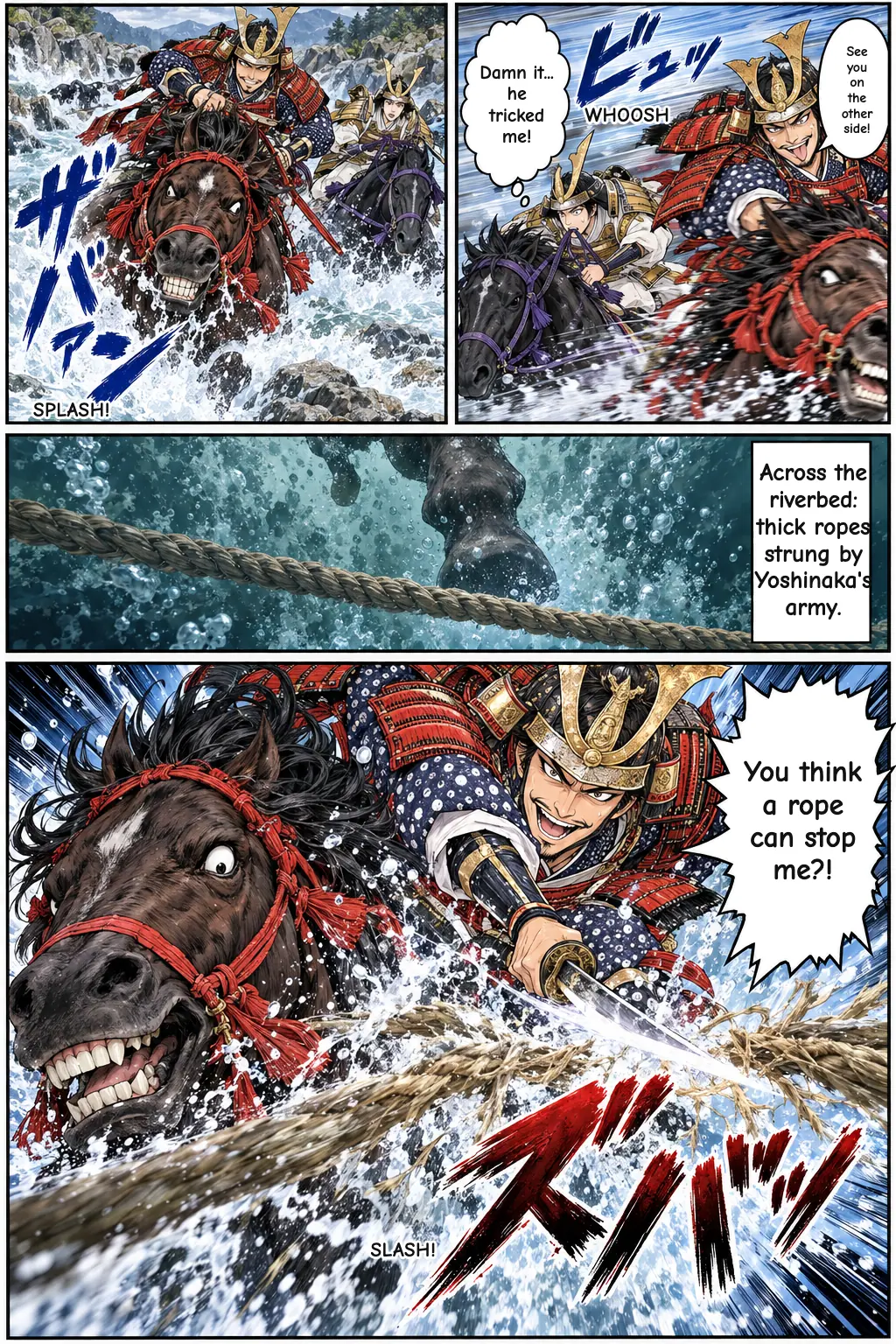
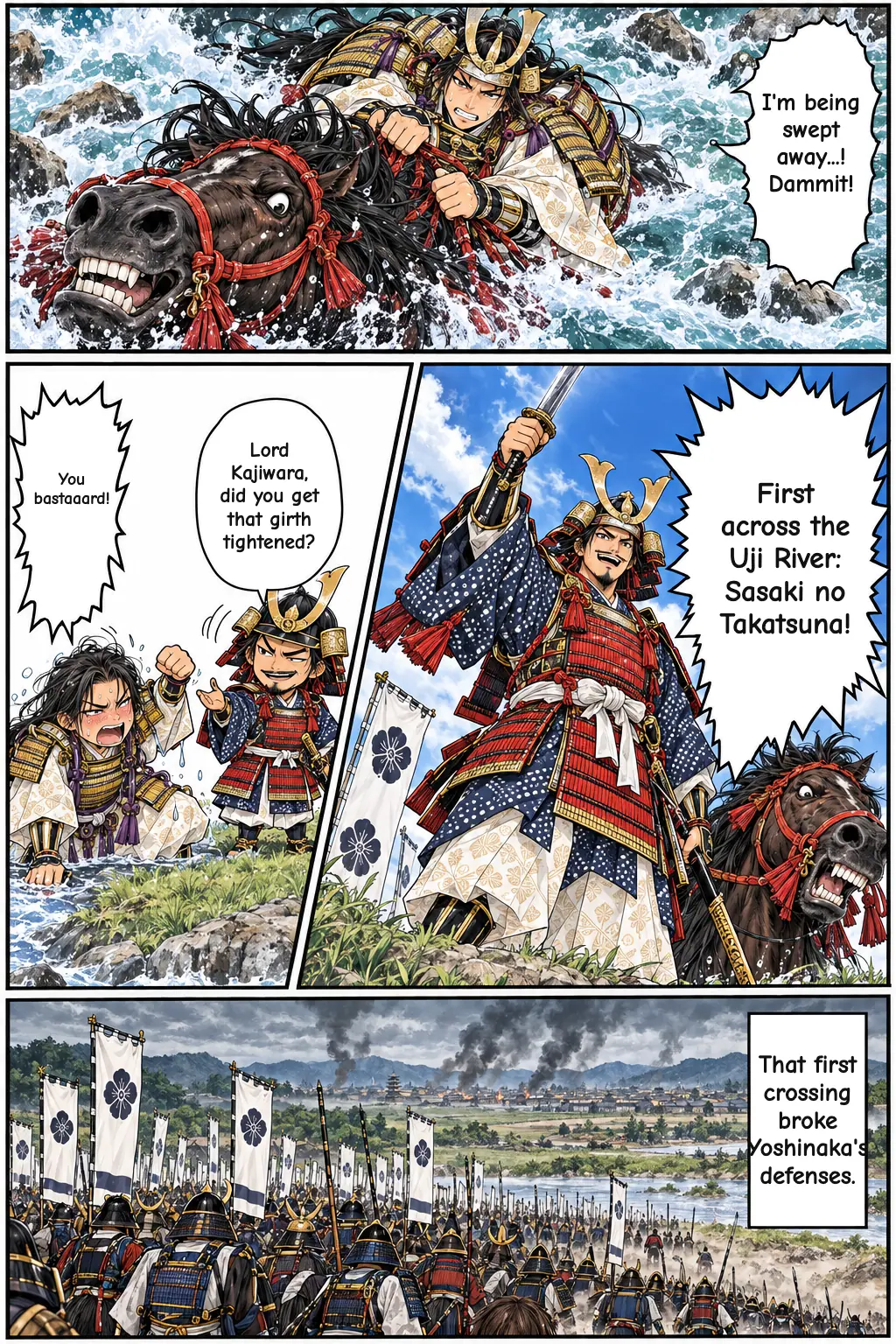
Before the campaign, Yoritomo hands out two famous horses. Kajiwara Kagesue asks for Ikezuki, a powerful dark chestnut named for its habit of biting both horses and people, but Yoritomo refuses and gives him the jet-black Surusumi instead. Then Sasaki Takatsuna receives Ikezuki and swears he will be the first to cross the Uji River, or die trying. When Kagesue later sees Ikezuki in Takatsuna's hands, he is ready to fight him to the death. Takatsuna calmly lies that he stole the horse, and Kagesue laughs and wishes he had thought of stealing it himself.
At the Uji River, swollen with melting snow, the two men race into the water. Kagesue is in front until Takatsuna calls out that his saddle girth looks loose. While Kagesue stops to tighten it, Takatsuna rides past, cuts through the ropes strung along the riverbed with his sword, and reaches the far bank first, announcing his name. Surusumi is carried far downstream. The tale adds a comic moment in which the giant Hatakeyama Shigetada throws a clinging comrade onto the bank. Soon the defenses at Uji and Seta both fall.
The Original Story, Part 2: The Last Stand at Awazu
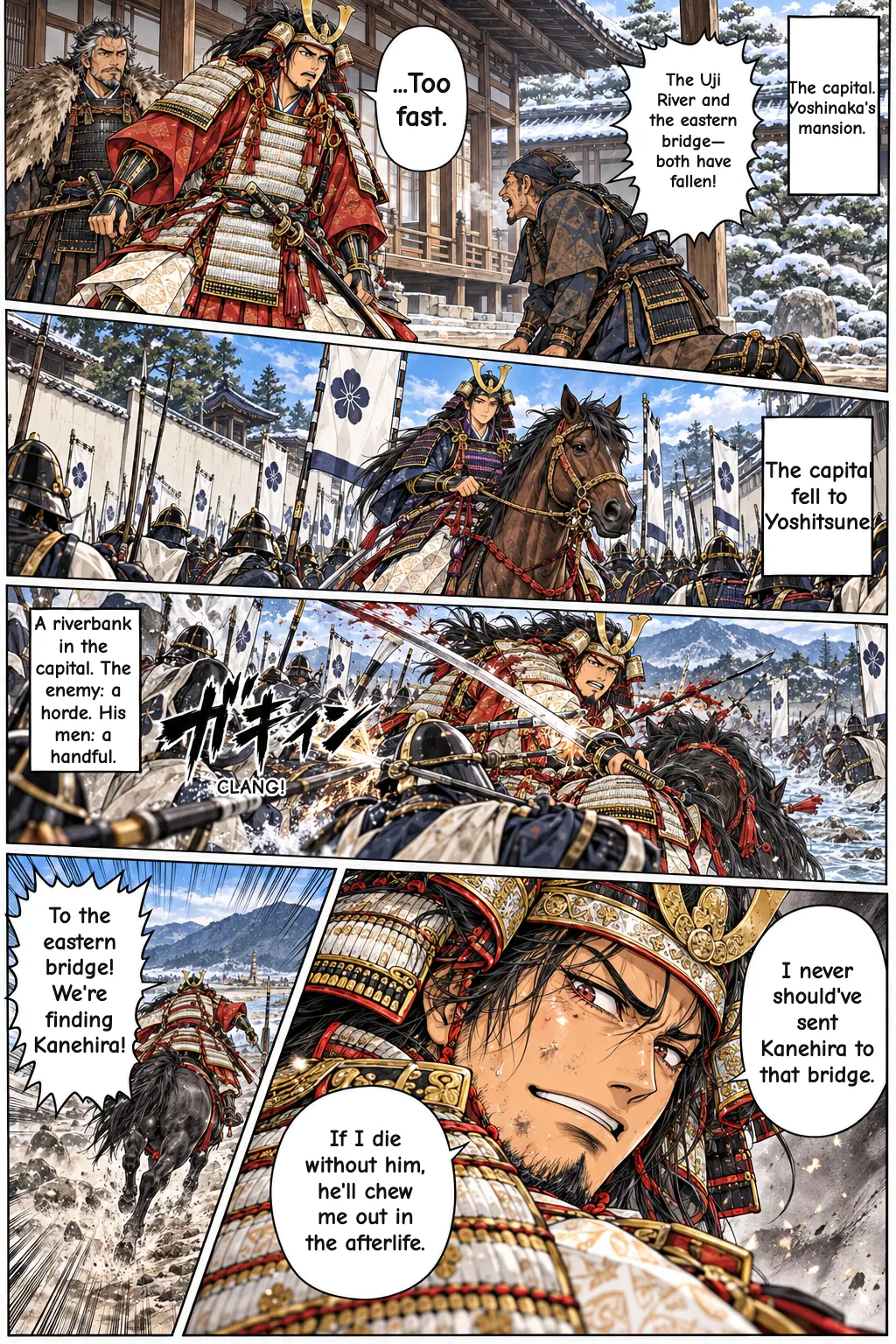
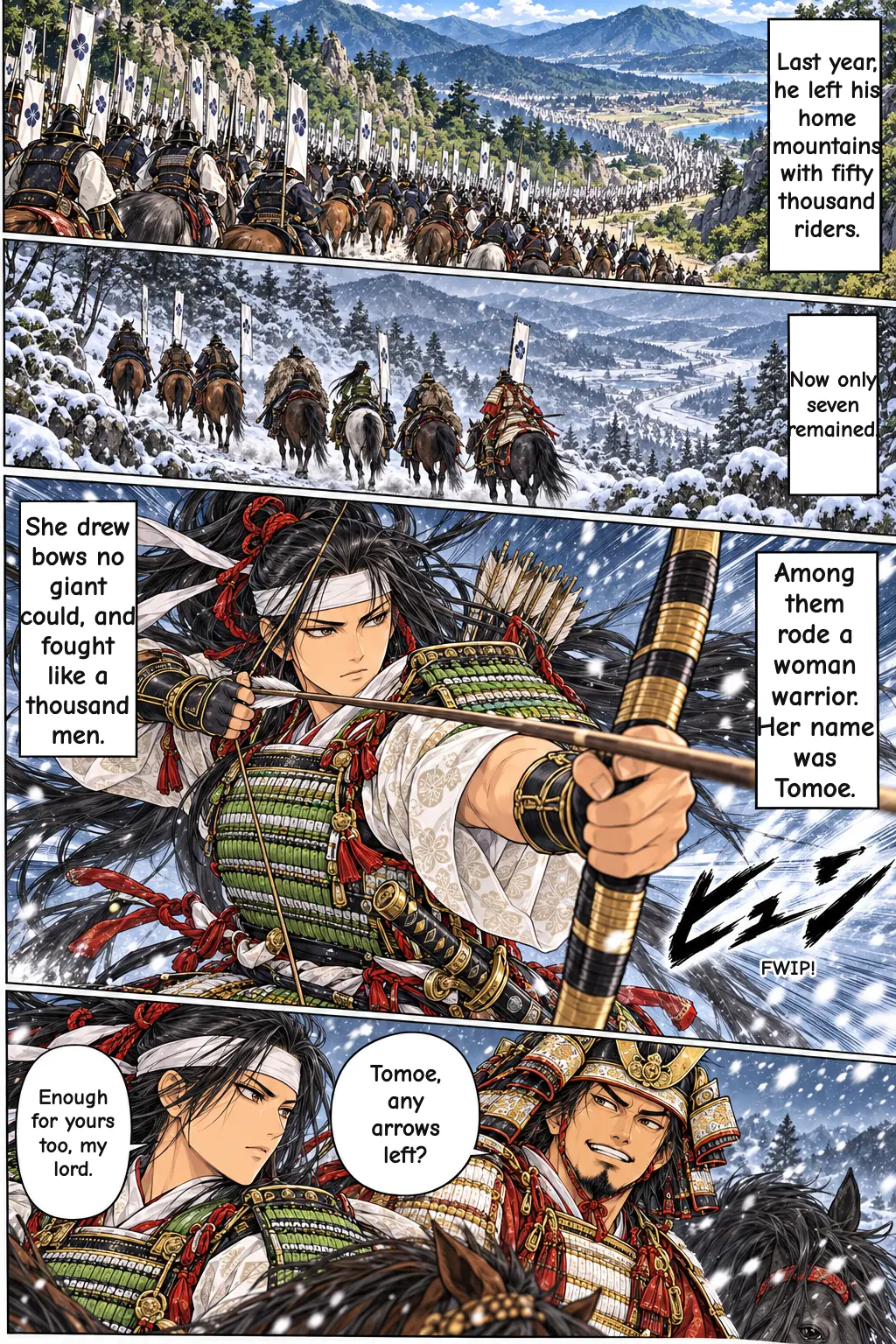
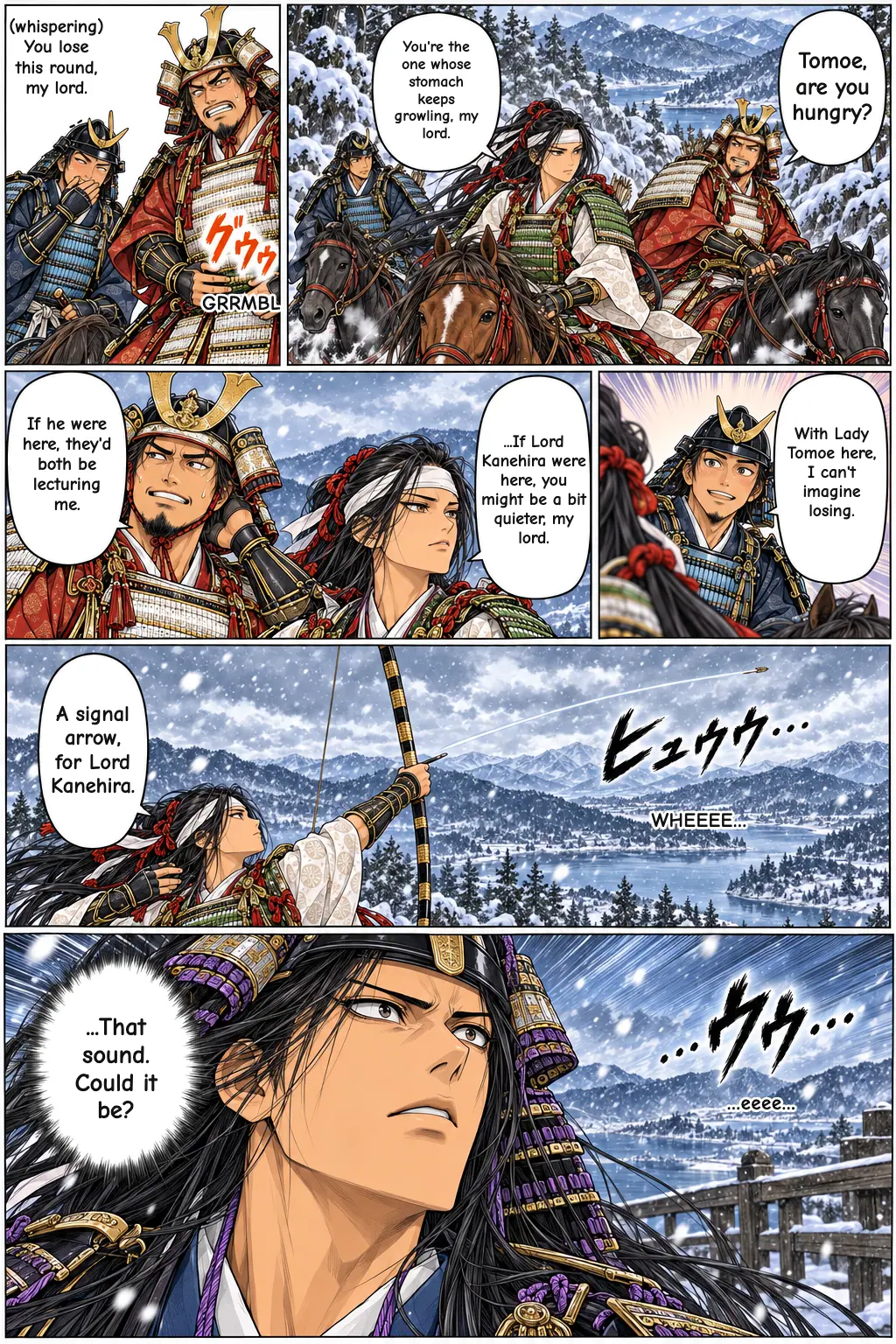
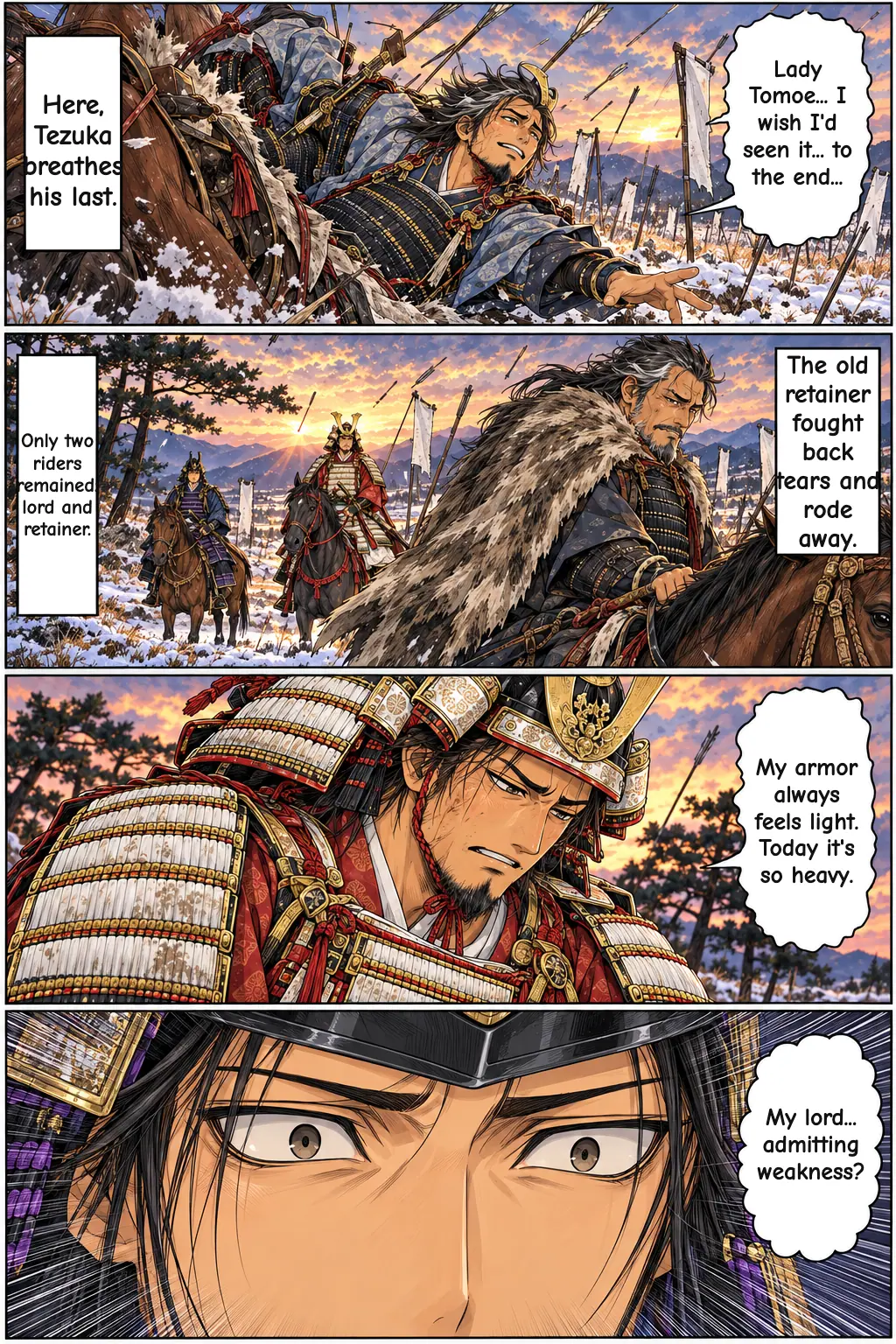
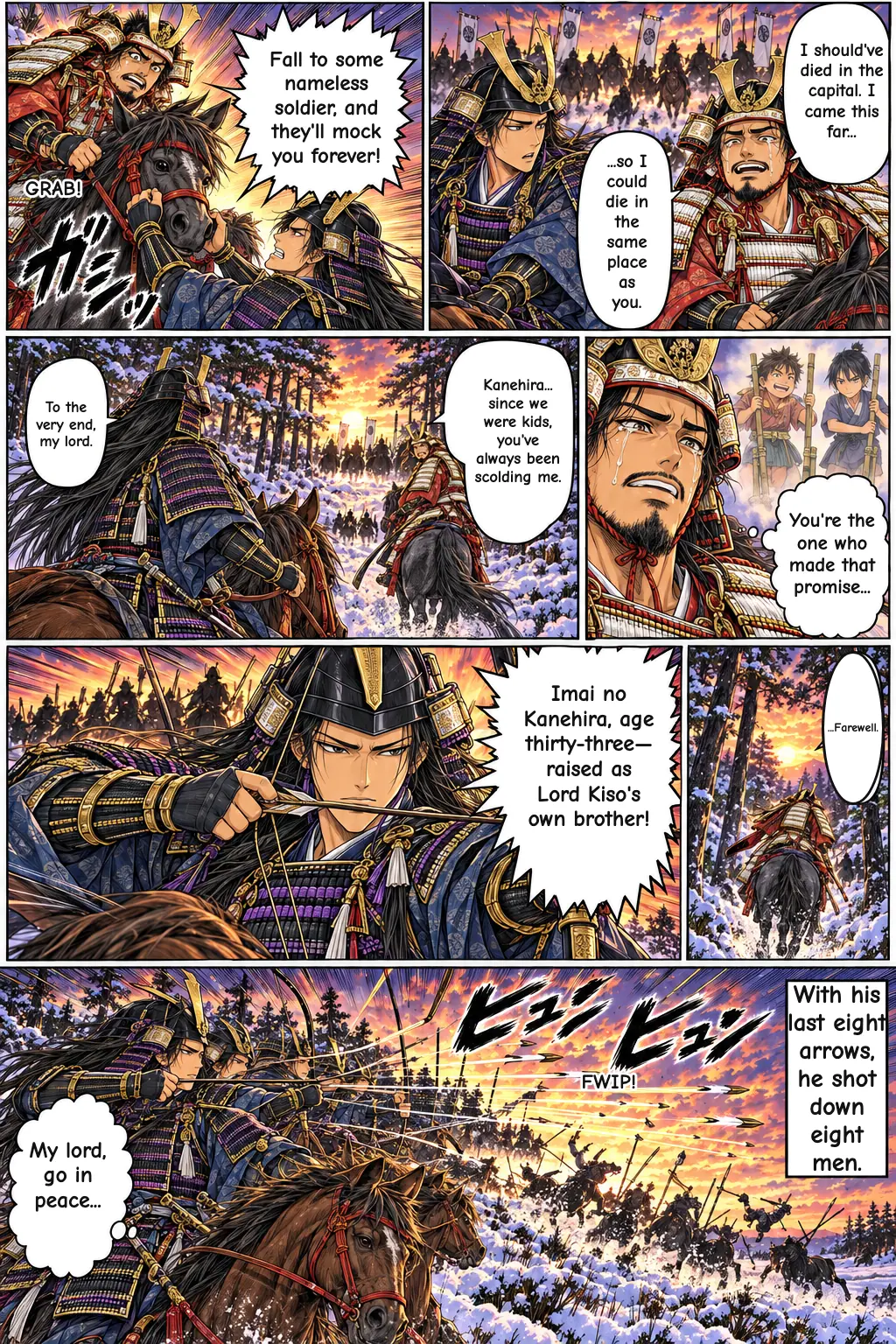
Even as the enemy closes in, Yoshinaka stays with a woman he has only recently begun visiting. One of his retainers takes his own life in protest, and only then does Yoshinaka ride out. Yoshitsune's men rush to guard the retired emperor Go-Shirakawa, and Yoshinaka is beaten in battle on the riverbed at Rokujō. He regrets sending Imai away, because the two had promised since childhood to die in the same place. He left his home province of Shinano with some fifty thousand riders; now only seven are left with him.
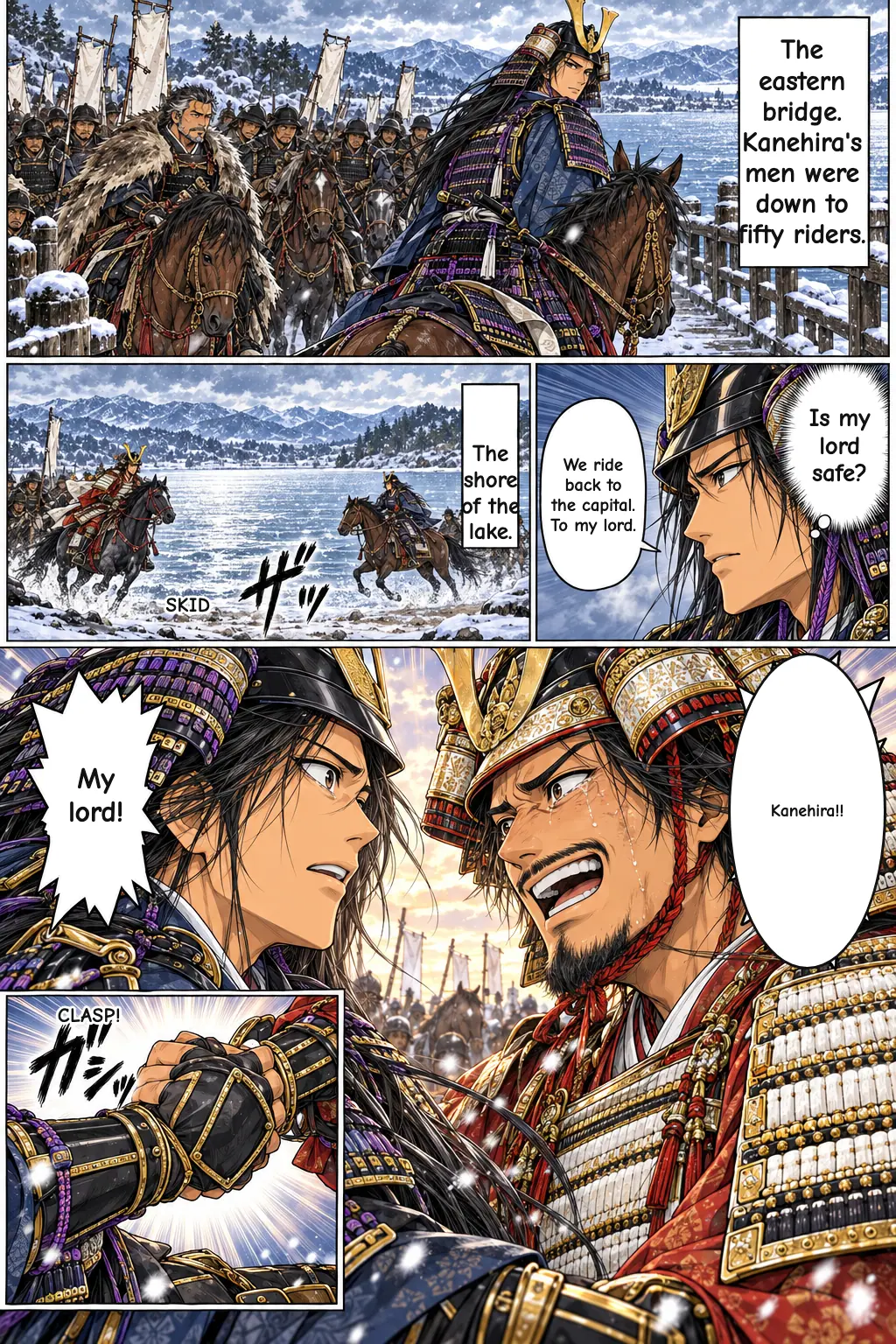
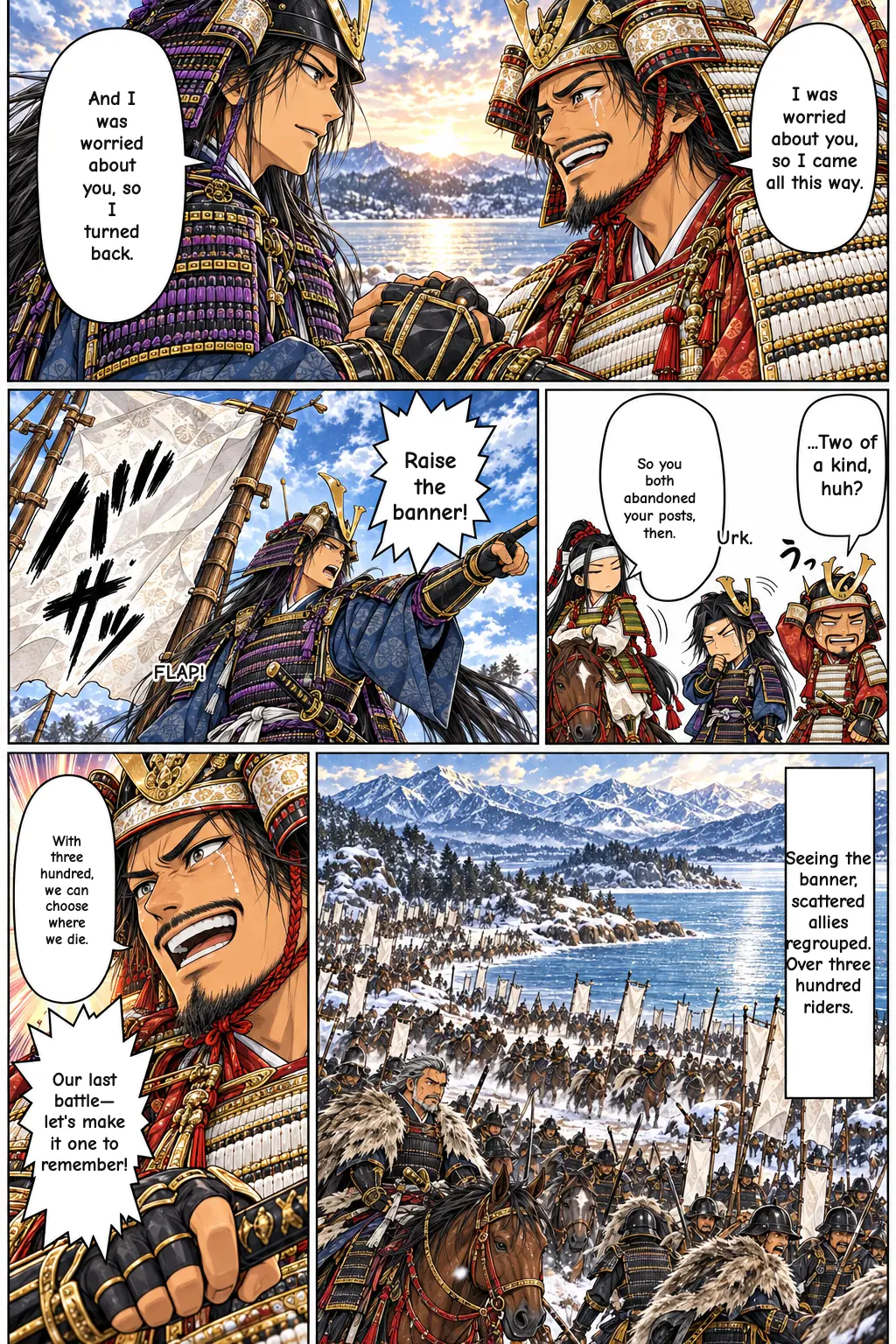
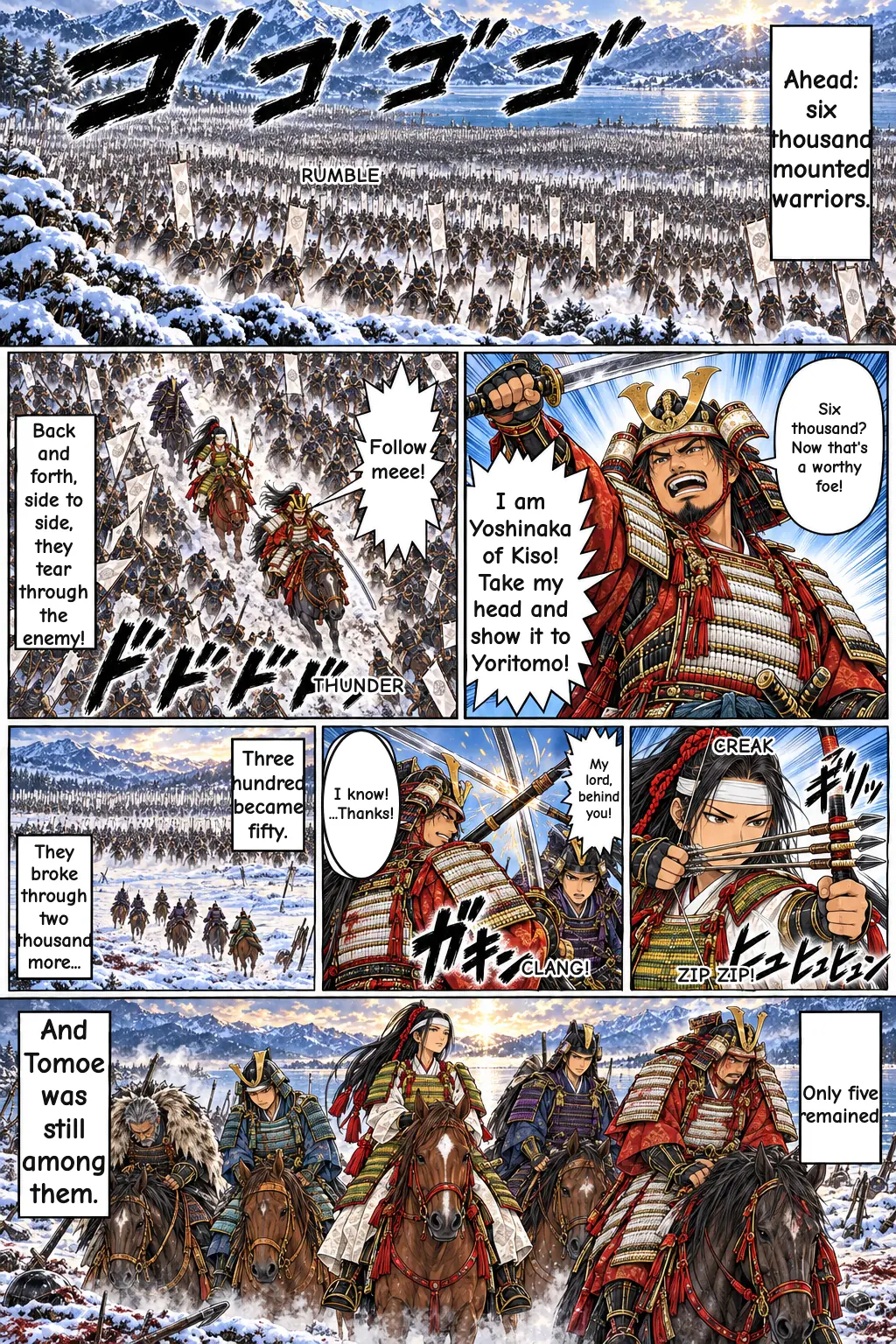
One of the seven is Tomoe, a woman who came with him from Shinano. The tale describes her as pale-skinned, long-haired and beautiful, a powerful archer and a skilled rider who had already led troops in battle. Yoshinaka heads toward Seta to find Imai, while Imai rides toward the capital to find his lord. They meet on the shore at Uchide near Ōtsu, by Lake Biwa. Imai raises his banner, about three hundred scattered warriors gather, and they charge enemy armies of thousands until only five riders remain. Tomoe is still among them.
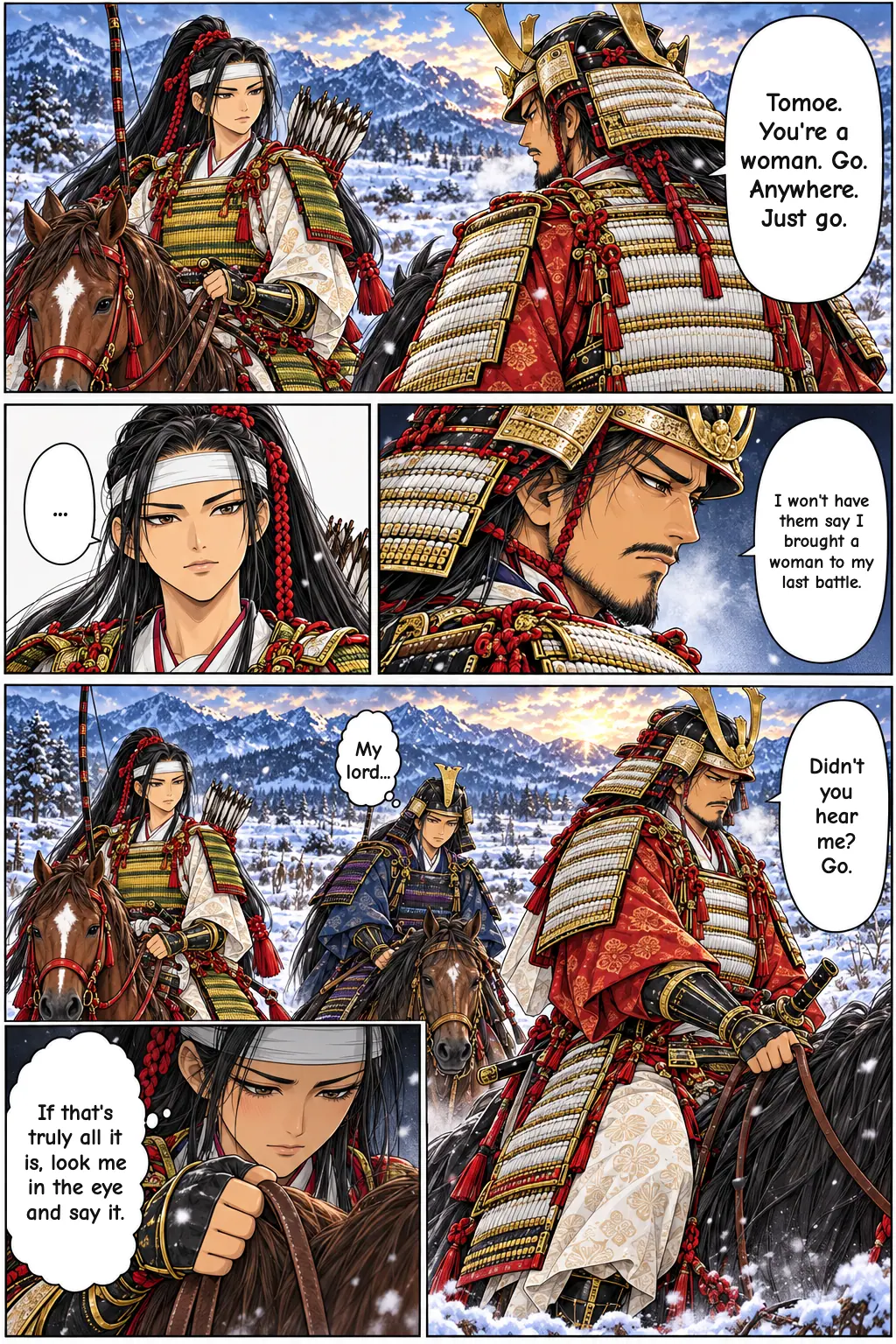
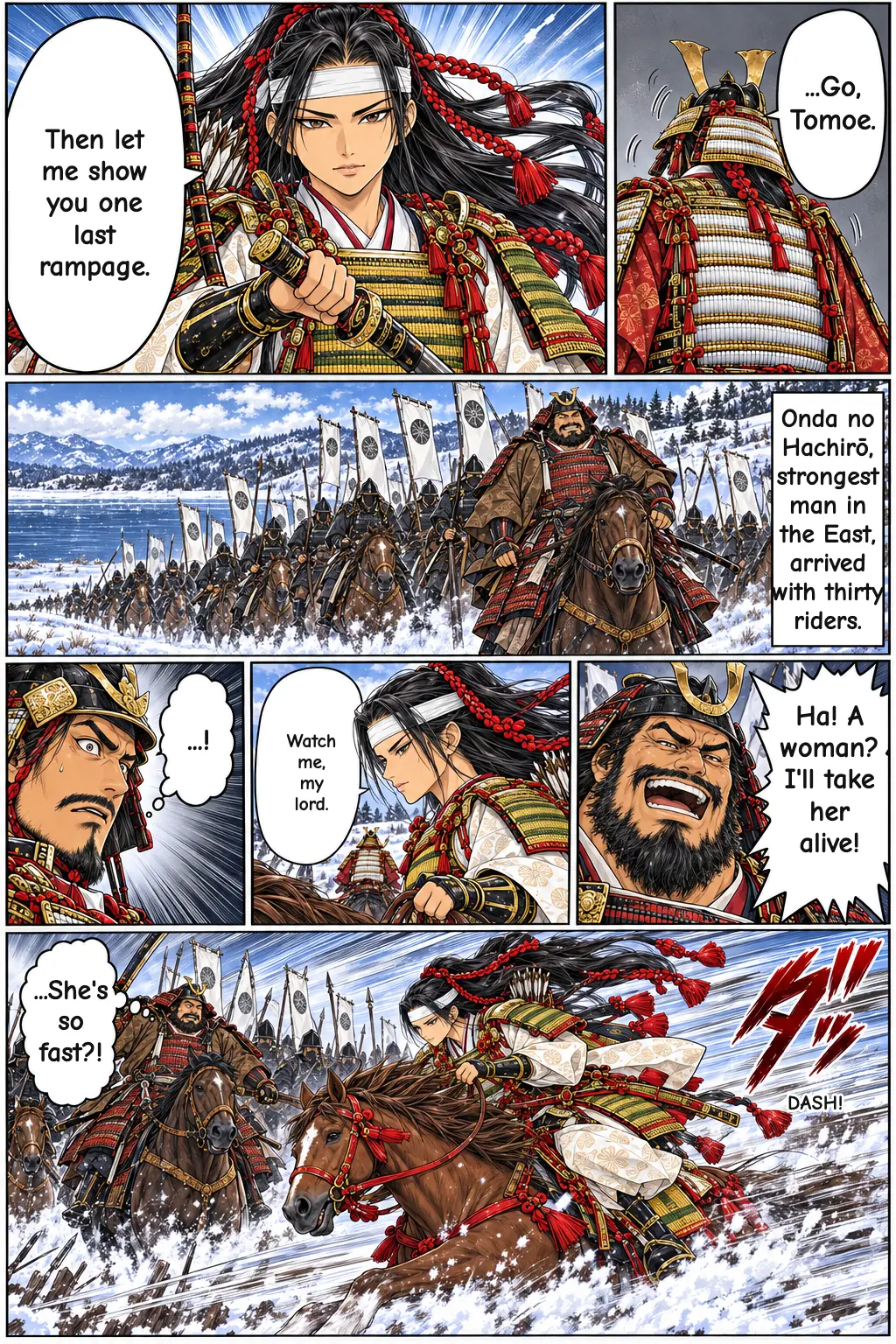
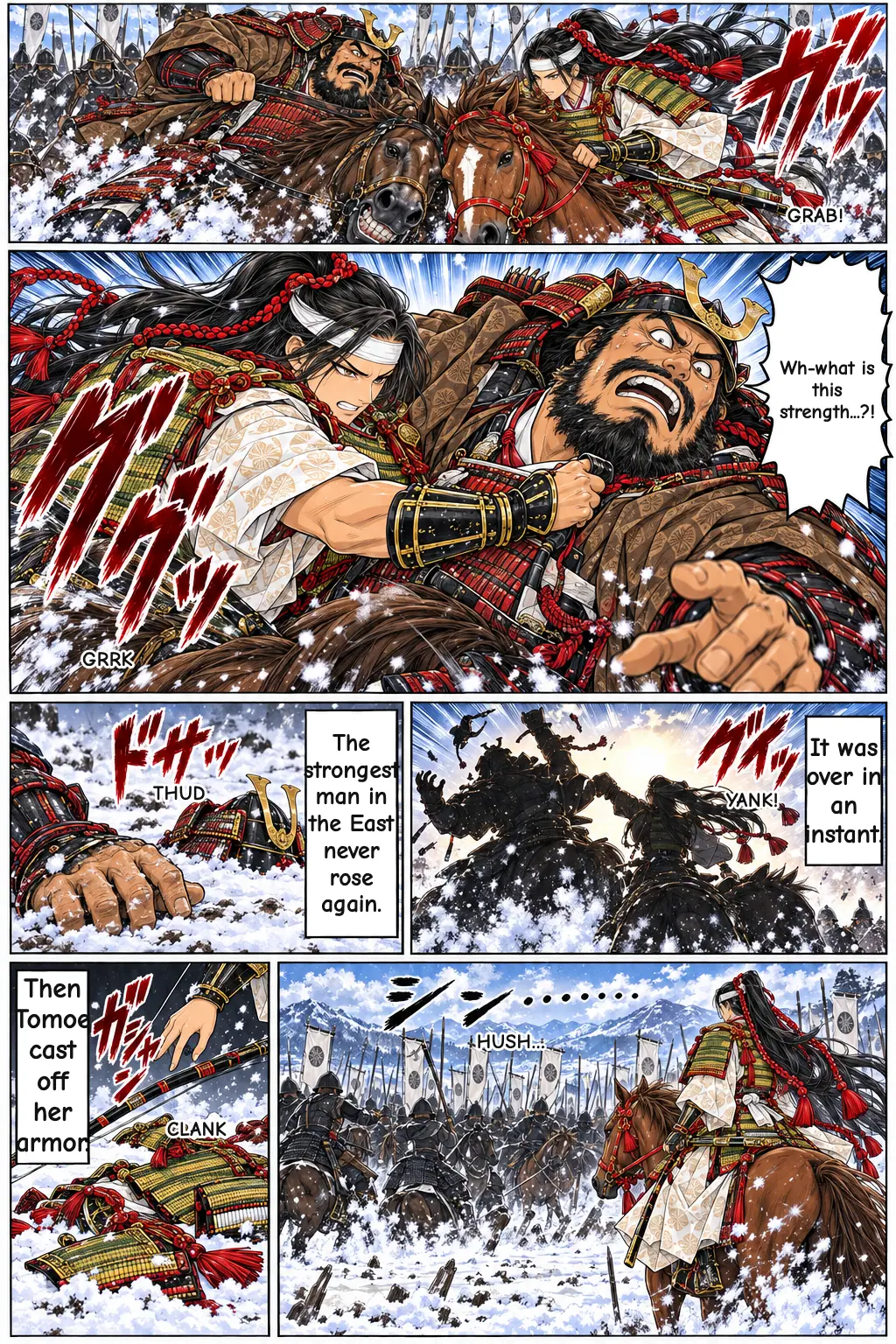
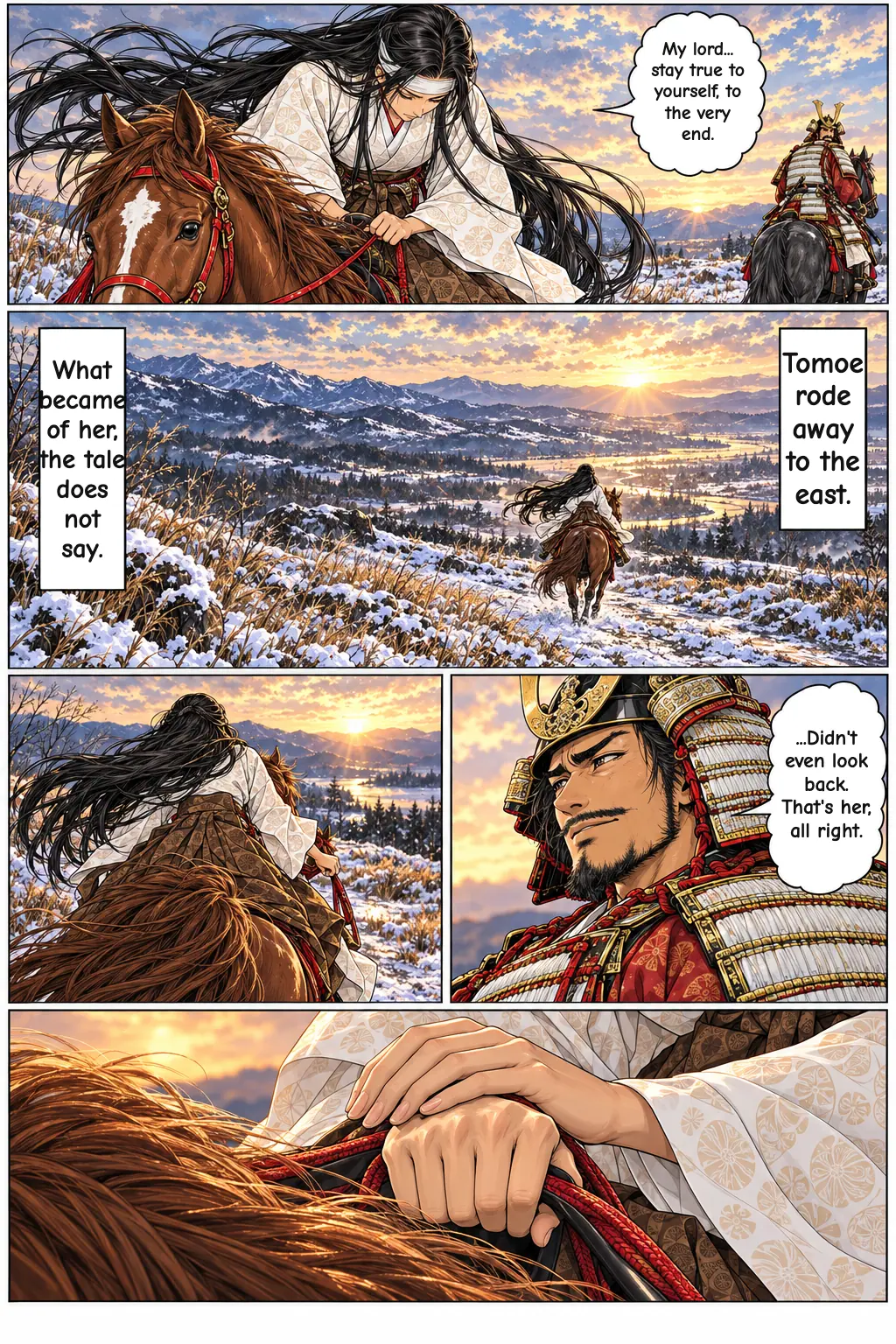
Yoshinaka now orders Tomoe to leave. She is a woman, he says, and he does not want people to say he brought a woman to his final battle. She resists, but at last agrees to show him one last fight. She charges a famously strong enemy warrior, Onda no Hachirō Moroshige, drags him against her saddle, and twists off his head. Then she throws off her armor and rides away to the east. The Kakuichi version of the tale says nothing more about her.
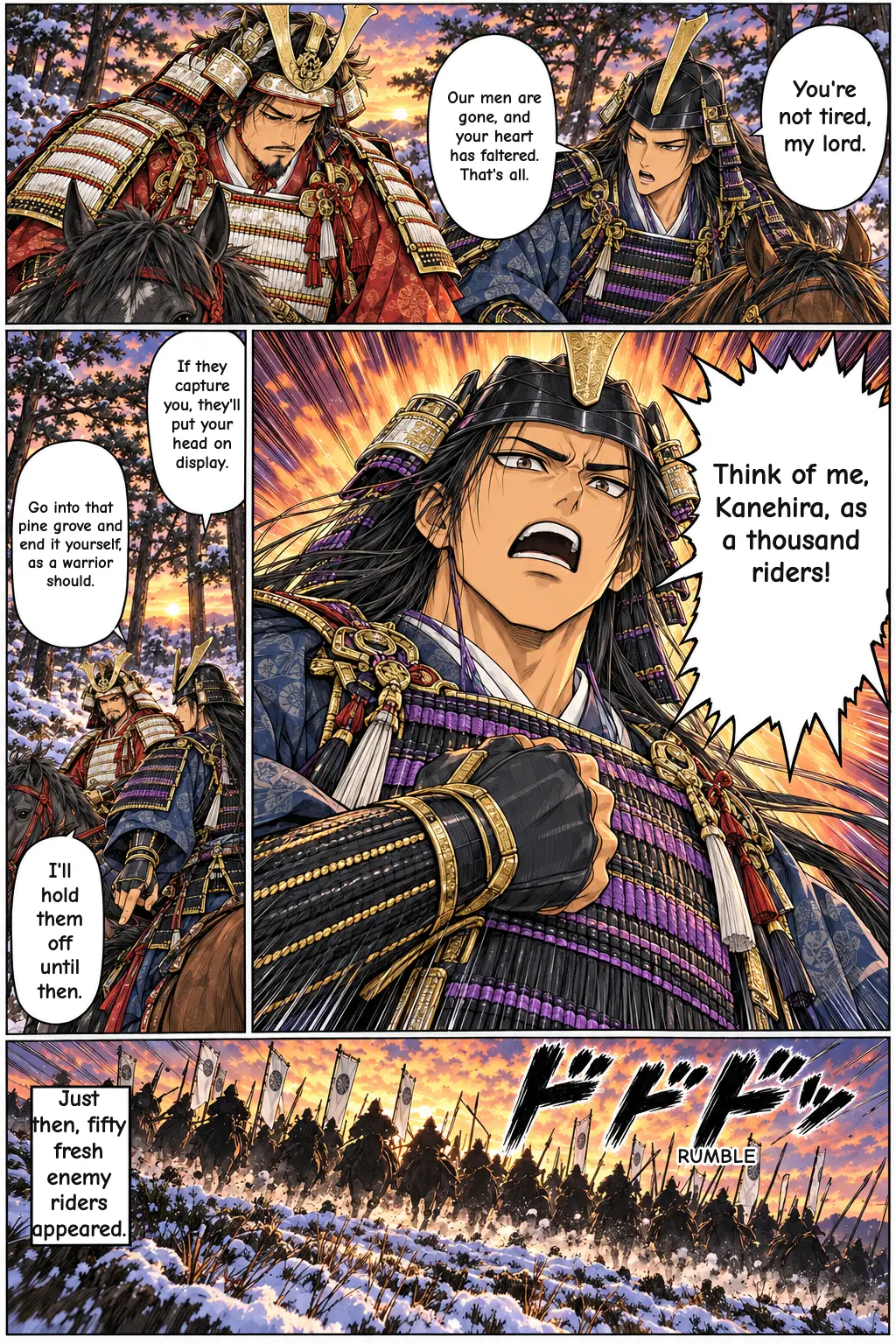
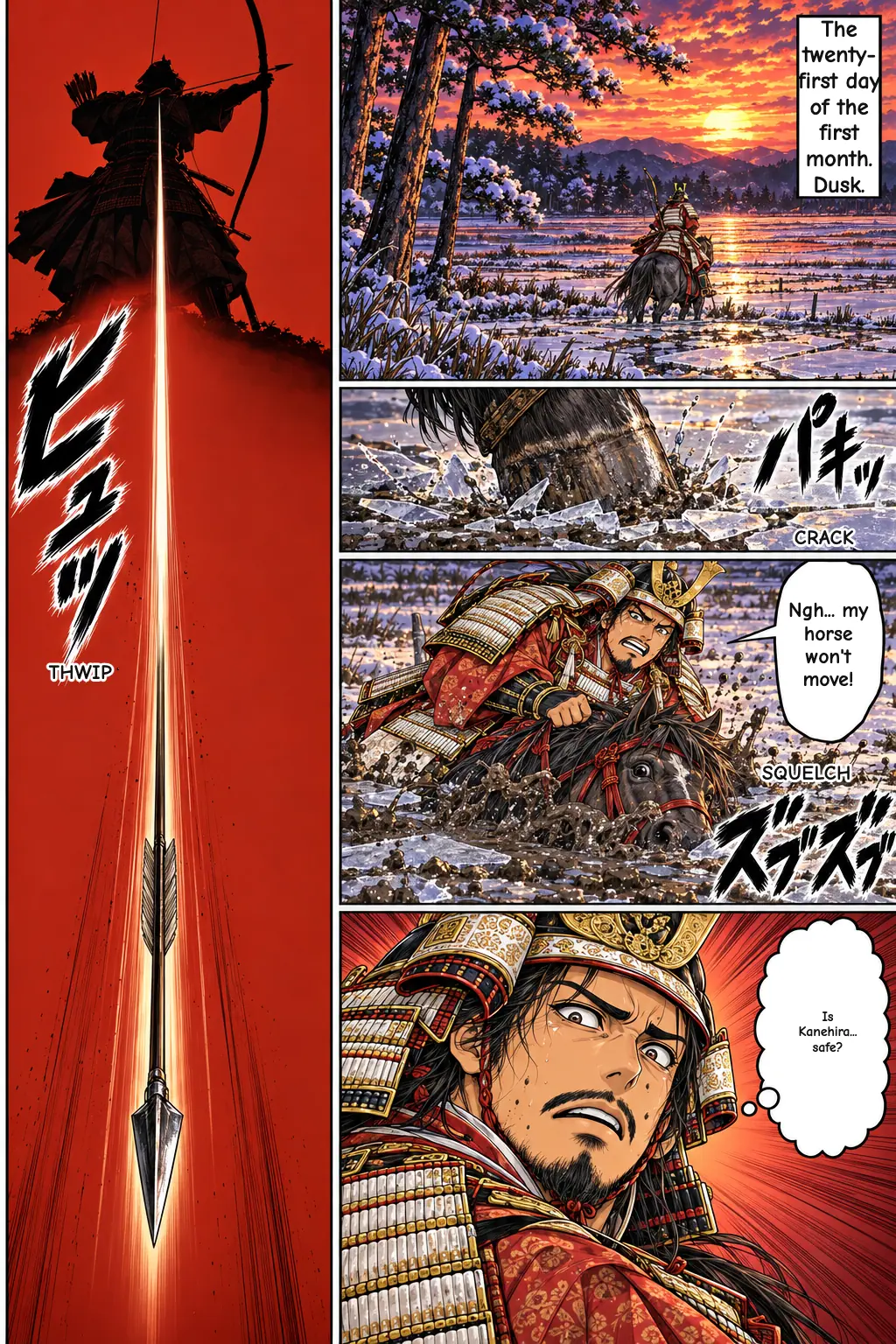
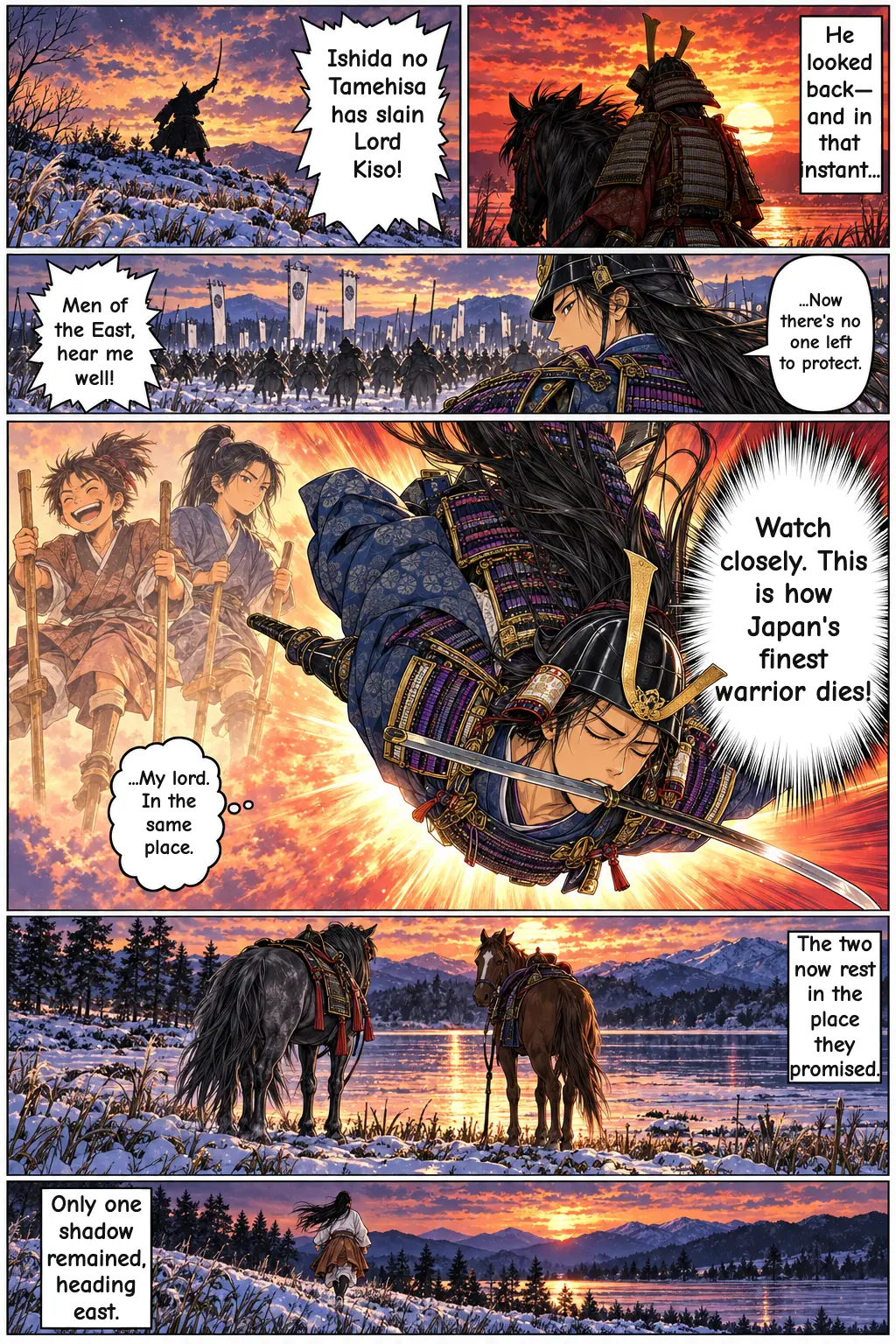
Yoshinaka admits his armor suddenly feels heavy. Imai urges him to end his life with honor in the pine grove at Awazu while he holds off the enemy alone, bringing down eight riders with eight arrows. But Yoshinaka's horse plunges into a deep rice field covered with thin ice and cannot move. When he turns to look back for Imai, an arrow strikes him in the face beneath his helmet. Seeing that his lord is dead, Imai places the tip of his sword in his mouth and throws himself headfirst from his horse.
Main Characters at a Glance
The story turns on three people. Yoshinaka is bold but flawed: he hesitates in the capital, yet charges huge armies without fear. Imai no Kanehira is his milk brother, the son of the woman who nursed Yoshinaka as a baby, which made the two as close as brothers. Tomoe is the warrior who survives. Around them, the rivals Takatsuna and Kagesue bring humor and sharp wit to the first half.
What This Story Tells Us
The Tale of the Heike tells of the Genpei War (1180–1185) between the Taira (Heike) and Minamoto (Genji) clans. This episode is unusual because it shows Minamoto fighting Minamoto. The tale was performed by blind storytellers who chanted it while playing the biwa, a Japanese lute, and the Kakuichi version used here is one of the best-known forms of those performed texts. Its central idea is that all glory fades, and Yoshinaka's fall from fifty thousand riders to a single man is a clear example of that idea.
The episode also shows what mattered to warriors of the time: being first into battle, keeping one's name honored, and dying well. Imai's main concern is that his lord not be killed by some unknown soldier. The bond between lord and milk brother, and their promise to die together, is what gives the scene its emotional force.
Tomoe has become one of Japan's most famous women warriors, often called Tomoe Gozen. Because she appears mainly in war tales and not in official records, some historians question whether she lived as the tale describes. Other versions of the story and later legends give her a life after the battle, but these differ from one another and are not part of the Kakuichi text.
What the Manga Changes
The manga keeps the main events of the original but shortens the Uji River race into a few opening pages. It keeps the gift of the horses, Takatsuna's lie, the girth trick and the cut ropes, and may leave out the Hatakeyama scene. The colors of the river, the snowmelt landscape, the movement of the horses and the evening sky over Awazu are the artist's own work, since the original describes little beyond the horses' coats.
Several things are invented or expanded for the manga: Tomoe's detailed appearance, age, armor and weapons; her expressions and silence when she is sent away (in the original she speaks only once); a flashback to Yoshinaka and Imai's childhood promise, which the original only mentions; Yoshinaka's age and his inner thoughts at the end; and a face for the unnamed woman in the capital. Some dialogue is also put into modern language without changing its meaning. Tomoe's ride east is left open, as the original leaves it.
Where to Read It
If you want to see this lakeside farewell for yourself, from the river race to the frozen rice field at Awazu, Episode 9 of THE TALE OF THE HEIKE: The Samurai War of Genpei is available here on Manga Portal. Every episode is free to read, and you don't need to sign up. Earlier episodes cover the rise and fall of the Taira, so you can follow the whole war from the beginning.
Characters in this episode
Kiso no Yoshinaka
A Minamoto general who seized the capital, then lost everything and died at Awazu in 1184.
Tomoe (Tomoe Gozen)
A woman warrior from Shinano, famed as an archer and rider, whom Yoshinaka sends away before his final fight.
Imai no Kanehira
Yoshinaka's milk brother and closest friend, who holds off the enemy alone and dies right after his lord.
Sasaki Takatsuna
An eastern warrior who rides the horse Ikezuki and wins the race to be first across the Uji River.
Kajiwara Kagesue
Takatsuna's hot-tempered rival, who rides Surusumi and falls for the loose-girth trick.
Minamoto no Yoritomo
The Minamoto leader in Kamakura who sends his brothers Noriyori and Yoshitsune against Yoshinaka.
FAQ
How did Kiso Yoshinaka die?
According to The Tale of the Heike, his horse sank into a deep rice field covered with thin ice near Awazu. When he turned to look back for his friend Imai, he was shot in the face beneath his helmet by a warrior named Ishida Tamehisa.
Why did Yoshinaka send Tomoe away?
He told her that because she was a woman, he did not want people to say he had brought a woman to his last battle. She refused at first, then fought one final duel before riding away to the east.
What happened to Tomoe Gozen after the battle?
The Kakuichi version of The Tale of the Heike does not say. Other versions and later legends give her different lives afterward, and some historians question whether she was a real person.
Who crossed the Uji River first in The Tale of the Heike?
Sasaki Takatsuna, riding the horse Ikezuki, crossed first. He got ahead of his rival Kajiwara Kagesue by telling him his saddle girth was loose, then cut the ropes in the river and reached the far bank.
How did Imai no Kanehira die?
After Yoshinaka was killed, Imai put the tip of his sword in his mouth and threw himself headfirst from his horse. He had promised since childhood to die in the same place as his lord.