Episode 12One Arrow, Two Armies, No Second ChanceNasu no Yoichi and the Fan Target / The Battle of Yashima
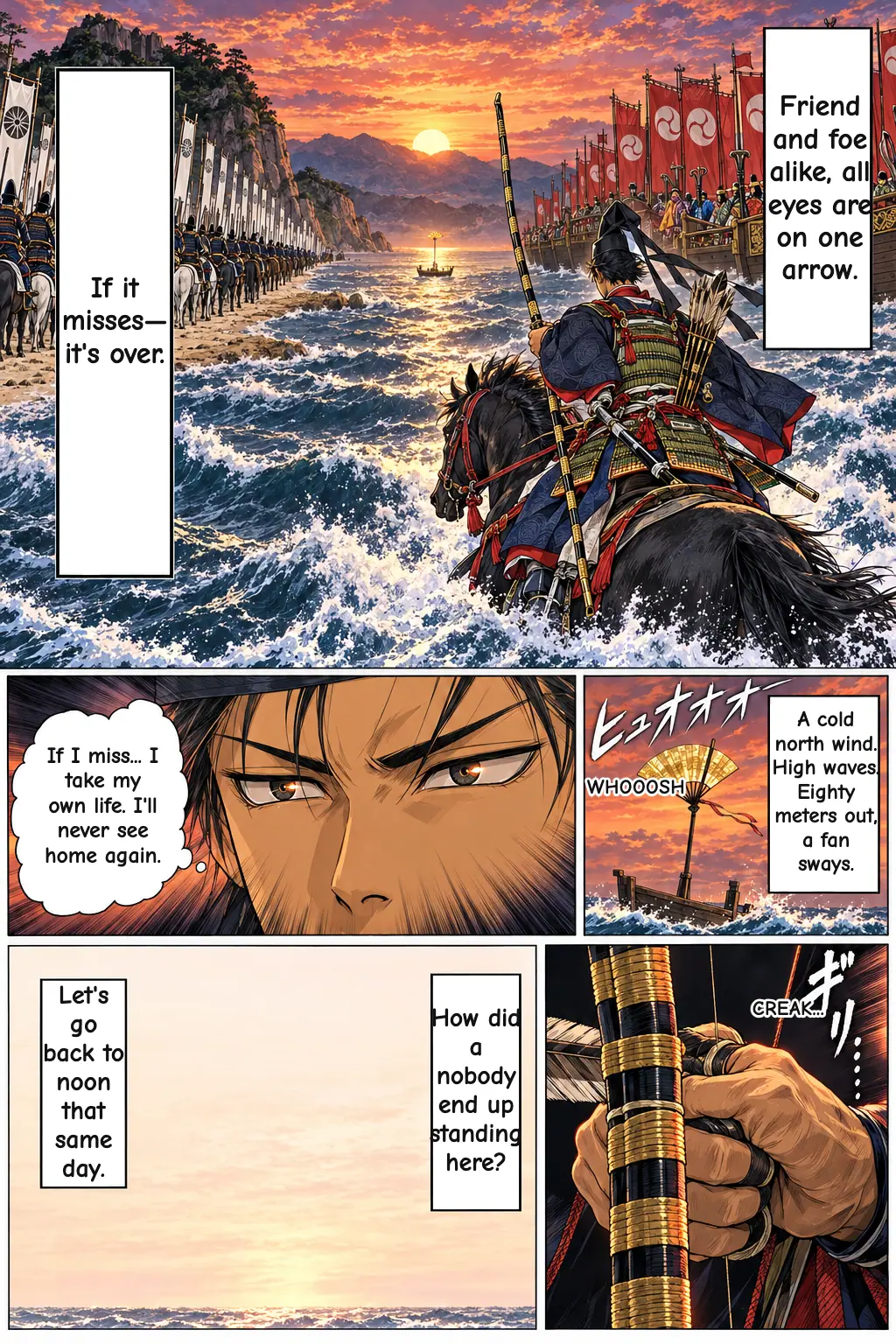
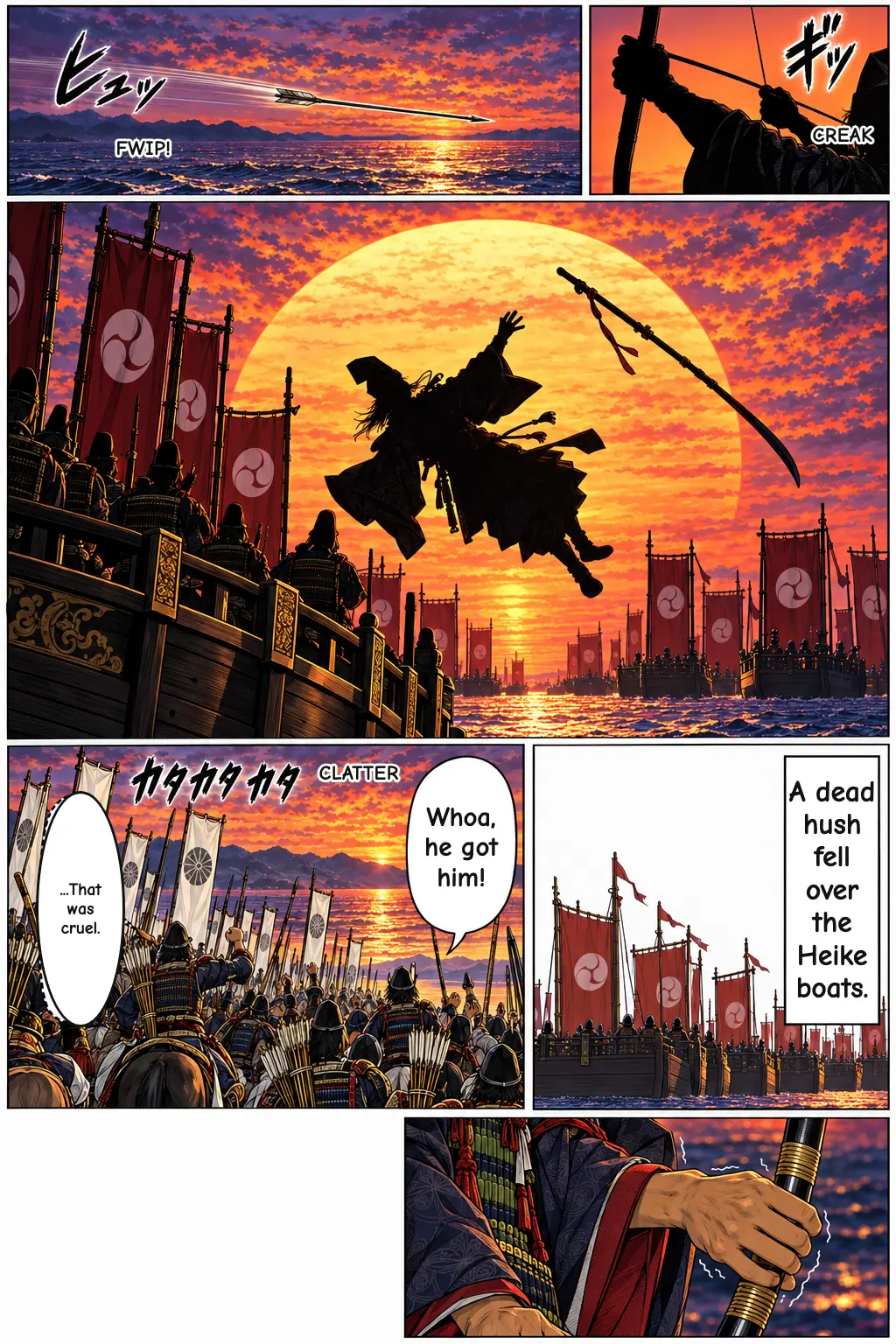
The Battle of Yashima. Satō no Tsuginobu dies taking an arrow meant for his lord, Minamoto no Yoshitsune. That evening, a Heike boat rows out with a crimson fan and a challenge. An unknown young archer, Nasu no Yoichi, swears to take his own life if he misses, and looses a single arrow while both armies watch. Then the cheering turns cruel. We learn why Yoshitsune risked his life for a dropped bow, and we follow the young archer into a long, lonely night.
Nasu no Yoichi and the Fan Target: The Battle of Yashima Explained
The Story in the Original Tale of the Heike
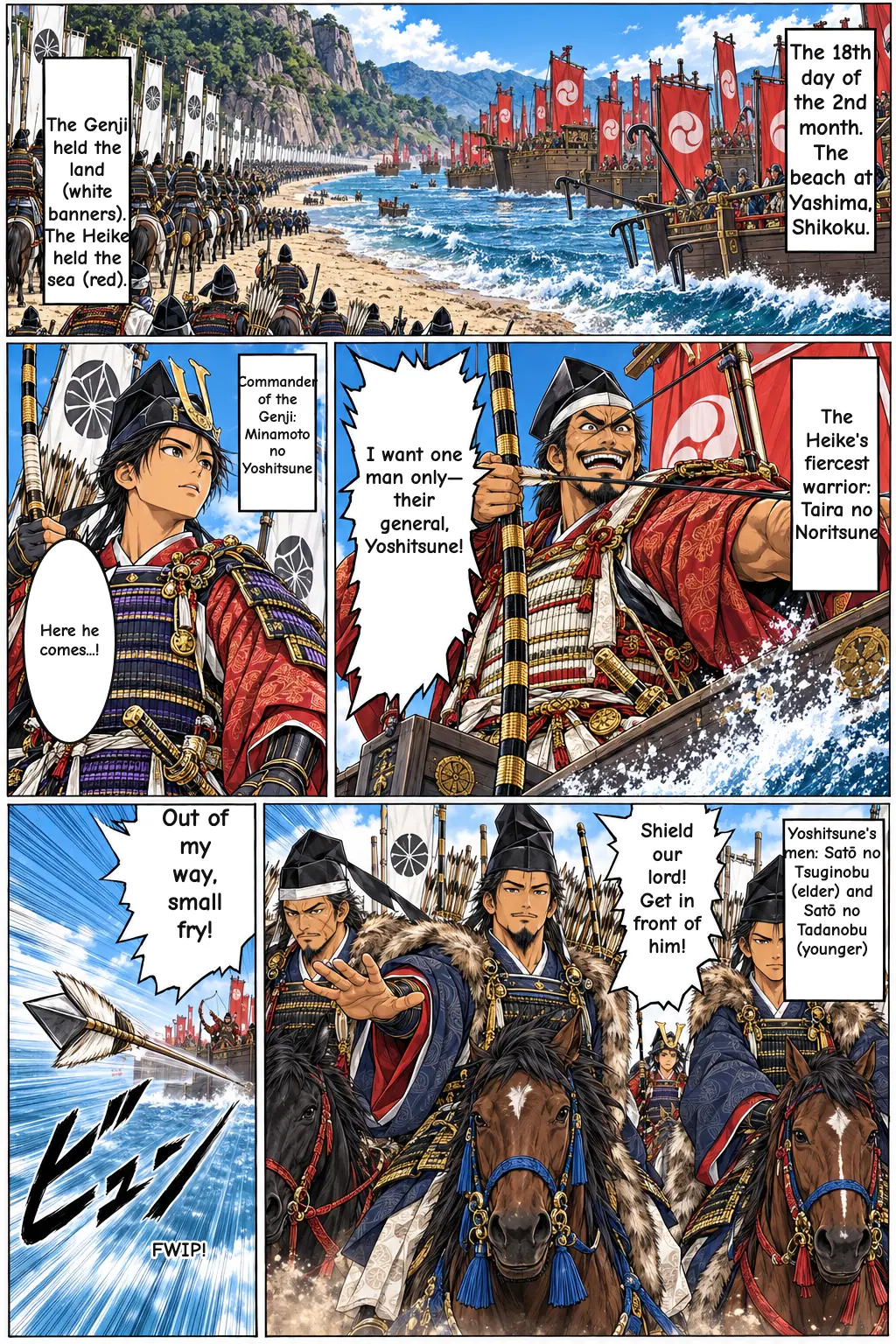
The Battle of Yashima took place in the second month of 1185, during the Genpei War between two warrior clans: the Minamoto (also called the Genji) and the Taira (the Heike). Book 11 of The Tale of the Heike tells it in three linked episodes. This article follows the Kakuichi version, the standard text recited by blind lute-playing storytellers, and notes where other versions or later traditions add details. At Yashima, on the coast of Shikoku, the Minamoto hold the beach while the Taira watch from their ships.
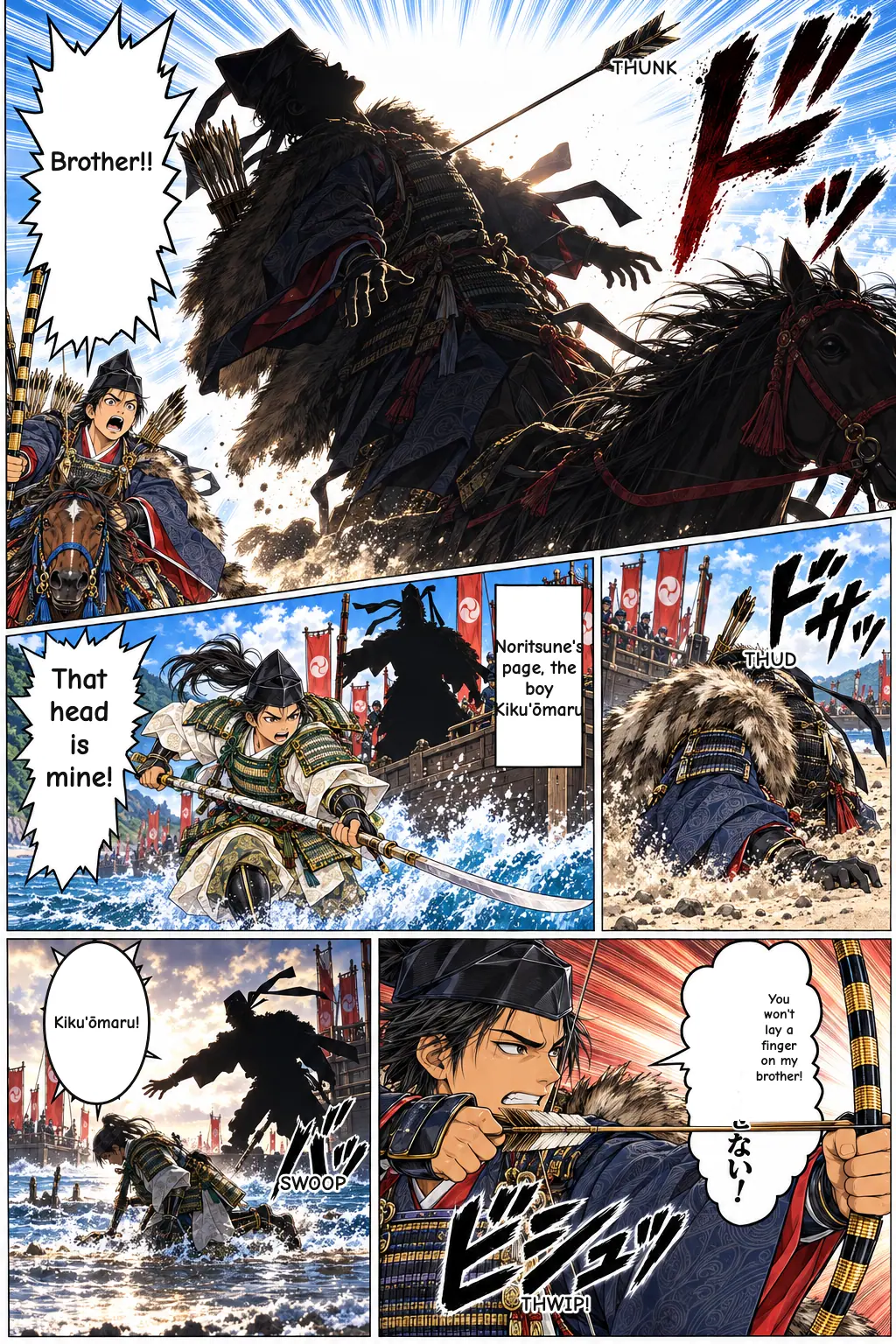
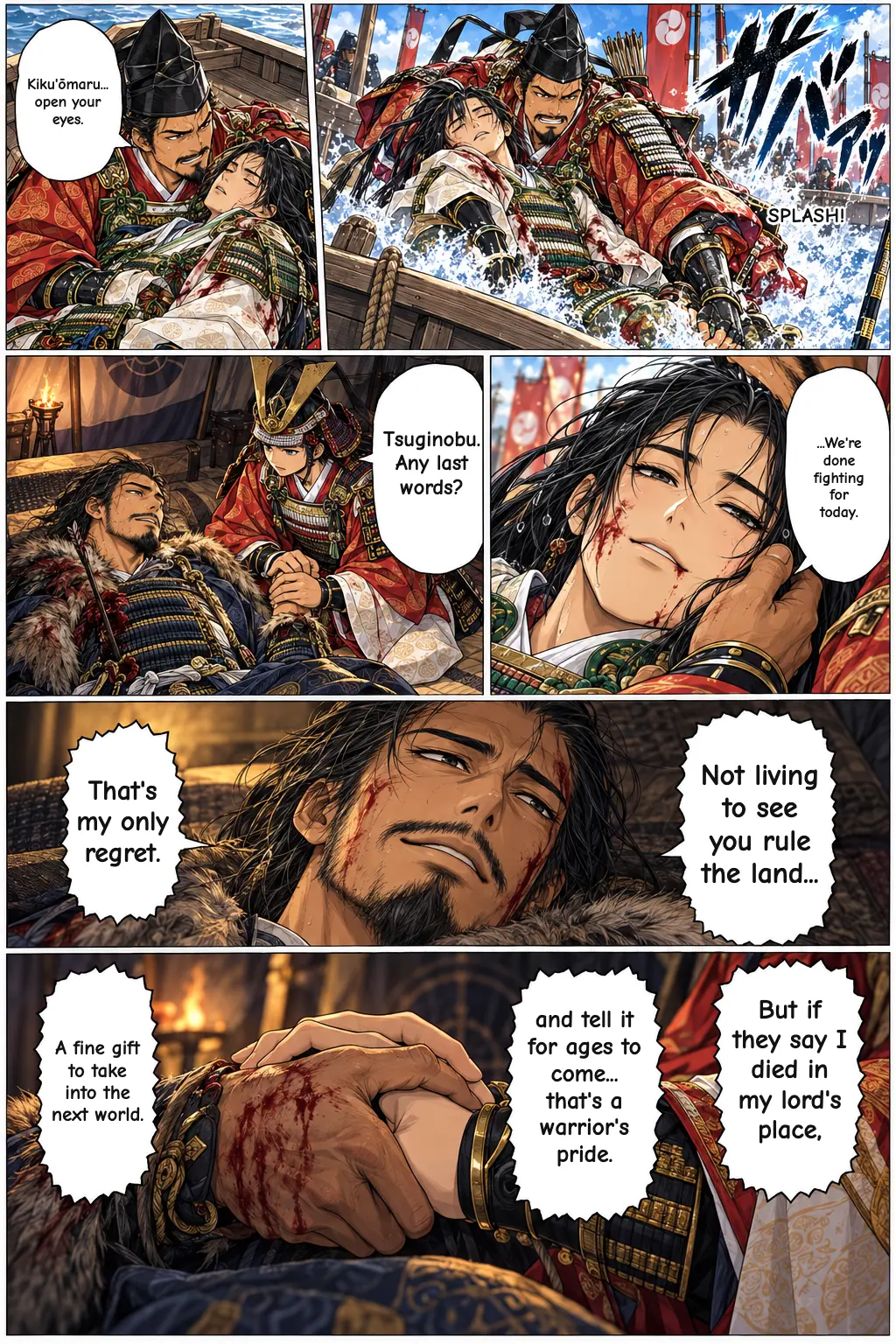
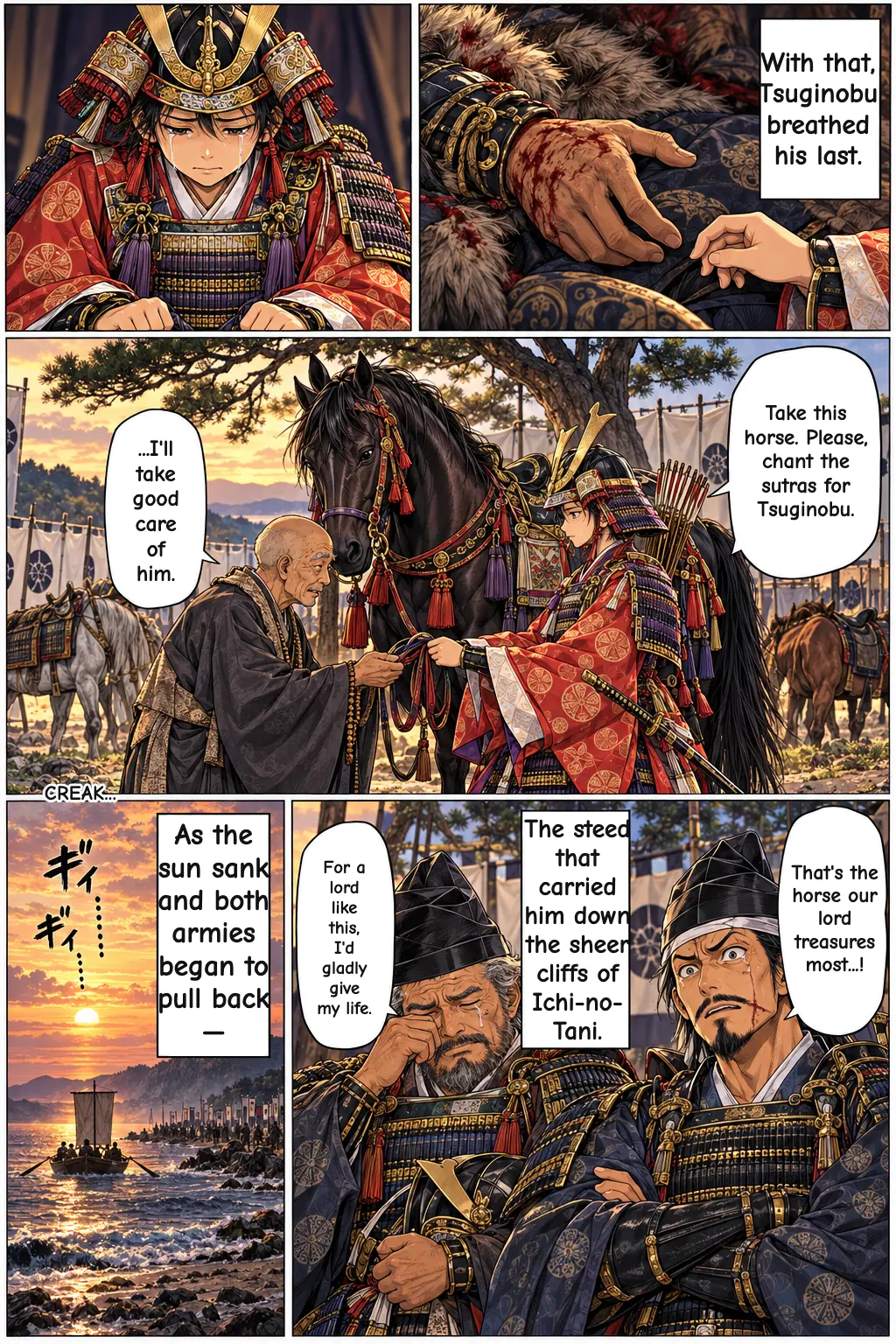
First comes a death. Taira no Noritsune, described as the strongest archer in the capital, tries to shoot the Minamoto commander, Minamoto no Yoshitsune. Yoshitsune's retainers line up their horses to shield him. The man at the front, Satō Tsuginobu, is shot through from the left shoulder to the right side. Noritsune's page, Kikuōmaru, runs out to take Tsuginobu's head, but Tsuginobu's younger brother Tadanobu shoots the page. Noritsune leaps down, throws the boy back onto the ship and saves the head from being taken, but Kikuōmaru dies of his wound, and his grieving master stops fighting for the day. Before he dies, Tsuginobu tells Yoshitsune that he is sorry not to see his lord rise in the world. Still, he says, being remembered for dying in his lord's place is the greatest honor he could ask for. Yoshitsune weeps. He asks a nearby monk to copy sutras for Tsuginobu and gives the monk his treasured black horse, Taifuguro.
The Fan, the Arrow, and the Cruel Second Shot
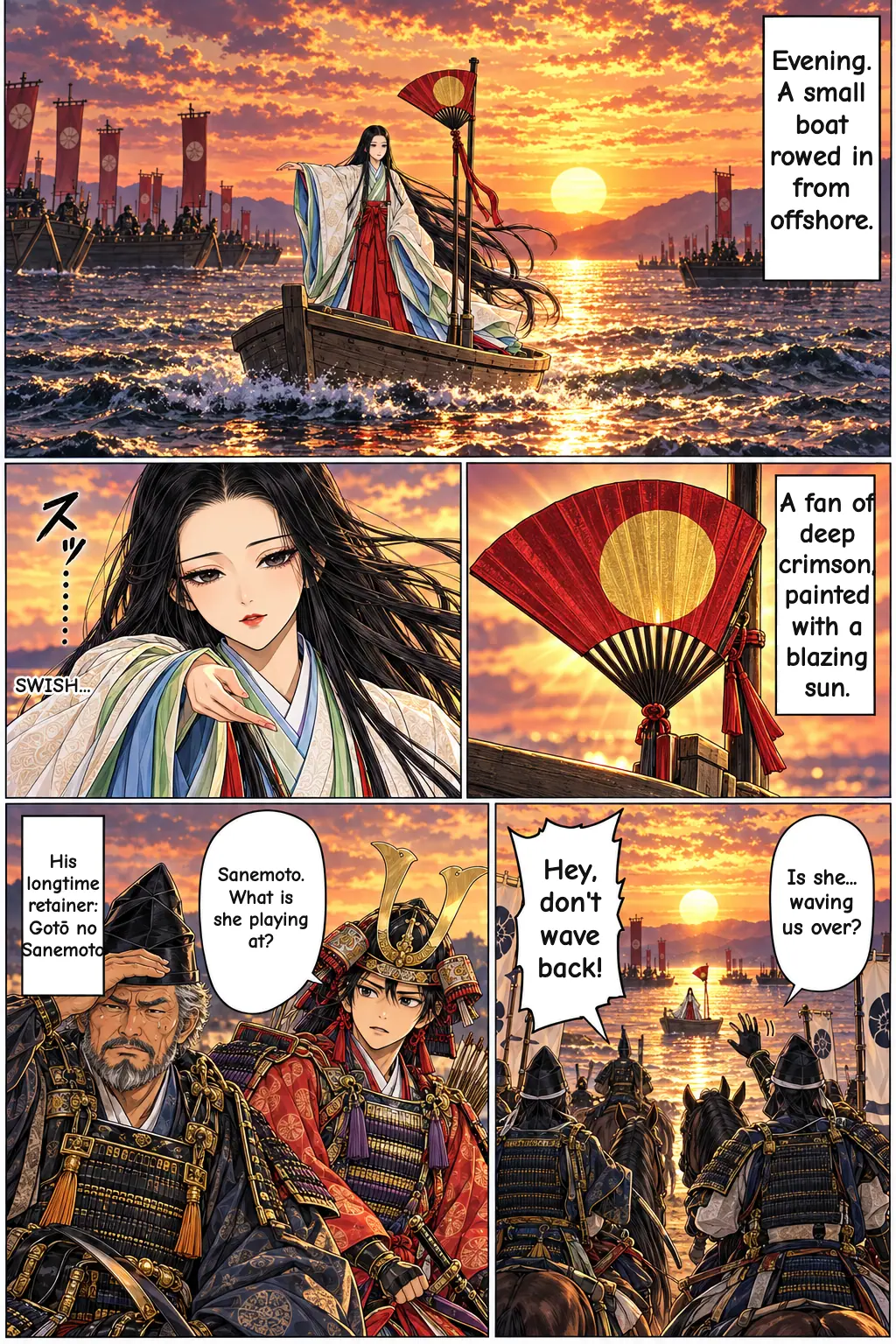
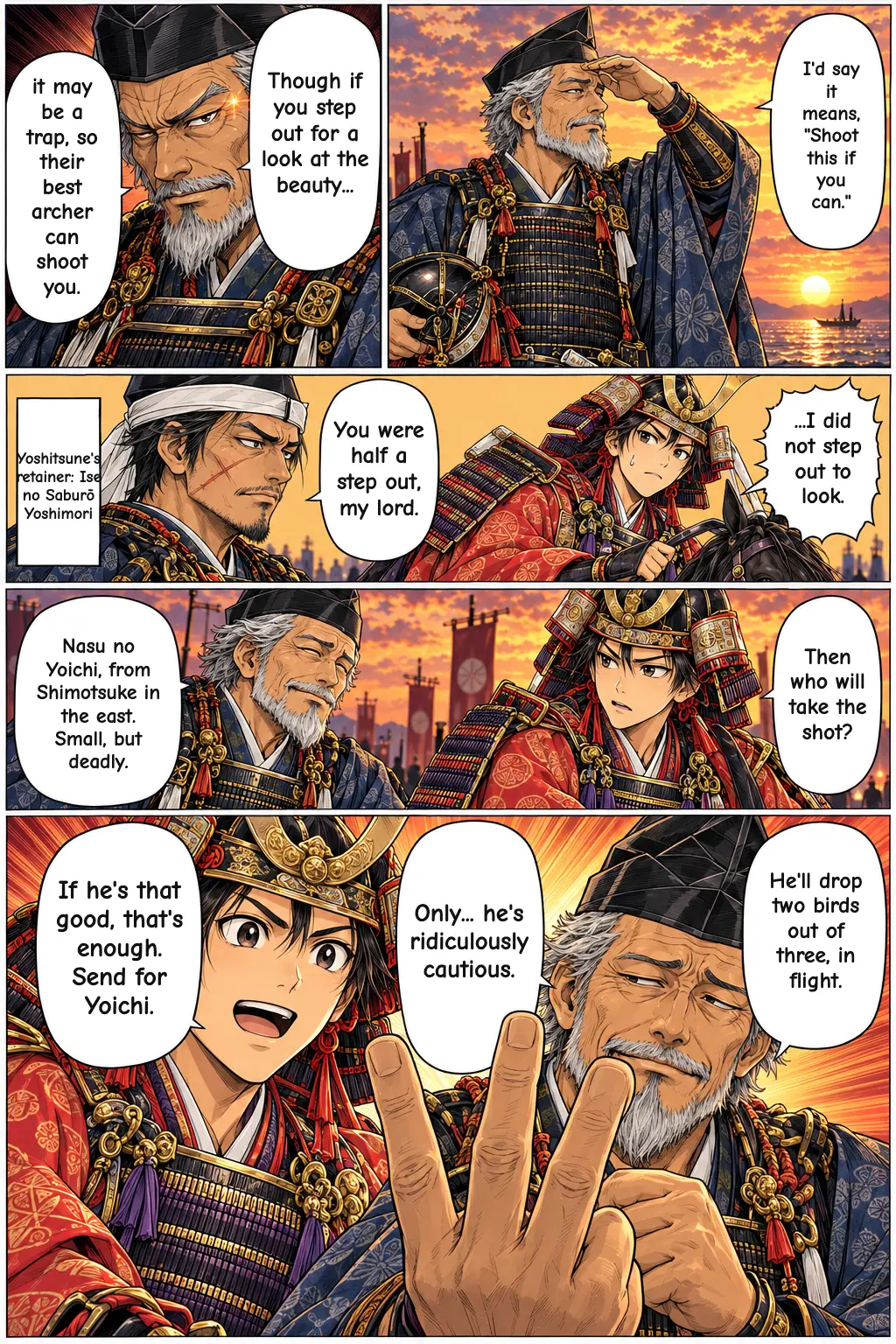
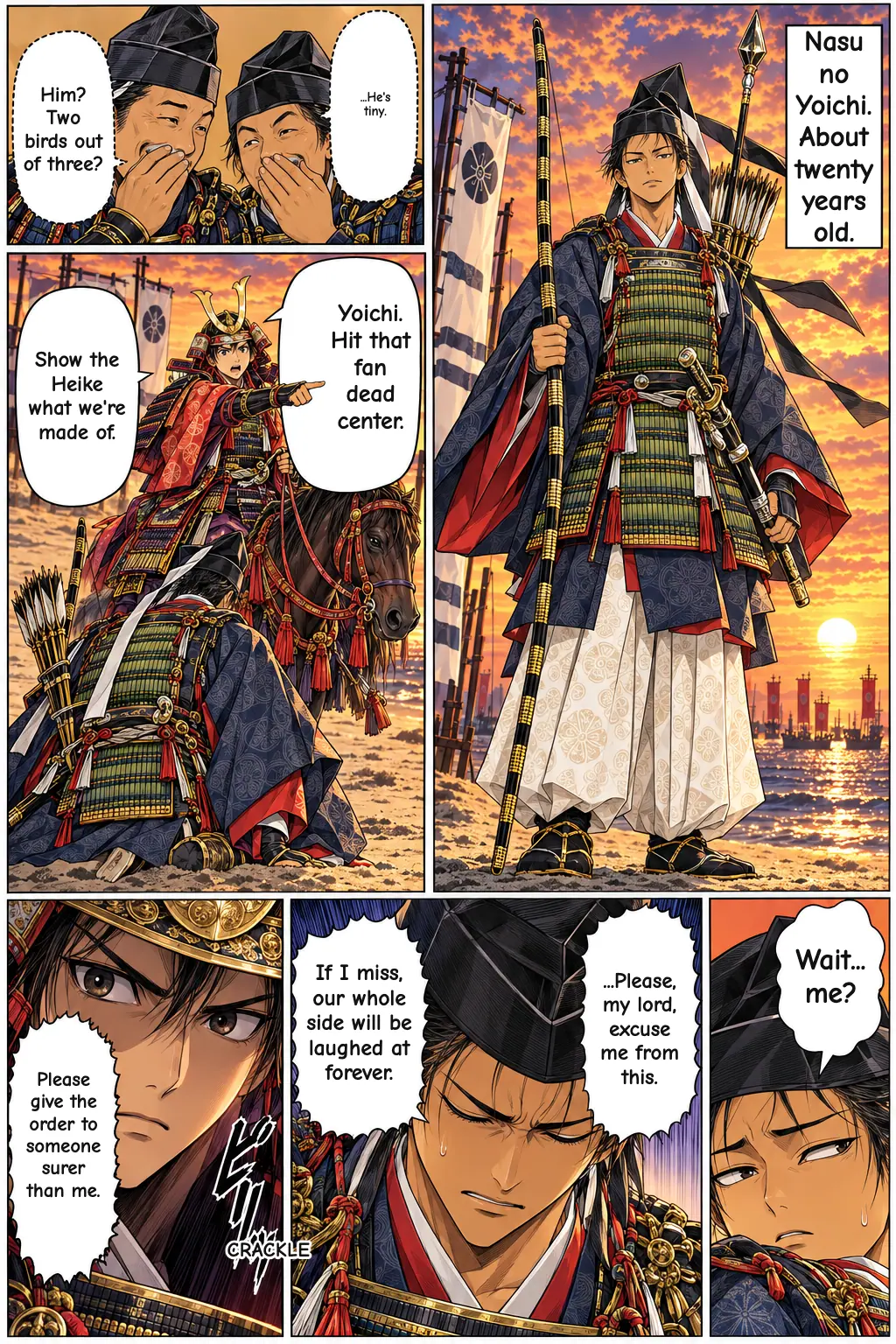
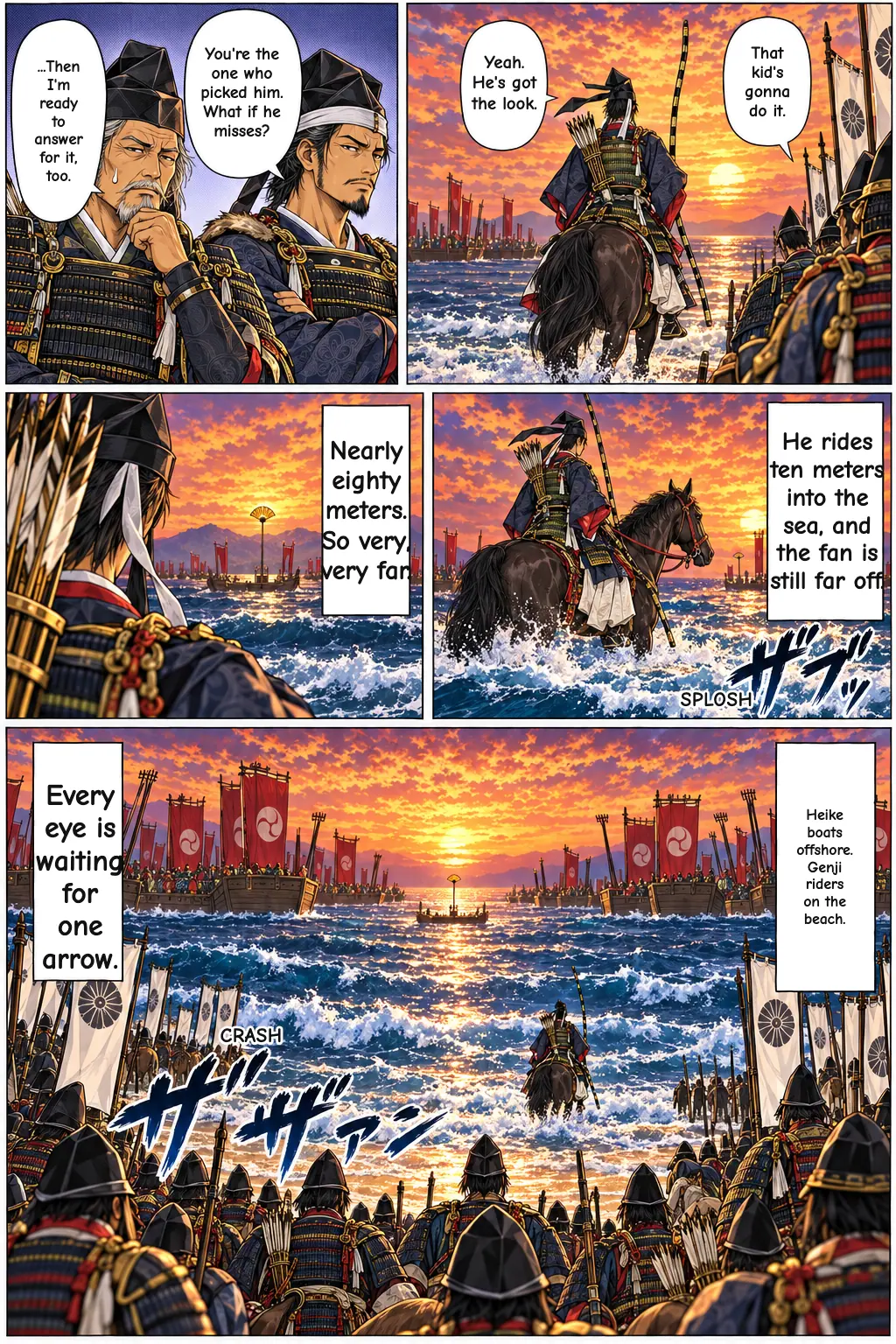
Near dusk on the eighteenth day of the month, a small Taira boat rows toward shore. A beautiful lady of about eighteen or nineteen sets up a pole with a fan on it: solid crimson, with a sun disc. She beckons to the shore. Gotō Sanemoto, an experienced warrior, reads it as a dare to shoot the fan. He adds that it may also be a trap to lure the commander into range. He recommends Nasu no Yoichi Munetaka, a young man of about twenty from Shimotsuke Province. Yoichi is small but can bring down two out of three birds in flight.
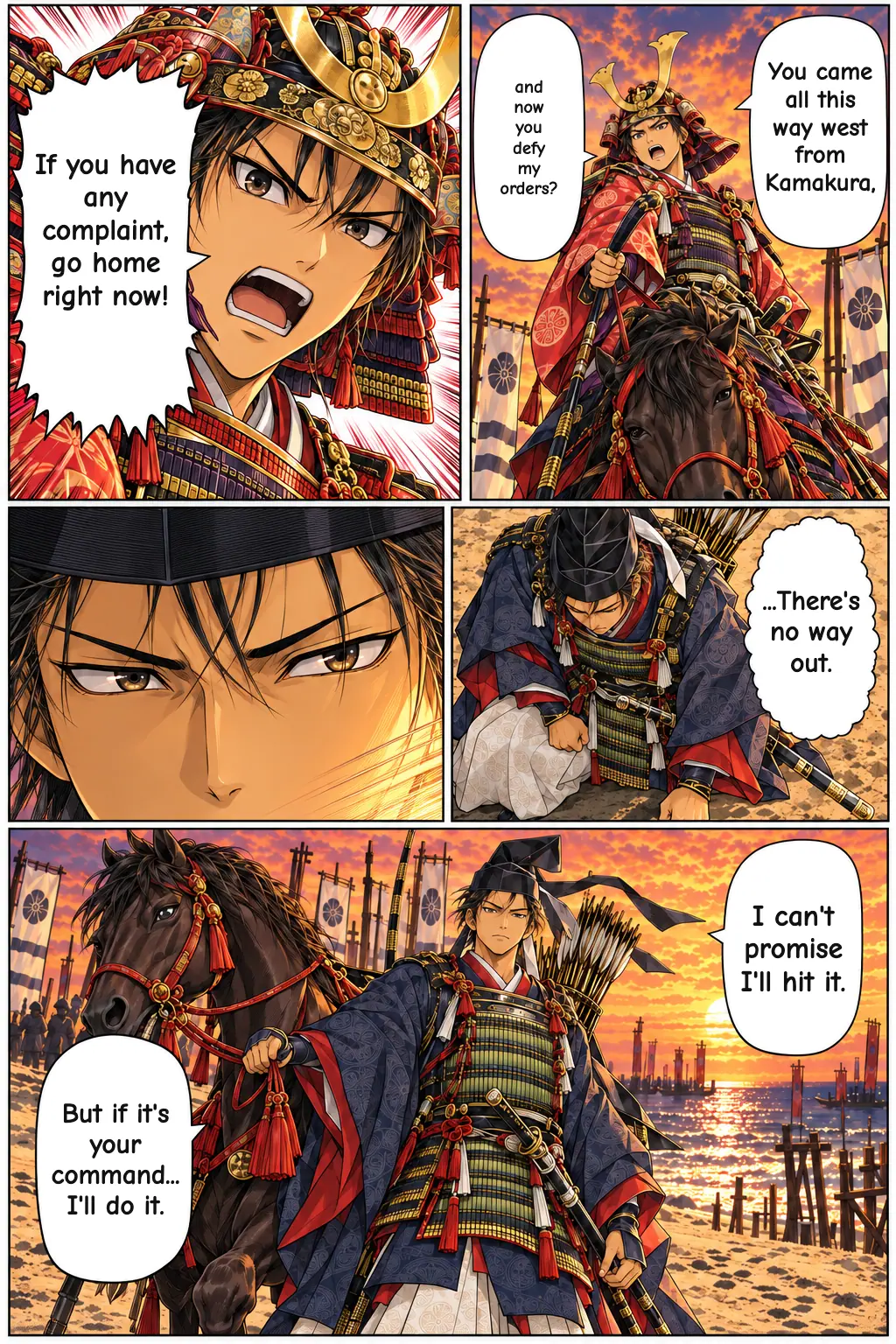
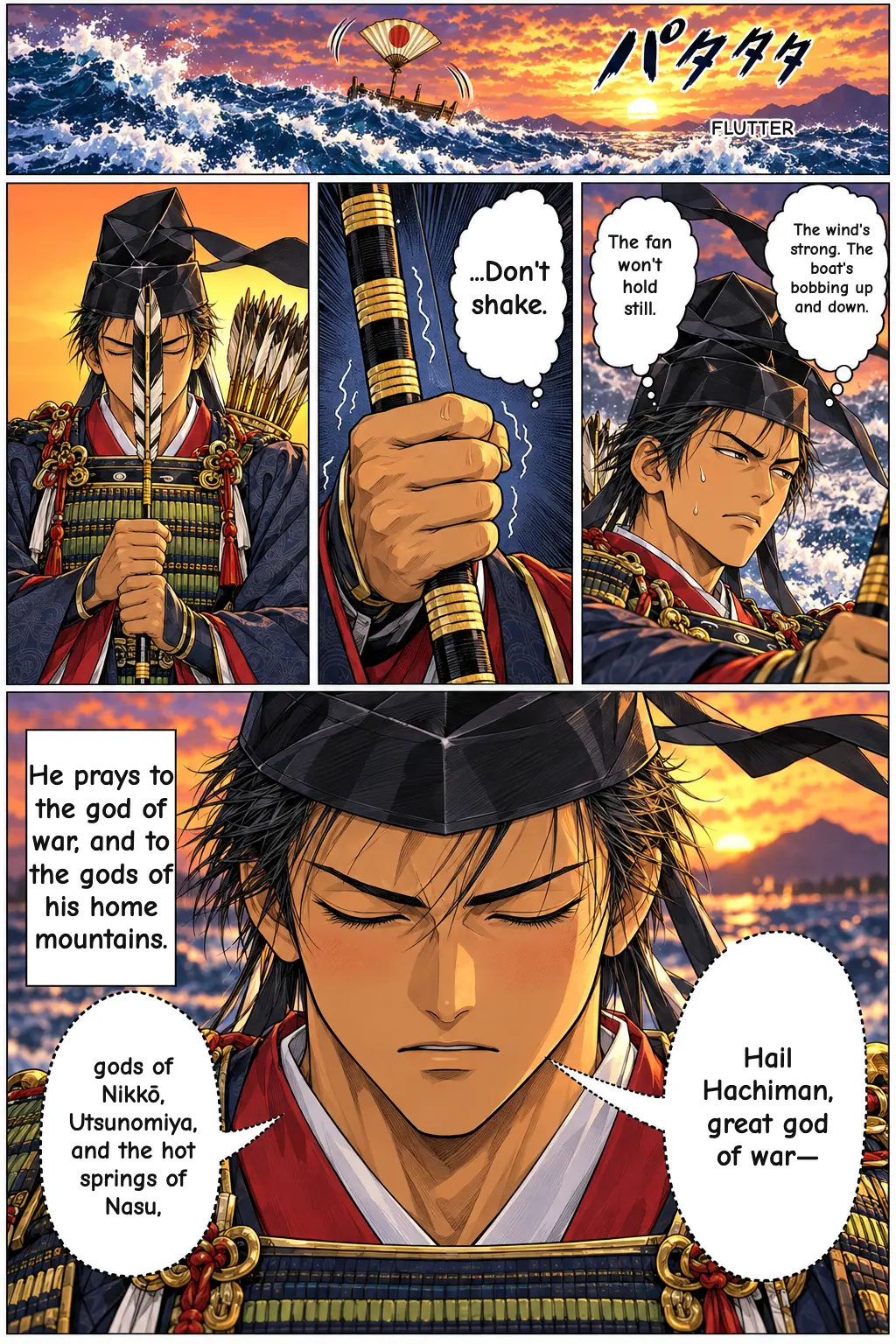
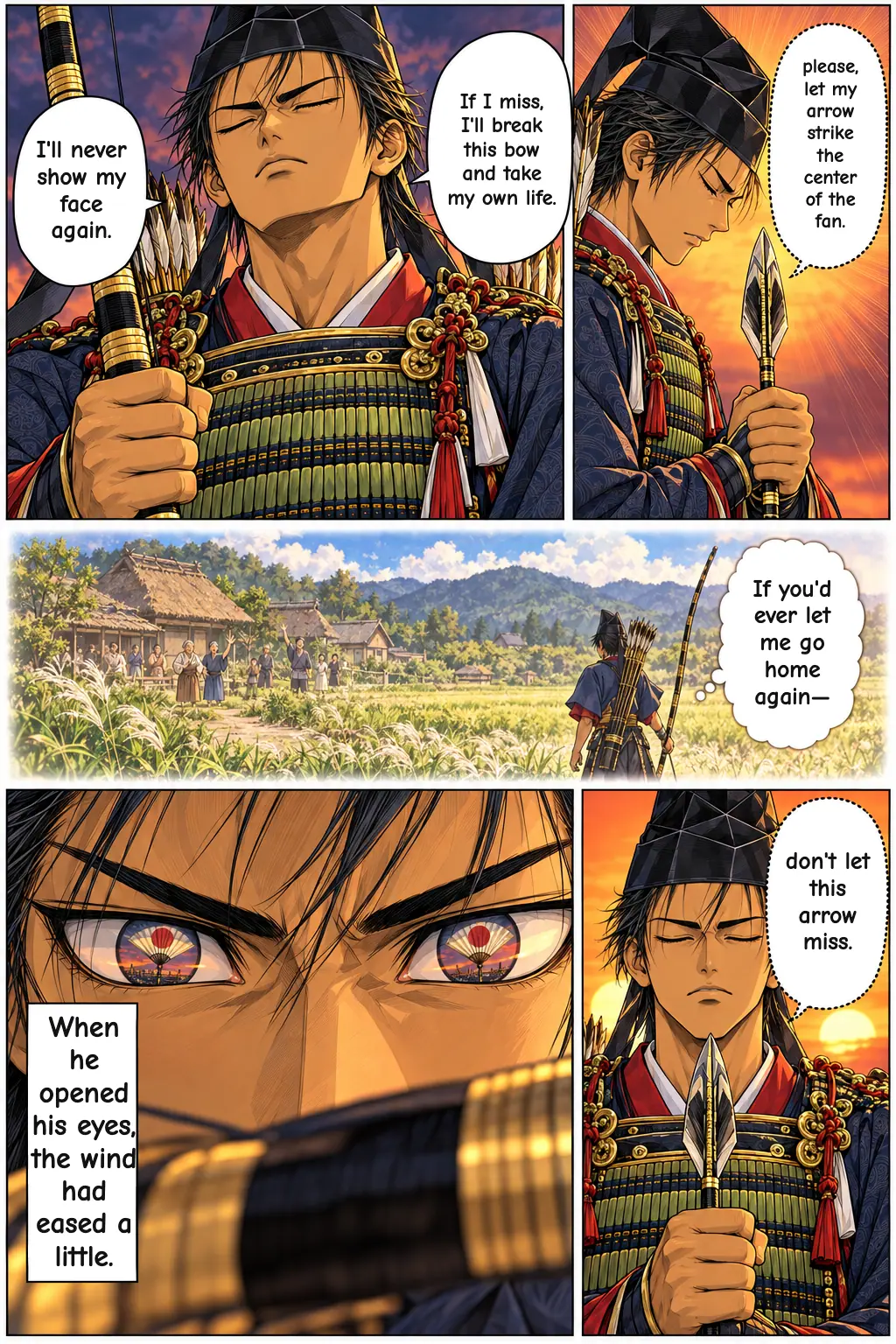
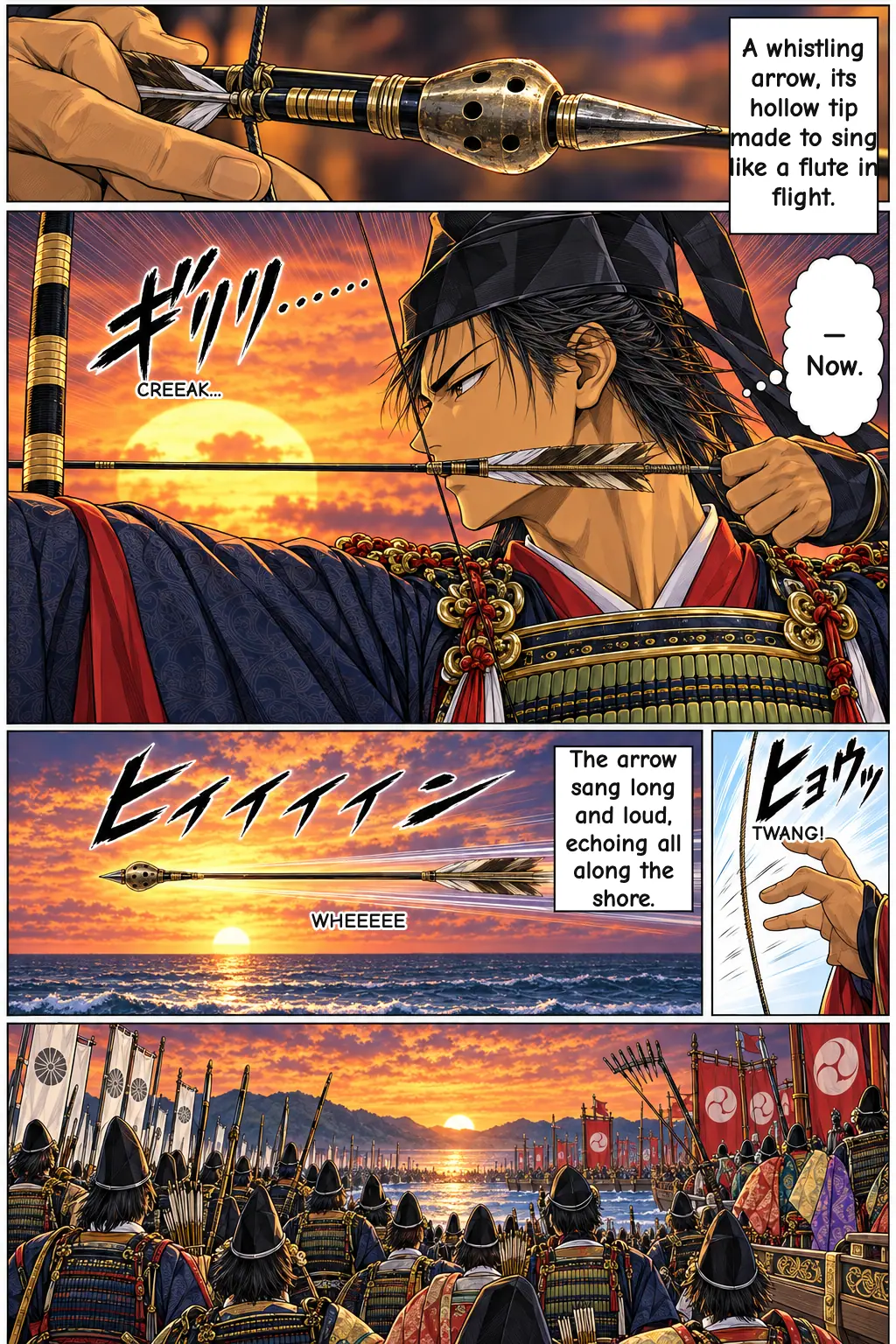
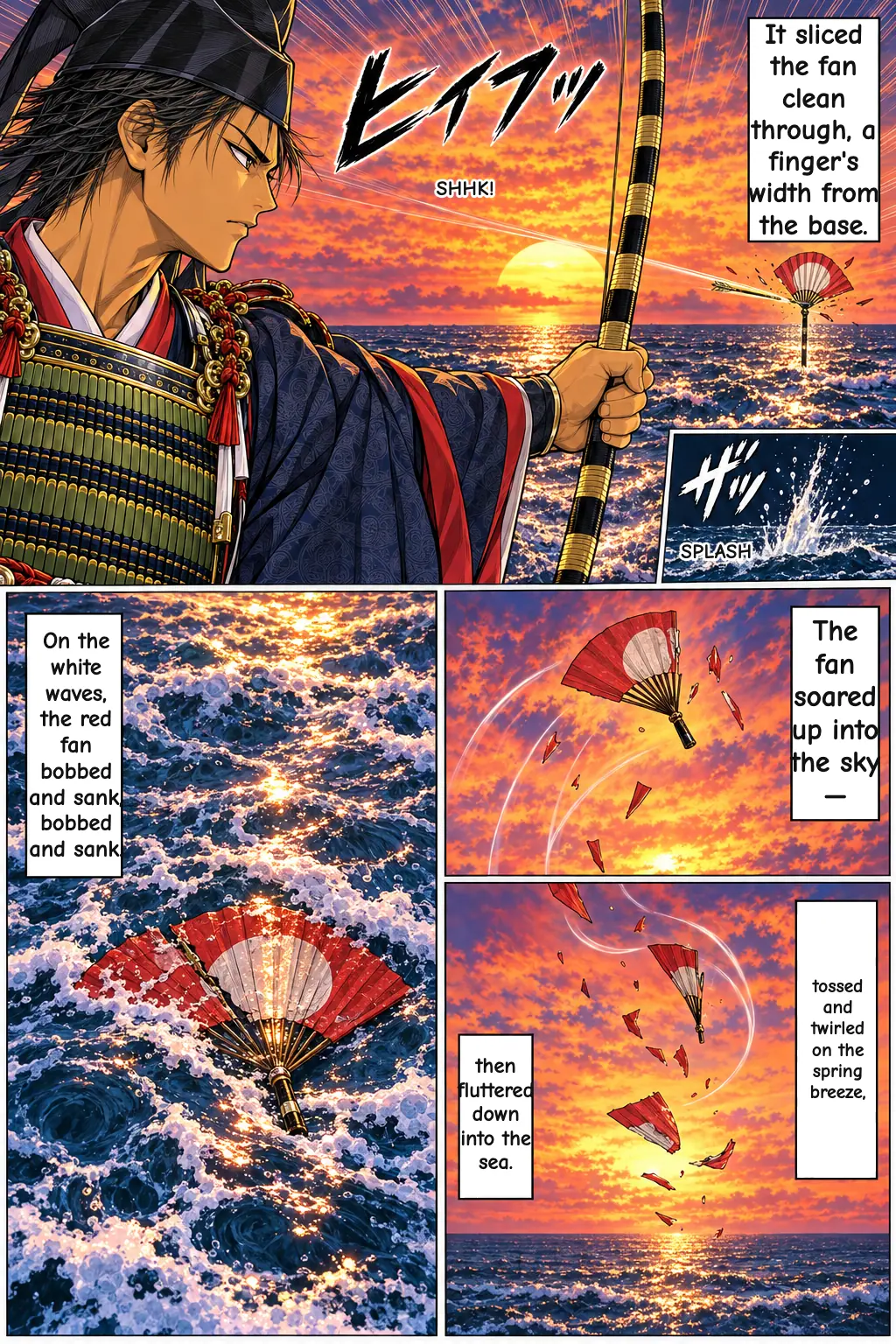
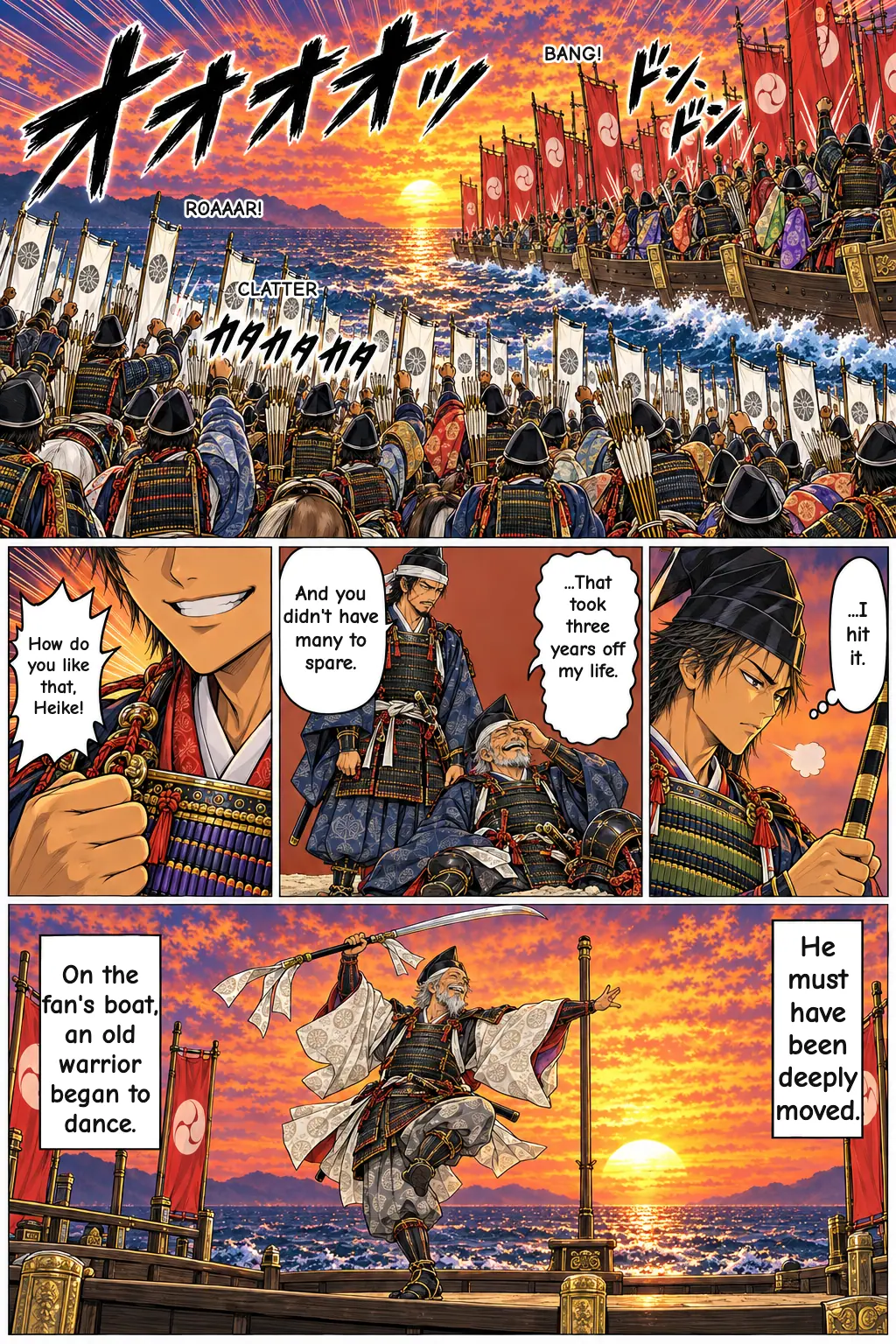
Yoichi first refuses, fearing that a miss would shame the whole army. Yoshitsune angrily tells him that anyone who disobeys should go straight back to Kamakura, so Yoichi accepts. He rides into the surf, but the fan is still far off. A north wind is blowing, the waves are high, and the boat pitches up and down. Both armies watch. Yoichi closes his eyes and prays to Hachiman, the god of war, and to the gods of his home province. He vows to break his bow and kill himself if he misses. When he opens his eyes, the wind has eased. His whistling arrow sings across the bay and cuts the fan just above its rivet. The fan flutters up, then falls to the waves, glowing red in the evening sun. The Taira beat the sides of their boats and the Minamoto rattle their quivers in praise.
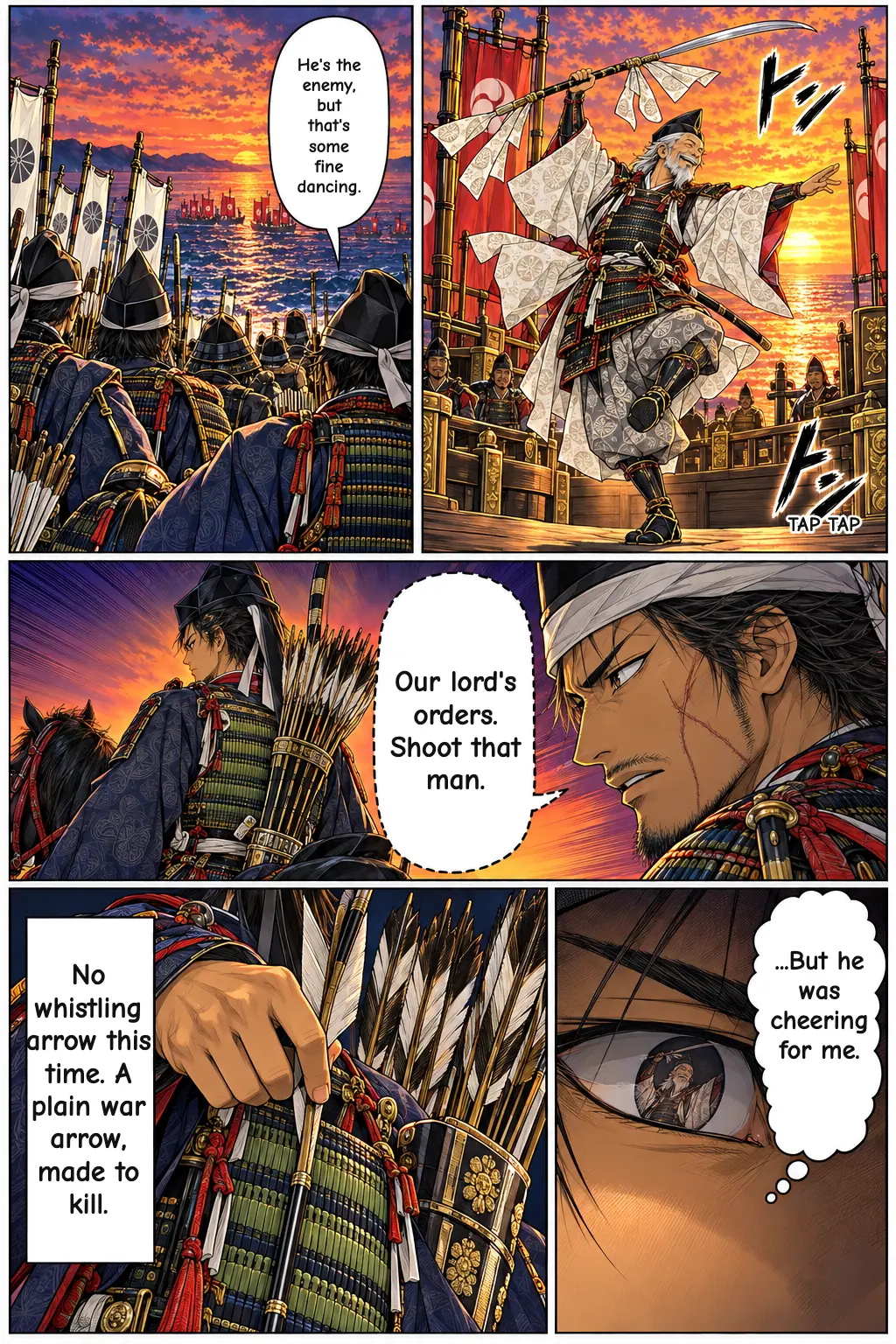
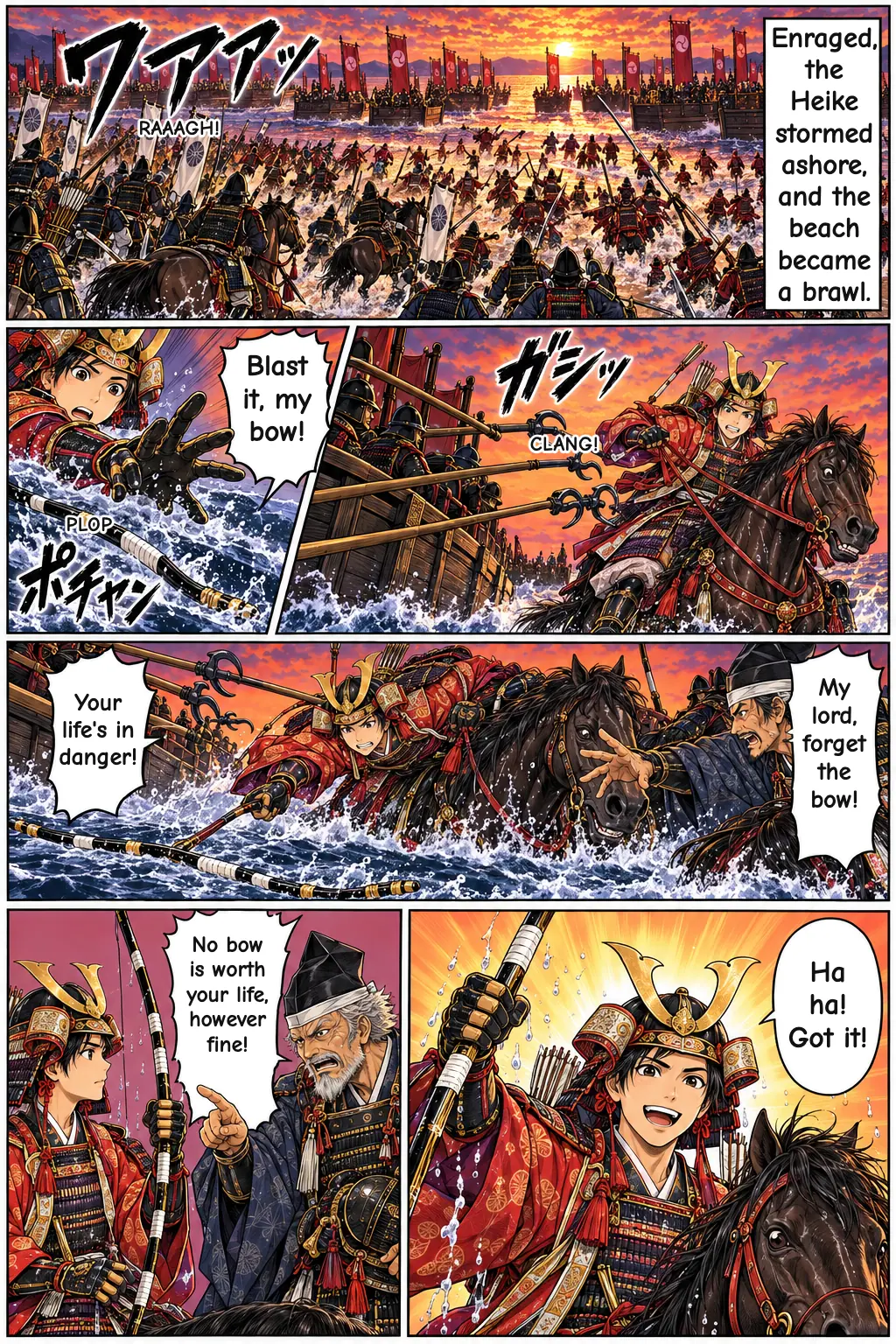
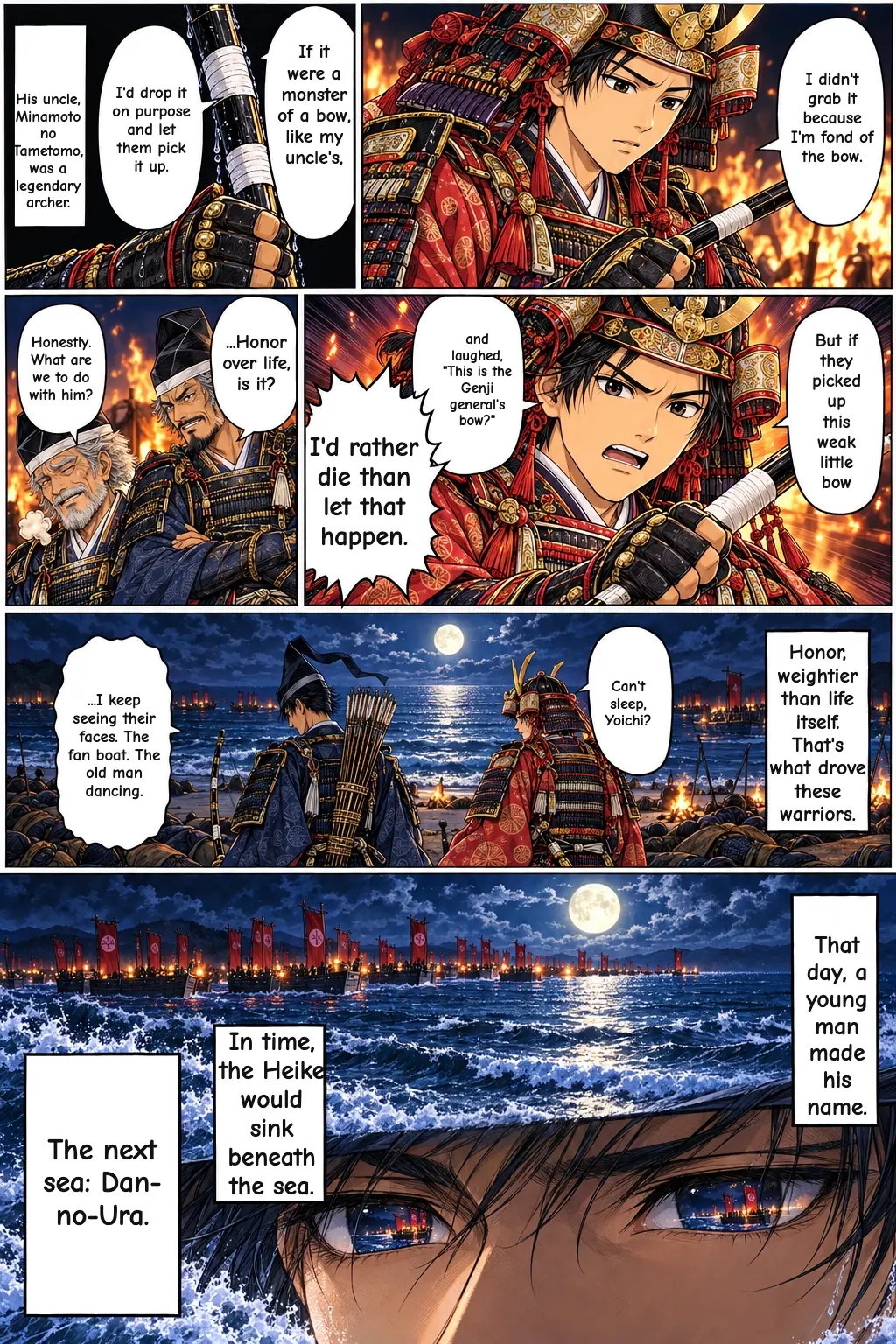
Then a Taira warrior of about fifty begins to dance where the fan had stood, perhaps out of sheer admiration. On orders from the Minamoto side, Yoichi shoots him down too. Some cry "Well shot!" while others say "How heartless." The furious Taira come ashore. Their fierce warrior Kagekiyo tears the neck guard off Mioya no Jūrō's helmet with his bare hands. In the confused fighting, Yoshitsune drops his bow into the sea and risks his life to rake it back. He later explains that his bow was weak. If the enemy had picked it up, they would have mocked the Minamoto commander.
What the Episode Means
The Heike is a war tale, not a myth about gods, but it has shaped Japanese ideas about the samurai much as myths shape other cultures. The Yashima chapters show the warrior's code from several sides. Tsuginobu treats dying for his lord as an honor that will live on in stories. Yoichi's prayer shows how much hangs on one man's public performance. Yoshitsune's dropped bow shows that a commander's reputation could matter more to him than his own life.
The tale is also deeply aware of cost. A moment of shared wonder between enemies is followed at once by a killing that even the narrator does not fully praise. Noritsune grieves for his page, and Yoshitsune grieves for his retainer. This mix of glory and sorrow fits the Buddhist theme that runs through the whole Heike: everything passes, and the proud will fall.
What the Manga Changes
The original text describes actions and speech, not inner thoughts. The manga adds monologues and facial expressions for Yoichi, Tsuginobu, the lady with the fan and the dancing warrior. The original says nothing about what Yoichi felt when he shot the old man. His long, lonely night afterward is the manga's interpretation.
Other details are also creative choices. These include the lady's motives, the rowers in her boat, the size of the fan and the color of its sun disc. The disc is often pictured as gold, but the text does not give its color. The manga also invents the dancing warrior's identity and reason for dancing, and decides who says "Well shot" and who says "How heartless." To save space, it shortens the battle of insults and the Kikuōmaru episode at the start, but it keeps the meaning of Tsuginobu's last words.
Where to Read It
If you want to see the fan fall and feel the silence that follows, Episode 12 of THE TALE OF THE HEIKE: The Samurai War of Genpei tells this story in full on Manga Portal. Every episode is free to read with no sign-up, so you can start here or go back to the beginning of the Genpei War.
Characters in this episode
Nasu no Yoichi
A young archer from Shimotsuke Province, chosen to shoot the fan, who vows to kill himself if he misses.
Minamoto no Yoshitsune
The Minamoto commander, loved by his men, who weeps for Tsuginobu and risks his life to recover his dropped bow.
Satō Tsuginobu
Yoshitsune's retainer, who takes the arrow meant for his lord and dies proud of his sacrifice.
Taira no Noritsune
A powerful Taira archer who aims at Yoshitsune and grieves deeply for his young page, Kikuōmaru.
Gotō Sanemoto
A veteran warrior who reads the fan as a challenge and possible trap, and recommends Yoichi.
The Lady with the Fan
An unnamed young Taira lady who raises the crimson fan from a small boat and beckons to the shore.
FAQ
Who was Nasu no Yoichi?
In The Tale of the Heike, he is a young archer of about twenty from Shimotsuke Province (modern Tochigi). He is famous for shooting a fan off a pole on a rocking boat at the Battle of Yashima in 1185. Few reliable records outside the Heike and later tradition mention him, so historians treat the details with caution.
Why did the Heike put a fan on a boat at Yashima?
The tale does not explain it directly. In the story, Gotō Sanemoto reads it as a dare for the Minamoto to shoot it. He warns that it might also be a trap to draw Yoshitsune into arrow range.
Why did Nasu no Yoichi shoot the dancing warrior?
The text says he did it on orders from the Minamoto side after an older Taira warrior began dancing where the fan had been. It does not say what Yoichi felt, and the reaction was mixed: some praised the shot, while others called it heartless.
Why did Yoshitsune risk his life for a dropped bow?
He explained that his bow was weak. If the enemy had picked it up, they would have mocked the Minamoto commander. Protecting his reputation as a general mattered more to him than the danger.
How did Satō Tsuginobu die?
He blocked an arrow that Taira no Noritsune aimed at Yoshitsune and was shot through the body. Before dying, he said that being remembered for dying in his lord's place was a great honor.