Episode 11Under the Helmet, a Boy His Son's AgeThe Death of Atsumori
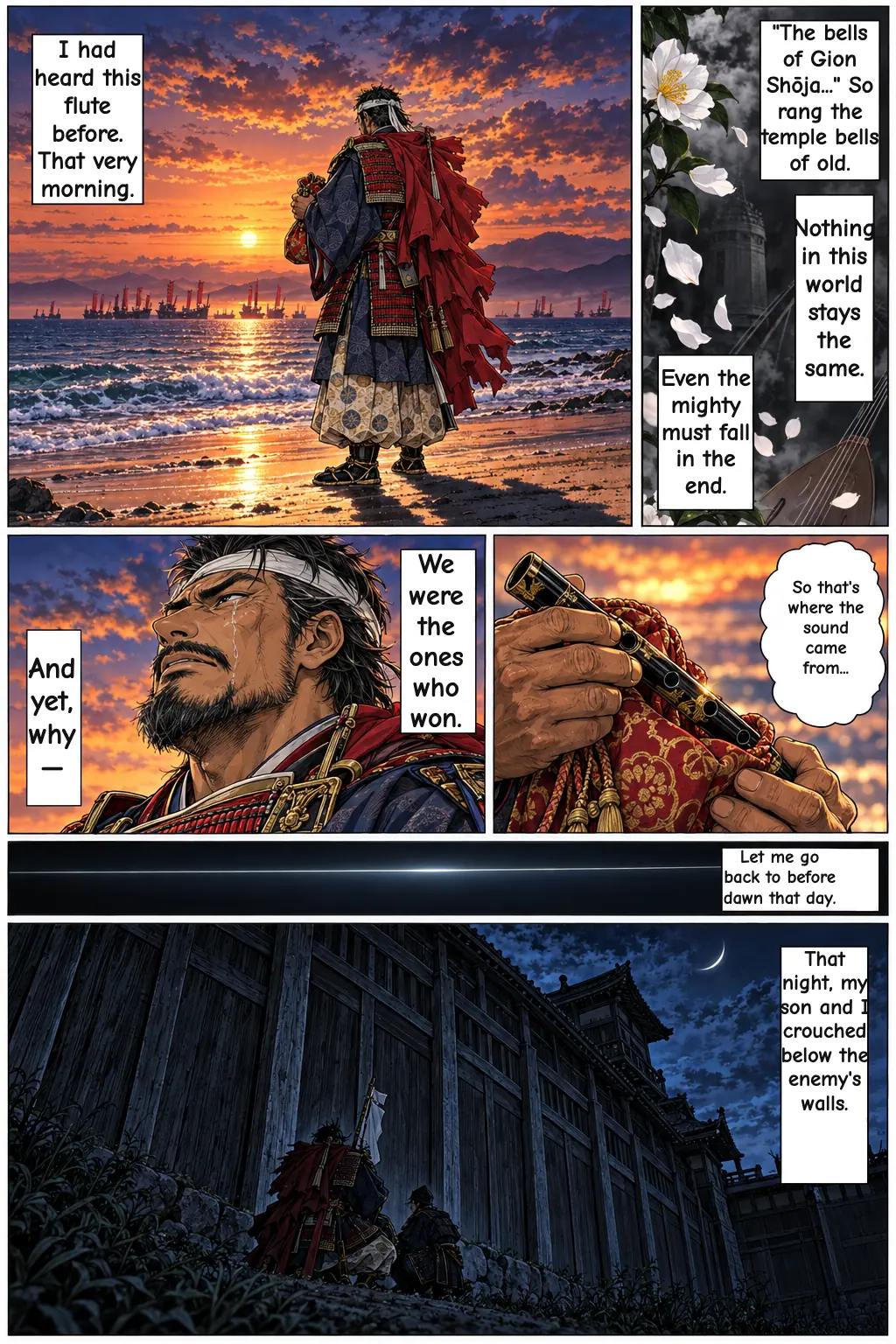
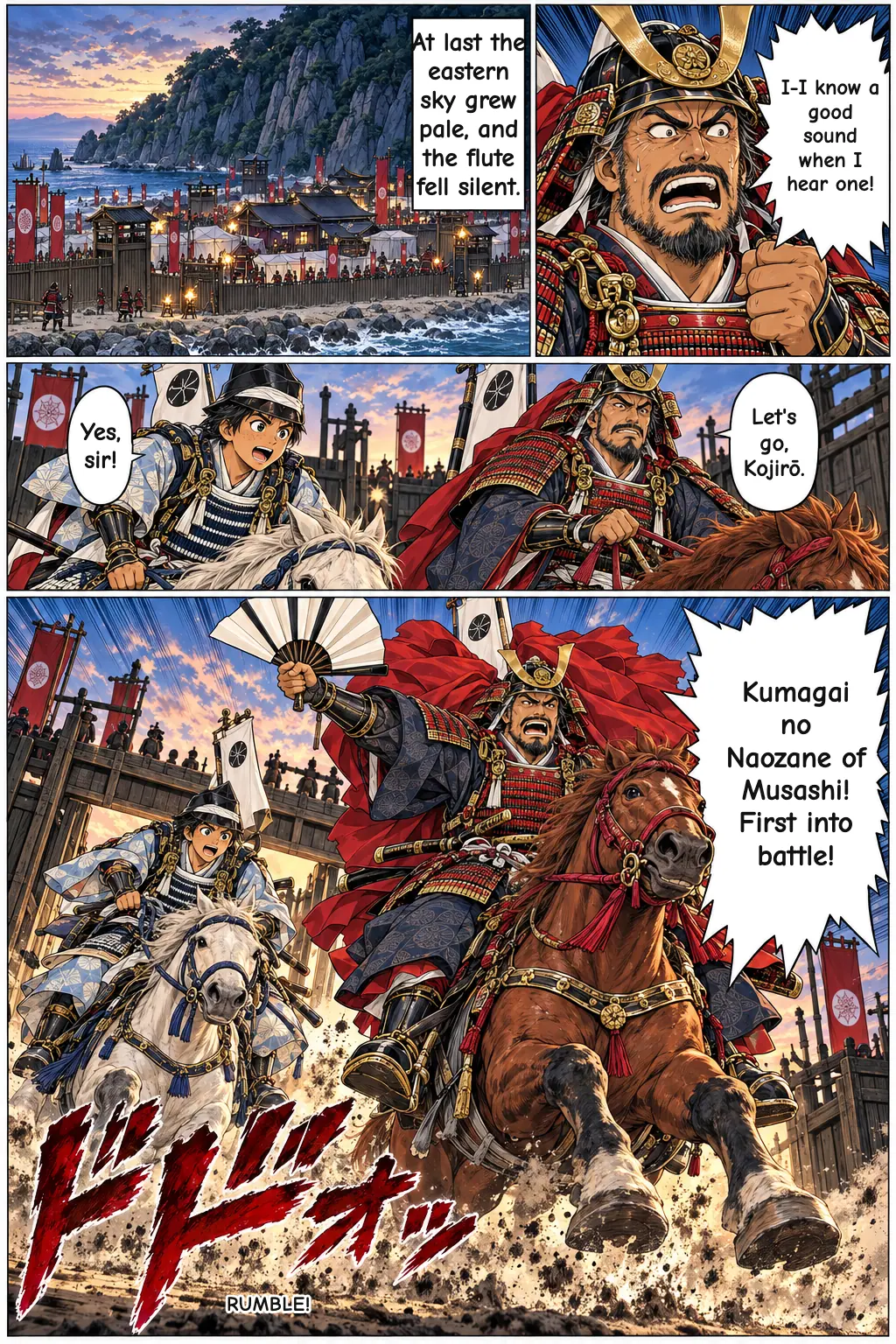
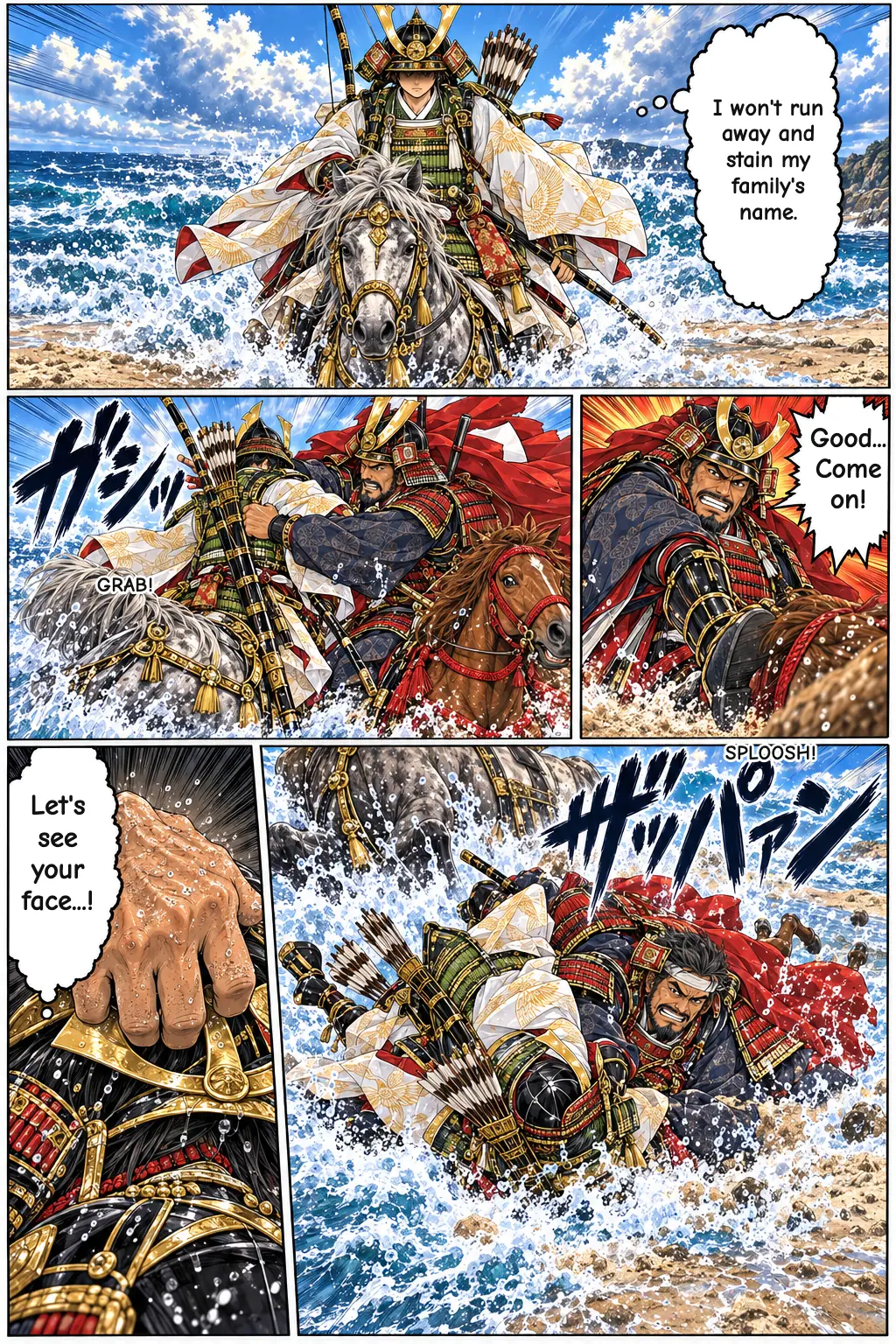
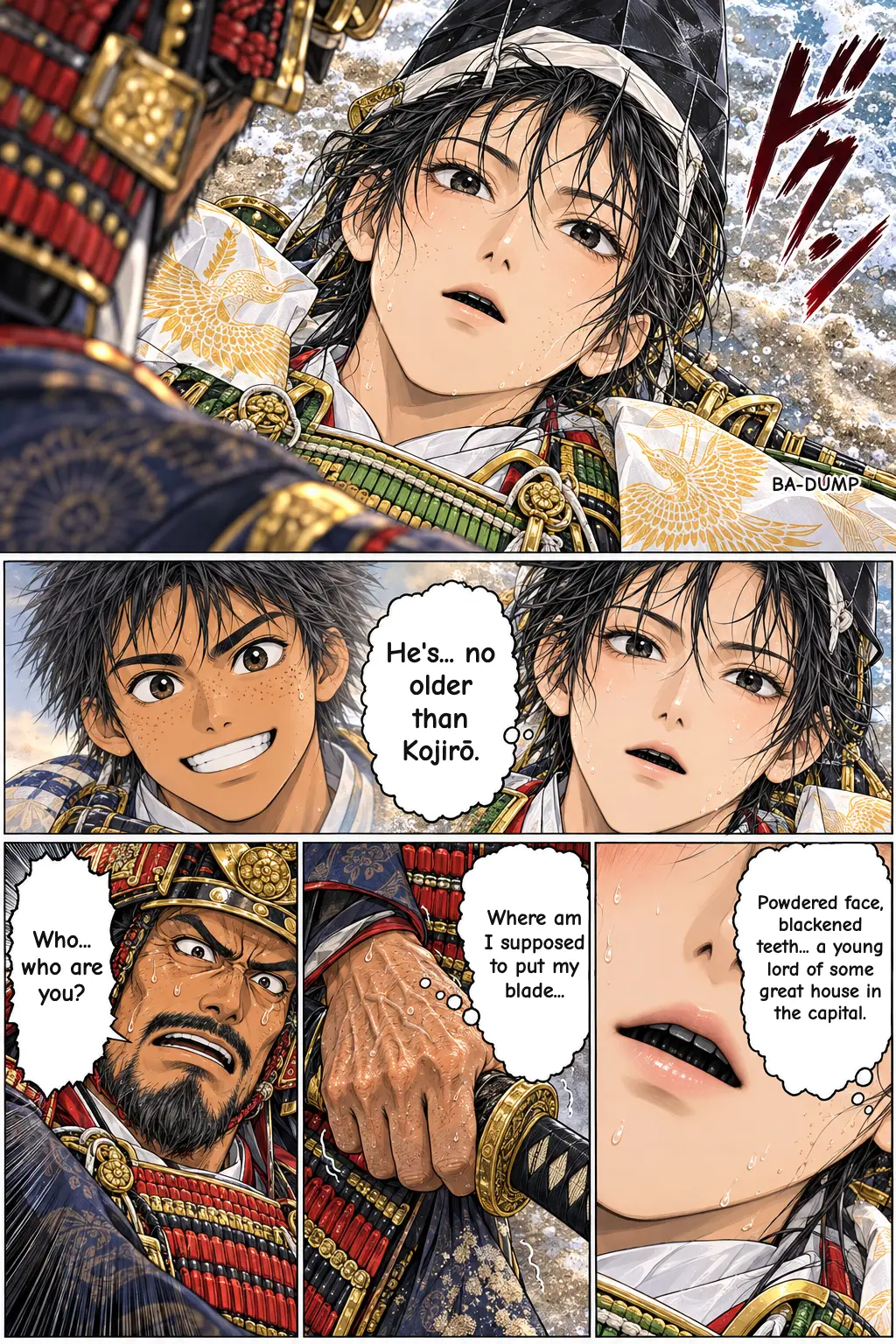
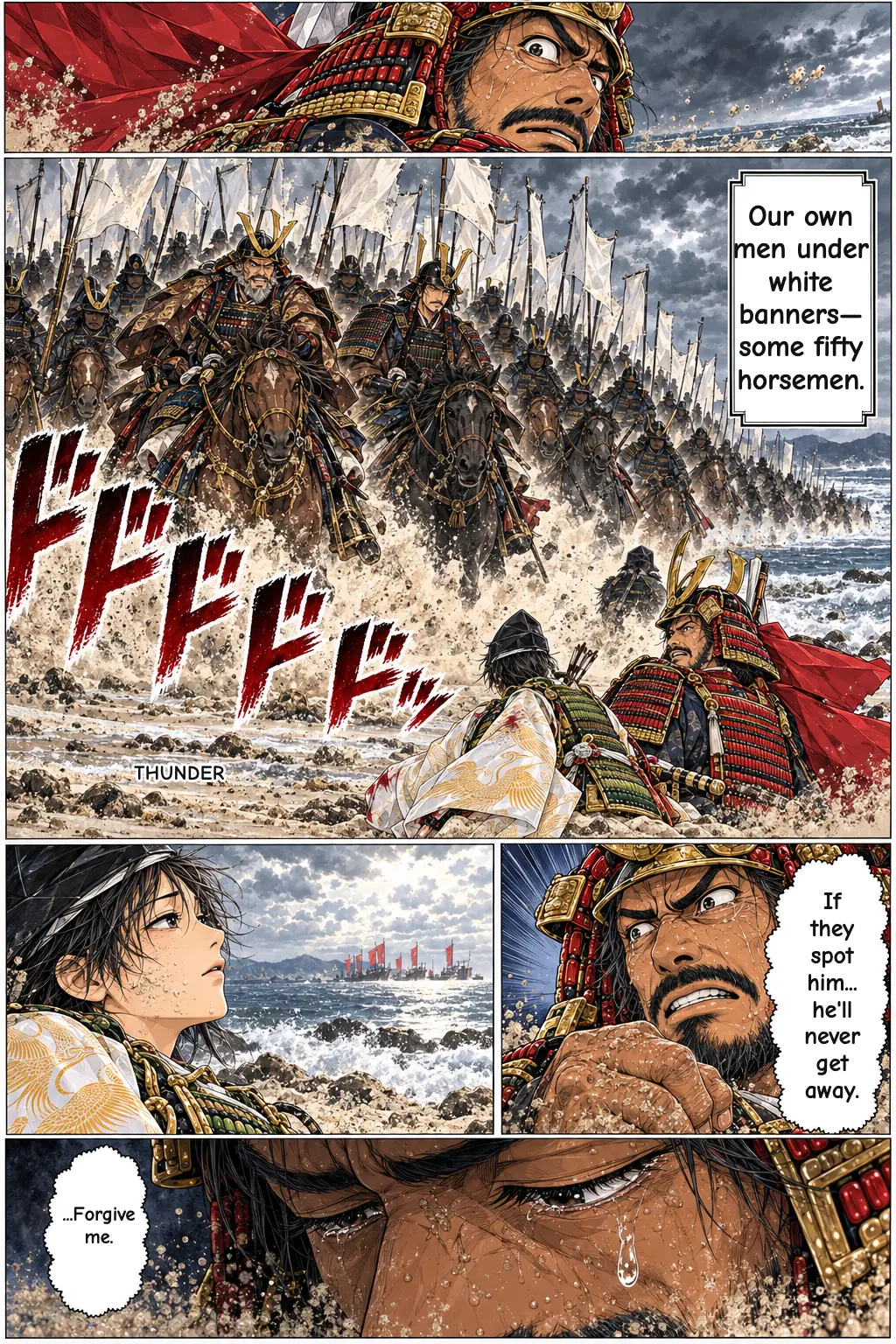
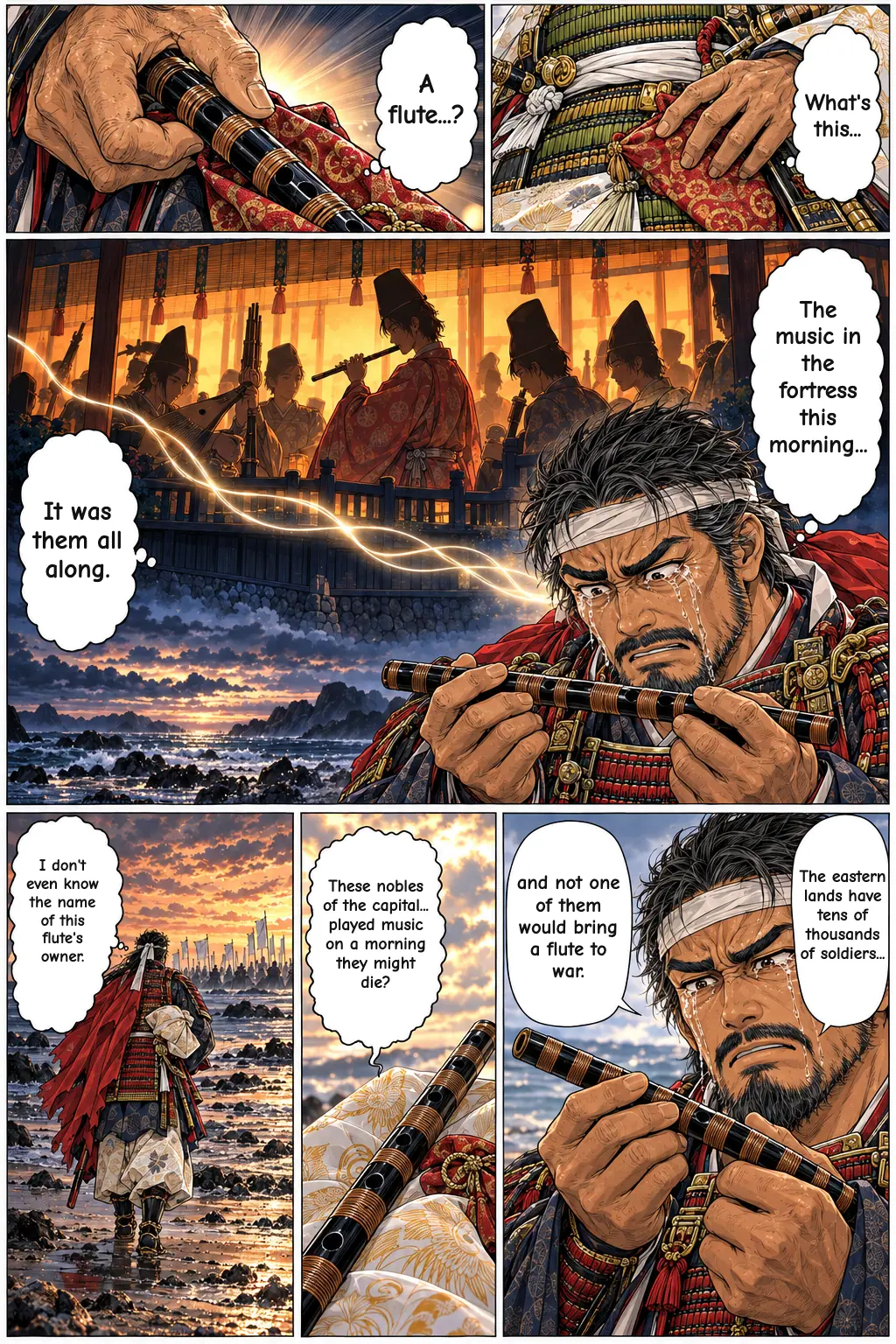
After the Battle of Ichi-no-Tani, Kumagai no Naozane is still hungry for glory. He waves his fan at a young warrior fleeing into the sea, calls him back, and pins him down. Under the helmet is the face of a boy about his own son's age. Then Naozane sees the flute at the boy's hip and remembers the music he heard before dawn.
The Death of Atsumori Explained: Tale of the Heike Story & Meaning
The Original Story: What Happens in "The Death of Atsumori"
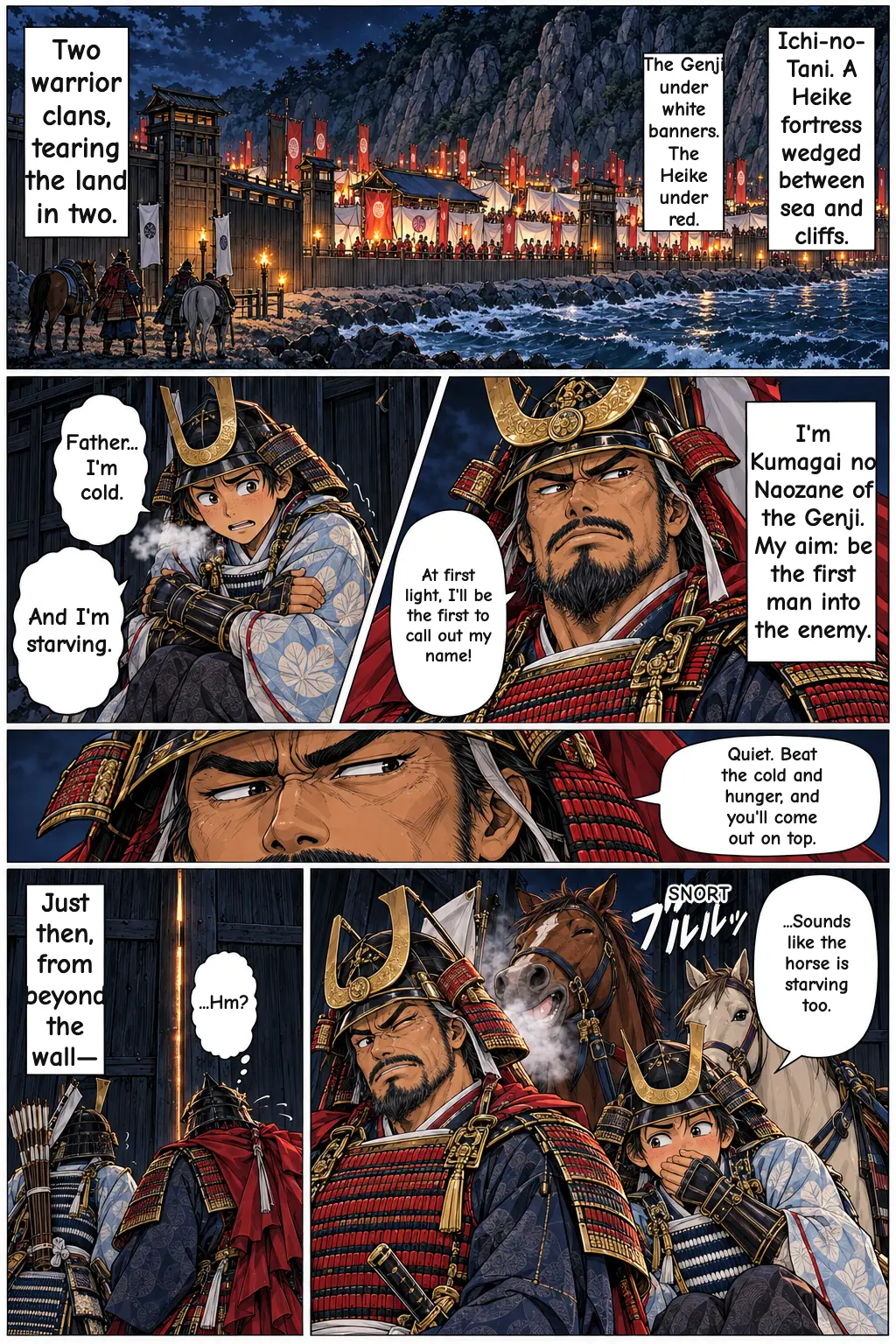
"The Death of Atsumori" (Atsumori no saigo) is one of the best-known chapters of The Tale of the Heike, Japan's great war epic about the Genpei War (1180–1185) between the Taira (Heike) and Minamoto (Genji) clans. This summary follows the Kakuichi version, the standard text chanted by blind storytellers who played the biwa (a Japanese lute). Other versions differ in small details. The chapter is in Book 9, right after the Battle of Ichi-no-Tani near present-day Kobe, fought in early 1184.
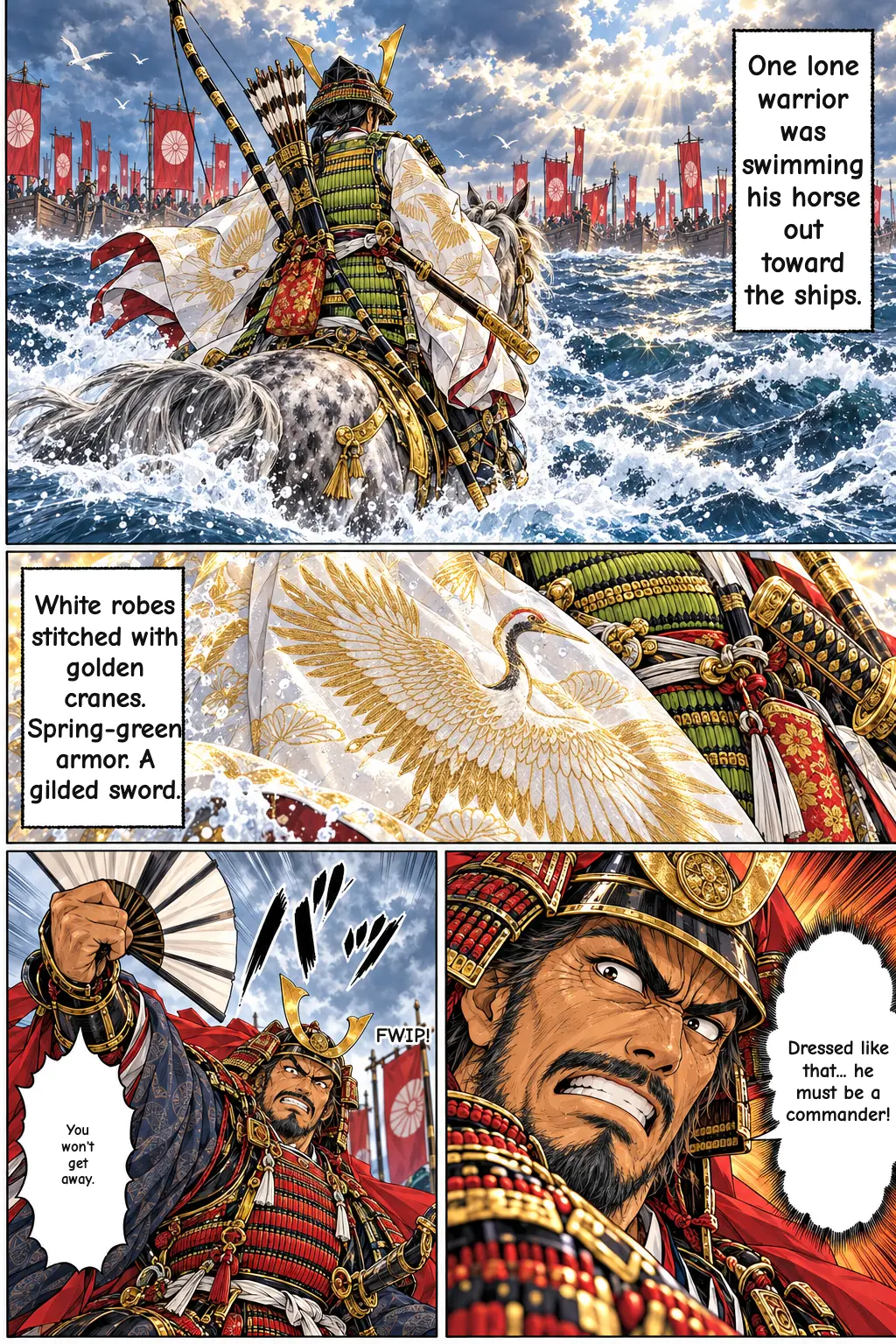
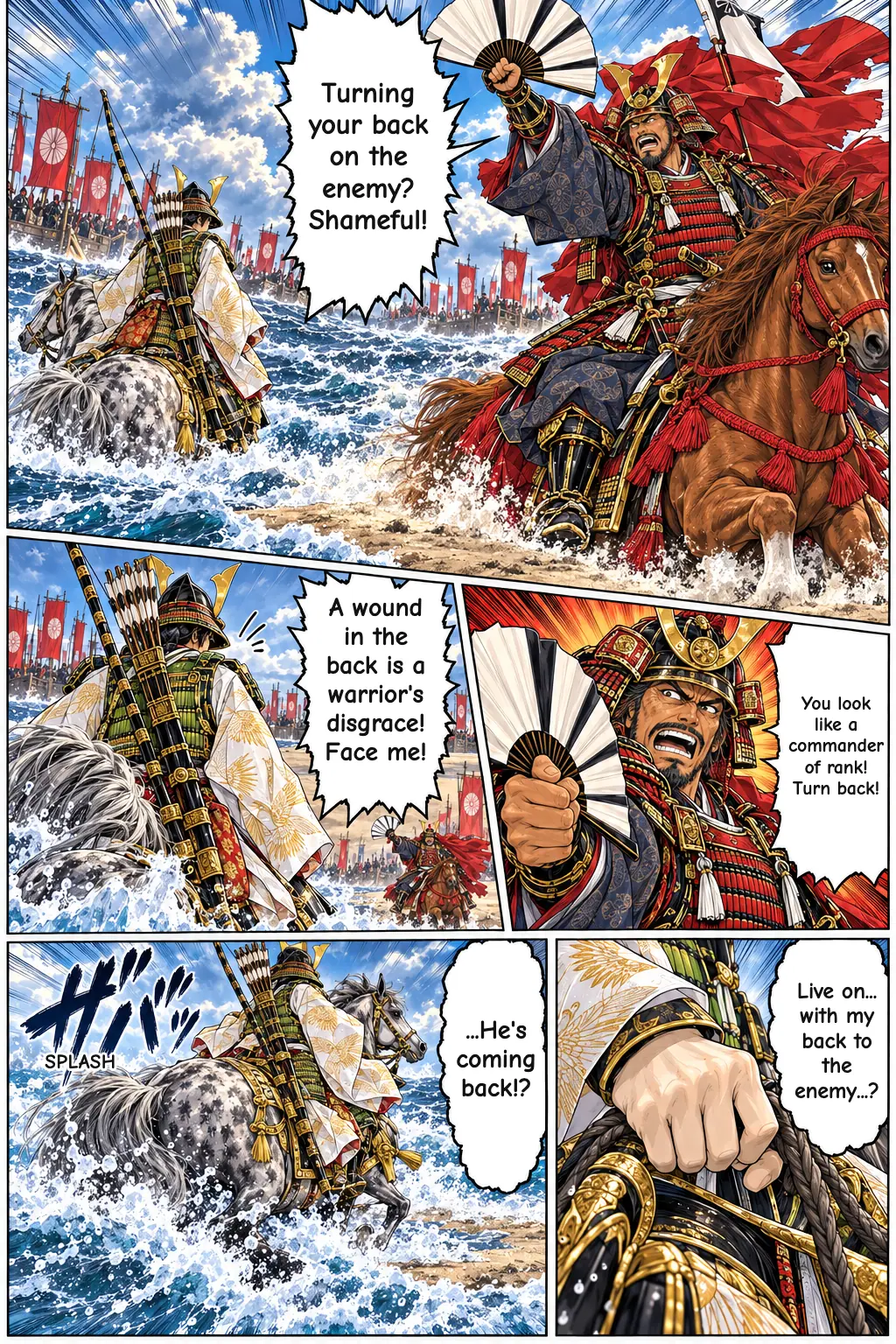
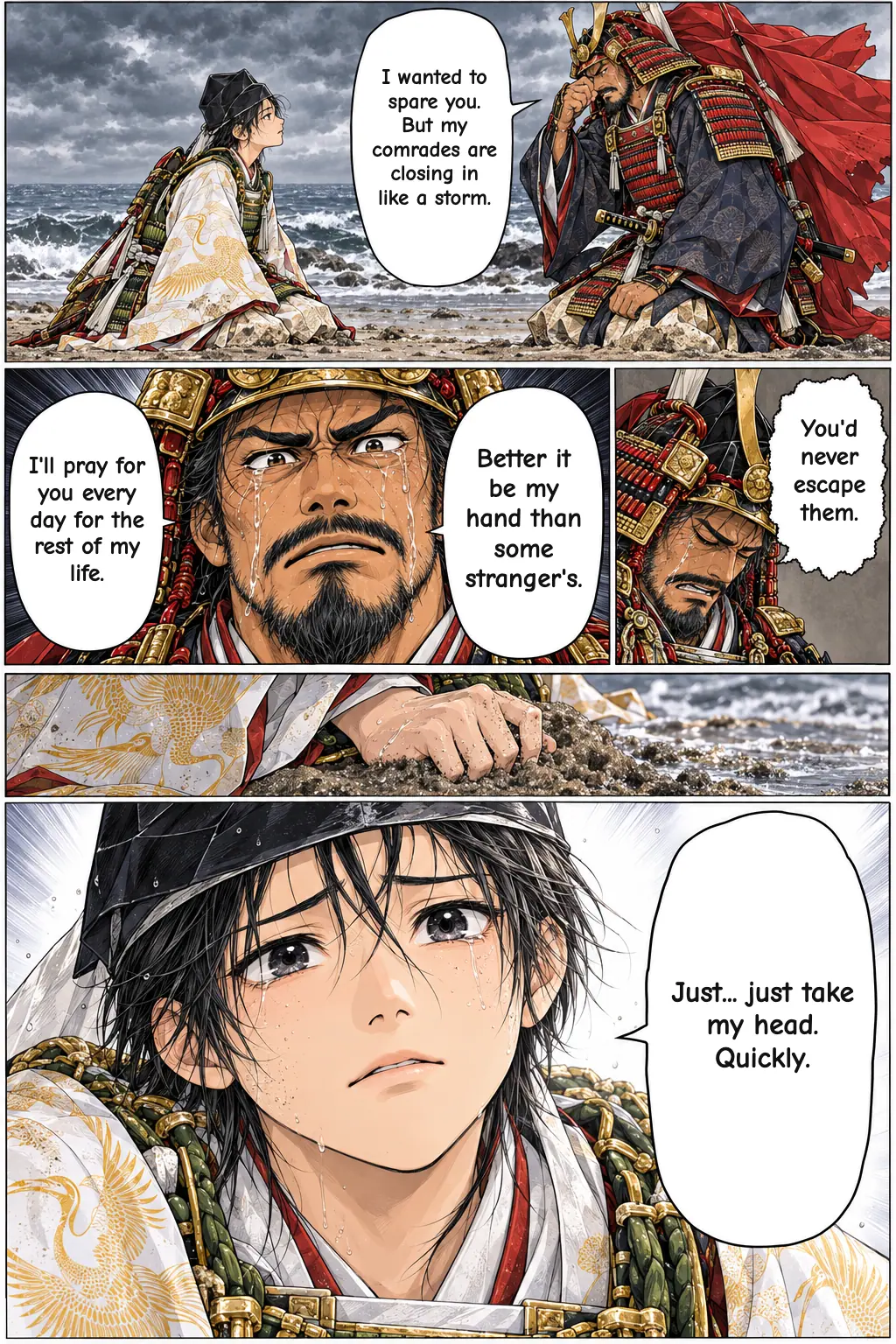
The Taira have lost the battle, and their young nobles run to the beach to reach rescue boats offshore. Kumagai no Jirō Naozane, an eastern warrior on the Minamoto side, rides along the shore hoping to fight a high-ranking enemy commander. He sees a richly armored rider swimming his horse out toward the ships. Naozane raises his fan and calls out: does a general really show his back to the enemy? The rider turns around and comes back. At the water's edge, Naozane grapples with him, and both men fall from their horses. Naozane pins him down and pushes up his helmet to take his head. Underneath is a boy of about sixteen or seventeen, with light makeup and blackened teeth (a fashion of the court nobility), and a beautiful face. He is about the same age as Naozane's own son, Kojirō. Naozane cannot bring himself to strike.
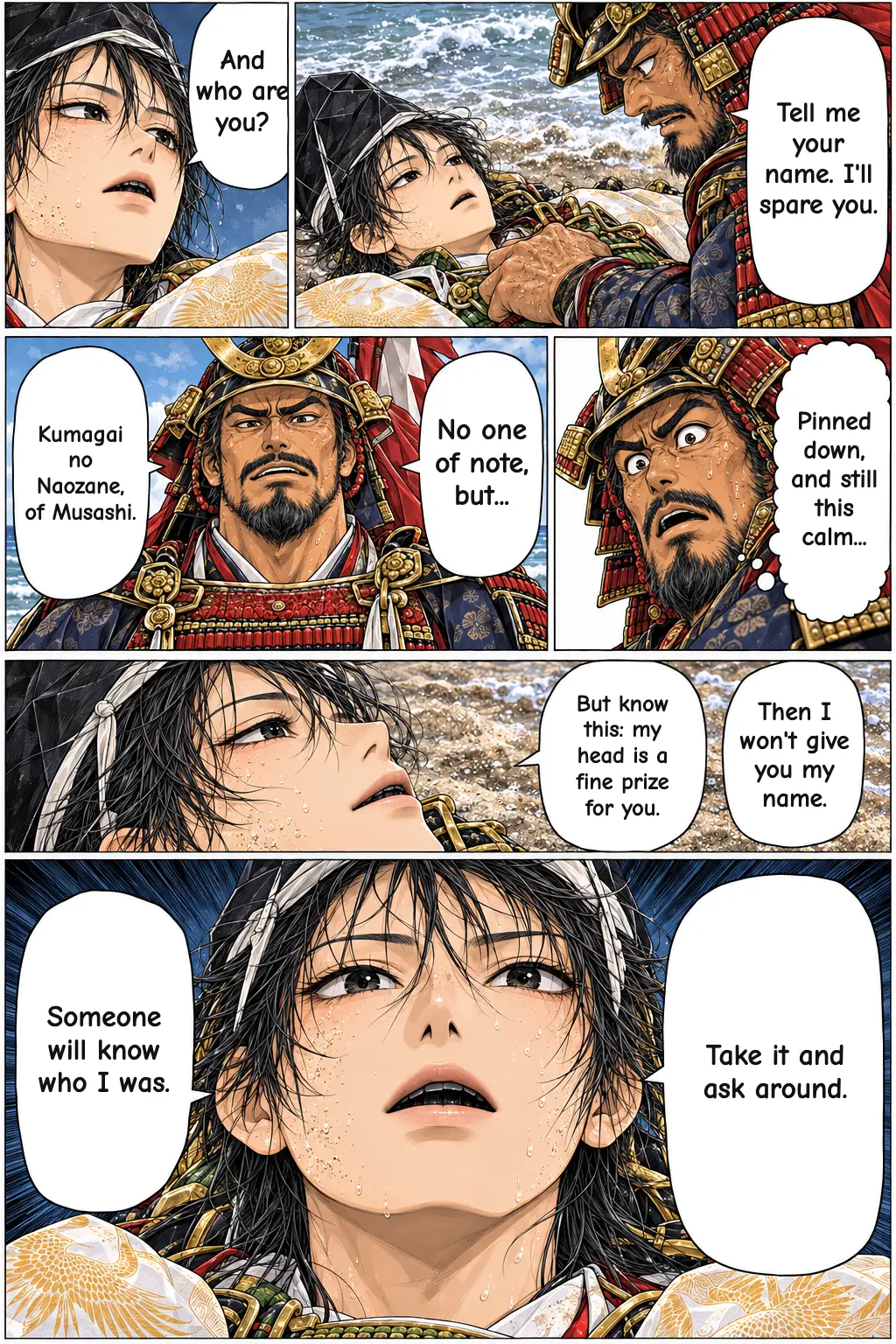
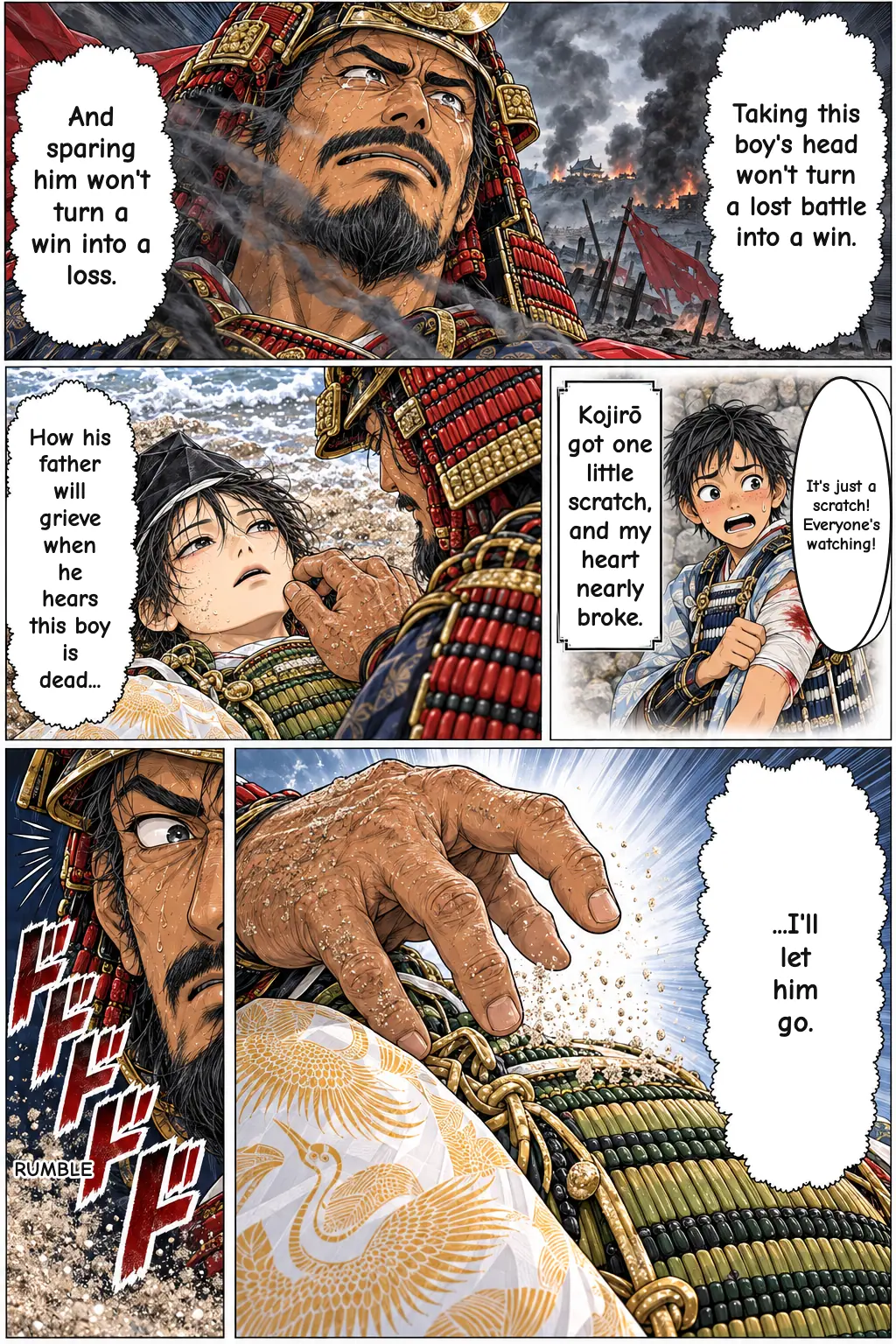
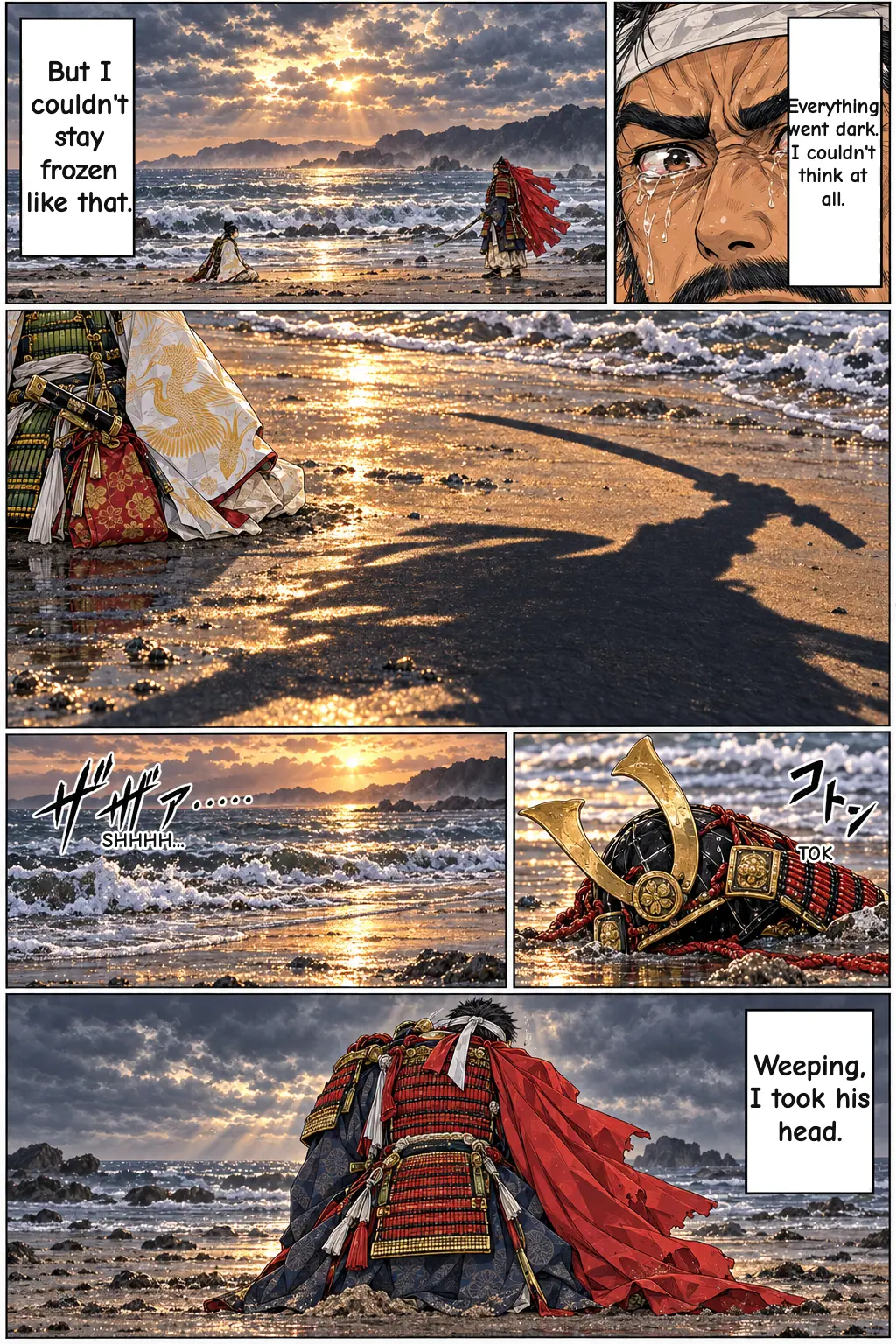
Naozane asks the boy's name and offers to spare him. The boy refuses to give it. He tells Naozane to take his head and ask others; someone will recognize it. Naozane thinks to himself that killing one boy will not change who wins the battle. He also remembers how much it hurt when Kojirō got only a light wound, and thinks how this boy's father will grieve. But when he looks back, about fifty riders from his own side, led by Doi and Kajiwara, are coming up behind him. In tears, he tells the boy that he cannot escape, and that it is better to die by Naozane's hand, so that Naozane can pray for him afterward. The boy only tells him to be quick. Naozane, barely knowing what he is doing, takes his head.
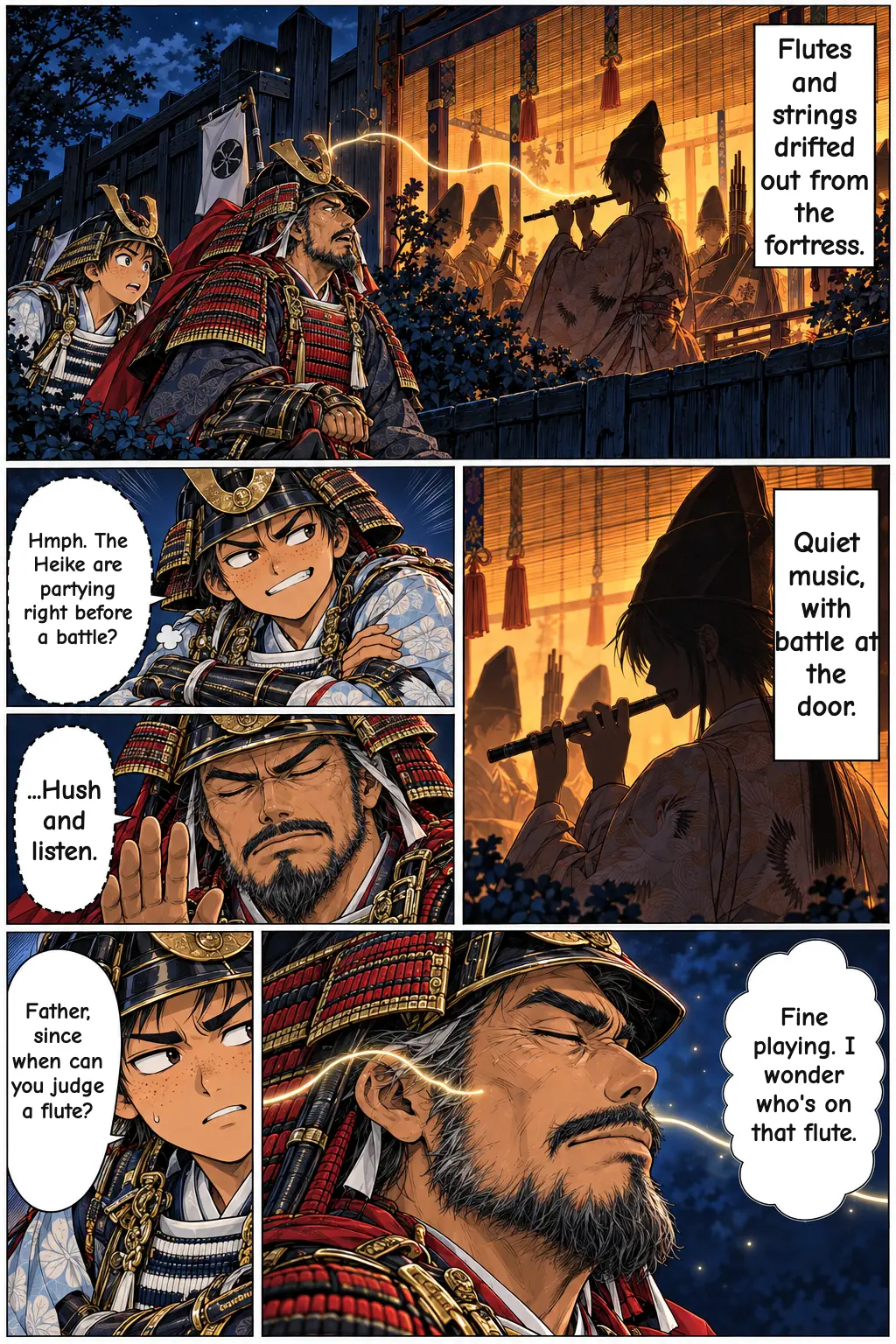
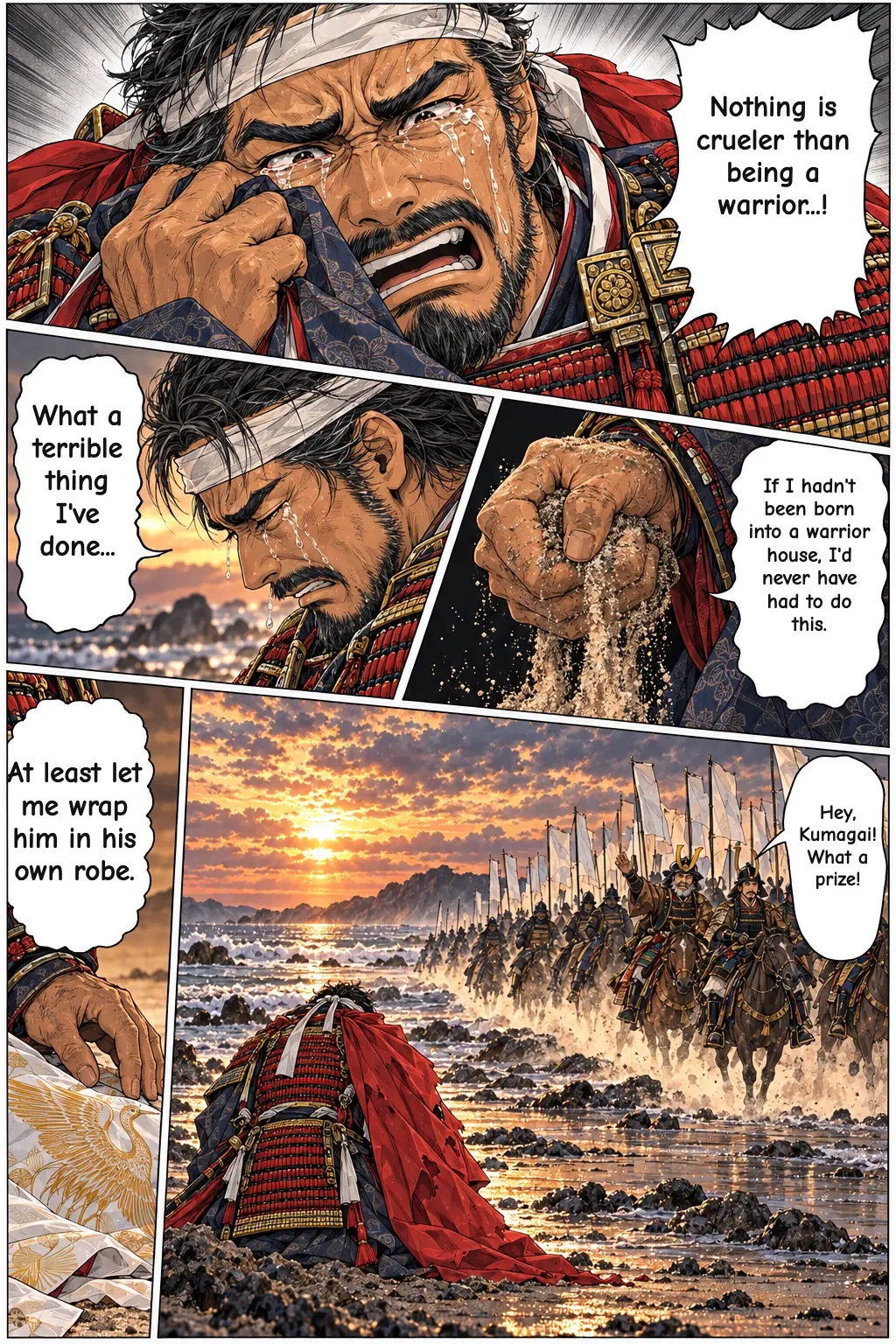
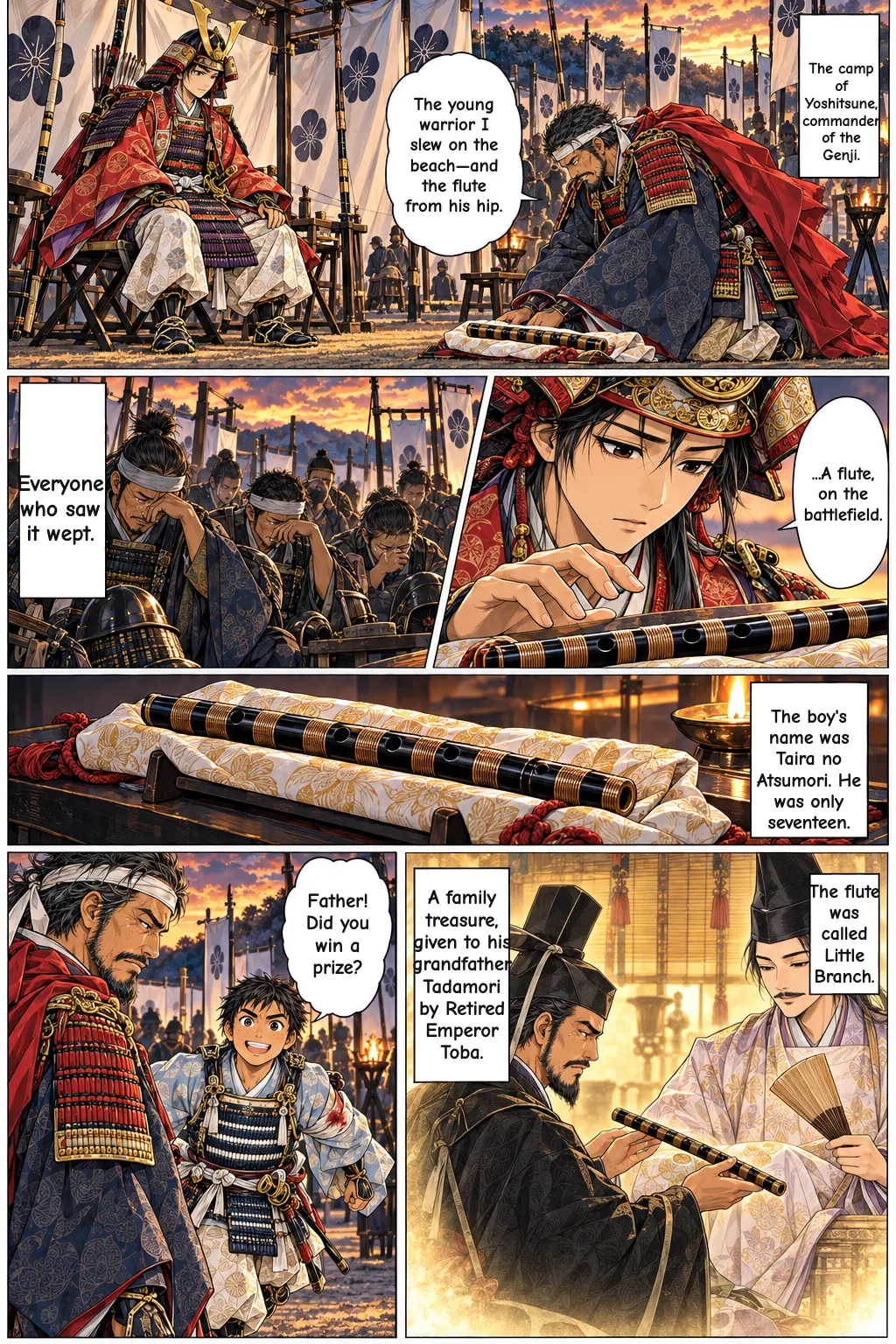
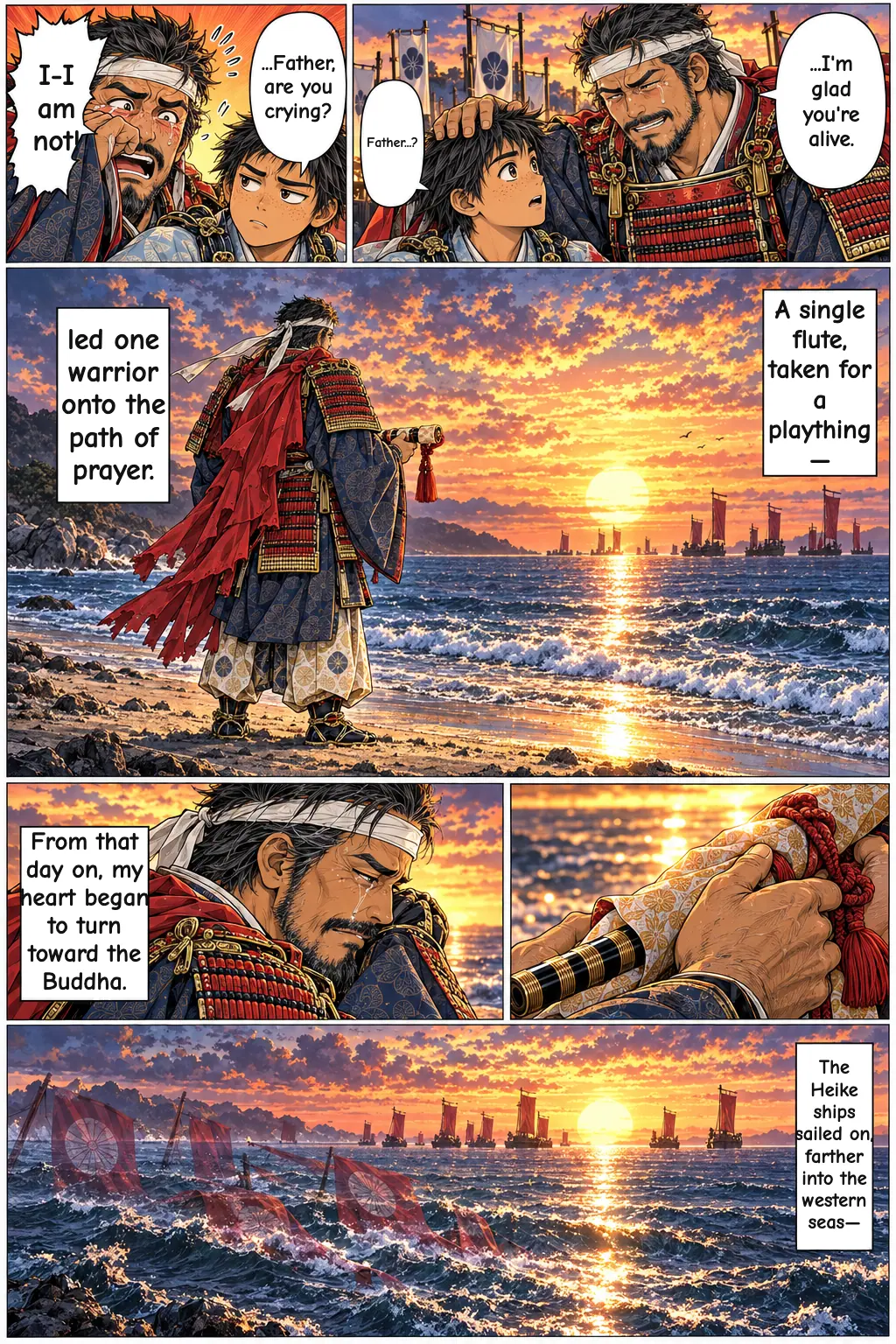
Naozane laments that there is nothing as bitter as being born a warrior. As he wraps the head, he finds a flute in a brocade bag at the boy's waist. He realizes that the people he heard playing court music inside the Taira fortress at dawn were these young nobles, and he notes that none of the tens of thousands of eastern warriors would ever bring a flute to a battlefield. Everyone who sees the head and flute in front of the commander Minamoto no Yoshitsune weeps. The boy turns out to be Atsumori, the seventeen-year-old son of Taira no Tsunemori. His flute is called Saeda ("Little Branch"). His grandfather Tadamori had received it from the retired emperor Toba. From this moment, the narrator says, Naozane's wish to leave the warrior's life and become a monk grows deeper.
Main Characters
Kumagai no Naozane is a minor warrior from Musashi Province who calls himself a man of no fame. He wants glory, but he is also a father who sees his son in his enemy. Taira no Atsumori is a young Taira noble, proud and calm, who refuses to beg for his life. Kojirō, Naozane's son, is only mentioned. Doi and Kajiwara are Minamoto commanders whose approaching riders force Naozane to decide. Minamoto no Yoshitsune, the Minamoto general, appears only as the man Naozane shows the head to.
What the Story Means: Warriors, Courtly Culture and Impermanence
The Tale of the Heike opens by saying that the proud do not last and that everything in this world passes away. That Buddhist idea of impermanence runs through Atsumori's death. The episode also sets two worlds against each other. One is the rough eastern warriors of the Minamoto, who fight for land and fame. The other is the elegant Taira court culture of music and poetry. The flute stands for that refined world, and its loss seems all the sadder because it ends up on a battlefield.
The chapter ends with the narrator reflecting that even music and other "frivolous" arts can become a path to Buddhist awakening. For Naozane, the boy's flute is what turns him toward the religious life. That is why the episode is often read as an anti-war story, and its central question is still asked today: what does victory cost the person who wins?
Later Legends vs. the Original Text
Many popular details are not in this chapter of the Kakuichi text. According to historical records and later tradition, Naozane did become a monk, as a disciple of the Pure Land teacher Hōnen. Some other versions of the Heike, such as the Engyō-bon and the Genpei Jōsuiki, add that Naozane sent the head and belongings to Atsumori's father, Tsunemori, with a letter, and that Tsunemori wrote back. A later legend says Atsumori missed the boats because he went back for a flute he had left behind. The famous name Aoba no Fue ("Green Leaf Flute") also comes from later tradition and songs, not this chapter. The story went on to inspire the Noh play Atsumori and later kabuki and puppet theater.
What the Manga Changes
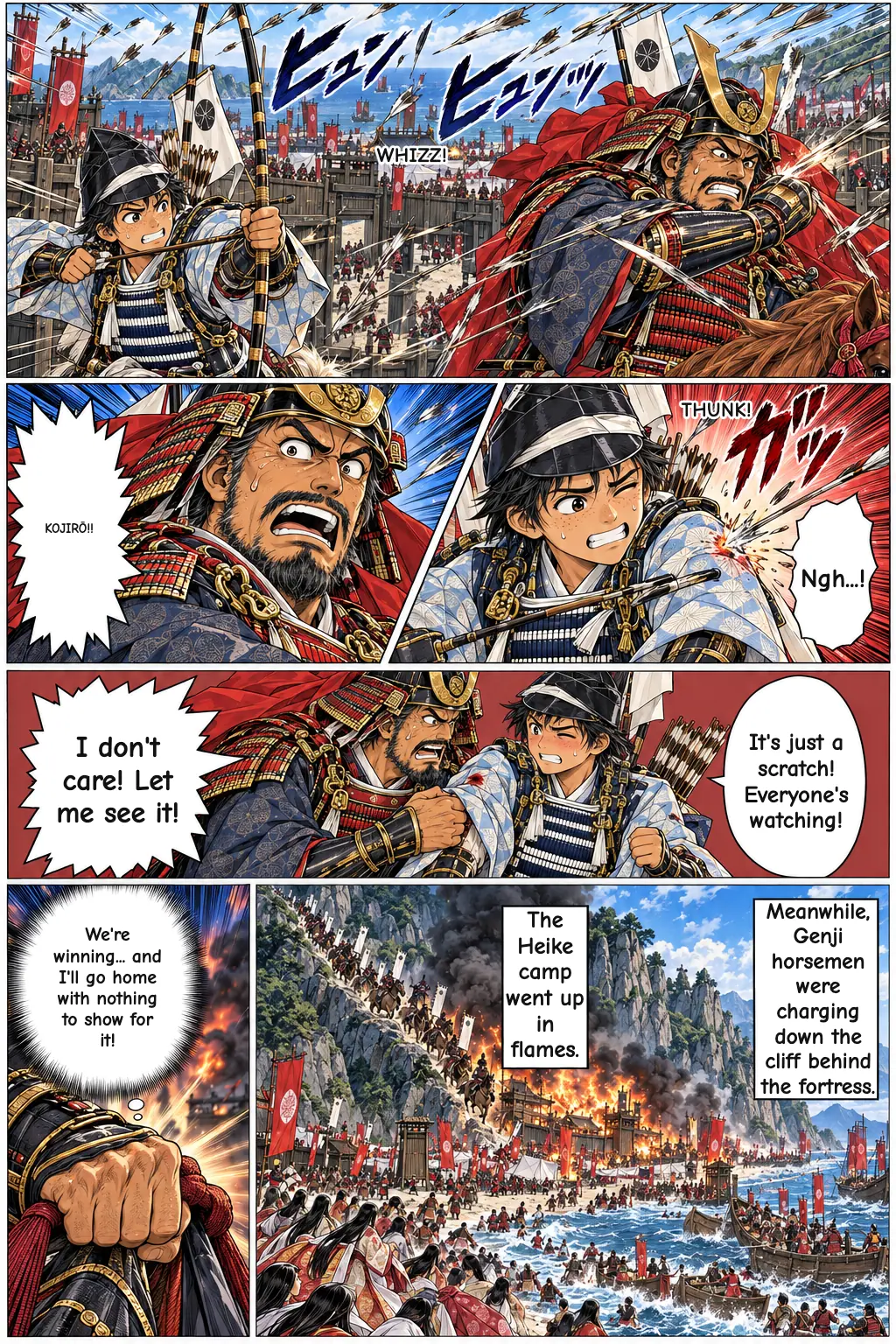
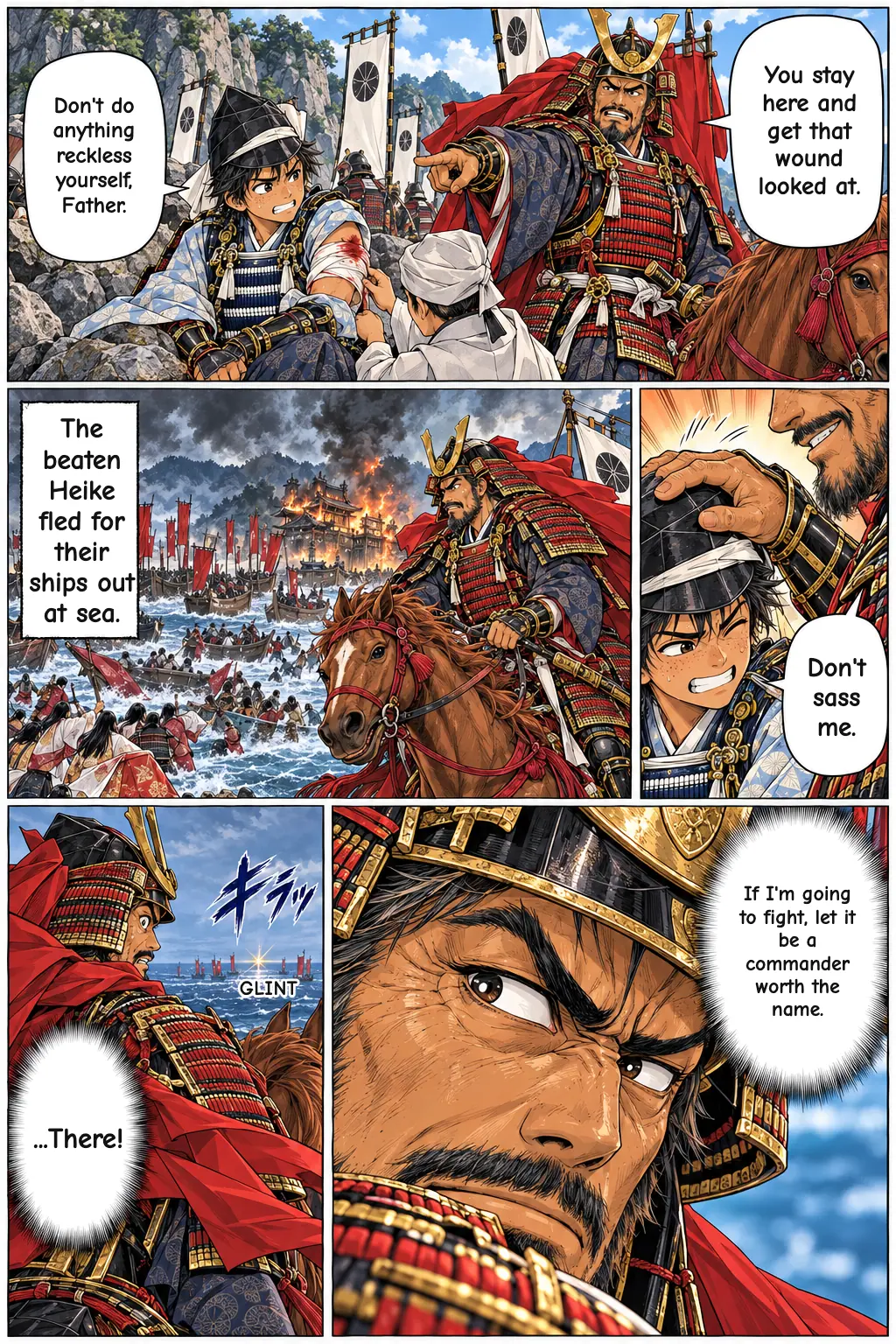
The manga follows the main events of the original: the fan, the turnaround, the helmet, the son-like face, the arriving riders, and the flute. To build suspense, it plants the music early. Naozane hears music before dawn and remembers it when he finds the flute. In the original, court music is played inside the Taira fortress at dawn by several young nobles. The text does not clearly say that Naozane heard it with his own ears; a common reading is that it was known in the Minamoto camp.
The characters' faces and builds, Naozane's age, the weather, the waves, the morning light, and the movements during the struggle are the artist's own creation. The chapter gives none of these. Any scene showing Naozane actually becoming a monk would be an epilogue beyond this chapter, which only says that his wish grew deeper.
Where to Read It
If you want to see this scene, from the raised fan on the beach to the flute in the brocade bag, read Episode 11 of THE TALE OF THE HEIKE: The Samurai War of Genpei on Manga Portal. Every episode is free to read, with no sign-up required. Start from Episode 1 to follow the rise and fall of the Taira, or jump straight to the story of Atsumori and Naozane.
Characters in this episode
Kumagai no Naozane
A minor eastern warrior of the Minamoto side who kills Atsumori in tears and later longs to become a monk.
Taira no Atsumori
A 17-year-old Taira noble and flute player who refuses to give his name and calmly accepts his death.
Kojirō
Naozane's son, about Atsumori's age, who is only mentioned; his light wound in the battle weighs on his father's heart.
Doi and Kajiwara
Minamoto commanders whose fifty approaching riders leave Naozane no way to spare the boy.
Minamoto no Yoshitsune
The Minamoto general to whom Naozane brings the head and the flute.
Taira no Tsunemori
Atsumori's father, who inherited the flute Saeda and gave it to his talented son; he is mentioned but never appears.
FAQ
Who killed Atsumori in The Tale of the Heike?
Kumagai no Jirō Naozane, a warrior of the Minamoto side, killed him after the Battle of Ichi-no-Tani in 1184. Naozane wanted to spare the boy, but other Minamoto riders were closing in, so he took Atsumori's head himself and promised to pray for him.
How old was Atsumori when he died?
The Tale of the Heike says he was seventeen. When Naozane first sees his face, he guesses sixteen or seventeen, about the same age as his own son, Kojirō.
What was the name of Atsumori's flute?
In the Kakuichi version of The Tale of the Heike, the flute is called Saeda ("Little Branch"). Atsumori's grandfather Tadamori received it from the retired emperor Toba. The name Aoba no Fue ("Green Leaf Flute") comes from later tradition.
Did Kumagai Naozane become a monk?
The chapter only says that his wish to become a monk grew deeper from this moment. According to historical records and later tradition, he did become a monk, as a disciple of the Buddhist teacher Hōnen.
Why is the death of Atsumori so famous?
It shows the cost of war through one personal moment: a father-like warrior forced to kill a gentle, cultured boy. It also expresses the Heike's Buddhist theme of impermanence, and it inspired the Noh play Atsumori and many later works.