Episode 10They Said Only Deer Could Come DownBattle of Ichi-no-Tani (Hiyodori-goe) / Death of Tadanori
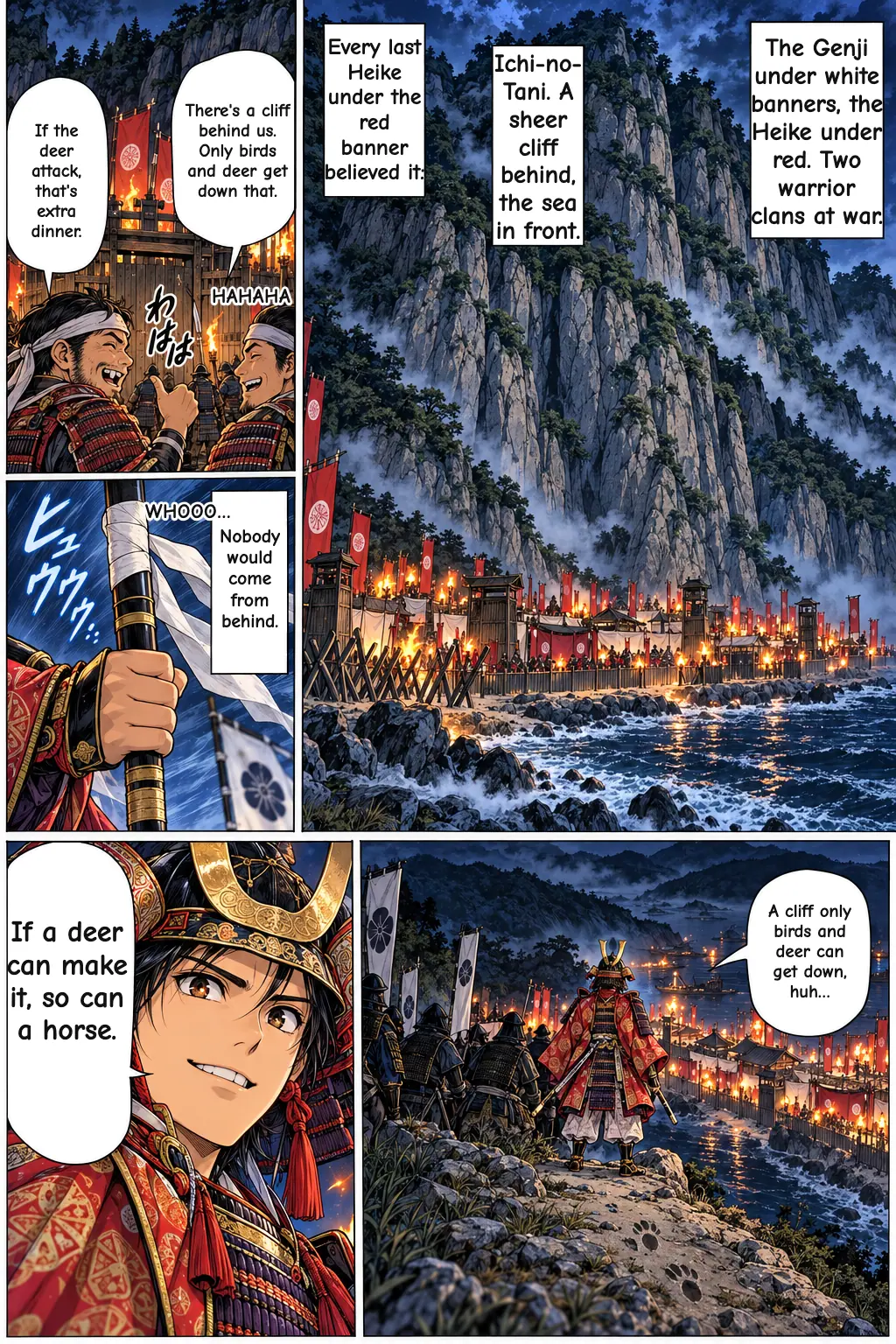
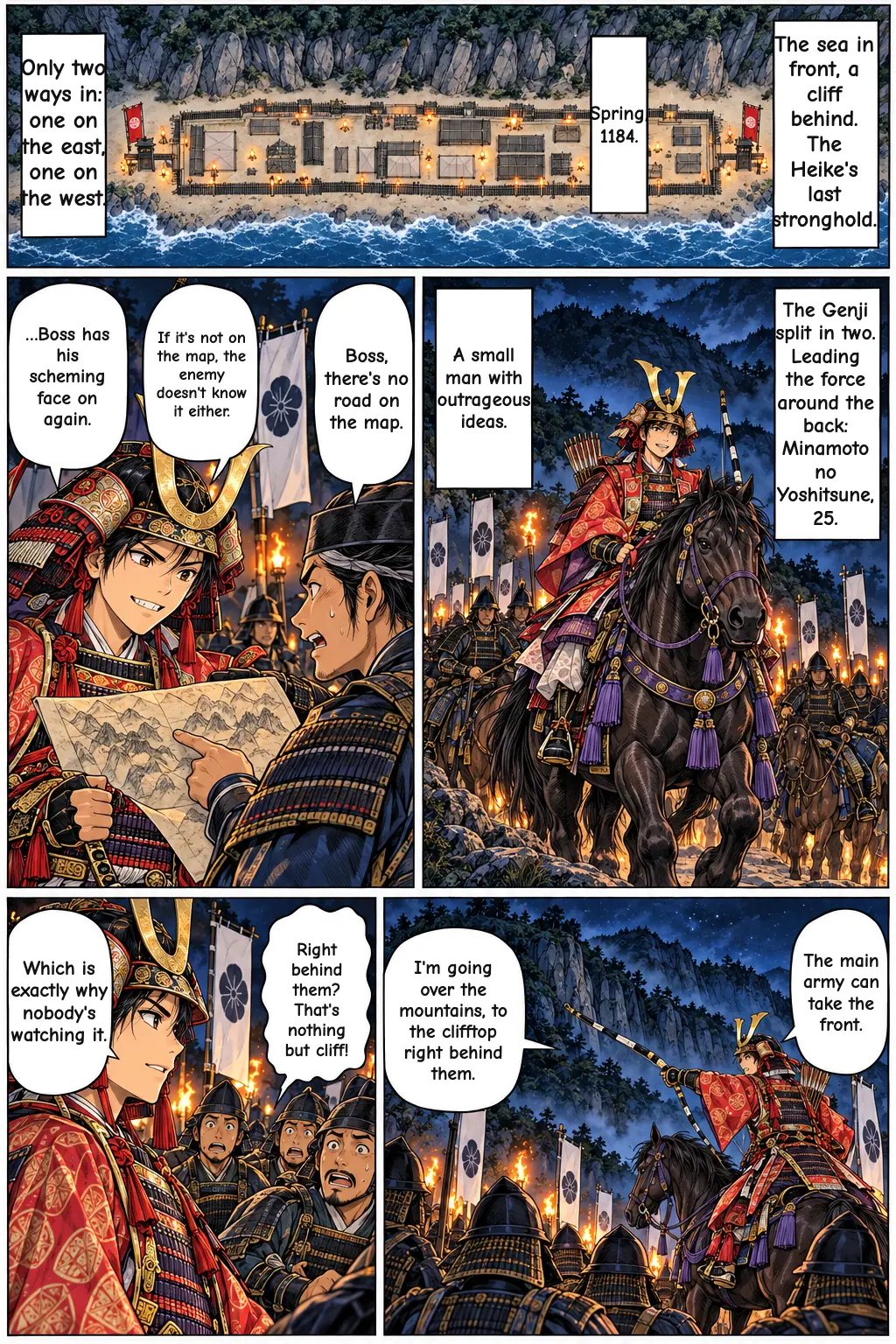
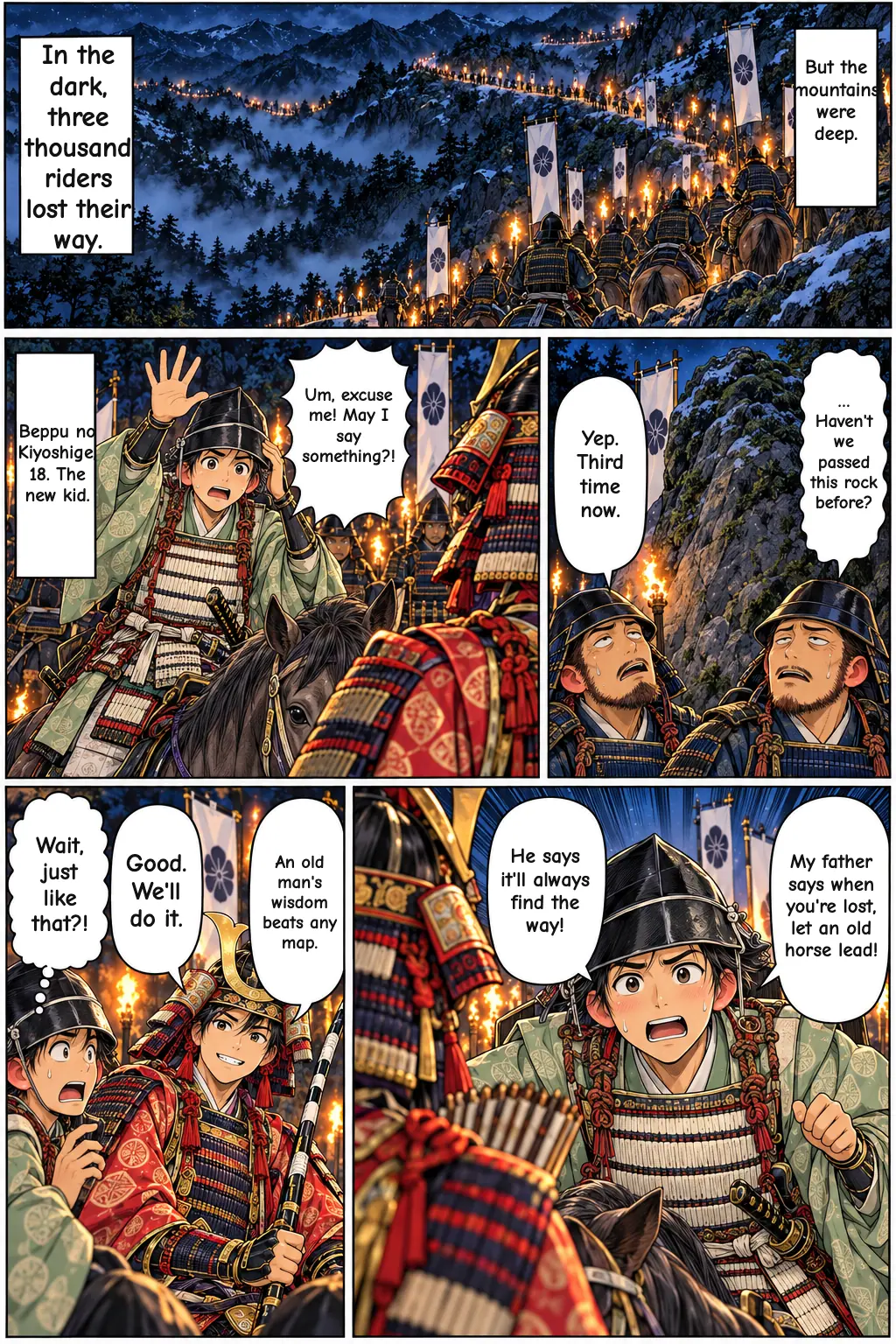
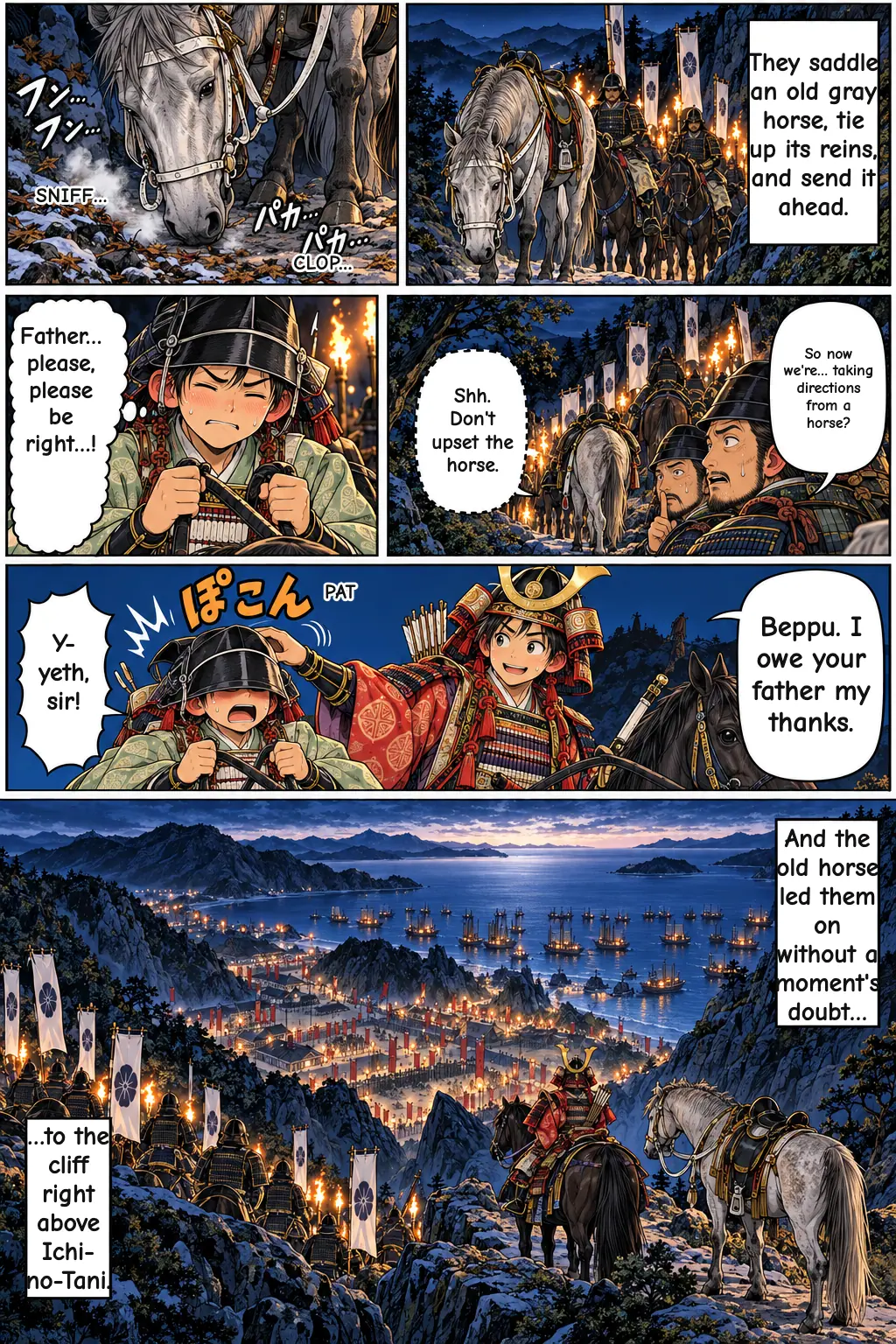
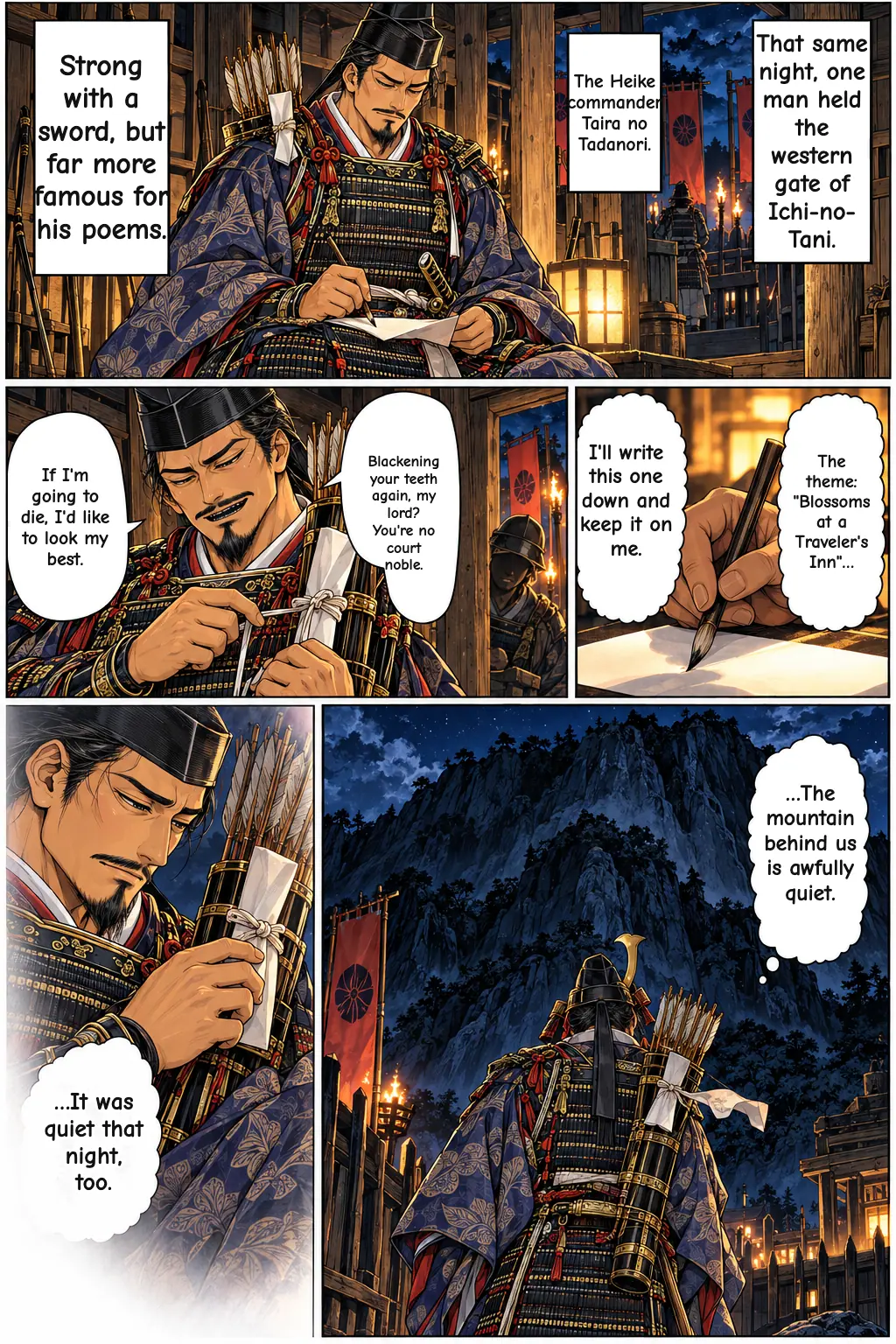
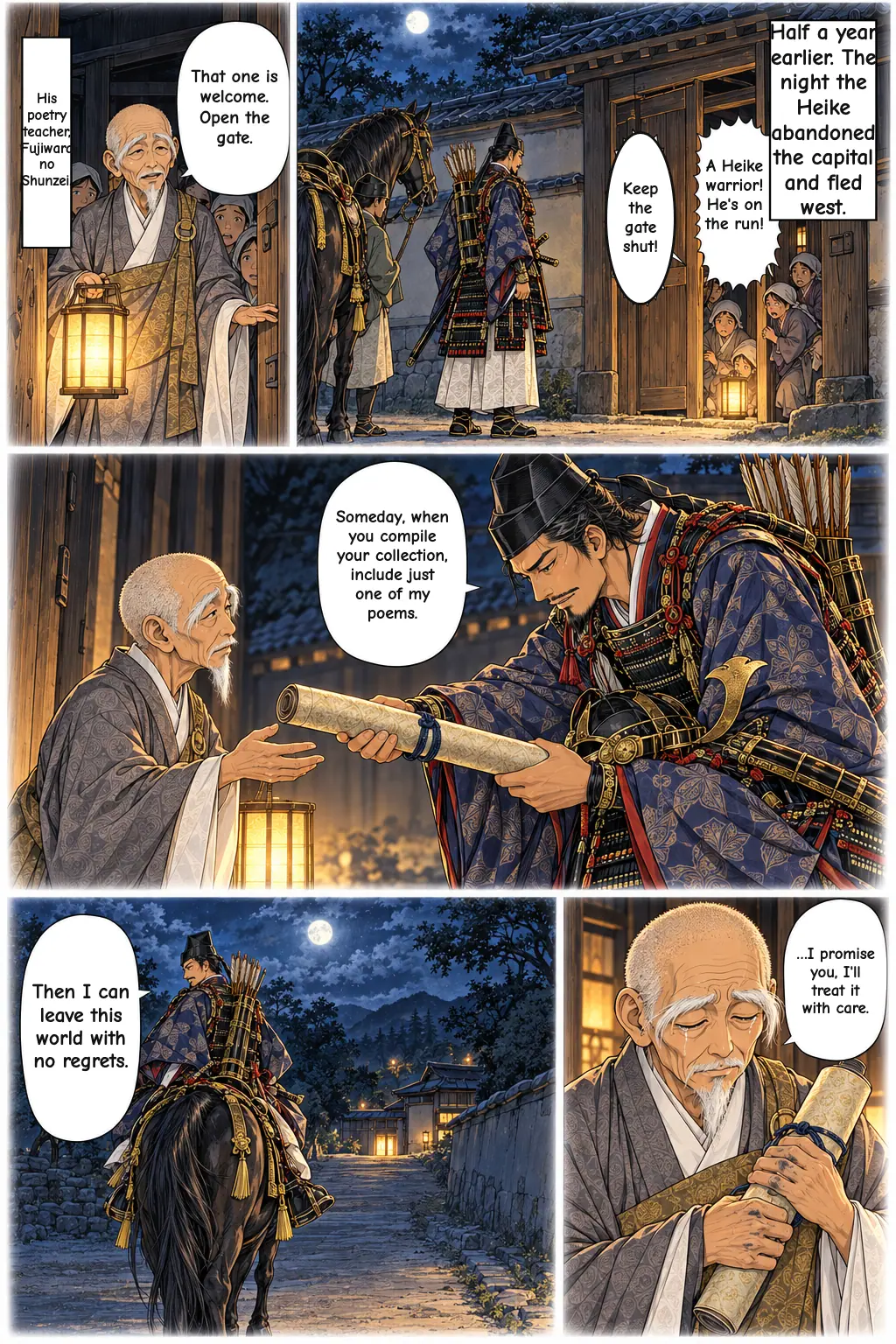
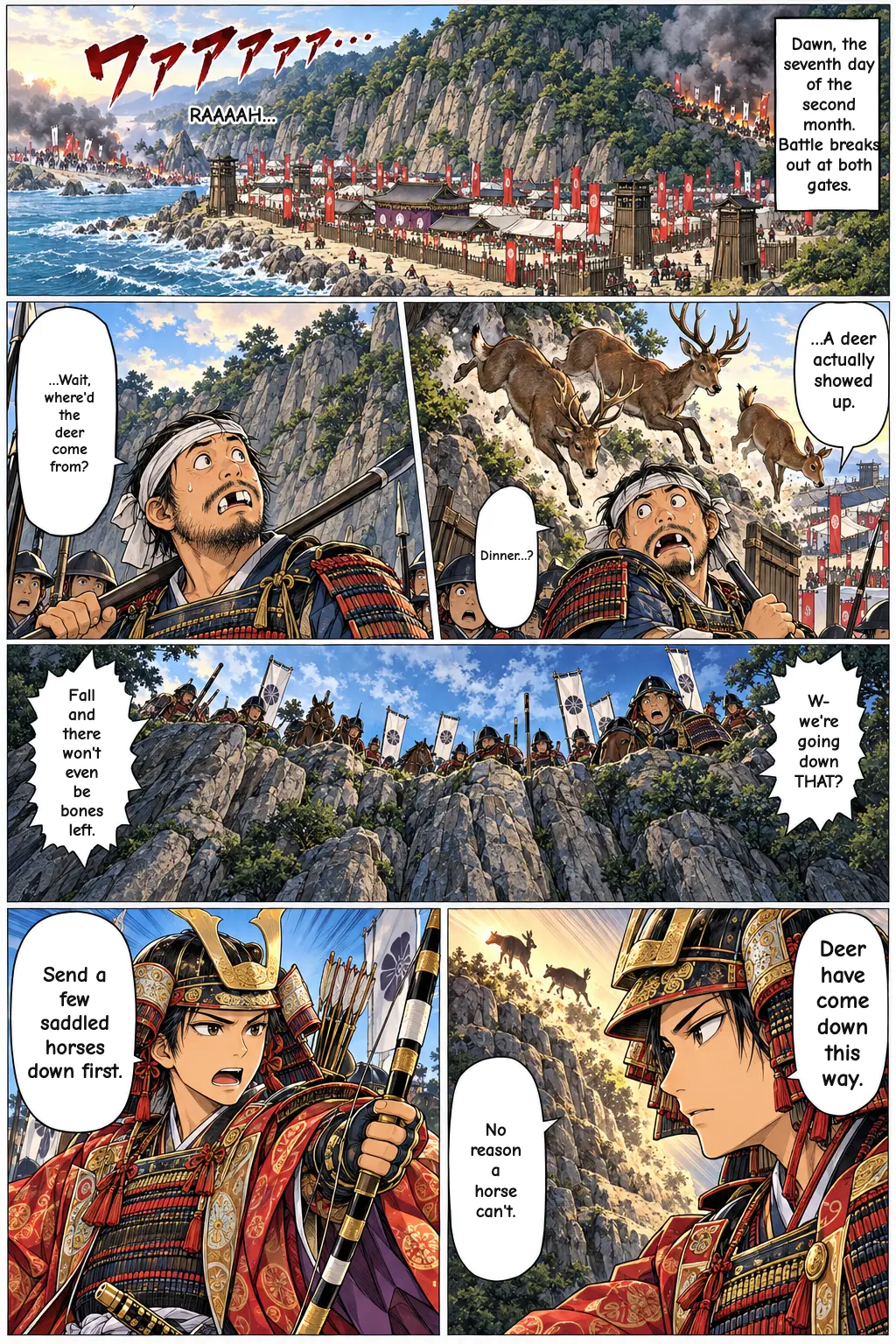
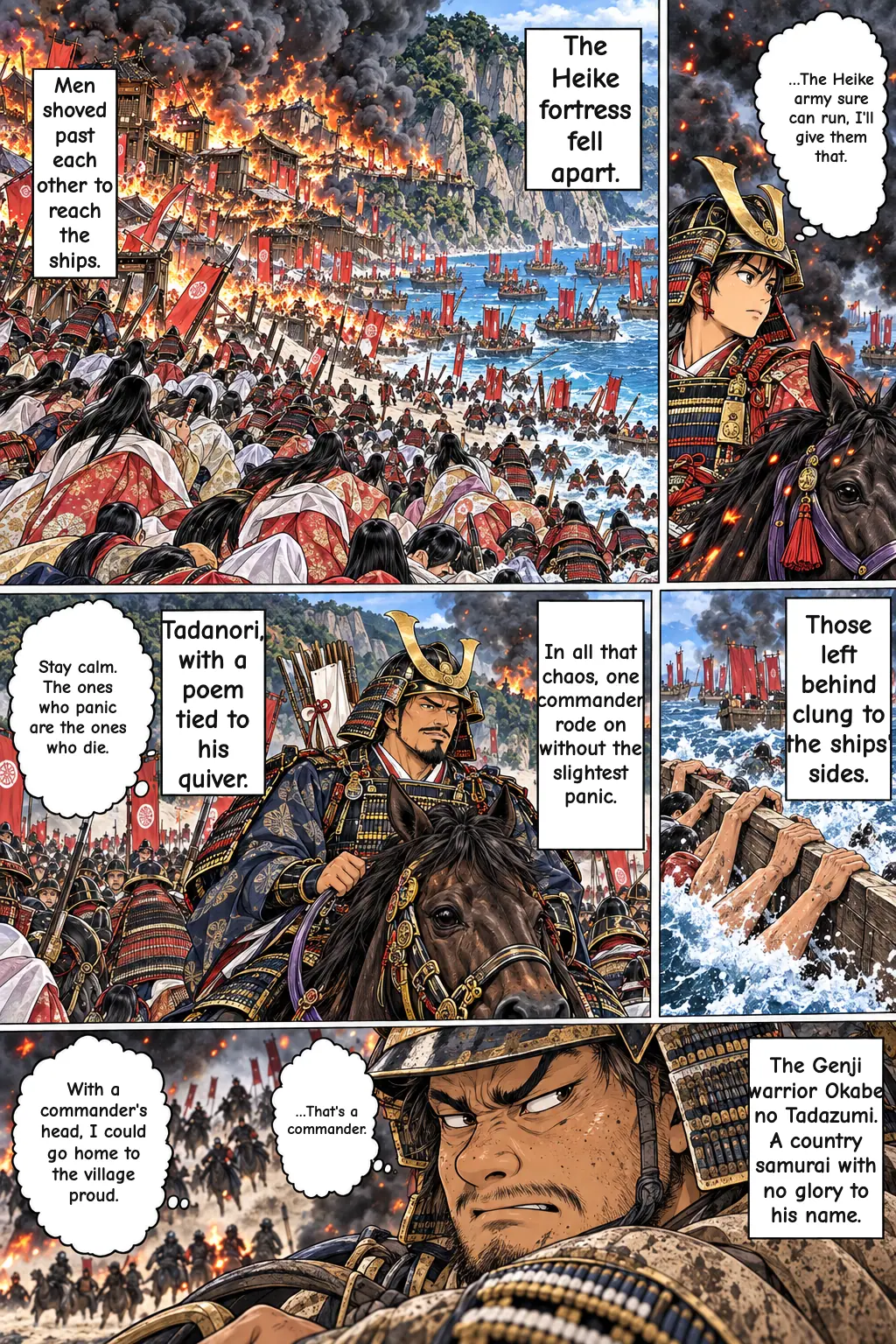
The Heike laugh that nothing but deer could come down the cliff behind their fortress at Ichi-no-Tani. Then Minamoto no Yoshitsune lets an old horse find the way through the mountains and leads his riders straight down the cliff to hit the fortress from behind. Taira no Tadanori, who left one of his poems with his teacher on the night the Heike fled the capital, is cut down in the chaos. But a single poem tied to his quiver turns him from an enemy's head with no name back into a poet.
Battle of Ichi-no-Tani & Hiyodori-goe: The Tale of the Heike Explained
The Story in the Original Tale of the Heike
The Tale of the Heike is a Japanese war epic about the fall of the Taira clan (also called the Heike) in the Genpei War of the 1180s. It was told aloud by blind storytellers who played the biwa, a kind of lute. This episode follows several chapters in Book Nine. In early 1184, after being driven from the capital, the Taira returned to their old base at Fukuhara, near modern Kobe. Their eastern gate stood at the Ikuta Forest. Their western stronghold was Ichi-no-Tani, a narrow strip of shore with mountains to the north and the sea to the south, closed off with stone walls, barricades of branches, and watchtowers.
The Minamoto (Genji) split their army. Minamoto no Noriyori led the main force against Ikuta, while his younger brother Minamoto no Yoshitsune took a smaller force through the hills. After winning a night attack on a Taira camp at Mikusa Mountain, Yoshitsune split his own troops again. He sent the veteran Doi no Jirō Sanehira to strike Ichi-no-Tani's western gate and led about 3,000 riders into the mountains behind the fortress, toward a place called Hiyodori-goe.
The mountain paths were steep, and the riders got lost. A young warrior, Beppu Kotarō Kiyoshige, remembered his father's advice: if you lose the road in snow, put an old horse in front and it will find the way. Yoshitsune knew an old Chinese saying with the same lesson, so he sent an old white-gray horse ahead. Then the monk-warrior Benkei brought in an old local hunter. The hunter said no person could get down the slope behind Ichi-no-Tani, but deer did it. Yoshitsune answered that if deer could go that way, horses could too. The hunter's 18-year-old son became their guide, and Yoshitsune gave him an adult warrior's name on the spot: Washio Saburō Yoshihisa.
The Ride Down the Cliff (Sakaotoshi)
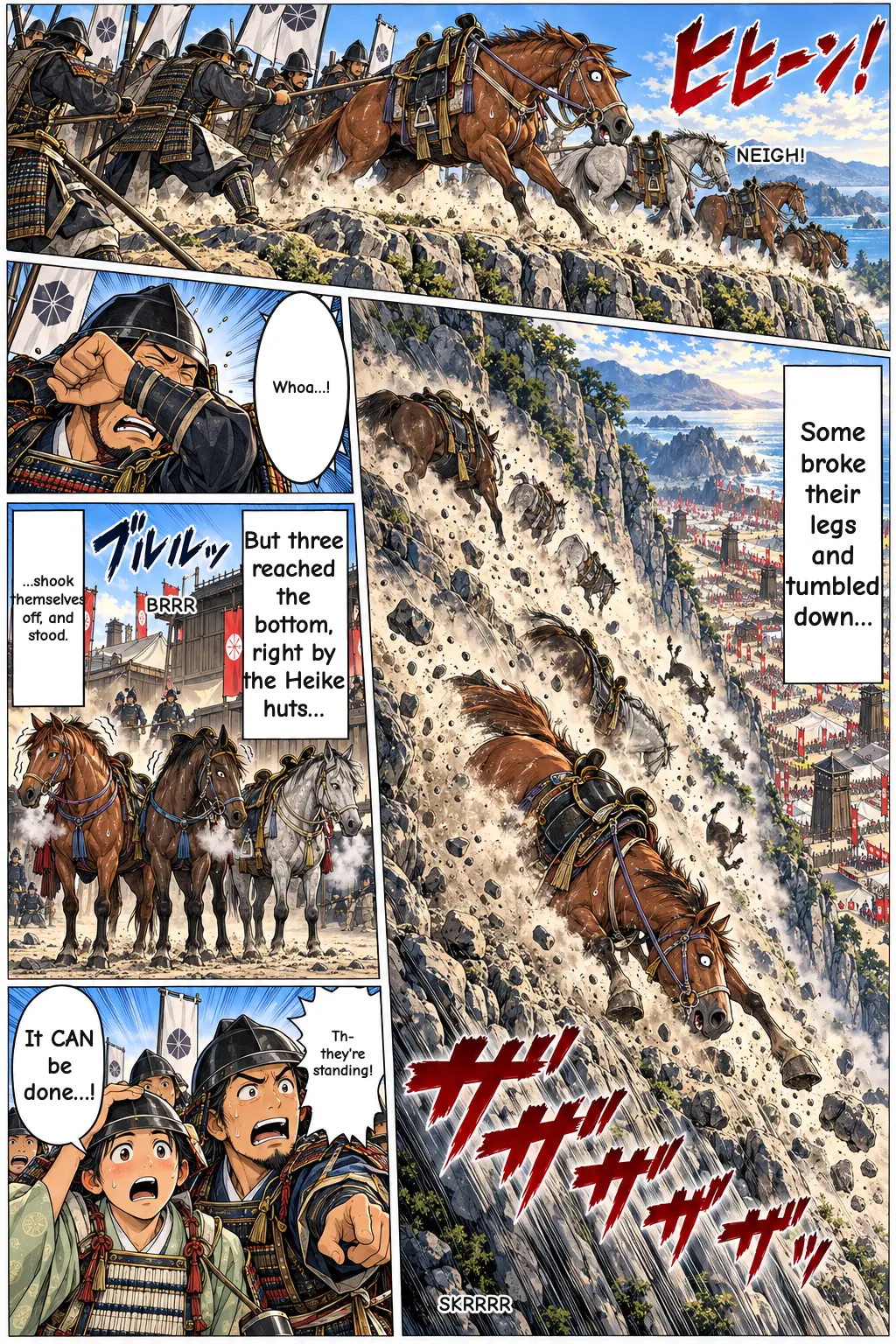
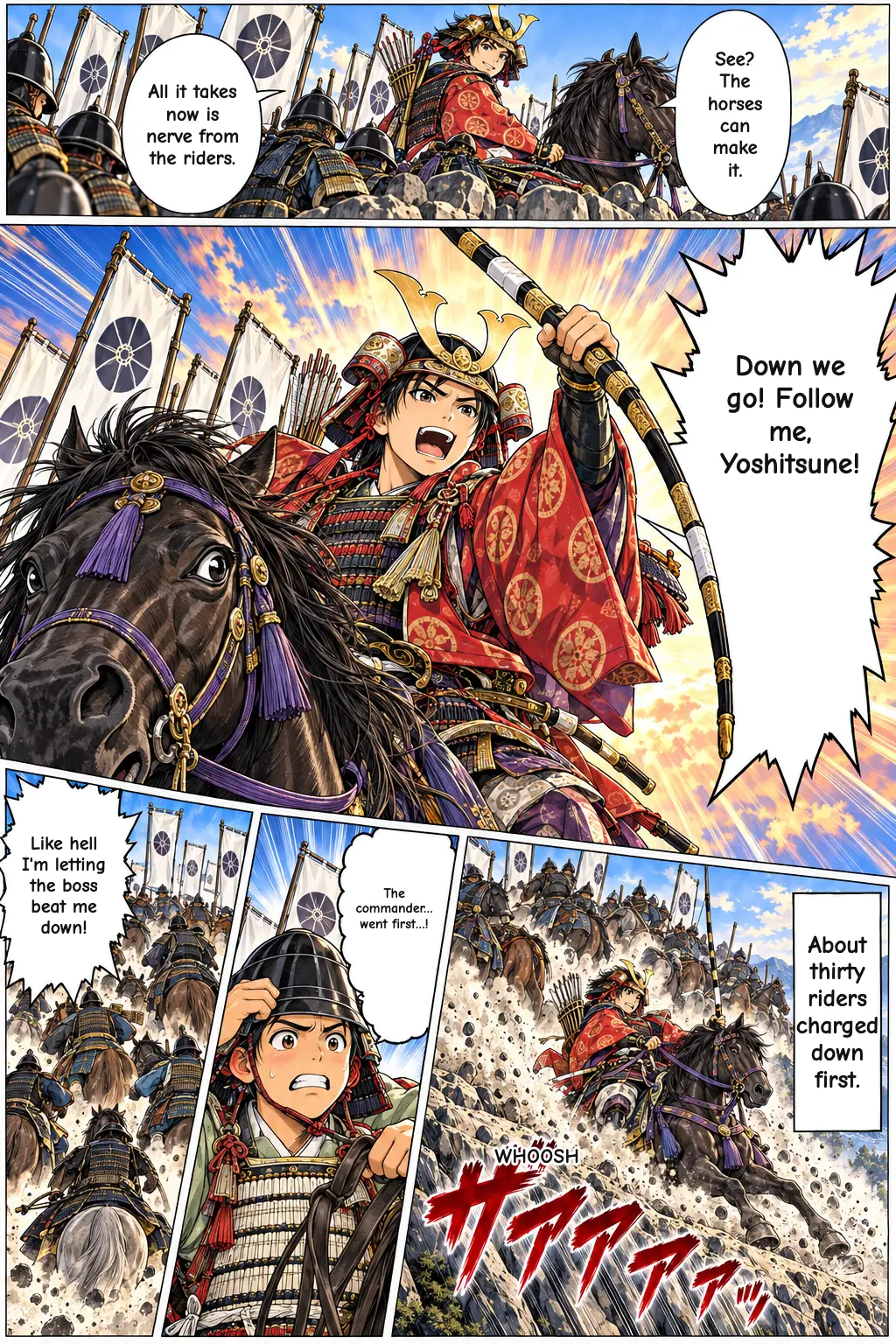
On the morning of the battle, the fighting had already started at both gates when Yoshitsune's riders reached the top of the slope. Startled deer ran down into the Taira camp and were shot. Yoshitsune then tested the slope by driving some saddled horses down without riders. Some fell and broke their legs, but others reached the bottom safely, and three of them landed on top of the quarters of the Taira commander Moritoshi. Yoshitsune reasoned that horses would come through if their riders handled them with care. He told his men to follow his example and went down first.
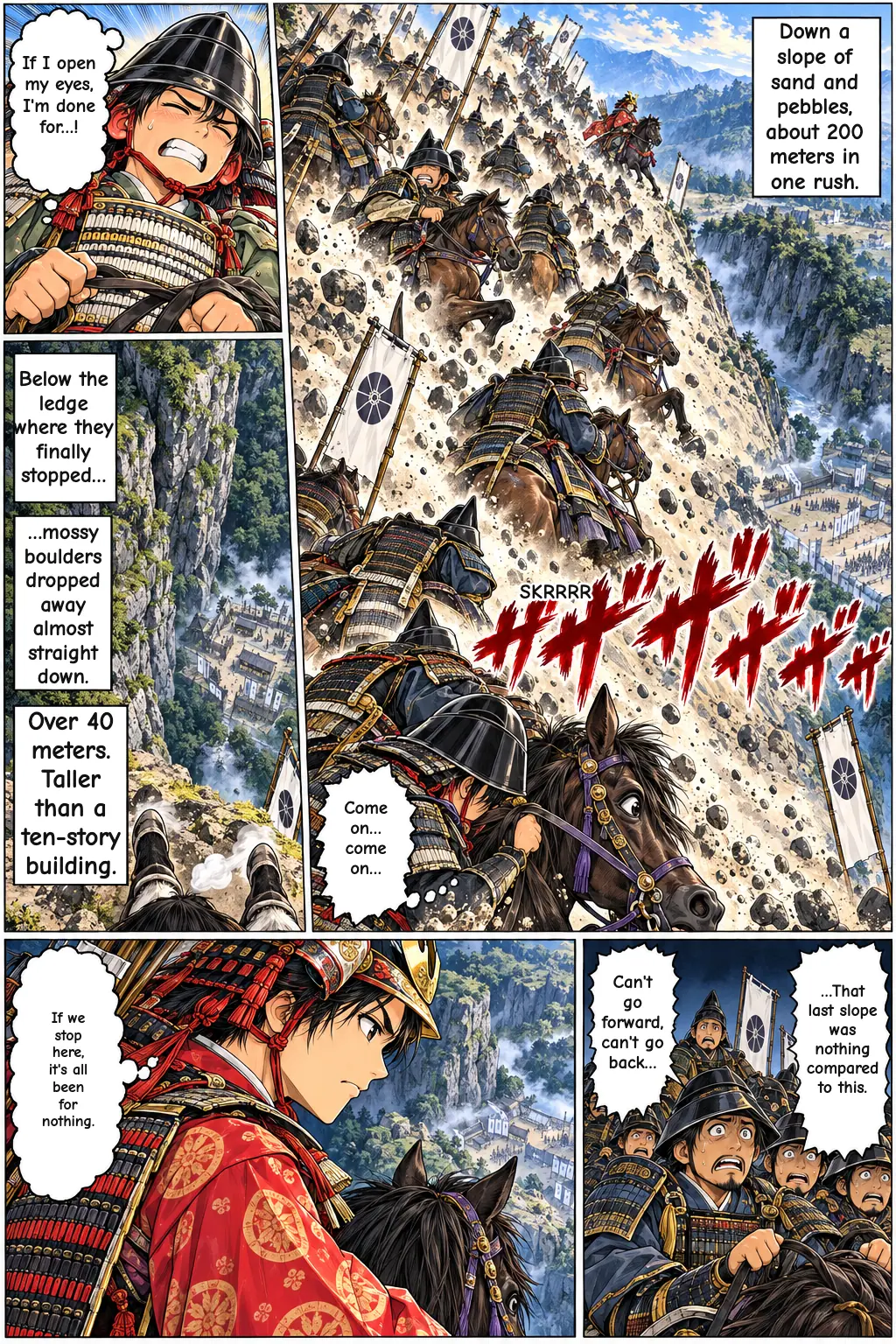
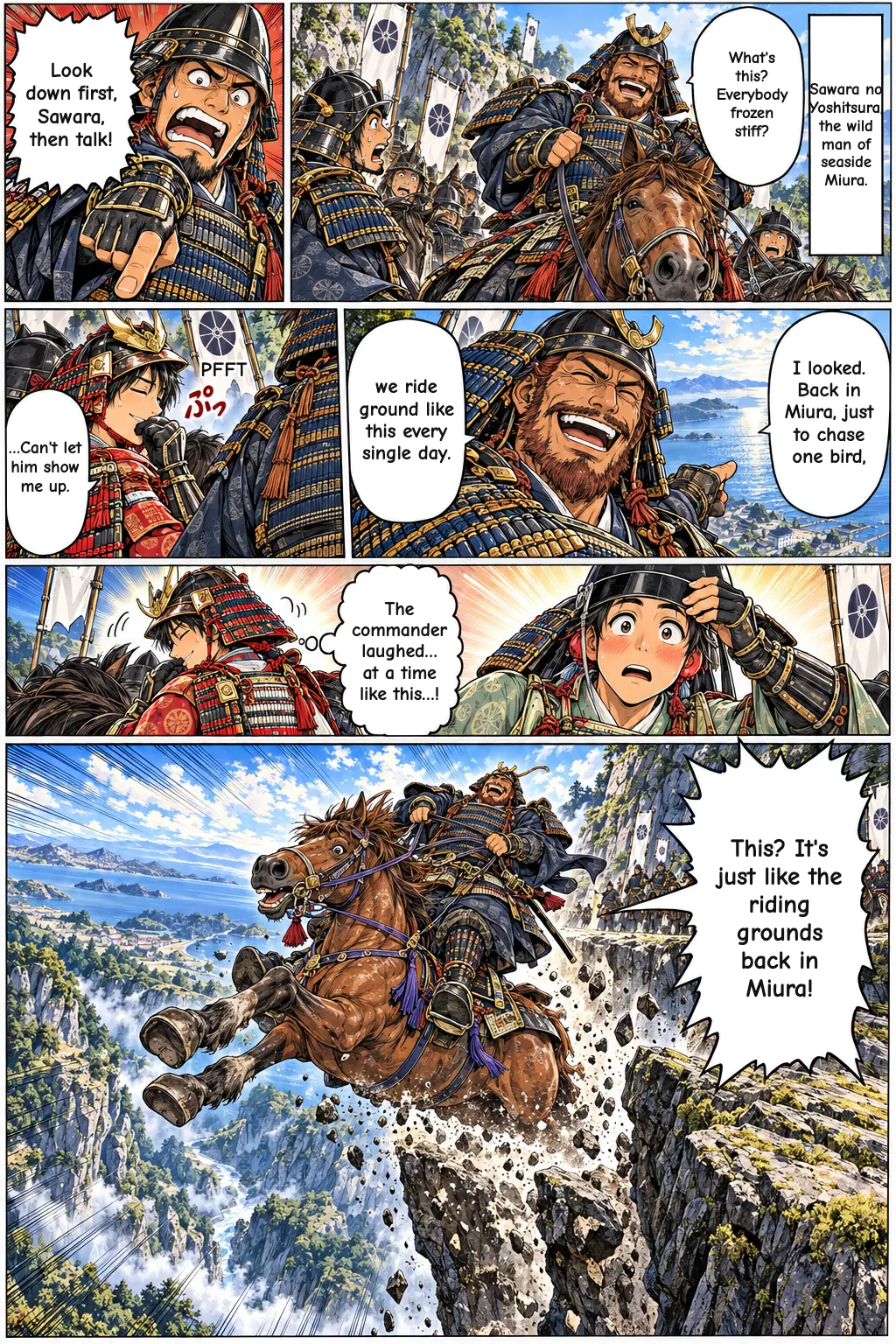
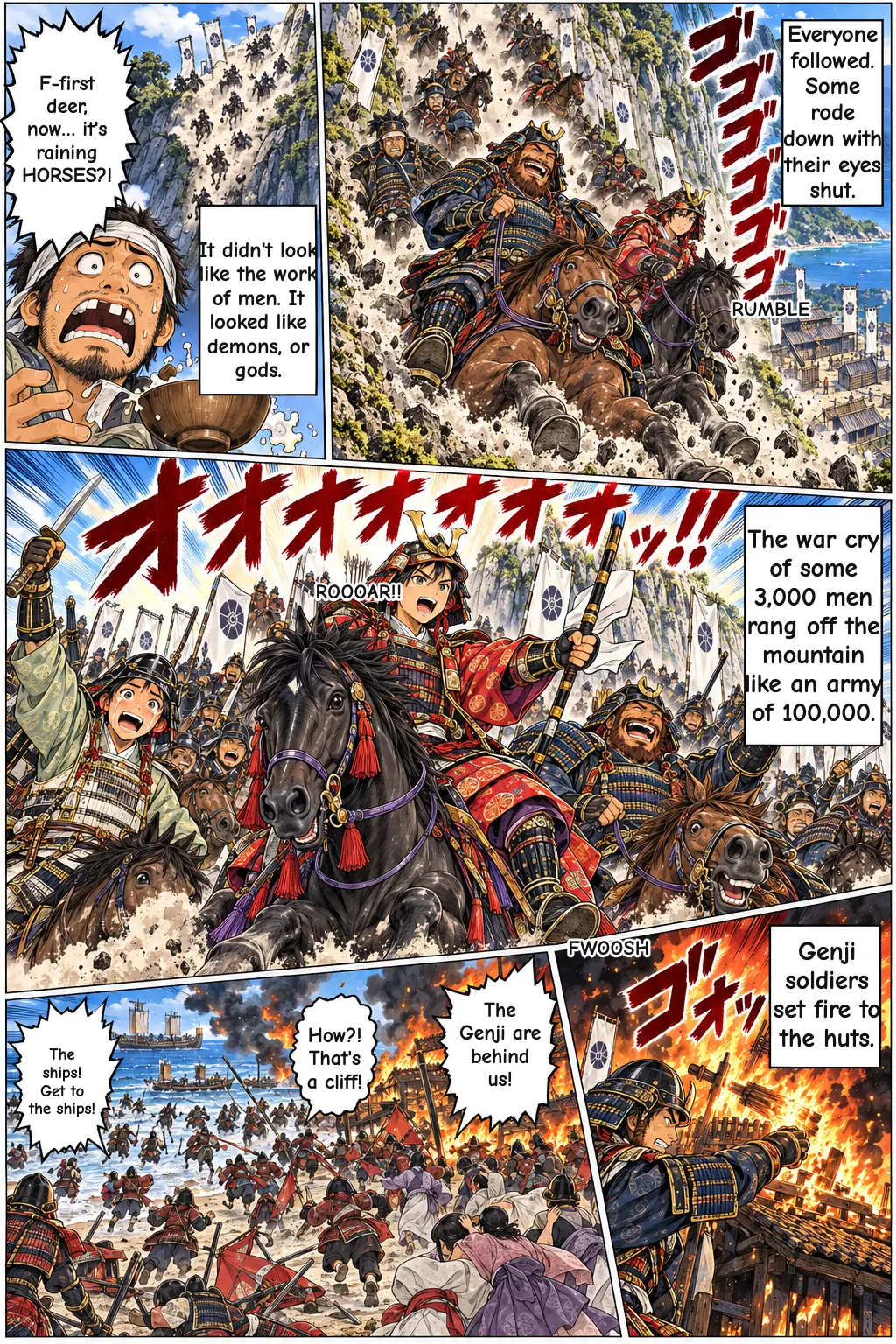
Partway down, the riders stopped above a mossy rock face that dropped about forty meters. Everyone hesitated until Sawara Jūrō Yoshitsura of the Miura clan joked that back home in Miura they rode over ground like this every day, and he charged down first. The others followed, some with their eyes shut. The tale says the descent looked like the work of demons or gods, not of people. At the bottom, 3,000 men raised a war cry that echoed off the hills like an army of 100,000. Fires were set in the Taira camp, and the defenders ran for their boats. Overloaded ships sank, and even Noto no Kami Noritsune, a Taira warrior who had never lost a fight, retreated to Yashima by sea. This charge became famous as the Hiyodori-goe no sakaotoshi, the ride down the slope at Hiyodori-goe.
The Death of Tadanori
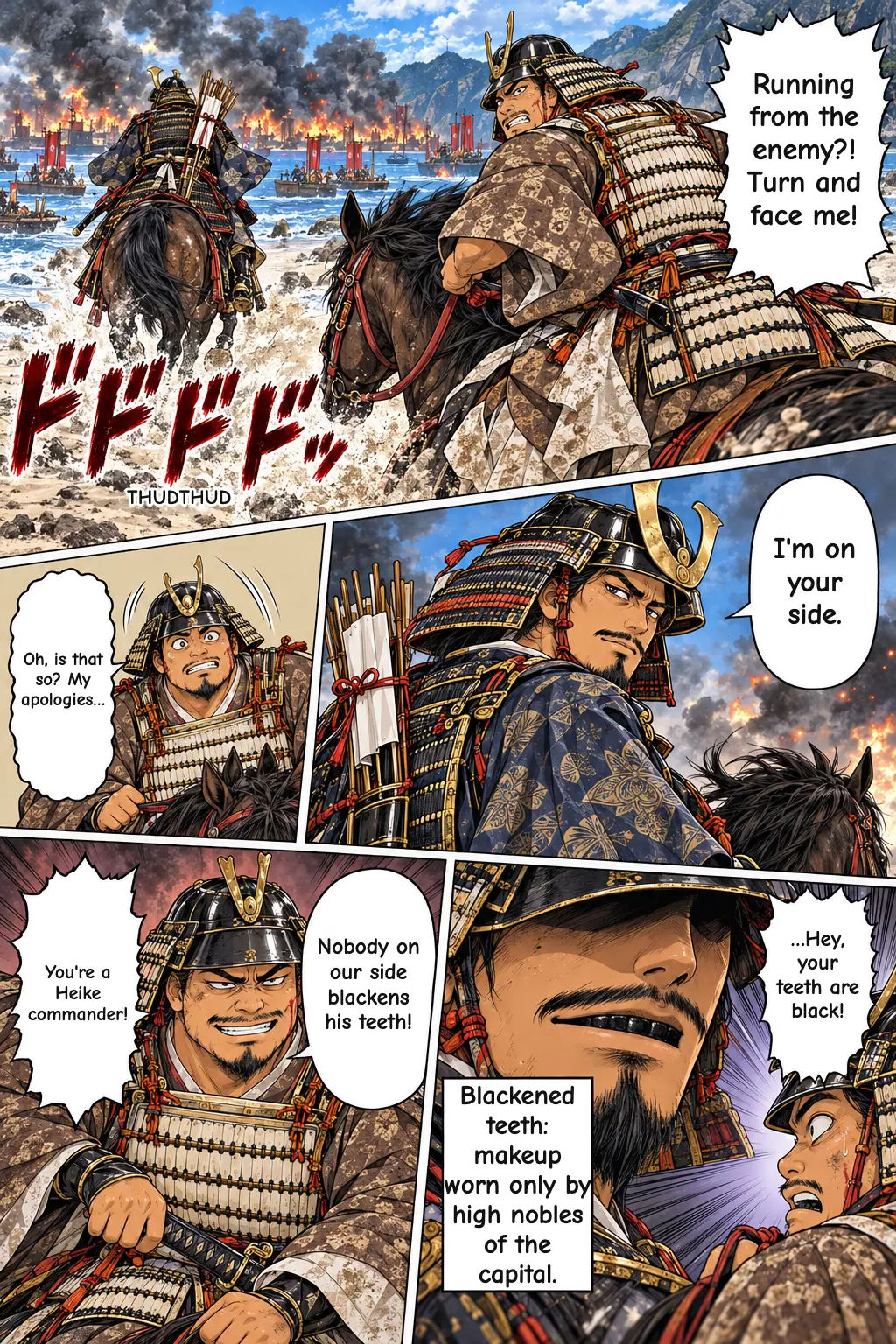
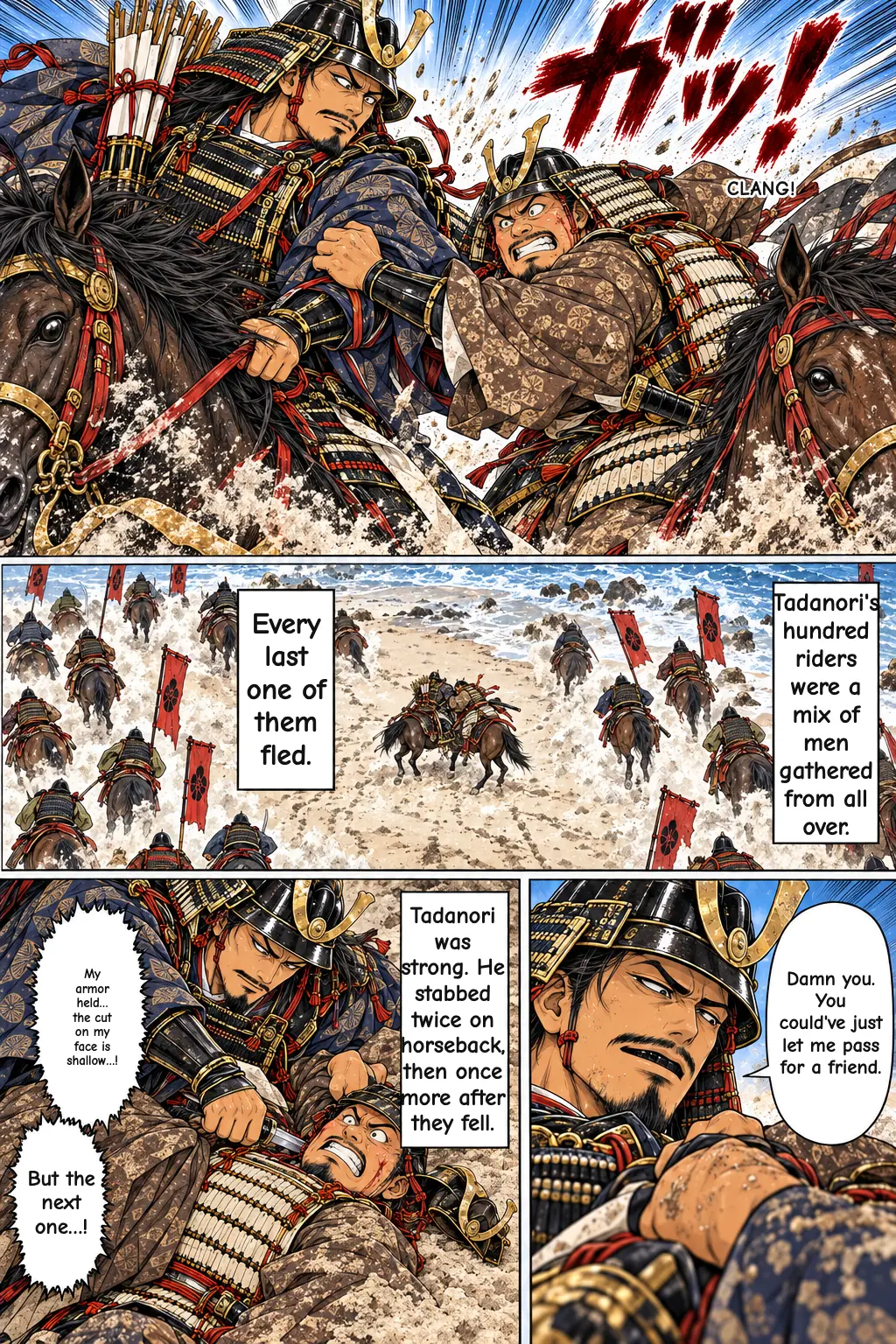
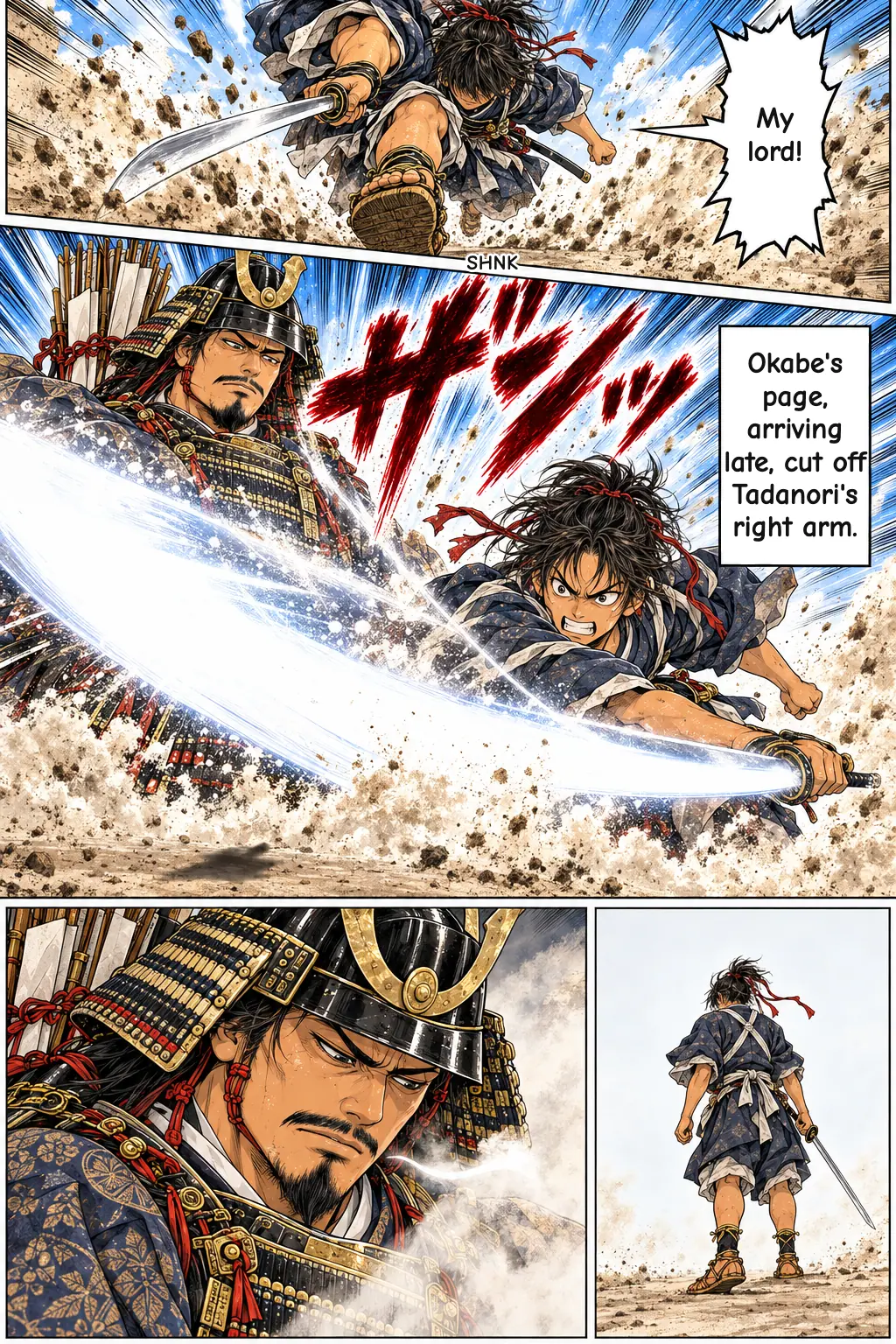
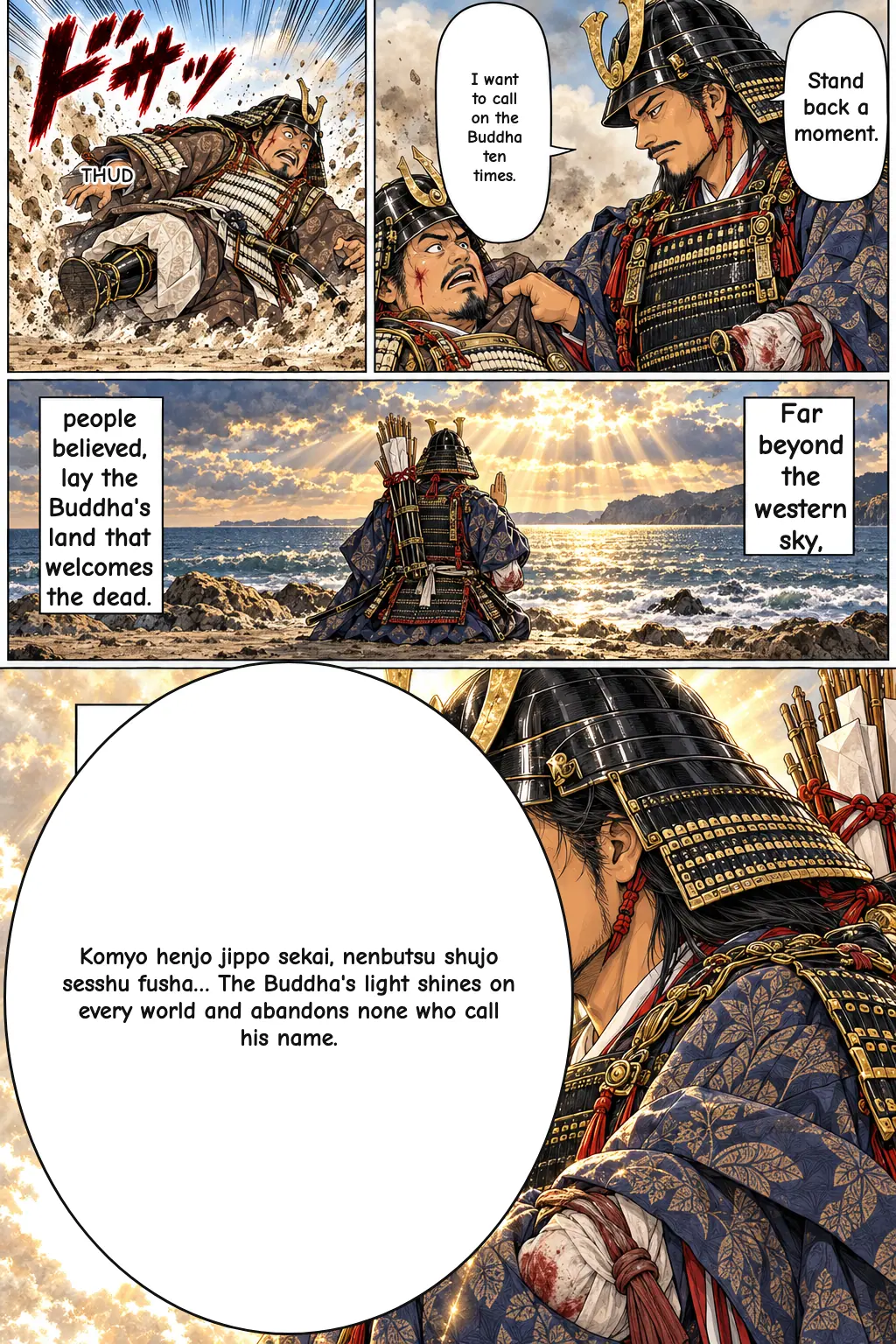
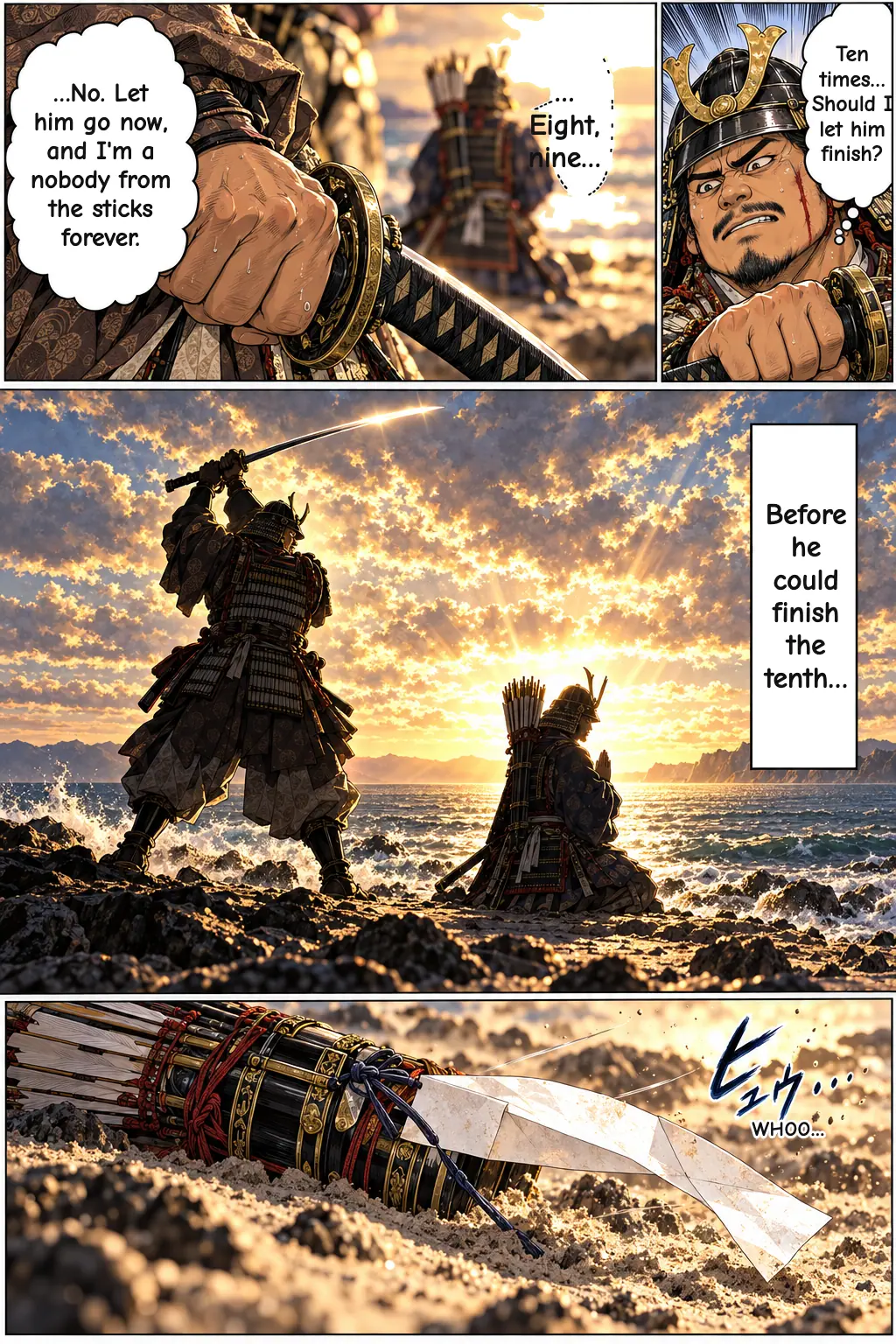
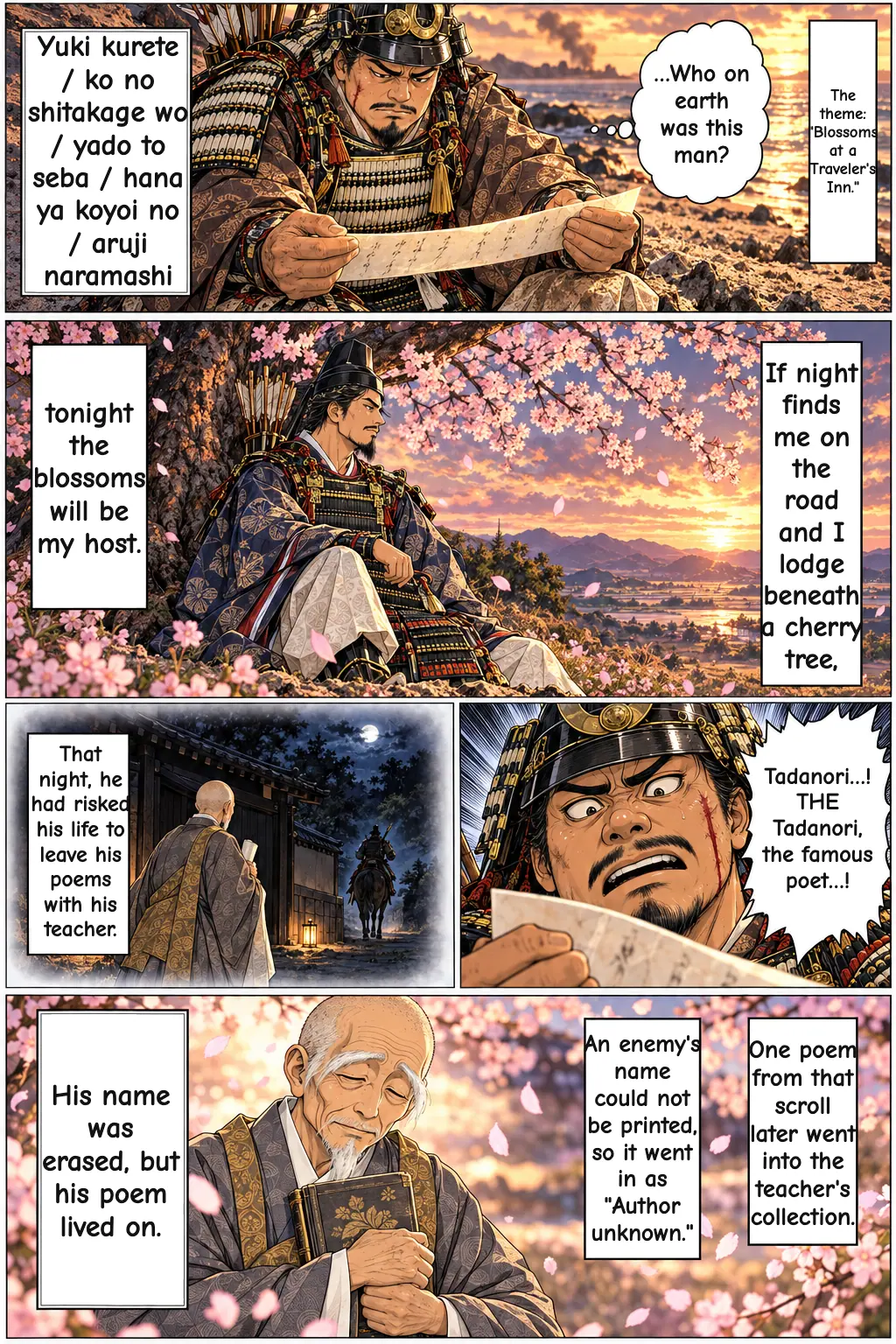
Taira no Tadanori, a younger brother of the clan's late leader Taira no Kiyomori, commanded the western side. He was also a respected poet. Earlier in the tale, on the night the Taira fled the capital, he rode back to leave a scroll of his poems with his teacher, the poet Fujiwara no Shunzei. At Ichi-no-Tani he withdrew calmly in the middle of the chaos. When the Minamoto warrior Okabe no Rokuyata chased him, Tadanori claimed to be on the Minamoto side, but his blackened teeth gave him away as a Taira nobleman. The two fought hand to hand. Tadanori stabbed at Rokuyata three times, but the armor held. Rokuyata's servant boy then cut off Tadanori's right arm. Tadanori threw Rokuyata aside, called on Amida Buddha ten times as he prayed for rebirth in the Pure Land, and was beheaded.
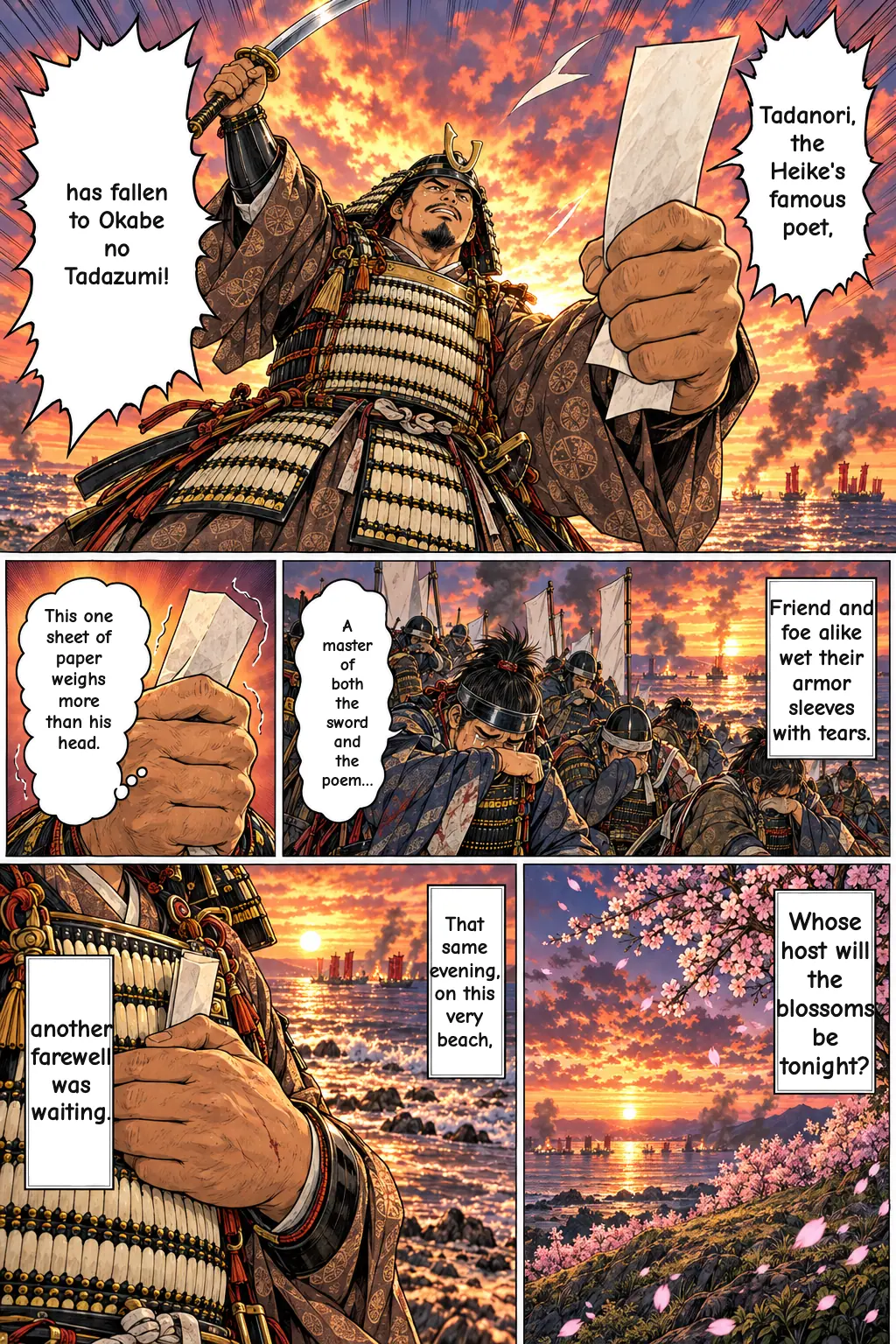
Rokuyata did not know whose head he had taken until he found a poem tied to the man's quiver. Its title was 'Flowers at a Traveler's Lodging,' and in it, a traveler caught out by nightfall thinks the cherry blossoms will be his host if he sleeps under a tree. The poem was signed with Tadanori's name. When Rokuyata announced who he had killed, the tale says that friends and enemies alike wept for a commander who was skilled in both war and poetry.
What the Story Says About Its Time
These chapters bring together two sides of the Heike. One is the rough, practical courage of the eastern warriors, who trust an old horse and a hunter's knowledge and treat a cliff like a riding ground. The other is the refined court culture of the Taira, which ends in sad, beautiful deaths. Tadanori's poem is what lets him be remembered as a poet and not just as one more head taken in battle. This fits the Buddhist theme that opens the whole epic: nothing lasts, and the proud will fall.
The battle of Ichi-no-Tani really happened in 1184, but the Heike is literature, not a war record. Historians still debate where the descent actually took place, who led it, and how steep the slope really was. Some think the story combined or exaggerated separate events.
What the Manga Changed
In the original, the line about deer comes from the old hunter. The manga's scene of the Taira laughing that only deer could come down is a dramatic addition. The original gives distances but never an angle for the cliff, so the steep drawn cliff is the artist's interpretation. The tale also describes the whole fortress area, not the cliff, with the image of a standing folding screen. The hunter's looks and way of speaking, the weather in the mountains, Yoshitsune's horse, the faces of individual soldiers, and the details of the fire and the ships were all created for the manga. The basic steps of the Tadanori fight (the three stabs, the boy cutting off his arm, the throw) follow the original, but the exact movements are drawn freely. The flashback linking the quiver poem to the scroll he left with Shunzei is also a manga choice. In the original, these are two separate things.
Where to Read It
The Tale of the Heike is available in several complete English translations, and the Ichi-no-Tani chapters in Book Nine are some of its best-known scenes. If you'd like to see the cliff ride and Tadanori's last stand in pictures first, Episode 10 of THE TALE OF THE HEIKE: The Samurai War of Genpei is on this page. Every episode is free to read, and you don't need to sign up. Start from Episode 1 to follow the Taira from their peak to their fall.
Characters in this episode
Minamoto no Yoshitsune
The young Minamoto general who leads his riders down the cliff at Hiyodori-goe and goes down first himself.
Taira no Tadanori
A Taira commander and poet, younger brother of Kiyomori, who is killed at Ichi-no-Tani and identified by a poem tied to his quiver.
Okabe no Rokuyata
A warrior from Musashi province who kills Tadanori and only learns who he was by reading the poem.
Washio Saburō Yoshihisa
The son of an old local hunter who guides Yoshitsune through the mountains and is given his warrior's name on the spot.
Sawara Jūrō Yoshitsura
A warrior of the Miura clan who charges first down the last rock face while everyone else hesitates.
Beppu Kotarō Kiyoshige
An 18-year-old warrior who suggests letting an old horse lead the lost army.
FAQ
What happened at the Battle of Ichi-no-Tani?
In 1184, during the Genpei War, Minamoto forces attacked the Taira stronghold at Ichi-no-Tani, near present-day Kobe. In the Tale of the Heike, Yoshitsune's surprise charge down the cliff behind the fortress breaks the Taira defense, and the Taira escape by sea toward Yashima.
What is Hiyodori-goe no sakaotoshi?
It means the ride down the slope at Hiyodori-goe, the Tale of the Heike's famous scene of Yoshitsune leading horsemen down a slope thought to be passable only by deer. Historians still debate the exact location and how much of the scene really happened.
Why did Yoshitsune use an old horse?
His army got lost in the mountains, and a young warrior remembered his father's advice that an old horse can find the road. Yoshitsune knew an old Chinese saying with the same idea and sent the horse ahead to lead them.
How did Taira no Tadanori die?
While retreating, he was caught by Okabe no Rokuyata. After Rokuyata's servant cut off his right arm, Tadanori prayed to Amida Buddha and was beheaded. He was identified by a poem tied to his quiver.
What is Tadanori's poem about?
Its title is 'Flowers at a Traveler's Lodging.' A traveler caught out by nightfall imagines sleeping under a tree with the cherry blossoms as his host. Because it was found on his body after the battle, it has long been read as a fitting last poem.