Episode 13An Emperor, Age 8, Carried Into the SeaThe Battle of Dan-no-ura / The Death of Tomomori
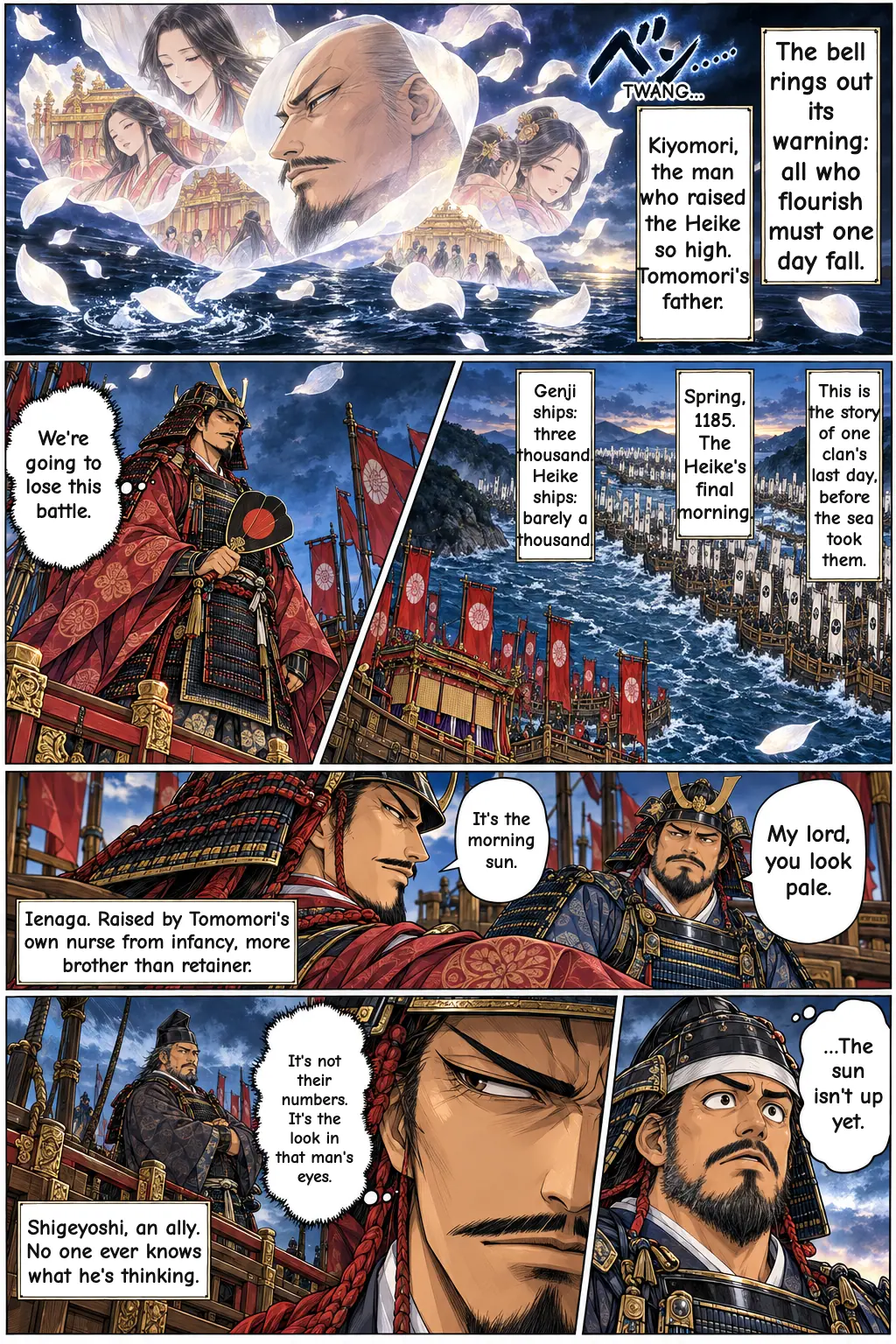
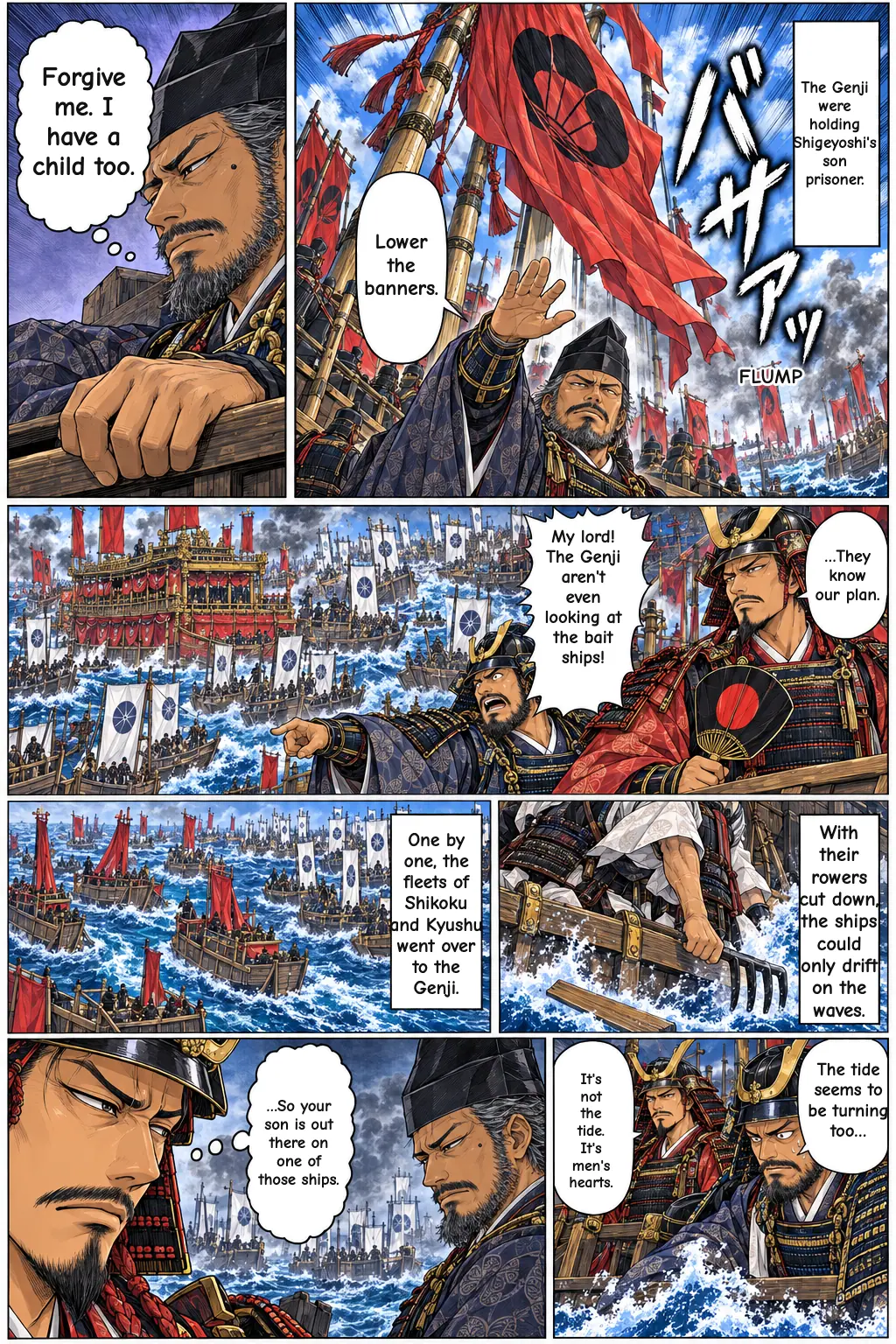
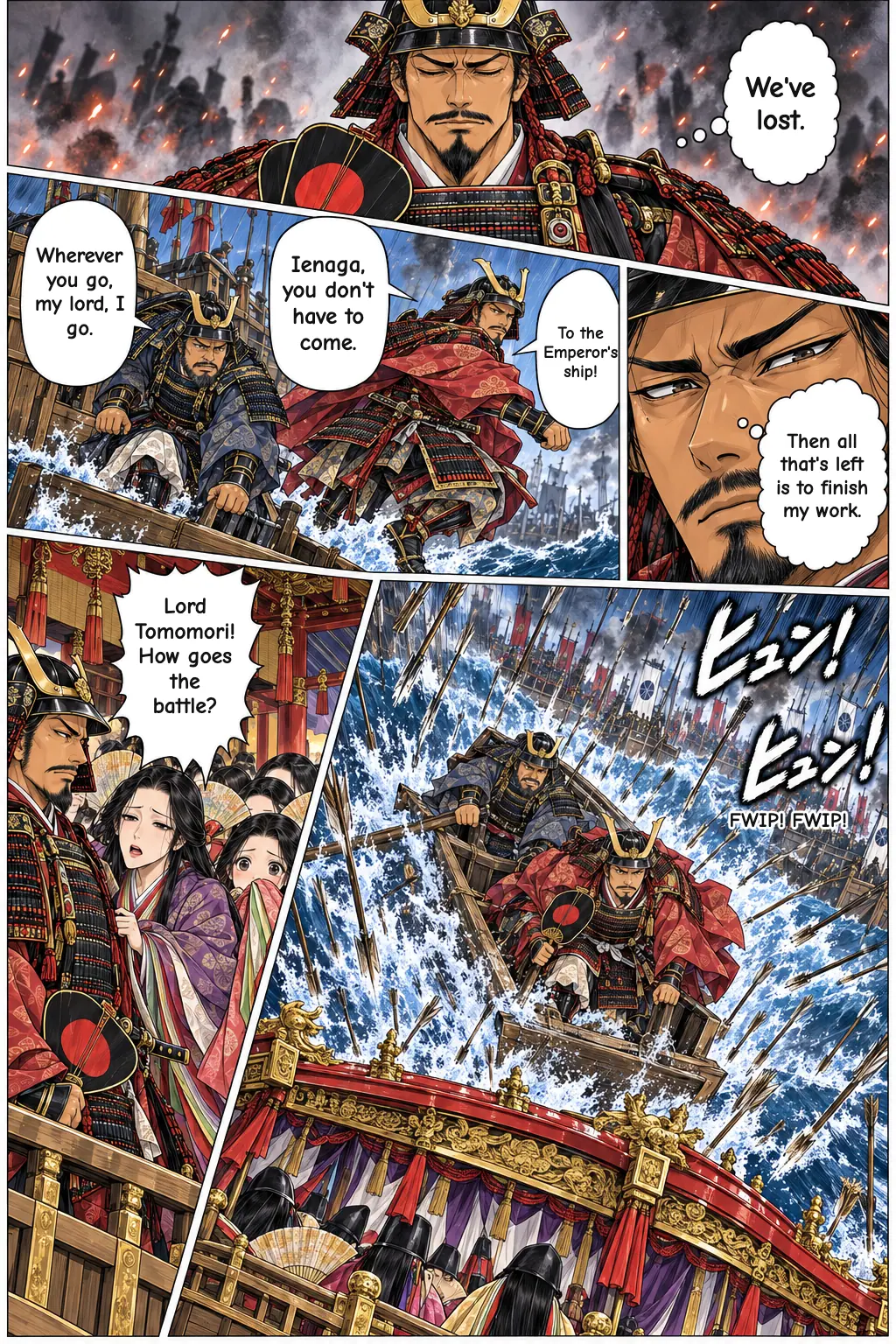
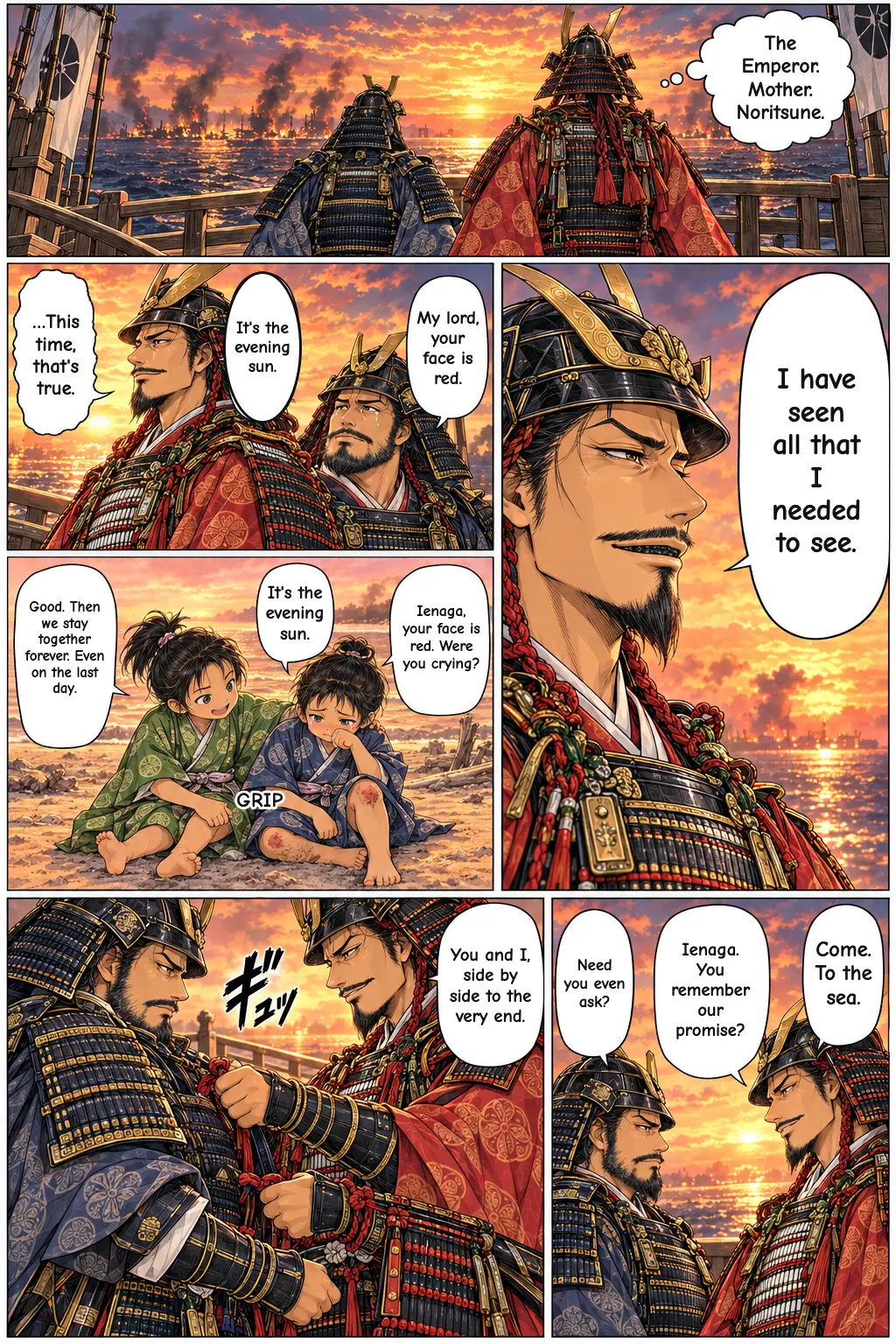
To the sound of a biwa, the Heike's final day begins. Taira no Tomomori is the first of his clan to realize the battle is lost. He watches a betrayal, the young Emperor and his grandmother sinking into the sea, and Noritsune's last fight. Then, saying "I have seen all that I needed to see," he takes the hand of Ienaga, the retainer who grew up beside him like a brother, and leaps into the waves.
The Battle of Dan-no-ura: What Happens in the Original
The Battle of Dan-no-ura is the climax of The Tale of the Heike (Heike Monogatari), the great Japanese war epic about the fall of the Taira clan (the Heike) to the Minamoto clan (the Genji). In the version usually treated as standard, the Kakuichi text, it takes up most of Book 11. The battle was fought in 1185 at sea, in the narrow strait between Honshu and Kyushu, near modern Shimonoseki.
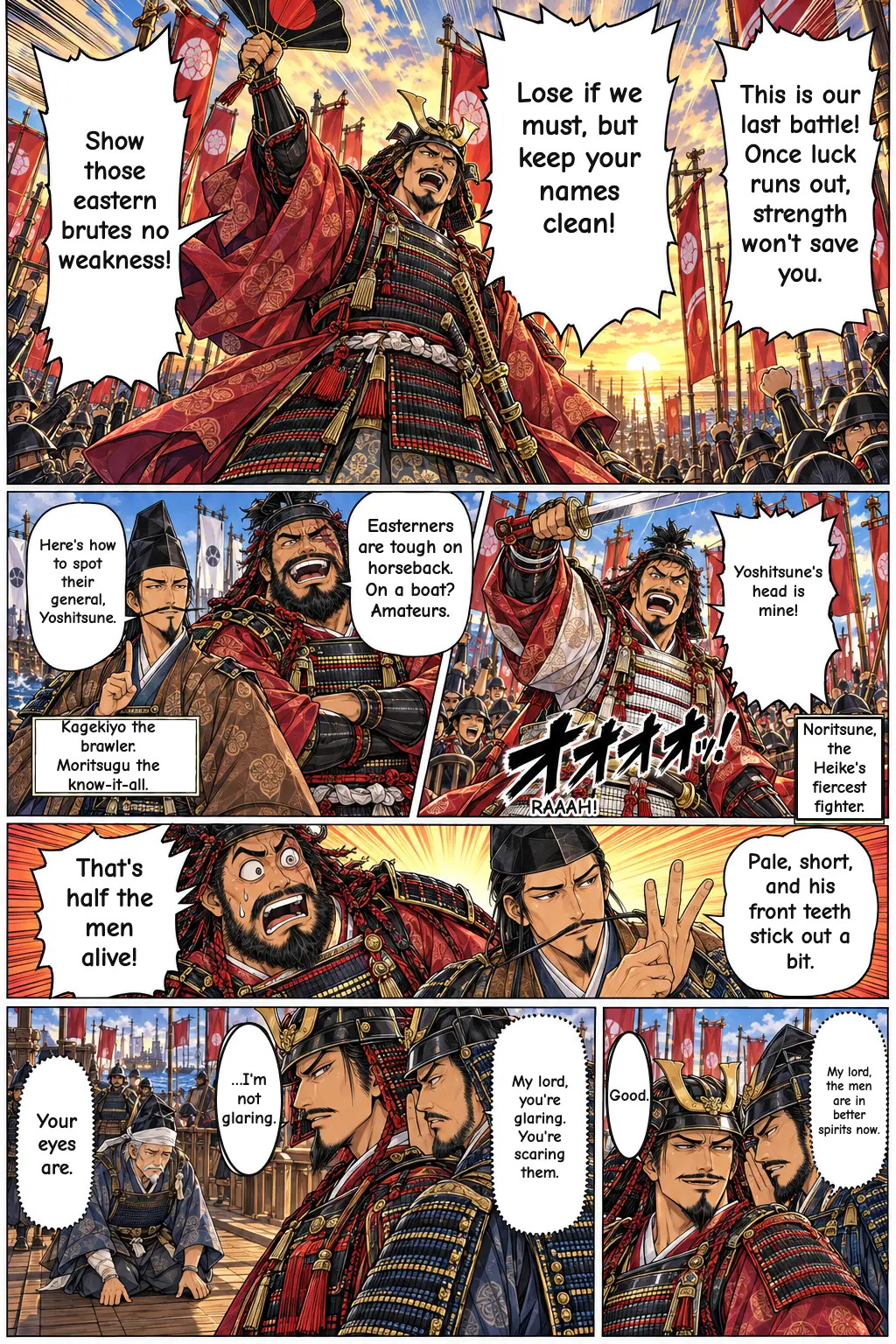
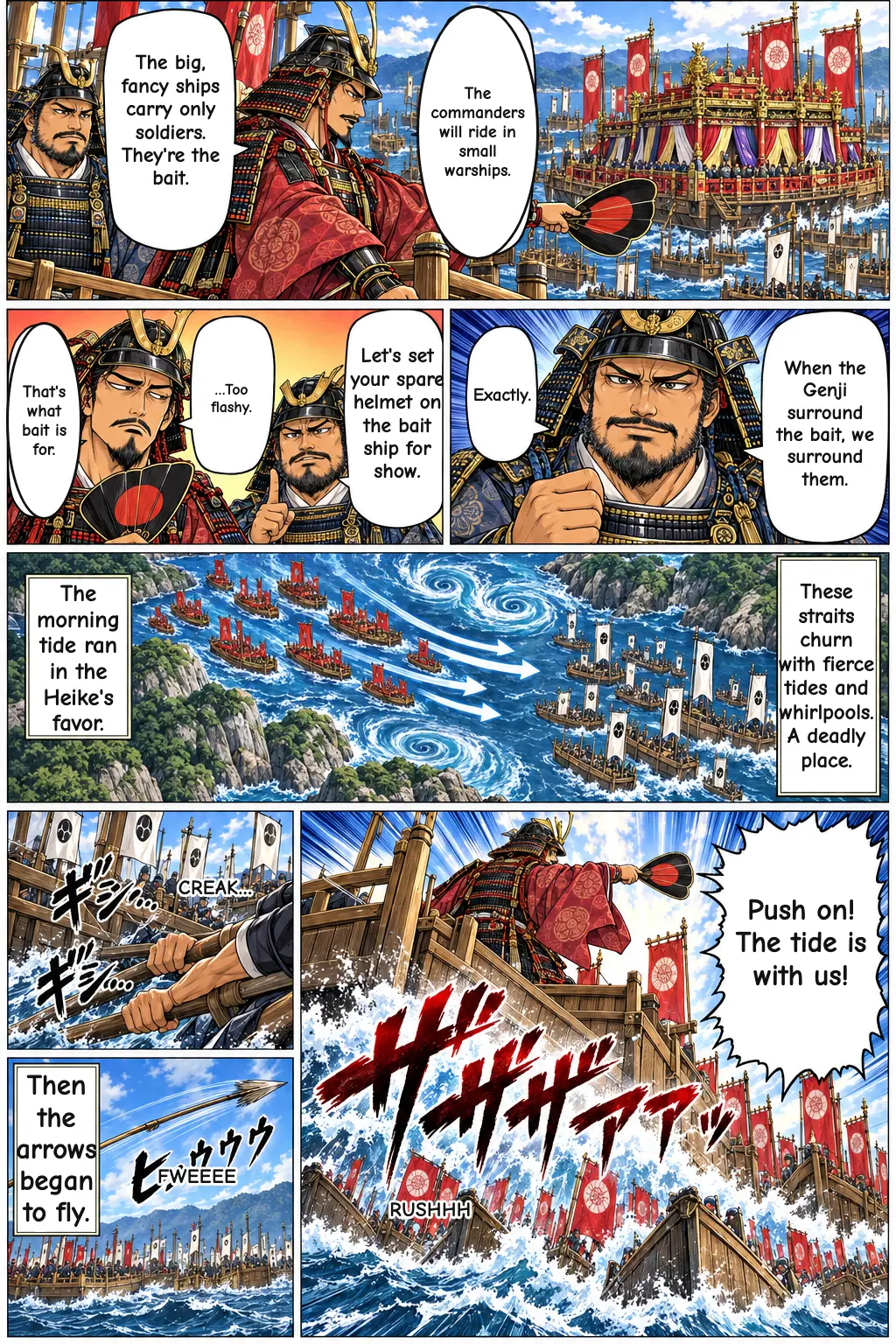
Before the fighting starts, the Heike are already losing allies. Tanzō, the head of the Kumano shrines, can't decide which side to back, so he has red and white roosters fight at a shrine. The white rooster, the Genji color, wins, and he brings his ships to the Minamoto side. The Genji gather about three thousand ships; the Heike have just over a thousand. On the Genji side, the commander Minamoto no Yoshitsune and his officer Kajiwara Kagetoki nearly draw swords over who will lead the first attack. Among the Heike, Taira no Tomomori, the clan's real battlefield leader, tells his men that luck may be gone but their names and honor still matter.
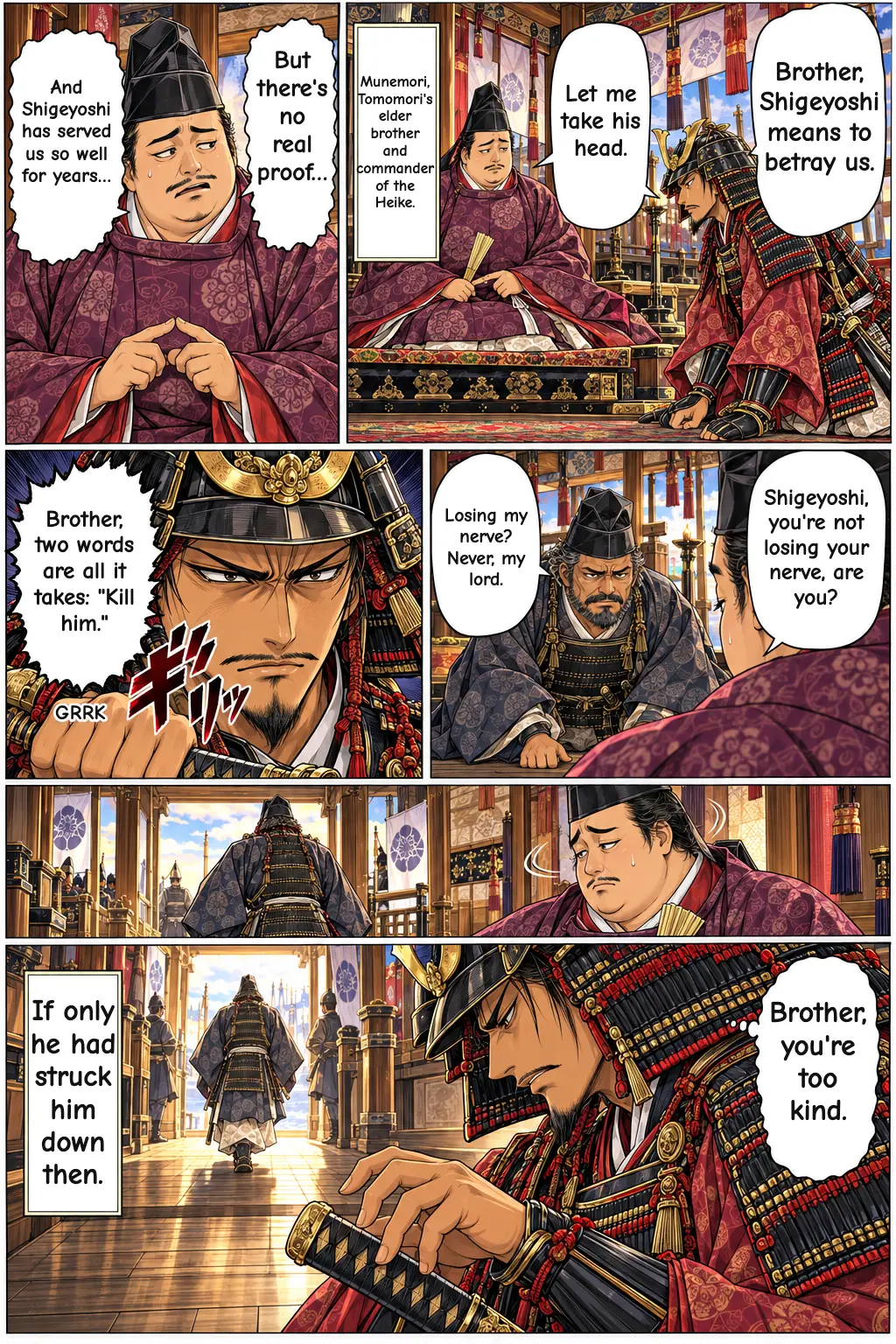
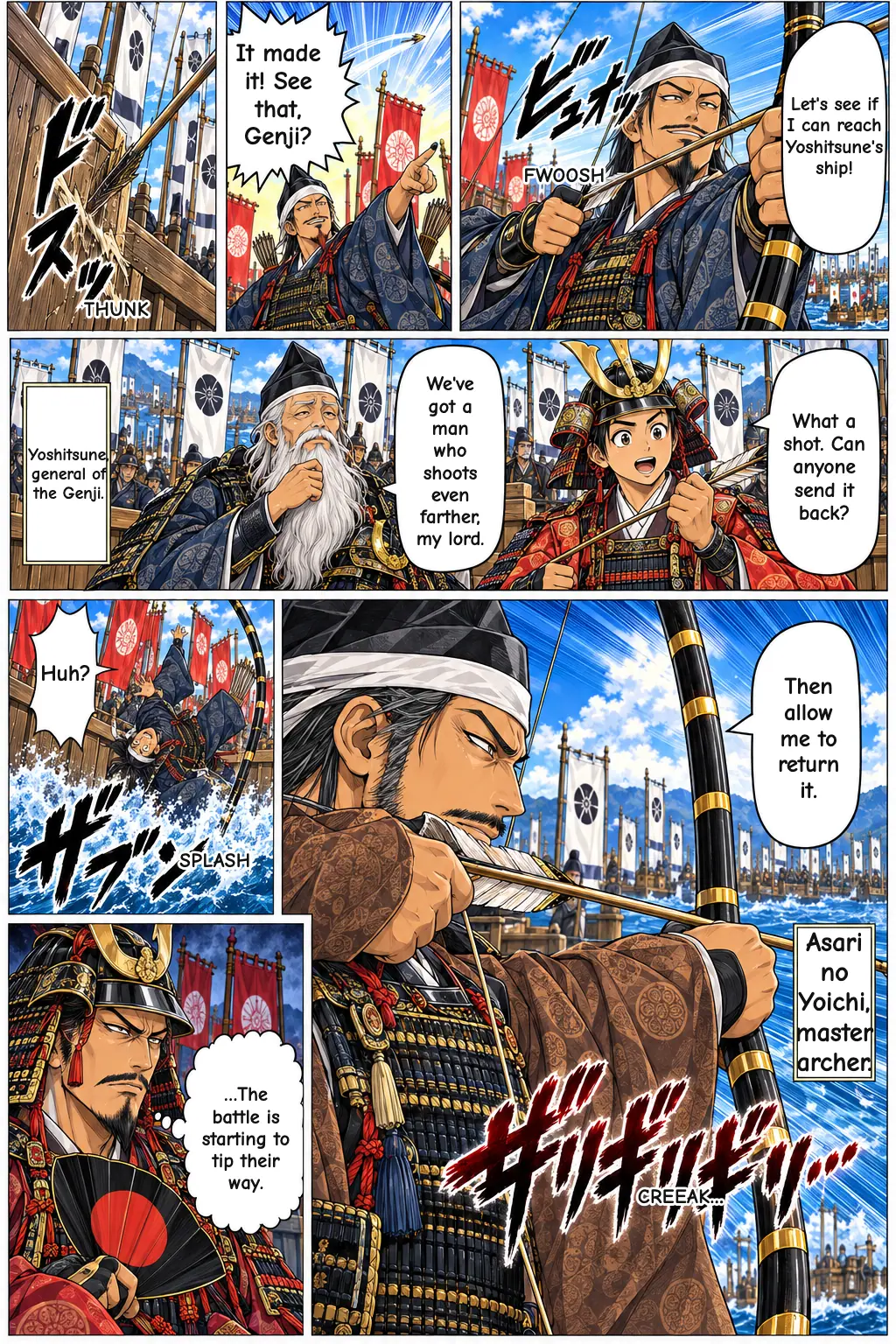
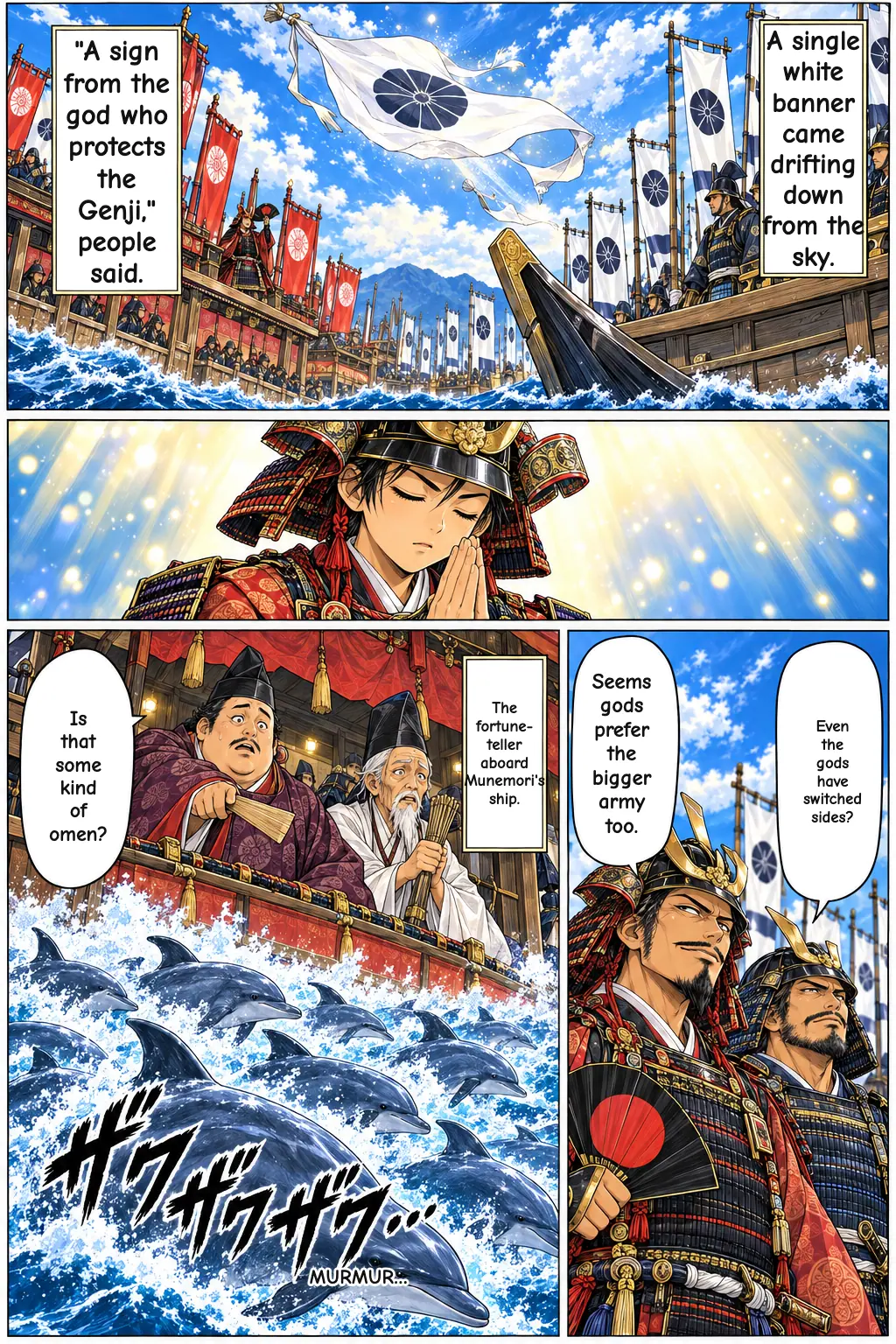
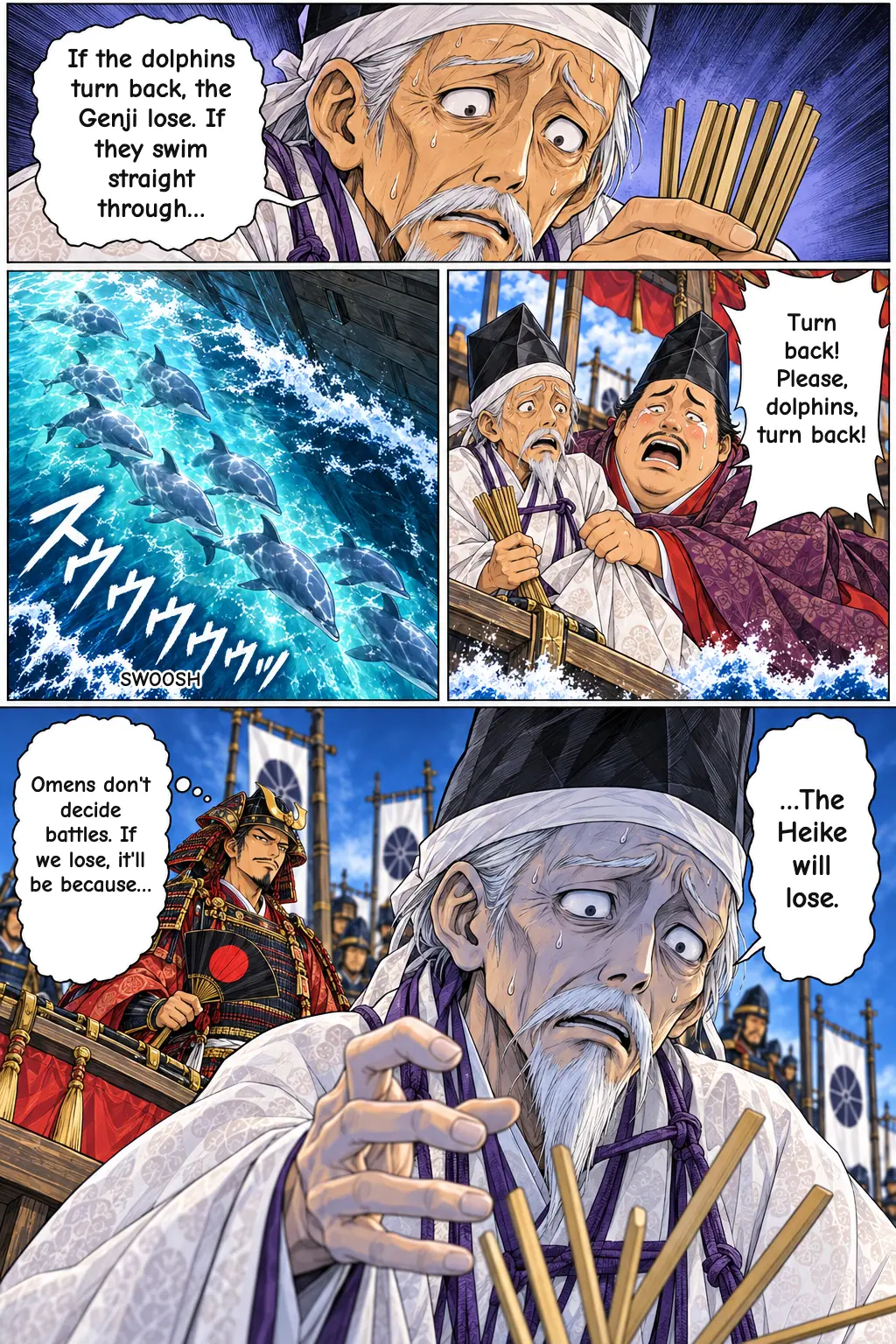
Tomomori also suspects that one of his own commanders, Taguchi Shigeyoshi of Awa province, plans to switch sides, and asks permission to cut him down. His older brother Munemori, head of the clan, refuses because there is no proof. At first the current in the strait favors the Heike, and both sides exchange long-range arrow shots. Then the omens turn. A white banner floats down from the sky onto a Genji ship, and a school of dolphins swims straight under the Heike fleet, which a diviner reads as a sign of the end. Shigeyoshi defects, reveals the Heike battle plan, and warriors from Shikoku and Kyushu turn against the Taira too.
The Emperor in the Sea and the Death of Tomomori
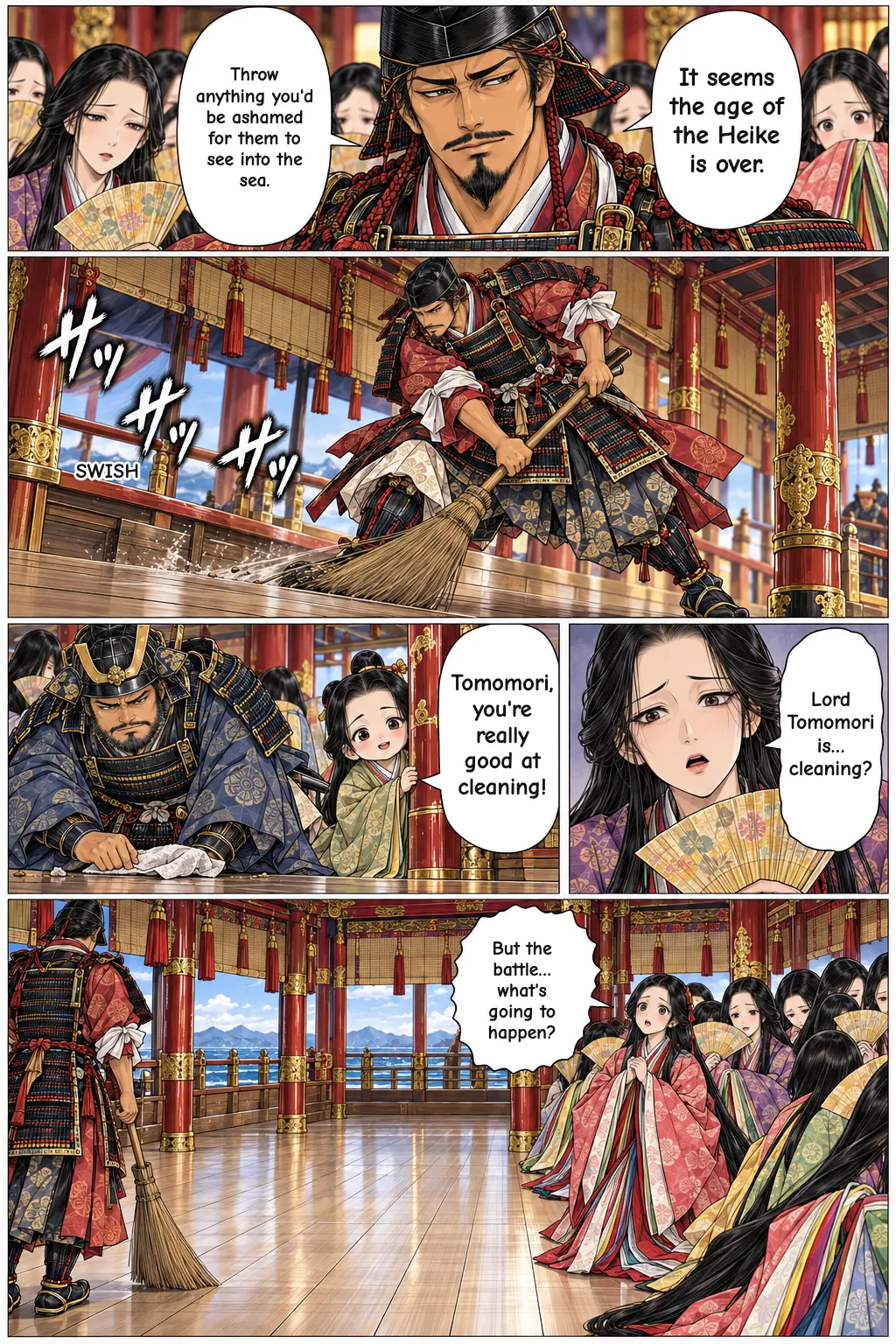
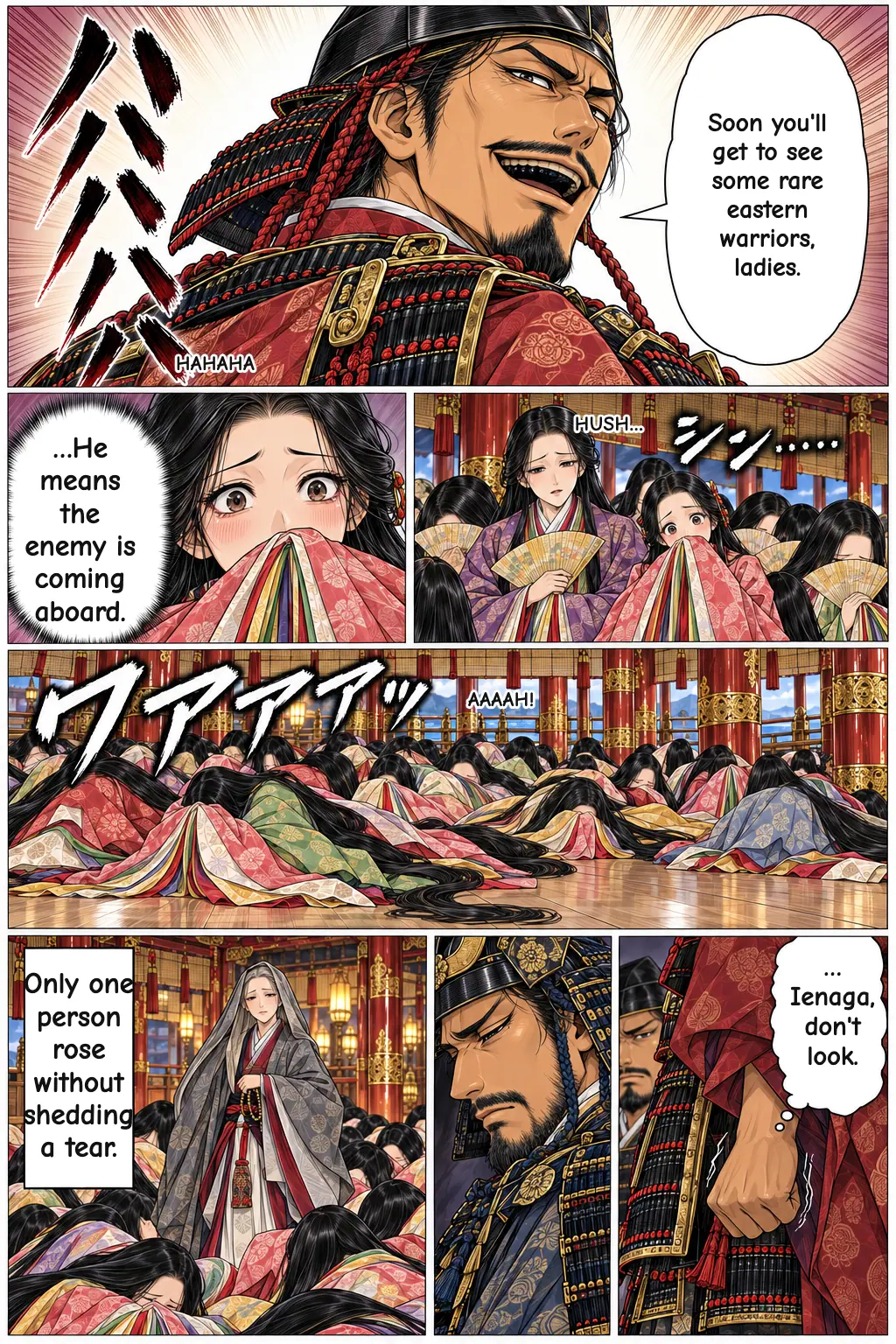
Once Genji warriors begin boarding the Heike ships, Tomomori goes to the imperial vessel and tells the court ladies to throw anything unsightly into the sea. He sweeps and cleans the deck himself. When the ladies ask how the battle is going, he laughs and says they'll soon get to meet some unusual men from the east. It's dark humor, and the women burst into tears.
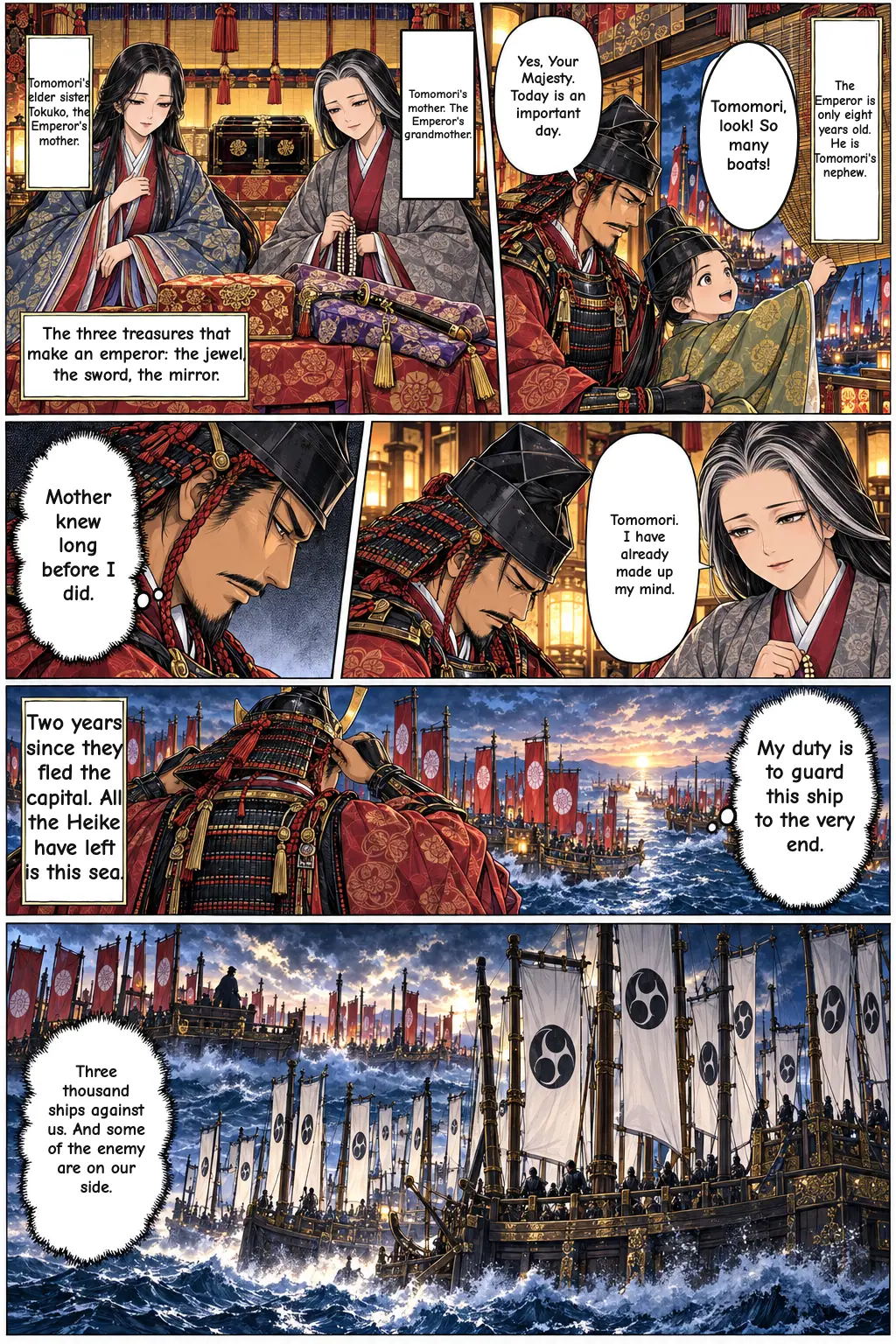
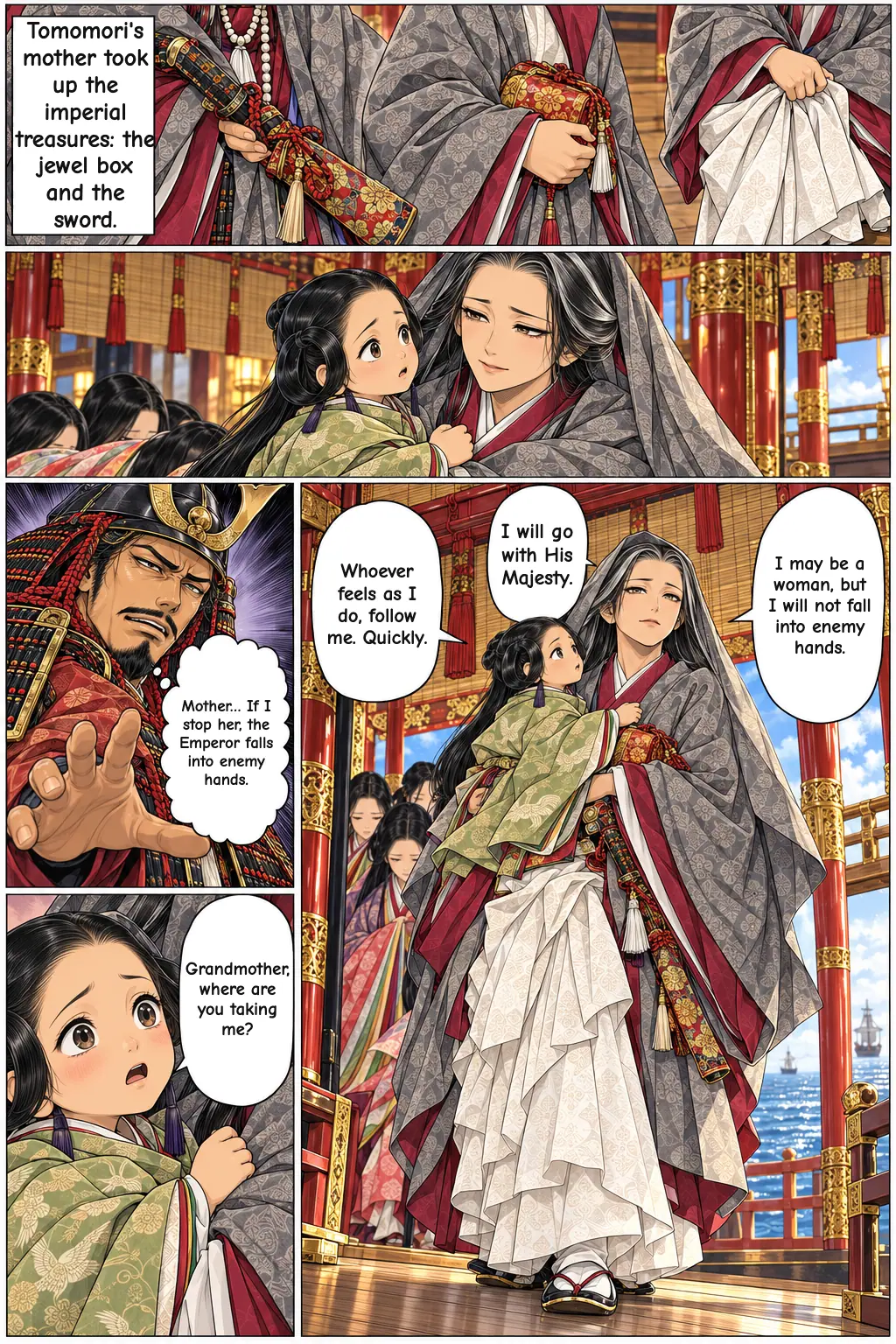
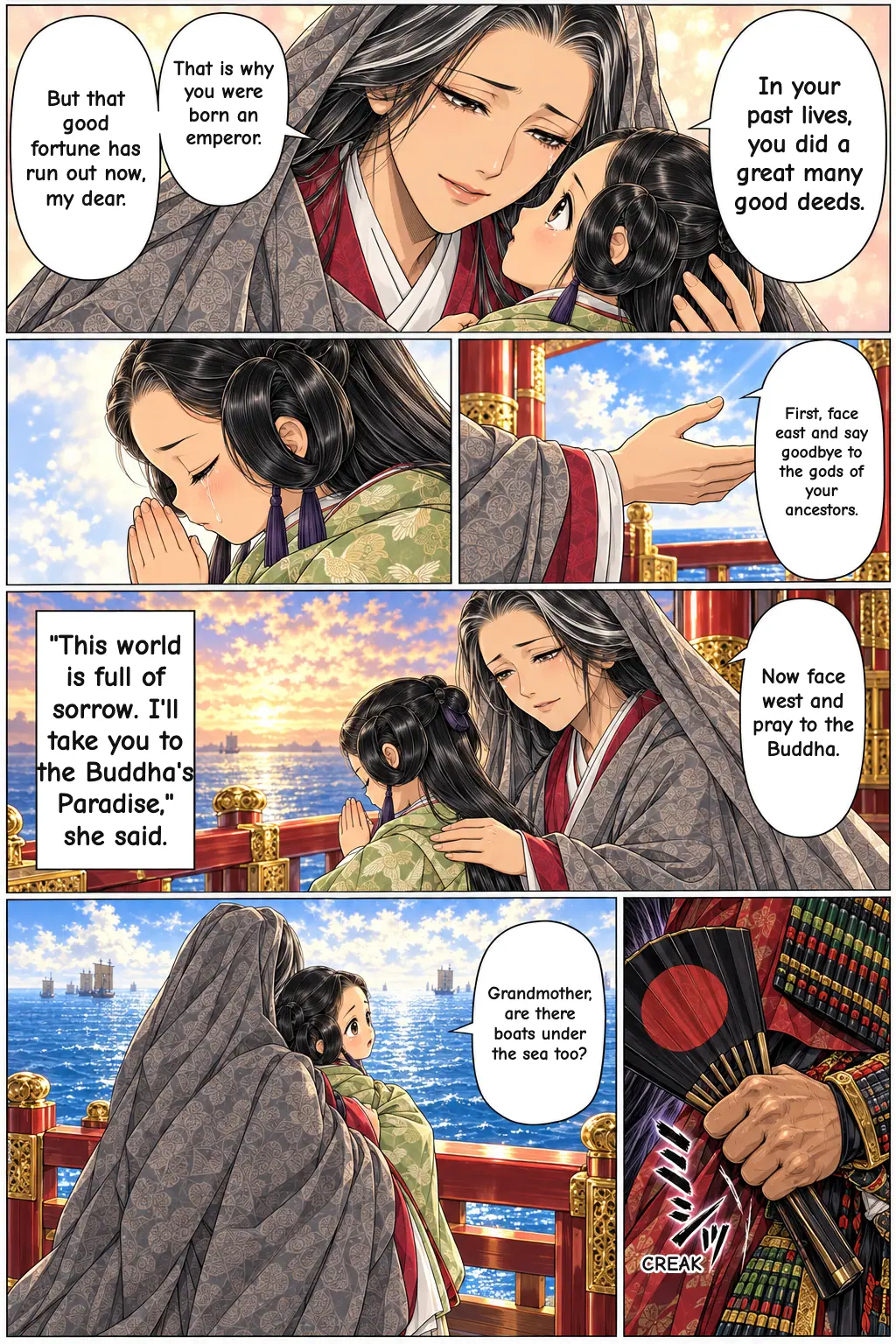
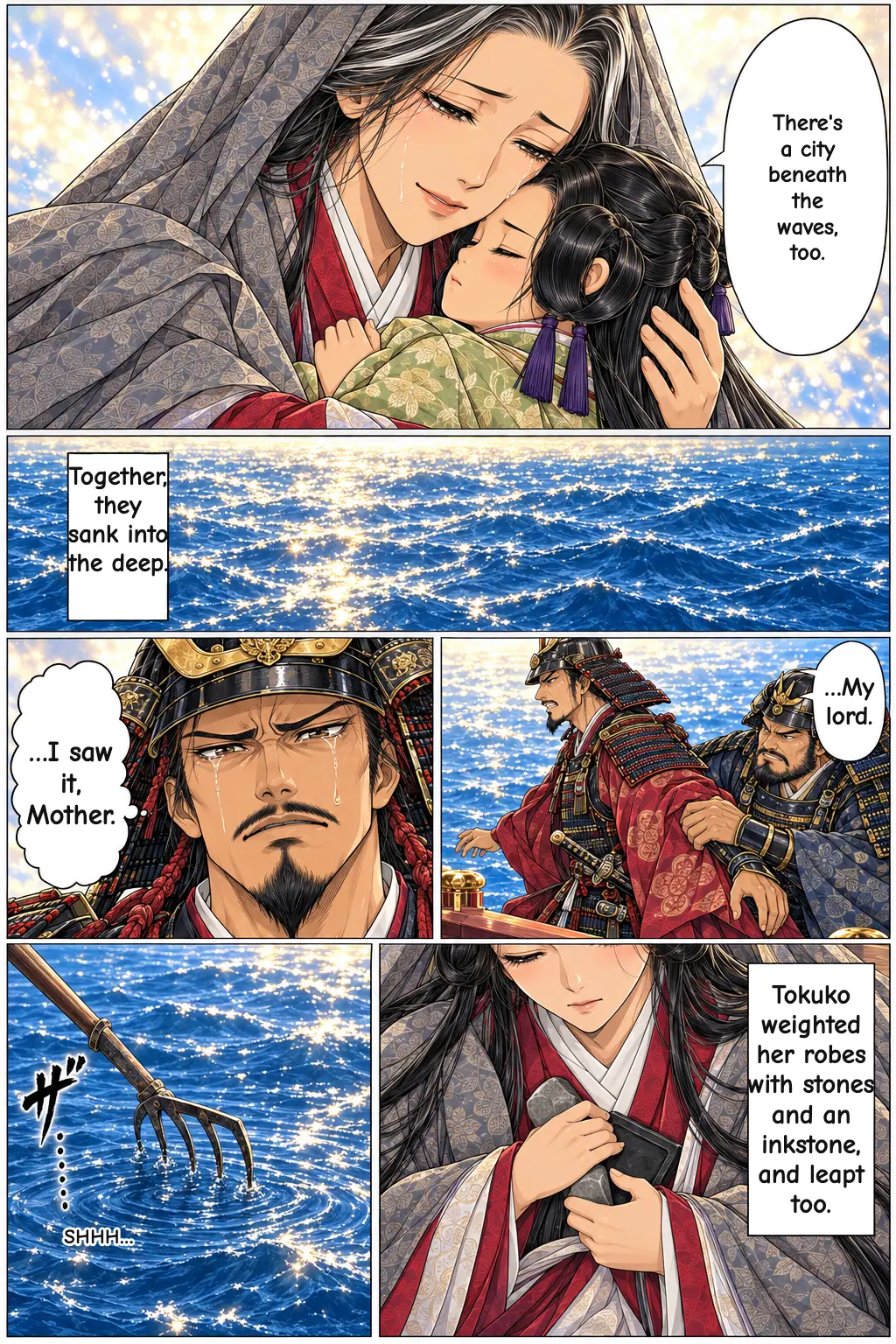
Lady Nii (Taira no Tokiko), widow of the clan's founder Kiyomori, has already decided what she will do. She tucks the sacred jewel under her arm, puts the sacred sword at her waist, and takes her grandson, the eight-year-old Emperor Antoku, in her arms. When the child asks where she's taking him, she tells him to bow east to the Ise Shrine and west toward the Buddha's Pure Land. She comforts him by saying there is a capital beneath the waves as well, and they sink together.
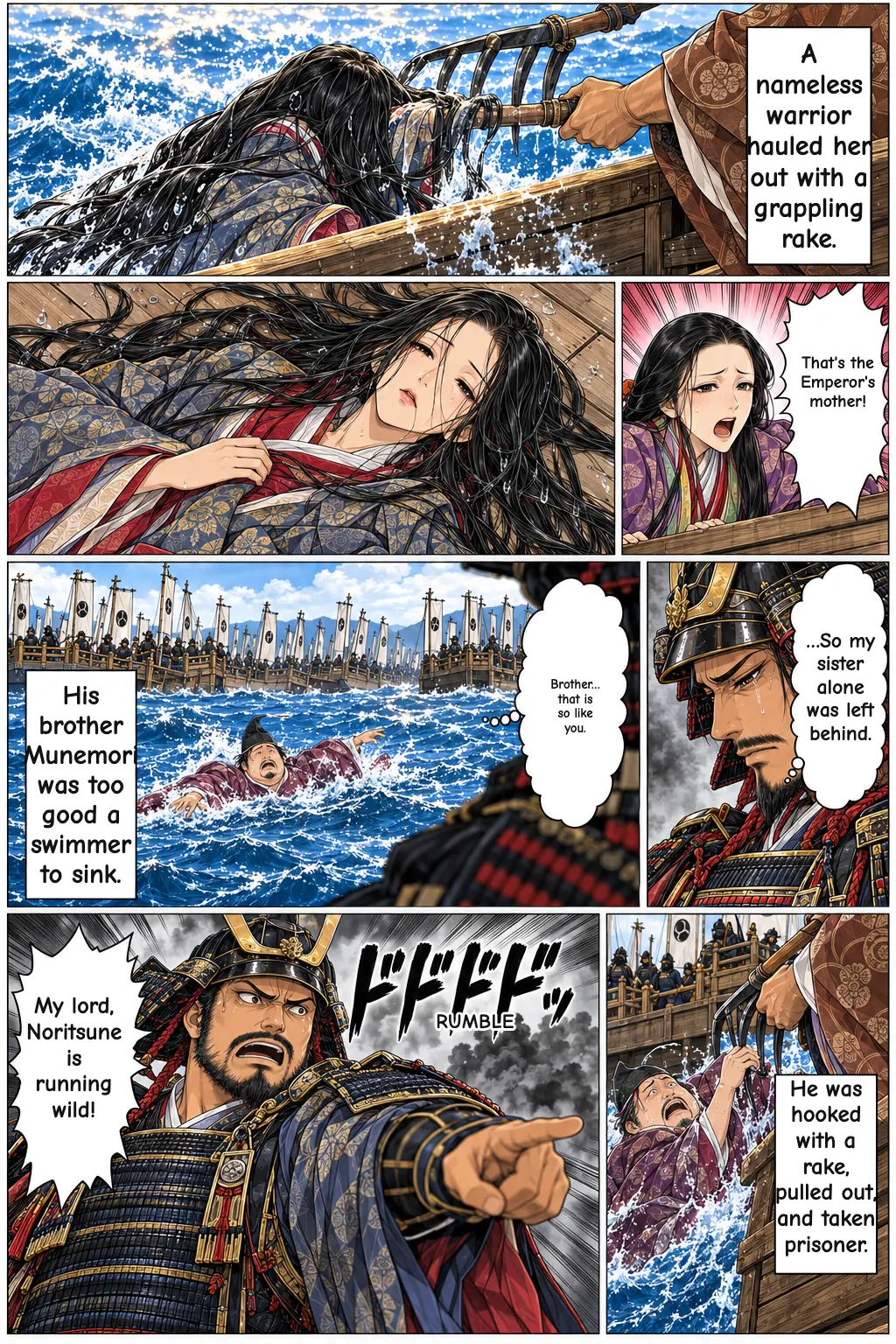
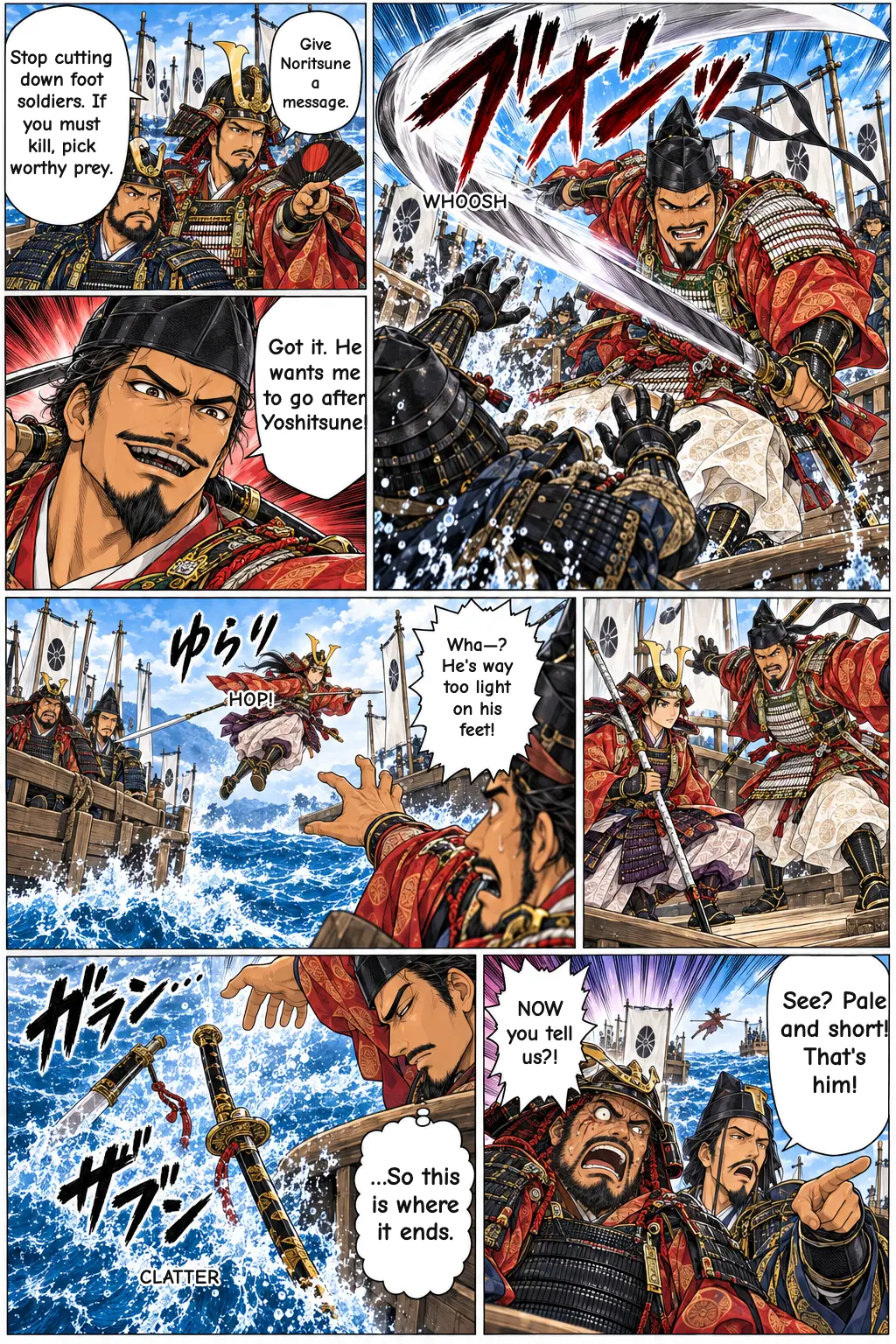
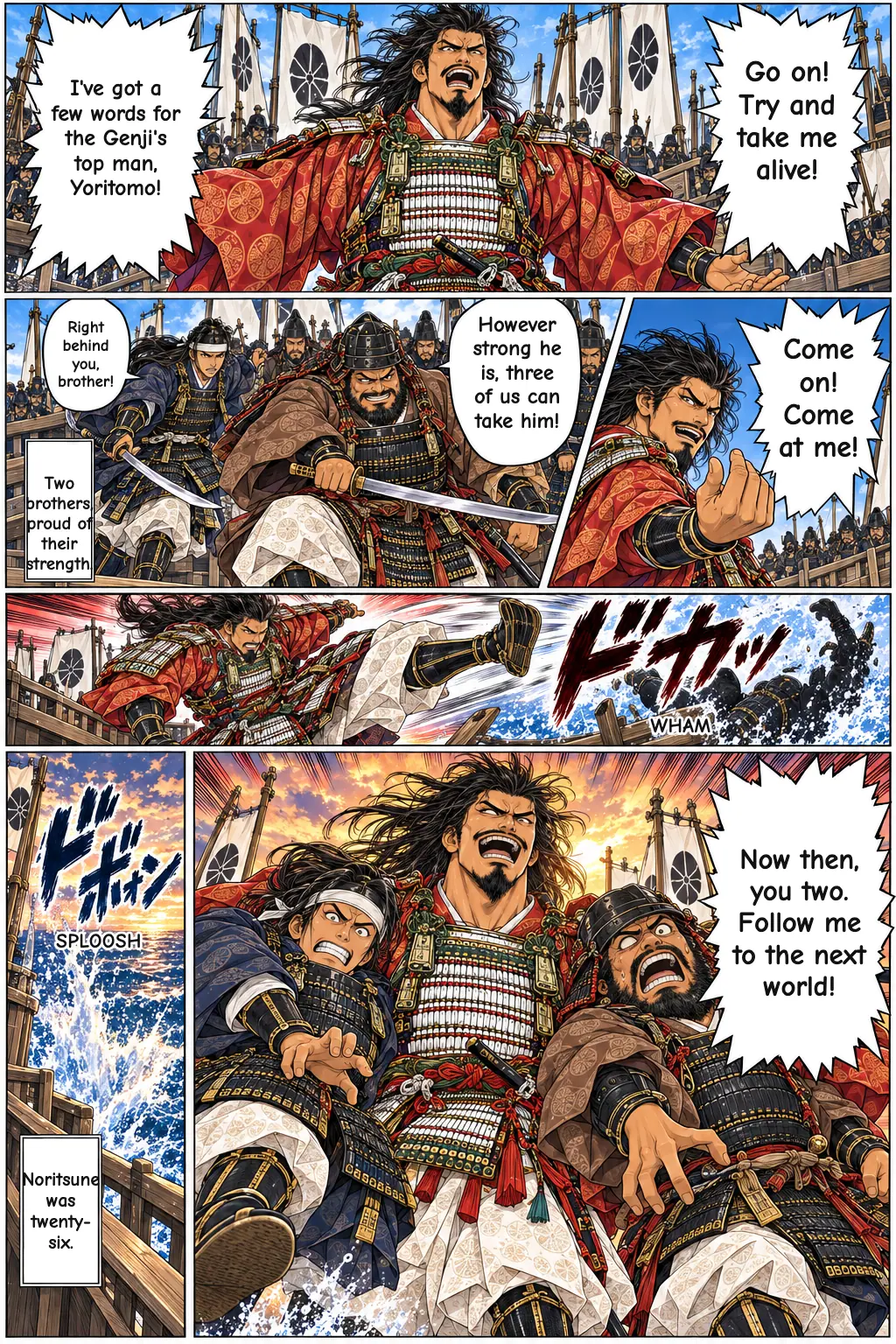
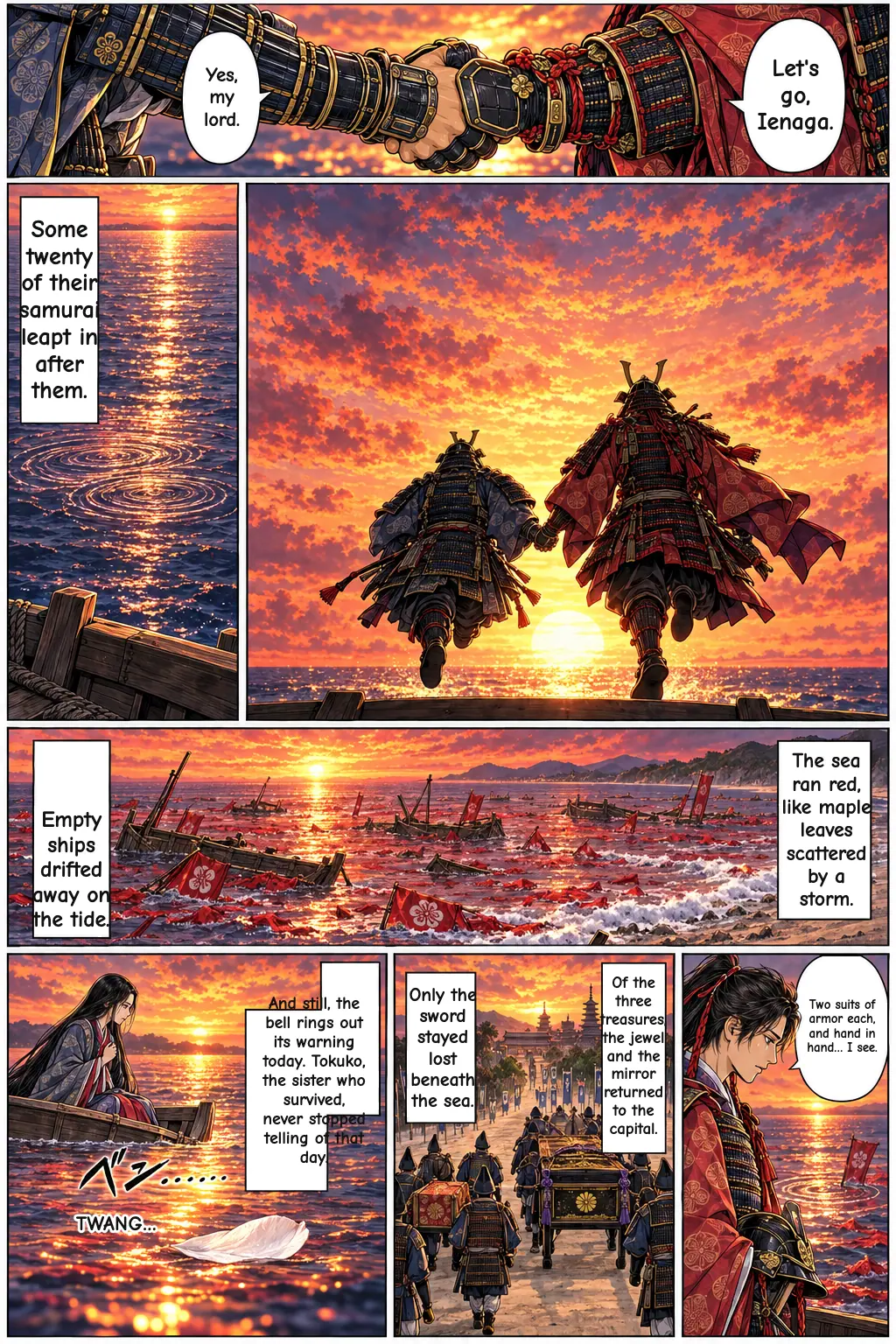
Others follow. Antoku's mother, Kenreimon'in, jumps but is pulled out by her hair with a rake. Munemori hesitates, is pushed in, and is captured while staying afloat. The fierce warrior Noritsune fails to catch Yoshitsune, who leaps to another boat, and then jumps into the sea holding two enemy soldiers. Finally Tomomori says, roughly, that he has seen everything he needed to see. He puts on two suits of armor, takes the hand of his foster brother Ienaga, and goes under. The sea is left full of red Heike banners, like fallen autumn leaves.
What the Story Means: Impermanence and the Biwa Tradition
The Tale of the Heike was shaped by blind storytellers called biwa hōshi, who chanted it to the sound of the biwa, a Japanese lute. Its central idea is the Buddhist teaching of impermanence: the proud and powerful always fall eventually. Dan-no-ura is where that theme hits hardest, because the clan that once ruled the court ends with a child emperor lost at sea.
The tale also shows what people of the time admired in a warrior's death. Tomomori's calm, his wish to leave nothing shameful behind, and his last words have made him one of the most respected figures in the story, and he later became a famous role in Noh and kabuki theater.
History, Legend, and Later Theories
A common explanation is that the Heike lost because the tide reversed in the middle of the battle. The original text doesn't actually say that. It only says the current helped the Heike at first, and it blames the defeat on betrayal, defecting allies, and bad omens. The tide-reversal idea came from modern historians, and later research has questioned it. Some retellings also say Yoshitsune ordered his men to shoot the Heike rowers; the tale only says the rowers and helmsmen were killed.
After the battle, the sacred jewel and the sacred mirror were brought back to the capital, but the sword, one of Japan's three imperial regalia, was never recovered.
What the Manga Changes
The manga tells the whole battle from Tomomori's point of view. In the original he doesn't personally see several key scenes, such as Lady Nii's death, Noritsune's last fight, and Kenreimon'in's rescue, so having him watch or hear about them is the manga's own choice. In the same way, Tomomori seeing the omens is new. In the tale, the dolphins are interpreted for Munemori, and the white banner appears on the Genji side.
The manga also adds Tomomori's inner thoughts, names and personalities for the court ladies, the moment when Tomomori and Ienaga made their promise to die together, and the scene where Lady Nii decides her fate. The original only says she had made up her mind long before. Details like the ships, armor, weather, light, the timing of the battle, and the underwater scenes are invented, since the text says very little about them. The closing image of red banners on the water, though, follows the original closely.
Where to Read It
If you want to see these scenes, from the opening biwa notes to Tomomori's final leap, Episode 13 of THE TALE OF THE HEIKE: The Samurai War of Genpei is right above this article. Every episode on Manga Portal is free to read, and you don't need to sign up. It's also a good starting point for the earlier episodes that lead the Heike to Dan-no-ura.
Characters in this episode
Taira no Tomomori
Son of Kiyomori and the Heike's battlefield commander, who sees the defeat coming and sinks into the sea after saying he has seen all he needed to see.
Lady Nii (Taira no Tokiko)
Kiyomori's widow and the young emperor's grandmother, who goes into the sea with Antoku and two of the sacred regalia.
Emperor Antoku
The eight-year-old emperor backed by the Heike, who dies in his grandmother's arms at Dan-no-ura.
Taira no Noritsune
The fiercest Heike warrior, who chases Yoshitsune and dies jumping into the sea with two enemies in his grip.
Minamoto no Yoshitsune
The Genji commander, who wins the battle and escapes Noritsune by leaping to another boat.
Taguchi Shigeyoshi
A Heike commander from Shikoku whose betrayal turns the battle against the Taira.
FAQ
What happened at the Battle of Dan-no-ura?
In 1185 the Minamoto (Genji) destroyed the Taira (Heike) fleet in a sea battle near modern Shimonoseki, ending the Genpei War. Many Heike leaders drowned themselves rather than be captured, including the child Emperor Antoku. The Minamoto victory led to Japan's first shogunate.
Why did Emperor Antoku die at Dan-no-ura?
When defeat became certain, his grandmother Lady Nii refused to let him fall into enemy hands. In The Tale of the Heike, she takes him in her arms with the sacred jewel and sword and sinks into the sea, telling him there is a capital beneath the waves too.
What were Taira no Tomomori's last words?
In The Tale of the Heike, Tomomori says, roughly, that he has seen everything there was to see. He then puts on two suits of armor and sinks into the sea hand in hand with his foster brother Ienaga.
Did the tide decide the Battle of Dan-no-ura?
Many people believe it did, but The Tale of the Heike only says the current favored the Heike at first. It blames the defeat on betrayal, defecting allies, and bad omens. The tide-reversal theory comes from modern historians and is still debated.
Was the sacred sword lost at Dan-no-ura?
Yes. According to the tale, the sacred jewel and mirror were recovered and brought back to the capital, but the sword sank with Lady Nii and was never found.