Episode 4Two Were Pardoned. My Name Wasn't There.Shunkan on Kikai-ga-shima
Three men were exiled together to a volcanic island, but when a pardon finally arrives, one name is missing: Shunkan's. He clings to the departing ship and is left alone on the beach. Years later, a boy crosses the sea to find him.
Shunkan on Kikai-ga-shima: The Tale of the Heike Explained
The Original Story: Three Exiles, One Pardon
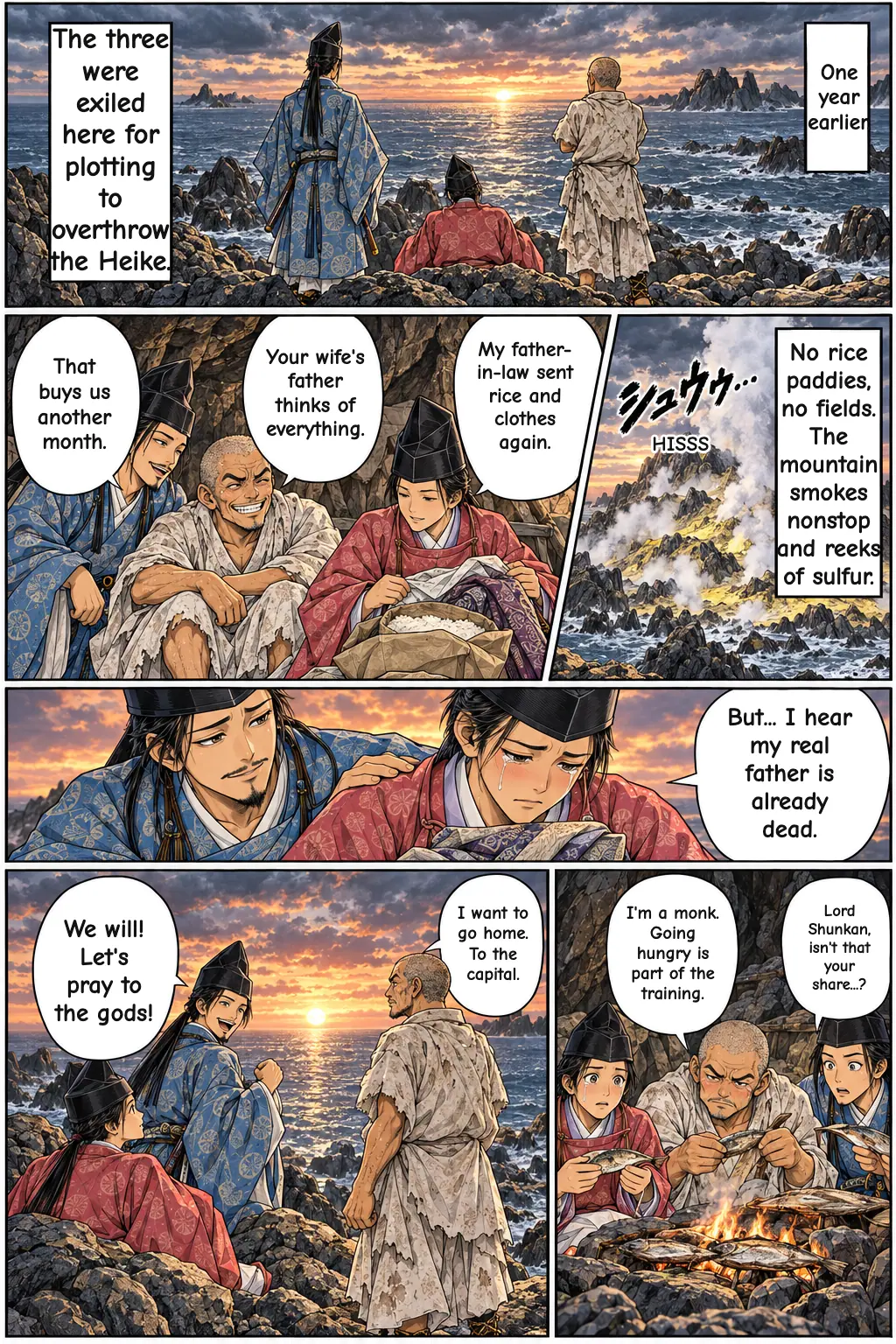
The Tale of the Heike (Heike Monogatari) is a medieval Japanese war epic about the rise and fall of the Taira clan, also called the Heike. One of its most painful episodes, told across Books 2 and 3 of the Kakuichi version, follows three men exiled after a failed plot against the Taira leader Taira no Kiyomori. The plot was hatched at Shishigatani, a mountain villa near Kyoto that belonged to Shunkan, a high-ranking Buddhist priest. The three exiles were Shunkan, the young courtier Fujiwara no Naritsune, and Taira no Yasuyori, a lay monk. They were sent far south to Kikai-ga-shima, an island off the coast of Satsuma (today's Kagoshima). Its exact location is debated: it is often identified with Iōjima, a volcanic island, though some identify it with other islands in the region.
The Heike paints the island as almost uninhabitable. Ships rarely come, the few locals speak a language the exiles cannot understand, and no rice or silk is produced. A mountain burns without end, the air is thick with sulfur, and thunder and rain are constant. Naritsune and Yasuyori survive on food and clothing sent by Naritsune's father-in-law, Taira no Norimori, Kiyomori's younger brother.
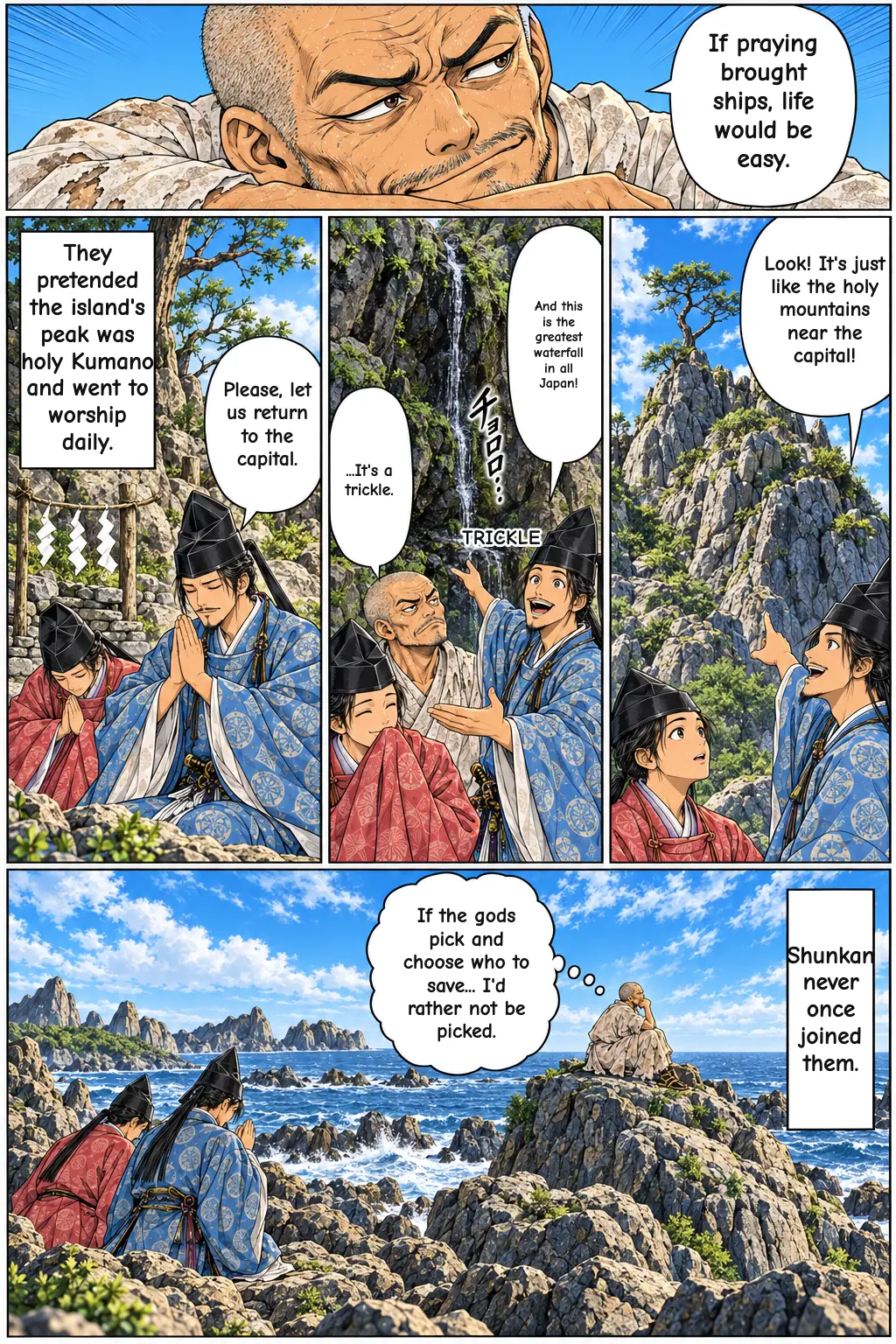
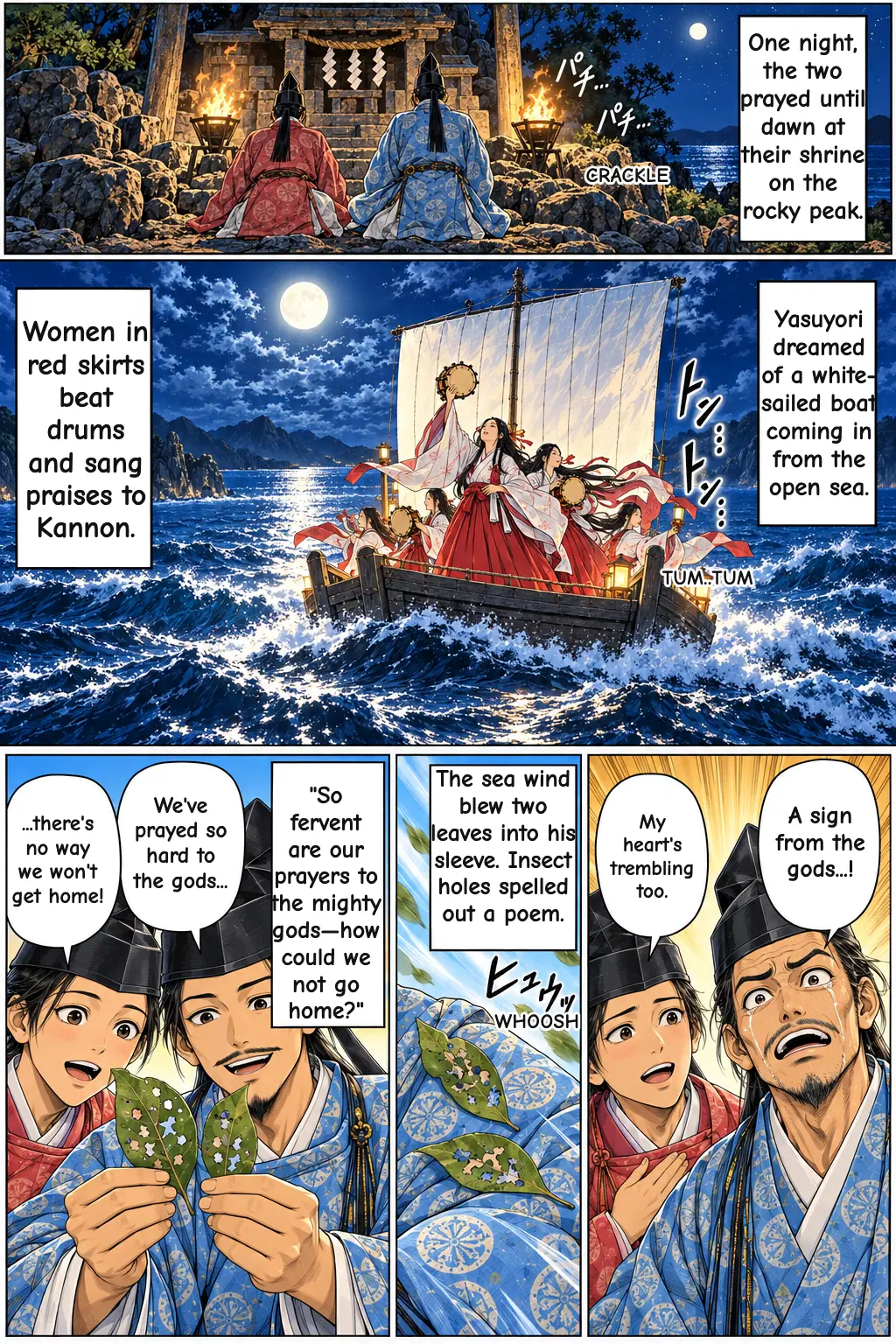
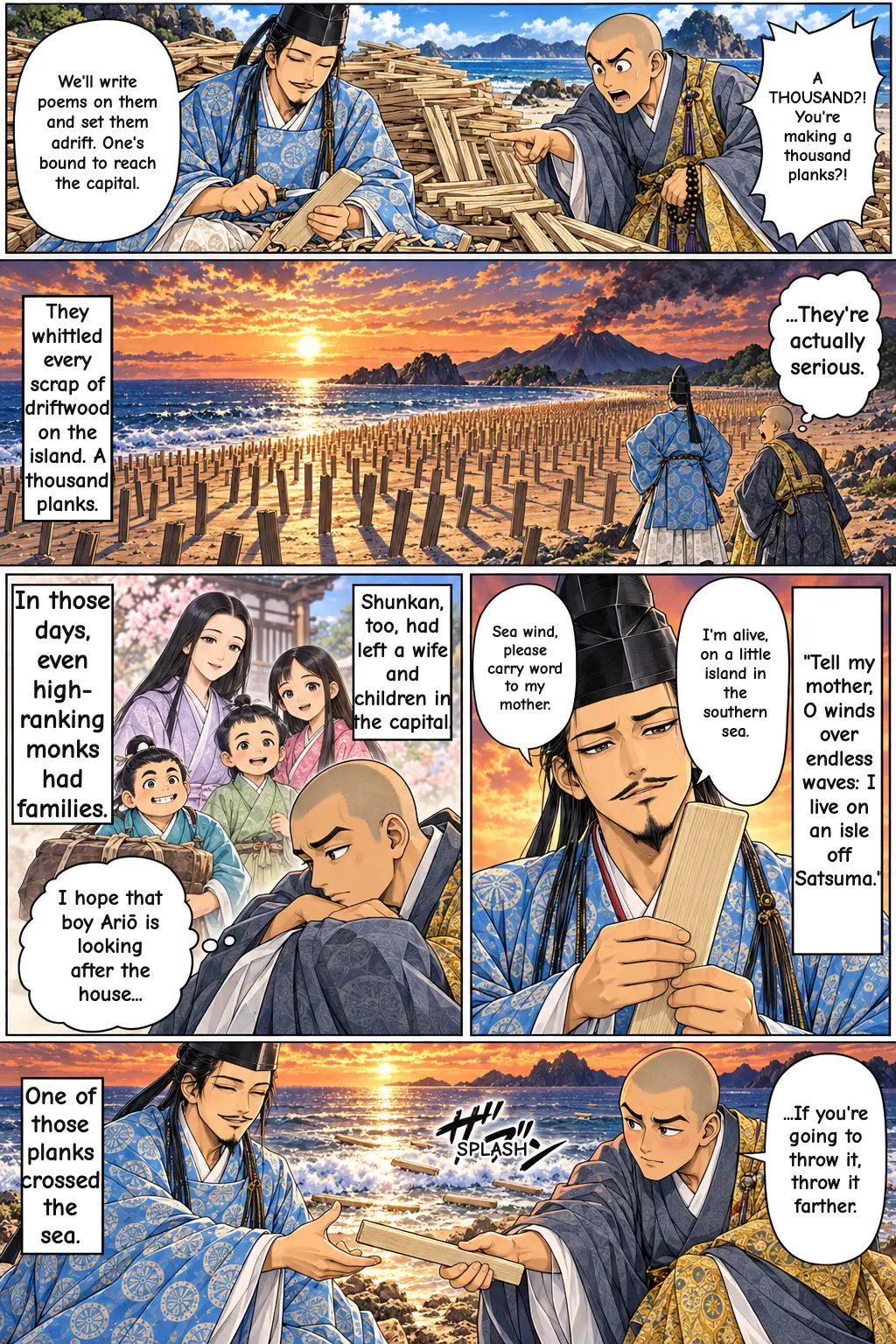
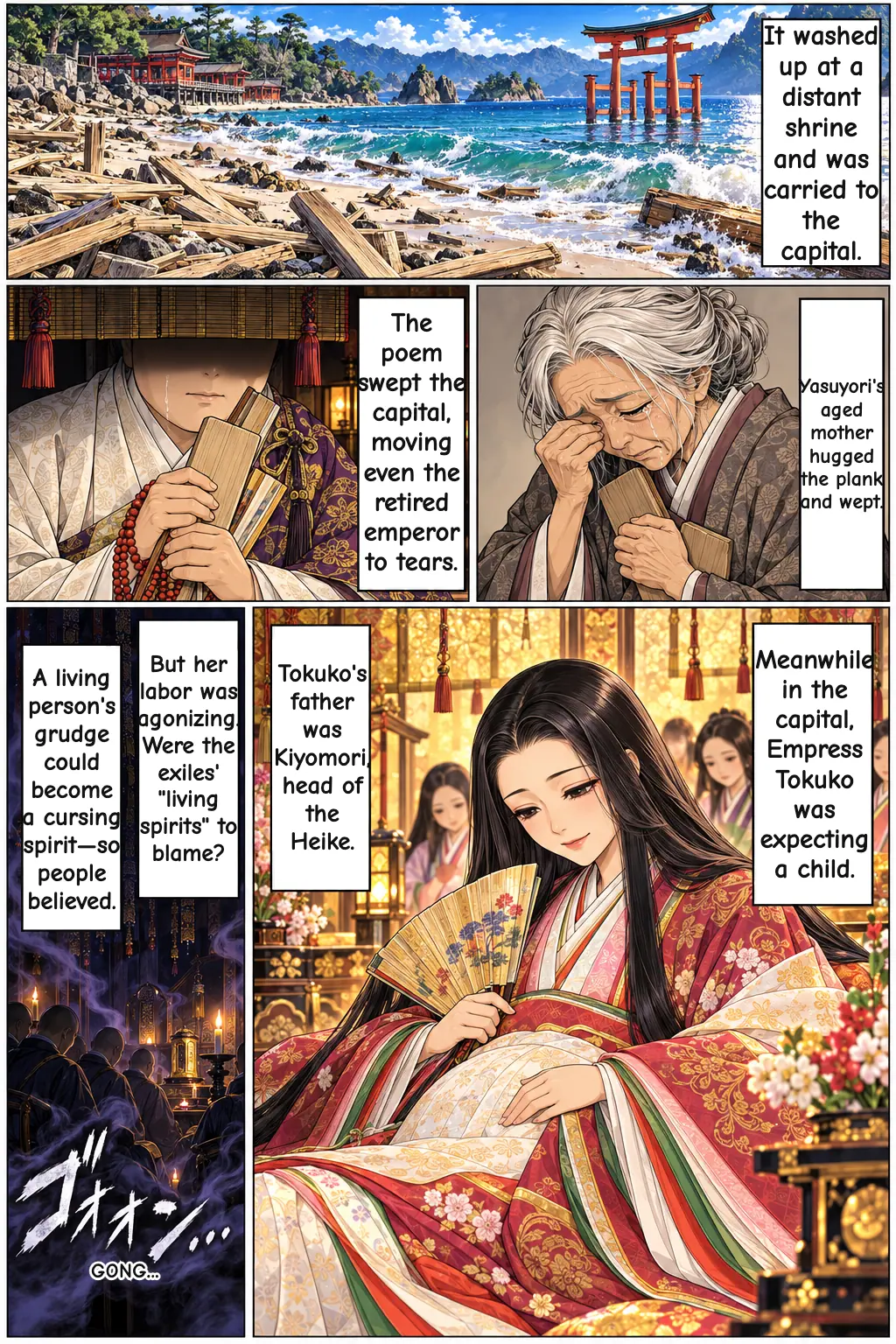
The two devout men pick spots on the island to stand in for the three great shrines of Kumano, a sacred pilgrimage region, and worship there every day. Shunkan, described as a man with no faith by nature, refuses to join. Yasuyori receives signs he takes as divine: a dream of a white-sailed boat carrying singing women, and leaves blown to him with a hopeful poem eaten into them by insects. He then writes homesick poems on a thousand small wooden memorial tablets (sotoba) and sets them adrift. One washes ashore at Itsukushima Shrine, is carried to the capital, and moves even Retired Emperor Go-Shirakawa and Kiyomori.
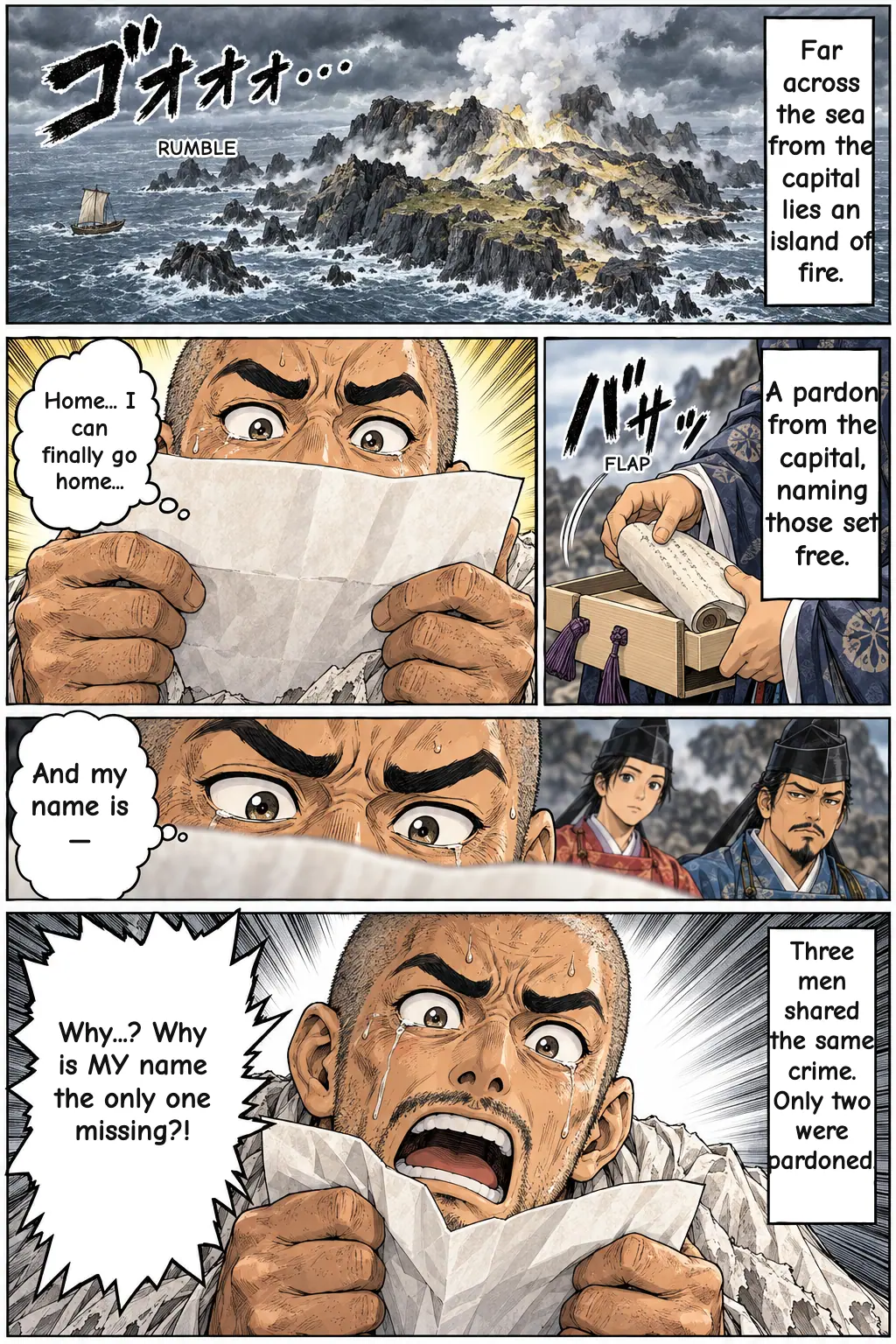
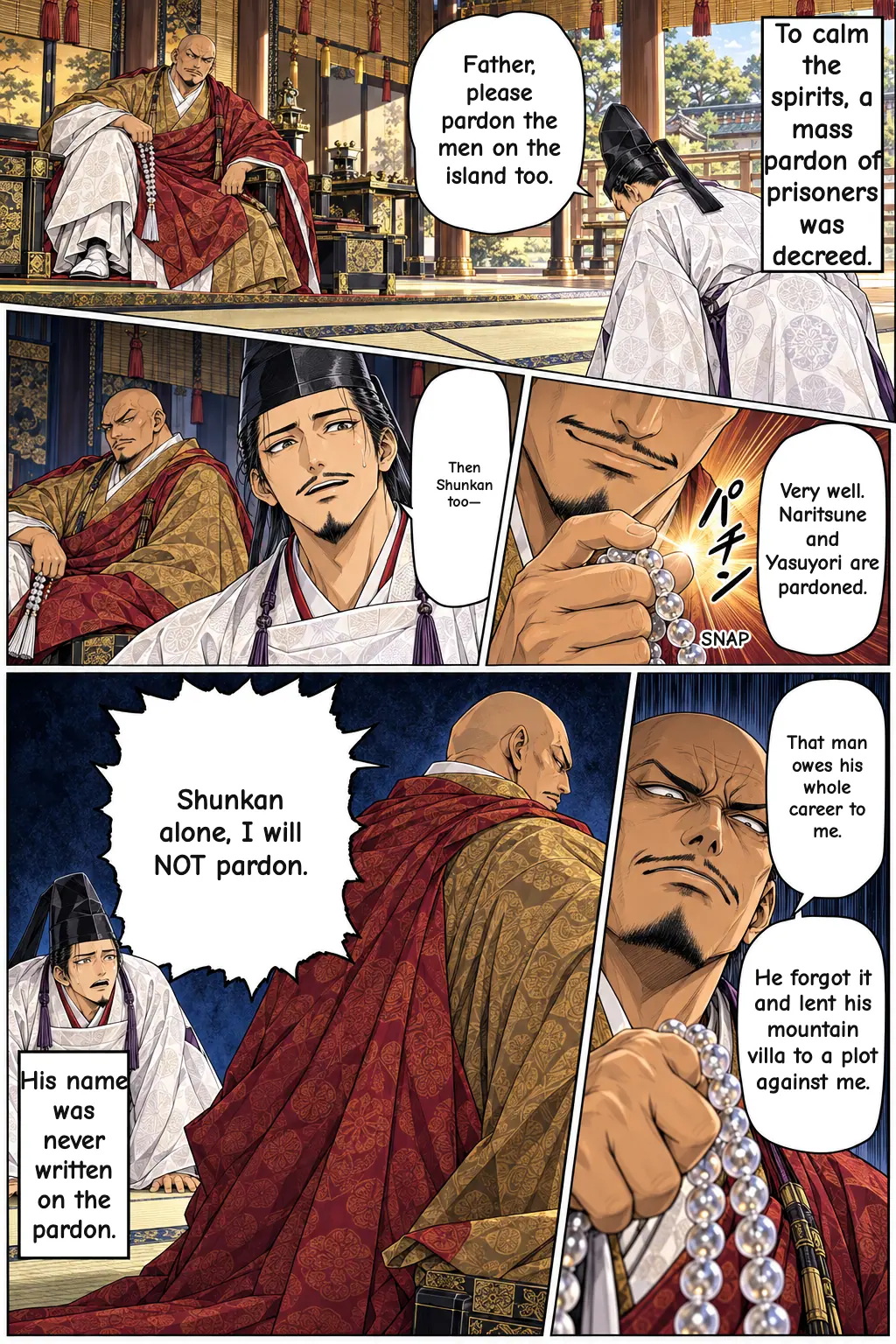
The next year, Kiyomori's daughter, the Empress Tokuko, has a dangerous pregnancy. People blame angry spirits, including the living spirits of the exiles, and a general amnesty is declared to calm them. Kiyomori pardons Naritsune and Yasuyori, but not Shunkan. In his eyes, Shunkan owed his career to Kiyomori's support and then lent his own villa to the plotters.
The Missing Name and the Beach
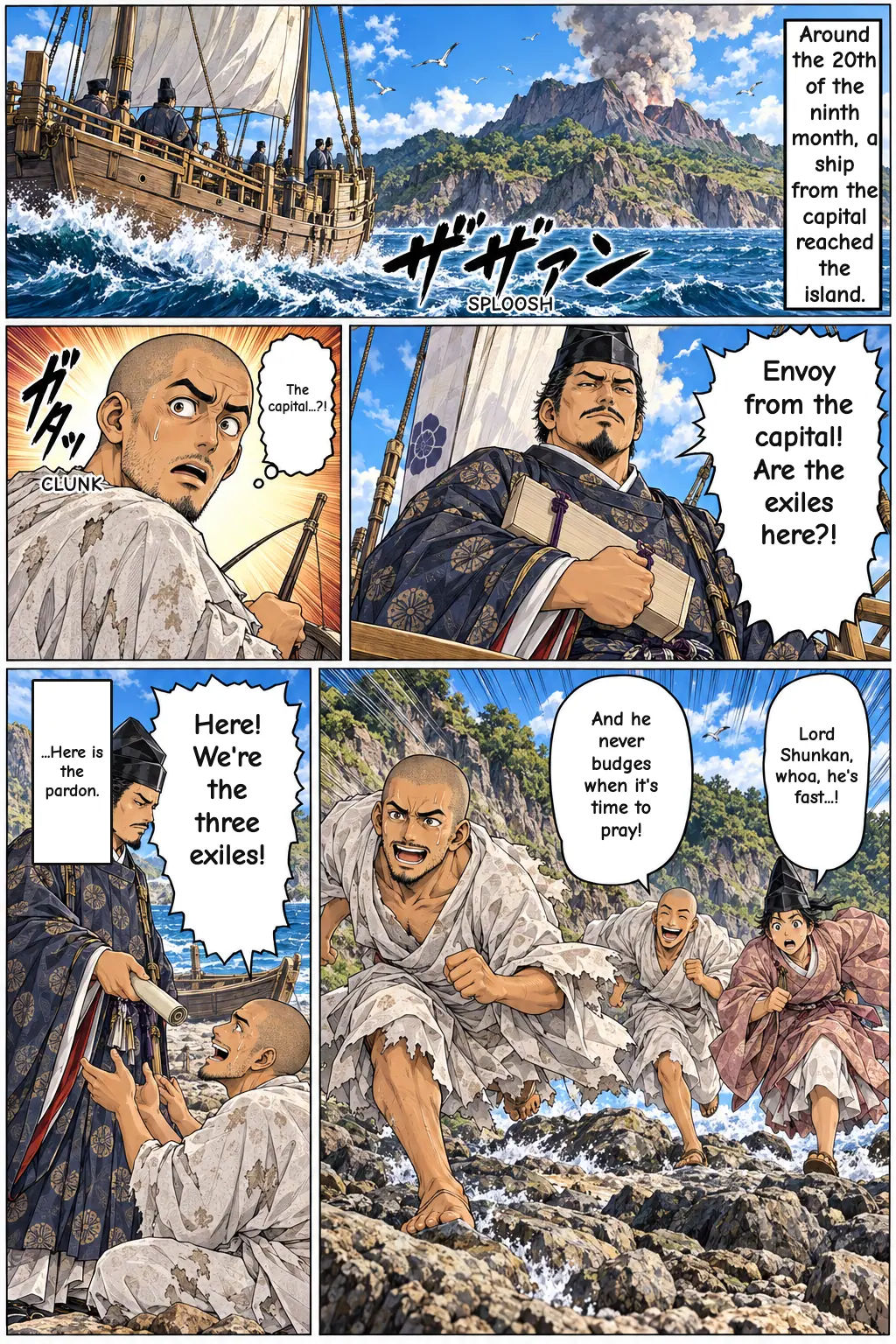
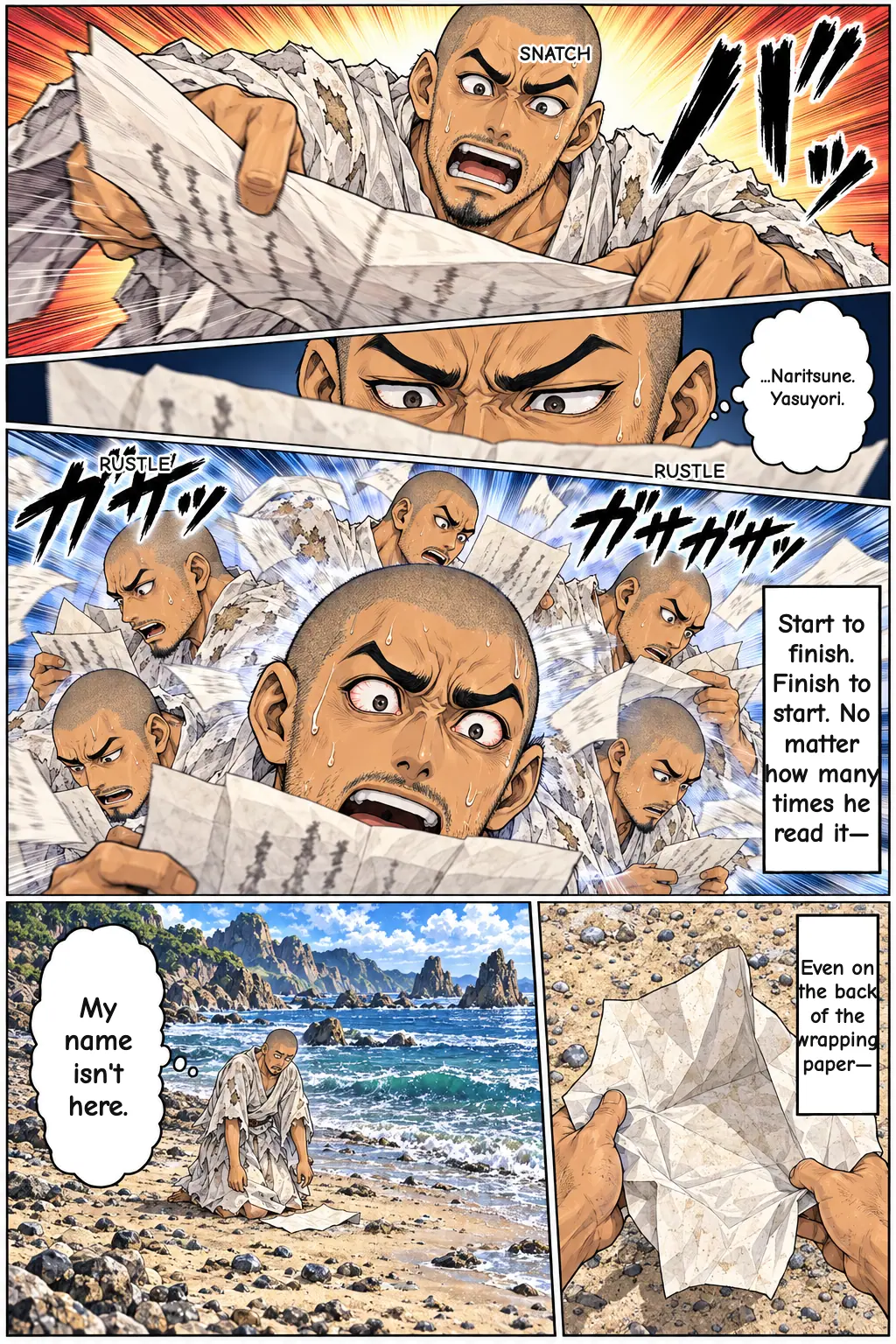
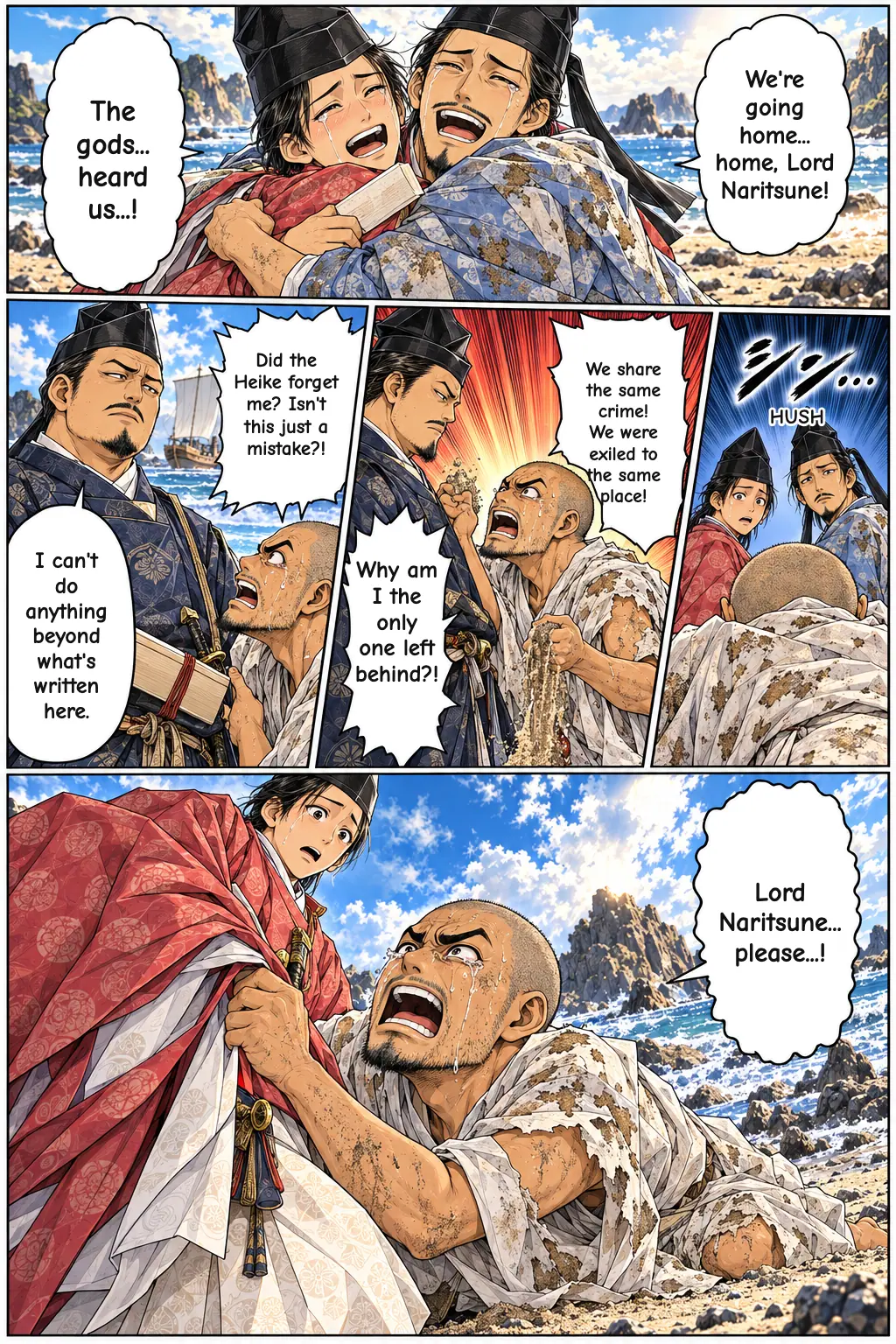
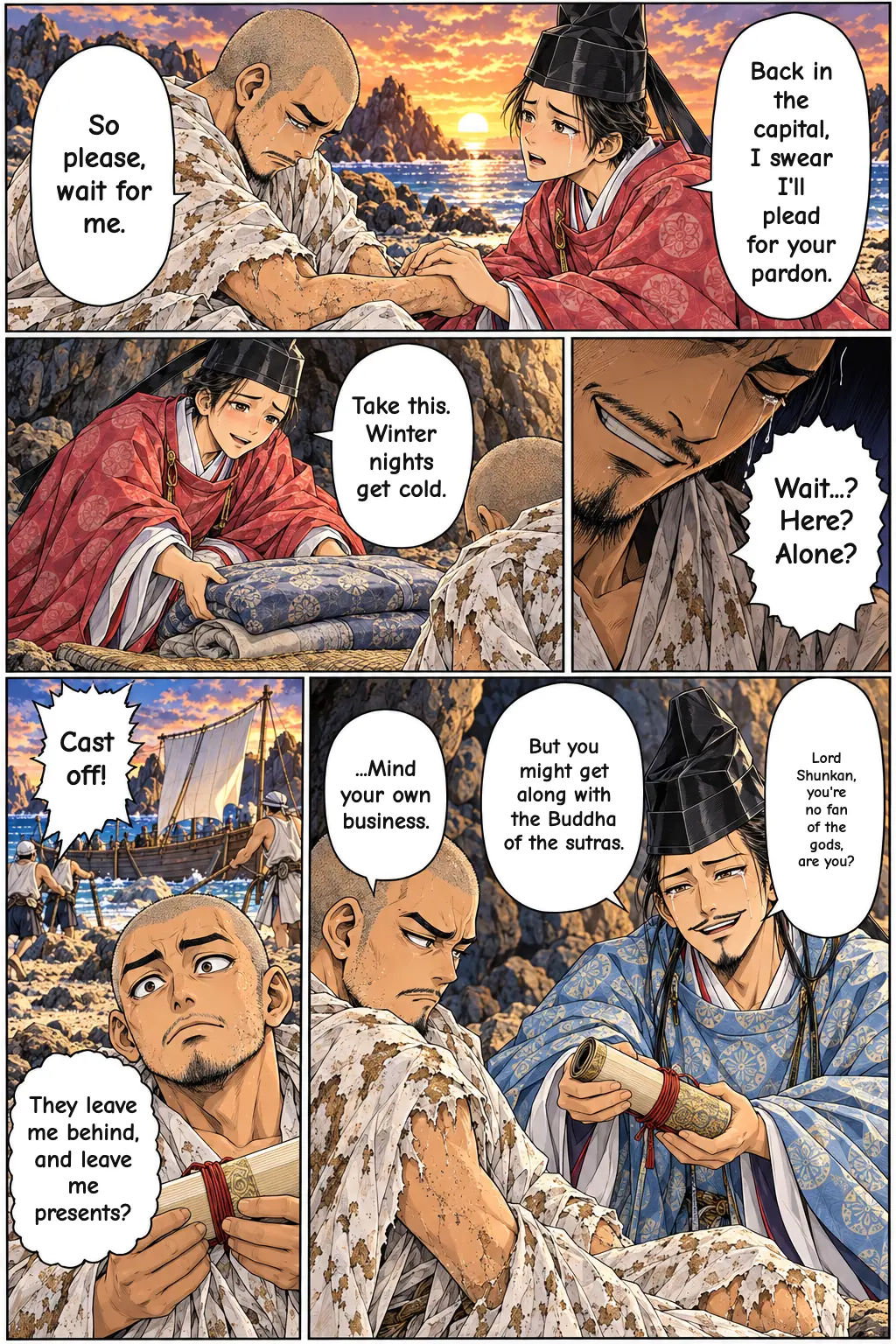
When the envoy arrives, Shunkan is the first to run to him. He reads the pardon again and again, from start to end and back, even checking the wrapping paper. His name is not there. He protests that the three shared the same crime and the same exile, and wonders aloud whether the Taira simply forgot him or a scribe made a mistake. Naritsune promises to plead for him in the capital and leaves him his bedding; Yasuyori leaves a copy of the Lotus Sutra.
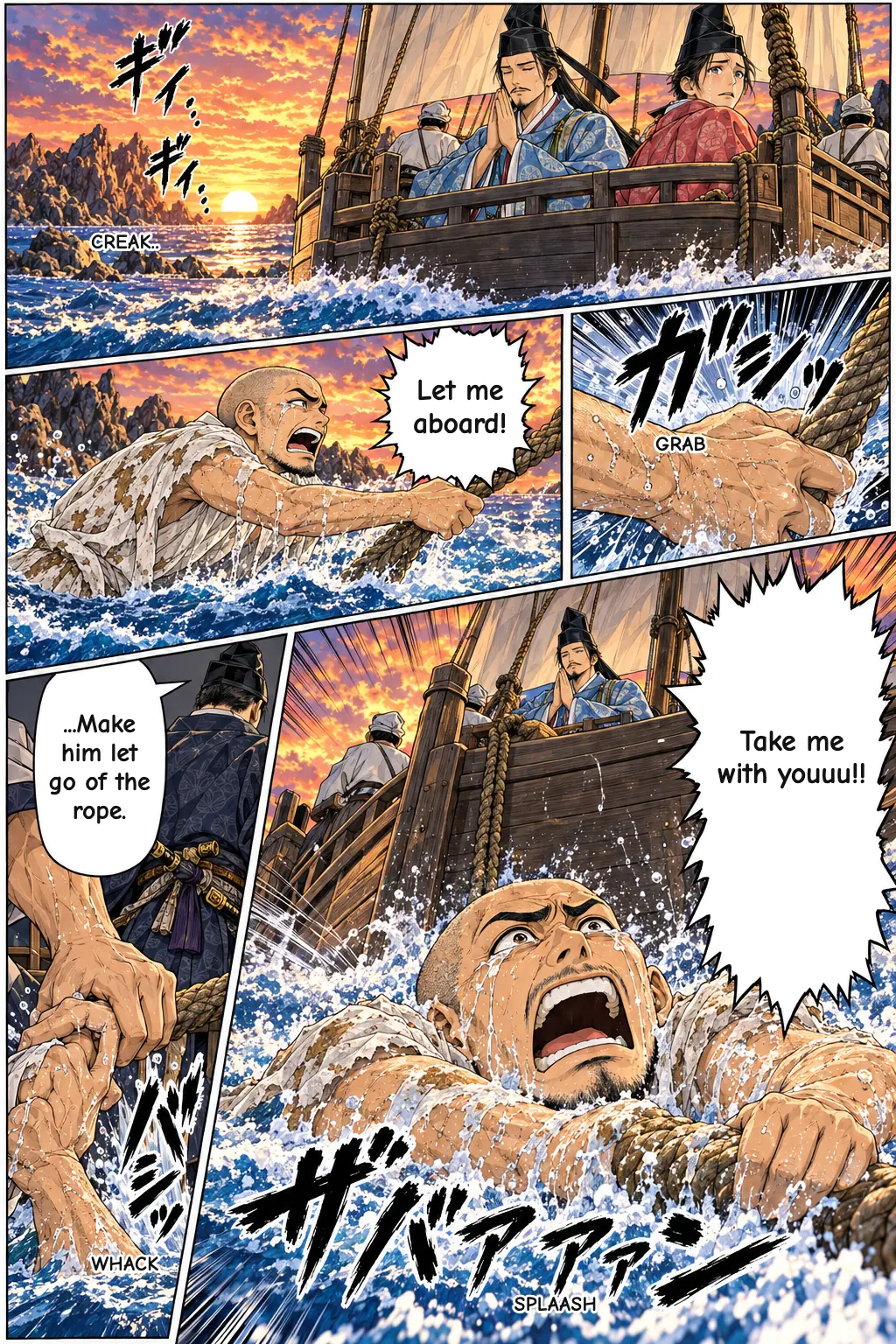
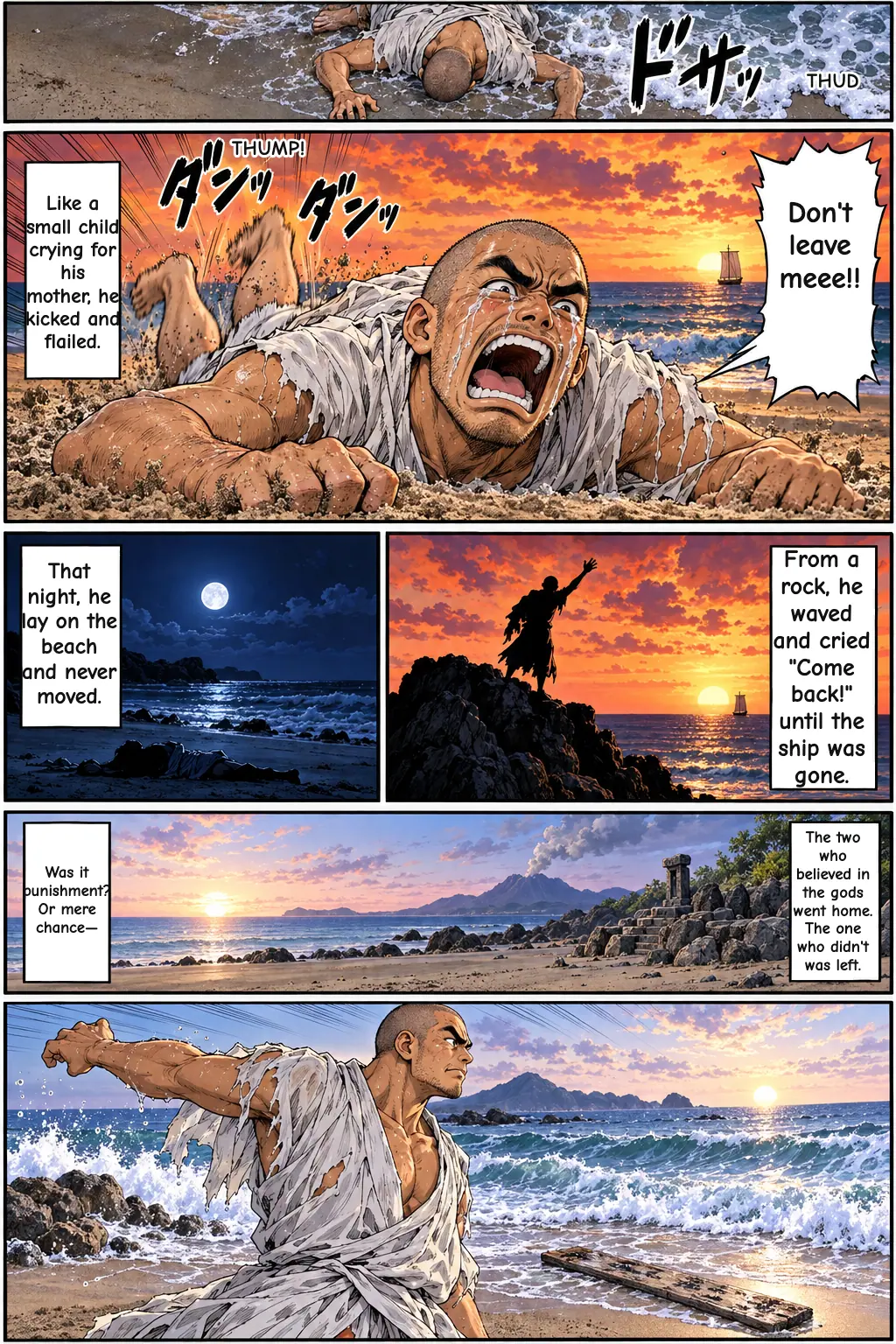
As the boat pulls away, Shunkan grabs its mooring rope and wades in up to his waist, then his chest, until he can no longer touch the bottom, begging to be taken along. The officials pry his hands loose. Back on the shore he collapses and stamps his feet and wails like a small child crying for its mother. This is the famous ashizuri, the foot-stamping scene. He climbs high ground to wave at the vanishing boat, and the narrator compares him to Matsura Sayohime, a legendary woman who waved farewell to a departing ship.
Ariō's Journey and Shunkan's Death
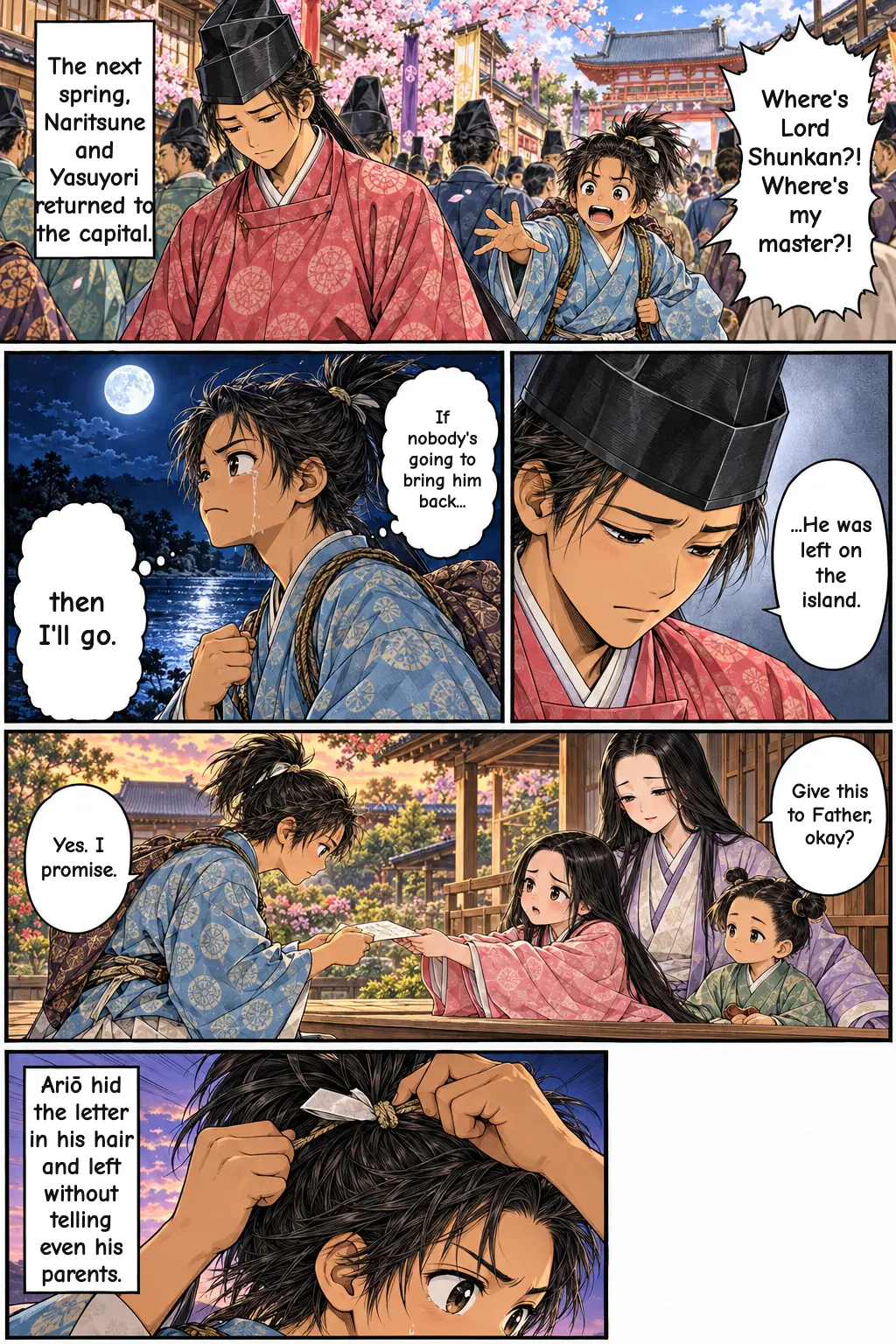
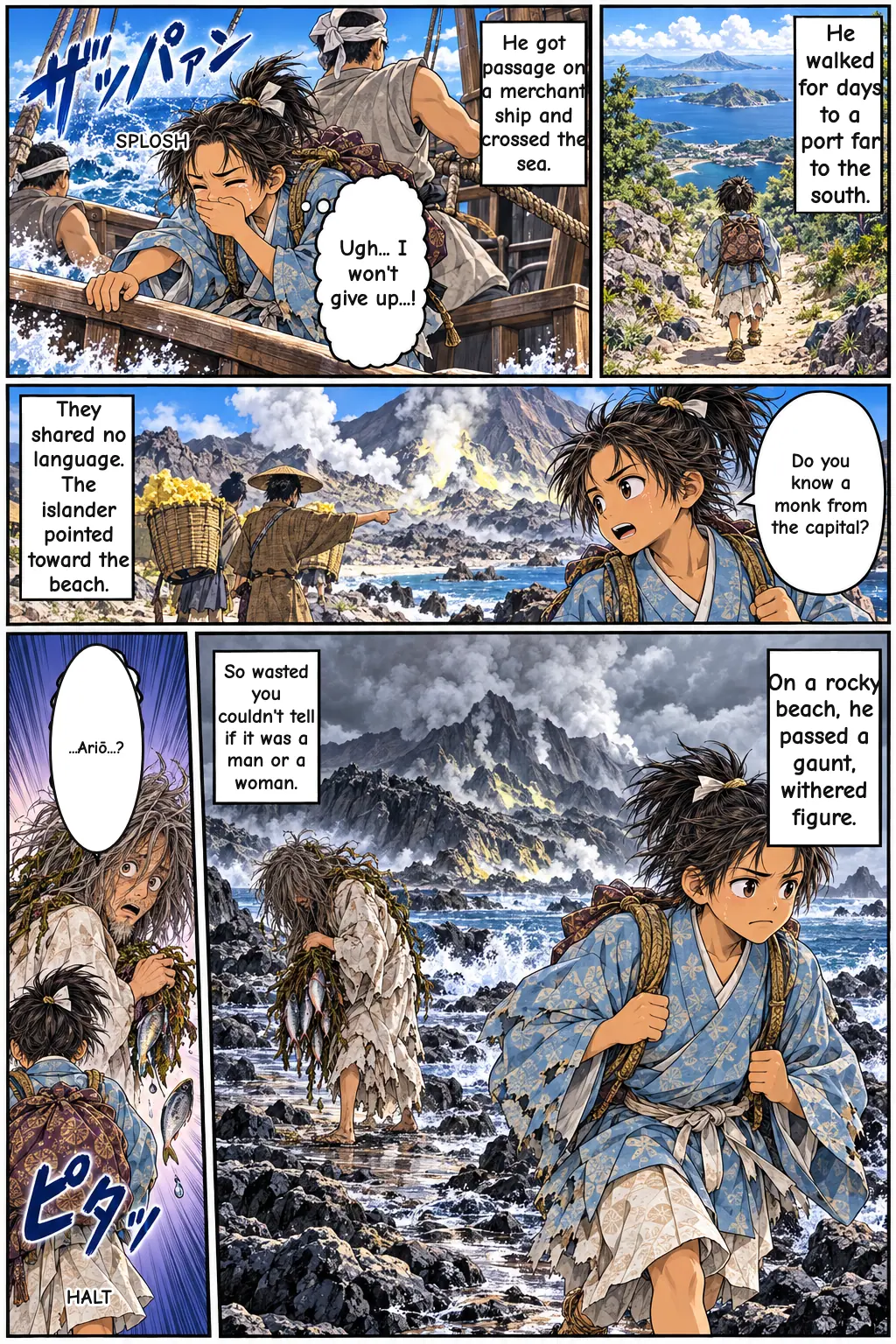
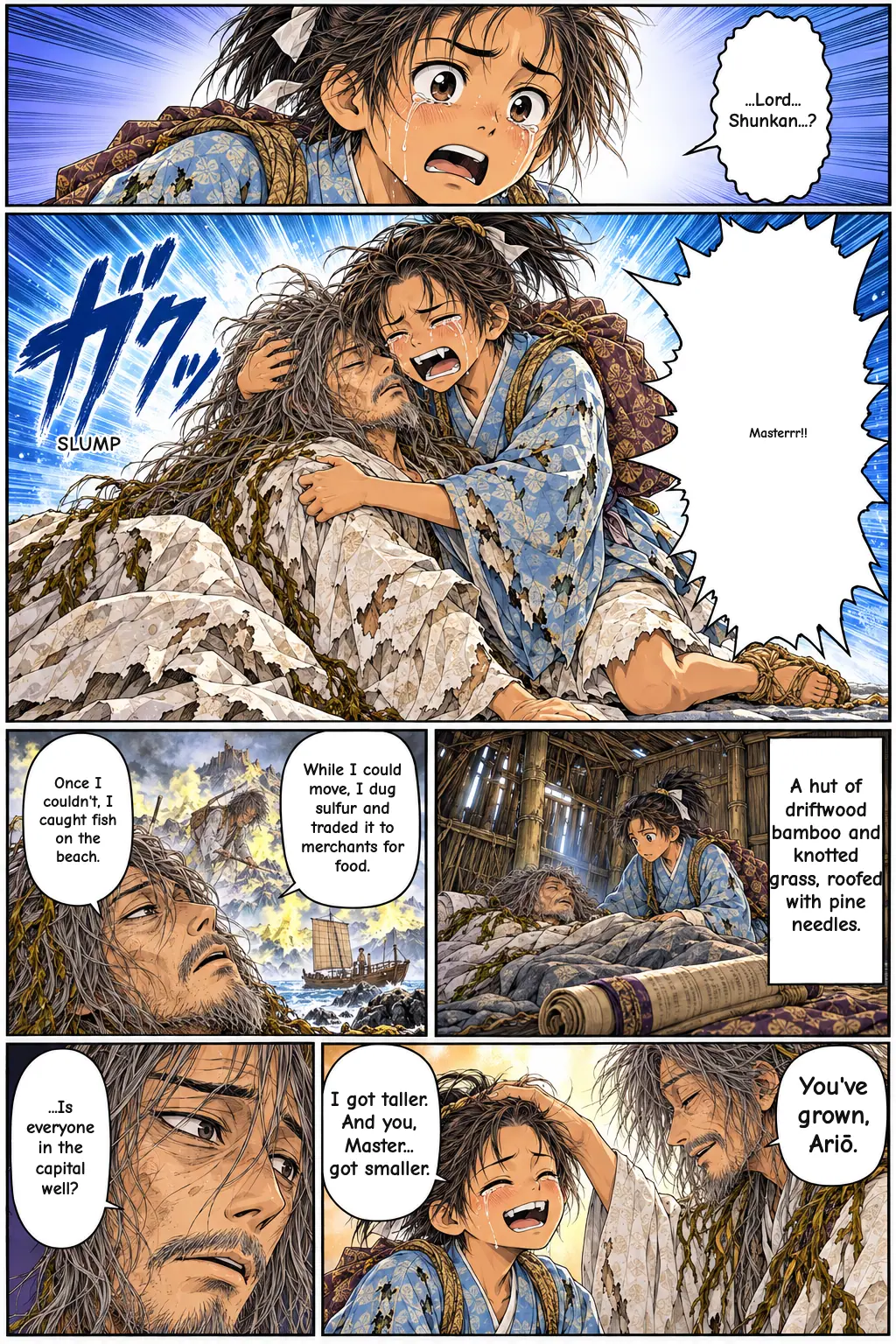
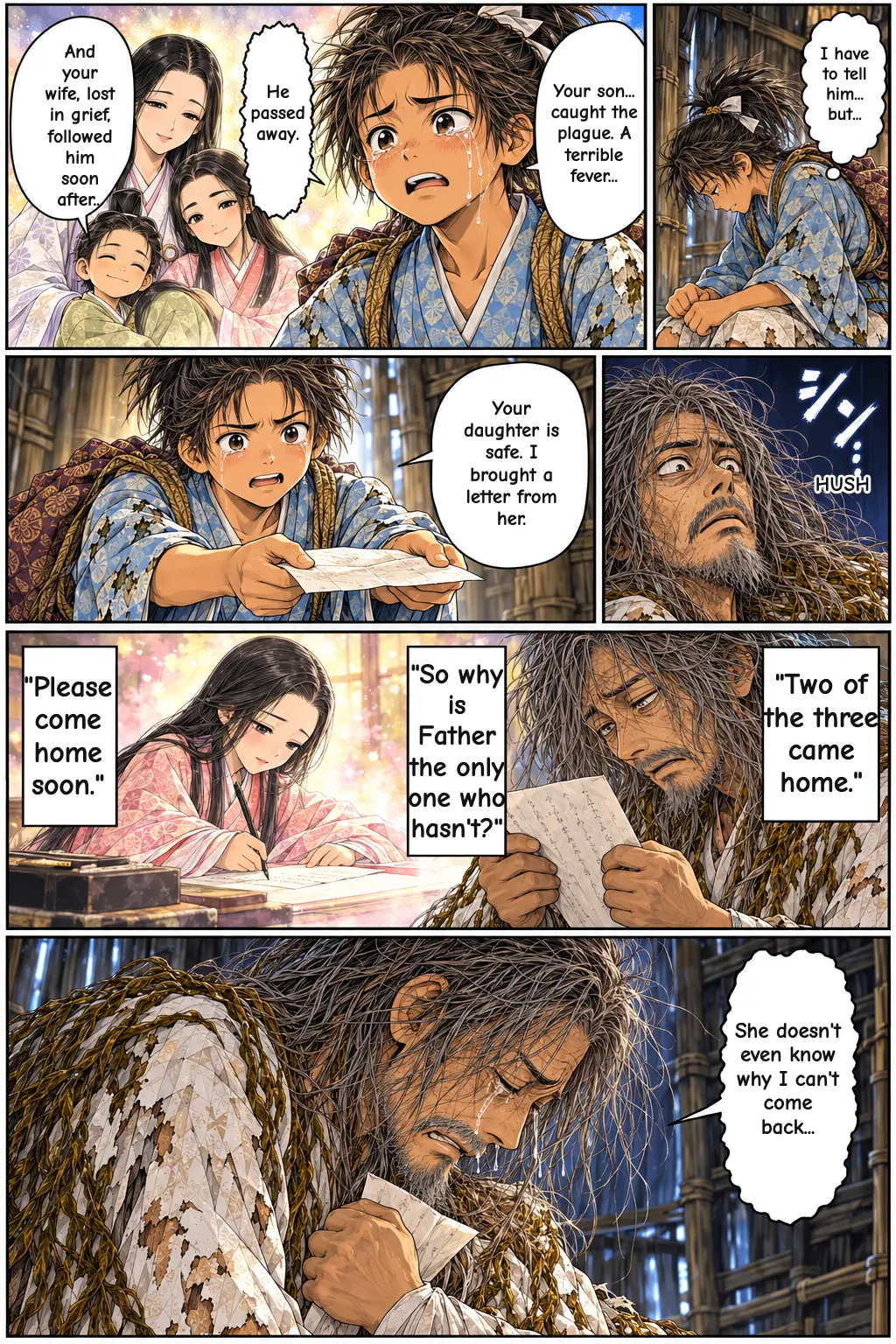
When the pardoned men return to the capital without Shunkan, Ariō, a boy who has served him since childhood, decides to find him. Ariō is a servant, not a relative. Carrying a letter from Shunkan's young daughter, he leaves without telling his own parents and crosses from Satsuma on a merchant ship. On the shore he meets a figure so thin and wild-haired, tangled with seaweed, that it is hard to tell whether it is a man or a woman. It is Shunkan. He tells Ariō how he survived by digging sulfur to trade with merchants for food and by fishing.
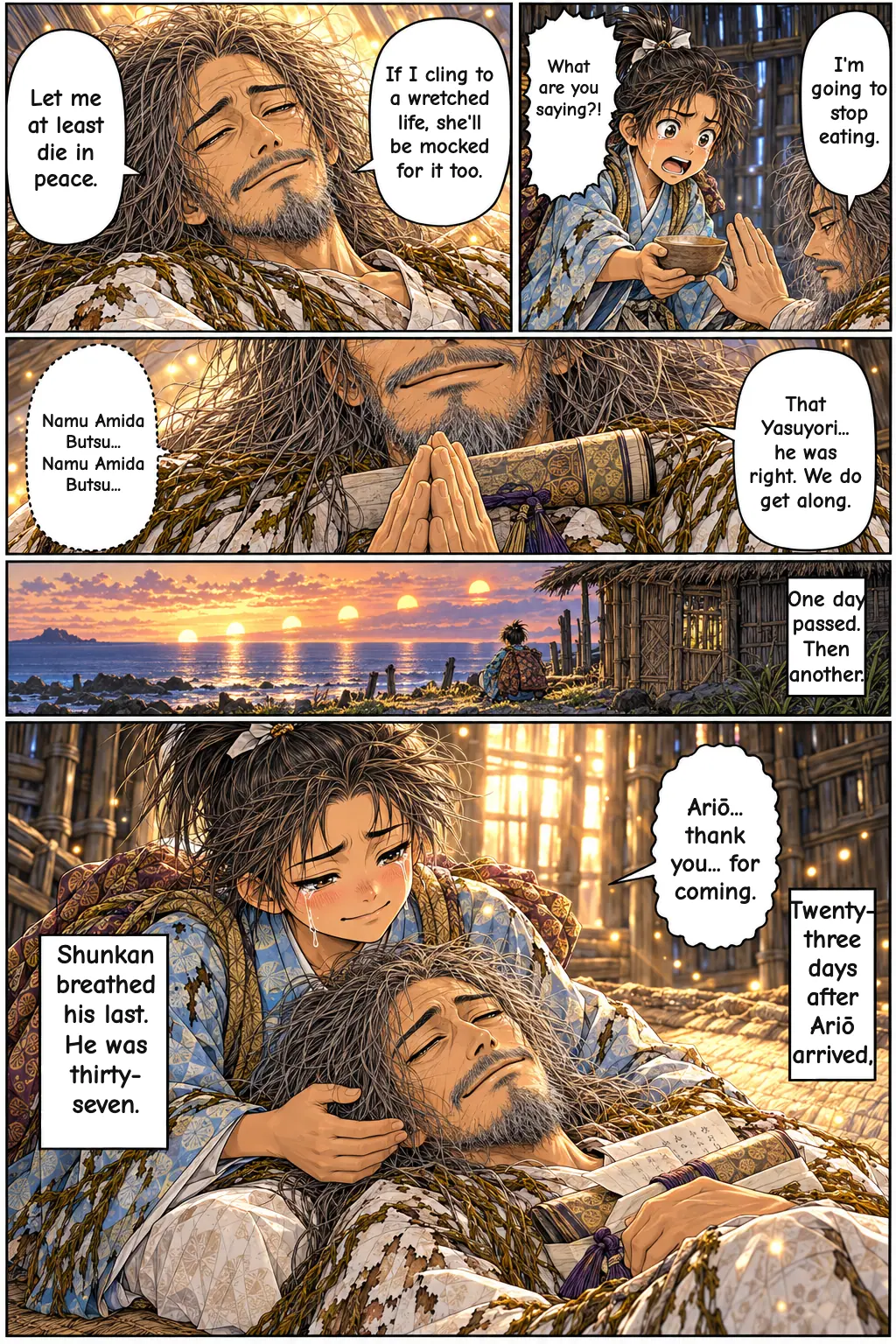
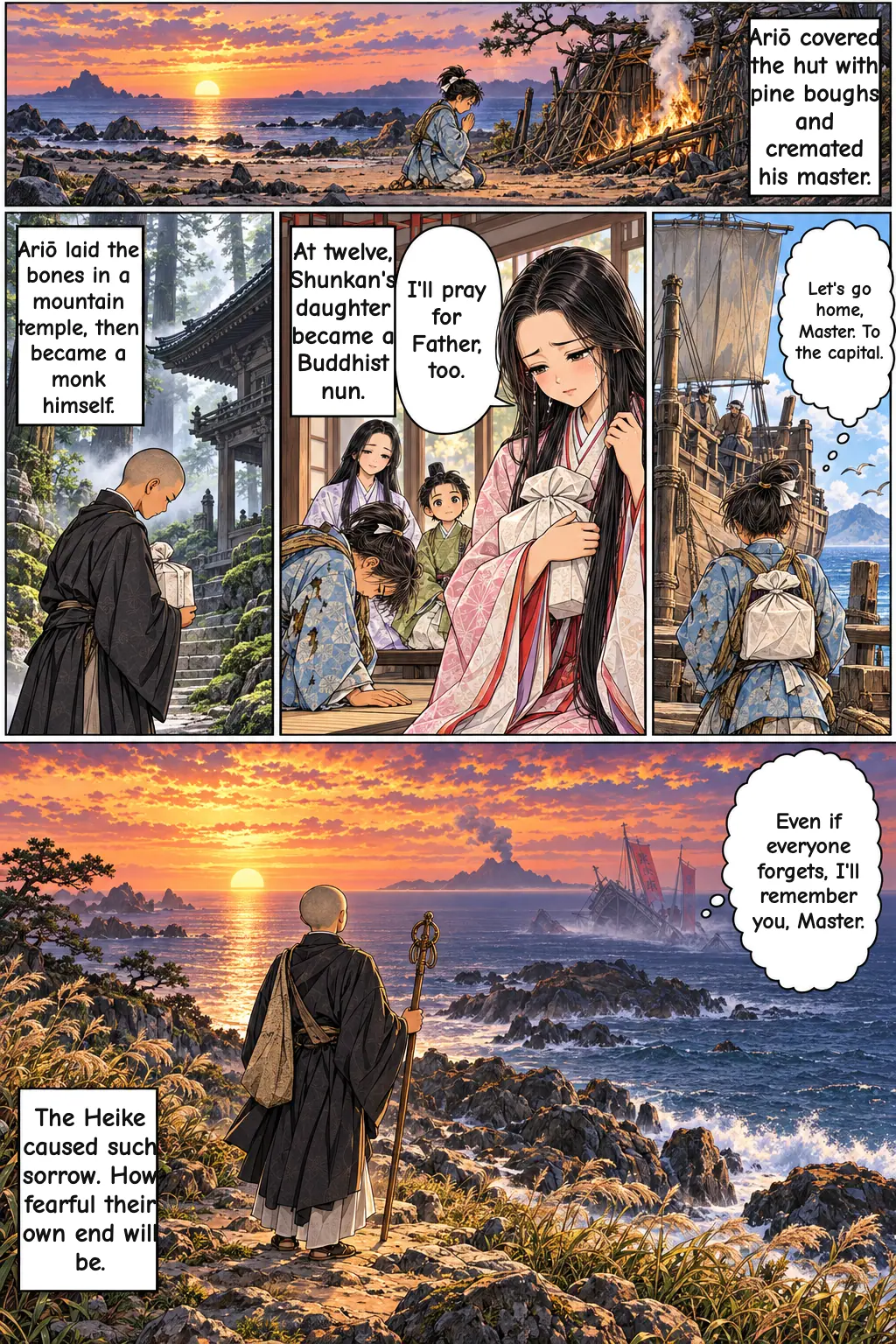
Ariō brings terrible news: Shunkan's son has died of smallpox, and his wife has died of grief. Only the daughter remains. After reading her letter, Shunkan stops eating, chants the name of the Amida Buddha, and dies at 37. Ariō cremates him, hangs the bones around his neck, and returns to the capital. He later places the remains on Mount Kōya and becomes a monk, while the daughter becomes a nun at age 12.
What the Story Means
The Heike opens with the idea that nothing lasts and that the proud will fall, and Shunkan's story shows this on a human scale. Faith gets a quiet spotlight too. The two men who pray are carried home; the one who will not pray is left behind. Many readers see this as a Buddhist lesson, though the text also makes Shunkan's punishment depend on Kiyomori's personal grudge, so it can be read as a story about political revenge as much as about faith. Shunkan's grief is so vivid that he later became the hero of the Noh play Shunkan and of puppet and Kabuki plays.
What the Manga Changes
The original tells the main events but leaves many gaps, and the manga fills them in. The volcanic smoke, sulfur colors, and rocky shoreline are drawn from the text's brief descriptions. The daily life of the three exiles, the look of their improvised Kumano shrines, and Shunkan's expression and inner thoughts as he watches the others pray are the manga's own additions; the source only calls him faithless. The dialogue when the pardon arrives, Shunkan's lonely years after the beach, Ariō's sea voyage, most of their conversations, the staging of the death scene, and the cremation and journey home are also creative. Faces, ages, and costumes are invented, since the Heike barely describes how anyone looks. The only exception is the withered Shunkan Ariō finds.
Where to Read It
If you want to see the rope slipping from Shunkan's hands and the long wait on the burning island, Episode 4 of THE TALE OF THE HEIKE: The Samurai War of Genpei tells the story in full. Every episode is free to read on Manga Portal, with no sign-up required, so you can go on to follow the Genpei War from here.
Characters in this episode
Shunkan
A high-ranking Buddhist priest whose villa hosted the plot against the Taira, and the only exile left out of the pardon.
Fujiwara no Naritsune
A young courtier and devout Kumano worshipper who is pardoned and promises to plead for Shunkan.
Taira no Yasuyori
A lay monk who leads the island prayers and sets a thousand poem-carved tablets adrift, one of which reaches the capital.
Ariō
A boy who served Shunkan since childhood and crosses the sea alone to find him.
Taira no Kiyomori
The powerful Taira leader who grants the amnesty but refuses to forgive Shunkan.
Shunkan's daughter
Shunkan's only surviving child, whose letter Ariō carries to the island and who later becomes a nun.
FAQ
Why was Shunkan not pardoned in The Tale of the Heike?
Taira no Kiyomori refused to forgive him personally. Shunkan owed his rise to Kiyomori's support, yet his own villa at Shishigatani was where the plot against the Taira was planned, so Kiyomori saw it as betrayal.
Where is Kikai-ga-shima?
The Heike places it in the sea off Satsuma, in what is now Kagoshima Prefecture. It is often identified with the volcanic island of Iōjima, though other islands have also been proposed.
What happened to Shunkan in the end?
After learning from Ariō that his son and wife had died, Shunkan stopped eating and died at 37 while chanting to the Amida Buddha. Ariō cremated him and carried his bones back to the capital.
What is the 'ashizuri' scene?
Ashizuri means stamping one's feet in grief. It is the scene where Shunkan, left on the beach as the boat sails off, throws himself down and wails like a small child.
Who was Ariō?
Ariō was a boy servant who had served Shunkan since childhood, not a family member. He traveled to the island alone, stayed with Shunkan until his death, and later became a monk.