Episode 1One Missed Strike That Set 47 Samurai MovingThe Pine Corridor Incident
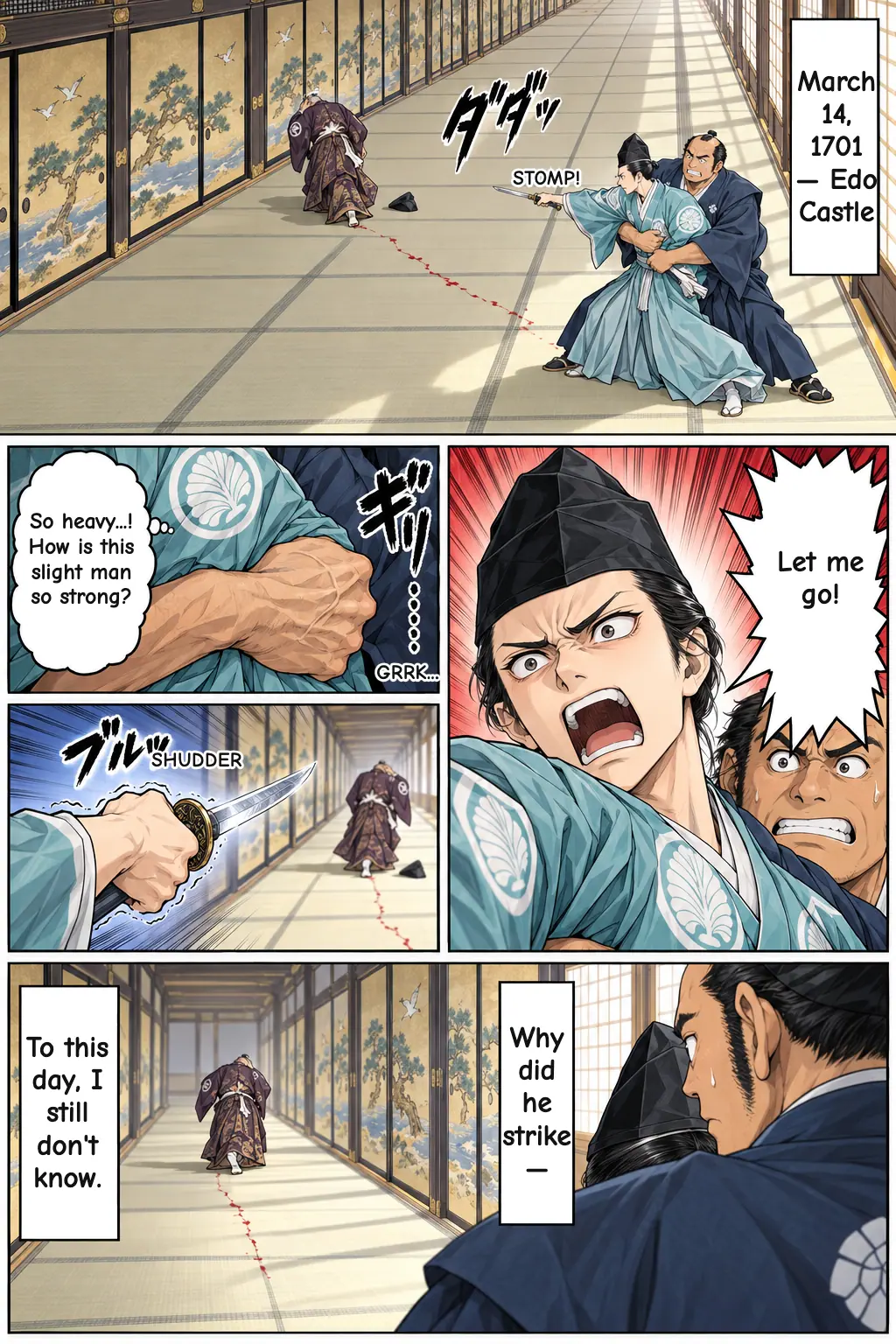
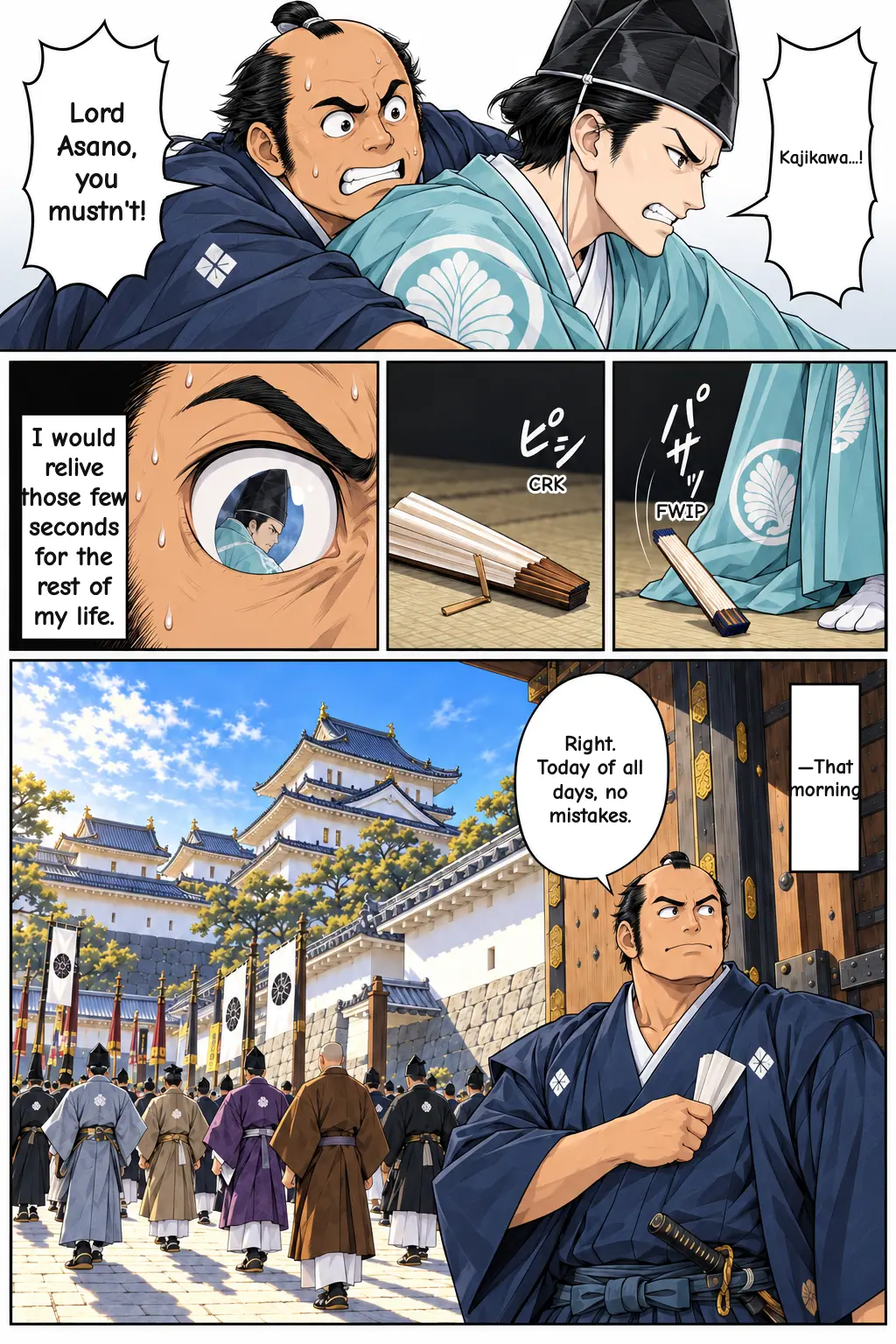
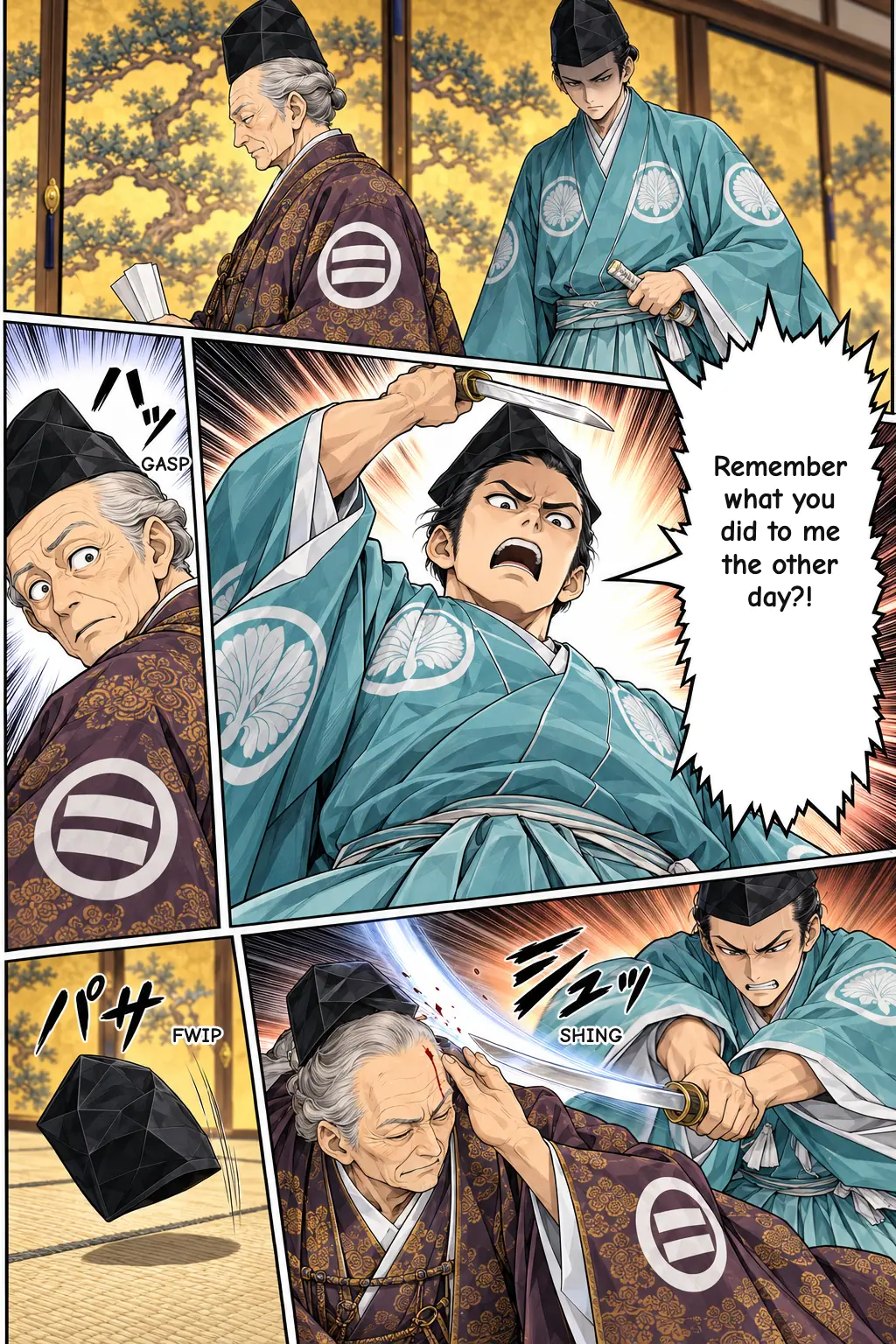
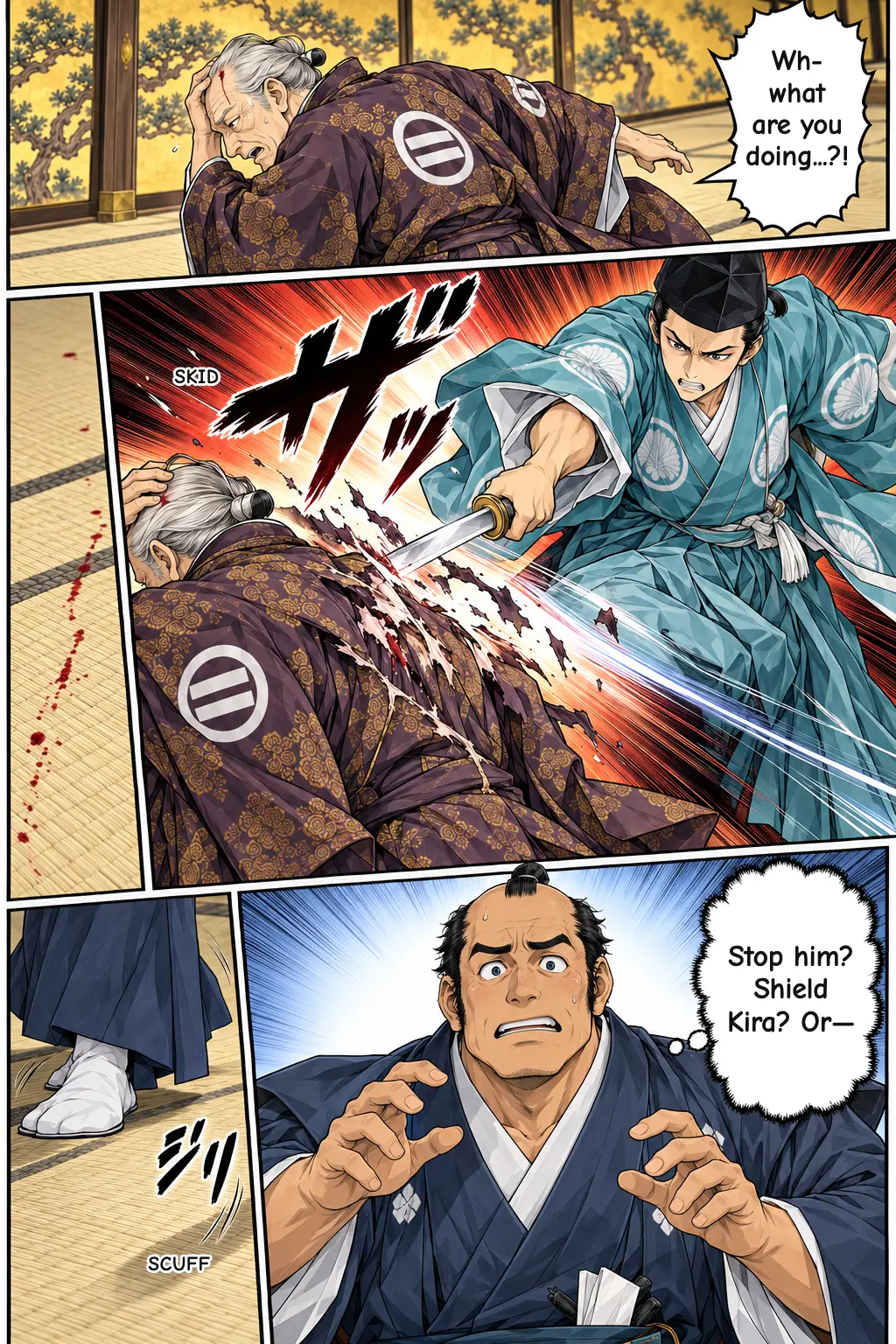
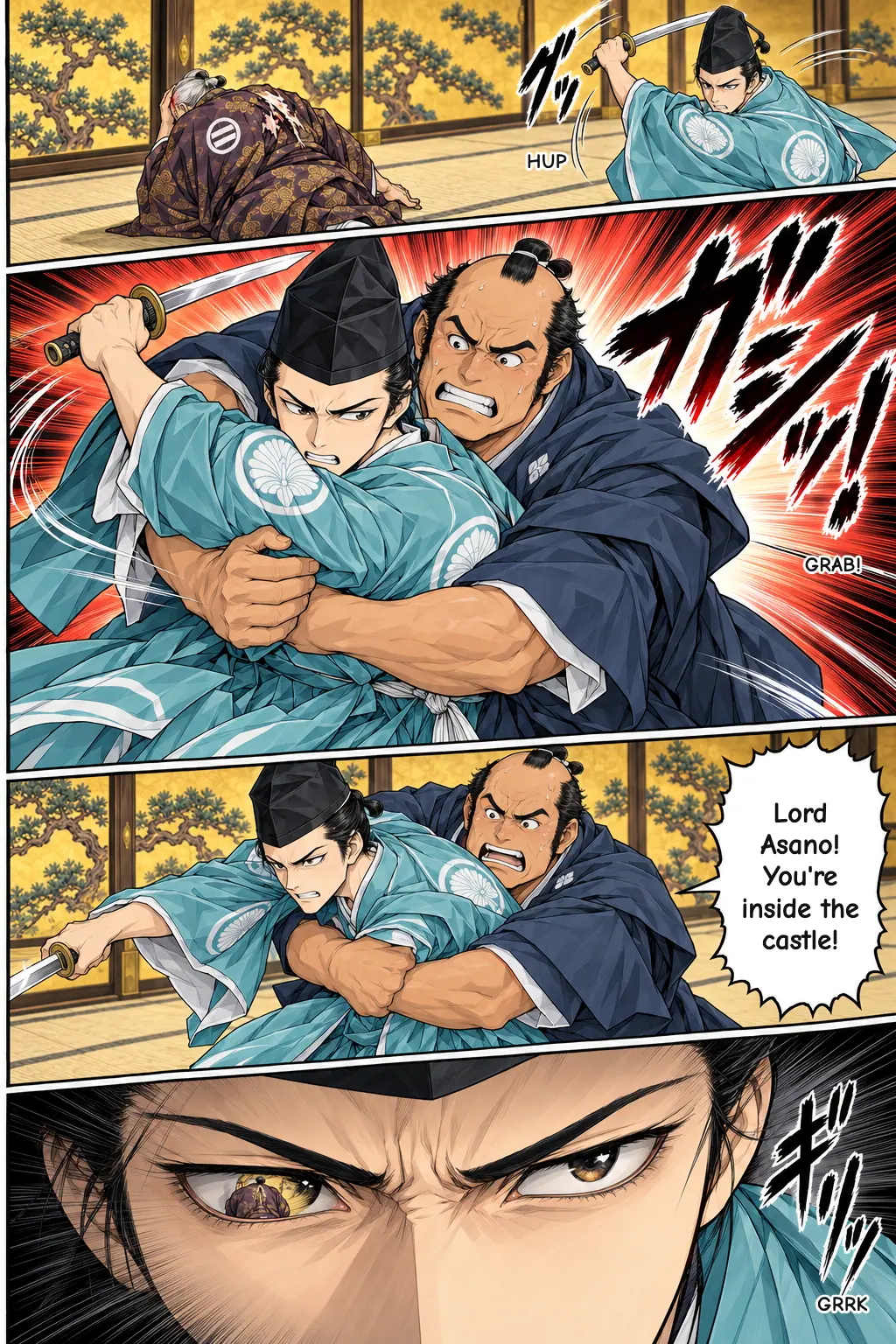
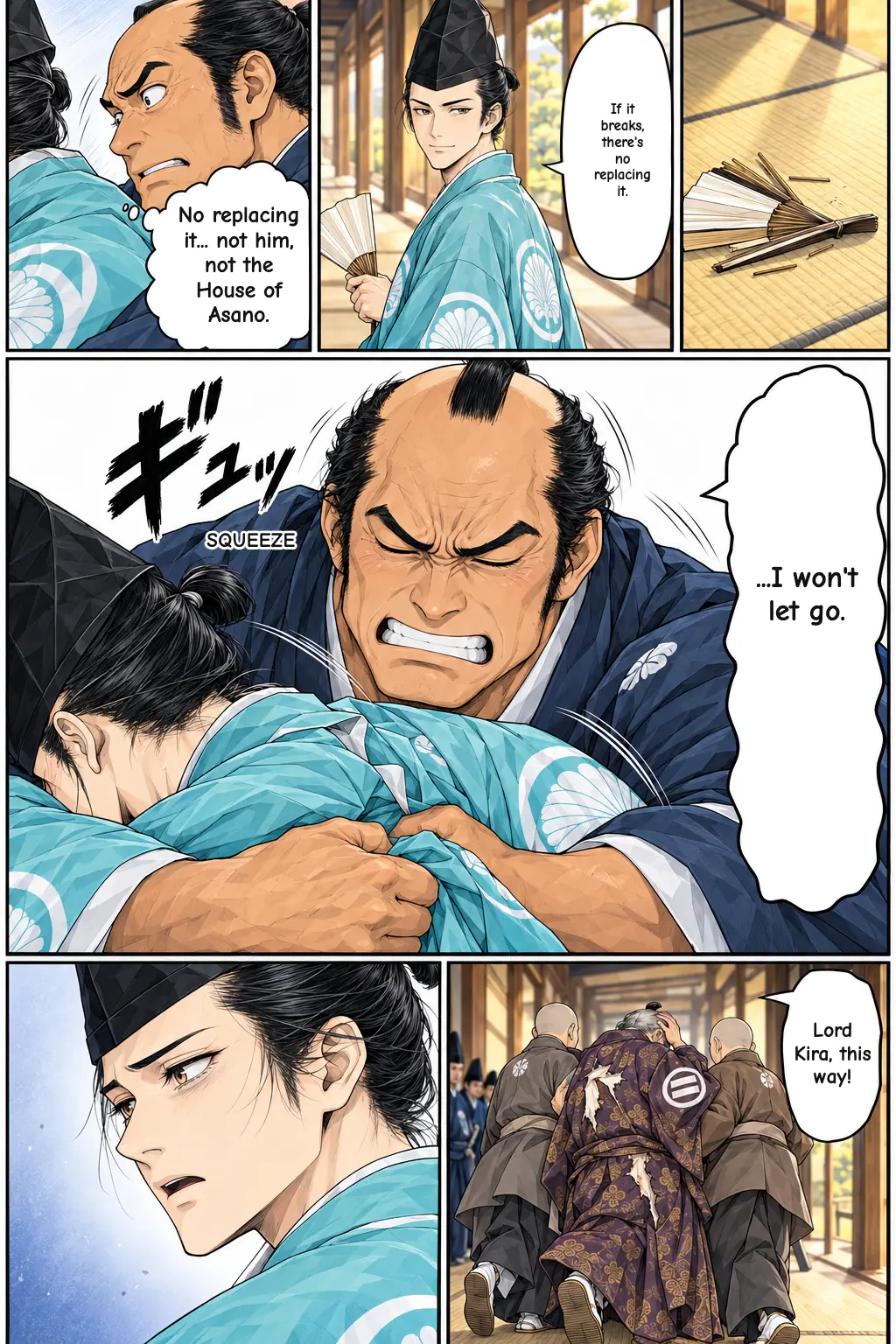
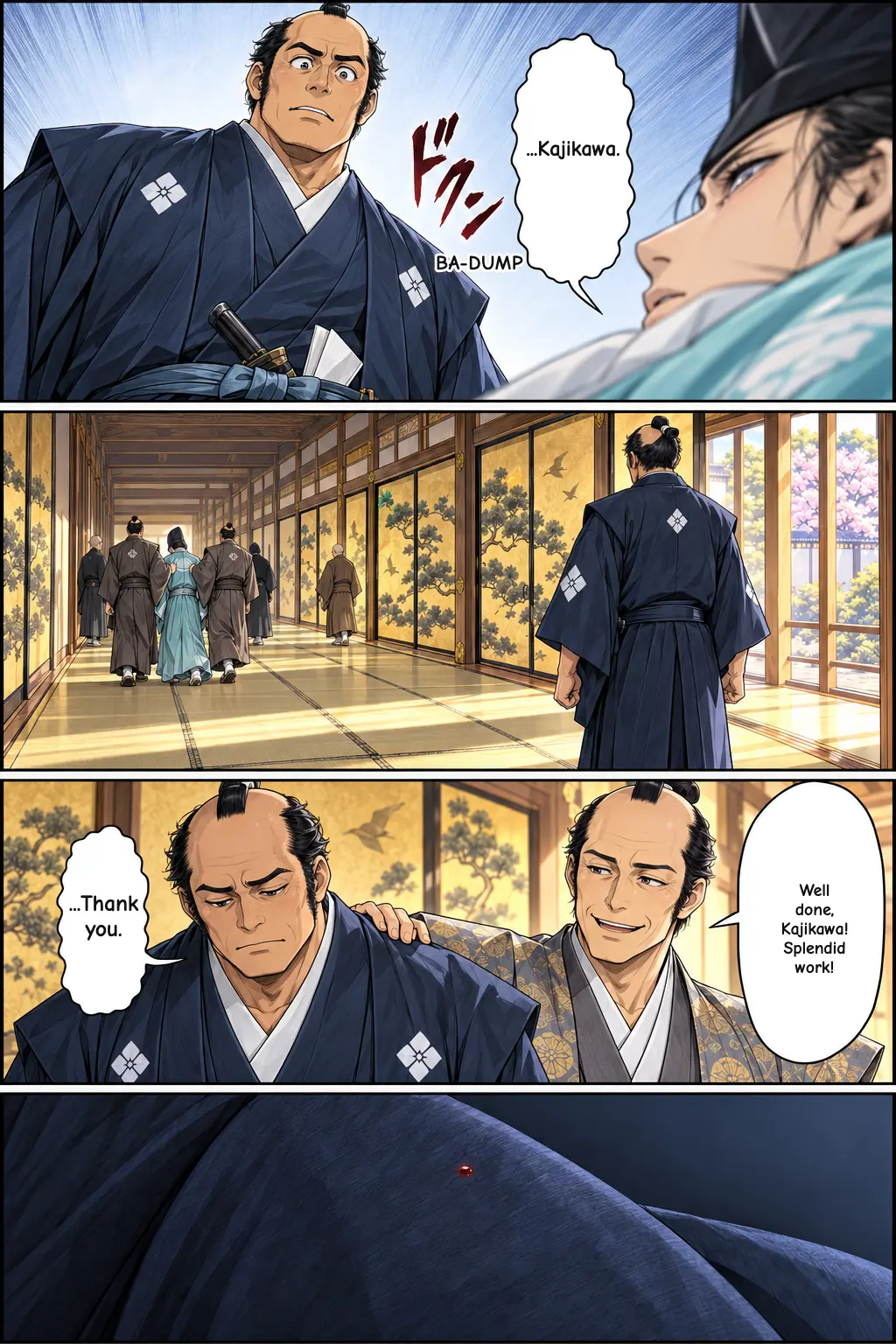
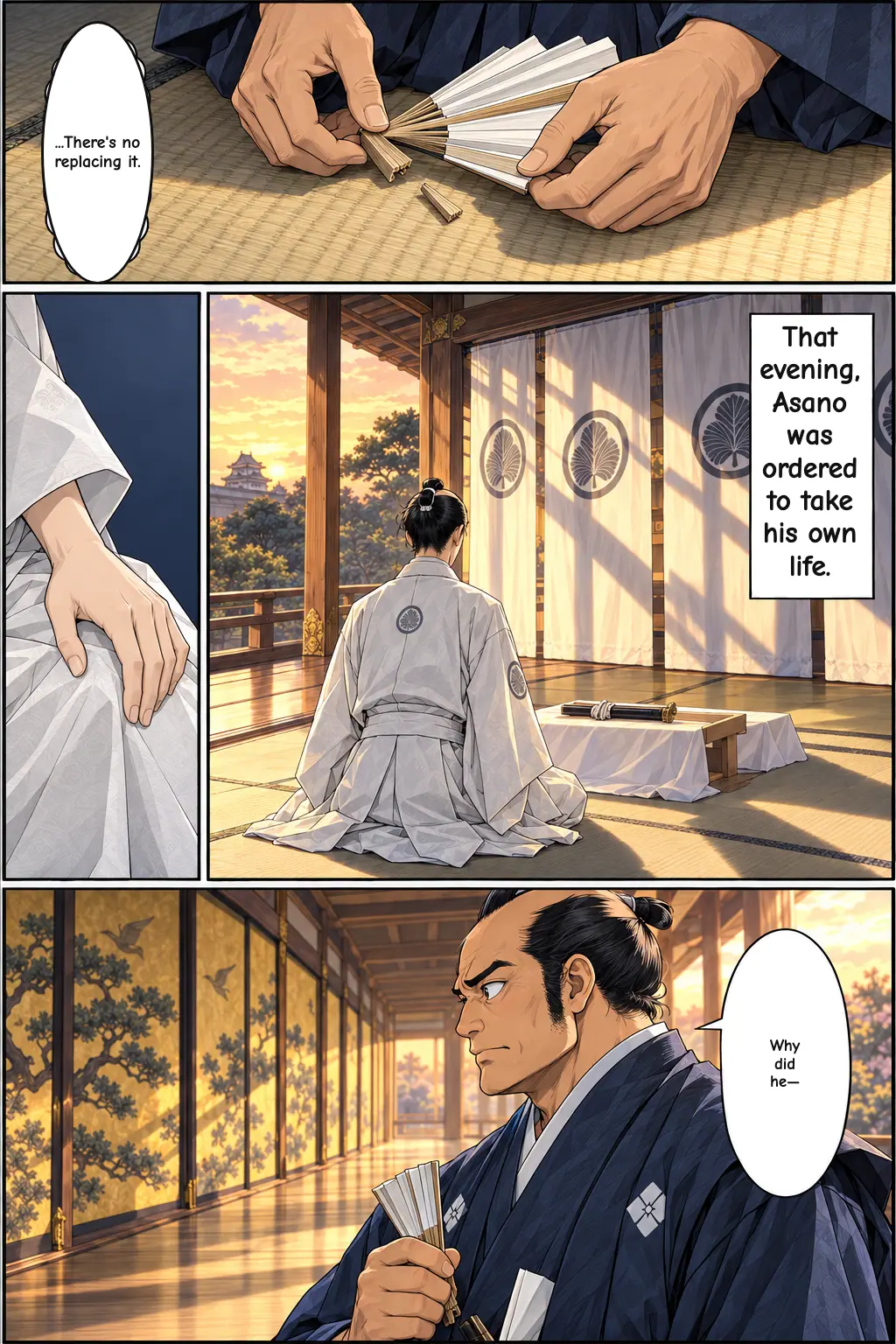
Episode 1 of the series. It's the day the Shogun gives his formal reply to the Emperor's envoys. In the Pine Corridor of Edo Castle, Lord Asano Takumi-no-Kami suddenly draws his blade on Lord Kira Kozuke-no-Suke. Kajikawa Yosobei, a retainer who happens to be standing nearby, grabs Asano from behind and chooses not to let go, no matter what. That same evening, Asano is ordered to take his own life. Why did he strike? No one will ever know.
Get new episodes in your feed. Follow us on:ThreadsBluesky
Story summary
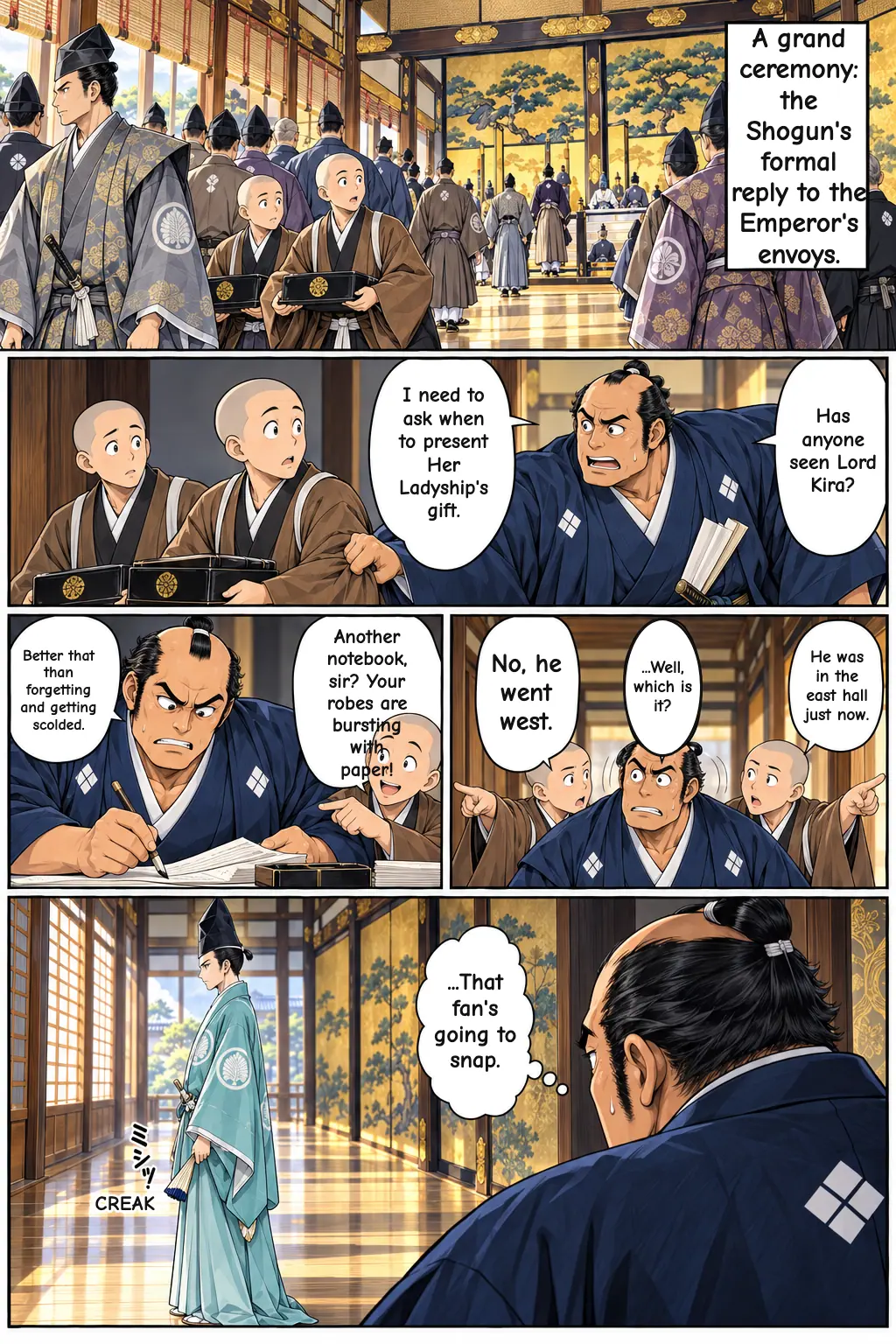
In the spring of 1701 (Genroku 14 in the Japanese calendar), Edo Castle was hosting envoys from the Emperor and from the retired Emperor, who had come from Kyoto. Two lords were given key roles. Asano Naganori, lord of the Ako domain in Harima and known by his court title Takumi-no-Kami, was in charge of hosting the imperial envoys. Kira Yoshihisa (his name is also read Yoshinaka), known as Kozuke-no-Suke, came from one of the 'koke' families, experts in court ceremony, and his job was to show the hosts the correct etiquette. The 14th day of the third month was the last and most important day.
The 47 Ronin Story Explained: Chushingura and the Pine Corridor Incident (1701)
In short: The Pine Corridor Incident is the real event that began the story of the 47 Ronin (Chushingura). In spring 1701, Lord Asano Takumi-no-Kami drew a short sword on the court-etiquette master Lord Kira Kozuke-no-Suke inside Edo Castle. A bystander, Kajikawa Yosobei, held him back, and the shogunate ordered Asano to take his own life that same day. Kira was not punished. The eyewitness record, the Kajikawa-shi Hikki, never says why Asano struck.
What Happened in the Pine Corridor: The Historical Story
In the spring of 1701 (Genroku 14 in the Japanese calendar), Edo Castle was hosting envoys from the Emperor and from the retired Emperor, who had come from Kyoto. Two lords were given key roles. Asano Naganori, lord of the Ako domain in Harima and known by his court title Takumi-no-Kami, was in charge of hosting the imperial envoys. Kira Yoshihisa (his name is also read Yoshinaka), known as Kozuke-no-Suke, came from one of the 'koke' families, experts in court ceremony, and his job was to show the hosts the correct etiquette.
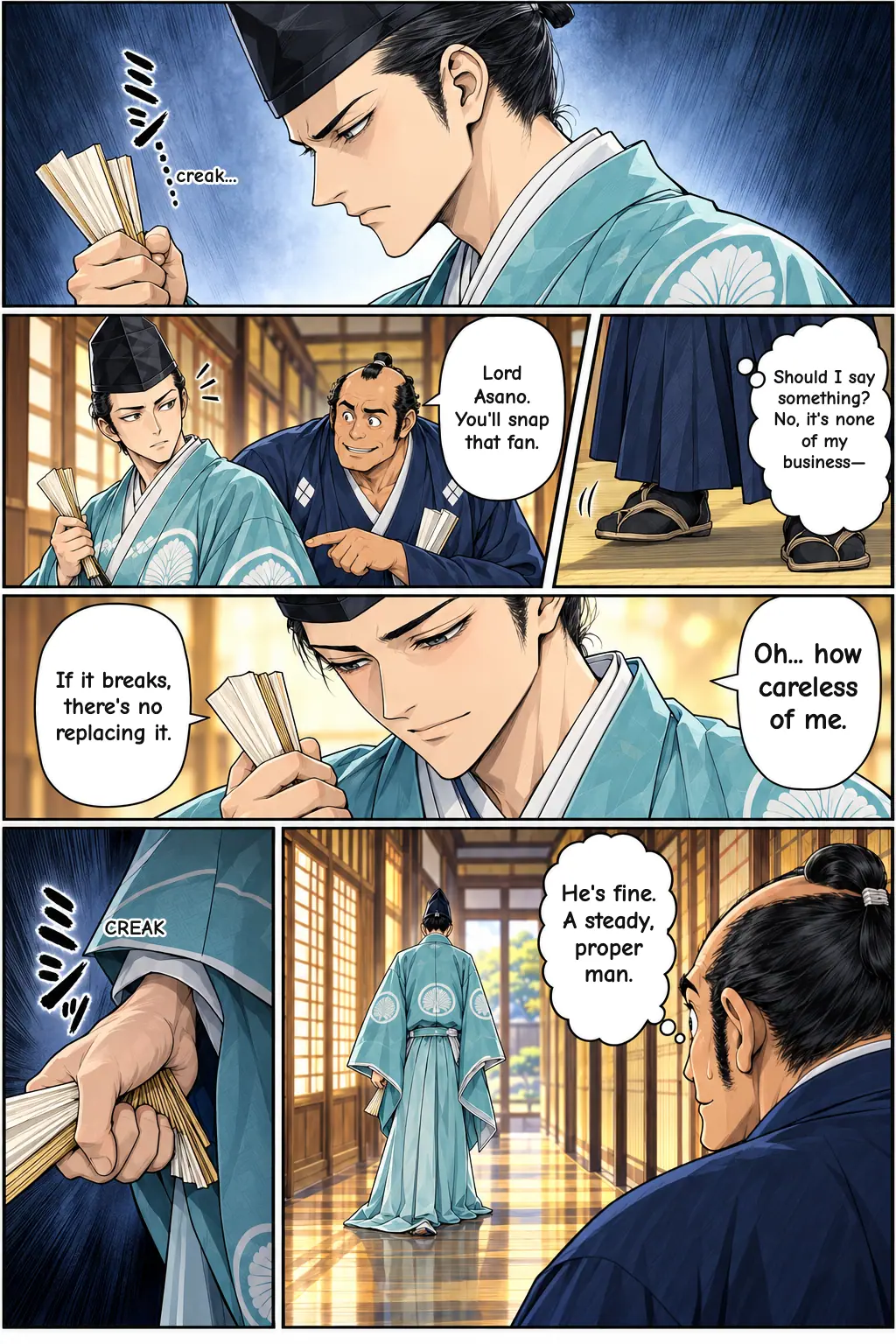
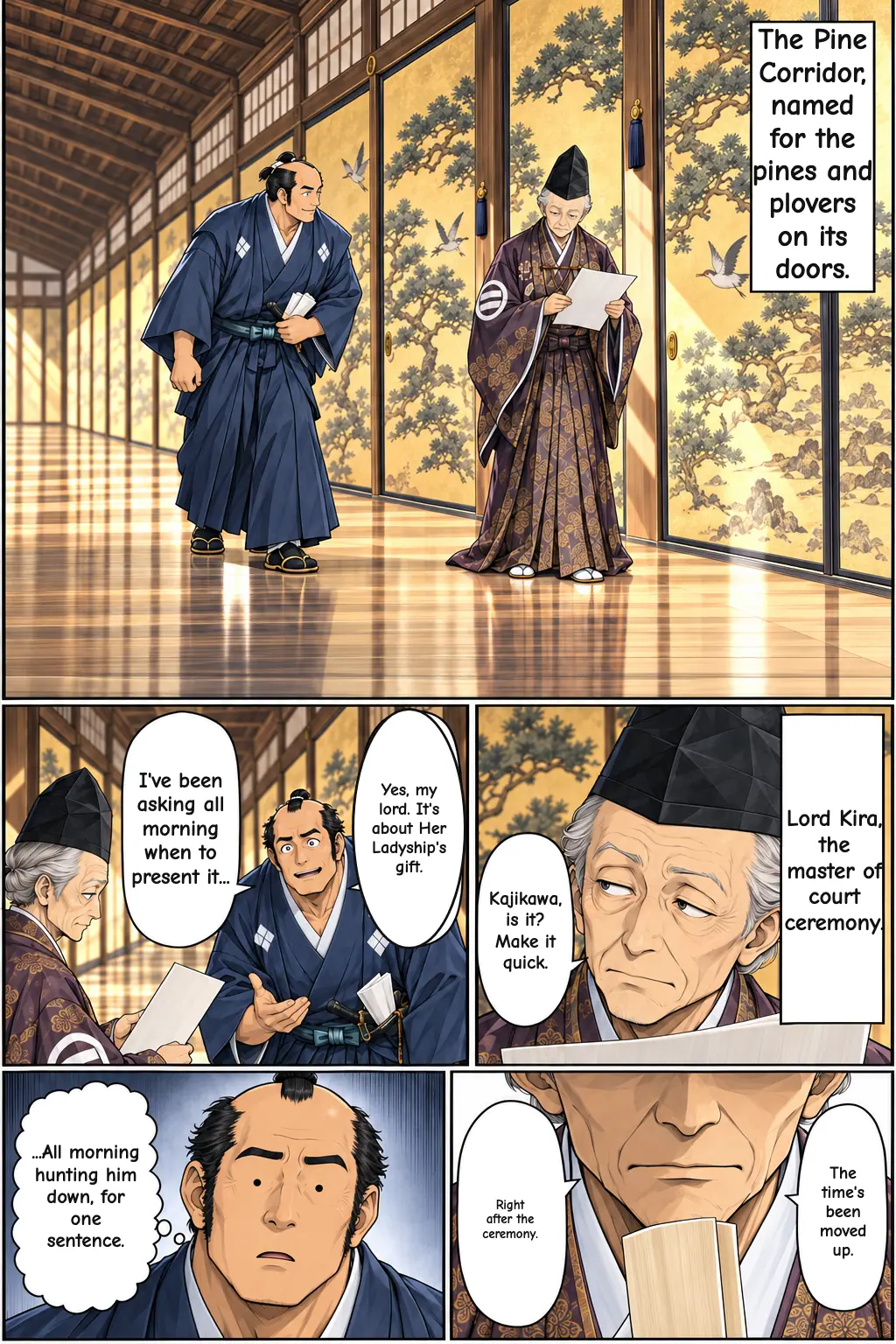
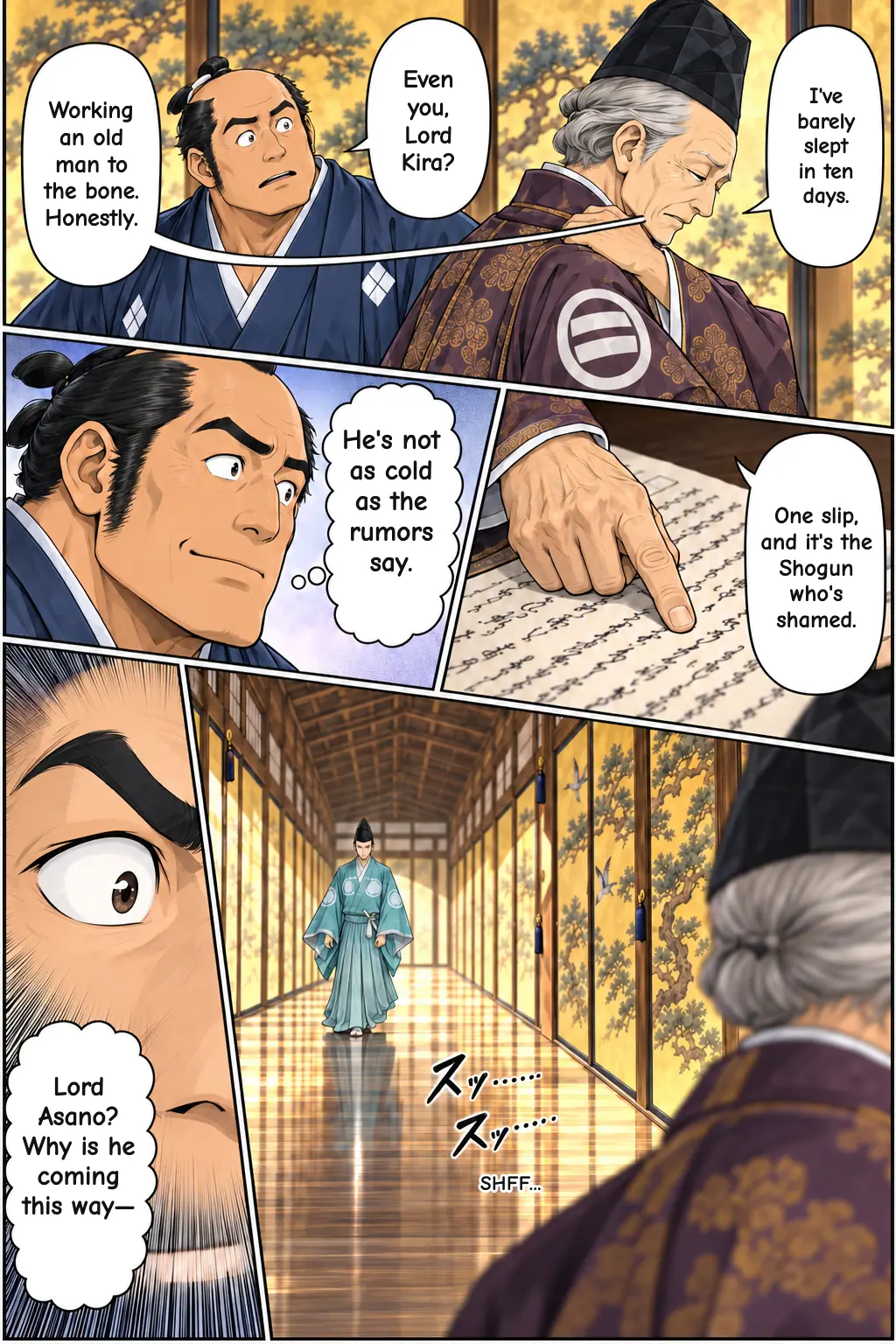
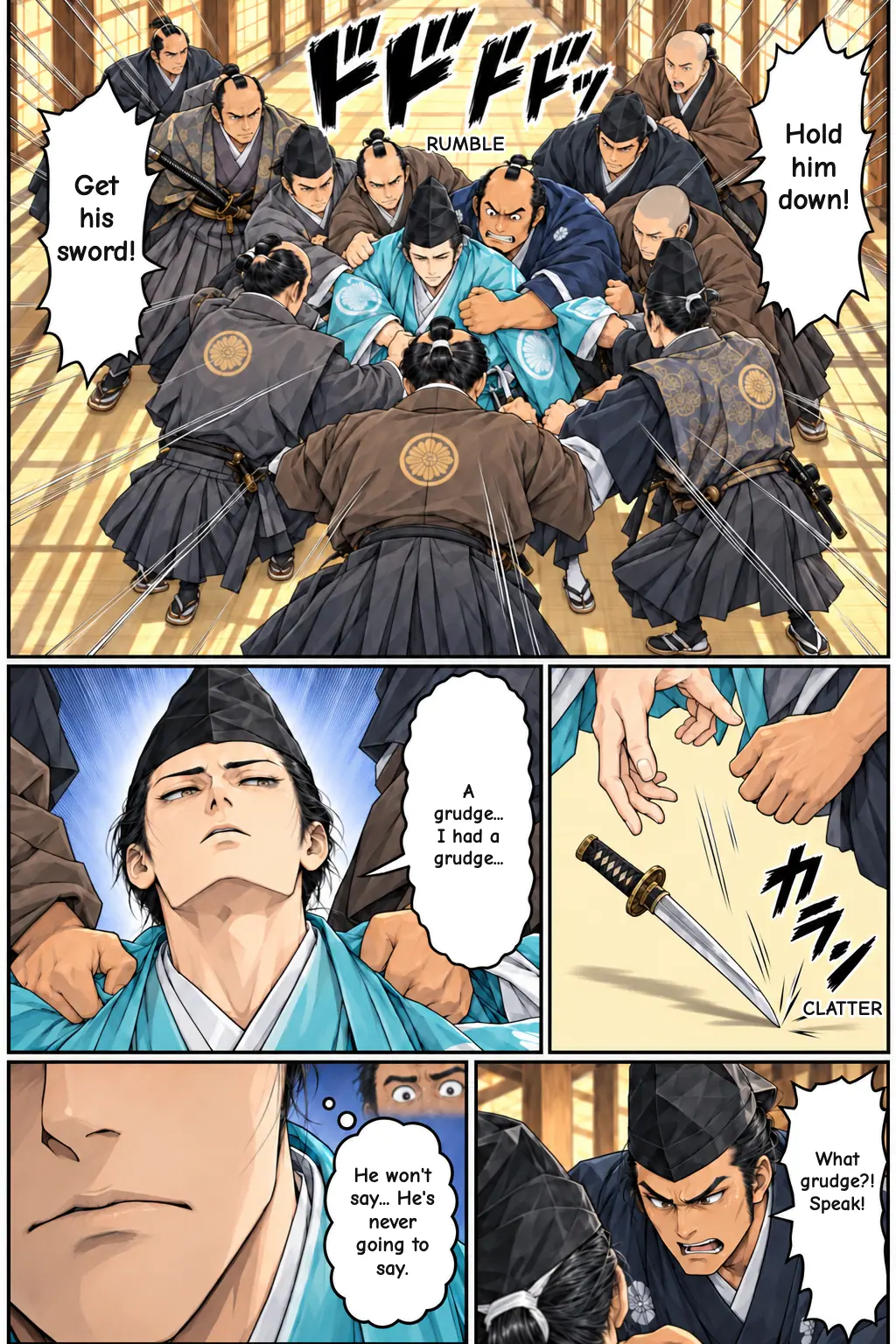
The 14th day of the third month was the last and most important day. On that day the Shogun would give his formal reply to the Emperor's message. That morning, a shogunal retainer named Kajikawa Yosobei met Kira in the Pine Corridor, the long hallway named for the pine trees painted on its sliding doors. The two men were discussing what time gifts from the Shogun's wife should be presented to the envoys. According to Kajikawa's own account, Asano came up behind Kira and called out to him, saying something about a grudge from recent days (the exact words differ between copies of the record). Then he slashed at Kira with his short sword.
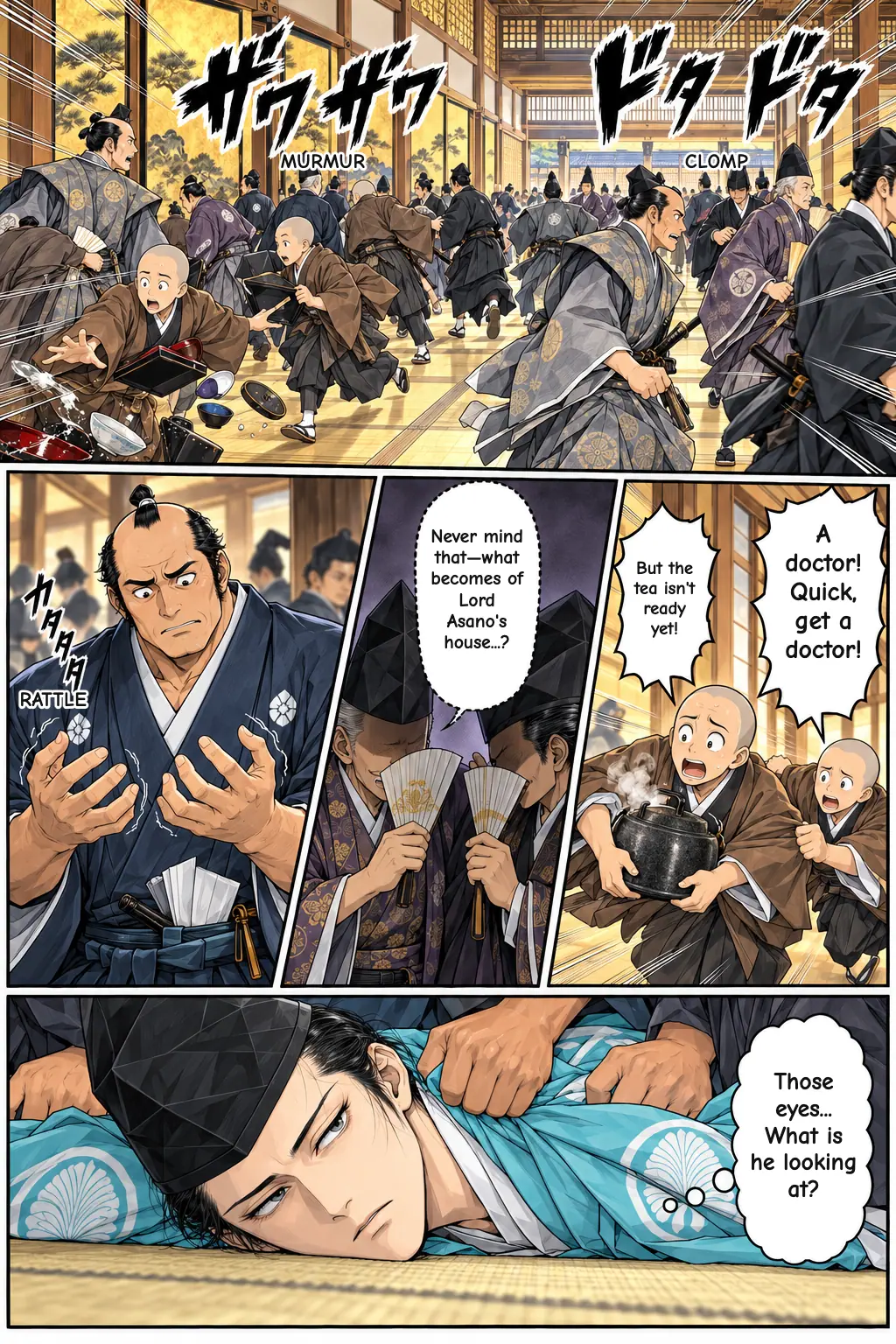
Kira turned and was cut on the forehead. When he tried to get away, he was cut again on the back or shoulder. Both wounds were shallow. Kajikawa grabbed Asano from behind and held on, so Asano could not finish the attack. Other officials and castle attendants ran in to restrain him, and Kira was carried away. Drawing a blade inside the Shogun's castle was a very serious crime. The shogunate acted that same day. Asano was handed over to Tamura Takeaki, lord of Ichinoseki, and ordered to commit seppuku (ritual suicide) at Tamura's residence. The Asano house lost its domain. Kira was not punished at all. Asano was buried at Sengakuji temple in Edo, where the 47 retainers would later be buried next to him.
Why Did Asano Attack Kira? What We Know and What We Don't
This is the big question, and the honest answer is that nobody knows. The surviving records show that Asano had a grudge, but they never explain what it was. One theory says Kira was harsh with his guidance or deliberately misled Asano about the ceremony. Another says Kira expected expensive gifts as payment for his teaching and was offended when Asano gave too little. There is also a theory that Asano had a health problem, a chest ailment, that affected his temper. None of these can be confirmed from reliable sources. Most of the stories about Kira's bullying and greed came later, from popular tales and the theater.
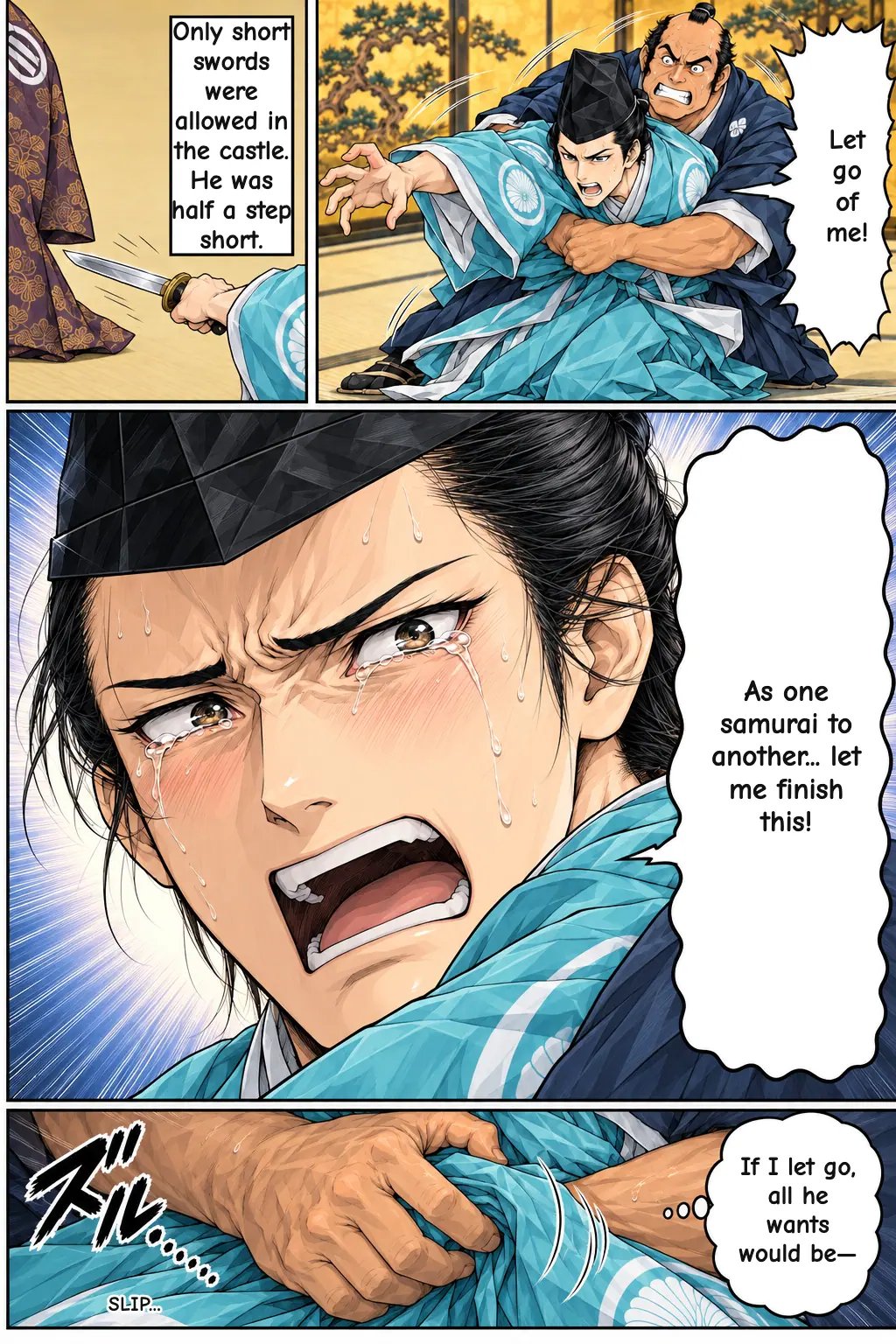
A few well-known details are also uncertain. It is often said that Asano begged to be allowed to finish the fight as a matter of samurai honor, but that line comes from plays and storytelling, not from the historical records. There is a famous farewell poem said to have been written by Asano before his death, comparing his regret to falling cherry blossoms. It appears in one later memoir, and many historians doubt that he really wrote it.
Why the Pine Corridor Incident Matters in Japanese Culture
Samurai custom held that when two men fought, both should be punished. In this case only Asano was punished. That ruling looked one-sided to many people. Asano's retainers had lost their lord and their home, and they became ronin, masterless samurai. Nearly two years later, 47 of them, led by Oishi Kuranosuke, attacked Kira's mansion and killed him. The whole famous revenge story grew out of a few seconds in the Pine Corridor.
The story became so popular that it turned into a genre of its own, called Chushingura. The best-known version is the puppet and kabuki play Kanadehon Chushingura, first staged in 1748. To get around rules against dramatizing recent events involving the shogunate, it moved the story back to the 14th century and changed the names. Asano became Enya Hangan and Kira became Ko no Moronao. In the play, Moronao torments Enya because Enya's wife turned down his advances. That motive is invented. It is not history.
What the Manga Changes and Adds
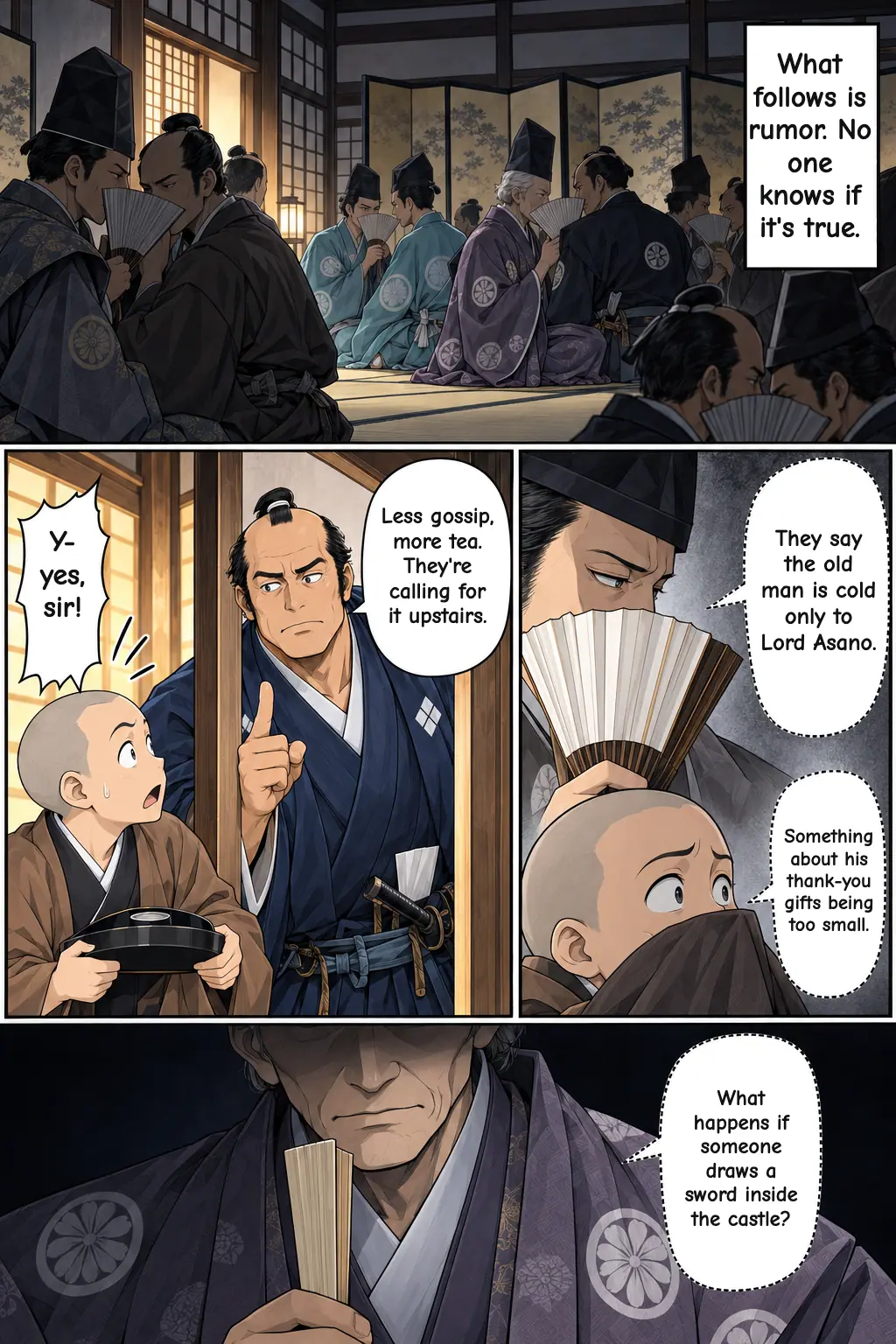
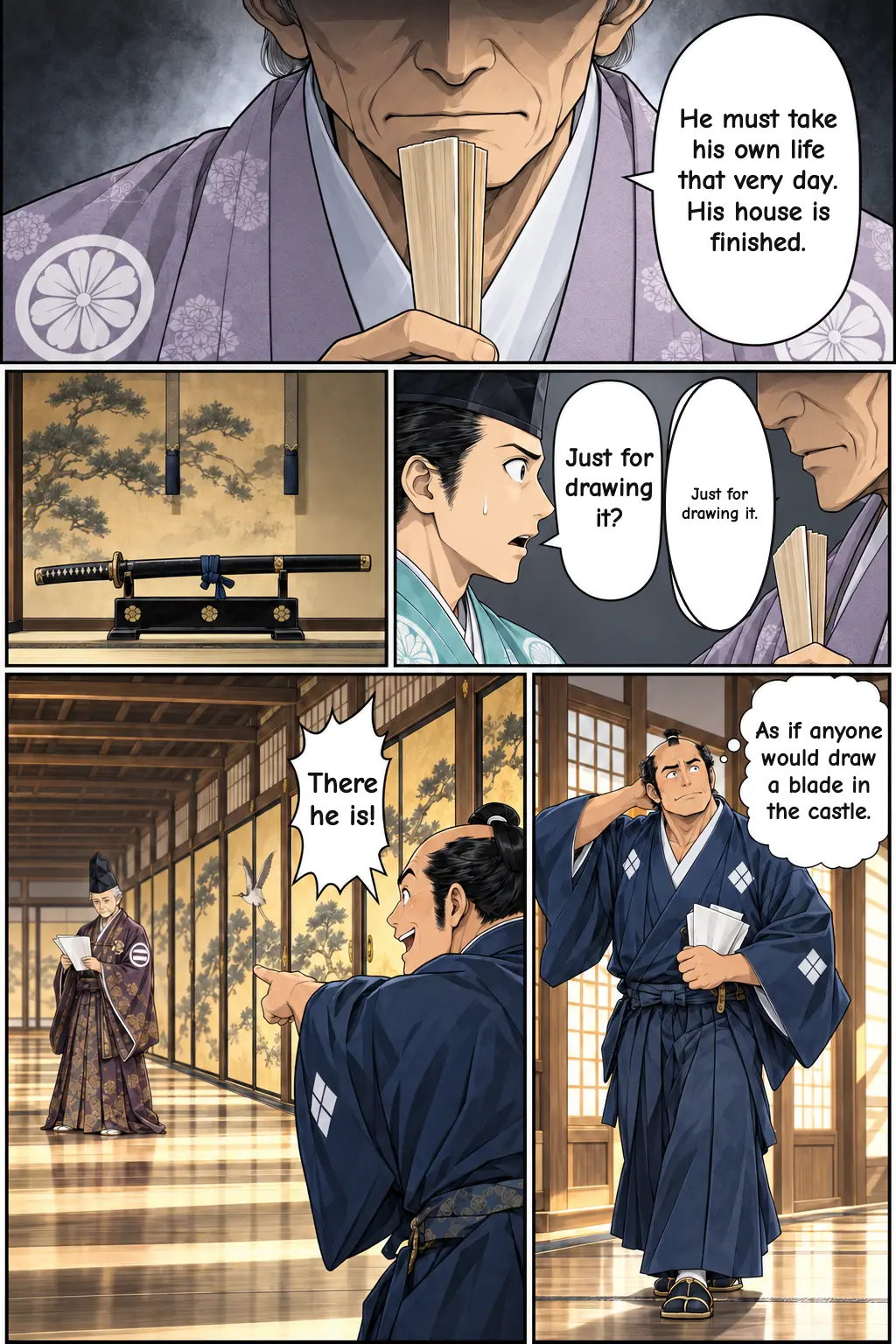
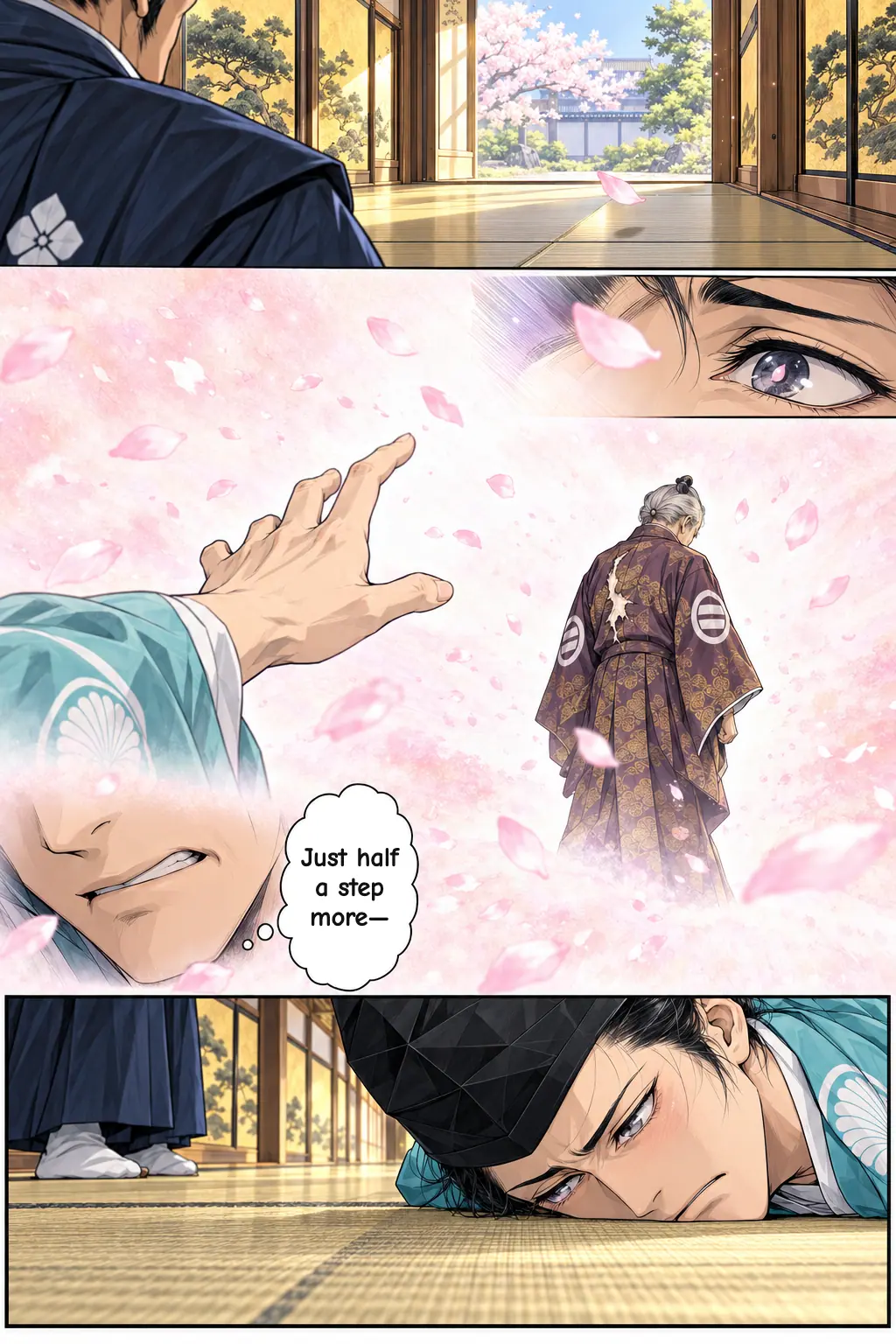
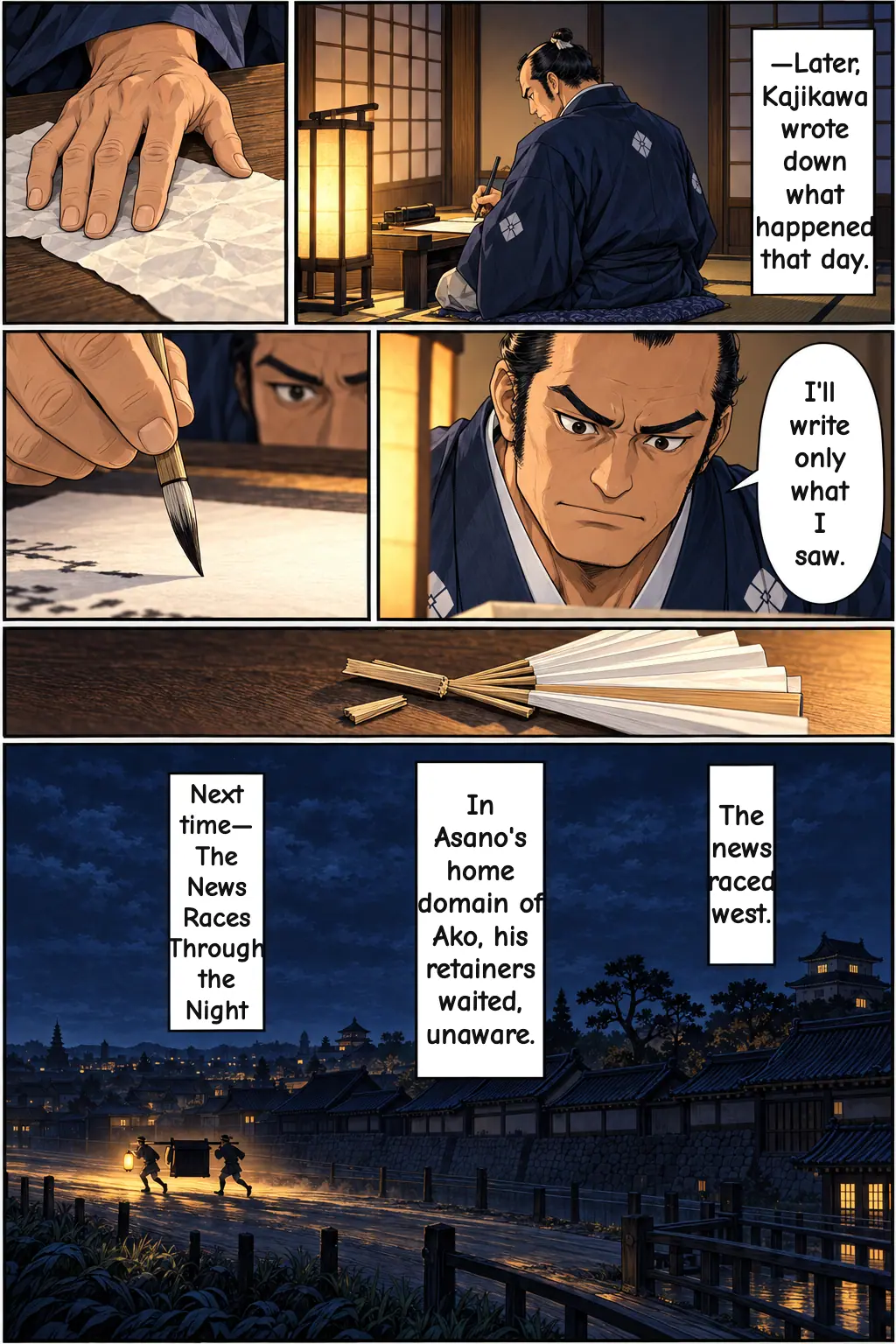
Episode 1 follows the historical outline: the ceremony day, the attack from behind, Kajikawa holding Asano back, and the same-day sentence. Because the real motive is unknown, the manga does not pick one. Stories of Kira's cruelty or bribery only show up as rumors whispered by courtiers, never as facts. The days of preparation before the attack, the conversations between Asano and Kira, the panicked crowd of attendants and officials, Kajikawa's inner thoughts, and the characters' faces and voices are all creative additions. Very few reliable portraits of these men exist. The plea for samurai mercy is used as a dramatic line borrowed from the stage tradition. The closing image of Kira walking away beneath cherry trees in full bloom is symbolic. It shows Asano's state of mind, not a real scene.
Where to Read It
You can read THE 47 RONIN: Chushingura – A Vow in the Winter Snow here on Manga Portal. Every episode is free, and you don't need an account. Episode 1, 'One Missed Strike That Set 47 Samurai Moving — The Pine Corridor Incident', is a good place to start if you want to see how one unexplained moment set off Japan's most famous story of loyalty. Then keep reading to find out what Asano's retainers decided to do.
Characters in this episode
Asano Takumi-no-Kami Naganori
Lord of the Ako domain, about 35 years old, who attacked Kira in Edo Castle and was ordered to commit seppuku the same day.
Kira Kozuke-no-Suke Yoshihisa
A senior master of court ceremony, about 61, who was wounded in the attack and not punished by the shogunate.
Kajikawa Yosobei Yoriteru
A shogunal retainer who was talking with Kira when the attack happened, held Asano back from behind, and later wrote an eyewitness account.
The imperial envoys
Court nobles sent from Kyoto by the Emperor and the retired Emperor, whose formal reception was the occasion for the incident.
Tamura Takeaki
Lord of Ichinoseki, who was ordered to take Asano into custody and carry out his seppuku at his residence.
FAQ
What was the Pine Corridor Incident?
It was the 1701 attack inside Edo Castle in which Lord Asano Naganori slashed Lord Kira Yoshihisa with a short sword. Asano was ordered to commit seppuku that day and his domain was confiscated. This set off the events that led to the revenge of the 47 Ronin.
Why did Asano attack Kira?
No one knows for sure. The records say only that Asano had a grudge. Theories include Kira's harsh treatment, a dispute over gifts, or Asano's health, but none of them can be proven.
Did Kira die in the Pine Corridor?
No. Kira received shallow cuts to the forehead and back and survived. He was killed nearly two years later, when Asano's former retainers raided his mansion.
Is Chushingura a true story?
The core events are historical: the attack, Asano's seppuku, and the later raid by the ronin. The famous play Kanadehon Chushingura (1748), though, changed the names and setting and added invented motives and scenes.
Who stopped Asano from killing Kira?
Kajikawa Yosobei, a shogunal retainer who happened to be talking with Kira, grabbed Asano from behind. His written account is one of the main sources for what happened.