Episode 11They Had the Head. They Didn't Run.The March to Sengaku-ji
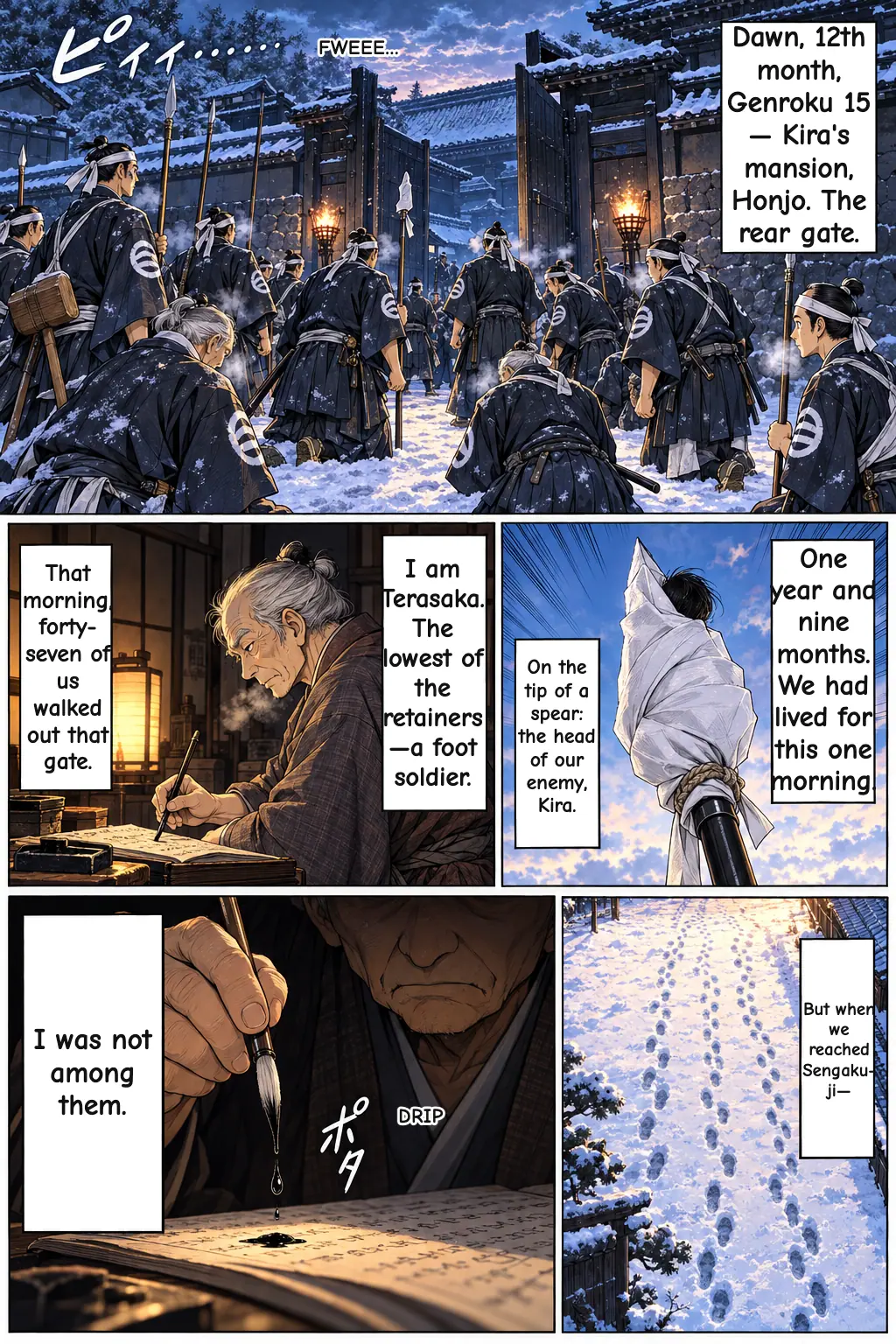
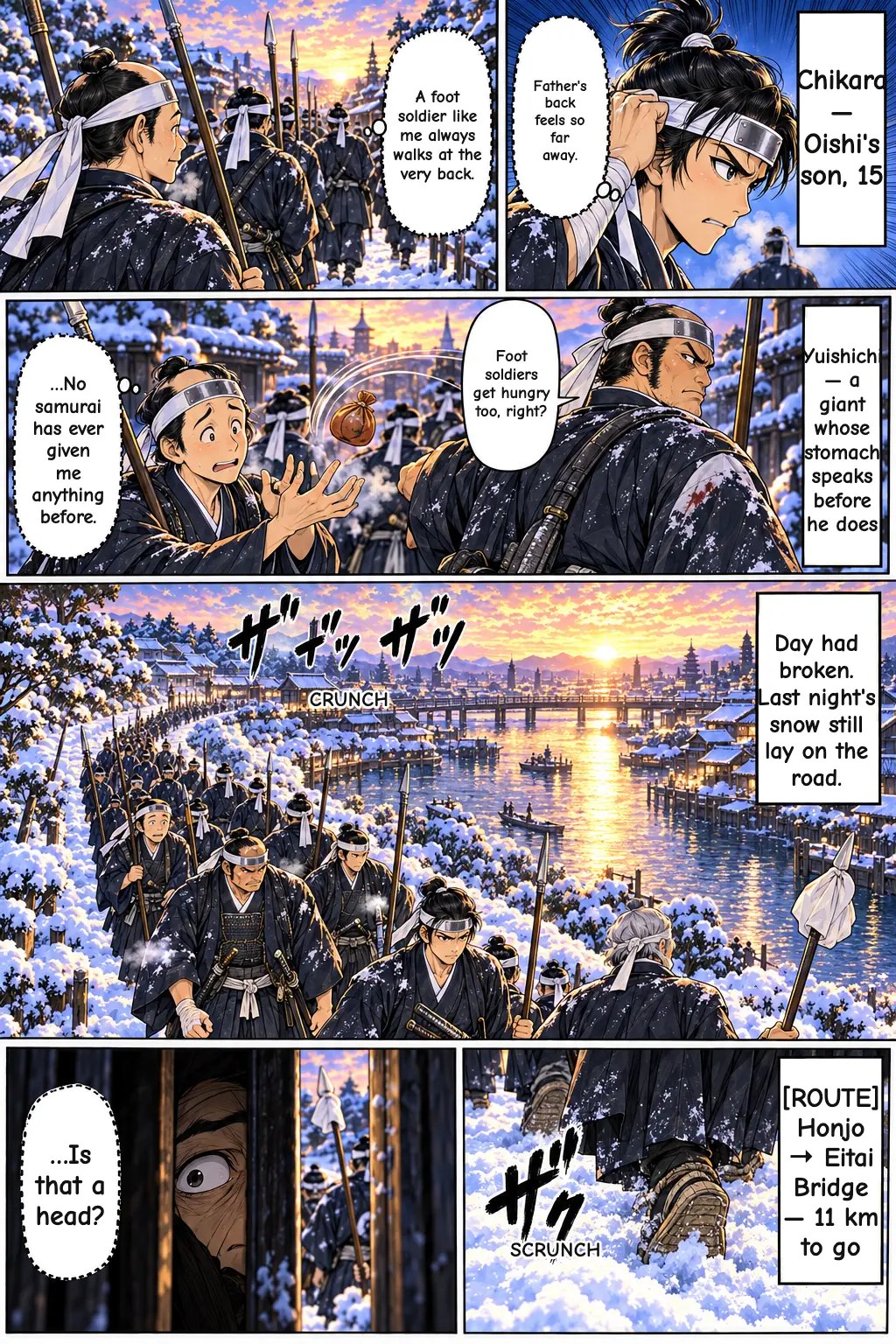
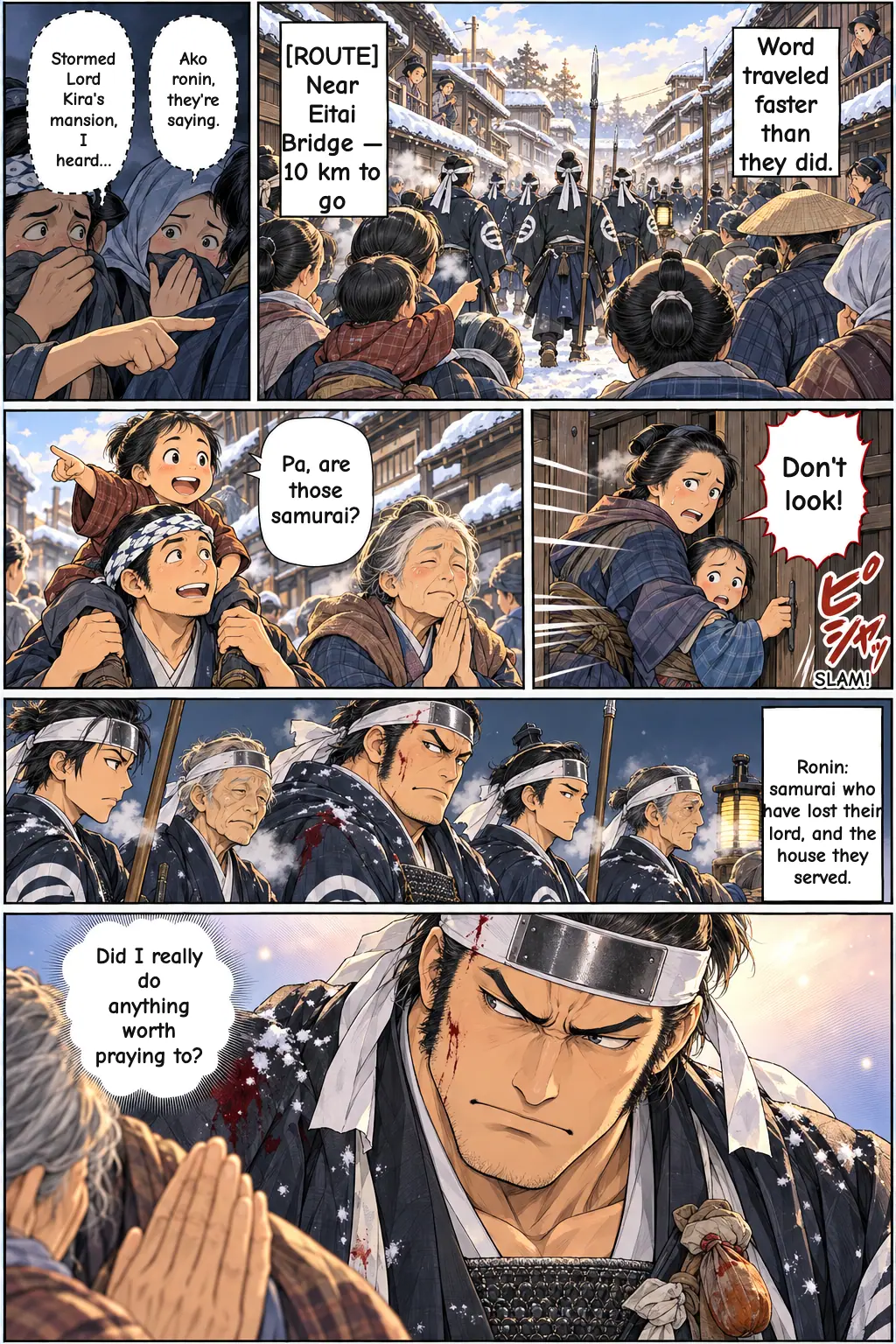
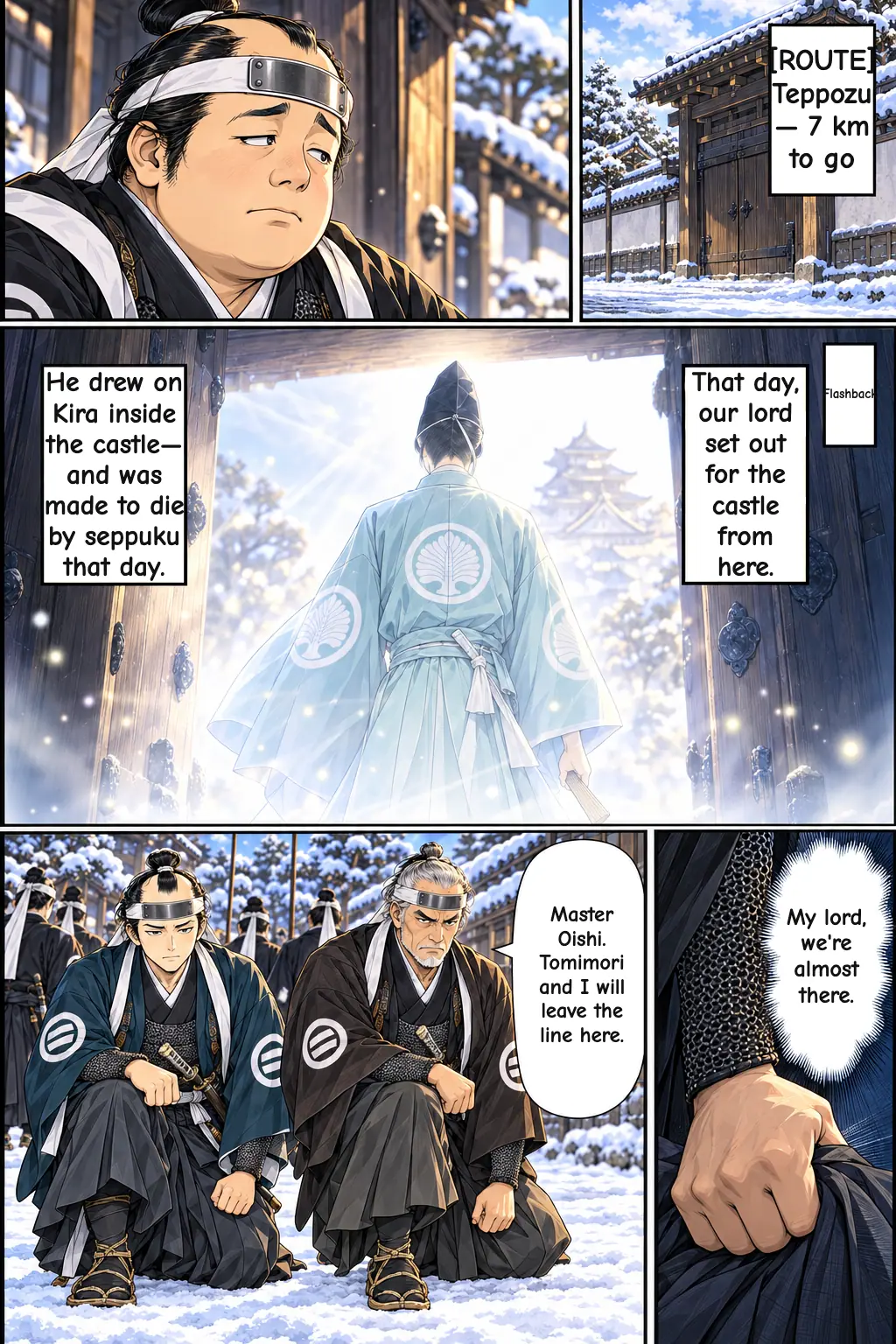
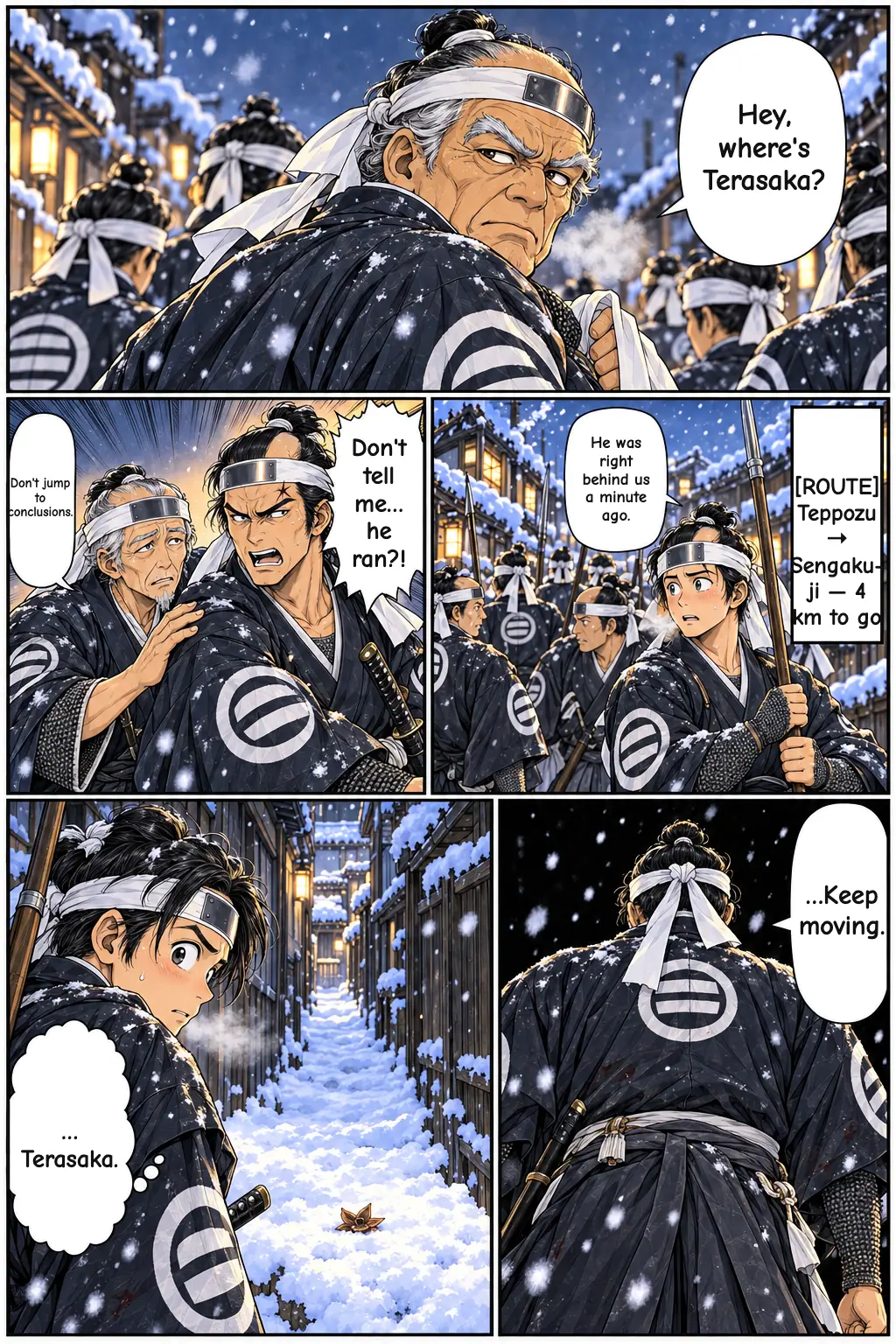
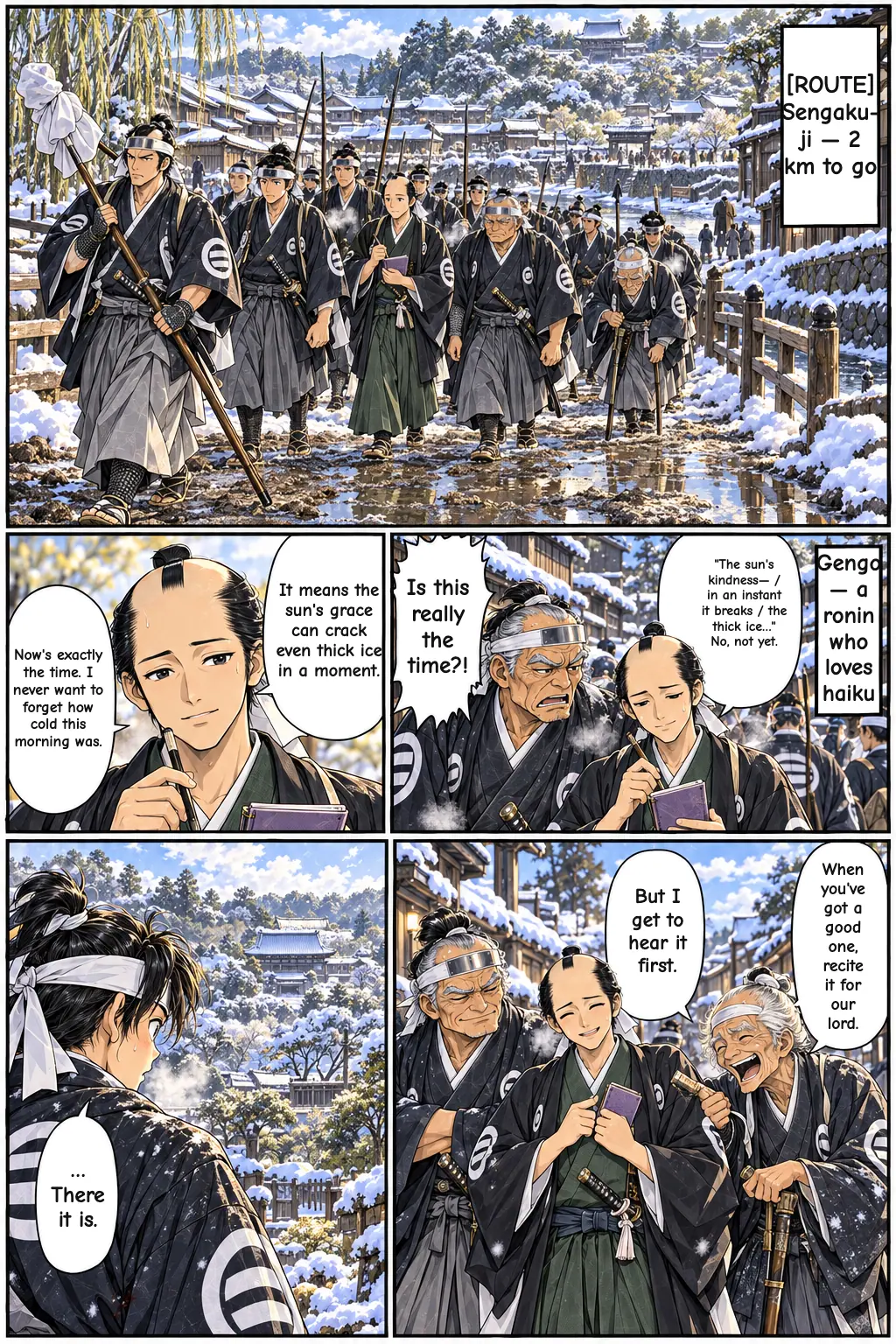
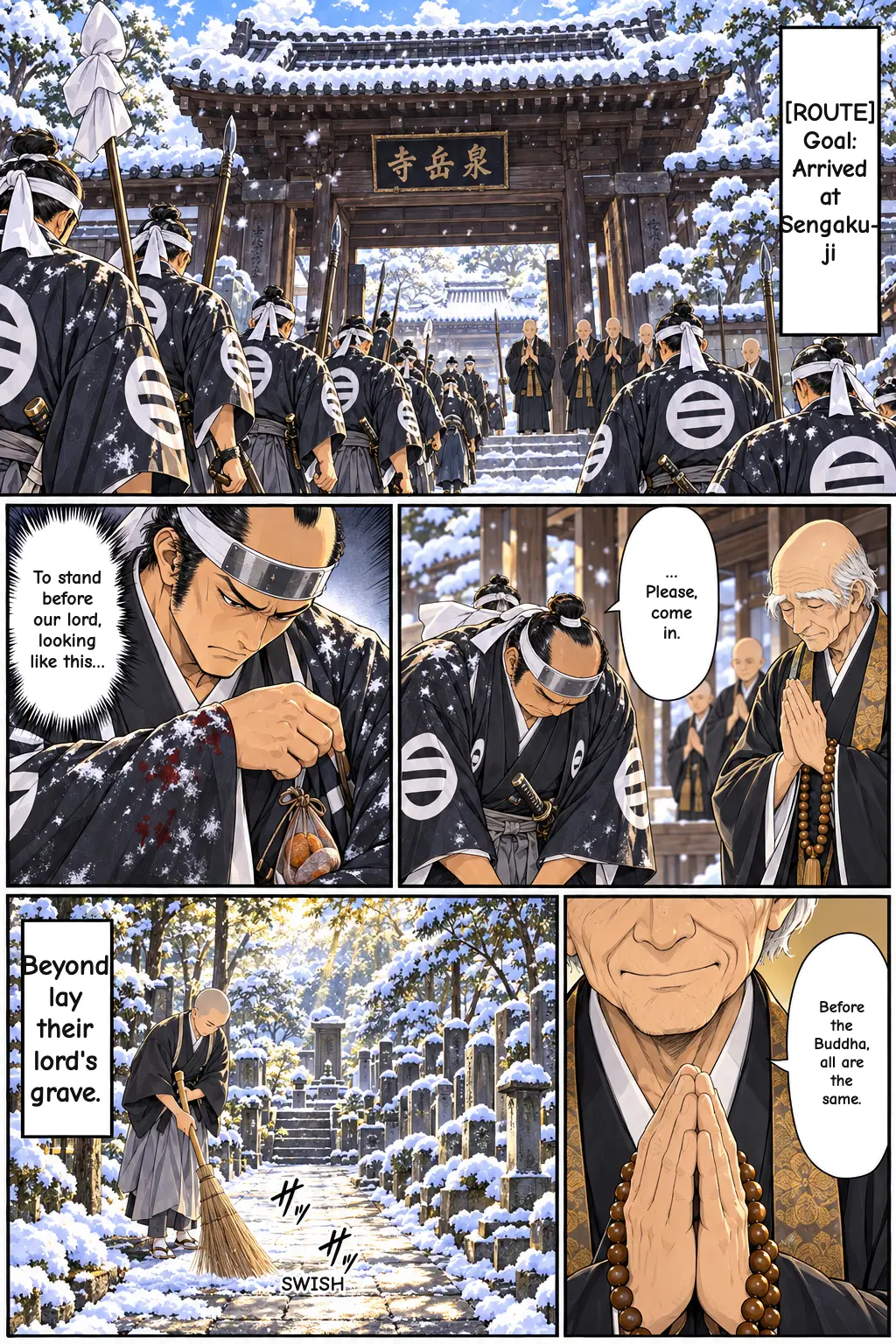
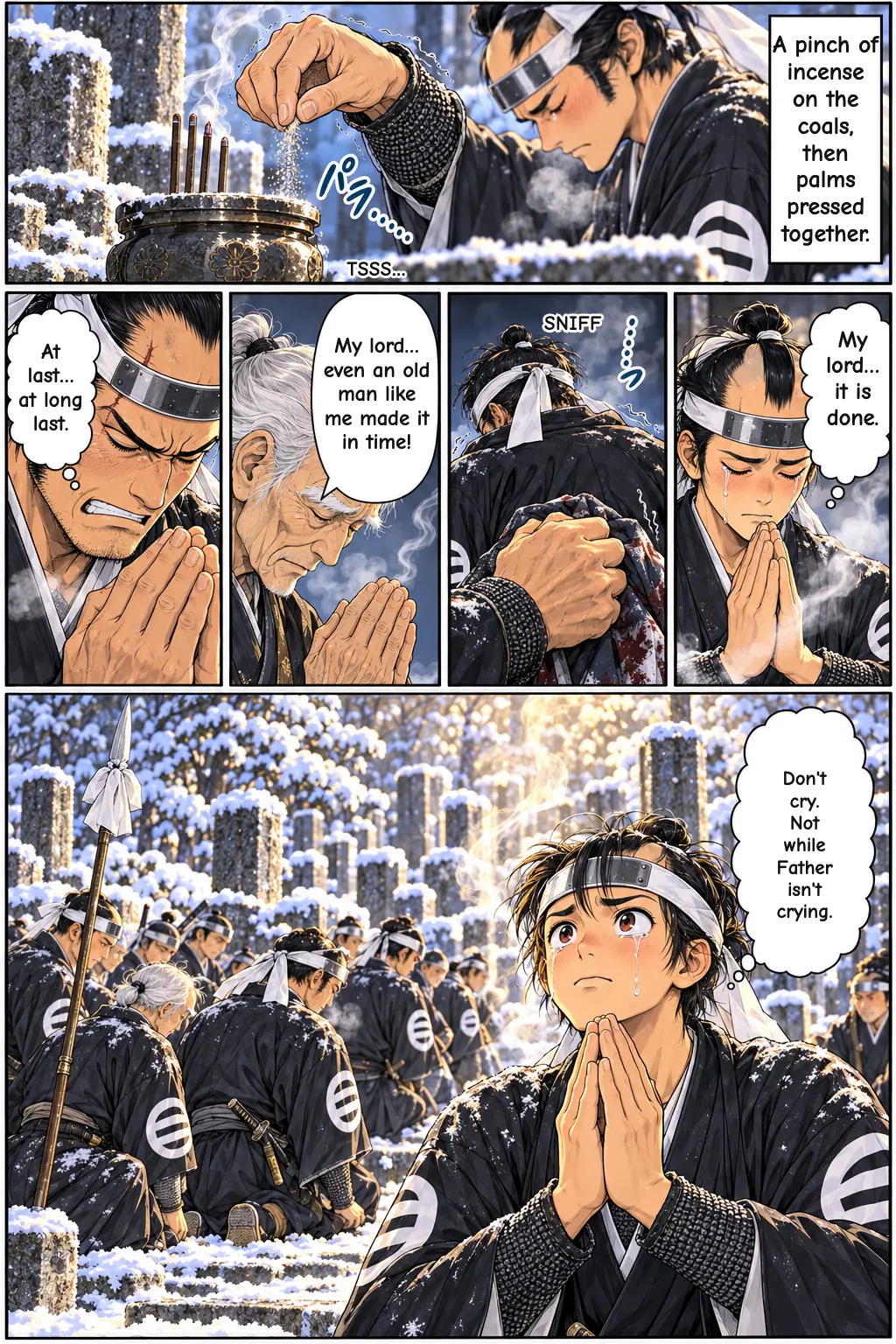
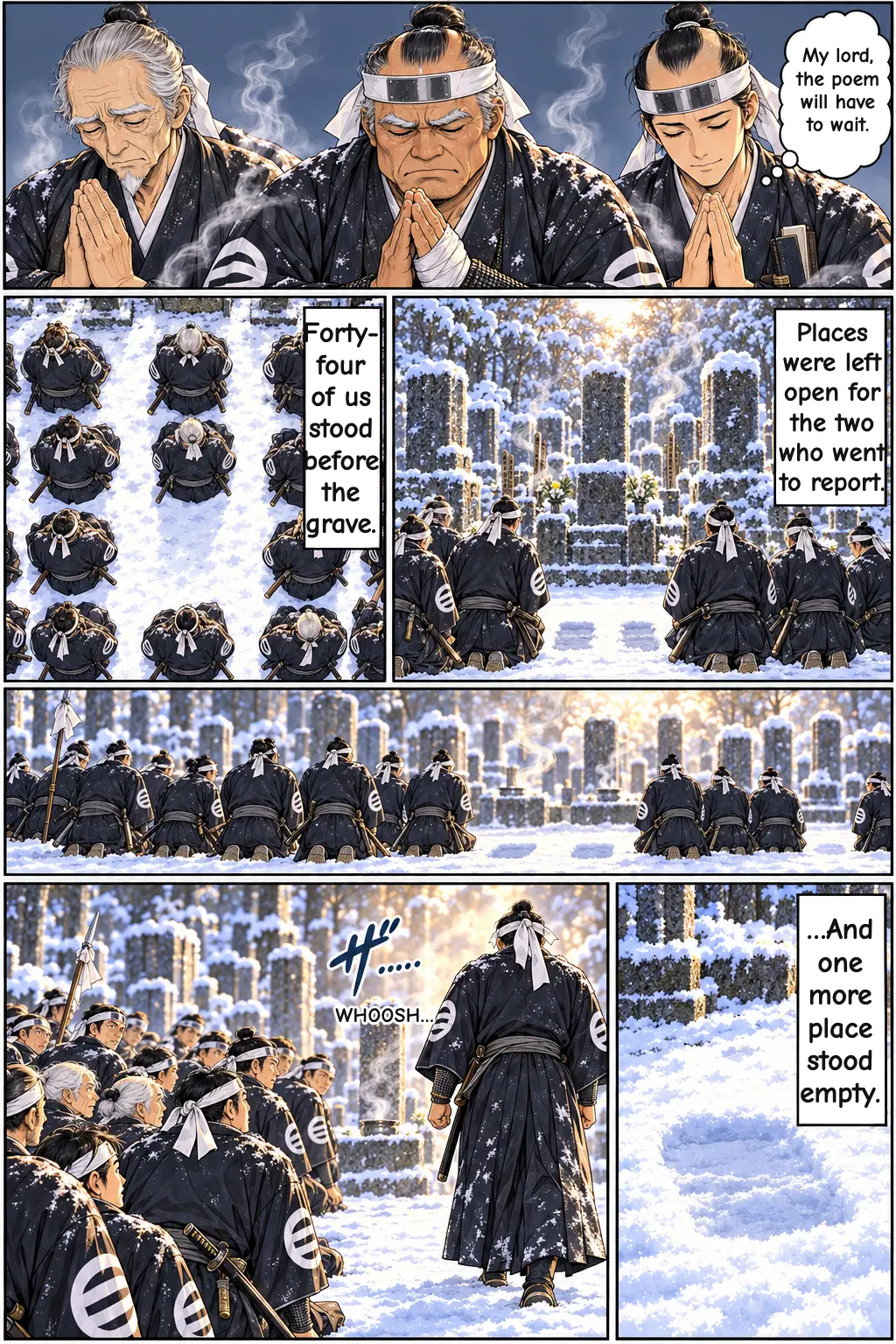
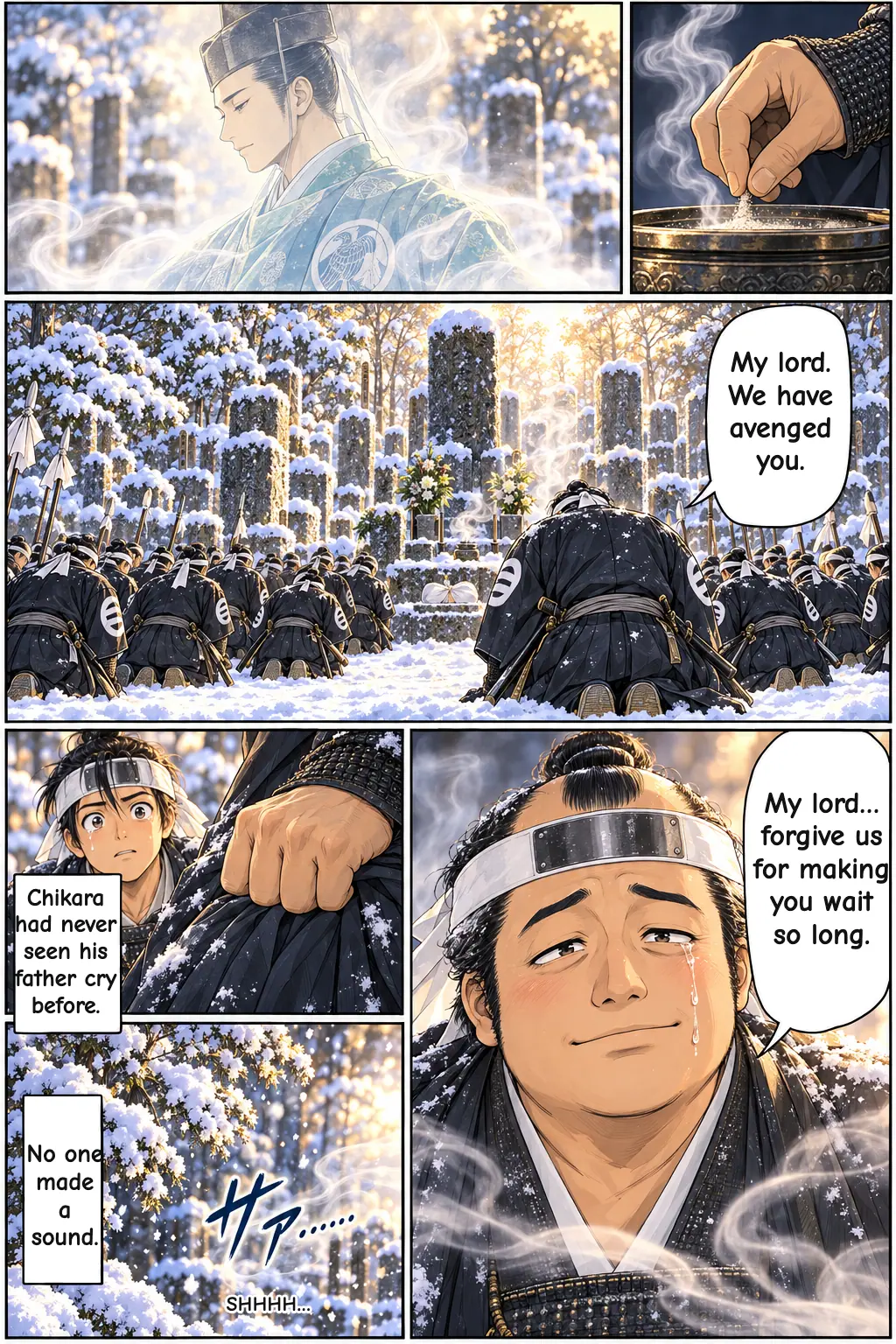
The raid is over. With the head of their enemy, Lord Kira, raised on a spear, the ronin march through the snowy streets of Edo to the grave of their late lord. Along the way, one foot soldier, a dried persimmon from a comrade tucked in his robe, quietly slips out of the line. At the grave, Oishi weeps for the first time.
The 47 Ronin's March to Sengaku-ji: What Happened After the Raid
What Happened After the Raid
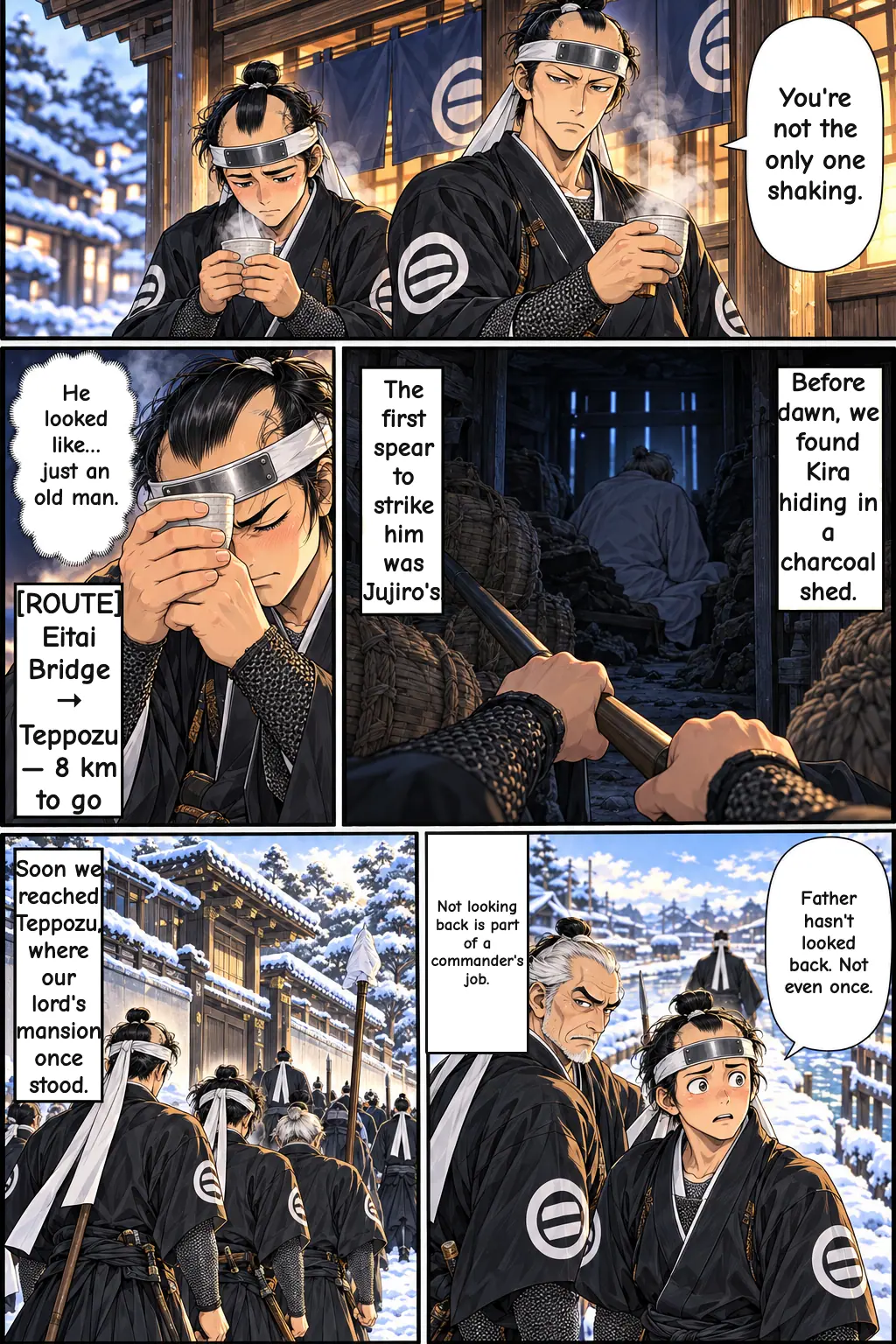
Most retellings of the 47 Ronin (Ako Roshi, the masterless samurai of the Ako domain) end with the night raid on Lord Kira's mansion. In the historical sources, though, one of the most moving parts of the story comes next. Before dawn on the 15th day of the 12th month of Genroku 15 (January 30, 1703), the ronin killed Kira Kozukenosuke Yoshinaka, the court official they blamed for their lord's death. The raid is said to have started around 4 a.m. and lasted about two hours. Tradition credits a ronin named Hazama Jujiro with taking Kira's head.
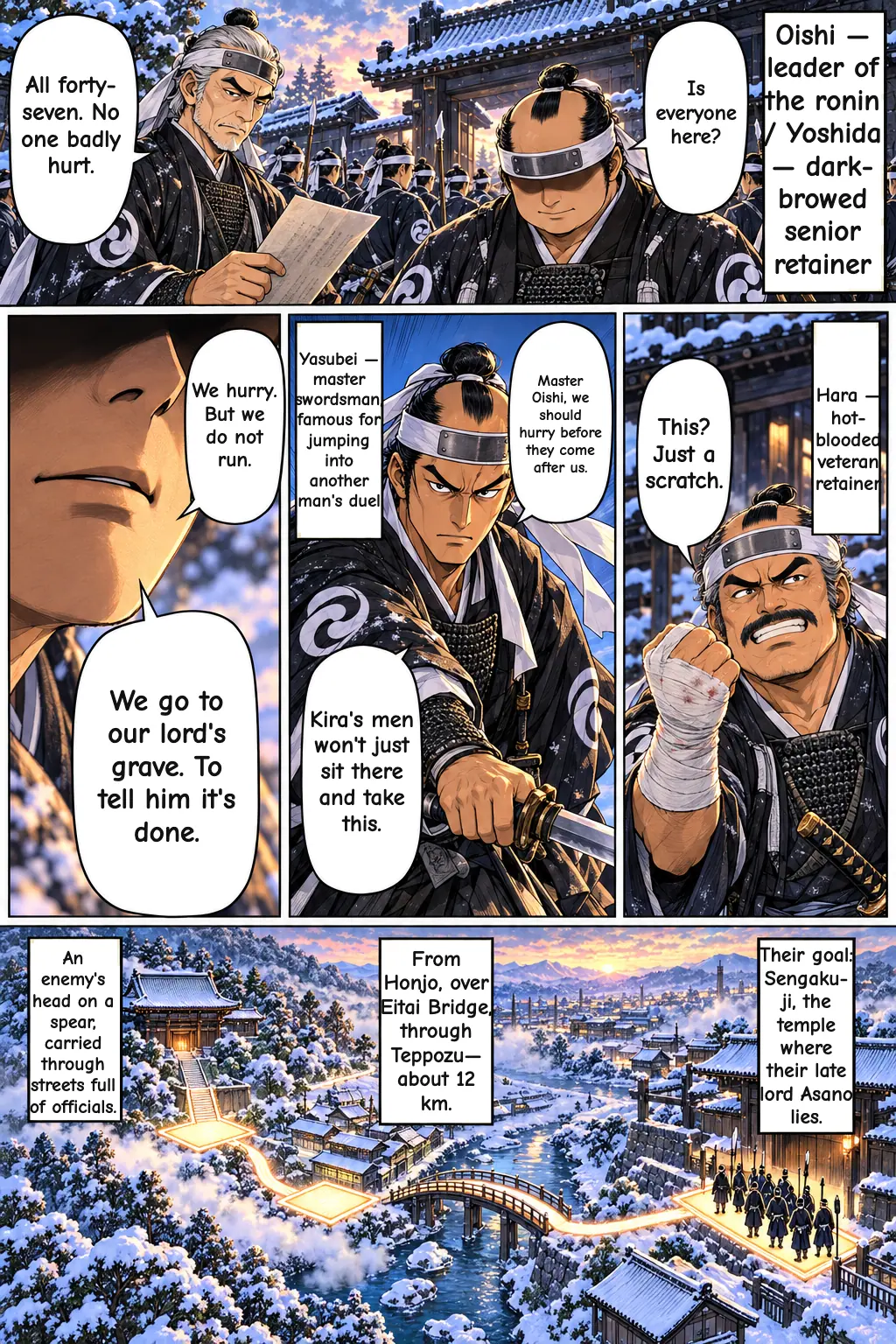
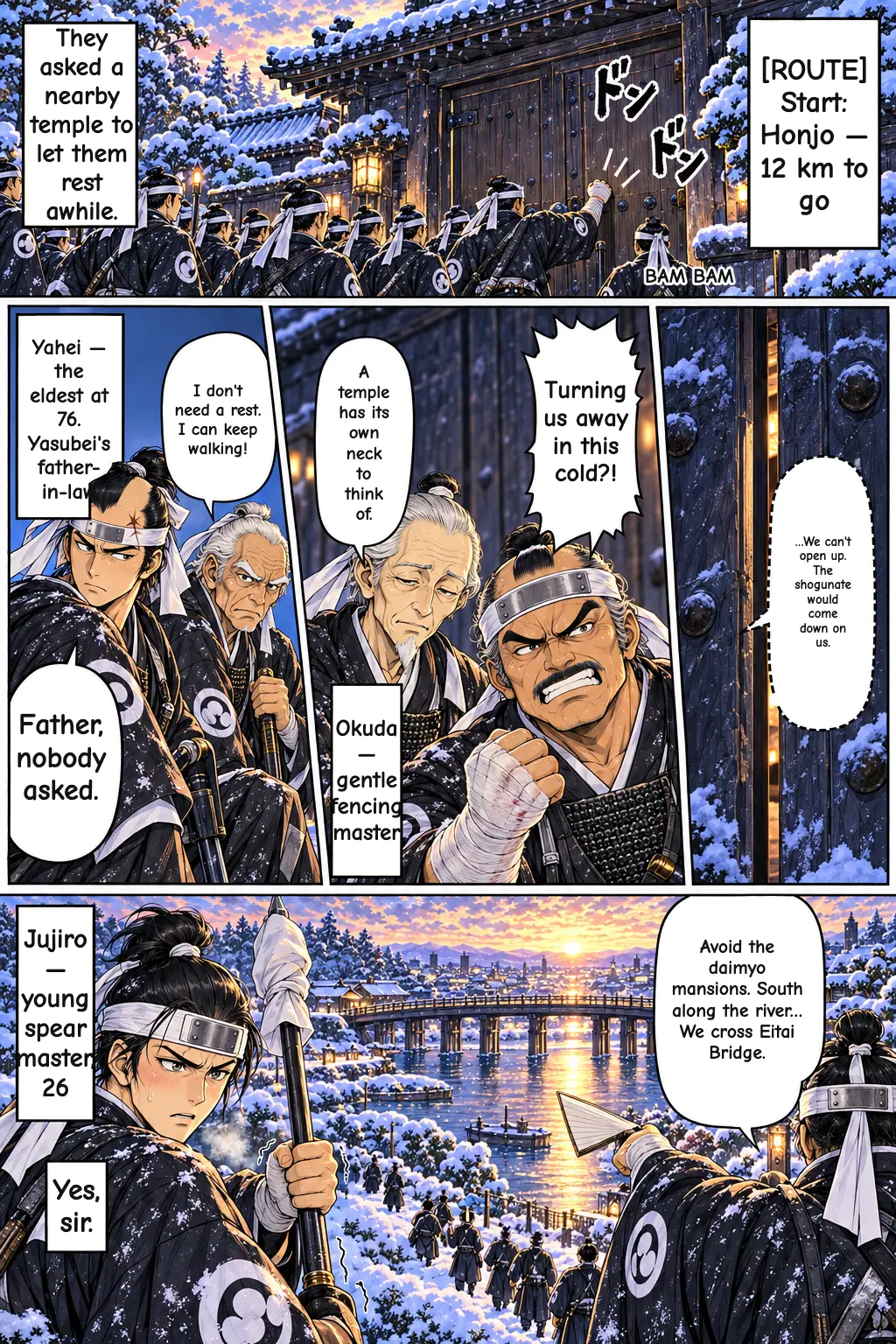
The men gathered by the back gate, counted themselves, and checked the wounded. Then they set out. According to tradition, they first tried to rest at Eko-in, a temple nearby, but the monks would not open the gate. So the group began a long walk of roughly 10 to 12 kilometers across Edo (old Tokyo) to Sengaku-ji, a temple in Takanawa where their late lord, Asano Takumi-no-kami, was buried.
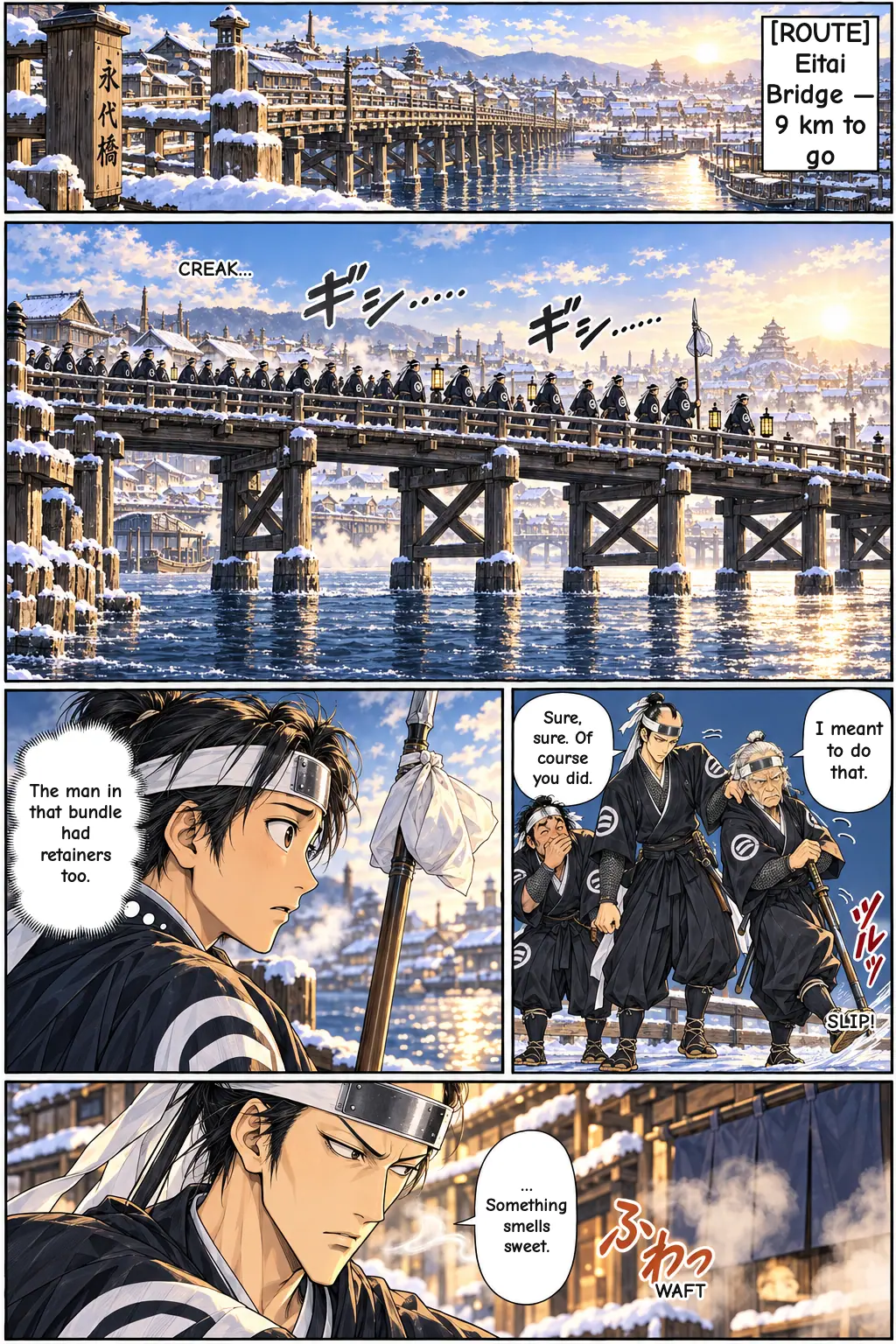
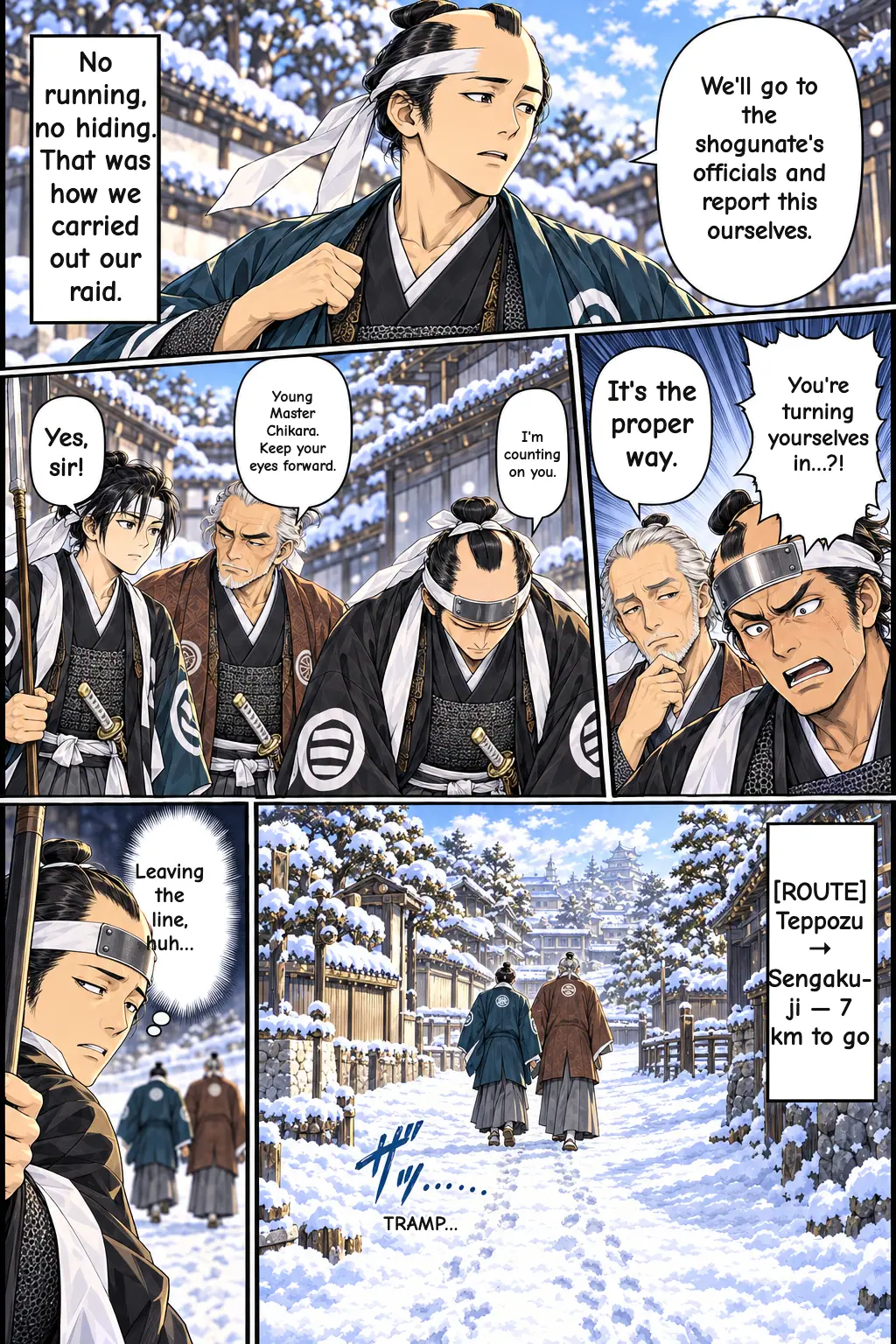
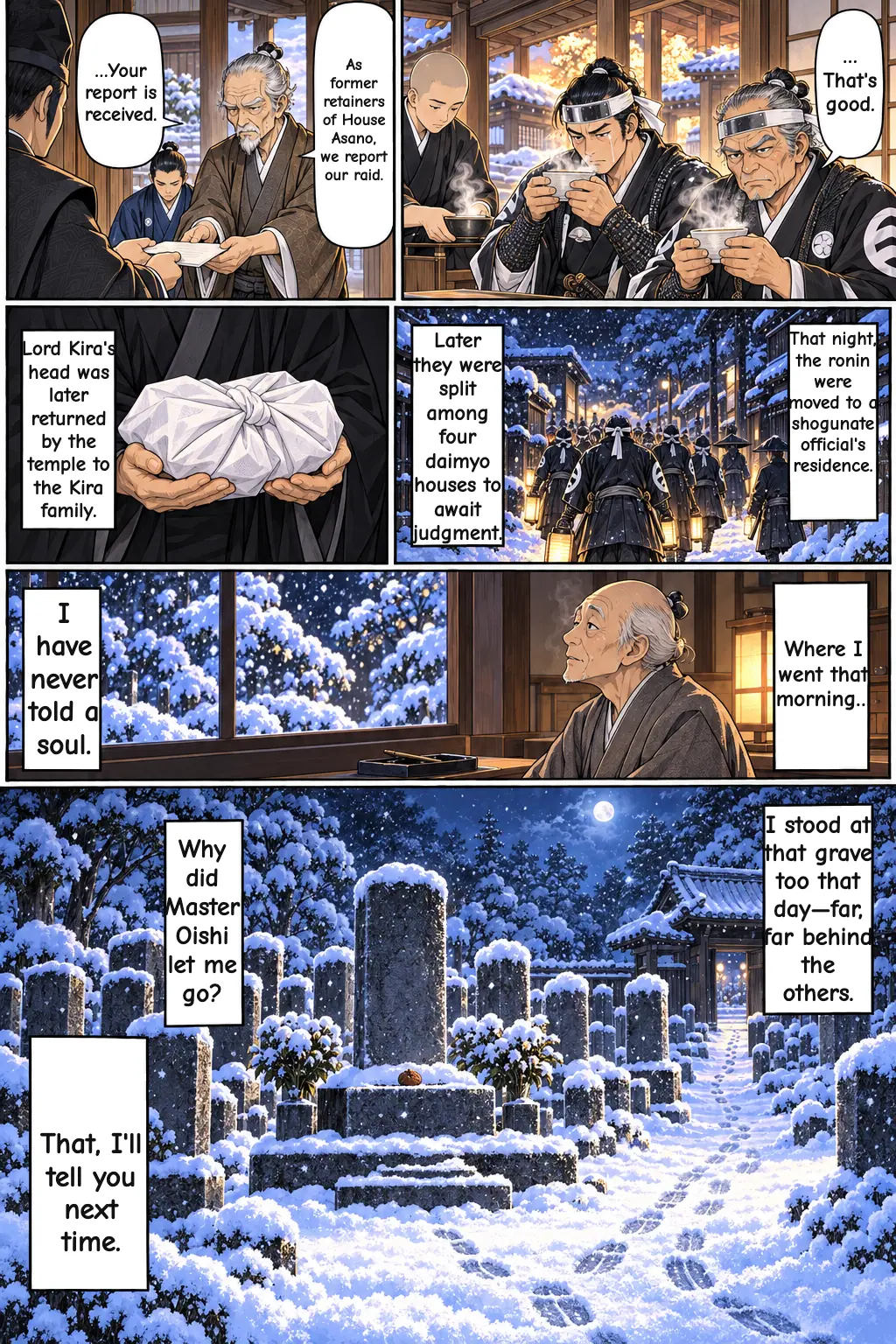
They did not cross the Ryogoku Bridge, where the road passed the mansions of powerful lords. Instead they went south along the east bank of the Sumida River, crossed the Eitai Bridge, and passed Teppozu (near the Asano family's former Edo residence), Shiodome, and Shiba. Along the way, two senior members, Yoshida Chuzaemon and Tomimori Sukeemon, left the group. They went to the house of Sengoku Hokinokami, a senior shogunate inspector, to report the raid. In effect, this was the ronin turning themselves in.
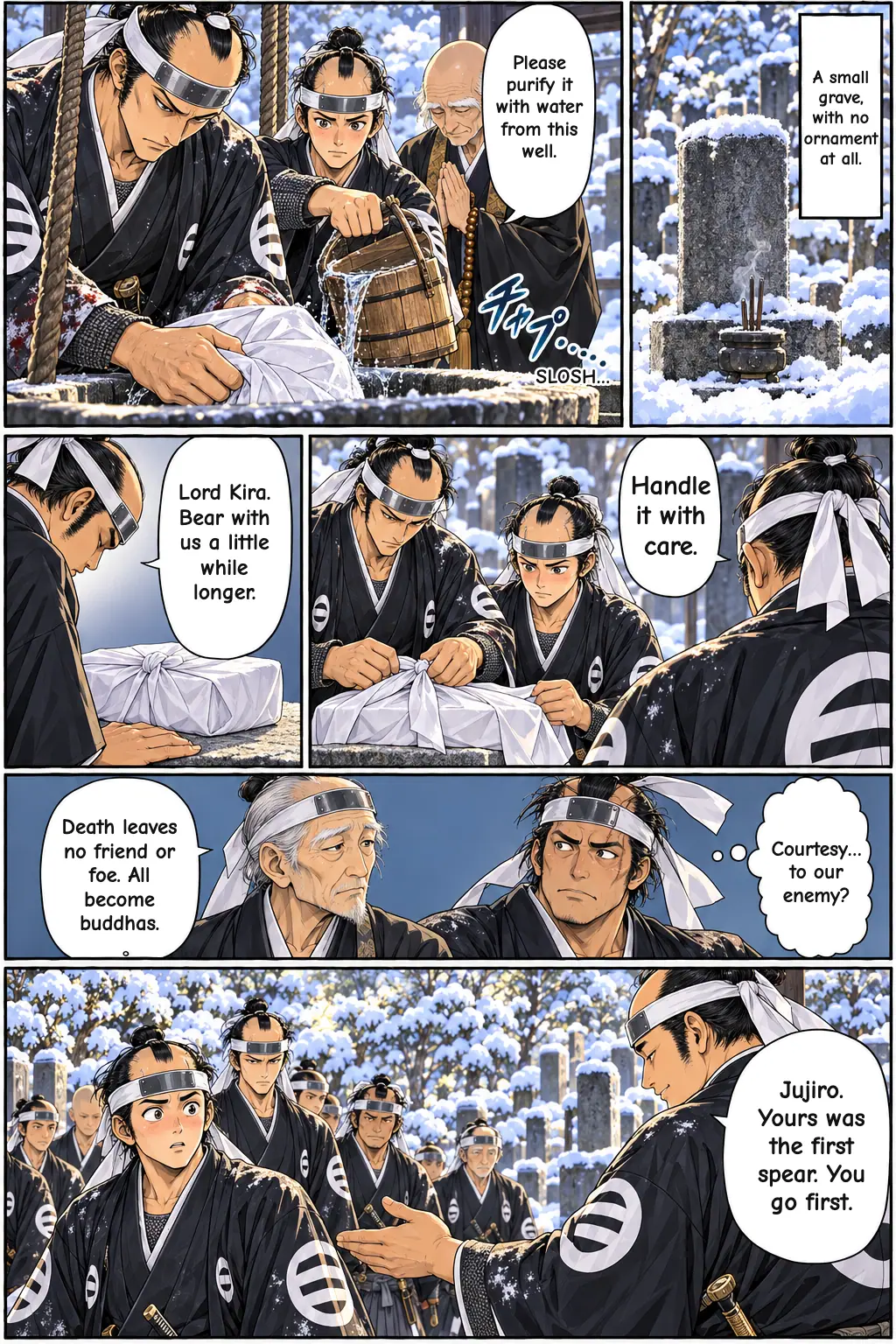
At Sengaku-ji, the ronin placed Kira's head before Asano's grave and offered incense one by one. The temple let them rest and gave them food. Kira's head was later returned to the Kira household, and a receipt written by a Kira retainer still survives at the temple. That night the ronin were called to Sengoku's residence. They were then divided among four daimyo (feudal lord) houses: Hosokawa, Matsudaira (Hisamatsu), Mori, and Mizuno. In the second month of the following year, they were ordered to commit seppuku (ritual suicide), and 46 of them died.
The Main Figures
Oishi Kuranosuke, the former chief retainer of the Asano house, led both the raid and the march. He arranged the report to the authorities and oversaw the offering at the grave. What he actually felt or said that morning is almost completely missing from the sources. His son, Oishi Chikara, then just 15, was the youngest of the ronin and had led the team at the back gate.
Two figures appear only in a silent way: Kira, present only as a head wrapped in cloth, and Lord Asano, present only as a grave. Asano had attacked Kira inside Edo Castle and was ordered to commit seppuku the same day. That event set the whole story in motion.
Terasaka Kichiemon: The Man Who Left the Line
The most mysterious detail of the march involves Terasaka Kichiemon, a foot soldier (ashigaru) who served under Yoshida Chuzaemon. He was the only member of the 47 with this low rank. He took part in the raid, but at some point afterward he was no longer with the group. He was not among those who turned themselves in, and he was never sentenced to death. He lived for decades afterward and is said to have died in 1747. He also left a written account of the events.
Historians do not agree on when or where he left, either before or after reaching Sengaku-ji. They also do not agree on why. One view is that Oishi sent him away on a mission, perhaps to carry the news to people connected to the Asano family. Another view is that he left on his own. The sources do not settle the question.
What the March Meant
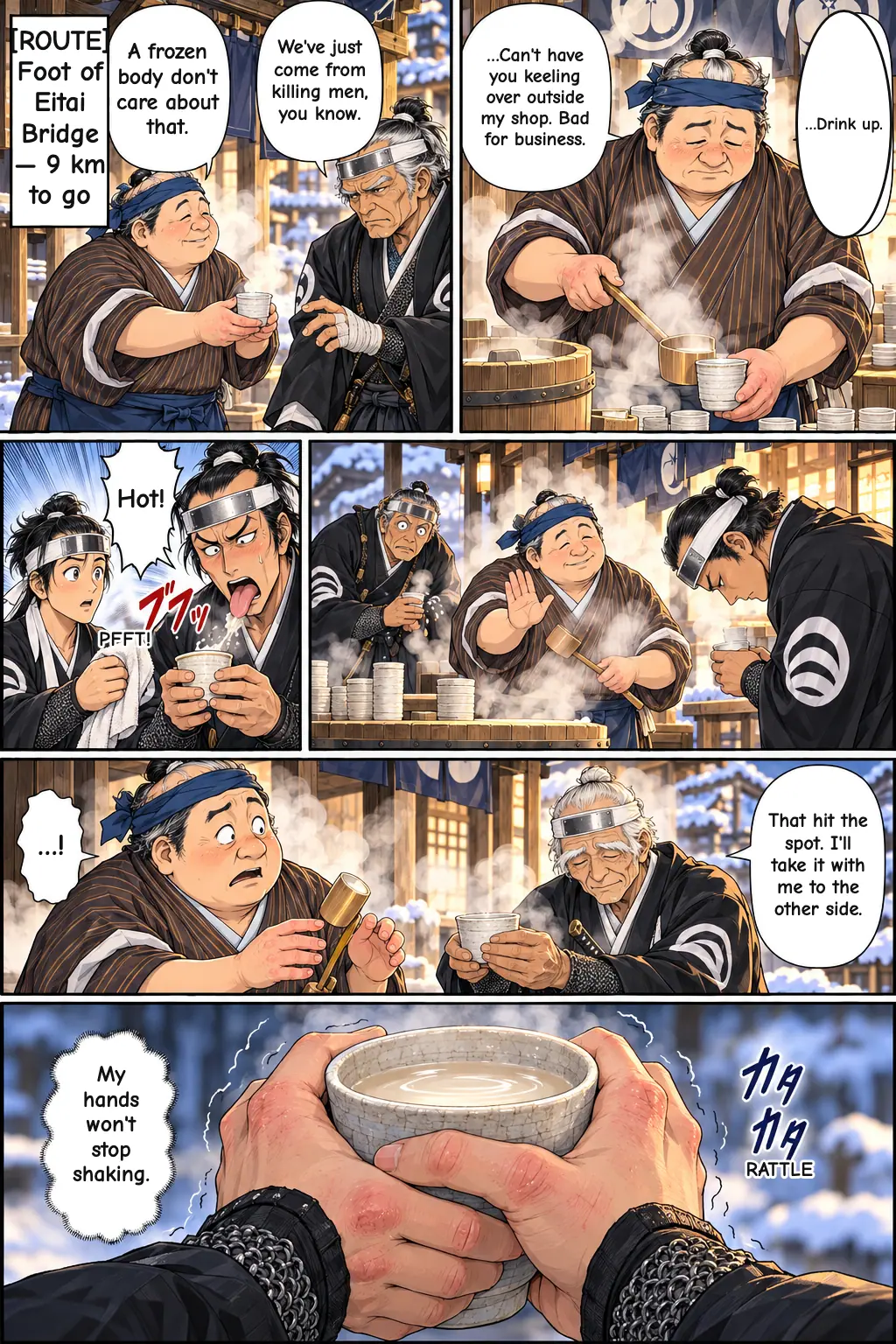
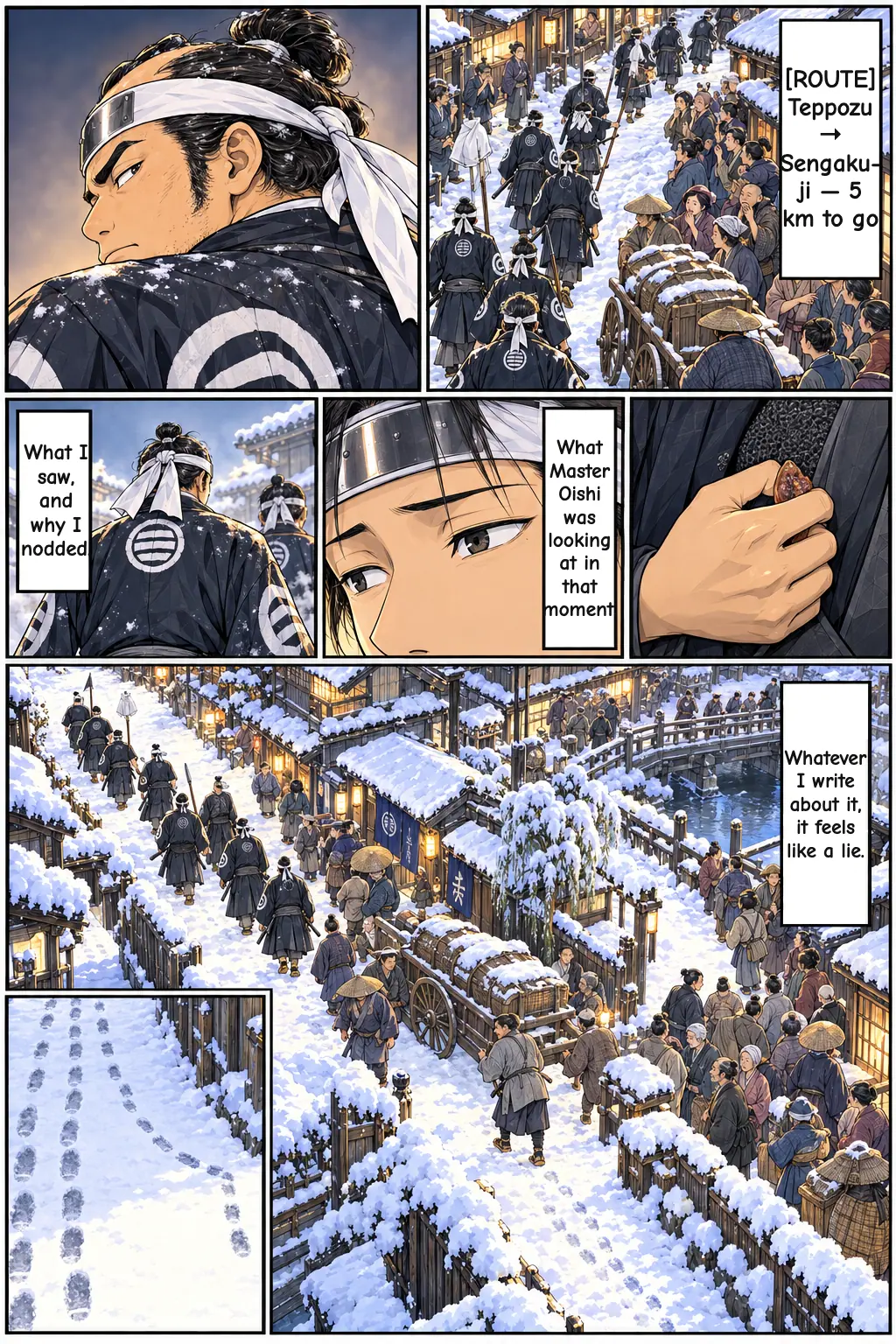
To people in Edo, the march was a public statement. Many records say that crowds came out to watch as news of the raid spread. Their careful route and their quick report to the shogunate showed that the ronin saw themselves as loyal retainers finishing a duty, not as fleeing criminals. Taking the head to their lord's grave instead of running away was the heart of that message. A local legend even says a miso shop near the Eitai Bridge served them warm amazake (a sweet rice drink), but this story is local tradition, not a historical record.
The story quickly entered the theater. The famous puppet and kabuki play Kanadehon Chushingura moved the events to an earlier era and changed every name. In its eleventh act, Oboshi Yuranosuke (the stage version of Oishi) takes the head of Ko no Moronao (Kira's stand-in) and burns incense before the memorial tablet of Lord Enya (Asano's stand-in), and the group withdraws across a bridge. Much of how people picture the march today comes from these stage versions as well as from history.
What the Manga Changes
Episode 11 keeps the main historical outline: the head carried on a spear, the walk through Edo, the offering at the grave, and Terasaka's disappearance. Some details are invented for the story. The faces and words of the onlookers, the snow and the dawn light, the order of the marching line, and the short talks between tired, wounded comrades are not described in the sources. The dried persimmon that Terasaka carries in his robe is also the manga's own touch.
There is a well-known idea that Oishi spoke to his dead lord, with words like "My lord, we have fulfilled our purpose." No such words appear in the original records, so any speech at the grave is drama. Showing Oishi crying for the first time is also the manga's interpretation. On the other hand, the manga leaves Terasaka's reason for leaving unexplained, which matches the uncertain state of the historical evidence. Some versions also say the real head was sent separately by boat and the one on the spear was a fake, but this is a later theory with weak support.
Where to Read It
You can read THE 47 RONIN: Chushingura – A Vow in the Winter Snow here on Manga Portal. Every episode is free, and you don't need to sign up. If you want to see how the ronin reached this snowy morning, from the attack in Edo Castle through the long wait and the night raid, start with the earlier episodes and read up to Episode 11's quiet ending at Sengaku-ji.
Characters in this episode
Oishi Kuranosuke
The former chief retainer of the Asano house, who led the 47 ronin through the raid and the march to Sengaku-ji.
Terasaka Kichiemon
The only foot soldier among the 47, who left the group after the raid for reasons that remain unclear, and lived until 1747.
Yoshida Chuzaemon
A senior ronin and Terasaka's superior, who left the march with Tomimori Sukeemon to report the raid to the shogunate.
Oishi Chikara
Oishi's 15-year-old son, the youngest of the ronin, who led the team at Kira's back gate.
Lord Asano Takumi-no-kami
The ronin's late lord, forced to commit seppuku after attacking Kira, whose grave at Sengaku-ji was the end of the march.
Lord Kira Kozukenosuke
The shogunate ceremonial official the ronin blamed for their lord's death; his head was offered at Asano's grave and later returned to his family.
FAQ
Where did the 47 Ronin take Kira's head?
They carried it about 10 to 12 kilometers across Edo to Sengaku-ji, a temple in Takanawa, and placed it before the grave of their lord, Asano Takumi-no-kami. The head was later returned to the Kira family.
Did the 47 Ronin turn themselves in?
Yes. During the march, two senior members, Yoshida Chuzaemon and Tomimori Sukeemon, went to a senior shogunate inspector to report the raid. The ronin were then held by four daimyo houses until they were sentenced.
What happened to the 47 Ronin after the raid?
After about six weeks in the custody of four daimyo houses, they were ordered to commit seppuku in early 1703, and 46 of them died. Their graves are at Sengaku-ji beside their lord's.
Why are there 47 ronin but only 46 graves of men who died by seppuku?
Terasaka Kichiemon, a foot soldier, left the group after the raid and was never sentenced. Historians still disagree about whether Oishi sent him on a mission or he left on his own.
Is Chushingura a true story?
Chushingura is based on a real event of 1701–1703, but the famous play Kanadehon Chushingura changed the names and the time period and added drama. Many popular details, like Oishi's words at the grave, come from later stories, not from historical records.