Episode 9We Broke In. His Bed Was Still Warm.The Raid on Kira's Mansion
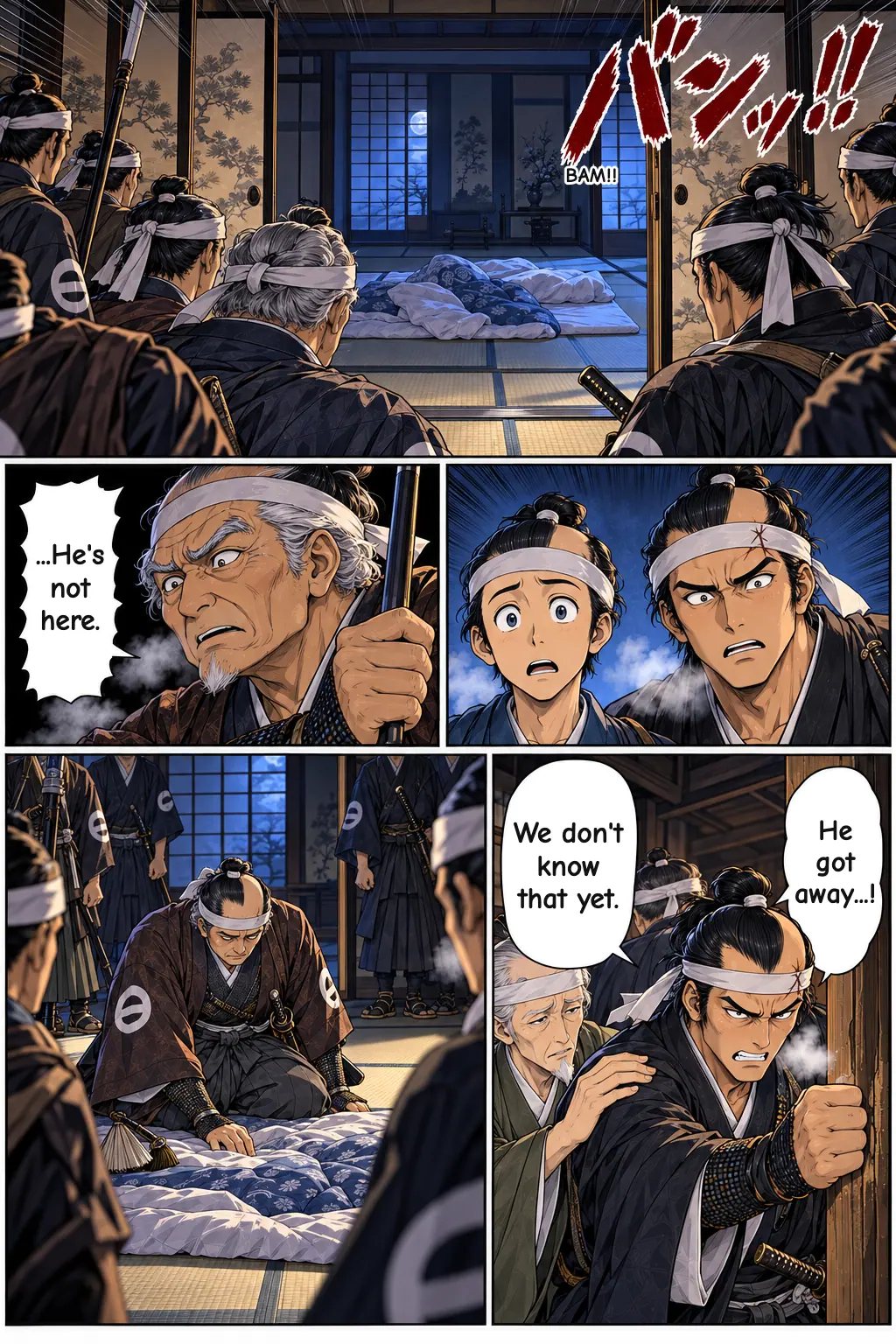
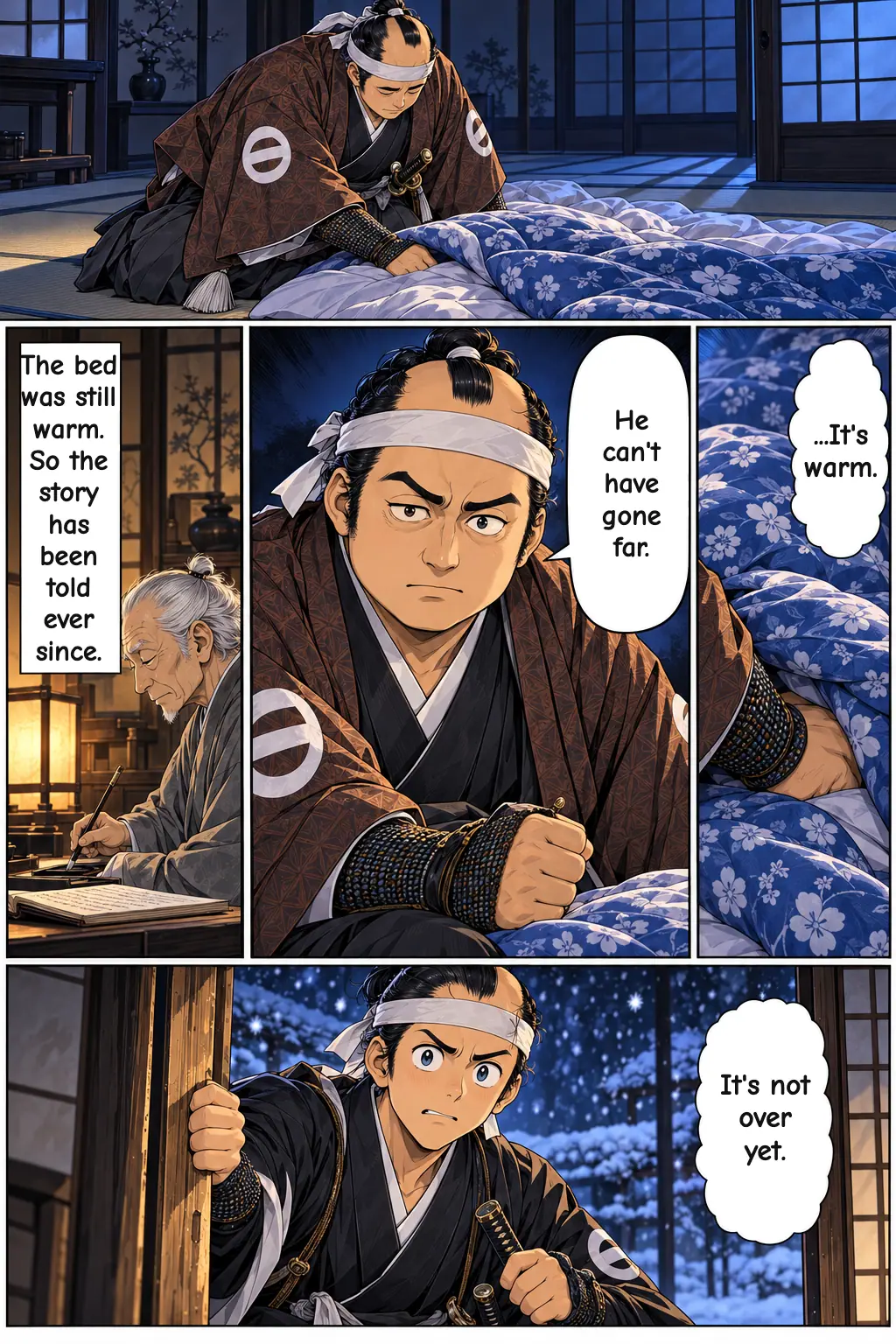
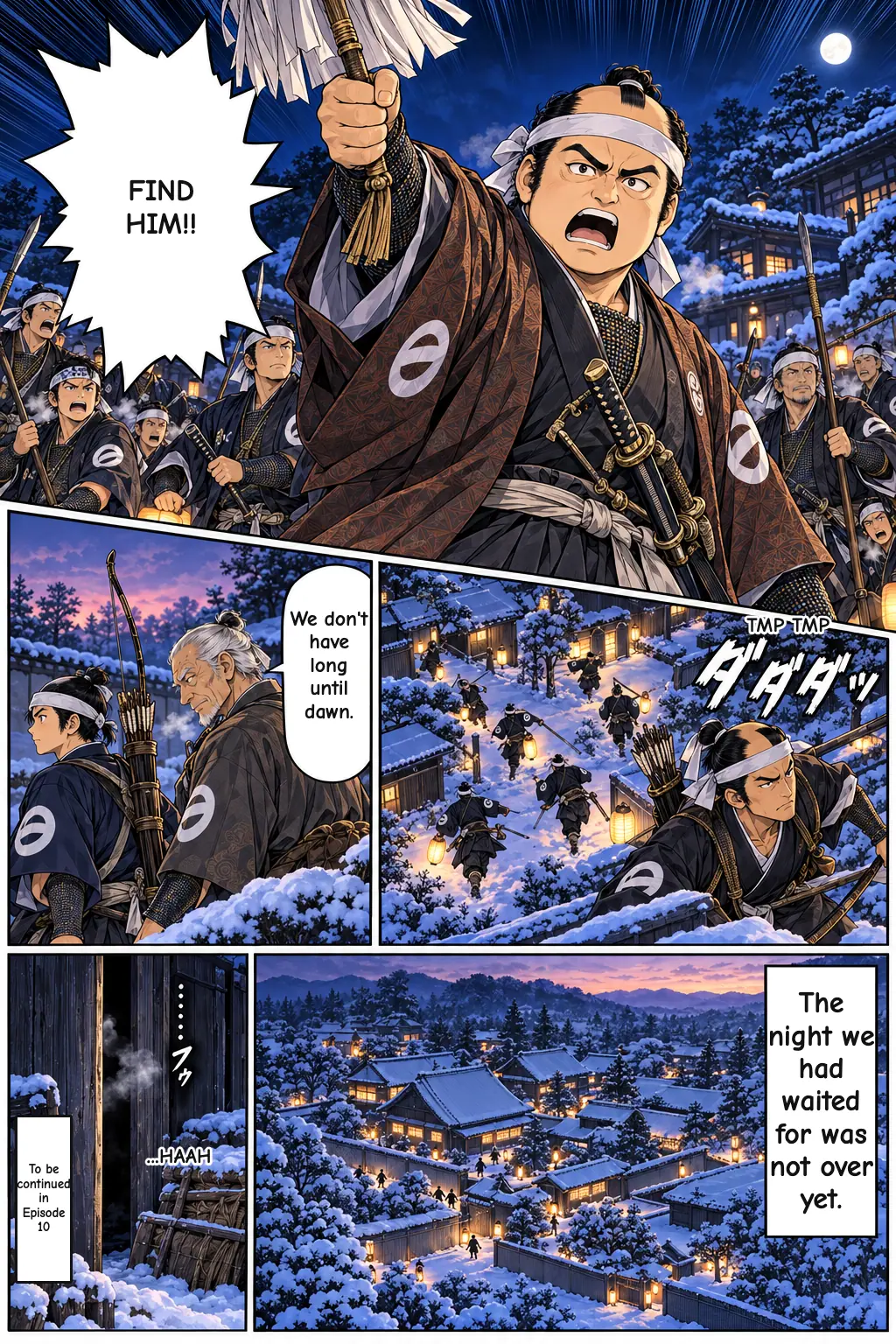
On a snowy night in the twelfth month of Genroku 15, the ronin, after nearly two years of patient waiting, gather in Honjo. Before dawn they storm Kira's mansion from two sides, the front gate and the back gate. They show every courtesy to the neighbors and watch a young retainer die defending his lord. But when they burst into the bedchamber, all they find is a bed that is still warm.
The 47 Ronin Raid on Kira's Mansion: Chushingura Story Explained
The Story Behind the Raid: What Happened That Night
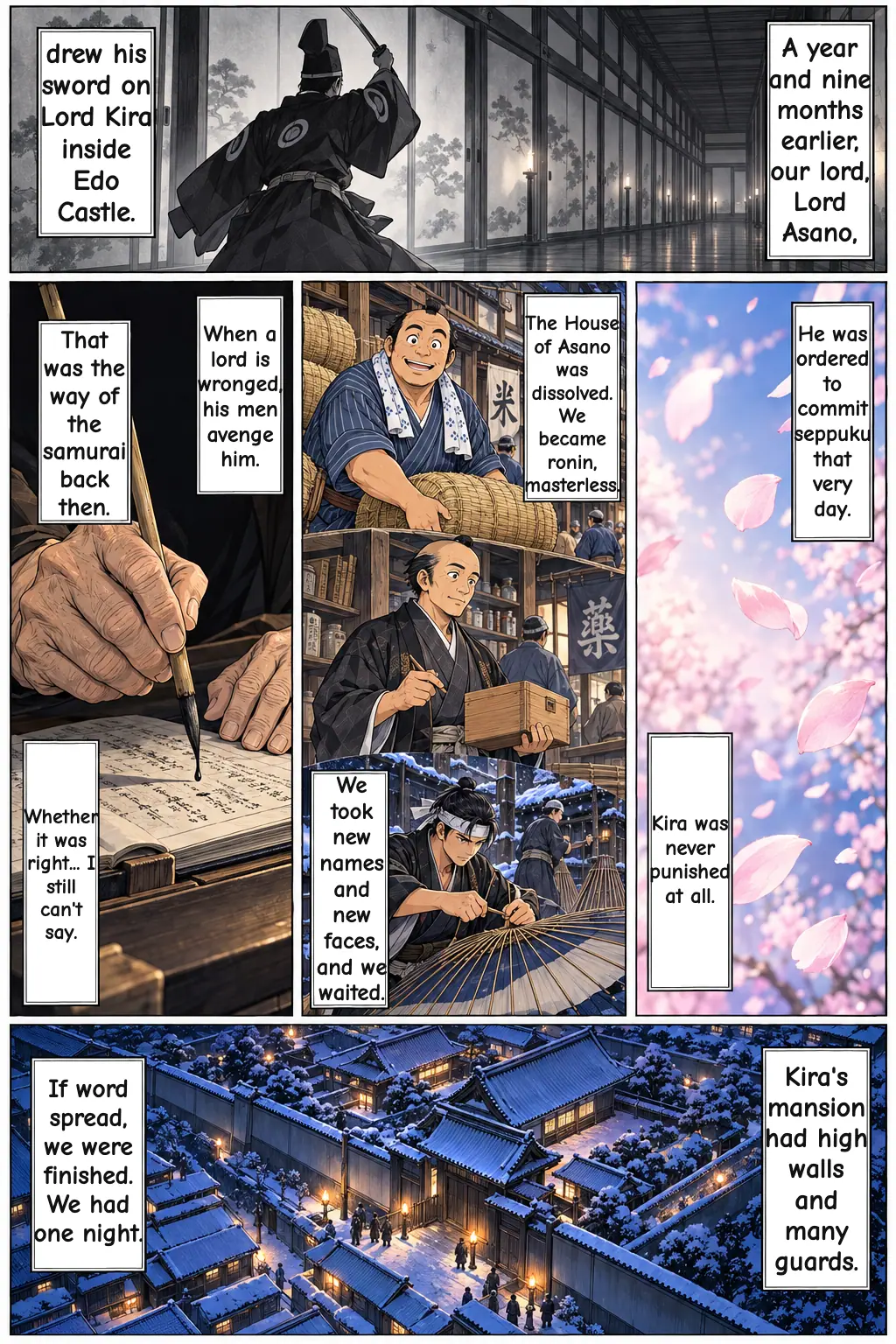
The tale of the 47 Ronin, known in Japan as Chushingura, begins in the spring of 1701 (Genroku 14). Inside Edo Castle, the seat of the shogun's government, Asano Takumi-no-Kami, the lord of the Ako domain, drew his sword and attacked Kira Kozukenosuke, a senior court-etiquette official. Drawing a blade in the castle was a grave crime. Asano was ordered to take his own life that same day, and his domain was confiscated. Kira, however, received no punishment. That imbalance is the grievance at the heart of the whole story.
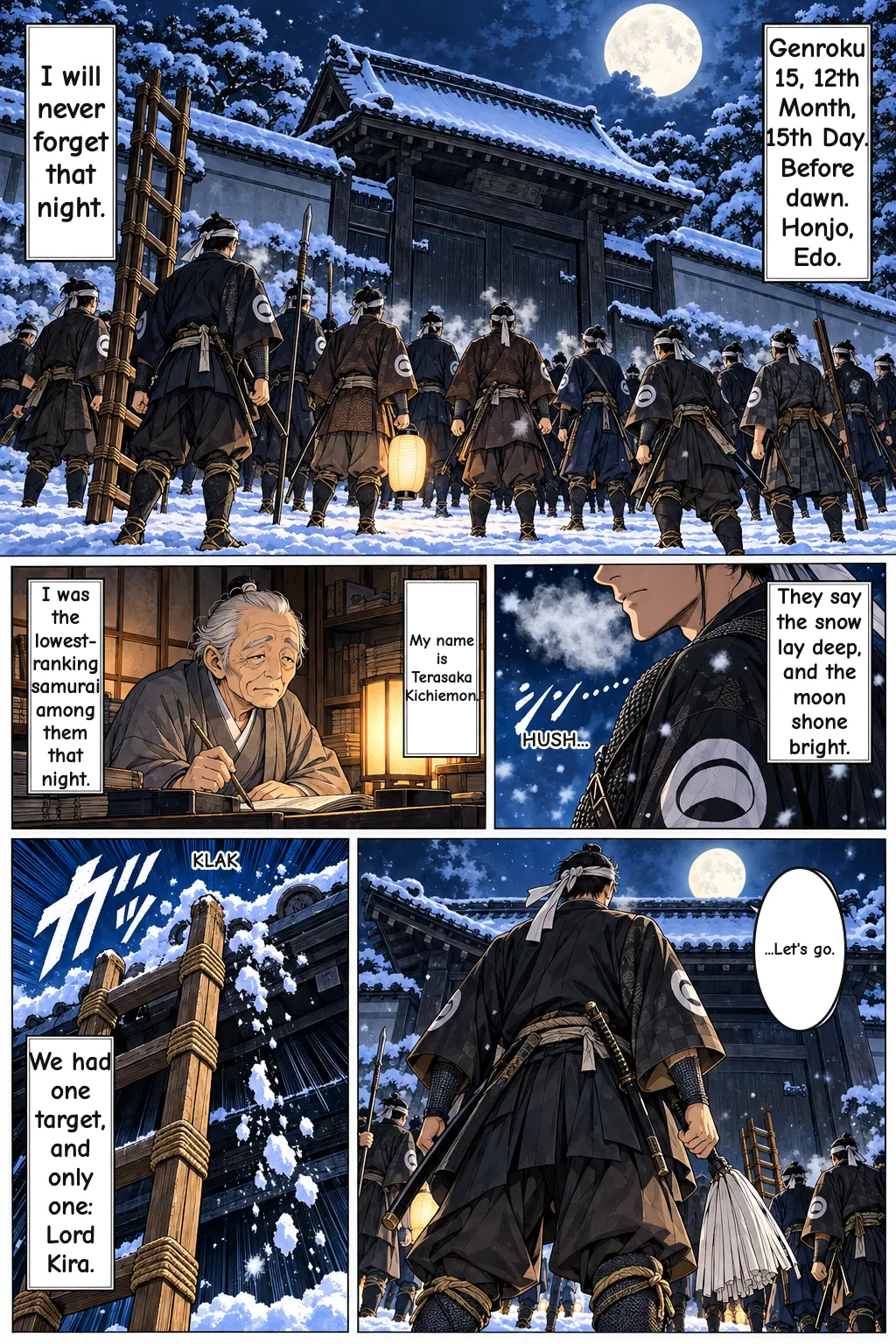
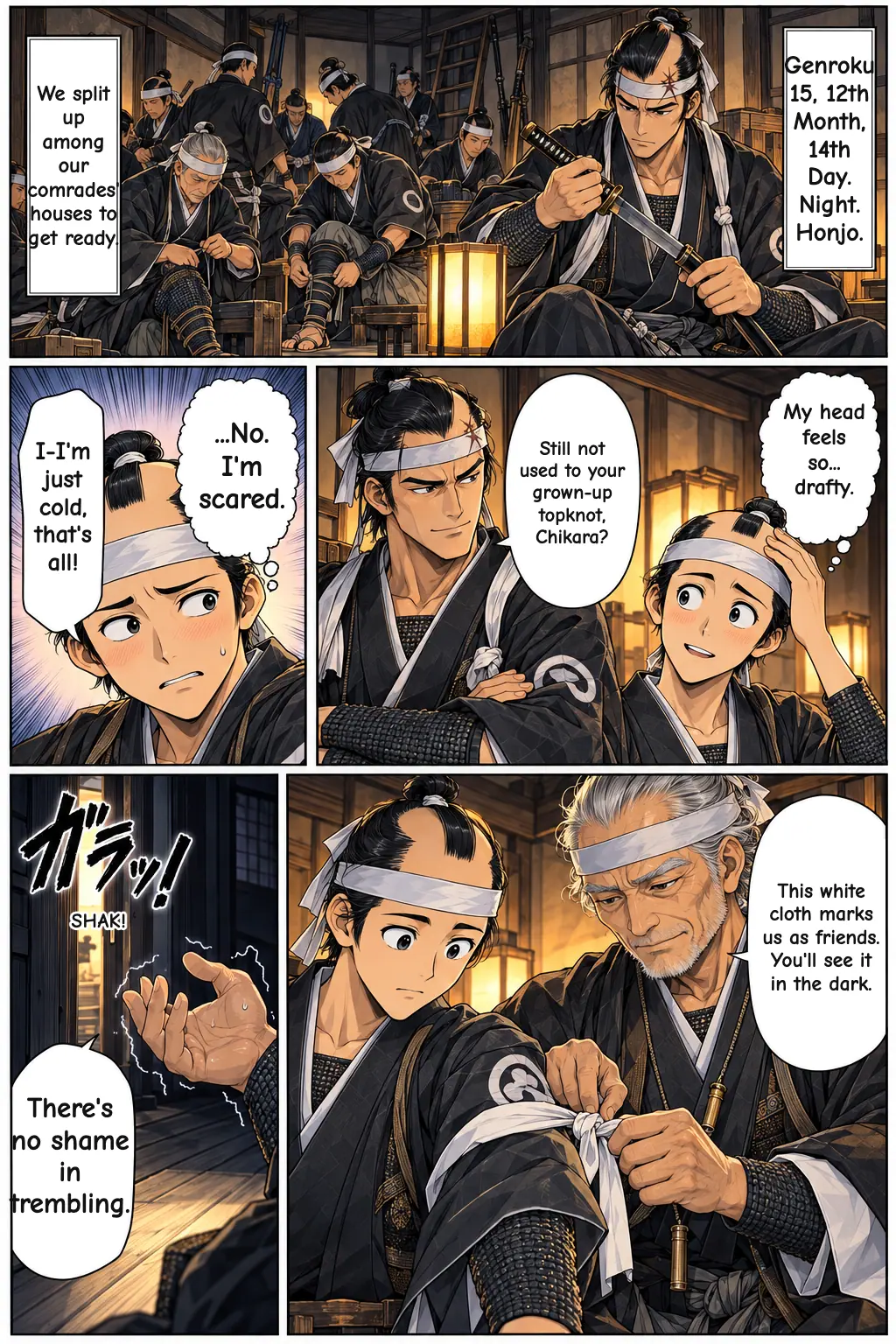
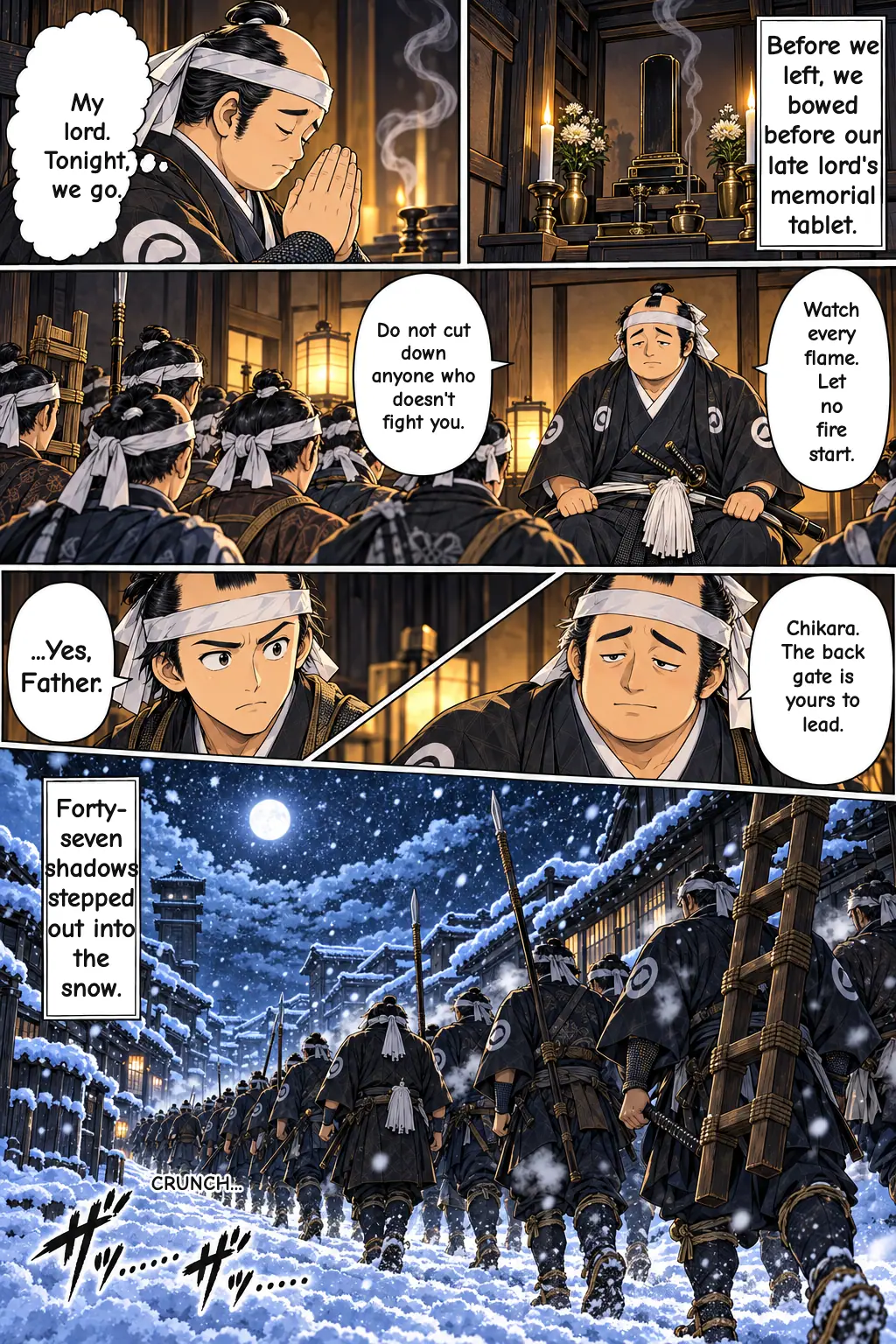
Asano's former retainers became ronin, samurai without a master. For almost two years they waited. Then, on the night of the 14th day of the twelfth month of Genroku 15 (late January 1703 by the Western calendar), they gathered in small groups at the lodgings of comrades in the Honjo district of Edo, near Kira's residence, and made ready. Accounts left by participants, such as the memoir of Terasaka Kichiemon, describe this assembly.
Two Gates, a Proclamation, and a Message to the Neighbors
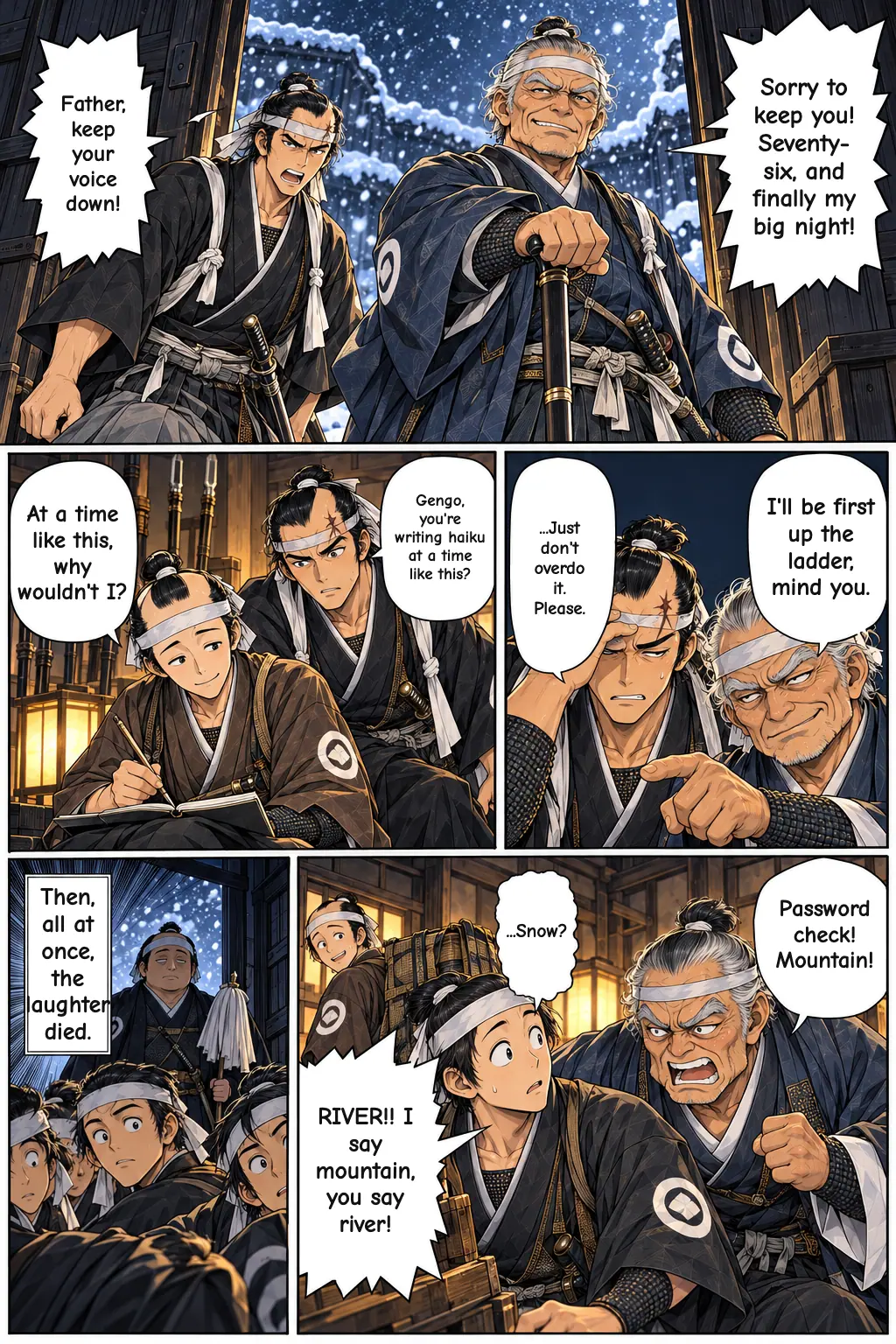
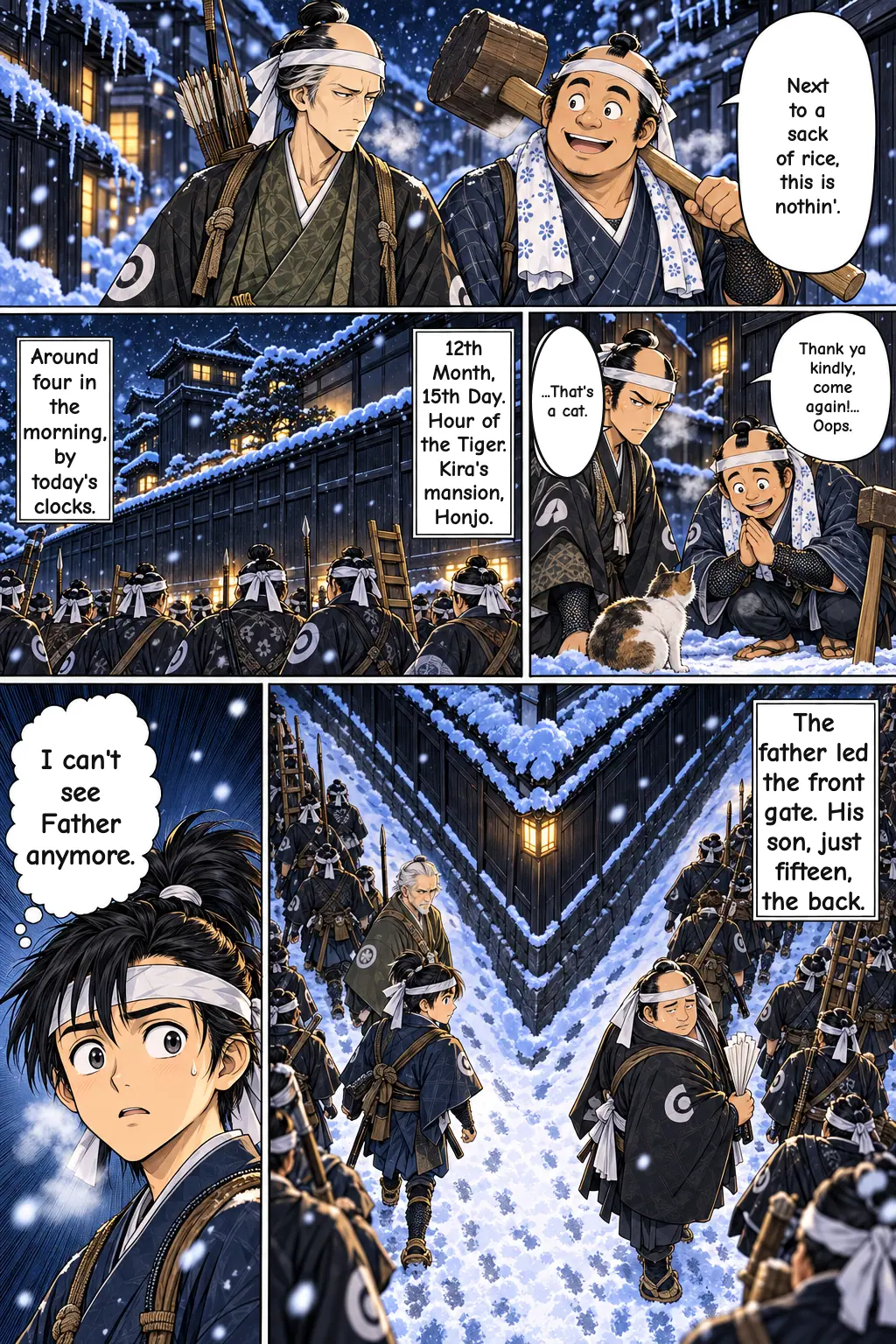
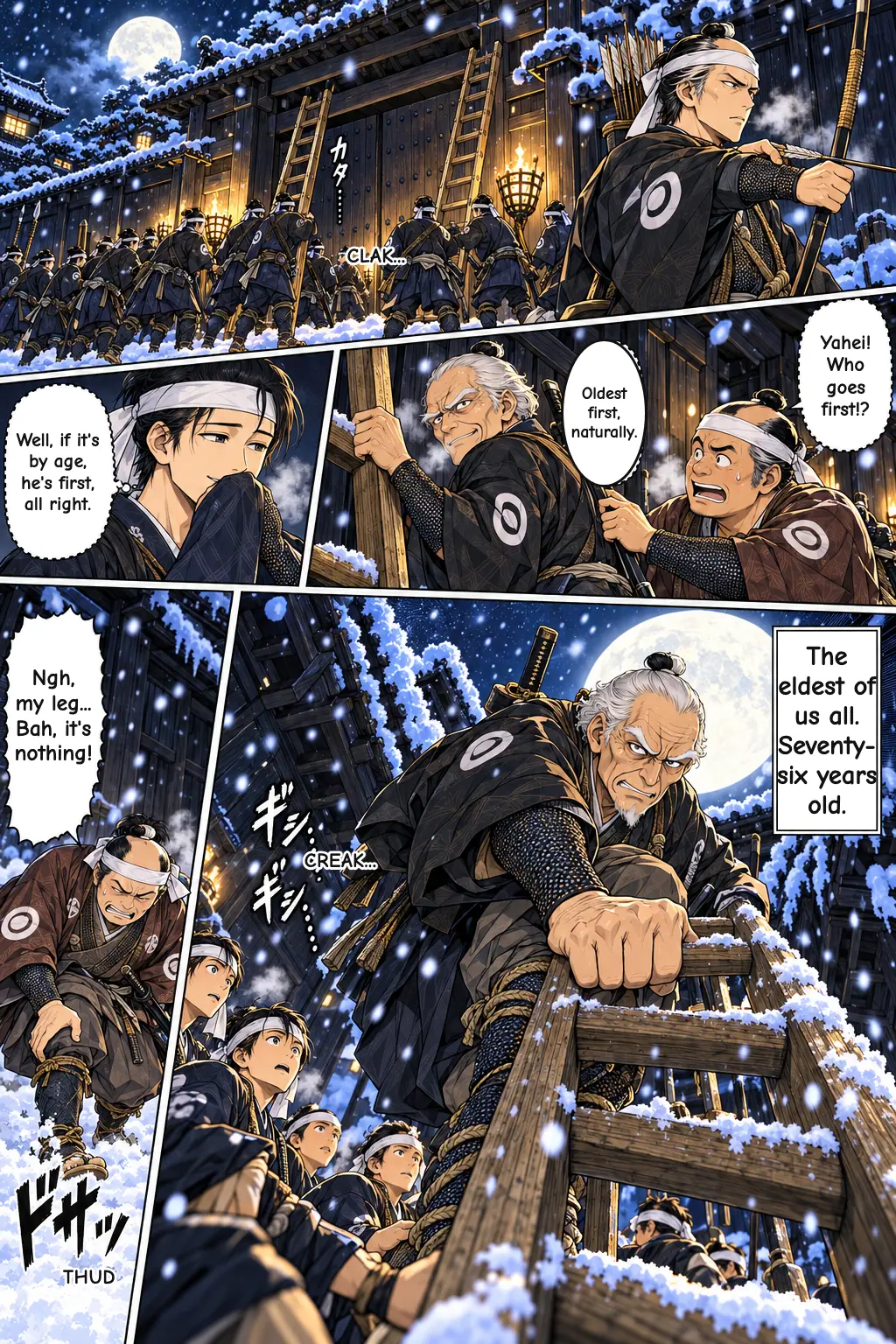
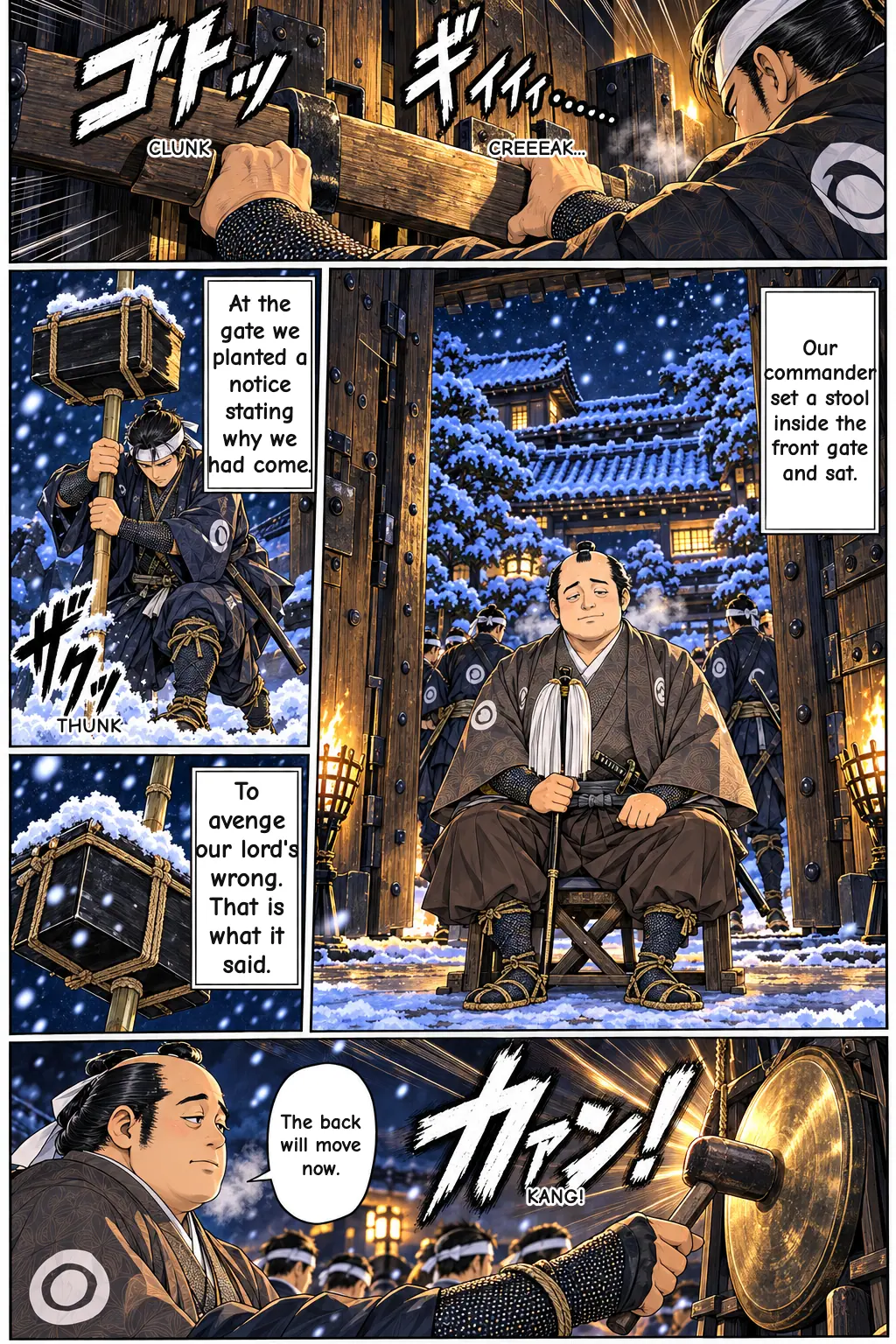
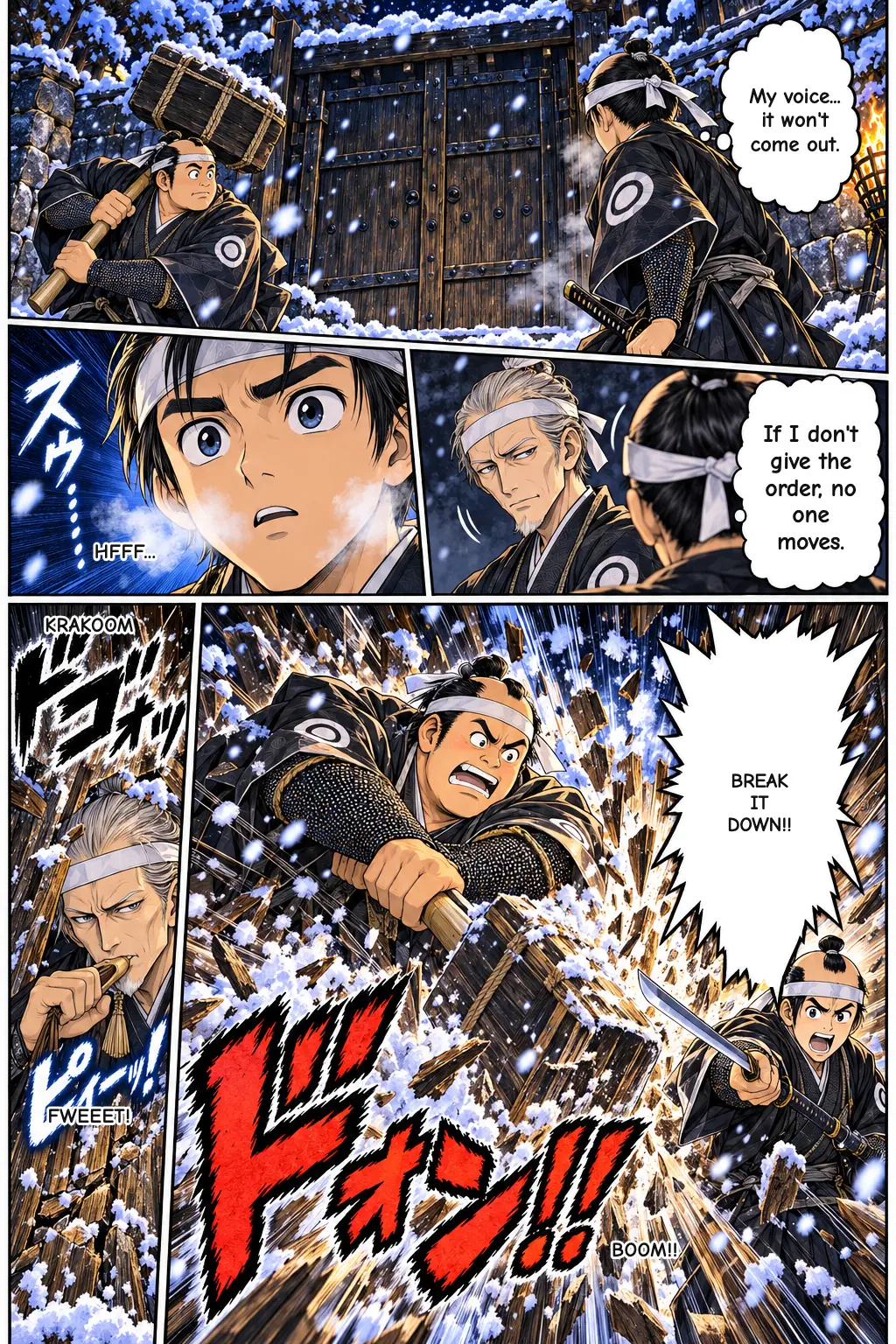
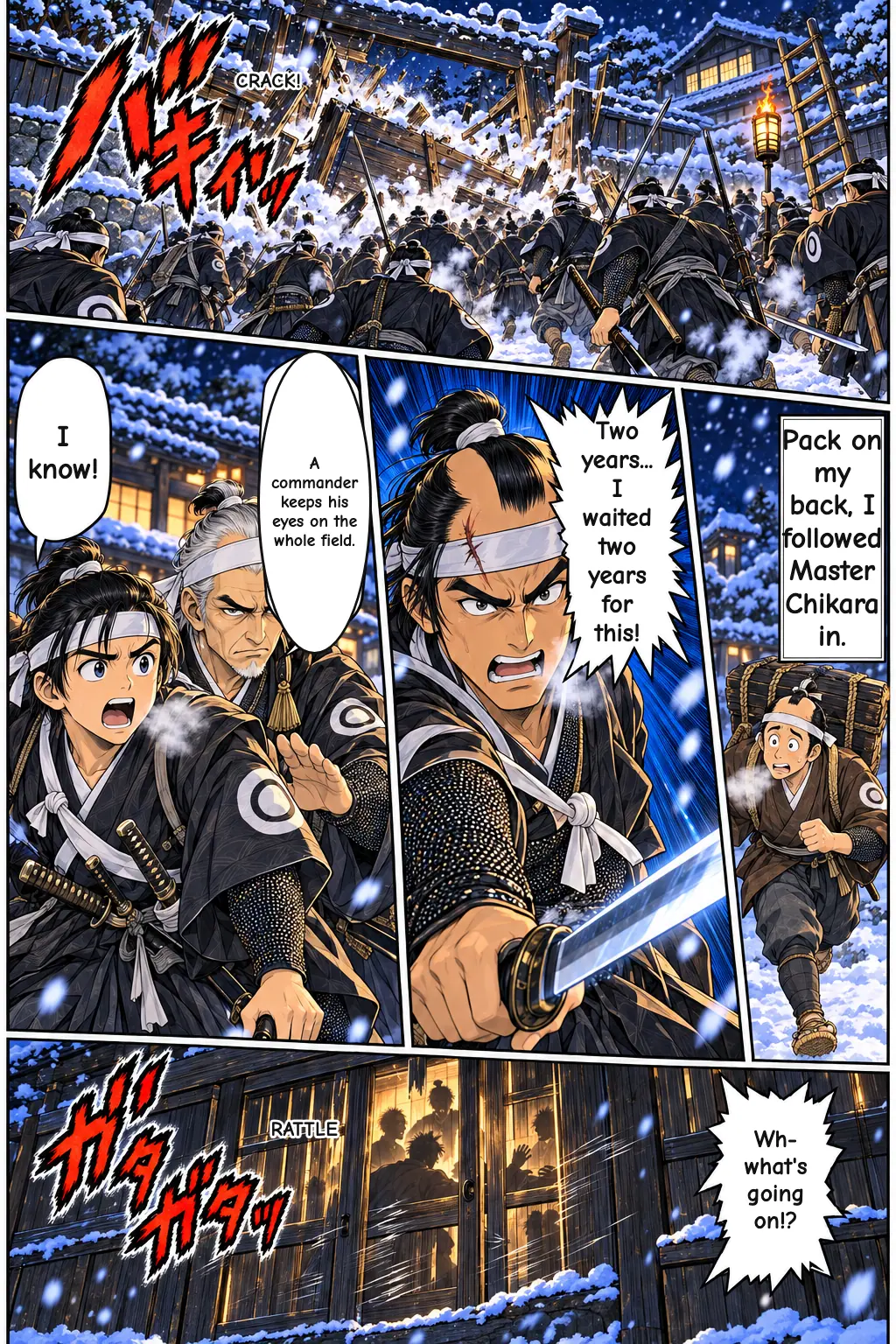
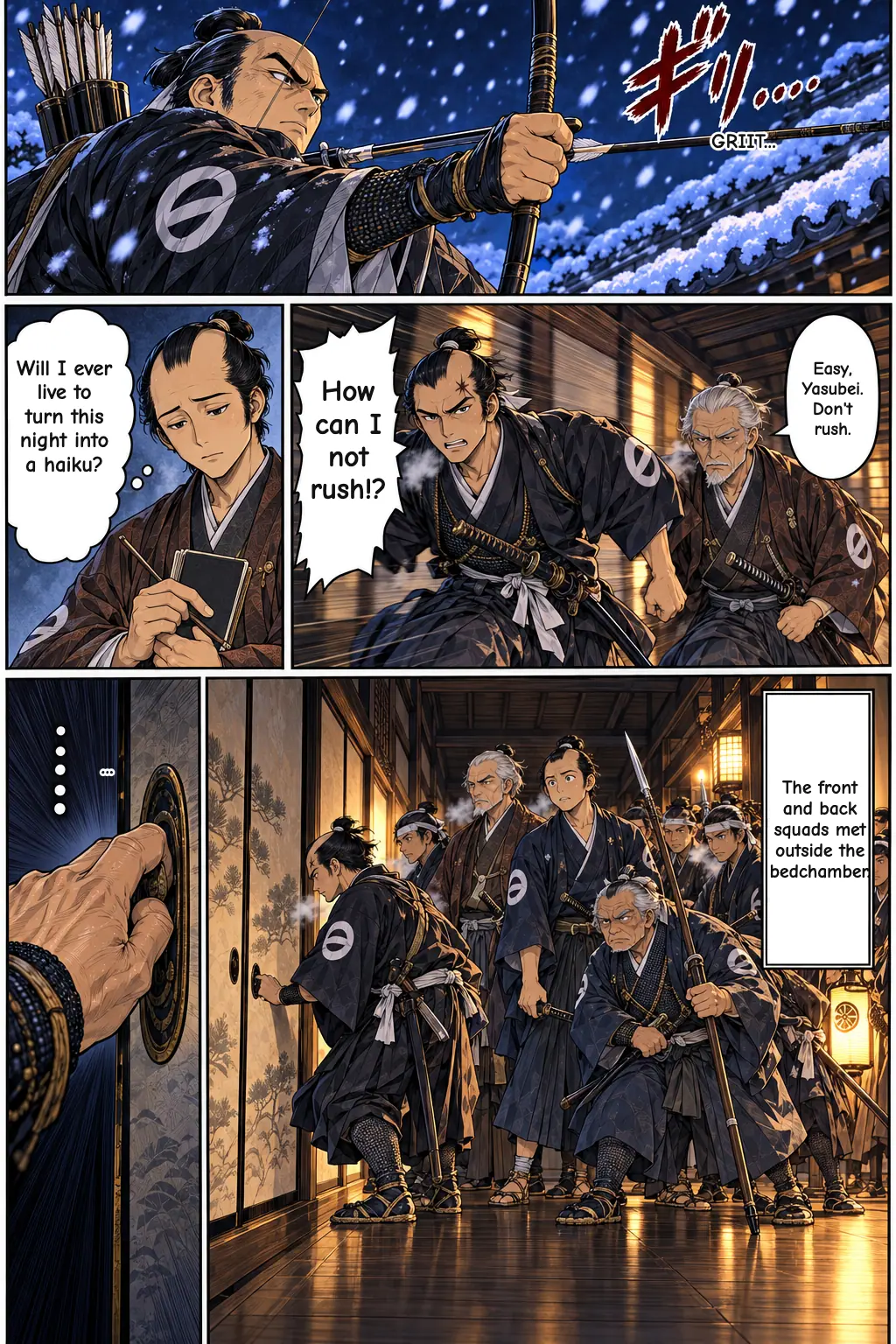
Shortly before dawn on the 15th, around four in the morning (the early part of the 'hour of the tiger' in the old timekeeping system), the ronin struck from two directions. The front gate team, led by Oishi Kuranosuke, the band's leader and the domain's former chief retainer, climbed over the gate on ladders and opened it from inside. The rear gate team, nominally commanded by his teenage son Oishi Chikara and guided by the veteran Yoshida Chuzaemon, smashed the gate open with heavy wooden mallets.
At the front gate they set up a written statement, placed in a document box tied to a bamboo pole. Signed by Oishi and his comrades, it explained that they had come to settle their dead lord's grievance against Kira. This was not a secret assassination; the ronin wanted their reasons on record.
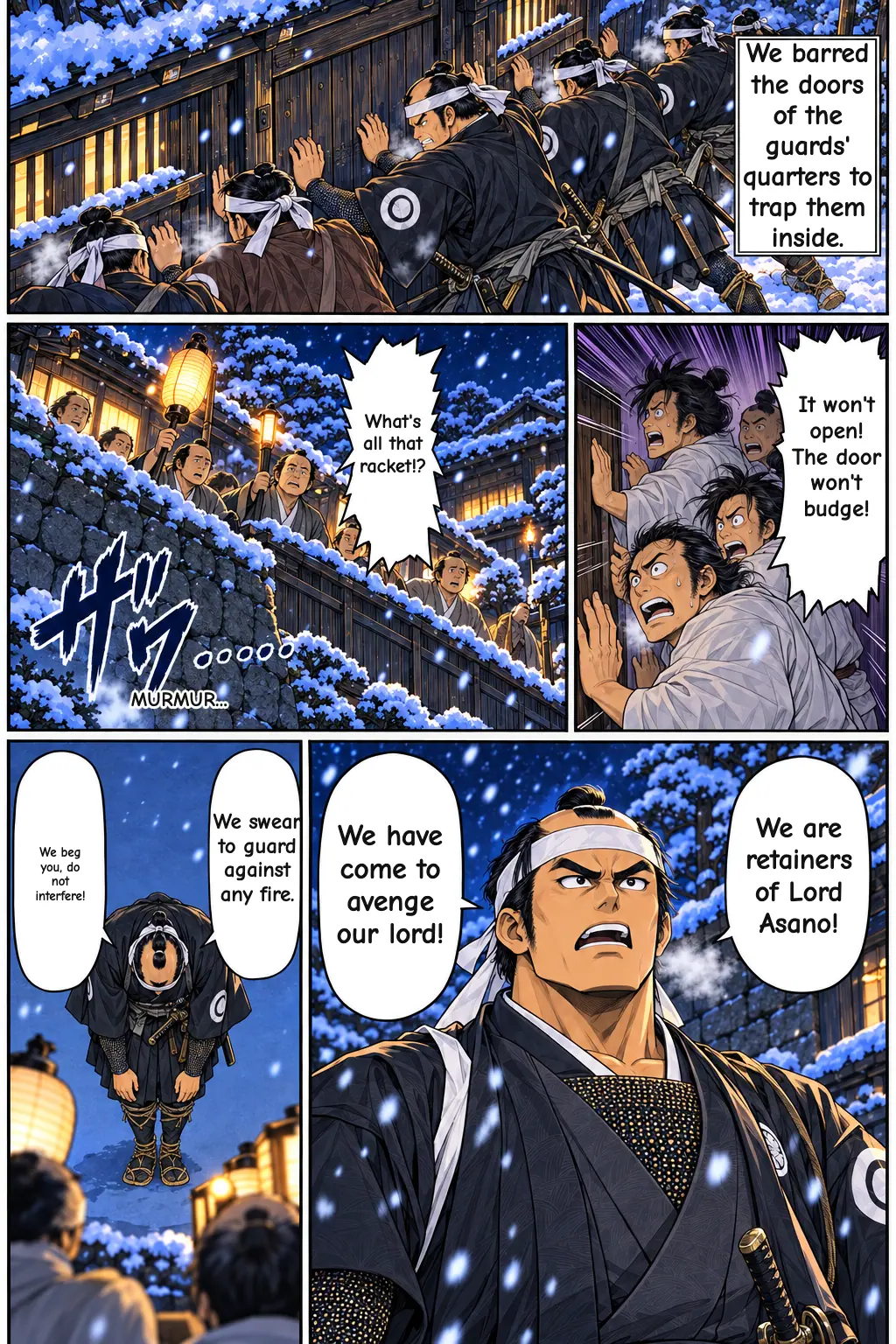
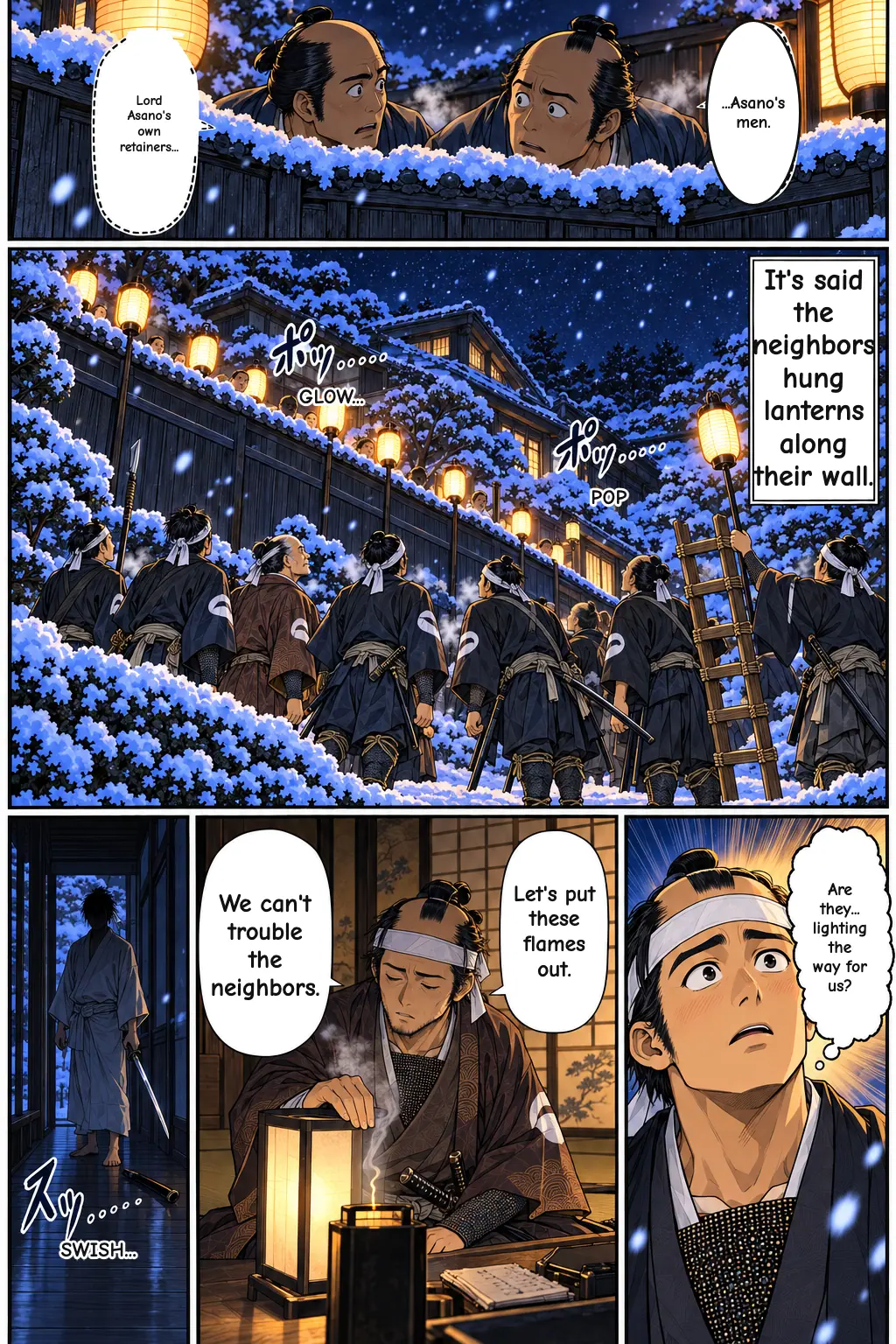
The ronin also called over the walls to the neighboring mansions, including that of the shogun's retainer Tsuchiya Chikara. They explained that Asano's men had come to avenge their lord, promised to take care against fire, and asked the neighbors not to interfere. The records agree that this message was delivered, though the exact words differ from writer to writer. A popular tradition adds that the Tsuchiya household raised tall lanterns along the wall to light the scene, but this comes from later storytelling rather than the core sources.
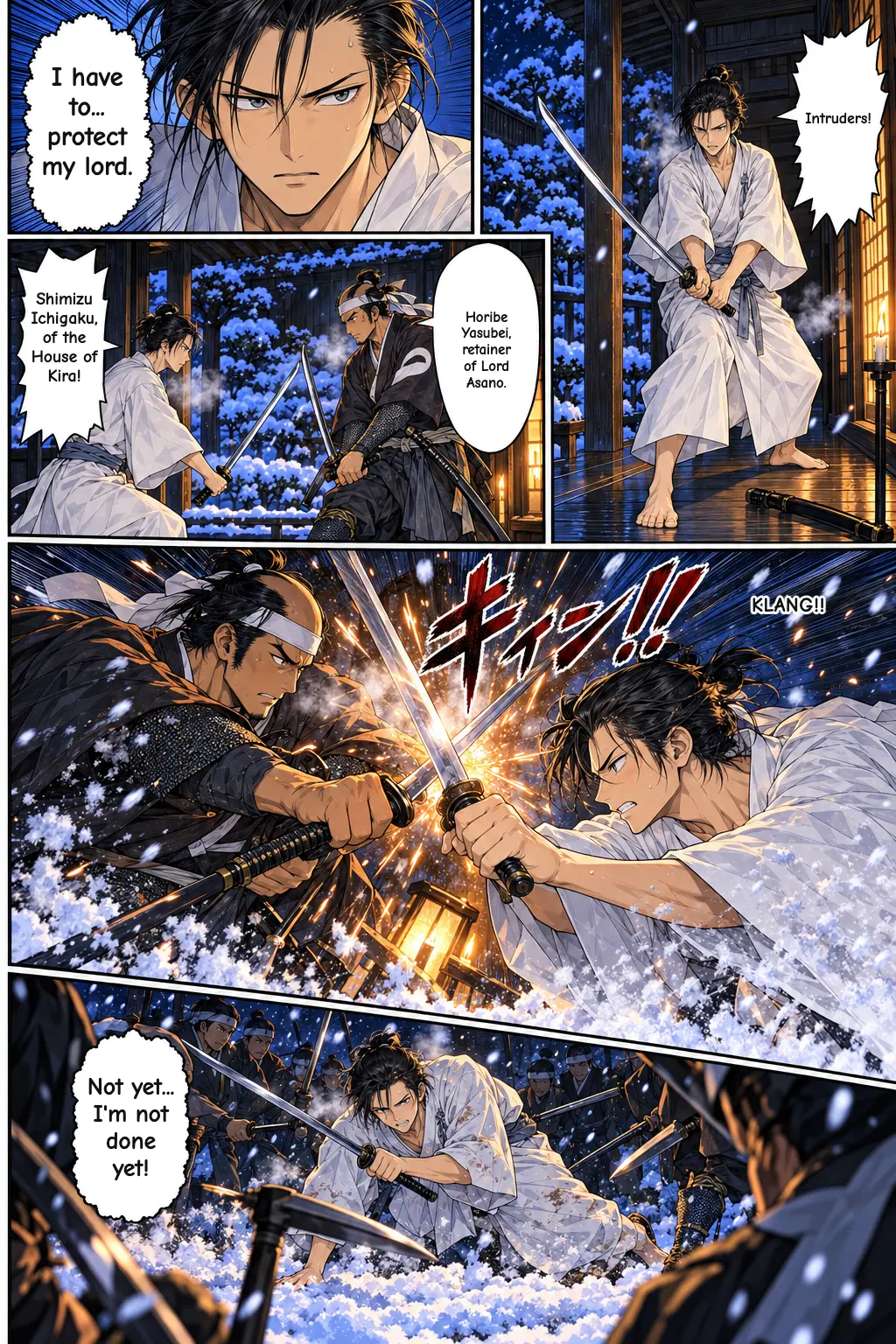
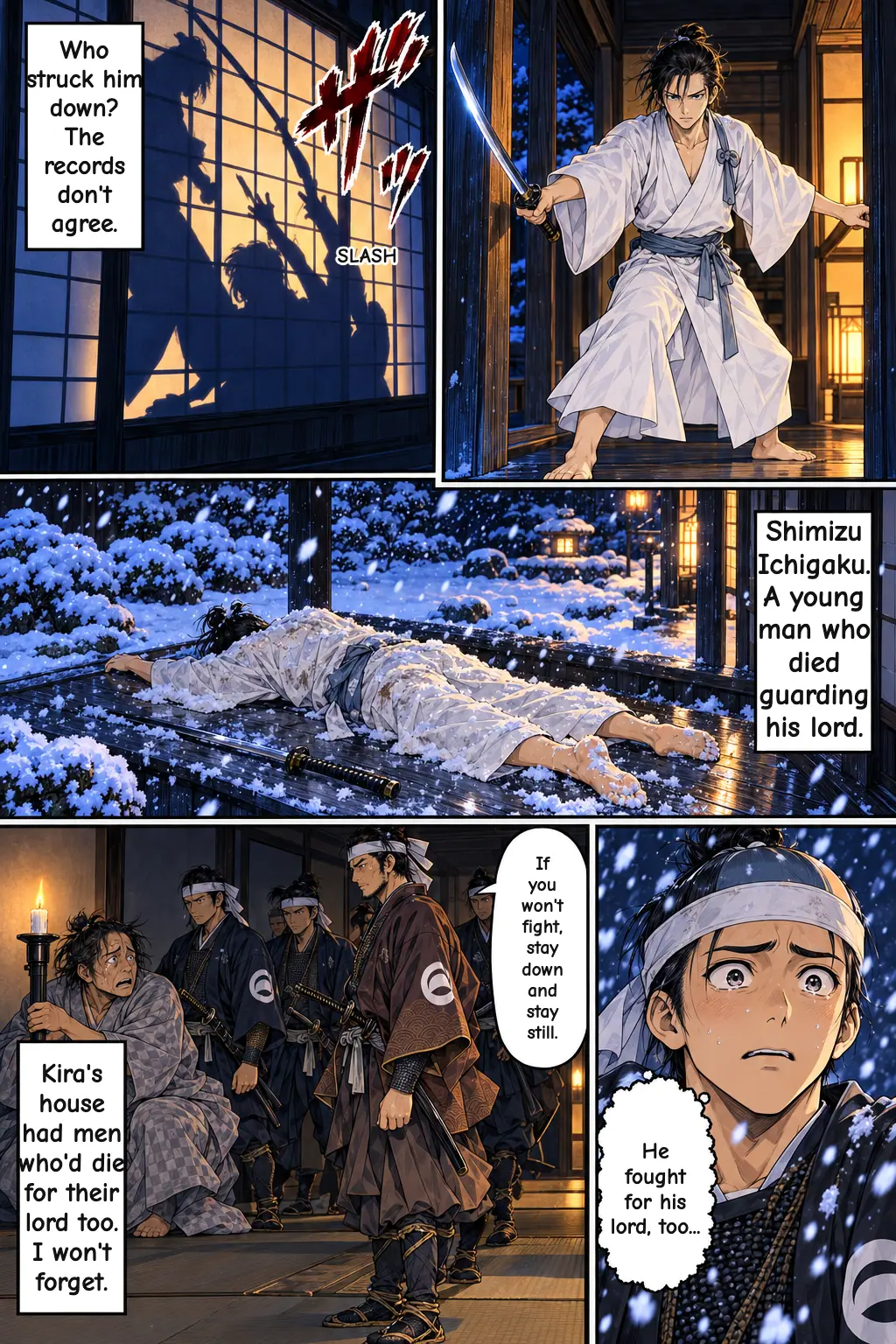
Kira's retainers fought back, and several were killed, among them Shimizu Ikkaku. Almost nothing is known about him beyond his name and his death, and accounts disagree on who struck him down. Yet when the ronin reached Kira's bedchamber, it was empty. The search of the mansion began.
What the Story Means: Loyalty, Justice, and the Law
For Japanese audiences, the raid has long stood for loyalty carried to its limit. The ronin gave up their livelihoods, their families' security, and finally their lives to fulfill what they saw as their duty to a dead lord. At the same time, the story raises an uncomfortable question that people still debate: was this justice, or a crime against the shogun's order? The courtesy toward the neighbors and the public proclamation show men who wanted to be seen as acting with honor, not as common raiders.
The story quickly became theater. Because plays could not openly depict recent political events, the famous puppet and kabuki drama Kanadehon Chushingura (1748) moved the action to the much earlier Muromachi period and renamed everyone: Oishi became Oboshi Yuranosuke, Chikara became Rikiya, and Kira became Ko no Moronao. Its eleventh act stages the night raid. Many details people now 'know' about the 47 Ronin, such as matching uniforms, come from this stage tradition rather than the historical record.
Fact or Legend? How the Manga Adapts the Raid
Several well-loved details are widely told but cannot be confirmed in the core sources used here. Snow lying on the ground under a nearly full moon is the classic image of the night. The ronin are often said to have worn dark clothing with chain mail underneath and white cloth markings to recognize each other, each man putting together his own gear. The passwords 'Yama' (mountain) and 'Kawa' (river) are part of popular tradition; in Kanadehon Chushingura they become 'Ten' and 'Kawa' instead.
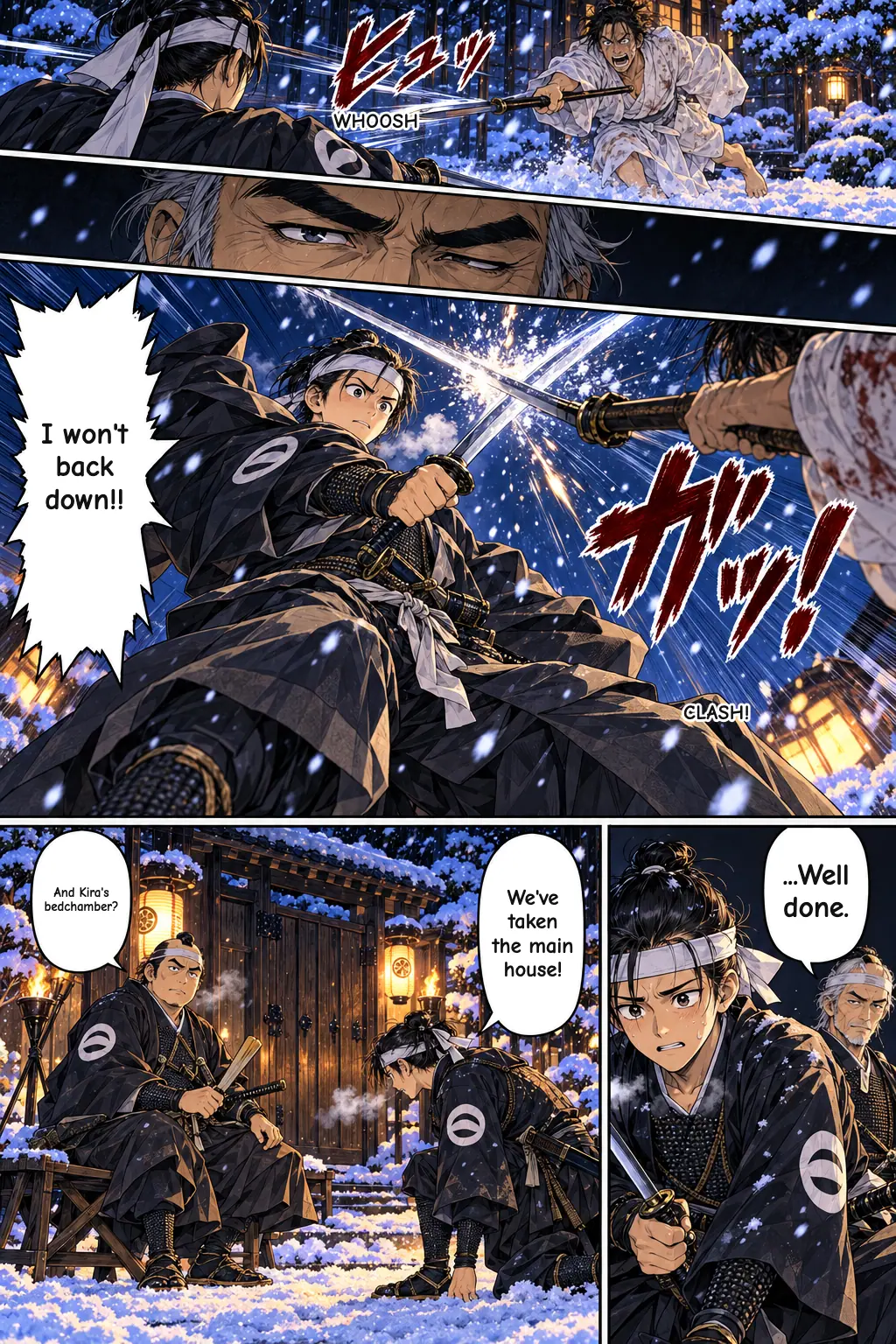
The most famous moment of this episode, reaching into Kira's bedding and finding it still warm, is a staple of later storytellers and dramatized retellings. It is not found in the primary accounts the manga draws on, and the manga uses it as drama. Likewise, the conversations among the ronin as they gather, their expressions, how the snow and moon look, the exact form of their white markings, the wording of the message to the neighbors, the step-by-step fighting, Shimizu Ikkaku's final moves, and the shout of 'Search!' were all created for the manga. Historical names are used throughout, never mixed with the renamed characters of the play.
What comes from the record: the gathering in Honjo, the pre-dawn attack, the two-gate plan with ladders and mallets, the proclamation at the gate, the message to the neighbors, Shimizu Ikkaku's death, and the empty bedchamber. In the episodes that follow, Kira is eventually found hiding in a charcoal shed.
Where to Read It
THE 47 RONIN: Chushingura – A Vow in the Winter Snow retells the story episode by episode, staying close to the historical accounts while making clear where it adds drama. Episode 9 covers the night of the raid, from the gathering in Honjo to the moment the ronin find Kira's bed empty. Every episode is free to read on Manga Portal, with no sign-up required, so if you want to see what happens when the search begins, the next chapter is just a click away.
Characters in this episode
Oishi Kuranosuke
Former chief retainer of the Ako domain and leader of the ronin, who commands the front gate attack.
Oishi Chikara
Kuranosuke's son, about fifteen at the time, who serves as nominal leader of the rear gate team.
Yoshida Chuzaemon
A senior veteran who guides young Chikara and effectively directs the rear gate assault.
Horibe Yasubei
A skilled swordsman and a leading voice among the ronin based in Edo who pushed for action.
Kira Kozukenosuke
The elderly court-etiquette official blamed for Asano's downfall, whose bedchamber the ronin find empty.
Shimizu Ikkaku
One of Kira's retainers, who dies fighting to defend his lord's mansion.
FAQ
Why did the 47 Ronin attack Kira?
In 1701 their lord, Asano Takumi-no-Kami, attacked Kira inside Edo Castle and was ordered to commit seppuku that same day, while Kira went unpunished. Asano's former retainers saw this as unjust and set out to settle their dead lord's grievance against Kira.
When did the 47 Ronin raid Kira's mansion?
They struck just before dawn on the 15th day of the twelfth month of Genroku 15, which falls in late January 1703 on the Western calendar. They had gathered in the Honjo district of Edo the night before.
How did the 47 Ronin get into Kira's mansion?
They attacked from two sides at once. The front gate team under Oishi Kuranosuke climbed over on ladders and opened the gate from inside, while the rear gate team under Oishi Chikara smashed through with heavy wooden mallets.
Was Kira's bed really still warm?
The warm bed is a famous scene in later storytelling and dramatized retellings, but it does not appear in the main firsthand accounts. What the records do say is that the ronin found Kira's bedchamber empty and had to search the mansion.
What is the difference between the 47 Ronin and Kanadehon Chushingura?
The 47 Ronin were real people, and their raid is a historical event. Kanadehon Chushingura (1748) is a famous play based on it that moves the story to an earlier era and renames the characters, for example turning Oishi into Oboshi Yuranosuke and Kira into Ko no Moronao.