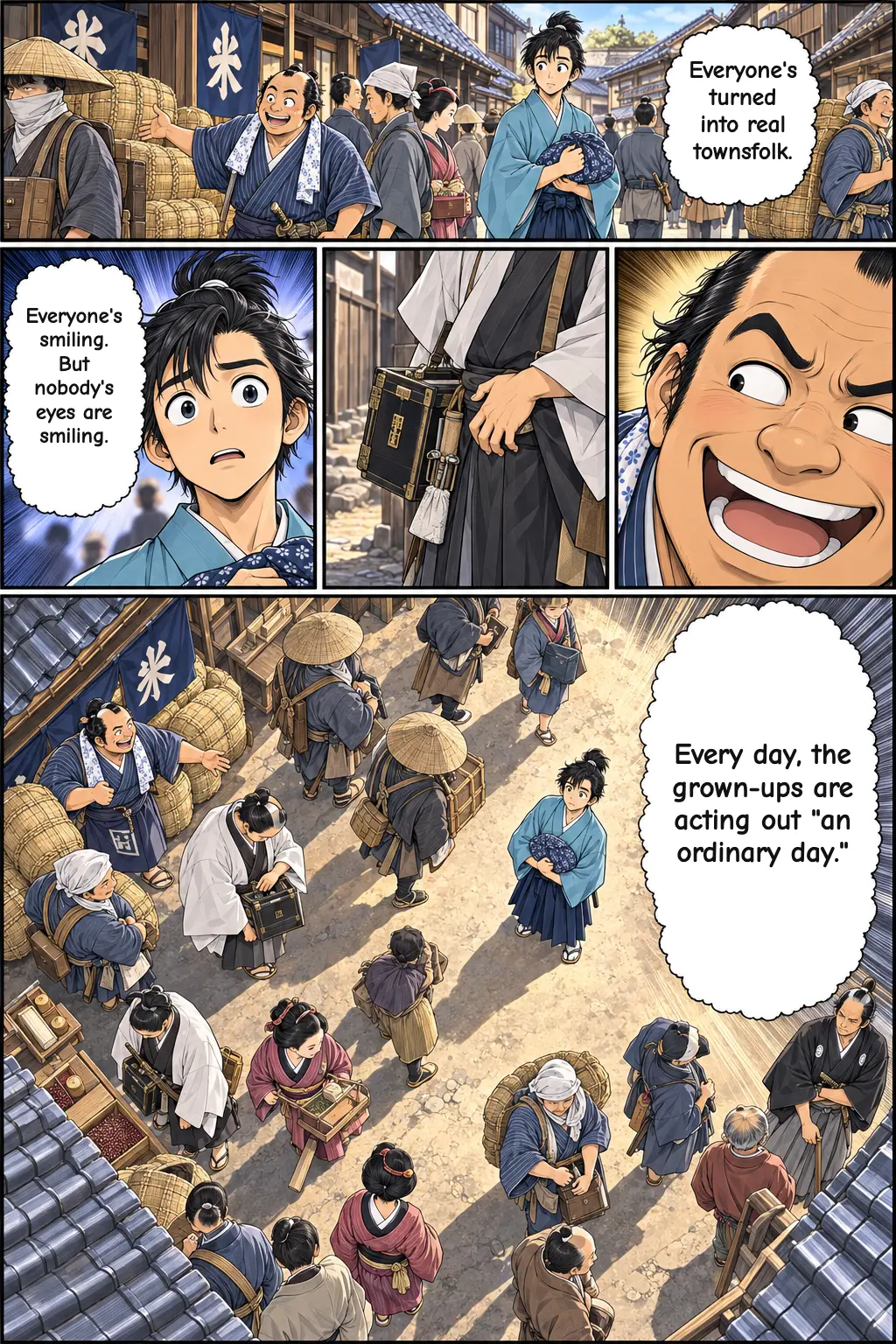
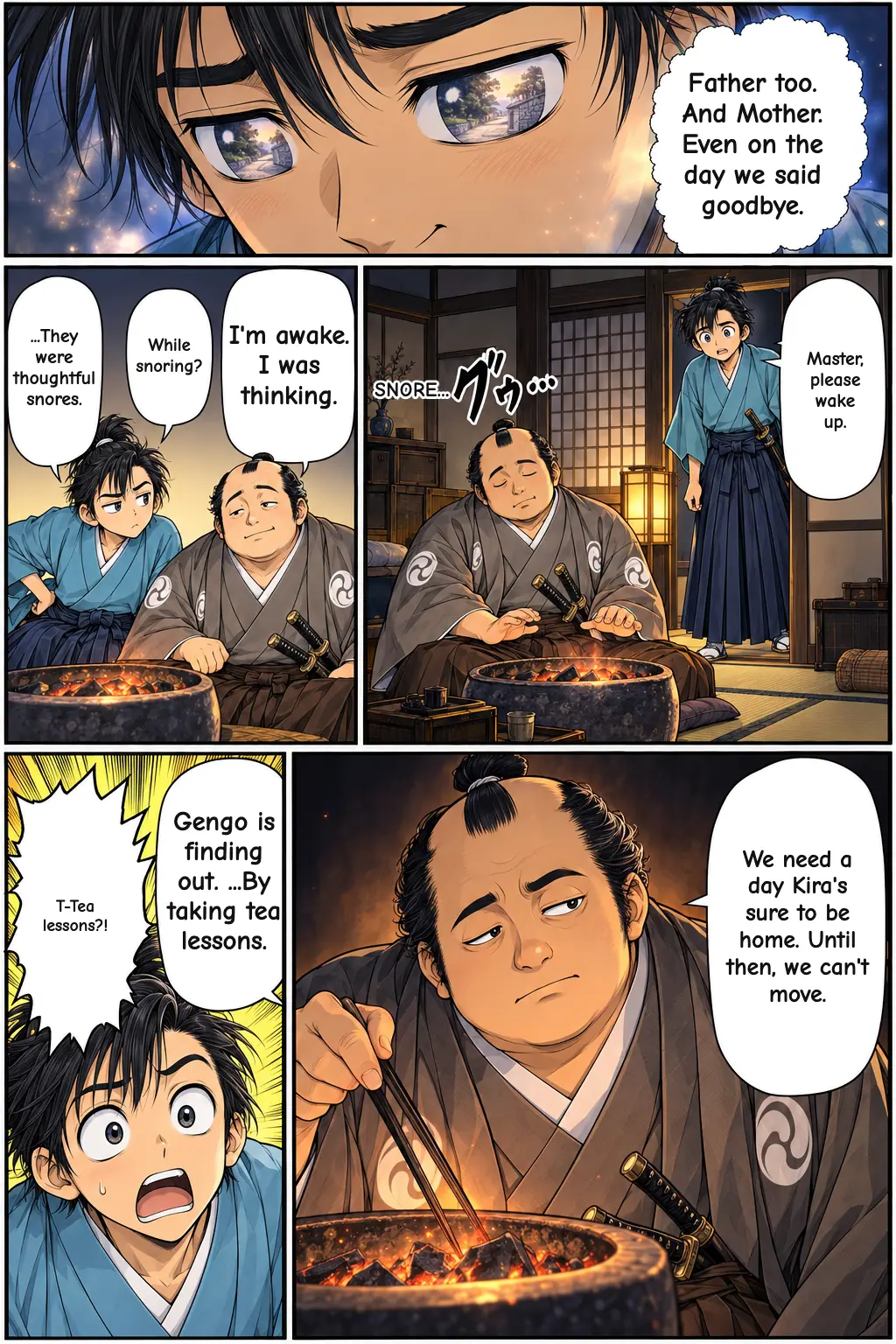
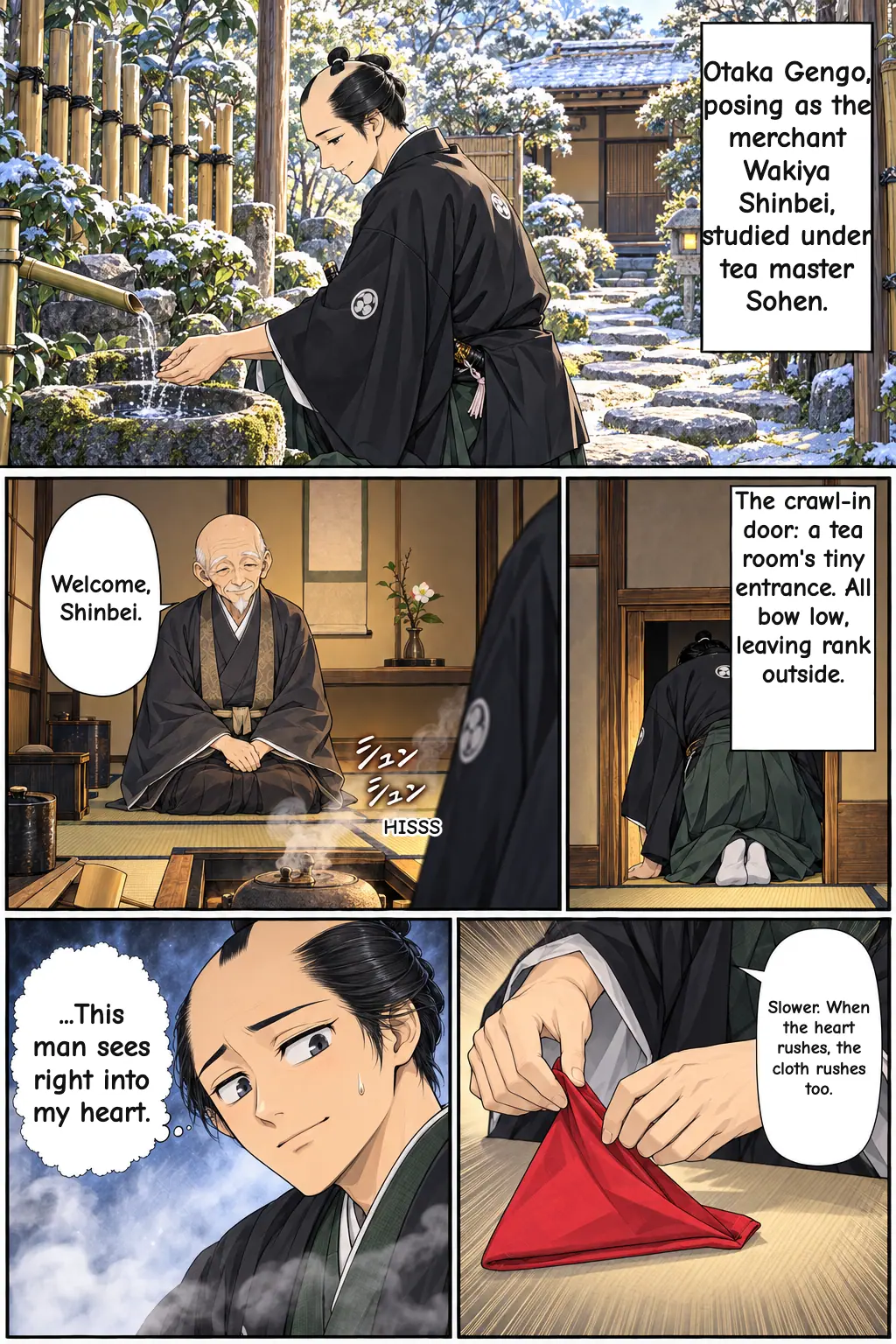
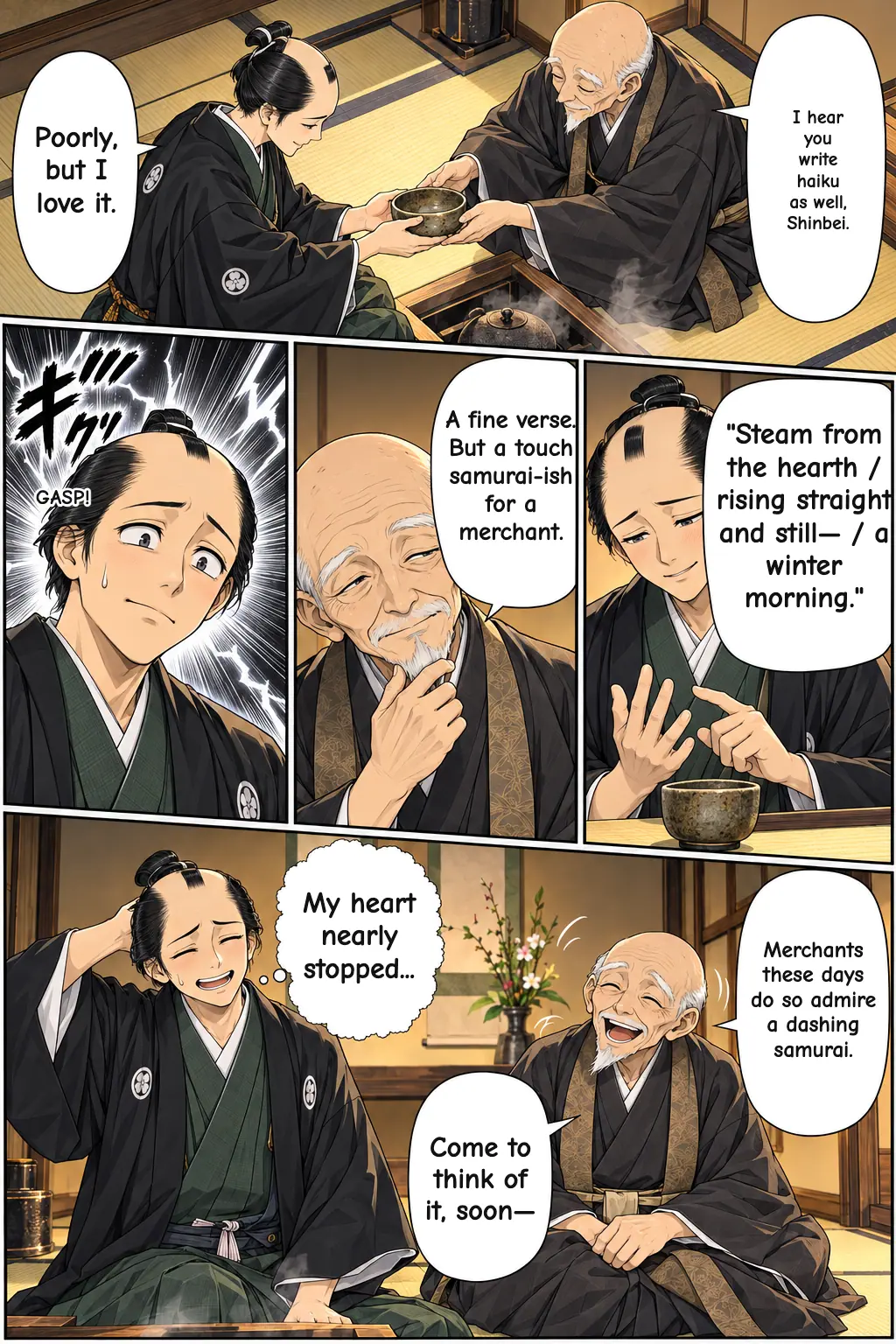
Episode 8He Learned Tea to Steal a Single DateThe Ronin in Hiding & Ōtaka Gengo
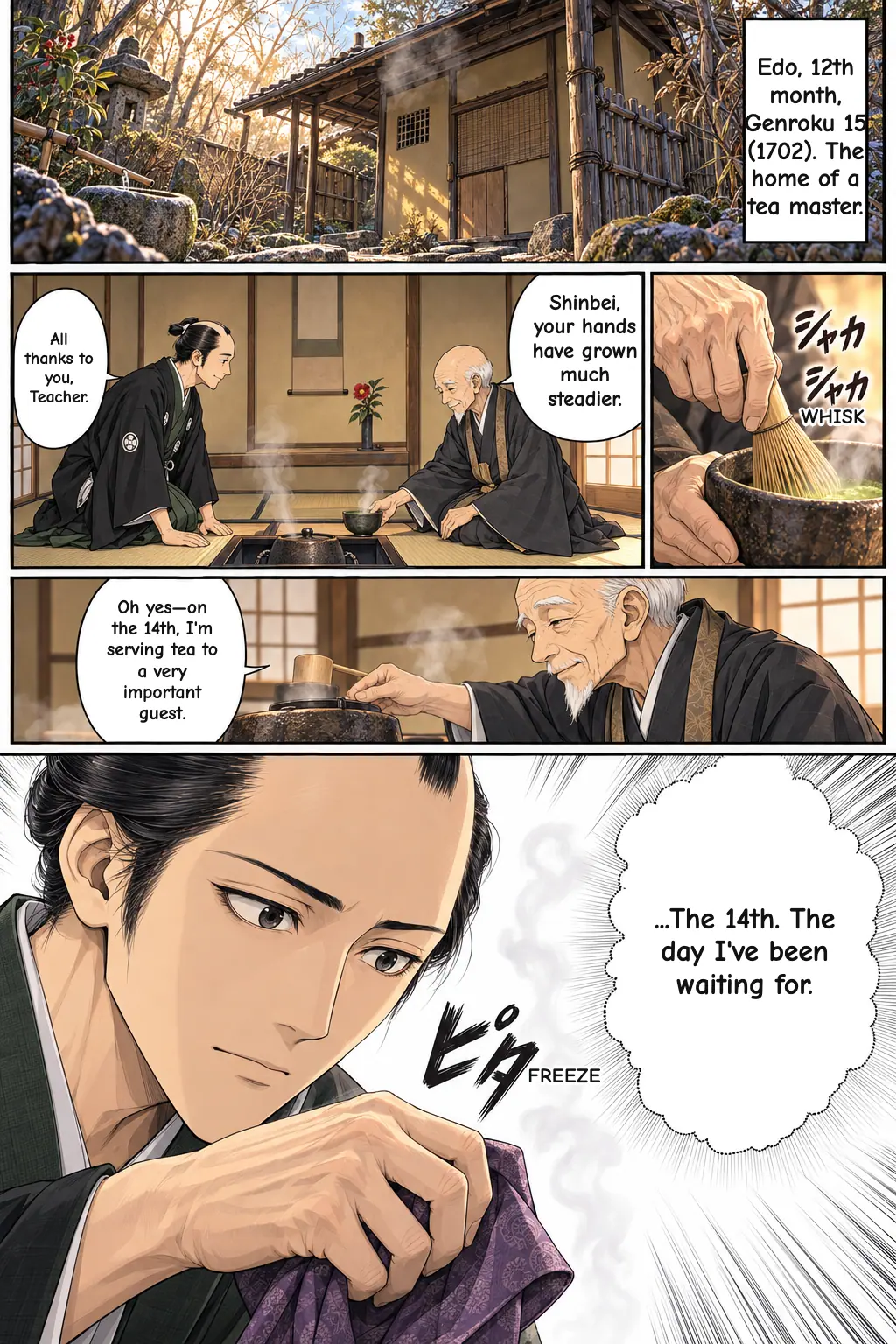
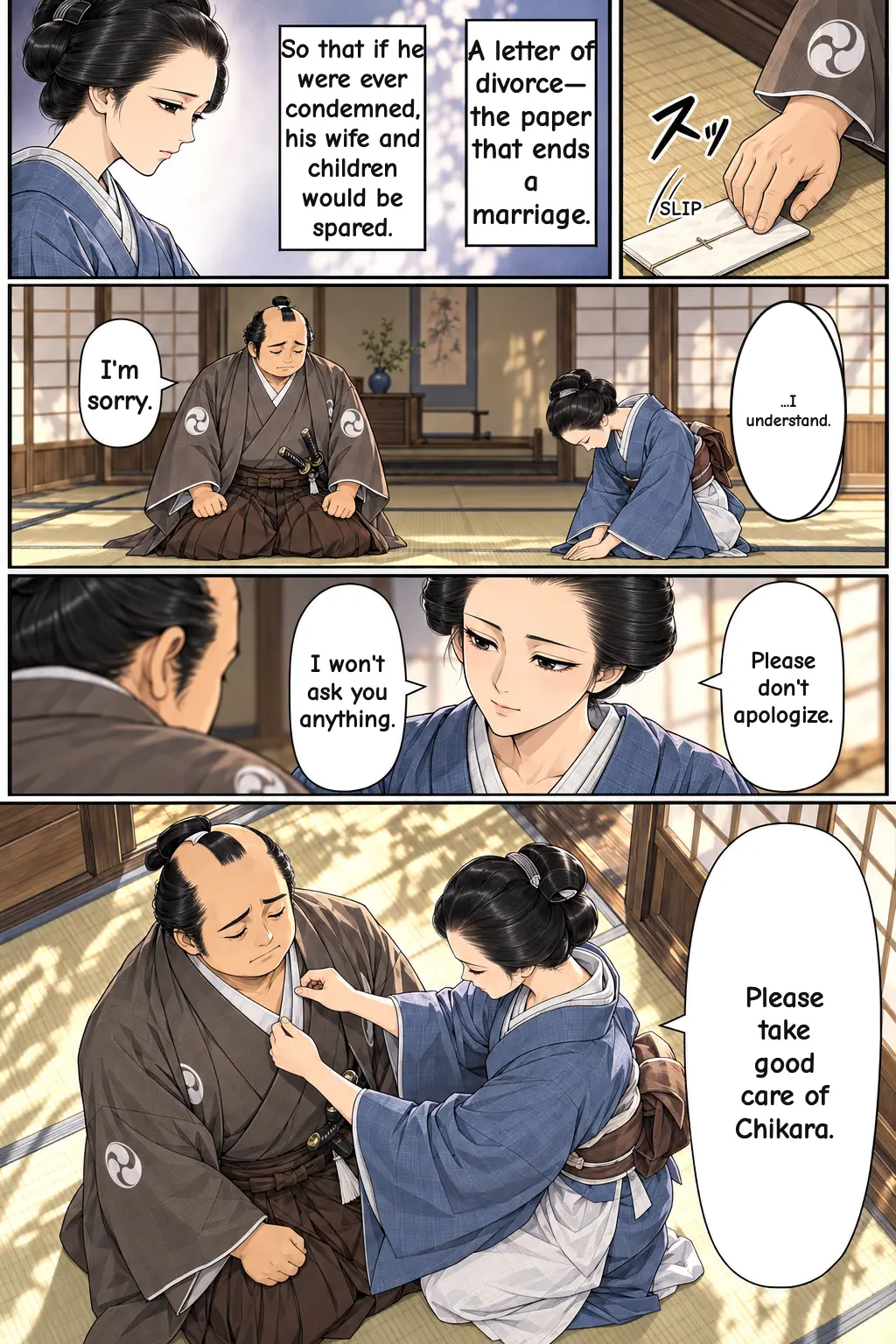
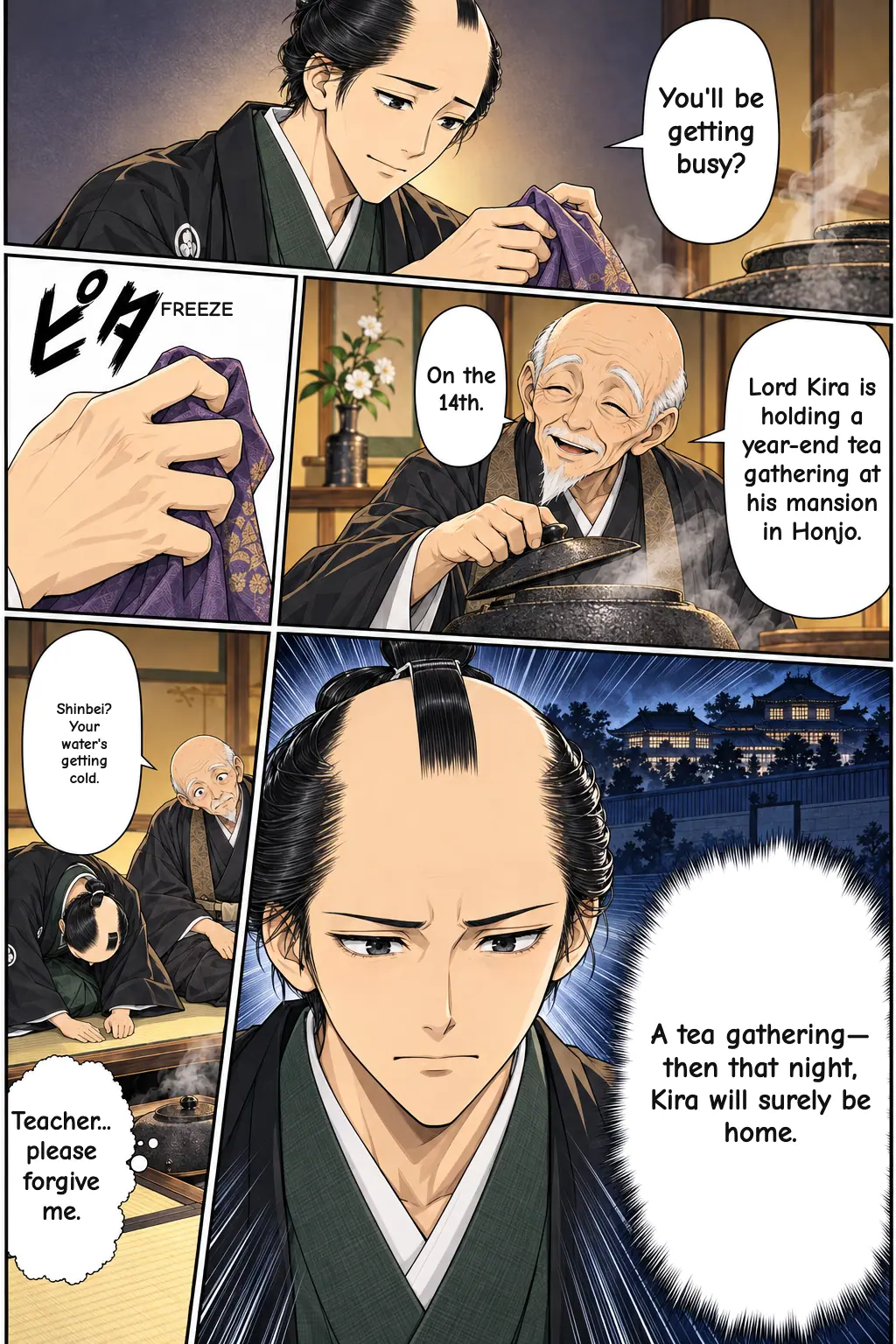
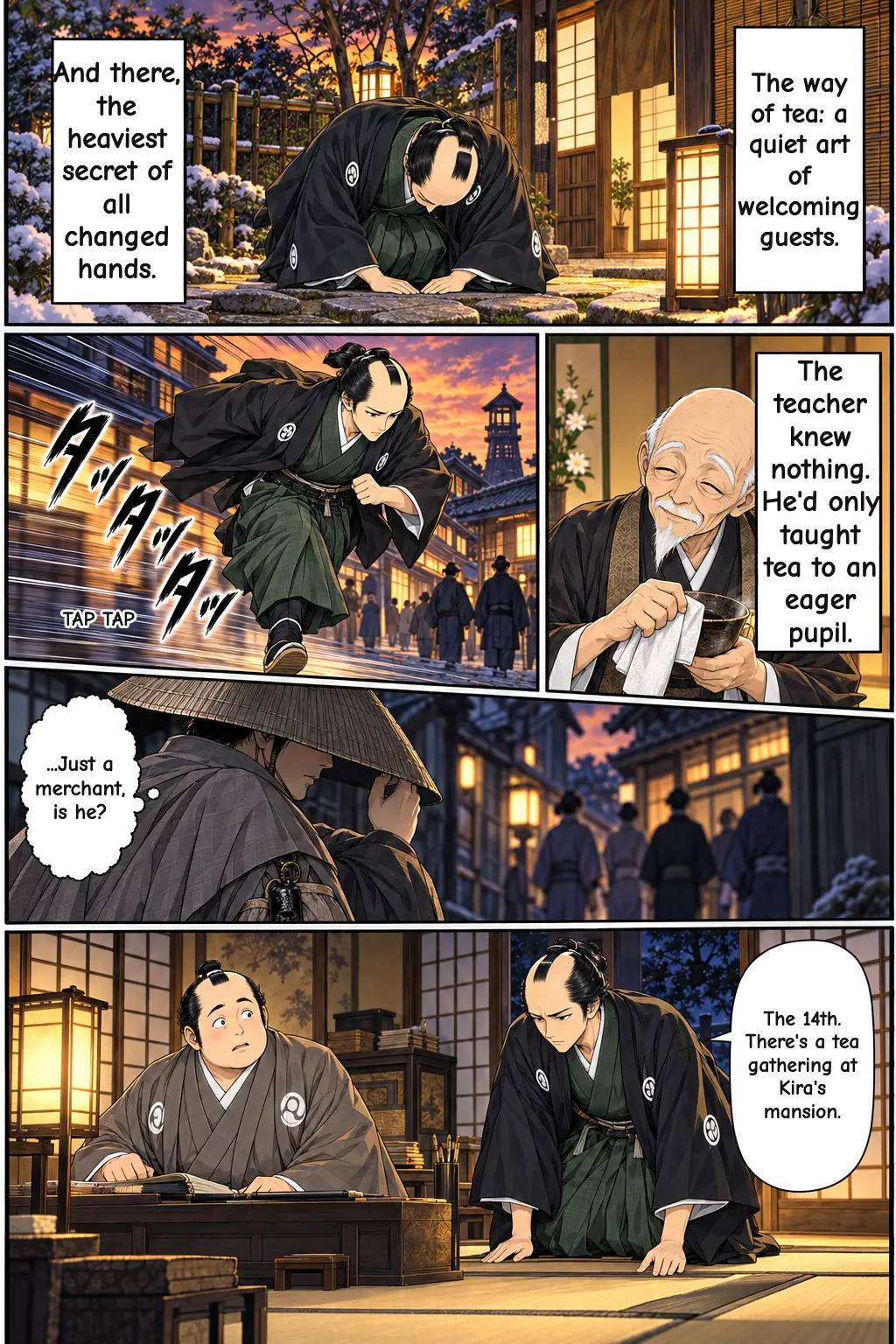
To protect his family, Oishi divorces his wife Riku, and the Ako ronin slip into Edo disguised as townsfolk. Otaka Gengo becomes a pupil of tea master Yamada Sohen and learns the day Kira will host a tea gathering at his mansion. Without a word, the ronin begin saying their goodbyes.
47 Ronin in Hiding: Oishi's Divorce and Otaka Gengo's Tea Spy
The Story So Far: From Lost Hope to a Secret Plan
The tale of the 47 Ronin, known in Japan as Chushingura, begins in 1701. In the shogun's castle in Edo (old Tokyo), Asano Takumi-no-kami, the lord of Ako domain, drew his sword and attacked Kira Kozukenosuke, a senior court-etiquette official. Why he did it is still unknown; the sources never explain it. Asano was ordered to commit seppuku (ritual suicide) that same day, his domain was abolished, and Kira went unpunished. Hundreds of Asano's samurai became ronin, masterless warriors.
Their chief retainer, Oishi Kuranosuke, did not rush to revenge. First he petitioned the shogunate to let Asano's younger brother, Asano Daigaku, restore the family. In the seventh month of 1702 that hope ended when Daigaku was placed in the custody of the main Asano house in Hiroshima. That same month, at a meeting in Kyoto's Maruyama district, the remaining loyalists settled on attacking Kira. Episode 8 covers the quiet months that followed, when the ronin had to hide their purpose from everyone, even their own families.
What the Historical Records Say
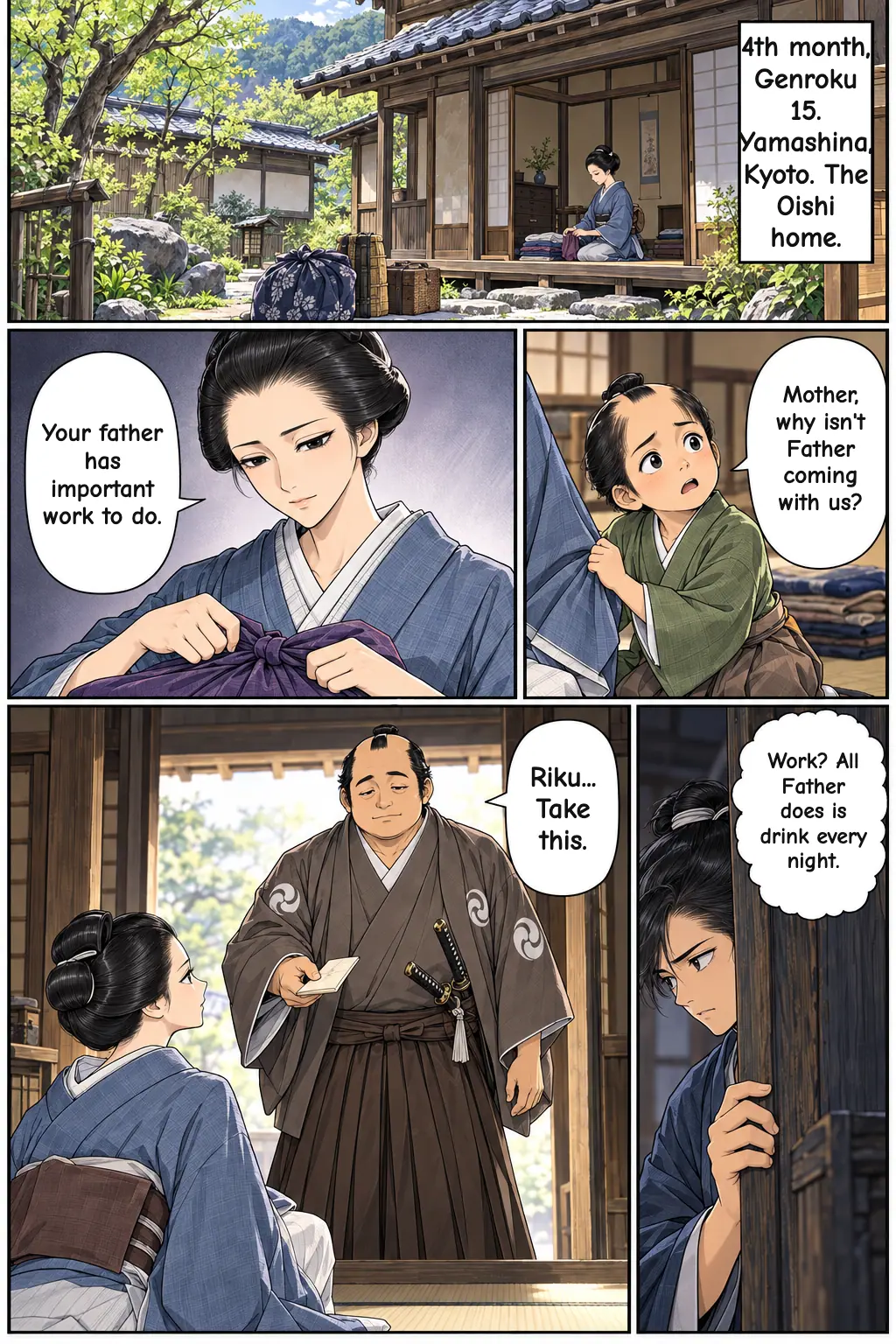
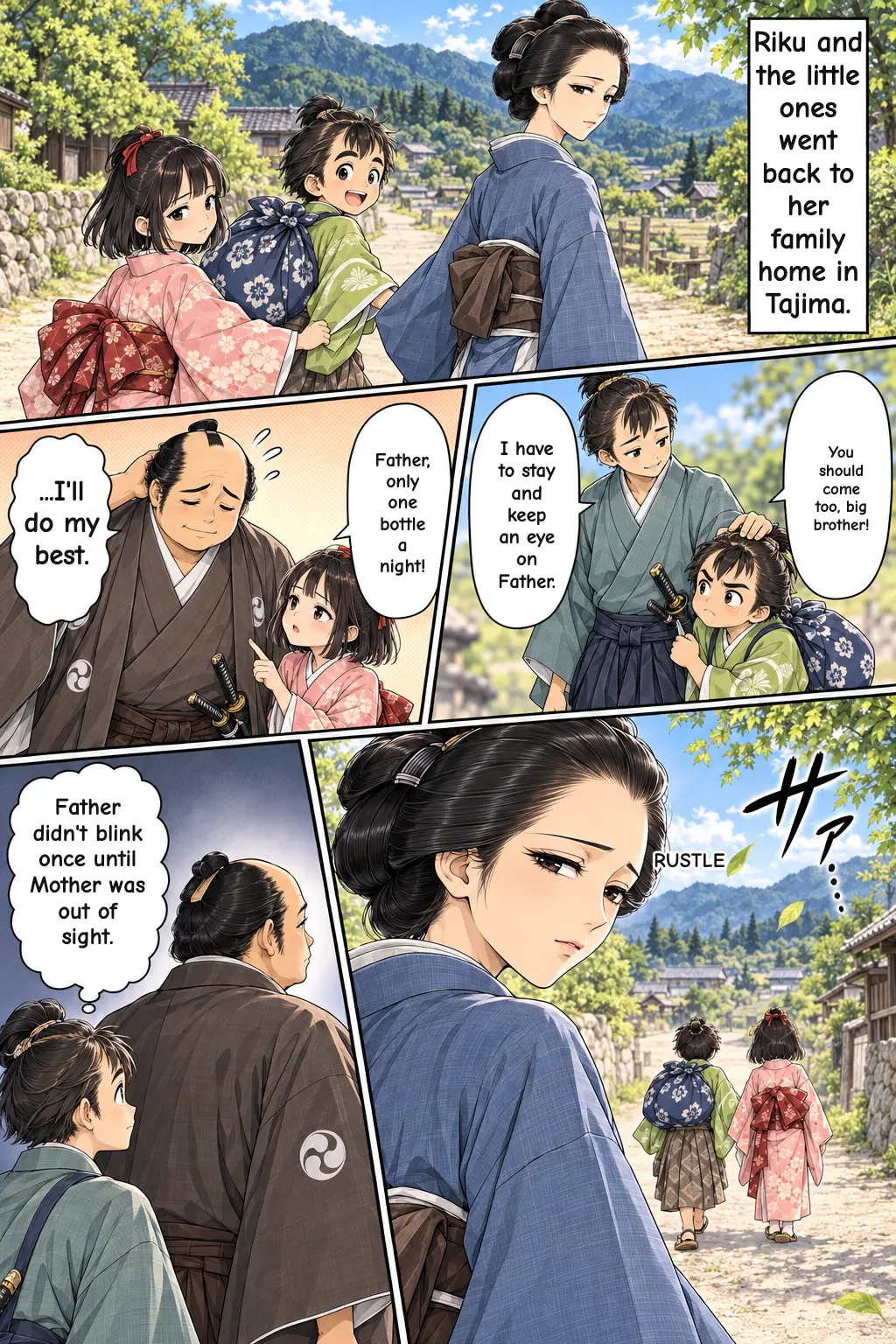
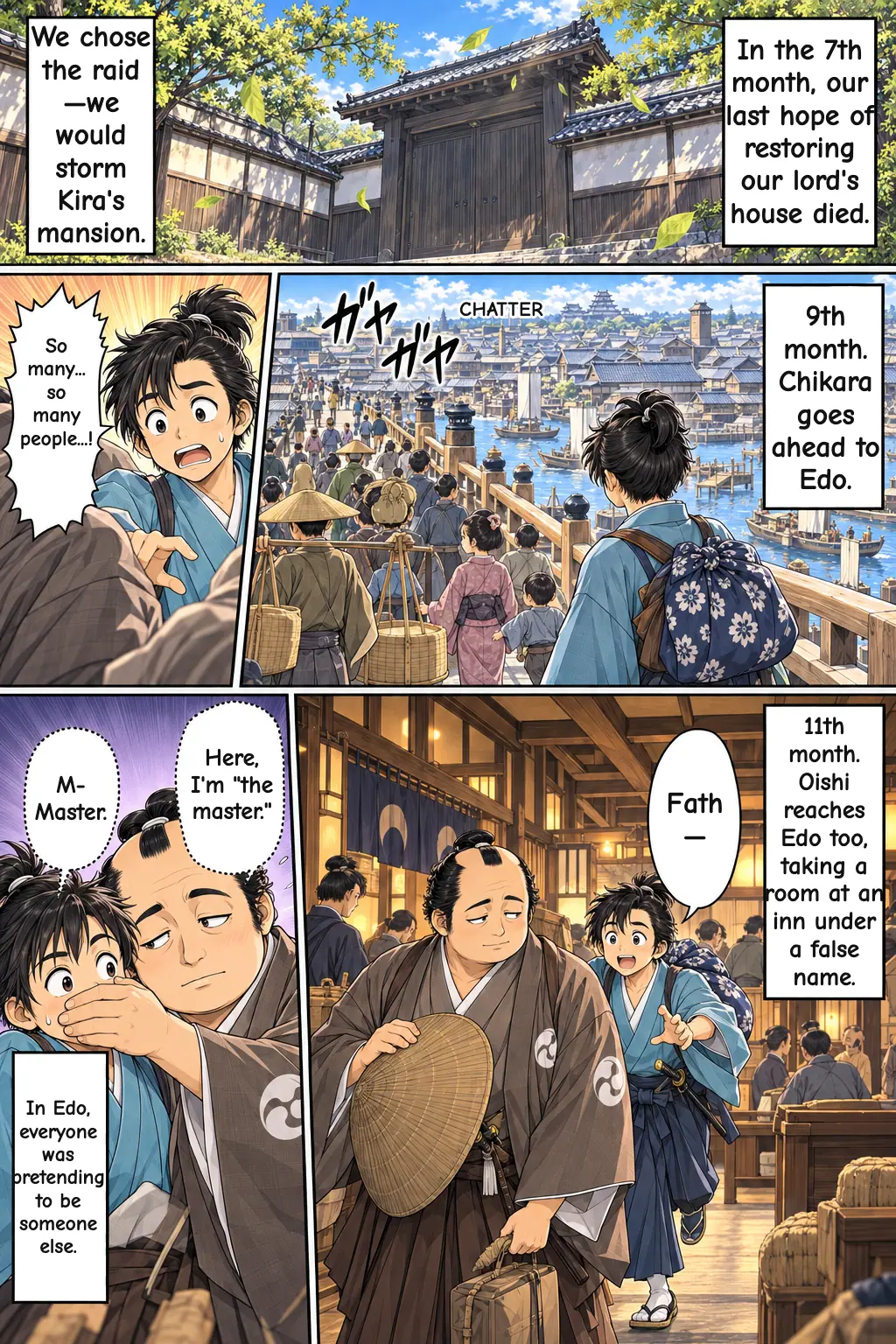
Even before the restoration plan failed, around the fourth month of 1702, Oishi sent his wife Riku and their younger children back to her family home in Toyooka, in Tajima province, and divorced her. Under the laws of the time, relatives could be punished for a man's crime, so the divorce was meant to shield them. Only his eldest son, Chikara, stayed with him and joined the conspiracy. Chikara went to Edo first, around the ninth month. Oishi left Kyoto in the tenth month and reached Edo in early winter, where he stayed at a lodging in the Nihonbashi area under a false name, Kakimi Gorobei.
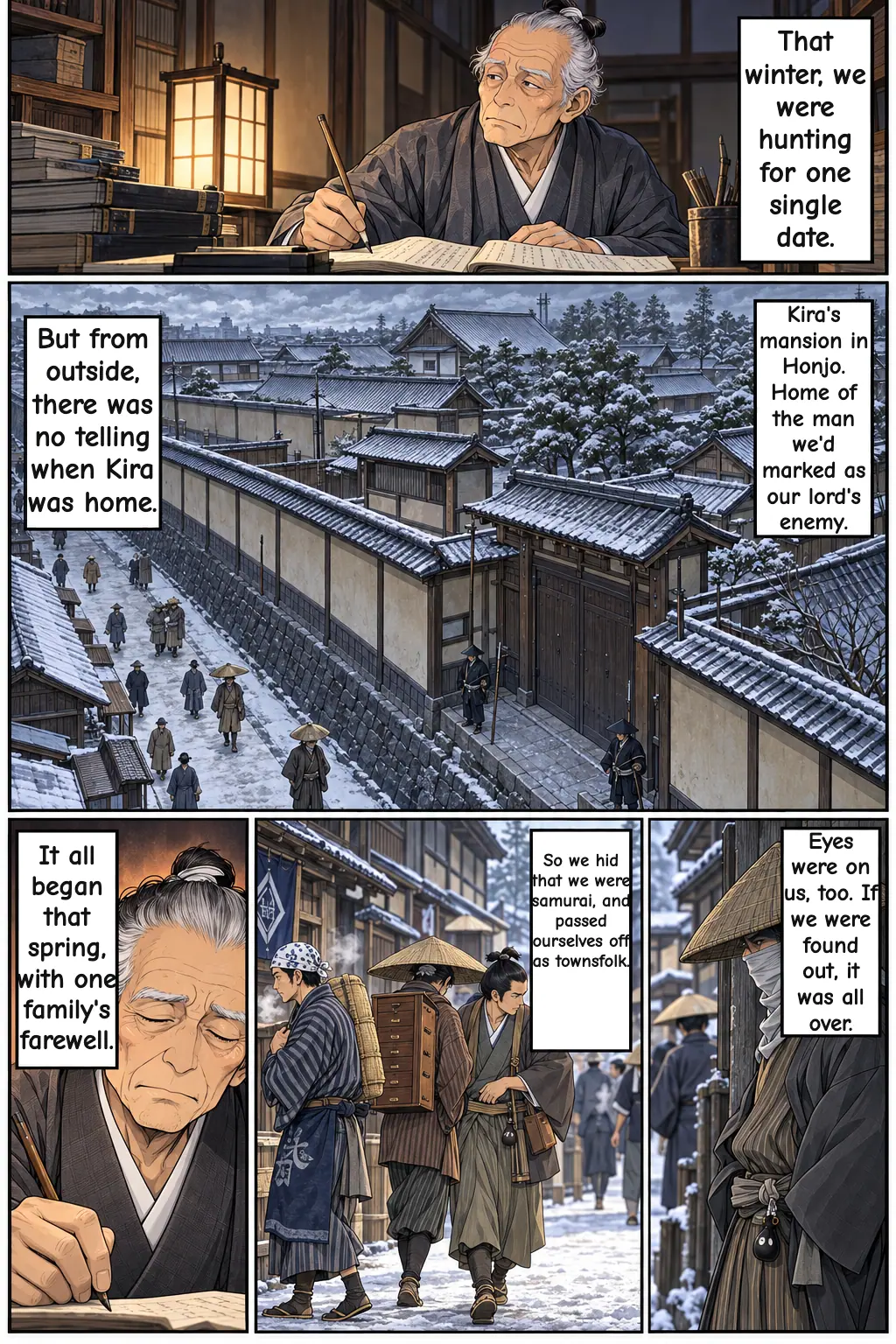
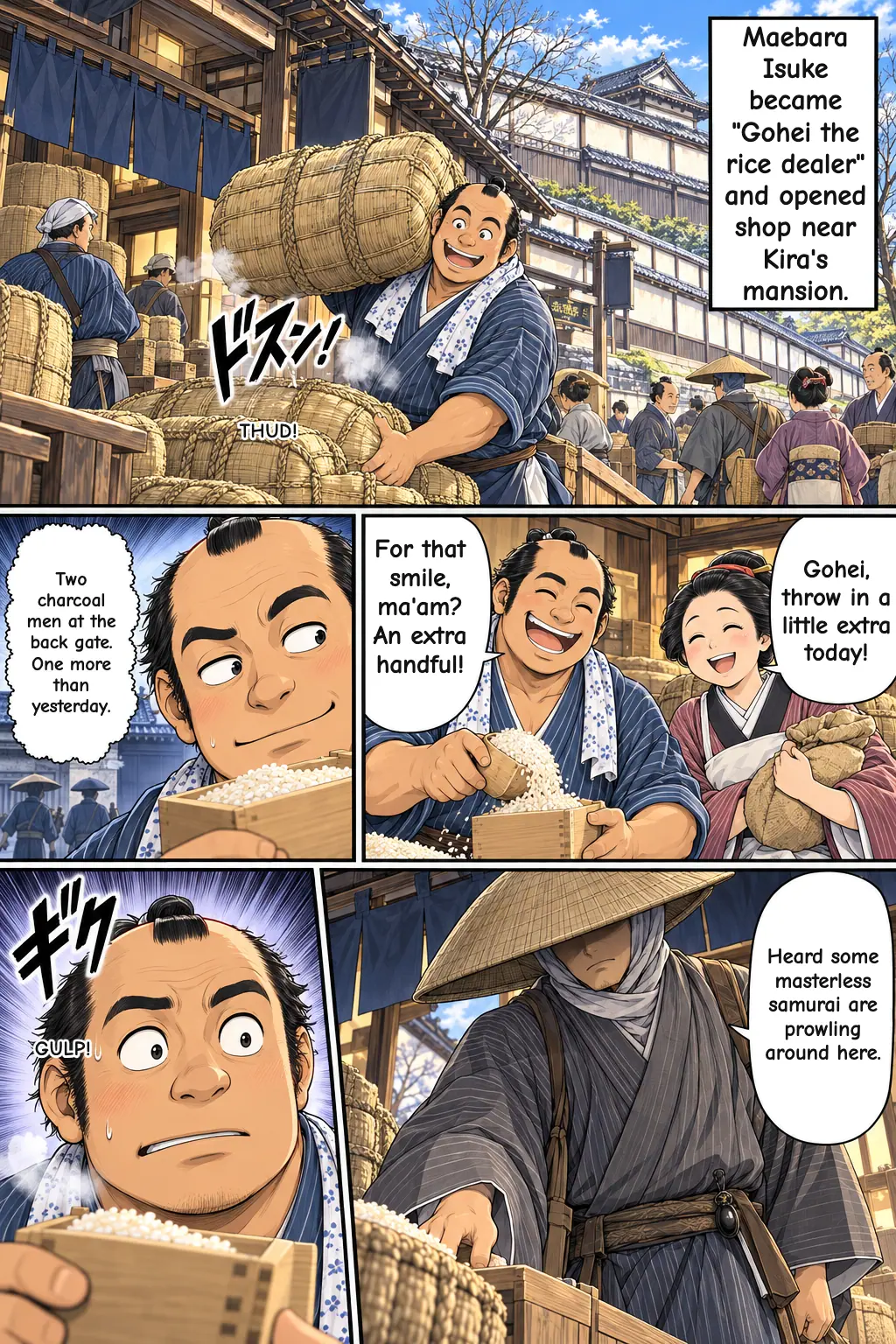
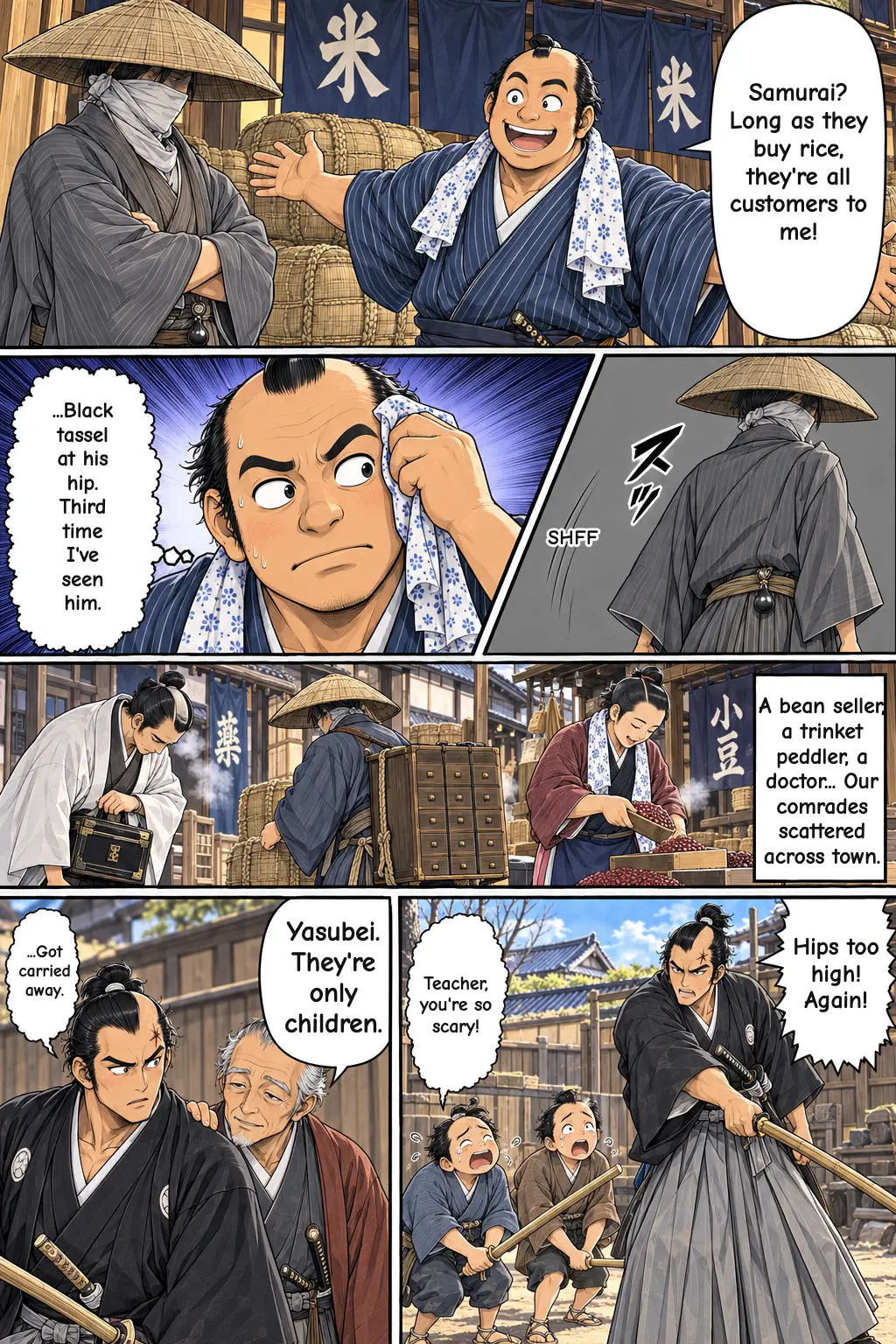
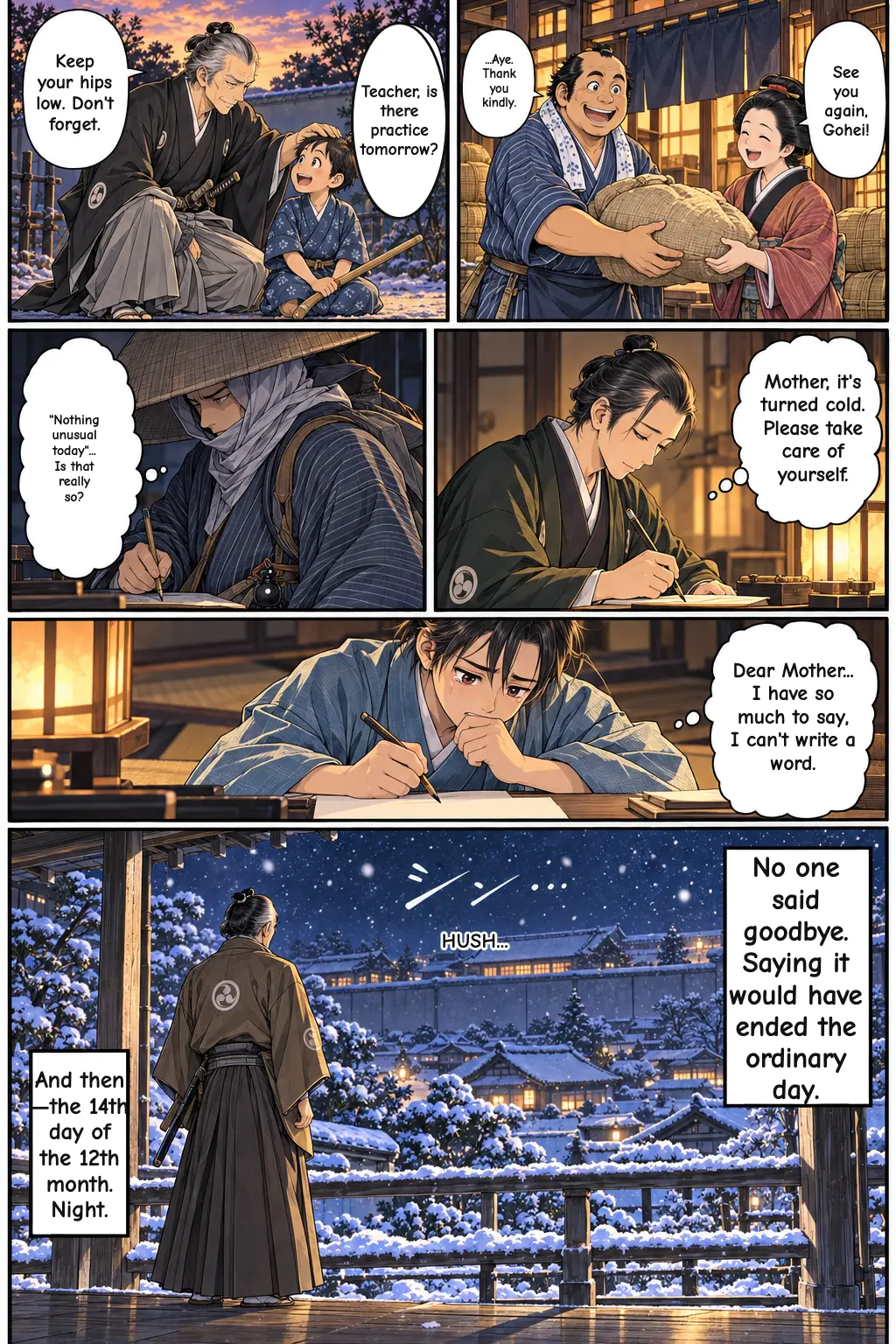
Other ronin settled near Kira's new mansion in the Honjo district and posed as townspeople. Maehara Isuke ran a rice shop as 'Gohei', and Kanzaki Yogoro sold beans as 'Zenbei', watching who came and went and how the mansion was being rebuilt. Maehara even left his own written account of these days.
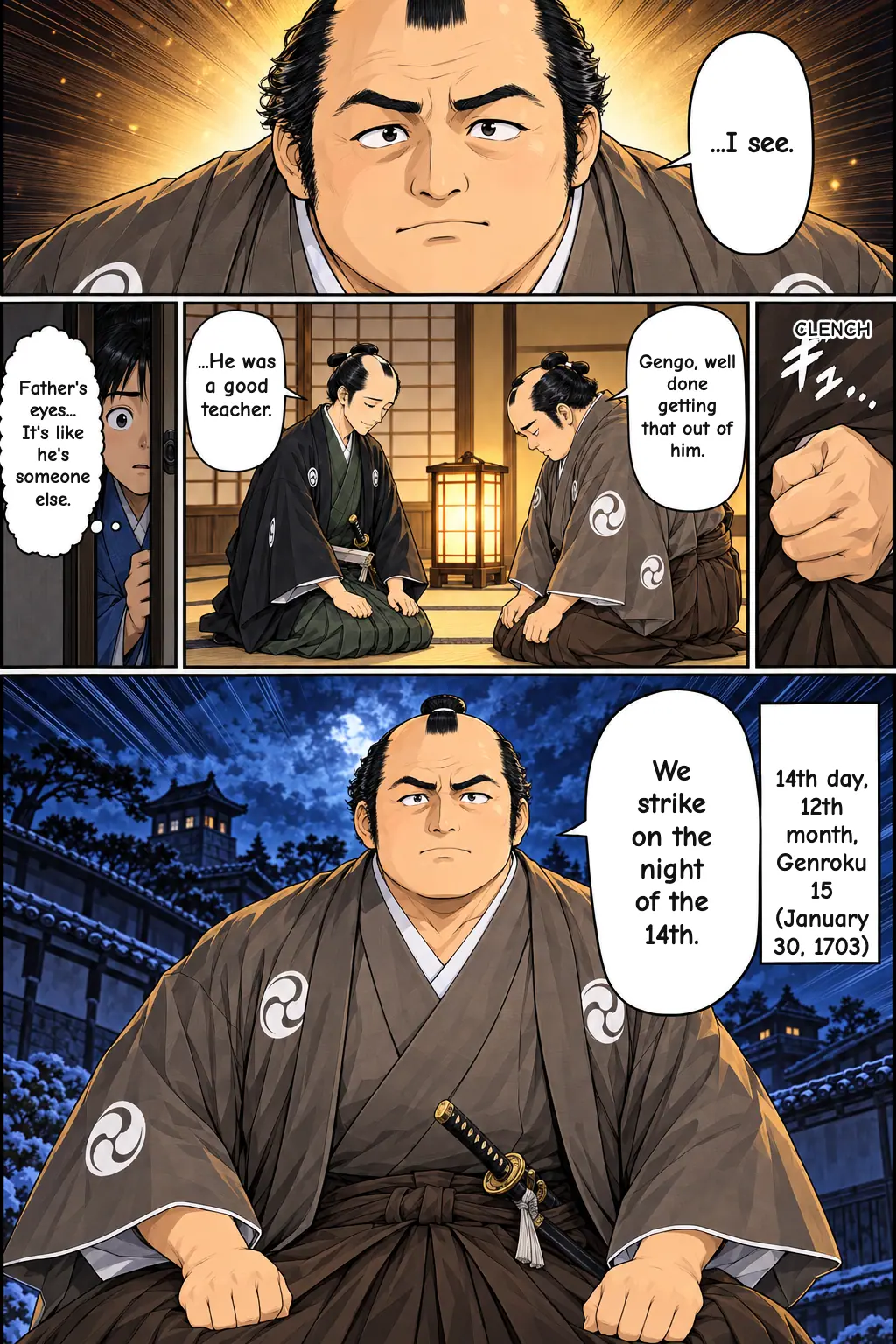
The most famous spy was Otaka Gengo, a samurai who was also a haikai poet. Posing as a merchant, he became a pupil of Yamada Sohen, a tea master who visited Kira's household. Through this connection the ronin learned that Kira would hold a year-end tea gathering at his mansion on the 14th day of the 12th month. A host must be at home for his own tea party, so that night Kira would surely be there. Some records also credit another ronin, Yokogawa Kanpei, with gathering this information. There is no evidence that Sohen himself knew what his pupil was planning.
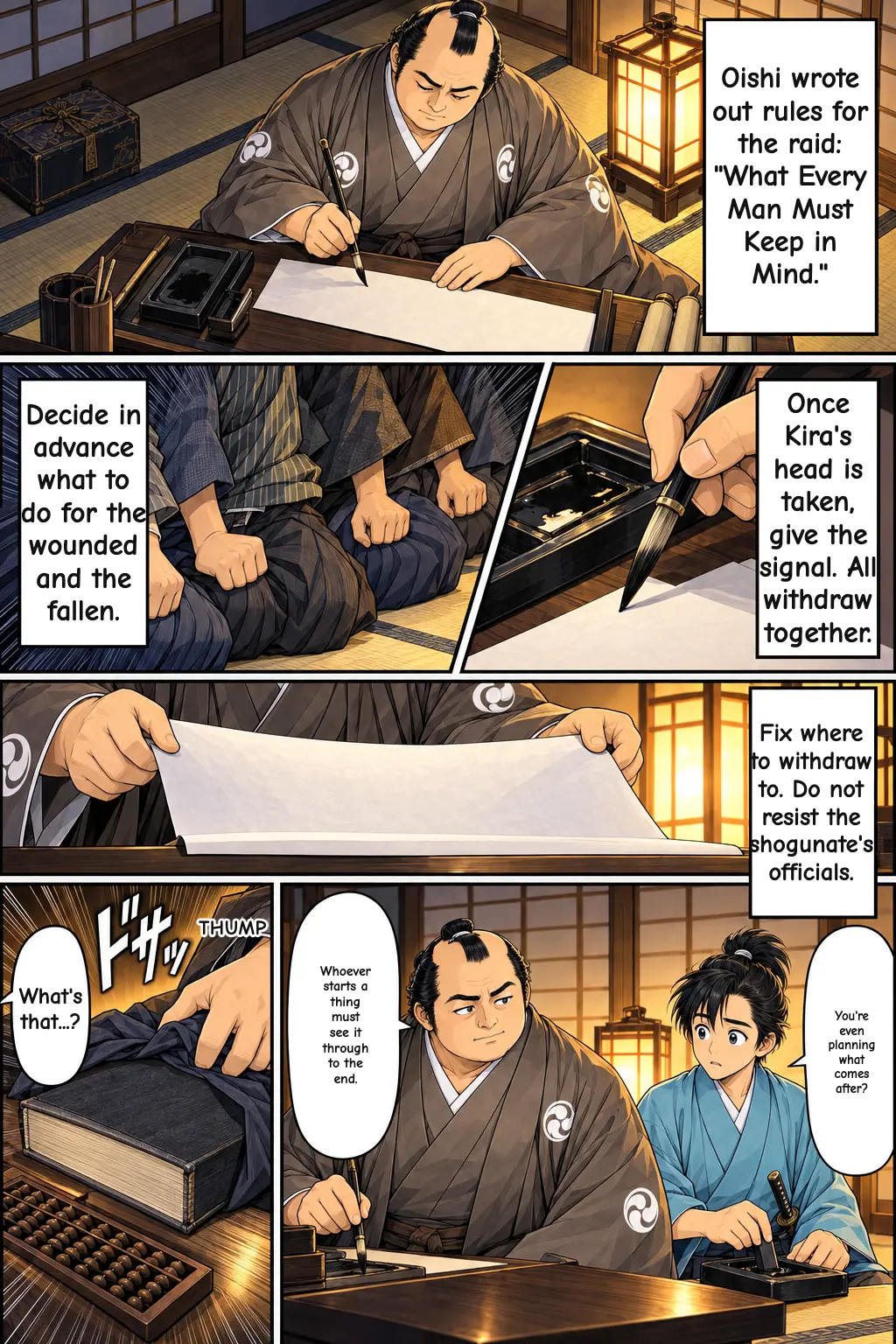
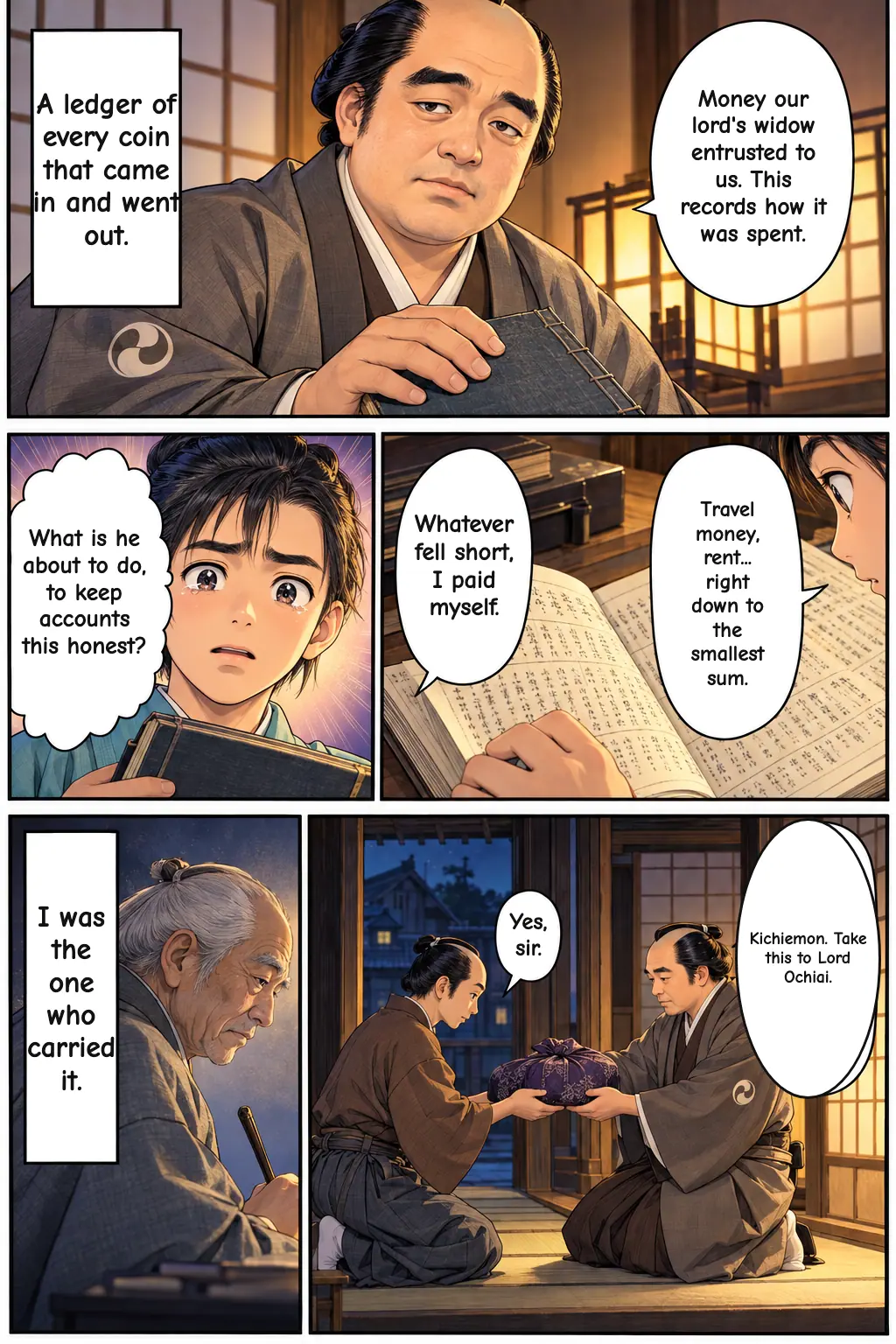
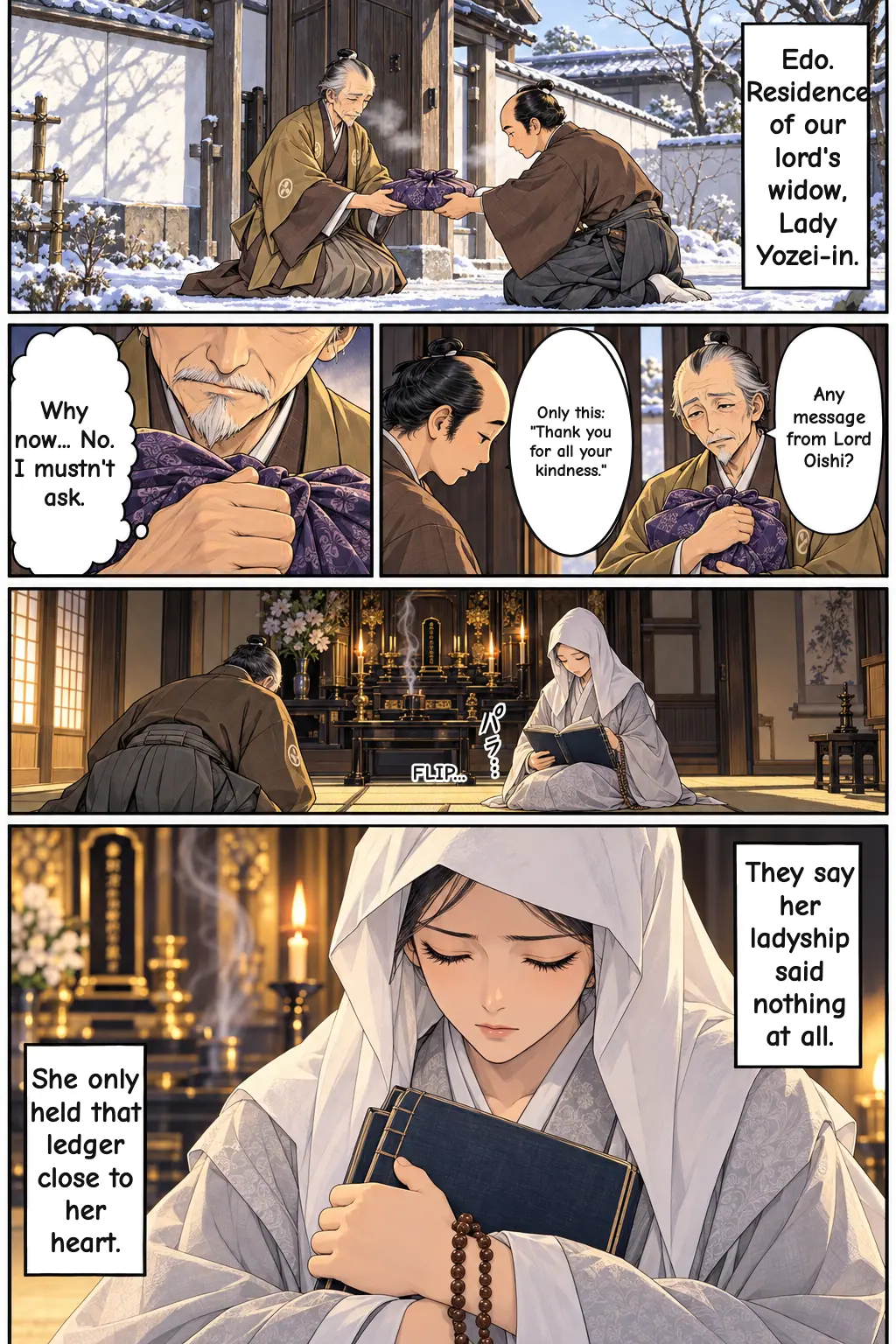
In the final days, Oishi wrote a set of rules for the attack, known as the Hitobito Kokoro-oboe ('Memorandum for Everyone'). It covered matters such as signaling once Kira's head was taken, how to treat the wounded and the dead, where to withdraw, and how to answer shogunate officials. He also sent an account book to Ochiai Yozaemon, steward to Asano's widow Yozei-in, recording how he had spent funds she had entrusted to him; where money ran short, Oishi had covered it from his own purse. Many ronin wrote farewell letters, and a letter from Otaka Gengo to his mother survives. The attack was fixed for the night of the 14th, which fell in late January 1703 by the Western calendar.
Legend, Theater, and What Is Uncertain
Chushingura became Japan's best-loved revenge story, and later storytellers added a great deal. The passwords 'Mountain' and 'River', the war drum Oishi supposedly beat, and the matching firefighter-style uniforms all come from later plays, storytelling, or popular tradition; they do not appear in Oishi's memorandum. The touching scene in which Oishi secretly bids farewell to Yozei-in at Nanbuzaka in the snow is an invention of the storytelling art called kodan. Some accounts say the attack was first set for the 5th of the 12th month and postponed, but the sources differ on this.
The puppet and kabuki play Kanadehon Chushingura (1748) moved the story to an earlier era with changed names. Its Act 9, 'The Retreat at Yamashina', is set in the snowy home of Oboshi Yuranosuke, the stage version of Oishi. His wife Oishi (a stage character, distinct from the historical Riku) refuses to let their son Rikiya marry his fiancee Konami, and the drama ends in sacrifice and a parting. It is fiction, but it shaped how generations imagined the ronin's private farewells.
Another eyewitness, the foot soldier Terasaka Kichiemon, wrote down events from these preparations through the attack. He left the group during the withdrawal, and why he did so is still debated.
What the Manga Changes and Adds
The core events in Episode 8 follow the records: the divorce, the disguises, Otaka Gengo's tea lessons, the tea party date, the memorandum, the account book, and the farewell letters. What the manga invents is the human detail in between. The words and expressions at Oishi and Riku's parting, the children's reactions, the ronin's everyday life as shopkeepers and their near-misses with neighbors, and the conversations between Gengo and Sohen are all creative additions. Sohen stays an innocent teacher, as the sources suggest.
The scene where Oishi shows the memorandum is dramatized, but its rules match the historical content. Who carries the account book to Ochiai, and how Yozei-in receives it, are imagined, replacing the legendary Nanbuzaka farewell. The snow is atmosphere: records disagree about the weather on that December day. Scenes from Act 9 of Kanadehon Chushingura are woven in as a play-within-the-story, a dream, or a memory, letting theater and history echo each other.
Where to Read It
If you want to see these silent goodbyes unfold, Episode 8 of THE 47 RONIN: Chushingura – A Vow in the Winter Snow is right here on Manga Portal. Every episode is free to read, with no account needed, so you can start from the beginning or jump straight to the eve of the famous night attack.
Characters in this episode
Oishi Kuranosuke
Chief retainer of the Ako domain who led the ronin, first seeking to restore the Asano house and then planning the attack on Kira.
Riku
Oishi's wife, sent back to her family in Toyooka and divorced so she and the children would be spared any punishment.
Oishi Chikara
Oishi's eldest son, the youngest of the ronin, who left his mother to join his father's cause.
Otaka Gengo
A ronin and haikai poet who posed as a merchant and studied tea to learn when Kira would be at home.
Yamada Sohen
A tea master connected to Kira's household who taught Gengo, with no evidence he knew of the plot.
Kira Kozukenosuke
The shogunate official Asano attacked, and the ronin's target, whose tea gathering revealed the night of the raid.
FAQ
Why did Oishi divorce his wife before the 47 Ronin attack?
In Edo-period Japan, a man's family could be punished for his crimes. By divorcing Riku and sending her home with the younger children in 1702, Oishi tried to protect them from the consequences of the attack.
How did the 47 Ronin know when Kira would be home?
Ronin Otaka Gengo became a pupil of tea master Yamada Sohen, who was connected to Kira's household, and learned that Kira would host a tea gathering on the 14th day of the 12th month. Some records also mention another ronin, Yokogawa Kanpei, as a source of this information.
How did the 47 Ronin hide in Edo?
They used false names and disguised themselves as townspeople. Maehara Isuke and Kanzaki Yogoro, for example, ran small shops near Kira's mansion in Honjo to watch it, while Oishi stayed at a lodging under the alias Kakimi Gorobei.
Is the Nanbuzaka farewell to Yozei-in a true story?
No. The scene where Oishi secretly says goodbye to Asano's widow is a later storyteller's invention. Historically, Oishi sent her an account book of the funds she had entrusted to him.
Did the 47 Ronin really use the passwords 'Mountain' and 'River'?
There is no evidence in Oishi's written rules for the attack. The passwords, the war drum, and the matching uniforms come from later plays, storytelling, and popular tradition.