Episode 7Take Back Your Oath, and Walk Away AliveThe Maruyama Conference and the Returned Oaths
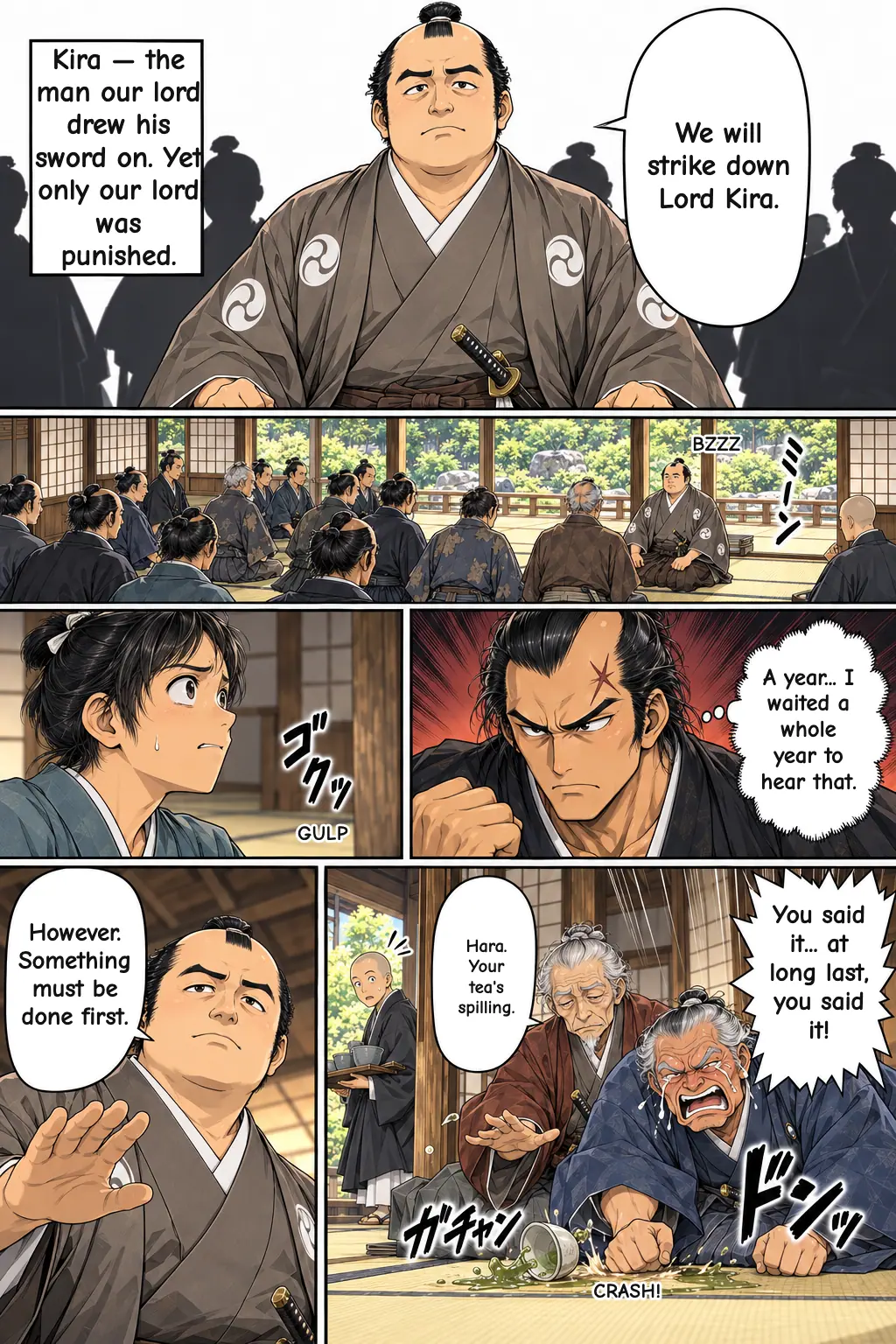
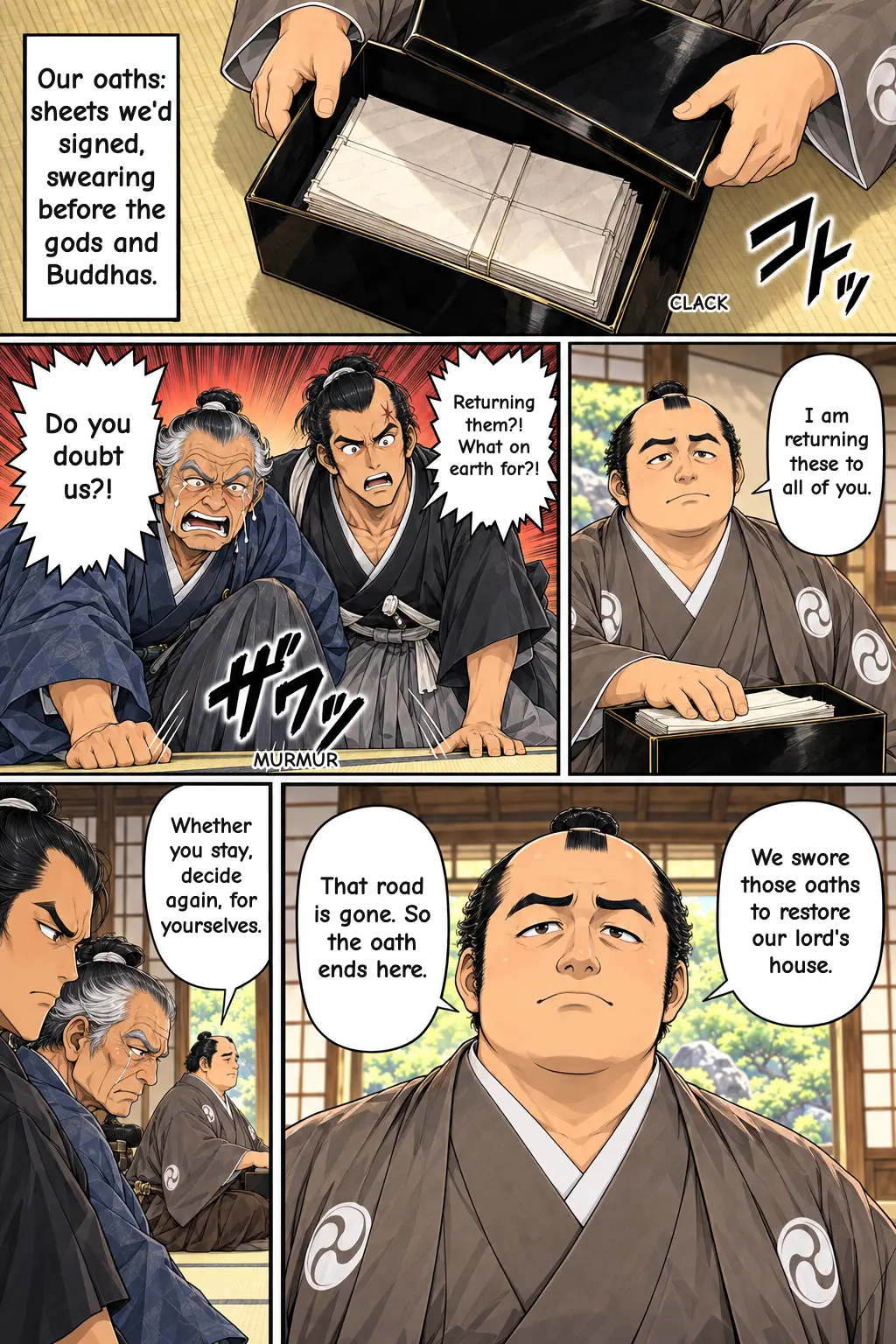
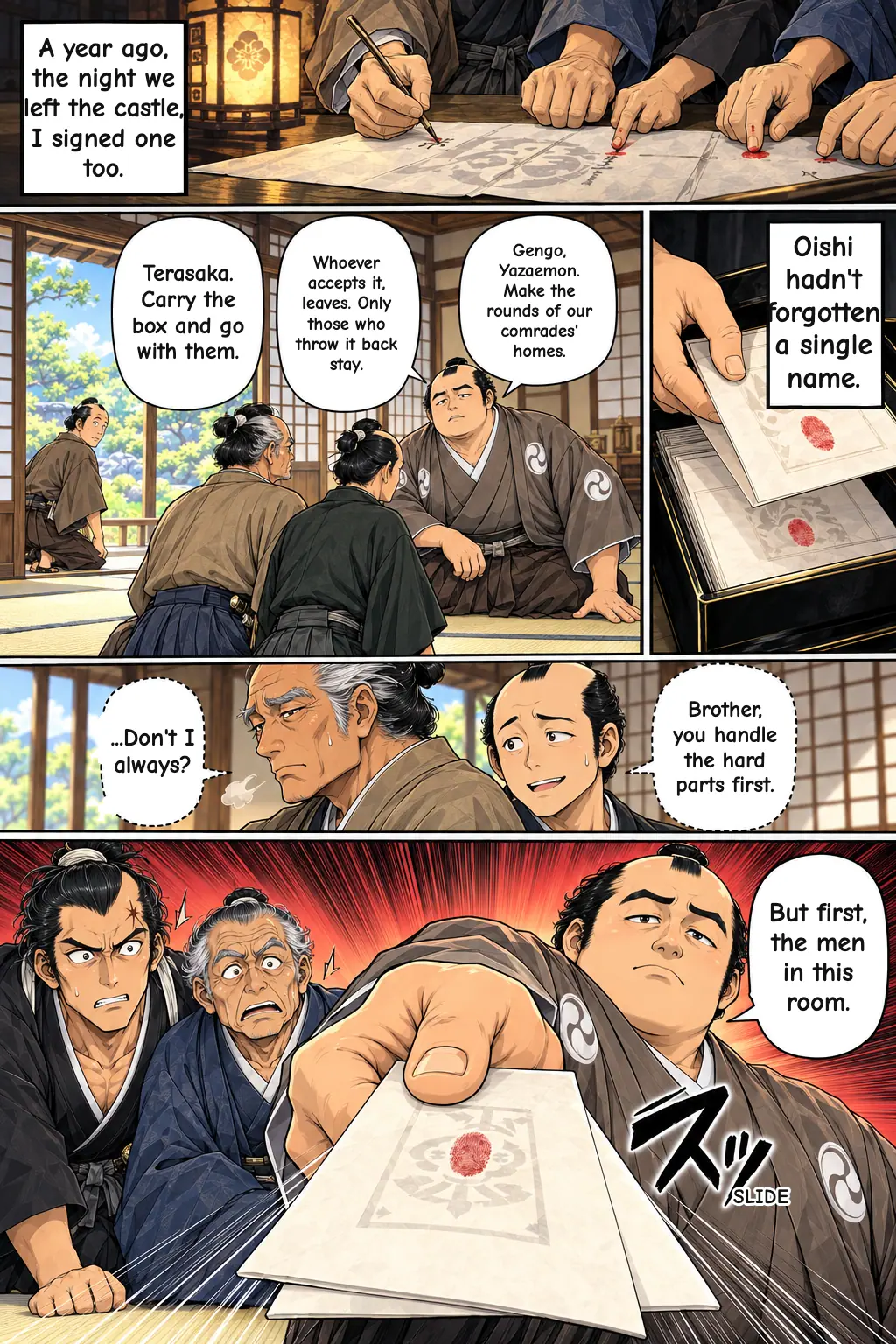
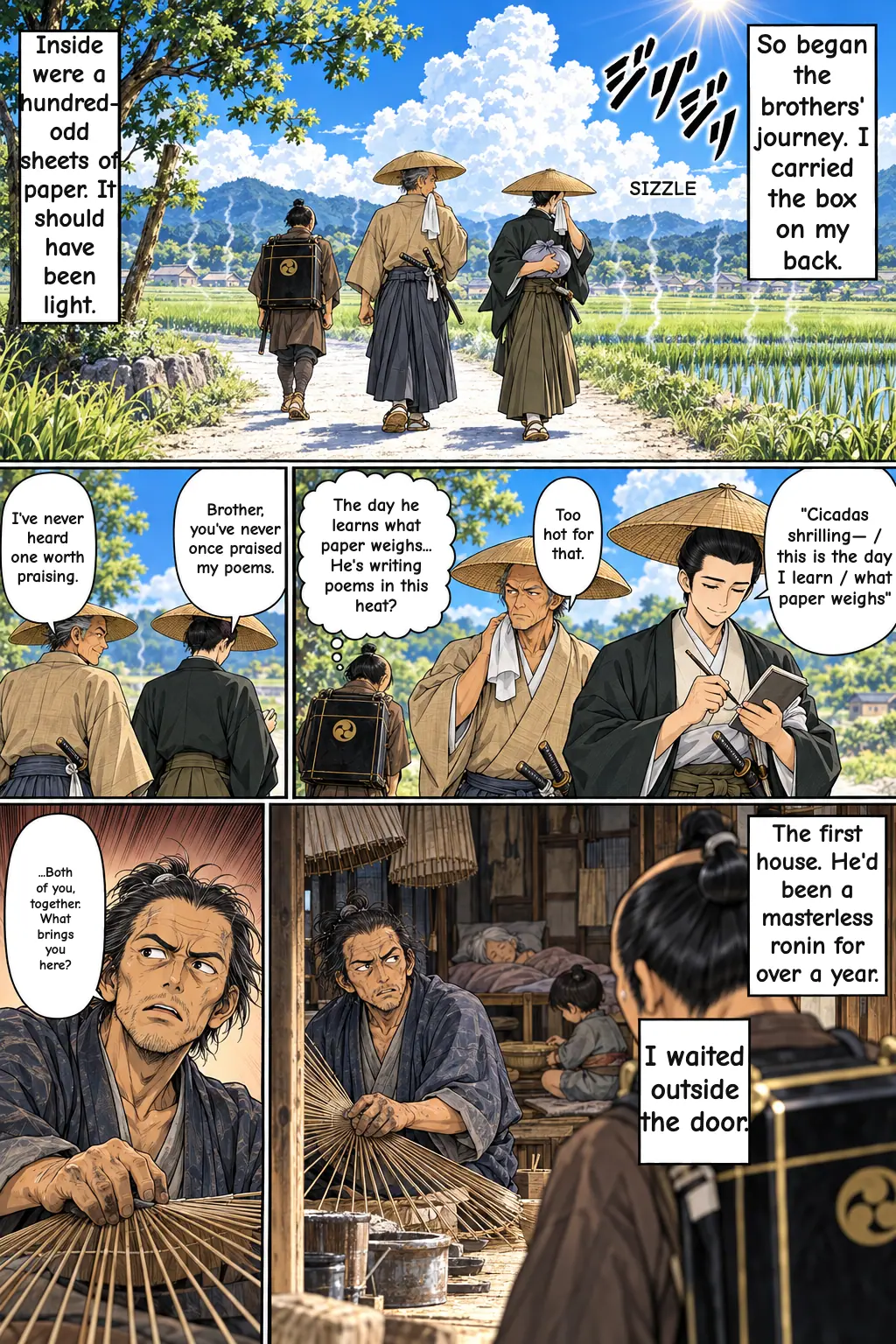
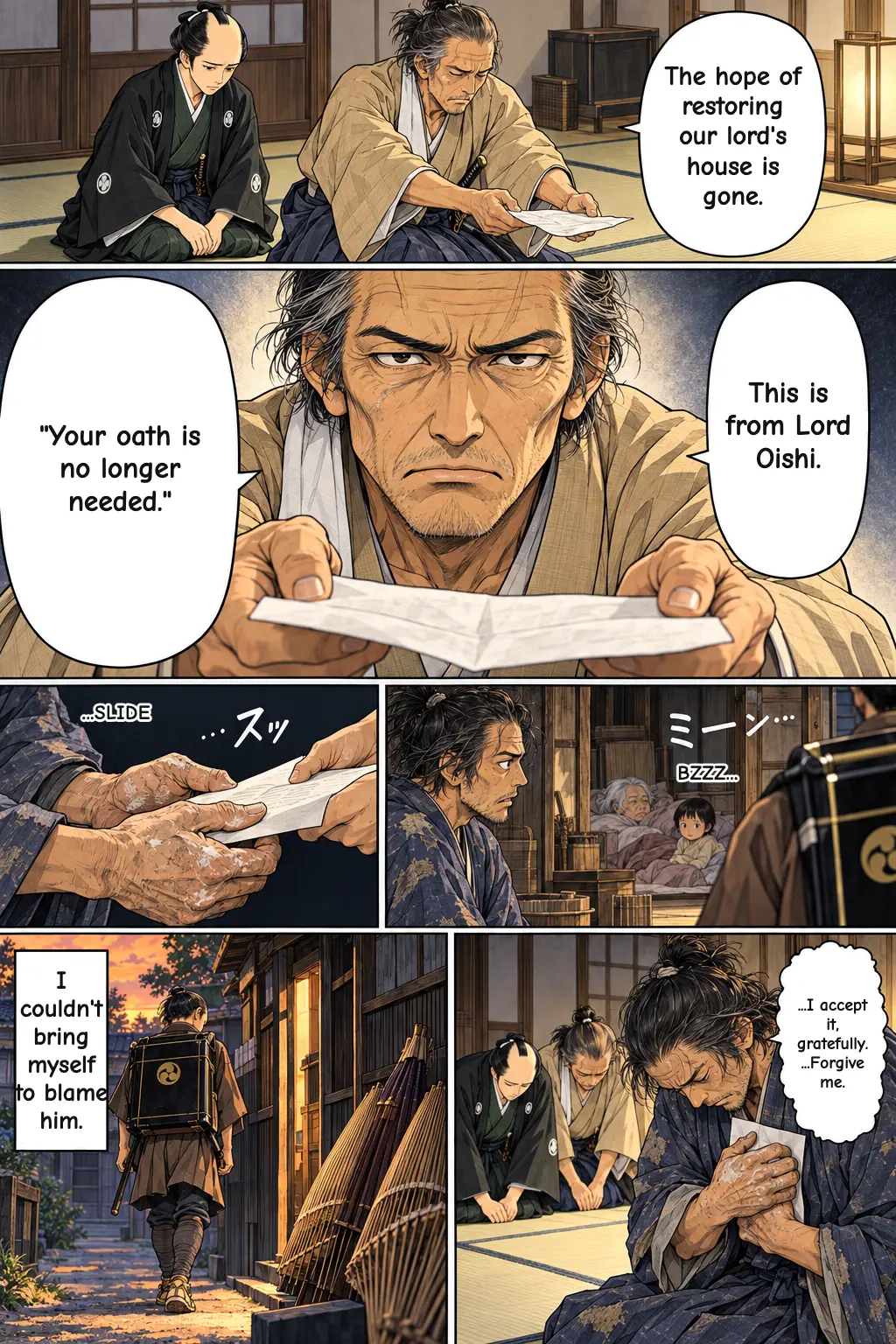
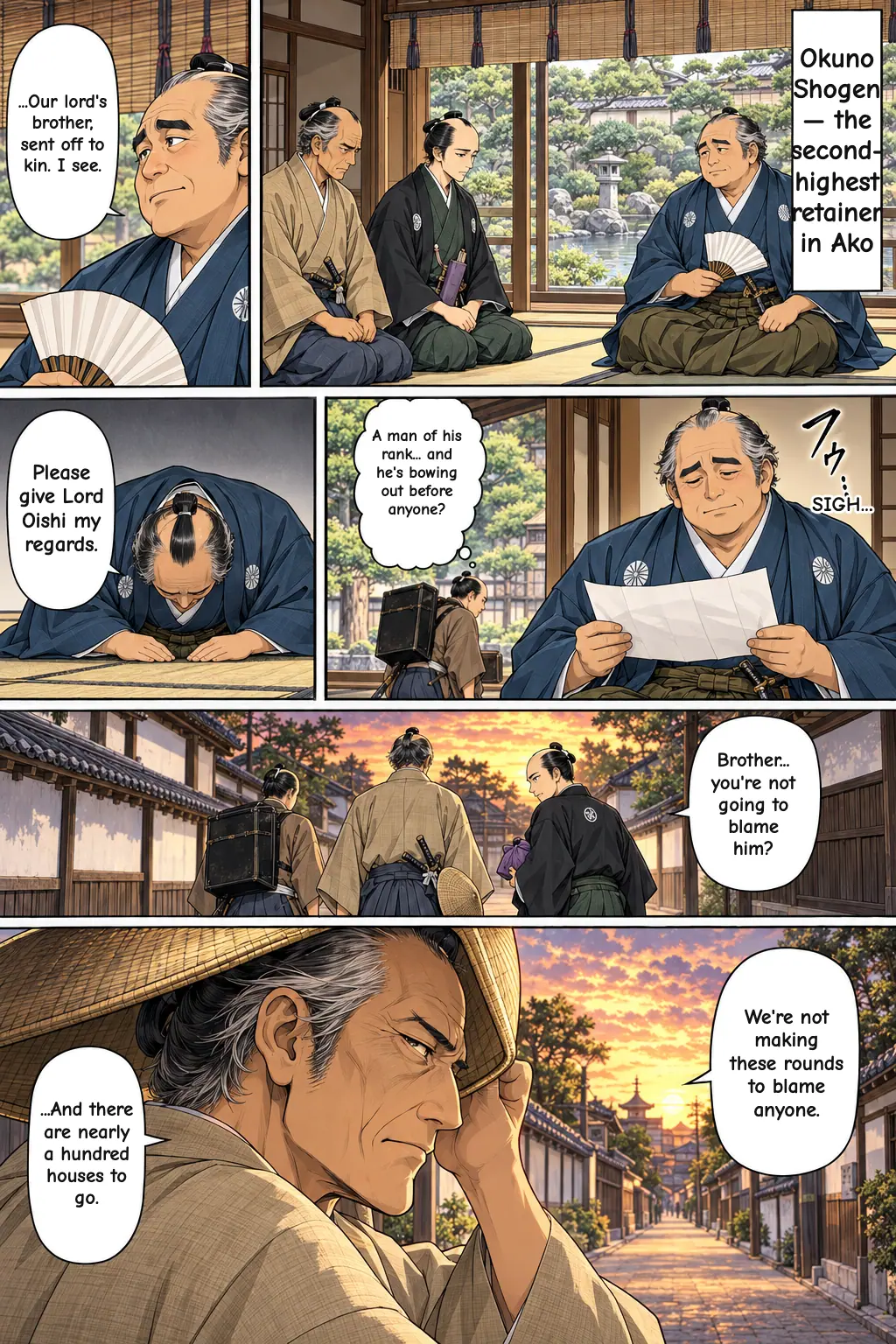
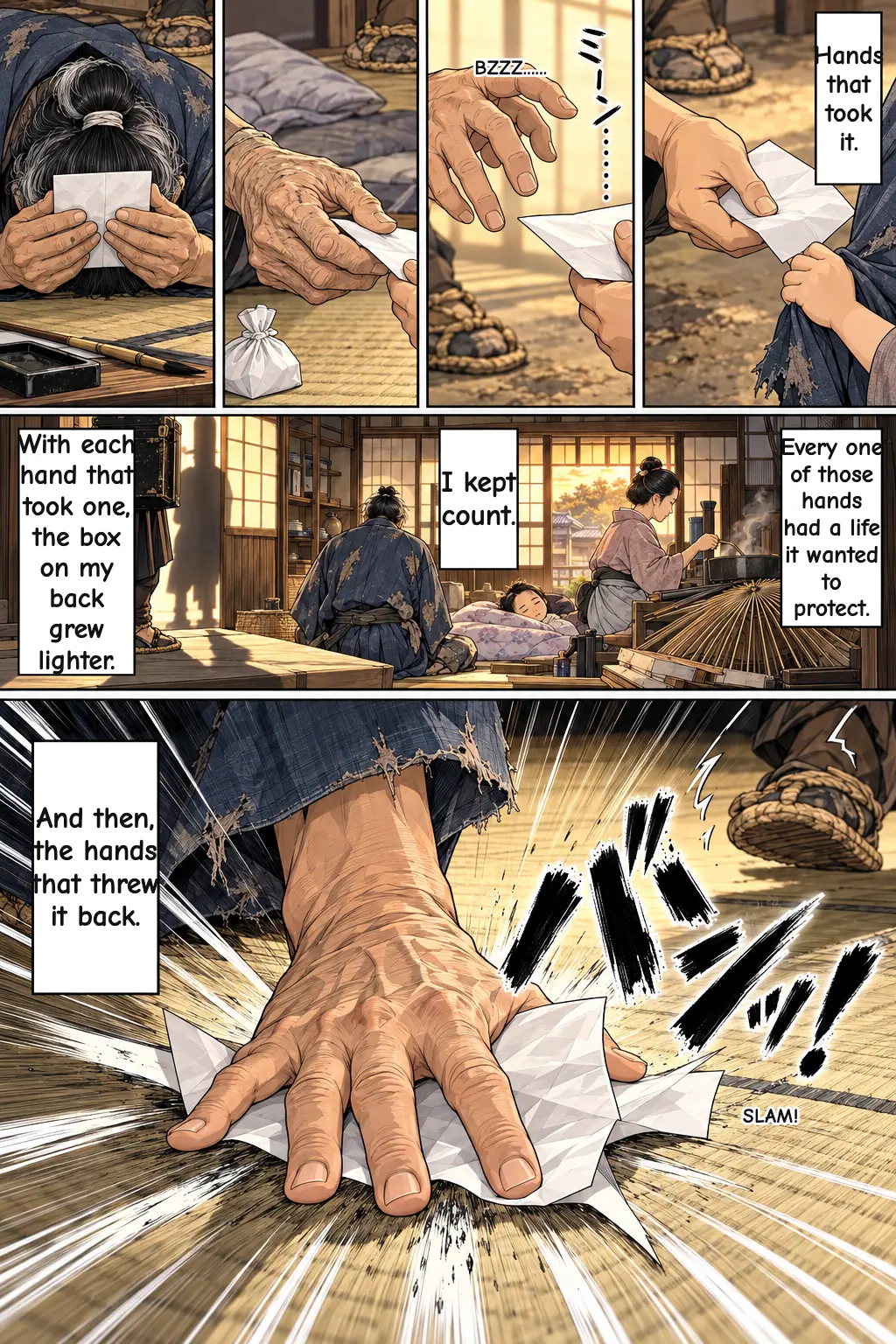
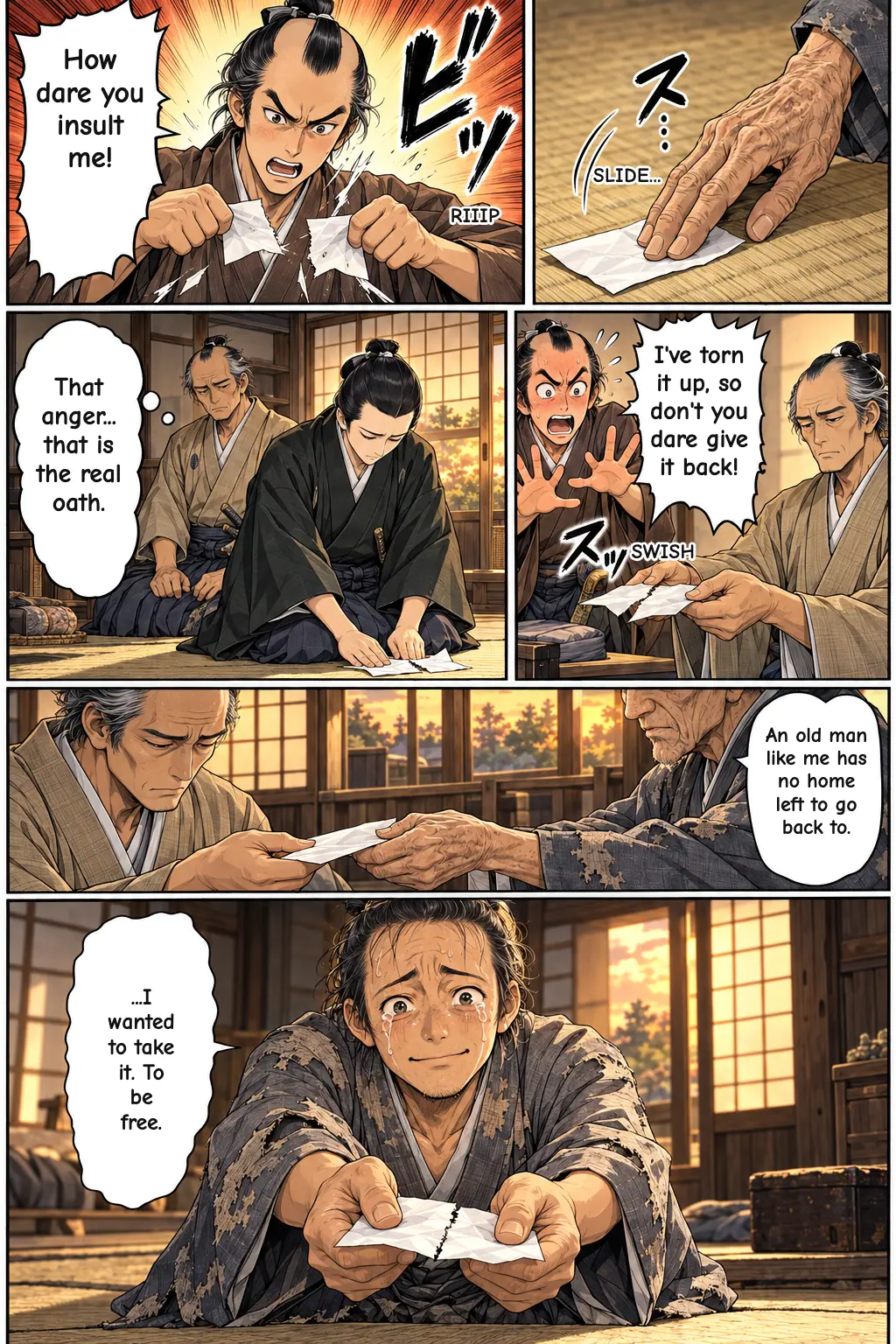
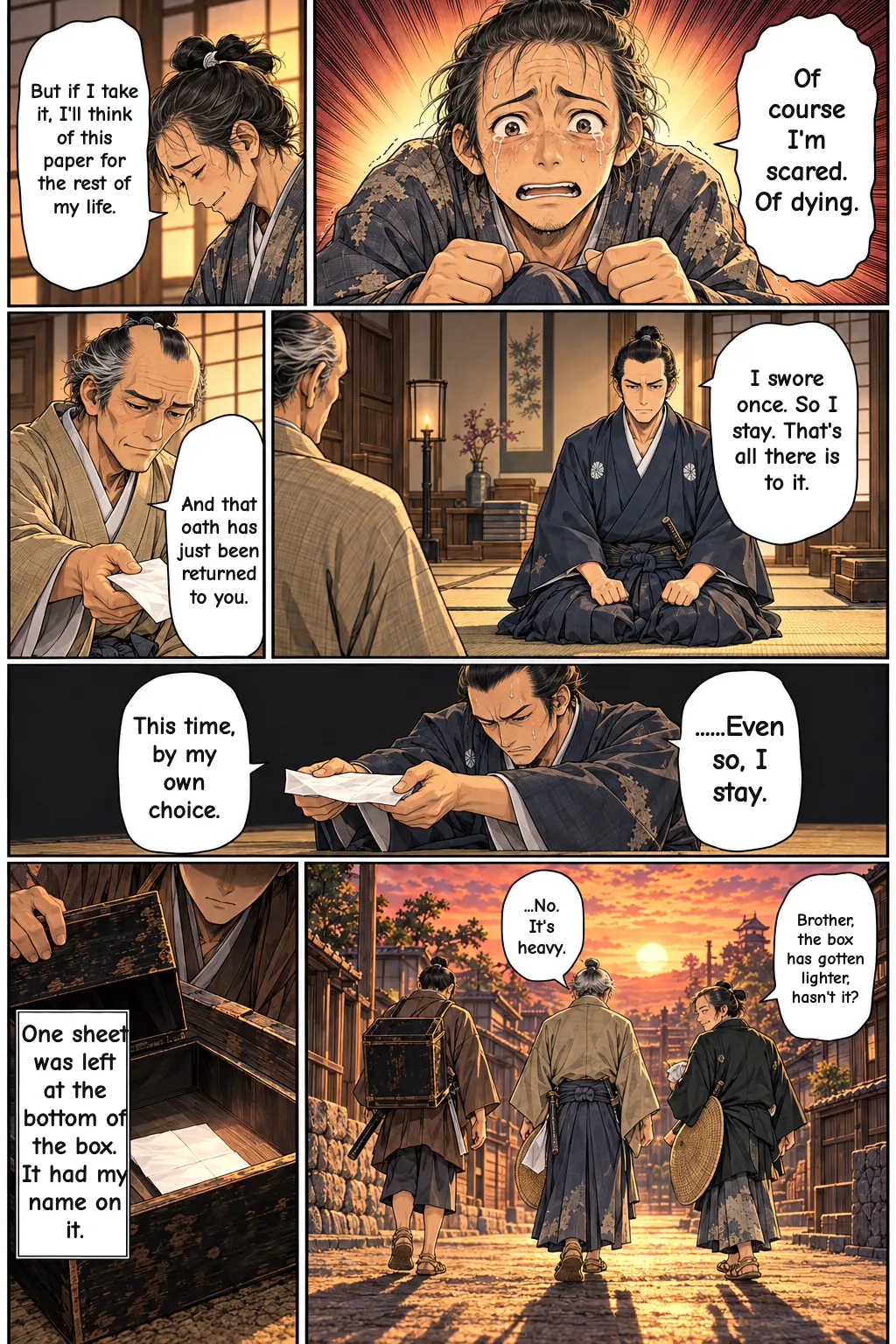
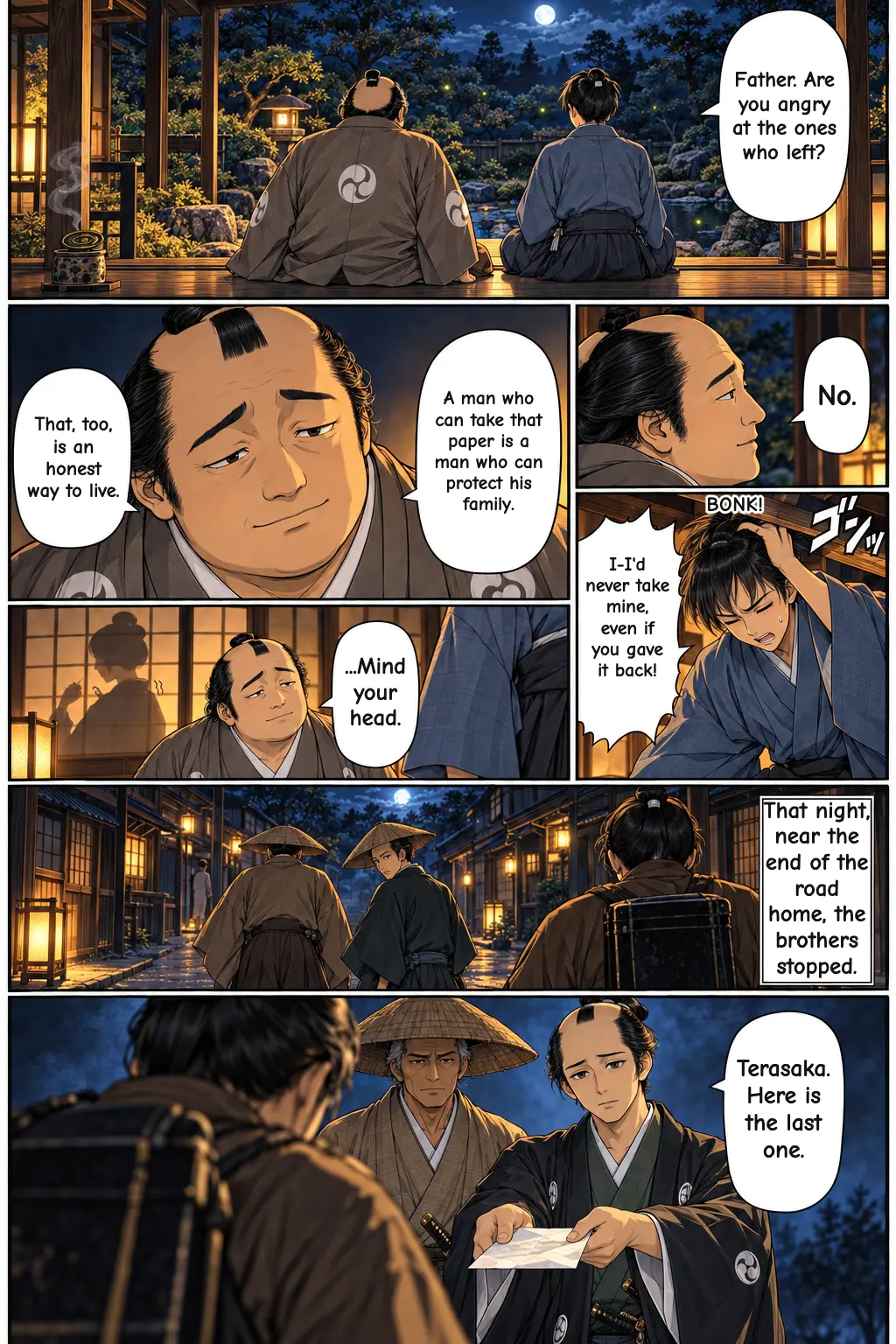
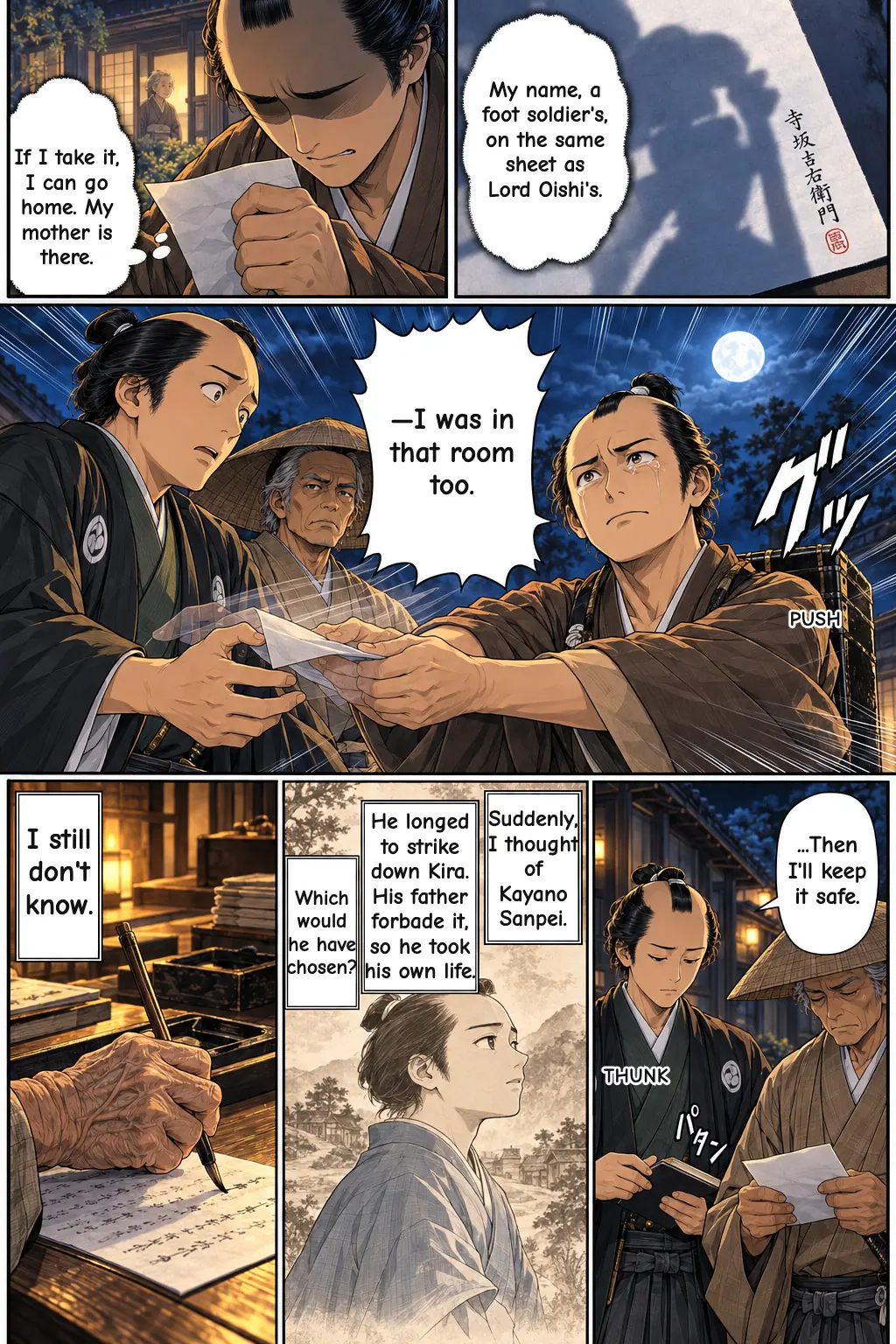
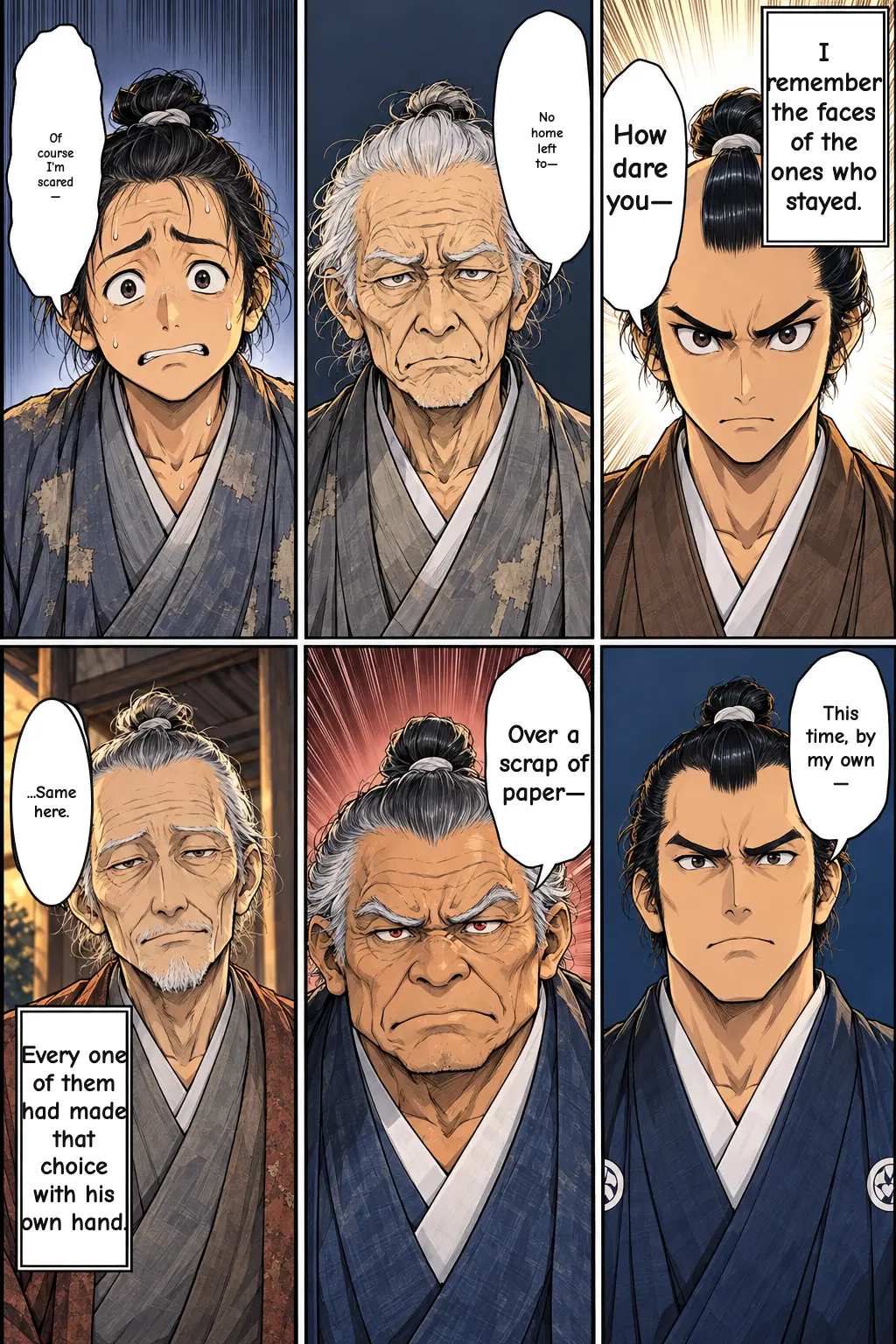
The last hope of restoring their late lord's house is gone, and in Maruyama, Kyoto, Oishi decides to strike down Lord Kira. First, though, he hands back the sworn oaths. Some comrades accept theirs and leave. Others throw them back and stay. Terasaka, the foot soldier who carried the box of oaths for the two messengers, is finally handed the last sheet: his own.
The 47 Ronin: Maruyama Conference and Returned Oaths Explained
What Happened in History: The Summer of 1702
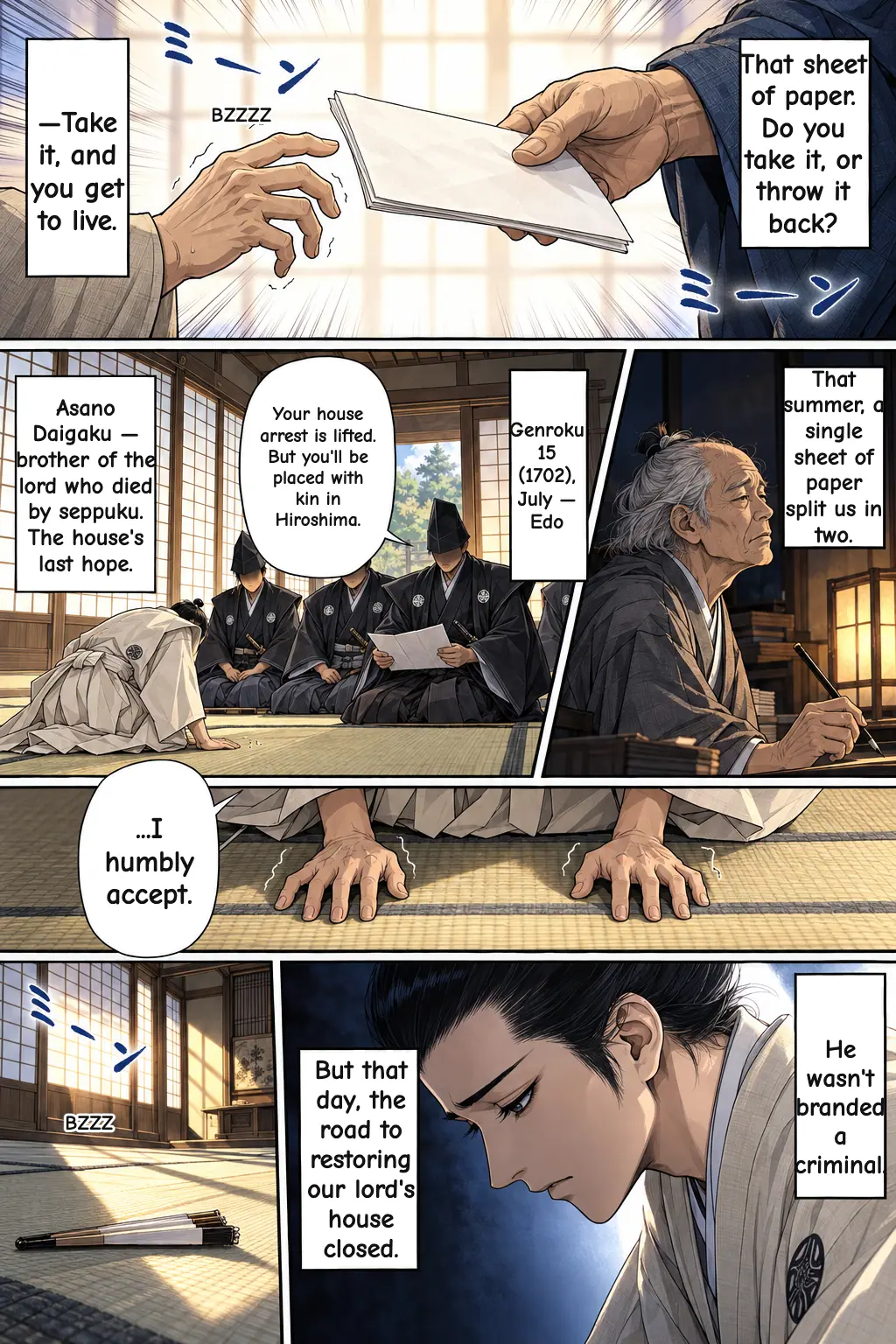
In 1701, Lord Asano Naganori of the Ako domain was ordered to commit seppuku after drawing his sword on Kira Yoshinaka (often called Lord Kira, a senior shogunate official) inside Edo Castle. His domain was taken away, and his samurai became ronin, masterless warriors. For more than a year afterward, their leader, Oishi Kuranosuke, pushed for one goal above all: getting the shogunate to let the Asano house continue under Lord Asano's younger brother, Asano Daigaku.
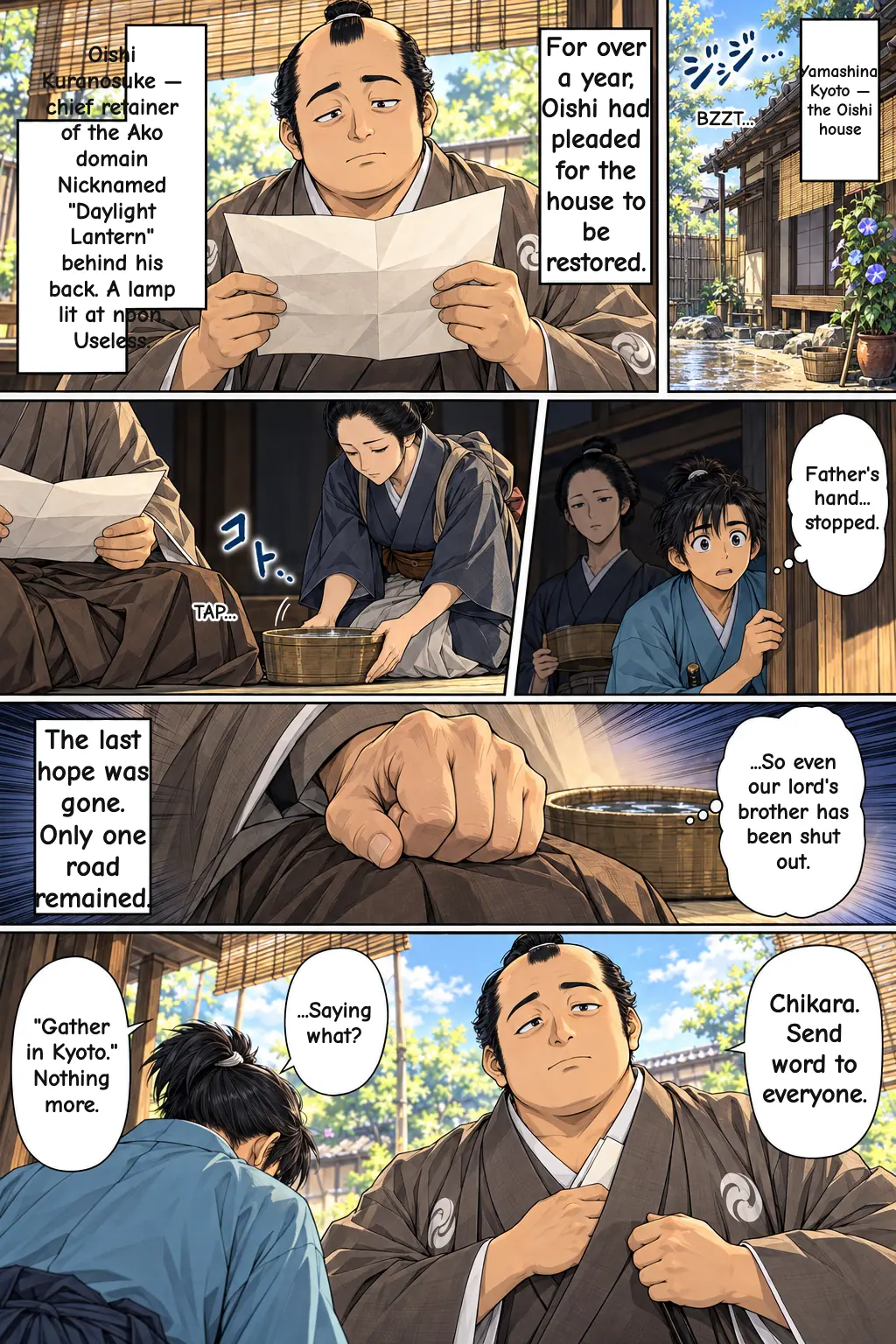
That hope ended in the seventh month of Genroku 15 (1702, by the old lunar calendar). The shogunate released Daigaku from house confinement but sent him to be looked after by the main branch of the Asano family in Hiroshima. That ruling meant the Ako house would not be restored. When the news reached Oishi in the Kyoto area, he wrote to his comrades about what would come next.
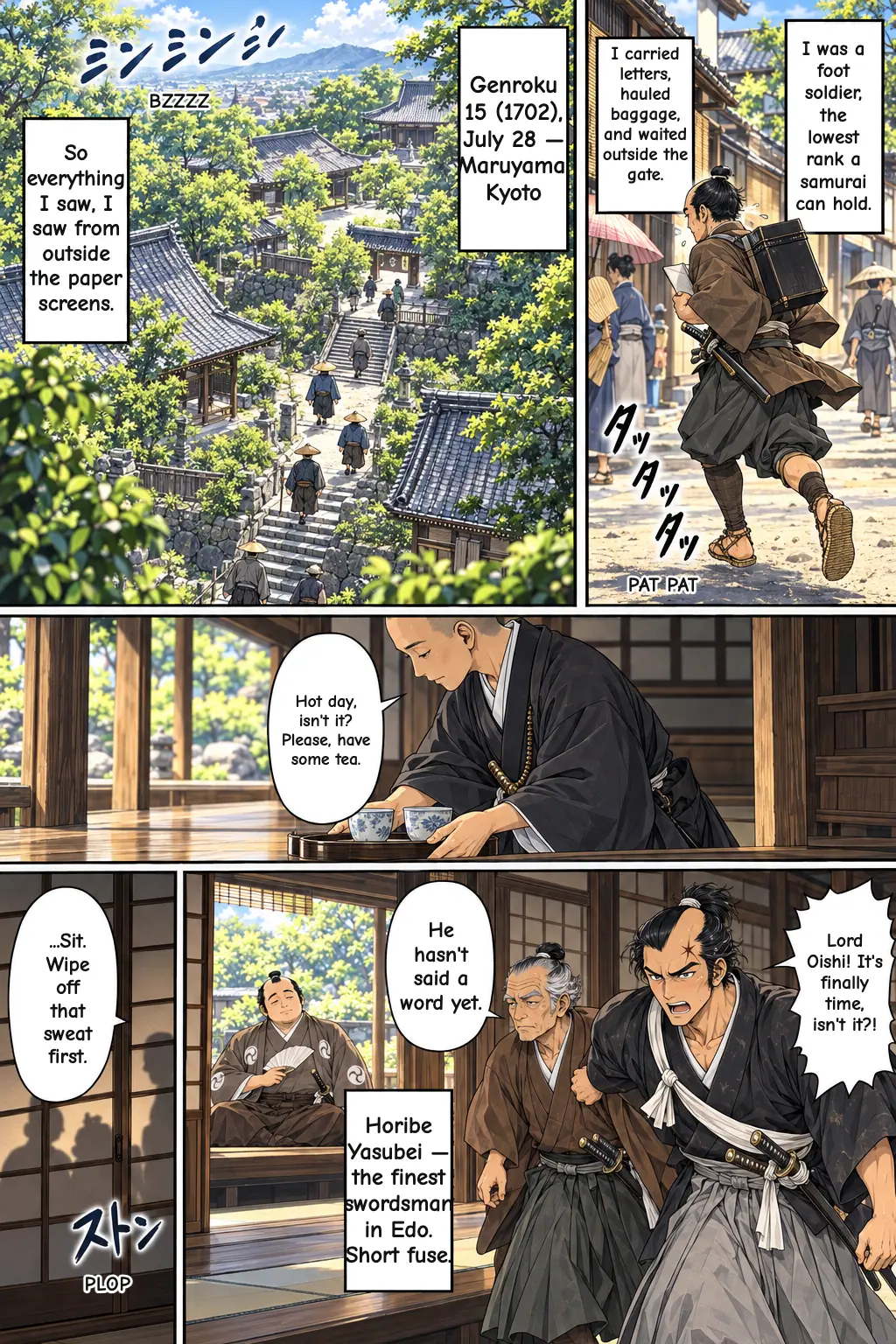
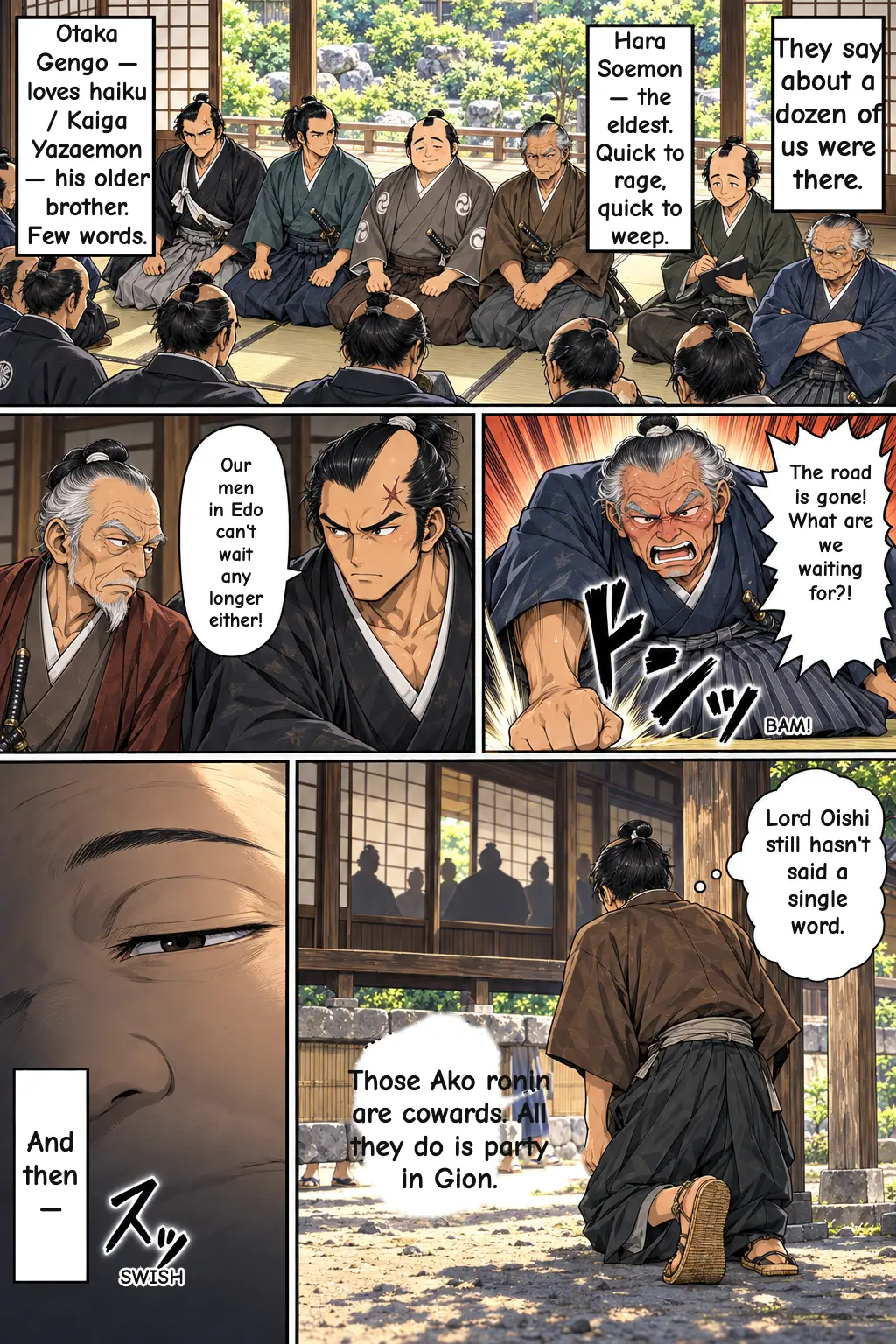
On the 28th day of that month, Oishi gathered his followers in Maruyama, in the eastern hills of Kyoto. This meeting is known as the Maruyama Conference. There, he formally decided that the group would strike down Lord Kira. Tradition places the meeting at a sub-temple of Anyo-ji temple and says that a dozen or so men attended, but the exact details differ between accounts.
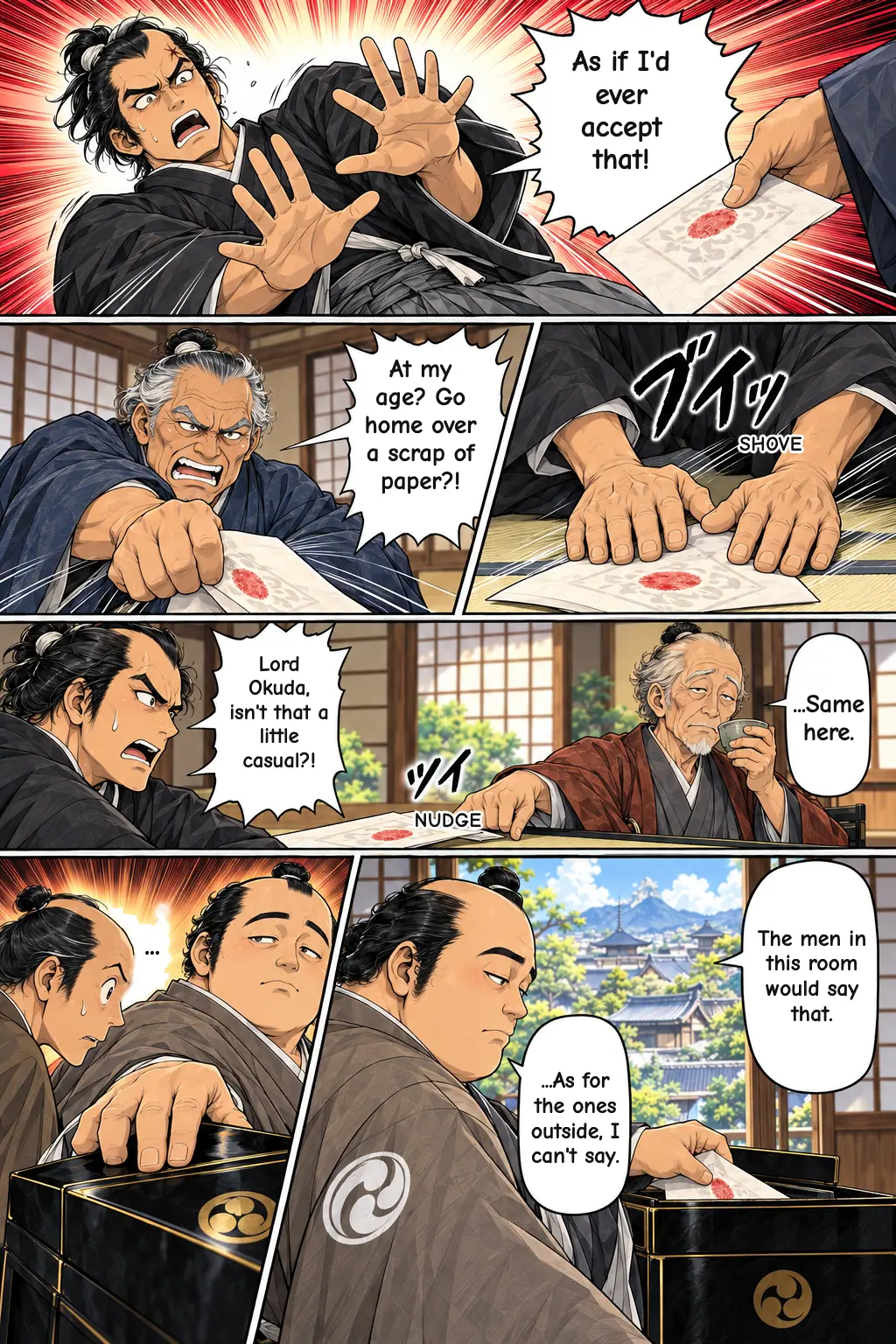
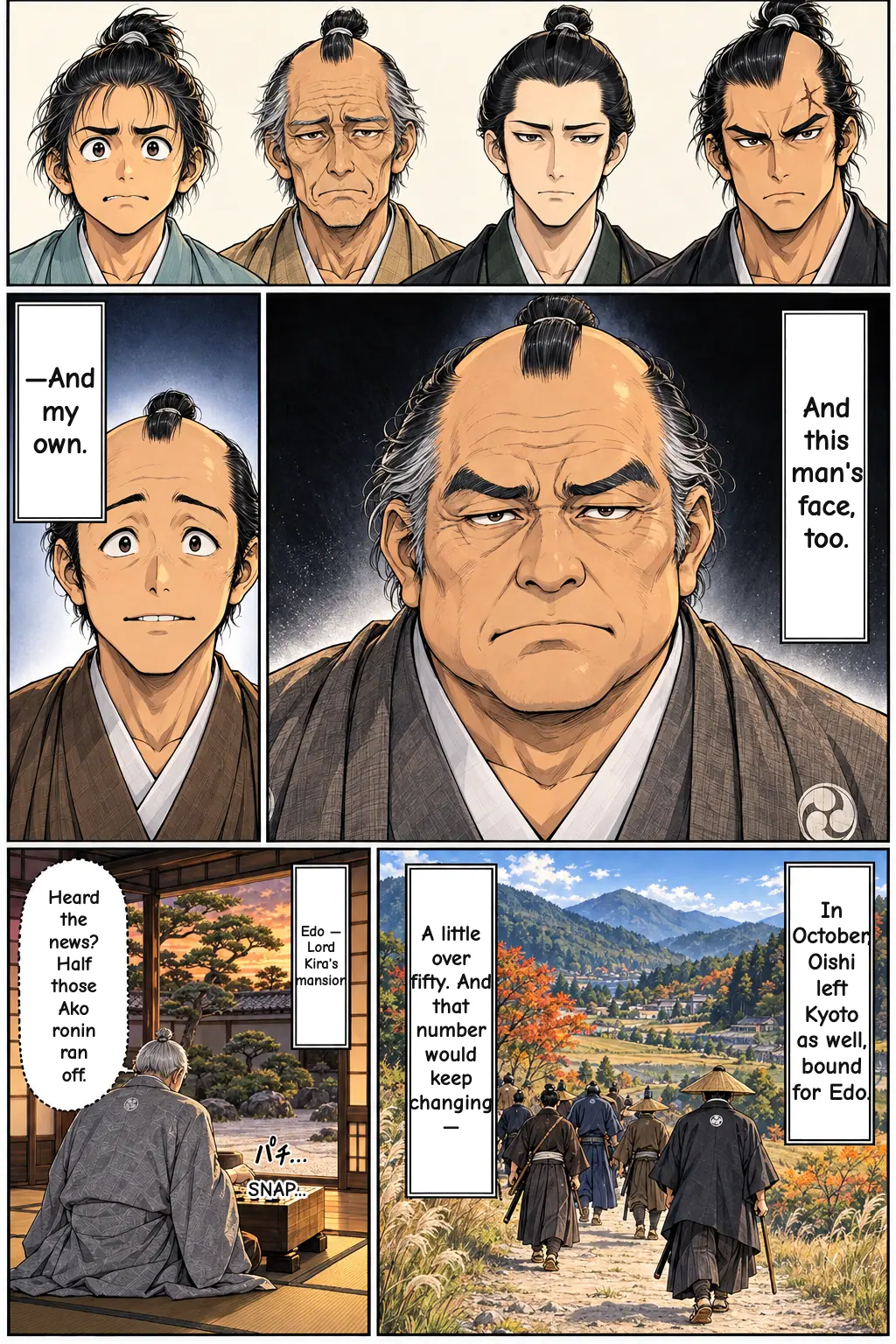
Oishi then did something unusual. He sent two men, Otaka Gengo and Kaiga Yazaemon, to visit the comrades and return the written oaths each man had signed earlier. They were told to say that since the hope of restoring the house was gone, the oaths were no longer needed. Anyone who simply accepted his oath back was treated as having left the league. Only those who refused it, often in anger, and insisted on going forward stayed as members. Over the following months the remaining men began moving to Edo, and Oishi himself left Kyoto for Edo in the tenth month.
Main Characters in This Episode
Oishi Kuranosuke is the former chief retainer of Ako and the leader of the league. In this episode, he changes direction from restoring the house to revenge, and he chooses a quiet but clever way to find out who is truly committed. Asano Daigaku, the late lord's brother, barely appears; he matters mostly as the news that closes the last peaceful path.
Otaka Gengo, also remembered as a haiku poet, and Kaiga Yazaemon, an older and practical man who was the younger brother of Yoshida Chuzaemon, carry out the return of the oaths. Horibe Yasubei, the leading hard-liner from Edo, had long pressed Oishi to act; the common account says he came to Kyoto for the conference. Terasaka Kichiemon, a low-ranking foot soldier (ashigaru) who served Yoshida Chuzaemon, later wrote a record of the group's actions, which is one of the sources for this period.
Why the Returned Oaths Mattered (Historical and Cultural Background)
The oaths were shinmon, written pledges sworn before the gods. In samurai society, such a document was a serious bond. By handing them back, Oishi gave every man an honorable way out: no one had to say "I quit." A man could just accept the paper and go home to his family and his need to make a living.
At the same time, the method revealed real commitment. Someone who refused to take his oath back was showing, with no outside pressure, that he was ready to die. This was important because the plan was extremely risky, and a single weak or careless member could expose it to Kira's side or to the shogunate.
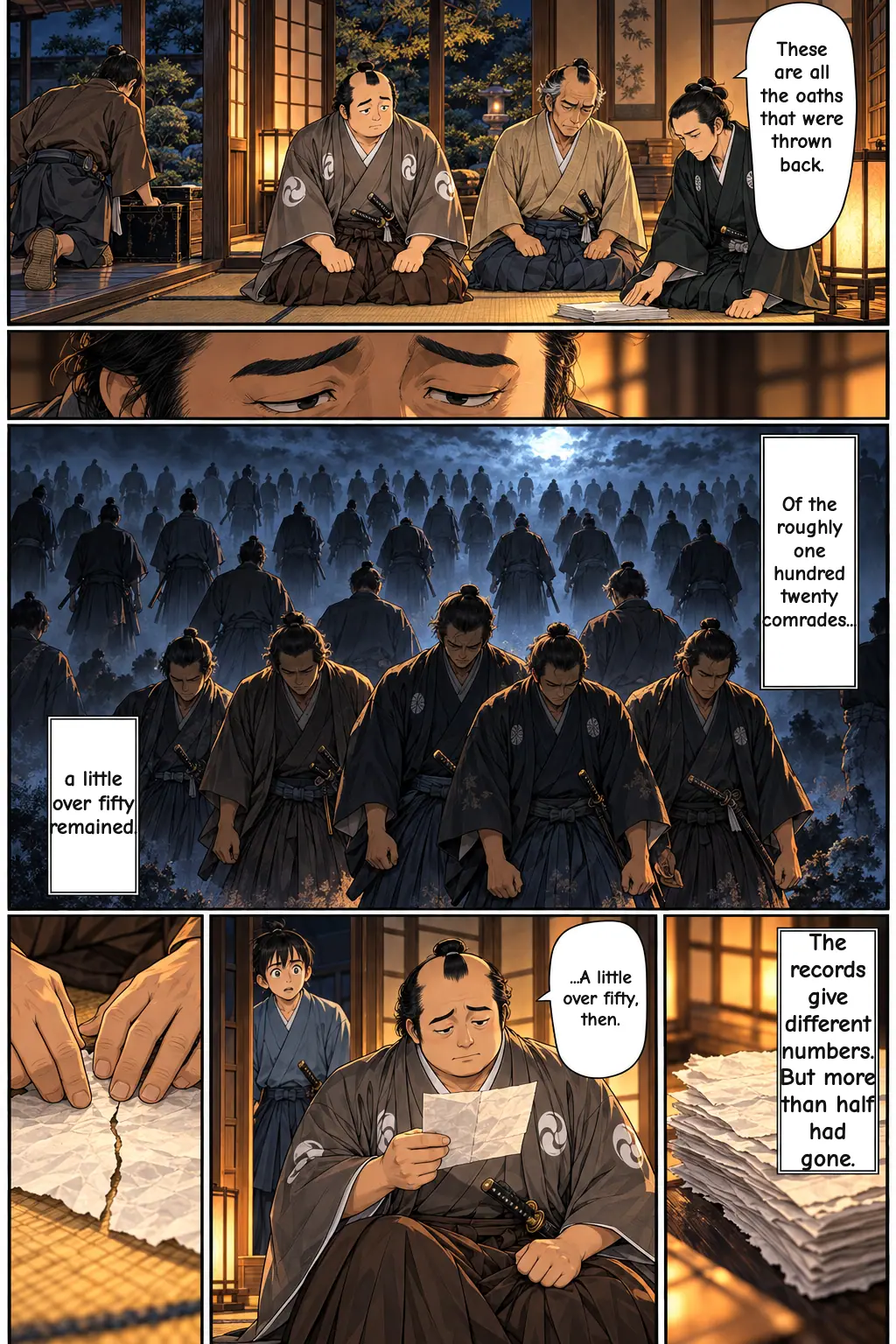
The result was a sharp drop in numbers. The league had included around 120 men, and after this sorting only about fifty or so remained, though the figures differ depending on the source and how people are counted. According to the traditional account, even some senior retainers and relatives of Oishi left at this stage. The episode shows a key theme of the Chushingura story: loyalty was not automatic, but a choice each person had to make for himself.
What the Manga Changes and Adds
The historical records tell us that the oaths were returned and who stayed, but they say little about each man's feelings. The manga fills this gap with its own scenes: the faces and words of each ronin as he receives his oath, whether he feels relief, anger, or tears, and the moment some throw the paper back. Oishi's exact words at the Maruyama Conference, the seating, and the mood of the room are also the manga's creation, as is the dramatic way the news about Daigaku reaches him.
The trips of Otaka and Kaiga from house to house, along with the reactions of family members, are imagined for the story. So is the late-summer atmosphere of Kyoto around the Bon festival season. The manga also chooses not to blame the men who left, showing instead that many left because of their families and daily lives.
Terasaka's role in this episode is mostly the manga's invention. The history confirms that he was a low-ranking member and a recorder of events, but the scene where he carries the box of oaths for the two messengers and finally receives his own sheet last is a dramatic device. The closing panels showing those who stayed, one face at a time, are also the manga's own way of telling the story.
Where to Read It
If you want to see how this turning point plays out, from the dashed hopes in Edo to the quiet test of loyalty in Kyoto, Episode 7 of THE 47 RONIN: Chushingura – A Vow in the Winter Snow is available to read on Manga Portal. All episodes are free and you don't need to sign up, so you can begin at the start of the story or go straight to the Maruyama Conference and see who decides to stay.
Characters in this episode
Oishi Kuranosuke
Former chief retainer of Ako and leader of the ronin, who decides on revenge at Maruyama and orders the oaths returned.
Asano Daigaku
Younger brother of the late Lord Asano, whose transfer to the Hiroshima main family ended hopes of restoring the house.
Otaka Gengo
A ronin and haiku poet who went from comrade to comrade returning the sworn oaths.
Kaiga Yazaemon
An older, practical ronin and Yoshida Chuzaemon's younger brother, who returned the oaths together with Otaka Gengo.
Horibe Yasubei
The leading hard-liner from Edo who pushed for an early attack and is traditionally said to have come to Kyoto for the conference.
Terasaka Kichiemon
A low-ranking foot soldier who served Yoshida Chuzaemon and later wrote a record of the group's actions.
FAQ
What was the Maruyama Conference in the 47 Ronin story?
It was a meeting held on the 28th day of the seventh month of 1702 in Maruyama, Kyoto. There, Oishi Kuranosuke formally decided that the Ako ronin would kill Lord Kira. It marked the shift from trying to restore the Asano house to planning revenge.
Why did the 47 Ronin give up on restoring the Asano family?
In 1702 the shogunate sent Asano Daigaku, the late lord's brother, to be looked after by the main Asano family in Hiroshima. That meant the Ako branch would not be revived under him, so the peaceful path the ronin had been following was closed.
Why did Oishi return the oaths to his followers?
Returning the sworn oaths gave every man an honorable chance to leave quietly. Those who accepted them left the league, while those who refused proved they were truly ready to join the attack. This helped Oishi keep only reliable members for a dangerous secret plan.
How many ronin were there before the oaths were returned?
The league is usually said to have had around 120 members, and after the oaths were returned only about fifty or so remained. The exact numbers differ by source and by how members are counted.
Is Terasaka Kichiemon a real person?
Yes. He was a foot soldier who served Yoshida Chuzaemon and later wrote a record of the group's actions. However, his scenes in this manga episode, such as carrying the box of oaths, are created for the story.