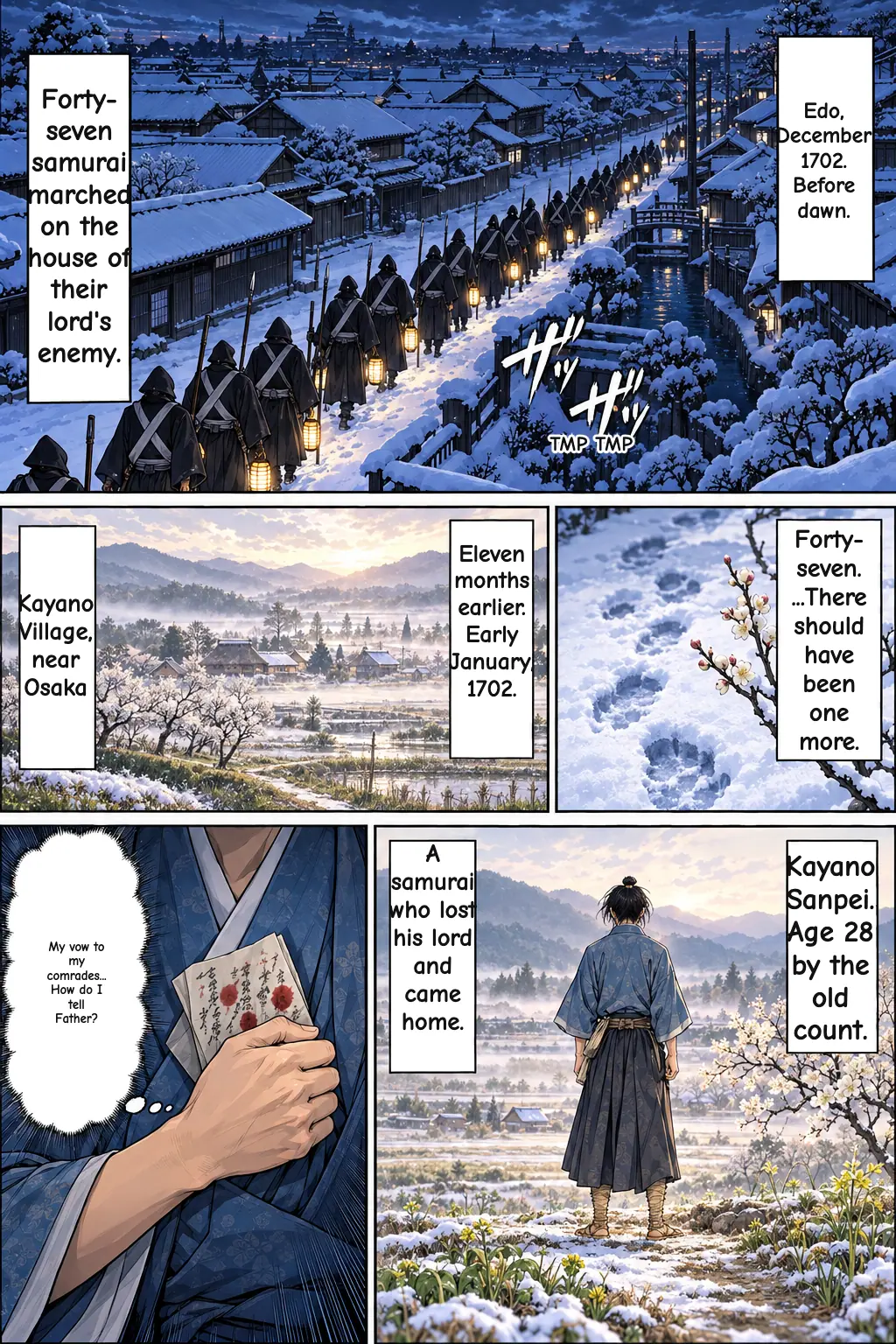
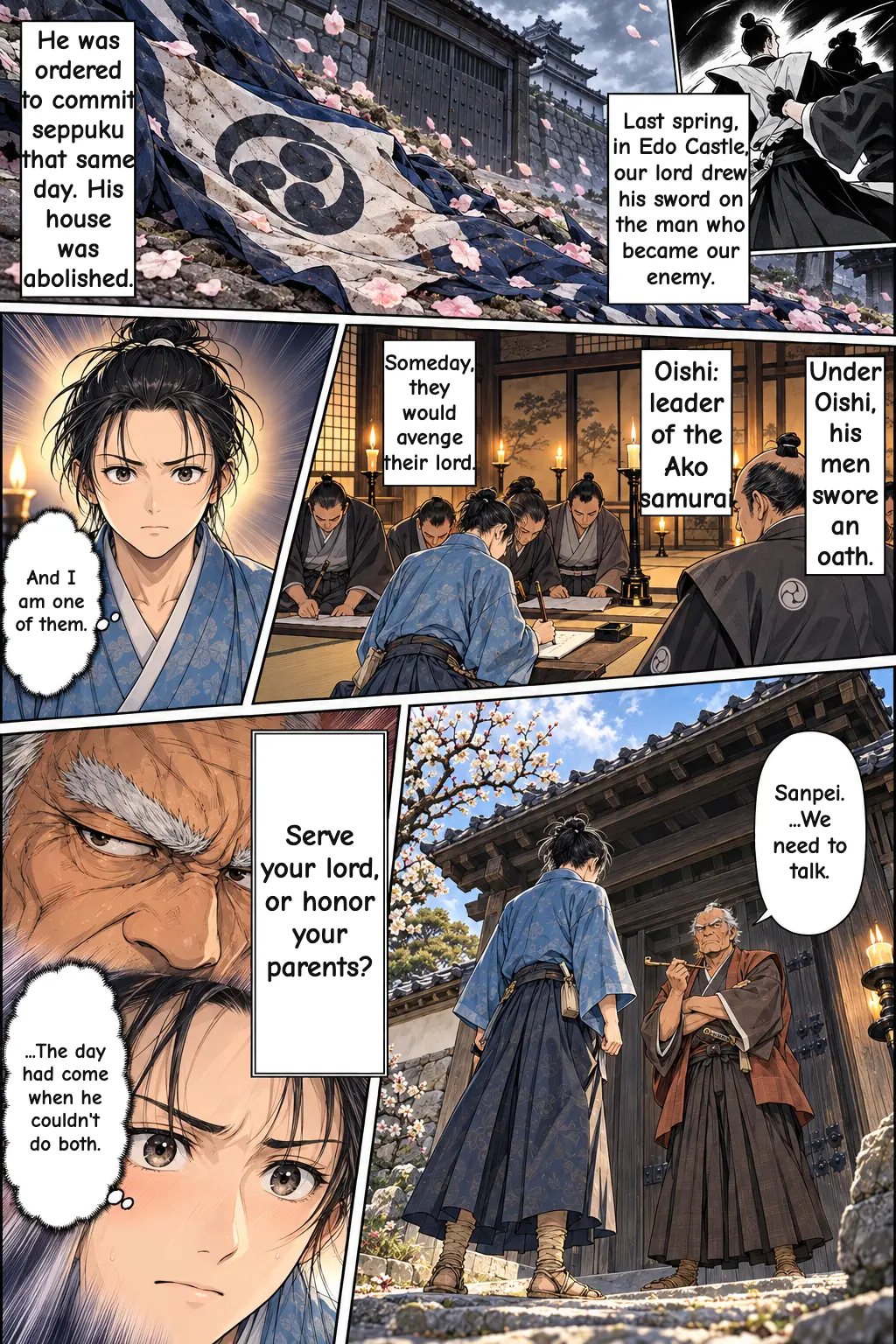
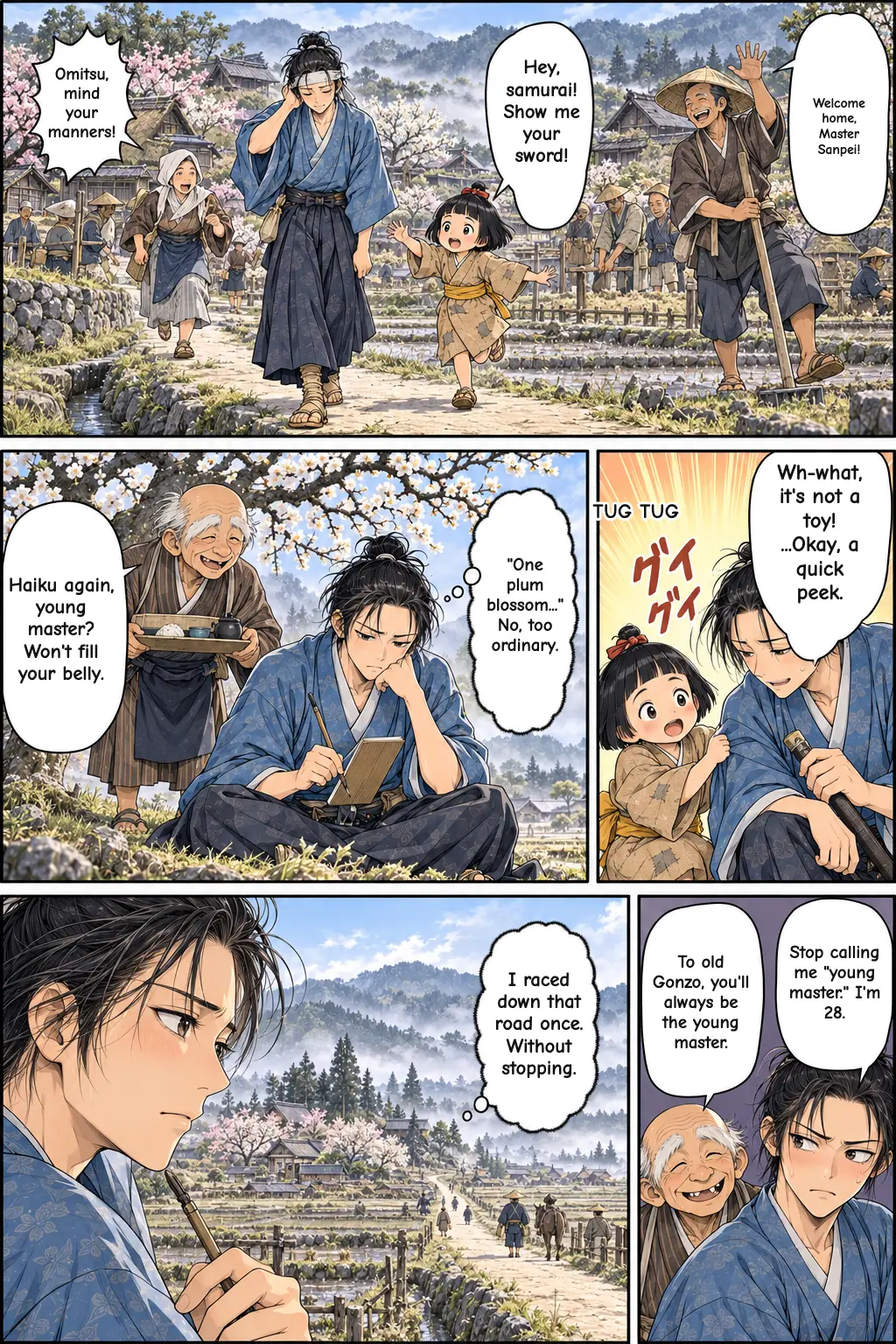
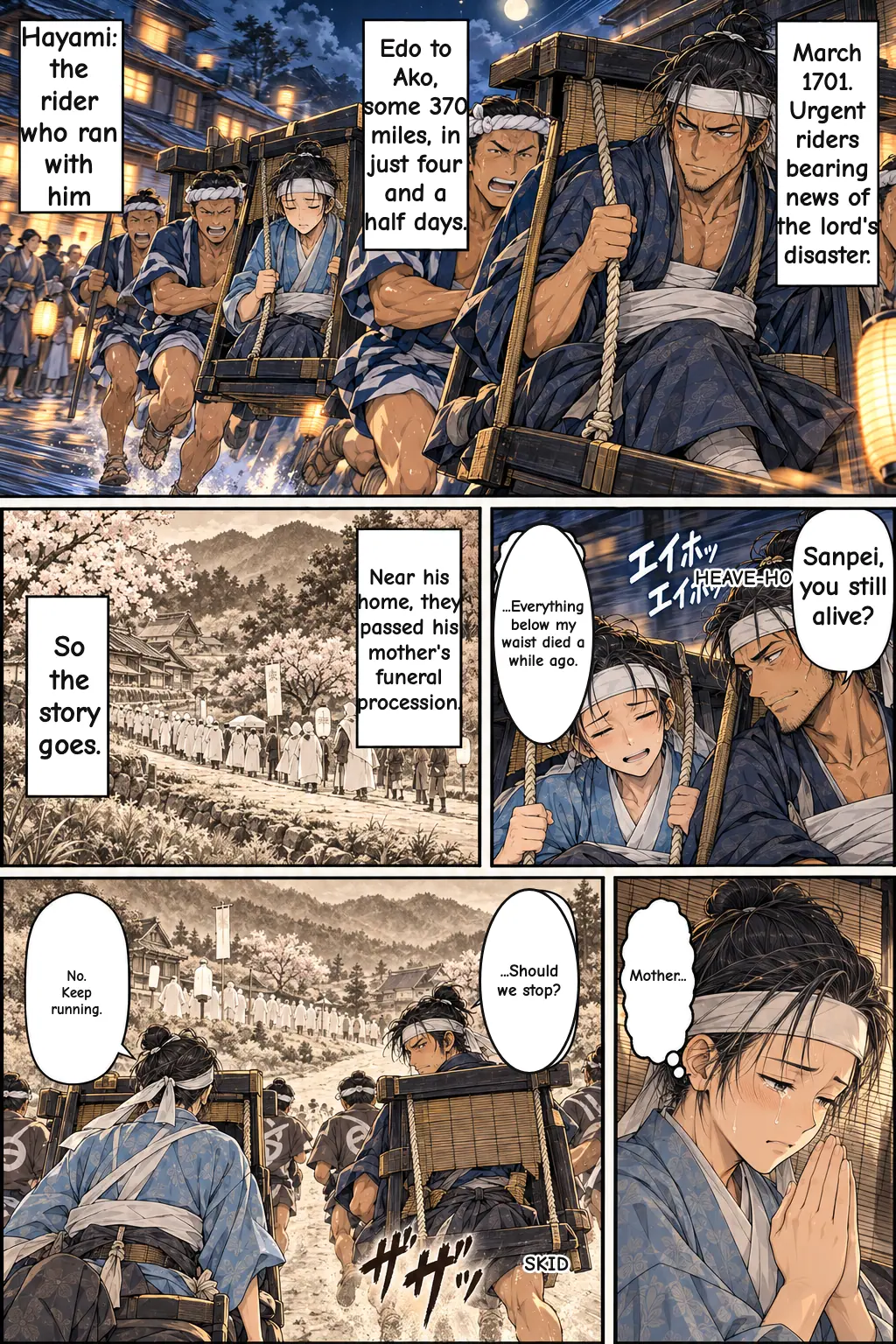
Episode 6The 48th Ronin Who Should Have Been ThereKayano Sanpei
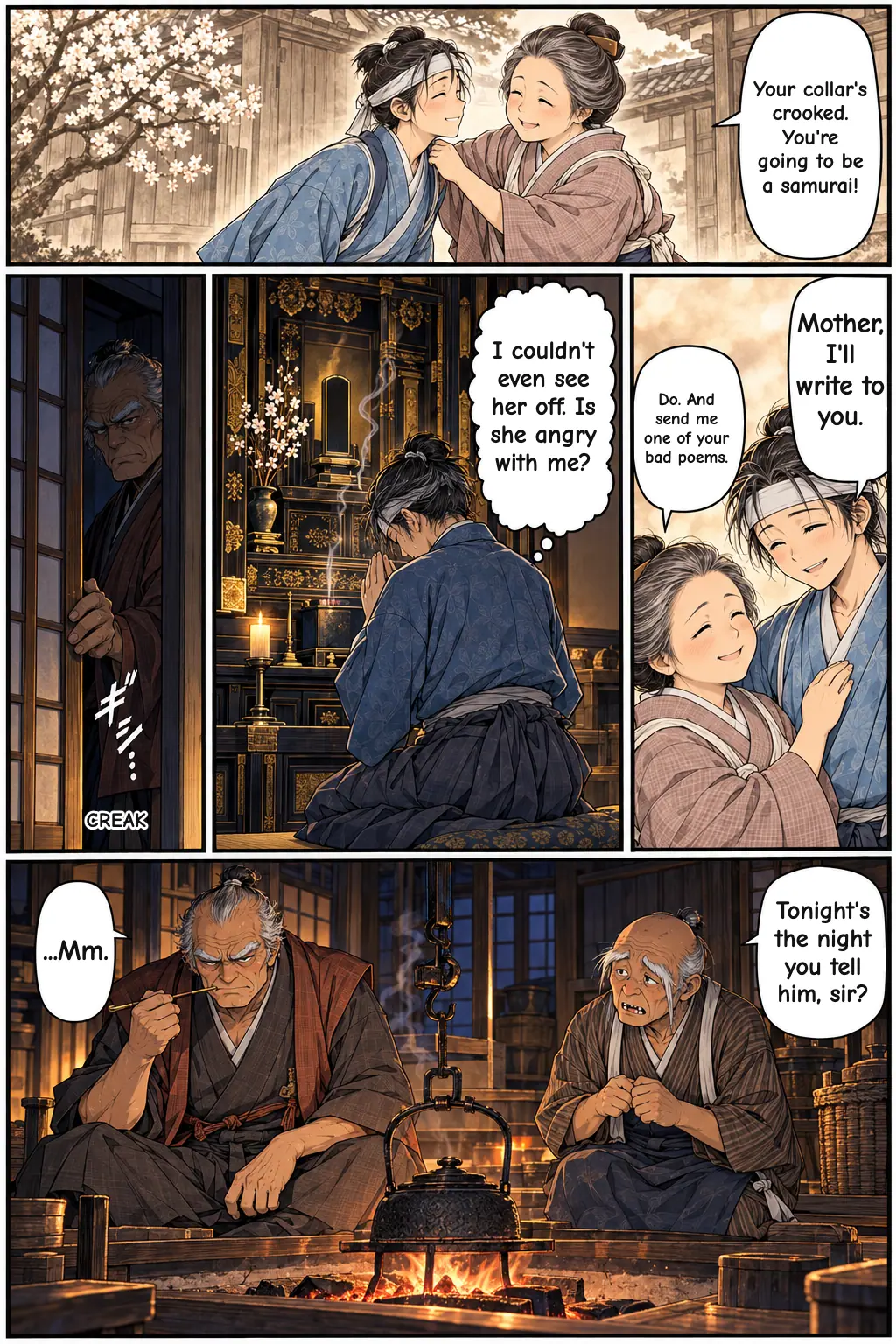
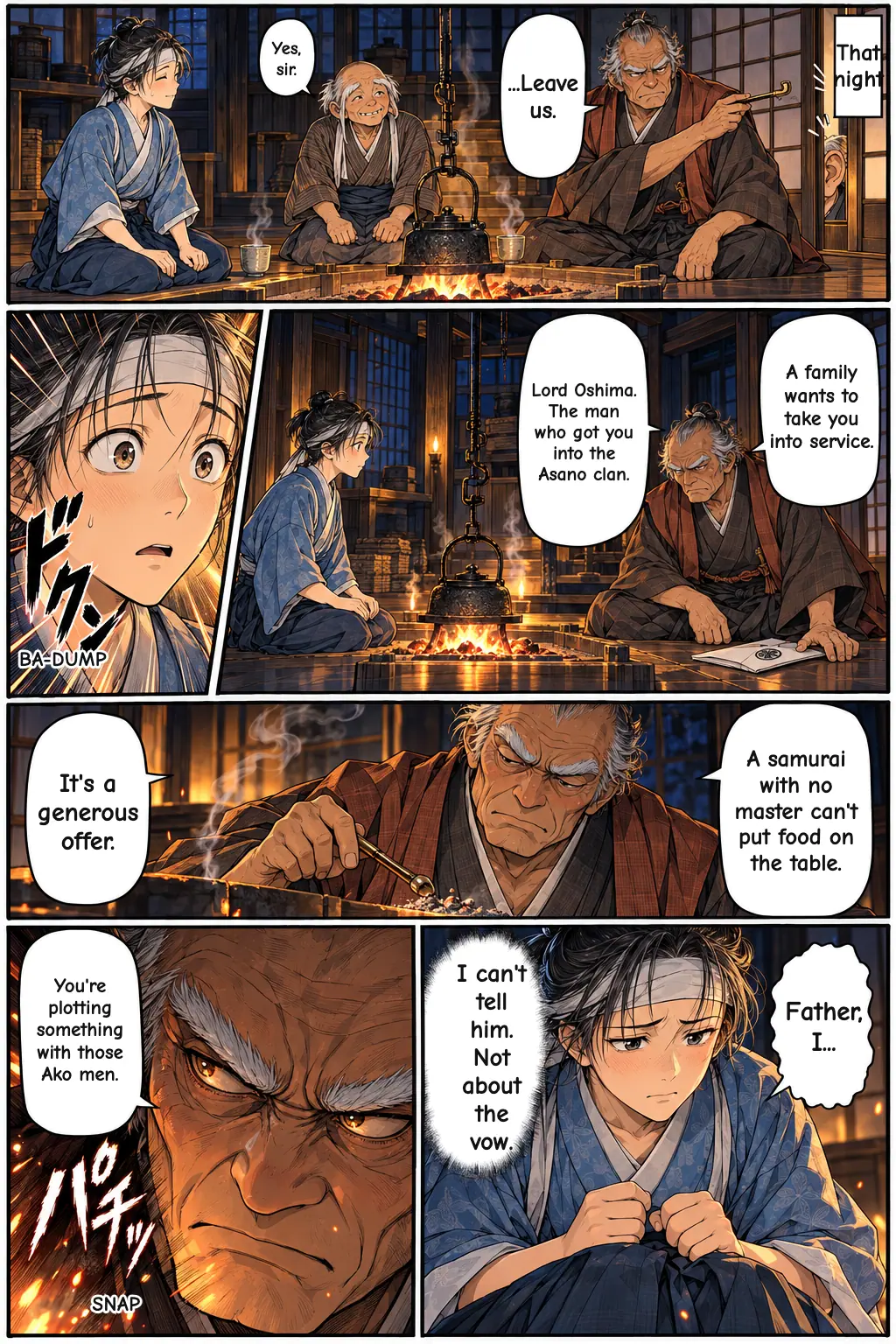
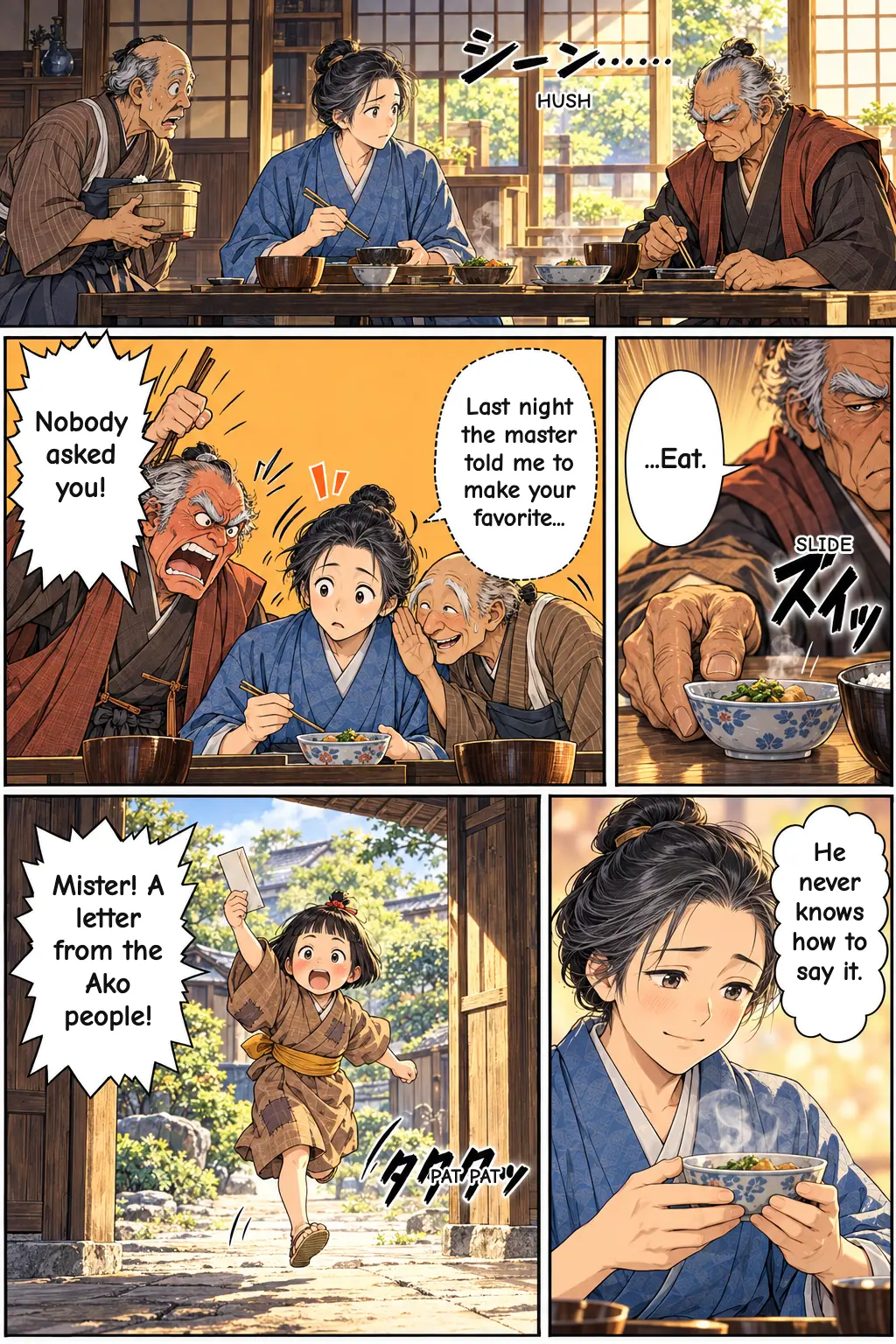
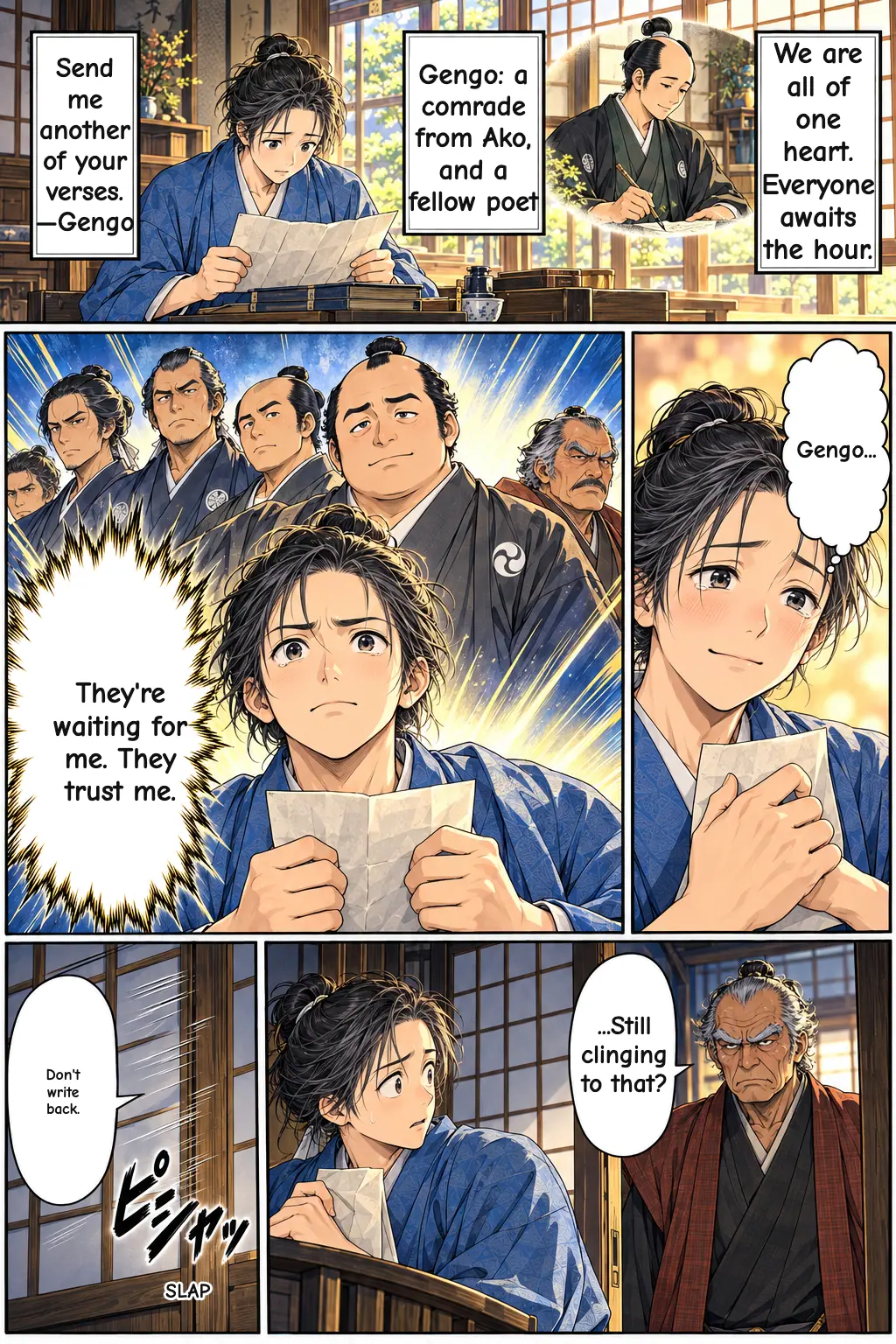
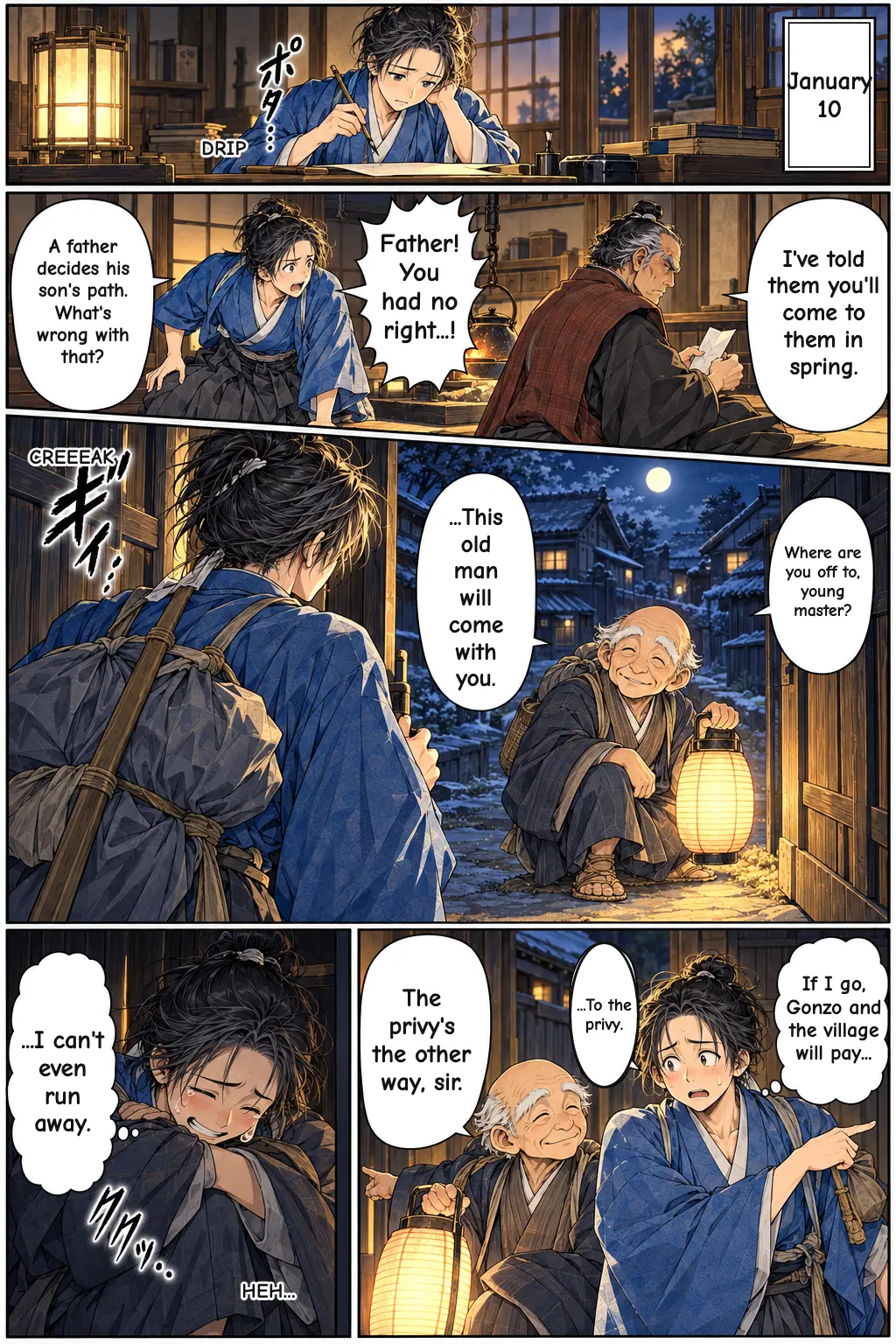
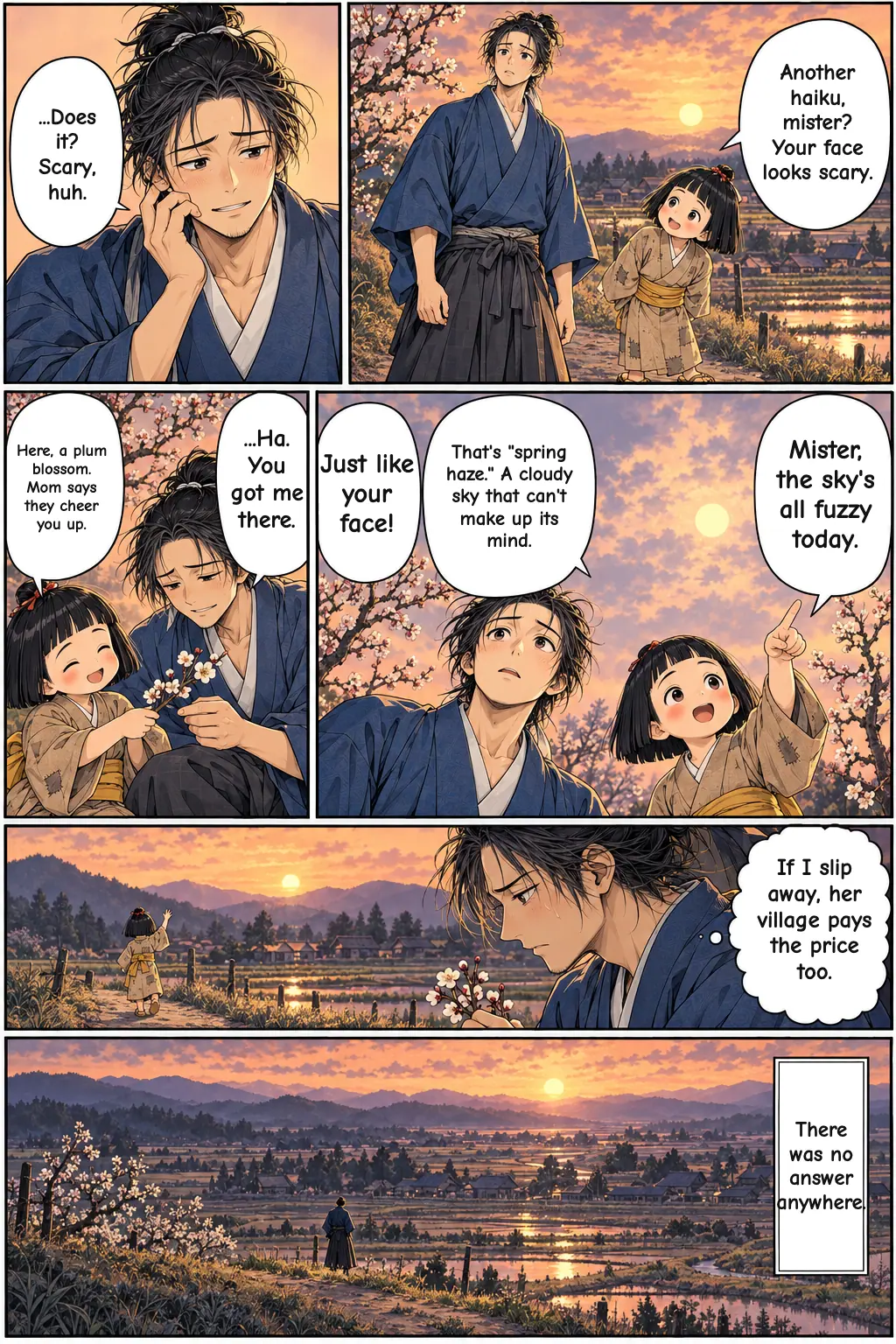
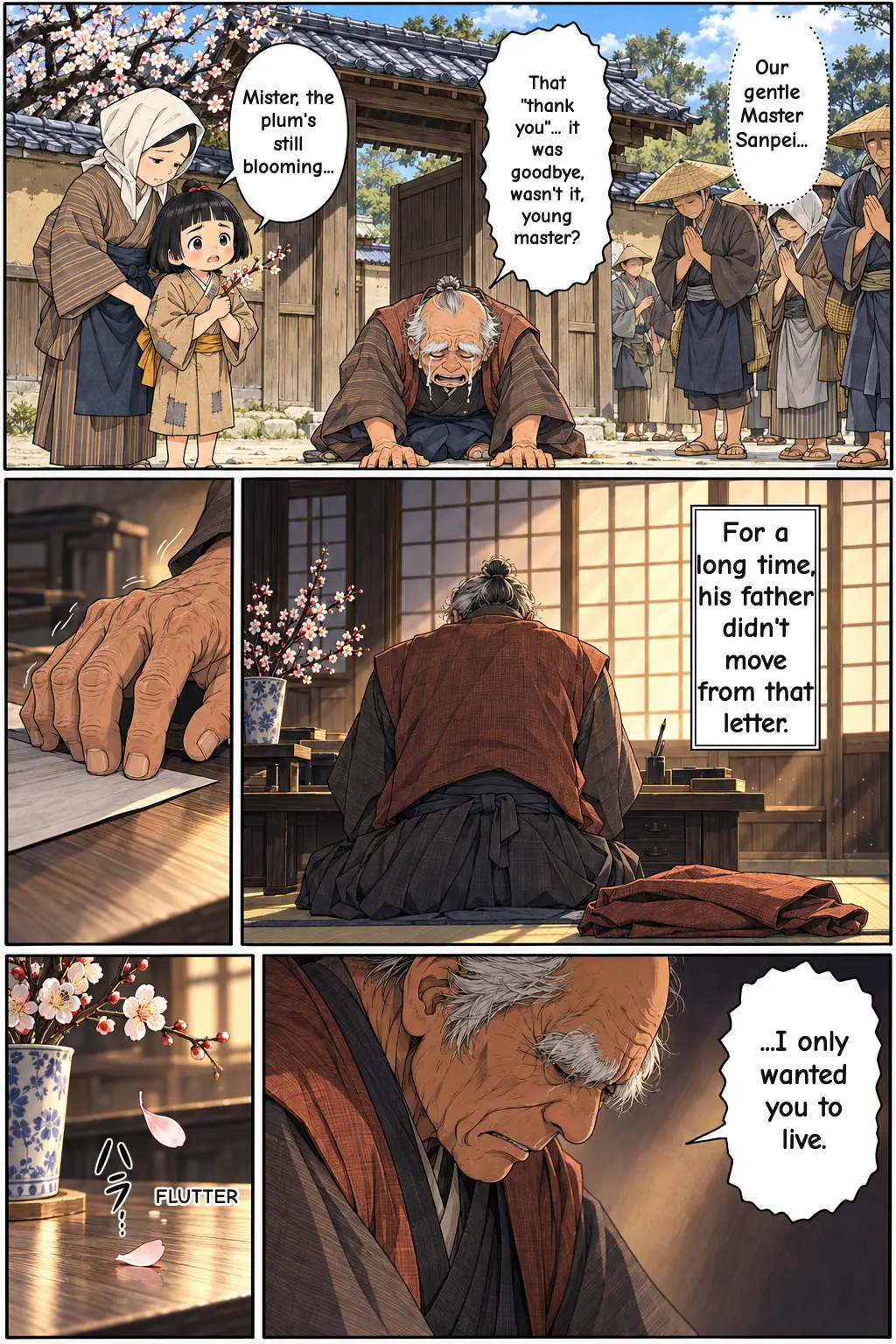
Sanpei, one of the riders who carried word of their lord's death, returns to his home village. There he is trapped between his vow to his comrades and his duty to his father, who has promised him to the family that once gave Sanpei his start. He tries to slip away and can't. The episode follows him to the morning of his lord's monthly memorial day, when he leaves behind a single haiku, and then to how his story lived on in the theater.
Kayano Sanpei: The Ronin Who Missed the 47 Ronin Raid, Explained
Who Was Kayano Sanpei? The True Story Behind the Episode
The tale of the 47 Ronin (Chushingura) is usually told through the men who stormed the mansion of Kira Kozukenosuke, the court official their lord had attacked. Kayano Sanpei Shigezane is famous for the opposite reason. He swore to join the revenge, yet he was not there when it happened. That is why this episode calls him “the 48th Ronin who should have been there.”
Sanpei came from Kayano village in Settsu Province, now part of Minoh City in Osaka Prefecture. He served Asano Takumi-no-Kami Naganori, the lord of the Ako domain. Records say he entered Asano service through his family’s ties to the Oshima, a family of hatamoto (direct retainers of the shogun).
On the 14th day of the 3rd month of Genroku 14 (1701), Lord Asano drew his sword on Kira inside Edo Castle, in the corridor known as the Pine Corridor. He was ordered to commit seppuku (ritual suicide) that same day, and his domain was abolished. Sanpei and fellow retainer Hayami Tozaemon were chosen as the first messengers to carry the news home. They covered roughly 155 ri, about 600 kilometers, from Edo to Ako in around four and a half days, and arrived on the 19th.
Loyalty or Family? Why Sanpei Was Trapped
After Ako Castle was handed over, the former retainers became ronin (masterless samurai), and Sanpei went home to Kayano village. He joined the secret pact led by Oishi Kuranosuke, the domain’s chief retainer, to avenge their lord.
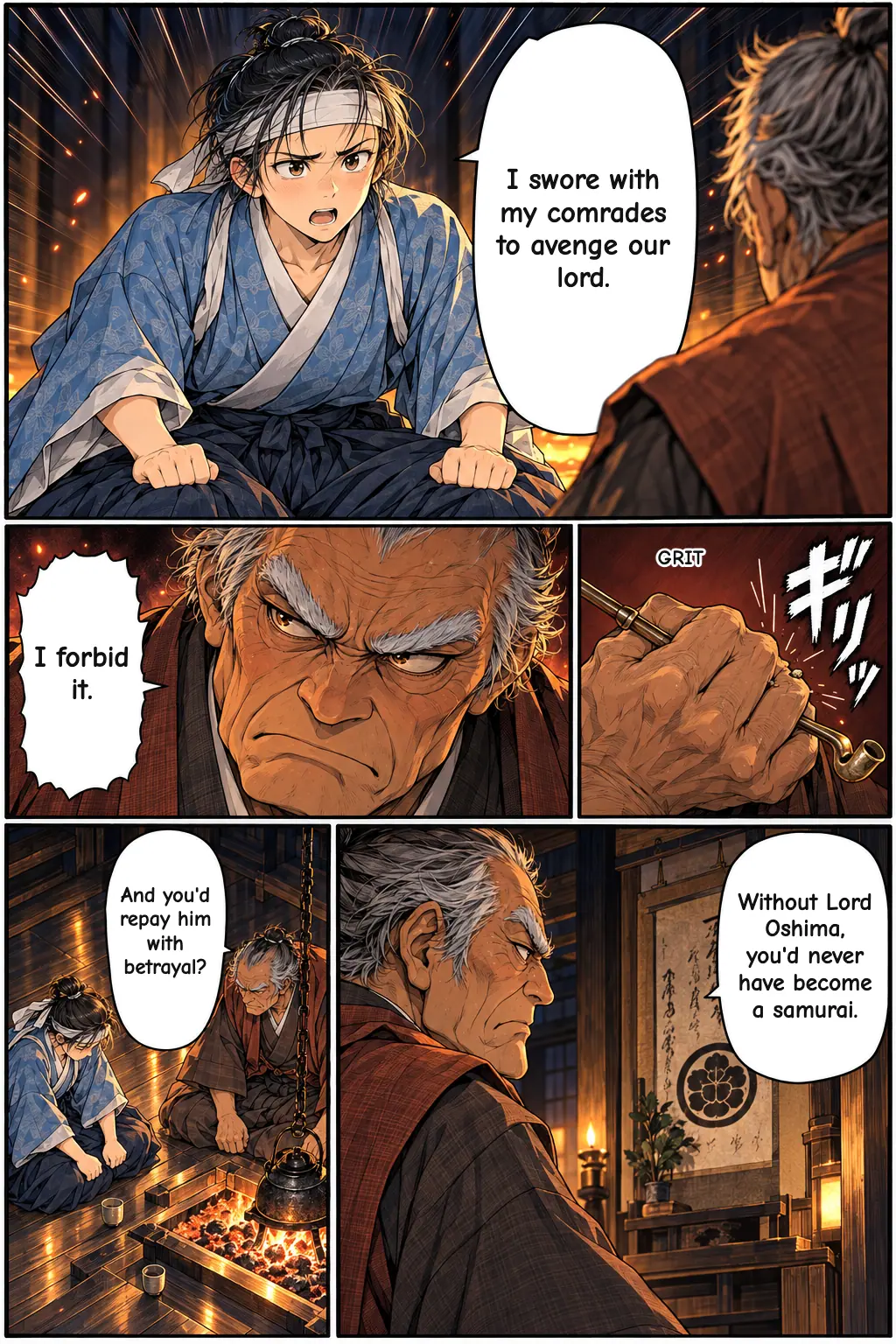
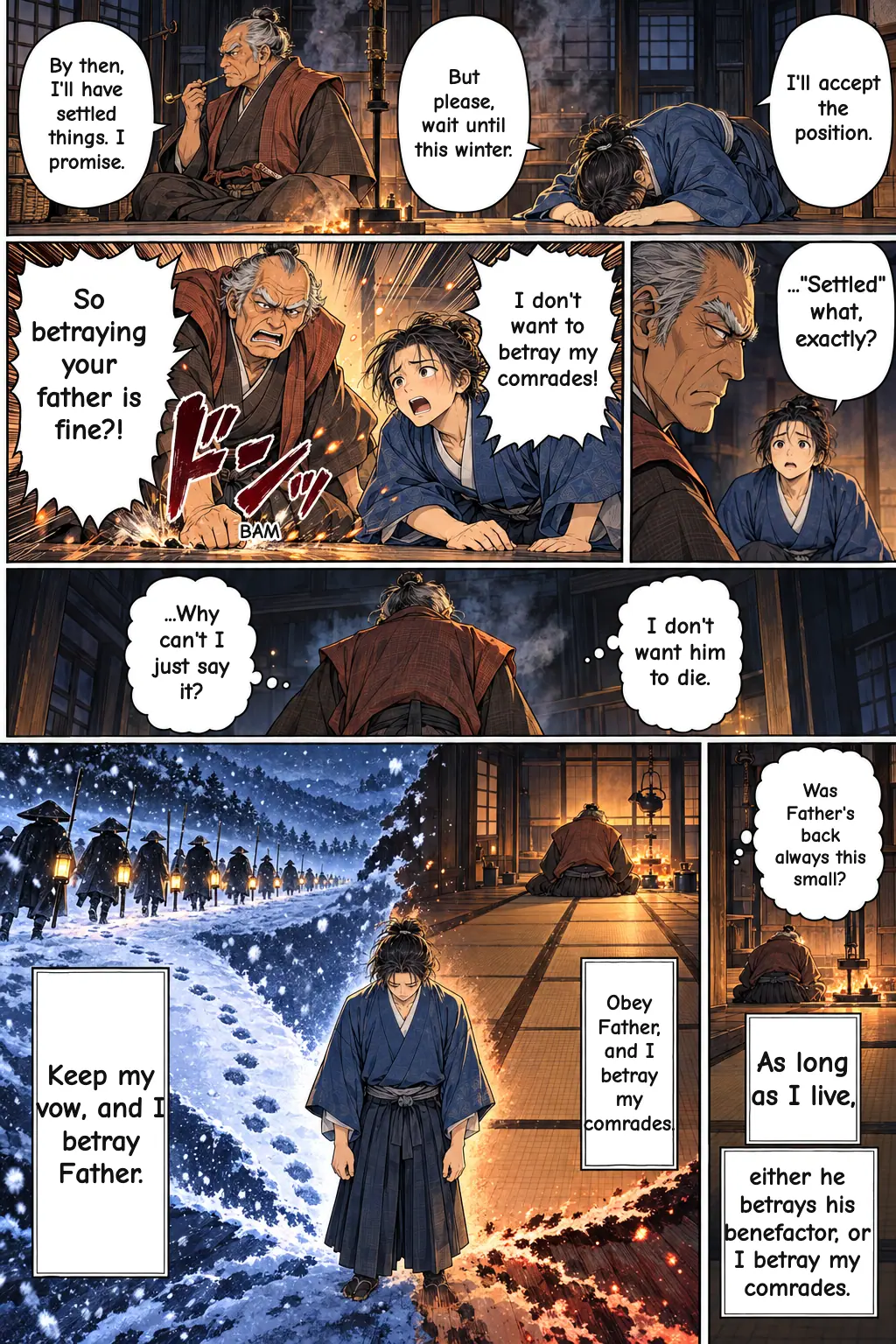
His father, Kayano Shichirozaemon Shigetoshi, stood firmly in the way. The family owed a debt to the Oishi family’s patrons, the Oshima, and the father worried about what a vendetta would bring down on his household. He urged Sanpei to take up service with a new master and refused to let him join the plot.
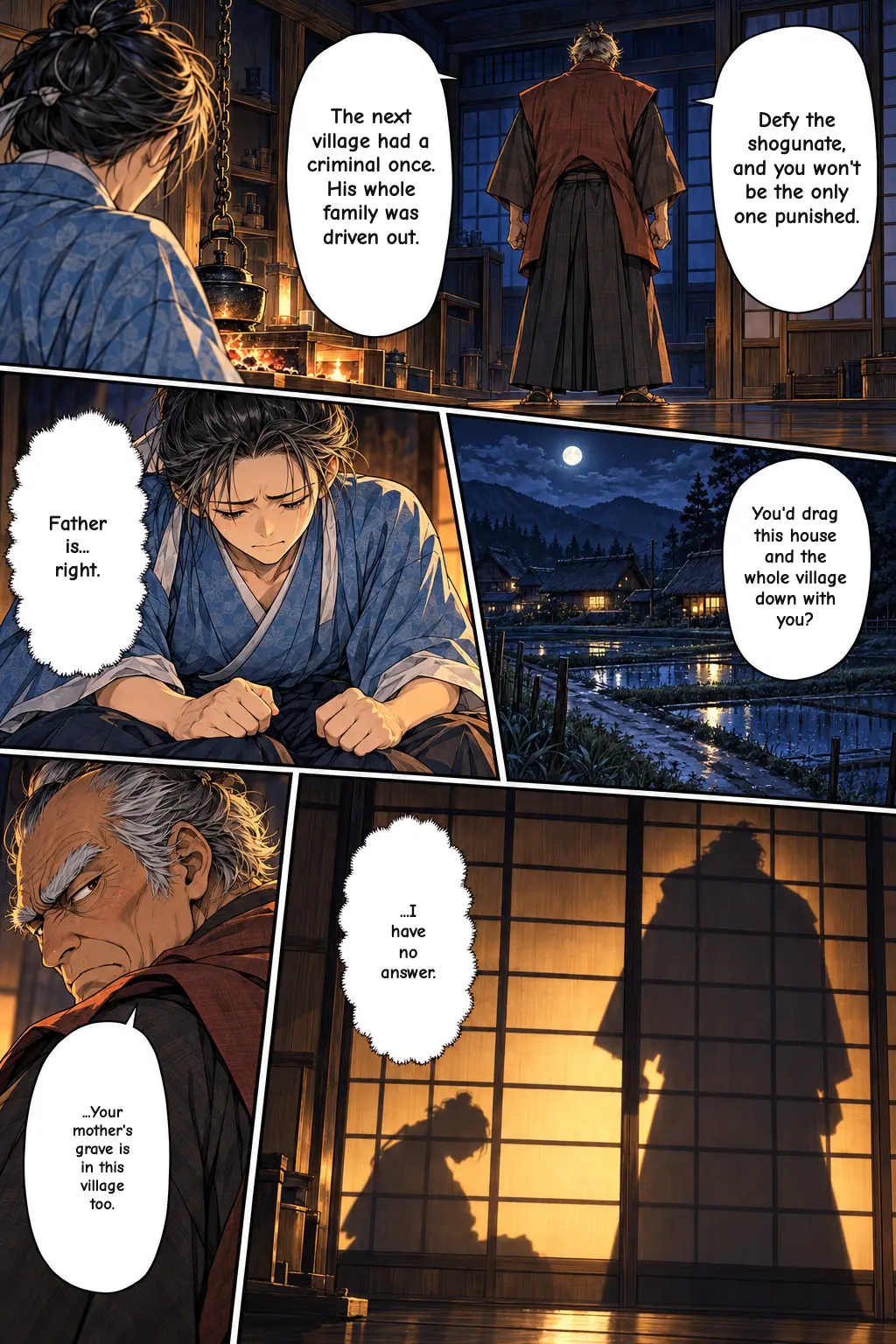
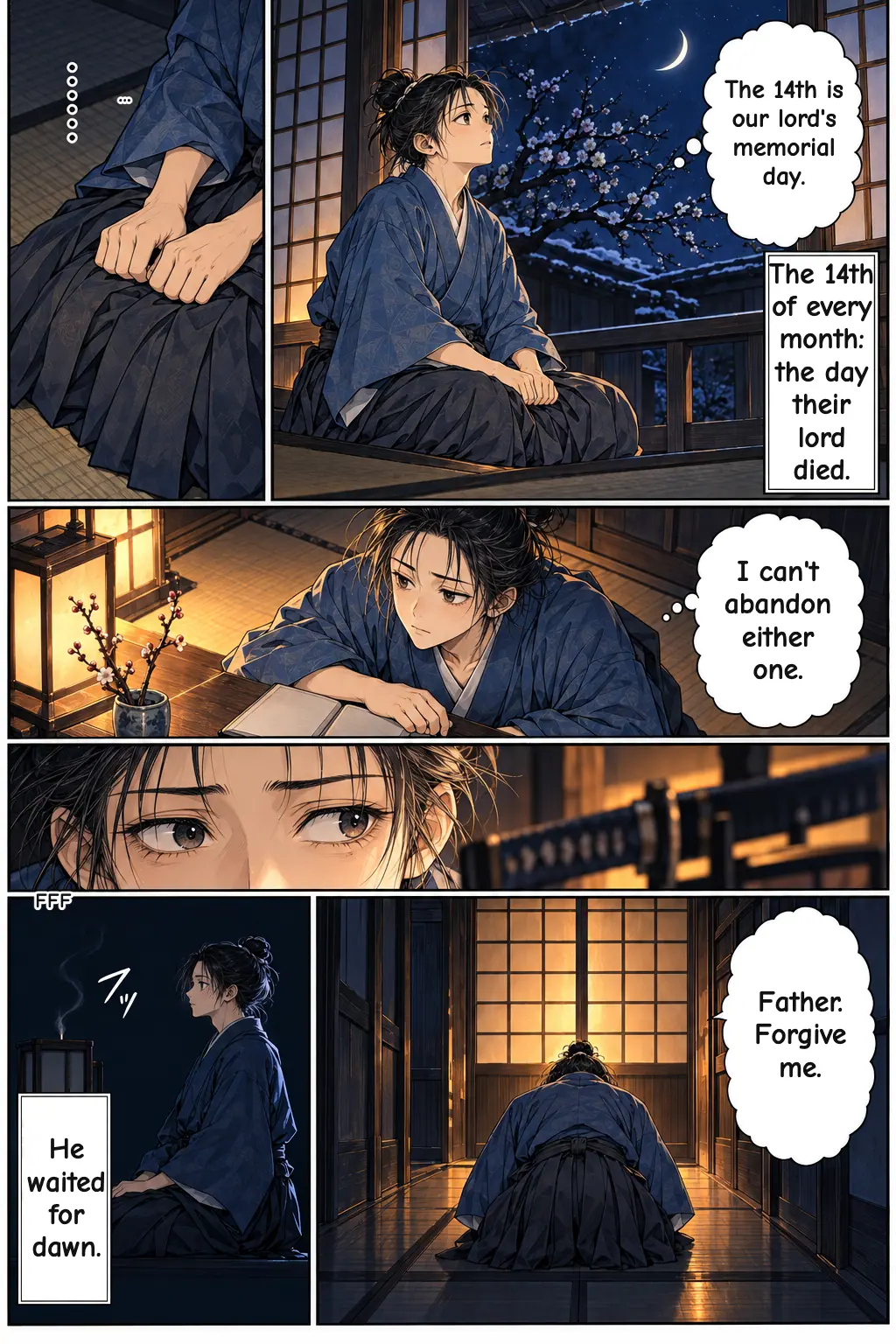
In samurai society, duty to one’s lord and duty to one’s parents were both treated as core virtues, so Sanpei could not simply choose one. Breaking the vow would betray his comrades. Defying his father would betray his family. The records tell us he was caught between the two. They do not tell us what was said between father and son.
A Memorial Day and a Farewell Haiku
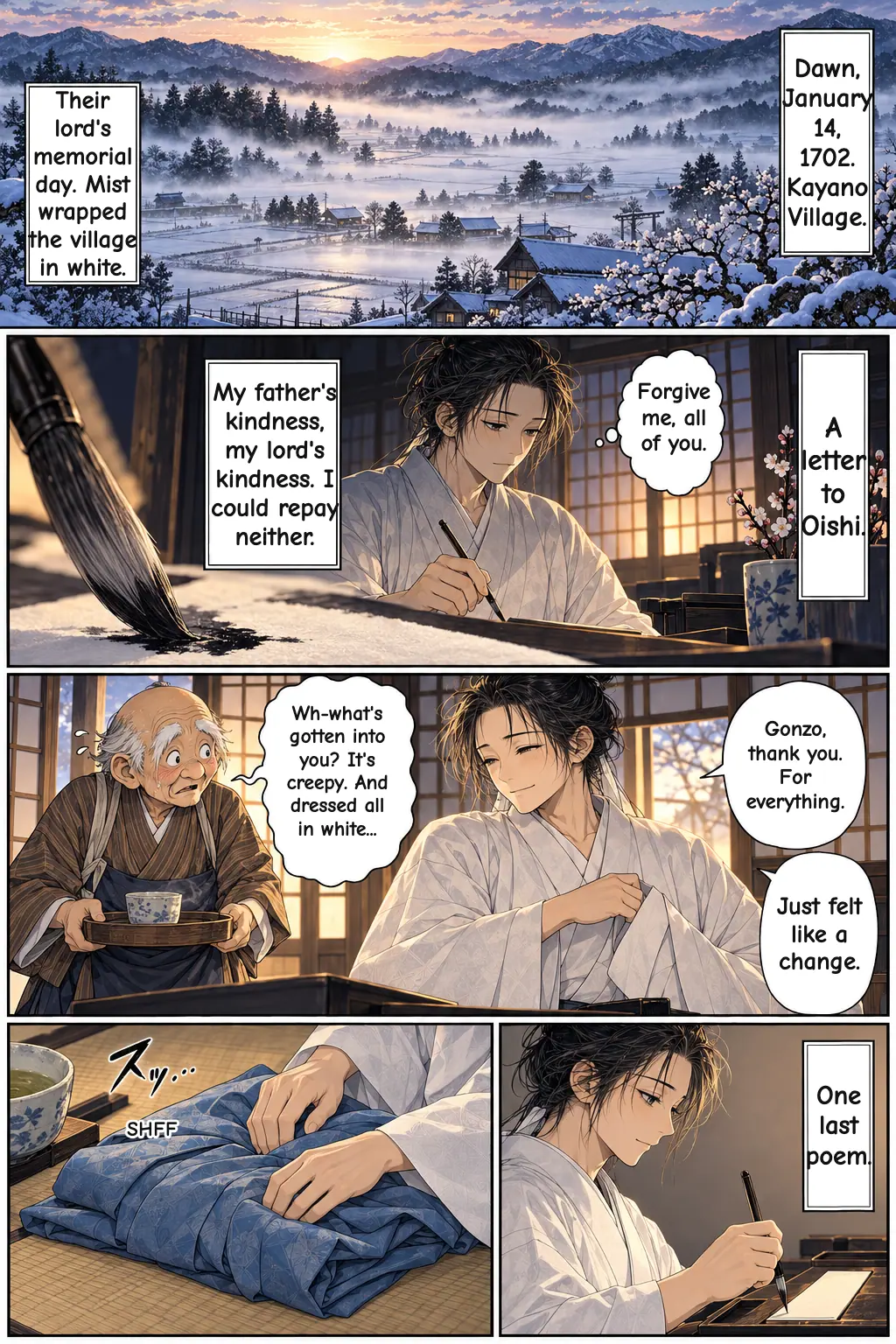
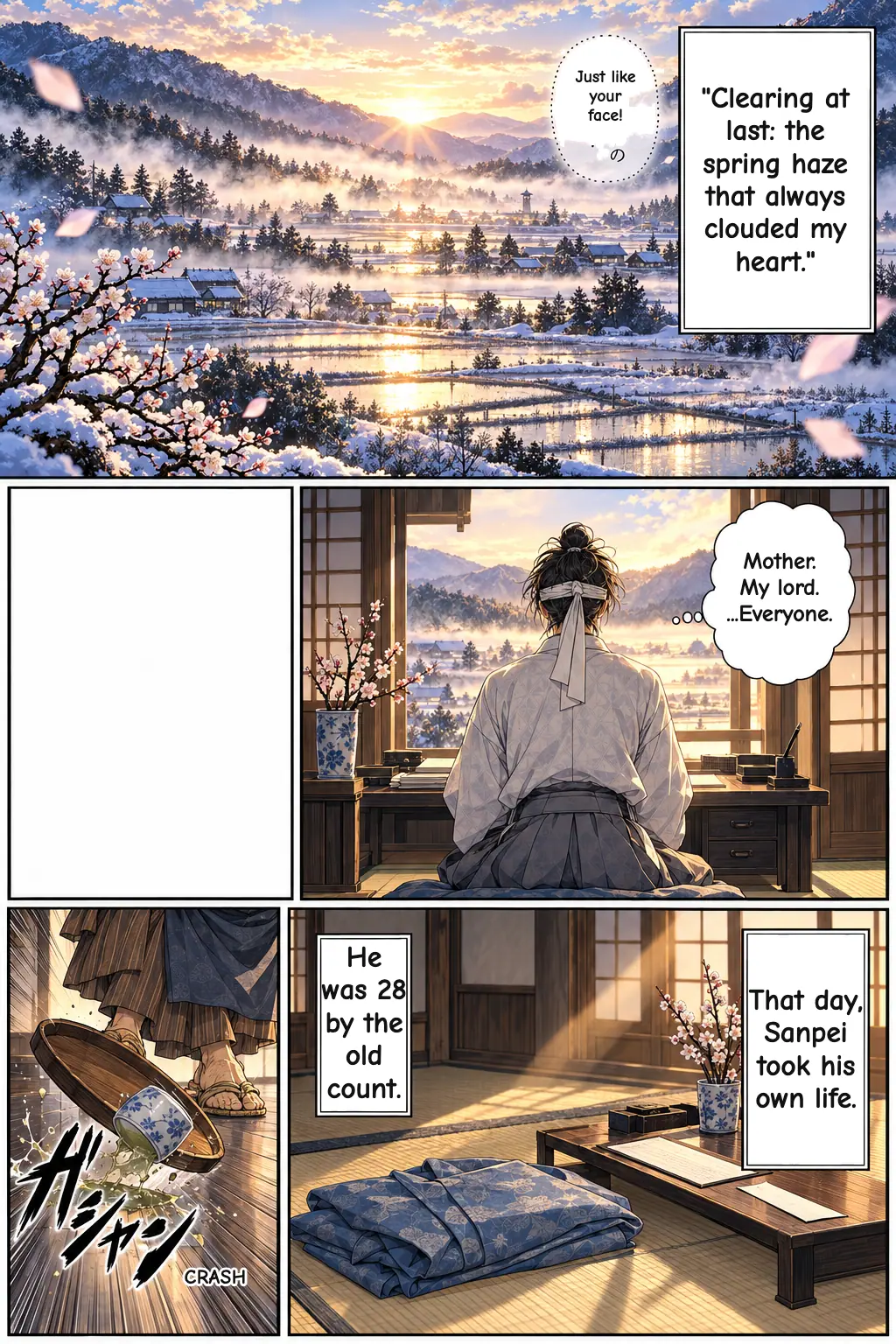
On the 14th day of the 1st month of Genroku 15 (around February 10, 1702, in the modern calendar), Sanpei took his own life at his family home. He was 28 by the traditional Japanese count. The date was deliberate: the 14th was his lord’s monthly memorial day, marking the day Lord Asano died.
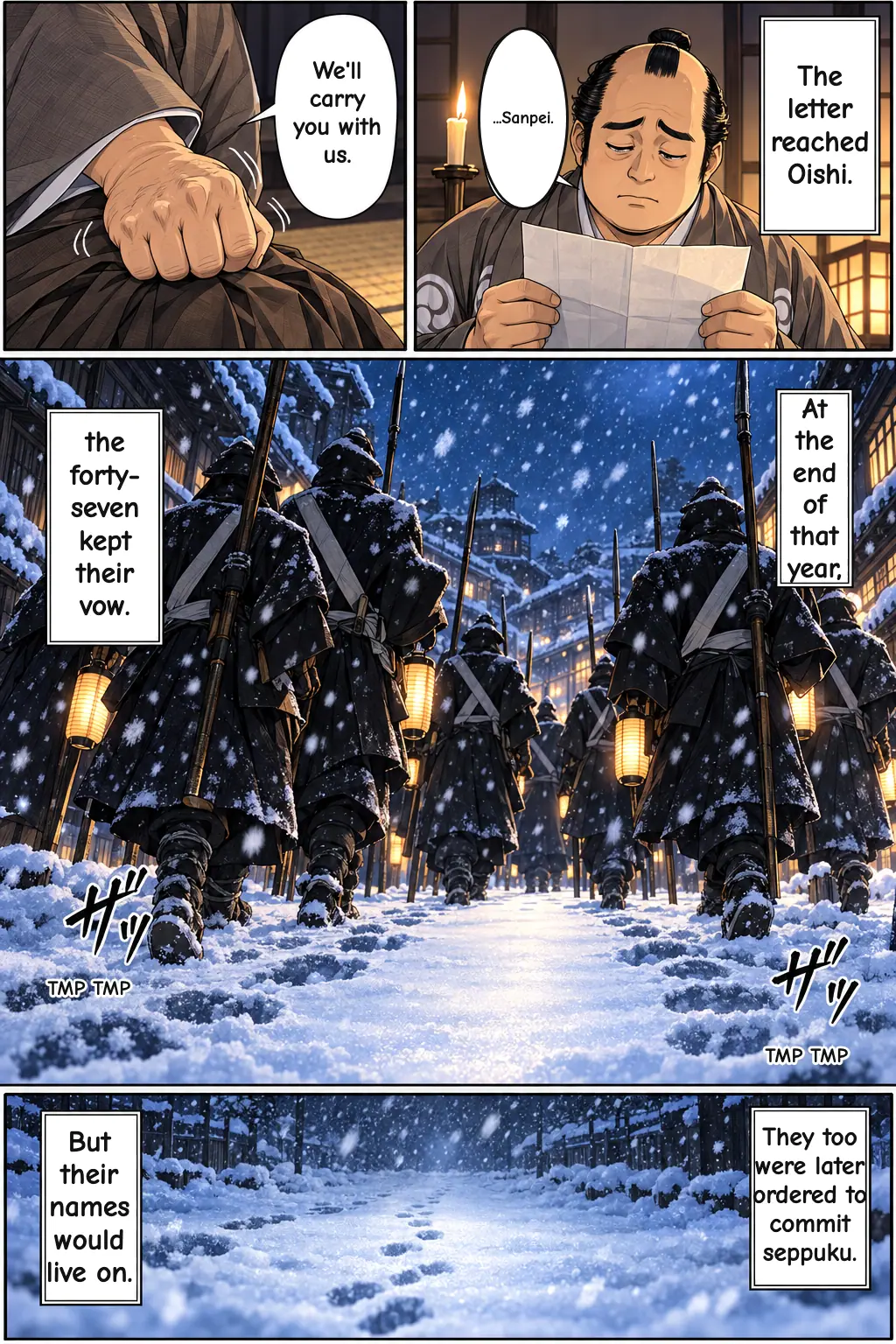
He left a letter addressed to Oishi. In it he explained, in effect, that he could neither disobey his father nor break the pact, and so had chosen death. He also left a death poem, a custom among samurai and poets. Sanpei is said to have practiced haikai poetry under the pen name Kensen. His final verse reads, in Japanese: “Hareyuku ya / higoro kokoro no / hanagumori.” Loosely, it speaks of the hazy, overcast sky of blossom season, a cloud he had carried in his heart for a long time, finally clearing away.
Nearly a year later, on the 14th day of the 12th month of Genroku 15 (January 30, 1703), the 47 Ronin attacked Kira’s mansion. His partner on the ride, Hayami Tozaemon, was among them. Sanpei was not. Later tellings of the loyal retainers honored him as one who was almost one of them.
From History to the Stage: Hayano Kanpei
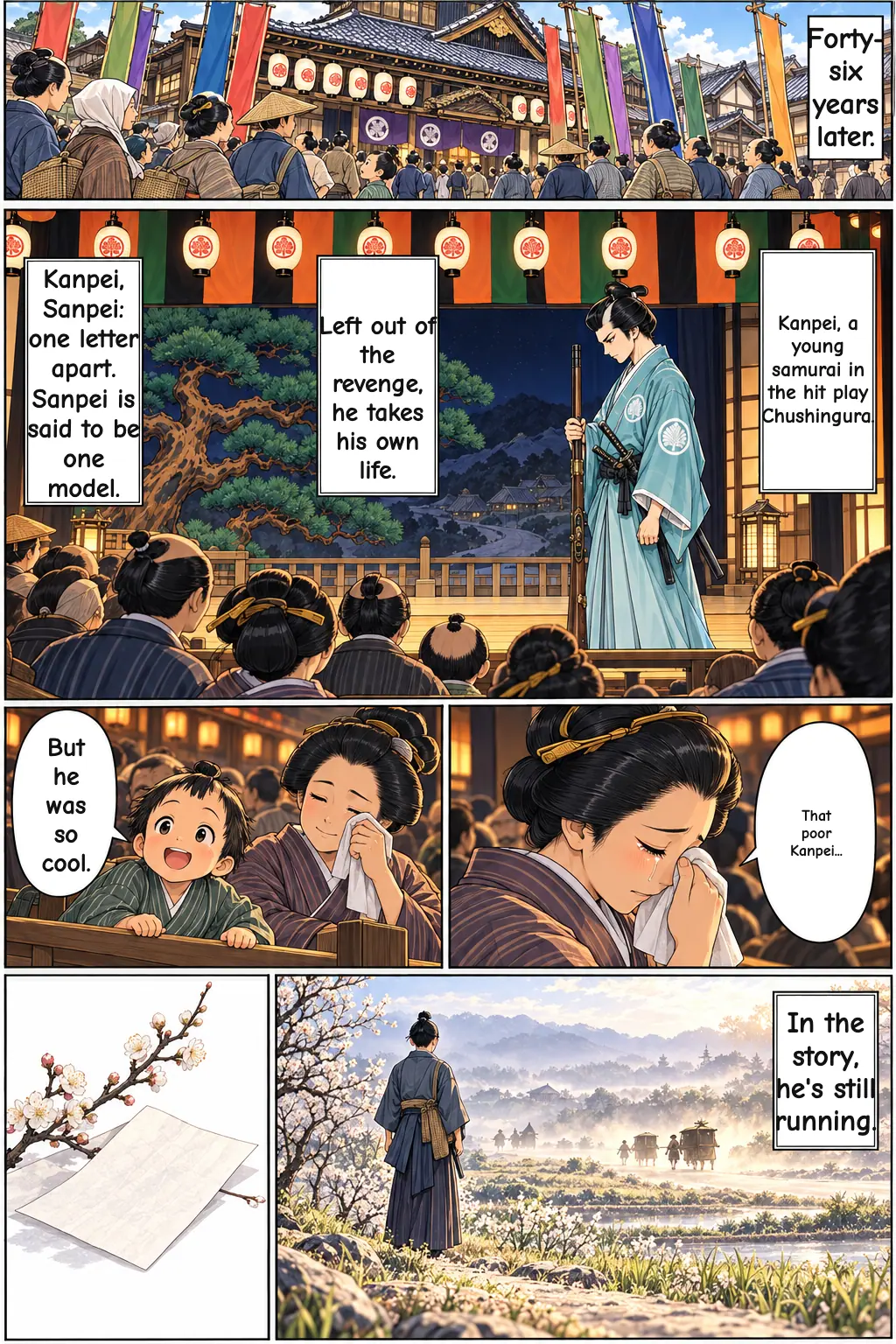
In 1748 the puppet play Kanadehon Chushingura premiered, and it became the most famous dramatization of the Ako incident. In Acts 5 and 6, a young retainer named Hayano Kanpei misses his lord’s crisis, ends up cutting his own belly over a misunderstanding, and has his name added to the oath of revenge as he dies.
Many people believe Kanpei was based partly on Sanpei. The names are similar (Kayano and Hayano, Sanpei and Kanpei), and both men are retainers who never reached the raid. This is a common view, not a proven fact. Kanpei’s love affair with Okaru, the robber Sadakuro, Okaru’s father Yoichibei, and the tragic misunderstanding are all inventions of the playwrights.
What the Manga Adds
The manga sticks to the recorded facts: the dates, the route and timing of the messengers’ ride, the father’s opposition, the letter to Oishi, the death poem, and the memorial day. Everything else is creative interpretation.
The conversations between Sanpei and his father are invented, because no record of their words survives. A well-known story says Sanpei passed his own mother’s funeral procession during the ride and kept going for the sake of his mission. That is a legend, so the manga presents it as a hazy memory. The hardships of the ride, Sanpei’s daily life and poetry, the minor characters, the winter room on his final morning, and the wording of his letter are all newly written. The closing page shows an original Edo-period-style theater scene to suggest how his story lived on as Kanpei.
Where to Read It
If you want to see Sanpei’s quiet struggle unfold panel by panel, from the race across Japan to the morning of the 14th, read Episode 6 of THE 47 RONIN: Chushingura – A Vow in the Winter Snow here on Manga Portal. Every episode is free, with no sign-up needed, so you can also go back to the beginning and follow the whole road to the snowy night of the raid.
Characters in this episode
Kayano Sanpei Shigezane
A young Ako retainer and amateur poet who rode with the first news of his lord’s death and later died torn between his vow and his father.
Kayano Shichirozaemon Shigetoshi
Sanpei’s father, the head of the Kayano family, who opposed the revenge plot out of obligation to the Oshima family and concern for his household.
Hayami Tozaemon Mitsutaka
Sanpei’s partner on the first messenger ride from Edo to Ako, who later took part in the raid as one of the 47 Ronin.
Oishi Kuranosuke Yoshio
Chief retainer of the Ako domain and leader of the revenge pact, to whom Sanpei addressed his final letter.
Asano Takumi-no-Kami Naganori
Lord of Ako, whose sword attack in Edo Castle and forced seppuku on the 14th day set the whole story in motion.
Hayano Kanpei
A fictional character in the play Kanadehon Chushingura, widely thought to be partly modeled on Sanpei.
FAQ
Who was Kayano Sanpei in the 47 Ronin story?
Kayano Sanpei was a retainer of Lord Asano of Ako and one of the first two messengers who carried news of the Edo Castle incident to Ako. He joined the revenge pact, but his father opposed it. He took his own life in early 1702, before the raid.
Why did Kayano Sanpei commit suicide?
According to his letter to Oishi Kuranosuke, he could not disobey his father, who forbade him to join the vendetta. He also could not break his vow to his comrades. He saw death as the only way to keep faith with both.
What was Kayano Sanpei's death poem?
His farewell haiku is “Hareyuku ya / higoro kokoro no / hanagumori.” It describes the hazy, clouded sky of blossom season, a cloud that had long hung over his heart, finally clearing.
Is Hayano Kanpei in Kanadehon Chushingura based on a real person?
Kanpei is widely believed to be partly based on Kayano Sanpei, partly because of the similar names. His romance with Okaru and the misunderstanding that leads to his death were invented for the stage.
How fast did the Ako messengers travel from Edo to Ako?
Kayano Sanpei and Hayami Tozaemon covered about 155 ri, around 600 kilometers, in roughly four and a half days. They arrived in Ako on the 19th day of the 3rd month of 1701.