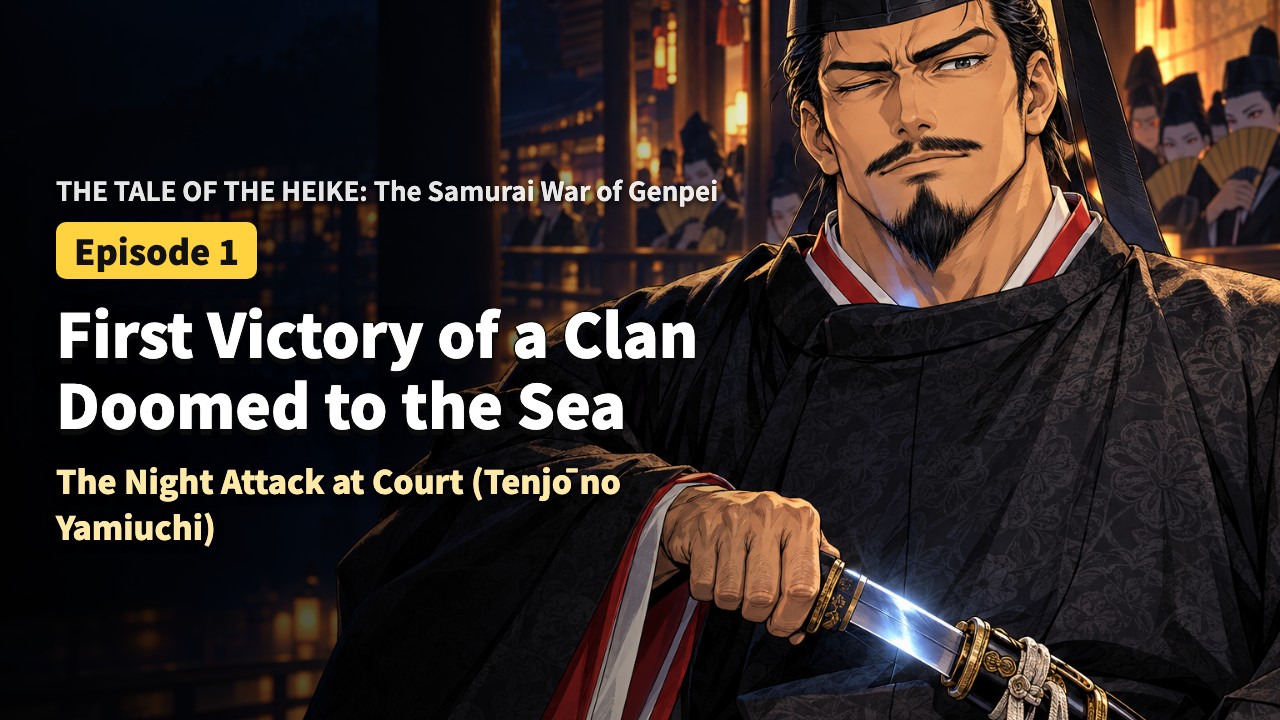
Episode 1247 Ronin. Only 46 Graves.The Seppuku of the 47 Ronin and Sengaku-ji
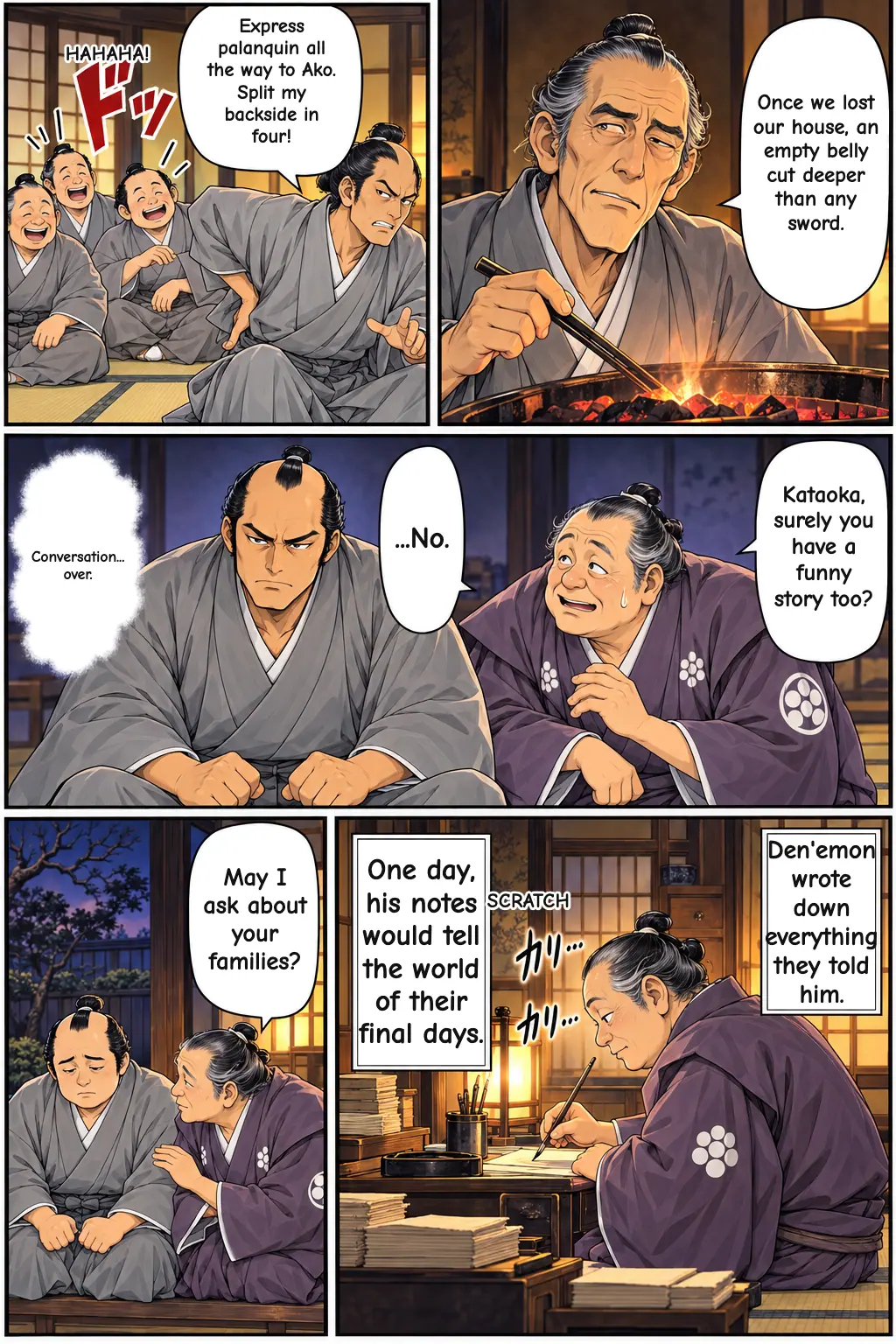
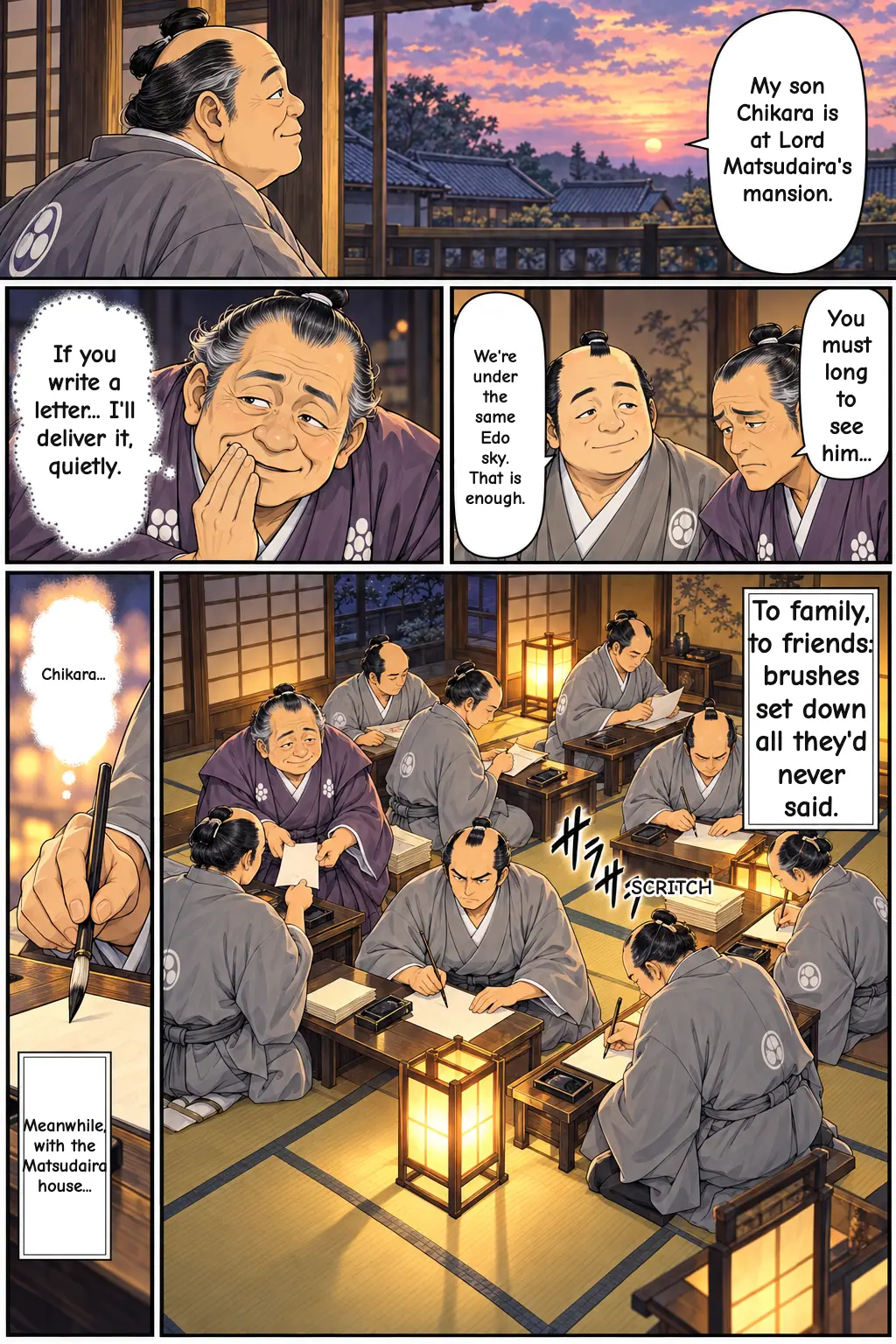
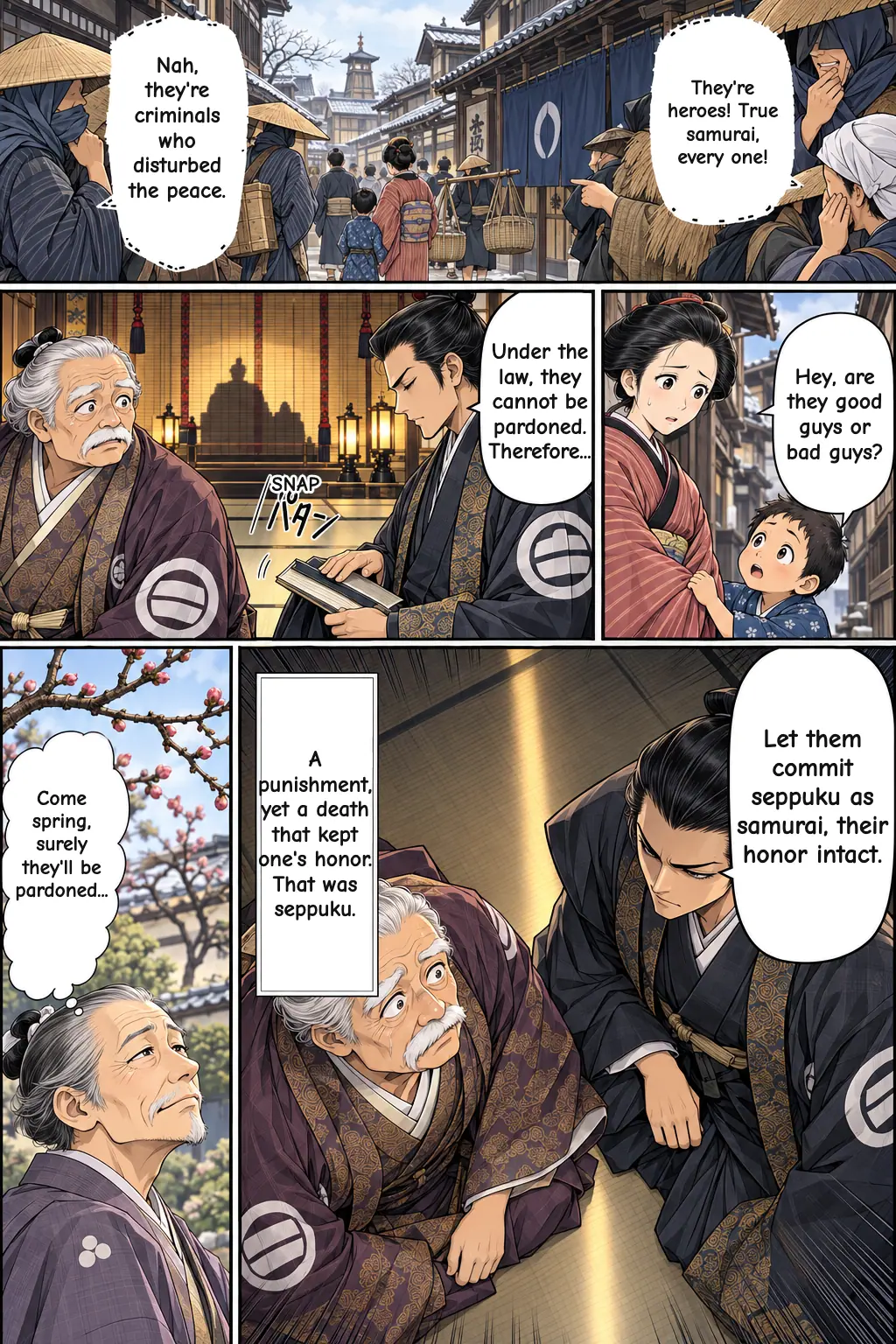
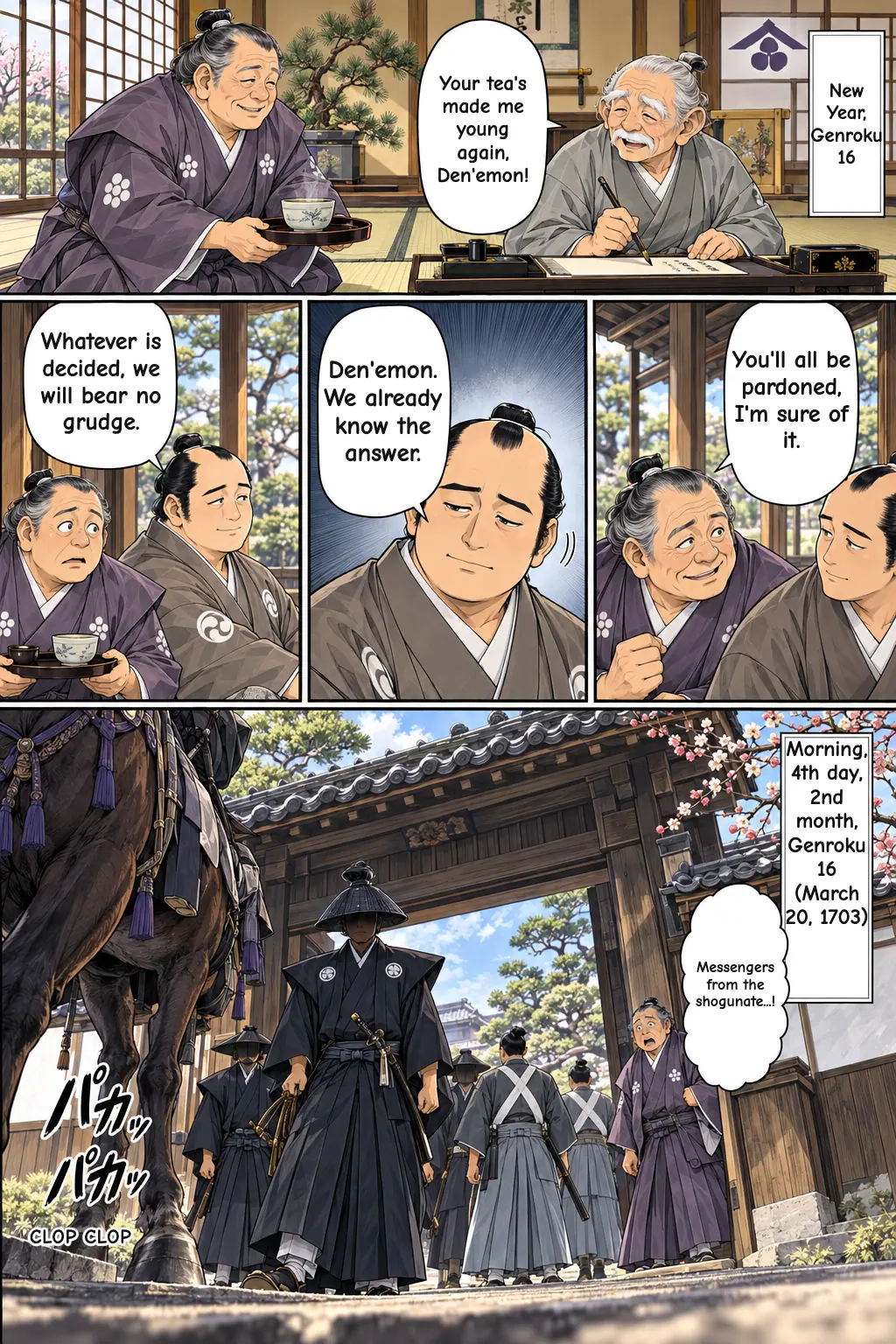
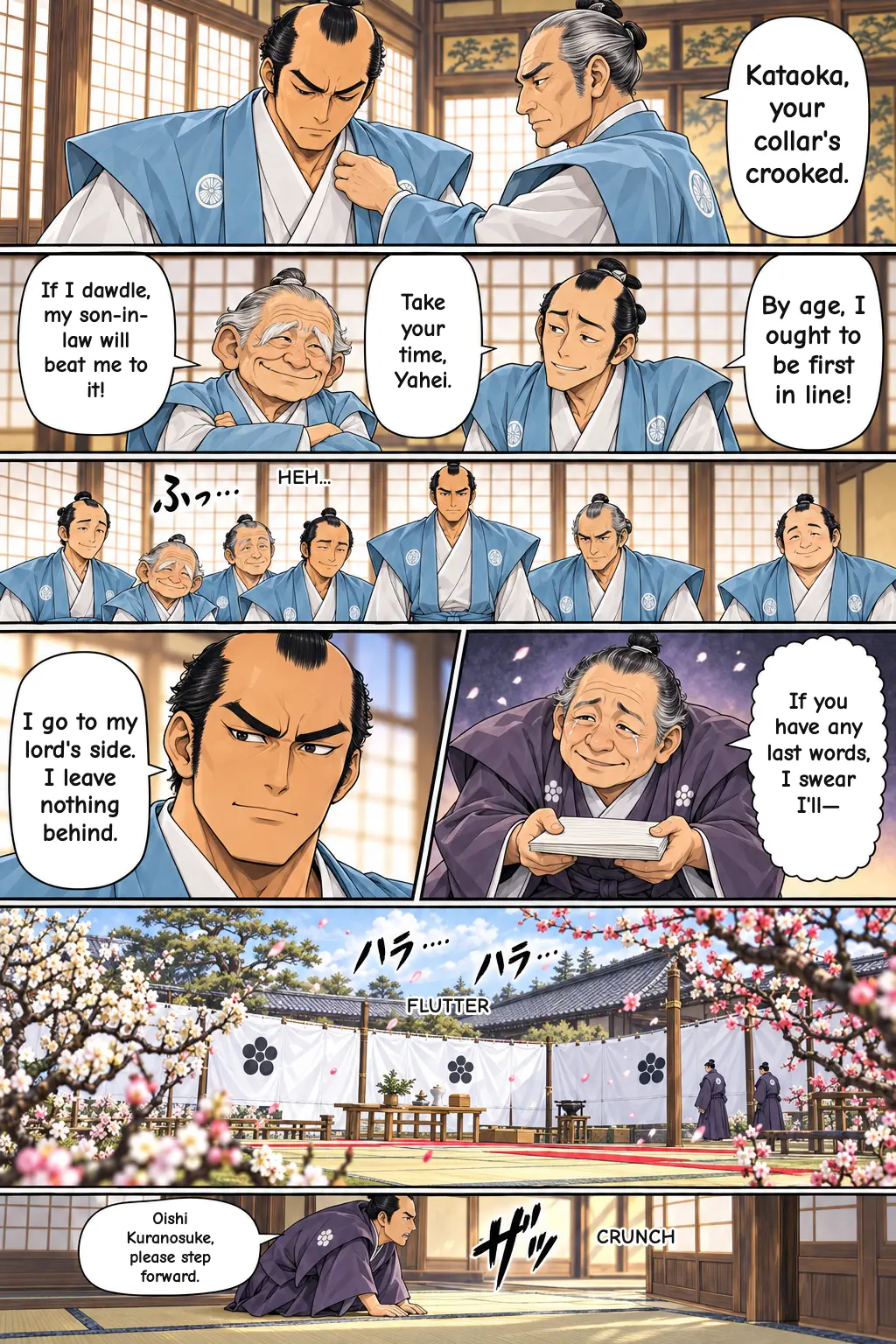
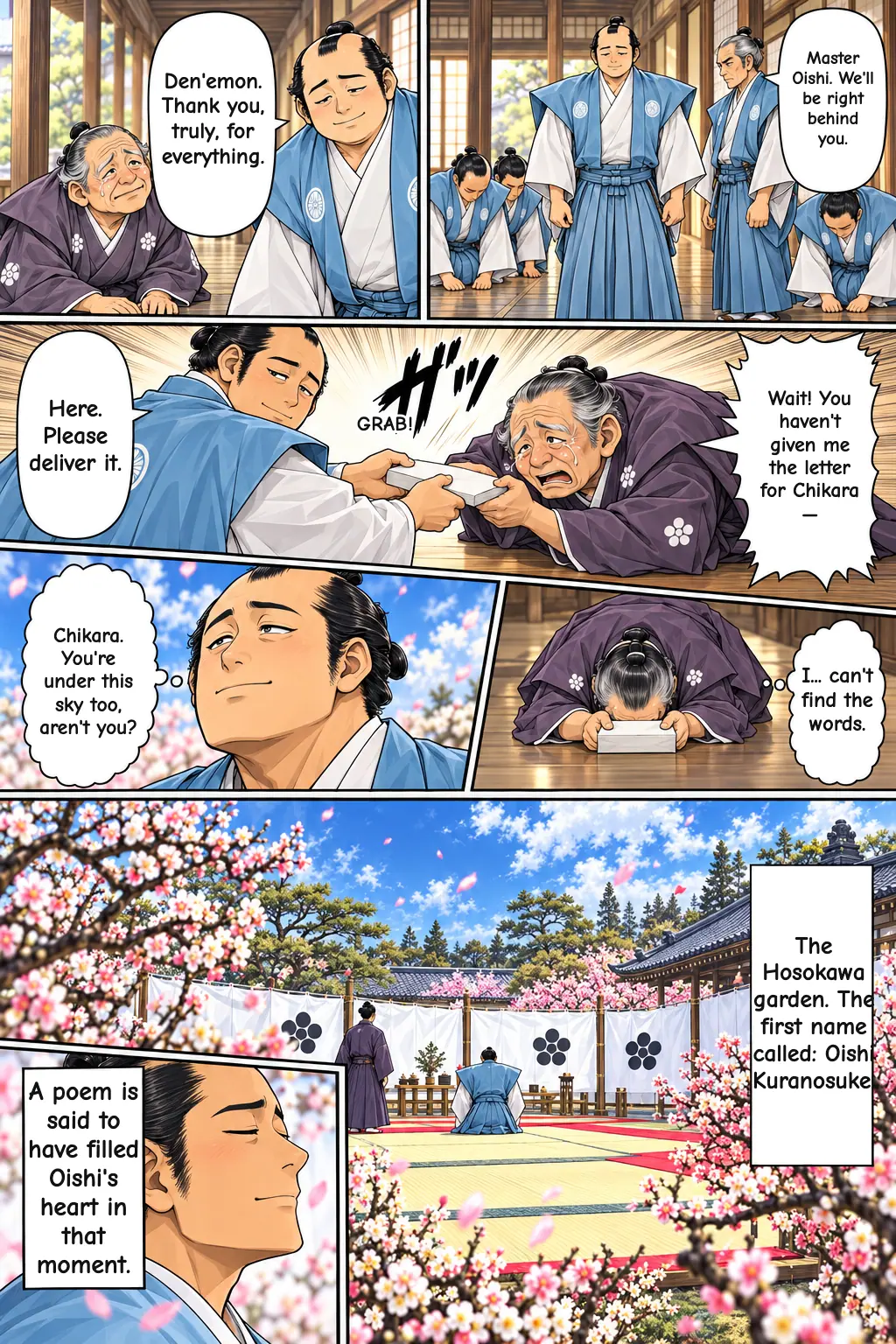
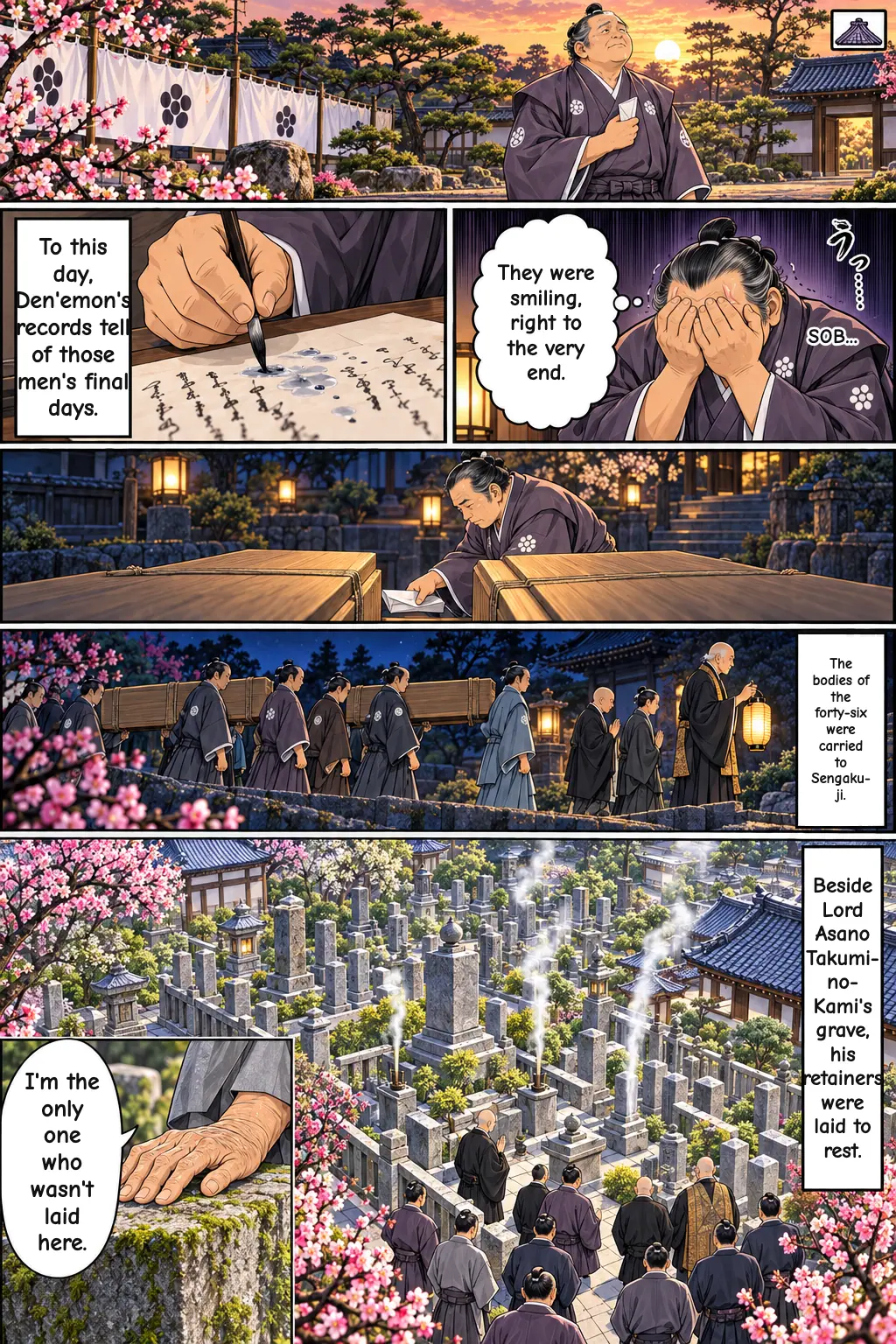
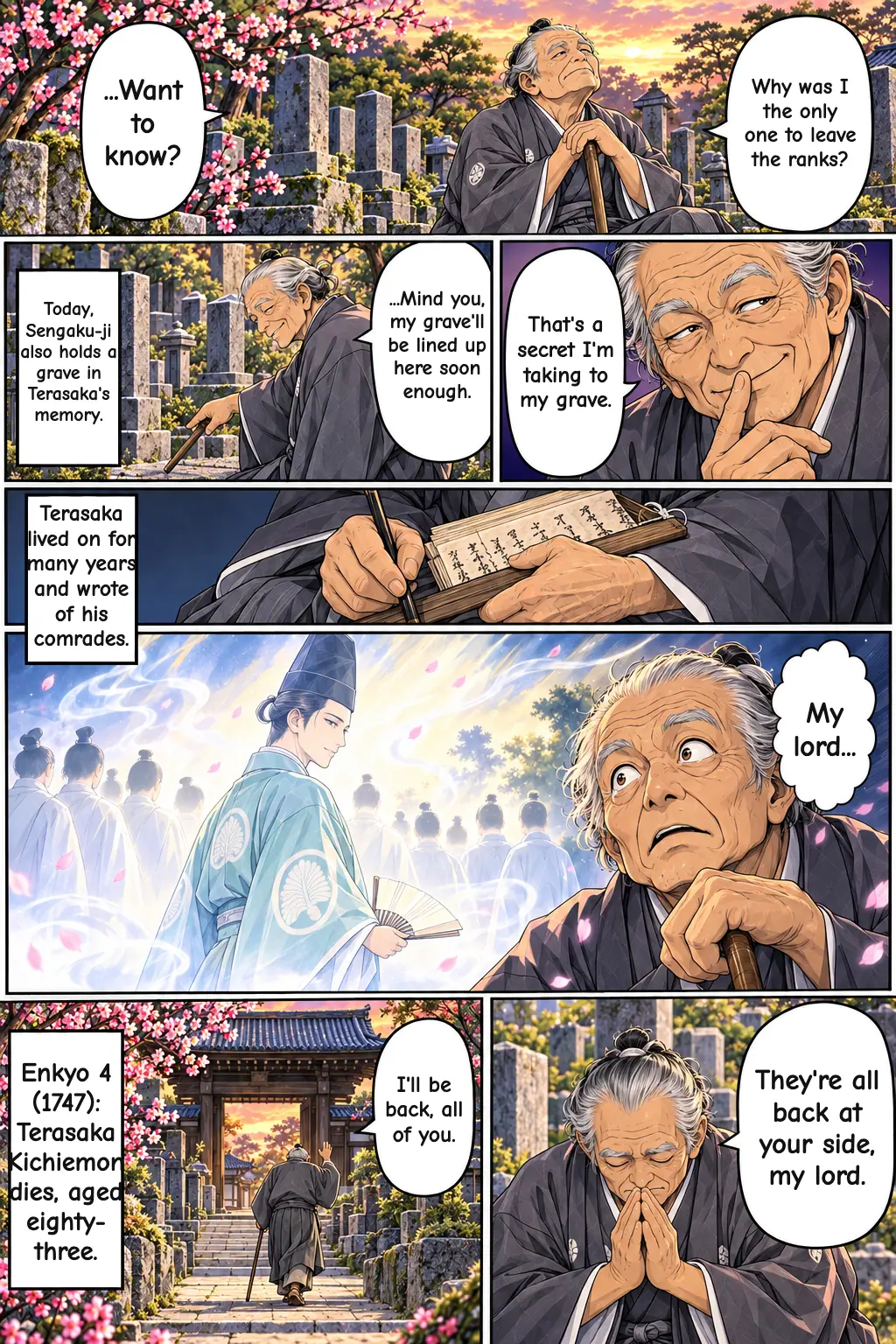
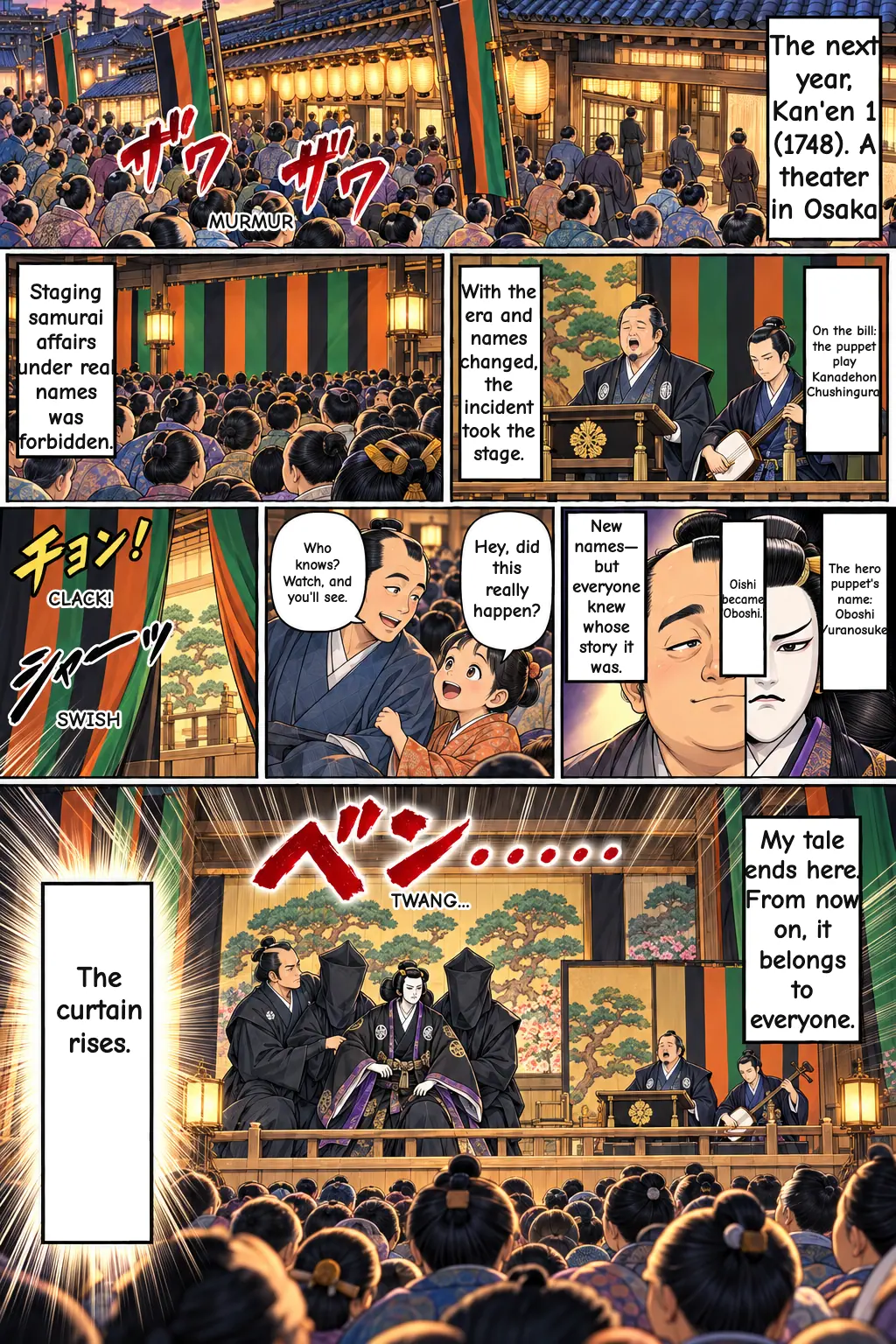
After the raid, the forty-six ronin are placed in the custody of four daimyo houses. At the Hosokawa mansion, Horiuchi Den'emon listens to their stories and is eventually entrusted with a letter from Oishi Kuranosuke to his son Chikara. On a spring day the verdict arrives: seppuku. At the graves of Sengaku-ji, the aged storyteller Terasaka Kichiemon finishes his tale, and the story passes on to the stage as the curtain rises on Kanadehon Chushingura.
47 Ronin Ending Explained: Seppuku, Sengaku-ji and the 47th Man
What Happened After the Raid: The Historical Story
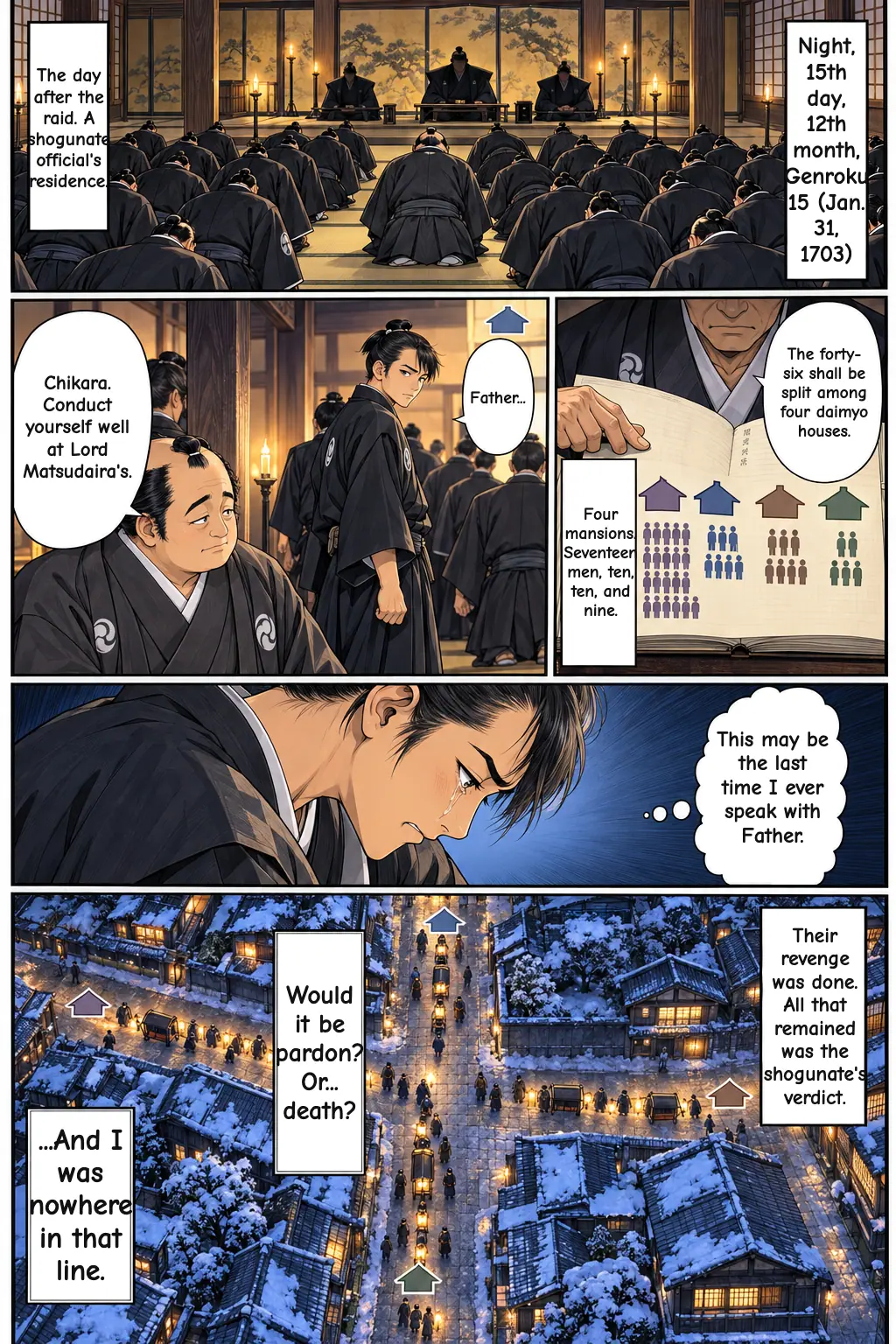
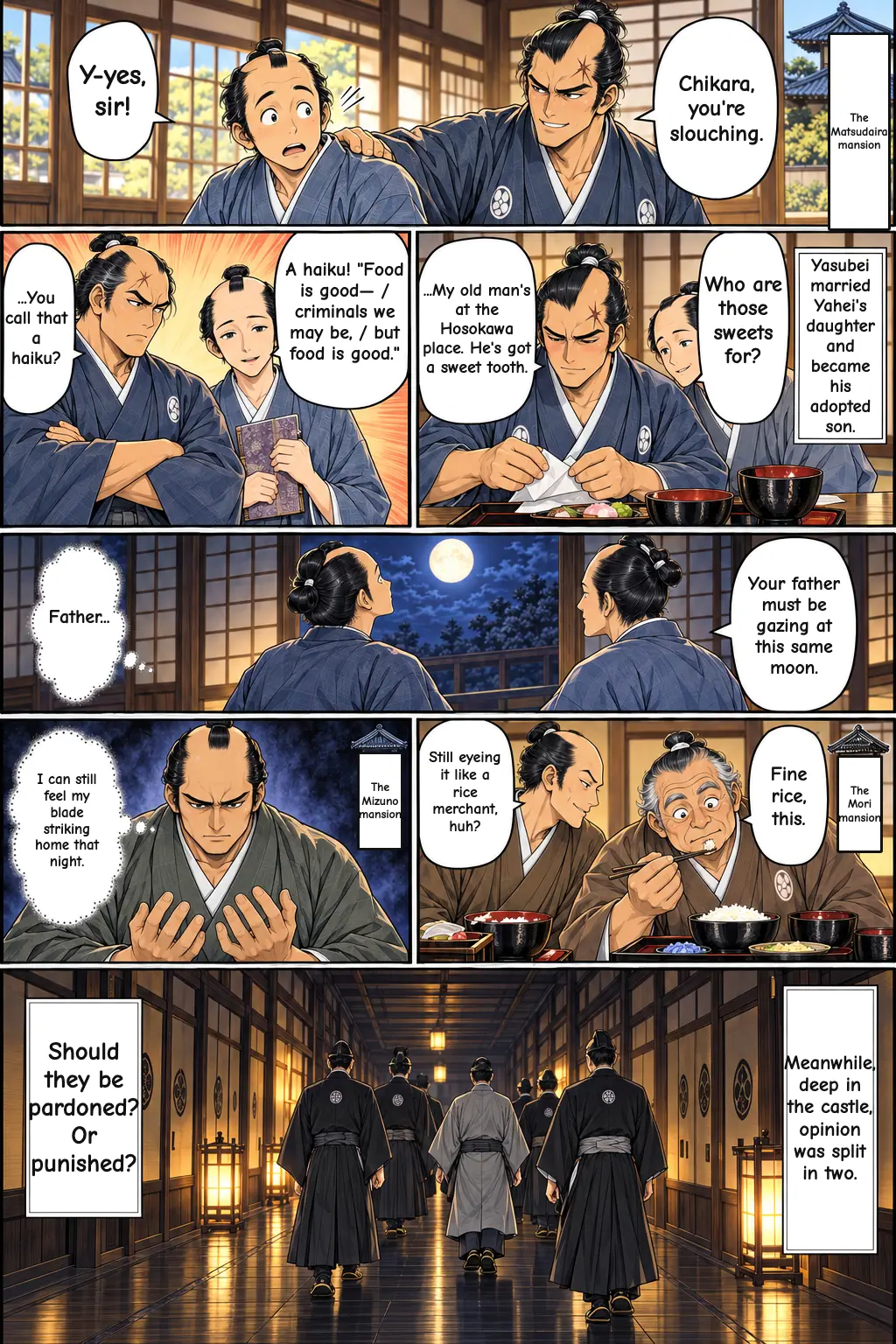
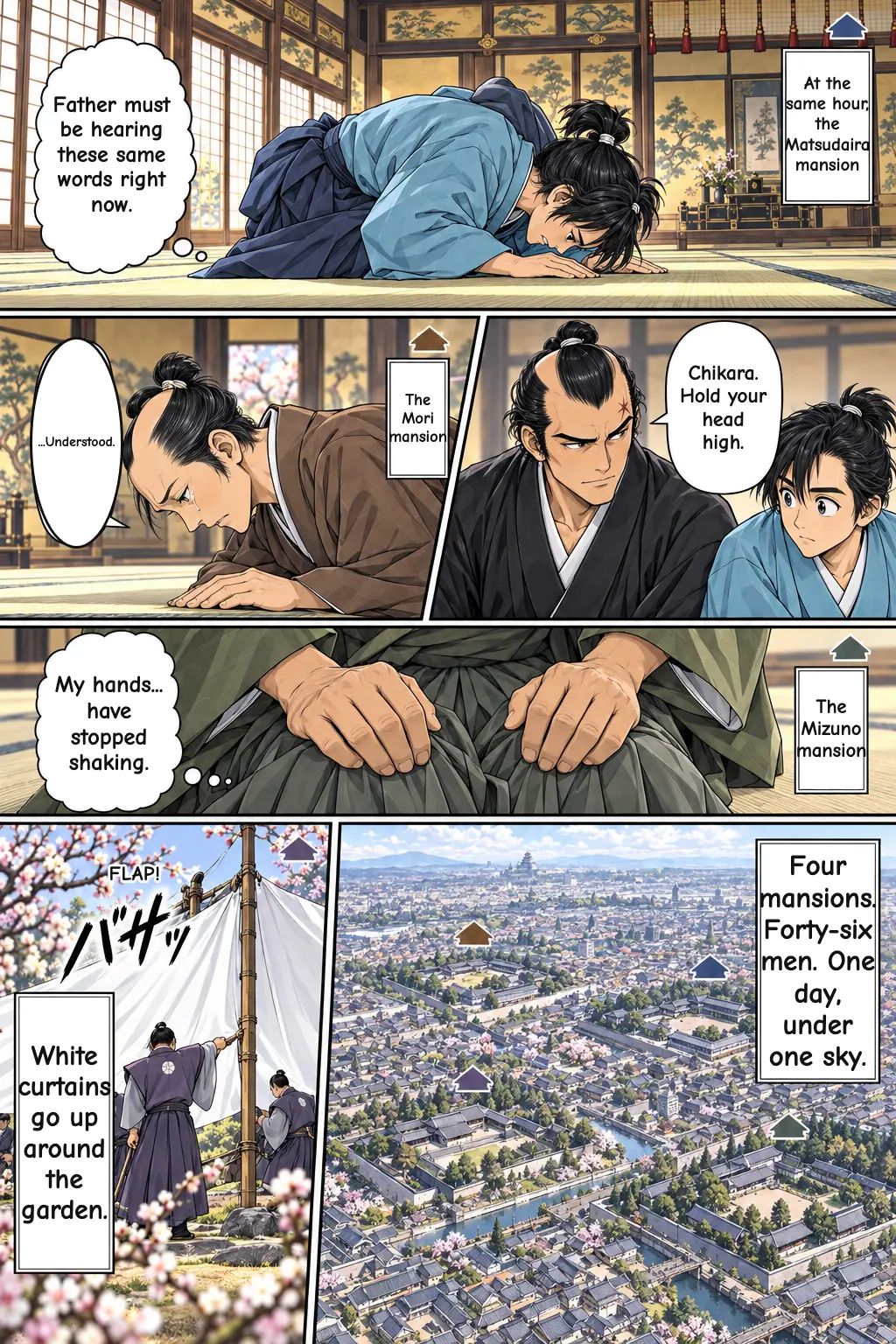
On the night of the 14th day of the 12th month of Genroku 15 (late January 1703 in the Western calendar), the former retainers of the Ako domain broke into the Edo mansion of Kira Kozukenosuke and took revenge for their late lord, Asano Takumi-no-kami. The famous story is called the 47 Ronin, yet only forty-six of them turned themselves in to the shogunate. The next day they were summoned to the residence of a senior inspector and that same night divided among four daimyo (feudal lord) houses: Hosokawa took seventeen, including the leader Oishi Kuranosuke; Matsudaira took ten, including Oishi's son Chikara; Mori took ten; and Mizuno took nine.
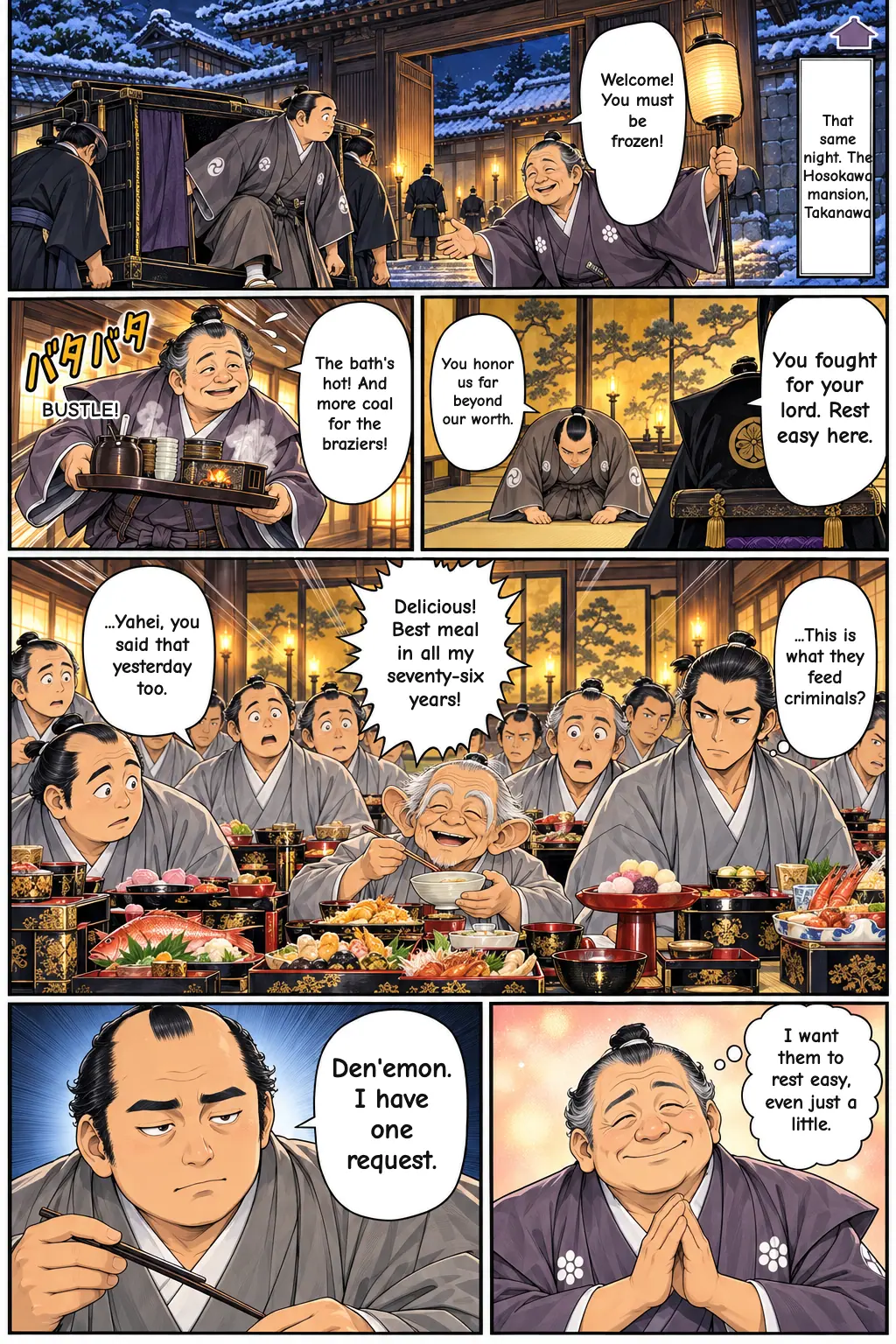
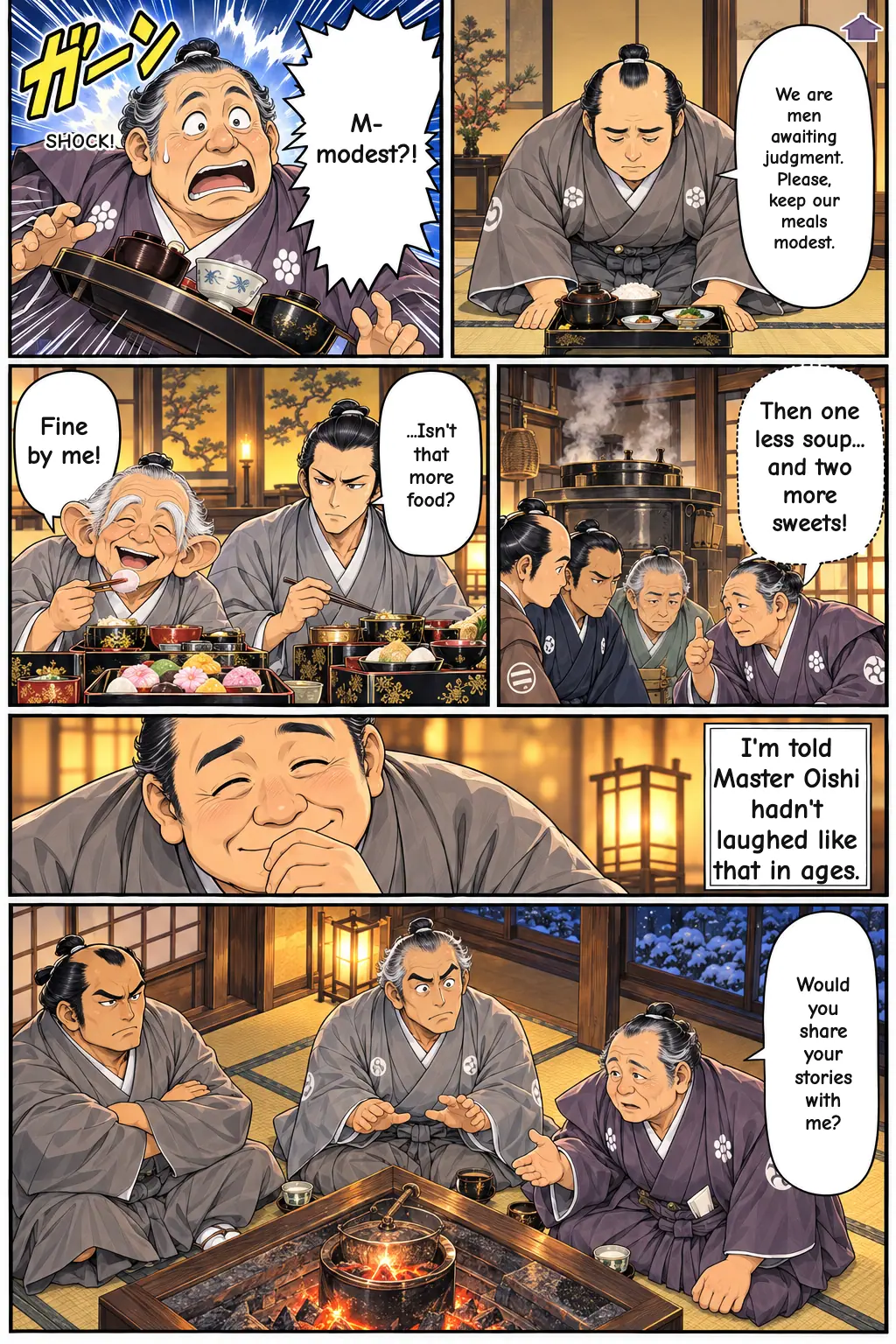
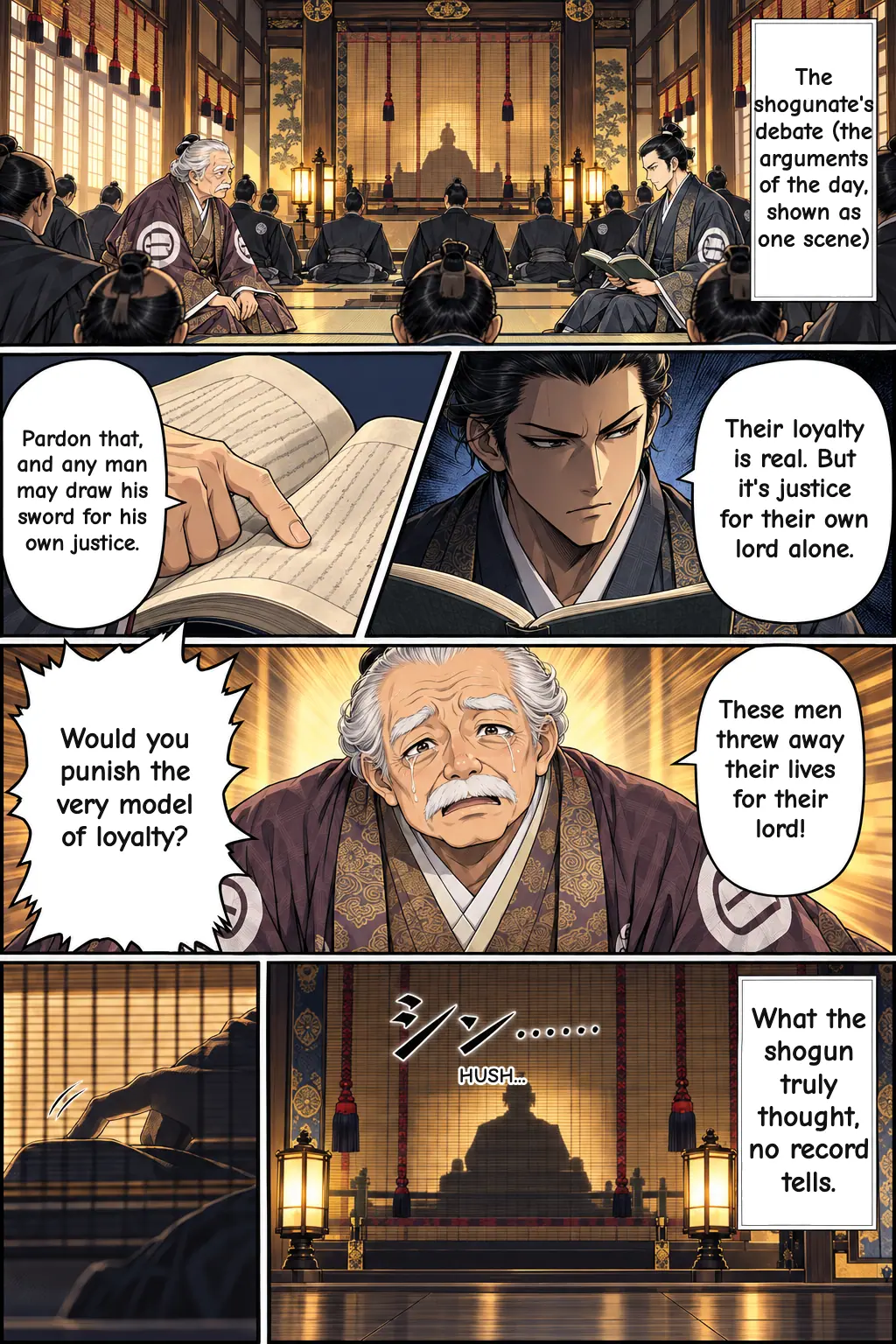
For about seven weeks the ronin waited. At the Hosokawa mansion in Takanawa, the lord Hosokawa Tsunatoshi greeted them in person and treated them with great respect. The hospitality was so generous that the ronin reportedly asked for plainer meals. Meanwhile, opinion was divided over what to do with them. Some scholars, such as the Confucian Hayashi Hoko, praised the raid as an act of loyalty. The philosopher Ogyu Sorai is said to have argued that their loyalty was a private matter that could not override the law, and that allowing them an honorable seppuku (ritual suicide) would preserve their dignity as samurai. However, the document usually cited for Sorai's opinion may not be genuine.
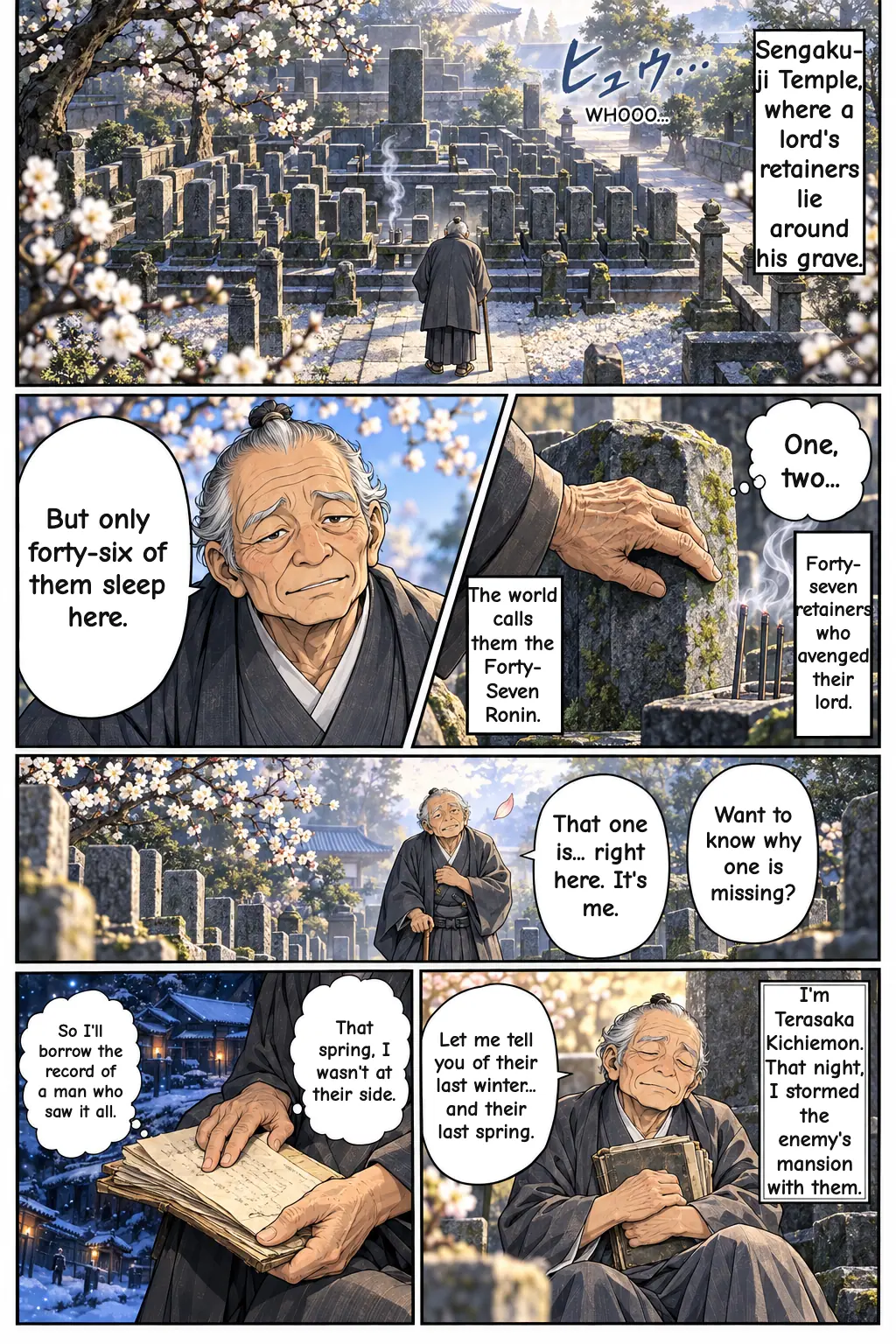
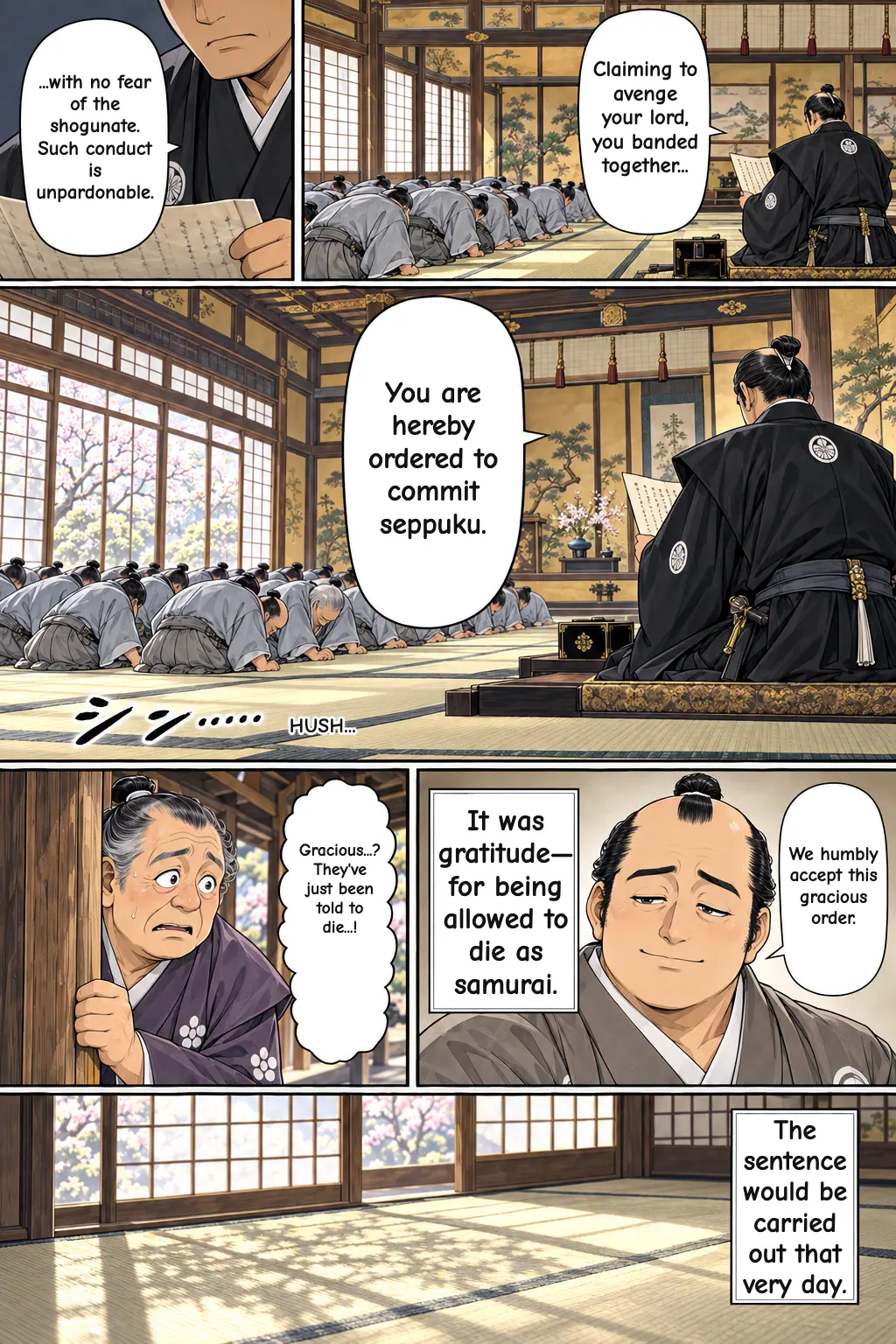
On the 4th day of the 2nd month of Genroku 16 (March 1703), messengers brought the verdict to all four houses. In short, it said that the ronin had banded together and attacked in the name of avenging their master, showing no respect for the shogunate's authority, and were therefore ordered to commit seppuku. The sentence was carried out that same day at each mansion. At the Hosokawa residence Oishi went first, with a Hosokawa retainer named Yasuba Ippei acting as his second. The bodies were carried to Sengaku-ji, a temple in Takanawa, and buried near the grave of Lord Asano.
The 47th Man: Terasaka Kichiemon
Why forty-seven ronin but only forty-six graves of men who died by seppuku? The answer is Terasaka Kichiemon, a foot soldier who served one of the ronin, Yoshida Chuzaemon. He took part in the raid but left the group afterward and was never placed in custody. Even in his own time, people disagreed about why. One explanation is that Oishi sent him away on a mission to report the news; another is that he simply ran away. Terasaka lived on until 1747, dying at the age of 83. He was buried at Sokei-ji in Azabu, and a memorial grave for him also stands at Sengaku-ji beside his comrades.
Main Characters
Horiuchi Den'emon was the Hosokawa retainer assigned to look after the ronin. He talked with them often, listened to their stories about the hard years before the raid and their worries about their families, and wrote it all down. His memoir is one of the most personal records we have of the ronin's final weeks. He sometimes quietly passed along their letters and messages. A tradition, not firmly documented, says he later took locks of their hair home to Yamaga in Higo (today's Kumamoto) for memorial rites.
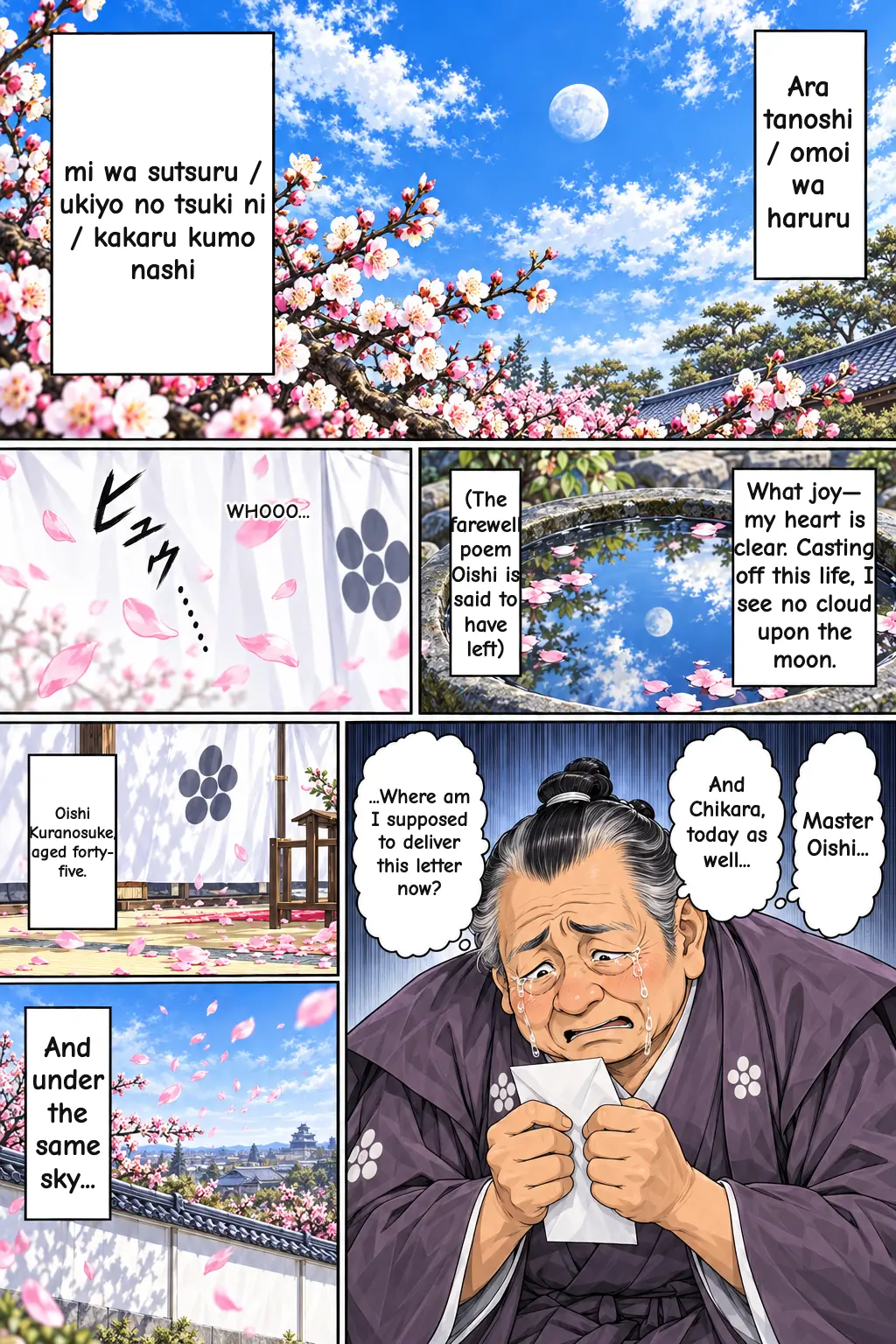
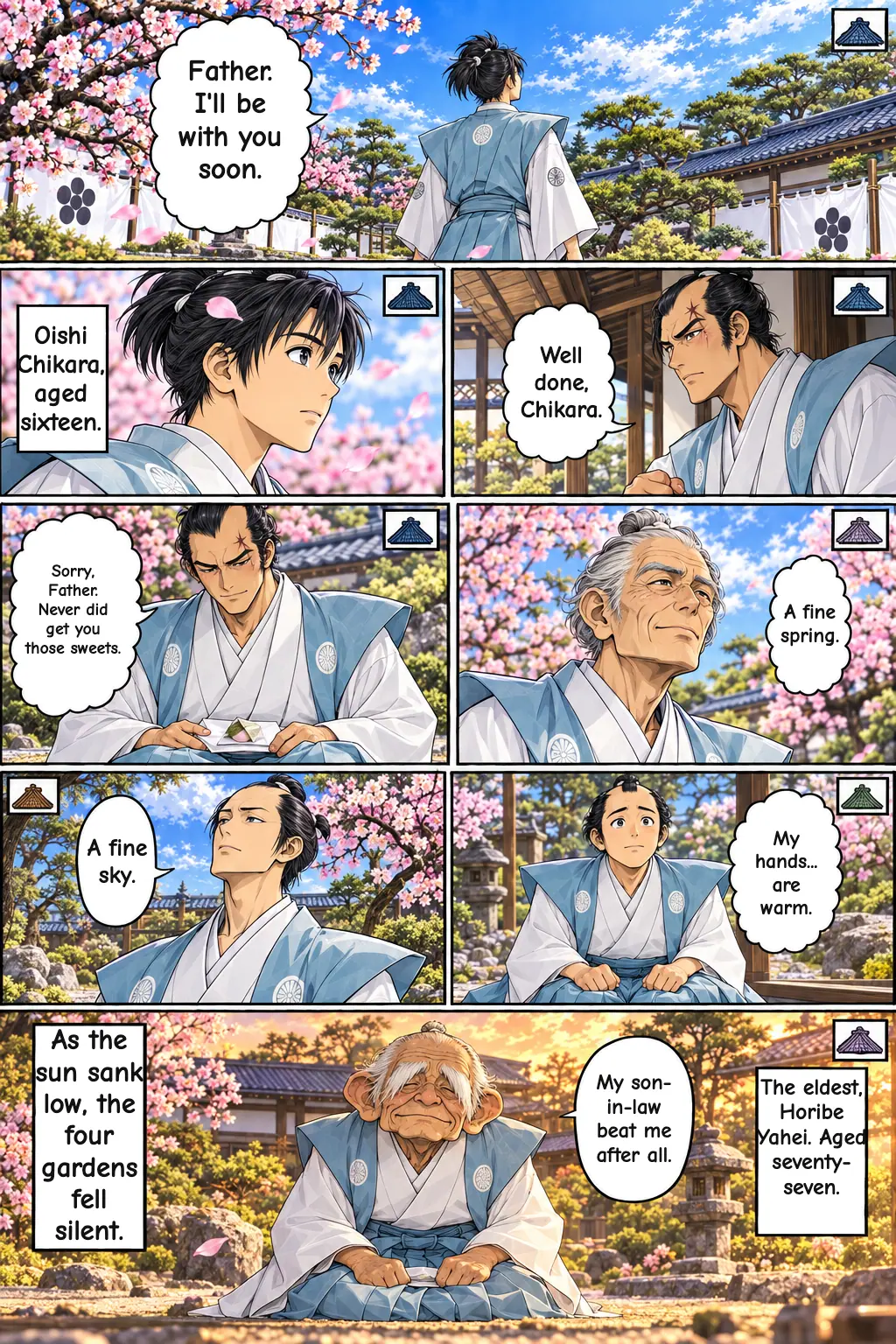
Oishi Kuranosuke, the former chief retainer of Ako, remained calm throughout his custody. A well-known farewell poem, expressing that his heart was clear and no cloud hung over the moon, is attributed to him, but scholars disagree about when it was written and whether he truly wrote it. His son Chikara, only sixteen, was held at a different mansion and died on the same day as his father.
What the Story Means: Loyalty Versus Law
The ending of the 47 Ronin captures a tension at the heart of Edo-period Japan. The ronin acted out of loyalty to their lord, a core samurai virtue, yet they also broke the peace that the Tokugawa shogunate worked hard to keep. The verdict tried to satisfy both sides: it punished them for defying the law, but by granting seppuku instead of execution, it let them die as samurai rather than as criminals. This balance is a big reason the story still sparks debate today.
The tale also passed quickly into art. In 1748, the year after Terasaka died, the puppet play Kanadehon Chushingura premiered at the Takemoto-za theater in Osaka. Because depicting recent political events was risky, the eleven-act play moved the story back to the 14th century and renamed everyone: Oishi became Oboshi Yuranosuke, Asano became Enya Hangan, and Kira became Ko no Moronao. It became one of the most beloved works of Japanese theater and the source of the name Chushingura used for the story ever since.
What the Manga Changed
Episode 12 follows the historical outline closely: the four houses, the verdict, the seppuku, and the burial at Sengaku-ji are all based on records. Some parts are dramatized. No minutes survive of any shogunate meeting, so the debate between Sorai's and Hoko's views is staged as a single scene. Horiuchi's conversations with the ronin are written in new words, though they follow the kinds of stories found in his memoir. His being entrusted with a letter from Oishi to Chikara builds on the record that he passed along messages, but the specific scene is the manga's own.
The glances and inner thoughts of the ronin before their deaths are imagined, as are many details of life in the Matsudaira, Mori and Mizuno households, which left fewer records. Most importantly, the elderly Terasaka telling the story at the graves of Sengaku-ji is a creative frame with no basis in historical sources, as is the theater scene where the curtain rises on Kanadehon Chushingura.
Where to Read It
If you want to see these final weeks unfold, from the quiet talks at the Hosokawa mansion to the snowless spring day of the verdict, THE 47 RONIN: Chushingura – A Vow in the Winter Snow is available on Manga Portal. Every episode is free to read, with no sign-up required, so you can start at Episode 1 to follow the vow from the beginning, or read Episode 12 to see how the story of the forty-seven became a legend.
Characters in this episode
Horiuchi Den'emon
A Hosokawa retainer who cared for the ronin in custody and wrote a memoir of their conversations.
Oishi Kuranosuke
Former chief retainer of Ako and leader of the ronin, the first to commit seppuku at the Hosokawa mansion.
Oishi Chikara
Kuranosuke's sixteen-year-old son, the youngest of the ronin, who died the same day at the Matsudaira mansion.
Terasaka Kichiemon
The 'forty-seventh' ronin, a foot soldier who joined the raid but left the group and lived until 1747.
Hosokawa Tsunatoshi
Lord of Kumamoto who took custody of seventeen ronin and received them with notable courtesy.
Asano Takumi-no-kami
The ronin's late lord, forced to commit seppuku in 1701, beside whose grave at Sengaku-ji they were buried.
FAQ
What happened to the 47 Ronin after the raid?
Forty-six of them surrendered and were held in custody by four daimyo houses for about seven weeks. In March 1703 the shogunate ordered them to commit seppuku, and all of them died the same day. They were buried at Sengaku-ji in Tokyo.
Why are there 47 Ronin but only 46 who committed seppuku?
The 47th man, Terasaka Kichiemon, left the group after the raid and was never taken into custody. Some say Oishi sent him to report the news, while others say he fled. He lived until 1747.
Why were the 47 Ronin ordered to commit seppuku instead of being executed?
The shogunate judged that they had broken the law by forming a band and attacking without permission. Granting seppuku, however, let them die honorably as samurai, a compromise between punishing them and respecting their loyalty.
Where are the 47 Ronin buried?
They are buried at Sengaku-ji, a temple in the Takanawa area of Tokyo, next to their lord Asano Takumi-no-kami. A memorial grave for Terasaka Kichiemon also stands there, though his actual grave is at Sokei-ji in Azabu.
What is Kanadehon Chushingura?
It is an eleven-act puppet play first performed in Osaka in 1748, based on the 47 Ronin story. To avoid trouble with the authorities, it moved the events to the 14th century and changed the characters' names.