Episode 2385 Miles to Deliver the Worst NewsLord Asano's Seppuku and the Express Palanquin
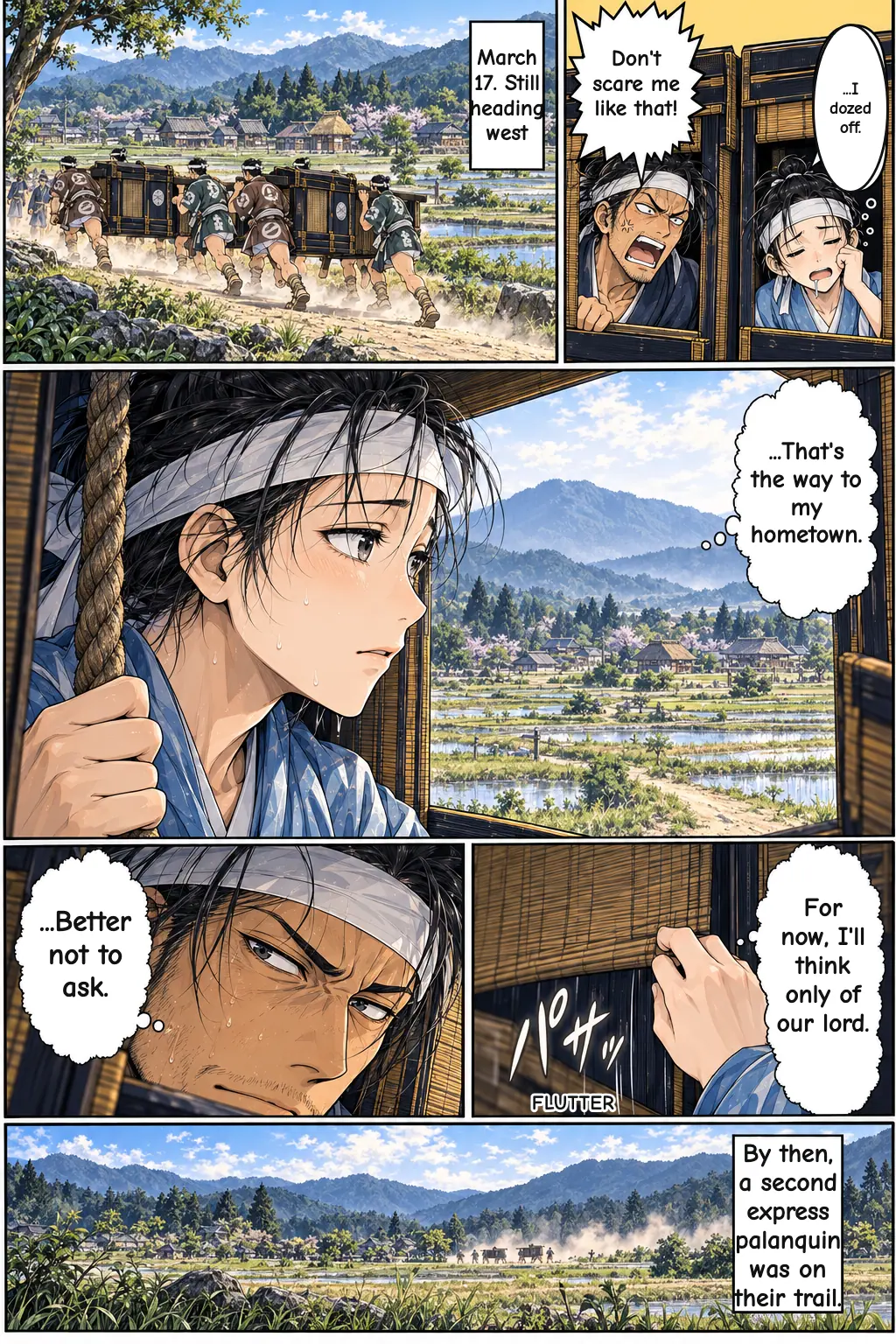
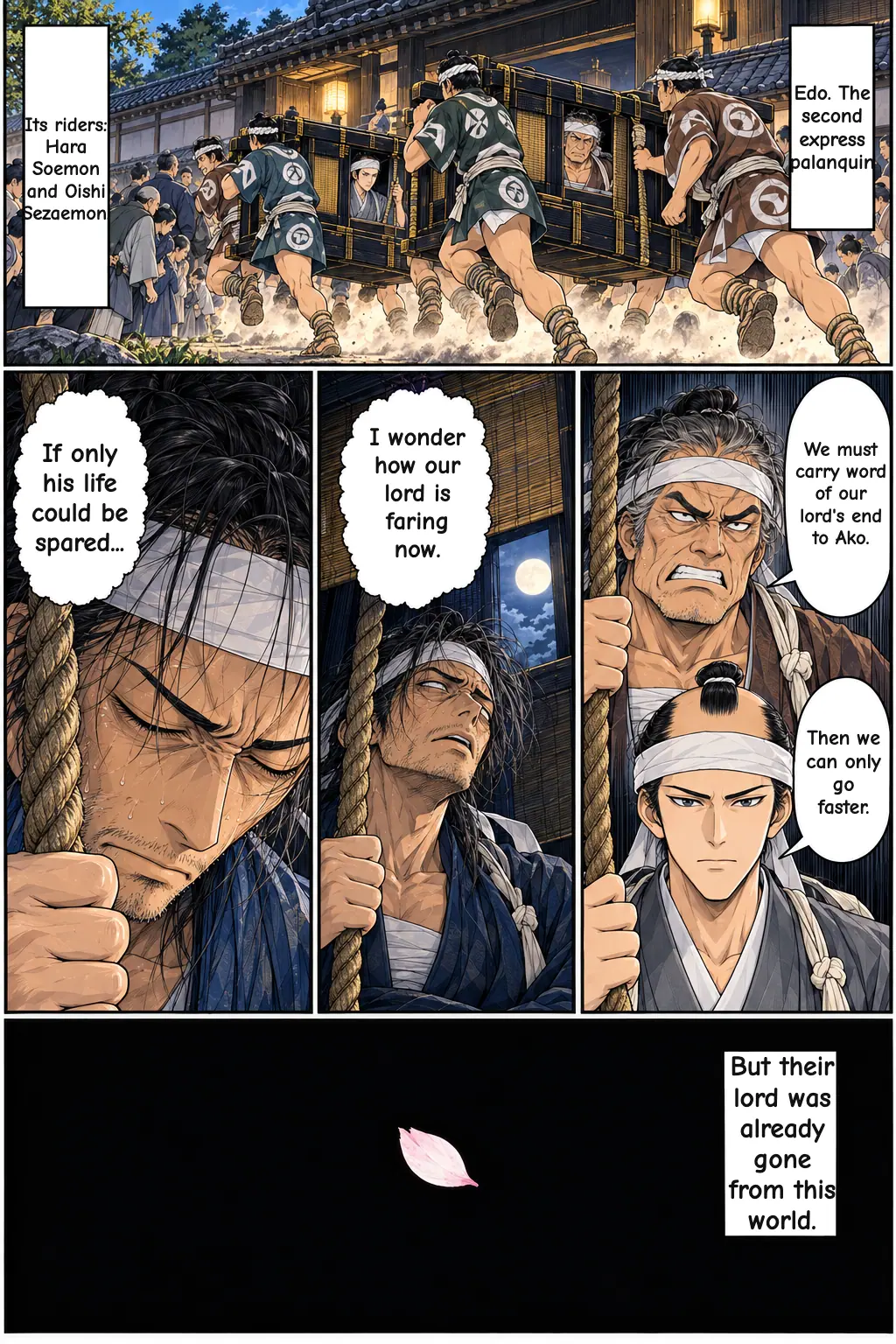
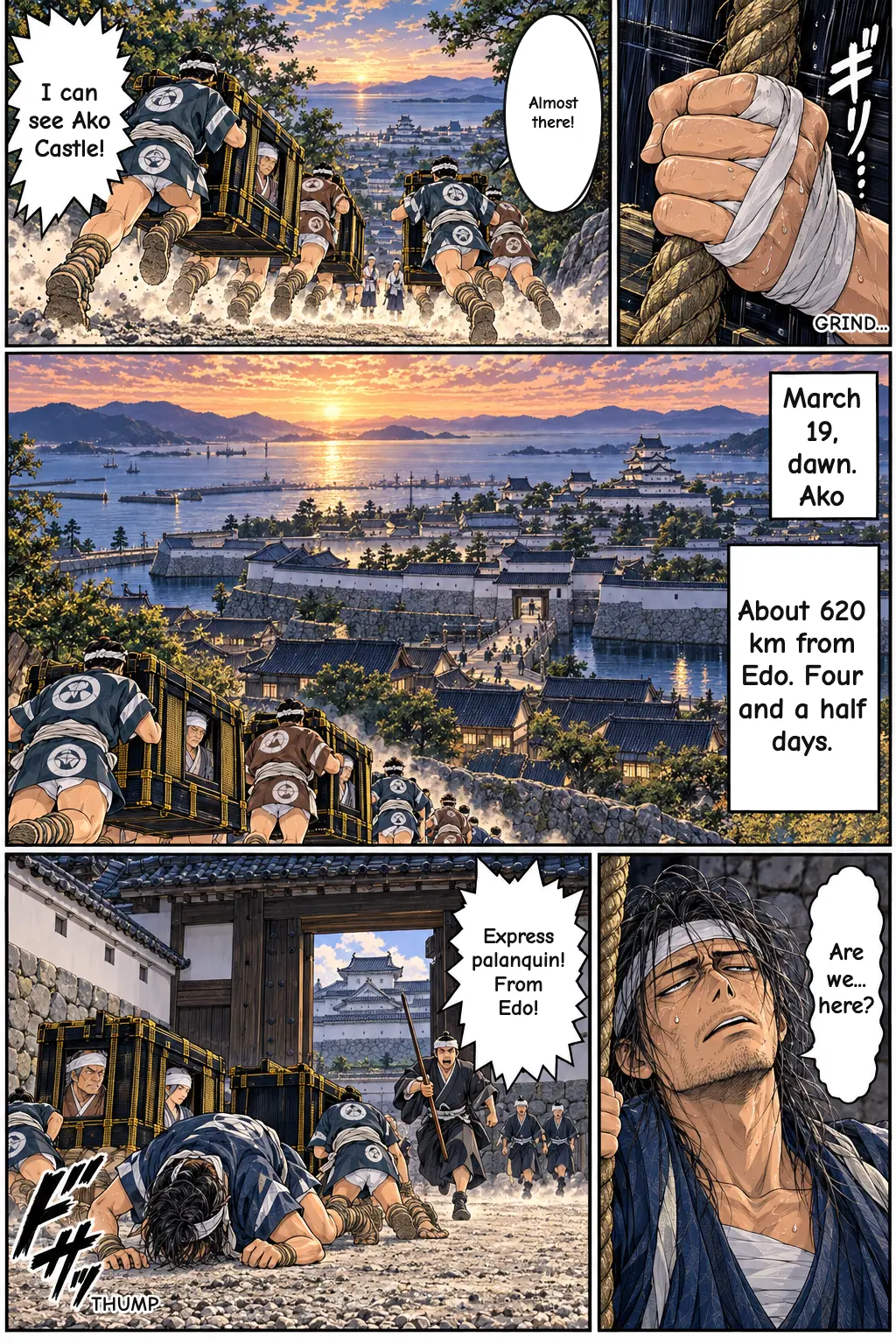
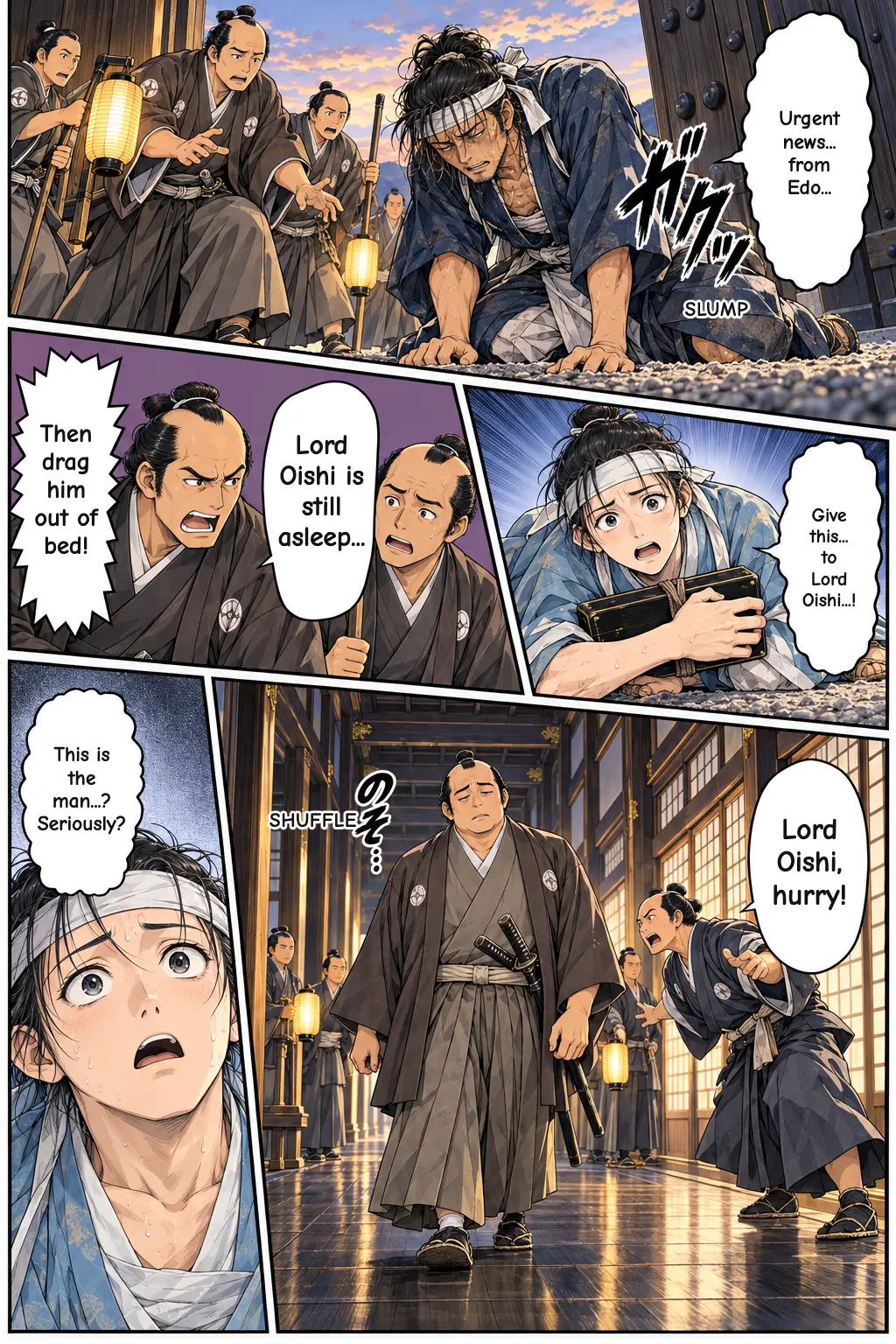
On the very day he drew his sword inside Edo Castle, Lord Asano is ordered to commit seppuku, and he meets his end with quiet dignity. Meanwhile, Hayami and Kayano tie themselves into an express palanquin and race some 620 km to Ako in four and a half days. When Oishi Kuranosuke finally hears all of the news, he says only two words.
The 47 Ronin: Lord Asano's Seppuku and the Race to Ako Explained
The original story: one day, one sentence
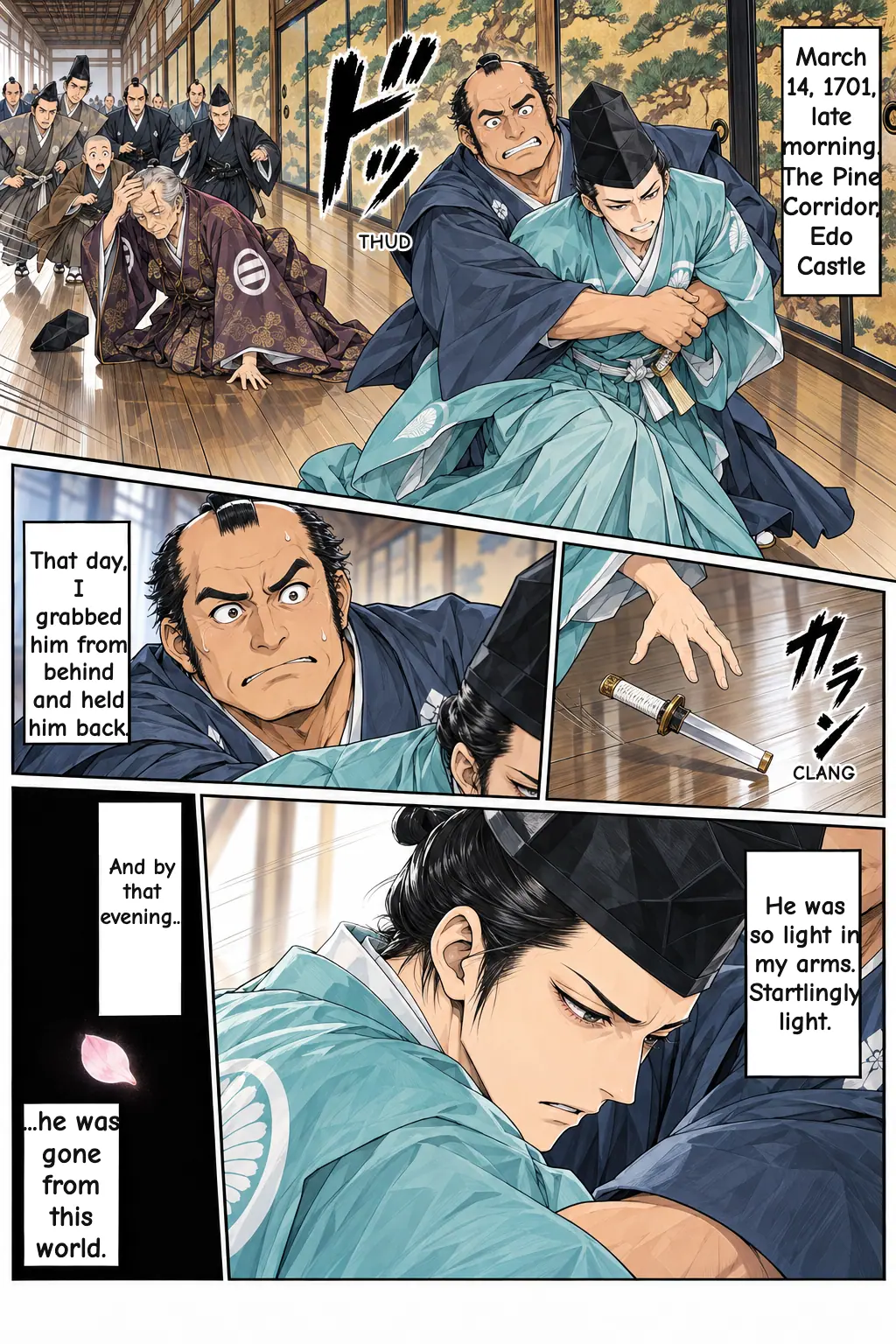
The tale of the 47 Ronin, known in Japan as Chushingura, begins with a single act of violence. On the 14th day of the third month of Genroku 14 (April 21, 1701), Asano Naganori, the lord of the small Ako domain, drew his short sword inside Edo Castle, the shogun's seat of power. His target was Kira Yoshinaka, a senior court-ritual official. At the time, Asano had been assigned to host envoys sent by the imperial court in Kyoto, and Kira was the expert on the etiquette involved. Why Asano attacked him remains unknown. The records say only that he spoke of a grudge, and every explanation since then is guesswork.
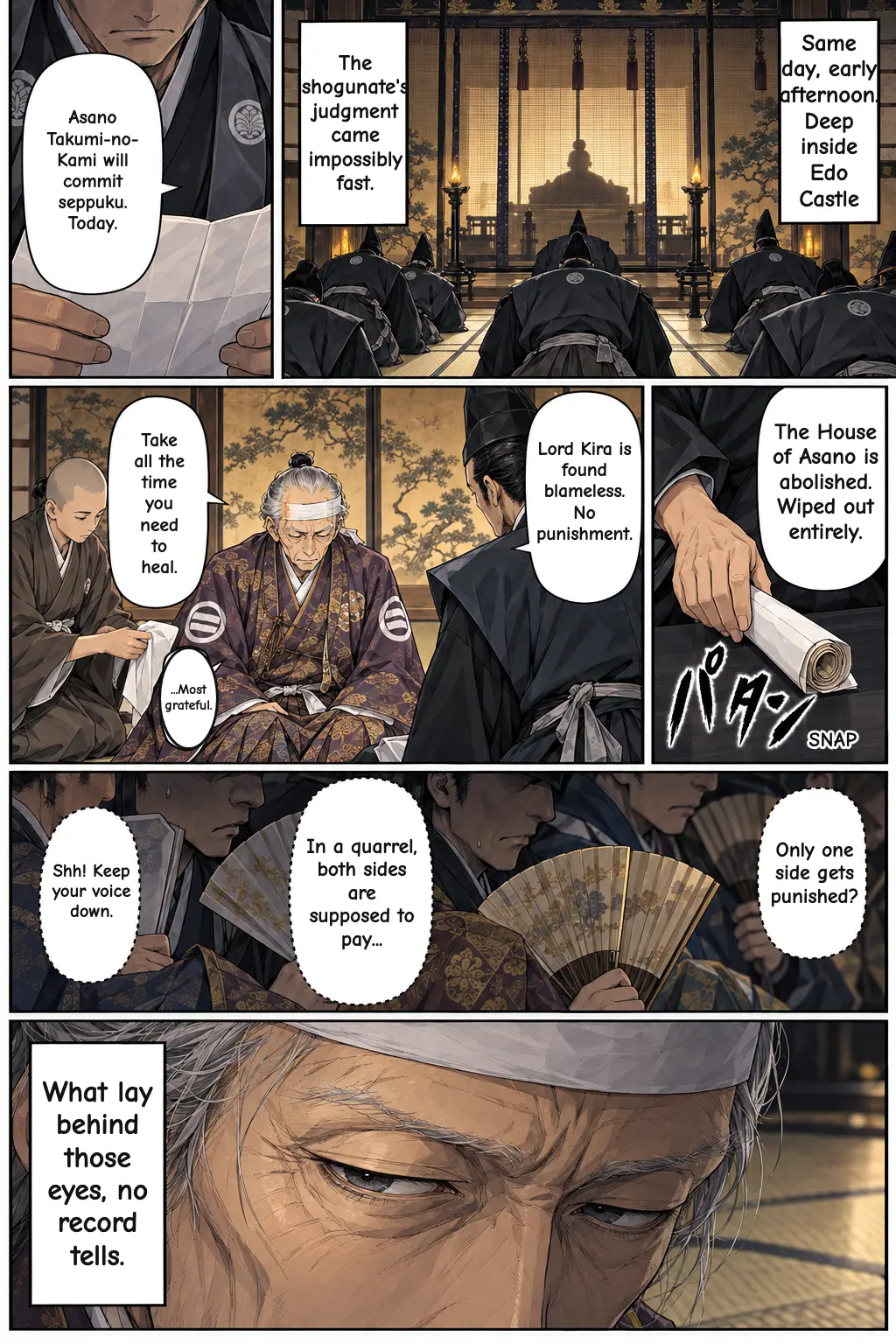
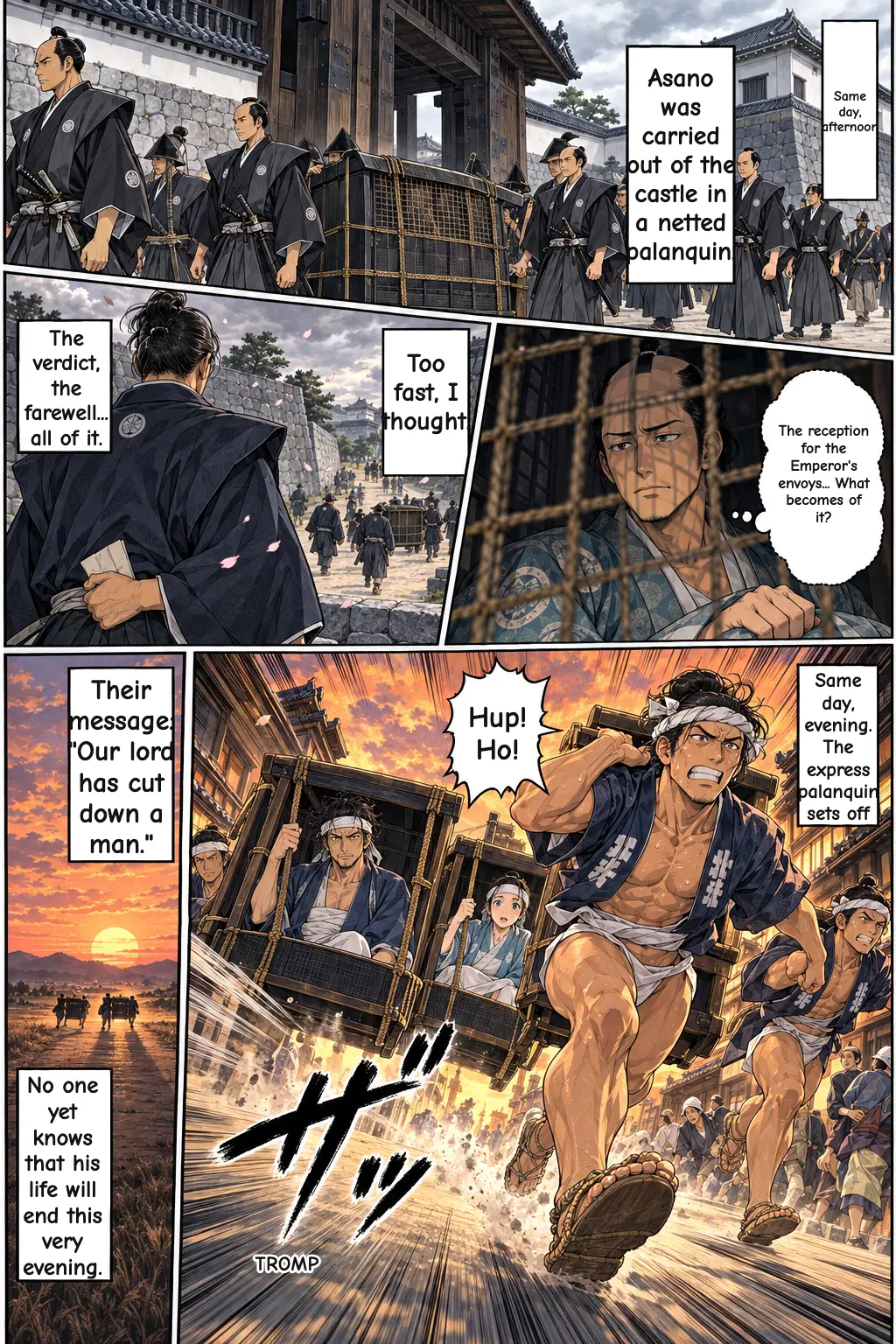
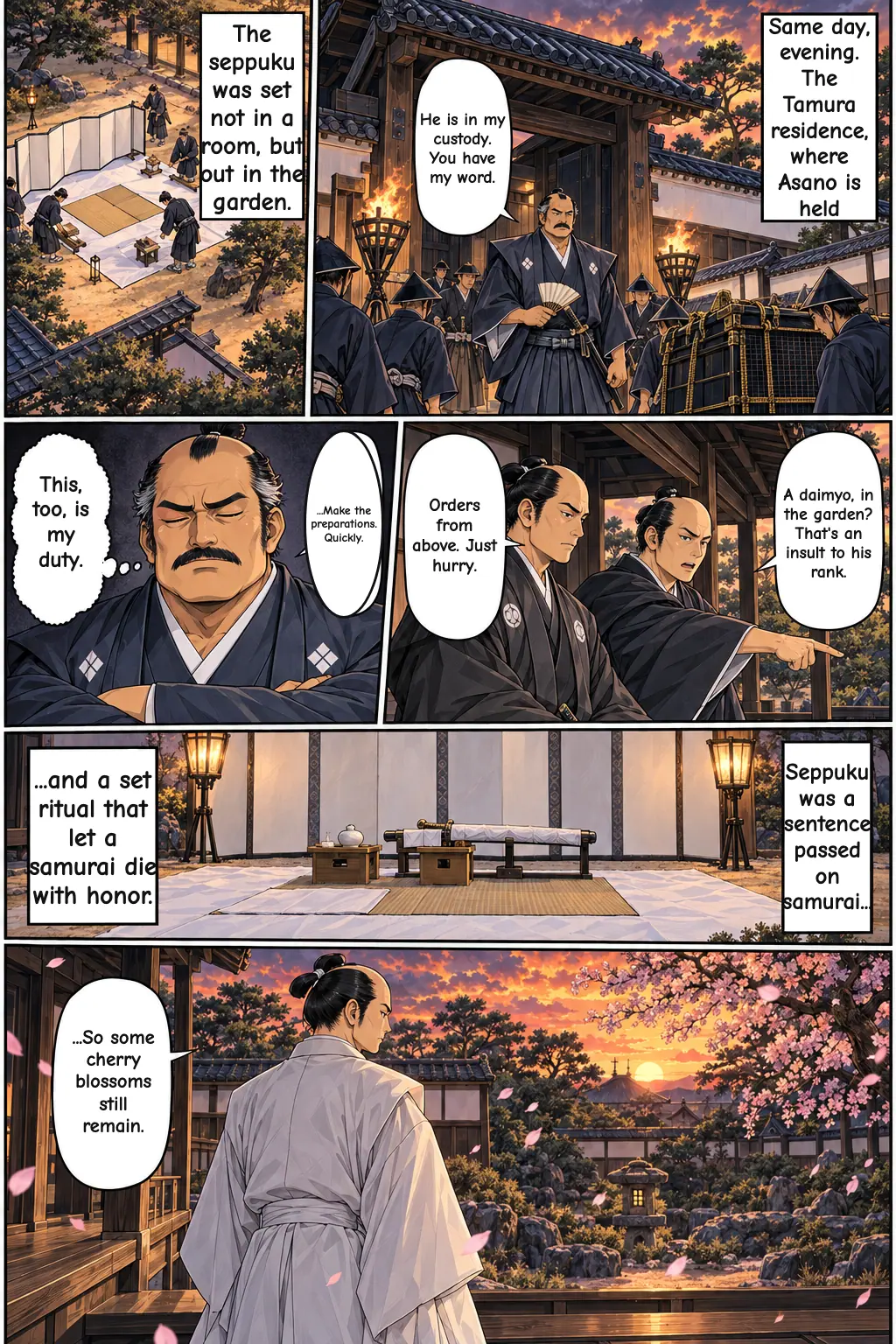
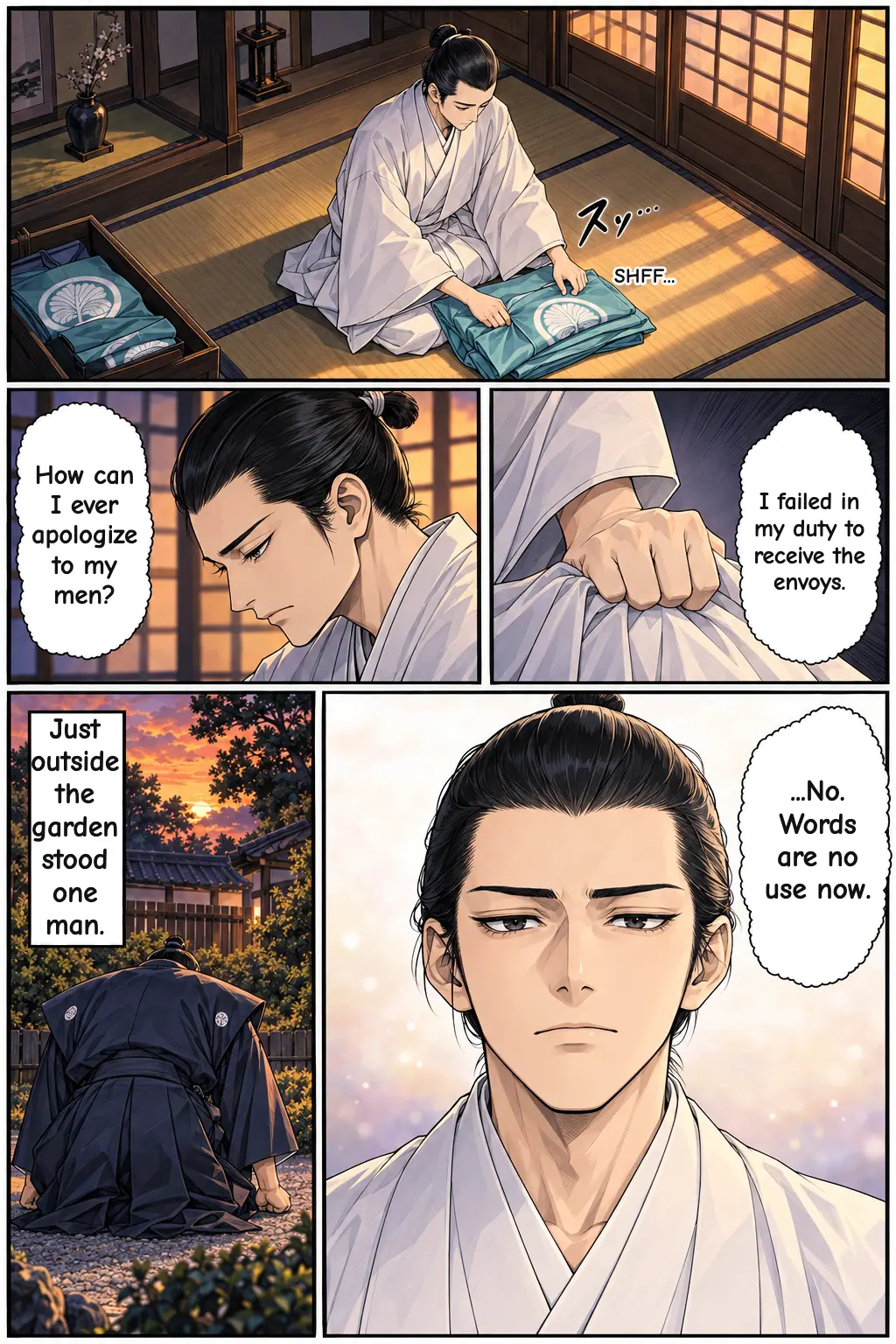
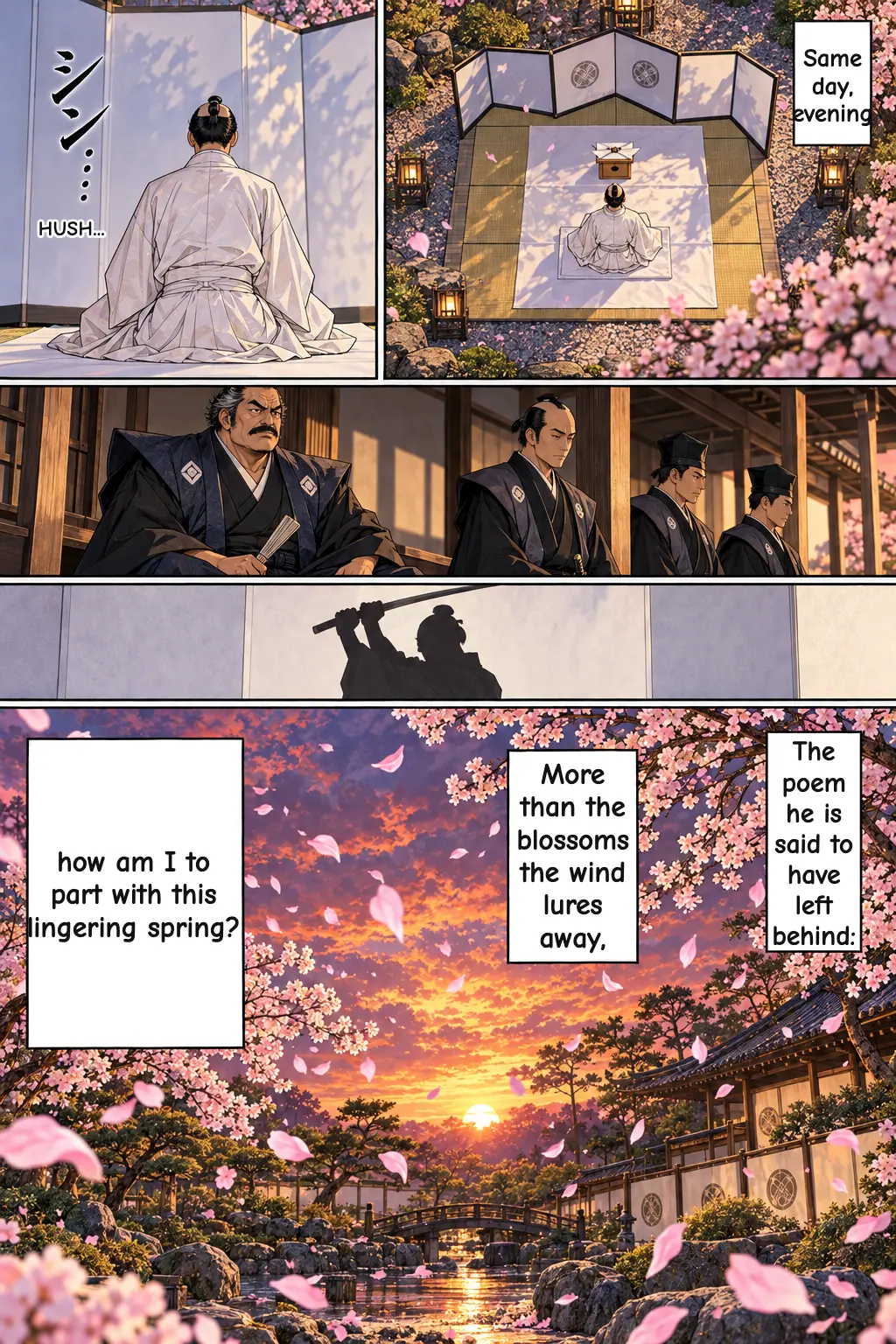
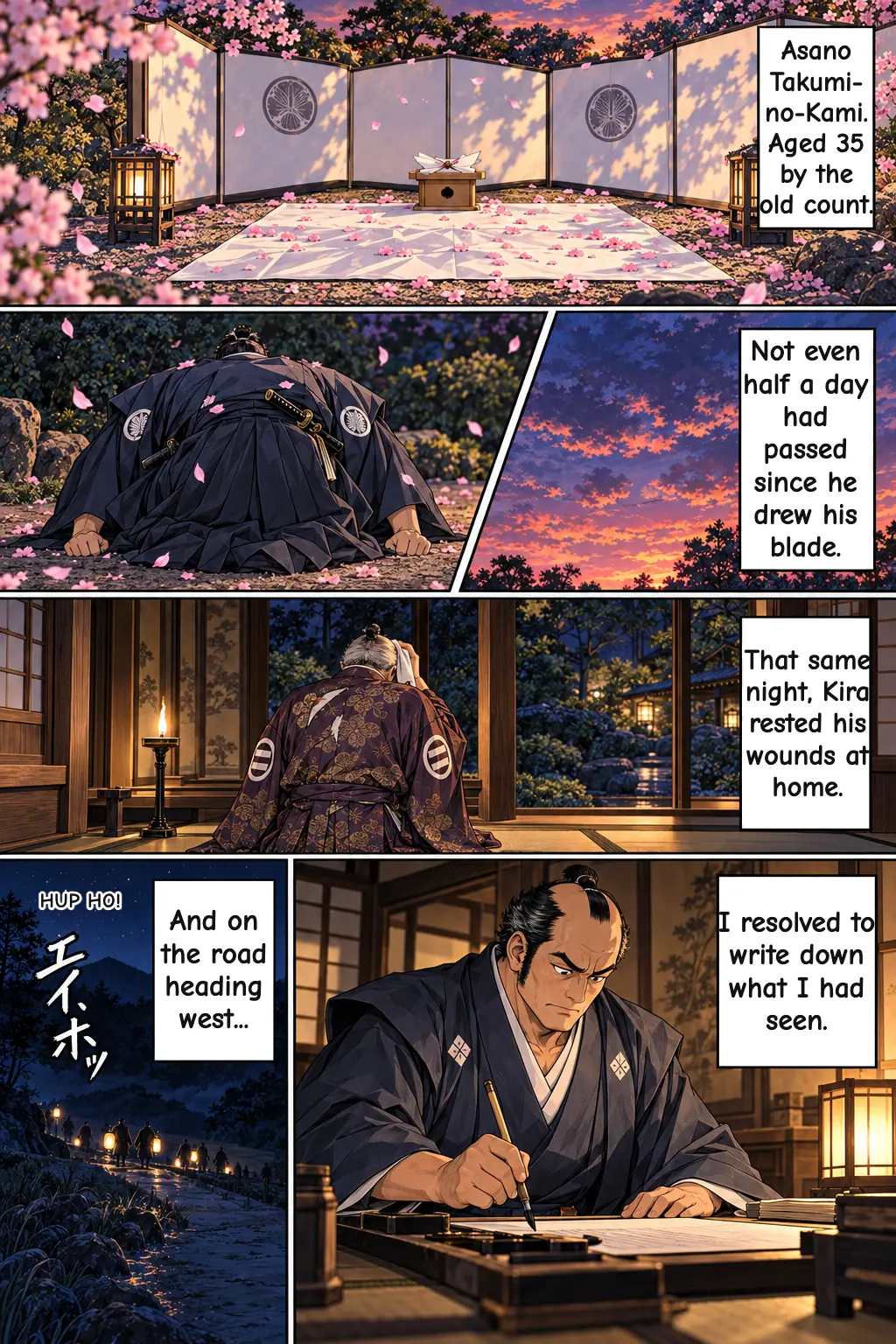
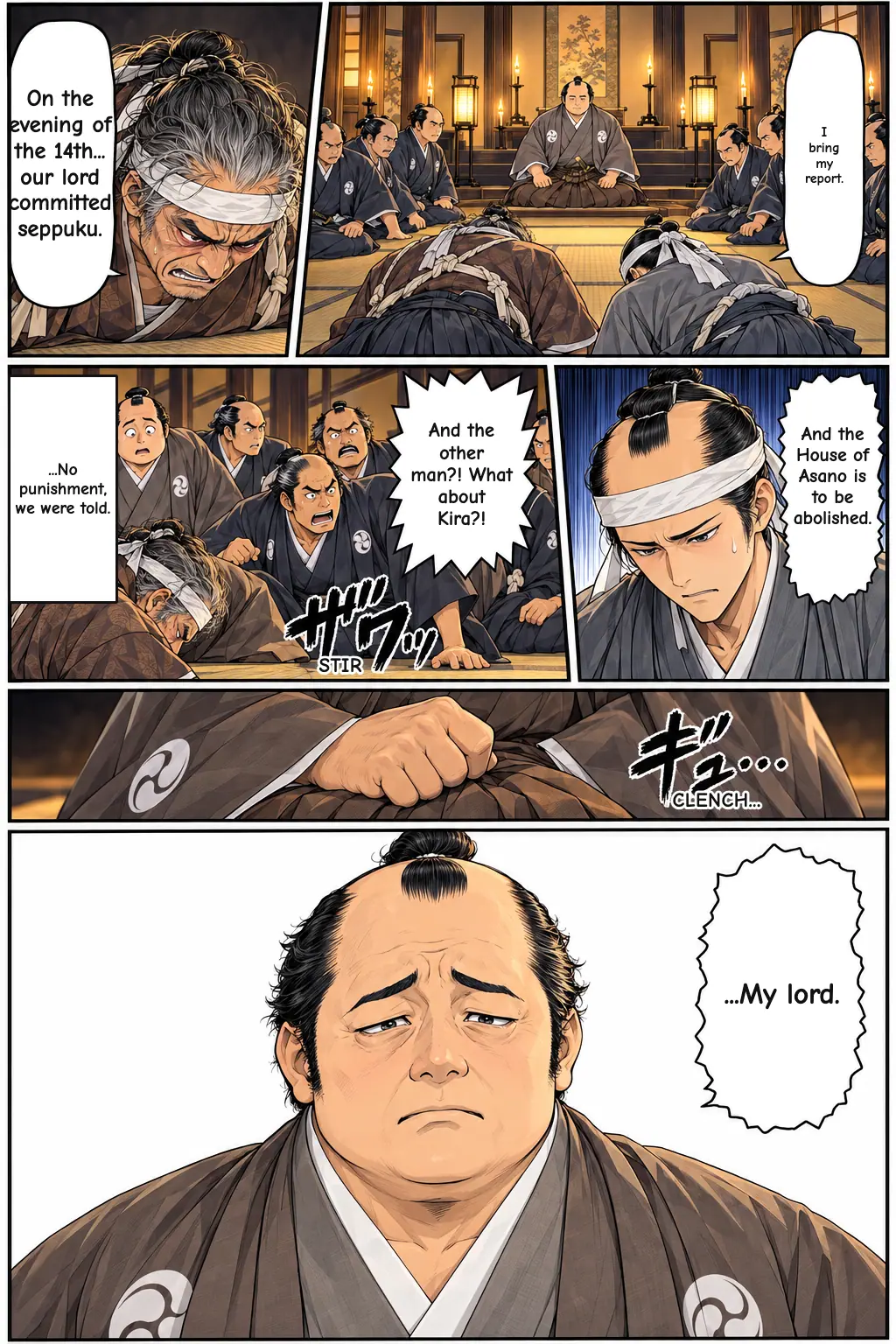
The attack took place in the Corridor of Pines, a long hallway in the castle's main compound. A guard officer named Kajikawa Yosobei grabbed Asano from behind, and Kira survived with cuts to his forehead and back. Drawing a blade inside the castle was a grave crime, and the shogunate acted with startling speed. That same day, Asano was carried in a palanquin covered with netting, a sign that he was now a prisoner, to the Edo mansion of Tamura Takeaki, lord of the Ichinoseki domain. By evening he had been ordered to commit seppuku, ritual suicide, and he did so there. He was 34 (35 by the traditional Japanese count). Kira received no punishment at all, and the Asano house was abolished. That lopsided outcome is the spark for everything that follows in the story.
385 miles in four and a half days
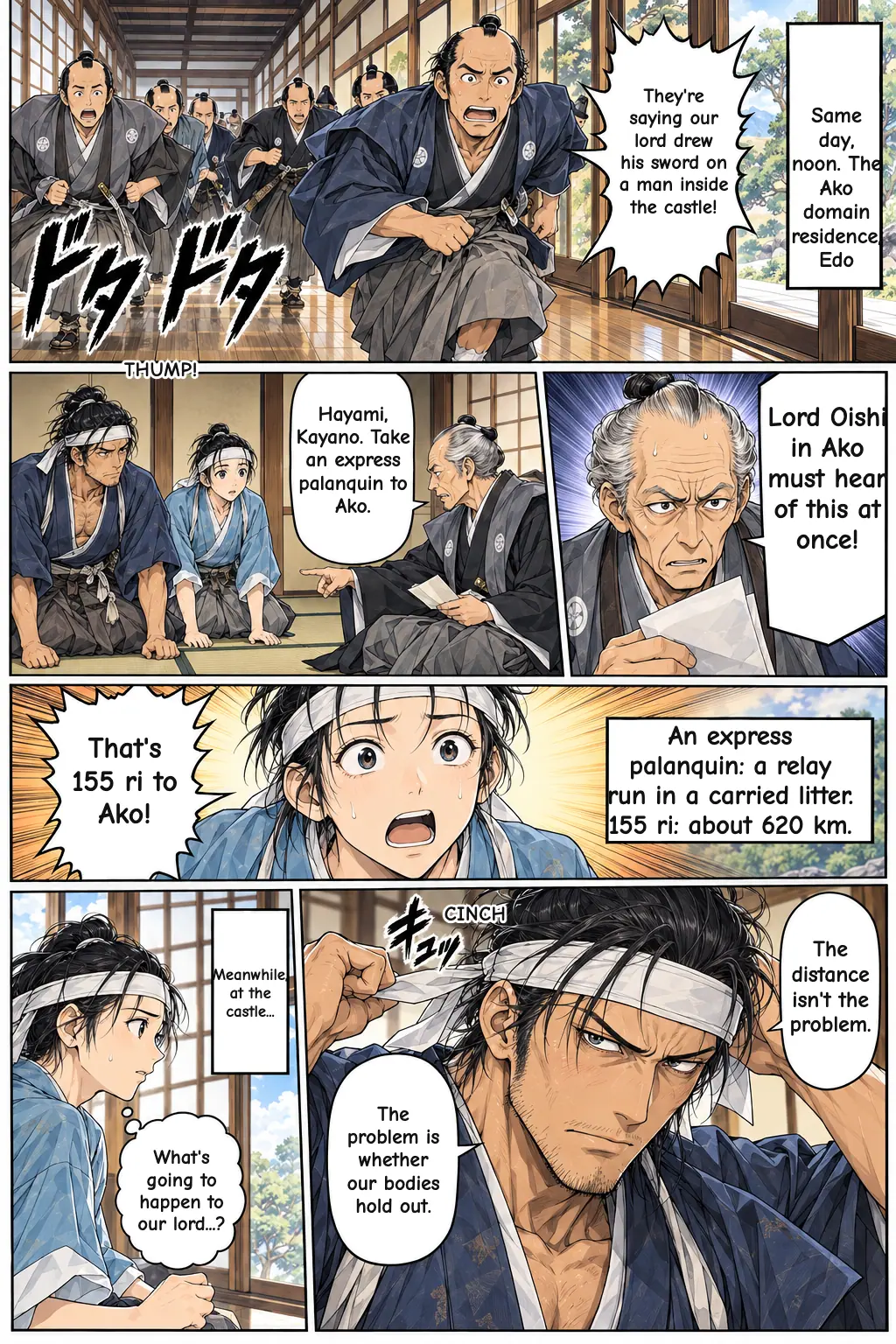
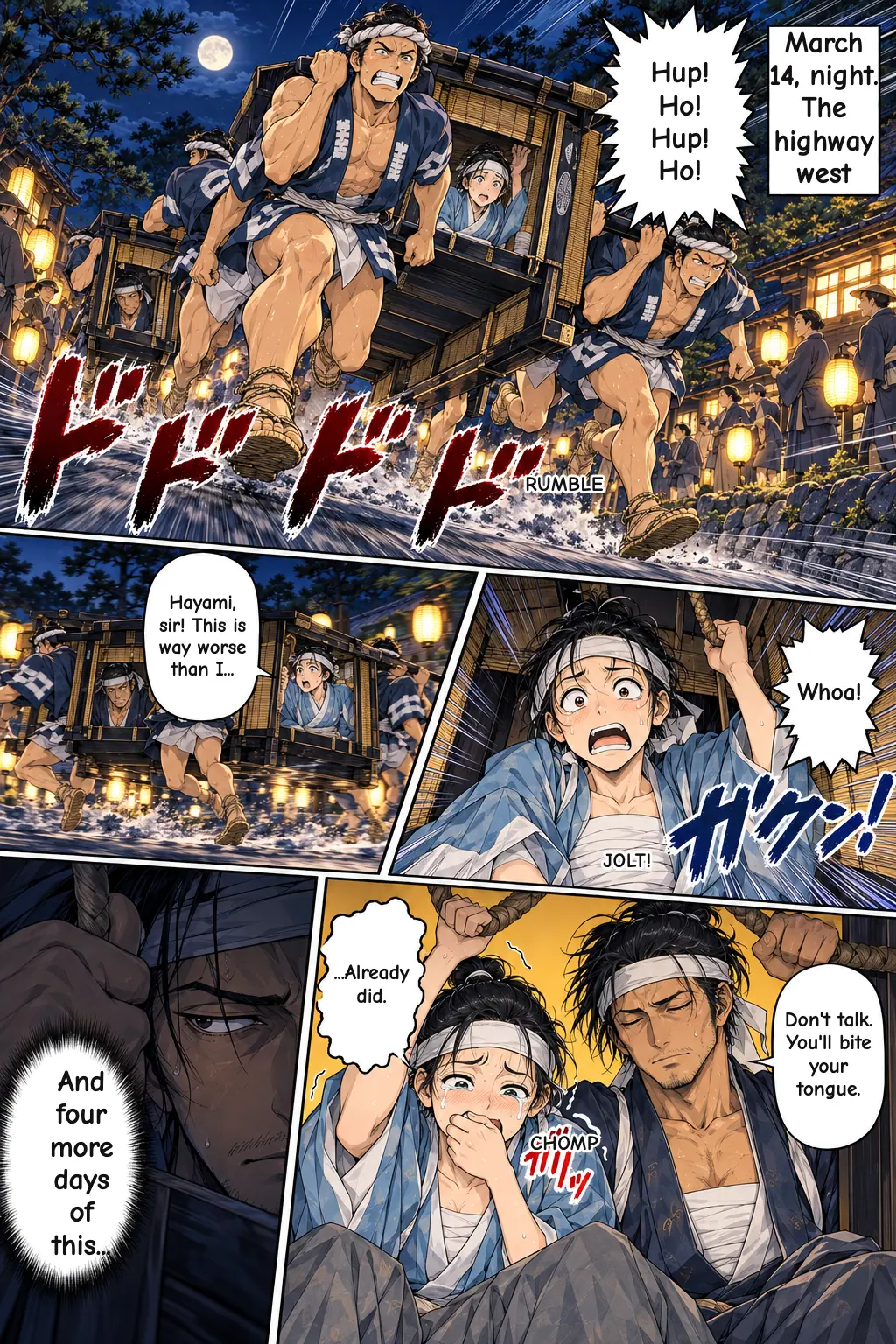
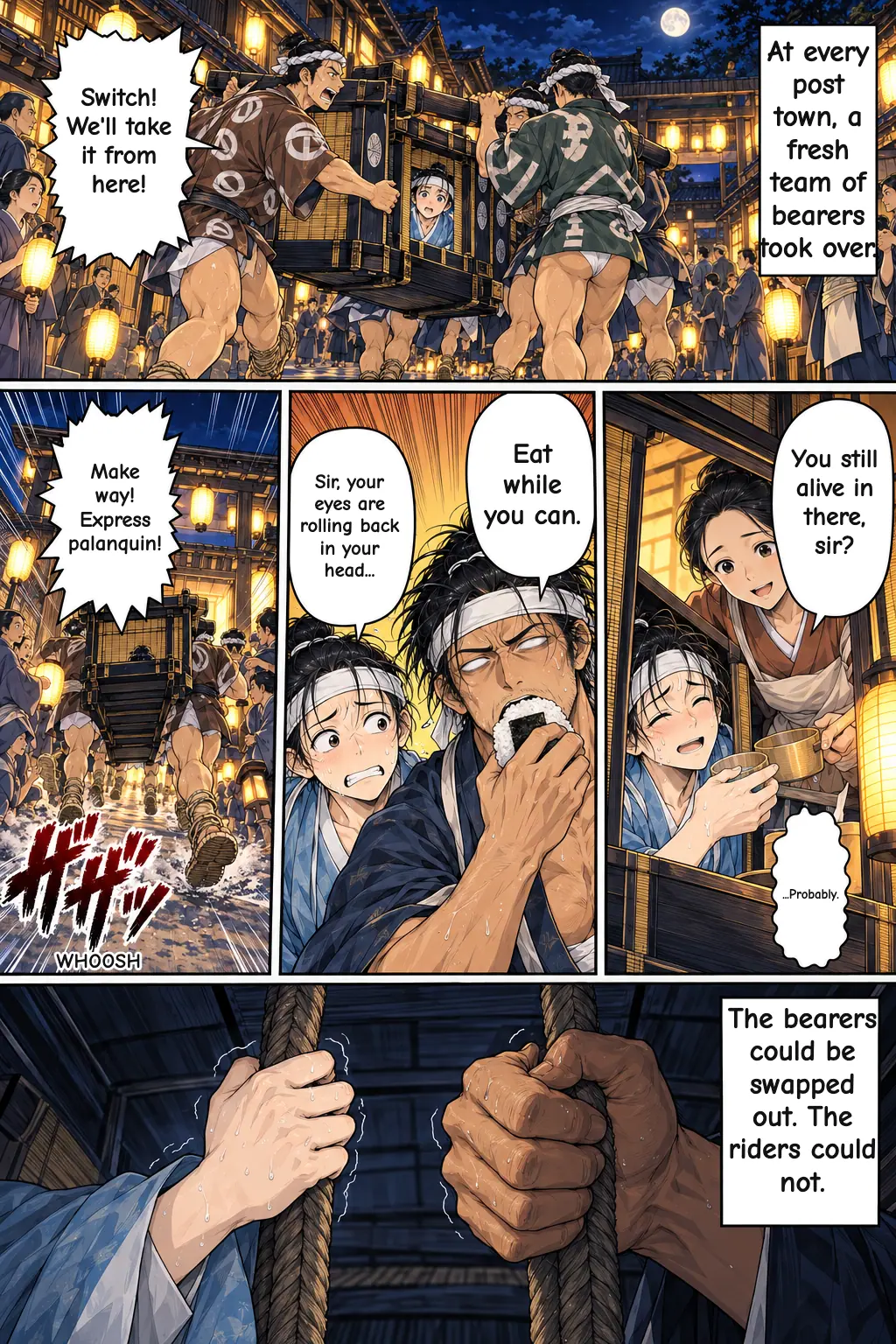
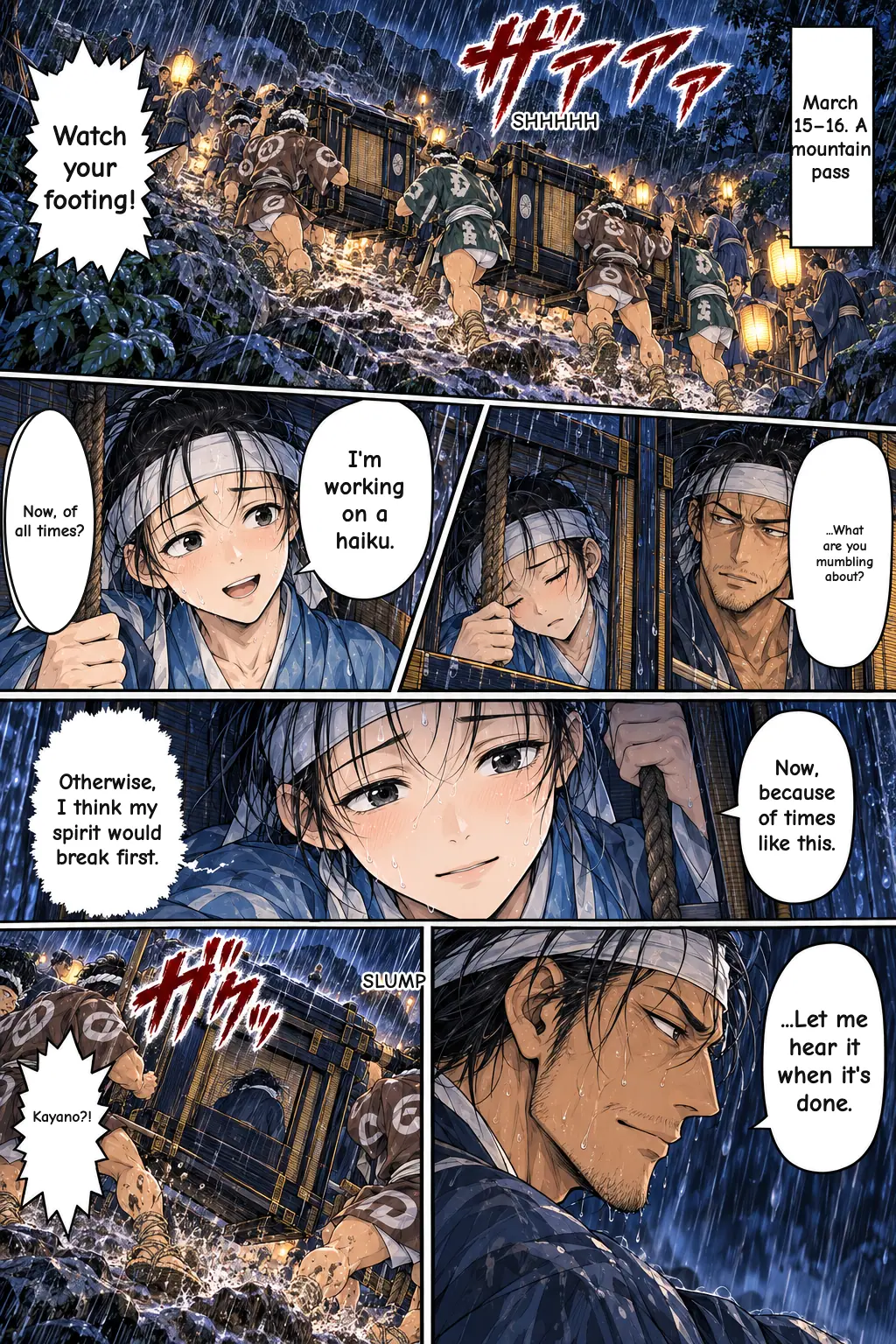
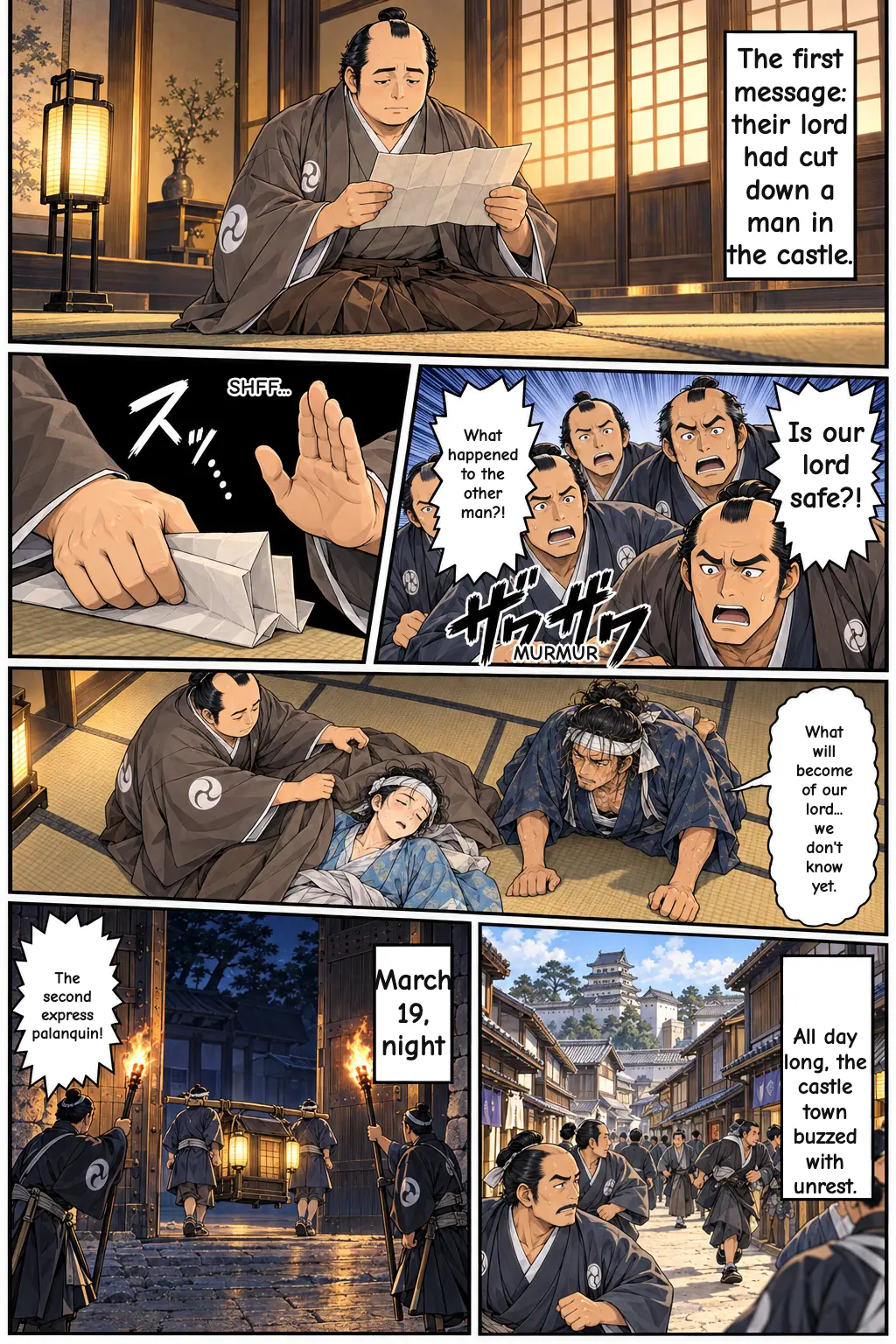
Back in Edo, the Ako retainers had to get word to their home domain, about 155 ri (roughly 620 km, or 385 miles) to the west. According to the chronicle Eseki Kenmonki, two retainers, Hayami Tozaemon and Kayano Sanpei, left on March 14 by express palanquin, a relay system in which teams of bearers carried a passenger at a run and handed off to fresh teams along the road. They reached Ako's castle town early on the morning of March 19, about four and a half days later.
One detail is easy to miss. These first messengers left before the sentence was carried out, so the news they carried was about the attack, not Asano's death. A second pair, Hara Soemon and Oishi Sezaemon, arrived on the night of the 19th with the news of the seppuku and the abolition of the house. The chief retainer, Oishi Kuranosuke, received both reports and called the domain's samurai to the castle. The sources do not record what Oishi said or how he looked at that moment.
Fact, legend, and stage: what the sources really say
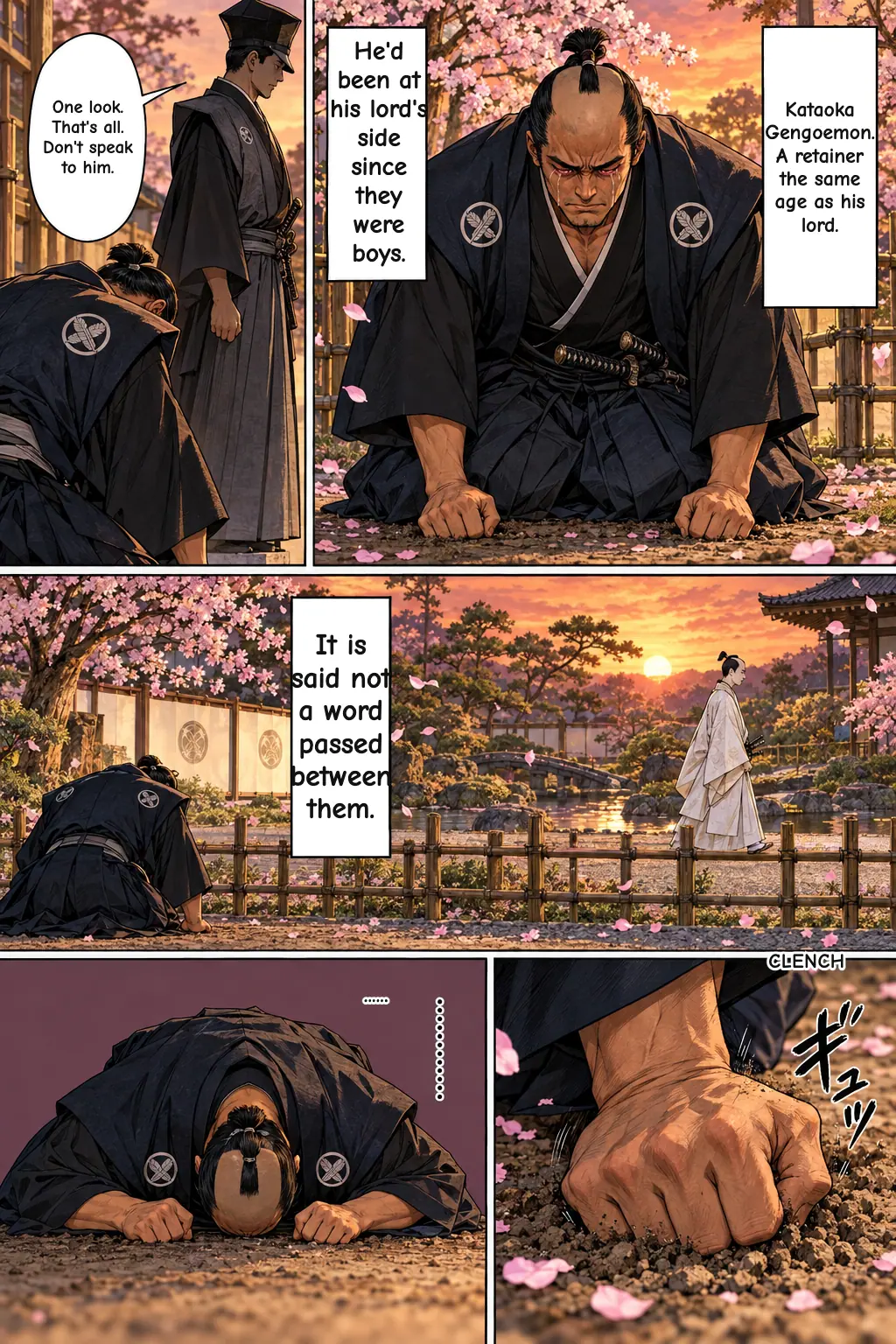
Several famous scenes come from just one source: the memoir of Tamon Denpachiro, an inspector who witnessed the seppuku. According to Tamon, the ritual took place in the garden of the Tamura mansion, and he protested that this was not fitting for a feudal lord. He also writes that Asano's trusted attendant Kataoka Gen'emon was allowed one last look at his master, and that the two parted without a word. Because Tamon wrote the account himself and tends to make his own role look good, historians treat these episodes with caution.
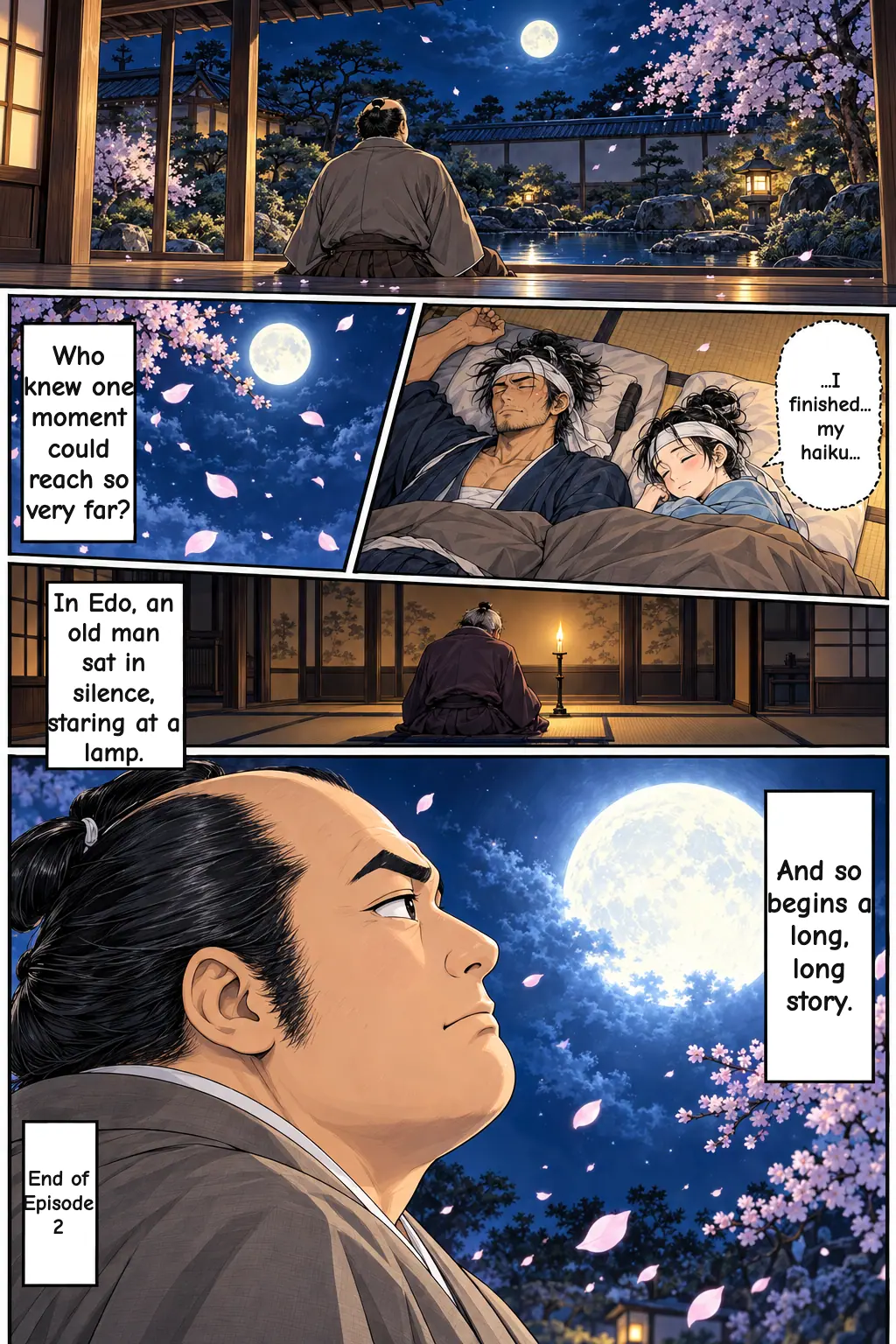
Asano's death poem is also uncertain. It compares the scattering of spring blossoms in the wind with his own regret at leaving the world. It appears in Tamon's memoir and a family biography, but not in the Tamura household's records, so some scholars doubt Asano wrote it. A popular anecdote also says Kayano Sanpei raced past his home village during his mother's funeral without stopping. This story spread in later times and is best read as legend.
Finally, the famous kabuki and puppet-theater play Kanadehon Chushingura (1748) retells this moment with renamed characters. In Act Four, Lord Enya Hangan, the play's version of Asano, delays his seppuku while asking for his chief retainer, Oboshi Yuranosuke, who arrives at the last moment to receive his lord's dagger. It is powerful drama, but it is fiction. In reality, Oishi was hundreds of miles away in Ako.
Why this moment matters
For Edo-period audiences, the shock lay in the imbalance. Under the usual rule for fights, both sides were punished, yet only one man paid here. For the retainers, losing their lord also meant losing their jobs, their income, and their place in society overnight. The days covered in this episode, from a sword drawn in a corridor to the news arriving in Ako, set up the question at the heart of Chushingura: what loyal men owe a master who is gone.
What the manga version adds
The manga follows the documented timeline but dramatizes the gaps. Kataoka's silent farewell is staged as a wordless scene, using glances and bows. The palanquin journey shows bearers changing over, running through the night, and the messengers binding themselves with cloth to survive the jolting, and the route is kept general. Their exhausted arrival at the castle gate, the spring weather at the seppuku, and the retainers' anger when they learn Kira went unpunished are also creative choices. Most notably, Oishi's quiet two words, "...My lord," are invented for the manga and do not appear in any source. The episode does not use the stage play's last-minute reunion.
Where to read it
If you want to see these four and a half days unfold, Episode 2 of THE 47 RONIN: Chushingura – A Vow in the Winter Snow is free to read here on Manga Portal, along with every other episode, with no sign-up needed. It's a good way to follow the true story of the 47 Ronin one step at a time, and to see where history ends and storytelling begins.
Characters in this episode
Asano Naganori (Lord Asano)
Lord of the Ako domain, who attacked Kira inside Edo Castle and was ordered to commit seppuku that same day.
Kira Yoshinaka
A senior shogunate official in charge of court etiquette, who was wounded in the attack but survived and was not punished.
Oishi Kuranosuke
Chief retainer of Ako, who received the news at home in Ako and gathered the domain's samurai at the castle.
Hayami Tozaemon
Ako retainer who rode the express palanquin from Edo with Kayano Sanpei and reached Ako on the morning of March 19.
Kayano Sanpei
Young Ako retainer and the other first messenger, the subject of a later legend about passing his mother's funeral without stopping.
Kataoka Gen'emon
Asano's trusted attendant who, according to one memoir only, was allowed a final silent look at his lord.
FAQ
Why was Lord Asano ordered to commit seppuku?
Drawing a sword inside Edo Castle was a serious crime against the shogun's authority. The shogunate ordered Asano to commit seppuku on the very day of the attack, and it also abolished his house.
Why did Asano attack Kira?
No one knows for sure. The records say only that Asano spoke of a grudge. Popular stories blame insults or bribes, but these are later explanations, not documented fact.
Was Kira punished?
No. Kira was treated for his wounds and received no punishment. This one-sided judgment is a key reason the Ako retainers later took revenge.
How fast did the news reach Ako?
The first messengers, Hayami Tozaemon and Kayano Sanpei, covered about 620 km (385 miles) by express palanquin in roughly four and a half days, arriving early on March 19, 1701. They carried news of the attack, while a second pair brought word of the seppuku that night.
Did Oishi reach Asano before he died, as in the play?
No. That scene comes from the 1748 play Kanadehon Chushingura. In history, Oishi was in Ako, far from Edo, and learned of his lord's death days later.