Episode 3An Army at the Gate. Orders: Don't Fight.The Surrender of Ako Castle
of the series. Their lord is dead and his house abolished, and the retainers of Ako Castle are split between fighting and dying. Oishi Kuranosuke decides that now is not the time to draw swords. A senior retainer slips away, the domain's paper money is about to become worthless, and hotheads ride in from Edo. Through all of it, Oishi hands over the castle without spilling a single drop of blood.
The 47 Ronin: The Surrender of Ako Castle (1701) Explained
What Happened Before the Surrender
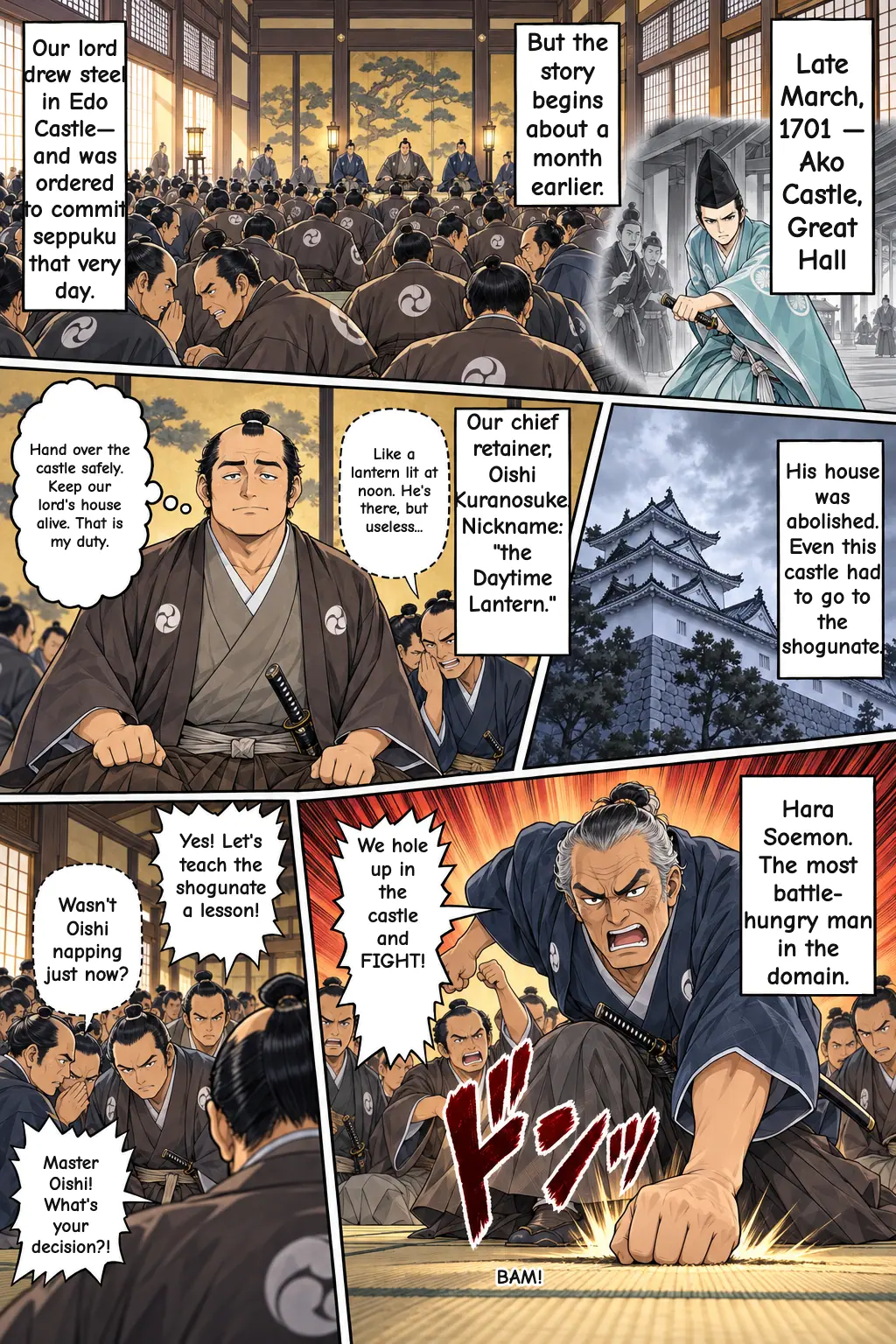
The story of the 47 Ronin begins with a single act of violence. On the 14th day of the third month of 1701 (the 14th year of the Genroku era), Asano Takumi-no-kami, the lord of the Ako domain in western Japan, drew his sword inside Edo Castle, the shogun's seat of power, and wounded a senior court official, Kira Kozukenosuke. Drawing a blade in the castle was a grave crime. Asano was ordered to commit seppuku (ritual suicide) that same day, and his house was abolished.
For the hundreds of samurai who served the Asano family, this meant the end of their world. Their lord was dead, their salaries were gone, and Ako Castle had to be handed over to the shogunate. Messengers rode from Edo to Ako to carry the news. The first to arrive are recorded as Hayami Tozaemon and Kayano Sanpei, and later riders included Hara Soemon, a retainer who would side with the hardliners.
Fight, Die, or Surrender? The Council at Ako
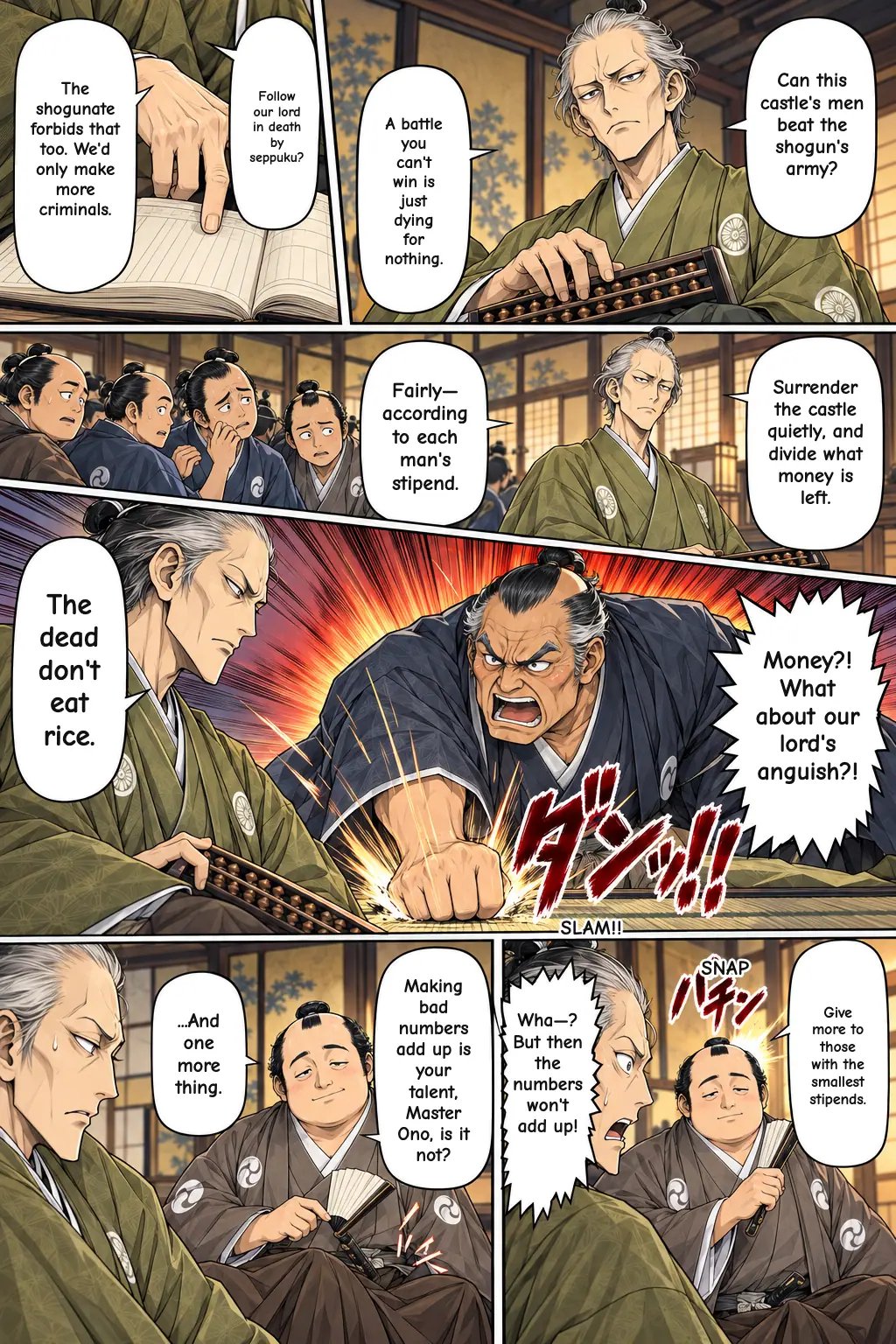
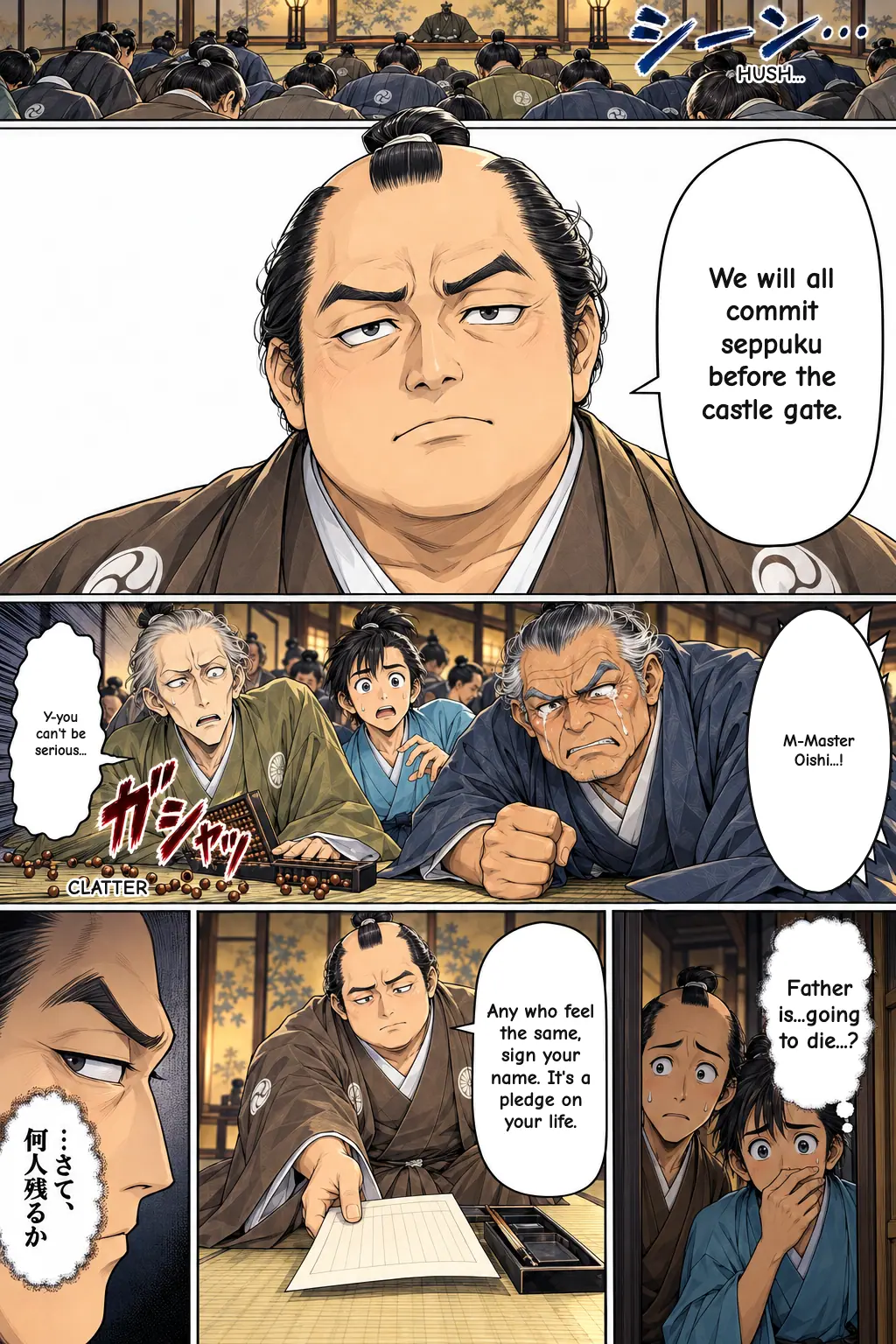
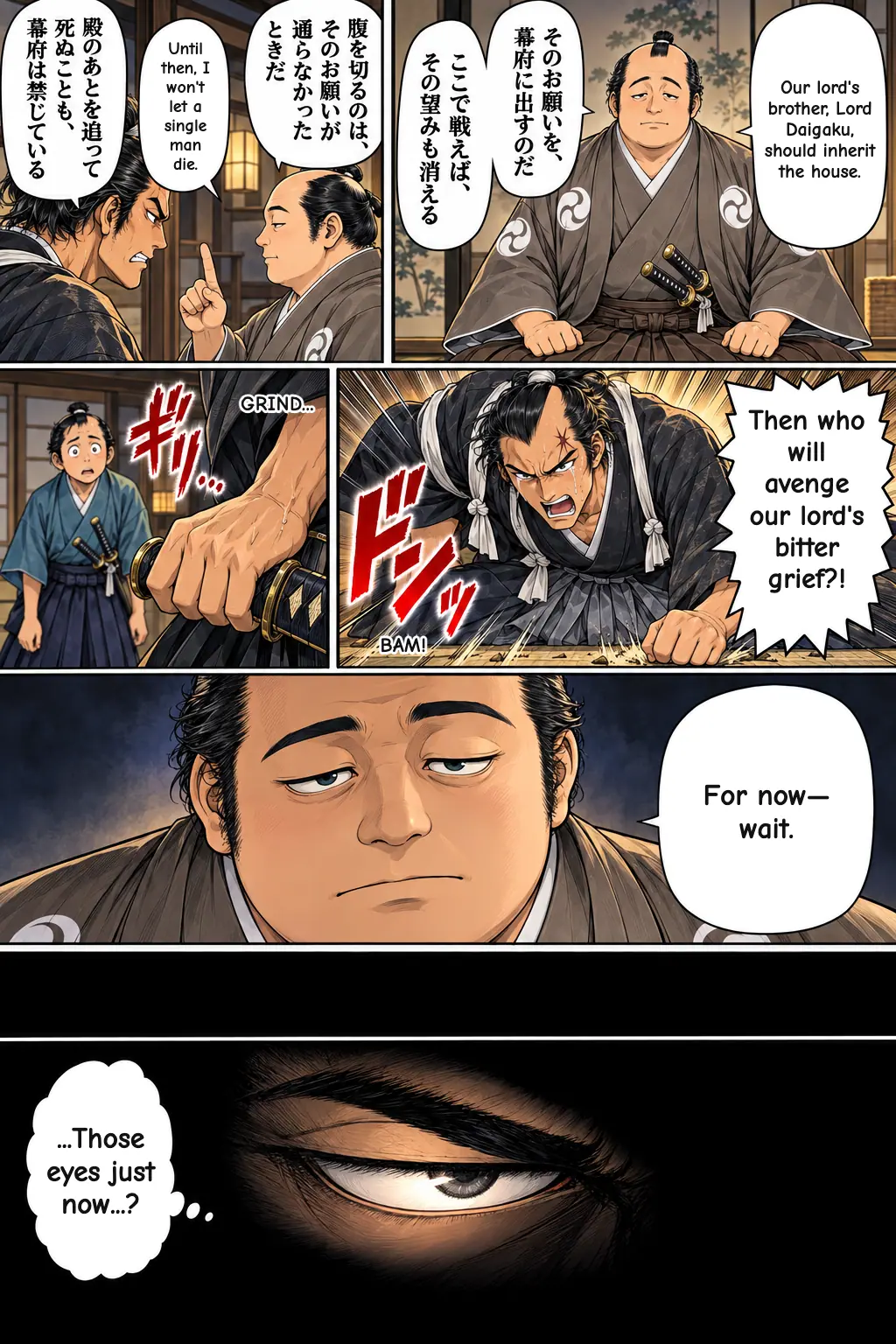
The man left in charge was Oishi Kuranosuke, the castle's chief resident elder. He called the retainers together to decide what to do. Three main options came up: shut themselves inside the castle and resist the shogun's forces, commit mass suicide in front of the castle gate to follow their lord in death, or surrender the castle peacefully. The debate did not settle easily. The surviving records give different dates and numbers of meetings, so the exact back-and-forth can only be reconstructed.
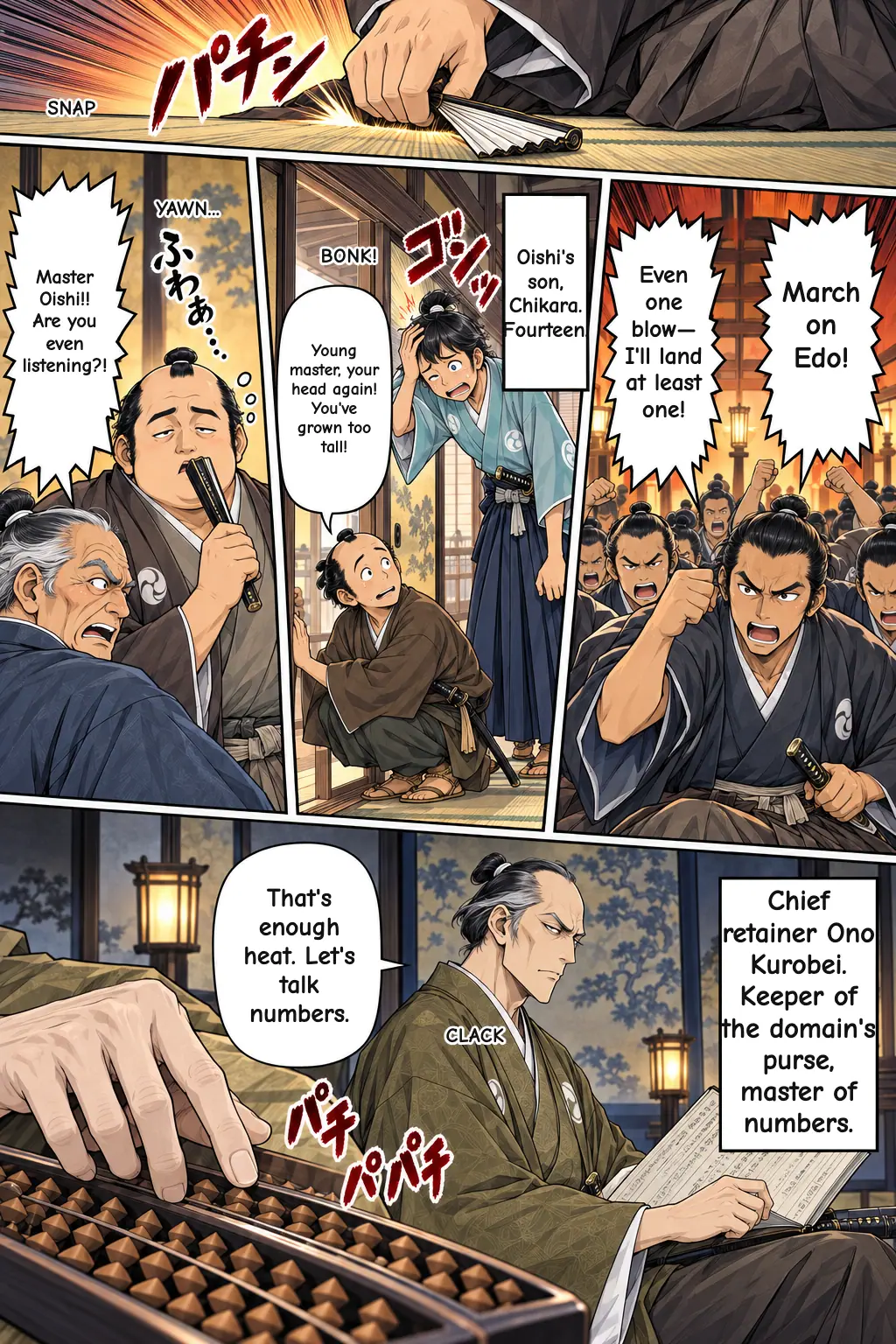
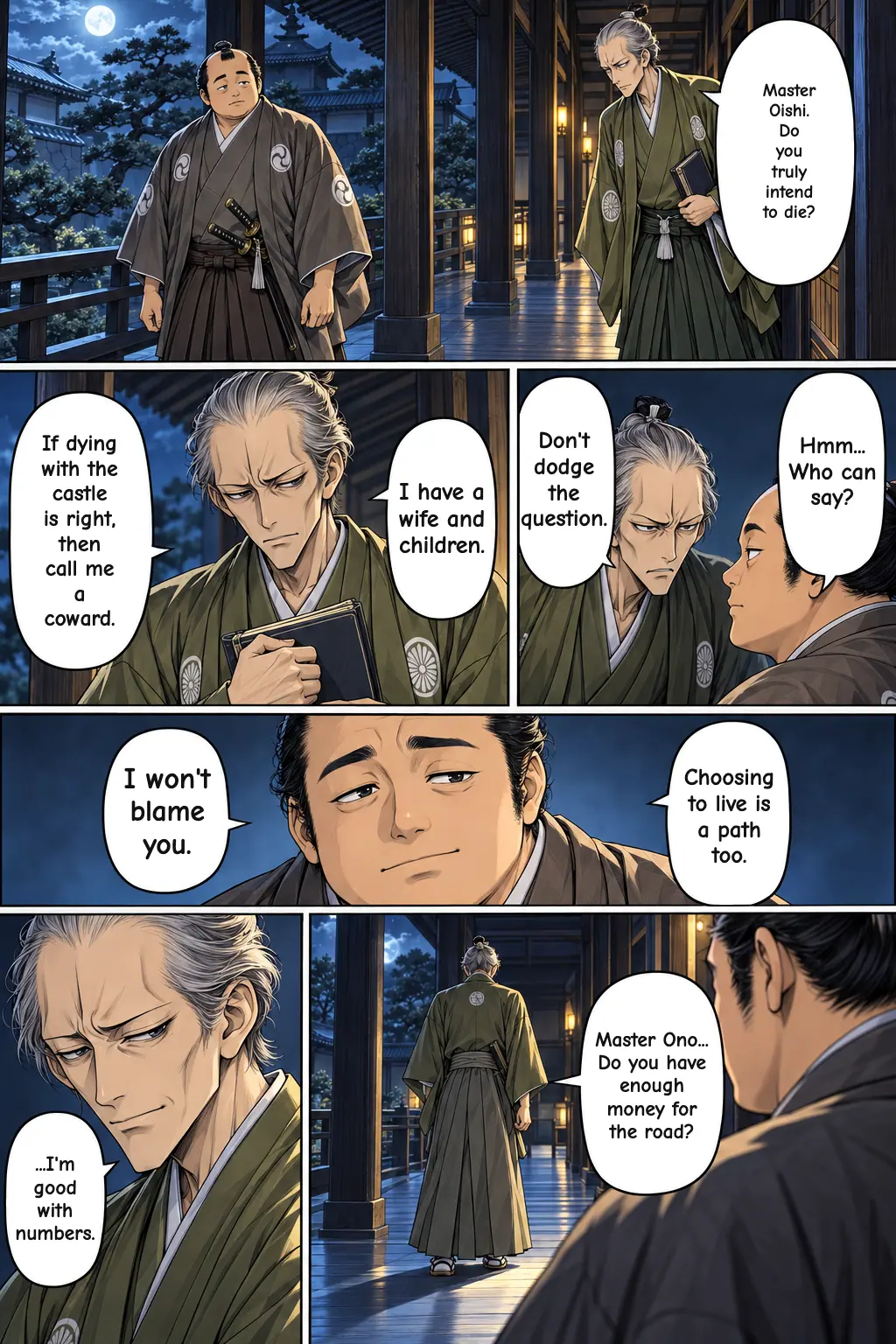
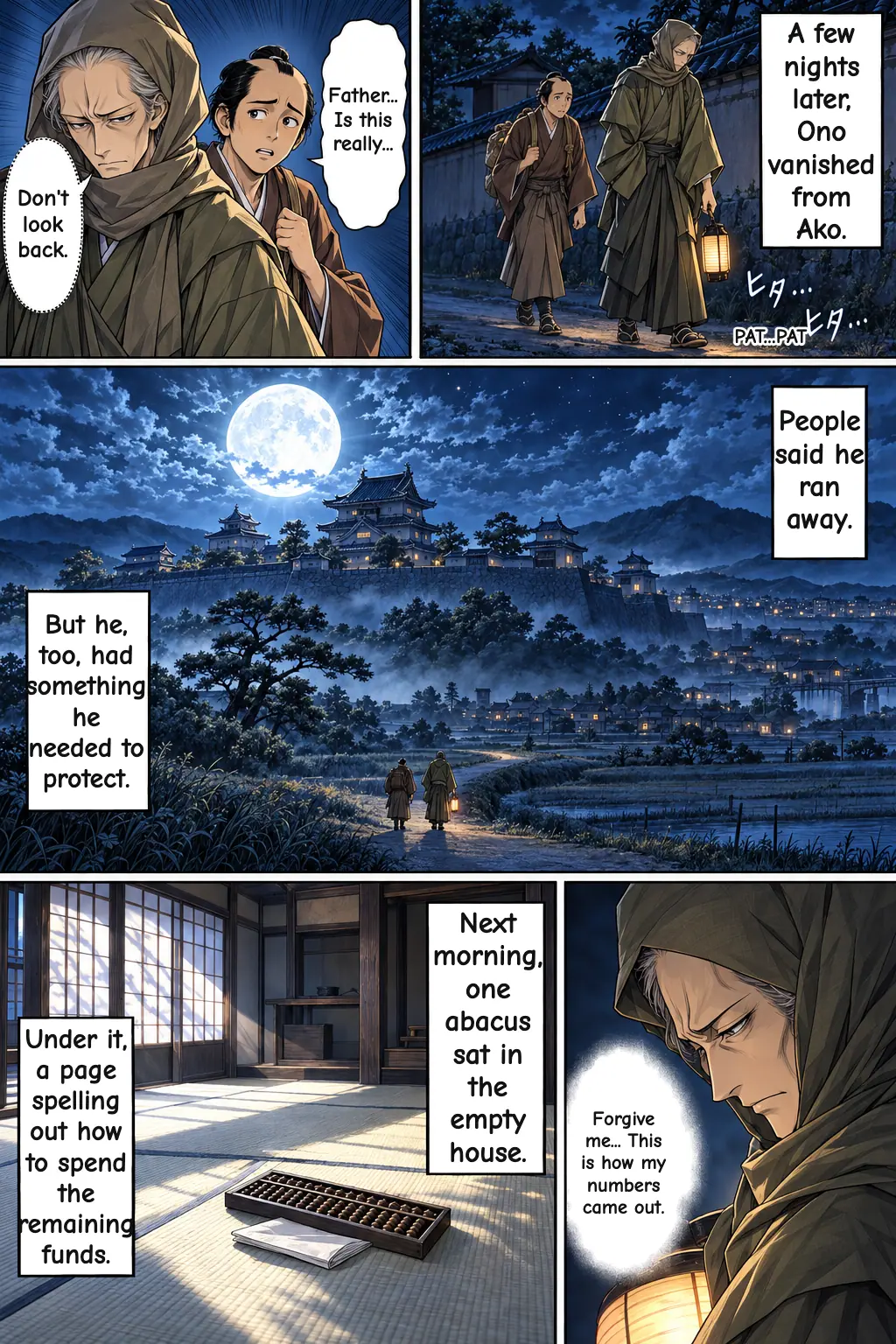
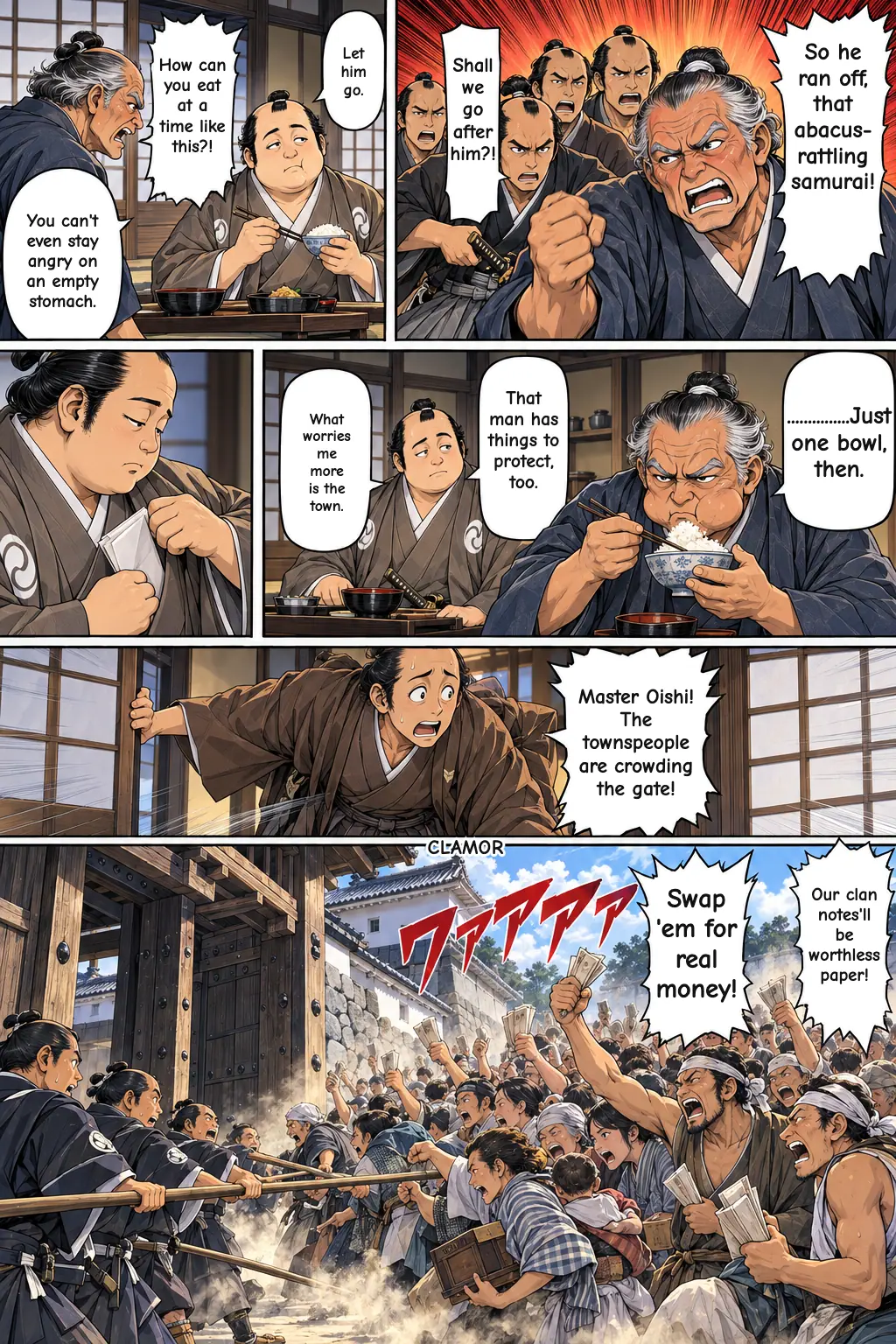
Ono Kurobei, another senior elder who handled the domain's finances, argued for surrender and obedience. He also clashed with Oishi over how to divide the domain's remaining funds. Ono is said to have wanted shares in proportion to each man's rank, while Oishi wanted to give more to the lowest-paid retainers. Not long before the handover, Ono slipped out of Ako at night, most commonly dated to the 12th of the fourth month. Because most accounts come from Oishi's side, Ono tends to be portrayed harshly, and readers should keep that bias in mind.
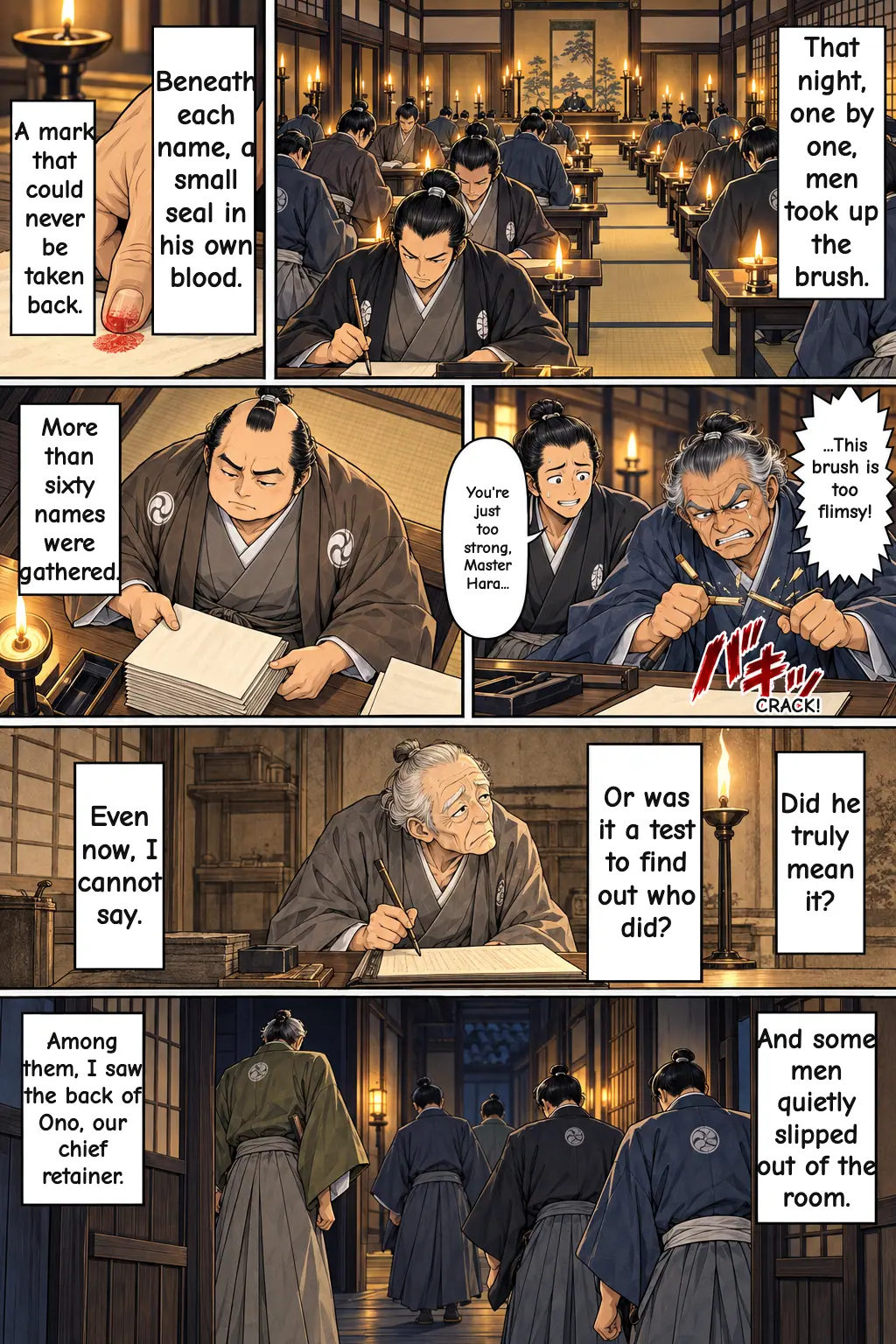
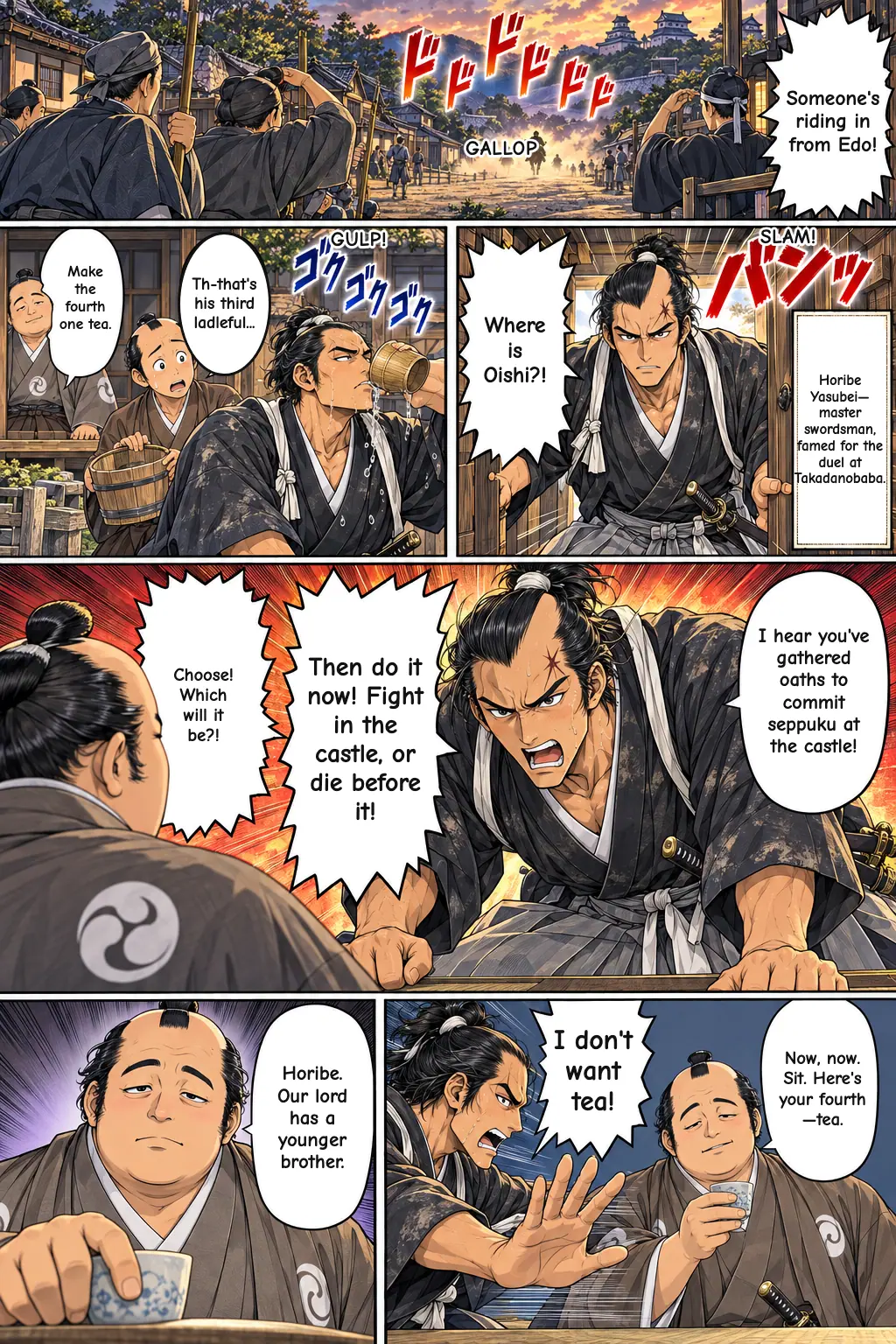
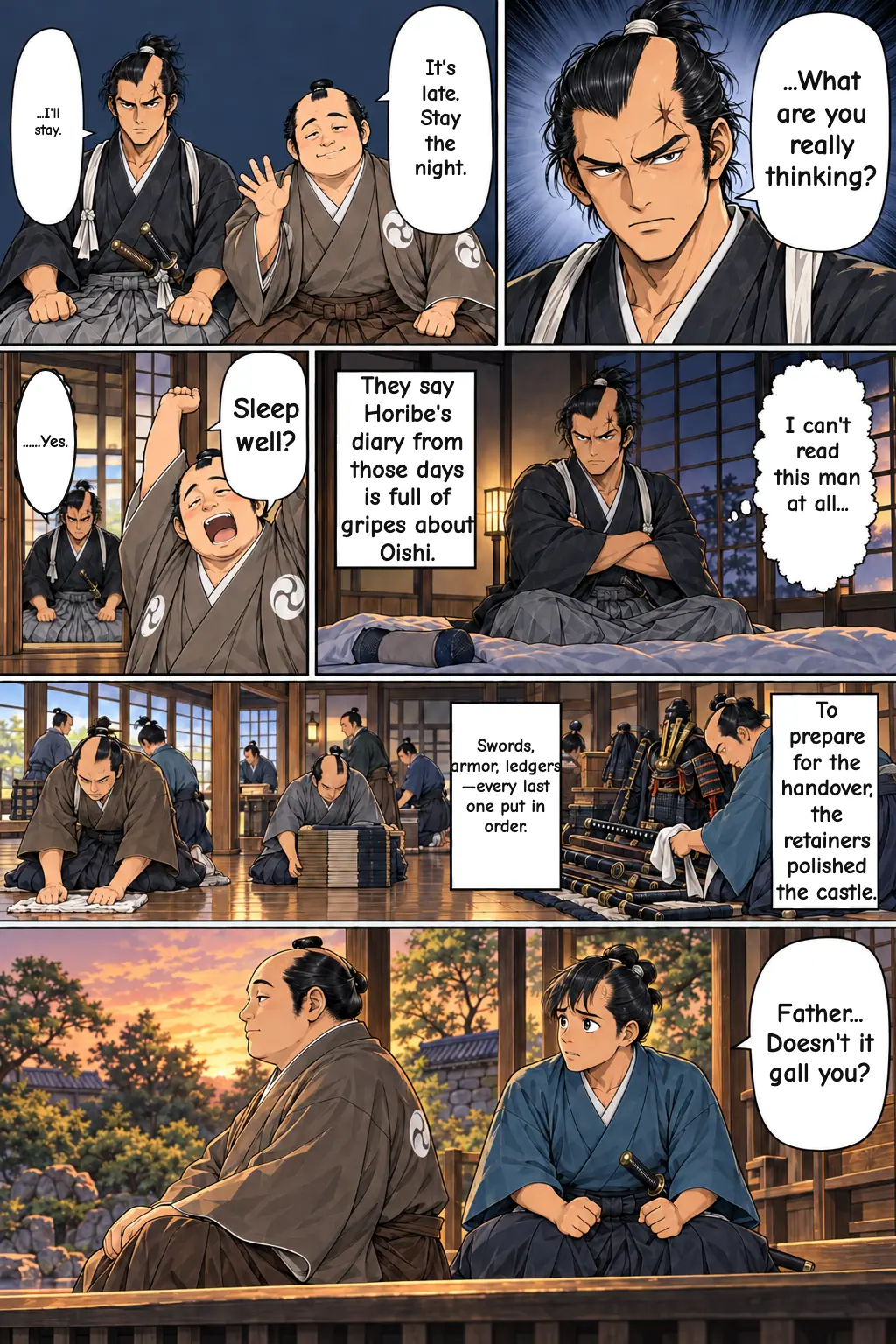
Pressure also came from Edo. Horibe Yasubei, a famous swordsman, traveled to Ako with Okuda Hyozaemon and Takada Gunbei to urge Oishi toward resistance or death. According to Horibe's own written record, Oishi refused, saying his priority was to restore the Asano house under Asano Daigaku, the late lord's younger brother. To the hardliners, Oishi looked cautious to the point of frustration. Popular tellings add that Oishi proposed mass suicide to test his men's resolve, and that around sixty signed oaths, but the numbers vary by source, and the idea that it was a deliberate test is a later interpretation.
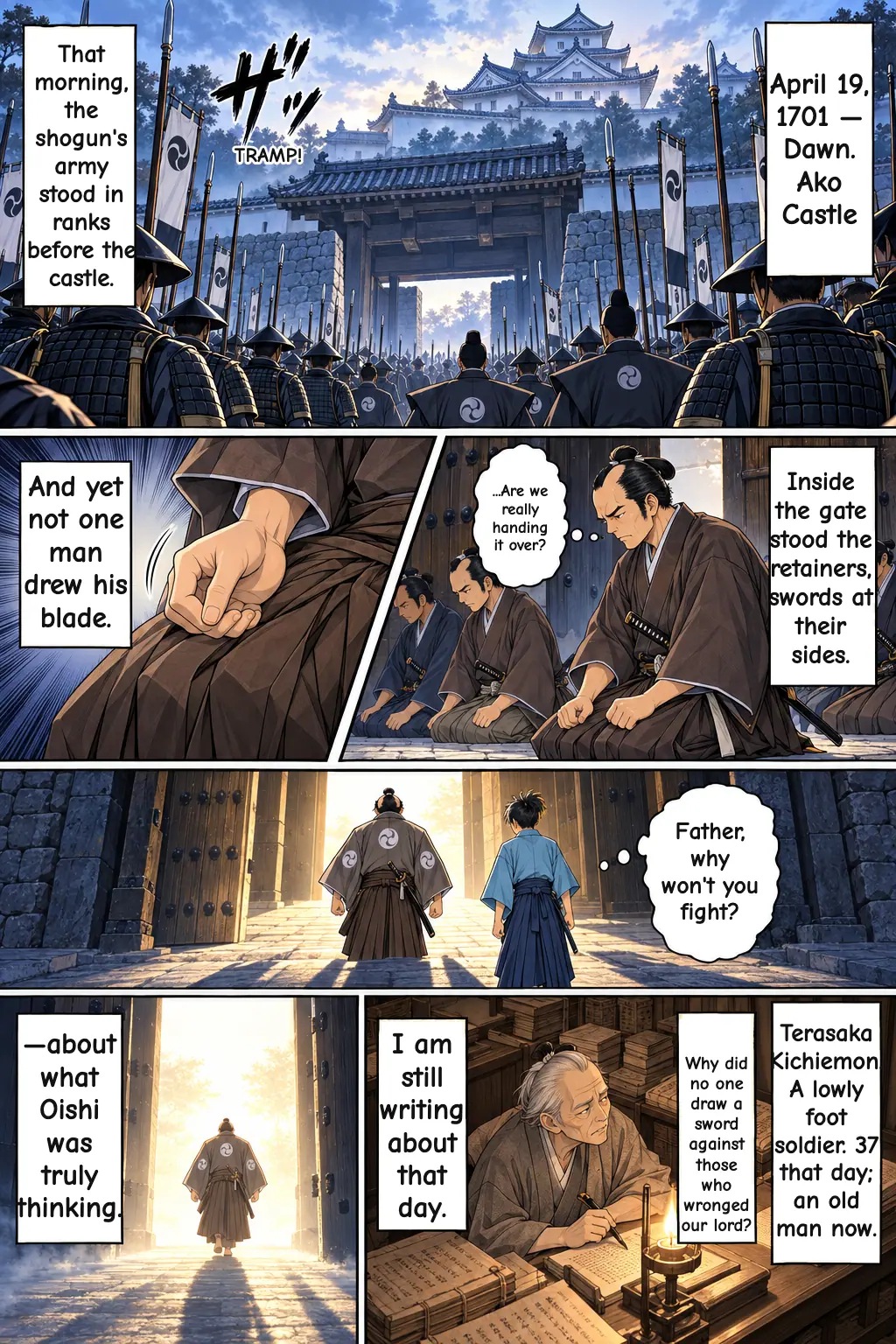
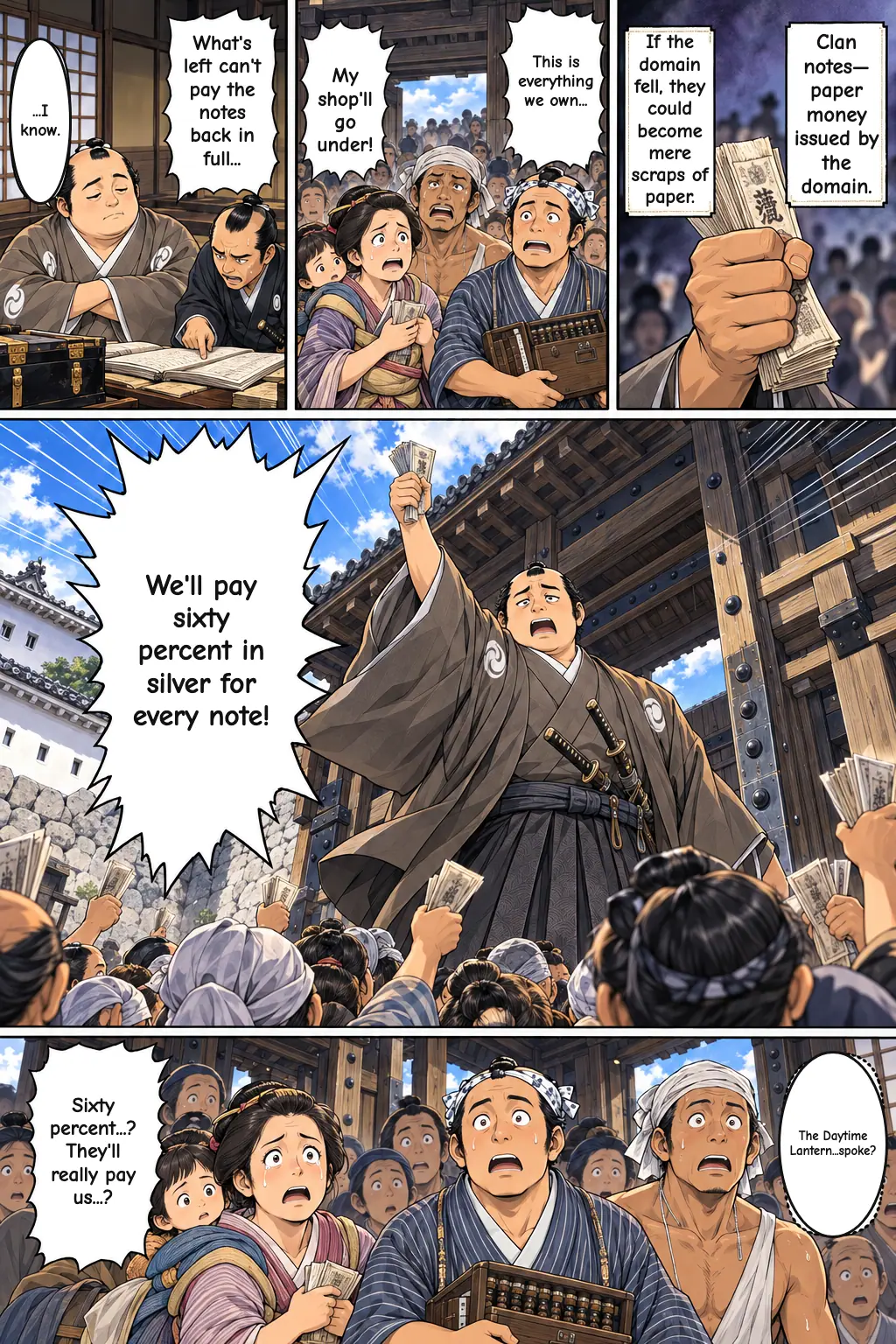
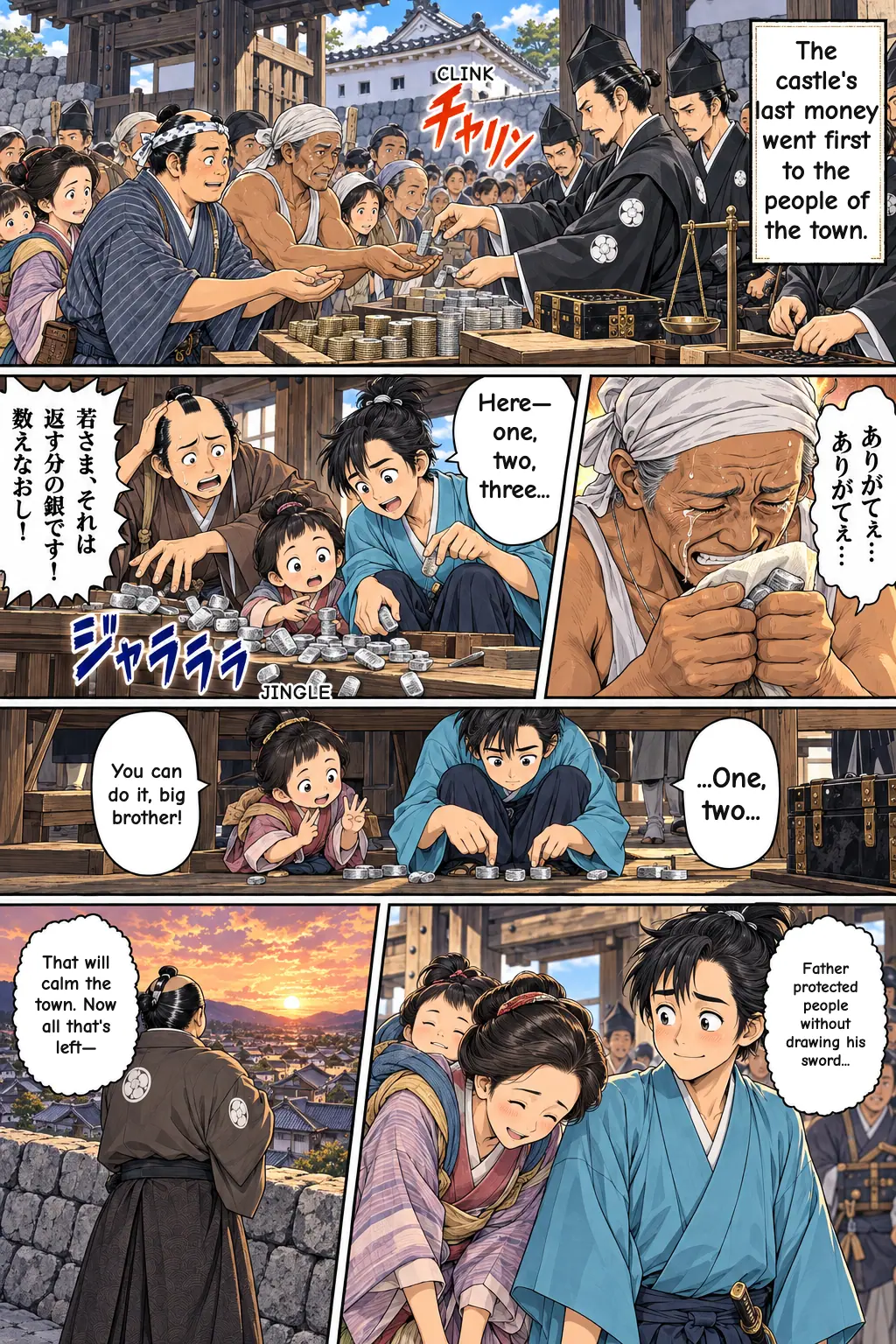
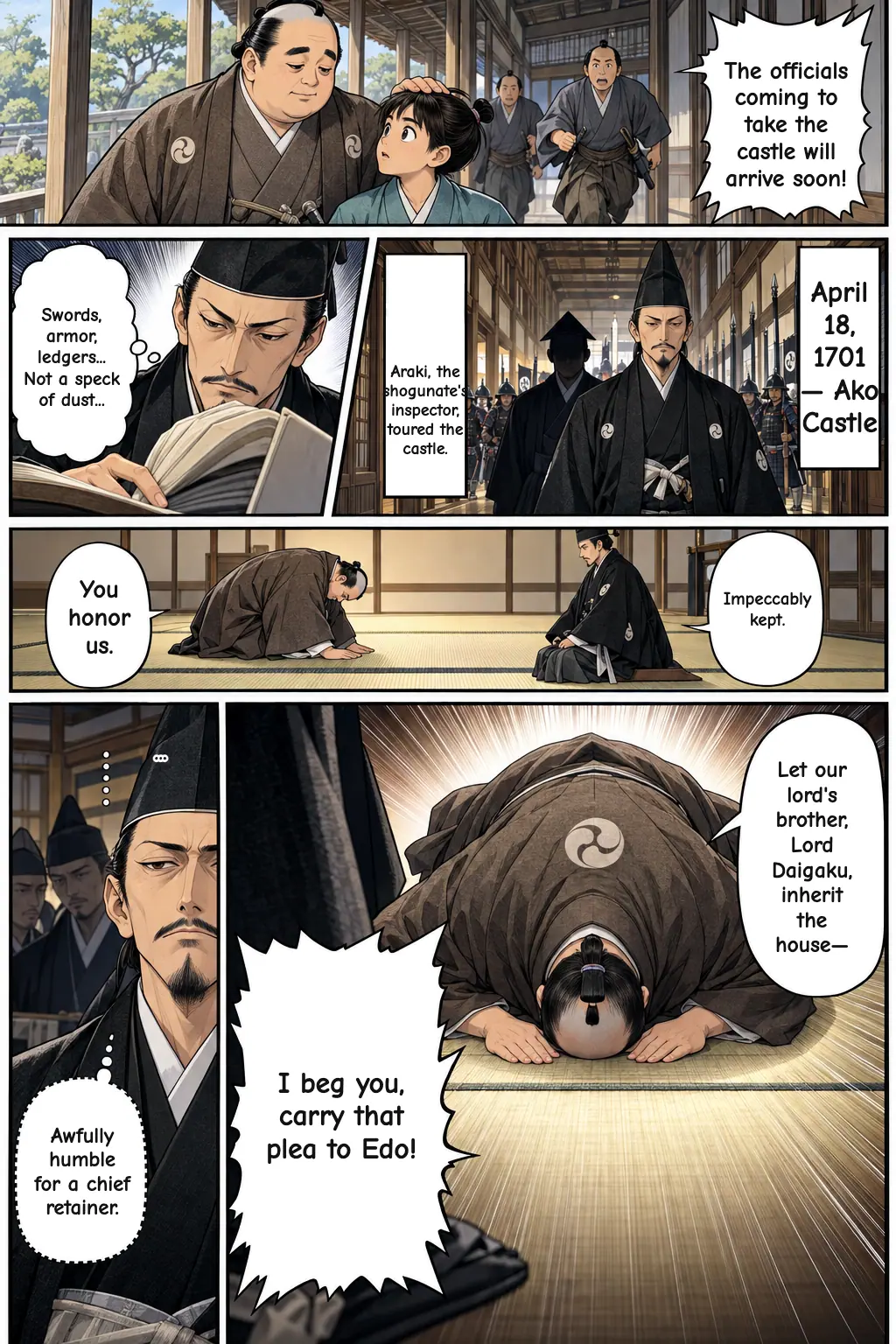
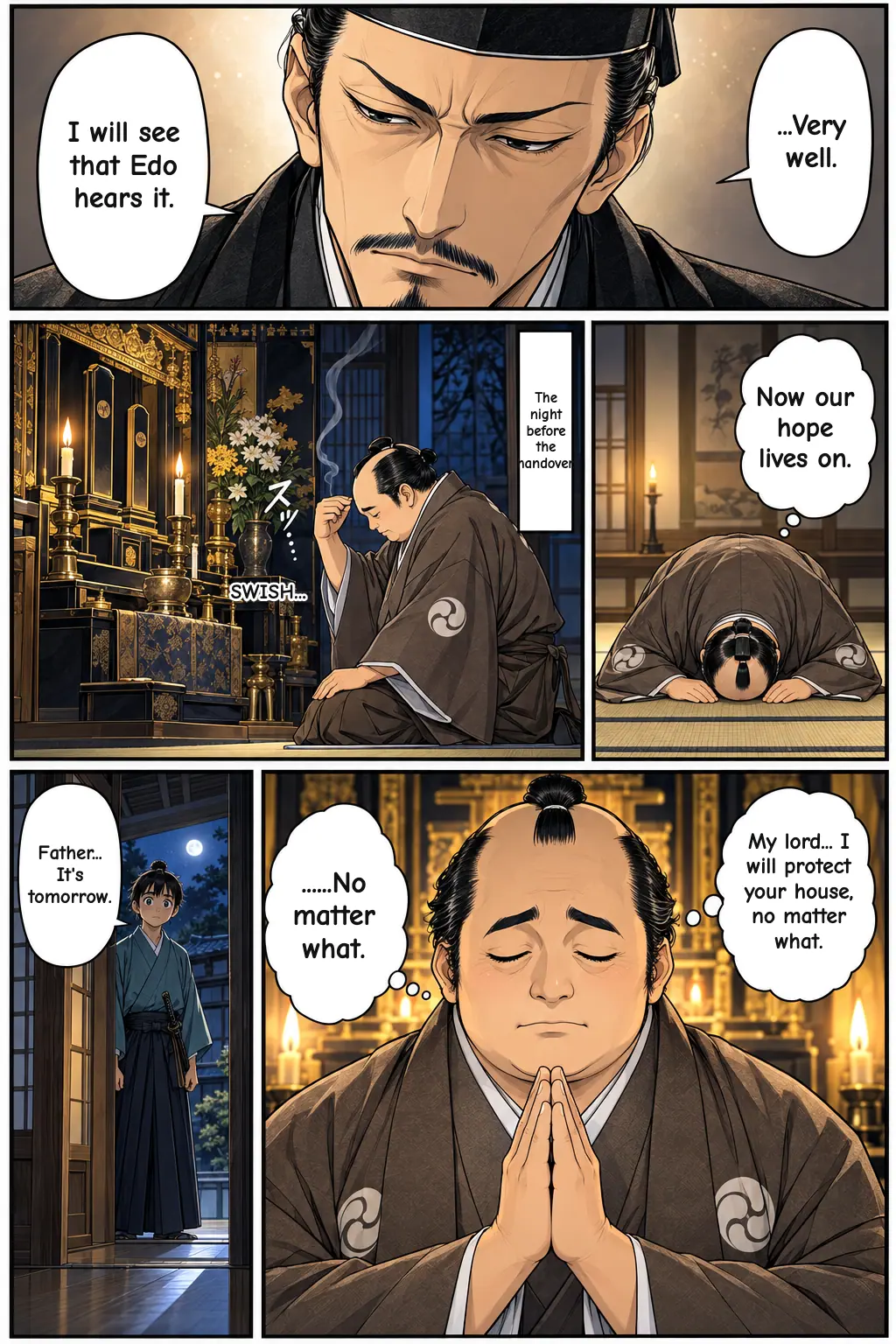
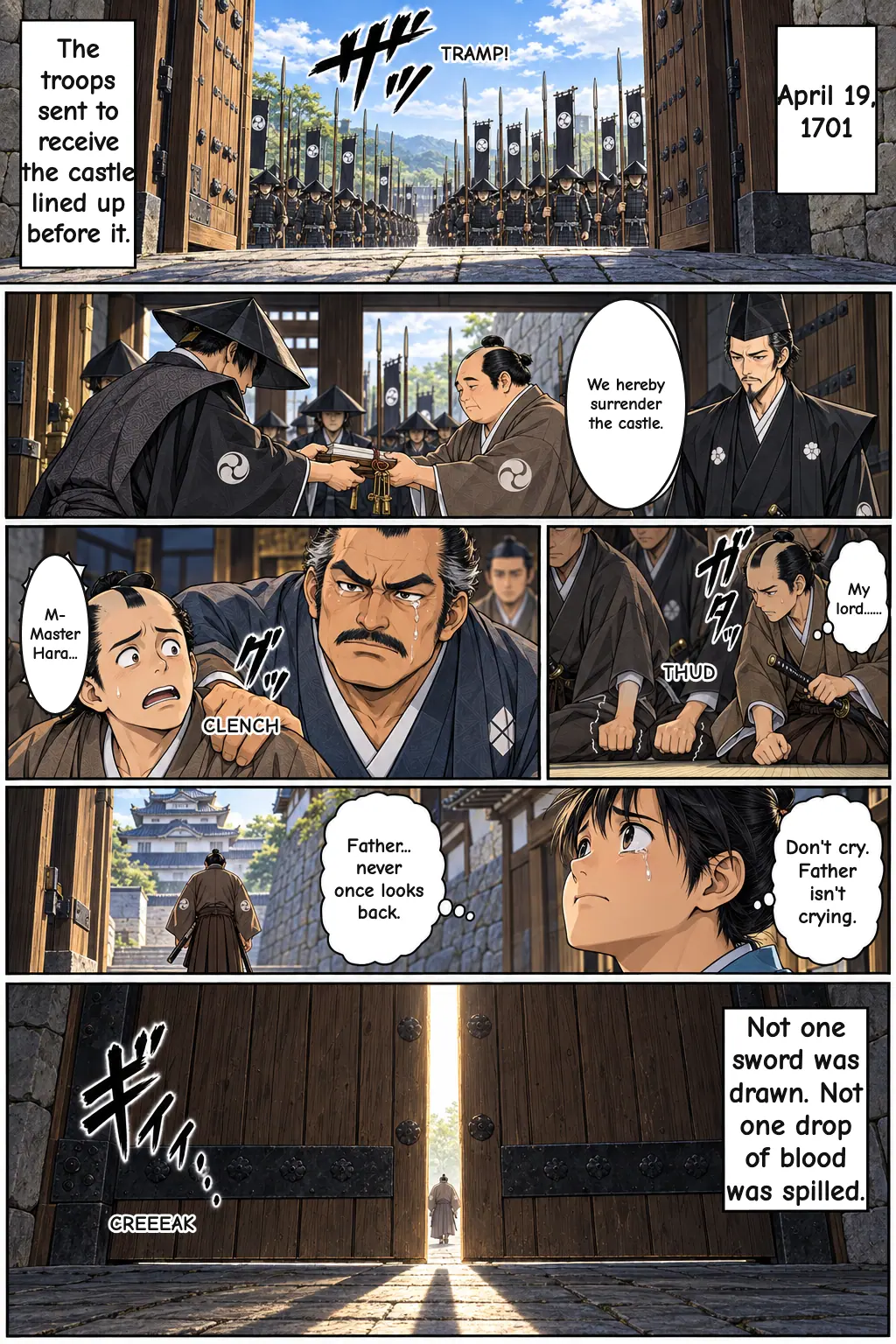
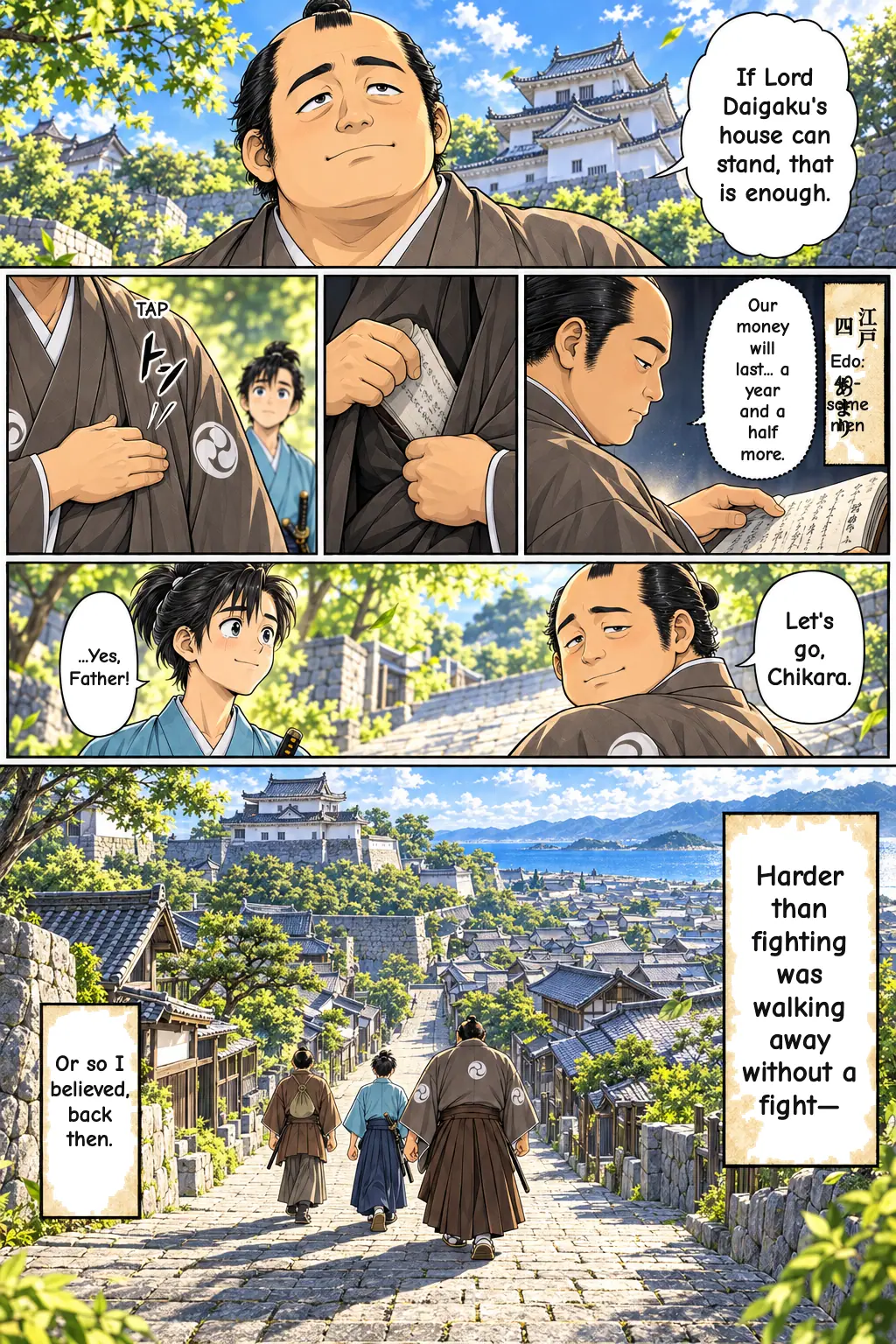
Meanwhile, Oishi dealt with practical problems. It is widely reported that he had the domain's paper money (hansatsu) exchanged at 60 percent of face value to prevent panic among the townspeople, though where exactly this appears in the original records still needs checking. When the shogunate's inspectors, Araki Juzaemon and Sakakibara Uneme, came to examine the castle, Oishi petitioned them to help restore the Asano house. On the 19th of the fourth month, Ako Castle was handed over to the receiving lords, Wakisaka Awaji-no-kami of Tatsuno and Kinoshita Higo-no-kami of Ashimori. Not a single blow was struck.
Kanadehon Chushingura: The Stage Version
Nearly fifty years later, the events became the puppet and kabuki play Kanadehon Chushingura (1748), the most famous version of the story. Because plays could not openly depict recent events involving the shogunate, the writers moved the story to an earlier era and changed the names. Asano became Enya Hangan, Oishi became Oboshi Yuranosuke, and Ono became Ono Kudayu.
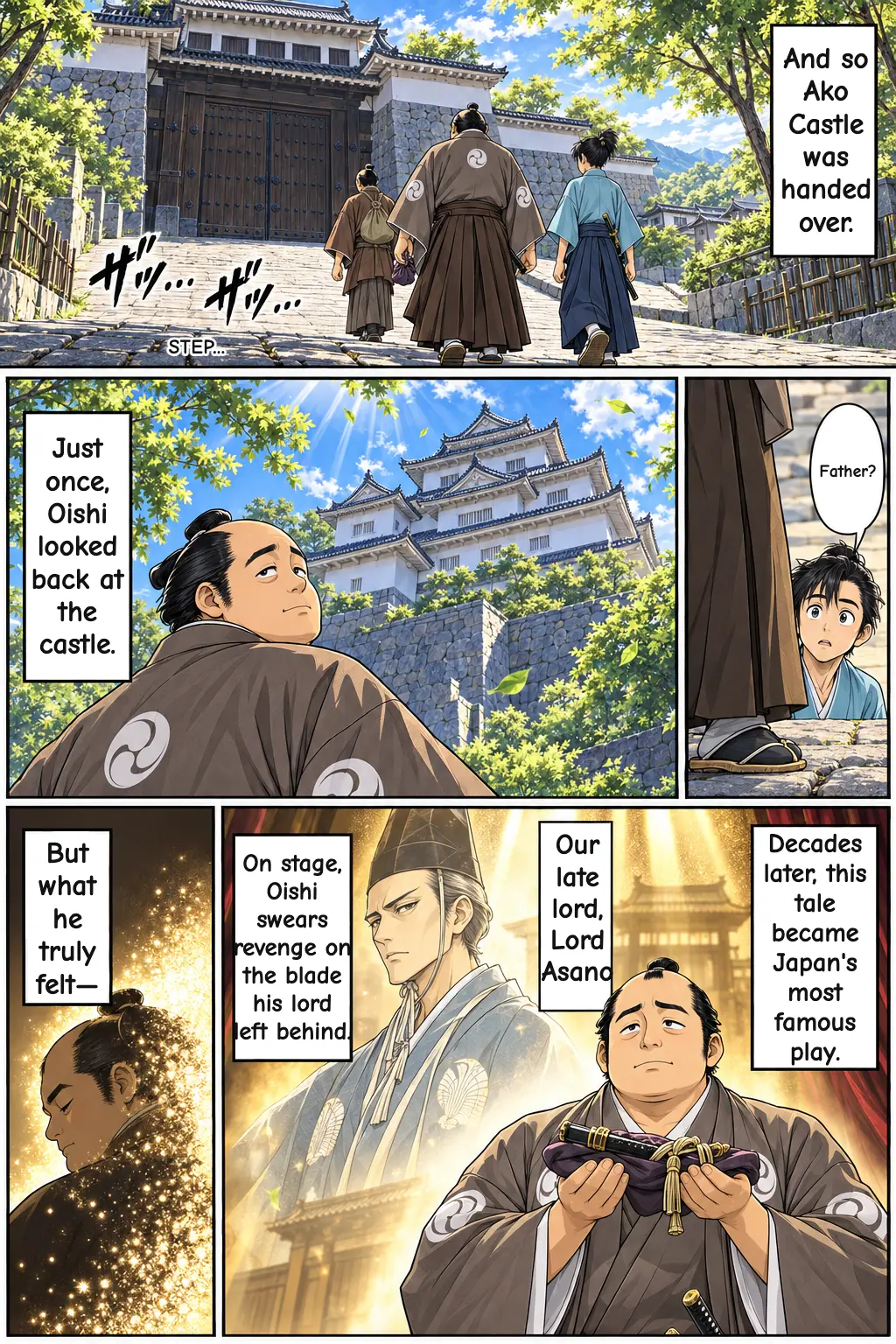
In Act Four, Yuranosuke arrives as his lord is dying and receives the very dagger Hangan used to cut his belly. At the council afterward, the greedy Kudayu talks about splitting the money and walks out, while Yuranosuke quietly reveals his true intention of revenge to those who remain. In the famous closing scene, often called the Surrender of the Castle, Yuranosuke steps outside the gate, turns back to look at the castle, and vows vengeance with his lord's blade in hand. This image is drama, not history, but it shaped how generations pictured Oishi.
Why the Surrender Matters
Today the 47 Ronin are remembered for their night attack on Kira's mansion almost two years later, and for their deaths afterward. But the surrender of Ako Castle explains why that revenge was possible at all. Resisting the shogun would likely have meant death for everyone and the permanent loss of the Asano name. By obeying the law first, Oishi kept his men alive and kept the hope of restoring the house open.
The episode also shows the tensions of samurai life in a long era of peace. Loyalty to a lord, obedience to the government, and responsibility to ordinary people often pulled in different directions. Oishi's choice to swallow his anger, settle debts, and hand over the keys is a different kind of loyalty from drawn swords, and many readers find it the more striking one.
What the Manga Changes or Adds
Episode 3 follows the historical outline: the council, Ono's departure, the paper-money exchange, the arrival of Horibe's group, and the bloodless handover. Some parts are dramatized. The order of speakers and exact lines at the council are reconstructed from several records. The manga also chooses how to show Oishi's real intent when he proposes mass suicide, which the sources leave open.
Details such as the night Ono leaves, the crowds of townspeople at the money exchange, the weather on handover day, and the wording and emotions of Oishi and Horibe's arguments are the manga's own creation. Oishi's inner thoughts as he leaves the castle, and the shot of him looking back at it, borrow from Kanadehon Chushingura as a dramatic homage rather than recorded fact.
Where to Read It
If you want to see how a castle full of angry samurai was surrendered without bloodshed, Episode 3 of THE 47 RONIN: Chushingura – A Vow in the Winter Snow tells the story in a few tense chapters. Every episode is free to read on Manga Portal, with no sign-up needed, so you can start from the beginning or jump straight into this turning point.
Characters in this episode
Oishi Kuranosuke
Chief elder of Ako Castle who held back the hardliners and surrendered the castle peacefully while seeking to restore the Asano house.
Ono Kurobei
Senior elder in charge of finances who argued for surrender, quarreled with Oishi over the remaining funds, and fled Ako by night.
Horibe Yasubei
Edo-based swordsman who rushed to Ako to demand resistance or death and left a written record of his talks with Oishi.
Asano Takumi-no-kami
Lord of Ako whose attack on Kira in Edo Castle led to his forced suicide and the abolition of his house.
Asano Daigaku
The late lord's younger brother, whom Oishi hoped would become head of a restored Asano house.
Oboshi Yuranosuke
The stage version of Oishi in Kanadehon Chushingura, who vows revenge as he looks back at the surrendered castle.
FAQ
Why did the 47 Ronin surrender Ako Castle without a fight?
Their leader Oishi Kuranosuke judged that resisting the shogunate would destroy everyone and end any chance of reviving the Asano house. He chose to obey, hand over the castle peacefully, and petition for the family's restoration under Asano Daigaku.
When was Ako Castle surrendered?
Ako Castle was handed over on the 19th day of the fourth month of 1701 (Genroku 14) to the lords Wakisaka of Tatsuno and Kinoshita of Ashimori. It happened about a month after Lord Asano's death in Edo.
Who was Ono Kurobei in the 47 Ronin story?
Ono Kurobei was a senior elder of Ako who favored surrender and disagreed with Oishi over how to share the domain's money. He left Ako secretly at night before the handover. Because most records come from Oishi's side, he is usually portrayed negatively.
Is the castle surrender scene in Kanadehon Chushingura historical?
No. In the play, Oboshi Yuranosuke looks back at the castle and vows revenge with his lord's blade, but this is a dramatic invention with the names changed. It is based loosely on the real surrender led by Oishi.
Did Oishi plan revenge from the start?
The records show Oishi first prioritizing the restoration of the Asano house, not revenge. The idea that he secretly planned vengeance all along comes largely from later plays and retellings, and historians disagree about his true intentions at this stage.