Episode 7He Won the Battle, Then Wept Over His FoeBattle of Kurikara Pass / Saitō Sanemori
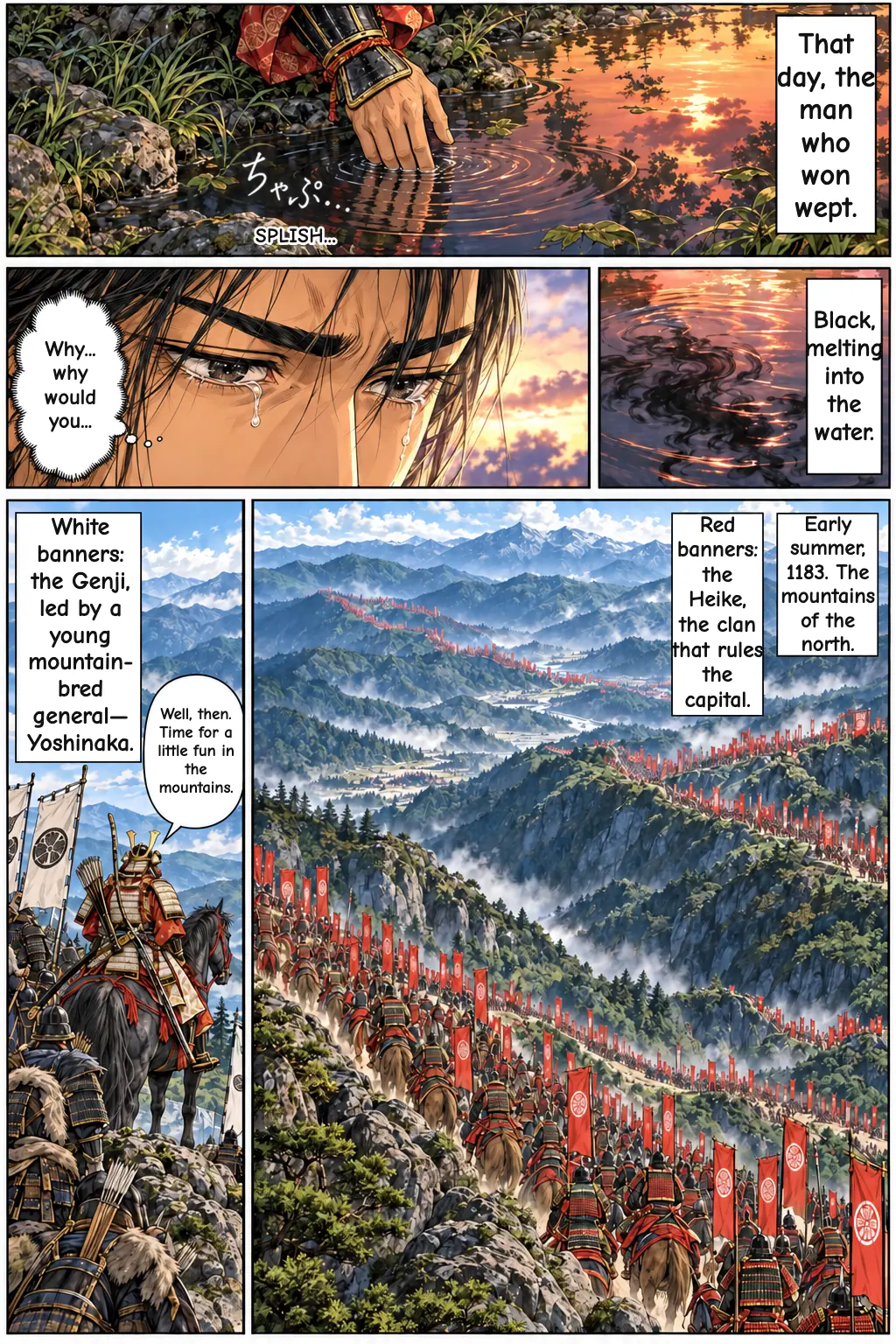
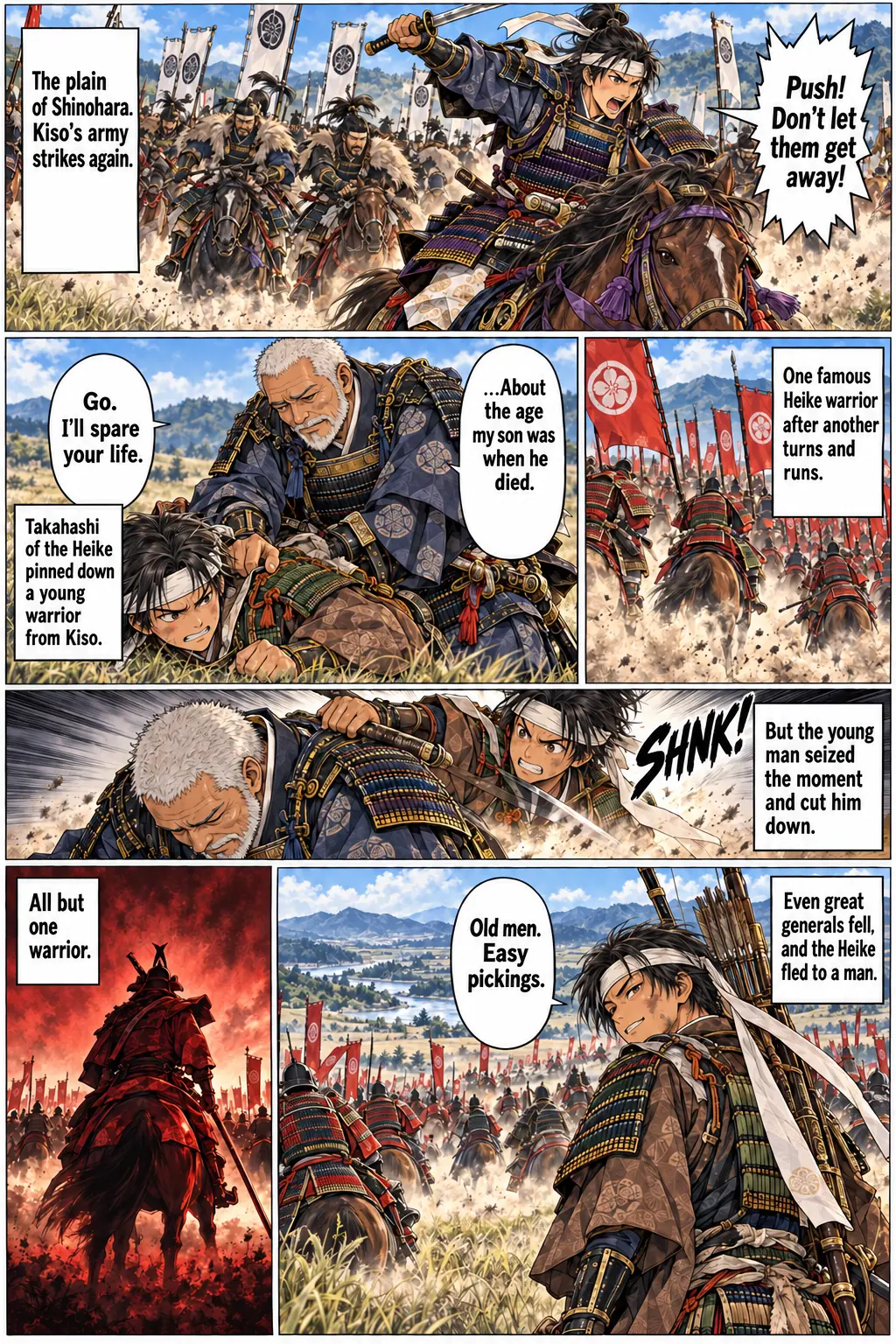
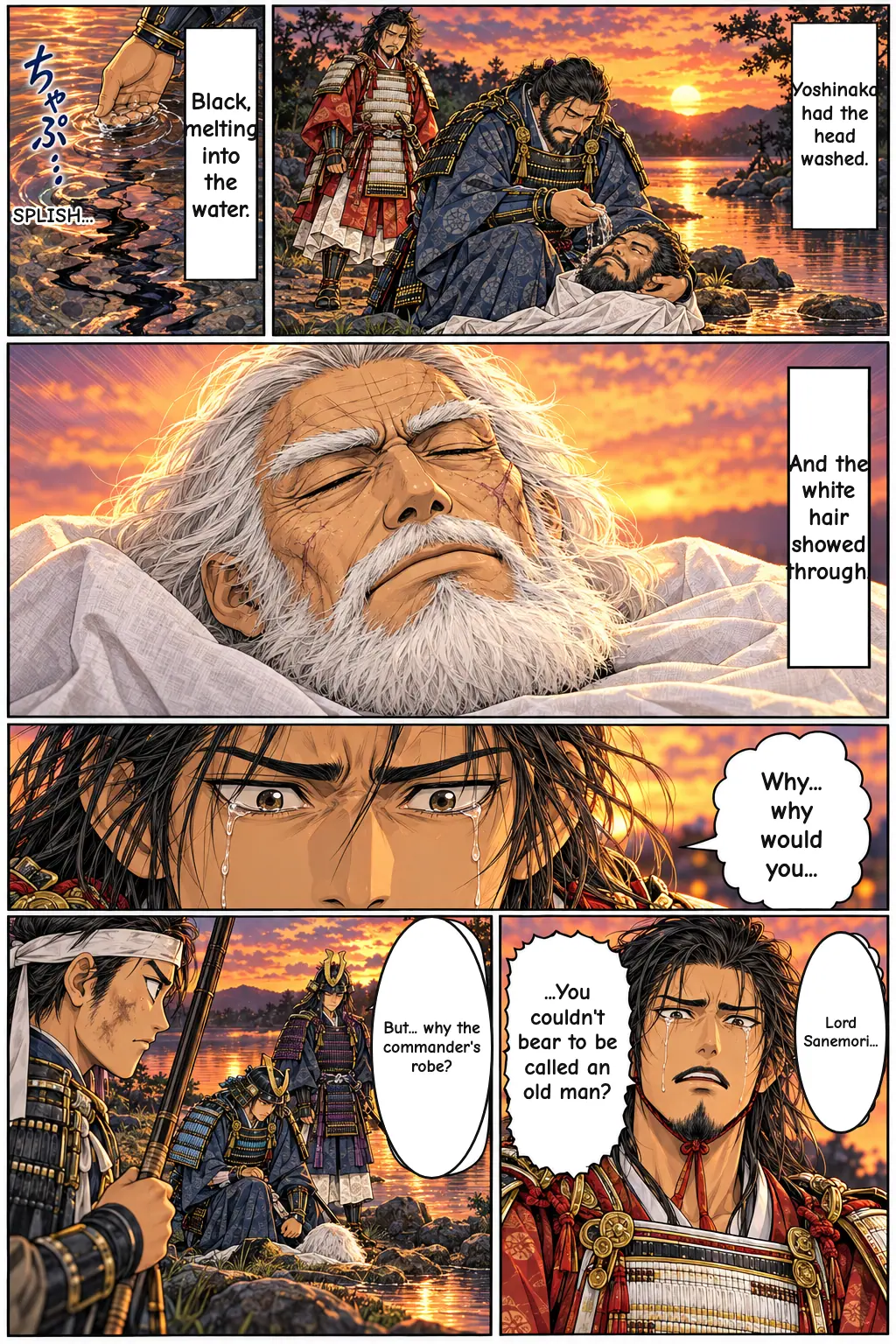
At Kurikara Pass, Kiso no Yoshinaka drives the vast Heike army into a valley under cover of night. In the battle at Shinohara that follows, a nameless old warrior fights on alone to the very end. When his head is washed, the black dye runs out of his hair—and the white beneath is revealed.
Battle of Kurikara Pass & Saitō Sanemori: Tale of the Heike Explained
The Story in The Tale of the Heike: Kurikara and Shinohara
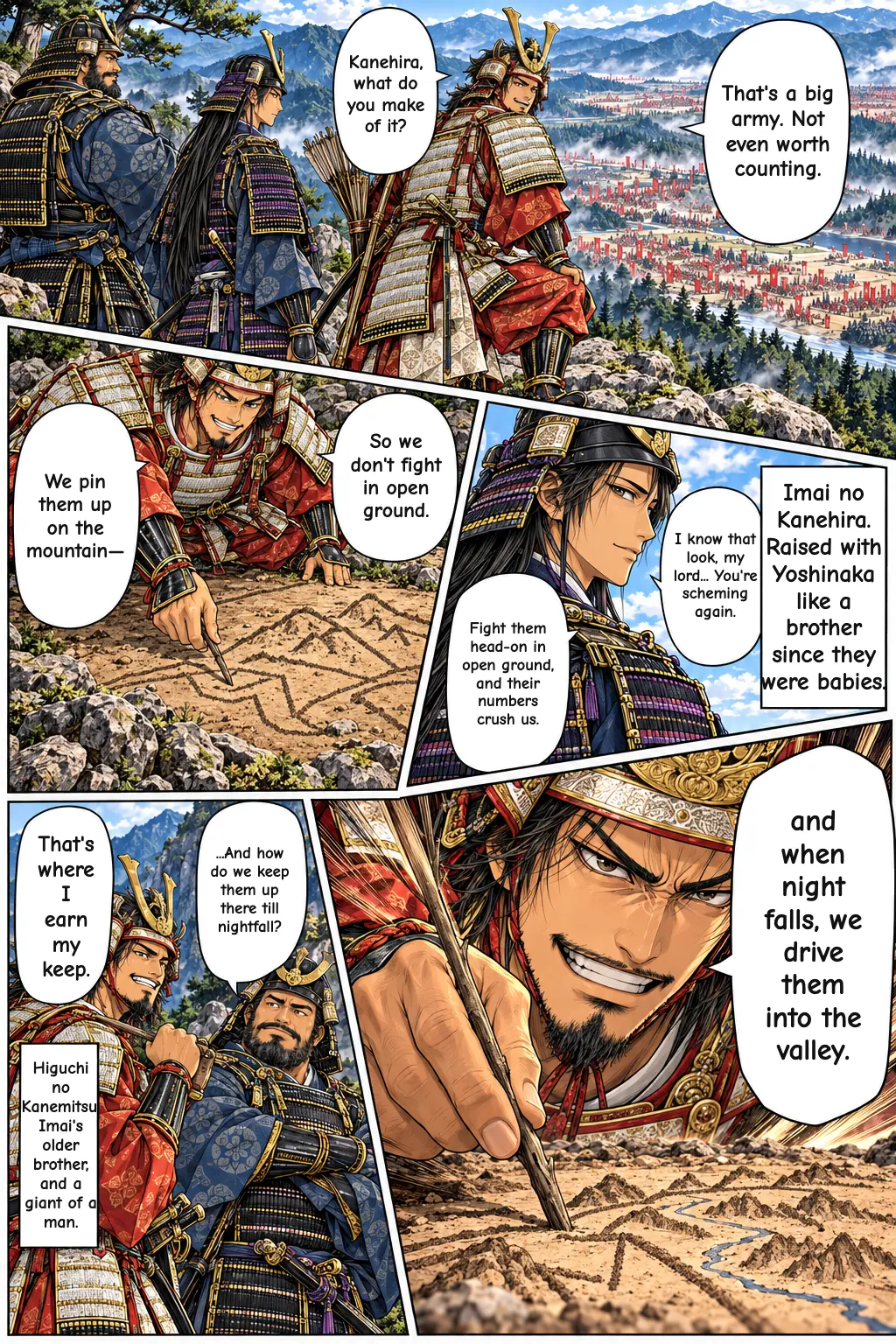
In the fifth month of 1183, a huge Heike (Taira clan) army marched up the Hokurikudō, the road along Japan's Sea of Japan coast, to crush the rebel Minamoto commander Kiso no Yoshinaka. The two sides met at Mount Tonami, on the border between Etchū and Kaga provinces (today's Toyama and Ishikawa). Yoshinaka knew that meeting so large a force head-on in open country would be a mistake. His plan was to hold the Heike in the mountains until dark, then drive them into the Kurikara valley.
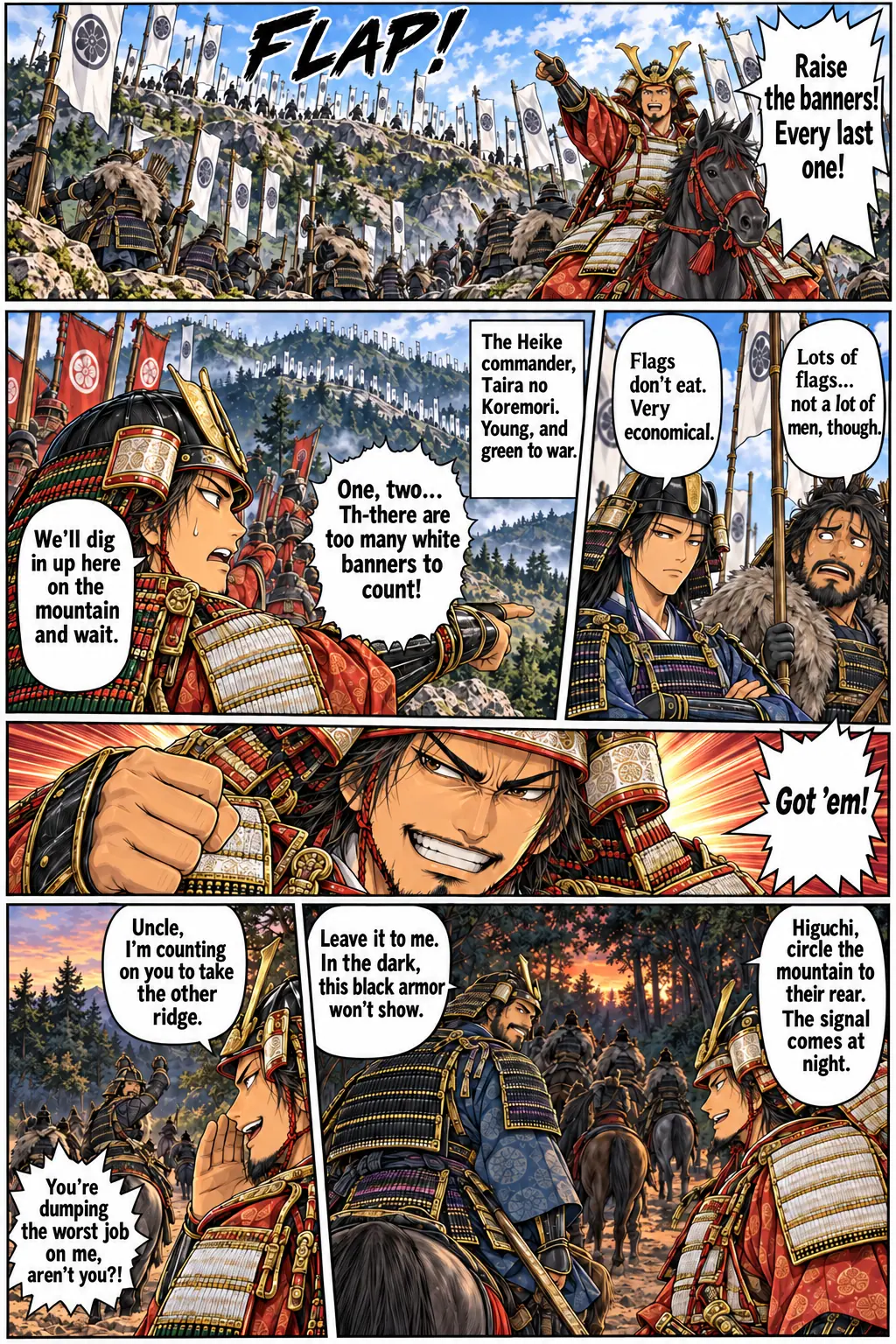
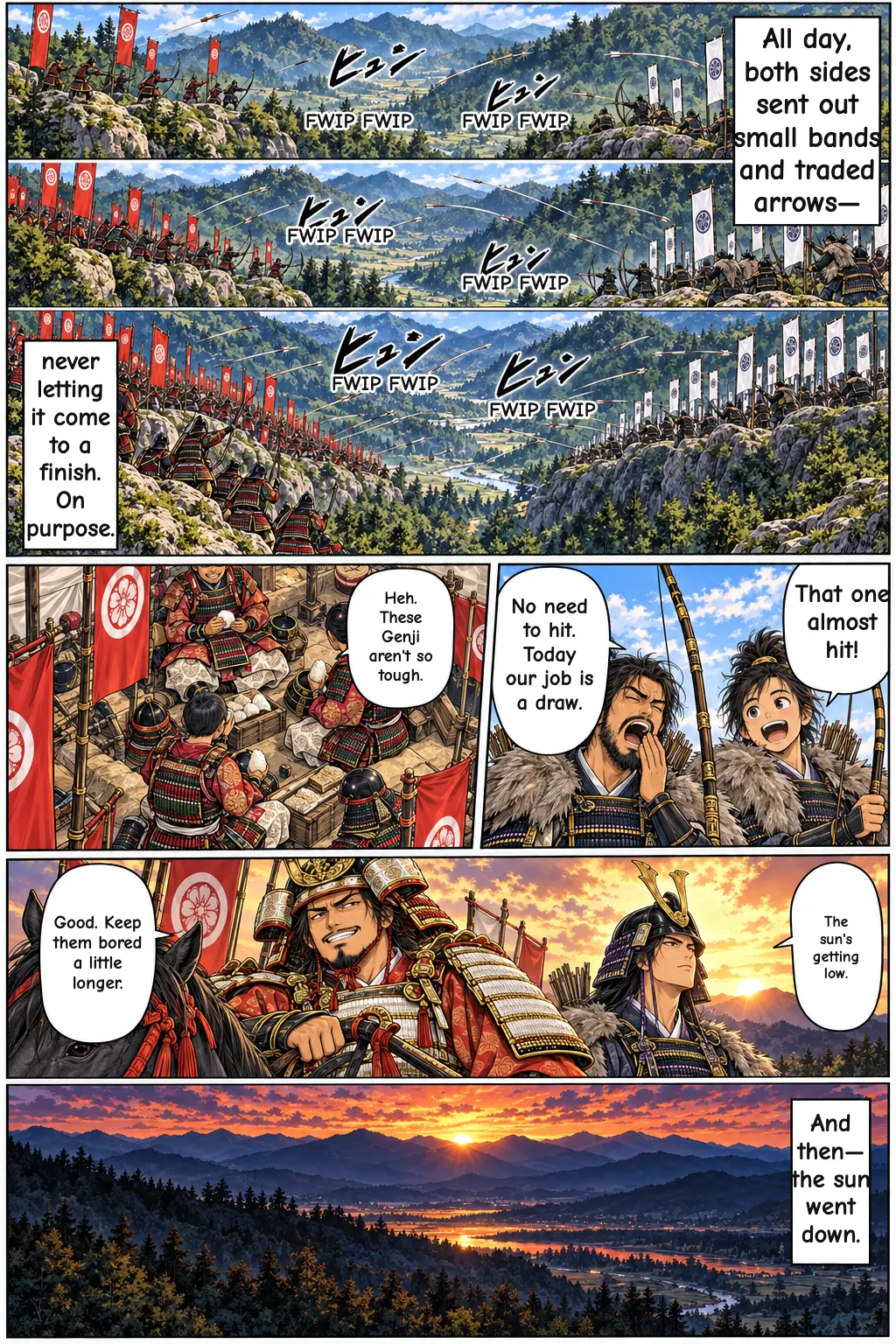
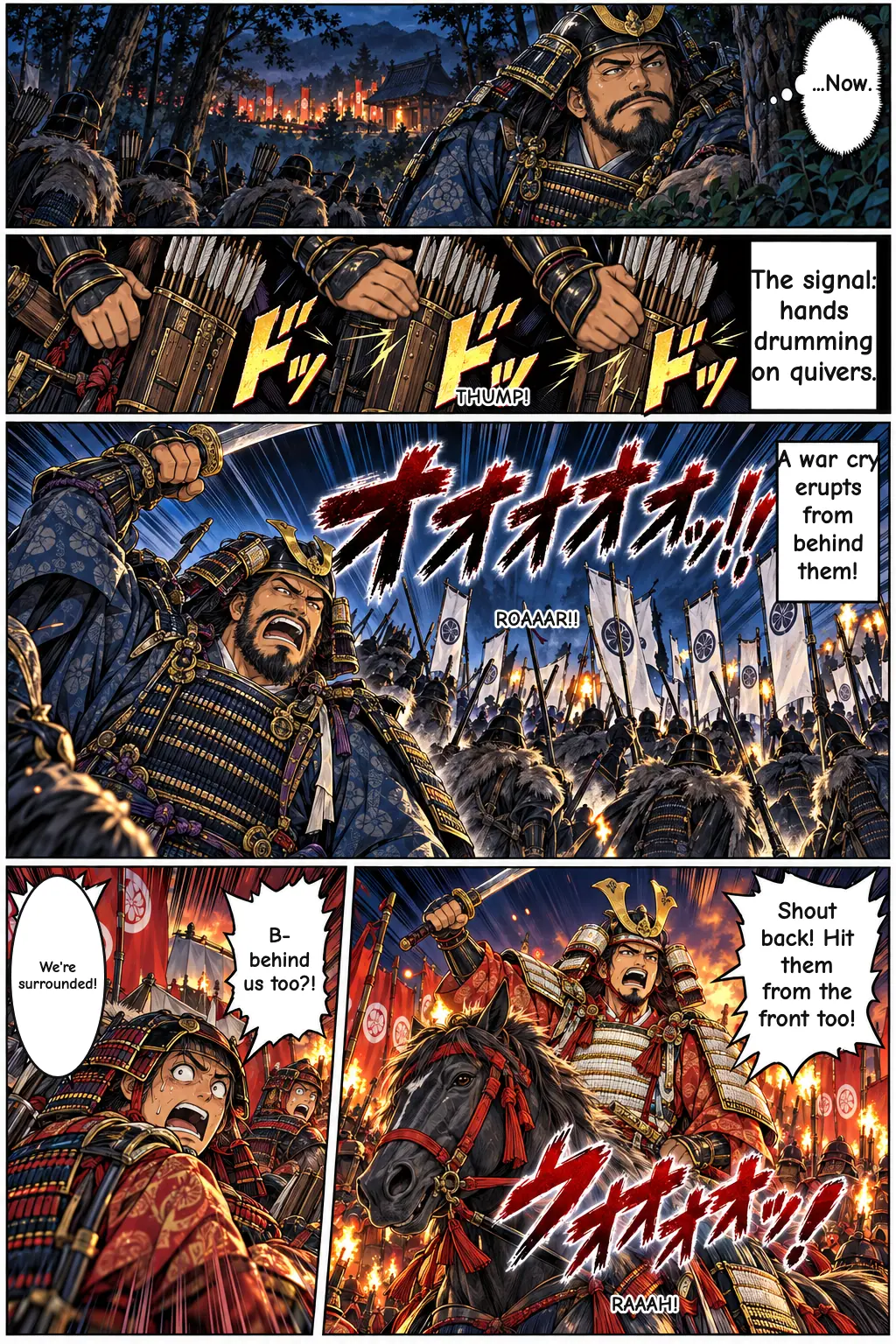
To make his army look bigger, he raised thirty white Minamoto banners on a nearby slope. The Heike, believing a great host was waiting, camped on a high plateau called Saru-no-baba. Yoshinaka split his men into several groups, sent his uncle Yukiie toward Mount Shio, and ordered his retainer Higuchi Kanemitsu to circle behind the enemy. All day, the two armies sent out small parties of fifteen, thirty, fifty, then a hundred riders to trade arrows, and the Minamoto deliberately avoided a decisive clash.
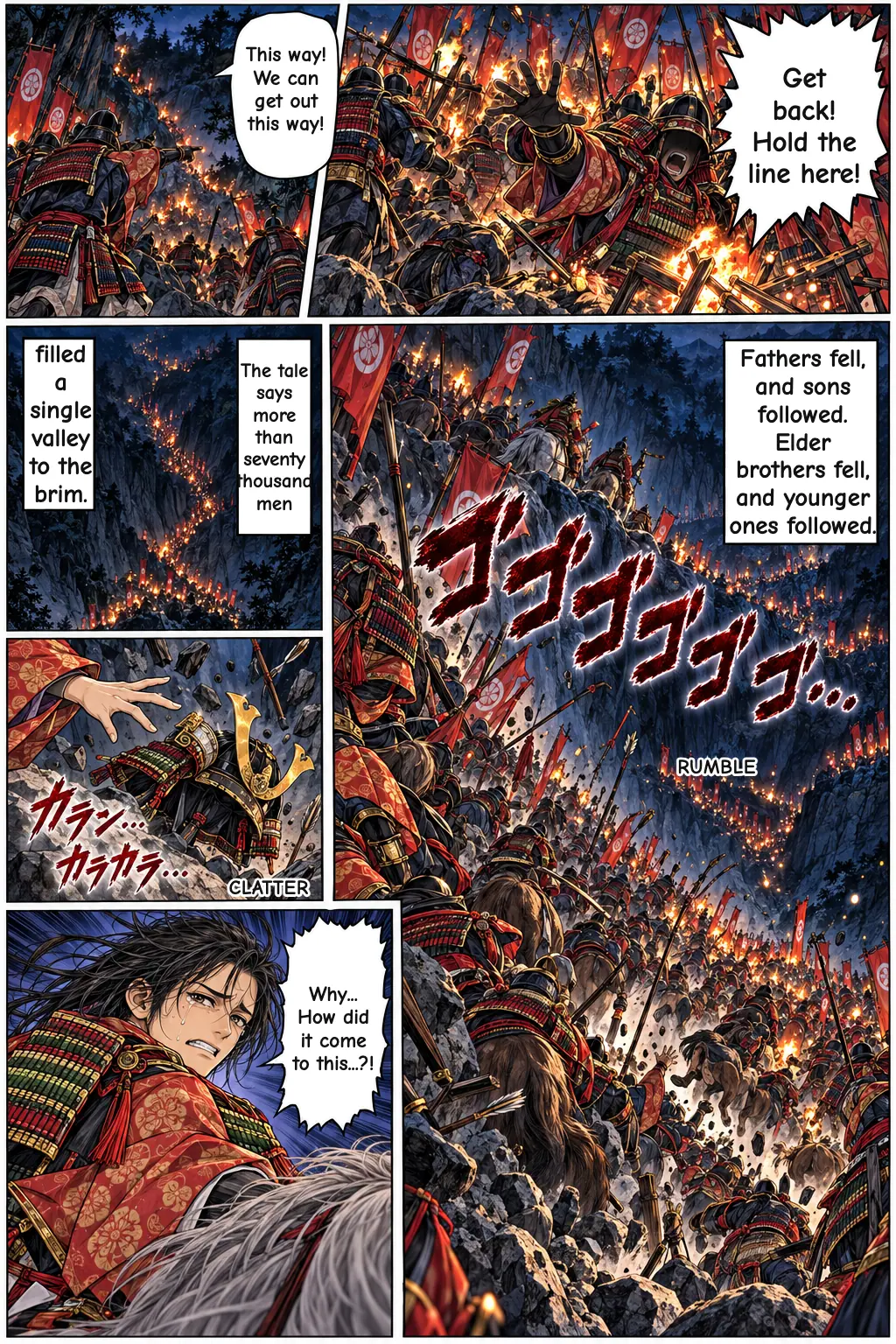
After nightfall, Higuchi's hidden force raised a war cry from behind the Heike, near the Kurikara temple hall, and Yoshinaka's main army answered from the front. Trapped between the shouts in the dark, the Heike broke. Some cried out to turn and fight, but no one could stop the rush. Fathers fell and sons followed; men and horses piled on top of each other as they plunged into the valley. The text says more than seventy thousand riders filled a single ravine. (A famous image of oxen with torches tied to their horns comes from other versions of the story, not from this one.)
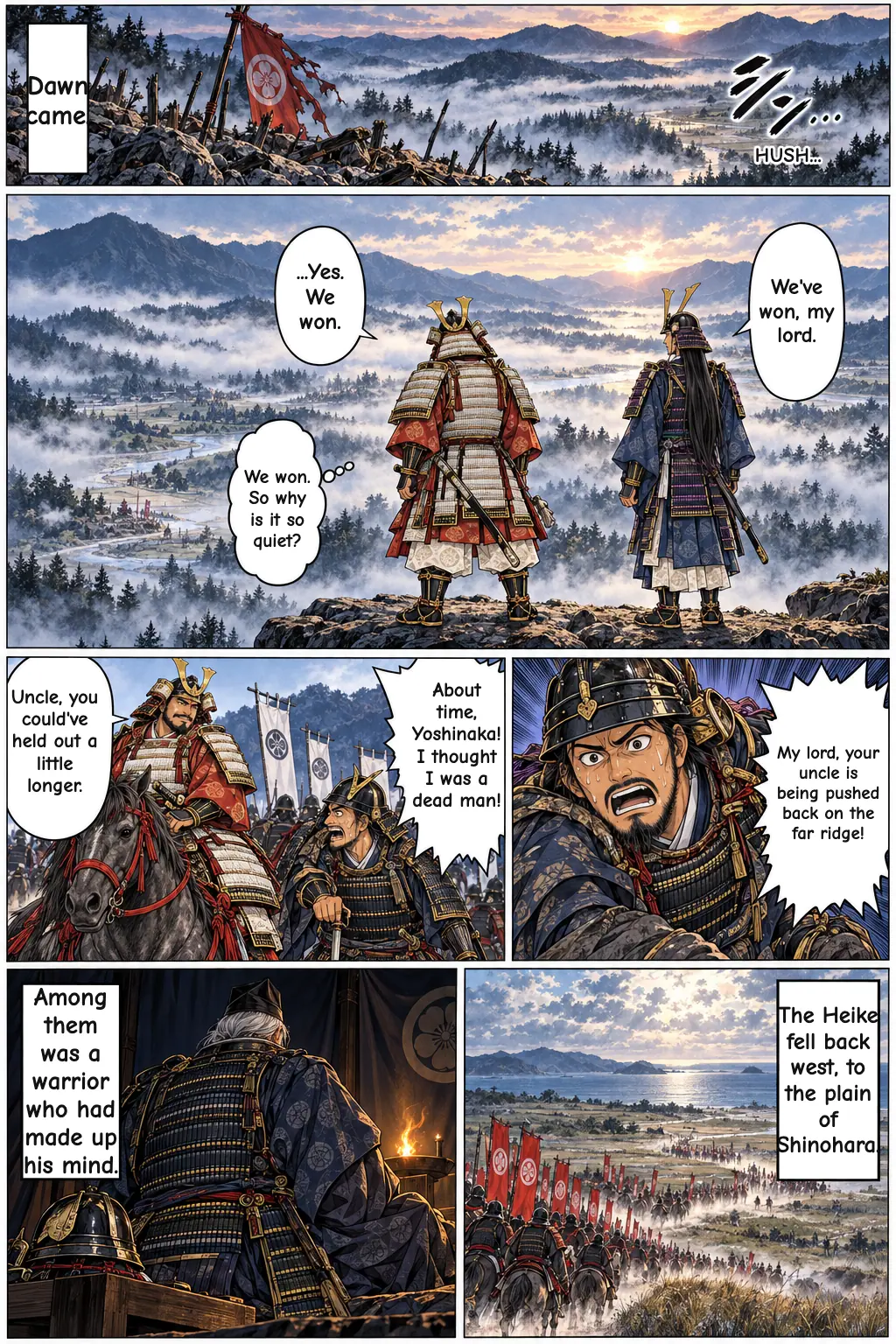
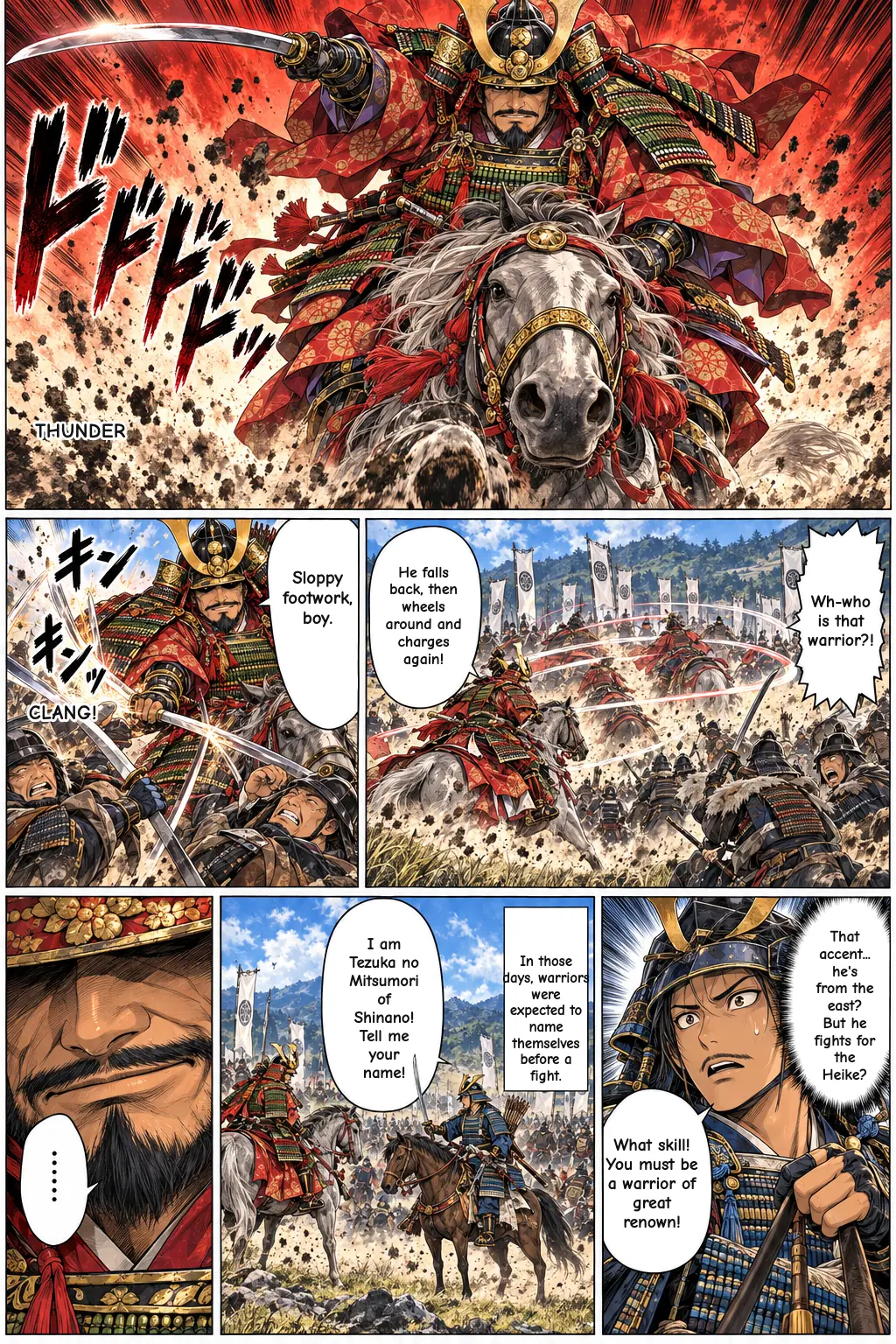
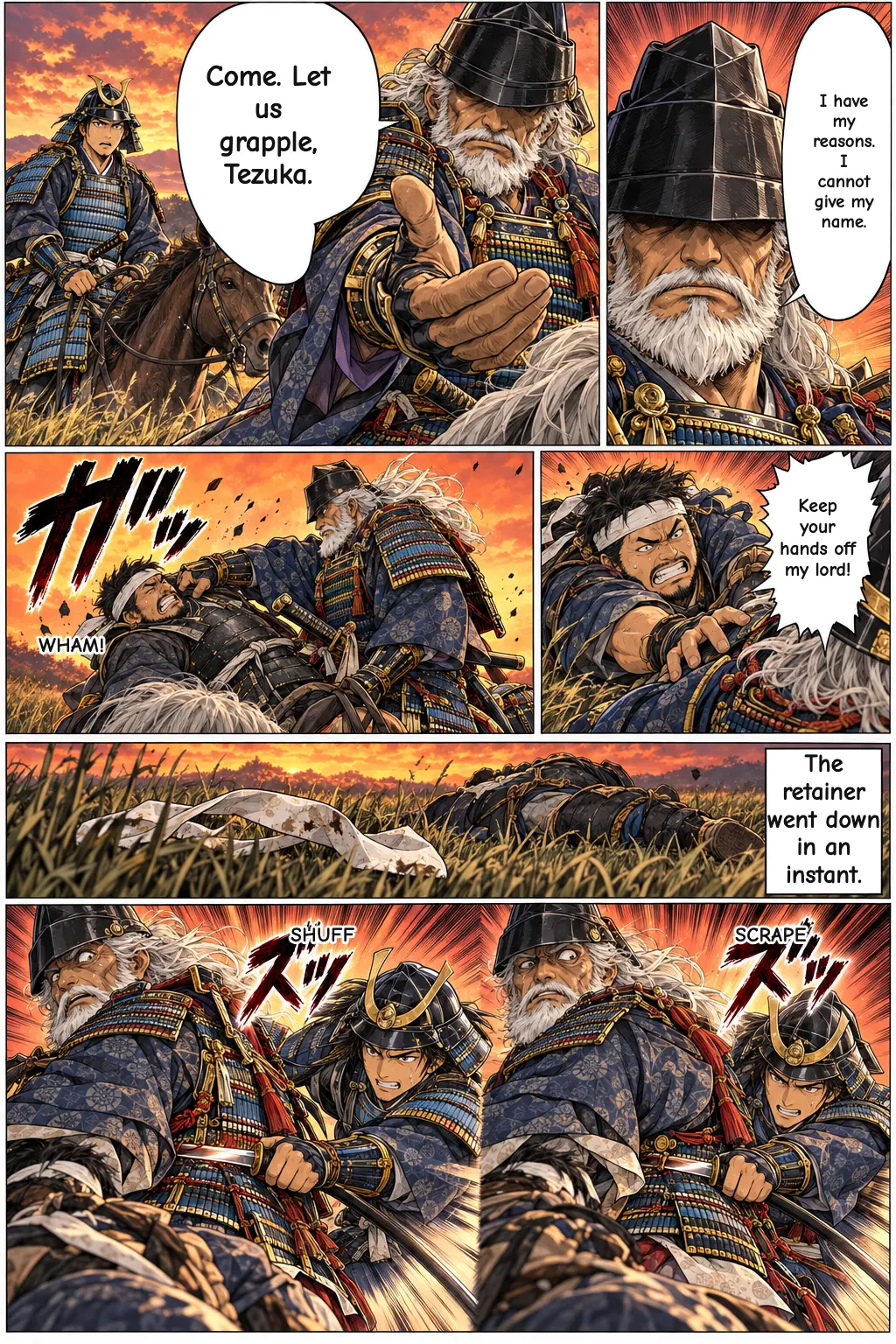
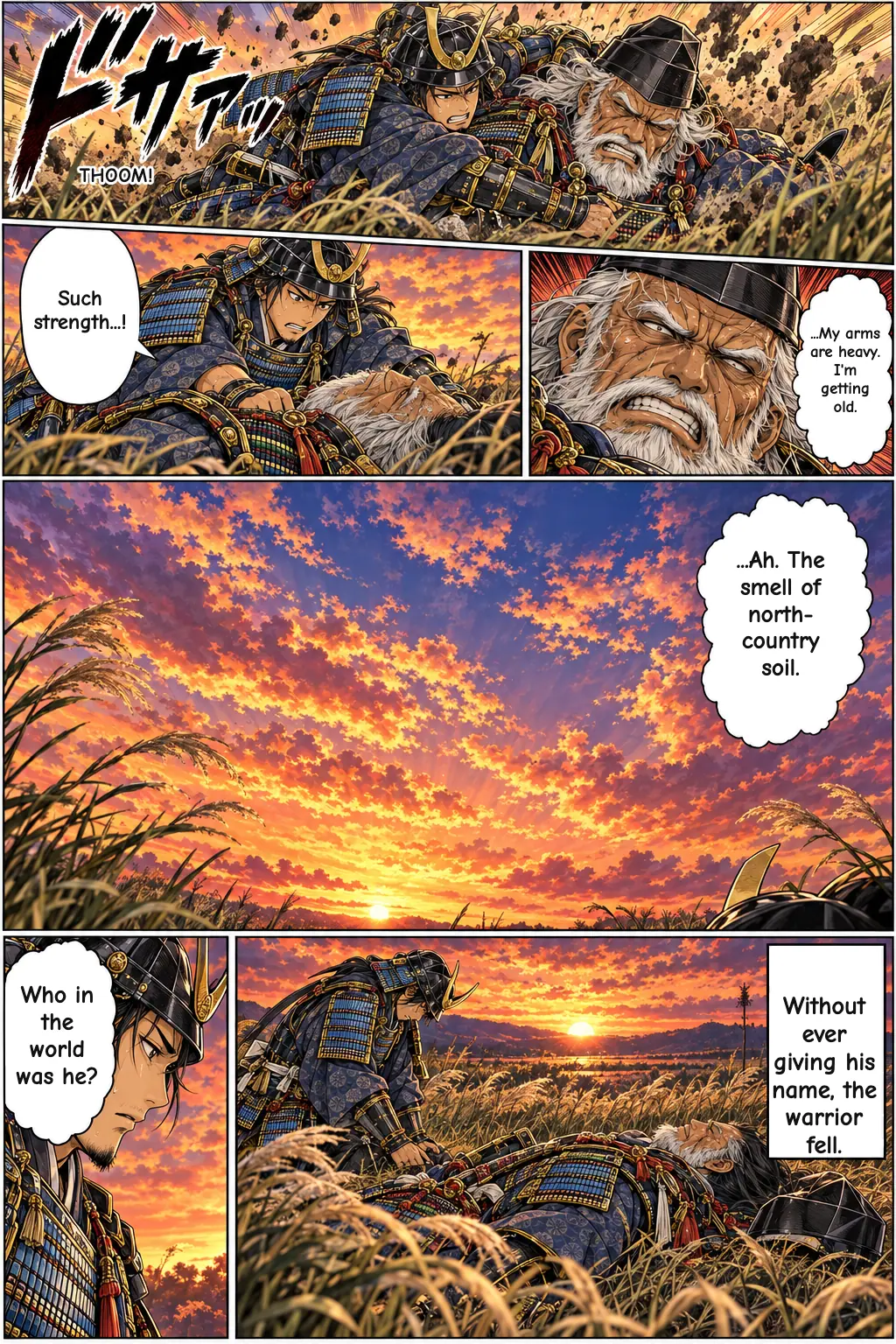
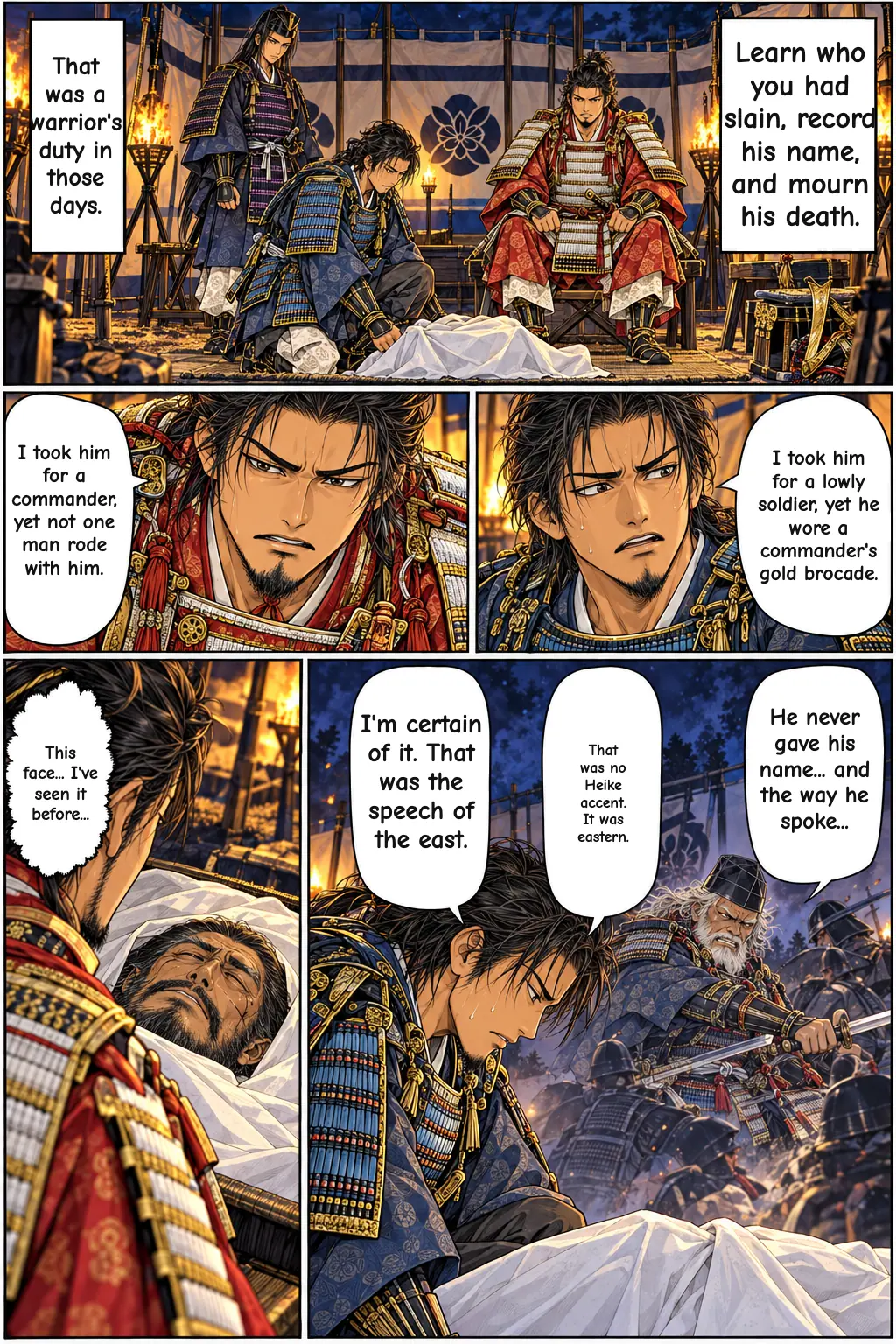
Yoshinaka then rescued Yukiie, who was struggling at Mount Shio. The Heike retreated to Shinohara in Kaga and were beaten again. As their army fled, one warrior in a red brocade robe and light-green laced armor kept turning back alone to fight. The Minamoto warrior Tezuka Mitsumori praised his courage, gave his own name, and asked for his. The old man refused, saying he had his reasons, and challenged Tezuka to grapple. He killed a retainer who tried to protect his lord, but, exhausted and elderly, he was finally pinned and beheaded by Tezuka.
The Mystery of the Black Hair
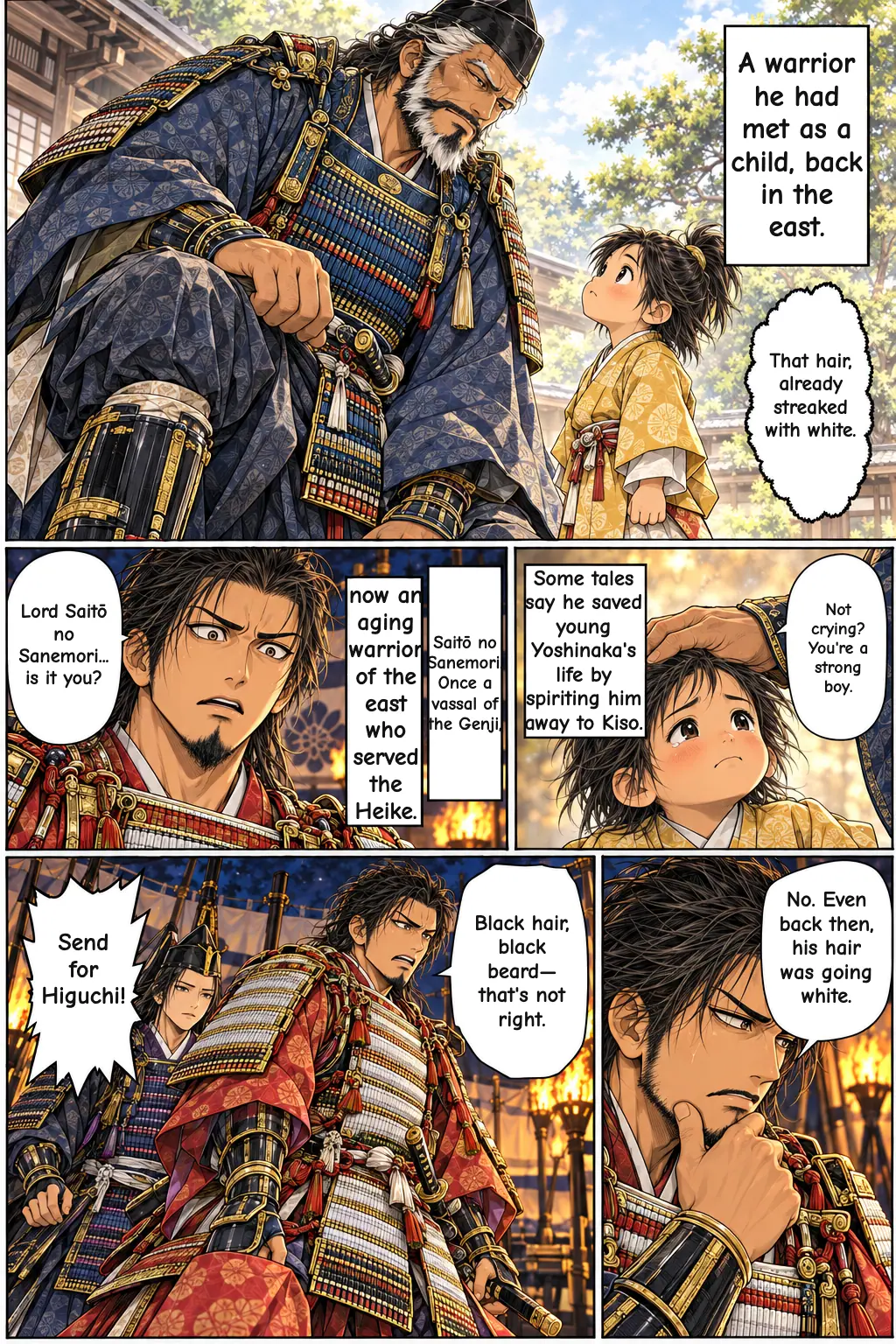
Tezuka brought the head to Yoshinaka with a puzzle: the man wore brocade like a general, yet had no followers like a common samurai; he never gave his name; and he spoke with an accent from the eastern provinces. Yoshinaka suspected it was Saitō Sanemori, a warrior he had seen in Kōzuke province as a small child. But even then Sanemori's hair had been going gray, and this head had black hair and a black beard.
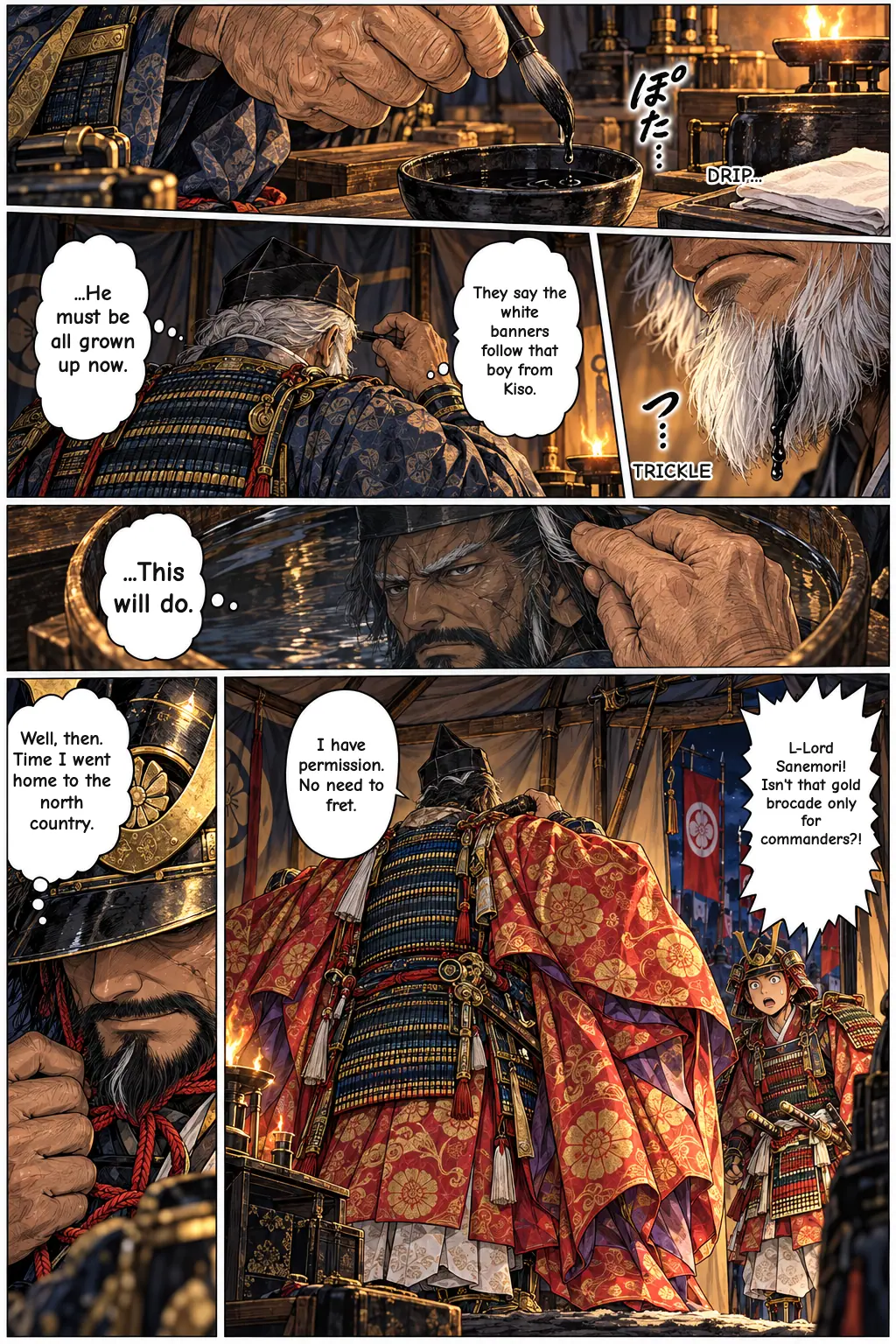
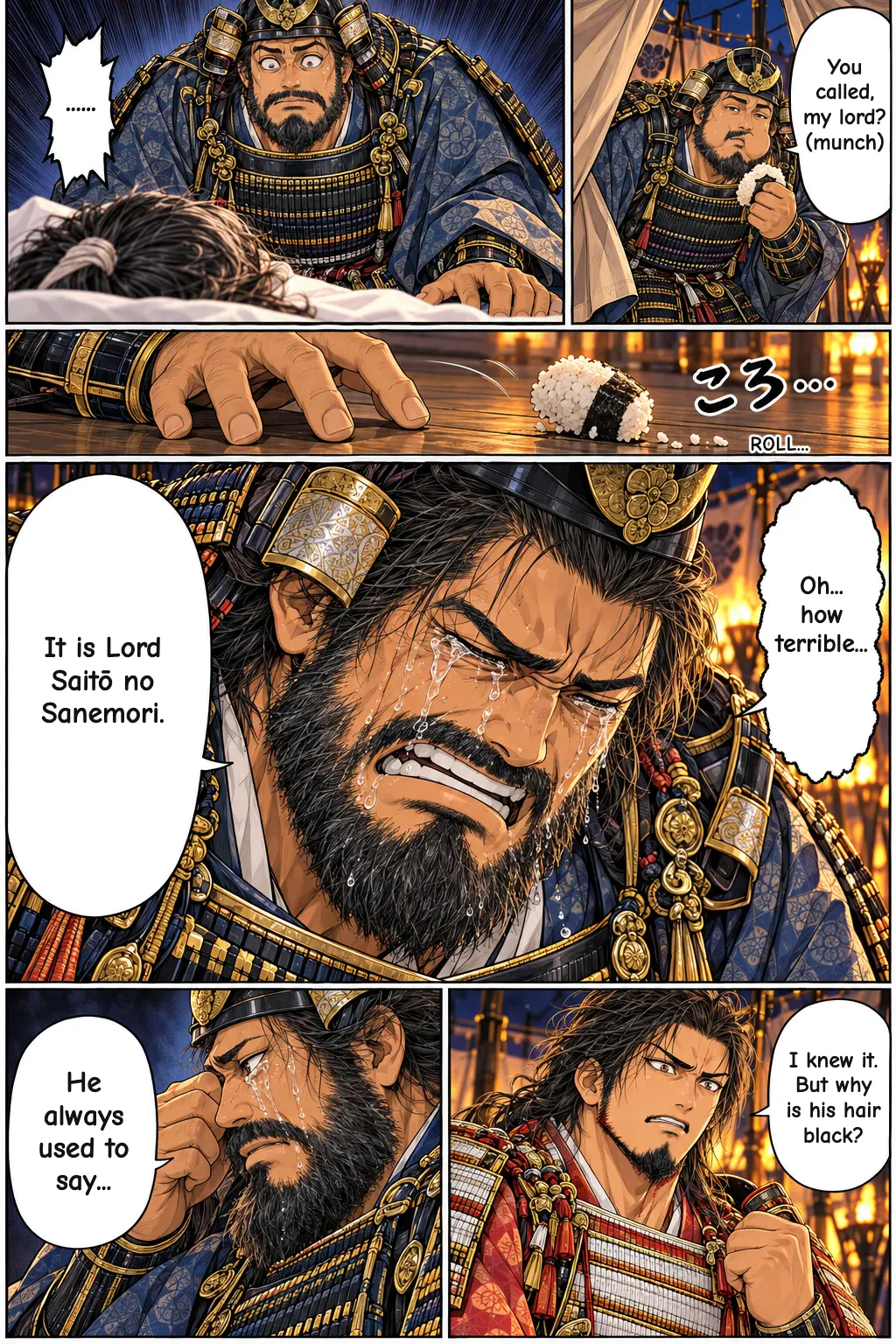
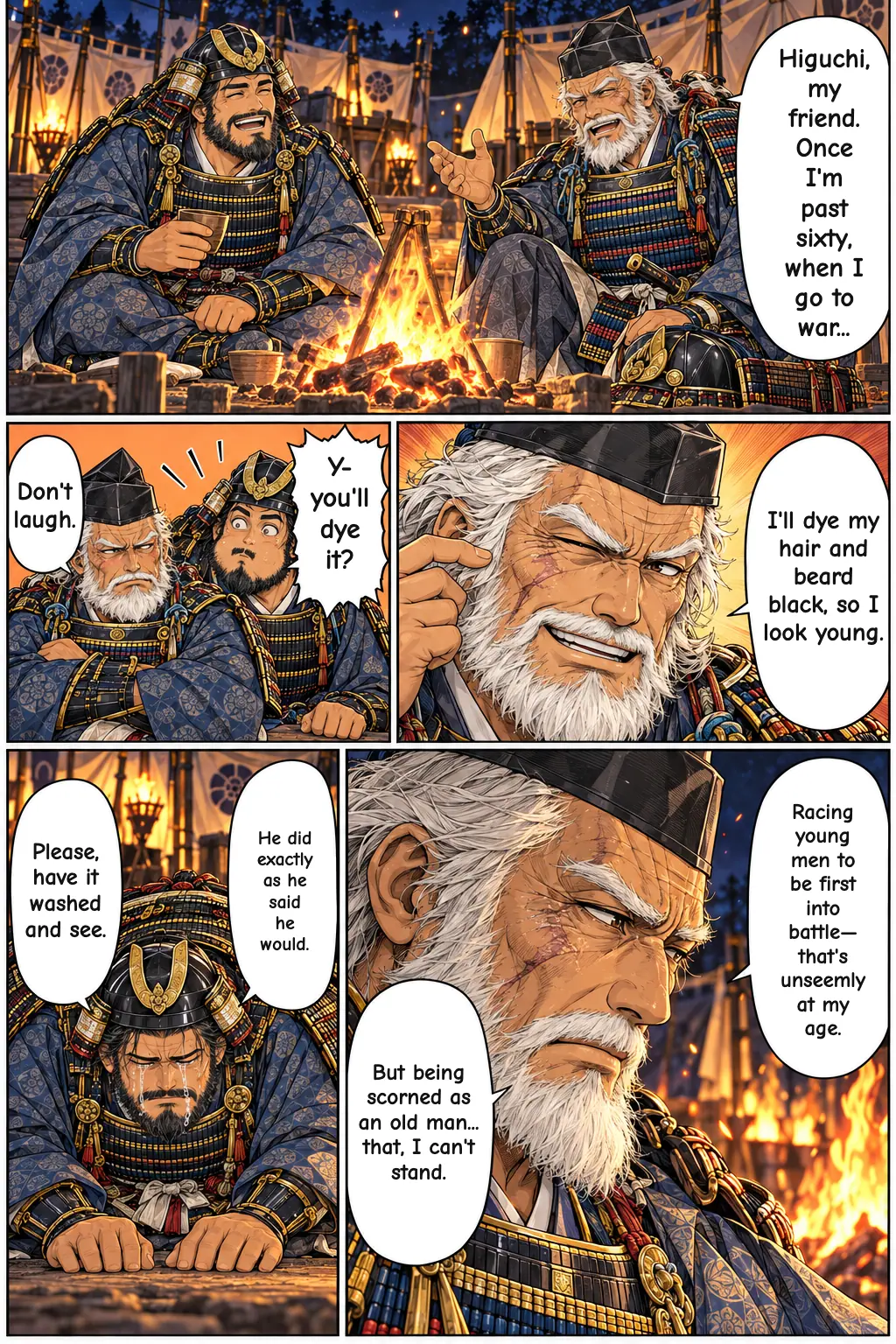
Yoshinaka called for Higuchi, who had known Sanemori well. Higuchi recognized him at a glance and wept. He explained that Sanemori used to say that if he went to war past sixty, he would dye his hair and beard black. Competing with young men for the front line would look foolish, but being dismissed as a feeble old man would be worse. Yoshinaka had the head washed, and the white hair appeared.
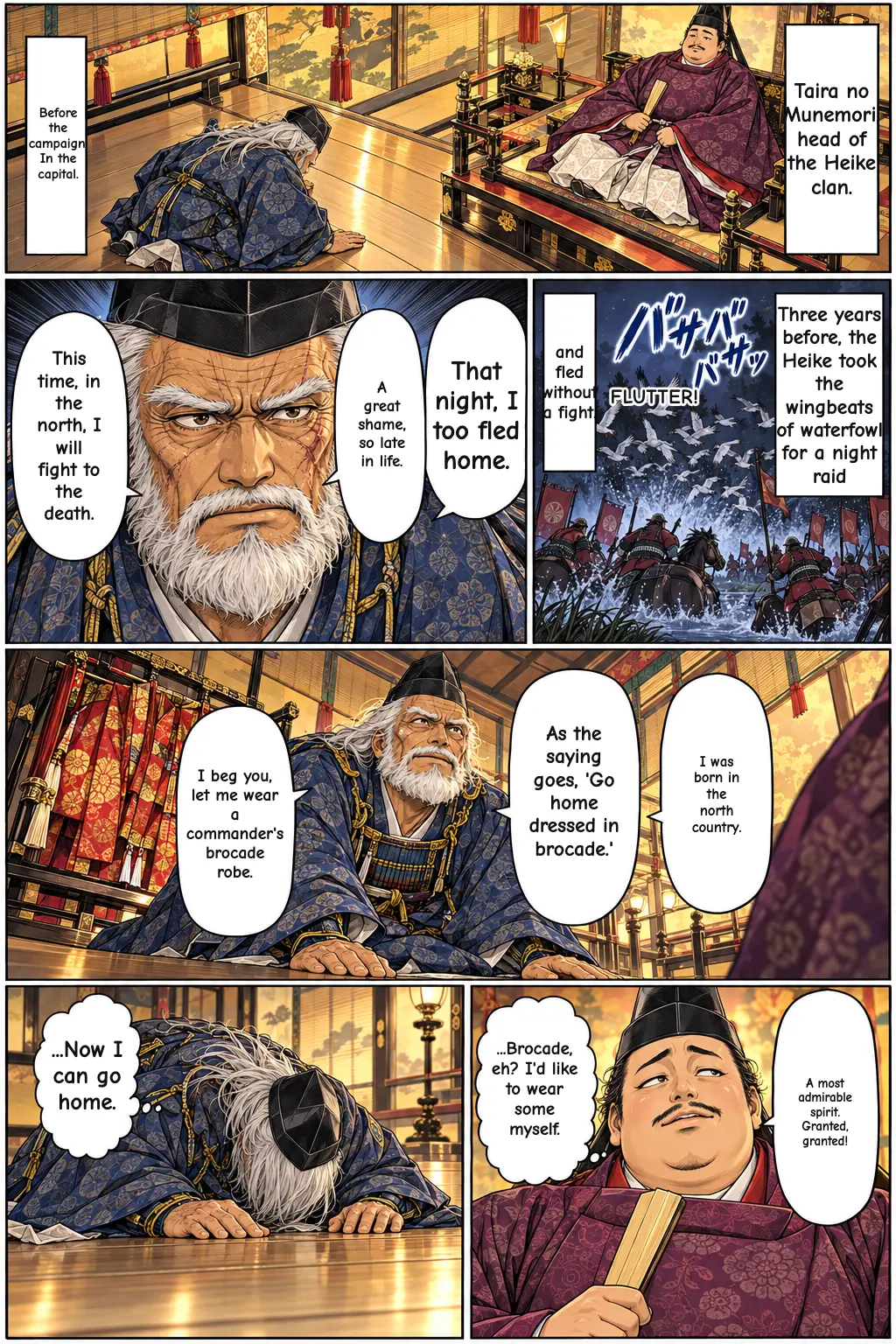
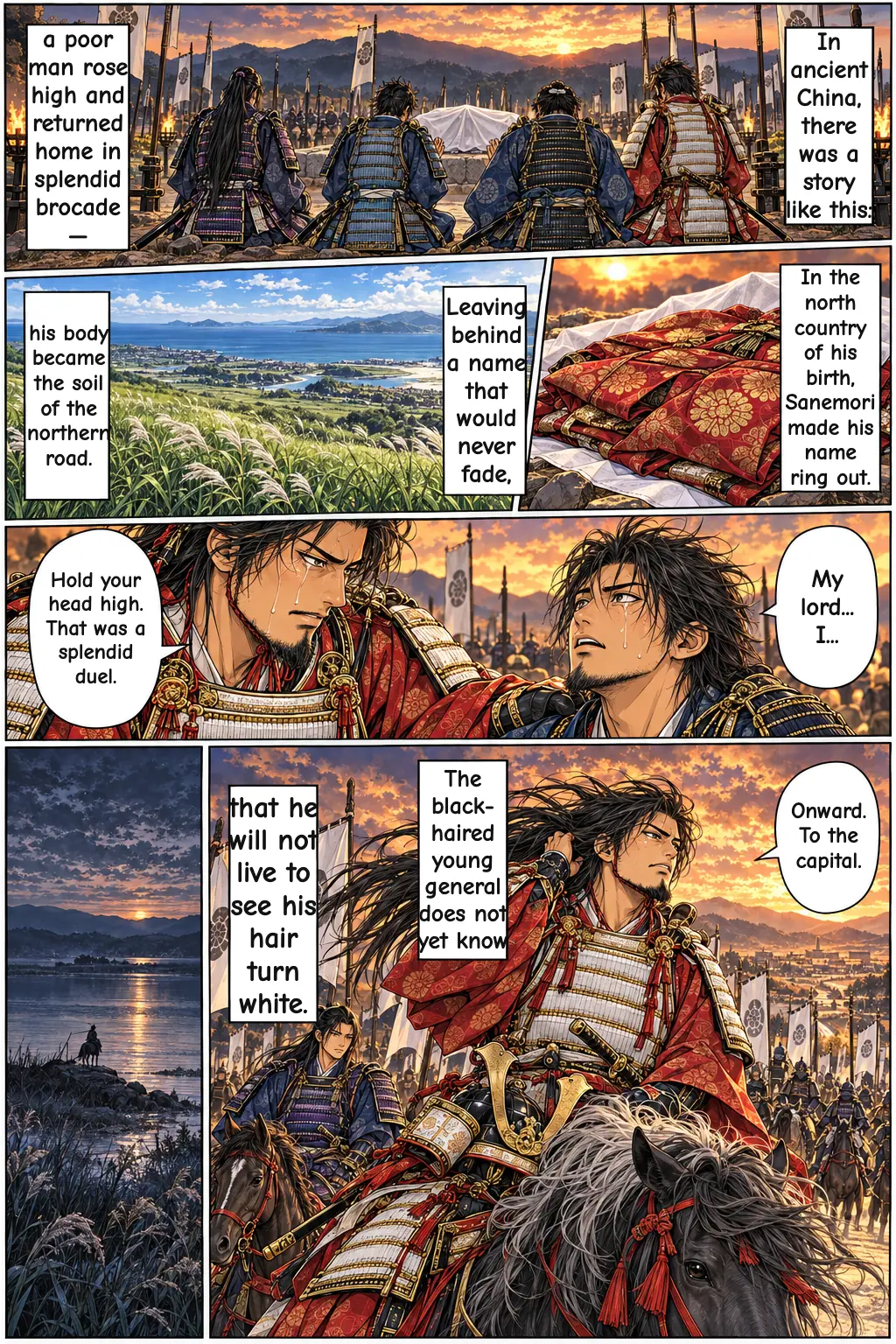
The narrator then explains the brocade. Before the campaign, Sanemori had asked the Heike leader Taira no Munemori for permission to wear it. He was ashamed that he had fled at the Battle of Fujigawa, when the Heike ran from the sound of waterbirds, and he meant to die in this northern campaign. He was originally from Echizen in the north, and an old saying holds that a man should return home dressed in brocade. Munemori was moved and agreed. The chapter ends by comparing Sanemori to a Chinese official who came home in brocade in ancient times: his name lived on, while his body turned to dust on the northern road.
Main Characters
Kiso no Yoshinaka is the clever Minamoto commander who wins with deception and timing rather than numbers. Saitō Sanemori is the aging Heike warrior, said to be over seventy, who chooses an honorable death. Tezuka Mitsumori is the young Shinano warrior who treats his enemy with respect. Higuchi Kanemitsu leads the night attack from behind and is the man who sheds tears over his old friend's head.
What This Story Means: Pride, Shame, and a Name That Lasts
The Tale of the Heike was performed by blind lute-playing storytellers, and the Kakuichi version used here became the standard text. Its great theme is that all power fades. Kurikara shows the Heike's power collapsing in a single night. Sanemori's story turns that collapse into something personal: an old man who cannot win the war, but can still decide how he is remembered. For samurai of this age, the shame of running away and the hope of leaving a good name were matters of life and death, and Sanemori's dyed hair and brocade robe have made him one of the best-loved figures in Japanese literature. He later became the subject of the Noh play Sanemori.
What the Manga Changes and Adds
The original text gives the outline; the manga supplies the visuals. The terrain, weather, moonlight, soldiers' faces, the fighting style in the daytime skirmishes, and the exact signal for the night attack are all the artist's choices. The text mentions only answering war cries from front and back. Sanemori's private feelings as he puts on the brocade, the detailed moves of his grapple with Tezuka (the text says only that Tezuka stabbed him from the left, under the armor skirt), and the staging of the head-washing are also imagined. A flashback of Sanemori telling Higuchi about dyeing his hair is a fair addition, since Higuchi says Sanemori often talked about it.
Some popular details come from later sources. A pond in Kaga City called Kubiarai-ike, where the head was supposedly washed, comes from local legend and the Noh play. The story that Sanemori once saved the infant Yoshinaka's life appears in works such as the Genpei Jōsuiki; the Kakuichi text only says Yoshinaka saw him as a child. And while many retellings show Yoshinaka weeping, the Kakuichi text clearly gives the tears to Higuchi.
Where to Read It
If you'd like to see the night rout at Kurikara and the moment the white hair is revealed, Episode 7 of THE TALE OF THE HEIKE: The Samurai War of Genpei on Manga Portal tells the story in full color. Every episode is free to read, with no sign-up needed, so you can start here or go back to Episode 1 to follow the Genpei War from the beginning.
Characters in this episode
Kiso no Yoshinaka
The Minamoto commander who defeats a far larger Heike army at Kurikara Pass with fake banners, delay, and a surprise night attack.
Saitō Sanemori
An elderly Heike warrior who dyes his white hair black and fights alone to the end at Shinohara, determined to die with honor.
Tezuka Mitsumori
A Minamoto warrior from Shinano who praises the lone old fighter, grapples with him, and takes his head.
Higuchi Kanemitsu
Yoshinaka's trusted retainer who leads the attack from behind at Kurikara and later recognizes Sanemori's head with tears.
Taira no Munemori
Leader of the Heike, who appears only in a flashback, granting Sanemori permission to wear brocade into battle.
Jūrō Kurando Yukiie
Yoshinaka's uncle, who leads a separate force at Mount Shio and must be rescued by Yoshinaka.
FAQ
What happened at the Battle of Kurikara Pass?
In 1183, Kiso no Yoshinaka held a large Heike army in the mountains on the Etchū–Kaga border until night, then attacked from front and behind. The panicked Heike fell into the Kurikara valley, and The Tale of the Heike says over seventy thousand riders filled it. The defeat opened the way for Yoshinaka to march on the capital.
Why did Saitō Sanemori dye his hair black?
Sanemori was an old man, and he did not want enemies to look down on him as a feeble elder. He also felt it would look silly for a gray-haired man to race young warriors for the front line. Dyeing his hair let him fight as an equal.
Why did Sanemori wear a brocade robe at Shinohara?
He was ashamed of fleeing at the Battle of Fujigawa and planned to die in the northern campaign. Because he was originally from Echizen, he asked Munemori to let him wear brocade, following the saying that a man should return home in brocade. Munemori granted the request.
Did oxen with burning torches really fight at Kurikara?
The torch-bearing oxen are a famous image, but they come from other tellings such as the Genpei Jōsuiki, not the standard Kakuichi version of The Tale of the Heike. In the Kakuichi text, the victory comes from banners, delay, and war cries in the dark.
Did Sanemori save Yoshinaka's life as a child?
Some later works, such as the Genpei Jōsuiki, say Sanemori helped the infant Yoshinaka escape to Kiso. The Kakuichi version only says Yoshinaka had seen Sanemori in Kōzuke when he was small.