Episode 14He Doomed Her ClanThen Came to Visit — The Imperial Visit to Ōhara (Kenreimon-in)
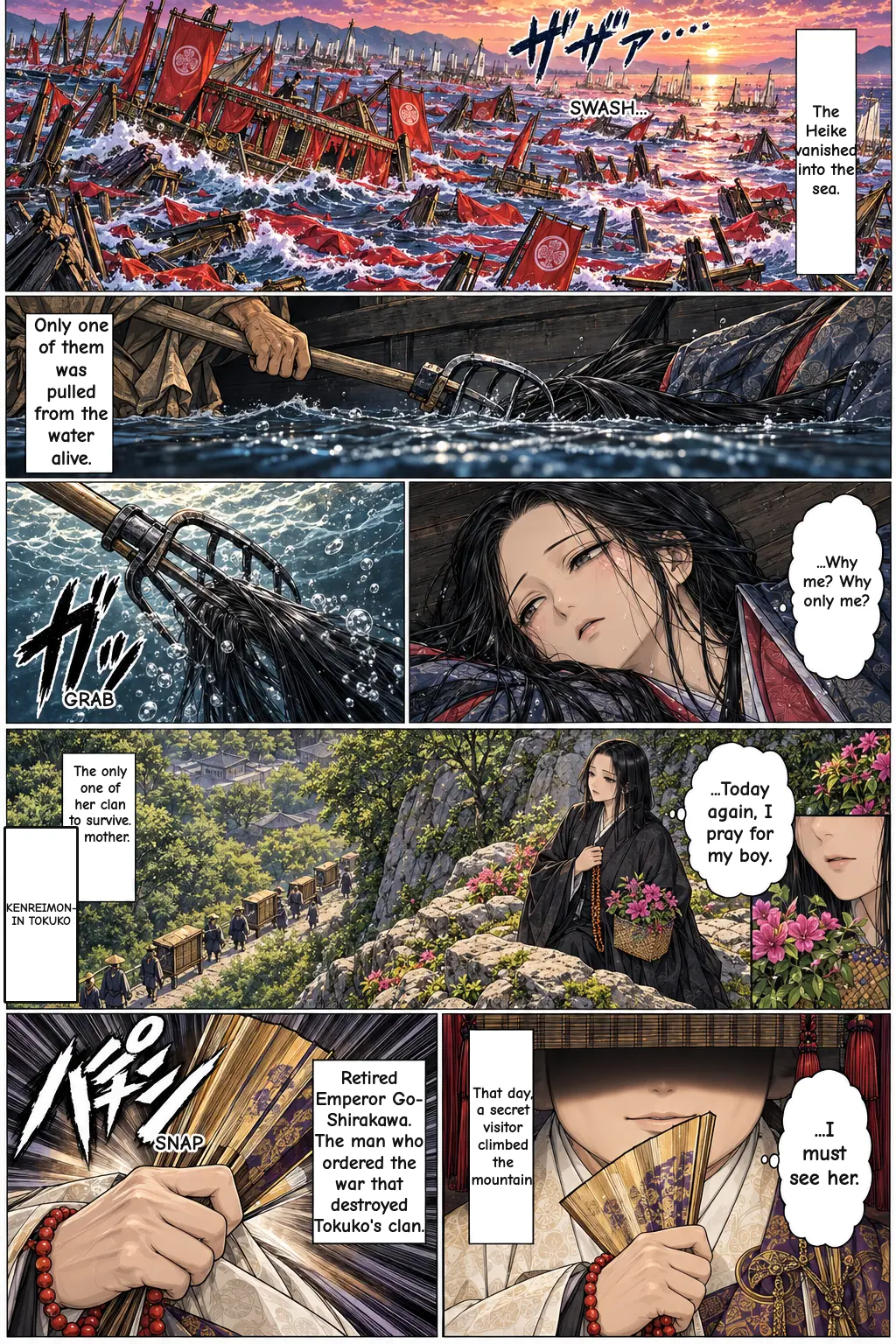
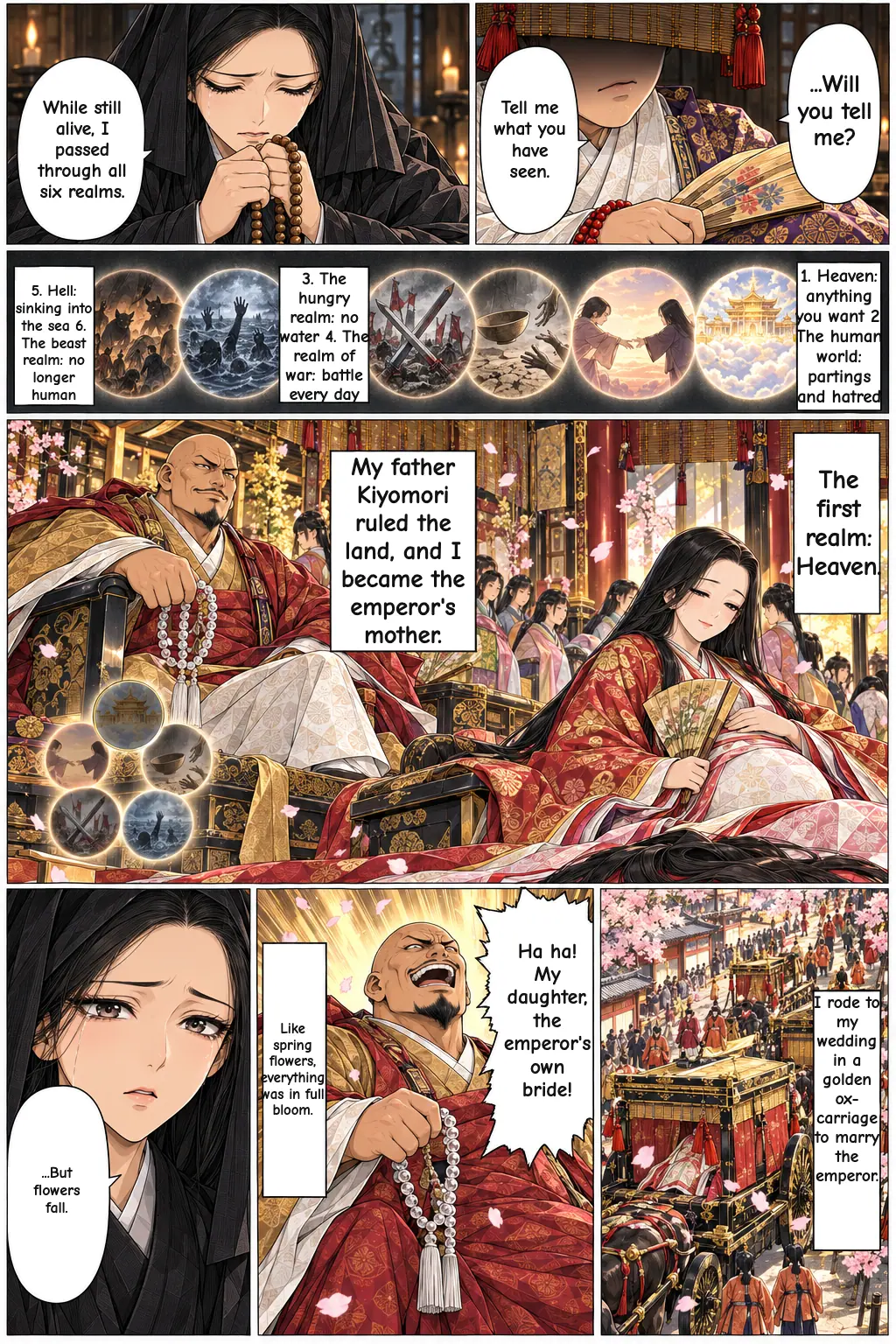
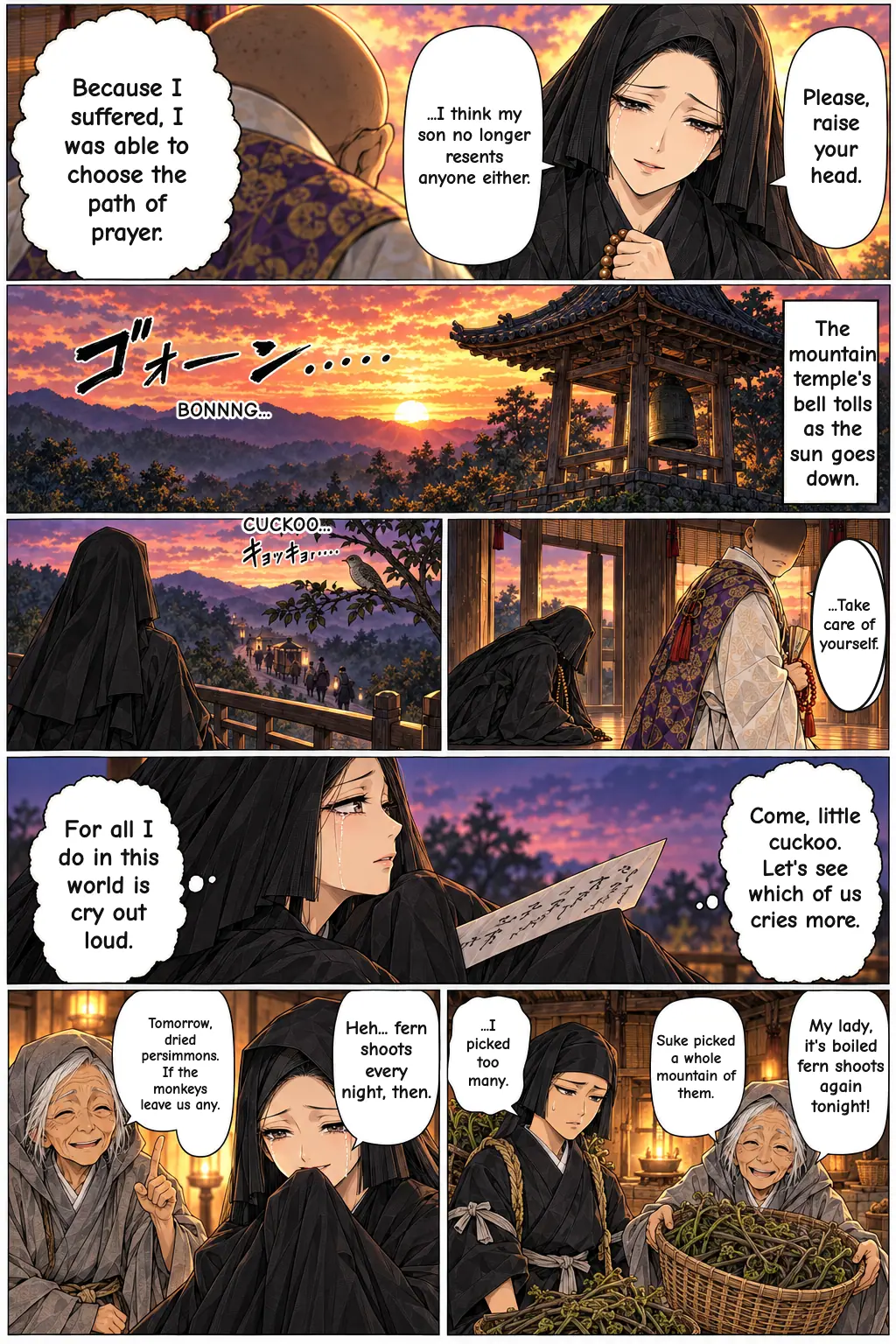
the series finale. Kenreimon-in was the only one of her clan pulled alive from the sea at Dan-no-Ura. Now she spends her days in prayer at a mountain hermitage in Ōhara. One early summer, Retired Emperor Go-Shirakawa, the man who ordered the war that destroyed her family, comes to see her in secret. She tells him to his face how much she has resented him. Then she begins to tell her life story as a journey through six realms.
Kenreimon-in and the Imperial Visit to Ōhara: Heike's Ending
How The Tale of the Heike Ends: The Original Story
The Tale of the Heike does not end on the battlefield. In the widely read Kakuichi version, the final section, the Initiates' Chapter (Kanjō no maki), follows one survivor: Kenreimon-in, born Taira no Tokuko. She was the daughter of Taira no Kiyomori, the warlord who led the Taira (Heike) clan, and the mother of the child emperor Antoku. At the sea battle of Dan-no-Ura in 1185, when the Taira were destroyed by the Minamoto, she threw herself into the waves but was pulled out and taken captive.
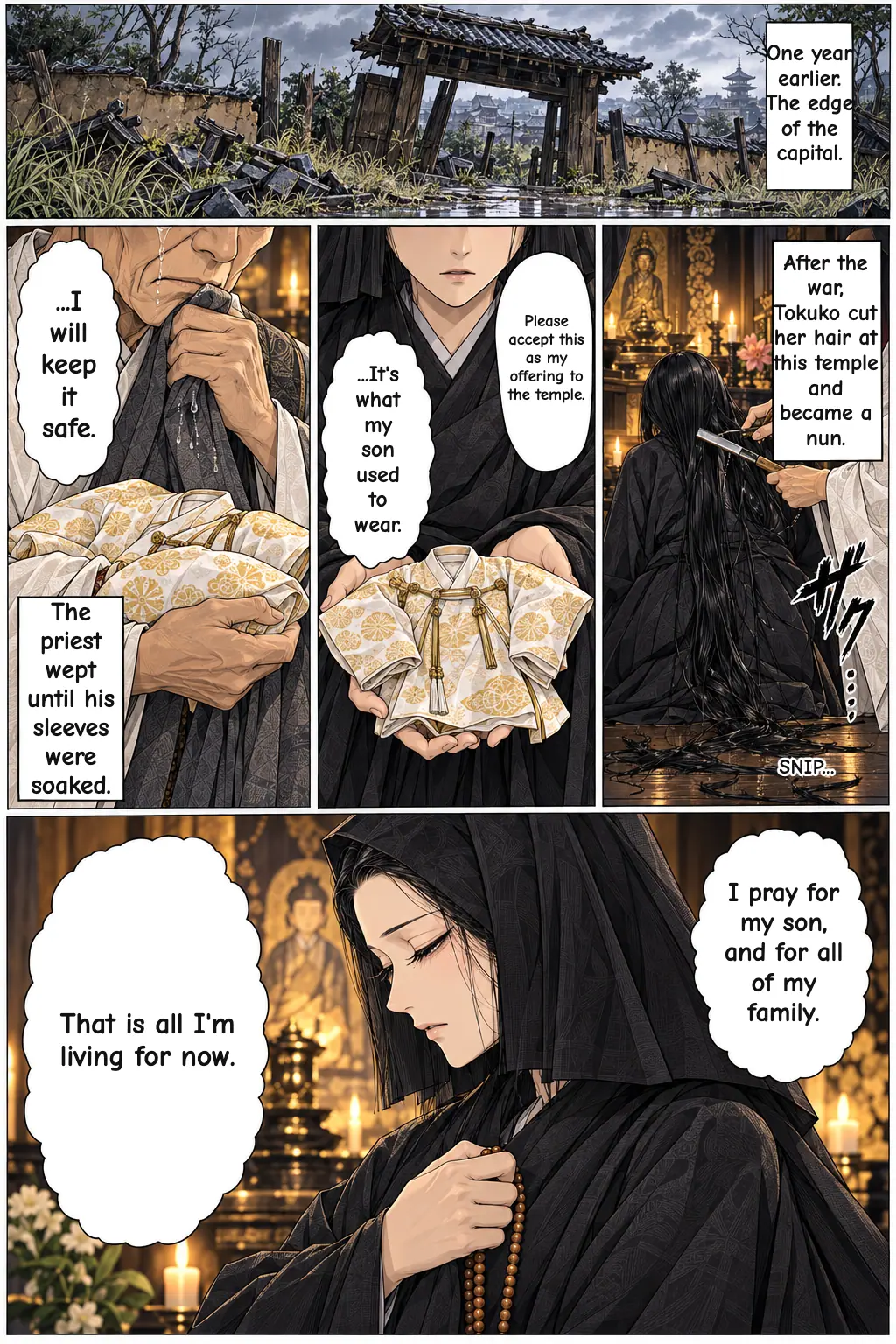
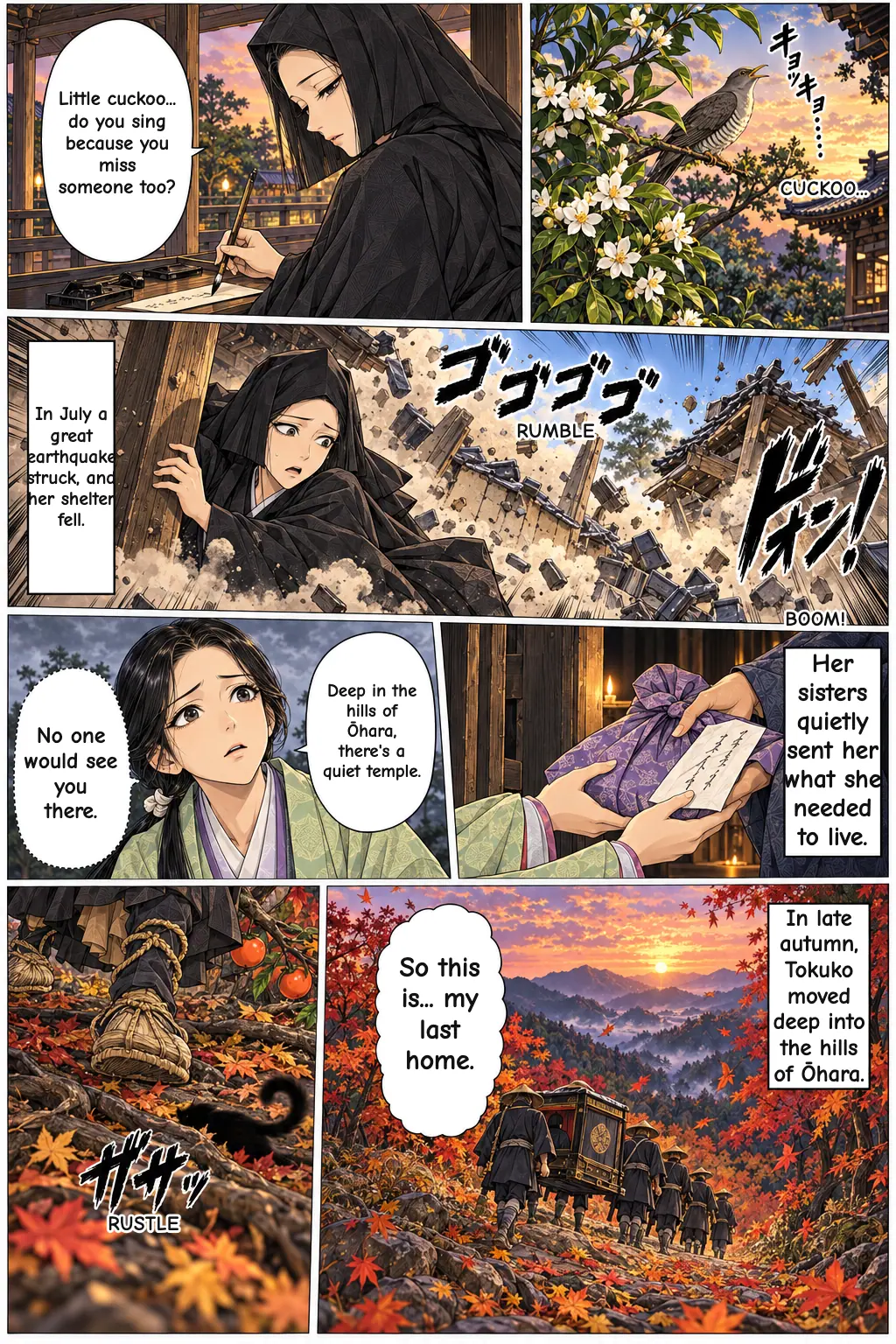
Brought back to the capital, she settles in a run-down monk's lodging near Yoshida, at the foot of the Eastern Hills, and takes Buddhist vows. With nothing else to give, she offers the priest a robe that had belonged to her drowned son. The priest is so moved that he cannot speak for weeks. In summer, the scent of mandarin blossoms and the call of a cuckoo remind her of the people she lost, and she writes a poem on the lid of her inkstone. A great earthquake then damages the lodging, and her younger sisters quietly help support her.
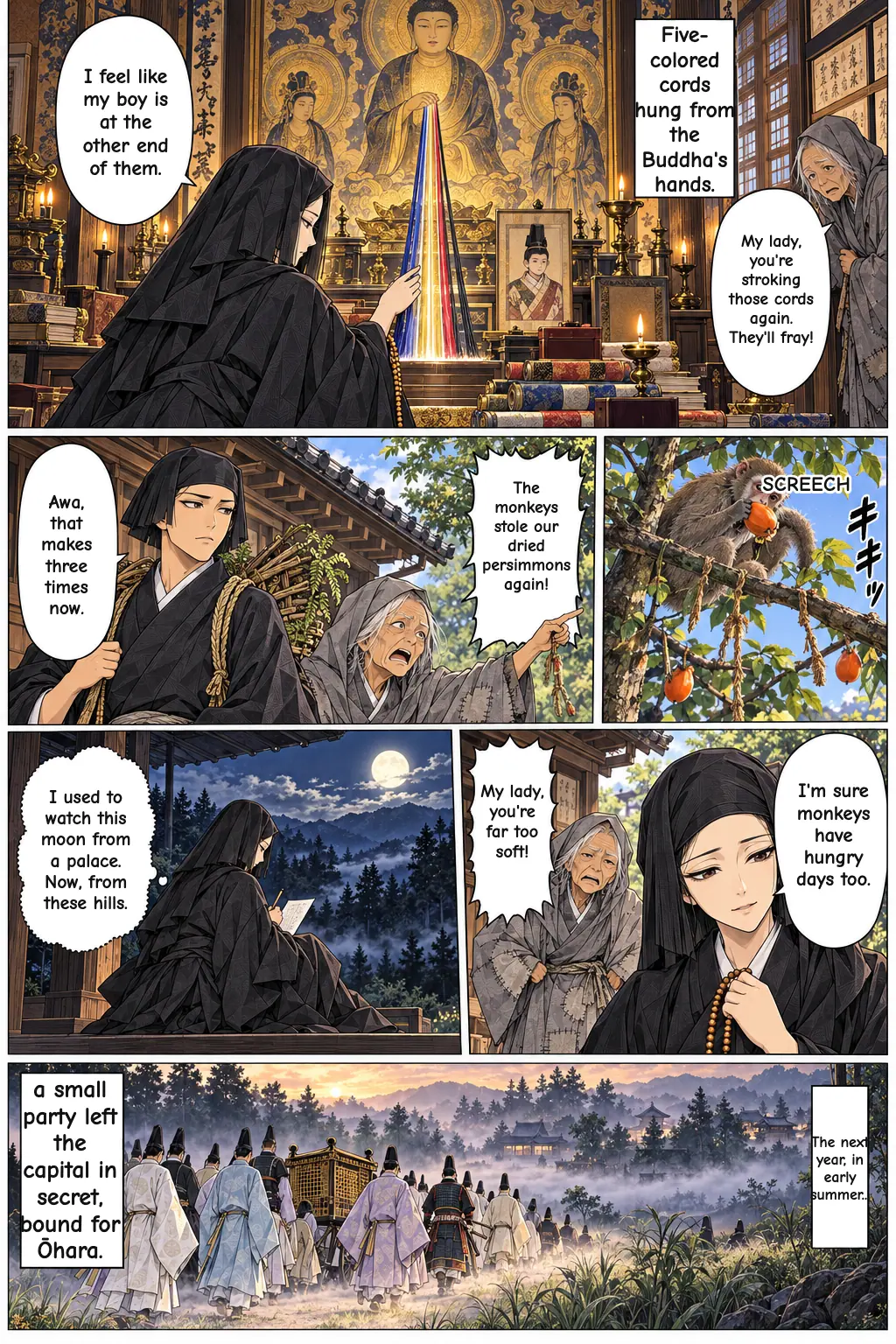
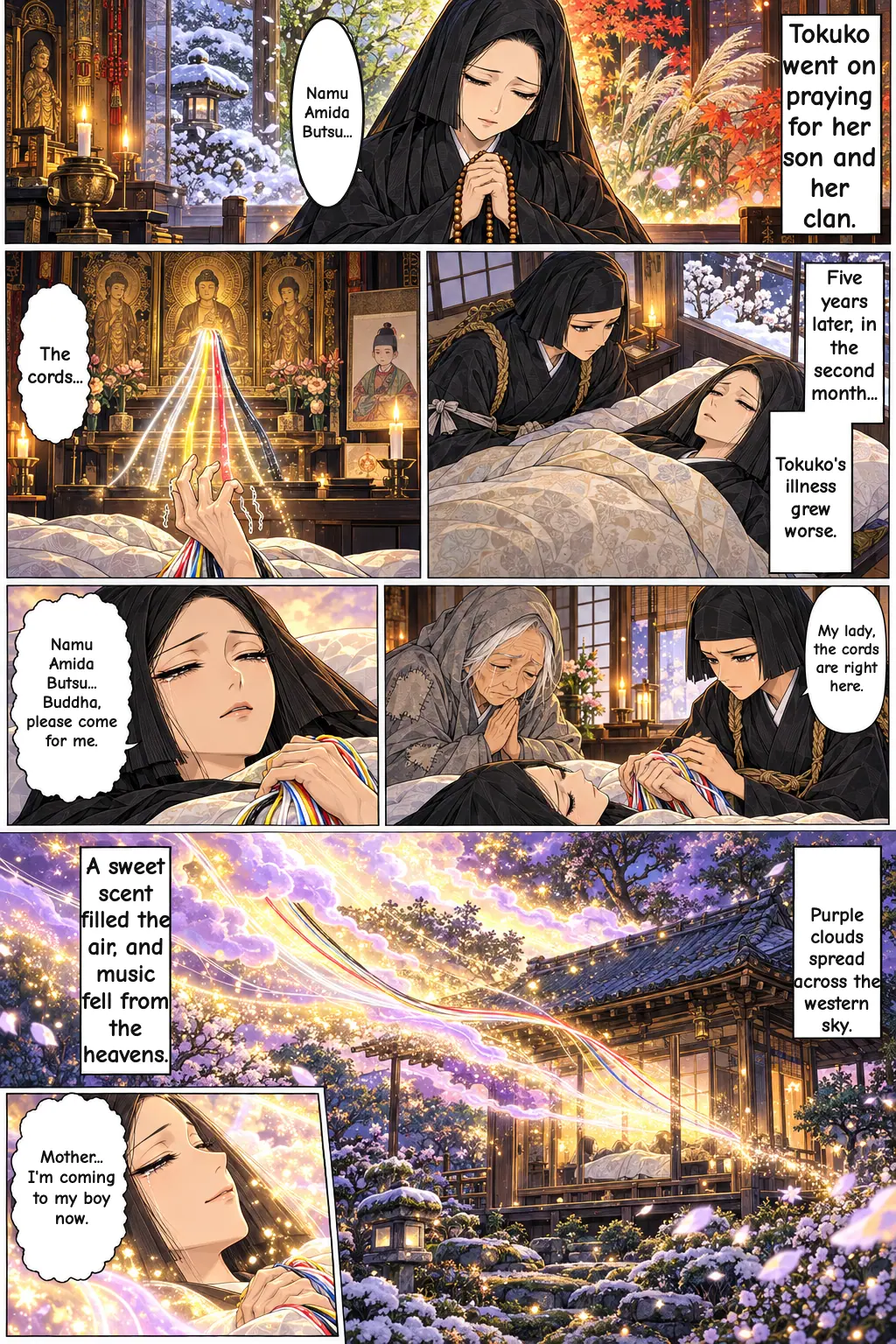
In late autumn of 1185 she moves deep into the hills of Ōhara, to a small hermitage beside the temple Jakkō-in. One room is for sleeping, the other for prayer. There she keeps an image of Amida Buddha with five-colored cords tied to its hand, a portrait of her late son, and Buddhist scriptures, attended by two loyal women.
The Imperial Visit to Ōhara and the Six Realms
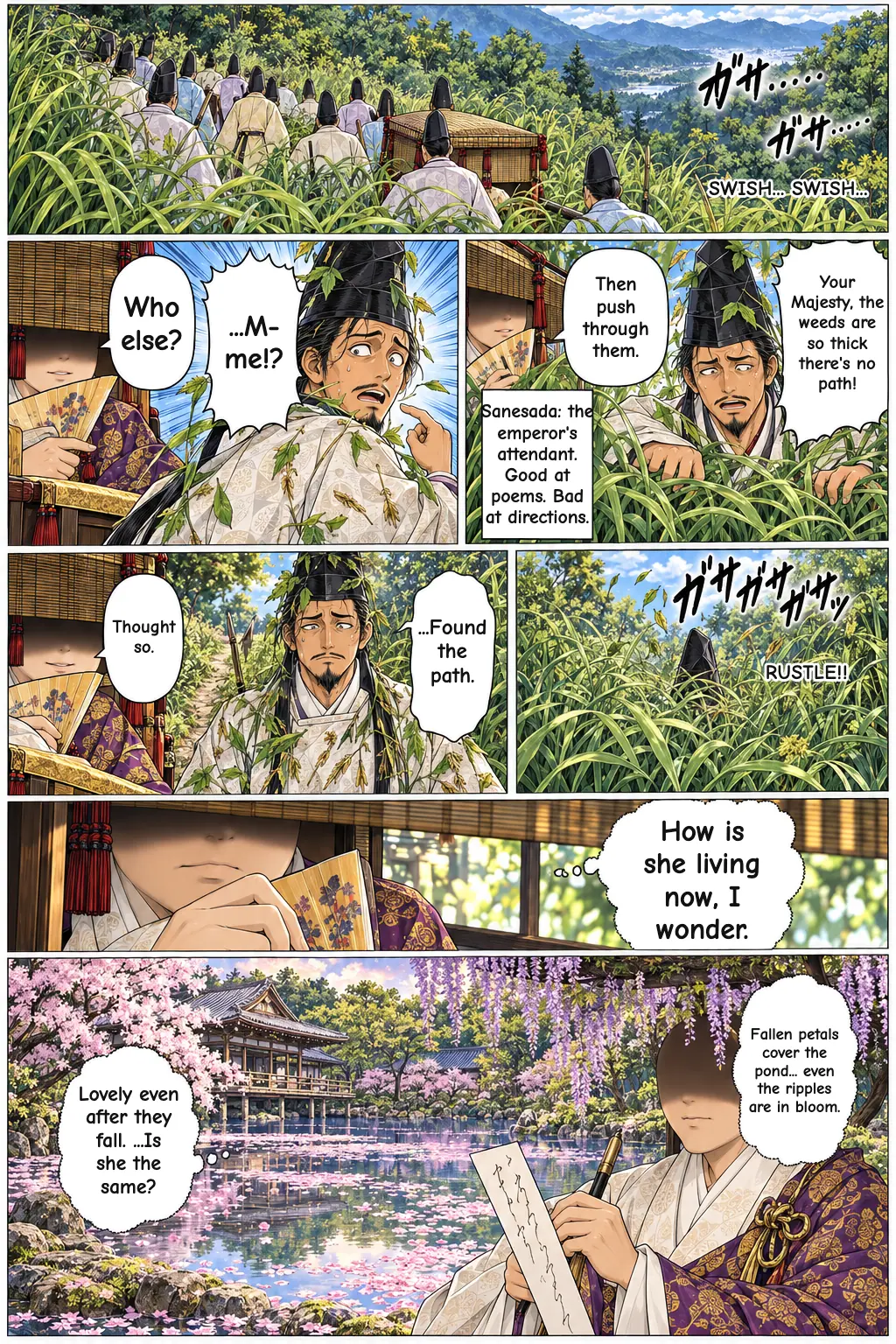
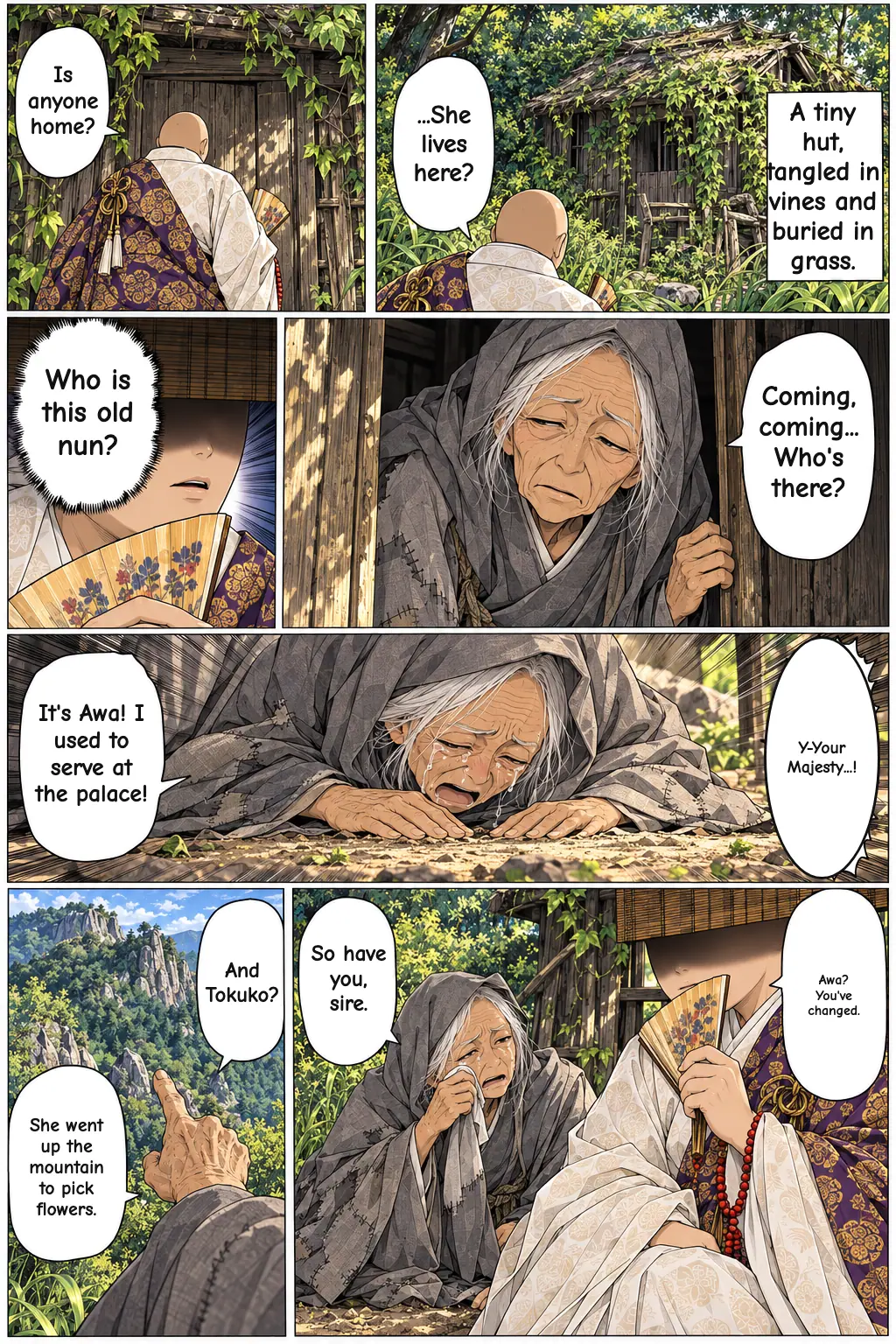
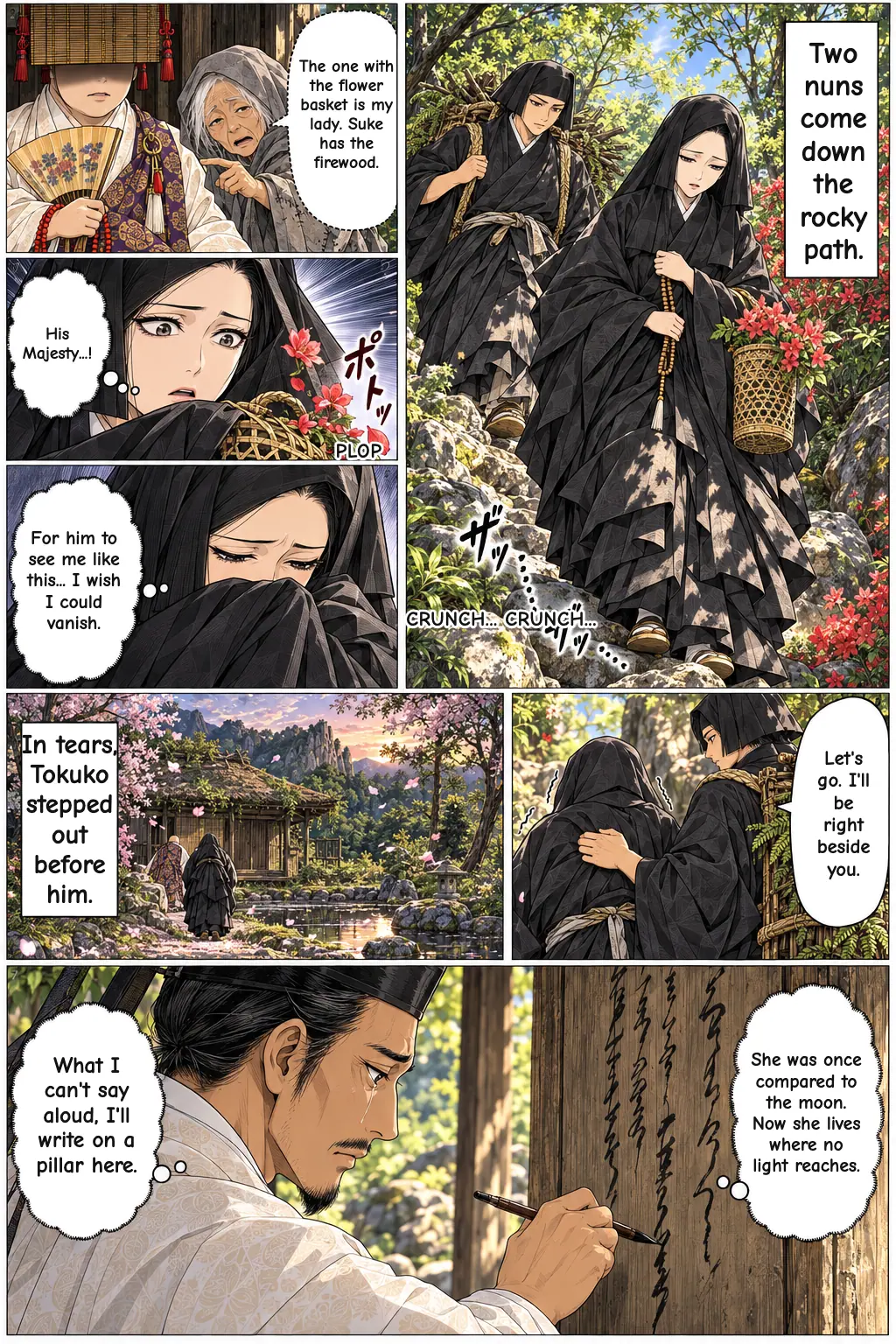
In the fourth month of the next year, Retired Emperor Go-Shirakawa, Kenreimon-in's father-in-law and the most powerful political figure of the age, travels to Ōhara in secret with a few courtiers. He admires late cherry blossoms on the temple pond and composes a poem, then finds the hermitage overgrown with ivy. An elderly nun tells him the lady has gone up the mountain to gather flowers. Soon two nuns in black robes come down the rocky path, one carrying a basket of azaleas and the other firewood and bracken. The one with the flowers is the former empress.
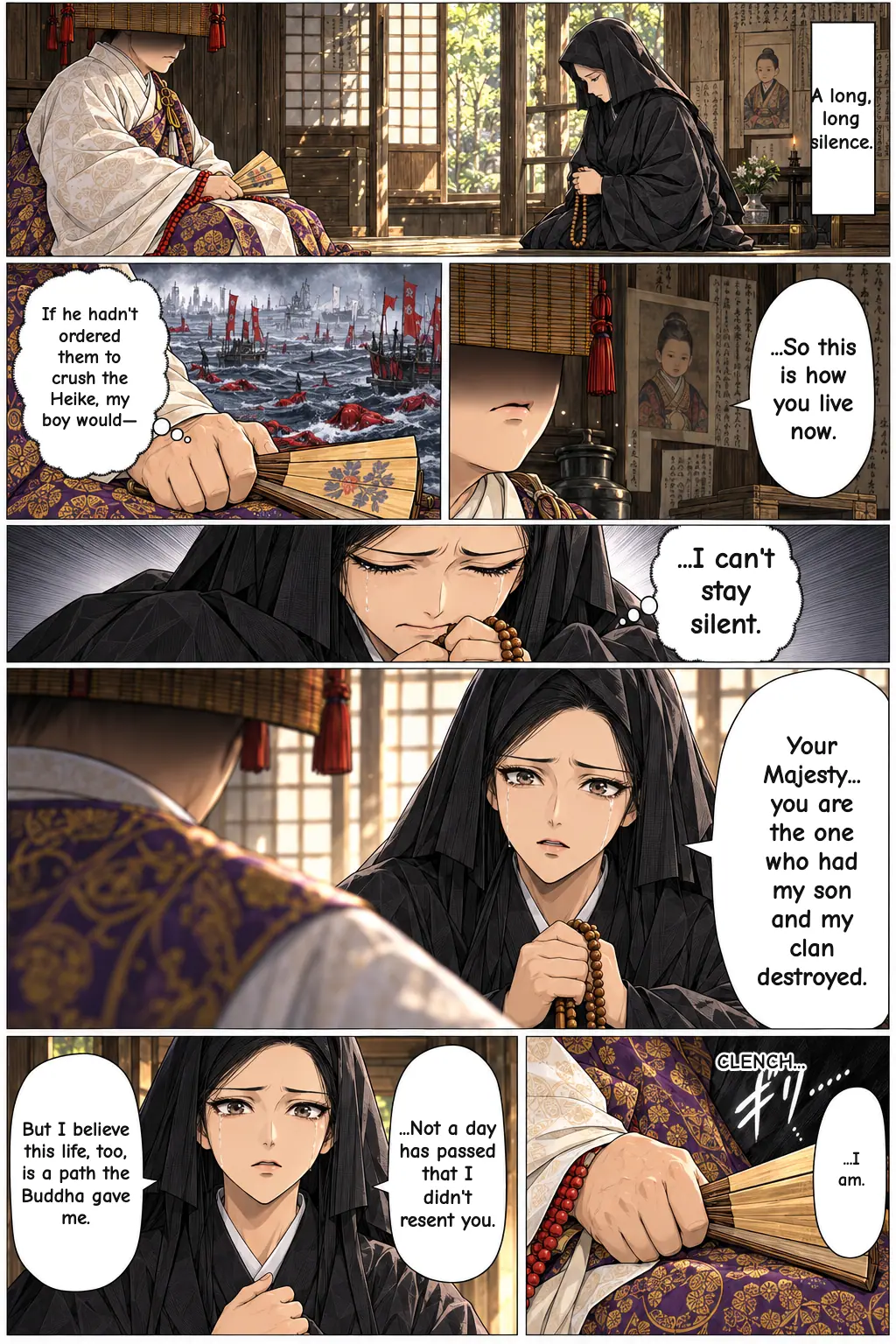
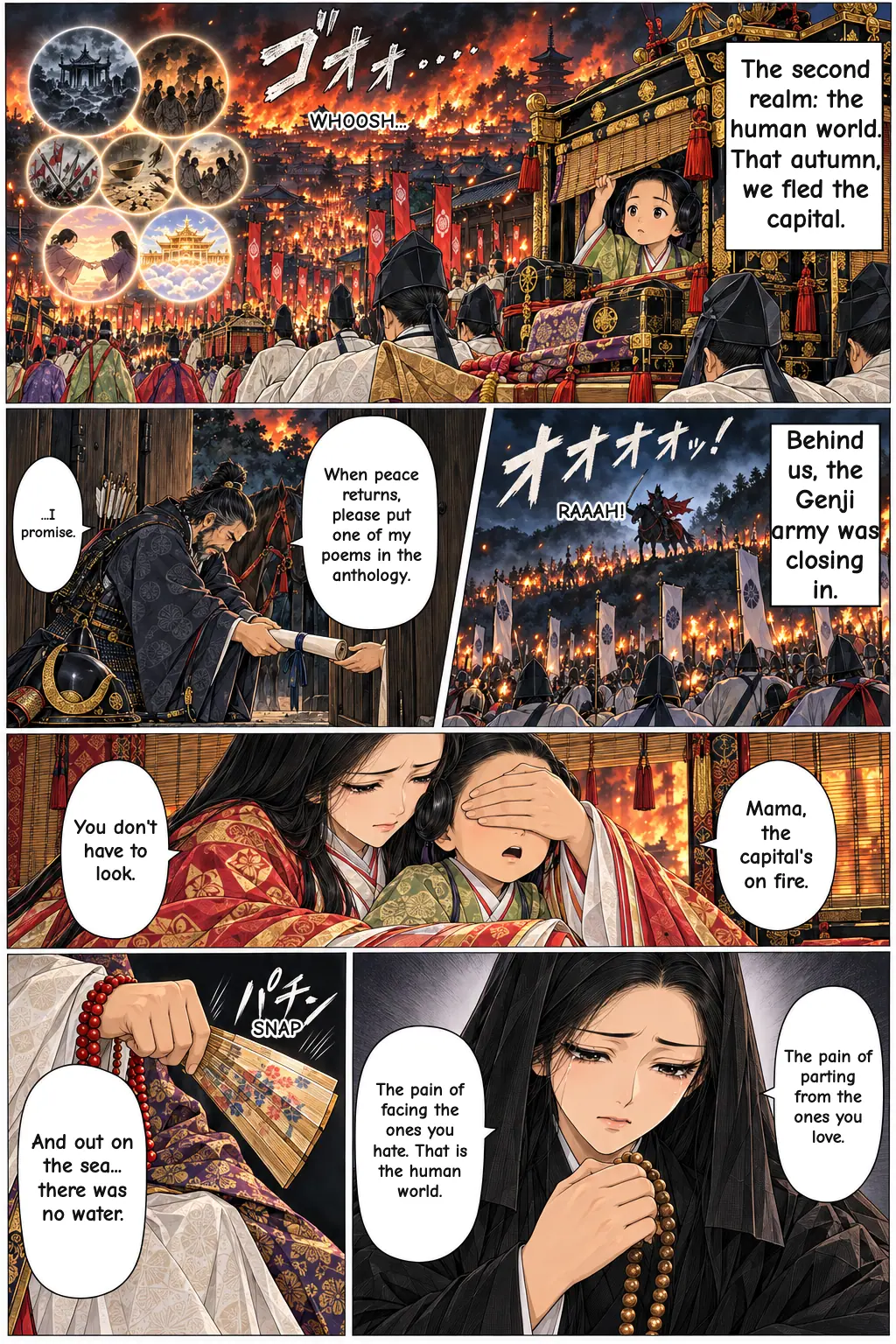
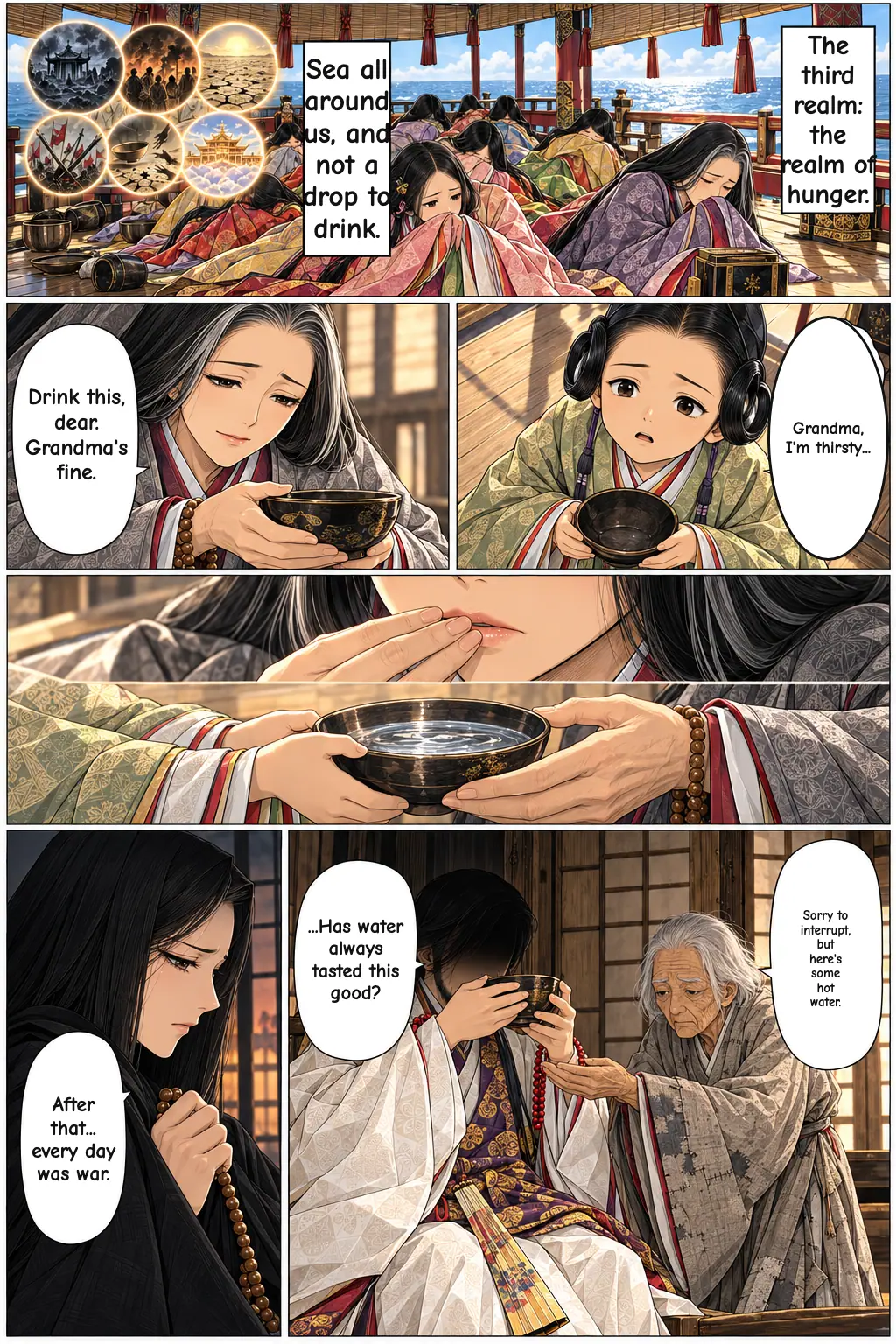
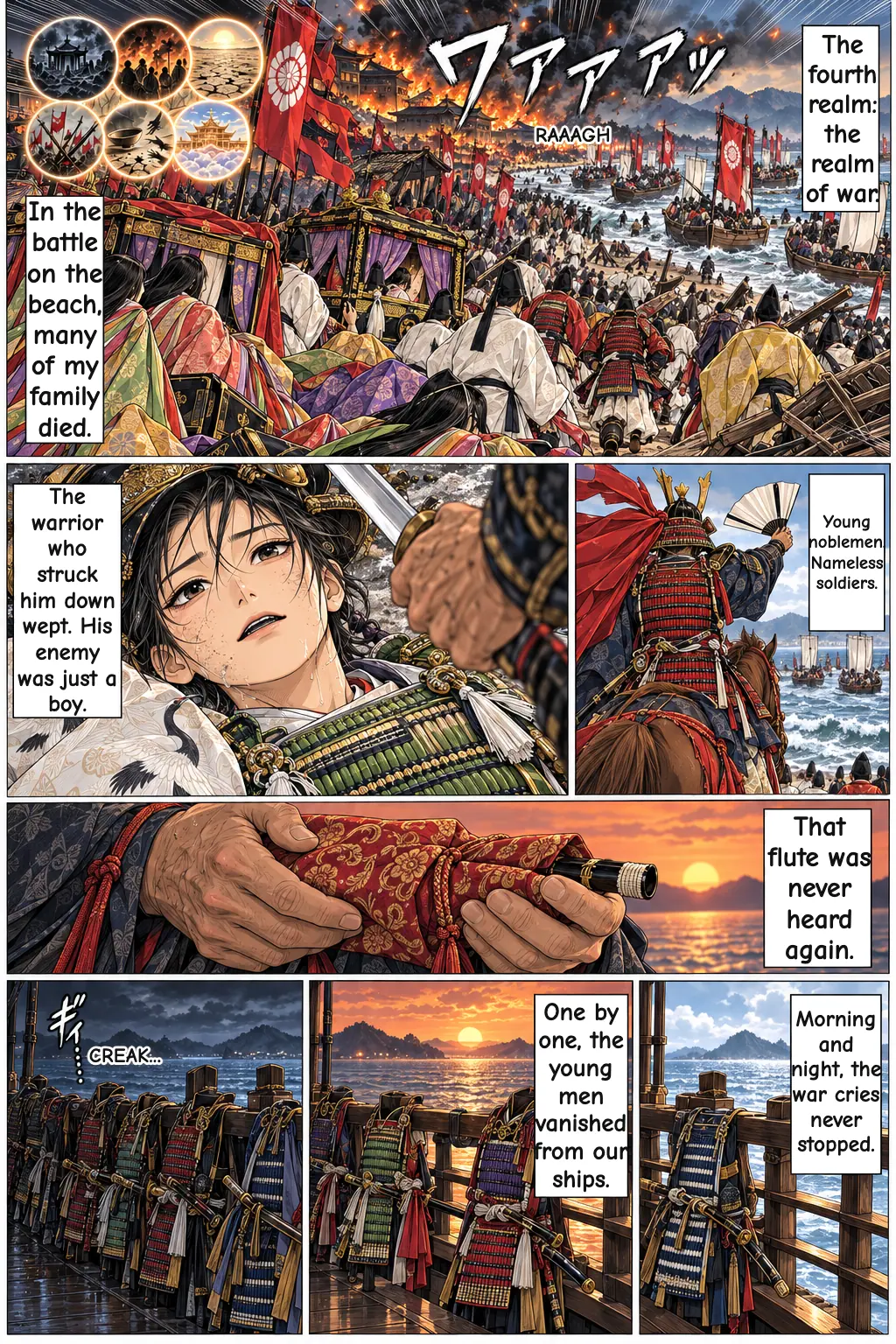
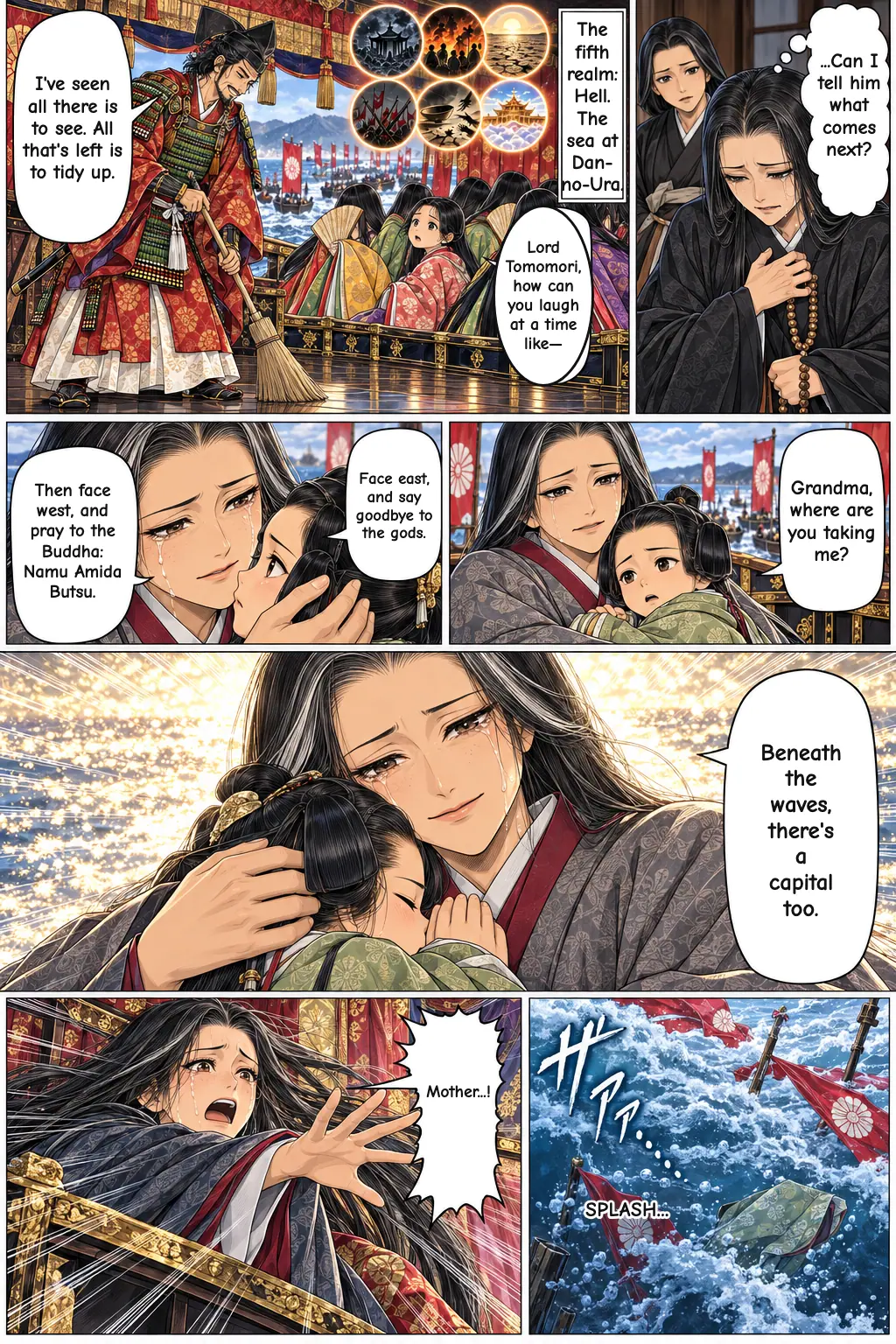
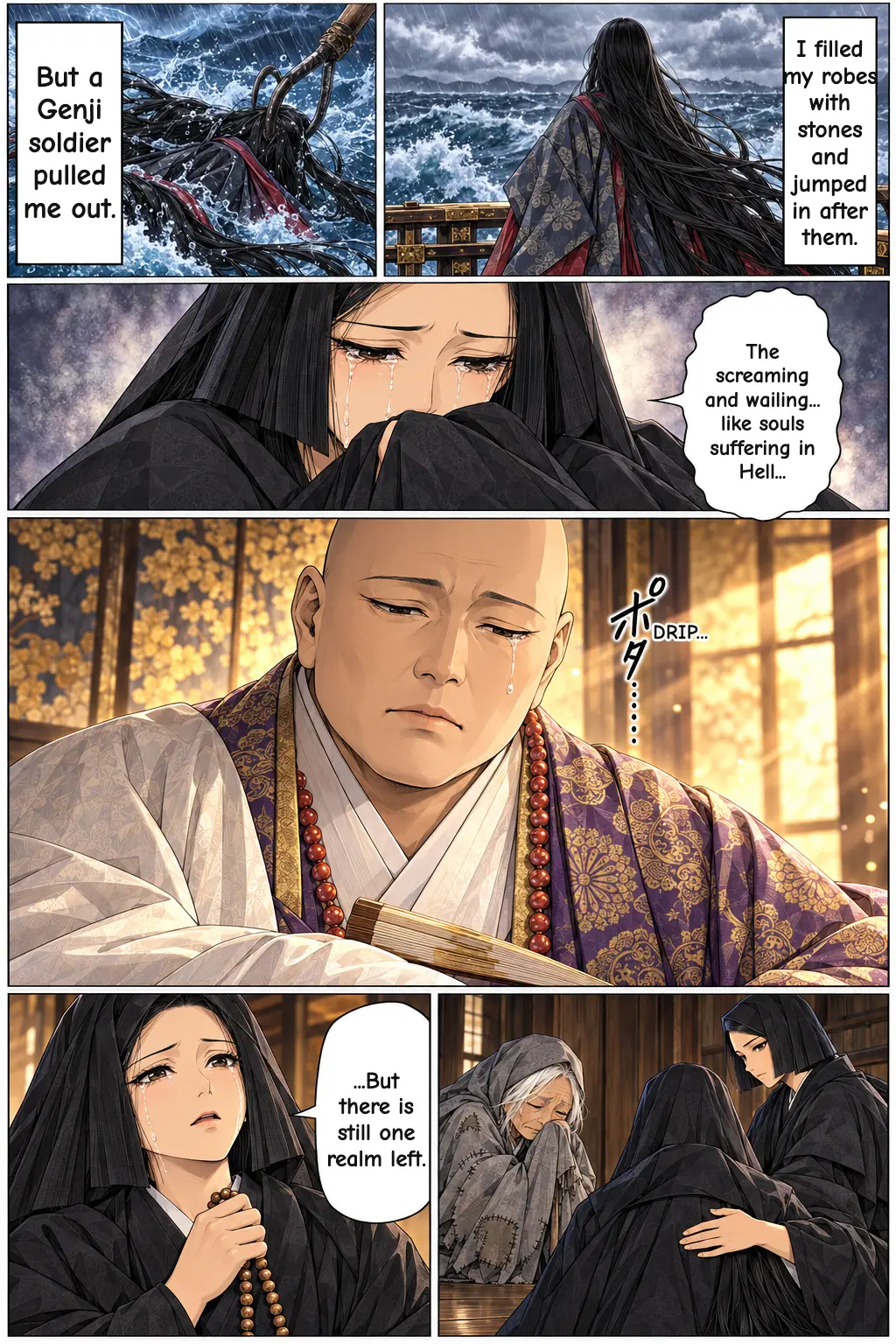
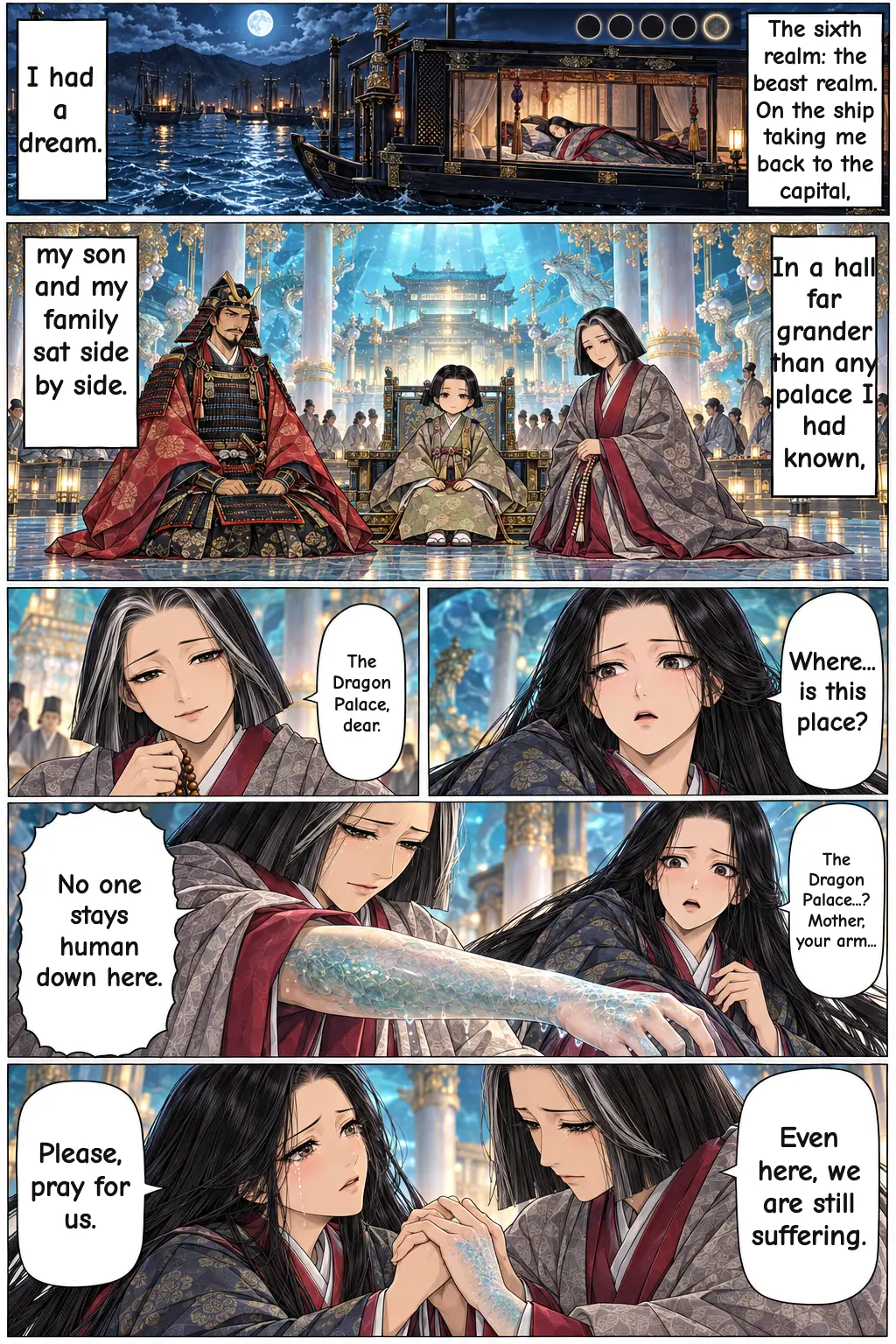
Kenreimon-in is deeply ashamed to be seen this way, but she cannot hide, so she meets him in tears. She then describes her life as a passage through the six realms of Buddhist rebirth. As an empress and mother of an emperor, she knew the joys of the heavenly realm. Fleeing the capital, she felt the human sorrows of parting and of meeting enemies. Short of food and fresh water at sea, she suffered like a hungry ghost. Constant fighting after the battle of Ichi-no-Tani was the realm of warring demons. Dan-no-Ura was hell: her mother, the Nun of the Second Rank, took the young emperor in her arms and sank into the sea, comforting him that a capital waited beneath the waves. Last came a dream in which her son and clan lived in a splendid palace that they called the Dragon King's palace, a realm of beasts, asking her to pray for them.
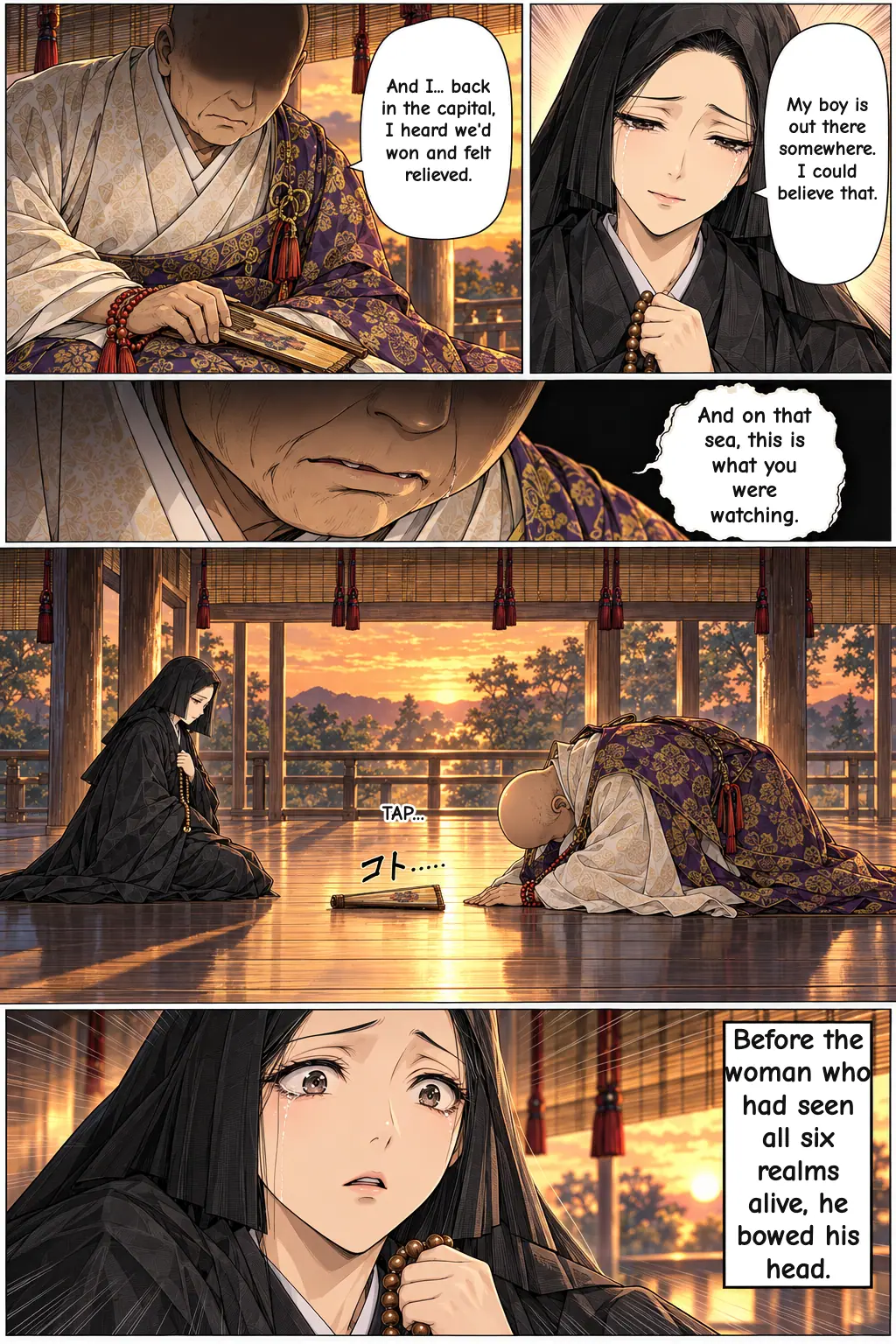
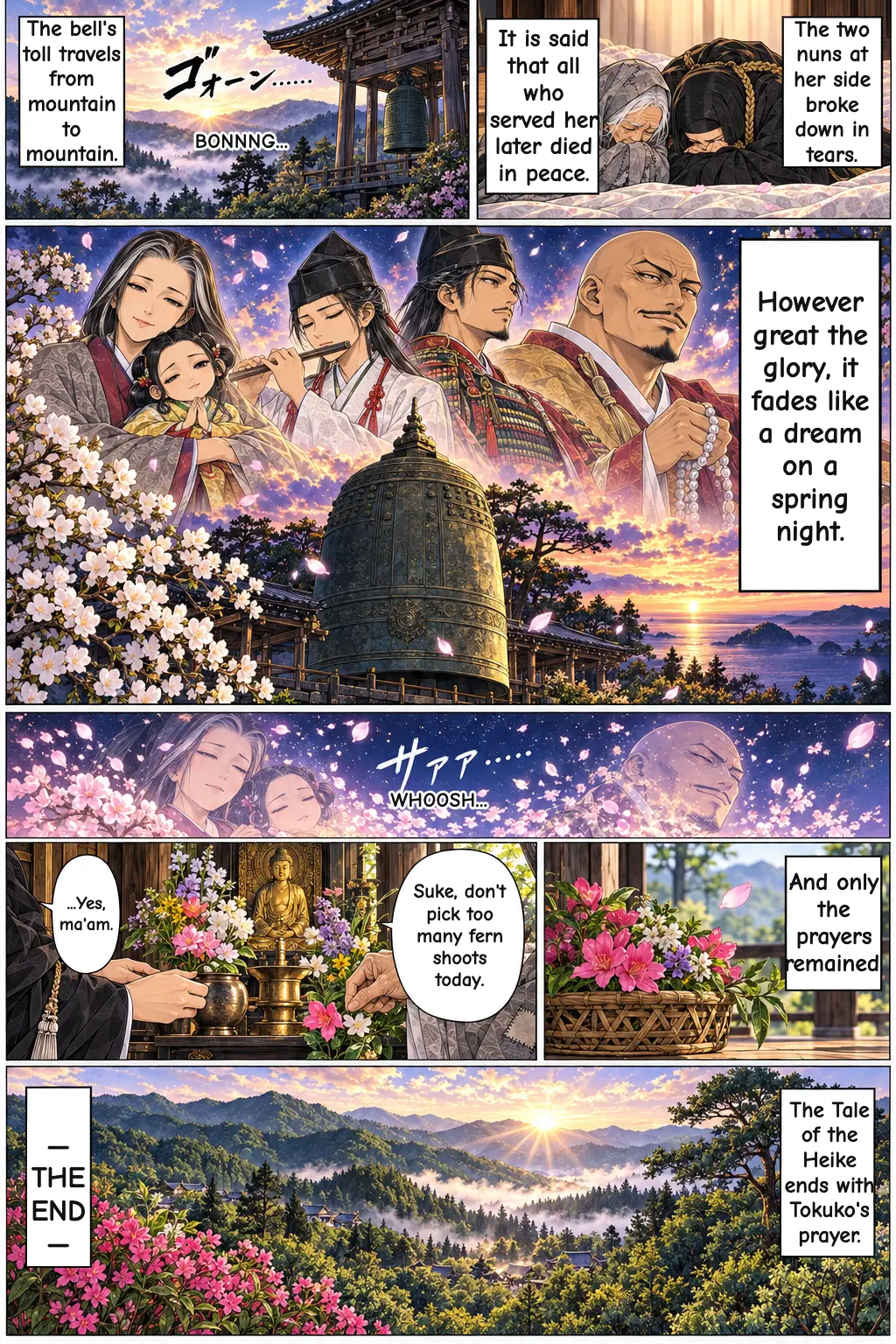
Go-Shirakawa says that few people have seen all six realms while still alive. As the temple bell sounds and the sun sinks, he leaves. Kenreimon-in spends her remaining years praying for her son and clan. When she falls ill, she holds the five-colored cords from Amida's hand and dies chanting the Buddha's name. Purple clouds trail in the west, a fragrance fills the room, and music is heard from the sky, traditional signs of rebirth in the Pure Land.
What the Ending Means: Impermanence and Prayer for the Dead
The Heike was performed by blind storytellers who chanted it to the lute, and its central theme is impermanence: power and pride never last. Kenreimon-in's life shows this in a single person, moving from the height of court glory to a mountain hut. By framing her story as the six realms, the text turns her suffering into Buddhist teaching, and her peaceful death offers some consolation after so much violence.
Many scholars also see the ending as a prayer for the spirits of the Taira dead, who were widely feared as restless ghosts. Historians note that the Ōhara visit may not have actually happened, and some view it as a literary creation. The Kakuichi version dates her death to 1191, but other evidence suggests she lived much longer, possibly until around 1213.
What the Manga Changes
The manga follows the original events closely, but some parts are its own creation. During the six realms account, it shows flashback panels of key scenes from Episodes 1 to 13. This structure belongs to the manga, not the original text. In the Kakuichi version, Kenreimon-in's main reaction to Go-Shirakawa is shame and tears; the manga voices her resentment toward the man behind her clan's ruin more directly.
The manga also adds visual details the original only sketches: the buildings and altar of Jakkō-in, the changing seasons on the road to Ōhara, the faces and inner thoughts of the women, and the personalities of Go-Shirakawa's attendants, who are just names in the source. Finally, the last page echoes the famous opening line of the Heike about the bells of Gion Shōja. That line does not appear in the Initiates' Chapter. The manga uses the Jakkō-in temple bell, which is in the original, to link the ending back to Episode 1.
Where to Read It
If you want to see Kenreimon-in's story, from Dan-no-Ura to the quiet hills of Ōhara, Episode 14 of THE TALE OF THE HEIKE: The Samurai War of Genpei brings it to life as the series finale. All episodes are free to read on Manga Portal with no sign-up needed, so you can also go back to Episode 1 and follow the rise and fall of the Taira from the start.
Characters in this episode
Kenreimon-in (Taira no Tokuko)
Daughter of Taira no Kiyomori and mother of Emperor Antoku, who survives Dan-no-Ura, becomes a nun in Ōhara, and narrates her life as the six realms.
Retired Emperor Go-Shirakawa
Kenreimon-in's father-in-law and the era's leading political power, who secretly visits her hermitage at Jakkō-in.
Dainagon no Suke
Kenreimon-in's lady-in-waiting and the wife of Taira no Shigehira, who gathers firewood with her and stays at her side until her death.
Awa no Naishi
An elderly nun who serves Kenreimon-in and greets Go-Shirakawa when he arrives, so aged that he does not recognize her at first.
The Nun of the Second Rank (Taira no Tokiko)
Kenreimon-in's mother, Kiyomori's widow, who sinks into the sea at Dan-no-Ura holding the young emperor (seen only in memory).
Emperor Antoku
Kenreimon-in's young son, who drowns at Dan-no-Ura and later appears in her dream of the Dragon King's palace.
FAQ
How does The Tale of the Heike end?
In the Kakuichi version, it ends with the Initiates' Chapter about Kenreimon-in, the surviving Taira empress. She becomes a nun in Ōhara, is visited by Retired Emperor Go-Shirakawa, tells her life as the six realms, and dies peacefully praying to Amida Buddha.
Who was Kenreimon-in?
Kenreimon-in was Taira no Tokuko, daughter of Taira no Kiyomori, empress to Emperor Takakura, and mother of Emperor Antoku. She was pulled from the sea at Dan-no-Ura in 1185 and spent the rest of her life as a Buddhist nun.
What are the six realms in the Heike?
They are the Buddhist realms of rebirth: heaven, humans, hungry ghosts, warring demons, hell, and animals. Kenreimon-in compares each stage of her life, from imperial glory to the drowning of her son, to one of these realms.
Did Go-Shirakawa really visit Kenreimon-in at Ōhara?
It is uncertain. Historians have questioned whether the visit happened, and some see it as a literary creation that gives the tale a meaningful ending.
What is Jakkō-in?
Jakkō-in is a Buddhist temple in Ōhara, in the hills north of Kyoto. In the Heike, Kenreimon-in lives in a small hermitage there and prays for her lost son and clan.