Episode 5An Old Monster-Slayer's Last RebellionThe Battle of Uji Bridge
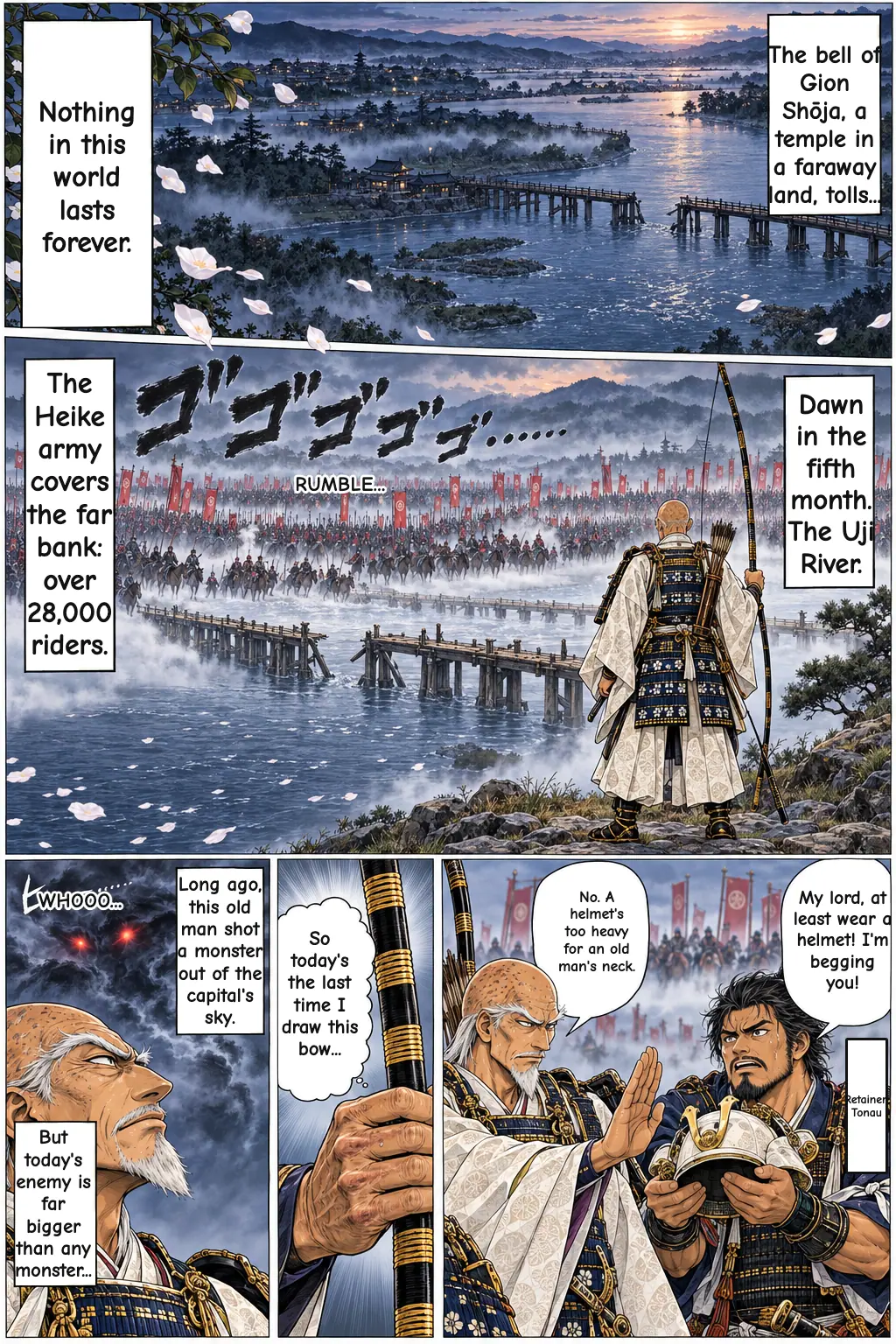
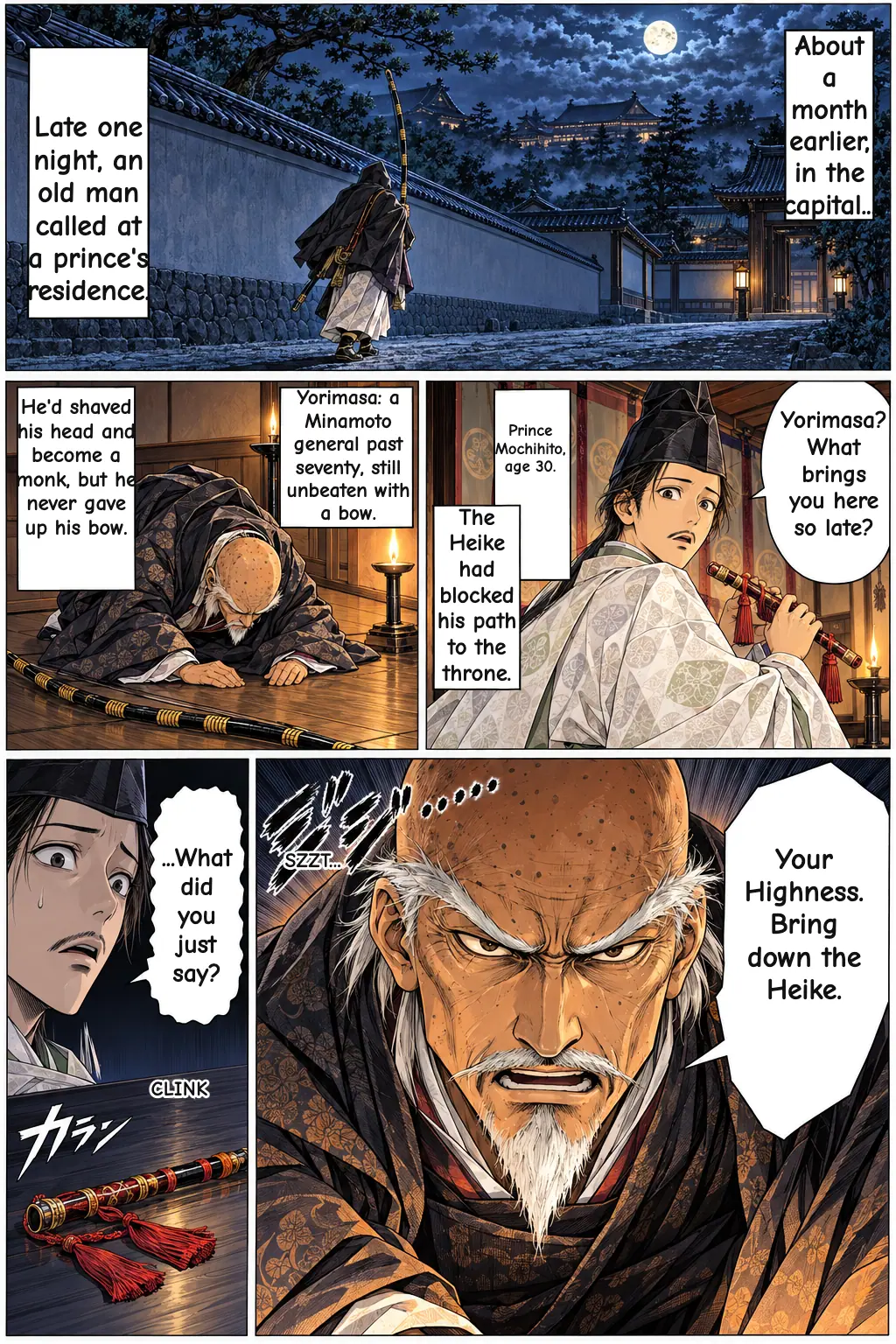
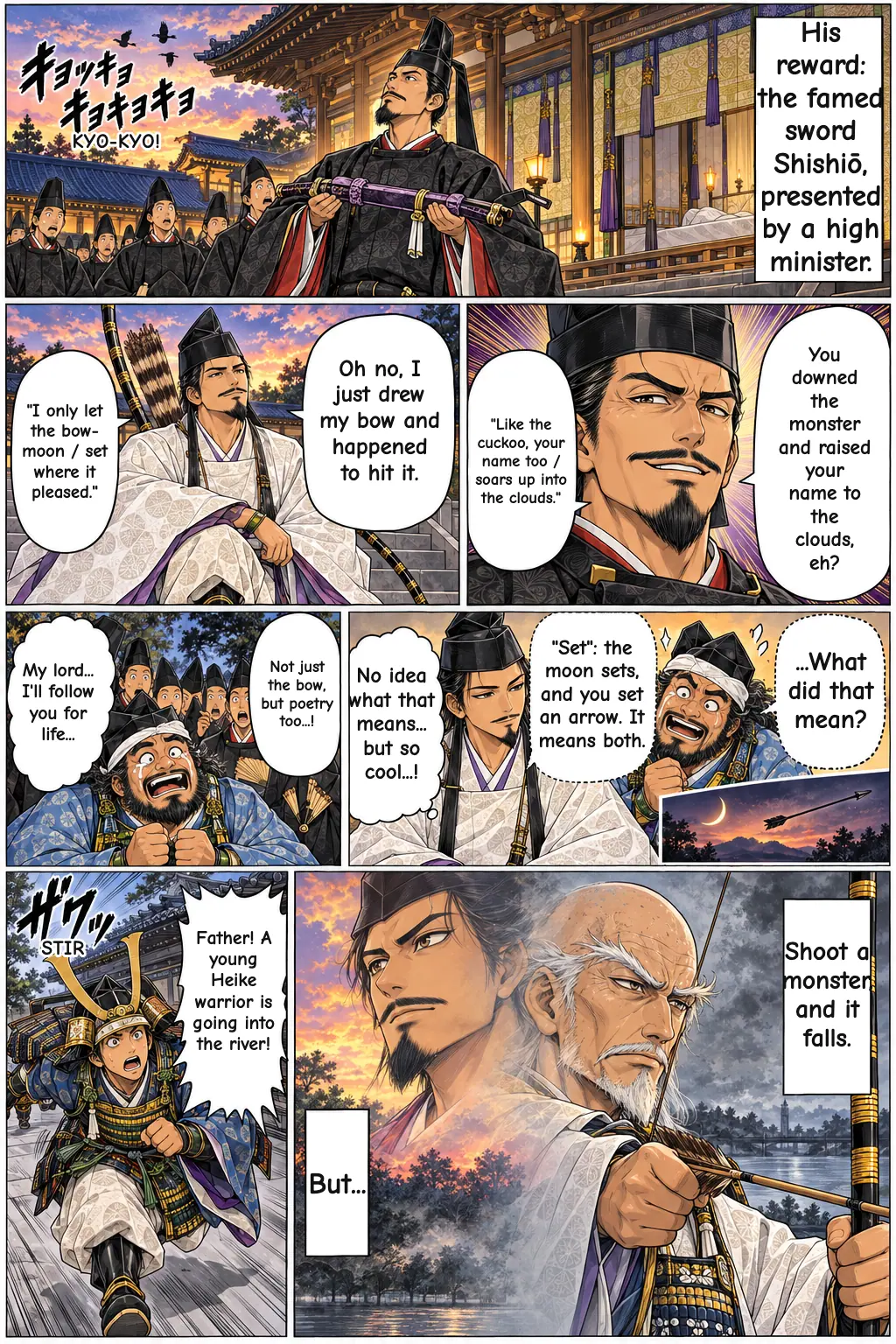
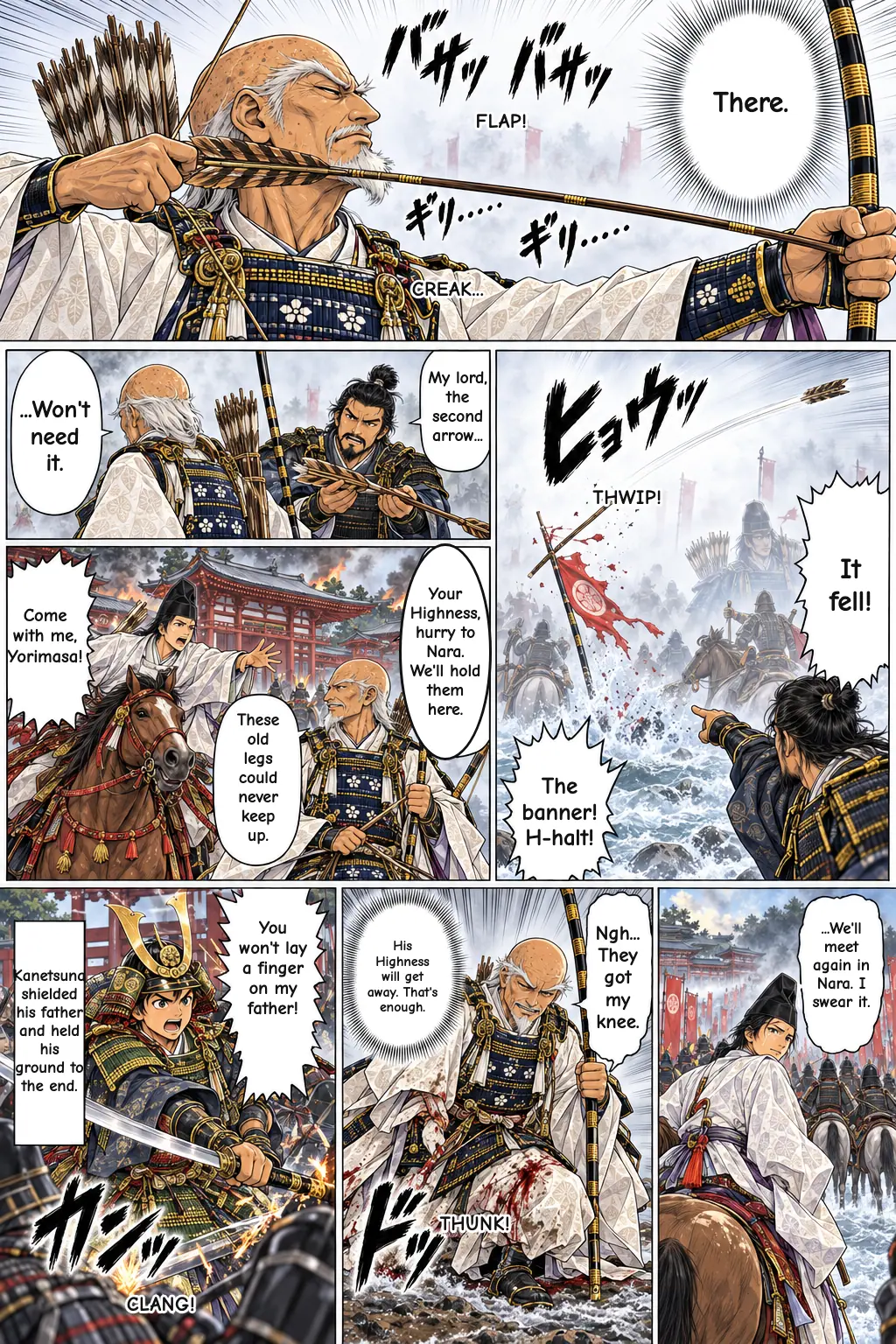
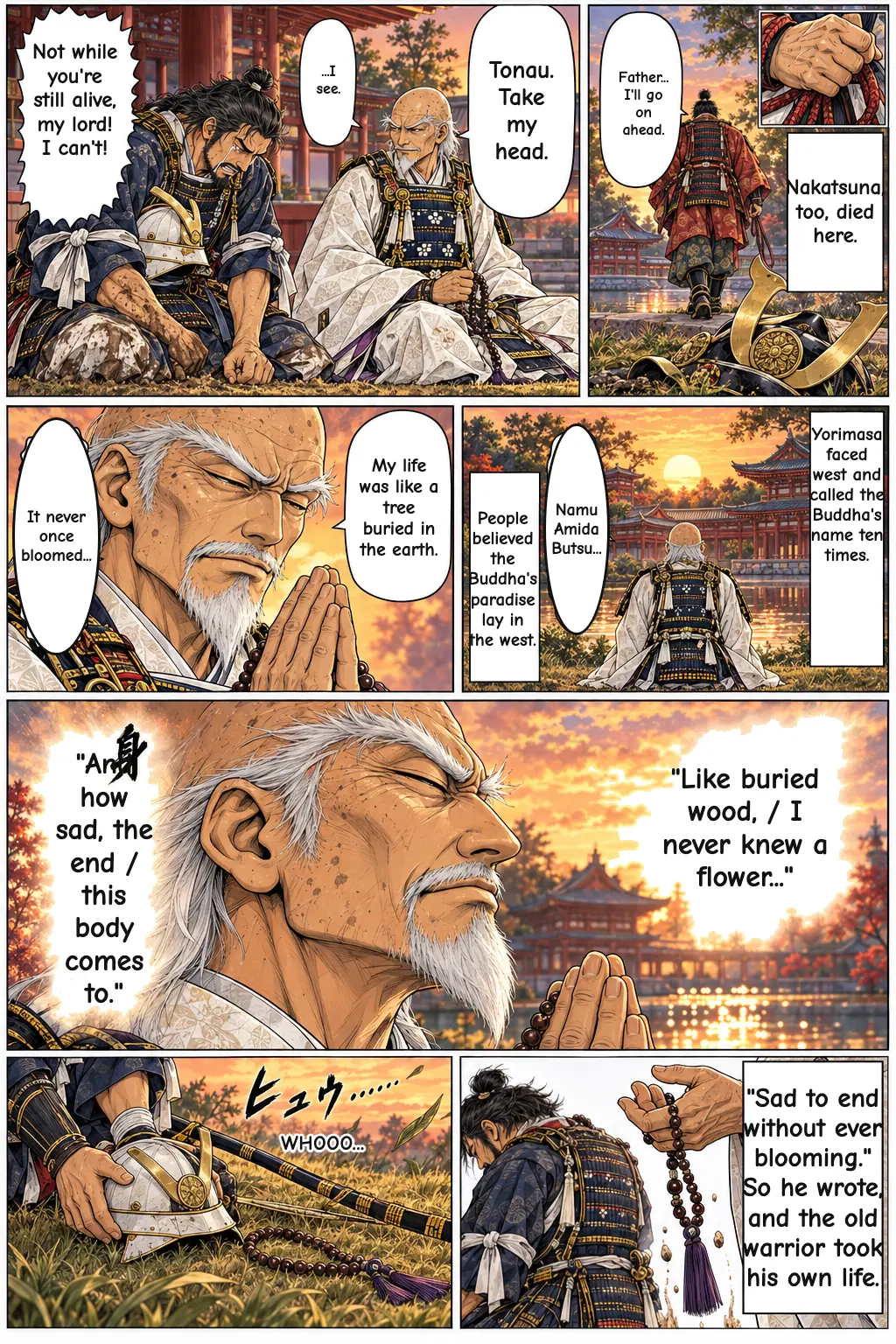
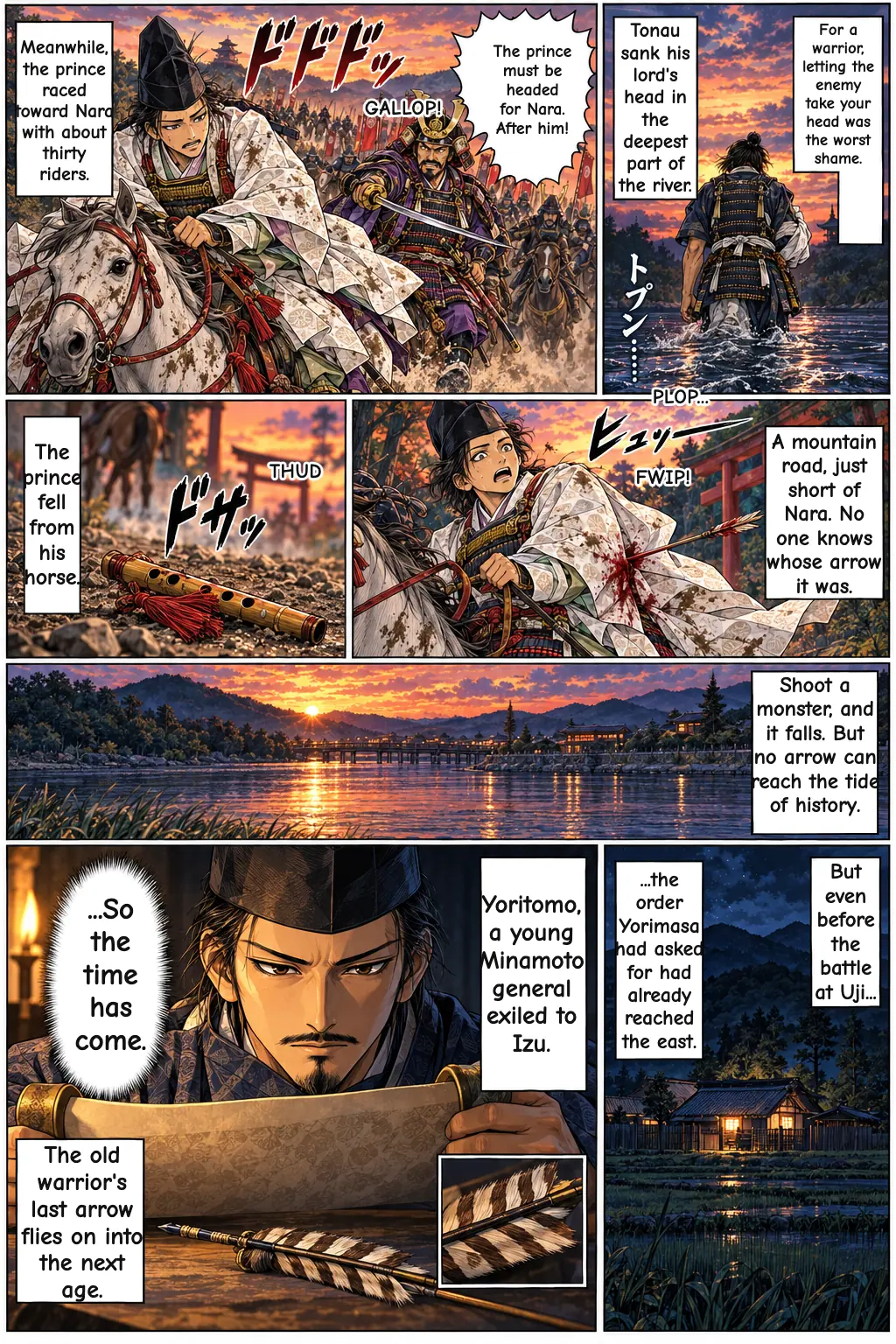
Furious at an insult to his son, the aging Minamoto warrior Yorimasa rises against the Heike with Prince Mochihito, only to watch a young warrior lead a raft of horses across the river at Uji. Long ago, he brought down the Nue, a monster hidden in black clouds, with a single arrow. Now he looses one last arrow at an unseen target in the fog to let the prince escape, and writes his death poem at the Byōdō-in. The second arrow left over from that night has already traveled east with the prince's order, into the hands of a young Minamoto.
Battle of Uji Bridge and Yorimasa: Tale of the Heike Explained
The Original Story: An Old Warrior Starts a Rebellion
In 1180, the Taira family (the Heike) controlled the imperial court. Book Four of The Tale of the Heike tells how the first open revolt against them began. The episode summarized here follows the Kakuichi version, the most widely read text of the Heike. Other versions, such as the Engyō-bon and the Genpei Jōsuiki, differ in some details.
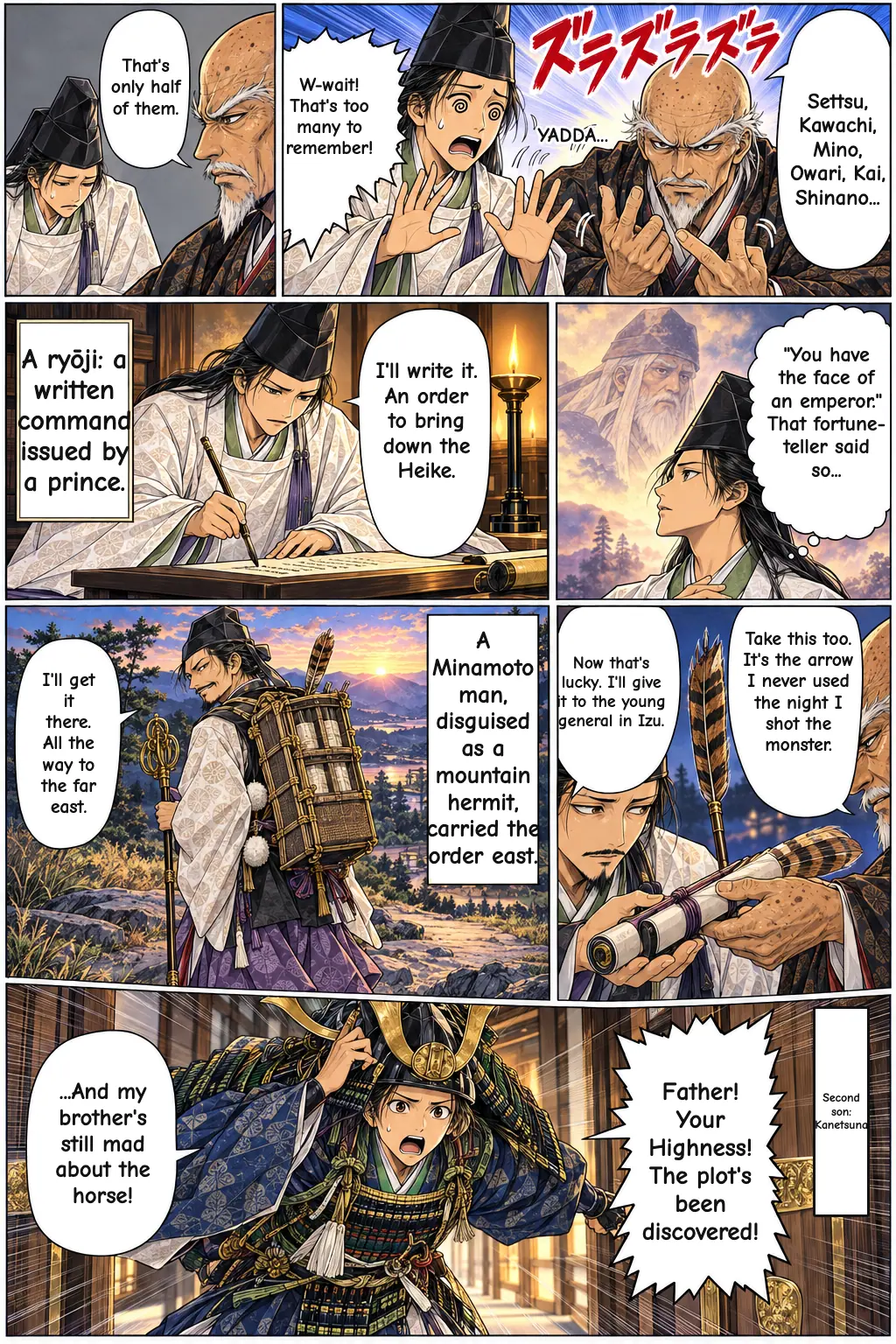
The rebellion starts with Minamoto no Yorimasa, a warrior-poet well over seventy who had become a lay monk. One night he visits Prince Mochihito in secret. Mochihito is a son of the retired emperor Go-Shirakawa, but he was never given the rank of imperial prince. Yorimasa urges him to rise against the Taira and lists, one by one, the Minamoto warriors scattered across the provinces who could join him. A fortune-teller had once told the prince that he had the face of a future emperor. Partly because of this, he agrees and issues a written order (ryōji) calling the Minamoto to arms. His messenger, Yukiie, carries the order east. Among those who receive it is Minamoto no Yoritomo, then an exile in Izu.
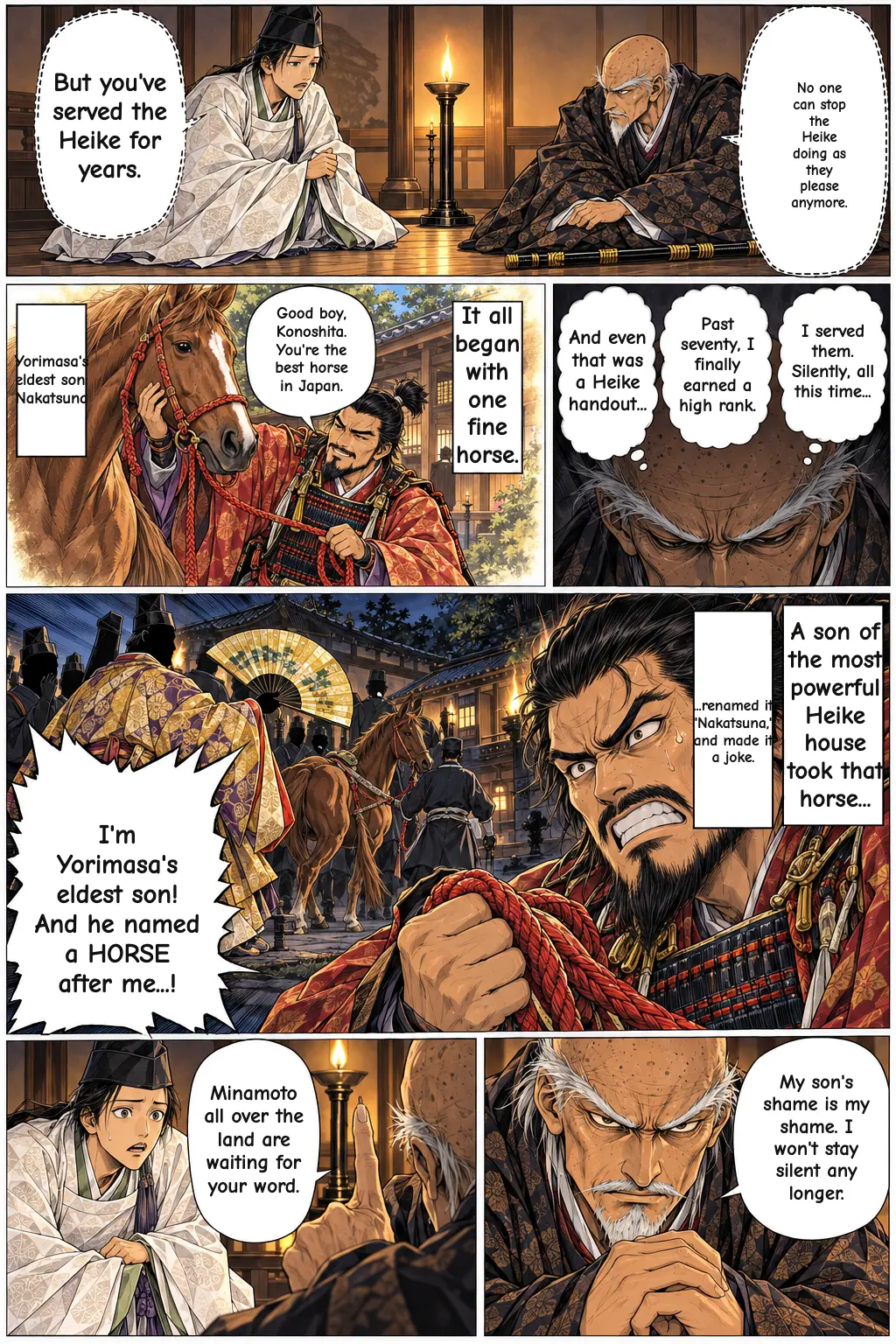
The story also explains why Yorimasa rebelled. Taira no Munemori, the head of the Taira, pressured Yorimasa's son Nakatsuna into handing over his prized horse. He then branded the horse with Nakatsuna's name and mocked its owner in public. Yorimasa's retainer Watanabe Kiō got revenge. He pretended to serve Munemori, received a fine horse from him, and rode it straight to the rebels. Nakatsuna then branded that horse with Munemori's name and sent it back.
The Battle of Uji Bridge and Yorimasa's Death
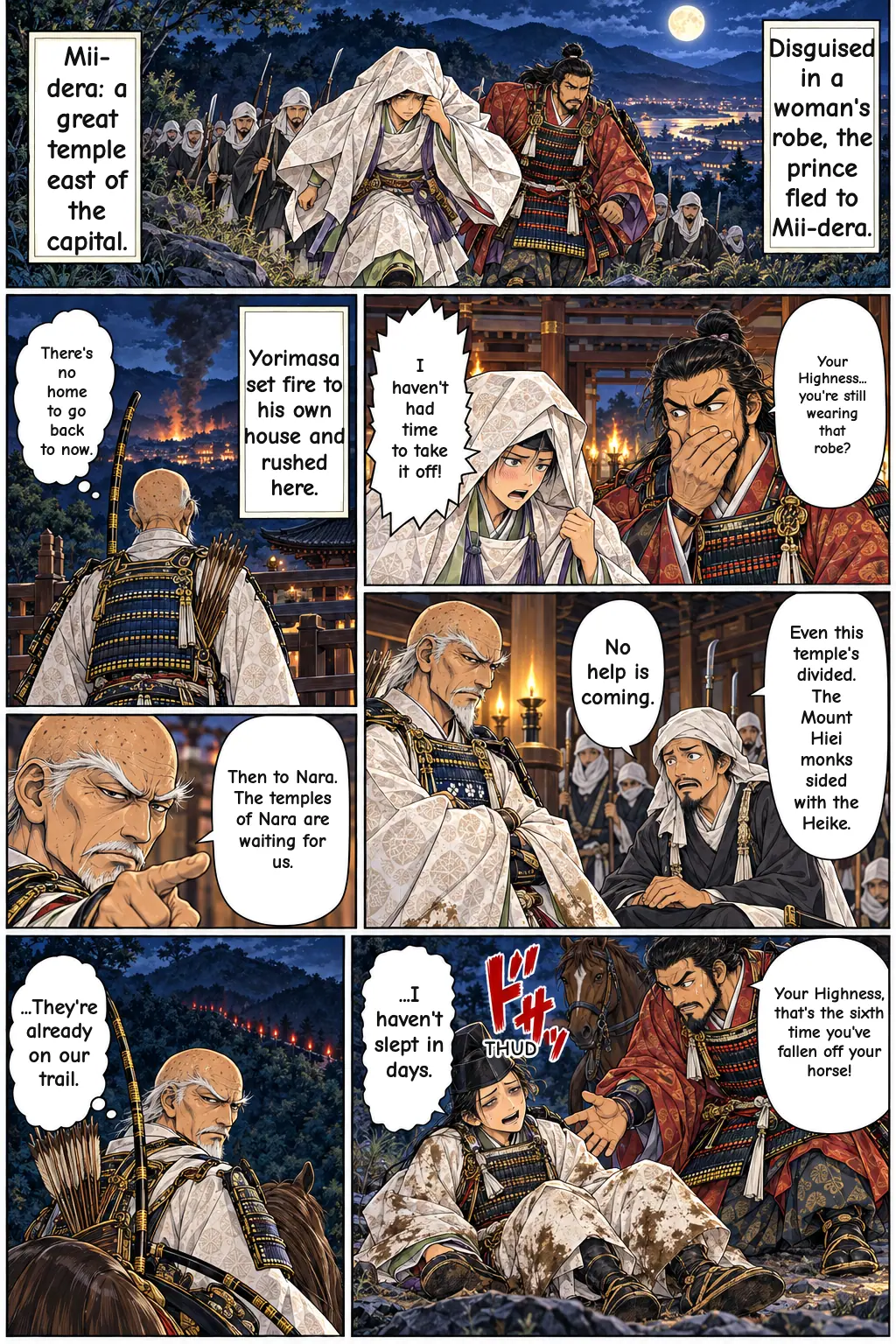
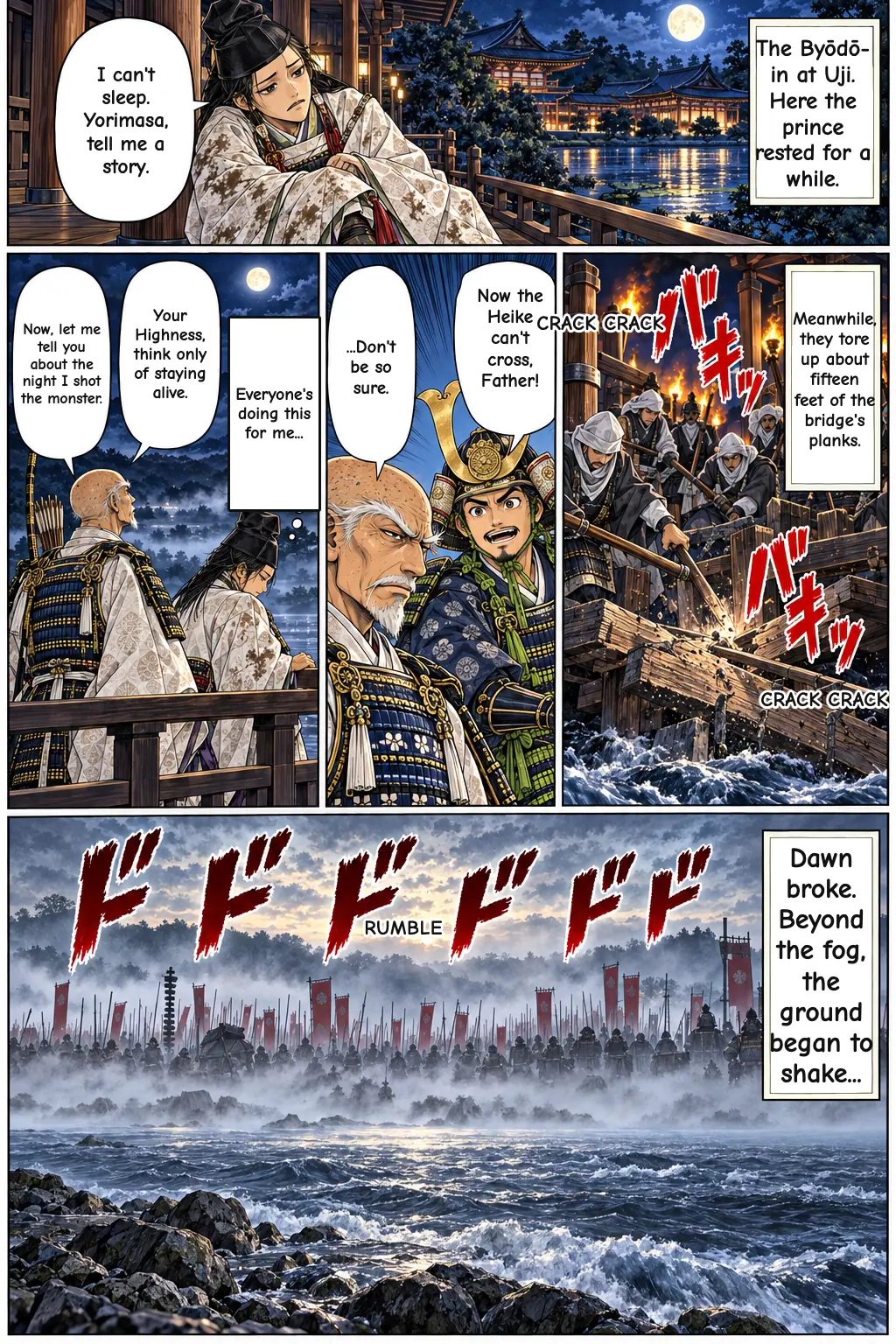
The plot leaks out, and the prince escapes to Mii-dera temple disguised as a woman. Enryaku-ji, the powerful temple on Mount Hiei, refuses to help, so the rebels set out for Nara, where Kōfuku-ji has promised support. The prince has gone without sleep and falls from his horse several times on the way. The group stops at the Byōdō-in temple in Uji, and the rebels pull up planks from the Uji Bridge to slow the enemy.
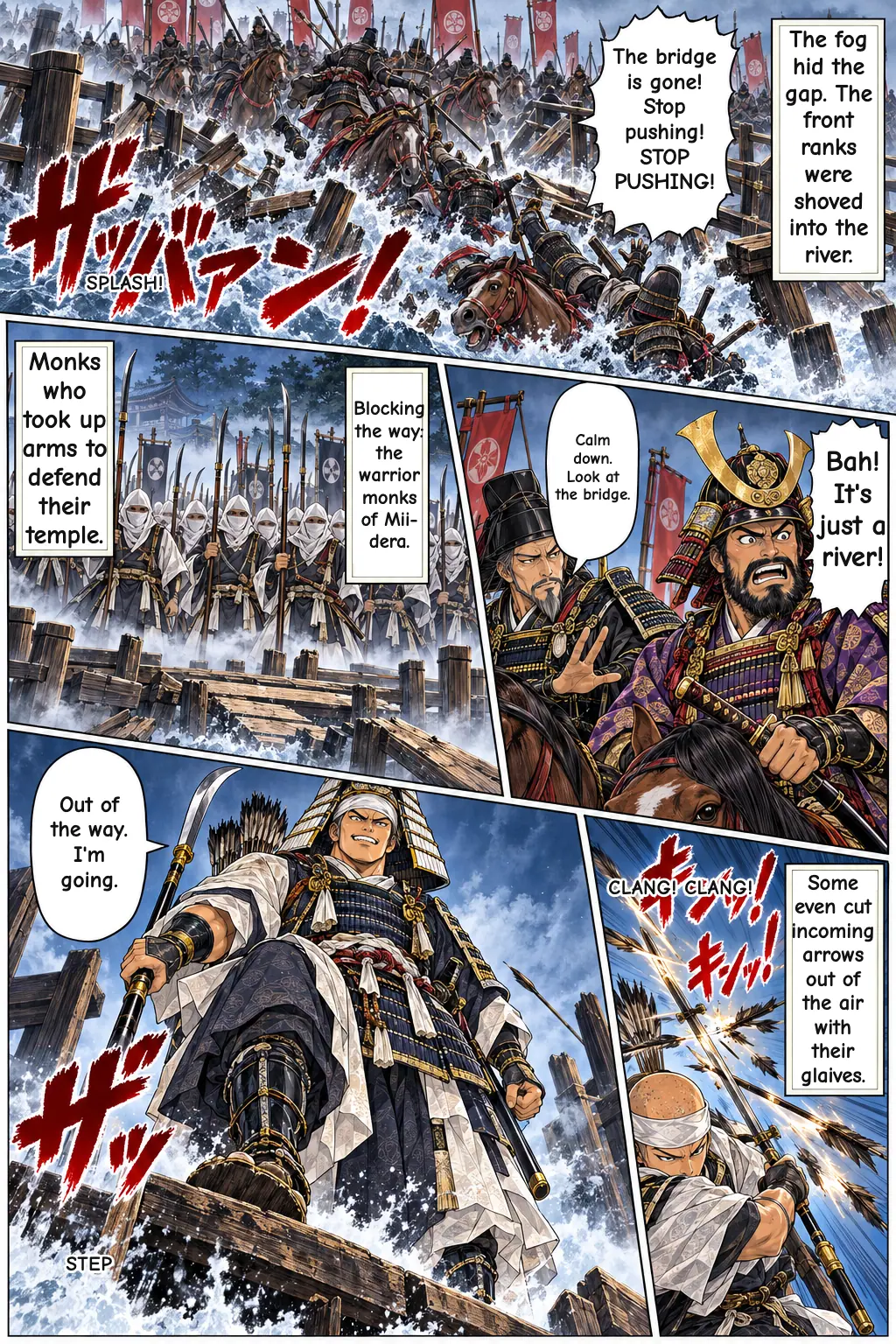
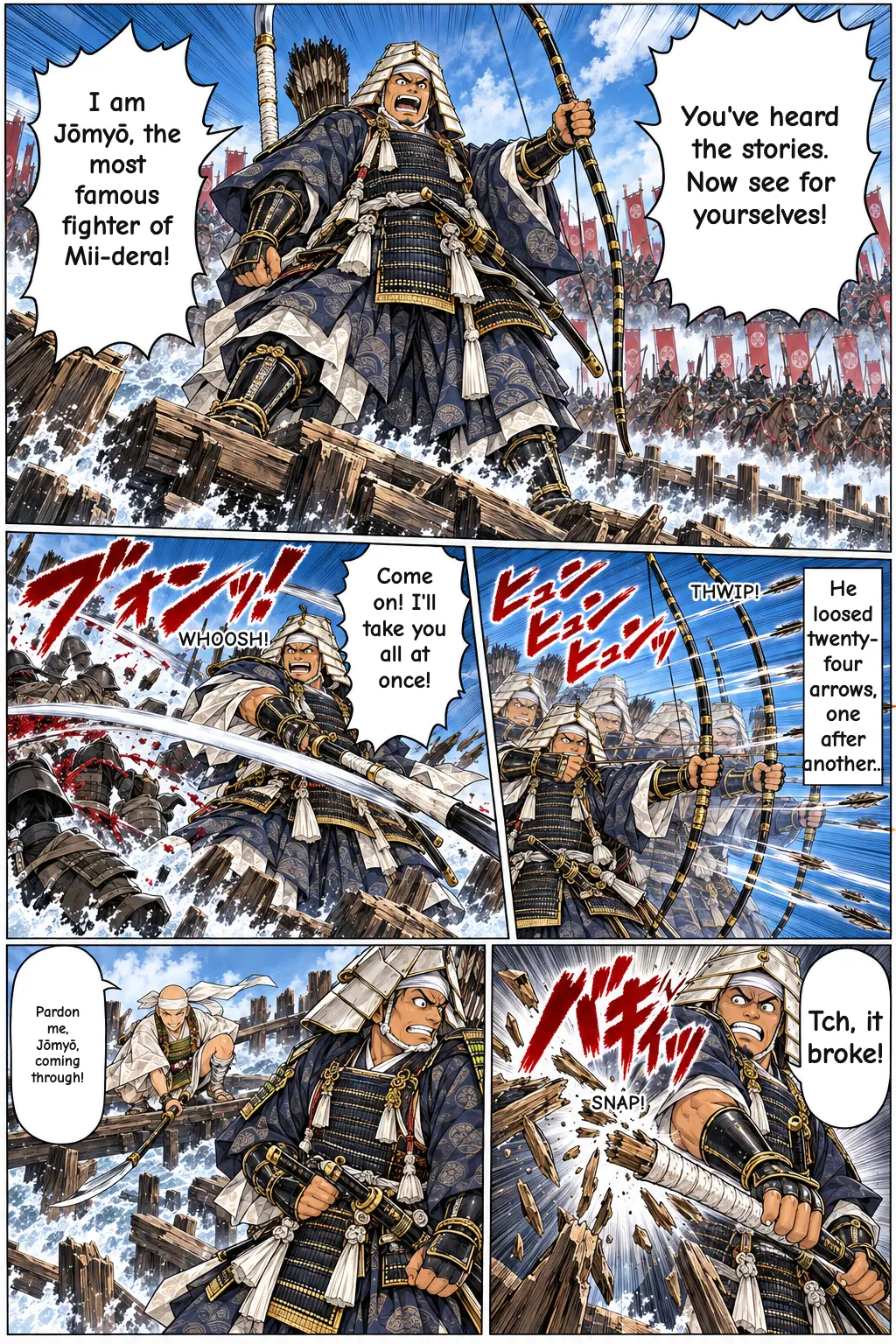
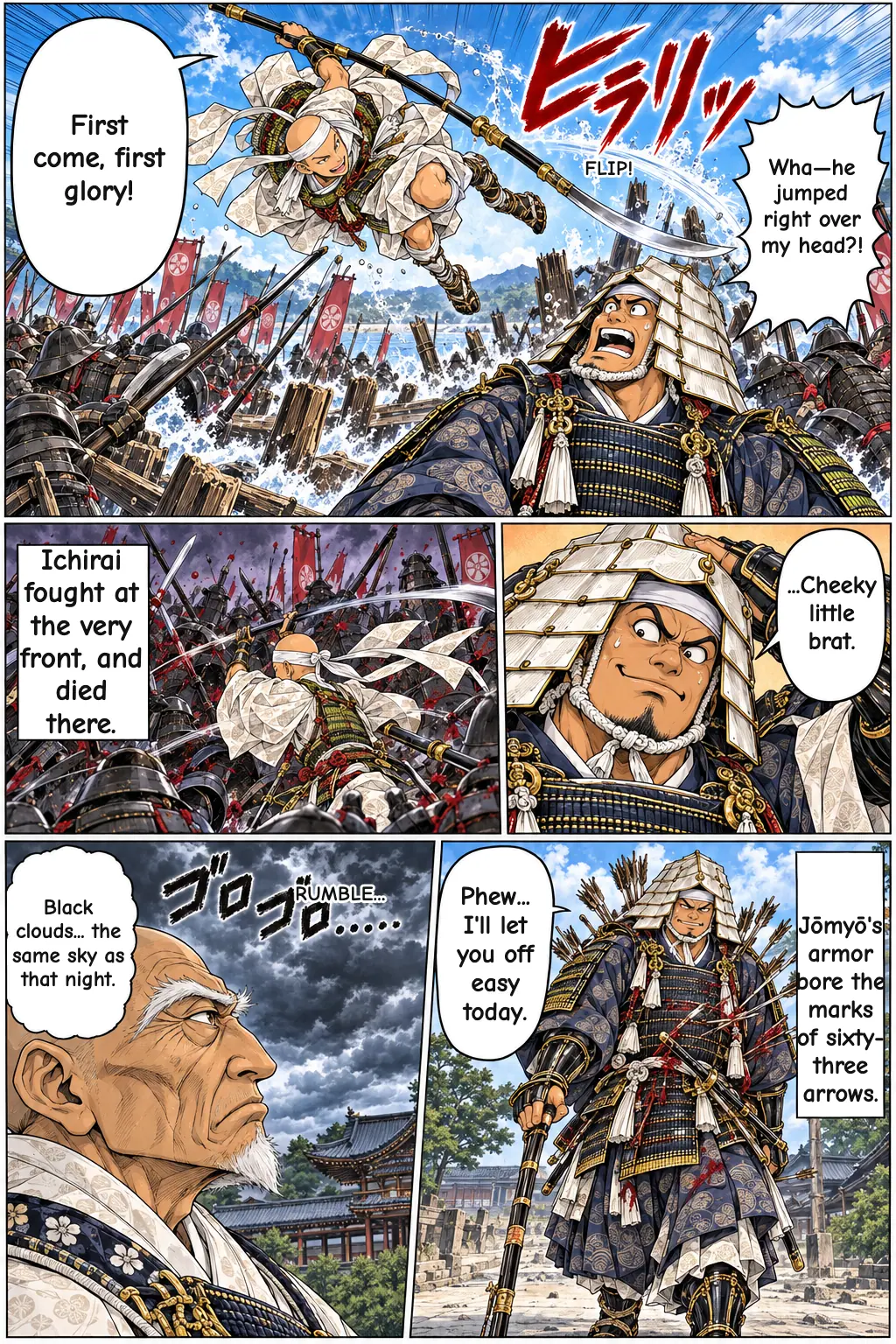
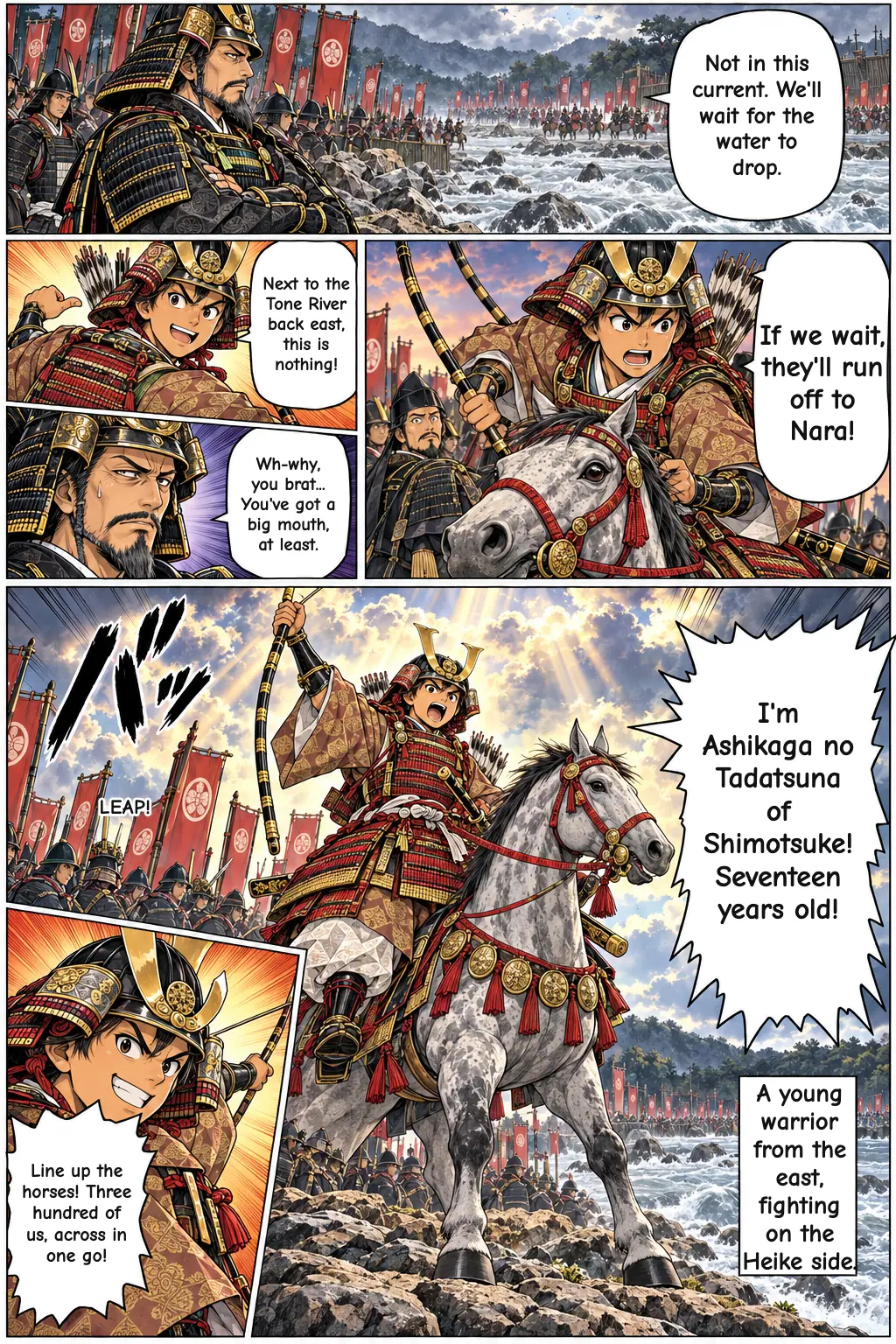
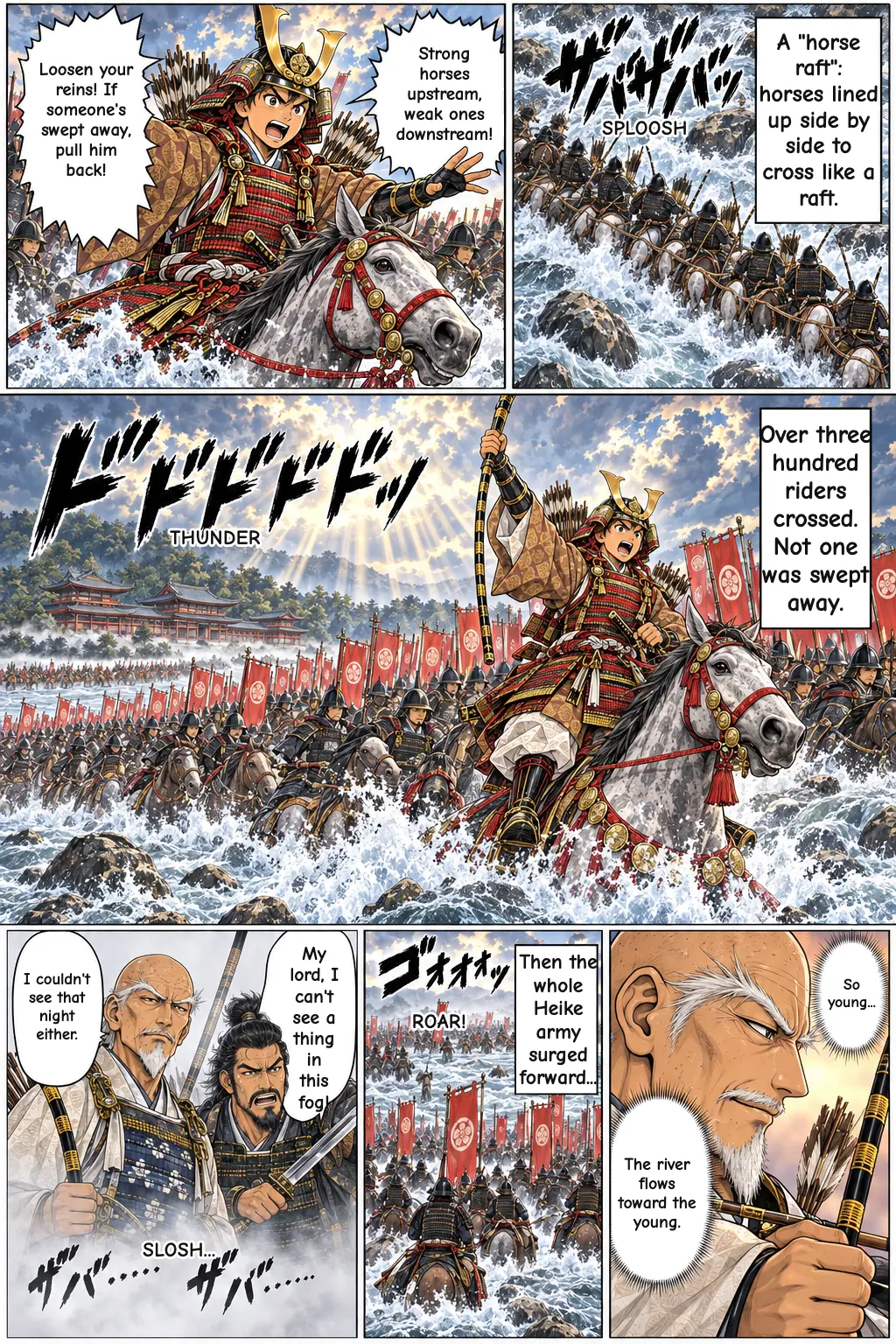
A huge Taira army arrives in the fog. Warrior monks from Mii-dera fight on the bare beams of the bridge, and the Heike describes their feats in vivid detail. Tajima cuts incoming arrows out of the air with his halberd. Jōmyō Meishū walks the beams to fight, and Ichirai leaps over Jōmyō's head to get in front of him. A Taira commander suggests waiting for the river to fall or going around. Then Ashikaga Tadatsuna, a seventeen-year-old warrior from the eastern provinces, objects. He has crossed big rivers in the east before, so he forms more than three hundred riders into a 'horse raft' and calls out instructions as they cross. The rest of the army follows him over.
Yorimasa sends the prince ahead and stays behind to fight, but an arrow strikes his knee. His sons Kanetsuna and Nakatsuna die, and so does Kiō. At the Byōdō-in, Yorimasa faces west, chants the Buddha's name, and composes a final poem. In it he compares himself to buried wood that never bloomed and grieves for how his life is ending. Then he takes his own life. A retainer sinks his head in the river. The prince flees with about thirty riders but is overtaken at the torii gate of Kōmyōsen, hit in the side by an arrow, and killed. The monks of Nara who were coming to meet him turn back.
The Nue: Yorimasa's Monster-Slaying Legend
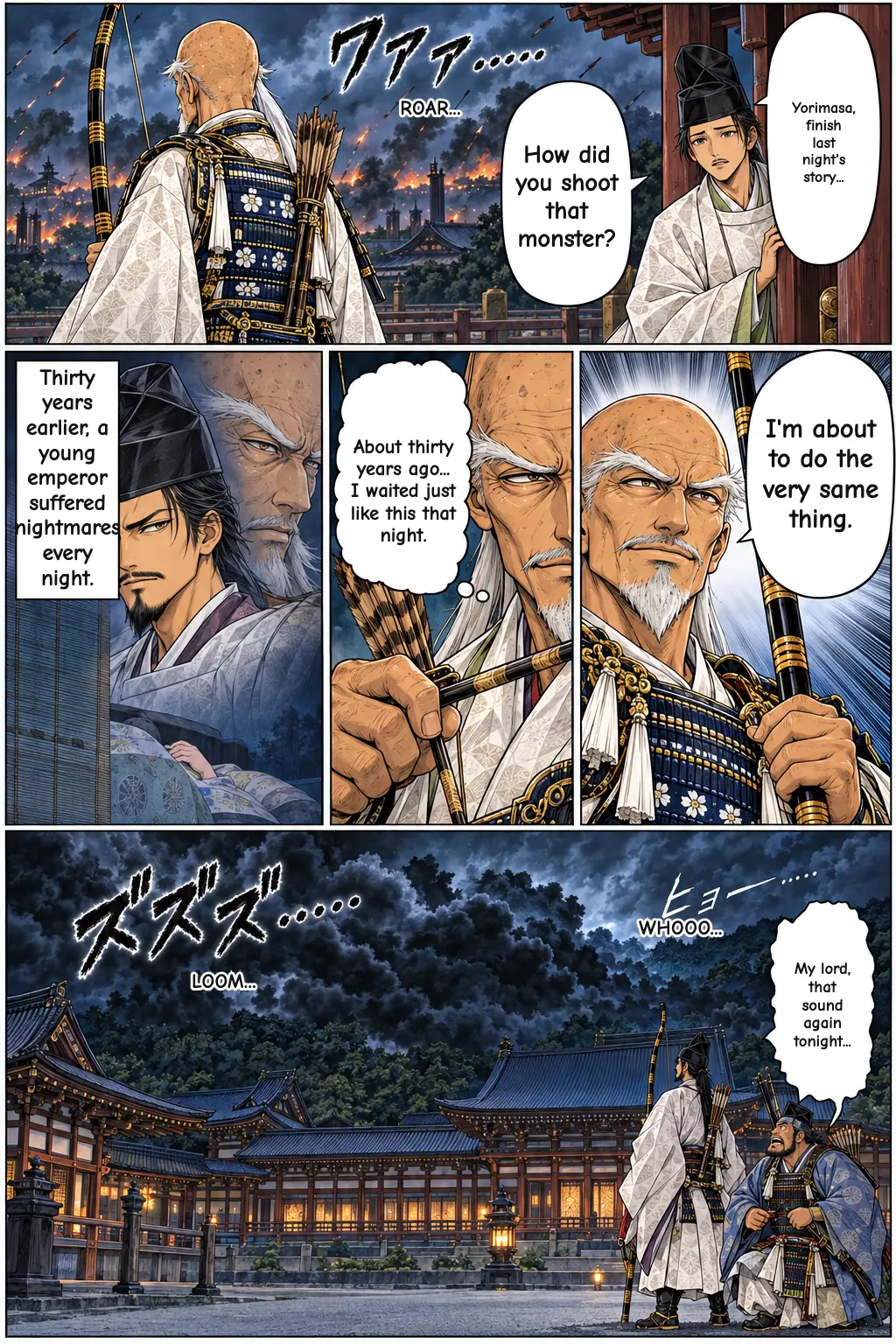
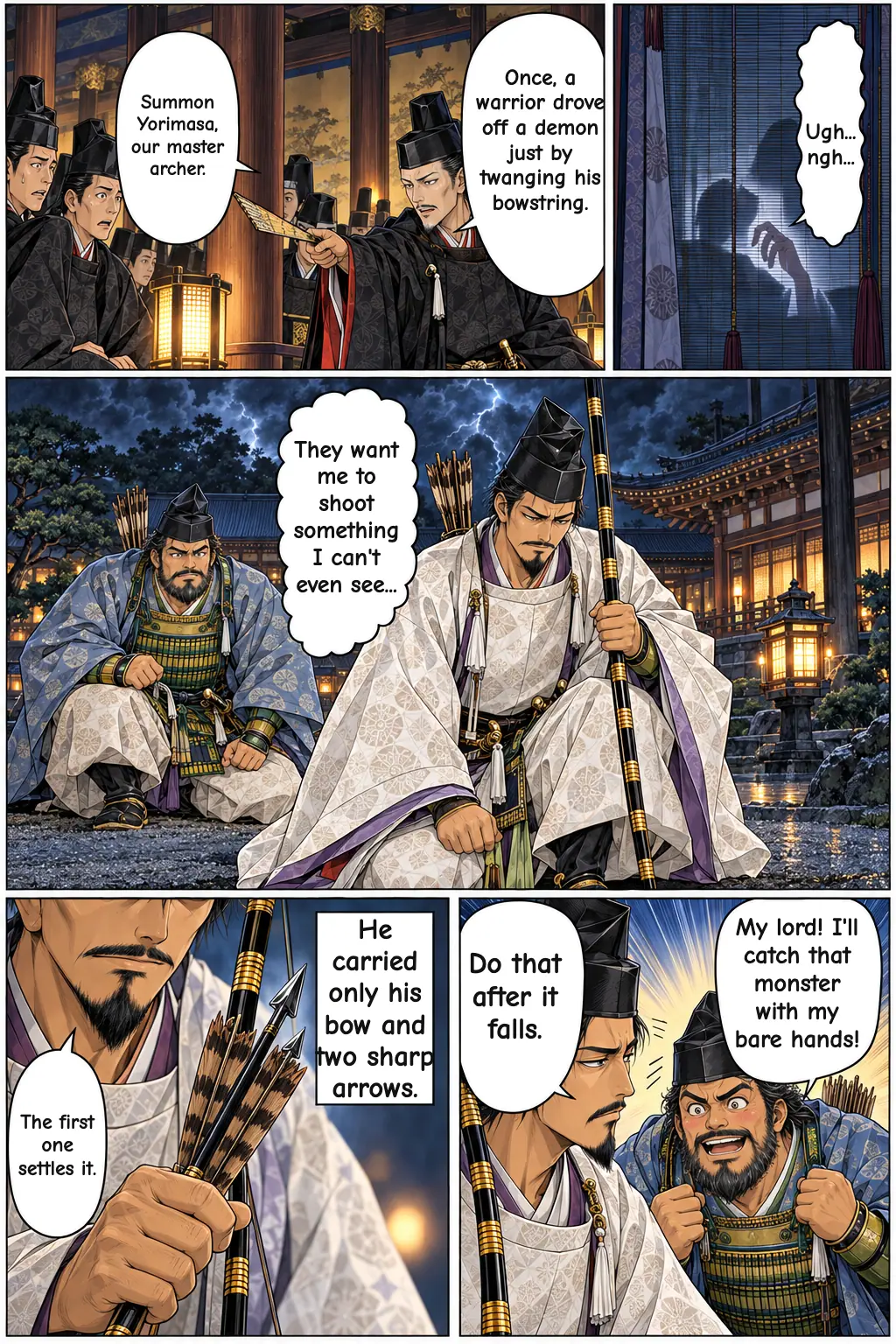
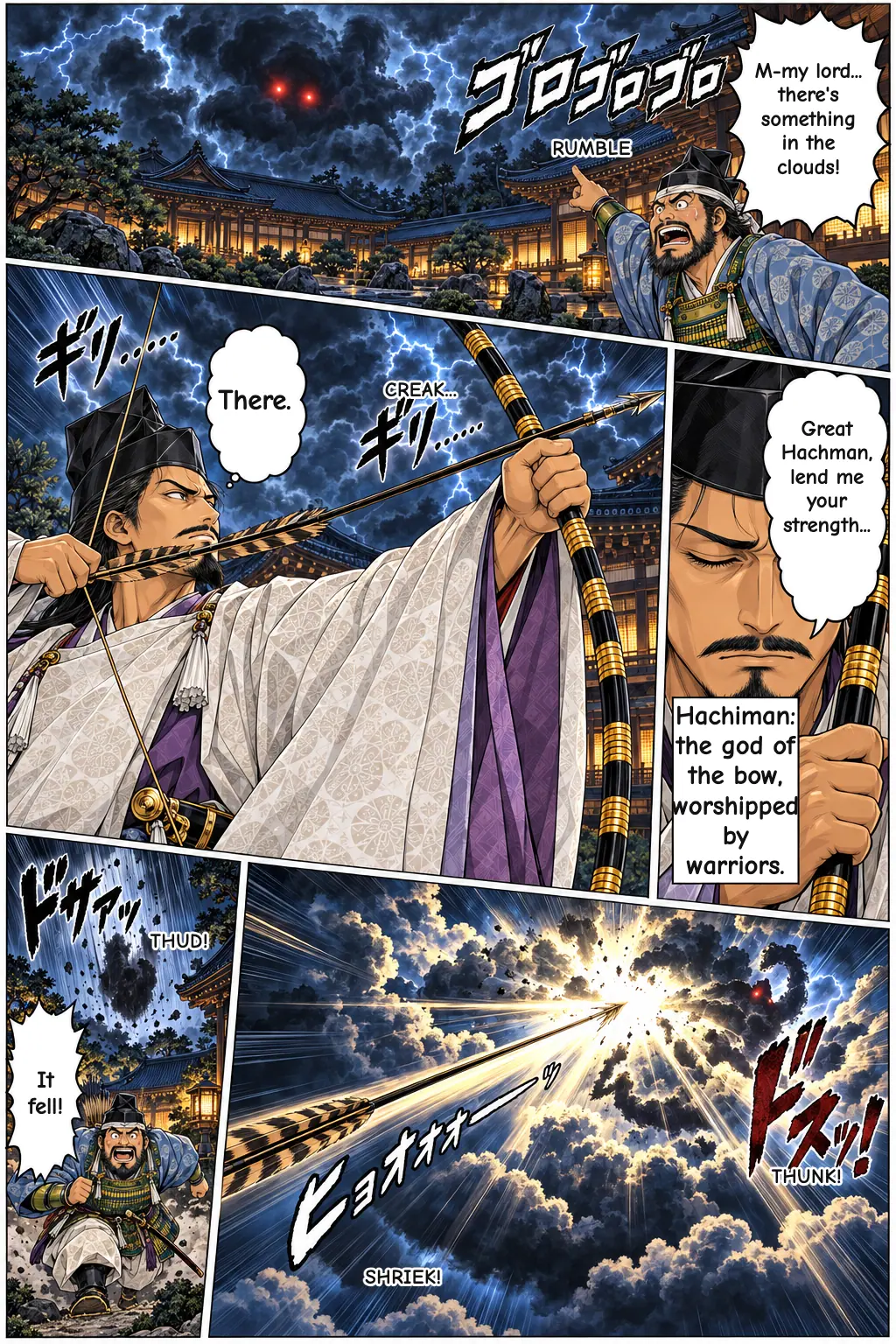
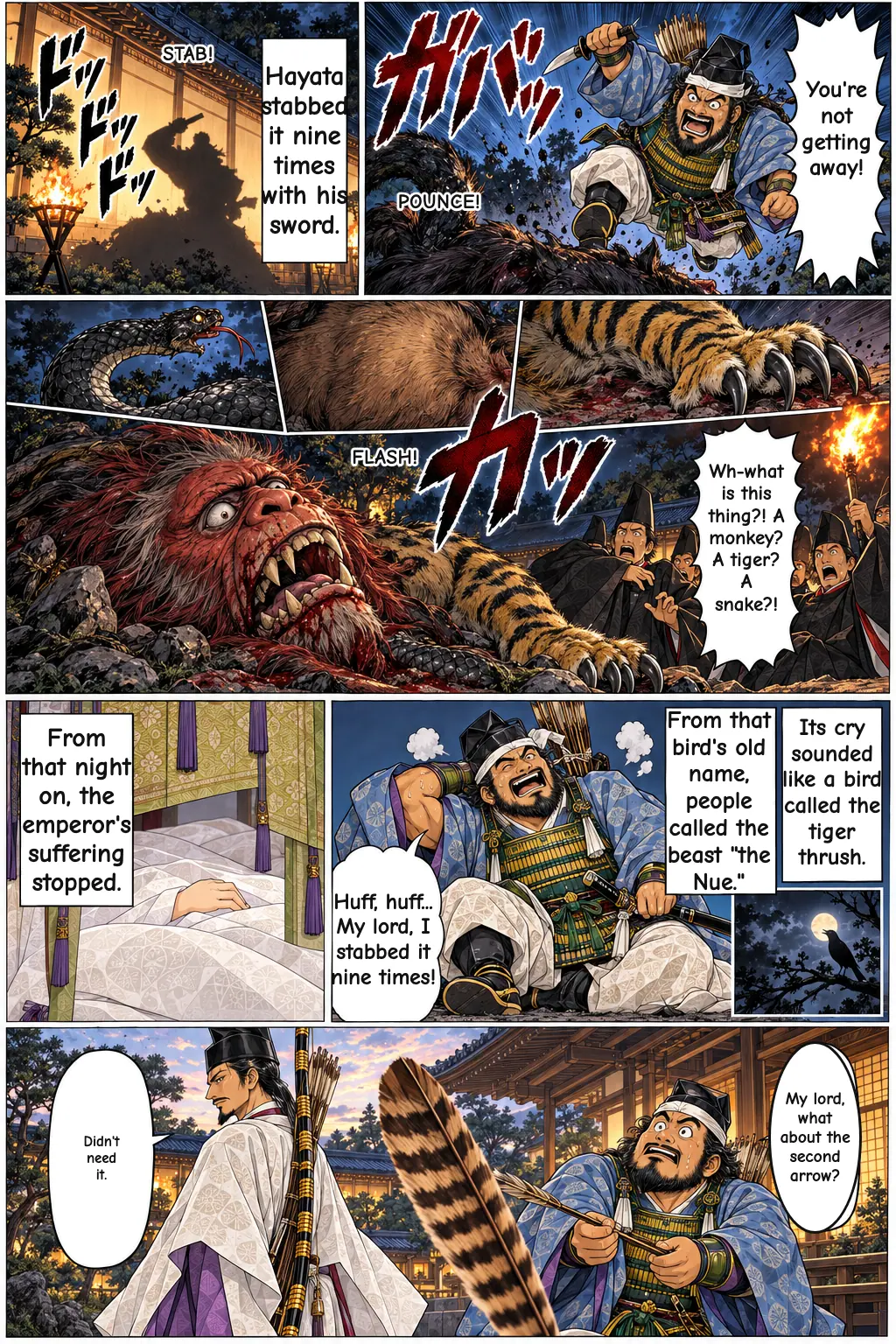
The Heike follows Yorimasa's death with a look back at his career. He served in earlier wars but received few rewards, and he owed much of his promotion to his poetry. His most famous deed took place in Emperor Konoe's reign. Every night, a black cloud drifted from a nearby forest over the palace and terrified the emperor. Yorimasa was chosen to deal with it. He shot an arrow into the cloud and brought down a creature with a monkey's head, a raccoon dog's body, a snake's tail, and a tiger's limbs. Its cry sounded like the nue bird. His retainer Ino Hayata finished it off. Later, under another emperor, Yorimasa shot down a monster in the palace a second time.
The narrator closes the chapter coolly. After such glory, Yorimasa destroyed himself and his family in a pointless rebellion.
Historical and Cultural Background
Prince Mochihito's revolt failed within days, but it mattered far more than it seemed to at the time. His call to arms gave Yoritomo and other Minamoto leaders a reason to rise, and it set off the Genpei War (1180–1185), which ended with the Taira wiped out. The Heike was recited by blind storytellers with a lute, and it repeatedly sets Buddhist ideas of impermanence against warrior pride. Yorimasa shows both sides at once. He is a celebrated archer and poet, and he is also a man whose last gamble failed.
What the Manga Changes
The manga keeps the main events of the original, including the insult to Nakatsuna, the bridge battle, Tadatsuna's crossing, and Yorimasa's death at the Byōdō-in. Several elements are creative additions, though. In the original, the Nue story is told after Yorimasa dies. The manga moves it earlier as a flashback. Yorimasa's final arrow fired into the fog to cover the prince's escape is invented, and so is the idea of a 'second arrow' from the Nue night traveling east with the prince's order. The Heike reports only that the order reached Yoritomo, before the battle. It does not describe the scene. The details of the monster's appearance, the mood of the secret meeting, the fight choreography, and Yorimasa's inner thoughts are also the manga's own interpretation.
Where to Read It
To see this story as a graphic story, read Episode 5 of THE TALE OF THE HEIKE: The Samurai War of Genpei here on Manga Portal. Every episode is free, with no sign-up required. Earlier episodes explain how the Taira rose to power, and the next ones follow Yoritomo's uprising in the east.
Characters in this episode
Minamoto no Yorimasa
An aging Minamoto warrior-poet and famed archer who urged Prince Mochihito to revolt and died at the Byōdō-in after the Battle of Uji.
Prince Mochihito
A son of retired emperor Go-Shirakawa whose order calling on the Minamoto to fight the Taira sparked the Genpei War.
Minamoto no Nakatsuna
Yorimasa's eldest son, publicly humiliated by Taira no Munemori over a prized horse, who died at Uji.
Watanabe Kiō
Yorimasa's quick-witted retainer, who tricked Munemori out of a fine horse to avenge his lord's family.
Taira no Munemori
Head of the Taira clan, whose cruel joke about Nakatsuna's horse helped drive Yorimasa to rebel.
Ashikaga Tadatsuna
A seventeen-year-old eastern warrior on the Taira side who led a 'horse raft' of more than three hundred riders across the Uji River.
FAQ
What happened at the Battle of Uji in 1180?
Minamoto no Yorimasa and Prince Mochihito tried to hold off a large Taira army at the Uji Bridge while fleeing toward Nara. The Taira crossed the river on horseback, Yorimasa took his own life at the Byōdō-in, and the prince was killed soon after.
Why did Minamoto no Yorimasa rebel against the Taira?
According to The Tale of the Heike, Taira no Munemori took Yorimasa's son Nakatsuna's prized horse, branded it with Nakatsuna's name, and mocked him. Yorimasa's anger at this insult is the reason the story gives for the revolt.
What is the Nue that Yorimasa shot?
The Nue is a monster in Japanese legend. In the Heike, it has a monkey's head, a raccoon dog's body, a snake's tail, and a tiger's limbs, and its cry sounds like the nue bird. Yorimasa shot it down from a black cloud over the imperial palace.
Who was the first to cross the Uji River in the Tale of the Heike?
In the 1180 battle, it was Ashikaga Tadatsuna, a seventeen-year-old warrior from Shimotsuke province. He formed his riders into a 'horse raft' and directed the crossing himself.
How did Prince Mochihito's revolt start the Genpei War?
The revolt was crushed within days, but the prince's written order had already reached Minamoto leaders, including Yoritomo in Izu. Their uprisings that followed grew into the Genpei War.