Episode 11She Sang of Him to the Men Hunting HimLady Shizuka's Dance at Tsurugaoka
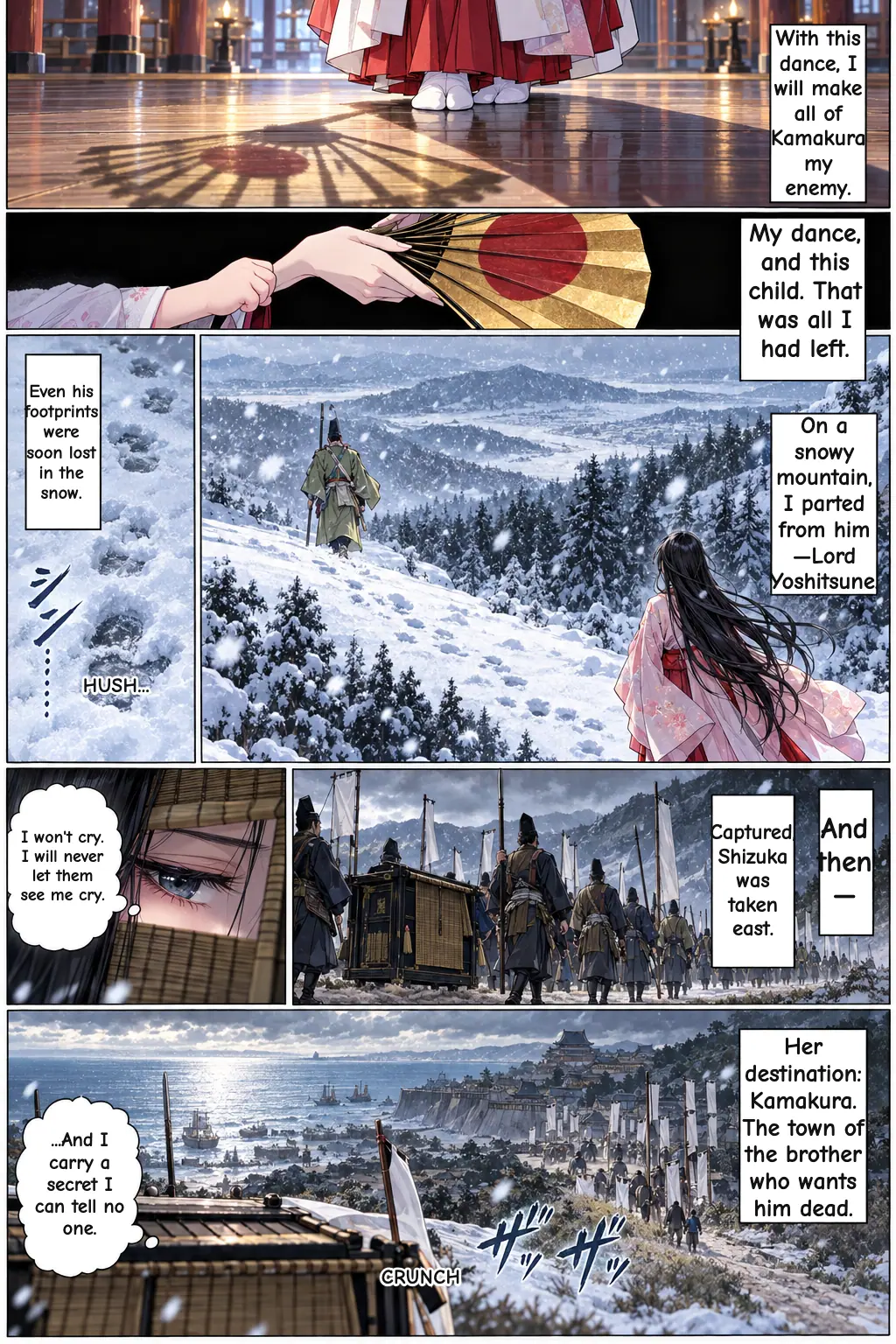
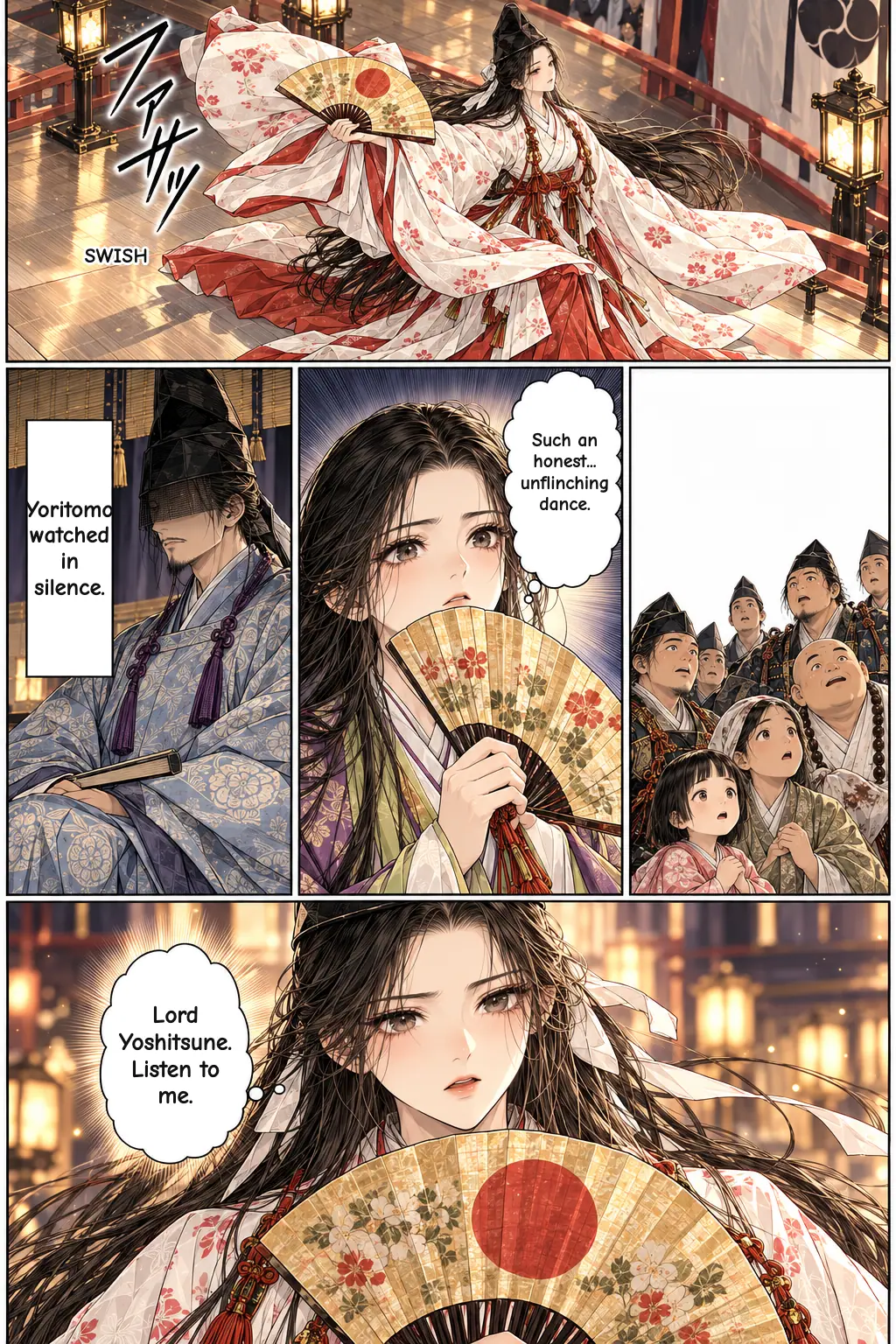
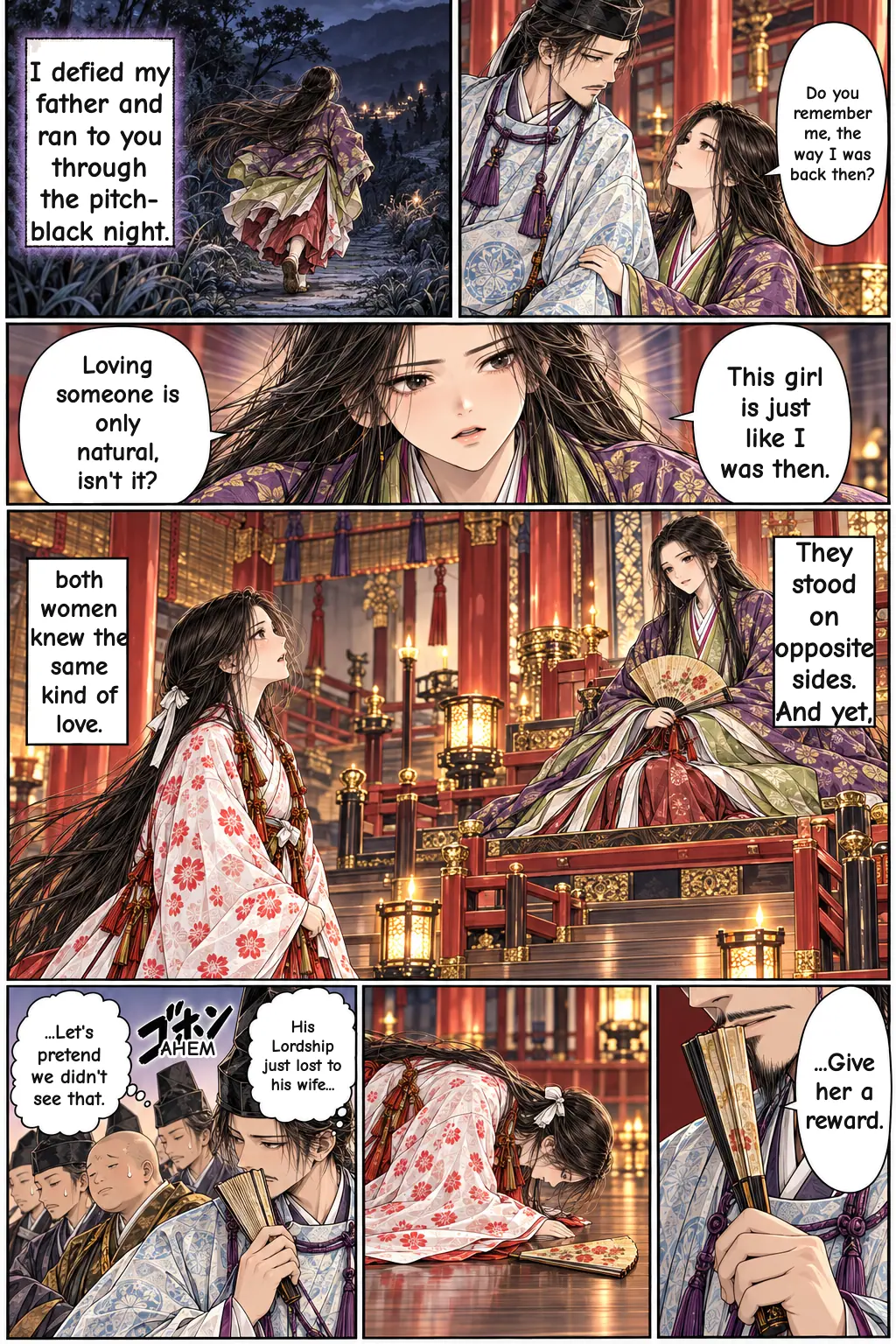
Shizuka parted from Yoshitsune on a snowy mountain as he fled his brother Yoritomo. Now she is captured and sent to Kamakura. She refuses to say where Yoshitsune is, and the baby she gives birth to is taken from her. With only her dance and her pride left, she is ordered to dance at the shrine for Yoritomo and Masako. There, in the heart of enemy territory, she boldly sings of her longing for the man she loves.
Lady Shizuka's Dance at Tsurugaoka: The Gikeiki Story Explained
The Original Story: Why Shizuka Was Sent to Kamakura
Lady Shizuka (Shizuka Gozen) was a shirabyōshi, a professional dancer and singer who performed in male court costume, and the most celebrated performer in Kyoto. She was also the beloved companion of Minamoto no Yoshitsune, the brilliant young general who helped his half-brother Minamoto no Yoritomo defeat the Taira clan, only to be branded a traitor by that same brother. Earlier in the Gikeiki (The Chronicle of Yoshitsune), Shizuka follows Yoshitsune into the snowy mountains of Yoshino, where the two are forced to part. She is captured soon after.
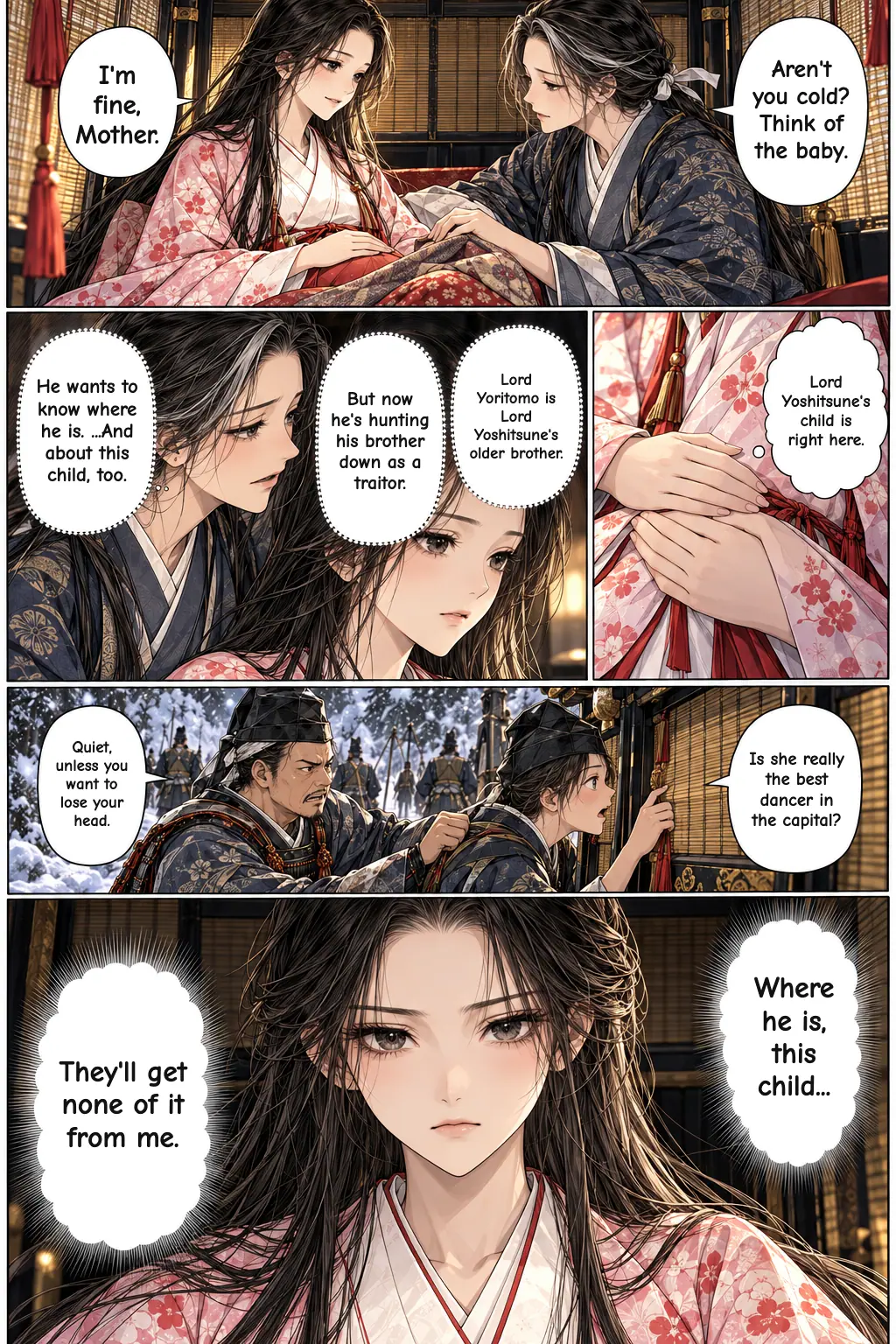
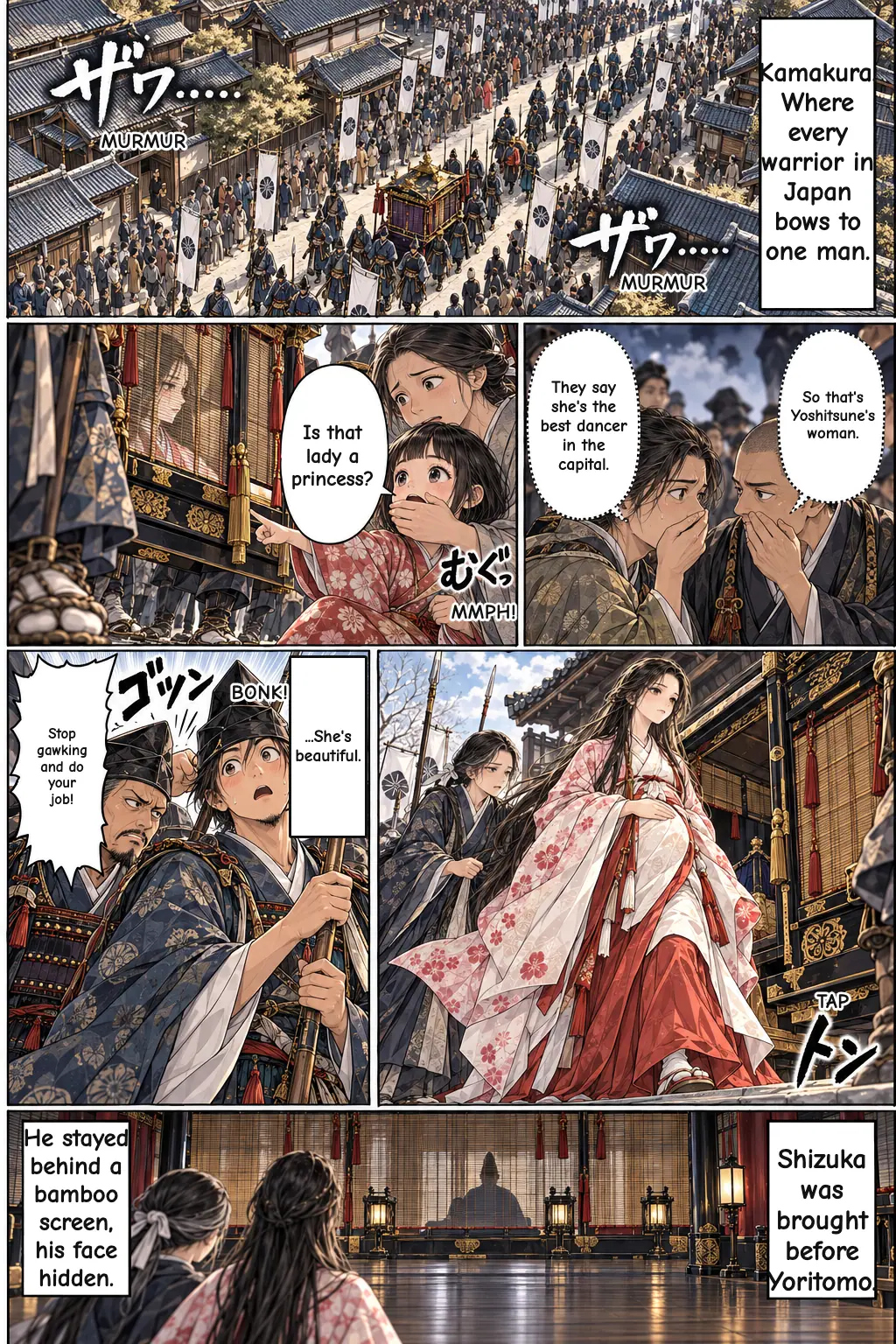
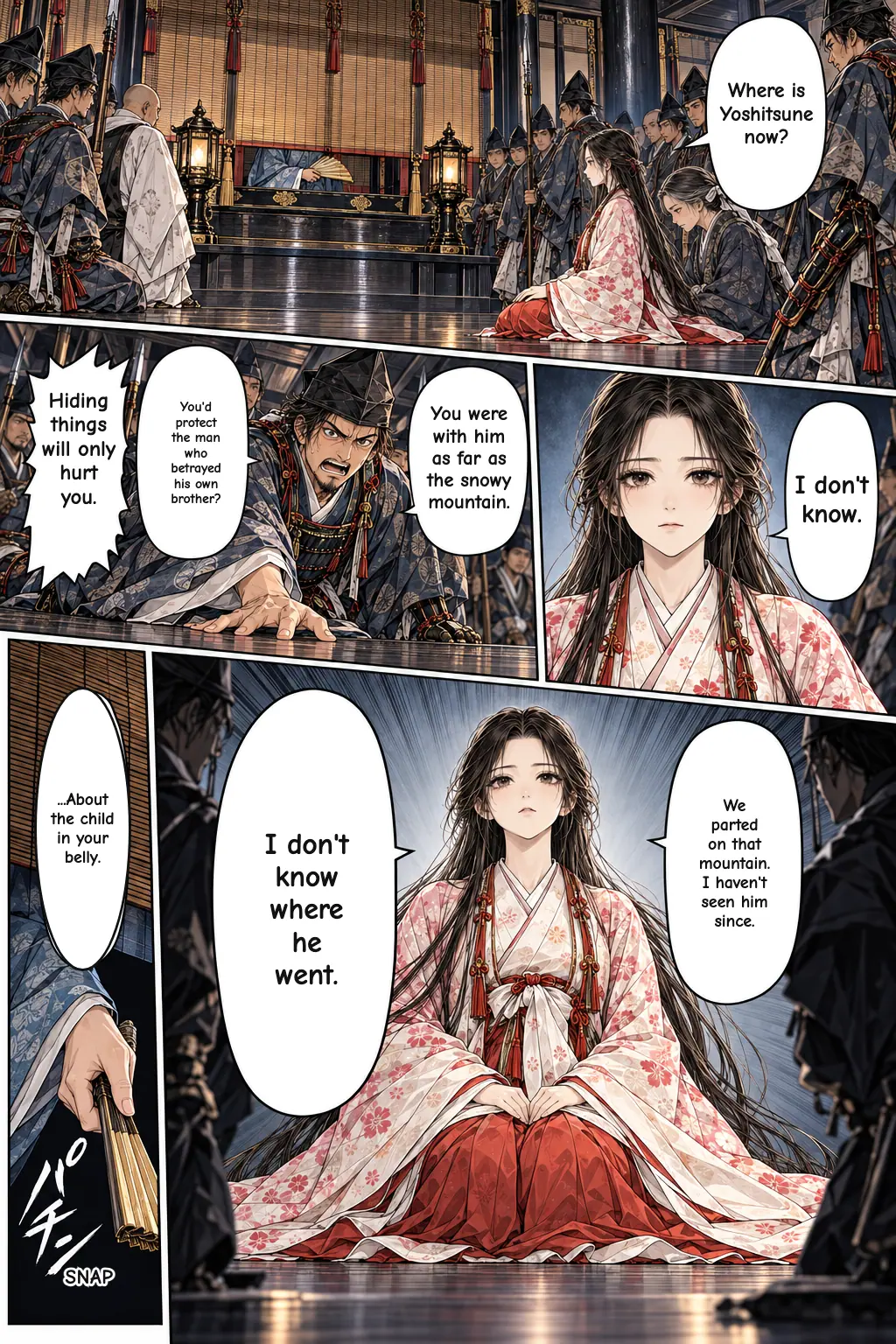
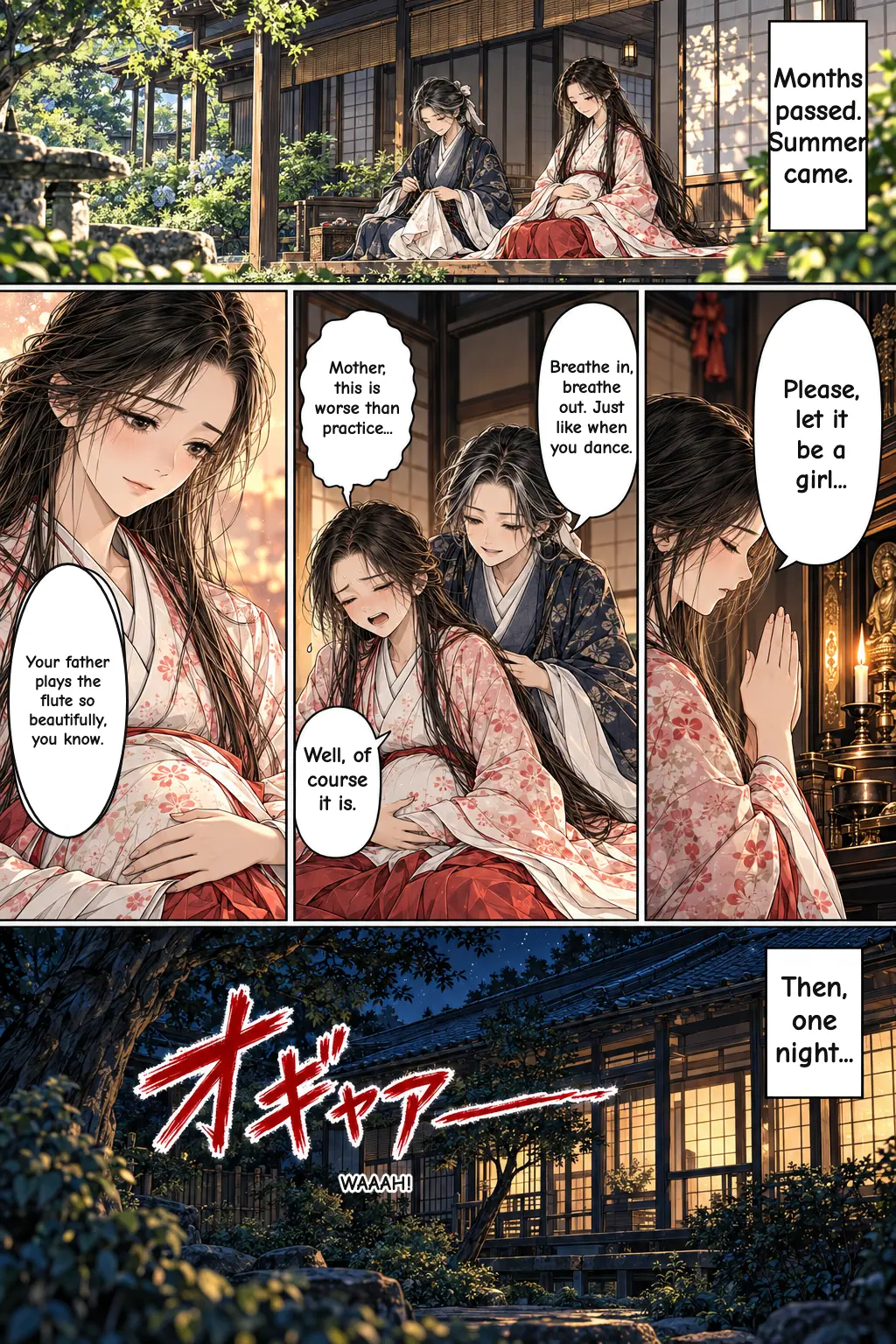
Book 6 of the Gikeiki picks up her story from there. Questioned in the capital, Shizuka is found to be carrying Yoshitsune's child, so Yoritomo orders her brought to Kamakura, his military capital in eastern Japan. Her mother, Iso no Zenji, travels with her along the Tōkaidō road. In Kamakura, Shizuka is pressed again and again to reveal where Yoshitsune is hiding. She insists she does not know and never gives him away.
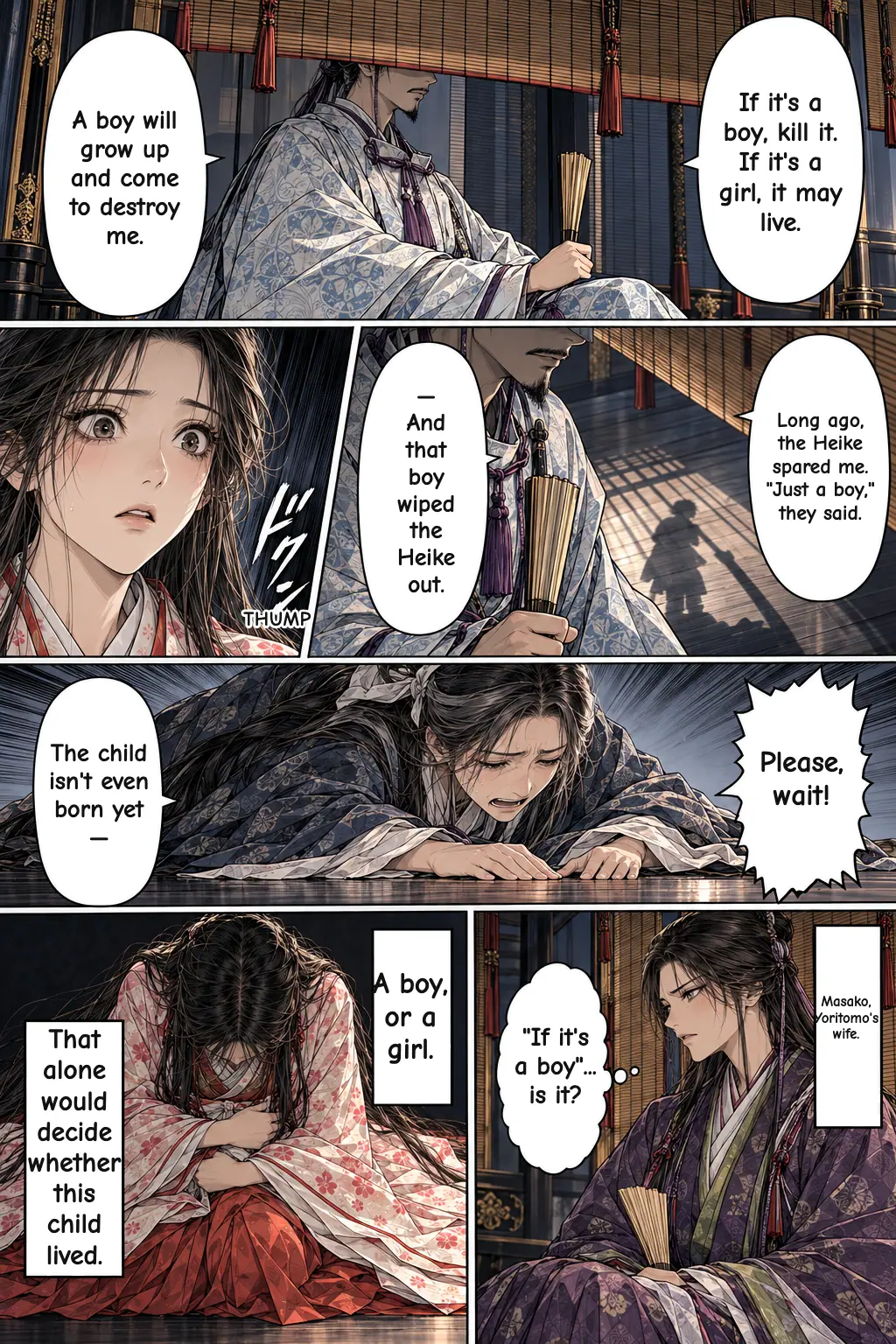
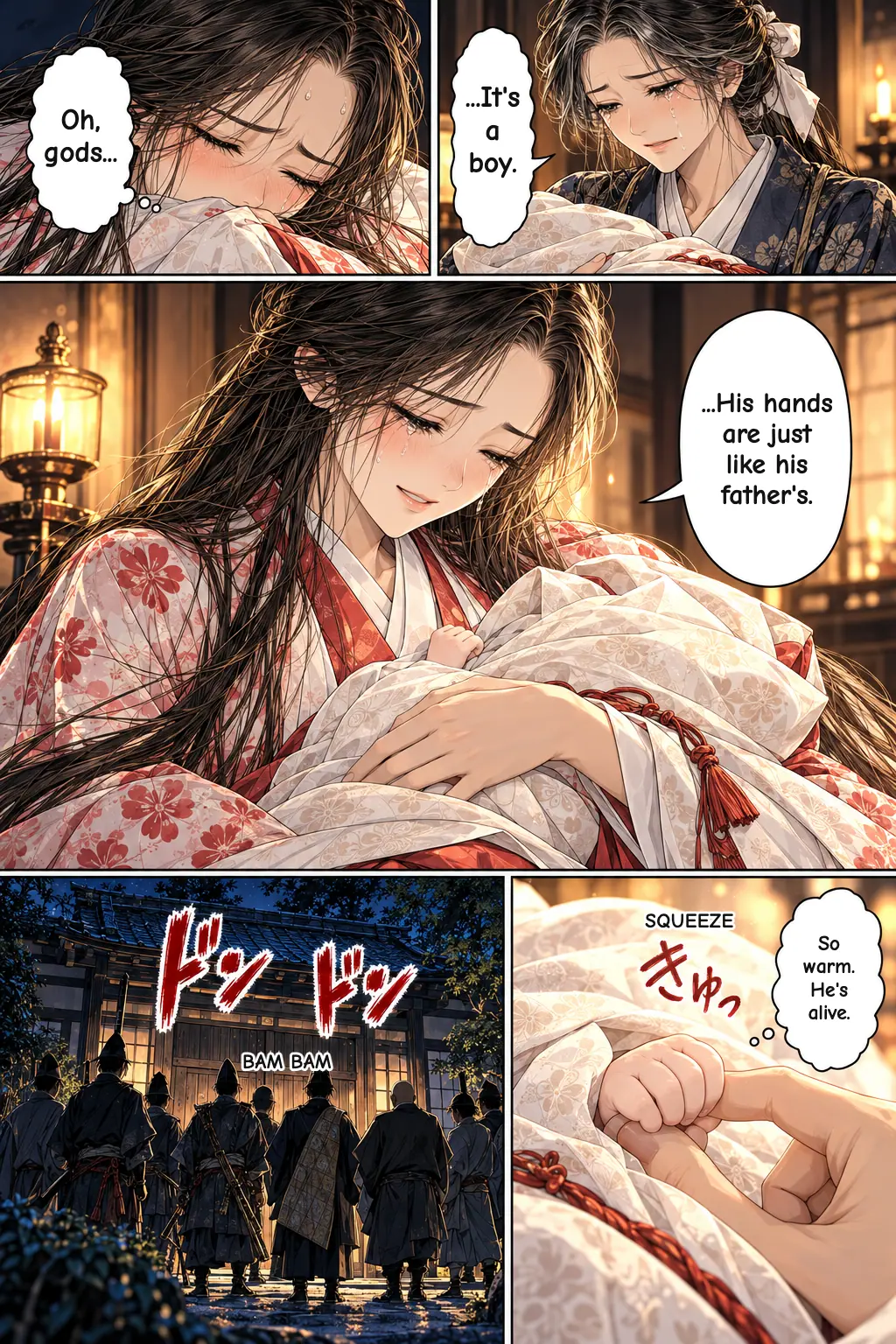
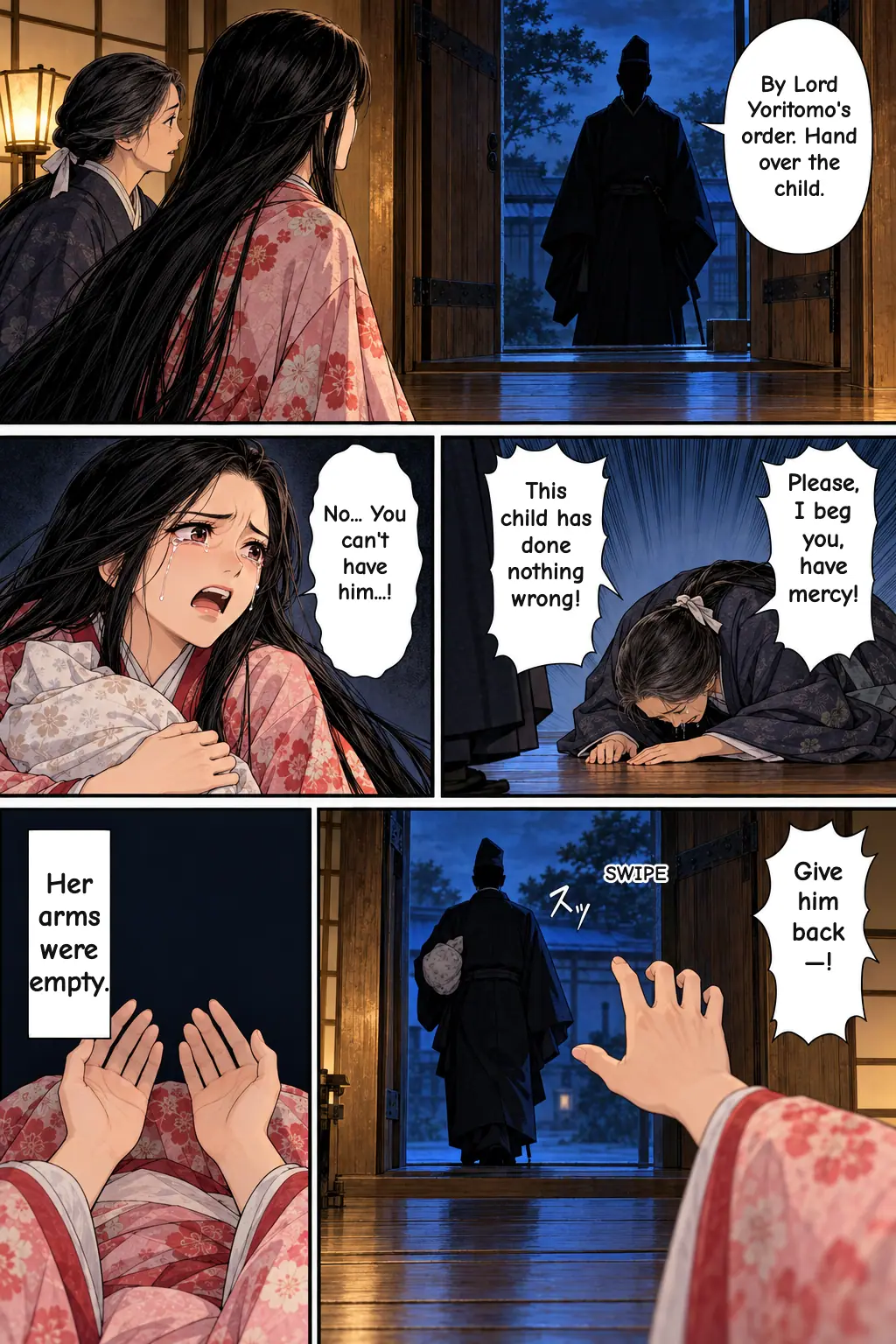
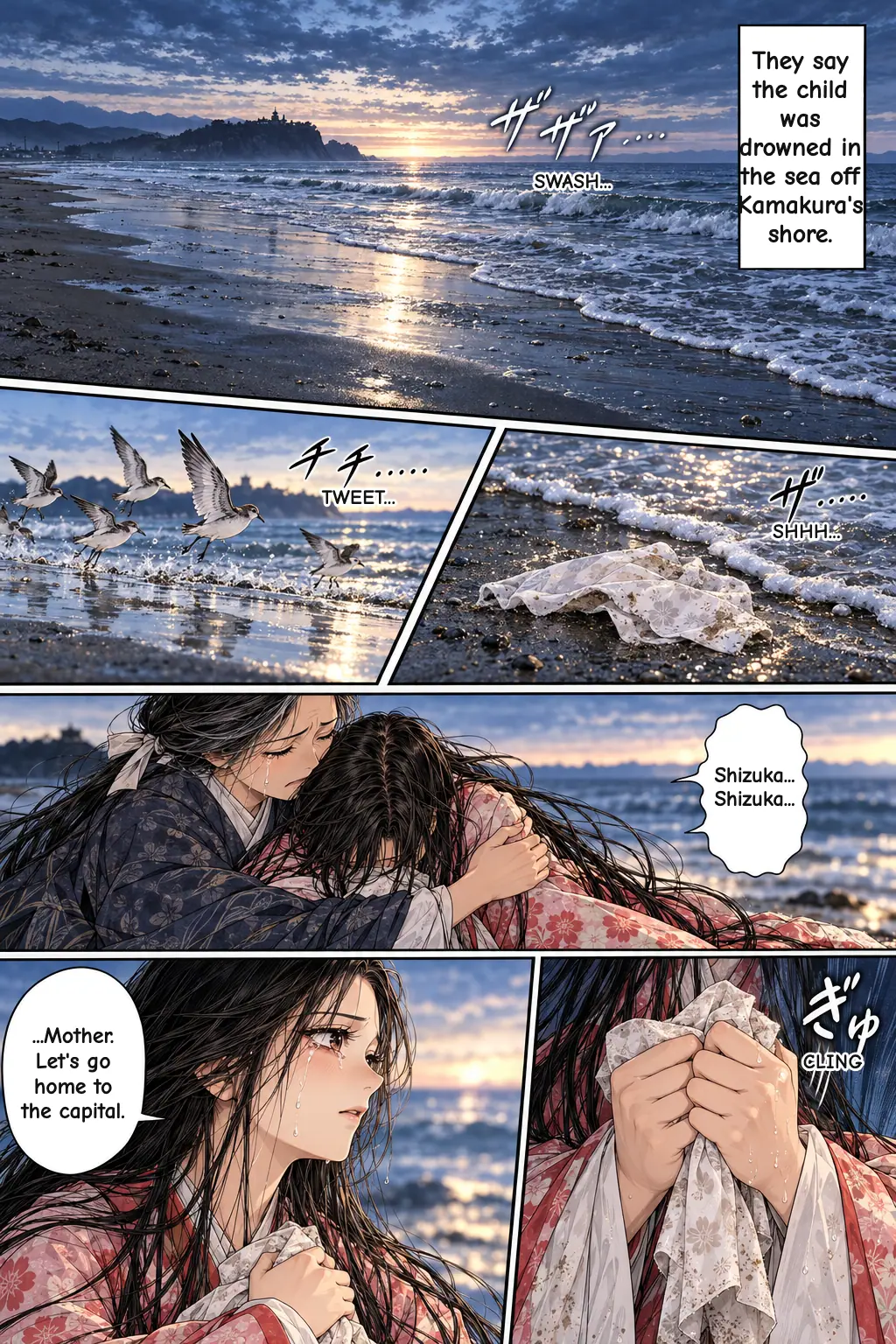
Yoritomo then gives a cold command: if the child is a girl, let it live; if it is a boy, kill it. Shizuka gives birth to a son. Despite the pleas of mother and grandmother, one of Yoritomo's retainers takes the baby from her, and the infant is drowned at Yui Beach near Kamakura.
The Dance at Tsurugaoka Hachimangū
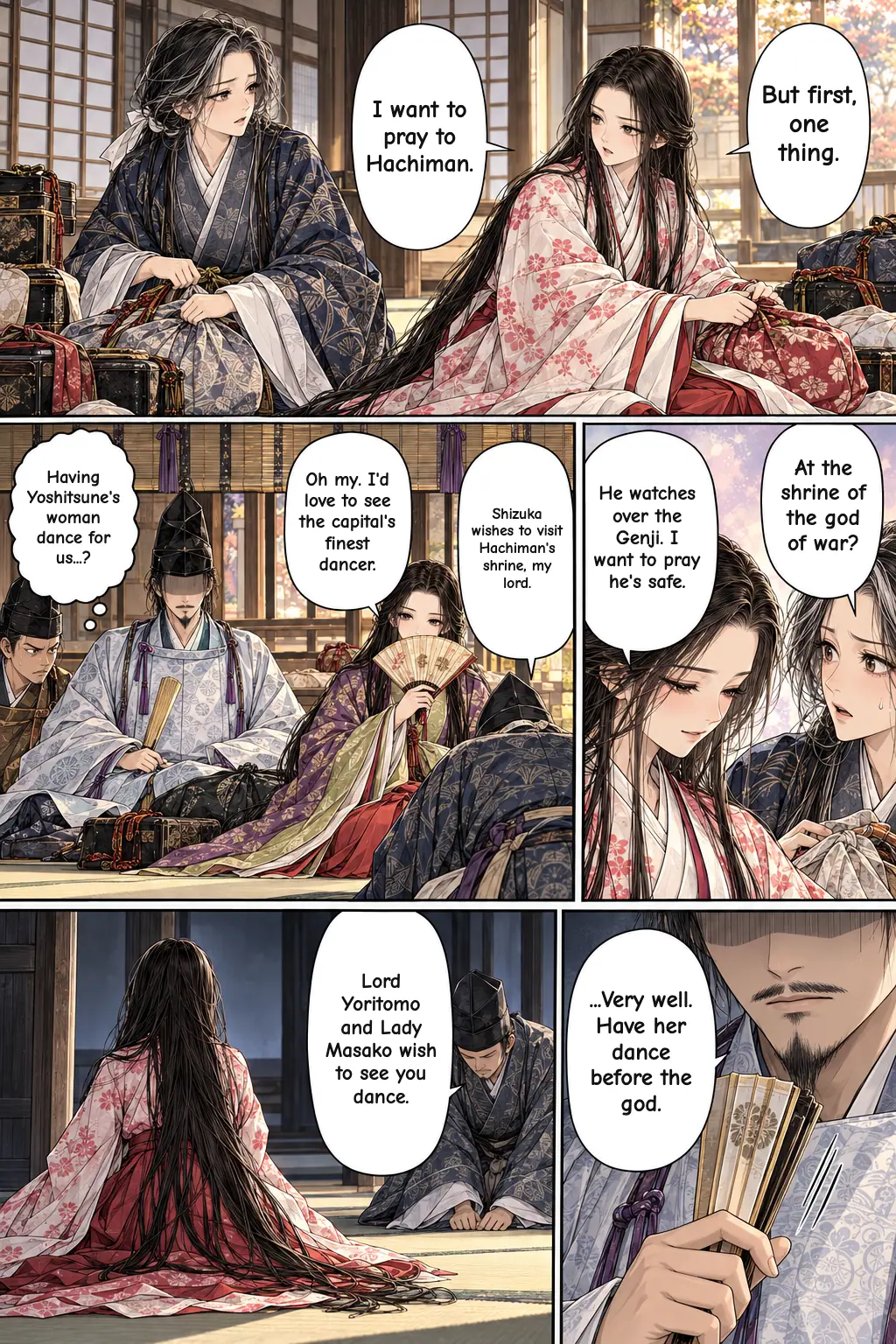
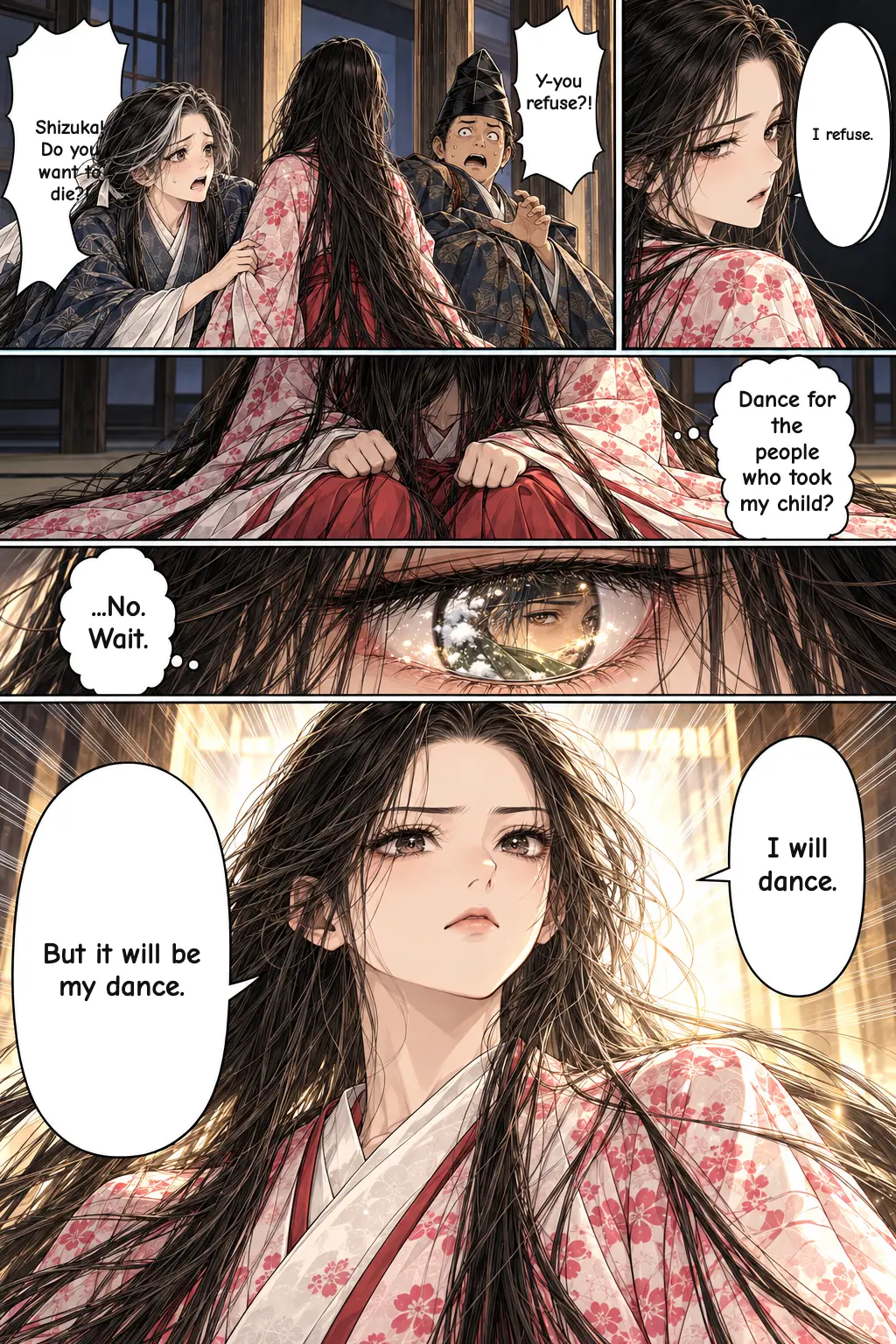
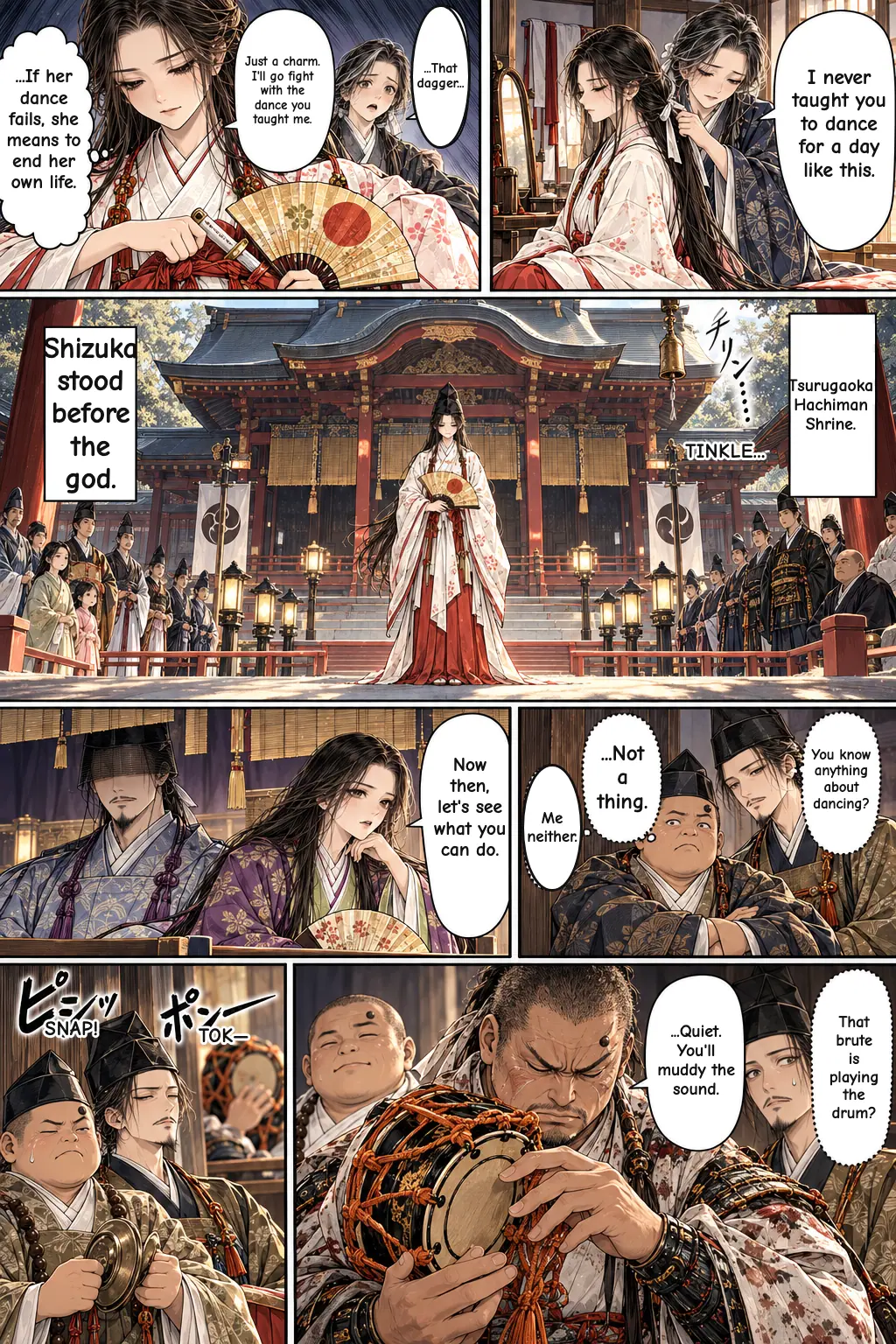
Grief-stricken, Shizuka asks to go home to Kyoto, but first she visits the Wakamiya Hachiman shrine at Tsurugaoka, today's Tsurugaoka Hachimangū, the guardian shrine of the Minamoto clan. Hearing of this, Yoritomo and his wife, Hōjō Masako, want to see the dance the whole capital talks about. Shizuka refuses at first, but in the end she is made to perform before the gods, and before the man who has just taken her child.
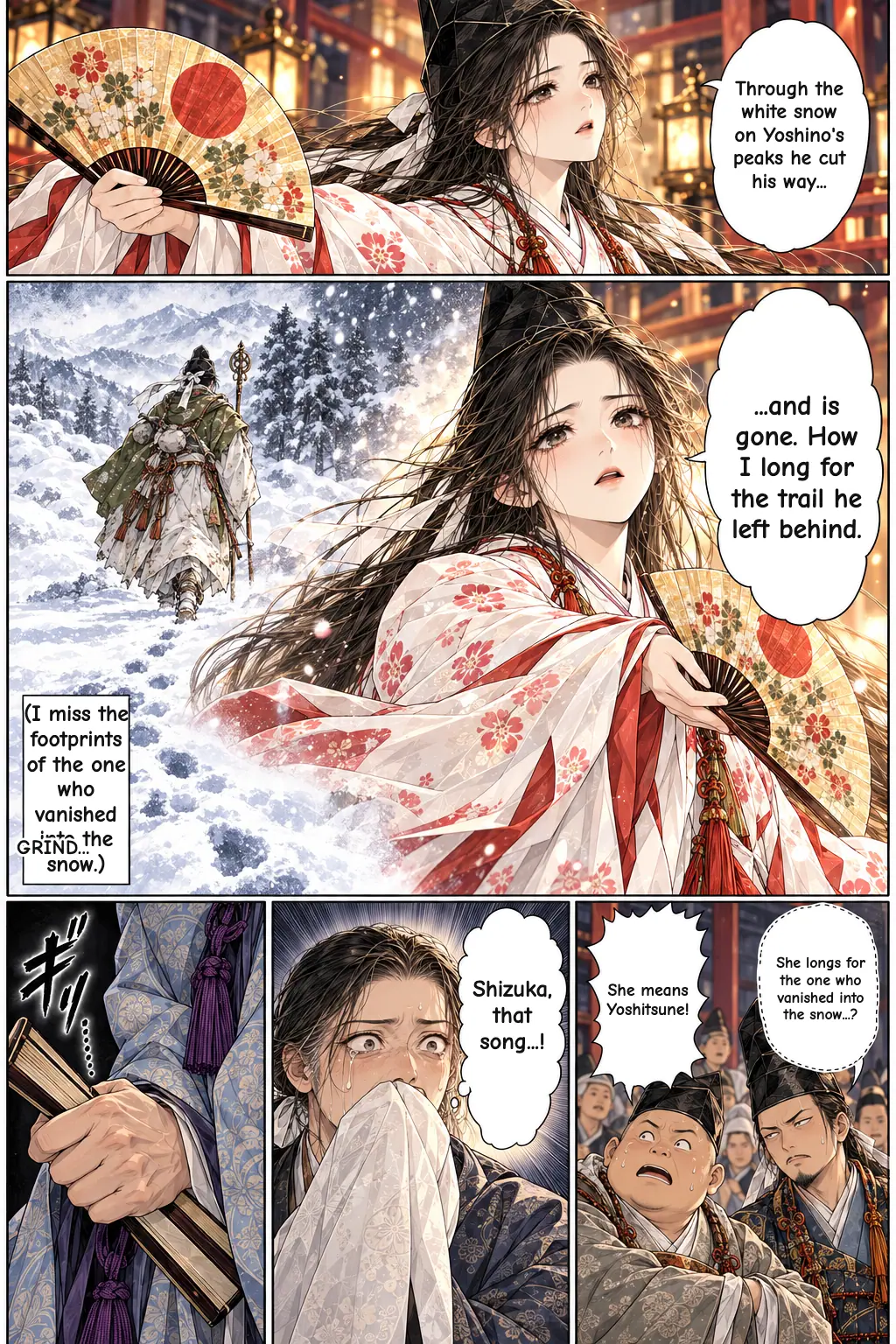
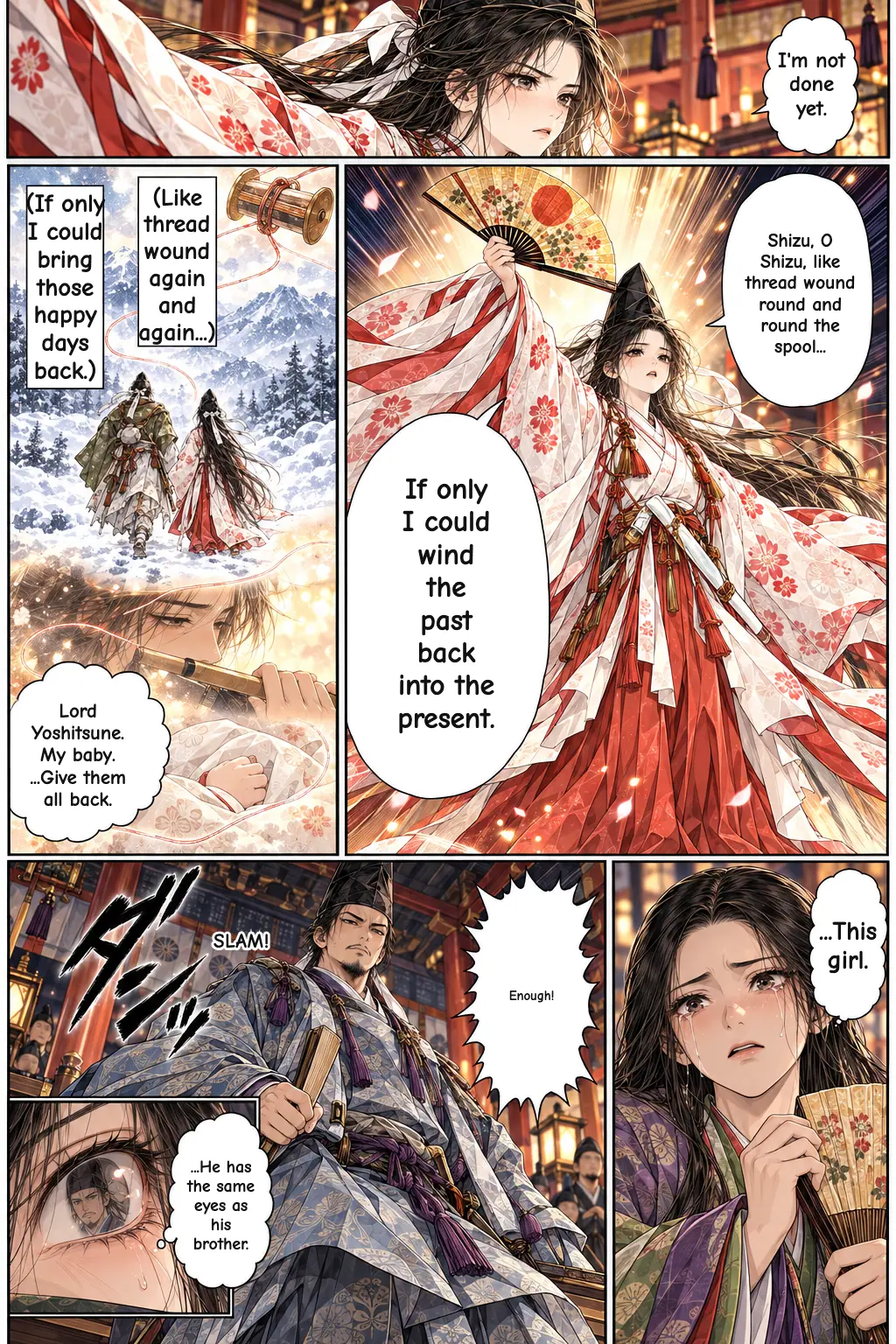
Instead of a song honoring her hosts, she sings two poems of longing for Yoshitsune. The first recalls Yoshino: she yearns for the tracks of the man who disappeared into the mountains, treading through the white snow of the peaks. The second begins with a play on her own name, "Shizu ya shizu," and the image of a spool of thread (odamaki) turning round and round. As the thread winds back on itself, she wishes the past could return: the days when Yoshitsune was honored and at her side.
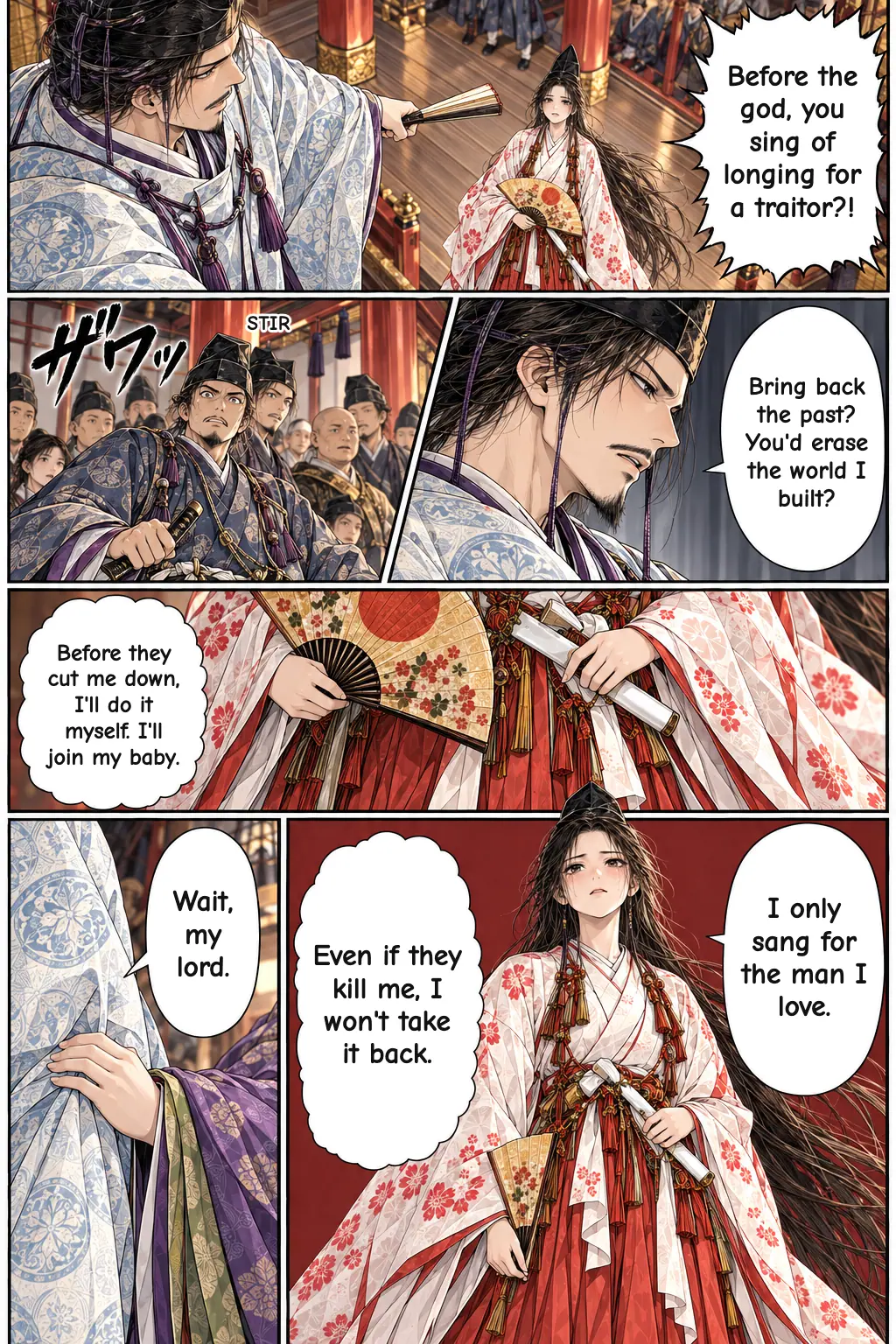
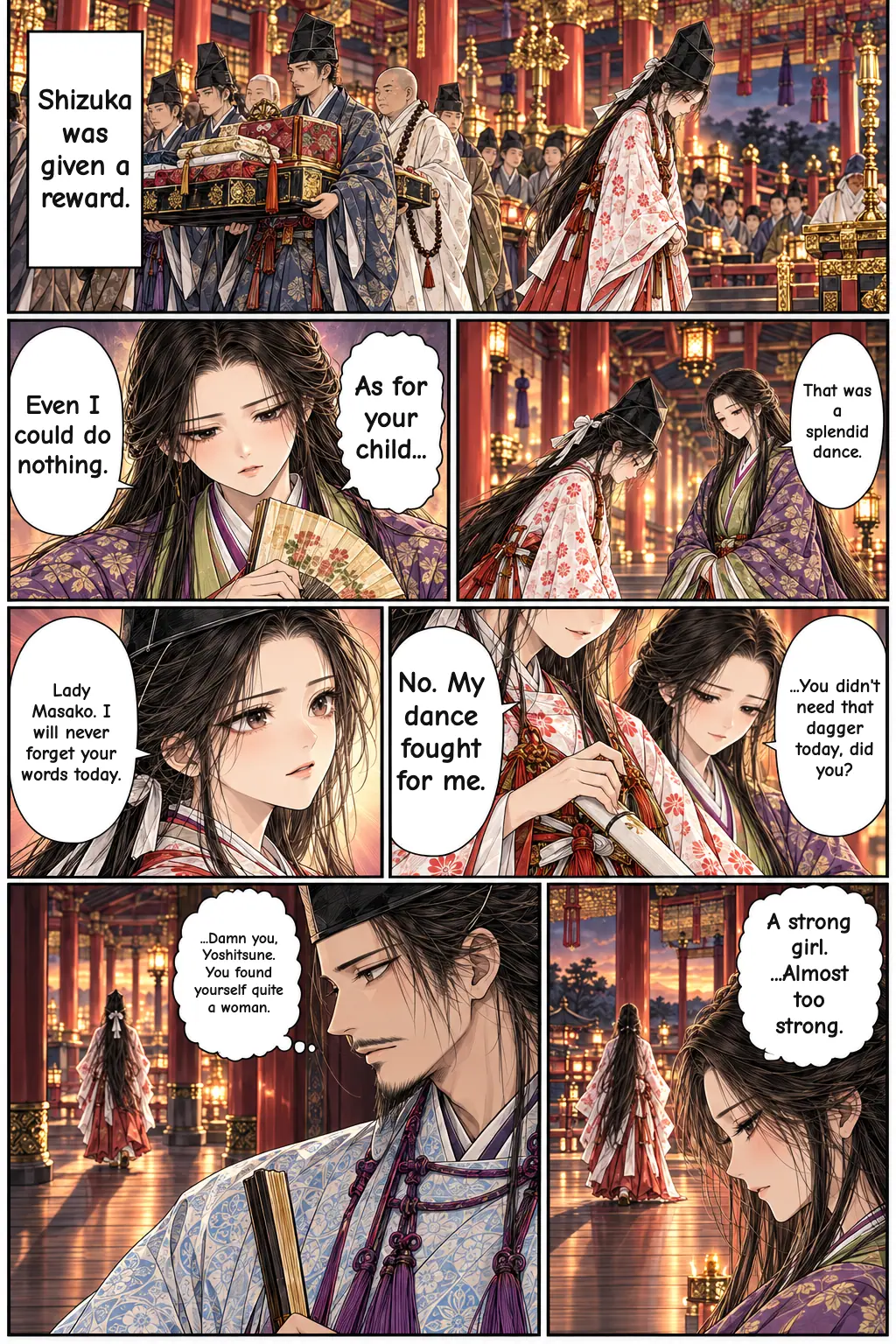
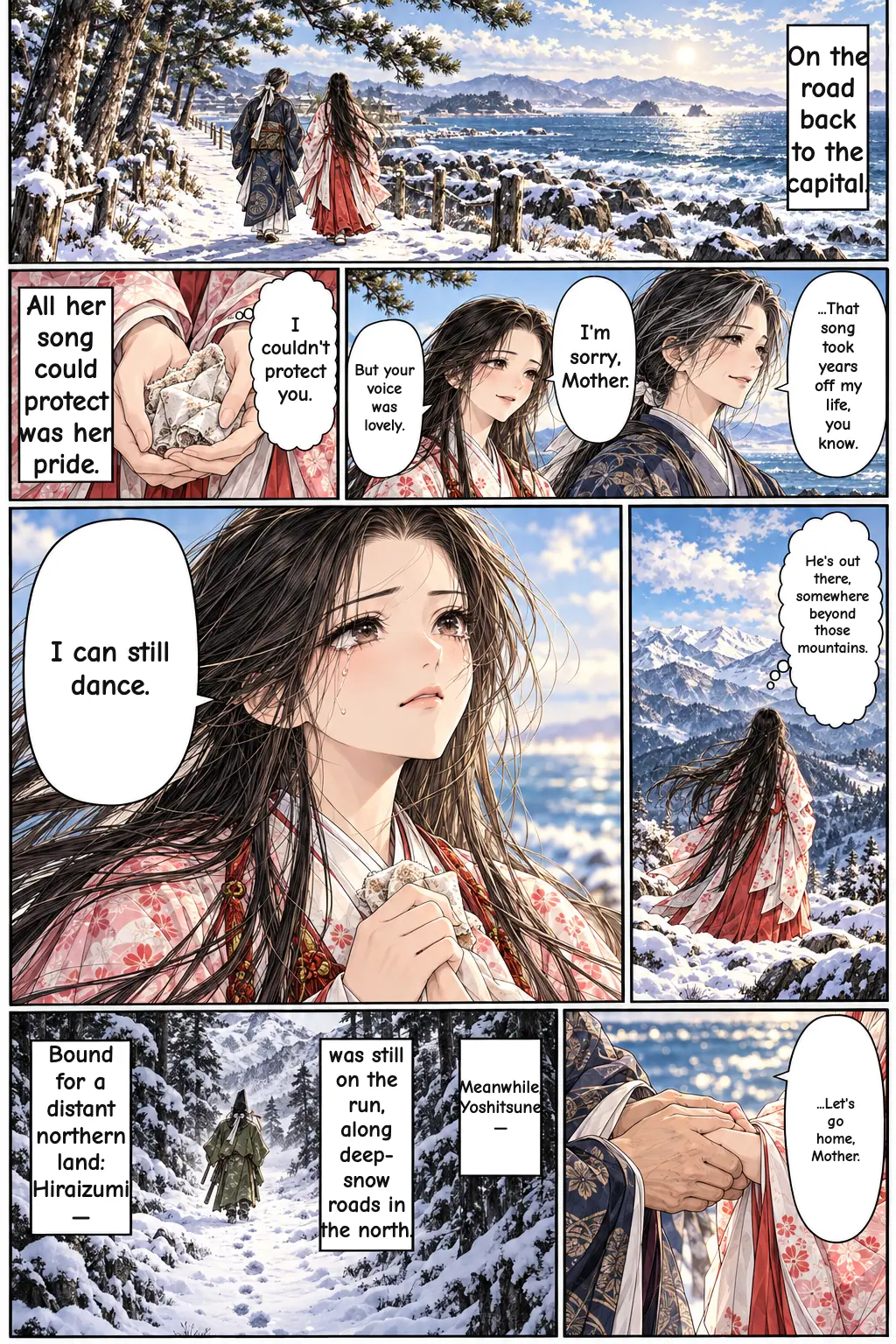
Yoritomo is furious. To him, the songs openly praise a rebel and wish away his new order. It is Masako who calms him. She reminds him that she, too, once defied her family to run to him when he was a powerless exile, and says Shizuka feels only what any woman in love would feel. Yoritomo's anger fades. Shizuka receives gifts and is sent back to Kyoto with her mother, and the Gikeiki says she later became a Buddhist nun and died young.
What the Story Means: Love, Loyalty and Defiance
The Gikeiki is an anonymous war tale (gunki monogatari) thought to have taken shape around the early Muromachi period, long after the real Yoshitsune died in 1189. Rather than focusing on battles, it follows Yoshitsune's life and especially his downfall, giving unusual space to the people around him. Shizuka's chapter is one of its emotional high points.
Her dance works on several levels. She is a captive with no power, yet her art is the one thing her captors want, and she uses it to say exactly what they do not want to hear. In classical Japan, poetry was a public and almost formal way of expressing feeling, so singing these lines at the Minamoto clan's own shrine was a daring act of loyalty. Masako's response adds another layer: two women on opposite sides recognizing the same kind of love. This sympathy for the losing side helped make Yoshitsune and Shizuka lasting figures in Noh, kabuki and popular memory.
The historical chronicle Azuma Kagami (Mirror of the East) also records the dance, dating it to the 8th day of the 4th month of 1186 and placing the birth of her son several months later. The Gikeiki tells things in a different order, putting the child's death before the dance, which deepens the tragedy. Later legends that Shizuka followed Yoshitsune to the far north, and the many sites across Japan said to be her grave, come from later folklore, not from the Gikeiki.
What the Manga Adds and Changes
Episode 11 follows the Gikeiki's main events: the journey to Kamakura, the questioning, the loss of the child, the dance, Yoritomo's rage and Masako's intervention. Some details are the manga's own creation, including the scenery of the road east, scenes at inns, the conversations between Shizuka and her mother, the wording of the interrogation and the faces of the watching warriors.
The manga does not show the baby's death directly. Instead it suggests it through the waves of Yui Beach, a tiny kimono and plovers on the shore, symbolic images that stay true to the original plot. Shizuka's choreography, the details of her costume (the white robe and tall eboshi hat are the traditional shirabyōshi look, but the design is the artist's), her inner thoughts while singing, and her view of the sea and snow on the road home are also invented, since the Gikeiki says little about them. The quiet glances between Masako and Shizuka are the manga's way of drawing out the sympathy that the original expresses through Masako's words.
Where to Read It
If you want to see this scene come to life, THE LEGEND OF YOSHITSUNE: Ushiwaka and Benkei retells the Gikeiki from Yoshitsune's boyhood as Ushiwaka onward, and Episode 11 is Shizuka's chapter. Every episode is free to read on Manga Portal, with no sign-up required. Start here for the dance at Tsurugaoka, or go back to the beginning to meet young Ushiwaka and the warrior monk Benkei.
Characters in this episode
Shizuka Gozen (Lady Shizuka)
Kyoto's most celebrated shirabyōshi dancer and Yoshitsune's beloved, who refuses to betray him even as a captive in Kamakura.
Minamoto no Yoshitsune
The fugitive hero of the Gikeiki, absent from this scene but present in every line of Shizuka's songs.
Minamoto no Yoritomo
Yoshitsune's half-brother and the ruler in Kamakura, who orders Shizuka's son killed and rages at her songs.
Hōjō Masako
Yoritomo's wife, who sympathizes with Shizuka and calms her husband by recalling her own defiant love for him.
Iso no Zenji
Shizuka's mother, who travels with her to Kamakura and pleads for her grandson's life.
Shizuka's son
The unnamed infant son of Shizuka and Yoshitsune, taken from his mother and drowned at Yui Beach on Yoritomo's orders.
FAQ
Who was Shizuka Gozen?
Shizuka Gozen was a famous shirabyōshi, a female dancer-singer of 12th-century Kyoto, and the beloved of the warrior Minamoto no Yoshitsune. She is best known for dancing before Yoritomo at Tsurugaoka and singing of her love for Yoshitsune.
What did Shizuka sing at Tsurugaoka Hachimangū?
She sang two poems of longing for Yoshitsune. One recalls following him through the snow of Mount Yoshino, and the other, using the image of a spool of thread, wishes the past could come back again.
Why was Yoritomo angry at Shizuka's dance?
Yoritomo had declared Yoshitsune a traitor, so a song praising Yoshitsune and wishing for the old days sounded like a challenge to his rule. In the Gikeiki, his wife Masako persuades him to forgive her.
What happened to Shizuka's baby?
Yoritomo ordered that the child be killed if it was a boy. Shizuka gave birth to a son, who was taken from her and drowned at Yui Beach near Kamakura.
Is the Gikeiki historically accurate?
The Gikeiki is a literary war tale written long after the events, so it mixes history with storytelling. The chronicle Azuma Kagami also records Shizuka's dance, but places it before the birth of her son, while the Gikeiki tells it the other way around.