Episode 10The Woman He Trusted Sold Him OutSato Tadanobu: The Siege at Horikawa
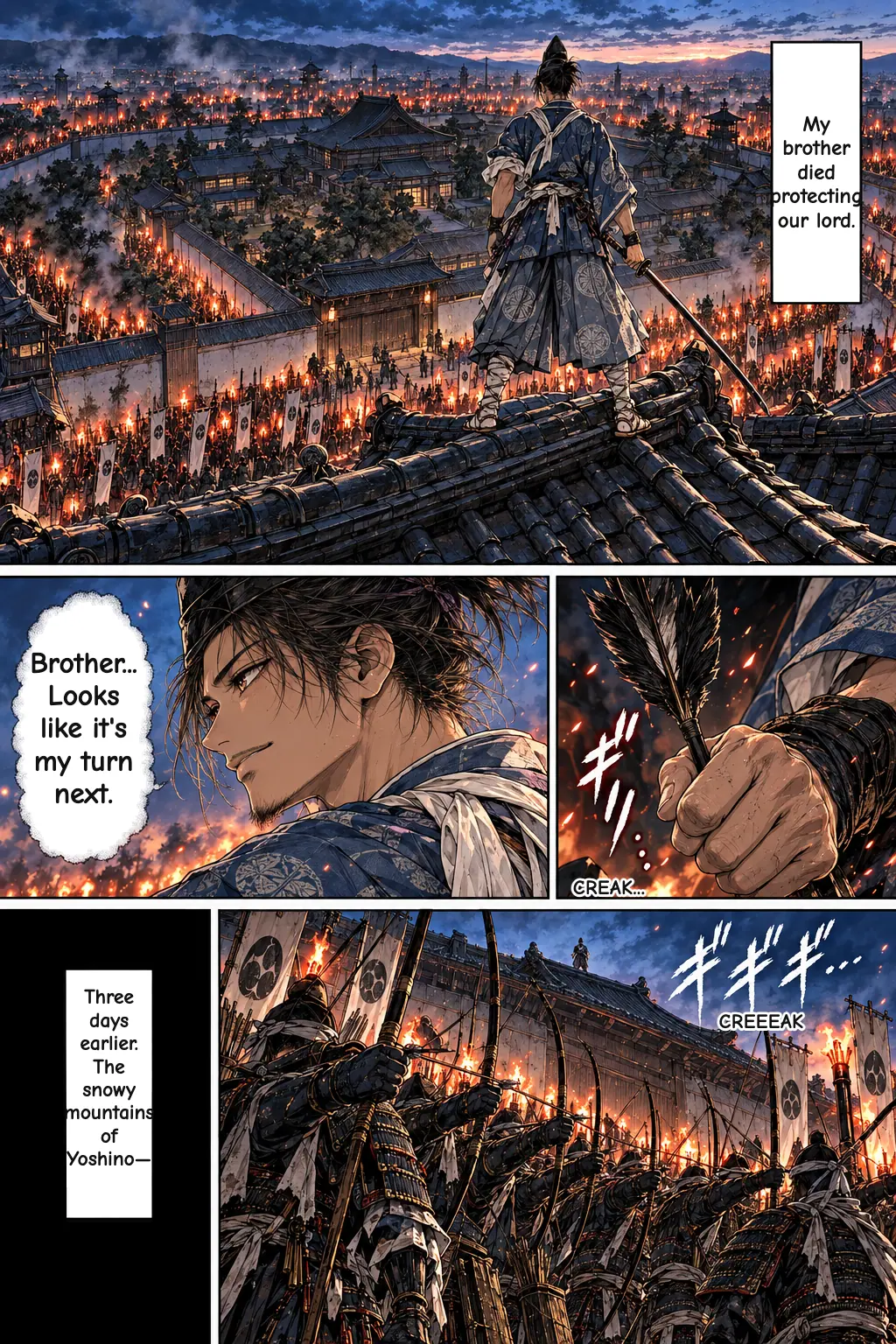
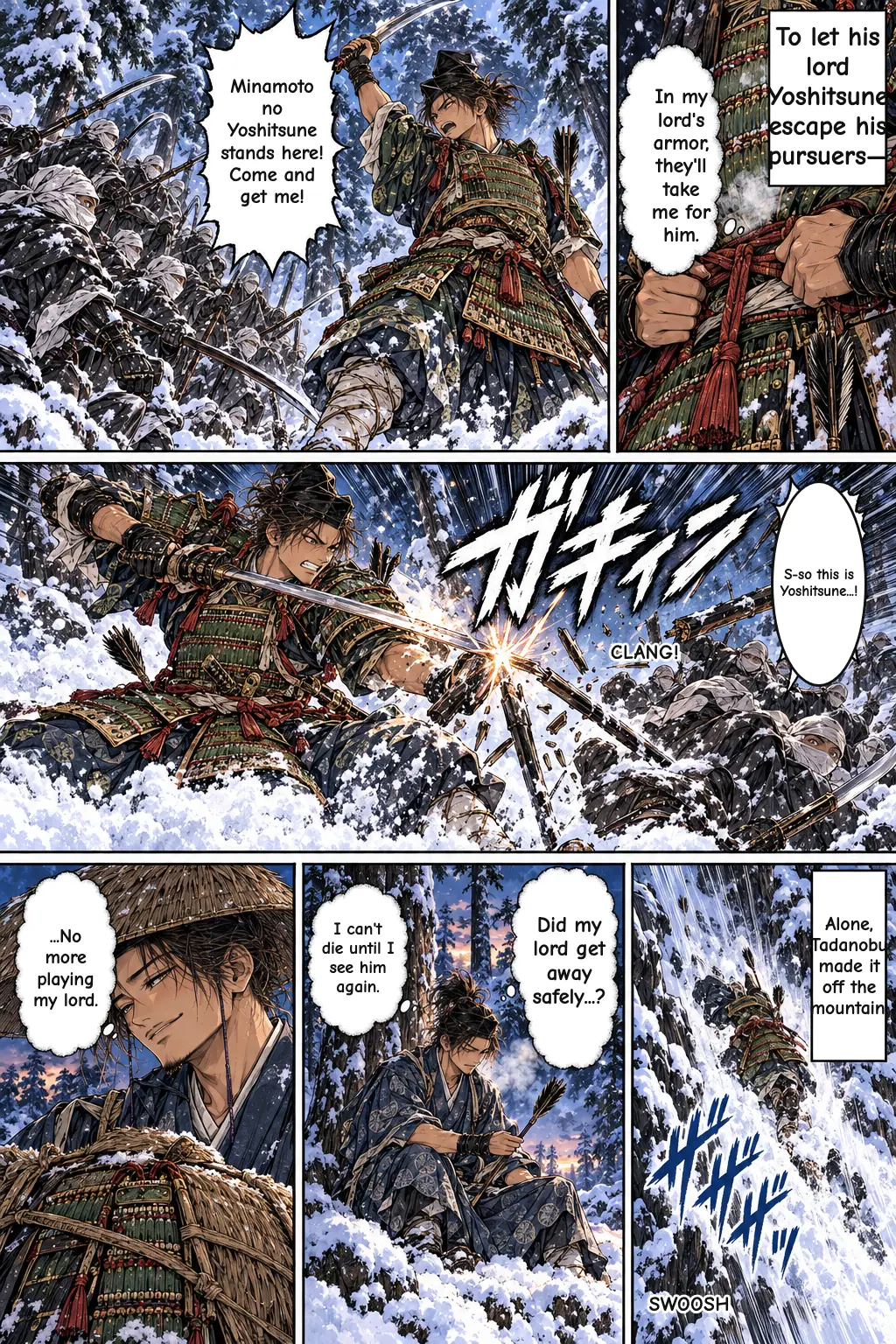
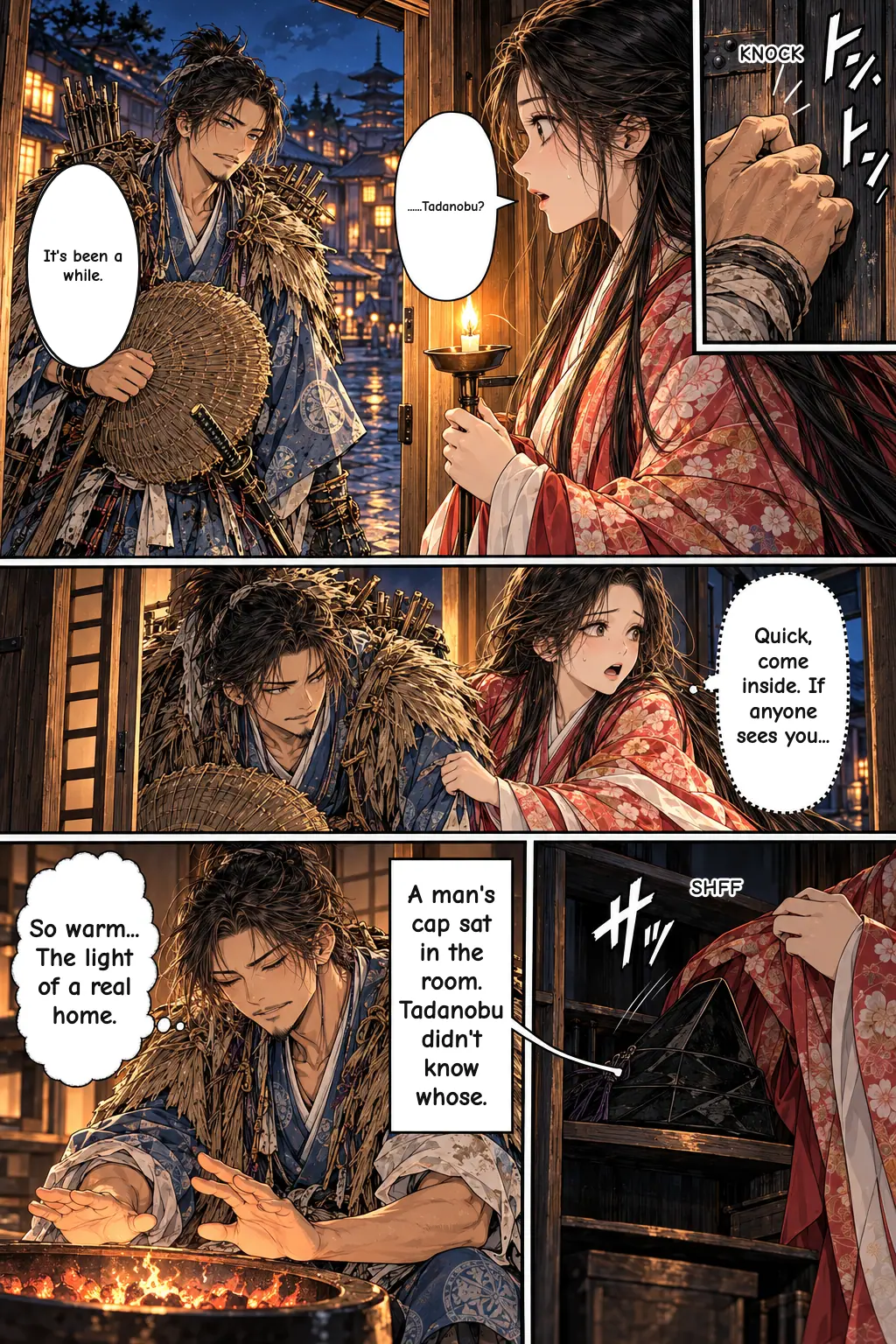
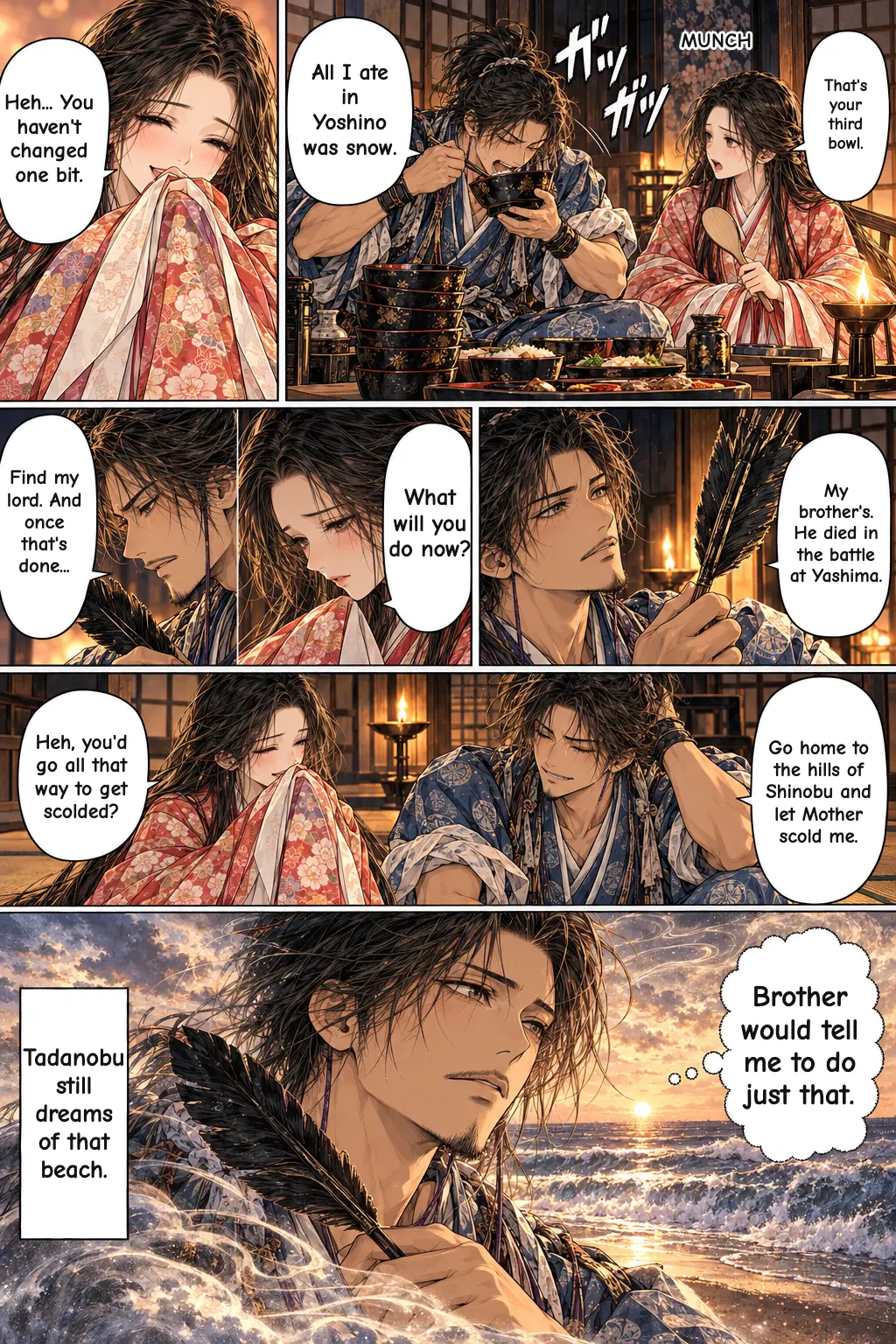
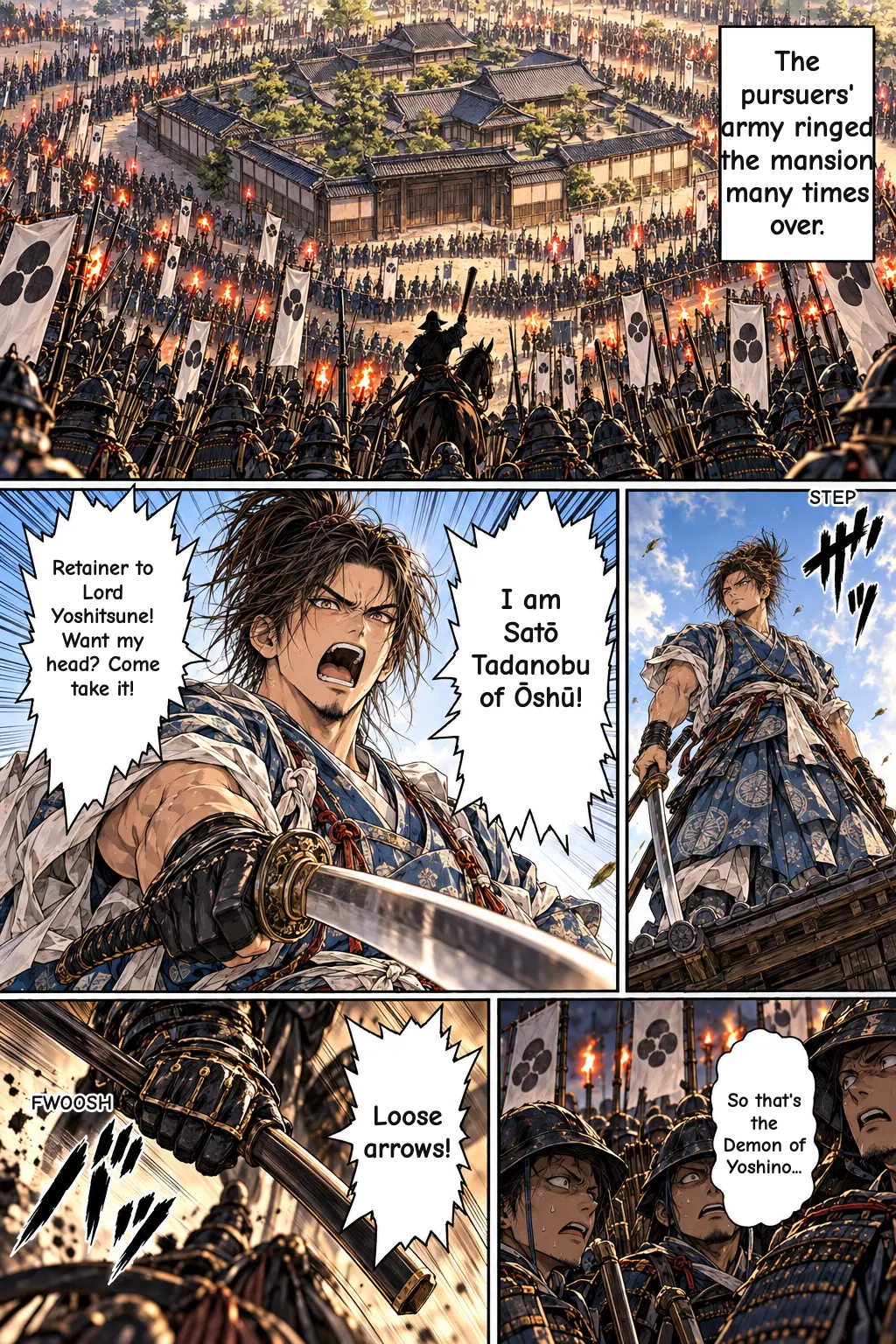
On snowy Yoshino, Tadanobu posed as his lord to cover his escape and survived. In Kyoto he turns to a woman he once loved, but she betrays him and a huge force surrounds him. Holed up in his lord's old Horikawa mansion, Tadanobu chooses to die the way his brother Tsuginobu did at Yashima.
Sato Tadanobu's Last Stand at Horikawa: Gikeiki Story Explained
The Original Story: Tadanobu's Last Stand in the Gikeiki
The Gikeiki (Chronicle of Yoshitsune) is a Japanese war tale by an unknown author, generally thought to have taken shape in the early Muromachi period, around the late 1300s to early 1400s. Unlike the more famous Tale of the Heike, it skips most of the great battles against the Taira clan. It focuses instead on Minamoto no Yoshitsune, the brilliant young general, in his youth and in his later flight after his half-brother Minamoto no Yoritomo, the ruler in Kamakura, turned against him. This episode adapts Book Six, which tells how Yoshitsune's retainer Sato Tadanobu slipped back into the capital and how he died there.
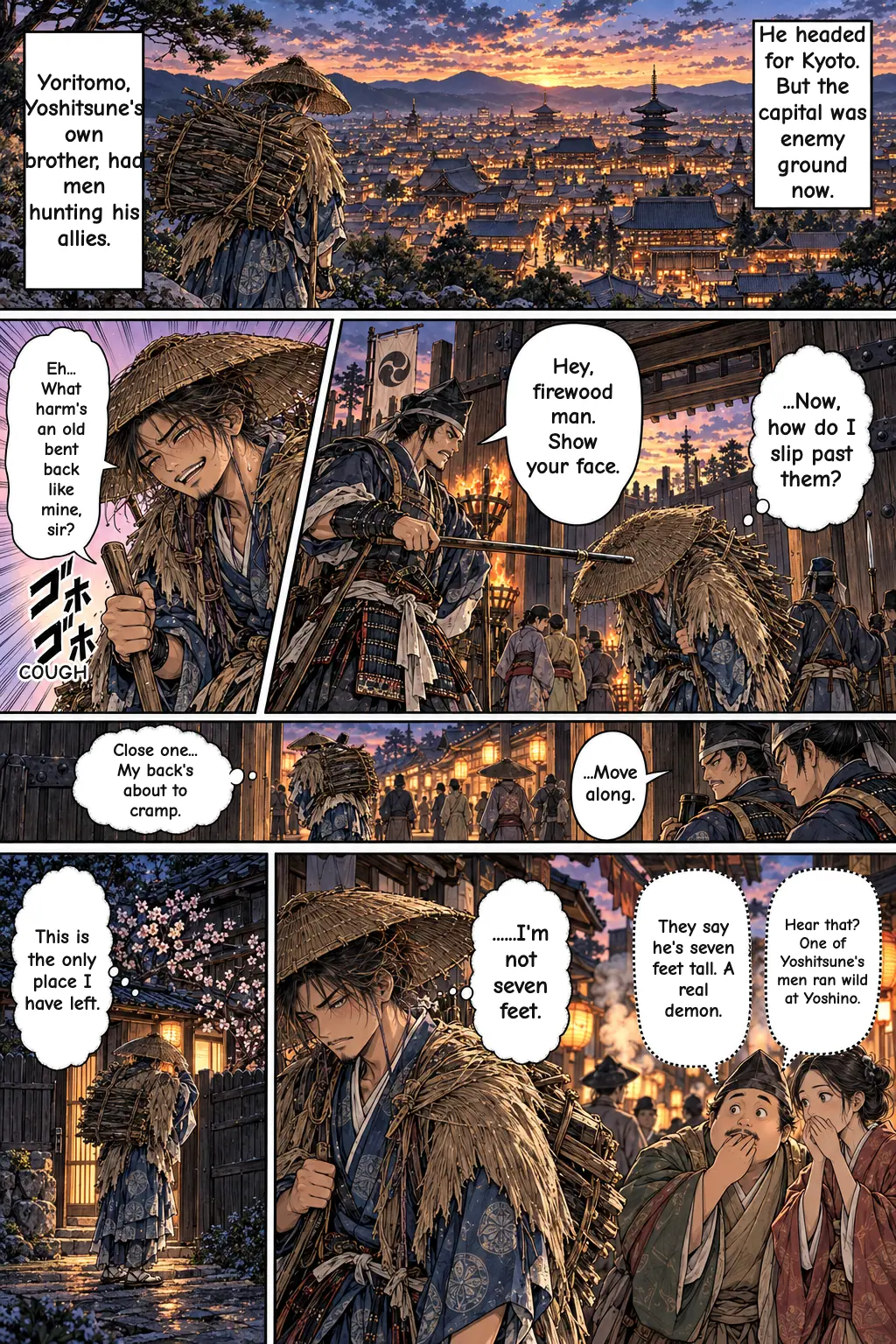
In the previous book, Yoshitsune's party was fleeing through snowy Mount Yoshino. Tadanobu stayed behind, announced himself as Yoshitsune, and held off the pursuers so his lord could get away. He survived and escaped the mountain. Now separated from the others, he secretly made his way back to Kyoto alone and went into hiding.
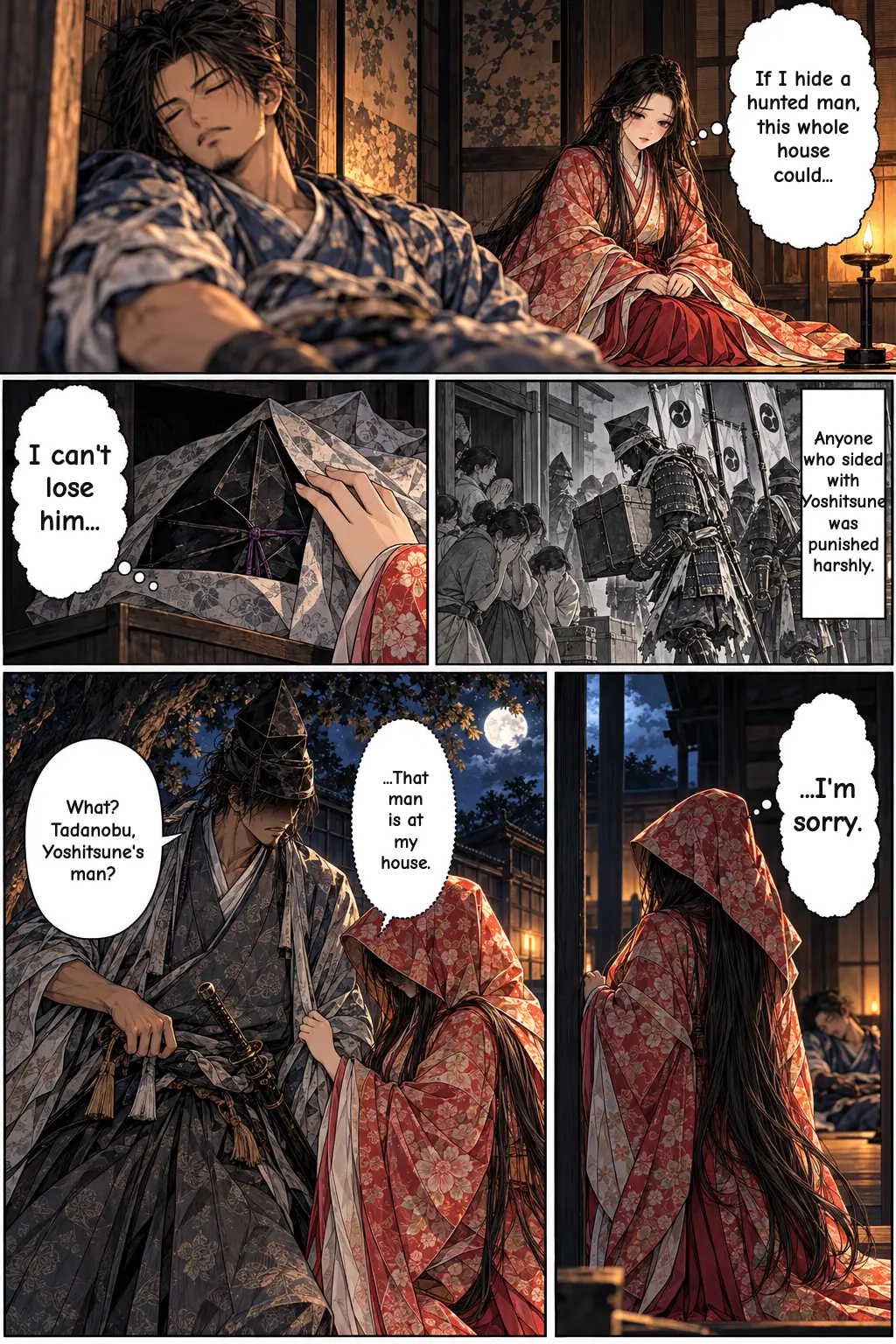
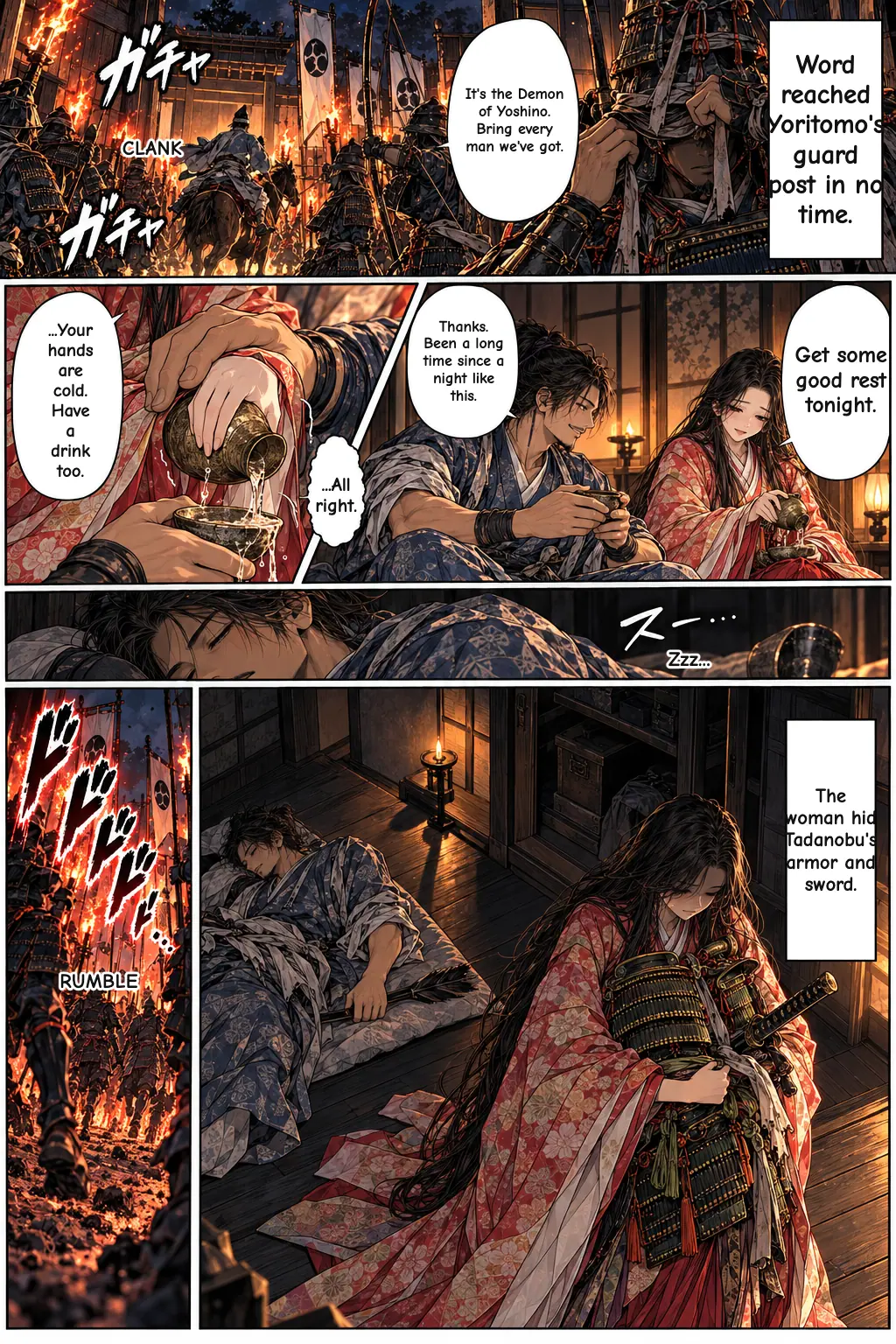
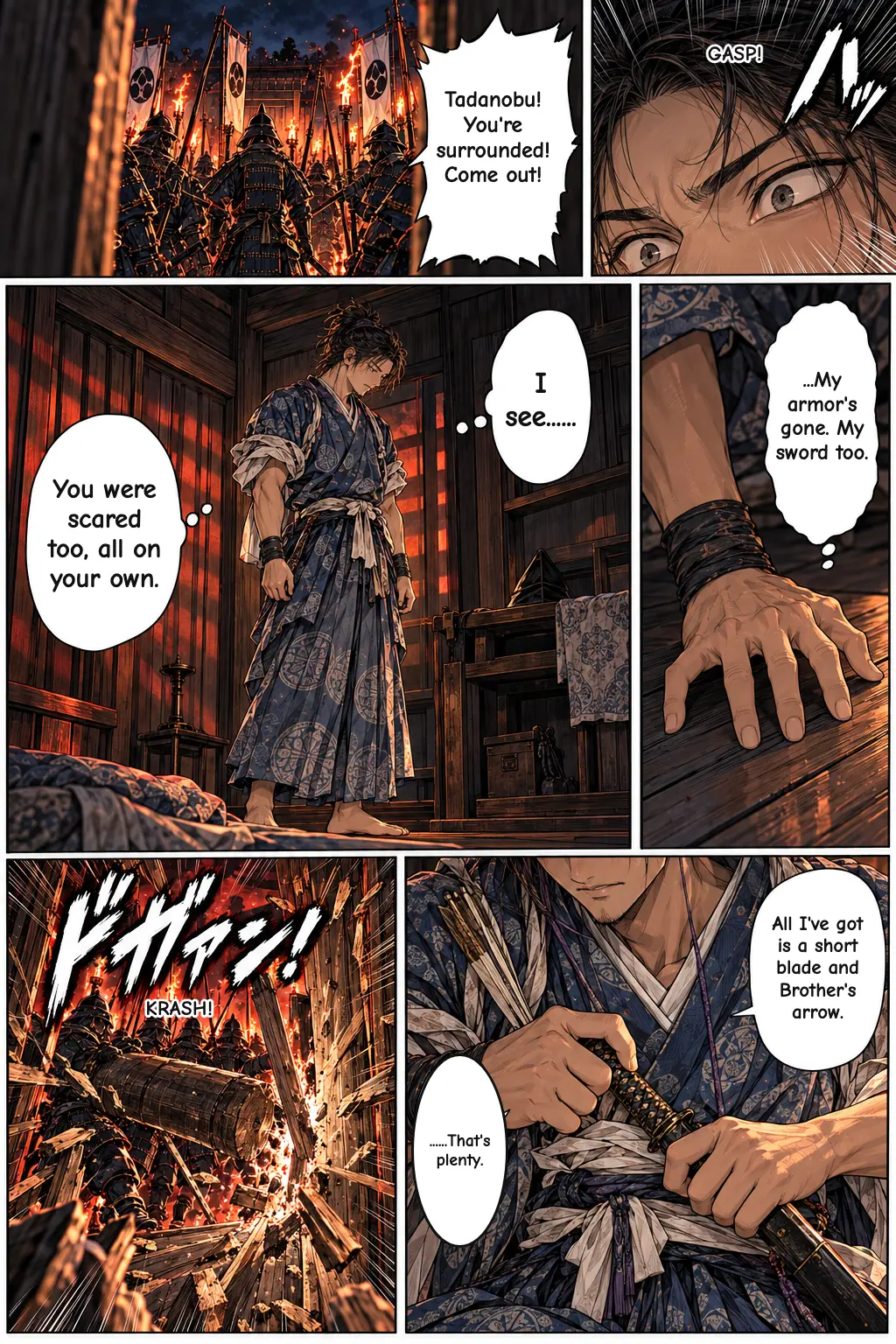
Needing shelter, he went to a woman living near Shijō (Fourth Avenue) with whom he had once been close. But while he was away she had taken up with another man, a warrior on the Kamakura side. She told this man that Tadanobu had arrived, and the news reached the Kamakura forces in the city, who sent men to seize him. Tadanobu had been drinking and fell asleep. His armor and weapons were hidden from him, and he woke to find the house surrounded.
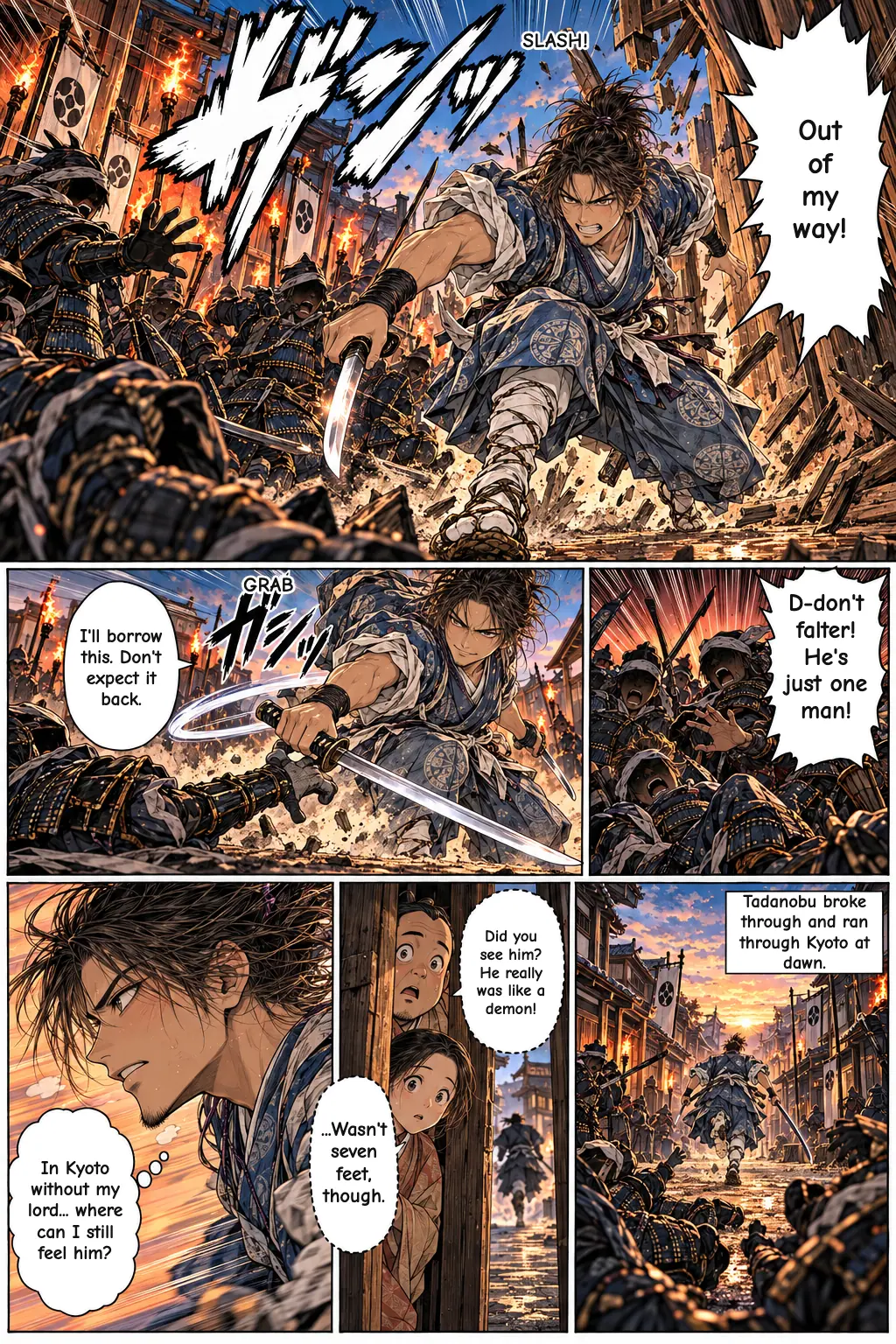
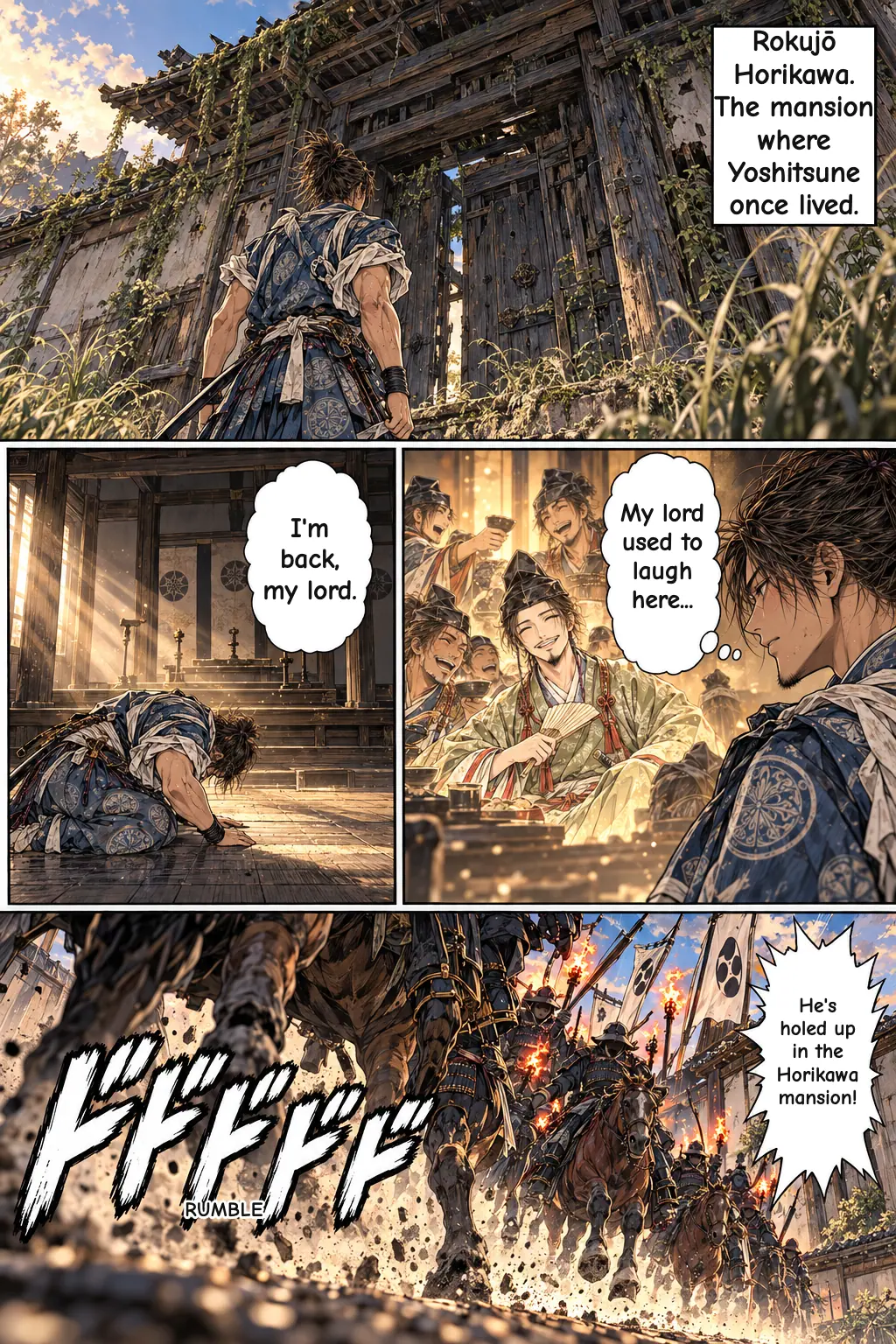
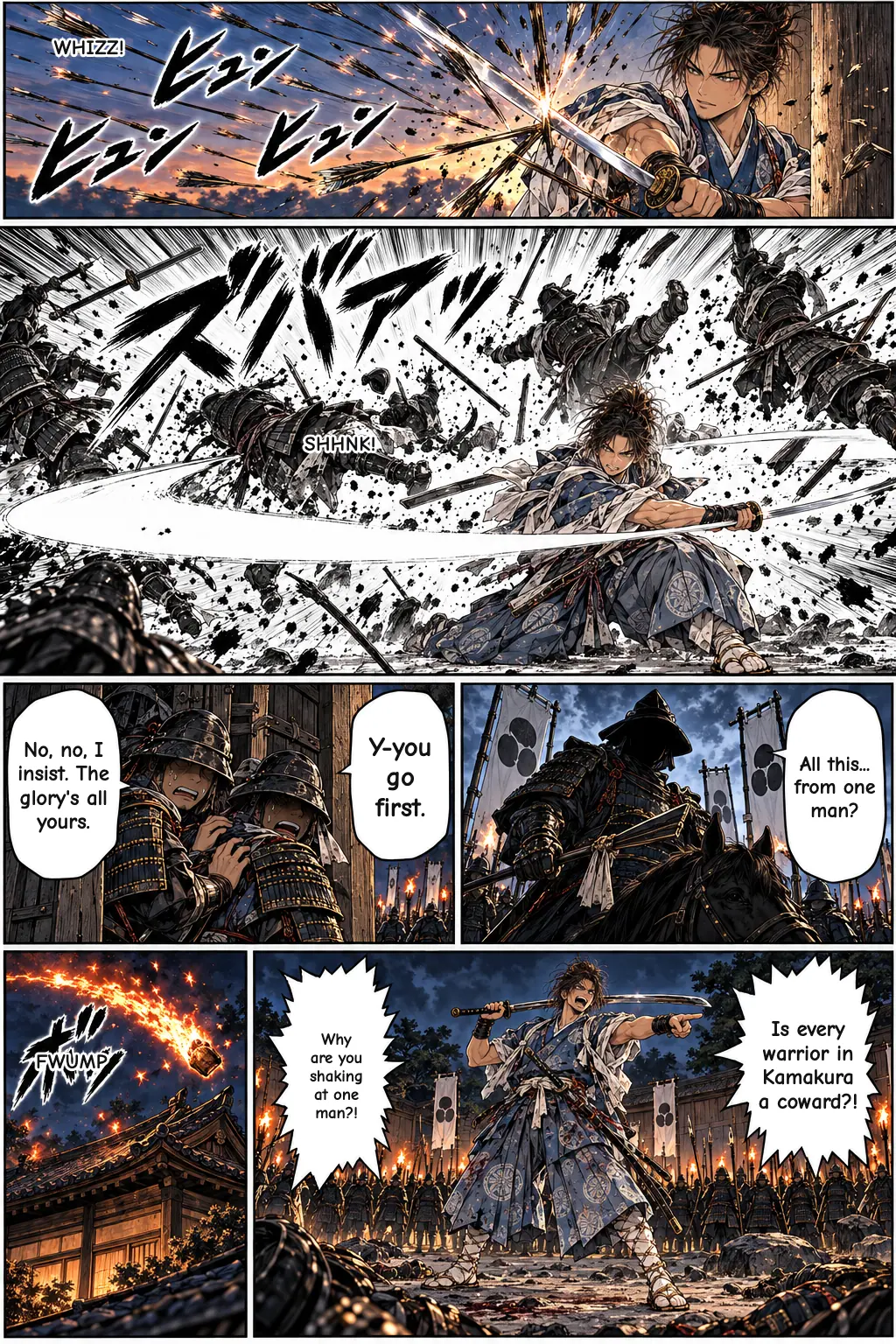
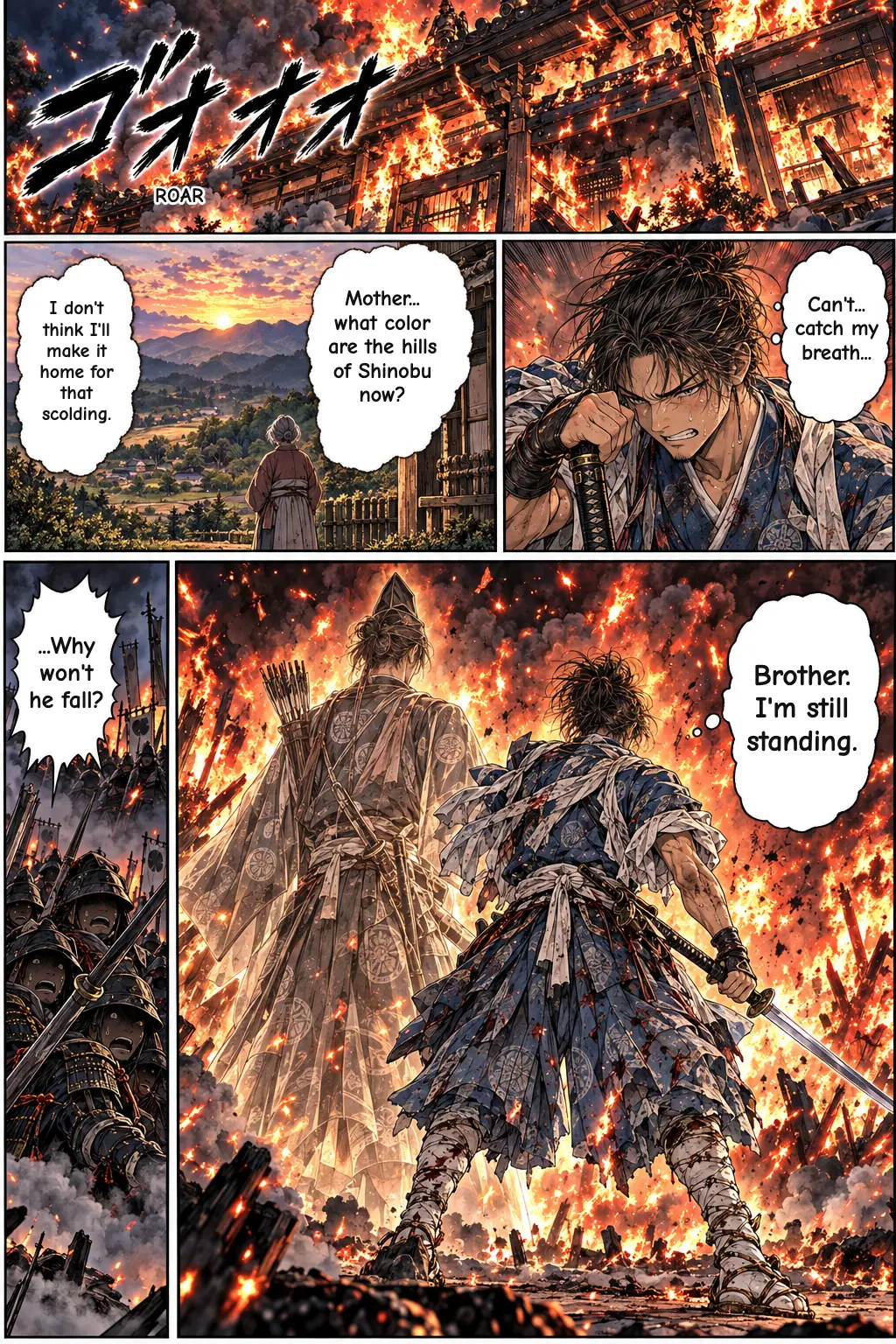
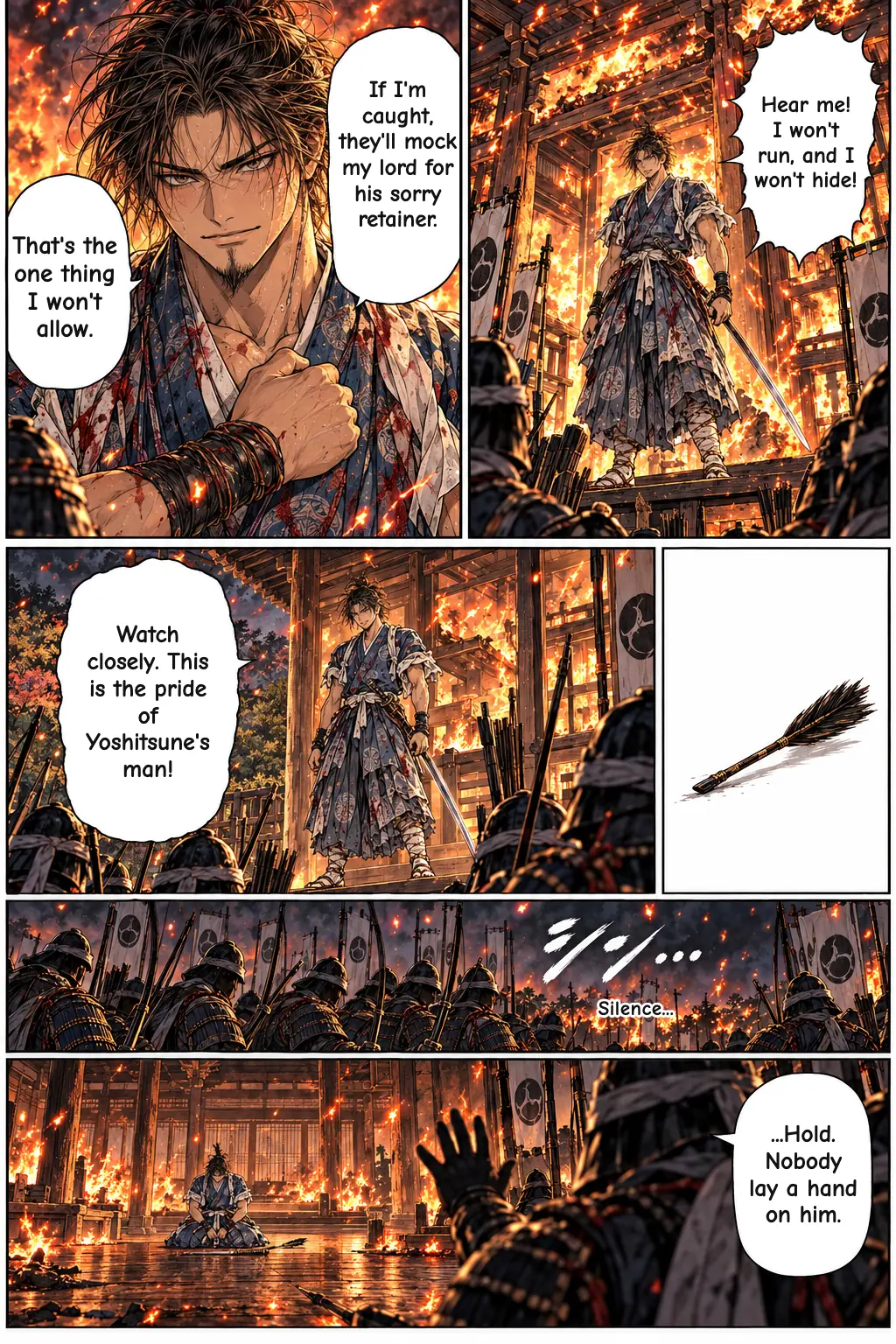
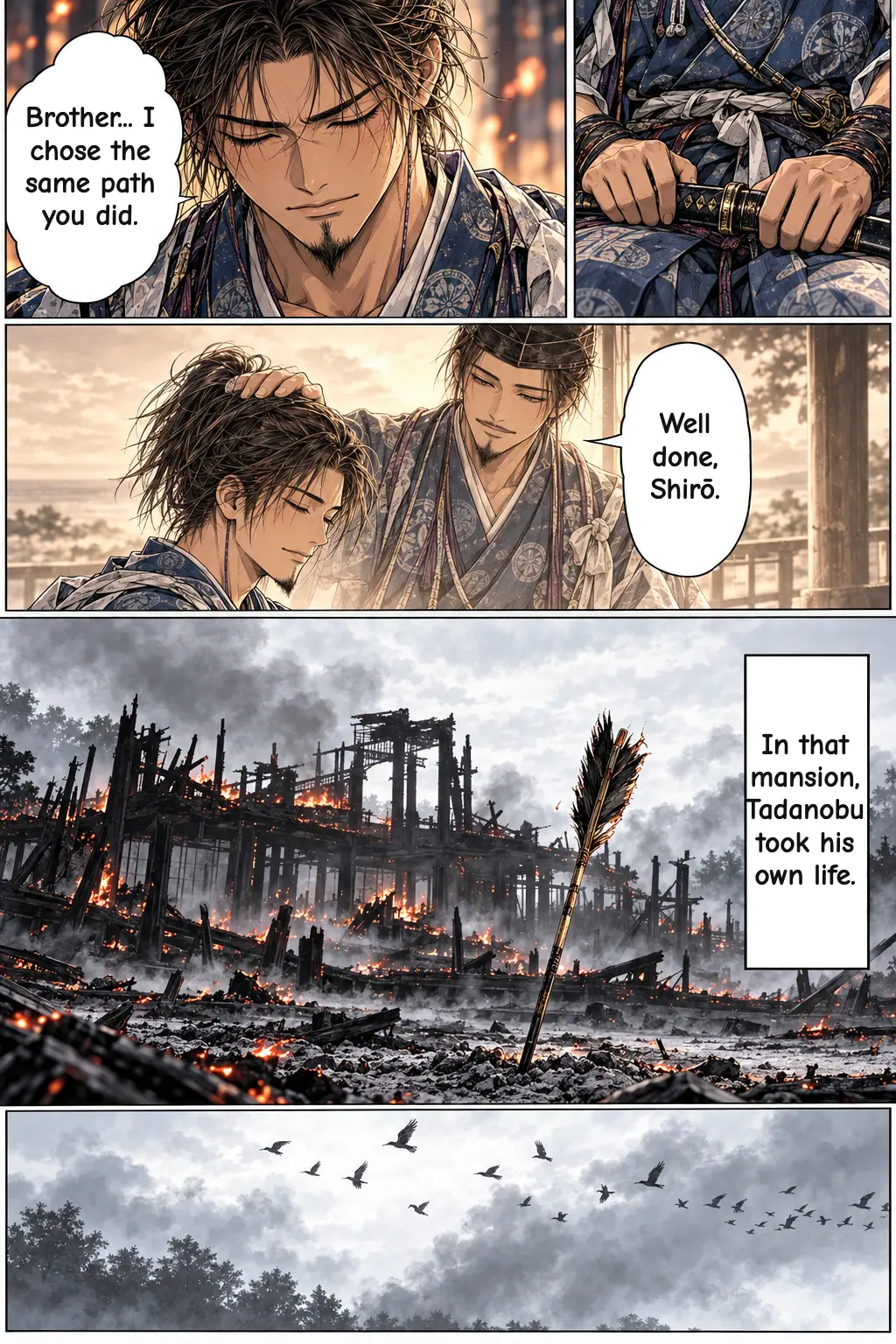
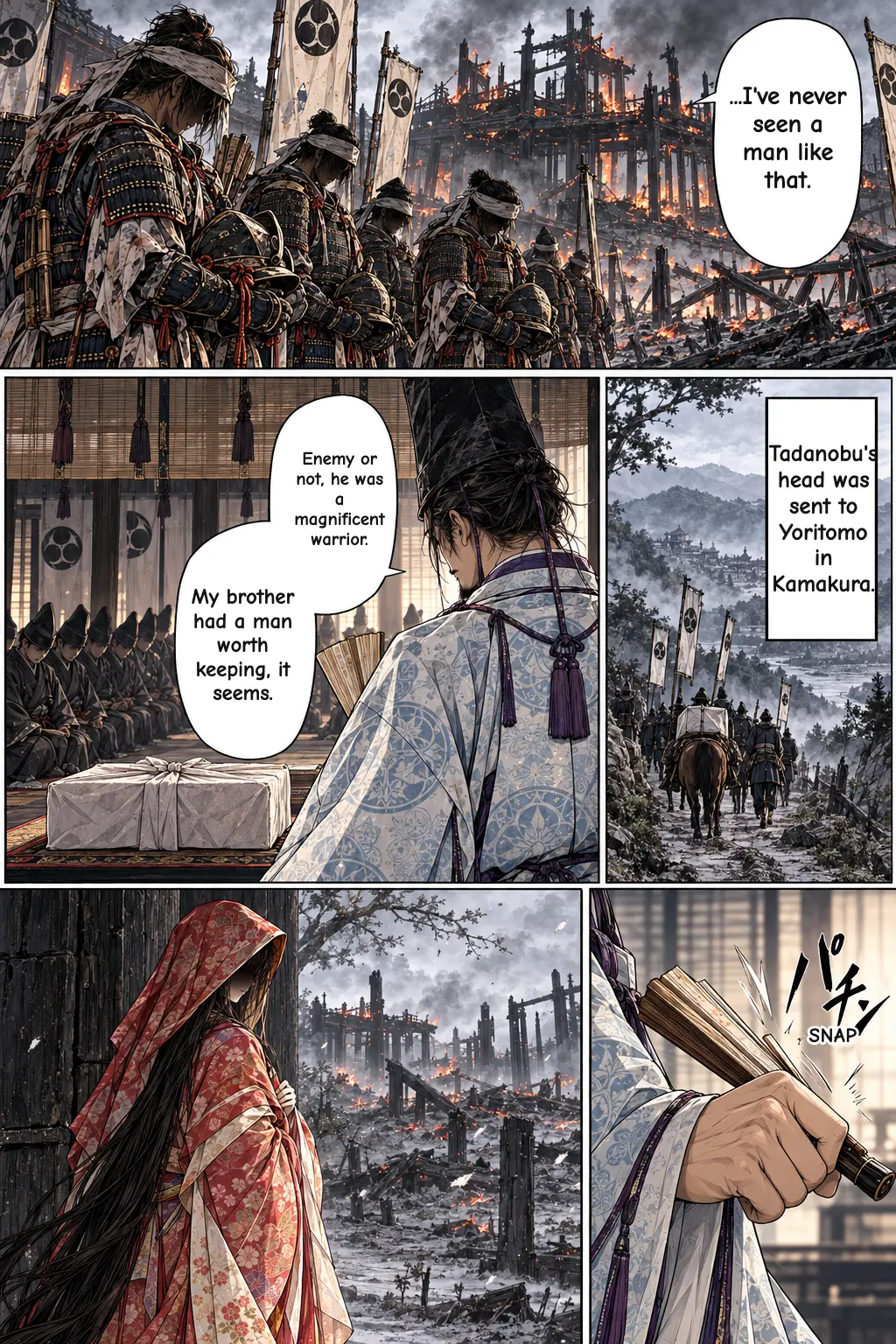
Using whatever gear he still had, he fought his way out, cutting down many attackers, and went to Yoshitsune's former mansion at Rokujō-Horikawa. He decided this would be the place he died. As a large force closed in, he called out his name, kept fighting, and mocked the Kamakura warriors as cowards. Then he cut open his belly. The original describes this in harsh, graphic detail, and he does not die at once. His head was sent to Kamakura, where Yoritomo, though Tadanobu had been his enemy, praised his courage and regretted his loss.
Who Were Tadanobu and His Brother Tsuginobu?
Tadanobu and his older brother, Sato Tsuginobu, came from the Sato family of Shinobu in Mutsu, the far north of Japan (often called Ōshū). Fujiwara no Hidehira, the powerful lord of the north who sheltered the young Yoshitsune, assigned the two brothers to serve him. In the Gikeiki, Tadanobu is fierce, skilled with both bow and sword, and devoted to his lord to the very end.
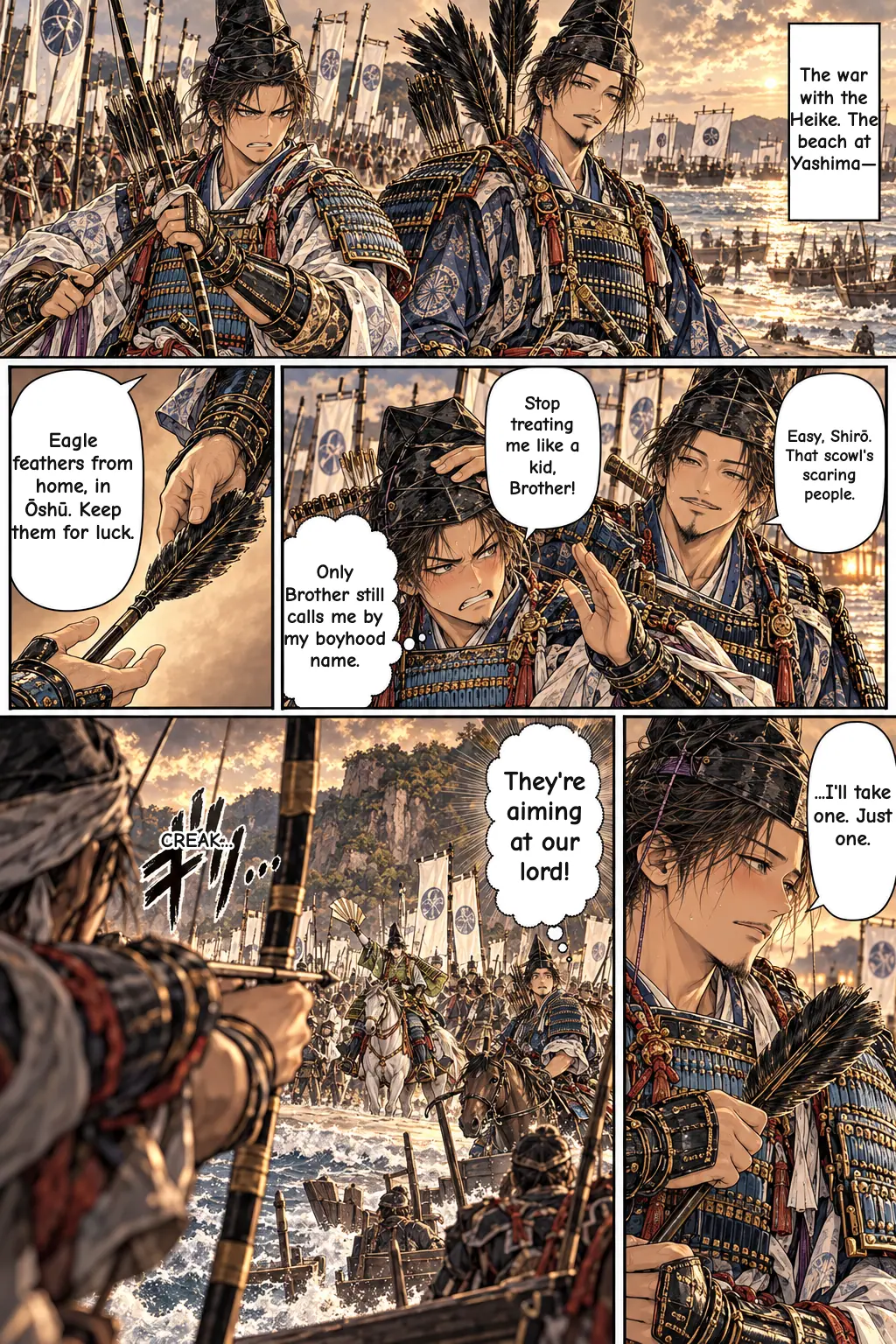
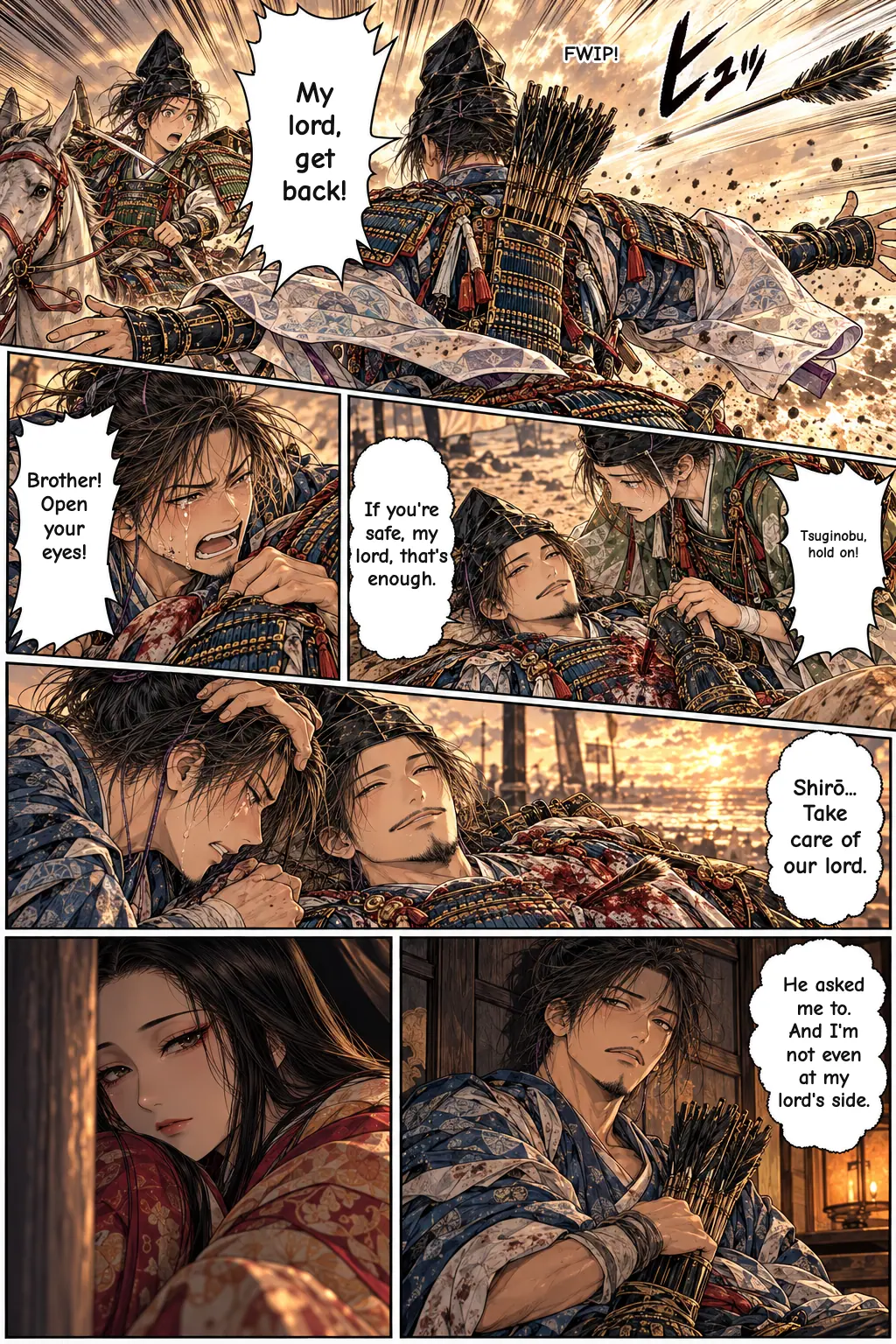
Tsuginobu died at the Battle of Yashima in 1185, taking an arrow meant for Yoshitsune. That scene, however, is told in detail in the Tale of the Heike, in the section on Tsuginobu's death. The Gikeiki only mentions his death briefly and does not have Tadanobu remember it in Book Six. The woman who betrays Tadanobu is also a near blank in the original: the text says what she did, but almost nothing about why.
What This Story Says About Loyalty and a Warrior's Death
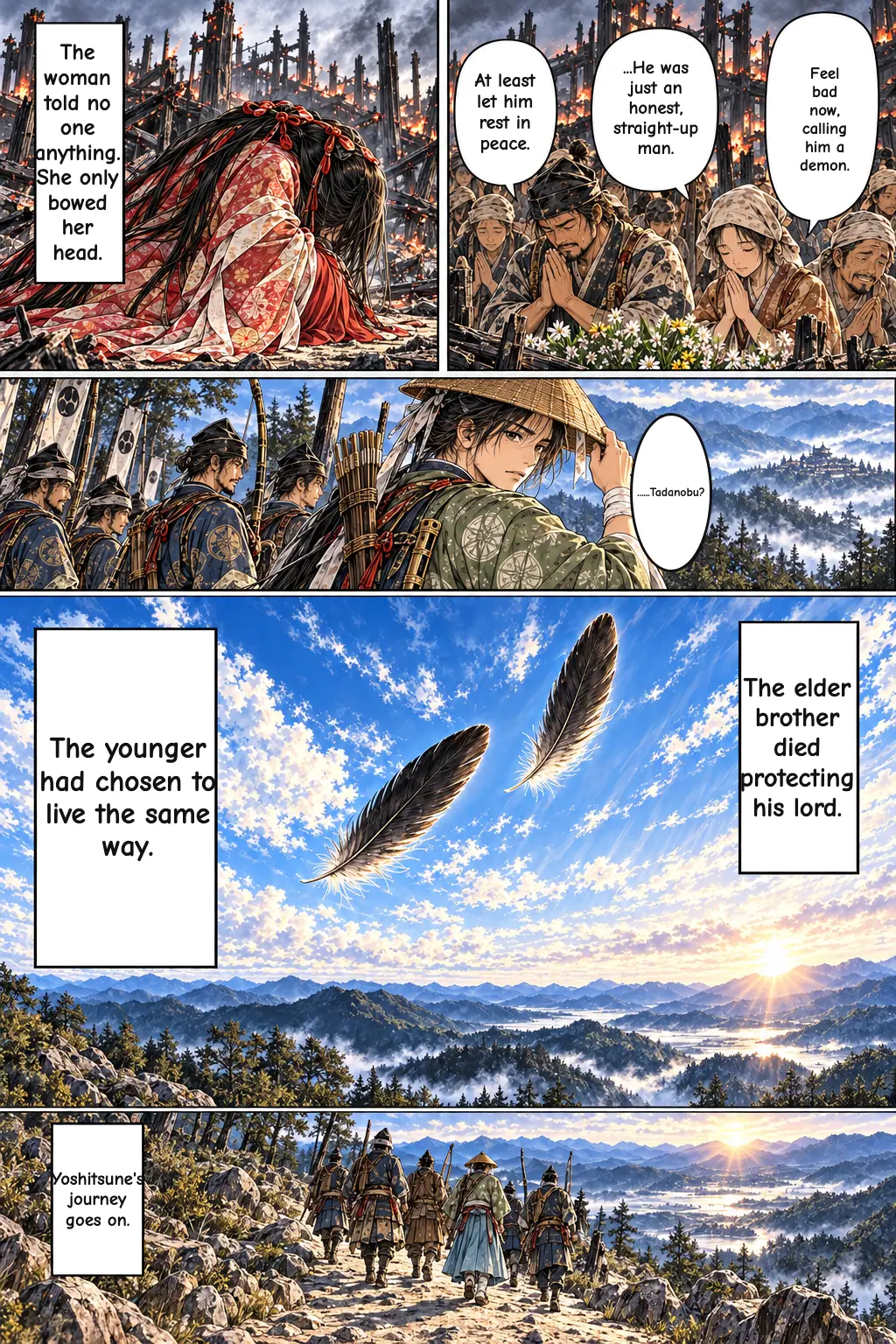
Both brothers end up acting as stand-ins for their lord, one at Yashima and one at Yoshino. In the warrior culture these tales celebrate, giving your life so your master could live was the highest form of loyalty. Tadanobu's choice of Yoshitsune's old mansion matters too. By dying there, he ties his death to his lord's name and honor rather than letting it be a quiet arrest in a lover's house.
Other details are typical of medieval Japanese war tales: the warrior shouting out his name and lineage before battle, scorn for enemies who hang back, and seppuku shown as a final act of defiance and self-control. The Gikeiki helped shape the long-standing Japanese sympathy for Yoshitsune as a tragic underdog, and Tadanobu became a popular figure in his own right. A version of him appears in the later kabuki and puppet play Yoshitsune Senbon Zakura (Yoshitsune and the Thousand Cherry Trees), though that play invents a very different story.
What the Manga Changes and Adds
The core events follow the Gikeiki: the escape from Yoshino, the return to Kyoto, the betrayal, the breakout, the last stand at Horikawa, and the head sent to Kamakura. Several elements, though, are the manga's own creation.
The flashbacks to Tsuginobu's death at Yashima are drawn from the outline of the Tale of the Heike, not from the Gikeiki. The woman's name, appearance, motives and inner struggle are invented, since the original barely describes her. Tadanobu's days in hiding (his disguises, how he avoids being seen, the feel of the season), the detailed fight choreography and the individual enemy soldiers are also dramatized.
Tadanobu's thoughts of Yoshitsune, his brother and his mother back in the north just before he dies are the manga's addition. So are Yoritomo's facial expressions and exact words when he sees the head. Finally, the manga handles the seppuku with restraint, using a cut to black, the raised blade and outside views of the mansion instead of the graphic description in the original.
Where to Read It
If you want to see Tadanobu's last night play out, from the snow of Yoshino to the burning resolve at Horikawa, you can read Episode 10 of THE LEGEND OF YOSHITSUNE: Ushiwaka and Benkei right here on Manga Portal. Every episode is free, and you don't need to sign up. Starting from Episode 1 lets you follow Yoshitsune from his boyhood as Ushiwaka, through his first meeting with Benkei, all the way to the loyal retainers who gave everything for him.
Characters in this episode
Sato Tadanobu
Yoshitsune's fierce retainer from northern Japan who posed as his lord at Yoshino and later made his last stand at Horikawa.
The woman in Kyoto
Tadanobu's former lover near Shijō, who tells a Kamakura warrior that he has come to her house.
The Kamakura warrior
The woman's new lover, a warrior on Yoritomo's side, who passes word of Tadanobu's hiding place to the Kamakura forces.
Minamoto no Yoshitsune
Tadanobu's lord, a famous general now on the run, who does not appear in this episode but whose old mansion becomes Tadanobu's place to die.
Minamoto no Yoritomo
Yoshitsune's half-brother and ruler in Kamakura, who receives Tadanobu's head and praises his courage.
Sato Tsuginobu
Tadanobu's older brother, who died shielding Yoshitsune at Yashima, a scene the manga adds as a flashback.
FAQ
Who was Sato Tadanobu?
Sato Tadanobu was a retainer of the samurai general Minamoto no Yoshitsune, sent to serve him by Fujiwara no Hidehira, the lord of northern Japan. In the Gikeiki he is famous for pretending to be Yoshitsune on Mount Yoshino so his lord could escape.
Who betrayed Sato Tadanobu?
In the Gikeiki, a woman in Kyoto whom Tadanobu had once loved betrayed him. While he was away she had taken a new lover on the Kamakura side, and she told him that Tadanobu was at her house. The original says almost nothing about why she did it.
How did Sato Tadanobu die?
After breaking out of the woman's house, he went to Yoshitsune's old mansion at Horikawa in Kyoto and fought a large Kamakura force there. He then took his own life by seppuku, which the Gikeiki describes in graphic detail, and his head was sent to Yoritomo in Kamakura.
What is the Gikeiki?
The Gikeiki (Chronicle of Yoshitsune) is an anonymous Japanese war tale, generally dated to the early Muromachi period. It tells the life of Minamoto no Yoshitsune, focusing on his youth and his tragic flight rather than his battles against the Taira.
Did Tadanobu's brother also die for Yoshitsune?
Yes. His older brother, Sato Tsuginobu, was killed at the Battle of Yashima in 1185 taking an arrow meant for Yoshitsune. That scene is told in detail in the Tale of the Heike; the Gikeiki only mentions it briefly.