Episode 9The Yoshitsune They Faced Wasn't HimMount Yoshino (Shizuka's Parting and Sato Tadanobu)
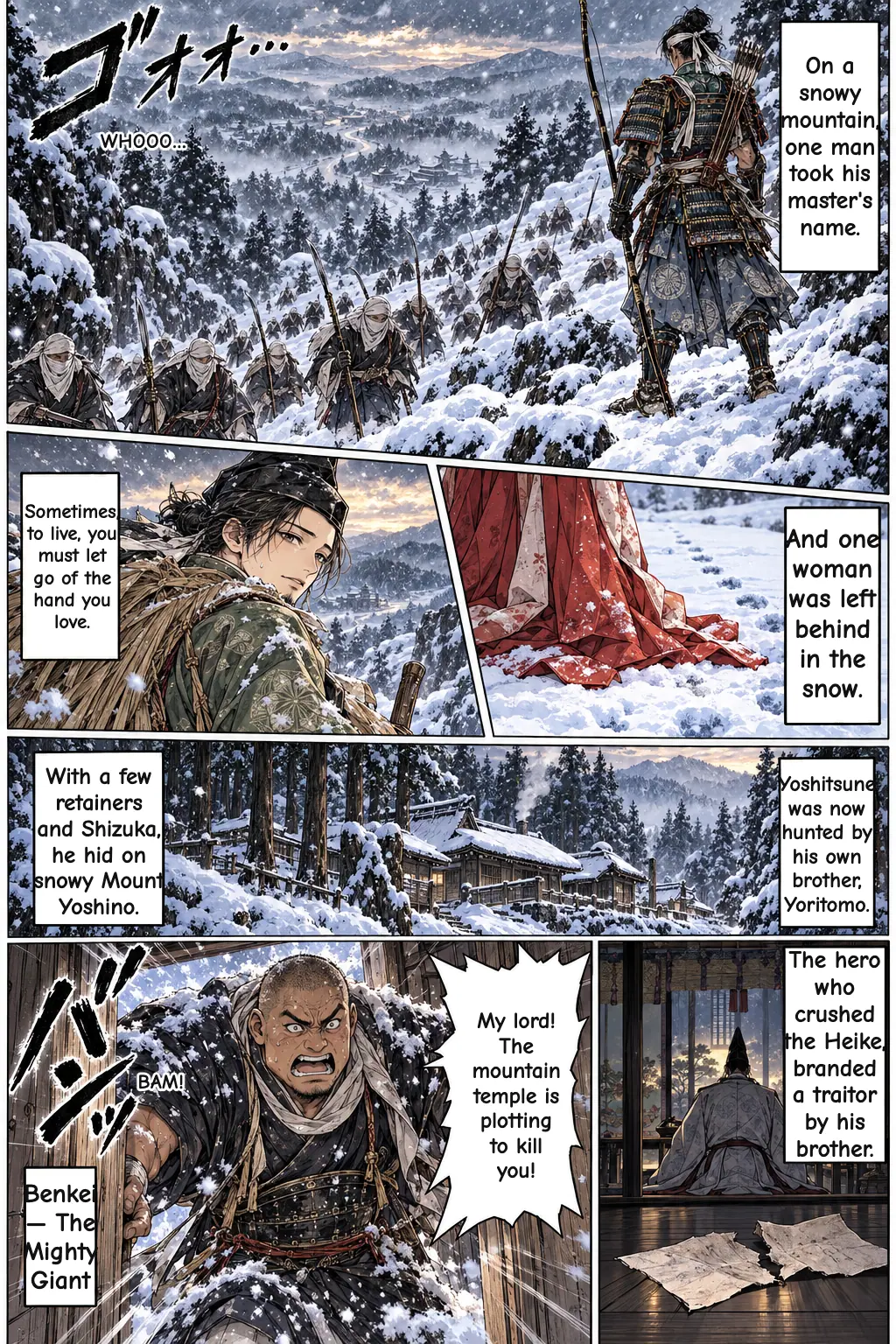
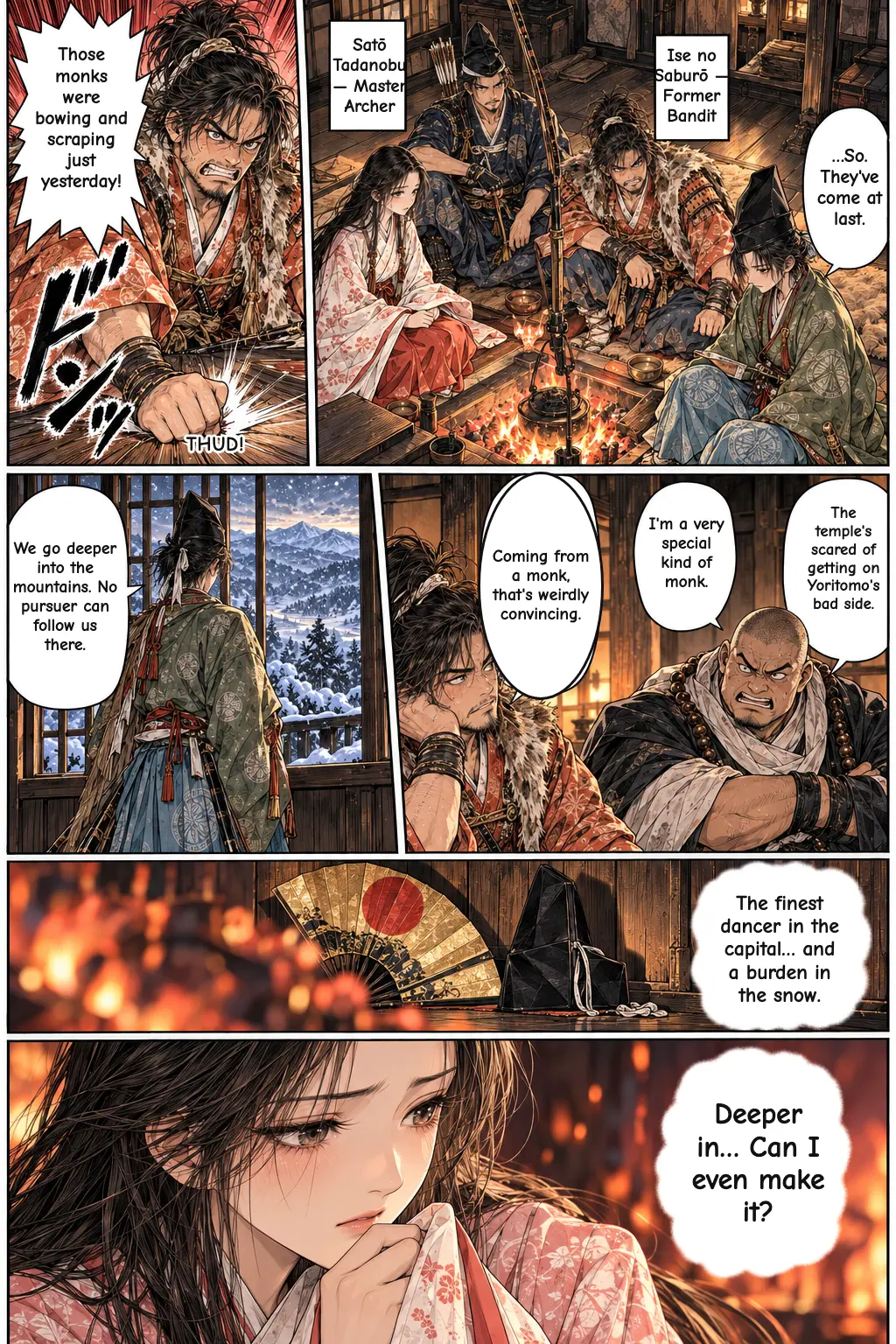
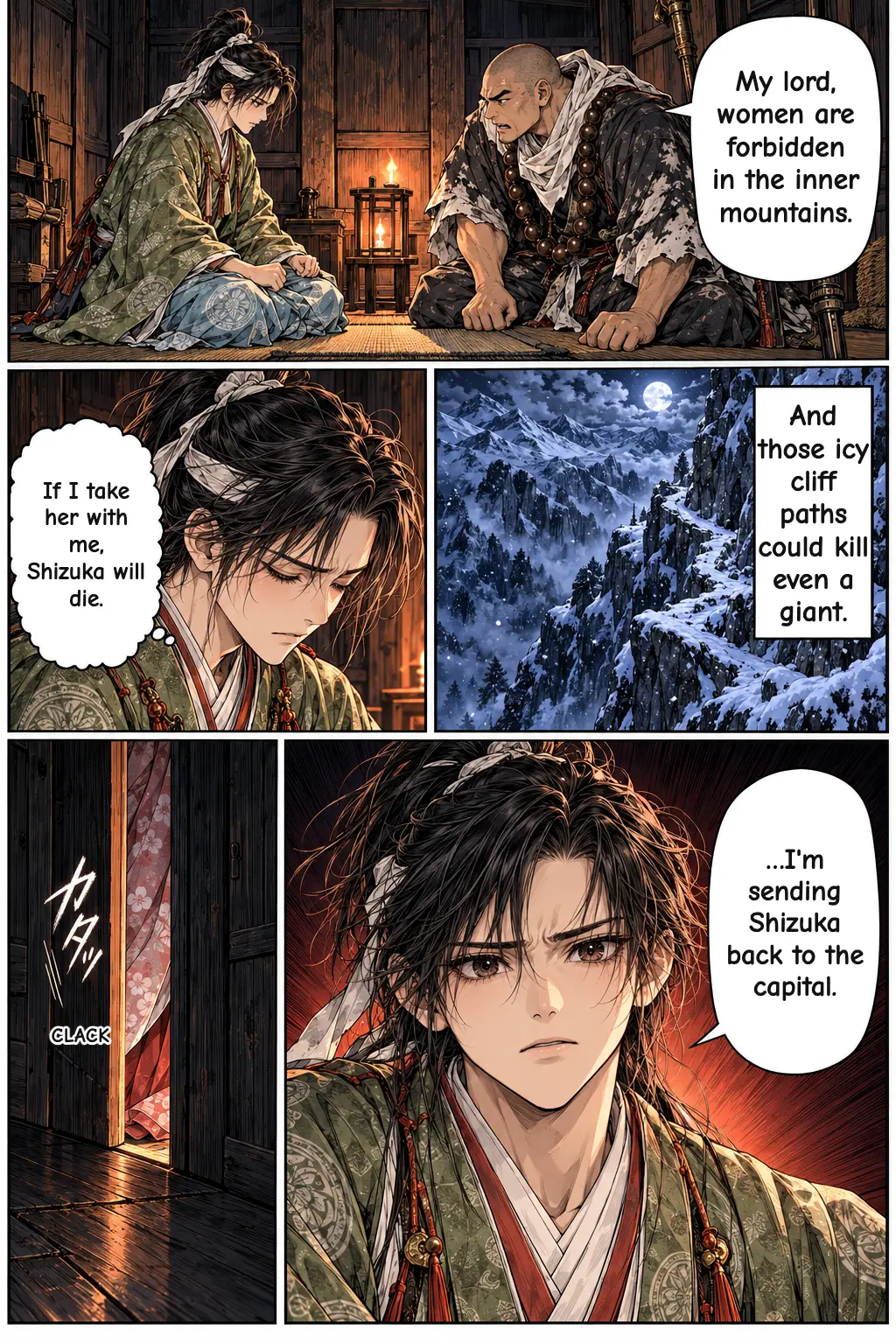
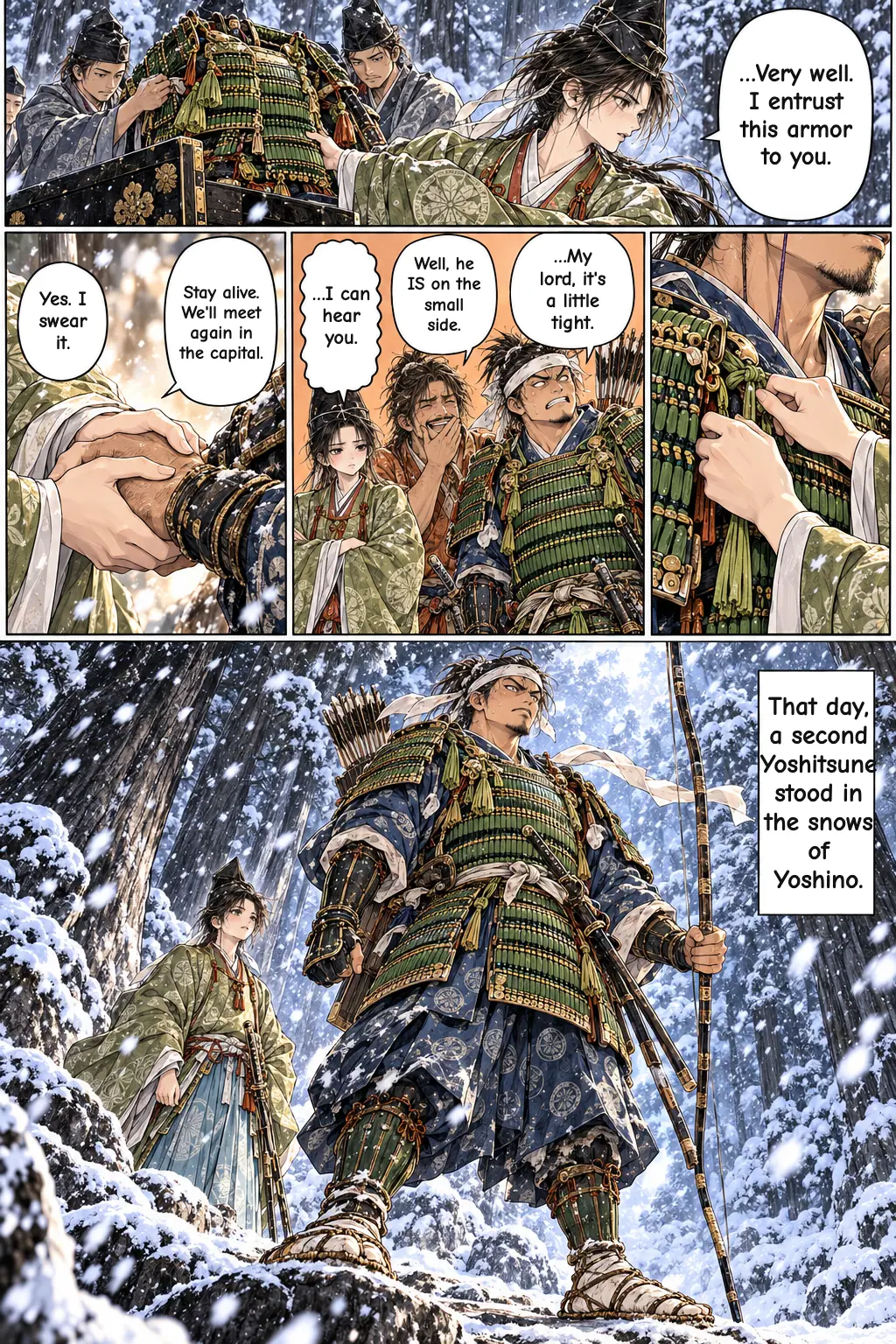
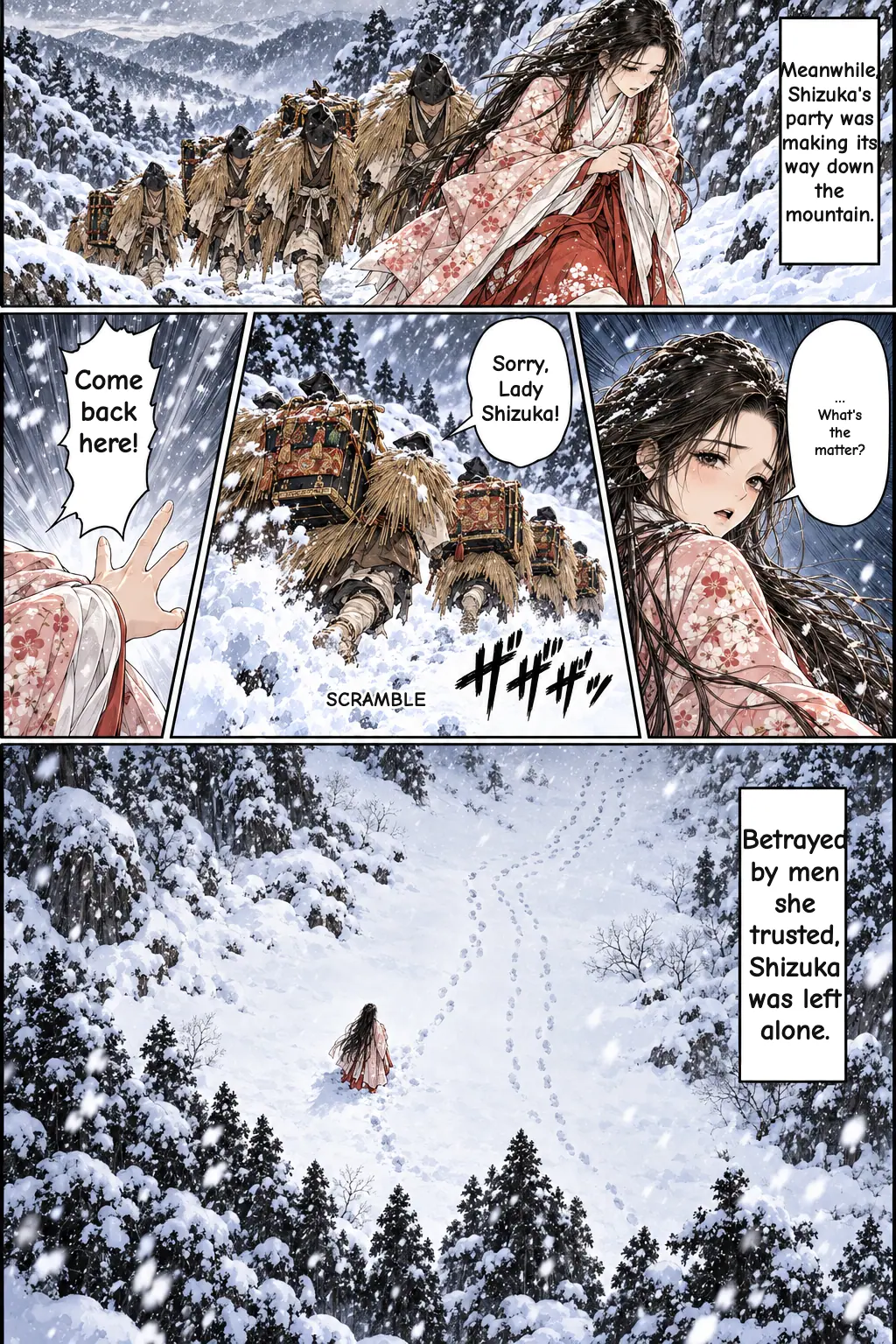
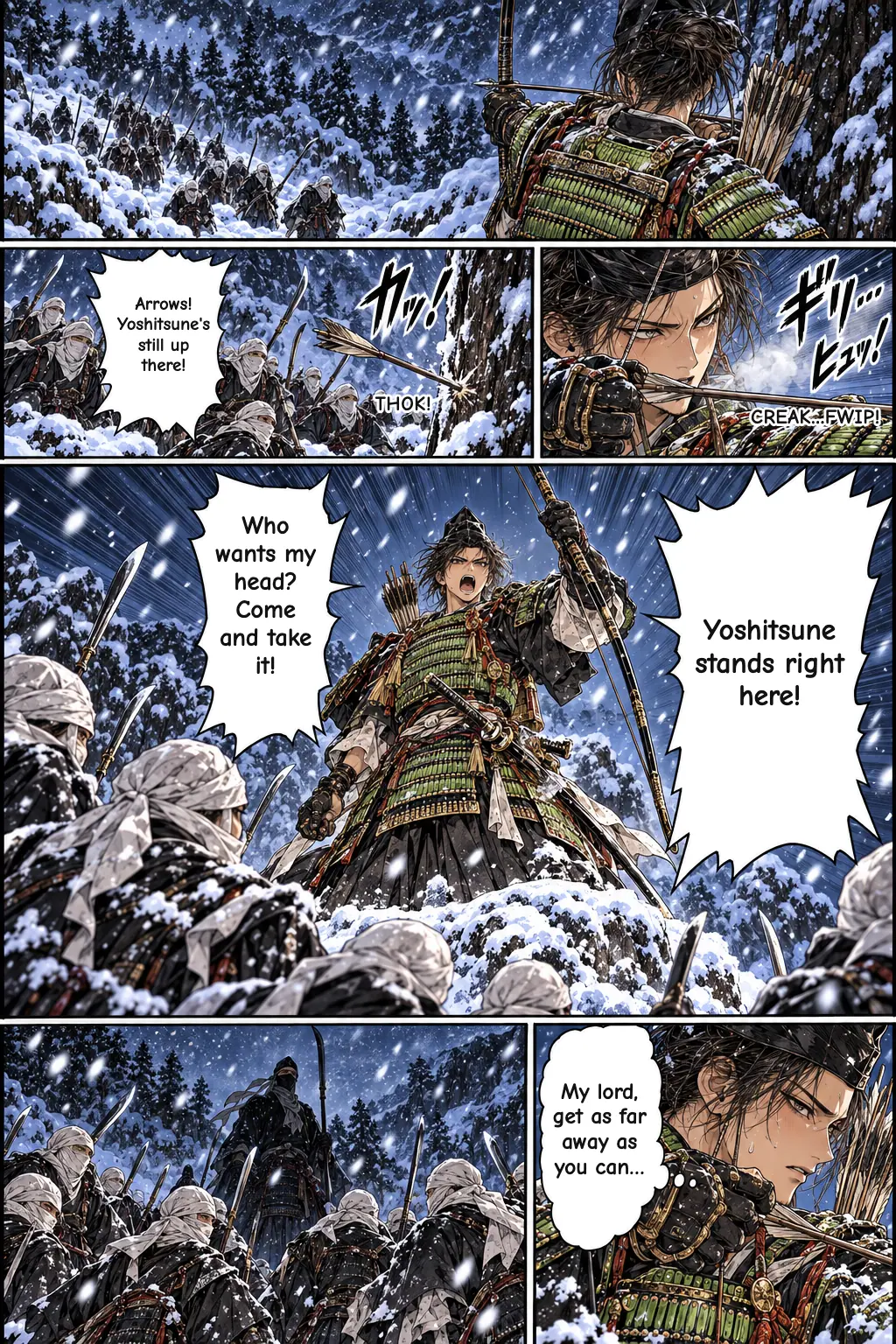
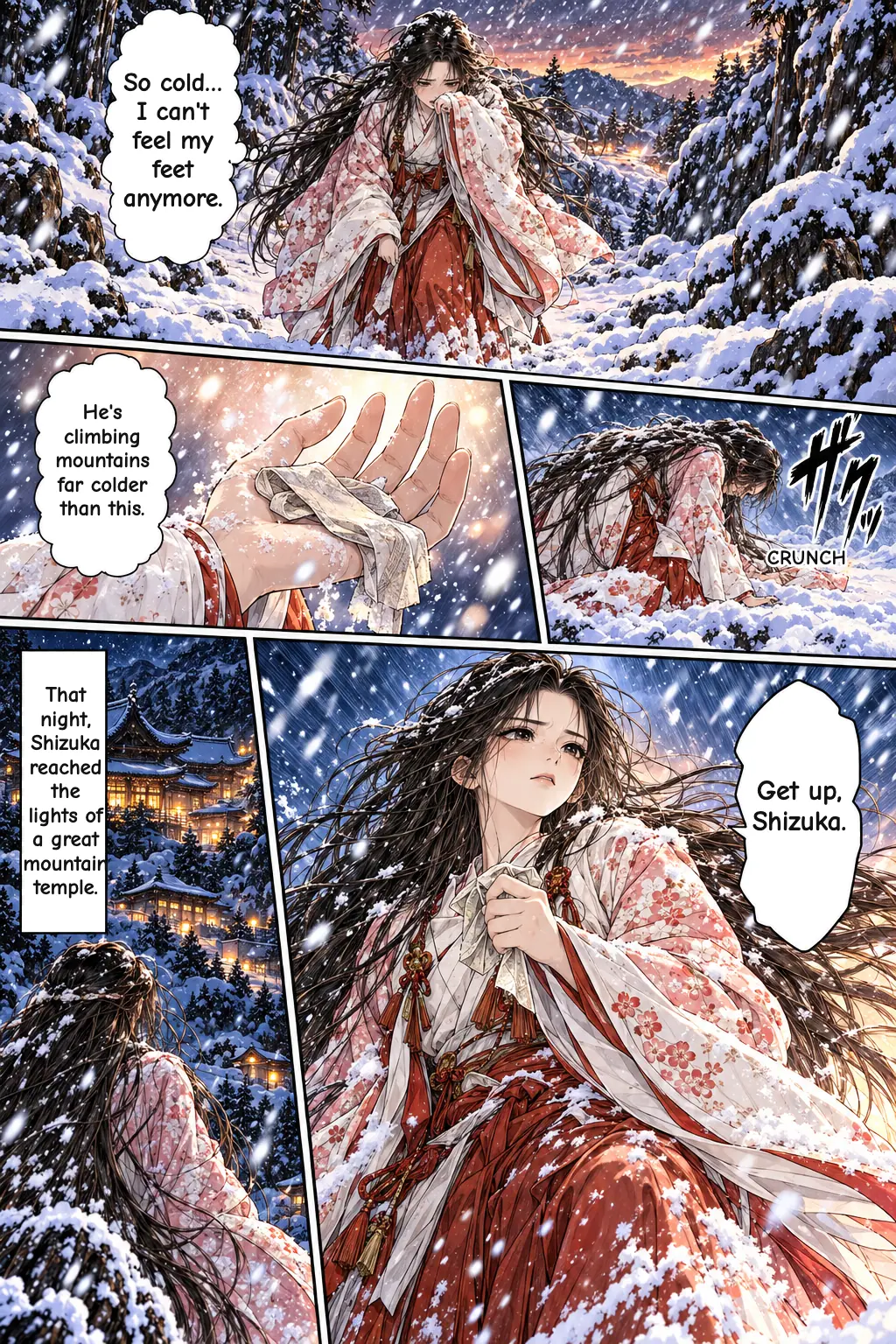
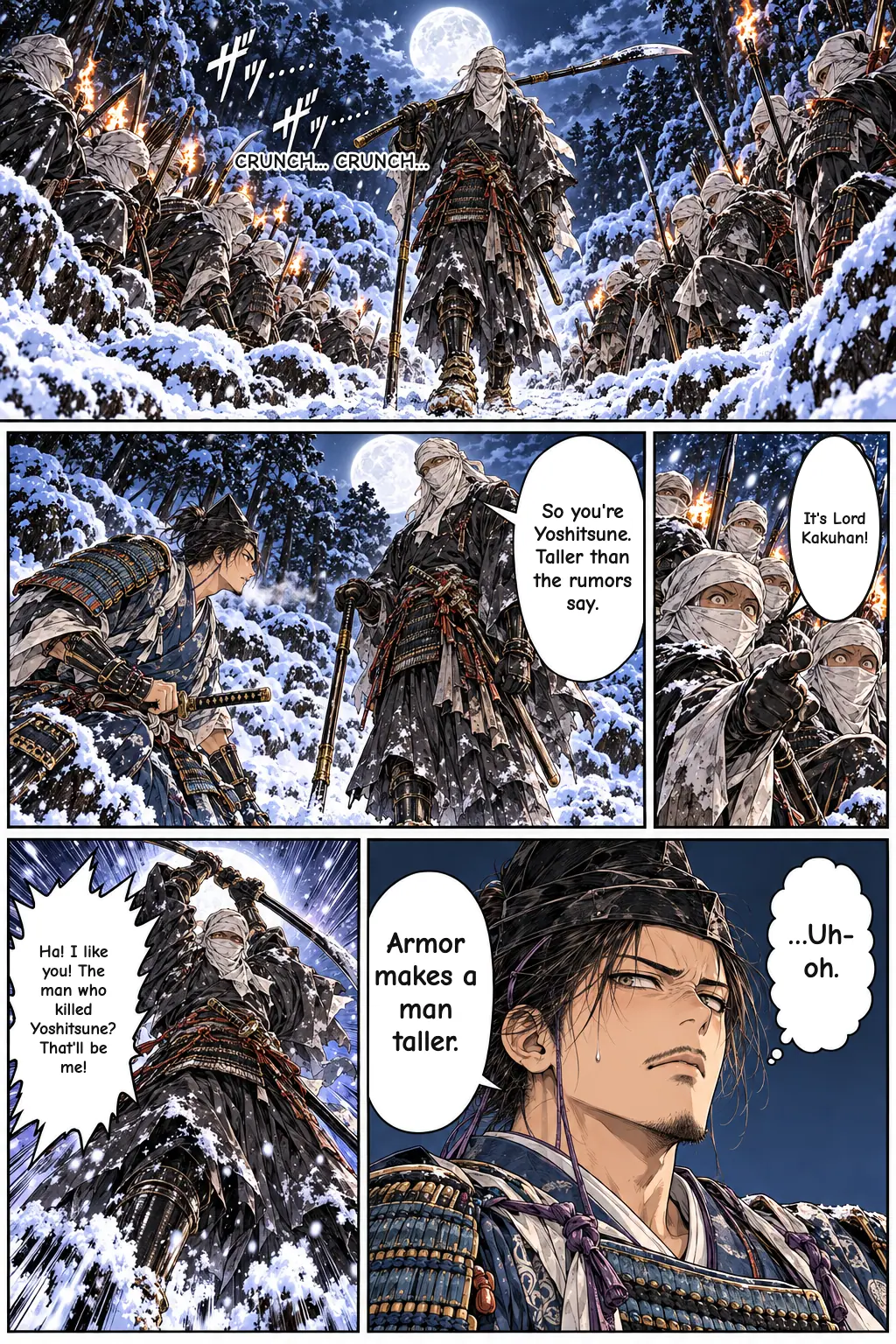
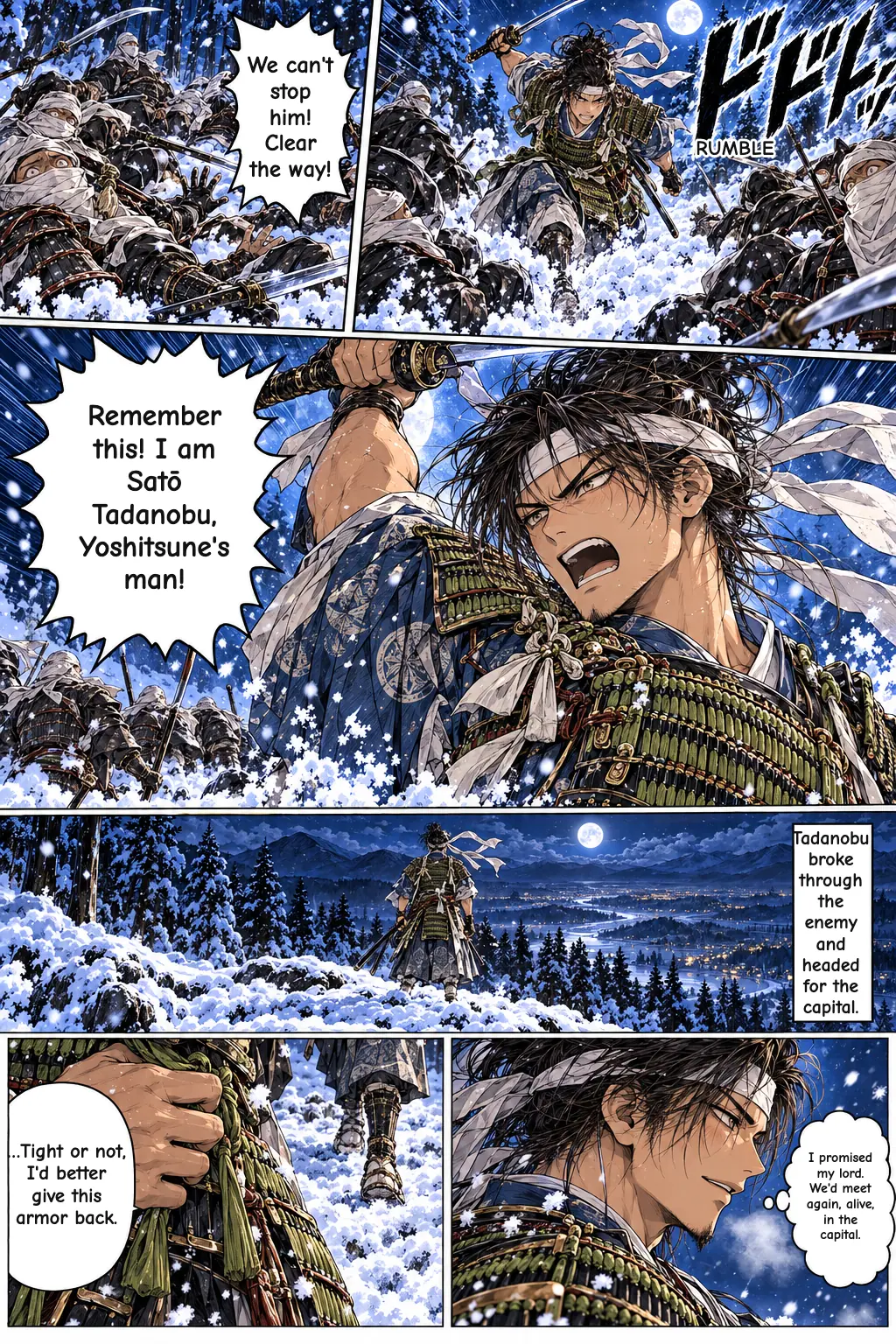
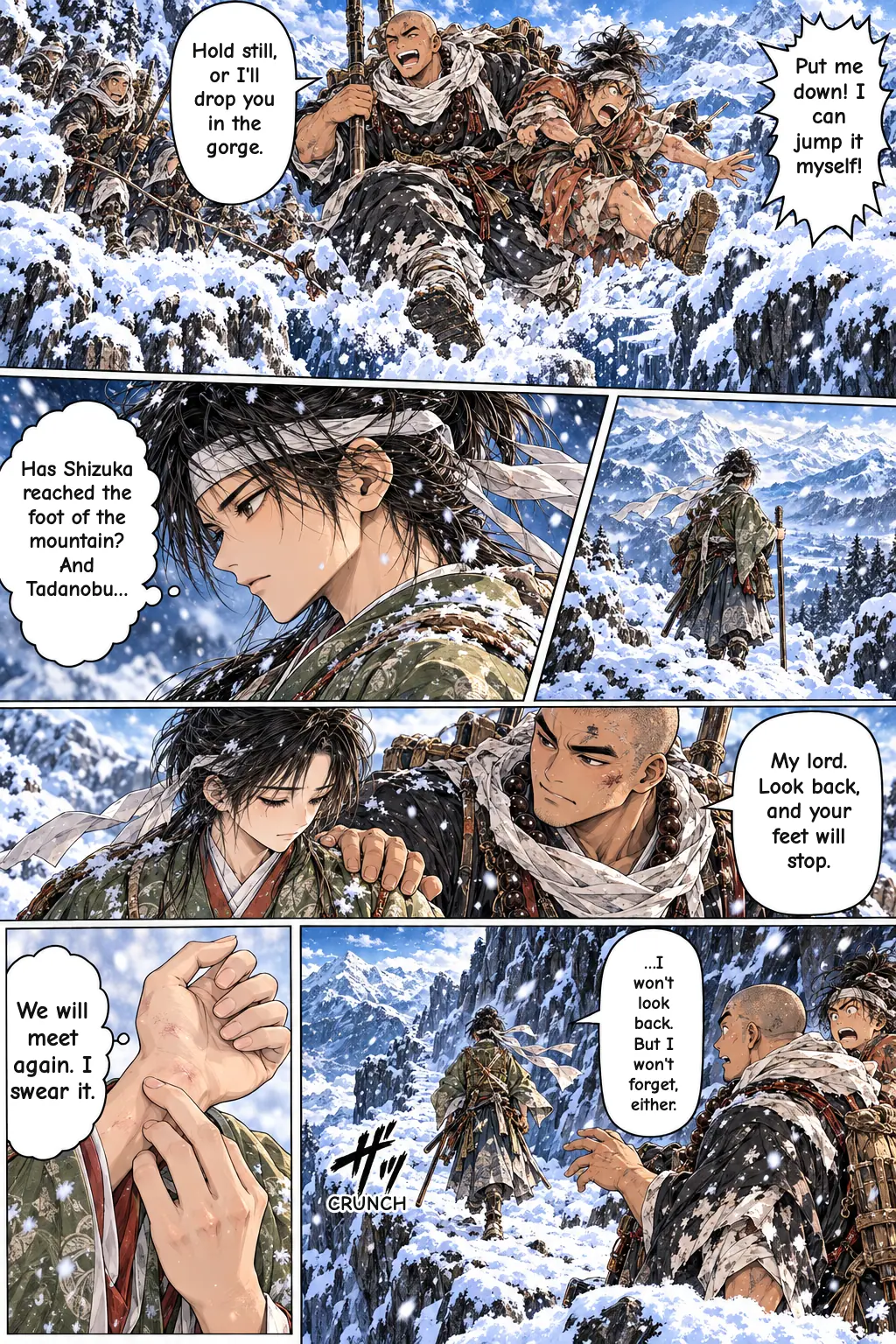
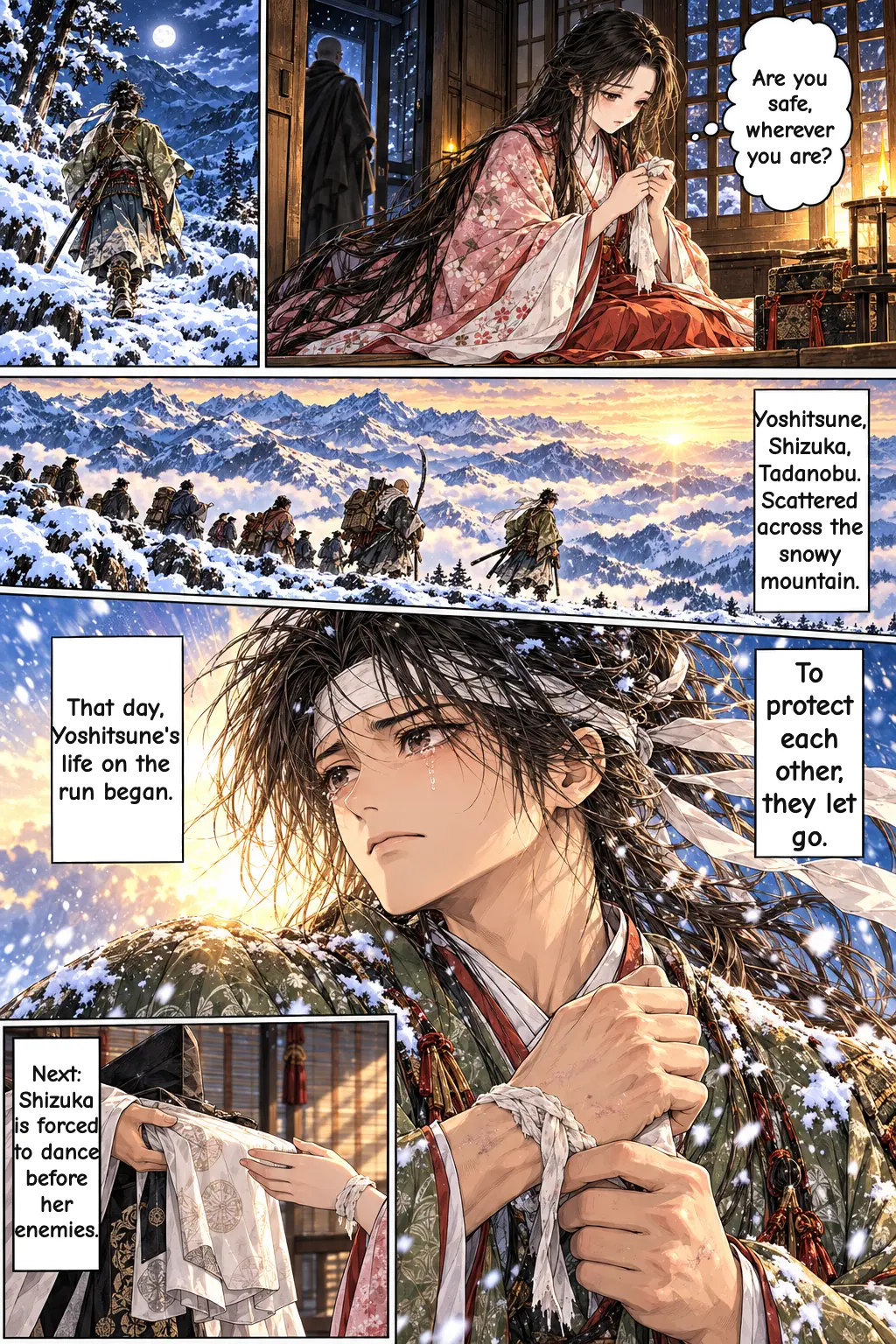
On snowbound Mount Yoshino, Yoshitsune decides to send Shizuka back to the capital to save her from the warrior monks hunting him. But the escorts she trusted abandon her in the snow, while on the same mountain Satō Tadanobu dons his lord's armor and name, and makes a lone stand among the cedars.
Yoshitsune at Mount Yoshino: Shizuka's Parting and Tadanobu's Stand
The Original Story: Hiding on Mount Yoshino
The Gikeiki ("Chronicle of Yoshitsune") is an anonymous Japanese war tale, generally dated to the early Muromachi period (around the 14th–15th century). Rather than retelling the great battles of the Genpei War, it follows the life of Minamoto no Yoshitsune, the brilliant young general, and focuses especially on his childhood and on his flight after his victories. Book 5 covers one of the most famous parts of that flight: the days on Mount Yoshino.
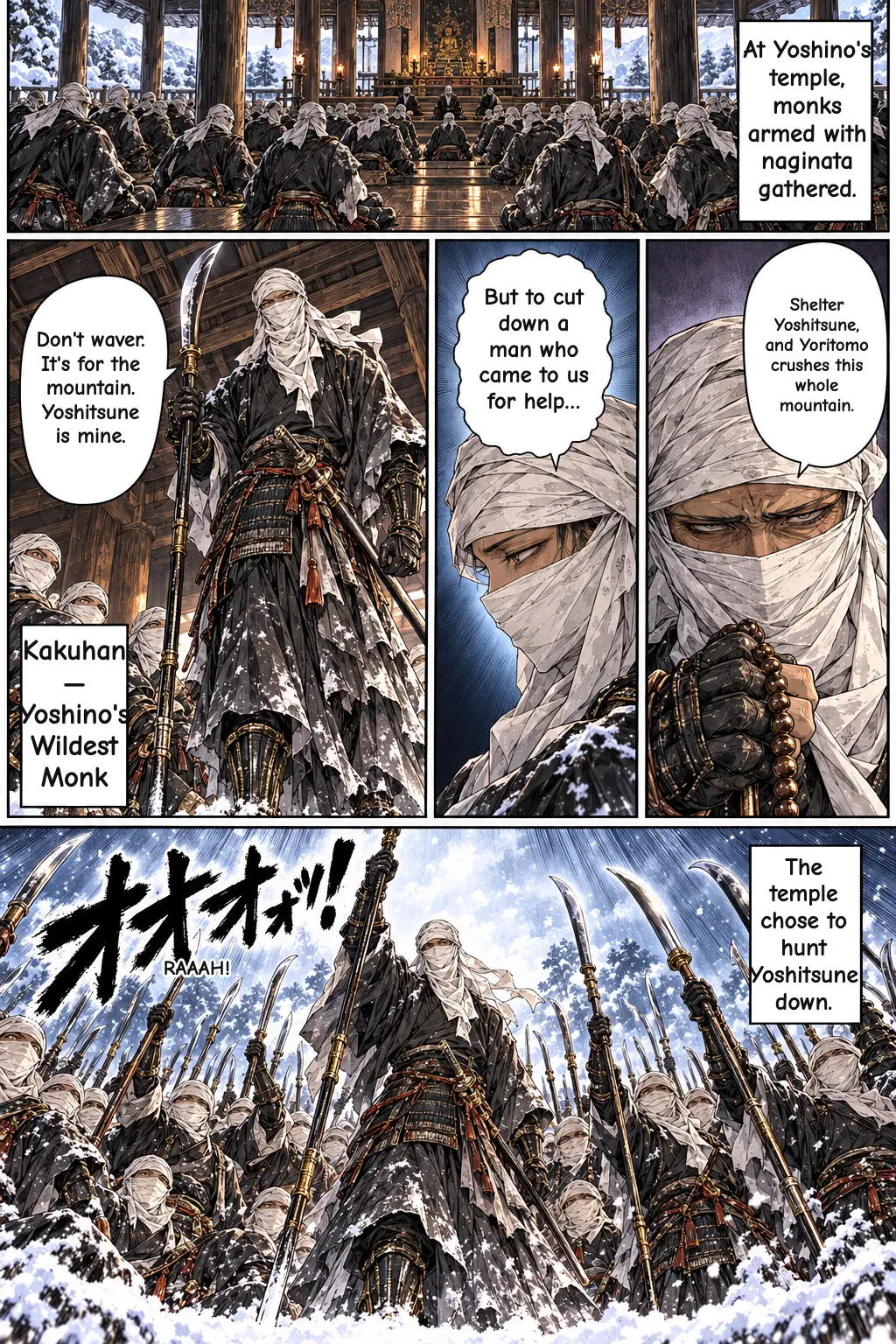
By this point Yoshitsune has fallen out with his half-brother Minamoto no Yoritomo, the ruler in Kamakura, and has been driven out of the capital, Kyoto. With a small band of retainers, including the warrior monk Benkei, and with his beloved Shizuka, he slips into the mountains of Yoshino, south of the old capital of Nara. Yoshino was a great center of mountain Buddhism, and its temples kept their own armed monks, known as shuto or daishu (the "assembled monks"). Fearing what Kamakura would do if they were seen to shelter a wanted man, the monks hold a council and begin gathering to hunt Yoshitsune down.
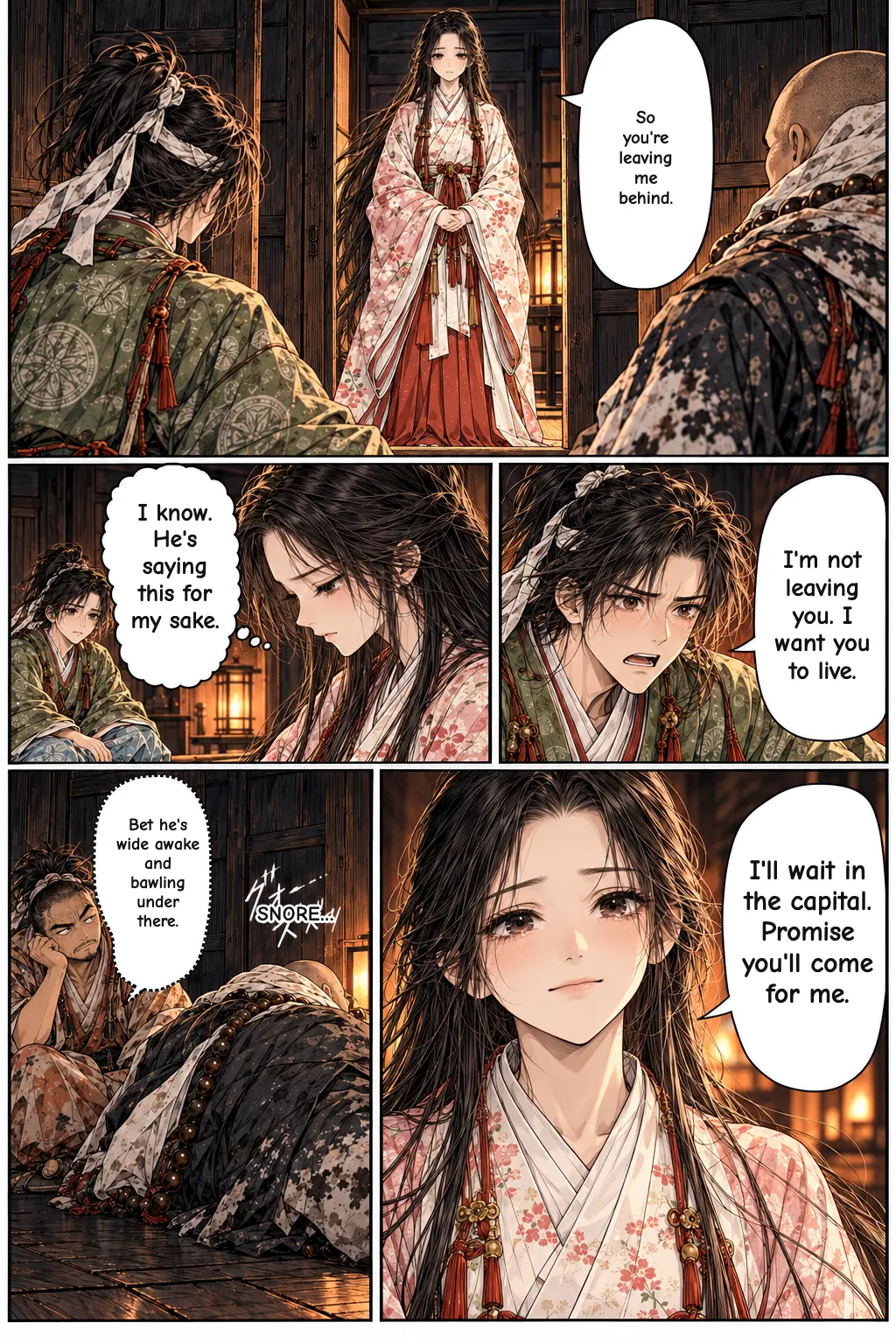
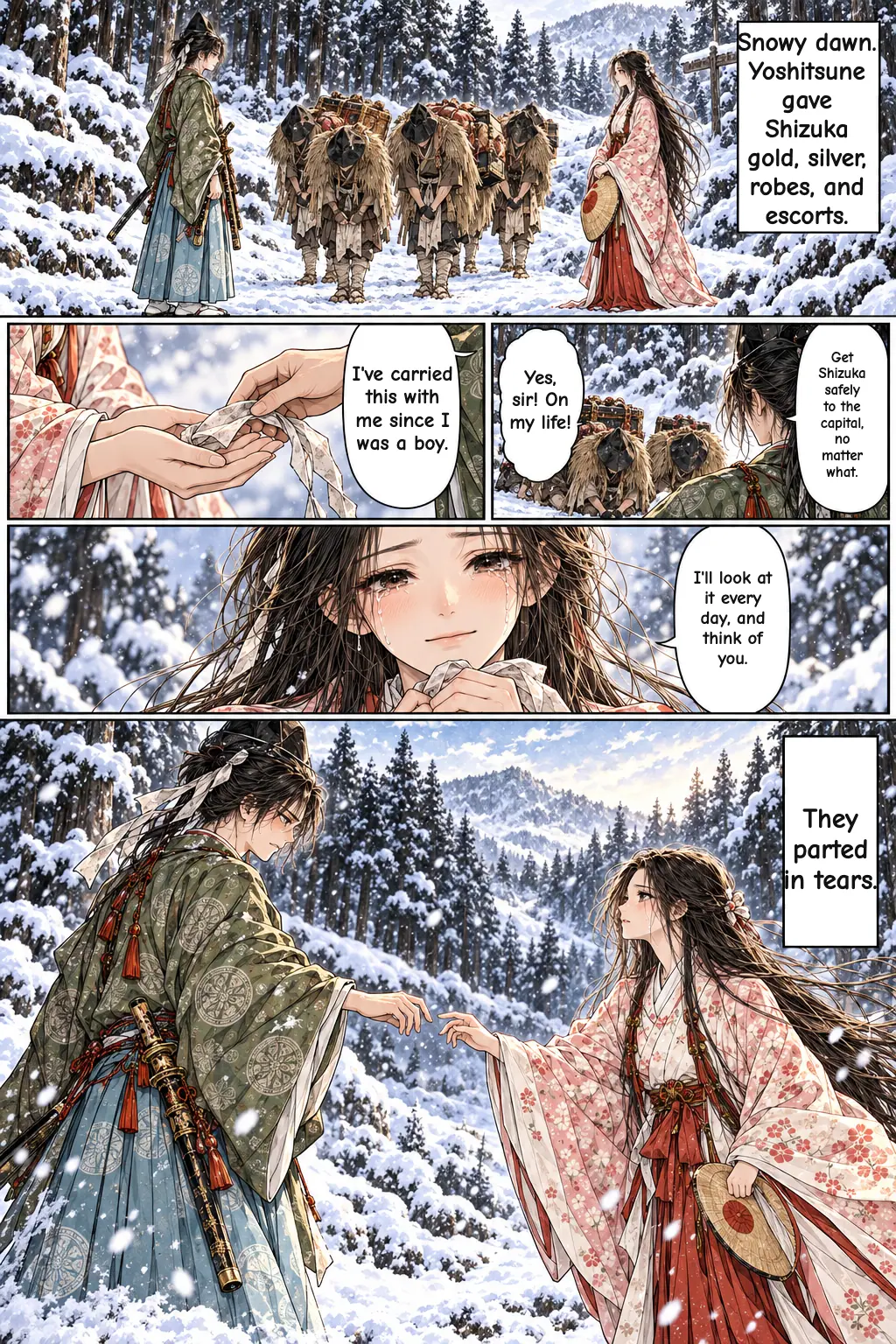
Yoshitsune decides to flee deeper into the mountains, toward the Ōmine range. The story says that a woman cannot be taken into those remote peaks, so Shizuka must be sent back to the capital. He gives her treasure, such as gold, silver and clothing, assigns servants to escort her, and the two part in tears in the snow.
Shizuka Abandoned, and Tadanobu's Stand
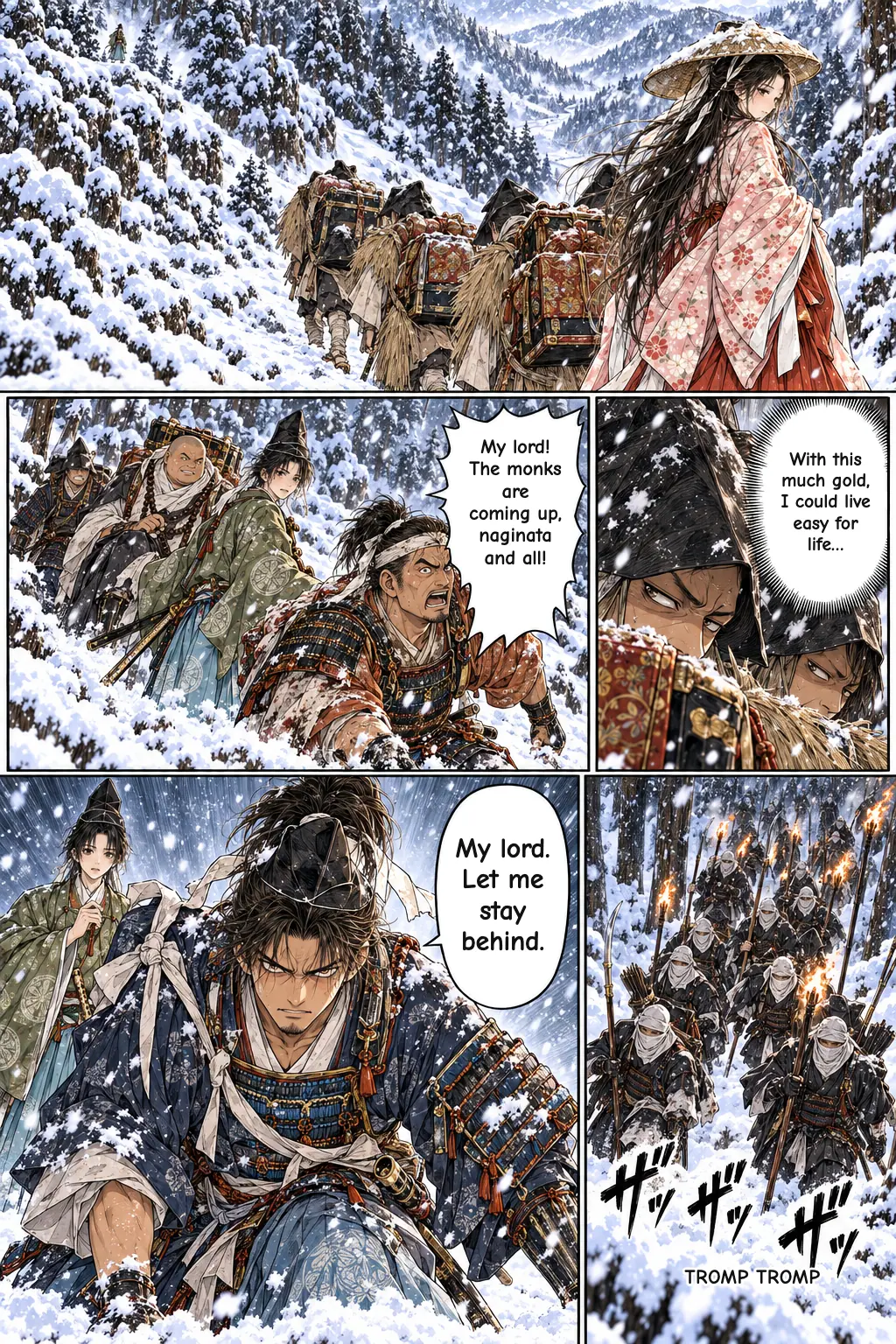
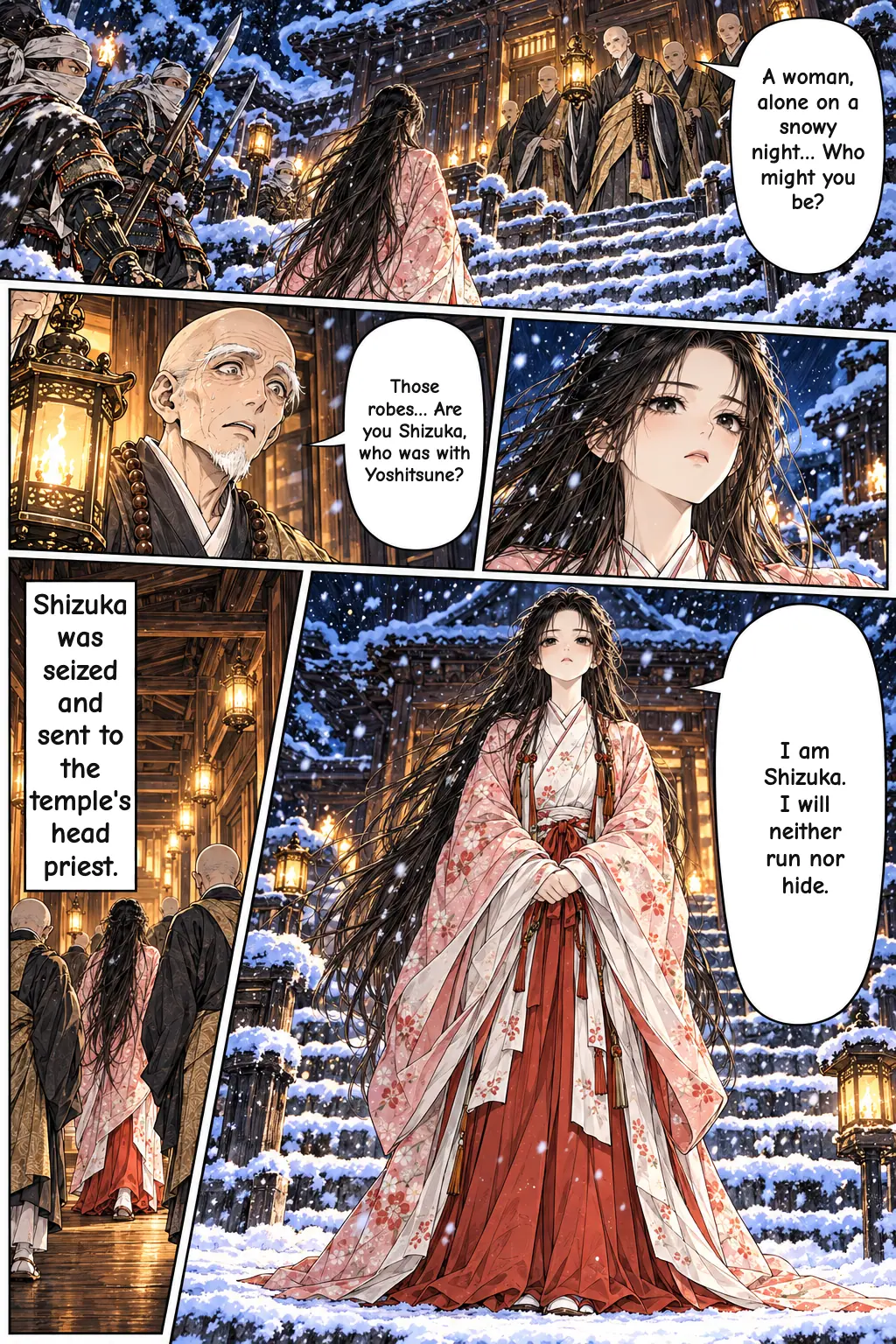
The escorts do not keep faith. Once they are away from Yoshitsune, they take the treasure and run, leaving Shizuka alone on the snowy mountain. She wanders lost until she reaches the area around the Zaō Hall, the main hall of Yoshino's temple complex. There the monks notice her, seize her, and hand her over to the shugyō, the temple's chief administrator. This capture leads into her later ordeal in Kamakura, told in Book 6.
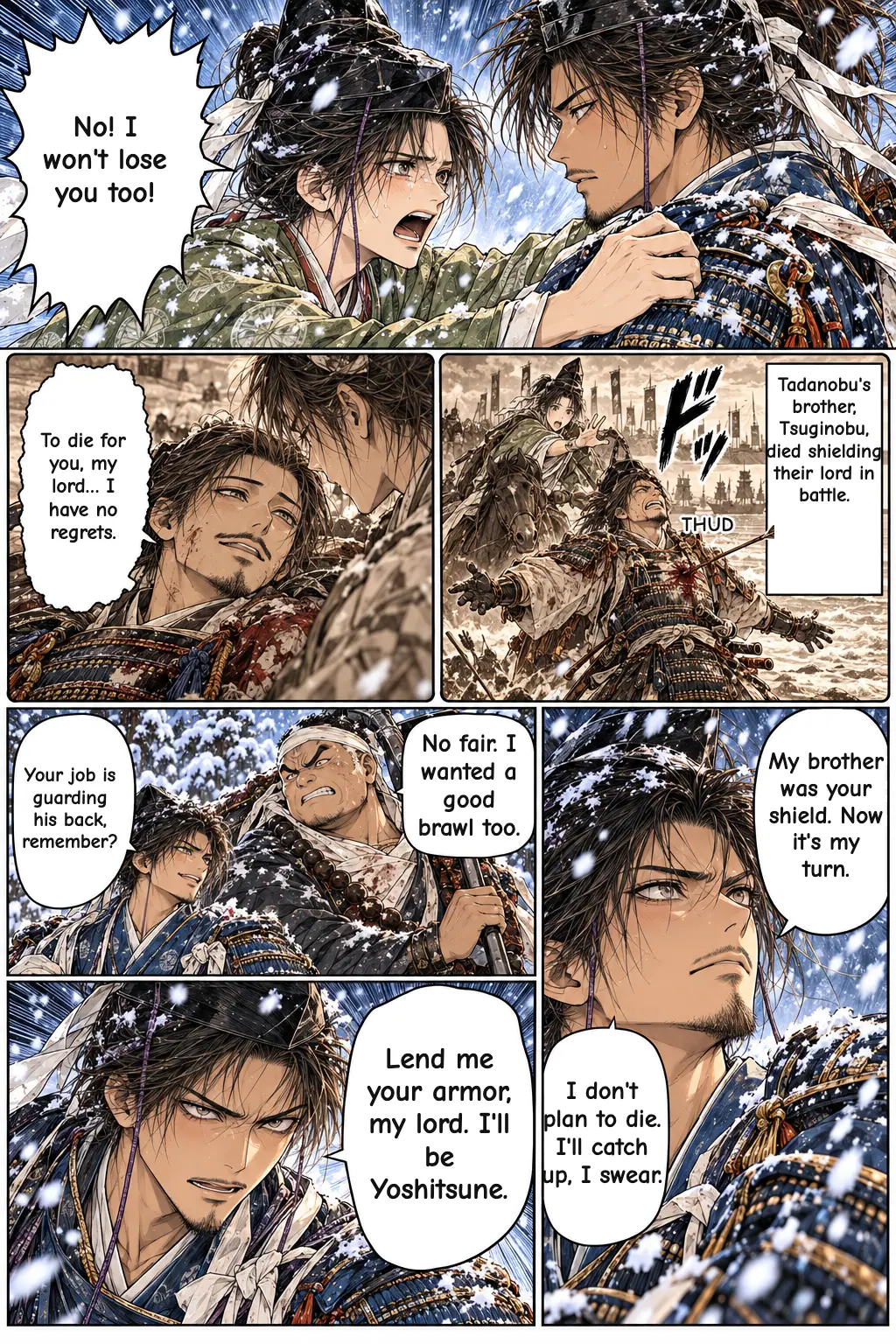
Meanwhile the monks close in on Yoshitsune's party. Satō Shirō Hyōe Tadanobu, a retainer from the far north whose elder brother Tsuginobu had already died shielding Yoshitsune at the Battle of Yashima, volunteers to stay behind. He receives his lord's armor and takes Yoshitsune's place, so that the monks believe the general is still there. A skilled archer, he holds them off with his arrows and buys time for the others to get away.
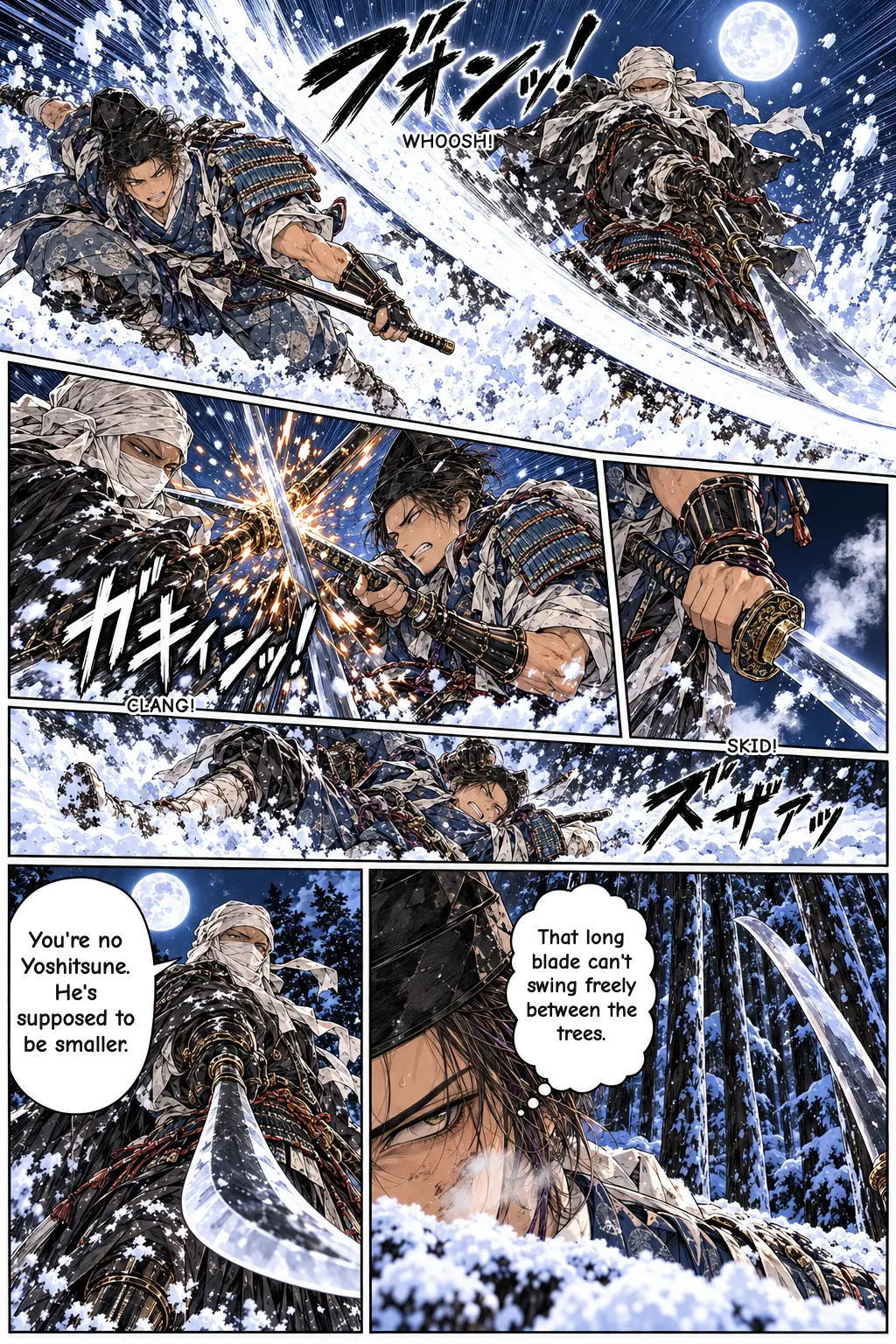
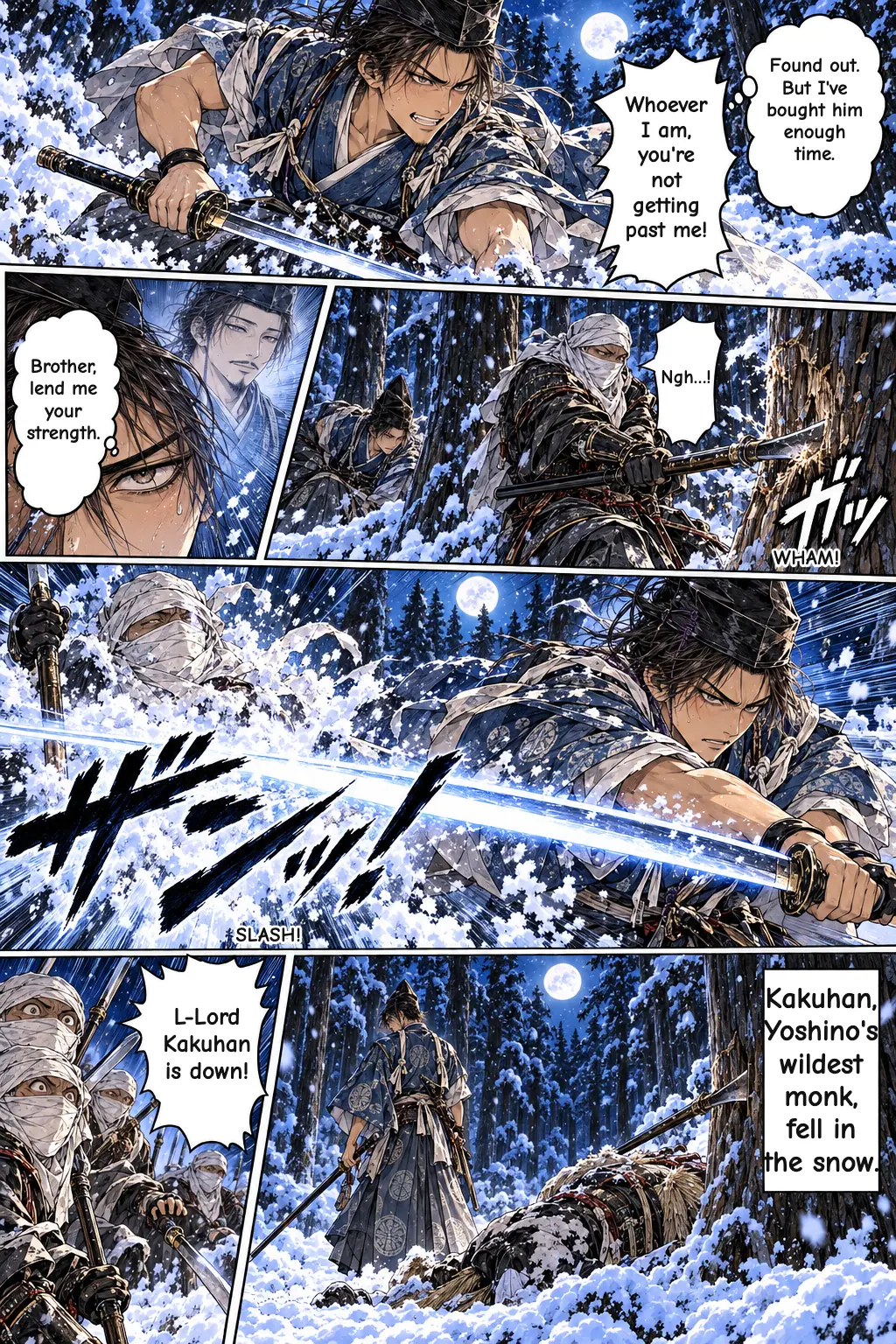
The fiercest of the monks, Kakuhan of Yokawa, a warrior monk linked to the Yokawa area of Mount Hiei and famed for his great glaive and sword, comes forward to fight Tadanobu. In the Gikeiki, Tadanobu defeats and kills him. Tadanobu then breaks through the encirclement and heads for the capital, where his story continues in Book 6. Yoshitsune's party escapes Yoshino too, and the group that entered the mountain together is now scattered: Shizuka a captive, Tadanobu alone, and Yoshitsune on the run.
Note that the Gikeiki tells these events in separate chapters, one after another. Chapter titles also differ between surviving manuscripts and printed editions, so you may see the same episodes listed under slightly different names.
What the Story Says: Loyalty, Betrayal and the Fallen Hero
Book 5 shows two kinds of service side by side. The paid escorts abandon Shizuka the moment it profits them, while Tadanobu offers his life without being asked, for a lord who can no longer reward him. Japanese audiences loved this contrast, and Tadanobu became one of the great symbols of a retainer's loyalty.
The Gikeiki is also a story of sympathy for the loser. Yoshitsune, once the hero of the Genpei War, is now hunted by his own brother and even by the monks of a holy mountain. The Japanese expression hōgan-biiki ("sympathy for the judge," from Yoshitsune's court title hōgan) names this feeling for the doomed underdog.
The setting matters too. Yoshino and the Ōmine range were sacred training grounds for mountain ascetics, and in later tradition women were barred from the inner peaks. Some readers connect Shizuka's forced parting with this custom. Shizuka herself is a historical figure: Kamakura-era records also mention her capture at Yoshino, though the Gikeiki's details are literary retelling, not documentary history.
What the Manga Changes
The manga follows the Gikeiki's main events: the monks' hunt, the parting in the snow, the escorts' betrayal, Shizuka's capture near the Zaō Hall, Tadanobu taking his lord's armor and place, and his duel with Kakuhan.
Some parts are the manga's own creation. The exact words and gestures of the farewell, and any keepsake exchanged, are invented, since the original gives only the general flow. Shizuka's pregnancy is not discussed at the parting here in the source; it comes to light later, in Kamakura. The number and faces of the escorts, the moment they decide to betray her, her route through the snow, the individual moves in the duel, and the nameless monks other than Kakuhan are all artistic choices. Most importantly, the manga cuts back and forth between Shizuka's capture and Tadanobu's battle as if they happen at the same time. In the original, they are told one after the other, so this parallel structure is an adaptation.
Where to Read It
The Gikeiki is available in modern Japanese editions, and an English translation by Helen Craig McCullough, Yoshitsune: A Fifteenth-Century Japanese Chronicle, is the standard choice for English readers who want the full story.
If you would like to see the snow, the betrayal and Tadanobu's lone stand among the cedars first, THE LEGEND OF YOSHITSUNE: Ushiwaka and Benkei tells the whole saga in manga form. Every episode is free to read on Manga Portal, with no sign-up needed. Continue to the next episode to find out what awaits Shizuka and Tadanobu in the capital.
Characters in this episode
Minamoto no Yoshitsune
The famed Genji general, now hunted by his brother Yoritomo, who sends Shizuka away and flees deeper into the mountains.
Shizuka (Shizuka Gozen)
A shirabyōshi dancer and Yoshitsune's beloved, who is abandoned by her escorts in the snow and captured by the Yoshino monks.
Satō Tadanobu
A loyal retainer and skilled archer who wears his lord's armor, poses as Yoshitsune, and holds off the pursuers alone.
Musashibō Benkei
The giant warrior monk and leading retainer who travels with Yoshitsune on the escape from Yoshino.
Kakuhan of Yokawa
The most feared warrior monk among the Yoshino forces, who fights Tadanobu in single combat and is killed.
The Yoshino monks and the shugyō
The armed monks of Yoshino who hunt Yoshitsune to avoid Kamakura's anger, and their chief administrator, who takes custody of Shizuka.
FAQ
Why did Yoshitsune leave Shizuka at Mount Yoshino?
The armed monks of Yoshino were gathering to capture him, and he decided to escape into the remote Ōmine mountains. The Gikeiki says a woman could not be taken into those deep peaks, so he sent Shizuka back toward the capital with treasure and escorts.
What happened to Shizuka after she left Yoshitsune?
Her escorts stole the treasure and abandoned her in the snow. She wandered to the area of the Zaō Hall, where the monks caught her and handed her to the temple's administrator, which led to her later questioning in Kamakura.
Who was Satō Tadanobu?
Tadanobu was one of Yoshitsune's retainers from northern Japan and the younger brother of Satō Tsuginobu, who died protecting Yoshitsune at Yashima. At Yoshino he volunteered to stay behind, wore his lord's armor, and fought the pursuing monks so Yoshitsune could escape.
Who won the fight between Tadanobu and Kakuhan?
In the Gikeiki, Tadanobu defeats and kills Kakuhan of Yokawa, the strongest of the Yoshino warrior monks. He then breaks out of the encirclement and makes his way to the capital.
Is the Gikeiki a true story?
Yoshitsune, Shizuka and Tadanobu were real people, and historical records also mention Shizuka's capture at Yoshino. However, the Gikeiki is a literary war tale written long after the events, and many of its scenes and speeches are dramatized.