Episode 8He Abandoned the Capital to Save ItThe Storm at Daimotsu Bay (Yoshitsune's Flight)
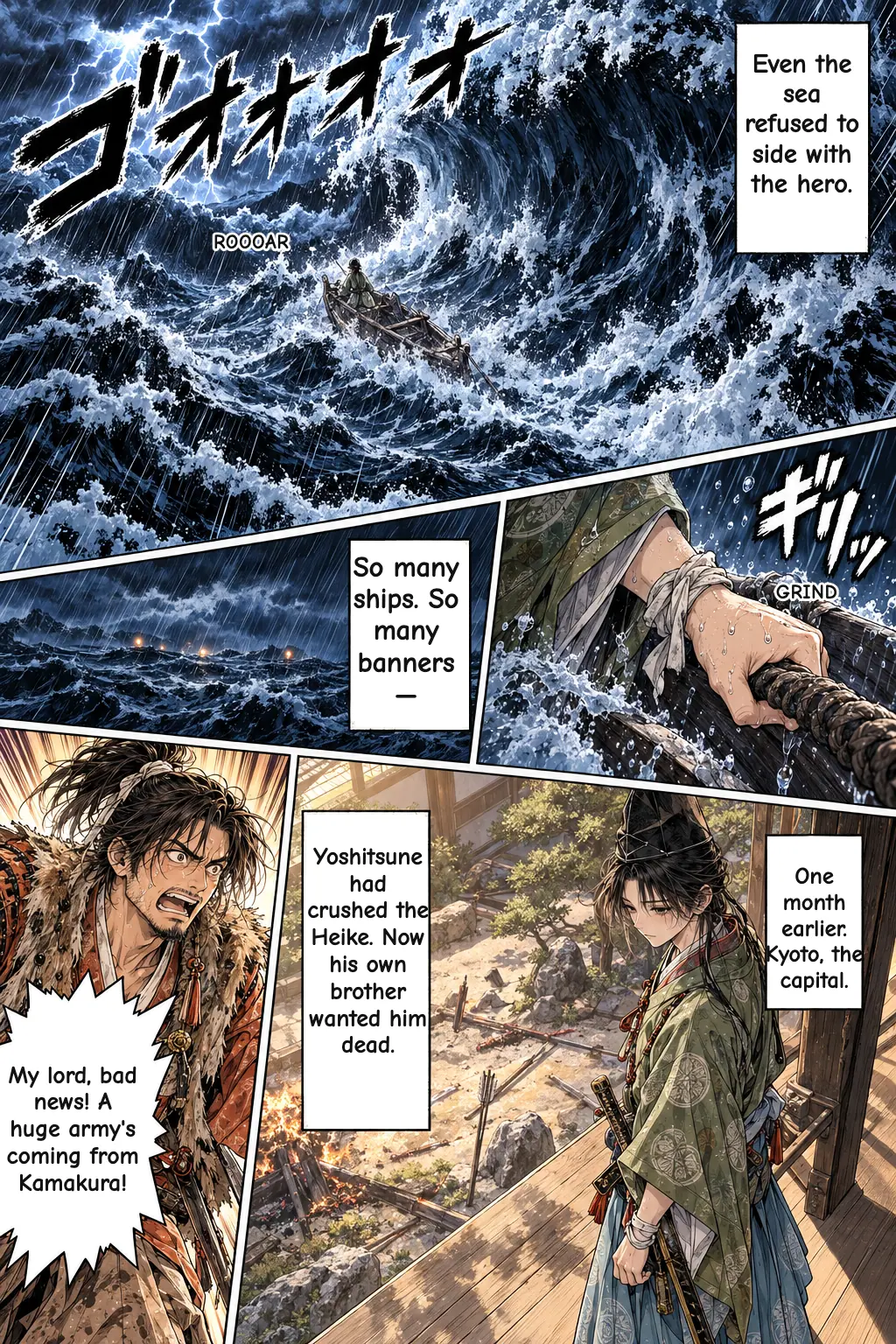
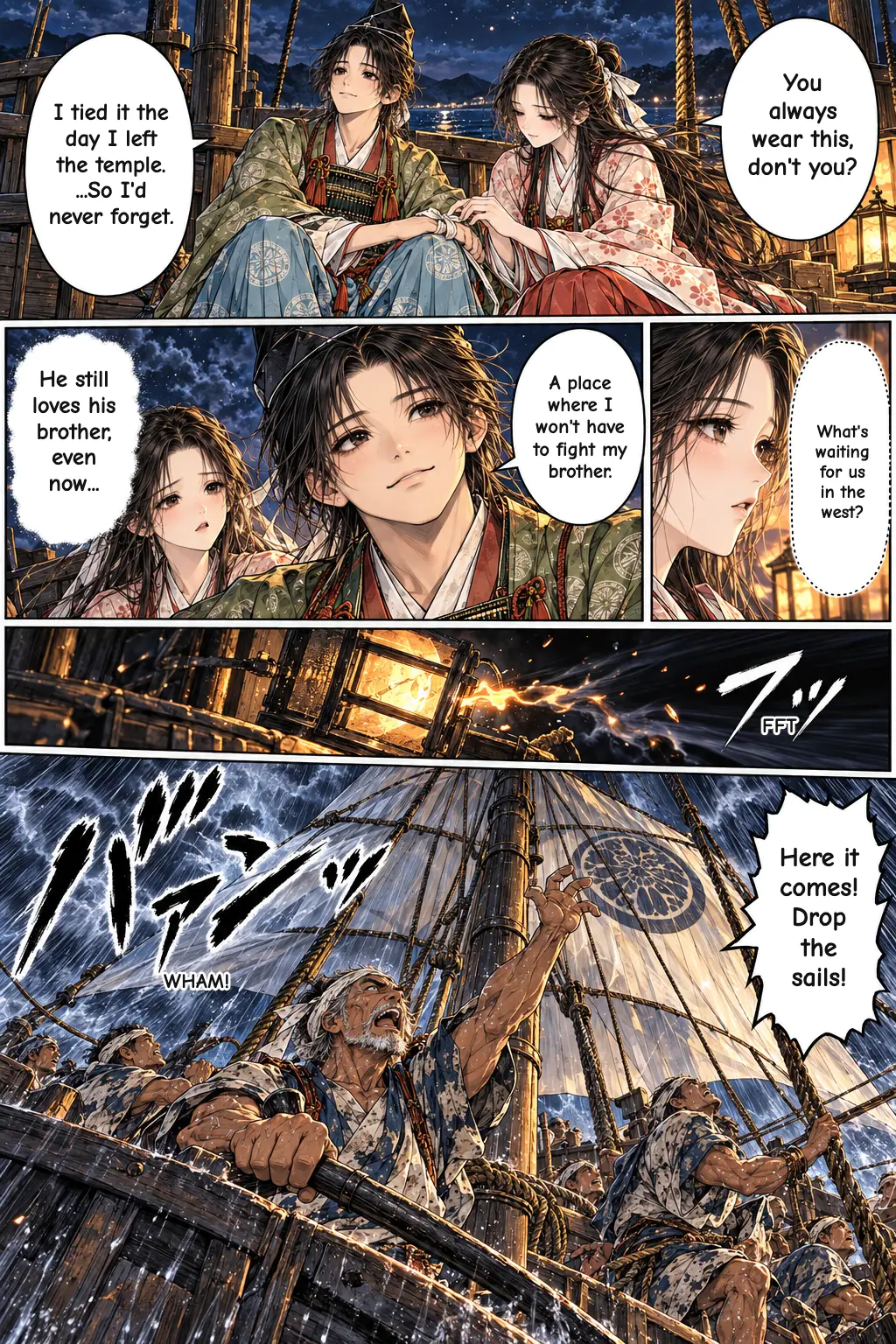
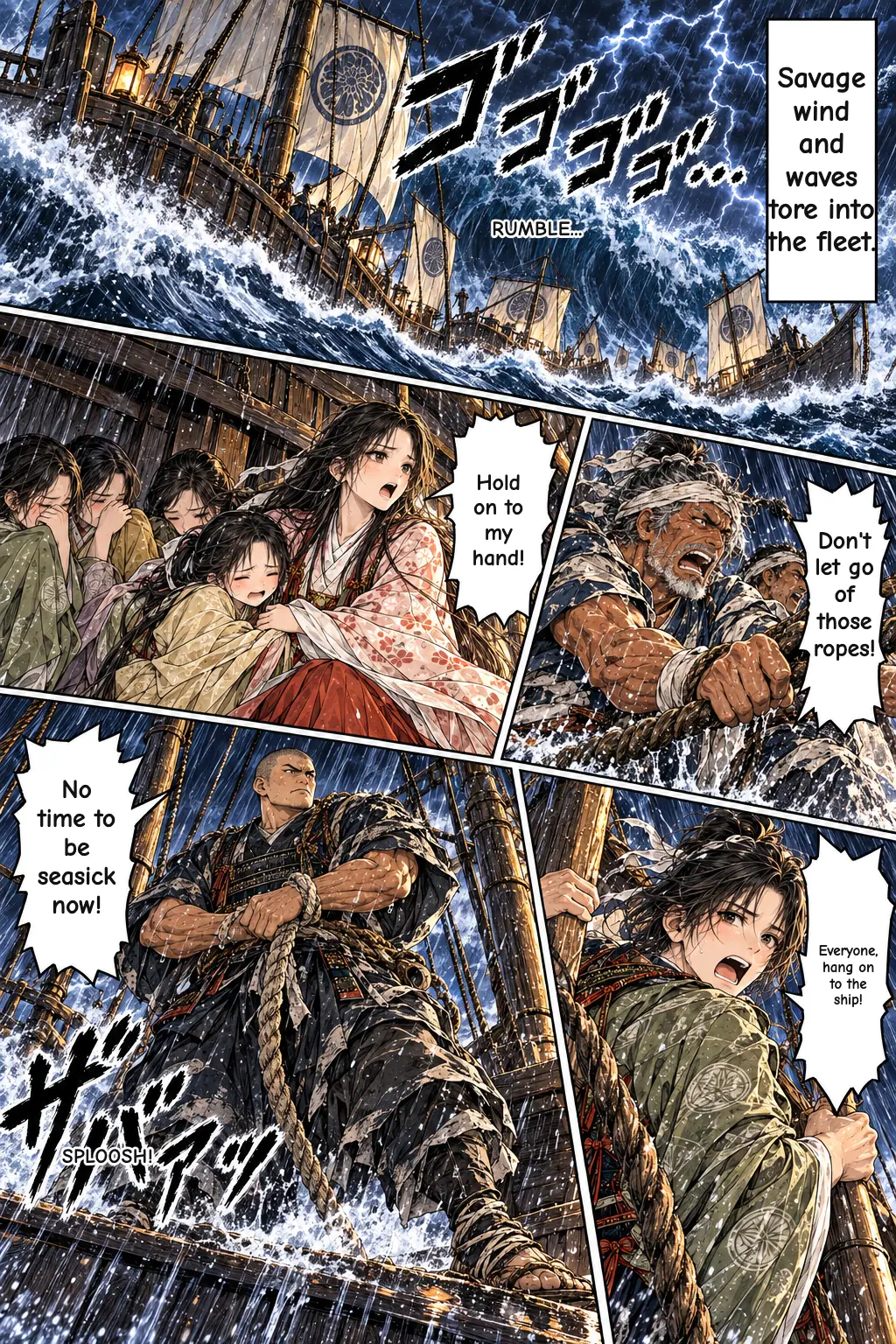
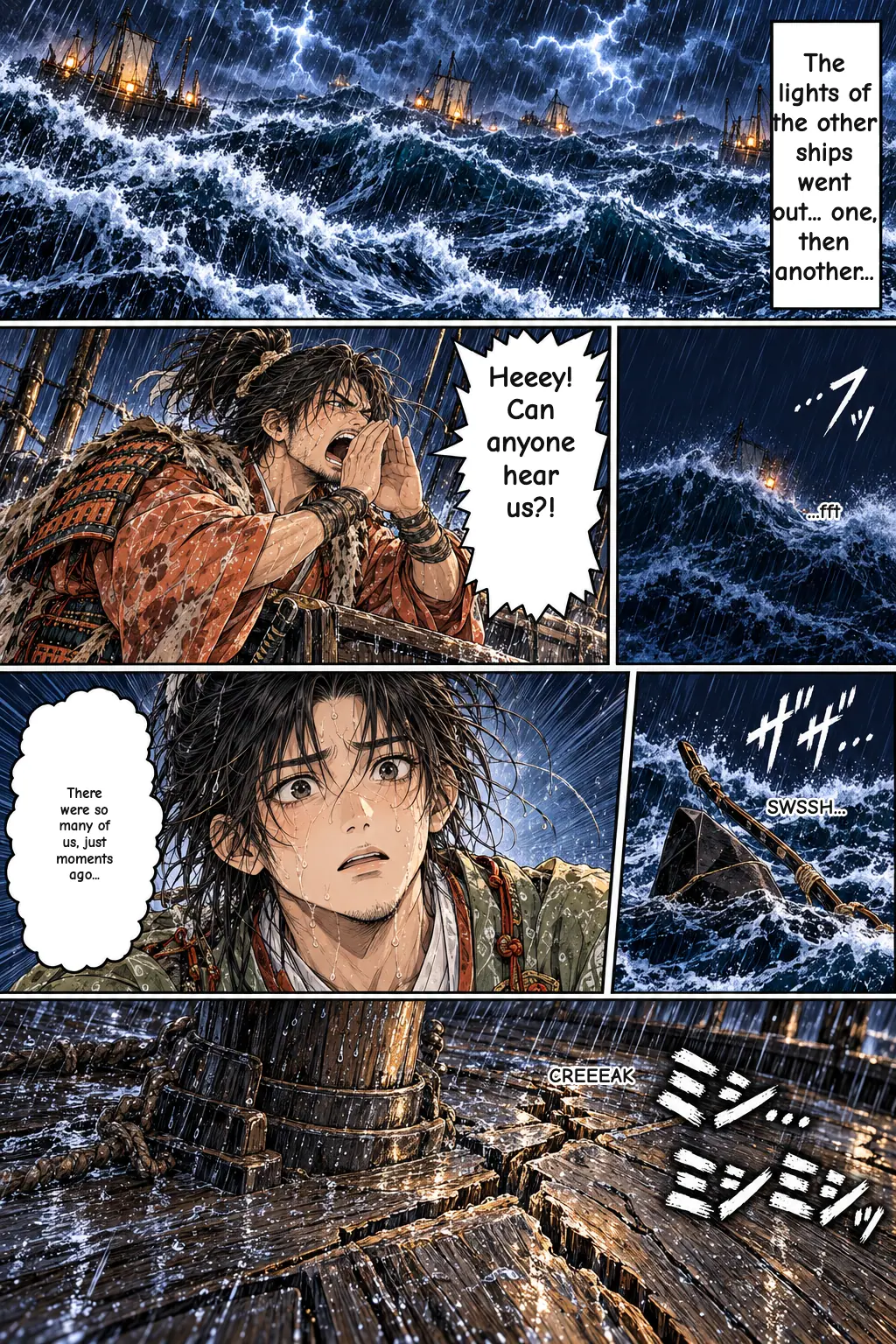
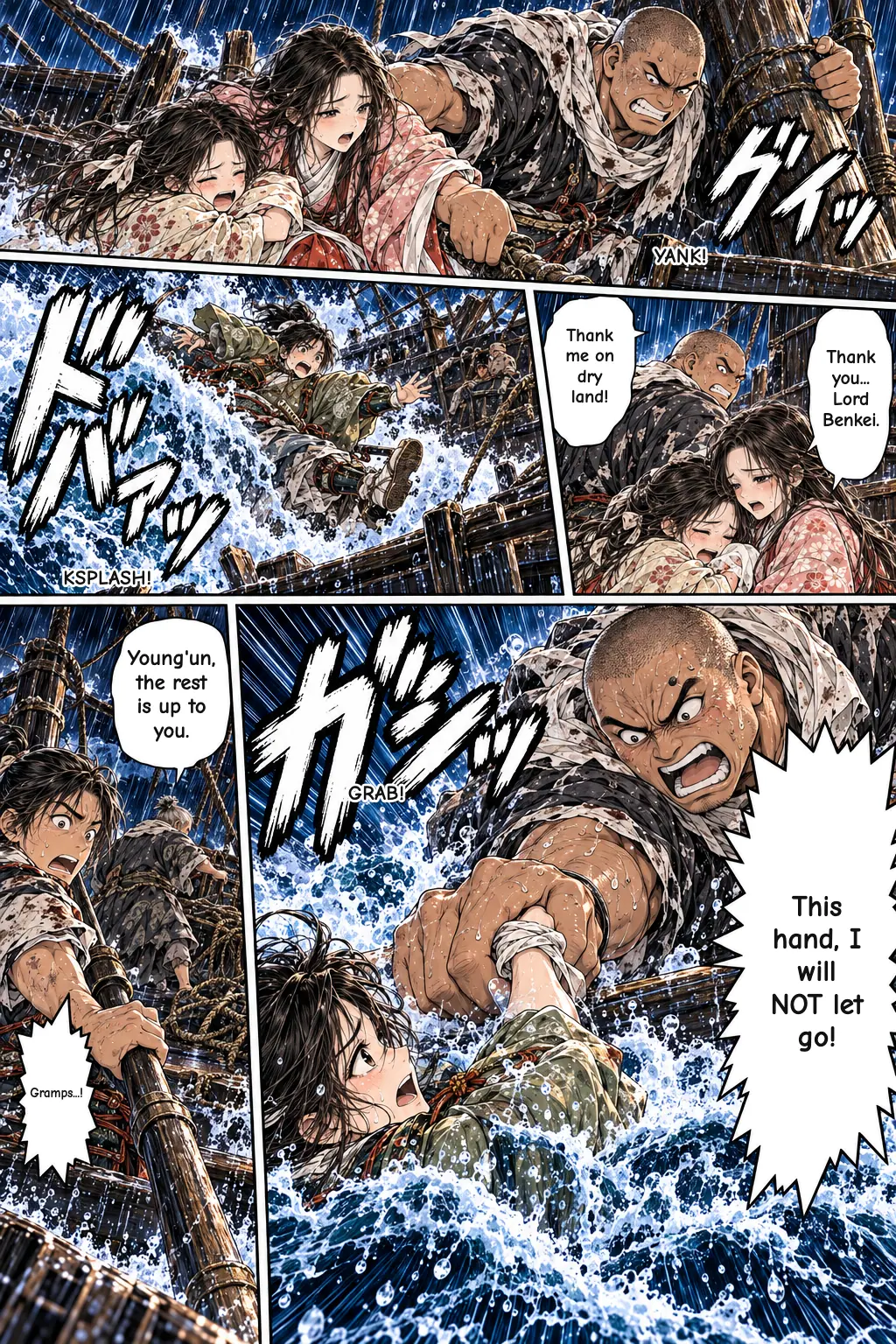
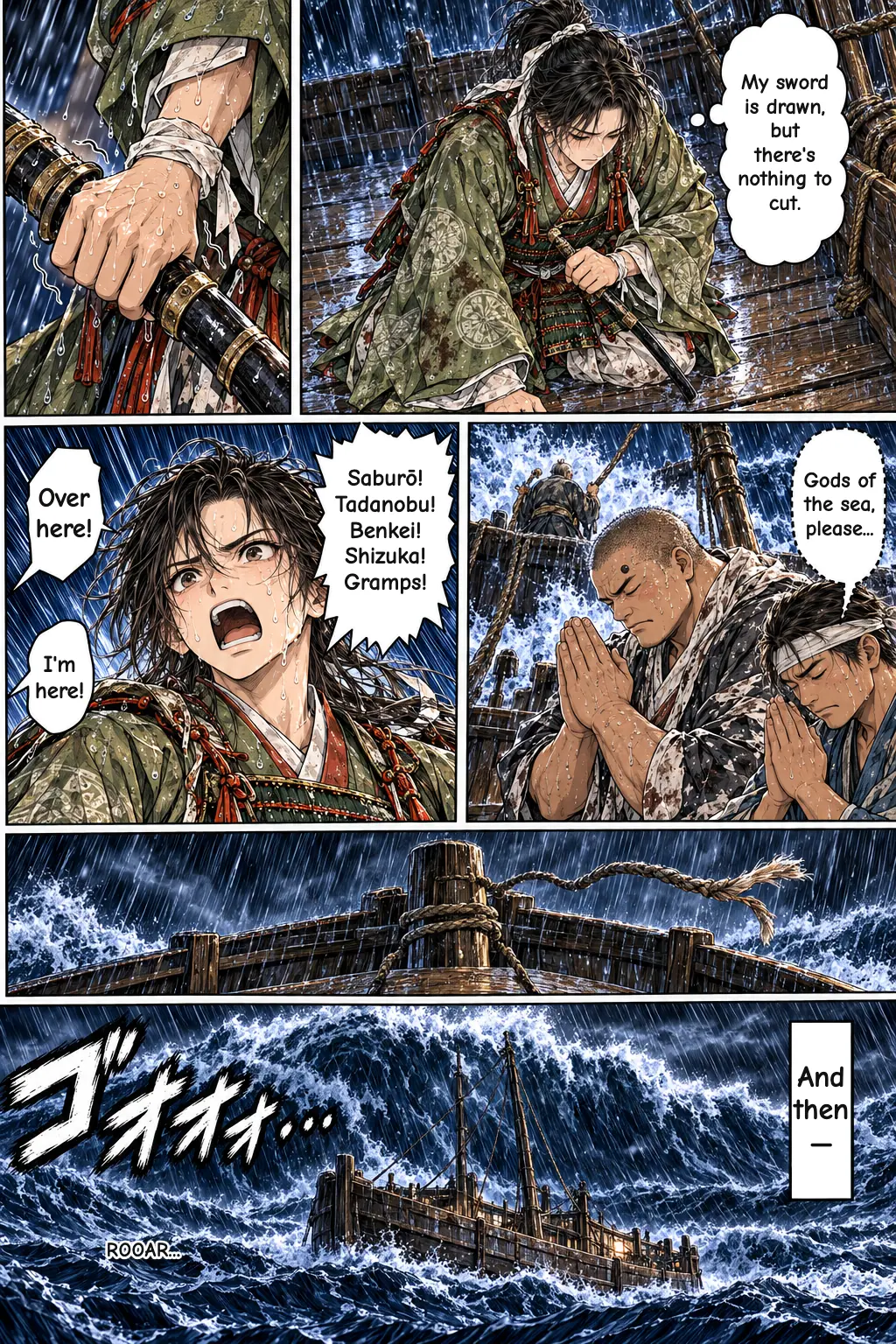
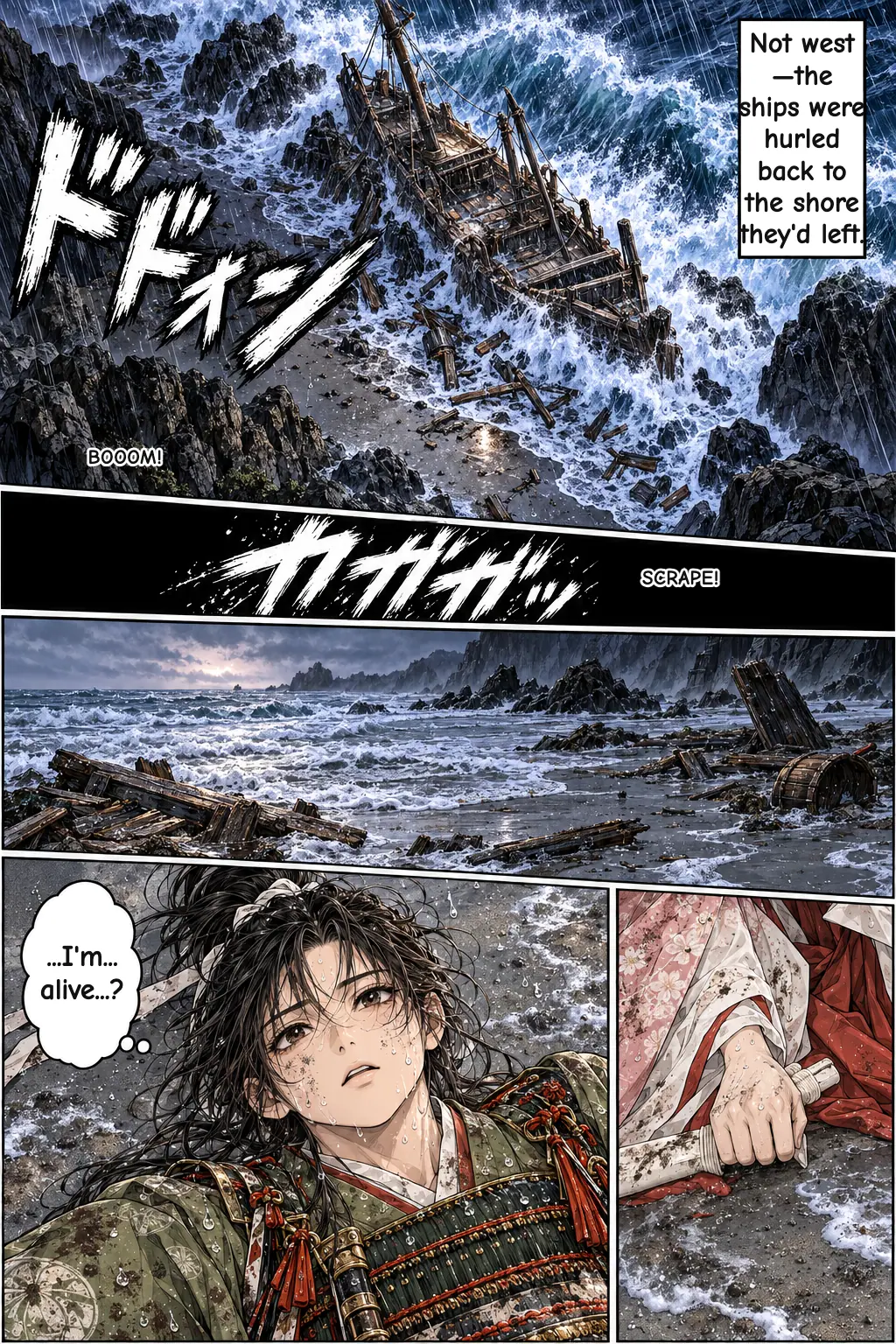
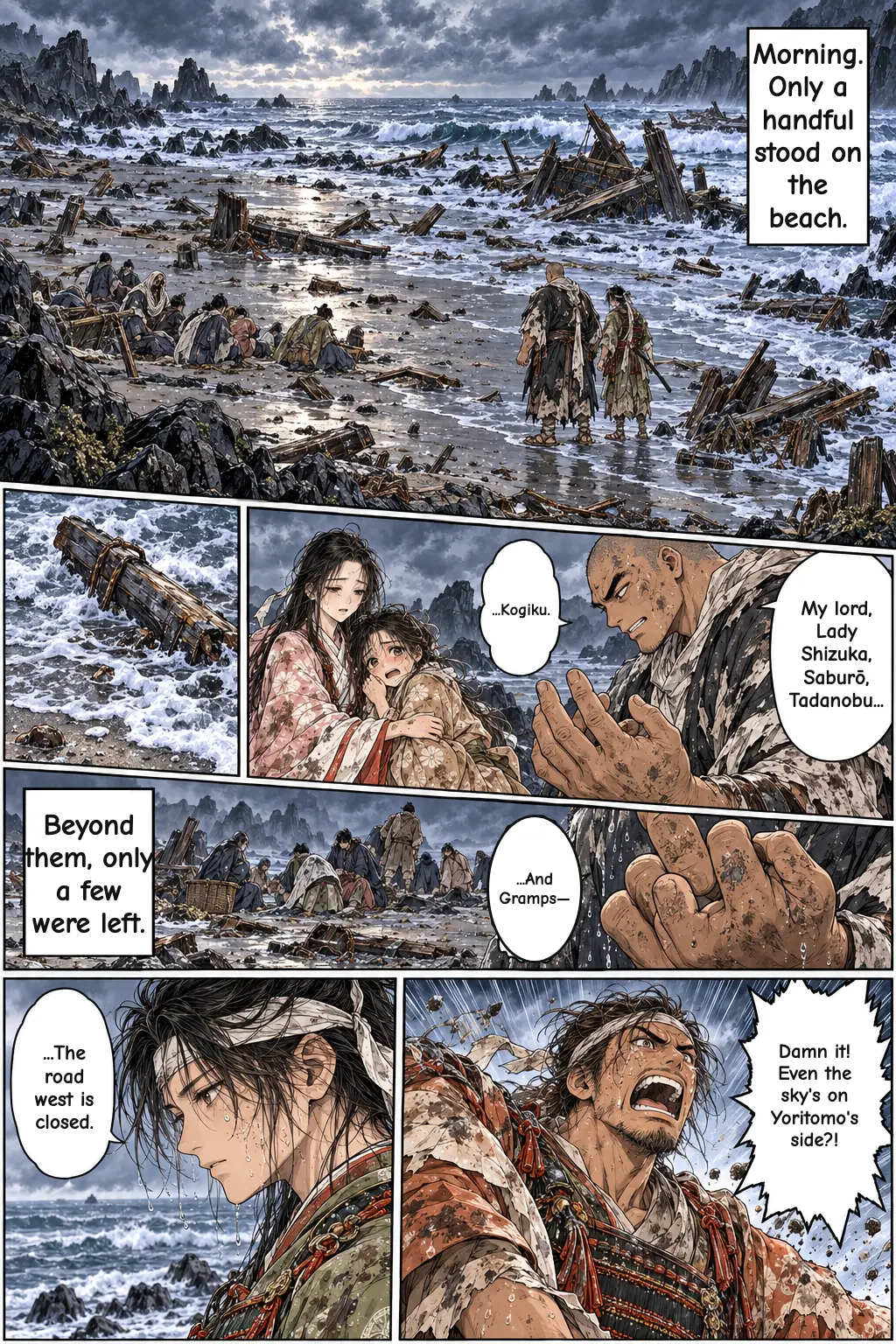
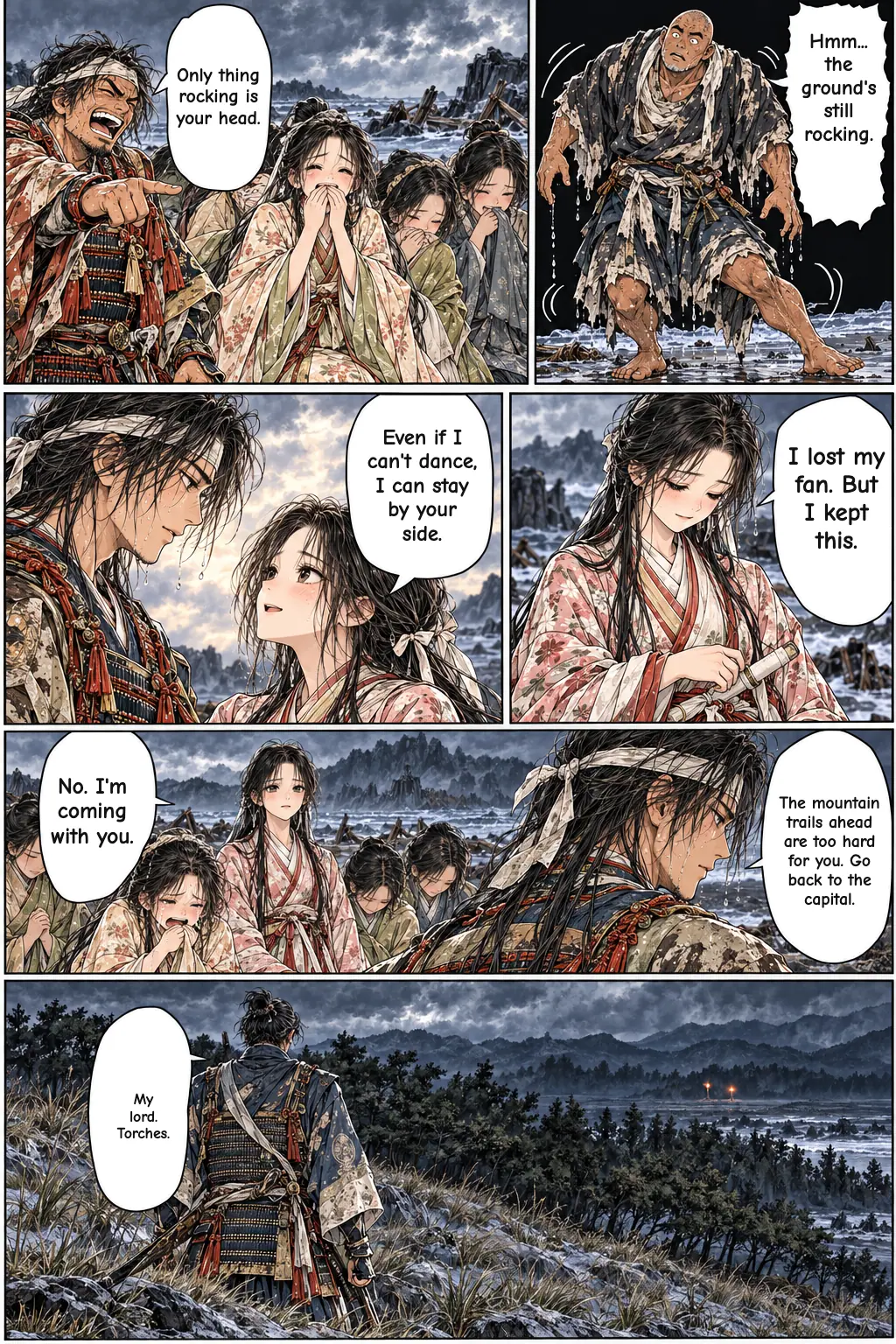
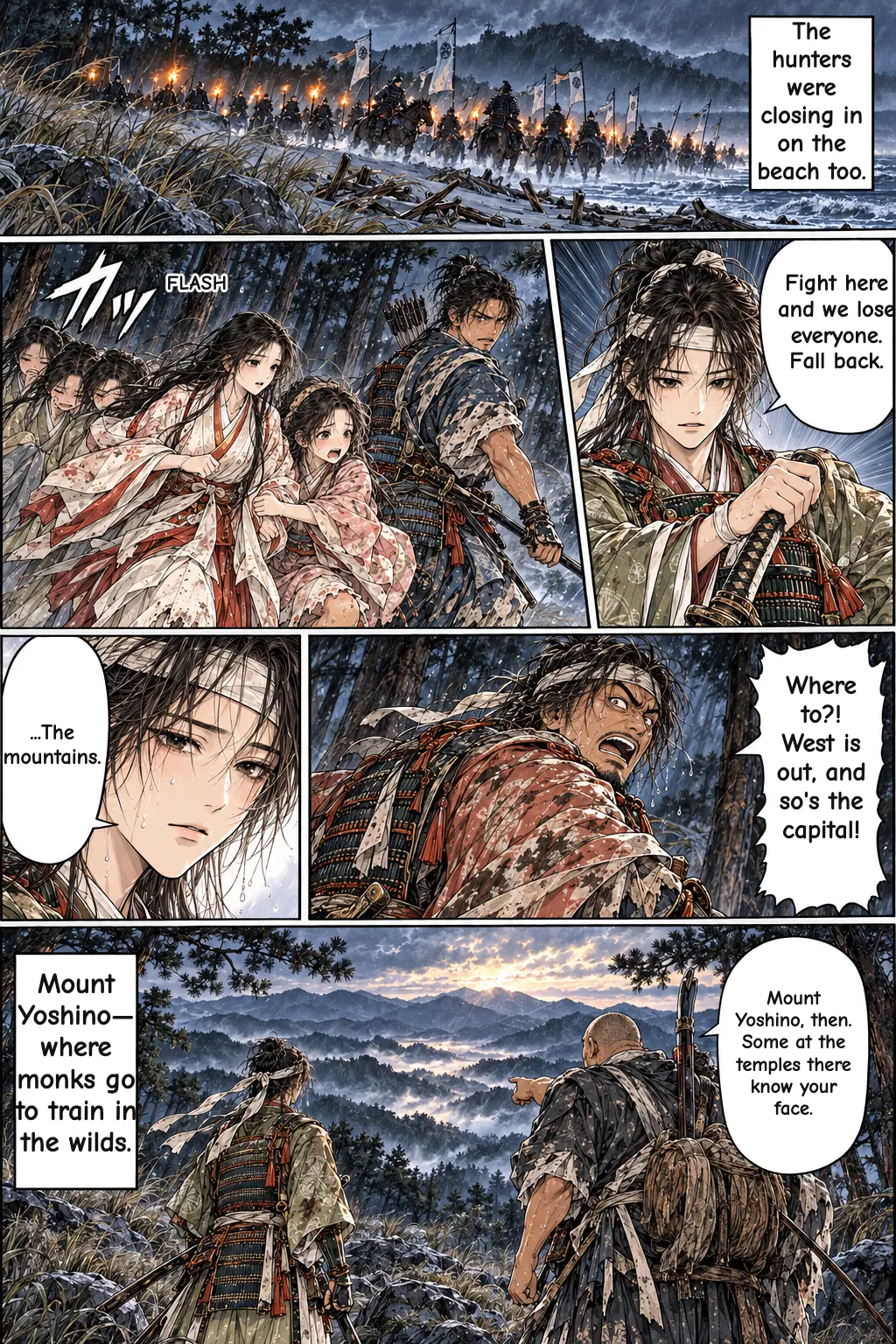
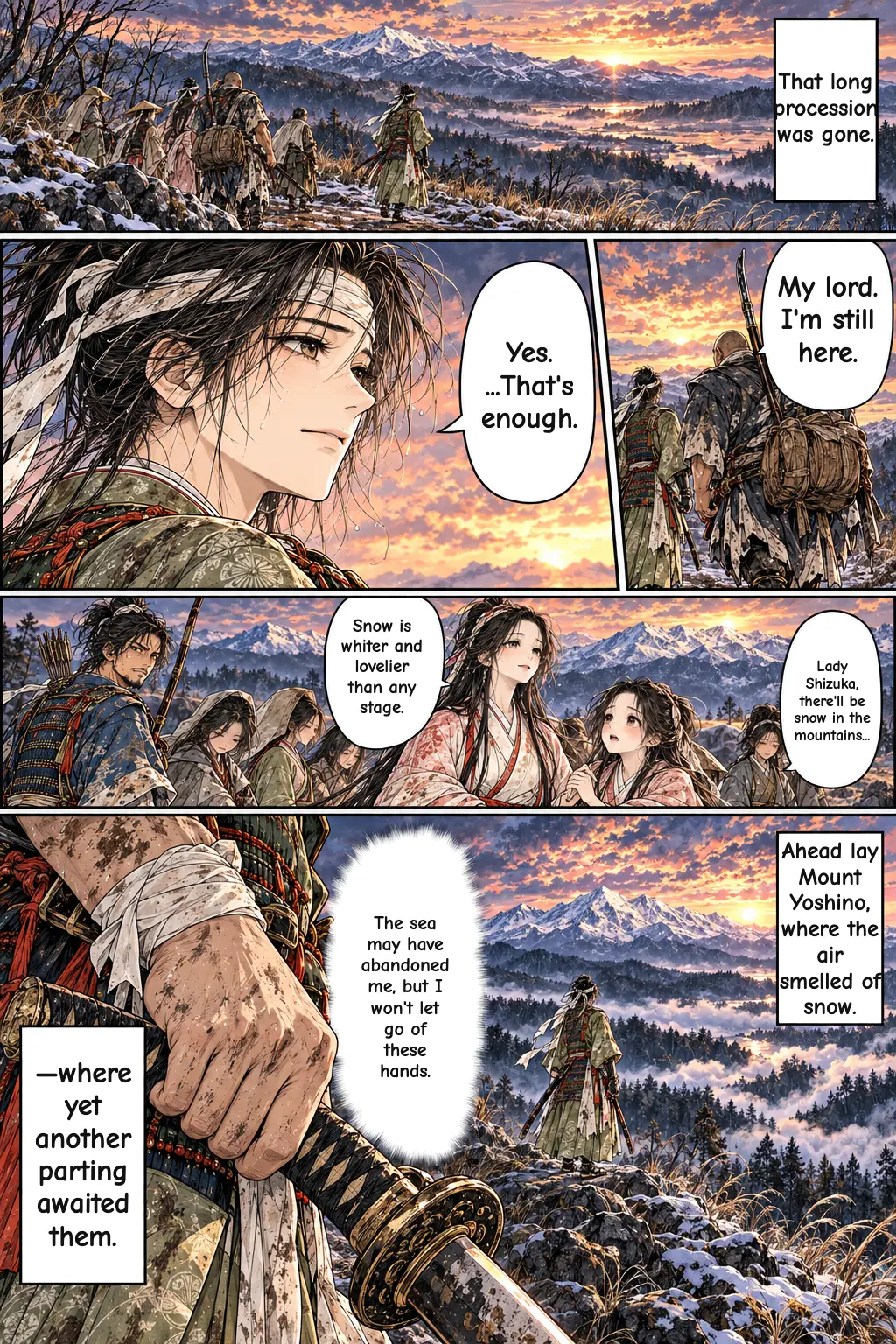
Hunted by his own brother, Yoshitsune refuses to turn the capital into a battlefield and flees west, setting sail from Daimotsu Bay. But a violent storm scatters his fleet, and only a handful are washed back to shore. Having lost everything, the survivors set out for Mount Yoshino.
Yoshitsune's Flight and the Storm at Daimotsu Bay (Gikeiki) Explained
The Original Story: Yoshitsune Leaves the Capital
The Gikeiki ("Chronicle of Yoshitsune") is an anonymous Japanese war tale thought to have taken shape in the early Muromachi period, roughly the fourteenth to fifteenth century. The famous Tale of the Heike celebrates Minamoto no Yoshitsune's victories in battle. The Gikeiki looks elsewhere: it tells of his boyhood as Ushiwaka and of his later fall. Episode 8 of the manga follows Book Four, in the chapters about Yoshitsune leaving the capital and the two battles at Sumiyoshi and Daimotsu.
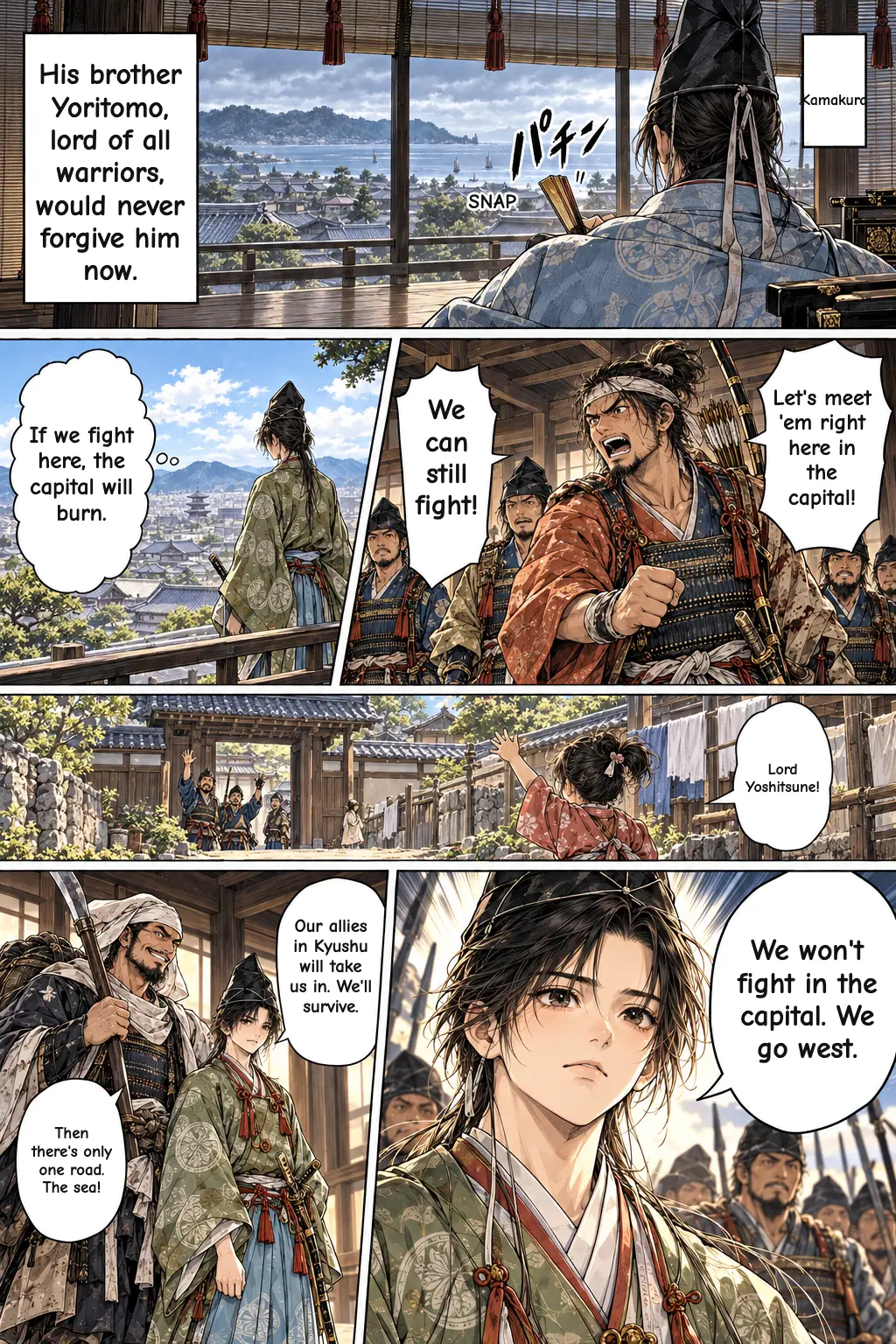
The episode picks up after the failed night attack by Tosabō Shōshun, an assassin sent by Yoshitsune's elder brother Yoritomo, the lord of Kamakura. Yoritomo shows no sign of backing down. If Yoshitsune stays in Kyoto, Kamakura's armies will march on the city. Rather than fight in the streets and see the capital burn, he chooses to leave. He heads west, planning to rely on allies in Kyushu, chief among them Ogata Saburō Koreyoshi, a warrior of Bungo province.
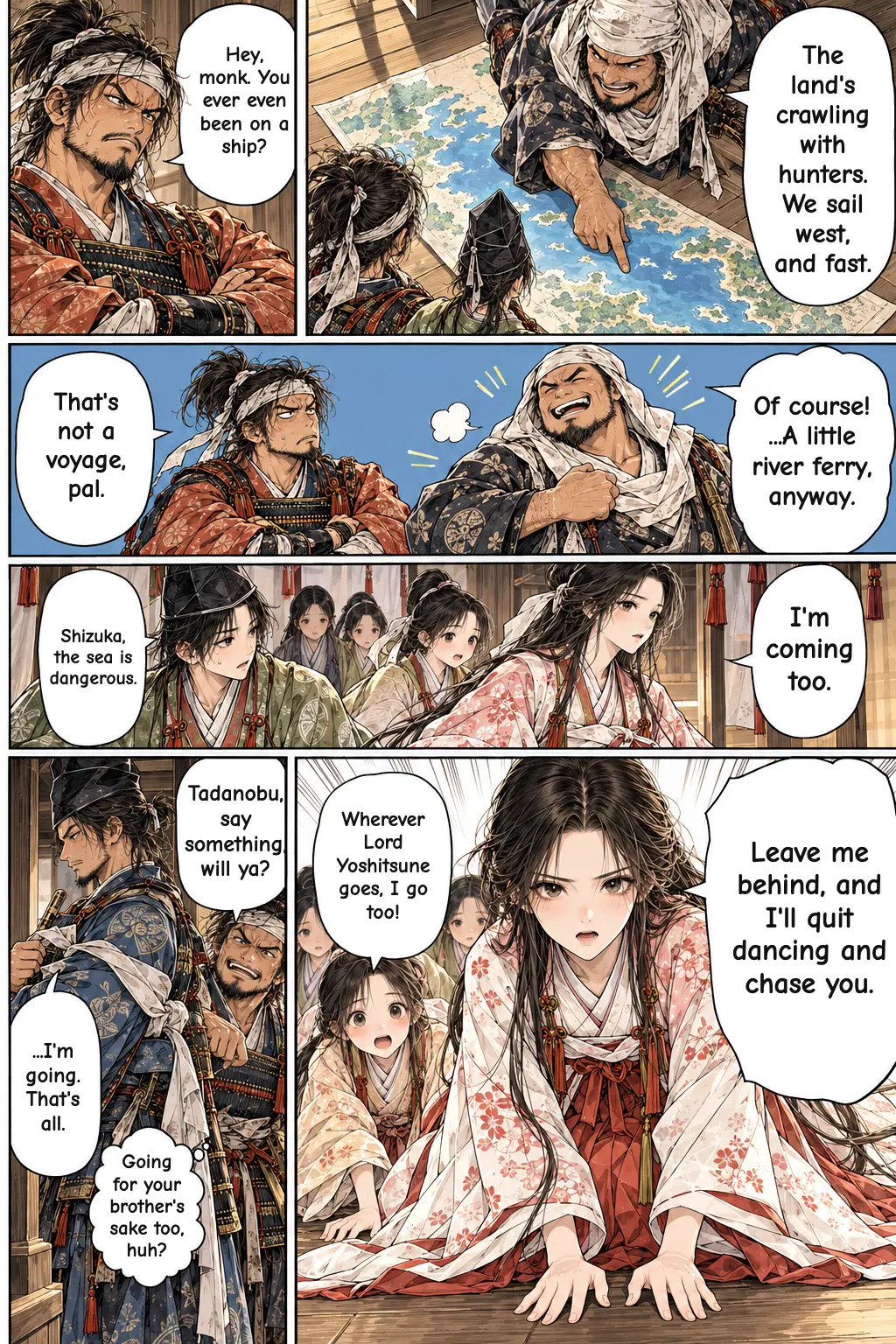
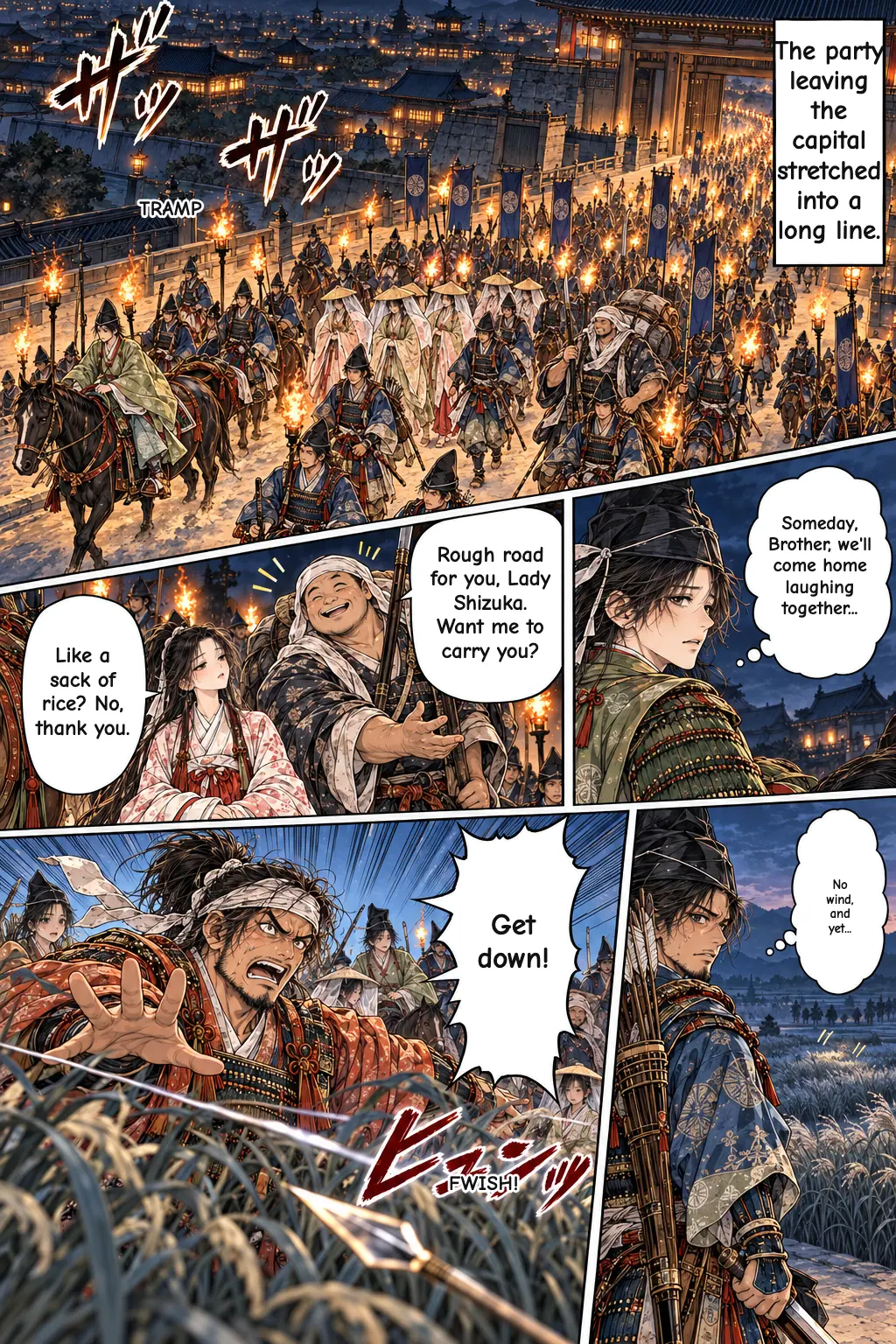
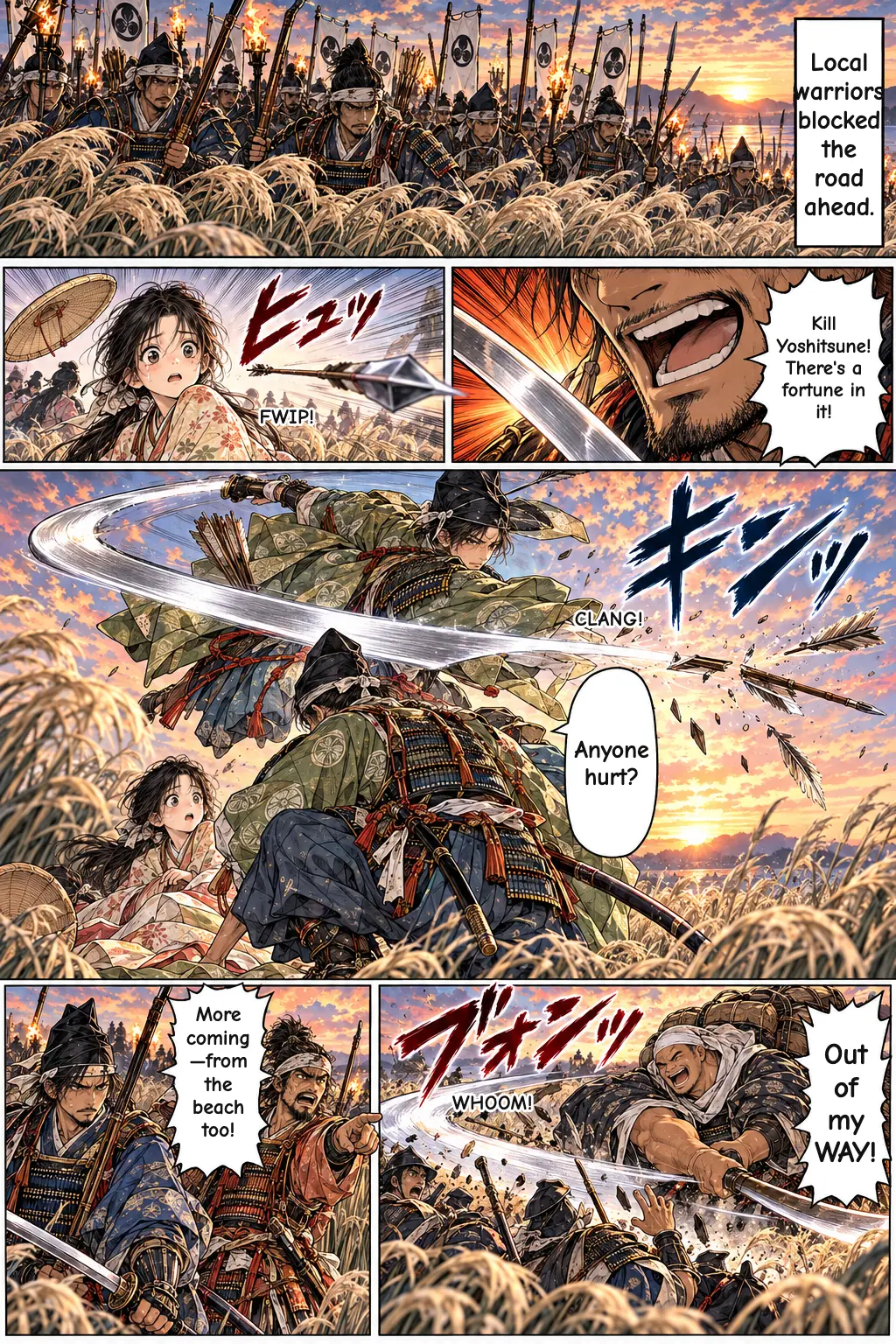
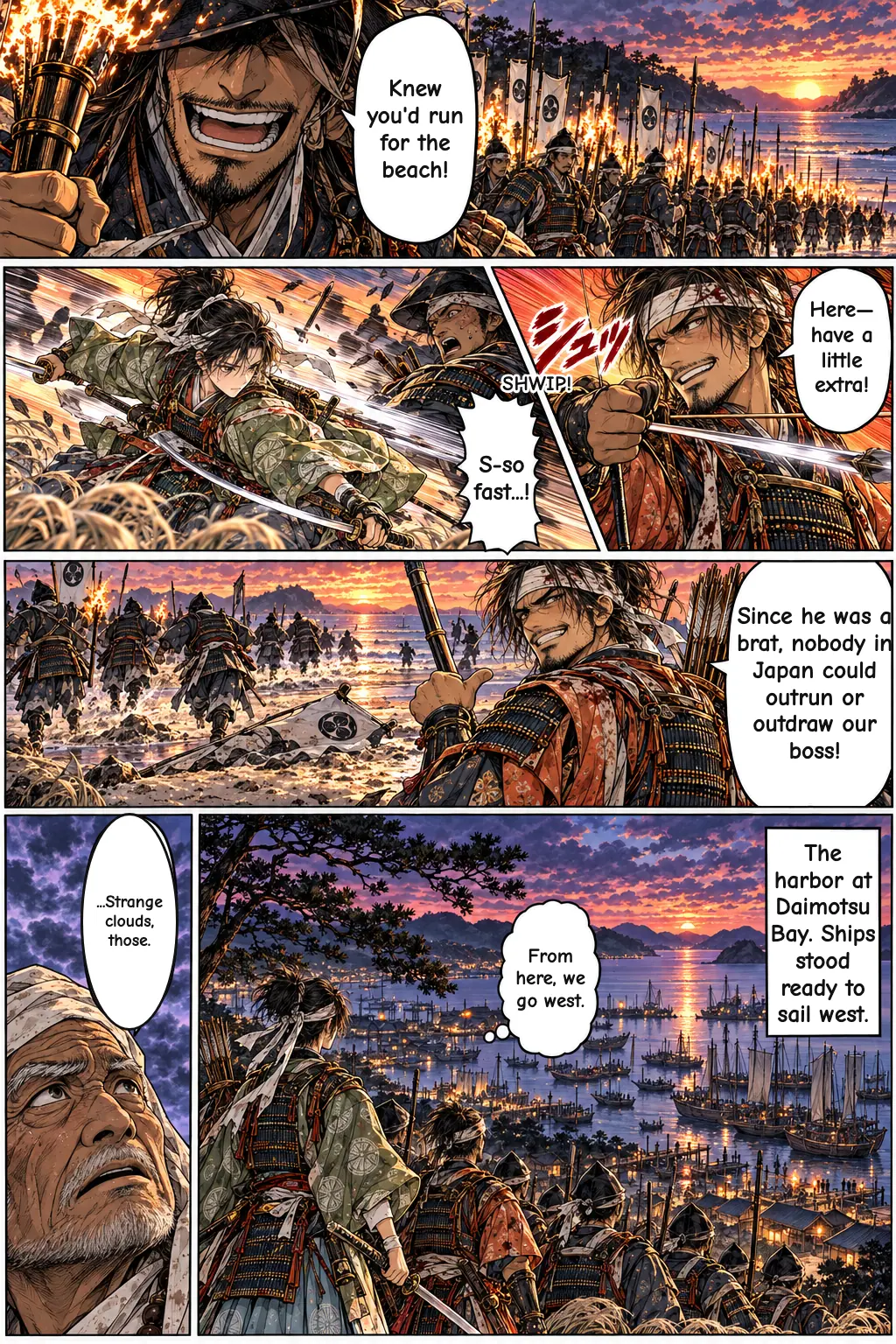
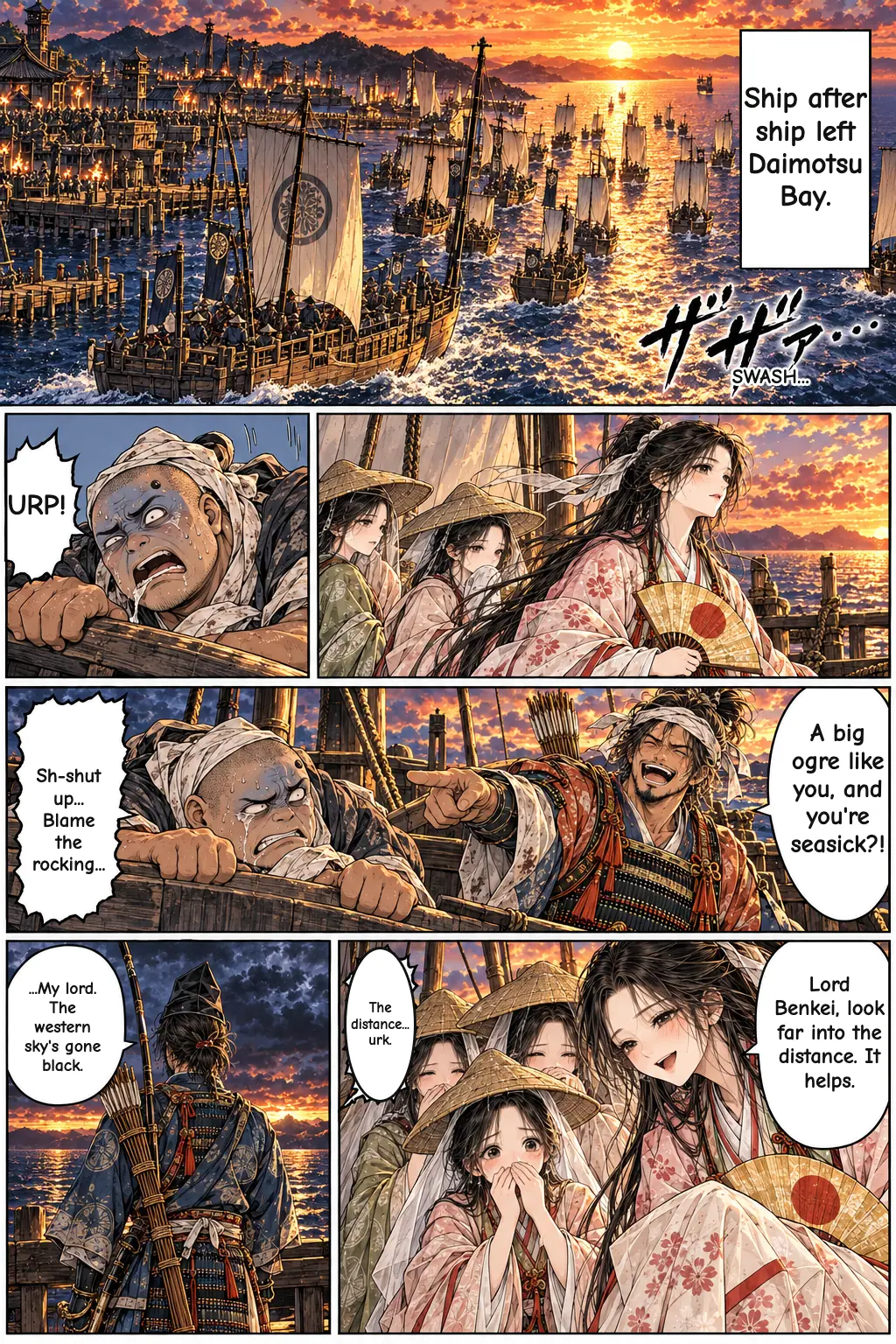
He sets out with Musashibō Benkei and his other retainers, together with Shizuka, the dancer he loves, and other women of his household. They travel down to Settsu province, near present-day Osaka. Local warriors block their way twice, at Sumiyoshi and at Daimotsu, and Yoshitsune's band fights its way through both times. At Daimotsu Bay they finally board their ships.
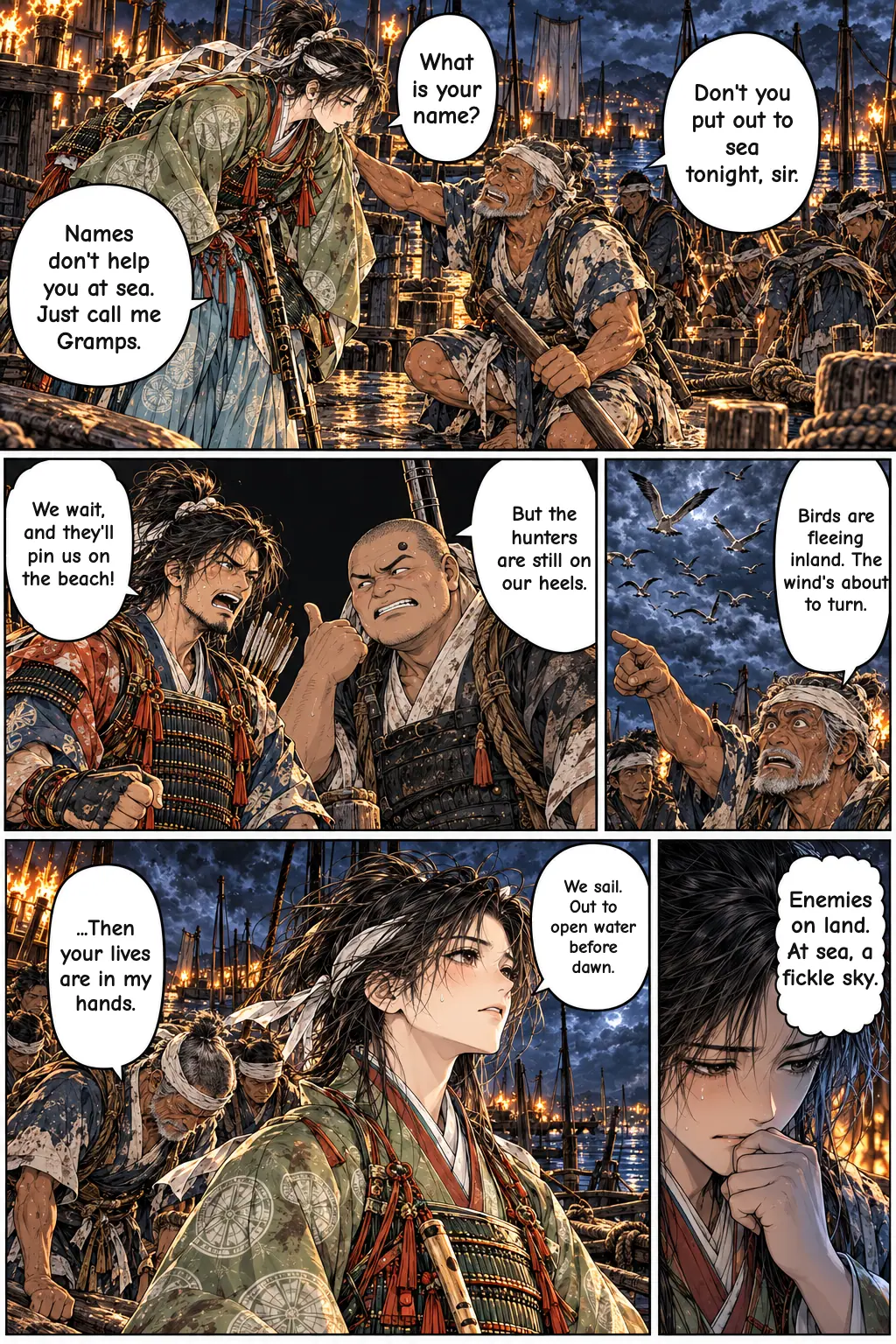
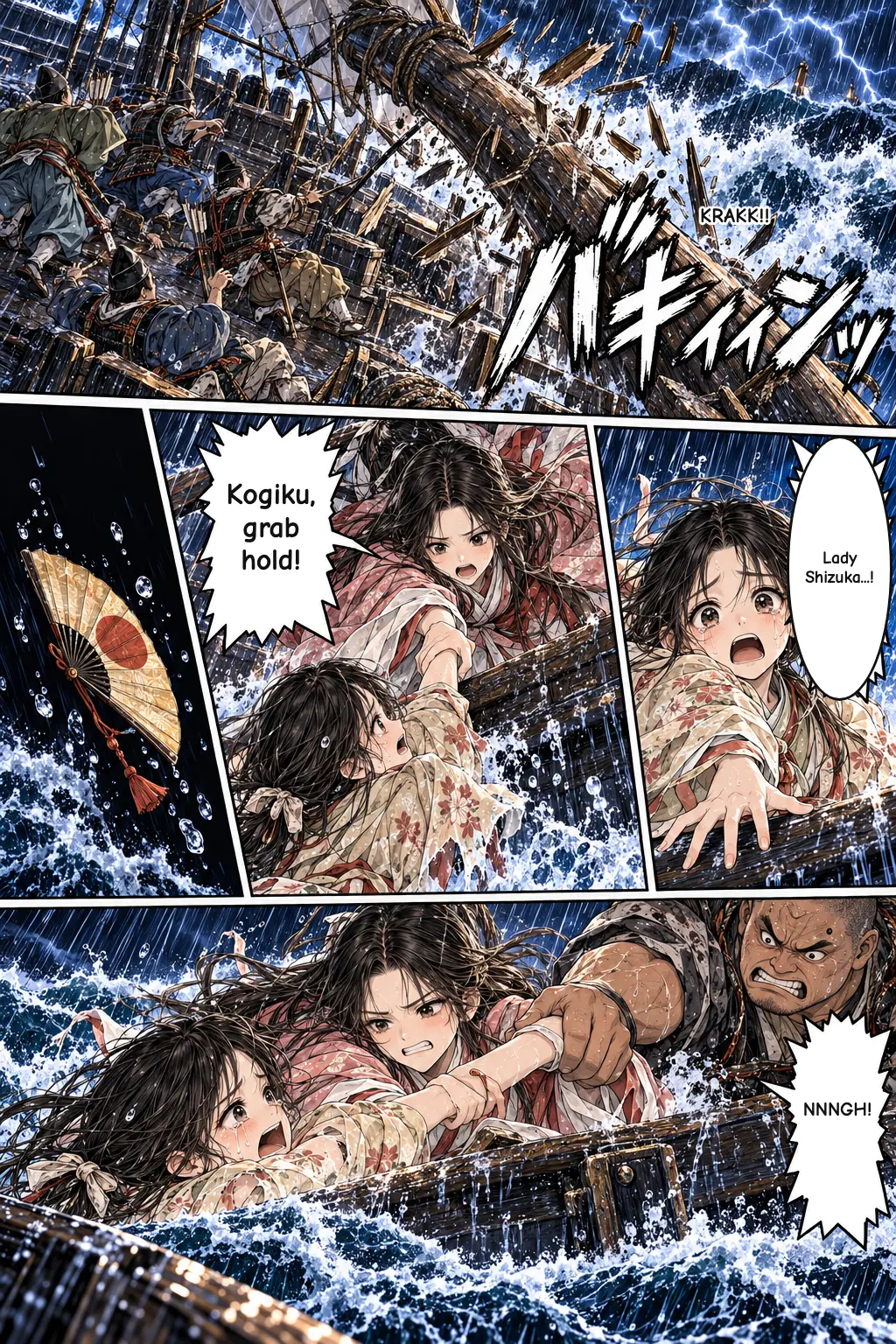
Soon after they set sail, fierce winds and high waves break up the fleet and drive the ships back onto the shores of Settsu and Izumi. The plan to reach the west is finished. Many followers are lost or scattered. Yoshitsune comes ashore with only a few men and Shizuka. Avoiding his pursuers, he turns toward Mount Yoshino in Yamato province, and his arrival there opens the next book of the chronicle.
Why This Moment Matters: Brothers, Loyalty and the Underdog
Yoshitsune and Yoritomo were half-brothers, both sons of Minamoto no Yoshitomo. Yoshitsune led the campaigns that destroyed the rival Taira (Heike) clan and ended the Genpei War in 1185. Not long after that victory, the brothers turned against each other. Historians still debate the exact reasons. Common explanations include Yoritomo's distrust of a brother who was both popular and close to the imperial court, and Yoshitsune accepting court honors without Yoritomo's approval.
The Gikeiki is firmly on Yoshitsune's side. In this part of the story, his defining choice is to give up his position instead of turning the capital into a battlefield. That sympathy runs deep in Japanese culture. The word hōgan-biiki, literally "siding with the Hōgan" (Yoshitsune's title as a police lieutenant), still describes the instinct to root for the tragic underdog.
The storm also has a historical basis. Chronicles of the period, such as the Azuma Kagami, record that Yoshitsune's attempt to sail west from Daimotsu in late 1185 was wrecked by bad weather. The Gikeiki, however, is literature and not a historical record. It shapes these events into a story of loyalty and loss, and its details should not be read as documented fact.
The Storm in Legend: Gikeiki Versus the Noh Play Funa Benkei
Many people know this scene from Funa Benkei ("Benkei Aboard Ship"), a famous Noh play. In the play, the ghost of the Taira general Tomomori rises from the waves to attack Yoshitsune, and Benkei drives it back with prayers. That vivid ghost belongs to the Noh tradition. It is not part of the Gikeiki's account of this voyage.
The Gikeiki tells the storm only in broad strokes: the wind rises, the fleet scatters, and the survivors wash ashore. It gives no detailed scene of ships breaking apart or of individual rescues. That gap in the story leaves room for later storytellers, including this manga, to imagine what happened on the water.
What the Manga Changed or Added
The manga keeps the main course of events from the Gikeiki: the refusal to fight in Kyoto, the plan to reach Kyushu, the battles at Sumiyoshi and Daimotsu, the departure from Daimotsu Bay, the storm that scatters the fleet, and the retreat toward Yoshino. The changes are in the details.
The storm sequence is mostly invented: how the ships are damaged, who falls into the sea, and Benkei's dramatic rescues of his comrades. The Gikeiki contains no such rescue scene. The conversations in which Yoshitsune and his men decide to leave the capital are newly written, though the decision itself follows the original. The night scenery at the harbor, the women's fear before the voyage, and the choreography of the fights at Sumiyoshi and Daimotsu are also the manga's own creation.
After the shipwreck, the manga adds feelings, small incidents, and skirmishes along the road to Yoshino. It is unclear how much fighting the original describes at this point, so treat these scenes as dramatization. The retainers' appearances are original designs too, because the Gikeiki says almost nothing about how they looked.
Where to Read It
For the original text, Helen Craig McCullough's English translation, Yoshitsune: A Fifteenth-Century Japanese Chronicle, covers the whole Gikeiki, including this flight and the Yoshino chapters that come next.
For a visual version, THE LEGEND OF YOSHITSUNE: Ushiwaka and Benkei is free to read here on Manga Portal, with every episode available and no sign-up required. Episode 8 shows Yoshitsune at his lowest point. The next chapters follow him and Shizuka into the snowy mountains of Yoshino, where the story turns even more heartbreaking.
Characters in this episode
Minamoto no Yoshitsune
The hero, a brilliant general hunted by his own brother, who leaves Kyoto rather than turn it into a battlefield.
Musashibō Benkei
Yoshitsune's foremost retainer, a former warrior monk of great strength and quick wits who stands by his lord through every crisis.
Shizuka (Shizuka Gozen)
A shirabyōshi dancer whom Yoshitsune loves deeply; she joins his flight and stays with him all the way to Mount Yoshino.
Minamoto no Yoritomo
Yoshitsune's elder half-brother and the lord of Kamakura, who never appears in this episode but drives the pursuit from afar.
Ogata Saburō Koreyoshi
A warrior of Bungo in Kyushu whom Yoshitsune hopes to join in the west, a meeting the storm prevents.
Yoshitsune's retainers
Loyal followers such as Ise Saburō Yoshimori, Kataoka Hachirō, Kamei Rokurō, Suruga Jirō and Hitachibō Kaison, who share their lord's exile.
FAQ
Why did Yoshitsune flee Kyoto?
His brother Yoritomo had turned against him and sent forces to kill him. In the Gikeiki, Yoshitsune leaves the capital so that it will not be burned in a battle, and heads west to seek allies in Kyushu.
What happened to Yoshitsune at Daimotsu Bay?
After fighting off local warriors at Sumiyoshi and Daimotsu, Yoshitsune set sail from Daimotsu Bay, near modern Osaka. A violent storm scattered his fleet and drove the ships back to shore, ending his plan to reach western Japan. Historical chronicles also record this shipwreck, in late 1185.
Does the ghost of Taira no Tomomori appear in the Gikeiki?
No. The ghost of Tomomori rising from the sea comes from the Noh play Funa Benkei. The Gikeiki describes the storm itself much more simply.
Where did Yoshitsune go after the storm?
With only a few followers and Shizuka, he avoided his pursuers and went into hiding on Mount Yoshino in Yamato province. The Gikeiki tells of his time there in its next book.
Is the Gikeiki historically accurate?
It is based on real people and some real events, such as the storm at Daimotsu, but it is a literary war tale written down long after Yoshitsune's death. Many of its scenes and much of its dialogue are legend rather than recorded history.