Episode 7Assassins Came. The Hero Slept.The Night Raid at Horikawa (Shizuka Gozen)
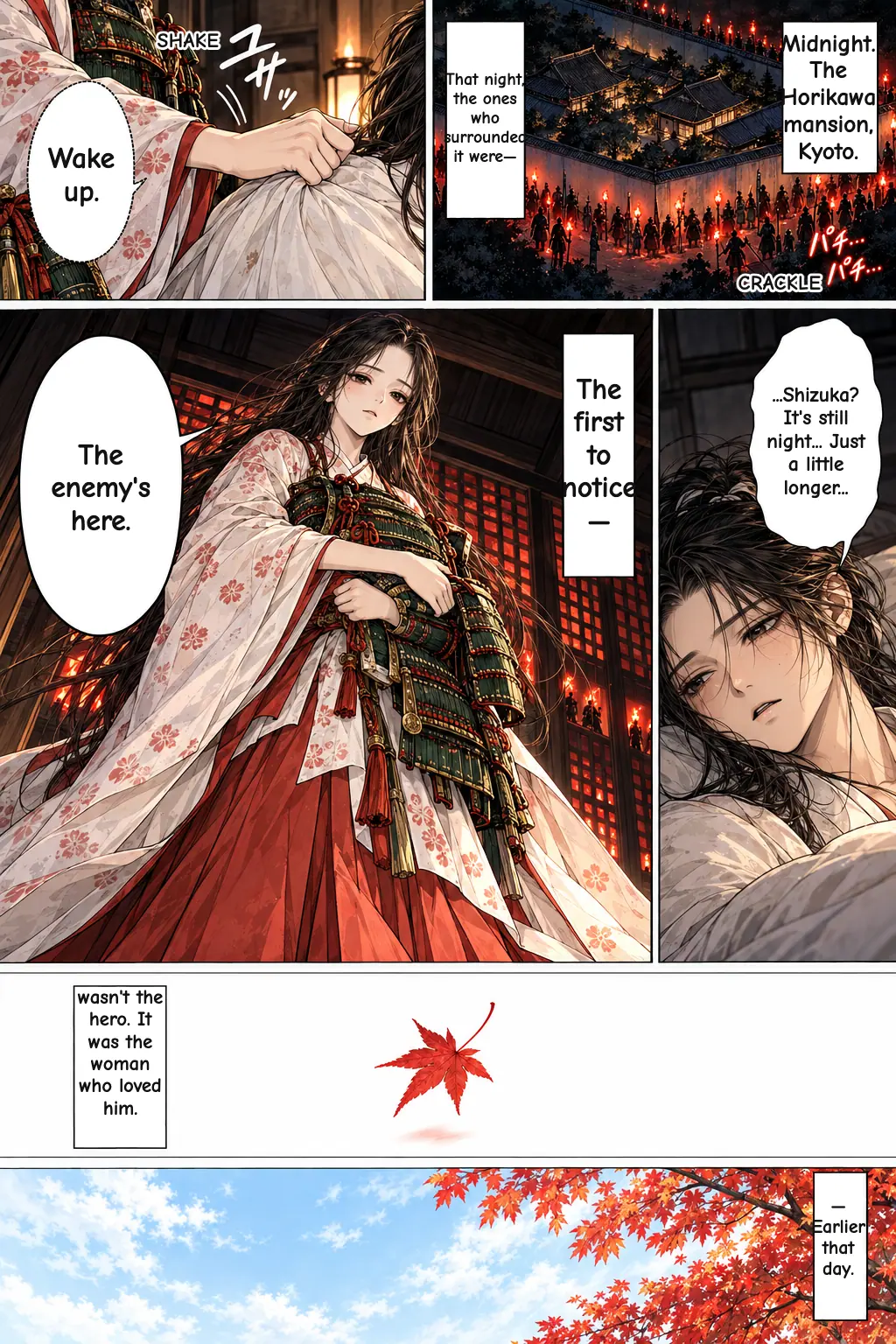
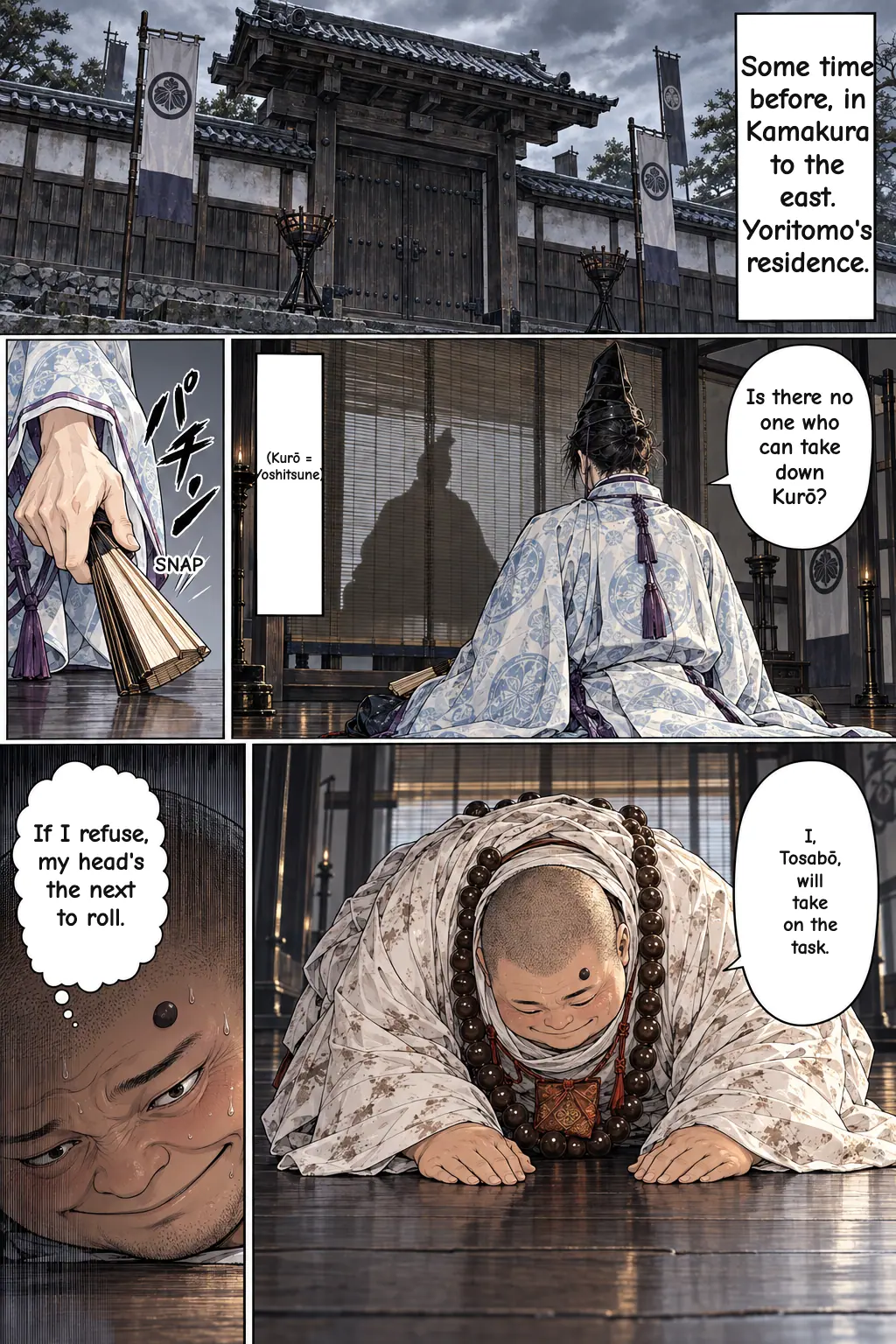
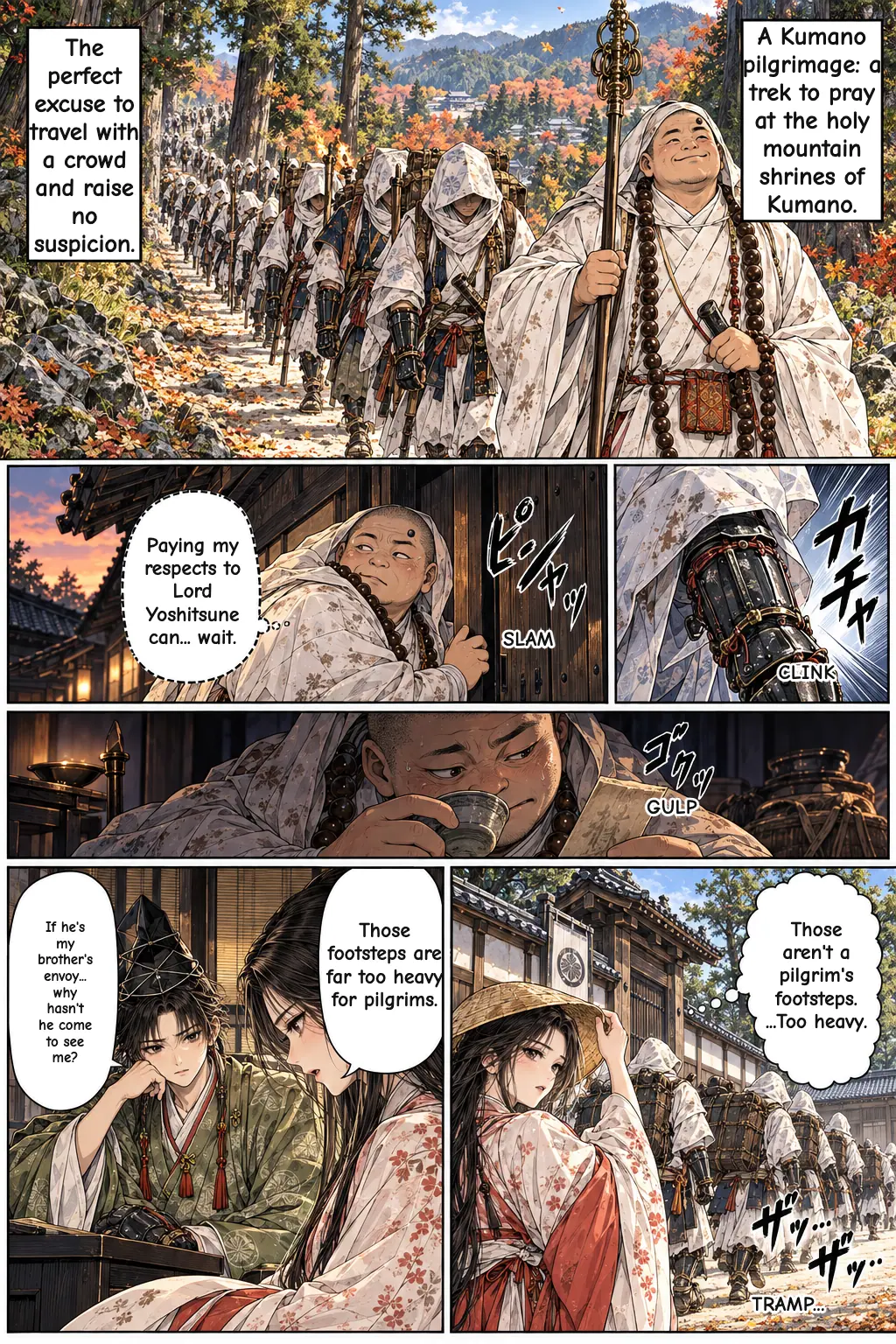
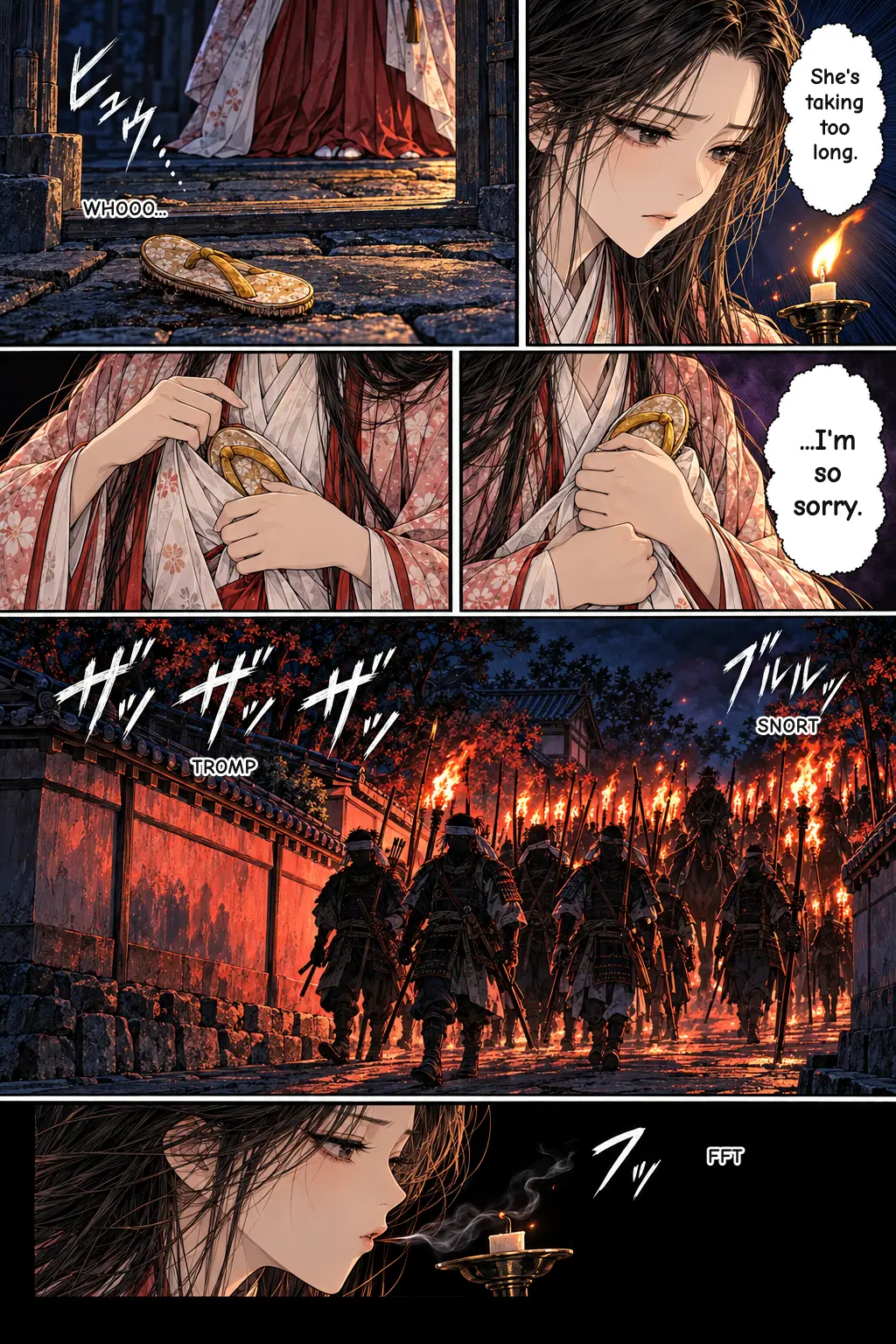
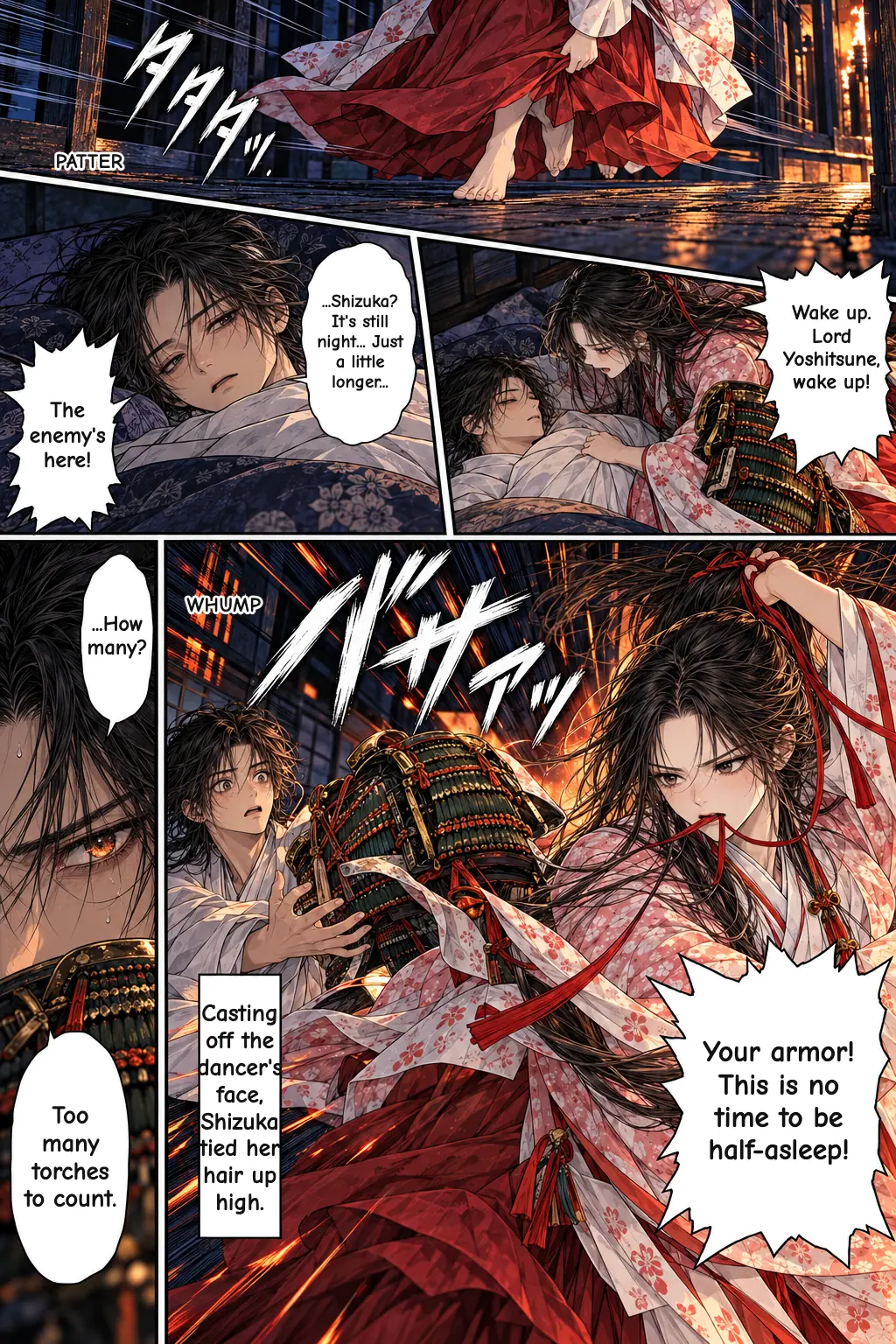
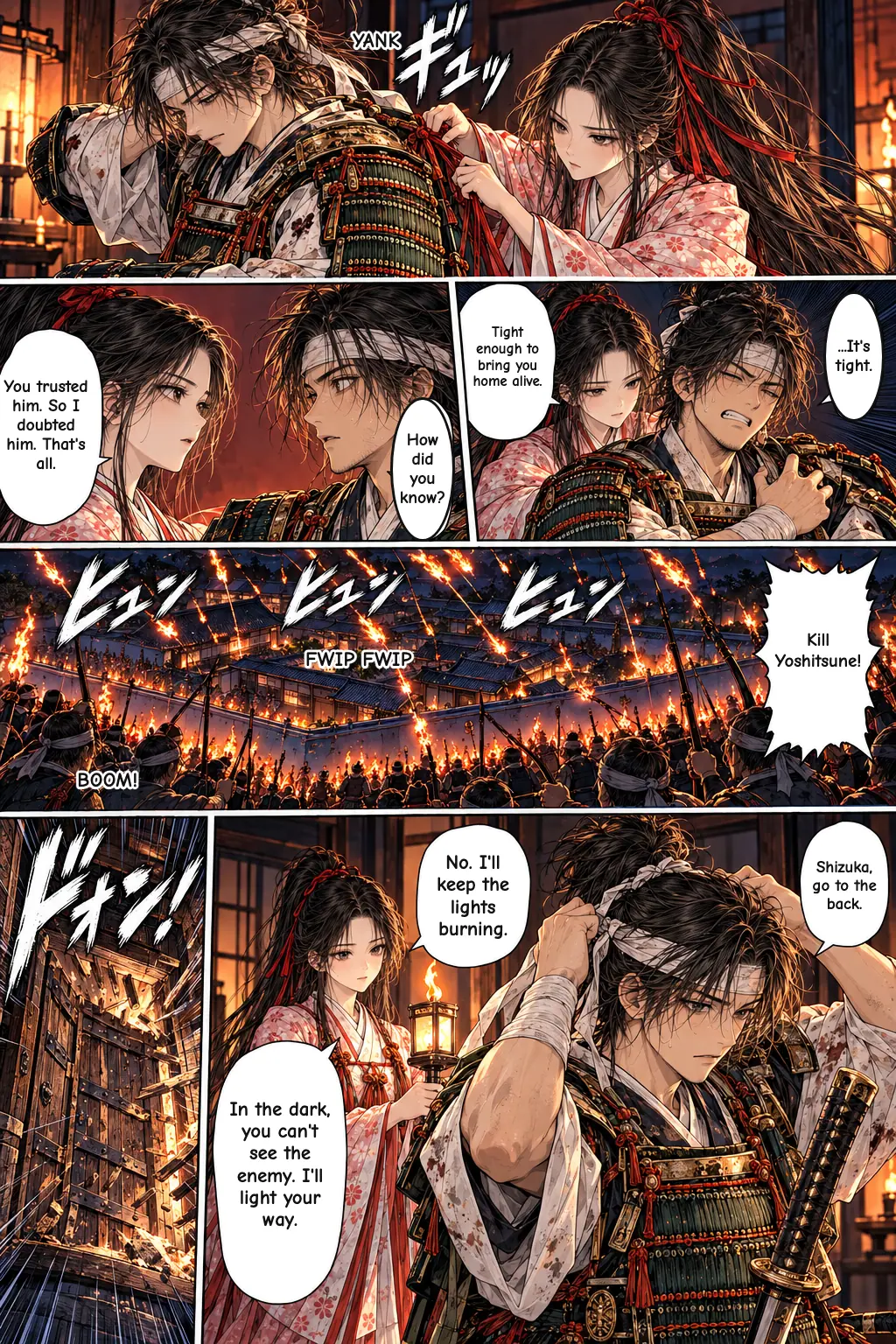
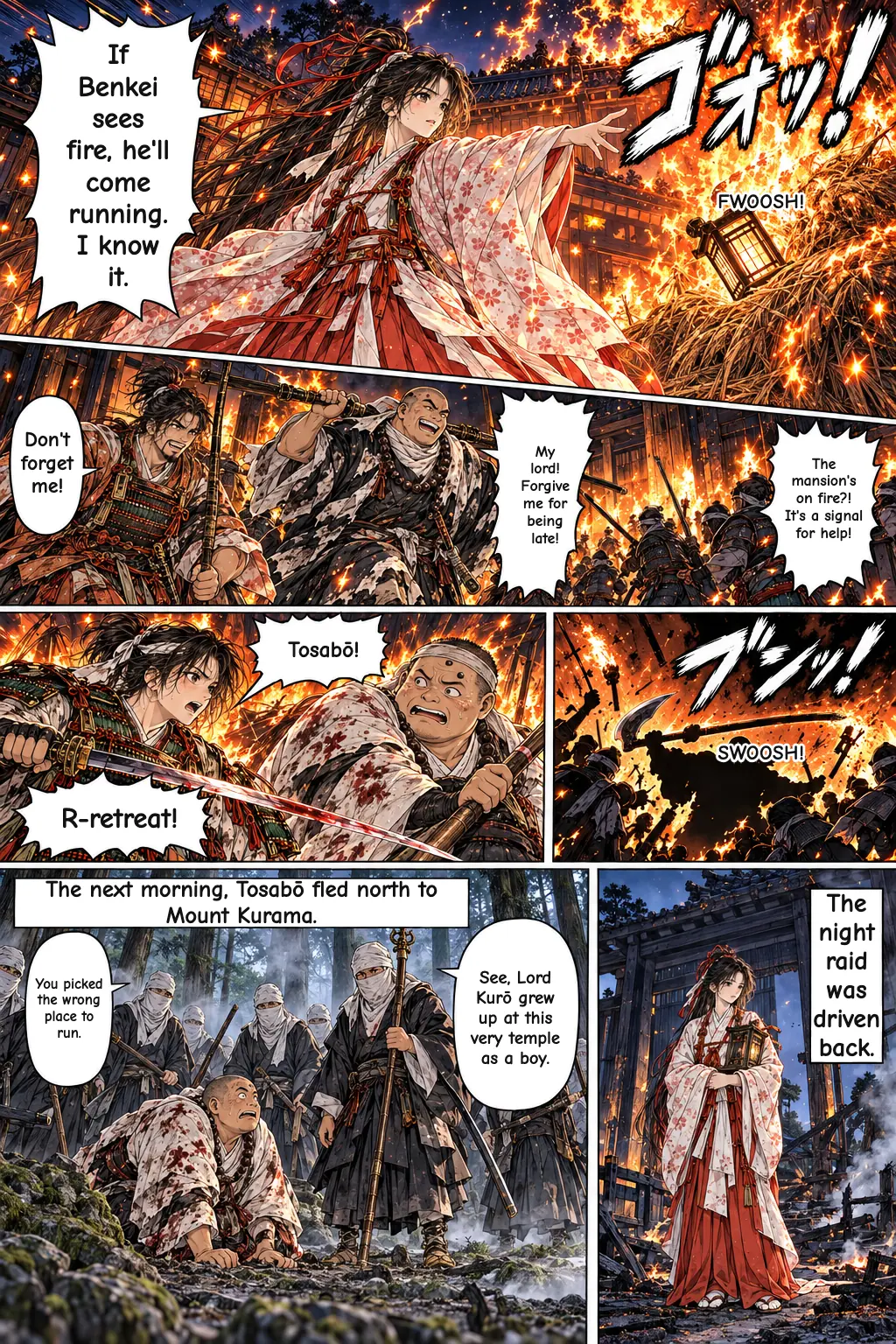
Yoritomo sends the assassin Tosabō to kill his brother, and Yoshitsune accepts Tosabō's false oath because he wants so badly to trust his brother. That night, it is Lady Shizuka, the famous dancer, who senses danger first. She wakes him, straps him into his armor, holds up the lights in the dark, and finally sets the mansion ablaze to call Benkei and the others to the rescue.
The Night Raid at Horikawa: Yoshitsune, Shizuka and the Assassin Tosabō
The Original Story: An Assassin in Kyoto
This episode comes from the Gikeiki ("The Chronicle of Yoshitsune"), a war tale written down in the Muromachi period (roughly the 14th–15th centuries) by an unknown author. It follows Minamoto no Yoshitsune, the brilliant young general who helped his half-brother Minamoto no Yoritomo win the Genpei War. By the time of this chapter in Book Four, the brothers have fallen out. Yoritomo, now ruling the warrior class from Kamakura in eastern Japan, wants Yoshitsune dead, and he looks for someone willing to do the job.
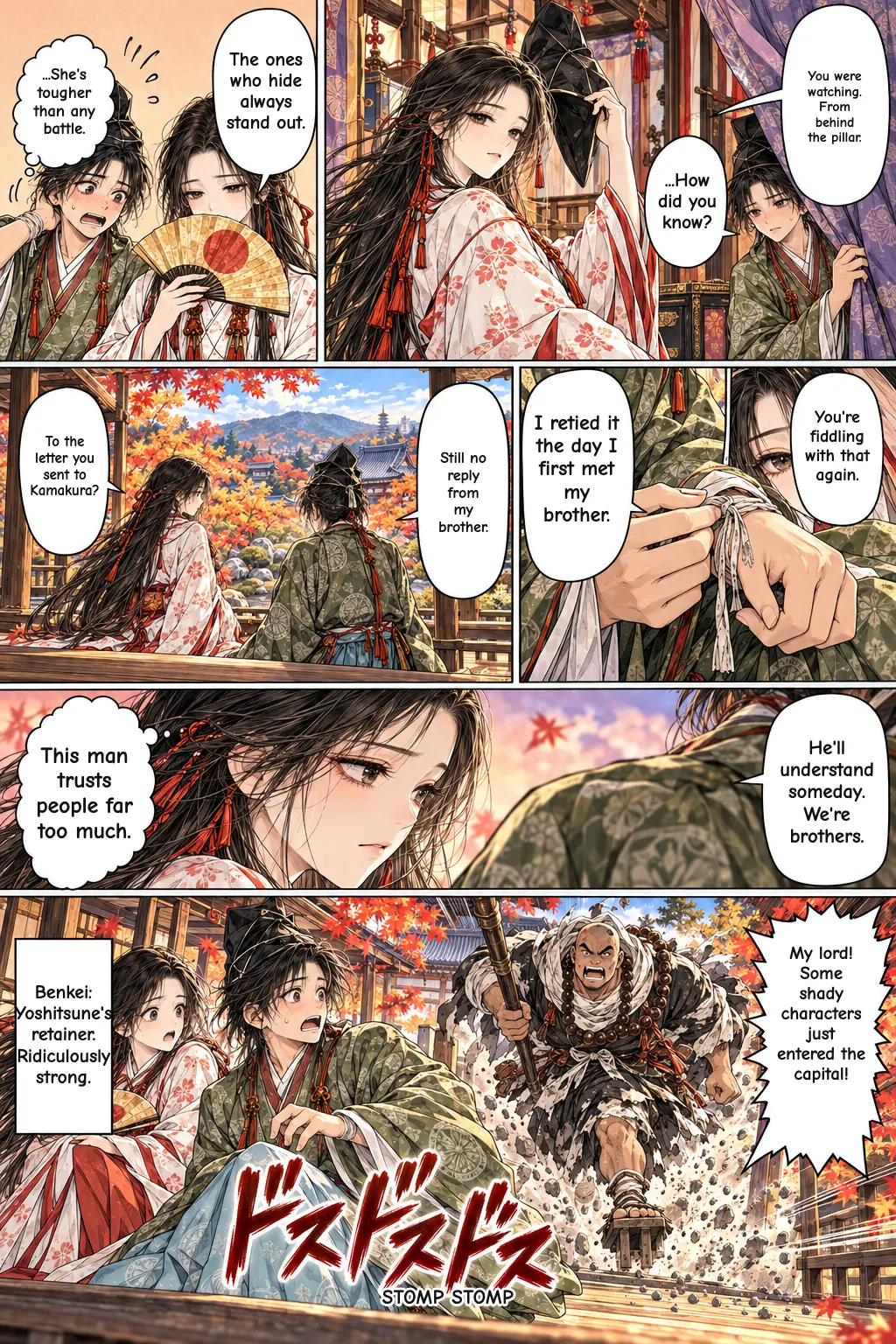
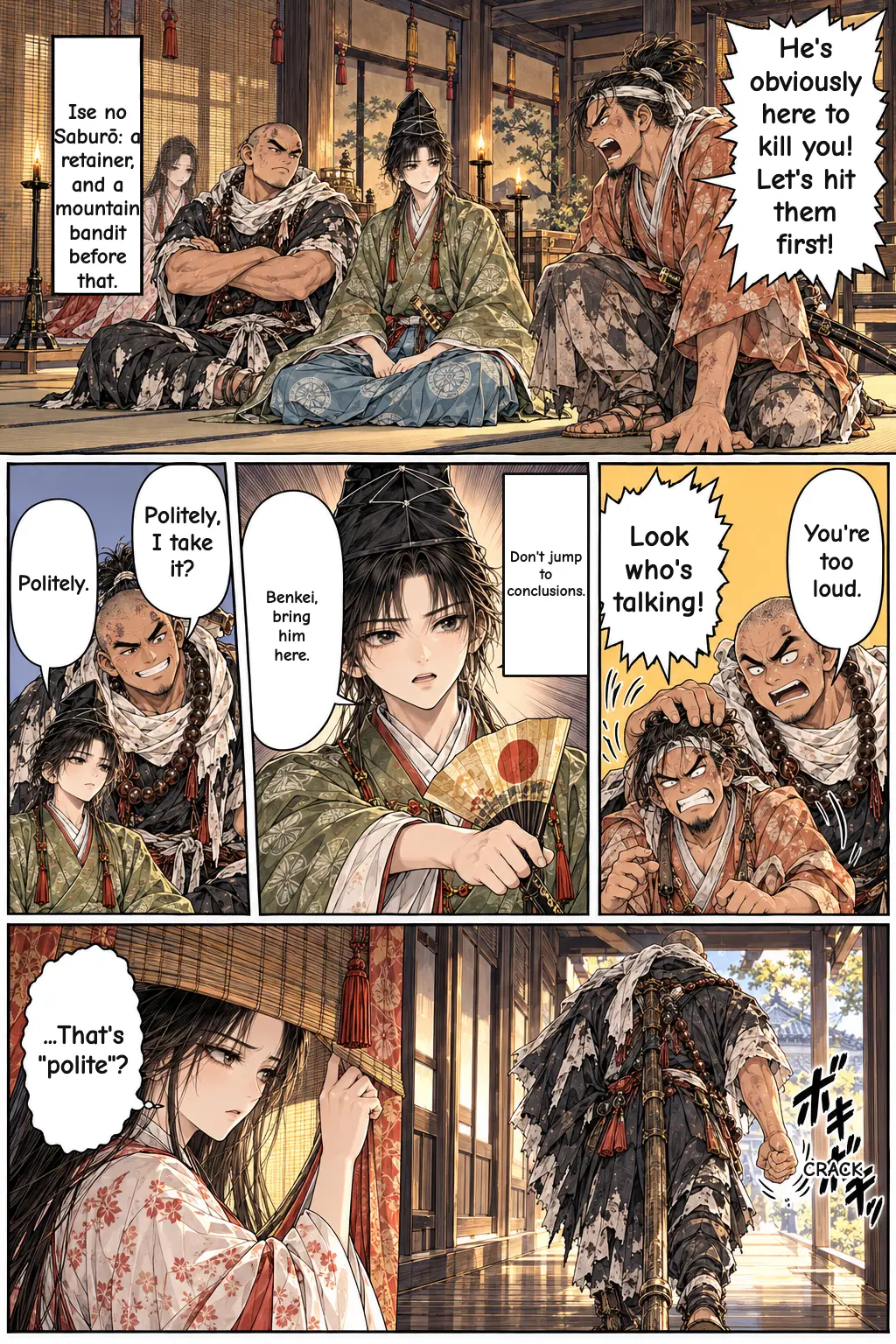
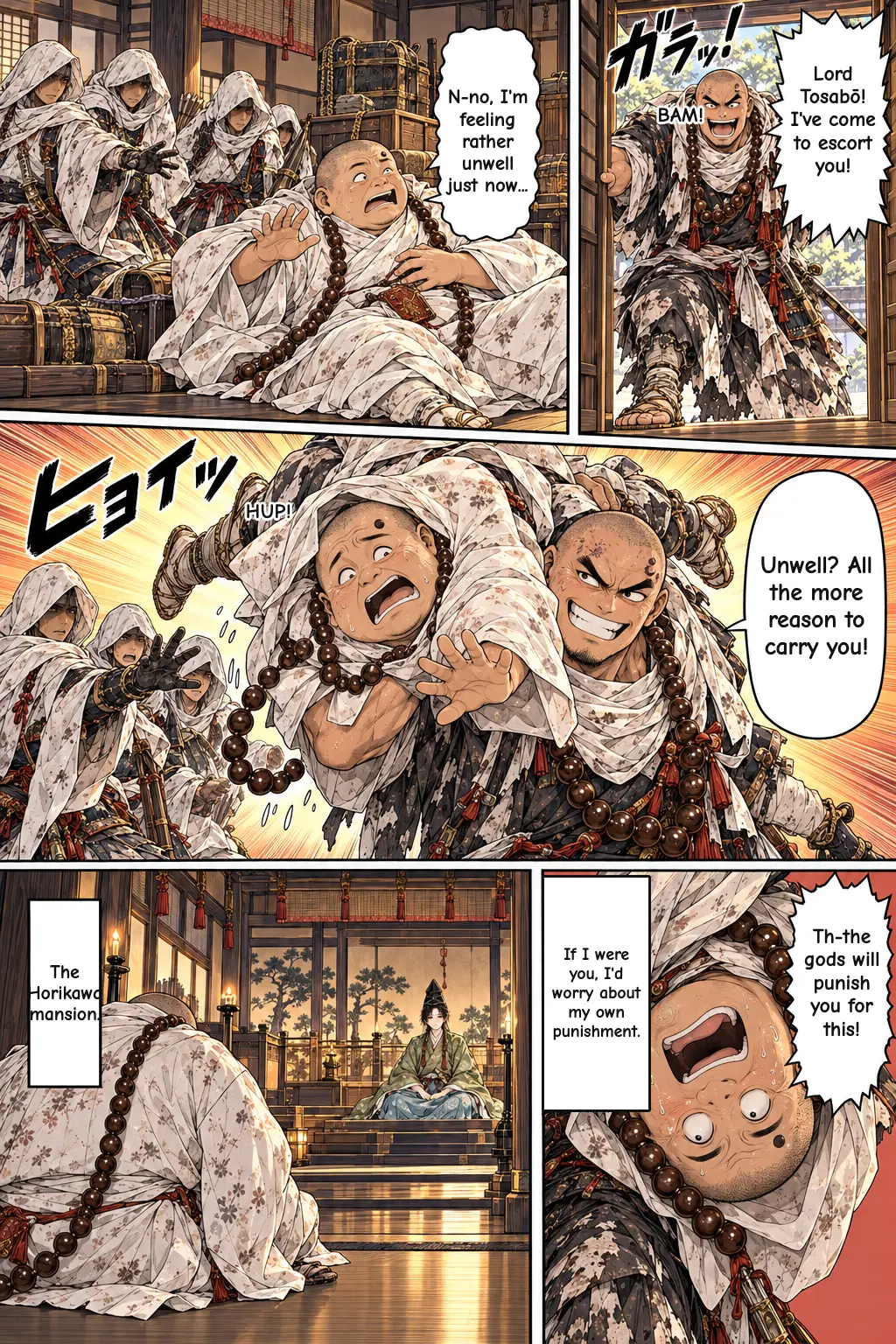
The man who accepts is Tosabō Shōshun, a warrior-monk. He sets out for Kyoto with a small band of followers, claiming he is simply making a pilgrimage to the Kumano shrines. Once in the capital, though, he never comes to pay his respects to Yoshitsune, who lives at a mansion on Horikawa street. Suspicious, Yoshitsune sends his chief retainer, the warrior-monk Benkei, who drags Tosabō to Horikawa by force.
The False Oath and the Night Raid
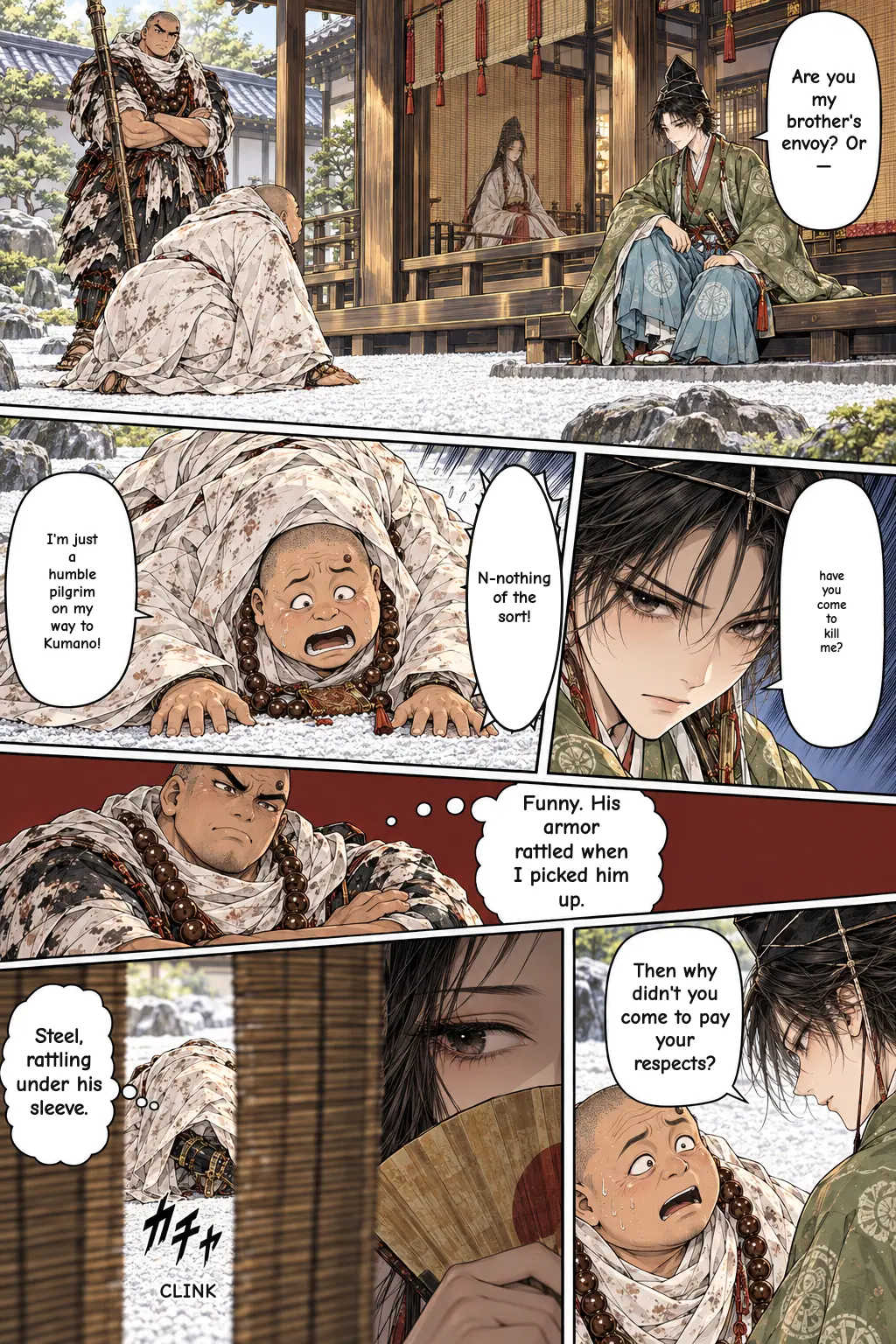
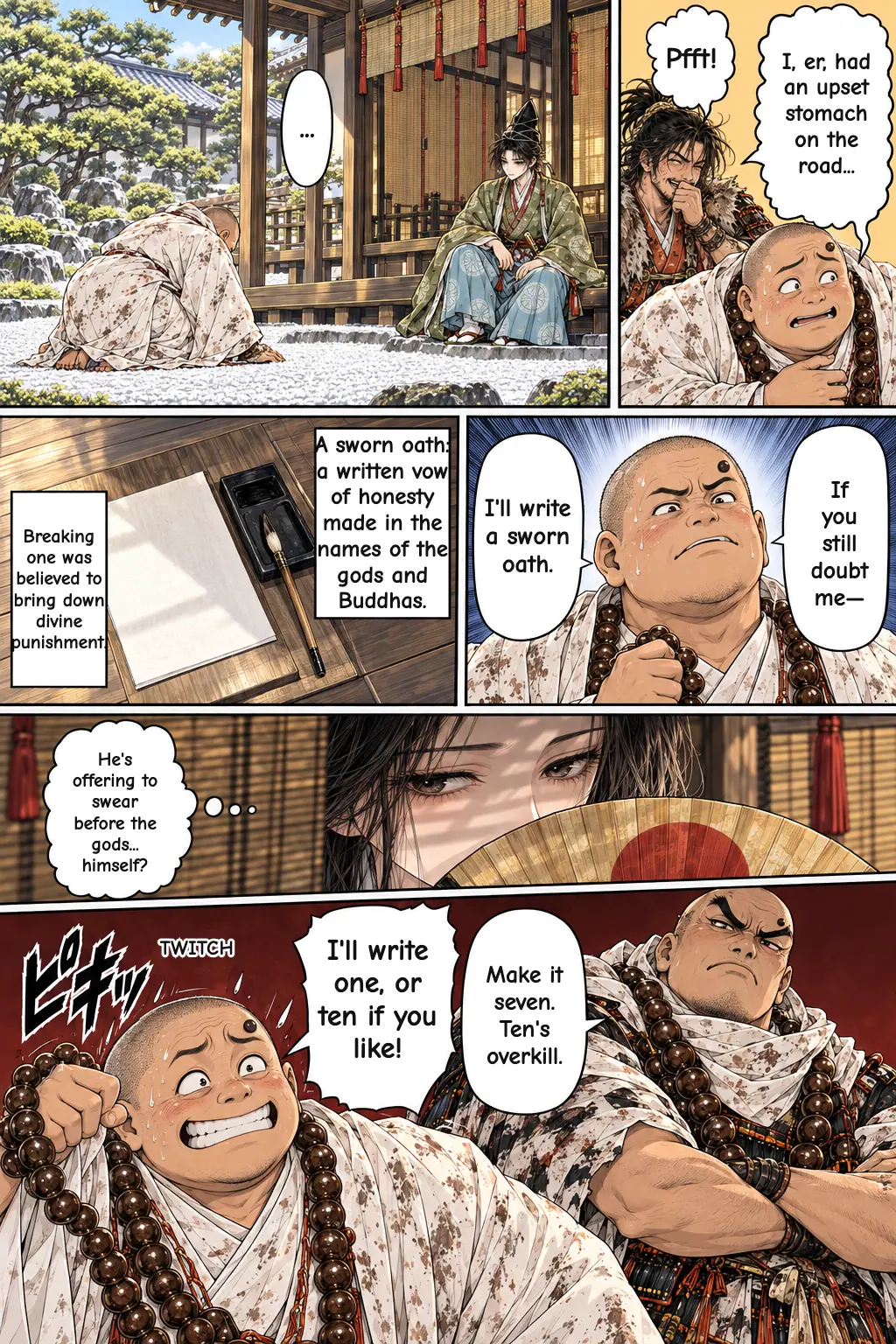
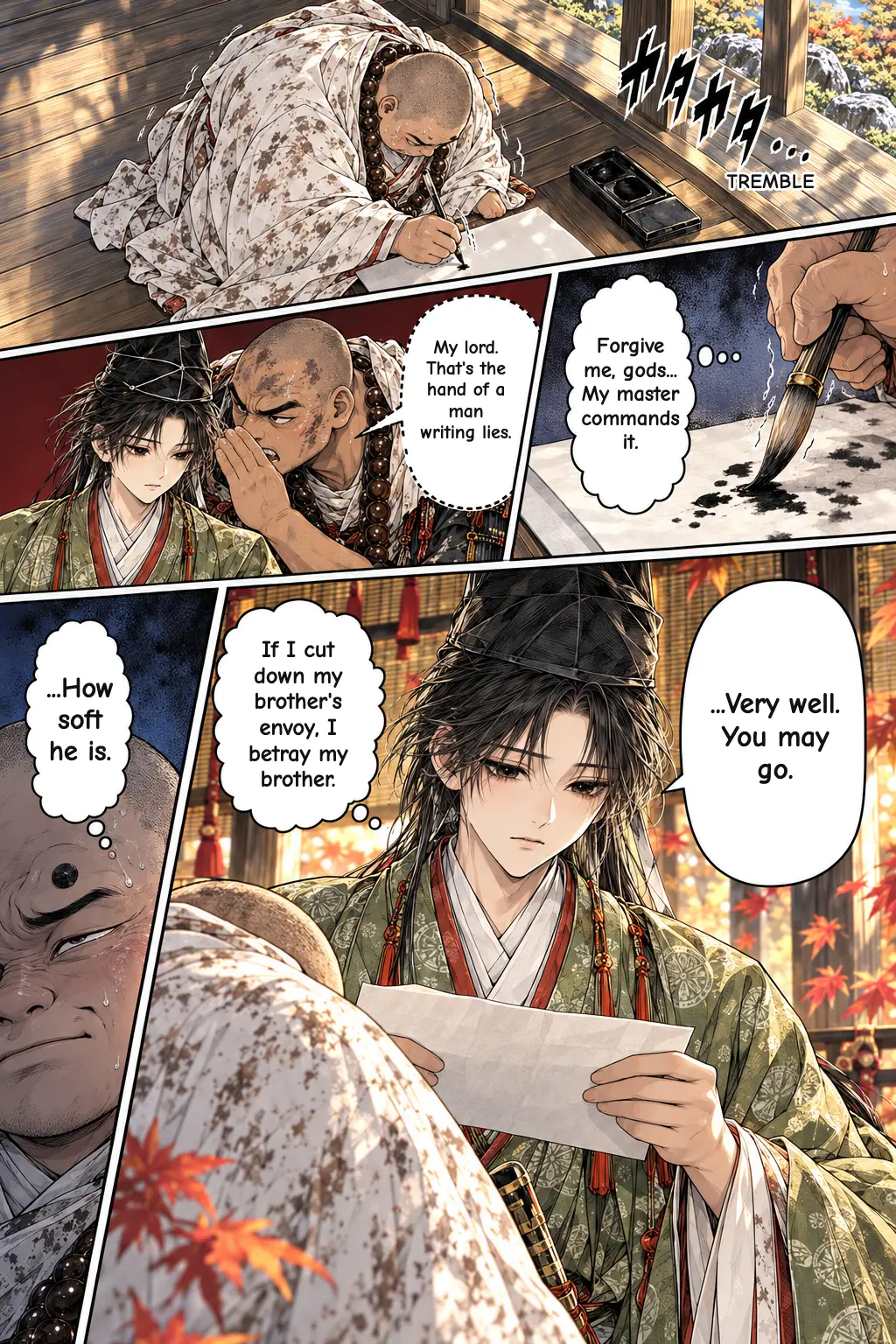
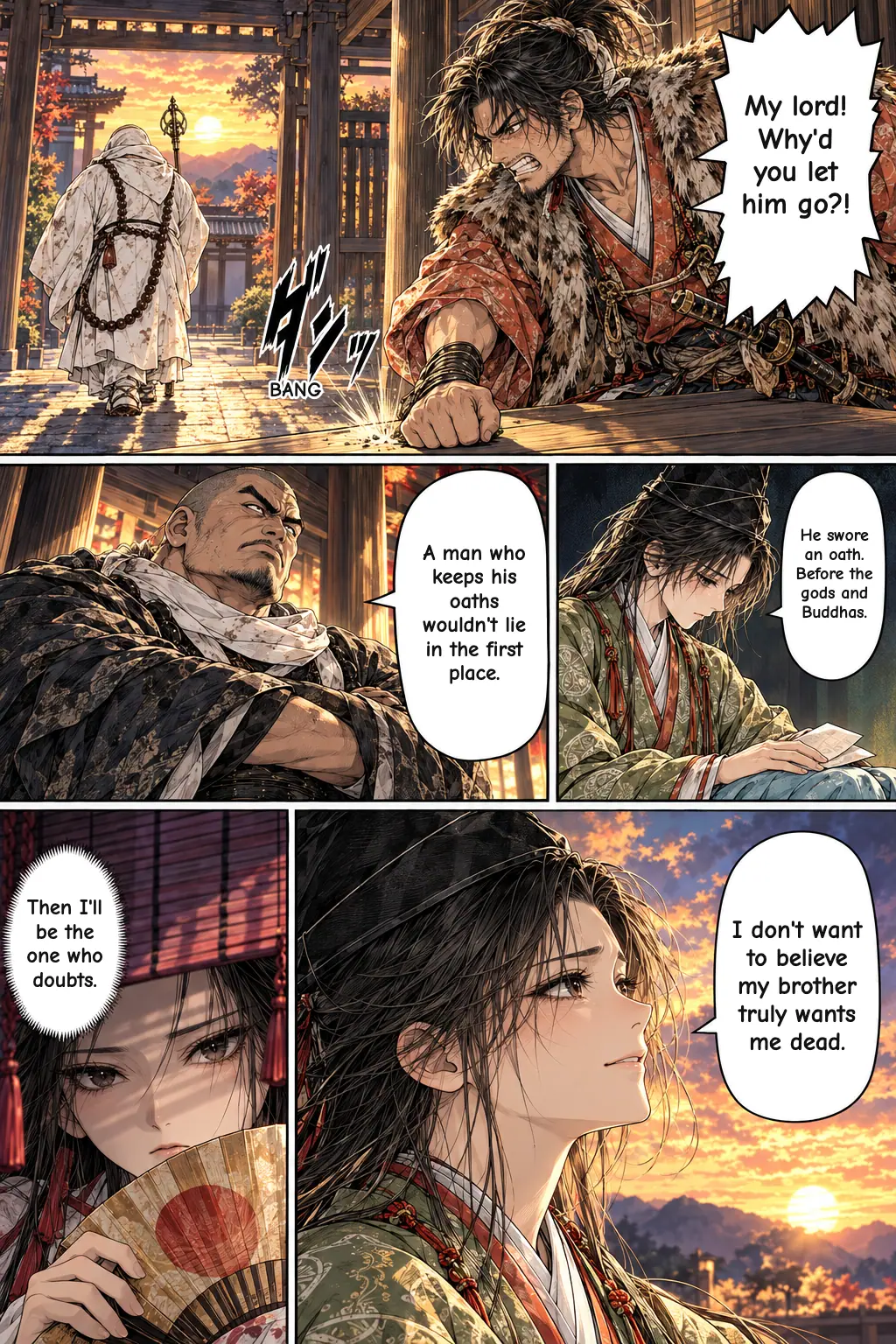
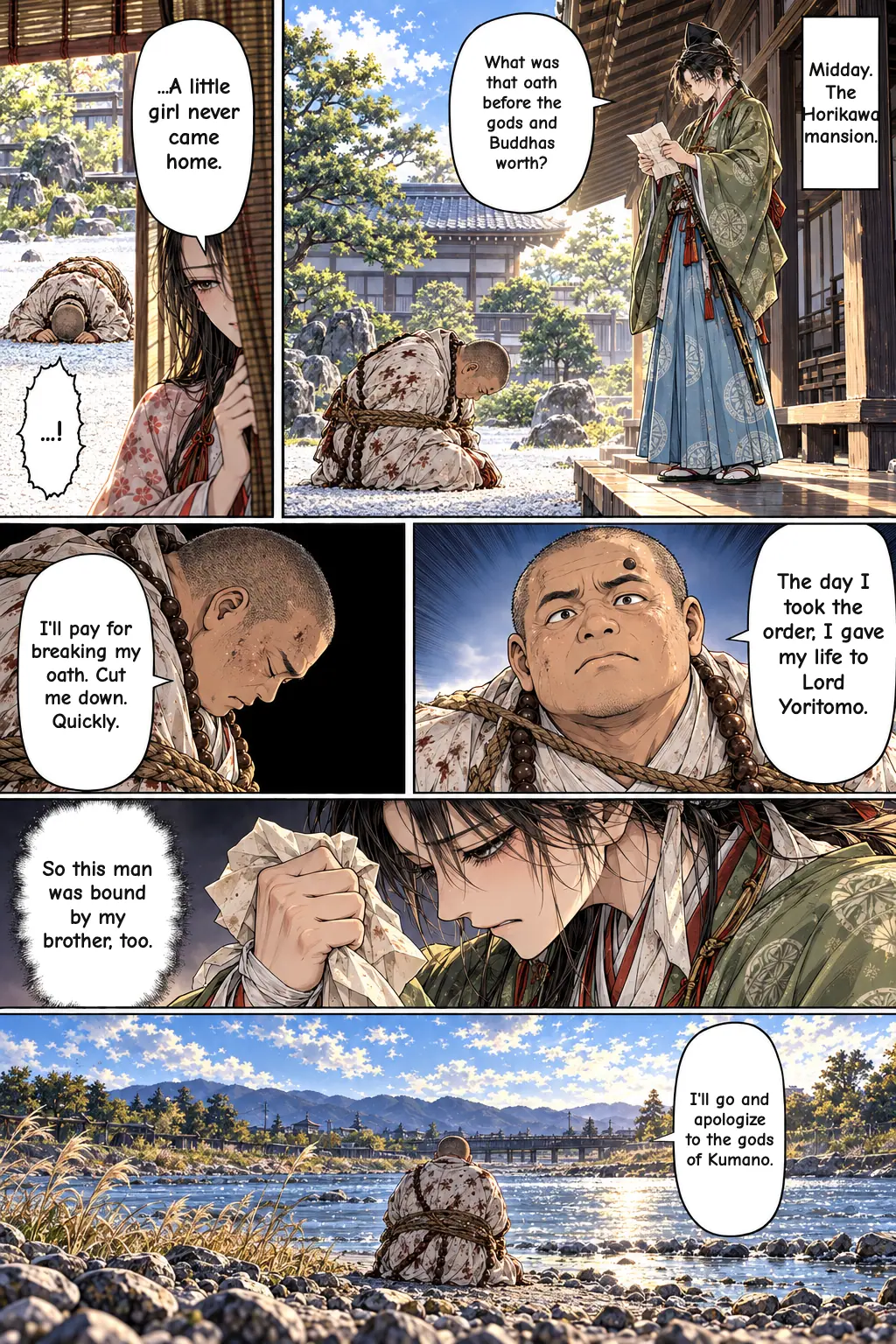
Face to face, Yoshitsune asks Tosabō outright whether he has come to kill him. Tosabō insists he is only a pilgrim, and to prove it he writes a kishōmon, a sacred written oath that calls down the punishment of the gods on anyone who swears falsely. Yoshitsune accepts the oath and lets him go. Readers have long debated whether this shows generosity, a wish to believe the best of his brother's men, or simple carelessness.
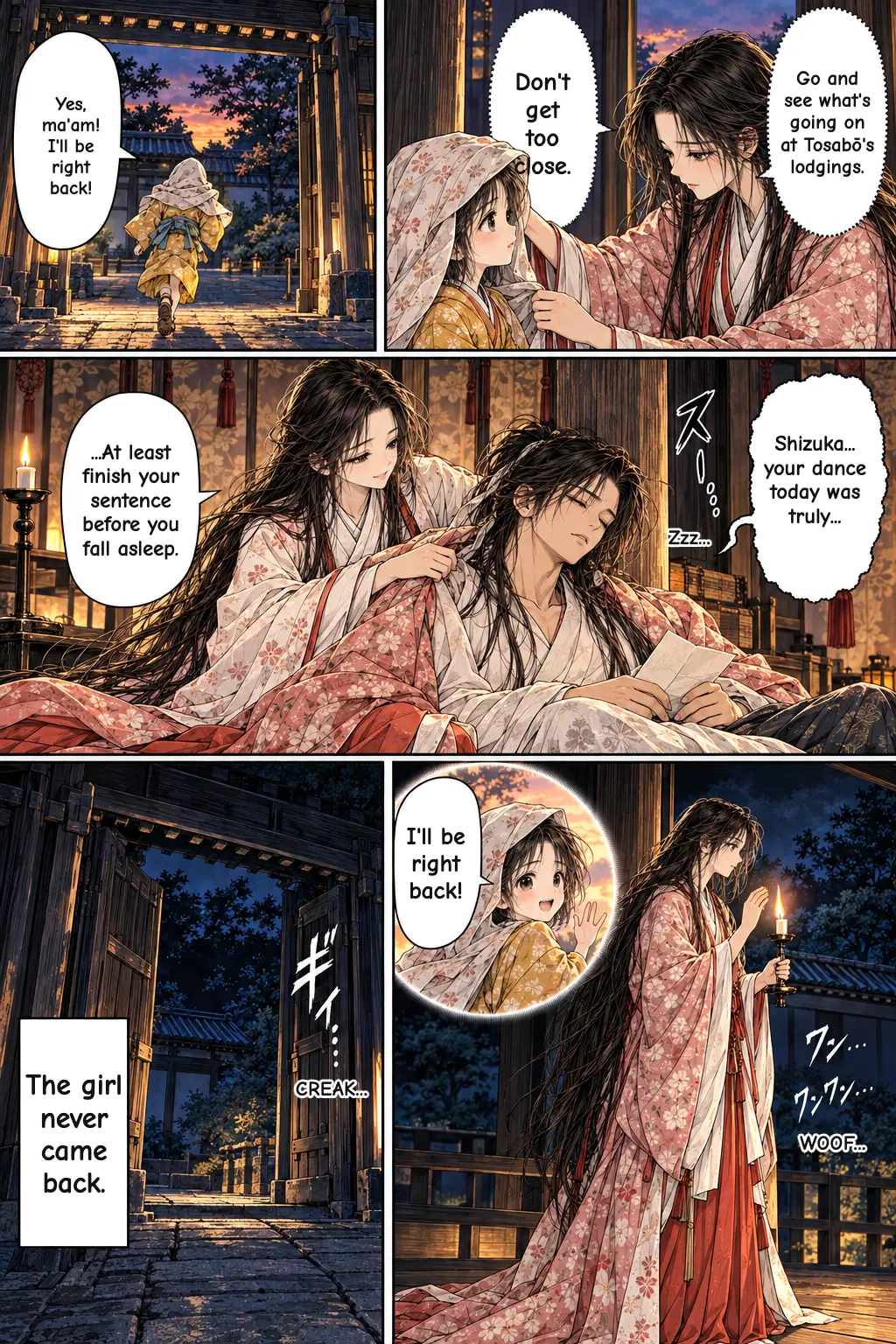
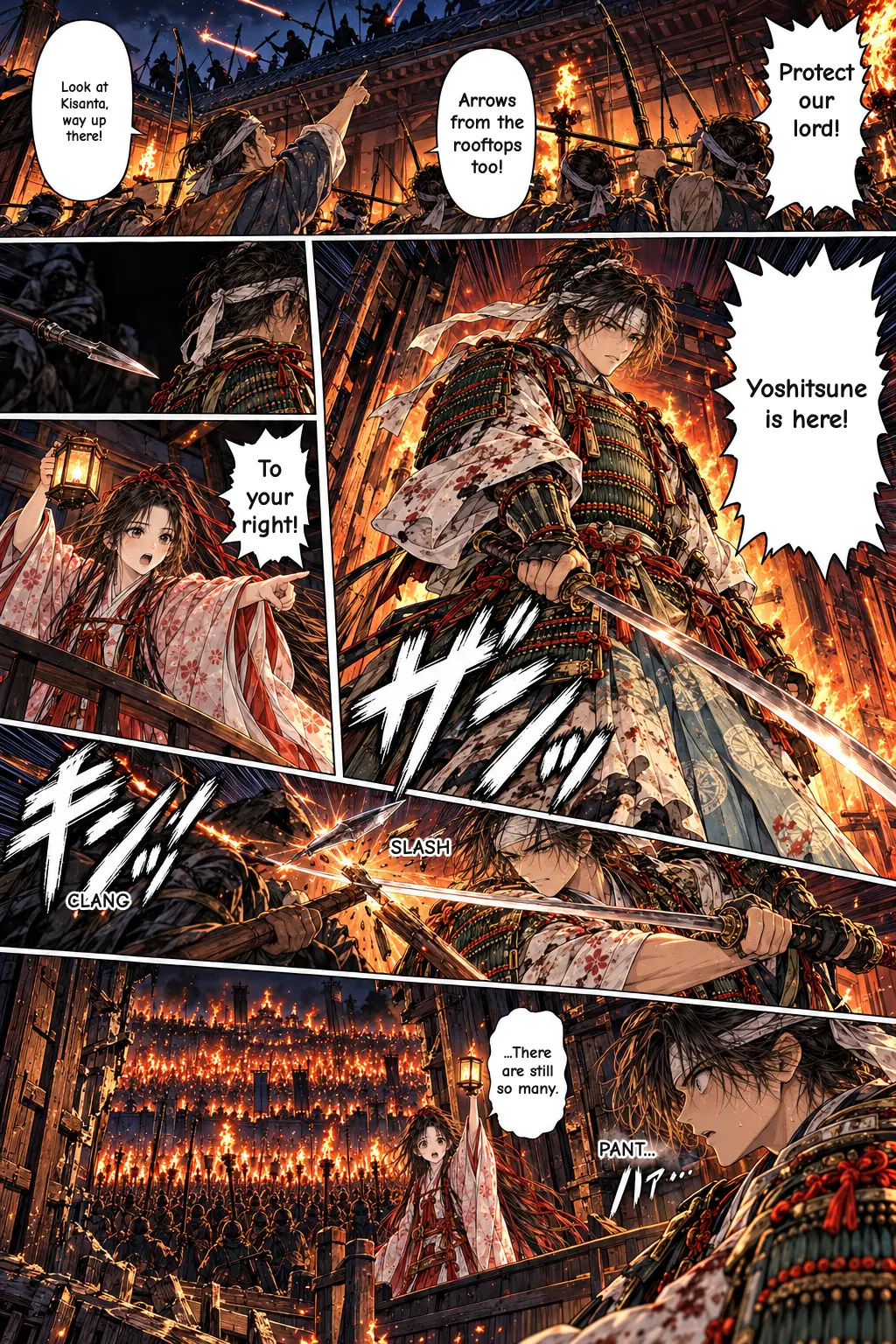
The oath is a lie. That same night Tosabō's men surround the Horikawa mansion. It is Shizuka, Yoshitsune's beloved companion, who senses that something is wrong. She wakes the sleeping Yoshitsune and helps him into his armor. Yoshitsune and his retainers fight back and drive off the attackers.
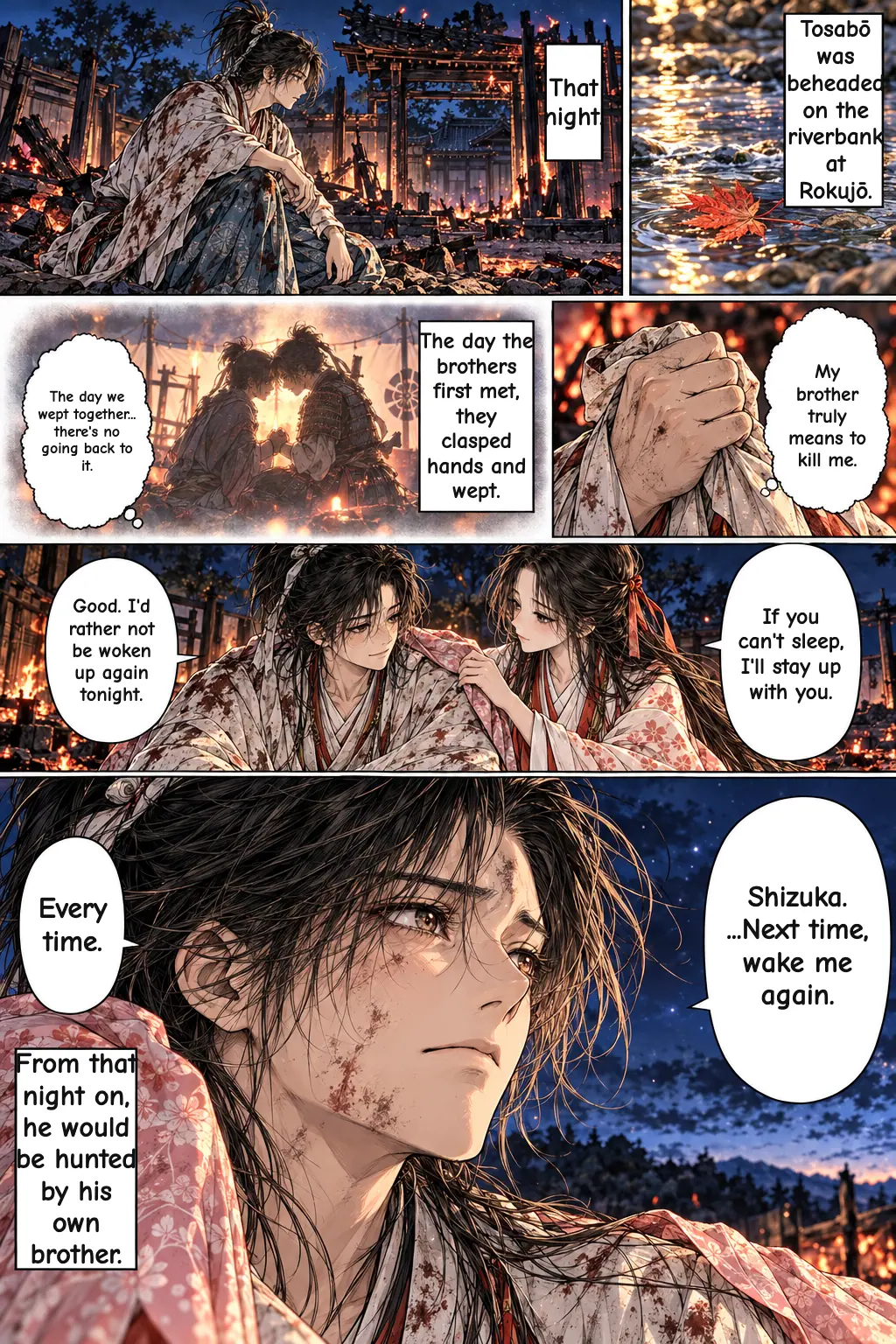
Tosabō flees deep into the mountains of Kurama, north of Kyoto, but he is caught and brought back to Horikawa. After Yoshitsune questions him, he is beheaded on the riverbank at Rokujō-gawara, a common place of execution in the capital. Some retellings, most clearly The Tale of the Heike, add that Shizuka sent a servant girl to spy on Tosabō's lodgings and that the girl never returned. How far the Gikeiki itself tells this detail is less certain.
Main Characters
Minamoto no Yoshitsune (often called Hōgan, from his court title) is the hero: a gifted general, but trusting toward the family that is turning against him. Benkei, the giant warrior-monk, is his most loyal follower and the one who hauls Tosabō in. Tosabō Shōshun (written with different characters in the chronicle Azuma Kagami) is a monk who takes on the role of assassin and breaks a sacred vow to do it.
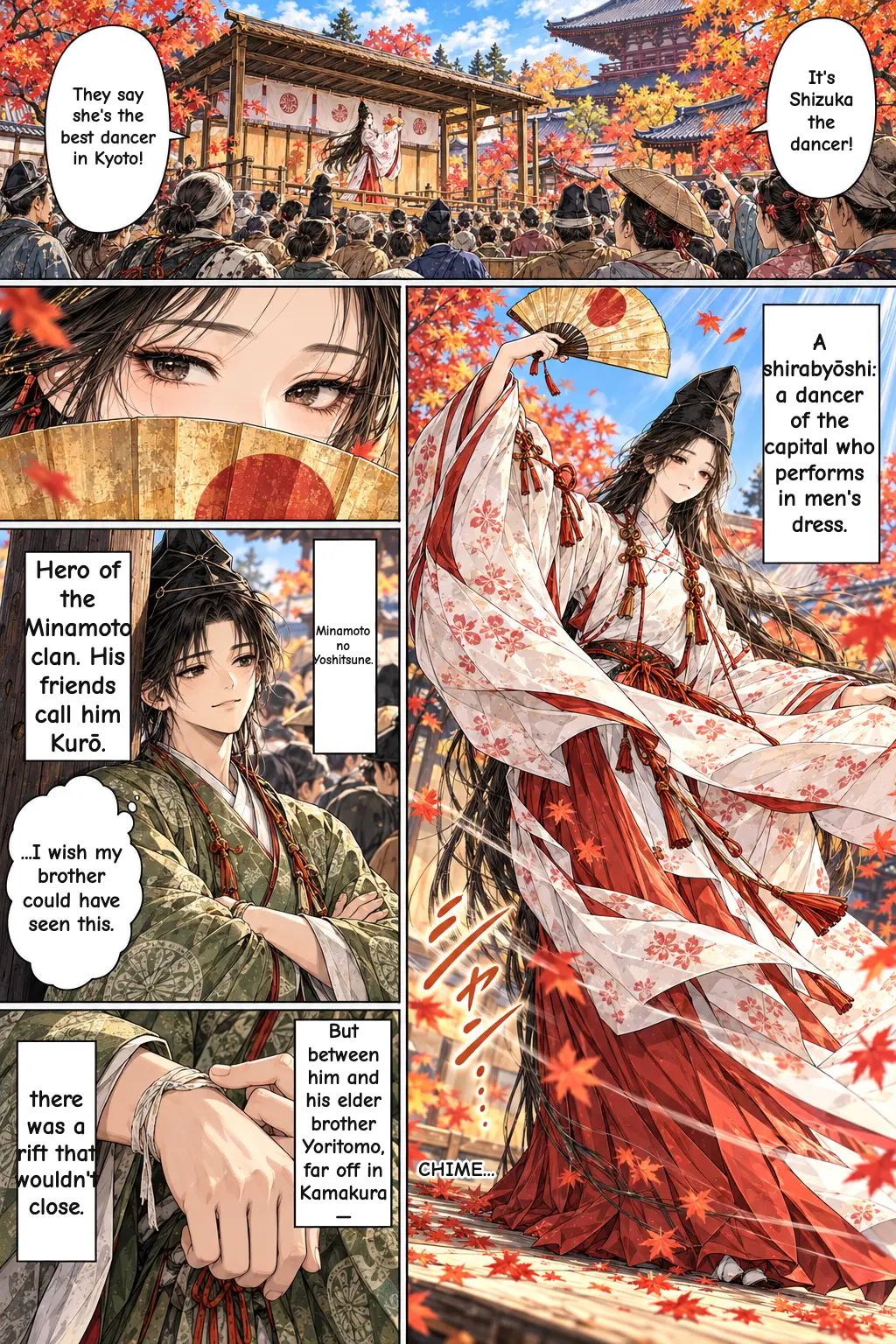
Shizuka Gozen, or Lady Shizuka, is the heroine of this night. Elsewhere in the Gikeiki she is clearly described as a shirabyōshi, a performer of a dance done in male court dress, and she is one of the most famous women in Japanese legend. Minamoto no Yoritomo never appears in Kyoto in this chapter. He stays in Kamakura, present only as the brother who gave the order.
What the Story Means: Brothers, Oaths and Betrayal
The raid at Horikawa is a turning point. Before it, Yoshitsune could still hope that the quarrel with his brother was a misunderstanding. After it, there is no doubt left. In historical records the attack is dated to late 1185, and soon afterward Yoshitsune sought permission from the retired emperor to move against Yoritomo, then left the capital. That is the start of the long flight that fills the rest of the Gikeiki.
The broken kishōmon matters too. In medieval Japan such oaths were taken very seriously, because the gods themselves were witnesses. Tosabō's readiness to swear falsely marks him as a villain, and it shows how far Yoritomo's side will go. Meanwhile Shizuka's quick thinking gives her a role in the story that is about more than romance. The Gikeiki's sympathy for the doomed younger brother helped create the Japanese ideal of hōgan-biiki, rooting for the tragic underdog.
What the Manga Changes
The manga keeps the main line of the original: Yoritomo's order, the false pilgrimage, Benkei bringing Tosabō in, the false oath, the night attack, Shizuka waking and arming Yoshitsune, and Tosabō's capture and execution. Other parts are the manga's own invention. These include the opening scenes showing Shizuka's charm as a dancer (this chapter of the original has no dance scene), Tosabō's private thoughts when he accepts the mission, Benkei's scuffle and dialogue at the inn, and the tense looks traded during the oath.
The manga also stages the night itself in its own way. The sounds and torchlight that alert Shizuka, the way she holds up the lights, and her setting the mansion ablaze to call Benkei and the others are dramatic choices that give her an even bigger part than the classic accounts do. The fight choreography is new as well. Finally, Yoshitsune's closing realization that his brother truly means to kill him is shown through his thoughts and expressions. That is the manga's reading of the moment, not a line taken from the original text.
Read the Episode on Manga Portal
If you would like to see Shizuka's long night unfold panel by panel, Episode 7 of THE LEGEND OF YOSHITSUNE: Ushiwaka and Benkei is right above this article. The whole series, from Ushiwaka's boyhood at Kurama to his first meeting with Benkei and beyond, is free to read on Manga Portal with no sign-up required, so you can begin wherever you like and follow Yoshitsune's story to its end.
Characters in this episode
Minamoto no Yoshitsune
The heroic young general who takes an assassin's false oath on trust and has to fight for his life that same night.
Shizuka Gozen (Lady Shizuka)
Yoshitsune's beloved companion, a famous dancer, who senses the attack first, wakes him and helps him into his armor.
Benkei
Yoshitsune's huge, fiercely loyal warrior-monk retainer, who drags the assassin to Horikawa and fights in the defense.
Tosabō Shōshun
A monk who agrees to kill Yoshitsune, pretends to be a pilgrim, swears a false oath and leads the night raid.
Minamoto no Yoritomo
Yoshitsune's elder half-brother and the ruler in Kamakura, who sends the assassin but never appears in Kyoto.
FAQ
Why did Yoritomo want to kill Yoshitsune?
After the Genpei War the brothers fell out. Yoritomo saw Yoshitsune's fame and his close ties to the imperial court in Kyoto as a threat to his own authority. In the Gikeiki, Yoritomo's search for someone to kill Yoshitsune is what sets off the attack at Horikawa.
What happened in the night raid at Horikawa?
Tosabō Shōshun, sent by Yoritomo, attacked Yoshitsune's Horikawa mansion in Kyoto at night, just after swearing a sacred oath that he meant no harm. Yoshitsune and his retainers drove the attackers off. Tosabō was later caught near Kurama and executed at Rokujō-gawara.
What role did Shizuka Gozen play in the attack?
In the Gikeiki, Shizuka grows suspicious of Tosabō and notices the danger that night. She wakes Yoshitsune and helps him into his armor, so he is ready to fight. It is one of her best-known scenes outside her famous dances.
What is a kishōmon?
A kishōmon is a written oath in which the writer calls on gods and buddhas to punish them if they lie. Tosabō wrote one to convince Yoshitsune he was only a pilgrim. Breaking such an oath was considered a grave sin, which is why his betrayal seems so shocking.
Is the Gikeiki a true story?
The Gikeiki is based on real people and events, but it is a literary war tale written about two centuries later, with plenty of legend mixed in. The Horikawa attack also appears in historical records such as the Azuma Kagami, which dates it to 1185. Many details and conversations, however, belong to storytelling.