Episode 2The Bandits Picked the Wrong GuestYoshitsune's Coming of Age at Kagami Inn
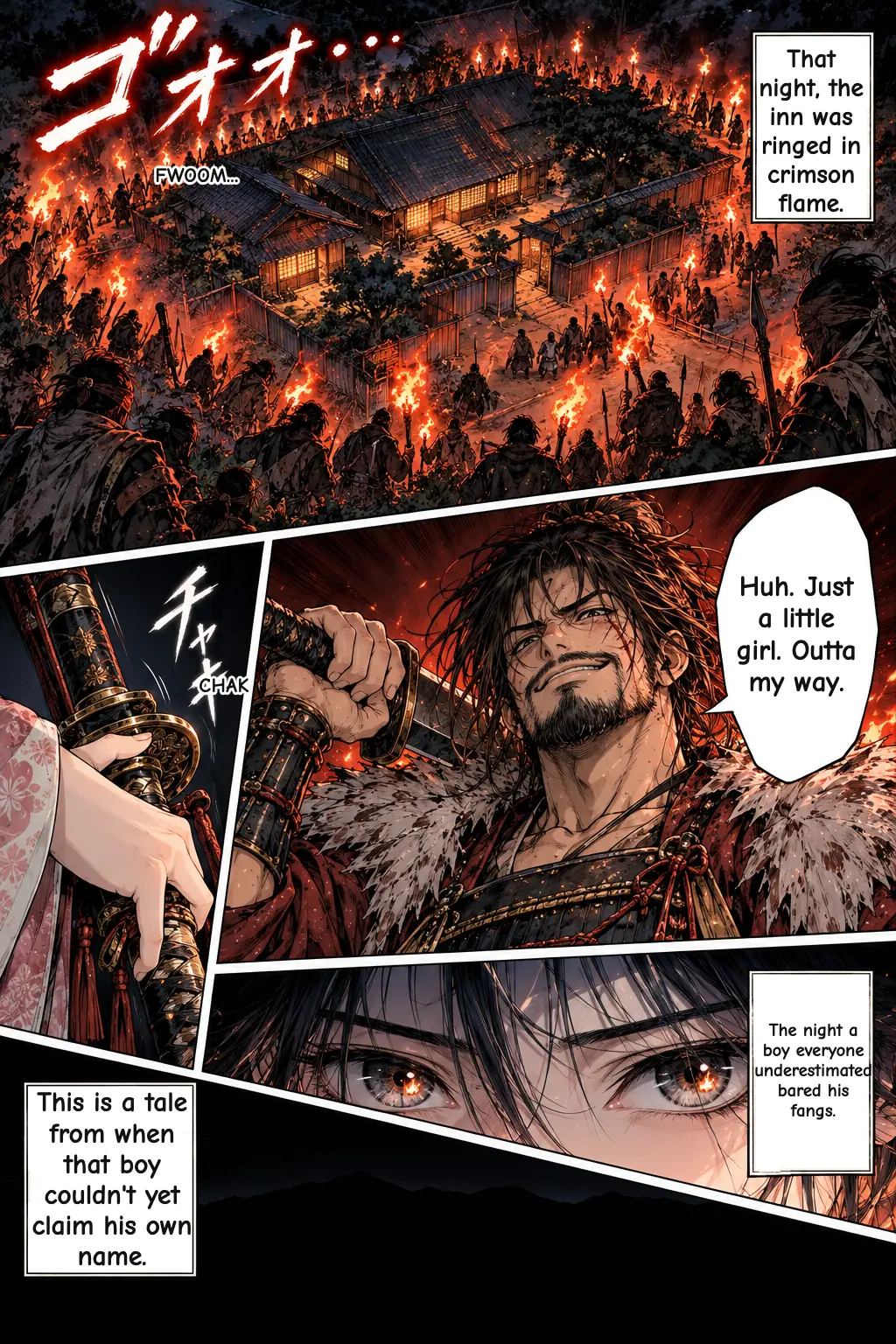
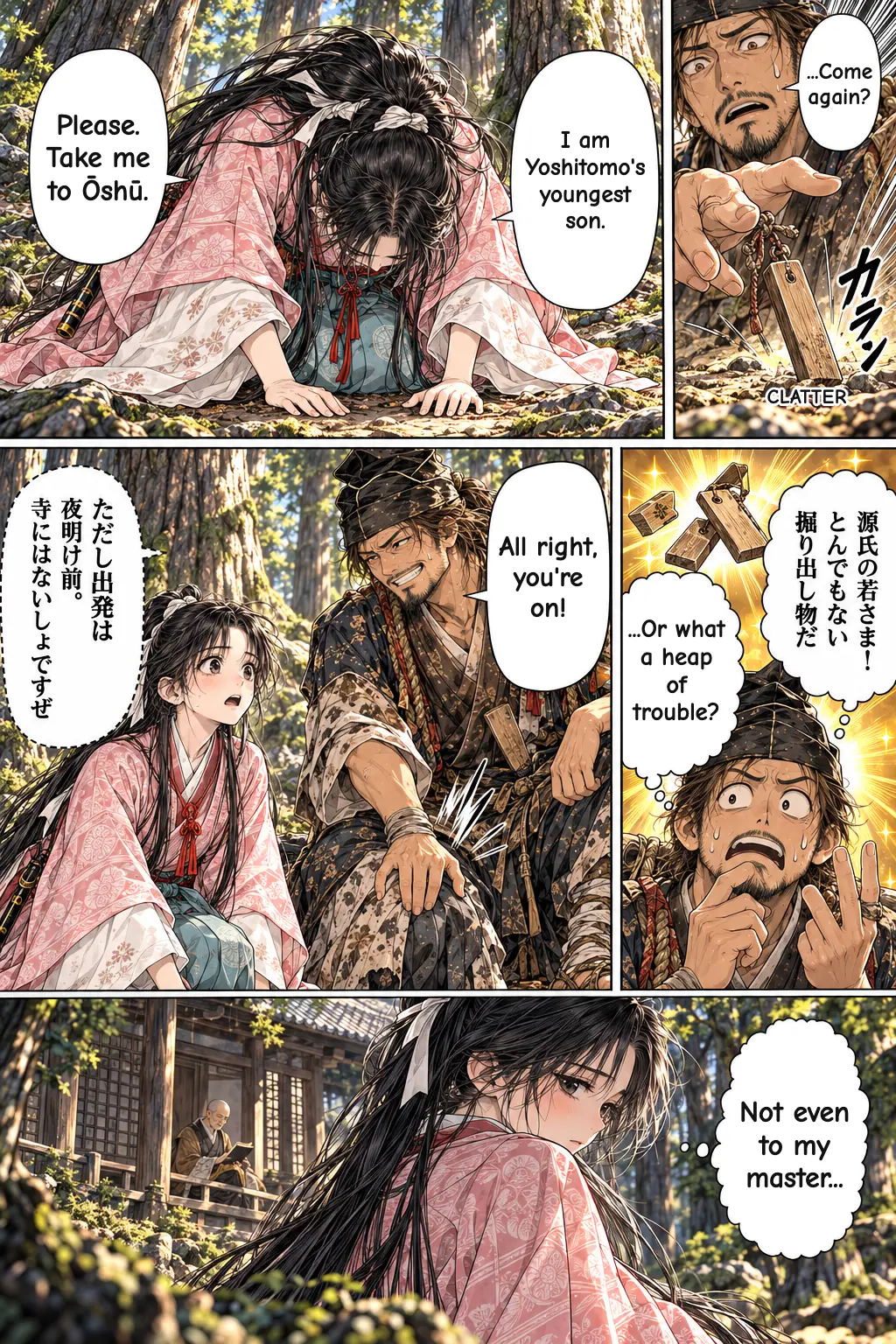
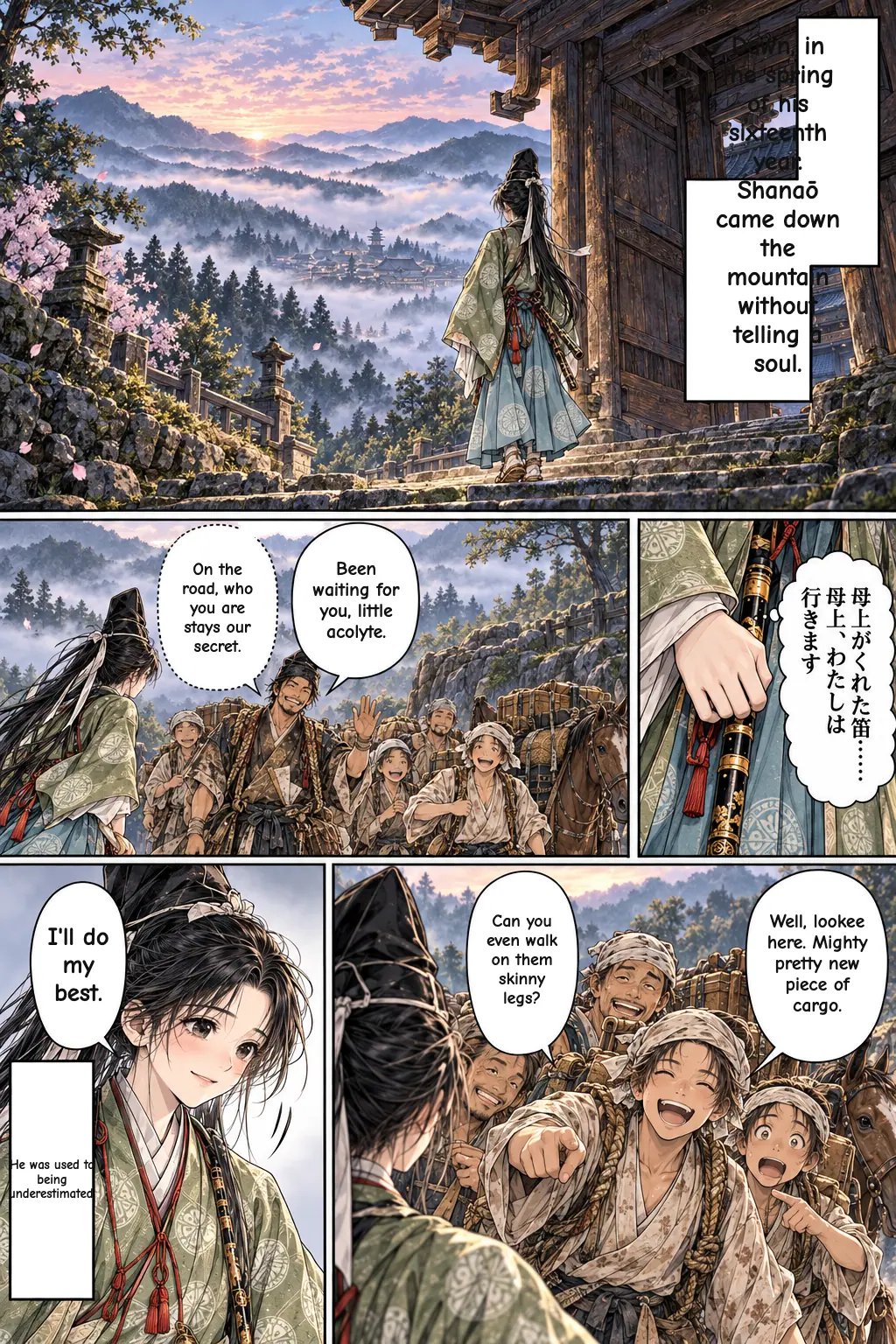
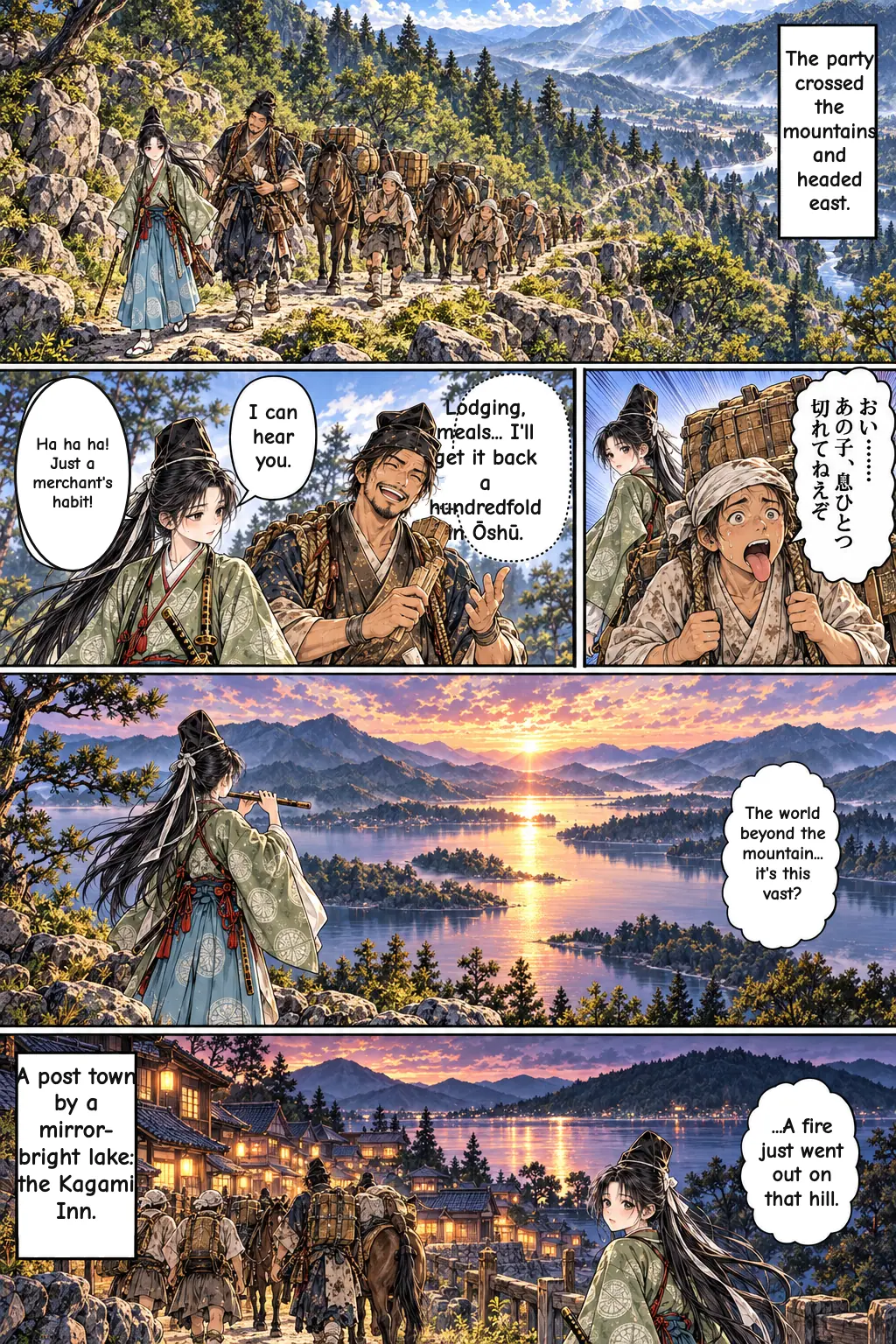
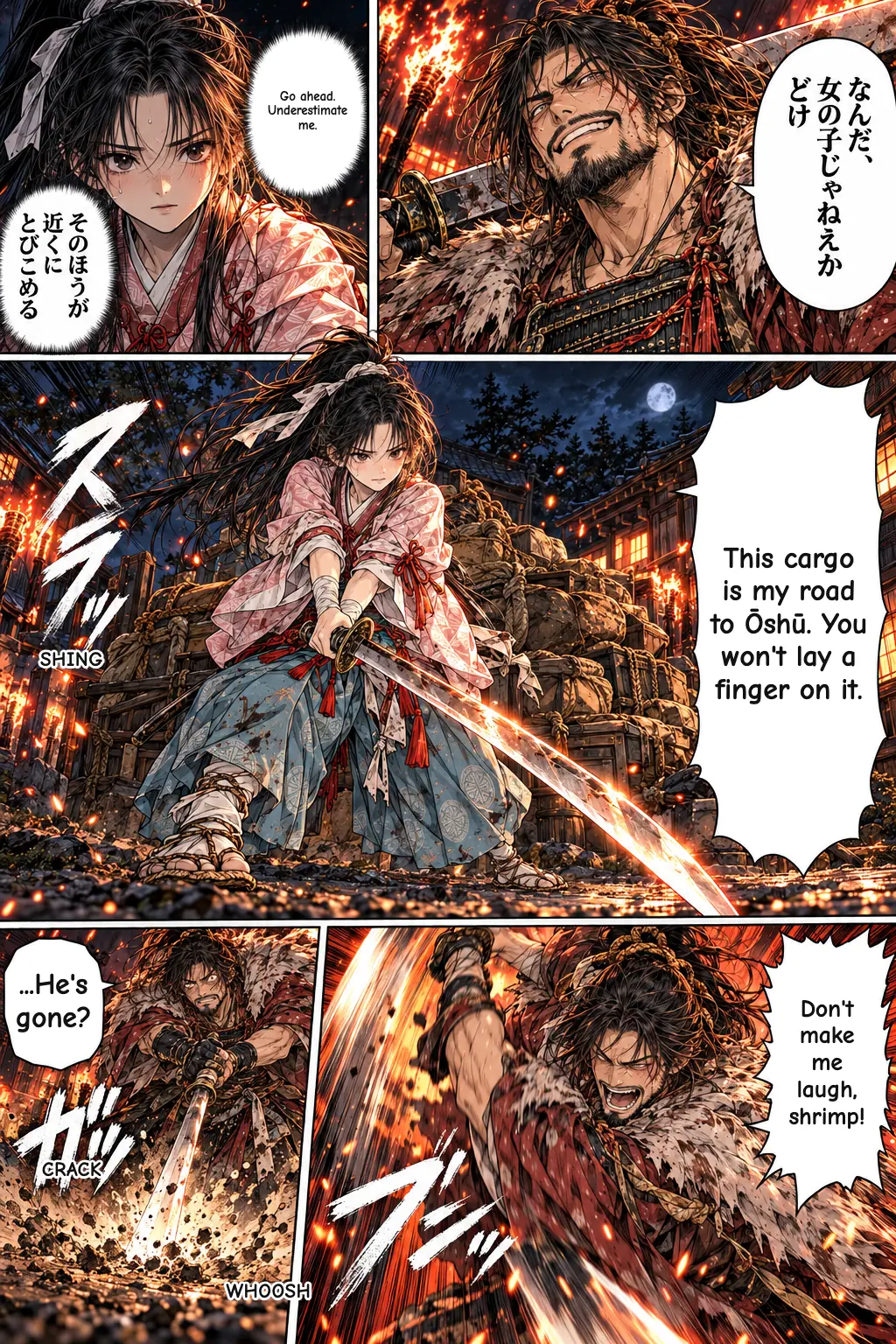
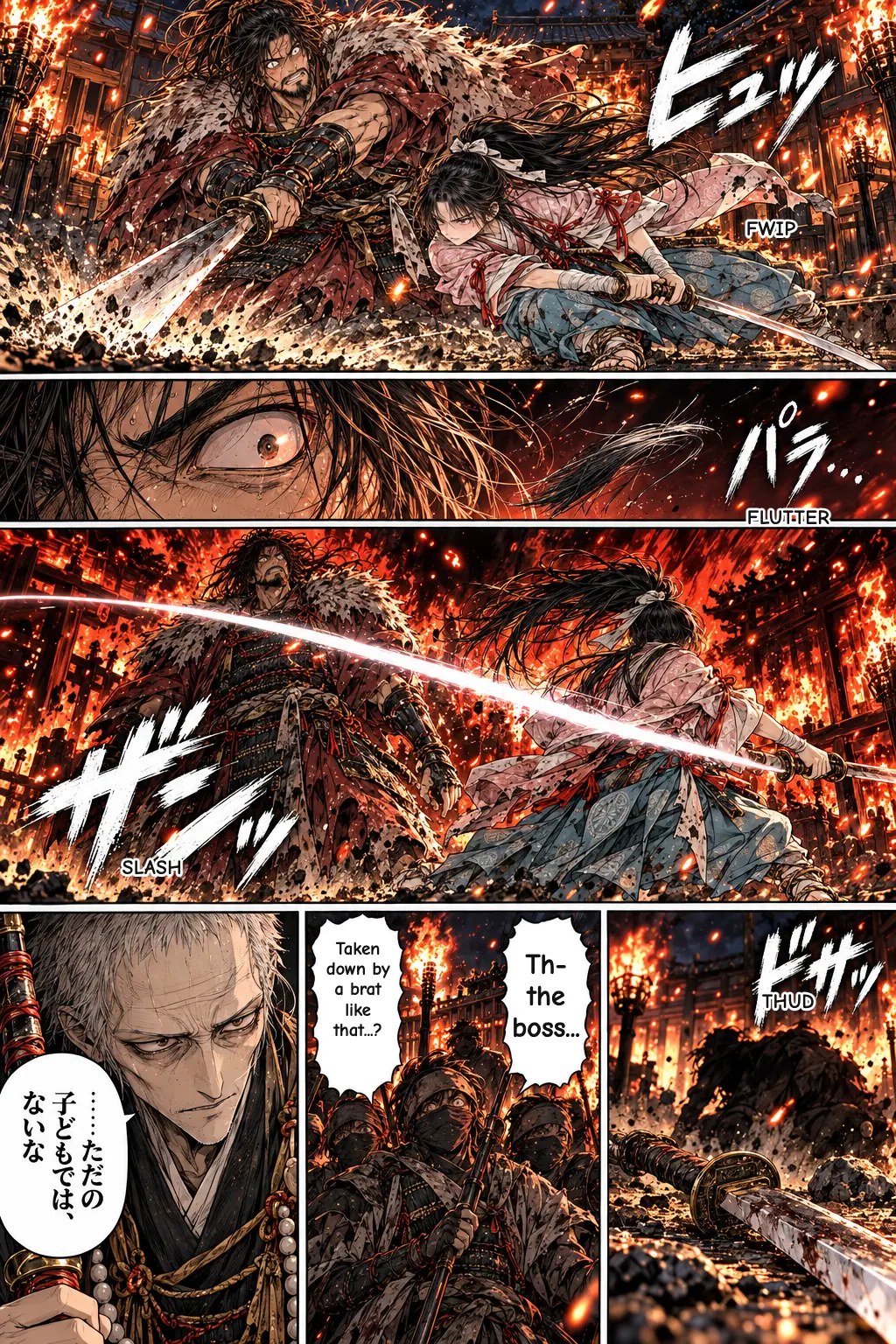
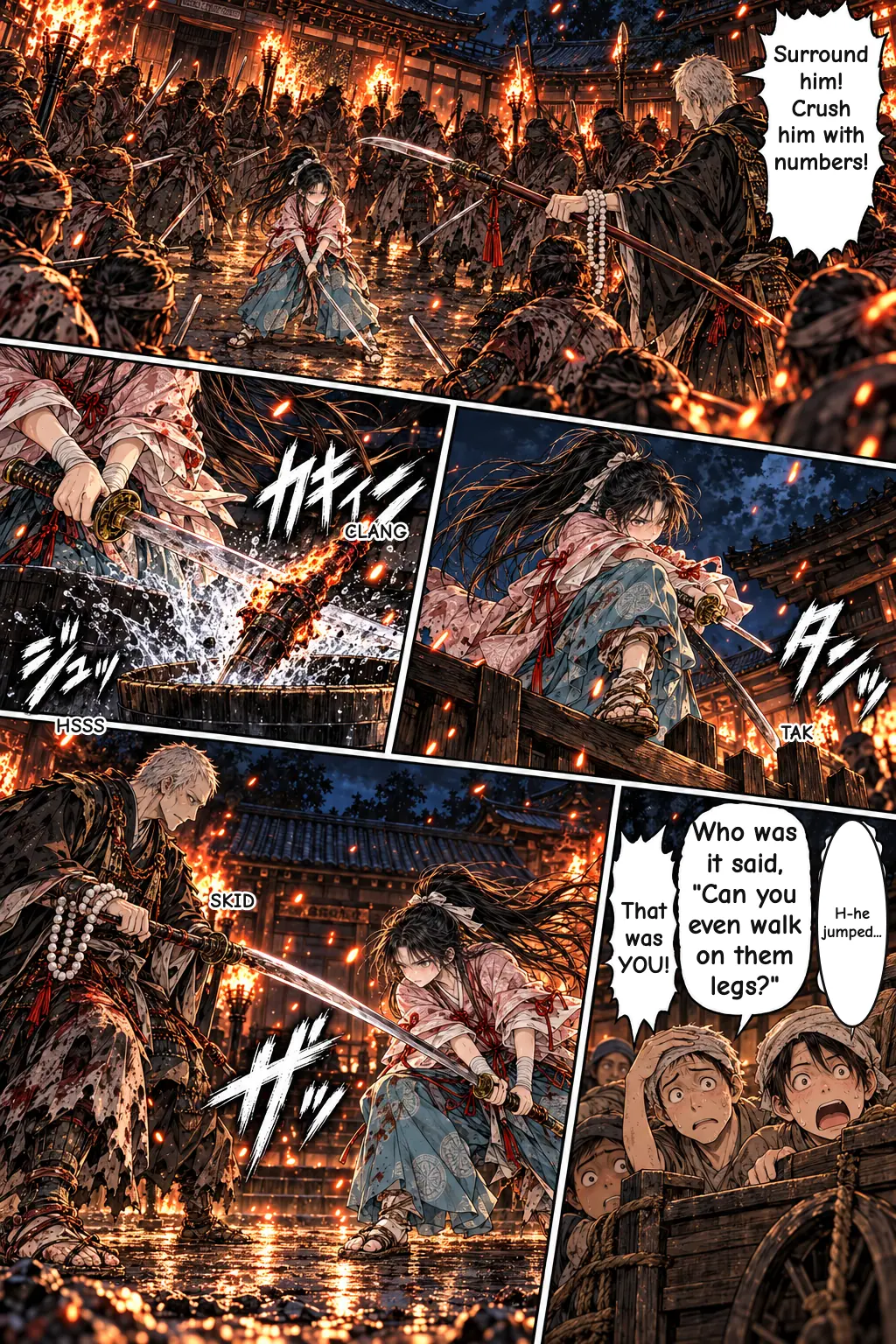
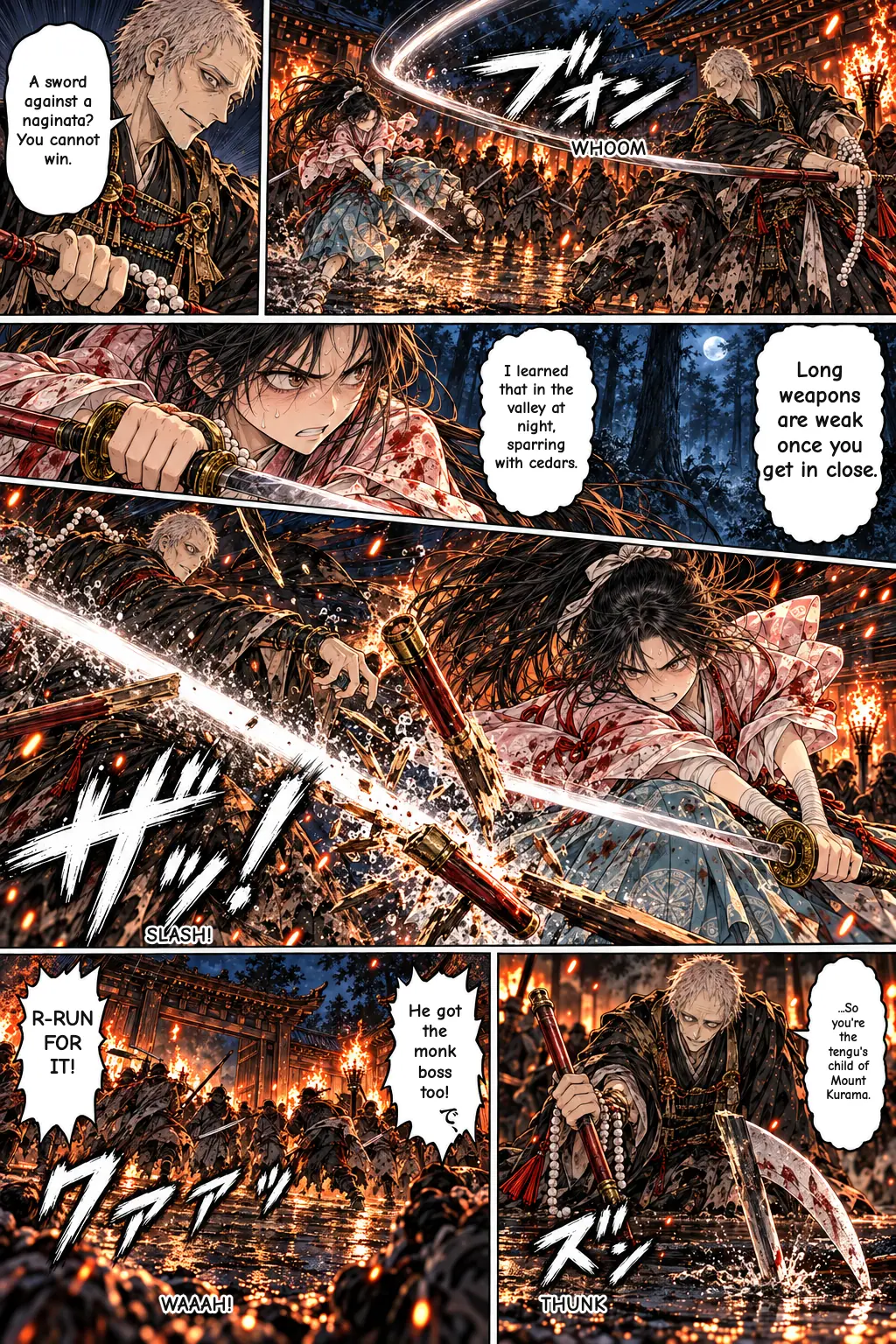
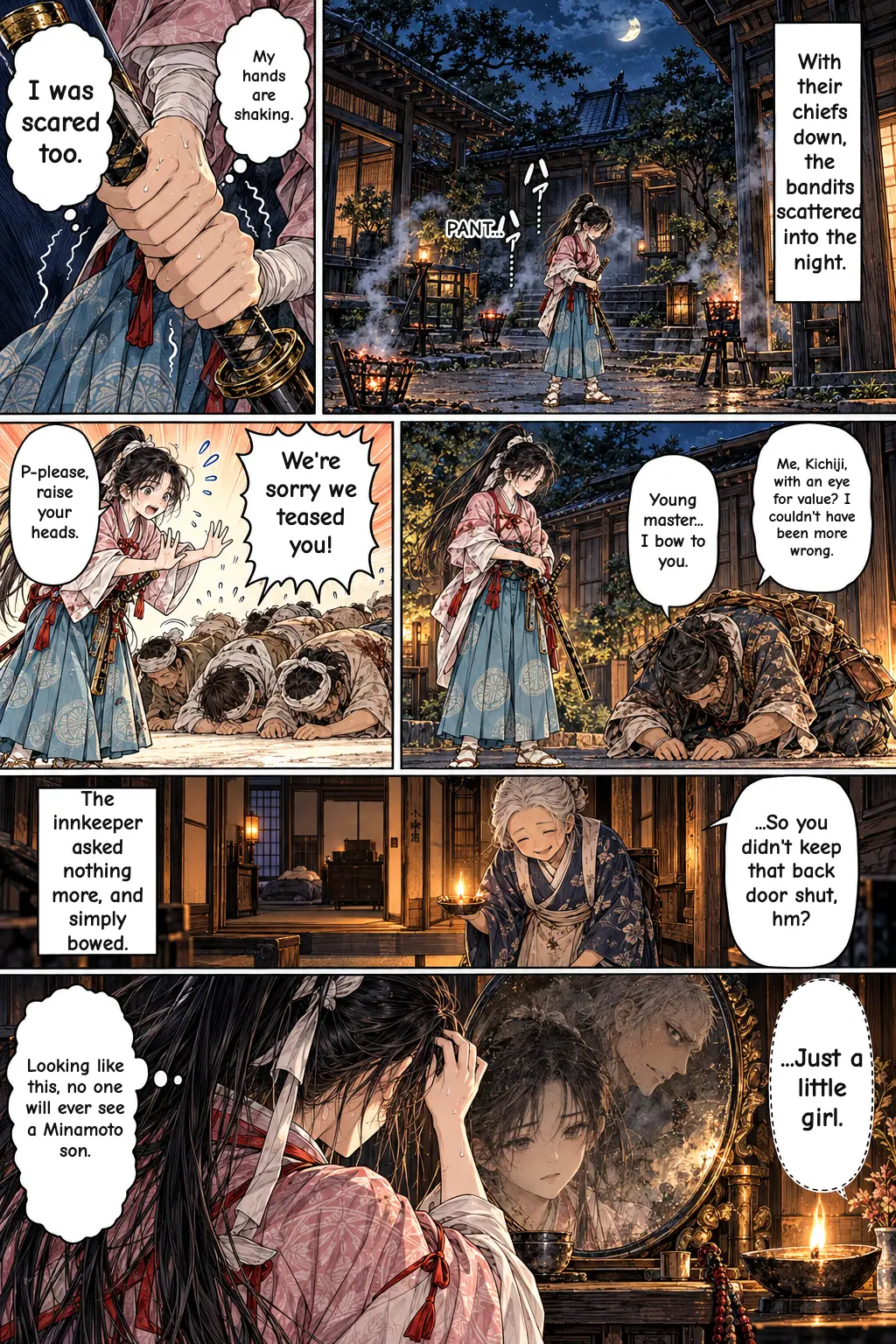
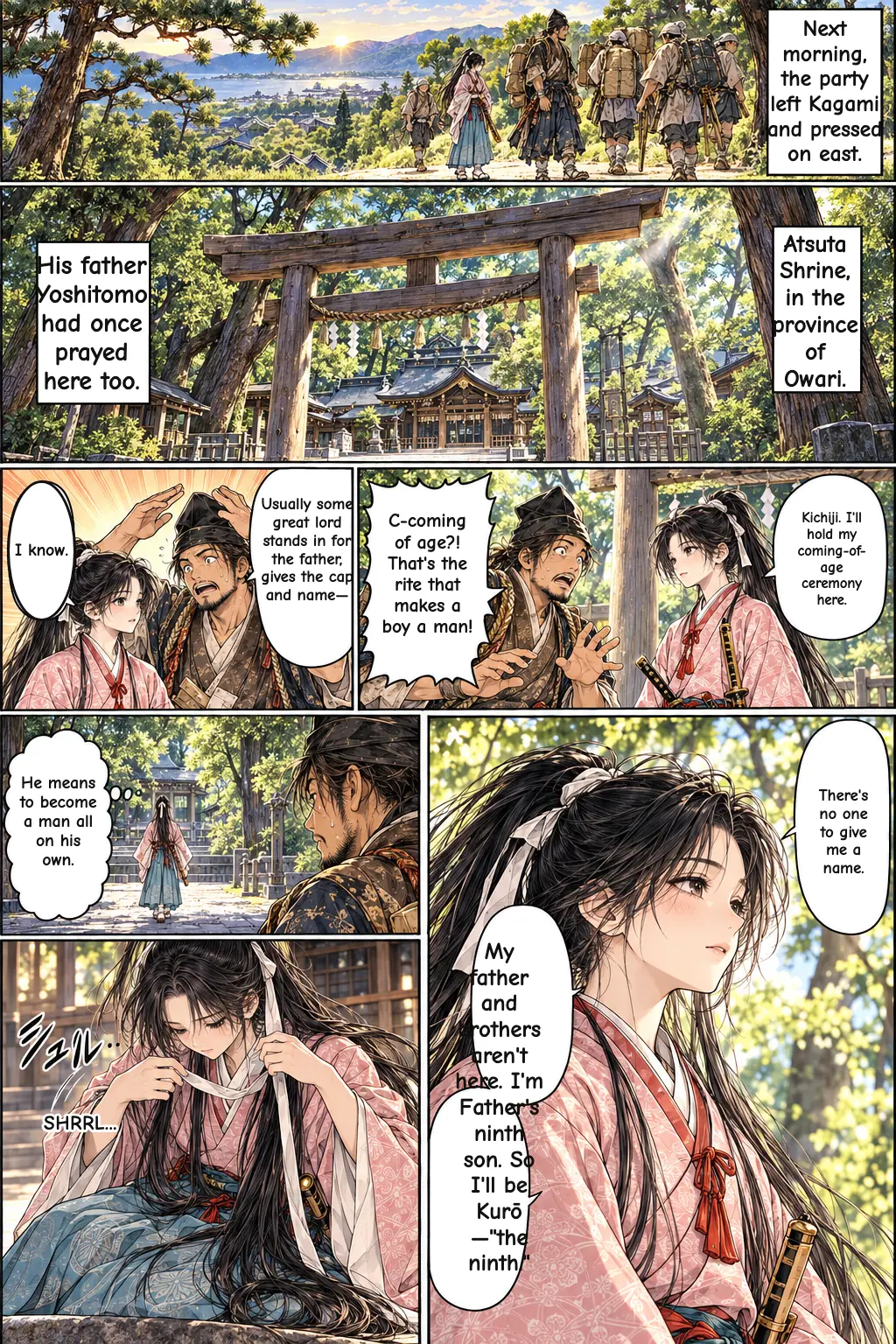
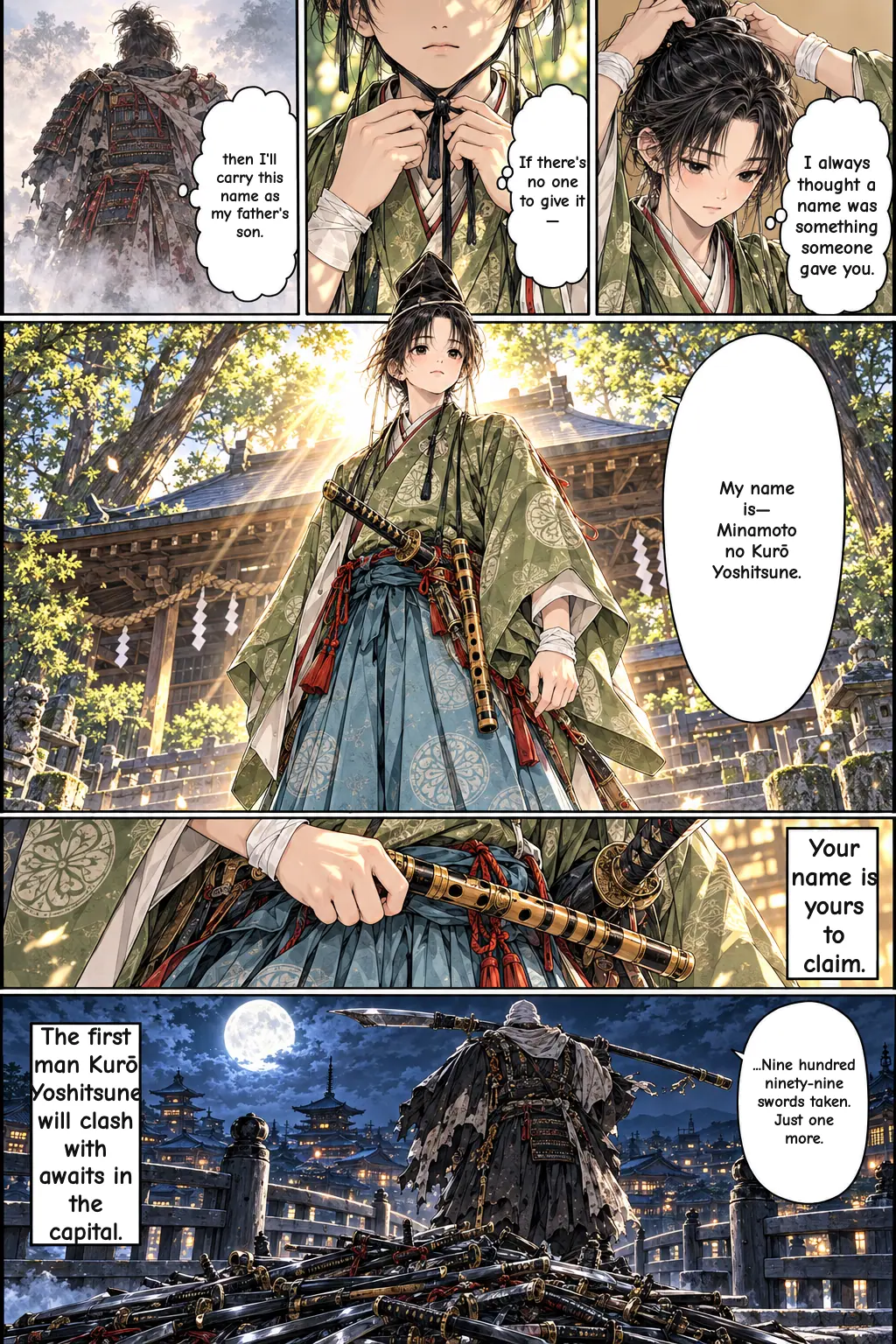
When Shanaō hears that a great lord in the far north is waiting to welcome a young Minamoto prince, he slips away from Mount Kurama in the spring of his sixteenth year without telling a soul. At the Kagami Inn he single-handedly drives off a bandit raid. Then, gazing at his own acolyte's reflection in the inn's old mirror, he travels on to Atsuta Shrine. With no grown-up there to give him a name, he holds his own coming-of-age ceremony and names himself Minamoto no Kurō Yoshitsune.
Yoshitsune's Coming of Age: Kagami Inn and Atsuta in the Gikeiki
The Story in the Original Gikeiki
The Gikeiki ("The Chronicle of Yoshitsune") is a Japanese war tale by an unknown author, generally thought to have taken shape in the early Muromachi period, around the 14th to 15th century. It follows the life of Minamoto no Yoshitsune, one of the most famous heroes in Japanese history. The episode adapted here comes from the end of Book One and the start of Book Two, and it tells how a boy hidden away in a mountain temple became a warrior with a name of his own.
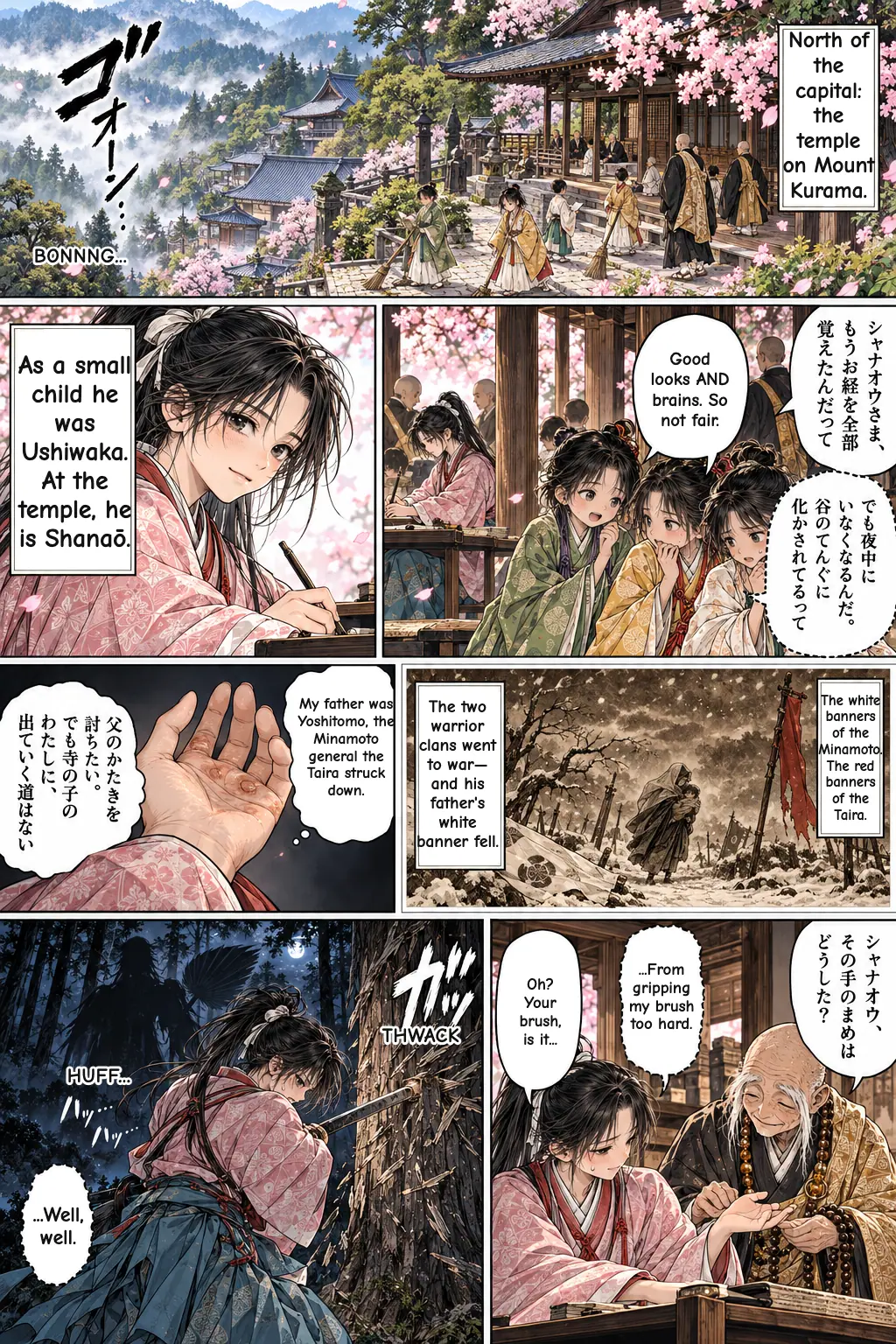
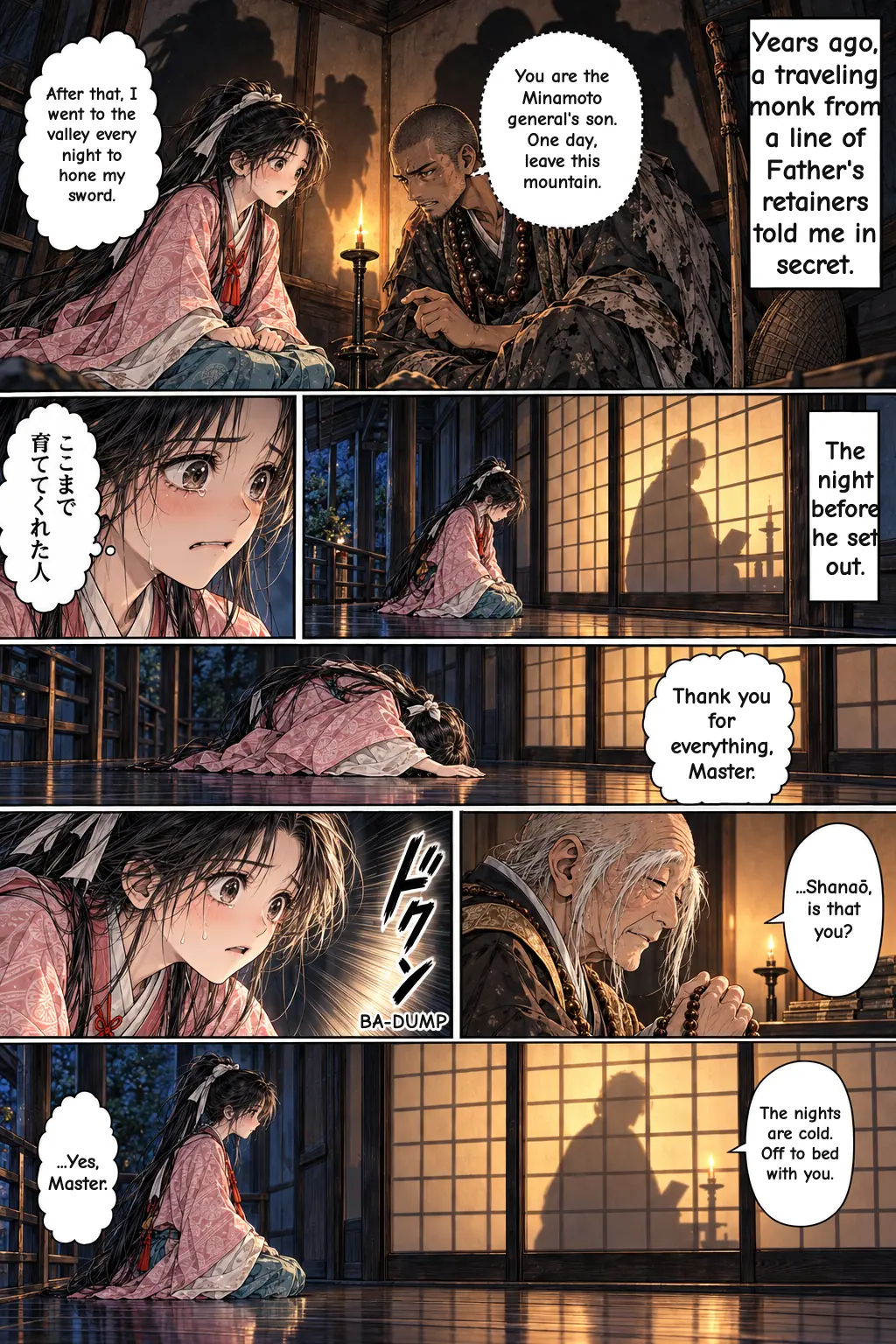
The boy is Ushiwaka, youngest son of Minamoto no Yoshitomo, a samurai leader killed after losing the Heiji Rebellion (1159–1160) to the rival Taira clan. To keep him out of the way, Ushiwaka was sent to Kurama Temple north of Kyoto, where he served as a chigo, a young temple acolyte, under the name Shanaō. Once he learned who his father was, he quietly made up his mind to bring down the Taira someday.
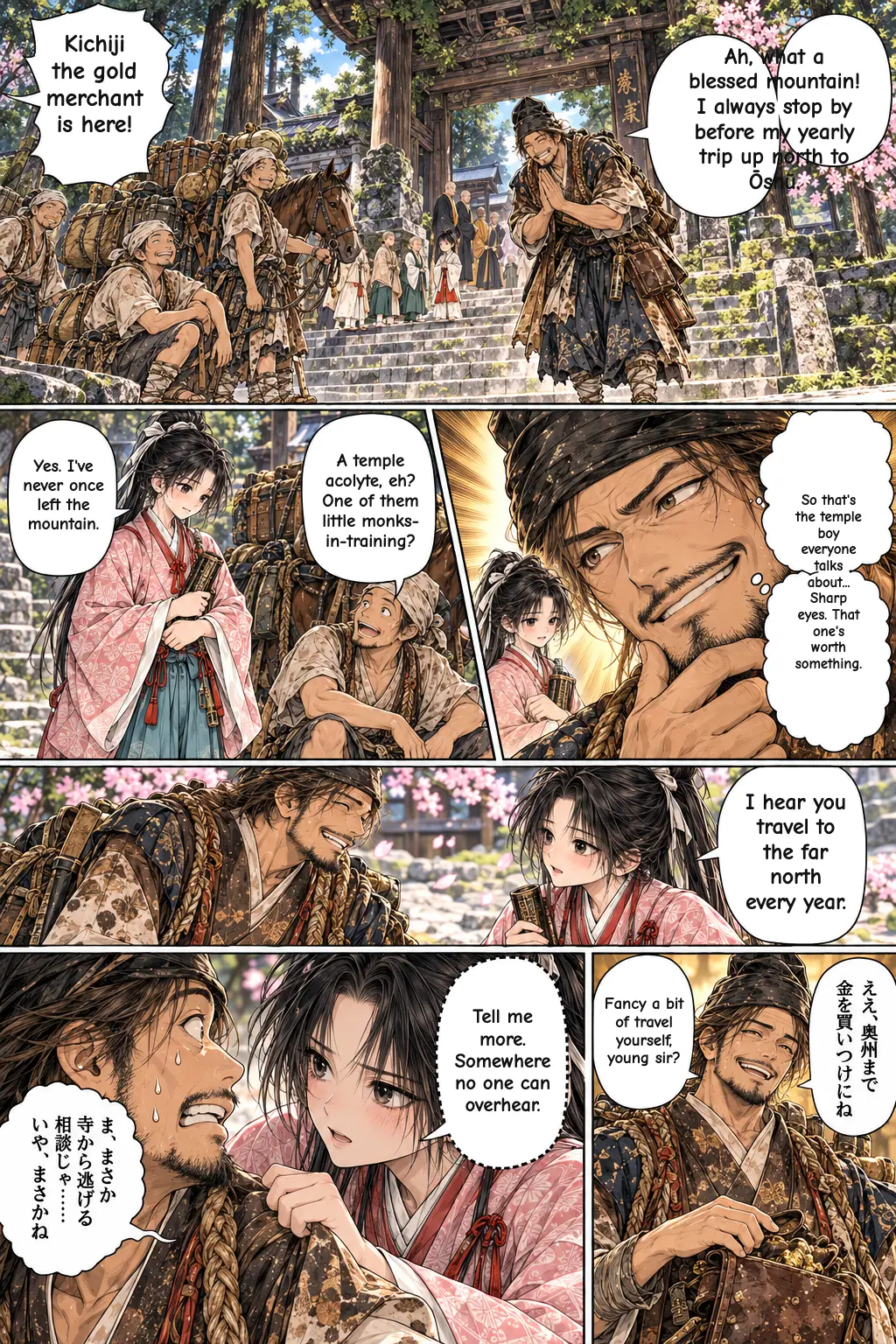
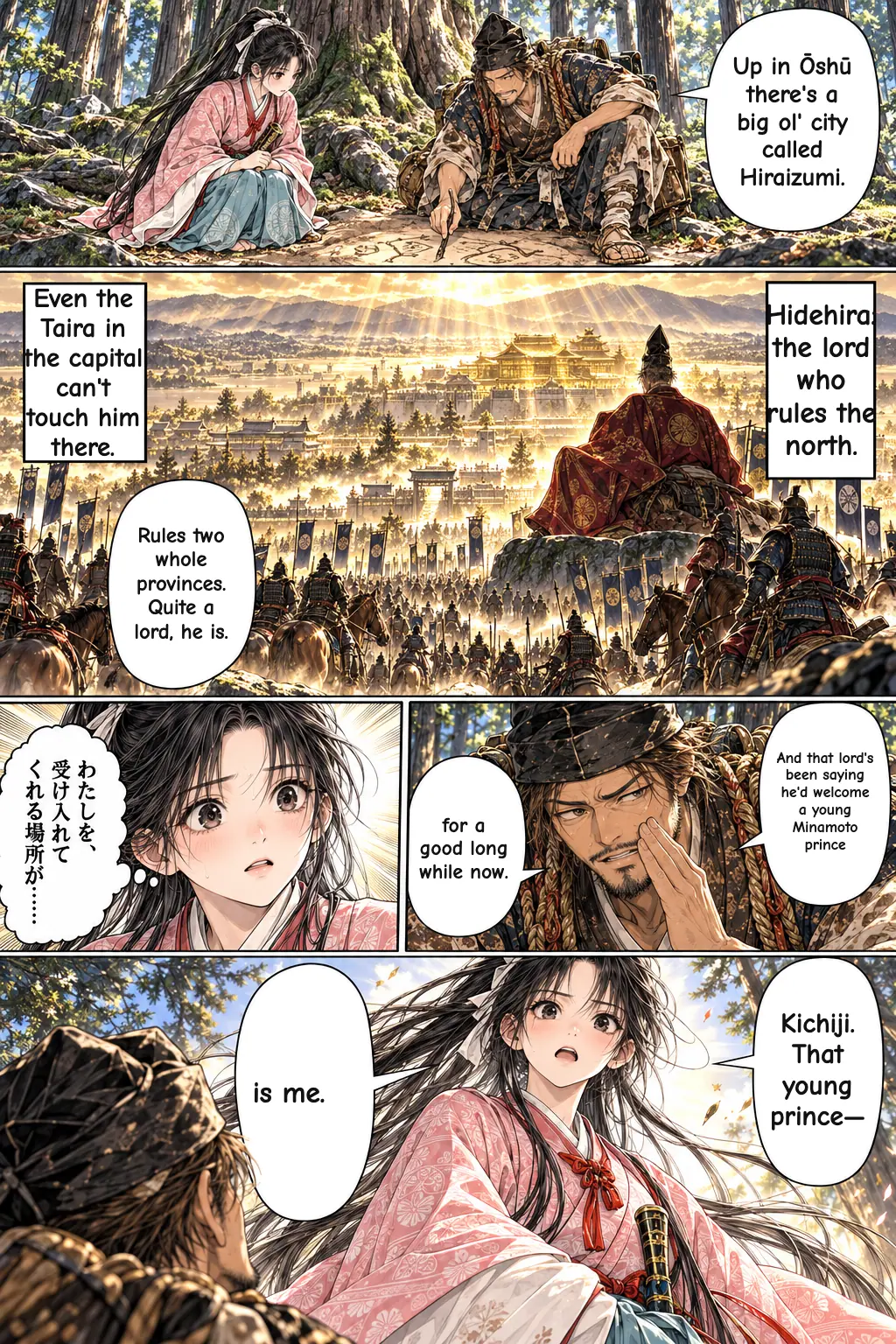
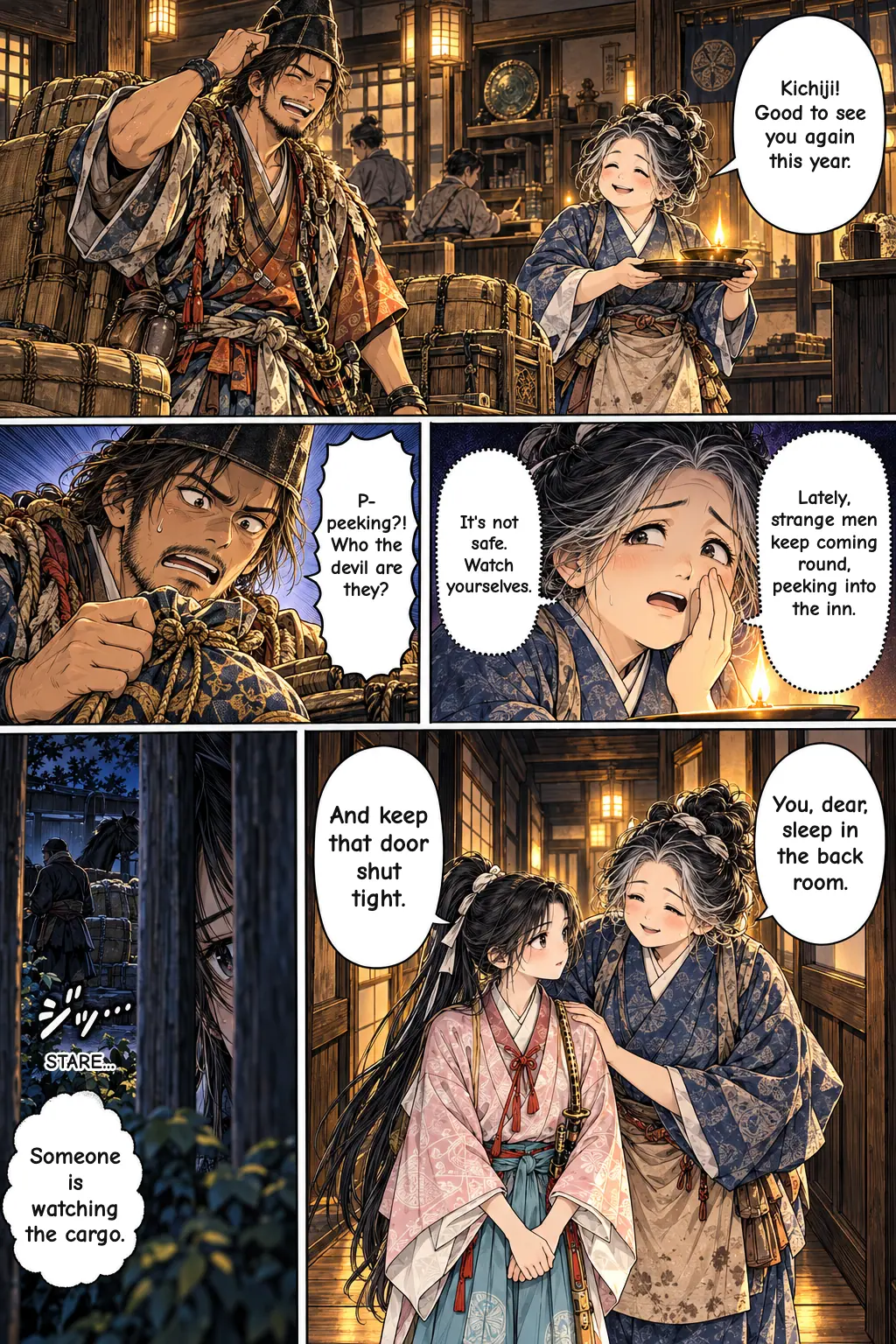
His chance came through Kichiji, a rich merchant from Sanjō in Kyoto who traveled to the far north every year to trade for gold. When Kichiji visited Kurama, he told Shanaō about Fujiwara no Hidehira, the powerful lord of Hiraizumi, who controlled the northern provinces of Dewa and Mutsu and hoped to welcome a son of the Minamoto. Shanaō told Kichiji who he really was and asked to go with him. In the spring of his sixteenth year, at dawn, he slipped out of Kurama without telling anyone, met Kichiji, and headed east.
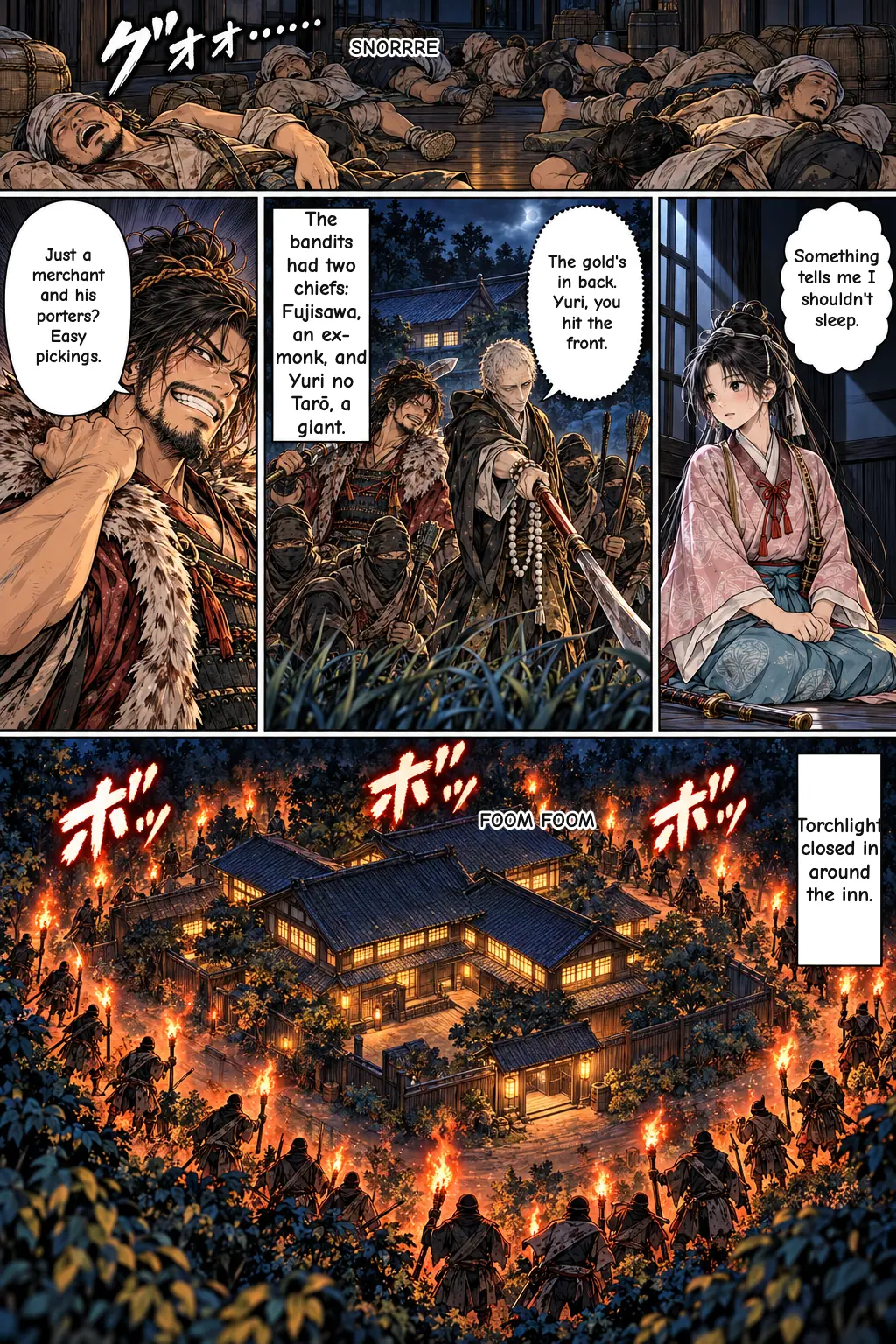
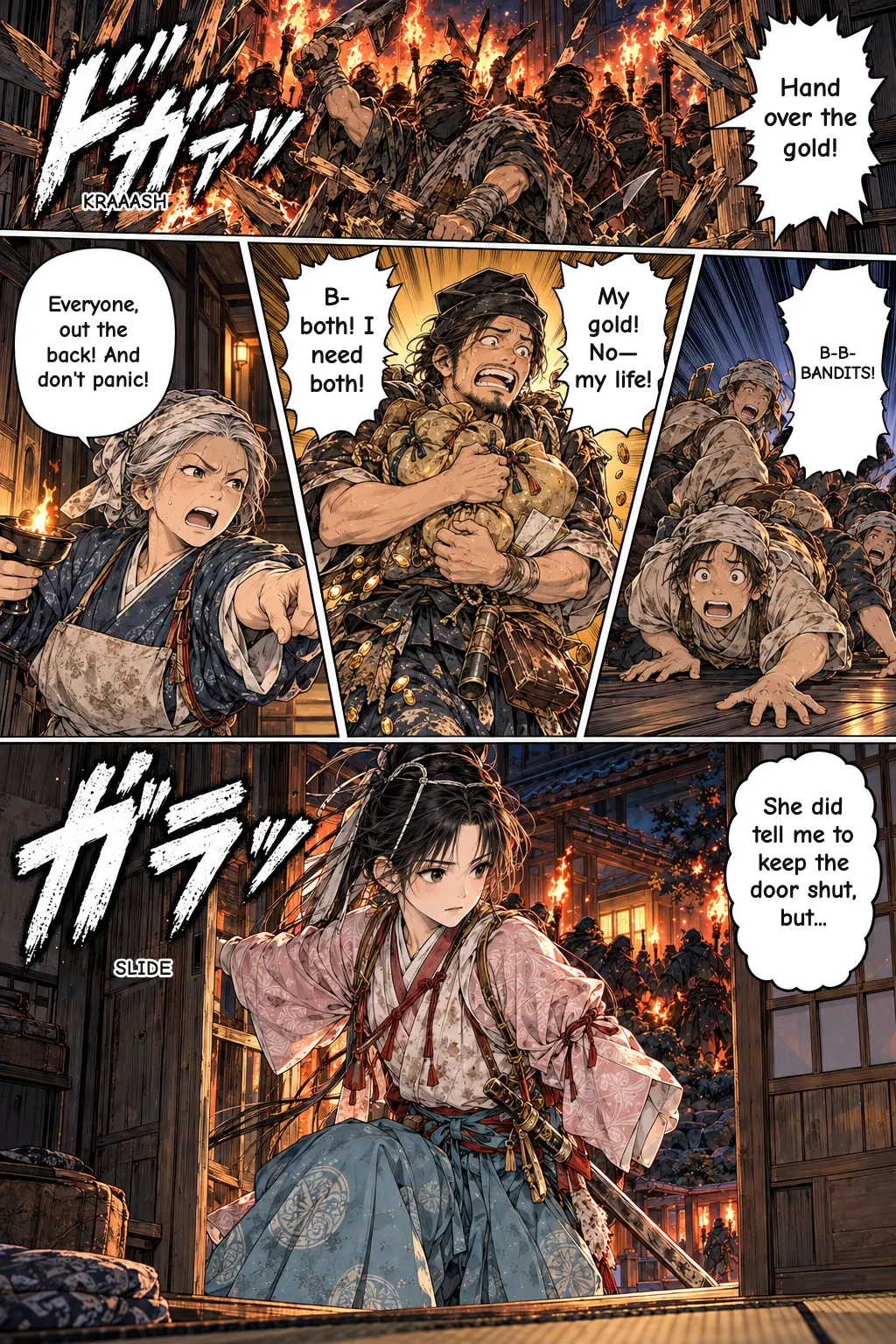
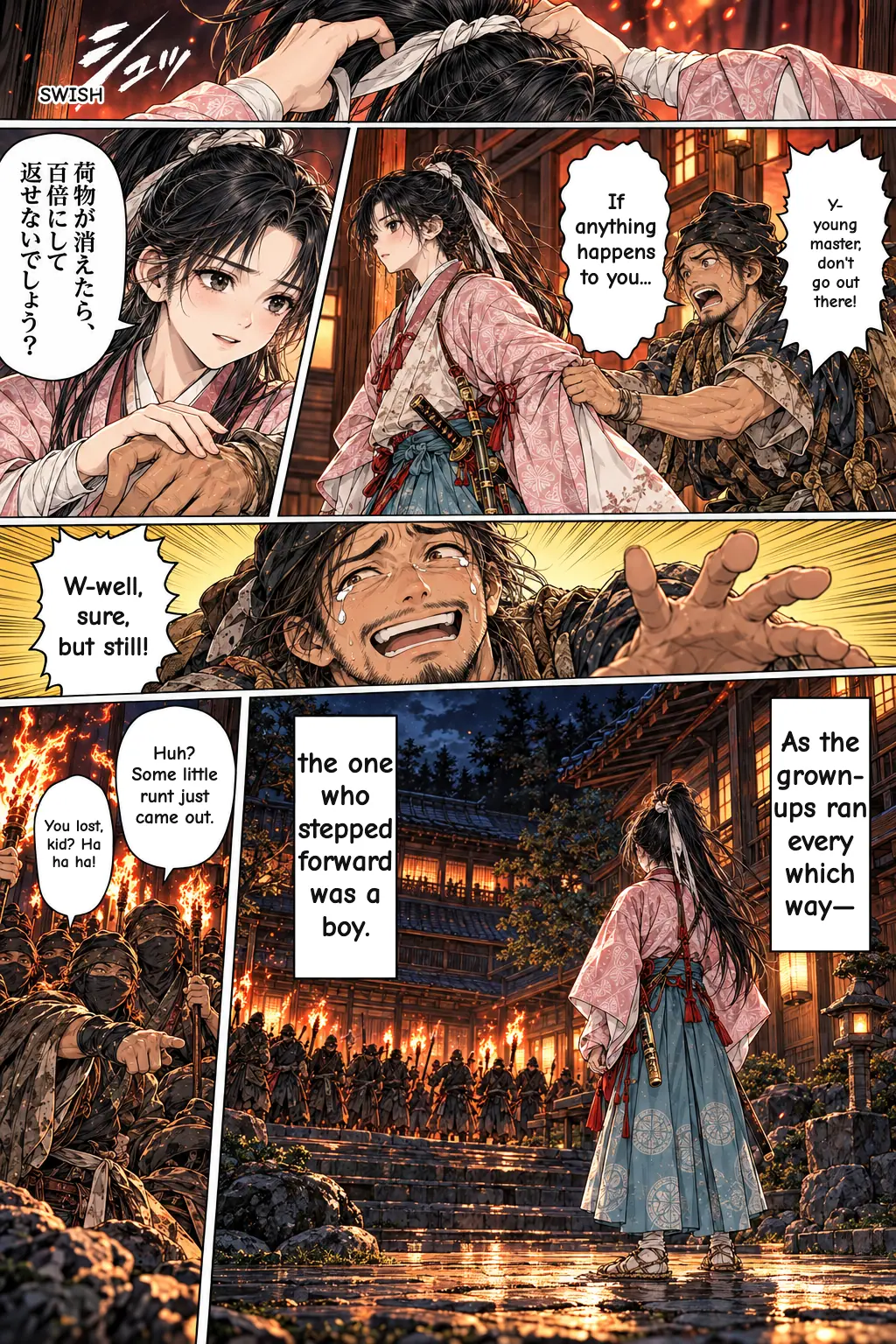
After crossing the Ōsaka barrier into Ōmi Province, the group stayed at an inn Kichiji knew well, at Kagami-no-shuku (Kagami Inn). That night a band of robbers came after the merchant's treasure, carrying torches and led by Yuri Tarō of Dewa and Fujisawa Nyūdō of Echigo. While Kichiji's party cowered, Shanaō got himself ready, took up his sword, and faced the robbers on his own. He cut down their leaders and sent the rest running, many of them wounded. The travelers then went on along the Tōkaidō road to Atsuta Shrine in Owari Province. Deciding he could not go north still dressed as a temple boy, Shanaō held his coming-of-age ceremony there and took the name Minamoto no Kurō Yoshitsune. Then he carried on toward Hiraizumi.
Main Characters
Shanaō (later Yoshitsune) is the hero: beautiful as a temple acolyte, bold enough to plan his own escape, and so skilled with a sword that grown bandits cannot stand against him. Kichiji, often remembered as Kaneuri Kichiji ("Kichiji the gold seller"), is his guide on the road. He is a wealthy, pious trader who knows the north well, and in the fight he is someone to be protected, not a fighter. Fujiwara no Hidehira never appears in this part of the story, but his name hangs over it as the lord waiting in the north. The bandit leaders Yuri Tarō and Fujisawa Nyūdō (a nyūdō is a man who has taken Buddhist vows but stays in the world) are there to show what the young hero can do. The family of the former chief priest of Atsuta matters as well: they were relatives of Yoshitomo's wife, which gave the shrine a link to the Minamoto.
What This Story Tells Us: Coming of Age in Medieval Japan
Genpuku, the coming-of-age ceremony, was a turning point for a young man of the warrior or noble class. His boyhood hairstyle was put up, he received a court cap called an eboshi, and he took an adult name. A temple chigo wore his hair long like a child, so changing his appearance meant leaving his old life behind for good. Usually an older sponsor, the eboshi-oya, placed the cap on the boy's head and often gave him part of his new name. That is why it matters so much who presides over a genpuku.
The name itself carries meaning. Kurō means "ninth son," and Yoshitsune uses "Yoshi," the character from his father Yoshitomo's name. The choice is often explained by pointing to his uncle Minamoto no Tametomo, the famous archer known as Chinzei Hachirō ("Eighth Son"), though the reasoning can be read in more than one way. In any case, by taking this name the boy openly claims his Minamoto blood. The scene at Kagami Inn works as a test he must pass before he earns that name: he proves he is a warrior first and gets the name second.
Episodes like this one helped create the lasting image of Yoshitsune as a brilliant, tragic young hero. Japanese audiences felt so much sympathy for him that a word grew out of it: hōgan-biiki, "siding with the hōgan" (Yoshitsune's official title), meaning to root for the underdog.
What the Manga Changed or Added
The main events in the manga come from the Gikeiki: the escape from Kurama, Kichiji's account of Hidehira, the bandit raid at Kagami Inn, and the coming of age at Atsuta. Several details were invented or expanded for the comic. The original says very little about the tension before the attack, so the manga adds warning signs such as noises, glimpses of torchlight, and suspicious watchers. The number of bandits, the look and names of individual robbers, and the order of the fight were all arranged by the manga to build the action. The night escape from Kurama, the members of Kichiji's caravan, the conversations on the road, and Shanaō's private thoughts about his mother Tokiwa and his father were also created for the adaptation. Yoshitsune is often linked to tengu, the mountain goblins said to have trained him, but the manga gives his swordsmanship no supernatural explanation here.
The image of Shanaō studying his reflection in an old mirror at the inn is the manga's own invention, playing on the place name Kagami, which means "mirror." How the ceremony at Atsuta was carried out is less clear. The manga shows him naming himself with no adult sponsor, an idea many retellings emphasize. How much the Atsuta priests took part is a question of interpretation, and some other traditions, including accounts connected with the Heiji Monogatari, place his self-performed coming of age at Kagami Inn instead.
Where to Read It
To watch Shanaō leave the temple, take on the bandits, and choose his own name, read Episode 2 of THE LEGEND OF YOSHITSUNE: Ushiwaka and Benkei here on Manga Portal. Every episode is free and you don't need an account. Read it as a story first, then come back to this guide to see which parts come from the Gikeiki and which were added to bring the scene to life.
Characters in this episode
Shanaō / Minamoto no Yoshitsune
The youngest son of Minamoto no Yoshitomo, a temple acolyte at Kurama who escapes, defeats bandits, and names himself Minamoto no Kurō Yoshitsune.
Kichiji
A wealthy gold merchant from Kyoto who travels north each year and agrees to take Shanaō to Hiraizumi.
Fujiwara no Hidehira
The powerful lord of Hiraizumi in northern Japan who, Kichiji says, hopes to welcome a Minamoto prince.
Yuri Tarō
A bandit leader from Dewa Province who raids Kagami Inn for Kichiji's treasure and is cut down by Shanaō.
Fujisawa Nyūdō
A lay-monk bandit leader from Echigo Province who leads the night attack alongside Yuri Tarō and is defeated.
FAQ
How did Ushiwaka become Yoshitsune?
According to the Gikeiki, Shanaō (Ushiwaka's temple name) left Kurama Temple at sixteen to travel north with the merchant Kichiji. At Atsuta Shrine he held his coming-of-age ceremony (genpuku) and took the name Minamoto no Kurō Yoshitsune.
What happened at Kagami Inn in the Gikeiki?
A gang of robbers led by Yuri Tarō and Fujisawa Nyūdō attacked the inn at night to steal Kichiji's goods. Shanaō fought them alone, killed their leaders, and drove off the rest.
Why is Yoshitsune called Kurō?
Kurō means "ninth son." The choice is often explained in relation to his uncle Minamoto no Tametomo, known as Hachirō ("eighth son"), and the name marked him clearly as a son of Yoshitomo and the Minamoto clan.
Who was Kaneuri Kichiji?
Kichiji was a rich merchant from Kyoto who, in the Gikeiki, traveled to northern Japan every year to trade for gold. He told young Yoshitsune about Fujiwara no Hidehira and guided him to Hiraizumi.
Is the Gikeiki a true historical record?
No. The Gikeiki is a war tale written down long after Yoshitsune's lifetime, and it mixes history with legend. Many of its episodes, including the Kagami Inn fight, are best read as literature.