Episode 12Strike Your Master, or Lose HimThe Nyoi Crossing (Benkei Strikes Yoshitsune)
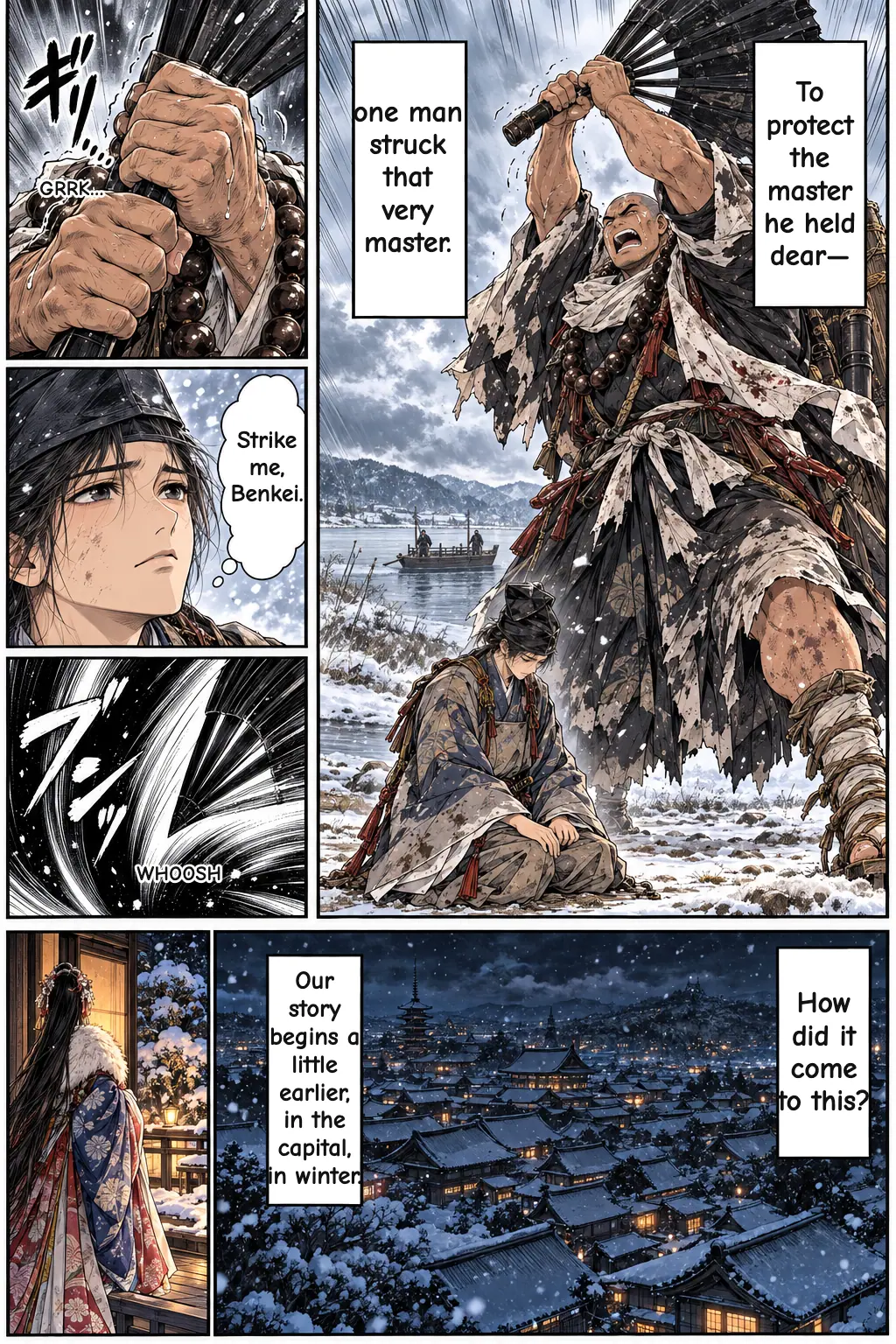
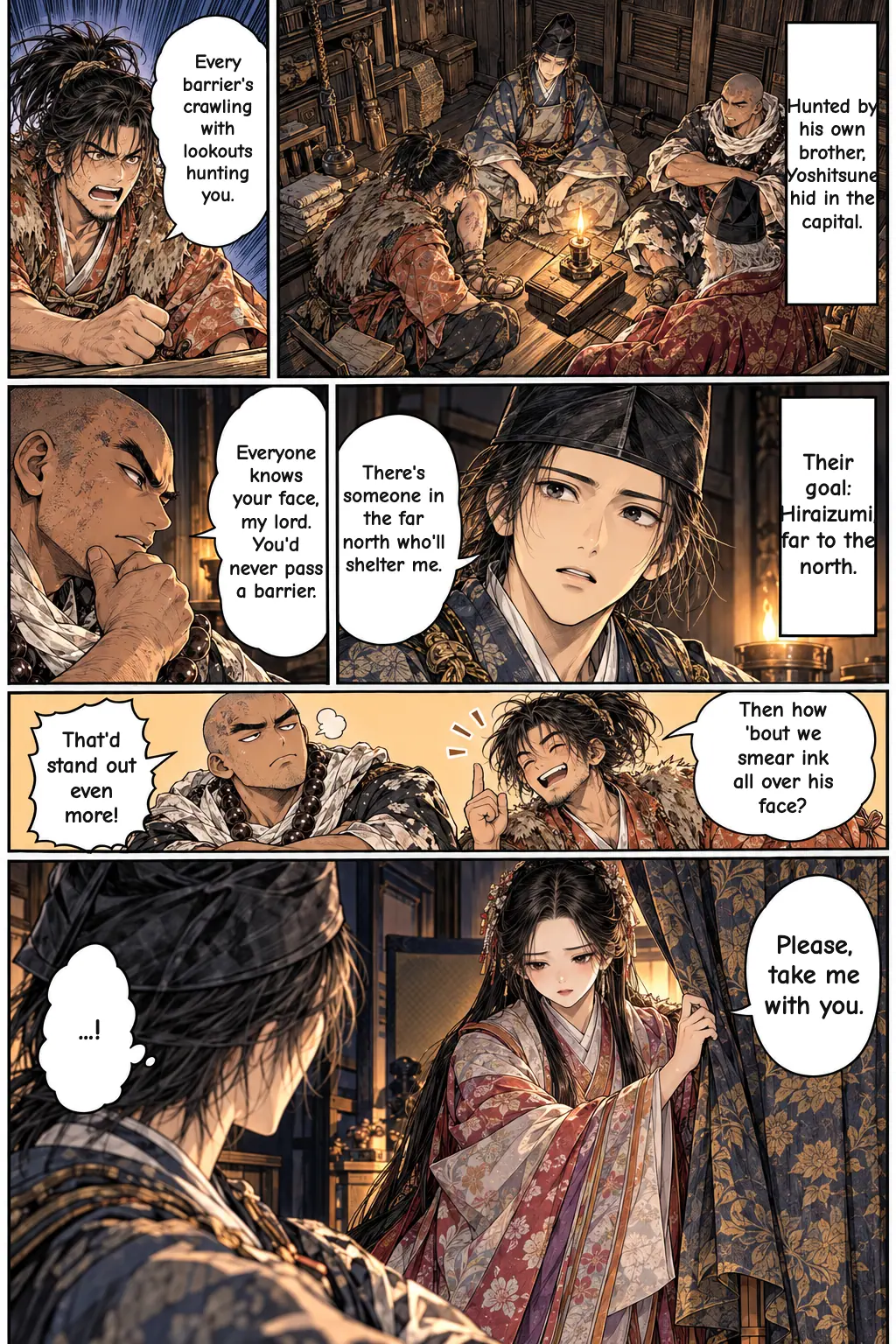
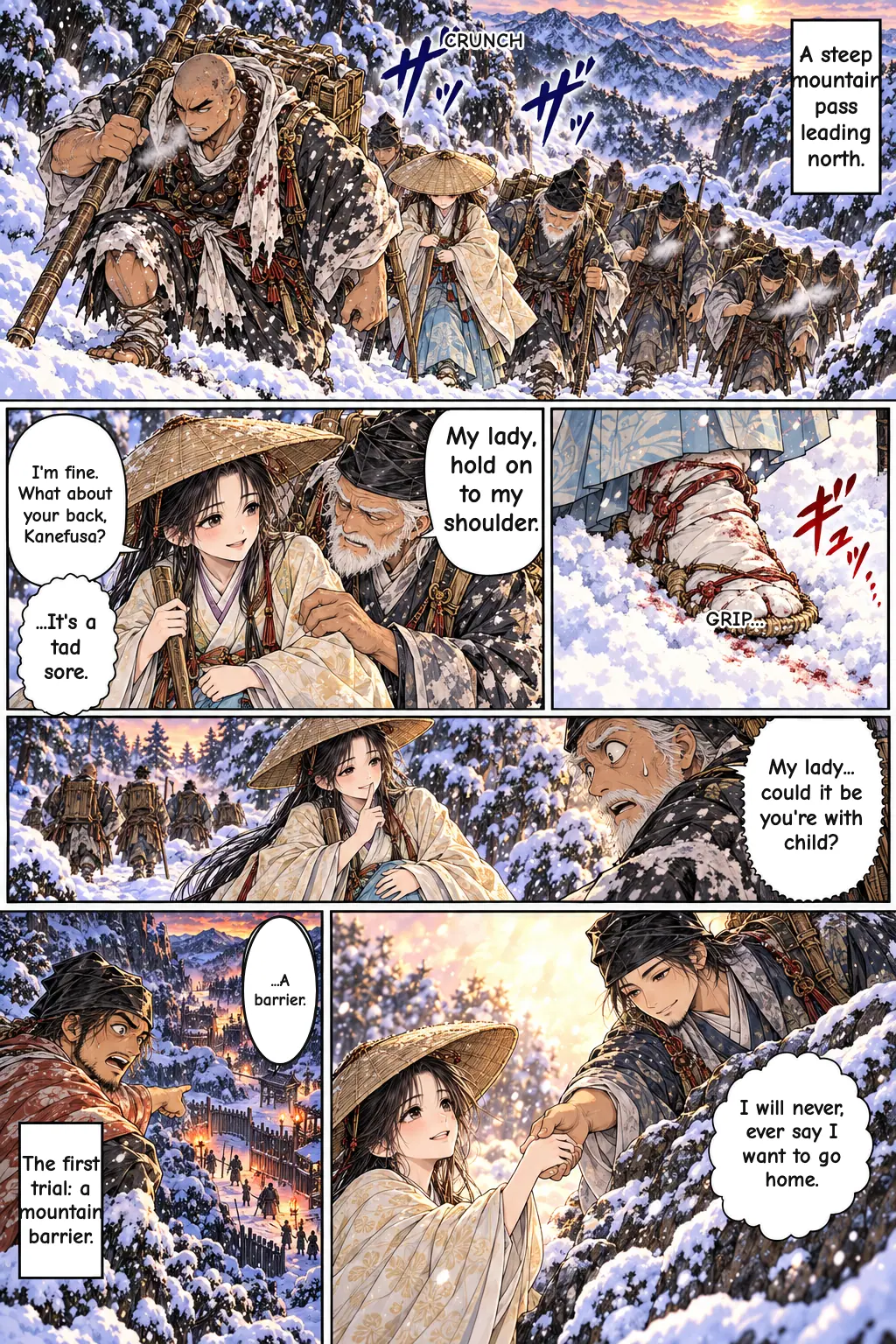
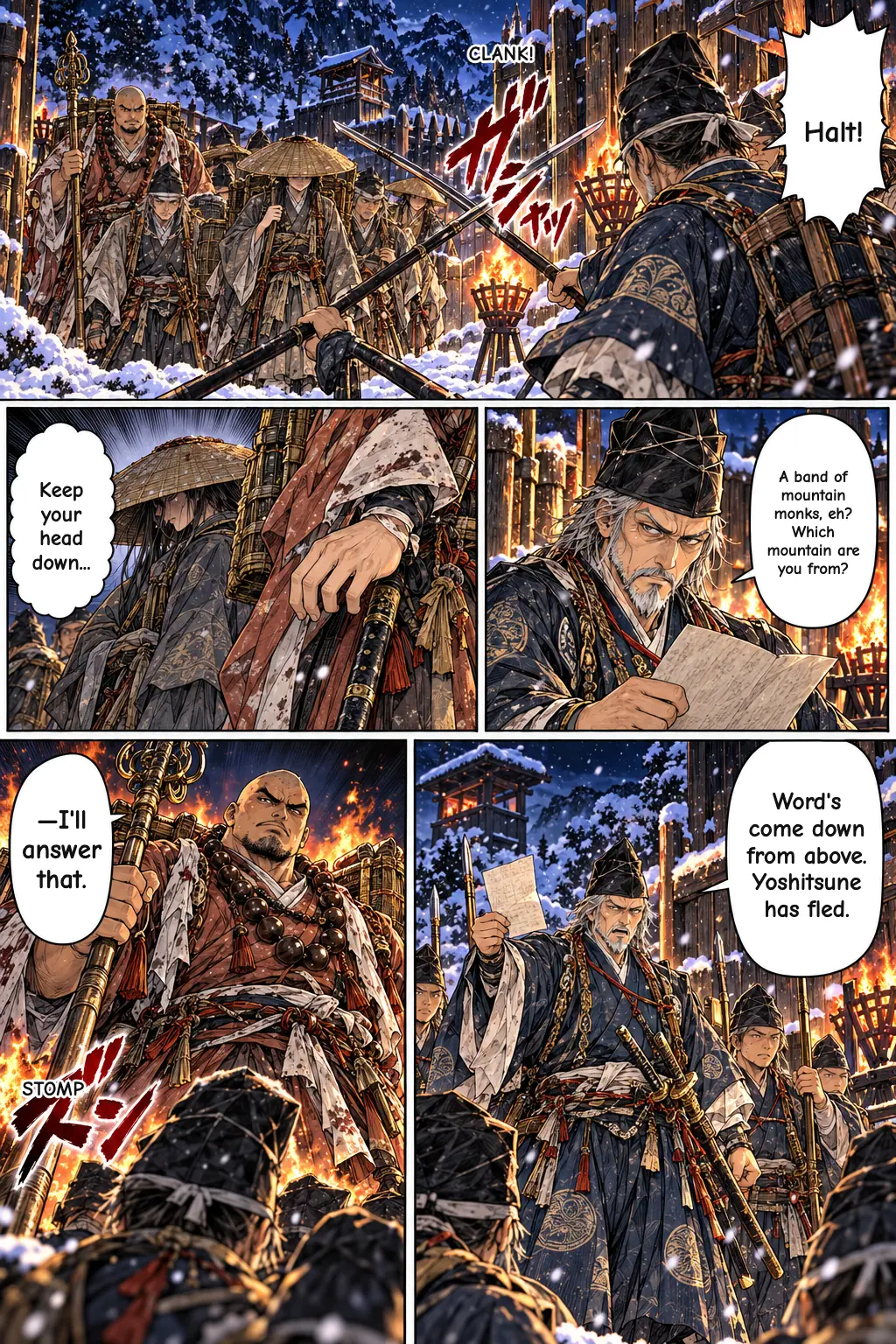
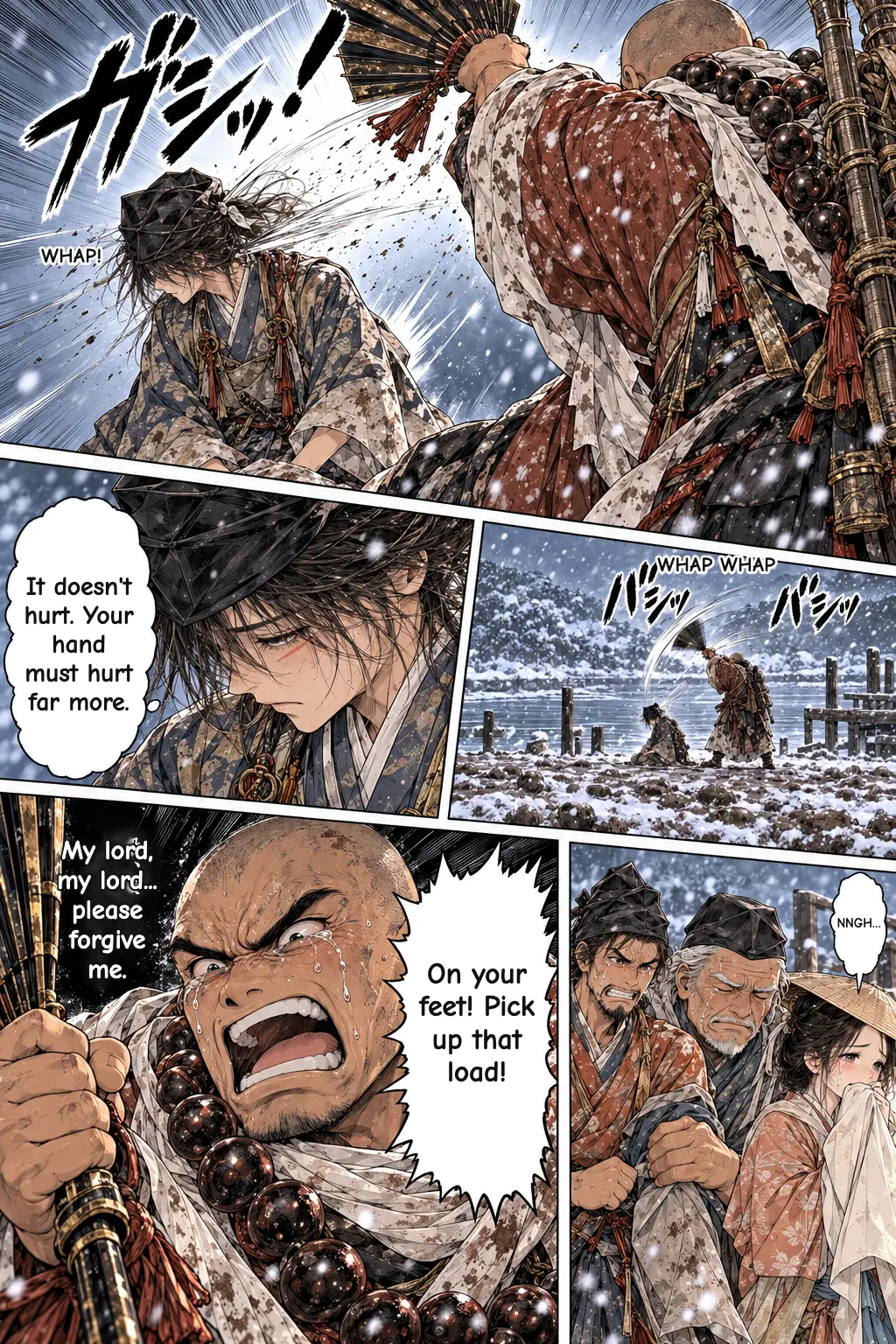
Hunted by his own brother, Yoshitsune and his band disguise themselves as mountain monks and head north. At the Nyoi Crossing, his lord is about to be exposed, so Benkei does the unthinkable and beats him with a fan in front of everyone. Later, in the snowy mountains, a newborn baby grips the very hand that struck him.
Benkei Strikes Yoshitsune: The Nyoi Crossing in the Gikeiki
The Original Story: Yoshitsune's Flight to the North
Minamoto no Yoshitsune was the brilliant young general who led his clan to victory over the rival Taira. Soon after that victory he became a hunted man, because his elder brother Yoritomo, head of the Minamoto clan, turned against him. The Gikeiki ("The Chronicle of Yoshitsune") is an anonymous war tale written in the Muromachi period, roughly the 14th to 15th centuries. Its seventh book tells how Yoshitsune, often called by his title Hōgan, leaves the capital to seek shelter with Fujiwara no Hidehira, the powerful lord of Hiraizumi in the far northeast of Japan.
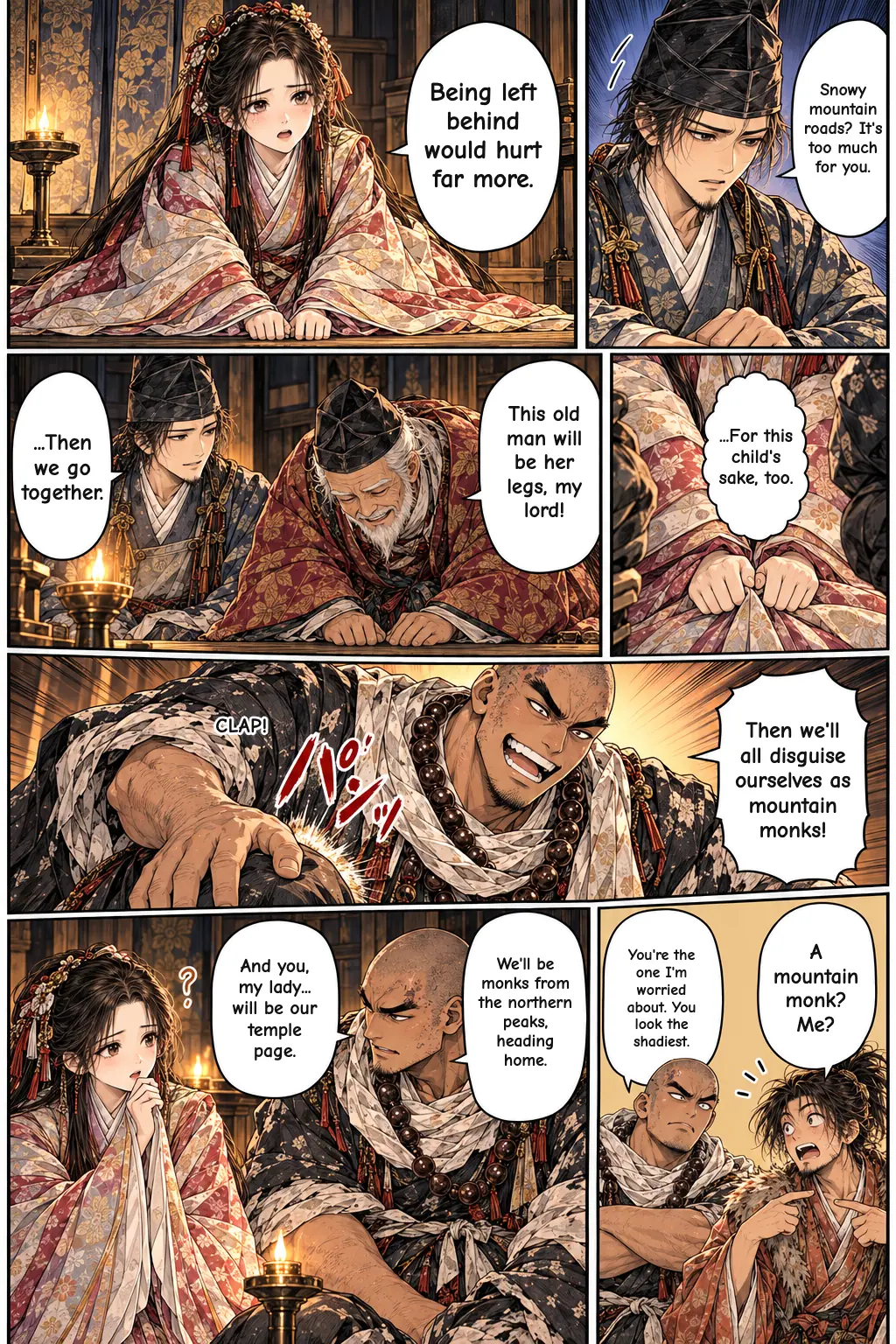
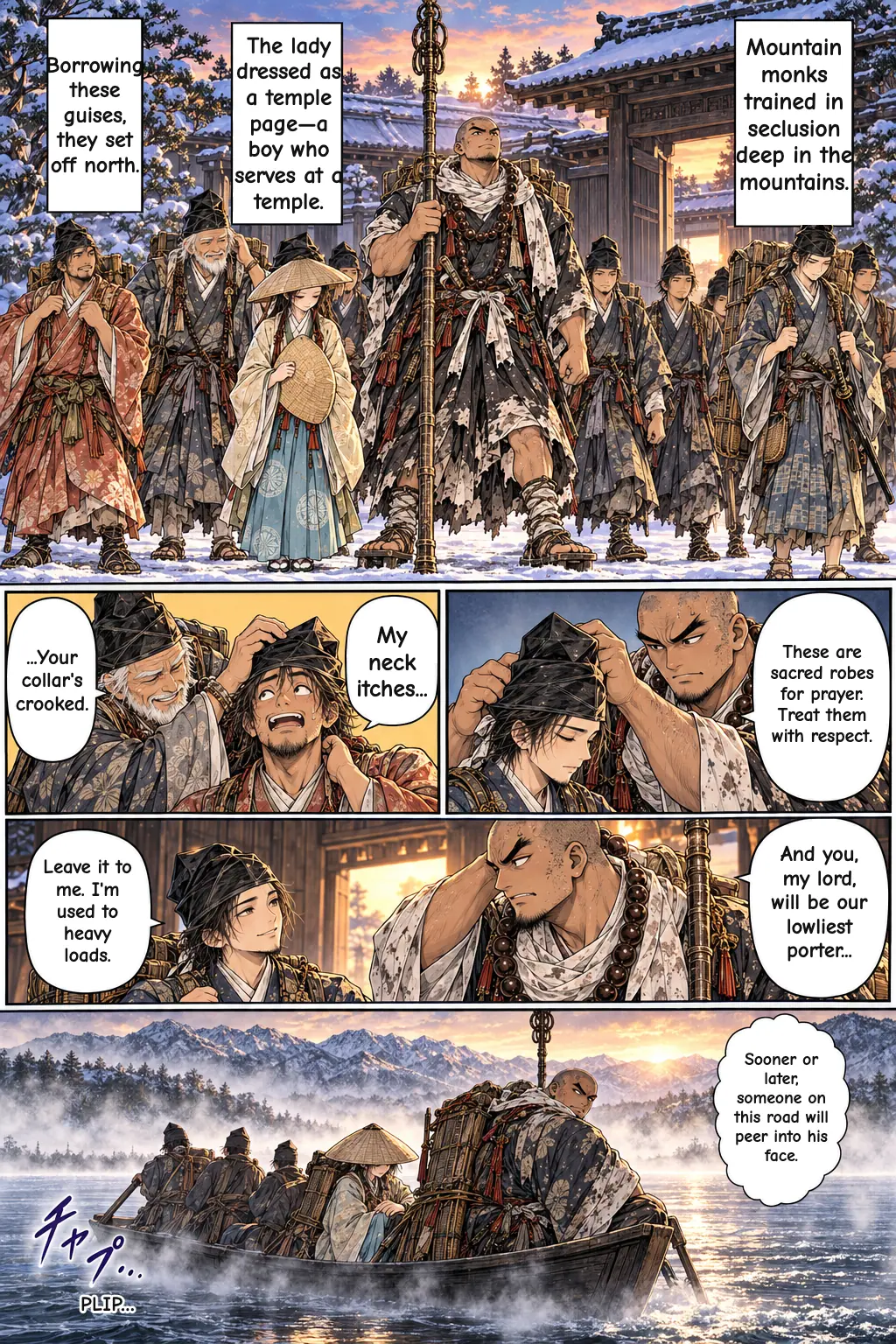
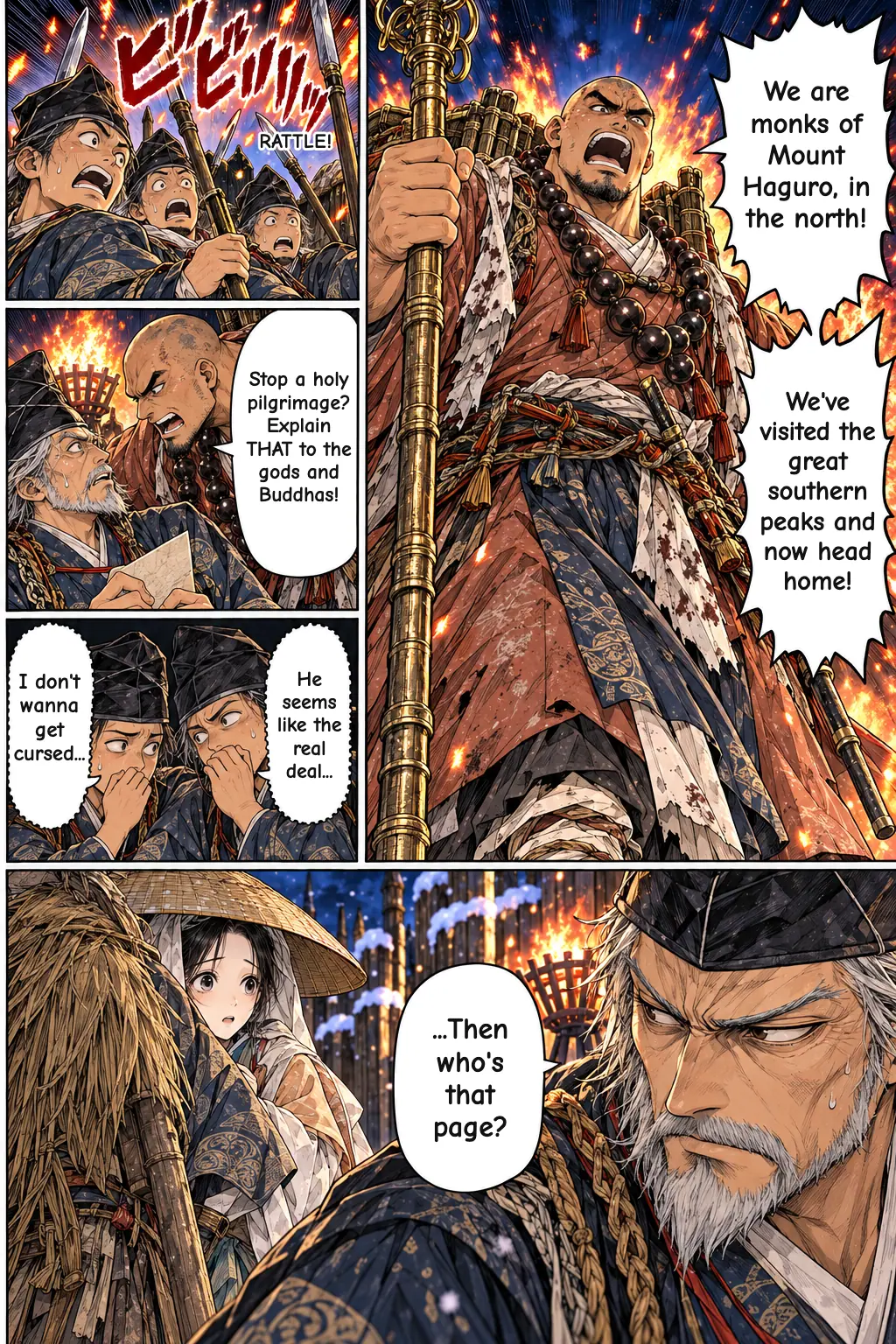
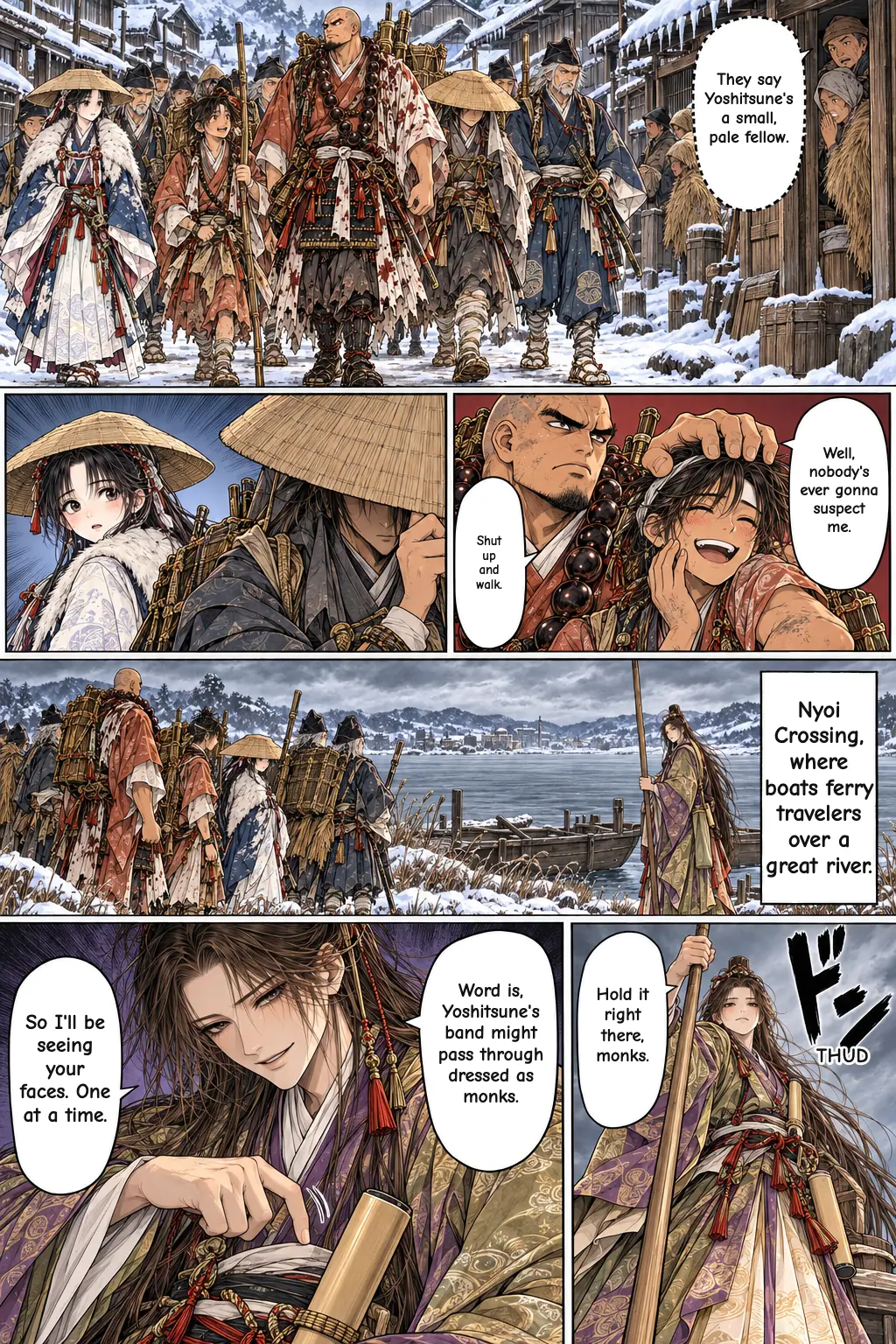
His wife, described in the Gikeiki as the daughter of the Koga minister, insists on coming despite the danger, and Yoshitsune reluctantly agrees. The party talks over how to disguise themselves. On the advice of Benkei, the warrior-monk, they dress as yamabushi (wandering mountain ascetics) from Mount Haguro, and Yoshitsune's wife is dressed as a chigo, a temple page boy. They cross Lake Biwa by boat from Ōtsu, struggle over the steep Arachi Pass, and follow the Hokurikudō road north along the Sea of Japan coast.
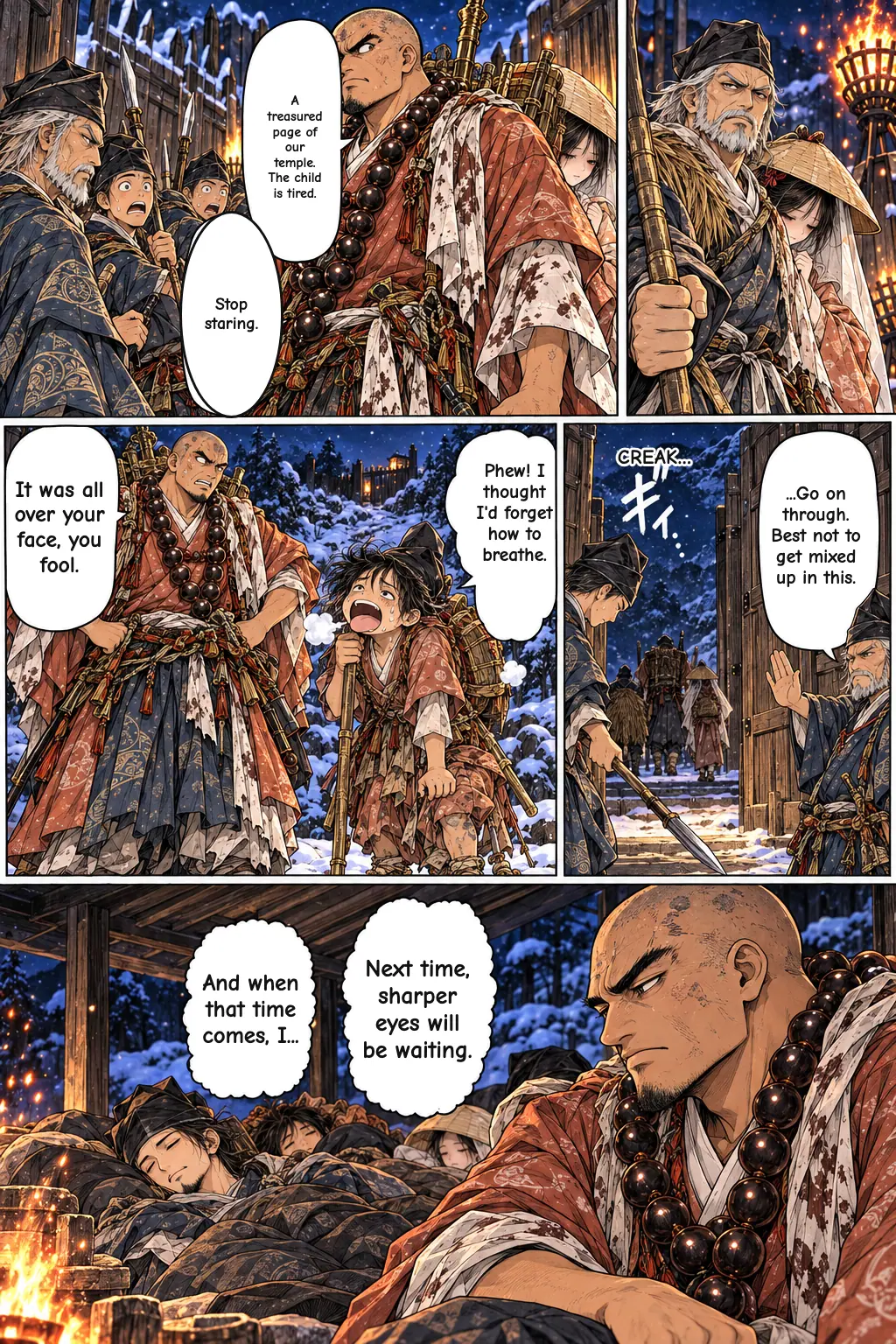
At the Mitsunokuchi barrier in Echizen, guards stop them and question who they are. Benkei boldly insists that they are Haguro monks on their way home from pilgrimage, and he talks the group through. Later, during a visit to Heisenji temple, they again come close to being recognized and again get away.
The Nyoi Crossing: Why Benkei Strikes Yoshitsune
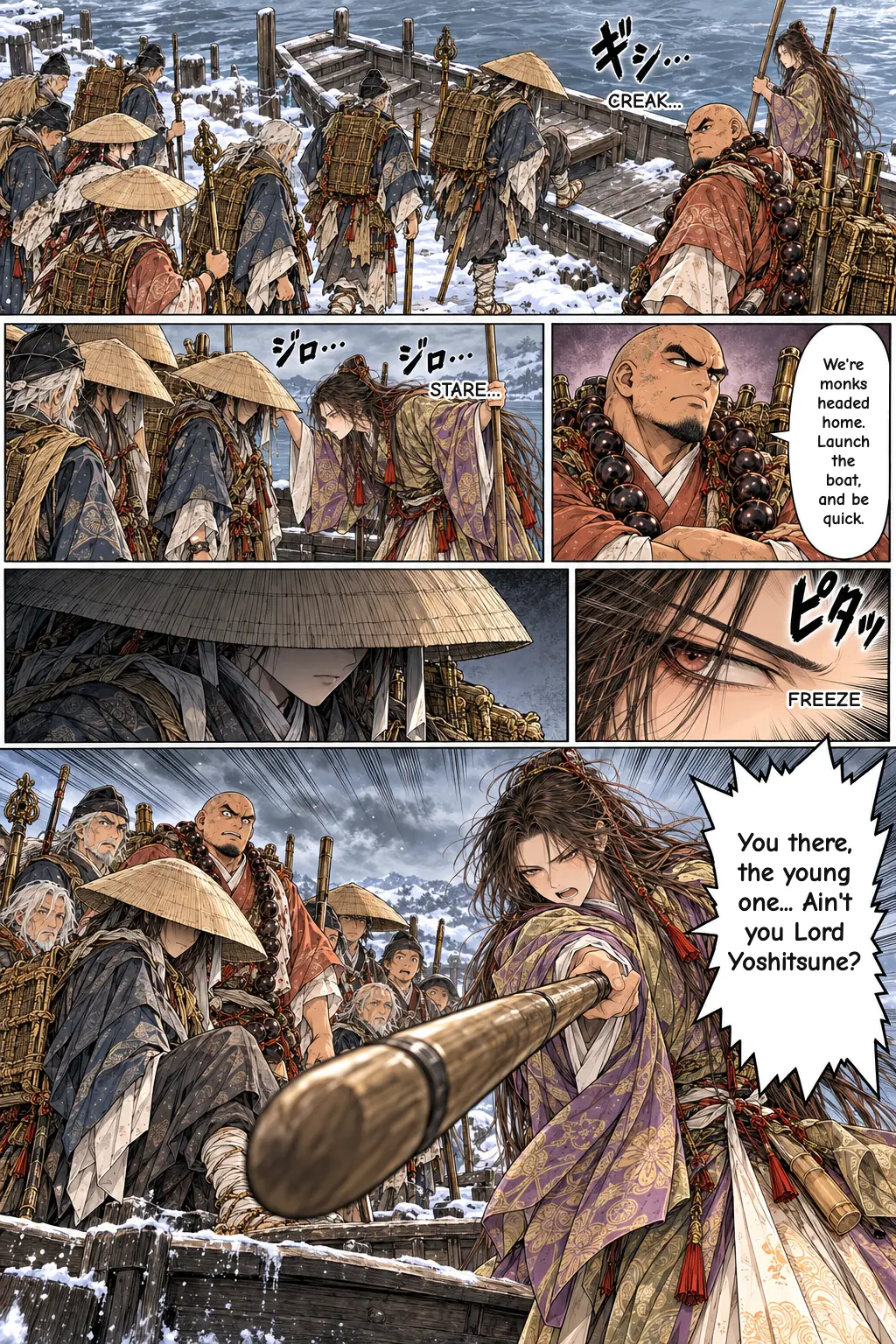
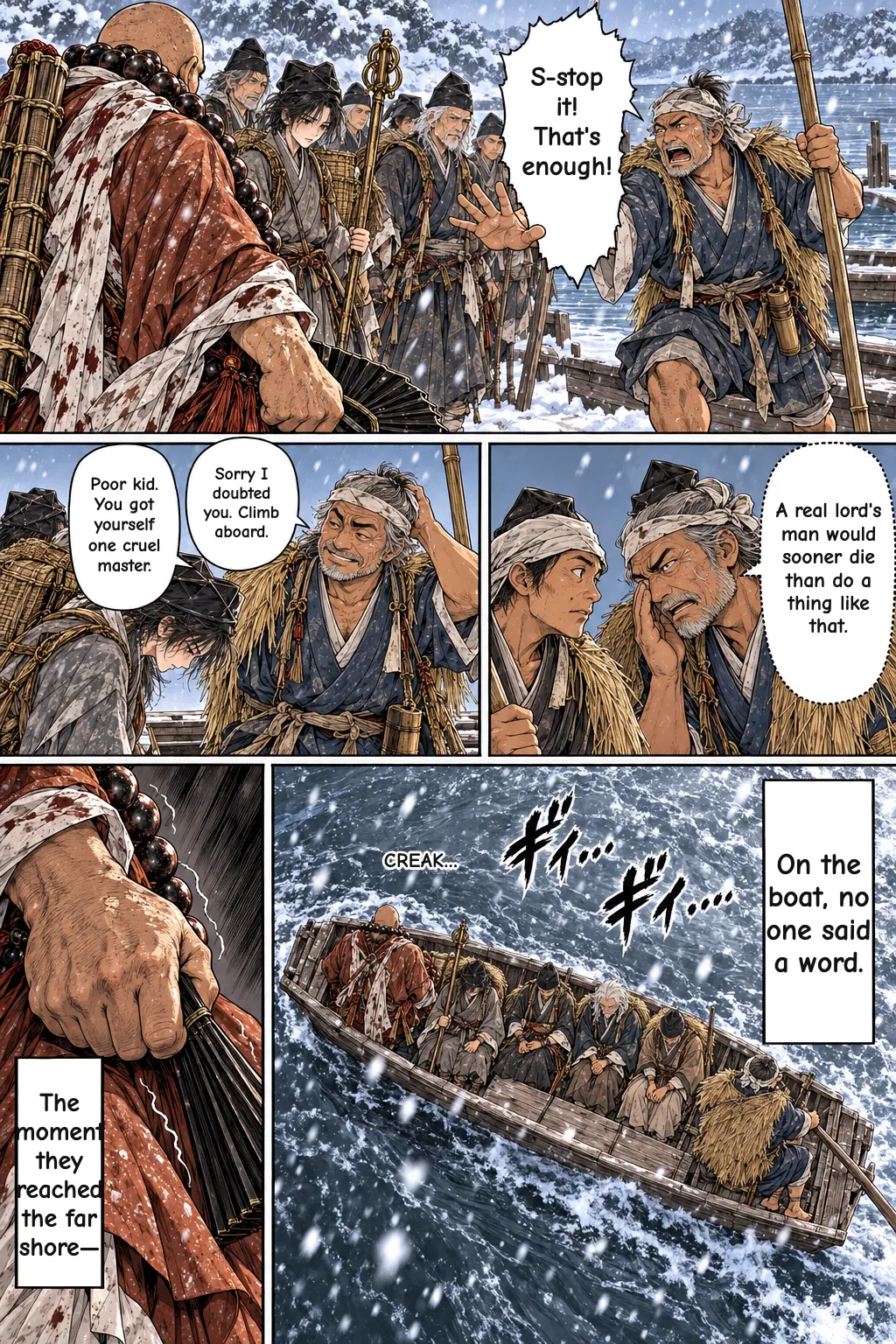
The most famous episode takes place at the Nyoi Crossing in Etchū, in what is now Toyama Prefecture. The ferryman, Taira no Gon-no-Kami, has received word that Yoshitsune may pass this way. He is slow to launch his boat, and he points at one member of the party, asking whether that man is the Hōgan himself.
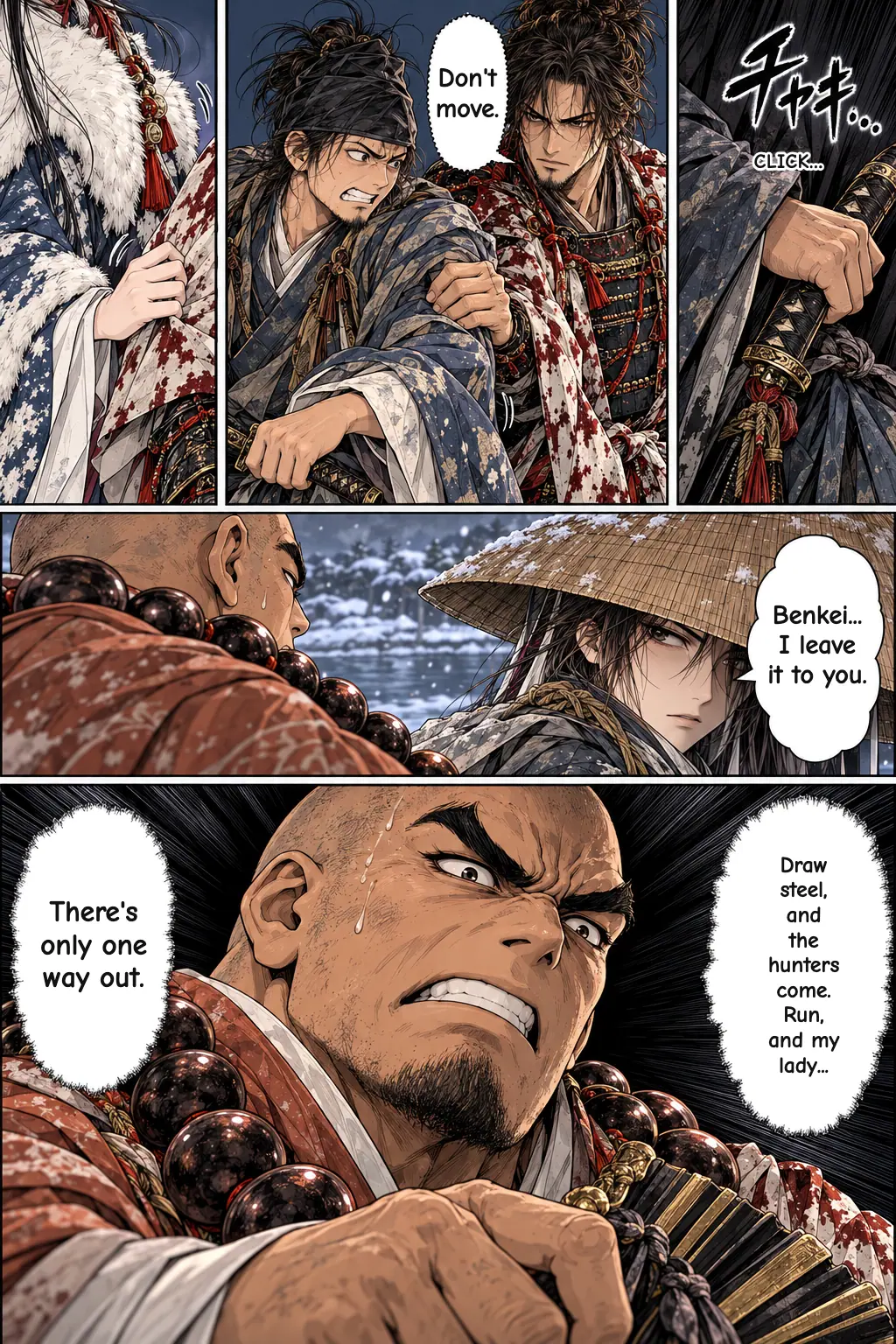
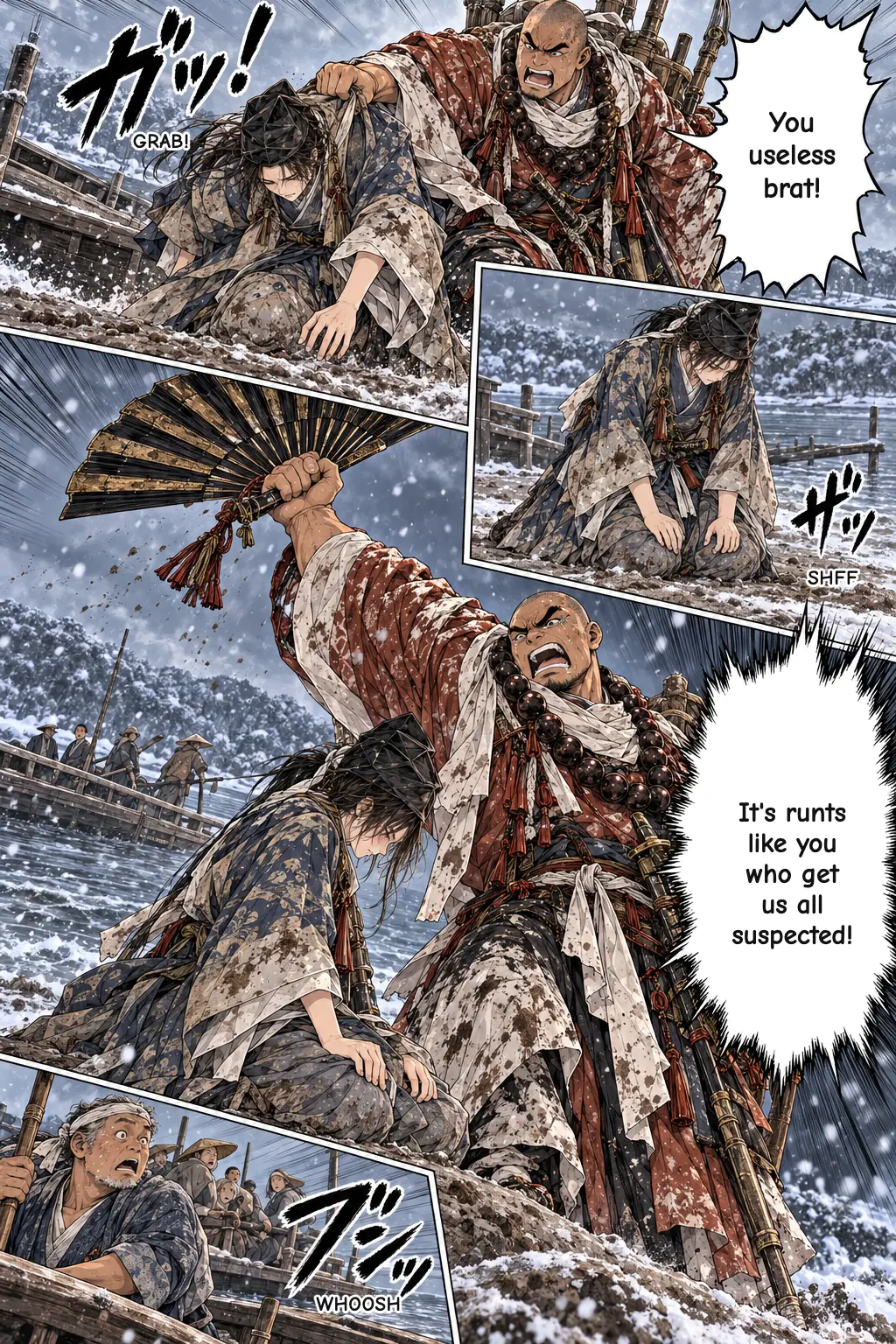
Benkei reacts at once. He shouts that this man is the reason they keep falling under suspicion, drags his master out of the boat, and beats him hard with a fan in front of everyone. No retainer would ever strike his own lord, so to the ferryman the beating proves that this cannot be Yoshitsune. His doubts are settled and the boat sets off.
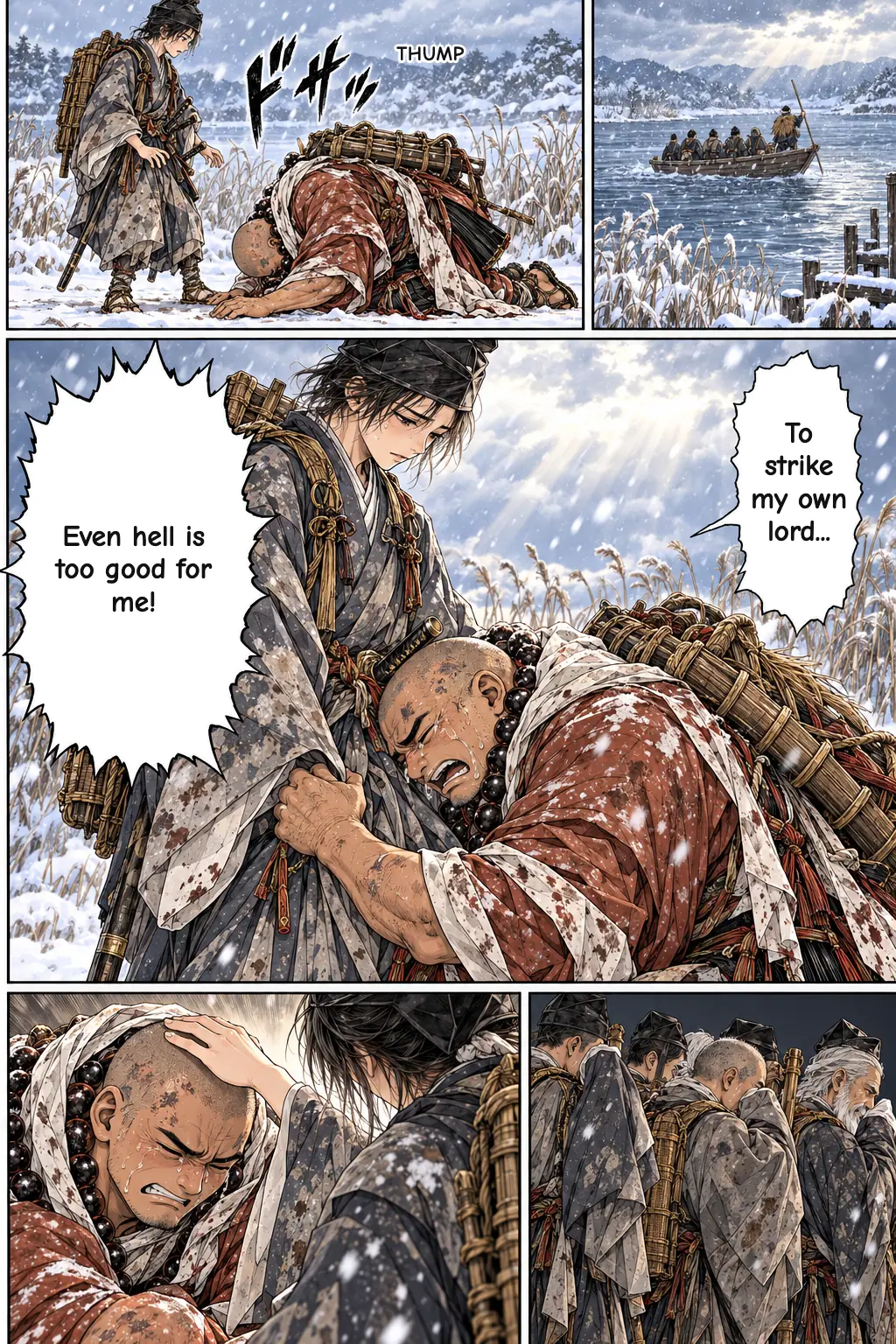
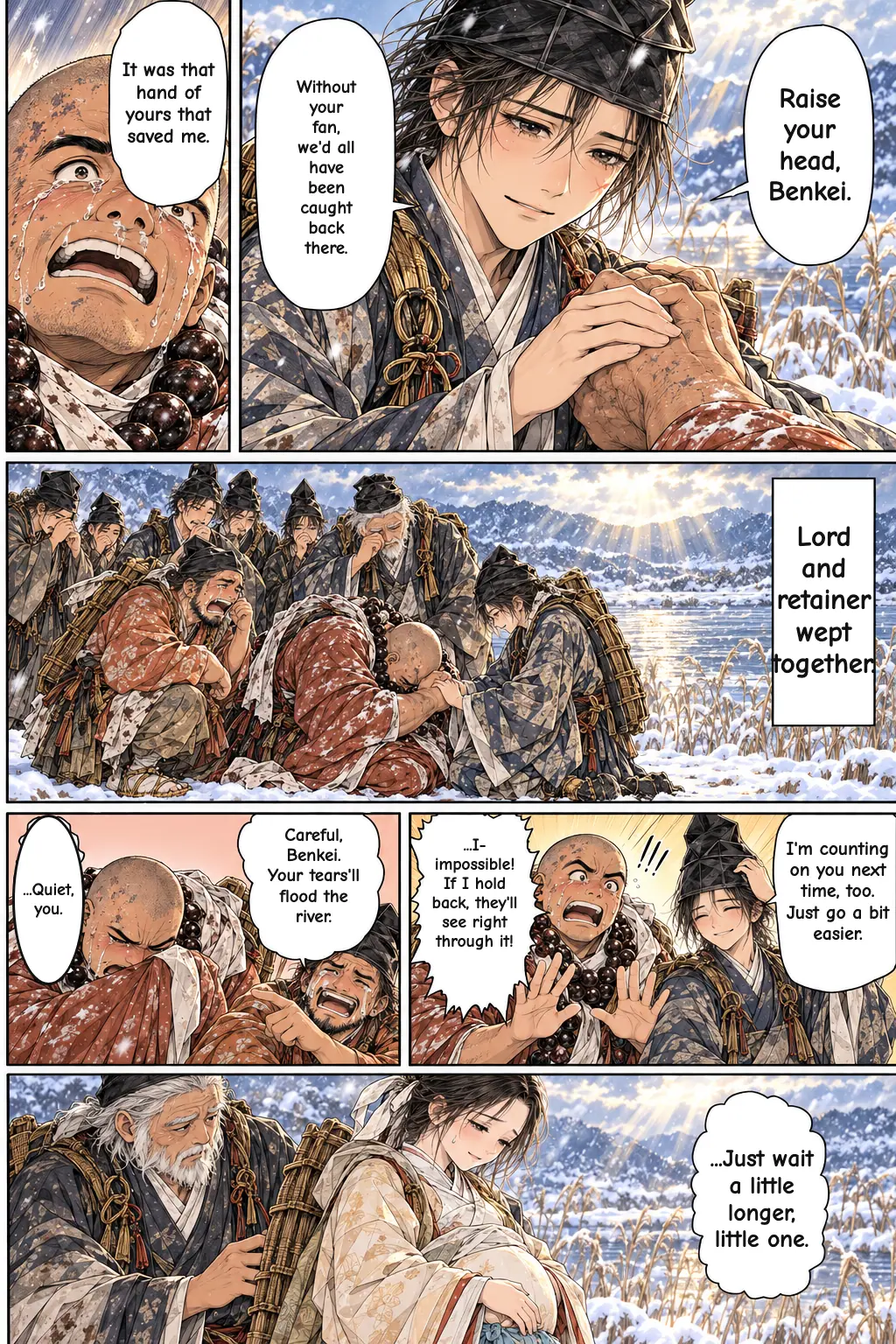
The real power of the scene comes afterwards. Once they are safely across, Benkei clings to Yoshitsune's sleeve and weeps for having raised his hand against his lord. Yoshitsune does not blame him for the quick thinking that saved them, and lord and retainers weep together.
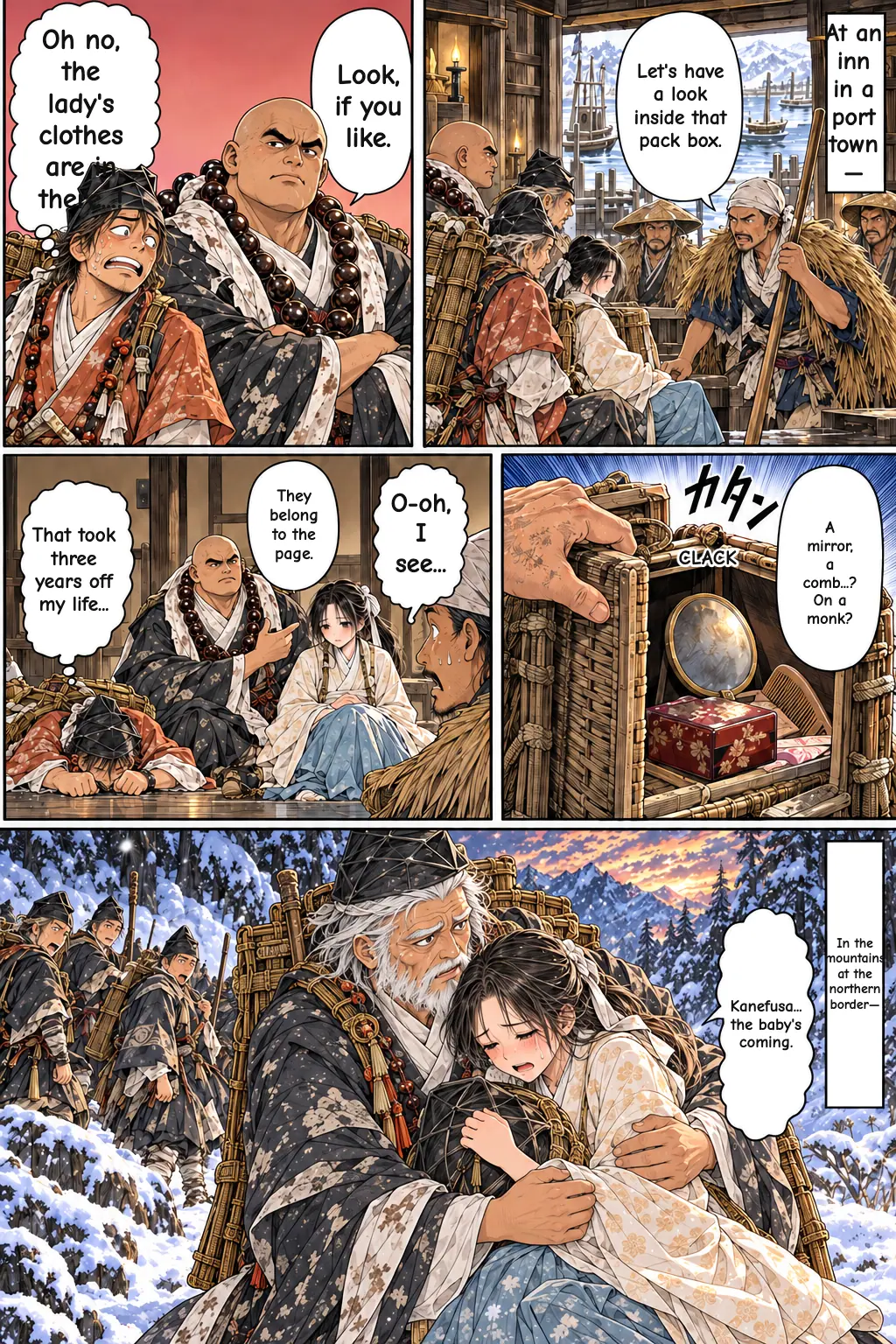
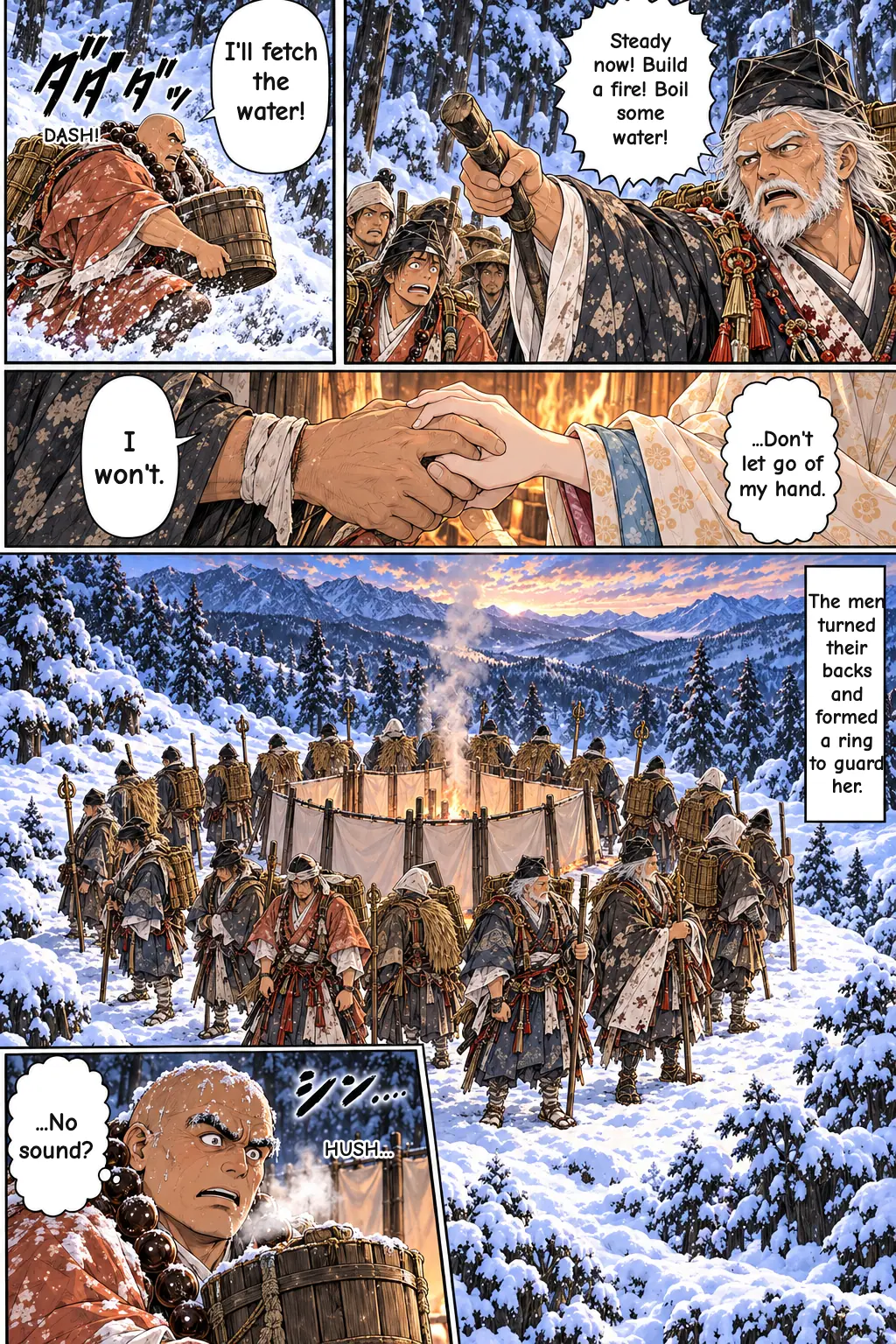
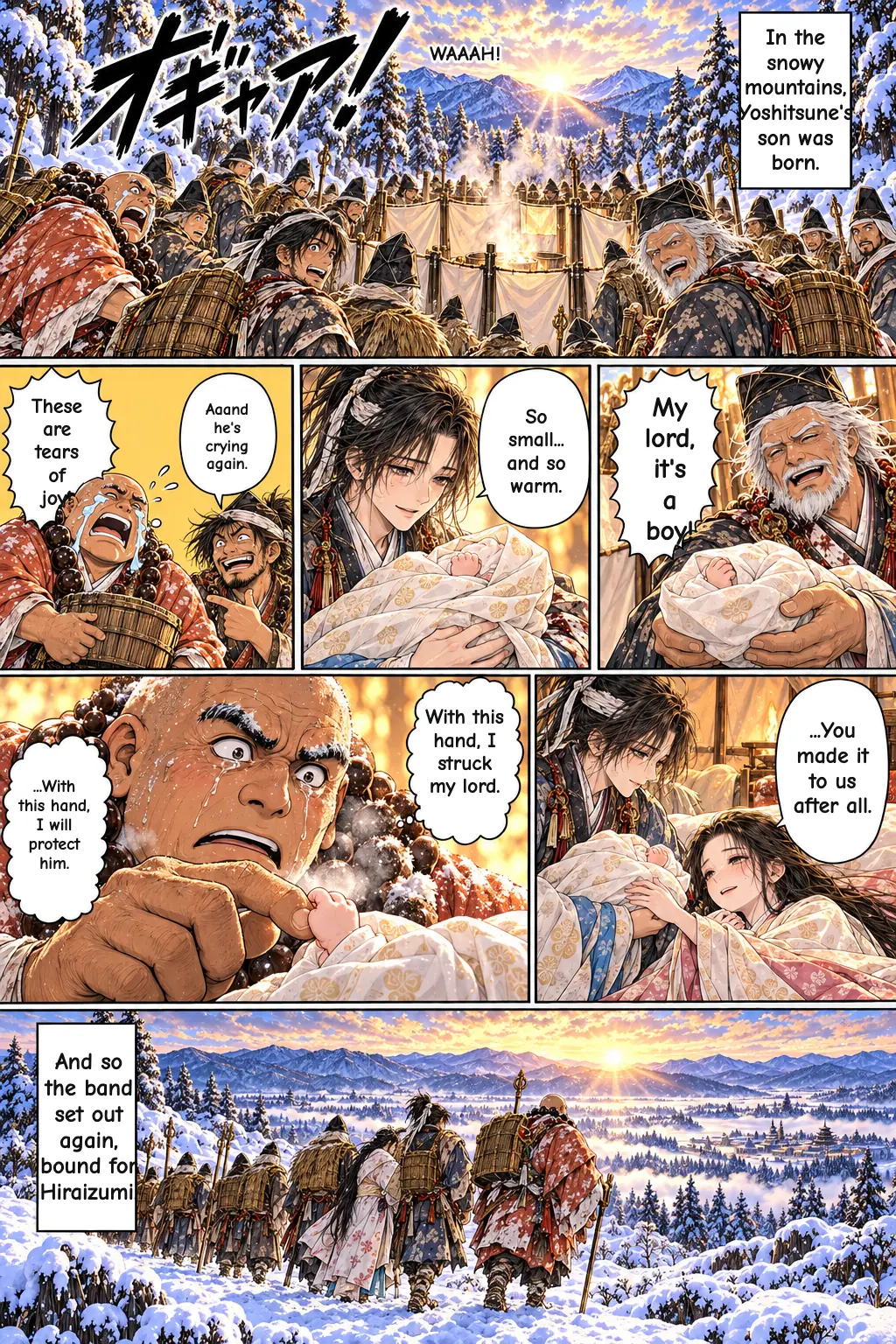
The journey continues. At Naoe no Tsu in Echigo, local people grow suspicious and search the monks' oi (wooden backpack shrines). Inside they find items no ascetic should carry, but Benkei explains them away and warns the searchers of divine punishment. Finally, in the Kamewari mountains of Dewa, Yoshitsune's wife goes into labor and gives birth to a son in the mountains while the retainers look after her. Tradition links the child's name to the mountain where he was born. The party then pushes on toward Hiraizumi.
What the Story Means: Loyalty, Disguise, and a Doomed Hero
In the warrior culture of medieval Japan, striking your own lord was unthinkable. Benkei breaks the outward rule of loyalty in order to keep a deeper loyalty, which is to keep his master alive. The Gikeiki does not lecture the reader about this. The tears on the far shore show how much the blow cost both men.
The disguise was a believable one. Yamabushi, followers of the mountain religion called Shugendō, travelled widely between sacred peaks, and a band of monks heading toward Mount Haguro in the north could pass through the country without seeming out of place.
Medieval readers already knew how the story ended: Yoshitsune would die at Hiraizumi in 1189. The Gikeiki spends little time on his battlefield triumphs and much more on his years as a fugitive. This focus on his suffering helped build the deep public sympathy for Yoshitsune that later became a byword in Japanese for siding with the underdog (hōgan-biiki).
Many people know this story through the Noh play Ataka and the kabuki play Kanjinchō instead. Those stage versions move the scene to the Ataka barrier and add the guard Togashi, Benkei pretending to read a temple fundraising scroll, a beating with a staff, and a celebratory dance. None of these elements appear in the Gikeiki's seventh book. In the Gikeiki, the beating happens at the Nyoi Crossing, with a fan, in front of a ferryman.
What the Manga Changes
The manga follows the outline of the Gikeiki closely, but some parts are creative additions. The episode compresses three dangers from the original, the Mitsunokuchi barrier, the Nyoi Crossing, and the search at Naoe no Tsu, into one continuous chapter. The faces, ages, voices, and personalities of the barrier guard and the ferryman are invented, and so are the snowy northern scenery and other weather details.
Benkei's inner thoughts before and after the beating, Yoshitsune's silent expressions, and the exact wording of their tearful exchange are all the manga's own. The core of the scene comes from the original: Benkei grieves for striking his lord, and Yoshitsune accepts what he did. The birth scene on the mountain also adds its own details, such as a campfire and the trip to fetch water. The image of the newborn gripping Yoshitsune's hand is the manga's invention. The yamabushi costumes, including the oi, the ringed staff, and the conch-shell trumpet, are designed based on historical research.
Where to Read It
The Gikeiki survives in classical Japanese. English readers can find a full translation by Helen Craig McCullough, published as Yoshitsune: A Fifteenth-Century Japanese Chronicle. Comparing it with the Noh play Ataka shows how the same legend changed as it moved onto the stage.
To see the Nyoi Crossing come to life, read Episode 12 of THE LEGEND OF YOSHITSUNE: Ushiwaka and Benkei here on Manga Portal. Every episode is free, and you don't need to sign up. You can start from the beginning to follow Ushiwaka's youth and his first meeting with Benkei.
Characters in this episode
Minamoto no Yoshitsune (the Hōgan)
A celebrated Minamoto general, hunted by his own brother, who hides among a band of fake mountain monks while fleeing north.
Musashibō Benkei
Yoshitsune's devoted warrior-monk retainer, who leads the disguised party and strikes his own lord to save him.
Yoshitsune's wife
The daughter of the Koga minister in the Gikeiki, who insists on joining the dangerous journey disguised as a temple page boy and gives birth in the mountains.
Taira no Gon-no-Kami
The ferryman at the Nyoi Crossing, who suspects that one of the monks is Yoshitsune until he sees Benkei's beating.
The Mitsunokuchi barrier guard
A checkpoint keeper in Echizen who stops and questions the party but lets them pass after hearing Benkei's bold claims.
Yoshitsune's retainers
Loyal followers such as Kataoka Hachirō, Ise Saburō, and Hitachibō Kaison, who travel in disguise to protect their lord.
FAQ
Why did Benkei hit Yoshitsune?
At the Nyoi Crossing, a ferryman suspected that one of the disguised monks was the fugitive Yoshitsune. Benkei beat him with a fan because no retainer would ever strike his own lord, so the beating convinced the ferryman that this man could not be Yoshitsune. Afterwards Benkei wept for what he had done, and Yoshitsune forgave him.
Is the Nyoi Crossing the same story as Kanjinchō?
They come from the same legend, but they are different versions. In the Gikeiki the beating happens at the Nyoi Crossing in Etchū, using a fan. The Noh play Ataka and the kabuki play Kanjinchō move it to the Ataka barrier and add the guard Togashi, the scroll-reading scene, and a beating with a staff.
What is the Gikeiki?
The Gikeiki is an anonymous Japanese war tale from the Muromachi period that tells the life of Minamoto no Yoshitsune. It focuses on his youth and his years as a fugitive rather than on his battles, and it became a major source for later Noh, kabuki, and popular legends about Yoshitsune and Benkei.
Why were Yoshitsune and Benkei disguised as yamabushi?
Yamabushi were mountain ascetics who travelled widely between sacred sites, so a group of them on the road would not attract attention. In the Gikeiki, Benkei suggests dressing as monks from Mount Haguro in the north, which fit their route toward Hiraizumi.
Where was Yoshitsune going when he fled north?
He was heading for Hiraizumi in northeastern Japan to seek protection from Fujiwara no Hidehira, a powerful lord who had sheltered him when he was young. He reached Hiraizumi, but he was killed there in 1189.