Episode 13No One Passes Until My Lord Is DoneBenkei's Standing Death at Koromogawa
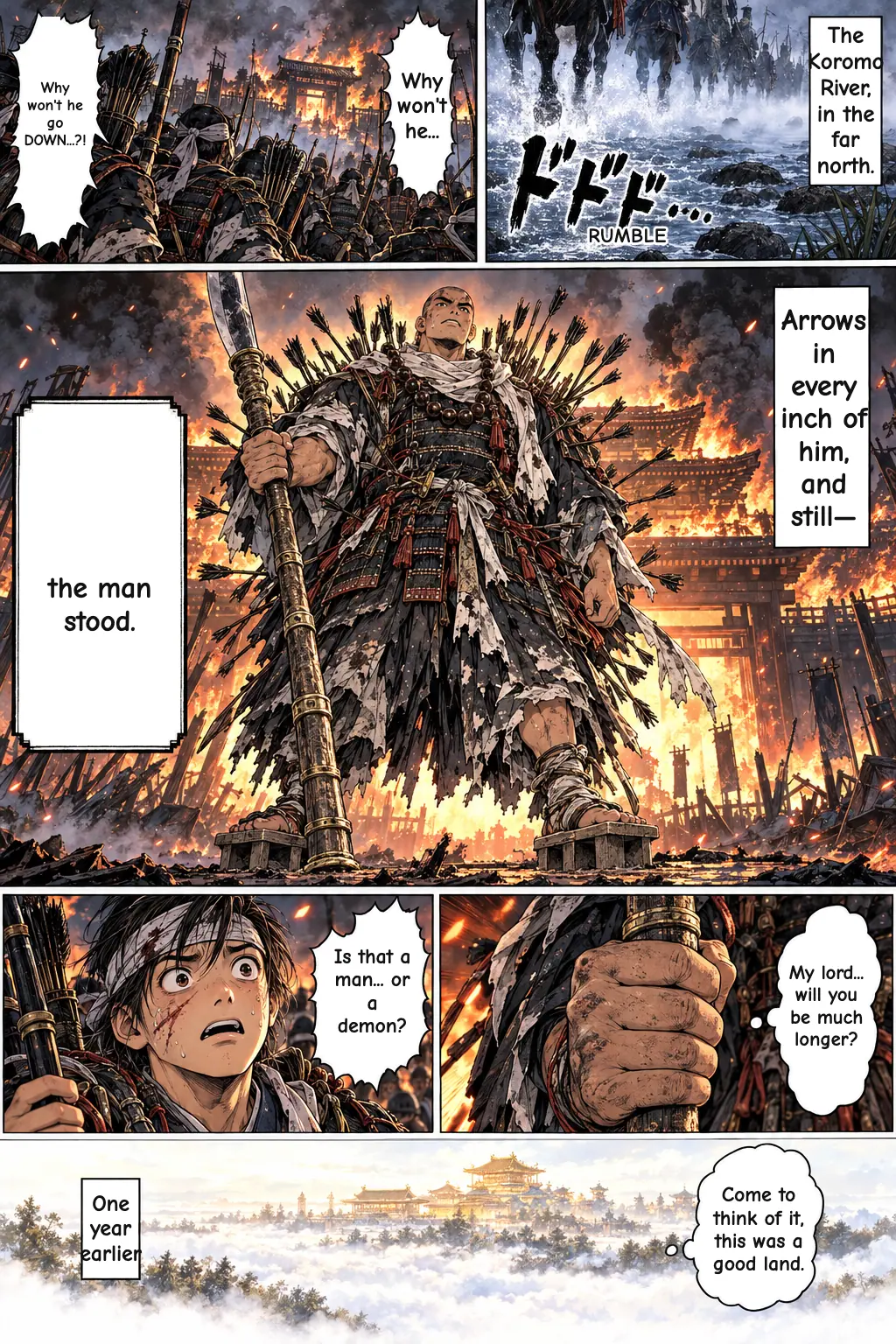
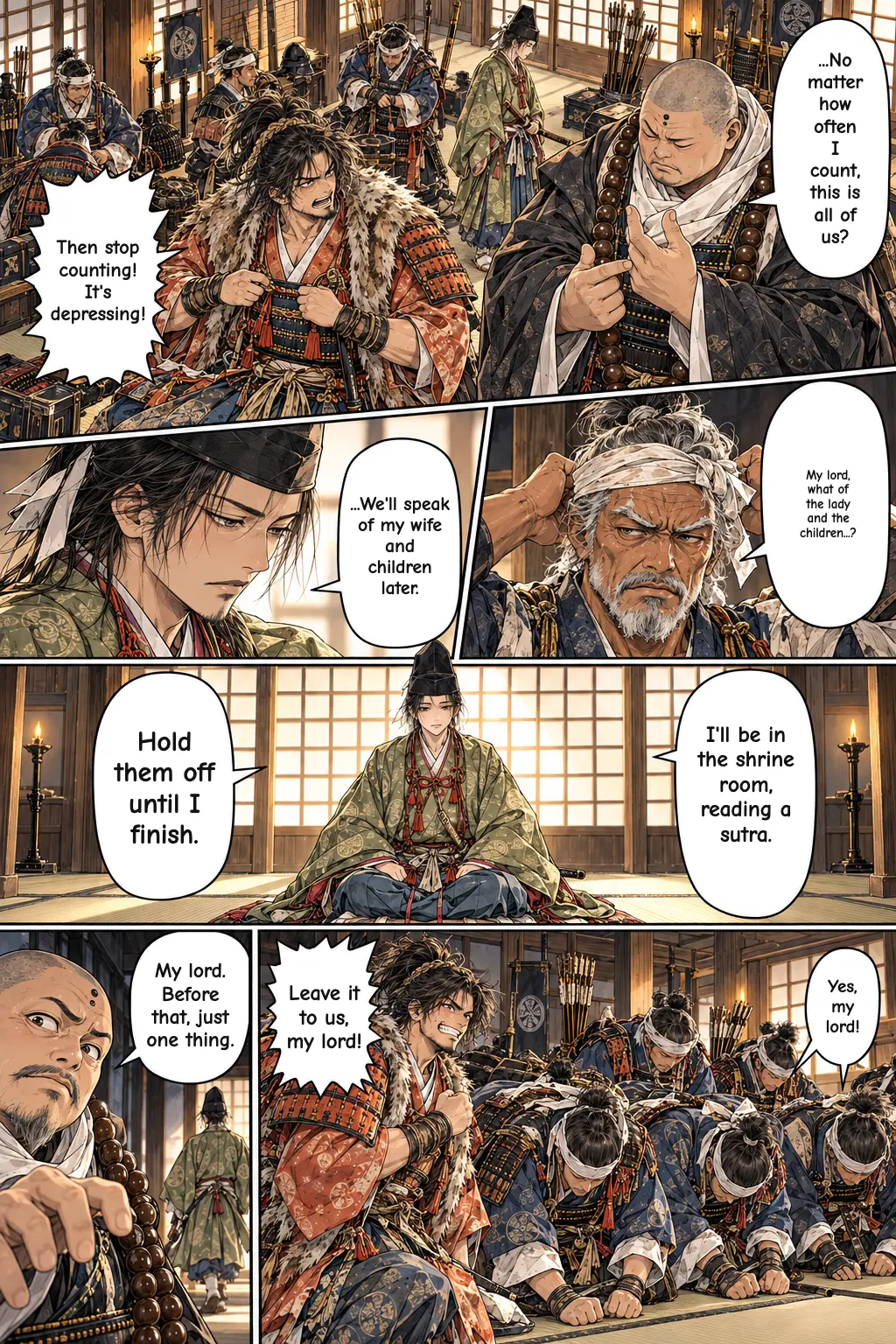
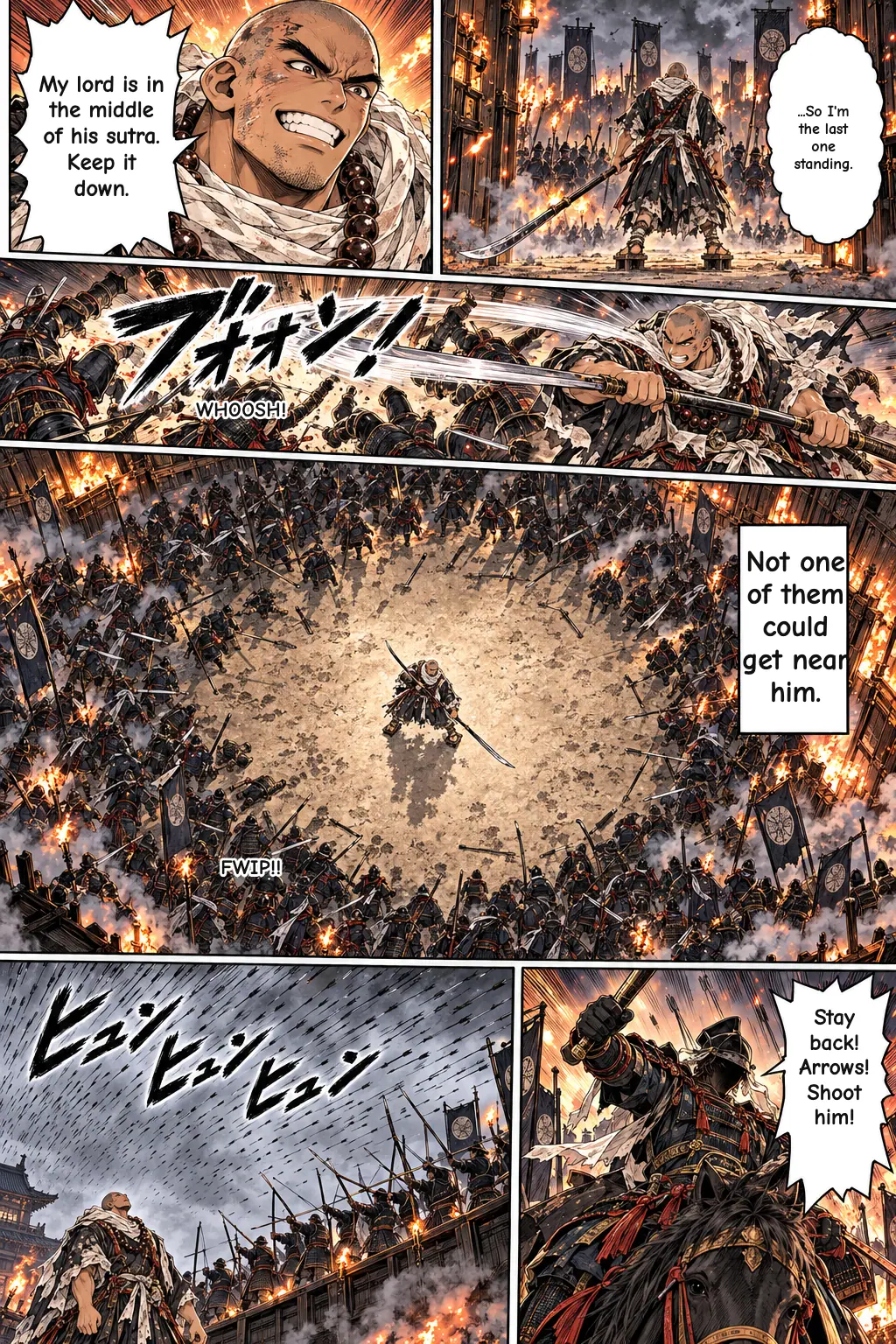
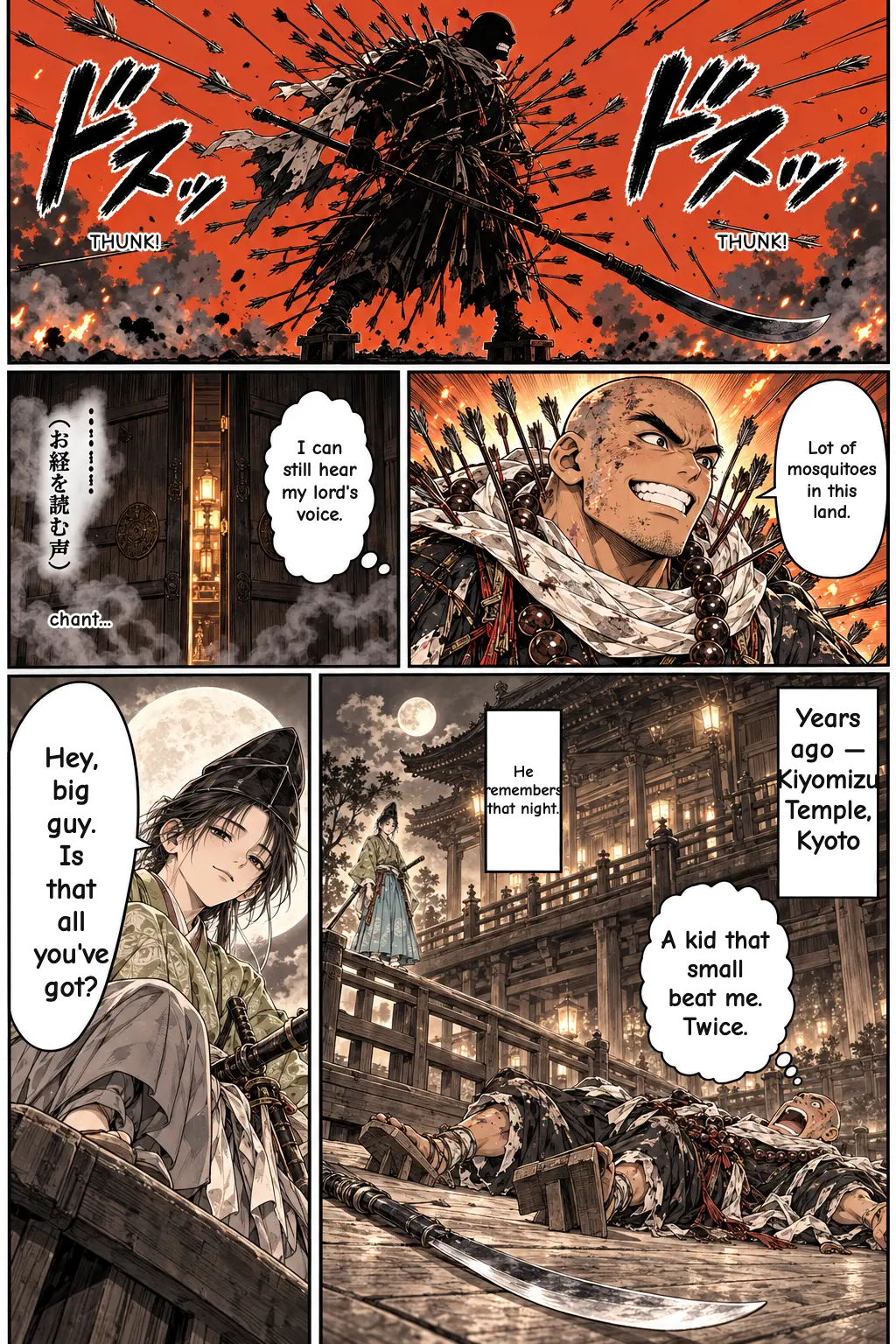
the series finale. In Hiraizumi, Yoshitsune finally finds peace. But after Hidehira dies, Yasuhira's huge army attacks the manor on the Koromo River. Until his lord finishes reading his sutra, Benkei stands alone at the gate and does not move.
Benkei's Standing Death at Koromogawa: The Gikeiki Ending Explained
What Is the Gikeiki? Background to the Final Chapter
The Gikeiki ("Chronicle of Yoshitsune") is a war tale by an unknown author. It is generally thought to have taken shape in the Muromachi period (roughly the 14th–15th centuries). Most earlier war epics focus on battles. The Gikeiki instead follows one life: that of Minamoto no Yoshitsune, the brilliant young general, from his boyhood at Kurama temple, where he was called Ushiwaka and later Shanaō, to his tragic end. Episode 13, the series finale, adapts the last part of the work, Book Eight.
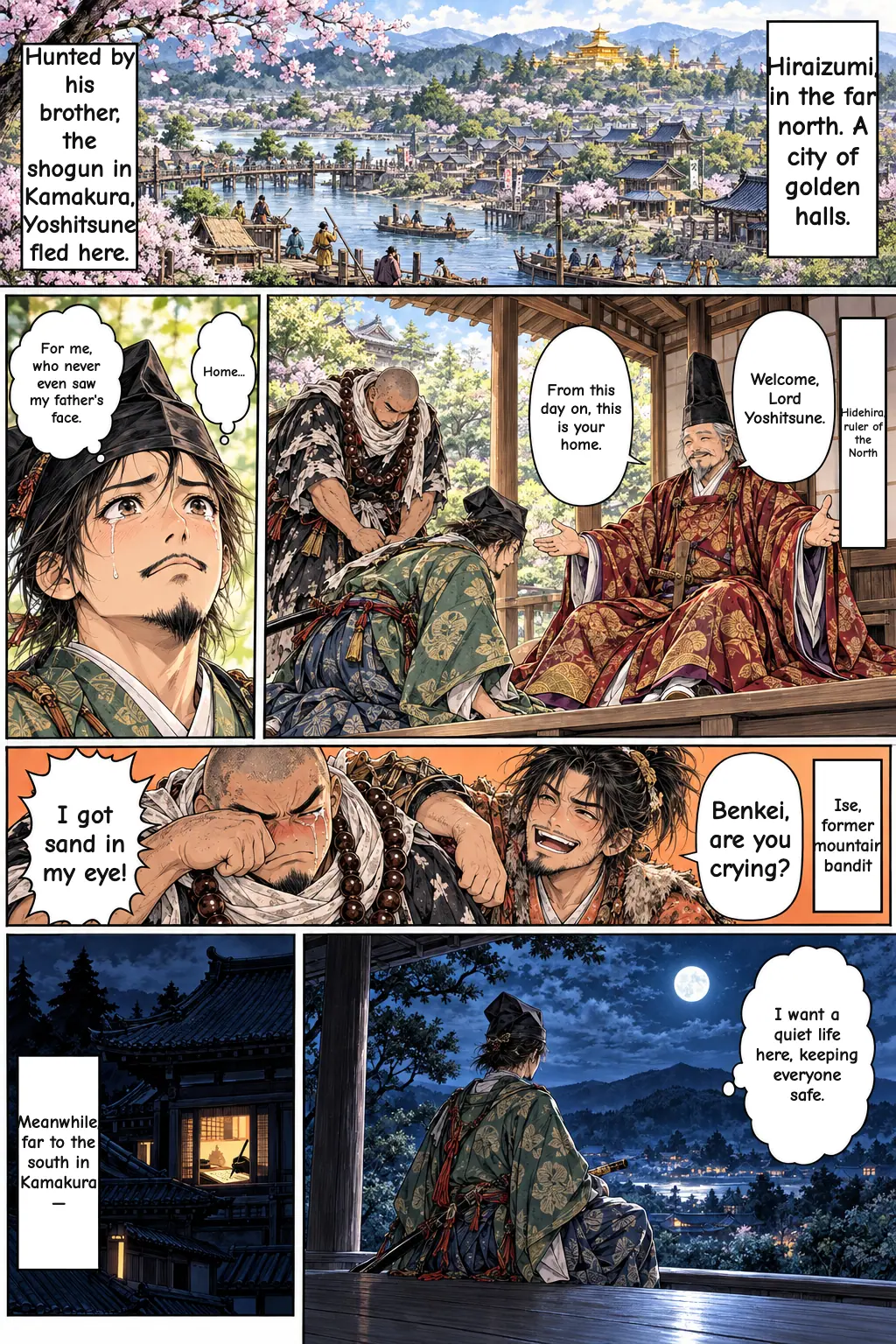
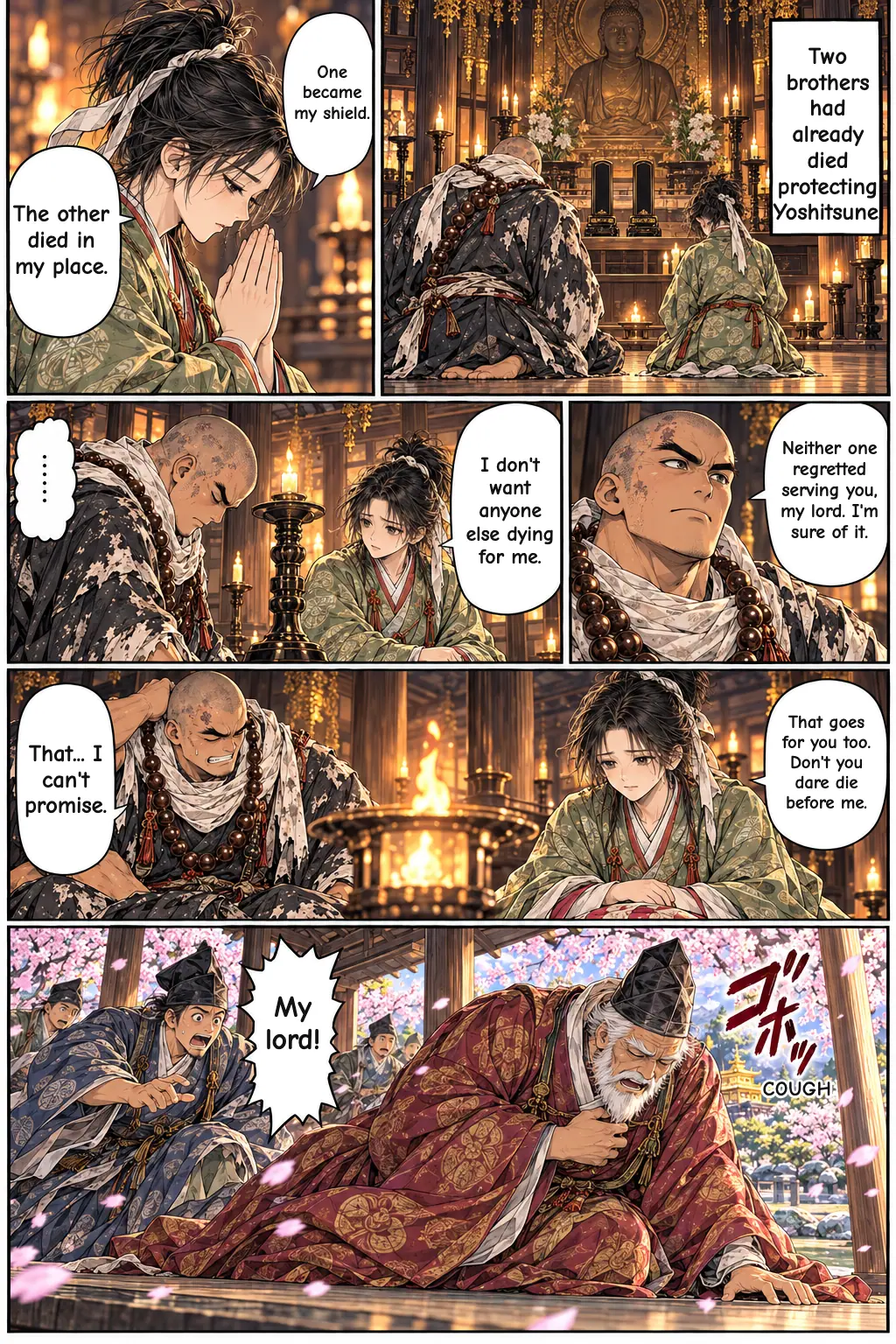
By this point Yoshitsune has fallen out with his half-brother Minamoto no Yoritomo, the lord of Kamakura. He has fled north to Hiraizumi in Ōshū (northeastern Japan), where the powerful lord Fujiwara no Hidehira shelters him. Book Eight opens with a rare moment of calm. Yoshitsune holds memorial rites for the Satō brothers, Tsuginobu and Tadanobu, two loyal retainers who had died for him.
Hidehira's Dying Wish and Yasuhira's Betrayal
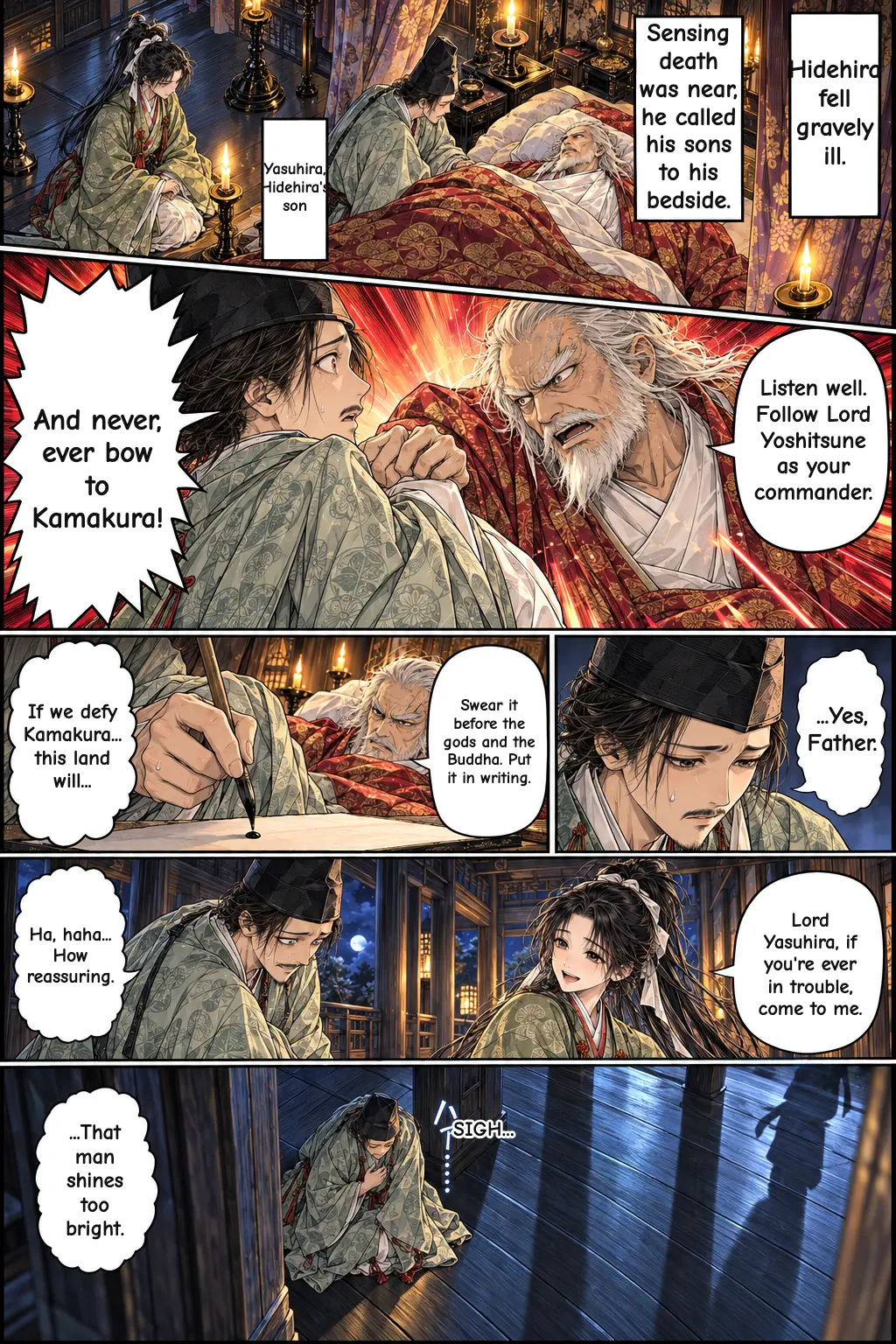
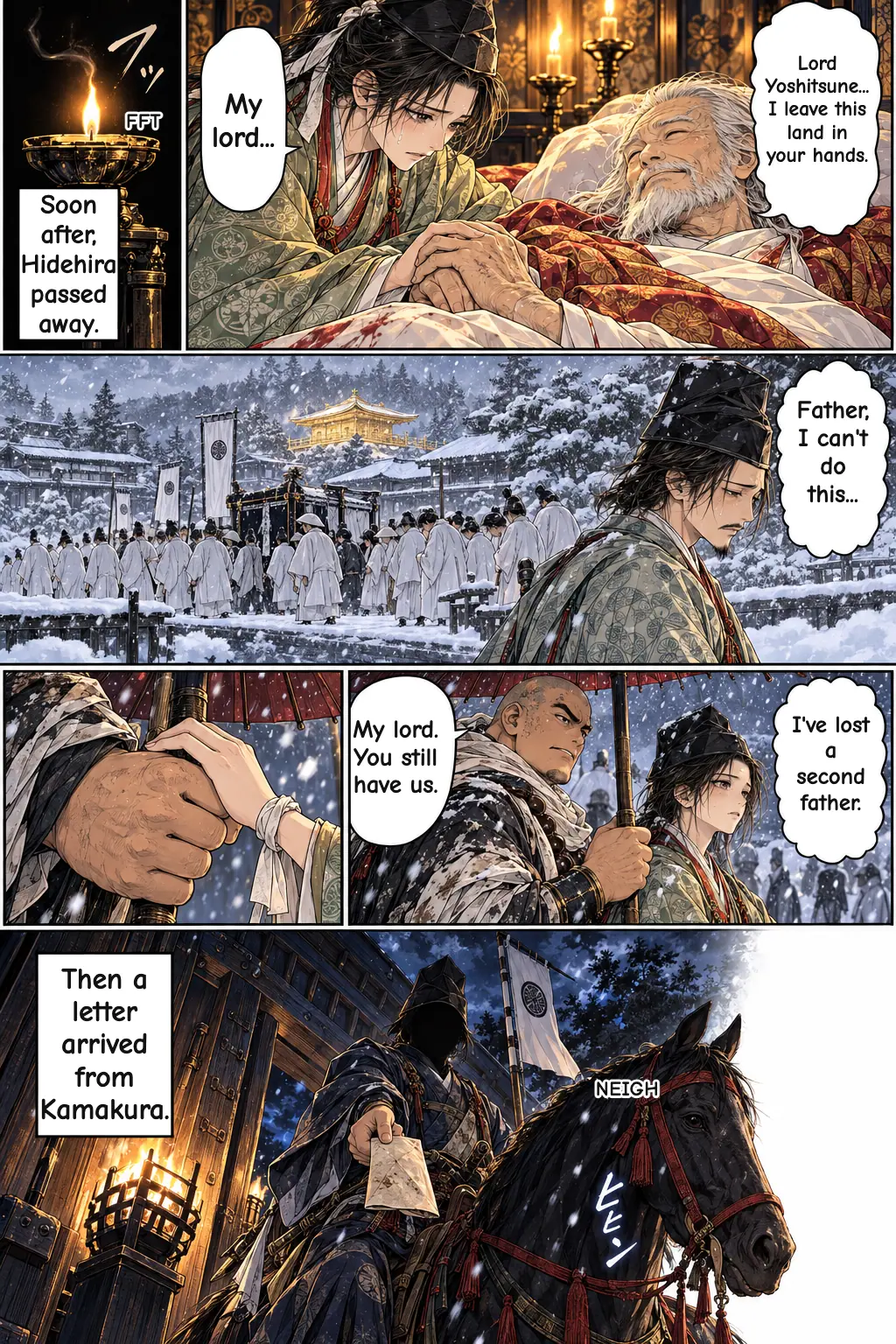
Then Hidehira falls ill. He calls his sons to his bedside and tells them to treat Yoshitsune as their commander-in-chief and stand together against Kamakura. To hold them to this, he has them write sworn oaths (kishōmon, written vows made before the gods). Then he dies.
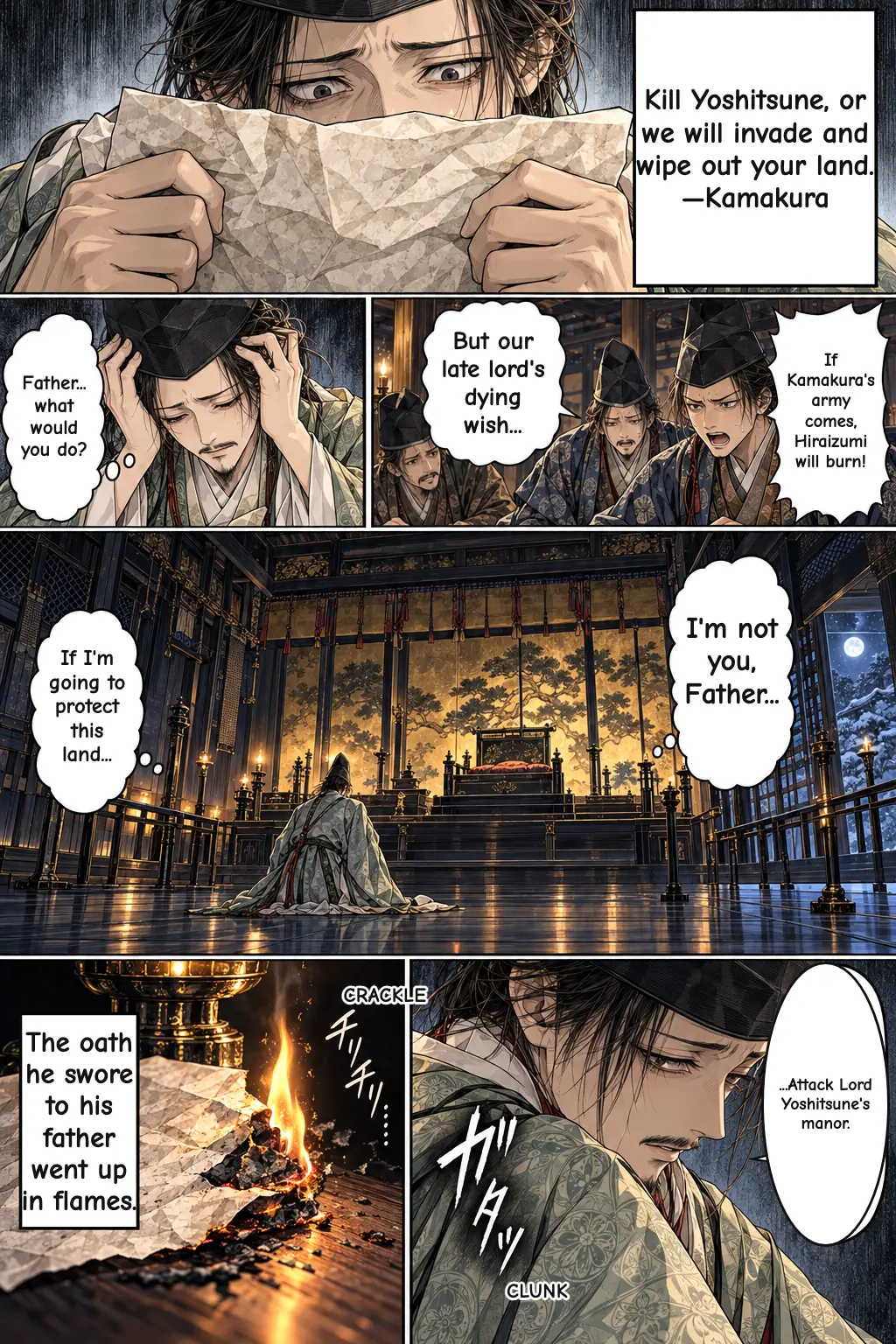
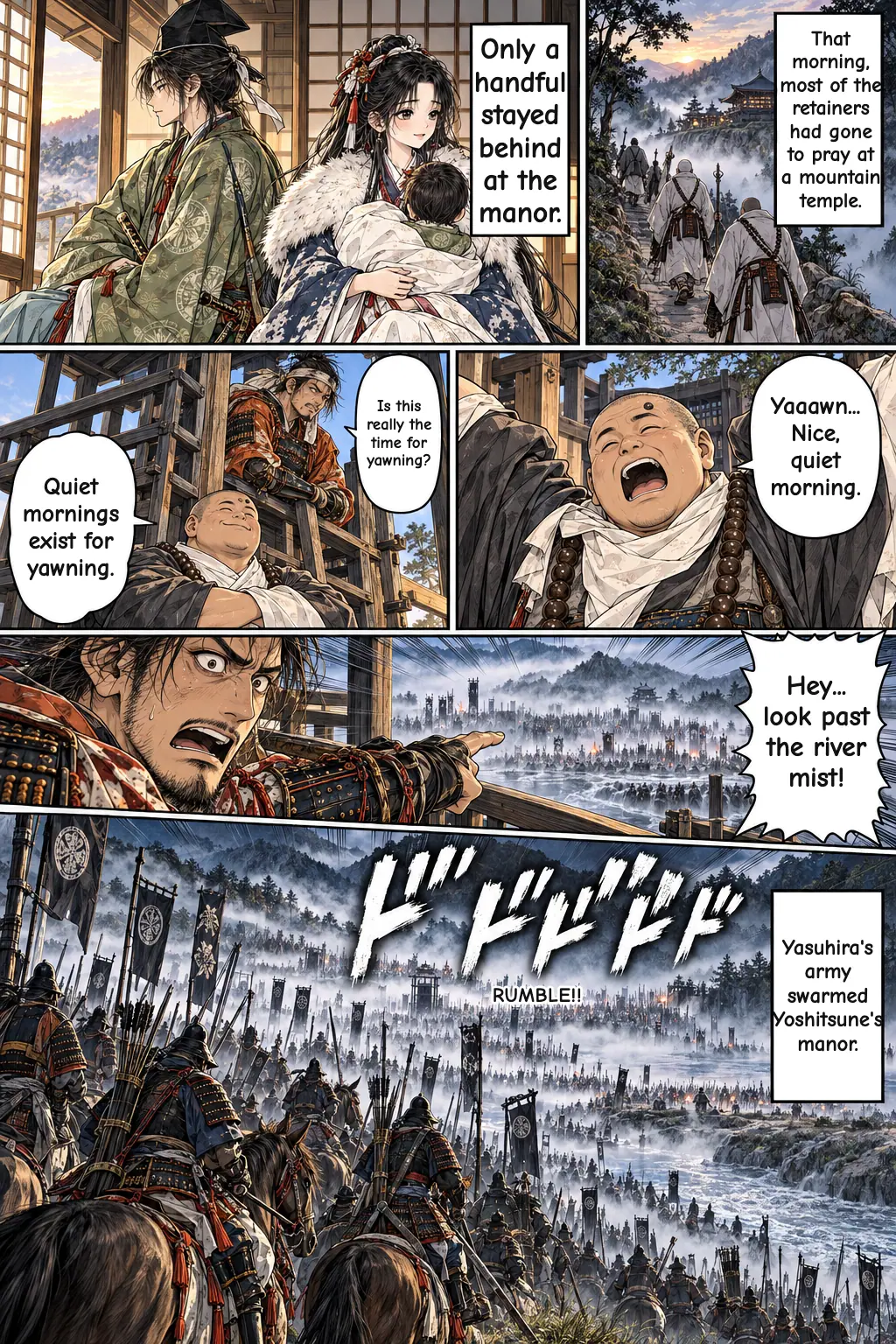
The promise does not last. Yoritomo pressures and persuades Hidehira's son Fujiwara no Yasuhira, who breaks both his father's will and his own oath. Yasuhira sends a huge army against Takadachi, Yoshitsune's residence above the Koromo River. Shortly before the attack, Suzuki Saburō Shigeie travels all the way from Kii province to join his lord, and he is reunited with his younger brother Kamei Rokurō. On the morning of the attack, however, Hitachibō Kaison and ten others have gone to worship at a nearby mountain temple, and they do not come back. Only a handful of men are left to defend the house.
Benkei's Standing Death and the Fall of Takadachi
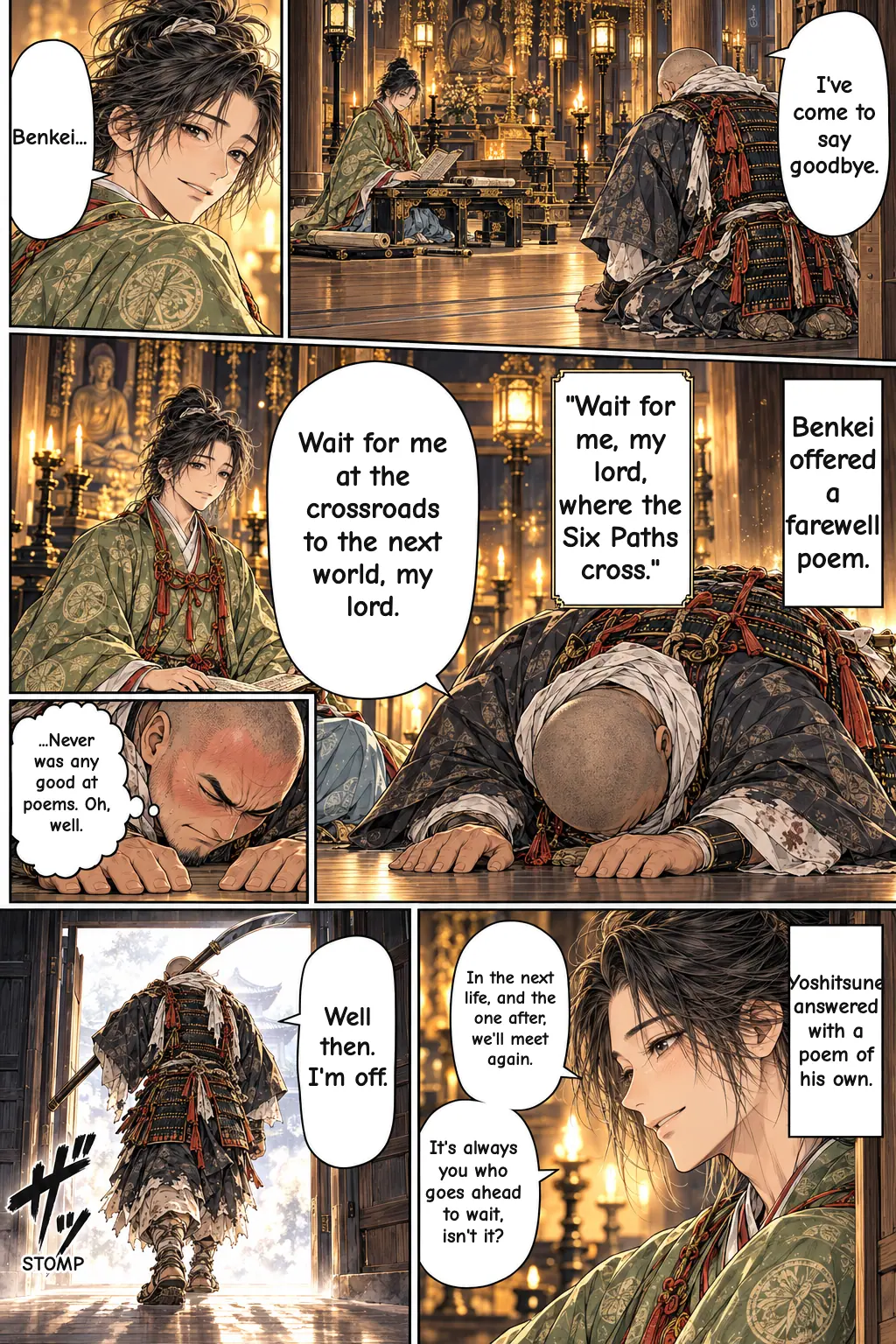
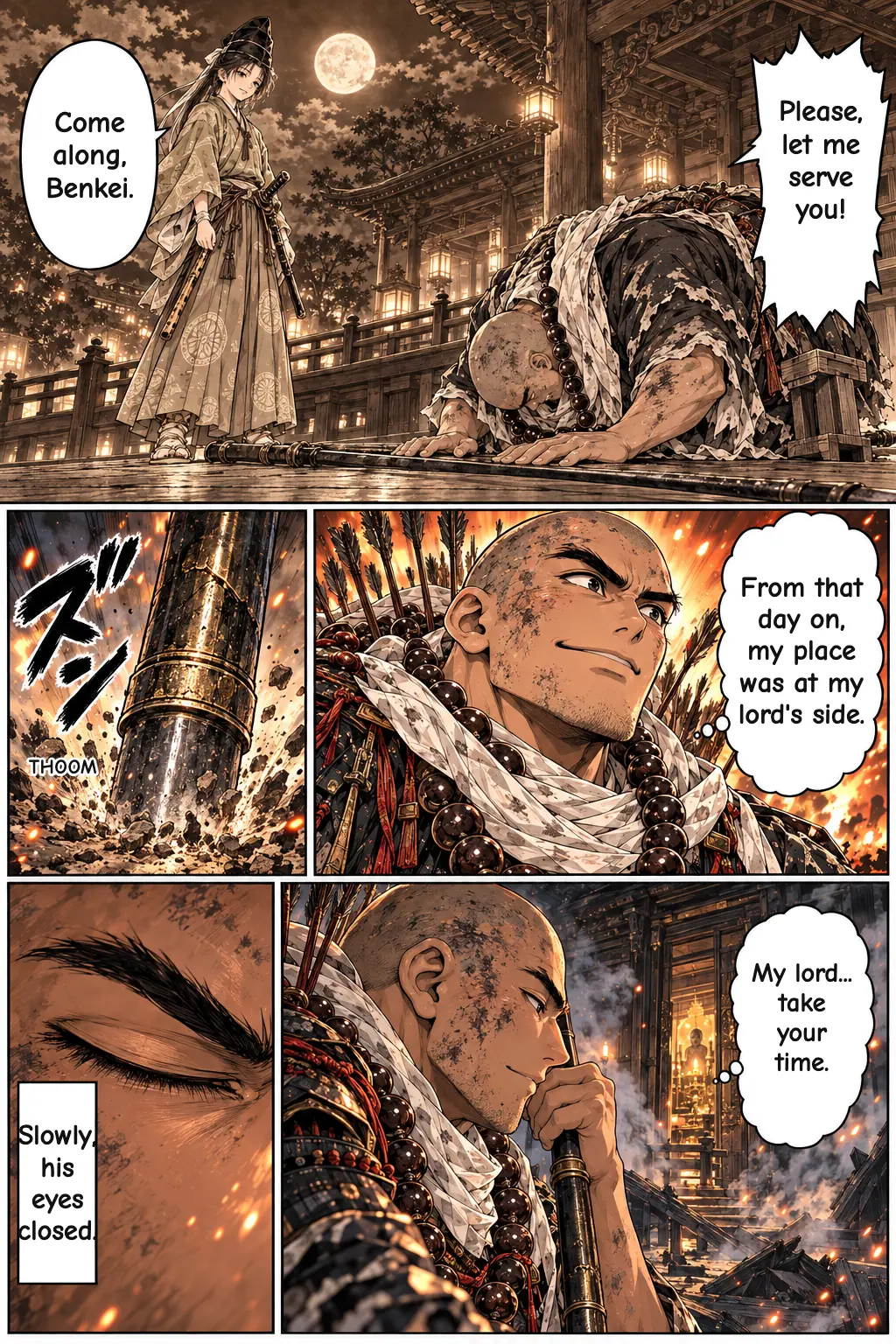
Yoshitsune goes into his private chapel to read the Lotus Sutra, and he asks his men to hold off the enemy until he has finished. Benkei is the warrior-monk who has served him since their famous first meeting. He comes to say goodbye, and master and servant exchange farewell poems. In his poem, Benkei asks Yoshitsune to wait for him on the road to the next world so that they can travel on together.
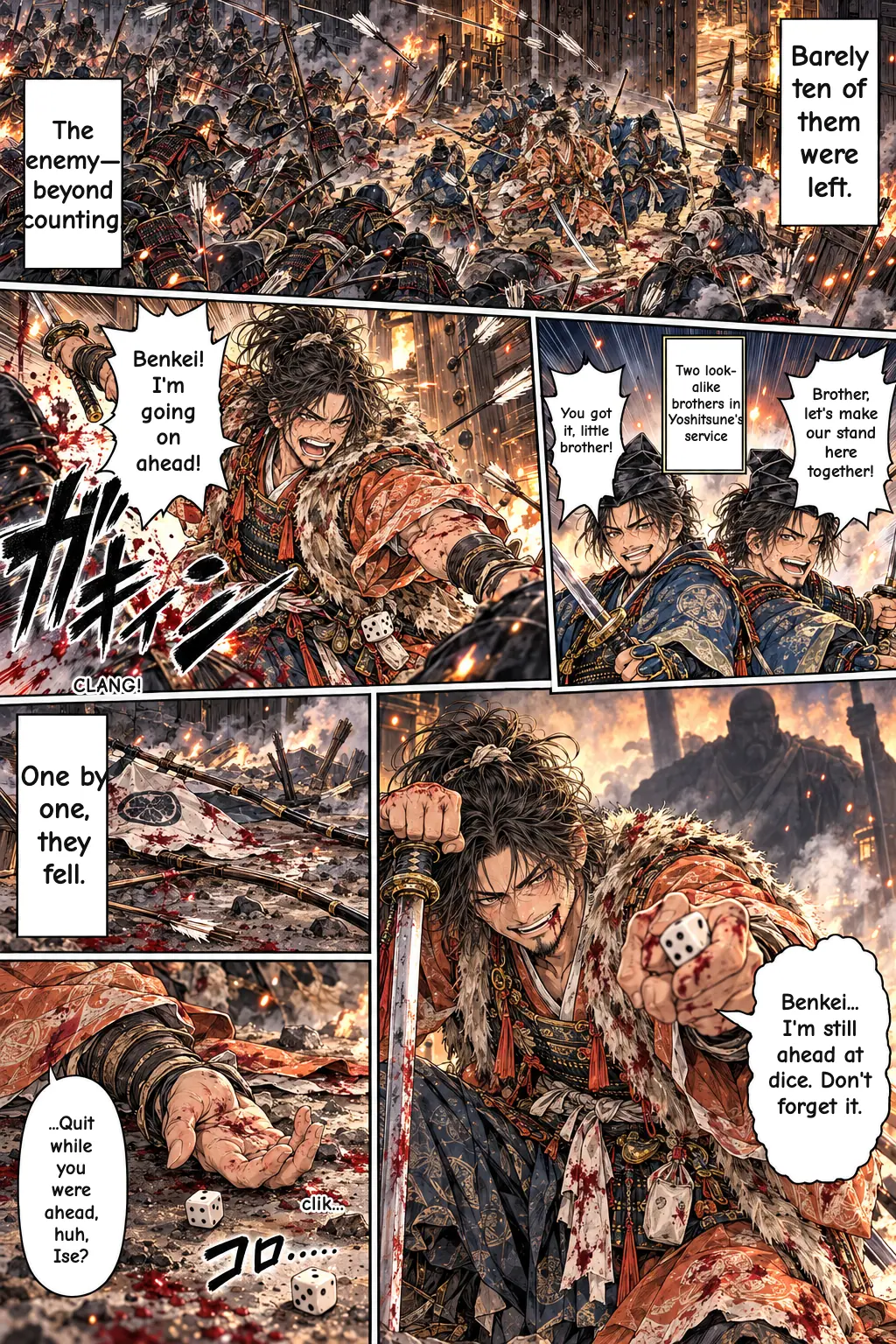
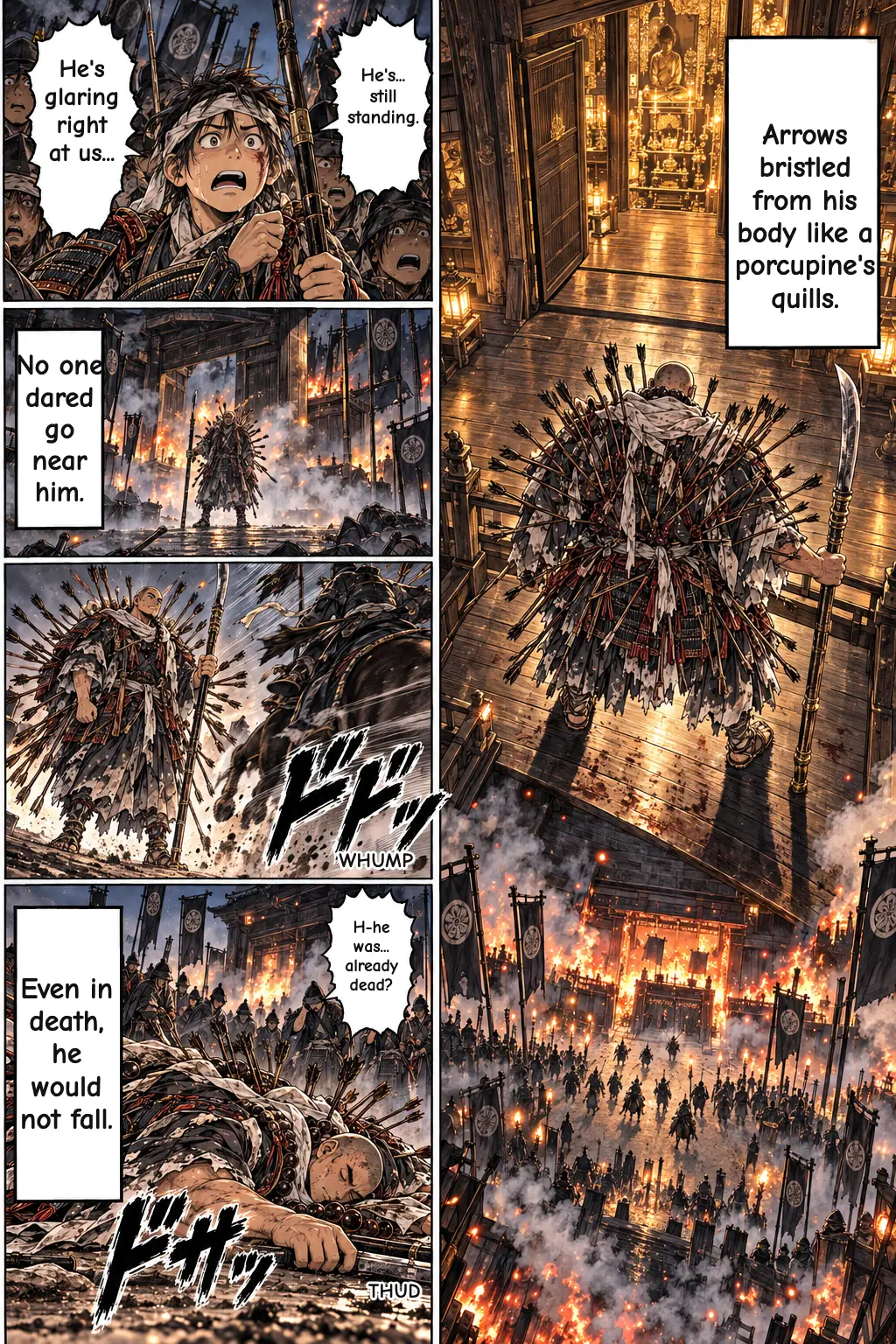
One by one, Kataoka, the Suzuki brothers, Washinoo, Mashio, Ise, Bizen and the others are killed. Benkei drives the attackers back with his naginata (a long-bladed polearm), and no one dares to come close. So many arrows stick out of his body that he looks like a man in a straw raincoat. At last he dies on his feet, leaning on his naginata like a staff. Even then the enemy keep their distance. Only when a horse rushes past and he topples over do they realize he has been dead all along.
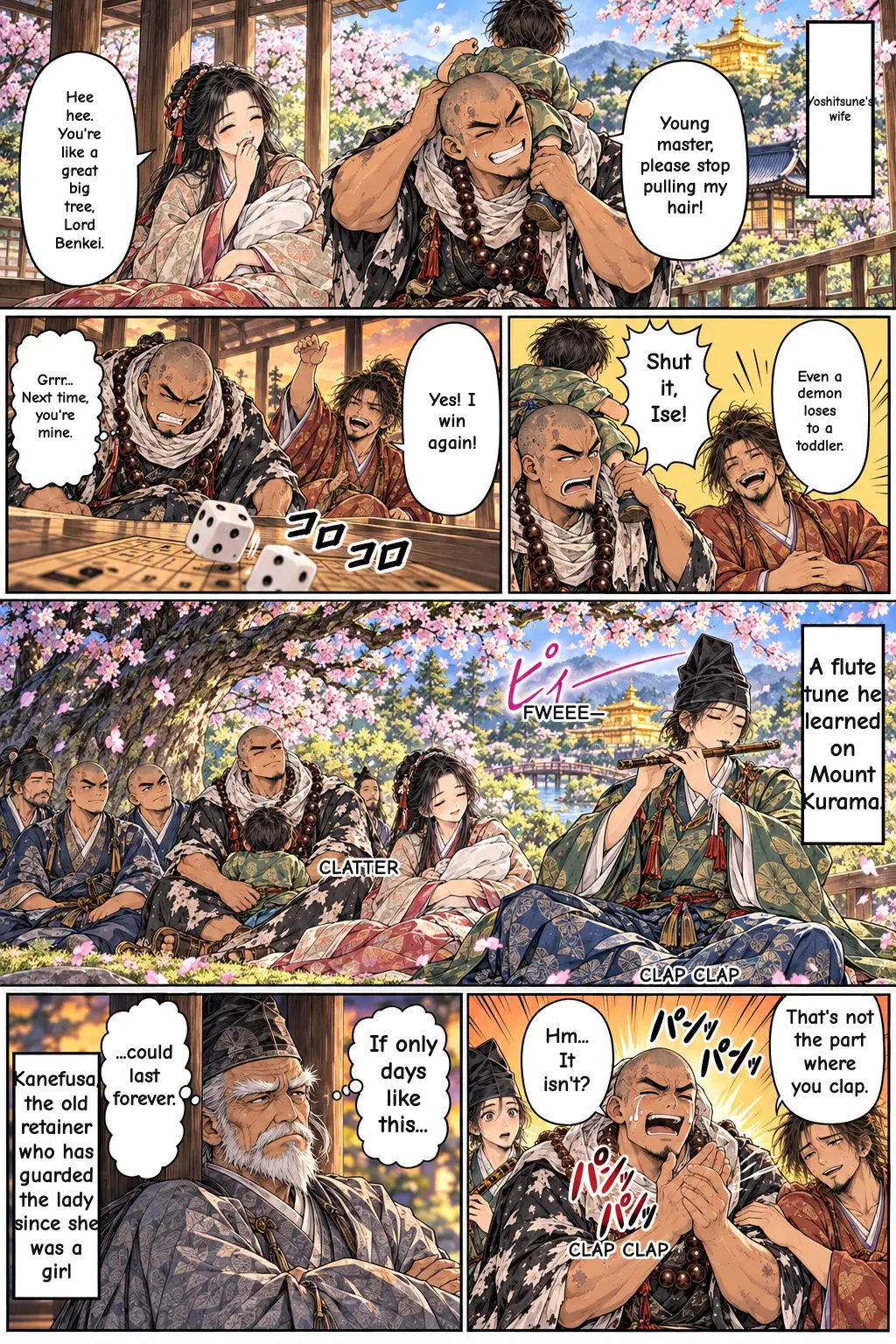
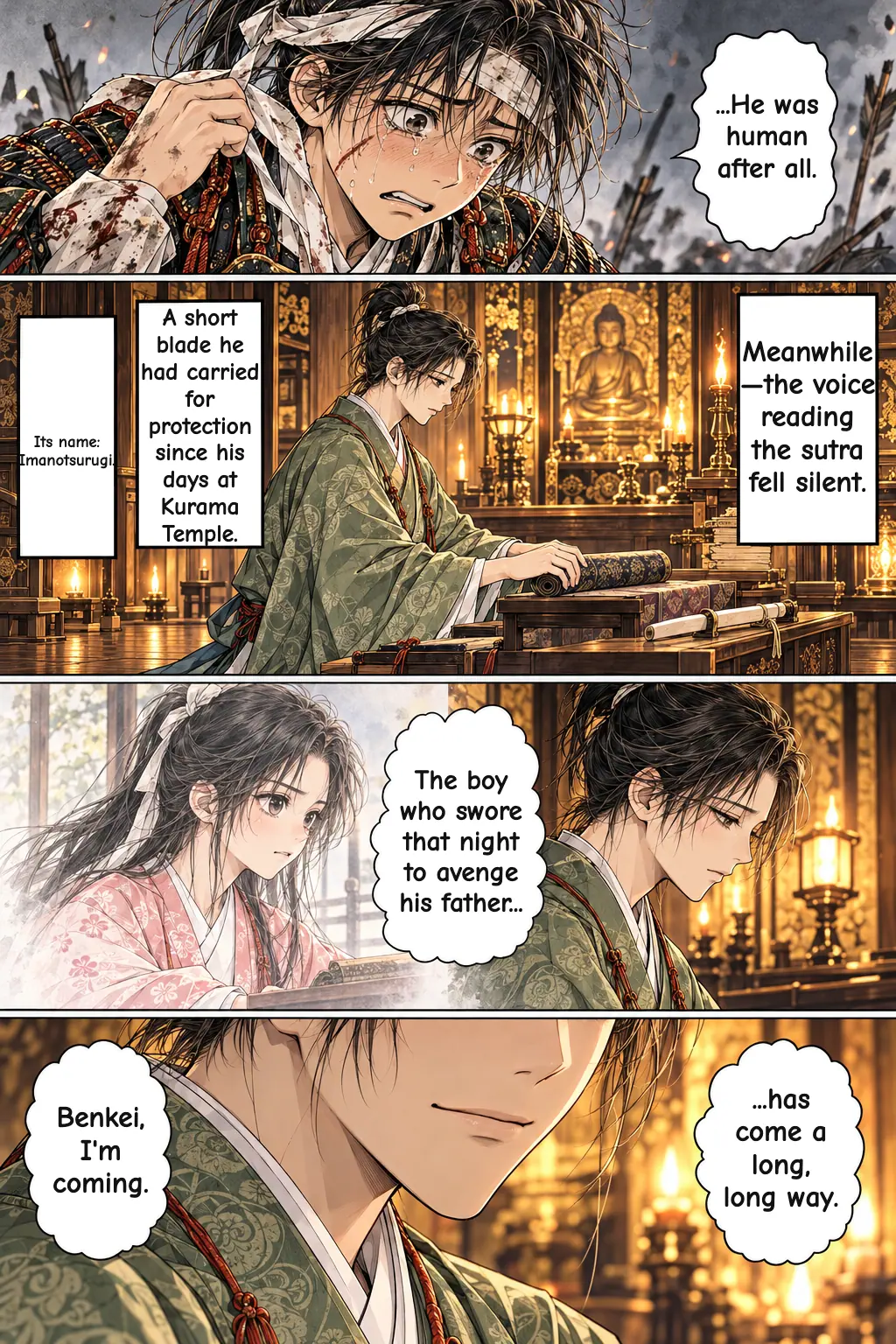
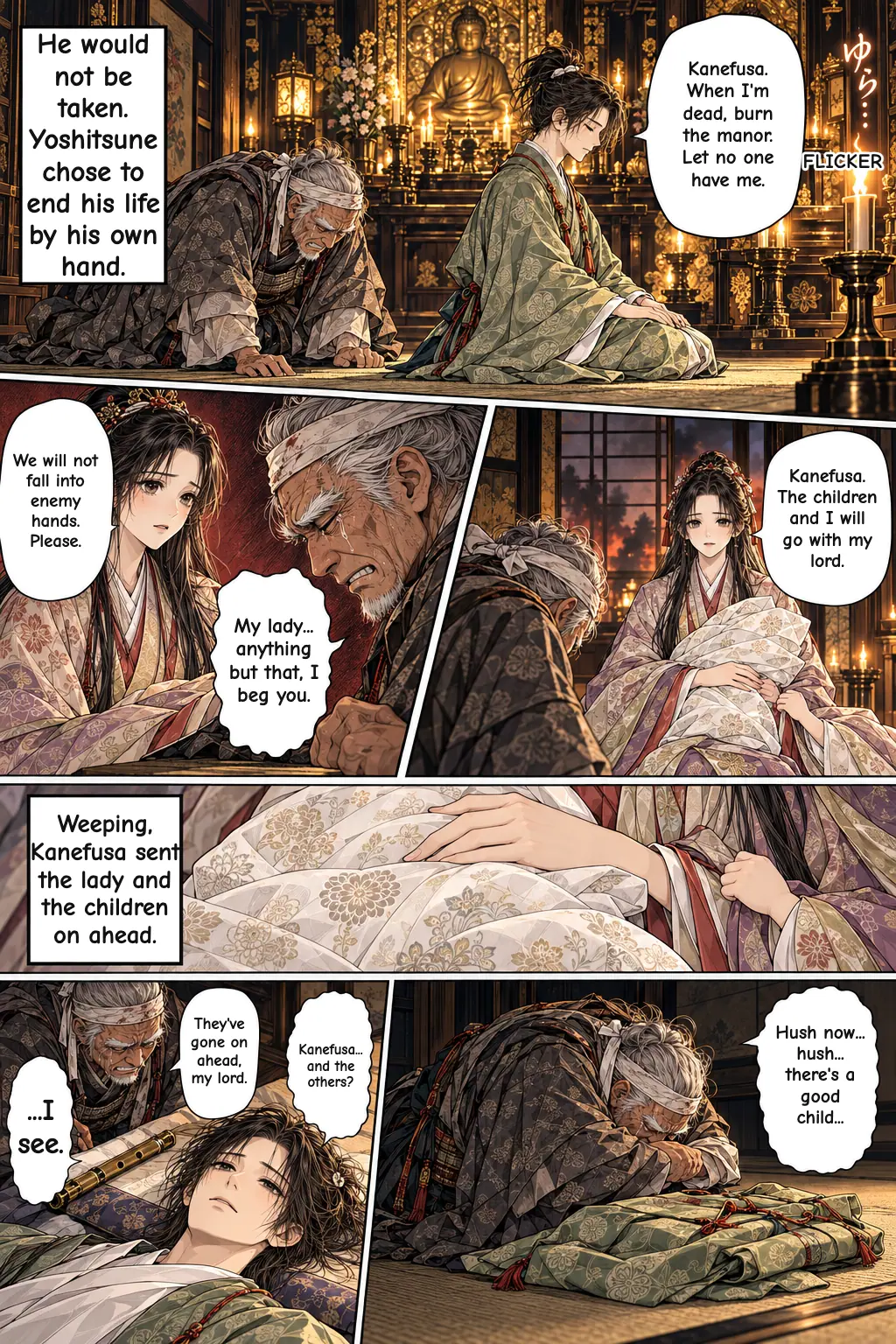
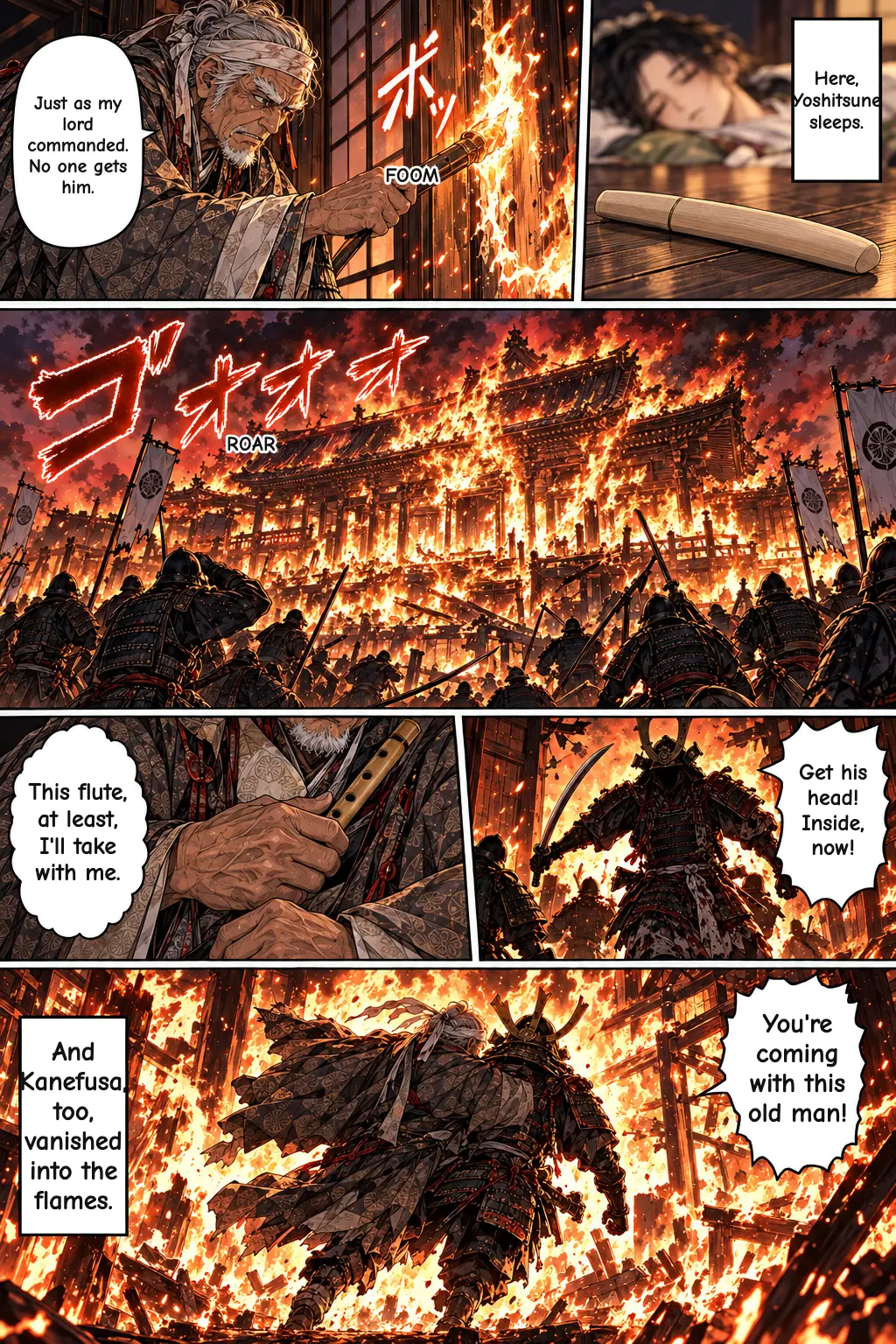
When Yoshitsune finishes the sutra, he takes his own life with Imanotsurugi, the protective dagger he has carried since his days at Kurama. His wife does not want to fall into enemy hands, so she asks the old retainer Kanefusa to kill her. Kanefusa ends her life and the lives of their two small children, a five-year-old son and a newborn daughter. Yoshitsune, still barely alive, learns that they are gone, and then he dies. As he was ordered, Kanefusa sets the house on fire so that the enemy cannot take the body. He then grabs an enemy warrior, holds him under one arm, and leaps into the flames.
What the Story Means: Loyalty, Betrayal, and Legend
This chapter puts two kinds of bond side by side. Hidehira's sons swear a written oath and break it. Benkei and the other retainers made no such vow, yet they stay to the end. The Gikeiki makes the contrast clear in its closing pages: Yoritomo himself condemns Yasuhira and his brothers as disloyal for turning against their father's will, and he destroys them. Historically, Yoshitsune died at Koromogawa in 1189, and Yoritomo conquered the Ōshū Fujiwara that same year. The Gikeiki was written long afterward, though, and its scenes and speeches should be read as storytelling rather than as a historical record.
The image of Benkei dying upright became one of the most famous in Japanese culture. Later paintings, kabuki and puppet plays spread it widely. The phrase "Benkei no tachi-ōjō" (Benkei's standing death) even entered everyday Japanese, where it now means being stuck and unable to move forward or back. The popular picture of Benkei planted like a temple guardian, with his naginata thrust into the ground, comes from these later retellings rather than from the Gikeiki itself. The same goes for the legend that Yoshitsune secretly escaped north to Ezo (Hokkaido) or even to the Asian mainland. In the Gikeiki, he dies at Takadachi.
What the Manga Changes
The manga follows the Gikeiki's order of events but fills in what the text leaves bare. The source says almost nothing about daily life in Hiraizumi. The seasons, the scenery and the conversations there, including private talks between Hidehira and Yoshitsune, are the manga's own creation. So is Yasuhira's inner struggle before he becomes a traitor; the original simply records his decision.
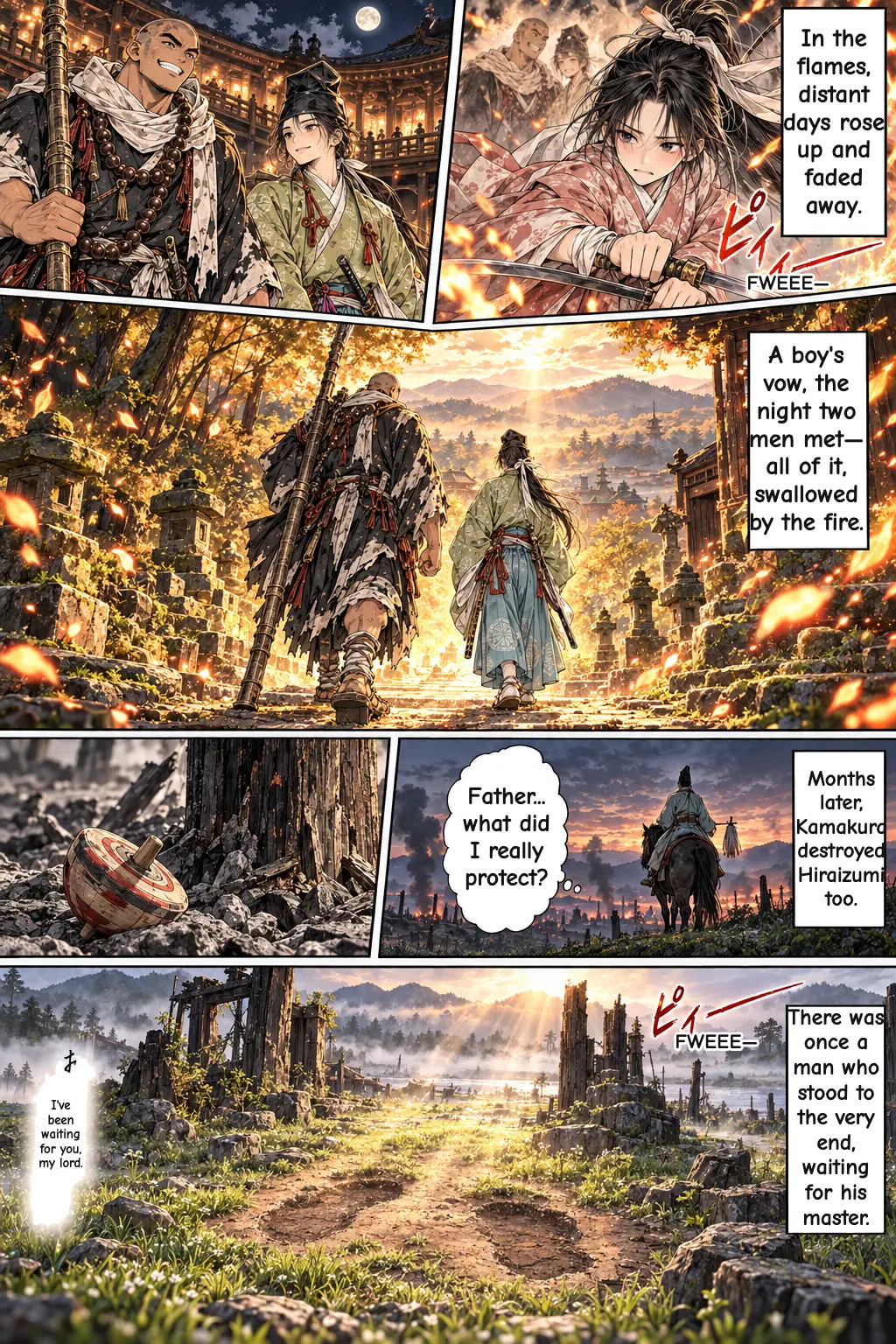
The Gikeiki tells the retainers' last fight briefly, mostly by naming who fell. The manga gives each man his own way of fighting, a place in the order of deaths, and his own last words. Benkei's facial expressions, his inner voice and his flashback to meeting Yoshitsune (Episode 5) are also additions. Scenes from Kurama in Episode 1 are recalled through Imanotsurugi, a link the source supports, since the dagger really does date from his Kurama days.
The deaths of Yoshitsune, his wife and his children are shown with restraint, through the sound of the sutra, the scroll and the blade, instead of being drawn directly. The burning house and the closing narration that marks the end of the legend are also the manga's own.
Where to Read It
If you'd like to watch this story unfold panel by panel, you can read every episode of The Legend of Yoshitsune: Ushiwaka and Benkei free on Manga Portal, with no sign-up needed. Episode 13 is the finale, and it hits hardest if you've followed Ushiwaka from Kurama and Benkei from the day they first met. Start from Episode 1, or go straight to Benkei's last stand at the gate.
Characters in this episode
Minamoto no Yoshitsune
The exiled hero and general, who reads the Lotus Sutra while his men defend him and then takes his own life at Takadachi.
Musashibō Benkei
Yoshitsune's devoted warrior-monk, who holds off a whole army alone and dies standing up, leaning on his naginata.
Fujiwara no Hidehira
The lord of Hiraizumi who shelters Yoshitsune and, on his deathbed, makes his sons swear to protect him.
Fujiwara no Yasuhira
Hidehira's son, who gives in to Kamakura, breaks his oath and attacks Yoshitsune's house.
Kanefusa
An elderly retainer who sees the family to their end, burns the house as ordered and leaps into the flames.
Yoshitsune's wife
A noblewoman who followed Yoshitsune from the capital and chooses death rather than capture.
FAQ
How did Benkei die?
In the Gikeiki, Benkei defends Yoshitsune's house at Koromogawa against Yasuhira's army and is struck by countless arrows. He dies on his feet, leaning on his naginata, and the enemy are too afraid to approach until he falls over. This is known as Benkei's "standing death" (tachi-ōjō).
Who betrayed Yoshitsune?
Fujiwara no Yasuhira, the son of Yoshitsune's protector Hidehira, betrayed him. Under pressure from Minamoto no Yoritomo, he broke his dying father's wishes and his own sworn oath and attacked Yoshitsune at Takadachi.
How did Yoshitsune die?
In the Gikeiki, Yoshitsune finishes reading the Lotus Sutra and then takes his own life with Imanotsurugi, a dagger he had carried since his boyhood at Kurama temple. Historically, he died at Koromogawa in 1189.
Did Yoshitsune survive and escape to the north?
There is a well-known legend that Yoshitsune escaped to Ezo (Hokkaido) or even the Asian mainland. However, this legend appears in later tradition, not in the Gikeiki, which clearly tells of his death at Takadachi.
What is the Gikeiki?
The Gikeiki is a Japanese war tale by an unknown author, generally thought to date from the Muromachi period. It tells the life of Minamoto no Yoshitsune and his companion Benkei, from Yoshitsune's childhood to his death, and it shaped many later plays and legends.