Episode 9The Sword I Gave My Friend Was WoodYamato Takeru and Izumo Takeru
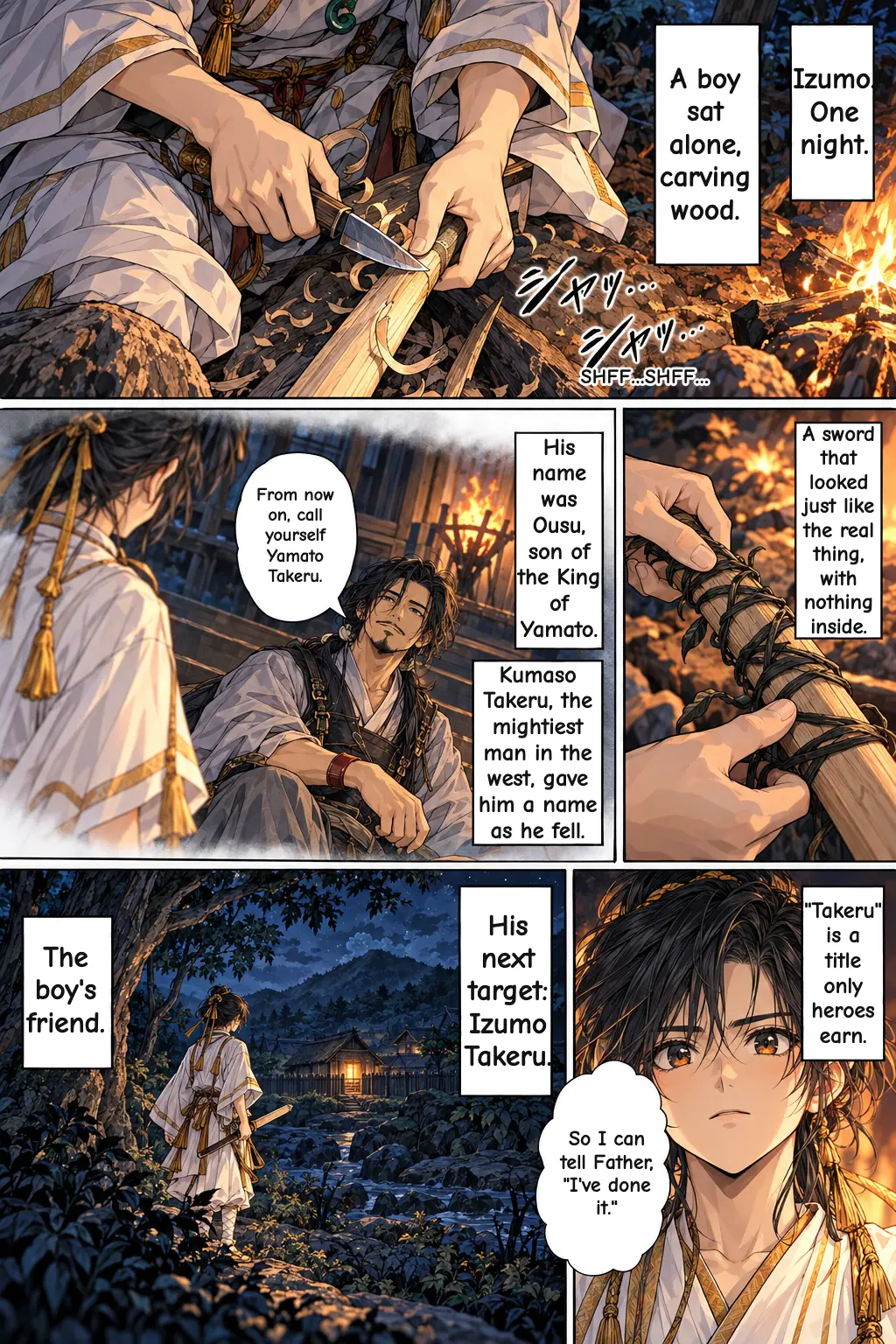
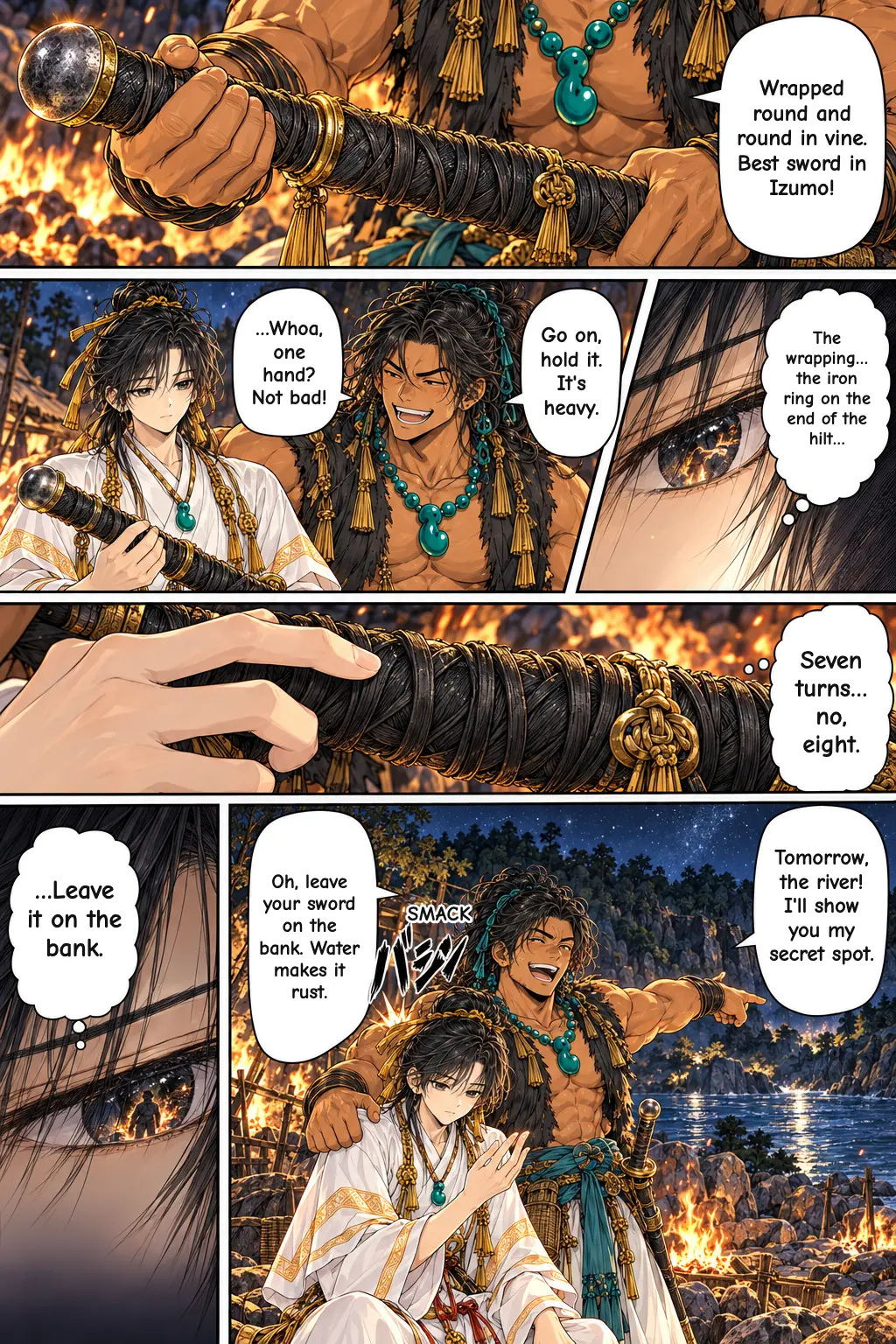
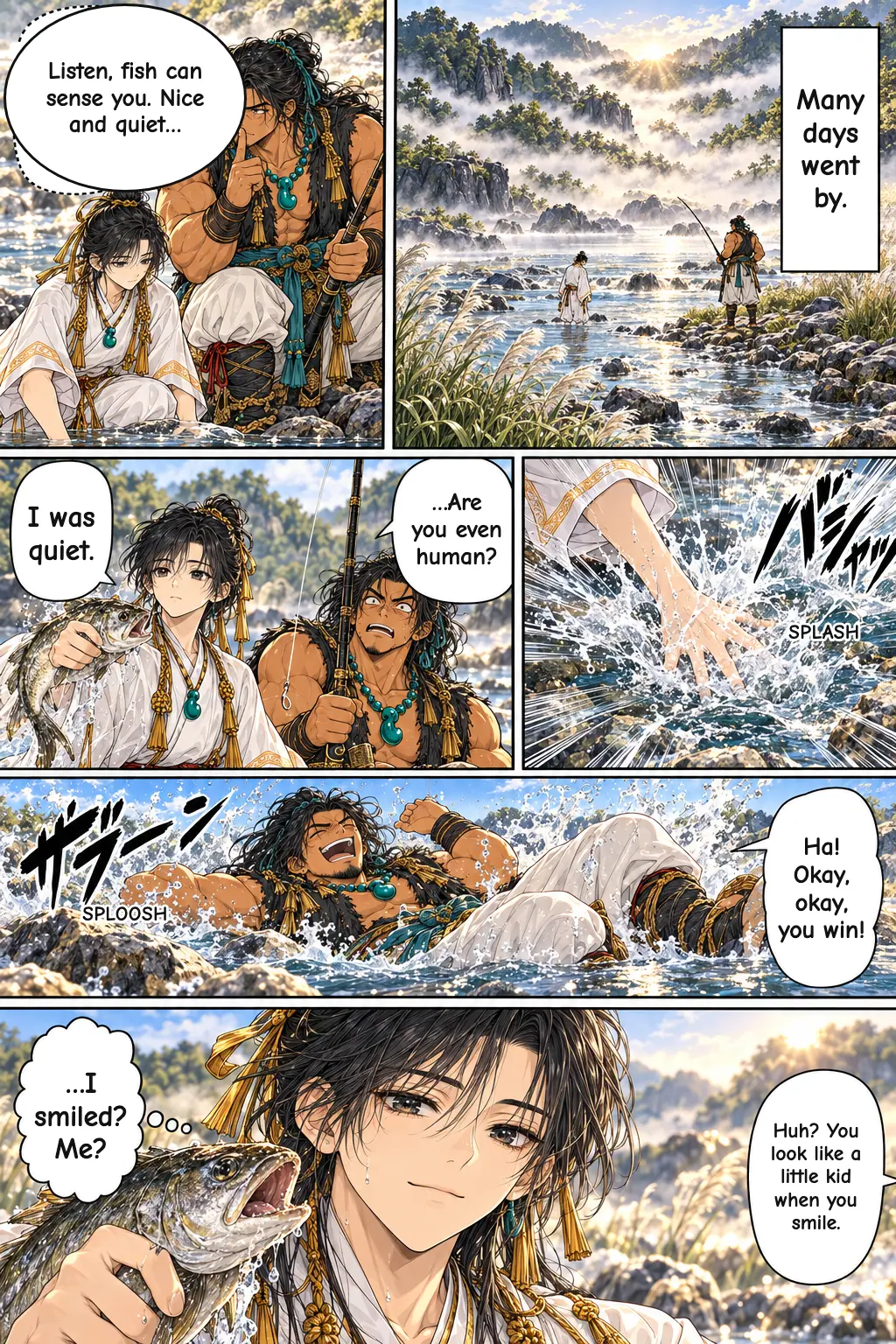
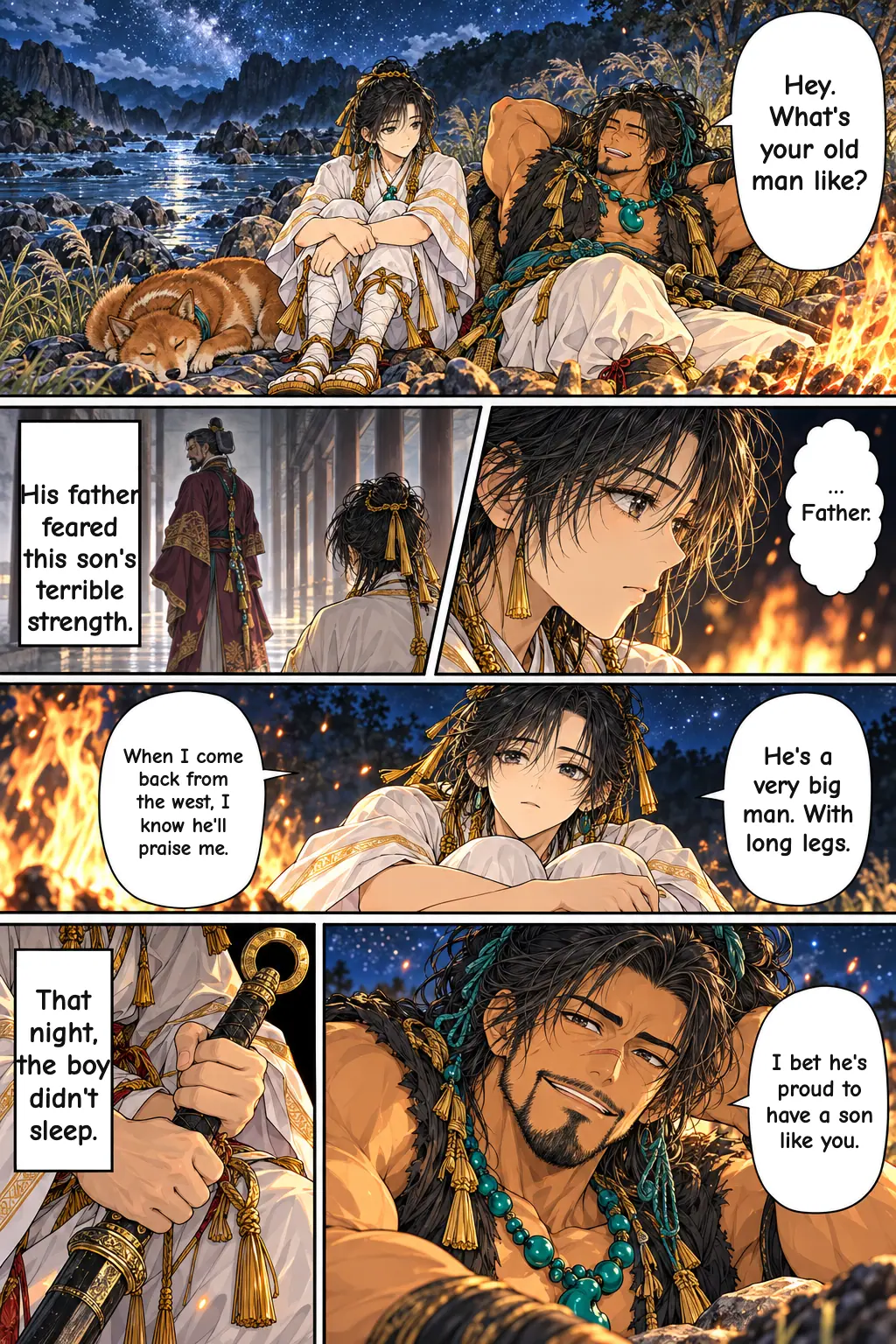
On his way home from the west, Ousu (Yamato Takeru) befriends the hero of Izumo, then kills him with a hollow wooden sword. Back in the capital, his father sends him straight off to conquer the east. In front of his aunt, the boy cries for the first time, and she gives him a real sword and a tightly tied pouch.
Yamato Takeru and Izumo Takeru: The Wooden Sword Story in the Kojiki
The Original Myth: A Friendship Built for a Killing
This episode comes from the Kojiki ("Record of Ancient Matters"), Japan's oldest surviving chronicle, compiled by O no Yasumaro and completed in 712. It belongs to the middle book, in the chapter on Emperor Keiko, and follows the young prince Ousu, who has just defeated the Kumaso warriors in the far west and received a new name from them: Yamato Takeru, "the Brave of Yamato."
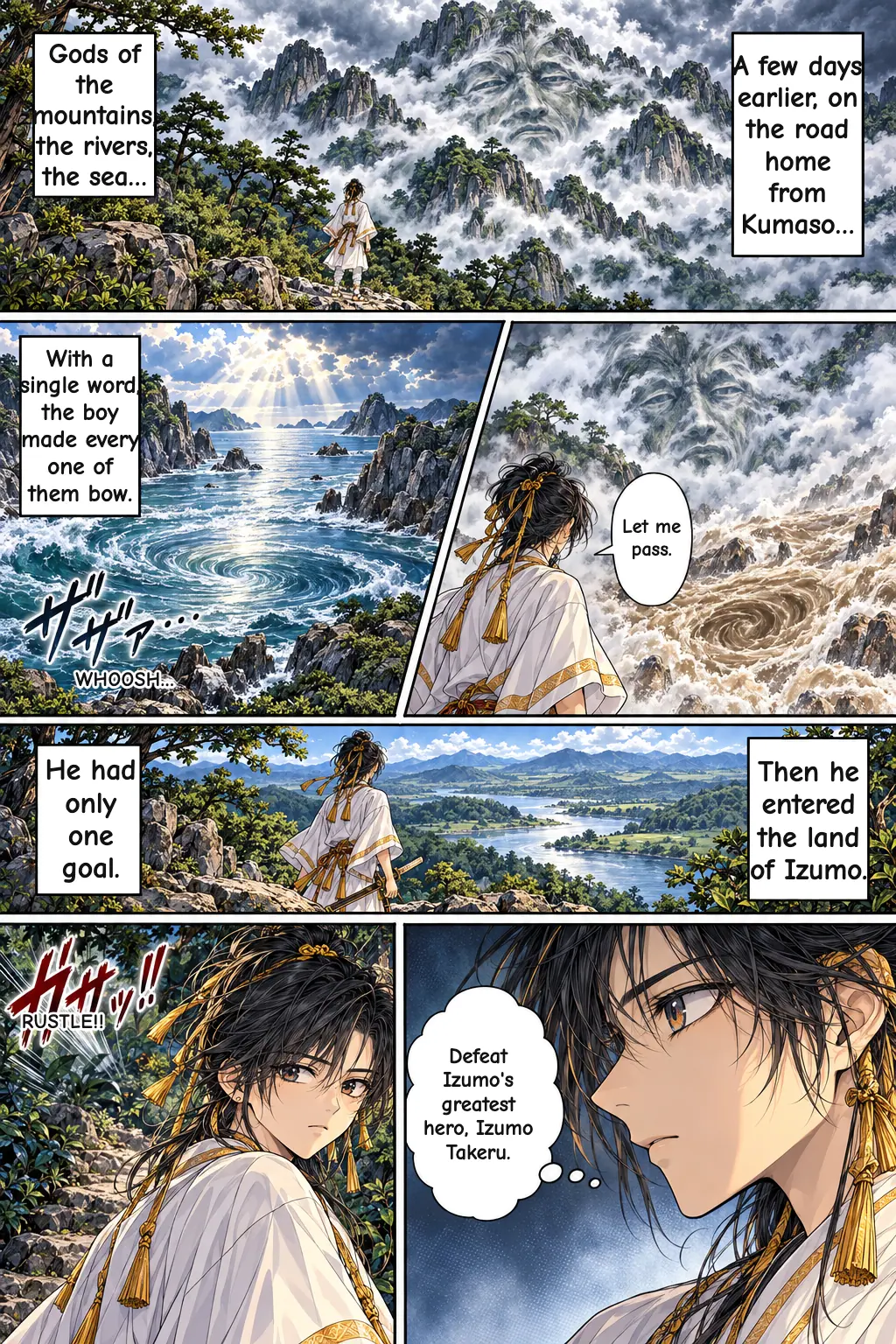
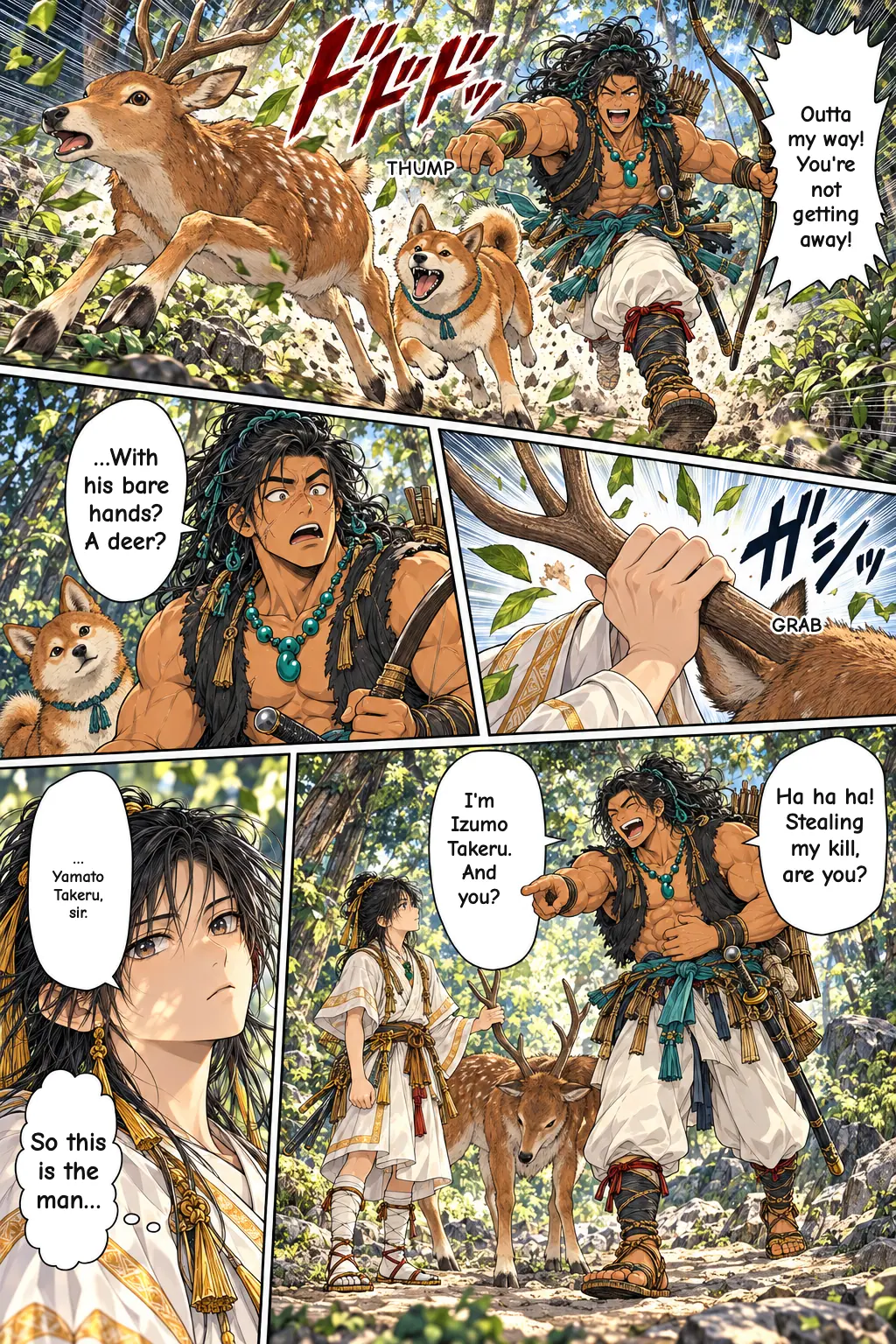
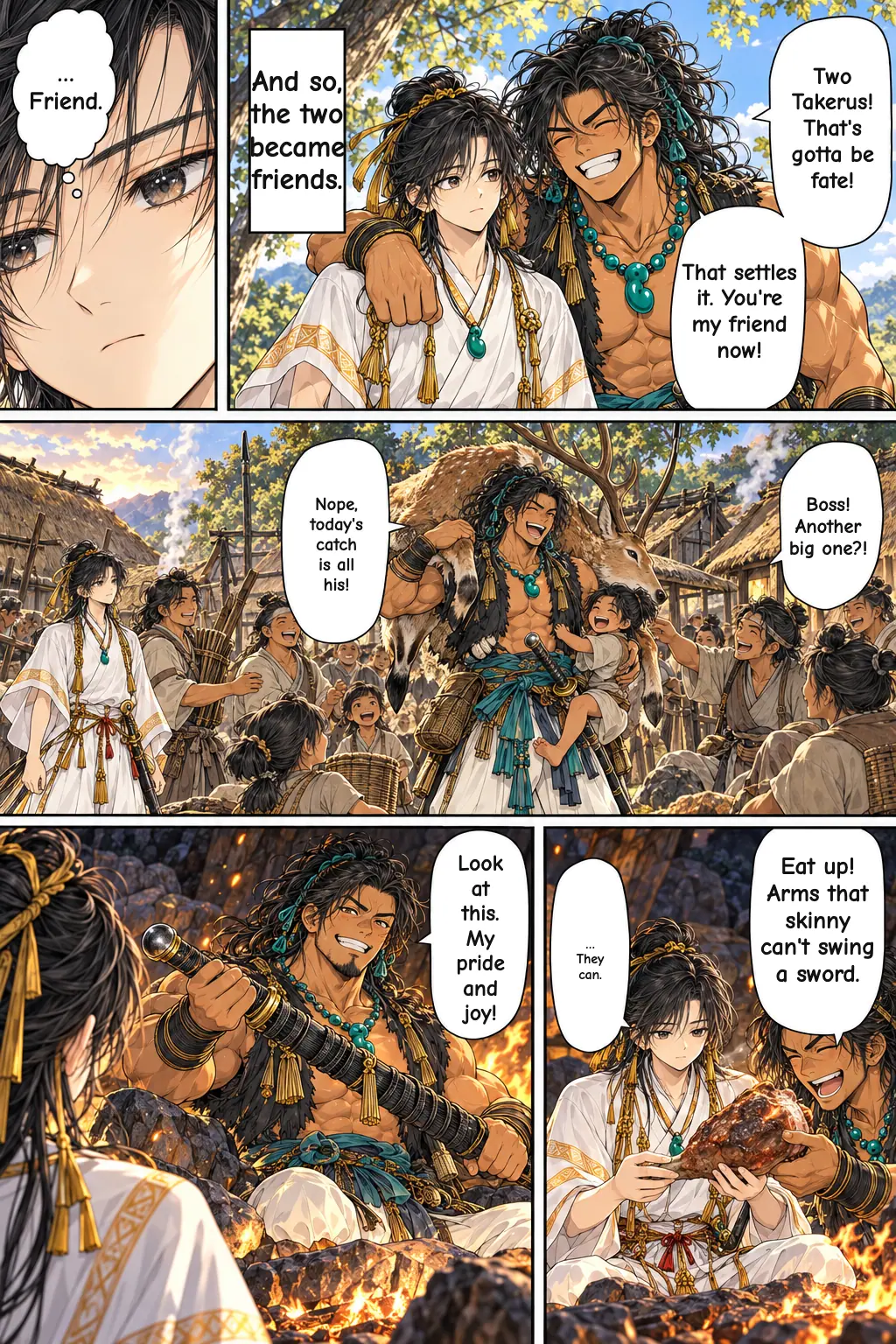
On the road home, Yamato Takeru brings the gods of the mountains, the rivers and the straits under control. The text says he did this by "softening them with words," without describing how. Then he enters the land of Izumo, and the Kojiki is blunt about why: he went there intending to kill Izumo Takeru, the local hero. His first move is to make friends with him. The original gives this friendship a single word and nothing more.
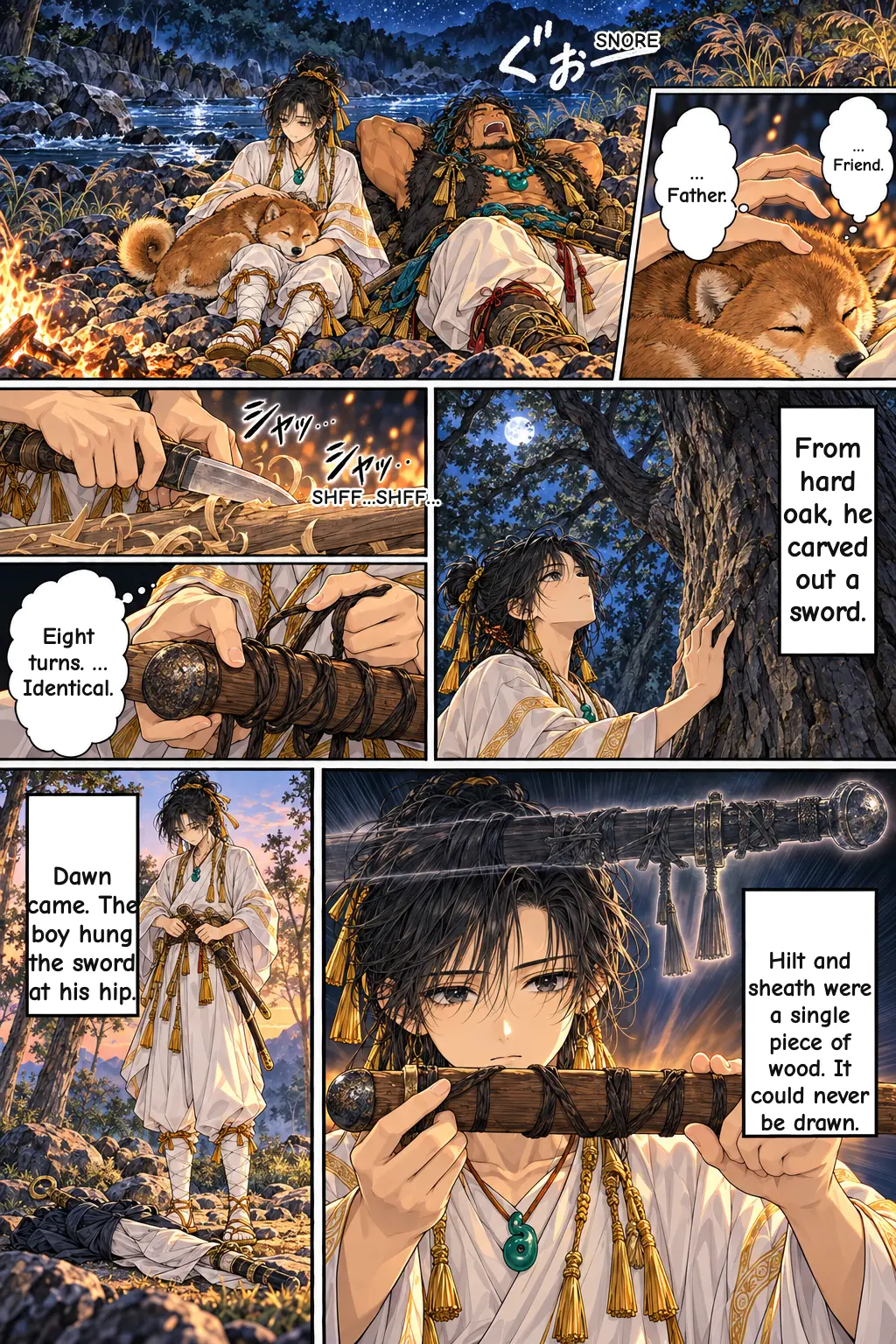
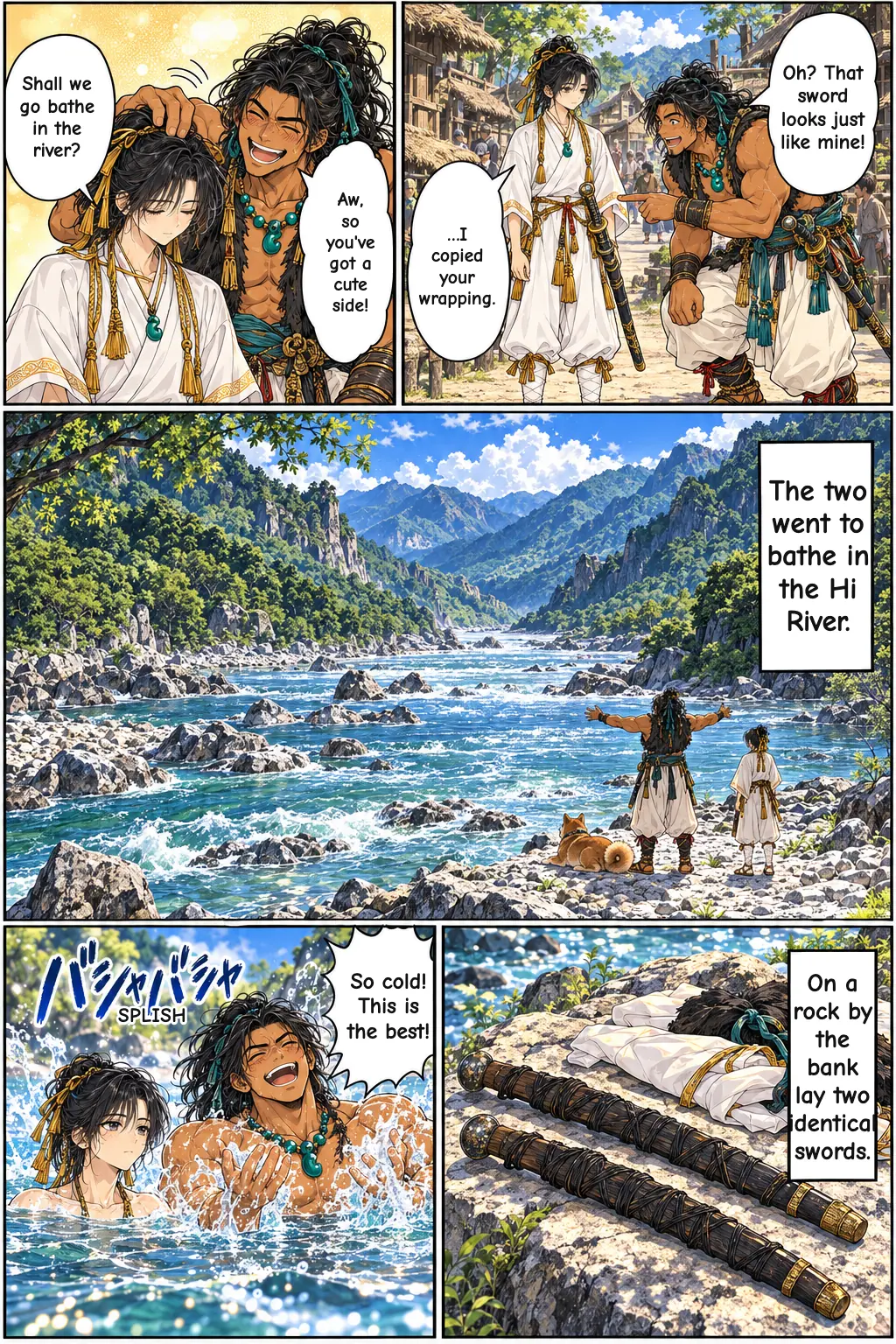
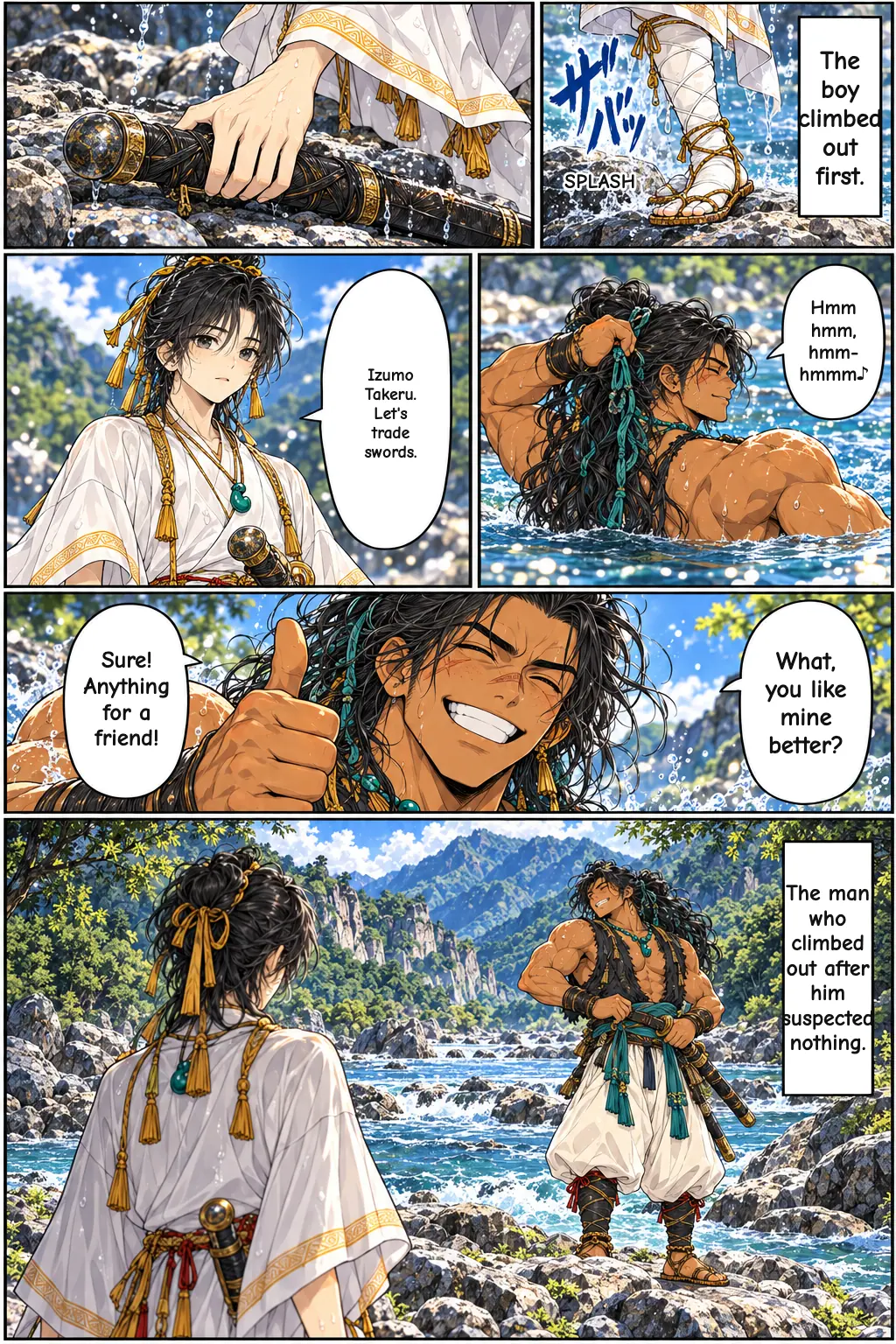
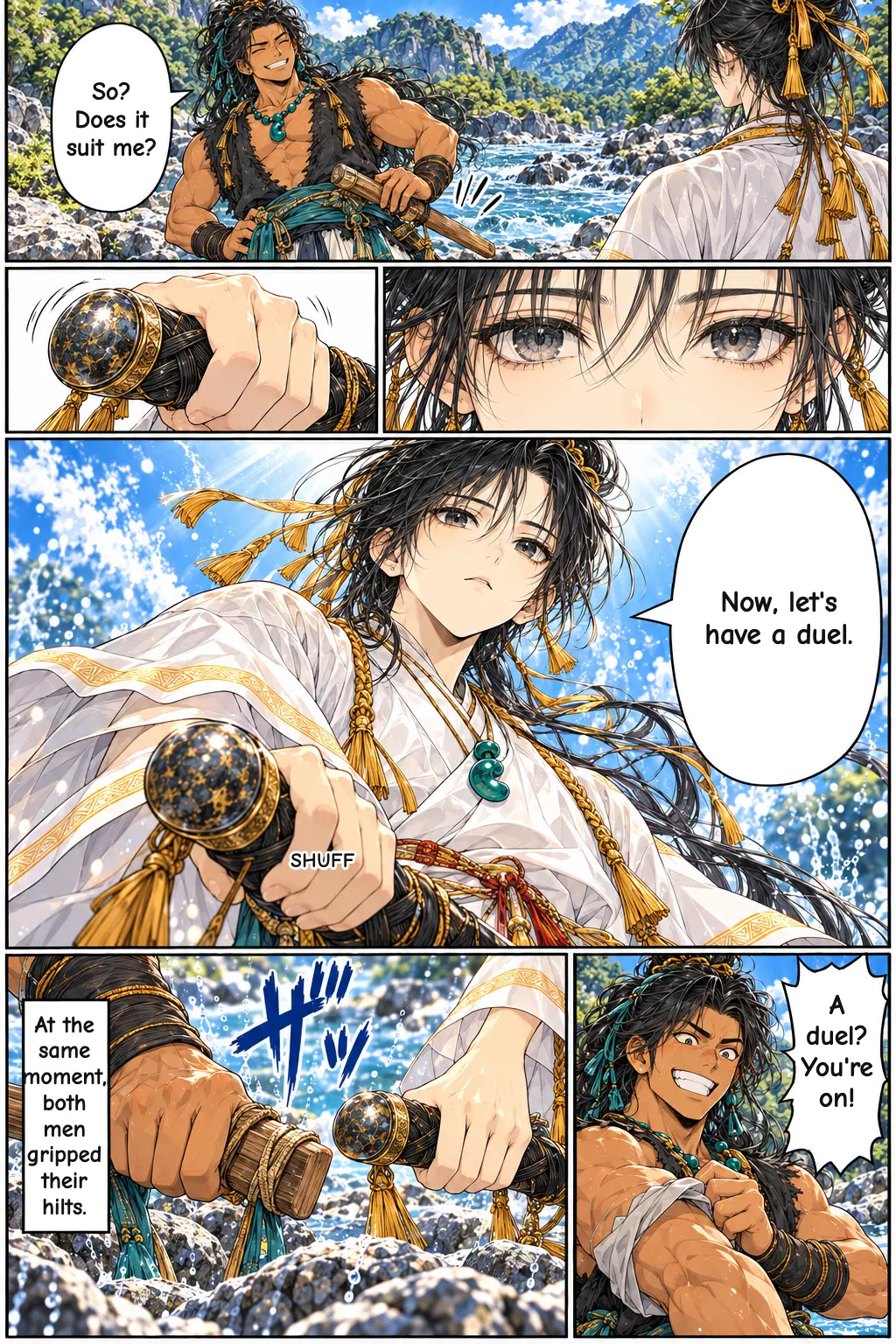
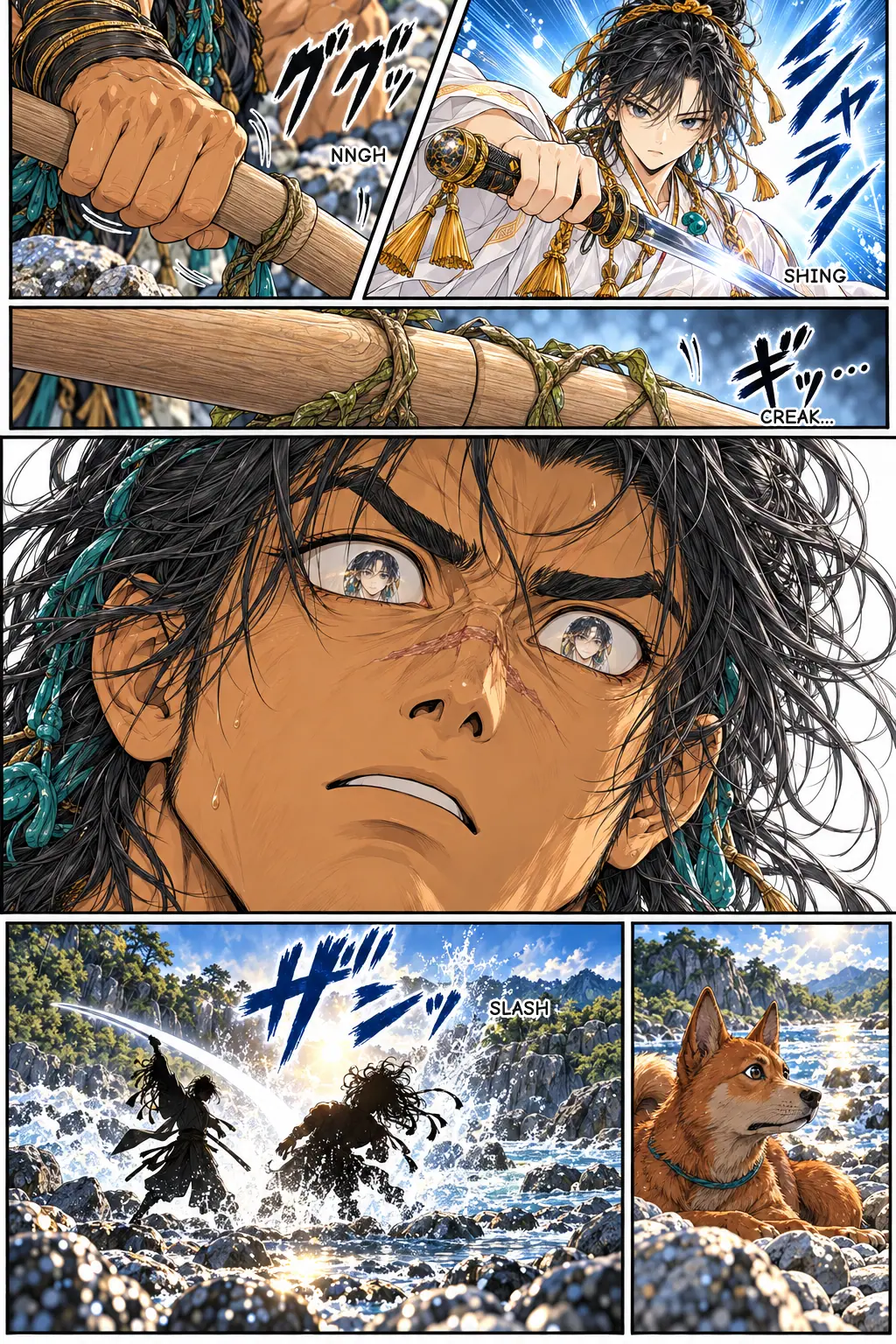
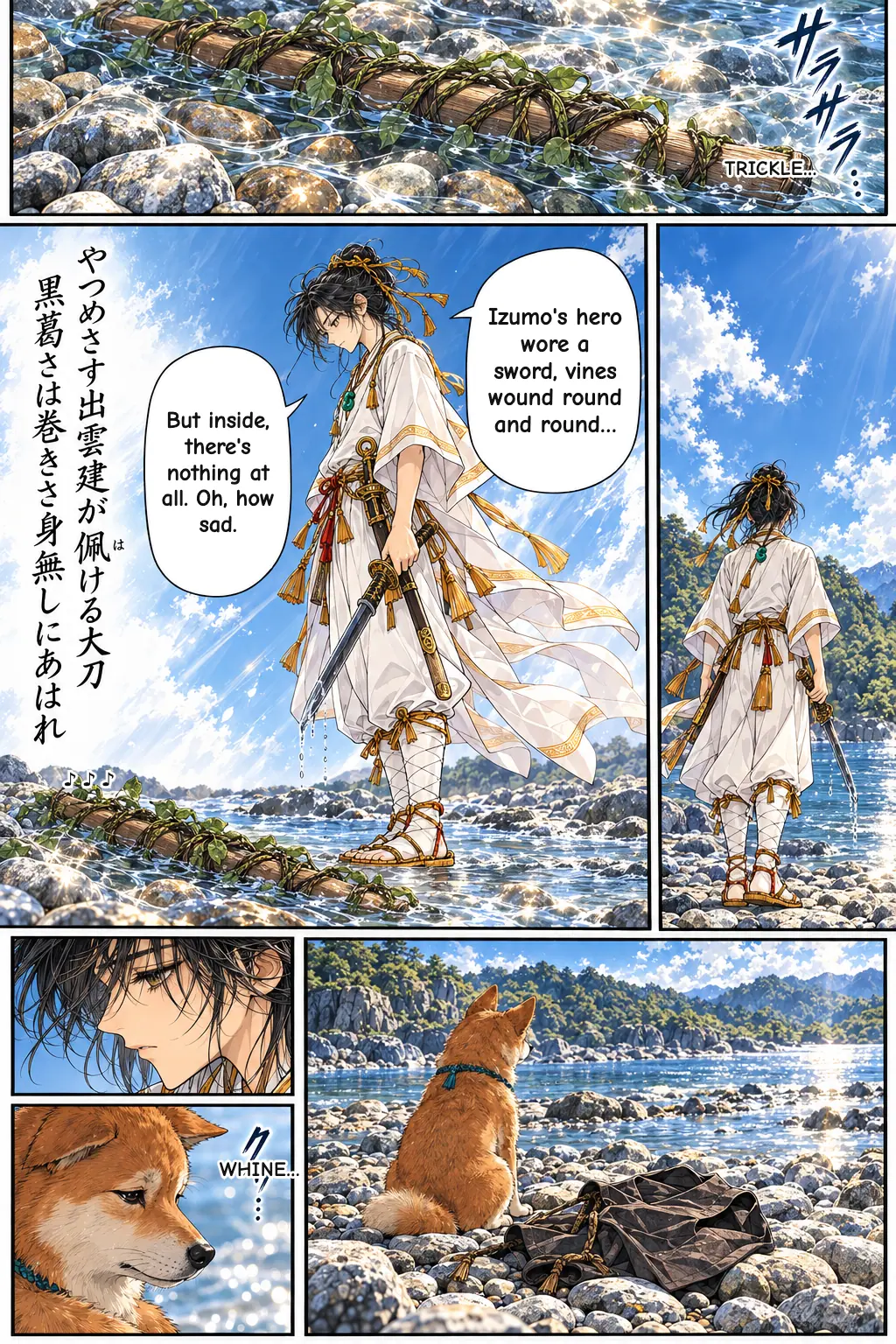
Next, in secret, Yamato Takeru carves a fake sword out of ichii wood (a kind of oak) and wears it as if it were his own. The two men go to bathe together in the Hi River. Yamato Takeru climbs out first, straps on the real sword that Izumo Takeru had taken off, and suggests they trade swords. Izumo Takeru comes out and puts on the wooden one. Then Yamato Takeru calls on him to cross blades. Izumo Takeru cannot draw a sword that has no blade, and Yamato Takeru cuts him down.
Afterward, Yamato Takeru sings a short song. In plain terms, it says: the sword Izumo Takeru wore was wrapped in many vines, but there was no blade inside — what a pity. The Kojiki does not say whether he meant this as mockery or as sorrow.
Sent Away Again: The Emperor's Order and the Aunt at Ise
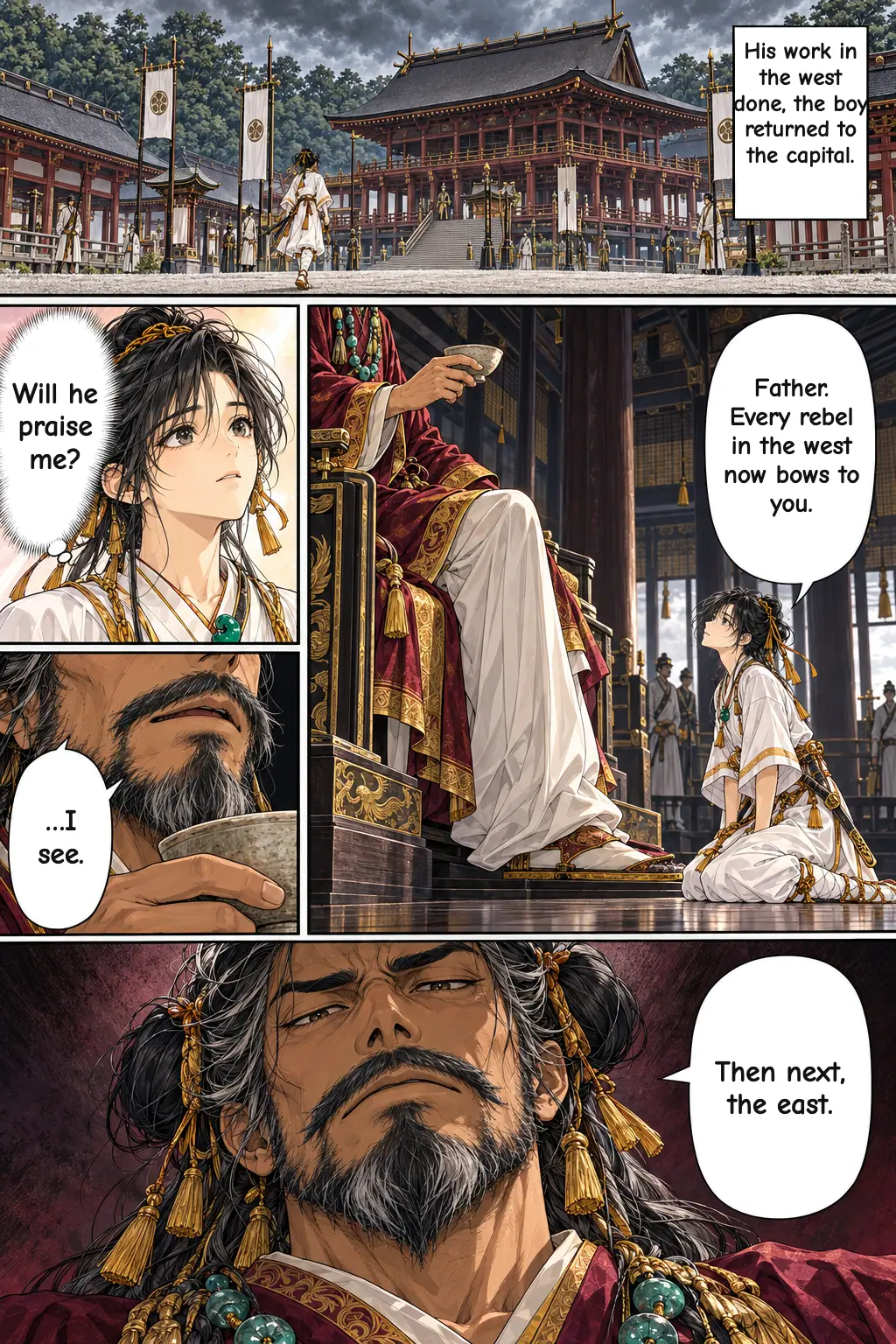
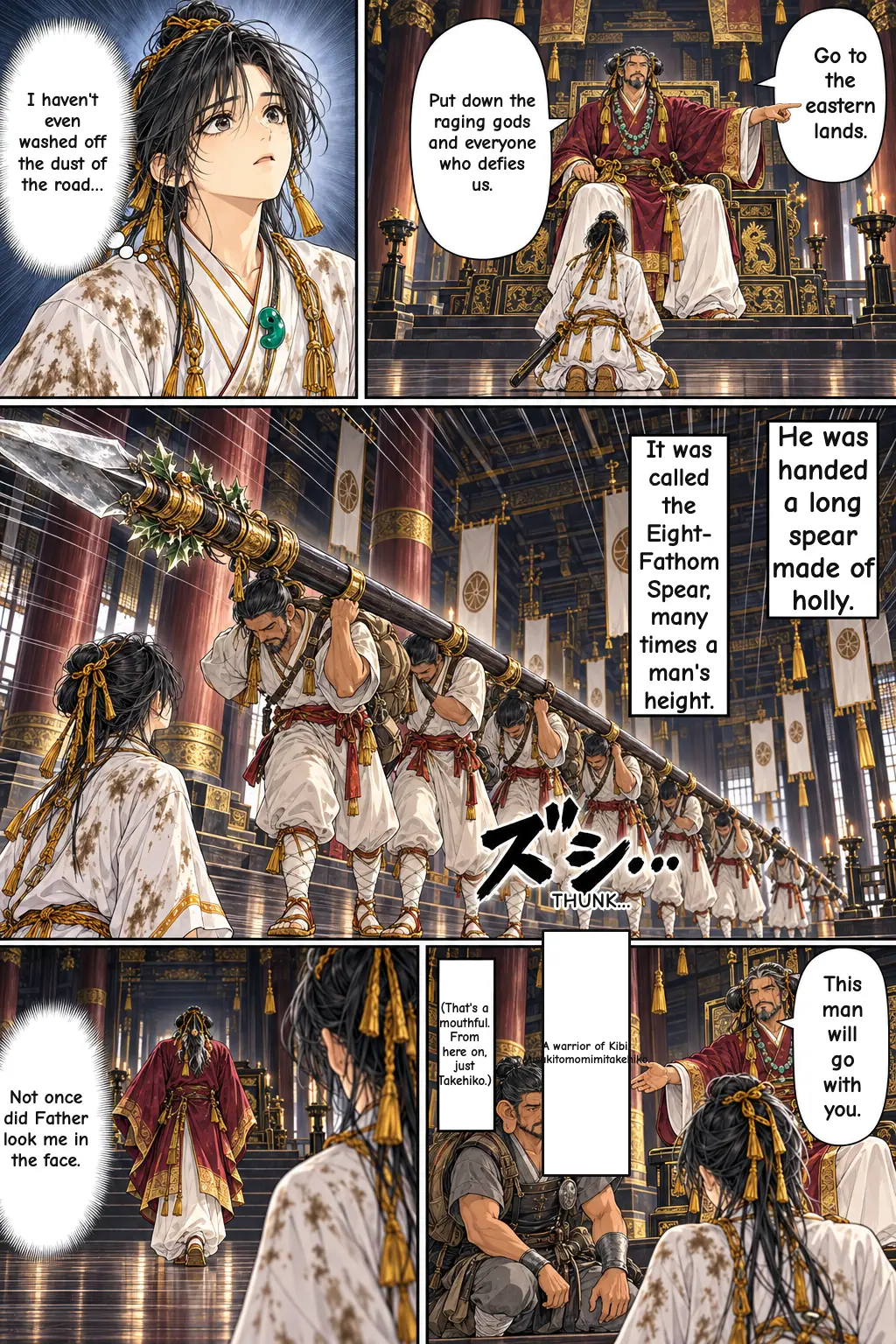
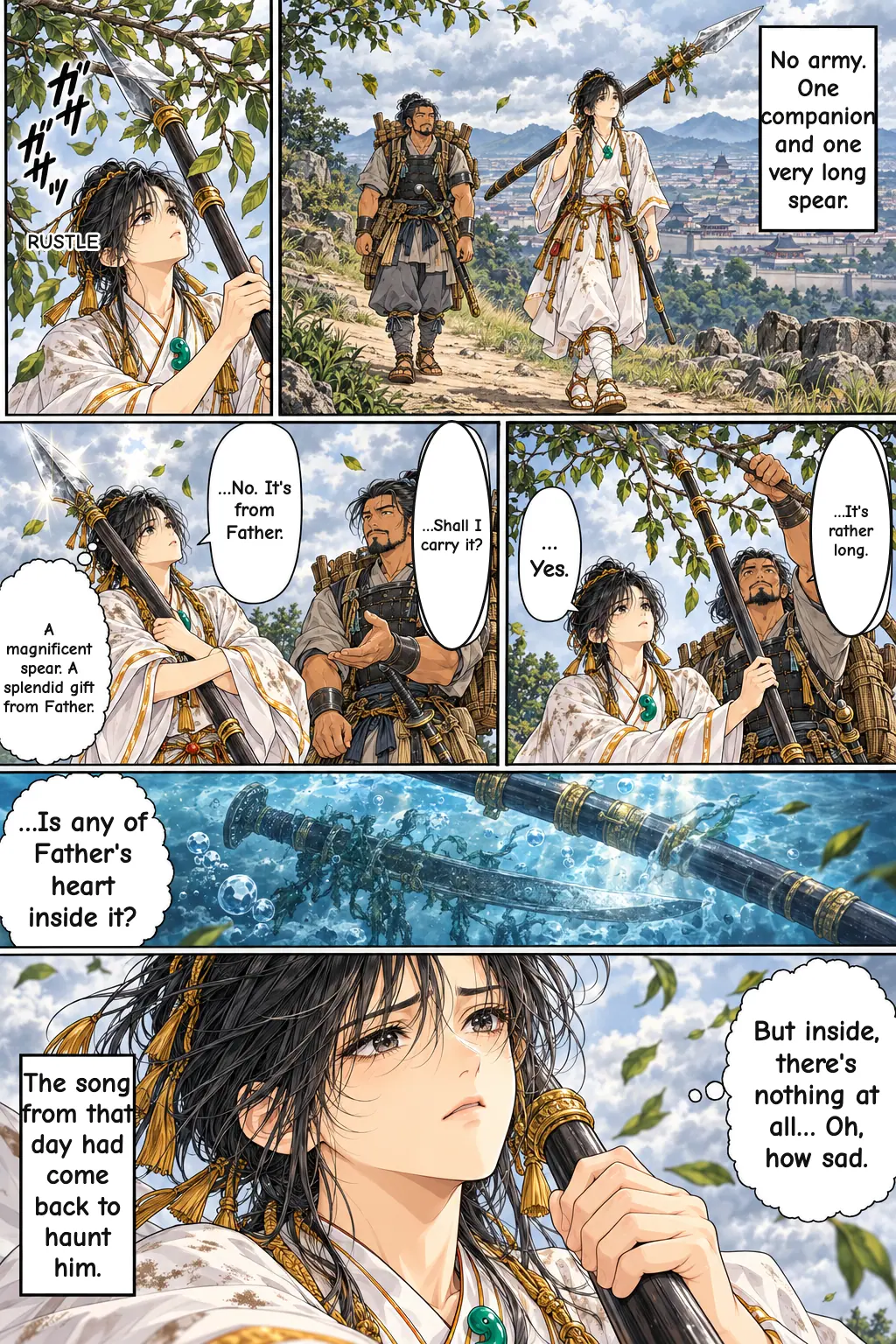
Yamato Takeru returns to the capital and reports his victories. Instead of rewarding him, his father, Emperor Keiko, immediately orders him out again, this time to subdue the wild gods and the people who refuse to submit along the "Twelve Roads of the East." The emperor sends one companion, Mi-suki-tomomimi-takehiko, named as an ancestor of the Kibi clan, and gives his son a very long spear made of hihiragi wood (usually taken to mean holly).
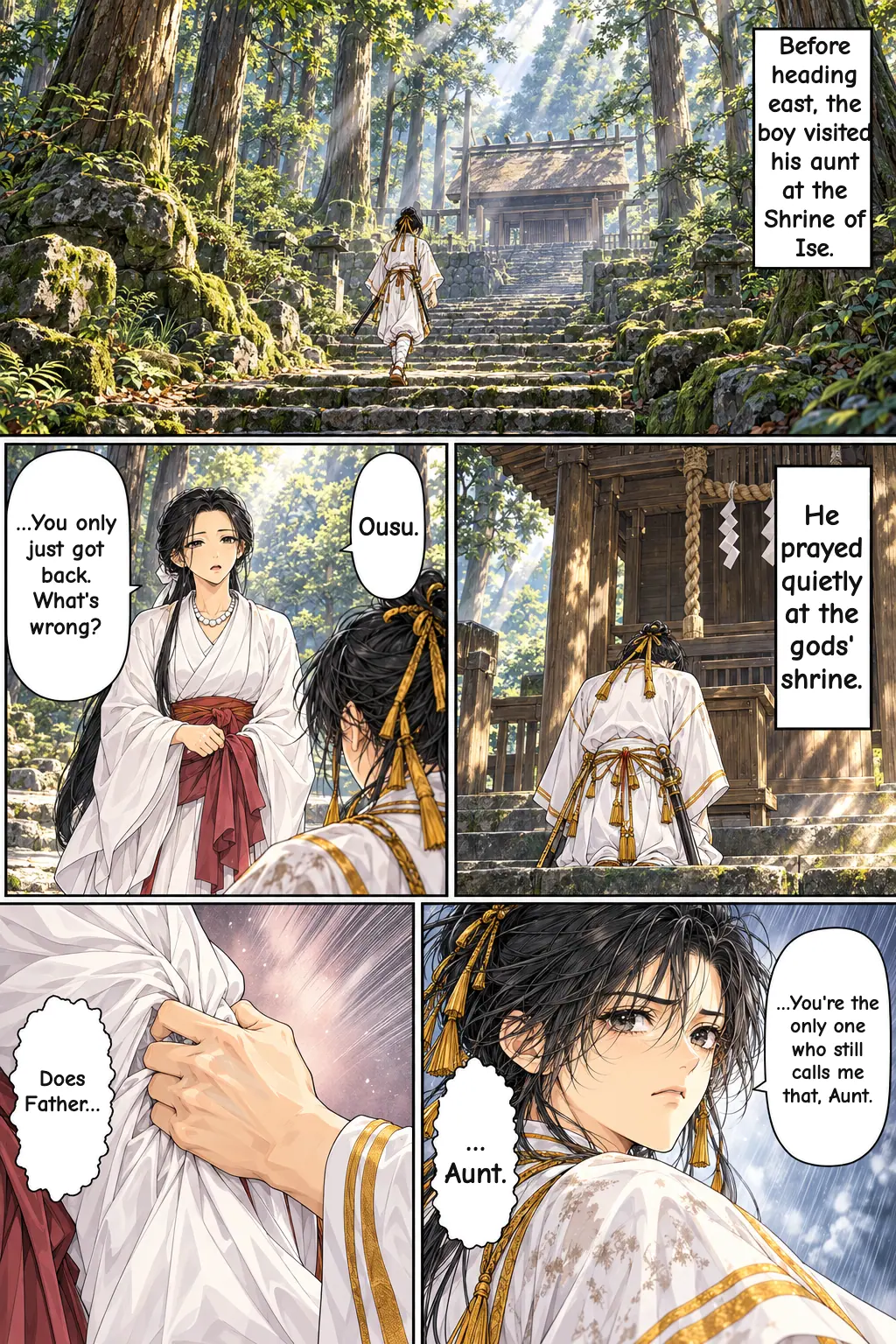
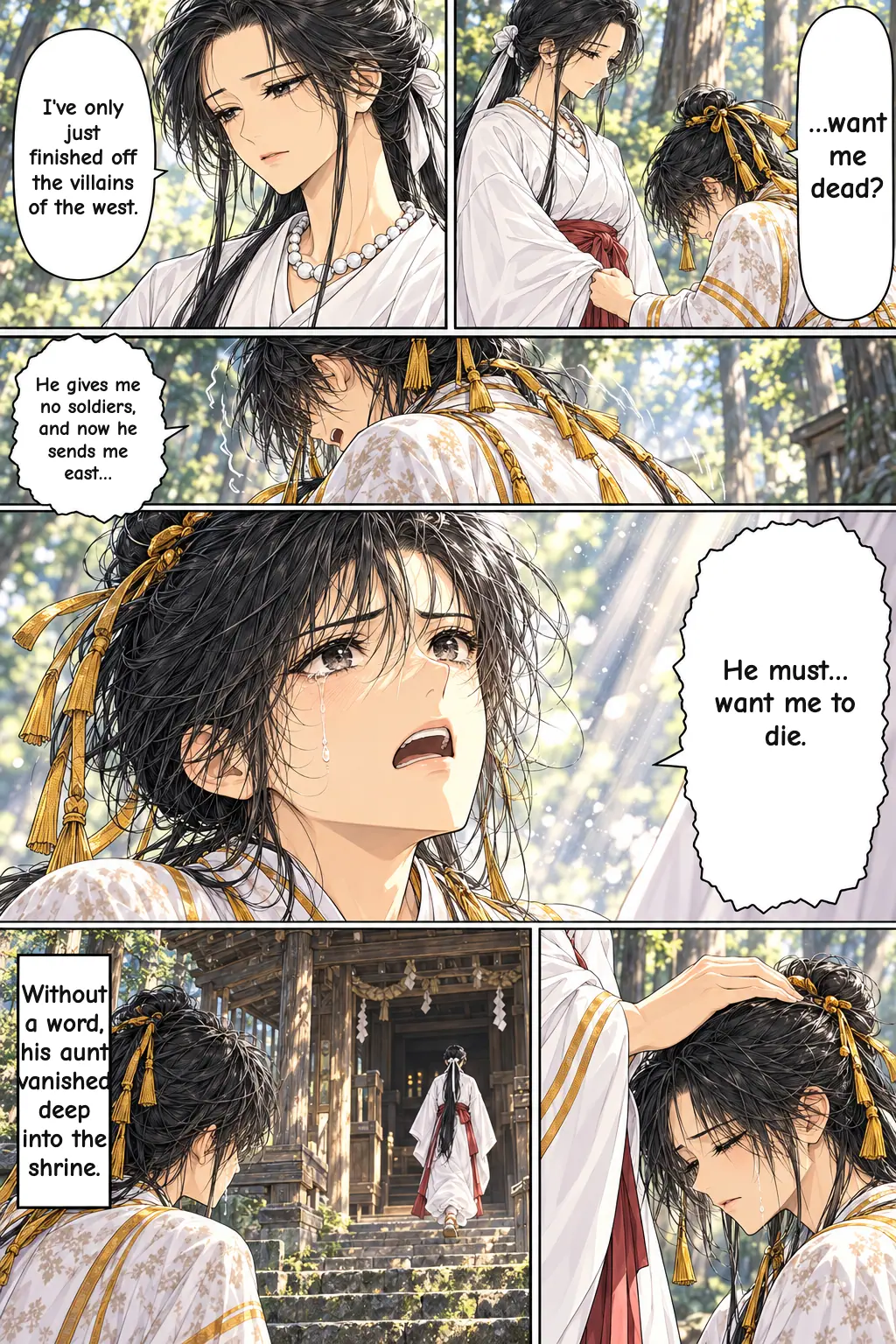
Before setting out, Yamato Takeru goes to the great shrine at Ise to visit his aunt, Yamatohime, who serves the sun goddess Amaterasu there. He pours out his grief: he has barely come back from fighting in the west, his father has given him no army, and now he is being sent east. Surely, he says, his father wants him dead. He weeps.
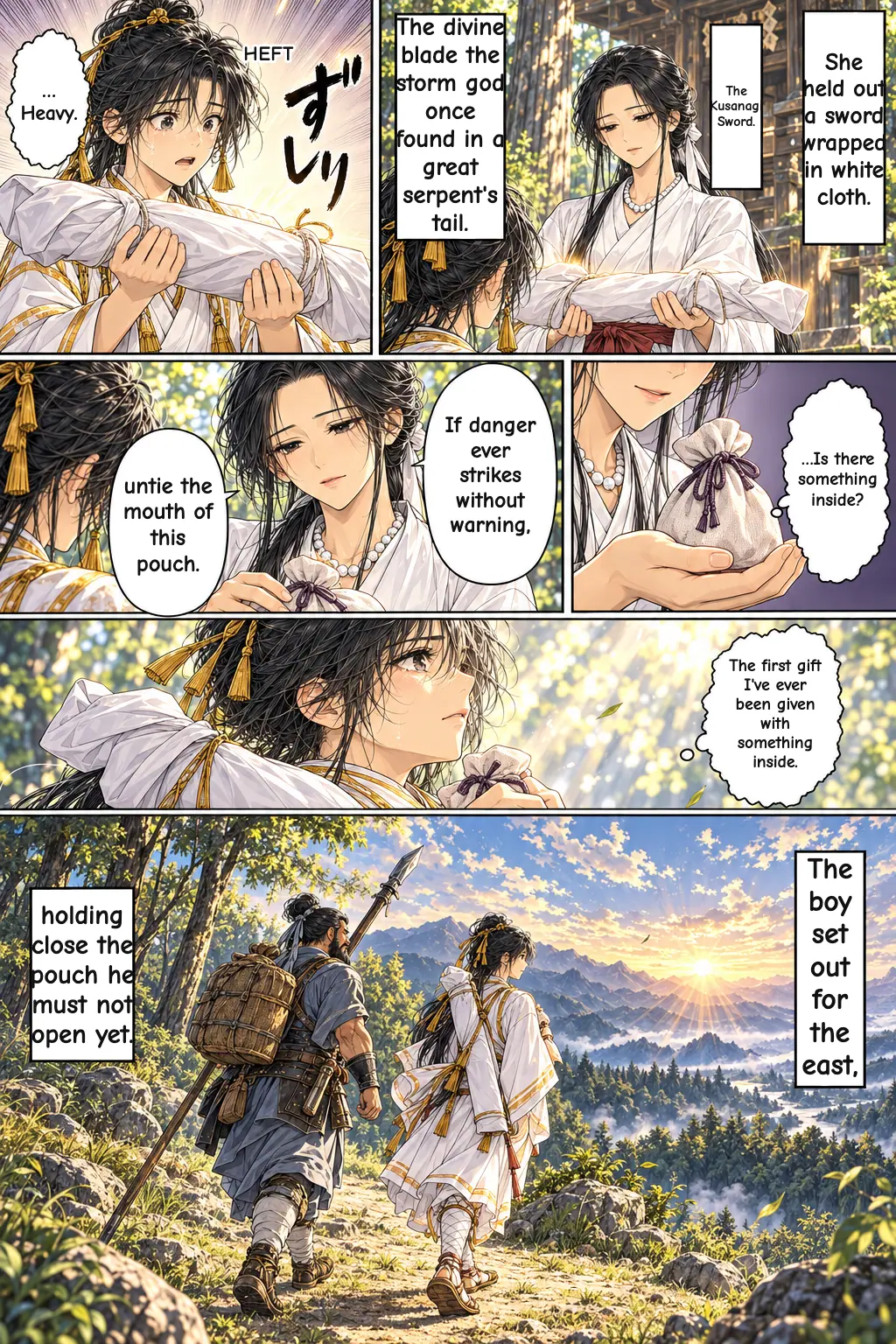
Yamatohime does not answer his complaint in words. Instead, she gives him the sword Kusanagi and a small bag, telling him to untie it only if he finds himself in sudden danger. What is inside, and why it matters, is revealed later in his eastern journey.
Main Characters
Yamato Takeru (born Ousu) is a son of Emperor Keiko and the hero of this part of the Kojiki. Earlier in the text he killed his own older brother so brutally that his father, afraid of his wild temper, sent him west to fight. Izumo Takeru is the hero of Izumo, a region with its own powerful traditions. The Kojiki gives him no lines and no crime; we are never told why he had to die.
Emperor Keiko is Yamato Takeru's father. The idea that he wants his son dead comes only from Yamato Takeru's own words; the narrator never reveals what the emperor actually thinks. Yamatohime, a daughter of the previous emperor, is the priestess at Ise. She had already helped her nephew once, lending him her clothes so he could disguise himself as a young woman to get close to the Kumaso leaders.
What This Myth Tells Us
Many readers are surprised that a national hero wins through such an underhanded trick. The Kojiki shows Yamato Takeru's victories as the result of cunning as much as strength, and it does not stop to judge him. One common reading is that these stories reflect, in mythic form, the Yamato court extending its power over regions like Izumo and Kyushu. That is an interpretation, not something the text states.
The episode also turns the hero's story in a darker direction. Right after a victory comes rejection by his father, and the hero openly asks whether he is meant to die. Some readers link this to the earlier note that the emperor feared his son's violent nature, but the Kojiki leaves the father's motives unsaid.
Finally, the sword Kusanagi connects this story to the Age of the Gods. Earlier in the Kojiki, the storm god Susanoo pulls it from the tail of the eight-headed serpent Yamata no Orochi and presents it to Amaterasu. Yamatohime handing it to her nephew passes that divine power to him. Place names are interpreted in later tradition: the Hi River is generally thought to be today's Hii River in Shimane Prefecture, though the Kojiki itself does not say so.
What the Manga Changes
Because the Kojiki says only that the two men "became friends," every scene of their friendship in the manga — hunting, talking, sharing time together — is invented. So are Izumo Takeru's personality, appearance and dialogue, and how long the friendship lasts before the betrayal. The manga's portrayal of Yamato Takeru's inner conflict while carving the wooden sword, and of Izumo Takeru's final moment, is also its own interpretation.
The manga also chooses how to stage the emperor's order, how Yamatohime reacts, and how the journey to Ise looks. The framing that this is the first time the boy cries belongs to the manga. In the Kojiki, Yamatohime's only recorded words are her instruction about the bag. The core events — the friendship, the wooden sword, the swapped blades in the Hi River, the song, the order to go east, and the gifts at Ise — all follow the original.
Where to Read It
If you want to see this story told in pictures, Episode 9 of KOJIKI Book II: The Age of Heroes, "The Sword I Gave My Friend Was Wood," is above this article. Every episode on Manga Portal is free to read, with no account needed, so you can start from Yamato Takeru's first mission in the west or continue straight on to his journey into the east and find out what is inside Yamatohime's bag.
Characters in this episode
Yamato Takeru (Ousu)
A son of Emperor Keiko and Japan's great legendary hero, who wins his battles through both strength and trickery.
Izumo Takeru
The hero of Izumo, who becomes Yamato Takeru's friend and is killed after unknowingly accepting a wooden sword.
Emperor Keiko
Yamato Takeru's father, who sends his son on a new campaign to the east right after he returns from the west.
Yamatohime
Yamato Takeru's aunt and the priestess of the Ise shrine, who gives him the sword Kusanagi and a mysterious bag.
Mi-suki-tomomimi-takehiko
An ancestor of the Kibi clan, sent by the emperor to accompany Yamato Takeru on the eastern campaign.
FAQ
How did Yamato Takeru kill Izumo Takeru?
He befriended him, secretly made a fake sword from wood, and wore it as his own. After they bathed in the Hi River, he swapped swords and challenged Izumo Takeru to a duel. Izumo Takeru could not draw the wooden sword, and Yamato Takeru killed him.
Why did Yamato Takeru kill Izumo Takeru?
The Kojiki says he went to Izumo intending to kill him, but gives no reason and describes no wrongdoing by Izumo Takeru. Many readers see it as part of the Yamato court's conquest of other regions, but that is an interpretation.
Did Emperor Keiko want Yamato Takeru to die?
Yamato Takeru believed so and said it in tears to his aunt Yamatohime. The Kojiki never states the emperor's true feelings, though it notes earlier that he feared his son's violent nature.
What is the Kusanagi sword?
Kusanagi is a sacred sword that, in the Kojiki, the storm god Susanoo found inside the tail of the serpent Yamata no Orochi. Yamatohime gives it to Yamato Takeru before he heads east, and it is traditionally counted among Japan's imperial regalia.
Where is the Yamato Takeru story found?
It appears in the middle book of the Kojiki (712), in the chapter on Emperor Keiko. The Nihon Shoki (720) also tells Yamato Takeru's story, with a number of differences.