Episode 13Home Was Just Over the MountainsThe Death of Yamato Takeru
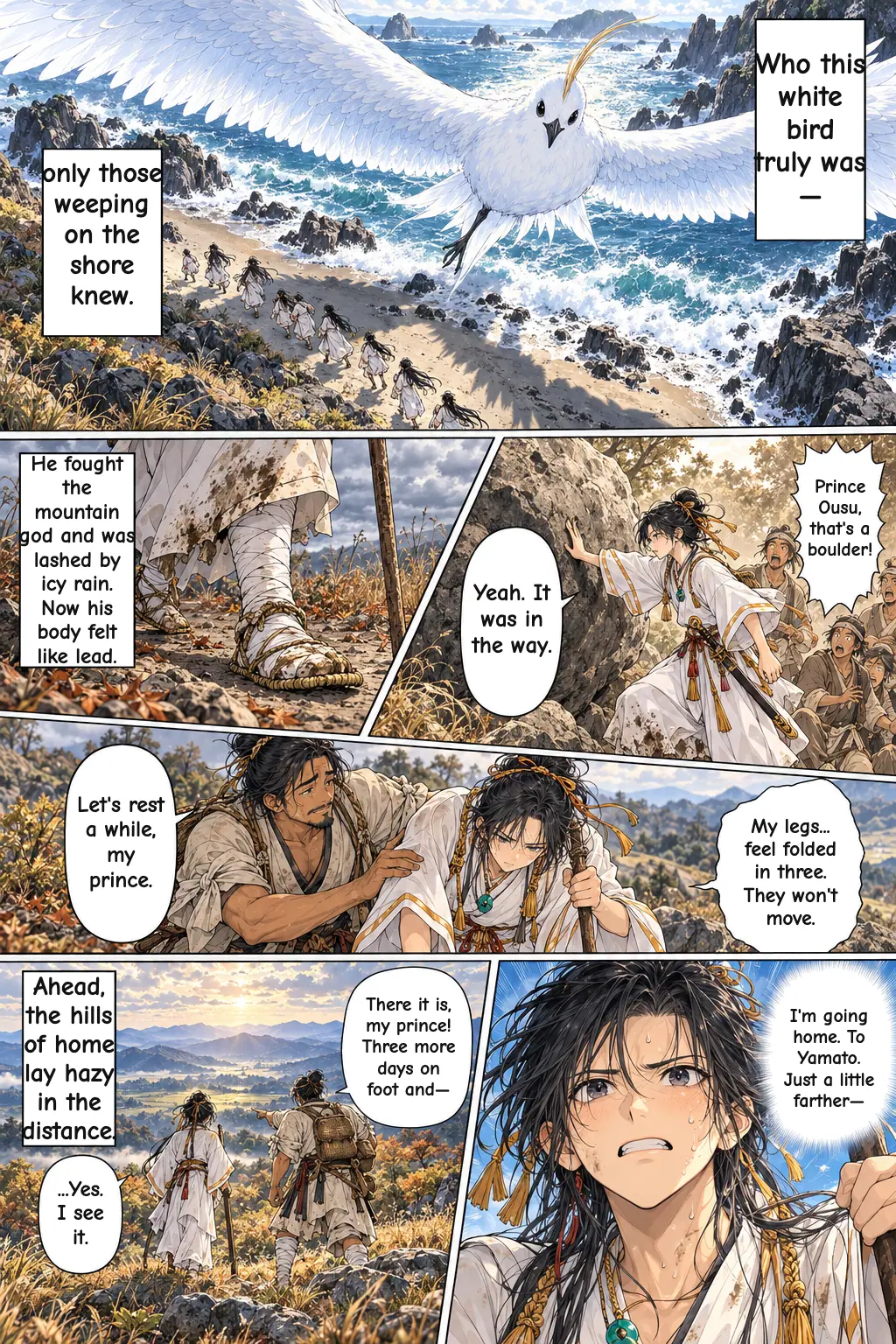
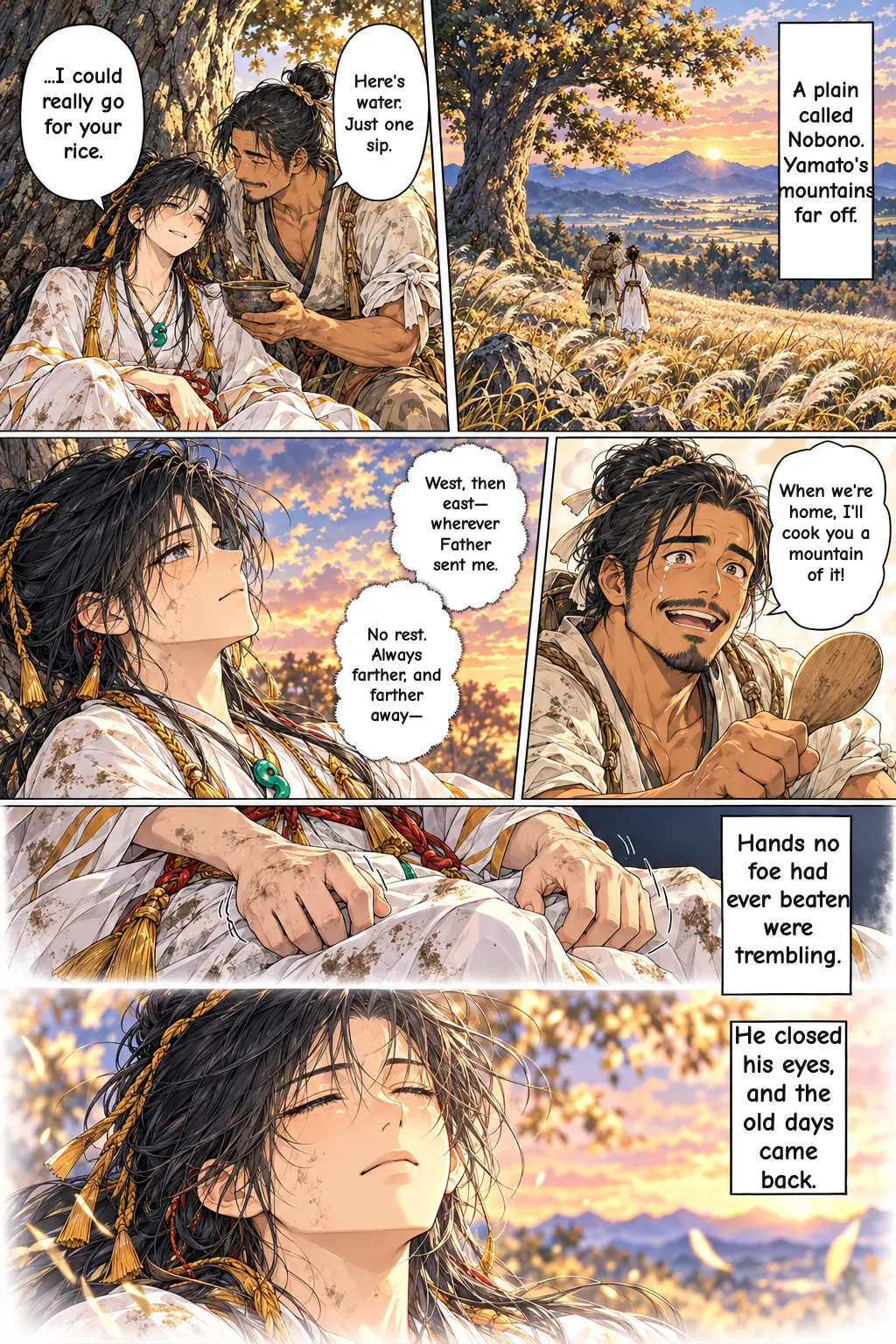
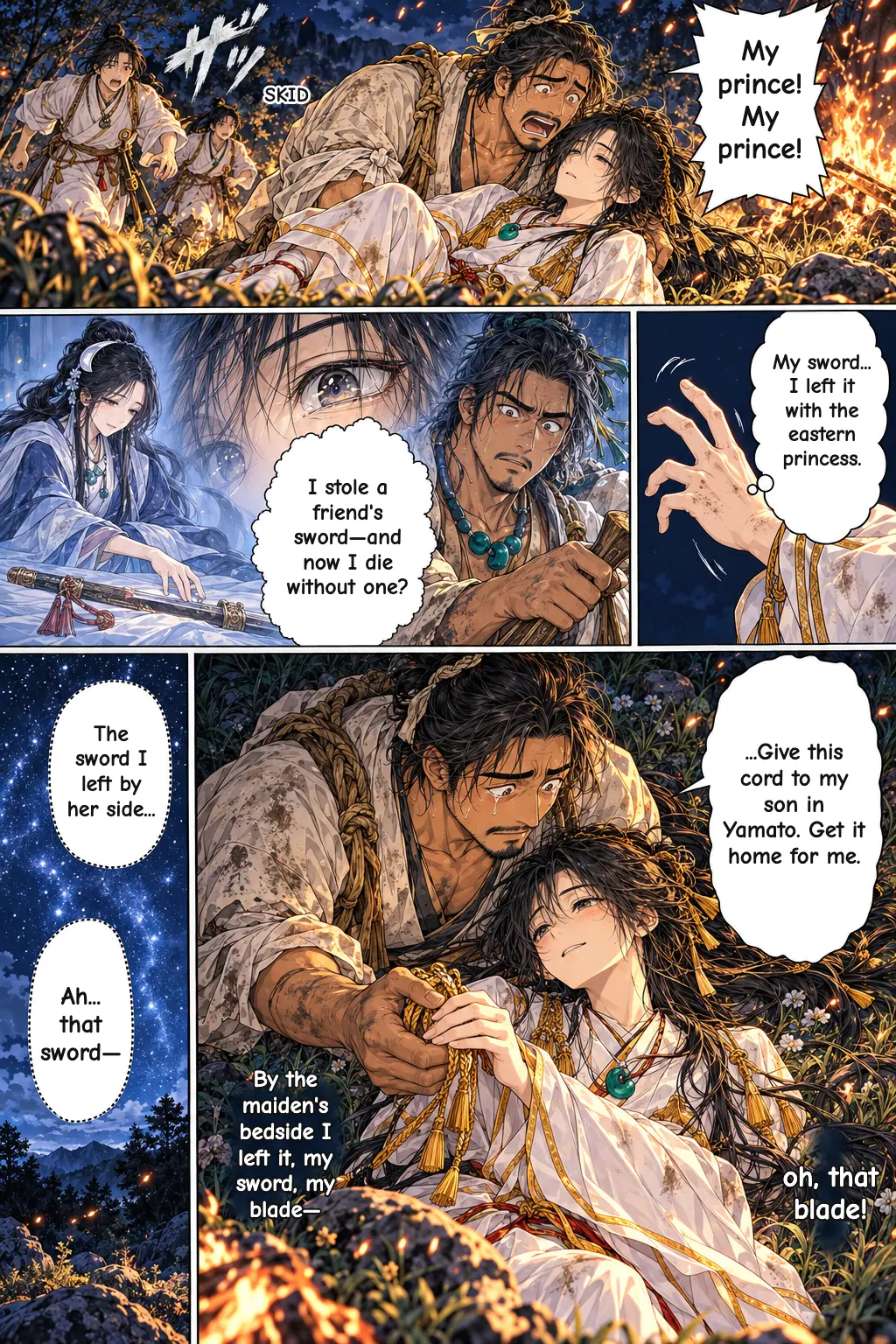
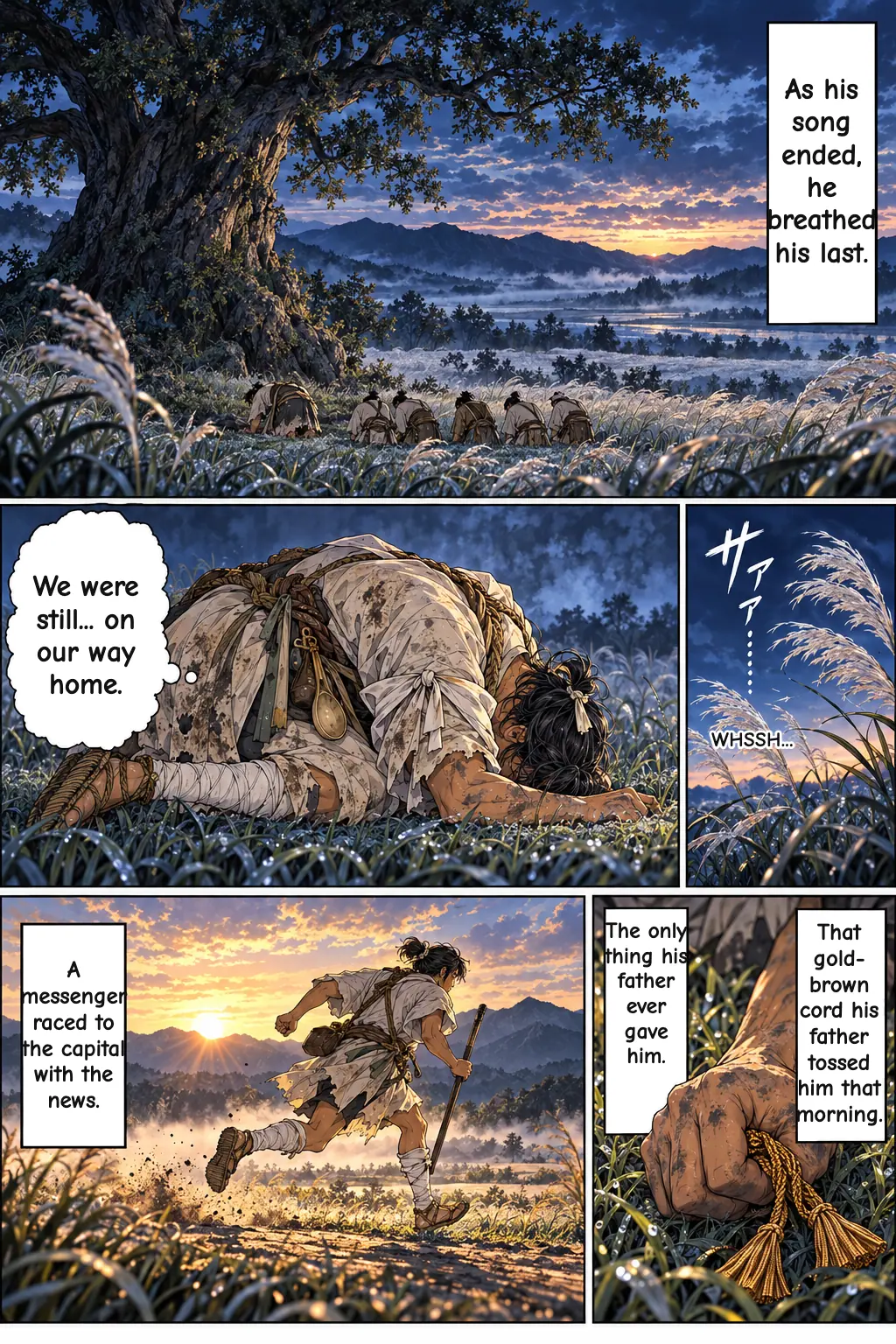
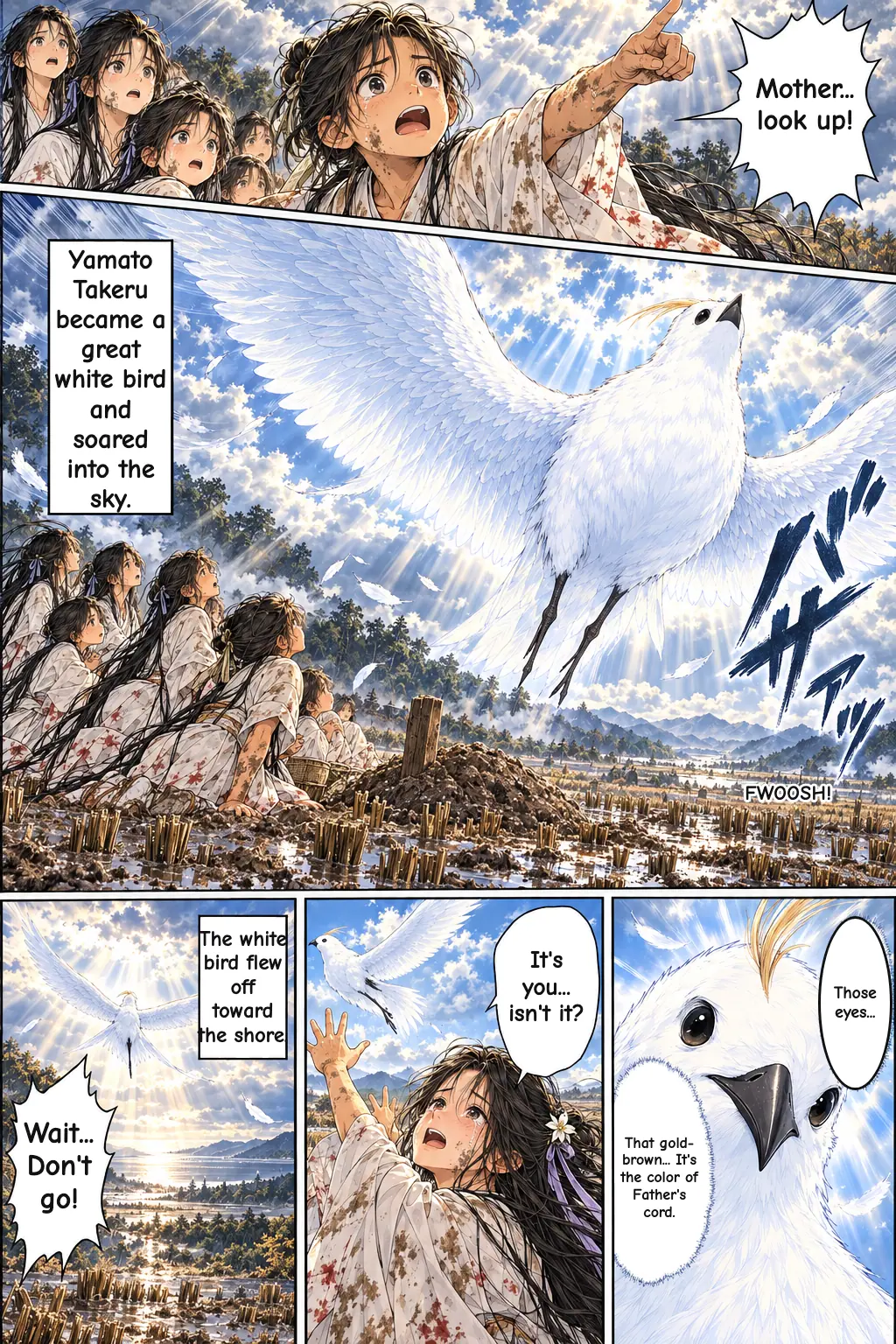
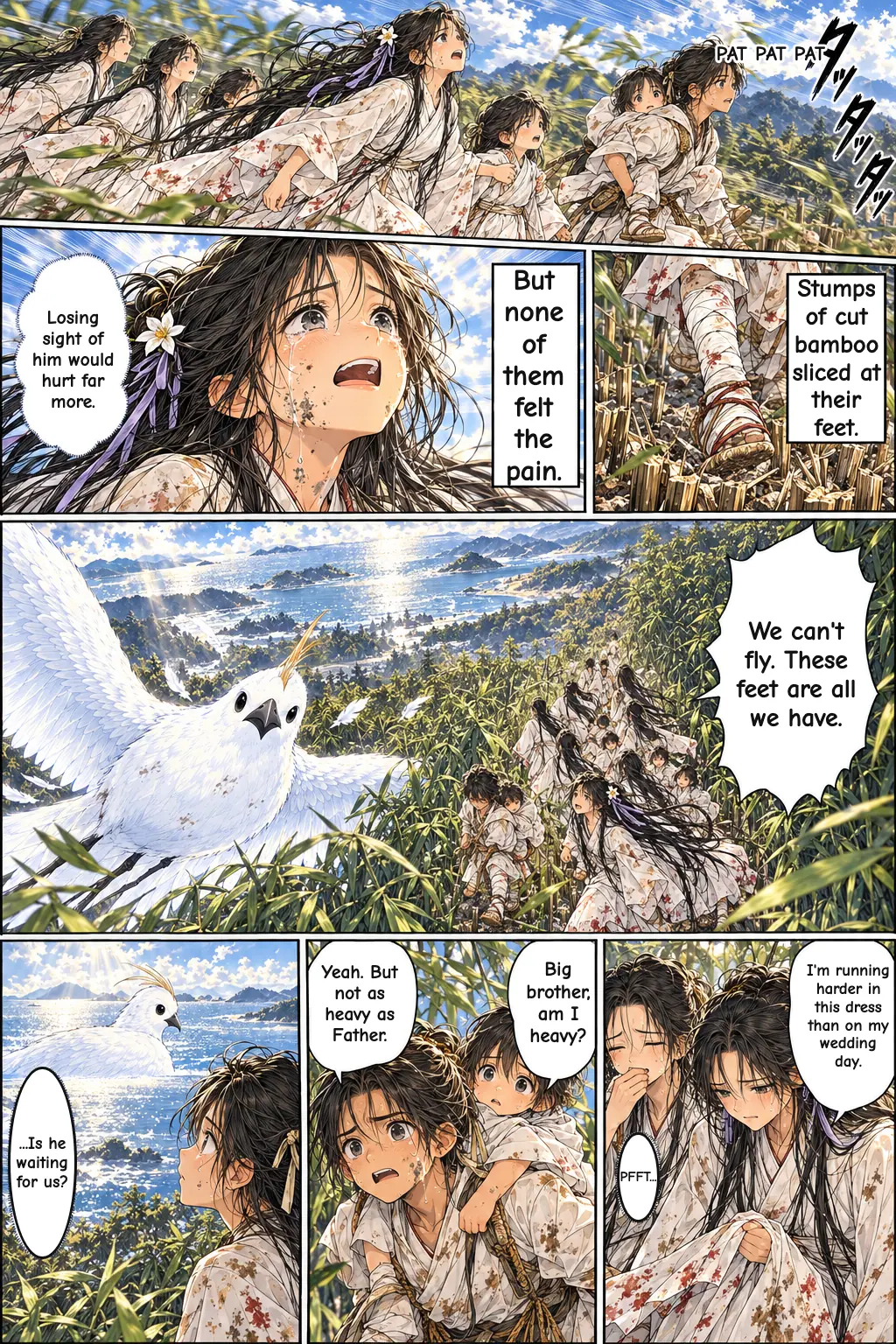
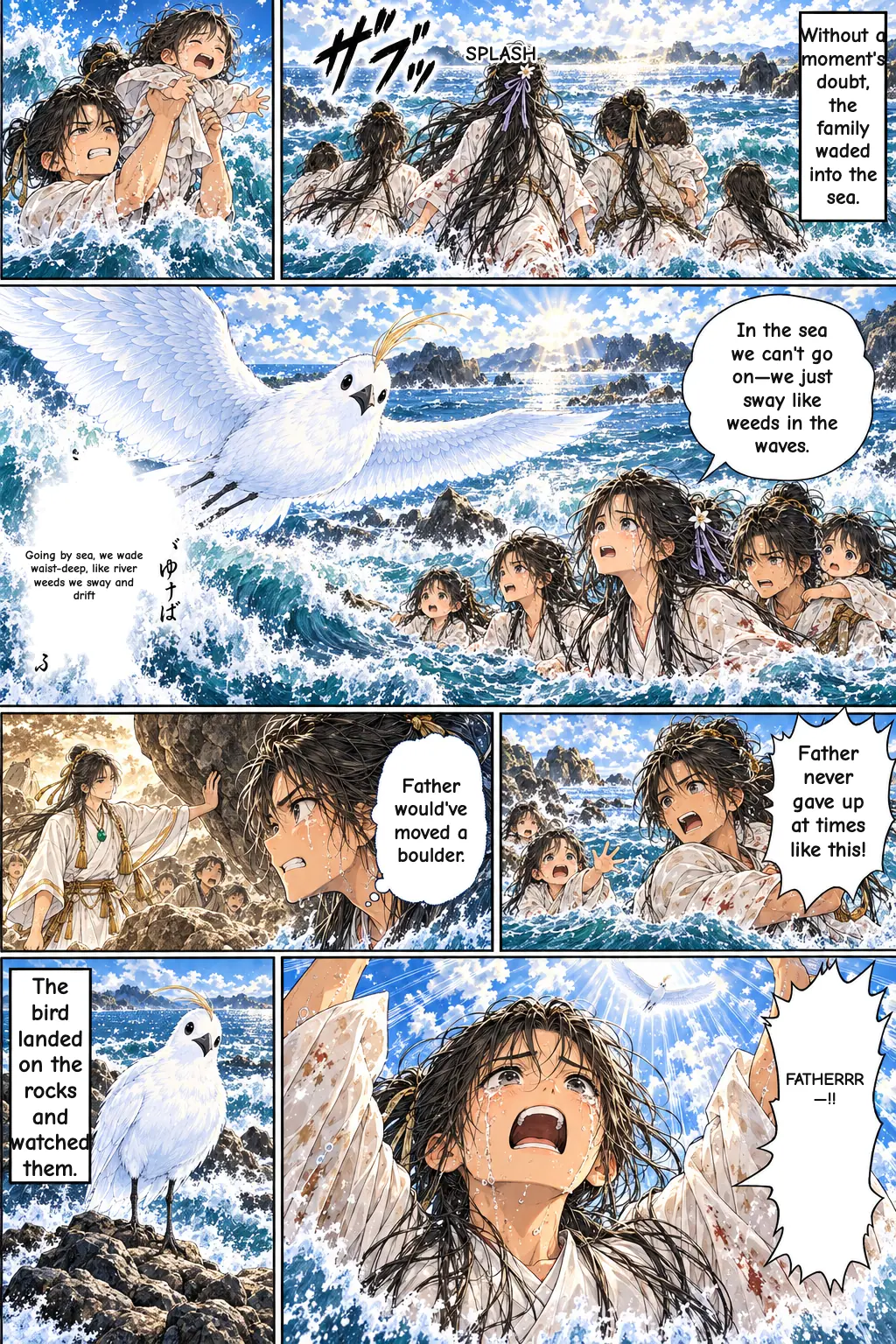
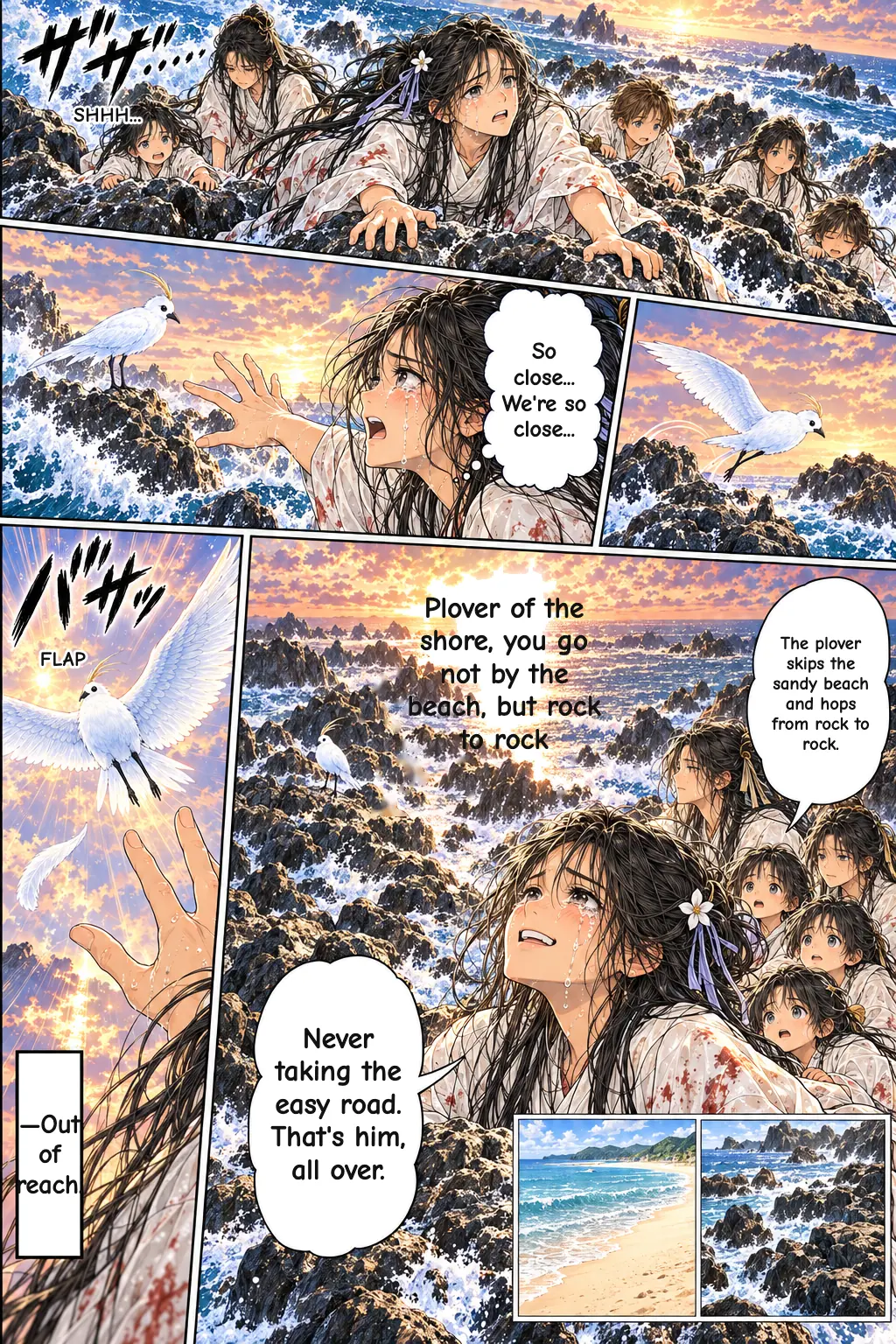
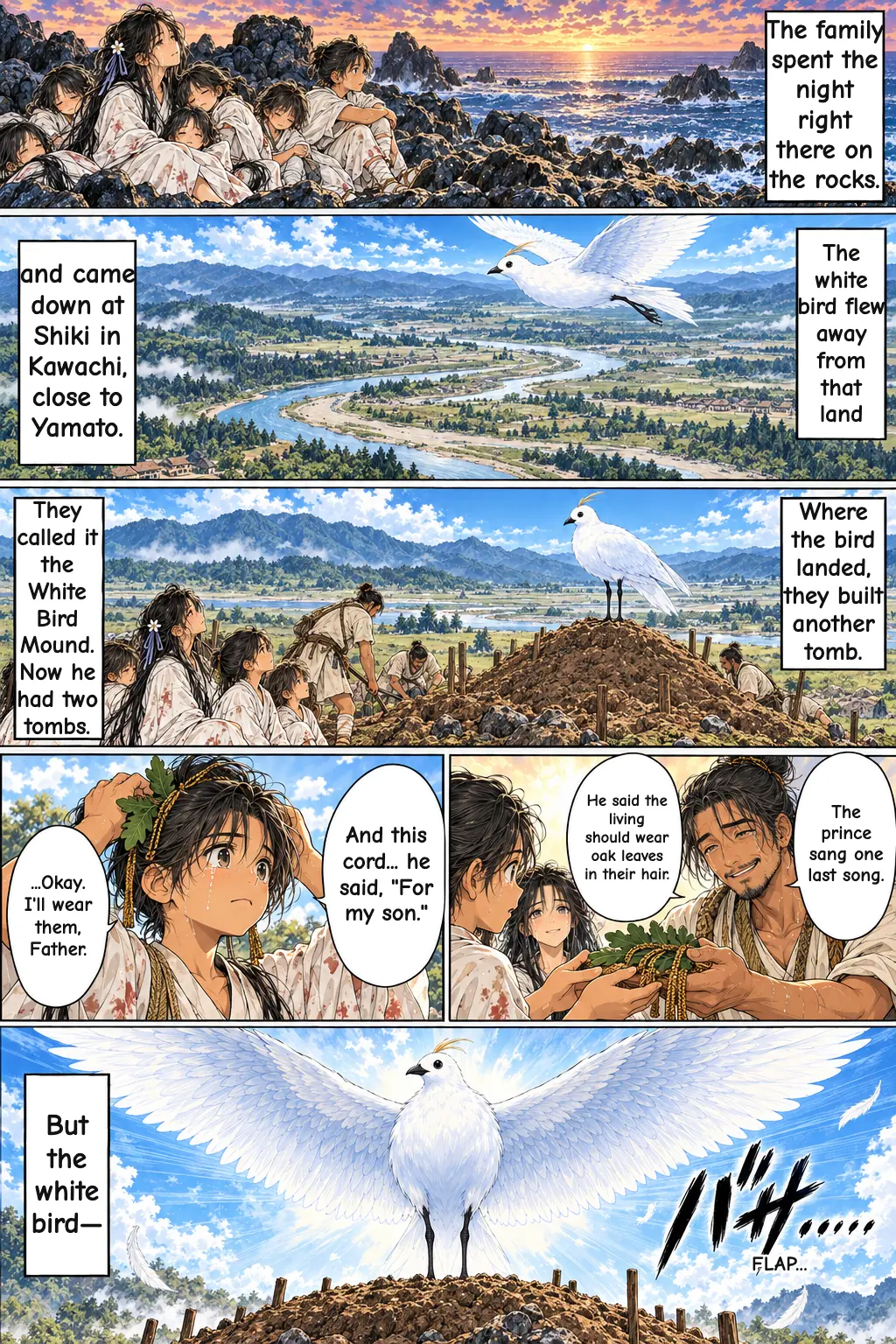
Gravely ill, Yamato Takeru reaches the plain of Nobono. There he sings a farewell song to his homeland, Yamato, and entrusts his father's cord to his son before he dies. He then becomes a great white bird and flies away, and his family chases it across paddies, bamboo stubble, sea and rocky shore, singing as they go. This is the final chapter of Book II.
The Death of Yamato Takeru: The White Bird Myth of the Kojiki
The Original Myth: Yamato Takeru's Last Journey
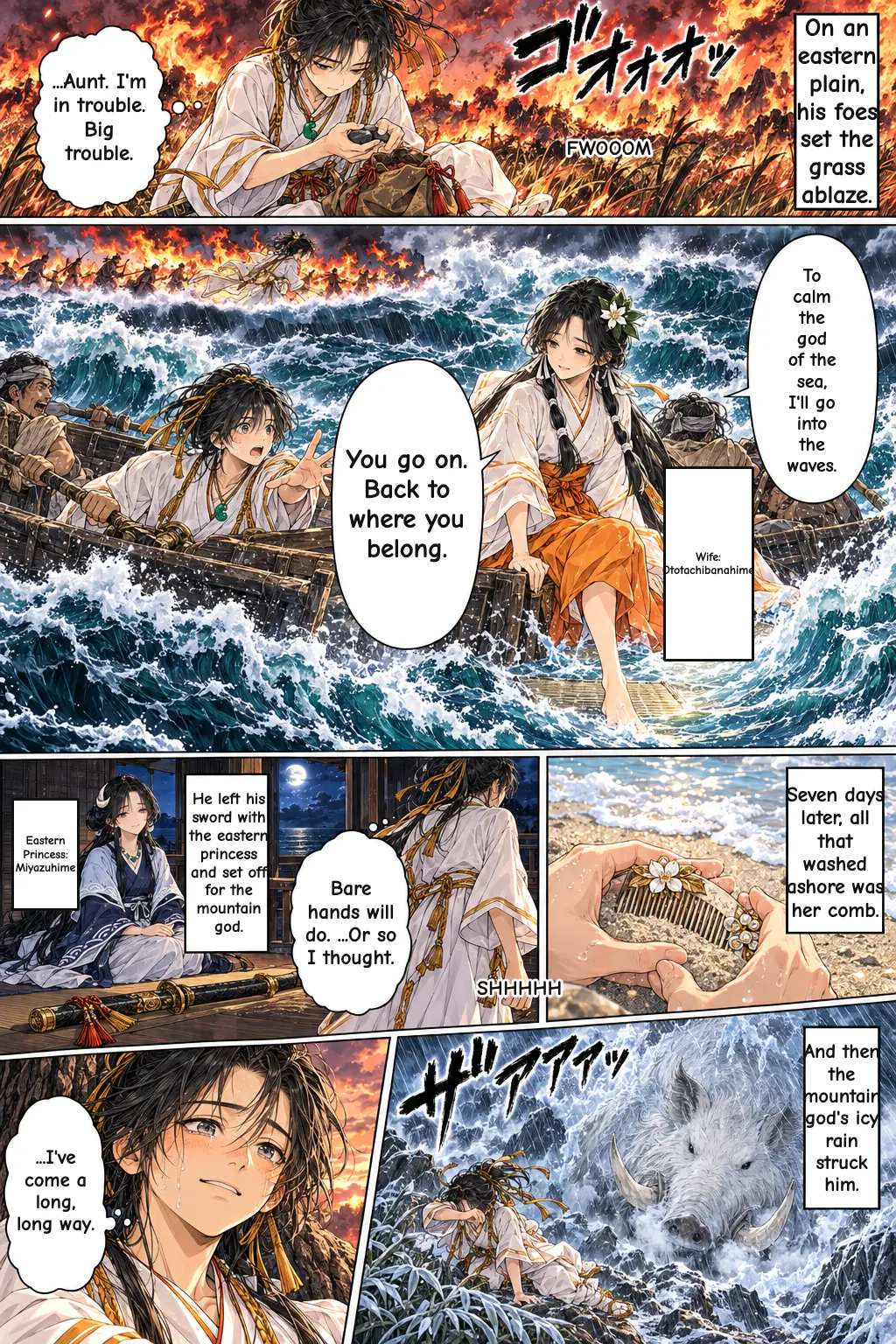
Yamato Takeru, a warrior prince and son of Emperor Keikō, is the great hero of the middle book of the Kojiki, Japan's oldest surviving chronicle (compiled in 712). After years of campaigns for his father in the west and the east, he falls ill after confronting the god of Mount Ibuki, who appeared to him as a white boar. On the road home his strength gives out. At one point he complains that his legs feel as if they were bent and folded three times over, and the Kojiki says this is how the place called Mie got its name.
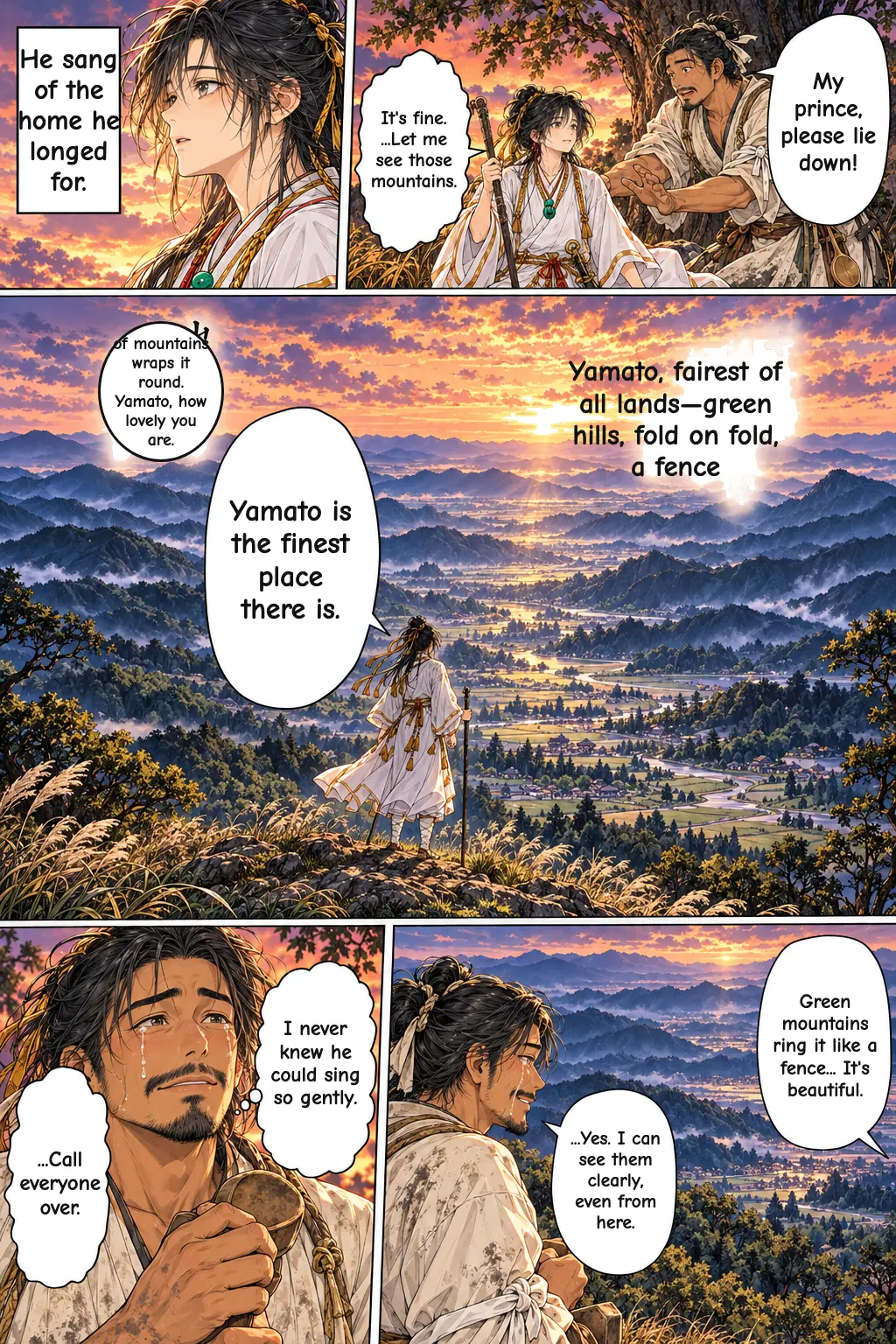
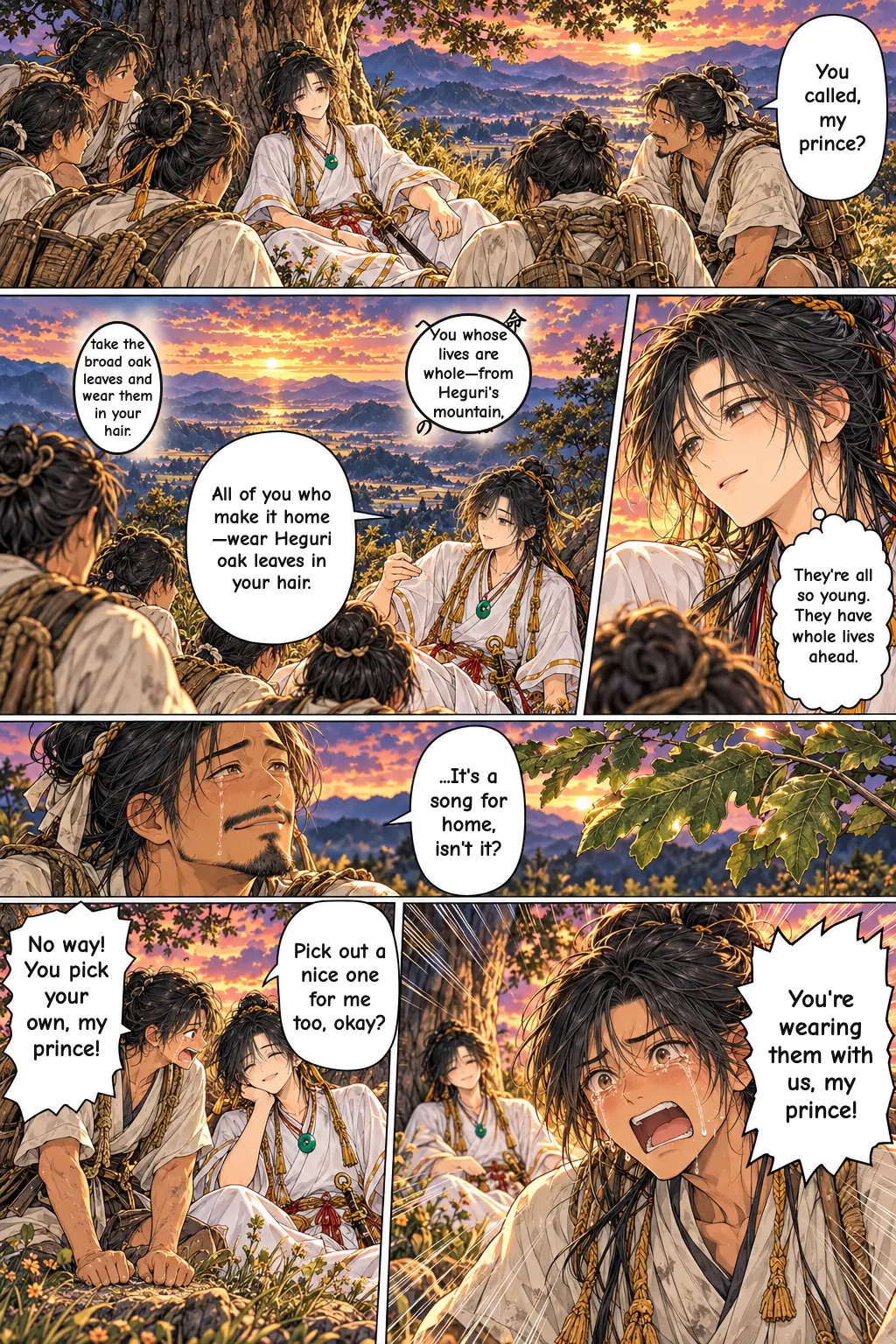
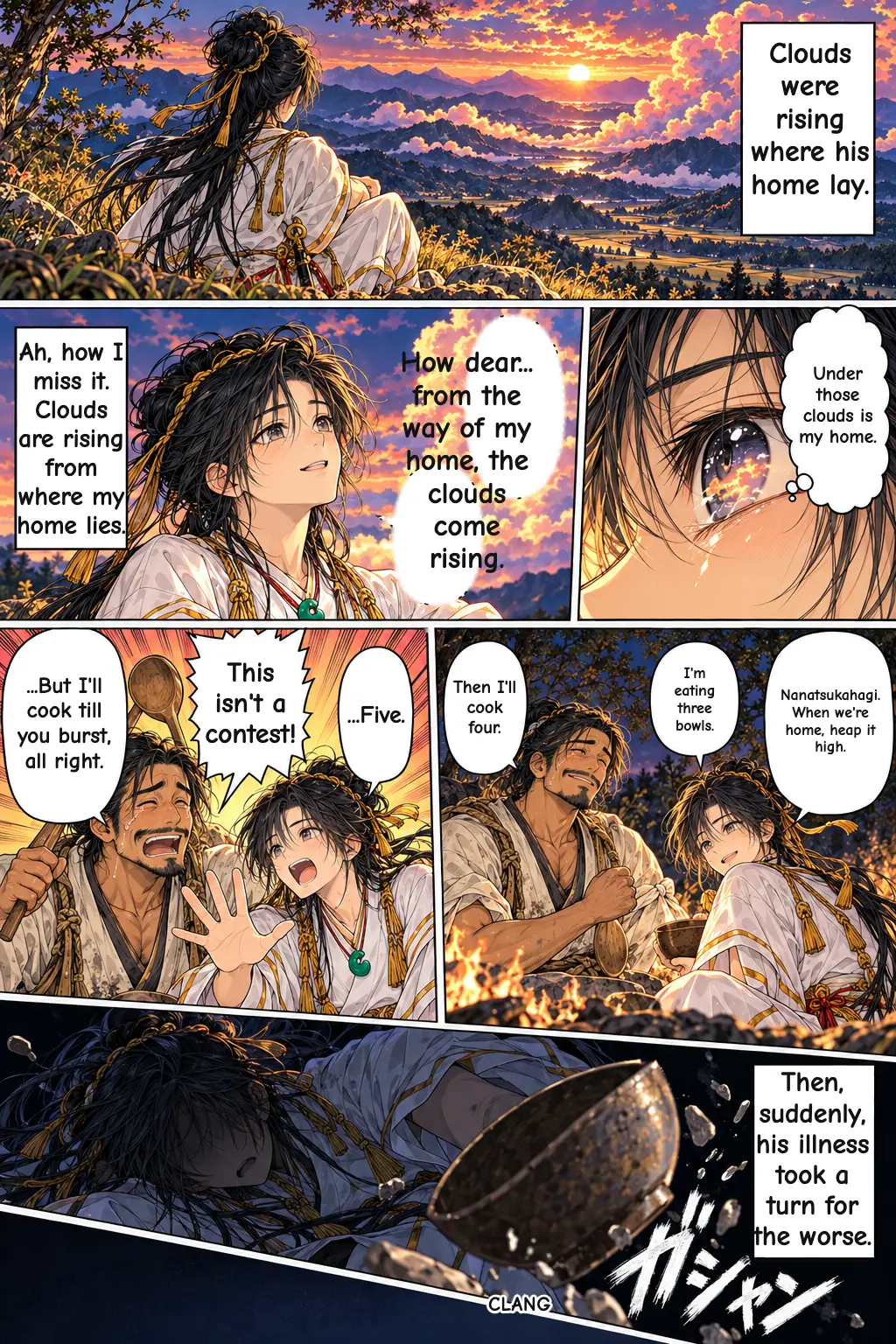
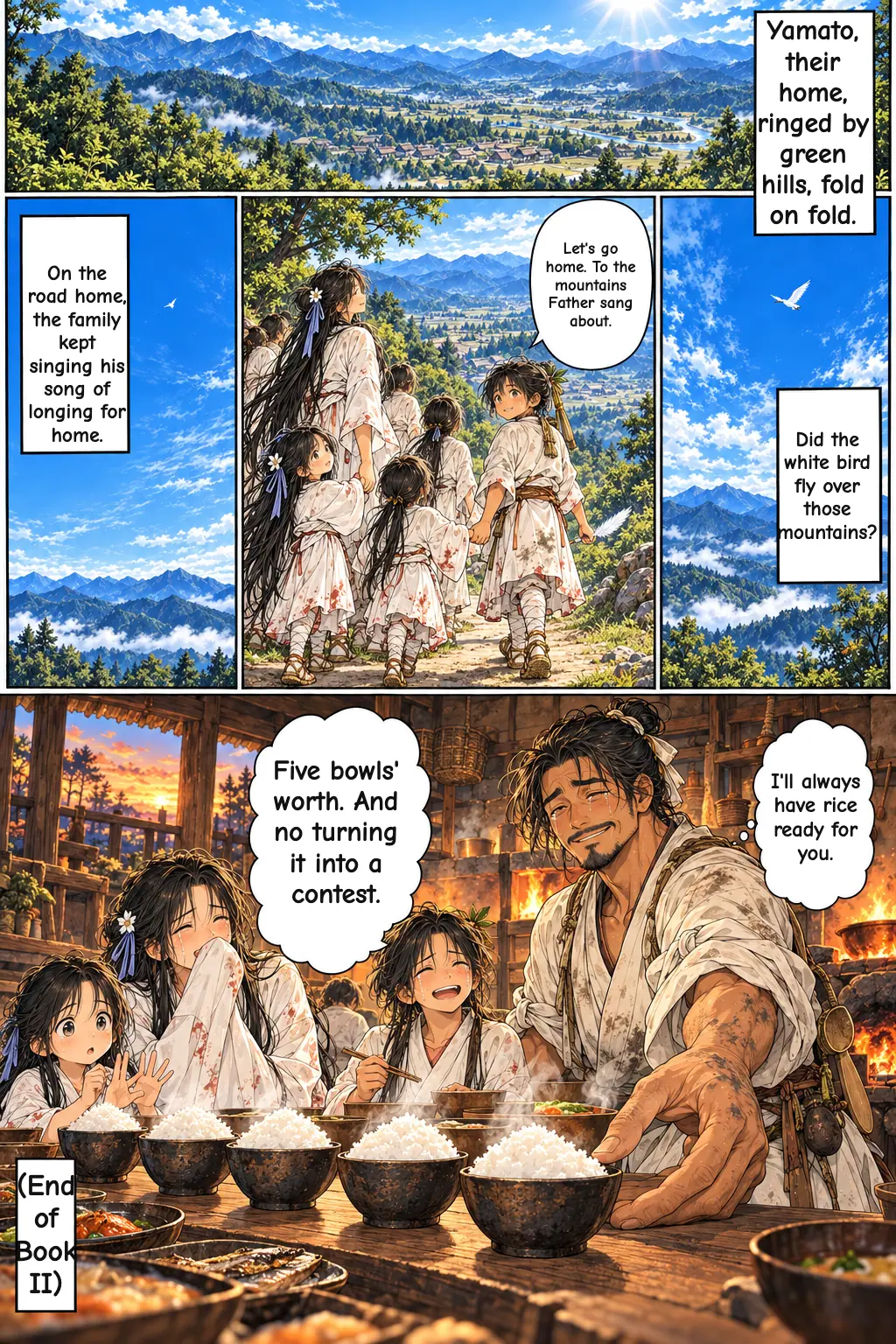
When he reaches the plain of Nobono, he sings about home. In the first song he praises Yamato, his homeland, as the finest of all lands, sheltered inside a ring of green hills. In the second he tells those whose lives are still whole to put oak leaves from the mountains of Heguri in their hair. The Kojiki calls this a kunishinobi-uta, a 'song of longing for the homeland.' In a third, very short song, he sees clouds rising from the direction of his house.
Then his illness suddenly gets much worse. His last song is about the sword he left beside a maiden's bed. Earlier in the chronicle we learn that this means Princess Miyazu of Owari and the famous Kusanagi sword, though this passage does not name them. As soon as he finishes the song, he dies. The text describes his death with the word normally used for the death of an emperor, even though he never ruled.
The Great White Bird and the Four Funeral Songs
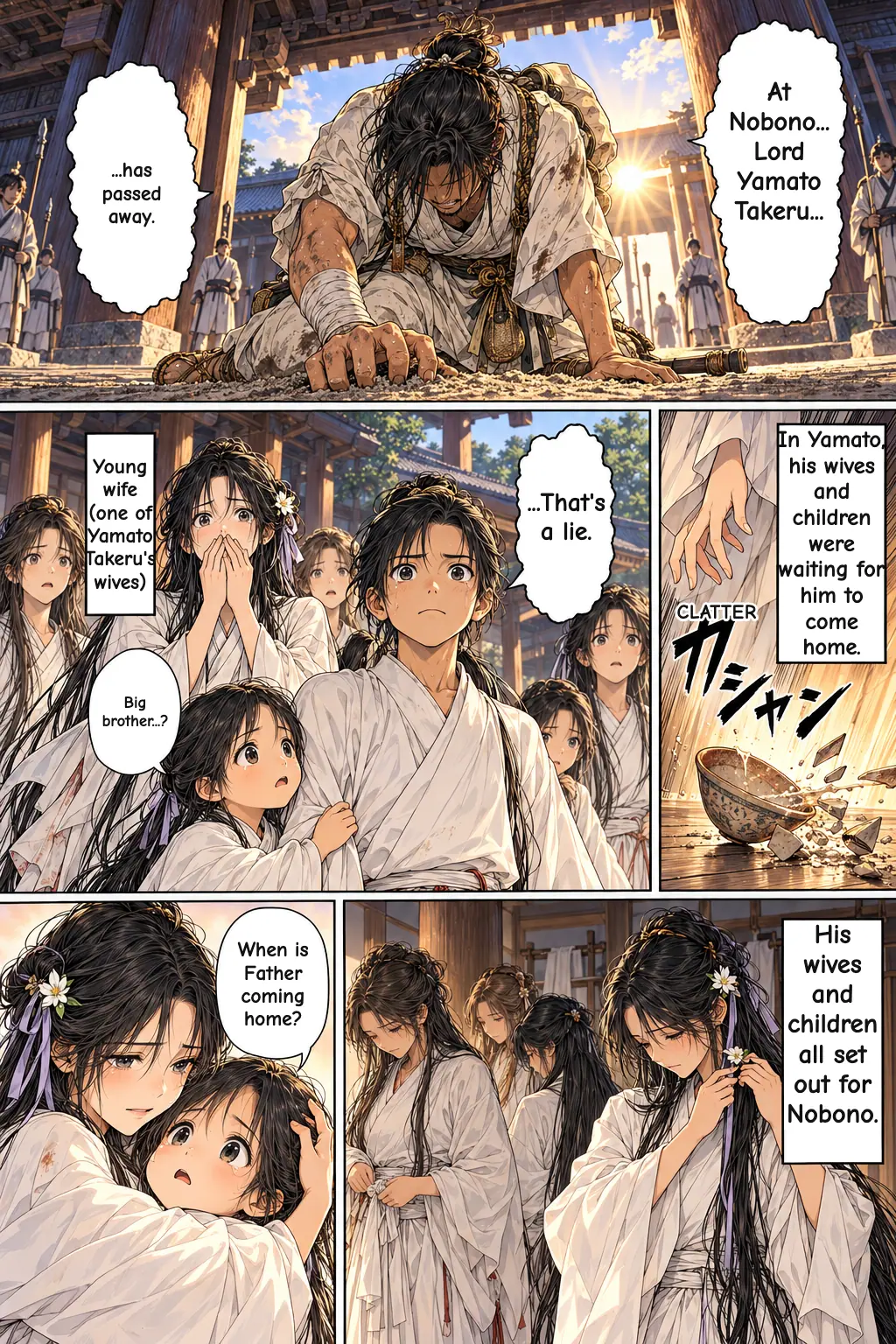
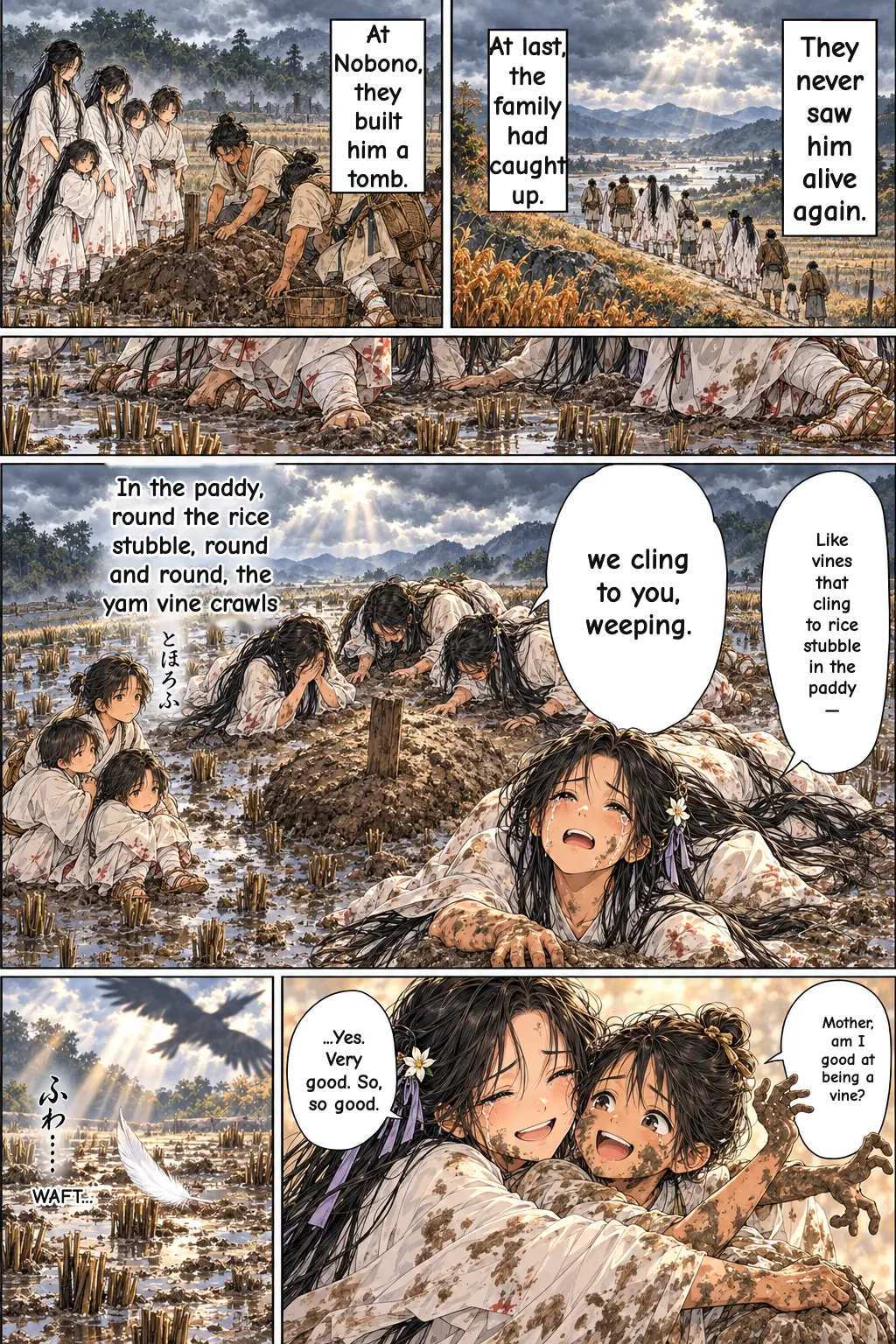
A messenger travels on post horses to tell the court. His consorts and children come down from Yamato and build a tomb at Nobono. Weeping, they crawl through the rice paddies around it and sing, comparing themselves to wild yam vines winding around the rice stalks.
Then Yamato Takeru turns into a yahiro shirochidori, an enormous white bird ('yahiro' suggests something vast), rises into the sky and flies toward the shore. His family chases after it. They cut their feet on the stubble of bamboo grass but feel no pain, they wade into the sea, and they follow the bird along the rocky coast, singing at each stage. The Kojiki notes that these four songs were sung at his funeral, and that they were still sung at emperors' funerals in the compilers' own time.
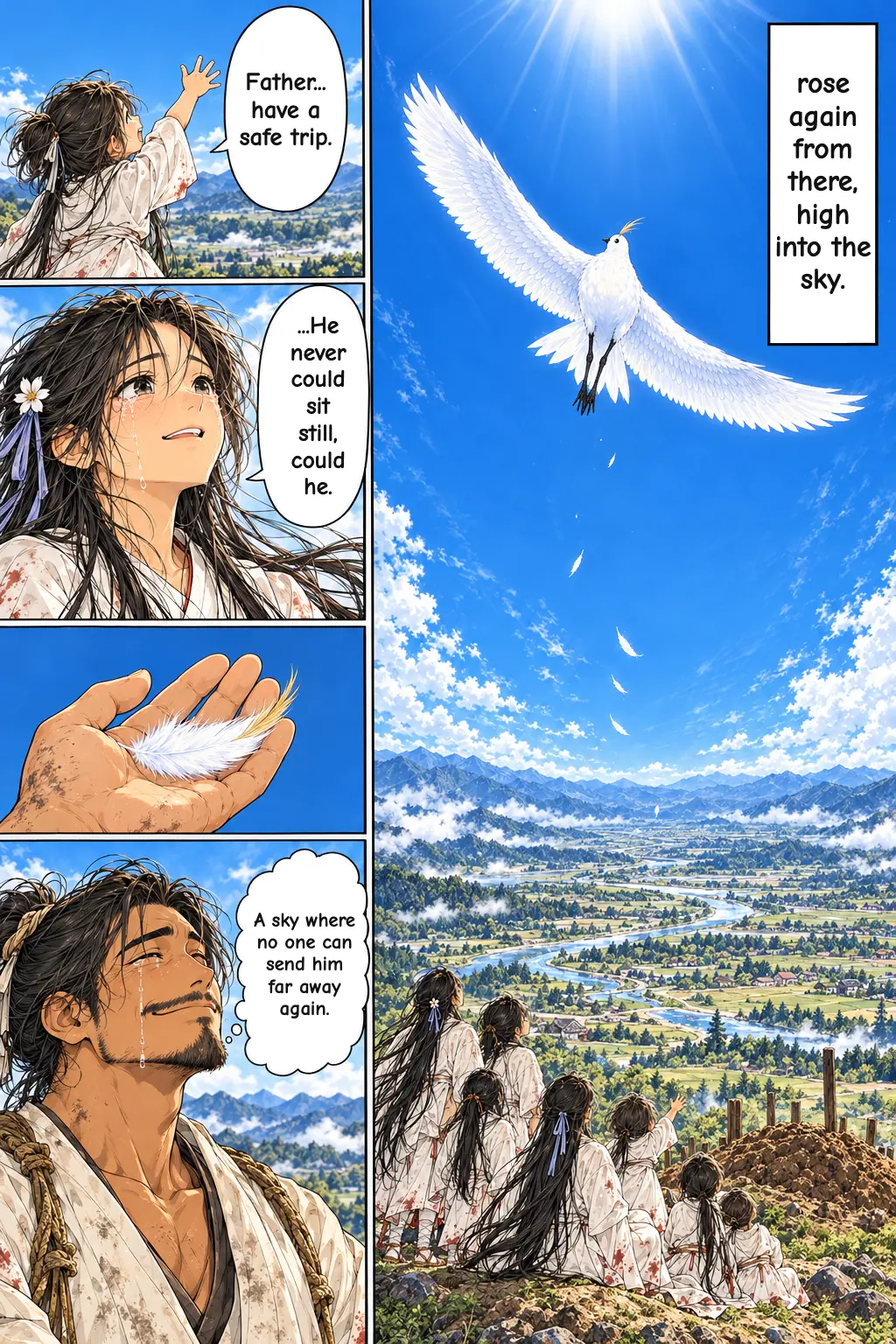
The bird comes to rest at Shiki in Kawachi Province, and a tomb is built there called Shiratori no Misasagi, the White Bird Tomb. But the bird flies away again, high into the heavens. The chapter ends with a short note: throughout his campaigns, Nanatsukahagi, ancestor of the Kume no Atai clan, had served Yamato Takeru as his cook.
What This Myth Tells Us
Yamato Takeru is the Kojiki's great tragic hero. He conquers enemies across the land but dies on the road, just short of the home he longs for. His last songs are not about victory. They are about green hills, clouds over his house and a sword he left behind, which is why this scene is among the most moving in early Japanese literature.
The white bird is often read as an image of the soul leaving the body, an idea found in many cultures. Because the Kojiki links the family's songs to imperial funerals, the myth also seems to explain the origin of a court ritual.
Other sources tell the story differently. In the Nihon Shoki, Japan's other early chronicle, the bird stops at three places (Nobono, Kotohiki-hara in Yamato, and Furuichi in Kawachi), and a tomb is built at each one. That version is not part of the Kojiki story. Today the Nobono tomb is often identified with the Nobono Ōzuka kofun in Kameyama, Mie, and the White Bird Tomb with the Karusato Ōtsuka kofun in Habikino, Osaka, which the Imperial Household Agency has designated as his tomb. These identifications came much later and do not appear in the Kojiki.
What the Manga Changed
The Kojiki tells this scene in very few words, so the manga fills in a lot. The scenery of Nobono, the weather, the season and the time of day are all invented, and so are Yamato Takeru's expressions and who he looks at as he sings. The Kojiki never says who was with him at the end, or who he meant when he told 'those whose lives are whole' to wear oak leaves.
The most important addition is his handing of his father's cord to his son. This moment does not appear in the Kojiki. It is the manga's own way of giving the farewell a personal passing-on between generations. In the same way, the Kojiki never names the consorts and children, or says how many there were, so any faces the manga gives them are artistic choices.
The messenger's journey, the moment of transformation, the landscapes the bird flies over, and the final flight that closes the series are also staged by the manga. Flashbacks to earlier adventures are drawn from scenes the Kojiki tells in earlier chapters.
Where to Read It
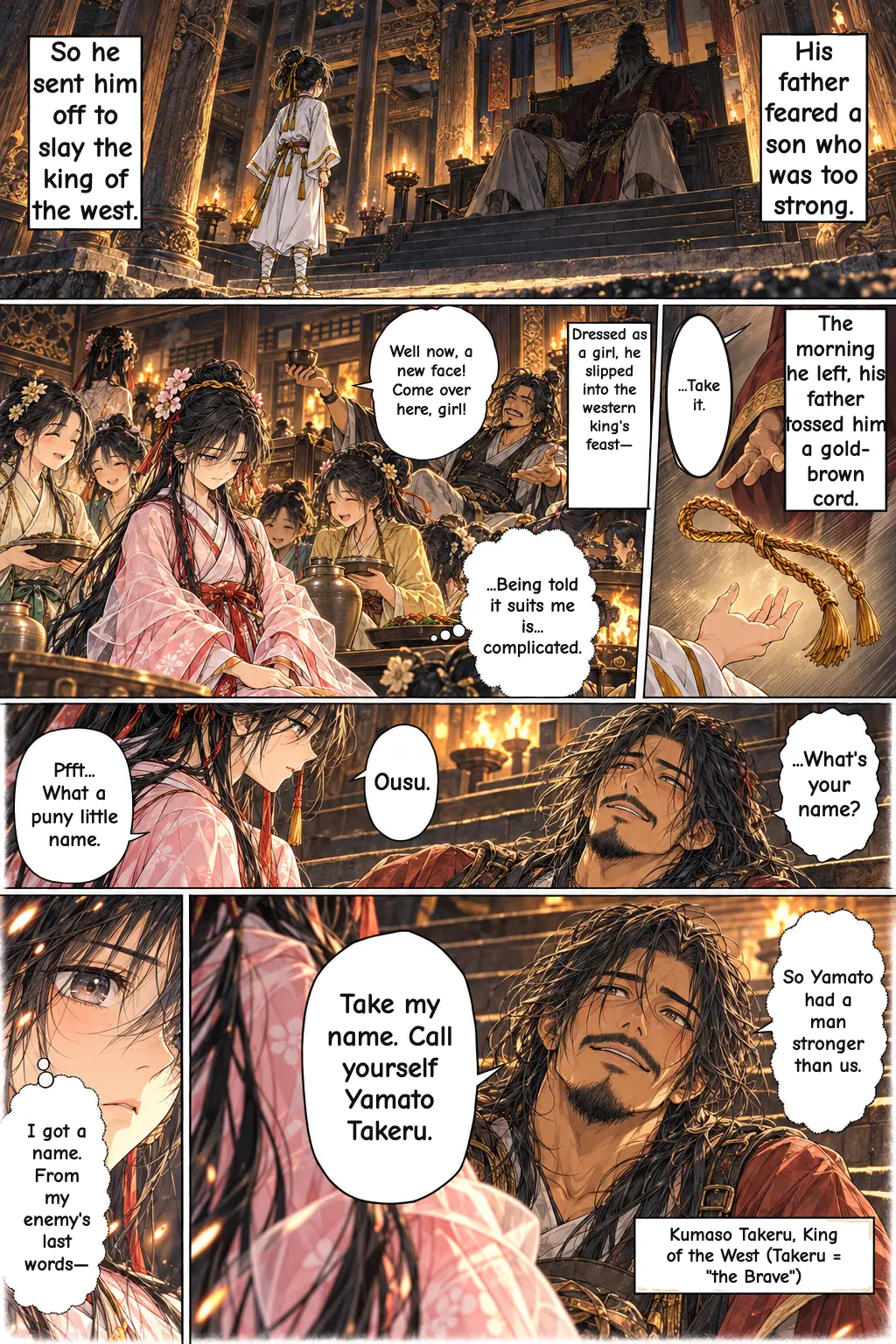
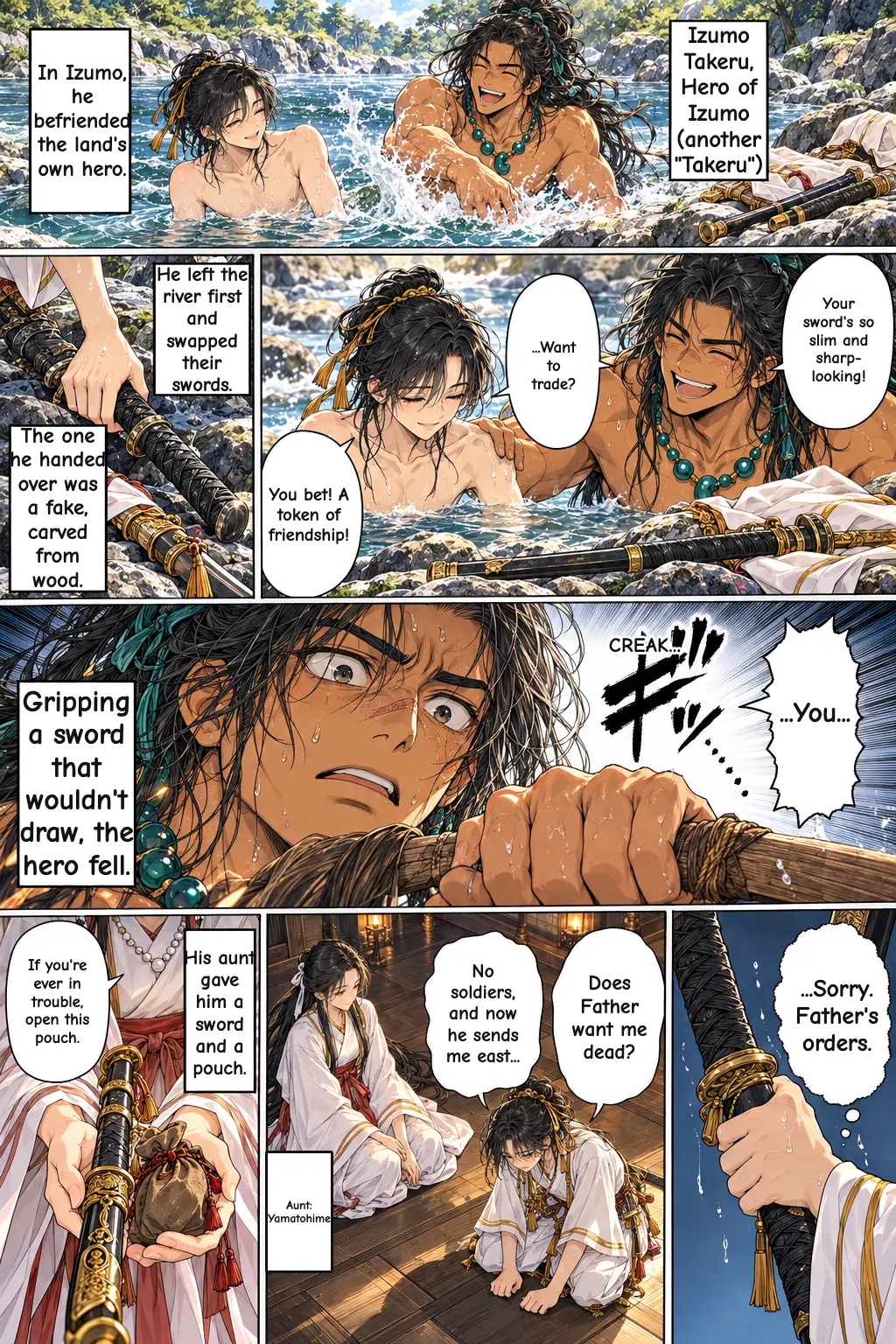
Episode 13, 'Home Was Just Over the Mountains,' is the final chapter of KOJIKI Book II: The Age of Heroes. If this scene moved you, it is worth going back to see how Yamato Takeru got here: his rise as a fierce young prince, the sword and pouch from his aunt Yamato-hime, the loss of Princess Ototachibana at sea, and the fateful meeting with the white boar of Mount Ibuki. Every episode is free to read on Manga Portal, with no sign-up needed.
Characters in this episode
Yamato Takeru
A warrior prince and son of Emperor Keikō who falls ill on his way home, sings of his homeland at Nobono, dies, and becomes a great white bird.
The Consorts
Yamato Takeru's unnamed wives, who come from Yamato to build his tomb and chase the white bird, singing four funeral songs.
The Children
Yamato Takeru's sons and daughters, never named here, who weep and follow the white bird with the consorts.
Yahiro Shirochidori (the Great White Bird)
The enormous white bird Yamato Takeru becomes, which rests at Shiki in Kawachi before flying off into the heavens.
Nanatsukahagi
The ancestor of the Kume no Atai clan, who served as Yamato Takeru's cook throughout his campaigns.
Princess Miyazu
A princess of Owari who kept the Kusanagi sword, remembered only in Yamato Takeru's last song and not named in this scene.
FAQ
How did Yamato Takeru die?
According to the Kojiki, he fell ill after confronting the god of Mount Ibuki and grew weaker on the road home. At the plain of Nobono he sang several songs about his homeland, and he died right after his last song, which was about the sword he had left behind.
Why did Yamato Takeru turn into a white bird?
The Kojiki does not explain why. It only says that after his tomb was built, he became a huge white bird and flew away. The bird is often read as an image of the hero's soul leaving the world.
Where is Yamato Takeru buried?
The Kojiki mentions a tomb at Nobono and a second one, the White Bird Tomb, at Shiki in Kawachi, where the bird landed. Today these are often identified with ancient mounds in Kameyama (Mie) and Habikino (Osaka), but those identifications came much later.
What does 'Yamato wa kuni no mahoroba' mean?
It is the opening of Yamato Takeru's famous dying song, which praises Yamato as the finest of lands, surrounded by green hills. It is one of the best-known poems in the Kojiki.
Was Yamato Takeru a real person?
Most historians see him as a legendary figure, not a proven historical person. His story may draw on memories of several real campaigns, but the Kojiki presents it as heroic legend.