Episode 8Japan's Greatest Hero, Disguised as a GirlYamato Takeru and the Kumaso Brothers
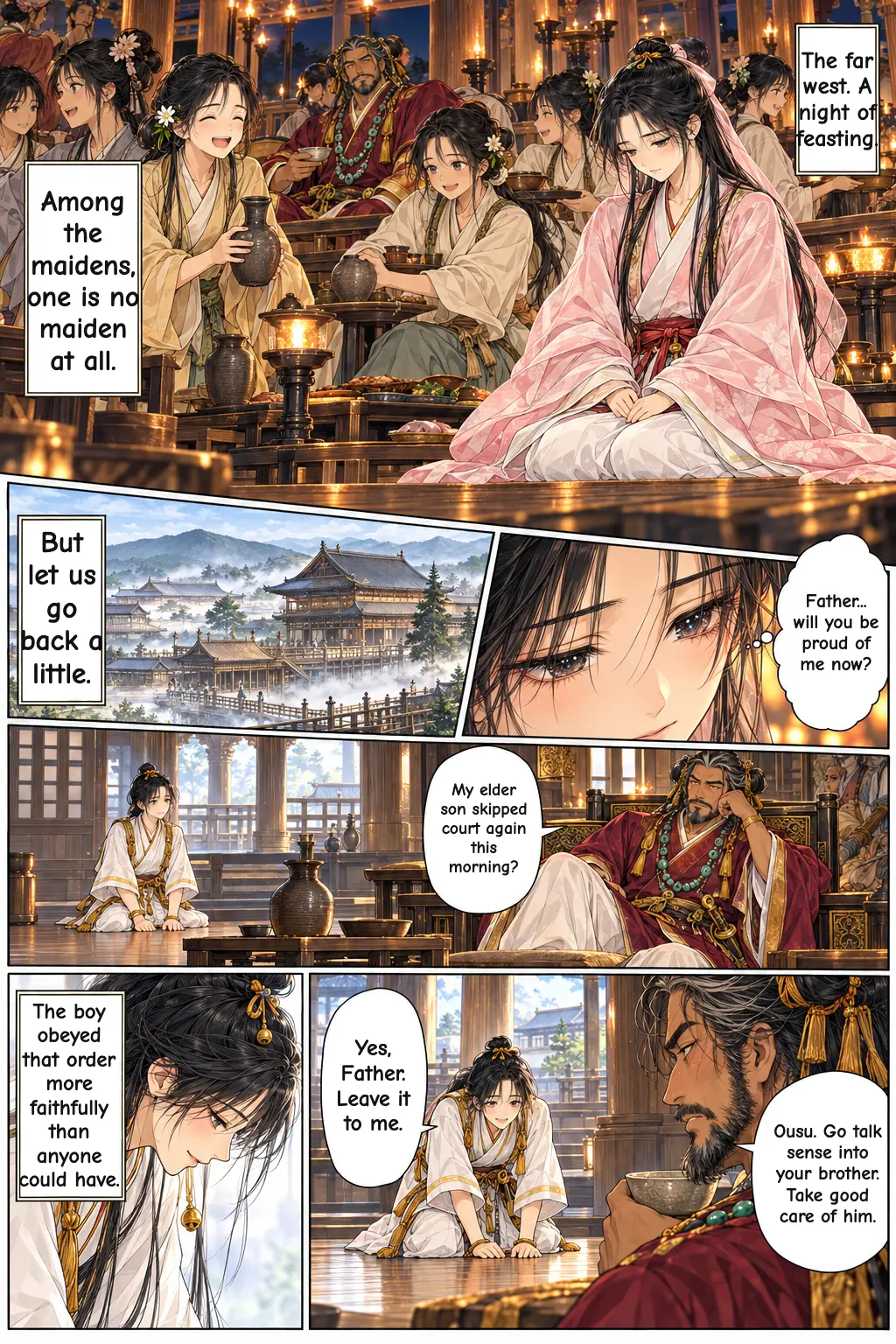
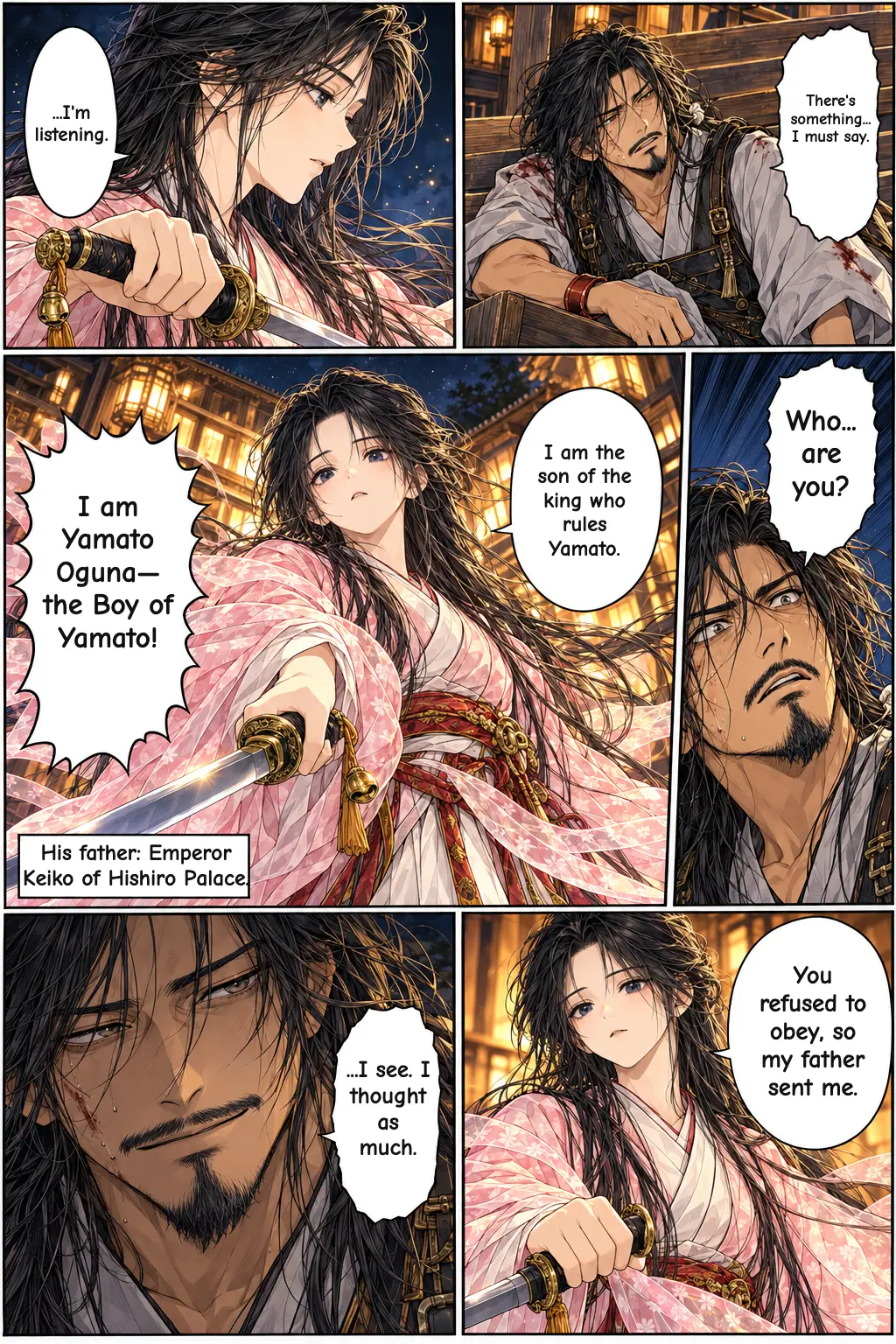
Kojiki Book II, Episode 8. Prince Ousu carries out his father's order to the letter—and the terrified Emperor Keiko sends him off to the far west. Disguised as a girl in his aunt's robe, the boy slips into the Kumaso Takeru brothers' feast. The name his dying enemy gives him: Yamato Takeru.
Yamato Takeru and the Kumaso Brothers: The Kojiki Story Explained
The Original Myth: A Son His Father Feared
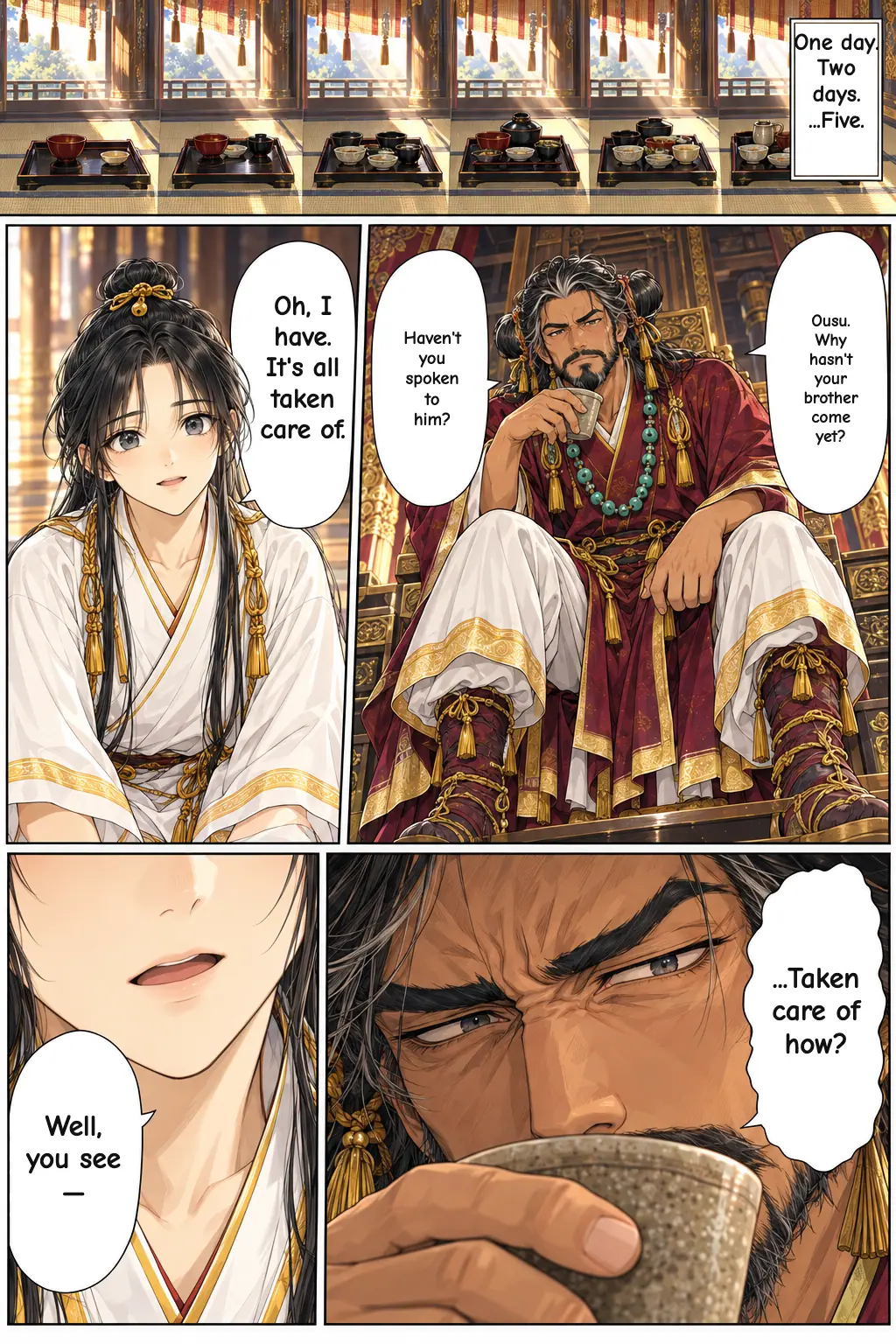
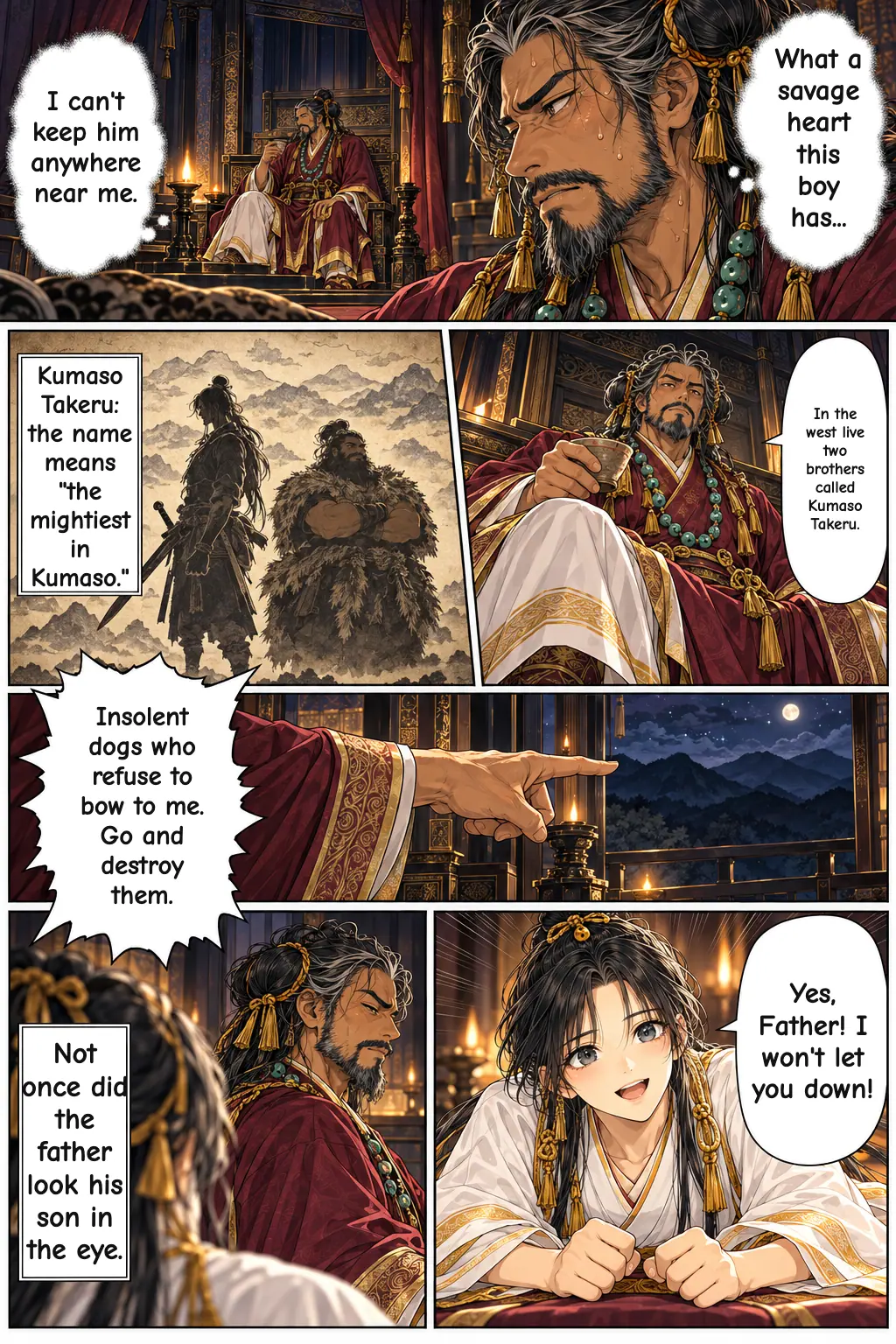
The story comes from the Kojiki (Record of Ancient Matters), Japan's oldest surviving chronicle, finished in 712. It appears in Book II, the middle volume, in the chapter on Emperor Keiko. The emperor notices that his elder son, Prince Ōusu, has stopped coming to the morning and evening meals. He tells the younger son, Prince Ousu, to go and gently persuade his brother.
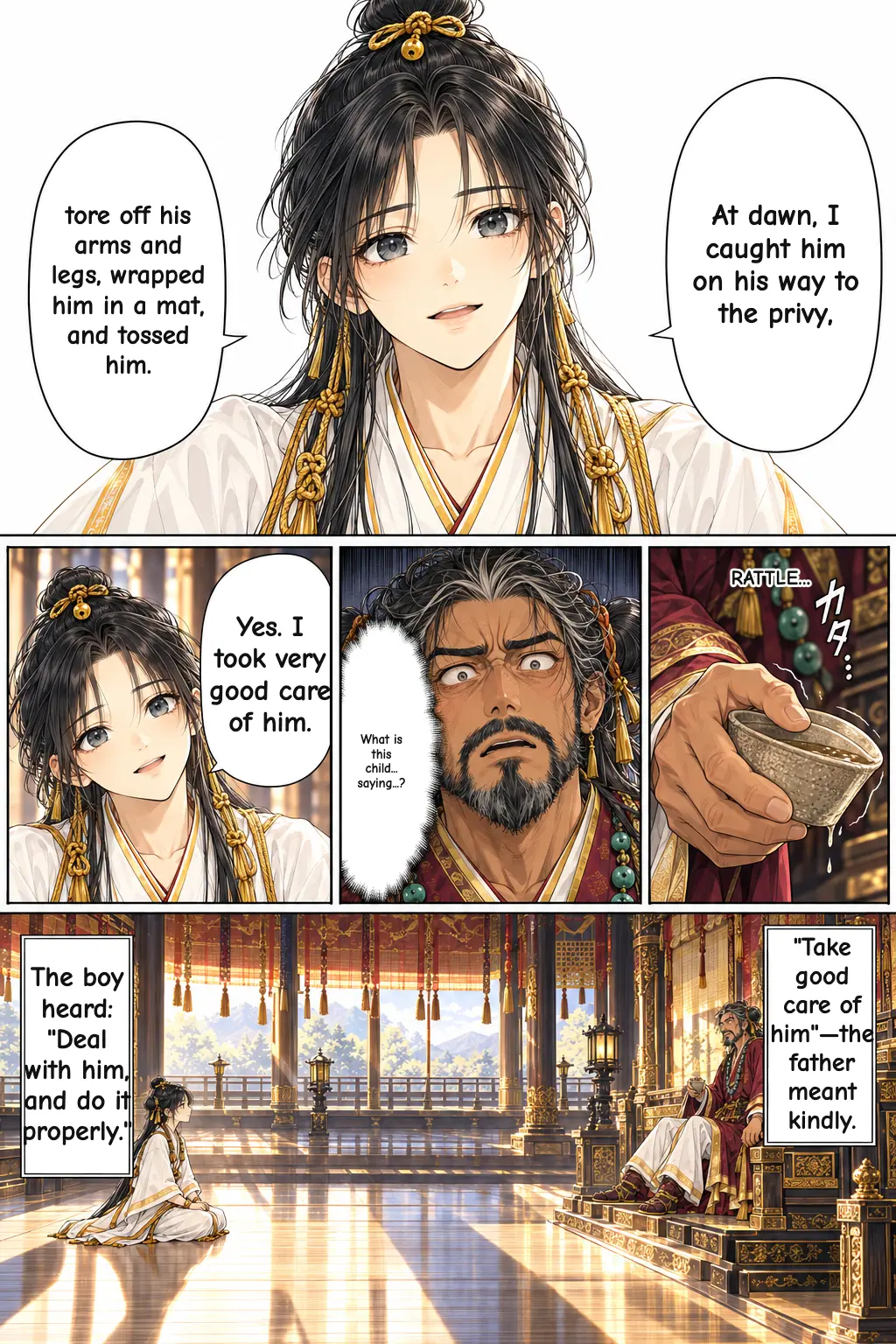
Five days pass, and Ōusu still does not appear. When the emperor asks why, Ousu calmly answers that he has already dealt with it. At dawn he waited for his brother outside the privy, grabbed him, crushed him, tore off his limbs, wrapped the body in a straw mat, and threw it away. The Kojiki never shows this killing as a scene. We learn about it only from Ousu's own matter-of-fact report.
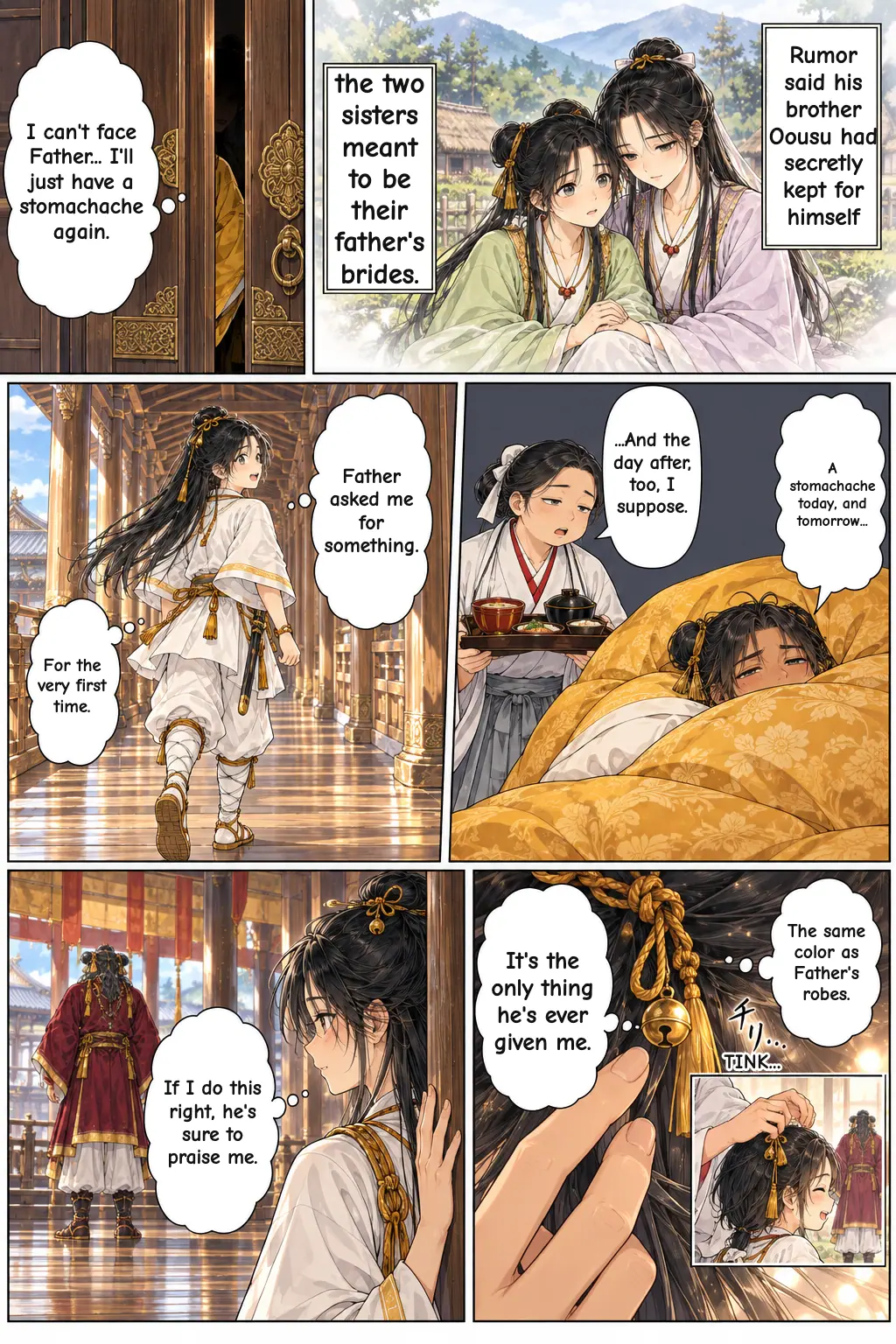
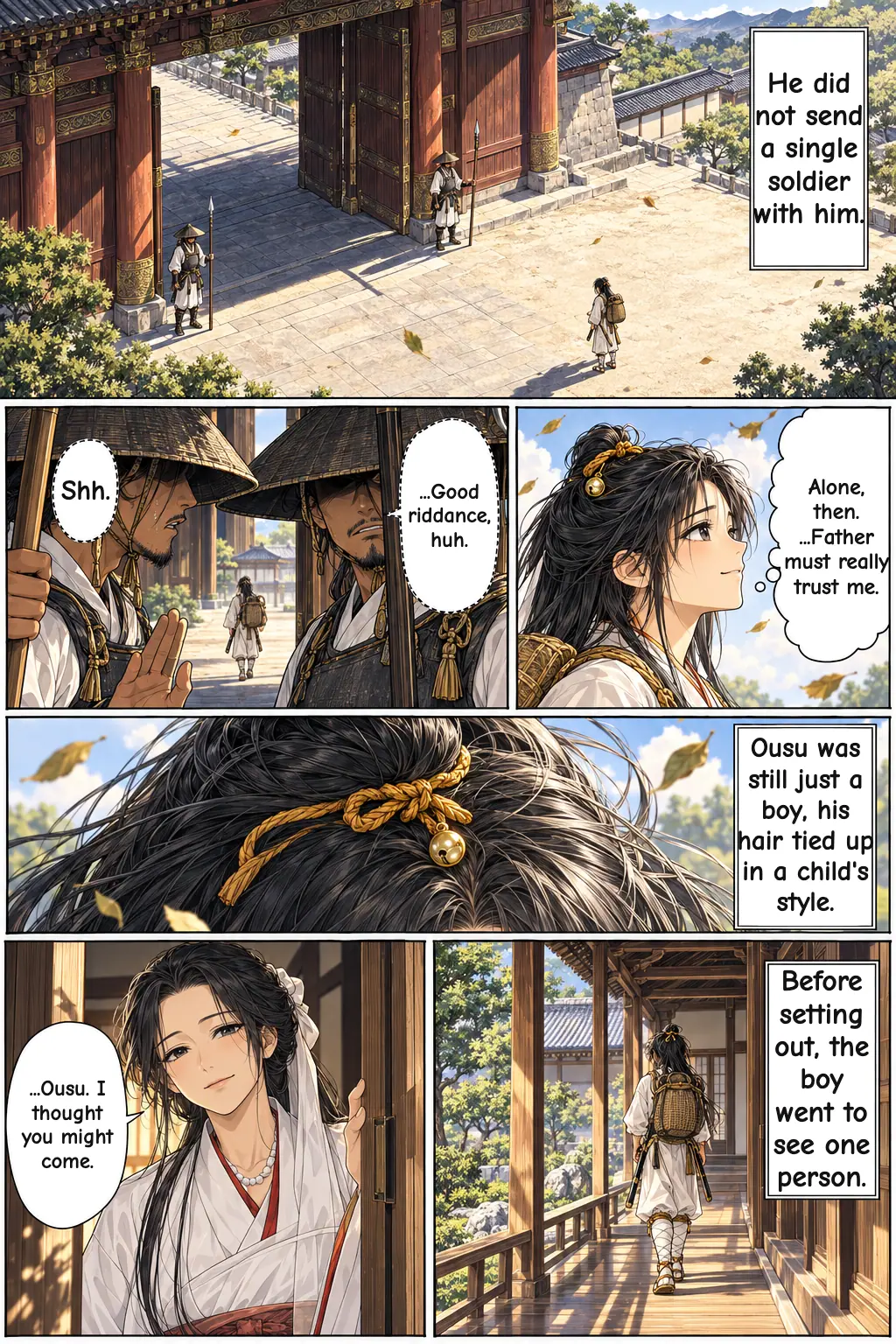
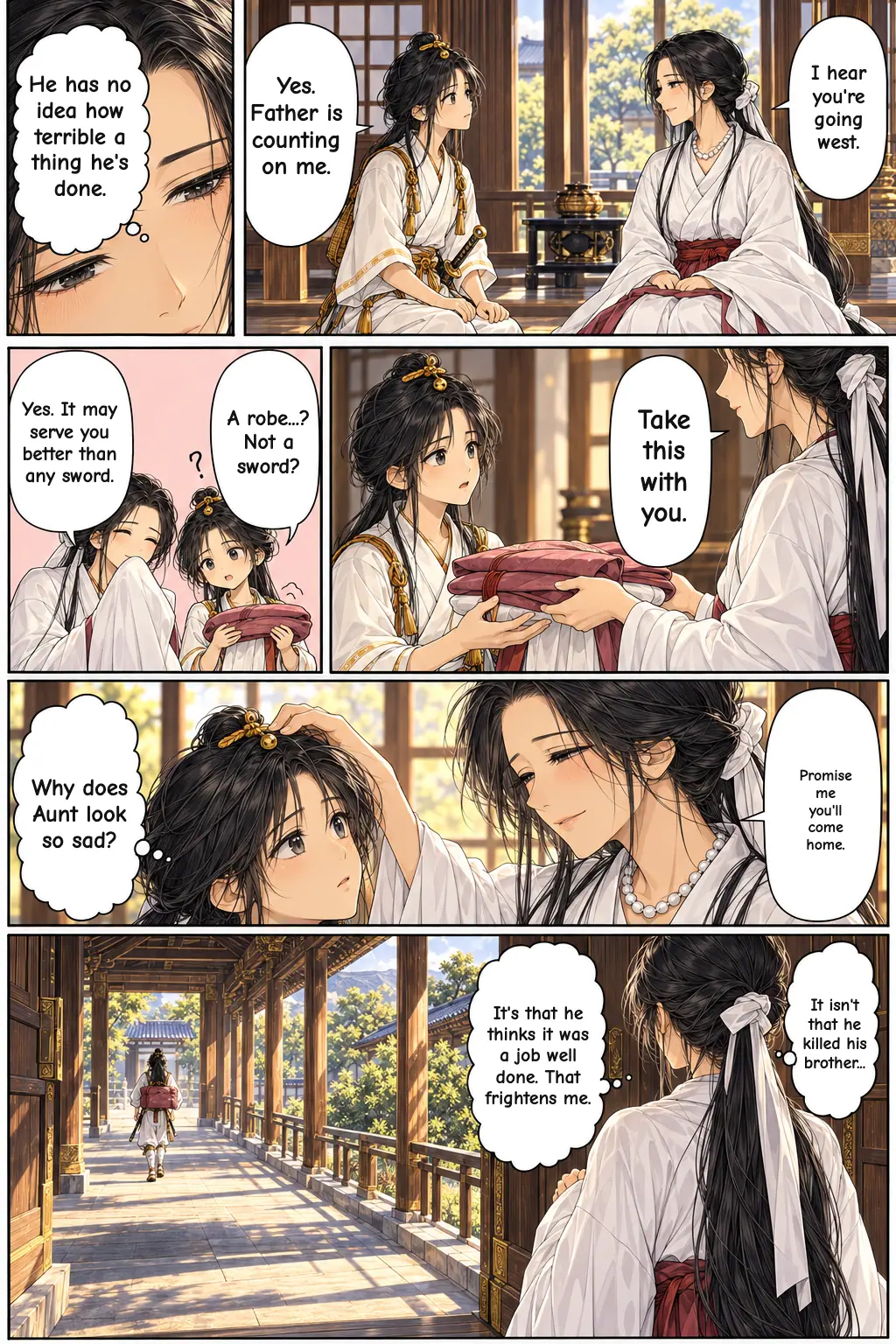
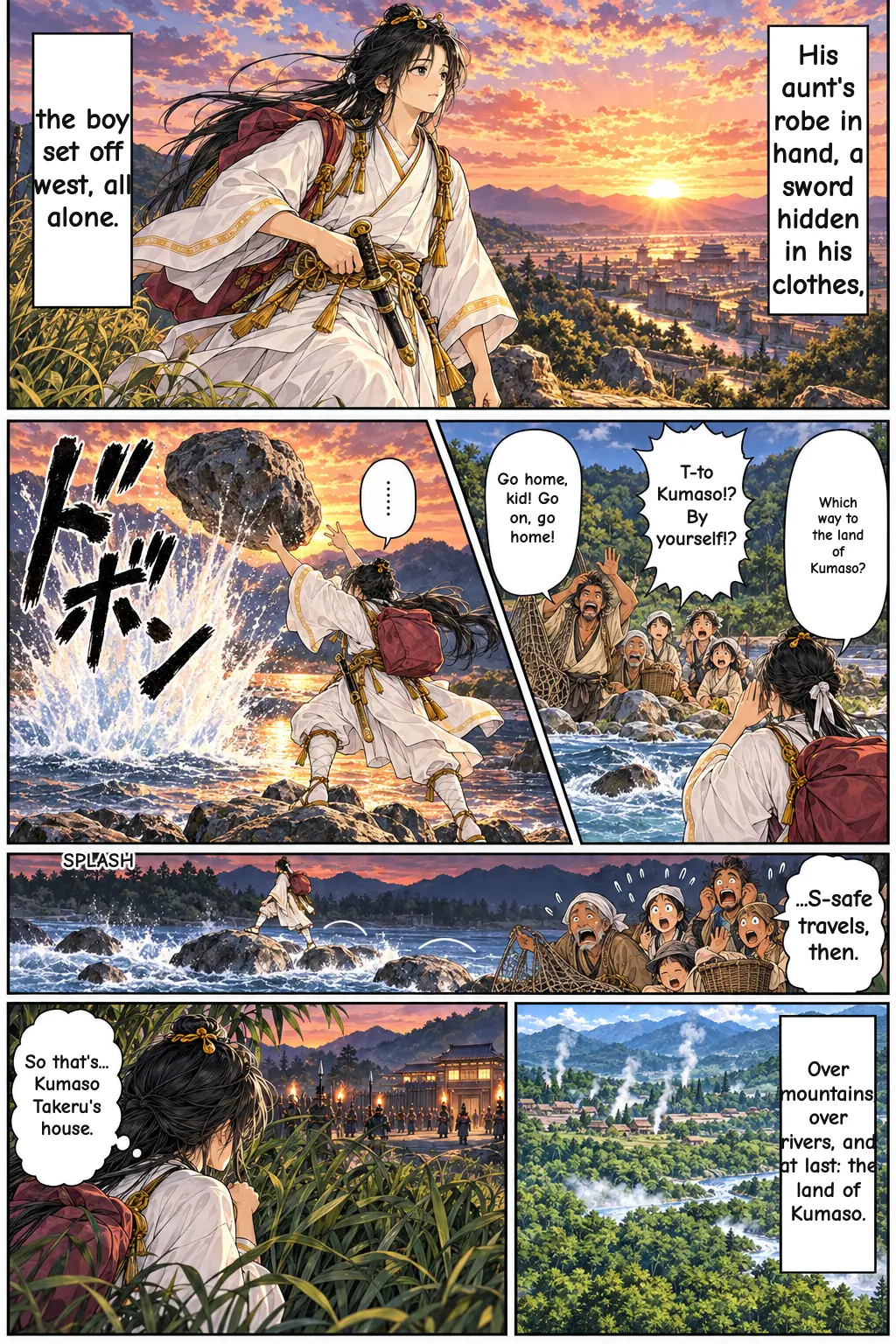
The emperor is frightened by his son's fierce and violent nature. He sends the boy far to the west, to kill two chieftains called the Kumaso Takeru, who refuse to obey the court. At this point Ousu still wears his hair tied up at the forehead, the way boys did. Before he leaves, his aunt, Princess Yamatohime, gives him a robe and a skirt, and he hides a sword inside his clothing.
The Feast, the Disguise, and a New Name
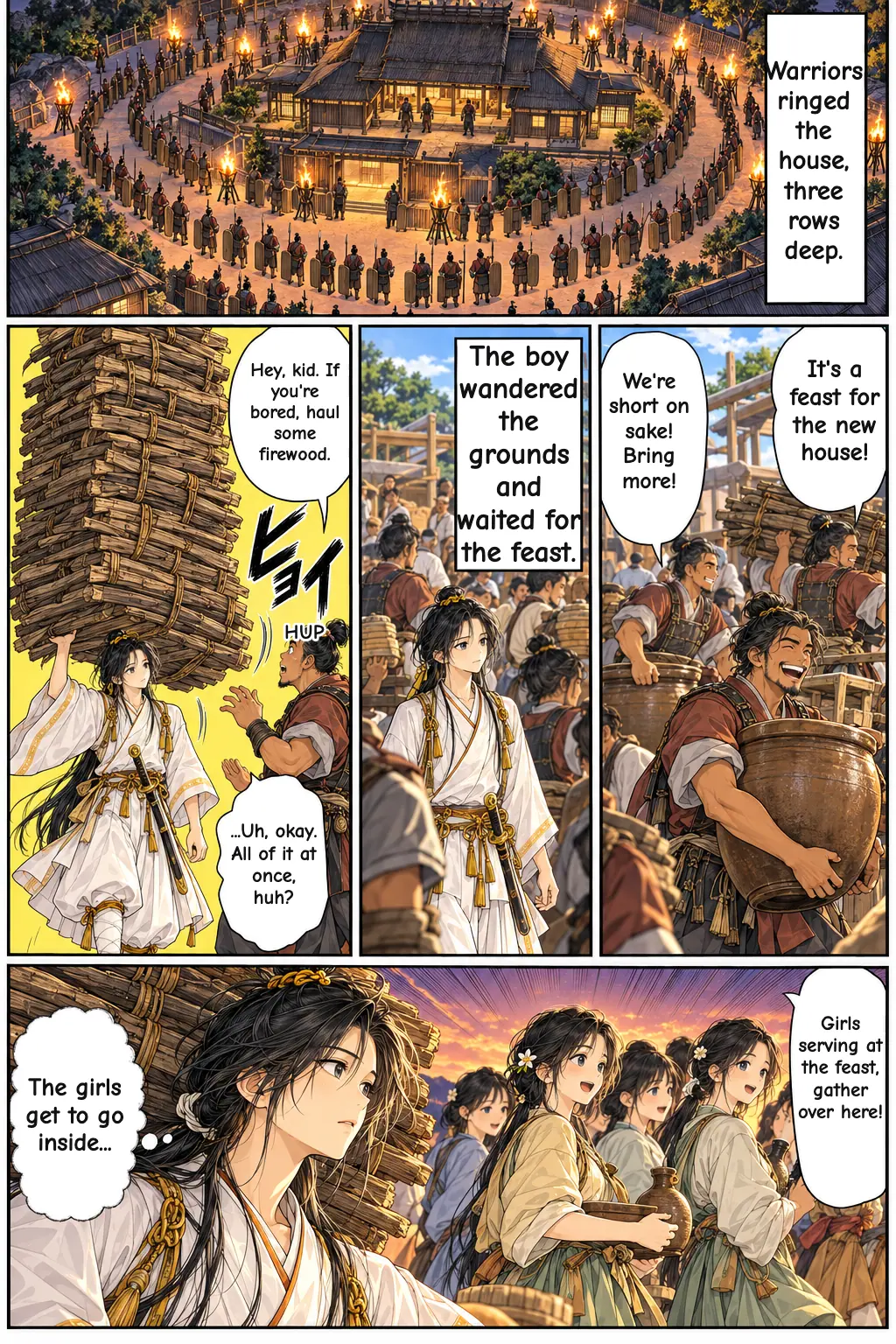
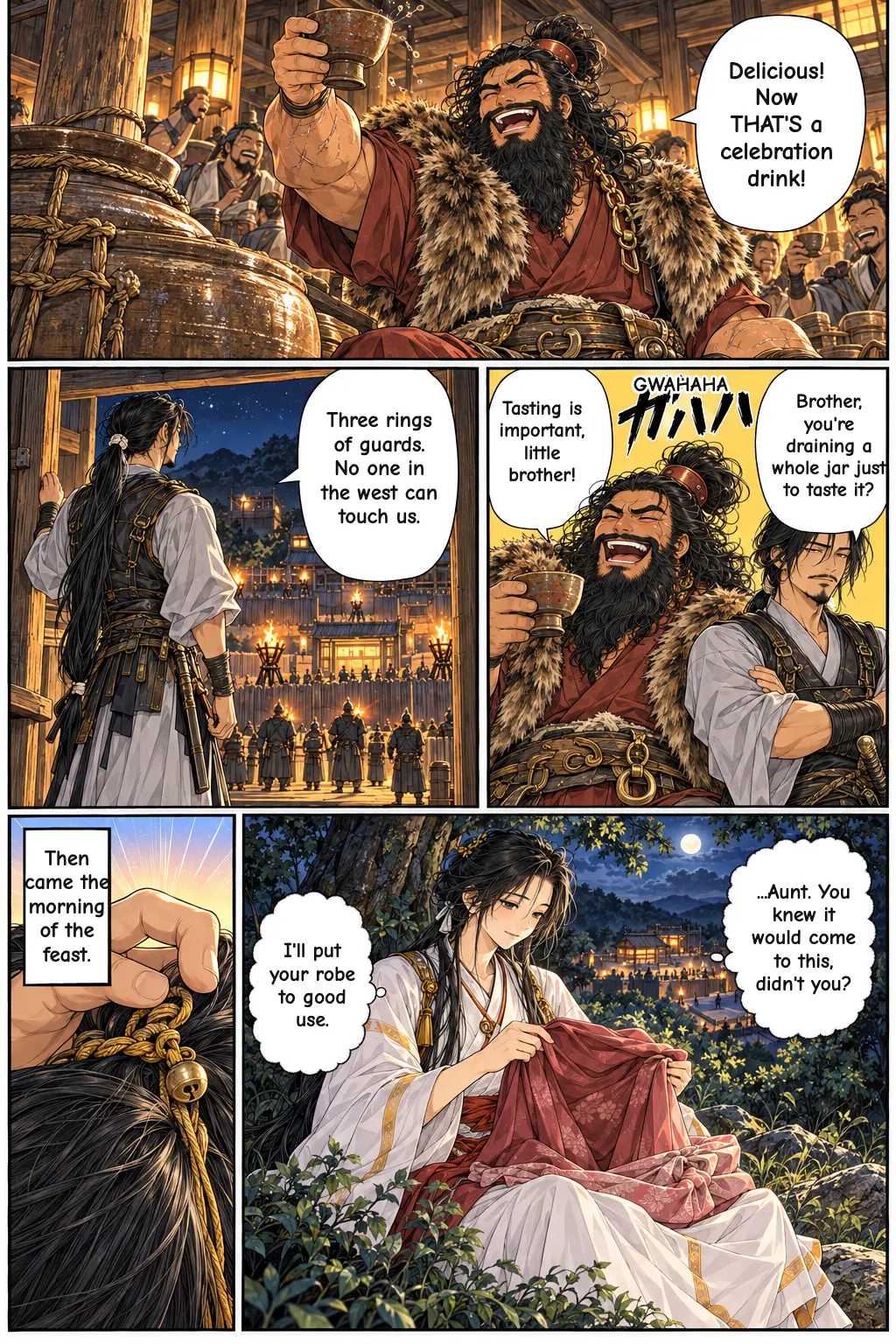
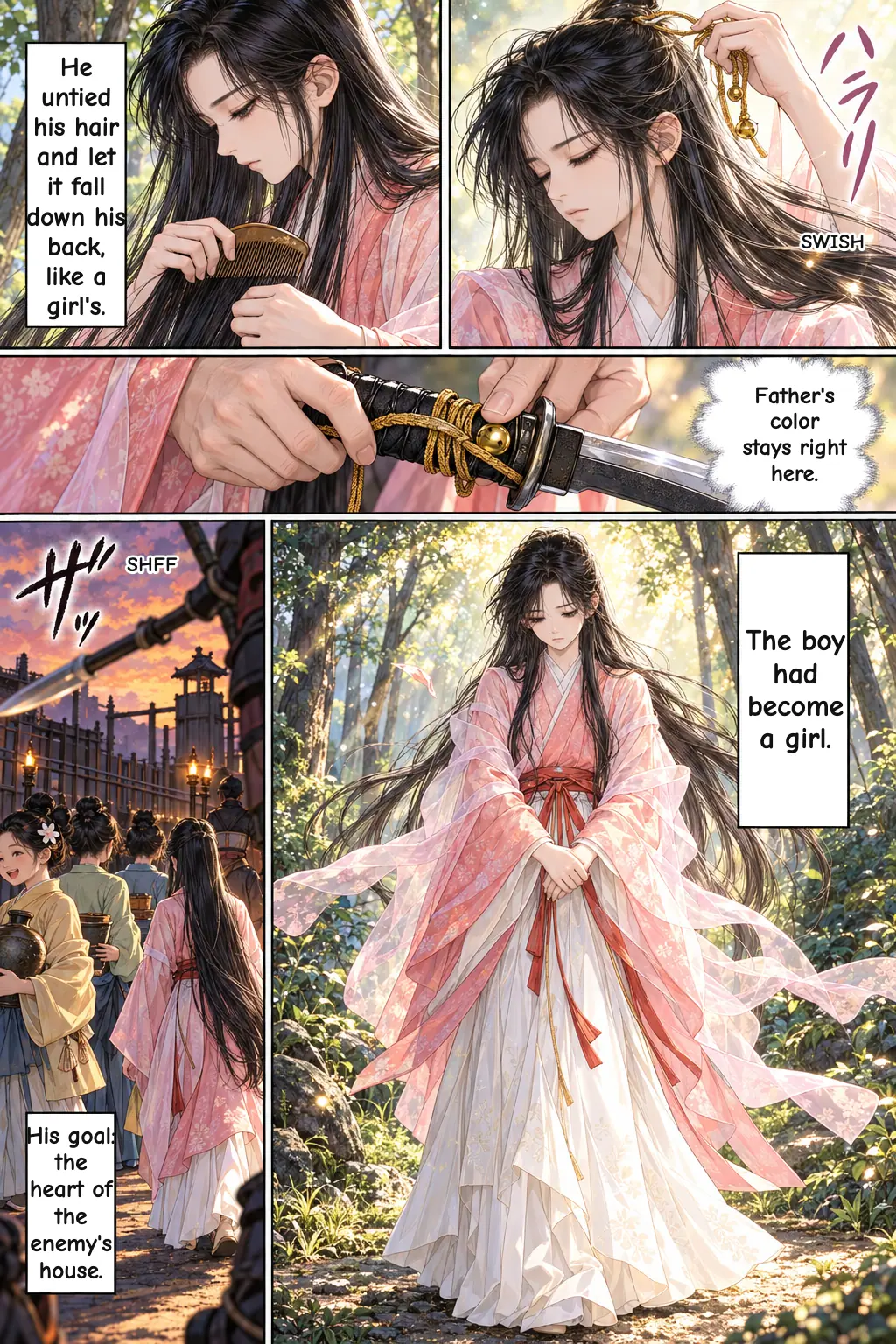
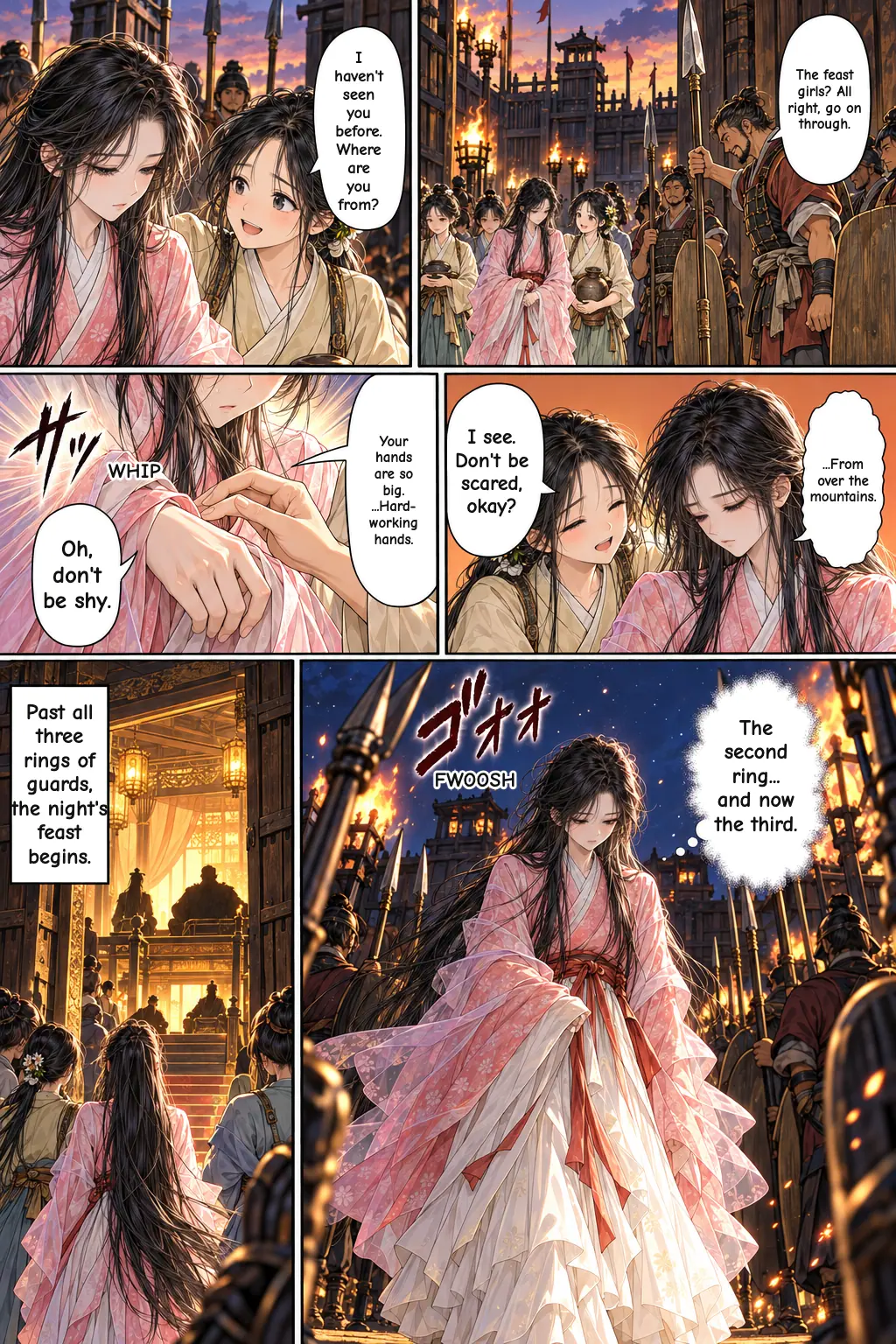
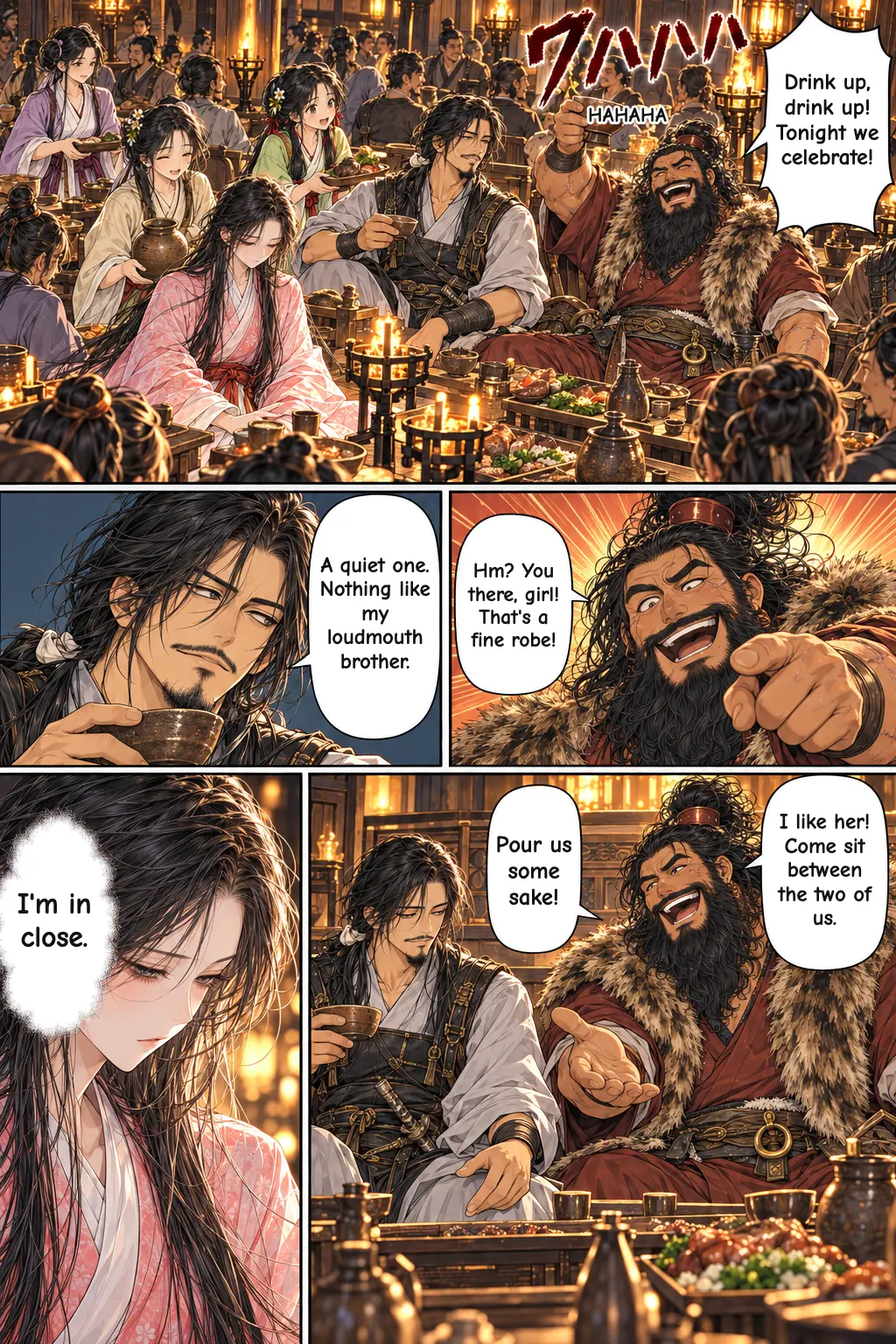
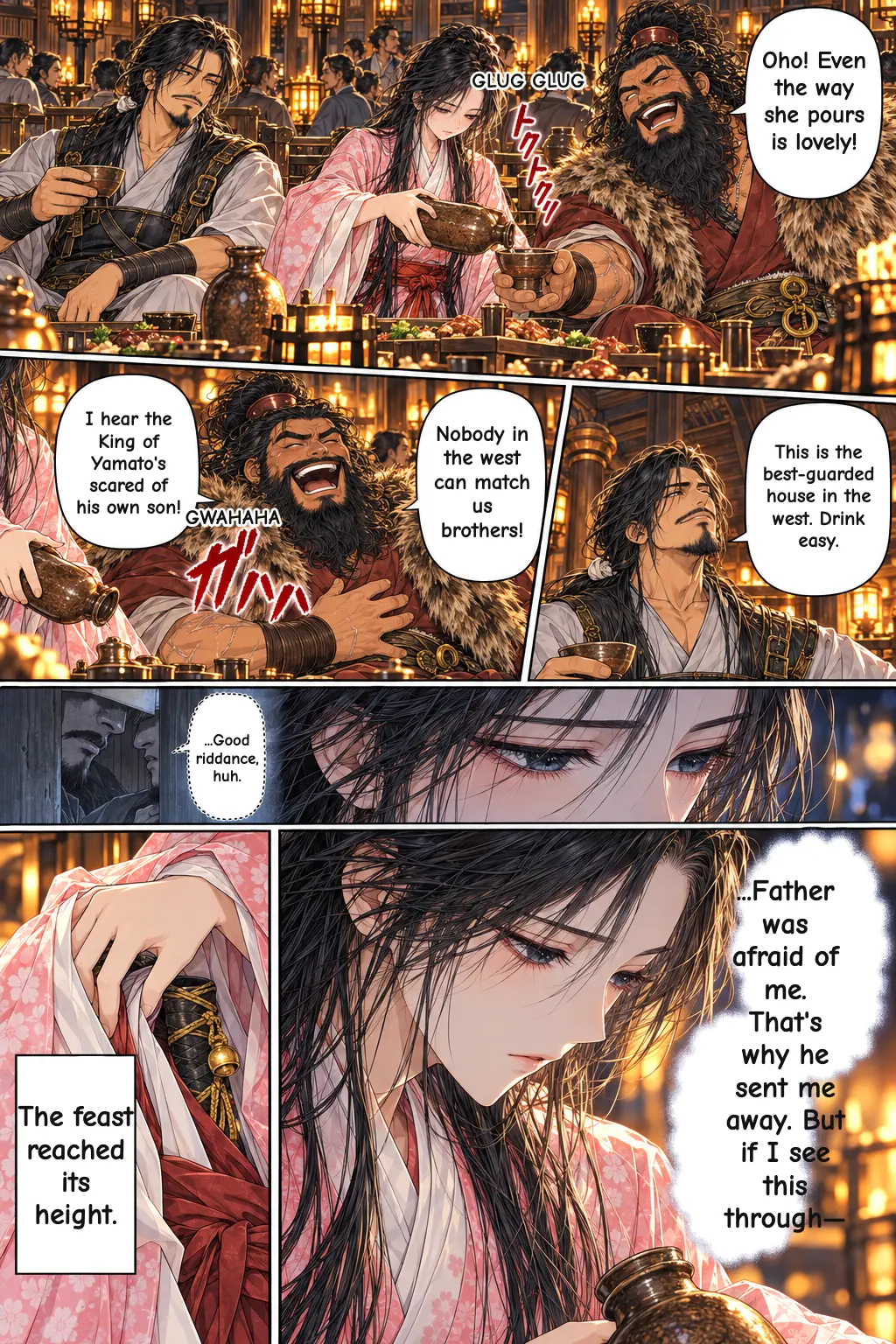
When he reaches the Kumaso house, he finds it ringed by three lines of warriors. The brothers have just built a new hall and are preparing a feast to celebrate it. Ousu wanders around the area and waits. On the day of the feast he lets his hair down and combs it like a girl's, puts on his aunt's clothes, and walks into the hall among the women. The two brothers like the look of this "girl" and seat her between them.
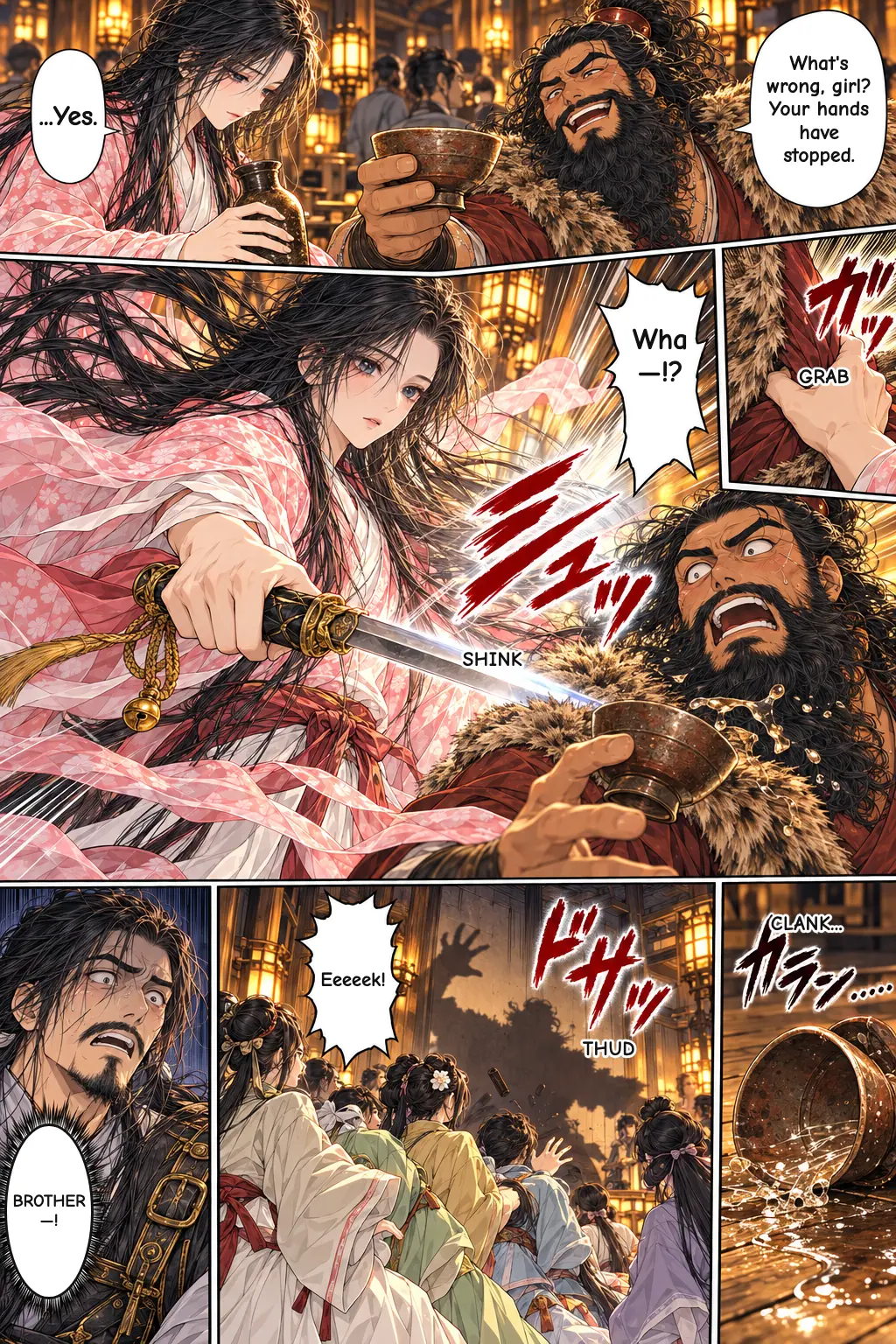
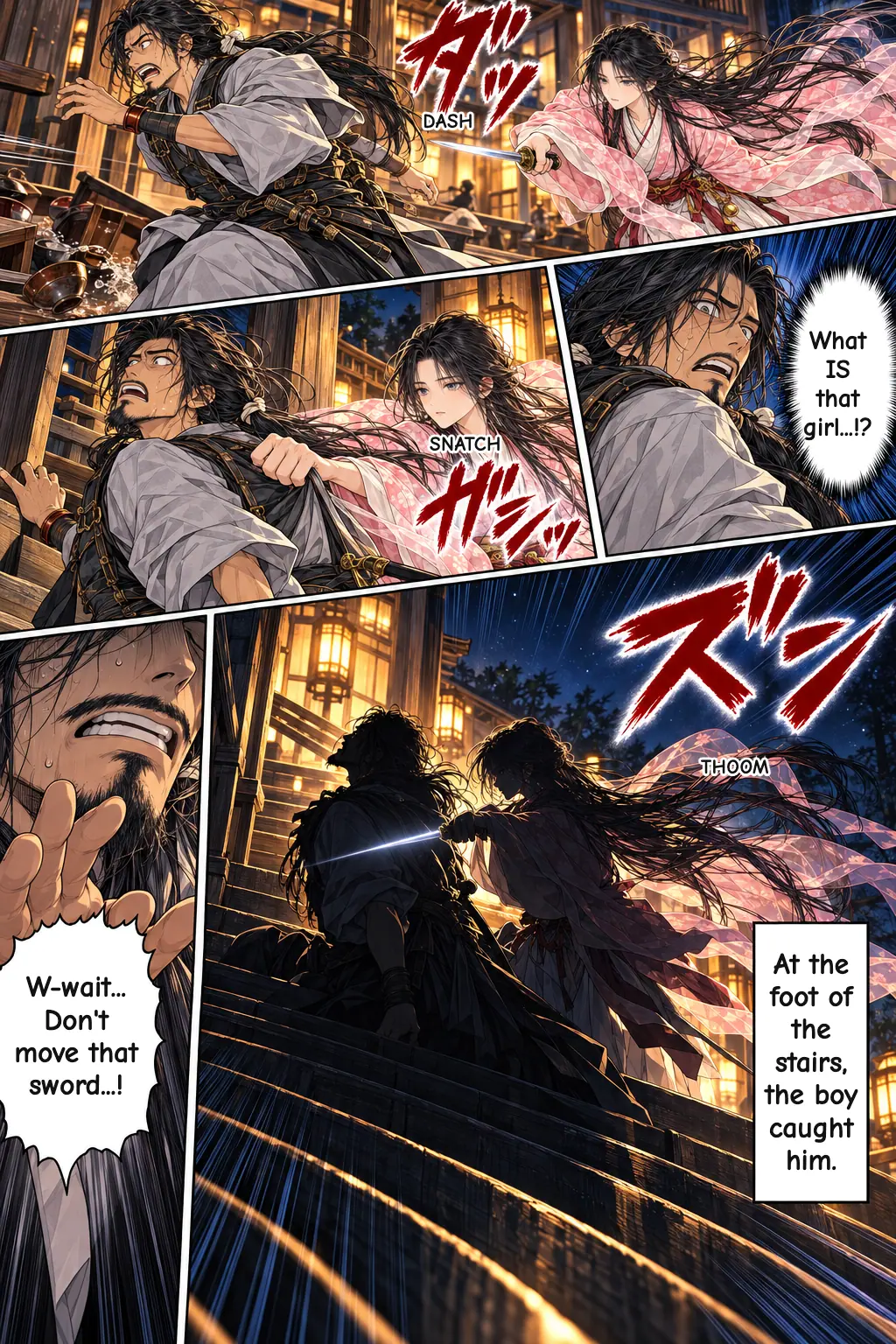
When the party is at its height, Ousu draws his sword, seizes the elder brother by the collar, and stabs him through the chest. The younger brother runs away in terror. Ousu catches him at the foot of the stairs to the hall and stabs him from behind. The dying man begs him to hold the blade still and asks who he is. Ousu gives his name as Prince Yamato Oguna, son of the emperor who rules from the Hishiro palace at Makimuku.
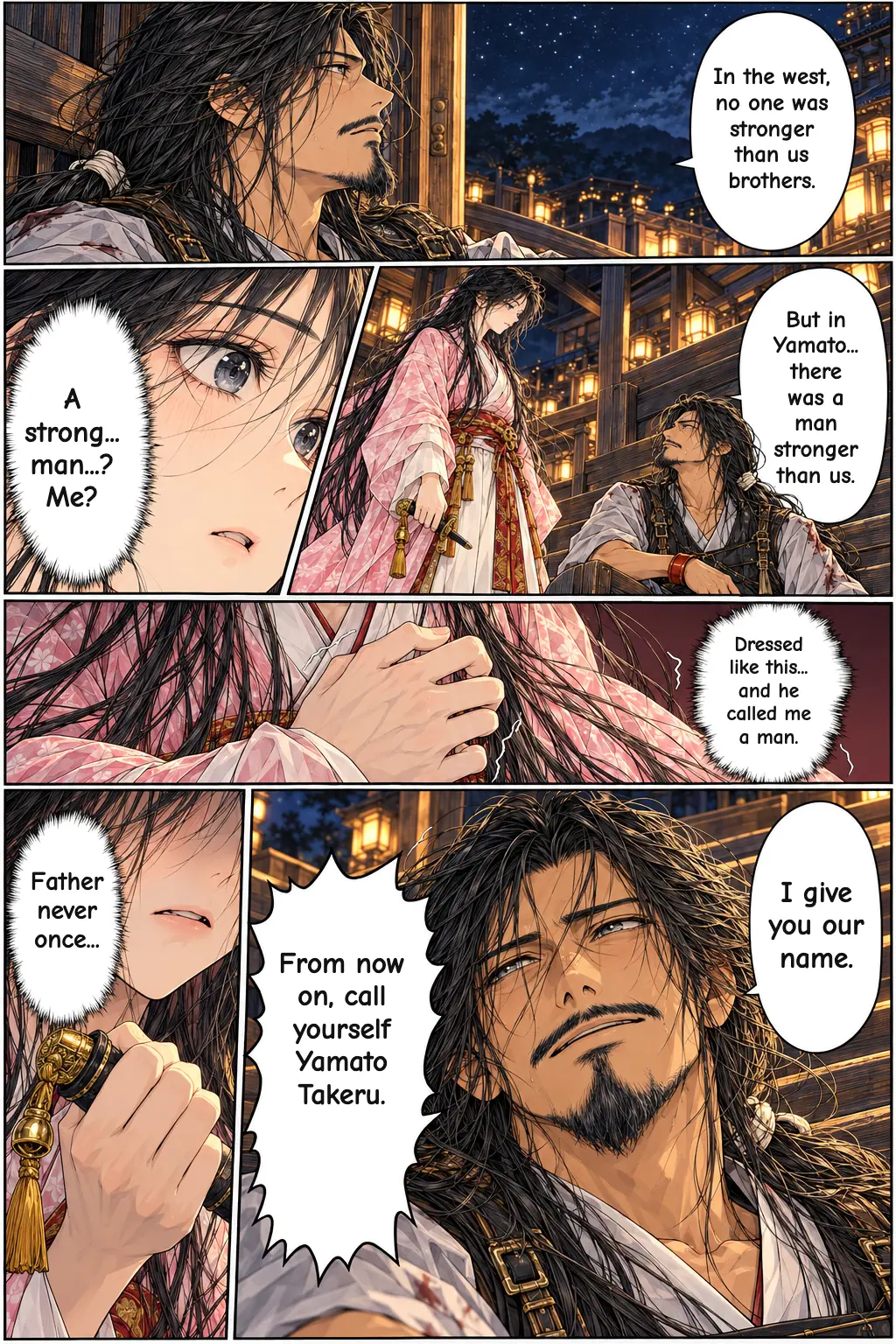
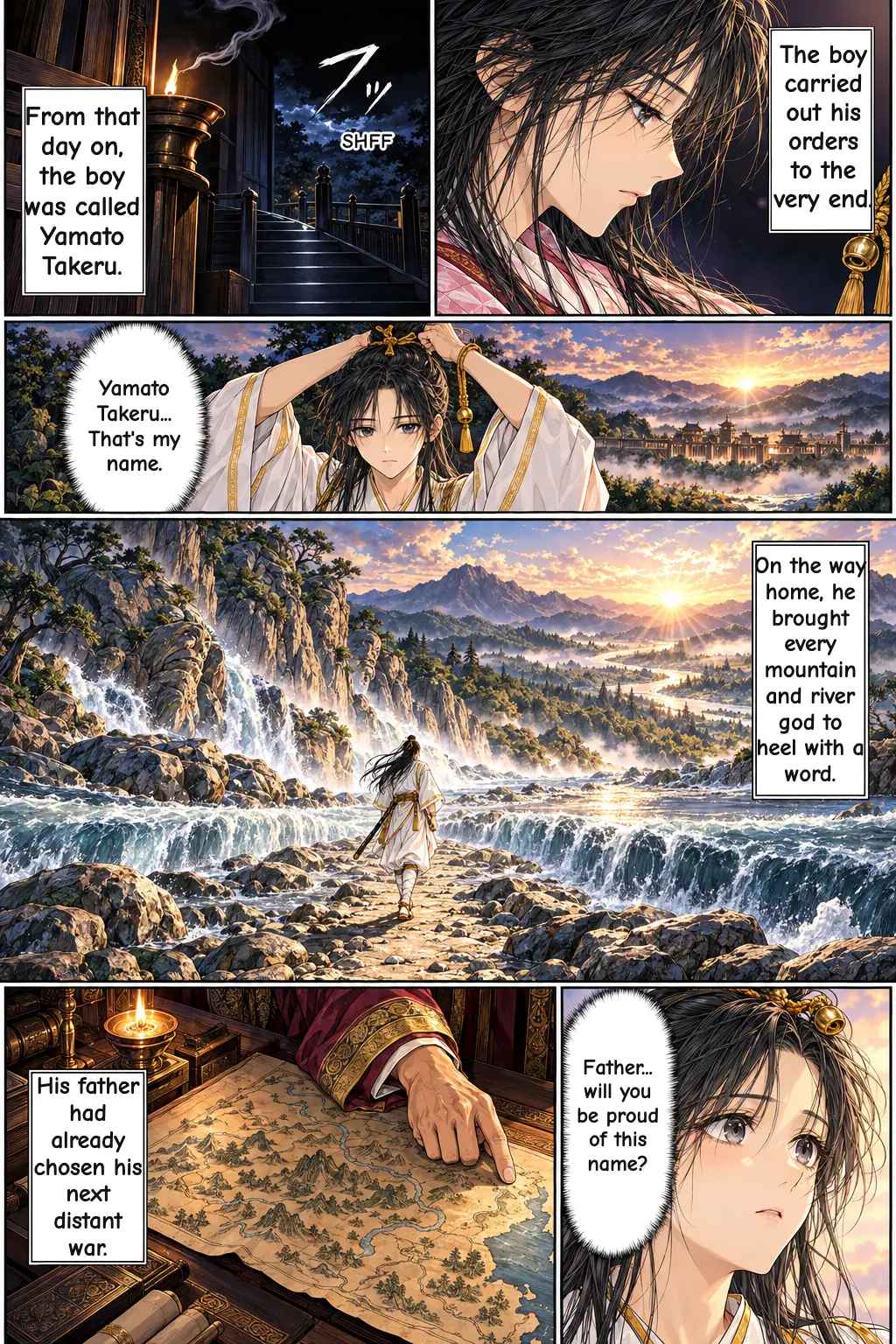
The younger Kumaso admits that nobody in the west is stronger than he and his brother, but Yamato has a man stronger still. He offers the prince a new name: Yamato Takeru, "the Brave of Yamato." As soon as he finishes speaking, Ousu cuts him down. From then on the prince is called Yamato Takeru. On the way home he brings the gods of the mountains, the rivers, and the straits at Anato under control.
Main Characters
Emperor Keiko is the father. The text tells us only one thing about how he feels: he is afraid of his son. Prince Ousu, later Yamato Takeru, is the hero. He is ruthless, patient, and clever. The Kojiki gives no age for him, and it never describes his looks or what he is feeling.
Prince Ōusu, the elder brother, never speaks in this episode. Princess Yamatohime appears only as the aunt who hands over the clothes. Of the two Kumaso Takeru brothers, only the younger one has any lines, and he is the one who gives the hero his famous name.
What This Myth Tells Us
The episode is part of a larger story about how the Yamato court spread its power. In the chronicles, the Kumaso stand for the peoples of southern Kyushu who resisted that rule. Names carried real power in this world. A name given by the strongest enemy proves that the winner has surpassed him, even though the hero receives it from the man he is about to kill.
The story also shows a hero with a dark side. His father fears him and sends him away, and this tension follows him through the rest of his story. Some readers think Ousu took the emperor's word for "persuade" to mean "punish." Others link Ōusu's absence to an earlier episode, in which he kept two women intended for his father. The Kojiki explains neither point, so these are later interpretations. The Nihon Shoki, a chronicle finished in 720, makes the prince sixteen and has him face a single Kumaso leader. Those details are not in the Kojiki.
What the Manga Changes
The manga keeps the main events of the Kojiki: the three rings of guards, the new hall, the disguise in the aunt's clothes, and the naming. It does not show the brother's murder directly. Instead it shows Ousu's face as he reports it and the emperor's reaction, and it plays up the gap between "persuade" as the emperor meant it and the way Ousu acts on it.
Several things are the artists' own creations: Ousu's appearance, the conversation with his aunt, the journey west, the look of the Kumaso feast, the dialogue at the banquet, and the younger brother's feelings as he gives up his name. The violence is softened, though the outcome stays the same. In the original, the sword is just a sword with no special name.
Where to Read It
To see a boy in a borrowed robe become Japan's best-known legendary warrior, read Episode 8 of KOJIKI Book II: The Age of Heroes. The whole series is free on Manga Portal and needs no account, so you can start here or go back to the beginning of the Kojiki.
Characters in this episode
Prince Ousu / Yamato Takeru
The emperor's fierce young son, who kills his brother, defeats the Kumaso in disguise, and earns the name Yamato Takeru.
Emperor Keiko
Ousu's father, who grows afraid of his son's violent nature and sends him to fight in the far west.
Prince Ōusu
Ousu's elder brother, who stops coming to the imperial meals and is killed by Ousu.
Princess Yamatohime
Ousu's aunt, who gives him the robe and skirt he uses for his disguise.
Elder Kumaso Takeru
The elder of the two rebel chiefs in the west, stabbed at the height of his own feast.
Younger Kumaso Takeru
The younger rebel chief, who with his dying words gives the hero the name Yamato Takeru.
FAQ
How did Yamato Takeru get his name?
In the Kojiki, Prince Ousu got the name from the younger Kumaso Takeru, the enemy chief he had just stabbed. The dying man said no one in the west was stronger than he and his brother, but Yamato had a man stronger still, and he offered the prince the name Yamato Takeru, "the Brave of Yamato."
Why did Yamato Takeru dress as a girl?
The Kumaso brothers' house was guarded by three rings of warriors, so he could not force his way in. He put on his aunt Yamatohime's robe, let his hair down, and walked into their feast among the women with a sword hidden in his clothes.
Why did Yamato Takeru kill his brother?
Emperor Keiko asked Ousu to persuade his brother Ōusu to come back to the family meals, but Ousu ambushed and killed him instead. The Kojiki gives no motive. Later readers have suggested a misunderstood word or a link to an earlier scandal, but these are only interpretations.
Who were the Kumaso?
In Japan's early chronicles, the Kumaso are a people of southern Kyushu who refused to obey the Yamato court. In this story, their leaders are two brothers who are both called Kumaso Takeru.
Is the Kojiki version the same as the Nihon Shoki?
No. The Nihon Shoki makes the prince sixteen years old and has him defeat a single Kumaso leader. The Kojiki gives no age and has two brothers.