Episode 7Chase the Swan Until the Prince SpeaksPrince Homuchiwake
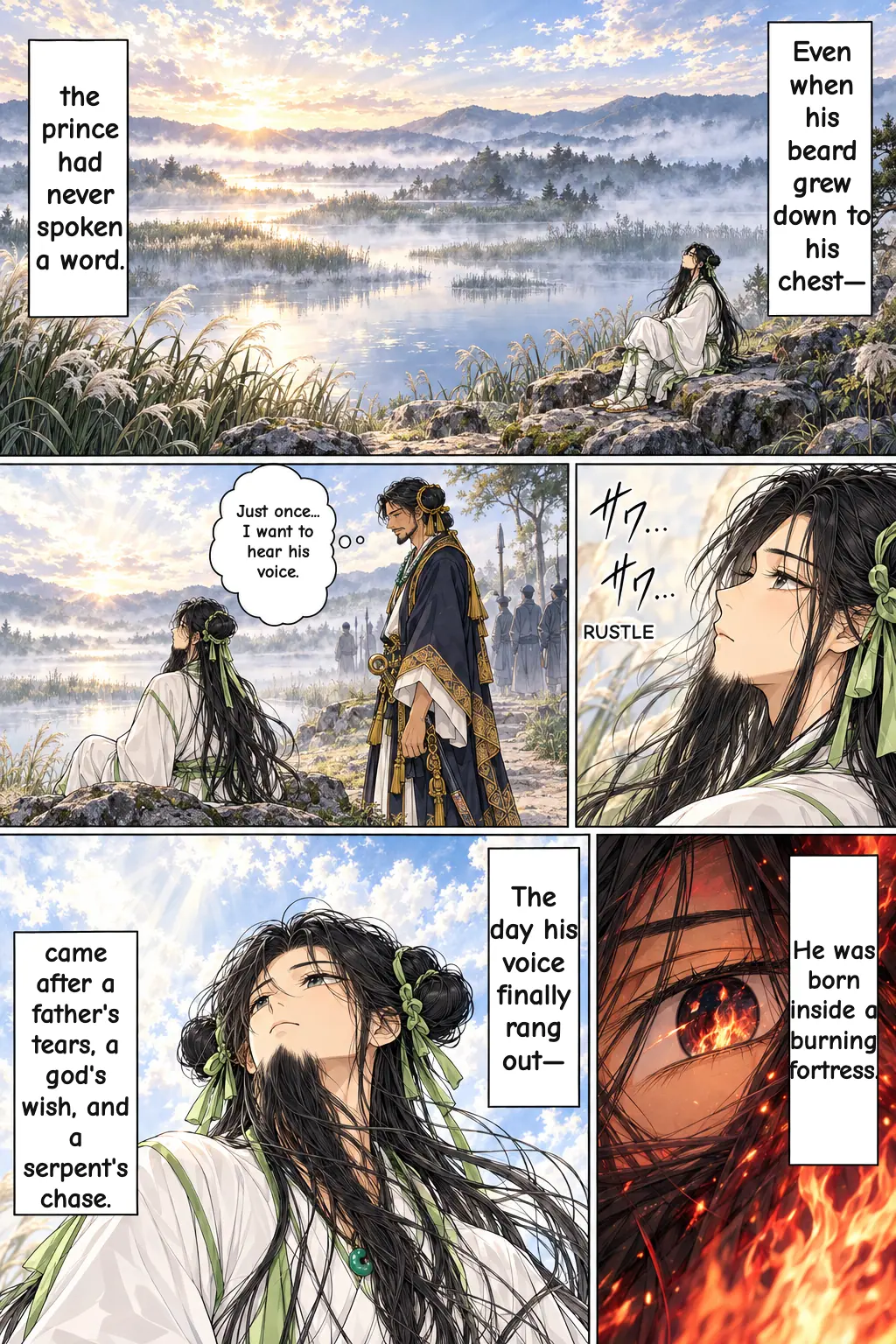
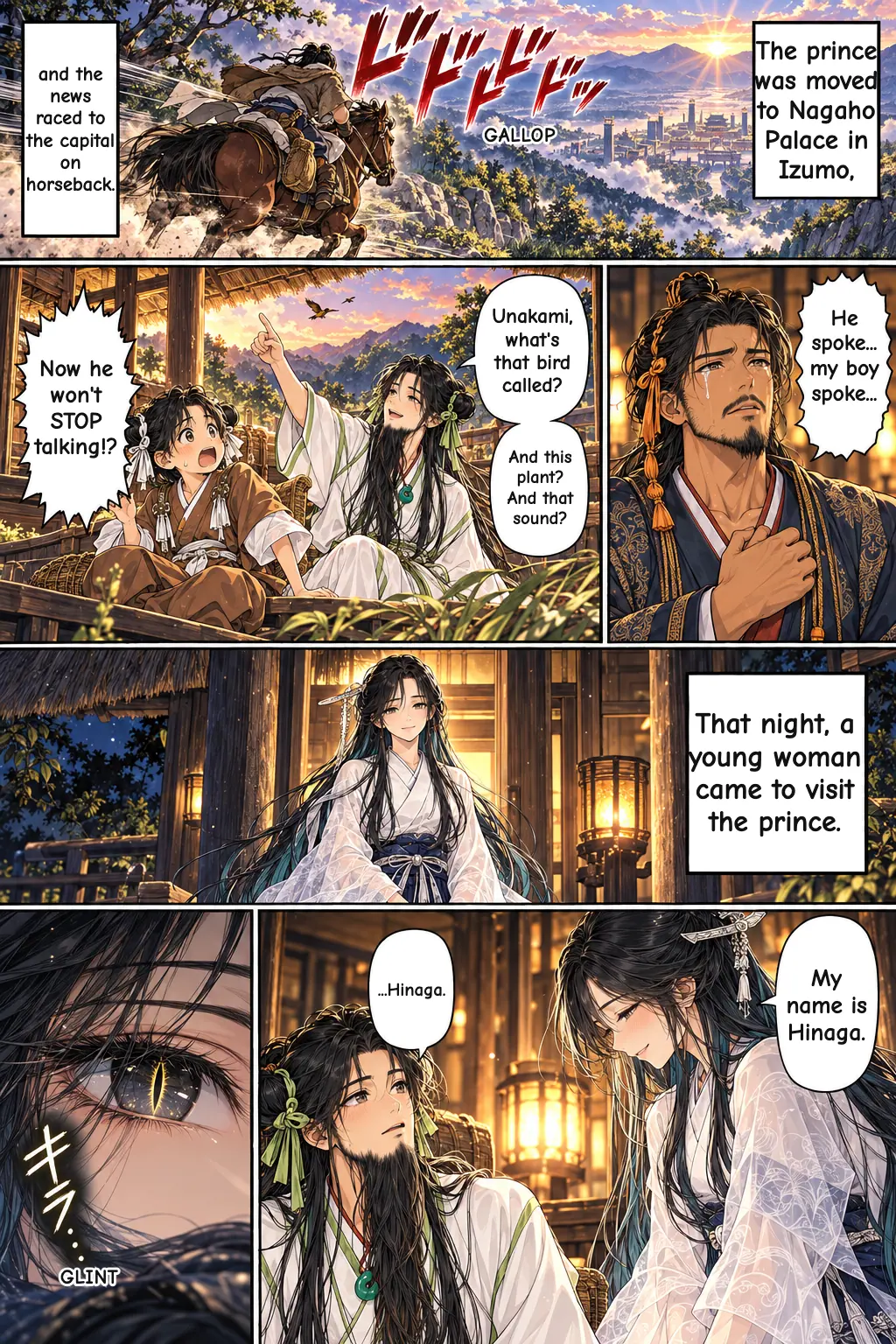
Born inside a burning fortress, Prince Homuchiwake still has not spoken a word, even with a beard down to his chest. His father, Emperor Suinin, sends a hunter to chase a white swan to the ends of the land. But what finally wakes the prince's voice is the wish of a forgotten god in Izumo. This episode follows his first words, a night with a serpent princess, the death of a loyal servant who brought back fruit from the Everlasting Land, and the prince's vow to speak the words his father never heard.
Prince Homuchiwake: The Silent Prince of the Kojiki Explained
The Original Myth: A Prince Born in Fire Who Could Not Speak
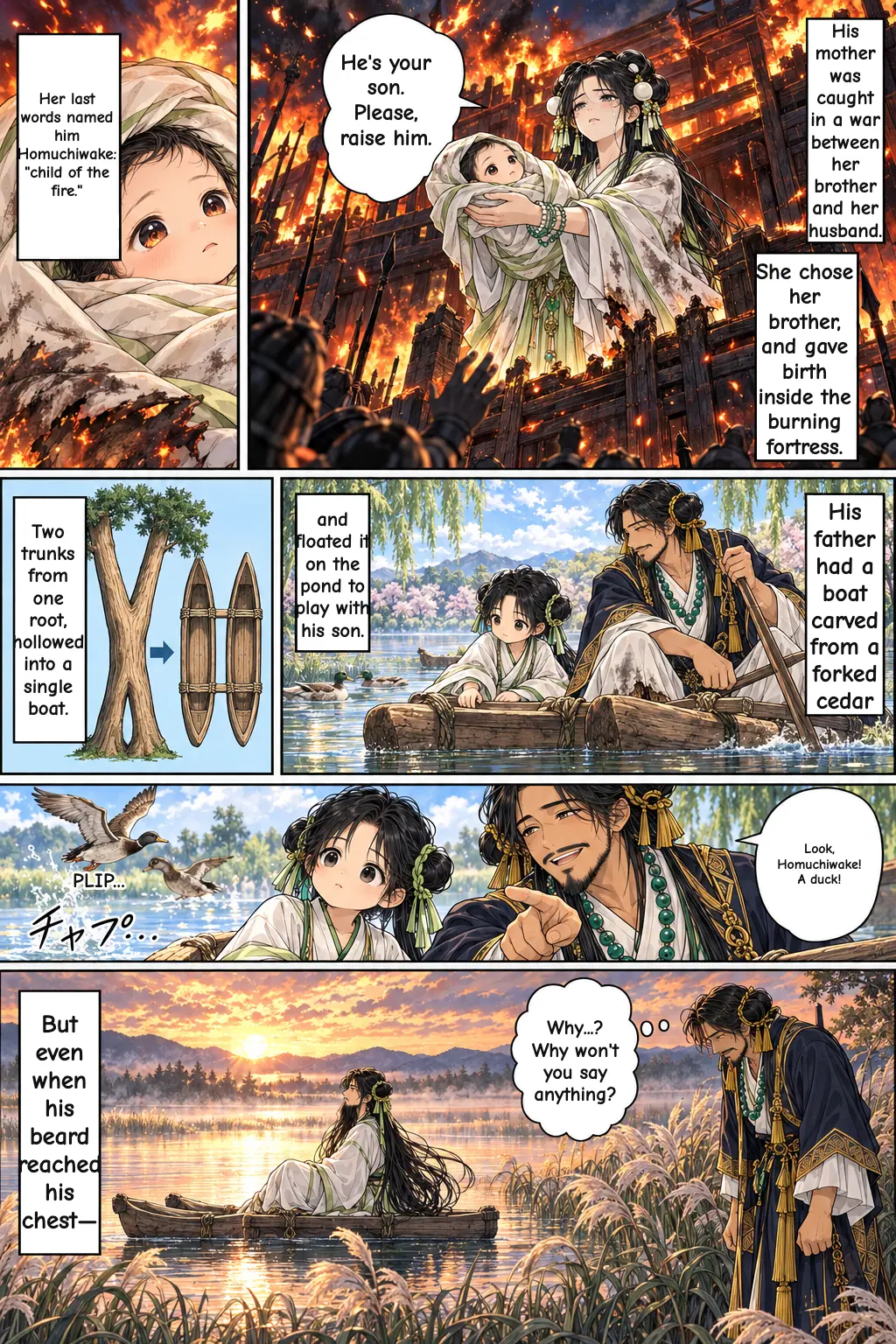
The story of Prince Homuchiwake appears in Book II of the Kojiki (712), Japan's oldest surviving chronicle, in the chapters about Emperor Suinin. It begins in tragedy. Princess Sahobime, Suinin's consort, gave birth to the boy inside a burning rice-stockade fortress during her brother's rebellion. Before she died, she said he should be named Homuchiwake, a name linked to his birth in the fire, and she told the emperor how the child should be cared for.
Suinin raised his son with great tenderness. He even had a small two-pronged boat carved from a forked cedar and floated it on ponds in Yamato so the boy could play. Yet the prince grew up, his long beard reaching down to his chest, and he still could not speak properly.
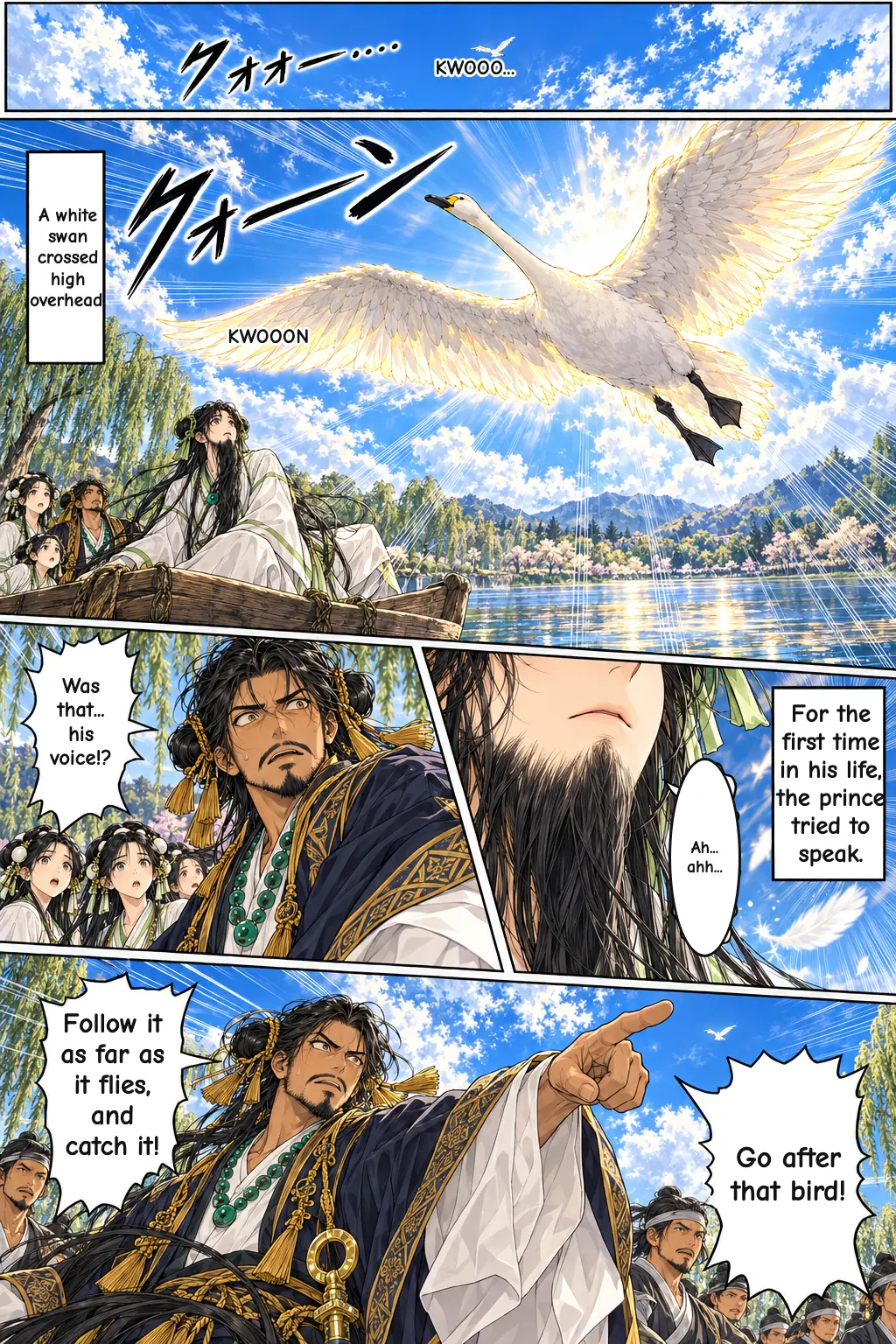
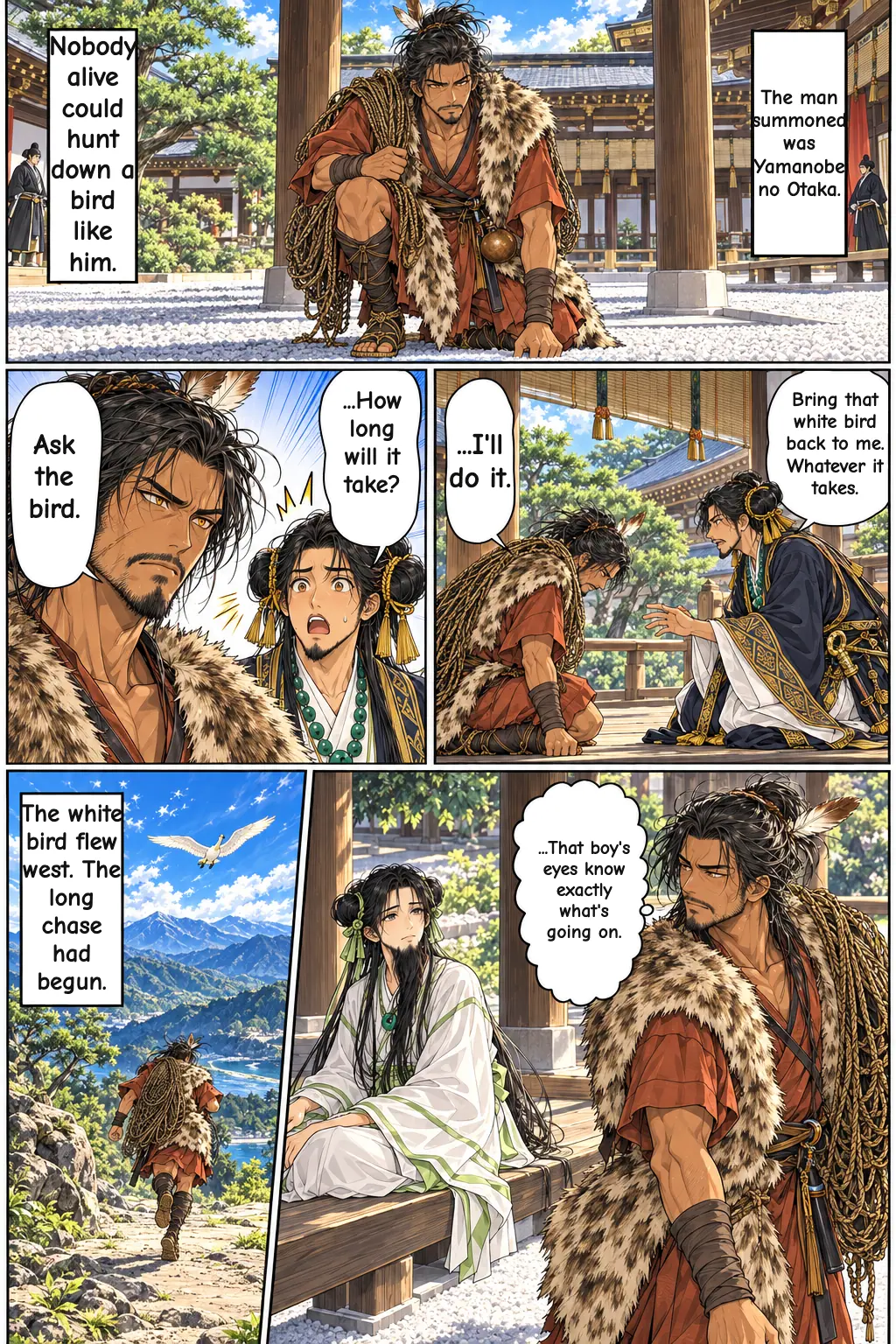
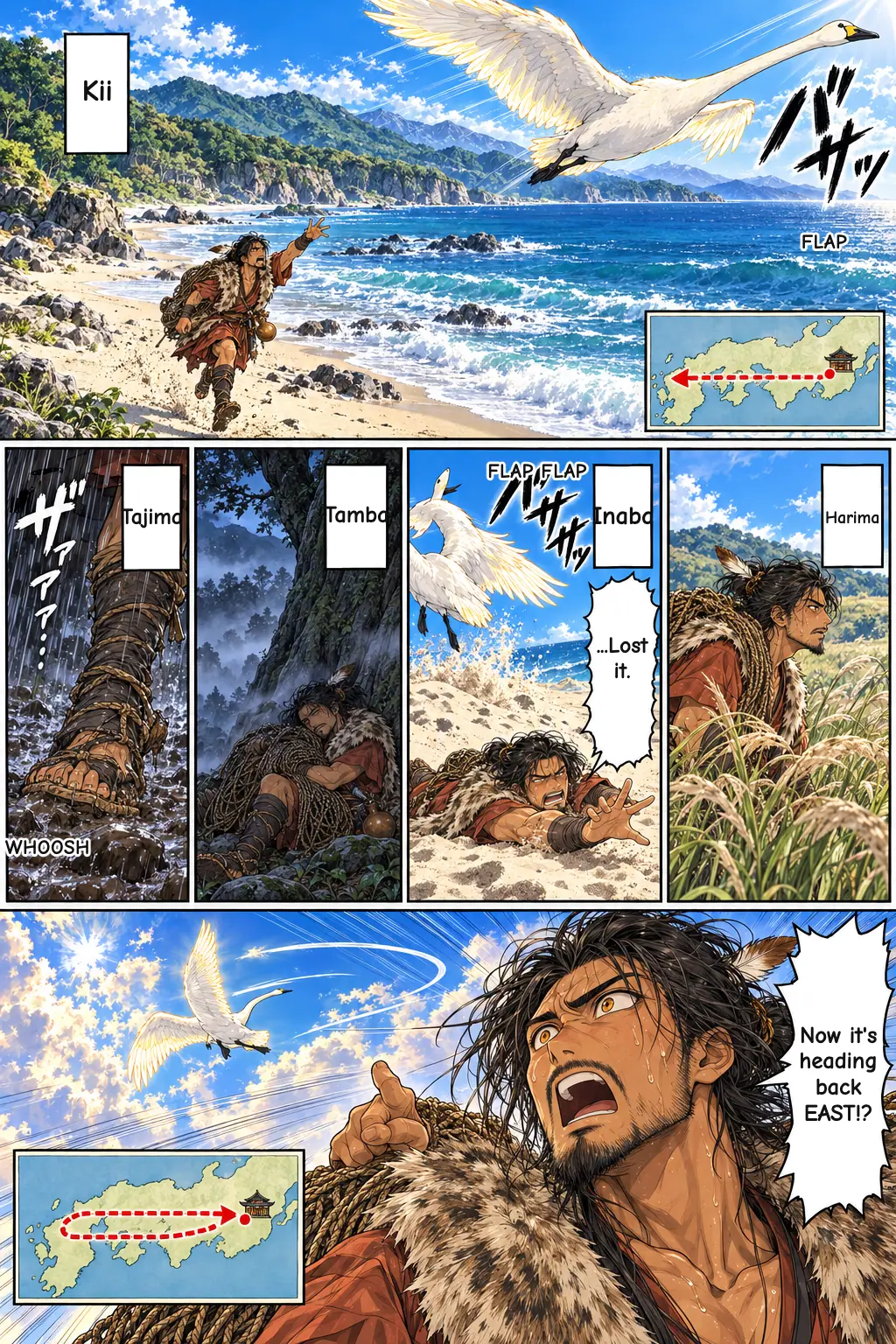
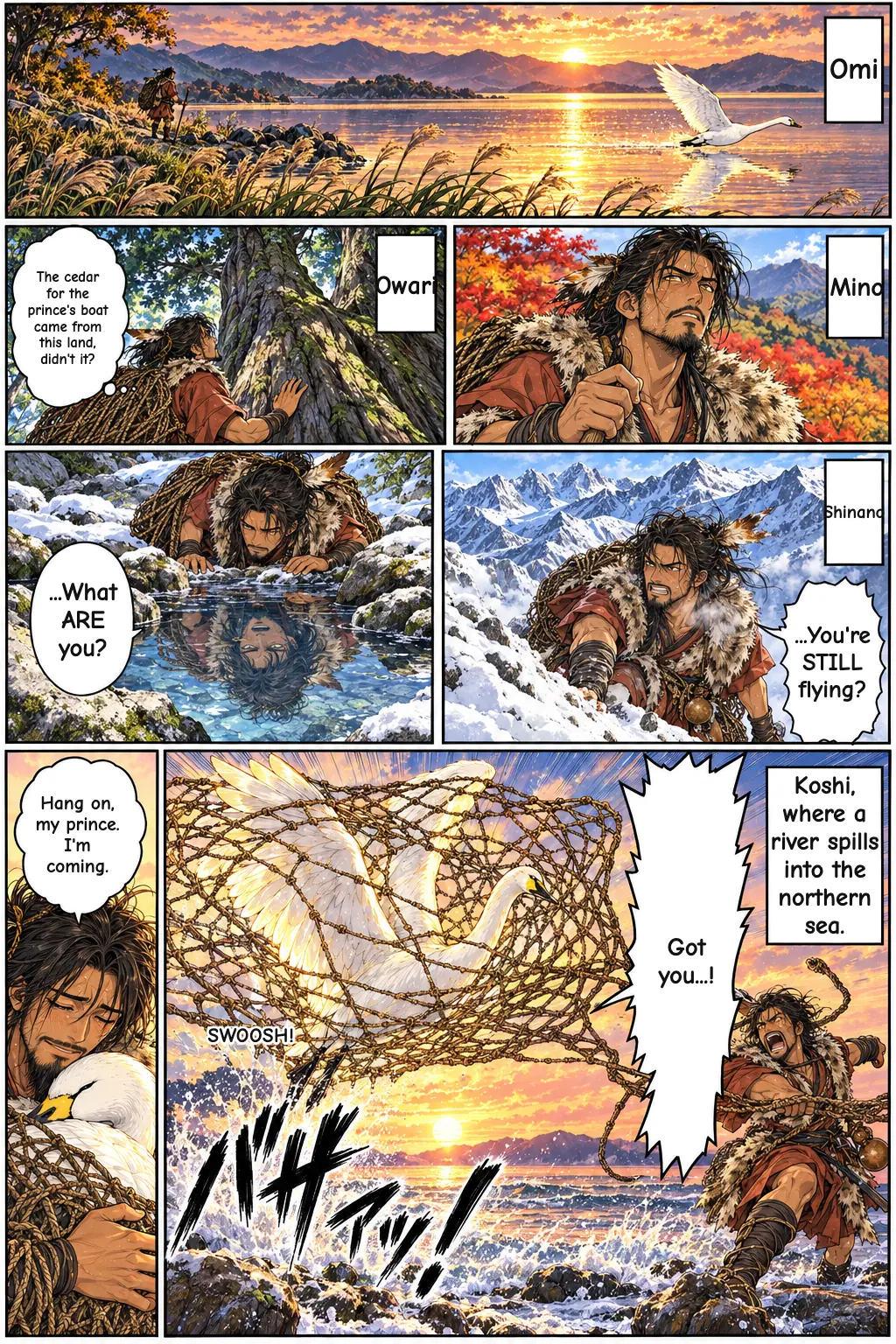
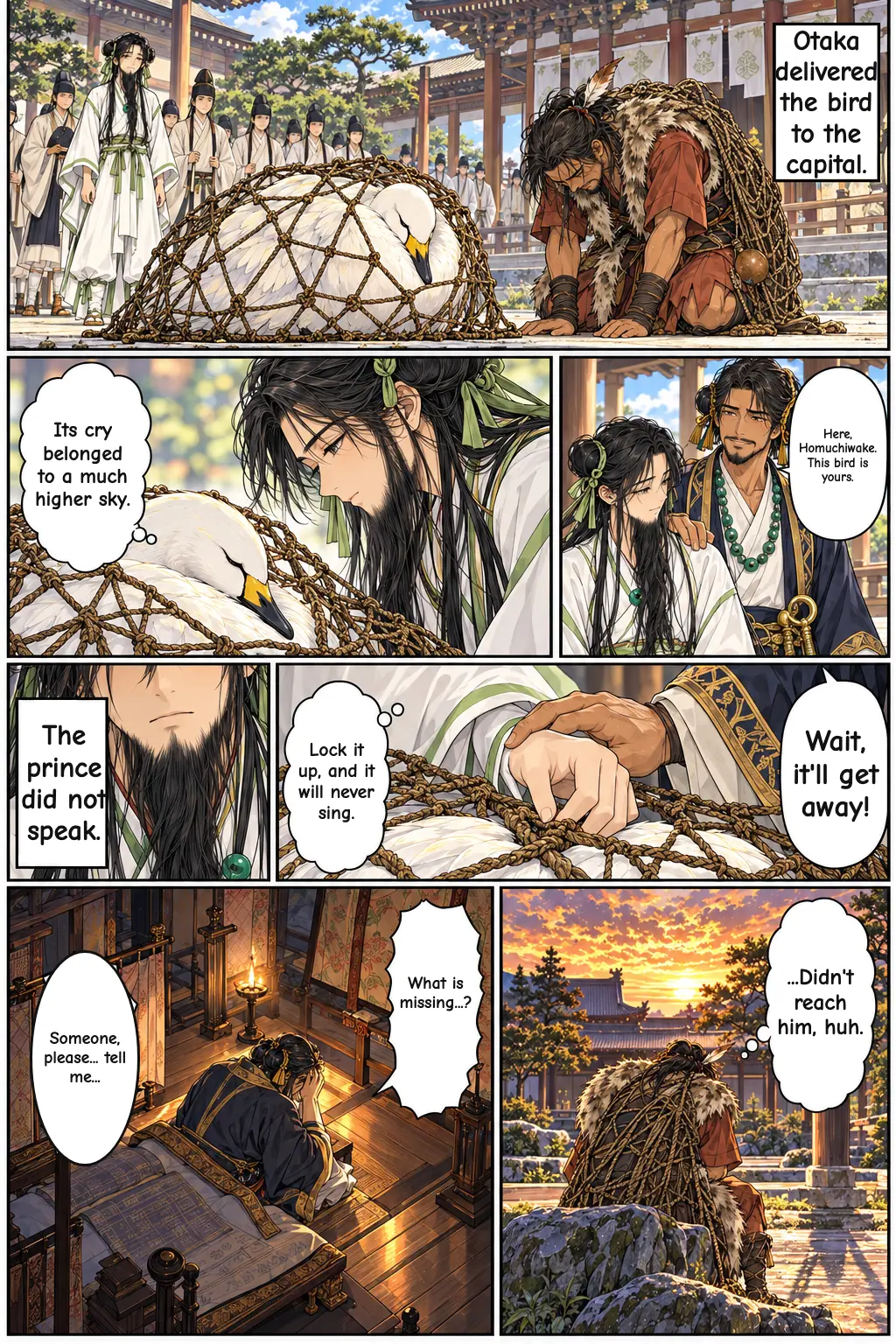
One day he heard a swan (kugui) crying high in the sky and made a halting sound for the first time. Hopeful, the emperor sent a man named Yamanobe no Ōtaka to catch the bird. The Kojiki adds a note that this is a person's name, even though "taka" means hawk. Ōtaka chased the swan across province after province: Kii, Harima, Inaba, Tanba, Tajima, then around to Ōmi, Mino, Owari, Shinano, and finally Koshi in the far north, where he caught it with a net at the harbor of Wanami. But when the bird was brought to court, the prince still did not speak as everyone had hoped.
Izumo, the Serpent Princess, and the Fruit of the Everlasting Land
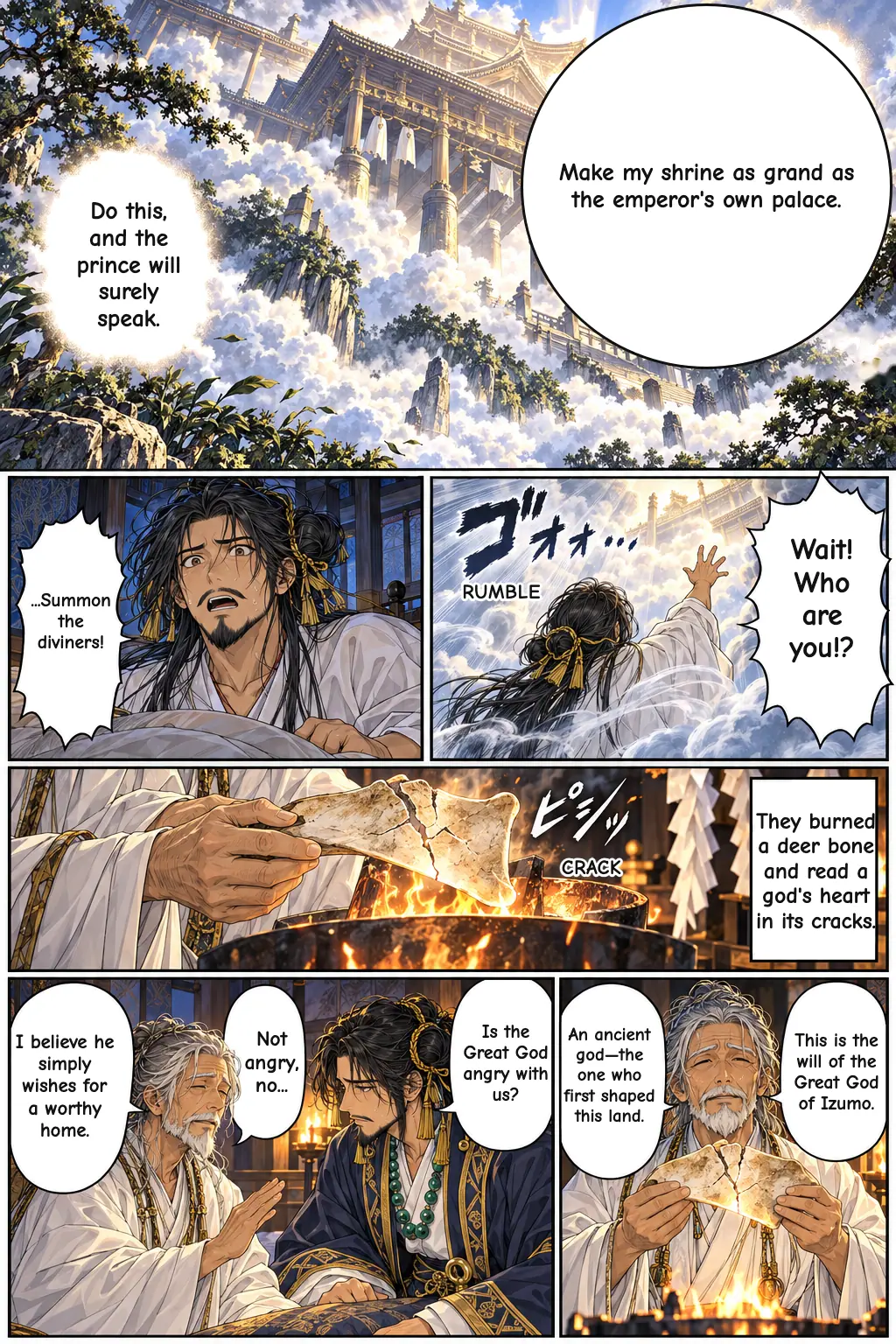
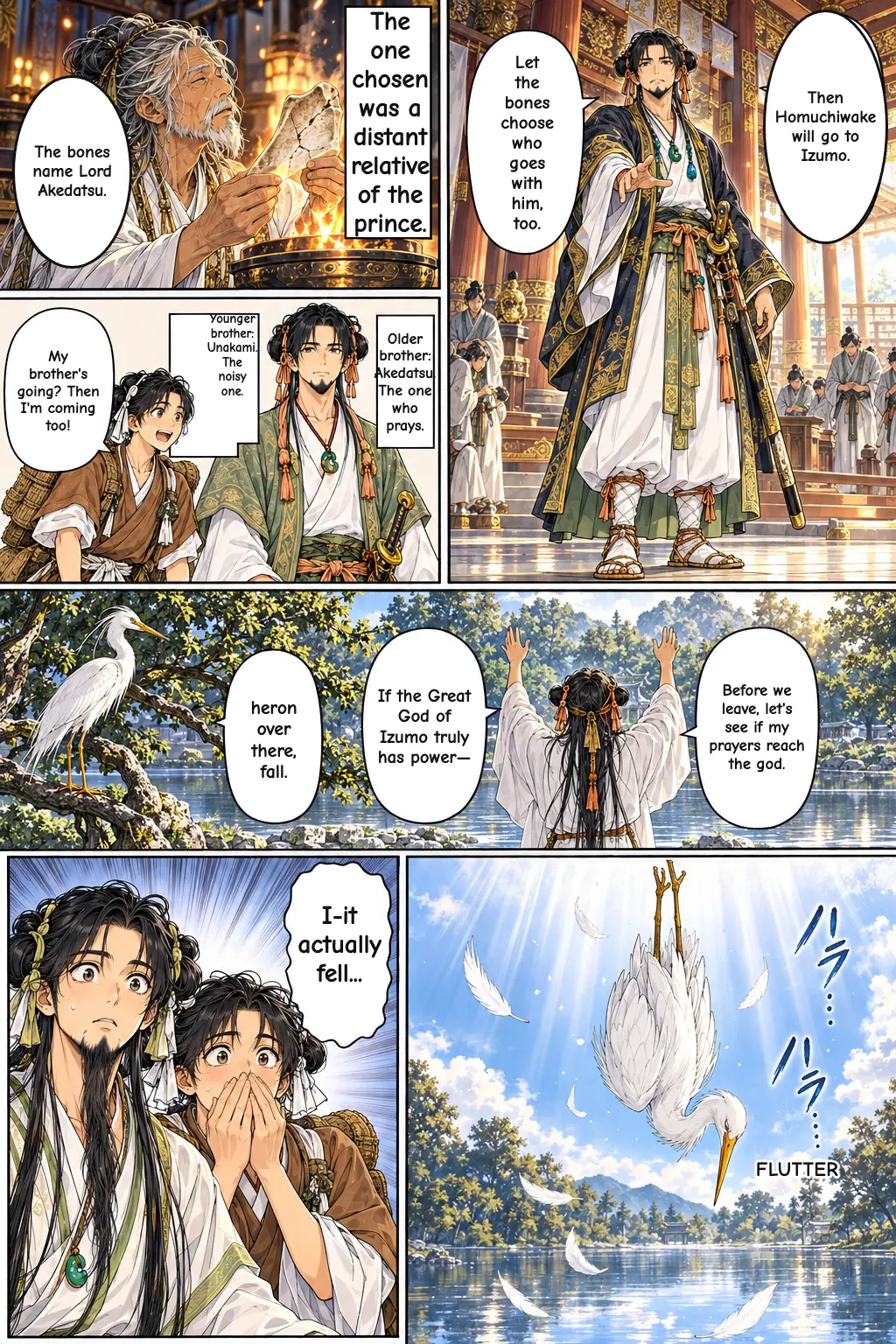
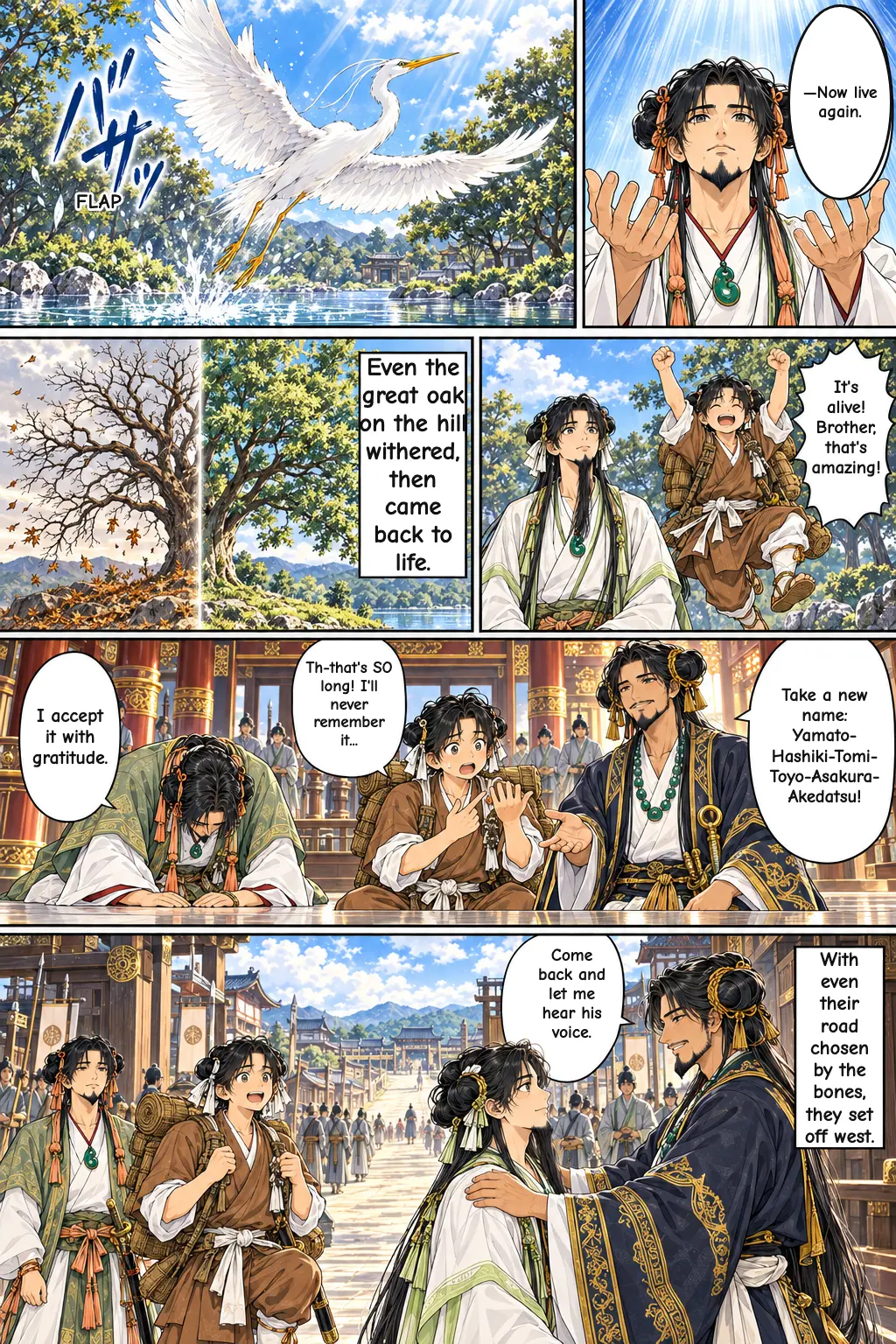
Troubled, the emperor had a dream. A god, who did not give his name, said that if his shrine were rebuilt as grandly as the emperor's own palace, the prince would speak. Divination showed that this was the will of the Great God of Izumo. Another divination chose Prince Akedatsu as the boy's escort. Before setting out, Akedatsu proved his spiritual power through an ukei, a sacred oath test: he made a heron fall dead and then brought it back to life, and made a great oak wither and then revive. With Prince Unakami, he took Homuchiwake to Izumo, leaving the capital by the road toward Kii because divination warned against the other routes.
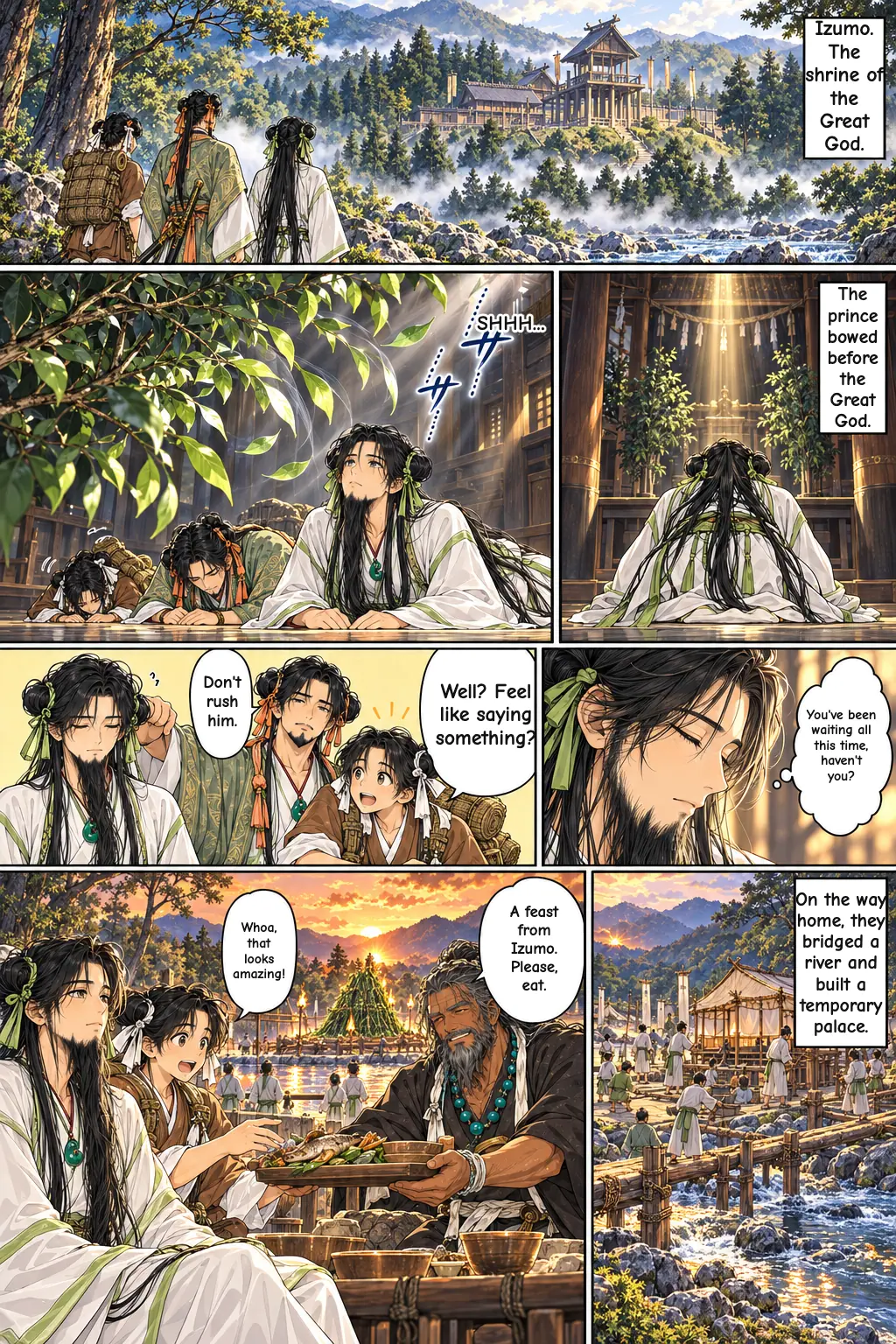
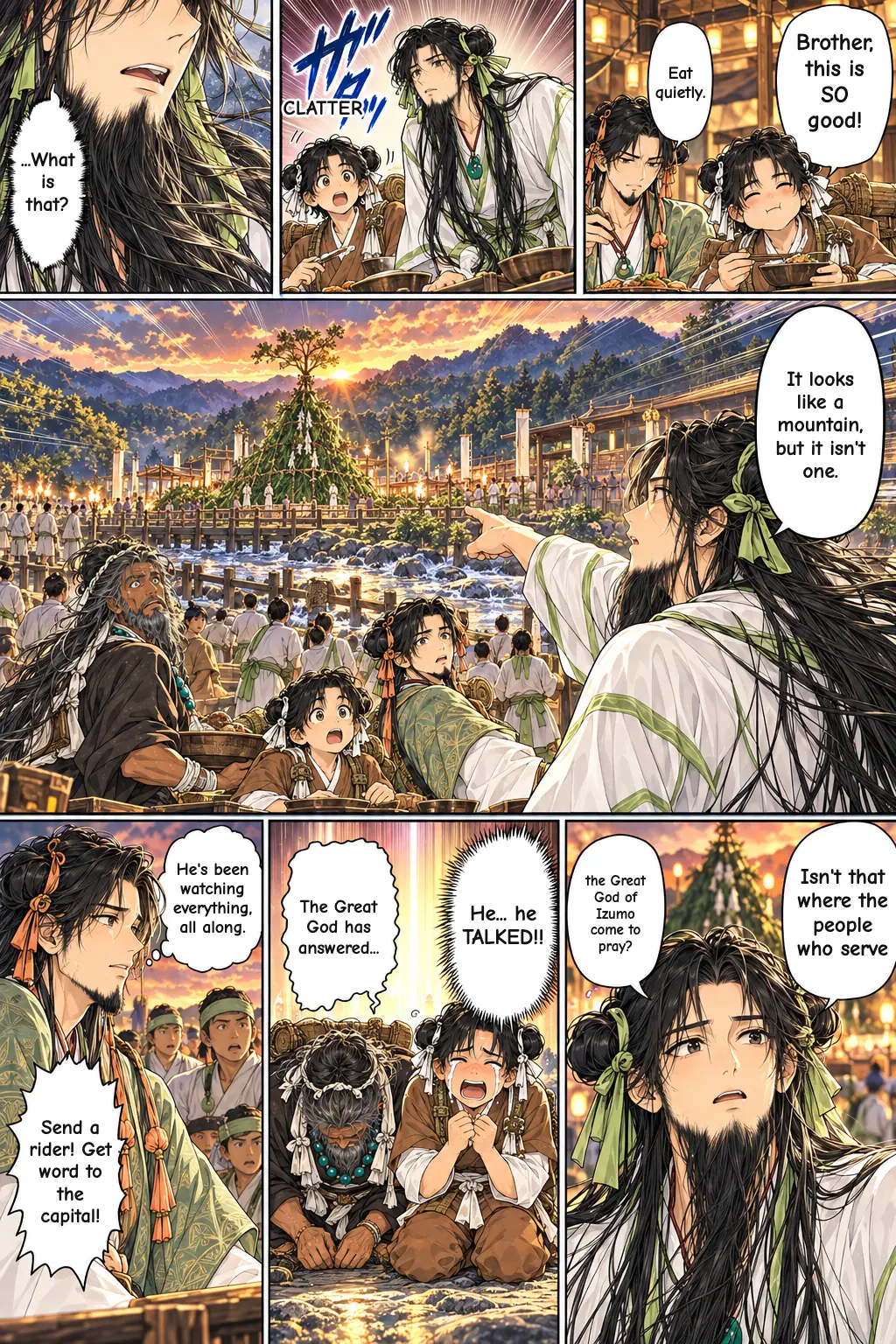
After worshipping the great god, the party stayed at a temporary palace on the Hi River. Kihisatsumi, ancestor of the governors of Izumo, set up a decoration of green leaves shaped like a mountain downstream so he could offer a meal. Seeing it, the prince finally spoke a full, sensible sentence. He asked whether that thing, which looked like a mountain but was not one, was the ritual site of the priests who served the god Ashihara-shikoo at Izumo.
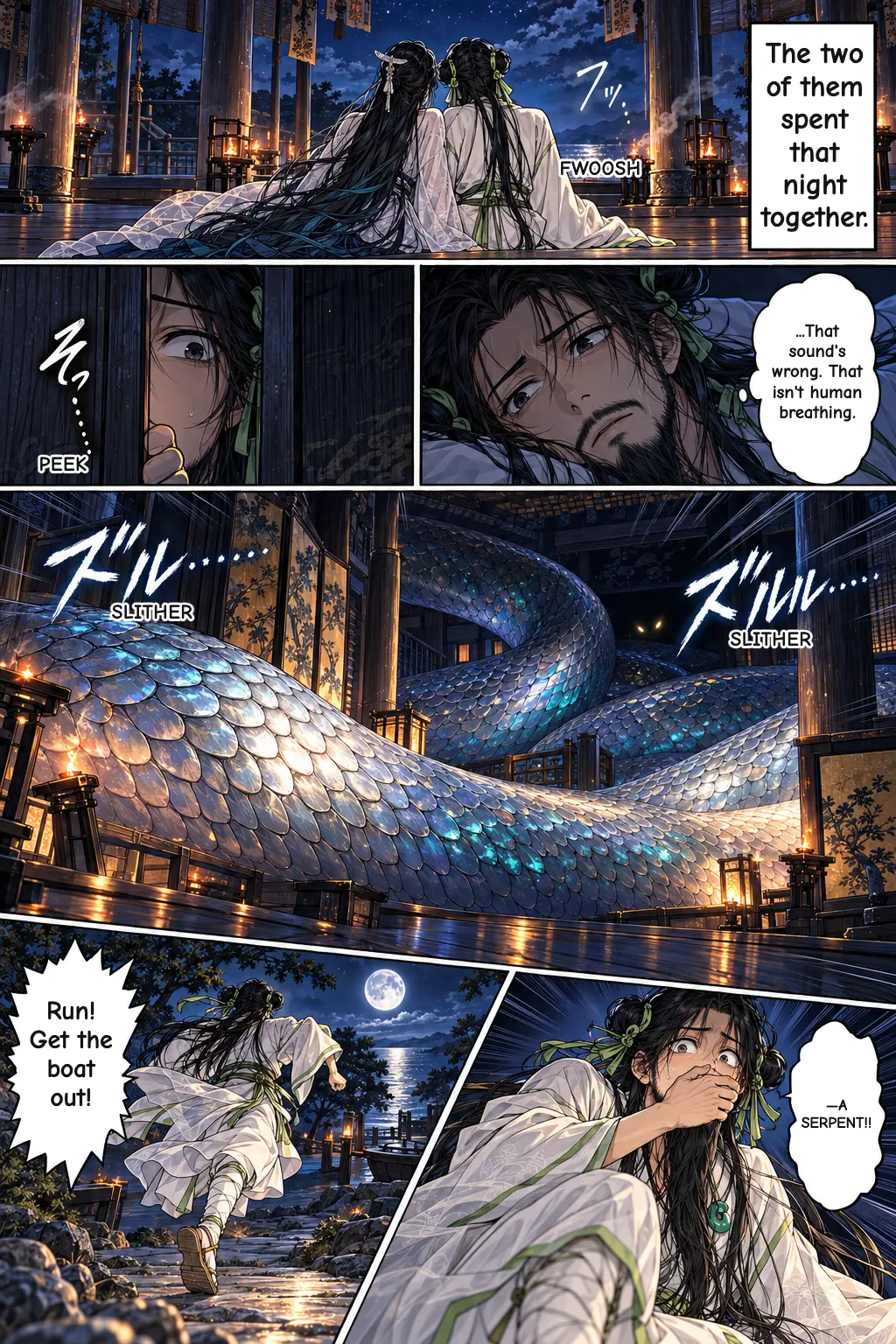
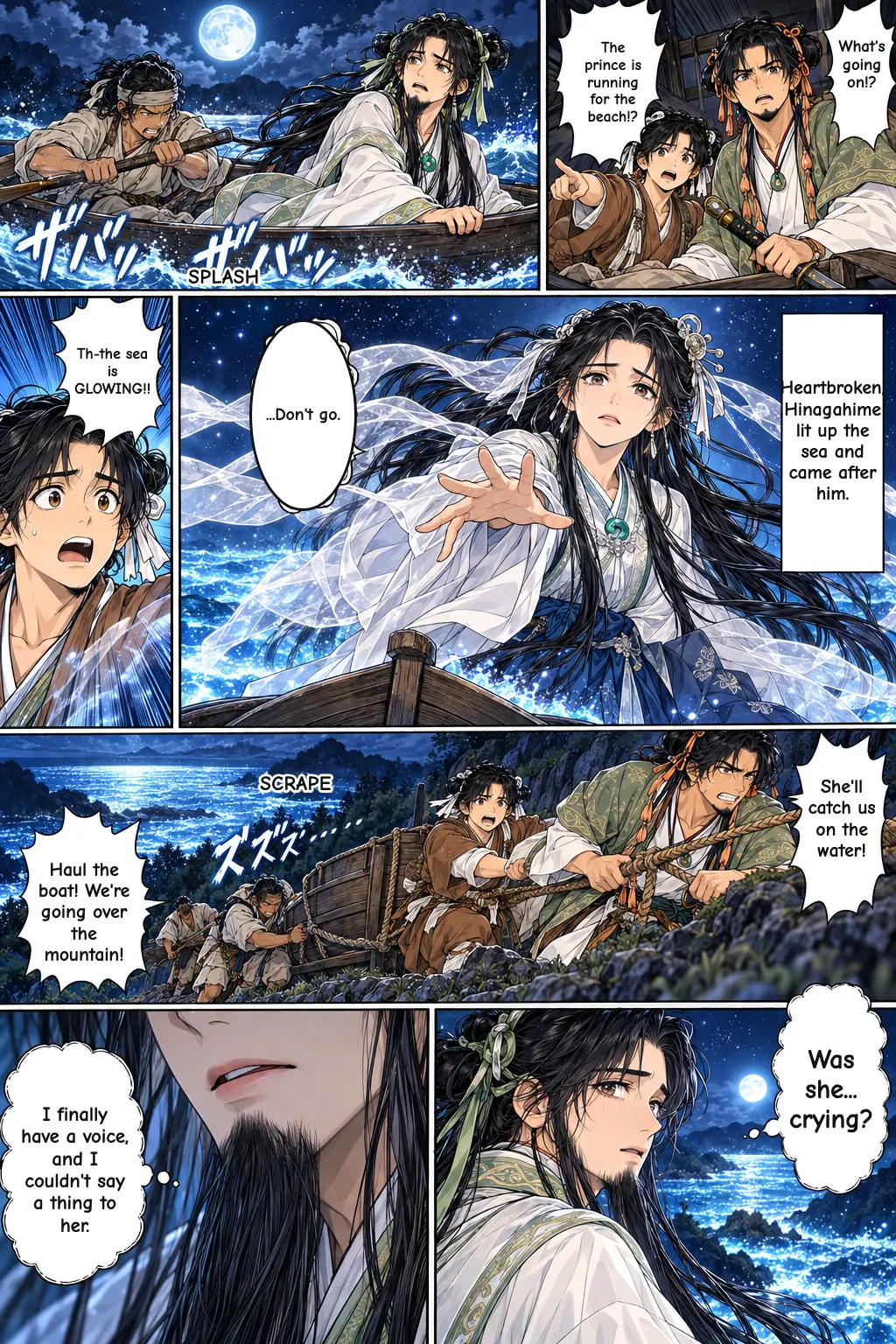
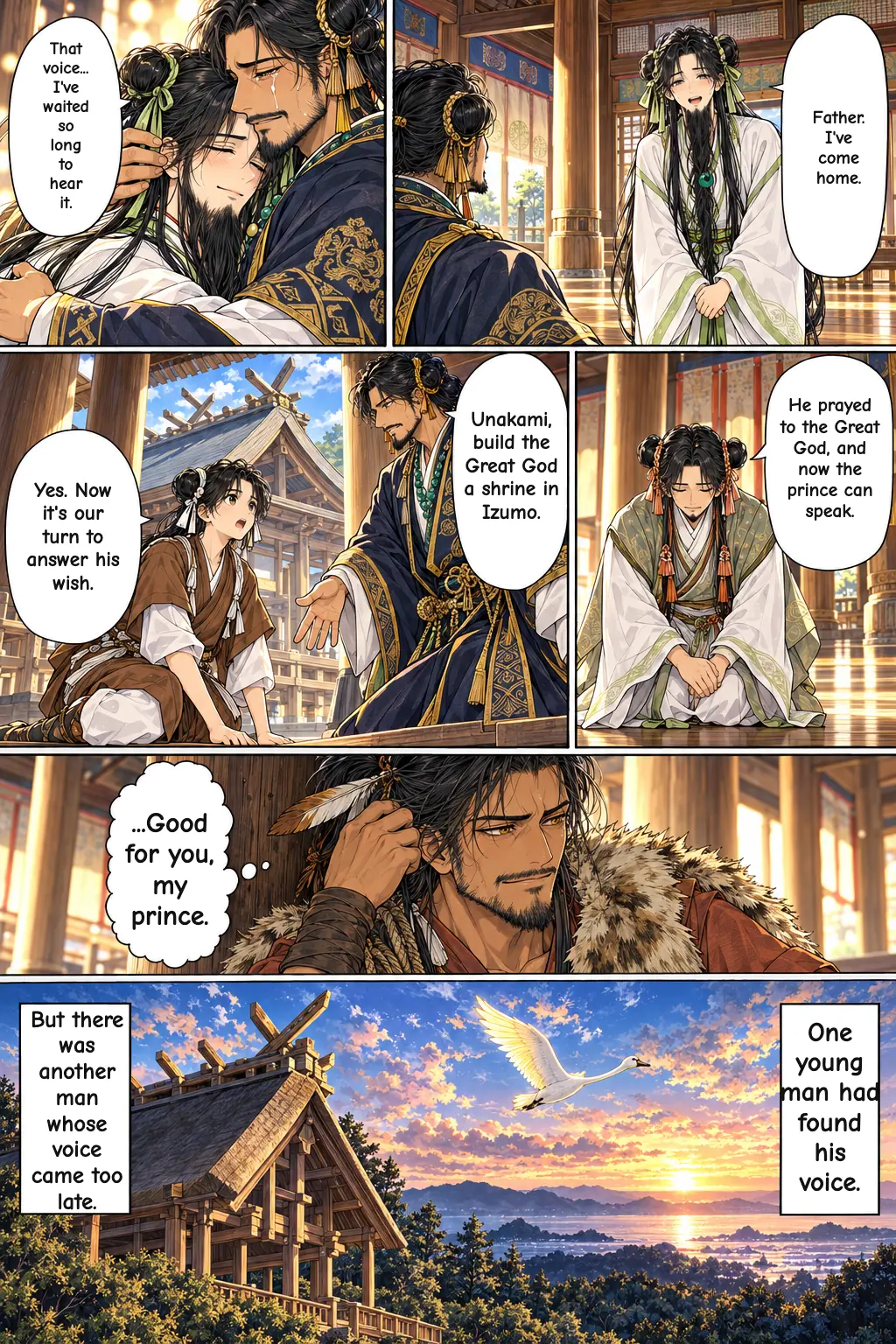
The overjoyed escorts sent messengers to the capital. The prince then spent a night with Hinagahime, a beautiful woman. When he secretly looked at her, he saw she was a snake. He fled in terror, and she chased him across the sea in a boat, lighting up the water. His party escaped by hauling their boat over a mountain pass. Back home, the emperor rejoiced and sent Unakami to Izumo to build the shrine.
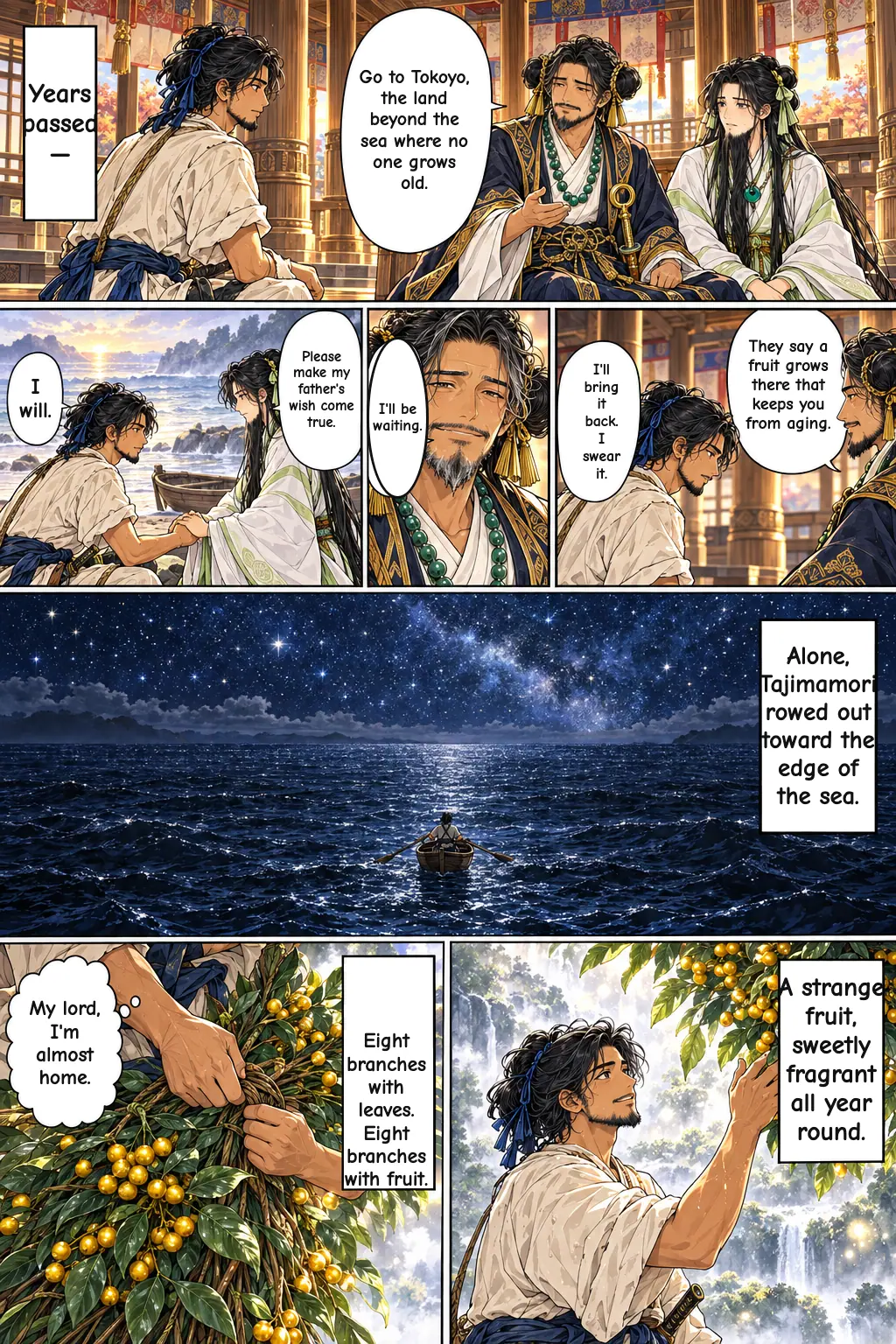
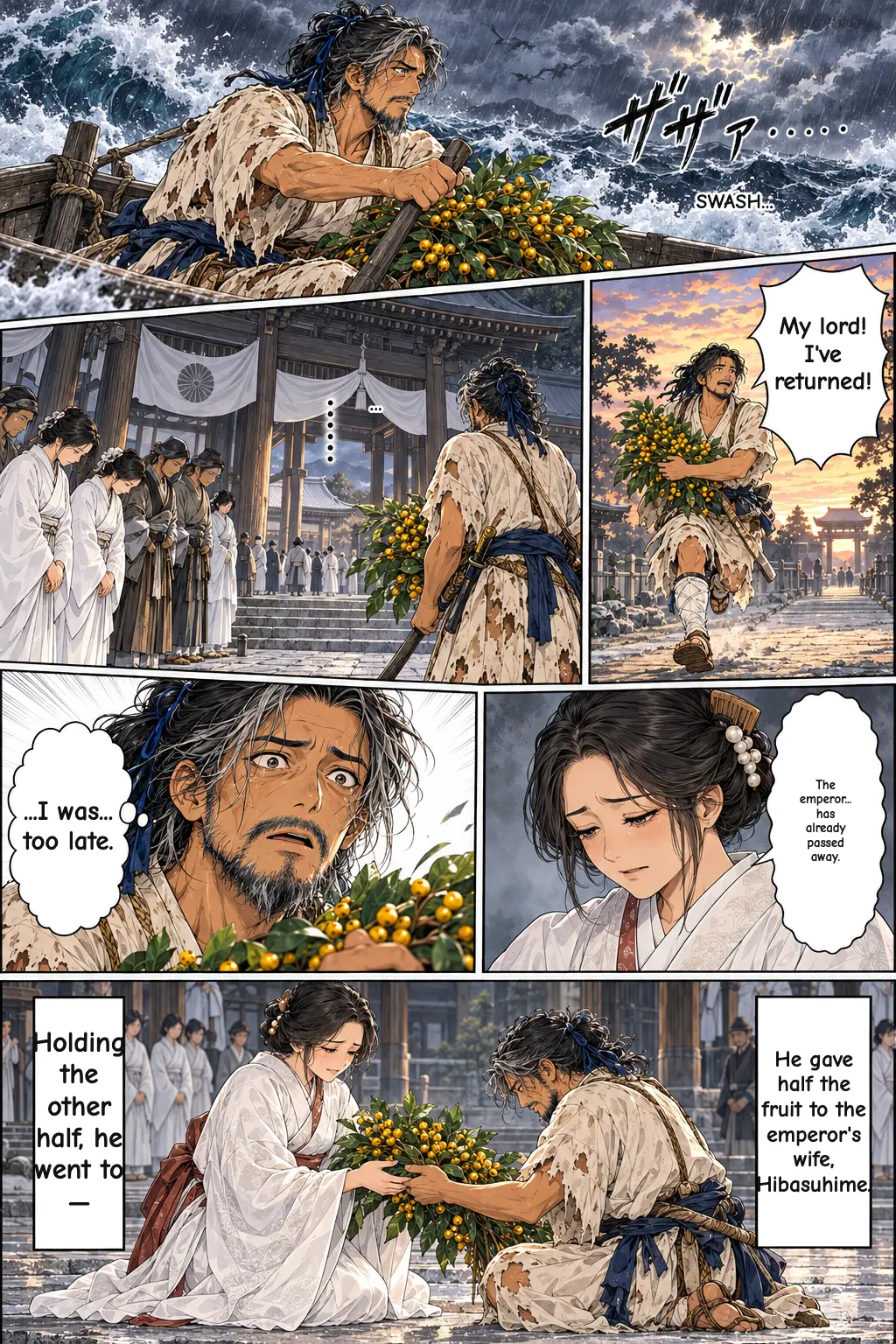
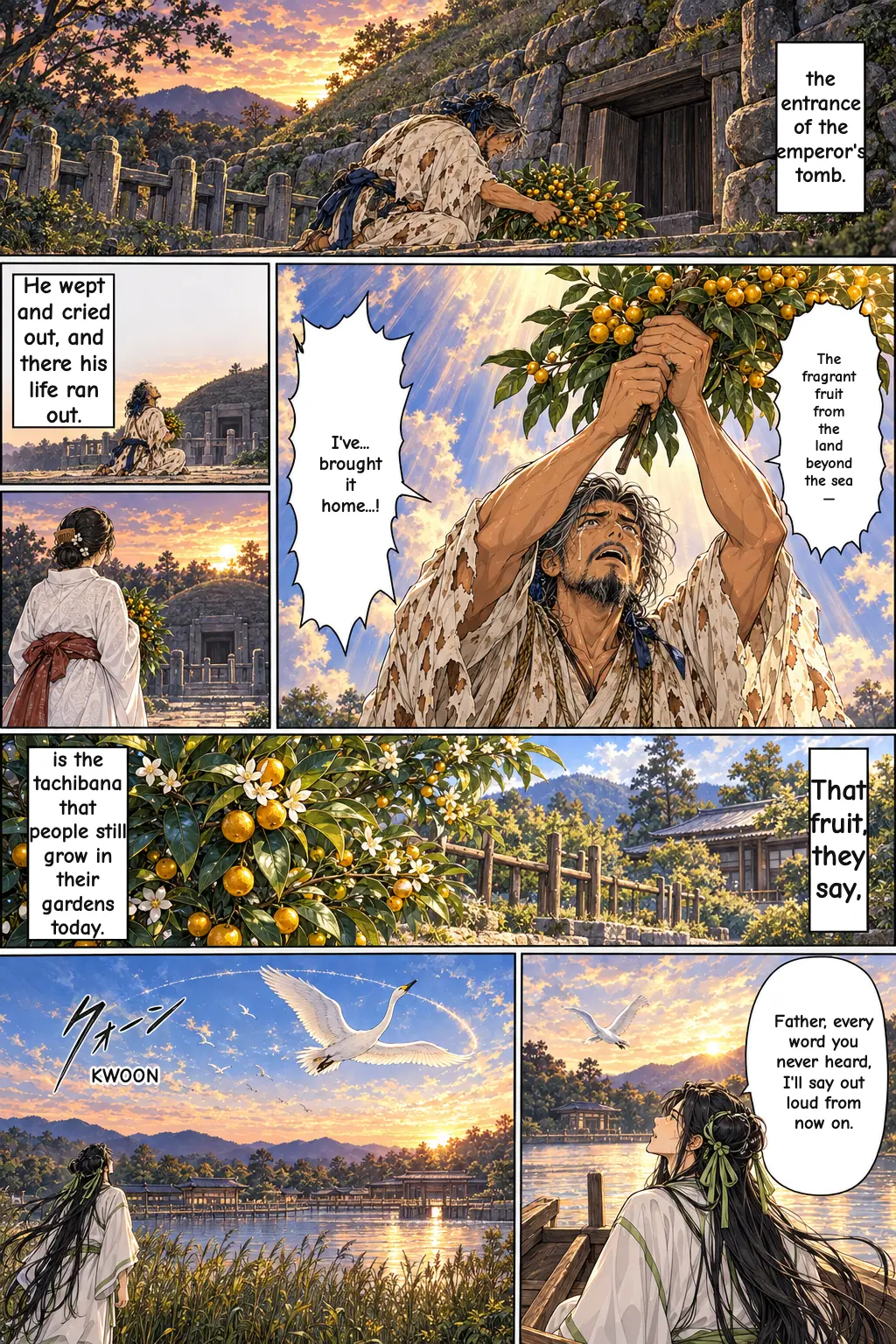
Near the end of Suinin's reign, the Kojiki tells a separate story. The emperor sent Tajimamori to Tokoyo, the Everlasting Land, to find the tokijiku no kaku no konomi, a fragrant fruit that ripens out of season. Tajimamori returned with the fruit tied in bundles and set on spears, but the emperor had already died. He gave half to the empress, laid half at the imperial tomb, cried out that he had brought the fruit, and wept until he died. The Kojiki says this fruit is the tachibana, a Japanese citrus.
What This Myth Tells Us
The story shows how seriously the people of ancient Japan took the anger of gods. Homuchiwake's silence is not treated as an illness but as a tatari, a curse caused by a god who has been neglected. Dreams and divination reveal the cause, and the cure is ritual: worship and a properly built shrine. Many readers also see in it the special status of Izumo, a region whose great god the Yamato court had to honor.
The god of Izumo is widely identified with Ōkuninushi, because Book I of the Kojiki gives Ashihara-shikoo as one of his other names. However, this passage itself never calls him Ōkuninushi. The tale also explains origins: the name of Wanami harbor, and the groups of bird-catchers and attendants assigned to serve the prince.
Tajimamori's story links Japan to Tokoyo, a mysterious land beyond the sea associated with long life. The Nihon Shoki, a chronicle compiled a few years after the Kojiki, says his journey took ten years, but the Kojiki gives no length. In later tradition, Tajimamori came to be honored as a patron god of sweets and confectionery, since the tachibana was considered an early kind of fruit treat.
What the Manga Changes
The Kojiki is very short on detail, so the manga fills in what the text leaves out. The original says nothing about Homuchiwake's face, personality, or thoughts, only that his beard reached his chest. His inner voice during his years of silence, and his vow to speak the words his father never heard, are the manga's own additions.
The manga also turns Ōtaka's list of provinces into a journey with landscapes and hardships, draws the kugui as a white swan, and gives visual form to the leafy mountain decoration, Hinagahime's human and serpent shapes, and the light she casts over the sea. The dream keeps the god unnamed, as in the original. The personalities of the escorts, the length of Tajimamori's voyage, and the scenery of the Everlasting Land are creative choices too. Placing Tajimamori's story as an epilogue to Suinin's reign stays close to the Kojiki, where it appears just before the emperor's death.
Where to Read It
If you want to see this strange and moving story come to life, Episode 7 of KOJIKI Book II: The Age of Heroes, "Chase the Swan Until the Prince Speaks," is right here on Manga Portal. Every episode is free to read, with no sign-up needed, so you can follow the series from the start or jump straight into Homuchiwake's story.
Characters in this episode
Prince Homuchiwake
Son of Emperor Suinin, born in a burning fortress, who cannot speak properly even as a grown man with a long beard.
Emperor Suinin
Homuchiwake's father, who sends men across the land and to Izumo to cure his son's silence.
Yamanobe no Ōtaka
A man (not a hawk, despite his name) who chases the swan across many provinces and catches it in Koshi.
The Great God of Izumo
The god whose curse is revealed as the cause of the prince's silence, widely identified with Ōkuninushi.
Hinagahime
A beautiful woman who spends a night with the prince, turns out to be a serpent, and chases him across the sea.
Tajimamori
A loyal envoy who brings fruit from the Everlasting Land but returns too late and dies grieving at the emperor's tomb.
FAQ
Why couldn't Prince Homuchiwake speak in the Kojiki?
Through a dream and divination, Emperor Suinin learned that the silence was a curse from the Great God of Izumo. The god wanted his shrine rebuilt as grandly as the emperor's palace. After the prince worshipped at Izumo, he finally spoke.
What were the prince's first words?
After hearing a swan, he only made a halting sound. His first real sentence came on the Hi River in Izumo, when he asked whether a leafy, mountain-shaped decoration was the ritual site of the god Ashihara-shikoo.
Who is Tajimamori in Japanese mythology?
Tajimamori is the envoy Emperor Suinin sent to Tokoyo, the Everlasting Land, to bring back a fragrant fruit. He returned after the emperor had died and wept to death at the tomb. The Kojiki says the fruit was the tachibana citrus, and later tradition honors him as a god of sweets.
Who was the serpent woman Hinagahime?
Hinagahime is a woman the prince spends one night with in Izumo. When he peeks at her, he sees she is a snake and flees, and she chases him across the sea. The Kojiki tells us nothing more about who she was.
Is the Great God of Izumo the same as Ōkuninushi?
Most readers think so, because Book I of the Kojiki gives Ashihara-shikoo, the name the prince mentions, as another name of Ōkuninushi. However, this passage itself does not use the name Ōkuninushi.