Episode 6She Raised a Blade Over Her Sleeping KingSahobiko and Sahobime
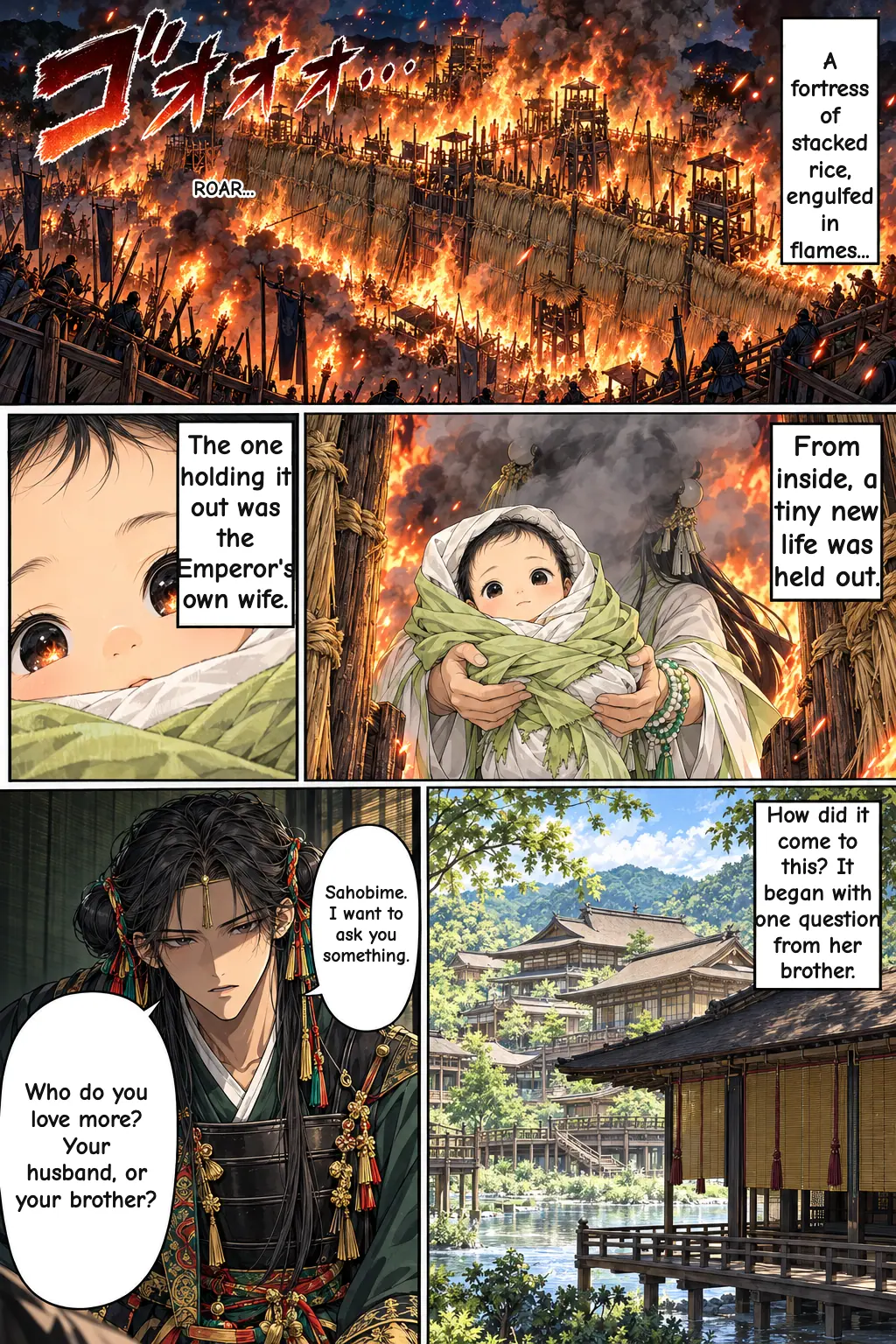
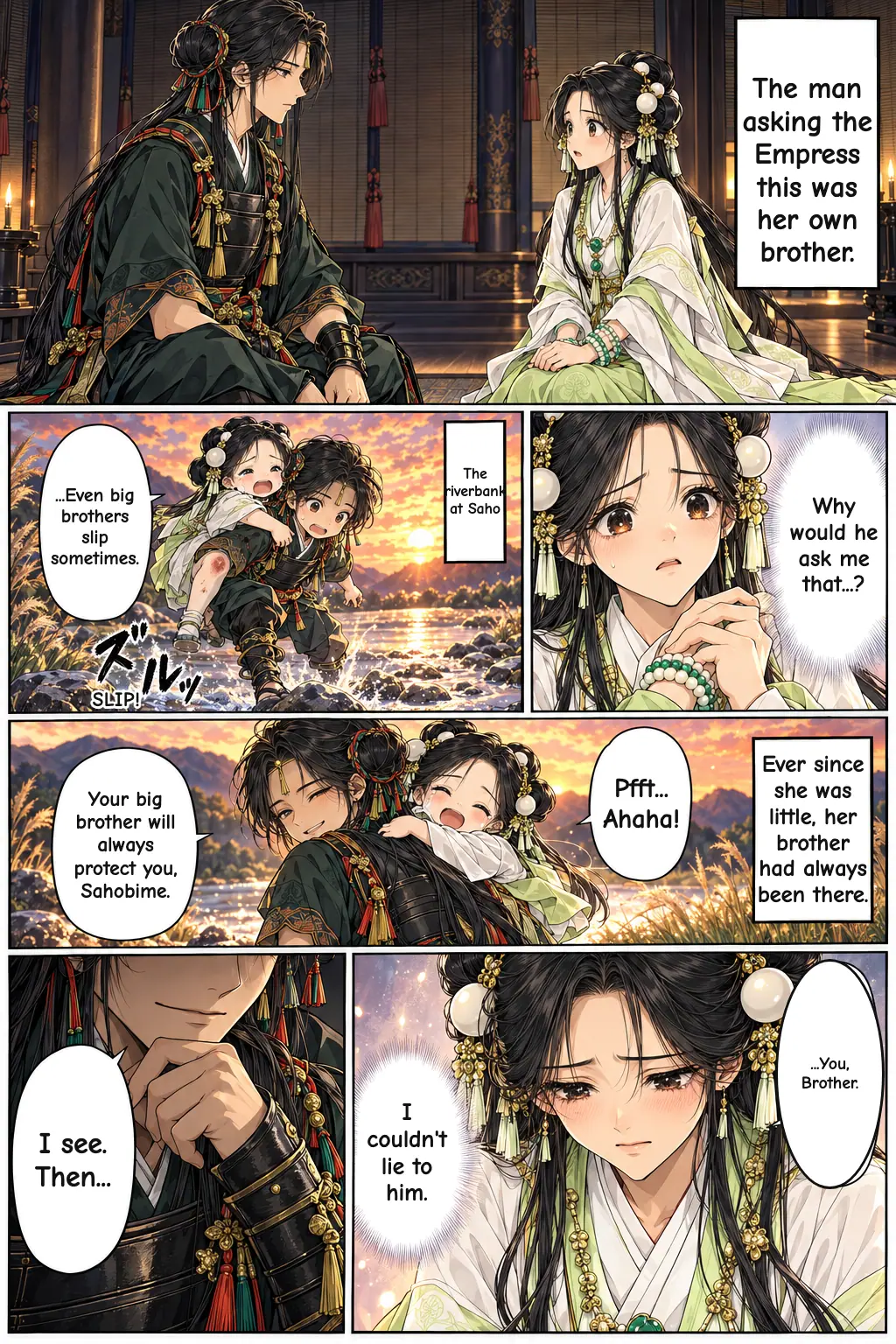
"Who do you love more, your husband or your brother?" Sahobime's brother asks her this, and she is the Emperor's wife. Three times she raises a blade over her sleeping husband, and three times she can't strike. Inside a burning fortress of rice she gives birth to a son. She sends the child to her husband and stays at her brother's side, choosing an answer that abandons neither of them.
Sahobime and Sahobiko: The Kojiki Tale of the Rice Fortress Explained
Who Are Sahobiko and Sahobime?
The story of Sahobiko and Sahobime comes from the Kojiki ("Record of Ancient Matters"), Japan's oldest surviving chronicle, compiled in 712. It appears in the middle volume, in the section on Emperor Suinin, whose full name in the text is Ikume-iribiko-isachi. This is no longer the age of the creator gods. It is a story about human rulers, and it reads like a tragedy: a woman caught between the two men she loves.
Sahobime was the Emperor's consort. Prince Sahobiko was her brother, and the Kojiki points out that they had the same mother, a bond the text treats as especially close. Another version of the rebellion is told in the Nihon Shoki (720), Japan's other early chronicle.
The Original Story: A Blade, a Dream, and a Fortress of Rice
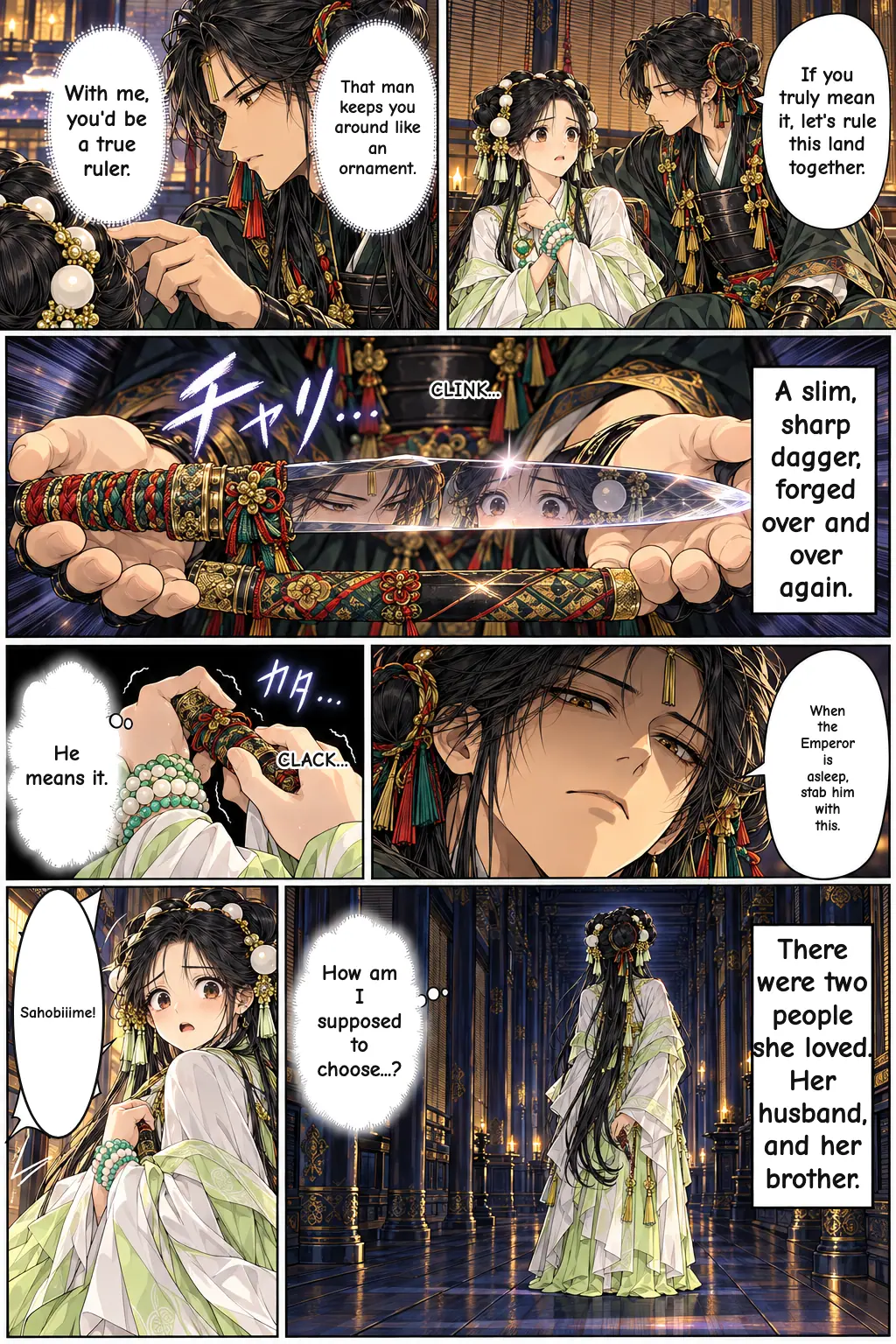
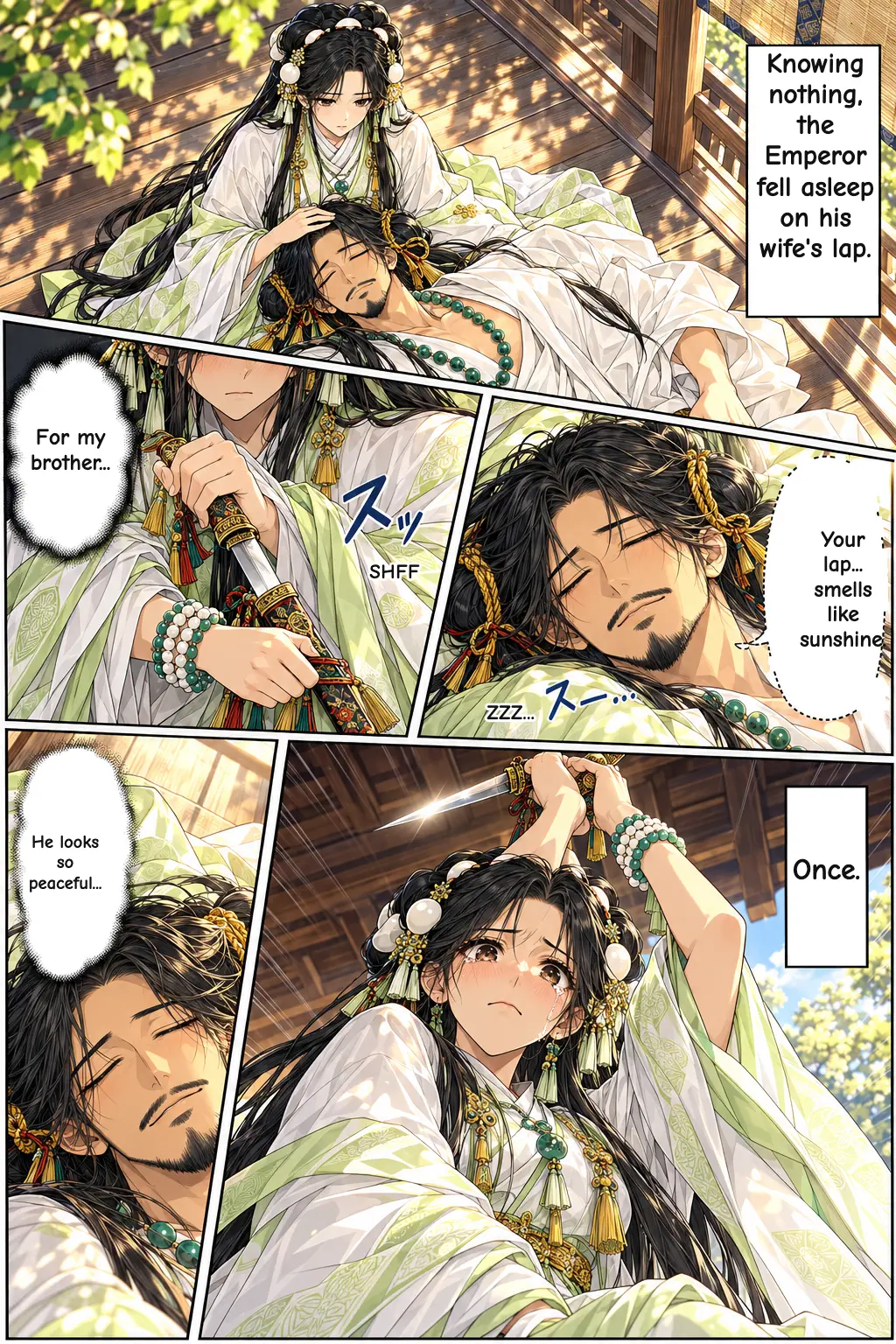
Sahobiko asks his sister whether she loves her husband or her brother more. She answers, "My brother." He suggests that the two of them rule the land together. Then he gives her a small, carefully forged dagger on a cord and tells her to kill the Emperor in his sleep.
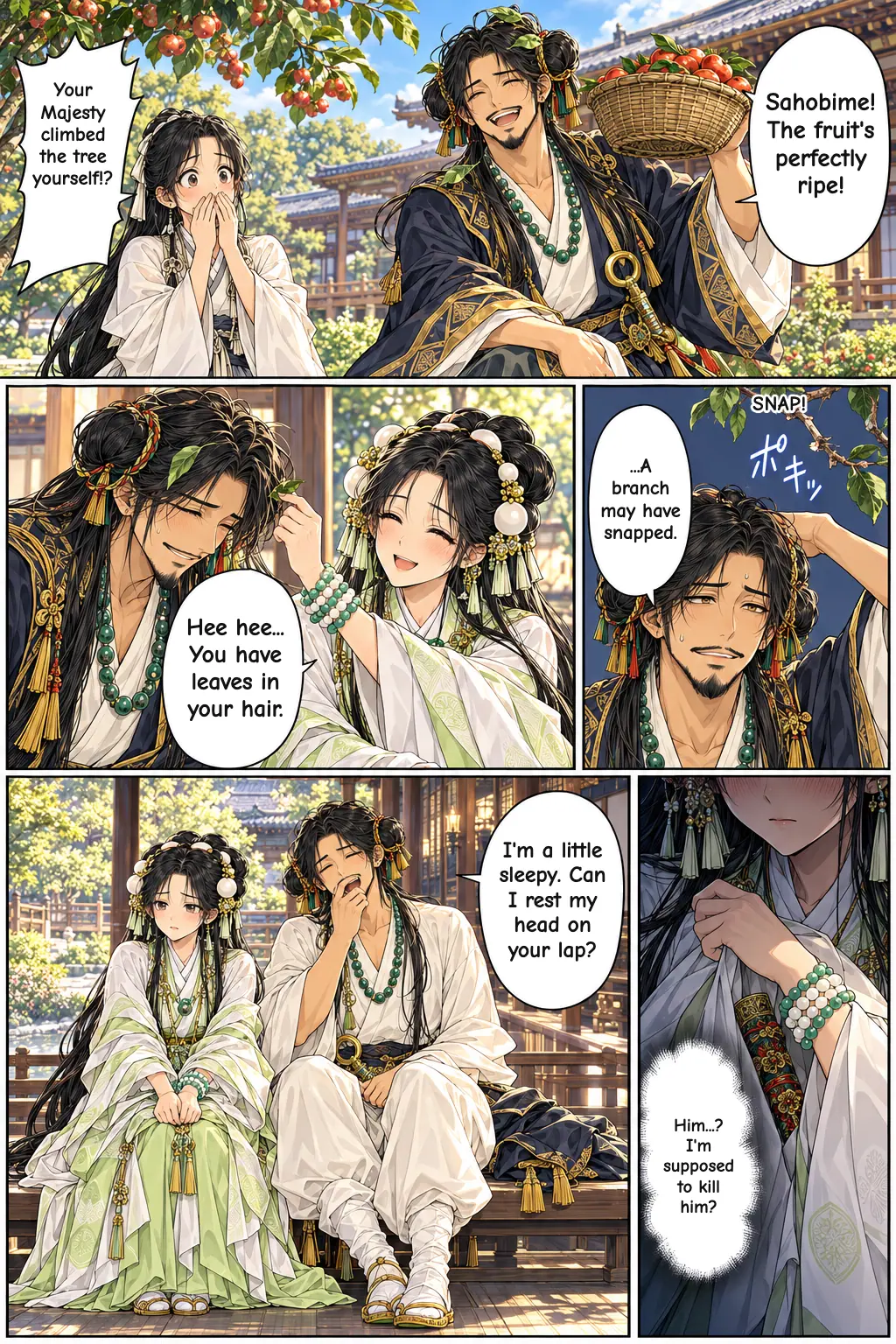
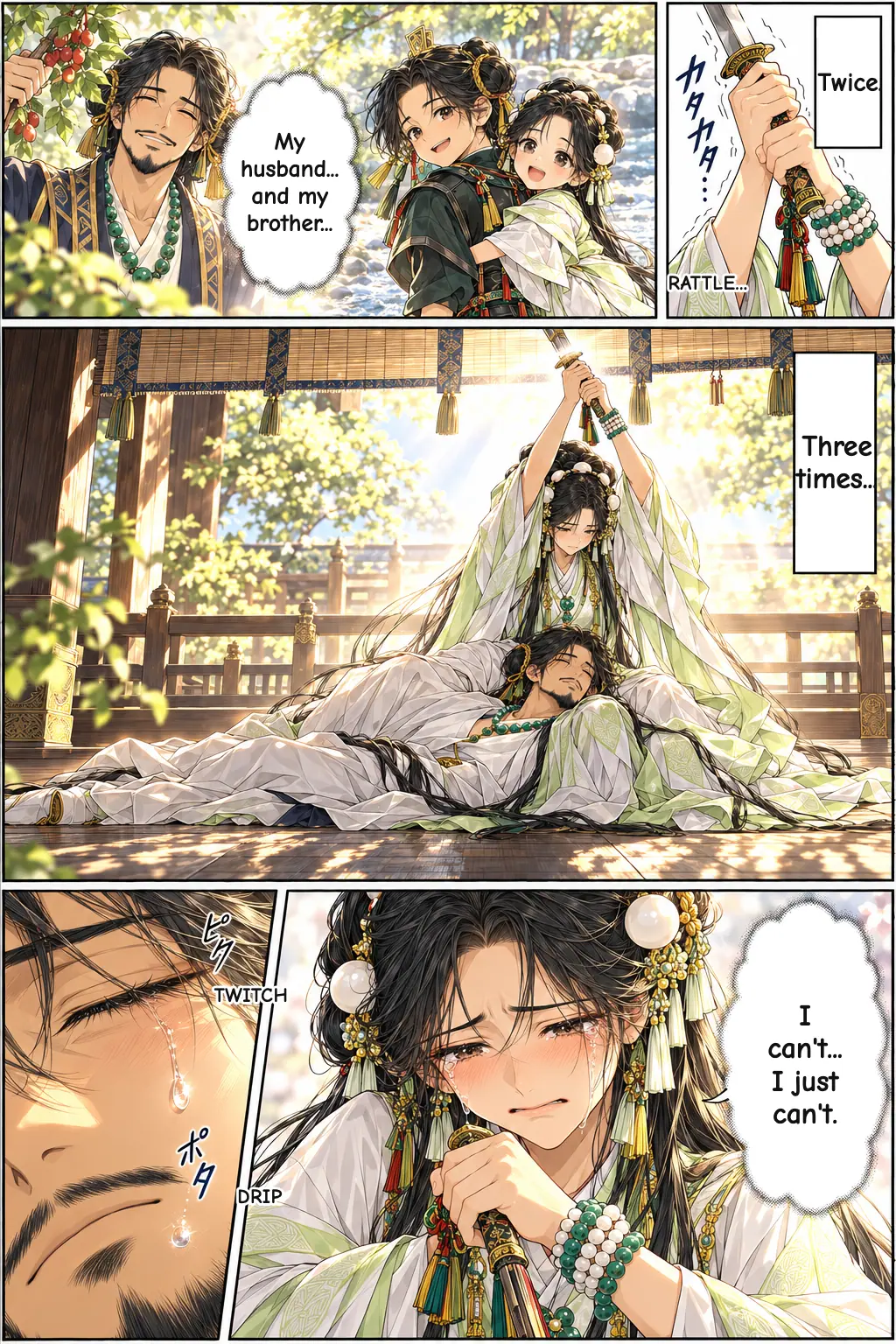
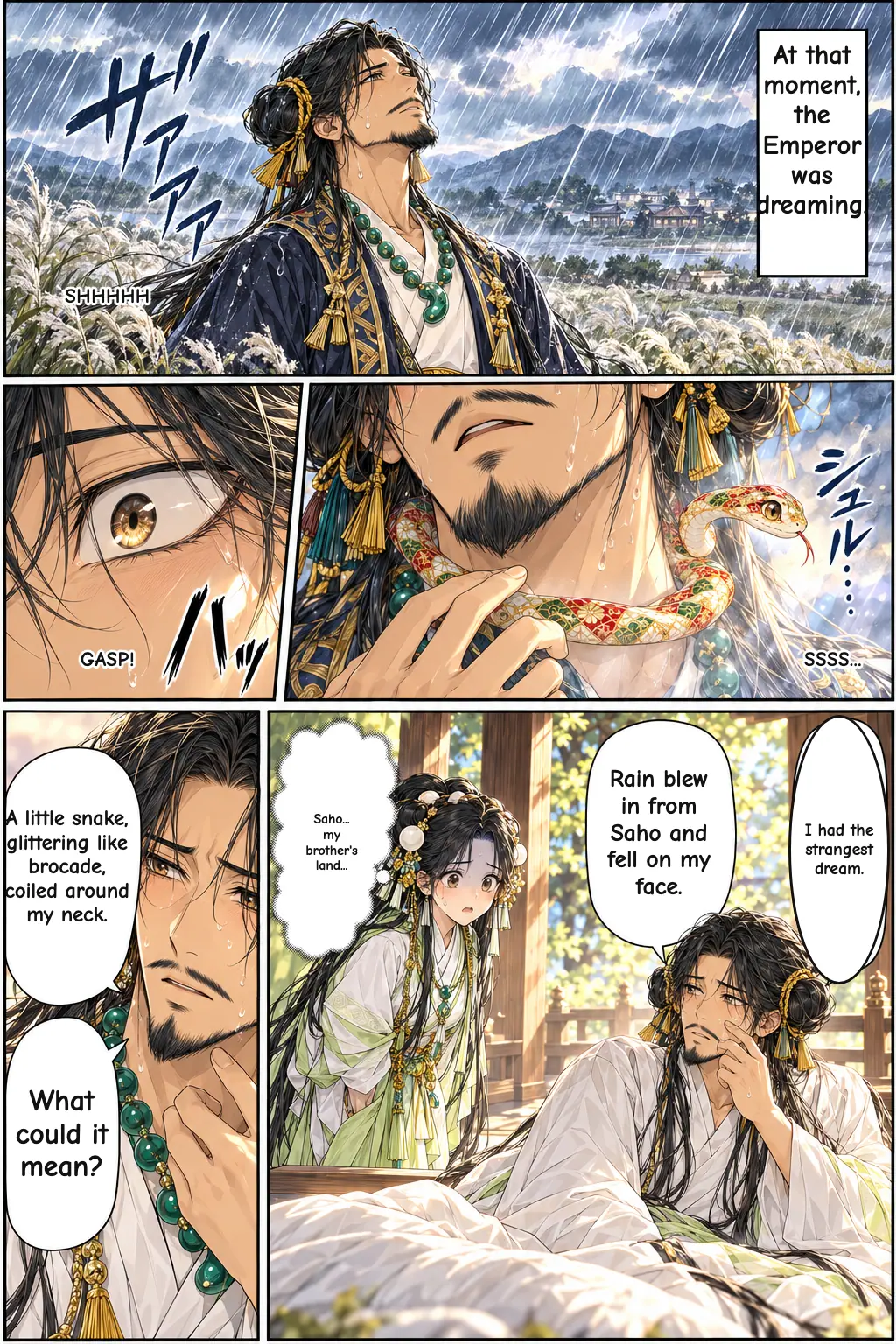
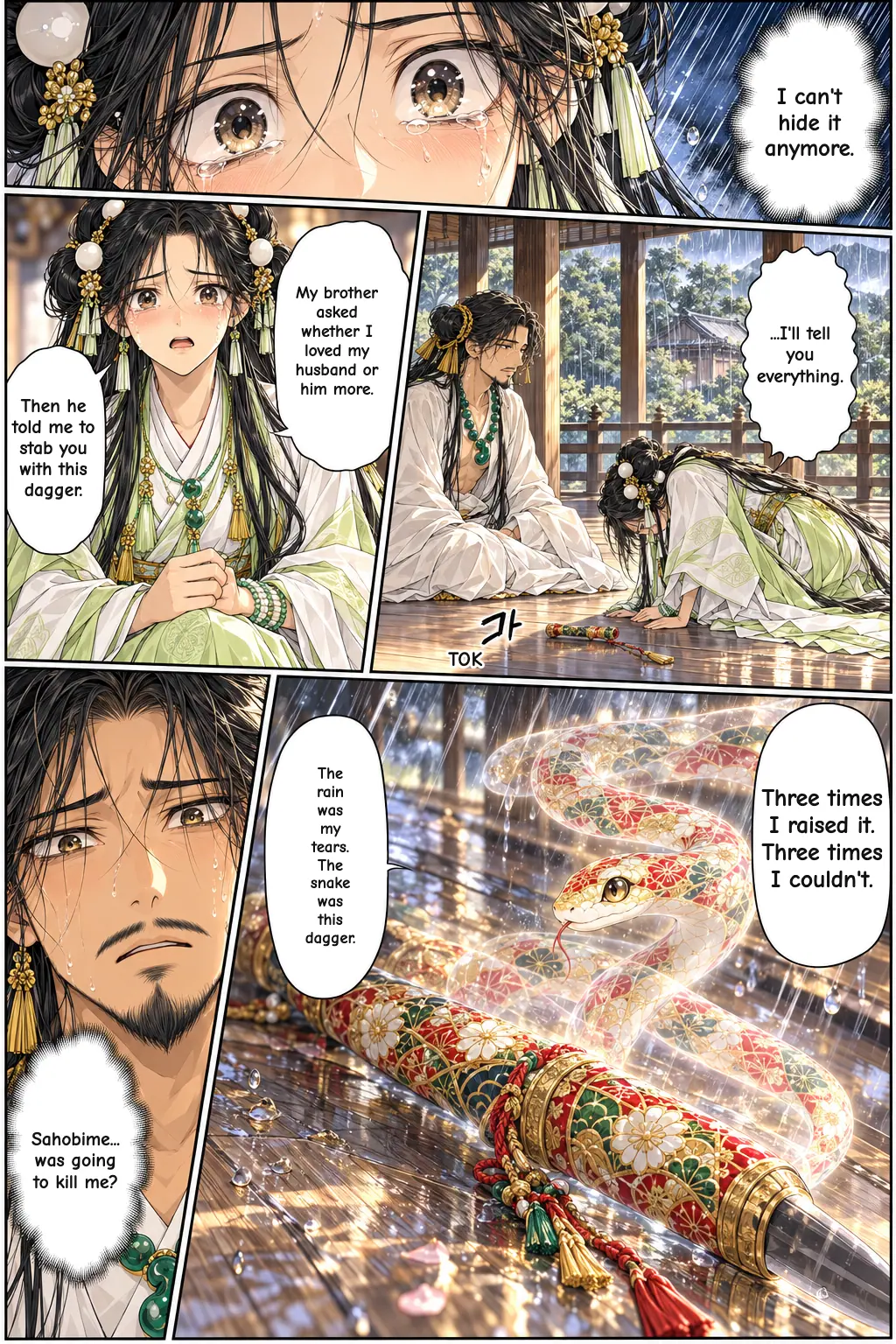
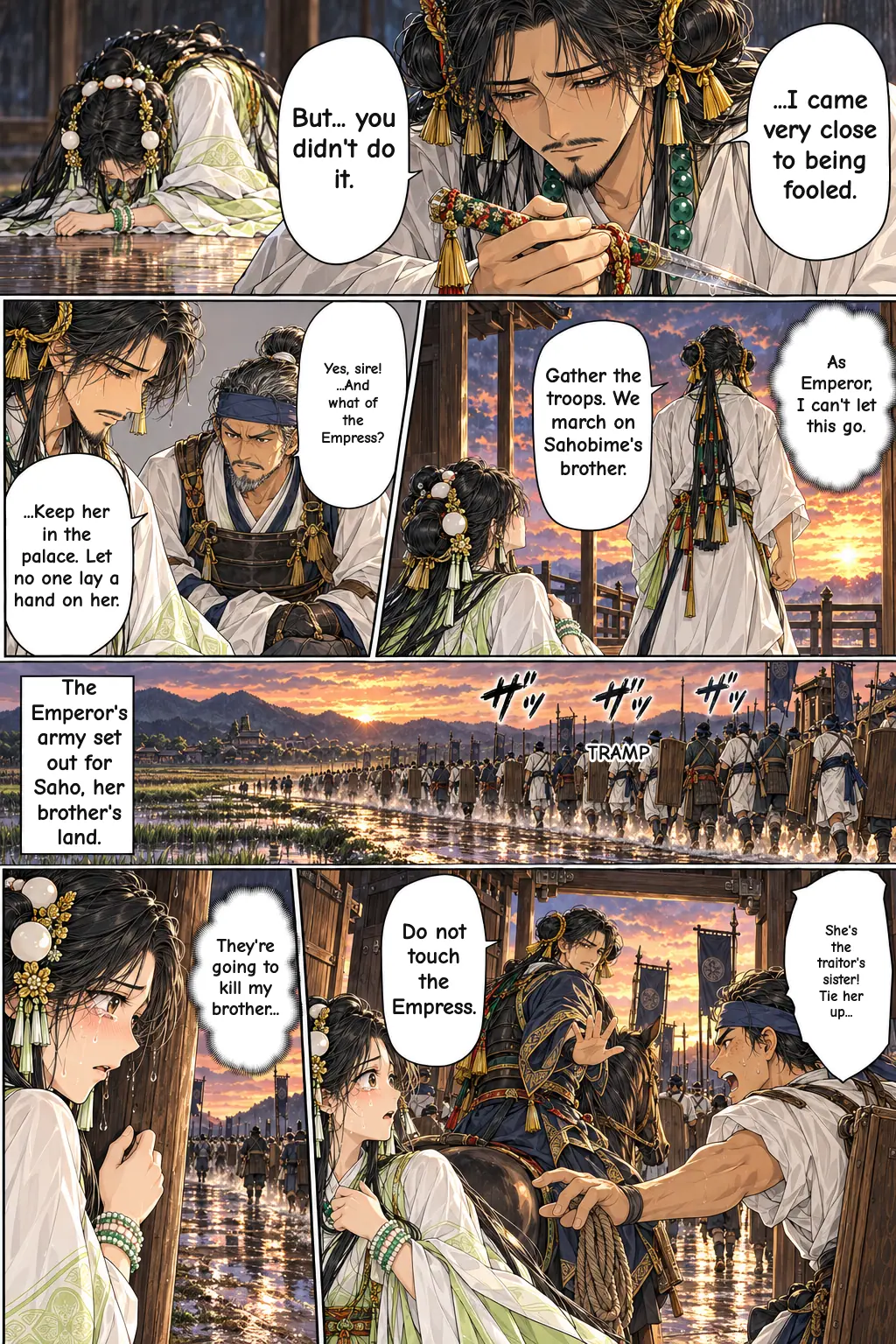
The Emperor knows nothing of the plot and falls asleep with his head in her lap. Three times she raises the dagger toward his neck, and three times grief stops her hand. Her tears fall on his face and wake him. He describes a strange dream. A sudden rain came from the direction of Saho and soaked his face, and a small snake the color of brocade coiled around his neck. He asks her what it means. Realizing she cannot hide the truth, she tells him everything and says the dream was a sign of it.
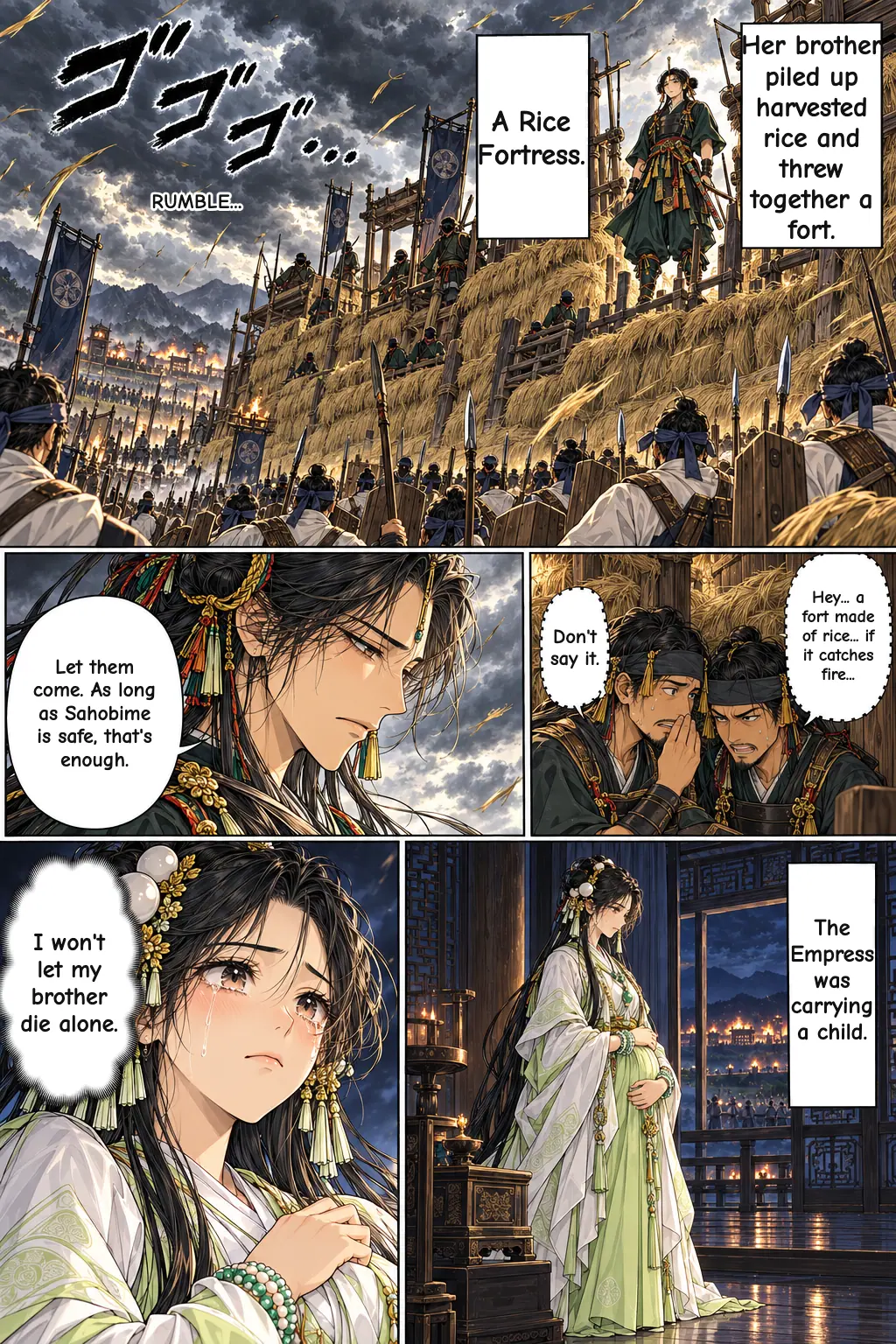
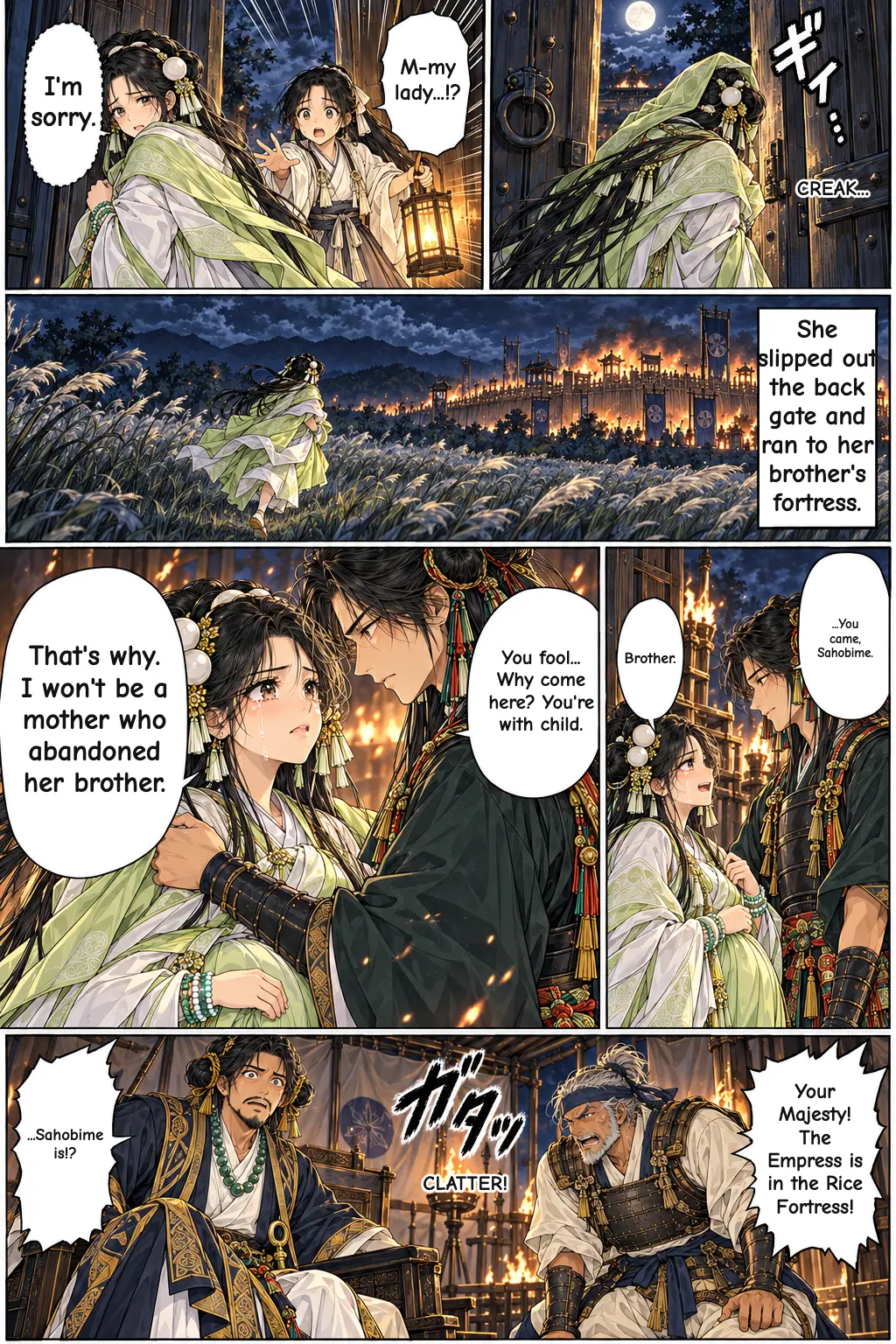
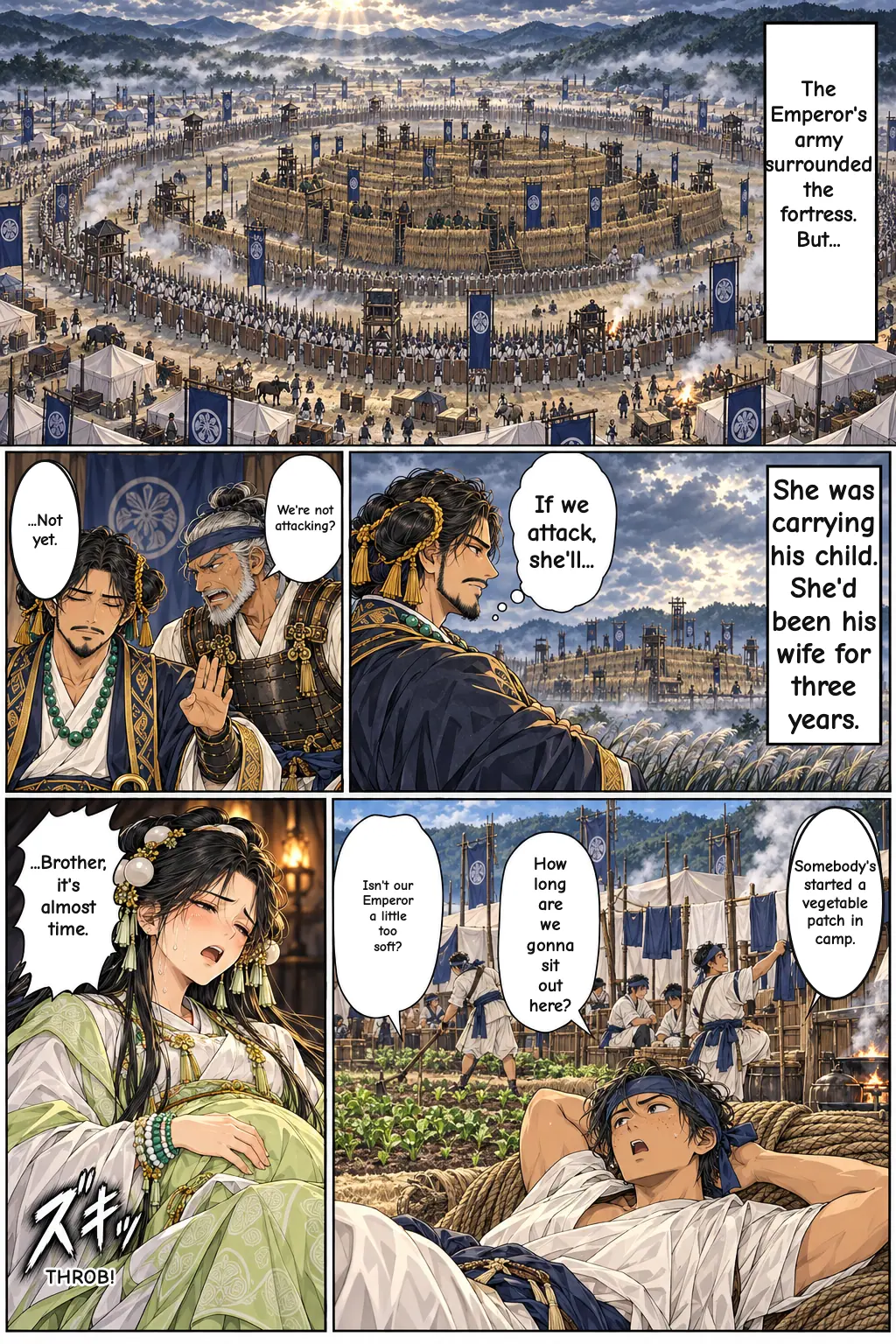
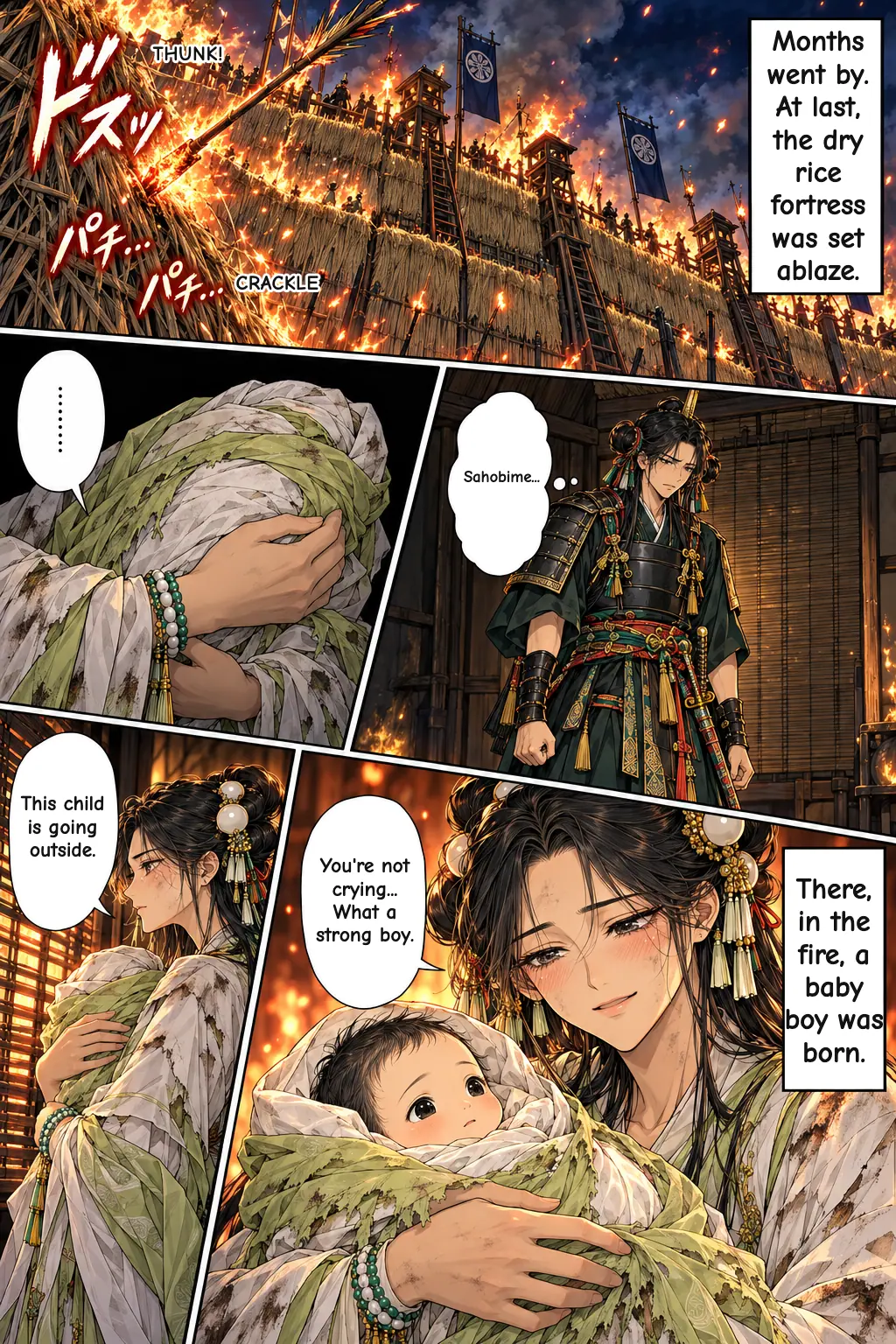
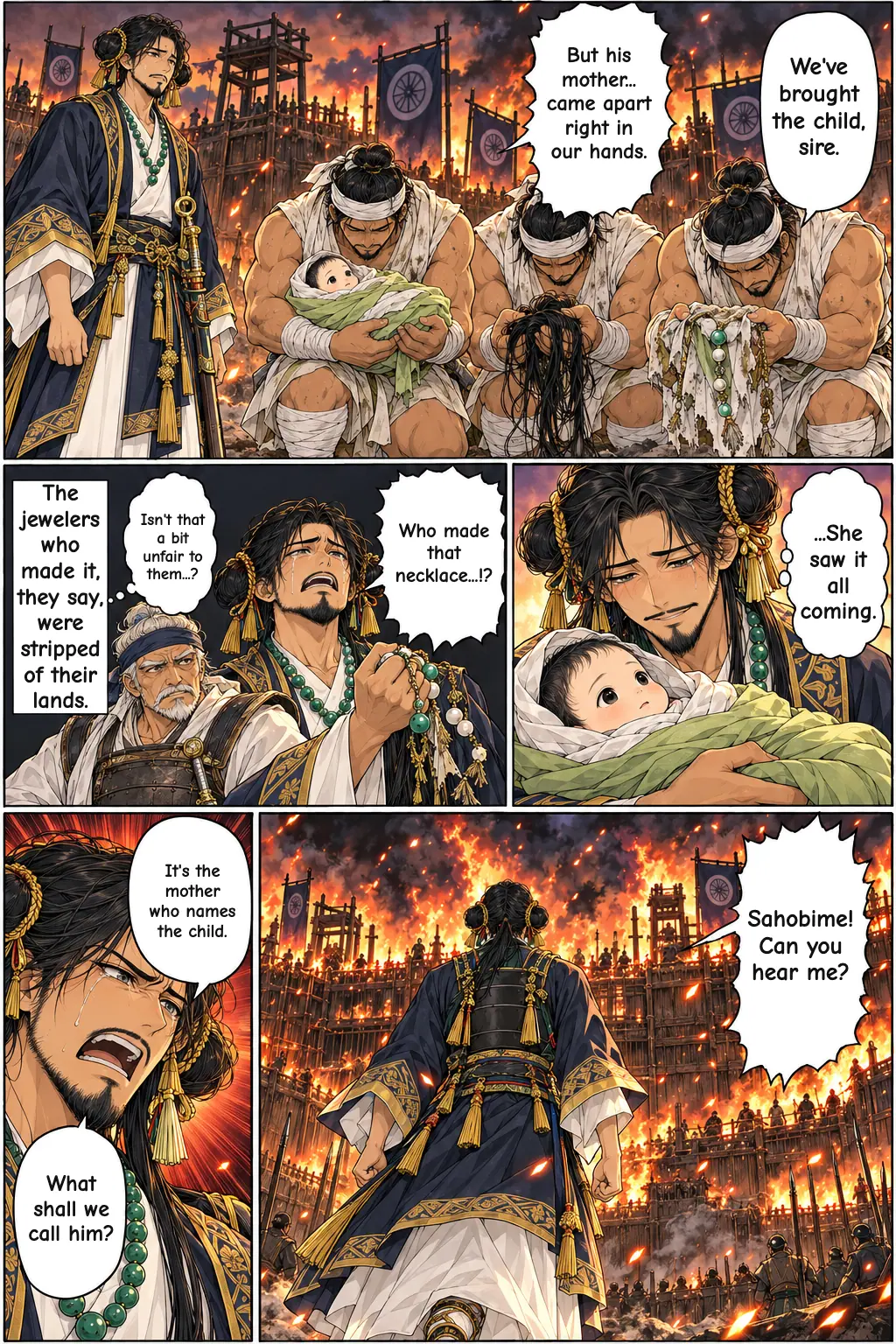
The Emperor sends an army. Sahobiko builds an inaki, a fortress made of stacked rice, and prepares to fight. Sahobime cannot bear to be apart from her brother, so she slips out through a back gate and joins him. She is pregnant. Thinking of her condition and of their three years together, the Emperor surrounds the fortress but does not attack. Inside, she gives birth to a son and has him placed outside the walls, asking the Emperor to raise the boy if he accepts him as his own.
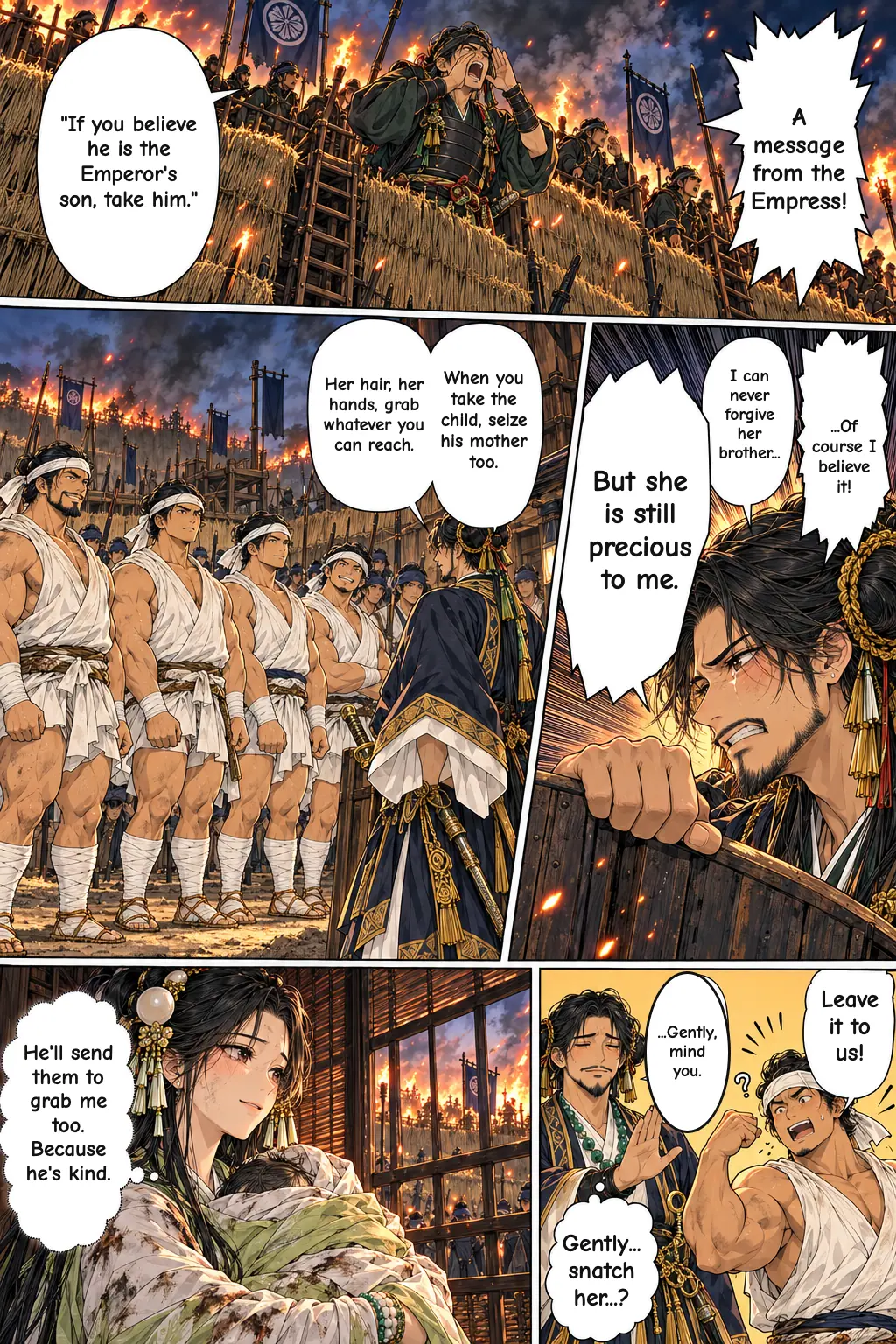
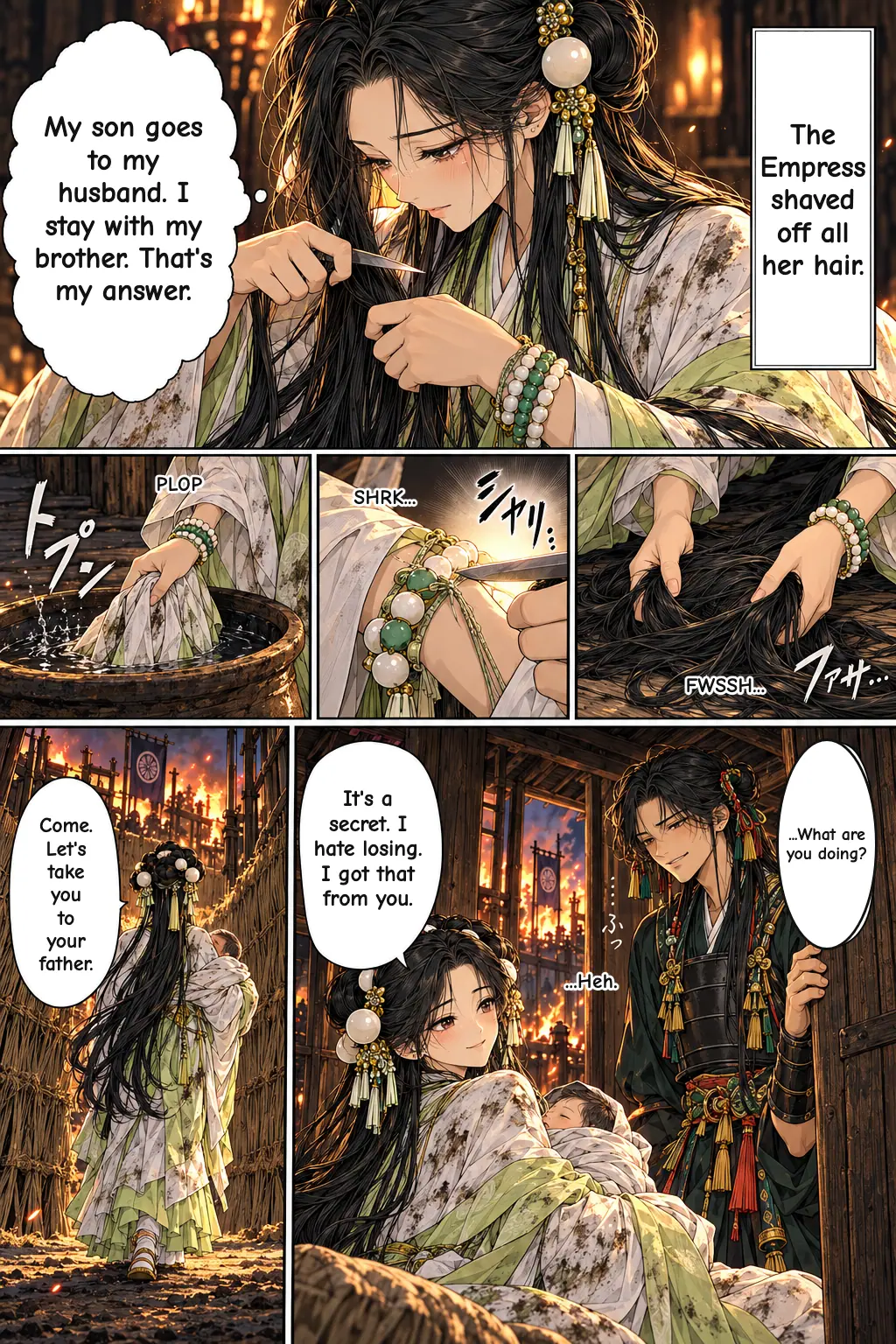
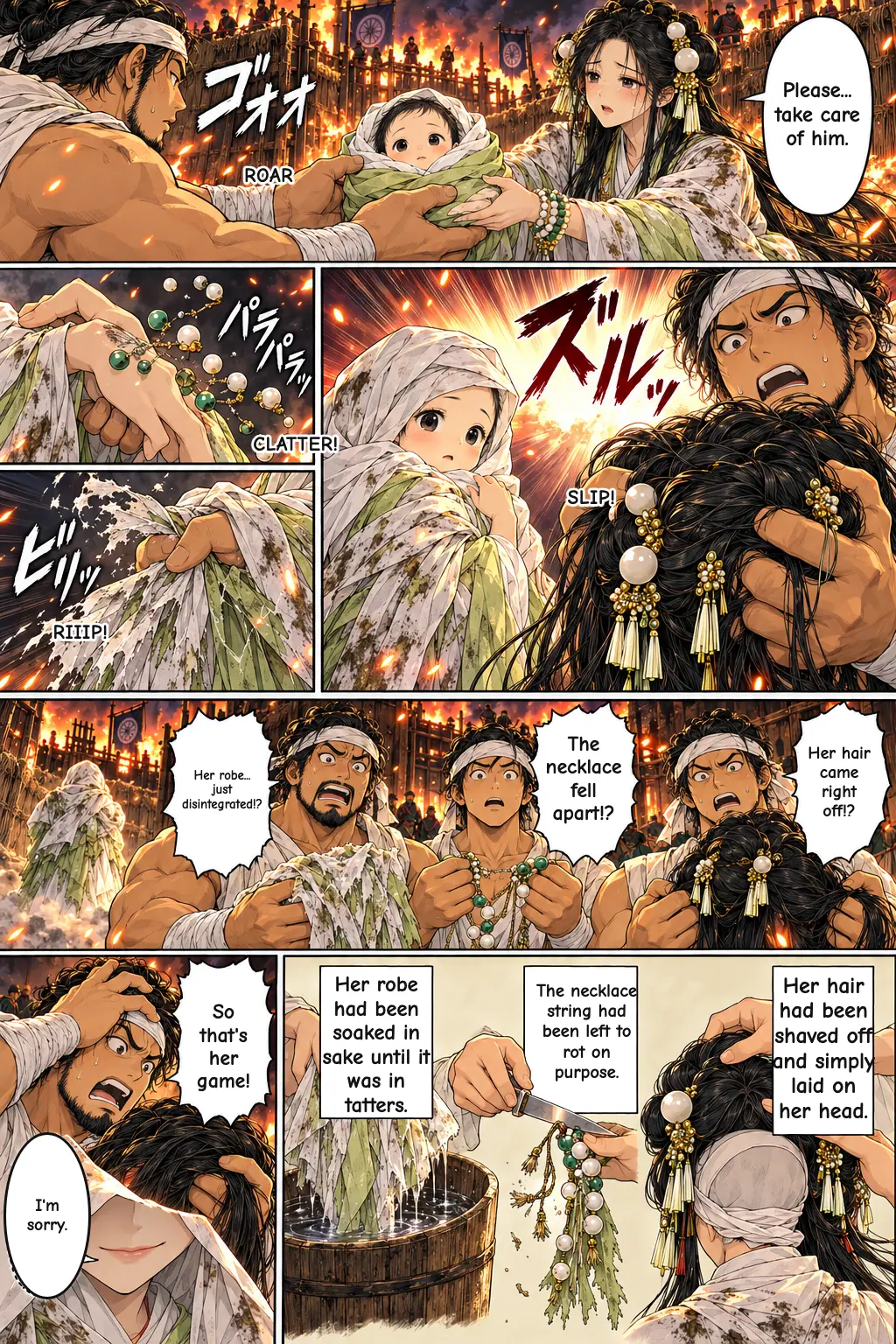
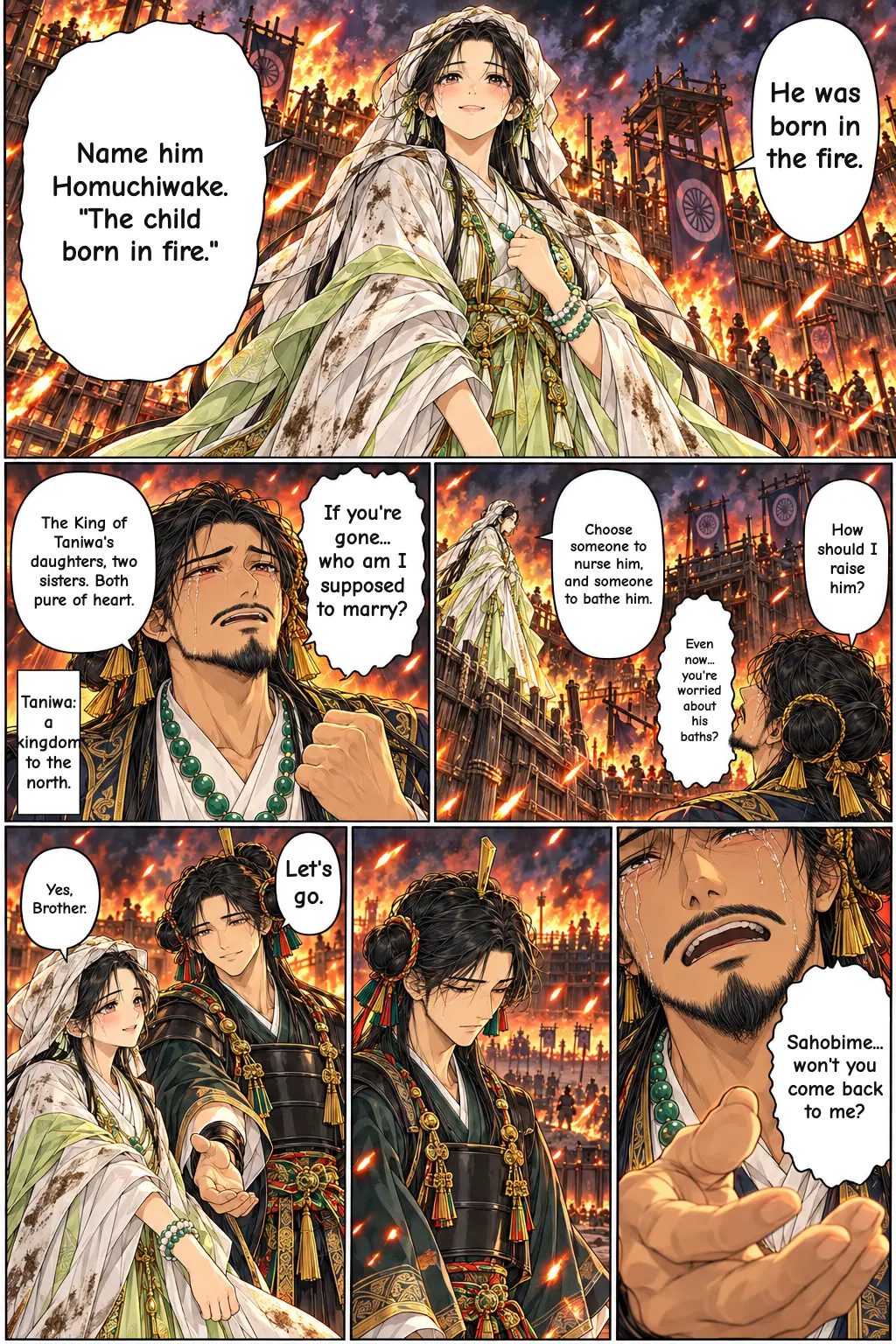
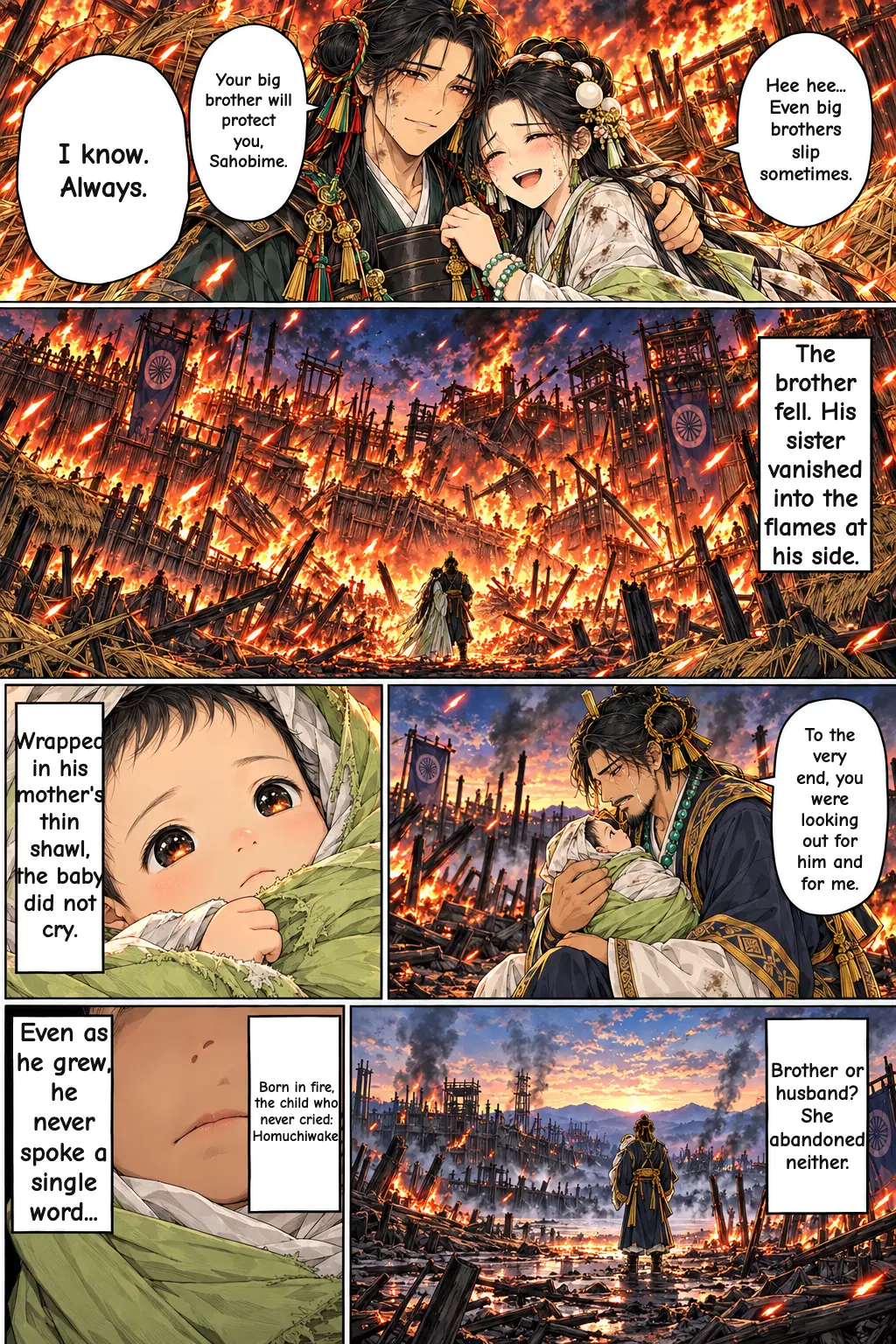
The Emperor orders his strongest, fastest soldiers to grab the mother when they take the child. She expects this. She shaves her head and covers it with her own cut hair, rots the cords of her jewels and winds them three times around her wrist, and weakens her clothes with sake. When the soldiers seize her, her hair comes away, the cords snap, and the cloth tears. They return with only the baby. Furious, the Emperor takes land away from the jewel-makers, and the text says this is the origin of a proverb. He then asks her about the child. She names him Homuchiwake because he was born in the fire while the rice fortress burned. She tells him how the boy should be nursed and raised, and she recommends two daughters of a prince of Tanba, Ehime and Otohime, as his future consorts. In the end, Sahobiko is killed and his sister follows him in death.
What the Story Is About
At its heart, the story is about divided loyalty. "Husband or brother?" is a question with no good answer. Some scholars read the tale as a reflection of real tensions in early Japan, where powerful families sent daughters to marry into the royal house and a woman's birth family and her marriage could pull her in opposite directions. Other readings focus on the close tie between siblings born of the same mother.
Sahobime is far from a passive victim. She cannot bring herself to kill her husband, she confesses when she cannot hide the truth, and she stays loyal to her brother. Yet she also thinks ahead. She saves her son, outwits the soldiers, names the child, and arranges his upbringing and the Emperor's future marriages. Her final choice abandons neither man.
The story also uses rich symbols: a dream of rain and a snake as warnings, and a fortress built from rice, the staple of the ancient economy. Homuchiwake's story goes on in the Kojiki, which later tells of a prince who cannot speak even as he grows up.
What the Manga Adds or Changes
The Kojiki tells this story in a few spare lines, so the manga fills in a great deal. The characters' faces, ages, clothing, and hairstyles are invented, though they are designed to suggest Japan's Kofun period. The size of the rice fortress, the siege lines, and the scale of the fighting are also the manga's own. So are the setting and time of the lap scene, Sahobime's thoughts as she raises the blade three times, and the exact words of her confession. The manga keeps the key points of the original: her brother's question, the dagger, the three attempts, the tears, and the dream.
The manga also shortens or restages some parts. The instructions about nurses and caretakers are condensed, and the jewel-makers' punishment may be brief or left out. The Kojiki never makes clear how the Emperor and Sahobime spoke to each other across the siege, so the manga's version of those exchanges is its own interpretation.
The biggest point to note is the ending. The original says only that Sahobiko was killed and that his sister followed him. It does not describe her death, and it never directly says who set the fire or that the fortress burned down. The fire is implied only by her explanation of her son's name. Showing the end through a burning fortress is a common reading of the text, not something it states outright.
Where to Read It
If this tale of love and loyalty caught your interest, you can read it as a manga in Episode 6 of KOJIKI Book II: The Age of Heroes on Manga Portal. Every episode is free, and you don't need to sign up. It's a quick way to see Sahobime's impossible choice unfold panel by panel, and to keep going through the rest of the Kojiki's age of heroes.
Characters in this episode
Sahobime
Emperor Suinin's beloved consort, who is torn between her husband and her brother and ends up choosing her brother's side while saving her son.
Sahobiko
Sahobime's brother by the same mother, who plots to have the Emperor killed so the two of them can rule, and defends himself in a fortress of rice.
Emperor Suinin (Ikume-iribiko-isachi)
Sahobime's husband, who survives the plot thanks to her tears and confession but cannot stop loving her even as he fights her brother.
Homuchiwake
The son of Sahobime and the Emperor, born inside the rice fortress and handed out to his father as a baby.
The Emperor's soldiers
Strong, fast fighters sent to grab Sahobime along with her child, who are outwitted by her preparations and come back with only the baby.
FAQ
Who is Sahobime in the Kojiki?
Sahobime is the consort of Emperor Suinin in the Kojiki's middle volume. Her brother Sahobiko asks her to kill the Emperor in his sleep. She cannot do it, and she later joins her brother in his rebellion.
Why didn't Sahobime kill Emperor Suinin?
She raised the dagger three times but was overcome by grief each time. Her tears fell on the Emperor's face and woke him, and she confessed the plot when he asked her about his strange dream.
What is the rice fortress (inaki) in the Kojiki?
An inaki is a fortress made of stacked rice. Sahobiko builds one to hold off the Emperor's army, and Sahobime gives birth to her son inside it.
Why is Sahobime's son named Homuchiwake?
In the Kojiki, Sahobime says she named him that because he was born in the fire while the rice fortress was burning. The Kojiki tells more of Homuchiwake's story later.
Is the Sahobiko rebellion also in the Nihon Shoki?
Yes. The Nihon Shoki (720) also tells of Sahobiko's rebellion, with some differences in detail. This article follows the Kojiki version.