Episode 5I Sewed a Thread to My Secret LoverThe Legend of Mount Miwa
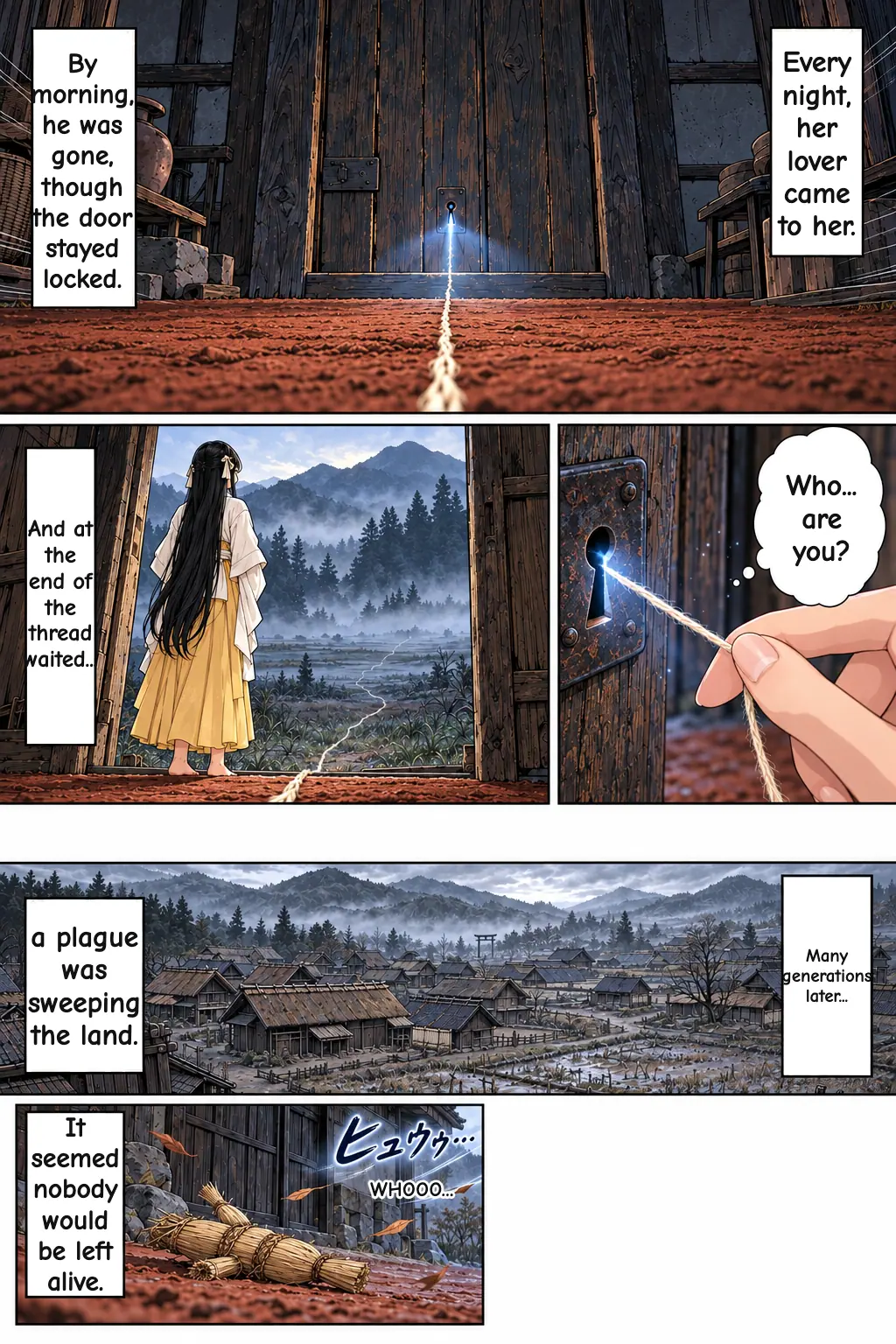
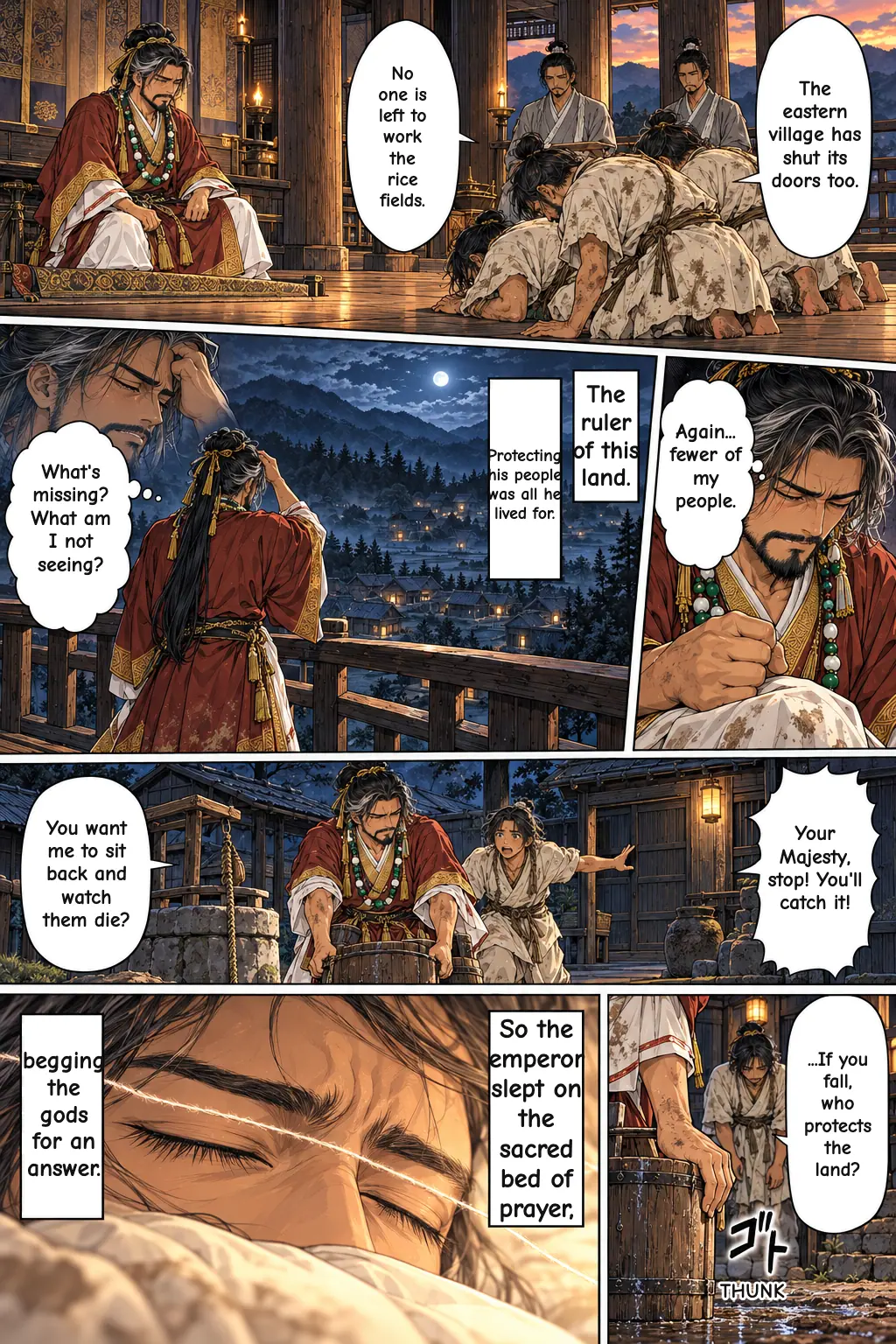
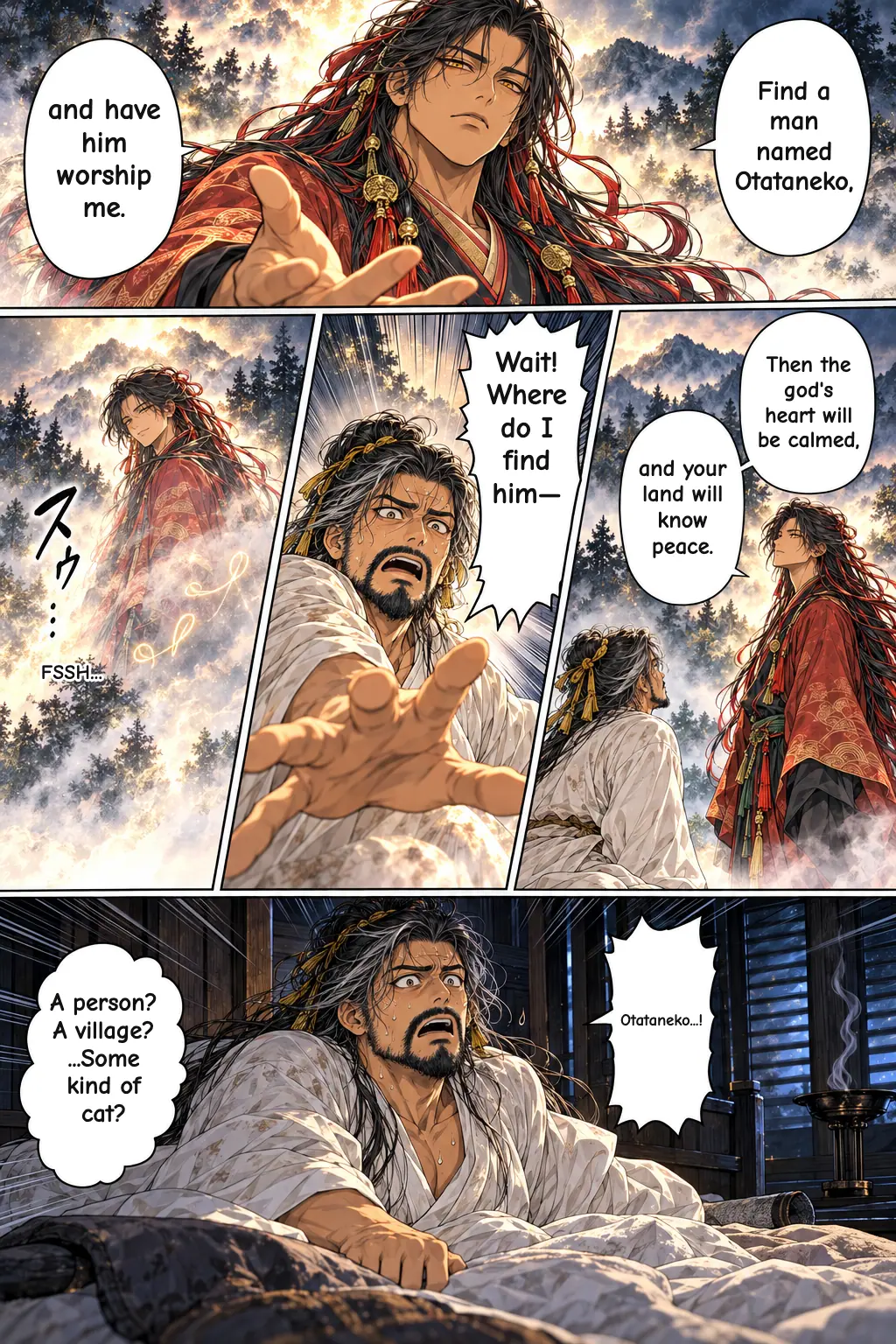
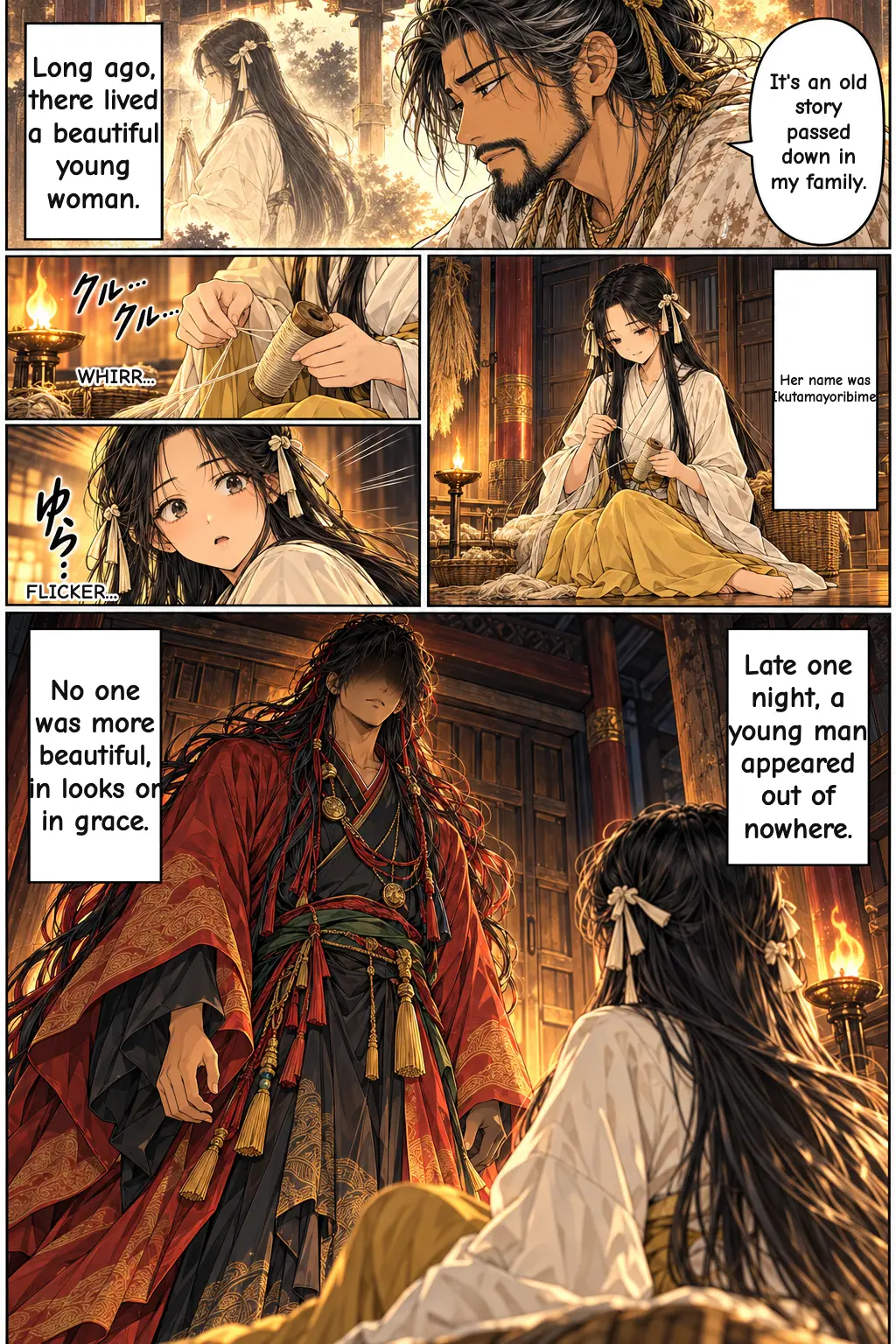
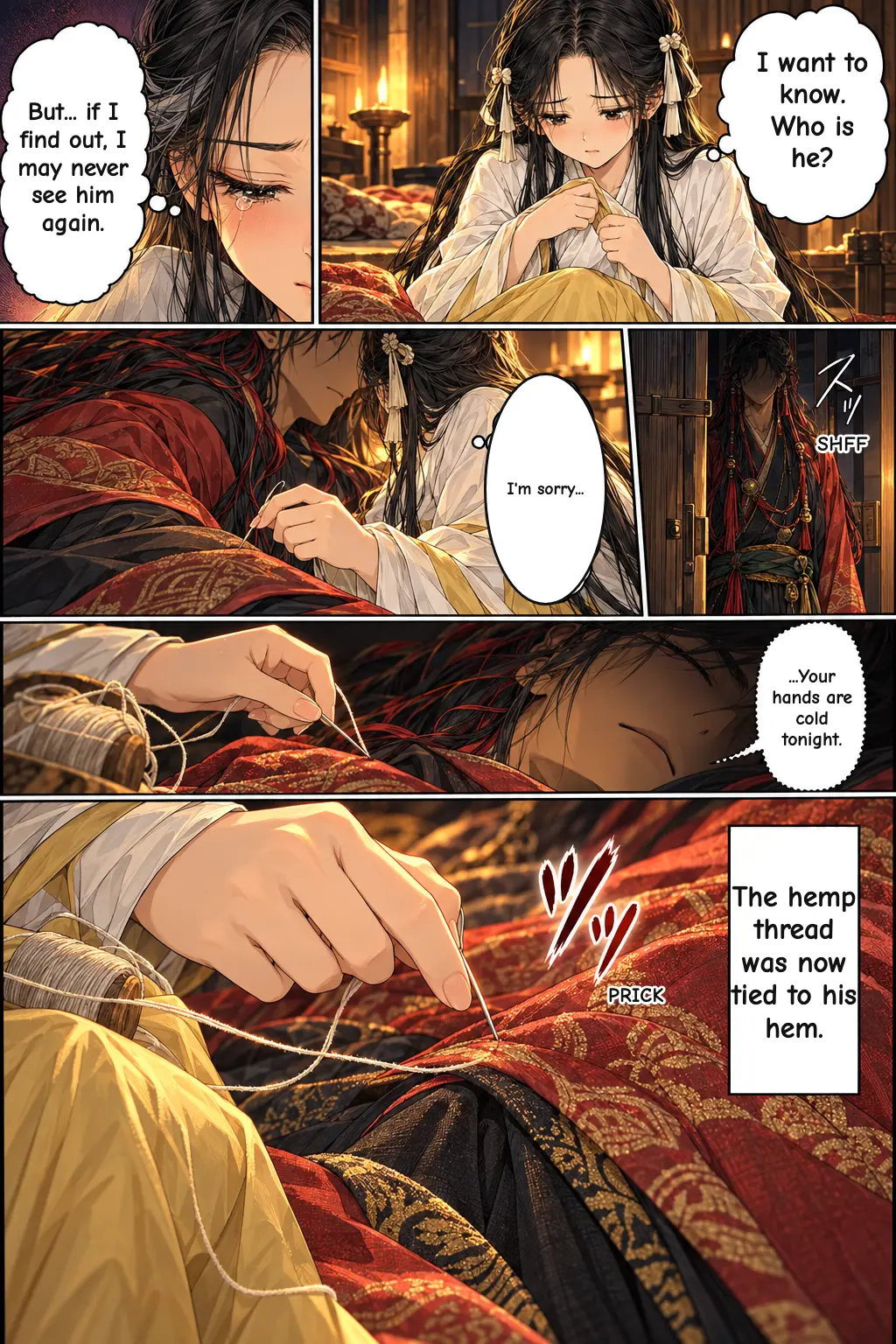
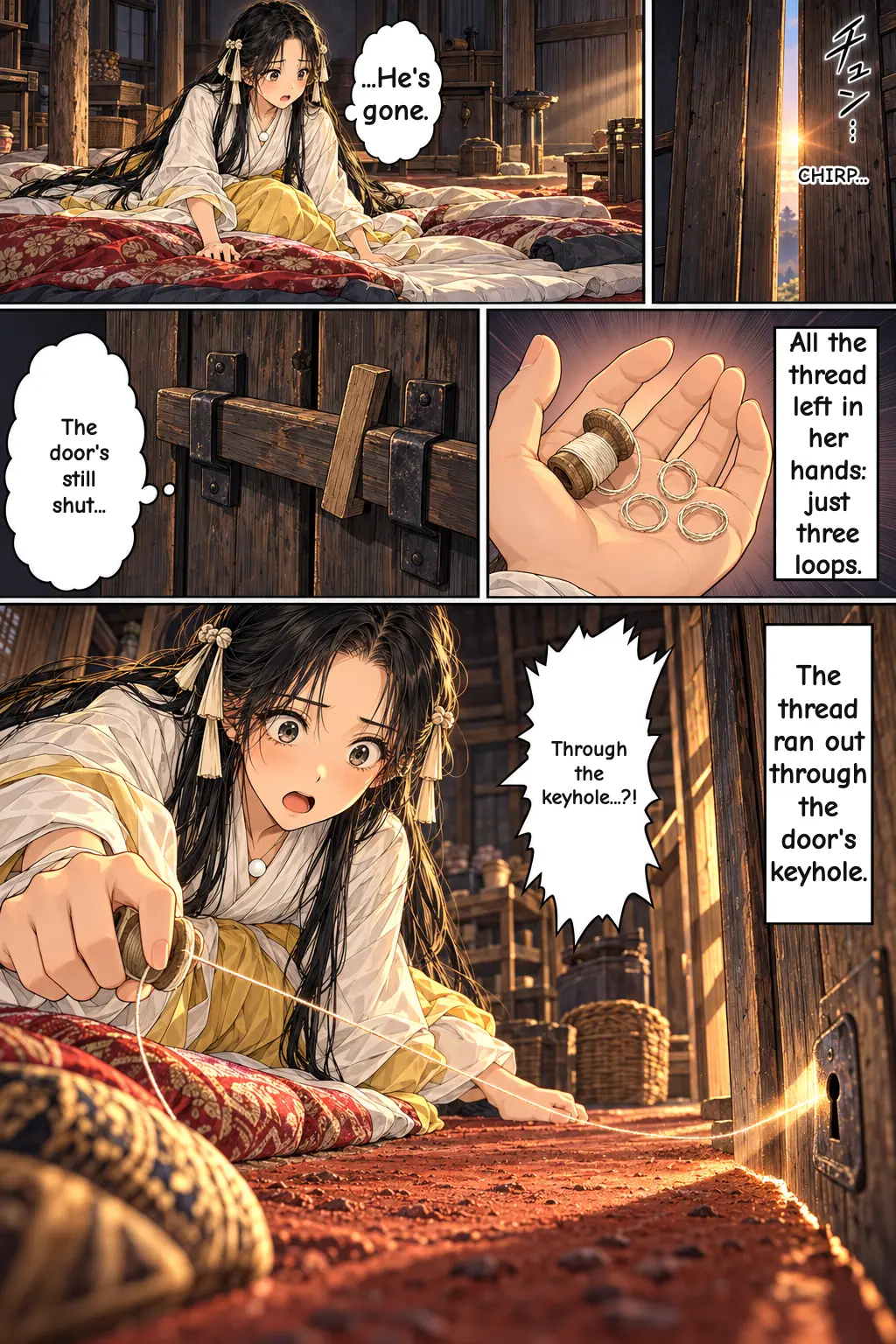
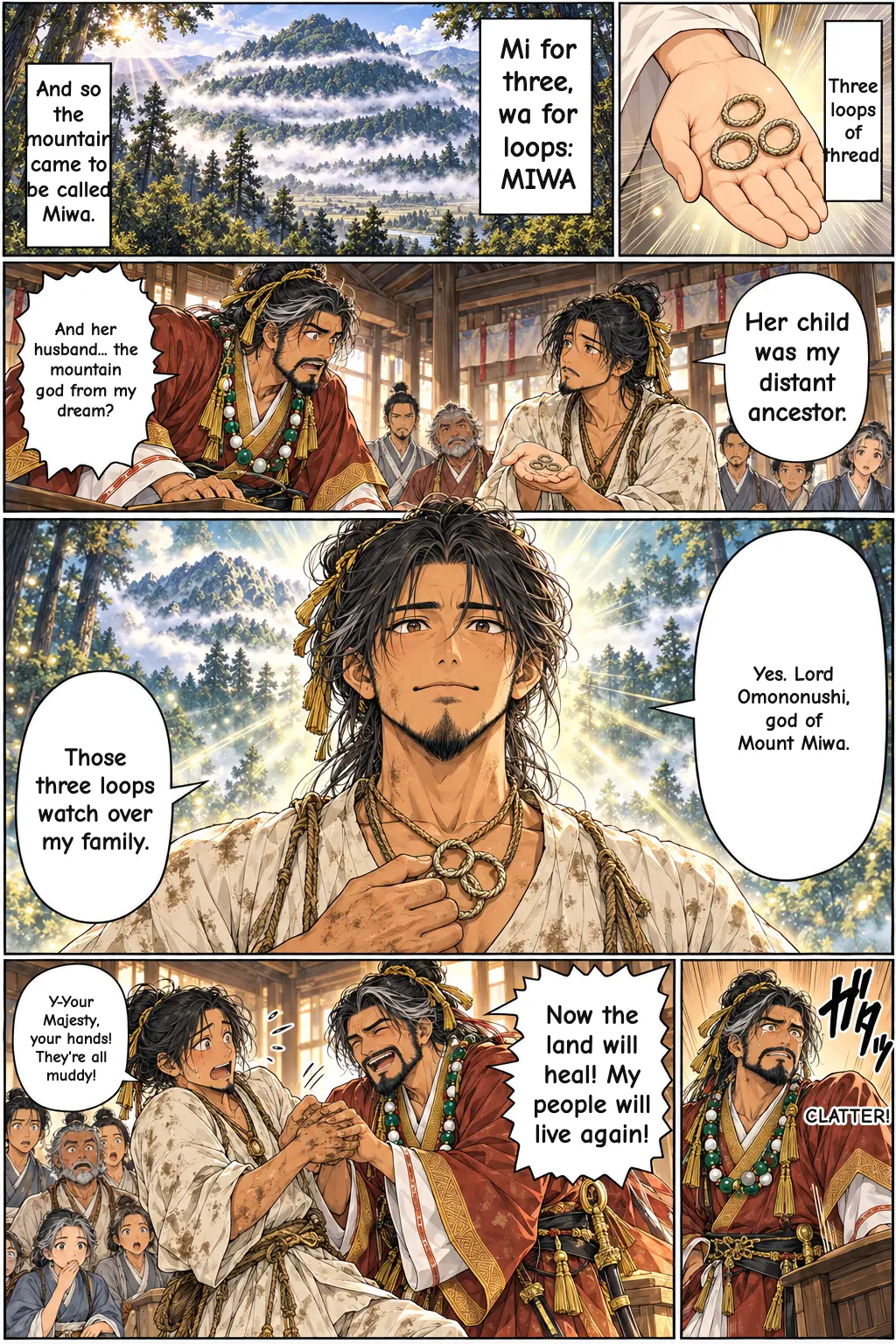
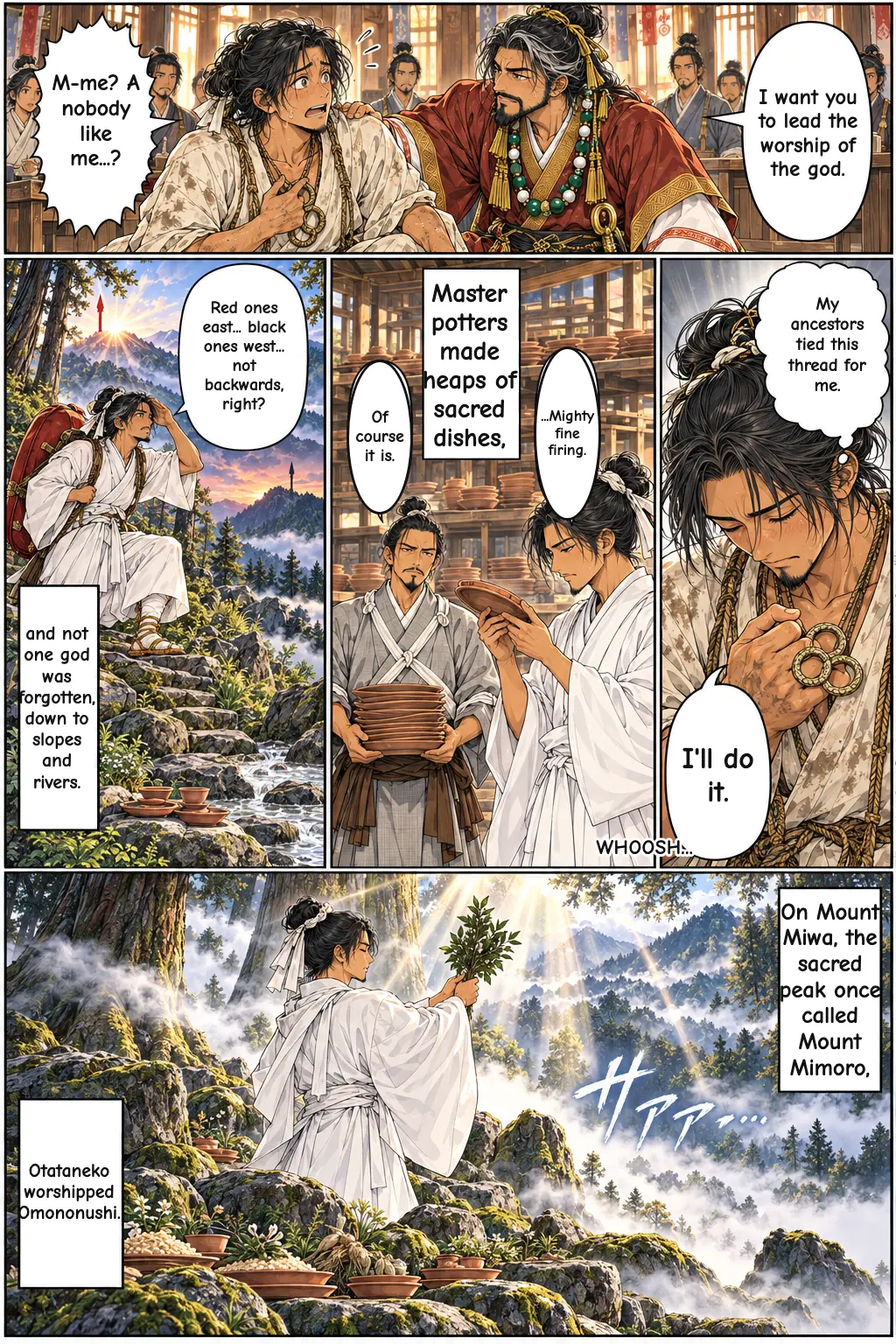
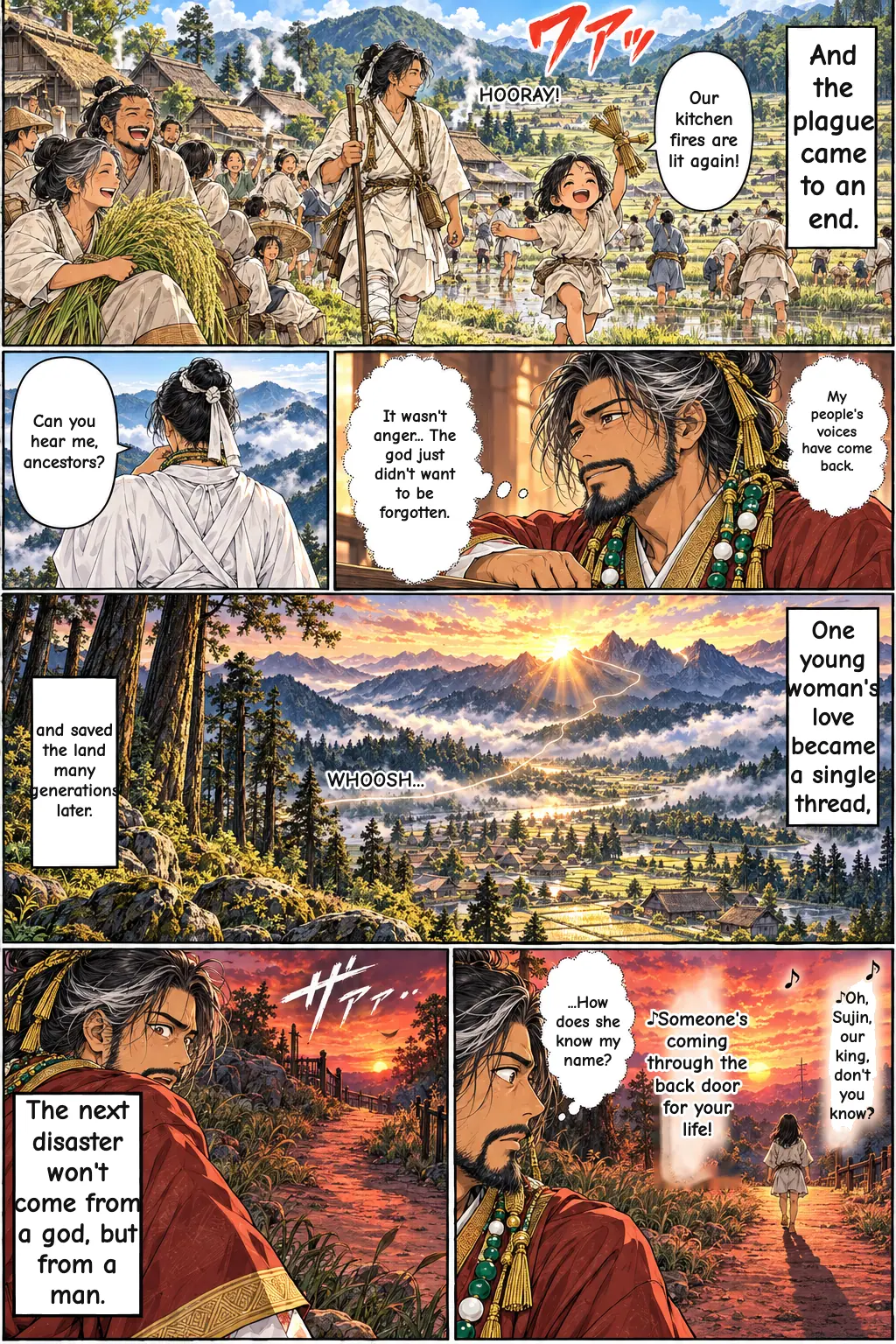
A plague has nearly emptied the land. Emperor Sujin is told in a dream to find a man named Otataneko, though nobody has ever heard of him. When he is found at last, Otataneko tells an old family story. Long ago, a young woman named Ikutamayoribime was visited every night by a handsome stranger who would not give his name. She stitched a single hemp thread into his robe. In the morning, it ran out through the keyhole of her locked door, and at its end waited the very god the emperor met in his dream.
The Legend of Mount Miwa: Kojiki's Thread-and-Keyhole Myth Explained
The Plague and Emperor Sujin's Dream
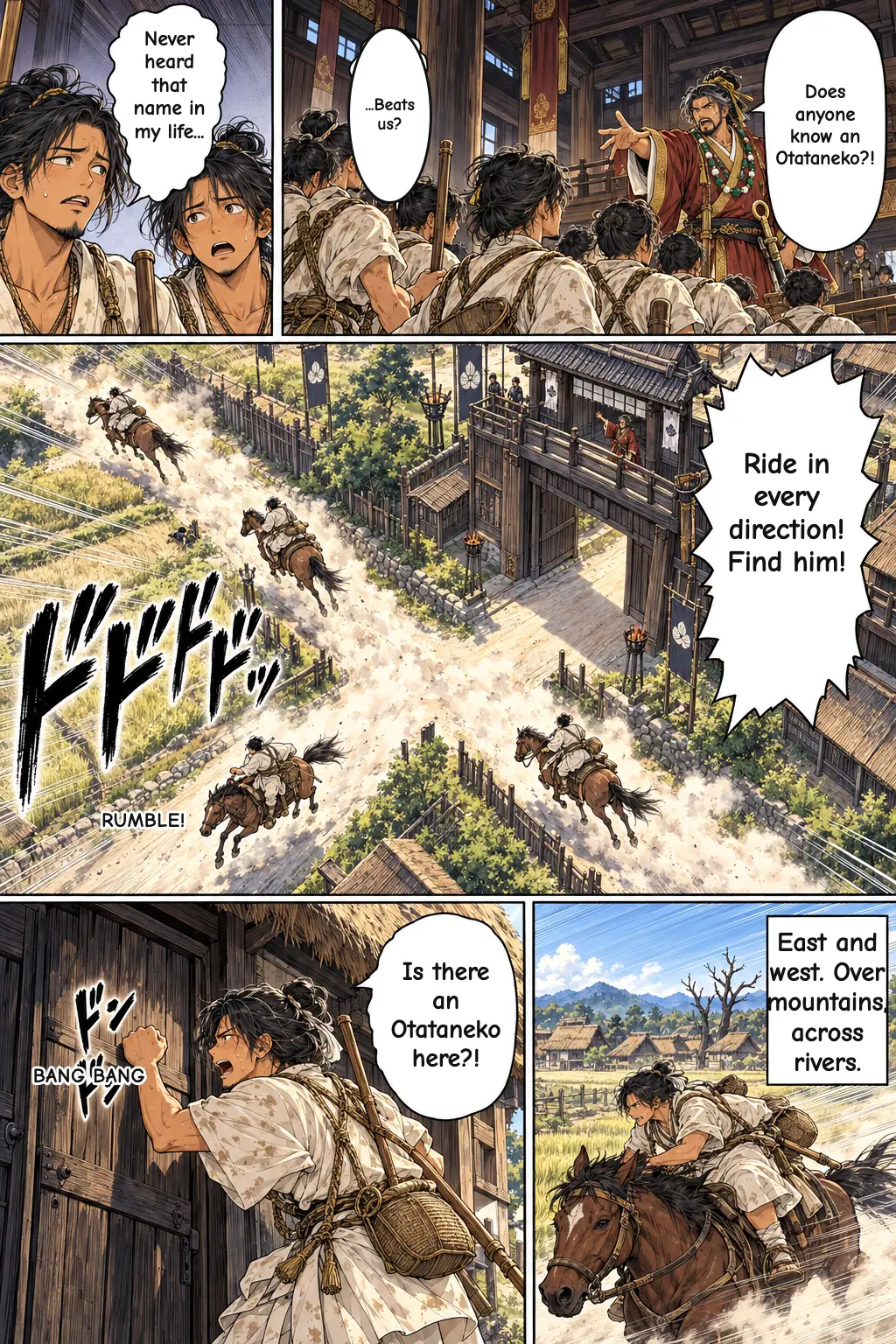
The Kojiki, compiled in 712, is the oldest surviving book of Japanese history and myth. Its second volume moves from the age of the gods to the age of early rulers and heroes. In the chapter on Emperor Sujin, a legendary early ruler, the story opens with disaster: epidemics broke out everywhere, and the people were close to dying out entirely. The text gives no further detail about the sickness, just that one stark line.
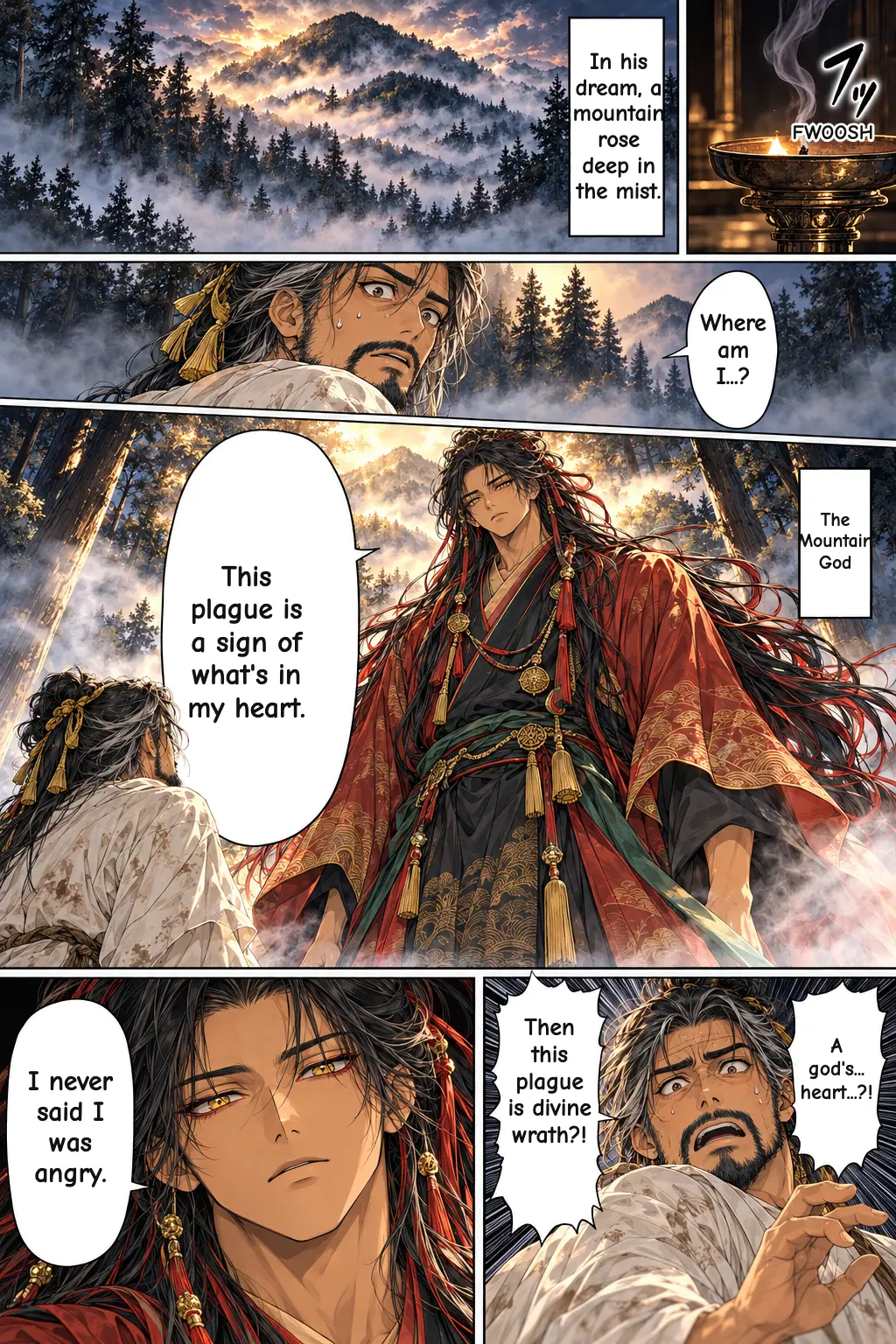
The grieving emperor lay down on a kamudoko, a sacred bed used to receive messages from the gods. That night Omononushi, a great god of the land, appeared to him in a dream. His message was blunt: this plague is my will. If a man named Otataneko worships me, the divine anger will stop and the country will be at peace.
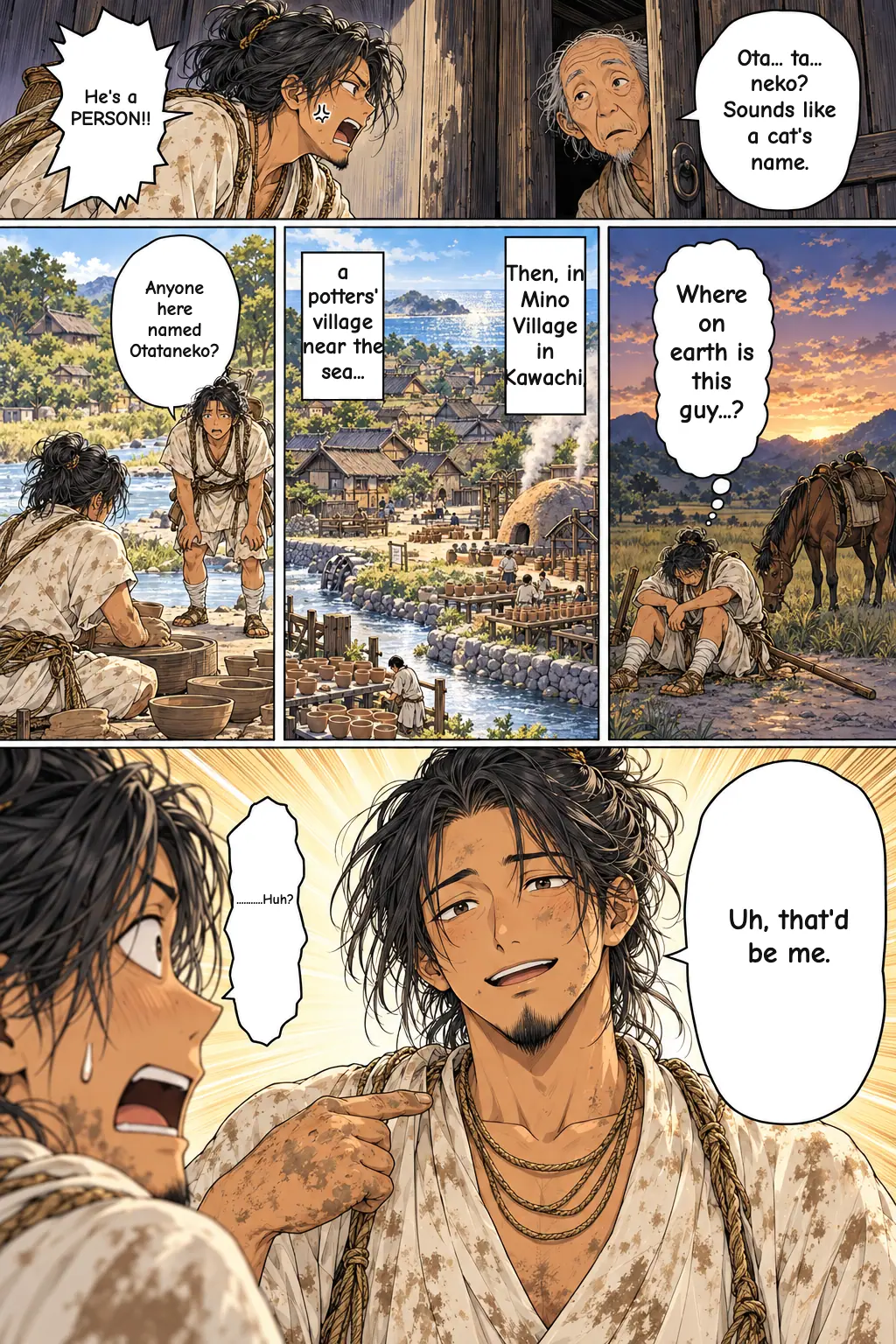
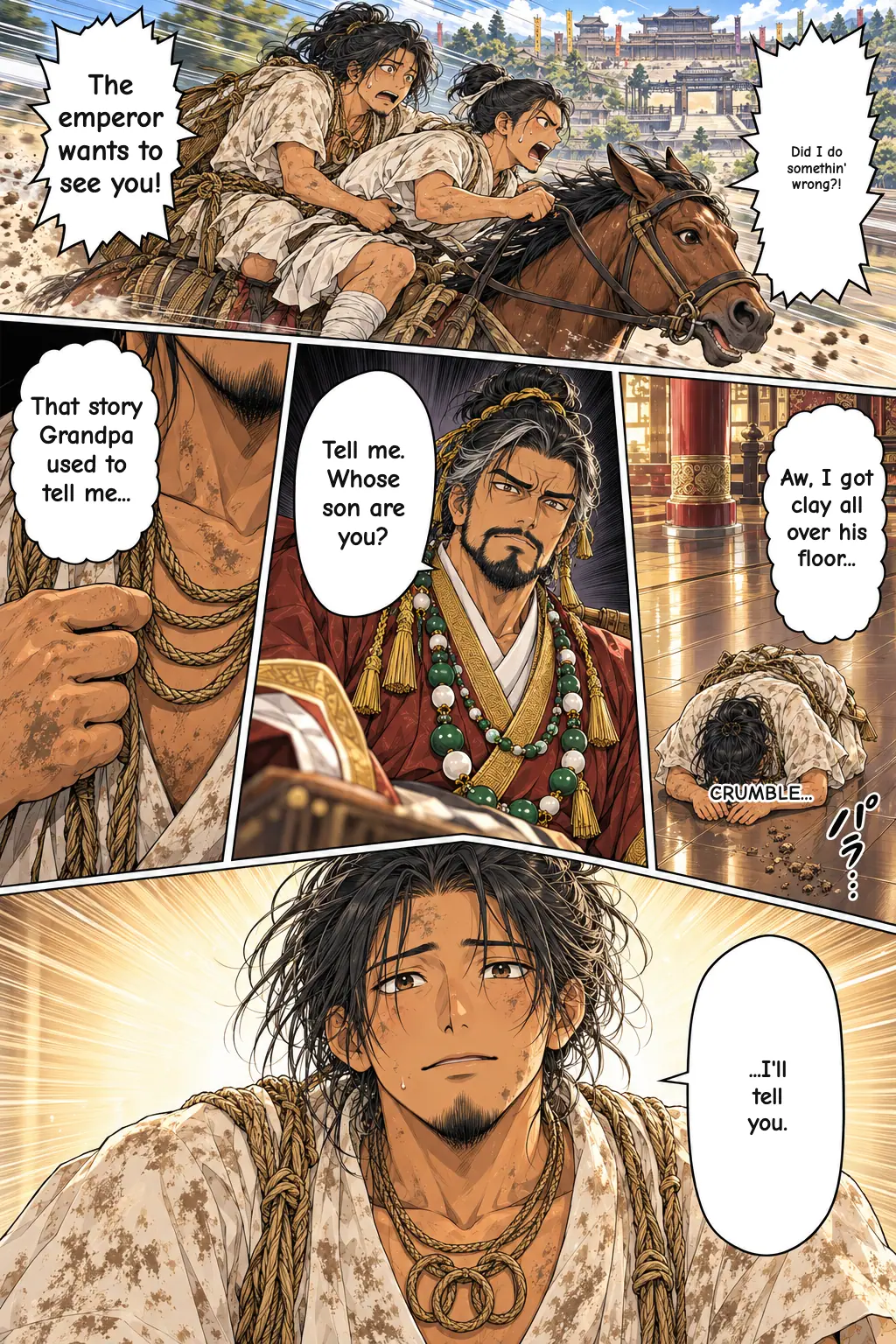
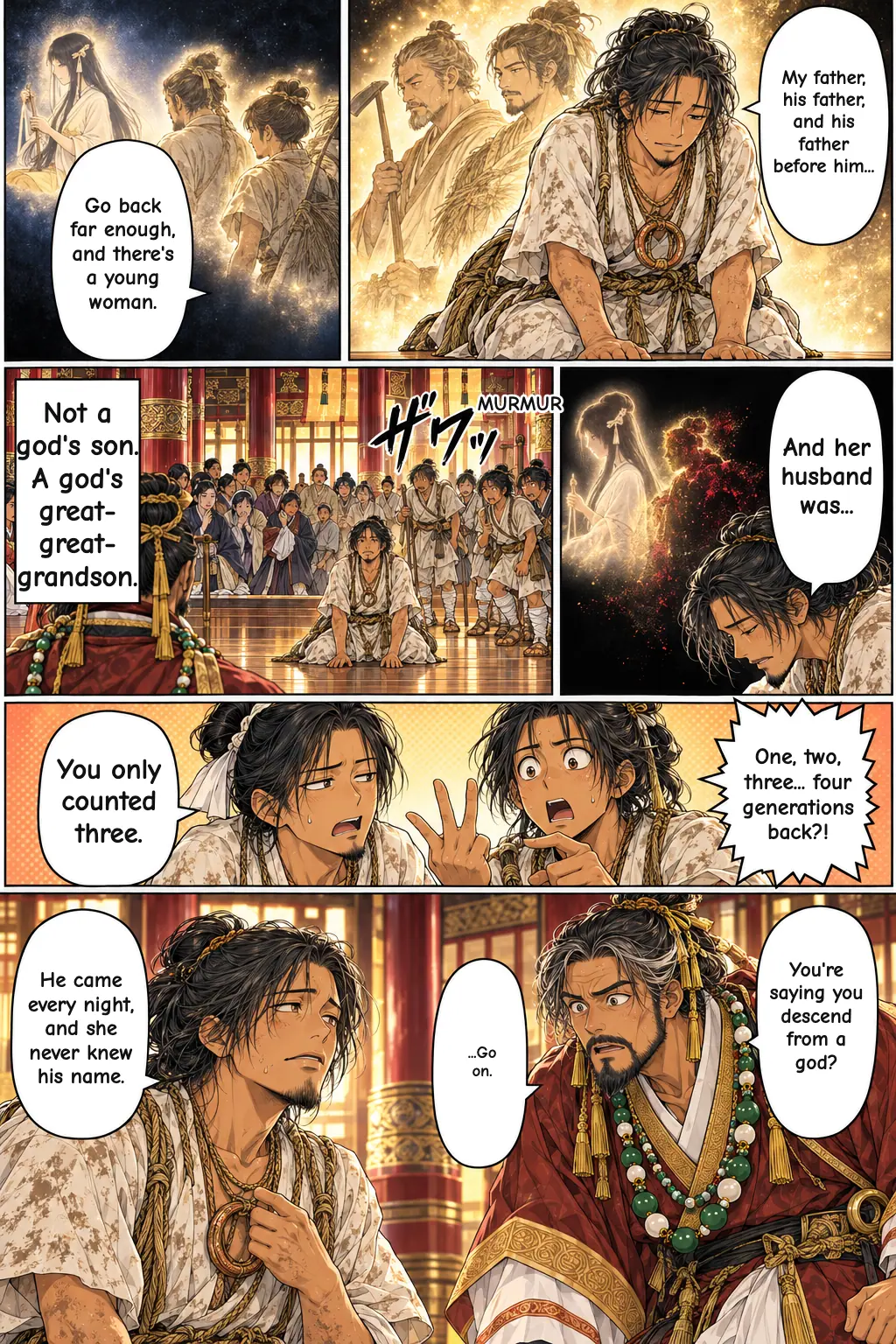
Sujin sent fast messengers on horseback in every direction. They found Otataneko in the village of Minu, in the province of Kawachi, and brought him to court. When the emperor asked whose son he was, Otataneko recited his family line: Omononushi had married Ikutamayoribime, daughter of Suetsumimi; their son was Kushimikata; his son was Iikatasumi; his son was Takemikazuchi; and Otataneko was his son. In other words, he was the god's own great-great-grandson.
Overjoyed, the emperor declared that the realm would now be calm and the people would prosper. He made Otataneko the god's priest and had him worship the Great God of Omiwa at Mount Mimoro. A man named Ikagashikoo made a great many sacred offering dishes, shrines were set up for the gods of heaven and earth, red shields and spears went to the god of Sumisaka in Uda, and black ones to the god of Osaka. Offerings reached even the gods of hill slopes and river shallows, with none forgotten. The plague ended completely.
Ikutamayoribime and the Thread Through the Keyhole
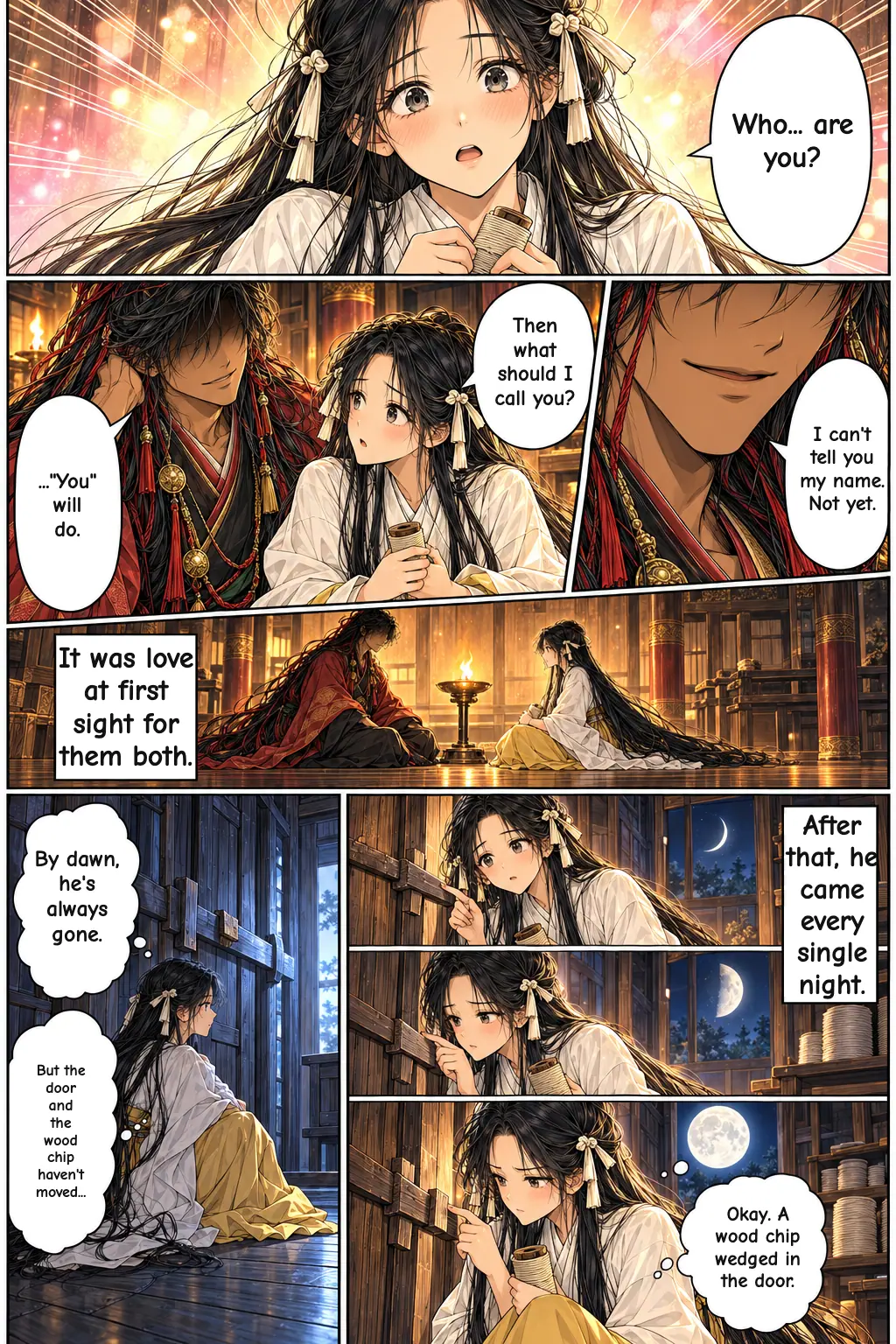
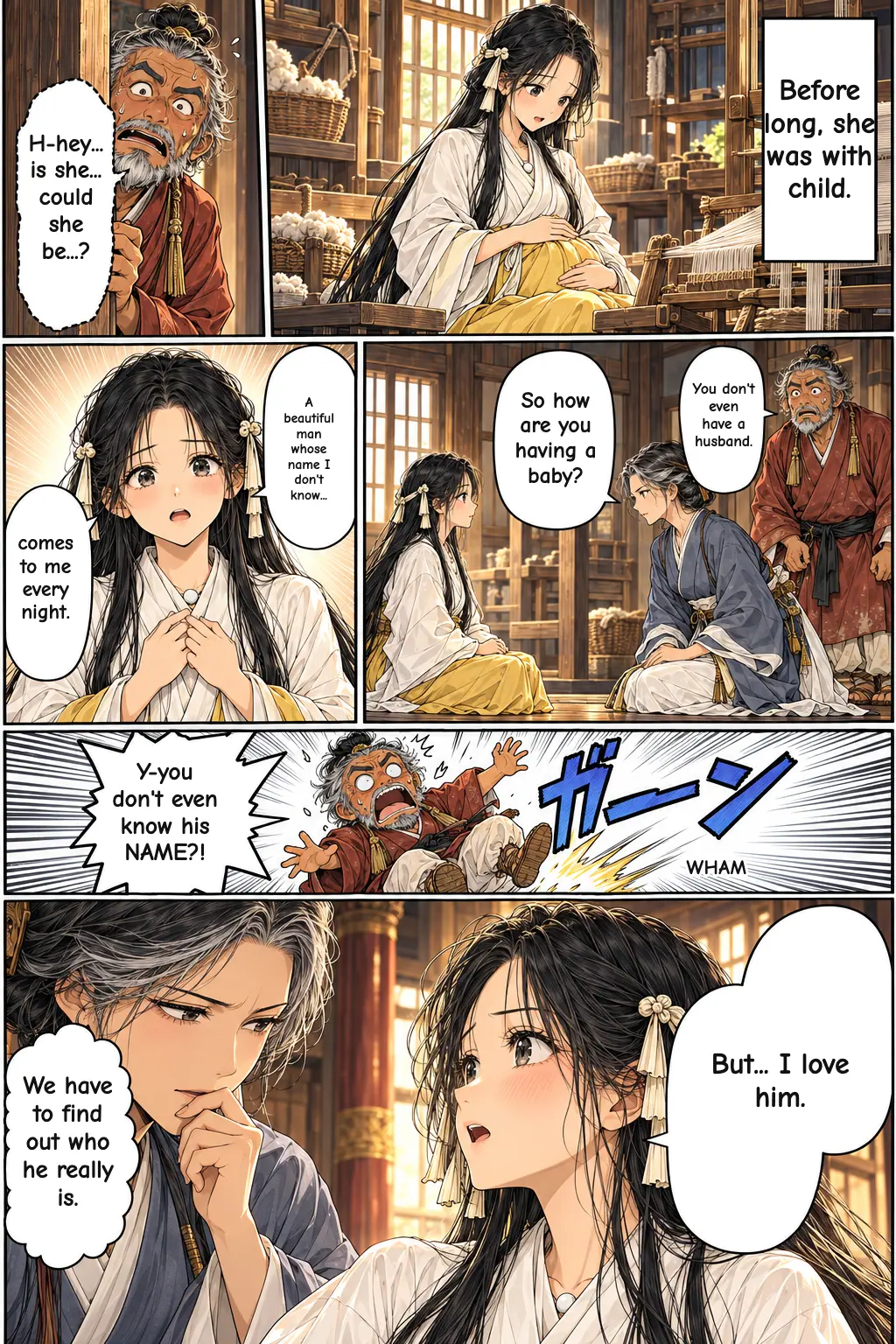
The Kojiki then steps back to explain how anyone knew Otataneko descended from a god. Ikutamayoribime was a beautiful young woman. One night, out of nowhere, a young man came to her, so splendid in looks and bearing that nobody of the time could compare. They fell for each other and lived as husband and wife, and before long she was pregnant.
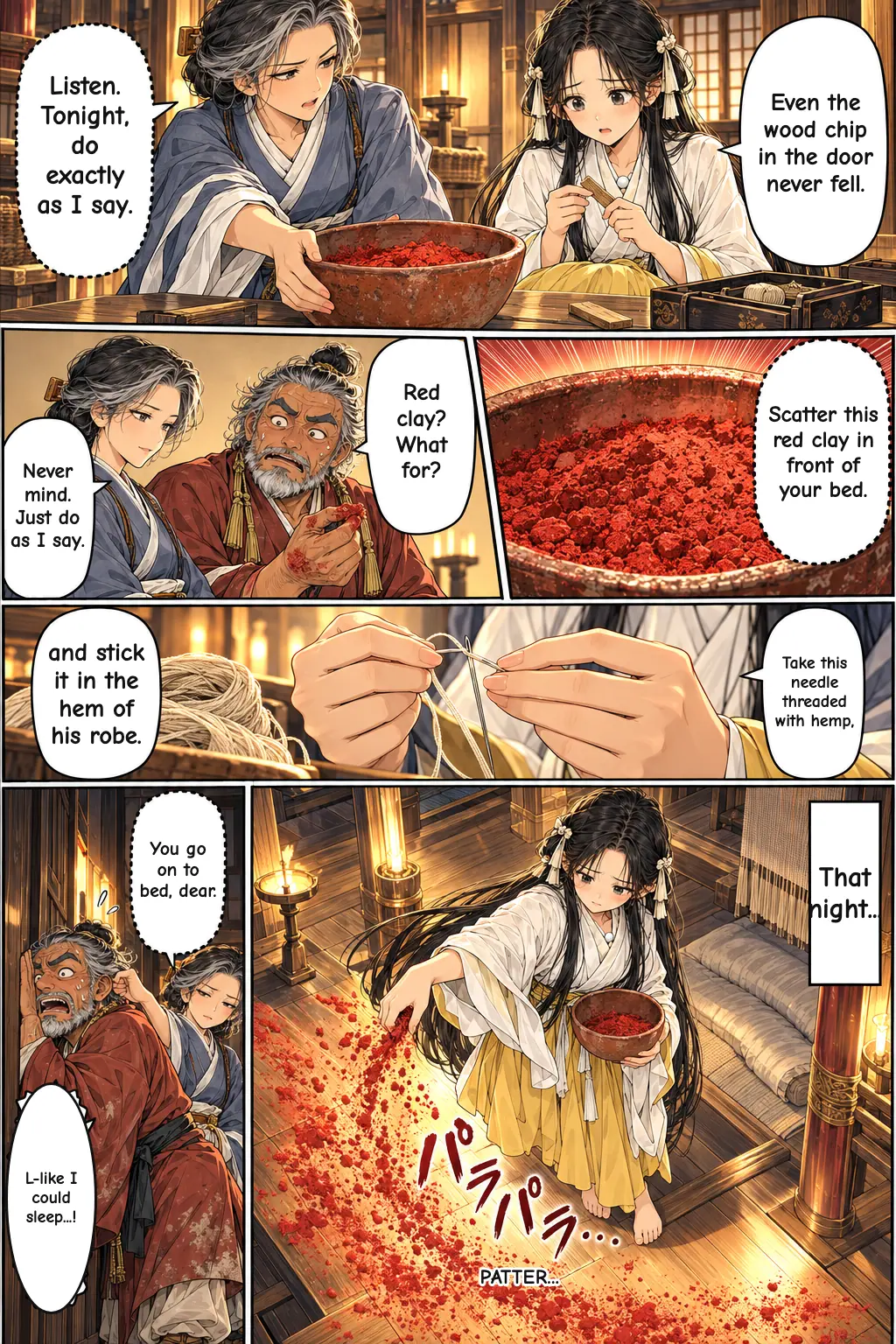
Her parents were puzzled: how could she be expecting when she had no husband? She told them a handsome young man whose name she did not know came every evening. Wanting to learn who he was, the parents told her to scatter red earth in front of the bed, thread a needle with spun hemp, and pin it to the hem of his robe. The text never says what the red earth showed.
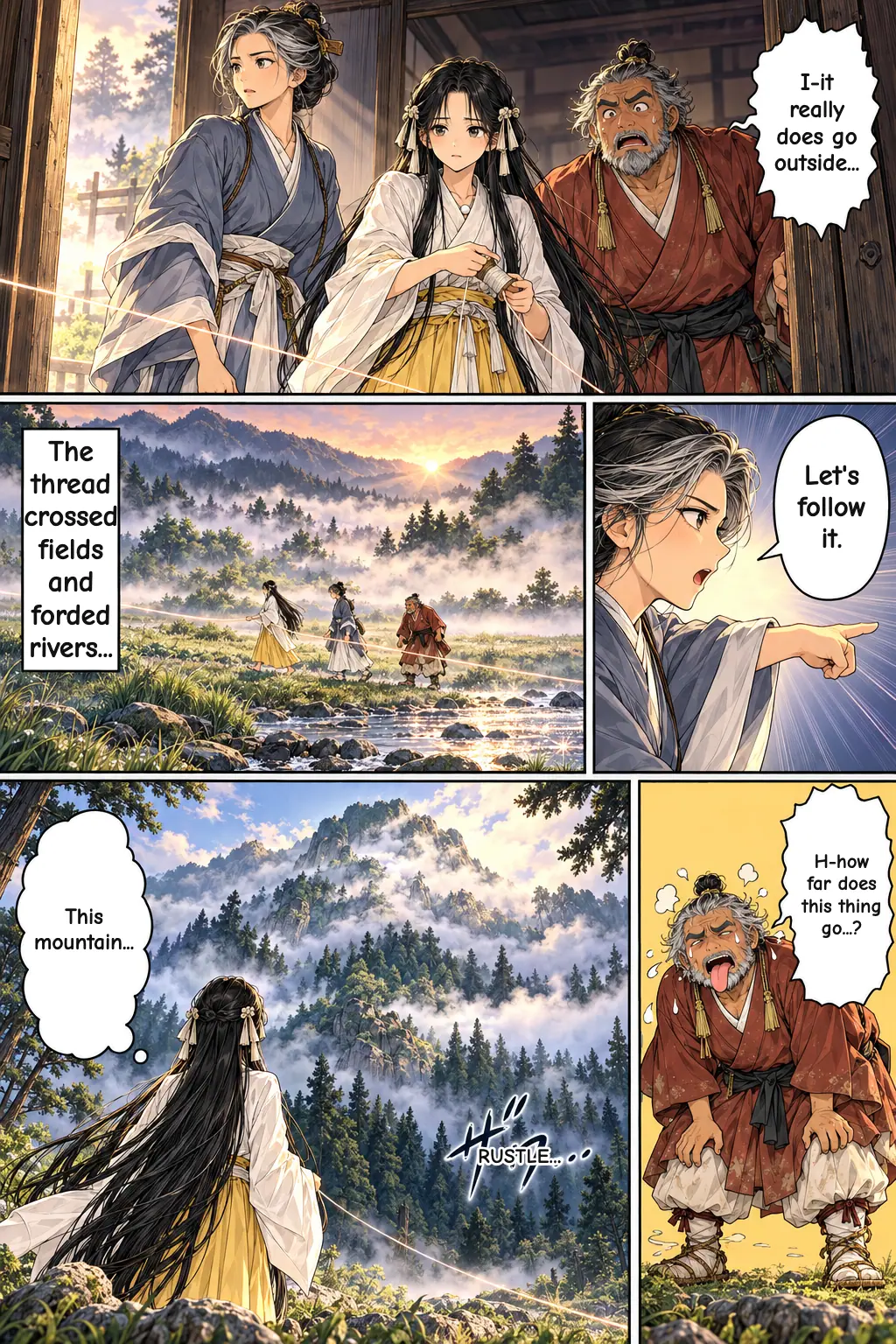
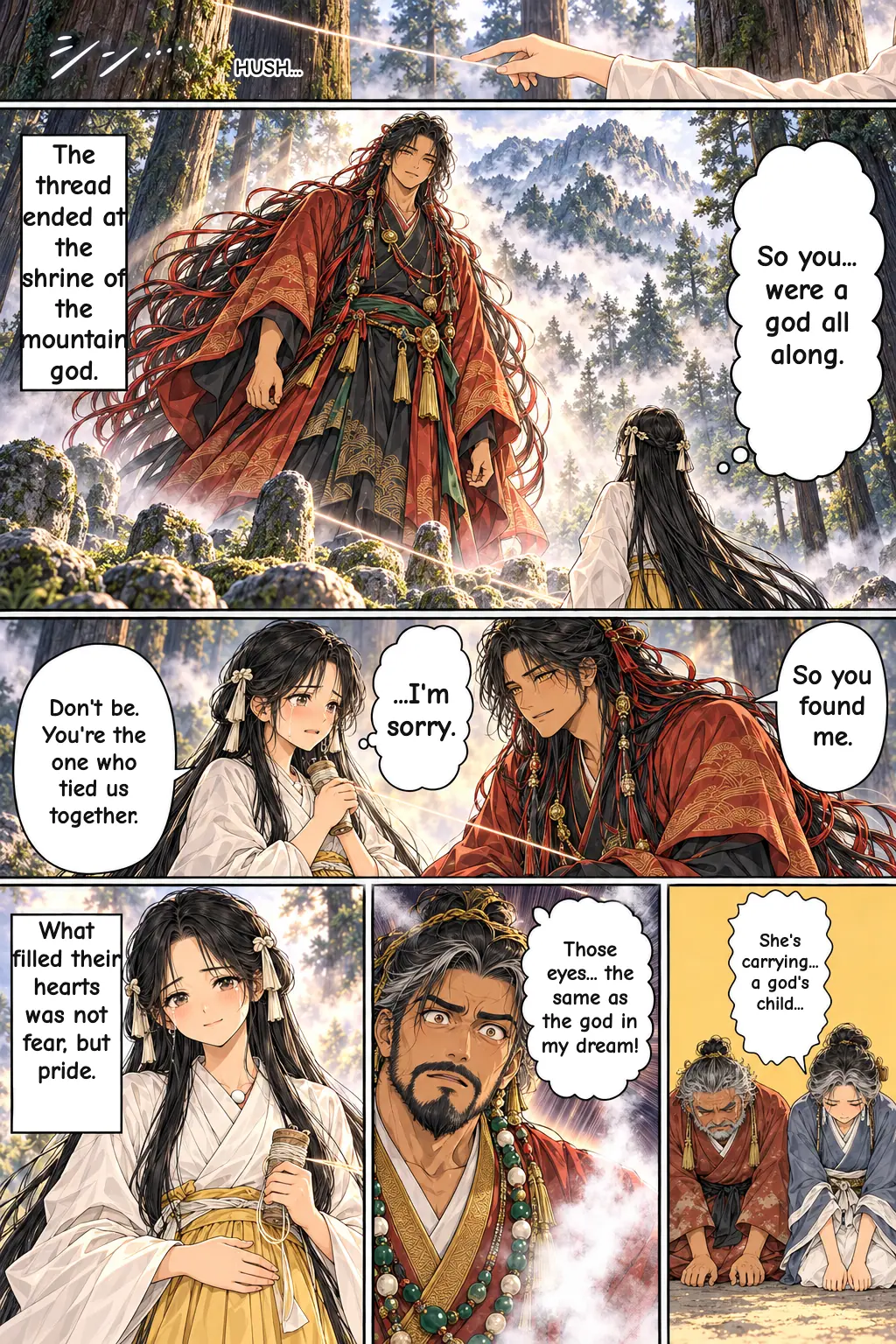
In the morning, the hemp thread had passed out through the keyhole of the door, and only three loops of it were left. Since he had clearly left by the keyhole, they followed the thread. It led to Mount Miwa and stopped at the god's shrine. So they knew the child was a god's child. The Kojiki explains that the place was named Miwa after the three loops (mi-wa) left behind. It adds that Otataneko was the ancestor of the Miwa and Kamo clans.
Main Characters
Emperor Sujin, Omononushi, Otataneko, Ikutamayoribime and her unnamed visitor are the heart of the episode. The Kojiki never names the visitor directly in this passage, but Otataneko's family line says Ikutamayoribime's husband was Omononushi, so readers generally take the mysterious young man to be the god himself. The text describes none of these figures in much depth: no ages, no faces, and no description of what the god looks like in the dream.
What This Myth Tells Us
The story reflects a worldview in which disaster could come from an offended or neglected god, and the cure was proper worship. Importantly, the worship had to come from the right person: the god asked for his own descendant. One common reading is that the episode explains, and lends authority to, the priestly role of the clans who claimed descent from Otataneko.
It is also a classic tale of a god marrying a human woman in secret, and an origin story for a place name. Mount Mimoro and Mount Miwa are traditionally identified with Mount Miwa in present-day Nara Prefecture, where Omiwa Shrine stands; the mountain itself has long been regarded as sacred. In later tradition and other early texts, the god of Miwa is linked with snakes, but the Kojiki passage itself says nothing about a snake form.
What the Manga Changes
The manga follows the original's main events: the plague, the dream, the search, the lineage, the worship, and the hemp thread through the keyhole. Some parts are creative additions. In the Kojiki, Otataneko only recites his family line, and the Mount Miwa romance is told by the narrator; the manga has Otataneko tell it as an old family story. The look of the god in the dream, the scenes of the plague, the messengers' search, and Otataneko's personality are all invented, since the source gives none of these.
The romance between Ikutamayoribime and her visitor is also filled out with conversations and everyday moments, where the original says only that they were drawn to each other and lived together. The source doesn't say who followed the thread, how long it took, or what the god's shrine looked like, so these scenes are the artists' interpretation. The thread itself is hemp, a natural off-white; the "thread to my secret lover" in the title is a storytelling phrase, not a detail from the text.
Where to Read It
If you would like to see this quiet, eerie legend come alive, Episode 5 of KOJIKI Book II: The Age of Heroes on Manga Portal tells it in full, from the emperor's dream to the thread at the shrine. Every episode is free to read, with no sign-up needed, so you can start here or go back to the beginning of the series.
Characters in this episode
Emperor Sujin
A legendary early emperor whose reign is struck by plague and who follows a dream to restore proper worship of the gods.
Omononushi
A great god who causes the plague, appears in the emperor's dream, and is worshipped at Mount Miwa; the family line identifies him as Ikutamayoribime's secret husband.
Otataneko
The god's great-great-grandson, found in a village in Kawachi, who becomes the priest whose worship ends the plague.
Ikutamayoribime
A beautiful young woman who is visited each night by a nameless stranger and bears a child of the god.
The Mysterious Young Man
A visitor of unmatched looks and bearing who never gives his name and leaves through the keyhole, as the hemp thread reveals.
Ikutamayoribime's Parents
Her father Suetsumimi and her mother, who devise the trick of red earth and a hemp thread to discover who the visitor is.
FAQ
What is the legend of Mount Miwa?
It is a story in the Kojiki about Ikutamayoribime, a young woman visited each night by a stranger. Her parents had her pin a hemp thread to his robe, and the thread led through the keyhole to the shrine on Mount Miwa, showing that her lover was a god.
Who is Omononushi in Japanese mythology?
Omononushi is a powerful god associated with Mount Miwa in Nara. In the Kojiki's account of Emperor Sujin, he causes a plague and tells the emperor in a dream that it will end only if his descendant Otataneko worships him.
How did the plague end in Emperor Sujin's reign?
Sujin found Otataneko, made him the priest of Omononushi at Mount Mimoro, and had offerings made to the gods of heaven and earth, slopes and rivers. According to the Kojiki, the epidemic then ended and the country became peaceful.
Why is Mount Miwa called Miwa?
The Kojiki says that when the hemp thread had run out through the keyhole, only three loops (mi-wa) were left, and the place was named after them. This is the text's own explanation of the name.
Is the god of Mount Miwa a snake?
In later tradition and some other early texts, the god of Miwa is linked with snakes. The Kojiki's version of this story, however, does not describe the god's form at all.