Episode 4Mother's Song Was a Murder WarningThe Rebellion of Tagishimimi
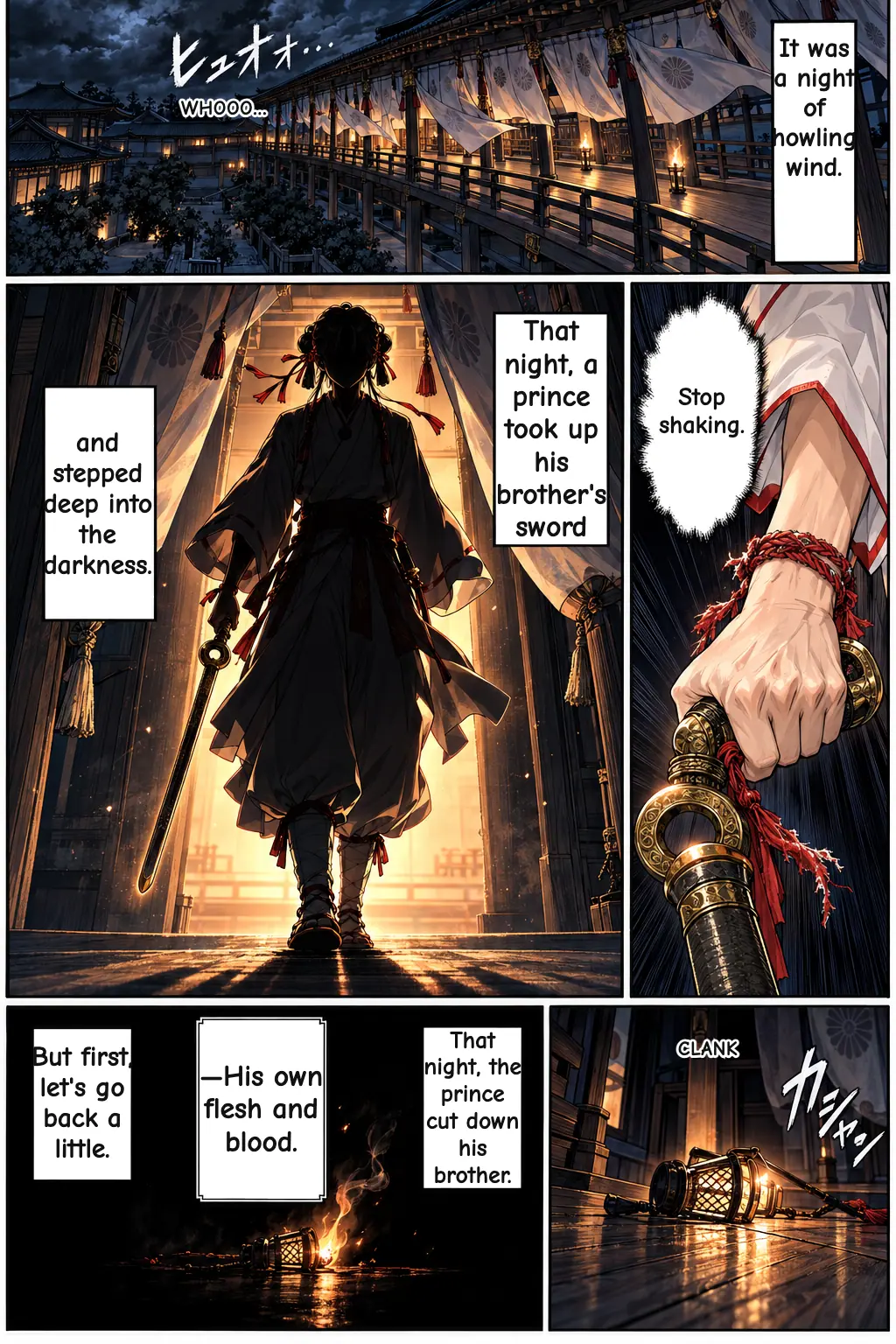
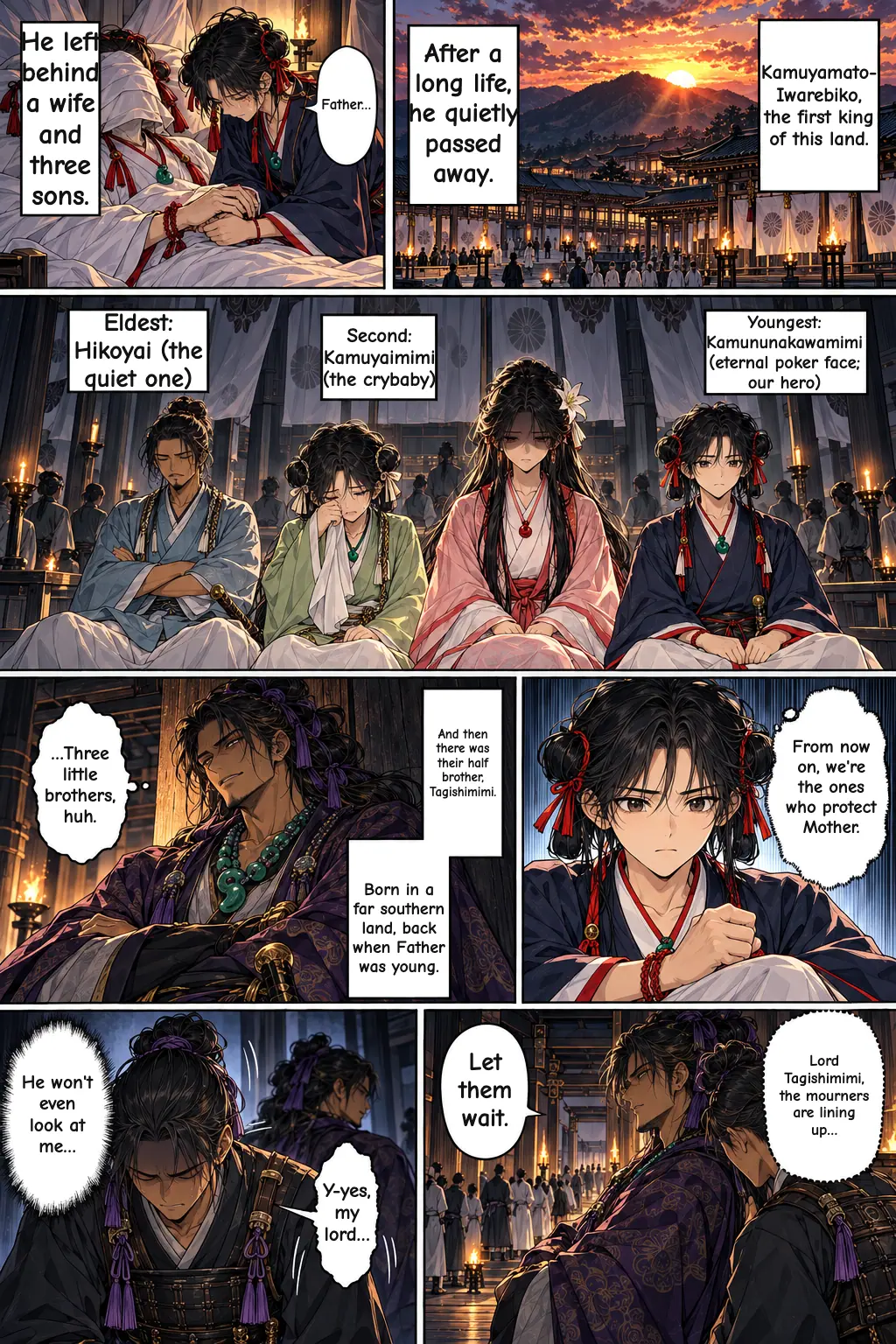
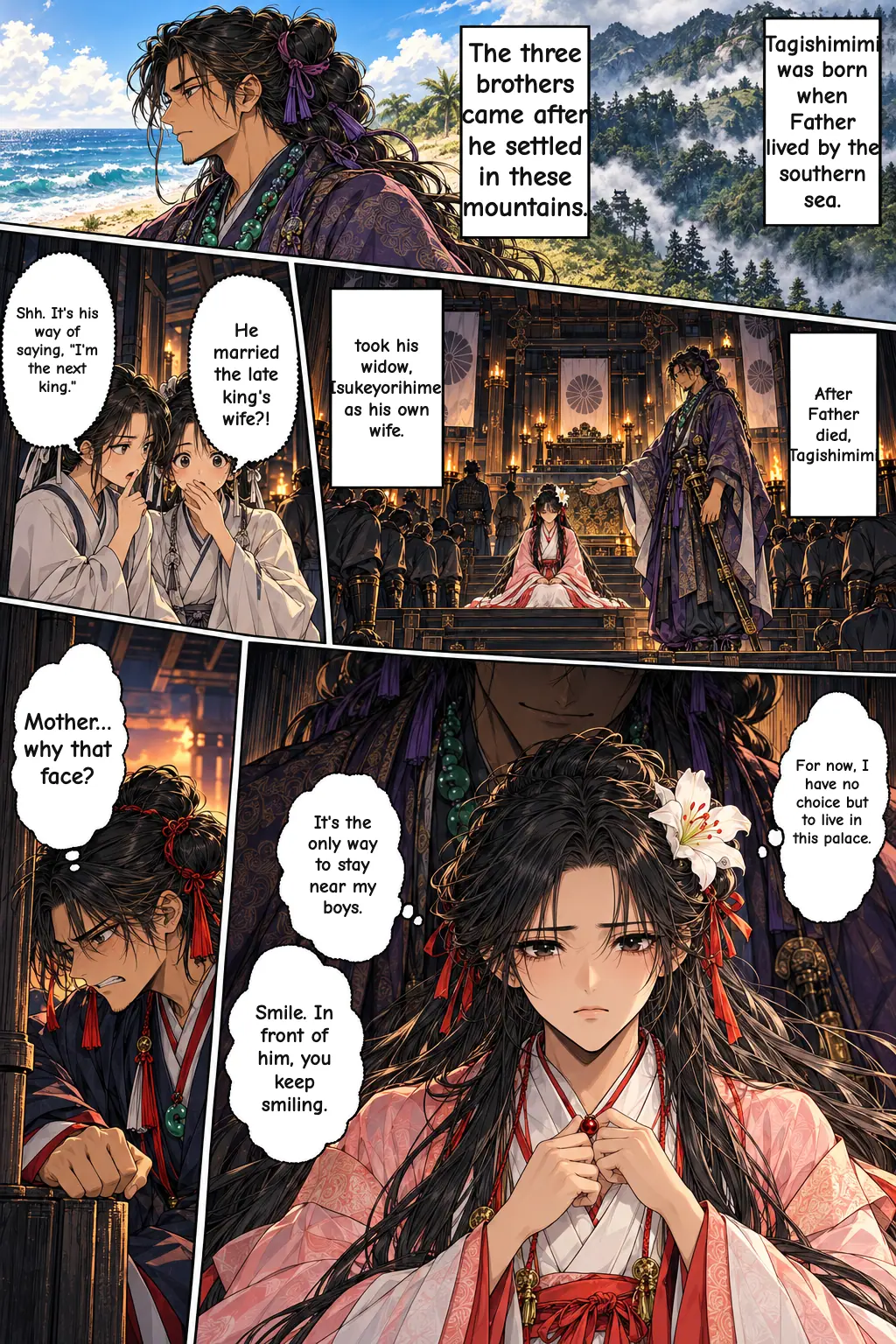
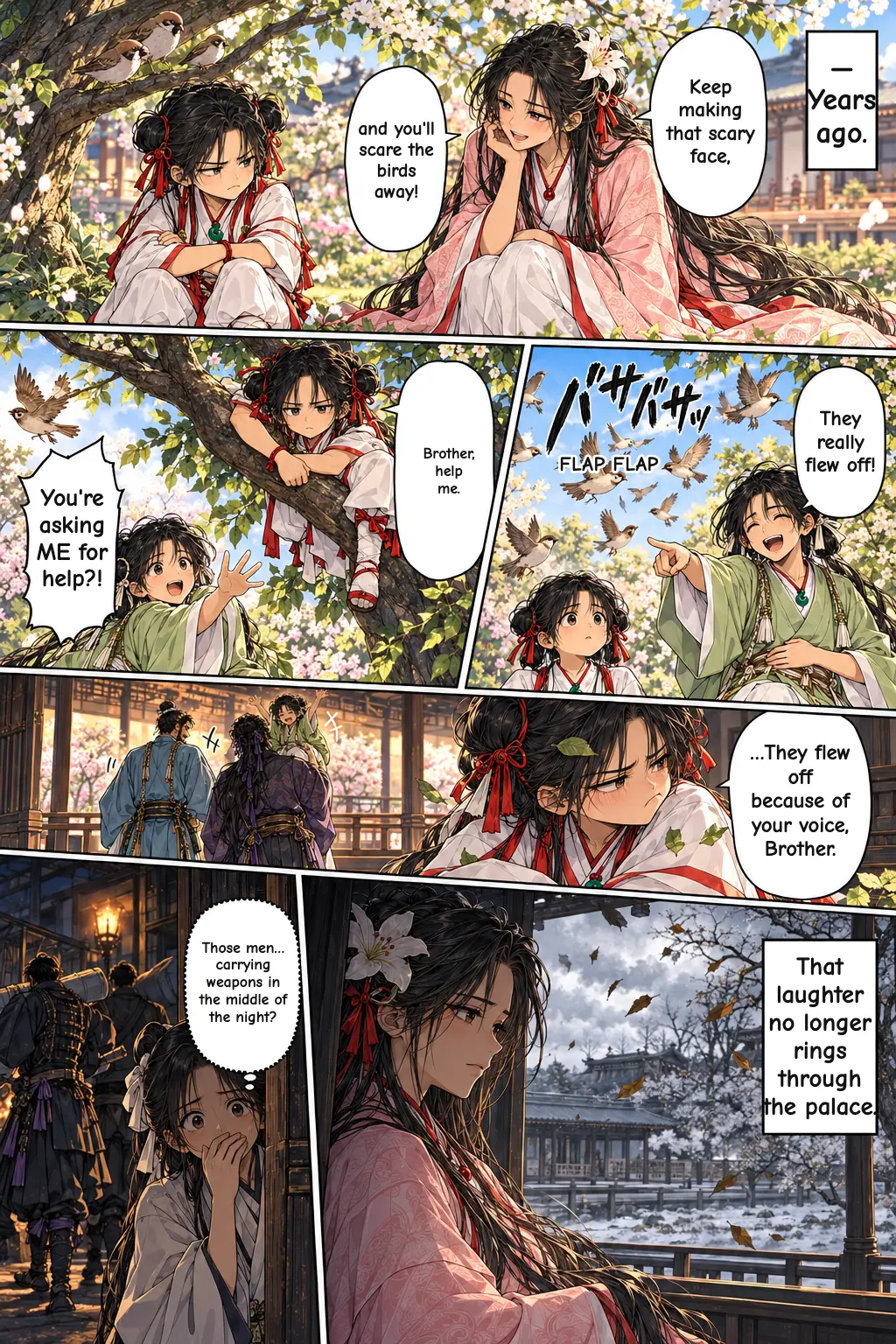
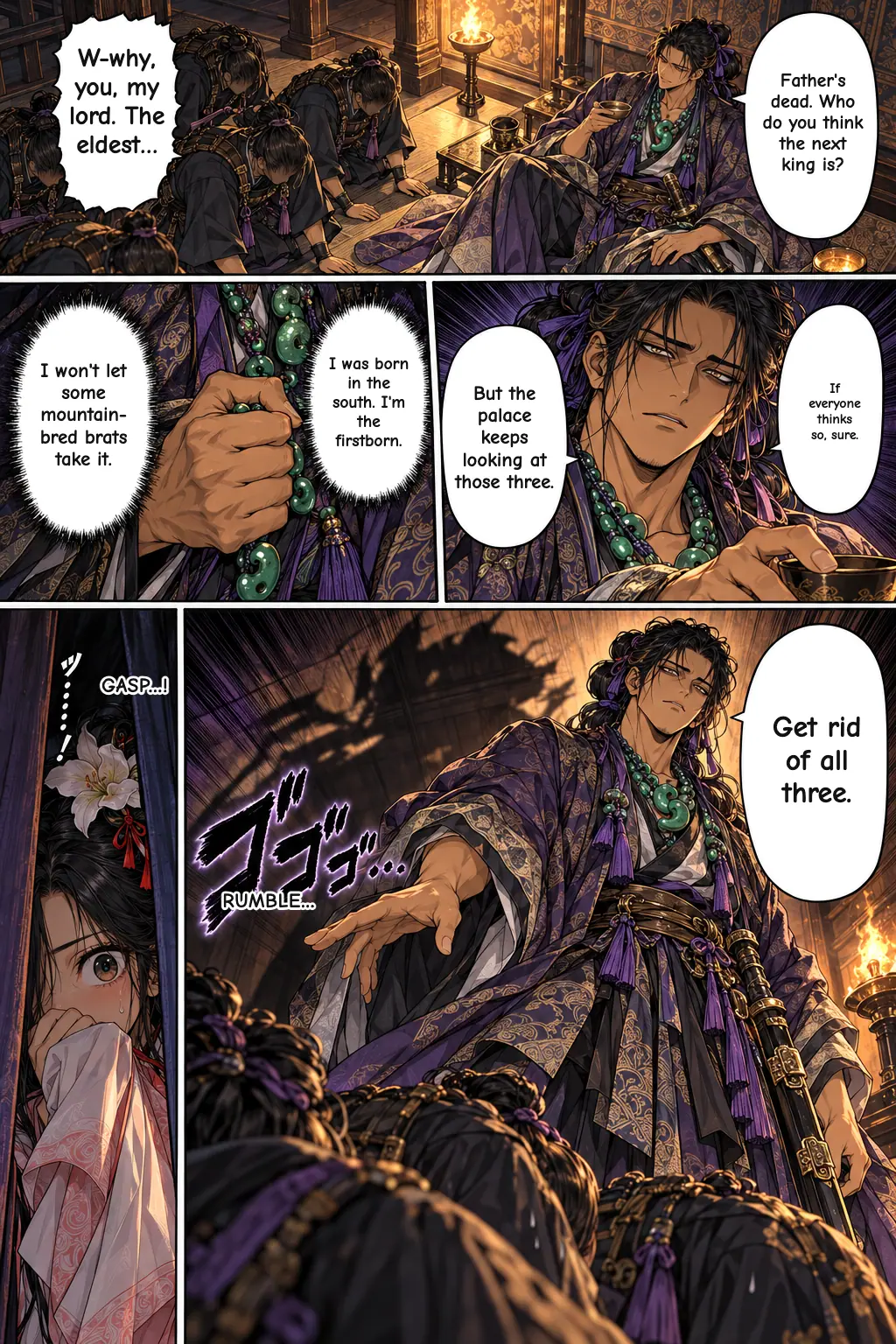
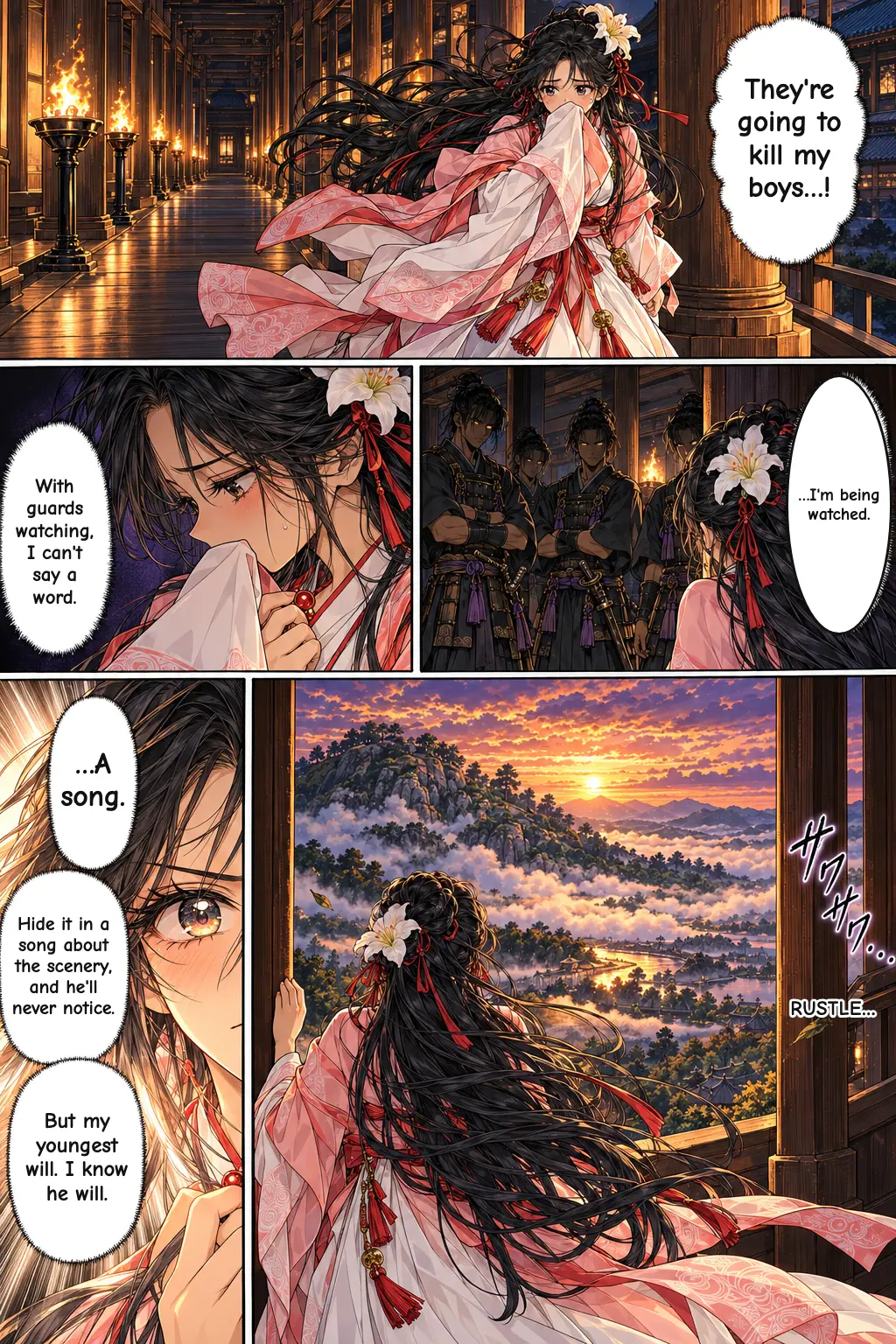
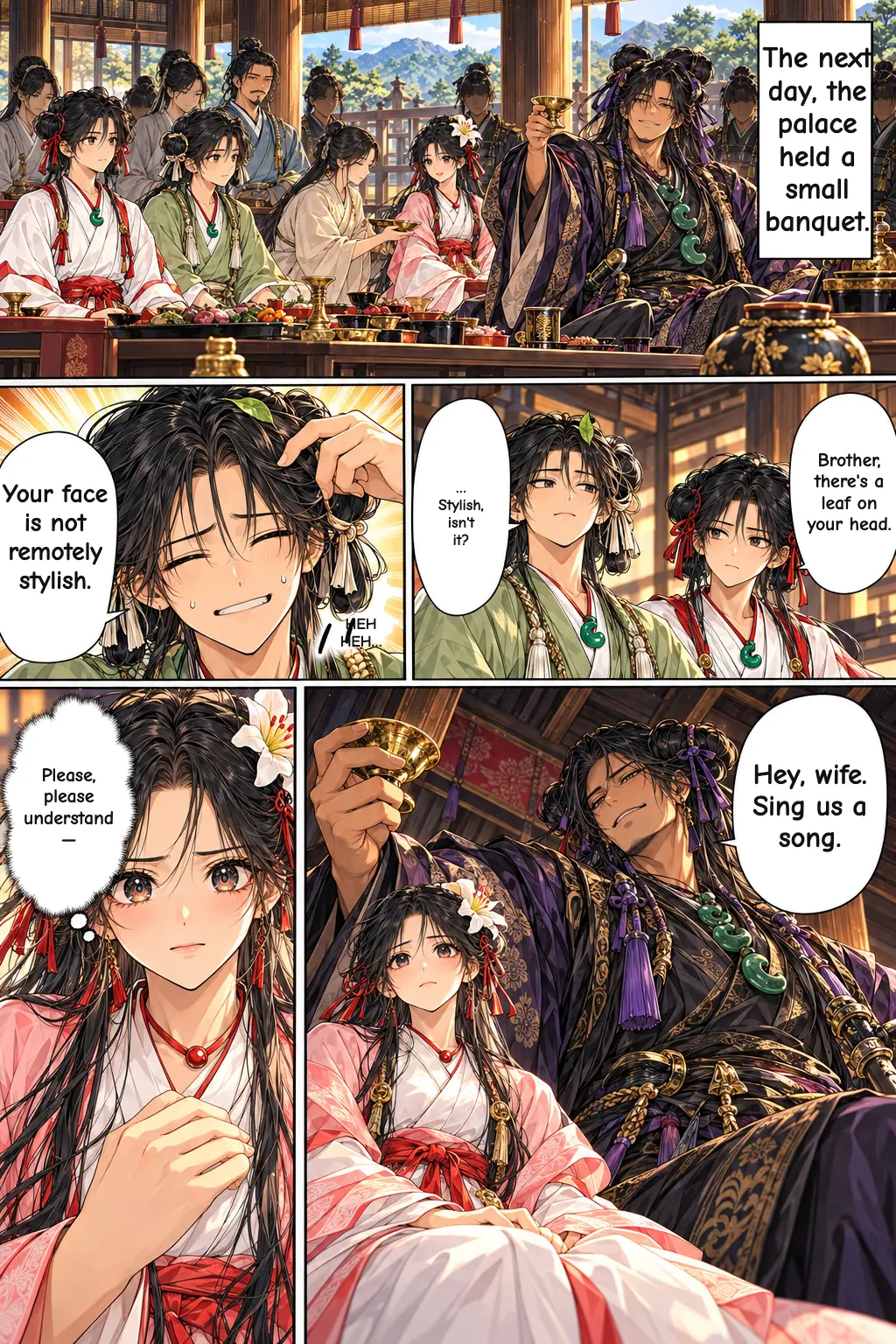
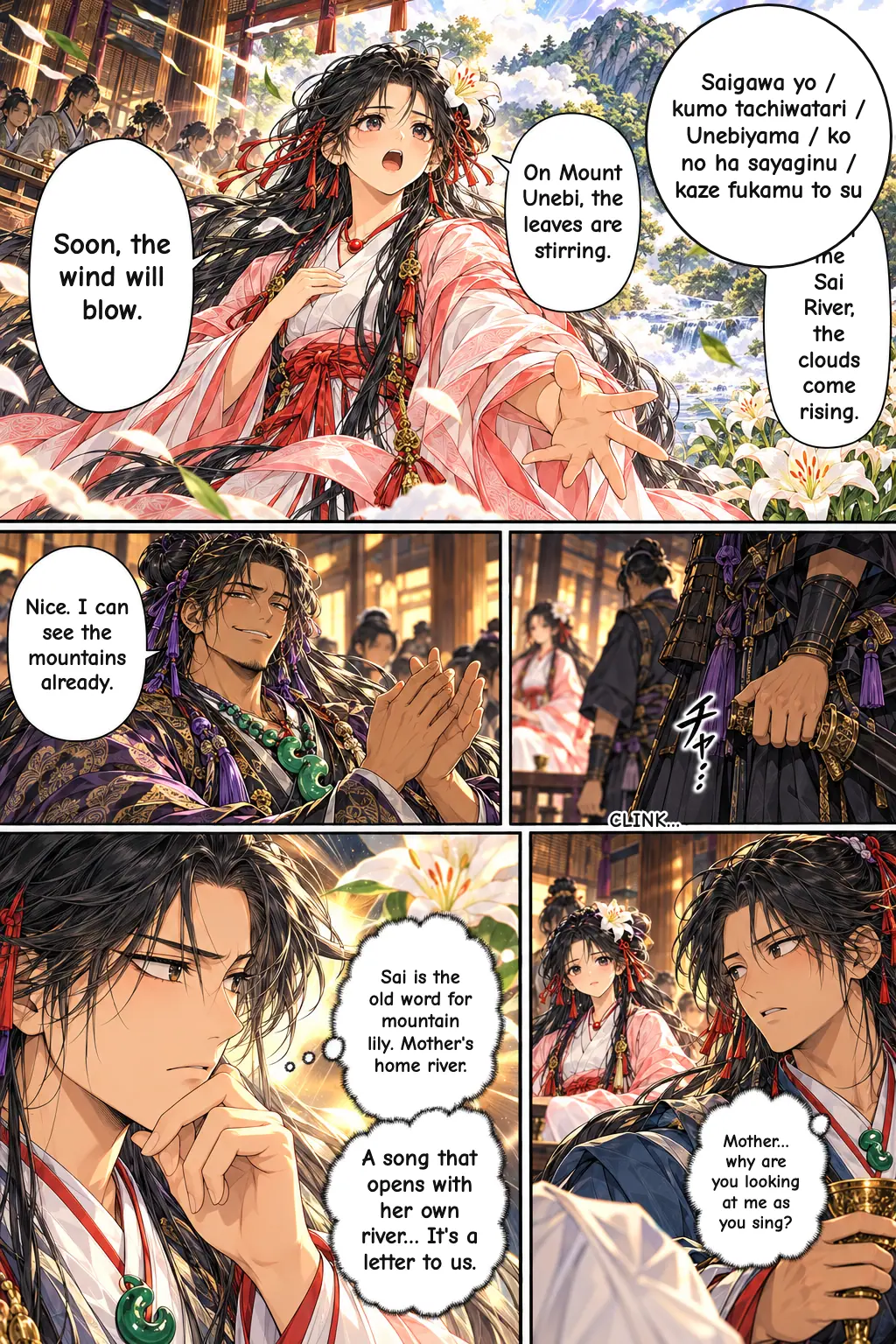
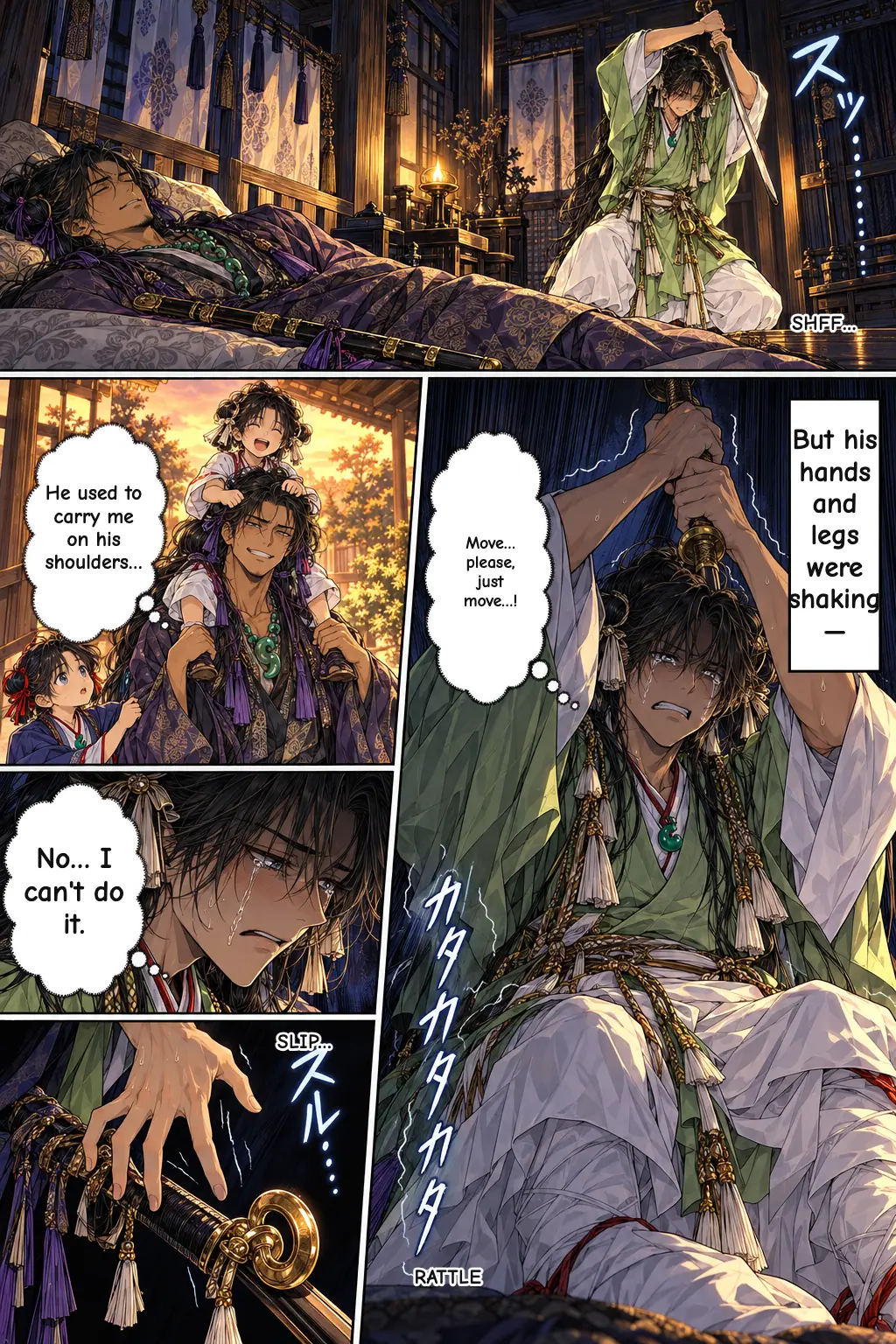
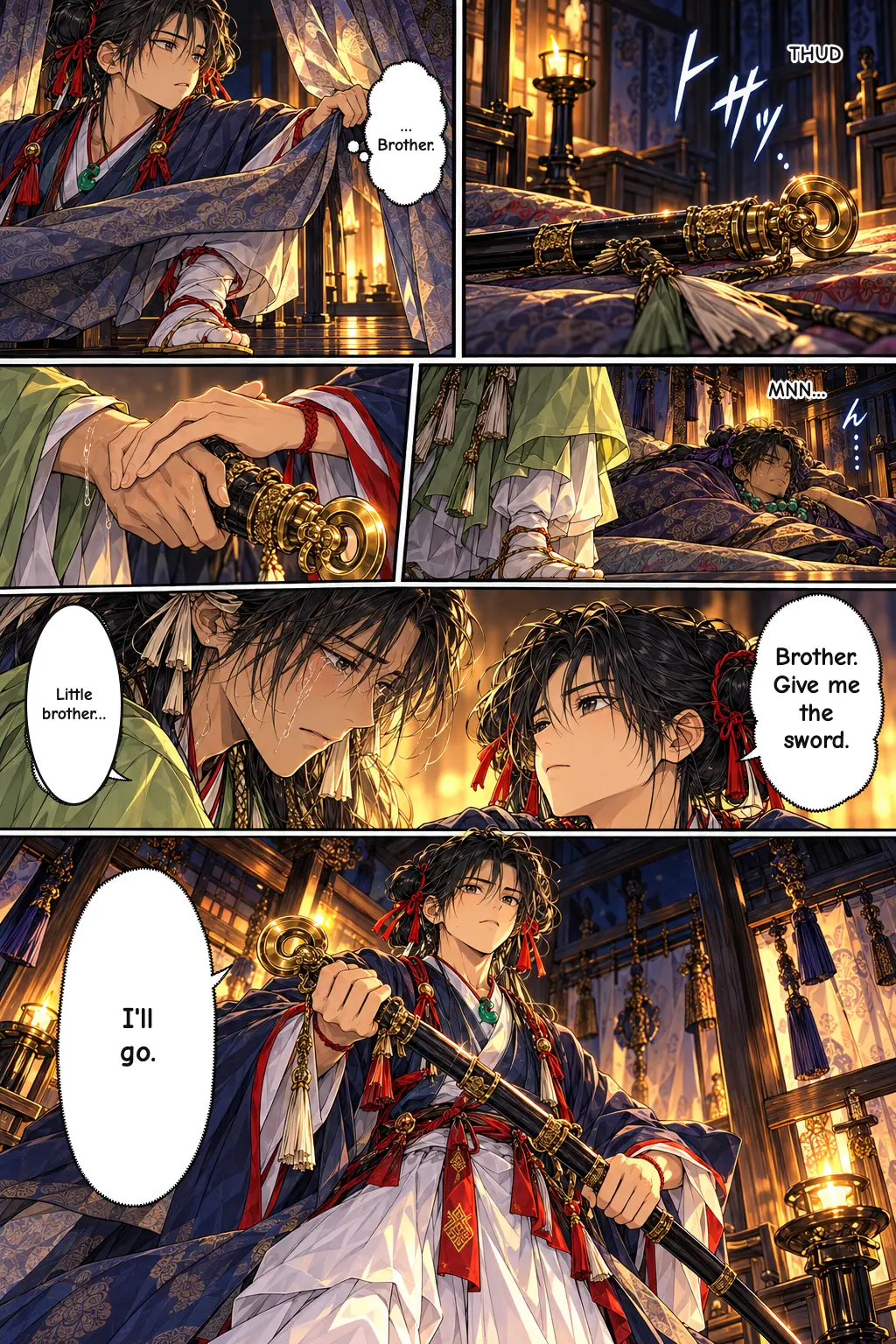
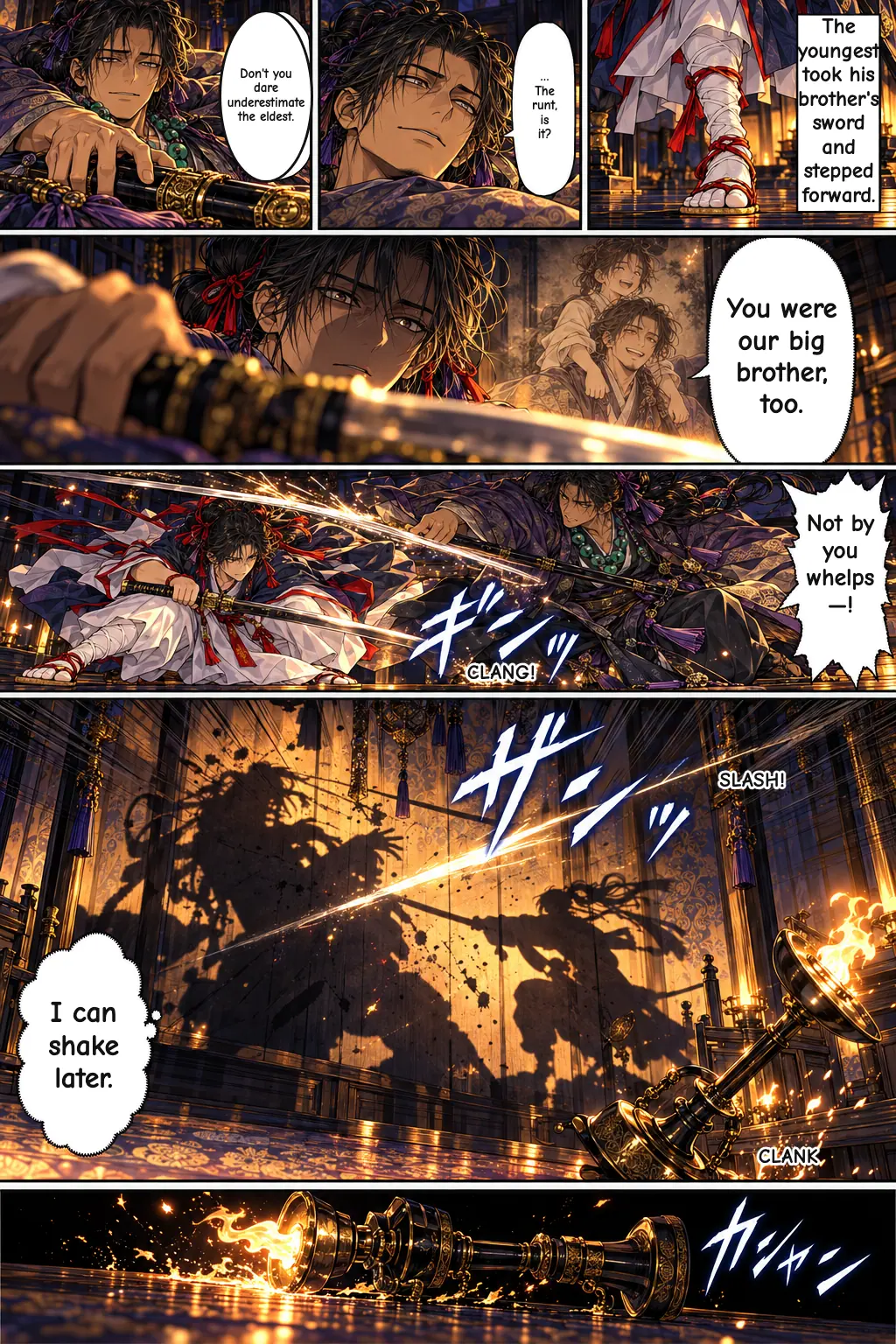
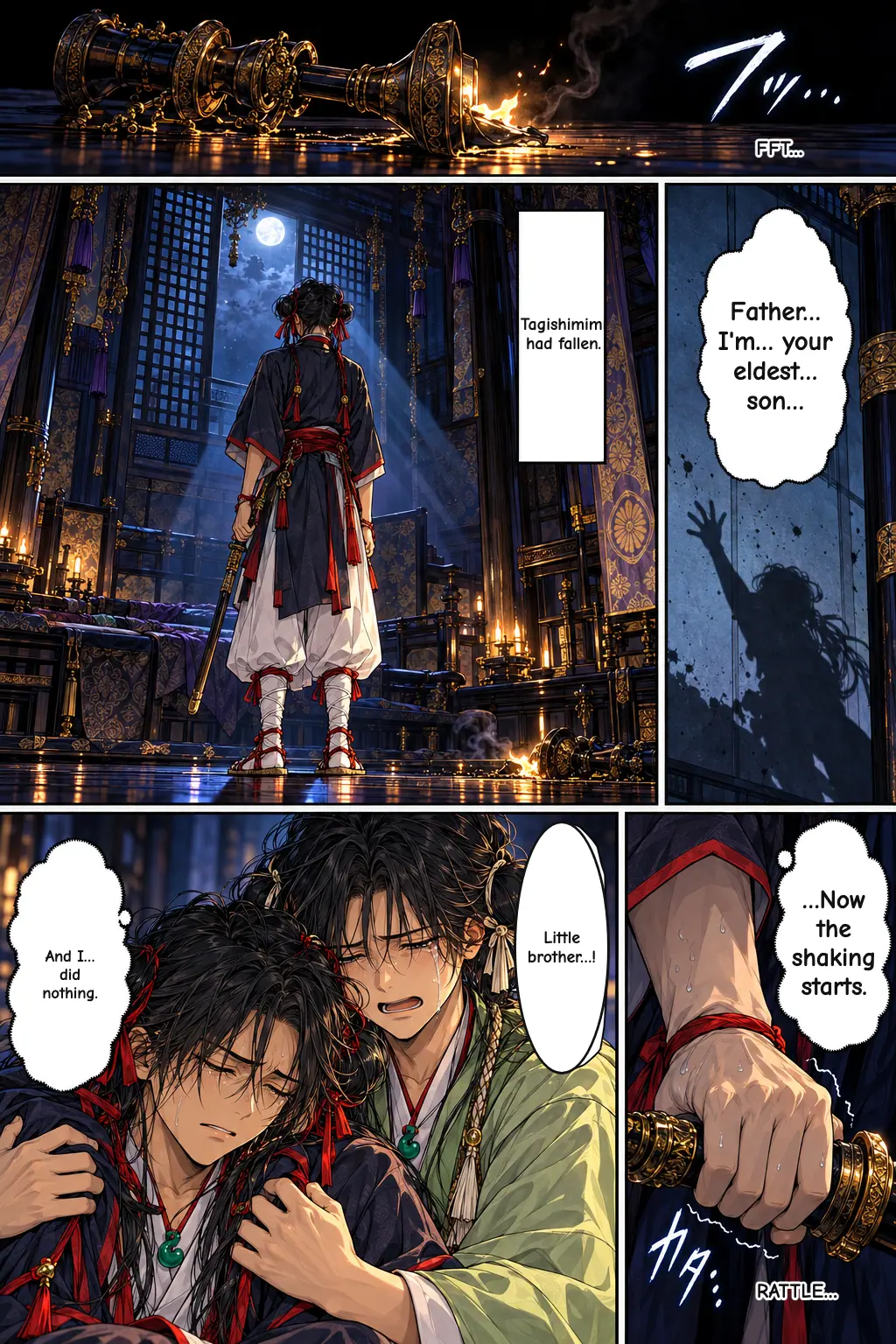
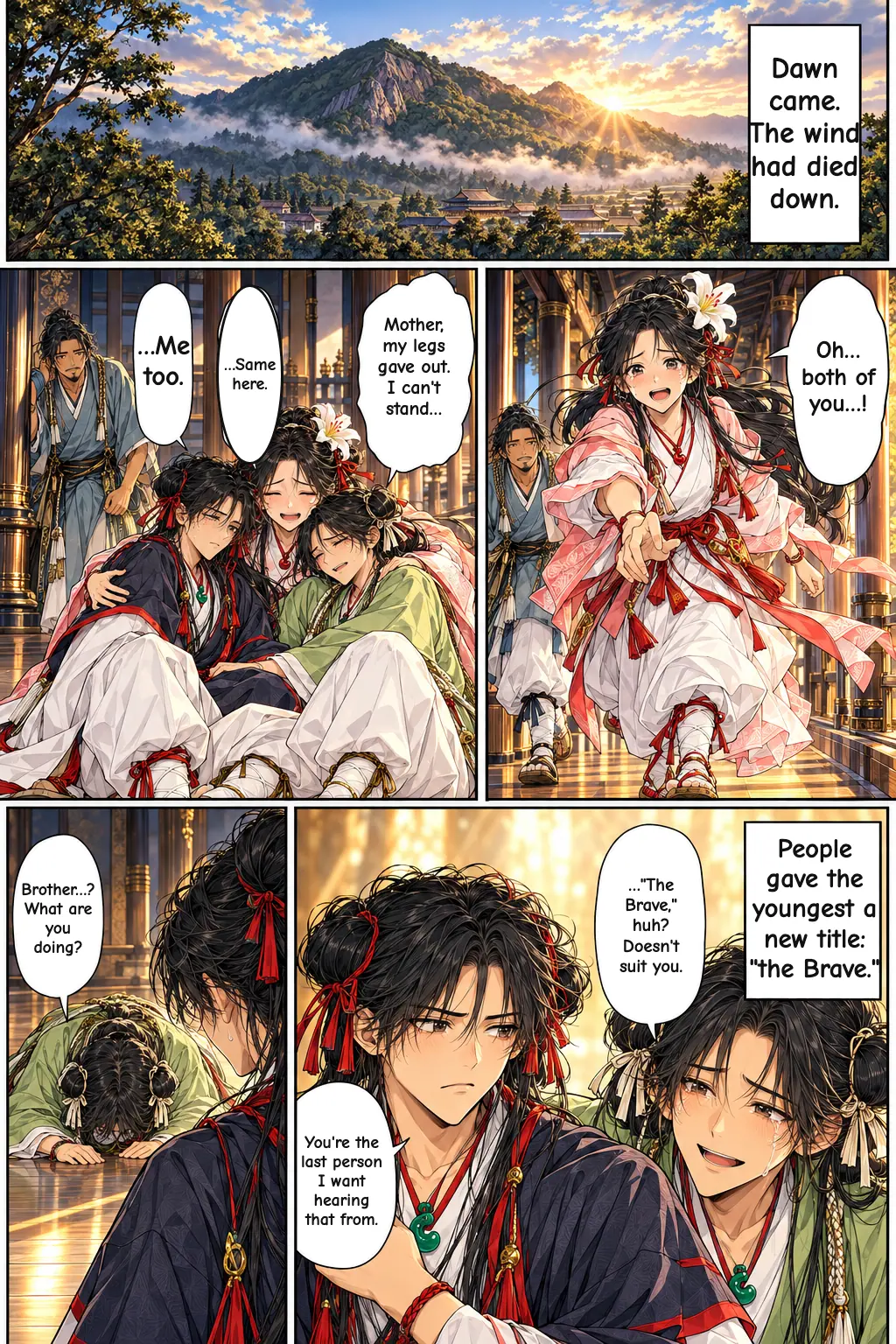
After Kamuyamato-Iwarebiko, the first king, dies, his eldest son Tagishimimi, a half brother born in a far southern land, plots to kill his three younger brothers. Their mother, Isukeyorihime, hides a warning in a song about the landscape. The youngest, Kamununakawamimi, decodes it. When his brother Kamuyaimimi freezes with the sword raised, Kamununakawamimi takes the blade from his hands.
Tagishimimi's Rebellion: Kojiki Myth of Emperor Suizei Explained
The Original Story in the Kojiki
This episode comes from the middle book of the Kojiki ("Record of Ancient Matters"), Japan's oldest surviving chronicle, compiled by Ō no Yasumaro and presented to the court in 712 CE. It closes the account of Kamuyamato-Iwarebiko, the figure later known as Emperor Jimmu, Japan's legendary first emperor, and leads straight into the reign of his successor.
Earlier in the chronicle, while still living in Himuka in far southern Kyushu, Iwarebiko had two sons with a woman named Ahirahime: Tagishimimi and Kisumimi. After he moved east to Yamato, he took Isukeyorihime, a daughter of the god Ōmononushi, as his chief wife. Her home stood beside the Sai River, and she bore him three sons: Hikoyai, Kamuyaimimi and Kamununakawamimi.
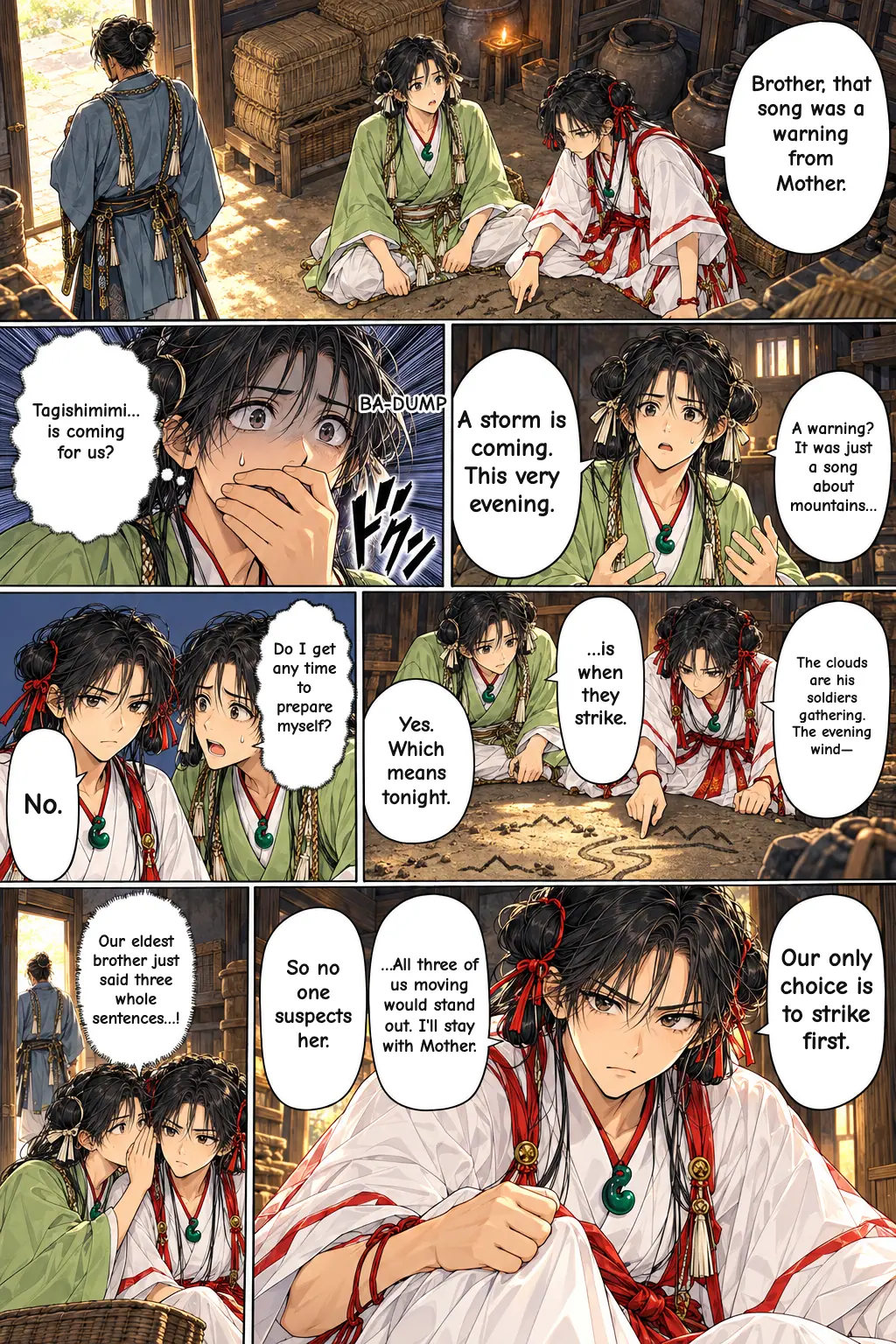
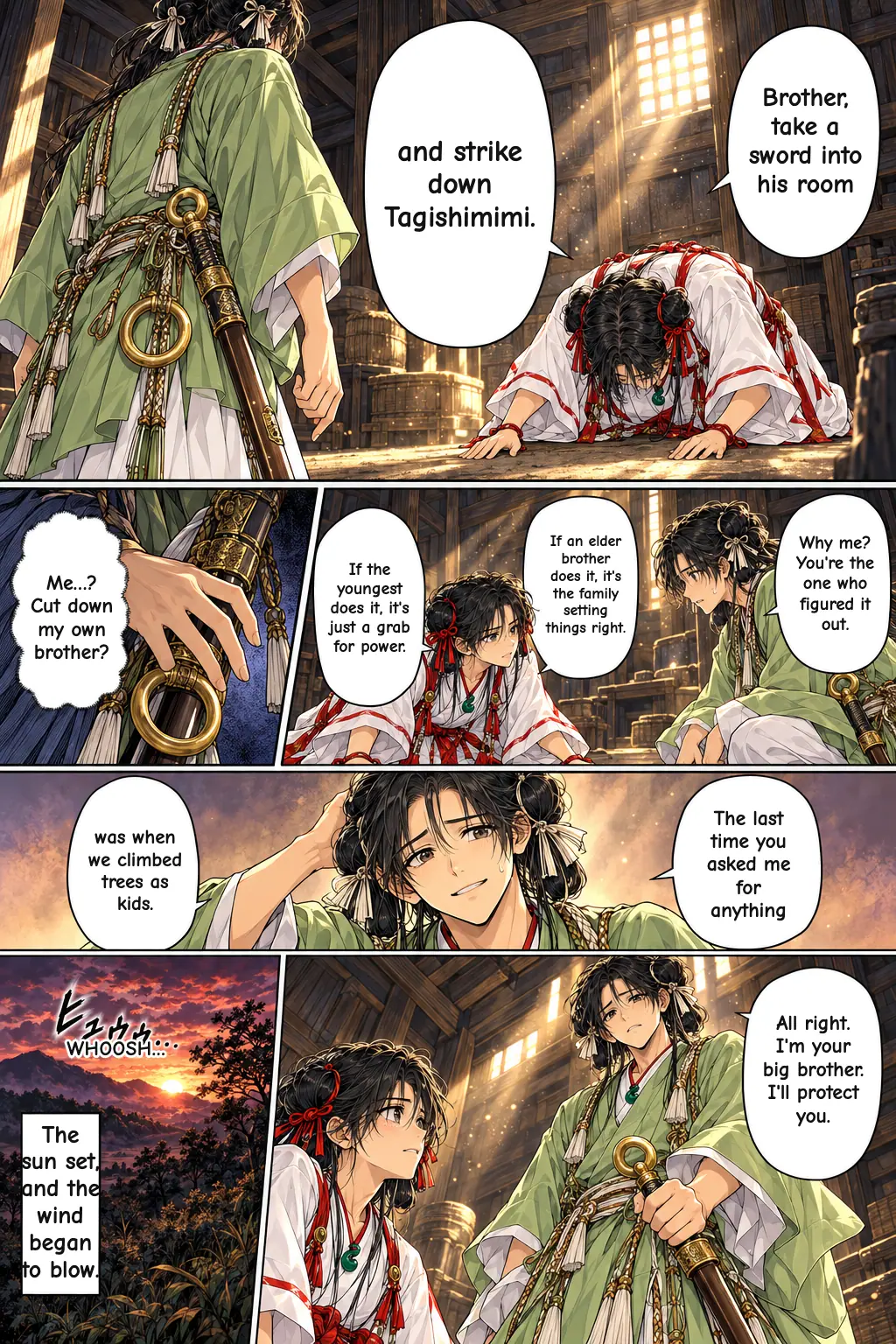
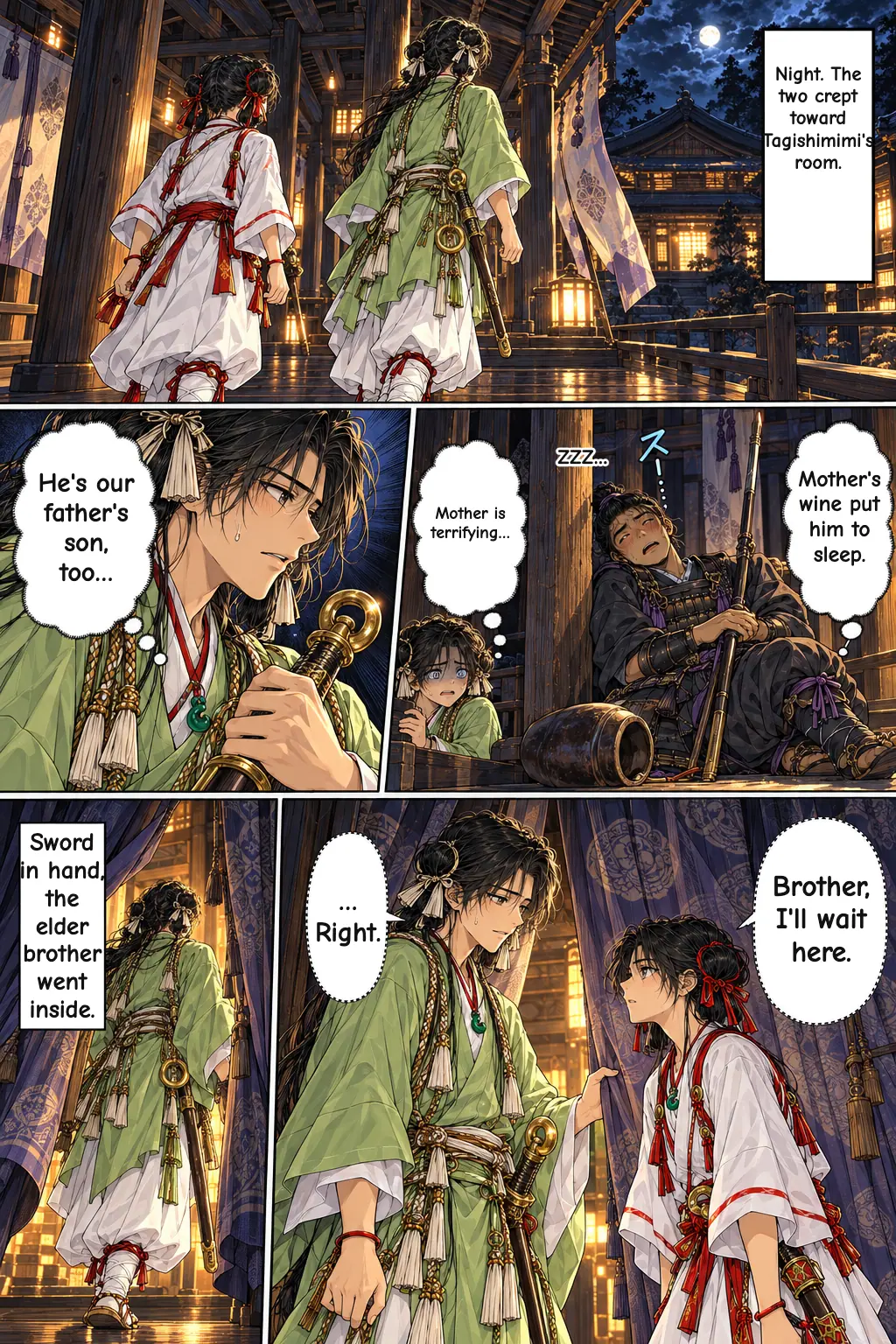
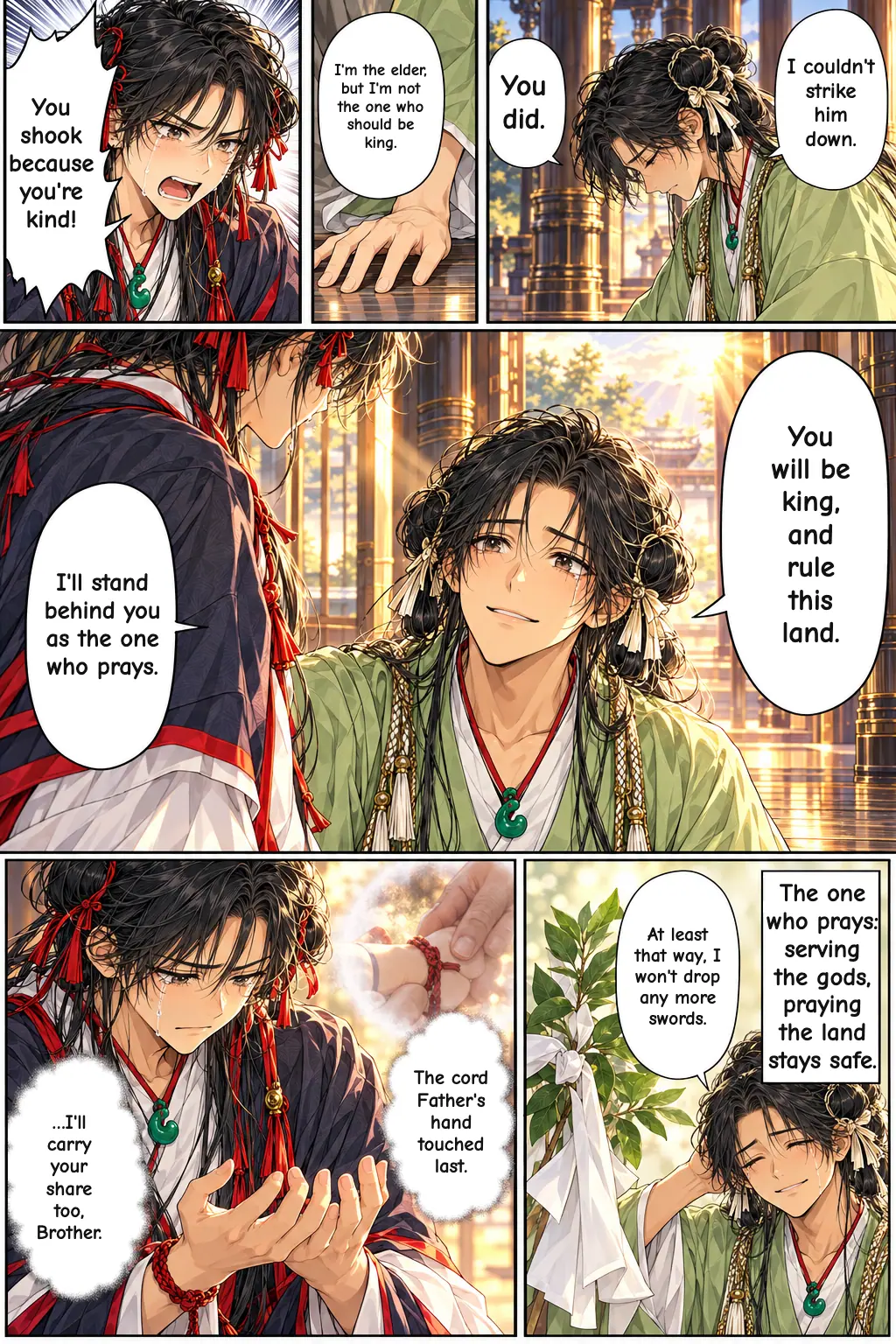
When Iwarebiko died, Tagishimimi, the elder half brother, married his father's widow, Isukeyorihime, and set out to kill her three sons. Distressed, she warned them, not openly, but through two songs. The sons grasped her meaning and decided to strike before he could. The youngest, Kamununakawamimi, urged his brother Kamuyaimimi to take a weapon, go in and kill Tagishimimi. Kamuyaimimi went in, but his arms and legs shook so badly that he could not do it. The youngest then asked for the weapon, went in himself and killed their half brother. Because of this deed he was also called Takenunakawamimi, with take meaning "brave" or "mighty."
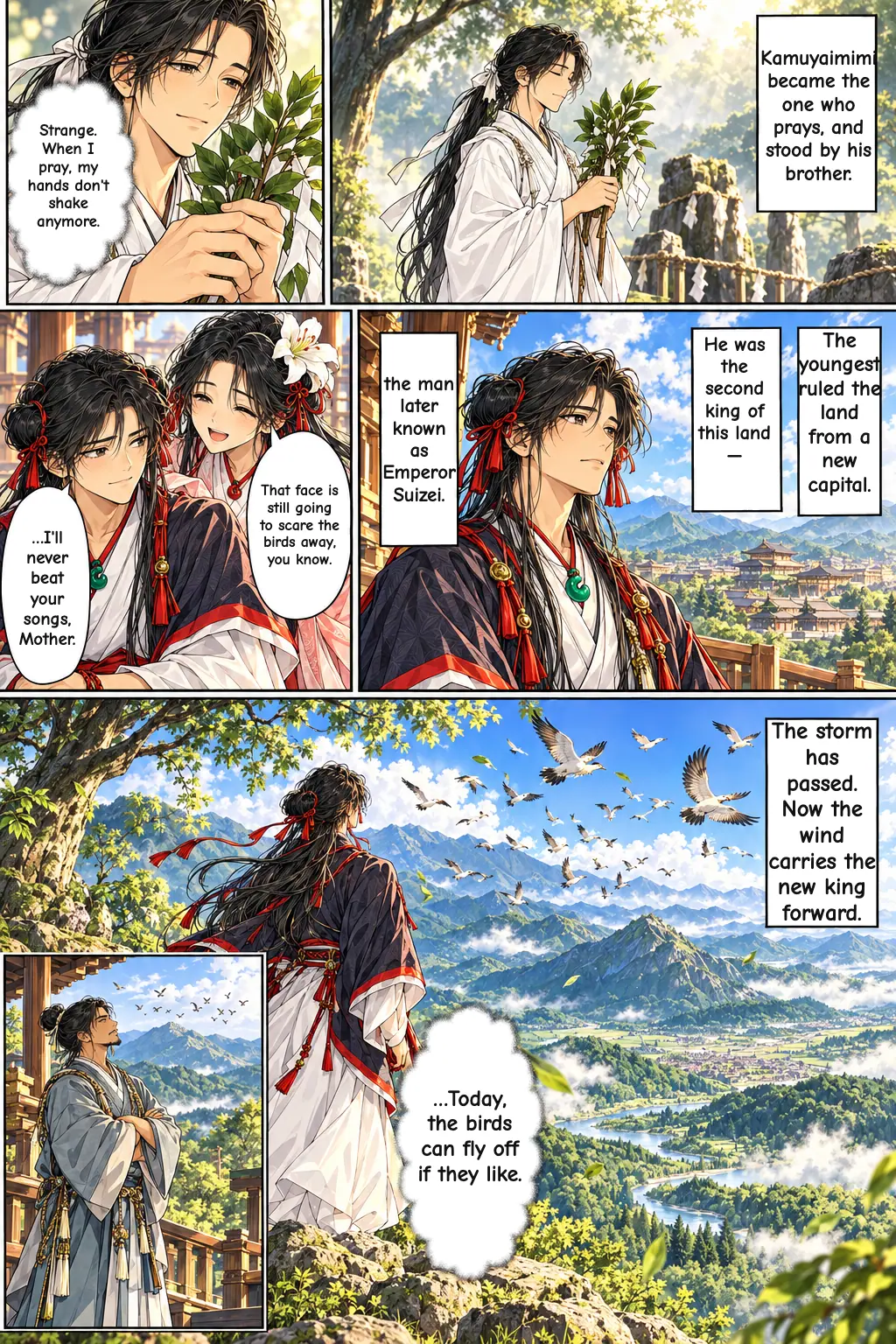
Kamuyaimimi then gave up his claim. He said that he had failed to kill their enemy while his younger brother had not, so even as the elder he should not stand above him. His brother should rule, and he would support him and serve as an imibito, a ritual servant who tends to the gods. Kamununakawamimi went on to rule from the Takaoka Palace in Katsuragi as Emperor Suizei, the second emperor.
The Hidden Warning in Isukeyorihime's Songs
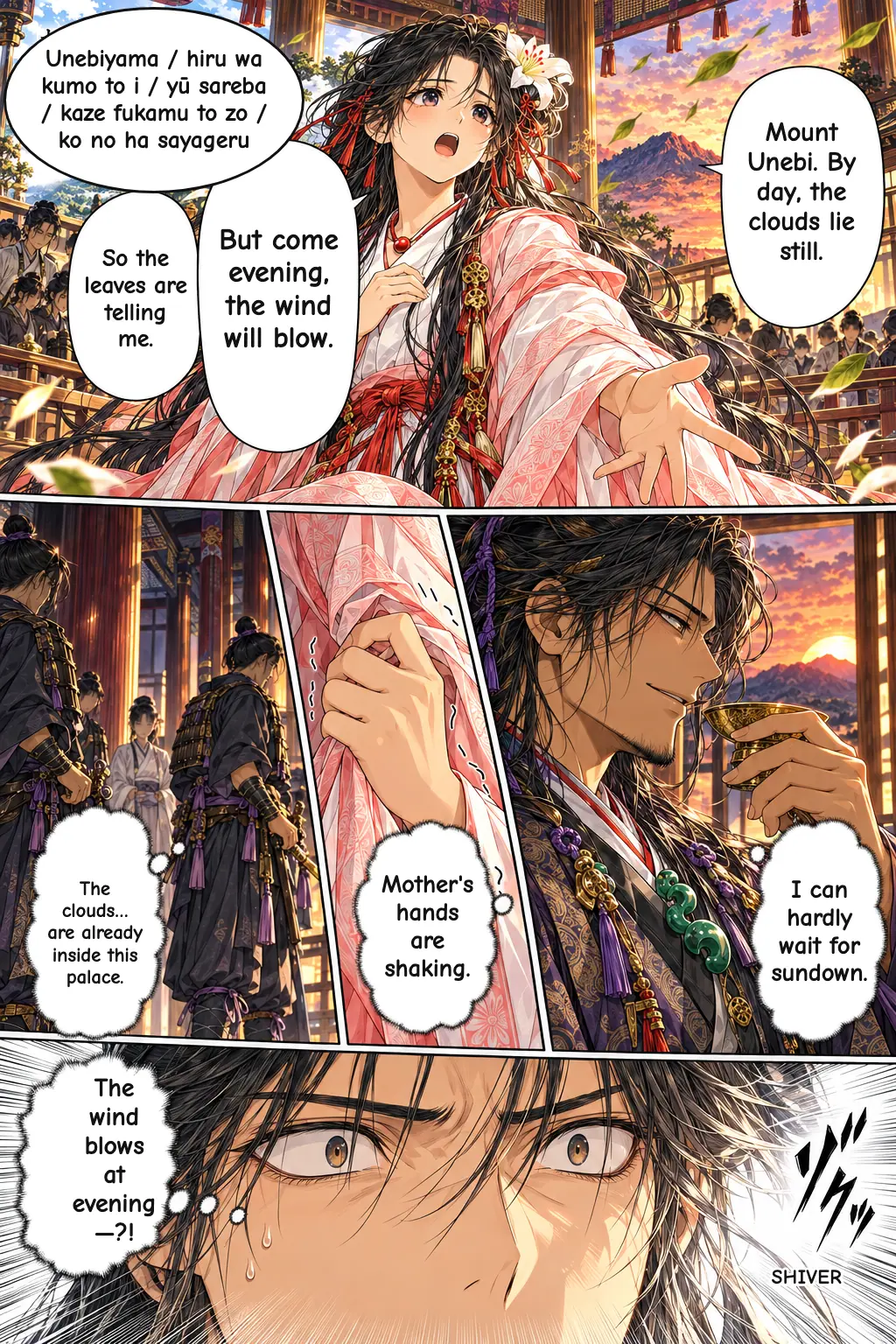
The heart of the story is the two songs. In the first, Isukeyorihime sings that clouds are rising and spreading from the direction of the Sai River, and the leaves on Mount Unebi are rustling: the wind is about to blow. In the second, she sings that clouds linger over Mount Unebi by day, and when evening comes the leaves stir, because a wind is about to rise.
On the surface these are simple landscape poems. The Kojiki never explains the code. It only says that the sons heard the songs, understood them and were alarmed. The usual reading is that the coming wind stands for the coming attack. Some commentators also tie the places to the people in the story, since the Sai River was Isukeyorihime's own home and Mount Unebi stood near the royal palace, but the text itself does not spell this out.
What This Myth Tells Us
The story turns on a question every royal house faces: who should inherit? Tagishimimi was the eldest son, and some scholars read his marriage to his father's chief wife as a way of claiming his father's place. The Kojiki still gives the throne to the youngest son of the chief wife, and it justifies that choice by courage rather than birth order. This echoes Iwarebiko himself, who was the youngest of four brothers. Younger sons succeeding is a pattern that turns up more than once in early Japanese myth.
Kamuyaimimi's choice matters too. He does not simply lose. He becomes a priestly supporter of the throne, and the Kojiki names him as the ancestor of many clans, including the Ō clan. Some scholars have pointed out that the compiler, Ō no Yasumaro, came from that same clan, which may help explain why the elder brother is shown giving up the throne with dignity.
Finally, this is where the detailed storytelling stops. After Suizei, the Kojiki lists the next several rulers (who they married, their children, their ages and their tombs) but tells no stories about their reigns. Suizei is the first of the so-called "eight undocumented reigns," and most historians treat these early rulers as legendary rather than historical.
What the Manga Changed
The original account is short, so the manga fills in a great deal. These parts all come from the Kojiki: Tagishimimi marrying Isukeyorihime and plotting against his half brothers, the two songs about the river, clouds, leaves and wind, Kamuyaimimi trembling, the youngest brother taking the weapon and striking, and the three key points of the elder brother's abdication.
These parts are the manga's own: the scenes of Tagishimimi scheming, how and where Isukeyorihime sings her warning, the brothers' conversation as they decode it, and Kamuyaimimi's inner reasons for freezing. The Kojiki says only that his limbs shook. The original text also says simply "weapon," so the sword in the manga is an artistic choice. The characters' looks, ages, costumes and feelings are invented as well.
Where to Read It
You can read this story as Episode 4 of KOJIKI Book II: The Age of Heroes, "Mother's Song Was a Murder Warning — The Rebellion of Tagishimimi," here on Manga Portal. Every episode is free to read, and you don't need an account. If this tale of a coded song and a hesitant blade catches your interest, the episodes before and after it follow the founding of Japan's royal line as the Kojiki tells it.
Characters in this episode
Tagishimimi
Eldest son of the first emperor, born in the far south, who married his father's widow and plotted to kill his three half brothers.
Isukeyorihime
Chief wife of the first emperor and daughter of the god Ōmononushi, who warned her sons of danger through two songs about the landscape.
Kamununakawamimi (Emperor Suizei)
The youngest son, who took the weapon from his brother, killed Tagishimimi and became the second emperor.
Kamuyaimimi
The middle brother, who froze when he tried to strike and then gave up the throne to serve the gods and support his younger brother.
Hikoyai
The eldest of Isukeyorihime's three sons, who is among those targeted but plays no active part in this episode.
Kamuyamato-Iwarebiko (Emperor Jimmu)
The legendary first emperor, whose death at the start of the story leaves the question of succession open.
FAQ
Who was Tagishimimi in the Kojiki?
Tagishimimi was a son of Emperor Jimmu, born to Ahirahime before Jimmu moved to Yamato. After his father died, he married Jimmu's chief wife and plotted to kill his three younger half brothers, but the youngest, Kamununakawamimi, killed him first.
Who was Emperor Suizei?
Emperor Suizei is the second emperor in Japan's traditional list. In the Kojiki he is Kamununakawamimi, the youngest son of Emperor Jimmu and Isukeyorihime, who won the throne by killing his half brother Tagishimimi. Apart from his family, age at death and tomb, the Kojiki records nothing about his reign.
What did Isukeyorihime's song mean?
Her two songs describe clouds rising from the Sai River and leaves rustling on Mount Unebi before the wind blows. They are usually read as a hidden warning that an attack was coming. The Kojiki itself only says that her sons understood the meaning.
Why did Kamuyaimimi give up the throne?
He went in to kill Tagishimimi but his limbs shook and he could not do it, while his younger brother did. He said that an elder brother who failed should not rule above one who succeeded, and chose instead to serve the gods and support the new ruler.
Is the story of Tagishimimi's rebellion historical?
Most historians regard Emperor Jimmu and the early emperors after him as legendary figures rather than documented historical rulers. The story is best read as part of the Kojiki's myth of how Japan's royal line began.