Episode 1The Song That Cost a King His LandThe Deluding of Gylfi (Gylfaginning)
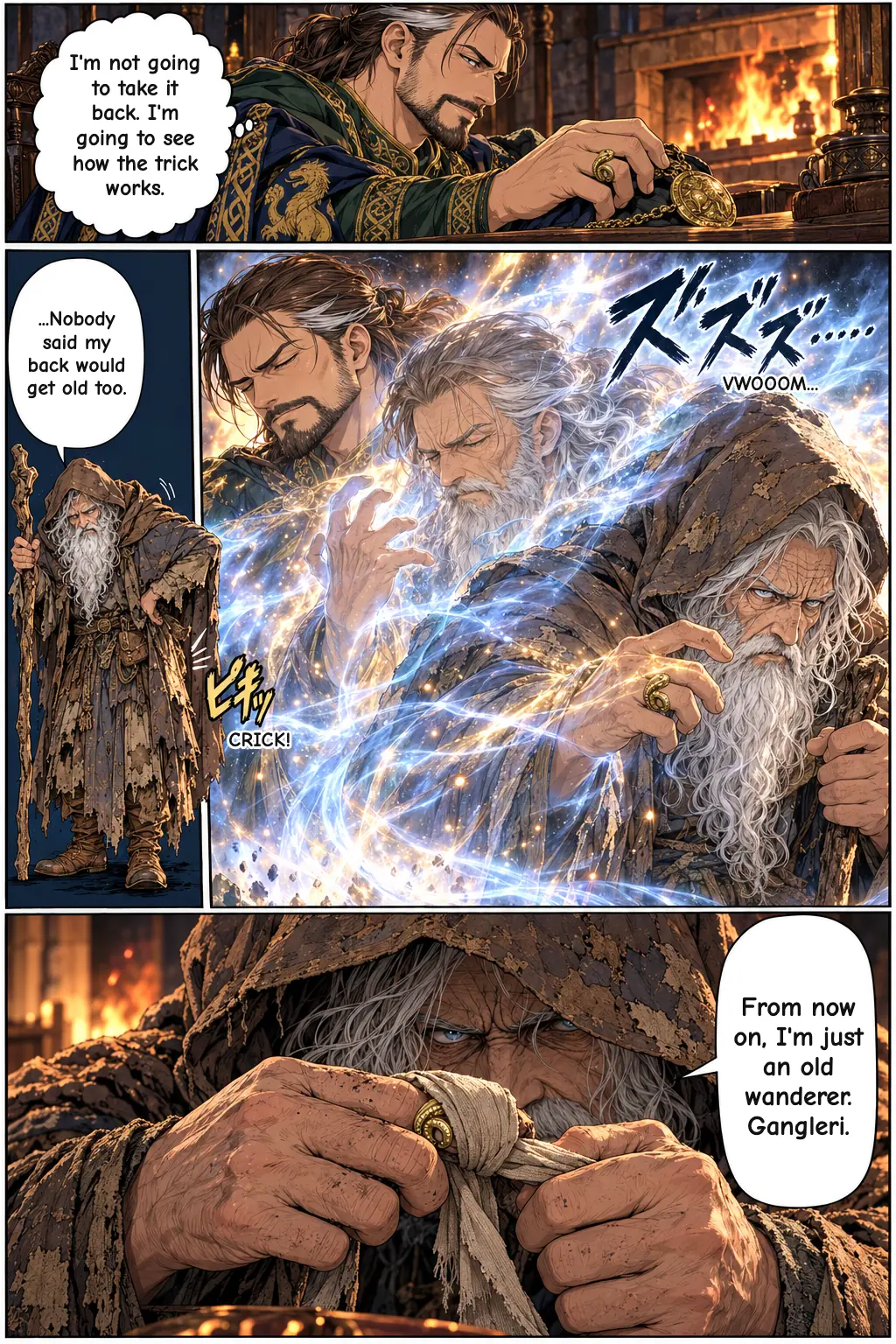
King Gylfi of Sweden makes a casual promise to repay a wandering singer, and a goddess carves a piece of his kingdom away in a single night. He doesn't go after revenge. He goes to learn the secret behind the gods' power, disguised as an old man named Gangleri. The golden hall he reaches turns out to be a trap. With no way out, the king reveals who he is and stakes his life on his first question.
Get new episodes in your feed. Follow us on:ThreadsBluesky
Story summary
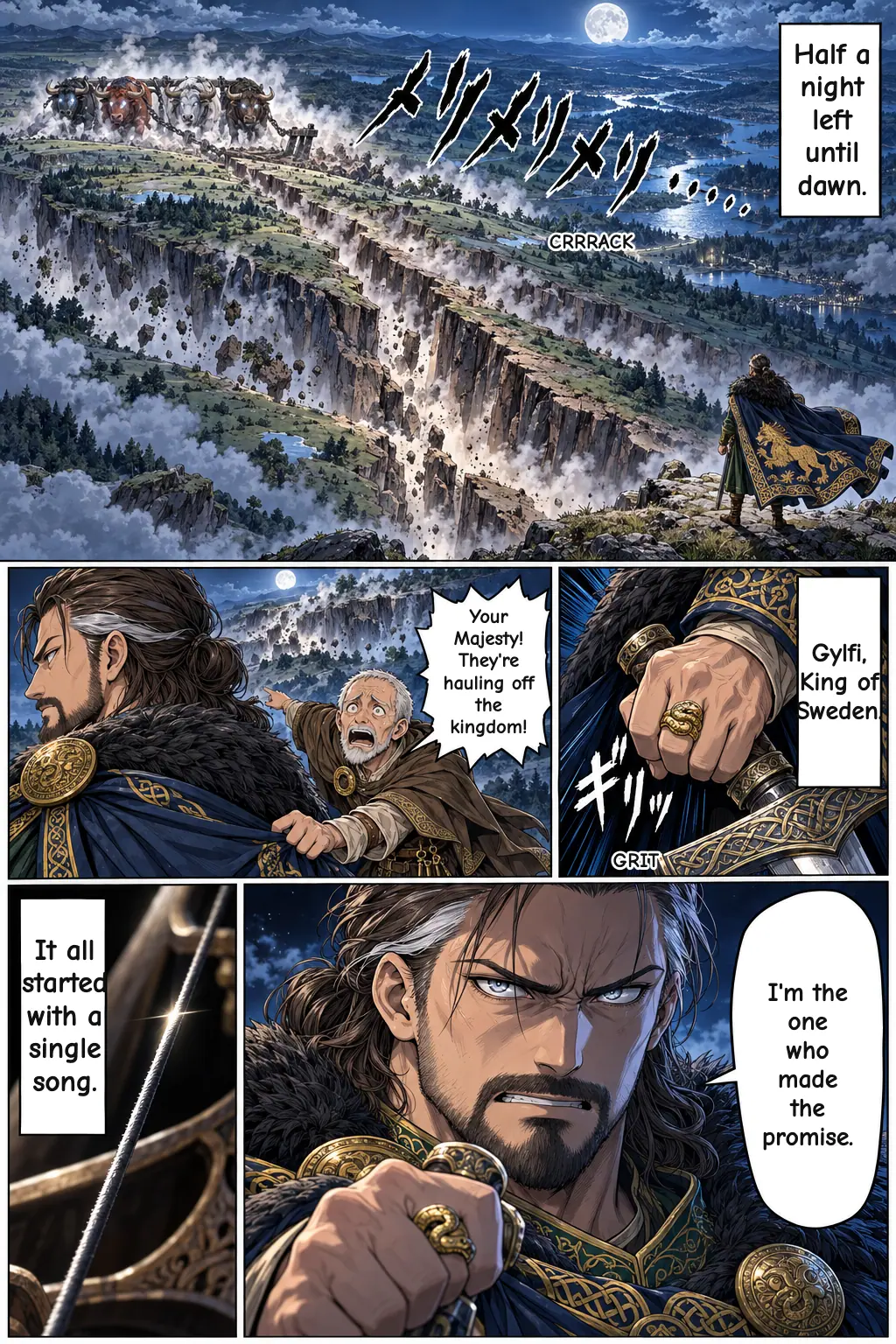
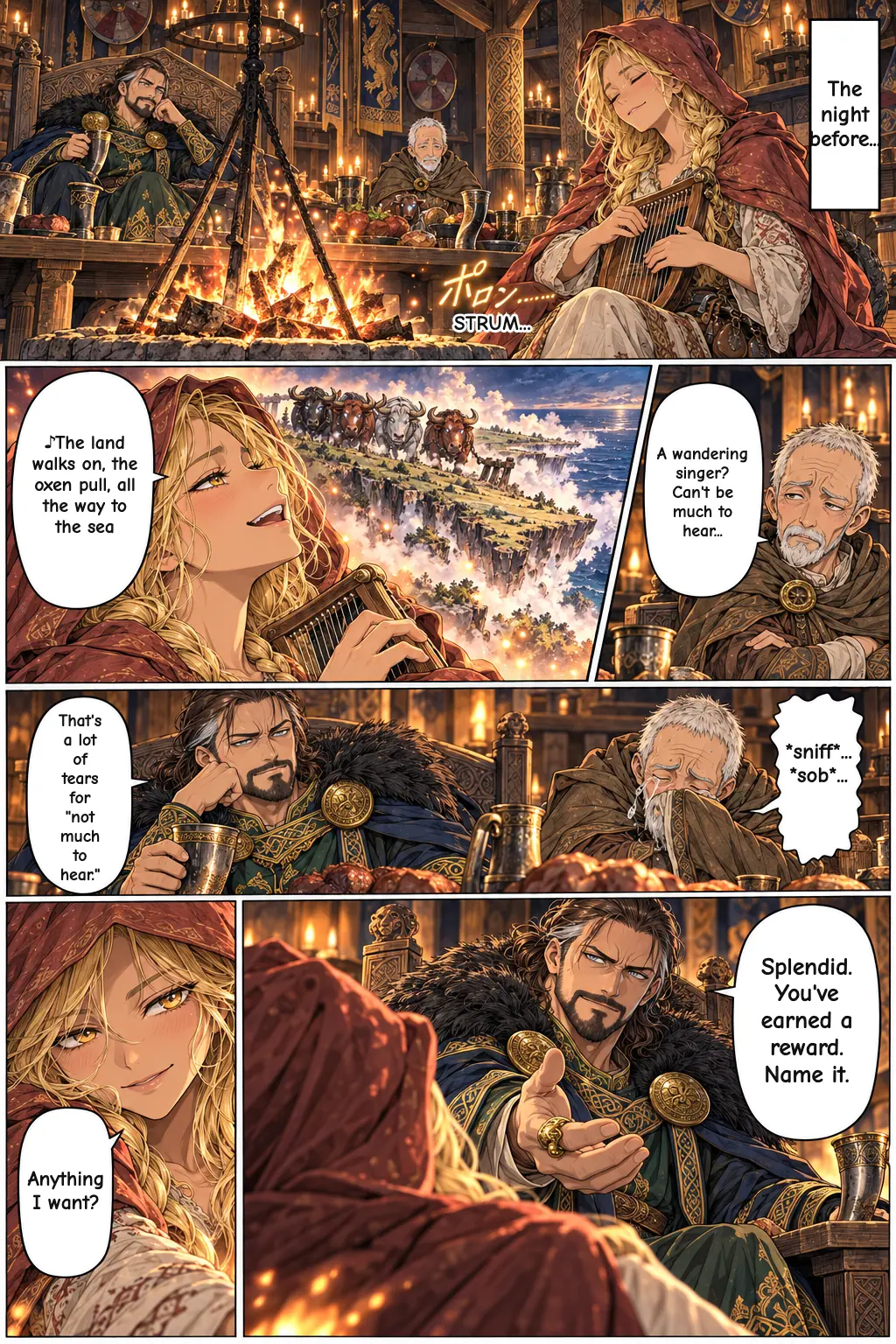
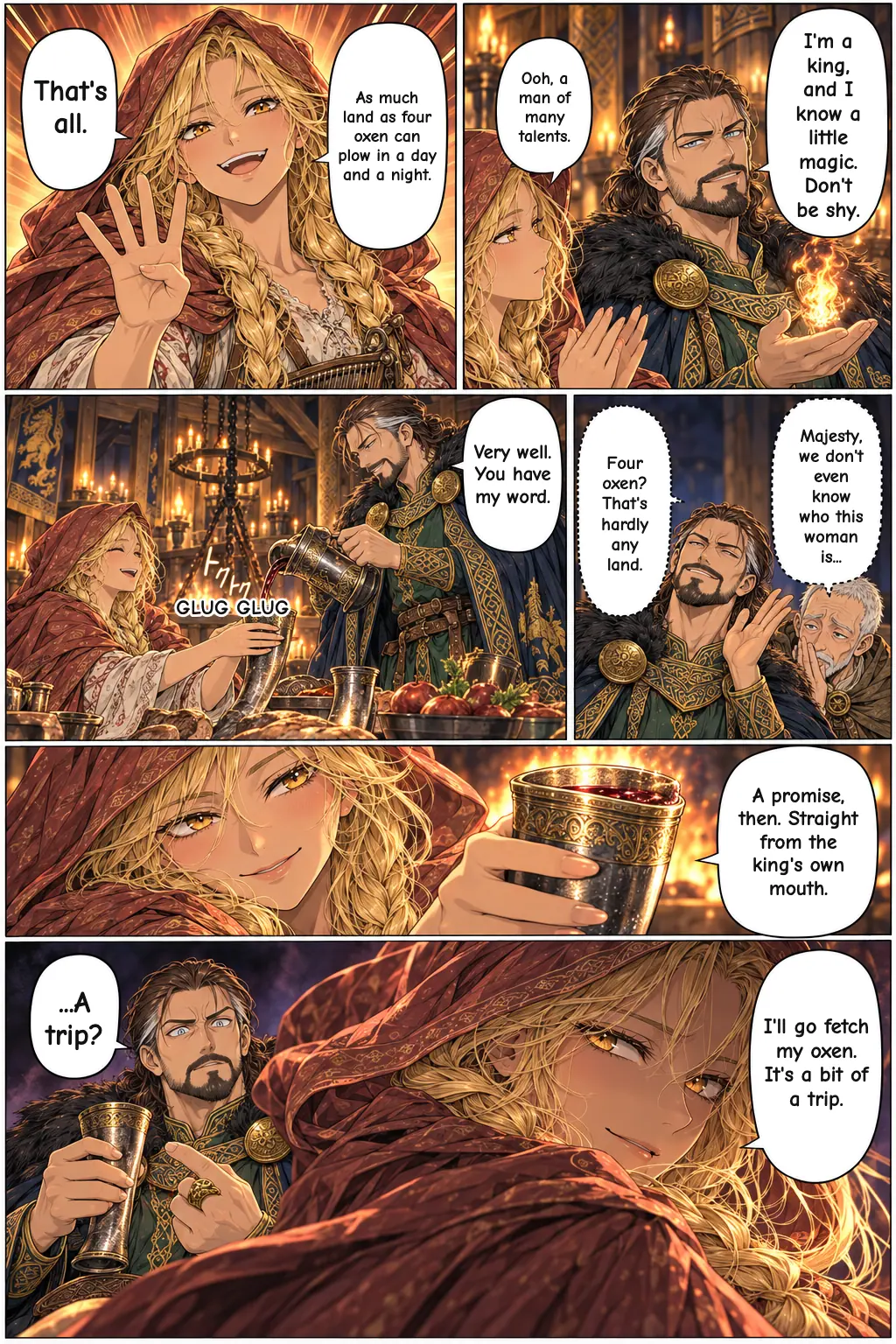
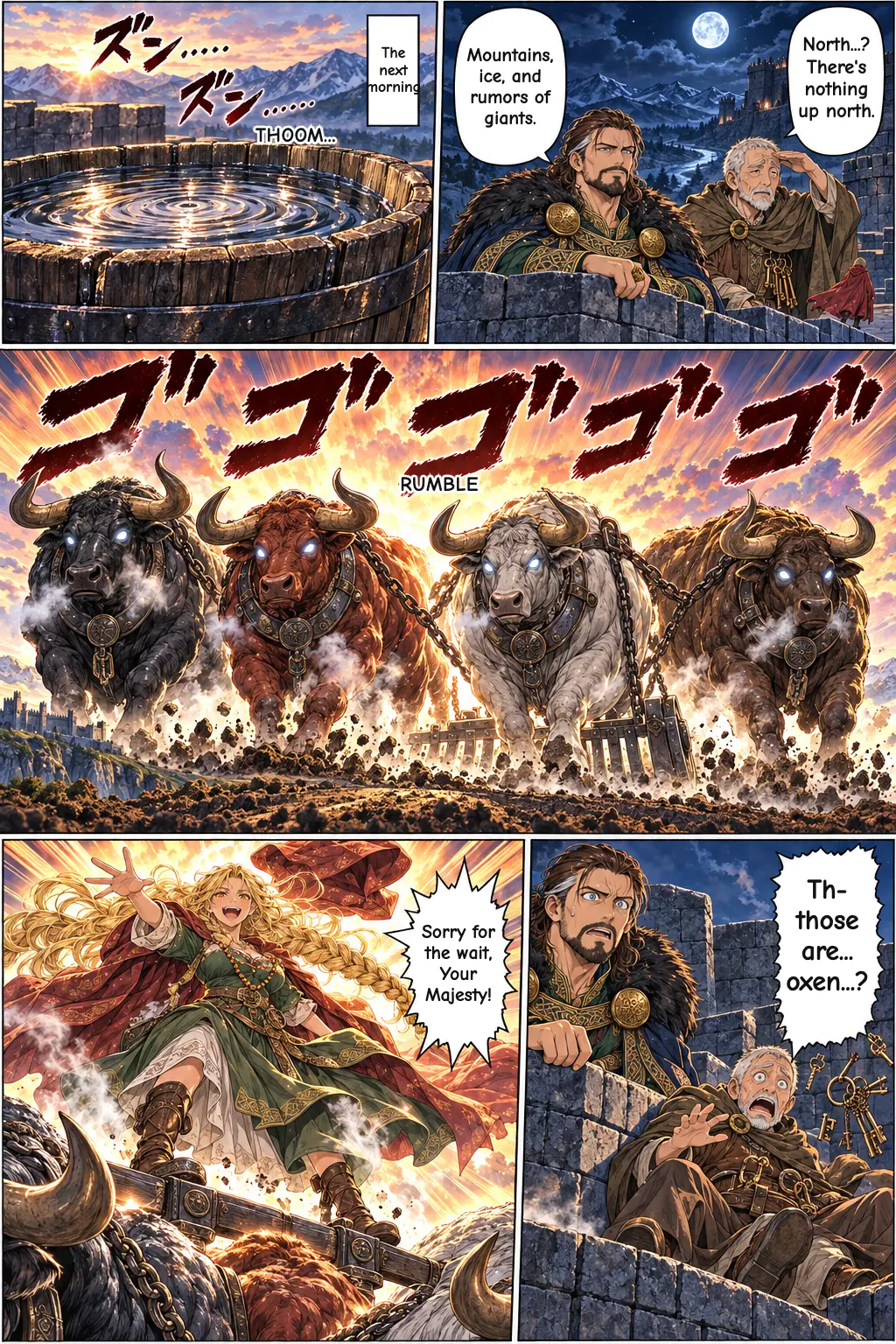
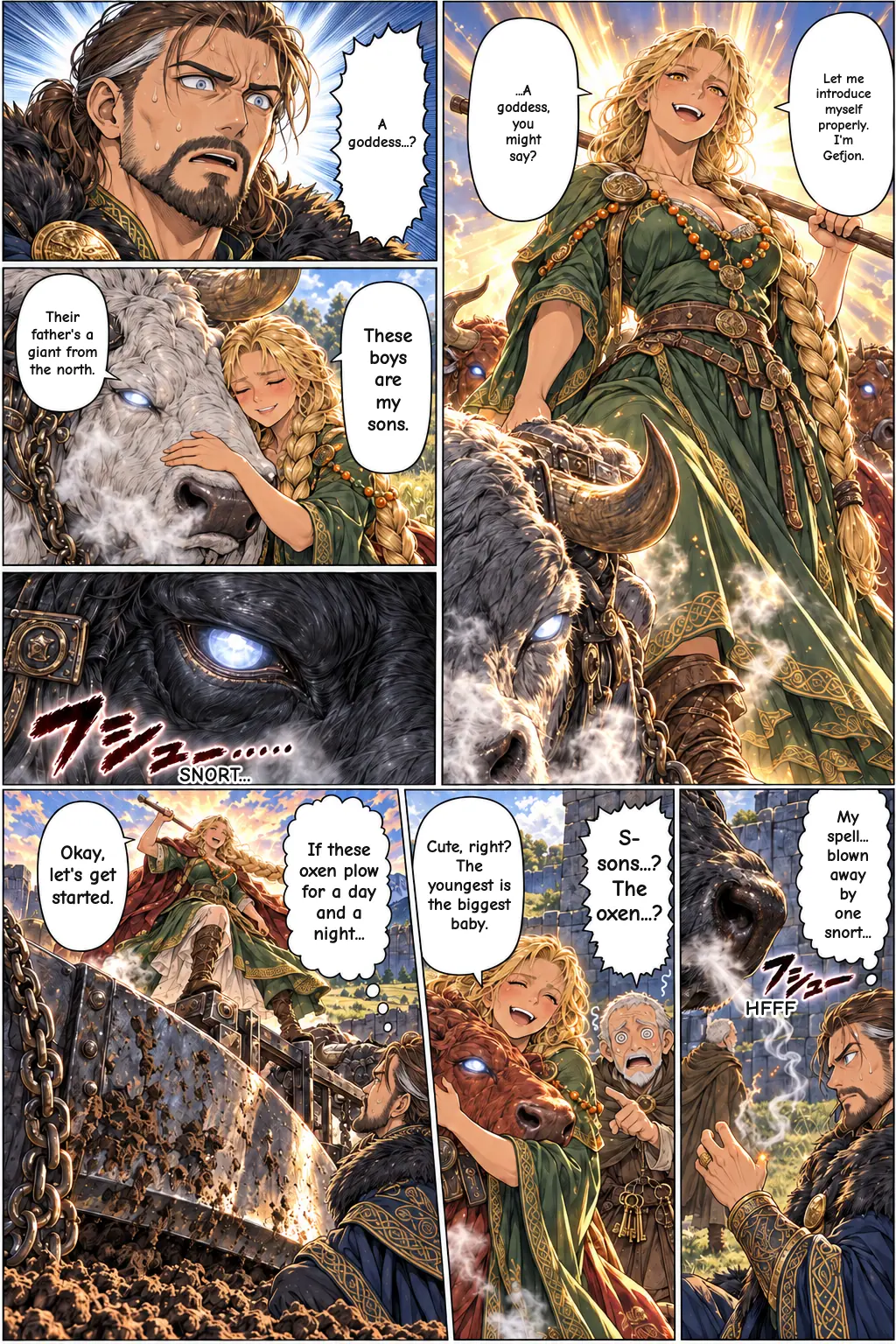
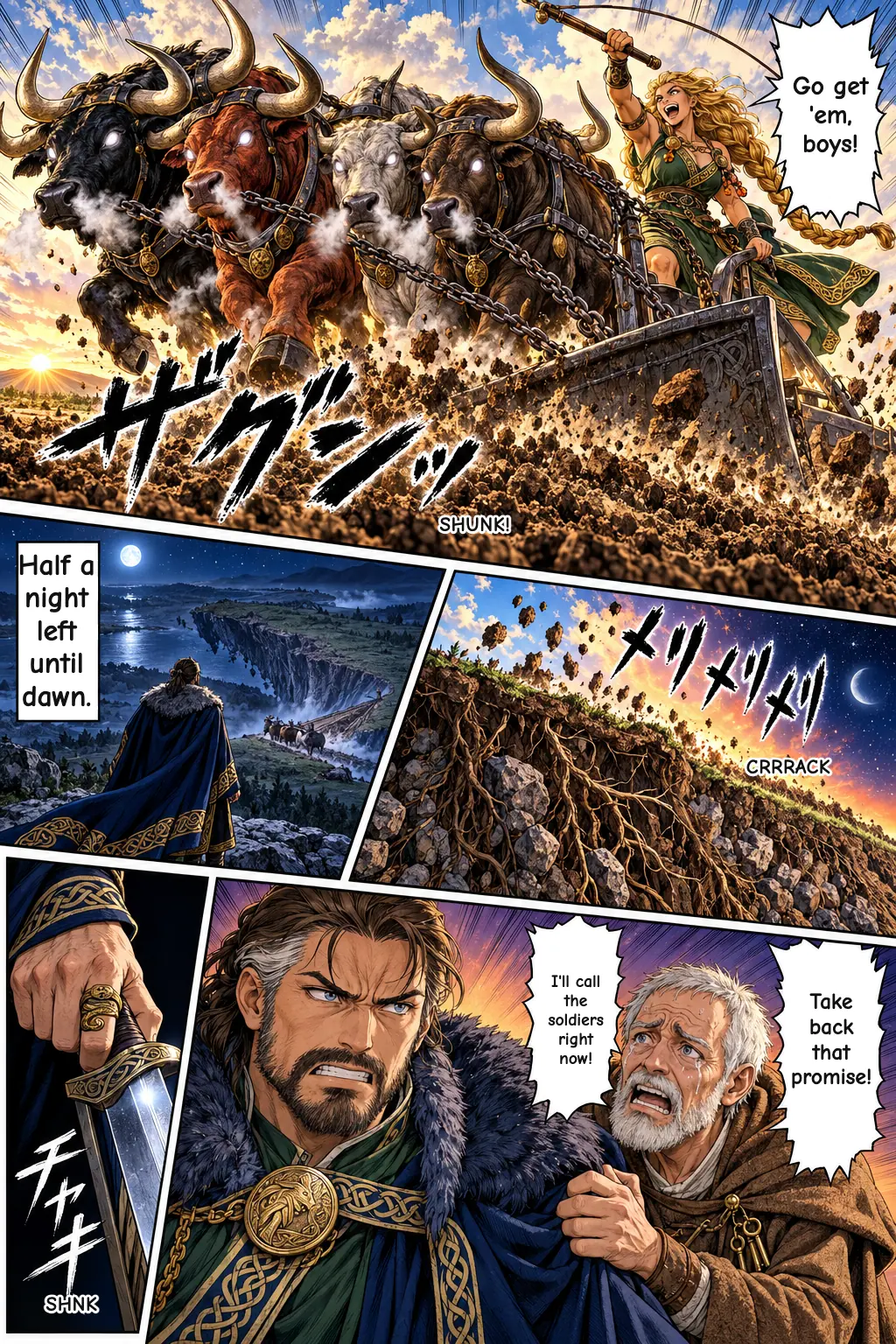
Gylfaginning opens with Gylfi, king of the land Snorri calls Svíþjóð (Sweden). A travelling woman entertains him, and as thanks he promises her as much farmland as four oxen can plough in one day and one night. The text does not say how she entertained him. The woman is really Gefjun, a goddess of the Æsir (the main family of Norse gods). Gefjun goes north to Jötunheim, the land of the giants, and brings back four oxen. They are her own sons, born to her and a giant. Her plough cuts so hard and deep that it tears the land loose, and the oxen drag the whole piece west into the sea.
The Deluding of Gylfi Summary: King Gylfi, Gefjun & Gylfaginning
In short: The Deluding of Gylfi (Gylfaginning) is the opening part of Snorri Sturluson's Prose Edda, written in Iceland in the early 13th century. It tells how King Gylfi of Sweden loses land to the goddess Gefjun, then travels in disguise as an old man called Gangleri to a gleaming hall, where three mysterious figures dare him to question them about the gods.
The original story: what happens at the start of Gylfaginning
Gylfaginning opens with Gylfi, king of the land Snorri calls Svíþjóð (Sweden). A travelling woman entertains him, and as thanks he promises her as much farmland as four oxen can plough in one day and one night. The text does not say how she entertained him. The woman is really Gefjun, a goddess of the Æsir (the main family of Norse gods).
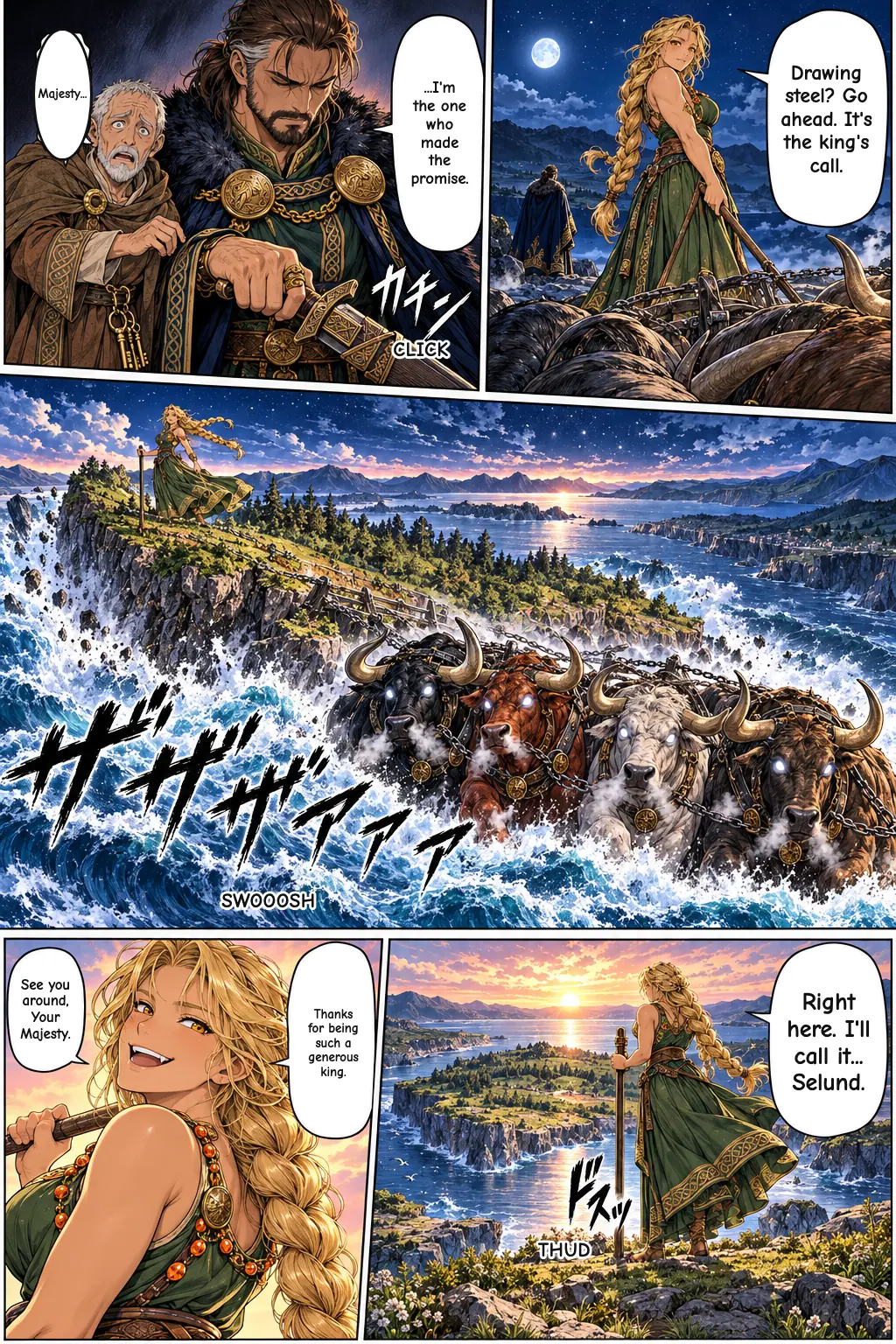
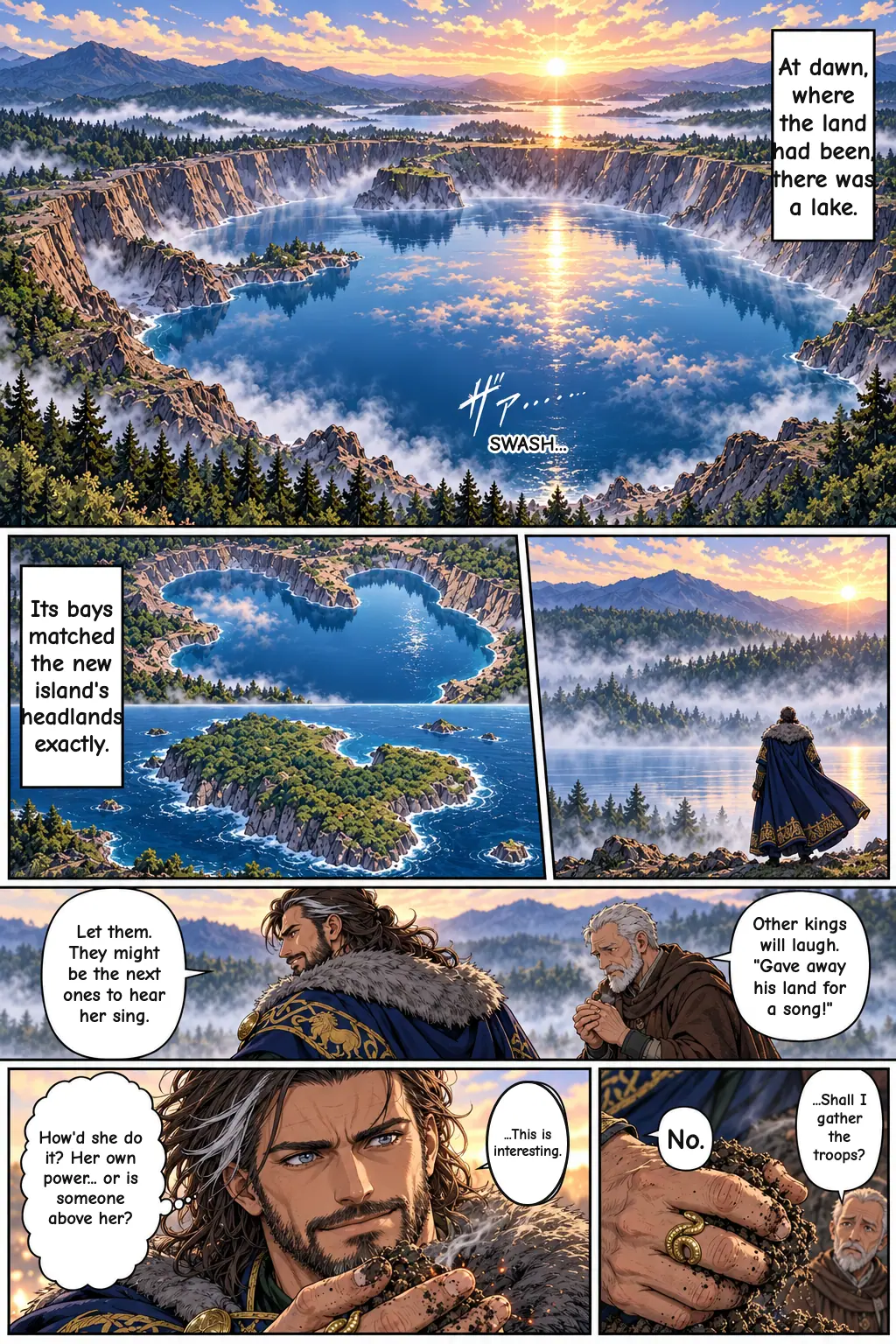
Gefjun goes north to Jötunheim, the land of the giants, and brings back four oxen. They are her own sons, born to her and a giant. Her plough cuts so hard and deep that it tears the land loose, and the oxen drag the whole piece west into the sea. She sets it down in a strait and names it Selund, the island known today as Zealand, where Copenhagen stands. The hole left behind fills with water and becomes a lake the Swedes call Lǫgrinn, 'the Lake'. Snorri adds that the bays of the lake match the headlands of Zealand, and he backs up the story with a verse by the old poet Bragi, who describes the oxen as having four heads and eight 'brow-moons', meaning eyes.
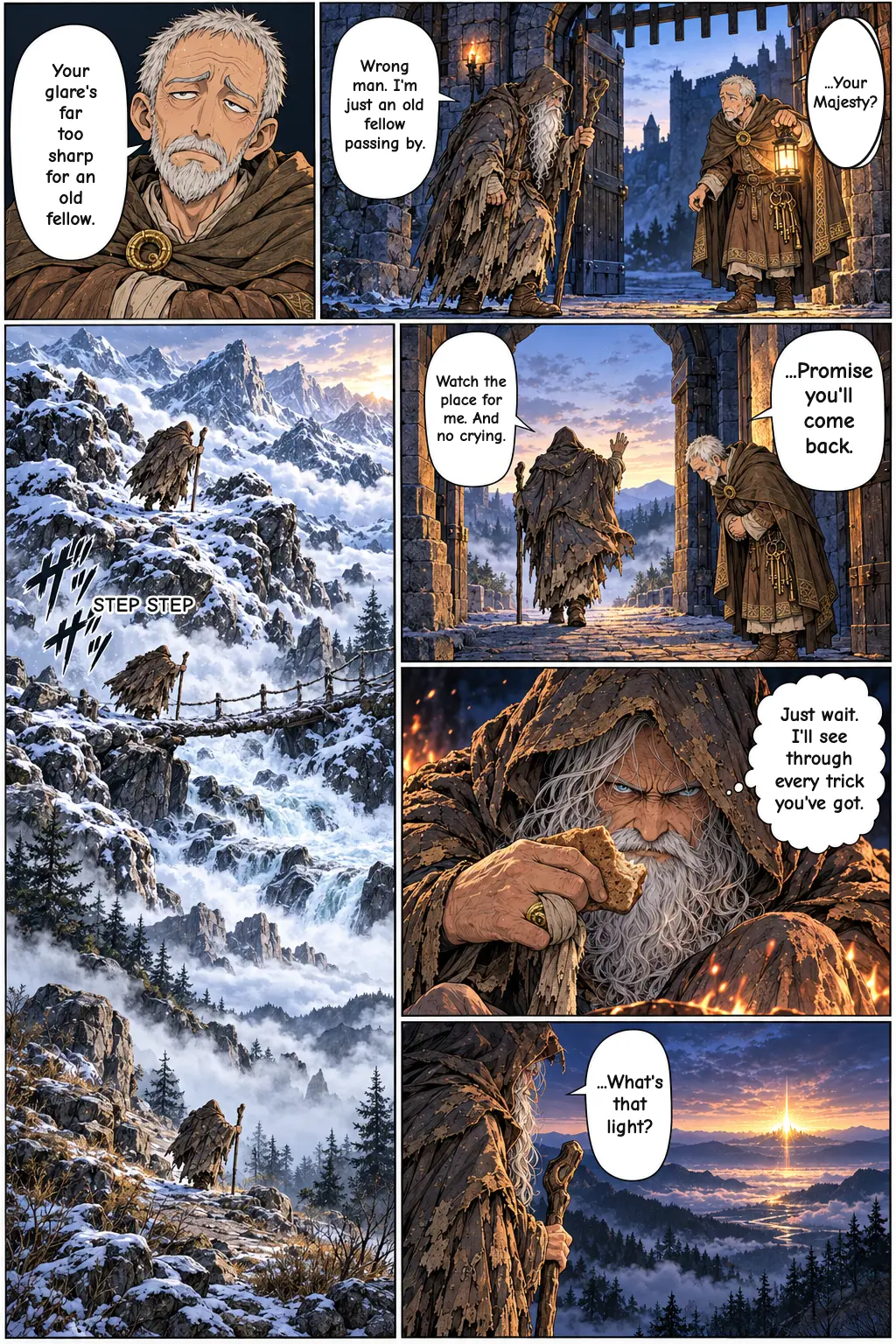
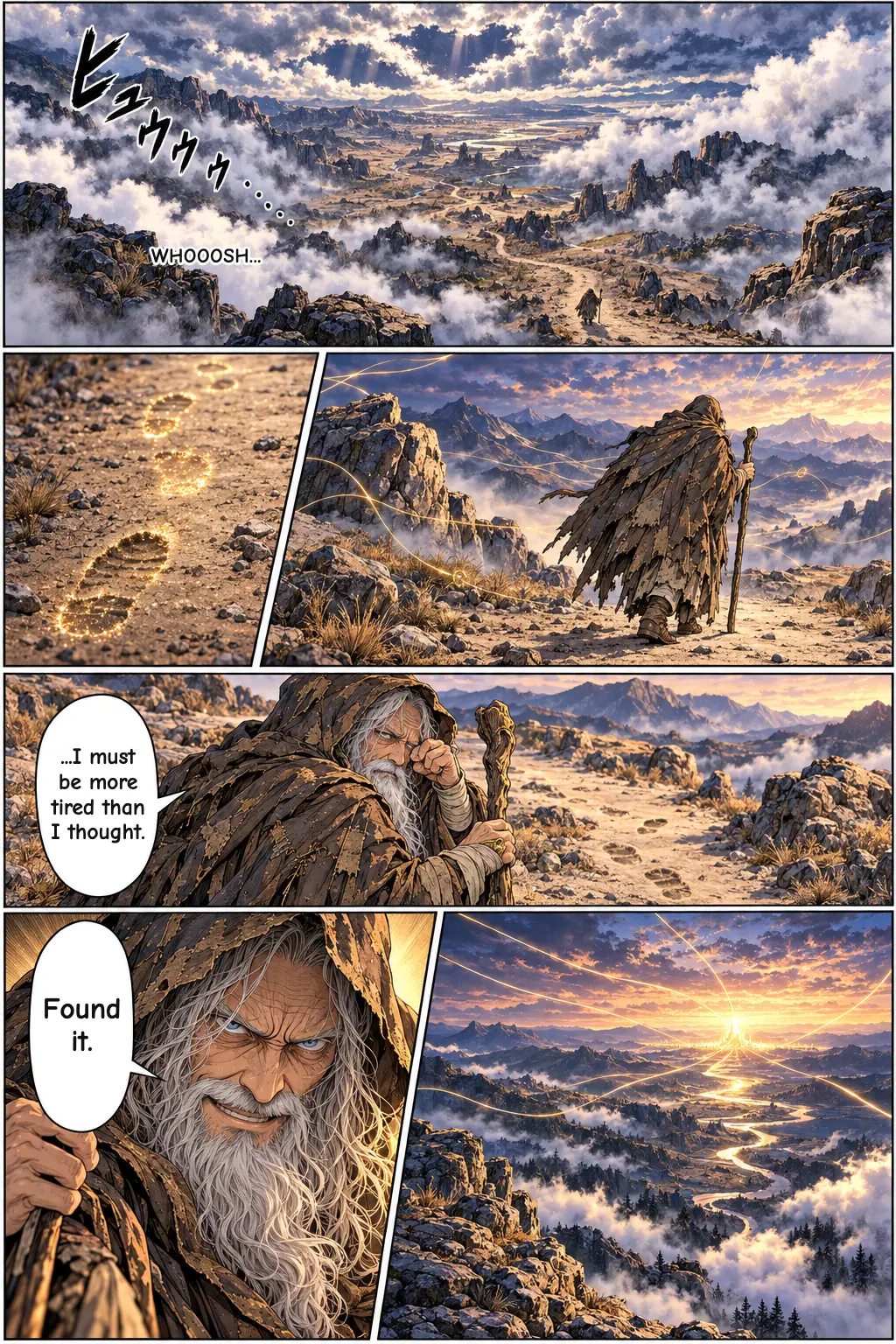
Gylfi, Snorri tells us, was wise and skilled in magic. He wonders why everything seems to go the Æsir's way: is it their own nature, or the gods they worship? To find out, he sets off in secret for Asgard, the home of the Æsir, taking the shape of an old man and the name Gangleri, a name often explained as 'the one weary from walking'.
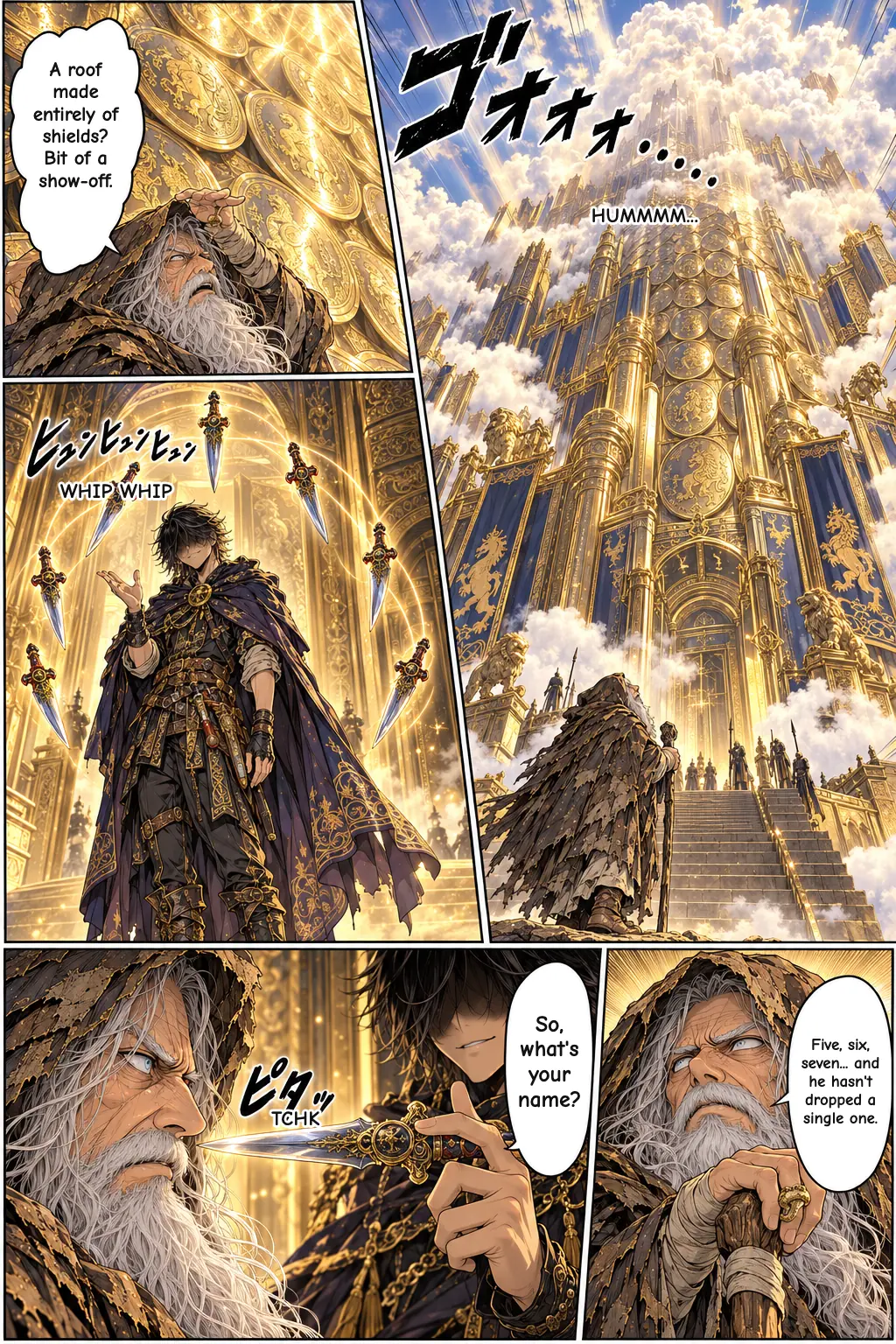
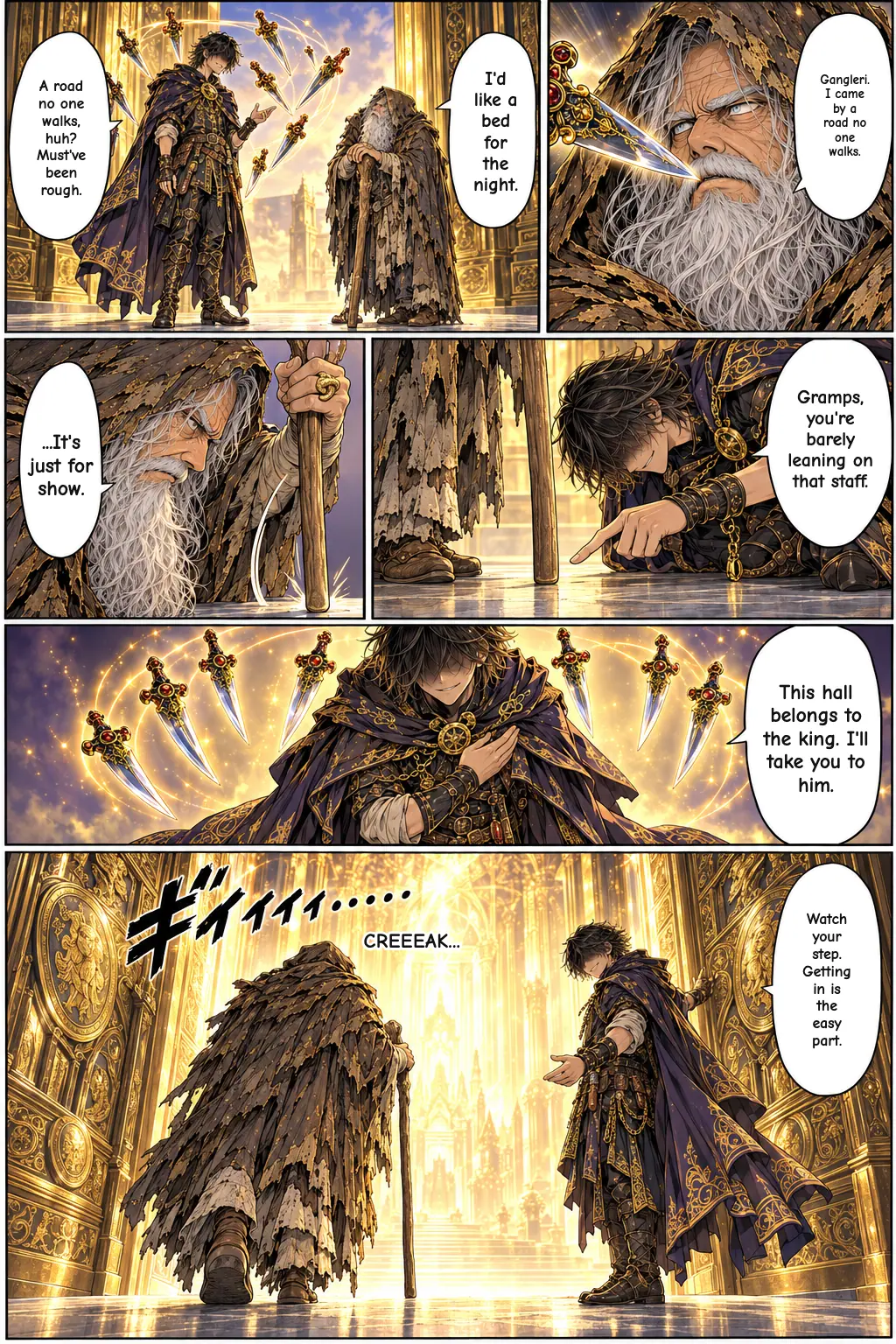
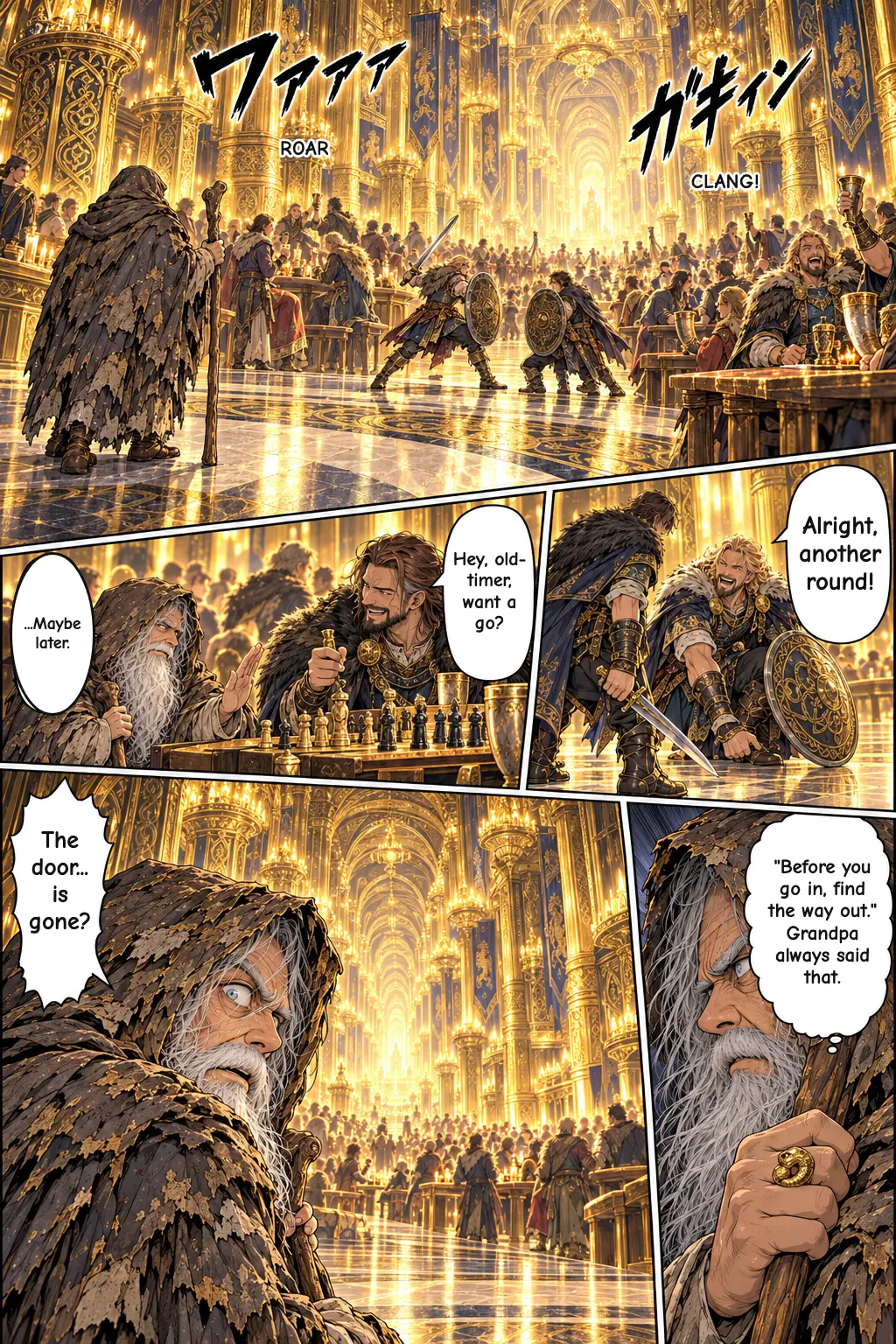
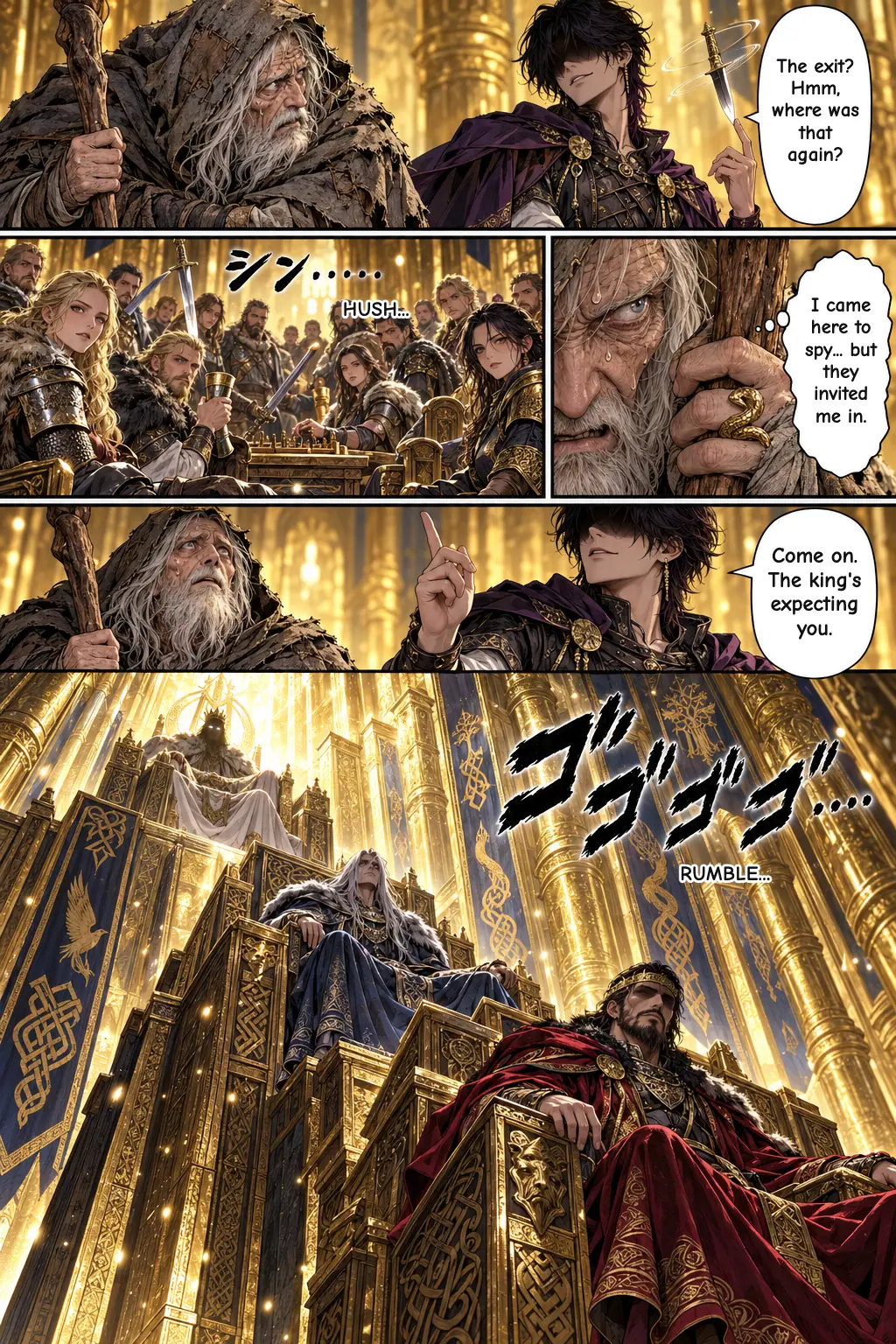
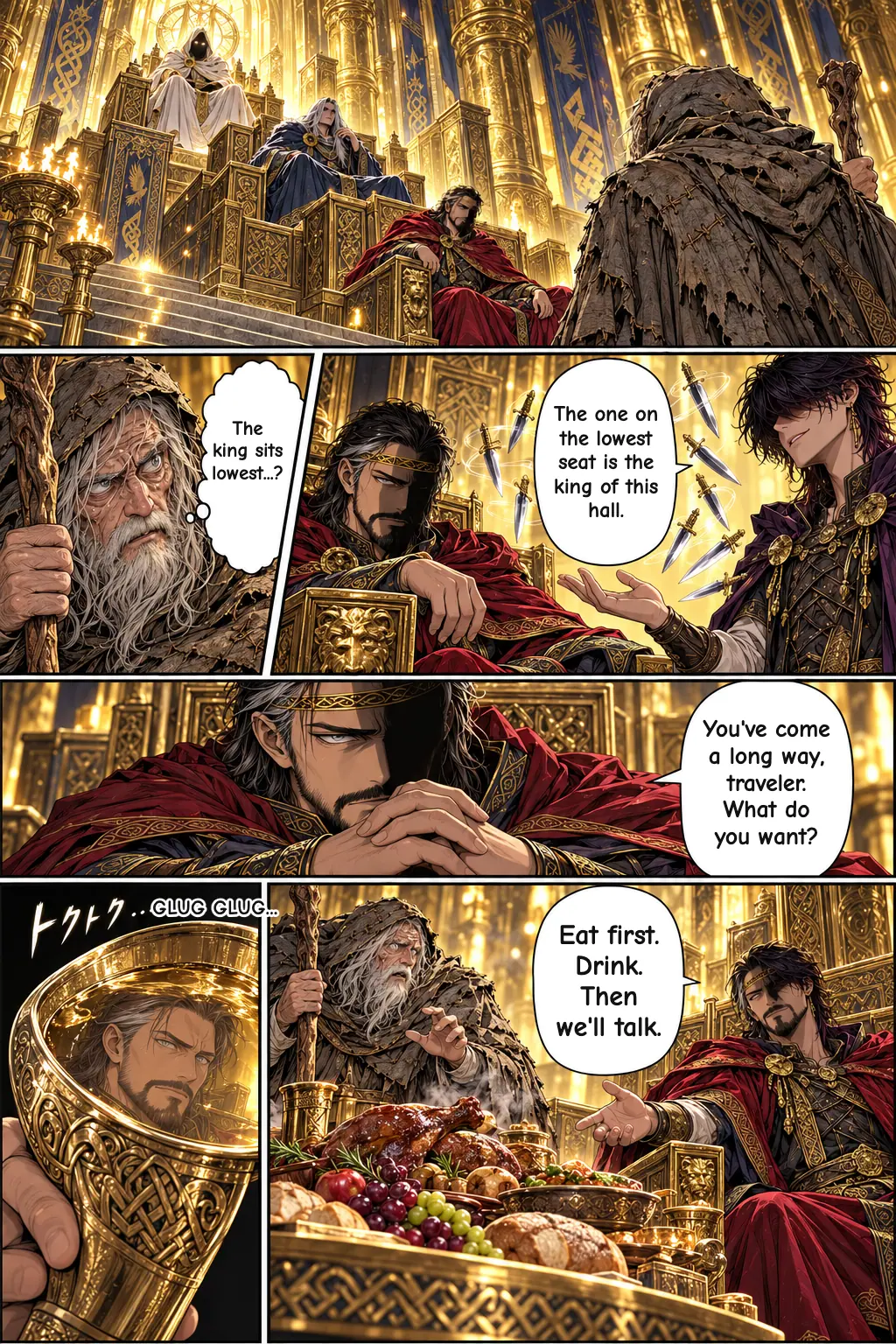
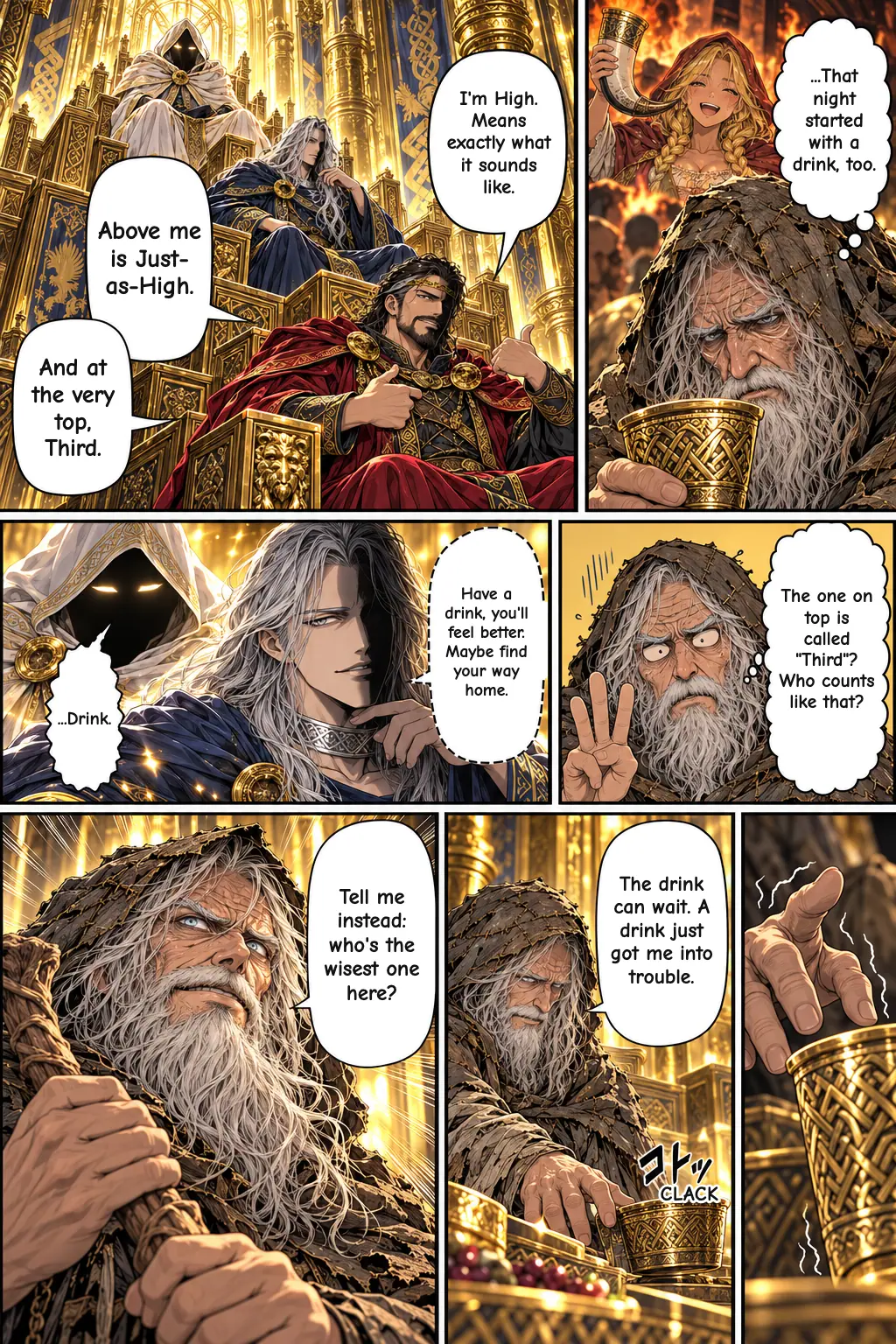
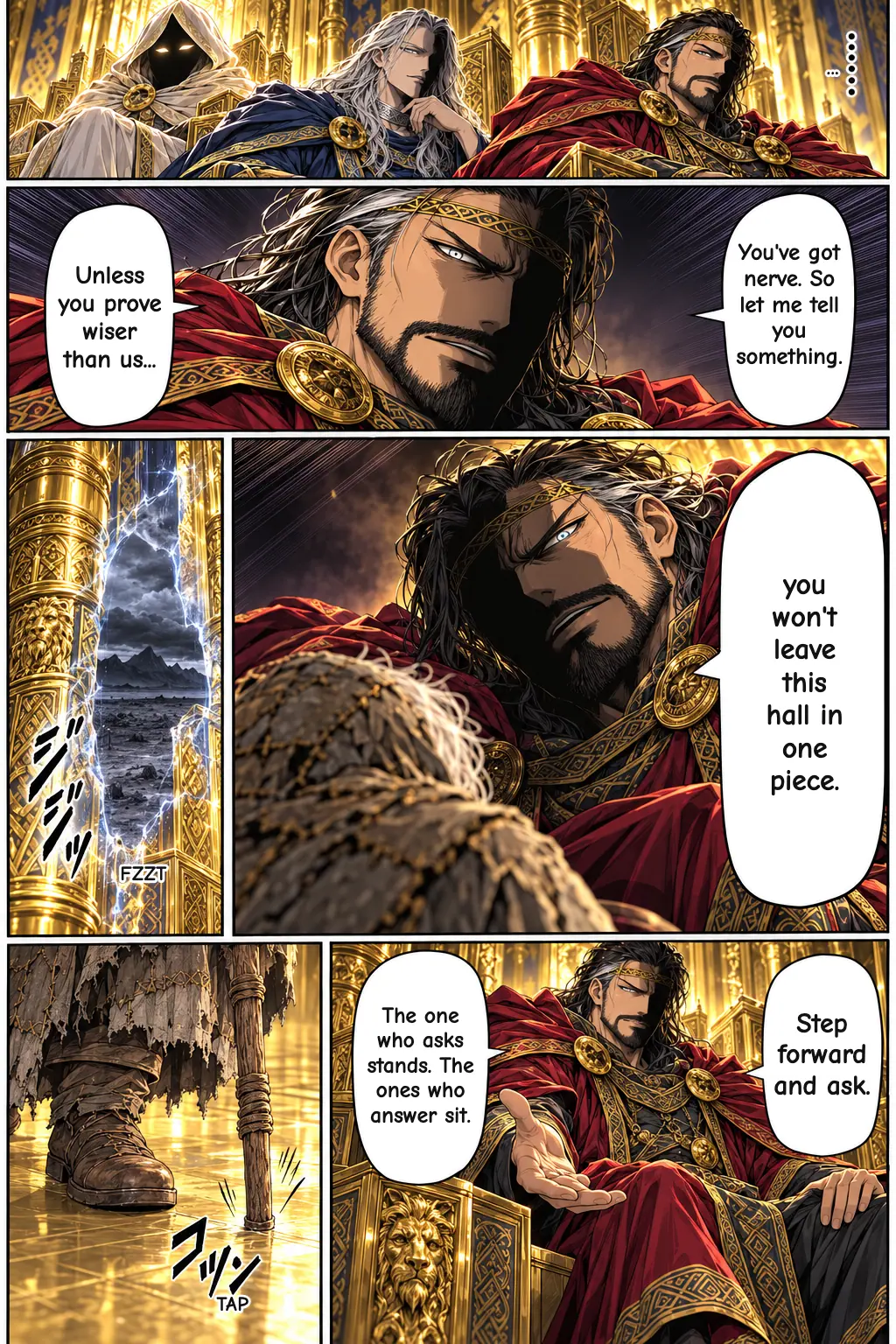
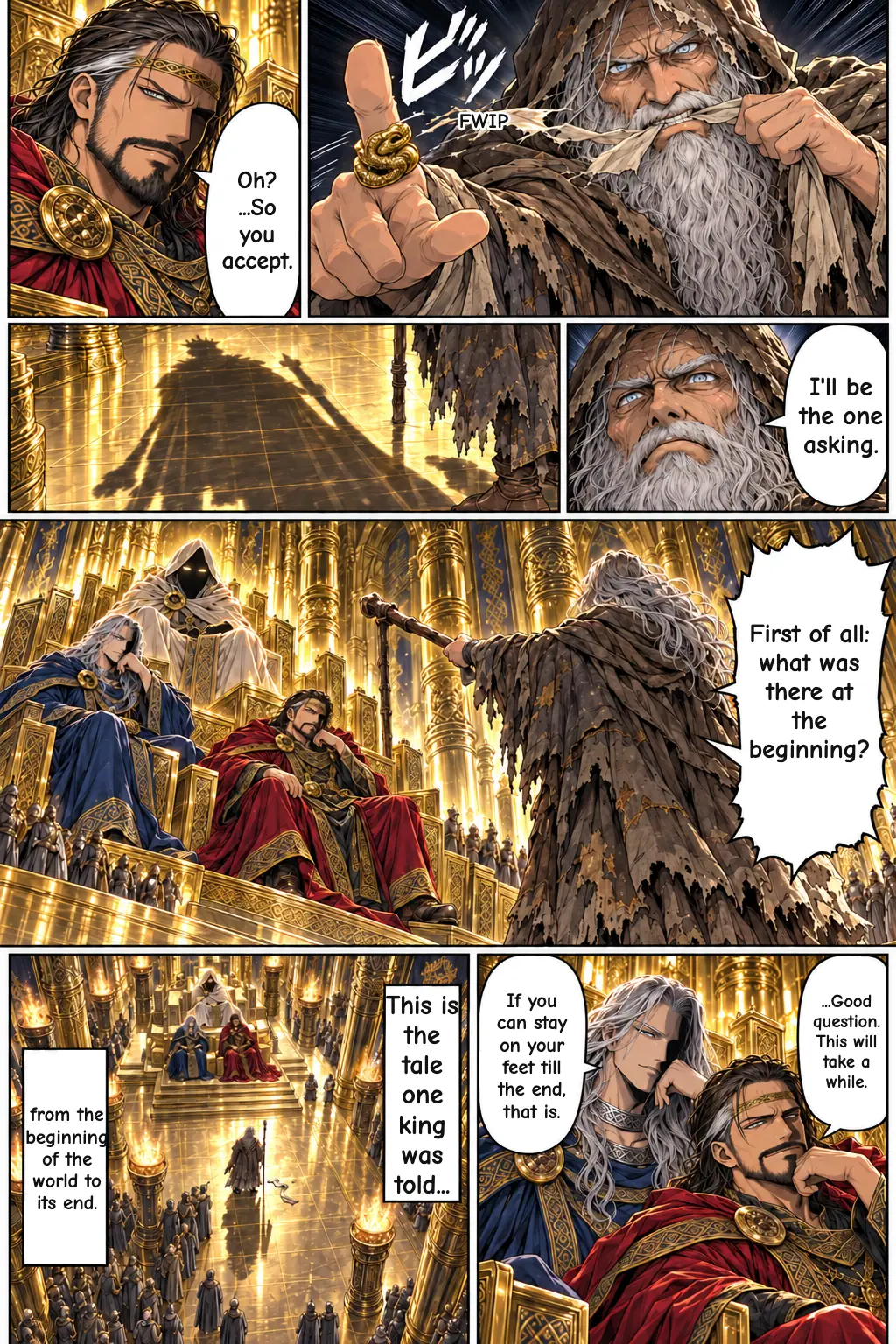
But the Æsir can see what is coming. They know he is on his way and prepare an illusion for him. Gylfi arrives at a towering hall roofed with golden shields laid like shingles. In the doorway a man juggles short swords, always keeping seven in the air. Asked his name, Gylfi answers 'Gangleri' and asks for lodging. Inside are many rooms full of people playing games, drinking and fighting with weapons. He sees three high seats, one above another. On the lowest sits Hár ('High'), above him Jafnhár ('Just-as-High'), and at the top Þriði ('Third'). Hár warns the visitor that he will not leave unharmed unless he proves the wiser. The rule is that the questioner stands and the answerers sit. Gangleri's first question: who is the highest and oldest of all the gods? Hár answers that it is the All-father, who has twelve names in the old tongue, and the other two add to his reply.
Main characters
Gylfi (Gangleri) is the wise Swedish king who becomes the questioner of the whole Gylfaginning. Gefjun is the goddess who wins his land and creates Zealand. Her four ox-sons pull the plough. The sword-juggling doorkeeper guides the visitor inside. Hár, Jafnhár and Þriði are the three enthroned figures who answer Gylfi's questions.
What this myth tells us: culture and background
Snorri Sturluson (1179–1241) was an Icelandic chieftain, lawman and historian. He wrote the Prose Edda around the 1220s, more than two centuries after Iceland had become Christian. Part of his aim was to help poets understand the old myths that traditional Norse poetry kept referring to. Gylfaginning works as a frame story. A curious king asks questions, and the answers become a guided tour of Norse mythology, from the creation of the world to Ragnarök, the end of the gods.
The Gefjun episode is an origin story that explains a landscape. It accounts for the island of Zealand and a Swedish lake in one stroke. Which lake Snorri meant is debated. Later scholars often pointed to Lake Mälaren, while others note that the shape of Lake Vänern matches Zealand's coastline better. The surviving manuscripts also differ in where they place this episode, and in some it is missing.
The three figures on the high seats are never named as gods in these opening chapters. Many readers see them as aliases or three forms of Odin, whose many names Snorri lists elsewhere. That reading is common, but it is an interpretation, not something the opening chapters state. The 'deluding' in the title also points to the illusion the Æsir prepared, which leaves the reader unsure how far to trust what Gylfi is shown.
What the manga changes
Snorri's account is brief, so the manga fills in details that the source leaves blank. In Episode 1, Gefjun entertains the king as a wandering singer. The original never says how she pleased him. Her looks, voice and the dramatic ploughing scene are the artists' own designs.
Gylfi's inner life is also new. The original says nothing about humiliation, fear or a choice not to take revenge. The manga gives him these feelings so that his journey has an emotional engine. How he disguises himself, the road to Asgard, the faces and speaking styles of the three figures, and the lively crowd inside the hall are all invented as well. In the original, Gylfi keeps the name Gangleri, so his decision in the manga to reveal his true identity and stake his life on his first question is a dramatic addition. The core details stay faithful to Snorri: the shield roof, the doorkeeper with seven swords, the three stacked high seats, the deadly warning and that first question.
Where to read it
If you want to see this strange opening come to life, NORSE MYTHOLOGY: The King Who Heard the End of the Gods begins here with Episode 1. Every episode on Manga Portal is free to read, with no sign-up required. Later episodes follow Gylfi as his questions move on to the creation of the world, the gods and their final battle.
Characters in this episode
Gylfi (Gangleri)
A wise king of Sweden, skilled in magic, who visits Asgard disguised as an old man named Gangleri to learn the source of the gods' power.
Gefjun
A goddess of the Æsir who wins land from Gylfi and ploughs it into the sea to make the island of Zealand.
Gefjun's four sons
Gefjun's sons by a giant, who take the form of oxen and drag the land west to the sea.
Hár (High)
The figure on the lowest of three high seats, who does most of the answering and warns Gylfi he must prove the wiser.
Jafnhár (Just-as-High)
The figure on the middle high seat, who adds to Hár's answers.
Þriði (Third)
The figure on the highest seat, who also adds to the answers and is often read, with the other two, as a form of Odin.
FAQ
What is Gylfaginning?
Gylfaginning, or 'The Deluding of Gylfi', is the first main part of the Prose Edda by the Icelander Snorri Sturluson, written around the 1220s. It is framed as a question-and-answer session between King Gylfi and three mysterious figures, and it covers most of Norse mythology.
How did Gefjun create Zealand?
Gylfi promised Gefjun as much land as four oxen could plough in a day and a night. She used her four giant-born sons as oxen, cut a huge piece of land loose, and dragged it into the sea, where it became Zealand. The hole left behind became a lake in Sweden.
Who is Gangleri in Norse mythology?
Gangleri is the name King Gylfi uses when he travels to Asgard disguised as an old man. The name is often explained as meaning 'the one weary from walking'.
Who are Hár, Jafnhár and Þriði?
They are the three figures seated on high seats who answer Gylfi's questions. Many readers see them as names or forms of Odin, but the opening chapters do not say so outright.
Which lake did Gefjun's land leave behind?
Snorri calls it Lǫgrinn, 'the Lake'. Later scholars often identified it with Lake Mälaren, though some argue that Lake Vänern's shape fits Zealand better.