Episode 1The Sword No One Could PullExcept Him — Sigmund's Sword (Völsunga Saga)
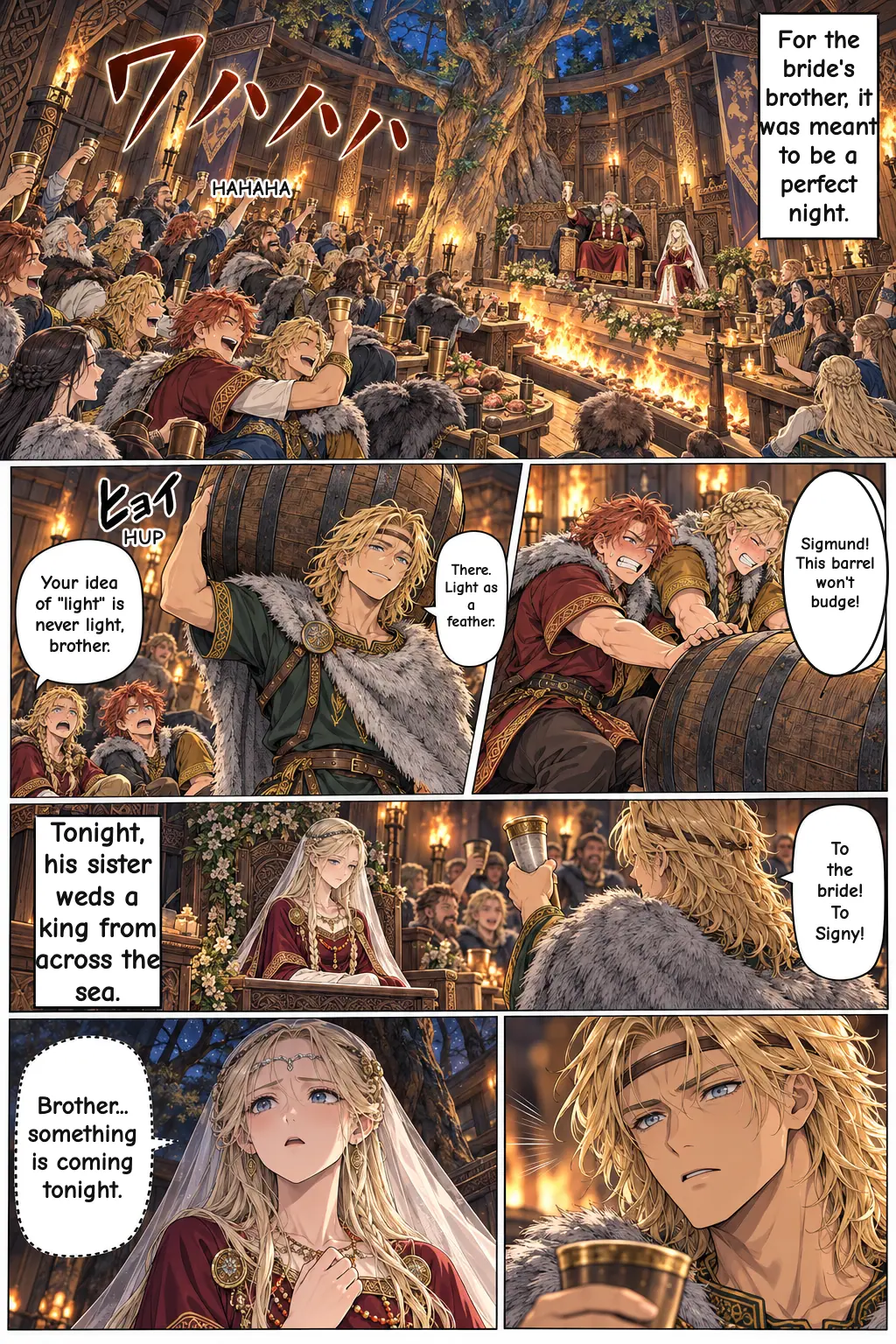
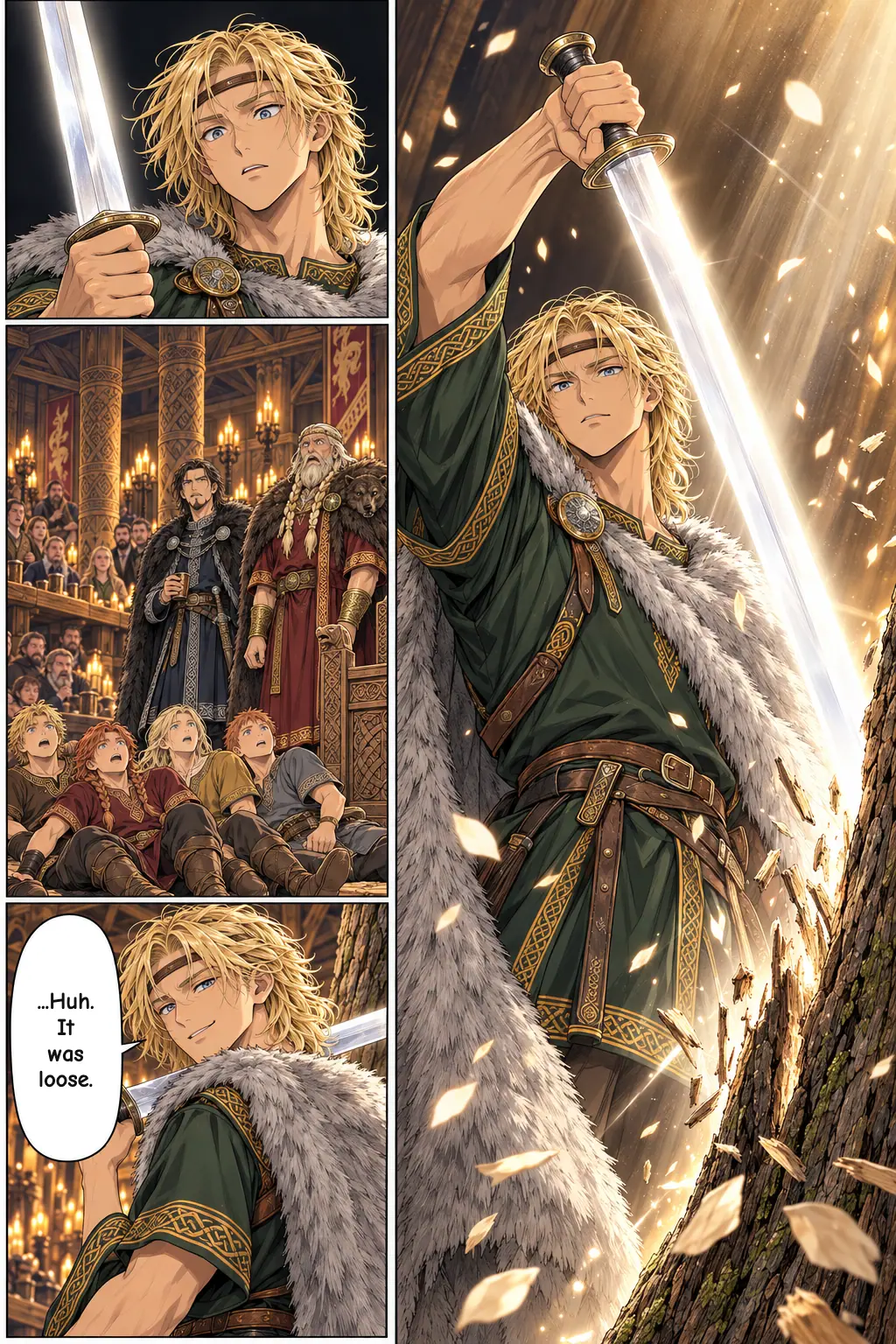
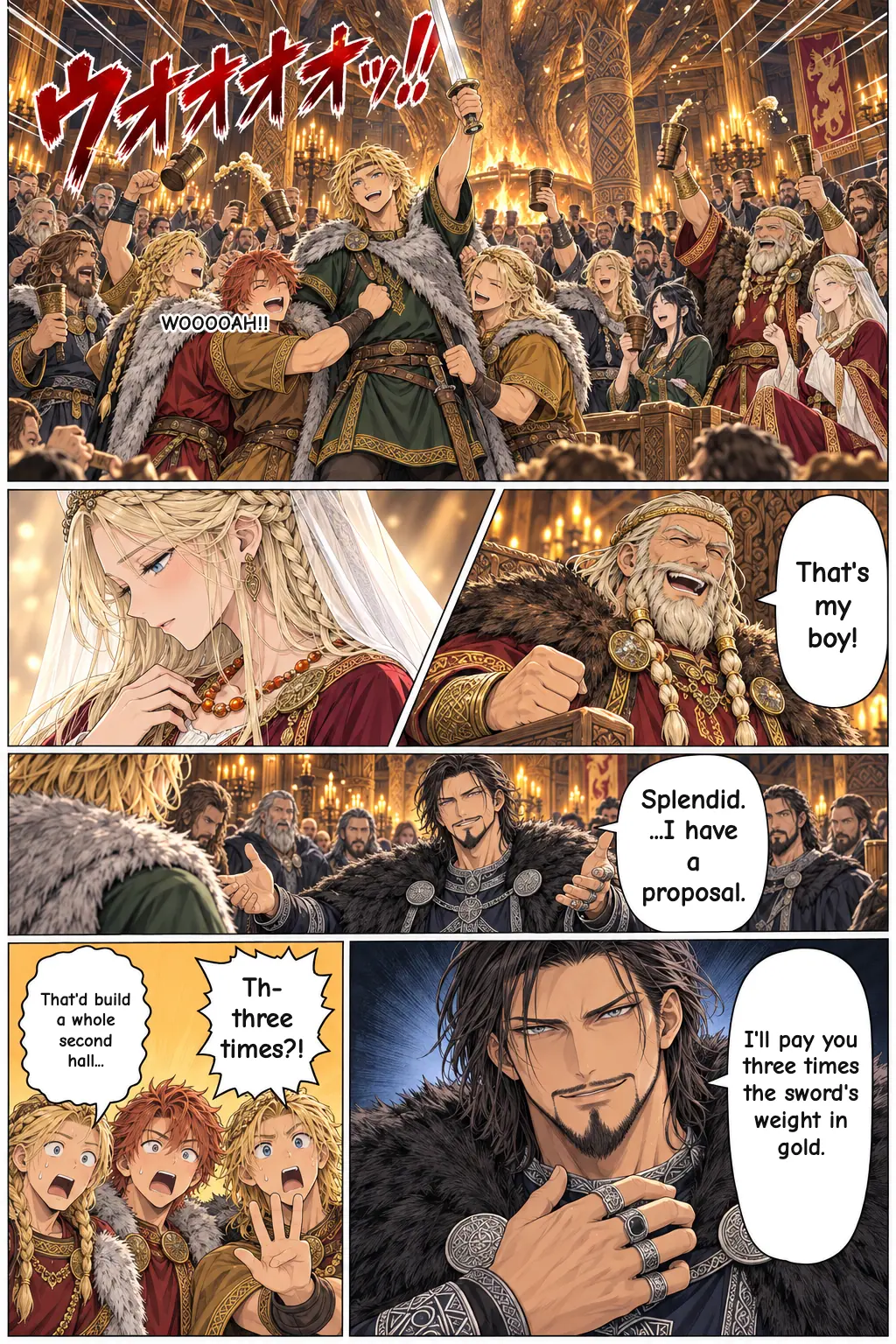
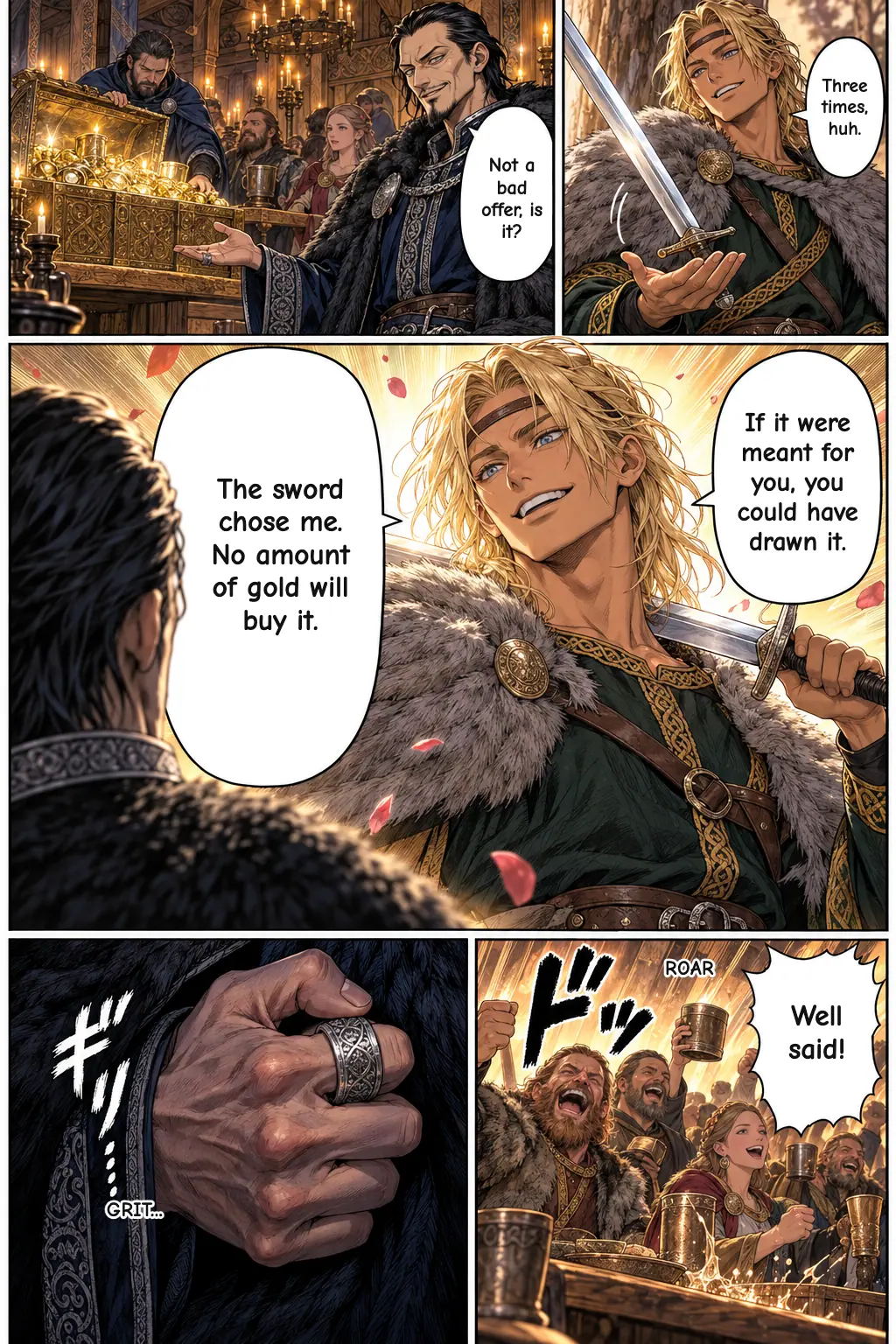
On the night of his sister Signy's wedding, a one-eyed old man drives a sword into the great tree at the heart of the hall, then vanishes. No one can pull it free, until Sigmund draws it out with ease. When the groom, King Siggeir, offers him gold for it, Sigmund laughs and turns him down. But that victory is the first step in sending his sister toward disaster.
19 pagesFree · No sign-up
In short: Sigmund's sword is the opening wonder of the Völsunga saga, a 13th-century Icelandic saga by an unknown author. At his twin sister Signy's wedding feast, a mysterious one-eyed old man drives a sword into the great tree Branstock, and only Sigmund can pull it free. When he refuses to sell it to the bridegroom, King Siggeir, he starts a bitter grudge that will bring disaster down on the Volsung family.
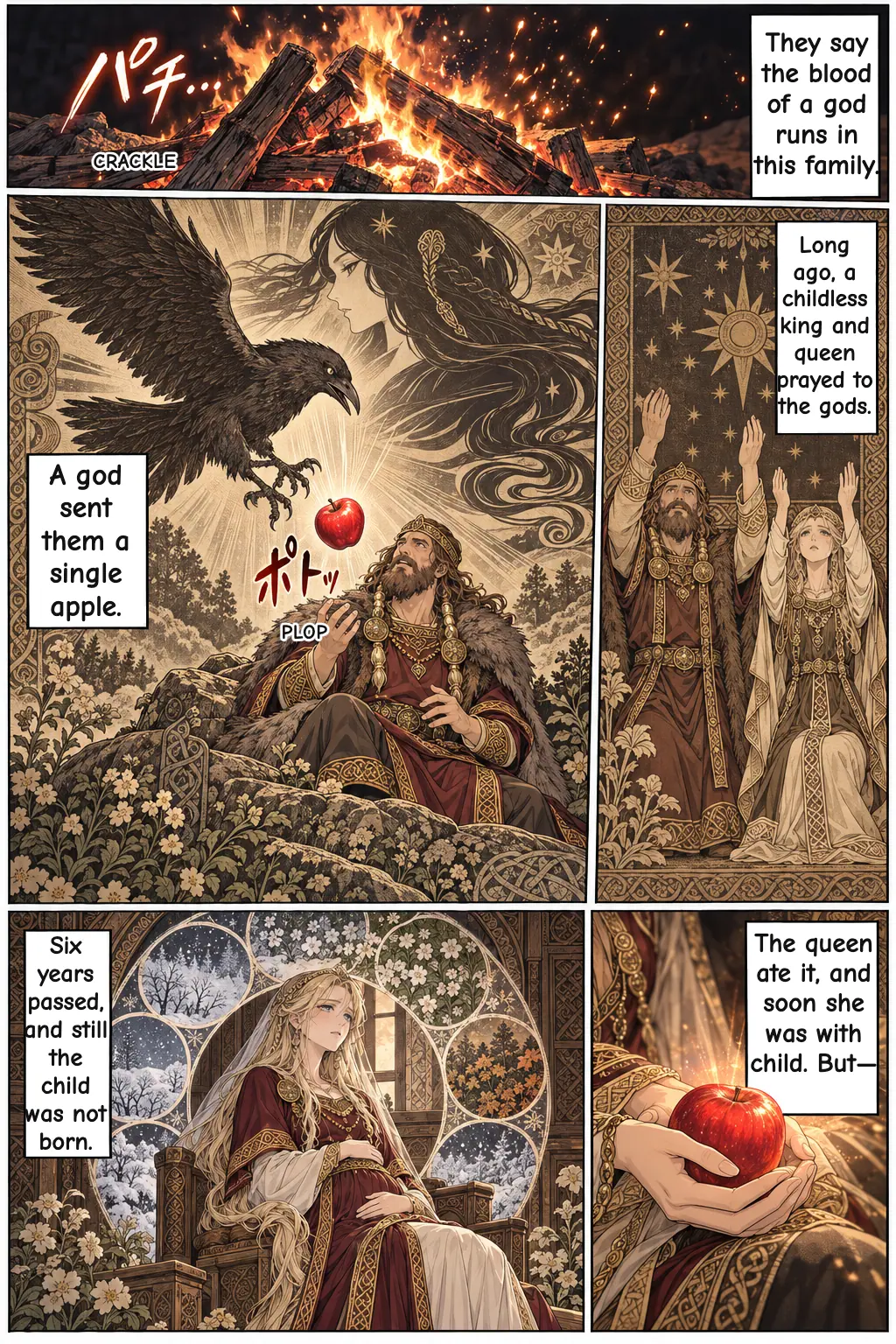
The Völsunga saga opens generations before Sigmund. Sigi, said to be a son of Odin, goes hunting with Bredi, a thrall (slave) belonging to a powerful man named Skadi. Bredi kills more game than his master's guest, and Sigi, stung with jealousy, murders him and hides the body in a snowdrift. The crime comes out and Sigi is declared an outlaw, but Odin leads him out of the land and gives him warships. Through raiding, Sigi becomes king of Hunland. In old age he is betrayed and killed by his wife's brothers, and his son Rerir avenges him.
Sigmund's Sword in the Branstock Tree: Völsunga Saga Chapters 1–3 Summary
The Original Story: From Sigi to the Sword in the Tree
The Völsunga saga opens generations before Sigmund. Sigi, said to be a son of Odin, goes hunting with Bredi, a thrall (slave) belonging to a powerful man named Skadi. Bredi kills more game than his master's guest, and Sigi, stung with jealousy, murders him and hides the body in a snowdrift. The crime comes out and Sigi is declared an outlaw, but Odin leads him out of the land and gives him warships. Through raiding, Sigi becomes king of Hunland. In old age he is betrayed and killed by his wife's brothers, and his son Rerir avenges him.
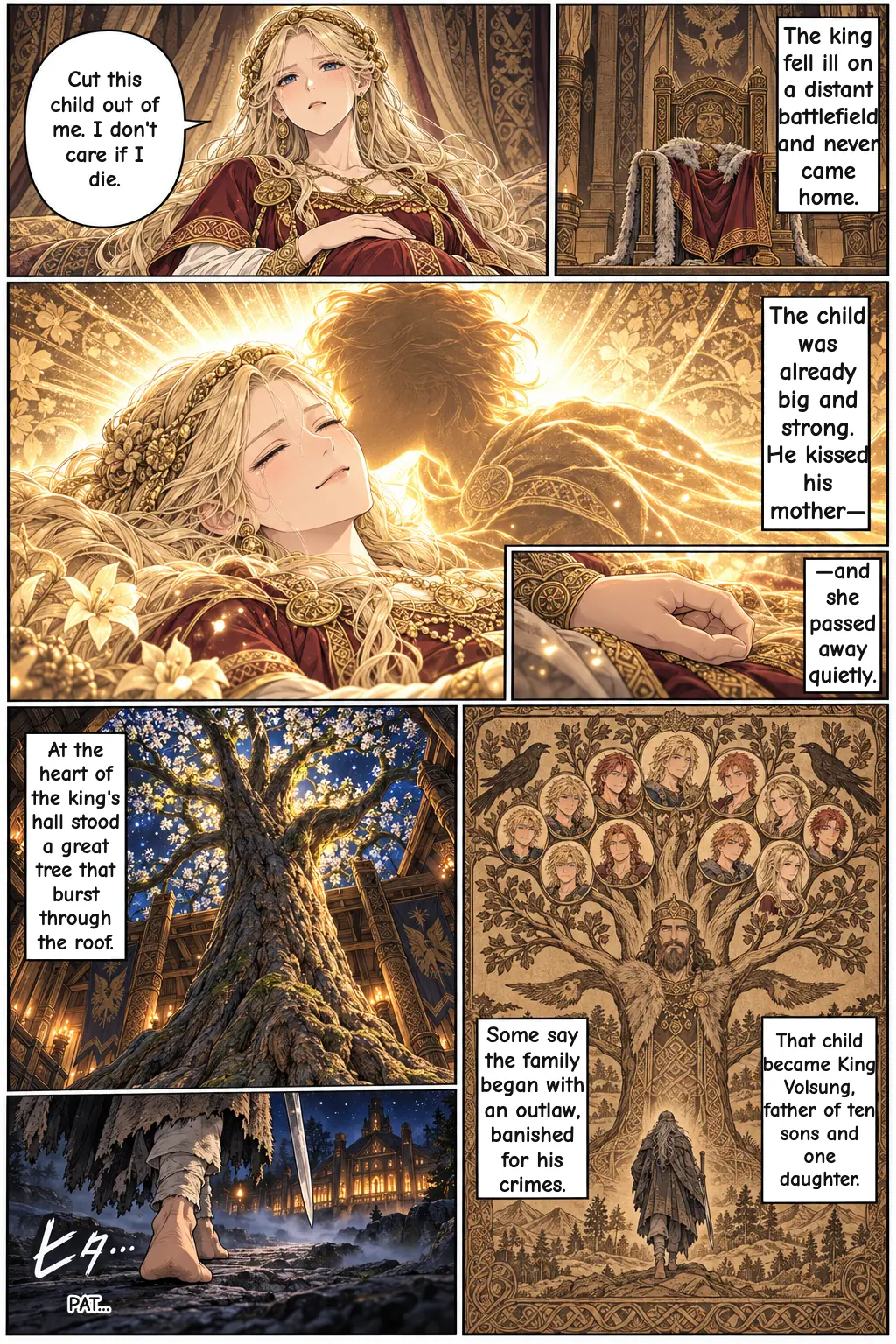
Rerir and his queen cannot have a child, so they pray to the gods. Frigg hears them, and Odin sends a giant's daughter in the shape of a bird to drop an apple into Rerir's lap as he sits on a burial mound. The queen eats the apple and conceives, but Rerir dies on campaign and the pregnancy lasts six years. Knowing she will not survive, the queen has the child cut from her body. The boy is already large, and he kisses his mother before she dies. He is Volsung, the king the family is named after.
Volsung marries Hljod, the same giant's daughter who carried the apple, and they have ten sons and one daughter. The eldest are twins, Sigmund and Signy. In the middle of Volsung's hall stands a huge tree called the Branstock, its branches spreading out over the roof.
The Wedding Night and the One-Eyed Stranger
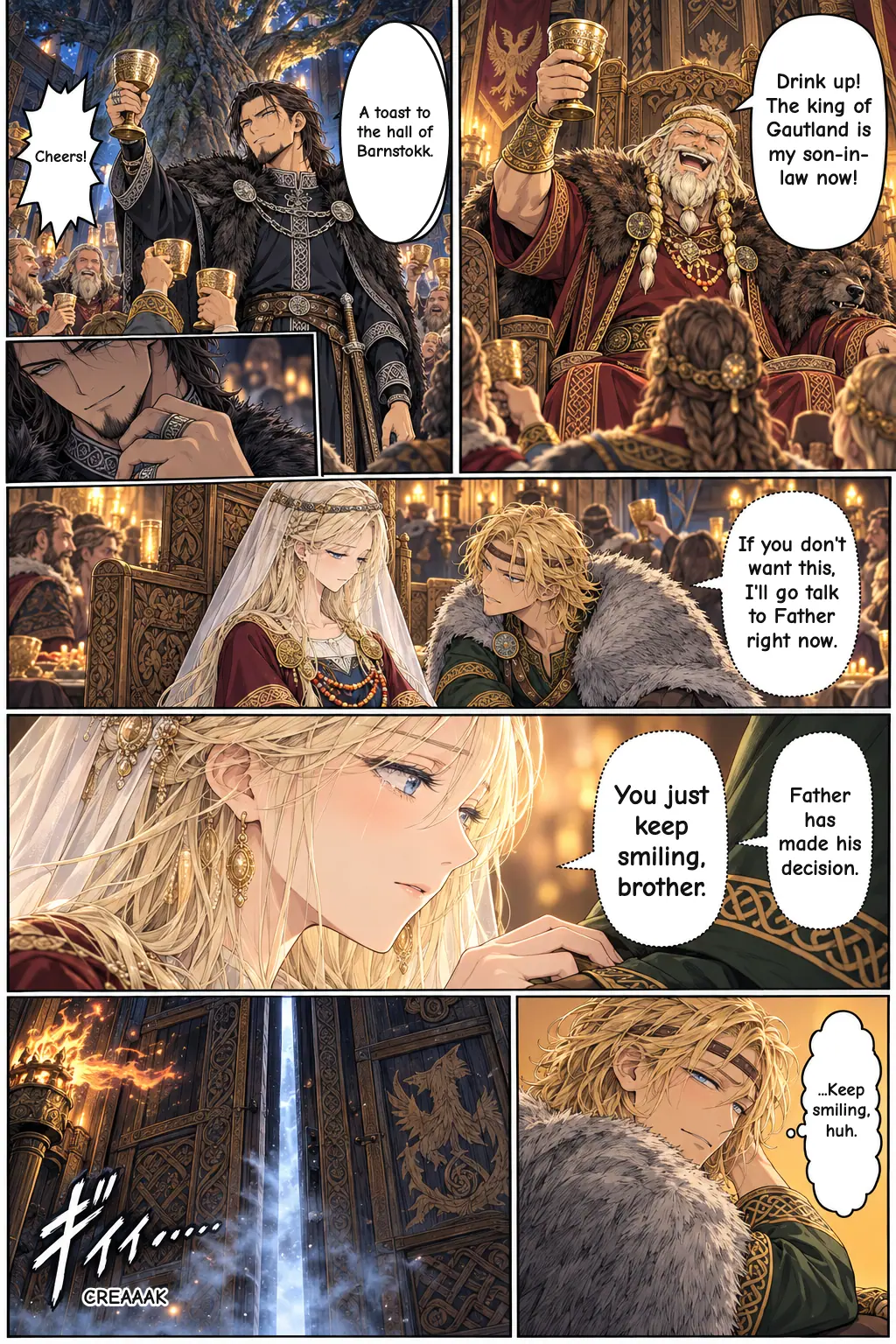
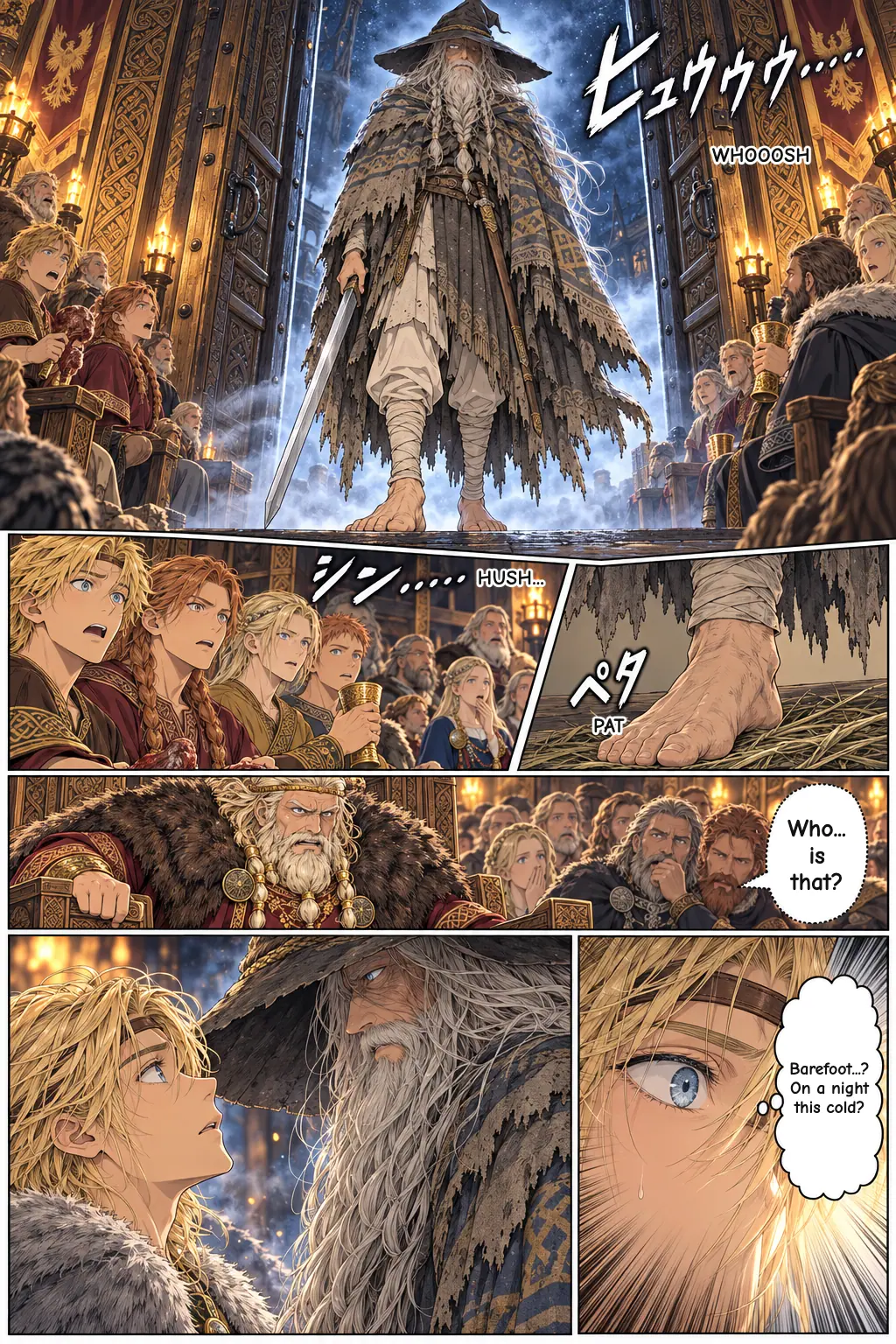
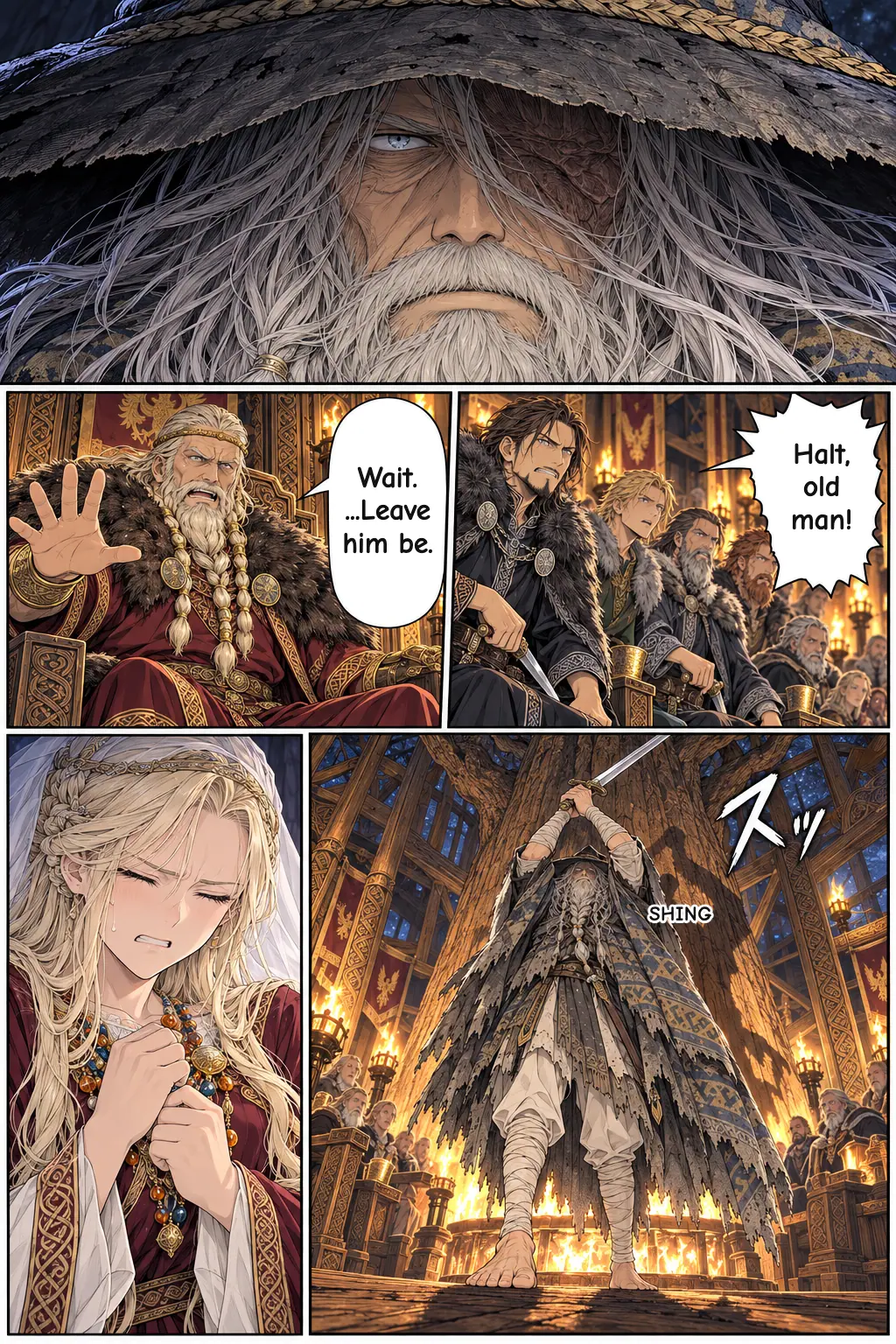
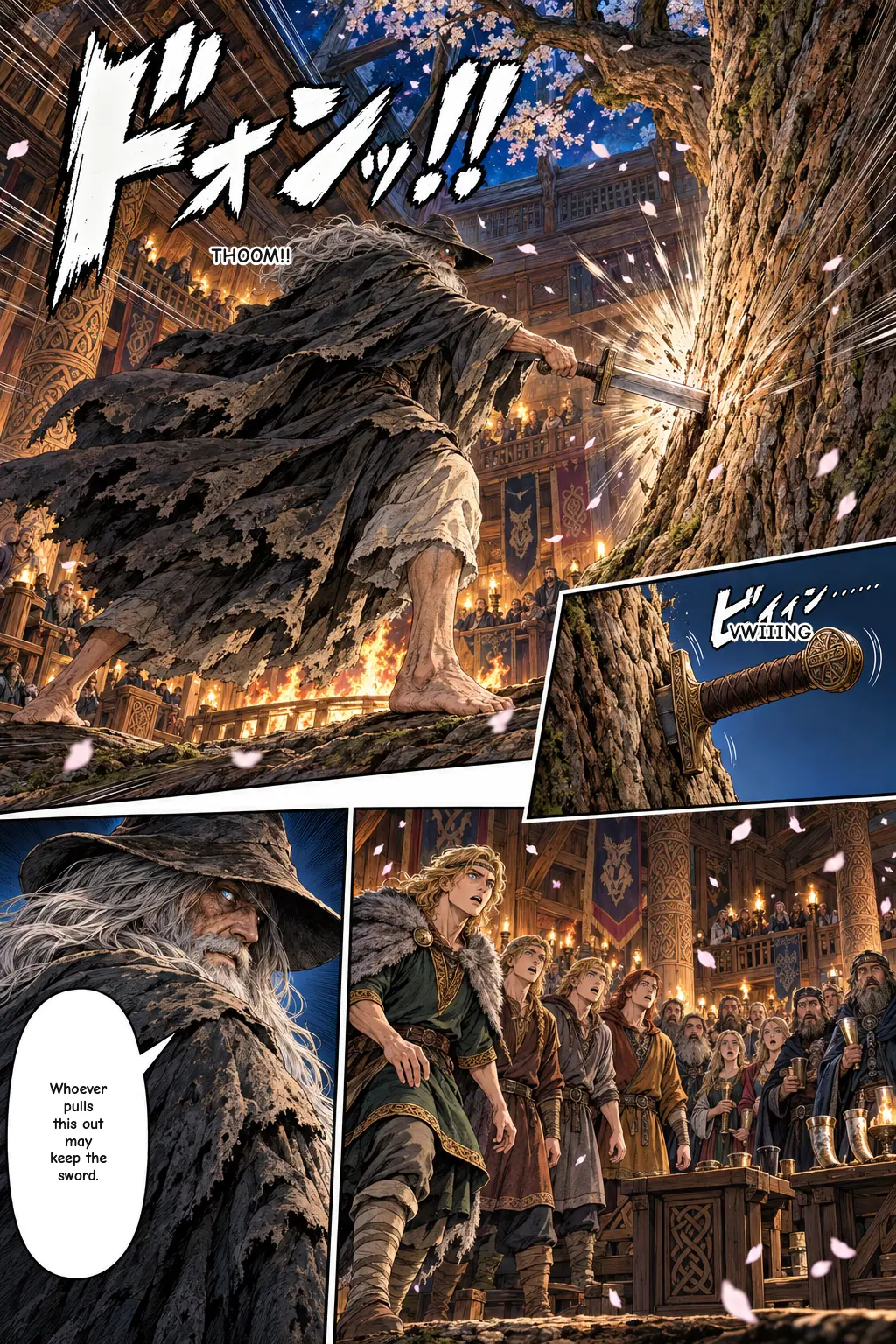
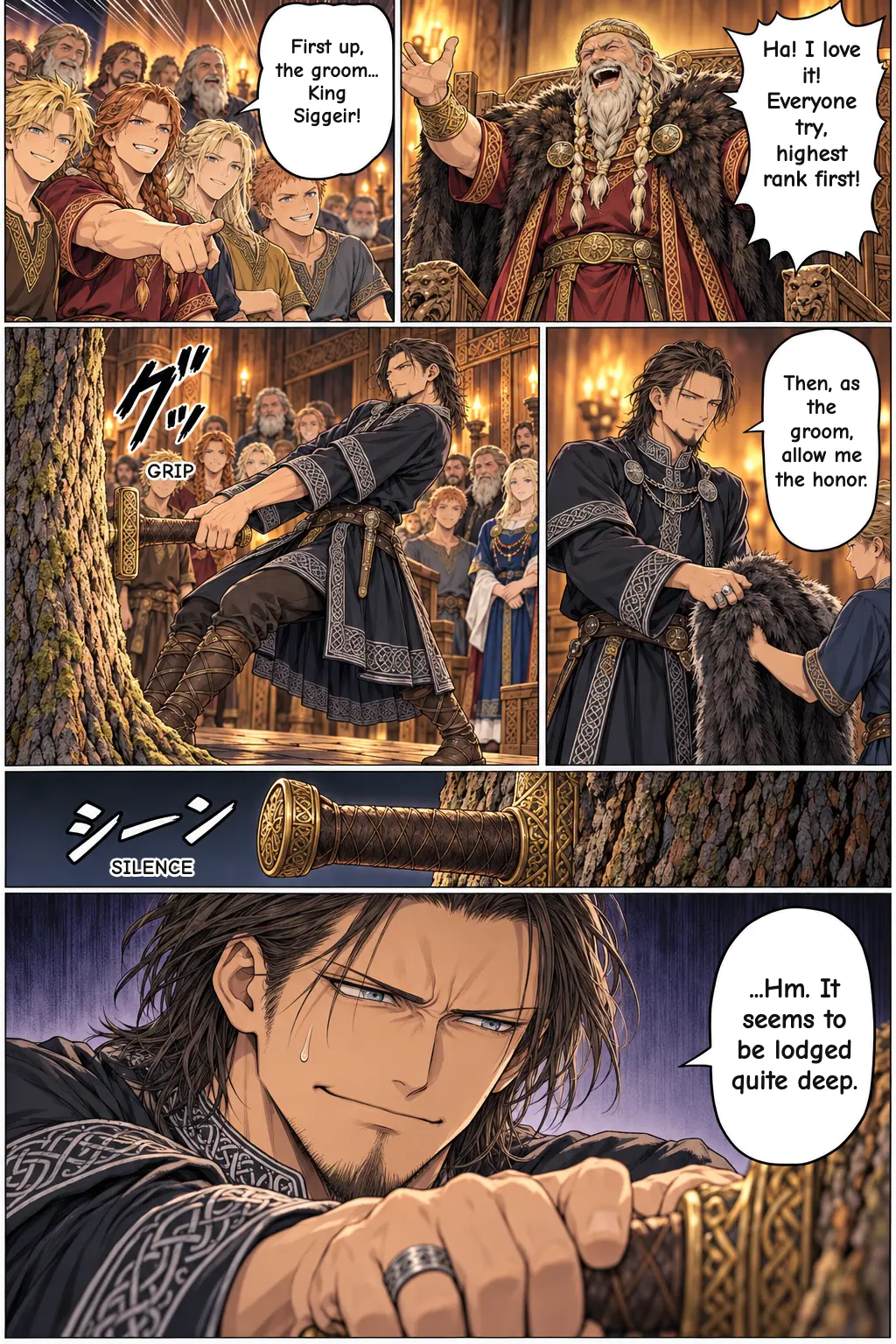
King Siggeir of Gautland asks for Signy's hand. She is unwilling, but she leaves the choice to her father, and the match is made. During the wedding feast, a stranger walks into the hall. He is tall and old, with one eye, a broad-brimmed hat, bare feet, linen breeches and a mottled cloak, and he carries a sword. He drives the blade into the Branstock up to the hilt and declares that whoever pulls it out may keep it, and will find no better sword. Then he leaves, and no one knows where he goes.
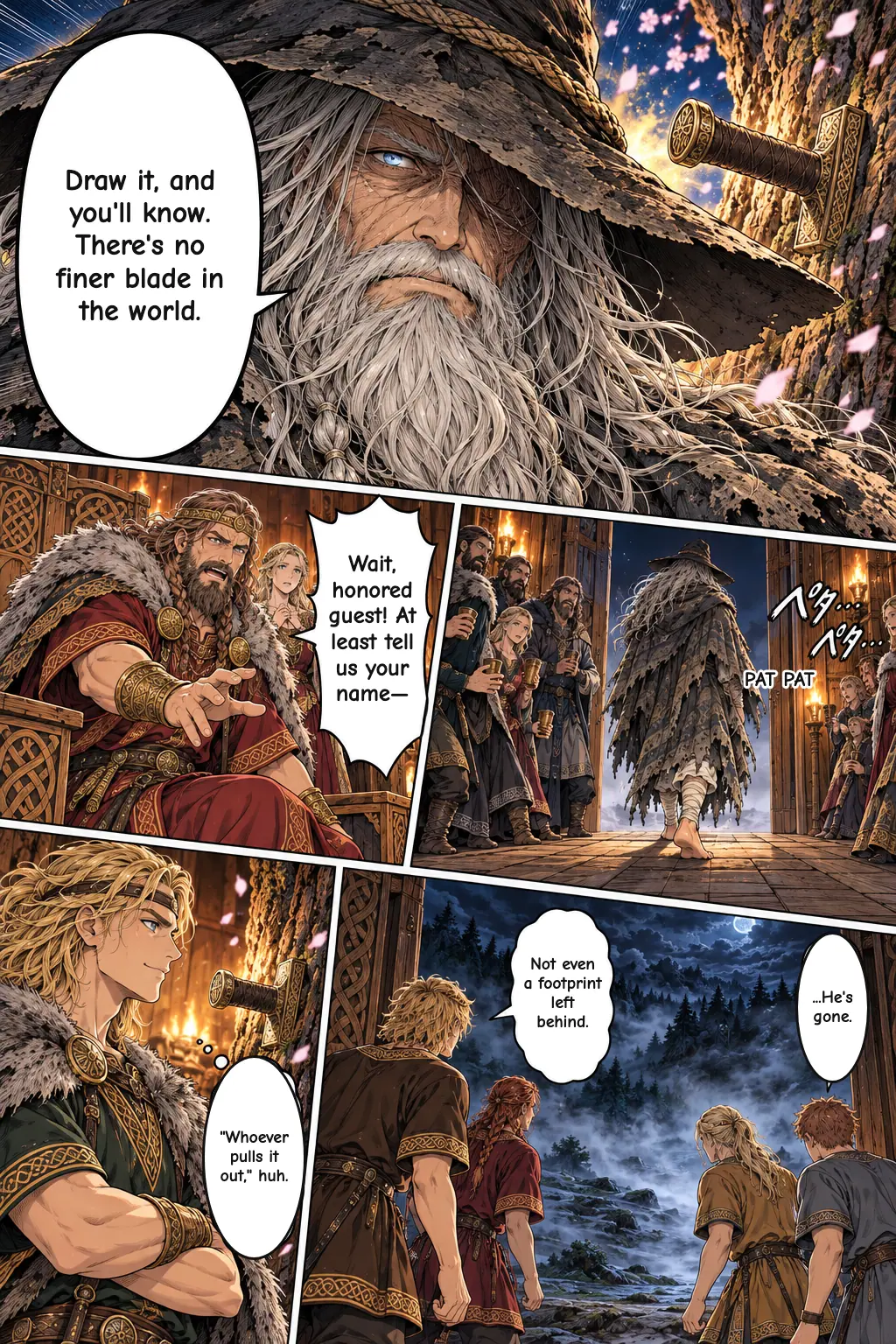
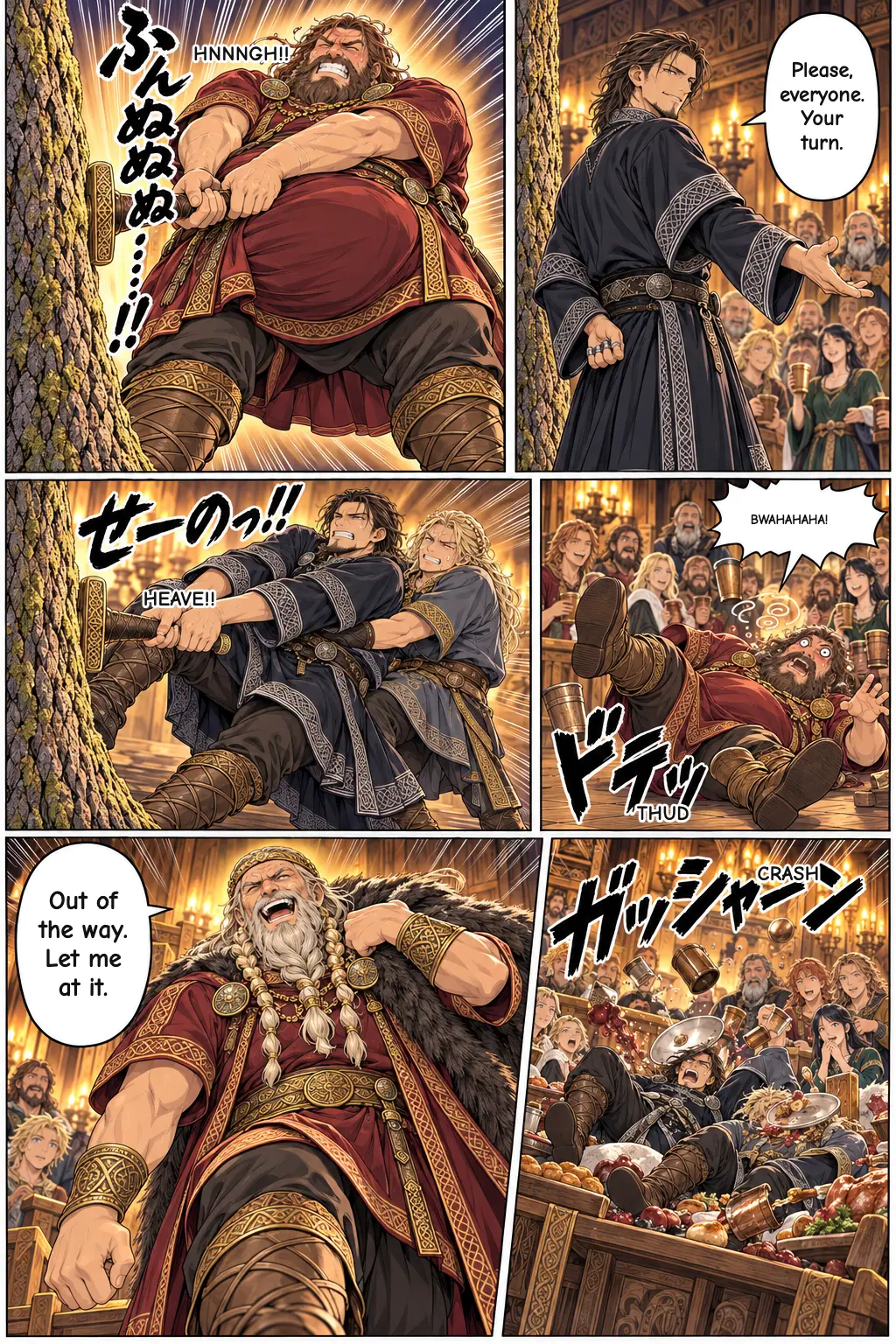
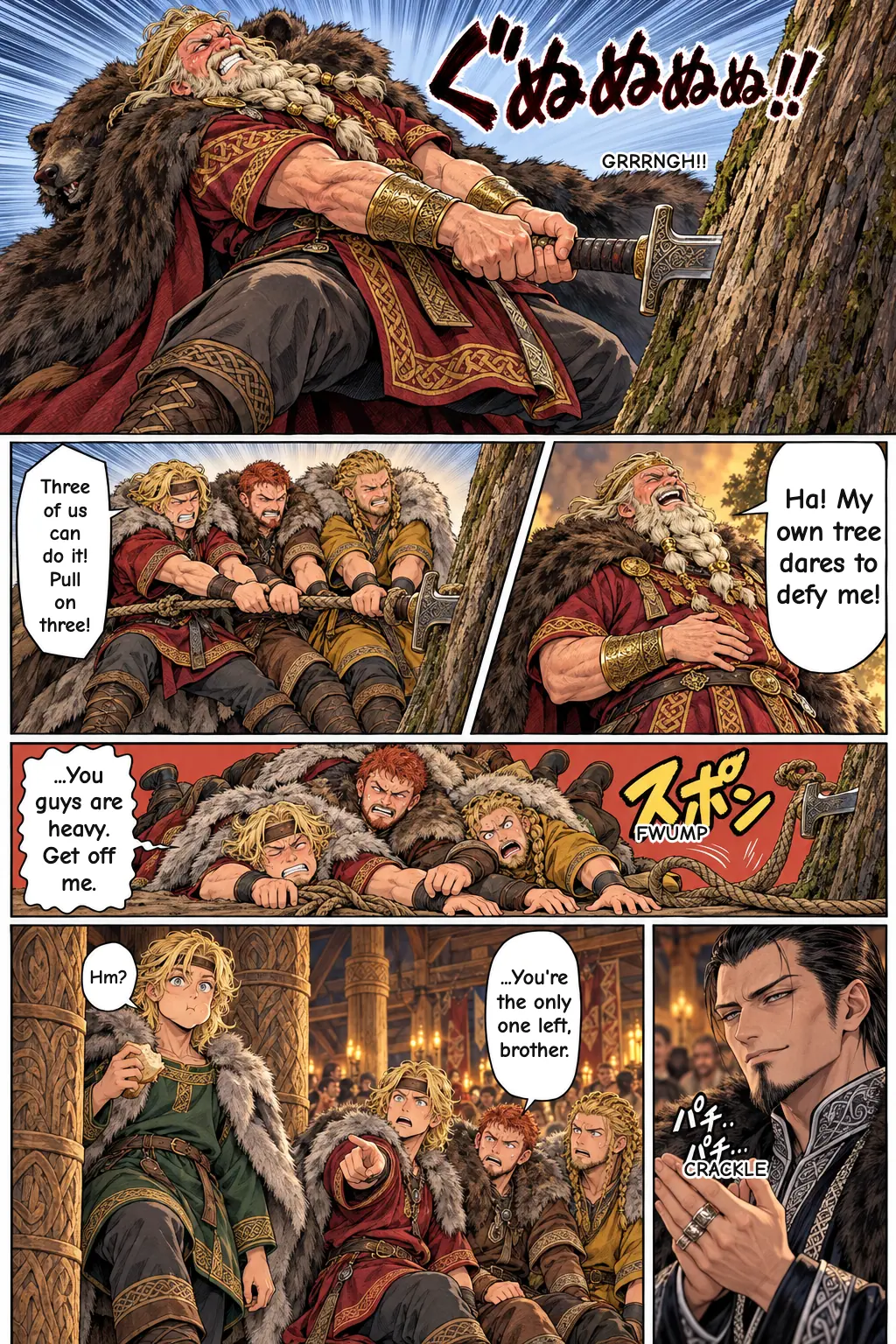
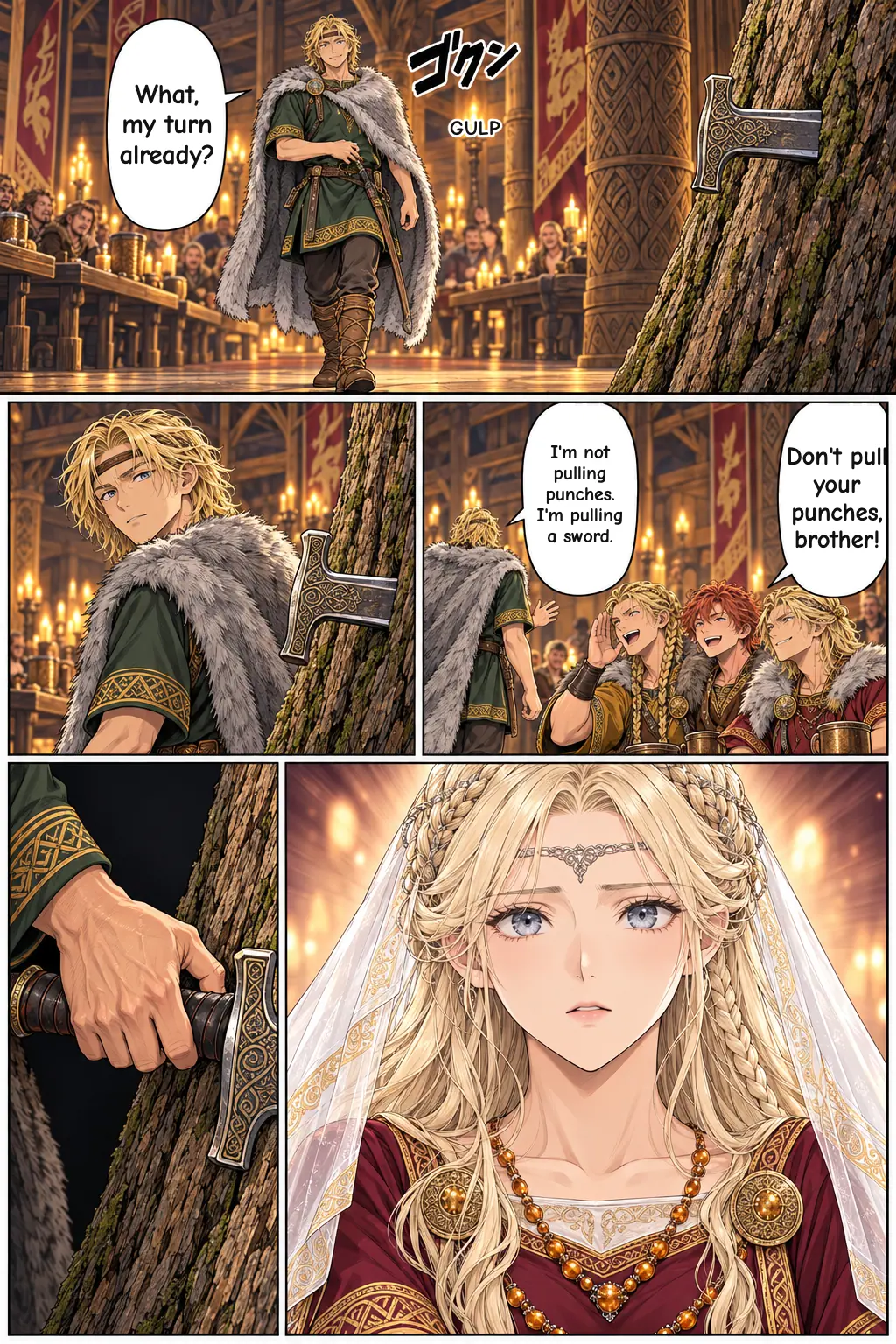
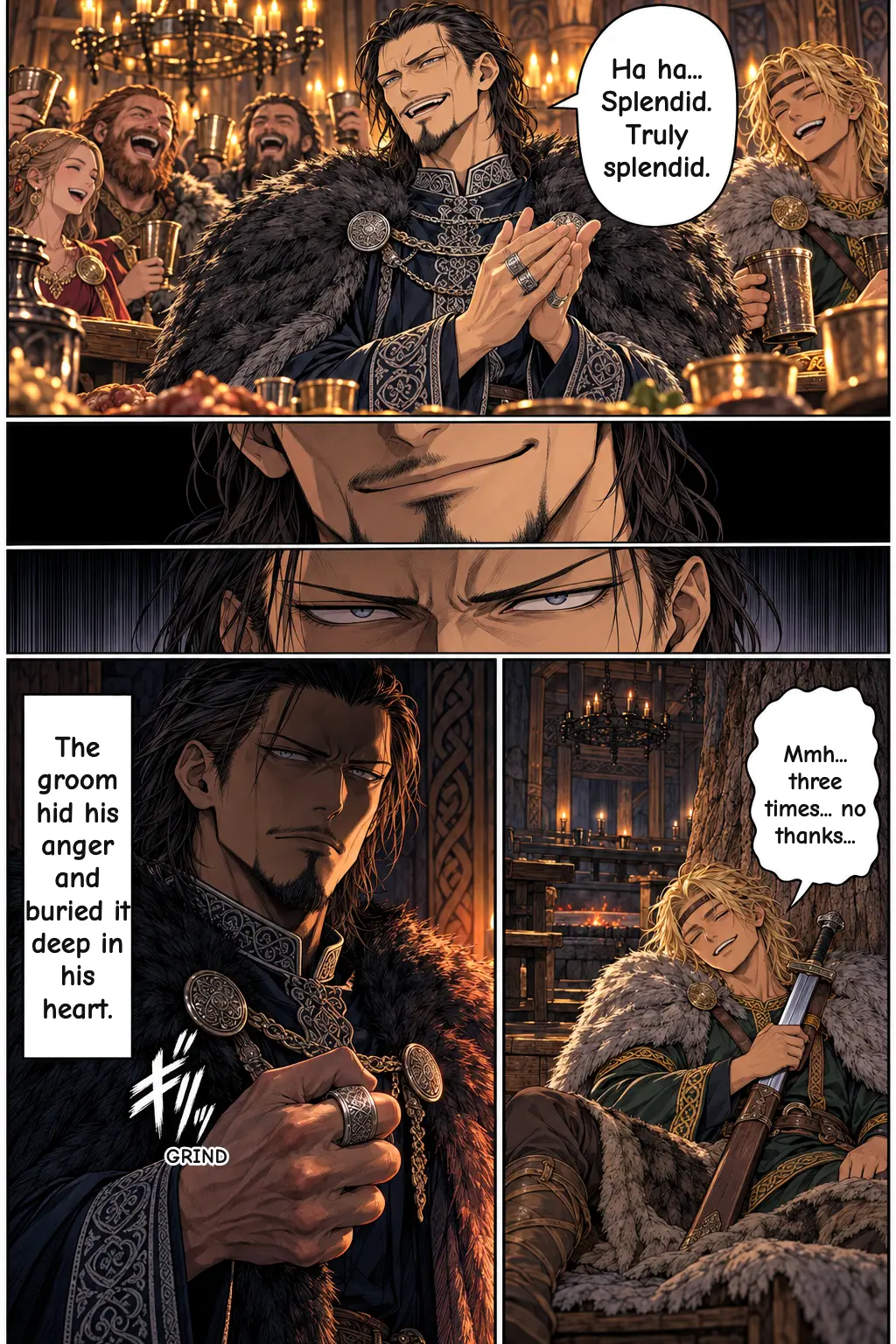
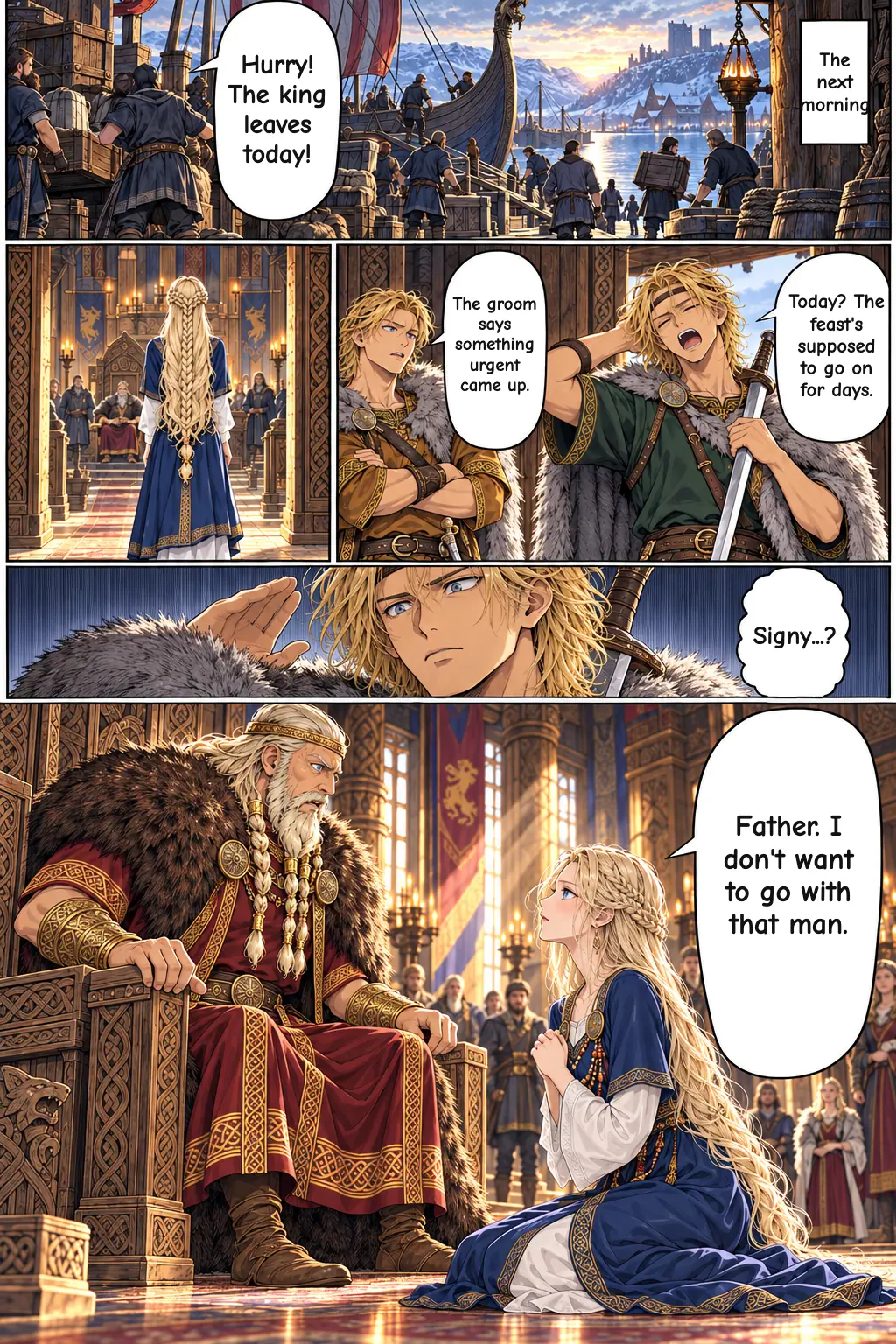
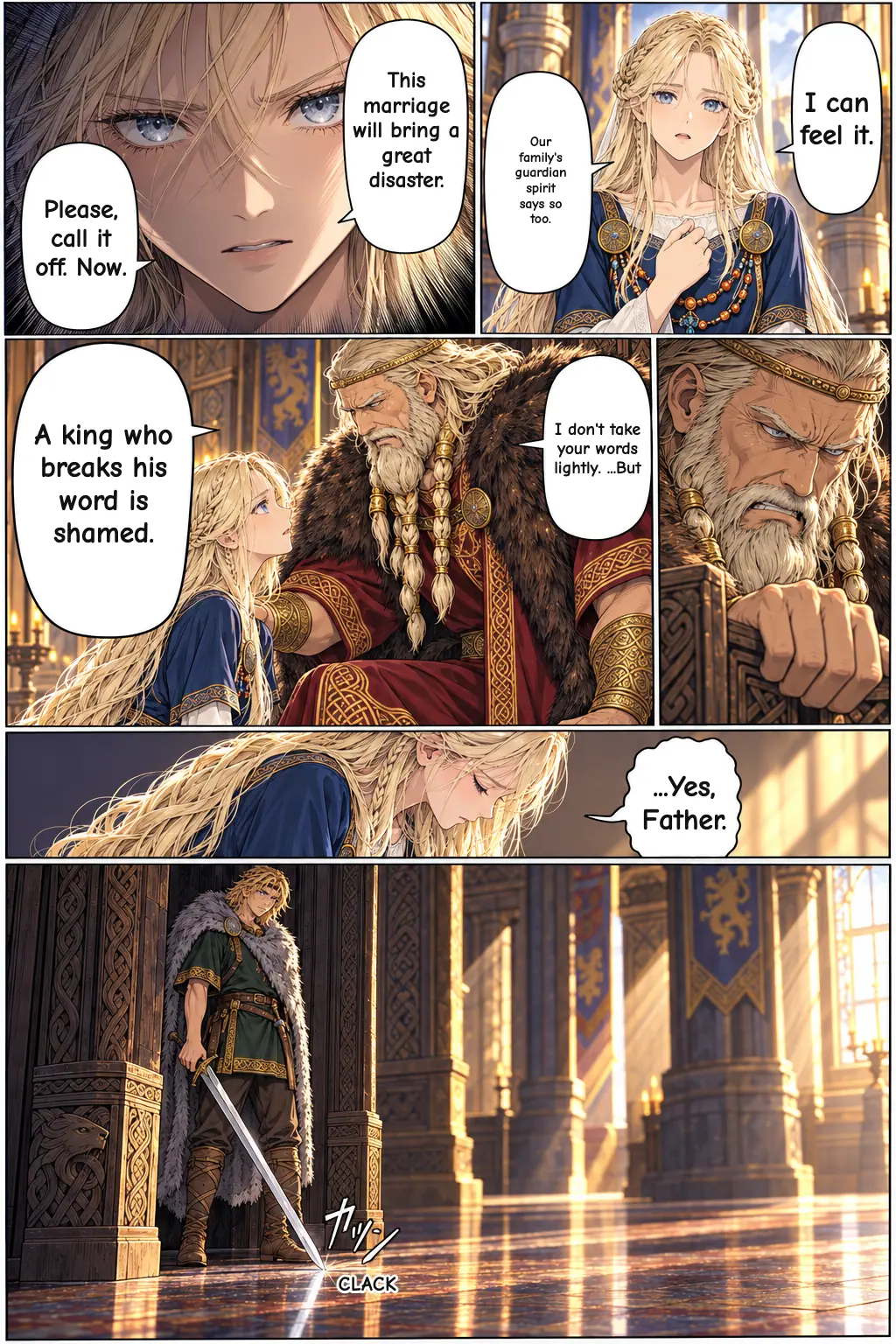
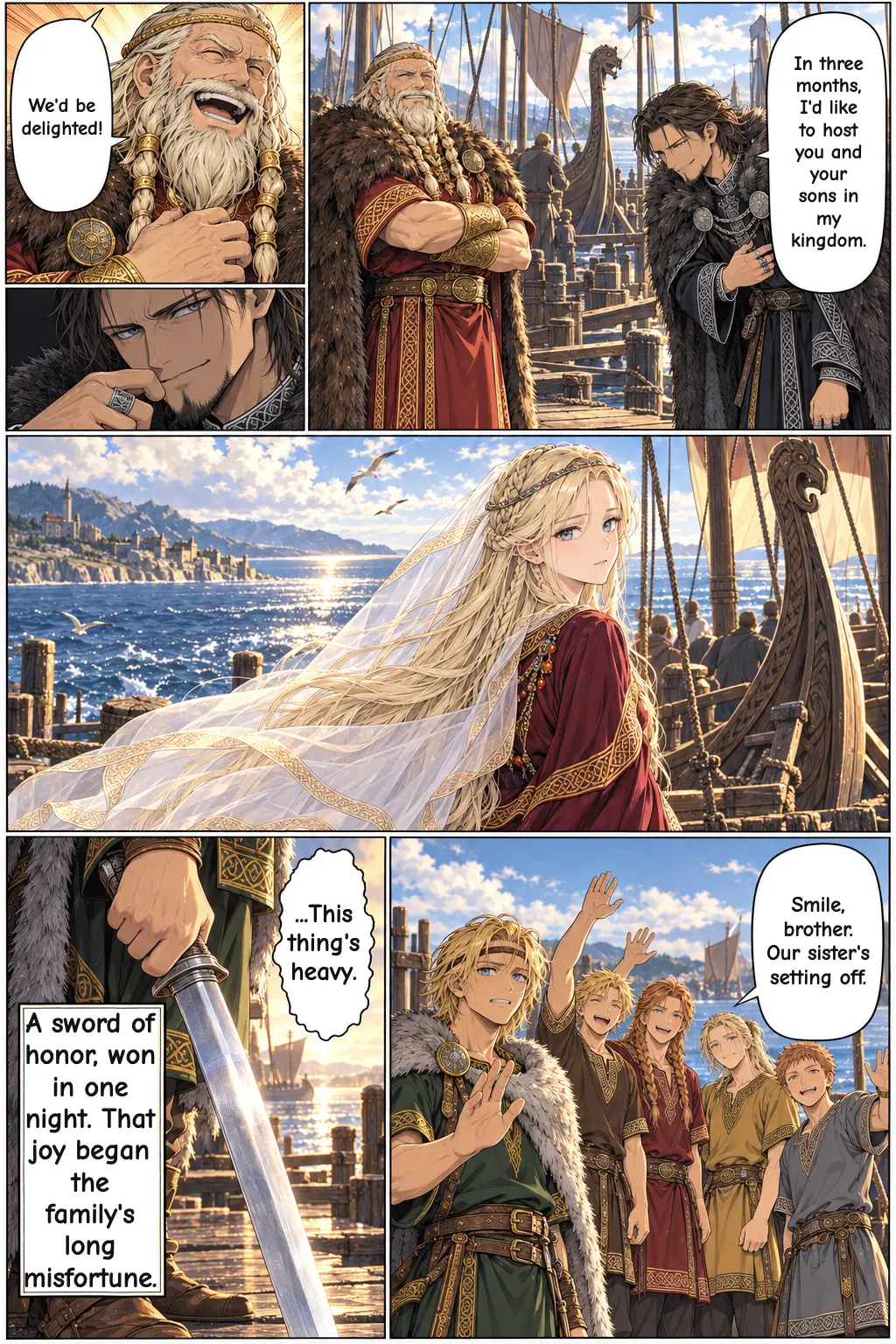
The guests try one by one, starting with the highest-ranking, and none can move it. Last of all, Sigmund takes hold and draws it out as if it had been resting there loose. Siggeir offers three times the sword's weight in gold. Sigmund refuses proudly: if the sword had been meant for Siggeir, he says, Siggeir would have pulled it out himself. Siggeir hides his anger and starts planning revenge. The next day he wants to leave early, and Signy begs her father not to make her go, saying she can foresee great misery coming from this marriage. Volsung answers that breaking his word would be shameful. (Most editions put this last scene at the start of chapter 4.)
Main Characters
Sigmund is the best of Volsung's sons and the only one worthy of the sword. Signy, his twin, is beautiful, well-mannered and gifted with foresight. Volsung is a mighty, honor-bound king. Siggeir is a powerful ruler who smiles while he plans his revenge. Above them all stands the nameless old man, who is clearly meant to be Odin, the one-eyed chief of the Norse gods, although the saga never names him in this scene. His single eye and wide hat are his familiar disguise elsewhere in Norse tradition.
What This Myth Tells Us
The opening chapters show that the Volsungs are not an ordinary family. A god founded their line, gave them a child, and keeps stepping in at key moments. But his gifts come at a price. The sword raises Sigmund above everyone else and also stirs up Siggeir's envy, much as Sigi's envy of Bredi started the family's story with a crime.
Honor is the other driving force. Volsung keeps a promise he suspects is a mistake, because in saga society a broken word was a deep disgrace. Signy's clear-eyed warning, which no one heeds, sets the tragic tone for the rest of the saga. Readers often compare the scene to the Arthurian sword in the stone, and Richard Wagner reworked it for his opera Die Walküre. Later in the saga, the pieces of this sword are reforged as Gram, the blade Sigurd uses to kill the dragon Fafnir.
What the Manga Changes
The manga sums up the family background (Sigi, Rerir, the apple and Volsung's birth) in a few pages of narration, and it softens the murder and the birth scene. The look of the Branstock and the hall, the characters' faces and ages, the order in which the guests try the sword, and Siggeir's facial expressions are all artistic choices, since the saga gives very few details. The art plays up the stranger's single eye and hat so that readers can guess who he is, but like the original, the manga never says outright that he is Odin. Sigmund laughing as he turns down the gold is also the manga's own touch. His proud refusal and Signy's dark warning come straight from the saga.
Where to Read It
The Völsunga saga was written in Old Norse in Iceland, probably in the late 13th century, and draws on older heroic poems, many of them also preserved in the Poetic Edda. Several English translations are available if you want the full text. To see the story come to life first, you can read this episode and the rest of the series here on Manga Portal. Every chapter is free, with no sign-up needed, and the story follows the Volsungs from Sigmund's sword all the way to Sigurd, the dragon, and the cursed gold.
Characters in this episode
Sigmund
Eldest son of King Volsung and the only man who can pull the stranger's sword from the Branstock tree.
Signy
Sigmund's twin sister, a woman with the gift of foresight who is married off to King Siggeir against her wishes.
Volsung
King of Hunland, born after a six-year pregnancy that began with a magic apple, who keeps his word even when it puts his daughter at risk.
Siggeir
King of Gautland and Signy's bridegroom, who hides his fury when Sigmund refuses to sell him the sword.
The one-eyed old man
A nameless stranger in a wide-brimmed hat who drives the sword into the tree, widely understood to be the god Odin in disguise.
Sigi
Founder of the family and said to be a son of Odin, he is outlawed for murder before rising to become a king.
FAQ
Who put the sword in the Branstock tree?
The saga describes only a tall, one-eyed old man in a broad hat and mottled cloak, and it never gives his name. His look matches Odin's usual disguise, so readers generally understand him to be Odin, who watches over the Volsung family.
Why could only Sigmund pull out the sword?
The saga does not explain it. Sigmund simply draws it out as if it were loose, which suggests the sword was meant for him. Sigmund himself says that if it had been meant for Siggeir, Siggeir would have pulled it out.
What happens to Sigmund's sword later?
Later in the Völsunga saga the sword breaks in battle. Its pieces are reforged into Gram, the sword Sigmund's son Sigurd uses to kill the dragon Fafnir.
Is the Branstock the same as Yggdrasil?
No. The Branstock is a tree inside King Volsung's hall, with branches spreading over the roof. Yggdrasil is the cosmic world tree of Norse mythology. Some readers see an echo of the world tree in the image, but the saga treats the Branstock simply as part of the hall.
Who wrote the Völsunga saga?
No one knows. It was written in Old Norse in Iceland, probably in the late 13th century, by an anonymous author who drew on older heroic poems.