Episode 3A Love Story That Began With “Why Those Eyes?”The Kume Songs and Princess Isukeyori
Having lost his brother on the road to Yamato, Iwarebiko clears his way with song: a feast-song signal in a mountain cave, a dawn assault on the man who shot his brother, and a call that brings food to his starving soldiers. Now king of the land, the young man gets help from his comrade-in-arms Okume's answering verse and meets a maiden with an unflinching gaze.
Emperor Jimmu's Kume Songs and Princess Isukeyori: Kojiki Explained
The Original Story: A Feast That Ends in a Song
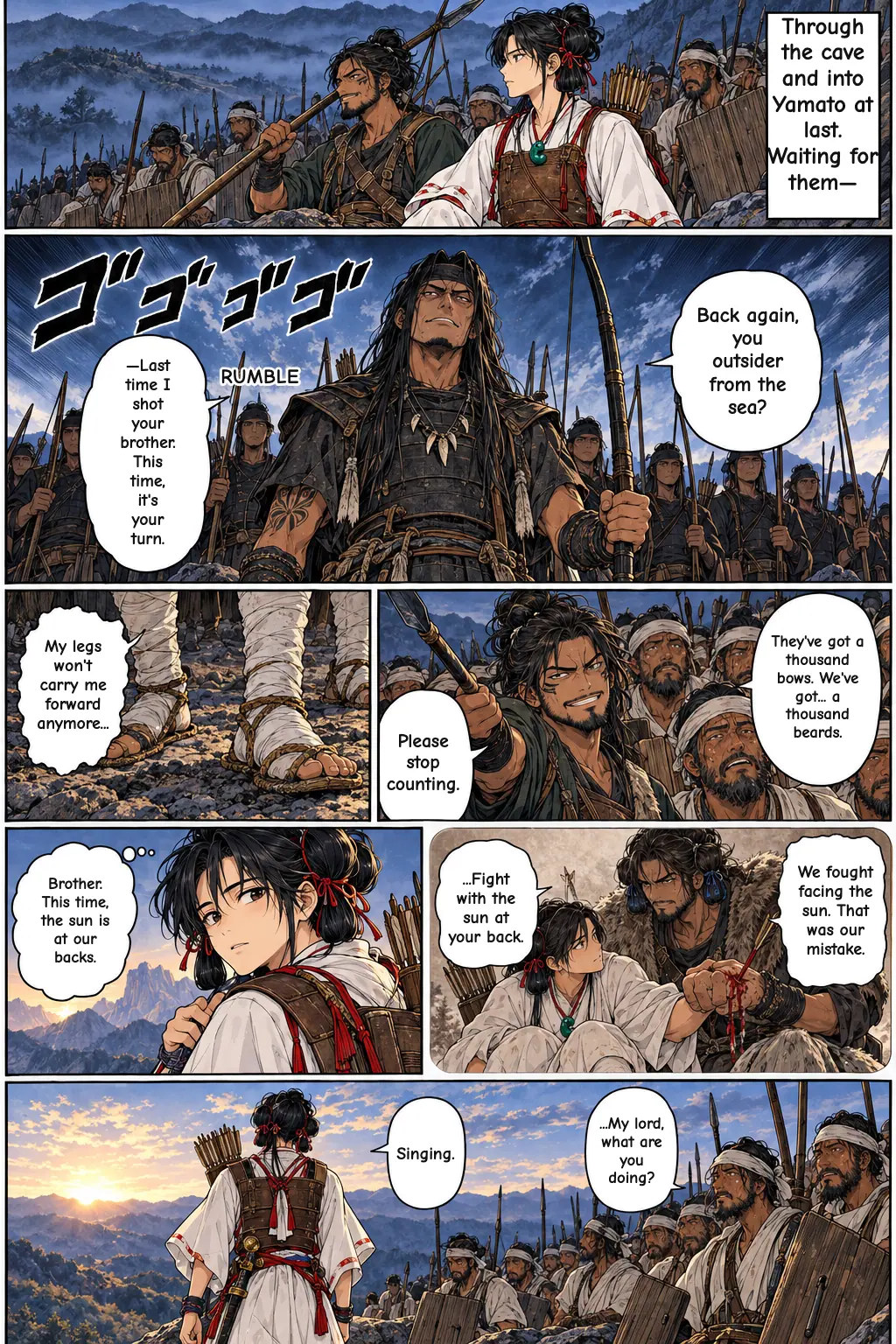
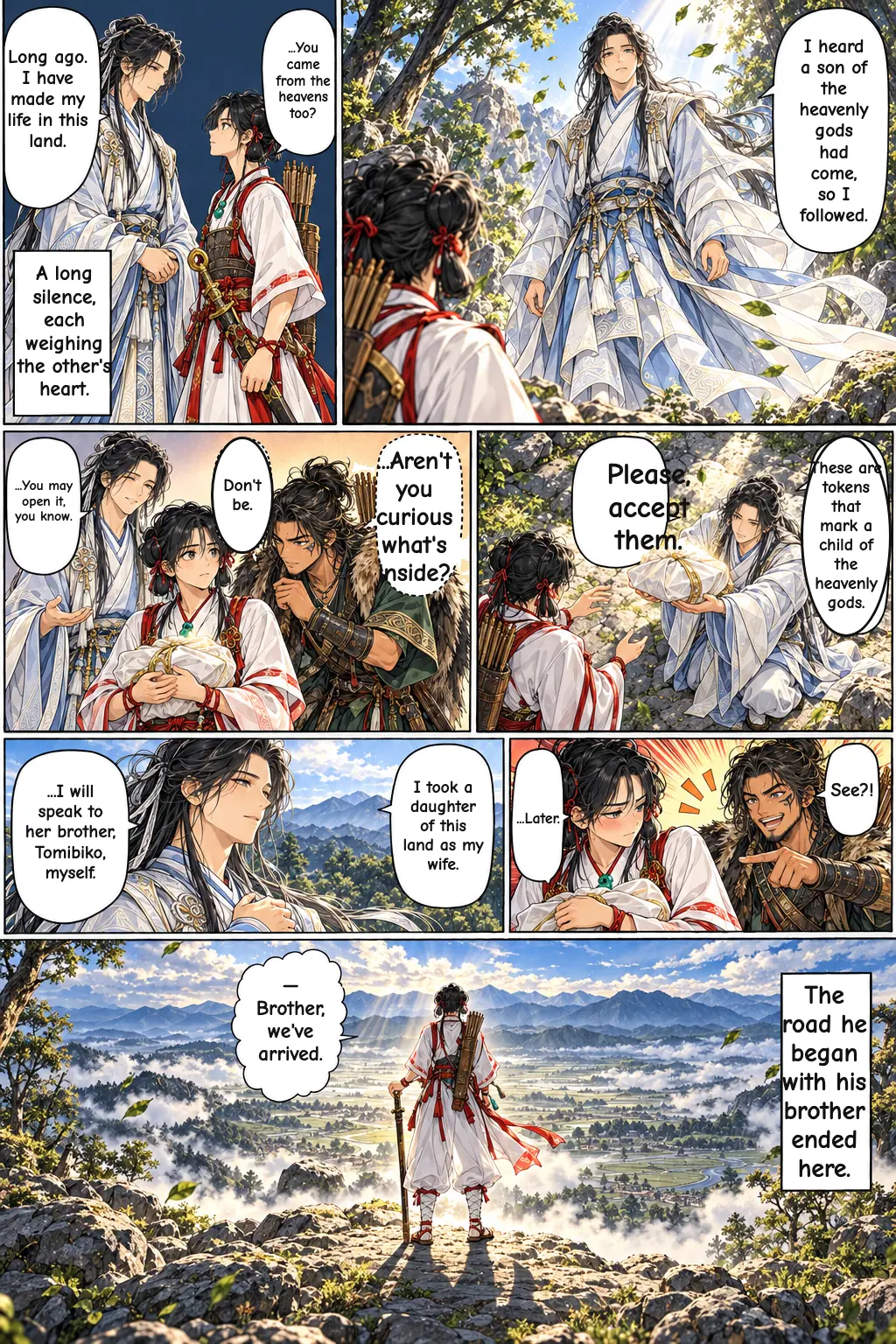
This episode comes from the middle book of the Kojiki, Japan's oldest surviving chronicle, compiled by Ō no Yasumaro in 712. Its hero is Kamu-Yamato-Iwarebiko, the prince later remembered as Emperor Jimmu, Japan's legendary first emperor. He is marching east toward Yamato, the region around present-day Nara. His elder brother Itsuse has already died from an arrow wound received in a battle against a local chieftain named Tomibiko.
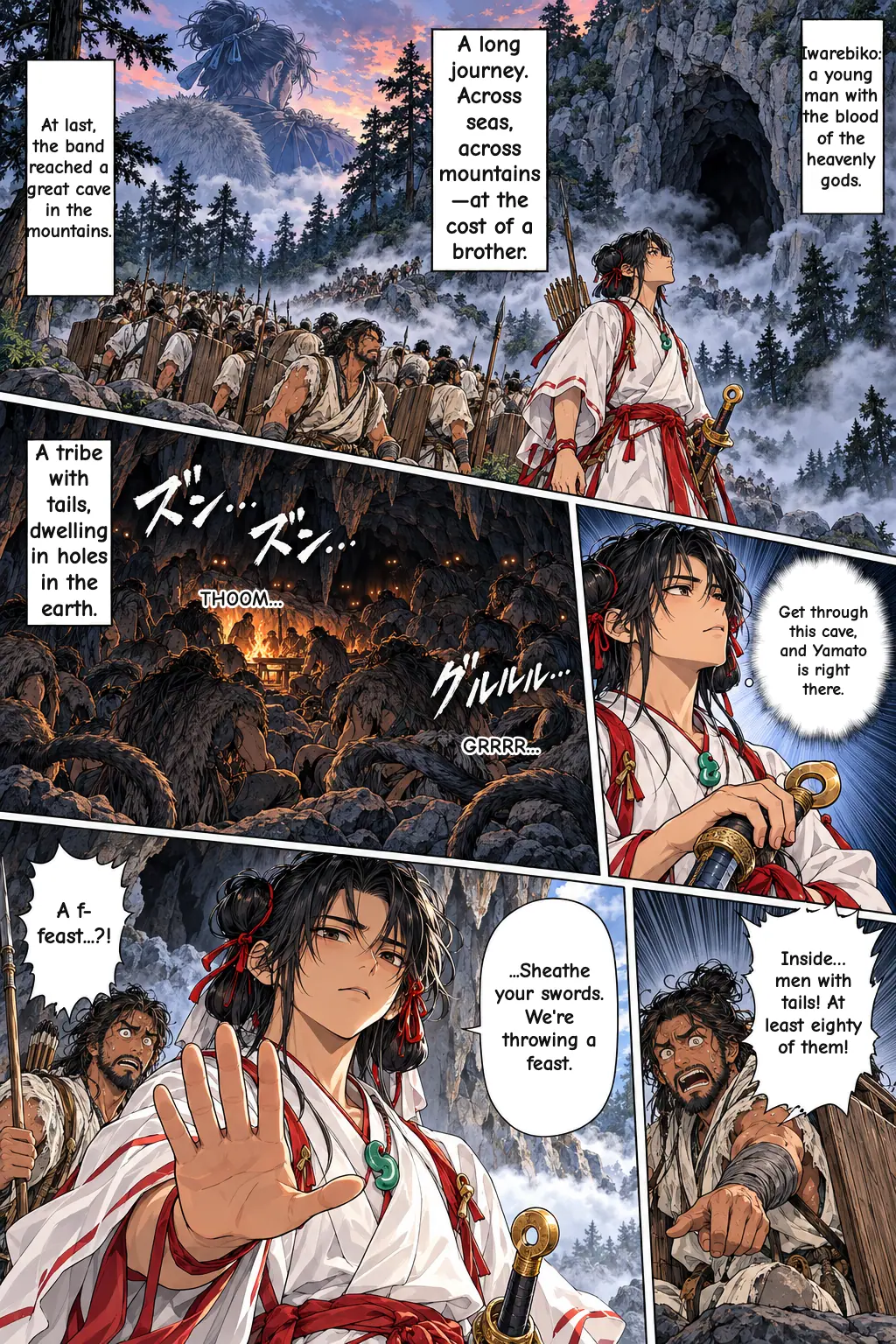
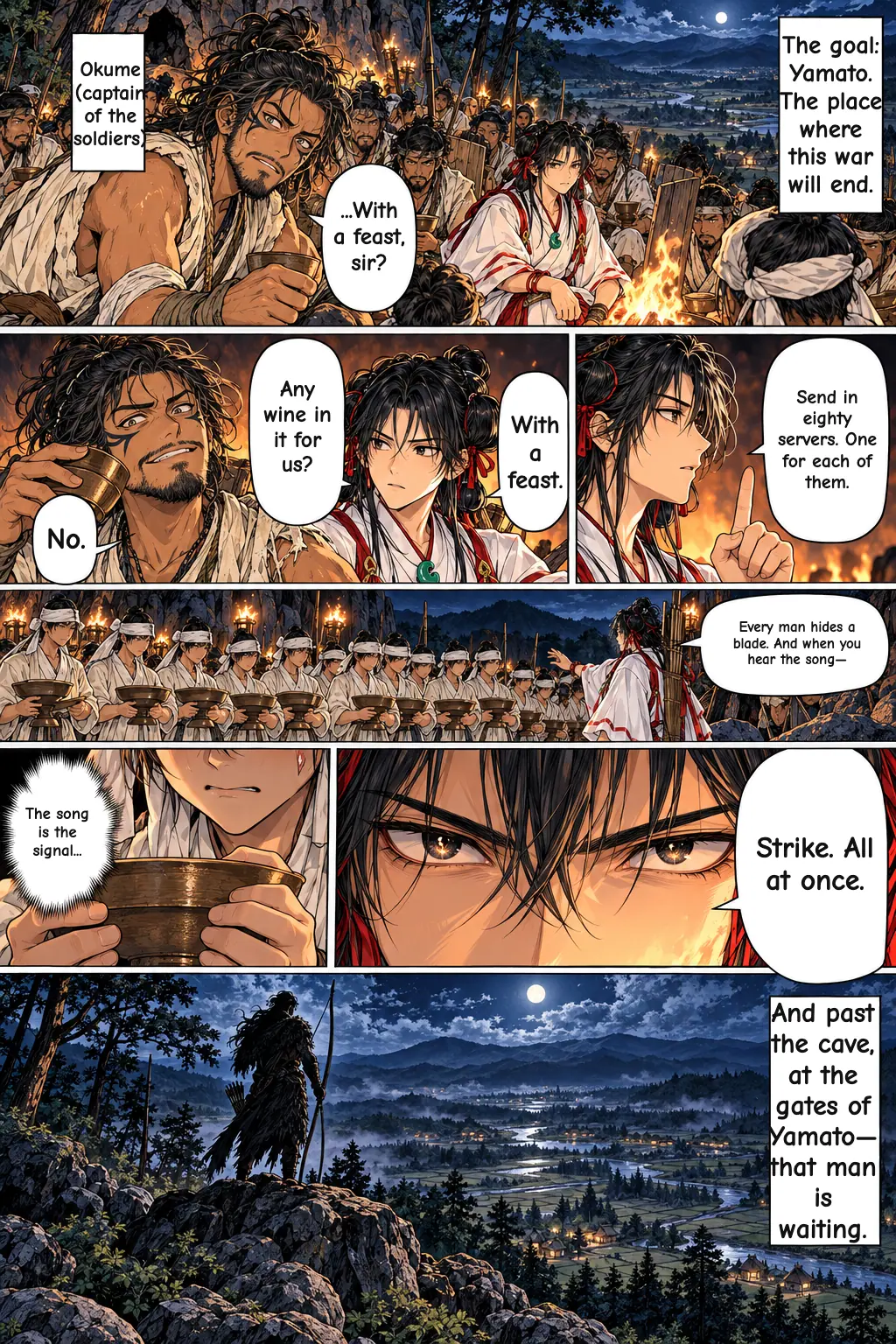
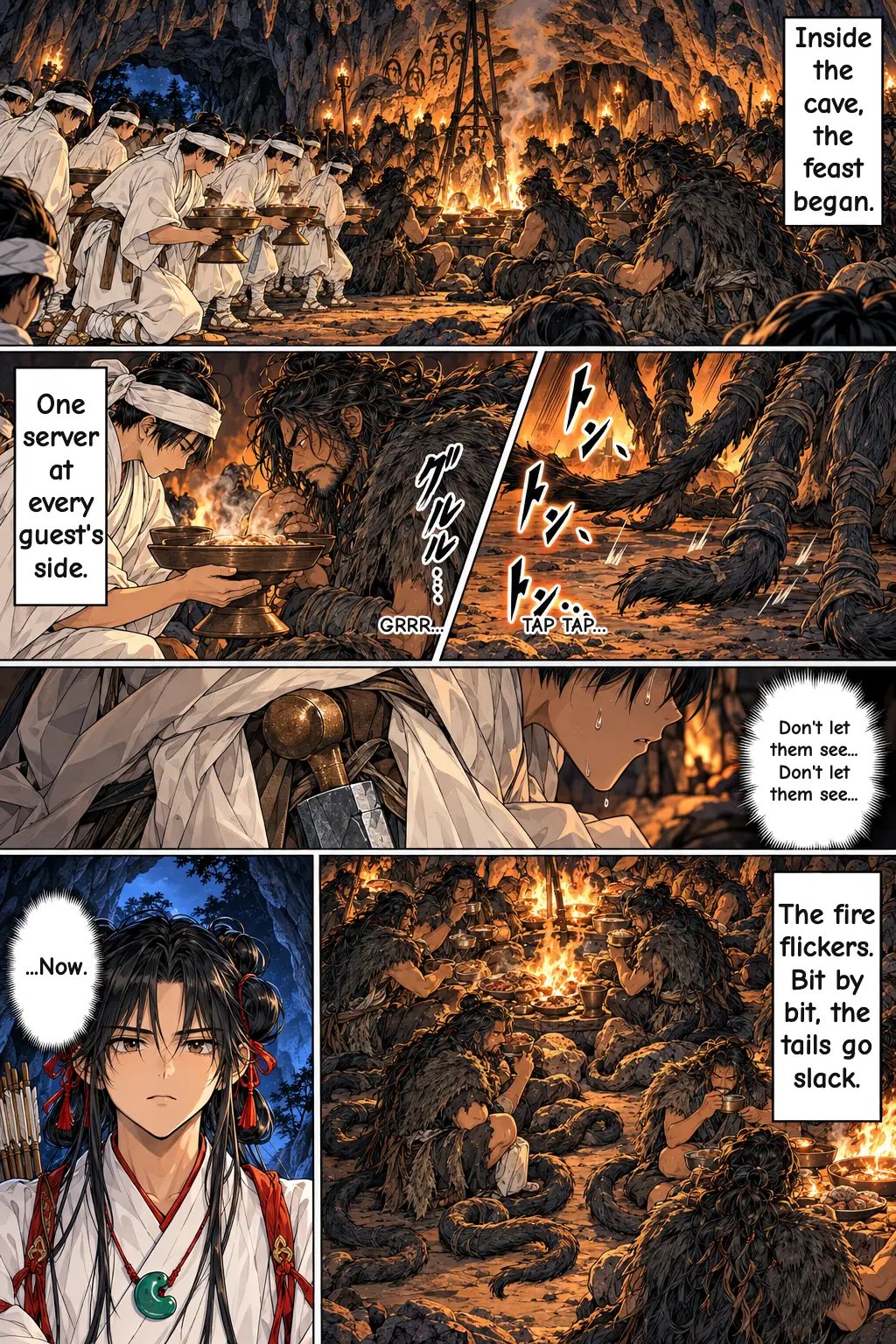
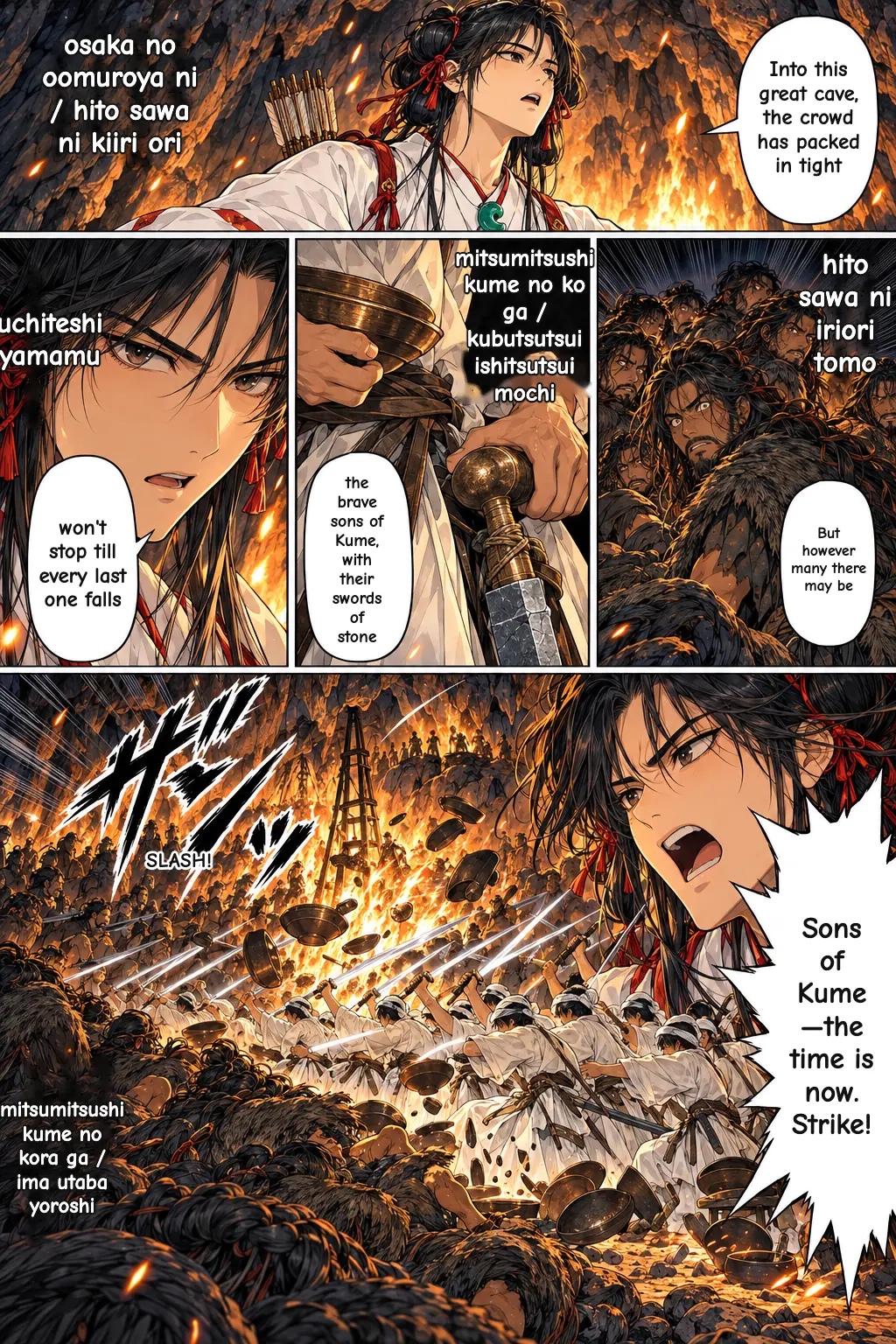
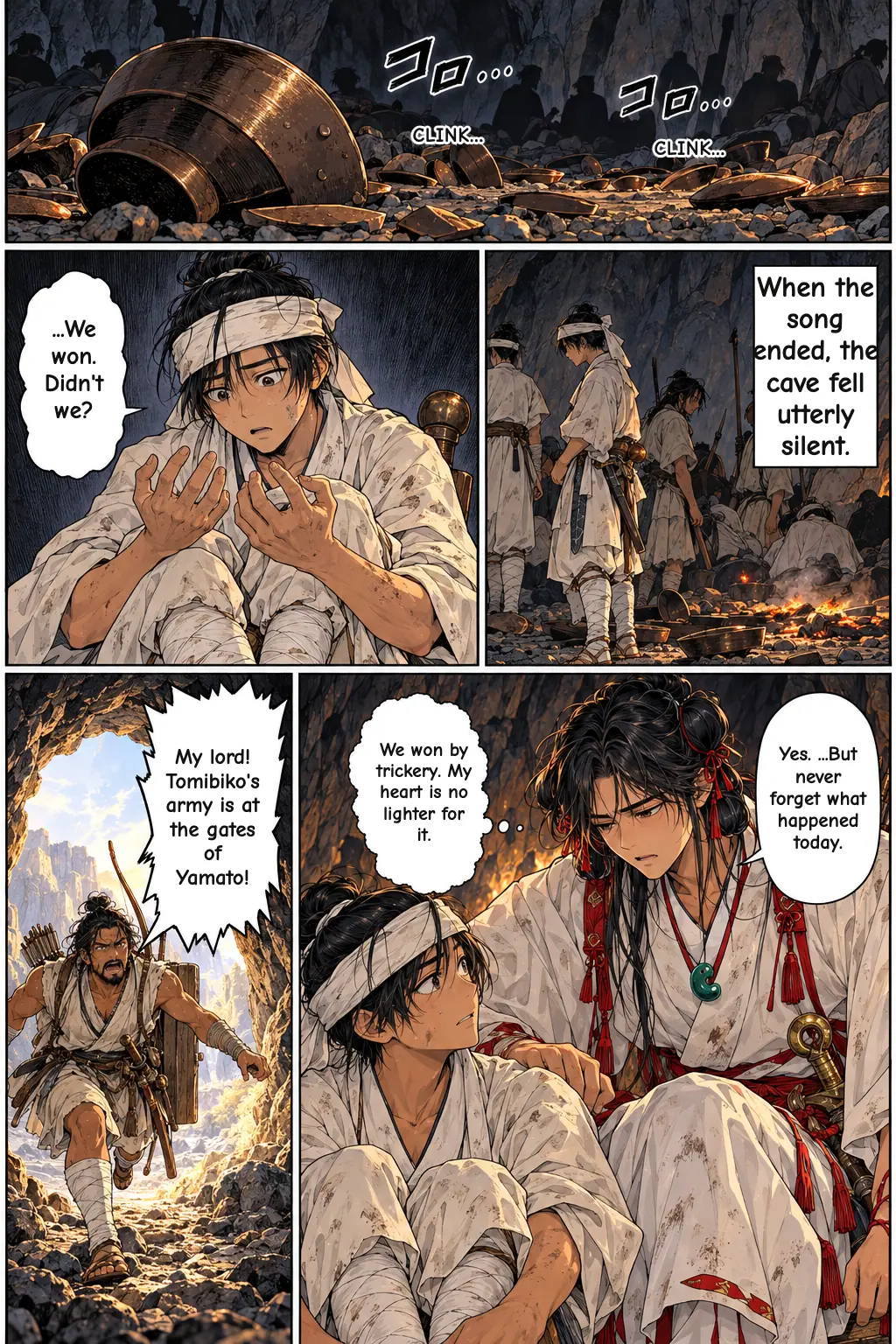
After taking the land of Uda, the prince reaches a great pit-dwelling, or large chamber, at Osaka (a place in Nara, not the modern city). Inside wait the Yasotakeru, the "Eighty Braves": tsuchigumo, or "earth spiders," a name the chronicle gives to people who resist the heavenly line. The text says only one thing about their looks: they have tails. The prince orders a feast for them and gives every guest a personal server, eighty servers in all. Each server wears a sword. His instruction is simple: when you hear the song, strike together. The signal song boasts that the warriors of Kume, armed with club-headed and stone-headed swords, will strike and never stop. The song is sung, and the Eighty Braves are cut down.
War Songs, Hunger, and a Rival Who Surrenders
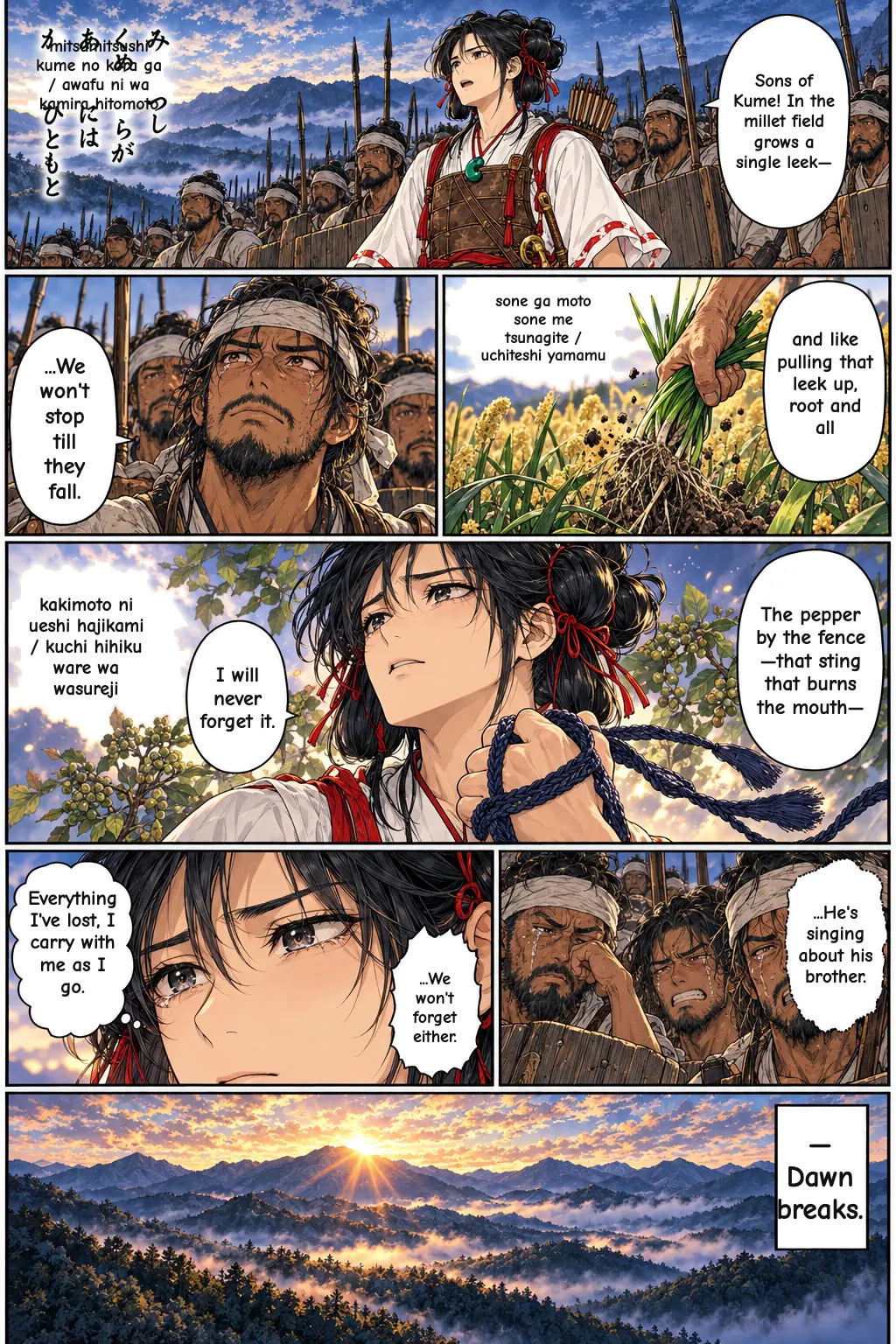
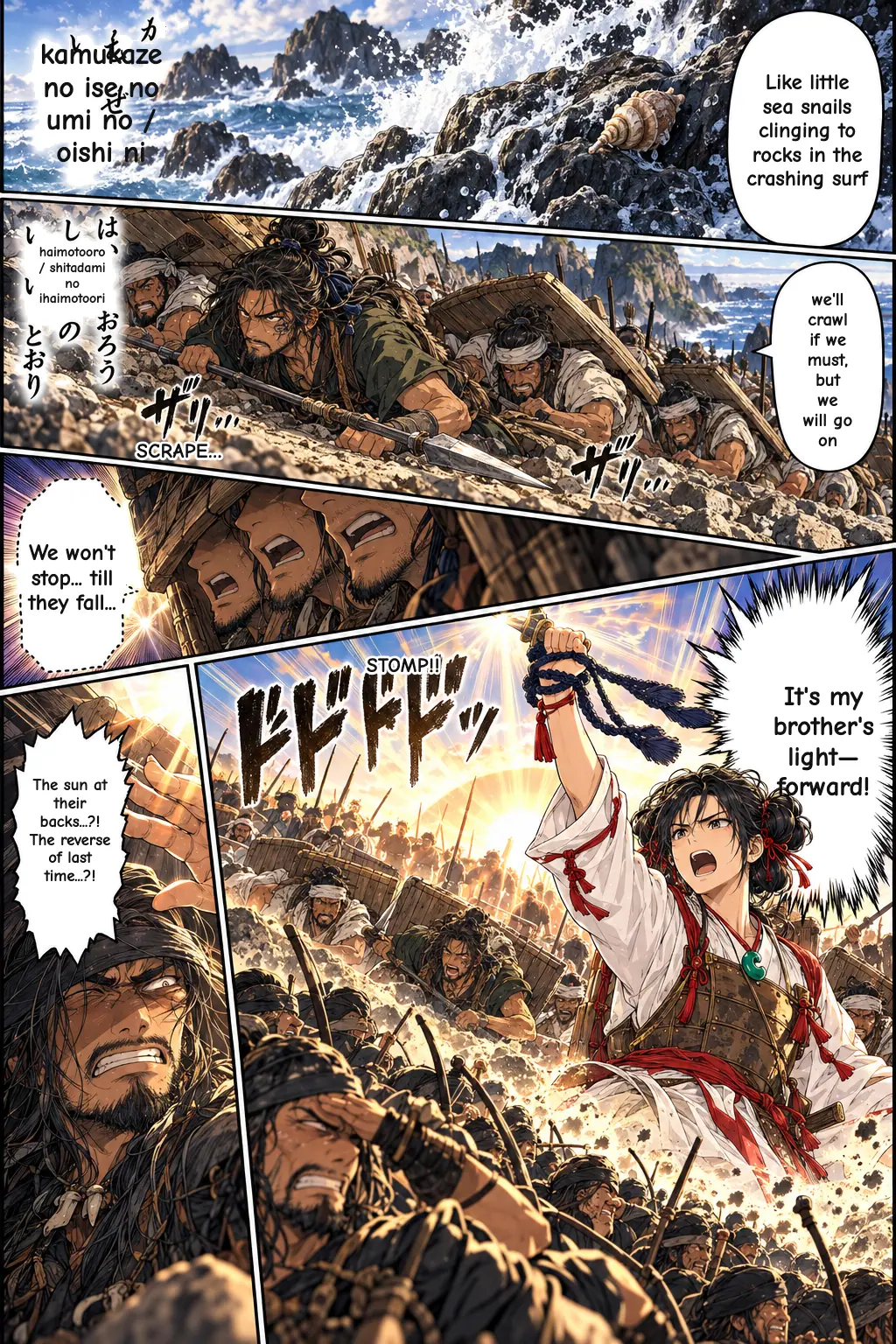
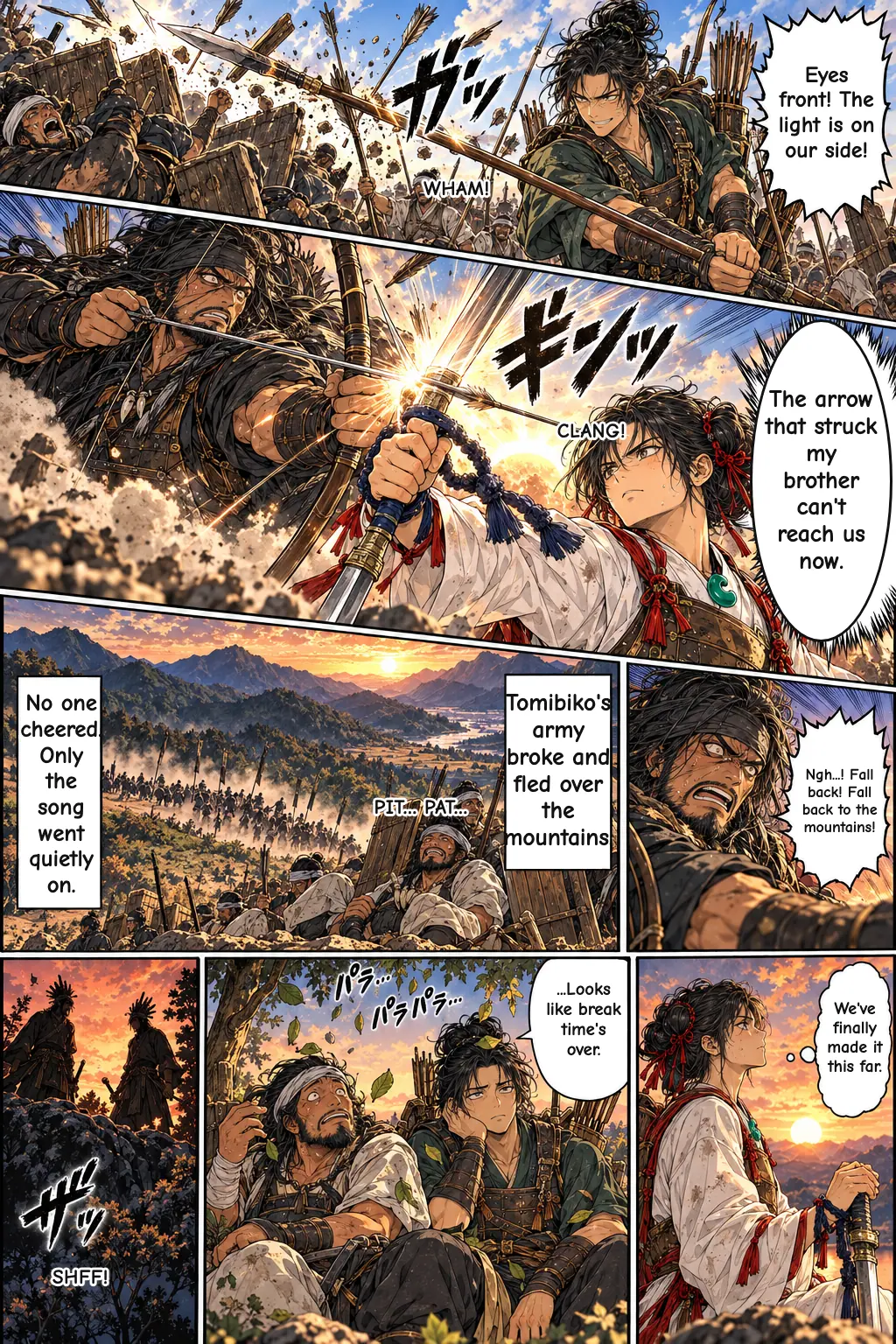
Before attacking Tomibiko, more songs follow, each ending with the refrain "uchiteshi yamamu" ("we will strike, and not stop"). They use vivid farm and seaside images: pulling a stinking chive out of a millet field, root and shoot together; the burning taste of a pepper plant by the fence that the mouth never forgets; little sea snails crawling over the rocks of the sea of Ise. The text simply says "he sang," without naming the singer, but the context points to the prince himself. The Kojiki does not describe how Tomibiko's battle ended. Linking the line about the pepper's sting to grief for Itsuse is a later interpretation, not something the text states.
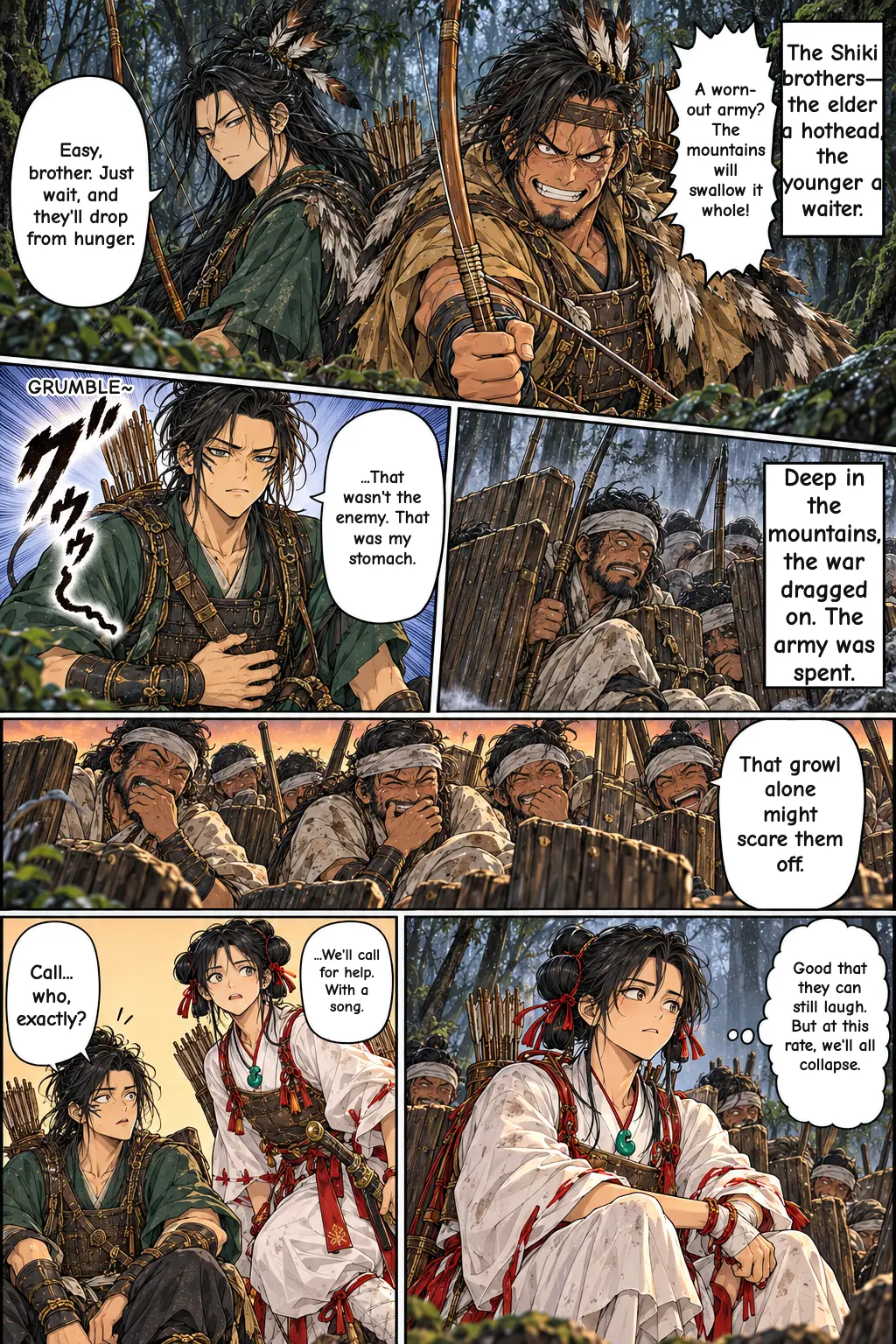
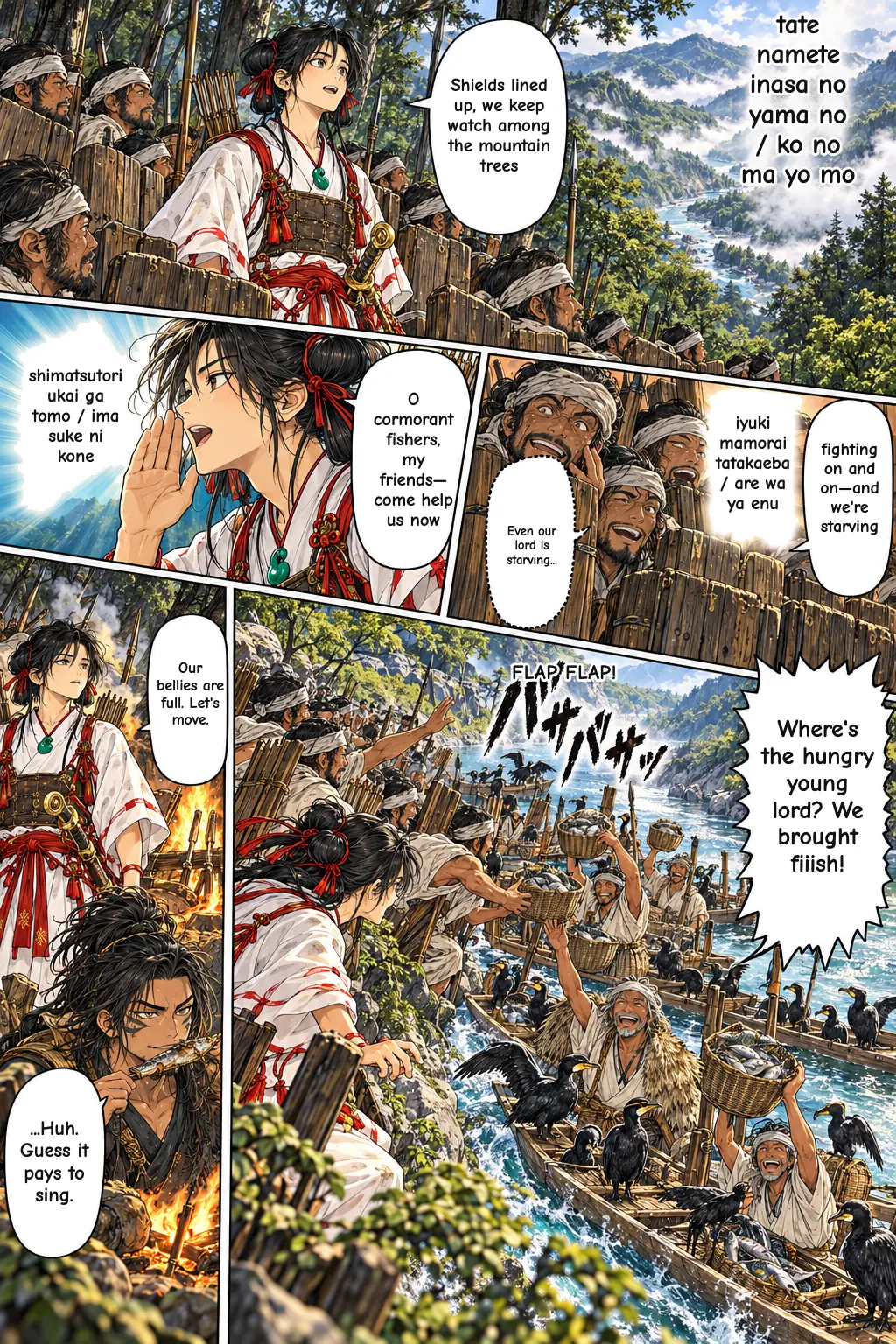
When the prince fights two brothers, Eshiki and Otoshiki, his army grows tired. He sings of keeping watch from among the trees of Mount Inasa, says he is starving, and calls on the cormorant fishers to come and help at once. The Kojiki does not say whether they came, or how the brothers fell.
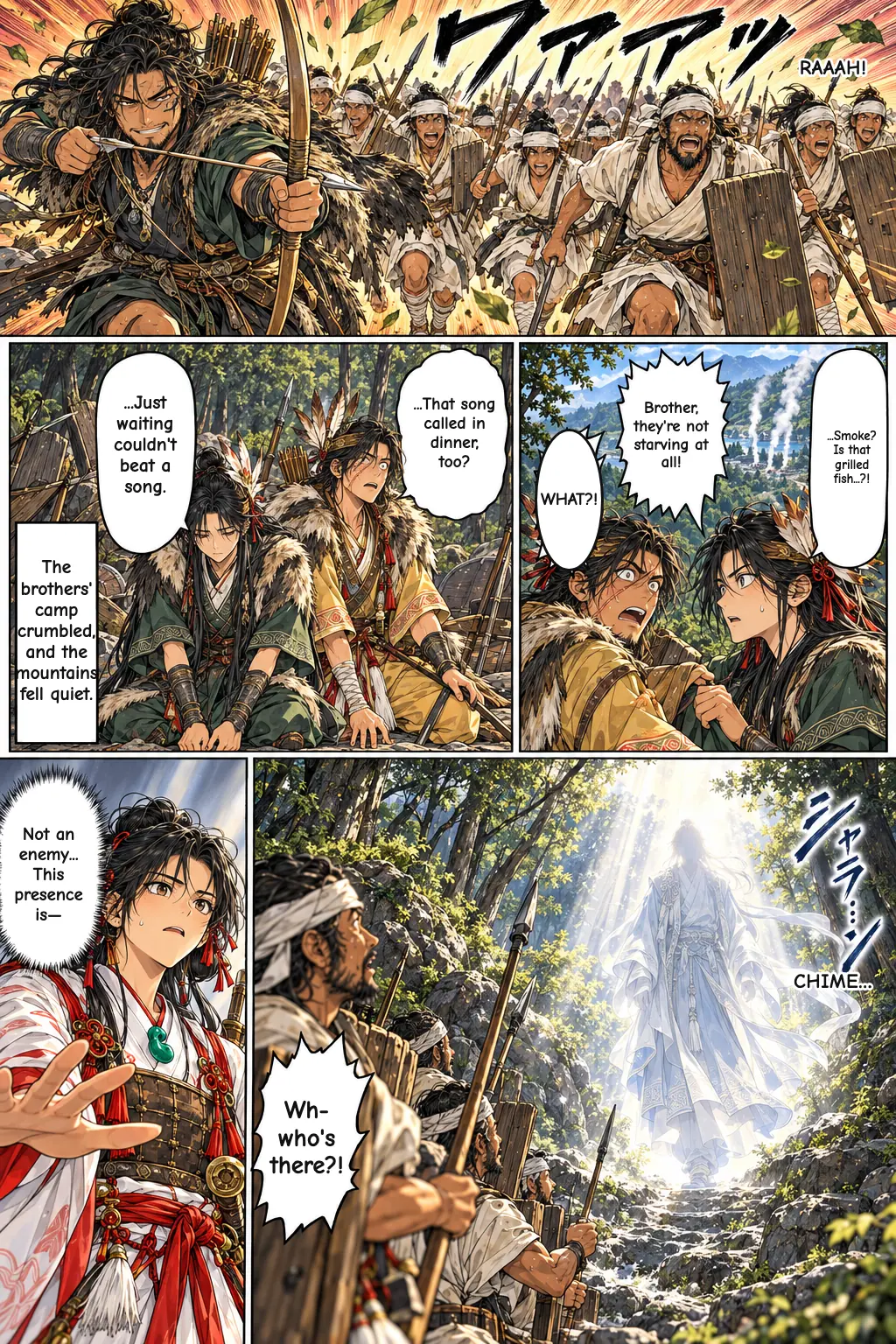
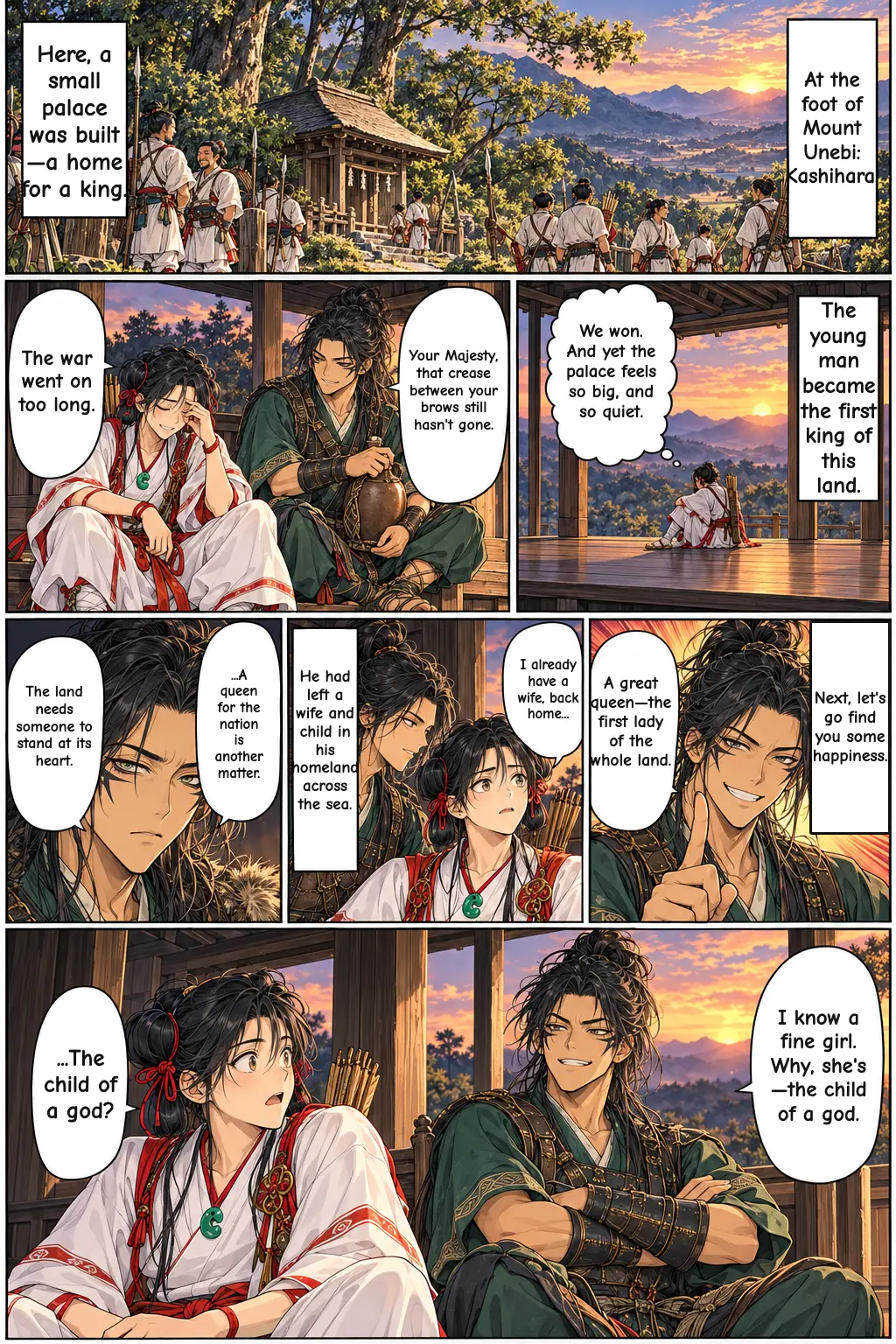
Then Nigihayahi, a god who had also come down from heaven, appears. He says he followed the prince after hearing of his descent, presents heavenly tokens, and enters his service. Nigihayahi had married Tomibiko's sister, Tomiyabime, and their son Umashimaji is named as ancestor of the Mononobe and other clans. Having won over the rough gods and driven off those who would not obey, the prince rules the realm from the Kashihara palace at Unebi.
Princess Isukeyori and the Tattooed Eyes
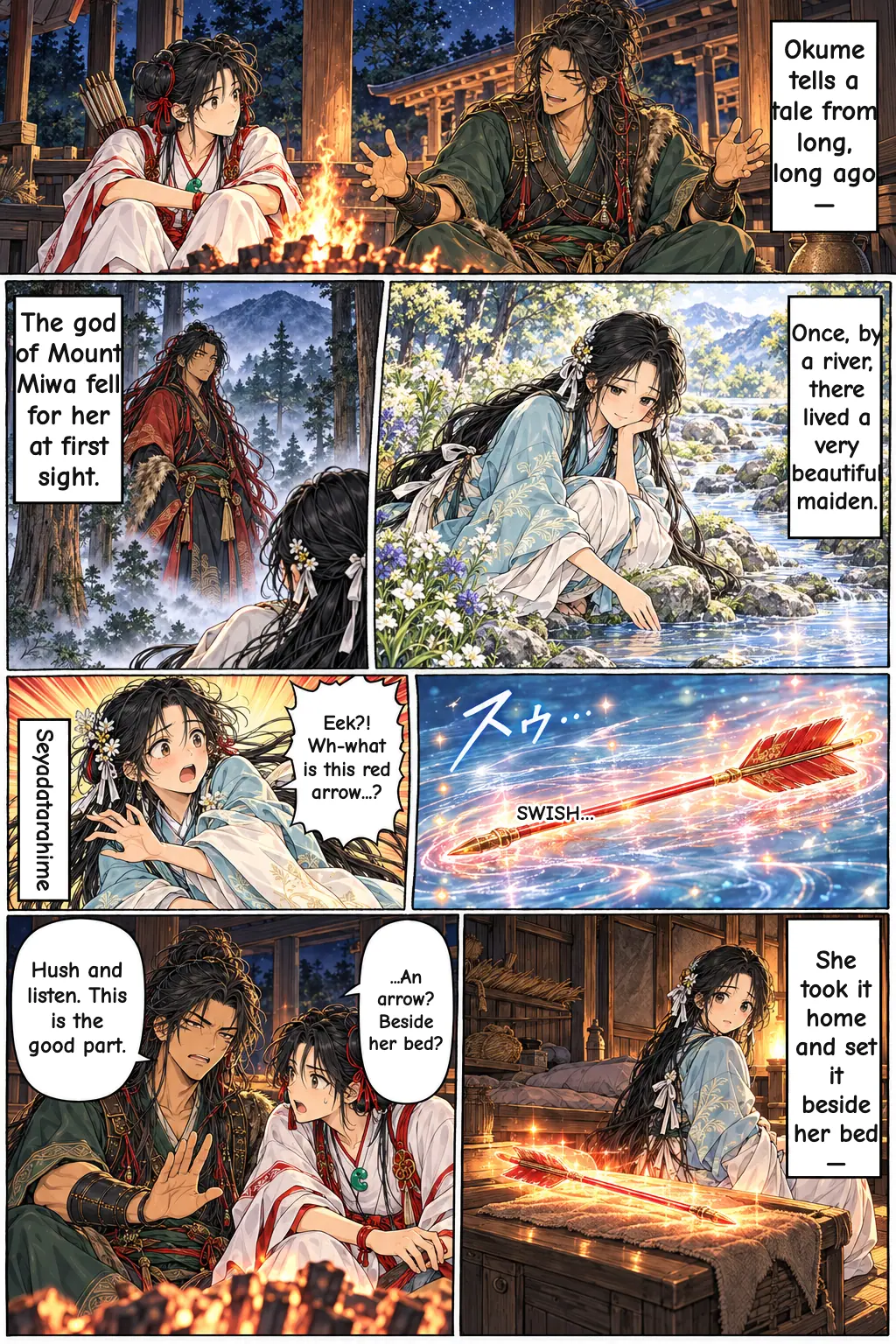
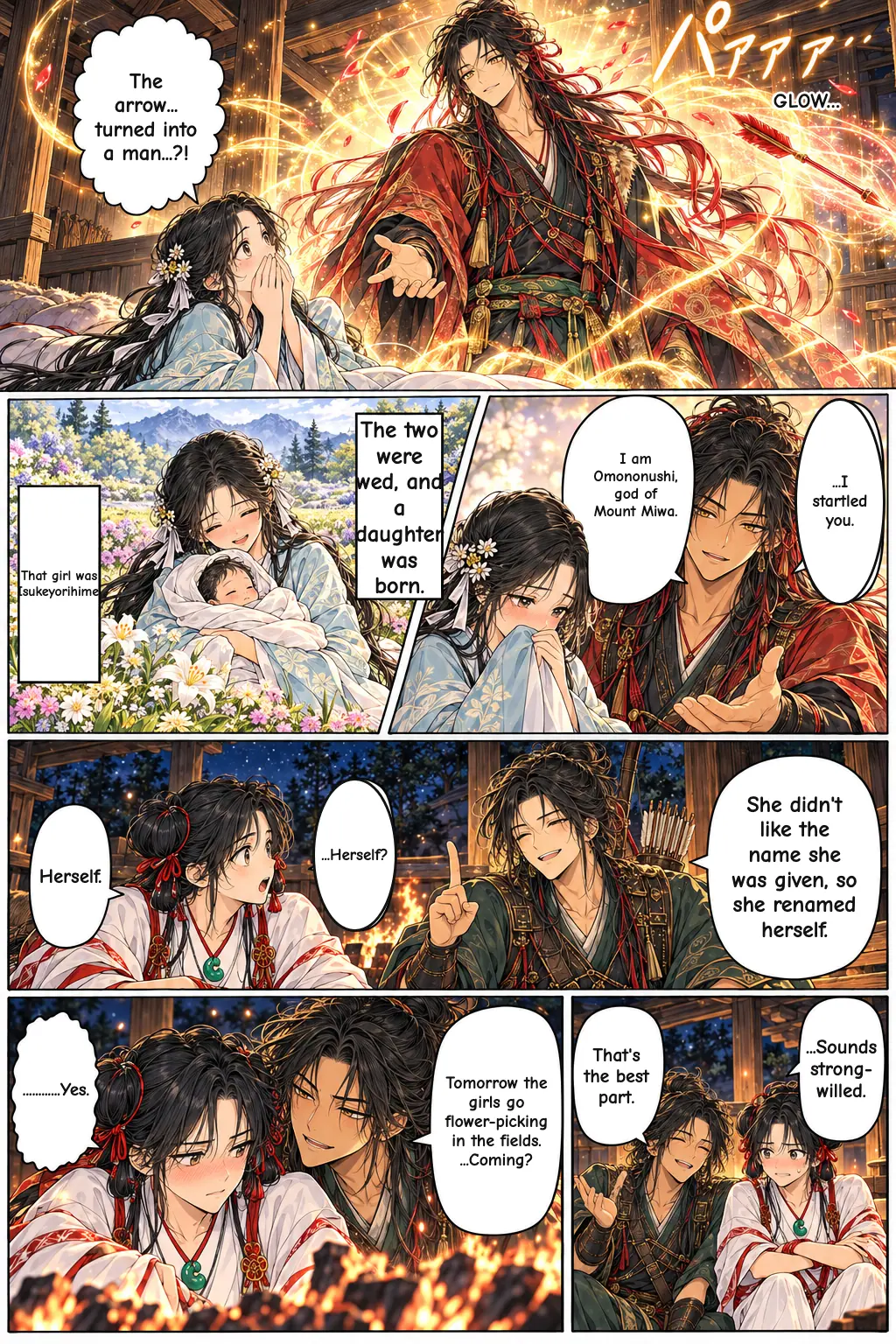
The prince already had a wife, Ahirahime, from his years in Himuka (southern Kyushu), and two sons by her. Now he looks for a chief queen. His commander Ōkume tells him of a maiden called "the child of a god." Her mother, the beautiful Seyadatarahime, had caught the eye of Ōmononushi, the god of Mount Miwa. He turned into a red-painted arrow, floated down the channel beneath her privy, and struck her. Startled, she ran about in alarm, then laid the arrow beside her bed, where it became a handsome young man. Their daughter's first name contained "hoto," an old word for the female genitals. She disliked it, so she took the name Himetatara Isukeyori-hime.
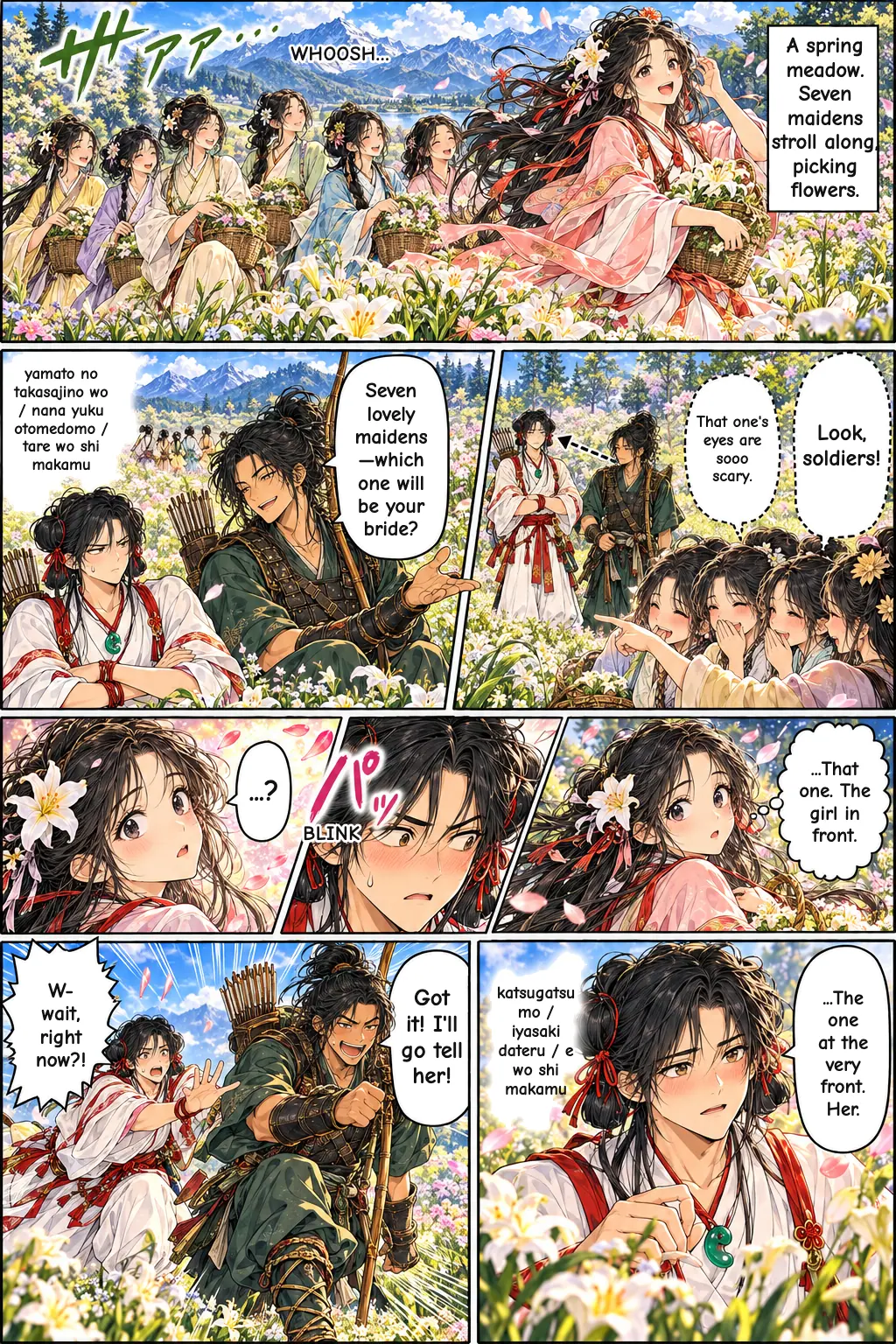
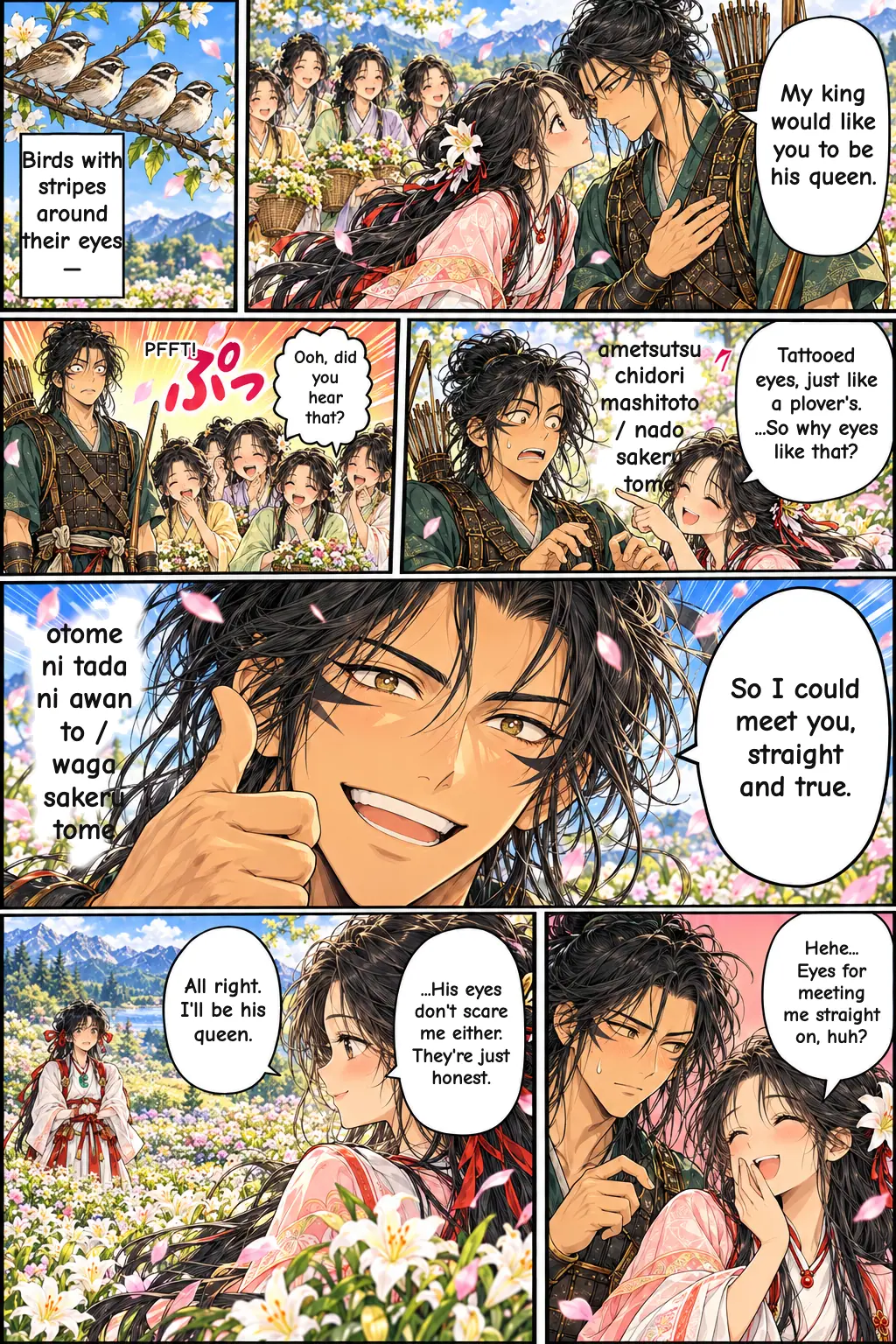
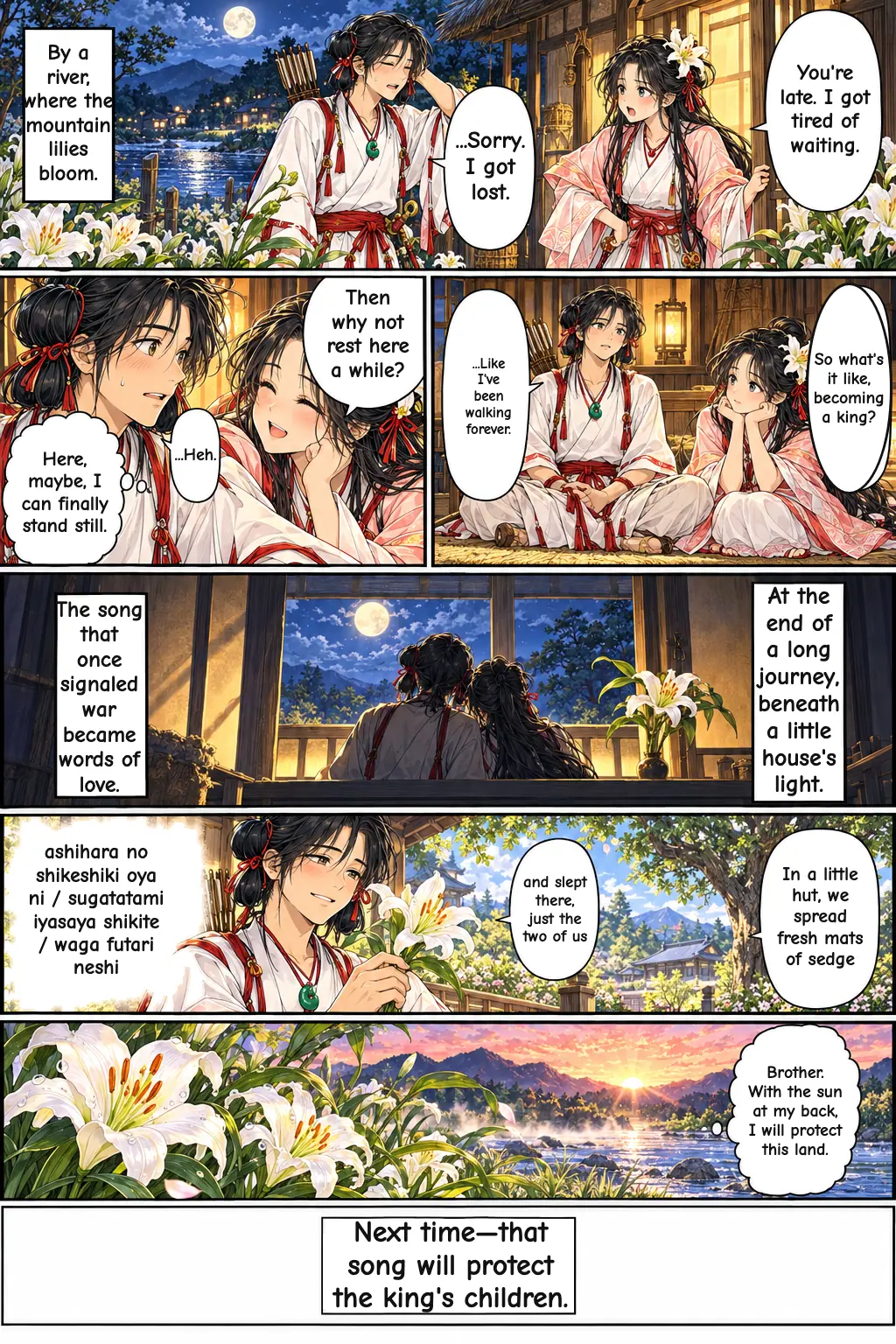
Seven maidens are walking on the field of Takasajino. In a song, Ōkume asks the prince which one he will choose. The prince recognizes Isukeyori, the eldest, walking at the front, and answers in verse. When Ōkume carries the message to her, she notices his tattooed, piercing eyes and asks in a song why they look that way. He replies, also in verse, that his eyes are sharp so that he could find her. She agrees to serve, and the ruler spends a night at her home beside the Sai River. One of their sons later becomes Emperor Suizei.
What This Myth Tells Us
In this part of the Kojiki, songs do real work: they trigger an ambush, rally troops, ask for help, and settle a marriage. The Kume were a warrior group linked to Ōkume, and songs like these were performed at the royal court for centuries. Note that the label "Kume songs" comes from the Nihon Shoki (720) and later court tradition; this passage of the Kojiki does not use the name. The refrain "uchiteshi yamamu" was even revived as a slogan in Japan during the Second World War.
Many scholars read the marriage as a political union: the conqueror descended from the heavens marries the daughter of Yamato's own great local god, and Nigihayahi's surrender ties the Mononobe clan to the new order. Some suggest Ōkume's eye tattoos reflect real customs of certain groups. Finally, the famous founding date of 660 BCE comes from the Nihon Shoki's calendar; the Kojiki gives no date and no coronation ceremony.
What the Manga Changes
The Kojiki is brief, so the manga fills in the visuals. The cave setting, the look of the Eighty Braves (beyond their tails), the feast dishes, and whether the servers hide their swords are all artistic choices; the original only says they wore them. The dawn assault, soldiers chanting the songs together, and food actually arriving after the call to the cormorant fishers are dramatic additions. Nigihayahi's appearance, the shape of the heavenly tokens, the palace, the meadow scenery, the red arrow's depiction, and the pattern of Ōkume's tattoo are also invented. The songs' meaning, however, follows the original.
Where to Read It
If you want to see these songs turn into battle scenes, and to meet the maiden who isn't afraid to ask a fierce warrior about his eyes, read Episode 3 of KOJIKI Book II: The Age of Heroes here on Manga Portal. Every episode is free to read, with no sign-up needed, so you can start from the beginning of Iwarebiko's journey.
Characters in this episode
Kamu-Yamato-Iwarebiko (Emperor Jimmu)
The heavenly prince who wins Yamato through strategy and song and becomes Japan's legendary first ruler.
Ōkume
The prince's tattoo-eyed commander, ancestor of the Kume clan, who arranges the royal marriage with witty verses.
Isukeyori-hime
Daughter of the Miwa god Ōmononushi who boldly questions Ōkume's eyes in song and becomes the chief queen.
Yasotakeru (the Eighty Braves)
Tailed 'earth spiders' waiting in the great chamber at Osaka, struck down at the signal of a song.
Nigihayahi
A god who came down from heaven earlier, then surrenders, presents heavenly tokens, and serves the prince.
Ōmononushi
The god of Mount Miwa who becomes a red arrow to court Isukeyori's mother.
FAQ
Who was Emperor Jimmu in Japanese mythology?
Emperor Jimmu, called Kamu-Yamato-Iwarebiko in the Kojiki, is Japan's legendary first emperor. The chronicles say he marched east from Kyushu, conquered Yamato, and ruled from the Kashihara palace. Historians treat him as a figure of legend, not a confirmed historical person.
What are the Kume songs?
They are war songs linked to the Kume warriors, sung during Jimmu's campaign and later performed at the imperial court. Many end with the refrain "uchiteshi yamamu," meaning "we will strike and not stop." The name "Kume songs" comes from the Nihon Shoki and later tradition rather than this section of the Kojiki.
Who is Princess Isukeyori?
Isukeyori-hime is the daughter of Ōmononushi, the god of Mount Miwa, and the human woman Seyadatarahime. She became Emperor Jimmu's chief queen, and one of their sons became Emperor Suizei.
Why does Isukeyori ask about Ōkume's eyes?
Ōkume had tattooed, piercing eyes, and she asks in a song why they look so sharp. He answers in verse that his eyes are sharp so he could find her. The exchange is remembered as a famous example of wit in early Japanese poetry.
When did Emperor Jimmu become emperor?
The traditional date, 660 BCE, comes from the Nihon Shoki's calendar and was converted to February 11 in the 19th century. The Kojiki gives no date and describes no enthronement ceremony.