Episode 1"Just One More Night" Cost Him His MenThe Cicones and the Lotus-Eaters
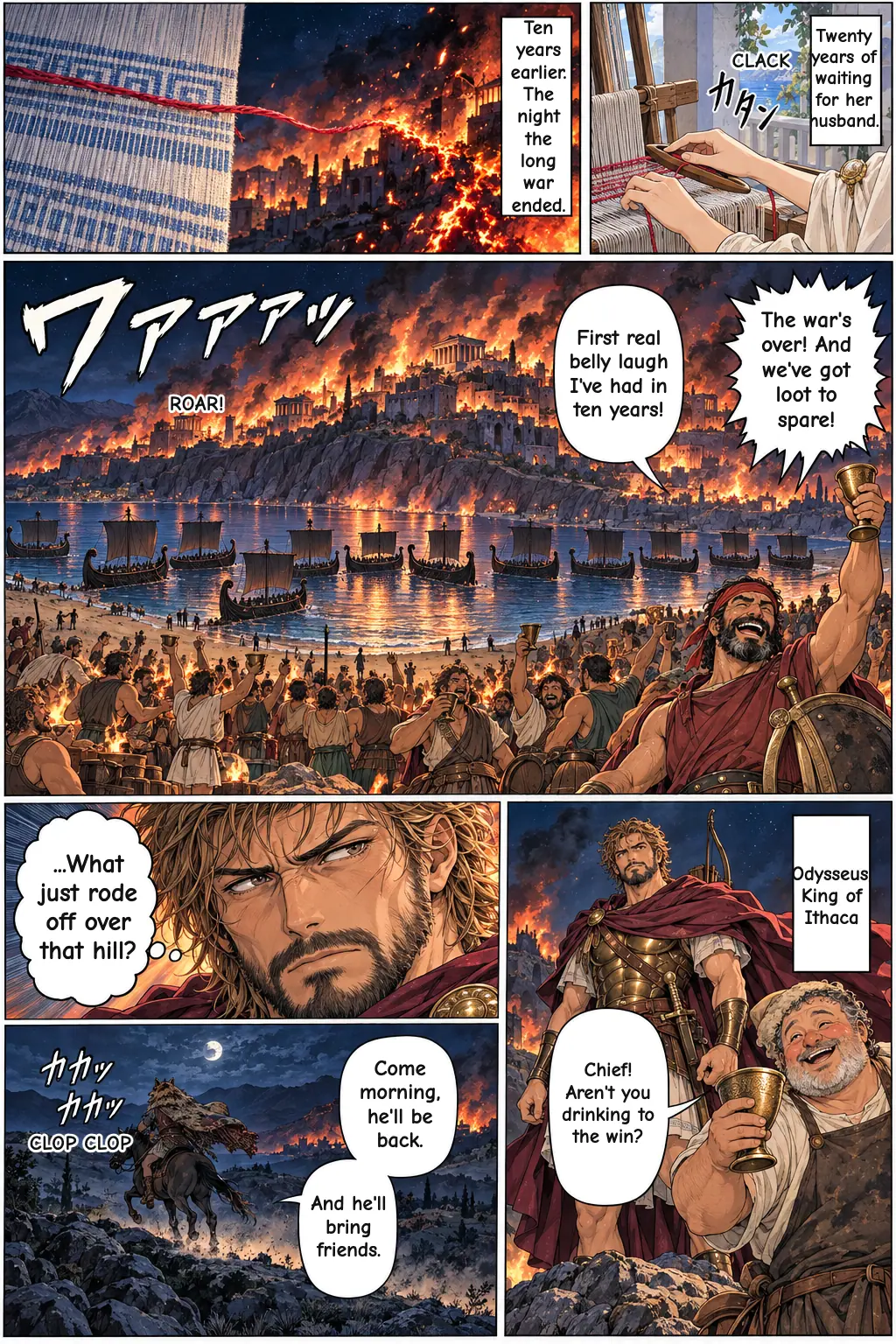
Fresh from victory in the Trojan War, Odysseus sets sail for home, but his men beg for "just one more night" of feasting, and he can't stop them. It costs him dearly. Then the fleet drifts to a land of sweet fruit that makes anyone who eats it forget the way home. His crew are weeping and refusing to leave, and Odysseus must decide whether to drag them back to the ships.
Get new episodes in your feed. Follow us on:ThreadsBluesky
Story summary
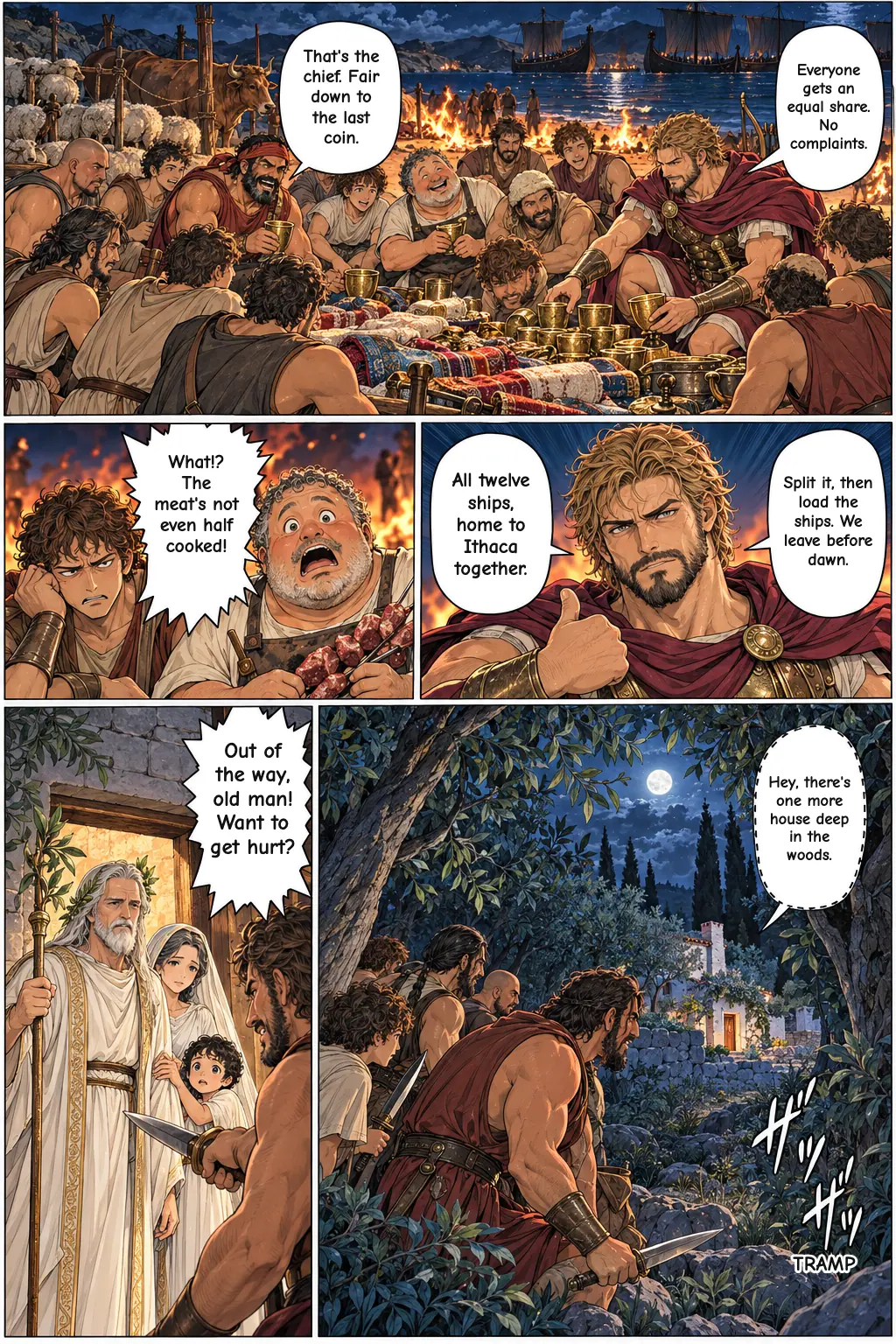
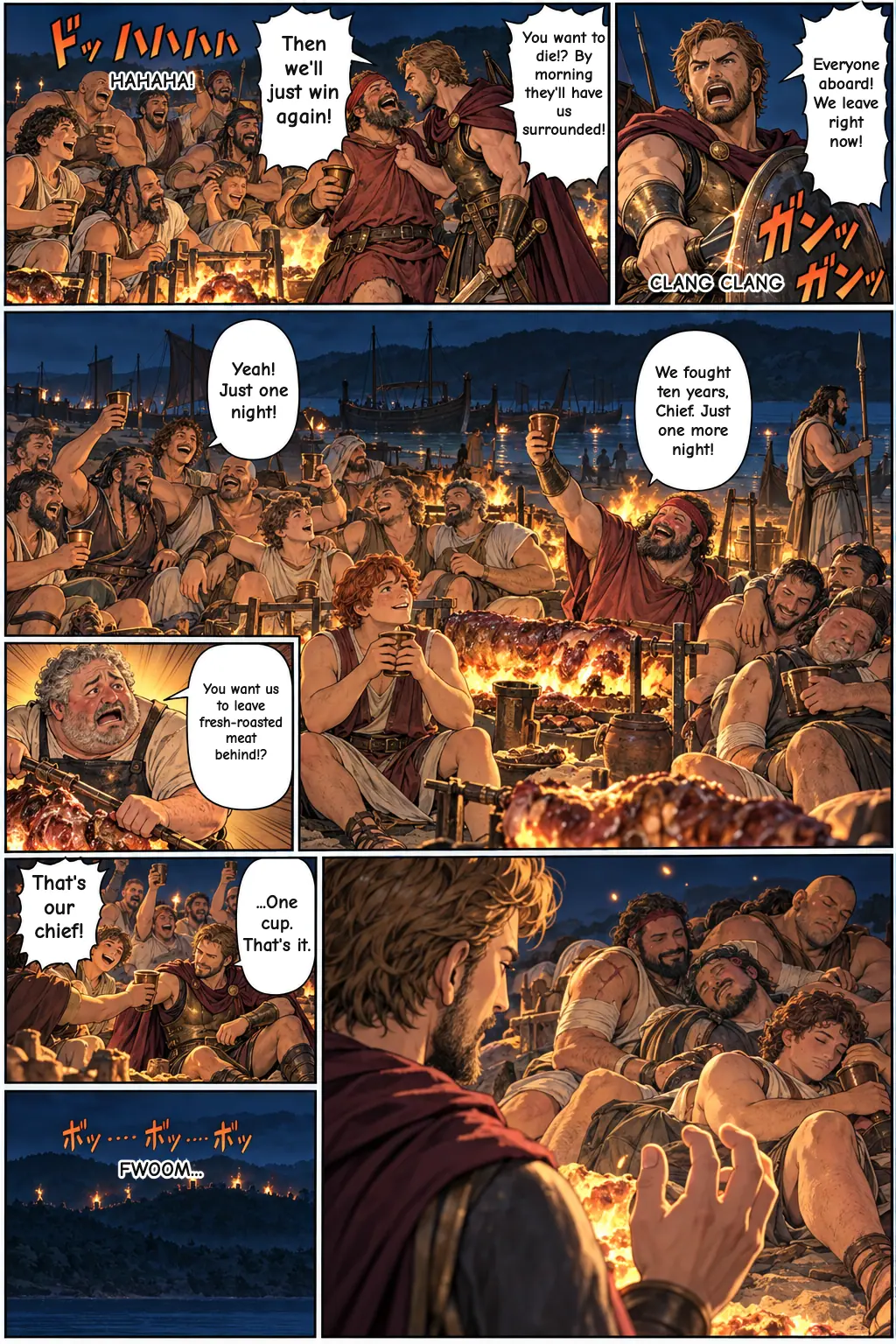
Homer doesn't tell this part of the Odyssey in the order it happened. Odysseus, the king of Ithaca, tells it himself years later as a guest in the palace of Alcinous, king of the Phaeacians. His story of the long voyage begins here, just after the fall of Troy. Leaving Troy, the wind carries his fleet to Ismarus, a town of the Cicones, a people of Thrace who had fought on the Trojan side. The Greeks sack the town, kill the men, carry off the women and a great deal of treasure, and share the spoils so that no one feels cheated. Odysseus tells everyone to leave at once. His men refuse.
Odyssey Book 9 Summary: The Cicones and the Lotus-Eaters Explained
In short: The Cicones and the Lotus-Eaters are the first two stops of Odysseus's voyage home in Book 9 of Homer's Odyssey. After his crew ignore his order to flee a raided town and lose six men from every ship, a storm drives the fleet to a land where a honey-sweet fruit called the lotus makes men forget their way home, and Odysseus has to drag his weeping scouts back to the ships by force.
The Original Story: Odyssey Book 9, Lines 39–104
Homer doesn't tell this part of the Odyssey in the order it happened. Odysseus, the king of Ithaca, tells it himself years later as a guest in the palace of Alcinous, king of the Phaeacians. His story of the long voyage begins here, just after the fall of Troy.
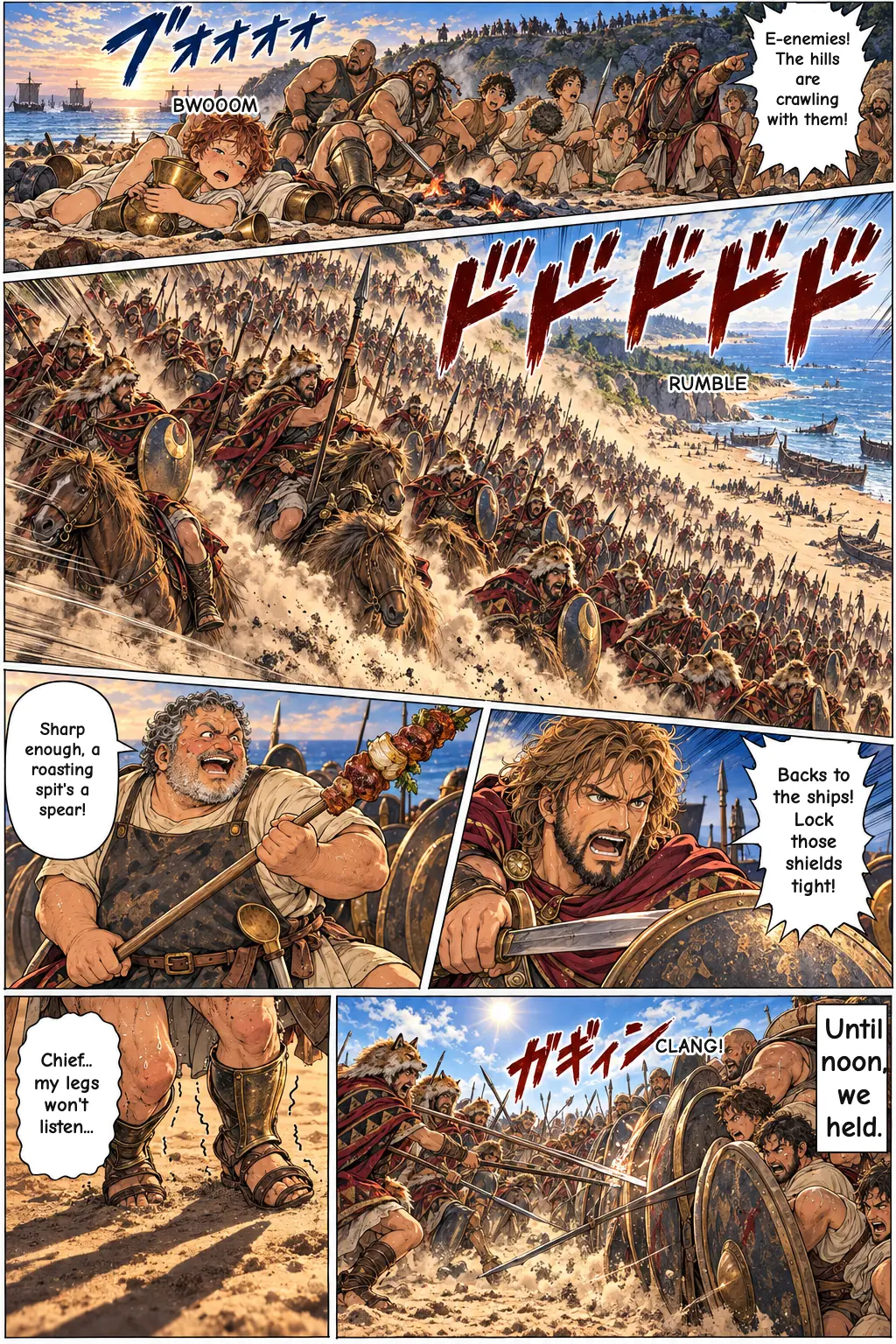
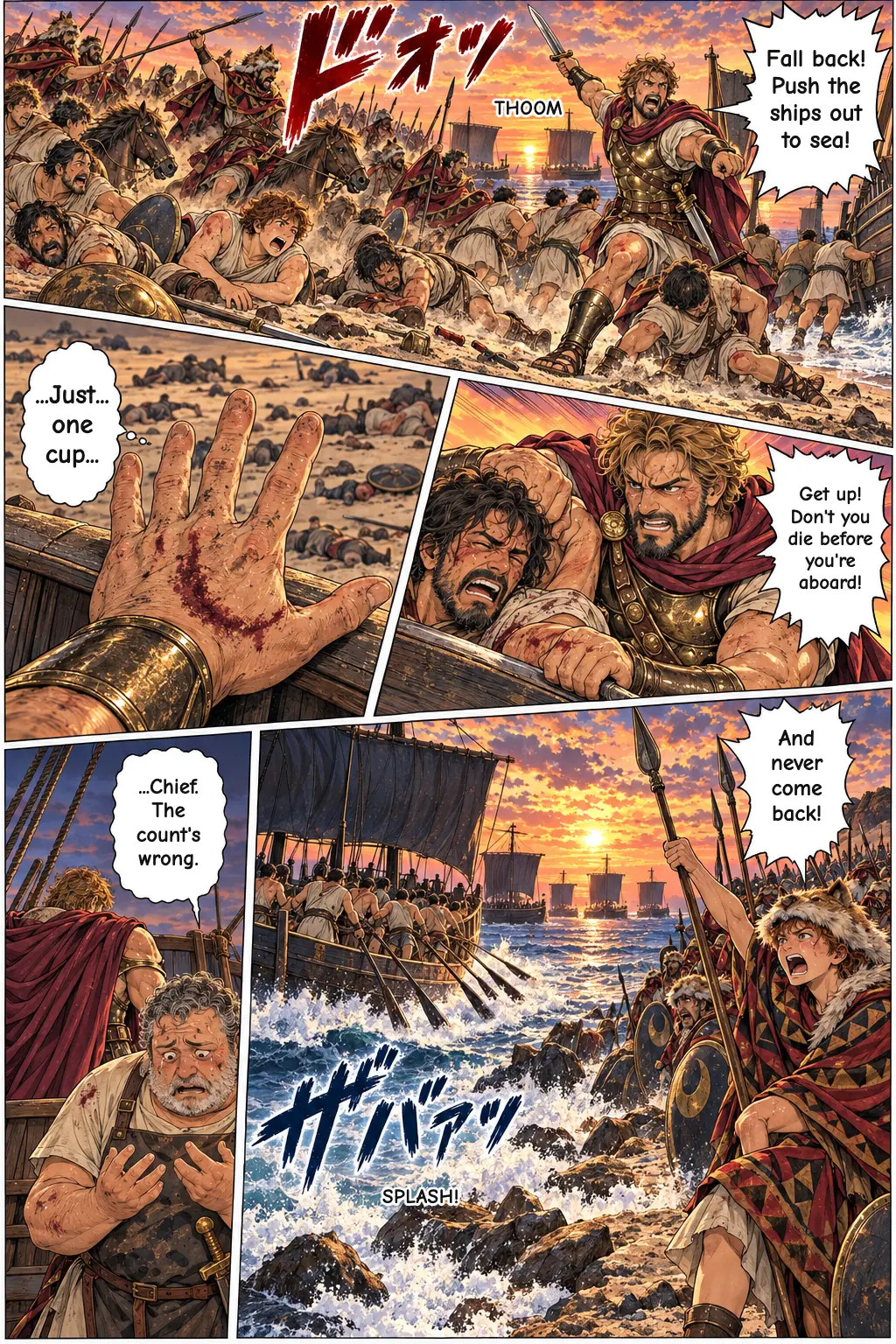
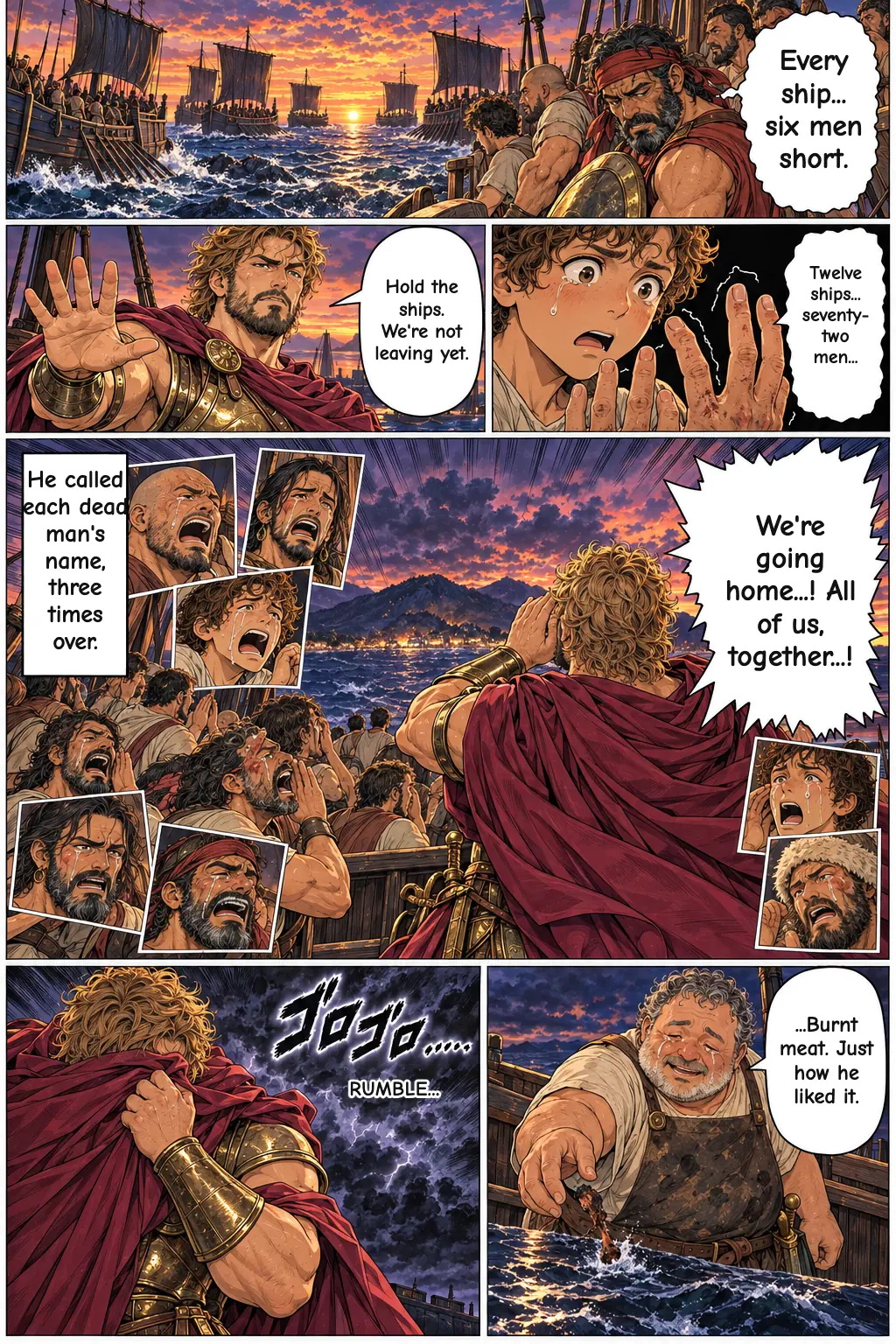
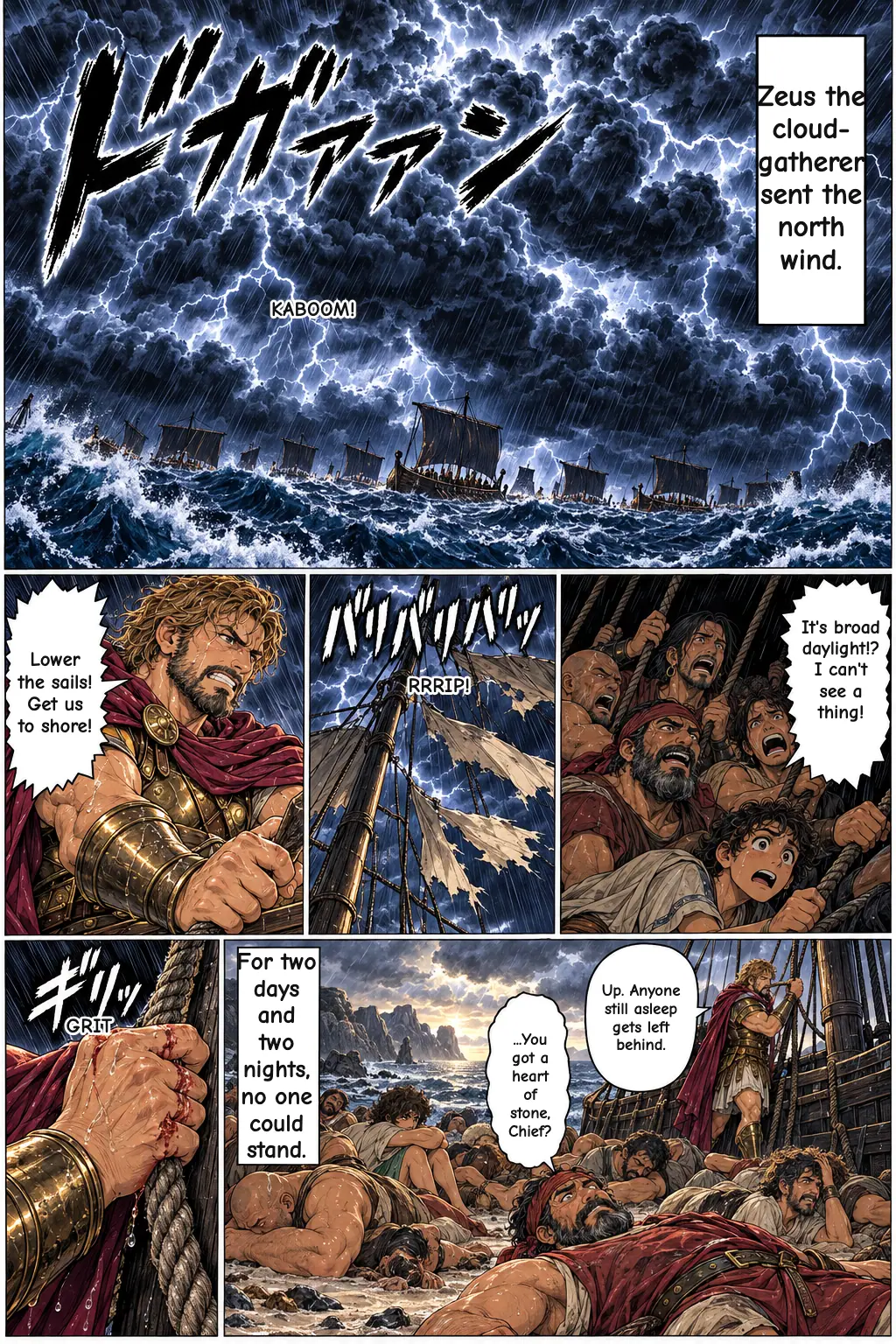
Leaving Troy, the wind carries his fleet to Ismarus, a town of the Cicones, a people of Thrace who had fought on the Trojan side. The Greeks sack the town, kill the men, carry off the women and a great deal of treasure, and share the spoils so that no one feels cheated. Odysseus tells everyone to leave at once. His men refuse. Homer's word for them is close to "utter fools". They stay on the beach drinking wine and slaughtering sheep and cattle. Meanwhile, survivors run inland and call on more Cicones, who are more numerous and better fighters, able to fight from chariots or on foot. At dawn these warriors arrive, as thick as leaves and flowers in spring. The battle by the ships lasts all day, and by evening the Greeks give way. Six men from each ship are killed. Before the survivors row away, they call out the name of each dead comrade three times.
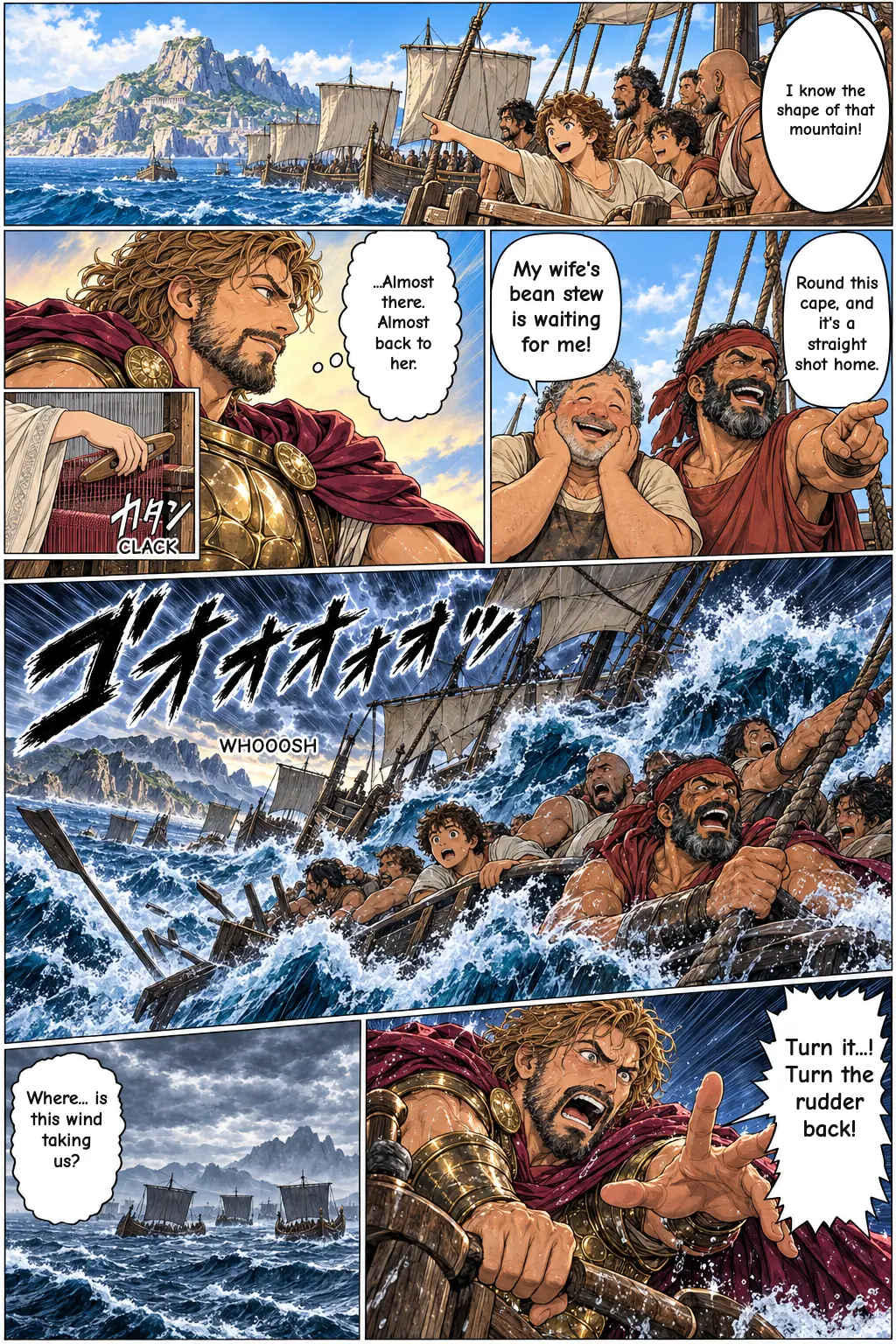
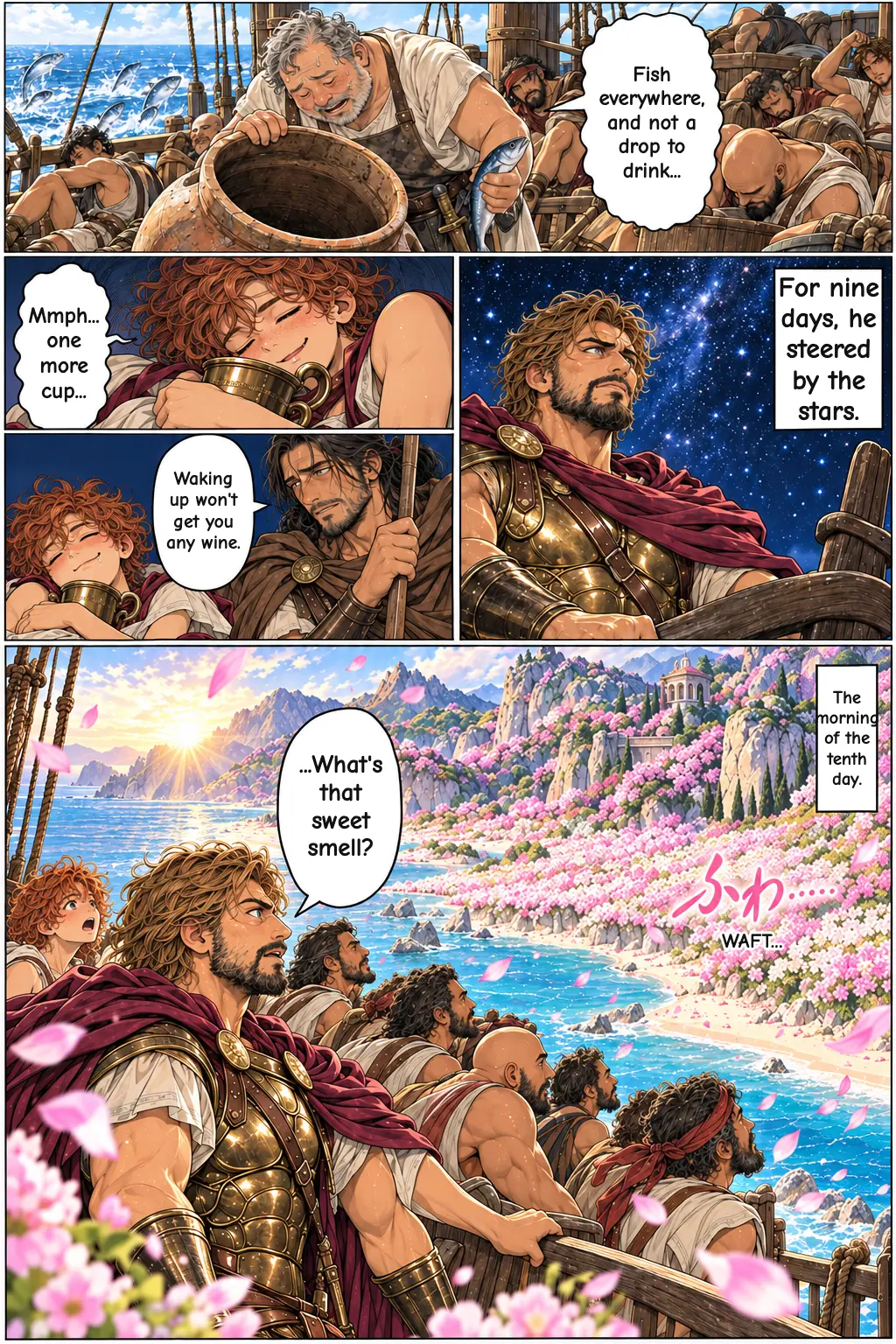
Then Zeus, the cloud-gatherer, sends a violent north wind. Clouds cover land and sea, the sails rip apart, and the crews have to beach the ships and wait two days and nights, worn out and grieving. When they finally sail again, home is close. But as they round Cape Malea, at the southern tip of Greece, waves, currents and the north wind push them out past the island of Cythera. They drift for nine days. On the tenth day they reach the land of the Lotus-Eaters.
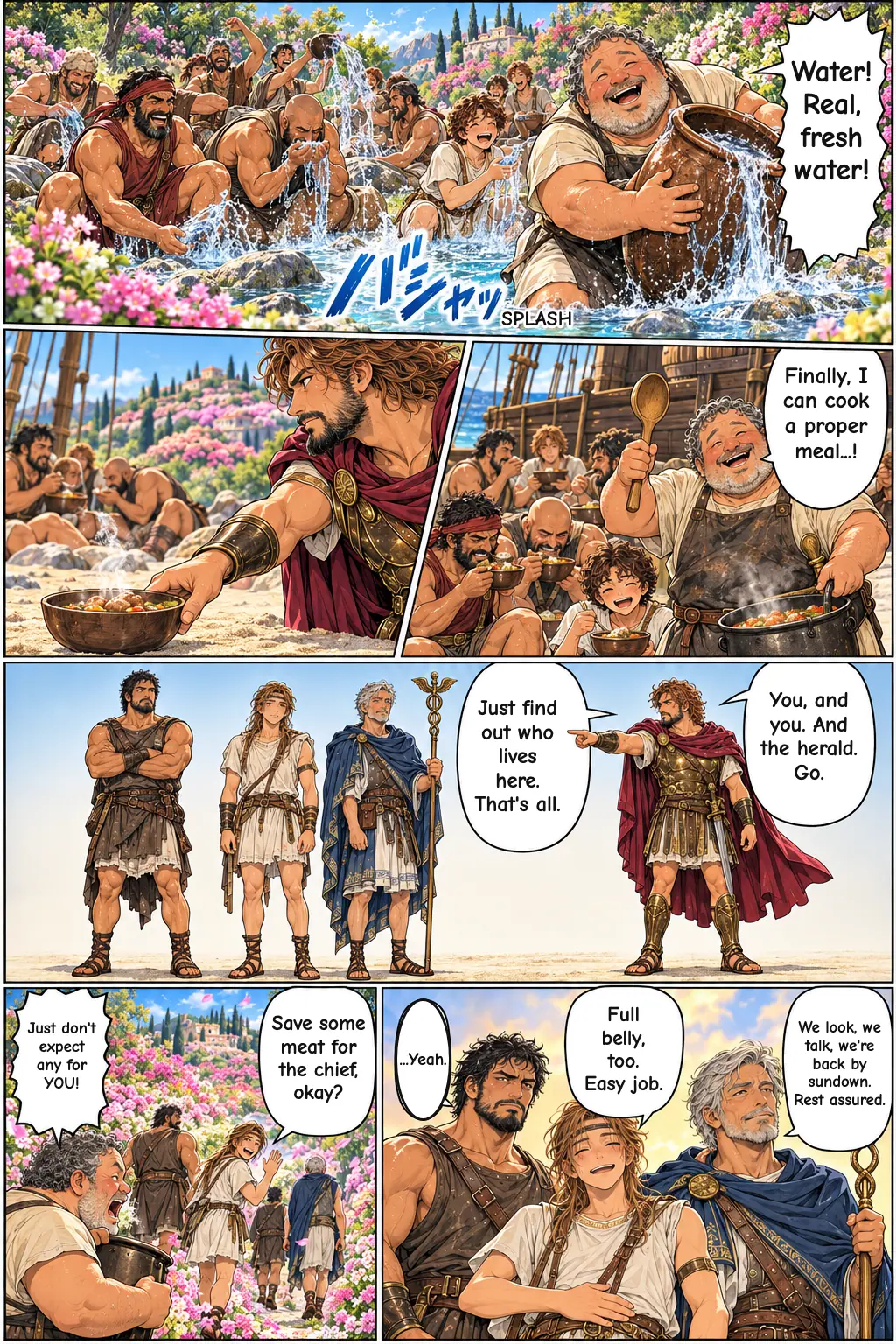
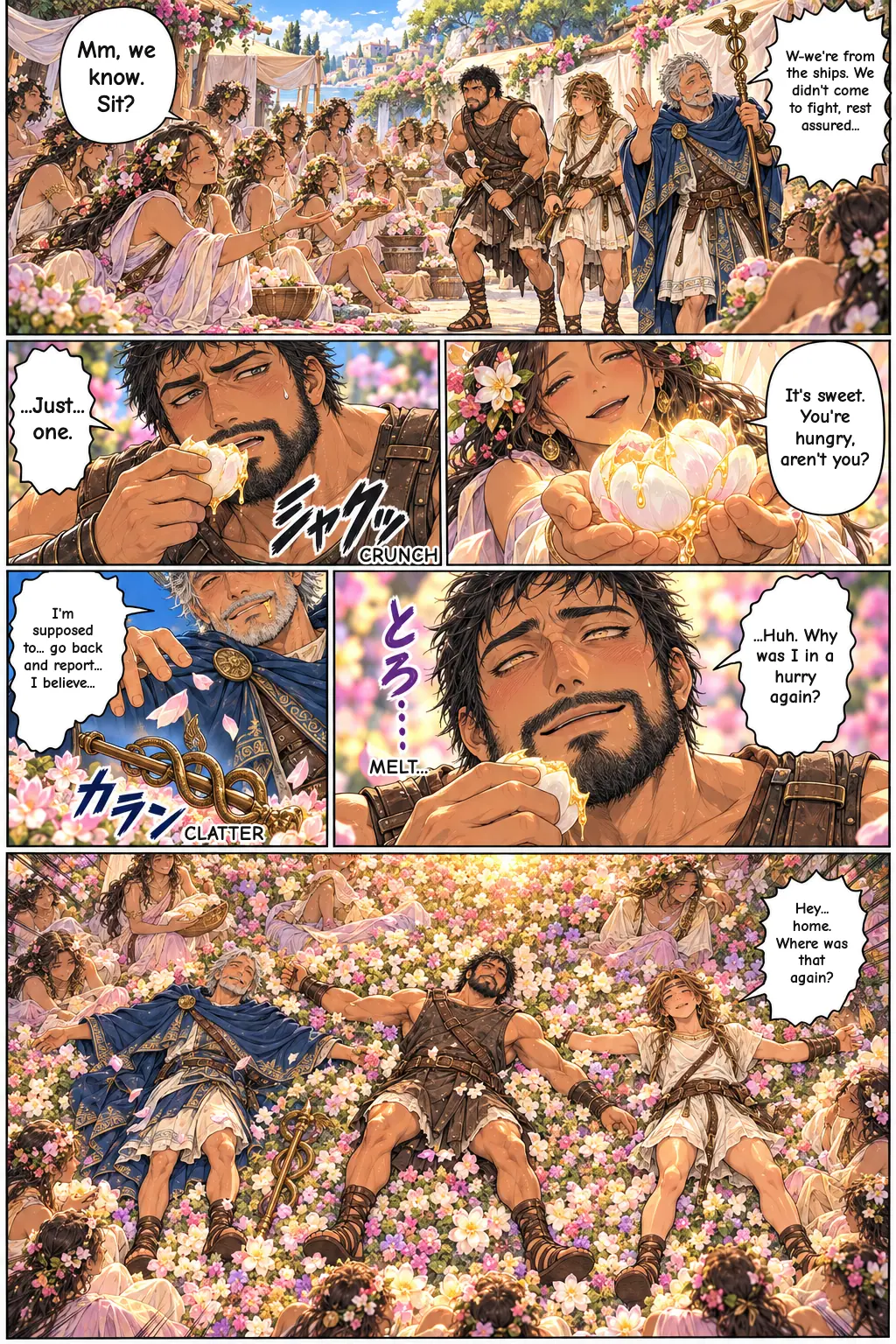
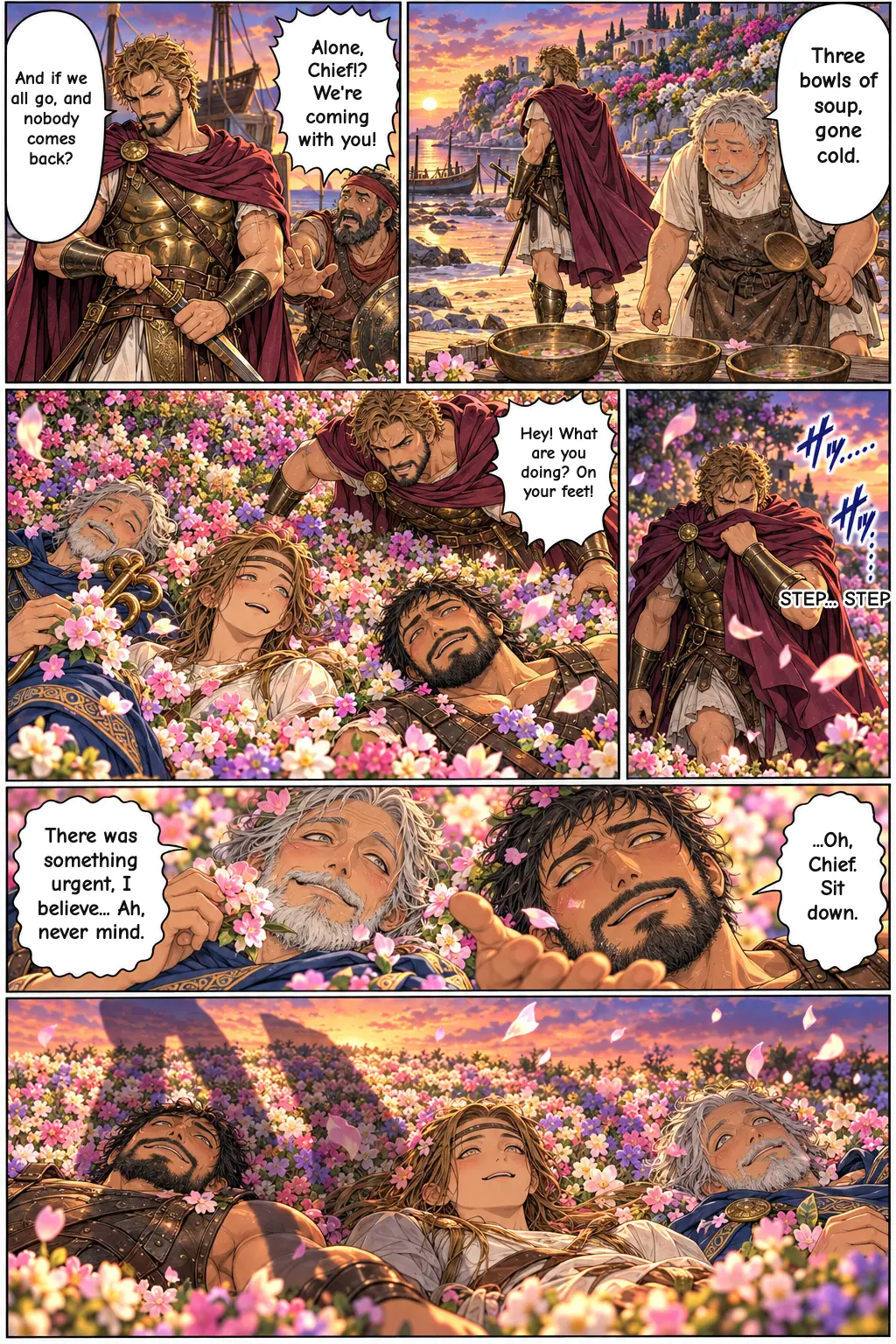
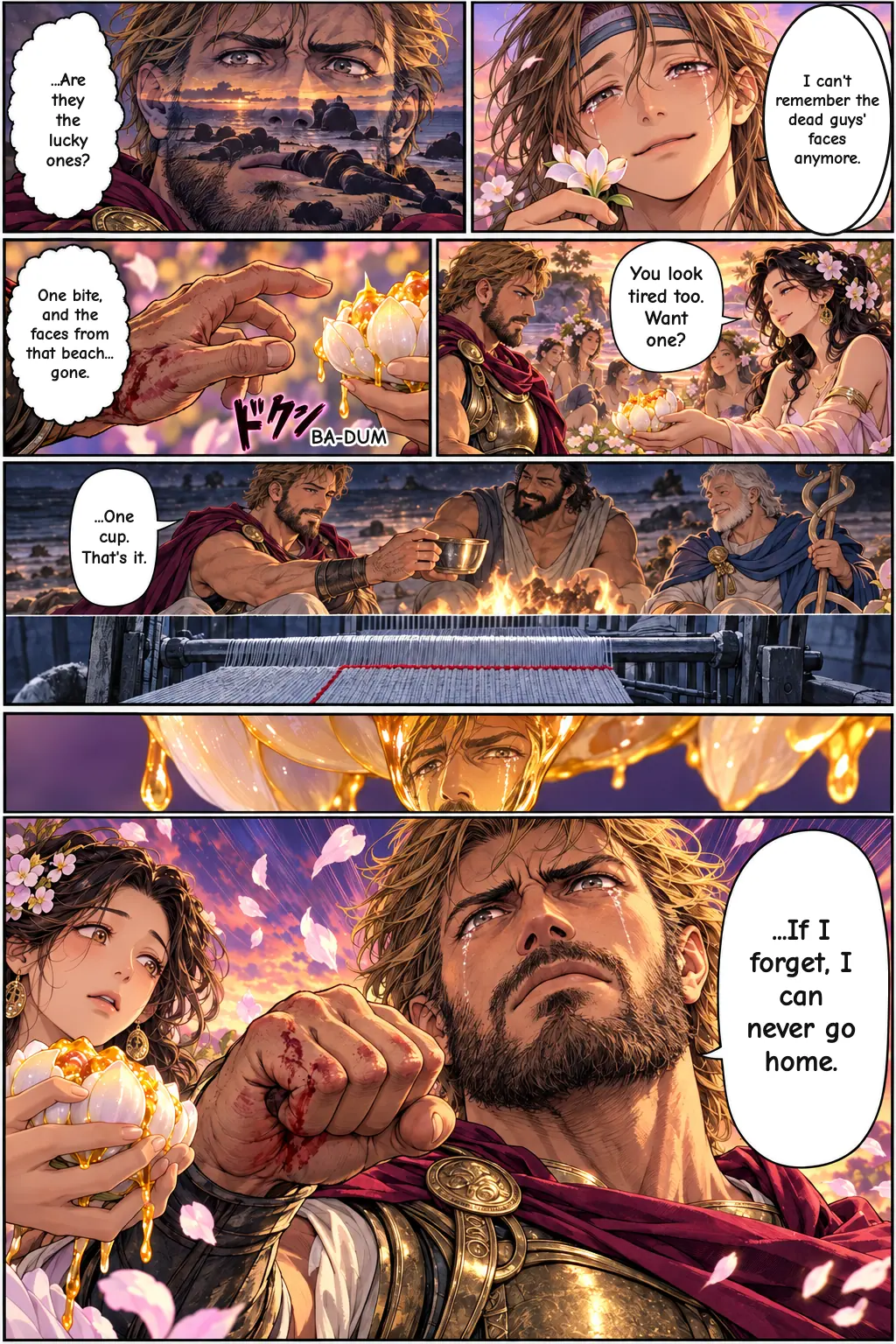
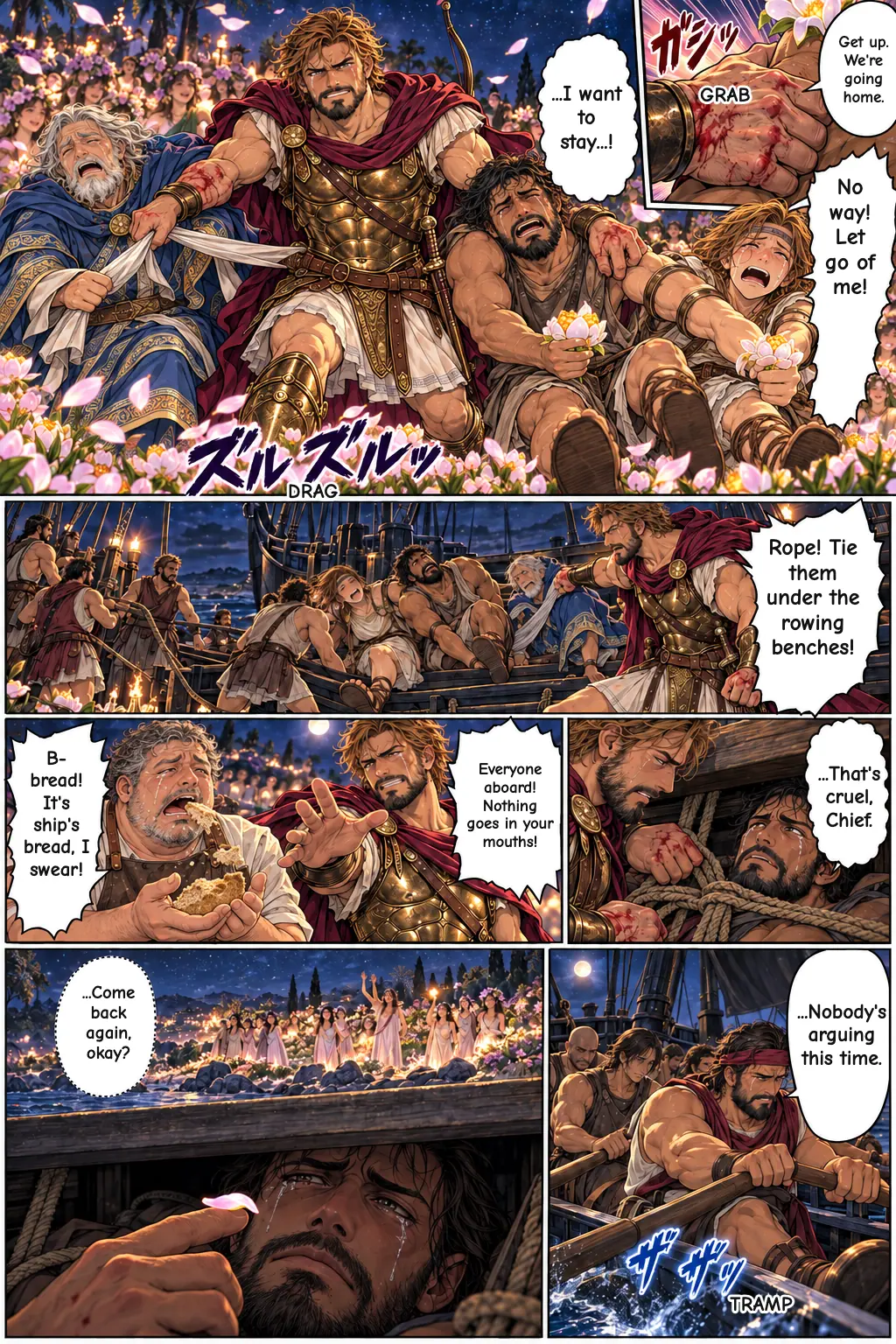
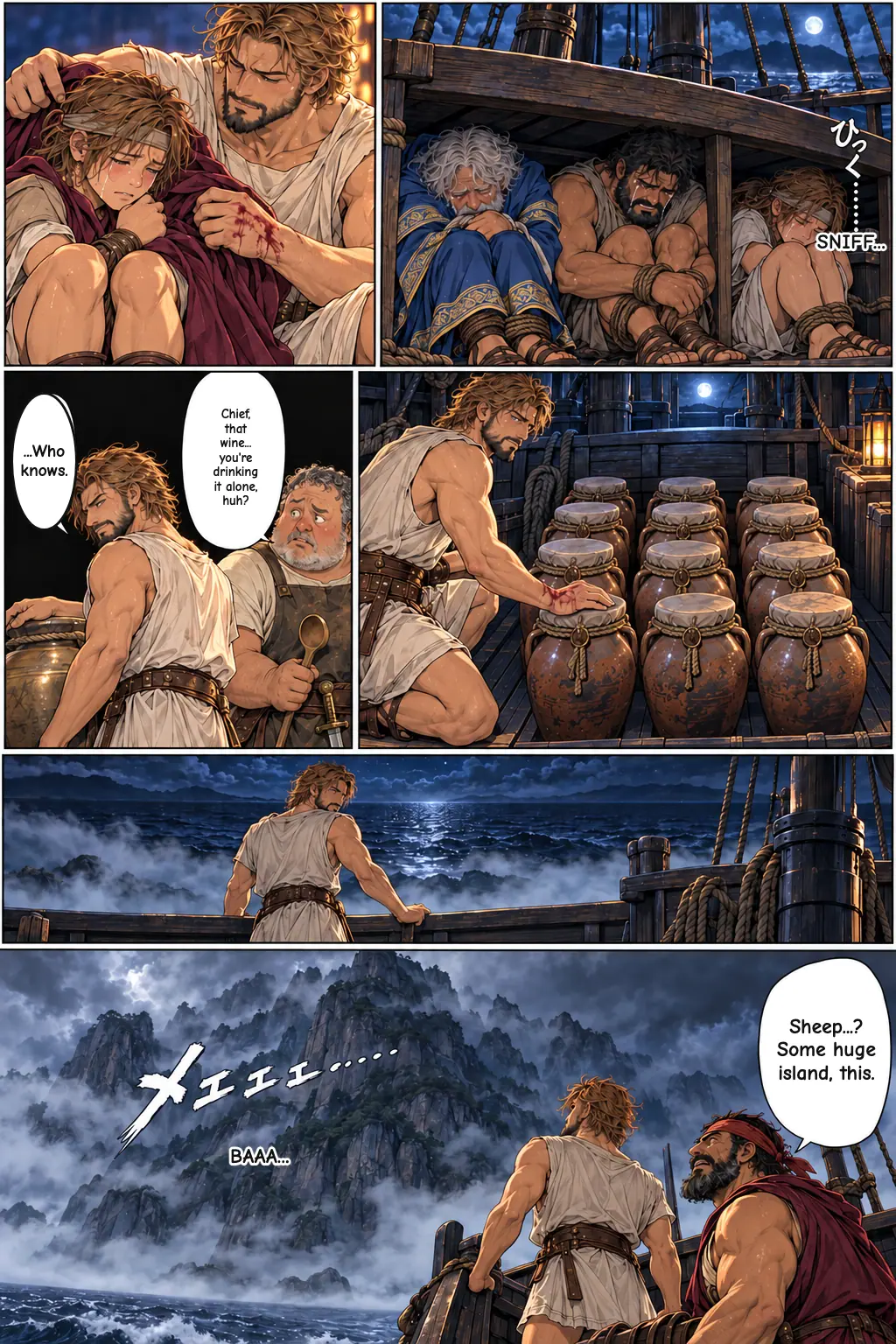
Odysseus sends three men ahead to find out who lives there: two companions and a herald. The Lotus-Eaters mean them no harm and simply share their food, the lotus. Anyone who eats the honey-sweet fruit loses all wish to report back or go home and wants only to stay and eat more. Odysseus drags the three men back to the ships while they weep, ties them under the rowing benches, and orders everyone else on board before anyone else can taste the fruit. Then they row away.
A Detail Homer Tells Later: The Wine of Maron
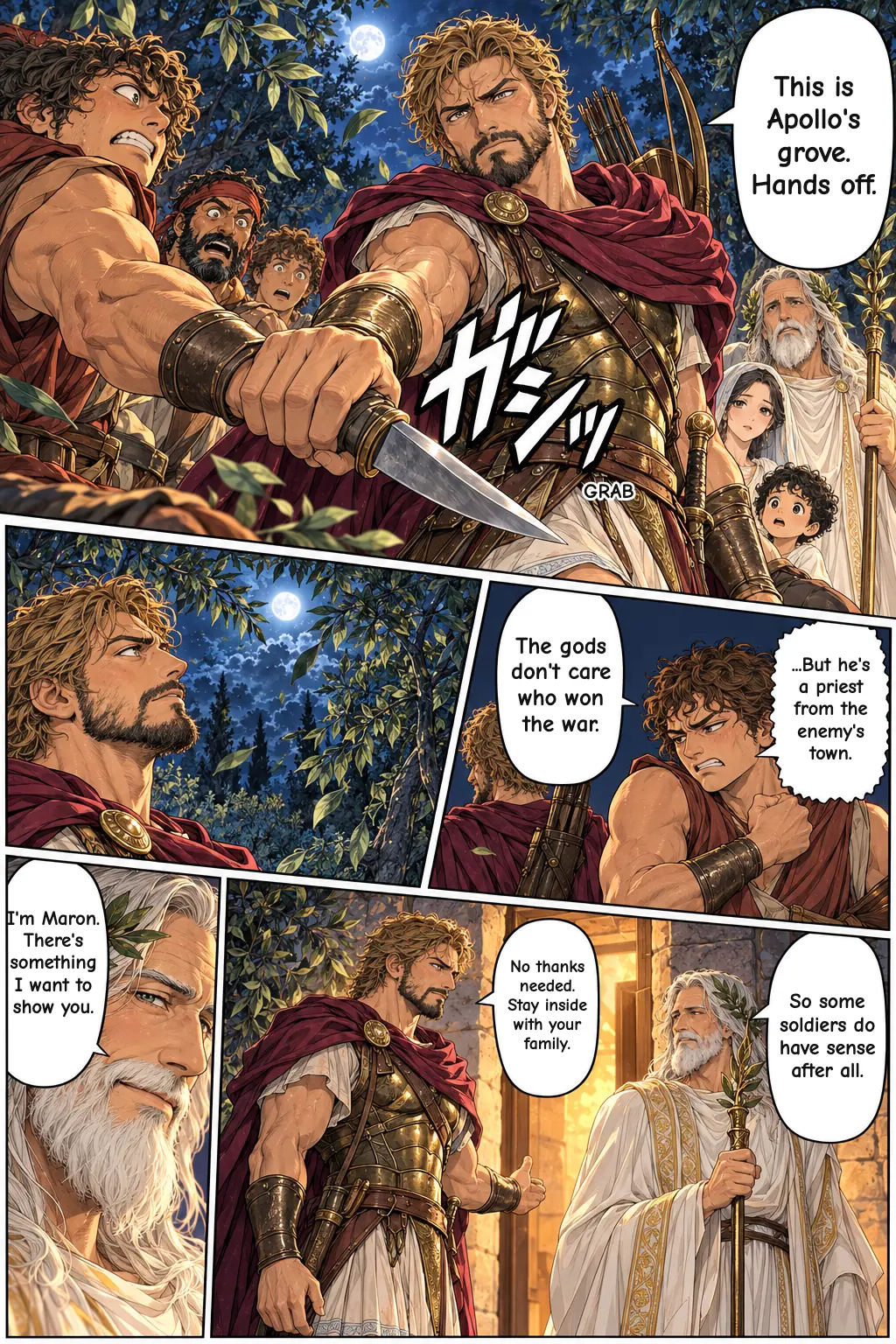
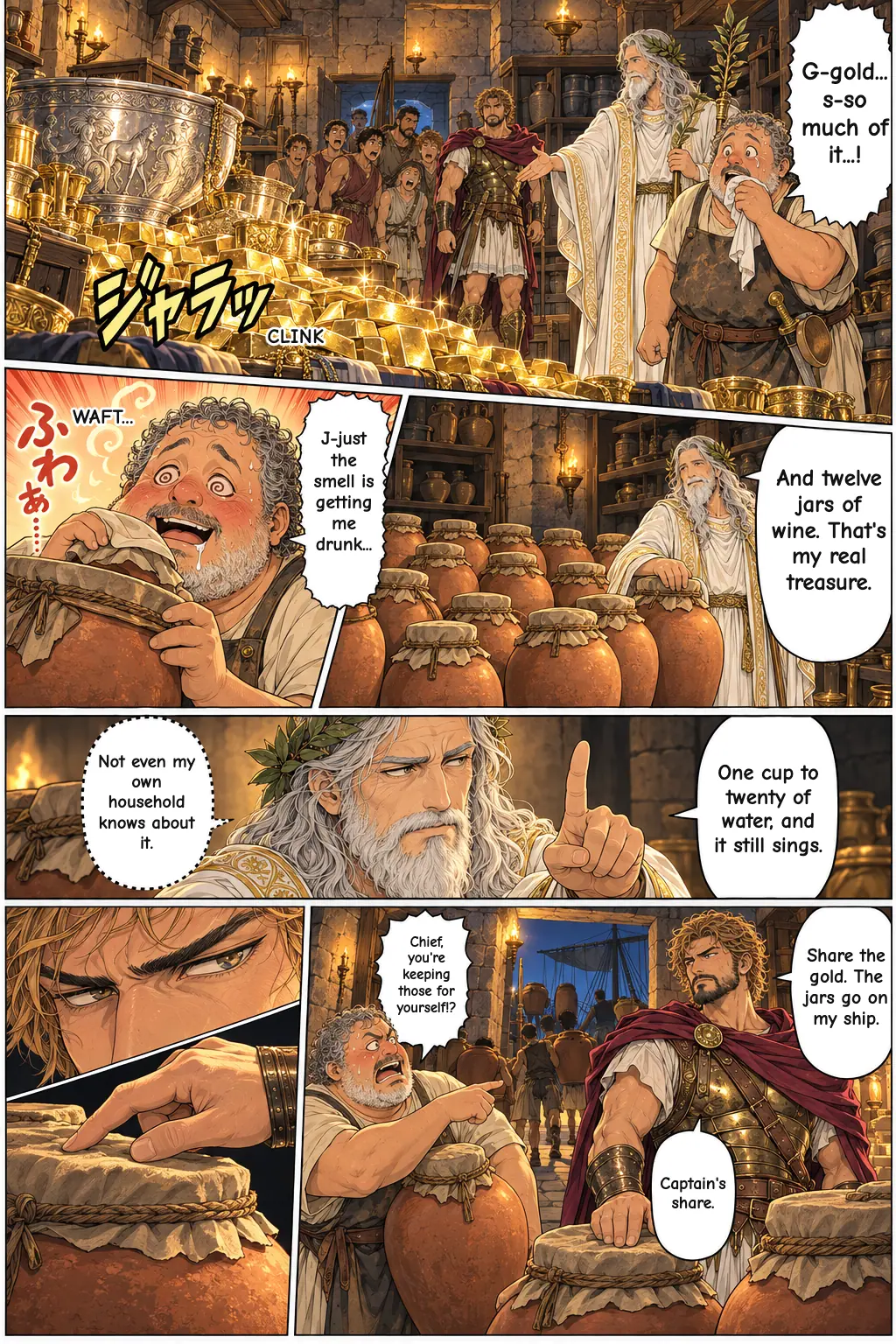
Later in Book 9 (lines 196–211), Odysseus mentions something else from Ismarus. During the raid he spared Maron, a priest of Apollo, and Maron's wife and child, because they lived in a grove sacred to the god. In thanks Maron gave him seven talents of gold, a silver mixing bowl, and twelve jars of sweet, unmixed wine. The wine was so strong that one cup could be mixed with twenty cups of water and still smell wonderful. In Maron's house, only he, his wife and one housekeeper knew about it. Homer brings it up because the wine becomes important in the next adventure, the cave of the Cyclops.
What This Myth Tells Us: Homecoming, Folly and Memory
The Odyssey is a story of nostos, the Greek word for homecoming. These first two stops show two ways a homecoming can fail. At Ismarus, greed and overconfidence keep the men on the beach too long, and the price is many lives. Among the Lotus-Eaters, the danger is gentler and maybe stranger: no enemy, no violence, just a pleasure that makes home stop mattering. The poem returns again and again to the idea that the crew are destroyed partly by their own choices, and this episode is the first clear example.
The details also show the values of Homer's world. Odysseus spares Maron out of respect for Apollo, and being reverent to the gods brings him a reward. Calling each dead man's name three times was a way to honor comrades who died far from home and could not be buried there. Modern readers may also notice that the hero opens his journey with a raid on a town. In the warrior culture of the epic that was normal, but the story punishes it at once.
Open Questions and Common Interpretations
Homer never says what the lotus actually is. He calls it flowery food, sweet as honey, and describes only its effect. Many readers compare it to a drug, but that is an interpretation, not something the text says. People have also tried to locate the land of the Lotus-Eaters since ancient times, often on the coast of North Africa, around Libya or the island of Djerba in Tunisia. These are guesses, and the poem itself gives no place name.
The Odyssey doesn't give a total number of dead at Ismarus either. Homer says six men from each ship. If the fleet had twelve ships, as other passages suggest, that would be seventy-two men, but the poem never states that figure.
What the Manga Changes
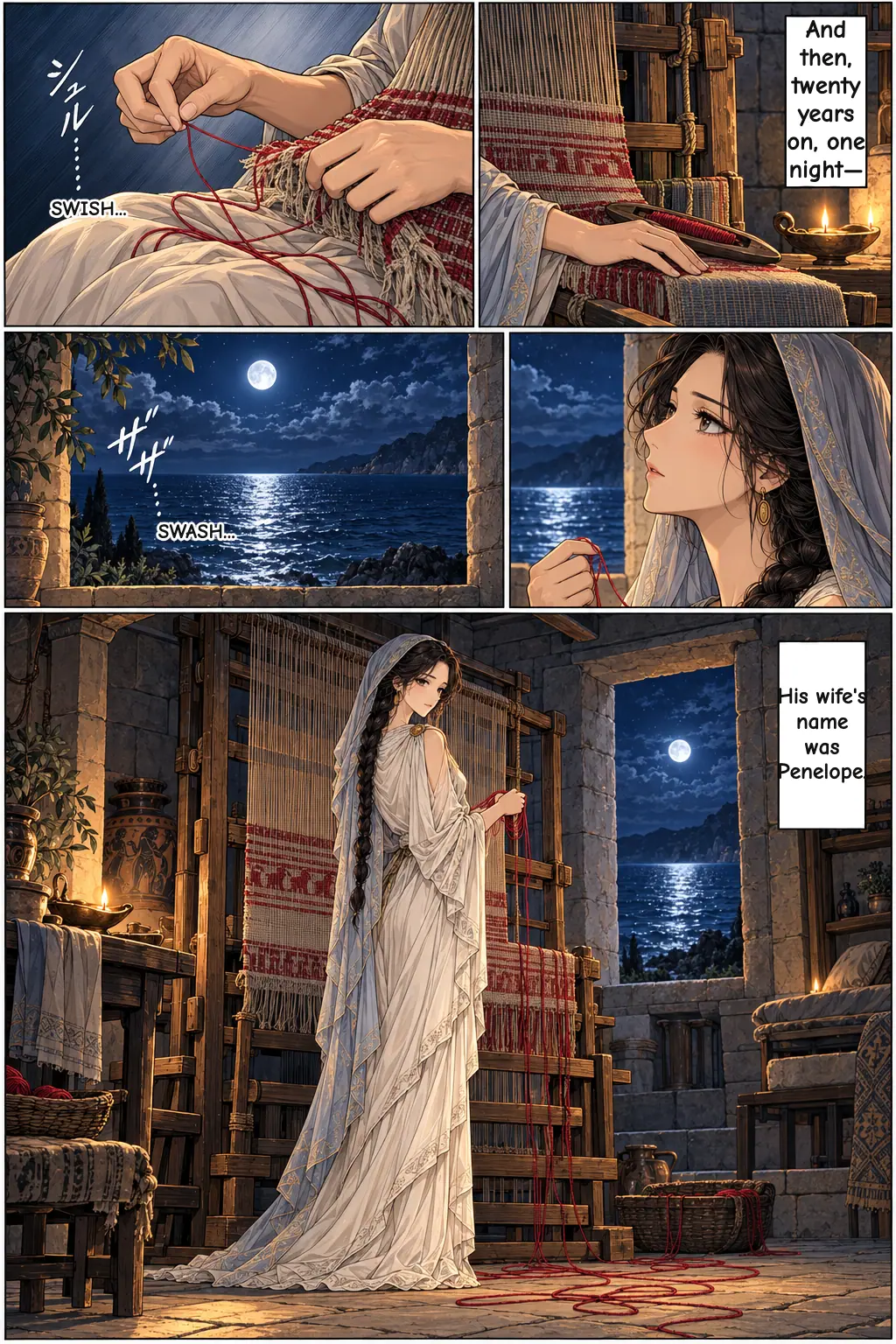
The manga follows the events of Book 9 closely but tells them in time order and in the third person, not as Odysseus's later story at the Phaeacian court. It opens and closes with Penelope, Odysseus's wife, weaving at home in Ithaca. She doesn't appear in this part of the original. The manga uses her as a reminder of what Odysseus is trying to reach. Penelope's famous weaving trick against her suitors comes years later in the poem, so here she is simply waiting.
Everything the original leaves unspecified had to be invented: the scene where Maron hands over the wine and what he and Odysseus say, the faces and lines of the men who keep feasting, the names and personalities of the three scouts, what the lotus fruit looks like, how the Lotus-Eaters live, the moment-by-moment course of the battle, and life on deck during the storm. The manga also hints that Maron's wine will matter in the next episode. The main events (the order to flee, the feast, the counterattack, six dead per ship, the storm, the lotus, the men tied under the benches) all come from Homer.
Where to Read It
To read the original, look for Book 9 of Homer's Odyssey in any complete translation. Lines 39–104 cover the Cicones and the Lotus-Eaters, and lines 196–211 tell the story of Maron's wine. It's short and moves fast, so it's an easy place to start the epic.
If you'd like to see it first, Episode 1 of GREEK MYTHOLOGY: THE ODYSSEY — The Twenty-Year Voyage Home is on this page. All episodes on Manga Portal are free to read with no sign-up, and the next episode follows Odysseus and that very strong wine into the Cyclops's cave.
Characters in this episode
Odysseus
King of Ithaca and the hero of the Odyssey, a cautious, clever leader who tries to save his men from their own mistakes on the way home from Troy.
Odysseus's crew
The unnamed sailors of his twelve-ship fleet, who ignore his order to leave Ismarus and pay for it with their lives.
Maron
A priest of Apollo at Ismarus, spared by Odysseus, who repays him with gold and twelve jars of extraordinarily strong wine.
The Cicones
A Thracian people, allies of Troy, whose inland warriors strike back at dawn and drive the Greeks to their ships.
The Lotus-Eaters (Lotophagi)
A peaceful people who live on the honey-sweet lotus and kindly offer it to strangers, unaware of what it does to them.
Penelope
Odysseus's faithful wife in Ithaca, who does not appear in Book 9 but frames this manga episode as she weaves and waits.
FAQ
What happens with the Lotus-Eaters in the Odyssey?
Odysseus sends three men to scout the land, and the friendly Lotus-Eaters give them the lotus fruit. Once they've eaten it, the men no longer want to go home. Odysseus drags them back to the ships in tears, ties them under the benches, and sails away before anyone else can eat it.
Why did Odysseus lose men to the Cicones?
After sacking the town of Ismarus, Odysseus ordered his men to leave right away, but they stayed on the beach to feast and drink. That gave the Cicones time to bring in reinforcements from inland, who attacked at dawn and killed six men from each ship.
What is the lotus in the Odyssey?
Homer calls it a honey-sweet, flowery food and describes only its effect: it makes people forget about going home. Many readers compare it to a drug, but the poem never names a plant or explains how it works.
Where is the land of the Lotus-Eaters?
The Odyssey doesn't say. Since ancient times people have suggested places on the coast of North Africa, such as Libya or the island of Djerba, but these are only guesses.
Who was Maron in the Odyssey?
Maron was a priest of Apollo at Ismarus whom Odysseus spared out of respect for the god. In return Maron gave him gifts, including twelve jars of very strong wine that Odysseus later uses against the Cyclops.